Russia ‘could kill thousands and thousands and thousands’ with cyber attack on UK
Press TV – January 26, 2018
The British defense secretary says Russia could kill “thousands and thousands and thousands” of Britons with a cyber attack that could cripple infrastructure and energy supply and cause panic and chaos across the United Kingdom.
In an interview with The Telegraph, Defense Secretary Gavin Williamson claimed Moscow had been researching the UK’s critical national infrastructure to know how to damage the British economy and energy supply. He offered no proof.
He said Moscow was “trying is to spot vulnerabilities, because what they want to do is they want to know how to strike it, they want to know how they can kill infrastructure and by killing that infrastructure, that means hurting Britain and the British people. Damage its economy, rip its infrastructure apart, actually cause thousands and thousands and thousands of deaths, but actually have an element of creating total chaos within the country.”
He made the remarks a couple of days after the head of the British army said the country needed to “keep up” with Russia’s growing military strength or see its ability to take action “massively constrained.”
While NATO member countries — including the UK — have long harbored Russophobe tendencies, it was unclear what prompted the specific remarks by Williamson.
NATO has recently accused Russia of seeking to attack countries in Eastern Europe, using that allegation to build up forces near Russian borders — NATO’s “eastern flank.” Russia, perceiving that buildup as unprovoked and a threat to its security, has in recent years taken action to strengthen its defenses along its western borders.
“Too Big To Believe” – Massive Scandal Is Brewing At The FBI
By Tyler Durden | Zero Hedge | January 24, 2018
As the Potemkin Village walls of The Left’s ‘Trump Collusion’ narrative crash and burn along with special counsel Mueller’s credibility, The New York Post’s Michael Goodwin sees far more wide-ranging problems ahead for America’s ‘intelligence’ agencies as the anti-Trump ‘secret society’ and lovers-texts-gate debacles threaten the core of the Deep State.
Goodwin writes that, during the financial crisis, the federal government bailed out banks it declared “too big to fail.” Fearing their bankruptcy might trigger economic Armageddon, the feds propped them up with taxpayer cash.
Something similar is happening now at the FBI, with the Washington wagons circling the agency to protect it from charges of corruption. This time, the appropriate tag line is “too big to believe.”
Yet each day brings credible reports suggesting there is a massive scandal involving the top ranks of America’s premier law enforcement agency. The reports, which feature talk among agents of a “secret society” and suddenly missing text messages, point to the existence both of a cabal dedicated to defeating Donald Trump in 2016 and of a plan to let Hillary Clinton skate free in the classified email probe.
If either one is true — and I believe both probably are — it would mean FBI leaders betrayed the nation by abusing their powers in a bid to pick the president.
More support for this view involves the FBI’s use of the Russian dossier on Trump that was paid for by the Clinton campaign and the Democratic National Committee. It is almost certain that the FBI used the dossier to get FISA court warrants to spy on Trump associates, meaning it used the opposition research of the party in power to convince a court to let it spy on the candidate of the other party — likely without telling the court of the dossier’s political link.
Even worse, there is growing reason to believe someone in President Barack Obama’s administration turned over classified information about Trump to the Clinton campaign.
As one former federal prosecutor put it, “It doesn’t get worse than that.” That prosecutor, Joseph diGenova, believes Trump was correct when he claimed Obama aides wiretapped his phones at Trump Tower.
These and other elements combine to make a toxic brew that smells to high heaven, but most Americans don’t know much about it. Mainstream media coverage has been sparse and dismissive and there’s a blackout from the same Democrats obsessed with Russia, Russia, Russia.
Partisan motives aside, it’s as if a scandal of this magnitude is more than America can bear — so let’s pretend there’s nothing to see and move along.
But, thankfully the disgraceful episode won’t be washed away, thanks to a handful of congressional Republicans, led by California Rep. Devin Nunes, chairman of the House’s Permanent Select Committee on Intelligence. After he accused the FBI of stonewalling in turning over records, the bureau relented, at least partially.
The result was clear evidence of bias against Trump by officials charged with investigating him and Clinton. Those same agents appear to have acted on that bias to tilt the election to Clinton.
In one text message, an agent suggests that Attorney General Loretta Lynch knew while the investigation was still going on that the FBI would not recommend charges against Clinton.
How could she know unless the fix was in?
All roads in the explosive developments lead to James Comey, whose Boy Scout image belied a sinister belief that he, like his infamous predecessor J. Edgar Hoover, was above the law.
It is why I named him J. Edgar Comey last year and wrote that he was “adept at using innuendo and leaks” to let everybody in Washington know they could be the next to be investigated.
It was in the office of Comey’s top deputy, Andrew McCabe, where agents discussed an “insurance policy” in the event that Trump won. Reports indicated that the Russia-collusion probe was that insurance policy.
The text was from Peter Strzok, the top investigator on the Trump case, and was sent to Lisa Page, an FBI lawyer and also his mistress.
“I want to believe the path you threw out for consideration in Andy’s office — that there’s no way he gets elected — but I’m afraid we can’t take that risk. It’s like an insurance policy in the unlikely event you die before you’re 40 . . . ” Strzok wrote.
It is frightening that Strzok, who called Trump “an idiot,” was the lead investigator on both the Clinton and Trump cases.
After these messages surfaced, special counsel Robert Mueller removed Strzok and Page from his probe, though both still work at the FBI.
Strzok, despite his talk of an “insurance policy” in 2016, wrote in May of 2017 that he was skeptical Mueller’s probe would find anything on Trump because “there’s no big there there.”
Talk about irony. While Dems and the left-wing media already found Trump guilty of collusion before Mueller was appointed, the real scandal might be the conduct of the probers themselves.
Suspicions are hardly allayed by the fact that the FBI says it can’t find five months of messages between Strzok and Page, who exchanged an estimated 50,000 messages overall. The missing period — Dec. 14, 2016 through May 17, 2017 — was a crucial time in Washington.
There were numerous leaks of classified material just before and after Trump’s inauguration on Jan. 20.
And the president fired Comey last May 9, provoking an intense lobbying effort for a special counsel, which led to Mueller’s appointment on May 19.
Jeff Sessions, the attorney general, has emerged from his hidey hole to notice that the FBI has run amok, and said Monday he would “leave no stone unturned” to find the five months of missing texts.
Fine, but the House is racing ahead of him. Nunes has prepared a four-page memo, based on classified material that purportedly lays out what the FBI and others did to corrupt the election.
A movement to release the memo is gaining steam, but Congress says it might take weeks. Why wait? Americans can handle the truth, no matter how big it is.
WaPo Editor Blames Lack of US Leadership for Famine Caused by US Leadership
By Adam Johnson | FAIR | January 23, 2018
“American leadership” is one of a long list of vague, seemingly benign pseudo-concepts our media throw around to justify increased spending on soft power and military adventurism. It’s a difficult concept to pin down, but it’s almost always presented as something the United States is “failing” to do when it doesn’t “engage” the world with enough war, sanctions or arbitrarily applied human rights scolding.
Lamenting a “lack of American leadership” is, therefore, a time-honored Serious Person cliche for those operating at major US papers, and one Washington Post deputy editorial page editor Jackson Diehl phoned in Sunday with his op-ed “Genocide, Famine and a Democratic Retreat—All After One Year of US Inaction” (1/21/17).
The piece began with a bizarre inversion of reality:
Maybe it’s just a coincidence, but as the United States has retreated from international leadership in the past decade, several toxic global trends have gained momentum. Democracy is steadily retreating, according to Freedom House, whose annual study documents a decline for the 12th consecutive year. Famine is threatening more people than ever: Tens of millions are at risk of starvation in countries such as Yemen, South Sudan and Somalia.
It’s unclear exactly what “international leadership” is supposed to mean here, besides being inversely correlated with Bad Things happening. The piece is a broadside against both former President Obama and Donald Trump for “steadily retreating,” but the most serious Bad Thing he cites as a result of a lack of American leadership, the famine in Yemen, is a direct result of “American leadership.” Obama and Trump have logistically and politically supported the Saudi-led bombing and blockade of Yemen that caused the famine.
But Diehl’s not honestly engaging with the world as it is; his job is to advance the premise that the US has both the right and the moral duty to dictate the affairs of other countries. Diehl did the same cynical reality-inversion last June (FAIR.org, 6/26/17), when he not only ignored the US’s role in creating the Yemen famine, but painted them as the heroes coming to the rescue.
Similarly, Diehl cites “the tragedy of Syria” in Sunday’s piece as a result of a lack of American leadership, without mentioning the American leadership of the CIA—along with American leadership allies Saudi Arabia, Turkey, and Qatar—helped fund, train and arm groups in that conflict, thus fueling the “tragedy.” Also omitted was the ongoing role of “American Leadership” in bombing seven countries, its deadly drone program that has terrorized thousands of civilians in Yemen and Central Asia, its continued use of offshore penal colonies outside the scope of international law and a number of other bad things that result from the active exertion of “American leadership,” rather than its absence.
The rest of the piece is about the Trump administration’s “inaction” over ethnic cleansing of the Rohingya in Burma, but the setup is very telling. Diehl uses this ethnic catastrophe to browbeat the US for not doing enough, but really what he wants, as evidenced by his years of writing (see, e.g., FAIR.org, 5/2/06, 12/23/14, 5/17/16), is more meddling and intervention and bombing in general; the tragedy in Burma simply serves as a moral lubricant for an assertion of the US’s superiority. To national security boosters like Diehl, “American leadership,” like military spending, is always in a state of inadequacy. There’s never enough, we always need more. The possibility that said “leadership” or military spending may be causing the problems—even the ones he himself cites as the most urgent—rather than being their solution is simply not an option.
Messages can be sent to the Washington Post at letters@washpost.com
Hottest Week Of The Year – All Of Antarctica Below Freezing
By Tony Heller | Real Climate Science | January 24, 2018
This week is the hottest week of the year in Antarctica, and the entire continent is below freezing. In the map below, I have masked out all above freezing temperatures.

Climate Reanalyzer
Meanwhile, our fake news and fake science organizations tell us Antarctica is melting down, and it is bad news.

A huge part of Antarctica is melting and scientists say that’s bad news – CNN
Experts also say refugees will be forced to flee to Antarctica before 2030.
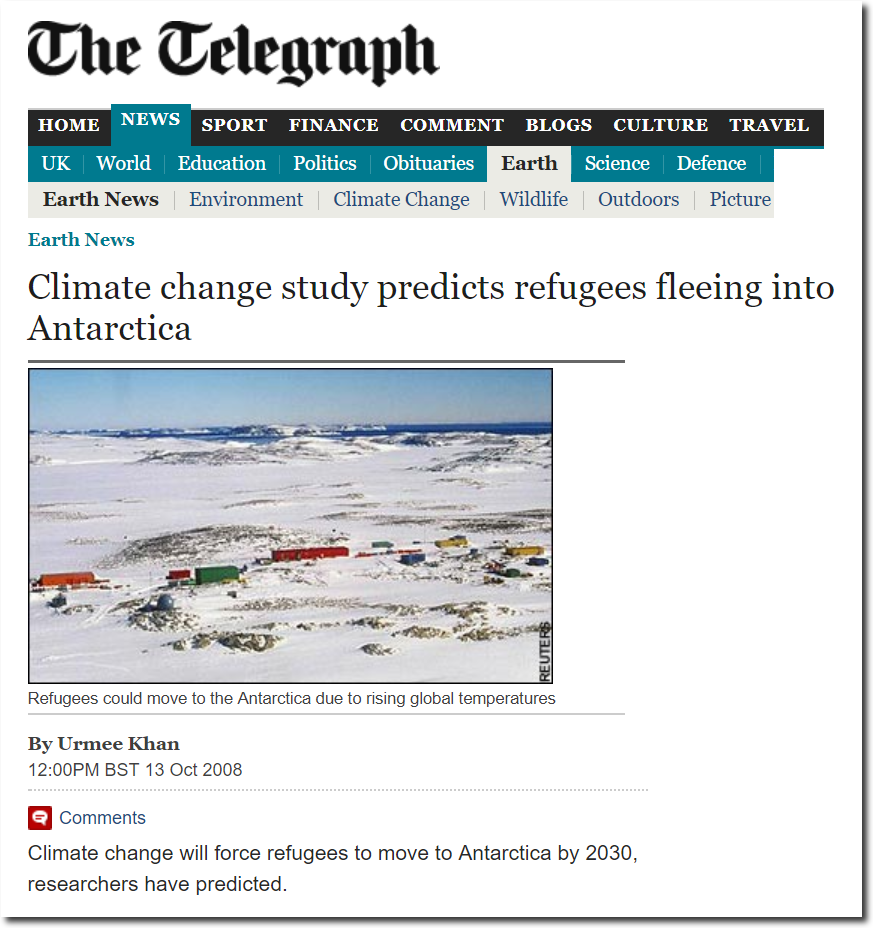
Climate change study predicts refugees fleeing into Antarctica – Telegraph
Syria: West Obstructing Objective Chemical Probe Because It Reveals Collusion with Terrorists
Al-Manar | January 24, 2018
Damascus condemned as lies on Wednesday allegations made by US State Secretary and French Foreign Minister about the use of chemical weapons in Syria.
In remarks carried by Syria’s State news agency, SANA, an official source at the Syrian foreign ministry said the US-French allegations are part of a policy adopted by Washington and Paris which has been aimed at systematically targeting Damascus.
The source asserted that Syria has always been fully cooperative and provided all that is necessary to conduct an unbiased, objective, and professional investigation into the use of chemical weapons.
The Syrian cooperation was met on the other side by Western obstruction of the probe, the source said, adding that the West has exercised various types of pressure on investigation teams to politicize it.
“A transparent and objective investigation would not serve the West’s agenda in Syria; rather it will reveal its confirmed collusion with terrorist groups by covering up those groups’ use of chemical weapons in order to accuse the Syrian government of their use,” SANA quoted the Syrian official as saying.
“The history of the US and its Western cohorts is rife with such lies and fabrications, and what happened in Iraq hasn’t been forgotten.”
Meanwhile, the source stressed that “those who fabricate such lies and overstep the jurisdiction of the relevant international organizations and pressure them to serve their own agenda have no credibility or any moral and legal criteria to appoint themselves judges.”
Hassan Nasrallah answers Trump on Hezbollah’s drug trafficking
Speech by Hezbollah Secretary General Sayed Hassan Nasrallah on January 19, 2018, on the occasion of the commemoration of the death of Fayez Moghniyeh, father of martyrs Jihad, Fouad and Imad Moghniyeh
In case this video is censored by Youtube, find it on Dailymotion, Vimeo or Rutube. See Kafka 2.0: How Youtube’s Political Censorship is Exercised
Hassan Nasrallah answers Trump on Hezbollah’s drug trafficking from Sayed Hasan on Vimeo
Transcript by Sayed Hasan | January 21, 2018:
In recent weeks, US accusations were made. They are not new but they are taking a new dimension. The US Department of Justice created a commission of inquiry that will come to Lebanon – I do not know if it is already there, the media have not made it clear – to meet with officials and Lebanese parties and to investigate. About what ? The Hezbollah links with drug trafficking.
A story was concocted in the US, that Obama would have prevented any investigation on the issue of Hezbollah drug trafficking, but Trump, being more intransigent, formed this Inquiry. The same approach is being carried out by France, and it seems there have been arrests of people linked to drug trafficking, money laundering, etc.
Anyway, I will not dwell at length on this subject, but I want to remind our unchanging position of principle. I want to tell you and all the spectators, categorically, that these are fabrications and false accusations which are not based on any fact and have no truth. Hezbollah, regarding this issue, has a clear religious, legal and ethical position. For us, the drug trade is illegal, prohibited, and is even among the major sins. And we prohibit drug trafficking even in the society of the enemy. Perhaps someone will say what is wrong with selling drugs to Israeli society to destroy it (from within)? Even the drug trade with Israeli society to destroy it is illicit in our view. The drug trafficking and spread are by principle illicit (whatever the circumstances) even to an enemy society. This has nothing to do with (warfare). Such are our ethics, such is our commitment, which stands absolutely.
And therefore, all (the accusations) have no basis of truth. The real question is: in what framework are these accusations made? I have already said and I repeat: as regards trade, and not just the issue of drugs, I have already reminded on more than one occasion, O people, that even the legal trade, we in Hezbollah are not doing. Even legitimate trade. All kinds of commercial or lucrative activity, we are completely detached from them. It is not by asceticism or because it would be illegal, I speak of legitimate trade. On the contrary, trade is a recommended action. Trade, from the standpoint of the (Islamic) law and rulings, is a recommended action. But as regards Hezbollah as a party, as a peculiar political and jihadist entity, we took the decision to make no trade.
And this decision is motivated by the sanctions, so that they will not harm the Lebanese traders, otherwise tomorrow all Lebanese traders would be accused of having Hezbollah money or of making it fructify. We conduct absolutely no lucrative activity. We do not invest our money (neither by trade, loans, bank interest …). The money we have at our disposal is only one that is sufficient for us, for our expenses on the various fields where we are, primarily the armed battles we lead. And therefore, we have no money fructifying, we have no business, and we do not have any member or office making any benefit from our money.
And also, incidentally, I have said it before and I repeat it today, for now, thanks God, after the victory in Iraq and the almost complete victory in Syria, the return of peace and reconstruction, there are companies and Lebanese traders who go to work in Iraq, Syria and other countries, I want to say to everyone: there is no one, no action project of this type belonging to Hezbollah. Hezbollah has nothing (like it). Hezbollah has nowhere any money invested, and is not involved nor a partner in any profit or commercial project.
Of course, we do not ban it. There are traders who are on the line of Hezbollah, who are our brothers, there may be rich, people who have abilities, but they work individually. We do not prohibit the Lebanese people to trade. If someone has money and does business, it is as as an individual, with his own money. These are individual companies. Hezbollah as Hezbollah hasn’t designated nor authorized anyone to speak in his name and conduct personal profit projects. For there is no such lucrative action. I say that to confirm this point.
On the issue of drugs, it is clearly an (unlawful) question for us, as I said, but (such accusations) are part of the war against us. It is part of the war being waged against us. And that’s a natural thing. When (former US ambassador) Feltman acknowledged that the US Embassy in Lebanon alone spent 5 billion – sorry, 5 million to sully the image of Hezbollah and keep young people away from it. This is part of the (enemy) effort to discredit us.
The Americans have done their best to convince the world that Hezbollah is a terrorist organization. Some countries went along, others not. And even some countries that have agreed to register us officially on the list of terrorist organizations, behind the scenes, they contact us and work with us and would (almost) be willing to die to preserve their relationship with us. The idea to (identify us as a) terrorist organization did not work. It is not logical.
Hezbollah has proved, especially in recent years, that it is one of the most important forces – not the largest, but one of the most important forces – fighting against terrorism and terrorist groups in the region. How could they describe us as terrorists while we fight the terrorists? Those that the world unanimously designates as terrorists (ISIS)?
This is why the Americans are trying something else. They want to present Hezbollah as a criminal organization. I hope that the public will pay attention to this. There’s designation as a terrorist organization and designation as a criminal organization. What is a criminal organization? An organization that makes drug trafficking, steals cars, made of gangsters, mercenaries and assassins, etc. They try to describe us as a criminal organization.
Very good. If they want to make an inquiry in Lebanon, they are welcome. I invite the Commission of the US Ministry of Justice to come do their investigation in Lebanon. And we hope that the Lebanese who will meet the members of this Commission will tell the truth and be honest. Let no one lie to incite against us. There are (unfortunately) people like that in Lebanon. In Lebanon, it is well known who has a tough stance on drug trafficking, drug traffickers and all of this. It’s well known. If someone has something against us, let him come forward. We hope they will tell the truth, even if I know that the Americans are not looking for the truth. They will look for anything to support that accusation and place Hezbollah on the list of criminal organizations.
Anyway, I said enough on this topic and I declare that we reject this accusation. On this issue, our position is firm and unchanging. We accept no charge. There is nothing dirty inside Hezbollah. Instead, they should first consider their own situation, investigate how the Americans, the CIA, the security agencies (FBI, etc.) themselves are trafficking drugs and destroying societies by spreading drugs there. So you should rather make a Commission on your own actions, investigate drug trafficking of your own officials and security agencies. […]
‘Executed’ North Koreans return to life
RT | January 21, 2018
North Korean leader Kim Jong-un is famous in Western media for executing people that fall out of his favor – though some seem to have found the knack of returning from the dead.
Reports regularly surface on Kim’s latest means of execution, ranging from the relatively mundane firing squad to the theatrical, or even cartoonish – such as feeding foes to packs of starving dogs or roasting them with flame-throwers.
The pop star and ‘former lover’
The most recent case is North Korean popstar Hyon Song-wol, spotted alive and well in South Korea on Sunday despite having reportedly been killed in a purge of singers, musicians and dancers back in 2013.
The performer was reportedly executed along with 11 others, including other members of her group, the Moranbong Band, the head of Unhasu Orchestra, and several dancers from the Wangjaesan Light Music Band.
The 12 victims had allegedly been accused of, among other offenses, recording themselves having sex and selling the footage. The reported victims hadn’t been seen since, until Hyon Song-wol, with whom Kim had reportedly been romantically entwined, publicly resurfaced on Saturday to inspect Olympic venues in South Korea ahead of the Winter Games.
The military chief
Back in 2016, N. Korean army chief Ri Yong Gil was reportedly executed for “factionalism, misuse of authority, and corruption.” As with a lot of information emanating from the isolated country, this turned out to false.
South Korean intelligence officials seemed to take his removal as head of the army as confirmation of his execution. The only problem was that a couple of months later Ri Yong Gil apparently returned from the dead, with an array of new senior-level positions, when he attended the Workers’ Party Congress in May that year.
The uncle ‘executed by a pack of dogs’
Apparently Kim really has it in for his older relatives, if Western media reports are to believed. So much so, it seems, that Kim was willing to execute his own uncle, by setting a pack of 120 starving dogs on him as part of yet another purge back in 2014.
Though it appears that Jang Song Thaek was indeed executed, the ‘ripped apart by dogs’ story was a complete fabrication that first raised its head on a satirical Chinese microblogging website.
The aunt ‘poisoned on request’
Further to ‘feeding his uncle to dogs’, as mentioned above, he reportedly then turned his murderous gaze towards his aunt, Kim Kyong-hui.
Kyong-hui, Kim’s father’s sister and the wife of uncle Jang Song Thaek, was reportedly executed by poisoning on the leader’s orders.
However, once again these reports turned out to be false. South Korean news agency Yonhap reported last year that she is very much alive, although she is being treated for illnesses ranging from depression to cancer.
Slapping an Israeli Soldier More Newsworthy Than Shooting a Palestinian Child in the Face
Coverage of Ahed Tamimi obscures Israeli violence and occupation
Gregory Shupak | FAIR | January 17, 2018
Israeli soldiers shot 14-year-old Palestinian Mohammad Tamimi point-blank in the face with a rubber-jacketed bullet on December 14, 2017, in Nabi Saleh, a small village in the occupied West Bank. The boy had to undergo six hours of surgery and was placed in a medically induced coma.
An hour later, Mohammad’s cousin, Ahed Tamimi, slapped and kicked at an armed Israeli soldier. Early the next week, after video of Ahed’s actions went viral, Israeli soldiers raided the Tamimi home at 3 a.m., arresting Ahed and confiscating the family’s phones, computers and laptops.
Ahed has been denied bail and could face years in prison. (Nour Tamimi, a 16-year-old cousin of Ahed’s who is also in the video, was also arrested and has been released on bail. Ahed’s mother Nariman was arrested later that day when she inquired about her daughter, and she remains in custody.)
Erasing the shooting
A January 1 Newsweek article described the incident as Ahed “assaulting Israeli soldiers,” “threatening two Israeli soldiers and then hitting them in the face,” “pushing the soldiers as well as kicking them, hitting them in the face and throwing stones at them.” The piece referred to Ahed’s actions as “assaults” and an “attack.” It failed to report that Israeli soldiers had just shot and severely injured her 14-year-old cousin.
CNN (1/8/18) also ran a piece that left out the most serious act of violence that day, as did Reuters (12/28/17, 1/1/18). An Associated Press report (12/28/17) had the same deficiency, leaving the false impression that the soldier was attacked without provocation.
The Newsweek piece also failed to note that the Israeli soldiers are members of a military force that has been occupying the West Bank for 50 years. Nor does CBS’s December 21 account mention the occupation, which structures every interaction between Palestinians and Israelis. (The fact that occupied people have a legal right to resist occupation is left out of all of the articles discussed in this piece.)
A report in the New York Times (12/22/17) does not mention that Mohammad Tamimi was shot in the face with a rubber bullet until the 13th paragraph, as though this fact is of minimal importance. The Times describes Nabi Saleh as having “long-running disputes with a nearby Israeli settlement, Halamish, that Nabi Saleh residents say has stolen their land and water.” The Times does not note that, as a colony on occupied territory, Halamish is illegal under international law.
Normalizing military tribunals
The Newsweek piece says Tamimi “has now been indicted on five counts of assaulting security forces,” and that she is “charged with interfering with the soldiers’ duties by preventing them from returning to their post.” It notes that “in May, she was charged with interfering with soldiers who were trying to arrest a protester throwing stones,” and refers to her indictment two other times, including in the headline. At no point does the article mention that the proceedings are taking place in a military court. Similarly, an Associated Press (1/9/18) report refers to “Israel’s hard-charging prosecution” and “the charges” against Tamimi, without mentioning that she is being tried by the same occupying military that shot her cousin.
Omitting that information makes it sound like Tamimi will receive a fair legal process, but the evidence suggests the opposite. According to the Association for Civil Rights in Israel, Palestinians in the occupied West Bank are subjected to a military court system that “does not grant the right to due process and the rights derived from it,” whereas Israelis illegally colonizing the Occupied Territories have the rights and privileges of a civilian legal system.
In the military courts, the age of majority is 16, which means that Palestinian teenagers can be tried as adults, while 18 is the age of majority for Israelis. Defence for Children International Palestine (DCIP), a group that has consultative status with the UN, reports that Israeli military court judges, who are either active duty or reserve officers in the Israeli military, “rarely exclude evidence obtained by coercion or torture, including confessions drafted in Hebrew, a language most Palestinian children do not understand.” The Israeli military courts’ conviction rate of greater than 99 percent underscores how stacked they are against Palestinians.
Framing Resistance as PR Stunts
The New York Times’ framing of Tamimi’s story suggests that the case’s central issue is whether Palestinians or Israelis would have been better off if the soldier had reacted more violently to being slapped. The Times’ David Halbfinger says
that Israelis could not decide whether the soldiers were virtuous pillars of forbearance and strength . . . or an embarrassing advertisement of national paralysis and vulnerability.
Palestinians, meanwhile,
debated whether the video might have damaged their cause, by showing their oppressors behaving gently, or helped it, by showing that resistance can be effective even when one is unarmed.
The paper even implied that Palestinians may be happy that Tamimi was arrested, writing that “the scene of the young woman being hauled away may have given Palestinians the clear-cut propaganda coup they had been denied by the original confrontation.”
CNN similarly trivialized Tamimi’s arrest, noting that Israelis call her “Shirley Temper” because of “her long ginger curls” and because they accuse her of “starring in carefully choreographed ‘Pallywood’ videos, a dismissive characterization of protests considered staged for the camera.”
While the Times and CNN provide a forum for speculation about whether Palestinians want their own children to suffer because it makes for good public relations, there is much this framing overlooks. For example, none of the above-mentioned articles mention the risk of Tamimi being seriously harmed in Israeli jails. Yet UNICEF charges Israel with subjecting Palestinian youth to “practices that amount to cruel, inhuman or degrading treatment or punishment, according to the Convention on the Rights of the Child and the Convention against Torture.” These include children “being aggressively awakened in the middle of the night by many armed soldiers and being forcibly brought to an interrogation center tied and blindfolded, sleep-deprived,” and “threatened with death, physical violence, solitary confinement and sexual assault, against themselves or a family member.”
Israel’s well-documented mistreatment of Palestinian youth is ignored in these reports, which suggests it is not Palestinian parents but Western reporters who are interested in crafting a public relations spectacle.
US Attempts to Blame Syrian Gov’t for Chemical Attacks Unfounded – Russian MoD
Sputnik – 20.01.2018
The Russian Defense Ministry stated that the United States was ignoring the objective evidence of chemical weapons’ use by terrorists in Syria, targeted against the civilian population and the country’s government troops.
The ministry went on by saying that the US attempts to blame the Syrian government for the use of chemical weapons have never been grounded by any hard evidence.
“The US administration is at best not showing any interest and often ignores the objective factors of terrorists using poisonous substances while fighting against government forces and civilians,” the ministry said in a statement.
According to the Russian military, Washington has failed to fulfill their obligations on the destruction of chemical weapons, preserving at least 10% of their arsenal operational.
“Following our commitments under the Chemical Weapons Convention, Russia has eliminated its entire chemical warfare agents arsenal early, while the United States, using false pretexts, has at first halted and then completely stopped fulfilling its commitments due to a ‘lack of financing,’ still keeping around 10 percent of its arsenal in a combat ready condition,” the ministry added.
The statement was made after on Friday the US State Department said that Russia does everything to protect the government in Damascus despite the fact that the latter allegedly continues using chemical weapons.
The less-mentioned lives of Mrs. Krim
By Helena Cobban | Just World News | January 18, 2018
This week, US media have contained many glowing obituaries of a 91-year-old medical researcher called Mathilde Krim, who in the early 1980s played an apparently huge role in publicizing and destigmatizing the then-new disease of HIV/AIDS and in mobilizing funding for NGOs and research centers working to understand the disease and treat its many victims. Dr. Krim died on January 15.
The New York Times, for example, carried this obituary, covering more than half a page, that devoted nearly all its column inches to the many contributions Dr. Krim had made to AIDS research.
What that obit referred to only in passing was the role she had played in immediate post-1945 Europe as a gun-runner for the Irgun– described there only as part of the “Zionist underground” rather than (as would have been more accurate) an already well-known terror group.
 But neither the NYT nor any other Western MSM outlet I have seen/heard has made any mention of the role Mrs. Krim played as a very close confidante to Pres. Lyndon B. Johnson during the crucial days leading up to and during Israel’s “Six Day War” of 1967 against its Arab neighbors.
In those days, Mrs. Krim’s husband (her second) was Arthur B. Krim, a prominent Hollywood lawyer who was Chair of the Democratic National Finance Committee. Conveniently, the Krims had a ranch in Texas right next to Pres. Johnson’s; and it was a barely hidden secret in leading government circles in Israel and the United States at the time that Mrs. Krim was extremely close to Lyndon Johnson.
In the days leading up to the war, the many forms of “signaling” conducted between Washington and Tel Aviv were extremely important. Israel’s Labor Party PM, Levi Eshkol, needed to win support from Washington for the strategy he pursued in the lead-up to this war, which he and his generals were planning in exquisite detail in those days. And he needed reassurances from Washington that Pres. Johnson would back him, before he and his generals finally launched the “blitz” against the Arab armies that destroyed nearly all their capabilities in the first hours of the war. Mrs. Krim was almost certainly one key channel for those messages. She and Johnson were at their ranches together in the days leading up to the war (with several in-person visits and phone calls recorded between them); and then she went to Washington DC when he did, once the war broke out.
Mrs. Johnson, meanwhile, was suffering from what was described as a massive headache, and stayed in Texas.
More details about Mathilde Krim’s relationship with Johnson in that crucial period can be found in Donald Neff’s 1985 book Warriors for Jerusalem: The Six Days that Changed the Middle East. I don’t have a copy to hand but shall look for one shortly.
The huge role that Mrs. Krim played in 1967 is well-known to everyone who has seriously studied US-Israeli relations at that time. After all, she was an integral part of a well-oiled pro-Israeli influence movement at the heart of the US political system, and the DC-Tel Aviv signaling process that she was part of worked strongly in Israel’s favor to transform not just the Middle East but the whole shape of global politics. (It also led to the misery of the people of the occupied West Bank, including East Jerusalem; Gaza, and the Golan Heights: all of whom continue until today to live under the military occupation rule initiated by that war.)
So surely, that role Mrs. Krim played in the events of May-June 1967 should have received some mention in the news media this week? That it has not, thus far, probably tells us a lot about the extreme skittishness with which the Western MSM continues to address any topics related to the deep entanglement of so much of the US political elite– especially the Democratic Party– with their counterparts in Israel.
Washington and Allies Go Orwellian on Korea Peace Talks
By Finian CUNNINGHAM | Strategic Culture Foundation | 19.01.2018
Just as North and South Korea achieve important peaceful exchanges, Washington and its NATO allies appear to be moving with determination to sabotage the initiative for averting war on the East Asian peninsula.
Further, the reckless, gratuitous provocations beg the conclusion that the United States is indeed trying to start a war.
Meanwhile, unprecedented accusations this week by US President Donald Trump that Russia is supporting North Korea to evade United Nations sanctions also point to the danger that any conflict could spiral out of control to engulf world nuclear powers.
Moscow rejected the unsubstantiated claims leveled by Trump, saying that Russia is abiding by UN trade restrictions over North Korea, and that the American president’s allegations were “entirely unfounded”.
Trump’s verbal broadside suggests that Washington is trying to undermine the nascent talks between the two Koreas, talks which Russia and China have both applauded as a long-overdue diplomatic effort to resolve the Korean conflict.
Separately, Russia’s Foreign Minister Sergei Lavrov deplored a summit held in Vancouver, Canada, earlier this week in which the US and 19 other nations – most of them NATO members – called for sharper sanctions on North Korea that go beyond the remit of the United Nations. The conference, co-hosted by Canada’s Foreign Minister Chrystia Freeland and US Secretary of State Rex Tillerson, issued a stridently bellicose statement, calling in effect for North Korea to surrender its nuclear weapons or face US-led military action.
Significantly, and pointedly, China and Russia were not invited to the Canadian summit.
Most of the attending states were part of the original US-led military force which fought against North Korea during the 1950-53 war. A war which killed as many as two million North Koreans.
Russia admonished that the conference was “harmful” to current peace talks between North and South Korea. China rebuked the Canadian event as being stuck in “Cold War thinking”.
The anachronism of countries like Britain, Belgium, Denmark, France, Italy, Netherlands and Norway attending a conference on the Korean crisis while Asia-Pacific powers Russia and China being excluded was noted by Russia’s Sergei Lavrov. The anachronism is not only absurd, he said, it reprises a provocative “war summit” message.
Disturbingly, what the Vancouver gathering demonstrated was the willingness by the US and its allies to circumvent the United Nations Security Council and the previously established regional Six-Party forum involving the two Koreas, China, Japan, Russia and the US.
At the Vancouver event, Tillerson laid out a belligerent agenda that was endorsed by the other attendees. The agenda included the precondition of North Korea giving up its nuclear program unilaterally; and it also flatly rejected the proposal made by Russia and China for a “freeze” in all military activities on the Korean Peninsula as a step to get comprehensive settlement talks going.
Tillerson made the following sinister ultimatum: “We have to recognize that that threat [of North Korea’s nuclear weapons] is growing. And if North Korea does not choose the path of engagement, discussion, negotiation, [that is, surrender] then they themselves will trigger an option [US military action].”
The US diplomat also warned that the American public must be “sober” about the possibility of war breaking out. Tillerson said the risk of such a war on the Korean Peninsula “continues to grow”. This was echoed by President Trump a day later in an interview with the Reuters news agency in which he also warned of possible war. It was the same interview in which Trump blamed Russia for aiding and abetting North Korea.
This sounds like US leaders are intensifying the conditioning of the American public to accept use of the military option, which they have been threatening for the past year in a pre-emptive attack on North Korea.
The Vancouver summit also called for proactive interdiction of international ships suspected of breaching UN sanctions on North Korea. That raises the danger of the US and its allies interfering with Russian and Chinese vessels – which would further escalate tensions.
These reprehensible developments are a reflection of the increasingly Orwellian worldview held by Washington and its partners, whereby “war is presented as peace” and “peace is perceived as war”.
Just this week, North and South Korea held a third round of peace negotiations in as many weeks. Even Western news media hailed “Olympic breakthrough” after the two adversaries agreed to participate in the opening ceremony of the forthcoming winter games next month as a unified nation under a neutral flag.
After two years of no inter-Korean talks and mounting war tensions on the peninsula, surely the quickening pace of peace overtures this month should be welcomed and encouraged. Russia, China and the UN have indeed endorsed the bilateral Korean exchange. Even President Trump said he welcomed it.
Nevertheless, as the Vancouver summit this week shows, the US and its NATO allies appear to be doing everything to torpedo the inter-Korean dialogue. Issuing ultimatums and warning of “military options” seems intended to blow up the delicate dynamic towards confidence and trust.
Two reports this week in the New York Times conveyed the contorted Orwellian mindset gripping Washington and its allies.
First, there was the report: “Military quietly prepares for a last resort: War with North Korea”. The NY Times actually reported extensive Pentagon plans for a preemptive air assault on North Korea involving a “deep attack” manned by 82nd Airborne paratroopers and special forces. The paper spun the provocative war plans as a “last resort”. In other words, war is sold here as peace.
Which raises the question of who is trying to wreck the Olympic Games being held in South Korea in February. For months, Western media have been warning that North Korea was intending to carry out some kind of sabotage. Now, it looks like the sabotage is actually coming from the US, albeit sanitized by the NY Times.
The second report in the NY Times had the telling headline: “Olympic détente upends US strategy on North Korea”.
So, let’s get our head around that display of dubious logic. A peaceful development of détente between two adversaries is somehow presented as a pernicious “upending of US strategy on North Korea”. In other words, peace is sold here as war.
Take for example this choice editorial comment from the NY Times in the second report: “This latest gesture of unity, the most dramatic in a decade, could add to fears in Washington that Pyongyang is making progress on a more far-reaching agenda.”
And what, one wonders, would that “far-reaching agenda” entail?
Again the NY Times elaborates: “White House officials warn that the ultimate goal of [North Korean leader] Mr Kim is to evict American troops from the Korean Peninsula and to reunify the two Koreas under a single flag… For the United States, the fear has been that North Korea’s gestures will drive a wedge between it and its ally, South Korea.”
Only in a perverse Orwellian worldview would an initiative to calm tensions and build peaceful relations be construed as something to “fear” and be opposed to.
Only in a perverse Orwellian worldview would peaceful dialogue provoke plans for pre-emptive war.
But that is precisely the kind of dystopian world that Washington and its lackeys inhabit.
‘When US sidelined, Koreas can work towards peace & stability, talks suggest’
RT | January 18, 2018
US policy is a distraction from the ongoing Korean talks, which Seoul hopes will eventually lead to the denuclearization of the entire peninsula, security analyst Charles Shoebridge told RT.
The third session of inter-Korean talks in a week signalled a significant breakthrough in the frosty ties between the two Koreas. And while the thaw in relations was welcomed by Seoul, the recent rapprochement was greeted with skepticism by 20 foreign ministers of the so-called “Vancouver Group,” which defended South Korea during the Korean War more than five decades ago.
“It is particularly ironic… That while this… Thawing of tensions is going on between North and South… It’s happening… In Vancouver, the former allies of South Korea are tightening the noose, increasing the rhetoric, raising the temperature,” Shoebridge told RT after the US-led group decided to consider unilateral sanctions against Pyongyang Tuesday.
The US is adamant that it will apply not only economic and diplomatic pressure, but also issue military threats to force N. Korea to disarm. On Wednesday, Seoul and Washington “reaffirmed its security commitment to the defense of South Korea using all categories of its military capabilities,” the Ministry of National Defense said. The allies also “agreed to continue the rotational deployment of US strategic assets to South Korea and nearby areas as long as North Korea’s nuclear and missile threats persist.”
The decision to keep up with military threats comes the same day as Donald Trump expressed doubt that the intra-Korean talks will lead to “anything meaningful.” The US president also warned that it is “very possible” that the standoff with North Korea might not be resolved peacefully. Charles Shoebridge criticized Washington’s foreign policy, pointing out that Seoul and Pyongyang can achieve much more if the US stops interfering in their “considerable diplomatic achievement.”
“These talks themselves started on the back of South Korea agreeing to persuade America to at least pause its military exercises,” Shoebridge told RT. “It appears to be the case when the interests and the foreign policy, and the actions of the United States are put to one side, local players are, to some degree at least, able to start finding local solutions, [and] make some progress towards securing their local interests, which are usually peace and stability.”
China and Russia – two major regional players who were not invited to participate in the Vancouver summit this week – criticized Washington’s pessimistic outlook of the Korean diplomatic process. Participants that gathered in Canada, while rejecting the Chinese-Russian ‘double freeze’ roadmap for easing Korean tensions, failed to provide any alternative, Russia’s Foreign Ministry said in a statement.
In July 2017, Moscow and Beijing proposed the initiative that would see the US and its allies halting all major military exercises in the region in exchange for Pyongyang suspending its nuclear and ballistic missile program. The ‘double freeze’ initiative, however, was once again rebuffed by Washington Tuesday during the Vancouver summit.
Beijing also slammed the meeting, saying it was driven by a Cold War mentality. “When major parties to the Korean Peninsula issue are not present, such a meeting will not contribute to properly resolving the issue,” Chinese Foreign Ministry spokesman Lu Kang pointed out Wednesday. “All parties should cherish the hard-won momentum of easing tension on the peninsula, support the efforts made by the DPRK and the ROK in improving ties, and double their commitment in alleviating the situation and promoting dialogues.”
On Wednesday, North Korea agreed to allow a joint women’s ice hockey team to participate at the PyeongChang Winter Olympics (February 9-25) and march together as one with their southern neighbor under a “unified Korea” flag at the opening ceremony.
The North also consented to send a 150-member delegation of athletes and cheerleaders to the Paralympic games in March. South Korean President Moon Jae-in once again expressed hope Wednesday that the inter-Korean talks will pave the way for broader dialogue between the United States and the North which could eventually lead to the resolution of the North Korean nuclear standoff.
Featured Video
Why Hamas Really Attacked Israel on Oct. 7
or go to
Aletho News Archives – Video-Images
From the Archives
Israel: Strategic Ally or Liability?
By Stephen Sniegoski | My Catbird Seat | June 12, 2010
The claim that Israel serves as a valuable ally for the United States is made by both pro-Zionists and much of the anti-war and anti-Zionist Left that is influenced by Noam Chomsky. As a result of the Gaza flotilla massacre, which has caused a world-wide uproar against Israel, the value of Israel to the United States is being publicly questioned in more mainstream foreign policy forums. … continue
Blog Roll
 Aletho News
- Why Hamas Really Attacked Israel on Oct. 7
- Declassified UK exposes British man who fought for ‘Israel’ in Gaza
- West’s death cult in a theater near you
- How the Yandex ‘Russian bots’ lie fell apart
- Burnham’s ‘Russia did Brexit’ ruse crumbles
- Estonia making movies and games to encourage war against Russia
- Four in five new UK jobs taken by foreigners – report
- Here’s what Trump’s latest U-turn really means for Russia and Ukraine
- The Houthis Are Not an Iranian Proxy
- Europe’s Energy Hypocrisy, Russian LNG Profits and US Dependence
- If Americans Knew
- Activists Abused By Israel Return to New Freedom Flotilla Mission
- 60 Minutes won’t tell the full truth about Israeli settler violence
- Nearly 50,000 women, girls killed or severely injured in Gaza since October 2023: UN Women
- ADL is working with AI companies to suppress alleged ‘antisemitism’
- Israeli occupation forces using social media surveillance unit to target hundreds of Palestinians in the West Bank
- Israel’s New – and Terrifying – Security Doctrine
- Israeli Attacks Kill Five in Gaza, Including a four-year-old and a woman
- Air Force Major Who Called for Trump’s Impeachment Held in Solitary Confinement
- It’s a Genocide, I’m Into It’: Seinfeld Mocks Protest over Palestinian Children Killed
- Universities fire dozens amid pressure from Zionist billionaires
- No Tricks Zone
- New Study Suggests Large Regions Of The Pacific Ocean Have Been Cooling For The Last 80 Years
- Germany’s Green Energy Debacle: High Energy Costs Force Kahla Porzellan to Close After 182 Years!
- New Study: 50 Years Of The Most Aggressive ‘Net Zero’ Policies Can Only Affect The Global Climate By 0.03°C
- US September “Heat” Was No Record…Many Records Set Decades Ago
- Latest European Green Energy Debacle; Portugal’s Largest Flagship Solar Park Insolvent!
- Green Energy Debacle: German Expert Professor Fritz Vahrenholt Warns Of Severe Economic And Social Consequences
- Two More Paleo Reconstructions Affirm Meters-Higher Sea Levels Across Ireland, Brazil 7000-6000 Years Ago
- New Study: Earth And Venus Surface Warmth Largely Explained By Convection And Lapse Rate, Not CO2 Or Radiation
- 2025 Nature Paper Claiming Worsening Global Drought Gets RETRACTED …Heavily Flawed
- New Study: ‘Global Drought Shows No Detectable Recent Acceleration Under Climate Warming’

