Organized efforts are underway by Democratic Party affiliated NGO’s to try and somehow delegitimize the results of this week’s US Presidential Election.
On the eve of the US Election before voters went to the polls, 21WIRE political affairs analyst Patrick Henningsen accurately predicted this week’s unrest when he said:
“If Trump wins, expect the likes of Soros and MoveOn.org to unleash wave after wave of flash mobs, who will protest, riot, smash and burn their way on to CNN’s 24 hour news rotation. Expect Occupy 2.0, and #BlackLivesMatter to rage.”
On Friday, Henningsen talked to RT International about the post-elections protests that were coordinated in part by Democratic Party ‘community organizing’ online platform MoveOn.org.
Not surprisingly, MoveOn.org have also launched a national ‘activist’ campaign to “Abolish the Electoral College” after Democratic candidate Hillary Clinton came up short with 232 (including New Hampshire) to Donald Trump’s 306 (including Arizona and Michigan). Final totals are not yet in, but thus far 2016 would be the fifth time in U.S. history that a presidential candidate has won the White House while losing the total popular vote.
21WIRE Associate Editor Shawn Helton recently revealed more details about how the near exact same methods used in CIA and Soros-funded ‘color revolutions’ overseas – are now being deployed on US domestic shores by similar NGO front organizations: has been the driving force behind nationwide protests against the election of Donald Trump.
“Overseas, Washington tends to use the same cast of NGO fronts to build-up pro-US political opposition groups, as well as plan and generate civil unrest. They include the Albert Einstein Institute (AEI), National Endowment for Democracy (NED), International Republican Institute (IRI), National Democratic Institute (NDI), Freedom House and later the International Center for Non-Violent Conflict (ICNC), and the US Agency for International Development (USAID), the financial and contractor arm of the Department of State. Inside the US, deep state actors in Washington generally work through Democratic Party affiliated organizations like MoveOn.org, as well as through labor union organizations like AFL-CIO, and UNITE HERE. These, along with many other similar organizations have been involved in organizing this week’s protests,” says Helton.
Helton also raised the question as to why President Obama has stayed silent in the face of street protests, opting instead to “lead from behind.” He explains:
“Certainly, judging by President Obama and Hillary Clinton’s total silence over their own party’s role in fomenting this week’s unrest – one can only conclude that both party leaders approve of the protests and riots. The political motivation is undeniable – to help delegitimize a new Trump presidency.”
The recent victory of now President-elect Donald Trump has taken a lot of Americans by surprise. But it would be safe to say that the corporate ruling elites that went all in on Hillary Clinton were literally shocked by her defeat. Without her at the head of the state they fear they may not be able to carry on spreading the corruption, which is believed to be at the foundation of the Clinton clan, or carry on waging wars upon other states which includes arming terrorists responsible for killing thousands of civilians around the world.
And even though the corporate elites have formally acknowledged Trump’s victory, they are pressuring the current government to fight the next US President tooth and nail, until all resources are exhausted.
Over the last eight years, the Obama administration has acquired a long list of tricks that were used against undesired governments in various parts of the world, while the most effective among them is the so-called “color revolutions,” where essentially a coup d’etat is achieved by media manipulation and large mobs. US intelligence services are now prepared to unleash such a revolution on the home front, since they are fairly concerned about their future under Trump, as the Washington Post would report.
The fact that Obama still believes in Trump’s inability to replace him in the White House has already been announced by the White House Press Secretary Josh Earnest. At the same time, he would point out, while commenting on the anti-Trump protests in the US, that the right for freedom of expression must be exercised without violence, clearly alluding to the current administration’s arsenal of “peaceful” tools that would allow it to get rid of Trump.
That is why we already are witnessing a wave of “protests” being unleashed under the control of the Obama administration. The corporate media and social networks are openly arrayed against the incoming 45th US President. These very tactics have been used by US intelligence agencies in Brazil, Nicaragua, Hong Kong, Thailand, as well as across the Middle East and Eastern Europe to unleash a “color revolution”. In some countries, such actions have brought foreign government under the direct control of the White House, as we can see it in Ukraine, Brazil and several other countries.
As a result, we are now being told about thousands of protesters in US cities rallying against the Trump election victory. These claims were followed by a petition published on Change.org that demands the US authorities change the results of the recent election, demanding the electoral college be revised, and that the election results be overturned on December 19. It is being reported that this petition has already been signed by a total of two million people.
It goes without saying that an attempt to launch a “color revolution” in the United States is being supported by a number of Europe states in addition to the US, including France and Germany, since the political order there is concerned about the impunity they’ve been enjoying coming to an end, with Trump failing to openly signal continued open US support for them. The British Independentwants Trump to be impeached, citing law professor Christopher Peterson, who would claim that there is a strong case for the beginning of legal proceedings that would stop Donald Trump from being president. The impeachment process is usually initiated when a president of a state has committed some sort of a serious offense, but Trump hasn’t been able to do anything yet, since he hasn’t been inaugurated. Still the Independent believes there must be some legal ground for his impeachment.
It’s clear the train of “color revolution” is under full steam in the US today. What will come up from this attempt to ignore the US Constitution, remains to be seen.
For the last 30 years, I have witnessed and experienced the severe restraints on any free and balanced discussion of the facts. This reluctance to criticize any policies of the Israeli government is because of the extraordinary lobbying efforts of the American-Israel Political Action Committee and the absence of any significant contrary voices.
— Former U.S. President Jimmy Carter [1]
How the Interviews Came About
The Marxian thesis that the dominant culture and ideology of a society (here referred to as Social Base or just Base) are those of the dominant class (here referred to as System) is a sharp tool to probe how political systems work and how they stay in power. Does this tool work in the U.S. model? Certainly, in the United States, the relation between the System and its Social Base has been regular since the inception of the thirteen colonies. Because of that sustained regularity, System and Base acted in convergent patterns of dependency. In historical perspective, it was not possible for the System to transform those colonies into states, and thereafter expand its conquests to form a continental empire without a solid social base that shared its purpose and visions for expansion. From that time onward, an ideological symbiosis ran between the System and the Base. Not only that, but each time the System modifies direction, philosophy, or ideology, the Base would adapt by modifying its attitudes and perception.
The patterns of ideological association between the U.S. System and its Social Base extended into modern times, and the yardstick to measure them is the presidential elections. If you look at voters’ turnout since 1960, you will notice that a relative-to-large majority of Americans had voted in those elections. My interpretation of the vote in relation to Marx’s thesis is the following. Voting for a system that is known for its aggressive imperialist policies, crimes around the world, overthrowing foreign governments not in line with Washington, and countless military interventions and invasions that left millions of people dead means one thing: Voting for that system while knowing its attributes, policies, and actions amounts to active sharing in its ideology, culture, and violence.
Caveat! That does not necessarily mean that all voters share the System’s imperialistic values of violence and destruction of foreign peoples. The pertinent meaning of voting interpreted in relation to the System’s foreign policy objectives versus the objectives of the Base resides in two concepts. Discarding immediately the notion that the Base has been cohabitated by the system, the first concept has it that the Base has given a mandate to the System to carry out its ideology of empire and imperialism based on the undeclared condition to spare the people from the horrors of foreign wars. A dichotomy sets in here. The System has its way of life, and the Base has its own. The second concept has to do with the basic tenets of colonialism. Meaning, if the System could be successful to obtain unspecified benefits through wars, then the base could share in these benefits despite aversion to violence and opposition to the institution of war as a means to resolve problems between nations.
A question: Would abstaining from voting resolve the issue of “active sharing” in the policies of the system? This subject is open for debate . . .
The relation between the American System and its Base was uniform up to a certain point in history (late 1920s). Until that point, the American state was still busy completing its structural transformation into a big power status. That uniformity, however, managed to keep the patterns of the political power unchanged. To be exact, despite persistent immigration that should have altered the relations between the Base and government, as well as the composition of the latter, the dominance of the traditional ruling elites was 1) not open for challenge, and 2) shaped by an exclusive American Anglo-Saxon experience.
But when Franklyn D. Roosevelt showed signs of surrender to the Zionist pressure on the issue of establishing a “Jewish” state in Palestine, he opened a large crack in the System. That was the first time in U.S. history where the powerful American imperialist state yielded to a foreign ideology that was not part of its basic project. With that, a movement with a limited religious social base began penetrating the files and ranks of the U.S. power. The rest is history. As a result, the unrelenting entrenchment inside the political structures of the United States coupled with accumulated changes in the configuration of the U.S. power, the dominant American System itself fell under the domination of one of its social factions—American Jewish Zionists.
When Franklyn D. Roosevelt showed signs of surrender to the Zionist pressure on the issue of establishing a “Jewish” state in Palestine, he opened a large crack in the System.
As a group, American Jewish Zionists have all attributes of an independent establishment. They possess efficient organizational structures, have a monolithic political presence across the American system, and they know how to finance their activities with U.S. tax money. I must note that their alignment with the global agenda of U.S. imperialism is a two-point expedient. The first is focused on being recognized as earnest operators at the service of America’s interests. The second is tactical. To reap, on behalf of Israel, the benefits of alignment with slogans such as “Israel is our only trusted ally in the Middle East”.
The American Jewish Zionist experience is agenda driven. As such, their domestic and foreign agendas have precedence over any other Jewish-related consideration.
On the domestic front, the focus could not be more evident: to consolidate Zionism in the United States and turn it into a means to 1) perpetuate Israel as an American national issue, and 2) make of them the principal factor in defining American politics. You can notice the endeavor clearly during U.S. elections when the Zionist media question whether this or that candidate is good for the Jews, and for Israel. Today, voicing dissent against the policies of American Jewish Zionism or criticizing Israel amounts to crime. Jimmy Carter experienced this firsthand. When he published his book: Palestine: Peace not Apartheid, American Jewish Zionists unleashed the fire of hell upon him.
As for the Jewish Zionist foreign agenda, this is clear-cut and leaves no space for misunderstanding. It aims to induce, control, or lead the United States to 1) adopt hostile policies toward the Arab nations because due to their rejection of the Zionist state, and 2) undertake military actions against any country that appears as posing a potential or direct threat to Israel. Equally important, it demands that the United States keep denying the Palestinians rights for nationhood through American diplomacy. What is the rationale? Recognition of the Palestinian national rights means the invalidation of the Zionist state and its claim on Palestine.
Because the Jewish Zionist control of the U.S. System is real and dominant, how does the American society figure vis-à-vis this dominance? Based on observations of the American society and its multiple cultural and ideological patterns, there can be but one answer: Zionism is not the dominant culture and ideology of the American people. It is, however, the dominant culture and ideology of the U.S. political system.
OBSERVATIONS
First, despite gargantuan Zionist propaganda apparatuses directed to the American people, Jewish Zionists have consistently failed to create interest or sympathy for Zionist issues and for Israel,
Second, due to historically developed indifference to foreign issues, a majority of Americans have only vague ideas on what Zionism is,
Third, to establish roots for their political dominance, Jewish Zionist activists invariably focus not on the American people, but on ways to control the American system from inside by controlling first the institutions that matter: White House and Congress.
Fourth, this control did not happen because of elections. It is preponderantly due to the practice of appointing Jewish Zionists to important positions inside the administrations,
Fifth, among the stratagems employed by Zionists when they run for elective offices, one was particularly effective: Take advantage of the reverence of the population for the idea of election. To do that, Jewish Zionist candidates rarely, if ever, talk about Israel or Zionism. Instead, they only debate matters of interest to the voters. Once elected though, promoting Israel via American legislations becomes the top hidden agenda,
Sixth, and to conclude this particular argument, the fact that one administration after another succumbed to the diktat of Jewish Zionists (thus indirectly to Israel) in matters of foreign policy and wars proves that the culture and praxis of those administrations are those of the dominant ideology and culture—Zionism.
Another point to discuss is the expansion of the Jewish Zionist power. By all accounts, such an expansion is not a phenomenon but an incremental process. In his book, The Arabists: The Romance of an American Elite, Robert D. Kaplan defined the issue that I framed as a process in terms of gradual replacement of traditional diplomatic elites with new ideological elites that had no interest in the ways of the old school of diplomacy. Kaplan was unambiguous. He called these new elites by their names: Irish-Americans and Jewish-Americans.
Kaplan’s viewpoint on this replacement is important to our discussion. He argued that the old elites approached the U.S.-Arab relations with an open mind and readiness for dialog, all while keeping an eye on the U.S. imperialist interests. His argument opens the door for a veritable conclusion. The two groups of post-WWII American society that Kaplan mentioned had in fact changed the dynamics of U.S. foreign policy. (It is public knowledge that both groups are known for their hostility toward Arabs and Muslims—each for his own set of religious, political, and ideological rationales.). As for the successive shares of African-Americans and Hispanics in the making of the national policy of the United States, this is another argument.
As a witness to history, in early 2012, I began drafting a comprehensive analysis on the role of American Jewish Zionists in the making of U.S. policies and wars in the Arab world. In May of that year, as my work became broad in scope, I decided to seek more views on the subject. I came up with the idea to conduct several interviews where I pose the same questions. While some of the prospective interviewees declined, and others accepted but then withdrew, three prominent thinkers acclaimed for their knowledge, scholarship, and outstanding political activism graciously gave me their views.
They are Francis Boyle, a professor of international law, University of Illinois, College of Law; James Petras, a professor emeritus, University of Binghamton, New York; Canadian writer and former co-editor of the online publication of Dissident Voice Kim Petersen. Professors Boyle and Petras answered my questions via phone conversations, and, Petersen via email correspondence.
However, in the weeks following the interviews, my work swelled up to such a length that it became unsuitable for internet publishing. In short, I was unable to honor my commitment to publish the interviews as planned. Today, as I thank Prof. Francis Boyle, Prof. James Petras, and Kim Petersen for sharing their invaluable insight, I apologize to them for the delay in putting the interviews out there to read.
INTRODUCTION
The turning point in the emergence of Jewish Zionism as a dominant American political force came about when Iraq invaded Kuwait. (Discussing the origins and strategic complications of that invasion goes beyond the scope of this introduction.) The Jewish Zionist establishment seized the occasion, mobilized its omnipresent propaganda operatives, and led colossal media campaigns to promote military actions against Iraq. To bring their war mania to fruition, they unleashed their “experts” in all directions. They talked about Iraq’s “formidable” military capabilities and about Saddam’s one-million-man standing army ready to invade Saudi Arabia and seize its oil. They told stories about Saddam Hussein’s personal life, his bunkers, and his mortal “nuclear threats” to Israel. And they talked about Iraq’s threats to U.S. interests and “allies” in the Middle East. . . . Here is a brief account of those events.
On July 25, 1990, Iraqi president Saddam Hussein met with U.S. ambassador to Iraq, April Glaspie. It is on record that Glaspie gave Hussein an unambiguous but indirect greenlight to resolve Iraq’s problems with Kuwait militarily. On August 2, Iraq invaded Kuwait. On August 3, George H. W. Bush ordered the freezing of Iraqi and Kuwaiti assets and immediately placed Iraq under hermetic embargo. Considering the prompt, extraordinary anti-Iraq measures that the United States took in the first 24 hours of that invasion, one wonders what was pushing the U.S. to move so quickly on Iraq knowing that only two days earlier, this was conducting a U.S. proxy against Iran. The observation that the U.S. did not take similar actions when Iraq invaded Iran in 1980, or when Israel invaded Lebanon in 1982 raises many questions. What were the U.S. rationales in taking such measures? Who conceived them? Did the U.S. entrap Iraq? Why? . . .
The atmosphere that followed the invasion was surrealistic. Like a lightning bolt, U.S. imperialist and Zionist forces instantly mobilized their media, talking heads, retired generals, and bogus experts on the Middle East. The deafening uproar they made and all lies they told about atrocities committed by Iraq in Kuwait hid a definite scheme: Incite for war. In the period August 2, 1990 – January 14, 1991, Israelis and Jewish Zionists from all fields appeared en mass and in every possible medium available to urge the Bush regime to give up diplomacy in favor of war. On January 15, 1991, a 30-member “coalition” in which the U.S. had the lion share—ninety-seven percent of the total force—attacked Iraq. By every standard and minutia of details, the war on Iraq in 1991 was an American War.
At the end of a war that destroyed one of Israel’s Arab adversaries, George H. W. Bush might have thought of himself as America’s “laureate hero”. He did not predict though that his temporary freezing of the U.S. loan guaranties to Israel, would have unleashed the Jewish Zionist establishment against him. The fact that he lost to Bill Clinton (who opposed Bush’s freeze, and who stated that Israel was the “only country that paid back its debts”) indicated that American Jewish Zionists had finally reached their objective: To perfect ways to control the U.S. politics from the inside. In retrospect, it can be said that George H. W. Bush was the last non-Zionist American president. From Bill Clinton forward, U.S. presidents and their vice president became pawns in the Jewish Zionist play of power.
Now, as the United States was preparing for war with Iraq to “liberate” Kuwait, thousands of antiwar activists and intellectuals from a wide spectrum of political convictions spoke loudly against it. But no one could have ever beaten Patrick J. Buchanan’s memorable words about how American Jewish Zionists and Israel were pushing for that war. He said, ”There are only two groups that are beating the drums for war in the Middle East – the Israeli Defense Ministry and its amen corner in the United States.” [2] With that, Buchanan hit the proverbial nail on the head. A.M. Rosenthal, a ringleader of U.S. Zionist journalism could not bear what he heard. In a rebuttal, he unleashed an acerbic attack against Buchanan. His weapon of argument, so to speak, was the stale and trite accusation of “antisemitism”.
Whining, Rosenthal twisted Buchanan’s clear words and went on to imply that Buchanan was in effect engaging in an “anti-Jewish” tirade. He re-interpreted Buchanan’s words and cast them in a standard Zionistic fashion. He wrote that Buchanan’s intention was ”The Jews are trying to drag us into war. Only Jews want war. Israeli Jews want war to save Israel’s hide. American Jews who talk of military action against Iraq want war because it would suit Israeli interests. They are willing to spill American blood for Israeli interests.” [3]
By inserting the word, “Jew” in his reply, Rosenthal and the New York Times behind him spat on the face of U.S. political reality under the tight grip of Zionism. We need not waste our breath on Rosenthal’s petty tactic. His clear objective was to distract from the central issue, which is, Buchanan’s opposition to the planned war against Iraq was unrelated to the religious denomination of those who were promoting it. Rather he was unmistakably referring to their political identity.
Still, Buchanan was honest. He pointed the finger to Israel and its “Amen corner” because that was the truth. The fact that most Israelis and “Amen corners” happened to be of Jewish faith was nonissue. To conclude, it is evident that Buchanan, a dreamer of an American “republic” not “empire”, could not stand by idle while seeing the United States sheepishly fastened to the yoke of Zionism and gutlessly prostrating before a tiny settler state, Israel.
Buchanan did not stop there. Truthful and resolute, he dared to describe in categorical terms the pitiful condition of the U.S. Congress vis-à-vis Israel and American Jewish Zionists. He dubbed it as “An Israeli-occupied territory” [4]. Buchanan powerfully hit the target in such a way that countless cowardly American politicians would dare not think, let alone say. Notice that Buchanan had placed Israel before its U.S. “amen corner”. I view this as a statement. He clearly implied that Israel is the primary decision maker. Did that also imply that U.S. Zionist groups (amen corner) are puppets moved by Israel? Most likely, if so, which has more power in setting the U.S. world agenda and policies: Israel or American Jewish Zionists? Dialectically, the answer should be Israel by means of its “amen corner’.
Now, in December 1991, Jim Lehrer (a former co-anchor of The Macneil/Lehrer NewsHour, and later sole anchor of The NewsHour with Jim Lehrer) interviewed Pat Buchanan. It is important to mention, that Jim Lehrer has monopolized a significant position funded by federal tax money for over 30 years starting in 1975. Is that an issue? Yes, and to debate it, the following applies. Whenever a specific group of people, be they Christian, Muslim, Jewish, atheist, duopoly party apparatchiks, etc., keeps an important public post for such a long duration, the implication is unescapable: the group controls that post because of its embedded importance. . . . But more important, they have the power to keep it.
Nonetheless, when a specific group continues to hold, throughout time, important positions inside public corporations, agencies, and branches of the U.S. government, a paradigm emerges. Either the group controls said corporations directly—that is why it is able to do what they want. Or, it controls them indirectly by controlling first who appoints the board of trustees and sets corporate policies and appointees. At any rate, considering this type of control, the assumption that such group has power over the government and its public corporations is reasonable.
Additionally, the issue of monopoly of news is critical in another respect. It means that someone within the context of U.S. imperialism has decided that the U.S. public discourse must conform to predetermined patterns. In these patterns, issues such as Israel, Zionism, Palestine, U.S. imperialism in the Middle East, wars, etc., are designed to move only on linear grounds without ever touching the core of the matter.
Before continuing, I must state that Lehrer’s political views are not a subject to discuss vis-à-vis his program. For one, the NewsHour program is not about the personal views of presenters—it is about information prepared for the public from a public corporation. Second, whether Lehrer had sympathies for Israel or Zionism is nonissue because most viewers expect neutral discussions regardless of who delivers them. Nevertheless, a situation such as this has a consequence affecting the special relations between the narrated news/comments, the people who deliver them, and the people who hear them.
Firstly, planning news delivery to attain specific results is a good technique for those in the business of indoctrination. Psychology and perception are the areas of expertise that news planners depend on to disseminate certain news and analyses. To be sure, these planners know that most viewers have no special or personal stakes on events happening in other countries. Still, the immediate consequence that controlled news and commentaries could generate is easy to predict. They also know they can seep to the viewers pre-conceived ideas through pleasant dialogs, affable manners, appearance of neutrality, and clever circumlocutions.
To be fair to Lehrer, he was consistent in making intelligent questions. However, he was also consistent at doing something else. He would calibrate his questions in such a way as not to reveal new truths or solicit critical replies that could go beyond boundaries deliberately conceived so as not to be crossed. It is pragmatic to say that the observance of these boundaries would nicely serve the Zionist and imperialist discourse. In essence, a practice thusly followed is a preemptive mechanism of control cloaked as a professional presentation.
Now, in his interview, Lehrer played dumb when he asked Buchanan about his bold characterization of the Congress. He phrased his question as follows, “You have also said that Congress is an Israeli-occupied territory. Now, what do you mean by that?” [Italics are mine]
COMMENT: Semantically as much as politically, Buchanan’s figure of speech was terse and unequivocal. He plainly meant that the Congress observes Israel’s agenda and acts accordingly. There was no need for Buchanan to say anything further because what he said had (and still has) basis in verifiable facts. With a question such as, “what do you mean by that” Lehrer was not seeking a rational reply from Buchanan. The form and content of the question had the objective of wanting to entrap Buchanan, make him retract, or at least contradict himself to show inconsistency. In essence, Lehrer had simply tried to deny that Israel controls the Congress through its “amen corner” because his “what do you mean” indicated astonishment rather than request for explanation. [5]
To wrap up the issue, without exclusion, any denial of the Jewish Zionist control of the United States is a farce. Take Abraham H. Foxman of the infamous Anti-Defamation League as an example. Foxman authored a master‑deceptive propaganda book that he called, “The Deadliest Lies: The Israeli Lobby and the Myth of Jewish Control. [Italics are mine]. First, Foxman lied. He knew very well that the Jewish [Zionist] control is not a myth but a pervasive reality. Second, but most important, the problem is not the abstract “Jewish control” but the specific—Jewish Zionist control. This can be explained using a current universal truth: hundreds of thousands of Jews from all nationalities actively oppose Zionism on political, religious, ethical, historical, and ideological grounds.
Foxman’s denial means one of two things. Either he is a parochial charlatan when the subject is the undisputed power of American Jewish Zionism, or he is very ignorant of the history of Zionism in the United States, which is impossible. Either way, Foxman’s business is propaganda, demagogy, and deception. Incidentally, Foxman’s denial looks very similar to what some Arabs do in the Middle East. Villagers—but even some city folks—try to fend off “envy” by following an eon-old superstition. They fix a drawing on a wall in their shops or homes showing the palm of an open hand with an open eye in its center. It appears that Foxman and his associates have their own superstition. By decrying the “deadliest lies” against American Jewish Zionists, they try to fend off the accusation or the “envy” that Jews—specifically, Jewish Zionists—have power and influence.
Of substance, did Foxman not learn or did anyone inform him about what John Foster Dulles told William Knowland (a pro-Zionist senator from California) back in February 1957? In an exchange about the proposed sanctions to get Israel out of Egyptian territory occupied by Israel in the Suez War, Dulles pronounced these prophetic words, “We cannot have all our policies made in Jerusalem . . .” [6]. That was in 1957. Today, all those who deride or deny the charge that Israel has a say on U.S. foreign policy and wars in the Middle East must prove that those who are making this charge are misinformed or just lying.
Interestingly, years after Buchanan made that statement, the successive events proved his sharp assessment and political perspicacity. Two people vindicated his characterization of Capitol Hills as an Israeli-occupied territory” and both used his words to make the point. The first is a former CIA officer Philip Giraldi, and the second is Philip Weiss, founder of MondoWeiss website. In an article he wrote in 2011, Giraldi pointed to the Congress as, “It’s Still Occupied Territory“. Weiss titled a piece he wrote in 2015 as such: “Capitol Hill — still Israeli-occupied territory“.
At this point, do American Jewish Zionists control the United States? Do they control it as polity or only the political system? Do they have real influence in setting U.S. foreign policy and wars against the Arab and Muslim nations? Or maybe all this talk is no more than baseless allegations?
NEXT
Part 2: Discussion
Part 3: Interview with Francis Boyle
Part 4: Interview with James Petras
Part 5: Interview with Kim Petersen
As much as The New York Times and the mainstream U.S. media have become propaganda outlets on most foreign policy issues, like the one-sided coverage of the bloody Syrian war, sometimes the truth seeps through in on-the-ground reporting by correspondents, even ones who usually are pushing the “propo.”
Such was the case with Anne Barnard’s new reporting from inside west Aleppo, the major portion of the city which is in government hands and copes with regular terror rocket and mortar attacks from rebel-held east Aleppo where Al Qaeda militants and U.S.-armed-and-funded “moderate” rebels fight side-by-side.
Almost in passing, Barnard’s article on Sunday acknowledged the rarely admitted reality of the Al Qaeda/”moderate” rebel collaboration, which puts the United States into a de facto alliance with Al Qaeda terrorists and their jihadist allies, fighting under banners such as Nusra Front (recently renamed Syria Conquest Front) and Ahrar al-Sham.
Barnard also finally puts the blame for preventing civilians in east Aleppo from escaping the fighting on a rebel policy of keeping them in harm’s way rather than letting them transit through “humanitarian corridors” to safety. Some of her earlier pro-rebel accounts suggested that it wasn’t clear who was stopping movement of civilians through those corridors.
However, on Sunday, she reported: “We had arrived at a critical moment, as Russia said there was only one day left to pass through a corridor it had provided for people to escape eastern Aleppo before the rebel side was flattened, a corridor through which precious few had passed. The government says rebels are preventing civilians from leaving. Rebels refuse any evacuation without international supervision and a broader deal to deliver humanitarian aid.”
Granted, you still have to read between the lines, but at least there is the acknowledgement that rebels are refusing civilian evacuations under the current conditions. How that is different from Islamic State terrorists in Mosul, Iraq, preventing departures from their areas – a practice which the Times and other U.S. outlets condemn as using women and children as “human shields” – isn’t addressed. But Barnard’s crimped admission is at least a start.
Barnard then writes: “Instead [of allowing civilians to move through the humanitarian corridors], they [the rebels] are trying to break the siege, with Qaeda-linked groups and those backed by the United States working together — the opposite of what Russia has demanded.”
Again, that isn’t the clearest description of the situation, which is stunning enough that one might have expected it in the lede rather than buried deep inside the story, but it is significant that the Times is recognizing that Al Qaeda and the U.S.-backed “moderates” are “working together” and that Russia opposes that collaboration.
She also noted that “Three Qaeda-linked suicide bombers attacked a military position with explosive-packed personnel carriers on Thursday, military officials said, and mortar fire was raining on neighborhoods that until now had been relatively safe. It was among the most intense rounds in four years of rebel shelling that officials say has killed 11,000 civilians.”
While she then throws in a caveat about the impossibility of verifying the numbers, the acknowledgement that the U.S.-backed “moderate” rebels and their Al Qaeda comrades have been shelling civilians in west Aleppo is significant, too. Before this, all the American people heard was the other side, from rebel-held east Aleppo, about the human suffering there, often conveyed by “activists” with video cameras who have depicted the conflict as simply the willful killing of children by the evil Syrian government and the even more evil Russians.
More Balance
With the admission of rebel terror attacks on civilians in west Aleppo, the picture finally is put into more balance. The Al Qaeda and U.S.-backed rebels have been killing thousands of civilians in government-controlled areas and the Syrian military and its Russian allies have struck back only to be condemned for committing “war crimes.”
Though the human toll in both sides of Aleppo is tragic, we have seen comparable situations before – in which the U.S. government has supported, supplied and encouraged governments to mount fierce offensives to silence rockets or mortars fired by rebels toward civilian areas.
For instance, senior U.S. government officials, including President Barack Obama and Democratic presidential nominee Hillary Clinton, have defended Israel’s right to defend itself from rockets fired from inside Gaza even though those missile rarely kill anyone. Yet, Israel is allowed to bomb the near-defenseless people of Gaza at will, killing thousands including the four little boys blown apart in July 2014 while playing on a beach during the last round of what the Israelis call “mowing the grass.”
In the context of those deaths, U.S. Ambassador to the United Nations Samantha Power, who has built her career as a supposed humanitarian advocating a “responsibility to protect” civilians, laid the blame not on the Israeli military but on fighters in Gaza who had fired rockets that rarely hit anything besides sand.
At the United Nations on July 18, 2014, Power said, “President Obama spoke with [Israeli] Prime Minister Netanyahu this morning to reaffirm the United States’ strong support for Israel’s right to defend itself…. Hamas’ attacks are unacceptable and would be unacceptable to any member state of the United Nations. Israel has the right to defend its citizens and prevent these attacks.”
But that universal right apparently does not extend to Syria where U.S.-supplied rockets are fired into civilian neighborhoods of west Aleppo. In that case, Power and other U.S. officials apply an entirely different set of standards. Any Syrian or Russian destruction of east Aleppo with the goal of suppressing that rocket fire becomes a “war crime.”
Perhaps it’s expected that the U.S. government, like other governments, will engage in hypocrisy regarding affairs of state: one set of rules for U.S. allies and another for countries marked for U.S. “regime change.” Statements by supposed “humanitarians” – such as Samantha Power, “Ms. R2P” – are no exception.
But double standards are even more distasteful when they come from allegedly “objective” journalists such as those who work at The New York Times, The Washington Post and other prestige American news outlets. When they take the “U.S. side” in a dispute and become crude propagandists, they encourage the kind of misguided “group thinks” that led to the criminal Iraq War and other disastrous “regime change” projects over the past two decades.
Yet, that is what we normally see. A thoughtful reader can’t peruse the international reporting of the U.S. mainstream media without realizing that it is corrupted by propaganda from both government officials and from U.S.-funded operations, often disguised as “human rights activists” or “citizen journalists” whose supposed independence makes their “propo” even more effective.
So, it’s worth noting those rare occasions when The New York Times and the rest of the MSM let some of the reality peek through. When evaluating the latest plans from Hillary Clinton and other interventionists to expand the U.S. military intervention in Syria – via prettily named “safe zones” and “no-fly zones” – the American people should realize that they are being asked to come to the aid of Al Qaeda.
We’re within 48 hours of deciding who will be the next leader of the United States, and Wikileaks has just upped the ante in the high-stakes presidential election by releasing yet another batch of hacked Democratic National Committee emails. This time, Julian Assange’s organization has provided an even clearer picture of who’s in bed with the Clintons, and the revelations might surprise a lot of people.
In one email exchange between the DNC’s Mark Paustenbach (National Press Secretary & Deputy Communications Director) and the DNC’s Luis Miranda (Communications Director), Politico’s Peter Vogel appears to have passed along a story about Hillary Clinton’s fundraising campaign. While the content of Vogel’s story is unimportant, questions now arise as to why the Politico reporter felt the need to share his pre-published story with the DNC before sending it to his editor in chief.
Paustenbach wrote, “Vogel gave me his story ahead of time/before it goes to his editors as long as I didn’t share it. Let me know if you see anything that’s missing and I’ll push back.”
Was it because he was wanting permission to publish the story? Was he fact-checking with the DNC before running it? Or was he likely colluding with the DNC to paint Clinton and her campaign in a favorable light? These questions and more are now being raised about the apparently cozy relationship Vogel maintained with the DNC. Paustenbach even implied he had the potential to sway the article by using the words “push back.”
In another telling email, CNN’s Wolf Blitzer received questions to be asked of Donald Trump in an interview just a few days ahead of Trump’s foreign policy speech. Yes, the Democratic National Committee crafted the questions Blitzer was supposed to ask Trump. Many members of the DNC contributed questions to Blitzer’s interview of the billionaire Republican presidential nominee, adding credibility to critics’ claims CNN is actually the Clinton News Network. Here’s a sampling of the questions Blitzer was charged with asking. “Who helped you write the foreign policy speech you’re giving tomorrow?,” and, “What would you do if the military refused to listen to you?”
According to yet another email, it was CNN who was reaching out to the DNC for those questions. Lauren Dillon, the DNC’s Research Director, wrote, “CNN is looking for questions.”
The latest Wikileaks email dump is trending on Twitter with the hashtag #DNCLeak2, and is taking off like a wildfire. More details may emerge as the country moves closer to Tuesday evening’s election hours.
As The Free Thought Project has reported, it used to be a conspiracy theory that a secretive project called “Operation Mockingbird” was responsible for disseminating government sponsored talking points to the media, to be used in an echo chamber and repeated to various news outlets. But as of September 2016, the project is no longer secret and no longer hidden, and it could be that the aforementioned members of the mainstream media are all members of said project. With the FBI not bringing charges against Clinton, it appears she’s now the official government-sponsored candidate to win the election of 2016, by any means necessary, including working with the mainstream media to do so.
As the Free Thought Project covers the presidential candidates and their various blunders, depending on which candidate we criticize, we are accused of supporting the ‘other guy.’ It is important to note that the Free Thought Project does not and has not endorsed any individual candidate. If you look through our archives, you will find that we have exposed dirt on all of them.
The Intergovernmental Panel on Climate Change has repeatedly and falsely claimed that it depends entirely on peer-reviewed papers. Donna Laframboise used volunteers to check this claim and found that a significant part of the references in the fourth assessment report of the IPCC were to ‘grey literature’ – that is, press releases, ‘reports’ from pressure groups and the like, which are not remotely the normal peer reviewed scientific literature.
Yet even if all the citations used by the IPCC were peer-reviewed, this would not mean they were infallible. Peer review is not, never was, and never can be a general protection against prejudice, error, or misconception about scientific matters. That it seems otherwise to some people is a misapprehension on their part, reflecting widespread myths about the reality of human investigations into the natural world.
It is startling for non-scientists who actually visit the sausage factory of science for the first time. There, peer review proves to be an often biased, prejudicial, and perfunctory process contrary in every respect to popular expectations about science. But scientists know that no increased regulation or standards can ever improve things, because there are no higher authorities to appeal to in a domain of human endeavour where no one knows or ever knew the answers – hence the name ‘peer review’ and not ‘expert correction’.
Donna Laframboise observes that, ‘There is a reason publishing insiders are among peer review’s most derisive critics. They know it’s mostly just a game. Everyone is pretending that all is well despite a mountain of evidence to the contrary.’ Most scientists grudgingly tolerate peer review because they cannot think of anything better. Experienced ones do not expect much from it, even if they must play along to succeed given modern customs (until about the mid-20th century it hardly existed).
Most scientists cringe when they hear other scientists claim that because their work is peer-reviewed, they do not have to respond to criticisms, even those from qualified colleagues, whether peer-reviewed or not. Some surely do make such claims: ‘…many academics insist that the research they present to the world has been fully vetted. Indeed, they often behave as though it meets a standard unrivalled elsewhere’, observes Laframboise.
Furthermore, those same scientists retreat to the truth about the state of human knowledge of Nature when facts go against their claims. She points out that: ‘On the other hand, they take no responsibility when information they’ve produced turns out to be mistaken. In such cases everyone is then reminded that scholarly publishing is vii really just an exchange of ideas.’ Few competent scientists regard current scientific thinking as anything more than provisional. It is always fully open to challenge.
Peer-review is also abused as a form of gatekeeping to defend orthodox ideas from challenge, as Laframboise says: ‘Alternative schools of thought are more likely to encounter scorn than a fair hearing, and the secretive nature of peer review provides ample cover for intolerance and tribalism. . . It places unconventional thinkers at the mercy of their more conventional colleagues. Indeed, this approach seems designed to extinguish – rather than nurture – the bold, original thinking that leads to scientific breakthroughs.’ Many unorthodox ideas prove to be wrong, but they are the lifeblood of scientific advance. They challenge our orthodoxies, either sharpening them or overthrowing them. Thus the notion of challenging the orthodox is accepted in science by necessity, even if grudgingly.
Gatekeeping against the unorthodox is not remotely a new problem. Oracular mediocrities down the centuries have doggedly resisted human advances in knowledge from Galileo to Semmelweis to Einstein, and thousands of other cases that only the most learned science historians will ever know. Spectacular scandals come and go, but science is in the end a long game of the generations, not something played out in news cycles. So why then has the public debate about the perfunctory, crony, gate-keeping aspects of peer review grown in volume in the media now? Partly it is because science has become a ‘bigger’ and more centralized endeavor, with massive budgets invested in conventional wisdom, and more politicians involved in pushing certain conclusions. How else can one comprehend the term ‘orchestrated’ used by one founder of the IPCC to describe how scientific opinion was designed to be treated for the use of policymakers?
It is clear that people who have never studied the history of science, or have never been on the unfashionable side of a scientific debate are in for a shock upon encountering this messy and sordid reality for the first time. Not least in for a shock is the media, which has been busy identifying heartbreaking science scandals in medicine, social science, neuroscience, and economics. But curiously they offer none from the subject of climate, despite it being one of the most policy driven and lavishly funded branches of science today.
Is this because there are few examples of bad practice, irreproducibility, retraction, pal review and gatekeeping in climatology? Far from it. The Climategate emails of 2009 revealed gatekeeping at its most blatant. Who can forget Phil Jones writing to Michael Mann on 8 July 2004 ‘can’t see either of these papers being in the next IPCC report. Kevin and I will keep them out somehow – even if we have to redefine what the peer-review literature is!’ Or Steve McIntyre and Ross McKitrick struggling to publish (leading to a US Congressional hearing, no less) their comprehensive demolition of the statistical errors and data-selection issues in the infamous ‘hockey stick’ paper? Or Richard Tol’s exposure of the practices employed in the Cook et al ‘97% viii consensus’ paper? Again and again, peer-reviewed climate papers have fallen apart under post-publication scrutiny from the likes of McIntyre, Willis Eschenbach, Donna Laframboise, Judith Curry and Nic Lewis. And these do not even touch on the challenge of independently reproducing climate model output without the machinery and resources necessary to do so, as Laframboise rightly observes in the following paper.
Indeed, the field of climate science could supply a rich harvest of examples of this crisis of scientific credibility all on its own. Yet it is the scandal that dare not speak its name. The discussions of the crisis in peer review in Nature, Science, the Economist and elsewhere studiously ignore any examples from climate science. Why is this? It is an article of faith among certain scientists and science journalists that because climate scepticism is also a position supported by those on the right of politics, so nobody in science must give fodder to the sceptics.
This is nothing less than the modern manifestation of gatekeeping continuing its ancient legacy, driven by sheer ignorance and self-delusion, to keep the forces that actually advance science away from the door. Scientific research stretches human faculties to their limits, and it is at such limits where human frailties become most prominent.
Humans are fallible. That is one of the greatest lessons from the history of science. The message to be taken from these heartbreaking scientific scandals and absurdities is not one of chagrin and a temptation to adopt cynicism. The true authors of such scandals are the laymen, academics, journalists, and policymakers who do not give a fair hearing to the many highly trained scientists motivated by alternative views who would put such dubious claims to the test. A pervasive uneducated appeal to science as a monolithic incomprehensible authority, assessed only in terms of moral purity rather than factual accuracy, has made such a fair hearing nearly impossible, and done great harm to science and us all.
The rise of paranoid politics could make America ungovernable – and the FBI is fuelling the fire … Nothing can disprove the fears of a paranoiac. Indeed, everything confirms them … It takes away politicians’ incentive to understand one another and get things done. It says that if you scream loud enough, established norms will buckle under the pressure. And while those norms might be annoying and flawed, we’ll all miss them if they go. –UK Telegraph
With US belief in “conspiracy theory” over 50 percent (see our previous article here) elites are showing increasing concern that they have lost control of their narrative.
This article again illustrates elite push back. The article explains that if people grow paranoid about government, then the “norms” of government will collapse.
Conspiracy theory is called “paranoid politics” in this article but it amounts to the same thing.
The article also has parallels to an article we analyzed recently here by Cass Sunstein. His Bloomberg editorial suggested that nothing was more important from a political standpoint than returning “civility” to Congress and politics generally.
This article runs along the same lines: Negative perceptions of the US government can make the process of “governing” dysfunctional
More:
Take the “chemtrails” conspiracy theory: the idea that the white trails left behind in the sky by aeroplanes are sinister chemicals dispersed to sterilise or control voters.
If a government declares there is “no evidence” of such chemicals, that itself must be clear evidence that there’s something “they” don’t want us to know. But if that government were to open up an investigation, that too would be incontrovertible proof: “they” must have found something.
Let’s reverse this reasoning. Apparently, one can’t question much that government does because skepticism puts government in a no-win situation.
Better to accept official pronouncements, then. The only trouble is that almost anything modern Western governments say are lies.
Governments aren’t even important these days. The world from what we can tell is run by a small banking elite that controls the awesome power of central banks and the money they print.
The trillions available to this small group has allowed it to change the nature of society around the world.
The goal is global government and every kind of violence and corruption is employed to achieve it.
Secrecy is still employed by those creating “one world.” Thus the world is bent on the task of creating global governance while never admitting it.
But in the past several decades, the Internet has credibly exposed plans for world government. As a result, people have lost faith in mainstream media, politicians and capitalism itself.
This is the reason for the rise in “conspiracy theory” and “paranoid politics.”
This is also the reason elites would like to shut down the Internet, or at least control it more thoroughly.
Part of the push for control involves making a case that the Internet needs to be better regulated and appropriately censored.
To this end, elite propaganda has been aimed at justifying various anti-‘Net actions.
One justification involves the “populism versus globalism” meme we’ve covered extensively. (Just use a search engine for the phrase and “Daily Bell.”)
Another justification – another emergent meme – is that government itself is jeopardized by pervasive distrust.
One would think the answer would be to lie less, but this is not the conclusion we’re being furnished.
Both Sunstein in his article, and now the argument in this article, show us clearly that the solution to pervasive electoral cyncism and worse is to better control one’s attitude.
In other words, paranoia and conspiratorial cynicism need to be damped for government to survive and perform its proper function.
Here:
Why, then, did a seasoned operator like Mr Comey, whose judiciousness was praised by the Clinton campaign through the summer, feel the need to divulge this half-baked and potentially insignificant development before assessing it? There is one answer: fear of the mob.
The director of the FBI – those tough guys who smash in doors and shoot people – was scared that if he didn’t talk now and the news leaked out, it would confirm every conspiracy theory going about how the agency was in the Clintons’ pocket. In other words, we’ve reached a point in the politics of the world’s most powerful democracy where the appearance of probity matters more than the reality.
This is a key point in the article. It is one that fully reveals the cognitive dissonance at the heart of this particular argument. The idea is that government is too delicate to sustain itself in the face of the “mob.” The mob must therefore be silenced or “probity will matter more than reality.”
But who is to determine what constitutes a “mob”? And who is determine that the mob’s “reality” is false?
Both the Sunstein article and now this one are erecting very specific kinds of arguments. Government, we are told, is fragile and must be protected from forces that will undermine its credibility.
But this conclusion is merely assumed. It is never proven.
This argument begins and ends with government. Yet the Internet and its recovered history shows us clearly that Western governments mostly provide concealment for the world’s real powers that prefer to operate behind the scenes.
This is the reason for so much cynicism. Many have realized that the society constructed around them is lie. They have reacted by distrusting almost anything associated with modern society.
But in these articles, we can see the forces being marshaled against this state of mind. The preferred antidote is simply to assert that people’s distrust is corrosive to government authority and democracy generally.
No logic bolsters this argument. That’s why it is an emergent elite meme.
The goal of an elite meme is to be convincing not truthful.
And if it is not convincing – and increasingly elite memes are not – then its function is, anyway, to provide a justification for what we call directed history. These are the authoritarian strategies that elites wish to inflict on the rest of us.
This latter meme is an outgrowth of “populism versus globalism.” Populists, as we’ve pointed out, are being cast as ignorant, violent and intolerant. The current meme – let’s call it “conspiracy versus government” – lumps in conspiracy with populism.
Populists, we learn, are apt to adopt an irrational distrust of government. And what is government? It must comprise all that is good and virtuous in an uncivil world.
Both populists and conspiracy theory are to be vanquished, eventually, by wise globalists who understand that the absence of government will lead to violent “anarchy.”
Would that it were true. It is not. Government is merely in this day-and-age a curtain hiding the world’s real controllers who use endless violence, monetary debasement and economic depression to get their way.
Conclusion: We are watching the emergence of a new, dangerous memes. Increasingly and forcefully, it is being argued that “government” is good and that the truths people have discovered about their lives and society are destabilizing to government, and therefore “bad.” The idea will be to use these memes to make a case for increased censorship and even, eventually, violent repression – and worse.
Show me an American Neocon today and I will show you a pro-Clinton supporter. In fact, it is indicative of Hillary Clinton’s particular brand of foreign policy that Republican hawks have fled the GOP standard to join ranks with the warmongering Democrats.
In order to guarantee another 4-8 years of US-led military aggression in the Middle East, and heightened tensions with Russia and China (which all translates into lucrative defense spending), the Neocons have found it necessary to drag Russian President Vladimir Putin into the 2016 presidential race as a means of deflecting attention away from a devastating series of leaked emails, courtesy of Julian Assange of WikiLeaks, that portray Clinton and her campaign team in less than glowing terms.
The latest Neocon to grease the wheels of Clinton’s War & Wall Street machine is Madeleine Albright, 79, the former Secretary of State, who is perhaps most famous for two quotes, “What’s the point of having this superb military… if we can’t use it?” And second, when asked in a 1996 interview with the news program 60 Minutes if the price of UN sanctions against Iraq – which was half a million dead Iraqi children – was worth it, Albright unhesitatingly responded, “We think the price is worth it.”
Albright opened her opinion piece in USA Today with a fast curve ball, no easy feat even for professional throwers: “Democrats have been renewing their call this week for the FBI to release more information on the connections among Donald Trump, his top advisers and the Russian government. But it is already clear that Russia’s intervention in our election on Trump’s side is the real scandal of 2016… ”
Like a veteran manipulator, Albright attempts to control the narrative, not to mention the history books, by telling the reader that Russia’s (unproven) intervention in the 2016 presidential election is the “real scandal” of the year, as opposed, of course, to Julian Assange’s torturous, slow-drip outing of Hillary Clinton and her mind-boggling list of ‘poor decision-making.’
“The Russian government has already hacked into the emails of the Democratic National Committee and Hillary Clinton campaign chairman John Podesta in an effort to create confusion and turn voters off from politics,” Albright wrote, essentially telling Americans ‘nothing to look at here, please move on and have a nice day.’
Nowhere does Albright question the meaty contents of the emails. Instead, she waxes poetic about the undefiled beauty of the democratic landscape and the authoritarian governments and their “shadow campaigns” that would trash them. This deliberate oversight explains why Albright and her fellow Neocons found it so necessary to drag Russia into this scandal. The allegations contained in the WikiLeaks emails are so potentially damaging to Clinton’s chances at the White House that they required a diversion as large as Russia to conceal them.
Yet, even the FBI admits there is no convincing evidence linking the leaked emails as an effort by Russia to boost Trump’s victory chances on Nov.8th. And judging by the tarnished reputations of the Republican and Democratic contenders, it should come as no surprise that Russia should have no clear favorite in this dog race even if they could rig the game.
But all this misses the main point, indeed as it is cunningly designed to do. With all of the spin going on, can anybody still recall what the released Clinton emails revealed?
In short, the leaked documents revealed that the Democratic National Committee (DNC) had colluded with the Clinton campaign to ensure Hillary Clinton received the nomination ahead of other potential candidates, including the popular Bernie Sanders. These damning revelations led to the ouster of DNC chief Debbie Wasserman Schultz.
The Russians clearly had nothing to do with that.
Second, the woman who replaced Schultz, Democratic strategist and former CNN contributor, Donna Brazile, was found to have tipped off the Clinton campaign on the content of two questions ahead of the final Clinton-Trump CNN-hosted debate. The horrific implications of that explosive finding, which could have tipped the scales in favor of Clinton, deserves nothing short of a Watergate-style investigation.
By the way, the Russians had nothing to do with that bit of insider intrigue, either.
But that’s mere child’s play compared to documents that show how Clinton, as the Secretary of State, severely mishandled the 2012 Benghazi attack, which was orchestrated by a radical Islamic group. US Ambassador to Libya J. Christopher Stevens was killed in the attack. In an interview with Democracy Now, Assange said Clinton was even responsible for arming Islamic State fighters in Syria in an effort to bring down the government of President Bashar Assad.
Clinton’s leaky emails point to “the disastrous, absolutely disastrous intervention in Libya, the destruction of the Gaddafi government, which led to the occupation of ISIS of large segments of that country, weapons flows going over to Syria, being pushed by Hillary Clinton, into jihadists within Syria, including ISIS, that’s there in those emails,” the WikiLeaks co-founder said. “There’s more than 1,700 emails in Hillary Clinton’s collection, that we have released, just about Libya alone,” he added.
Nor did the Russians help the United States to bungle Benghazi, or command Clinton to furnish arms to Islamic State, as the correspondences suggest she did.
So why all the mindless media chatter about Russia?
There was yet another potential bit of ‘collateral damage’ in the ongoing WikiLeaks drama that has largely gone overlooked. Since it is preposterous to think that Russia would have any need or desire to influence the US elections, nor has there been a single piece of convincing evidence to support the claim, WikiLeaks somehow managed to get the leaked documents. Why not from a DNC insider? In fact, why not from Seth Rich, the director of voter expansion with DNC who would have had access to the incriminating emails?
We’ll probably never know because Mr. Rich is no longer around to provide his testimony.
In the early hours of July 10th, Rich was shot multiple times in the back as he walked home alone from a Washington pub. Was Rich the victim of a robbery? If so, investigators were baffled as to why his wallet, credit cards, wrist watch and cellphone were not removed from his body.
Police Chief Cathy Lanier admitted at a press conference, “Right now, we have more questions than answers.”
Julian Assange, falling short of admitting Rich – as opposed to Russia – was the source of the leaked information, offered a $20,000 reward for information leading to the arrest of the individual(s) responsible for the premature death of Mr. Rich.
Neverthless, Newsweek was just one of many media outlets that brushed off the incident as “yet another round of Clinton conspiracy theories, this one claiming that Rich was murdered—at dawn—as he was on his way to sing to the FBI about damning internal DNC emails.”
Funny how the Western media regularly accuses foreign media of jumping on wild “conspiracy theories,” yet they have no qualms saddling up their own highly questionable ideas about “Russian involvement” in the WikiLeaks.
Although it may be true that Mr. Rich died the victim of a robbery gone awry, there are still grounds to believe that he was the DNC whistleblower. Somehow the mainstream media, however, found it more expedient to pin the blame on a foreign power without a shred of evidence.
Indeed, Newsweek was apparently satisfied that it had performed due diligence by quoting an anonymous source that said: “There was no indication that any insider was involved in this… Every indication is this was a remote attack from a foreign government—the Russians.”
When the Neocon defection began
When Donald Trump first announced he would scale back the size of America’s global military footprint if elected president, neo-conservatives unleashed a collective howl of pain as they began fleeing en masse the ship of the Republican Party.
Robert Kagan, senior fellow at the Brookings Institute and a top Neocon ideologue, signaled the defection when he said a Trump presidency would herald in a new age of American-style fascism.
Today, the tattered flag of the Neocons is flapping high above the Clinton camp, distant fires glowing, as they continue to spearhead a scathing attack on Trump just days before the election. What is the source for this great defection against their own party? Quite simply, it shows the Neocons have no allegiance except to individuals – like George W. Bush and, yes, Barack Obama – who pledge to continue America’s wars of expansion and empire.
Clinton’s past record in Iraq, Libya and Syria strongly suggest she will lead the Neocons to more plunder; Trump has pledged to bring home the troops in order to “Make America Great Again.” Neocons are not big fans of filling potholes and spending on schools.
Trump alienated the Republican warhorses when he pledged to pursue, like a real disciple of the conservative political creed, a foreign policy that does not send American men and women off to distant battlefields to be killed and maimed in senseless military adventures.
The following passage by Joseph A. Mussomeli – in the Washington Post, of all places – really nailed it as to why the Neocons hate Donald Trump:
“Our cadre of neoconservative foreign policy experts, unhumbled after marching us into a reckless war in Iraq and a poorly conceived one in Afghanistan, who applauded as we bombed Libya and bitterly resent our having failed to bomb Bashar al-Assad in Syria, are frightened… But what really troubles them is [Trump’s] generally level-headed and unmessianic attitude toward foreign affairs… Clinton is just another neocon, though wrapped in sheep’s clothing — just as on some foreign policy issues Trump is little more than Bernie Sanders in wolf’s clothing.”
Anne Applebaum, perennial anti-Russia scaremonger and notable Neocon, tossed a smoke grenade into the WikiLeaks scandal, attempting to obfuscate Julian Assange’s work with groundless accusations:
“Russia will continue to distribute and publish the material its hackers have already obtained from attacks on the Democratic National Committee, George Soros’s Open Society Foundation, former NATO supreme commander Gen. Philip Breedlove and probably others. The point will be to discredit not just Hillary Clinton but also the U.S. democratic process and, again, the “elite” who supposedly run it.”
Applebaum wants the distracted public to forget that the leaks already discredited Clinton. Moreover, the lesson between the lines of Applebaum’s diatribe is that all the bad things Clinton has been connected with should be forgiven and forgotten because, well, Russia allegedly had a hand in the mess. A disturbing example of ‘killing the messenger’ who never delivered the message to begin with. Now, all the news is about the fictional messenger who should know better than to be the bearer of bad news, or meddle in America’s lily-white affairs.
Albright claimed that Russia seeks to “undermine Western leaders by making them seem corrupt or malicious.” The reader may discern, based on what we already know from Mr. Assange, the value of that statement for themselves.
So in closing, here we have the very same provocateurs that cheered when former Secretary of State Colin Powell shook a vial of fake anthrax in the UN General Assembly, spooking the world into believing Saddam Hussein was sitting on a hoard of WMDs, thereby triggering war against a sovereign state that has killed over 1 million Iraqis and counting, now would like us to believe Russia is behind the WiliLeaks emails that threaten to sink Clinton’s rat-infested ship once and for all.
We would be fools to let them get away with such deliberate deception again.
Robert Bridge is an American writer and journalist based in Moscow, Russia. His articles have been featured in many publications, including Russia in Global Affairs, The Moscow Times, Lew Rockwell and Global Research. Bridge is the author of the book on corporate power, “Midnight in the American Empire”, which was released in 2013. email: robertvbridge@yahoo.com
Russia expects Washington to provide an explanation after a report claimed that Pentagon cyber-offensive specialists have hacked into Russia’s power grids, telecommunications networks, and the Kremlin’s command systems for a possible sabotage.
“If no official reaction from the American administration follows, it would mean state cyberterrorism exists in the US. If the threats of the attack, which were published by the US media, are carried out, Moscow would be justified in charging Washington,” Russian Foreign Ministry spokesperson Maria Zakharova said, according to the ministry’s website.
NBC News said earlier in an exclusive report that US military hackers have penetrated crucial infrastructure in Russia, “making them vulnerable to attack by secret American cyber weapons should the US deem it necessary.”
The report was based on the account of a senior US intelligence official and top-secret documents. NBC said the hack was carried out in preparation for waging a full-scale cyberwar with Russia.
Kremlin spokesman Dmitry Peskov also commented on the report, saying Russia had “cybersecurity measures taken at the level proper for the current situation, and the threats voiced against us by officials of other nations.”
US officials earlier alleged that countries like Russia and China could use hackers to disrupt American power grids and other crucial infrastructure.
If you thought there was nothing left for the Clinton propaganda machine to blame Russia for during this election season, hold on tight!
Newsweek’s infamous Kurt Eichenwald just released another bombshell: the US is being hacked by a massive army of elderly Russian emigrants who, underneath those headscarves, are actually top-notch cyberspies!
Newsweek has finally cracked the case!
Moscow is hacking America on behalf of Donald Trump — it’s an accusation that’s become a familiar refrain for Hillary Clinton’s campaign. But who, exactly, are the soldiers behind Putin’s nefarious plan? Senior writer Kurt Eichenwald, who made headlines last month for pushing an equally absurd conspiracy theory about Sputnik’s own role in the intrigue, has the scoop: Western intelligence and law enforcement say tens of thousands of people have been working with Russia on its hacking and disinformation campaign for many years. They include propagandists and cyberoperatives stationed in Moscow, St. Petersburg and Novosibirsk, located in the southwestern part of Siberia. Operations have also been conducted in the United States, primarily out of New York City, Washington, D.C., and Miami. Those involved include a large number of Russian émigrés, as well as Americans and other foreign nationals. Intelligence operations in Europe and the U.S. have determined that the money these émigrés receive for their work is disguised as payments from a Russian pension system.
Evidence? Nah, who needs it.
You read that right: thousands of Russian retirees that moved to the States to live with their kids are hardly who they pretend to be. Those babushkas and dedushkas are really soldiers (or maybe even officers!) in the army of cyberspies hacking America from within for Donald Trump, according to Newsweek.
Why Trump? Because he’s Putin’s puppet, of course! Eichenwald goes on to reiterate his earlier theory, which, according to his own admission, was fed to him by US intelligence. He claims that the Republican nominee rehashed Russian “propaganda” at a rally speech — transmitted to the candidate by none other than yours truly, Sputnik News. What Eichenwald misses entirely is the irony of admitting that he was handed the story by his own government — the very definition of propaganda.
“You need to ask yourself — how does someone like me who is deeply wired into the intelligence community know so fast that you had posted this? It’s not like I was sitting around reading Sputnik. Others are though, and they are not reading it 24-hours a day in real time for the purpose of keeping abreast of the news,” Eichenwald told former Sputnik News writer and editor Bill Moran in an email. Newsweek magazine is displayed on a shelf at a news stand at South Station in Boston, Wednesday, May 5, 2010. The Washington Post Co. is putting Newsweek up for sale in hopes that another owner can figure out how to stem losses at the 77-year-old weekly magazine.
Not to mention that Eichenwald tried to bribe Moran with a job as a political reporter for The New Republic in exchange for his silence, when his lies and attempts at a cover-up were revealed — he also left that out of the new report.
Newsweek’s darling also failed to mention that, since his original story was published, it has been widely debunked across the board as an absolute lie.
The New York Times recently dismissed the myth of a Trump-Putin connection, reporting that the FBI has failed to find any links between the two despite a thorough investigation. The Washington Post also dismissed Eichenwald’s conspiracy theory, openly calling him out. And the Intercept’s Glenn Greenwald wrote a piece tearing apart Eichenwald’s false report.
None of these facts have stopped Newsweek’s bizarre crusade to spread this misinformation to smear both Trump and Russia, however. And Newsweek is not alone in its campaign: MSNBC’s Rachel Maddow on Thursday night previewed Eichenwald’s story as an important piece of evidence against Trump, and the next morning Eichenwald himself appeared on CNN to present his latest conspiracy theory. Naturally, none of the Clinton-campaigning correspondents challenged his statements.
To sum up, Eichenwald published an entirely fabricated conspiracy theory, which has been widely debunked. He attempted to bribe a journalist for his silence. He is now continuing his crusade, with new revelations about an army of geriatric ne’er-do-wells, all the while becoming more and more of a laughing stock.
Bravo, Newsweek. Now we know why you went out of print.
Russia’s embassy in London has sent a letter to the UK Foreign Office to complain about demonstrators who dumped around 800 mannequin limbs outside the building in protest of Russia’s actions in Syria.
It is reported that the protesters were members of Syria Campaign and Syria Solidarity, UK groups that say the mannequins are symbolic of Russia’s campaign in Syria.
Russia’s embassy said staff and visitors couldn’t enter the building, while police stood by indifferently.
Moscow says it is deeply concerned about the unwillingness of the British Government to ensure the security of Russia’s diplomatic mission in London.
“The security of the Russian diplomatic mission in the UK was compromised. Police officers remained indifferent in the face of the openly provocative and disorderly conduct of the ‘demonstrators,’” the statement reads.
The embassy added that “nuisance callers blocked the Embassy telephone line, rendering it impossible to contact the mission for genuine callers.”
Russia is not surprised by the protest, however, seeing how UK Foreign Secretary Boris Johnson has encouraged demonstrations outside the embassy.
“It’s worth mentioning that today’s manifestation near the Embassy has been accompanied by an ongoing anti-Russian campaign in the media inspired by some statements of the British officials”.
“We are concerned with the unwillingness of the British authorities to provide proper protection for the embassy,” Alexander Yakovenko, Russian Ambassador to the UK told RT, “The protestors were allowed physically close to the entrance by the British authorities. That was a first.”
According to Yakovenko, the protest had been “planned,” as “a few weeks ago Boris Johnson called for a demonstration here [at the embassy].”
“We are facing an intensive anti-Russian campaign from the media, and there has been a call from the British minister [Johnson] to physically block the embassy, which is totally unacceptable for us.”
According to former British diplomat Craig Murray, the UK’s foreign secretary has been encouraging protests and indulging Cold War rhetoric.
“The UK … has decided to up the rhetoric up to the levels of the Cold War rhetoric. The fact that the Foreign Secretary is indulging in that is extremely sad,” he said.
The UK-based Syria Solidarity group describes itself as “a network of activists committed to solidarity with the Syrian Revolution.” It says that it supports “the popular revolution against the Assad regime.”
“We are critical of the countries who provide material support to the Assad regime,” the group says.
The other group that took part in the protest, Syria Campaign, calls itself “a global advocacy group” whose mission is “to mobilize people around the world to advocate to protect Syrian civilians.”
On its official website, the Syria Campaign voices its support for the White Helmets, a Western-funded volunteer civil defense group that operates in Syria. While officially its mission is to offer first aid to bombing victims, Syrian and Russian authorities have accused the White Helmets of spreading anti-government propaganda and maintaining close ties with Islamist rebels.
In October of this year, the Russian Defense Ministry accused the White Helmets of faking digital images of a bombing of a school in Idlib, Syria. Earlier, the White Helmets’ chief liaison officer acknowledged to RT that his organization, which claims to be “non-governmental” and “neutral,” receives funding and equipment from several Western states, including the US, the UK, and Germany.
Chances are, if a story about Russia appears on the cover of a major Western magazine, it’s not good news. Most likely, there’s been an international scandal, a breakout of geopolitical tensions, the resumption of Cold War hostilities, or some nefarious Russian plot to bring the entire free world to its knees.
Russophobia — or the unnatural fear of Russia — generally leads magazine editors to choose the most over-the-top images to convey Russia as a backwards, clumsy, non-Western and aggressively malevolent power. Unfortunately, that’s led to a few rules of thumb for anyone trying to create a magazine cover featuring Russia. You can think of these rules as the dark art of making an anti-Russian magazine cover:
Given the latest round of U.S.-Russian tensions over the Ukraine crisis, the key is to make the Russian bear look as scary as possible. Take the May/June 2016 cover from Foreign Affairs, for example:
The cover title seems relatively harmless — “Putin’s Russia: Down But Not Out.” But check out the image of the bear — it’s bloodied and still relatively menacing, despite being bruised and battered — check out the red, bloodshot eyes and the sharp claws. Definitely not someone you’d want to mess with, even after a few shots of vodka.
And Foreign Affairs is not the only magazine to go the full bear with the cover. Ahead of the Sochi Winter Olympics in 2014, Bloomberg BusinessWeek went with what has to be the scariest, most menacing Russia bear that’s ever appeared on the cover of a magazine. The magazine shows a malevolent bear on a pair of skis wearing a Russian hockey jersey, armed to the teeth (literally), with the headline: “Is Russia Ready?”
This Olympic cover immediately calls to mind a cover story TIME ran on Russia (then the Soviet Union) ahead of the 1984 Los Angeles Summer Olympics — “Olympic Turmoil: Why the Soviets Said Nyet.” Here you have a menacing (and slightly psychotic-looking) Russian bear chewing on the Olympic rings:
There are other options, of course, if you don’t want to go with the anthropomorphic bear. In late 2014, The Economist pulled off a story about “Russia’s Wounded Economy” after Western sanctions and falling oil prices — it showed a bear stalking through the wintry, Siberian snow with bloody footprints:
But you probably want to emphasize either the claws or teeth of the Russian bear, right? So here’s a terrifying image of a Russian bear “welcoming” U.S. President Barack Obama to Moscow:
OPTION 2: Go with Vladimir Putin
The next best choice after using the Russian bear is the image of Vladimir Putin. After all, in the minds of most Western readers, Putin is Russia and Russia is Putin.
If you’re ready to head down this road, then an image of an evil James Bond villain, hatching a diabolical plot to take over the world, might work. This 2014 Newsweek cover of Putin, showing him and the menacing sunglasses, is a classic:
To play up the Soviet spy background of Putin, you could try using an image of him wearing sunglasses in a grim-looking Red Square (Gray Square!):
A variant of the James Bond villain look is the classic “moody Putin” look that’s been around for almost a decade. This image somehow captures the Western perception of Russia as a vast, unsmiling wasteland full of snow, ice and a vast moral void. Who better to run that country than an unsmiling dictator? What started it all was this TIME magazine cover naming Putin as “Person of the Year”:
From there, the moody, unsmiling Putin image took off. Pull your camera angle back from the close-up of Putin’s face and you get this — “the unsmiling tsar”:
Which, of course, led to the cover of this 2015 book by Steven Lee Myers of the New York Times:
Of course, the moody, unsmiling, sour-looking Putin can be updated to make him look like a gangster:
Or a Mario Puzo-style mafia don:
If you really want to grab the reader’s attention, though, go for the shirtless Putin. The shirtless Vladimir Putin is a classic Internet meme, of course. (Google: Shirtless Putin hummingbird hamster) The meme of a shirtless Putin doing manly things is so popular that “The Simpsons” even used the image of a completely naked Putin on horseback (bareback?) around the time of the Crimea crisis:
Look long enough, and you start to see images of shirtless Vladimir Putins Photoshopped on top of everything. So it’s perhaps no big surprise that the shirtless Vladimir Putin has ended up on the cover of a few major magazines, including this classic Economist cover where he’s shirtless on top of a Russian tank:
And shirtless while playing poker:
But, if you want an image of Putin, and you also want to keep things classy, how about a mashup of Putin and a classic symbol of Russian culture, like ballet or ice skating? In 2014, The New Yorker pulled off a cover of Putin, pirouetting through the air during the Sochi Winter Olympics, while a bunch of Putin yes-man clones give him top marks for his performance:
And, here’s another cover featuring Putin as an ice skater, this time from The Economist:
But here’s the twist — note the fallen Russian figure skater on the ice and the suggestion that the Sochi Olympics were basically a giant personal ego project for Putin. (Also note the subtext of the imagery — whereas Putin usually opts for “macho” sports like hunting, swimming and hockey, this cover shows him as a slightly effeminate ice skater. Look at the hands!!!)
OPTION 3: Go with a classic image of Russia, slightly twisted
If you’re tired of using the Russian bear image and you’re concerned that putting Vladimir Putin on the cover of your magazine might create a few unsavory possibilities for your editorial team (Russian spies! Russian mafia! Russian hooligans!), there’s the old standby — the matryoshka image. This, of course, conveys the enigmatic nature of Russia — the old “riddle inside an enigma wrapped in a mystery” of Winston Churchill:
But why stop there? To convey the threatening nature of all things Russia, maybe it’s just easier just to come out and show the Russian missiles, tanks, weapons and troops directly:
What all these magazine covers have in common, of course, is their Russophobia. These magazine covers are not so much different from the images that appeared a hundred years ago, when Russia really was an enigma unknown to the West. In fact, the image of Russia as a big, clumsy and aggressive state dates all the way back to the 16th century, and not much seems to have changed since then.
There’s always been a sense in Western media circles that a giant power in the middle of the Eurasian landmass posed a threat to someone — and maybe to everyone:
Although, in all fairness, the image of the Russian bear is probably preferable to the image of the Russian octopus:
Which leads to the obvious question — Are these images of Russia from 100 years ago really so much different from the images appearing today in Western mass media?
At a time when the Kremlin has called on the Culture Ministry to investigate anti-Russian propaganda and Russophobia in the West, this question isn’t very hard to answer.
Dominic Basulto is the author of the new book Russophobia.
Dr. Gary L. Glum – 30 Q&As – Book Review & Summary
Lies are Unbekoming | October 17, 2026
On June 10, 1975, Dr. Chester Stock, a vice president at Memorial Sloan-Kettering Institute for Cancer Research, wrote to a Canadian nurse named Rene Caisse: “Enclosed are test data in two experiments indicating some regressions in sarcoma 180 of mice treated with Essiac.” The sentence sat in a letter from one of the world’s largest private cancer research centers, concerning an herbal tea an elderly English woman had learned from an Ojibwa medicine man at a northern Ontario mining camp in the 1890s. The tests were terminated the following year after Sloan-Kettering admitted, in sworn affidavit three years later, that they had prepared the injectable solution improperly from the dried material supplied — freezing and thawing the herb rather than boiling it as Rene had instructed. By the time Calling of an Angel was published in 1988, Rene Caisse had been dead for a decade, having treated thousands of cancer patients across fifty-six years in her Bracebridge, Ontario kitchen, never charging a fee, and refusing every offer — from Memorial Sloan-Kettering, the National Cancer Institute, Merck, Parke Davis, and private corporations dangling contracts up to $1 million — to release her formula before the medical establishment admitted her remedy had merit. … continue
This site is provided as a research and reference tool. Although we make every reasonable effort to ensure that the information and data provided at this site are useful, accurate, and current, we cannot guarantee that the information and data provided here will be error-free. By using this site, you assume all responsibility for and risk arising from your use of and reliance upon the contents of this site.
This site and the information available through it do not, and are not intended to constitute legal advice. Should you require legal advice, you should consult your own attorney.
Nothing within this site or linked to by this site constitutes investment advice or medical advice.
Materials accessible from or added to this site by third parties, such as comments posted, are strictly the responsibility of the third party who added such materials or made them accessible and we neither endorse nor undertake to control, monitor, edit or assume responsibility for any such third-party material.
The posting of stories, commentaries, reports, documents and links (embedded or otherwise) on this site does not in any way, shape or form, implied or otherwise, necessarily express or suggest endorsement or support of any of such posted material or parts therein.
The word “alleged” is deemed to occur before the word “fraud.” Since the rule of law still applies. To peasants, at least.
Fair Use
This site contains copyrighted material the use of which has not always been specifically authorized by the copyright owner. We are making such material available in our efforts to advance understanding of environmental, political, human rights, economic, democracy, scientific, and social justice issues, etc. We believe this constitutes a ‘fair use’ of any such copyrighted material as provided for in section 107 of the US Copyright Law. In accordance with Title 17 U.S.C. Section 107, the material on this site is distributed without profit to those who have expressed a prior interest in receiving the included information for research and educational purposes. For more info go to: http://www.law.cornell.edu/uscode/17/107.shtml. If you wish to use copyrighted material from this site for purposes of your own that go beyond ‘fair use’, you must obtain permission from the copyright owner.
DMCA Contact
This is information for anyone that wishes to challenge our “fair use” of copyrighted material.
If you are a legal copyright holder or a designated agent for such and you believe that content residing on or accessible through our website infringes a copyright and falls outside the boundaries of “Fair Use”, please send a notice of infringement by contacting atheonews@gmail.com.
We will respond and take necessary action immediately.
If notice is given of an alleged copyright violation we will act expeditiously to remove or disable access to the material(s) in question.
All 3rd party material posted on this website is copyright the respective owners / authors. Aletho News makes no claim of copyright on such material.
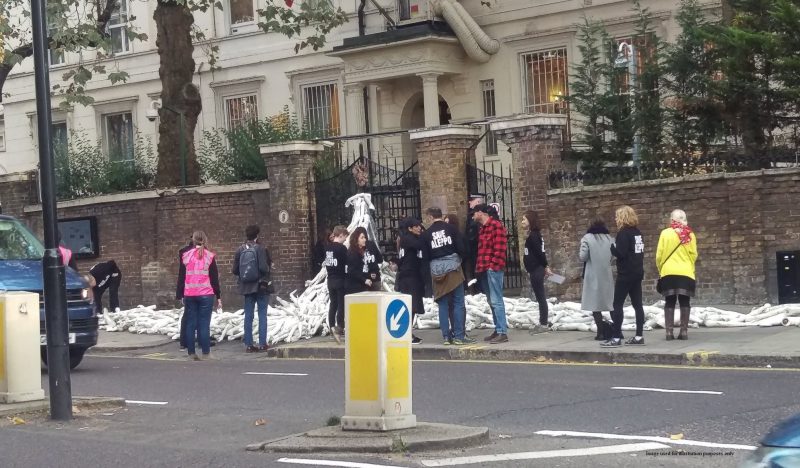

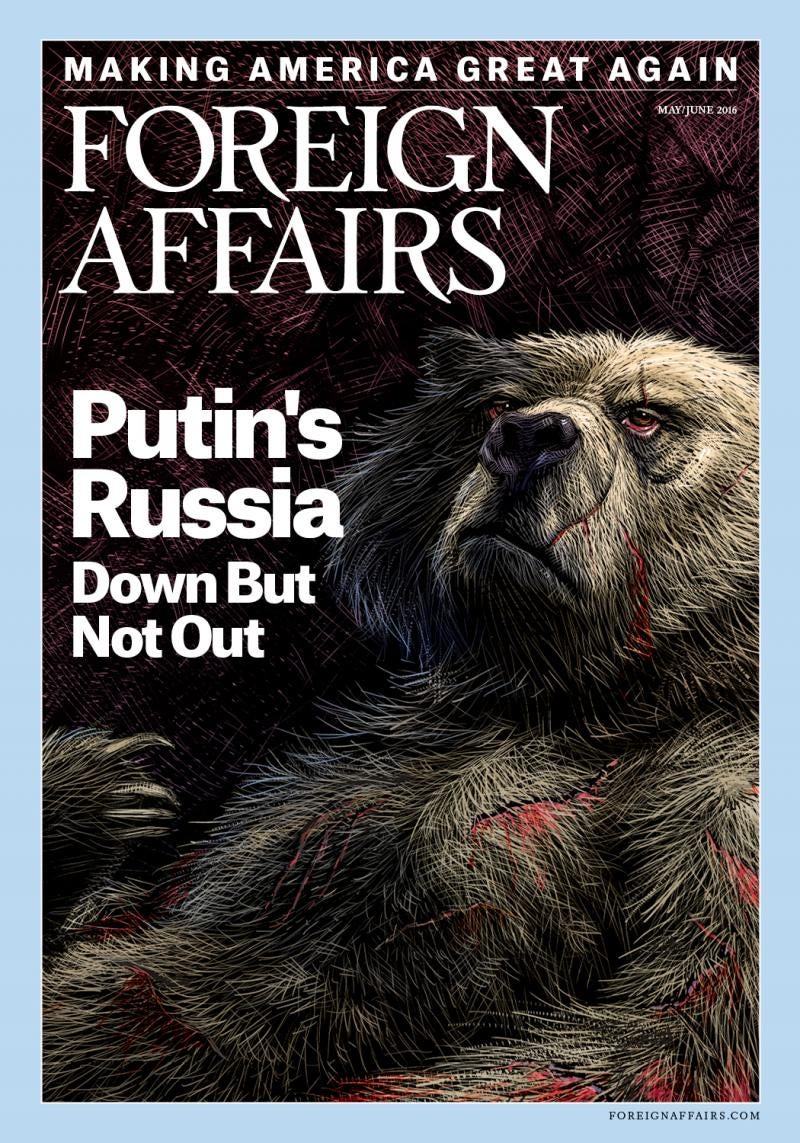
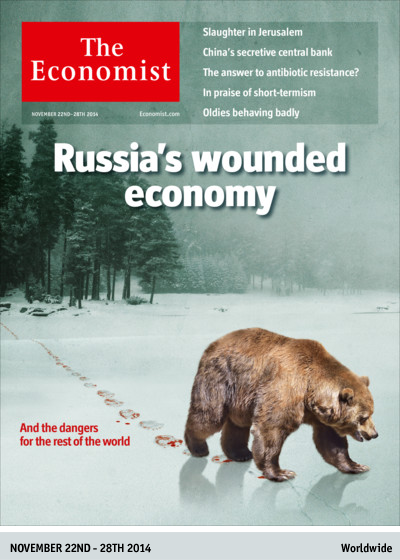

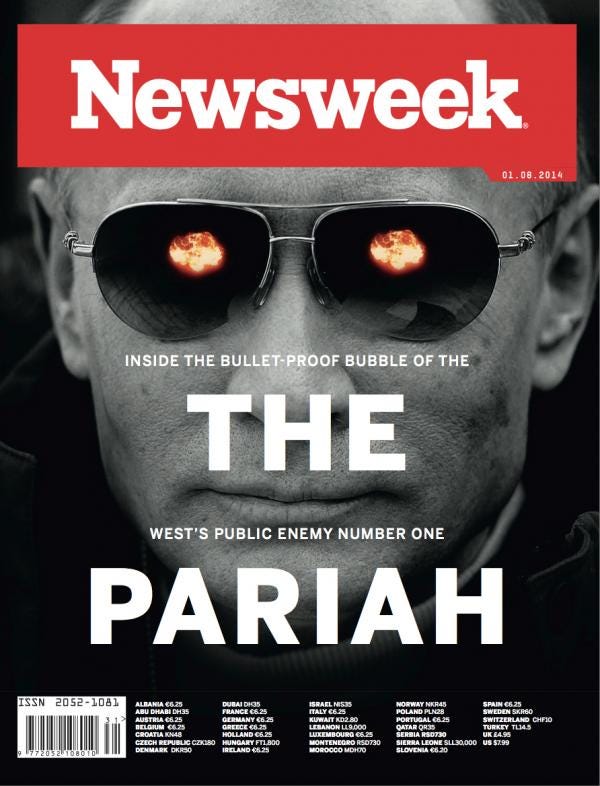
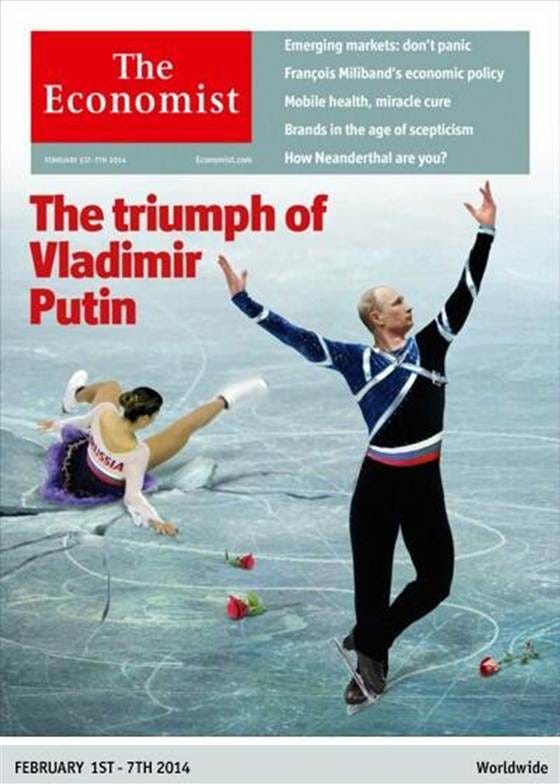
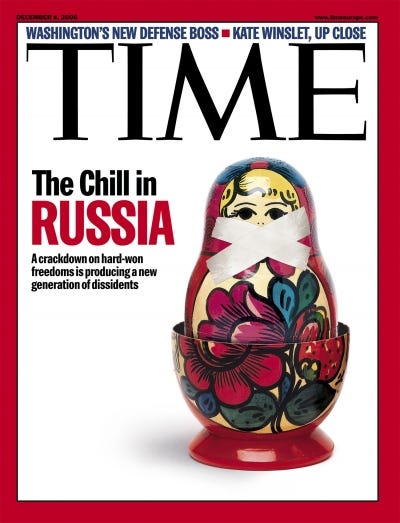
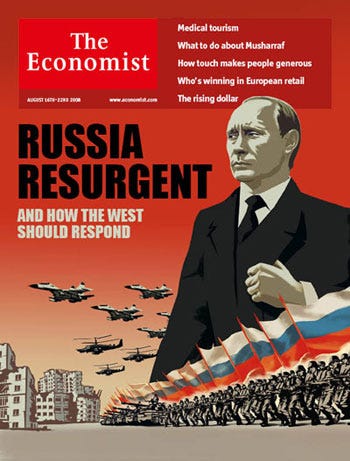
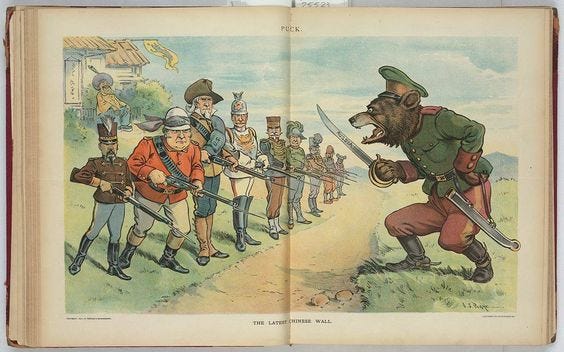
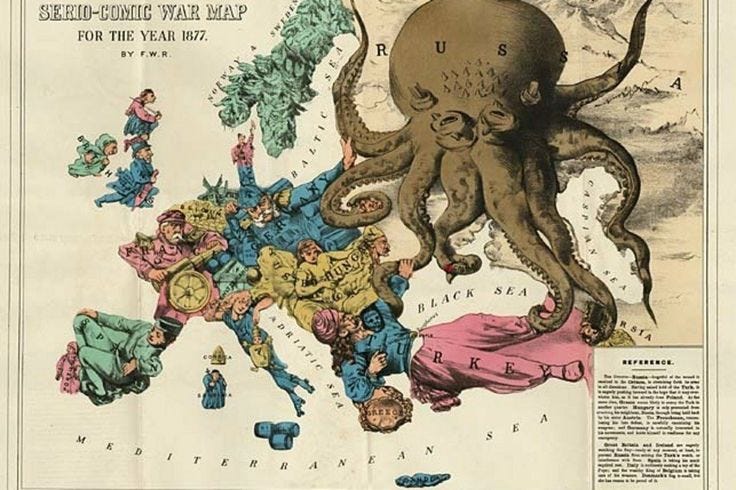
 Aletho News
