Enclosed are two recent news articles on the case of Nadiya Savchenko, a former pilot in the Ukrainian air force. She stands accused by the Russian court system of directing fire in June, 2014 in eastern Ukraine resulting in the deaths of two Russian journalists. Because of her detention in Russia and the criminal charges she faces, she has become a folk hero in Ukraine and internationally for those who are supporting Ukraine’s war against the people in the east of that country.

Rally in New York to free accused war criminal Nadiya Savchenko (Olga Loginova, Radio Free Europe)
The first enclosed article, from Russia Insider, reports on the vote of the European Parliament on April 30 to threaten more sanctions against Russia if it does not release Savchenko from detention. The second article, from Canada’s Globe and Mail national daily, reports on a recent, two-day visit by Vera Savchenko to Ottawa as part of her campaign to win her sister’s release.
In the Globe and Mail article, the writer mentions Nadiya Savchenko’s decision last year to join what is called a “voluntary battalion” fighting for Kyiv in eastern Ukraine. The term “voluntary battalion” is used seveal times in the article. Unmentioned by the Globe is the fact that the battalion in question is the extremist ‘Aidar Battalion’.
‘Aidar’ has been cited for many months now by Amnesty International and countless sources in Ukrainian and international media for widespread commission of war crimes. Recently, New Cold War.org brought to the attention of English language readers the two reports published in November 2014 and March 2015 by the Moscow-based Foundation for the Study of Democracy documenting the widespread practice of torture of prisoners—rebel fighters captured in combat and civilians who are detained–by the Ukrainian armed forces, national police and the “volunteer battalions” operating alongside them.
The two reports on torture as well as media reports and other human rights reports in Russia and Ukraine on the same subject have gone utterly ignored by Western media. To the point where newspapers like the Globe and Mail can blithely refer to “volunteer battalions” such as Aidar and make them sound almost like squads of military cadets.
Ah, details, details. Why should war crimes get in the way of yet another story blaming Russia for anything and everything going wrong in Ukraine, in this case the story of a terribly unfair detention of an extremist accused of aiding the killing of journalists?
Also unmentioned in the Globe and Mail article are the aforementioned circumstances of Savchenko’s arrest—that she stands accused of directing fire that resulted in the deaths of two journalists. Regretfully, this is of a pair with the Globe and Mail‘s failure to report the wave of killings of journalists and opposition politicians that has shaken Ukraine in the past several months and the special laws being approved by Ukraine’s Parliament for the purpose of stamping out social and antiwar protests and banning opposition political parties.
To close, here is a description of the case of Nadiya Savchenko, excerpted from an article published in New Cold War.org on Jan 30, 2015. Further below are the two news articles mentioned earlier.
The case of Nadiya Savchenko, excerpt from ‘Toronto Star newspaper is running with the extreme right in Ukraine‘, in New Cold War.org, Jan. 30, 2015:
Twice in the past month, the Toronto Star has published articles by its journalists promoting the campaigns of the far right in Ukraine. The latest such article appeared on January 14, by Star foreign affairs writer Olivia Ward. It champions the cause of one Nadiya Savchenko, a member of the far-right ‘Aidar’ paramilitary battalion who has been in jail in Russia since June 2014.
Savchenko is a staunch ideologue of the war in eastern Ukraine. She took a “vacation” from her posting in the Ukrainian armed forces in order to join the Aidar Battalion and see action, not long after Kyiv launched its civil war in the east in April 2014. She was already known as one of only two women in Ukraine to volunteer and serve in the U.S.-led war in Iraq in 2003. She is a trained pilot in the Ukrainian air force.

Russian journalist Igor Kornelyuk, killed by Ukrainian mortar fire on June 17, 2014
Savchenko faces criminal charges that she directed mortar fire in the Luhansk region on June 17 causing the deaths of two Russian journalists, Igor Kornelyuk and Anton Voloshin, who were reporting on the conditions of war refugees in eastern Ukraine. Two other journalists, a Russian and Italian, were killed by battalion mortars one month earlier, on May 24.
There are several versions of how Savchenko ended up in a Russian jail. One has her arrested by self defense forces and then transferred into the hands of the Russian judicial system. The other (the Russian government version) says she crossed the border into Russia and was detained.

Russian journalist Anton Voloshin, killed by Ukrainian mortar fire on June 17, 2014
Terming Savchenko Ukraine’s “Joan of Arc”, Olivia Ward writes, “She has shattered sexist stereotypes to become a poster girl for Ukraine’s battle with its giant neighbour, which has seized the Crimean Peninsula and is now eyeing Ukraine’s turbulent eastern region.”
Savchenko has become a cause célèbre of the far right in Ukraine as a result of her detention. She was appointed to the Ukrainian Parliament (‘Rada’) following the election of Oct. 26, 2014 by the ‘Fatherland’ electoral machine of the billionaire, former prime minister Yulia Tymoshenko. (In Ukraine’s electoral system, parties appoint approximately half the seats to the Rada, proportional to the votes they receive.) Savchenko resigned from the armed forces following her appointment.
Small rallies demanding her release from custody were held in Ukraine’s larger cities on January 26.
Savchenko told a television news interview last spring that she took leave from the air force because she could not countenance what she considered the timidity of the Ukrainian government in not going to war against Russia. Her delusional logic was the following: since the war in the east is against a foreign, invading power, Russia, and its local lackeys (whom the Toronto Star and other Western media term ‘separatist’ or ‘pro-Russian’ rebels), the Ukraine government should declare war on Russia and undertake a full military mobilization.
There is a twisted logic to Savchenko’s argument. Kyiv’s police operation in eastern Ukraine does, indeed, amount to full scale war. Its army is in the field and is shelling towns and cities. The Kyiv government has declared martial law in the war zone and effectively exercises martial law throughout the country. It has given its police the right to preventively detain or even shoot on sight so-called “separatists”.
How can the neighbouring governments of Ukraine in eastern Europe, or a skeptical public in western Europe and North America, be convinced of the mission of a government in Kyiv going to war against its own people? Kyiv and its think-tank advisors from NATO countries have turned to a time-worn prop—the ‘anti-terrorist’ ideology of the post 9/11/2001 world. Kyiv calls its civil war in eastern Ukraine an “Anti-Terrorist Operation”. Voilà. Surely an endeavour so titled must be virtuous and worthy!
But that ruse proved unsatisfactory for the purist Savchenko. She wants the unblemished story, as her ideology would have it. Forget the props– she wants all-out war against her fellow citizens in eastern Ukraine, and with Russia, even.
The Russian court has appointed lawyers to defend Savchenko. Her psychological state will be a factor in any trial. Her family has engaged the services of a Ukrainian lawyer who is traveling to Russia to defend her and is working with Russian-appointed court lawyers.
Nadiya Savchenko’s story was featured in the Nov 14, 2014 issue of the weekly fashion magazine in France, Elle. The magazine published a glamour story about the small number of women in Ukraine who have volunteered to fight with the extreme-right battalions. The magazine editors were caught out by some readers who noticed that one of the women that it featured was a brazen neo-Nazi who displays her fascist ideology on social media, including photos of herself giving Hitler salutes. The magazine apologized for glamorizing that particular neo-Nazi, but not for the overall adulation of Ukraine’s far-right battalions that its article lavished on readers.
* * *
EU threatens Russia with new sanctions over Nadiya Savchenko detention
European MPs have declared an “illegal kidnapping” of the Ukrainian pilot detained by Russian authorities and further demand Nadezhda Savchenko’s release.
In a plenary session on Thursday in Strasbourg, the European Parliament adopted a resolution that condemns Russia over the detention of Ukrainian pilot Savchenko. The resolution goes on to warn Russia of possible impending sanctions as well as prosecution should the detention continue.
Calling for the “immediate and unconditional release of Nadezhda Savchenko”, the European Parliament harshly condemned the Russian Federation for what the body deemed “its illegal kidnapping, and confinement” of the Ukraine pilot without trial for almost a year.
European MPs cited commitments to the Minsk agreements as well, citing a paragraph that discusses the exchange of prisoners according to the principle “all for all”. The EU body suggests Russia has no legal jurisdiction to take action against the pilot accused of complicity in the June 17 killing of two Russian journalists, Igor Kornelyuk and sound producer Anton Voloshin. They died during a mortar attack on a rebel checkpoint outside Luhansk.
Russia’s Investigative Committee has pointedly referred to the pilot’s actions as a gunner aboard an Aidar Batallion chopper, a position from which she allegedly reported the journalists’ location and directed fire for the mortar attack that killed the men outside Lugansk.
The European Commission spokespersons this week addressed their side of the situation. “The European Parliament considers that the detention of Savchenko is a violation of the Geneva Convention; we therefore stress that those responsible for her illegal detention in Russia may be subject to international sanctions or prosecution for their actions.”
MEPs also cited Savchenko for having an outstanding military record, and the fact she was the only woman in the Ukrainian peacekeeping contingent in Iraq. She was the first woman admitted to the Academy of the air force of Ukraine. The parliamentarians also noted the Ukraine pilot is eligible for diplomatic immunity based on her being a member of the Ukrainian Parliament and member of the country’s delegation to PACE, the Parliamentary Assembly of the Council of Europe.
Also in the resolution are demands for the immediate release of all other Ukrainian citizens illegally detained in Russia, including Ukrainian film Director Oleg Sentsov and son of the leader of the Crimean Tatars, Hauser Dzhemilev. The European Parliament “urges the President of France and Chancellor of Germany and the foreign ministers of these countries to raise the issue of the release of Savchenko at the next meeting of the contact group on the implementation of the Minsk agreements in the “channel” format.
Finally, the high representative of the EU for foreign affairs and the EU foreign service have been given a mandate to closely monitor the situation around Savchenko, to raise this issue in meetings with representatives of the Russian authorities in a variety of formats and report to the European Parliament on the results of these efforts.
* * *
In Ottawa, sister of jailed Ukrainian pilot calls on Canada to help
The sister of a 33-year-old Ukrainian helicopter pilot who has been imprisoned for nearly a year in Russia is calling on Ottawa to press for her release amid reports that her health is deteriorating.
Vira Savchenko met with parliamentarians, including the government’s junior foreign affairs minister and members of Canada’s Ukrainian community during a two-day trip to Ottawa earlier this week. The visit was part of a global campaign organized by Vira and her mother, and aimed at drawing attention to Nadiya Savchenko’s plight. … Full article
May 2, 2015
Posted by aletho |
Mainstream Media, Warmongering, War Crimes | Canada, Russia, Ukraine |
Leave a comment
Baltimore, Md. – In a bombshell revelation, Donta Allen, the man that was in the police transport van at the same time as Freddie Gray, spoke out for the first time publicly and directly refuted information leaked by police.
Allen came forward after an internal investigative memo was leaked by police and subsequently published by the Washington Post on Wednesday. The document claimed that Allen had told police Gray “was intentionally trying to injure himself,” which according to Allen was an attempt to spin his words to make it seem as if Gray may have injured himself.
“They trying to make it seem like I told them that, you know what I mean, that Freddie Gray did that to himself,” Allen said. “Why the f*** would he do that to himself?”
Allen’s words are being intentionally distorted in an effort to exonerate the police of any culpability or wrongdoing while seemingly laying the blame on the victim.
When asked whether he heard Gray banging his head while in the van, Allen said,
“When I got in the van, I didn’t hear nothing. It was a smooth ride. We went straight to the police station. All I heard was a little banging for about four seconds. I just heard little banging, just little banging.”
Allen went on to say,
“I told homicide that I don’t work for the police. I did not tell the police nothing.”
This contradicts police assertions, as claimed in a search warrant affidavit, that Allen claimed Gray was “banging against the walls” of the van.
Allen claims that authorities are using him as a scapegoat to provide cover for their actions relating to the incident.
“They waited 30 to 35 minutes to get [Gray] some medical attention because they want to cover their ass,” Allen told WBAL-TV. “So now, since they can’t cover their ass on that, they’re trying to use me to cover their ass.”
Numerous law enforcement sources have told WJLA-TV that Gray suffered a “catastrophic injury” when he smashed his own back into the van and broke his neck. Additionally, a bolt in the van matched his head injury, according to the sources.
The autopsy of Gray showed no evidence that there were any self-inflicted wounds, and that the fatal spinal and neck injuries were consistent with the force and energy presented in a car accident.
What is clear is that the Baltimore Police Department thought they could use the police spin machine to lay the blame for Gray’s death somewhere other than themselves as a means of escaping accountability.
May 1, 2015
Posted by aletho |
Deception, Mainstream Media, Warmongering, Subjugation - Torture | Baltimore Police Department, United States, Washington Post |
Leave a comment
As soon as the framework for a comprehensive nuclear deal between Iran and six world powers was announced in Lausanne, Switzerland on April 2, Vox.com content manager Max Fisher came out strongly in favor of the agreement’s reported details. While his optimism is certainly welcome, his understanding of some key details leaves something to be desired.
Unfortunately, for someone who writes about the Iranian nuclear program as much as he does, Fisher seems not to have a very solid grasp on certain basic facts about the program. Sure, this is tricky, complex stuff, but if you’re in the business of producing what you refer to as “explanatory journalism” – and your entire reporting model is based upon providing clear analysis to a presumably less knowledgeable public – you should probably know what you’re talking about.
Here are just a few of his most recent errors.
‘Covert Nuclear Facilities’
In his “plain English” guide to the framework parameters, as described by the United States State Department, Fisher notes that facilities at Natanz and Fordow will continue to operate, with uranium enrichment continuing at Natanz and non-uranium enrichment and research occurring at Fordow.
Fisher concludes that this is a good deal for those worried about Iranian nuclear capabilities. “International inspectors will have access [to these facilities],” he writes, “so they won’t really function as covert nuclear facilities anymore.”
But, apparently unbeknownst to Fisher, neither Natanz nor Fordow ever actually functioned as secret nuclear enrichment facilities. Ever.
Natanz
While much is often made of the 2002 revelation of Iran’s supposedly clandestine enrichment plant at Natanz, rarely do we hear that the pilot facility was still under construction when it was declared by Iran to the IAEA. Per Iran’s safeguards agreement with the IAEA at the time, however, “Iran did not have to declare that it was building a pilot plant until 180 days before it expected to introduce nuclear material into the plant,” explained a May 2003 article in the Bulletin of the Atomic Scientists. Furthermore, as pointed out at the time by a research analyst at the Arms Control Association, Iran “is not required to allow visits to the Arak and Natanz sites under its current agreements with the IAEA.”
In effect, the United States has long been proud of discovering a construction site that Iran was under absolutely no obligation to announce to the IAEA. Natanz was not operational until June 2006, at which which point it had already been under IAEA safeguards for over three years. Not a single atom of enriched uranium has ever been produced at Natanz outside the purview of IAEA inspectors. Nevertheless, in a separate article published the same day, Fisher claims Natanz “was once used for covert enrichment.”
Fordow
Similarly, the site at Fordow was never a functional enrichment site outside IAEA monitoring. As with Natanz, it was “clandestine” only to the effect that it wasn’t officially declared by Iran to the IAEA before the US intelligence agencies said they already knew about it.
The site was announced by Iran to the IAEA on September 21, 2009, well in advance of the 180 days prior to the introduction of nuclear material as required by Iran’s Safeguards Agreement. At the time, the facility was still under construction and did not actually begin uranium enrichment until early January 2012, roughly 28 months after it had been declared to the IAEA. Upon visiting the facility six weeks after it was announced, then-IAEA Secretary General Mohammed ElBaradei described Fordow as “a hole in a mountain” and “nothing to be worried about.”
When the plant began operation, the IAEA confirmed that “all nuclear material in the facility remains under the agency’s containment and surveillance.” This was the case well before the November 2013 interim deal between the P5+1 and Iran and this remains the case to this day.
While Fisher has written elsewhere that both the Natanz and Fordow “sites are now publicly declared and will be monitored as part of any deal,” meaning “their value (and threat) as covert facilities is gone,” he appears to insinuate that recent negotiations – and namely Iranian concessions extracted by determined American negotiators – are responsible for this positive state of affairs. Natanz has been safeguarded, monitored and inspected by the IAEA for over a decade, Fordow for over four years.
‘Plutonium Plant at Arak’
If you read Vox.com, you’d really think Iran has something called a “plutonium plant at Arak.” The main reason you’d probably think that is because that’s exactly what Max Fisher and other explainers at the site claim as fact over and over again. Here’s Fisher from the other day:
There is so much wrong with Fisher’s understanding of Iran’s Arak facilities it’s difficult to know where to begin. Fisher even changed the original words of the State Department’s “fact sheet” on the deal framework to match his misunderstanding before allowing himself to explain things to his readers. Basically none of Fisher’s sentences in this section make any sense.
What Fisher routinely refers to as Iran’s “plutonium plant” is actually the IR-40 heavy water research reactor, a nuclear reactor at the Arak complex that is still under construction and not yet operational. The half-built reactor is under IAEA safeguards and is visited regularly by inspectors. Nevertheless, it has long been used by Israel and its contingent of hawkish American supporters as an alternate way to fear-monger about Iran’s nuclear program.
In simple terms, heavy water reactors are fueled by natural, rather than enriched, uranium. Heavy water, a non-nuclear form of water, acts as both a moderator and coolant in the fuel process. These reactors are said to pose a potential proliferation threat due to the amounts of plutonium produced as a byproduct of their spent nuclear fuel, material that could then be separated from the irradiated fuel and further processed to weapons-grade levels.
So, to be clear, Iran has not been building a “plutonium plant,” let alone a facility “for making and storing potentially weapons-grade plutonium.” Rather, it has been building a certain type of nuclear reactor that happens to produce plutonium as a byproduct in its spent fuel.
Still, the Arak reactor is not in itself a proliferation risk. Even though plutonium is produced as a byproduct of running the reactor, it must first be separated out from irradiated fuel and reprocessed to weapons-grade material before it poses any actual danger. Iran has no reprocessing plant, and has long agreed not to build one.
Reading Fisher’s explanation, it’s clear he thinks that, once operational, the facility at Arak would have somehow made “weapons-grade plutonium,” but now will only “make nuclear fuel” to power a reactor. He is wrong. The relevant facility at Arak is a reactor; it doesn’t make fuel, it runs on fuel. Whenever it is eventually commissioned, it will be used for medical, scientific and agricultural research.
Beyond this, even before Iran’s current negotiating team was in place following the election of President Hassan Rouhani in June 2013, “Iran encouraged United Nations nuclear monitors to use powerful new detection technologies to dispel international concern that the Persian Gulf country is seeking to build atomic weapons,” reported Bloomberg News.
“We always welcome the agency to have more sophisticated equipment, to have more accuracy in their measurements, so that technical matters will not be politicized,” Iranian Ambassador to the IAEA Ali Asghar Soltanieh told the press in Vienna at the time, adding that Iran “won’t object to IAEA monitors using new technologies to determine whether plutonium is being extracted from spent fuel at its new reactor in Arak.”
In his guide to the nuclear framework, Fisher went to weird lengths to confuse his readership about Arak. The State Department’s own fact sheet notes, “Iran has agreed to redesign and rebuild a heavy water research reactor in Arak, based on a design that is agreed to by the P5+1, which will not produce weapons grade plutonium, and which will support peaceful nuclear research and radioisotope production.” Fisher changed the mention of “a heavy water research reactor” to “plutonium plant,” which appears to be a deliberate decision to make Iran’s safeguarded nuclear program sound undoubtedly nefarious.
Fisher also writes that, under the agreement, Iran “is barred from heavy-water reactor use.” That’s not true. Even though IR-40’s reactor core will be redesigned and rebuilt, it will still be a heavy water reactor. What the framework fact sheet says, however, is specifically that “Iran will not build any additional heavy water reactors for 15 years.” (emphasis mine)
‘Inspections’
As part of the Joint Plan of Action (JPOA) agreed to in November 2013, Iran has granted IAEA inspectors regular access to non-safeguarded, non-nuclear sites such as centrifuge assembly workshops, centrifuge rotor production workshops and storage facilities, and uranium mines and mills at Gchine, Saghand, and Ardakan. Fisher is pleased with this development, explaining that, “Inspectors, by gaining access to not just the core nuclear sites but also secondary things like uranium mills and centrifuge plants, will be in a really good position to make sure Iran isn’t cheating on a deal or trying to build another secret facility somewhere.”
Fisher’s sentence construction here is both curious and revealing. He notes that “by gaining access” to “core nuclear sites” as well as other, non-nuclear sites, inspectors have a clearer picture of the entire Iranian supply chain for its nuclear program. But the nuclear sites in question have always been under safeguards and open to routine inspections since they were declared years ago, prior to any actual nuclear work being done there. This is nothing new; it is not a virtue of the JPOA or any other recent negotiated terms. You wouldn’t know this by reading Fisher’s work.
Furthermore, despite constant insinuations to the contrary, Iran has never refused IAEA inspectors admission to any of its safeguarded nuclear sites. All sites and facilities are under round-the-clock video surveillance, readily accessible to IAEA inspectors, open to routine inspection, and subject to material seals application by the agency.
Even before the JPOA was negotiated, Iran’s was the most heavily-scrutinized nuclear program on the planet and had been for years. Though the IAEA has even deeper access as a result of the interim deal (which will presumably continue for the foreseeable future as part of any final deal), the regular inspection regimen was itself quite intensive and intrusive. Rarely is this noted in mainstream media reports, leading many to the outrageously incorrect conclusion that, prior to the current nuclear talks, Iran operated a wholly unmonitored, clandestine and opaque nuclear program. (This is actual an apt description of Israel’s own nuclear arsenal.) Nothing could be further from the truth.
Nuclear expert Mark Hibbs has explained, “There are IAEA safeguards personnel in Iran 24/7/365,” pointing out that inspectors enter and examine enrichment sites “frequently and routinely,” where they carry out “two kinds of inspections: ‘announced inspections’ and ‘short-notice announced inspections.'” The “announced inspections” are conducted with “24-hour notification” given to Iran, while “Iran’s subsidiary arrangements in fact permit the IAEA to conduct a short-notice inspection upon two hours’ notice.” Each of Iran’s enrichment facilities was already subject to two regular inspections every month. Additionally, two unannounced inspections were conducted every month at both Natanz and Fordow.
Former Iranian nuclear negotiator Seyed Hossein Mousavian, now a lecturer at Princeton University, has noted that, between 2003 and 2012, “the International Atomic Energy Agency (IAEA) has implemented the most robust inspections in its history with more than 100 unannounced and over 4000 man-day inspections in Iran.” In 2012 alone, IAEA investigators spent 1,356 calendar days in Iran, conducting 215 on-site inspections of the country’s 16 declared nuclear facilities, and spending more than 12% of the agency’s entire $127.8 million budget on intrusively monitoring the Iranian program, which includes only a single functional nuclear reactor that doesn’t even operate at full capacity.
IAEA inspectors have also had consistently open access to the gas conversion facility at Esfahan and the light water reactor at Bushehr, despite these facilities not being explicitly covered by Iran’s Safeguards Agreement with the IAEA.
The agency has continued to verify – four times a year for the past dozen years – that Iran has never diverted any nuclear material for military purposes and has also affirmed “it has all the means it needs to make sure that does not happen with Iran’s enriched uranium, including cameras, physical inspections and seals on certain materials and components.”
And that was before the increased scrutiny provided by the JPOA.
‘Breakout Time’
In his post on why the newly-announcement framework – as described by the State Department’s own fact sheet – is such a good deal, Fisher explains the oft-used term “breakout time” to his readers this way:
If Supreme Leader Ayatollah Ali Khamenei woke up tomorrow morning and decided to kick out all of the inspectors and set his entire nuclear program toward building a nuclear warhead — to “break out” to a bomb — right now it would take him two or three months. Under the terms of the framework, his program would be so much smaller that it would take him an entire year to build a single nuclear warhead.
Fisher is wrong about this. “Breakout time” – an arbitrary measure in itself – is not the time it takes to build one nuclear bomb. Rather, it is the time it would hypothetically take Iran to acquire enough highly-enriched uranium (HEU) for one nuclear bomb. As Gary Sick has succinctly explained:
Note that “breakout” does not mean Iran will have a nuclear device. It is the starting point to build a nuclear device, which most experts agree would require roughly a year for Iran to do–and probably another two or more years to create a device that could be fit into a workable missile warhead. Plus every other country that has ever built a nuclear weapon considered it essential to run a test before actually using their design. There goes bomb No. 1.
So when officials, pundits, and interested parties talk about a one-year breakout time for Iran, what they are really saying is that if Iran decides to break its word and go for a bomb, it will take approximately one year to accumulate 27 kilograms of HEU. The hard part follows.
As is common in Fisher’s reporting, uranium enrichment is presented as nearly synonymous with nuclear bomb-making. Fisher essentially conflates the two, thereby drawing conclusions that neither the IAEA nor Western and Israeli intelligence agencies have made. Acquiring uranium enriched to high enough levels for a nuclear bomb is only one component of manufacturing a nuclear weapon, which includes the mastery of the detonation process, requisite missile technology, and making a bomb deliverable.
For over a decade, it has been acknowledged that, in addition to the nine nuclear weapons states (Britain, China, France, Russia, the United States, Israel, India, Pakistan, and North Korea), perhaps “40 countries or more now have the know-how to produce nuclear weapons,” according to former IAEA chief Mohammad ElBaradei.
Nuclear physicist Yousaf Butt had also noted that, “if a nation has a developed civilian nuclear infrastructure—which the NPT actually encourages—this implies it has a fairly solid nuclear-weapons capability. Just like Iran, Argentina, Brazil, and Japan also have a nuclear-weapons capability—they, too, could break out of the NPT and make a nuclear device in short order. Capabilities and intentions cannot be conflated.”
‘Modified Code 3.1’
Fisher writes that, under the proposed deal, “Iran has finally agreed to comply by a rule known as Modified Code 3.1 of the Subsidiary Arrangements General Part to Iran’s Safeguards Agreement, shorthanded as Modified Code 3.1. It says that Iran has to notify inspectors immediately on its decision to build any new facility where it plans to do nuclear work — long before construction starts.”
This is true and Fisher should have left it at that. Instead, he went on to smugly editorialize about Iran’s behavior and it’s here that he revealed his misunderstanding of the actual issues at stake. He writes:
Iran in the past has either rejected this rule or stated that it would only notify inspectors a few months before introducing nuclear material at a facility — a “cover your ass” move in case the world caught them building a new nuclear site. Tehran’s promise to comply may signal that it intends to stop building such covert facilities.
In truth, what Fisher refers to as “a ‘cover your ass’ move” is actually a legally binding stipulation of the original Code 3.1 under Iran’s Subsidiary Arrangements to its Safeguards Agreement with the IAEA, which was implemented in 1976, two years after the initial safeguards.
In 1992, the IAEA modified the code to read that member states would have to notify the agency and provide design information at the planning stage for new facilities, rather than the previously obligatory “no later than 180 days before the introduction of nuclear material to the site.” While most countries accepted the modified code, Iran did not and the original Code 3.1 remained legally in place until February 26, 2003, when Iran agreed to voluntarily implement the modified code, pending ratification by the Iranian parliament. The modified code remained in place for over four years, though it was never ratified.
Days after the adoption of an illegal sanctions resolution by the UN Security Council on March 24, 2007, an outraged Iran suspended its voluntary implementation of the modified code, and reverted to re-implementing the 1976 version of Code 3.1.
While the IAEA disputes Iran’s legal authority to unilaterally revert to the original code, Iran isn’t randomly rejecting official protocol and making up rules as it goes along, despite what Fisher would have his readers believe.
As to Fisher’s claim about Iran building “covert facilities,” that was already addressed above.
Obfuscatory Journalism
Two years ago, researchers at the University of Maryland’s Center for International and Security Studies (CISSM) released the findings of an extensive examination of mainstream media’s coverage of the Iranian nuclear program between 2009 and 2012. “The manner in which news media frame their coverage of Iran’s nuclear program is critically important to public understanding and to policy decisions that will determine whether the dispute can be resolved without war,” the report’s authors wrote.
Among other things, the study found that when media “coverage did address Iranian nuclear intentions and capabilities, it did so in a manner that lacked precision, was inconsistent over time, and failed to provide adequate sourcing and context for claims,” which in turn “led to an inaccurate picture of the choices facing policy makers.”
It also found that “coverage generally adopted the tendency of U.S., European, and Israeli officials to place on Iran the burden to resolve the dispute over its nuclear program, failing to acknowledge the roles of these other countries in the dispute” and that such coverage often “reflected and reinforced the negative sentiments about Iran that are broadly shared by U.S., European, and Israeli publics,” leading to “misunderstandings about the interests involved and narrowed the range of acceptable outcomes.”
Unfortunately, Fisher’s coverage of the Iranian nuclear program and the current negotiations are hardly any different. For a media venture dedicated to “explanatory journalism,” this is even more troubling.
With two months to go before the June deadline for a comprehensive nuclear accord between Iran and the P5+1, Fisher and his Vox colleagues will inevitably publish more articles about the Iranian nuclear program.
Still, here’s hoping that, before he explains anything else about the Iranian nuclear program, Max Fisher finally gets his facts straight.
April 28, 2015
Posted by aletho |
Deception, Mainstream Media, Warmongering | Fordow, Iran, Israel, Max Fisher, Natanz, United States, Vox.com |
Leave a comment
40 Years Later, Will the End Games in Iraq and Afghanistan Follow the Vietnam Playbook?
If our wars in the Greater Middle East ever end, it’s a pretty safe bet that they will end badly — and it won’t be the first time. The “fall of Saigon” in 1975 was the quintessential bitter end to a war. Oddly enough, however, we’ve since found ways to re-imagine that denouement which miraculously transformed a failed and brutal war of American aggression into a tragic humanitarian rescue mission. Our most popular Vietnam end-stories bury the long, ghastly history that preceded the “fall,” while managing to absolve us of our primary responsibility for creating the disaster. Think of them as silver-lining tributes to good intentions and last-ditch heroism that may come in handy in the years ahead.
The trick, it turned out, was to separate the final act from the rest of the play. To be sure, the ending in Vietnam was not a happy one, at least not for many Americans and their South Vietnamese allies. This week we mark the 40th anniversary of those final days of the war. We will once again surely see the searing images of terrified refugees, desperate evacuations, and final defeat. But even that grim tale offers a lesson to those who will someday memorialize our present round of disastrous wars: toss out the historical background and you can recast any U.S. mission as a flawed but honorable, if not noble, effort by good-guy rescuers to save innocents from the rampaging forces of aggression. In the Vietnamese case, of course, the rescue was so incomplete and the defeat so total that many Americans concluded their country had “abandoned” its cause and “betrayed” its allies. By focusing on the gloomy conclusion, however, you could at least stop dwelling on the far more incriminating tale of the war’s origins and expansion, and the ruthless way the U.S. waged it.
Here’s another way to feel better about America’s role in starting and fighting bad wars: make sure U.S. troops leave the stage for a decent interval before the final debacle. That way, in the last act, they can swoop back in with a new and less objectionable mission. Instead of once again waging brutal counterinsurgencies on behalf of despised governments, American troops can concentrate on a humanitarian effort most war-weary citizens and soldiers would welcome: evacuation and escape.
Phony Endings and Actual Ones
An American president announces an honorable end to our longest war. The last U.S. troops are headed for home. Media executives shut down their war zone bureaus. The faraway country where the war took place, once a synonym for slaughter, disappears from TV screens and public consciousness. Attention shifts to home-front scandals and sensations. So it was in the United States in 1973 and 1974, years when most Americans mistakenly believed that the Vietnam War was over.
In many ways, eerily enough, this could be a story from our own time. After all, a few years ago, we had reason to hope that our seemingly endless wars — this time in distant Iraq and Afghanistan — were finally over or soon would be. In December 2011, in front of U.S. troops at Fort Bragg, North Carolina, President Obama proclaimed an end to the American war in Iraq. “We’re leaving behind a sovereign, stable, and self-reliant Iraq,” he said proudly. “This is an extraordinary achievement.” In a similar fashion, last December the president announced that in Afghanistan “the longest war in American history is coming to a responsible conclusion.”
If only. Instead, warfare, strife, and suffering of every kind continue in both countries, while spreading across ever more of the Greater Middle East. American troops are still dying in Afghanistan and in Iraq the U.S. military is back, once again bombing and advising, this time against the Islamic State (or Daesh), an extremist spin-off from its predecessor al-Qaeda in Iraq, an organization that only came to life well after (and in reaction to) the U.S. invasion and occupation of that country. It now seems likely that the nightmare of war in Iraq and Afghanistan, which began decades ago, will simply drag on with no end in sight.
The Vietnam War, long as it was, did finally come to a decisive conclusion. When Vietnam screamed back into the headlines in early 1975, 14 North Vietnamese divisions were racing toward Saigon, virtually unopposed. Tens of thousands of South Vietnamese troops (shades of the Iraqi army in 2014) were stripping off their military uniforms, abandoning their American equipment, and fleeing. With the massive U.S. military presence gone, what had once been a brutal stalemate was now a rout, stunning evidence that “nation-building” by the U.S. military in South Vietnam had utterly failed (as it would in the twenty-first century in Iraq and Afghanistan).
On April 30, 1975, a Communist tank crashed through the gates of Independence Palace in the southern capital of Saigon, a dramatic and triumphant conclusion to a 30-year-long Vietnamese struggle to achieve national independence and reunification. The blood-soaked American effort to construct a permanent non-Communist nation called South Vietnam ended in humiliating defeat.
It’s hard now to imagine such a climactic conclusion in Iraq and Afghanistan. Unlike Vietnam, where the Communists successfully tapped a deep vein of nationalist and revolutionary fervor throughout the country, in neither Iraq nor Afghanistan has any faction, party, or government had such success or the kind of appeal that might lead it to gain full and uncontested control of the country. Yet in Iraq, there have at least been a series of mass evacuations and displacements reminiscent of the final days in Vietnam. In fact, the region, including Syria, is now engulfed in a refugee crisis of staggering proportions with millions seeking sanctuary across national boundaries and millions more homeless and displaced internally.
Last August, U.S. forces returned to Iraq (as in Vietnam four decades earlier) on the basis of a “humanitarian” mission. Some 40,000 Iraqis of the Yazidi sect, threatened with slaughter, had been stranded on Mount Sinjar in northern Iraq surrounded by Islamic State militants. While most of the Yazidi were, in fact, successfully evacuated by Kurdish fighters via ground trails, small groups were flown out on helicopters by the Iraqi military with U.S. help. When one of those choppers went down wounding many of its passengers but killing only the pilot, General Majid Ahmed Saadi, New York Times reporter Alissa Rubin, injured in the crash, praised his heroism. Before his death, he had told her that the evacuation missions were “the most important thing he had done in his life, the most significant thing he had done in his 35 years of flying.”
In this way, a tortured history inconceivable without the American invasion of 2003 and almost a decade of excesses, including the torture and abuse at Abu Ghraib, as well as counterinsurgency warfare, finally produced a heroic tale of American humanitarian intervention to rescue victims of murderous extremists. The model for that kind of story had been well established in 1975.
Stripping the Fall of Saigon of Historical Context
Defeat in Vietnam might have been the occasion for a full-scale reckoning on the entire horrific war, but we preferred stories that sought to salvage some faith in American virtue amid the wreckage. For the most riveting recent example, we need look no further than Rory Kennedy’s 2014 Academy Award-nominated documentary Last Days in Vietnam. The film focuses on a handful of Americans and a few Vietnamese who, in defiance of orders, helped expedite and expand a belated and inadequate evacuation of South Vietnamese who had hitched their lives to the American cause.
The film’s cast of humanitarian heroes felt obligated to carry out their ad hoc rescue missions because the U.S. ambassador in Saigon, Graham Martin, refused to believe that defeat was inevitable. Whenever aides begged him to initiate an evacuation, he responded with comments like, “It’s not so bleak. I won’t have this negative talk.” Only when North Vietnamese tanks reached the outskirts of Saigon did he order the grandiloquently titled Operation Frequent Wind — the helicopter evacuation of the city — to begin.
By that time, Army Captain Stuart Herrington and others like him had already led secret “black ops” missions to help South Vietnamese army officers and their families get aboard outgoing aircraft and ships. Prior to the official evacuation, the U.S. government explicitly forbade the evacuation of South Vietnamese military personnel who were under orders to remain in the country and continue fighting. But, as Herrington puts it in the film, “sometimes there’s an issue not of legal and illegal, but right and wrong.” Although the war itself failed to provide U.S. troops with a compelling moral cause, Last Days in Vietnam produces one. The film’s heroic rescuers are willing to risk their careers for the just cause of evacuating their allies.
The drama and danger are amped up by the film’s insistence that all Vietnamese linked to the Americans were in mortal peril. Several of the witnesses invoke the specter of a Communist “bloodbath,” a staple of pro-war propaganda since the 1960s. (President Richard Nixon, for instance, once warned that the Communists would massacre civilians “by the millions” if the U.S. pulled out.) Herrington refers to the South Vietnamese officers he helped evacuate as “dead men walking.” Another of the American rescuers, Paul Jacobs, used his Navy ship without authorization to escort dozens of South Vietnamese vessels, crammed with some 30,000 people, to the Philippines. Had he ordered the ships back to Vietnam, he claims in the film, the Communists “woulda killed ‘em all.”
The Communist victors were certainly not merciful. They imprisoned hundreds of thousands of people in “re-education camps” and subjected them to brutal treatment. The predicted bloodbath, however, was a figment of the American imagination. No program of systematic execution of significant numbers of people who had collaborated with the Americans ever happened.
Following another script that first emerged in U.S. wartime propaganda, the film implies that South Vietnam was vehemently anti-communist. To illustrate, we are shown a map in which North Vietnamese red ink floods ever downward over an all-white South — as if the war were a Communist invasion instead of a countrywide struggle that began in the South in opposition to an American-backed government.
Had the South been uniformly and fervently anti-Communist, the war might well have had a different outcome, but the Saigon regime was vulnerable primarily because many southern Vietnamese fought tooth and nail to defeat it and many others were unwilling to put their lives on the line to defend it. In truth, significant parts of the South had been “red” since the 1940s. The U.S. blocked reunification elections in 1956 exactly because it feared that southerners might vote in Communist leader Ho Chi Minh as president. Put another way, the U.S. betrayed the people of Vietnam and their right to self-determination not by pulling out of the country, but by going in.
Last Days in Vietnam may be the best silver-lining story of the fall of Saigon ever told, but it is by no means the first. Well before the end of April 1975, when crowds of terrified Vietnamese surrounded the U.S. embassy in Saigon begging for admission or trying to scale its fences, the media was on the lookout for feel-good stories that might take some of the sting out of the unremitting tableaus of fear and failure.
They thought they found just the thing in Operation Babylift. A month before ordering the final evacuation of Vietnam, Ambassador Martin approved an airlift of thousands of South Vietnamese orphans to the United States where they were to be adopted by Americans. Although he stubbornly refused to accept that the end was near, he hoped the sight of all those children embraced by their new American parents might move Congress to allocate additional funds to support the crumbling South Vietnamese government.
Commenting on Operation Babylift, pro-war political scientist Lucien Pye said, “We want to know we’re still good, we’re still decent.” It did not go as planned. The first plane full of children and aid workers crashed and 138 of its passengers died. And while thousands of children did eventually make it to the U.S., a significant portion of them were not orphans. In war-ravaged South Vietnam some parents placed their children in orphanages for protection, fully intending to reclaim them in safer times. Critics claimed the operation was tantamount to kidnapping.
Nor did Operation Babylift move Congress to send additional aid, which was hardly surprising since virtually no one in the United States wanted to continue to fight the war. Indeed, the most prevalent emotion was stunned resignation. But there did remain a pervasive need to salvage some sense of national virtue as the house of cards collapsed and the story of those “babies,” no matter how tarnished, nonetheless proved helpful in the process.
Putting the Fall of Saigon Back in Context
For most Vietnamese — in the South as well as the North — the end was not a time of fear and flight, but joy and relief. Finally, the much-reviled, American-backed government in Saigon had been overthrown and the country reunited. After three decades of turmoil and war, peace had come at last. The South was not united in accepting the Communist victory as an unambiguous “liberation,” but there did remain broad and bitter revulsion over the wreckage the Americans had brought to their land.
Indeed, throughout the South and particularly in the countryside, most people viewed the Americans not as saviors but as destroyers. And with good reason. The U.S. military dropped four million tons of bombs on South Vietnam, the very land it claimed to be saving, making it by far the most bombed country in history. Much of that bombing was indiscriminate. Though policymakers blathered on about the necessity of “winning the hearts and minds” of the Vietnamese, the ruthlessness of their war-making drove many southerners into the arms of the Viet Cong, the local revolutionaries. It wasn’t Communist hordes from the North that such Vietnamese feared, but the Americans and their South Vietnamese military allies.
The many refugees who fled Vietnam at war’s end and after, ultimately a million or more of them, not only lost a war, they lost their home, and their traumatic experiences are not to be minimized. Yet we should also remember the suffering of the far greater number of South Vietnamese who were driven off their land by U.S. wartime policies. Because many southern peasants supported the Communist-led insurgency with food, shelter, intelligence, and recruits, the U.S. military decided that it had to deprive the Viet Cong of its rural base. What followed was a long series of forced relocations designed to remove peasants en masse from their lands and relocate them to places where they could more easily be controlled and indoctrinated.
The most conservative estimate of internal refugees created by such policies (with anodyne names like the “strategic hamlet program” or “Operation Cedar Falls”) is 5 million, but the real figure may have been 10 million or more in a country of less than 20 million. Keep in mind that, in these years, the U.S. military listed “refugees generated” — that is, Vietnamese purposely forced off their lands — as a metric of “progress,” a sign of declining support for the enemy.
Our vivid collective memories are of Vietnamese refugees fleeing their homeland at war’s end. Gone is any broad awareness of how the U.S. burned down, plowed under, or bombed into oblivion thousands of Vietnamese villages, and herded survivors into refugee camps. The destroyed villages were then declared “free fire zones” where Americans claimed the right to kill anything that moved.
In 1967, Jim Soular was a flight chief on a gigantic Chinook helicopter. One of his main missions was the forced relocation of Vietnamese peasants. Here’s the sort of memory that you won’t find in Miss Saigon, Last Days in Vietnam, or much of anything else that purports to let us know about the war that ended in 1975. This is not the sort of thing you’re likely to see much of this week in any 40th anniversary media musings.
“On one mission where we were depopulating a village we packed about sixty people into my Chinook. They’d never been near this kind of machine and were really scared but they had people forcing them in with M-16s. Even at that time I felt within myself that the forced dislocation of these people was a real tragedy. I never flew refugees back in. It was always out. Quite often they would find their own way back into those free-fire zones. We didn’t understand that their ancestors were buried there, that it was very important to their culture and religion to be with their ancestors. They had no say in what was happening. I could see the terror in their faces. They were defecating and urinating and completely freaked out. It was horrible. Everything I’d been raised to believe in was contrary to what I saw in Vietnam. We might have learned so much from them instead of learning nothing and doing so much damage.”
What Will We Forget If Baghdad “Falls”?
The time may come, if it hasn’t already, when many of us will forget, Vietnam-style, that our leaders sent us to war in Iraq falsely claiming that Saddam Hussein possessed weapons of mass destruction he intended to use against us; that he had a “sinister nexus” with the al-Qaeda terrorists who attacked on 9/11; that the war would essentially pay for itself; that it would be over in “weeks rather than months”; that the Iraqis would greet us as liberators; or that we would build an Iraqi democracy that would be a model for the entire region. And will we also forget that in the process nearly 4,500 Americans were killed along with perhaps 500,000 Iraqis, that millions of Iraqis were displaced from their homes into internal exile or forced from the country itself, and that by almost every measure civil society has failed to return to pre-war levels of stability and security?
The picture is no less grim in Afghanistan. What silver linings can possibly emerge from our endless wars? If history is any guide, I’m sure we’ll think of something.
Christian Appy, professor of history at the University of Massachusetts, is the author of three books about the Vietnam War, including the just-published American Reckoning: The Vietnam War and Our National Identity (Viking).
Copyright 2015 Christian Appy

April 27, 2015
Posted by aletho |
Deception, Mainstream Media, Warmongering, Militarism, Timeless or most popular, War Crimes | Afghanistan, Iraq, Middle East, Operation Babylift, Rory Kennedy, United States, Vietnam |
Leave a comment
President Obama claims to value “openness” as a core principle of democracy, but the truth is that his administration has been among the most secretive and manipulative in modern times, tailoring what the public hears about foreign crises to what serves his agenda.
In disclosing the deaths of two Western hostages in a U.S. drone strike on an Al-Qaeda compound, President Barack Obama said on Thursday that he had ordered the declassification of the secret operation because “the United States is a democracy committed to openness in good times and in bad.”
But the reality of the past six years has been that his administration has enforced wildly excessive secrecy, selectively declassified material to mislead the American people, and failed to correct erroneous information on sensitive international issues.

A photograph of a Russian BUK missile system that U.S. Ambassador to Ukraine Geoffrey Pyatt published on Twitter in support of a claim about Russia placing BUK missiles in eastern Ukraine, except that the image appears to be an AP photo taken at an air show near Moscow two years ago.
This failure to trust the people with accurate information has arguably done great harm to U.S. democracy by promoting false narratives on a range of foreign conflicts. With all its talk about “public diplomacy” and “information warfare,” the Obama administration seems intent on using half-truths and falsehoods to herd the people into a misguided consensus rather than treating them like the true sovereigns of the Republic, as the Framers of the Constitution intended with the explicit phrase “We the People of the United States.”
For instance, the Obama administration rushed to judgments on pivotal international events – such as the Syrian-sarin case in 2013 and the Malaysia Airlines Flight 17 shoot-down over Ukraine in 2014 – and then refused to update those assessments as new evidence emerged changing how U.S. intelligence analysts understood what happened.
Instead of correcting or refining the record – and pursuing meaningful accountability against the perpetrators of these crimes – the Obama administration has left outdated, misleading accusations in the public domain, all the better to fit with some geopolitical goals, such as delegitimizing the Syrian and Russian governments. In other words, providing the American people with substantive updates on these atrocities and advancing the cause of justice take a back seat to keeping some geopolitical foe on the defensive.
In both the Syrian-sarin case and the MH-17 shoot-down, I’ve been told that U.S. intelligence analysts have not only refined their understanding of the events but – to a significant degree – reversed them. But the original assessments, which were released nine and five days after the events, respectively, were still being handed out to the press many months later. [See Consortiumnews.com’s “A Fact-Resistant Group Think on Syria” and “US Intel Stands Pat on MH-17 Shoot-down.”]
What is perhaps most troubling in both cases, however, is that the killings involved serious crimes against humanity and the perpetrators have not been identified and brought to justice. Whatever new evidence U.S. intelligence has collected could help track down who was responsible but that doesn’t appear to be a priority for President Obama.
In the MH-17 case, the timetable for the next scheduled release of information is on the first anniversary of the shoot-down, which occurred on July 17, 2014. Given that the shoot-down, which killed 298 people, should be an active criminal investigation, it makes little sense to delay disclosures for something as artificial as an anniversary, giving whoever was responsible more time to slip away and cover their tracks.
In the meantime, the U.S. government continues to re-release its initial claims putting blame on foreign adversaries – the governments of Bashar al-Assad and Vladimir Putin – so the assumption may be drawn that the updated analyses go in different directions, possibly implicating U.S. allies, such as Turkey or Saudi Arabia regarding the sarin attack and elements of the U.S.-backed Ukrainian regime in the MH-17 case. Whatever the truth, however, it is hard to justify why the U.S. government has withheld evidence in these criminal cases, whoever is implicated.
Double Standards
Of course, double standards sometimes appear to be the only standards when the U.S. government is involved these days. When ethnic Russians in eastern Ukraine resist a coup that overthrew their elected president in 2014 – and get some help from Russians next door – the Obama administration and the mainstream U.S. news media decry “Russian aggression.”
On Wednesday, the Obama administration declassified its own claims that Russia had deployed air defense systems in eastern Ukraine and had built up its forces along the border with Ukraine, assertions that Russian officials denied, though those denials were not included in the article on Thursday by New York Times’ national security reporter Michael R. Gordon, who treated the allegations essentially as flat fact.
After citing some analysts musing about different explanations for Russian President Putin’s supposed actions, Gordon wrote, “Either way, the new military activity is a major concern because it has significantly reduced the amount of warning that Ukraine and its Western supporters would have if Russian forces and separatists mounted a joint offensive.”
Gordon then quoted State Department spokeswoman Marie Harf saying: “This is the highest amount of Russian air defense equipment in eastern Ukraine since August. … Combined Russian-separatist forces continue to violate the terms of the ‘Minsk-2’ agreement signed in mid-February.”
Though Gordon included no Russian response to these charges, he did mention that Russia had complained about what Gordon called “a modest program” of 300 American troops in Ukraine training national guard units, a program that Russian officials said could “destabilize the situation.” Gordon wrote that the Obama administration, in response to this Russian complaint. “declassified intelligence describing a range of Russian military activities in and near Ukraine.”
But the intelligence appeared to be just U.S. accusations. In Kiev, U.S. Ambassador Geoffrey Pyatt tweeted about “the highest concentration of Russia air defense systems in eastern Ukraine since August” and illustrated his claim by showing a photo of a BUK anti-aircraft missile system. But the photo appeared to be an Associated Press photograph taken of a BUK system on display at an air show near Moscow two years ago, as the Russian network RT noted.
Gordon, who co-authored with Judith Miller the famously bogus Times’ exposé in 2002 about Iraq procuring aluminum tubes for building nuclear bombs, has been an eager conduit for U.S. government propaganda over the years, including his role last year in a page-one Times scoop that cited State Department and Ukrainian government claims about photographs that proved Russian troops were in Ukraine but turned out to be false. [See Consortiumnews.com’s “NYT Retracts Russian Photo Scoop.”]
Yet, while Russia is not supposed to mind the forced ouster of a friendly government on its borders or the presence of U.S. and NATO forces supporting the successor regime, a more sympathetic view is taken when Saudi Arabia intervenes in Yemen’s civil war by bombing the country indiscriminately, reportedly killing hundreds of civilians and devastating ancient cities with priceless historical sites that date back thousands of years.
“They’re worried about their own security – and of course we’ve supported them,” stated White House communications director Jen Psaki. “But, again, we’re trying to redirect this to a political discussion here.” (The New York Times article about this “Saudi resolve” – with a similarly understanding tone toward the Saudis – was co-authored by Gordon.)
This pattern of perverting U.S. intelligence information to bolster some U.S. foreign policy agenda has become a trademark of the Obama administration – along with an unprecedented number of prosecutions of U.S. government whistleblowers who release real information that exposes government wrongdoing or waste. This double standard belies President Obama’s assertion that he values openness in a democracy. [For more on this topic, see Consortiumnews.com’s “President Gollum’s ‘Precious’ Secrets.”]
~
Investigative reporter Robert Parry broke many of the Iran-Contra stories for The Associated Press and Newsweek in the 1980s. You can buy his latest book, America’s Stolen Narrative, either in print here or as an e-book (from Amazon and barnesandnoble.com).
April 25, 2015
Posted by aletho |
Deception, Mainstream Media, Warmongering, Progressive Hypocrite | Marie Harf, MICHAEL R. GORDON, New York Times, Obama, United States |
Leave a comment
Once again Western media has rushed to judgment over a “Russian submarine”, this time in an incident off the coast of Ireland. But maybe they should have done their homework on this one. Britain and the US have worse track records in the Irish Sea.
Last week, while out and about in the waters of the Irish Sea a few miles off County Down, a fishing trawler “almost sank” when it was hit, presumably by a submarine.
The vessel, named the Karen, was hit and then “pulled backwards very violently.”
Skipper Paul Murphy told Down News that the boat had been travelling at just a couple of knots and then all of a sudden he was nearly knocked off his feet. “The crew were just in shock after this incident. It really was a close call,” he said.
Shaken from the day, and no doubt influenced by the deluge of Russian-subs-and-jets-are-coming-to-get-you propaganda in British newspapers, Murphy immediately hypothesized to the journalist that it could have been a Russian submarine. No wonder Stockholm couldn’t find it.
After I read the story, I posted the link to Facebook and then promptly forgot about it. It was only by chance, while reading an article in the Guardian about Britain’s Trident nuclear deterrent program and the “unpredictable Putin” that I happened upon another mention of it.
It seems the Russian sub theory has spread beyond the Down News to the Guardian, the BBC and beyond. And don’t get me wrong, it’s not a theory entirely without merit. It very well could have been a Russian submarine.
Dick James from the Northern Ireland Fish Producers Organisation (NIFPO) told the BBC, that the mystery sub may have been observing NATO marine exercises off the coast of Scotland.
Security analyst Tom Ripley, who writes for Jane’s Defence magazine, agreed. He told BBC Radio Ulster that the Russians “are famous for liking to watch these things [NATO exercises] and it is a strong possibility that they have sent one of their submarines to watch this activity.”
James added that, had it been a British submarine, Royal Navy protocols would have required it to “immediately surface to check on the health and welfare of the people involved,” and this submarine did not do that.
Subsequently, the initial media coverage of the incident seems to have been peppered with the assumption that while the Brits would never be so rude as to not surface and say hello, the horrible Russians wouldn’t feel bound by such niceties. It’s this fact alone — that the sub never surfaced to check the damage — that seems to have immediately convinced the entire British and Irish media that it could not have been a British vessel.
But let’s skip back for a moment, to April 18, 1982.
On that otherwise calm day at sea, a British submarine dragged the Sharelga, an Irish fishing boat for two miles before it eventually sunk and all five crew members were forced to jump overboard. They were, luckily, rescued by crew members of nearby boats.
The British sub did not surface and the British government denied any involvement in or knowledge of what had happened to the Sharelga. Only weeks later did they finally admit that in fact the Irish boat’s fishing net had been caught by the British submarine HMS Porpoise, which itself had been trying to spot Soviet submarines in the Irish Sea.
Four years later, the crew members finally received compensation, although according to the skipper Raymond McEvoy, it “didn’t even match half” of what he paid for the boat.
It took so long, likely in part because the Irish government didn’t want to, shall we say, rock the boat by getting too involved in a diplomatic entanglement with Britain. A document released decades later revealed that the Government was not interested in acting as “a party to the dispute” between the men and the British government.
The sinking of the Sharelga happened during a period of the Cold War that saw the Irish Sea earn the nickname ‘Submarine Highway’, so frequent was sub activity in Irish waters.
Seven years after the Sharelga sank, a Belgian trawler, the Tijl Uilenspiegel, sank approximately 25 miles south-east of the Isle of Man, presumably also by a submarine.
The incident prompted a discussion about submarine activity in the Irish Parliament in March 1989. Hugh Byrne, a member of parliament at the time, used his speaking time to deliver a chronological list of incidents to highlight the dangers to both fishermen and those on recreational vessels.
Here are some of the incidents he listed:
● In 1983, a yacht was struck and sunk by a submarine believed to be the British HMS Opossum, off County Wexford
● In 1984, a fishing vessel, the Algrie, became entangled with the HMS Spartan off the Cornwall coast
● In 1984, a US submarine surfaced in the middle of a fishing fleet near Kilmore Quay, prompting fishermen to flee in fear of their lives
● In 1984, Scottish fishing vessel the Mhari L disappeared with no distress call. A damaged British submarine entered Faslane base 24 hours later, but the Ministry of Defence denied involvement
● In 1987, the Summer Morn was towed for hours by a US submarine
● In 1988, the HMS Oberon collided with a yacht named the Drum
● In 1988, the Dalriada was sunk by the HMS Conqueror off Northern Ireland
● In 1989, a fishing trawler was struck by the USS Will Rogers.
Those are just a handful of incidents involving the damaging, sinking or disappearance of Irish and British boats in the waters surrounding the British Isles. Notably, none of the examples Byrne gave referred specifically to Russian submarines.
Occasionally the tragedies were blamed on “freak” waves, as in the case of the Boy Shaun off County Donegal and the Inspire off the Welsh coast, both of which were sunk while submarines were known to be operating nearby.
Overall, 50 fishermen lost their lives over nine years as a result of war games being played out in the Irish Sea. It’s important to note that the national identities of the subs were not confirmed irrefutably in every case, but a search through Irish government debate archives seems to suggest that Britain was regarded as a major, if not the major culprit. It’s not a particularly unusual assumption either, given that Britain (and its bases) is quite considerably nearer to Ireland than Russia, last time I checked.
During his comments, Byrne said that despite pleading with the British government, they continued to “ignore the loss of life and to respond with a ‘how dare you ask questions?’ attitude”.
“The attitude of the British Government, who contribute most to this devastation, baffles me because of their arrogance towards their people, particularly towards their fishermen,” he said.
Later in the same year, after a sonar buoy towed by a British submarine became entangled in the nets of a fishing vessel in the Irish Sea, the issue was raised in government again.
Member of the government at the time Peter Barry said that “as long as the NATO base [Holy Loch] remains located in Scotland,” and as long as NATO submarines were being shadowed by submarines from other superpowers, the danger would remain.
None of this information is readily available to your average consumer of news today, unless they go searching through old archives, which most people are not wont to do — and so it’s easy for the likes of the BBC, Sky News and the Guardian to bang out article after article about ‘Russian submarines’ with little to no historical context, let alone evidence to back up their assertions.
None of the reports on the latest incident with the Karen off the coast of Down last week made reference to the relevant history of dangerous British sub activity in the Irish Sea. Either the journalists didn’t do their homework or they felt that the frankly questionable British and American track records in the Irish Sea were not worth mentioning. It’s not that they needed to deliver an entire history of events in the interest of balance, but even a line or two would have been enough.
The argument by some against the relevance of this history will be that the 1980s were a different time and that surely if a British submarine inadvertently dragged a fishing boat today, they would immediately surface to check on the crew. It could also be argued however, that unfortunately today isn’t really as different from 1982 as we’d perhaps like to believe when it comes to NATO vs. Russia war games.
Despite a perhaps misplaced presumption of British courteousness, there are still plenty of reasons to assume a British sub would stay hidden after such an incident today, chief among them the fact that it just wouldn’t look good to admit such a mistake — particularly at a time when Russian military irresponsibility and “aggression” is the accepted bogeyman of the day.
Having to admit to almost capsizing a fishing boat in the Irish Sea would not look great given the current British government’s tendency to fear-monger over Russian jets and subs at any given opportunity and to use routine military maneuvers as a NATO rallying cry.
When I asked Dick James of NIFPO about the drop-off in incidents after 1990, he said it was likely due to the protocols being in place and of course the closure of the Holy Loch base after the collapse of the Soviet Union, which reduced submarine activity.
As for the identity of the sub that hit the Karen last week, when I asked if the media had been quick to judge, he accepted that it “could be NATO or not” adding that the British Ministry of Defence was being “reticent”. The Royal Navy later issued a statement claiming it was not one of their own.
But the question is: If Britain refused to acknowledge the mistakes of their submarines during periods of heightened tensions before, why would today be any different?
None of this is to assign blame or to claim that it wasn’t a Russian sub which dragged the Karen and shook her crew members last week. It very well could have been — but that theory is no more or less likely than the theory that says it was a British one.
Follow Danielle Ryan on Twitter @DanielleRyanJ
April 24, 2015
Posted by aletho |
Mainstream Media, Warmongering | Ireland, Mass media, Military, NATO, Navy, Russia, UK |
Leave a comment
Rasmussen’s case for war is built on a stack of lies
In his op-ed in Project Syndicate, ex-NATO chief and former Danish PM Anders “Fog of War” Rasmussen calls for war against Russia in the name of democracy and the ever so elusive “Western values”. “The current conflict between Russia and the West is, at its core, a clash of values,” he announces to start with, but then through a seriously convoluted brain process arrives at the conclusion that “It is about democracy.” In his mind the latter must be the distilled sublime product of the former. And since it is about democracy, Mr. Fog of War reasons, “the West must respond accordingly.”
I cannot fathom why on earth this concept, “democracy”, this linguistic abstraction, stirs such passions in a man who, by all formal counts, should rank among the best that his nation, with its long traditions of progress, has produced. Isn’t this guy in actual fact taking us a thousand years back and calling for a Holy Crusade against Russia? The crusades were military campaigns in the name of a God and true interpretation of the scripture. They were sanctioned by the Roman Catholic Church during the Middle Ages with the ostensible goal to restore Christian access to holy places in Jerusalem. In reality, they were aggressive Western expansion attempts driven by economic and political reasons, fueled by personal ambitions and served to the European sheeple packaged in lofty religious causes.
Rasmussen, the former High Priest of NATO, is driven by all these exactly same considerations. He is supporting the NATO war effort to take a stranglehold of Russia with the actual aim to create a global hegemony led by the Western elite. As in the Middle Ages, so today, the idea of a war for the sake of pure conquest does not sell with the herds — if the pasture is good enough, then why bother — therefore, all you need to do is replace God with Democracy and the Ten Commandments with Western Values. (What easy work for the modern day apostles, the Western stink tanks — they do not actually have to spell out what these “values” are, not even in a list of ten).
I will not here expound on my view of what democracy is; suffice to say that it cannot be defined as a concept but rather as a result of social practices and societal conditions which enable the practices. I have elaborated on this in my book All is Art, where the second part is dedicated to this question under the title “Democratic Competition”. (From page 182 of this file).
Instead I will here treat you to a sample of what kind of “values” Rasmussen stands for as evidenced by the op-ed in question. These values are all firmly rooted in lies, as we will see.
1. Rasmussen writes: “Russian authorities recently threatened to aim nuclear missiles at Danish warships if Denmark joins NATO’s missile-defense system. This was obviously an outrageous threat against a country that has no intention of attacking Russia.”
In fact: Denmark is part of an anti-Russian war coalition which is — through vicious propaganda, economic warfare and military actions — continuously closing in on Russia with the aim to conquer it or force a regime change that would install a pliant Western puppet leader.
2. Rasmussen: “Russia’s leaders know very well that NATO’s missile defense is not directed at their country. … we repeatedly emphasized that the purpose was to defend Alliance members from threats originating outside the Euro-Atlantic area [Iran]”.
In fact: We all know this is total baloney.
3. Rasmussen: “Recall how the Ukrainian conflict began: Tens of thousands of Ukrainian citizens from all parts of society demanded, in overwhelmingly peaceful demonstrations, an association agreement with the European Union.“
In fact: We know very well that the protests were not peaceful and amounted to a Western managed, violent coup d’état.
4. Rasmussen: “No one was calling for a pogrom against Ukraine’s Russian-speakers, despite the Kremlin’s claims to the contrary.”
In fact: From the very beginning of Maidan, the protests where fiercely anti-Russia and soon resulted in unheard of physical harm and mass-murder against the population that identified themselves as Russian.
5. Rasmussen: “And NATO membership was not part of the deal.”
In fact: It was very much so.
6. Rasmussen: “Yet Russia reacted swiftly and harshly. Long before violence engulfed the protests, Russian officials began accusing the demonstrators of being neo-Nazis, radicals, and provocateurs.”
In fact: It is proven beyond any doubt that the most active part of the demonstrators were precisely neo-Nazis, radicals and provocateurs. And that the regime that came into power very much adopted their war cries and utilized those forces in their terror campaign all across Ukraine.
7. Rasmussen: “As soon as Ukraine’s then-President Viktor Yanukovych fled Kyiv, Russian President Vladimir Putin began engineering the annexation of Crimea.”
In fact: Here Rasmussen has a point, save for the word “annexation”. Funny, though, as the common Western line was always that Putin had been “scheming” this for years.
8. Rasmussen: “For Russia, the threat posed by the Ukrainian protesters was existential. In demanding change, freedom, and democracy – right on Russia’s doorstep, no less – the protesters challenged Putin’s model of “sovereign democracy,” in which the president eliminates all opposition, restricts media freedom, and then tells citizens that they can choose their leaders. The Kremlin feared that if the Ukrainians got what they wanted, Russians might be inspired to follow their example.”
In fact: So much nonsense that it does not deserve a comment. Shortly, we have seen what kind of “change, freedom, and democracy” they got under the new Western backed oligarch and neo-facsist regime.
9. Rasmussen: “That is why Russia’s leaders have been so keen to label Ukraine’s leaders as Russophobes and fascists.”
In fact: Russia does not need to do any labeling here; the Ukraine leaders and their subservient media speak for themselves.
10. Rasmussen: “It is why they have portrayed the Baltic States for years as dysfunctional oppressors of their Russian citizens.”
In fact: The Baltic states have, ever since their independence, run an oppressive apartheid system denying vast portions of their populations – mainly Russian ethnic nationals – even citizenship. And Fog of War knows that very well, coming from a neighboring country.
11. Rasmussen: “And it is why they are now portraying the EU as decadent, immoral, and corrupt.”
In fact: I have not seen Kremlin engaged in this, although I definitely think they should more actively call out these ignominious characteristics of the EU, which Rasmussen so correctly identified.
12. Rasmussen: ”The Kremlin is trying desperately to convince Russians that liberal democracy is bad, and that life under Putin is good. That requires not only spreading damaging lies at home, but also sowing violence and instability among its neighbors.”
In fact: Russia under Putin is much more a true liberal democracy in the classical sense of the concept. Life under Putin may not be as good as we all would like it to be, but it is for sure better than ever in Russian history and continuously improving, which cannot be said for the EU countries. “Sowing violence and instability in the world” — that is clearly the business of NATO and its member states.
After having enumerated this list of lies, Rasmussen concludes: “Despite whatever pain we incur, we must maintain – and, if necessary, deepen – sanctions against Russia and reinforce NATO’s front line. “
How long will the good Europeans be willing to sacrifice all they have for these warmongering lies?
April 23, 2015
Posted by aletho |
Deception, Mainstream Media, Warmongering | Anders Rasmussen, NATO, Russia, Ukraine |
Leave a comment
The mainstream U.S. news media is lambasting the Europeans for failing to stop the humanitarian crisis unfolding in the Mediterranean Sea as desperate Libyans flee their war-torn country in overloaded boats that are sinking as hundreds drown. But the MSM forgets how this Libyan crisis began, including its own key role along with that of “liberal interventionists” such as Hillary Clinton and Samantha Power.
In 2011, it was all the rage in Official Washington to boast about the noble “responsibility to protect” the people of eastern Libya who supposedly were threatened with extermination by the “mad man” Muammar Gaddafi. We also were told endlessly that, back in 1988, Gaddafi’s agents had blown Pan Am 103 out of the skies over Lockerbie, Scotland.
The R2Pers, led by then-National Security Council aide Power with the backing of Secretary of State Clinton, convinced President Barack Obama that a “humanitarian intervention” was needed to prevent Gaddafi from slaughtering people whom he claimed were Islamic terrorists.
As this U.S.-orchestrated bombing campaign was about to begin in late March 2011, Power told a New York City audience that the failure to act would have been “extremely chilling, deadly and indeed a stain on our collective conscience.” Power was credited with steeling Obama’s spine to press ahead with the military operation.
Under a United Nations resolution, the intervention was supposed to be limited to establishing no-fly zones to prevent the slaughter of civilians. But the operation quickly morphed into a “regime change” war with the NATO-led bombing devastating Gaddafi’s soldiers who were blown to bits when caught on desert roadways.
Yet, the biggest concern in Official Washington was a quote from an Obama aide that the President was “leading from behind” – with European warplanes out front in the air war – when America’s war hawks said the United States should be leading from the front.
At the time, there were a few of us who raised red flags about the Libyan war “group think.” Though no one felt much sympathy for Gaddafi, he wasn’t wrong when he warned that Islamic terrorists were transforming the Benghazi region into a stronghold. Yes, his rhetoric about exterminating rats was over the top, but there was a real danger from these extremists.
And, the Pan Am 103 case, which was repeatedly cited as the indisputable proof of Gaddafi’s depravity, likely was falsely pinned on Libya. Anyone who dispassionately examined the 2001 conviction of Libyan agent Ali al-Megrahi by a special Scottish court would realize that the case was based on highly dubious evidence and bought-and-paid-for testimony.
Megrahi was put away more as a political compromise (with a Libyan co-defendant acquitted) than because his guilt was proven beyond a reasonable doubt. Indeed, by 2009, the conviction was falling apart. Even a Scottish appeals court expressed concern about a grave miscarriage of justice. But Megrahi’s appeal was short-circuited by his release to Libya on compassionate grounds because he was suffering from terminal prostate cancer.
Yet the U.S. mainstream media routinely called him “the Lockerbie bomber” and noted that the Libyan government had taken “responsibility” for the bombing, which was true but only because it was the only way to get punitive sanctions lifted. The government, like Megrahi, continued to proclaim innocence.
A Smirking MSM
During those heady days of bombing Libya in 2011, it also was common for the MSM to smirk at the notion that Megrahi was truly suffering from advanced prostate cancer since he hadn’t died as quickly as some doctors thought he might. Then, in September 2011, after Gaddafi’s regime fell, Megrahi’s family invited the BBC and other news organizations to see Megrahi struggling to breathe in his sick bed.
His son, Khaled al-Megrahi, said, “I know my father is innocent and one day his innocence will come out.” Asked about the people who died in the Pan Am bombing, the son said: “We feel sorry about all the people who died. We want to know who did this bad thing. We want to know the truth as well.”
But it was only after Megrahi died on May 20, 2012, that some elements of the MSM acknowledged grudgingly that they were aware of the many doubts about his conviction all along. The New York Times’ obituary carried a detailed account of the evidentiary gaps that were ignored both during the trial in 2001 and during the bombing of Libya in 2011.
The Times noted that “even some world leaders” saw Megrahi “as a victim of injustice whose trial, 12 years after the bombing, had been riddled with political overtones, memory gaps and flawed evidence. … Investigators, while they had no direct proof, believed that the suitcase with the bomb had been fitted with routing tags for baggage handlers, put on a plane at Malta and flown to Frankfurt, where it was loaded onto a Boeing 727 feeder flight that connected to Flight 103 at London, then transferred to the doomed jetliner.”
Besides the lack of proof supporting that hypothesis was the sheer implausibility that a terrorist would assume that an unattended suitcase could make such an unlikely trip without being detected, especially when it would have been much easier to sneak the suitcase with the bomb onto Pan Am 103 through the lax security at Heathrow Airport outside London.
The Times’ obit also noted that during the 85-day trial, “None of the witnesses connected the suspects directly to the bomb. But one, Tony Gauci, the Maltese shopkeeper who sold the clothing that forensic experts had linked to the bomb, identified Mr. Megrahi as the buyer, although Mr. Gauci seemed doubtful and had picked others in photo displays. …
“The bomb’s timer was traced to a Zurich manufacturer, Mebo, whose owner, Edwin Bollier, testified that such devices had been sold to Libya. A fragment from the crash site was identified by a Mebo employee, Ulrich Lumpert. Neither defendant testified. But a turncoat Libyan agent testified that plastic explosives had been stored in [Megrahi’s co-defendant’s] desk in Malta, that Mr. Megrahi had brought a brown suitcase, and that both men were at the Malta airport on the day the bomb was sent on its way.”
In finding Megrahi guilty, the Scottish court admitted that the case was “circumstantial, the evidence incomplete and some witnesses unreliable,” but concluded that “there is nothing in the evidence which leaves us with any reasonable doubt as to the guilt” of Megrahi.
However, the evidence later came under increasing doubt. The Times wrote: “It emerged that Mr. Gauci had repeatedly failed to identify Mr. Megrahi before the trial and had selected him only after seeing his photograph in a magazine and being shown the same photo in court. The date of the clothing sale was also in doubt.” Scottish authorities learned, too, that the U.S. Justice Department paid Gauci $2 million for his testimony.
As for the bomb’s timer, the Times noted that the court called Bollier “untruthful and unreliable” and “In 2007, Mr. Lumpert admitted that he had lied at the trial, stolen a timer and given it to a Lockerbie investigator. Moreover, the fragment he identified was never tested for residue of explosives, although it was the only evidence of possible Libyan involvement.
“The court’s inference that the bomb had been transferred from the Frankfurt feeder flight was also cast into doubt when a Heathrow security guard revealed that Pan Am’s baggage area had been broken into 17 hours before the bombing, a circumstance never explored. Hans Köchler, a United Nations observer, called the trial ‘a spectacular miscarriage of justice,’ words echoed by [South African President Nelson] Mandela.”
In other words, Megrahi’s conviction looked to have been a case of gross prosecutorial misconduct, relying on testimony from perjurers and failing to pursue promising leads (like the possibility that the bomb was introduced at Heathrow, not transferred from plane to plane to plane). And those problems were known prior to Megrahi’s return to Libya in 2009 and prior to the U.S.-supported air war against Gaddafi in 2011.
Yet, Andrea Mitchell at MSNBC and pretty much everyone else in the MSM repeated endlessly that Megrahi was “the Lockerbie bomber” and that Libya was responsible for the atrocity, thus further justifying the “humanitarian intervention” that slaughtered Gaddafi’s soldiers and enabled rebel militias to capture Tripoli in summer 2011.
Al-Qaeda Hotbed
Similarly, there was scant U.S. media attention given to evidence that eastern Libya, the heart of the anti-Gaddafi rebellion, indeed was a hotbed for Islamic militancy, with that region supplying the most per-capita militants fighting U.S. troops in Iraq, often under the banner of Al-Qaeda.
Despite that evidence, Gaddafi’s claim that he was battling Islamic terrorists in the Benghazi region was mocked or ignored. It didn’t even matter that his claim was corroborated by a report from U.S. analysts Joseph Felter and Brian Fishman for West Point’s Combating Terrorism Center.
In their report, “Al-Qaeda’s Foreign Fighters in Iraq,” Felter and Fishman analyzed Al-Qaeda documents captured in 2007 showing personnel records of militants who flocked to Iraq for the war against the Americans. The documents showed eastern Libya providing a surprising number of suicide bombers who traveled to Iraq to kill American troops.
Felter and Fishman wrote that these so-called Sinjar Records disclosed that while Saudis comprised the largest number of foreign fighters in Iraq, Libyans represented the largest per-capita contingent by far. Those Libyans came overwhelmingly from towns and cities in the east.
“The vast majority of Libyan fighters that included their hometown in the Sinjar Records resided in the country’s Northeast, particularly the coastal cities of Darnah 60.2% (53) and Benghazi 23.9% (21),” Felter and Fishman wrote, adding that Abu Layth al‐Libi, Emir of Libyan Islamic Fighting Group (LIFG), “reinforced Benghazi and Darnah’s importance to Libyan jihadis in his announcement that LIFG had joined al‐Qa’ida.”
Some important Al-Qaeda leaders operating in Pakistan’s tribal regions also were believed to have come from Libya. For instance, “Atiyah,” who was guiding the anti-U.S. war strategy in Iraq, was identified as a Libyan named Atiyah Abd al-Rahman.
It was Atiyah who urged a strategy of creating a quagmire for U.S. forces in Iraq, buying time for Al-Qaeda Central to rebuild its strength in Pakistan. “Prolonging the war [in Iraq] is in our interest,” Atiyah said in a letter that upbraided Jordanian terrorist Abu Musab al-Zarqawi for his hasty and reckless actions in Iraq.
After U.S. Special Forces killed Al-Qaeda founder Osama bin Laden on May 2, 2011, in Pakistan, Atiyah became al-Qaeda’s second in command until he himself was reportedly killed in a U.S. drone strike in August 2011. [See Consortiumnews.com “Time Finally Ran Out for Atiyah.”]
However, to most Americans who rely on the major U.S. news media, little of this was known, as the Washington Post itself acknowledged in an article on Sept. 12, 2011, after Gaddafi had been overthrown but before his murder. In an article on the rise of Islamists inside the new power structure in Libya, the Post wrote:
“Although it went largely unnoticed during the uprising that toppled Gaddafi last month, Islamists were at the heart of the fight, many as rebel commanders. Now some are clashing with secularists within the rebels’ Transitional National Council, prompting worries among some liberals that the Islamists — who still command the bulk of fighters and weapons — could use their strength to assert an even more dominant role.”
On Sept. 15, 2011, the New York Times published a similar article, entitled “Islamists’ Growing Sway Raises Questions for Libya.” It began: “In the emerging post-Qaddafi Libya, the most influential politician may well be Ali Sallabi, who has no formal title but commands broad respect as an Islamic scholar and populist orator who was instrumental in leading the mass uprising. The most powerful military leader is now Abdel Hakim Belhaj, the former leader of a hard-line group once believed to be aligned with Al Qaeda.”
Belhaj was previously the commander of the Libyan Islamic Fighting Group, which was associated with Al-Qaeda in the past, maintained training bases in Afghanistan before the 9/11 attacks, and was listed as a terrorist organization by the U.S. State Department.
Belhaj and the Libyan Islamic Fighting Group denied continued allegiance to Al-Qaeda, but Belhaj was captured during George W. Bush’s post-9/11 “war on terror” and was harshly interrogated by the CIA at a “black site” prison in Thailand before being handed over to Gaddafi’s government which imprisoned and – Belhaj claims – tortured him.
The Times reported that “Belhaj has become so much an insider lately that he is seeking to unseat Mahmoud Jabril, the American-trained economist who is the nominal prime minister of the interim government, after Mr. Jibril obliquely criticized the Islamists.”
The Times article by correspondents Rod Nordland and David D. Kirkpatrick also cited other signs of growing Islamist influence inside the Libyan rebel movement: “Islamist militias in Libya receive weapons and financing directly from foreign benefactors like Qatar; a Muslim Brotherhood figure, Abel al-Rajazk Abu Hajar, leads the Tripoli Municipal Governing Council, where Islamists are reportedly in the majority.”
It may be commendable that the Post and Times finally gave serious attention to this consequence of the NATO-backed “regime change” in Libya, but the fact that these premier American newspapers ignored the Islamist issue as well as doubts about Libya’s Lockerbie guilt – while the U.S. government was whipping up public support for another war in the Muslim world – raises questions about whether those news organizations primarily serve a propaganda function.
Gaddafi’s Brutal Demise
Even amid these warning signs that Libya was headed toward bloody anarchy, the excited MSM coverage of Libya remained mostly about the manhunt for “the madman” – Muammar Gaddafi. When rebels finally captured Gaddafi on Oct. 20, 2011, in the town of Sirte – and sodomized him with a knife before killing him – Secretary of State Clinton could barely contain her glee, joking in one interview: “We came, we saw, he died.”
The months of aerial slaughter of Gaddafi’s soldiers and Gaddafi’s own gruesome death seemed less amusing on Sept. 11, 2012, when Islamic terrorists overran the U.S. consulate in Benghazi, killing U.S. Ambassador Christopher Stevens and three other U.S. diplomatic personnel. In the two-plus years since, Libya has become a killing ground for rival militias, including some now affiliated with the Islamic State.
As the BBC reported on Feb. 24, 2015, the Islamic State “has gained a foothold in key towns and cities in the mostly lawless North African state [Libya], prompting Egypt – seeing itself as the bulwark against Islamists in region – to launch air strikes against the group. …
“IS has launched its most high-profile attacks in Libya, bombing an upmarket hotel in the capital, Tripoli, in January, and releasing a video earlier this month showing the beheading of 21 Egyptian Coptic Christians it had kidnapped. On 20 February, it killed at least 40 people in a suicide bombing in the eastern town of al-Qubbah.”
Now, the chaos that the U.S.-sponsored “regime change” unleashed has grown so horrific that it is causing desperate Libyans to climb into unseaworthy boats to escape the sharp edges of the Islamic State’s knives and other depredations resulting from the nationwide anarchy.
Thus, Libya should be a powerful lesson to Hillary Clinton, Samantha Power and the other R2Pers that often their schemes of armed “humanitarianism” can go badly awry and do much more harm than good. It should also be another reminder to the MSM to question the arguments presented by the U.S. government, rather than simply repeating those dubious claims and false narratives.
But neither seems to be happening. The “liberal interventionists” – like their neoconservative allies – remain unchastened, still pumping for more “regime change” wars, such as in Syria. Yet, many of these moral purists are silent about the slaughter of ethnic Russians in eastern Ukraine, Palestinians in Gaza, or now Houthis and other Yemenis dying under Saudi bombs in Yemen.
It appears the well-placed R2Pers in the Obama administration are selective in where that “responsibility to protect” applies.
Samantha Power, now serving as U.S. ambassador to the UN, remains the same self-righteous scold denouncing human rights abuses in places where there are American-designated “bad guys” while looking the other way in places where the killing is being done by U.S. “allies.” As for Hillary Clinton, she is already being touted as the presumptive Democratic nominee for President.
Meanwhile, the MSM has conveniently forgotten its own propaganda role in revving up the war on Libya in 2011. So, instead of self-reflection and self-criticism, the mainstream U.S. media is filled with condemnations of the Europeans for their failure to respond properly to the crisis of some 900 Libyans apparently drowning in a desperate attempt to flee their disintegrating country.
~
Investigative reporter Robert Parry broke many of the Iran-Contra stories for The Associated Press and Newsweek in the 1980s. You can buy his latest book, America’s Stolen Narrative, either in print here or as an e-book (from Amazon and barnesandnoble.com).
April 21, 2015
Posted by aletho |
Mainstream Media, Warmongering, Timeless or most popular | Ali al-Megrahi, Andrea Mitchell, Benghazi, Hillary Clinton, Libya, MSNBC, Pan Am 103, R2P, Samantha Power |
Leave a comment
On Sunday evening, CBS’s “60 Minutes” presented what was pitched as a thorough examination of the infamous sarin gas attack outside Damascus, Syria, on Aug. 21, 2013, with anchor Scott Pelley asserting that “none of what we found will be omitted here.” But the segment – while filled with emotional scenes of dead and dying Syrians – made little effort to determine who was responsible.
Pelley’s team stuck to the conventional wisdom from the rush-to-judgment “white paper” that the White House issued on Aug. 30, 2013, just nine days after the incident, blaming the Syrian government of President Bashar al-Assad. But Pelley ignored contrary evidence that has emerged in the 20 months since the attack, including what I’ve been told are dissenting views among U.S. intelligence analysts.
The segment also played games with the chronology of the United Nations inspectors who had been invited to Damascus by Assad to investigate what he claimed were earlier chemical attacks carried out by Syrian rebels, a force dominated by Islamic extremists, including Al-Qaeda’s Nusra Front and the even more brutal Islamic State.
Though Pelley starts the segment by interviewing a Syrian who claimed he witnessed a sarin attack in Moadamiya, a suburb south of Damascus, Pelley leaves out the fact that Moadimiya was the first area examined by the UN inspectors and that their field tests found no evidence of sarin. Nor does Pelley note that UN laboratories also found no sarin or other chemical agents on the one missile that the inspectors recovered from Moadamiya.
The two labs did have a dispute over whether trace elements of some chemicals found in Moadamiya might have been degraded sarin. But those disputed positives made no sense because when the UN inspectors went to the eastern suburb of Zamalka two and three days later, their field equipment immediately registered positive for sarin and the two labs confirmed the presence of actual sarin.
So, if the sarin had not degraded in Zamalka, why would it have degraded sooner in Moadamiya? The logical explanation is that there was no sarin associated with the Moadamiya rocket but the UN laboratories were under intense pressure from the United States to come up with something incriminating that would bolster the initial U.S. rush to judgment.
The absence of actual sarin from the rocket that struck Moadamiya also raises questions about the credibility of Pelley’s first witness. Or possibly a conventional rocket assault on the area ruptured some kind of chemical containers that led panicked victims to believe they too were under a chemical attack.
That seemed to be a working hypothesis among some U.S. intelligence analysts even as early as the Aug. 30, 2013 “white paper,” which was called a U.S. “Government Assessment,” an unusual document that seemed to ape the form of a “National Intelligence Estimate,” which would reflect the consensus view of the 16 U.S. intelligence agencies and include analytical dissents.
By going with this new creation – a “Government Assessment,” which was released by the White House press office, not the Office of Director of National Intelligence – the State Department, which was then itching for war with Syria, got to exclude any dissents to the hasty conclusions. But the intelligence analysts managed to embed one dissent as a cutline to a map which was included with the “white paper.”
The cutline read: “Reports of chemical attacks originating from some locations may reflect the movement of patients exposed in one neighborhood to field hospitals and medical facilities in the surrounding area. They may also reflect confusion and panic triggered by the ongoing artillery and rocket barrage, and reports of chemical use in other neighborhoods.”
In other words, some U.S. intelligence analysts were already questioning the assumption of a widespread chemical rocket assault on the Damascus suburbs – and the strongest argument for the State Department’s finger-pointing at Assad’s military was the supposedly large number of rockets carrying sarin.
Possible ‘False Flag’
However, if there had been only one sarin-laden rocket, i.e., the one that landed in Zamalka, then the suspicion could shift to a provocation – or “false-flag” attack – carried out by Islamic extremists with the goal of tricking the U.S. military into destroying Assad’s army and essentially opening the gates of Damascus to a victory by Al-Qaeda or the Islamic State.
That was what investigative journalist Seymour Hersh concluded in ground-breaking articles describing the alleged role of Turkish intelligence in assisting these Islamic extremists in securing the necessary materials and expertise to produce a crude form of sarin.
In December 2013, Hersh reported that he found a deep schism within the U.S. intelligence community over how the case was sold to pin the blame on Assad. Hersh wrote that he encountered “intense concern, and on occasion anger” when he interviewed American intelligence and military experts “over what was repeatedly seen as the deliberate manipulation of intelligence.”
According to Hersh, “One high-level intelligence officer, in an email to a colleague, called the administration’s assurances of Assad’s responsibility a ‘ruse’. The attack ‘was not the result of the current regime’, he wrote.
“A former senior intelligence official told me that the Obama administration had altered the available information – in terms of its timing and sequence – to enable the president and his advisers to make intelligence retrieved days after the attack look as if it had been picked up and analysed in real time, as the attack was happening.
“The distortion, he said, reminded him of the 1964 Gulf of Tonkin incident, when the Johnson administration reversed the sequence of National Security Agency intercepts to justify one of the early bombings of North Vietnam. The same official said there was immense frustration inside the military and intelligence bureaucracy.”
Despite Hersh’s legendary reputation dating back to the My Lai massacre story during the Vietnam War and revelations about CIA abuses in the 1970s, his first 5,500-word article — as well as a second article — appeared in the London Review of Books, a placement that suggests the American media’s “group think” blaming the Assad regime remained hostile to any serious dissent on this topic.
Much of the skepticism about the Obama administration’s case on the Syrian sarin attack has been confined to the Internet, including our own Consortiumnews.com. Indeed, Hersh’s article dovetailed with much of what we had reported in August and September of 2013 as we questioned the administration’s certainty that Assad’s regime was responsible.
Our skepticism flew in the face of a “group think” among prominent opinion leaders who joined in the stampede toward war with Syria much as they did in Iraq a decade earlier. War was averted only because President Barack Obama was informed about the intelligence doubts and because Russian President Vladimir Putin helped arrange a compromise in which Assad agreed to surrender his entire chemical weapons arsenal, while still denying any role in the sarin attack.
A Short-Range Rocket
Later, when rocket scientists — Theodore A. Postol, a professor of science, technology and national security policy at the Massachusetts Institute of Technology, and Richard M. Lloyd, an analyst at the military contractor Tesla Laboratories — analyzed the one home-made, sarin-laden rocket that landed in Zamalka, they concluded that it could have traveled only about two to three kilometers, meaning that it would have been fired from an area controlled by the rebels, not the government.
That finding destroyed a conclusion reached by Human Rights Watch and the New York Times, which vectored the suspected paths of the two rockets — one from Moadamiya and one from Zamalka — to where the two lines intersected at a Syrian military base about 9.5 kilometers from the points of impact. Not only did the vectoring make no sense because only the Zamalka rocket was found to contain sarin but the rocket experts concluded that it couldn’t even fly a third of the way from the military base to where it landed.
After touting its original Assad-did-it claim on the front page on Sept. 17, 2013, the Times snuck its retraction below the fold on page 8 in an article published on Dec. 29, 2013, between the Christmas and New Year’s holidays.
But none of these doubts were examined in any way in Pelley’s “60 Minutes” presentation. Instead, Pelley simply pointed the finger at the Syrian government, citing U.S. intelligence. Pelley said: “The rockets were types used by the Syrian army and they were launched from land held by the dictatorship. U.S. intelligence believes the Syrian army used sarin in frustration after years of shelling and hunger failed to break the rebels.”
Pelley did note one anomaly to the conventional wisdom: Why would Assad have ordered a chemical attack outside Damascus after inviting in a team of UN inspectors to examine another site? Pelley then shrugs off that contradiction while offering no alternative scenario and leaving the clear impression that the attack was carried out by the Syrian government.
When I asked the Office of Director of National Intelligence about the “60 Minutes” segment, spokesperson Kathleen C. Butler responded with this e-mailed response: “The intelligence community assess[es] with high confidence that the Syrian government carried out the chemical weapons attack against opposition elements in the Damascus suburbs on August 21, 2013. The intelligence community assesses that the scenario in which the opposition executed the attack on August 21 is highly unlikely.”
In a subsequent e-mail, she added that there was “full consensus on the assessment.” [For more details on the sarin incident, see Consortiumnews.com’s “The Collapsing Syria-Sarin Case.”]
Clueless over Iraq
Pelley has built a highly successful CBS career by always parroting the official line of the U.S. government no matter how obviously false it is. For instance, in 2008, he conducted an interview with FBI interrogator George Piro who had questioned Iraq’s Saddam Hussein before his execution.
Pelley wondered why Hussein had kept pretending that he had weapons of mass destruction when a simple acknowledgement that they had been destroyed would have spared his country the U.S.-led invasion in 2003.
“For a man who drew America into two wars and countless military engagements, we never knew what Saddam Hussein was thinking,” Pelley said in introducing the segment on the interrogation of Hussein about his WMD stockpiles. “Why did he choose war with the United States?”
The segment never mentioned the fact that Hussein’s government did disclose that it had eliminated its WMD, including a 12,000-page submission to the UN on Dec. 7, 2002, explaining how its WMD stockpiles had been destroyed. In fall 2002, Hussein’s government also allowed teams of UN inspectors into Iraq and gave them free rein to examine any site of their choosing.
Those inspections only ended in March 2003 when President George W. Bush decided to press ahead with war despite the UN Security Council’s refusal to authorize the invasion and its desire to give the UN inspectors time to finish their work.
But none of that reality was part of the faux history that Pelley delivered to the American public. He preferred the officially sanctioned U.S. account, as embraced by Bush in speech after speech, that Saddam Hussein “chose war” by defying the UN over the WMD issue and by misleading the world into believing that he still possessed these weapons.
In line with Bush’s made-up version of history, Pelley pressed Piro on the question of why Hussein was hiding the fact that Iraq no longer had WMD. Piro said Hussein explained to him that “most of the WMD had been destroyed by the UN inspectors in the ‘90s, and those that hadn’t been destroyed by the inspectors were unilaterally destroyed by Iraq.”
“So,” Pelley asked, “why keep the secret? Why put your nation at risk, why put your own life at risk to maintain this charade?”
After Piro mentioned Hussein’s lingering fear of neighboring Iran, Pelley felt he was close to an answer to the mystery: “He believed that he couldn’t survive without the perception that he had weapons of mass destruction?”
But, still, Pelley puzzled over why Hussein’s continued in his miscalculation. Pelley asked: “As the U.S. marched toward war and we began massing troops on his border, why didn’t he stop it then? And say, ‘Look, I have no weapons of mass destruction,’ I mean, how could he have wanted his country to be invaded?”
On Sunday, Pelley was reprising that role as the ingénue foreign correspondent trying to decipher the mysterious ways of the Orient.
Just as Pelley couldn’t figure why Hussein had “wanted his country to be invaded” — when no one at “60 Minutes” thought to mention that Hussein and his government had fully disclosed their lack of WMD to save their country from being invaded — Pelley couldn’t fully comprehend why the Assad regime would have launched a sarin gas attack with UN inspectors sitting in Damascus.
The possibility that the attack actually was a provocation by Al-Qaeda or Islamic State extremists — who have demonstrated their lack of compassion for innocents and who had a clear motive for getting the U.S. military to bomb Assad’s army — was something that Pelley couldn’t process. The calculation was too much for him even after last week’s disclosure that Syrian rebels had staged a 2013 kidnapping/rescue of NBC’s correspondent Richard Engel, whose abduction was falsely blamed on Assad’ allies.
Inviting a Massacre
Besides being an example of shallow reporting and shoddy journalism – using highly emotional scenes while failing to seriously investigate who was responsible – the “60 Minutes” episode could also be a prelude to a far worse human rights crime, which could follow the defeat of the Syrian army and a victory by Al-Qaeda or its spin-off, the Islamic State.
Right now, the only effective fighting force holding off that victory – and the very real possibility of a massacre of Christians, Alawites, Shiites and other religious minorities – is the Syrian army. Some of those Syrian Christians, now allied with Assad, are ethnic Armenians whose ancestors fled the Turkish genocide a century ago.
The recent high-profile comment by Pope Francis about the Armenian genocide can be understood in the context of the impending danger to the survivors’ descendants if the head-chopping Islamic State prevails in the Syrian civil war, the possibility that these Sunni extremists backed by Turkey and Saudi Arabia might finish the job that the Ottoman Empire began a century ago.
Yet, Saudi Arabia, Israel and the American neocons are still set on the overthrow of the Assad government and continue to pretend that Obama could have averted the Syrian crisis if he had only bombed or invaded Syria several years ago.
The Washington Post’s neocon editorial page editor Fred Hiatt recited that theme in an op-ed on Monday that made a major point out of the Assad government’s alleged use of something called “barrel bombs” — as if some crude explosive device is somehow less humane than the more sophisticated weapons that were used to slaughter countless innocents by the United States in Iraq and Afghanistan, Israel in Gaza and Lebanon and now Saudi Arabia in Yemen.
“Obama could have destroyed Assad’s helicopters or given the resistance the weapons to do so,” Hiatt said, arguing the neocon assertion that to have intervened earlier would have somehow prevented the rise of Al-Qaeda’s Nusra Front and the Islamic State. But that is another simplistic argument since there were terrorist elements in the Syrian civil war from the beginning and many of the so-called “moderates” who were trained and armed by the United States have since joined forces with the extremists. [See Consortiumnews.com’s “Syrian Rebels Embrace Al-Qaeda.”]
The key question for Syria’s future is how can a realistic political settlement be reached between Assad’s government and whatever reasonable opposition remains. But such a complex and difficult solution is not advanced by irresponsible journalism at CBS and the Washington Post.
~
Investigative reporter Robert Parry broke many of the Iran-Contra stories for The Associated Press and Newsweek in the 1980s. You can buy his latest book, America’s Stolen Narrative, either in print here or as an e-book (from Amazon and barnesandnoble.com).
April 21, 2015
Posted by aletho |
Deception, Mainstream Media, Warmongering, Wars for Israel | CBS, Fred Hiatt, New York Times, Scott Pelley, Washington Post |
Leave a comment
There are many illusions about what is happening to the Yarmouk district of Damascus and its Palestinian refugee population. The district was originally set aside in 1957 for Palestinian refugees already living there, whom Israel had expelled from their homes in 1948, with periodic additional populations thereafter. Today it is home to around one million Syrians and Palestinians, of whom the Palestinians number roughly 170,000. Palestinians in Syria have all the rights of Syrian citizens except voting, and in Yarmouk their homes are indistinguishable from those of the Syrian residents.
Starting in 2012, armed elements trying to overthrow the Assad government gained a foothold in Yarmouk. Most Palestinians disapproved, since this violated the traditional exchange of Syrian hospitality for Palestinian neutrality. However, there was no consensus among Palestinians to forcibly expel the intruders.
By June, 2013, the Syrian Arab Army (SAA) had established a siege on the camp in order to prevent further encroachment toward the center of Damascus, which already receives a daily dose of random mortar attacks. (Three landed just outside my hotel in April, 2014, one killing three people.) Most of the population fled, until only 18,000 remained by October, 2013, according to Fateh leader Abbas Zaki, as reported to Ma’an News. Many thousands are now living outside the camp, in shelter provided by the Syrian government and Syrian humanitarian aid organizations.
In April, 2014 I visited a school that had been converted to living quarters for Yarmouk refugees. The accommodations were immensely crowded and by no means comfortable, a consequence of having to provide for nearly 8 million displaced people in government areas, doubling the normal population for those areas. Nevertheless, food is being provided, as well as education and health services.
Until Daesh (ISIS or the Islamic State) entered the camp on April 1, 2015, the figure of 18,000 residents continued to be reported consistently for the next year and a half despite a siege that cut off electricity and water and reduced the availability of essential food and medical supplies. More than a hundred civilians are reported to have died of starvation or lack of medical treatment during those eighteen months. Who are the remaining civilians and why are they refusing to evacuate to outside shelter like so many others?
Local humanitarian relief supervisors report (personal communication) that some of them are not from Yarmouk and some are not Palestinian. They include the families of Syrian and foreign fighters that are trying to overthrow the Syrian government by force of arms, and some of them came from districts adjacent to Yarmouk, such as the Daesh stronghold of Hajar al-Aswad. It is hard to know how many are being forcibly prevented from leaving by the armed groups in the camp and how many choose not to leave because they are afraid of the potential consequences.
Some might be considered “human shields”, used by the fighters to deter attacks against them. But they might equally be concerned about becoming “human hostages” if they leave, i.e. of being used to pressure fighters to surrender. The motivations can be complex, but no evidence has been presented to show that the Syrian government is preventing civilians from leaving the camp. In fact, 90% of the population has already left.
Is the Syrian government preventing the distribution of food and medicine in the camp?
Siege is one of the most common military strategies of the SAA. Typically, the army lays siege to an area and prevents food, medicine and of course arms from entering, to the extent possible. On the other hand it welcomes evacuation of civilians, and provides humanitarian aid to those who leave.
The objective is to remove the civilians from the area as much as possible and then attack the enemy or provoke surrender, sometimes with amnesty as an inducement. This is classic military strategy, though hard on the civilians, as usual.
In the case of Yarmouk, there is another dimension to the siege. The Syrian government has a long-standing agreement with the Palestinian governing council of the camp that it will not enter without their request. However, the council has never made such a request and the Syrian authorities have never asked for permission. This agreement still holds, although Palestinian forces defending the camp against Daesh have recently formed a joint command and are coordinating their efforts with the Syrian military, which has been providing artillery and aerial support. In addition, the army has been attacking areas adjacent to Yarmouk that are Daesh strongholds, in order to impede their access to Yarmouk and prevent resupply to Daesh forces in the camp.
There is no indication that the SAA is preventing humanitarian aid from being distributed in Yarmouk. Despite the siege, it has allowed the stockpiling of supplies on the edge of the camp and it has permitted civilians from inside to collect and distribute the aid. However, the government wants the civilians to leave, not to introduce additional persons into the camp, so it is reluctant to allow outsiders to enter, especially in consideration of the fact that they have no means of assuring their safety. Nevertheless, it has permitted humanitarian NGOs, including UNRWA, to distribute aid roughly half the time.
The result has been a modest but insufficient flow of aid to camp residents until Daesh captured much of the area. In the fighting to defend the camp and retake the Daesh-occuped areas, it has been much too dangerous for anyone to undertake aid distribution, with horrific consequences on the remaining civilians. As a result, the number of civilian residents has probably dropped to less than half of the 18,000 initial estimate, despite their qualms about evacuating.
Has the Syrian military been using barrel bombs on Yarmouk?
There is no recorded use of barrel bombs in Yarmouk before the entry of Daesh in late March, 2015. Their use in April, 2015 is confirmed, although the number of casualties due to such ordnance is astonishingly small. One or possibly two barrel bombs appear to have been dropped on the street outside the Palestine Hospital in the camp, but with no reported casualties. Higher numbers have been mentioned, but without evidence.
During the heaviest fighting, the Syrian Air Force (SAAF) has used both conventional bombs delivered by jet aircraft and “barrel” bombs in the Daesh stronghold of Hajar al-Aswad and the adjacent part of Yarmouk. Residents report hearing dozens of explosions, but it is unclear how many were in Yarmouk, how many casualties there may have been and how many were civilians. A total of 18 civilian casualties were counted in all of Yarmouk during a week of intensive fighting at the beginning of April, but none have been attributed to the barrel bombs and it is uncertain who is responsible for the killings.
Does the Syrian army massacre civilians?
One of the main complaints against barrel bombs and the tactics of the SAA is that they cause massive civilian casualties. There is no doubt that disproportionate numbers of civilian casualties have occurred on specific occasions. Overall, however, the number of civilians killed by government forces and loyalists is less than the number of casualties in the fighting forces themselves, possibly as low as two combatants for each civilian. Not since World War One has this been the case for US forces.
As for the “barrel bombs”, the claims of their use against civilians and their exaggerated savagery do not hold up. Like any bomb, they are made of high explosives, sometimes with projectiles added. In this respect they are no different from many types of explosive ordnance used in military forces throughout the world. They are designed for destruction, including destruction of life.
The complaints against them are that a) they are by nature indiscriminate and hit unintended targets and b) they are almost invariably used against civilians. The first is patently untrue. Conventional bombs are usually delivered by fighter-bombers at high speed and often in proximity to the target. In Syrian and other engagements, the speed of delivery offers protection from ground fire. Such speed also reduces accuracy, but the relative proximity to the target compensates substantially for this disadvantage.
Barrel bombs are usually deployed from relatively a greater height that is out of range of ground fire. However, they are dropped from stationary helicopters, which provides greater accuracy that compensates for the height disadvantage. There are few if any reports of barrel bombs failing to hit their intended target (although occasionally the selected target might be the result of poor intelligence).
It has been reported that thousands of barrel bombs have been used by the SAAF since 2012, when they were first deployed, and that there have been thousands of casualties from such weapons. Unfortunately, little more is known except for anecdotal cases. Although some bombs have resulted in only material destruction, others have caused two dozen or more casualties. The available data do not provide much statistical help, such as the average number of casualties per use. Is it more or less than for convention bombs or for US drone weapons, for example? How many of the casualties are civilians and how many combatants? We do not know, but the overall civilian casualty rate remains unusually low compared to most other conflicts in the past century.
What seems clear is that the western press, governments and NGOs have treated barrel bombs as the devil’s weapon. The reason seems to be that while conventional bombs are capable of inflicting just as much damage and loss of life (and are being used extensively by the Ukrainian government), western arsenals do not contain barrel bombs. If these weapons can be sufficiently vilified as a weapon type rather than by their manner of use, Syrian military forces can be blamed for inhumane weaponry without the taint falling upon nations that use different weapons, even ones that are equally or more destructive. Oddly enough, the inhumane DIME and white phosphorous weapons used in Gaza did not provoke equal condemnation, even though the ratio of Israeli military to civilian casualties has been as much as 100 times higher than for the Syrian military.
Why, then, are Amnesty International, Human Rights Watch, Chris Gunness of UNRWA, and most western press agencies condemning the Syrian government for the use of barrel bombs, for starving camp residents, and for preventing residents from leaving? Palestinians and their supporters are accustomed to false and biased reporting on the subject of Palestine. They know that the western media work overtime to protect Israel. That is their agenda. Do they think that these agencies are unbiased with respect to Syria?
The west, Israel, the Gulf monarchies, Turkey and many sycophants and puppets of western powers have made abundantly clear that they intend to overthrow the Syrian government, in violation of the UN Charter and other international law prohibiting wars of aggression, and against Syrian national sovereignty. AI, HRW, and other human rights imperialists have never once recognized these facts vis-à-vis Syria. In fact, they have supported the west’s illegal push for regime change.
Is it not also clear that western institutions and media are distorting their coverage of Syria in order to promote this goal? Apparently not, even to persons who should know better and are accustomed to seeing such distortions in the reporting on Palestine.
Paul Larudee is one of the founders of the Free Gaza and Free Palestine Movements and an organizer in the International Solidarity Movement.
April 21, 2015
Posted by aletho |
Deception, Mainstream Media, Warmongering | Israel, Palestine, Syria, Yarmouk |
Leave a comment
Mainstream media accounts of the seventh Summit of the Americas, held last weekend in Panama, provide a deceptively rosy picture of U.S.-Latin American relations, echoing the official viewpoint of the U.S. government. In the mainstream account, the U.S. government’s decision to alter its policy towards Cuba by reestablishing diplomatic relations and working to ease—though not end—the fifty-four-year-old U.S. embargo has dramatically transformed U.S.-Latin American relations. At the summit, President Obama declared, “The days in which our agenda in this hemisphere presumed that the United States could meddle with impunity, those days are past”.
Obama is right: the era of uncontested U.S. domination in Latin America is over. This is not, however, because the U.S. has suddenly realized that Latin American nations deserve to be treated with respect and dignity. While the region’s leaders have universally praised Obama for his recent actions with respect to Cuba, Latin America remains profoundly wary of the United States. This is not simply because of “history,” as Obama would have the world believe. Rather, it is because of Washington’s continuing efforts to assert its dominance over Latin America. The most flagrant recent example of this came on March 9, 2015, when the White House made a strategically disastrous decision to label Venezuela an “unusual and extraordinary threat to U.S. national security.”
Media accounts of the Summit of the Americas acknowledge that Latin American leaders have expressed displeasure with this action. The New York Times reported that, “Several Latin American nations have criticized recent United States’ sanctions against several Venezuelan officials it has accused of human rights violations.” This statement, however, is so deceptive that it warrants an official retraction by the Times. “Several” Latin American nations did not criticize U.S. sanctions on Venezuela. Latin American nations universally condemned U.S. sanctions against Venezuela. On March 26, 2015, the Community of Latin American and Caribbean States (CELAC), which represents all 33 countries in Latin America and the Caribbean, issued a statement rejecting U.S. sanctions on Latin America and calling for the reversal of the executive order issued on March 9. As Eva Golinger wrote, “Even staunch U.S. allies such as Colombia and Mexico signed onto the CELAC statement.” In a remarkable display of how out of touch the U.S. government has been when it comes to Venezuela, even the anti-government opposition in Venezuela rejected the view that Venezuela constitutes a threat to the US, issuing a statement that, “Venezuela is not a threat to any country.”
The U.S. government deserves a modicum of measured praise for its recent decision to backtrack on its criticism of Venezuela. In the lead-up to the Summit, a White House official declared that, “The United States does not believe that Venezuela poses some threat to our national security”. This about-face is significant, since it demonstrates the truth of Obama’s statement that the U.S. can no longer “meddle with impunity” in Latin America.
It is important to understand why this is the case.
It is not because the U.S. has stopped trying to “meddle with impunity.” In addition to the recent sanctions on Venezuela, there are many other recent examples of U.S. “meddling” in Latin America. For instance, the US has vocally and openly supported the Venezuelan anti-government opposition’s strategy of regime change. The George W. Bush administration supported the 2002 coup against Hugo Chávez. Both the Bush and Obama administrations have provided the opposition millions of dollars on an annual basis. The Obama administration provided tacit support for the 2009 coup in Honduras, first refusing to label president Manuel Zelaya’s unconstitutional removal from office a “coup,” and then legitimizing a post-coup government led by the forces that orchestrated Zelaya’s removal. Even though most Latin American nations refused to recognize the results of an election widely viewed as fraudulent, the White House gave the government its stamp of approval. Obama cannot claim that these actions are “history” or that they occurred “before [he] was born.”
It is now harder for the U.S. to “meddle with impunity” because Latin American nations have made substantial progress over the last fifteen years in increasing their ability to effectively assert national and regional sovereignty. This can be seen in the increasingly important role that intra-Latin American organizations that exclude the U.S. and Canada, such as the Union of South American Nations (UNASUR) and CELAC, now play in regional affairs. By contrast, the role of the Organization of American States (OAS), which includes the US and Canada, has diminished considerably.
Recent mainstream media accounts of Latin America acknowledge the region’s increasing independence from the U.S., and note that this is one of the factors that pushed the U.S. to change its stance towards Cuba. These accounts do not, however, properly acknowledge the fact that Latin America’s increased independence is due to the actions of “anti-U.S.” leftist leaders, like the late Hugo Chávez, and, just as importantly, the popular movements that brought these leaders to power and have kept them in office.
The Obama administration deserves the credit it has received, including from many Latin American leaders, for its decision to alter the U.S.’s anachronistic, ineffective, and imperious policy towards Cuba. The transformation of U.S.-Cuba relations must, however, be seen for what it is: a U.S. attempt to maintain influence in a region that has shown its ability to act independently. Latin American nations remain quite wary of the U.S. government. Unless Washington shows the ability to consistently respect Latin American sovereignty—most of all in countries, like Venezuela, that it disagrees with—skepticism about U.S. actions is likely to remain, with U.S. influence in the region continuing to decline. Given the evidence that the U.S. has not yet kicked its nasty habit of treating Latin America as its backyard, this should be seen as a good thing for the people of Latin America.
April 20, 2015
Posted by aletho |
Deception, Mainstream Media, Warmongering | Latin America, New York Times, United States, Venezuela |
Leave a comment
It has been confirmed that TV journalist Richard Engel’s kidnapping/rescue in norther Syria in late 2012 was a hoax. NBC management knew the story was probably false but proceeded to broadcast it anyway.
There are at least two good things about “Engelgate”.
* It is clear evidence of mainstream media bias in their reporting and characterization of the conflict in Syria. The kidnapping was meant to show that “bad” Assad supporters had kidnapped Richard Engel only to be rescued by the Western/Turkey/Gulf supported “good” rebels. NBC management knew the scenario was dubious but promoted it anyway.
* Engelgate is also proof that Syrian anti-government rebels consciously manipulated western media for political gain. An elaborate ruse was performed to demonize the Syrian government &supporters and to encourage more support for the anti-government rebels.
Some analysts have noted that the Engel/NBC deception is more serious than that of Brian Williams. In the Williams case a TV journalist was puffing himself up; in the Engel deception, public policy involving war and bloodshed was being influenced.
Will this confirmation of deception lead to any more skepticism about reports from and about Syria? Will there be any more critical or skeptical look at stories that demonize the Syrian government and favor the western narrative? We have a test case right now.
HRW report on “Chlorine Gas Attacks”
On April 13, Human Rights Watch (HRW) issued a report “Syria: Chemicals Used in Idlib Attacks”. It begins: “Evidence strongly suggests that Syrian government forces used toxic chemicals in several barrel bomb attacks in Idlib”. HRW Deputy Director Nadim Houry accuses the Syrian government of “thumbing its nose at the (UN) Security Council and international law yet again”.
We note that the reported chlorine gas attacks took place in the exact same area where Richard Engel was kidnapped. As shown in the map below, the Engel hoax took place near Maarat Misrin. The alleged Chlorine attacks took place in the adjacent towns of Binnish, Qmenas and Sarmin. The rebel/terrorists were aware of the political ramifications of the kidnapping and rescue hoax in 2012. And now, in 2015, they are very aware of the political implications of the use of chlorine gas.
Certainly, opposition fighters have the motive and the incentive to implicate or “frame” the Syrian government in the use of chlorine gas. Do they have the means? This area is very close to the border with Turkey. Just as opposition brought in Richard Engel and many other western journalists via Turkey, so could they bring in chlorine gas or just about any other weapon.
Eight Significant Problems with the Report
Let us now look at specific problems with the HRW report.
1. The HRW report relies heavily on testimony and video/photo evidence from a biased source known as “Syria Civil Defence”. This organization is not what one might assume. Syria Civil Defence was funded and created by UK and USA. Initial training was provided in Turkey by former British military officer and current contractor based in Dubai. In the past year Syria Civil Defence has been rebranded as “White Helmets” by “The Syria Campaign” which itself is the creation of corporate PR firm. Syrian Civil Defence (aka White Helmets) is heavily into social media and actively campaigning for a No Fly Zone. The HRW report does not include any of the preceding information on Syria Civil Defence, its origins and obvious bias. Shouldn’t “evidence” received from them be considered with a skeptical eye?
2. The photos and videos referenced in the HRW report are unconvincing. Many of the video links in the HRW report do not work. However, many of the videos can be viewed at the Syrian research wiki A Closer Look at Syria. (See the discussion page of the Alleged March 16 Chlorine Attack for video links and comments regarding anomalies in the videos.)
Video of the three dead children is tragic but it’s questionable how they actually died. Scenes from the medical clinic indicate illness but not the cause. Scenes showing the “proof” of a “barrel bomb” containing “chlorine cylinders” is highly dubious. Some of the scenes are almost comical with one person in full hazmat gear, another with mask and another casually with hands in pocket and no mask at all. Then we have someone talking to camera with a bulldozer and some scrap metal on the ground. Then there is the figure holding what they report as a container with a “red liquid”. See sample photos at bottom.
3. The HRW report includes assertions without reference or evidence. For example, “Syrian forces have previously dropped barrel bombs embedded with cylinders of chlorine gas.” and “Syrian government’s previous use of chlorine, suggest this chemical.” What is the source and evidence to support these debatable assertions?
4. The HRW report includes false assertions. For example, the report says “First responders saw and filmed remains of barrel bombs, which can only be delivered by aircraft.” This is not true. Bombs can be exploded on the ground and rebel/terrorists routinely fire gas cylinders from launchers on the ground. See photo below. The implication that chlorine gas attacks can only be done from the air is, of course, nonsense. Chemical warfare and chlorine gas attacks, as excecuted in World War 1, were entirely done from ground based projectiles.
5. The HRW report ignores the issue of motivation and incentive. Normally an investigation will consider the issue of motivation and who benefits from an event or crime. In this case, the Syrian government has nothing to gain and everything to lose by using chlorine gas. Especially after the UN Security Council made a specific resolution regarding use of this industrial gas, why would they arouse world ire and hostility against themselves by using this weapon? Why would they do that when they have conventional explosive weapons which are more deadly? On the other hand, the ones to benefit from such an accusation against the Assad government are the armed opposition and other proponents of a No Fly Zone in northern Syria. How better to frame an adversary in the arena of public opinion? These considerations are curiously lacking in the HRW report. Perhaps that is because the conclusions of the report are at odds with common sense and objective inquiry.
6. The HRW report attempts to buttress new accusations by referring to old and discredited accusations. After the highly publicized events in Ghouta in August 2013, “Human Rights Watch concluded that the evidence strongly suggested that Syrian government authorities used the nerve agent Sarin in attacks on two Damascus suburbs”. Since that time, the HRW analysis has been effectively discredited. Seymour Hersh wrote a two part series of articles which concluded that the chemical attack in Ghouta was by anti-government rebels assisted by Turkey. Another investigative reporter with a proven track record, Robert Parry, directly addressed and discounted HRW’s analysis. Parry concisely summed up the HRW analysis as a “junk heap of bad evidence”. Even the head of the UN Inspection Team, Ake Sellstrom, has acknowledged that the early predictions of missile distance were mistaken. Why has HRW not reviewed and updated its analysis, which they rushed out ahead of the UN report? Instead, it seems they are relying on an old faulty report to justify a new faulty report.
7. The HRW report ignores history of Nusra/Al Queda usage of chemical weapons. The HRW report ignores the evidence that Nusra rebels previously used chemical weapons. For example, UN investigator Carla del Ponte reported there was “strong, concrete evidence” pointing to Nusra rebels having used sarin. There were numerous credible reports of Nusra and other rebel/terrorist organizations possessing sarin.
8. The HRW report ignores the fact that Nusra rebels had control of the major chlorine gas producing factory and stockpile in northern Syria. As reported in a Time magazine article, the major chlorine gas producing factory in northern Syria was over-run and seized by Nusra rebels/terrorists in late 2012. The owner of the factory said “if it turns out chlorine gas was used in the attack, then the first possibility is that it was mine. There is no other factory in Syria that can make this gas, and now it is under opposition control.” The factory owner reported there were about 400 steel cylinders of chlorine gas, one Ton each, captured by Nusra/Al Queda along with the factory.
The article included the following prescient comments, delivered when chlorine gas usage was first reported: “To Faris al-Shehabi, head of the Aleppo Chamber of Industry and a strong government supporter, it was obvious from Day One that the rebels had their eyes on the gas. “Why else would they capture a factory in the middle of nowhere? For the sniper positions?” he asks sarcastically while meeting TIME in Beirut, where he is traveling for business. “We warned back then that chemical components were in the hands of terrorists, but no one listened.”
Was HRW not aware of these important facts or did they think them not relevant?
Conclusion
Hopefully the Engel/NBC hoax will increase public skepticism and critical examination of claims by Syrian “rebels” and their advocates. It should also lead to more scrutiny of media stories, human rights group reports and the words and actions of U.S.government officials.
Unfortunately, since the exposure of the Engel/NBC hoax, Western media and US diplomatic staff have not reduced their bias. A forthcoming article will expose lies and blatant bias on Syria by Robert Siegel of NPR and Ambassador Samantha Power, head of the U.S. Mission to the United Nations.
As for Human Rights Watch, their previous bias and “revolving door” with U.S. Government was criticized in a devastating letter to HRW from numerous Nobel Peace Laureates.
It would be a positive sign for HRW to change their staff policy as proposed by the Nobel Laurate group. It would mark another dramatic and positive sign for HRW to reconsider their report on Chlorine Gas Attacks in Syria taking into account the serious shortcomings identified in this article.
As it stands, the biased and faulty conclusions of the HRW report are much more serious than either Engelgate or the Brian William pretense. The HRW report is receiving wide coverage and is being used to justify actions which might move the region closer to even greater war and bloodshed.
PHOTOS REFERENCED IN ARTICLE

Engel Hoax (Maarat Misrin) and “Chlorine Attack” (Binnish, Sarmin)

Nusra Video of “Syria Civil Defence.”

Syria Civil Defence Evidence in HRW Report.

Nusra Video – Tragic but what really happened?

Syria Civil Defence: Masked, Unmasked and Hazmat viewing “Barrel Bomb Fragments”

Syrian opposition loading modified gas canisters into “Hell Cannon.”
Rick Sterling is a founding member of Syria Solidarity Movement. He can be reached at rsterling1@gmail.com
April 20, 2015
Posted by aletho |
Deception, False Flag Terrorism, Mainstream Media, Warmongering | HRW, Human Rights Watch, Nadim Houry, NBC, NPR, Robert Siegel, Samantha Power, Syria, United States |
Leave a comment


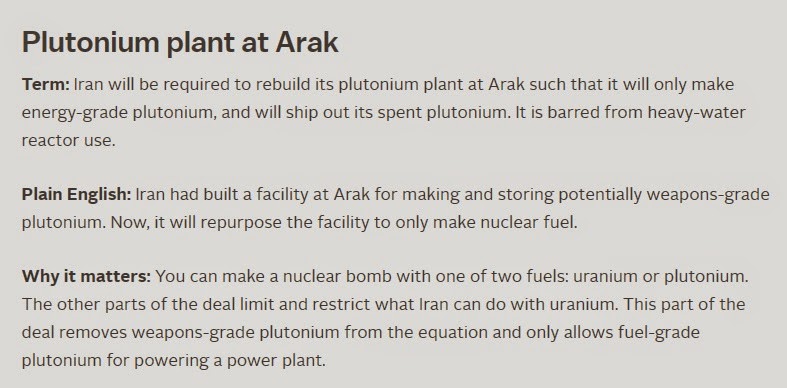


 Butchered by “Healthcare” is Robert Yoho’s plain-spoken account of how American medicine stopped being a profession and became an industry. 341 pages. Over a thousand references. Thirty-eight chapters.


