Witnesses at Crimea base: ‘No fighting or shooting like reported on TV’
RT | March 11, 2014
Recent reports from Western media say Russian troops have allegedly seized control of the naval base near the Crimean city of Bakhchisaray on Monday, with “shots being fired in the air.” However, the sailors at the base deny all these reports.
“We were never ambushed or beaten. That’s just nonsense,” Aleksandr Gubenko, a seaman at the Crimean naval base, told Crimea-based journalist Ryan O’Neill.
According to Gubenko, the sailors at the base were told to come to the security checkpoints because “someone was trying to get in.”
“When we got there, these men asked us who we want to align ourselves with,” said Gubenko, “I am leaning towards Crimea because that’s where I’m from, same as 80 percent of other people at this base, and they all know they won’t go fighting their own people.”
It’s not only sailors that have denied the reports of an ambush. The members of the Crimean self-defense squads also say there was “no fighting or shooting” at the Bakhchisaray base “like they are reporting it on TV.”
“A group of Crimean self-defense forces just came in,” Sergey Yurchenko, from the Crimean self-defense squad, told O’Neill, “Their leader is currently negotiating with the commander of the base.”
“I don’t know what exactly they’re talking about there. There is definitely no fighting and no conflict,” he adds.
On Monday many Western media outlets have run reports that “masked troops of unidentified armed men fired in the air at the base near Bakhchisaray.” Some said that it was “Russian forces” which “took over a military hospital and a missile unit” in the naval base.
According to some reports these “masked pro-Russian troops” on Sunday kidnapped the base commander Vladimir Sadovnik. However, later it turned out that Sadovnik had never been kidnapped. On Monday he arrived at the Bakhchisaray base along with self-defense squads.
The Autonomous Republic of Crimea will hold a referendum for March 16 where its people – about 60 percent of whom are ethnic Russians – will decide whether they want the Crimea to remain part of Ukraine, or join Russia.
The situation on the Crimean Peninsula is tense and the authorities fear possible provocations from the coup-imposed Kiev government. On Monday radicals backed by the Kiev authorities made provocations in the village of Chinghar in northern Crimea, said a source from the Crimean self-defense squads. Over 30 cars with nearly 70 people, apparently intending to organize a coup, demanded the self-defense groups let them pass into the territory of Crimea.
Despite all these attempts to disrupt the upcoming the referendum, the Crimean government is controlling the situation on the peninsula, according to the speaker of the Supreme Council of Crimea, Vladimir Konstantinov. He added that “No provocations will be staged before or during the referendum as the region has enough self-defense forces to protect itself.”
The US and EU authorities do not recognize the legitimacy of the Crimean authorities, nor the March 16 referendum, despite the Crimean parliament welcoming a mission from the Organization for Security and Cooperation in Europe (OSCE) to observe the ballot.
Meanwhile, Crimean authorities are preparing for the Sunday poll. The government of the autonomous republic will issue up to US$2 million for ballot printing and providing technical support. Overall 1,550,000 ballots will be printed.
Over 1,500 Crimean troops will be deployed at polling stations, according to Crimean Prime Minister Aksyonov.
Related article

The Process of Dehumanization
The extent to which 21st Century American culture is imbued by anti-Arab racism
By Ernest A. Canning – 8/21/2009
Excerpts
 As revealed [in an] Egypt Today review, Jack Shaheen’s study of early 20th Century films exposed Hollywood’s application of “the generic ‘Ali Baba kit’ comprising of lecherous, barbaric Arab men flanked by erotic belly dancers.” Just as African American men were cast as lusting after white women in the Jim Crow era, these early films depicted the “prize of every Sheikh’s harem” as “the abducted American woman who bravely fights off her sinister master’s sexual advances.”
These disparaging images morphed into an even more sinister caricature of Arabs in the post World War II era — images that coincided with the advent of the Arab/Israeli conflict, the early 70s oil embargo and the Iranian hostage crisis. Against a backdrop of a reality in which intelligent Arab women today are “succeeding in all professions,” Sheehan laments, Hollywood replaced the erotic image of the belly dancer with projections of the Arab woman “as a bomber, a terrorist.” Added to this is what Shaheen calls “’bundles in black,’ veiled women in the background, in the shadows, submissive.”
The threat of Arab/Muslim terrorists finds its ultimate embodiment in Rules of Engagement, a film which was written by former Secretary of the Navy and now U.S. Senator James Webb (D-VA); a film Shaheen describes as “the most racist.”
Shaheen described the action, which takes place in Yemen:
There are violent demonstrations at the American embassy, and the Marines, led by Samuel L. Jackson…open fire on the crowd and kill scores of Yemeni, including women and children. And in the investigation that follows, Tommy Lee Jones, the lawyer who represents the Samuel L. Jackson character, goes to Yemen to investigate….He follows [a one-legged little girl to a hospital ward where he discovers a videotape which when translated states that it is the duty of every Muslim to kill Americans.] We discover that the Yemeni civilians aren’t so innocent after all. It turns out they fired on the Marines first. And in a moment that will live in Hollywood infamy, we suddenly learn that the little girl we’ve been sympathizing with, the very girl whose humanity and innocence may have broken down our stereotypes, well, she’s no better than those other Yemeni terrorists. As a result, when Samuel L. Jackson delivers the key line — [“Waste the mother fuckers”] — we’re now on his side.
“Why does it matter? Shaheen asks. “Because in the end, the massacre of even women and children has been justified….It’s a slaughter, but it’s a righteous slaughter.” […]
Neil Simon’s Chapter Two underscores the disparity between the presently dehumanized Arab and the formerly dehumanized African-American. The film begins with the protagonist, George Schneider, returning from London. “How was London?” his brother asks. “Full of Arabs,” Schneider replies.
“Imagine,” Shaheen states, “”if he had said, ‘Full of blacks,’ ‘Full of Jews’….”
As the Don Imus story reveals, one does not have to imagine. If Beck had openly questioned Barack Obama’s loyalty because he was an African American in the same manner that he questioned Keith Ellison’s loyalty because Ellison is a Muslim, Beck’s career would have been over.
Beck is hardly alone in his dehumanized conception of Muslims. Consider some of the words of America’s Eva Braun, aka Ann Coulter.
Writing about Muslims on Sept. 12, 2001 for the National Review, Coulter said, “We should invade their countries, kill their leaders and convert them to Christianity.” In a Dec. 21, 2005 column, Coulter wrote: :” “I think the government should be spying on all Arabs, engaging in torture as a televised spectator sport, dropping daisy cutters wantonly throughout the Middle East and sending liberals to Guantanamo.”
When her use of the words “camel jockeys” was challenged during an October 1, 2006 appearance on Fox News’s Hannity & Colmes, Coulter responded with sarcasm: “Oh. Yeah. No. They killed 3,000 Americans. I’ll be very careful with my language.”
In her November 30, 2006 column Coulter took the NAACP to task for speaking up for Muslims who had been subjected to racial profiling at airports. Coulter wrote:
The only reason Americans feel guilty about ‘racial profiling’ against blacks is because of the history of discrimination against blacks in this country. What did we do to the Arabs? I believe Americans are the victims in that relationship. After the attacks of 9/11, profiling Muslims is more like profiling the Klan.
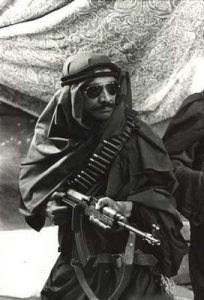
The extent to which American culture is imbued with anti-Muslim racism helps to explain the ease with which the Bush administration succeeded in falsely linking Iraq to al Qaeda and 9/11. While the administration doctored intelligence, lied about WMD and links to al Qaeda, Bush and Cheney never flat-out accused Saddam Hussein of complicity in 9/11. They didn’t have to. Against a backdrop of the televised images of burning towers, grainy photos of hijackers, and black-garbed, gun-wielding terrorists in training camps, Bush and Cheney laced their pre-invasion speeches with references to terrorists, 9/11 and WMD. The terrorists attacked us on 9/11. We don’t want the “smoking gun” to come in the form of “a mushroom” cloud.
Hillary Clinton: Playing a Dog-Eared “Hitler” Card

By Norman Solomon | War is a Crime | March 7, 2014
The frontrunner to become the next president of the United States is playing an old and dangerous political game — comparing a foreign leader to Adolf Hitler.
At a private charity event on Tuesday, in comments preserved on audio, Hillary Clinton talked about actions by Russia’s President Vladimir Putin in the Crimea. “Now if this sounds familiar, it’s what Hitler did back in the ’30s,” she said.
The next day, Clinton gave the inflammatory story more oxygen when speaking at UCLA. She “largely stood by the remarks,” the Washington Post reported. Clinton “said she was merely noting parallels between Putin’s claim that he was protecting Russian-speaking minorities in Crimea and Hitler’s moves into Poland, Czechoslovakia and other parts of Europe to protect German minorities.”
Clinton denied that she was comparing Putin with Hitler even while she persisted in comparing Putin with Hitler. “I just want people to have a little historic perspective,” she said. “I’m not making a comparison certainly, but I am recommending that we perhaps can learn from this tactic that has been used before.”
Yes indeed. Let’s learn from this tactic that has been used before — the tactic of comparing overseas adversaries to Hitler. Such comparisons by U.S. political leaders have a long history of fueling momentum for war.
“Surrender in Vietnam” would not bring peace, President Lyndon Johnson said at a news conference on July 28, 1965 as he tried to justify escalating the war, “because we learned from Hitler at Munich that success only feeds the appetite of aggression.”
After Ho Chi Minh was gone, the Hitler analogy went to other leaders of countries in U.S. crosshairs. The tag was also useful when attached to governments facing U.S.-backed armies.
Three decades ago, while Washington funded the contra forces in Nicaragua, absurd efforts to smear the elected left-wing Sandinistas knew no rhetorical bounds. Secretary of State George Shultz said on February 15, 1984, at a speech in Boston: “I’ve had good friends who experienced Germany in the 1930s go there and come back and say, ‘I’ve visited many communist countries, but Nicaragua doesn’t feel like that. It feels like Nazi Germany.’”
Washington embraced Panama’s Gen. Manuel Noriega as an ally, and for a while he was a CIA collaborator. But there was a falling out, and tension spiked in the summer of 1989. Deputy Secretary of State Lawrence Eagleburger said that drug trafficking by Noriega “is aggression as surely as Adolf Hitler’s invasion of Poland 50 years ago was aggression.” A U.S. invasion overthrew Noriega in December 1989.
In early August 1990, the sudden Iraqi invasion of Kuwait abruptly ended cordial relations between Washington and Baghdad. The two governments had a history of close cooperation during the 1980s. But President George H. W. Bush proclaimed that Saddam Hussein was “a little Hitler.” In January 1991, the U.S. government launched the Gulf War.
Near the end of the decade, Hillary Clinton got a close look at how useful it can be to conflate a foreign leader with Hitler, as President Bill Clinton and top aides repeatedly drew the parallel against Serbia’s president, Slobodan Milosevic. In late March 1999, the day before the bombing of Kosovo and Serbia began, President Clinton said in a speech: “And so I want to talk to you about Kosovo today but just remember this — it’s about our values. What if someone had listened to Winston Churchill and stood up to Adolf Hitler earlier?”
As the U.S.-led NATO bombing intensified, so did efforts to justify it with references to Hitler. “Clinton and his senior advisers harked repeatedly back to images of World War II and Nazism to give moral weight to the bombing,” the Washington Post reported. Vice President Al Gore chimed in for the war chorus, calling Milosevic “one of these junior-league Hitler types.”
Just a few years later, the George W. Bush administration cranked up a revival of Saddam-Hitler comparisons. They became commonplace.
Five months before the invasion of Iraq, it was nothing extraordinary when a leading congressional Democrat pulled out all the stops. “Had Hitler’s regime been taken out in a timely fashion,” said Rep. Tom Lantos, “the 51 million innocent people who lost their lives during the Second World War would have been able to finish their normal life cycles. Mr. Chairman, if we appease Saddam Hussein, we will stand humiliated before both humanity and history.”
From the Vietnam War to the Iraq War, facile and wildly inaccurate comparisons between foreign adversaries and Adolf Hitler have served the interests of politicians hell-bent on propelling the United States into war. Often, those politicians succeeded. The carnage and the endless suffering have been vast.
Now, Hillary Clinton is ratcheting up her own Hitler analogies. She knows as well as anyone the power they can generate for demonizing a targeted leader.
With the largest nuclear arsenals on the planet, the United States and Russia have the entire world on a horrific knife’s edge. Nuclear saber-rattling is implicit in what the prospective President Hillary Clinton has done in recent days, going out of her way to tar Russia’s president with a Hitler brush. Her eagerness to heighten tensions with Russia indicates that she is willing to risk war — and even nuclear holocaust — for the benefit of her political ambitions.
Violence in Venezuela: The Myths Versus Facts
By Federico Fuentes | Green Left Weekly | March 5, 2014
Below, Australia Venezuela Solidarity Network activist Federico Fuentes, provides answers to common questions about recent events in Venezuela. Key facts are referenced, largely from media outlets that could not be identified as pro-government.
***
Is recent unrest in Venezuela due to government repression against peaceful protests?
No. This version of events, widely disseminated by the media, ignores the fact that security forces only acted after groups within the protests initiated violent actions. In the case of the first of the current round of protests that gained media attention, in Tachira on February 6, police only moved in after small groups of protesters attacked local governorship offices and home of the local governor.http://www.eluniversal.com/nacional-y-politica/140206/maduro-quieren-apl…
When protests took place in Merida the next day, security forces intervened only after armed protesters had carried out actions such as hijacking trucks carrying food and medicine.http://www.eluniversal.com/nacional-y-politica/140207/herido-estudiante-…
During protests in Caracas on February 12, which gained international media attention due to deaths on the day, there is clear evidence security forces only moved into action after a small group of protesters had them, destroyed the attorney-general’s office and burned five police trucks.http://www.elsoldemargarita.com.ve/posts/post/id:128117
None of this is to deny there were incidents of heavy-handed action by security forces, or to excuse the death of protesters. One fact the media has studious ignored is that 11 members of Venezuela’s security forces and three Bolivarian National Guard soldiers have been arrested and charged after evidence of wrongdoing.
In relation to the two deaths on February 12 (an opposition student and government supporter), eight SEBIN (intelligence) officers who violated strict orders to not confront protesters were arrested. The head of SEBIN has been replaced.http://www.ultimasnoticias.com.ve/noticias/actualidad/sucesos/ocho-funci…
The pattern is clear: small groups of protesters have consciously tried to incite violence and provoke security forces.
The pattern is all the more obvious when we look at the death toll.
As of March 5, there had been 19 deaths that could be directly attributed to the protests. Of these, three have been attributed to state security forces (including that of a government supporter). http://www.cepr.net/index.php/blogs/the-americas-blog/venezuela-who-are-…
In comparison, opposition protesters have shot death two National Guard soldiers and a brother of a national assembly deputy.
A further six have been killed as a result of the opposition road blockades (including two motorbike riders nearly decapitated by barbed wire strung across roadways by protesters).
At least 30 people have indirectly died due to the roadblocks blocking access to emergency medical treatment or other vital services.
It is important to recall that far-right opposition force have continuous used violence against pro-government supporters. In the wake of presidential elections in April last year, 11 people — all government supporters — were killed during days of violent protest. None received the media coverage we see today.
Are these protests in response to legitimate grievances?
Not even President Nicolas Maduro’s government denies Venezuela faces crucial challenges regarding crime and the economy. But it is clear these protests have been organised by right-wing forces who, unable to defeat socialist candidates in elections, are seeking to depose the government via violent means.
Just two months before the recent unrest began, pro-government candidates won 54% of the vote in nation-wide municipal elections recognised as legitimate by the opposition. http://www.americaeconomia.com/analisis-opinion/elecciones-municipales-e…
That is why key opposition leaders, such as Leopoldo Lopez from the Popular Will party, have said repeatedly that the only way to get rid of Maduro’s government is via the streets. http://www.eluniversal.com/nacional-y-politica/140124/dirigentes-invitan…
On February 2, four days before the student protests began in Tachira, Lopez and the opposition-aligned student federation president at the Central University of Venezuela held a public rally.
Lopez called for opposition supporters to take to the streets of Caracas on February 12, National Youth Day, by saying: “The problem is not just Maduro, it is the heads of all the public powers … all of the have to go”. http://www.laverdad.com/politica/45606-la-oposicion-retoma-las-calles-co…
With this in mind, student leaders aligned with Popular Will instigated protests on February 4 in Tachira. They provoked confrontations with police and used images of “repression” to build momentum for the February 12 rally.
Far from being spontaneous protests over social or economic issues, these protests represented a bid by opposition forces to by-pass the democratic process to bring down the elected government.
Who is Leopoldo Lopez?
Lopez is a former mayor of Chacao, a municipality that covers some of the wealthiest suburbs of Caracas and where most of the recent protests have taken place. As mayor, he actively supported the 2002 military coup that briefly ousted president Hugo Chavez and led the arrest of then-interior minister Ramon Rodriguez Chacin. http://www.npr.org/blogs/thetwo-way/2014/02/20/280207441/5-things-to-kno…
Lopez was found guilty of charges of corruption dating back to his time as an employee of the state oil company PDVSA, when he siphoned money towards starting up a new political party.
Despite this, it is clear Lopez and other opposition figures have received financial support from the US to help their campaign to get rid of first Chavez and now Maduro.
US embassy cables made public by WikiLeaks describe Lopez as “a divisive figure within the opposition … He is often described as arrogant, vindictive, and power-hungry …” http://www.cablegatesearch.net/cable.php?id=09CARACAS1408&q=leopoldo-lopez
Nevertheless, the cables reveal a concerted campaign by Washington to promote and maintain unity among opposition spokespeople, including Lopez. http://venezuelanalysis.com/analysis/10388
Embassy cables also reveal US government funding of opposition parties, including Lopez’s. Just this year, the US government earmarked a further US$5 million towards opposition groups. http://www.wikileaks.org/plusd/cables/04CARACAS2224_a.html
Does the Venezuela government control all the media?
No. More than 70% of the media in Venezuela is privately owned, with 25% being in community hands and only about 5% being controlled by the state. http://www.bbc.co.uk/news/world-latin-america-19368807
Moreover, 40% of households have cable TV — giving access to Fox and CNN en Espanol.
Almost all private media have shown bias towards the opposition. A study of the three main private TV stations conducted by the Carter Centre during the 2013 presidential elections, found they dedicated 79% of their election coverage to opposition candidate Capriles.https://www.cartercenter.org/news/pr/venezuela-070313.html
These same media outlets have ran constant coverage of the recent protests and statements made by opposition leaders.http://www.cepr.net/index.php/blogs/the-americas-blog/does-venezuelan-te…
There have been many cases of media outlets deliberately misreporting what is occurring in Venezuela. One example is the continued misrepresentation of media ownership in Venezuela. http://www.fair.org/blog/2014/02/27/nyt-corrects-venezuela-tv-falsehood/
The more brazen example is the continued claim by media outlets in Venezuela and internationally (such as El Universal and the New York Times , to give two examples) that a young man was killed as a result of police actions in Tachira.
http://www.eluniversal.com/nacional-y-politica/140228/fallecidos-durante…
http://www.nytimes.com/2014/02/25/world/americas/in-venezuela-middle-cla…
This is despite video evidence showing that he had fallen off a building. No correction has been issued by any of these outlets.http://venezuelanalysis.com/news/10410
But is the Maduro government a dictatorship? How is it possible to bring him down if not via street protests?
Maduro is democratically elected. The political movement he represents has won 17 out of 18 national elections since Chavez was first elected in 1998.
Despite some opposition claims, Venezuela’s electoral system has been described by former US president Jimmy Carter, whose Cater Center observes elections in many countries, as “the best in the world”. http://www.youtube.com/watch?v=fBwQ40TtCFA
Since October 2012 alone, Venezuelans have gone to the polls four times. Each time the election results have been verified by numerous international election observer teams.
Opposition forces claimed fraud after Maduro narrowly won elections last April, but no actual evidence of fraud was ever presented. A recount demonstrated the results were accurate. Moreover, opposition candidates made no complaints when the same voting system was used in the December municipal council elections.
What elections have repeatedly shown is that the “Chavista” movement remains the largest political force in the country.
It is precisely because the right-wing opposition has failed to win elections that they have turned towards violence, just as they did in 2002 with the failed coup against Chavez.
Protests to bring down an illegitimate government is one thing. Violent protests aimed at imposing a government against the will of the majority are another.
How serious is the economic crisis facing the country?
Few, least of all the Maduro government, deny Venezuela is facing some serious economic problems. However, they are nothing like what the private media portrays.
For example, despite problems with inflation and shortages, Venezuela registered a decline in its poverty rate (from 21.6% in 2012 to 19.6% last year) and unemployment rate (from 5.9% to 5.6%). http://www.ciudadccs.info/?p=521684
Last June, the UN Food and Agriculture Organization praised Venezuela for making great strides in lowering malnutrition. Venezuela’s daily rate of calories consumption per person is almost 60% above the FAO’s proposed minimum intake (3182 calories per day in Venezuela, as compared to 1800 calories). http://www.rlc.fao.org/es/paises/venezuela/noticias/venezuela-sera-recon…
Last year, inflation was a very high 56, compared with 23.4% average during the time of Chavez’s presidency (1999-2012). But inflation is not a new problem in Venezuela.
Media outlets have not noted that in the decade prior to Chavez’s elections, the average inflation rate was 52%, with peaks of 81% (1989) and 103% (1996). http://www.elmundo.com.ve/firmas/blagdimir-labrador/la-inflacion-en-vene…
These and many other figures indicate that the picture is far more complex than media portrayals suggest.
Rather than shed light on the situation, the media prefers to highlight selective facts and blame the government for problems. This enables the media to accomplish two things.
First, it conceals the real role that Venezuela’s rich elites are playing in provoking economic problems. In November last year, the Venezuelan government carried out an audit of thousands of private-owned stores and found almost all of them were involved in marking-up prices by 500%-10,000%.
Since then, the government has enacted a new law that would set a 15%-30% limit on profit margins. This law came into effect around the same time the recent unrest began.
Second, the media’s role is to reinforce the idea that any attempt to change the status quo will result in disaster.
From his first days in office, Chavez was vilified by the media and opposed by the elite. They rejected his proposal that the Venezuelan state should control the country’s oil riches and redistribute its wealth n order to more equitably.
Such policies led to a dramatic fall in poverty and contributed to record economic growth rates. It funded a huge expansion of free, accessible public services (health, education, etc) and community empowerment via funding for grassroots neighbourhood committees.
This is why the Maduro government continues to enjoy popular support — as shown in elections and large pro-government demonstrations.
This is also why the rich elites, and the media outlets they own, are continuously working to bring down the government. Part of this campaign involves discrediting the very idea that people’s needs could take priority over the market.
That is also why it’s not a question of defending a government versus protesters. It’s about defending a political movement of the poor against the violent reaction of the old elites.
US Administration Considering Targeted Sanctions against Members of Venezuelan Government
By Jake Johnston | CEPR Americas Blog | March 4, 2014
Members of Congress and the Obama administration have consistently placed the blame for the violence stemming from protests on the Venezuelan government, while overlooking or ignoring violent incidents by opposition protesters, including the decapitation of motorcycle riders, the burning of government buildings and metro stations, attacks against state media companies, and the killing of individuals seeking to dismantle barricades, including a National Guard officer. Officials have referred instead to “systematic” human rights abuses and government repression, without citing evidence.
Based on these assertions, momentum is building to implement sanctions on members of the Venezuelan government. U.S. Rep. Debbie Wasserman Schultz (D-FL) told the press on Monday that, “There should be sanctions on individuals. … The administration is looking at those.” Wasserman Schultz, the Democratic National Committee chairwoman, cited a “high-level” State Department official that she had recently spoken to.
That the administration is considering sanctions comes on the heels of demands from members of congress that the Obama administration go further in its application of pressure on the Venezuelan government. After introducing legislation “supporting the people of Venezuela as they protest peacefully for democracy,” Rep. Ileana Ros-Lehtinen (R-FL) stated that:
“But this resolution can only be the first step to hold Maduro and his fellow regime thugs accountable for their violent response and their abuses of the Venezuelan people’s liberties and human rights. I have already begun circulating a letter amongst my colleagues in the House, addressed to President Obama, asking him to take immediate actions against Maduro and other Venezuelan officials who are responsible for violations of their people’s human rights. We are calling for the President to enact immediate sanctions against these officials, under authorities granted to him under the International Emergency Economic Powers Act (IEEPA), including denying them visas to enter the United States, blocking their property and freezing their assets in the U.S., as well as prohibiting them from making any financial transactions in the U.S.”
Ros-Lehtinen also plans to introduce a bill that would require the administration to take these steps. The moves from the House of Representatives have been echoed in the Senate, where the Senate Foreign Relations Committee Chairman Bob Menendez (D-NJ) and U.S. Senators Marco Rubio (R-FL), Dick Durbin (D-IL) and Ted Cruz (R-TX) have introduced a resolution calling for sanctions. Menendez stated:
“Now is the time to pursue a course of targeted sanctions by denying and revoking visas, and freezing the assets of Venezuelan officials complicit in the deaths of peaceful protestors. Human rights violators should be held accountable for the crimes they committed and their presence should not be welcome in our nation. Venezuelans today are denied basic rights, freedoms, and the ability to peacefully protest the dire economic circumstances caused by President Maduro and his government. We stand with the Venezuelan people and the brave opposition leaders in their pursuit to build a more hopeful Venezuela that embraces a bright future while discarding a failed past.”
Marco Rubio even made the case for sanctions on NBC News’ “Meet The Press,” telling host David Gregory that, “I would like to see specific U.S. sanctions against individuals in the Maduro government that are systematically participating in the violation of human rights and anti-democratic actions.” Florida Governor Rick Scott has also called for sanctions. Although neither the House nor the Senate have passed these resolutions calling for sanctions, Secretary of State John Kerry told reporters last week that, “with respect to Venezuela, Congress has urged sanctions.”
The call for sanctions has also been trumpeted by the press, with Miami Herald columnist Andres Oppenheimer saying that if Venezuela does not respond to “international diplomatic pressures,” then the Congress “should revoke the U.S. visas of Venezuelan government and military leaders.” Further, Otto Reich, the former U.S. Ambassador to Venezuela and Assistant Secretary of State for Western Hemisphere Affairs at the time of the U.S.-backed coup of 2002, wrote an opinion piece for the National Review titled “It’s Time for Sanctions in Venezuela.”
None of the members of congress nor any of the resolutions mention the fact that of the 18 tragic deaths in Venezuela since the protests began, many were not protestors, but individuals removing barricades and motorcyclists killed by wires strung across streets, or by crashing into barricades. In one case, a member of the Venezuelan National Guard was shot and killed. The Senate resolution makes no call for both sides to refrain from violence nor does it condemn the violent actions of some from the protest movement, however it does deplore “the use of excessive and unlawful force against peaceful demonstrators in Venezuela and the inexcusable use of violence…to intimidate the country’s political opposition.”
While, undoubtedly, excessive force has been used by members of the Venezuelan security forces, over 10 individuals have been arrested for these actions and further investigations are under way. According to the Attorney General (AG) of Venezuela, there are currently 27 investigations into violations of human rights. The AG, Luisa Ortega Diaz, stated that her office “will not tolerate violations of human rights under any circumstance and that any official turns out to be responsible will be sanctioned as established by the laws of Venezuela.” Far from censoring information or trying to hide the extent of the arrests or of those killed in the last few weeks, Diaz has provided regular updates to the press and has kept the public informed about the status of investigations.
Russia’s 25,000-troop allowance & other facts you may not know about Crimea
RT | March 4, 2014
Ukraine’s statement at the UN that ‘16,000 Russian soldiers had been deployed’ across Crimea sparked a MSM feeding frenzy that steadfastly ignored any hard facts that got in their way.
Especially unwelcome is the fact that the so-called ‘invasion force’ has been there for 15 years already.
The media many trust described in hysterical tones how the Autonomous Republic of Crimea was under a full-scale Russian invasion with headlines like: “Ukraine says Russia sent 16,000 troops to Crimea”, “Ukraine crisis deepens as Russia sends more troops into Crimea,” as well as “What can Obama do about Russia’s invasion of Crimea?”
Facts, and ardent statements by top Russian diplomats were totally ignored by the western ‘war press.’
Russian UN Ambassador Vitaly Churkin pointed to the longstanding 25,000 troop allowance while FM Sergey Lavrov stressed the Russian military “strictly executes the agreements which stipulate the Russian fleet’s presence in Ukraine, and follows the stance and claims coming from the legitimate authority in Ukraine and in this case the legitimate authority of the Autonomous Republic Crimea as well.”
So here they are, the facts:
1) A Russian naval presence in Crimea dates to 1783 when the port city of Sevastopol was founded by Russian Prince Grigory Potemkin. Crimea was part of Russia until Nikita Khruschev gave it to Ukraine in 1954.
2) In 1997, amid the wreckage of the USSR, Russia & Ukraine signed a Partition Treaty determining the fate of the military bases and vessels in Crimea. The deal sparked widespread officer ‘defections’ to Russia and was ratified by the Russian & Ukrainian parliaments in 1999. Russia received 81.7 percent of the fleet’s ships after paying the Ukrainian government US$526.5 million.
3) The deal allowed the Russian Black Sea Fleet to stay in Crimea until 2017. This was extended by another 25 years to 2042 with a 5-year extension option in 2010.
4) Moscow annually writes off $97.75 million of Kiev’s debt for the right to use Ukrainian waters and radio frequencies, and to compensate for the Black Sea Fleet’s environmental impact.
5) The Russian navy is allowed up to
– 25,000 troops,
– 24 artillery systems with a caliber smaller than 100 mm,
– 132 armored vehicles, and
– 22 military planes, on Crimean territory.
6) Five Russian naval units are stationed in the port city of Sevastopol, in compliance with the treaty:
– The 30th Surface Ship Division formed by the 11th Antisubmarine Ship Brigade. Comprises the Black Sea Fleet’s flagship guard missile cruiser Moskva as well as Kerch, Ochakov, Smetlivy, Ladny, and Pytlivy vessels, and the 197th Landing Ship Brigade, consisting of seven large amphibious vessels;
– The 41st Missile Boat Brigade includes the 166th Fast Attack Craft Division, consisting of Bora and Samum hovercrafts as well as small missile ships Mirazh and Shtil, and 295th missile Boat Division;
– The 247th Separate Submarine Division, consisting of two diesel submarines – B-871 Alrosa and B-380 Svyatoy Knyaz Georgy;
– The 68th Harbor Defense Ship Brigade formed by 4 vessels of the 400th Antisubmarine Ship Battalion and 418 Mine Hunting Ship Division respectively.;
– The 422nd Separate Hydrographic Ship Division boasts the Cheleken, Stvor, Donuzlav and GS-402 survey vessels and hydrographic boats.
7) Russia has two airbases in Crimea, in Kacha and Gvardeysky.
8) Russian coastal forces in Ukraine consist of the 1096th Separate Anti-Aircraft Missile Regiment in Sevastopol and the 810th Marine Brigade, which hosts around 2,000 marines.
Authorities in the Ukrainian Autonomous Republic of Crimea – where over half the population is Russian – requested Moscow’s assistance after the self-proclaimed government in Kiev introduced a law abolishing the use of languages other than Ukrainian in official circumstances.
Last week, Russia’s Federation Council unanimously approved President Vladimir Putin’s request to send the country’s military forces to Ukraine to ensure peace and order in the region “until the socio-political situation in the country is stabilized.”
However, the final say about deploying troops lies with Putin, who hasn’t yet made such a decision, stressing that deploying military force would be a last resort.
Progress in Iran Nuclear Talks Depends on the Israeli Government Coming Clean on its Nuclear Disinformation Campaigns
By Dr. Yousaf Butt | Arms Control Law | March 4, 2014
One of the sticking points in the on-going Iran nuclear negotiations is the fate of the so-called “Possible Military Dimensions” (aka “Alleged Studies”) file. This is a compendium of allegations against Iran’s nuclear program – largely gathered by third-party intelligence agencies – that the IAEA would like Iran to respond to. Not only are the allegations largely outside the IAEA legal authority and expertise (because they do not directly deal with nuclear material diversion), but Iran has not been allowed to see much of this secret evidence that is being used against it. Such a process is, of course, not consistent with normal Western legal practice. Iran has responded to what little it has been shown of the PMD file by saying that the evidence thus far shown is fabricated.
Though this Iranian response is often cast as Iran “not cooperating with the IAEA” (or “refusing to discuss the matter”), another possibility must be considered: that Iran is correct. That is, that at least some the evidence has indeed been cooked-up by an adversarial Intelligence service (or by an agent recruited by such an Intelligence service).
A wonderful new book by Gudrun Harrer on the IAEA inspections in Iraq sheds some light on which countries could be involved in fabricating and planting such fake nuclear “evidence”. On p. 185 of the book, it is confirmed that Israel provided the IAEA with false information on Laser Isotope Separation activities in Iraq. The reference for this information is the author’s interview with David Albright of ISIS (see at this insert the relevant scanned pages from the book):
Israel has, of course, long been suspected of being behind some of the forged and suspect evidence against Iran: the neutron initiators, AP graphs, etc., but until now it was hard to definitely pin the blame on that country. Thanks to David Albright at ISIS, we now know that Israel has been guilty of planting disinformation with the IAEA in the past.
The German intelligence agency has also discredited much of the secret evidence against Iran.
Having myself analyzed some of what is (evidently) in this PMD file – with Dr. Ferenc Dalnoki-Veress of the James Martin Center for Nonproliferation Studies – I can say that the evidence is certainly of poor quality and/or an amateurish forgery. It does not look like anything a state-level research scientist would produce. There are large and conspicuous mathematical and physical errors in the material.
Similarly, Robert Kelley has assessed that at least some of the evidence purporting to show weaponization research work continuing past 2004 is less than compelling:
[The] evidence, according to the IAEA, tells us Iran embarked on a four-year program, starting around 2006, to validate the design of a device to produce a burst of neutrons that could initiate a fission chain reaction. Though I cannot say for sure what source the agency is relying on, I can say for certain that this project was earlier at the center of what appeared to be a misinformation campaign…. Mohamed ElBaradei, who was then the agency’s director general, rejected the information because there was no chain of custody for the paper, no clear source, document markings, date of issue or anything else that could establish its authenticity…
David Albright’s confirmation of Israeli nuclear disinformation goes hand-in-glove with statements from former IAEA director, and Nobel Prize winner, Mohammed ElBaradei. In his biography, ElBaradei says that the documents that the IAEA had about the alleged neutron initiators in Iran circa 2008 were given to the Agency by Israel. He further states that Israel gave him permission to show the evidence to Iran.
So the question is, why has the IAEA not cooperated with Iran in evaluating material like they did with Iraq circa 1995, in the incident mentioned by Harrer?
Iran could be genuinely helpful if they were allowed to see the original evidence and comment on it. When the IAEA worked with Iraq to evaluate documents, the Iraqis helpfully pointed out mistakes that the IAEA could independently confirm. Isn’t that the example we would like to see with Iran?
Being charged with secret evidence also goes against every notion of Western justice. The IAEA either needs to drop the PMD file, or amend their procedures.
Unfortunately, it is quite likely that the Israeli government is once again carrying out nuclear disinformation, possibly in collaboration with the MEK, an Iranian terrorist – in some nations, formerly terrorist – organization opposed to the current Iranian regime.
Over the past weekend, it was also confirmed that Israel masterminded the assassinations of Iranian nuclear scientists. These assassinations, too, perhaps were carried out with local MEK collaboration. If the Israeli government is capable of assassinating civilian Iranian scientists, would fabricating nuclear intel on Iran trouble their consciences? Presumably not. Especially as they have done it in the past, according to David Albright at ISIS.
Before further pursuing Iran on the PMD file – which may contain substantial forged evidence – it would make sense to ask Israel to come clean about any fabricated intelligence it may have planted with the IAEA. It is quite possible that some of the PMD file is not fake. Israel’s assistance and cooperation in identifying what is fake and what is not would be most helpful. If David Albright of ISIS has further insight into this – as he did in the Iraqi case – his involvement would also, of course, be very welcome.
It is becoming increasingly difficult to give credibility to hyperbolic Israeli statements about Iran’s underhandedness in pursuing its nuclear program, when Israel itself has been underhanded in pursuing clandestine disinformation campaigns against NPT states, while itself remaining resolutely outside the NPT.
There are several points for the IAEA to consider in light of these recent developments:
1. Should the IAEA reject all evidence from Israel against Iran and other adversarial states now?
2. Should the IAEA, generally, not accept intelligence from non-NPT states?
3. The IAEA should show Iran any evidence it wants an Iranian response on. Anything less is not consistent with Western notions of justice. Furthermore such cooperation could unveil the origin of any possible forgeries in the PMD file.
4. The IAEA and the US should ask Israel to come clean on any fabricated “evidence” it may have inserted into the PMD file.
5. As I have suggested previously, it would be best to simply drop the PMD file as it relates to decade old unauthenticated allegations of possible research. It is not even clear that what is in the PMD file – even if true – would be a violation of the NPT or the safeguards agreement.
6. If the IAEA really wants to pursue the content of the PMD in a legal way they can initiate special inspections or undertake arbitration as provided for in the CSA. The IAEA does not even have the technical expertise in-house to undertake investigations of missiles, warheads etc. which are mentioned in the PMD file.
7. Since Iran is now in compliance with its safeguards agreement, Iran’s nuclear file – currently hung-up in the Security Council – should return to the IAEA. The referral to the Security Council was unorthodox and politicized to begin with, and there is no rationale for Iran’s nuclear file to remain there post-2008. (Footnote 38 of the latest IAEA report on Iran makes clear that the remaining issues are not IAEA safeguards issues but extraneous UNSC ones).
8. This also means that the UNSC nuclear-related sanctions on Iran should now be dropped. In fact, they ought to have been dropped in 2008.
David Albright must be commended for his helpful insight into fabricated Israeli intelligence in Iraq, and hopefully can assist in tracking down similar disinformation in the case of Iran.
Relatedly, we must thank him and ISIS also for showing the international community expensive satellite pictures of Parchin, in which one can see that west of the paving activity, the site is untouched, and so the IAEA could get environmental samples there (if they even needed those). This undercuts ISIS’ own conclusion that the site has been magically “sanitized” by paving. Normally, of course, the IAEA would take such swipe samples from within the buildings where any suspect U naturally collects: in the corners and at the places where the walls meet the floor.
The technical weaknesses in ISIS’ and IAEA’s approach to Parchin were previously commented on.
The IAEA’s technically unsound obsession with environmental sampling at Parchin may also mean they are confusing the site at Marivan (where open-air implosion tests may have taken place) with the site at Parchin (where implosions in a chamber are alleged).
From the May 2008 Board report, referring to the Marivan site:
A.2. High Explosives Testing
[………….]
Document 3: Five page document in English describing experimentation undertaken with a complex multipoint initiation system to detonate a substantial amount of high explosive in hemispherical geometry and to monitor the development of the detonation wave in that high explosive using a considerable number of diagnostic probes.
And the alleged weapons’ studies annex Nov 2011:
43. Information provided to the Agency by the same Member State referred to in the previous paragraph describes the multipoint initiation concept referred to above as being used by Iran in at least one large scale experiment in 2003 to initiate a high explosive charge in the form of a hemispherical shell. [……] Further information provided to the Agency by the same Member State indicates that the large scale high explosive experiments were conducted by Iran in the region of Marivan.
So what is the point of carrying out environmental sampling at Parchin (where chamber experiments are alleged) and not at Marivan where open-air experiments were allegedly done? Is the IAEA – and ISIS – confused between Marivan and Parchin?
The IAEA’s unprofessionalism in vetting the content of the PMD file, and in the obsession over Parchin (which the IAEA visited twice already) vs. Marivan smacks of an agenda to target Iran rather than any sound technical analysis. It is likely to blow up the Iran nuclear deal for no good reason. Iran has cooperated with the IAEA on the PMD file by saying that the material it was shown was fabricated – this may be true. Now Israel should also cooperate and come clean about what forged material – or material from compromised sources like “Curveball” – may be within this file. David Albright, with his past knowledge and evident expertise in fabricated Israeli intelligence should also step up to the plate.
And, certainly, Iran should be shown any evidence it is being asked to answer to by the IAEA. The Agency should also spend about half an hour and check whether the site it is interested in for environmental sampling is Marivan or Parchin. Environmental sampling at Parchin makes little sense. At Parchin, swipes would be taken from within the buildings since chamber-based implosions are alleged. While it is at it, the IAEA should also review the technical basis of their conclusions on Syria.
It is hard to take the Agency seriously when it persists in being blatantly unprofessional.
Dr Jim Walsh, a research associate at MIT, has an excellent suggestion about what to do with Iran’s “PMD” file – as paraphrased by Mark Hibbs: “If the nuclear activities were in the past, I don’t care. It’s dead, and it’s regretful, but let’s do a deal with Iran that moves forward.”
But before we do that, the IAEA should ask Israel to come clean about its potential role in fabricating some of the “evidence” within the PMD file.
Given its historical misuse, the IAEA should also re-visit whether it will continue to accept intelligence from third-parties, especially non-NPT member states.
Dr. Yousaf Butt, a nuclear physicist, is Director of the Emerging Technologies Program at the Cultural Intelligence Institute, a non-profit organization dedicated to promoting fact-based cultural awareness among individuals, institutions, and governments. The views expressed here are his own.
Their history and ours: the first world war that won’t be commemorated in 2014
By Neil Faulkner | No Glory in War | January 5, 2014
Military historian Max Hastings and education minister Michael Gove say we should should blame the Germans for World War I and celebrate the victory for ‘freedom’ and ‘democracy’. Archaeologist Neil Faulkner disagrees.
Max Hastings has his new book on 1914 out already (Catastrophe: Europe goes to war, 1914). In it he pulls no punches. Even the dustcover proclaims the forthright revisionist message.
‘He [the author] finds the evidence overwhelming that Austria and Germany must accept the principal blame for the outbreak. While what followed was a vast tragedy, he argues passionately against the ‘poets ‘view’ that the war was not worth winning. It was vital to the freedom of Europe, he says, that the Kaiser’s Germany should be defeated.’
UK secretary of state for education, Michael Gove, writing in the Daily Mail, takes the same view:
The First World War may have been a uniquely horrific war, but it was also plainly a just war… The ruthless social Darwinism of the German elites, the pitiless approach they took to occupation, their aggressively expansionist war aims and their scorn for the international order all made resistance more than justified.
So there you have it. Just as the rulers of Britain and France argued at the time, it was all Germany’s fault. Never mind that Britain had the largest empire in the world, ruling over one-fifth of the world’s land mass and one-quarter of its people. Never mind that Britain’s navy was almost the twice the size of Germany’s. Never mind that Britain had formed a military alliance with Russia and France, leaving Germany’s rulers feeling corralled and threatened in an arms race they were losing.
This is not to exonerate the Kaiser. It is simply to say that he was no worse than the rulers of Britain and France. All were imperialists and warmongers. All were prepared to plunge the world into an industrialised war for the power and profit of a few. The vast majority of humanity – the vast majority of the people these rulers were supposed to represent – had no interest in the war. The conscripted workers and peasants of Europe were the victims of a millionaires’ war.
‘No poet,’ says Hastings, ‘ever identified a route by which the British, French, and Belgian people could have escaped the conflict, save by accepting the Kaiser’s domination of Europe.’ This claim appears in a Daily Mail article in June this year headlined Sucking up to the Germans is no way to remember our Great War heroes, Mr Cameron‘.
But this is nonsense. There was a Europe-wide movement against war. Just days before Germany’s declaration of war there were 100,000 anti-war demonstrators on the streets of Berlin. Across Germany, during four days of mass protest in the final days of peace, there had been no fewer than 288 anti-war demonstrations involving up to three-quarters of a million people.
Across Europe that last summer of peace, as millions of people took action against their own rulers, there was a widespread mood of internationalism and solidarity. But when the leaders of all the mainstream parties lined up in support of the war effort, they reinforced a tide of jingoism that the killed the anti-war movement and swept the people of Europe into internecine carnage.
But that mood would resurface, and when it did, beginning in 1917, it would be charged with bitterness at the slaughter and impoverishment, becoming a giant wave of revolution crashing across the continent, ending the war, toppling tyrants, and shaking the foundations of the entire social order.
‘Far from dying in vain,’ continues Hastings, ‘those who perished … between 1914 and 1918 made as important a contribution to our privileged, peaceful lives today as did their sons in World War II.’
And Michael Gove agrees:
‘For all our mistakes as a nation, Britain’s role in the world has also been marked by nobility and courage. Indeed, the more we reflect on every aspect of the war, the more cause there is for us to appreciate what we owe to our forebears and their traditions.’
These are extraordinary claims. The British and the French used their victory in 1918 to re-divide the world, helping themselves to German colonies, hacking off chunks of German territory in Europe, and imposing crippling reparations payments on the German people.
Meantime, to control their enlarged empires in Africa, Asia, and the Middle East, they gunned down protestors demanding democracy and independence. This imperialist carve-up – ‘a peace to end all peace’ – created the preconditions for the Second World War two decades later.
The cost of the First World War was 15 million dead. The cost of the sequel was 60 million dead. More human beings have been killed by war in the last century than in the whole of the rest of human history put together.
The immense potential of industrial society to provide the goods and service we all need has, again and again, been turned into its opposite: means of destruction and waste on an unprecedented scale.
This is not something to be rationalised into a choice between ‘good’ empires and ‘bad’ empires; a choice between ‘democratic’ Britain and France as against ‘autocratic’ and ‘expansionist’ Germany. This is to trivialise historical events, reducing them to little more than a banal discussion about who sent the final ultimatum, who mobilised first, who fired the first shot.
Max Hastings and Michael Gove want us to side with one empire against another. He wants us to wave a Union Jack, celebrate a British victory, and promote the lie that the 15 million dead of the First World War were ‘a necessary sacrifice’.
What is required is an analysis that roots tragedies like the First World War, and all the other imperialist conflicts of the last century, in the madness of a world divided into competing corporations and warring nation-states.
No Glory – the real History of the First World War
Neil Faulkner’s new pamphlet published by No Glory in War
More details and how to buy…
Neil Faulkner is a First World War archaeologist and editor of Military History Monthly. He is one of the founders of the No Glory in War campaign.
Related articles


How to stop the commemoration of WWI becoming a justification for future wars
By John Rees | No Glory | January 30, 2014
The effect of the Parliament’s decision not to attack Syria last year is still reverberating through the Western military establishment.
Let’s not forget that the decision was forced on the political elite. In the days before the vote the BBC was openly speculating that any such decision would re-ignite Iraq war levels of protest. They cited opinion polling going back a decade to show that anti-war opinion had become entrenched in the UK.
Many MPs in the lobbies did not hide the fact that they were embarrassed at the Iraq vote in 2003 and were unwilling to follow the government into another deeply unpopular conflict.
More recently the Guardian has reported that the Ministry of Defence is worried that multi-culturalism in Britain has made the country systematically averse to war: ‘The MoD is still taking stock of the surprise decision of the House of Commons last summer to reject military intervention to punish President Assad of Syria for the use of chemical weapons against rebel forces’.
In fact the situation is so serious that it is impacting on the defence review, ‘A growing reluctance in an increasingly multicultural Britain to see UK troops deployed on the ground in future operations abroad is influencing the next two strategic defence reviews, according to senior figures at the Ministry of Defence’.
In the wake of the Syria vote, Robert Gates, US imperial Grandee and former Defense Secretary and director of the CIA who served under both Bush and Obama, has said the defence spending cuts in the UK mean that the ‘special relationship’ is over and that Britain ‘won’t have full spectrum capabilities and the ability to be a full partner as they have been in the past’.
This combination of a crisis in public support for military adventures and the usual push-back from the military over defence cuts is casting a new light over the debate about the 100 year commemoration of the First World War.
David Cameron has long made it clear that huge set-piece public spectaculars are part of the government’s way of getting through the recession. The Queen’s Jubilee and the Olympics were part of this ‘no bread and circuses’ strategy.
The First World War commemoration was initially thought of mainly in this register, although it was always also going to be about refurbishing the standing of the military as well.
But now, as neo-con Michael Gove’s recent intervention into the debate has made clear, it’s become an ideological offensive bound up with the post-Syria vote crisis of interventionism. Remember Gove was incandescent at the loss of the Syria vote, publically and abusively bawling out Labour MPs in the House of Commons corridors because the vote, he said, had ‘got to him’.
So make no mistake, this will be a full scale British establishment operation.
The Queen will be at a special event at Glasgow Cathedral on 4th August because the city is hosting the Commonwealth Games which end the day before. The plan is that across the country, flags on public buildings will fly at half mast on the anniversary of the outbreak of war. The day will end with a vigil at Westminster Abbey to be ‘attended by scouts, cubs and brownies’ as well as members of the Armed Forces. This will be replicated around Britain in churches, town halls, and other venues.
Ministers hope this will allow people to mark the conflict which ravaged the continent ‘with sorrow and with pride’ and have set aside £10 million just for funding art, drama and music projects linked to the war, from a total government funding for the commemoration of £50 million. According to the Daily Telegraph, a government source said ‘We are keen to ensure that this [will be] a centenary programme that the country can come together on’.
The BBC are planning major, all year coverage. There will be 1,000 books published this year alone on the First World War.
The anti-war movement must meet this ideological operation by the government just as it has met its previous pro-war propaganda efforts. The No Glory campaign, initiated by the Stop the War Coalition, has made a great start. Its initial letter is approaching 15,000 signatures, its website is drawing thousands of visitors every week, the No Glory pamphlet, The Real History of World War One, is a best seller and thousands of pounds were donated in the first few hours of its financial appeal to help fund its events and activities.
But we need to do more. No pro-war article, speech or event should go unchallenged. We need to get into the colleges and schools where these commemorations are being planned. We need to sustain the cultural events that are critical of the war.
The image of the First World War has been established in the popular mind as the most disastrous war ever. The Tories and the establishment hate that fact. And they are out to reverse it.
We cannot let that happen. The more the dead and injured of the First World War are forgotten in a rush of chauvinistic nostalgia, the more likely it is that dead will pile up in future conflicts. This is not just a battle to remember the past correctly. It’s about political priorities in the present. It’s about keeping the peace in the future.
Lew tells AIPAC: War with Iran still an option
Press TV – March 3, 2014
The US Treasury Secretary, Jack Lew, has told the American Israel Public Affairs Committee (AIPAC) that all options against Iran “remain on the table.”
Lew, who is the highest ranking Jewish member of the administration of President Barack Obama, made the remarks on the opening day of AIPAC’s annual meeting which began on Sunday in Washington, D.C., and will end on Tuesday.
He also assured the most powerful pro-Israel lobby group in the US that “the vast majority of” Washington’s sanctions against Iran “remain in place,” adding “all options remain on the table.”
“You may hear some say that the very narrow relief in the interim agreement has unraveled the sanctions regime or eased the choke-hold on Iran’s economy,” Lew said at AIPAC’s 2014 Policy Conference. “Nothing could be further from the truth.”
In an interview with HuffPost Live earlier this year, Noam Chomsky said Washington’s threats of war against Iran are a violation of the United Nations Charter and there is no justification for the US sanctions against Iran as the US intelligence reports do not prove Iran is pursuing non-civilian purposes in its nuclear energy program.
AIPAC is currently pressing the Obama administration to take a tougher stand against Iran. Prior to its annual meeting, the lobby group distributed a position paper to congressional offices that demanded the dismantling of Iran’s nuclear energy program in order for a final agreement to be reached between Iran and the five permanent members of the UN Security Council – Britain, China, France, Russia, and the US – plus Germany.
AIPAC also released a letter from a bipartisan group of senators to Obama, which said US Congress needed “to rapidly and dramatically expand sanctions” against Iran.
This comes as a new study published by The Iran Project shows that new sanctions against Iran sought by hawkish senators on Capitol Hill would undermine the ongoing negotiations over Iran’s nuclear energy program and “would increase the probability of war.”
Iran and the P5+1 group signed an interim nuclear agreement in Geneva, Switzerland, last November. The deal is aimed at setting the stage for the full resolution of the West’s decade-old standoff with Tehran over its nuclear energy program.
In exchange for Iran’s confidence-building bid to limit certain aspects of its nuclear activities, the six world powers agreed to lift some of the existing sanctions against the Islamic Republic.
The two sides continued their talks in the Austrian capital Vienna last month in order to reach a final agreement. According to Iranian Deputy Foreign Minister Abbas Araqchi, the talks concluded on February 20 with “an agreement on the framework and plan of action for the comprehensive nuclear talks.”
Iranian Foreign Minister Mohammad Javad Zarif has already stated that Iran’s nuclear energy program “will remain intact” while the country is willing to address international concerns about its nuclear activities.
Related articles


Roger Cohen Defecates On Argentina, Gets Many Things Wrong
By Mark Weisbrot | CEPR Americas Blog | February 28, 2014
Roger Cohen, what a disappointment. He is not Tom Friedman or David Brooks, and shouldn’t be insulting an entire nation based on a clump of tired old clichés and a lack of information. Argentina is “the child among nations that never grew up” he writes, and “not a whole lot has changed” since he was there 25 years ago. OK, let’s see what we can do to clean up this mess with a shovel and broom made of data.
For Cohen, Argentina since the government defaulted on its debt has been an economic failure. Tens of millions of Argentines might beg to differ.
For the vast majority of people in Argentina, as in most countries, being able to find a job is very important. According to the database of SEDLAC (which works in partnership with the World Bank), employment as a percentage of the labor force hit peak levels in 2012, and has remained close to there since. This is shown in Figure 1.
FIGURE 1
Argentina: Employment Rate, Percent of Total Population
 Source: SEDLAC (2014).
We can also look at unemployment data from the IMF (Figure 2). Of course the current level of 7.3 percent is far below the levels reached during the depression of 1998-2002, which was caused by the failed neoliberal experiment that the Kirchners did away with – it peaked at 22.5 percent in 2002. But it is also far below the level of the boom years of that experiment (1991-1997) when it averaged more than 13 percent.
FIGURE 2
Argentina: Unemployment Rate
 Source: IMF WEO (Oct 2013).
How about poverty? Here is data from SEDLAC (Figure 3), which does not use the official Argentine government’s inflation rate but rather a higher estimate for the years after 2007. It shows a 76.3 percent drop in the poverty rate from 2002-2013, and an 85.7 percent drop in extreme poverty.
FIGURE 3
Argentina: Poverty and Extreme Poverty
 Source: SEDLAC (2014).
Most of the drop in poverty was from the very high economic growth (back to that in a minute) and consequent employment. But the government also implemented one of the biggest anti-poverty programs in Latin America, a conditional cash transfer program.
Finally, there is economic growth. In a terribly flawed article today, the Wall Street Journal reported on a soon-to-be published study showing that Argentina’s real (inflation-adjusted) GDP is 12 percent less than the official figures indicate. (As the article noted, the government, in co-operation with the IMF, implemented a new measure of inflation in January, which should resolve this data problem that has existed since 2007). If we assume that the 12 percent figure is correct, then using IMF data Argentina from 2002-2013 still has real GDP growth rate of 81 percent, or 5.6 percent annually. That is the third highest of 32 countries in the region (after Peru and Panama). And incidentally, very little of this growth was driven by a “commodities boom,” or any exports for that matter.
Despite current economic problems, the country that Cohen ridicules has done extremely well by the most important economic and social indicators, since it defaulted on most of its foreign debt and sent the IMF packing at the end of 2002. This is true by any international comparison or in comparison with its past. Many foreign corporations and the business press, as well as right-wing ideologues, are upset with Argentina’s policies for various reasons. They don’t really like any of the left governments that now govern most of South America, and Washington would like to get rid of all of them and return to the world of 20 years ago when the U.S. was in the drivers’ seat. But there’s really no reason for Roger Cohen to be jumping on this bandwagon.
Oppose Force to Save Starving Syrians
By David Swanson | FDL | February 27, 2014
I’ve been asked to debate Danny Postel on the question of Syria, and so have read the op-ed he co-authored with Nader Hashemi, “Use Force to Save Starving Syrians.”
Excellent responses have been published by Coleen Rowley and Rob Prince and probably others. And my basic thinking on Syria has not changed fundamentally since I wrote down my top 10 reasons not to attack Syria and lots and lots of other writing on Syria over the years. But replying to Postel’s op-ed might be helpful to people who’ve read it and found it convincing or at least disturbing. It might also allow Postel to most efficiently find out where I’m coming from prior to our debate.
So, here’s where I’m coming from. Postel’s op-ed proposes the use of force as if force hadn’t been tried yet, as if force were not in fact the very problem waiting to be solved. What he is proposing is increased force. The arming and funding and training of one side in Syria by the CIA, Saudi Arabia, et al, and the other side by Russia, et al, is not enough; more is needed, Postel believes. But “force” is a very non-descriptive term, as are all the other terms Postel uses to refer to what he wants: “air cover,” “coercive measures,” “Mr. Assad … [should] be left behind.”
I find it hard to imagine people on the ground while NATO dropped thousands of bombs on Libya pointing to the sky and remarking “Check out the air cover!”
Or this: “What happened to your children, Ma’am?” “They experienced some coercive measures.”
Or this: “What became of Gaddafi?” “Oh, him? He was left behind.”
When people who experience modern wars that wealthy nations launch against poor ones talk about them, they describe detailed horror, terror, and trauma. They recount what it’s like to try to hold a loved one’s guts into their mutilated body as they gasp their last. Even the accounts of recovering and regretful drone pilots in the US have much more humanity and reality in them than do Postel’s euphemisms.
I’m not questioning the sincerity of Postel’s belief that, despite it’s long record of abysmal failure, humanitarian war would find success in a nation as divided as Syria, of all unlikely places. But Postel should trust his readers to share his conclusion after being presented with the full facts of the case. If Postel believes that the people whose lives would be ended or devastated by “air cover” are out-weighed by the people who he believes would be thereby saved from starvation, he should say so. He should at the very least acknowledge that people would be killed in the process and guesstimate how many they would be.
Postel claims Somalia as a past example of a “humanitarian intervention,” without dwelling on the chaos and violence aggravated and ongoing there. This seems another shortcoming to me. If you are going to make a moral decision, not only should it include the negative side of the ledger, but it should include the likely medium-term and long-term results, good and bad. Looking at Somalia with a broader view hurts Postel’s case, but so does looking at Libya, Afghanistan, or Iraq. Studies by Erica Chenoweth and others have documented that violent solutions to oppression and tyranny are not only less likely to succeed, but if they succeed their success is shorter lived. Violence breeds violence. “Force,” translated into the reality of killing people’s loved ones, breeds resentment, not reconciliation.
So, I think Postel’s case for dropping tons of deadly “coercive measures” on Syria would be a weak one even if it were likely to resemble his outline. Sadly, it isn’t. The war on Libya three years ago was sold as an emergency use of “force” to protect supposedly threatened people in Benghazi. It was immediately, illegally, predictably, cynically, and disastrously turned into a campaign of bombing the nation to overthrow its government — a government that, like Syria’s, had long been on a Pentagon list to be overthrown for anything but humanitarian reasons. Postel presents a quick and antiseptic “leaving behind” operation to provide food to the starving, but surely he knows that is not what it would remain for any longer than it takes to say “R2P.” Why else does Postel refer so vaguely to leaving Assad behind?
It may be worth noting that it’s not aid workers advocating for “coercion” strikes on Syria. I spoke with a US government aid worker in Syria some months back who had this to say:
“Before we contemplate military strikes against the Syrian regime, we would do well to carefully consider what impact such strikes would have on our ongoing humanitarian programs, both those funded by the US and by other countries and international organizations. These programs currently reach hundreds of thousands of vulnerable people throughout Syria, in areas controlled both by the regime and the opposition. We know from past military interventions, such as in Yugoslavia and Iraq that airstrikes launched for humanitarian reasons often result in the unintended deaths of many civilians. The destruction of roads, bridges, and other infrastructure, which such airstrikes may entail, would significantly hamper the delivery of humanitarian aid in Syria.
“The provision of this assistance in regime controlled areas requires the agreement, and in many cases the cooperation, of the Assad government. Were the Assad regime, in response to US military operations, to suspend this cooperation, and prohibit the UN and nongovernmental organizations from operating in territory under its control, hundreds of thousands of Syrian civilians would be denied access to food, shelter, and medical care. In such a scenario, we would be sacrificing programs of proven effectiveness in helping the people of Syria, in favor of ill considered actions that may or may not prevent the future use of chemical weapons, or otherwise contribute to U.S. objectives in any meaningful way.”
Let’s grant that the crisis has continued for months and worsened. It remains the fact that it is advocates of war advocating war, not aid workers advocating war. The option of ceasing to arm both sides, and of pursuing a negotiated settlement, is simply ignored by the war advocates. The option of nonviolent efforts to deliver aid is avoided entirely. The failure to provide adequate aid to refugees who where that can be reached seems far less pressing than the failure to provide aid where that failure can become a justification for an escalated war.
“Humanitarian interventions,” Postel writes, “typically occur when moral principles overlap with political interests.” This seems to be an acknowledgment that political interests are something other than moral. So, there’s no cry for “humanitarian intervention” in Bahrain or Palestine or Egypt because it doesn’t fit “political interests.” That seems like an accurate analysis. And presumably some interventions that do fit political interests are not moral and humanitarian. The question is which are which. Postel believes there have been enough humanitarian interventions to describe something as being typical of them, but he doesn’t list them. In fact, the record of US military and CIA interventions is a unbroken string of anti-humanitarian horrors. And in most cases, if not every case, actual aid would have served humanity better than guns and bombs, and so would have ceasing pre-existing involvement rather than escalating it and calling that an intervention.
But once you’ve accepted that the tool of war should be encouraged in certain cases, even though it’s misused in other cases, then something else has to be added to your moral calculation, namely the propagation of war and preparations for war. Those of us who cannot find a single war worth supporting differ only slightly perhaps from those who find one war in a hundred worth backing. But it’s a difference that shifts opposition to support for an investment that costs the world some $2 trillion a year. The United Nations believes that $30 billion a year could end serious starvation around the world. Imagine what, say, $300 billion could do for food, water, medicine, education, and green energy. Imagine if the United States were to offer that kind of aid to every nation able to peacefully and democratically accept it. Would polls continue to find the US viewed as the greatest threat to peace on earth? Would the title of most beloved nation on earth begin to look plausible?
Members of the nonviolent peace force, Nobel Peace Prize Laureate Mairead Maguire, and other advocates of de-escalation in Syria traveled freely around Syria some months back. How were they able to do that? What might trainers in creative nonviolent action offer Syria that CIA and military trainers aren’t offering? The alternative is never even considered by advocates of war-or-nothing. Postel wants to back “democratically oriented” rebel groups, but is violence clearly democratically oriented? Turning our eyes back on ourselves suggests a rather disturbing answer. In September 2013, President Obama gave us the hard sell. Watch these videos of suffering children, he said, and support striking their nation with missiles or support their ongoing suffering. And a huge majority in the US rejected the idea that those were the only two choices. A majority opposed the strikes. An even larger majority opposed arming the rebels. And a large majority favored humanitarian aid. There is a case to be made that democracy would be better spread by example than by defying the will of the US people in order to bomb yet another nation in democracy’s name.
Postel, to his credit, calls the “Responsibility to Protect” a “principle.” Some have called it a “law.” But it cannot undo the UN Charter. War being illegal, its use damages the rule of law. That result must also be factored into a full moral calculation of how to act. Act we must, as Postel says repeatedly. The question is how. Rob Prince presents a useful plan of action in the article linked above.
Postel’s most persuasive argument is probably, for many readers, his contention that only threatening to act will save the day. He claims that Syria has responded positively to threats of force. But this is not true. Syria was always willing to give up its chemical weapons and had long since proposed a WMD-free Middle East — a proposal that ran up against the lack of “political interest” in eliminating Israel’s illegal weapons. Also false, of course, were claims by the Obama administration to know that Assad had used chemical weapons. See Coleen Rowley’s summary of how that case has collapsed in the article linked above.
Granted, there can be a good honest case for an action for which misguided, false, and fraudulent cases have been offered. But I haven’t seen such a case yet for taking an action in Syria that would, to be sure, dramatically declare that action was being taken, release a lot of pent-up tension, and enrich Raytheon’s owners, but almost certainly leave Syrians, Americans, and the world worse off.
Featured Video

Iran’s Next Strike May Not Explode. It Could Shut You Down
or go to
Aletho News Archives – Video-Images
From the Archive
Zionism’s Violent Legacy
By Donald Neff | Washington Report On Middle East Affairs | January 1996
On January 4, 1948, Jewish terrorists drove a truck loaded with explosives into the center of the all Arab city of Jaffa and detonated it, killing 26 and wounding around 100 Palestinian men, women and children.[1] The attack was the work of the Irgun Zvai Leumi – the “National Military Organization,” also known by the Hebrew letters Etzel – the largest Jewish terrorist group in Palestine. The Irgun was headed by Revisionist Zionist Menachem Begin and had been killing and maiming Arabs, Britons and even Jews for the previous ten years in its efforts to establish a Jewish state.
This terror campaign meant that at the core of Revisionist Zionism there existed a philosophical embrace of violence. … continue
Blog Roll
 Aletho News
- Trump’s Iran war is on an Israeli leash
- Saudi oil boss issues global supply warning
- Riyadh Says Its Oil System Is Intact. The Numbers Say Otherwise.
- Trump and Netanyahu Want to “Finish the Job” on Iran
- US ‘one-sided dictation’ not Iran’s beliefs makes rational talks impossible: Baghaei
- Iran’s Next Strike May Not Explode. It Could Shut You Down /Col Doug Macgregor
- Iran: US political targets legitimate if assassinations return
- Iraq shuts key border crossing with Iran under US pressure: Report
- Undersea Internet cables could be targeted in retaliation for attacks on Iran: IRGC deputy chief
- EU sending ‘biased’ observers to interfere in Serbian election – president
- If Americans Knew
- Heidi Levine recounts how Palestinian youths helped save her in settler attack
- DAILY UPDATE: Latest essential news on Palestine, Israel, & region
- Trump’s Intensifying Sabotage of the ICC, for Israel’s Sake
- Israeli military detain US and UK volunteers in West Bank including Democratic NY politician Brad Lander
- Americans at National Conservatism Conference held in Israel this year criticize Israel
- Christiane Amanpour exits CNN with a legacy shaped by the debate over Israel
- Israel’s war on Iran is the final move in a decades-old strategy
- Israel Denies Entry to French Journalist, U.S. Researcher Amid Rise in Entry Denials
- Gaza’s hospitals are running out of life-saving fuel – Daily Update
- Mysterious bot accounts reportedly spread fake ‘man on the street’ videos for Michigan Senate candidate
- No Tricks Zone
- E-Cars Reduce CO2 Emissions By Only 41% Compared To Internal Combustion Engine Vehicles
- Predictions Made By Renowned Climate Professor Over Past Decades Have Been Proven To Be Poor
- New Study Suggests Large Regions Of The Pacific Ocean Have Been Cooling For The Last 80 Years
- Germany’s Green Energy Debacle: High Energy Costs Force Kahla Porzellan to Close After 182 Years!
- New Study: 50 Years Of The Most Aggressive ‘Net Zero’ Policies Can Only Affect The Global Climate By 0.03°C
- US September “Heat” Was No Record…Many Records Set Decades Ago
- Latest European Green Energy Debacle; Portugal’s Largest Flagship Solar Park Insolvent!
- Green Energy Debacle: German Expert Professor Fritz Vahrenholt Warns Of Severe Economic And Social Consequences
- Two More Paleo Reconstructions Affirm Meters-Higher Sea Levels Across Ireland, Brazil 7000-6000 Years Ago
- New Study: Earth And Venus Surface Warmth Largely Explained By Convection And Lapse Rate, Not CO2 Or Radiation

