Ex-Pentagon Analyst: Honest Audit of US’ Ukraine Funding Only Possible Without Team Biden
Sputnik – 28.12.2023
The US government has reportedly been able to trace just $1.5 billion of the $75.4 billion it has approved for Ukraine, as per an RT analysis of a newly declassified US State Department IG report.
RT has obtained and analyzed materials from a declassified report by the inspector general of the US State Department concerning the costs of military support for Ukraine.
As per the report, Kiev has received at least $44 billion from the State Department since the beginning of the Russian special military operation. This was the most significant part of the total flow of American funding into Ukraine which amounted to at least $75.4 billion during 2022 and 2023. For its part, the Pentagon has provided the Ukrainian defense industry with almost $13 billion annually since 2022.
However, the US State Department has so far managed to trace only $1.5 billion – i.e. less than 2% of all monies approved by American lawmakers for Ukraine – explaining that the audit of the remaining funds has been complicated by military conditions. The materials reviewed by RT also blamed the lack of transparency on endemic corruption in Ukraine’s public and private sectors.
“The way the bureaucracies work here is that each department (State, USAID, Pentagon, etc) gets funding, and they dole it out, engage contractors, and associate that money with one of their ‘mission goals’,” retired US Air Force Lt. Col. Karen Kwiatkowski, a former analyst for the US Department of Defense, told Sputnik.
“There are at least three departmental channels, with the USAID paying for government salaries. The various channels by which US dollars are shipped into Ukraine probably contain overlap, especially in terms of Pentagon direct aid and foreign military sales activities, conducted by the State Department. While this creates more room for corruption in Kiev and elsewhere, in effect it simply broadens the field for people in the Ukrainian government and military to re-direct and misdirect those resources.”
Washington has routinely funded the Ukrainian military since 2014. Even though the US-funded 2021 Global Organized Crime Index called Ukraine one of the largest arms trafficking markets in Europe, military funding was considerably stepped up in 2022. Still, Ukraine corruption concerns related to an alleged waste of Western aid were openly articulated only at the end of 2023.
“As the US enters into a presidential campaign year, waste of money and fraud in Ukraine becomes an issue that is able to be leveraged by the Republicans and some Democrats who may be unhappy with Biden’s record of waste in Ukraine over the past several years,” explained Kwiatkowski. “Fraud and waste is always a hot-button voter issue, and it is today in the context of the severe drawdown and lack of supplies and munitions we have experienced in the US military, and NATO as well, since the Ukraine war started.”
Washington began on-site inspections in Ukraine to keep track of the arms it supplied around October 2022, following a series of reports alleging that US weapons were hard to trace in Ukraine and warning about potential arms smuggling. In 2023 several US government teams were dispatched to Ukraine to monitor ongoing US security assistance to Kiev.
In October, a confidential US strategy document obtained by Politico revealed that the Biden administration was far more concerned about Ukraine’s corruption than it publicly admitted. The document proposed a series of reforms to root out malfeasance in the US government and its numerous agencies, arguing that “perceptions of high-level corruption” could “undermine the Ukrainian public’s and foreign leaders’ confidence in the war-time government.”
So, will the latest effort to track US aid in Ukraine work?
“Audits take time, and are effective only when there is some institutional reward for cutting costs and exposing waste,” the former Pentagon analyst said.
“I have seen no reports of significance from past audit teams or these most recent efforts. The effective, more honest, audit will only occur after the Biden administration is displaced, whether at the end of 2024 or some later date, if Biden gains re-election. Until then, having ‘audits’ and audit teams in Ukraine are simply window dressing, designed to make Congress feel better about pouring more badly needed cash into the black hole of the Zelensky regime.”
Pentagon hyping of ‘decisive year’ in ‘Indo-Pacific’ exposes military hegemony, Cold War mentality toward China
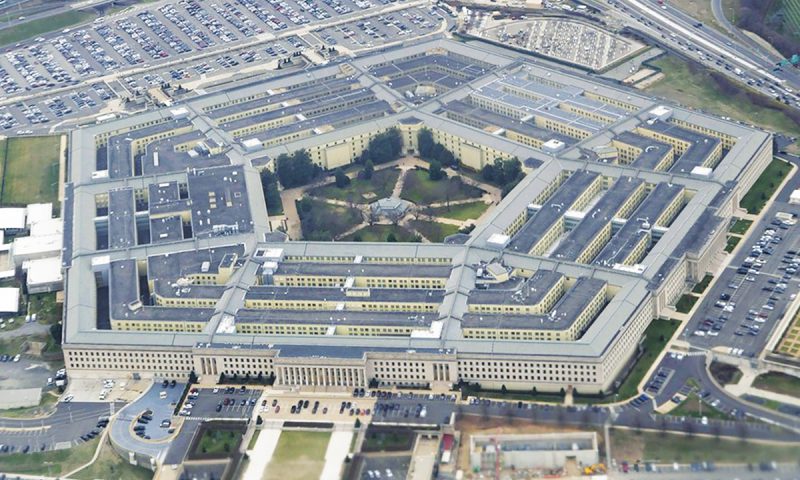
By Liu Xuanzun | Global Times | December 28, 2023
The US Department of Defense’s hyping of 2023 being a “decisive year” in the “Indo-Pacific region” is filled with Cold War mentality and exposes its aggressiveness toward China, analysts said on Thursday, after the Pentagon on Wednesday released a fact sheet summarizing its work in the region.
“In this decisive decade, 2023 will be remembered as a decisive year for implementing US defense strategy in Asia,” US Secretary of Defense Lloyd Austin said in a news release by the Pentagon on Wednesday.
Taking the form of a fact sheet, the Pentagon release rounded up some of its “achievements” in the past year with allies and partners to make the US forces’ posture in the “Indo-Pacific region” “more mobile, distributed, resilient, and lethal,” including forward stationing key US military units to Japan, sending more submarines and warplanes to Australia, gaining access to four new military bases in the Philippines, concluding a defense cooperation agreement with Papua New Guinea, and increasing strategic asset rotations such as submarines and bombers to the Korean Peninsula.
The Pentagon outlined its billions of dollars of investments in procurement and development in military capabilities as well as in the Pacific Deterrence Initiative, its support of Japan’s decision to acquire missiles that can strike another country, an AUKUS nuclear-powered submarine and defense industrial base cooperation with Australia as well as bolstering of India’s defense modernization plans.
It also summarized some of its exchanges with countries in the region, including joint exercises with the Philippines, Indonesia, India, Japan, Australia and South Korea.
While the Pentagon did not mention China by name, most of the actions mentioned in the fact sheet target China, observers said.
“If you put the locations named in the list on a map, you can clearly see the US military is forming a strategic encirclement taking advantage of footholds in the form of its allies and partners,” a Chinese military expert who requested anonymity told the Global Times on Thursday.
Many of the so-called achievements are very sensitive and can lead to or have already resulted in serious consequences, the expert said, citing as examples the danger of Japan abandoning its post-war “self-defense only” principle, the AUKUS nuclear-powered submarine plan risking nuclear proliferation, and the US’ support for the Philippines inciting the Southeast Asian country to repeatedly provoke China over Chinese islands and reefs in the South China Sea, causing tensions in the region.
These aggressive moves are reflections of the US’ Cold War-mentality and its pursuit of military hegemony through bloc confrontation, which will only harm peace and stability in the region and the world, the expert said.
US sending ‘bloody New Year’s gift to Kiev’ – Moscow
RT | December 28, 2023
The Russian ambassador to the US, Anatoly Antonov, has criticized Washington for its recent arms package to Ukraine, stating that it reflects an intention to fight Russia “to the last Ukrainian.”
The diplomat’s remarks came in response to the $250 million worth of military assistance, including air defense munitions, rockets, artillery shells, and small-arms rounds, approved on Wednesday by the administration of US President Joe Biden.
Antonov called the latest round of military aid a “bloody New Year’s gift to Kiev” in remarks published on social media. The Americans “are pushing the puppet regime to the abyss, dooming thousands of ordinary Ukrainians to certain death,” he warned.
On the other hand, the official emphasized Russia’s recent success in acquiring the town of Maryinka in the Donetsk People’s Republic, a strategic Ukrainian stronghold. According to Antonov, the US tends to ignore such developments and instead focuses on highlighting “Ukrainian fetish ‘victories.’”
The diplomat predicted that any arms provided by NATO nations to Ukraine would be “burned and destroyed” without altering the situation on the ground.
The White House could not appropriate more funding for Ukraine after Republican opposition in Congress blocked its request. The lawmakers have demanded major concessions on immigration reform and southern border security as a precondition for their approval of spending additional billions of taxpayers’ dollars on Ukraine support. US officials have indicated that this latest package would be the last under the current spending allowance.
US President Joe Biden has accused those lawmakers opposed to more Ukraine spending of jeopardizing national security by tying it to domestic policy issues. He suggested that Russian President Vladimir Putin might attack a NATO member after dealing with Ukraine.
Putin dismissed this remark as “absolute nonsense,” saying that Biden was using exacerbated rhetoric to cover up his administration’s foreign policy failures. Moscow maintains that preventing NATO expansion into Ukraine is a key objective in the conflict.
Hesitation among US allies leaves Operation Prosperity Guardian in dire straits
The Cradle | December 28, 2023
Ten days after US Defense Secretary Lloyd Austin announced the formation of an international task force to patrol the Red Sea, about half of the nations named as participants have yet to acknowledge their role, while others have pushed back against Austin’s declaration.
Under the name Operation Prosperity Guardian (OPG), Washington’s “coalition of the willing” was intended to confront attacks by the Yemeni armed forces against Israeli-linked ships attempting to cross the Bab al-Mandab Strait.
However, only two US allies have deployed warships to the Yemeni coast to support the coalition: the UK, which sent the navy destroyer HMS Diamond, and Greece, which announced the deployment of a Hellenic navy frigate.
Canada, Norway, and the Netherlands confirmed their participation in OPG but have so far committed only a handful of staff officers. Similarly, the Seychelles ratified their support for the coalition but clarified: “Our participation will not include putting boats or military personnel to patrol in the Red Sea. Our role is to help in providing and receiving information since many things that happen close by can have an implication for us.”
Authorities in Bahrain – the only Gulf nation named as part of the pro-Israel alliance – have not commented on their role in OPG, despite the fact that the US war chief announced the coalition’s creation from the US Fifth Fleet headquarters in Manama. Last week, Bahraini police detained a prominent opposition figure who criticized the government for joining OPG.
Complicating matters further for the Pentagon, the last three NATO members named as part of the alliance – Spain, Italy, and France – have outright refused to hand over command of their ships to the US.
The French defense ministry said last week it supported efforts to “secure freedom of navigation in the Red Sea.” Still, it highlighted that its navy already operated in the region and its ships would stay under French command. Italy took a similar approach, committing the naval frigate Virginio Fasan to patrol the Red Sea but emphasizing that this was part of “existing operations” and not OPG.
Spain has been the most vocal in its rejection of being named part of the anti-Yemen alliance, vetoing a vote at the EU that called for support of the coalition and making it clear that its forces committed to Operation Atalanta – a counter-piracy operation off the Horn of Africa and in the Western Indian Ocean – would not join OPG.
“Spain is not opposed to creating another operation, in this case in the Red Sea. We have communicated to our allies, both in NATO and in the EU, that we consider Operation Atalanta does not have the characteristics nor the nature that is demanded and needed in the Red Sea,” President Pedro Sanchez said on 27 December.
While the Pentagon last week proclaimed “over 20 nations” had joined OPG, reports have shown that more of Washington’s closest partners are balking at the idea of joining war efforts in the Red Sea.
On 21 December, Australia announced it would be sending personnel to join OPG, but no warships or planes. India has also balked at the plan, with a senior military official revealing to Reuters that New Delhi is “unlikely to join” the US alliance.
Nonetheless, earlier this week, the Indian navy deployed several warships to the Arabian Sea in response to an alleged drone attack on an Israeli-linked vessel.
Saudi Arabia has also shown no interest in the venture, as the Gulf kingdom is reportedly more interested in ending its eight-year war in Yemen than in re-starting hostilities.
Yemen’s Red Sea operations in support of Palestinians in Gaza have significantly hurt the Israeli import sector, as the vital Port of Eilat has seen an 85 percent drop in activity. According to Bloomberg, half of the container ships that regularly transit the Red Sea and Suez Canal are avoiding the route now.
However, marine traffic data shows that the transit of non-western tankers through the Red Sea has surged since the Yemeni armed forces began targeting Israeli-linked vessels.
‘Take what you want and we’ll sort it out later’: US weapons stash fuels Gaza carnage
The Cradle | December 27, 2023
A stockpile of weapons owned by the US government and hidden inside Israel – known as the War Reserve Stocks for Allies-Israel (WRSA-I) – is back in the limelight, as former US officials believe the White House has dipped into it to restock quickly-depleting munitions dropped inside the Gaza Strip.
“Officially, it’s US equipment for US use,” a former senior Pentagon official told The Guardian. “But on the other hand, in an emergency, who’s to say we’re not going to give them the keys to the warehouses?” he added.
Another senior US official familiar with WRSA-I told the British news outlet that, when it comes to air-to-ground munitions, “we’ll give [Israel] whatever they need.”
Created in the 1980s to supply the US army in case of a regional war, the WRSA-I is the largest node in a global network of US weapons caches.
Although Tel Aviv is not legally allowed to make free use of WRSA-I – the full contents of which are not publicly disclosed – the former defense officials say transfers from the stockpile “differ from regular arms sales between the US and another country,” as the munitions can be withdrawn by the Israeli army “before the processes that account for the transferred equipment are fully completed.”
“We sort of retroactively build a foreign military sales case, which may or may not need to be notified to Congress, depending on what they took and what quantities,” said Josh Paul, a former state department official who resigned in October in protest at Washington’s unbridled support for the ethnic cleansing of Gaza.
“There’s no review of human rights, there’s no review of regional balance, there’s none of the conventional arms transfer policy review that would normally happen […] Essentially, it’s take what you can and we’ll sort it out later,” Paul added.
Furthermore, in late October, the White House sent a supplemental budget request to Congress that included the removal of restrictions on all categories of weapons and ammunition Israel is allowed to access from WRSA-I.
“A proposal in a legislative request to Congress to waive Congressional notification entirely for FMF-funded Foreign Military Sales or Direct Commercial Contracts is unprecedented in my experience […] Frankly, [it’s] an insult to Congressional oversight prerogatives,” Josh Paul said about the legal loophole, which was buried after more than 40 pages of legislative legalese.
Although there’s little to no transparency about the categories and quantities of weapons the US is providing Israel, in October, Axios reported that Washington would give their allies 155mm artillery shells.
These unguided munitions, held in large quantities in WRSA-I, are considered particularly hazardous as “their accuracy degrades over distance, increasing the likelihood of civilians and civilian infrastructure getting hit by errant shells,” according to Marc Garlasco, a former UN war crimes investigator.
CNN revealed earlier this month that a US intelligence assessment determined about 40-45 percent of over 29,000 air-to-ground munitions Israel has used in Gaza have been unguided.
Israel’s unrestrained use of these munitions inside one of the most densely populated places on earth has quickly turned Gaza into the deadliest military campaign in modern history, with a death rate of no less than 355 civilians per day – roughly 70 percent of whom are women and children.
Israel Paying a Heavy Price for Its Crimes
BY KEVIN BARRETT | DECEMBER 25, 2023
So Netanyahu is now saying that (Israel is paying) is a heavy price. How heavy is the price?
Netanyahu is not admitting how heavy the price really is. The actual number of Israeli casualties is much higher than the official count. We know that because we’ve actually seen that the resistance fighters have filmed themselves taking out tanks and trucks and other military vehicles by the hundreds. They’ve filmed many of their other operations as well. So we can see that just based on what’s out there in the resistance film footage, the casualty count has to be a lot higher than Netanyahu is admitting.
He also is ignoring the fact, at least publicly, that Israel has lost something like 7% of its population. They haven’t been killed, they’ve fled the country. This has happened occasionally before, but this time it’s not certain that they’ll be coming back, because the Israeli economy is in shambles. The northern edge of the country is now uninhabited, as they’ve all been evacuated due to the northern front of Hezbollah.
And the Israeli economy may not come back. It’s heavily dependent on tourism, and that’s completely shut down now. The usual tourist hotels are full of Israelis who fled the war zones in the north. And so that of course is bad enough. But (the main reason) the future of the Zionist entity looks incredibly bleak is because of the way that they’ve managed to commit the most horrendous genocide ever seen on live television, and they’ve sickened and appalled pretty much the entire world. Their only supporters now are in Washington DC. And even in the United States of America polls show that the majority of young adults want the resistance to win and put an end to Israel.
So they have lost the military battle. They can’t get their hostages back. They can’t succeed in their ground operations. They can’t stop Hamas as they say they are going to. They’ve lost their economic battle. They’ve lost in their propaganda war, where they’re making up ludicrous stories about beheaded babies that nobody believes. Nobody believes anything they say any more. They’ve blown all their credibility, blown up their economy, and shown that they’re a military paper tiger. The end of the Zionist entity is near. And Netanyahu knows that his own political end is even nearer.
US jets strike resistance sites in Iraq
The Cradle | December 26, 2023
US warplanes launched airstrikes against several sites belonging to the Kataib Hezbollah faction early on 26 December, in Washington’s latest response to ongoing drone and missile attacks launched by the Iraqi resistance on US bases in Iraq and Syria.
The strikes resulted in large explosions south of Iraq’s capital, Baghdad, an Al-Mayadeen correspondent reported. One was killed and over a dozen wounded, according to an official statement.
The US hit “three locations utilized by Kataib Hezbollah and affiliated groups focused specifically on unmanned aerial drone activities,” a US National Security Council spokesman said in a statement.
The attack “likely killed several Kataib Hezbollah militants,” according to CENTCOM.
The Iraqi government said in a statement that the attack “harms bilateral relations between the two countries and represents an unacceptable violation of sovereignty,” which “harms” Baghdad’s bilateral ties with Washington. The statement added that an Iraqi service member was killed, while 18 were injured, including civilians.
Defense Secretary Lloyd Austin said the attack was a response to ongoing Iraqi operations targeting US bases, in particular one attack on the Erbil air base on Monday, 25 December, which left three US soldiers wounded, including one in critical condition.
An Iraqi Ministry of Interior official told AFP that the US airstrikes targeted a Popular Mobilization Forces’ site in the city of Hillah, the capital of Babylon Governorate in central Iraq. A site in the Wasit Governorate was also targeted, resulting in the wounding of at least four people.
In a statement, leader of the Nabni Coalition Hadi al-Amiri stressed his “strong condemnation and denunciation of the repetition of the sinful American attacks that were embodied at dawn this day in the provinces of Babil and Wasit.”
On the afternoon of Christmas Day, the Islamic Resistance coalition in Iraq said in a statement that it targeted “the occupied Harir base near Erbil Airport in northern Iraq with drones.”
The statement vowed that the Iraqi resistance would continue the “destruction of enemy strongholds” in line with its goals of “resisting the American occupation” in Iraq and responding to “the Zionist entity’s massacres against our people in Gaza.”
The Iraqi resistance also struck the US Green Village base in northern Syria, the group said in a separate statement earlier that day.
Following Operation Al-Aqsa Flood and the start of the Gaza-Israel war in October, Iraqi resistance groups banded together under a single coalition. They launched near-daily attacks on US bases in both Iraq and Syria in solidarity with the Palestinian resistance and in rejection of Washington’s support for the Israeli assault on Gaza.
The attacks also aim to hasten the withdrawal of US forces from Iraq.
The US air force has launched several attacks in response. One strike in early December resulted in the killing of five Iraqi resistance fighters.
While the US presence in Iraq is coordinated with the government of Prime Minister Mohamed Shia al-Sudani, a political alliance of Shia parties represented in his parliament are staunchly opposed to it.
In 2020, following the assassination of Iranian Quds Force commander Qassem Soleimani, Iraq’s parliament voted in favor of expelling the US from Iraq. The resolution specifically called for the cancellation of Iraq’s formal request for US military assistance against ISIS, which was issued in 2014.
Washington rejected the resolution and threatened to impose sanctions on Baghdad.
Despite its shortcomings, UNSC vote will tie Israel’s hands
By MK Bhadrakumar | The Cradle | December 25, 2023
The adoption of a resolution by the United Nations Security Council (UNSC) on Friday with focus on a pause in the fighting in Gaza to allow for the delivery of more humanitarian aid can be seen as a turning point in the tortuous journey toward imposing a sustainable ceasefire.
But a caveat must be added that the ultimate litmus test lies in the implementation of the UNSC resolution, as the past history of such resolutions on Palestine does not give cause for optimism.
In fact, Israel’s defiance was in full view already. As the Security Council passed the resolution, Israeli forces pushed ahead with their offensive into Gaza on Friday and ordered residents in Al Bureij — an area in central Gaza where Israel had not previously focused its offensive — to evacuate. The Israeli military’s chief spokesman Rear Adm. Daniel Hagari said on Thursday: “Our forces continue to intensify ground operations in northern and southern Gaza.”
UN Secretary General António Guterres was spot on when he told reporters after the resolution was passed that “a humanitarian ceasefire is the only way to begin to meet the desperate needs of people in Gaza and end their ongoing nightmare.”
The resolution itself is the outcome of week-long intense negotiations between the United States and the Arab countries that sponsored it — the UAE and Egypt, in particular — to settle for the lowest denominator, which meant accepting a Washington-friendly text that enabled the Biden administration to evade responsibility for another veto, for the third time since 7 October.
Unsurprisingly, the US negotiators brazenly resorted to pressure tactics by drawing on their usual diplomatic tool box — blackmail, arm-twisting and ultimatums — to water down the text to the extent that important provisions relating to a ceasefire and a UN mechanism to facilitate the delivery of humanitarian aid to Gaza and ensure its monitoring were abandoned.
And, yet, the US abstained in the vote at the end of the day, registering its reservations — principally, that the resolution was silent on the attack by Hamas on 7 October.
The unkindest cut of all is that the resolution accommodated the US diktat to replace the language describing an immediate cessation of violence with an ambiguous phrase calling on the parties to “create conditions for a cessation of hostilities.” The wording meets the Israeli requirement to have a free hand to continue with its barbaric military operations.
This anomaly, coupled with the absence of any reference to the condemnation of indiscriminate attacks by the Israeli military against civilians almost delivers the wrong signal that the Security Council is effectively becoming an accomplice to the destruction of Gaza — a misnomer that agitated Russia so much that it proposed a last-minute amendment to replace the phraseology in the resolution: “to create the conditions for a sustainable cessation of hostilities” with the unambiguous call “for urgent steps toward a sustainable cessation of hostilities.”
Russia’s demand for an immediate ceasefire was in line with a resolution overwhelmingly passed by the UN General Assembly recently, but the Americans would have nothing of that sort. The unfortunate part is that the Arab sponsors of the resolution caved in to US blackmail to veto the resolution. What transpired between the protagonists behind the scenes is not known.
The paradox is that, in reality, the Americans themselves were desperately keen to avoid casting a veto — the third in as many months — that would have made a mockery of President Joe Biden’s bombastic remark in his September speech at the UN last year that the permanent members of the Security Council should cast vetoes only under “rare, extraordinary situations to ensure the council remains credible and effective.”
All indications are that the US is acutely conscious of finding itself “diplomatically isolated and in a defensive crouch,” as the New York Times put it in an acerbic commentary on the Biden administration’s plight as “an increasingly lonely protector of Israel … (that) puts it at odds with even staunch allies such as France, Canada, Australia, and Japan.”
The commentary says that what rankles most is that first, when the US seems to have green-lit a massive Israeli military response to 7 October “without guardrails,” it:
“painfully confirmed to many in the (global) south this sense that there was a double standard” — and second, even more, “the Russian strategy works, because beyond the United Nations what everyone sees is Russia standing up for international law — and the US standing against it.”
The crux of the matter is that Israel’s Gaza operation is running into a Cornelian dilemma (dilemme cornélien) where sooner rather than later, it is obliged to choose one option from a range of options, all of which reveals a detrimental effect on itself.
Hamas’ top leaders have evaded capture so far, and Gaza’s armed resistance groups have continued to fire rockets into Israel, including two barrages that reached Tel Aviv and its environs last week.
According to another New York Times report,“ political commentators and some military experts have been lowering expectations for a quick and decisive Israeli victory.
“Nobody should imagine that there will be a situation where we put a flag on top of a hill and say: OK, we won, and now Gaza will be peaceful and safe. It will not happen,” said Gabi Siboni, a colonel in the reserves and a fellow at the conservative-leaning Jerusalem Institute for Strategy and Security. “The reality is that we are going to be fighting in Gaza for years to come.”
But is that sustainable — even if Israel controls the US Congress? Conceivably, Israel’s main goal in Gaza was to ethnically cleanse the Strip and drive the Palestinian population to Egypt and Jordan by killing and starving them and making Gaza unlivable.
The real significance of the UNSC resolution, therefore, lies in that such an Israeli game plan will not fly. By not vetoing the resolution, the US may also have signaled that it will not allow the ethnic cleansing. There seems to be an understanding on this score between the US and the Arab protagonists at the political level — Egypt, in particular.
On the other hand, can Israel really destroy Hamas while the Palestinian population remains in Gaza? No, it will not be possible. Now, there is reason to believe that Hamas is inflicting significant damage to the Israeli military. The retreat of the Golani Brigade from the Gaza operation also points in that direction.
The bottom line is that the Israeli operation in Gaza will have to take a different form during the next several weeks — one that is anchored on surgical strikes rather than continuing with the extended ground operation and open-ended Israeli occupation. With warts and all, the Security Council resolution that was passed on Friday paves the way for such a transition.
IRGC’s veteran military advisor in Syria martyred in Israeli strike

Press TV – December 25, 2023
A veteran member of Iran’s Islamic Revolution Guards Corps (IRGC), who was serving as a military advisor in Syria, has been martyred in an Israeli airstrike in the Sayyeda Zeinab neighborhood of Damascus.
The senior IRGC commander, Seyyed Razi Mousavi, was martyred by the Israeli regime on Monday while on an advisory mission, Press TV’s correspondent in Damascus reported.
Mousavi was one of the companions of Iran’s top anti-terror commander, Lieutenant General Qassem Soleimani, who was assassinated by the US in Iraq four years ago.
General Soleimani, commander of the Quds Force of the IRGC, and his Iraqi trenchmate Abu Mahdi al-Muhandis, the second-in-command of Iraq’s Popular Mobilization Units (PMU), were martyred along with their companions in a US drone strike on January 3, 2020.
The Israeli regime has for years targeted what it calls Iran-linked positions in Syria.
In a statement, the IRGC said Mousavi was martyred in a criminal missile attack by the “fake and child-killing Zionist regime” adding that the usurping and savage Israeli regime would undoubtedly pay the price for this crime.
Russian Troops Fully Liberate Strategic DPR Settlement of Maryinka
By Ilya Tsukanov – Sputnik – 25.12.2023
The heavily-fortified settlement, situated on the outskirts of the city of Donetsk, was used by Ukrainian forces to indiscriminately shell the Donetsk People’s Republic’s capital for nearly ten years before finally being liberated by Russian forces.
The Russian Army has completed the liberation of Maryinka, Defense Minister Sergei Shoigu has announced.
“In the course of offensive operations, assault detachments from the Southern Group of Forces completely liberated the settlement of Maryinka southwest of Donetsk,” Shoigu told Russian President Vladimir Putin in a briefing on Monday.
“I would like to congratulate you. This is a success. Pass on the words of gratitude to all the staff and fighters who took part at different times and at different stages [in the settlement’s liberation, ed.],” Putin replied.
The president expressed confidence that control of the settlement will allow Russian forces to push Ukrainian positions further back from Donetsk.
Shoigu concurred, saying Maryinka’s liberation will also make it possible to more effectively protect the city of Donetsk from Ukrainian fire.
The defense minister said that troops from the 150th Motorized Rifle Division distinguished themselves in the settlement’s capture. During WWII, it was the 150th Division which famously captured the Reichstag building in Berlin.
“The liberation of this settlement naturally reduces the defense capabilities of the Ukrainian Armed Forces and gives us additional opportunities for further actions,” he said.
Maryinka had been turned into a fortress over the past nine years, connected by a network of underground passages, with fortifications on almost every one of its streets, Shoigu said.
Putin asked the defense minister to distribute medals to soldiers who distinguished themselves in the strategic settlement’s liberation, and instructed him to promote the commander overseeing its capture to the rank of major.
“By breaking into this fortification, which the enemy has factually been building up since 2014…our troops have the opportunity to enter a wider operational area. But, of course, this is a matter for local commanders and specialists from the General Staff and the Defense Ministry. This is a separate issue, but in any case, this opportunity arises in this area,” Putin said.
Maryinka was first captured by Donbass militias seeking to break off from Kiev’s control in April 2014, after the Ukrainian government installed in the February 2014 coup launched an ‘Anti-Terrorist Operation’ against them meant to crush the rebellion by force. Ukrainian forces, including paramilitaries from the infamous neo-Nazi Azov Regiment, recaptured Maryinka in August 2014. From that time on, the strategic town, situated directly on the western outskirts of Donetsk City, was turned into a seemingly impenetrable fortress, and used by Ukrainian forces to launch regular, indiscriminate attacks against the militia-controlled city. Battles for the settlement by Donetsk People’s Republic militias, now backed by the regular Russian military, began immediately after the start of Russia’s special military operation in February 2022. Images of the settlement today show that it has been turned into a pile of ruins, with most civilians living in the town leaving after 2014, and the rest evacuated after 2022.
Russian Forces Wipe Out First French-Donated Crotale NG Missile System in Ukraine
By Svetlana Ekimenko – Sputnik – 25.12.2023
In the course of the ongoing special military operation in Ukraine, the Russian Armed Forces have been successfully delivering high-precision strikes targeting foreign equipment and ammunition provided to the Kiev regime by Washington and its NATO allies, obliterating the much-touted sophisticated weaponry.
Russia’s Armed Forces operating in the special military operation zone have destroyed several Norwegian-made NASAMS (National Advanced Surface-to-Air Missile System) and one French Crotale NG short-range air defense system that the Kiev regime received from its Western patrons, the Russian Defense Ministry said on Sunday. The NATO-donated weapons systems were stationed at the Starokonstantinov Airfield in the Khmelnitsky region.
This is believed to be the first recorded instance of a Crotale NG being obliterated in combat, and serves as further proof that NATO’s state-of-the-art equipment is fair game for Russia’s military.
The Russian military carried out a coordinated assault that involved tactical aircraft, missile troops, artillery units, and unmanned aerial vehicles (UAVs). Besides neutralizing the air defense systems, the attack inflicted damage on the Kiev regime’s aircraft equipment, flight navigation sysems, and aviation ammunition stored at the airfields in Kanatovo, Kirovograd region, and Dnepr, Dnepropetrovsk region. Furthermore, military personnel and equipment of the Ukrainian Armed Forces was destroyed in 127 districts.
The strategic impact of Russian strikes on Ukraine’s air defense capabilities is expected to be significant, Army Recognition, an online Western military outlet, acknowledged, commenting the MoD announcement. It clarified that the destruction of enemy air defense capabilities enables Russia’s military to gain even greater control over the airspace. While reducing the risk to their own aircraft, it boosts their ability to carry out air operations such as strategic bombing, providing close air support to ground forces, and conducting reconnaissance missions.
As part of NATO’s ongoing proxy war against Russia in Ukraine, France has supplied Ukraine with two Crotale NG air defense batteries, the military outlet underscored.
The French Crotale NG (New Generation) missile system is a modernized version of the Crotale air defense system designed for short-to-medium range air defense. Equipped with the VT1 missile with an engagement range of around 11 kilometers (6.8 miles), it is touted as providing effective defense against aircraft, helicopters, various precision-guided weapons, and unmanned aerial vehicles (UAVs). The system can engage targets at altitudes up to 6,000 meters.
As far as NASAMS are concerned, a number of countries have delivered these systems to Ukraine. Thus, Belgium has purportedly contributed an undisclosed number of AIM-120 NASAMS missiles, Lithuania has delivered two launchers, while Canada has supplied Kiev with one NASAMS air defense battery along with AIM-120 missiles.
The NASAMS utilizes the AIM-120 Advanced Medium-Range Air-to-Air Missiles (AMRAAM), capable of engaging targets at distances of up to 25 kilometers. This renders the NASAMS effective for medium-range air defense scenarios.
The United States reportedly sent eight NASAMS batteries as part of its billions’ worth of military assistance to Ukraine, while the UK has donated NASAMS missiles.
Despite the vast amounts of military aid being provided by the West, Ukraine’s much-hyped 2023 counteroffensive that began in June of this year failed to produce any tangible battlefield results. As the country’s military losses have mounted, public support for Ukrainian President Volodymyr Zelensky has also waned in recent months.
Political developments have suggested that support for Ukraine is dwindling in the United States as well, where President Joe Biden’s massive funding package for Kiev has stalled in Congress. Republicans have insisted on incorporating funding for border security. In Europe, “Ukraine fatigue” is also gaining momentum, as EU states face depleted stocks from funneling military aid to Kiev, and repercussions from self-harming anti-Russia sanctions.
Since Western countries ramped up military support for the Kiev regime, Moscow officials have consistently warned that such moves do not bode well for Ukraine, and only prolong the conflict. NATO weaponry, no matter how sophisticated, will eventually be destroyed, the Kremlin underscored, and vehicles carrying supplied weapons are a legitimate target for the Russian army.
Europe betrayed by US and Ukraine – Minsk talks negotiator
By Lucas Leiroz | December 25, 2023
The current conflict in Ukraine is a direct result of the failure of the Minsk Agreements. Between 2014 and 2015, Russia and the European Union mediated negotiations between the breakaway republics of Donbass and the Kiev government, reaching a mutually beneficial protocol that was expected to guarantee regional peace. However, the terms of the pact were never respected by the Ukrainian regime, which continued to constantly attack the republics and advance its project of “de-Russification” and ethnic cleansing.
According to former German prime minister, Angela Merkel, the Agreements did not fail, but fulfilled their real objective: to prepare Ukraine for a war against Russia in the near future. Commenting on the beginning of Moscow’s special military operation and the escalation of the conflict in Donbass, the German former official stated that this confrontation was expected from the very beginning, with the ceasefire established in Minsk only working as a way to temporarily alleviate tensions, enabling Kiev to gain time.
However, this does not appear to be the opinion of some other insiders who were also deeply involved in negotiations in the Belarusian capital. I recently had the opportunity to visit the Donbass region as a war correspondent. There I interviewed several local leaders, politicians and state officials, including the Minister of Foreign Affairs of the People’s Republic of Lugansk, Vladislav Deinego, who was one of the negotiators in the Minsk process.
In our conversation, I asked the Minister his opinion on the failure of the Minsk Agreements and heard from him a long explanation about how the situation got out of control and escalated to the current status of war. According to Deinego, Merkel is lying when she claims that the plan has always been to simply prepare Ukraine. For him, Europe had a genuine interest in achieving regional peace and stabilizing its relations with Russia, avoiding a military escalation that would put the entire continental security architecture at risk.
Deinego claims that Kiev wanted total war from the beginning. The Minister explains that, before the Minsk Accords were established, the separatists tried to resolve the situation diplomatically in several ways. After non-military means failed, the republics proposed to Kiev that the fighting be somewhat limited to avoid civilian casualties.
First, a ban on the use of artillery and aviation was proposed, which Kiev quickly denied. Next, Donbass’ leaders attempted to establish security zones, limiting the use of heavy weapons according to their distance to civilian areas. In this model, artillery would be allowed only in regions far from inhabited cities, while in the “zero line” combat would be limited to the regular use of infantry, preventing civilians from being hit by heavy weapons. Even so, Ukraine denied signing such a deal.
This insistence by the neo-Nazi regime on waging all-out war against the separatists, according to the minister, generated real concerns among Europeans. The deeper the Ukrainian incursions were, the closer the attacks would come to Russian borders, worsening the security crisis. In practice, the situation could at any time escalate into a situation of absolute violence in which Moscow would be forced to intervene, generating a major conflict in Europe. This worried EU members, especially Germany, which was very dependent on the partnership with Russia.
Being a major importer of Russian gas and depending on friendship with Moscow to guarantee its economic and social stability, Berlin engaged deeply in the diplomatic process to try to end, or at least freeze, the conflict. For this reason, Germany was the main negotiator on Kiev’s side in Minsk, while Russia negotiated in support for the Donbass’ republics. In this sense, after many negotiations, the pact was finally signed, establishing measures such as ceasefire, release of prisoners and respect for the political autonomy of Russian-speaking regions.
Deinego believes that actual compliance with the Agreements would be the best scenario for Europeans as it would guarantee stability in Russia-EU relations, despite Ukrainian hostility towards Moscow. However, as well known, Kiev never obeyed the Minsk’s terms and continued violence in the region – even though the intensity of the fighting obviously decreased. Deinego thinks that this was never in the European interest and that, in fact, the direction taken by the conflict showed the failure of European diplomacy.
Indeed, at the time Russia-EU relations were prosperous, despite ideological and geopolitical rivalry. There was no reason for Europeans to agree to participate in a war plan in which they would be severely harmed. This leads us to believe that other actors worked to escalate the crisis, without considering European interests. Certainly, the US, which always wanted war with Russia, was responsible for this.
The circumstances show that Washington probably took advantage of the “stability” generated by the Minsk Agreements to prepare Kiev to act as a proxy against Russia. The Europeans never participated in this plan and were betrayed by NATO just like the Russians. Currently, Europe continues to be a victim of NATO’s war plans, being forced by the US to impose suicidal sanctions against Russia, affecting its own economy.
The opinion of an insider of the Minsk process is vital to show the real reasons for the conflict. In practice, Deinego presents proof of how relations between the US and EU are semi-colonial, with Europeans being used by Washington in war plans, without having their interests respected.
Lucas Leiroz, journalist, researcher at the Center for Geostrategic Studies, geopolitical consultant.
You can follow Lucas on X (former Twitter) and Telegram.
Featured Video

Iran War Just Got Much Bigger / Matt Bracken & Lt Col Daniel Davis
or go to
Aletho News Archives – Video-Images
From the Archives
Invisible harm from ionizing radiation
By Bjorn Hilt | International Physicians for the Prevention of Nuclear War | December 8, 2015
Besides the terrible effects of the burst of light that causes eye damage, the heat that sets everything flammable on fire, the electromagnetic pulse that knocks out all electronic devices, and the blast that produces winds with ten times the force of a hurricane, demolishing everything, the detonation of nuclear weapons also leads to the emission of large amounts of ionizing radiation, which has serious deleterious effects on humans and many other species. Ionizing radiation is, in fact, a lurking danger as we cannot see it, we cannot smell it, we cannot hear it, and we cannot feel it immediately. But we certainly get harmed from it.
To reduce exposure to ionizing radiation and the risk of deleterious effects, we doctors usually warn our patients against having frequent examinations or procedures that involve x-rays. That is because x-rays are ionizing radiation that can harm your body in the same ways as radiation emitted by nuclear detonations. The main difference is that, for medical purposes, the radiation is applied in a controlled way.
The international standard unit for the dose of ionizing radiation is the Sievert. National guidelines in many countries warn against people having a cumulative dose of ionizing radiation exceeding 0.001 Sievert/year. The dose from a full body CT scan is 0.01 – 0.03 Sievert.
The ionizing radiation to which everybody in the vicinity of a nuclear detonation is exposed is so high and immediate that measuring in Sievert does not have much meaning. Such exposures are measured in Gray, where five Gray is reckoned to be lethal to 50% of those exposed (LD50). Even though these types of exposures are not directly comparable, for the common types of ionizing radiation, 1 Gray equals approximately 1.3 Sievert. … continue
Blog Roll
 Aletho News
- Israeli military court sentences Palestinian journalist to 4 years for ‘incitement’
- Iran, Russia, China Demand Guarantees Against Further Attacks on Iranian Nuclear Sites
- How the Latest Iran Sanctions Could Impact Central Asia
- Pakistan threatens Yemeni strikes on KSA ‘could trigger’ Mecca defense pact
- Iran War Just Got Much Bigger / Matt Bracken & Lt Col Daniel Davis
- Qatar Warns of ‘Industrial Catastrophe’ If Strait of Hormuz Remains Closed
- Israeli Army Closes Tulkarem Zakat Committee Headquarters
- Blaming the Victim in the Gaza Genocide
- Yemeni drones reportedly struck Saudi oil, military sites
- It’s OK to fight for a foreign army (as long as they’re our friends)
- If Americans Knew
- ISRAELI MEDIA: Revealed: Netanyahu Received an Explicit Warning Days Before Oct. 7. He Didn’t Brief Israel’s Security Chiefs
- “Israel is a wonderful, safe place,” according to this totally objective expert
- The UK just announced it will comply with Int’l Court of Justice ruling from 2024. What does the ICJ ruling require states to do?
- Israel’s Quadcopter Drones Have Become a Weapon of Everyday Killing in Gaza
- Israel’s grip on American politics is finally being questioned
- Photos: Palestinians rebuild Gaza’s ruins with mud bricks, scrap
- Too many preemies in Gaza, no room in the NICU – Daily Update
- Front Row At the Revolution: Angry Americans are demanding liberation from the Israeli yoke
- Evangelical Zionist Huckabee attacks Jewish Ed Miliband, accuses UK government of ‘Jew hate’
- Macklemore Responds to Backlash Over “Free Palestine” Plea: “Wanting All Humans to Be Treated Equal Should Never Be Controversial”
- No Tricks Zone
- New Study: The Antarctic Ice Sheet Gained Mass From 2020-2024 Due To Staggering Snow And Ice Accumulation
- Study: Ocean Heating Rates From Thousands Of Years Ago ‘Dwarf’ Modern Ocean Heating Rates
- Climate Extremists Target, Attack Large-Scale Power Grid Infrastructure In Germany!
- New Study: Antarctic Ice Melt Has Contributed Less Than 1 Centimeter To Sea Level Rise In The Last 30 Years
- Fear Of Debate: Alarmist German Climate Scientist Calls On Mainstream Media To Discredit Skeptic Voices
- End-Of-August Arctic Sea Ice Extent Hasn’t Fallen In 20 Years, Official Data Show!
- News-Making Nepal Region Has Had As-Warm Or Warmer Periods Than The 2000s In The 1600s, 1700s, 1800s
- 2025 Study: ‘There Exists No Unequivocal Experimental Evidence For The CO2 Greenhouse Effect’
- 2026 Atlantic Cyclone Energy Index Running At 85% Below Normal!
- New Research Shows Soil Respiration And Temperature Drive CO2 Change, Not Humans
 Aletho News