Russia issues space warning
RT | February 16, 2023
The US and its allies are exposing civilian space assets to potential attack by utilizing them for military purposes, a senior Russian diplomat has warned. The warning came after NATO unveiled plans for a space monitoring fleet that will use commercial and military satellites for its missions.
Konstantin Vorontsov, deputy director of the non-proliferation and weapons control directorate in the Russian Foreign Ministry, said on Thursday that the US is weaponizing space and blurring the boundaries between military and civilian infrastructure in orbit.
American use of spacecraft to benefit other nations on the battlefield “is in fact a form of participation in [conflicts] by proxy,” Vorontsov said, adding that “quasi-civilian space infrastructure” in particular could face “retaliation.”
“At the very least, such provocative use of civilian satellites is questionable under the [1967] Outer Space Treaty,” he stated.
Vorontsov’s warning came at a round table discussion in the Russian parliament which focused on the legacy of the Reagan-era Strategic Defense Initiative, and how it influences current US military planning.
Ahead of the announcement of NATO’s new space project on Wednesday, Secretary General Jens Stoltenberg said that the US-led bloc will use commercial satellites as a military booster.
“This will improve our intelligence and surveillance, and support NATO missions and operations,” Stoltenberg said, adding that this would allow for “better navigation, communication, and early warning of missile launches.”
The NATO chief revealed the project as he reported on what the organization was doing to assist Ukrainian forces against Russia.
The fusion between civilian and military equipment in the Ukrainian conflict came to the forefront last week, when SpaceX announced that it was restricting the functionality of its Starlink space internet system, meaning Kiev’s troops could not use it to pilot drones.
CEO Elon Musk explained that Starlink was a commercial product not intended for military purposes, and that he did not want it to be used to escalate the hostilities, potentially unleashing a “third world war.”
The system remains available to the Ukrainian military for communication, even though SpaceX as a private company could simply switch off the terminals, he added.
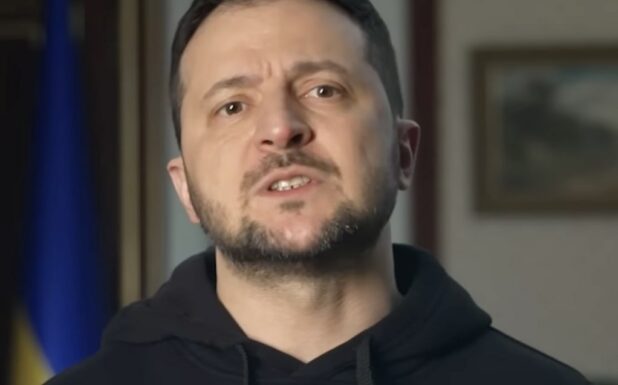
Here’s why Ukraine’s Zelensky wants a long war with Russia
By Andrey Sushentsov | RT | February 15, 2023
It is unlikely that President Vladimir Zelensky expects to win militarily. But it seems that he genuinely believes that he will succeed in turning Ukraine into something like Israel – a paramilitary state living with a sense of constant military threat.
Ukraine doesn’t have the military or economic resources of its own to achieve victory, and the resources provided by the West will never be enough to inflict a final defeat on Russia. Zelensky’s calculation is likely based on the belief that by offering Ukraine as a tool for NATO to use against Russia, he will constantly mobilize Western support and thereby ensure his own survival, and that of his associates.
In the worst-case scenario, as he sees it, Zelensky is probably counting on emigrating to the West with his closest associates, where they will advocate a continued policy of Russian containment. But does he care about the interests of ordinary people in Ukraine?
The unprecedented hardships of war that the country now faces could have been significantly reduced if Zelensky had been willing to settle the crisis diplomatically. Russia has repeatedly taken diplomatic initiatives to resolve this conflict. In the first phase, for example, negotiations took place in Belarus and Turkey. However, under the influence of the US and the UK, Kiev has set a course to prolong the conflict, banking on Western military assistance to achieve its goals.
As Ukraine’s own military and economic resources have dried up, the country has become increasingly dependent on Western supplies, and has ultimately become a tool to fight Russia. Nevertheless, Kiev still has the opportunity to begin talks with Moscow.
Zelensky could take the initiative to negotiate a status quo that is still comfortable for Ukraine. Of course, as the Russian military campaign progresses, the situation will change in ways that are far from favorable to Kiev. And the solutions put forward by the Russian delegation at the beginning of the crisis will no longer be on the table. However, there is still the possibility of a sustainable peace, with reduced risks of escalation into Europe’s biggest military conflict since the Second World War and a nuclear catastrophe.
Zelensky could still claim the laurels of a peacemaker who sacrificed some of his personal ambition in the name of saving Ukrainian lives and ensuring a peaceful future for his country.
A truce would alleviate the economic difficulties of Kiev’s supporters in the West, and thus generate some gratitude. Ukraine would also save a considerable amount of its military resources. Peace would obviously limit them, as deliveries would dry up, but those resources in situ would still be at the disposal of the Ukrainian government.
Yet, Zelensky’s government acts as if it sees no value in preserving Ukrainian statehood. The administration is squandering citizens’ lives and the economic fabric of the country in the belief that this sacrifice is necessary to gain some possible, rather indefinite, advantage in the future. Instead of acting as a peacemaker, as someone who is prepared to make sacrifices to save the lives of his people, Zelensky acts like a gambler, while feeding the population military propaganda.
The unprecedented military, political and economic support Ukraine is receiving from abroad essentially covers up all of the mistakes by Zelensky’s government. A strategy which is based on the axiom “war will pay for everything”. At home, the militarist line has allowed the president to establish a political dictatorship and persecute his opponents in all spheres of state life, including religion. As a result, he has secured an unprecedented concentration of power in his hands and, for the first time in Ukrainian history, silenced all centers of opposition.
Zelensky need not worry about Ukraine’s economic well-being in the short term: the foreign economic aid being handed to the Ukrainian government will suffice. Meanwhile, Kiev is still actively betting that Russia’s $300 billion in foreign currency reserves, frozen in the West, will fall into its hands. What would amount to state-piracy would also allow it use the money as it sees fit.
As a result, Zelensky expects that even if he is defeated and loses part of his territory, he will remain in power as the military leader the West needs for the new Ukraine, which will be the main anti-Russian outpost on NATO’s eastern borders. One that will be armed to the teeth, saturated with Western economic aid and that will provide its citizens with an acceptable standard of living.
I believe that Zelensky is genuinely convinced he will succeed in turning Ukraine into something like Israel, a paramilitary state in a hostile environment, and living with a sense of constant military threat. I do not exclude the possibility that even in the worst-case scenario, where there is a complete collapse of his government, Zelensky expects to find himself and a group of his closest associates in exile in the West. Once there, they will actively advocate a continued policy of containment and defeat of Russia. History shows that this prospect has every chance of materializing.
Andrey Sushentsov is the Valdai Club program director.
GOP Hawks to Exploit Child Victims of War, In Bid to Boost Spending on Kiev’s Military Aid
By Kyle Anzalone | The Libertarian Institute | February 14, 2023
Representative Michael McCaul plans to hold a series of hearings showing alleged atrocities committed by Russia. The Texas Republican hopes the testimony will push some of his GOP colleagues to commit to sending Kiev more military aid.
In an interview with the AP, the high-ranking Republican discussed how the images of atrocities committed against children is a powerful political tool. “I find that moves the dial, when they see these horrific killings of children,” McCaul said. He controls the influential House Foreign Affairs Committee.
Democrats in Congress have fully committed to providing military aid to Kiev. However, a growing number of Republicans have called for curtailing security assistance to Ukraine. McCaul said the hearings will be used to get his GOP colleagues on board with sending additional aid.
“I’m very much focused on the dissension within my own party on this,” the Congressman added.
Last week, Matt Gaetz (R-FL) introduced The Ukraine Fatigue Resolution. If passed, it would express that it is the sense of the House that “the US must end its military and financial aid to Ukraine” and urges “all combatants to reach a peace agreement.” The legislation has ten cosponsors, all Republicans.
Congress has already authorized over $100 billion in spending to aid Ukraine’s war effort. In December, President Joe Biden signed the Omnibus bill, which included $45 billion in aid to Kiev.
After Republicans captured control of the House in November, McCaul said he would push more aid for Ukraine through. At the time, he criticized Biden for not sending more advanced weapons to Kiev.
Gaetz says he introduced the resolution because America cannot send so much tax money to Kiev and escalating the military support for Ukraine risks starting WWIII. “President Joe Biden must have forgotten his prediction from March 2022, suggesting that arming Ukraine with military equipment will escalate the conflict to ‘World War III,’” He continued, “America is in a state of managed decline, and it will exacerbate if we continue to hemorrhage taxpayer dollars toward a foreign war.”
McCaul also favors providing Ukrainian forces with Army Tactical Missile System artillery munitions, which have a range of nearly 200 miles. He has expressed that he wants these weapons to be used in future assaults on Crimea, which Russia annexed in 2014. Such an escalation could swiftly lead to a nuclear exchange.
Using alleged atrocities against children to fuel hatred is not a new political stunt. In 1990, Nayirah al-Ṣabaḥ, the daughter of then-Kuwaiti Ambassador Saud Al-Sabah, claimed to have witnessed Iraqi soldiers killing babies. However, the testimony was fake but was used to rally Americans to support the Gulf War.
Media Ignores Evidence That West Opposed Ukraine Peace Deal
BY NOAH CARL | THE DAILY SCEPTIC | FEBRUARY 14, 2023
As I noted in a previous article, the former Israeli Prime Minister Naftali Bennett revealed in a recent interview that in March of last year Western leaders blocked a draft peace deal between Russia and Ukraine.
There seems to be some disagreement over exactly what he said, as the interview was in Hebrew. Based on the English subtitles on YouTube, I quoted him as saying, “They blocked it.” But others insist he said, “They broke off negotiations.” Either way, he clearly implied that the West stymied negotiations that might have led to a peace deal.
What’s more telling is the reason he gave as to why the West did so, namely “to keep smashing Putin”. This tallies closely with Roman Romanyuk’s account of why Western leaders opposed negotiations in April:
Behind this visit and Johnson’s words lies much more than a simple reluctance to engage in agreements with Russia. The collective West, which back in February suggested that Zelenskyi surrender and run away, now felt that Putin is actually not as all-powerful as they imagined him to be. Moreover, right now there was a chance to “press him”. And the West wants to use it.
As Caitlin Johnstone points out, it also lines up with what the Turkish Foreign Minister Mevlut Cavusoglu said on April 20th last year:
Following the NATO foreign ministers’ meeting, it was the impression that … there are those within the NATO member states that want the war to continue, let the war continue and Russia gets weaker. They don’t care much about the situation in Ukraine.
So we now have a NATO Foreign Minister, a journalist with sources “close to Zelensky” and a former Israeli PM all saying that Western leaders opposed a peace deal because they wanted to “weaken”, “press” or “smash” Putin.
These seem like newsworthy revelations, don’t they? Not according to the mainstream media.
I checked whether the revelations have been mentioned by any of the following outlets: the BBC, CNN, the Times, the Guardian, the Telegraph, the New York Times, the Washington Post, or the Wall Street Journal. With the exception of one op-ed in the New York Times which quoted Cavusoglu’s statement, they’ve been completely ignored.
The point here isn’t that there definitely would have been a peace deal if not for the actions of Western leaders. We can’t know that. The point is: there’s credible evidence that Western leaders stymied negotiations which might have led to a peace deal because they wanted to weaken Russia.
With the exception of Tucker Carlson and a few lesser-known outlets, why hasn’t the media covered this? One of the current headlines on the BBC News homepage is ‘Rihanna reveals pregnancy at Super Bowl show’. Which is more newsworthy: Rihanna’s personal life, or the revelation that Western leaders may have sabotaged peace? I’m reminded of this meme:
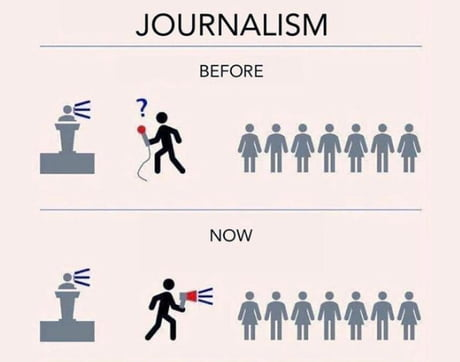
A few days ago, in fact, a BBC Ukraine journalist got up and hugged Zelensky at a press conference. However much you support a particular cause, as a journalist you’re supposed to show a modicum of impartiality. Based on this incident, I wouldn’t expect any dramatic shifts in coverage.
Endgame for Ukraine: America vs America
By Alastair Crooke | Strategic Culture Foundation | February 13, 2023
Hysterics at the Chinese balloon overflying the U.S. – taken to volume 11 – through scrambling a hush-hush Raptor jet (F-22) to ‘pop’ it, and then bally-hooing the ‘pop’ as Raptor’s first ever ‘air-to-air kill’, may be a source for quiet derision around the world, yet paradoxically this seemingly trivial event may cast a long shadow over the U.S. war-timetable for Ukraine.
For it is the U.S. political calendar that may yet determine what happens next in Ukraine – from the western side.
Seemingly nothing important occurred – it was an instant of spy frenzy, leaving Biden’s ‘tough task’ unchanged: He needs to convince the American voter, facing collapsing standards of living, that they misread the ‘runes’; that rather than gloom, the economy – contrary to their lived experience – is ‘working well for them’.
Biden needs to perform this magic against polls that say only 16% of Americans feel better off since the start of his tenure, and 75% of Democrats and Democratic-leaning voters wish him to not stand in 2024. Significantly, this message is coming today from the Democratic-leaning media, suggesting thoughts of replacing him are already in circulation.
For now, Biden’s allies in the party establishment (the DNC) continue to clear the way for his candidature – postponing initial primaries (in which Biden could be expected to be trounced) for a later South Carolina primary election, where Black and Latino voters would reflect demographics in which Biden might (possibly) shine. It may work; it may not.
Simply put, against this highly sceptical Party backdrop, Biden will have to change American perceptions of the economy at a moment when many indicators signal further deterioration. It will be a ‘heavy lift’. The economic team, for sure, will be insisting: ‘Keep the focus on economic achievements! We don’t want distractions from any foreign policy débacles; We do not want the TV debates to centre on Balloons, or around Abrams tanks: ‘It’s the economy, stupid!’’.
The ‘Chinese balloon’ was popped, yes, but similarly popped was Team Biden’s hope to negotiate a limited understanding with a tetchy President Xi that could stop China tensions becoming a spoiler issue in the primary debates. The balloon incident obliged the U.S. to cancel Blinken’s appointment with Xi (even though such a meeting with the head of state would be a rare event).
The powerful ‘China hawk’ faction in the U.S. was ecstatic. The China balloon ‘kill’ inadvertently, and in an instant, elevated China to ‘Main Threat’. It was the chance for these hawks to ‘pivot’ foreign policy back from Ukraine and Russia – to fully focus on China.
They make the case that Ukraine was ‘eating’ too much of America’s arms inventory. It was leaving America vulnerable; already, it would take years for the U.S. to make up for this equipment loss by reinstating weapons supply-lines. And there is ‘no time to spare’. The military ‘deterrence fence’ around China has to be in place – ASAP.
Naturally, the tight neo-con circle around Biden – some of whom have invested in the ‘Destroy Russia’ project for decades – is not ready to ‘let go’ the Ukraine project, for China.
Yet, the Ukraine narrative ‘bubble’ has been punctured, and has been leaking helium for some time. The Beltway – and even the MSM narrative – has pirouetted from ‘Russia losing’ to an ‘Ukrainian defeat is inevitable’. Indeed, Kiev is defeated, and is hanging by the slenderest of threads.
Olexii Arestovich, Zelensky’s senior adviser and former ‘spin doctor’ in the Presidential office, speaking in late January this year, was candid in his assessment:
“If everyone thinks that we are guaranteed to win the war, then it is very unlikely. Since January 14, it has ceased to be like this. What do you think, that the assessment from the President of Poland, Duda, not only did he say this about the decisive months. That it is generally unknown whether Ukraine will survive …
“The war may not end as the Ukrainians expect, and as a result, Ukraine may not return all its territories, and the West is ready to follow such a scenario … What will happen to the society that raised its expectations too high, but will receive a conditional Minsk-3? This recoil of unfulfilled expectations will hit us so hard – morally and everything else – that we will simply be stunned.
“The way out of this war may not be at all what it seemed to us three months ago, after the success of the Kherson operation. And not because the insidious Americans do not give weapons or delay, but because success requires 400 thousand of perfectly trained soldiers with NATO weapons to grind it all up and liberate the territories. Do we have it? No. Will it be next year? Will not be. There will not be enough training facilities…
“We as a society are not ready for such an outcome. I decided to say it as the expectation of the Russian side. But the most unpleasant thing is that in the West they think the same way, and we are totally dependent on them. What should the West do? The scenario of two Koreas. Create South Korea with guarantees”, Arestovich said, adding that with this option, Ukraine can get a lot of bonuses.
Put bluntly, if Biden is to avoid a repeat of the humiliating Afghan débacle, America needs urgently to to move-on before the 2024 Presidential calendar kicks-off this summer – with Ukraine/Russia sucking all the oxygen out from the coming economic debates.
But that is not what is happening. Victoria Nuland – who has been ‘capo’ in Kiev for a decade – is overseeing a purge: Unreliables are ‘out’, and pro-American radical Ukrainian hawks are ‘in’. It is a make-over of the Kiev mafia, which leaves Zelensky without friends – and wholly dependent on Washington. It looks to be preparation for the U.S. to attempt a double-down in Ukraine.
Seymour Hersh’s detailed article on the backdrop to the Nordstream pipeline sabotage by the U.S., on which Hersh worked for many months (though his assertions have been denied by the White House), tells us something highly significant.
All the familiar, anti-Russia neo-cons (Nuland, Sullivan and Blinken) were part of the Nordstream sabotage plot – but the impulse for it came from Biden. He led it. And just to be plain, Biden is just as emotionally invested in Ukraine as his team mates; it is likely that he too cannot ‘let go’ in Ukraine.
BUT, doubling down now, in Ukraine, won’t work for Biden. It would be highly reckless (although the Nordstream plot was nothing, if not reckless).
Doubling-down will not bring his hoped-for ‘win’, because its logic is based on an egregious mis-analysis.
Olexii Arestovich, Zelensky’s former ‘spin doctor’ and adviser, has described the circumstance of the Russian SMO first entry into Ukraine: It was conceived as a bloodless mission and should have passed without casualties, he says. “They tried to wage a smart war… Such an elegant, beautiful, lightning-fast special operation, where polite people, without causing any damage to either a kitten or a child, eliminated the few who resisted. They didn’t want to kill anyone: Just sign the renunciation”.
The point here is that what occurred was political miscalculation by Moscow – and not military failure. The initial aim of the SMO didn’t work. No negotiations resulted. Yet from it flowed two major consequences: NATO controllers pounced on this interpretation to trumpet their pre-conceived bias that Russia was militarily weak, backward and stumbling. That misreading underlay how NATO perceived Russia would prosecute the war.
It was wholly incorrect. Russia is strong and has military predominance.
On the presumption of weakness, however, NATO switched plans from a planned guerrilla insurgency, to conventional war along the ‘Zelensky Defence Lines’ – thus opening the path for Russia’s artillery domination to attrit Ukraine’s forces to the point of entropy. It is an error that cannot be rectified. And to try it might just lead to WW3.
The Abrams M1 tank will not save Biden from débacle in the lead-up to the U.S. election debates:
“It was designed for the kind of tank-on-tank combat that hasn’t happened since WW2. It’s huge, expensive, full of sorts of electronics. And powered by a repurposed jet engine. It breaks down quickly and needs its own army of mechanics, runs out of gas quickly and at almost 70 tonnes, it is too heavy to cross most bridges and needs specialized bridge crossing equipment. And it sinks in the mud. The Saudis used Abrams tanks in Yemen – and lost 20 to the Houthis, not exactly the most sophisticated military force”.
So, how does this all pan out? Well, the fight is on – in Washington. The China hawks will try to wrench the U.S.’ full attention back to China. The Biden neo-cons may try for some escalatory tactic in Ukraine that makes war with Russia unstoppable.
However, the reality is that the Ukraine ‘Balloon’ is popped. Military and civilian circles in Washington know it. The ‘elephant in the room’ of inevitable Russian success is acknowledged (albeit, with the compulsion to avoid seeming ‘defeatist’ – that persists in certain quarters). They know too that the NATO (as ‘formidable force’) ‘balloon’ has popped. They know that the balloon of western industrial capacity to manufacture weapons – in sufficient quantity and over a long duration – has popped also.
The consequences are the risk of severe U.S. reputational damage, the longer the war persists. These circles do not want that. Perhaps they will conclude that Biden is not the man to lead the U.S. out of this blind alley – that he is the part of the problem, and not the solution. If so, he must be gone in good time for the Democrats to work out who they want to lead them into the 2024 Presidential election (no easy prospect).
They may sense too, that the 2024 campaign lines already are coalescing for the Republican Party, which has its own reading of the Ukraine débacle – ‘Let’s exit from Ukraine to confront China’ (with full bi-partisan support). This means firstly, that the thread of U.S. financial support for Ukraine – as Bill Burns (CIA chief) reportedly told Zelensky on his last visit – likely will taper this summer. And secondly, it hints that any bi-partisan support for further arming Kiev may be over by the time the primary season will be in full swing.
Bill Burns travelled (in secret) in mid-January to meet Zelensky. Was it to prepare Zelensky for a shift in the American stance? Burns, the long-standing U.S. quiet negotiator, is not party to the Nuland programme. The former said at Georgetown Universityin early February that “China remains the biggest geopolitical challenge the U.S. faces in the decades ahead, and the biggest priority for CIA”. His framing, ‘was not a bug, but the substance’ in his address.
Nuland may be planting U.S.-aligned hawks around Zelensky in order to continue the war, but there are other, wider interests within Washington. Financial circles are worried about a market collapse that could lead to the dollar haemorrhaging value. There are worries too, that the Ukraine war is contributing to a serious weakening of America’s standing in the world. And there are concerns that a reckless Team Biden could lose control and take the U.S. into a wider war with Russia.
In any event, time is short. The Election Calendar looms. Is Biden to be the Democratic candidate? Whether or not he will be a candidate in 2024 needs to be resolved before the early primaries to allow any successor to demonstrate his or her paces in good time.
Zelensky left Europe without any fighter jets or further guarantees
By Ahmed Adel | February 13, 2023
Ukrainian President Volodymyr Zelensky was treated like a hero when visiting Brussels on February 9. Although he received endless adulation, his lobbying to EU leaders for further military support mostly fell on deaf ears despite making an impassioned, but disingenuous plea that Ukraine is defending Europe’s eastern borders.
Zelensky visited London and Paris on his second foreign trip since the war began almost a year ago and hoped to secure modern fighter jets and long-range missiles. He then brought his circus show to Brussels to address EU leaders and MEPs directly. Unsurprisingly, Zelensky received cheers and a standing ovation in the European Parliament, yet, made no progress in convincing Brussels to allow Ukraine an express membership into the EU.
“We are defending against the most anti-European force of the modern world — we are defending ourselves, we Ukrainians on the battlefield, along with you,” Zelensky told MEPs.
However, despite the contradictory rhetoric emanating from European leaders, they are also fully aware that Russia will never attack without provocation. It is for this reason that they can make a show for Zelensky in Brussels, but will never commit to the extent that Kiev demands.
Although French President Emmanuel Macron awarded Zelensky with the National Order of the Legion of Honour, he also made it clear that he would not supply fighter jets to Kiev in the near future. Even though Zelensky has forced the supply of fighter jets into discourse, European leaders, including Macron, are less than enthusiastic as they are fully aware it would take several years to train Ukrainian pilots to be competent enough with an unfamiliar fighter jet to have any chance against the Russian Air Force. In addition, they understand that Russia will respond appropriately too.
Ignoring this reality, European Parliamentary speaker Roberta Metsola, declared: “Ukraine is Europe and your nation’s future is in the European Union. States must consider, quickly, as a next step, providing long-range systems and the jets you need to protect the liberty too many have taken for granted.”
Unfortunately for the European Parliament, they wield very little influence on state policies and enforcing support for Ukraine. Rather, with Zelensky seen in Western European capitals begging for more weapons, the whole exercise is a tasteless theatre to discuss supposed value systems – values that tolerate rampant neo-Nazism in Ukraine.
In this way, Zelensky is nothing more than an actor in a show to present supposed European unity on Ukraine. The uncomfortable truth is that unity in the Western world is forced and mostly just exists at a political level. With support for Ukraine being mostly maintained by the political class, public dissatisfaction caused by economic difficulties from the sanctions against Russia is growing.
With dissatisfaction growing, Macron is desperately wanting the war to end and for a peace conference to be held – but on terms that do not correspond to the realities on the battlefield and with aims of making Russia the ultimate loser.
At the trilateral meeting held on February 8 in the Elysée Palace with German Chancellor Olaf Scholz and Zelensky, Macron presented a proposal for organising a peace conference but, as said, on terms where Russia is the ultimate loser. Macron sees Kiev’s ten-point plan as a “solid foundation on the way to a peace conference” despite confirmation that Kiev is categorically refusing to negotiate on Russia’s unification with Crimea, Luhansk, Donetsk, Zaporozhye and Kherson.
In addition, a peace conference can only occur if Washington and London agree to one since they are the real masters behind the war. Although Macron has grandiose illusions of becoming a second Charles de Gaulle to lead an “autonomous Europe,” his endless failed attempts to form a European Army and the cancellation of military contracts with Australia shows that he is far from the global and historic figure that he wants to be remembered as. It also demonstrates that Western power is still firmly in Anglo hands.
Rather, Macron’s initiative is media propaganda because the two most powerful states in the EU, France and Germany, want to legitimise themselves in the media as contributors to the peace process. It cannot be forgotten that France and Germany already mediated the signing of the Minsk Accords and that former German chancellor Angela Merkel admitted that the aforementioned agreements allowed the Ukrainian military to become stronger as it bought time.
Therefore, French and German mediation in the current crisis cannot be trusted, and for this reason it is unlikely that Moscow will ever entertain a peace conference under such ludicrous terms. It was French and German inaction in enforcing the Minsk Accords that led to the current conflict, and now that Russia has acted on the only option that was left available, Macron has the audacity to request a peace conference on the terms that Russia backs away from all the progress it made.
As this is unrealistic, the song and dance must continue, and Zelensky will continue playing the part. But in the end, the level of support that Zelensky wants is evidently not coming to fruition, and will likely remain this way, rendering his tour of Europe to be mostly useless.
Ahmed Adel is a Cairo-based geopolitics and political economy researcher.
Stop arming Ukraine now, intelligence veterans warn Biden
By Serena Wylde | TCW Defending Freedom | February 13, 2023
Eighteen senior former intelligence professionals have signed an ‘alert memorandum’ to President Biden warning him what will follow his decision to send Abrams tanks to Ukraine.
Calling themselves Veteran Intelligence Professionals for Sanity, they informed him: ‘What your advisers should have told you is that none of the newly promised weaponry will stop Russia from defeating what’s left of the Ukrainian army. If you have been told otherwise, replace your intelligence and military advisers with competent professionals – the sooner the better.’
Two decades ago, before the US/UK attack on Iraq, some of the same signatories warned President George W Bush that ‘justification’ for such an attack was based on false intelligence. In their February 5, 2003 memorandum on Colin Powell’s speech, they alerted the then president to the unintended consequences of an attack on Iraq which were likely to be catastrophic. Then, as now, they urged the president to widen the circle of his advisers beyond those clearly bent on a war for which they saw no compelling reason. Five years later the Senate Intelligence Committee concluded: ‘In making the case for war, the [Bush] Administration repeatedly presented intelligence as fact when in reality it was unsubstantiated, contradicted, or even non-existent.’
The current Alert Memorandum goes on: ‘The issuances of your current intelligence advisers rival those of Bush’s and Cheney’s fixers in disingenuousness. Their statements run from dishonest to naïve. They betray a woeful lack of understanding of Russia’s strategic concerns and its determination to use its formidable military power to meet perceived external threats. The statements also reflect abysmal ignorance regarding how US behaviour has led willy-nilly to a profound shift in the world correlation of forces in favour of Russia and China – to include making them military allies in all but name.’
Even a casual observer of events in Ukraine since the collapse of the Soviet Union is aware that Nato’s continuous eastwards push has been provocative because Vladimir Putin had made it abundantly clear that Nato expansion into Ukraine was a red line for Russia. Some will also know that in 2014 and 2015 Russia brokered two truces, called the Minsk Protocols I and II, in an attempt to end the slaughter of ethnic Russians in eastern Ukraine by the AFU (Armed Forces of Ukraine). These agreements were simply ignored. Fewer may know that on February 16, 2022, a week before Putin sent combat troops into Ukraine, the AFU began heavy bombardment of the area in Eastern Ukraine mainly occupied by ethnic Russians. Yet, just as the media echoed and reinforced the false claims of WMD in Iraq, so it pushes the myth that Putin launched an ‘unprovoked invasion’ of Ukraine.
Public opinion in the US is not totally fooled, however, as manifested by a new right-left coalition which is organising a protest march from the Lincoln Memorial to the White House next Sunday demanding ‘Not one more penny for war in Ukraine’.
The sponsoring organisations of this new movement are the People’s Party and the Libertarian Party. The former was formed in 2020, but the latter is the third-largest political party in the US by voter registration.
The key demands of the demonstration are:
· Not one more penny for war in Ukraine
The Democrats and Republicans have armed Ukraine with tens of billions of dollars in weapons and militarised aid. The war has killed tens of thousands and displaced millions.
· Negotiate peace
The US government instigated the war in Ukraine with a coup of its democratically elected government in 2014, and sabotaged a peace deal between Russia and Ukraine.
· Stop the war inflation
The US blew up the Russian gas pipeline to Europe to break up trade relations between Russia and Europe, starve the latter of energy and de-industrialise its countries.
· Disband Nato
Nato expansion to Russia’s border provoked the war in Ukraine. Nato is a warmongering relic of the Cold War. Disband it like the Warsaw Pact.
Hungary slams EU push to arm Ukraine
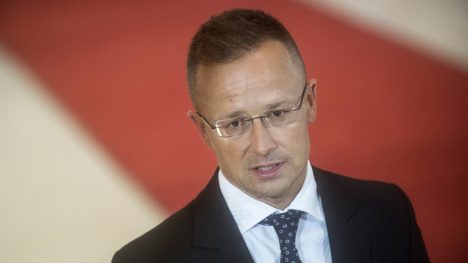
Hungarian Foreign Minister Peter Szijjarto © Michal Cizek / AFP
RT | February 12, 2023
Hungarian Foreign Minister Peter Szijjarto speaks to journalists in Prague, Czech Republic, on August 30, 2022. © Michal Cizek / AFP
The European Union’s calls to keep supporting Ukraine with arms shipments will only prolong the conflict with Russia, the Hungarian foreign minister said on Sunday.
Speaking to radio Kossuth, Peter Szijjarto commented on recent remarks by the President of the European Parliament, Roberta Metsola, who pushed for fighter jets and long-range weapons to be sent to Kiev. According to the minister, EU lawmakers’ decisions on Ukraine “have generally caused damage to Europe,” and further weapons deliveries will only worsen the hostilities.
He went on to blast the EU legislature, claiming that its “credibility is practically zero.” Szijjarto pointed to a recent graft scandal as proof that the EU parliament is “one of the most corrupt organizations in the world.”
He was referring to the recent arrest of the parliament’s former vice president, Eva Kaili, who has been charged with taking bribes from Qatar in exchange for illegally lobbying the interests of the Gulf state.
Szijjarto noted that in Western countries, war rhetoric sounds “incomparably louder than the rhetoric of peace,” while nations outside “the transatlantic bubble” tend to prefer peace to a deadly conflict.
The minister went on to question the West’s anti-Russia sanctions. He argued that they have failed to force Moscow to end the conflict, while Europe’s economy has “faced incredible difficulties,” and that “the tenth sanctions package will only be suitable for causing further damage to us Europeans, similar to the previous nine ones.”
Since the start of large-scale hostilities in Ukraine almost a year ago, Hungary, which is heavily dependent on Russian energy, has been critical of Western sanctions against Moscow. It has also refused to support Kiev with weapons, or allow arms transfers across its border with Ukraine.
US defense official flags ‘no objections’ to Kiev attacking Crimea
RT | February 11, 2023
The US would have no objections to Ukrainian forces striking targets inside Crimea with American-supplied weapons, a senior defense official said on Friday.
Dr Celeste Wallander, Assistant Secretary of Defense for International Security Affairs, was asked whether Washington supports Kiev in seizing Crimea, or at least in striking Russian targets there. The peninsula overwhelmingly voted to become part of Russia in 2014 following a Western-backed coup in Kiev.
Speaking at the Center for a New American Security, Wallander reiterated that the US “supports Ukraine’s territorial integrity and sovereignty over its internationally recognized borders, and that includes Crimea.” With this in mind, the official argued that Kiev “has the right to defend every inch of its territory.”
As long as Ukraine “identifies operational value in targeting Russian forces on Ukrainian territory… we don’t have objections and do not seek to limit Ukrainian military operations to achieve their objectives.”
She also commented on remarks made by Chairman of the US Joint Chiefs of Staff General Mark Milley, who warned in January that it would be “very difficult” for Ukraine “to militarily eject the Russian forces” from all the territories they currently control.
“I am not going to contradict general Milley, and I think he was giving a hard-headed assessment of the scale of the challenge,” she said.
In January, The New York Times reported, citing sources, that the administration of US President Joe Biden was warming to the prospect of helping Ukraine to target Crimea, “even if such a move increases the risk of escalation.”
On February 3, the US announced a new $2.17 billion security package for Ukraine which included ground-launched, small-diameter bombs (GLSDB) with a range of up to 150 kilometers (93 miles). While the Pentagon said that this long-range capability would enable Ukrainians “to take back their sovereign territory,” it declined to speculate about Kiev’s future potential operations.
Last week, former Russian President Dmitry Medvedev, who now serves as Deputy Chair of the nation’s Security Council, warned that any attack on Crimea would be interpreted as an attack on the country itself. Kiev, he said, must understand that such moves would be “met with inevitable retaliation using weapons of any kind.”
Former Acting US Defense Secretary: ‘Cut Military Spending’ by Half, Stop Hyping China Threat
By Wyatt Reed – Sputnik – 10.02.2023
As the Biden administration prepares to request congressional approval of the largest military budget in US history, Trump’s final pick for Pentagon chief has urged a “40-50%” reduction in spending on the armed forces, saying the Defense Department is “too big and bloated and wasteful.”
Former acting Secretary of Defense Chris Miller has raised eyebrows by calling out the “military-industrial complex” by name, as well as urging policymakers to “dramatically” cut the Pentagon’s budget and to stop demonizing China.
“We have created an entire enterprise that focuses economically on creating crisis to justify outrageously high defense spending,” Miller lamented in an interview with CBS.
With the military-industrial complex having become a “hydra-headed monster” and with “virtually no brakes on the American war machine,” Miller told CBS that “you have to starve the beast to make people come out of their cubby holes and start thinking creatively.”
The former acting defense secretary has also condemned the frequent saber rattling that’s come to dominate popular American political discourse regarding the alleged military threat which US leaders claim emanates from China.
Miller argued that “by constantly harping on the fact that the Chinese are the greatest threat to America and what not,” Washington’s political class is giving China’s leadership the “opportunity” to “have an enemy that they can focus their people’s anger and attention on.”
 In his new memoir, “Soldier Secretary,” Miller calls to cut Defense Department spending by 40% to 50% so that it would be closer to pre-9/11 spending levels, given that the US is “no longer waging wars in Afghanistan and Iraq.”
Much of his frustration with the course of the US military appeared to stem from the double standards he says have been exposed in the wake of disastrous and bloody US invasions in the Middle East.
“The more I thought, the more I was horrified,” Miller writes. “We invaded a sovereign nation, killed and maimed a lot of Iraqis, and lost some of the greatest American patriots to ever live — all for a goddamned lie.”
What “really bothers me,” Miller said in an interview with The Hill this week, is how “our young soldiers see the hypocrisy” in the system.
“If they end up being late for work, they get in a lot of trouble,” he noted, adding that if a soldier were to “mess up a piece of paperwork for a supply request, there’s a possibility they can be kicked out of the service.”
And on the other side of the equation, “there’s the people who lose wars and end up advancing on to other positions of power and wealth,” Miller stated. “And that’s what really bugs me.”
It’s a theme the former acting secretary of defense returns to frequently in his new book.
“The recognition that so many sacrifices were ultimately made in the service of a lie, as in Iraq, or to further a delusion, as in the neoconservatives’ utopian fantasy of a democratic Middle East… It still makes my blood boil, and it probably will until the day I die,” he writes.
But despite the raw emotions on display in the memoir, Miller doesn’t express much optimism that lawmakers in Washington will heed his call for a more reasonable Pentagon budget.
“There’s no incentive to reduce military spending,” he told the Hill. “I think there’s whispers, but [we need] someone with the courage and experience to get in there and force it.”
Featured Video
Trump asks Iran not to retaliate after he strikes Pickaxe Mountain
or go to
Aletho News Archives – Video-Images
Book Review & Summary
Calling of an Angel: The True Story of Rene Caisse and an Indian Herbal Medicine Called Essiac (1988)
Dr. Gary L. Glum – 30 Q&As – Book Review & Summary
Lies are Unbekoming | October 17, 2026
On June 10, 1975, Dr. Chester Stock, a vice president at Memorial Sloan-Kettering Institute for Cancer Research, wrote to a Canadian nurse named Rene Caisse: “Enclosed are test data in two experiments indicating some regressions in sarcoma 180 of mice treated with Essiac.” The sentence sat in a letter from one of the world’s largest private cancer research centers, concerning an herbal tea an elderly English woman had learned from an Ojibwa medicine man at a northern Ontario mining camp in the 1890s. The tests were terminated the following year after Sloan-Kettering admitted, in sworn affidavit three years later, that they had prepared the injectable solution improperly from the dried material supplied — freezing and thawing the herb rather than boiling it as Rene had instructed. By the time Calling of an Angel was published in 1988, Rene Caisse had been dead for a decade, having treated thousands of cancer patients across fifty-six years in her Bracebridge, Ontario kitchen, never charging a fee, and refusing every offer — from Memorial Sloan-Kettering, the National Cancer Institute, Merck, Parke Davis, and private corporations dangling contracts up to $1 million — to release her formula before the medical establishment admitted her remedy had merit. … continue
Blog Roll
 Aletho News
- Trump asks Iran not to retaliate after he strikes Pickaxe Mountain – w/ Prof. Marandi
- Vice President J.D. Vance’s Deceptive ‘Antiwar’ Campaign Speech
- Iran: Palestinians’ rights must not be compromised in Gaza’s future; US, Israel to blame for Hormuz situation
- Ongoing tales of Syrian chemical weapons
- Moscow blasts UN for ignoring torture of Russian POWs
- Millions of Books Could Have Been Destroyed in Lebanon During Israeli Bombings
- Moscow warns of ‘hunt for Russians’
- Calling of an Angel: The True Story of Rene Caisse and an Indian Herbal Medicine Called Essiac (1988)
- South Korean Assistance to the U.S. in the War with Iran: Between Allied Duty and National Interests
- Pharma- and Gates-Funded GAVI Seeks to Assure Parents
- If Americans Knew
- Israeli soldiers debunk Israel’s talking points
- In West Bank, Israeli settlers are totally out of control – Daily Update
- NPR investigation finds evidence of widespread fraud at mall kiosks tied to Israeli skincare brand
- Tucker Carlson exposes Israeli Lies about the Oct 7th attack, Charlie Kirk, and the U.S.
- Israel has detained thousands of Palestinian children since Oct 7th – over half spent time in solitary, many uncharged
- Israeli Analysis: Is Netanyahu Planning an ‘October Surprise’ Attack Before Israel’s Election?
- Israeli settlers brutally attack Palestinians and Washington Post female photographer, 65
- Words Have Changed, Occupation Continues: The Reality of the Gaza Ceasefire
- Gaza’s child amputees are growing faster than their prosthetics allow
- Israel keeps Palestinians struggling just to survive–Daily Update
- No Tricks Zone
- New Study Suggests Large Regions Of The Pacific Ocean Have Been Cooling For The Last 80 Years
- Germany’s Green Energy Debacle: High Energy Costs Force Kahla Porzellan to Close After 182 Years!
- New Study: 50 Years Of The Most Aggressive ‘Net Zero’ Policies Can Only Affect The Global Climate By 0.03°C
- US September “Heat” Was No Record…Many Records Set Decades Ago
- Latest European Green Energy Debacle; Portugal’s Largest Flagship Solar Park Insolvent!
- Green Energy Debacle: German Expert Professor Fritz Vahrenholt Warns Of Severe Economic And Social Consequences
- Two More Paleo Reconstructions Affirm Meters-Higher Sea Levels Across Ireland, Brazil 7000-6000 Years Ago
- New Study: Earth And Venus Surface Warmth Largely Explained By Convection And Lapse Rate, Not CO2 Or Radiation
- 2025 Nature Paper Claiming Worsening Global Drought Gets RETRACTED …Heavily Flawed
- New Study: ‘Global Drought Shows No Detectable Recent Acceleration Under Climate Warming’

