The US military is supplying Ukraine with hundreds of thousands of artillery rounds pulled from stockpiles based in Israel, according to the New York Times. The Pentagon is reportedly “scrambling” to find munitions as Ukrainian forces continue to exhaust their arsenal.
The Pentagon has drawn from a “vast but little-known stockpile of American ammunition in Israel to help meet Ukraine’s dire need for artillery shells,” the Times reported on Tuesday, citing multiple unnamed Israeli and American officials. While it’s unclear when the deal was struck, Israel has agreed to allow Washington to source some 300,000 155-millimeter rounds from warehouses on its territory.
“About half of the 300,000 rounds destined for Ukraine have already been shipped to Europe and will eventually be delivered through Poland,” the Times added.
Though the stockpile in Israel is intended for use in America’s Middle East conflicts, several of which continue on a simmer, the Pentagon has been forced to seek new weapons supplies as Ukrainian troops reportedly blow through around 90,000 shells per month – twice the rate produced by the United States and Europe combined.
The United States has sent or authorized the shipment of just over one million 155-millimeter rounds to Ukraine since the conflict with Russia kicked off last February. “A sizable portion” of that has been pulled from existing inventories in South Korea and Israel, a senior US official told the Times, though he did not specify the total sourced from each.
While Israeli officials “initially expressed concerns” about the plan to draw from stocks in their own country, believing it could suggest Israel is “complicit in arming Ukraine,” the government ultimately agreed on the condition that the Pentagon replenishes the armaments. Washington has additionally pledged to “immediately ship ammunition in a severe emergency,” the Times said.
Israel maintains ties with both Ukraine and Russia, and has sought to walk a diplomatic tight-rope between the two conflicting states since fighting erupted last year. Though it has offered to help broker peace talks and provided several rounds of humanitarian aid to Kiev, Israel has largely refused to join its Western allies in arming Ukraine or sanctioning the Russian economy, fearing such hostile actions could harm relations with Moscow.
Under President Joe Biden, the US has authorized some $25 billion in direct military aid to Kiev, recently agreeing to send 50 Bradley infantry fighting vehicles and a range of other weapons in its latest $3 billion arms package. Ukrainian officials have continued to clamor for additional gear, however, and are now urging Washington and its European allies to send main battle tanks and better air defenses, among other weapons. While the US has so far declined demands for tanks, military leaders from the ‘Ukraine Defense Contact Group,’ which includes NATO members, will meet at Germany’s Ramstein Air Base on Friday to discuss the possible shipment of heavier arms.
January 18, 2023
Posted by aletho |
Militarism | Israel, Ukraine, United States |
Leave a comment
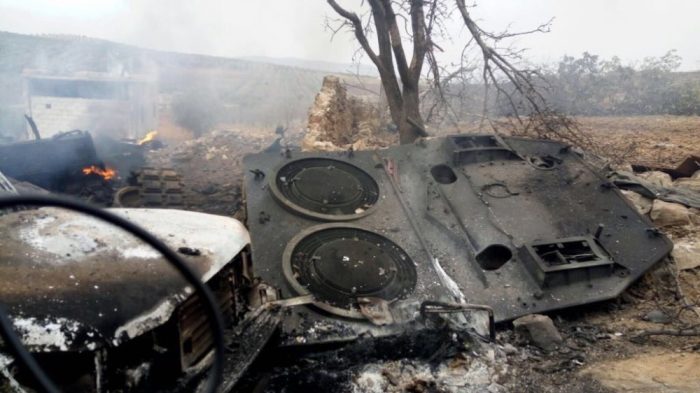
Western nations have begun pledging a variety of Western armored vehicles to Ukraine including infantry fighting vehicles and even main battle tanks. Until now, the majority of armored vehicles sent to Ukraine had been Soviet-era weapons Ukrainian forces were familiar with both in terms of operating and repairing them.
However, following Ukraine’s Kherson and Kharkov offensives, much of this equipment has been destroyed, leaving the West little choice but to begin sending Western systems or leave Ukrainian forces in the field with only small arms.
While Western leaders and the media claim that Western armored vehicles represent a significant increase in Ukrainian capabilities, the reality is quite the opposite. Far from giving Ukraine an advantage on the battlefield, Ukrainian forces will struggle merely to get the vehicles on the battlefield and keep them there. Additionally, recent conflicts elsewhere in the world have proven Western armored vehicles including main battle tanks are neither “invincible,” nor “game-changing.”
Thus, if Ukraine’s hundreds of Soviet-era tanks, infantry fighting vehicles, and armored personnel carriers failed to achieve favorable outcomes for Kiev, it is unlikely replacing these systems with Western hardware will make any difference.
Logistics, Training, and Maintenance
In order to get Ukrainians into Western armored vehicles they will have to be trained in their basic operation, in using them effectively on a modern battlefield together with other tanks and weapon systems, and keeping them on the battlefield (maintenance). Entry-level tankers can take up to half a year to acquire these skills – time Ukraine doesn’t have, meaning that unless Western operators will be manning them posing as Ukrainians, heavily abbreviated courses will be given instead, producing subpar operators compared to the training and effectiveness Ukrainian tank crews had on the battlefield using their own equipment at the beginning of Russia’s special military operation.
Another aspect of most Western main battle tanks is that unlike Soviet and Russian main battle tanks which feature autoloaders for their main guns, Leopard 2, Challenger 2, and M1 Abrams require a crew member to manually load their main guns. So, while Soviet-era and Russian tanks have three crew members, a driver, a gunner, and a commander, Western main battle tanks require a fourth, the loader. This means that for every 3 Western main battle tanks sent to Ukraine, four Ukrainian tank crews will be required to man them – more trained tankers spread across fewer tanks.
Before these newly trained Ukrainian tankers can crew their Western armored vehicles, they have to be moved onto the battlefield. Western infantry fighting vehicles like the US Bradley and the German Mauder are heavier than their Soviet and Russian counterparts. So are the Challenger 2 and Leopard 2 tanks pledged by the UK and Poland. The US M1 Abrams is heavier still.
This presents a challenge to moving the vehicles by truck or rail just to reach the battlefield. The second option, rail, is complicated even further by the fact that much of Ukraine’s rolling stock is moved by electric traction which has been severely inhibited by Russia’s systematic targeting and destruction of the Ukrainian power grid. There is also the matter of sustaining these armored vehicles on the battlefield as they operate. They will consume much larger amounts of fuel than Ukraine’s previous armored vehicles, meaning more fuel will be required and much more often.
Heavier vehicles place more wear and tear on mechanical components including the vehicles’ transmissions, suspension, road wheels, and tracks. Increased maintenance required by newly trained, inexperienced crews will prevent the vehicles from being operated to their maximum potential. More problematic still is that Western armored vehicles – both infantry fighting vehicles and especially Western main battle tanks – possess complex optics and computerized fire control systems. It takes months just to train technicians to diagnose these systems, and a year or more to train and gain experience in actually repairing them.
What is much more likely is Ukrainian armor crews will be forced to regularly send broken vehicles to the border with Poland to be repaired. Depending on where fighting is taking place this can be up to 1,000 km away from the front line. It is then another 1,000 km back to the front. Ukrainian maintenance facilities manned by Western technicians cannot be established in Ukraine itself because Russia possesses the means to target and destroy them with long-range precision weapons like cruise missiles and drones.
This means Western armored vehicles may spend more time either in transit or being repaired than actually fighting on the battlefield.
Because NATO armored vehicles use different types of ammunition than Ukraine has been using with its own armor vehicles, it will need to be shipped in constantly to the front to keep these vehicles firing on the battlefield. While many NATO main battle tanks fire 120mm rounds from smoothbore main guns, the British Challenger 2 fires unique ammunition from its 120mm rifled main gun. This means that two supply chains will need to be established for Challenger 2 and Leopard 2 tanks. The same applies for basic spare parts for mechanical repairs Ukrainian crews may be capable of performing in the field.
Western Main Battle Tanks are Far From Invincible
Pundits argue that despite the many challenges facing Ukraine in employing Bradley and Marauder infantry fighting vehicles along with Challenger 2 and Leopard 2 main battle tanks, the capabilities of these vehicles will give Ukrainian forces a decisive advantage on the battlefield over Russian forces. However, the performance of these armored vehicles in recent conflicts indicates the exact opposite.
The Leopard 2 main battle tank is widely used across NATO, including by Turkey. Turkey deployed Leopard 2 tanks during several incursions into northern Syria against irregular Kurdish and “Islamic State” forces. Their performance was described in a 2019 National Interest article ominously titled, “Turkey’s Leopard 2 Tanks Are Getting Crushed in Syria,” which noted:
… evidence emerged that numerous Leopard 2s had been destroyed in intense fighting over ISIS-held Al-Bab—a fight that Turkish military leaders described as a “trauma,” according to Der Spiegel. A document published online listed ISIS as apparently having destroyed ten of the supposedly invincible Leopard 2s; five reportedly by antitank missiles, two by mines or IEDs, one to rocket or mortar fire, and the others to more ambiguous causes.
The article links to photographs of the destroyed Leopard 2 tanks, sometimes side by side Turkish infantry fighting vehicles and with at least two with their turrets completely blown off the hulls of the tanks, illustrating just how vulnerable any main battle tank is, Russian or Western, to modern anti-tank weapons. The National Interest lists AT-7 Metis and AT-5 Konkurs antitank missiles, both produced by the Soviet Union and now the Russian Federation, as the culprits in at least 5 of the destroyed Leopard 2 tanks.
While the most widely produced Western main battle tank is the M1 Abrams, because of its fuel-hungry turbine engine and exceptionally heavy weight, it is impractical to send in large numbers to Ukraine. The Leopard, produced in large numbers and used widely across NATO with its diesel engine makes it the most likely candidate to replace the bulk of Ukraine’s tank force, but considering its performance against even irregular forces on the battlefield, this leaves only bleak prospects for Ukraine.
The British Challenger 2 has fared no better on the battlefield. The myth that it has is owed to cover-ups and deliberate war propaganda as exposed by a 2007 Telegraph article titled, “MoD kept failure of best tank quiet,” which noted:
The Ministry of Defence had claimed that an attack last month that breached a tank’s armour was the first of its kind in four years of war in Iraq. But another Challenger 2 was pierced by a powerful rocket-propelled grenade in August last year during an attack that blew off part of a soldier’s foot and injured several others.
The article pointed out that the weapon that likely damaged the Challenger 2 was the Russian-made RPG-29. It notes:
The RPG-29 is a much more powerful weapon than the common type regularly used by insurgents to attack British troops. It is specifically designed to penetrate tank armour, although this is the first occasion on which it has managed to damage a Challenger.
And what of other Western main battle tanks which share similar design and doctrinal philosophies? Have they performed any better? It is a question worth considering both to assess the combat potential of Western armored vehicles in general and to get ahead of additional transfers to Ukraine that might include these other vehicles.
The M1 Abrams, like the Challenger 2, has a legendary reputation. However, the US itself had multiple M1 Abrams knocked out in Iraq from 2003 onward. A CBS New article from 2003 titled, “U.S. Tank Hit, 2 GIs Dead In Iraq,” noted that the knocked out M1 Abrams was damaged by either a bomb or an improvised explosive device.
The M1 Abrams has been transferred to US allies including Saudi Arabia. A 2016 Defense One article titled, “Saudi Losses in Yemen War Exposed by US Tank Deal,” would explain:
The U.S. State Department and Pentagon Tuesday OKed a $1.2 billion sale of 153 Abrams tanks to Saudi Arabia Tuesday. But that’s not the real news.
Turns out: 20 of those tanks, made in America by General Dynamics Land Systems, are “battle damage replacements” for Saudi tanks lost in combat.
Even though the formal announcement of the sales does not say where the tanks were fighting, the Saudi military is believed to have lost some of its 400-plus Abrams tanks in Yemen, where it is fighting Iranian-backed Houthi separatists.
It is very clear that far from invincible, despite the massive weight and heavy fuel consumption of the M1 Abrams, even irregular forces are capable of facing off and defeating the US main battle tank.
Pundits have claimed that heavy losses of Saudi M1 Abrams are owed to the fact that exported M1 Abrams lack key features including special armor and fire control elements responsible for their poor performance. However, it is unlikely the US would ever transfer M1 Abrams to Ukraine with classified armor or highly sophisticated fire control systems for precisely the same reasons the US has not sent any of its modern unmanned aerial vehicles like the Gray Eagle. The capture of either of these weapon systems by Russian forces – a very common phenomenon amid the special military operation – would mean these advanced features would quickly be under examination by Russian engineers.
And finally, while Israeli Merkava main battle tanks are highly unlikely to end up in the hands of Ukrainian forces, the Merkava is considered one of the best main battle tanks on Earth. They too, however, have not only performed poorly against modern anti-tank weapons, but anti-tank weapons produced by the Russian Federation.
Haaretz in its 2006 article, “Hezbollah Anti-tank Fire Causing Most IDF Casualties in Lebanon,” would report:
The Hezbollah anti-tank teams use a new and particularly potent version of the Russian-made RPG, the RPG-29, that has been sold by Moscow to the Syrians and then transferred to the Shi’ite organization.
The RPG-29’s penetrating power comes from its tandem warhead, and on a number of occasions has managed to get through the massive armor of the Merkava tanks.
It should be noted that in each case, whether it was Turkish forces in northern Syria, Saudi forces in Yemen, US and British forces in Iraq, or Israeli forces pushing into southern Lebanon, each military operation consisted of well-trained tank crews supported by large-scale logistical lines and as part of well-organized combined arms combat including infantry, artillery, and air support.
What will happen when Ukrainian tank crews given abbreviated training attempt to employ Western main battle tanks on the battlefield, only without the proper logistical or combined arms support Turkey, the US and UK, Saudi Arabia, and Israel were capable of? And what will happen when these Ukrainian tank crews go up against Russian-made anti-tank weapons proven over the years to be highly effective against the very best Western main battle tanks now that these anti-tank weapons are in the hands of Russian troops themselves?
It was Russian forces destroying hundreds upon hundreds of Ukrainian armored vehicles over the course of the special military operation, exhausting both Ukraine’s initial inventories and then NATO’s inventories of Soviet-era equipment that has prompted the West to consider sending their own armor in the first place.
Effective Russian-made anti-tank weapons like the guided AT-7 Metis and AT-5 Konkurs but also the newer 9M133 Kornet missile along with RPG-29 and now RPG-30 rocket propelled grenades will surely produce the same destructive results experienced by Turkish, US, British, Saudi, and Israeli tank crews. But Ukrainian forces will also face hundreds of Russia’s own main battle tanks including modernized T-72 and T-80 tanks, as well as the newer T-90 Proryv. Russian military aviation also has a variety of weapons capable of precision strikes on armored vehicles and Russian artillery is more than capable of destroying main battle tanks even on the move using laser-guided Krasnopol artillery rounds.
In other words, Ukrainian tank crews will be less prepared and fighting under less-than-ideal conditions than their Western counterparts and fighting against a much larger arsenal of anti-tank weapons both in terms of quantity and quality. Just as other Western “wonder weapons” had supposedly “turned the tide” including the M777 155mm howitzer and the HIMARS GPS-guided multiple launch rocket system, Ukraine finds itself in need of yet another “wonder weapon” to induce yet another badly needed “turning of the tide.” Western main battle tanks will help Ukraine prolong the conflict, but ultimately Kiev and its Western sponsors will find themselves right back to where they started.
Brian Berletic is a Bangkok-based geopolitical researcher and writer.
January 17, 2023
Posted by aletho |
Militarism | UK, Ukraine, United States |
Leave a comment
By Viktor Medvedchuk, former Ukrainian opposition leader – Izvestia – 16.01.2023
Listening to many Western politicians, it seems completely impossible to understand the sense and mechanisms of the conflict in modern Ukraine. Take US President Biden. He denies the direct involvement of US troops in the conflict but at the same time he mentions on every occasion the billions in weapons the US supplies to the country.
If billions are spent for military purposes in Ukraine, it means Ukrainian interests are extremely important for the US. But the US army does not want to fight there. So probably they are not so important, after all. And what about these weapon supplies worth billions of dollars? Are they donations? Is it a profitable business? Investments? Some political combination? No answers, only smoke.
Or take the most recent revelations by German ex-Chancellor Merkel that the Minsk Agreements were just an attempt to give Ukraine time. Which means no one was ever going to establish peace in Ukraine. So, Russia was deceived. But what was the purpose? To protect Ukraine or to invade it themselves? Why did they need this deception if they could simply implement what was recommended by Germany? Or did Germany deliberately recommend something that could never be implemented? We could go as far as asking if political swindlers could be drawn to accountability, but it seems much more relevant today to start clearing the smoke around the current situation. That is how it has played out, anyway. But what were the root causes? And how can we get out of this situation, that is getting ever more dangerous? So let us begin our analysis by looking at the origins.
What Was the Outcome of the Cold War?
The beginning of a new war usually finds its origin in the end of a previous one. The Ukraine conflict was preceded by the Cold War. The answer to the question about its outcome will bring us closer to understanding of the essence of the current conflict, one which extends beyond Ukraine and affects many countries. The thing is that Western countries and the countries of the post-Soviet space, primarily Russia, have different perceptions of the outcome of this war.
The West definitely considers itself as a winner and Russia as a defeated party. Since, in their eyes, Russia was defeated, then the territories of the former USSR and the Eastern Bloc are the legitimate prey of the US and NATO and are subject to control by the West under the motto “Woe to the Conquered!” Hence Ukraine is in the zone of influence of the US and NATO, and certainly not Russia. So, any of Russia’s claims to at least any influence on Ukrainian politics and protection of its interests in the region are “groundless” and a clear infringement on the interests of the US and NATO. “We no longer have to view the world through a prism of East-West relations. The Cold War is over” – declared Margaret Thatcher in the early 1990s. It means the position of the East, of Russia, is no longer relevant. There is one victor, one master of the universe, one winner.
Russia has a completely different view of this process. In no way does it consider itself as a defeated party. The end of the Cold War was brought about by democratic reforms of political and economic life, and military confrontation was replaced by trade and integration with the West. So, if one’s former foe becomes a friend today, is it not a victory? Besides, the USSR and then the Russian Federation never had the goal of winning the Cold War but rather exiting the military confrontation between East and West that could have ended with a nuclear catastrophe. Moscow, together with Washington, found this way out, having reached the goals not so much for themselves as for the whole world.
This way out by no means implied that the West would take over the East and subordinate the post-Soviet space in economic, legal and cultural respects. Quite the contrary: it implied equal cooperation and joint work to build a new political and economic reality. So, there are clearly two different attitudes to the outcome of the Cold War: the triumph of the winners, on the one part, and building a new world and a new civilization, on the other. The difference between these two attitudes would predetermine the developments that followed.
New World or New Western Colonies?
In 1991 the Soviet Union collapsed, but in 1992 the European Union was established – something the post-Soviet space including Russia associated big hopes with. Here, at last, there seemed to be a new world, a new supranational body, a new turn in the history of Western civilization. Russia, just like other states of the former Eastern Bloc and the USSR, saw itself in the future as an equal member of this Union. The vision of “Europe from Lisbon to Vladivostok” was born.
In this context, Russia welcomed not only the reunification of Germany but also the accession of its former allies and even former Soviet republics to the EU. In the 1990s, economic integration with the West was a priority for Russia; Moscow considered it as key to its success as a modern state. The Russian leadership had no particular desire to bind to itself the former Soviet republics, including Ukraine. Most of the Soviet republics had lived off subsidies from the central government, in other words, Russia. So, the leaders of these countries were given a friendly pat on the shoulder while Moscow sought to get rid of their economic burden as soon as possible.
Faster than Ukraine, Russia began to integrate into the European market. Russia had vast volumes of energy resources that are in demand in Europe, while Ukraine, on the contrary, couldn’t afford to buy energy resources at European prices. Ukrainian independence could well have ended with an economic meltdown but for the South-East, where heavy fighting is going on right now. With its vast production facilities and advanced industry, the South-East helped Ukraine find its place in the international division of labor. One would not normally mention this fact, but in the 1990s it was the Russian-speaking South-East that saved the economic and hence political independence of Ukraine.
Now let us turn to something different. Since the 1990s, a series of major ethnic conflicts and wars involving millions of people emerged in Europe and close to its borders. Until 1991, there had not been such a big number of ethnic clashes. All of this led to the break-up of Yugoslavia and loss by Georgia, Moldova and Syria of their territorial integrity. This does not make any sense if we look at it from the perspective of European integration. The goal of this union was not the fragmentation of Europe into a multitude of small states, but quite the contrary: the creation of a huge supranational union of nations, and these nations would not have to exterminate each other, nor to multiply the borders, but rather build a new world together. So, what was wrong here?
It only seems wrong if one relies on the concept that Russia used to stick to. And if one proceeds from the concept of the victory of the West in the Cold War, then ethnic conflicts acquire a completely different meaning. The latter was articulated on numerous occasions, e.g., at the meeting of the Joint Chiefs of Staff on October 24, 1995, when US President Bill Clinton said: “Using the blunders of Soviet diplomacy, the extreme arrogance of Gorbachev and his entourage, including those who openly took a pro-American position, we achieved what President Truman was going to do with the Soviet Union through the atomic bomb.”
It suggests that far from all Western politicians wanted to build a new and just world. Their goal was to defeat the adversary – the USSR, Yugoslavia and other states. In this sense, the escalation of interethnic conflicts seems only logical, as they weaken the adversary and in the case of a victory, they help to dismember the country to make it easier for the winner to take over.
Under these circumstances, the real state of affairs does not play any role. The situation is being deliberately escalated. On the one hand, representatives of the titular nation are being declared as organizers of the genocide, annihilating the foreign language and culture and performing ethnic cleansing. On the other hand, representatives of the national minority living in communities in certain parts of the country are being declared separatists and a threat to the state. This tactic dates back to ancient times and was used by the Roman Empire. But the building of a new slaveholding empire is not something we are witnessing these days, is it? Or probably Washington, for example, does consider the post-Soviet space as some provinces of a greater empire that already have their metropole and should be protected from Barbarians who do not want to be under the control of this empire?
So, there are two political strategies: the economic and political integration of the countries with mutual benefit at the cornerstone, and the take-over of some countries by the others, with zero respect for the interests of the states that are being taken over. Such countries can be dismembered, declared rogue states or conquered.
Speaking of the Russian Federation, as it emerges from the crisis provoked by the dramatic change of its political and economic orientation, it is increasingly being faced with clear attempts to weaken it, humiliate it and put it at a disadvantage; increasingly often, is it being declared a rogue state despite its growing economic potential. Growing economic potential should normally increase the influence of the country and be welcomed in the Western world. But exactly the opposite happens. Not only is the Russian influence not welcomed – it is being declared wrong, criminal and corrupt.
Let us elaborate on this in more detail. Russia has taken Western democracy as a model, carried out reforms and begun to integrate into the Western world. From the point of view of building a common European house, this should be welcomed and encouraged. Europe gets a peaceful and economically reliable partner along with its markets and resources, which certainly makes it even stronger. But if one is guided by colonial thinking, one would not tolerate the economic growth and independence of a distant colony. Provinces should not overtake the metropole, neither financially, nor politically, nor culturally.
There is the EU that was engaged in building a new economic reality. And there is the NATO established in 1949 that confronted the East, primarily the USSR and later Russia. Remember the words by the first Secretary-General of the NATO Hastings Ismay: the bloc was intended “to keep the Americans in, the Russians out and the Germans down.” Thus, the NATO ideology implies that the US is in Europe, and in a dominating position, and Russia is not.
But how should Russia take it? It ended the Cold War in good faith, while it seems that the US and the NATO have not. Which means that unification with the West intended for Russia will not happen on equal terms, but rather take the form of an economic and political take-over. Hence Moscow’s requirement to stop the enlargement towards Russia’s borders and revise the attitudes and the agreements. What we see now is that the NATO concept has not only derailed Russia’s integration into Europe but closed the door to Europe’s expansion and development. Of the two concepts mentioned in this article, one has clearly defeated the other.
Russia and Ukraine – the Tragedy of Relationships
Let us move on from the general picture directly to relations between Russia and Ukraine. Let us start from the fact that the relations between these countries have their own specific history. These relationships are closer than the collaboration between England and Scotland, or the Northern and Southern States of the US. Ukraine was part of Russia for more than three hundred years, which influenced its culture, ethnic composition and mentality. Ukraine’s independence in 1991 was gained through an agreement with Moscow, not as a result of a national struggle for liberation. The new economic and political reality prompted the Russian elite not only to grant independence to Ukraine, but also to push for it. At that time, no one could have imagined an armed clash between the two new states, even in a nightmare. The Ukrainians saw Russia as a friendly state, and the Russians as a fraternal nation, and these sentiments were shared by Russians.
In Russia, for a long time, the concept of “Another Russia” prevailed with respect to Ukraine, which supposes much closer relations than, for example, those between Britain and Canada. There was a popular saying in everyday life: “We have one people, but different states.” Ukrainians and Russians were very interested in the political life of their respective neighbors. A suitable example is the current President of Ukraine Zelensky, who made a living from political satire, usually based on the politics of both states.
However, the example of Ukraine clearly demonstrates how the concept of creating a common political and economic space was defeated by the concept of squeezing Russia out of Europe. In the wake of the first ‘Maidan’ color revolution in 2005, Ukraine started building anti-Russian policy at the level of state ideology. In this, one can see clearly that this policy follows the templates of the Cold War. That is, psychologically, the Ukrainians were turned against the Russians through the support of certain politicians, changes in the educational system, in culture and in national media broadcasting. All of this came under the guise of democratic reforms and positive changes supported by all sorts of Western and international organizations.
It is difficult to call it a democratic process. It was simply the dictate of pro-Western forces in politics, media, the economy and civil society. Western democracy was established through totally undemocratic methods. And today, more than ever, the most important question is: is Ukraine’s political regime a democracy?
Within Ukraine itself, two countries had existed since 1991: Anti-Russia, and Ukraine as another Russia. While one does not think itself without Russia, the other does not think of itself with Russia. However, this division is quite artificial. Ukraine has spent most of its history with Russia, and it is tied to it culturally and mentally.
Ukraine’s integration with Russia is definitely dictated by the economy. After all, if there is such a huge market and resources nearby, only a very shallow power could not use it, or go so far as to block it. Anti-Russian sentiments have brought Ukraine nothing but grief and poverty. Therefore, all pro-Western nationalist movements consciously or unconsciously preach poverty and destitution to the Ukrainian people.
We have already mentioned that it was the South-East with its production potential that helped the country find its footing in the international division of labor. It turned out that most of the money was earned by the East, a large Russian-speaking region. Naturally, this could not but effect its political representation in the Ukrainian government. The South-East had more human resources and financial tools, which did not fit into the pro-Western picture of Ukraine. The people who lived there were too proud, too free, and too rich.
Both the first and second Maidans were directed against Viktor Yanukovych, the former governor of Donetsk, the leader of Donbass and non-nationalist centrist political forces. Electoral support for such forces was very significant, and Ukraine did not want to be ‘Anti-Russia’ for a very long time. President Yushchenko, who arrived with the first Maidan, very quickly lost the confidence of the people, for the most part because of his anti-Russian policies.
Then an interesting trend emerged in Ukrainian politics. The elections after the second Maidan are won by President Poroshenko, who promised peace with Russia in one week. So, he was elected as a peacemaker president. Nevertheless, he became the president of the war, failed to implement the Minsk Agreements, and miserably lost the following election. He was replaced by Vladimir Zelensky, who also promised peace, but became the personification of war. So, the Ukrainian people are promised peace and then they are deceived. Having gained power under the rhetoric of peacemaking, he becomes the second Ukrainian leader to have taken an extremely radical position. If he had such a position at the beginning of the election campaign, no one would have elected him.
And now let us return to the general concept of this article. If one says that one is going to build a new world with the neighbors but simply pushes one’s own interests, regardless of anything, even war, even the threat of nuclear conflict, then obviously one is not going to build anything. This is what the ex-president of Ukraine Poroshenko did and this is what the current president Zelensky is doing, but not only them. This is what the NATO leadership and many American and European politicians are doing.
Before the armed conflict, Zelensky simply crushed any opposition, pushing through the interests of his party; he did not build any peace. In Ukraine, politicians, journalists, and public activists who spoke about peace and good-neighborly relations with Russia were repressed before the military clash, their media were closed without any legal grounds, and their property was plundered. When the Ukrainian authorities were reproached for violating the rule of law and freedom of speech, the answer was that the peace party was “a bunch of traitors and propagandists.” And the democratic West was satisfied with this answer.
In reality, the situation was not so simple and straightforward. “Traitors and propagandists” represented, including in the parliament, not just the lion’s share of the electorate, but also the basis of the country’s economic potential. So, the blow fell not only on democracy, but also on the well-being of the citizens. Zelensky’s policy has led to a situation where people began to leave Ukraine en masse due to adverse economic and social conditions, repression, and political persecution. Among them were a lot of Ukrainian politicians, journalists, businessmen, and cultural and religious figures who had done a lot for this country. These people have been excluded from politics and public life by the Ukrainian authorities, although they have the right to have their own position, no less than Zelensky and his team.
The business of the South-East of the country is largely tied to Russia and its interests; that is why the conflict has ceased to be an exclusively internal matter. Russia was faced with the need to protect not only its economic interests, but also international honor and dignity, which, as was shown above, had been systematically denied. There was no one to rectify the situation. The Ukrainian peace party was declared to be treacherous and power was seized by the war party. The conflict dragged on, and took on an international dimension.
It would seem that politics still mean something in Europe, but the politicians massively support Zelensky, dragging Europe into the war and towards the bloc’s economic downfall. It is no longer Europe that teaches Ukraine politics, but Ukraine that teaches Europe how to achieve economic decline and poverty with the help of a policy of hatred and intransigence. If Europe continues to support this policy, it will be dragged into a war, possibly into a nuclear one.
And now let us get back to where we started. The Cold War ended with a political decision to build a new world with no wars. It is clear that such a world has never been built, that current global politics has returned to where it started: with detente. Now there are only two ways out: to slide into a world war and a nuclear confrontation, or to restart the process of detente, for which it is necessary to take into account the interests of all parties. But for this to happen, it is necessary first to acknowledge that Russia has its own interests and that they must be taken into account in the creation of a new detente. And, most importantly, to play honestly, not to deceive anyone, not to blow smoke, and not to make money on someone else’s blood. But if the global political system is not capable of elementary decency; if it is blinded by pride and its own mercantile interests, then even harder times await us.
The Ukraine conflict will either grow further, spilling over to Europe and other countries, or it will be localized and resolved. But how can it be resolved if the party of war reigns supreme in Ukraine, escalating military hysteria that has already gone beyond the borders of the country, and the West for some reason stubbornly calls it democracy? This party of war has declared an infinite number of times that it does not need any peace: what it needs is more weapons and money for the war. These people have built their politics and business on the war, they have rapidly upgraded their international ratings. In Europe and in the US they are greeted with applause, they should not be asked uncomfortable questions, there should be no doubt in their sincerity and truthfulness. The Ukrainian party of war keeps delivering triumph after triumph, while no military breakthrough is observed.
But the Ukrainian party of peace is favored neither in Europe nor in the US. This eloquently suggests that most US and European politicians do not want any peace for Ukraine. But this does not mean at all that the Ukrainians do not want peace, or that Zelensky’s military triumph is more important to them than their lives and destroyed homes. It is just that those who stood for peace were slandered, intimidated and repressed following the incitement of the West. The Ukrainian party of peace simply did not fit into Western democracy.
And here the question arises: if the party of peace and civil dialogue does not fit into some kind of democracy, then is it a democracy? Perhaps, in order to save their country, the Ukrainians have to now start building their own democracy and open their civil dialogue without Western curators, the result of their governance of which is harmful and destructive. If the West does not want to listen to the point of view of the Other Ukraine, then this is its own business, but for Ukraine such a point of view is important and necessary, otherwise this nightmare will never end. This means that it is necessary to create a political movement composed of those who have not given up, who have not renounced their beliefs on pain of death and imprisonment, who do not want their country to become a place of geopolitical showdowns. The Ukrainian situation is catastrophically complex and dangerous, but it has nothing to do with what Zelensky says every day.
January 16, 2023
Posted by aletho |
Civil Liberties, Economics, Militarism | European Union, NATO, Russia, Ukraine, United States |
Leave a comment
Croatian President Zoran Milanovic has claimed NATO, a military bloc of which Zagreb is a member, is waging a “proxy war” against Moscow in Ukraine. He also dismissed sanctions against Moscow as “nonsense,” adding that he does not want to be an “American slave.”
Speaking to Croatian reporters in the city of Vukovar on Sunday, Milanovic said, among other things: “Washington and NATO are waging a proxy war against Russia through Ukraine,” as quoted by media outlet Istra24.
He went on to argue that “The plan cannot be to remove Putin. The plan cannot be sanctions,” adding that such punitive measures are “nonsense and we will not achieve anything with them.”
“They go from war to war. And what should I be? An American slave?” Croatia’s president asked rhetorically.
Milanovic voiced his frustration with the US-led military bloc’s policies in the same interview in which he tore into Croatia’s prime minister, Andrej Plenkovic, over his latest Ukraine-related remark.
Speaking to news channel France 24 on Saturday, Plenkovic said the Balkan nation’s lawmakers, who in mid-December didn’t support the EU’s program to train Ukrainian military personnel in member states, have “failed to be on the right side of history.”
Commenting on the remark, Milanovic, in turn, slammed the premier for bringing “disgrace” to his country “and to its democratic representatives in front of others.” The Croatian president argued that this kind of behavior reaches a low that is “the bottom of the bottom.”
As for the EU’s mission, the Croatian president warned that it effectively means that “for the first time in its history, the EU is participating in a war.” This, according to Milanovic, is “against the Treaty on the Functioning of the EU.”
In December 2022, Milanovic argued that having Ukrainian service members train on Croatian soil would “bring war” to the Balkan nation.
He also insisted at the time that “Ukraine is not an ally,” criticizing Brussels’ decision last June to grant Kiev candidate status as “cynical.”
January 16, 2023
Posted by aletho |
Militarism | Croatia, European Union, NATO, Ukraine |
Leave a comment
By Oleg Burunov – Samizdat – 16.01.2023
Ukraine has become a “testbed” for western weapons which do not always live up to expectations and may finally become a thing of the past, a US media outlet has reported.
The outlet claimed that the Ukrainian conflict “offered the United States and its allies a rare opportunity to study how their own weapons systems perform under intense use.”
An unnamed source familiar with western intelligence was cited by the outlet as saying Ukraine is “absolutely a weapons lab in every sense because none of this equipment has ever actually been used in a war between two industrially developed nations.” According to the source, “This is real-world battle testing.”
Another insider told the outlet that some sophisticated systems delivered to Kiev, including the Switchblade 300 drone and a missile designed to target enemy radar systems, have turned out to be less effective on the battlefield than anticipated.
The insider argued that one lesson that Washington may take from the Ukrainian conflict is that towed artillery – like the M777 howitzer system supplied to Kiev – may be never used in the future due to the fact that the system is “harder to move quickly to avoid return fire.”
Since the beginning of the year, the US and its allies have delivered more than $40 billion in military assistance to Kiev. Moscow has repeatedly warned against providing Kiev with arms, something that the Kremlin says contributes to further escalation of the Ukraine conflict.
Russian Defense Minister Sergey Shoigu, for his part, underlined that the Ukrainian conflict had become another pretext for the US and its allies to unleash an economic and information war against Moscow in order to deplete it strategically.
“Ukraine has been picked [by the West] as an instrument of a hybrid war against Russia,” Shoigu added, stressing that western arms supplies to Kiev add to prolonging the conflict and cause more casualties.
Russia launched its special military operation in Ukraine on February 24, 2022, following a request from the Donbass republics to protect them from Kiev attacks.
January 16, 2023
Posted by aletho |
Militarism | Ukraine, United States |
Leave a comment
By Ahmed Adel | January 16, 2023
Nathan Dahm, a Republican Member of the Oklahoma Senate, has introduced a resolution for Ukrainian soldiers to not be trained in operating the Patriot air defence system in his state. There is a great concern that inexperienced Ukrainian soldiers will be responsible for killing innocent civilians by misfiring missiles.
“I just filed SCR2 to reject foreign soldiers on Oklahoma soil. The pentagon is planning on sending Ukrainian troops to Oklahoma to train on U.S. missile systems. The last thing we need is them misfiring a missile into Oklahoma…,” the senator wrote on Twitter.
Of particular concern is the fact that the Ukrainian soldiers will undergo training in an accelerated program that will reportedly only go on for two months instead of the minimum six. It is unrealistic to expect a soldier to learn this weapon system in such a short period of time, thus ensuring that the quality of the training will be substandard.
More dangerously though, at the end of their extremely short training, real live fire exercises must be held. This poses a significant risk for Oklahoma’s citizens. American military instructors will obviously monitor the training of the Ukrainian soldiers, but this is not a guarantee of safety. Although the probability of an accident is small, it still exists, so-much-so that Dahm had to highlight it.
In his resolution, Dahm stressed: “Recent reports indicate the Ukrainian military launched a rocket that landed in Poland, killing innocent Polish citizens, and the citizens of Oklahoma need not be under threat of a similar failure impacting our people.”
None-the-less, Dahm’s desire to prevent the training of Ukrainian soldiers in Oklahoma is unlikely to succeed. Although there are many Republicans who are against supporting Ukraine, in essence, there are more who support the Ukrainian state.
Given his position as a state senator, it is unlikely that he will be able to reverse Washington’s foreign policy. In addition, all military training grounds and special centres in the US are subordinated directly to the Pentagon. The senator does not have any rights or powers in terms of limiting the performance of military exercises.
It is unlikely that the training will have a major impact on the battlefield as the Ukrainians will not be able to handle these systems properly without American or European instructors. This certainly carries the risk of further escalation. Therefore, for the Patriots to have an impact, they not only need to arrive safely in Ukraine, but American and European militaries will need to risk their instructors who will be facing Russian missile strikes.
It is recalled that Deputy Assistant Secretary of Defense Laura Cooper stated that the training of Ukrainian forces on the American air defence system will begin at the end of January and will last for several months. The training itself will take place at Fort Sill – a huge training ground to the southwest of Oklahoma City.
As for the actual incident in Poland mentioned by Dahm, Polish media reported on November 15 that two rockets fell in the Lublin Voivodeship on the border with Ukraine, killing two people. Although Ukrainian President Volodymyr Zelensky initially stated that he was certain that Kiev was not involved in the incident, he said shortly after that he was not 100 percent sure what happened. US Secretary of State Antony Blinken said the US has not seen any evidence to dispute Warsaw’s preliminary report that the missile was Ukrainian.
It is this very scenario that Dahm is desperately trying to avoid in Oklahoma.
“We must put the people of Oklahoma first,” Dahm said. “We shouldn’t be allowing the unaccountable spending, corruption, and potential money laundering to now flow through Oklahoma with the presence of foreign troops on our land.”
The US announced it was sending Ukraine the Patriot in late December when Zelensky visited Washington to meet with President Joe Biden. Despite the Patriot being an advanced air defence system, Tom Karako, director of the Missile Defense Project at CSIS, said that the Patriot is “not a game-changer” because it is “still only able to defend a relatively small piece of dirt.”
“These systems don’t pick up and move around the battlefield,” explained retired Army Lt. Gen. Mark Hertling, former commander of US Army Europe. “You put them in place somewhere that defends your most strategic target, like a city, like Kyiv. If anyone thinks this is going to be a system that is spread across a 500-mile border between Ukraine and Russia, they just don’t know how the system operates.”
In this way, the US is not only wasting taxpayers’ money by transferring Patriots to Ukraine and training its crew, but is also exposing American citizens to danger, all for the sake of a weapon that most experts unanimously agree will not change the course of the war in Ukraine’s favour.
Ahmed Adel is a Cairo-based geopolitics and political economy researcher.
January 16, 2023
Posted by aletho |
Militarism | United States |
Leave a comment
Defense Minister Alexei Reznikov’s description of the Ukrainian-NATO relationship perfectly aligns with Merriam-Webster’s definition of a proxy. Their official website informs readers that “A proxy may refer to a person who is authorized to act for another or it may designate the function or authority of serving in another’s stead.” The objectively existing military-strategic dynamics of the Ukrainian Conflict coupled with Reznikov’s candid admission therefore leave no doubt about the fact that Ukraine is a NATO proxy by definition.
The US-led West’s Mainstream Media (MSM) has insisted over the past 10,5 months that President Putin is supposedly insane for considering Ukraine a NATO proxy whose close military ties with that explicitly anti-Russian bloc pose a serious threat to his country’s national security red lines. Their perception managers subsequently expanded upon their gaslighting operation to discredit Russia’s special operation on the false basis that it’s driven by so-called “imperialism” and not self-defense.
Every single one of the countless information warfare products that they’ve since created was just exposed as fraudulent by none other than Ukrainian Defense Minister Alexei Reznikov, who admitted during an appearance on national TV on Thursday that their country is indeed a NATO proxy. In his own words, “Today, Ukraine is addressing [the] threat (of Russia). We’re carrying out NATO’s mission today, without shedding their blood. We shed our blood, so we expect them to provide weapons.”
Reznikov’s description of the Ukrainian-NATO relationship perfectly aligns with Merriam-Webster’s definition of a proxy. Their official website informs readers that “A proxy may refer to a person who is authorized to act for another or it may designate the function or authority of serving in another’s stead.” The objectively existing military-strategic dynamics of the Ukrainian Conflict coupled with Reznikov’s candid admission therefore leave no doubt about the fact that Ukraine is a NATO proxy by definition.
This senior official likely didn’t intend to discredit his patrons’ “official narrative” for redistributing approximately $100 billion of their taxpayer-provided wealth to Ukraine and thus vindicate everything that President Putin said about why he commenced Russia’s special operation. What appears to have happened is that Reznikov lost his cool after becoming frustrated that NATO isn’t giving Kiev all the weapons that it demands, hence why he spilled the beans in an attempt to put pressure on them.
This emotional reaction to the pressure that’s being put upon his side by NATO’s military-industrial limitations, which the New York Times reported upon in late November and therefore can no longer be denied by the MSM, caused him to finally crack. Had he remained calm like senior officials are supposed to do, especially those leading their country’s military like he does, then he would never have admitted that Ukraine is a NATO proxy out of desperation to guilt it into giving Kiev all that it demands.
The average person in the US-led West’s Golden Billion probably won’t ever be informed of what he said since it’s in the MSM’s obvious interests to suppress all reporting about this embarrassing incident, but those who rely on Alternative Media will almost certainly come across it sooner or later. What they should then do is pass this “politically inconvenient” news along to as many people as possible in order to prove to them that they’ve been lied to by their government and media this entire time.
Approximately $100 billion worth of their hard-earned tax dollars weren’t diverted from domestic socio-economic projects to “protect Ukraine from Russian aggression”, but for NATO to aggressively exploit Ukraine as a literal proxy for waging Hybrid War on Russia. Its Defense Minister, who can’t realistically be described as a so-called “Russian agent/propagandist” or even “Russian-friendly”, wouldn’t have admitted that Ukraine is a NATO proxy if this truly wasn’t the case.
With that in mind, everything that everyone’s been told about this conflict by the MSM is built upon the “Big Lie” that Ukraine is a “fiercely independent state” that was “randomly victimized” by “Russian aggression”. The reality is that it’s Russia that’s the fiercely independent state that was victimized by NATO’s proxy war aggression via Ukraine, though this wasn’t done randomly, but as punishment for its leading role in accelerating the global systemic transition to multiplexity away from US-led unipolarity.
The New Cold War isn’t between “democracies and dictatorships” like Western propagandists falsely claim, but between the US-led West’s Golden Billion and the jointly BRICS– & SCO-led Global South of which Russia is a part over the direction of that aforesaid systemic transition. The top proxy war between these de facto blocs is the Ukrainian Conflict, the outcome of which will determine whether the US can reverse its declining unipolar hegemony or if the Multipolar World Order is inevitable.
These unprecedented stakes explain why such an astronomical sum of taxpayer funds has already been expended on perpetuating this proxy war that otherwise would have ended sometime last spring had NATO not rushed to its proxy’s rescue. The approximately $100 billion spent so far obviously hasn’t been sufficient for dislodging Russia from the territory that Ukraine claims as its own, which suggests that the West might accept the fait accompli of Moscow’s victory and thus explains why Reznikov is panicking.
He and his ilk from that US-installed fascist regime know that they probably won’t politically survive the scenario of Kiev de facto acknowledging Russia’s control over its former regions, hence why he desperately sought to put maximum pressure on NATO to finally give them all that they’ve demanded. To that end, he publicly admitted that Ukraine is a NATO proxy in the hopes of guilting his patrons into complying, but he also unwittingly humiliated its propagandists and discredited their “official narrative”.
January 15, 2023
Posted by aletho |
Mainstream Media, Warmongering, Militarism | NATO, Russia, Ukraine |
Leave a comment

By Ilya Tsukanov – Samizdat – 14.01.2023
The US has committed over $110 billion in military and economic aid and intelligence support to Kiev for the conflict in Ukraine, which Russian Foreign Minister Sergei Lavrov has characterized as a Western “proxy war” against Russia.
Kentucky progressive Democrat and gubernatorial candidate Geoffrey Young has proposed that President Joe Biden be “immediately” thrown out of office for a series of war crimes committed by his administration.
“I think Joe Biden (D-War Criminal) should be impeached immediately for war crimes in Ukraine, Yemen, Syria, Iraq etc,” Young tweeted, specifying that reasons for impeachment include “the illegal proxy war against Russia in Ukraine.”
Young, 66, calls himself as a “Peace Democrat,” and is an outspoken critic of imperious US foreign policy who has savagely criticized the sending of US taxpayer money to Kiev by both parties, and slammed the conflict in Ukraine as a lost cause for the US and NATO.
His candidacy for governor and challenge of incumbent Democrat Andy Beshear in the governor’s race has been largely ignored by mainstream media, which has dubbed him the “perennial candidate” or failed to mention him at all, with individual outlets trying to smear him, including over his “controversial” stance on the Ukraine conflict.
The party primaries in the Kentucky gubernatorial race will take place on May 16, while the election itself will be held November 7.
Young ran as a Democratic Party candidate for a seat in the House of Representatives in the November midterms, but was defeated by incumbent Republican Andy Barr. He also ran in the Democratic primaries in gubernatorial elections in 2019 and 2015, and the Democratic primaries for a House seat in 2018 and 2014.
In the 2022 race for the House, Young focused his campaign on three issues – slashing the Pentagon’s budget by “at least 60 percent,” abolishing the Central Intelligence Agency, which he blamed for getting America into needless wars, and reducing the impact of big money in politics by publicly financing all elections.
January 14, 2023
Posted by aletho |
Militarism, War Crimes | CIA, United States |
Leave a comment
The French sociologist, historian and publicist Emmanuel Todd spoke in an interview with a Swiss weekly magazine about an interim assessment of the current East-West conflict. He also commented in detail on the situation in Germany, whose sovereignty has almost completely disappeared under the tutelage of the US.
Asked for an overall assessment by Weltwoche, Todd first noted that the US was in many respects on the decline, while Russia is doing better than Western media coverage suggested.
According to Todd: “The US withdrew from Afghanistan and Iraq. They could not stop the rise of Iran. Just as little as that of China. The Saudis no longer take the US seriously. In America, mortality is rising and life expectancy is falling. All the newspapers are writing: the West is normal and Putin is insane. The Russians are bloodthirsty monsters. Demographics say otherwise: Russia has become more stable and its society more civilized.”
The Europeans find themselves in a particularly regrettable position in the current conflict – they are practically defenseless and beyond that without orientation: “They have lost their geopolitical thinking. Between the offensive strategy of the Americans and the defensive strategy of the Russians, the Europeans are in a breathtaking state of mental confusion.”
This applies not least to the Germans, who are currently having to awaken from the illusion that they are being protected by the US. In reality, they are the main victims of US geopolitics, according to Todd. Washington has not forgiven Berlin for relying on cheap Russian gas to supply its industry and for striving for a rapprochement with Russia.
“The fight against this rapprochement became a priority of American strategy. The USA had always made it clear that they wanted to torpedo the gas agreement. The expansion of NATO in Eastern Europe was not primarily directed against Russia, but against Germany. Germany, which had entrusted its security to America, became a target for the Americans. I feel a lot of sympathy for Germany”.
Besides, the Germans “know only too well that Nord Stream was destroyed by the Americans. Through a joint military action by the Americans, British and Poles. Against Germany. But they can’t tell.”
Against this background, Todd, who dedicated a much-noticed “obituary” to the USA back in 2002, considered German China policy under Chancellor Scholz to be one of the last domains of an independent German policy: “Scholz traveled to Beijing. Germany refuses to cut the cord off from China.”
Europe as a whole is now coming under increasing American control and is also suffering from its devastating demographics. But even Russia, although it has rejected Western “values”, is not in a better position demographically. “In Ukraine they are at war with each other. If it’s not stopped, everyone will lose,” warned Todd.
The French publicist and scholar graduated from the Institut d’études politiques de Paris and received his PhD in history from Cambridge. From 1977 to 1984 he was literary critic for the French newspaper Le Monde. Since then he has been working at the Institut national d’études démographiques.
Predicting the fall of the US Empire
Todd attracted attention in 1976 when, at age 25, he predicted the fall of the Soviet Union, based on indicators such as increasing infant mortality rates: La chute finale: Essais sur la décomposition de la sphère Soviétique [The Final Fall: An Essay on the Decomposition of the Soviet Sphere].
In a later book After the Empire: The Breakdown of the American Order (2001), Todd argued that many indices that he had examined (economic, demographic and ideological) showed both that the United States has outlived its status as sole superpower, and that much of the rest of the world is becoming “modern” (declining birth rates etc.) far more rapidly than predicted.
Todd outlined the fundamental weaknesses of the United States to conclude that, contrary to American conventional wisdom, America is fast losing its grip on the world stage in economic, military and ideological terms.
Controversially, he proposed that many US foreign policy moves were designed to mask what he sees as the redundancy of the United States. In his analysis, Putin’s Russia emerges as probably a more trustworthy partner in today’s world than the US.
In late 2002, he believed that the world was about to repeat the same mistake that it had made in regard to the Soviet Union during the 1970s – misinterpreting an expansion in US military activity as a sign of its increasing power, when in fact this aggression masks a decline.
According to him, the United States became an empire not by strategy but by accident, following the sudden collapse of its main adversary, the Soviet Union. With the globalization of investment, it then indulged in the luxury of conspicuous consumption using incoming capital while going deeper and deeper into debt.
In reality America is like a crumbling Roman Empire – overextended with excessive arms spending, inequality and disgruntlement at home. To keep the rest of the world in line, and prevent its creditors calling in their debts, all America needs to do then is to wield a big stick.
“The real America is too weak to take on anyone except military midgets,” Todd believes. This is why there is such hostility to states such as North Korea, Cuba, and Iraq, an underdeveloped country of 24 million exhausted by a decade of sanctions. Such “conflicts that represent little or no military risk” allow a US presence throughout the world.
Further, the “theatrical media coverage… must not blind us to a fundamental reality: the size of the opponent chosen by the US is the true indicator of its current power”. Todd argued that America would be incapable of challenging a more powerful country, and that “only one threat to global stability hangs over the world today – the United States itself, which was once a protector and is now a predator.”
Todd is above all a demographer, and he bases much of his opinion on statistical elements. Therefore, Todd notes some disturbing American trends, such as rising stratification based on educational credentials, and the “obsolescence of irreformable political institutions”.
January 14, 2023
Posted by aletho |
Economics, Militarism, Timeless or most popular | Germany, Russia, United States |
Leave a comment
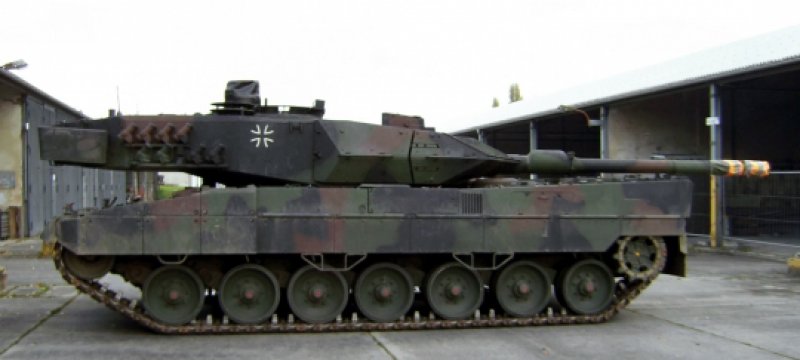
German-made tanks, the Panzer Leopard 2, are to be deployed in Ukraine in a war that is increasingly becoming an open confrontation between the U.S.-led NATO alliance and Russia.
Germany’s Vice Chancellor Robert Habeck has given approval for the move following the announcement on Wednesday by Polish President Andrzej Duda that a “company” of Leopards was being supplied from Poland to Ukraine.
There are a reported 2,000 German-made Leopards in service across 13 European countries. Officially, Berlin has to give its approval for countries to re-export the tank, which is seen as one of the world’s best in its class of main battlefield armored vehicles. That approval was swiftly forthcoming in Habeck’s affirmative response.
German Chancellor Olaf Scholz is now under intense pressure to authorize the additional supply of Leopards directly from Germany to Ukraine. For months, Scholz has been refusing to provide the heavy armor out of concern not to provoke Moscow which would perceive it as a definitive escalation. Figures within the Berlin government, especially Habeck’s Green Party, have been cajoling the chancellor to increase the supply of weapons. It is a foregone conclusion that Scholz will cave in and give the green light, as he has done on several previous occasions concerning prohibitions on other categories of weaponry.
What is abundantly clear is that the United States and its NATO allies are coordinating a larger-scale involvement in the war in Ukraine against Russia. They are marching in lockstep.
Last week, U.S. President Joe Biden announced an agreement with Germany to supply “light tanks” in the form of Bradley and Marder fighting vehicles. That move was coupled with an unprecedented decision by France to send AMX-10 RC light tanks to Ukraine. This week, Britain upped the ante by trumpeting that it was ready to supply Challenger 2 main battle tanks to Ukraine.
Polish President Duda was in the western Ukrainian city of Lviv on Wednesday accompanied by Lithuanian counterpart Gitanas Nauseda and Ukrainian leader Vladimir Zelensky. The day before, on Tuesday, the German Foreign Minister, Annalena Baerbock (another warmongering Green member), made a surprise visit to Ukraine’s eastern city of Kharkiv where she hinted that Leopard tanks would be forthcoming.
Speaking alongside Germany’s top diplomat, the Ukrainian Foreign Minister Dmytro Kuleba said cryptically: “I have no doubt Germany will send Leopard tanks to Ukraine… The German government somewhere deep down understands that the decision will be made and the tanks will be transferred to Ukraine.”
The implied fait accompli echoed the words of Joe Biden who warned just before the eruption of conflict in Ukraine in February last year that the Nord Stream 2 gas pipeline from Russia would never become operational regardless of Berlin’s position.
In Lviv, the Polish leader also spoke about the deployment of Leopard tanks as part of an “international coalition” for sending such weaponry.
“A company of Leopard tanks will be handed over as part of a coalition that is being built because, as you know, a large number of formal requirements, agreements, and so on must be met, but primarily we want this to be an international coalition,” said Duda.
What that means is the German-made tanks are going to be sent to Ukraine as part of a much larger, coordinated NATO effort. There is an air of inevitability that the Leopards will be joined by U.S.-made M1 Abrams as well as British Challengers.
The narrative that is being propounded is that the heavy weapons must be ramped up to Ukraine in order to prevent an alleged Russian offensive from taking the capital Kiev and also to consolidate supposed gains made by Ukrainian military. This narrative is obviously contradictory and belies the Western disinformation peddled by its news media and governments which swivels between imminent defeat or imminent victory for the Kiev regime.
The significant military victory by Russian forces this week in taking control of Soledar, the salt mining town in Donbass, is being cited by NATO figures as evidence that heavier weapons and tanks must be urgently supplied to Ukraine.
What is astounding is the dearth of public debate in the Western states about the relentless supply of weaponry to Ukraine. Hundreds of billions of dollars and euros are given away to a corrupt cabal in Kiev without the slightest oversight. Despite unprecedented economic and social hardships for their general populations, the ruling elites of Western states are pumping more and more weaponry into a conflict that has got nothing to do with alleged “freedom and democracy” in Ukraine.
Western nations are being dragged deeper into a war against Russia with no public knowledge let alone democratic consent about the real reasons for the war. Those reasons are to do with promoting U.S.-led Western imperialist interests, which are profoundly at odds with those of ordinary citizens.
The move to supply main battle tanks by NATO powers is typical of the stealth that has driven the build-up to this war. Typically, the decision has been made in secret and everything else is all about delivering on the decision. Shameless lies about “defending democracy and freedom” are spouted, even though the regime being supported in Kiev by Western taxpayers’ money is one infested with NeoNazis.
Nations are being swept towards an all-out war between the U.S./NATO and Russia by elite rulers in hock to corporate interests and unaccountable deep-state planners.
Despicably and criminally, there is no call among Western governments or media for diplomatic initiatives to end the conflict in Ukraine and to address the deeper geopolitical causes. All elite discourse is about the imperative of “defeating Russia” and “regime change” in Moscow as if it is a doctrinal ordinance.
The conflict in Ukraine was sown in 2014 by the U.S. and NATO-backed coup against democracy and the subsequent weaponizing of a NeoNazi regime. But the seeds for that were borne from a more evil fruit that goes all the way back to the Second World War and Nazi Germany’s failed conquest of the Soviet Union.
The imperial designs of the Third Reich and its expansionist “lebensraum” have been inherited by the U.S.-led NATO axis. The deployment of Leopard tanks – in place of Panzer Tigers – trundling towards Russia is a visceral sign of antecedent and of who stands on the right side of history.
January 14, 2023
Posted by aletho |
Militarism | Germany, NATO, UK, Ukraine |
Leave a comment
Samizdat -13.01.2023
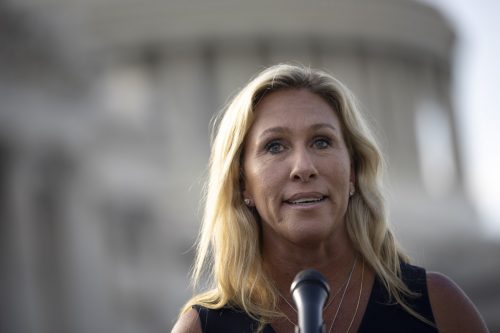
WASHINGTON – US Congresswoman Marjorie Taylor Greene said on Friday that she and other House Republican lawmakers are preparing to move forward with an audit of US aid to Ukraine, an idea first proposed late last year before the House Republican majority took effect.
“We don’t even have committees filled yet but [Congressman Michael McCaul] and I are already preparing to move forward with the audit of Ukraine. No more blank checks to Ukraine,” Greene said via Twitter.
House Republicans are committed to transparency for US taxpayers, Greene added.
In November, Greene and several other House Republicans introduced a resolution to initiate an audit of funds appropriated by Congress to Ukraine. The measure failed during the “lame duck” session of the 117th Congress, but Greene vowed to reintroduce the idea in the new 118th Congress.
House Republicans now hold a majority in the lower chamber, with Speaker Kevin McCarthy having started the party’s mantra of ending “blank checks” from the US to Ukraine. McCarthy also backed the initial Ukraine aid audit proposal.
On Thursday, Pentagon Press Secretary Pat Ryder said that the Defense Department is responsive to oversight by Congress, adding that he looks forward to further bipartisan support for Ukraine.
However, defense budget cuts proposed by the new House Republican majority could force hard questions about funding for foreign operations related to Ukraine and NATO, former Pentagon analyst and retired US Air Force Lt. Col. Karen Kwiatkowski told Sputnik.
Greene has also called for Ukraine to begin negotiations toward a peaceful resolution of the conflict, characterizing it as a “proxy war” between the United States and Russia.
January 13, 2023
Posted by aletho |
Corruption, Militarism | Ukraine, United States |
Leave a comment
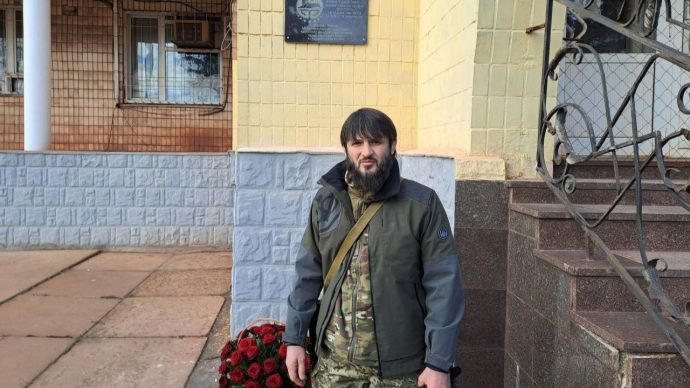
Abdel Hakim al-Shishani, formerly the leader of the foreign ‘Soldiers of the Caucasus’ group in Syria, and now an official member of Ukraine’s international legion (Photo: Atlas News )
As the prospect of a rapprochement between Ankara and Damascus becomes more imminent, the most extreme elements of Syria’s armed opposition have been feeling a sting of betrayal, accelerating a trend that, over the past year, has seen many jihadists relocate to Ukraine.
This is especially true for foreign militants, particularly those from Central Asia or the Caucasus.
On 12 January, Lebanese newspaper Al-Akhbar reported that after several months of disappearance, the well-known Chechen extremist and leader of the ‘Soldiers of the Caucasus’ militia, Abdel Hakim al-Shishani, has reappeared in Ukraine as a member of Kiev’s so-called ‘international legion,’ established in order to attract and recruit foreign fighters against Russia.
According to the report, there has recently been news of an increased number of foreign fighters leaving Syria to make their way over to the “new battlefield,” reinforced by “Turkiye’s lack of need for ‘jihadists’ on Syrian soil” and its “definite interest … to get rid of them.” This comes following recent talks aimed at reconciling Damascus and Ankara, over which the opposition has already expressed a great distaste for.
The report also highlights a leading role played by Turkish intelligence in facilitating this cross-country transfer of extremists, “at least during the first months of the Russian-Ukrainian war.” This could have been Ankara’s way of disposing of militants from Syria and clearing the way for a solution to the Syrian war (provided it was serious about reconciliation at the time, and still is). According to Al-Akhbar, Shishani himself passed through Turkiye on his way to the “new land of jihad,” just as he initially had on his way to join the war in Syria.
Syrian officials have also suggested Washington’s role in facilitating these transfers to Ukraine, as the US has been involved in the relocation of extremists between Syria, Iraq, Libya, and Afghanistan.
On 7 January, the official account of Ukraine’s intelligence agency posted a video on Twitter showing Shishani and a group of fighters engaging in clashes with Russian troops in the Ukrainian city of Bakhmut. The video essentially serves as propaganda designed specifically to attract extremist militants from Syria to Ukraine.
Shishani’s disappearance coincided with the establishment of recruitment centers in northern Syria designed to send fighters off to Ukraine, as Al-Akhbar reported in March last year.
Soon after the start of the Ukrainian war, hundreds of fighters from ISIS and Hayat Tahrir al-Sham (HTS), formerly the Al-Qaeda linked Nusra Front, began making their way to Ukraine to take part in a newer, more direct front against Russia.
On 1 March, before these reports began emerging, Syria’s Deputy Foreign Minister, Bashar al-Jaafari, predicted this.
“We, as a state, have evidence that the US military in Syria is transferring terrorists from one place to another, especially members of ISIS and Jabhat al-Nusra … So, one should not be surprised, and we do not exclude, that tomorrow ISIS terrorists will be sent to Ukraine,” he said.
If the plan for a restoration of ties between Syria and Turkiye is fruitful, and if Ankara chooses to officially abandon Syria’s armed opposition, which the extremists fear has already happened, then it is a likely possibility that the raging battlefield in Ukraine will emerge as a new safe haven for Syria’s jihadist movement.
January 12, 2023
Posted by aletho |
Militarism | ISIS, Syria, Turkiye, Ukraine, United States |
Leave a comment