Moldova to Become Foothold for US Military

By Peter KORZUN | Strategic Culture Foundation | 10.08.2017
The former Soviet republic of Moldova may actually become yet another foothold for the US military in Europe. The US Naval Facilities Engineering Command Europe Africa Southwest Asia (NAVFAC EURAFSWA) plans to construct eight training facilities for military operations in urban terrain at the Bulboaca training base in Moldova. The fact that the US Navy Department is involved makes believe the facility will host American Marines.
A total of $1.6 million has already been invested in the renovation of the Bulboaca base located near Tiraspol, the capital of Transnistria or the Transnistrian Moldovan Republic. The largely Russian-speaking region broke away from Moldova following the collapse of the Soviet Union in 1991.
The secession led to an armed conflict that ended in a ceasefire in July 1992. Russian troops were deployed to the conflict zone in accordance with the «Agreement on the Principles for a Peaceful Settlement of the Armed Conflict in the Transnistrian Region of the Republic of Moldova», signed in 1992 by the presidents of Russia and Moldova in the presence of Transnistria’s leader.
Today, 450 Russian servicemen are carrying out the peacekeeping mission in accordance with the decisions of the 1999 Organization for Security and Co-operation in Europe (OSCE) summit. Besides the peacekeepers, Russia holds units of the 1,200-strong Operative Group of the Russian Forces residing in Transnistria. The Transnistrian authorities strongly oppose Moldova’s plan to withdraw Russian peacekeepers, whom they see as guarantors of peace in the region. They point out that the mission has proved to be highly successful. The 25th anniversary since the start of the peacekeeping operation was marked in July.
Since 2005, talks on Transnistrian peace have been held in the so-called «5+2 format», which includes Moldova, Transnistria, the OSCE, Russia, and Ukraine, plus the European Union and the United States in external observers’ roles.
Moldovan President and Supreme Commander-in-Chief of the Armed Forces Igor Dodon stepped in to suspend the implementation of the plans to build a US military facility in Bulboaca, saying the move was not approved by him. The president said he will examine the issue. Meanwhile, the US stopped financing the project.
Anatol Șalaru, acting leader of the Party of National Unity and ex-Defense Minister, said he is going to sue President Dodon for undermining national security as the US suspended the $12, 7 military aid to modernize Moldova’s military through the Foreign Military Financing (FMF) program.
Moldova closely cooperates with the US and NATO. It joined the NATO Partnership for Peace program in 1994 and the Individual Partnership Action Plan in 2006. A NATO liaison office is to open in Chisinau soon.
Since 2016, Moldova has been included in a US regional program to build «more formidable defense capabilities… against aggressive actions by Russia or from other sources». Areas targeted include «border security and air/maritime domain awareness, as well as building stronger institutional oversight» of defense ministries. Last March, Lt. Gen. Ben Hodges, the commander of US Army Europe, said that military engineers would head to Moldova as the US looks «for ways to do more exercises in the southern flank of NATO».
In February, the US donated 41 High Mobility Multipurpose Wheeled Vehicle (HMMWV) and trucks to the Moldovan Army. The military vehicles would be used during national and international exercises. In 2014, the US donated some other 39 HMMWV and 10 trailers for the military vehicles.
On July 24 — August 5, the base hosted the Dragoon Pioneer 2017, joint drills of US and Moldovan troops. Army Maj. Gen. John L. Gronski, Deputy Commanding General for Army National Guard, US Army. Europe, visited Moldova to watch the training event.
In late July, the Moldovan parliament passed a declaration demanding the withdrawal of Russian troops from the territory of the unrecognized Transnistrian Moldovan Republic. The resolution was supported by deputies from the ruling coalition led by the Democratic Party, as well as representatives of Liberals and Liberal Democrats. The lawmakers from the opposition Socialist Party left the meeting in protest. Moldovan President Igor Dodon condemned the parliament’s decision, calling it a provocation.
Moscow expresses concern over the Moldovan policy in Transnistria. Russian military personnel movements are obstructed by Moldavan authorities. In late July, Russian Deputy Prime Minister Dmitry Rogozin was barred by the Moldovan government from flying to Transnistria in a military plane to celebrate the 25th anniversary of Russia’s deployment of peacekeepers there. Russia retaliated by halting imports of Moldovan farm produce, depriving Europe’s poorest country of a key market for its wine, fruit and vegetables. In early August, Moldovan authorities declared Rogozin persona non grata. Actually, the relations had begun to worsen much earlier after the expulsion of five Russian diplomats in May. President Igor Dodon believes that the government embarked on provocations against Russia in order to complicate relations.
Moscow has accused Moldova of undermining their relations and threatening regional stability. The Russian Foreign Ministry’s statement reads: «High-ranking Russian representatives and peacekeepers but also ordinary citizens of both countries have recently become targets of provocations. It seems that Chisinau politicians are trying to get to the forefront of the hysterical and hopeless campaign that has been launched against the Russian Federation». It adds that dangerous actions may have a serious destabilising influence on the general situation in the region and Europe as a whole. Kremlin spokesman Dmitry Peskov said Moldova’s decision to ban Rogozin was «much worse» than even the new tough US economic sanctions on Russia.
The US military presence is expanding everywhere, including areas in the proximity of Russia’s borders, such as Transnistria. This is a very dangerous development to make US forces and Russian peacekeepers watch each other through gun sights. Moscow and Chisinau may have different views and divisions but it does not make them adversaries.
With Russian peacekeepers gone, the situation would exacerbate and a spark would be enough to restart the hostilities – something that has been prevented since 1992. By hosting US-operated facilities on its territory, Moldova, a neutral state, will become a target for a Russian retaliatory strike. Parliamentary elections are expected to be held in Moldova in November 2018. Hopefully, the voters will make the right choice, electing more responsible people to end incessant provocations and adopt a more reasonable foreign policy. If the hopes come true, Russia and Moldova will become friends and good neighbors again.
Why Siding with Washington on Korea May Be Dangerous
By Finian CUNNINGHAM | Strategic Culture Foundation | 10.08.2017
In backing the latest US-led sanctions against North Korea at the United Nations Security Council, both China and Russia seem to have made a tenuous bet to resolve the crisis on the Asian peninsula. By deferring to Washington’s punitive sanctions, Beijing and Moscow are calculating that the US will relent on their proposals for comprehensive talks and a freeze on American military exercises with its South Korean ally.
China and Russia may regret their course of action. Since the imposition of new sanctions on North Korea last weekend, the tensions in the region have ratcheted up to alarming levels. US President Trump has even been accused of using «unhinged» language by members of Congress after he threatened to unleash «fire and fury» on North Korea «with a power the world has never seen before». Some American lawmakers were comparing Trump’s rhetoric with that of North Korea’s fiery leader Kim Jong Un.
North Korea, predictably, responded to Trump’s outburst by declaring that its leadership was considering a pre-emptive military strike on the US air base on the Pacific island of Guam.
The region is being put on a hair-trigger for war – a war that would certainly involve the use of nuclear weapons. The American side has come to the conclusion that North Korea has finally mastered the technology to fit a nuclear warhead on its already proven intercontinental ballistic missile (ICBM) capability, reported the Washington Post this week. That means that if a military confrontation breaks out, the US will be tempted to use overwhelming force.
Trump’s words about deploying «power the likes of which the world has never seen before» are especially icy given the 72nd anniversary this week of the US dropping the atomic bombs on Hiroshima and Nagasaki in 1945.
When the UN Security Council convened last weekend it passed Resolution 2371 unanimously with 15 votes to 0. It was a surprise turnaround by China and Russia. Last month, following North Korea’s ICBM test on July 4, both Beijing and Moscow rejected the US call for more sanctions on Pyongyang. They said then that sanctions policy doesn’t work and instead called for all-party dialogue to resolve the long-running Korean crisis. China and Russia also made the eminently reasonable call for the US and its South Korean ally to desist from their frequent joint war maneuvers, which the Communist North perceives as a threat of invasion.
Over the past few weeks, the US and China reportedly engaged in intense negotiations over the Korean issue. Trump accused his Chinese counterpart President Xi Jinping of not doing enough to rein in allied North Korea. The US also threatened to take punitive action against China over wider issues of trade and intellectual property rights. Before the weekend vote at the UNSC, Trump inexplicably cancelled a speech in which he was expected to lay out tough American actions against China over commercial disputes. That suggests some kind of bargain was done between Washington and Beijing – and that China voting for further sanctions on North Korea was part of it.
Following the unanimous vote at the UNSC, Trump and his ambassador Nikki Haley reportedly could hardly contain their glee over «the united response» against «rogue state North Korea».
What Russia gets out of it is not clear. Perhaps Russia felt that to veto the sanctions against North Korea would have incurred international wrath. But it seems curious that Moscow should go along with sanctions at the very same time that Washington is provocatively imposing similar measures against it too.
What appears to be in the calculus by China and Russia is that by giving a sop to the American desire to get tough on North Korea, they are anticipating that the US will agree to calls for multi-party talks and a freeze on military activities on the Korean Peninsula.
Both the Chinese and Russian ambassadors to the UN coupled the latest resolution for sanctions against North Korea with the reboot of the six-party negotiations involving the two Koreas, China, Russia, Japan and the US. Those talks were abandoned in 2009 when the US and North Korea broke off in recriminations.
Last week, before the UN vote, US Secretary of State Rex Tillerson made a significant speech in which he said that the US was not seeking regime change in Pyongyang, nor had any intention of going to war on North Korea.
Following the UN sanctions, Tillerson sounded a conciliatory note while attending the summit of the Association of South East Asian Nations in Manila. The summit was also attended by Chinese and Russian counterparts Wang Yi and Sergei Lavrov. Tillerson said the US was open to dialogue with North Korea if the latter stopped its missile tests. That appeared to be a significant concession from the US side towards resolving the Korean problem.
However, this is where the calculation comes unstuck. The backing of more sanctions against North Korea by China and Russia may have softened the stance of the US somewhat, but at what price?
From the North Korean side, the increased sanctions are tantamount to an act of war. The new measures are aimed at banning the country’s top export earning commodities, including coal, minerals and seafood. The new sanctions will reportedly slash North Korea’s annual export revenue by one-third, down to $2 billion a year. Not surprisingly, Pyongyang responded furiously, saying the sanctions were an attack on its sovereignty.
Given Trump’s propensity for Twitter diplomacy, the spiral of rhetoric could lead to disastrous misunderstanding, as this week is tending to show.
In retrospect, it seems astonishing that Beijing and Moscow made the bet they did over new sanctions. The damage cannot be undone. But what China and Russia must do immediately is to insist that all sides proceed to multilateral talks and the standing down of military forces. The onus is primarily on the US to stand down its military power in the region. It needs to cancel its provocative maneuvers with its ally in Seoul – due again later this month – and it needs to halt the ongoing installation of the THAAD missile system on South Korean territory.
It is misplaced for China and Russia to pander to the US over sanctions and to expect something by way of concessions in return. The arrogant Americans don’t know the meaning of concessions, they only perceive weakness and will move to capitalize on weakness.
By indulging American demands for more sanctions on North Korea, the danger comes from emboldening Washington’s hubris and its own sense of impunity. One would think that Russia, above all, should understand that dynamic given its own experience over the US confiscating diplomatic properties and slapping on ever-more sanctions.
What Moscow and Beijing should do as a matter of urgency is to never mind new sanctions on North Korea; they should demand that Washington removes its military threat against North Korea – a threat that has been looming since the end of the Korean War in 1953. Then all sides must open talks without preconditions for a comprehensive peace settlement on the peninsula.
Pandering to a bully is never a good idea.
Democratic Demagogues and ‘The Better Deal’
By James Petras • Unz Review • August 9, 2017
Introduction
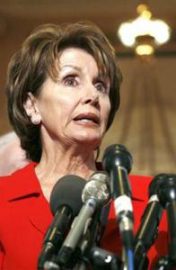 After 6 months of blaming Russia for the Democratic Party’s Presidential election debacle, the Party stalwarts have finally realized that the American electorate is not listening.
Democratic Party investigators in Washington still hold hearings and the mass media are still scandal mongering, but the public is not rallying to their cause.
Trump’s demagogy may have lost its appeal, while the Republican Administration purges and internecine squabbles have been met with a huge collective yawn by the public. The Democratic Party proves itself to be a weird sideshow for the vast majority of American voters… and for good reason.
Their perpetual (corrupt and senile) leaders are unwavering supporters of every indignity and economic hardship that the majority of worker families have suffered for the last three decades.
Democratic Party Senator Chuck ‘the Schmuck’ Schumer and Congresswomen Nancy ‘The Loser’ Pelosi have spent a collective sixty-five years in Congress. Their joint tenure marks a period of long decline in working class living standards and even worker life expectancy, while they have made possible the greatest concentration of wealth in the hands of the 1% plutocrats.
The Democratic Party’s ‘Better Deal’ – But for Whom?
In July 2017, nearly a dozen of the top Democratic Party honchos and Congress people met to spin out a new electoral manifesto for American workers which they are marketing as ‘A Better Deal’.
They issued prophetic press releases claiming to have received (presumably from the Holy Mountain) ‘a new vision of the party’. They claimed ‘the vision’ was also the result of their humble ‘listening to the American people’. They confessed that ‘the American people deserve better’. But their sweetly harmonized collective ‘Mea Culpa’ omitted any mention of the four previous Democratic Party Presidential terms, under Bill ‘The Shill’ Clinton and Barak ‘The Con” Obama, which ushered in this deplorable state of affairs for the American working class.
The Democratic Party’s ‘new vision’ wallows in the muddy demagogic footsteps of ‘The Donald’ Trump: Their new ‘product’ is just ‘demagogy lite’.
Tossing electoral fodder to the multitude, they have trotted out three ‘new promises’: 1. cheaper drug prices, 2. the regulation of ‘monopolies’ and 3. more funds to retrain workers. Their new marketing campaign does not include even a tiny whisper about a single payer national health system (favored by the majority of the public and by tens of thousands of doctors and nurses). Their cheap shots on ‘drug prices’ does not mention how Obama and Clinton facilitated the Big Pharma’s pillage of the public for decades. They mention ‘monopolies’ but made no attack on Wall Street billionaires. Their ‘job re-training’ promises have no provision for any national public employment program. The ‘Better Dealers’ with their ‘New Vision’ have banished all mention of ‘trade unions’.
The minimalist program of these old hack Democrats, re-packaged as the ‘Better Deal’, will not attract American workers for several clear reasons:
Reason #1: The Democrats Have a Rotten Record
For the majority of the American electorate there is no reason to believe or trust the Democratic Party leadership in the Senate. The leading Senate Democrat is New York’s ‘Chuck, the Schmuck’ Schumer, best known for his three decade residence in the pockets of Wall Street, his open loyalty to the dictates of Tel Aviv and his cozy relationship with the Brighton Beach mafia.
Schumer promoted the ‘trillion-dollar tax-payer bailout’ of Wall Street while foreclosing on 2 million household mortgages. He consistently defended AIPAC officials caught spying for Israel and has led the Zionist attack against the UN whenever questions of Israel’s war crimes and ethnic cleansing of the Palestinian people arise. He led the Senatorial Pack of wolves into destroying Iraq in 2003 and Libya in 2011. He has now turned his tribal ire against his ‘fellow’ American citizens, leading the Senate campaign to make criticism of Israel by boycotting Israeli products punishable by a fine of $1 million dollars and 20 years in Federal Prison. Huge numbers of law-abiding Americans who support the BDS movement for justice and international law will now be targeted with felony convictions and loss of their civil rights by the Israel Anti-Boycott Law (S720). That Senator Schumer would condemn thousands of his own compatriots to virtual life imprisonment for the ‘crime’ of exercising their First Amendment Right of Free Speech speaks volumes about his respect for the Constitution. This thug has brow-beaten scores of his fellow representatives in Washington to support this tyrannical legislation by threatening them with the career-ending accusation of ‘anti-Semitism’ if they waver in their fealty to the war criminals in Israel.
Throughout his political career, Senator Schumer consistently supported Federal Reserve free marketer Alan Greenspan, whose wholesale deregulation of the banks and finance sector led directly to the financial crash of 2008.
Geographically closer to Senator Chuck than Tel Aviv are the factory towns, green hills and valleys of Upstate New York where his forgotten constituents have suffered from decades of de-industrialization, 30% de-population and a raging socio-economic crisis of which the opioid epidemic is only part. Meanwhile, the warmonger Schumer prefers to rant for war against North Korea demanding Trump impose trade sanctions on China. If Beijing finally decides to tell Netanyahu how ‘the Shumck’s’ sanction bombast would harm Israel’s lucrative trade with China, a gentle whisper from Tel Aviv would silence Schumer’s bluster.
Peering over his bifocals, ‘Commandante Schumer’ now claims to lead the “The People’s Resistance against Trump”. While his party activists vent against the ‘Trump and the deplorables’ over the internet, Chuck will be attending the Bar Mitzvahs of Brighten Beach mobsters at the Waldorf Astoria and soirees with his Wall Street billionaire backers, consulting over strategy with his real constituents. Under Schumer, New York City has become the most socially and economically polarized and unequal city in the US.
Most voters know that Schumer’s ‘reincarnation’ as a ‘resistance politico’ is laughable and that the Senator’s re-election rests comfortably with the multi-million dollar contributions from his brothers on Wall Street.
Across the nation, most working class voters have dismissed the antics of the Democratic Party’s ‘Maestro of Demagogy’, Bernie Sanders – who spoke pious piffle to the workers while running errands for the ‘Queen of Chaos’, Hilary Clinton, would-be President and life-long Wall Street warmonger.
The citizens rightly reject the Presidential and Senatorial demagogues, Trump and ‘The Schmuck’. According to a recent Bloomberg Poll, 58% of Americans disapprove of the Democrats, a few points lower than the Republicans level of disapproval. An ABC /Washington Post poll revealed that only 37% of Americans believe that the Democratic Party stands for something!
Nine months after the Clinton debacle, the Democrats remain at or below their dismal voter-approval. Trump has skillfully managed to sink a few points below the Democrats.
In other words, nearly 60% of the voters disapprove of leaders from both parties.
The ‘anti-Trump circus and road show’ increasingly takes place to an empty audience. Their “fight” for ‘transgender rights’ attracts the 1% while studiously ignoring the basic life supporting interests of the seventy million Americans (including both transgendered and straight) who work at lousy part-time contingent and minimum wage jobs and desperately need full-time employment at living wages.
In multiple national polls, one hundred and fifty million Americans have registered their support for a national, single payer health system to insure fairness and access to competent medical care. Instead the ‘newly visioned’ Democrats are merely offering cheaper opioids for their social pain. The people want billions of dollars in public investment for deteriorating schools and infrastructures, not bi-partisan (sic) expansion in military spending for seven ongoing wars and new wars in the making.
Warmongers are not Vote-getters
The high level of voter disapproval against the Democrats results from ultra-militarism, as well as their demands for provocative economic sanctions against Russia, Iran, North Korea, Venezuela, Palestine and China – exceeding Trump and his warmongers.
The voters know that the Democrats ‘new vision’ is a thinly veiled recipe for costly new wars and economic sanctions that will spill their children’s blood, cripple their families futures and reduce job opportunities everywhere for everyone.
New Candidates, Grass-roots Movements and the Democratic Party
The Democratic Party’s fiasco and their election losses, as well as the growing realization that the socio-economic demands of the American people are never going to be addressed by the ‘old-new visionaries’, have led to a new ‘crop’ of candidates for the 2018 elections.
Over 200 Democratic Party candidates have registered to run in 2018 elections, hoping that ‘new faces’ and a new style of demagogy will bring back the disenchanted voters. These much-ballyhooed ‘upstarts’ toss out empty promises to the victims of the dying economy, industrial towns in ruins, villages with social and health crises, big cities with skyrocketing rents and stagnant wages. They offer nothing that can bring workers back to a Democratic Party still tightly controlled by the Tel Aviv-Wall Street shilling, war-mongering Pelosis and Schumers.
The Democratic Party ‘insurgents’ try to imitate the ‘Bernie’ Sanders double-speak, attacking the billionaires while shilling for the oligarchs’ stable of loyal Democratic Party hacks. The ‘new vision’ Democrats have motes in both eyes and a long road to regaining the votes of the disillusioned ‘deplorables’!
Media-sponsored trips to Rust Belt States to bad-mouth ‘The Donald’ and his anti-health agenda provides no alternative to the decades of Democratic Party betrayal on health care, especially during the last Democrat Presidents whose policies facilitated the rise of Big Pharma’s prescription opioid epidemic which has killed over 500,000 overworked and underpaid workers since 1999. Their continued refusal to hold these policies and their authors to account does not reflect any vision of a viable solution to the crisis.
Conclusion
In place of the discredited bipartisan electoral system, numerous grass roots groups are emerging: Some are operating parallel to the flurry of new Demo-demagogues while many are working against it.
Many community-based groups have taken radical positions, which demand vast new job programs and public finance for a national, accountable, high quality health care system.
They demand prosecution and long prison sentences for Wall Street swindlers, money launderers, tax evaders and corporate drug pushers.
They demand a 90% tax rate ‘adjustment’ on the trillion dollar corporations- Apple, Facebook, Amazon, Twitter, Google etc.
The grass roots movements are more than just an ‘anti-Trump’ bandwagon (secretly driven by the old pols of the Democratic Party): They are against both parties and all demagogues. They are especially opposed to any phony ‘Better Deals’ coming out of the backsides of the billionaire-backed ‘shilling and dealing’ Democrats!
Philippines DENIES reports that US may intervene in Marawi against ISIS
By Adam Garrie | The Duran | August 8, 2017
Defence officials in Philippines deny reports from the United States that American military contingents are examining the possibility of a military intervention in the country due to the war with ISIS aligned terrorists and other insurgents on the southern Philippine island of Mindanao and specifically the besieged city of Marawi.
US based NBC news earlier reported that Pentagon spokesman Capt. Jeff Davis stated that the US will shortly make an announcement on whether US bombers will commence military strikes in Philippines.
This recent development would imply that the US is considering and indeed may be planning a strike on targets in Philippines that may be illegal according to international law.
Sputnik reports,
“According to Philippine Star media outlet, the country’s Defense Secretary Delfin Lorenzana and Armed Forces Chief of Staff Eduardo Ano said that US Air Force engagement in military operations in the Philippines was impossible, and that Washington’s direct involvement in the Marawi siege was beyond discussion.
The military officials stressed that the 1951 US-Philippines Mutual Defense Treaty entails direct military support only in the case of a military invasion by a third party country. However, they also expressed their gratitude toward the United States for backing the Philippines in their fight against terrorism.
In late July, the United States supplied the Philippines with two new Cessna 208B Grand Caravan intelligence, surveillance and reconnaissance (ISR) aircraft, 1,040 rocket motors and 992 rockets to fight against terror. In addition, Manila is expected to receive 250 rocket-propelled grenade launchers from Washington.
The so-called Marawi siege started on May 23, when the Philippine security forces stormed the city seeking to prevent two IS-affiliated groups from meeting, which sparked up a full-scale armed conflict. On May 25, Philippine President Rodrigo Duterte declared martial law on the southern island of Mindanao, which is often subjected to attacks by IS-linked terror groups. So far, over 500 militants and 122 government forces servicemen have been killed in the Marawi battle”.
Existing treaties between Manila and Washington explicitly prohibit unauthorised US military action under the present circumstances. If the US does conduct illegal strikes in Philippines, this will be the second time in recent months that the US has acted unilaterally in its former colony.
In June of 2017, it was reported that Philippines had requested assistance from the United States in its battle against terrorists, but this claim was later totally refuted by President Rodgiro Duterte.
Duterte’s relationship with America has been a tenuous one ever since his election in July of 2016. Duterte has embarked an independent foreign policy that seeks to build historically good relations with both China and Russia. Duterte also has engaged cooperatively with China over the disputes in the South China Sea, a policy that is at odds with the provocative US policy of molesting Chinese water rights, a policy that Washington misleadingly calls ‘freedom of navigation’.
Meanwhile, Duterte has refused to travel to the United States in response to members of the US Congress questioning his war on drugs which remains popular among the vast majority of Filipinos.
Many in the US are eager to retain a foothold in Philippines at a time when Philippine public opinion is strongly with the independence minded President Duterte.
Over 100 Trucks With US Supplies Cross Into Kurdish-Controlled Syrian Territory
Sputnik – 08.08.2017
The United States delivered 112 trucks with supplies, including military equipment, to the Kurdish-controlled areas of northeastern Syria, Turkish media reported Tuesday.
The Anadolu news agency reported that the media outlet’s correspondent had seen the convoy crossing into the territory of the Syrian Hasakah province on Monday night.
The news outlet added that the convoy included trucks, fuel tankers and low-loaders transporting Humvee vehicles and aimed to support the Syrian Kurdish Democratic Union Party (PYD), which Ankara considers to be a branch of the Kurdistan Workers’ Party (PKK), outlawed in Turkey.
This is not the first batch of US aid to the Kurdish groups, as over 900 trucks were already sent to the Kurdish-held areas of Syria on Monday, the news agency added.
Within the framework of the Syrian civil war, the Kurdish groups have been controlling vast parts of Syria in such provinces as Hasakah and Raqqa, after driving jihadists from those areas.
On May 9, US President Donald Trump approved a plan to arm Kurdish groups fighting the Daesh (outlawed in Russia). The Turkish government has protested the move as Ankara believes the Kurdish fighters can use the weapons against Turkey.
The Unsung Summit of Putin and Trump
From Hiroshima To Hamburg
By John V. Walsh | Dissident Voice | August 8, 2017
This week marks the 72nd anniversary of the criminal US bombing of Hiroshima and Nagasaki. And as is the case each year, there is much discussion and lamenting over this atrocity, as there well should be. For the bombing of Hiroshima and Nagasaki was not necessary for victory; Japan had already sued for peace. It was the opening salvo, a brutal one, in the first Cold War in which the world was nearly incinerated during the Cuban missile crisis.
This week is also the one month anniversary of the first in-person meeting of Presidents Trump and Putin at Hamburg on July 7 in the shadow of the G20 meetings. This comes at a time when we find ourselves years into a New Cold War. Given the tensions between Russia and the US, the leading nuclear powers, one would think that there would be rejoicing over the prospect of relieving the tensions between the nuclear superpowers. For that was the agenda of the Trump-Putin summit, as such meetings were called during the first Cold War. Unfortunately, such rejoicing was not to be heard, quite the opposite – with a few rare exceptions
This is lamentable, to say the least, because as tensions grow between the superpowers, the chance for nuclear war increases. During his lengthy interviews with Vladimir Putin, Oliver Stone showed him the movie “Dr. Strangelove” which Putin had never before seen. Putin commented that the movie captured, among other things, a technical truth with its depiction of the Doomsday Machine. That is, said Putin, nuclear weapons grow increasingly harder to control with every passing day. Given this, the failure to applaud the Trump-Putin on the part of those who were full of praise for the UN vote on denuclearization made me wonder whether there was any thought behind their chatter. Hatred of Trump and Putin seemed to blot out a rational concern for human survival. Are we living in a mad house? Did we not learn our lesson when we narrowly escaped Armageddon in Cold War 1?
In the face of such madness, let us take the time to offer full-throated, unmistakable praise for the Trump-Putin summit meeting. The parley was a long time coming because of the relentless attack on Trump over Russiagate, a Big Lie blared out relentlessly these many months and only now collapsing for want of so much as a smidgen of evidence. Although Trump had promised to hold this summit with Putin even before he was inaugurated, he could not do so because of the intense Russia-gate related pressure against it – from the Elite of both Parties but with the Democrats far in the lead. But Trump pushed ahead with the meeting anyway; as we learned during the 2016 campaign, this is not a guy who gives up despite the odds.
To begin, the summit was undeniably a success with solid achievements and follow-ups. Stephen F. Cohen, Professor Emeritus of Russian History at Princeton and NYU, and one of the few to offer praise for the meeting, summed up the meeting’s four main accomplishments thus:
… formalizing and symbolizing the new détente partnership* between the American and Russian presidents; agreement to cooperate in Syria against terrorist forces there, not only in the limited ways announced, but in more expansive ways, which meant agreeing with Moscow that Syrian President Assad must remain at least until ISIS is fully defeated; creating a bilateral US-Russian channel for negotiating a settlement of the Ukrainian civil and proxy war, thereby bypassing, or reducing, the role played thus far by Germany and France, which has largely failed; and agreeing to discuss ways to limit the dangers of cyber technology in international affairs. Though Trump was forced to talk back this agenda item, no doubt it remains on the US-Russian agenda, a subject of negotiation, as it should be, considering the ways in which cyber attacks could undermine nuclear security on both sides.
To these I would add the cease-fire in southwest Syria which was arranged in the run-up to the meeting and announced there. This cease-fire is still holding, and Russian FM Lavrov has announced that more ceasefire zones are in the works in Syria. Any time that the guns fall silent, the killing stops and people can return to their homes, there should be jubilation – especially in the outlets devoted to peace. Sadly that has been far from the case in the progressive press or the MSM.
The cooperation on Syria continued with a thunderbolt in the form of a Trumpian tweet on Monday night, July 24:
“The Amazon Washington Post fabricated the facts on my ending massive, dangerous, and wasteful payments to Syrian rebels fighting Assad…..”
A superb assessment of this tweet marking Trump’s order to end the CIA’s regime change op and its de facto support for jihadis in Syria comes from David Stockman here:
Occasionally one of Trump’s tweets slices through Imperial Washington’s sanctimonious cant. Indeed, Monday evening’s 140 characters cut right to the bone. Needless to say, we are referencing not the dig at the empire of Bezos, but the characterization of Washington’s anti-Assad policy as “massive, dangerous and wasteful”.
No stouter blow to the neocon/Deep State “regime change” folly has ever been issued by an elected public official. Yet there it is – the self-composed words of the man in the Oval Office.
Stockman follows with a brief history of the U.S.’s covert war on Syria and Syria’s historical mistreatment at the hands of earlier Western Empires. (It is to the credit of Antiwar.com for publishing Stockman’s piece – in contrast to the far more widely published feverish denunciation by John McCain: “If these reports are true, the administration is playing right into the hands of Vladimir Putin.” Thus, is any initiative for peace greeted from the two wings of the War Party.)
On top of this there is Secretary Tillerson’s statement that cooperation on Syria is continuing and developing, mirroring the statement of FM Lavrov.
I fully expect that this evaluation will bring a storm of condemnation. Some will accuse the author of parroting the “Kremlin line,” or being a Putin puppet, dead giveaways for the old Cold War mindset. But I would offer one word of advice to such naysayers. Support the good in what Trump does and oppose the bad. Very simple. And certainly, the good includes New Détente with Russia since it may well mean the survival of humanity. We might not get another shot at it. No other major national political figure, other than Rand Paul, is calling for it, which means we are in very deep trouble, perhaps mortal trouble.
* The symbolism of the two Presidents meeting, shaking hands and “getting along,” to use a phrase often invoked by Trump in the 2016 campaign, should not be underestimated. It can have a great effect on public opinion and show people that to feel friendly toward Russia and Putin is legit. After all the President feels that way. jw
John V. Walsh can be reached at john.endwar@gmail.com.
Dozens Reported Killed in US Airstrike on Iraqi Paramilitary Anti-Terror Force
Sputnik – August 8, 2017
The US air force has carried out an airstrike on an Iraqi militia unit called Seyid Suheda, which belongs to Iraq’s Popular Mobilization Units (PMU). The airstrike took place in Anbar province, close to Iraq’s border with Syria, Rudaw reports.
According to reports, 35 fighters were killed and 25 were injured in the airstrike on Monday night. PMU commanders are reportedly among the dead.
PMU commander Ali Hasim Huseyni confirmed the incident in conversation with Sputnik Turkiye.
“US planes bombed fighters of the Seyid Suheda unit. The wounded have been taken to various hospitals in Iraq for treatment. Some of them are in a serious condition. The region in which they were attacked is located on the Iraqi-Syrian border, 20 km from the city of El Baac. We strongly condemn this deliberate attack.”
The recent airstrike is not the first time that US forces have bombed pro-government fighters in Iraq. In October, an airstrike conducted by the US-led coalition in Iraq “most likely” killed around 20 pro-government Sunni tribal fighters south of Mosul, a defense official told AFP.
Iraq’s Popular Mobilization Units, or Hashd al Sha’ abi, comprise approximately 100,000 fighters who are mostly Shia. They have played a vital role in anti-terrorist operations in Mosul and elsewhere.
In November 2016, the Iraqi parliament gave the PMU the power of law enforcement agencies, which basically provides the militia with the same powers as the government army and police.
Last week, the PMU assisted the Iraqi army in launching an operation to retake the northwestern city of Tal Afar. Mostly populated by Sunni Turkmen, the city is the Daesh terrorist group’s last remaining stronghold in the country.
The US has also bombed militia fighting Daesh in neighboring Syria. On June 8, the US-led coalition bombed pro-Assad militia near al-Tanf in the area of a deconfliction zone following an alleged attack by a combat drone resulting in no coalition forces’ casualties. It was the third attack by the coalition on Damascus’ allies in the area. The coalition targeted a drone and trucks with weapons.
US Push for Scrapping Nuclear Forces Treaty With Russia ‘Menace for Europe’
Sputnik – August 6, 2107
US media reported that Congress is preparing several bills, the provisions of which would require the Pentagon to violate the 1987 Intermediate-Range Nuclear Forces (INF) Treaty between the United States and Russia.
According to Politico, the Senate will soon debate a provision in its version of the defense policy bill, which would set aside $65 million and also require the military to reintroduce a missile with a range of between 500 and 5,500 kilometers.
The bill in the House of Representatives will point out that while the new missiles would be conventional, they, along with nuclear missiles, would still be considered banned under the nuclear disarmament agreement.
“Encouraged by the signing of the new anti-Russian sanctions, American lawmakers are going straight ahead. It was earlier reported that the State Department and the Pentagon are planning to supply Kiev with lethal arms. But the new initiative [concerning the INF Treaty] is going to have record-breaking negative consequences,” political commentator and analyst Ilya Kharlamov wrote in an op-ed for RIA Novosti.
The INF Treaty is an unlimited duration agreement signed between the US and the Soviet Union. It was signed by US President Ronald Raegan and Soviet leader Mikhail Gorbachev in December 1987 and came into effect on June 1, 1988.
The treaty prohibits the production, tests and deployment of ground-based ballistic and cruise missiles, with ranges of 500-1,000 km (short-range) and 1,000-5,000 (medium-range). It also eliminated all launchers and ground-based missiles with a range of 500-5,500 km. By summer 1991, the USSR eliminated 1,846 missiles systems while the US – 846 systems. The treaty was implemented in 1991 with inspections carrying on until 2001.
According to Kharlamov, the agreement marked the first real disarmament step by the two powers and contributed a lot to global stability and security. But now the US establishment wants to jeopardize this milestone achievement for the sake of immediate political gains and in the interests of the American defense industry.
“If this is aimed at making America great again then it looks menacing for the whole world, especially for Washington’s allies in Europe. The White House has not endorsed the initiative so far. But Congress will push Trump to take new measures to ‘deter’ Russia. If he refuses to do so this may be interpreted as evidence of Trump’s alleged ties to the Russian government,” Kharlamov suggested.
Meanwhile, commenting on the report, the Kremlin said that Russia remains committed to the INF Treaty and expects the same from its partner.
“Russia remains committed to its obligations under this treaty, despite some claims which were voiced before. Of course, we expect that our partners under this agreement will adhere to their international obligations in this context,” Kremlin Spokesperson Dmitry Peskov told journalist, adding that the president of the two countries did not discuss the issue.
The US announced an initiative on revising the INF Treaty for the first time in February in order to stop alleged Russian violations of the agreement. The Intermediate-Range Forces Treaty Preservation Act was proposed by Republican Senators Tom Cotton, Ron Johnson and Marco Rubio and supported by Republican members of the House of Representatives, Ted Poe and Mike Rogers, who introduced the bill to the lower chamber.
In turn, Russia has repeatedly said that Moscow remains committed to the deal and that Moscow has never violated the agreement.
Moreover, in February, Trump expressed doubt that the key strategic deals between the US and Russia, including the INF Treaty and the New Strategic Arms Reduction Treaty (START), are profitable for Washington.
In an interview with Reuters, Trump said, “I am the first one that would like to see everybody – nobody have nukes, but we’re going to fall behind any country even if it’s friendly country, we’re never going to fall behind on nuclear power.”
According to Politico, advocates of the new bill believe that the move would be a response to Russia’s alleged violations of the bilateral accord. At the same time, opponents say that it could increase the chance of a nuclear confrontation at a time when relations between Washington and Moscow are at their lowest level since the end of the Cold War.
Plekhanov suggested that despite the opposition to the initiative in Washington the majority of US lawmakers advocate for a more hardline approach on Russia.
In addition, the US eyes developing a next-generation intercontinental ballistic missile (ICBM), which costs an estimated $85 billion.
“Of course, this would be a honeypot for American defense companies. The current geopolitical situation also favors this idea. The defense industry would have lucrative contracts while Washington policymakers would have the chance to drag Russia into a new arms race,” Kharlamov concluded.
READ ALSO:
Killing INF Treaty to Unleash New Nuclear Arms Race – Ex-Pentagon Official
Trump Would Engage With Russia on Arms Control, Maintain Nuclear Superiority – Adviser
Russia, China call for freeze on both N. Korea launches & South’s drills with US – Lavrov
RT | August 6, 2017
Moscow and Beijing are against any missile launches carried out by North Korea and are at the same time calling on the US to halt military drills in the region, Russian Foreign Minister Sergey Lavrov says.
The statement comes following Lavrov’s meeting with his Chinese counterpart, Wang Yi, in the Philippines capital, Manila on Sunday. The ministers discussed the situation in the Korean Peninsula following the adoption of new sanctions on North Korea by the UN Security Council.
Lavrov said Russia and China have already suggested a roadmap to resolve the Korean crisis.
“Our joint initiative includes support of Russia’s proposal to create a roadmap for gradual restoration of trust and provide conditions for the resumption of the Six-Party talks. We have agreed to promote this concept in practice, including in the UN,” Lavrov said after the meeting with US Secretary of State Rex Tillerson in Manila.
Previously, Wang called the new restrictive measures against Pyongyang “a necessary response” aimed at “blocking North Korea’s nuclear missile development,” as cited by the South China Morning Post. He added that sanctions are not the “ultimate goal” and called for the resumption the so-called six party talks, as the situation on the Korean Peninsula “has come to a very critical juncture.”
“Sanctions are needed but are not the ultimate goal. The purpose is to pull the peninsula nuclear issue back to the negotiating table, and seek a final solution to realize the peninsula’s denuclearization and long-term stability,” Wang said.
Lavrov reiterated the joint Russian-Chinese initiative for “double freezing” which had previously been rejected by the US. The initiative, put forward by the Russian and Chinese foreign ministers on July 4, would freeze “any missile launches and any nuclear tests in North Korea,” as well as “large-scale military exercises by the United States and South Korea,” Lavrov said.
The Russian foreign minister also said that the new resolution seeks to bring the North Korean leadership to the negotiating table – the six-party talks – while the restrictive measures are designed to make Pyongyang curb its missile and nuclear programs in accordance with UN resolutions.
On Saturday night, the UN Security Council unanimously agreed to impose more restrictive measures on Pyongyang, banning exports of coal, iron, lead, and seafood. The move came in response to North Korea’s latest missile launches in July, which it, as well as South Korea and the US, claimed were intercontinental ballistic missile (ICBM) tests.
Featured Video

“Historic Russia”: The Land Putin Will Not Give Back
or go to
Aletho News Archives – Video-Images
From the Archive
How Ukraine Tortured and Slaughtered Donbass
By Kit Klarenberg | Al Mayadeen | July 11, 2024
Almost immediately after the proxy war erupted, ISIS-tier footage of the torture and murder of Russians in Ukrainian custody emerged.
On July 6th, the New York Times published an astonishing investigation: In Ukraine, Killings of Surrendering Russians Divide an American-Led Unit. The article documents in grim detail how Chosen Company, an international volunteer battalion for Kiev, routinely executes Russian prisoners of war. It is the very first mainstream admission that this practice – a brazen breach of the Geneva Conventions, and a grave war crime – is widespread among Ukraine’s fighters, both foreign and homegrown. … continue
Blog Roll
 Aletho News
- Burnham tackles Britain’s poverty with aggression in Yemen
- Peace in Ukraine: the easy way – or the hard way
- Trump & the Rrrrussians
- US taxpayer money laundered back through Ukraine – Musk
- Before COVID, an NIH lab chief proposed making a SARS-like bat virus more infectious
- Gates, Bourla on Trial in Netherlands Accused of ‘Great Reset’ Scheme at Vaccine Injury Hearing
- BRITAIN’S WARNING: PREPARE FOR WAR
- “Historic Russia”: The Land Putin Will Not Give Back
- How the Cambridge Analytica scandal still haunts Mark Zuckerberg
- The Ongoing Cancellation Campaign Against a Dissenting Academic in Norway
- If Americans Knew
- DAILY UPDATE: Latest essential news on Palestine, Israel, & region
- Damning report shows the media must confront its failures on Gaza
- BBC senior broadcaster speaks out on Gaza coverage
- Netanyahu vows vast West Bank invasion in response to 20-minute skirmish that left 2 Israeli soldiers and 2 Palestinian fighters dead
- Tied up and tortured: Israel using US-made electroshock weapons on Palestinian detainees
- The outsourced risk: how newsrooms rely on Gaza’s freelancers without protecting them
- Gaza bakeries forced to shut as Israel blocks flour shipments
- Gaza’s breast cancer patients face a deadly wait for treatment amid Israel’s genocide
- DAILY UPDATE: Latest essential news on Palestine, Israel, & region
- The Israel Lobby’s Changing Fortunes
- No Tricks Zone
- Two New Studies Find Thwaites Glacier Melt Cannot Be Driven By Human Activity Or A Warming Ocean
- E-Cars Reduce CO2 Emissions By Only 41% Compared To Internal Combustion Engine Vehicles
- Predictions Made By Renowned Climate Professor Over Past Decades Have Been Proven To Be Poor
- New Study Suggests Large Regions Of The Pacific Ocean Have Been Cooling For The Last 80 Years
- Germany’s Green Energy Debacle: High Energy Costs Force Kahla Porzellan to Close After 182 Years!
- New Study: 50 Years Of The Most Aggressive ‘Net Zero’ Policies Can Only Affect The Global Climate By 0.03°C
- US September “Heat” Was No Record…Many Records Set Decades Ago
- Latest European Green Energy Debacle; Portugal’s Largest Flagship Solar Park Insolvent!
- Green Energy Debacle: German Expert Professor Fritz Vahrenholt Warns Of Severe Economic And Social Consequences
- Two More Paleo Reconstructions Affirm Meters-Higher Sea Levels Across Ireland, Brazil 7000-6000 Years Ago

