BMD Program in Europe and Asia Undermines US and Allies’ Security
By Peter KORZUN | Strategic Culture Foundation | 30.06.2017
The US is pursuing an ambitious space policy to include vast missile defense plans. True, the existing systems may not be the most effective means to counter the ballistic missiles, but the United States is working hard to achieve technological breakthroughs to make missile defenses more reliable. Moreover, a US conventional Prompt Global Strike could hypothetically provide the potential capability for a disarming first strike against Russia to downgrade its retaliatory strike potential successfully neutralized by enhanced ballistic missile defense (BMD) systems.
On June 21, a US and Japanese missile test conducted in Hawaii missed its target. The firing involved a sea-based SM-3 Block IIA missile which is built for the Aegis ballistic missile defense system (BMD) destined to shoot down medium- and intermediate-range ballistic missiles. This was the missile’s second intercept test. The first, which took place in February, was a success. The event goes to show that the US and its allies continue to apply intensive efforts to create BMD potential in the proximity of Russian borders.
All in all, the US Navy has 22 guided-missile cruisers and 62 guided-missile destroyers equipped with the Aegis system. Japan has six Aegis destroyers with plans for more. South Korea also operates Aegis-equipped destroyers.
The Aegis system operates similar to the Terminal High Altitude Area Defense system (THAAD) system which has been partially deployed in South Korea. Each THAAD unit consists of six truck-mounted launchers, 49 interceptors, a fire control and communications unit, and AN/TPY-2 radar. The X-band radar can spot missile as far as 2,000 km with forward-based mode and 600 km with terminal mode. It can be changed into the radar with a much longer detectable range.
It should be taken into consideration that the THAAD deployed in South Korea will be added to the THAAD battery deployed on Guam, two AN/TPY-2 radars deployed in Japan (at Shariki and Kyogamisaki), space-based assets, plus a range of ship-borne radars and larger land-based radars in other parts of the Pacific theatre. The deployment in South Korea might not guarantee the interception of ICBMs as they move fast while sophisticated penetration-aids confuse missile interceptors but it will greatly improve early tracking of Russian and Chinese missiles, depending on their launch point.
The first operational deployment of the system was to Hawaii in 2009, followed by Guam in 2013 and there are currently five THAAD batteries worldwide, including in the United Arab Emirates. The THAAD system has been deployed in South Korea on the basis of military-to-military agreement without the knowledge of the president and parliament.
Russia and China see the US BMD systems in the region as destabilizing. Last year, Russia warned that the US deployment of an advanced missile defense system in South Korea would have «irreparable consequences». Speaking at an economic forum in St Petersburg (June 1-3, 2017), Russian President Vladimir Putin said, «What is happening is a very serious and alarming process. In Alaska, and now in South Korea, elements of the anti-missile defense system are emerging. Should we just stand idly by and watch this? Of course not. We are thinking about how to respond to these challenges. This is a challenge for us». «This destroys the strategic balance in the world», he added.
Russia and China have been saying that the deployment is unnecessary and would tip the balance of power in the Pacific towards the United States. Beijing sees THAAD as a serious threat. For example, the US-deployed system would potentially be able to intercept Chinese intercontinental ballistic missiles (ICBMs). Beijing also believes the radar deployed with THAAD is able to see far into its territory. It will give Washington the potential to track China’s military capabilities. The deployment of the AN/TPY-2 radar system lays down the basis for regional BMD upgrade and expansion to counter Russian and Chinese strategic nuclear potentials.
Japan is also considering the option of deploying THAAD. It is reasonable to expect Russia and China to develop technology that would render THAAD useless; thus the beginnings of an arms race. The deployment of THAAD to South Korea could be the catalyst that sets the United States and Russia/China) on a collision course.
In late May, a Ground-based Midcourse Defense, or GMD, system located at Vandenberg Air Force Base in California successfully intercepted a mock intercontinental ballistic missile target. In May, a group of senators introduced a bipartisan bill that seeks to bolster homeland missile defense and sharply increase the number of GMD interceptors.
In May, 2016, the Aegis Ashore system in Deveselu, a US naval support facility in southern Romania, was operationally certified. The land-based BMD system is designed to detect, track, engage, and destroy ballistic missiles in flight outside the atmosphere. It is equipped with the same phased-array SPY-1 radars and Aegis Combat Systems as are installed on many of the US Navy’s surface ships. The SM-3 Block IB missile has a range of up to 1,200 km. It has a robust capability against medium- and intermediate-range ballistic missiles. The Deveselu site comprises three batteries (24 missiles) of SM-3 Block IB interceptors. After the system is ramped up, it’s easy to increase the number of missile launchers.
In response, the Russian Ministry of Defense has taken a decision to deploy a squadron of long-range, supersonic bombers Tu-22М3 with variable sweep wing to Crimea with the option of eventually sending an entire regiment to the peninsula in response to Eastern European NATO allies’ reinforcement plans.
The ground-based missile defense site is an element of a larger European shield and US global ballistic missile defense effort to be expanded to cover Europe, Turkey, the Middle East, Japan and South Korea. Another Aegis Ashore system based in the missile defense site located at Redzikowo, Poland, near the Baltic Sea is to become operational next year. The European Interceptor Site (EIS) in Poland will consist of 24 SM-3Block IIA middle range missile interceptors.
The missile defense system in Europe also includes a radar in Turkey, a command center in Ramstein, Germany and interceptor ships. An early warning radar station in Malatya, Turkey, has been in service since 2012. The operational center became active the same year. Four missile defense-capable Arleigh Burke-class guided-missile destroyers were deployed to Rota, Spain, in 2015 for rotational patrols in the Mediterranean.
The construction of sophisticated new radar system known as Globus 3 in Vardø, Norway, has already been launched. The site is an element of the US-led NATO BMD. The radar located in Svalbard (the Arctic) can also be used by US military for missile defense purposes. The radar is installed in violation of the 1925 treaty which states that Svalbard has a demilitarized status.
The North Korean threat in the Asia Pacific and a threat from Iran for NATO European allies are used as pretexts for efforts aimed at reducing Russia’s capability to respond in case it comes under a nuclear attack. The Iranian program is under international control now, leaving NATO with no explanation for proceeding with its BMD plans.
The Aegis Ashore systems installed in Europe use the naval Mk-41 launching system, which is capable of firing long-range cruise missiles. The Aegis Ashore launchpad is practically identical to a system used aboard Aegis warships that is capable of launching Tomahawk cruise missiles. This is an outright violation of the INF Treaty, banning land-based cruise and medium-range missiles with a range from 300 to 3,400 miles. This fact has been emphasized by Russia’s officials.
The short flight time of these missiles diminished to mere minutes provides little time to decide whether to launch a second strike, raising the risks of mishaps. Military leaders are prone to believe that if the enemy’s intentions are unclear they should be interpreted as aggressive (otherwise, they could be late to respond). That leaves the military alone in a vicious spiral of inevitable decisions.
Russia has put forward a number of proposals related to cooperation with NATO in the field of missile defense making conditional the right of joint decision over the configuration and parameters of the system, as well as international legal guarantees that the system will not undermine Russia’s nuclear potential, to no avail. It has also come up with the initiative on introduction of sectoral missile defense, in which the Russian armed forces would take responsibility for the defence of NATO’s eastern region. All the proposals have been rejected.
The decision to continue with BMD plans is fraught with very serious consequences. The Aegis Ashore systems pose a threat to Russia’s key infrastructure installations located in the western part of the country. Russia has no choice but to respond in kind. Missile defenses provide a false sense of security, as they invite more tensions with Russia – which has recently placed Iskander missiles in Kaliningrad to target the Polish site. The Russian military has also placed Bastion missile launchers in Kaliningrad, the exclave bordering NATO members Poland and Lithuania. This could threaten the prospective NATO BMD site in Poland. Russia could respond to the BMD plans by increasing its cyber weapons potential to target BMD sites as well spurring its efforts to create space-based anti-missile systems. Russia also could increase the number of fake missiles it has coming down on targets so more interceptors go to the wrong missile. And the tactical aviation is in high readiness to knock out the NATO BMD installations.
The United States abandoned the 1972 Anti-Ballistic Missile Treaty (ABM) in 2002 to greatly complicate further arms control talks. The document had been the cornerstone of the strategic weapon limitation process for the previous thirty years. The countries which host BMD sites, such as Romania, Poland, South Korea and, if the plans go through, Japan automatically become targets for Russia’s military.
The BMD shield which the United States has activated in Europe and is activating in Asia is a step to a new arms race. The BMD deployment dashes hopes for achieving progress in nuclear disarmament talks at a time the arms control regime is disintegrating. Russian officials say there is no »political logic and common sense in proposals ‘to disarm’ in conditions when the current US administration has been making concerted effort to undermine the defense and the military-industrial potential of Russia through its sanctions policy for a long time».
The BMD plans have become a major obstacle on the way of reviving the arms control dialogue between the US and Russia. The administration will have to address Russia’s deep concerns about US missile defense in Europe and elsewhere if it believes the arms control regime to be important enough to get the dialogue out of the present deadlock. According to Steven Pifer from the Brookings Institution, «A future U.S. administration interested in a treaty providing for further cuts in strategic nuclear forces may find that it can go no further if it is not prepared to negotiate a treaty on missile defense».
The US allies who host the systems should realize that such moves greatly reduce their security, turning them into the first strike targets for the Russian military. This BMD is a burning issue to be immediately addressed at the round table. Instead, the United States is stubbornly intensifying efforts to boost its BMD capabilities in an attempt to intimidate Russia. The result could be quite the opposite than expected – the policy would undermine the security of the United States and its allies.
US senators propose $558mn more for Israeli missile defense
RT | June 29, 2017
A Senate committee markup of the 2018 Pentagon funding bill would give $705 million to Israeli “cooperative” missile defense programs, a $588 million increase from the budget request made by President Donald Trump.
The Senate Armed Services Committee draft of the 2018 National Defense Authorization Act (NDAA) would allocate $268.5 million for research, development, testing and evaluation for “multi-tiered missile defense systems” and another $290 million for purchasing them.
The American Israel Public Affairs Committee (AIPAC) identified the systems that would benefit from the funding as Iron Dome, David’s Sling, Arrow-2 and Arrow-3.
“These funds will help Israel defend its citizens against rocket and missile threats, and contribute to America’s missile defense programs,” AIPAC said Thursday, in a statement thanking the Senate and House armed services committees.
The David’s Sling weapon system and the Arrow program would receive $120 million apiece, while $92 million would go towards Israeli procurement of Tamir interceptors for the Iron Dome short-range system through co-production in the United States, according to the Senate committee markup.
The 2018 Senate proposal would be a $105 million increase over the funds approved for 2017, AIPAC noted.
“As Israel faces dramatically rising security challenges, AIPAC urges inclusion of these vital funds in the final versions of the Fiscal Year 2018 defense authorization and appropriations bills,” the lobbying group said.
The US has “a very strong cooperative missile defense partnership” with Israel, the head of the Missile Defense Agency (MDA) told lawmakers earlier this month.
The MDA budget includes funding for “co-development and co-production” of the David’s Sling and Arrow weapon systems. The Senate markup of the 2018 NDAA allocates $8.5 billion to the agency “to strengthen homeland, regional, and space missile defenses.”
MDA also plans to test the Arrow-3 system, intended to defeat intercontinental ballistic missiles (ICBM), from a site at Kodiak Island, Alaska sometime in 2018.
Despite the substantial investments, missile defense remains a hit-or-miss proposition. Earlier this month, the MDA made the first successful intercept on an ICBM-like target over the Pacific Ocean. However, last week’s test of a joint US-Japanese ship-mounted interceptor off the coast of Hawaii was a failure.
Missile defense funding was one of the bones of contention during the 2016 negotiations between the US and Israel over a 10-year military aid package. One of the conditions the Obama administration insisted on was that eventually all the funding would go back to purchases of US weapons, which Israel eventually agreed to.
Israeli Prime Minister Benjamin Netanyahu has enjoyed a more cordial relationship with Trump, calling him a “good friend.” Trump visited Israel as part of his first overseas tour in May, becoming the first serving US president to pray at the Western Wall.
Read more:
Trump’s travails may spill over to Euphrates valley
By M K Bhadrakumar | Indian Punchline | June 29, 2017
So it wasn’t mere coincidence that Russia ‘test-fired’ on Tuesday from a submerged state-of the-art submarine its most advanced ICBM with a capability to carry 10 nuclear warheads of 100 kilotons each that can destroy the United States. (See my blog Trump-Putin meeting is so near and so far away.) At a ceremony in Moscow on Wednesday in honor of officers who have graduated with distinction from Russian military academies and universities, President Vladimir Putin said that Russia is bolstering its military power against “potential aggressors”.
He said, “Only advanced powerful mobile armed forces are capable of securing the sovereignty and territorial integrity of our country and protecting us and our allies from any potential aggressor, as well as from pressure and intimidation by those who do not like the independent sovereign Russia.” Putin revisited the subject from another angle at a different venue in Moscow, also on Wednesday, when he addressed the Foreign Intelligence Service staff and veterans on the 95th anniversary of Russian “illegal intelligence”. (For those not familiar with the terminology, “illegal intelligence” is what Pakistan says Kulbhushan Jadhav had undertaken – see the full text and video of Jadhav’s “confessional statement”, here.)
Putin made a stirring speech, here, packed with emotion. (Putin doesn’t hide his unvarnished admiration for the men who undertake “illegal intelligence” work whom he knew during his professional career in the Soviet-era KGB.) Putin told his audience: “You are well aware of the challenges faced by Russia. They include attempts to hinder our development, to provoke confrontation, and to destabilise the regions near our borders. In particular, terrorist and extremist groups are being used as tools. It is no secret that some of them are being diligently looked after, and even receive direct support from special services of a number of states. In general, it is clear that the activity of foreign intelligence services directed against Russia and our allies is on the rise.”
Hmmm. Temperature is palpably rising in Russia-US relations. The Russian Foreign Ministry spokesperson Maria Zakhavrova today leveled a litany of complaints against the US behavior (here). One plausible explanation could be that the Trump administration is on a roller coaster and things are simply spinning out of the president’s control. ‘Chaos’ could be the apt word.
Putin’s top advisor on foreign policy, Ambassador Yuri Ushakov attributes the current turbulence to an “internal power struggle” in the US, which is undermining the White House policies. However, increasingly, the signs are that the White House itself is a house divided. Politico carried a stunning report yesterday that there were fireworks at a recent White House meeting between Secretary of State Rex Tillerson and a close aide to Trump. It seems tensions had been steadily building and, finally, Tillerson exploded in anger and frustration that the White House guys are interfering to disrupt his best-laid plans.
Curiously enough, the foreign-policy wonk in the Trump team, the old man’s Orthodox Jew son-in-law Jared Kushner who was present at the meeting, later criticized Tillerson’s behaviour – and of course had that bit of vital info leaked to the press as well – casting the state secretary (an erstwhile boss of ExxonMobil) as an immature fellow. And, come to think of it, Tillerson was supposed to have been one inspired choice that Trump had made while picking his cabinet team. What happens now if Tillerson throws in the towel in disgust and returns to Texas to resume his retired life? (Read the Politico report.)
The real danger is that Trump may feel tempted take recourse to doing something very rash in sheer desperation, which he wouldn’t have done in calmer times – such as getting into a military standoff with Russia. Trump must be smart enough to know that in this murky political climate in Washington, he will be talking to Putin from a position of disadvantage if they hold a meeting on the sidelines of the G20 at Hamburg. (There is already a Guardian report that German Chancellor Angela Merkel has a plan to isolate Trump totally at the G20 on climate change.)
The Russian FO spokesperson Zakharova said today that the recent US allegations about Syrian government planning chemical attacks could be the “harbinger of a new (US) intervention” and that Moscow is apprehensive that the US military may resort to a “large scale provocation” under propaganda cover, “which is directed not only against the Syrian authorities, but also against Russia.” Interestingly, this perception is also prevalent amongst US analysts (here and here).
$700bn Pentagon bill funds US presence in E. Europe & weapons for Ukraine
RT | June 29, 2017
A Senate committee proposal for the 2018 military budget would further boost Pentagon spending on troops and equipment, make the US presence in Eastern Europe a persistent feature, and supply lethal weapons to Ukraine, among other things.
Adopted in the Senate Armed Services Committee by a vote of 27-0, the 2018 National Defense Authorization Act (NDAA) would add $97 billion to the total military budget proposed by President Donald Trump last month.
Citing the need to “deter Russian aggression,” committee chairman John McCain (R-Arizona) shifted the funding for US deployments in Eastern Europe to the base Pentagon budget, and renamed it the European Deterrence Initiative (EDI). The NDAA also requires the Pentagon to submit future plans for the EDI, “including an assessment of permanently stationing troops in Eastern Europe.”
“In an unparalleled attack on our core interests and values, Russia engaged in an active, purposeful campaign to undermine the integrity of American democracy and affect the outcome of the 2016 presidential election,” said the summary version of the bill, published late on Wednesday. “The committee believes the United States must do more to deter Russian aggression, whether across its borders or in cyberspace.”
The $500 million earmarked for “security assistance” to the government of Ukraine includes “defensive lethal assistance.” However, half of this funding will be conditional on “substantial action” by Kiev to “make defense institutional reforms critical to sustaining capabilities developed using security assistance.” This would have to be certified by the US secretary of defense.
The 2018 NDAA extends the prohibition of military cooperation with Russia first imposed in 2014 – which, among other things, prevents the US-led coalition from coordinating operations against Islamic State (IS, formerly ISIS/ISIL) in Iraq and Syria. It also bans the Pentagon from using software developed by Kaspersky Lab, “due to reports that the Moscow-based company might be vulnerable to Russian government influence.”
Arguing that a massive increase in funding is necessary to “restore readiness, rebuild capacity, and modernize the force for future challenges,” the NDAA codifies a policy that the US Navy should have at least 355 ships of “the optimal mix” and calls for the construction of 13 ships next year, five more than in the White House request.
It also funds 94 new F-35 Lockheed Martin Joint Strike Fighters – 60 for the Air Force, 24 for the Marines and 10 for the Navy – altogether 24 more than Trump’s budget requested.
The Senate markup calls for an additional 15,000 soldiers and 1,000 marines over Trump’s budget request and authorizes a 2.1 percent across-the-board pay raise for members of the US Armed Forces.
By far the biggest increase in funding relates to cooperative missile defense programs between the US and Israel, which would get $558.5 million more than Trump requested for a total of $705 million.
An earlier markup released by the House Armed Services Committee was $4 billion less, but still higher than Trump’s original budget proposal of $603 billion. All three proposals are much higher than the $549 billion spending cap under the 2011 Budget Control Act, and will require a deal with the minority Democrats to get passed.
Trump-Putin meeting is so near and yet so far
By M K Bhadrakumar | Indian Punchline | June 27, 2017
A US senior official in Washington told TASS news agency Monday that the White House does not rule out a meeting between President Donald Trump and President Vladimir Putin on the sidelines of the G20 summit (July 7-8) in Hamburg, but a final decision has not been made. He was non-committal but not pessimistic. He said:
- You can imagine anything but I would expect the meeting is going to happen. I know for a fact that nothing has been scheduled yet, and nothing has been decided on the format.
- In a sense he (Trump) is always preparing for such meetings. He has intelligence briefings almost every day. He talks to his national security advisors almost every day. He talks to his Secretary of State and Secretary of Defense a few times a week. So he is well versed on the issues and has been receiving regular updates since the administration began, since even before the administration began.
- I would expect that everything in the schedule would be finalized before we leave, and we leave on July 5. However, I simply do not want to give you a hard prediction. I am never completely sure about anything.
There was always gnawing anxiety in the run-up to the Soviet-American summits, but not this way – that a US president cannot admit that he hopes to meet his Russian counterpart. Barack Obama set the practice of not scheduling meetings with Putin on the sidelines of international events, but making them appear impromptu events. He wanted to convey that Russia was not a ‘priority’ and probably hoped he was slighting Putin. Of course, Putin didn’t mind – so long as he transacted business. There were some awkward moments, for sure. The one that lingers in my memory is the photo of Obama and Putin at the 2013 G8 summit at Lough Erne in Northern Ireland – staring ahead in stony silence seated together awkwardly. (This was even before the coup in Ukraine and the sanctions.)
The Kremlin spokesman Dmitry Peskov said in Moscow Saturday that Putin is willing to meet Trump in any ‘format’. But then, Trump may want to flex muscles to look the ‘strong man’. Indeed, the White House statement issued late Monday sounds ominous:
- The United States has identified potential preparations for another chemical weapons attack by the Assad regime that would likely result in the mass murder of civilians, including innocent children. If… Mr. Assad conducts another mass murder attack using chemical weapons, he and his military will pay a heavy price.
The US is about to lose the war in Syria and Americans are bad losers. Meanwhile, the Saudi-Qatari rift puts a hole in Trump’s Middle East policy through which an elephant can pass. This is an awkward moment for an American president to negotiate with his Russian counterpart. Trump may well regard Assad as his punch bag.
Moscow must be on alert mode. Foreign Minister Sergey Lavrov spoke to US Secretary of State Rex Tillerson yesterday regarding the Syrian situation. The Russian readout said, “Lavrov called on Washington to take measures to prevent provocations against Syrian government troops fighting against terrorists.”
Russia has warned that it is treating all American flying objects in the Syrian air space as ‘targets’. But what happens if US fires missiles at Syria (on whatever pretext), and Russia’s ABM shoots them down? A Russian-American military confrontation may ensue. Things are indeed at a highly sensitive point. After all, last Thursday, a Russian Tu-154 VIP aircraft carrying defence minister Sergei Shoigu was intercepted in the Baltic as it was approaching Kaliningrad by a NATO warplane, which was forced to retreat after an Su-27 Flanker jet zoomed in and displayed its weapons. (See the video footage by Russian Defence Ministry.)
Coincidence or not, on Monday Russian Northern Fleet’s Project 955 underwater missile cruiser Yuri Dolgoruky successfully test-fired a Bulava missile from the Barents Sea to targets in Kamchatka. The Defence Ministry said, “The launch was made from the submerged position in compliance with a combat training plan”. Bulava is a solid-propellant ICBM developed specially for Project 955 submarines, which can deliver 10 warheads of 150 kilotonnes each to a distance of 10,000 kilometers.
70,000 Tonnes of Hubris
By Craig Murray | June 27, 2017
There is no defensive purpose to an aircraft carrier. Its entire purpose is to move aircraft to a position where they can attack other countries. As soon as they are equipped with attack aircraft, these carriers will spend most of their time around the Middle East, including at the UK’s brand new naval base in the vicious despotism of Bahrain. Having spent £7 billion on these behemoths, politicians will seek to enhance their prestige and demonstrate that they control a nation which is a “major power”, by using them. The very fact of their existence will make bombing attacks such as those we saw on Syria, Libya and Iraq more likely.
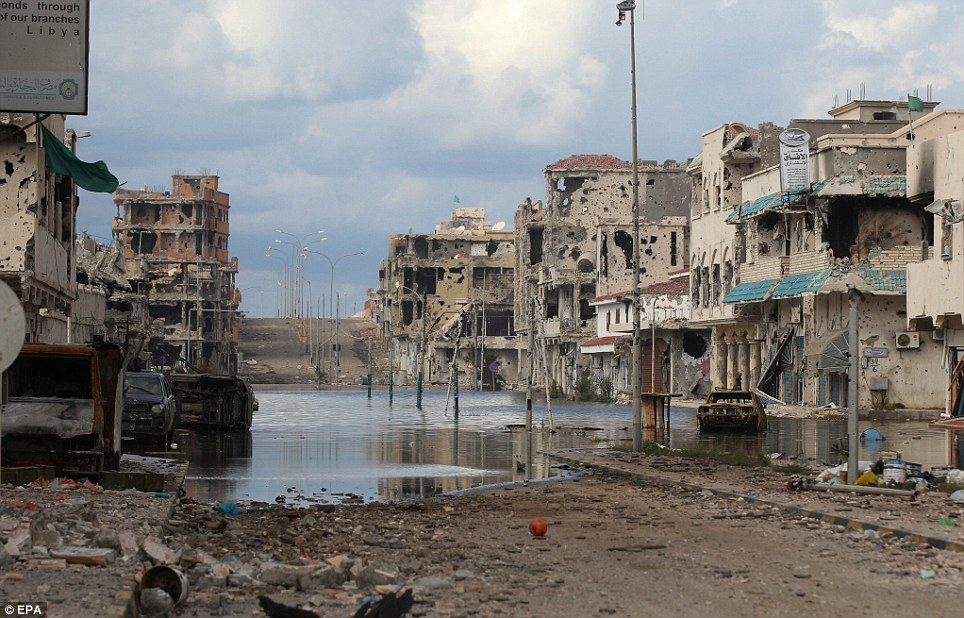
Sirte, Libya, after NATO bombing
That further twist in the cycle of violence will lead to more terrorist attacks in the UK. There is no sense in which this aircraft carrier is anything to do with defending the United Kingdom. It is a device to attack foreign countries. The result is it makes us a lot less safe at home.
When they think about it, people understand that, as YouGov demonstrated during the recent election campaign. The politicians will be trying to whip up feelings of jingoism and national pride around this huge hunk of floating hubris, to stop us thinking about that.
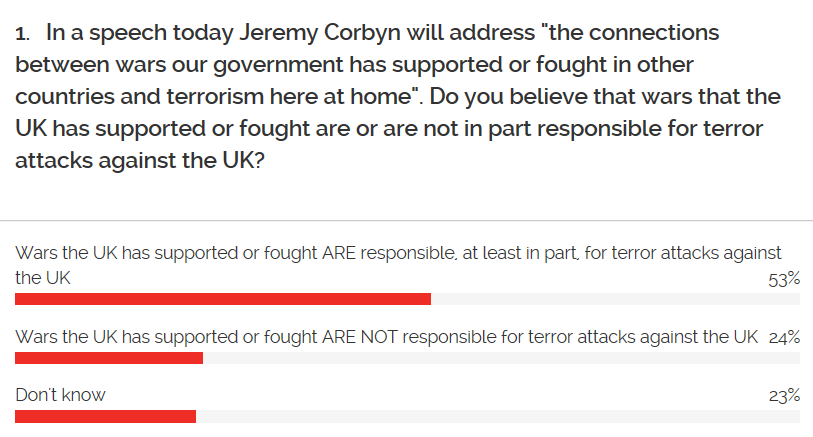
There is no money for our schools and hospitals, but unlimited sums for the armaments industry. The United Kingdom is not just a dysfunctional state, it is a rogue state and a danger to the peace of the world.
INF Treaty Withdrawal Debated in US: Does Arms Control Have a Chance to Survive?
By Alex GORKA | Strategic Culture Foundation | 26.06.2017
According to POLITICO, the US administration is considering the possibility of withdrawing from the 1987 Intermediate-Range Nuclear Forces Treaty (INF Treaty). The INF Treaty is a bedrock arms control agreement banning an entire class of nuclear missiles with ranges of 500 to 5,500 kilometers. It has removed thousands of nuclear weapons from the European continent and marked the first time the superpowers agreed to actually eliminate nuclear weapons and utilize extensive on-site inspections for verification. Now the landmark Treaty is teetering on the brink.
Russia and the US have exchanged accusations of violating the Treaty recently. The Trump administration is under pressure from some Republicans trying to compel President Trump to take steps to develop new missiles in response.
Rep. Mike Rogers of Alabama, who chairs a key oversight panel on nuclear weapons, told POLITICO he thinks it is «irresponsible for us to continue to adhere to a treaty when the only other participant has long moved on from it».
Indeed, many lawmakers and pundits are wondering if the US should abandon the landmark agreement altogether. Mark Gunzinger of the Center for Strategic and Budgetary Assessments (CSBA) believes that walking away is an option. According to him, future ground-based strike systems could help the US suppress Russia’s advanced integrated air defense systems and freedom of action in the event of a conflict. The same weapons could also help the Pentagon overcome some of the military roadblocks put up by China and North Korea in the Western Pacific. «Perhaps the time is right for a serious debate over the US withdrawing from the INF Treaty», Gunzinger says.
Michaela Dodge of the Heritage Foundation says that after 30 years, the Treaty is no longer strategically relevant, and the US should withdraw. In February, Sen. Tom Cotton (R-Ark.), along with Senators Ron Johnson (R-Wisconsin) and Marco Rubio (R-Florida), introduced the Intermediate-Range Forces Treaty (INF) Preservation Act to declare Russia in material breach of the Treaty — the first step to withdrawing. The legislation would also authorize transferring intermediate-range systems to allied countries, establish a new program for ground-launched missiles within the banned ranges, and provide $500 million to fund countervailing-strike options. Congressmen Ted Poe (R-Texas) and Mike Rogers (R-Alabama) introduced companion legislation in the House of Representatives.
The discussions on INF take place at a time the future for US-Russian arms control looks dim at best.
The extension of the New Strategic Arms Reduction Treaty (New START) due to expire in February 2021 is in question. There are still no talks on the issue but when the treaty reaches its end date there will no strategic nuclear arms agreement at all for the first time since SALT I Treaty was signed in 1972. The two sides are not currently engaged in talks on further strategic nuclear reductions beyond New START. Negotiations of arms control have never been stalled since the 1963 Partial Test Ban Treaty.
Does the idea to tear up the Treaty really meet the interests of the United States? The only reason to warrant such a decision is development and deployment of a new intermediate range missile in Europe. Will it be a popular move at the time the US DoD budget is already stretched in an effort to meet many competing demands? Would Europeans agree to have nuclear weapons on their soil? It makes the 1983 protests leap to memory.
From the point of view of military superiority, the US will not make great gains if it withdraws. It does not have intermediate-range ballistic missiles, and developing a Pershing III system will take time and effort, while land-based cruise missiles would not tip the balance into US and NATO favor because they are too slow to effectively knock out critical infrastructure sites in a first unexpected strike. At present, only ballistic missiles with short flight times and hair-trigger alert can deliver a decapitating attack.
If Europe-based cruise missiles are fired, Russia will have enough time for a launch-upon-attack against those European states which host the weapons and the United States. With the INF Treaty effective no more, Russia will be free to deploy intermediate-range missiles without restriction. In theory, its Iskander-M systems could be armed with ballistic and cruise missiles with extended range, while the American military has nothing to respond with.
The US move would not be a great setback for Russia. From Moscow’s perspective, the development by the United States of air- and sea-based, long-range precision strike capabilities has reduced the value it derived from the INF Treaty. With other countries developing their own INF arsenals, there are no prospects for globalization of the Treaty to greatly reduce its value. This is a potential threat for Russia due to its geographic position. America is under no threat from intermediate-range missiles of any other state in the world, while Russia is within range of such missiles of all states that possess them. Moreover, Russia may need ground-based intermediate weapons to counter the US ballistic defense sites in Europe and Asia.
The US and Russia have not used opportunities to discuss all the INF-related the problems within the Special Verification Commission (SVC) – the implementing body of the Treaty. There are technical issues giving rise to controversy that could be tackled at the experts’ level. The potential of NATO-Russia Council has not been exhausted. It’s a pity that the attempt to launch arms control talks proposed by the German Foreign Minister Steinmeier in 2016 has made little progress. If talks to discuss the proposal were launched, the agenda could be extended to include intermediate-range nuclear weapons.
There are only two options. One is to apply efforts to save the arms control and non-proliferation regime that served the two countries so well during so many years and which is disintegrating at present. The other is to do what some US lawmakers and pundits are calling for – to walk away from the INF Treaty. It will make impossible achieving progress on the New START and ultimately leave the sides without any arms control agreement in force at all. Whatever has been achieved during all these years as a result of the hard efforts will go down the drain to push the world to the brink of nuclear abyss. That’s what is actually being debated in the United States. President Trump has to make his choice.
US to keep arming Syria Kurds after Raqqah: Mattis
Press TV – June 27, 2017
Defense Secretary James Mattis says the United States will continue to provide weapons to Kurdish fighters in Syria after the campaign to dislodge Daesh (ISIL) terrorists from Raqqah is over, an announcement that would further infuriate Turkey.
Speaking to reporters traveling with him to Germany on Monday, Mattis said the US would try to recover the weapons supplied to the Syrian Kurds, but added it would depend on when or where the next mission is.
“We’ll do what we can,” he said when asked if all the weapons would be returned.
The comments marked the first time the Pentagon chief has publicly talked about the US pledge to take back the arms from the Kurdish People’s Protection Units (YPG).
In a letter to his Turkish counterpart Fikri Isik on Thursday, Mattis sought to ease Turkey’s security concerns, saying the US would provide Ankara with a monthly list of weapons and equipment supplied to the YPG.
Mattis also reassured Turkish officials that arms given to the Syrian Kurds would be taken back.
The Trump administration’s decision last month to arm the YPG roiled Turkey, which views the fighters as an extension of the Kurdistan Workers’ Party (PKK) fighting for an autonomous region inside Turkey since 1984.
The initial arms deliveries began at the end of May, with the Pentagon saying they included small arms and ammunition. But officials have indicated that 120 mm mortars, machine guns, and light armored vehicles were also likely going to Syria.
Early this month, the so-called Syrian Democratic Forces (SDF), which the YPG is a major component of, launched an operation to drive Daesh out of the northern city of Raqqah, the de facto capital of the terror group in Syria.
“We’re going to equip them for the fight. If they have another fight and they need, you know, the light trucks that they’ve been using … we’ll get them that,” Mattis said.
The provision of arms depends, he said, on the battle and what weapons the Kurds need. “When they don’t need certain things any more, we’ll replace those with something they do need.”
Turkey fears the weapons provided to the Kurdish fighters in Syria will end up in the hands of PKK militants operating in Turkey. The US also considers the PKK a terrorist organization and insists it would never arm that group.
Mattis said the battle against Daesh was growing more complex as it moved into the Euphrates River Valley, underscoring the importance of maintaining communication with Russia.
So-called “deconfliction” hotlines have been used by the US and Russia to notify each other where they are operating in order to avoid accidents.
In recent weeks, the Russians have threatened they would not use the deconfliction lines after the US shot down a Syrian government warplane.
Mattis said communications with Russia were taking place at several military levels to insure that aircraft and ground forces were safe.
‘US won’t be drawn into Syria war’
Despite the increasingly complicated battlefield, the Pentagon chief asserted that the US would not be drawn into the Syrian conflict. “We just refuse to get drawn into a fight there in the Syria civil war, we try to end that one through diplomatic engagement.”
The US will not fire “unless they are the enemy, unless they are ISIS,” Mattis said, using another acronym for the Daesh terror group.
The comments came shortly before White House spokesman Sean Spicer accused the Syrian government of making “preparations” for a chemical attack against civilians.
Spicer warned that Syrian President Bashar al-Assad and the Syrian military would “pay a heavy price” if they went ahead with the alleged plan.
State Department officials, who would “typically” be consulted before such statements are made, told the Associated Press that they had been caught “completely off guard” by the statement.
The AP report also said that the content of Spicer’s statement “didn’t appear to be discussed in advance with other national security agencies.”
A US-led coalition has been active in Syria since late 2014, bombing purported Daesh targets and training local militants to carry out assaults against the group as well as pro-government forces.
Whither Japan’s democracy?
By Daniel Hurst | Asia Times | June 27, 2017
To some observers, protester Hiroji Yamashiro, 65, has become a symbol of modern Japan’s uneasy attitude towards dissent.
The retired civil servant, a long-standing campaigner against the US military presence in the southern prefecture of Okinawa, was detained for five months from October last year before he was released on bail in March.
Yamashiro admitted cutting a barbed wire fence, but pleaded not guilty to subsequent charges of injuring a defense official and obstructing relocation work by placing blocks in front of a gate.
According to his supporters, Yamashiro is a tireless peace advocate whose continued detention was disproportionate to his alleged behavior.
To the authorities who arrested him, his actions went beyond those of peaceful protest and transgressed criminal laws.

Hiroji Yamashiro, 65, a campaigner against the US military presence in Okinawa prefecture, addresses the Foreign Correspondents’ Club of Japan. Photo: Daniel Hurst
Either way, his yet-to-be-finalized case has attracted so much international attention that he was invited to travel to Geneva earlier this month to address the UN Human Rights Council.
Now Yamashiro is seeking to shine a spotlight on Japan’s new anti-conspiracy law, which according to human rights groups and lawyers risks increased government surveillance and arbitrary arrest.
“The fact that a country like Japan has passed such a terrible law indicates the extent to which democracy is in retreat in this country,” the head of the Okinawa Peace Movement Center said during a press conference in Tokyo late last week.
“It’s something that I feel very sad about and very angry about and I would like the international community to focus upon it.”
Terror justification
Japan’s postwar constitution guarantees freedom of thought, conscience, assembly, association, speech, press “and all other forms of expression” – yet critics say they see a gradual erosion of those rights.
Such concerns grew when Japan’s ruling bloc pushed the anti-conspiracy bill through the upper house in mid-June.
Prime Minister Shinzo Abe and his government argued the legislation would help prevent terrorism ahead of large-scale events like the Tokyo 2020 Olympic and Paralympic Games.
The law targets two or more persons who, “as part of activities of terrorist groups or other organized criminal groups,” plan to carry out certain criminal acts.
The 277 crimes covered by the law also include planning to steal forestry products or to breach copyright. Jail terms of up to five years are possible depending on the crime.
When a UN special rapporteur warned Japan’s government in an open letter that the vague legislation could usher in “undue restrictions” on freedom of expression and privacy, the authorities reacted angrily.
The criticism was called “one-sided” and “obviously inappropriate,” with government officials saying they had not been given a chance to provide information before the letter was published.
Abe, whose popularity has slipped in recent opinion polls, moved to assure the country that “ordinary people” would not face investigation.
“Although we feel [the law] is essential for strengthening international coordination in dealing with terrorism, we’re aware that some members of the public remain uneasy and concerned about it,” the prime minister said at a press conference last week.
International backlash
The UN special rapporteur for privacy, Professor Joseph Cannataci, highlighted the vague definition of planning and preparatory actions and the “over-broad range of crimes” covered.
He told Asia Times he had felt compelled to write the open letter because of the extremely short legislative deadline that the government had set itself.
Cannataci, an independent expert appointed by the UN Human Rights Council, described the official response as “disappointing but not surprising.” He said he was “the third UN special rapporteur in a row whom the Japanese government has decided to be confrontational with.”
“I stand by every single word, full-stop and comma in my letter of the 18th May,” Cannataci said in an email this week.
“If anything, the way the Japanese government has behaved in response to my letter has convinced me even further of the validity of its content and the appropriateness of its timing and form.”
He added: “There has been a deafening silence on the part of the Abe government on the privacy safeguards which I have alleged are missing in Japanese law and the Japanese government has failed to explain, in public or in private, how the new law provides new remedies for privacy protection in a situation where it creates the legal basis where more surveillance could be carried out.”
Japan’s chief cabinet secretary, Yoshihide Suga, said last month: “It is not at all the case that the legislation would be implemented arbitrarily so as to inappropriately restrict the right to privacy and freedom of speech.”
‘Chilling effect’
Cannataci’s concerns are shared by a number of non-government organizations.
Hiroka Shoji, an East Asia researcher at Amnesty International, said the definition of an organized crime group was not limited to terrorist cells.
“Civil society organizations working on areas around national security can be subjected to this category,” Shoji said in an email.
Kazuko Ito, secretary general of the advocacy group Human Rights Now, said in an email: “Even if the judiciary narrowly determine and exonerate the targeted people in the end of the day, they are already targeted for arbitrary surveillance, wiretapping, arrest or detention – these are enough to smash civil society activities and will cause a significant chilling effect.”
Justice minister, Katsutoshi Kaneda, denies that the legislation is vague, arguing it is “expressly limited to organized criminal groups, the applicable crimes are listed and clearly defined and it applies only once actual preparatory actions have taken place.”
Anti-base protester Yamashiro, who was charged under pre-existing laws, views the new legislation as “a great threat”.
“I was arrested for obstruction of a public official, but under the new legislation even if you don’t do what it is that is against the law – if you’re just planning it or discussing it with other people – that is enough basis for an arrest to be made,” he said.
Press freedom concerns
The concerns come against a backdrop of claims that press freedom is deteriorating in Japan. The country declined in the global press freedom rankings issued by Reporters Without Borders, from 11th in 2010 to 72nd in the most recent review.
However, the reliability of that ranking is questioned by some observers.
The academic and consultant Michael Thomas Cucek, for example, has previously pointed to the “astonishing” volatility in Japan’s ranking and raised the possibility of the surveyed experts exaggerating the extent of repression in their own country.
Methodology questions aside, the UN special rapporteur for freedom of expression, David Kaye, has identified what he called “significant worrying signals” in Japan.
“The direct and indirect pressure of government officials over media, the limited space for debating some historical events and the increased restrictions on information access based on national security grounds require attention lest they undermine Japan’s democratic foundations,” Kaye wrote in a report published in May.
Kaye called for safeguards to be added to the state secrets law enacted in late 2013, which allows bureaucrats to be jailed for up to 10 years for revealing specially designated information.
Under Article 25 of the state secrets law, journalists could potentially face a prison term of up to five years under a provision targeting “a person who conspires with, induces or incites another person” to release such secrets.
However, the law offers protection to news reporting “as long as it has the sole aim of furthering the public interest and is not found to have been done in violation of laws or regulations or through the use of extremely unjustifiable means.”
The Japanese government has said it “does not intend to apply Article 25’s harsh penalties to journalists.” And in a broader rebuke to Kaye, it said most of his arguments were based on hearsay or assumptions.
“It is hard for the government of Japan to avoid expressing sincere regret concerning those biased recommendations,” the government said in a formal response.
It cited the constitutional guarantee of freedom of expression and added that “there is no such fact that government of Japan officials and members of the Japanese ruling party have put pressure on journalists illegally and wrongfully.”
Jeff Kingston, director of Asian studies at Temple University Japan, said officials were unlikely to act on previous comments by some lawmakers about the possibility of suspending broadcasting licenses for bias.
“But just making noises about doing so sends a chilling message, a shot across the bow of an already cowering media that may constrain coverage,” Kingston wrote in the book Press Freedom in Contemporary Japan, published earlier this year.
South Korea’s impeached President planned violent regime change for Pyongyang
By Adam Garrie | The Duran | June 26, 2017
A recent report from the Japanese outlet Asahi Shimbun appears to confirm a hypothesis recently published in The Duran that America’s recent fervor over North Korea has a great deal to do with the internal politics of South Korea, more so in many cases than it has to do with events in the DPRK (North Korea).
Impeached former South Korean President Park Geun-hye was known to be an avidly right-wing, anti-North Korean, militant leader. It was under her now disgraced leadership that South Korea agreed to house America’s THAAD missiles, a move that remains deeply unpopular among millions of South Korean citizens.
Now, Asahi Shimbun claims to have obtained documents from South Korea indicating that former President Park Geun-hye signed a document authorizing violent regime change in Pyongyang.
According to the report seen by the Japanese national newspaper, the Park regime was considering attempts at arranging deadly car accidents or train wrecks in order to kill North Korean leader Kim Jong-Un. Attempts at fomenting a violent coup in North Korea were also considered.
In light of these revelations, it is no wonder that North Korea has taken precautionary measures to defend its sovereignty against these violent threats of illegal regime change from its heavily armed and economically powerful neighbor.
According to the Japanese source, these plans have been taken firmly off the table by President Moon Jae-in, a man who is generally far more peace minded than his deeply militant predecessor.
America’s most bellicose posturing against Pyongyang came in the month prior to the South Korean special Presidential election which saw the peace minded Moon come to power in early May of 2017.
Although America still offers harsh rhetoric on all matters pertaining to North Korea, it was after the election of President Moon that America’s most violent rhetoric seemed to give way to talk of working with international partners including and especially China in order to resolve concerns over North Korea without the threat of military engagement.
These revelations which appear to be credible, demonstrate that Washington’s actions in respect of North Korea have as much to do with the developments in Seoul as they do with developments elsewhere.
READ MORE:
Featured Video
BRITAIN’S WARNING: PREPARE FOR WAR
or go to
Aletho News Archives – Video-Images
From the Archive
How Ukraine Tortured and Slaughtered Donbass
By Kit Klarenberg | Al Mayadeen | July 11, 2024
Almost immediately after the proxy war erupted, ISIS-tier footage of the torture and murder of Russians in Ukrainian custody emerged.
On July 6th, the New York Times published an astonishing investigation: In Ukraine, Killings of Surrendering Russians Divide an American-Led Unit. The article documents in grim detail how Chosen Company, an international volunteer battalion for Kiev, routinely executes Russian prisoners of war. It is the very first mainstream admission that this practice – a brazen breach of the Geneva Conventions, and a grave war crime – is widespread among Ukraine’s fighters, both foreign and homegrown. … continue
Blog Roll
 Aletho News
- Record Oil, Empty Tanks: The UAE’s Miracle Recovery
- Burnham tackles Britain’s poverty with aggression in Yemen
- Peace in Ukraine: the easy way – or the hard way
- Trump & the Rrrrussians
- US taxpayer money laundered back through Ukraine – Musk
- Before COVID, an NIH lab chief proposed making a SARS-like bat virus more infectious
- Gates, Bourla on Trial in Netherlands Accused of ‘Great Reset’ Scheme at Vaccine Injury Hearing
- BRITAIN’S WARNING: PREPARE FOR WAR
- “Historic Russia”: The Land Putin Will Not Give Back
- How the Cambridge Analytica scandal still haunts Mark Zuckerberg
- If Americans Knew
- An error has occurred; the feed is probably down. Try again later.
- No Tricks Zone
- Two New Studies Find Thwaites Glacier Melt Cannot Be Driven By Human Activity Or A Warming Ocean
- E-Cars Reduce CO2 Emissions By Only 41% Compared To Internal Combustion Engine Vehicles
- Predictions Made By Renowned Climate Professor Over Past Decades Have Been Proven To Be Poor
- New Study Suggests Large Regions Of The Pacific Ocean Have Been Cooling For The Last 80 Years
- Germany’s Green Energy Debacle: High Energy Costs Force Kahla Porzellan to Close After 182 Years!
- New Study: 50 Years Of The Most Aggressive ‘Net Zero’ Policies Can Only Affect The Global Climate By 0.03°C
- US September “Heat” Was No Record…Many Records Set Decades Ago
- Latest European Green Energy Debacle; Portugal’s Largest Flagship Solar Park Insolvent!
- Green Energy Debacle: German Expert Professor Fritz Vahrenholt Warns Of Severe Economic And Social Consequences
- Two More Paleo Reconstructions Affirm Meters-Higher Sea Levels Across Ireland, Brazil 7000-6000 Years Ago

