Russia, Turkey to Build Monuments Honoring Each Other’s Fallen Soldiers
Sputnik – April 2, 2016
The Turkish government has agreed to restore the historic San Stefano Russian monument in Istanbul, Hurriyet Daily News reported.
According to the newspaper, the Turkish parliament’s national defense commission said it would build the monument to commemorate fallen Russian soldiers in return for the construction of five similar monuments in Russia.
The agreement was initially discussed in 2012 and now it would be brought back up at the Turkish parliament. According to the 2012 document, the two countries decided to honor soldiers who died during historic wars on each other’s soil.
The San Stefano monument in Istanbul was initially built at the end of the 19th Century to commemorate 15,000 Russian soldiers who died on Turkish soil during the 1877-1878 Russo-Ottoman war.
However, in 1914 Turkey decided to demolish the monument, calling it a “national shame,” according to the source.

The demolition of the Russian commemorative monument in San Stefano in November 1914 © Wikipedia/ Fuat Uzkınay
Hurriyet also informed that a special joint commission will be set up to discover soldiers’ grave sites in both Turkey and Russia and to help oversee the application of the 2012 treaty.
Relations between Moscow and Ankara have been strained after the Turkish Air Force shot down a Russian bomber above Syria in November 2015, resulting in the death of a Russian pilot. Will the mutual agreement to commemorate each other’s soldiers be the first step to warm relations between the two countries?
Obama Campaigned on Peace, But Brought Death and War Worldwide
Sputnik – 02.04.2016
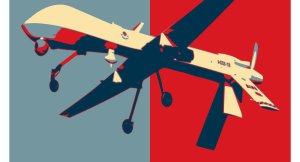 Barack Obama campaigned on a promise to scale back US military engagement in the Middle East and to keep America’s soldiers from getting bogged down in never-ending regional civil wars. President Obama has kept park of that campaign promise, with America’s troop presence abroad reduced. But US military engagement, as a whole, has increased significantly, through the use of unmanned drones and the deployment of troops in combat and security situations in more countries than in 2009.
Obama’s White House ended the previous administration’s Operation Iraqi Freedom and Operation Enduring Freedom — combat missions in Iraq and Afghanistan that continued to fester following George W. Bush’s attempts at regime change in Baghdad and the bombing of mountains into submission around Kabul. Today, despite recent reports that the Defense Department has understated the US troop presence in Iraq, troop levels in each country are down.
Nonetheless, Obama followed up his acceptance of the Nobel Peace Prize by expanding US military actions to nearly every country in the Middle East and North Africa, while reviving a Cold War posture toward Russia and China.
For instance, during the so-called Arab Spring, the US undertook a military campaign against Libyan dictator Muammar al-Qaddafi, leading to the leader being deposed and killed in the streets. The ousting of Qaddafi turned the once thriving country into a hotbed for Daesh extremists and today Libya is largely considered a failed state.
Under Obama, the US has expanded drone wars in Pakistan, Somalia, Yemen, Afghanistan, Libya and Syria with limited results and many civilian deaths.
Reports by the Bureau of Investigative Journalism suggest that the majority of US drone strikes result in civilian casualties, but under Obama these casualties have been defined away by invoking a macabre redefining of the “kill box” – anybody within a certain proximity to targeted victim is deemed a combatant.
The US today now finds itself performing aggressive joint military exercises with the South Koreans, seen as dress rehearsals for a full-scale invasion of North Korea — a nuclear capable country. American and NATO forces are posted along the Russian border in Norway to prepare for potential offensive actions against Moscow justified by the fantasy of Russian military aggression in Europe. US forces are now fighting in not only Iraq and Afghanistan, but also in Syria, Libya, and Yemen.
The paradox of the Obama Administration is how a president who campaigned on getting us out of war in Iraq and Afghanistan has now committed the US to the escalation of several recent wars.
Obama is no dove, and the world is no safer. With unmanned drone use increasing overseas, perpetual war has never been rebranded so effectively.
Pakistan and Saudi Arabia: the Balance of Relations
By Natalya Zamarayeva – New Eastern Outlook – 01.04.2016
For the second time in 2016, Pakistani Prime Minister, Mian Muhammad Nawaz Sharif, paid an official visit to Riyadh in March. He took part in the closing ceremony of the Northern Thunder military exercise in the Saudi desert. The intensity of the visits is dictated by the importance of the Kingdom of Saudi Arabia (KSA) in the foreign policy of Pakistan, as well as the need to maintain a balanced approach to the countries of the region as a whole, given the recent intensification of relations with Iran. It is noteworthy that it is also the second time that the Prime Minister was accompanied by Chief of Army Staff, General Raheel Sharif on a foreign trip to the KSA. Much remains yet to be clarified.
Military contacts between Islamabad and Riyadh have been maintained for several decades. The first bilateral agreements were signed back in the 60’s; in the 80’s, two teams of Pakistani ground troops were stationed in Saudi Arabia. In recent years, the commands of the two capitals hold annual joint military exercises, for example, Al Shihab-1 in 2015.
Despite the significant financial support from the KSA of social, economic, military and other projects in Pakistan, the relationship between the royal dynasty and the military and civil administration of Islamabad were not always smooth. The most recent failure occurred in March 2016. The royal family appealed to the Prime Minister, N. Sharif (and he publicly promised) to post part of the Pakistani army in the zone of military conflict in Yemen against Huthis Shiite in support of the KSA. But after ten days under the pretext of protecting only the holy places, the National Assembly of Pakistan (the lower house of parliament) refused. The Pakistani media wrote about a certain pressure the generals applied to parliamentarians.
The latest of Riyadh’s military appeals to Islamabad, announced in December 2015 as part of an alliance of 34 countries to combat the terrorist threat in the region, once again caused a lot of questions from the military leadership of Pakistan, as well as Malaysia and Lebanon about the goals and objectives of the new military campaign, the place and role of each participating country. For a long time, issues remained unclear related to the operational strategy, antiterrorist working methods, management, control and composition of the proposed cooperation. For two months, Islamabad did not comment. Sharif’s visit to Riyadh in March lifted the veil. According to the Pakistani media, Rawalpindi (the location of the Army headquarters) plans for its participation to include the exchange of intelligence information, the supply of military equipment and the development of counter-extremist propaganda.
Pakistan once again refused to participate in the armed conflict, putting forward several arguments: first, the reluctance to get involved in a so-called “foreign” war; secondly, the desire to avoid the explosion of separatist and sectarian movements within Pakistan; and thirdly, that new and promising markets (Iran) and possibilities are opening up, given the recent geopolitical developments in the region.
In the February issue of this year’s Pakistani military magazine Hilal, the author of the article entitled ‘Balanced Approach Towards the Middle East’ underlines the importance as never before, of the diplomatic efforts to solve the “raging” conflicts. It’s hard not to agree with Mr. Masood Khan and his statement: “it is not clear, in which direction the Middle East will move in 2016 … fine balancing is required … in order to prevent a major war in the region, protect our interests and save Pakistan from sectarian faults.” Thus, in contradiction to the centrifugal tendencies conducted by KSA in the vast region, Pakistan, on the contrary, promotes and supports centripetal forces. Its policy of non-participation in armed conflict puts obstacles in the way of splits, the formation of secessionist movements and / or fragmentation of its territory. Islamabad experienced the disease of separatism in 1971, allowing the separation of the Eastern Province and the proclamation of the independent Republic of Bangladesh on the territory in 1973.
At the same time, Pakistan is aware of the need to preserve traditional solidarity with the Saudi royal family, yet maintain that the time of its leadership in the region is in the past.
Islamabad is opening itself to radically new transnational projects of the 21st century in the region. Islamabad regards rapprochement with Tehran as a positive direction, despite the fact that, in general, Teheran’s step towards the Western world has made the region “feverish” (in the words of Mr. Masood Khan). In February 2016, Pakistan also lifted sanctions against Iran, supporting the decision of the “Six” (the permanent UN Security Council members and Germany). In addition to the prospective energy and hydrocarbon supplies to the country, Pakistan is set to earn a huge profit by using its strategic geographical position. The area will act as a transport bridge from the Chinese border and further to Central Asia, Iran, and then to the West under the revived China’s Silk Road project (one belt – one road). In February 2016, Beijing and Tehran signed a series of agreements.
Despite the fact that in January 2016 the Minister of Defense of the KSA rejected the mediation efforts of Pakistan in resolving the crisis with Iran (after the rift in diplomatic relations in early January 2016), Islamabad, for various reasons, remains one of Riyadh’s few opportunities to maintain civilized dialogue with Tehran and to stabilize the situation in the region.
The position of neutrality, which Pakistan upholds, and above all, the Army generals (given that the Pakistani army is one of the strongest in the region), is a guarantee their own security.
At the same time, the Northern Thunder military exercise (participated in by 21 states), led by the KSA, is a kind of demonstration of military force of the Sunni wing of Islam to the Shiites, in particular the leadership of Iran and the Yemeni Huthis.
The non-interference policy of a number of states in the region, in particular, Islamabad, is a deterrent to the further military ambitions of the new leaders of the Saudi dynasty and thus counteracts the emerging destabilization mechanisms. The Middle East will not sustain another armed conflict.
Natalia Zamaraeva, Ph.D (History), Senior Research Fellow, Pakistan section, Institute of Oriental Studies of the Russian Academy of Sciences.
Colombia: ‘Armed Strike’ Forced on Residents by Paramilitaries
teleSUR – April 1, 2016
As the possibility of a peace deal is becoming more certain, a surge of paramilitary violence in the country raises concerns of lasting peace.
In what’s being called an “armed strike” the Usuga Clan, a nacro-paramilitary outfit, ordered local residents in three northern departments in Colombia to stop all their activities for two days. Flyers distributed beforehand threatened them with retaliation if they dared to leave their homes.
They also forced local shops to shut down and intimidated children not to go to school, while blocking roads and rivers, said Colombia’s Ombudsman Alfonso Cajiao.
In the department of Sucre, education centers were shut down and two people were assassinated since the beginning of the forced strike, reported a local organization.
An assassination attempt on human rights activist and ex-senator Piedad Cordoba Friday is believed to be the work of paramilitaries. The Usuga Clan also killed a policeman and a military officer Thursday. Both officers were unarmed and dressed as civilians when they were killed.
President Juan Manuel Santos strongly condemned what he called a “criminal group” in a press conference.
“I insist that the Usuga Clan is a criminal organization, and will not be granted any political treatment. I can only recommend that they hand themselves over to the country’s justice,” he added, reporting that security forces arrested 56 members belonging to the armed group Friday, who were allegedly intimidating the local population on social media and in the streets.
The armed strike comes as various far-right sectors and paramilitary groups are calling for a national mobilization Saturday to protest against the peace deal currently being negotiated between the Colombian government and the Revolutionary Armed Forces of Colombia in Havana.
On Thursday, far-right leader and ex-president Alvaro Uribe, criticized the peace deal, saying the deal was “not a peace deal, it is an impunity deal,” in an interview with the Spanish-based journal, ABC.
“The agreement could end up sending to prison all those who fought terrorism,” he dramatically warned, denying any form of state terrorism or paramilitary violence like the scandal of “false positives” carried out during his presidency.
As the agreement is gets closer, a surge of paramilitary violence has also raised concerns among progressive sectors and activists in the country who fear that the Colombian state will be unable to guarantee their security even after the peace deal is signed.
Trump Way to the Left of Clinton on Foreign Policy – In Fact, He’s Damn Near Anti-Empire
By Glen Ford | Black Agenda Report | March 30, 2016
If the Bernie Sanders campaign has propelled the word “socialism” – if not its actual meaning – into common, benign American usage, Donald Trump may have done the world an even greater service, by calling into question the very pillars of U.S. imperial policy: the NATO alliance; the U.S. nuclear “umbrella”; the global network of 1,000 U.S. bases; military “containment” of China and Russia; and U.S. “strategic” claims in the Persian Gulf. Were the U.S. to actually rid itself of these strategic “obligations,” the military hand on the doomsday clock would immediately be rolled back, giving humanity the breathing space to tackle other accumulated crises.
Of course, Donald Trump may over time rephrase, reverse or “clarify” out of existence some of his profoundly anti-imperial, “America First” foreign policy points, elicited in extended interviews with major U.S. media. However, if Trump’s tens of millions of white, so-called “Middle American” followers stick by him, despite his foreign policy heresies – as seems likely – it will utterly shatter the prevailing assumption that the American public favors maintenance of U.S. empire by military means. If the rank and file right wing of the Republican Party is not a pillar of such policies, then who is? – rank and file, Black, white and brown Democrats? If the Trump candidacy can continue to thrive while rejecting the holiest shibboleths of the bipartisan War Party, then we must conclude that the whole U.S. foreign policy debate is a construct of the corporate media and the corporate-bought duopoly political establishments, and that there is no popular consensus for U.S. militarism and no true mass constituency for war in either party.
If Donald Trump is to be the catalyst for such a revelation, then may all the gods bless him – because lots of assassins will be out to kill him.
Trump’s language is sloppy, but there can be no mistaking the thrust of his position on key points. He calls NATO, the globe-strutting Euro-American military juggernaut that extended its domain to Africa with the 2011 war of regime change in Libya, an alliance that is “unfair, economically, to us.” Trump told the New York Times that NATO should focus on “counter-terrorism” – clearly a fundamentally scaled-down mission.
He repeated his often-expressed willingness to withdraw U.S. forces from Japan and South Korea, where American troops have been stationed since the end of World War Two, unless both countries pay a lot more money to maintain them. Trump actually seems eager to get out of the region, based on the number of times he has brought the subject up in his campaign. As with everything else in the Trump paradigm, he hooks the alliance to his quest for a “better deal” – but the point is that he doesn’t think the “price” of the far-flung U.S. military commitment is “worth it.” Trump’s stated intention to renegotiate virtually all of the “deals” the U.S. has made around the world – the military architecture of imperialism – means he is pointedly applying a cost-benefit test to the 1,000 U.S. bases around the globe. He is reluctant to offer other nations the “protection” of U.S. nuclear weapons.
The crucial point is: Trump does not accept the fundamental premise that these bases exist for U.S. “security” interests, but rather, he frames them as a kind of “service” that the clients should pay for. Once the “national security” veneer is withdrawn, the military-imperial rationale evaporates and all that is left is a business transaction – not enough to call a nation to war, or to risk a world over.
Trump appears to welcome a strategic break with Saudi Arabia, threatening to cut off U.S. purchases of oil from the kingdom unless it “substantially reimburse[s]” Washington for fighting the Islamic State, or unless the Saudis and the other rich oil states commit troops to the anti-jihadist battle – at their own expense. It’s all nonsense, of course, since Washington and Saudi Arabia have been partners in global jihadism for two generations – but so what? Trump seems to relish the idea of severing the Saudi connection. “If Saudi Arabia was without the cloak of American protection, I don’t think it would be around,” he said. His threat to withdraw the “cloak” unless the potentates pay for protection would negate the U.S. “national security” rationale in the Persian Gulf going back to President Franklin Roosevelt’s 1943 declaration that “the defense of Saudi Arabia is vital to the defense of the United States.” President Carter, another Democrat, upped the ante in 1980 with his doctrine that the United States would use military force if necessary to defend its “national interests” in the Persian Gulf. Bush presidents One and Two were simply building on these previous national security rationales. Trump recognizes no such imperative, without which U.S. imperial policy in the region has no political basis.
Trump plays the trade card rather than the military gambit in dealing with China. He would threaten economic retaliation for China’s fortification of islands in the China Sea – not military encirclement. “We have tremendous economic power over China, and that’s the power of trade,” he said. The same, presumably, would apply to Russia.
The presidential candidate shows no interest in “spreading democracy,” like George W. Bush, or assuming a responsibility to “protect” other peoples from their own governments, like Barack Obama and his political twin, Hillary Clinton. On the contrary, Trump has stated that the U.S. should not have invaded Iraq and Libya and killed their leaders, Saddam Hussein and Muammar Gaddafi, because they killed terrorists – in contrast to Hillary Clinton’s macabre cackling over Gaddafi’s body. He opposed the U.S. proxy war against the al-Assad government in Syria, for similar reasons.
He even briefly defied the ultimate taboo, using the word “neutral” to describe the stance he would take on Palestine.
In sum, albeit sloppily, and with no guarantee that he won’t change his mind at any moment, Trump has rejected the whole gamut of U.S. imperial war rationales, from FDR straight through to the present. For who knows what reason, Trump is busily delegitimizing U.S. imperial policy since World War Two.
It’s not that the Empire has no clothes, but that it is being stripped of its rationale to march around the planet in battle gear. Thanks, not to Bernie, but to The Donald.
Trump has reduced white American nationalism to Race, his “trump” card – but without his hero, Teddy Roosevelt’s Great White Fleet sailing the world to plant the flag on distant shores.
The first effect of Trump’s intervention in the Republican primaries was to demonstrate that his white hordes really don’t give a damn for the GOP establishment’s corporate agenda; indeed, Trump gave them a chance to show they hated what global capitalism has done to “their” jobs. The fact that this cohort despises and fears non-whites of whatever citizenship status is nothing new – it’s a constant in U.S. politics, which is why there has always been a White Man’s Party. What makes this electoral season different – and, hopefully, a turning point in U.S. history – is that much of the rank and file of the White Man’s Party, the GOP, is rejecting the economic agenda of its corporate masters. If the Republican voters accept Trump’s assault on the ideological rationale undergirding U.S. foreign policy and its imperial structures, there will be nothing left of the GOP for the corporate rulers to defend. The Republican house of cards is collapsing, inevitably throwing the whole duopoly system out of whack.
The job of the Left, at this historic juncture, is to ensure that the two-party duopoly is permanently broken, to create the space for a much broader national discourse and, especially, to free Black America from the “trap within a trap” of the corporate-controlled Democratic Party. As we have written before in these pages, the best scenario of 2016 would be a fracture at both ends of the Rich Man’s Duopoly. It is insane – although perfectly explainable – that the most leftish constituency in the nation, Black America, is aligned with the right wing of the Democratic Party in the person of Hillary Clinton, while white Democrats man the barricades for the nominal socialist, Bernie Sanders. Blacks are the most pro-peace ethnicity in the nation, but have also been the indispensable bloc behind Hillary Clinton, the warmonger who is on her way to becoming the sole candidate of both Wall Street and the Pentagon.
It is magnificent, grand and glorious that the duopoly system is in deep trouble. But it is sad beyond measure that the near-extinction of independent Black politics has placed African Americans in the most untenable position imaginable at this critical moment: in the Hillary Clinton camp. Fortunately, key elements of the Movement for Black Lives have pledged not to endorse any candidates this election season. We hope that they stick with that commitment, continue to build a grassroots movement, and resist the corporate Democratic hegemony that has strangled and subverted Black politics for the past 40 years. The Black Left, broadly defined, must engage in a thorough reassessment of its politics and practice, in light of the great fissures that are occurring in the structures of the rulers’ system. That’s why the Black Is Back Coalition for Social Justice, Peace and Reparations is holding a National Conference on the 2016 U.S. Presidential Election and the Struggle for Black Self-Determination, on April 9th, in Harlem, New York City. This electoral season will see massive realignments of parties and coalitions – events that will happen whether Black people are organized or not. But Black self-determination is only moved forward if people push it. The most optimum time to press issues of Black self-determination is when the larger polity is in flux, such as exists today – thanks, in great measure, to the racist billionaire, Donald Trump.
Actually, there’s no need to thank him. That wealth-born son-of-a-rich-developer has already been paid. And by his own standards, that’s all that matters.
BAR executive editor Glen Ford can be contacted at Glen.Ford@BlackAgendaReport.com.
Biden pledges Ukraine additional $335mn in military assistance
RT | April 1, 2016
The US has promised Kiev an additional $335 million in security aid to help Ukraine boost its military strength. Washington also made it clear to the Ukrainian president that to unlock the next tranche of IMF money, Kiev should push ahead with political reforms.
US Vice President Joe Biden held a luncheon with Ukrainian President Petro Poroshenko, who is currently visiting Washington as part of a nuclear summit comprising more than 50 world leaders. Poroshenko seized the rare opportunity to touch base with Obama administration officials.
According to an official statement on Poroshenko’s website, Biden has indicated Washington’s readiness to provide Kiev with additional $335 million in security assistance, which would be used to reform Ukraine’s Armed Forces, National Guard and border control.
Last year, the House Armed Forces Committee suggested providing some $300 million aid on the Ukrainian government and offered to “provide appropriate security assistance and intelligence support, including training, equipment, and logistics support, supplies and services, to military and other security forces.”
At the same time, Kiev also heavily relies on a financial assistance from the International Monetary Fund (IMF). Having received $6.7 billion from the fund’s $17.5 billion bailout package in 2015, the third tranche has now been stalled.
Plagued by corruption and deep political crisis, Kiev has been failing to fulfill reforms to unlock the next tranche of the loans worth $1.7 billion. To secure its lenders’ confidence, Ukraine must implement reforms and made scant progress in stamping out corruption.
Meeting with Poroshenko Thursday, Biden reminded that Kiev would not receive international economic assistance unless it forms a new government, “oriented on reforms and cooperation with the IMF,” Poroshenko’s office said.
For his part, Poroshenko responded that setting up “an effective anti-corruption system” was his government’s priority.
Ukraine’s corruption was one of the main topics of Biden’s trip to Kiev in December 2015.
“Corruption siphons off resources. We know this. You know this,” he told Ukrainian MPs, saying that “corruption eats Ukraine like cancer.” At the time, he assured Kiev of the Washington’s support and announced allocation of additional $190 million from the US budget to help conduct structural reforms in Ukraine and fight corruption in the first place.
While in Washington, Poroshenko also tried to lure more investment to his country’s economy while meeting with US Secretary of Commerce Penny Pritzker.
Read more:
Obama signs NDAA, approving $800 million aid to ‘moderate’ Syrians, Kiev
CIA leaves explosives on school bus borrowed for training
RT | April 1, 2016
For at least two days a school bus in northern Virginia has been carrying students with explosive material hidden in its engine compartment. The explosives fell out of a container, which was used by the CIA for training last week.
“During the exercise, explosive training material was inadvertently left by the CIA K-9 unit in one of the buses used in the exercise,” the CIA said in a statement. The agency attested that the explosives were “incredibly stable” and “benign” and didn’t put anyone in danger.
The explosive was discovered on Wednesday during a routine maintenance check. It had been unnoticed for nearly a week since March 24.
The CIA was called to retrieve the material. Neither the federal agency nor local authorities would go into detail about what kind of explosive was involved.
“The exact nature of the training material used in this exercise is not being released at the request of the CIA so as not to compromise its training techniques,” Loudoun County officials said.
Loudoun schools spokesman Wayde Byard described the explosive as a “putty-type” material designed for use on the battlefield and which requires a special detonator. Putty or plastic explosives, including the well-known C-4, are easily shaped and well-suited for demolition works.
The Briar Woods High School, which provided its premises to the CIA for the spring break training, said the vehicle was used for eight runs on Monday and Tuesday before the explosives were discovered. It carried 26 students attending Rock Ridge High School, Buffalo Trail Elementary School and Pinebrook Elementary School.
The CIA said the training was routine and part of exercises its agents do with local law enforcement. The container with explosive was designed to see how good sniffer dogs would be at finding it.
Derailing Peace Deal in Colombia
By Jonathan Marshall | Consortium News | March 31, 2016
Cuban and U.S. leaders overcame immense obstacles to end more than a half century of confrontation between their countries with President Barack Obama’s visit to Havana. But they were unable to end more than a half century of political violence in Colombia by brokering a peace pact that was scheduled to be signed in Havana on March 23, one day after Obama departed.
That target date was set by Colombian President Juan Manuel Santos and leaders of the Revolutionary Armed Forces of Colombia, or FARC, during negotiations hosted by Cuban President Raúl Castro last September. Now the parties are aiming for a new deadline at the end of this year.
After 52 years of conflict, they are used to setbacks and delays. But the armed struggle has already killed more than 220,000 and claimed 7.9 million registered victims — including 77,000 who disappeared — so Colombia desperately needs peace and reconciliation as soon as possible.
The key sticking point concerns parties who are not at the negotiating table. They include a smaller but still potent rebel group, the National Liberation Army, or ELN. More important are right-wing and criminal paramilitary groups who have the motive and means to massacre FARC soldiers and their civilian sympathizers if they get the opportunity.
Until Bogota — and Washington — find a convincing way to restrain these paramilitary terrorists after FARC lays down its arms, Colombia will never find peace.
The peace process has made great strides over the past year. Overall violence is down. The government pardoned some FARC prisoners and helped them return to civilian life. FARC promised to end child recruitment and release children under the age of 15 from its ranks; it also conducted an historic ceremony of public apology for its part in killing civilians during a 2002 firefight with paramilitary forces. The two sides engaged in clearing mines for the first time this spring. They have jointly asked the United Nations Security Council to monitor an eventual ceasefire.
But the Colombian government demands that FARC guerrillas demobilize and hand over their weapons in remote rural “concentration zones.” They would be spared arrest as long as they remain in isolation. FARC insists that it be permitted to store weapons in the zones and be granted their freedom anywhere in the country.
Explaining the organization’s reluctance to totally disarm, a FARC negotiator pointedly questioned whether the government could guarantee their security in the face of paramilitary threats.
“In the last month, more than 28 community organizers, human rights defenders and peasant farmers have been murdered and their killers continue to enjoy impunity,” he said. “Solving the paramilitary problem the main challenge we are facing today, to help this process move ahead.”
Opposing the Peace Process
The U.N. Human Rights Council for Colombia reported in March that “diverse local interests and groups opposed to change resulting from the peace process” — including armed political and criminal groups engaged in land seizures, drug trafficking, illegal mining and extortion — “are already employing violence and intimidation to protect their interests, and the State has not had a sufficiently effective response.”
It added, with a strong affirmation of FARC’s concerns, that “demobilizing guerrillas . . . could also be vulnerable.”
Referring to right-wing death squads that annihilated supporters of a prominent leftist political party affiliated with FARC, the report declared, “The hundreds of assassinations of Unión Patriótica political party leaders and members in the 1980s and 1990s illustrate the elevated risk for new political movements. Security guarantees and transformation of the political reality are essential to avoid repetition of this situation.”
Many experts estimate that more than 2,000 Unión Patriótica members were murdered by right-wing death squads serving powerful drug lords and allied government security forces. The victims included two of the party’s presidential candidates, one elected senator, eight congressmen, 70 councilmen, and dozens of deputies and mayors. The assassination campaign ended a ceasefire reached by FARC and the government in 1987 and destroyed hopes for peace.
Much of this terrorist violence was perpetrated by the United Self-Defense Forces of Colombia (AUC), a paramilitary organization that eventually took over the cocaine trade from its original patron, the Medellín Cartel. The AUC enjoyed support from government and military officials who appreciated its help in the war against FARC (which also had dirty hands in the drug trade).
The AUC’s 30,000 members officially demobilized in 2006. Subsequent testimony by some of them helped convict 60 former congressmen and seven former governors for collaborating with the criminal organization. Former President Alvaro Uribe accepted money from the AUC for his 2002 presidential campaign; his brother Santiago was arrested in February on charges of helping to create a paramilitary group of his own.
The Colombian human rights group MOVICE reported in March that a new generation of criminal bands have launched a campaign of murder and intimidation to disrupt the current peace talks. Their victims include community leaders and peasants who claim their lands were illegally seized.
“I think part of the message [of the killings] is to intimidate the FARC, and let them know what awaits them if they enter politics,” said a MOVICE spokesman.
Rightist Drug Lords
Chief among the threats to FARC and its community supporters is Colombia’s most powerful drug trafficking organization, “Los Urabeños,” which has muscled its way into many former guerrilla territories and today controls much of the country’s Caribbean coast. It is a direct successor to the United Self-Defense Forces of Colombia.
“We feel obligated to continue our anti-subversive fight,” a spokesman for Los Urabeños declared soon after the group announced it formation.
The Santos government has made genuine moves to seek justice against the instigators of political violence. It recently arrested a senior general on charges of overseeing the grisly killing of thousands of civilians whom the Army falsely claimed were guerrillas in order to inflate body counts and win bonuses.
State prosecutors also said they will arrest a former head of the army — and ally of former President Uribe — for the same crime, known as the “false positives” scandal.
According to Human Rights Watch, at least 16 active and retired army generals are currently under investigation by the Attorney General’s office for “false positive” killings, and about 800 lower-ranking soldiers have been convicted. But human rights groups warn that rules tentatively worked out by the government and FARC to promote reconciliation by granting immunity for war crimes could prevent further prosecution of false positive cases.
The United States, which bears a heavy responsibility for promoting state violence and the growth of paramilitary organizations to combat communism in Colombia in the 1950s and 1960s, can make partial amends by supporting President Santos’s efforts at reconciliation while pressing to see that justice is served by holding war criminals accountable.
In the interests of peace and justice, Washington should also offer all reasonable aid to help Colombia suppress organizations like Los Urabeños that continue the terrible legacy of previous terrorist and criminal paramilitary groups.
As Adam Isacson, a Colombia security analyst at the Washington Office on Latin America, noted recent murders by the new generation of paramilitary forces “make it a lot harder for the FARC leadership to convince their rank and file to demobilize. The U.S. has to make it clear that the paramilitaries…are right up there with the Zetas, Sinaloa [cartels] and the MS-13 as security threats, because of their ability to threaten a peaceful outcome in Colombia.”
Jonathan Marshall is author or co-author of five books on international affairs, including The Lebanese Connection: Corruption, Civil War and the International Drug Traffic (Stanford University Press, 2012).
Are Saudis buying Israeli drones through South Africa?
RT | March 31, 2016
Saudi Arabia announced that it is building a drone plant in cooperation with South Africa, but a well-known Saudi defense analyst claimed this is a guise to hide the clandestine purchases of aircraft from Israel.
The analyst, who calls himself “Mujtahid” has been leaking exclusive information about the royal family of Saudi Arabia on Twitter since the early 2000s. He challenged the official report released by the Saudi Defense Ministry this week, which stated the kingdom would build a drone factory in collaboration with South Africa.
“The report aims to hide the fact that Saudi Arabia intends to purchase drones from Israel via South Africa,” he said.
“Saudi Arabia buys Israeli drones through South Africa. These drones later arrive from South Africa, dismantled, to Saudi Arabia, where they are assembled,” Mujtahid added, describing the mechanism developed to carry out the Israeli-Saudi deal.
He went on to accuse Prince Mohammad bin Salman, who is Saudi Defense Minister and, according to some experts, the country’s second most powerful person, of serving Israel’s interest by purchasing drones from the Jewish state.
Saudi Arabia has been trying for years to strengthen its armed forces with drone capabilities. In 2010, General Atomics, the US producer of the Predator drone family, announced it had acquired export licenses for a number of Middle Eastern countries, including Saudi Arabia. Export to Saudi Arabia has so far failed to materialize, even though a similar deal with the United Arab Emirates was approved by the US Congress in 2015.
As supplies from its primary arms supplier were hanging in limbo, Riyadh was reportedly looking for alternative sellers of the technology. In 2013, reports said Saudi Arabia would be buying reconnaissance drones from the South African arms manufacturer Denel Dynamics. Last year, some reports said both the Saudis and the Emirates had managed to buy ground attack drones from China for their stalling Yemeni campaign.
Israel is one of the world’s leading producers of drones, but selling the technology to Saudi Arabia would be politically disastrous, as public opinion in both Israel and the Arab nation would be strongly against such a deal.
The two countries were said to have some military cooperation in their mutual rivalry with regional competitor Iran. Some reports suggested Israel and Saudi Arabia had discussed the possibility of an Israeli attack through Saudi airspace against Iranian nuclear sites amid the tense negotiation for a nuclear deal between Tehran and six leading world powers.
Featured Video

Dan Dicks with James Corbett on Solutions Watch
or go to
Aletho News Archives – Video-Images
From the Archives
MMR (Measles, Mumps and Rubella) – Vaccine Risk Statement
MMR Vaccine (Measles, Mumps, and Rubella) Is It Safer Than Measles, Mumps and Rubella?
Physicians for Informed Consent | December 2024
… It has not been proven that the MMR vaccine is safer than measles, mumps, and rubella. The vaccine package insert raises questions about safety testing for cancer, genetic mutations, and impaired fertility. Although VAERS tracks some adverse events, it is too inaccurate to measure against the risk of measles, mumps, and rubella. Clinical trials do not have the ability to detect less common adverse reactions, and epidemiological studies are limited by the effects of chance and possible confounders. Safety studies of the MMR vaccine are particularly lacking in statistical power. A review of more than 60 MMR vaccine studies conducted for the Cochrane Library states, “The design and reporting of safety outcomes in MMR vaccine studies, both pre- and post-marketing, are largely inadequate.”19 Because permanent sequelae (aftereffects) from measles, mumps, and rubella are so rare (especially in children with normal levels of vitamin A and infected after birth),6,15-17 the level of accuracy of the research studies available is insufficient to rule out the possibility that the MMR vaccine causes greater death or permanent disability than measles, mumps, and rubella. – Read full article
Blog Roll
 Aletho News
- Yes, the Iran war has destroyed Trump’s presidency
- The fallacy of US delusions about Iran’s economic collapse
- Hezbollah denies Syria cell link, warns of Israeli plan to sow discord
- The legacy of US sanctions, war, and occupation in Iraq
- Iraqi resistance group rejects disarmament, vows to maintain support for Lebanon
- Sheikh al-Asadi warns of Iraqi government compliance with US demands
- How to MAKE THE CONSPIRATORS PAY for their crimes! Dan Dicks with James Corbett on Solutions Watch
- There’s a drought in academia: A drought in honest research on the subject of drought and other weather extremes
- Department of War Awards $20.7 Billion Contract to Raytheon for Air-to-Air Missiles
- ‘Distance yourselves from Israel’: IRGC urges US population to question govt policies
- If Americans Knew
- As settlers ravage West Bank, Israeli forces kill 10 in Gaza – Daily Update
- New Report: “Scholasticide and Genocide in Gaza: Assessment, Testimonies and Legal Analysis”
- Ex-Biden officials are desperate for a Gaza scapegoat
- Israeli “settlers” Invade Al-Aqsa; Pour Boiling Water on 75-Year-Old
- Israel Has Kidnapped Another American Teenager
- US arms sales to Israel worth $21.6 billion in 20 months
- Three Palestinians Killed in Israeli Attacks on Gaza
- Revealed: German “Anti-Semitism Expert” Driving Crackdown on Palestine Solidarity is Former Israeli Spy
- Egypt’s Warning to Israel Before Oct 7
- Israel’s siege signals another cruel winter for 1.8 million Gazans – Daily Update
- No Tricks Zone
- Two More Paleo Reconstructions Affirm Meters-Higher Sea Levels Across Ireland, Brazil 7000-6000 Years Ago
- New Study: Earth And Venus Surface Warmth Largely Explained By Convection And Lapse Rate, Not CO2 Or Radiation
- 2025 Nature Paper Claiming Worsening Global Drought Gets RETRACTED …Heavily Flawed
- New Study: ‘Global Drought Shows No Detectable Recent Acceleration Under Climate Warming’
- Economic Masterminds: German Socialists Suggest Taxing Productivity Gains Stemming From Using AI
- The South China Sea Has Not Been Cooperating With The Climate Change Narrative
- Energy Crisis: Germany Enters Heating Season With Historically Low Gas Reserve Fill Levels
- New Study: The Antarctic Ice Sheet Gained Mass From 2020-2024 Due To Staggering Snow And Ice Accumulation
- Study: Ocean Heating Rates From Thousands Of Years Ago ‘Dwarf’ Modern Ocean Heating Rates
- Climate Extremists Target, Attack Large-Scale Power Grid Infrastructure In Germany!


