Saudi Arabia announced that it is building a drone plant in cooperation with South Africa, but a well-known Saudi defense analyst claimed this is a guise to hide the clandestine purchases of aircraft from Israel.
The analyst, who calls himself “Mujtahid” has been leaking exclusive information about the royal family of Saudi Arabia on Twitter since the early 2000s. He challenged the official report released by the Saudi Defense Ministry this week, which stated the kingdom would build a drone factory in collaboration with South Africa.
“The report aims to hide the fact that Saudi Arabia intends to purchase drones from Israel via South Africa,” he said.
“Saudi Arabia buys Israeli drones through South Africa. These drones later arrive from South Africa, dismantled, to Saudi Arabia, where they are assembled,” Mujtahid added, describing the mechanism developed to carry out the Israeli-Saudi deal.
He went on to accuse Prince Mohammad bin Salman, who is Saudi Defense Minister and, according to some experts, the country’s second most powerful person, of serving Israel’s interest by purchasing drones from the Jewish state.
Saudi Arabia has been trying for years to strengthen its armed forces with drone capabilities. In 2010, General Atomics, the US producer of the Predator drone family, announced it had acquired export licenses for a number of Middle Eastern countries, including Saudi Arabia. Export to Saudi Arabia has so far failed to materialize, even though a similar deal with the United Arab Emirates was approved by the US Congress in 2015.
As supplies from its primary arms supplier were hanging in limbo, Riyadh was reportedly looking for alternative sellers of the technology. In 2013, reports said Saudi Arabia would be buying reconnaissance drones from the South African arms manufacturer Denel Dynamics. Last year, some reports said both the Saudis and the Emirates had managed to buy ground attack drones from China for their stalling Yemeni campaign.
Israel is one of the world’s leading producers of drones, but selling the technology to Saudi Arabia would be politically disastrous, as public opinion in both Israel and the Arab nation would be strongly against such a deal.
The two countries were said to have some military cooperation in their mutual rivalry with regional competitor Iran. Some reports suggested Israel and Saudi Arabia had discussed the possibility of an Israeli attack through Saudi airspace against Iranian nuclear sites amid the tense negotiation for a nuclear deal between Tehran and six leading world powers.
He’s a serious presidential contender with unorthodox views on some issues – making him appear anti-establishment, worrying duopoly power brokers and media scoundrels supporting them.
Wide-ranging interviews with NYT and Washington Post editors, as well as opinions expressed separately, showed his foreign policy views differ considerably from other candidates.
“I want to get along with Russia,” he said, calling good relations “very good… I’d get along very well with Vladimir Putin.”
“I want to get along with all countries, and we will,” he said, calling his approach to world affairs “unabashedly noninterventionist.”
He opposes expensive worldwide nation-building projects while America’s infrastructure deteriorates.
He’s against massive US military buildups in Europe and East Asia. “We certainly can’t afford to do this anymore. NATO is costing us a fortune…”
“Why are we (risking) potentially (a) third world war with Russia?” He questions involvement in protecting allies like Japan and South Korea, wanting them to do more on their own.
US intervention abroad caused more problems than solutions, notably in the Middle East, he said.
“Every bad decision that you could make in the Middle East was made.” If Obama and Bush “just (went) to the beach and enjoyed the ocean and the sun, we would’ve been much better off… than all of this tremendous death, destruction, and… monetary loss. It’s just incredible,” he stressed.
He called NATO obsolete, preferring an alternative organization focusing on counterterrorism. He questioned the benefit of America’s global empire of bases.
He called nuclear weapons “the biggest problem the world has,” saying he’d use them only as “an absolute last step,” instead of renouncing them altogether.
The New York Times is America’s leading establishment media organization – supporting policies favoring wealth and power interests exclusively.
It editors called Trump’s foreign policy views “dangerous babble,” uneasy about an administration under his stewardship curbing its warmaking appetite – hyping nonexistent “Russia(n) aggressive movements in Ukraine and threats to the Baltics…”
Saying “this is no time (for) Washington” to restrain its global militarism. Trump’s views “are contradictory and shockingly ignorant.”
Times editors support US military involvement worldwide, its wars of aggression in multiple theaters.
They call today’s world “dangerous,” failing to explain Washington allied with Israel and other rogue states bear full responsibility for its deplorable state.
Trump if elected president will differ from traditional candidates largely in style. At the same time, if he favors more cooperation and less confrontation with other nations, “that’s a good thing” as he puts it in his own words.
Stephen Lendman lives in Chicago. He can be reached at lendmanstephen@sbcglobal.net.
His new book as editor and contributor is titled “Flashpoint in Ukraine: US Drive for Hegemony Risks WW III.”
No presidential candidate should be taken seriously unless he or she addresses these basic concerns:
9/11
Since this is the pretext for our endless War on Terror, it should be examined thoroughly and publicly, with testimonies from pilots, architects, engineers, scientists and eye witnesses, including first responders. Like many Americans, I find the official explanation ludicrous. Why can’t we have a convincing answer to how World Trade Center 7 imploded and collapsed into its own footprint? Or how was it possible for a Boeing 757 to shave the ground and hit the Pentagon from the side, as steered by an amateur pilot? Many other questions have also been brushed aside, with Donald Trump going only as far as implying that Saudi Arabia may be behind this tragedy. Why Saudi Arabia, but not Israel? By suppressing a legitimate investigation, Washington is at least complicit in this unspeakable crime. Both the how and who of that day need to brought to light, though I fear much of America will be smoldering ruins before then. The criminals will have finished the job.
Terrorism
The US and its allies have funded and trained the Taliban, Al Qaeda and ISIS, so how can it claim to be fighting terrorists? Bin Laden, too, was an American asset, and it sure wasn’t him our bumbling Seals killed on May 2nd, 2011. Even as a non-corpse, Osama served Uncle Sam. For five years, Syria has been attacked by American-backed terrorists. Many arrived from Libya, a country we’ve already wrecked, to the glee of Hillary Clinton. The US has a long history of using terrorists and hooligans to destabilize countries, but it poses, preposterously, as the upholder of global stability. Though none of our politicians can possibly be blind to this grotesque contradiction, they play along with the Disney script. In spite of his token or symbolic objection to the Iraq invasion, Sanders supported regime changes in Iraq, Libya, Ukraine and now Syria.
Military Reach
The US isn’t patrolling this entire earth to protect its allies, but to make sure they don’t fall out of its sphere of influence. It’s not occupying Europe to shield it against Russia, for example, but to prevent Europeans from cozying up to Russia and China. Eurasia must not become an integrated block. Fine, this is what an empire is supposed to do, but when it’s hollowed out and falling apart, perhaps it’s time to redefine America? Though brainwashed from cradle to grave that theirs is the indispensible nation, the apex of mankind and climax of history, many Americans have started to doubt their special status as their Access card runs short each month, their muffler scrapes the asphalt and their toothache goes untreated. Though it’s painful to fall from first to middling, one must deal with this new reality. Closing bases, withdrawing troops and gutting the military budget will allow us to focus and spend on domestic exigencies. The alternative is to go berserk with missiles as the curtain falls. Lost in unreality and hubris, Donald Trump wants our allies to pay us to keep them in line. He also thinks Mexico should foot the bill for a border wall to keep themselves out.
Borders
U.S. borders are not porous out of charity or ineptness, but because this benefits American businesses, and it has always been this way. Instead of bringing in slaves, indentured servants and coolies, our rulers welcome illegal immigrants to keep wages down. This also keeps our social fabric in constant turmoil, thus making a unified front against our masters nearly impossible.
Illegal immigration from Mexico was greatly exacerbated by NAFTA, for it allowed us to dump subsidized corn onto the Mexican market, thus bankrupting their farmers and forcing many to sweat inside American-owned maquilladoras. When many of these shut down, a wave of Mexicans crossed over to become the main workforce of our housing bubble.
America’s borders, then, are essentially violated by its own government, but this shouldn’t surprise, since Washington routinely ignores other countries’ borders. There is a huge difference, however. When we barge into another country, it’s never to empty their bedpans or wash their dishes, but usually to kill them. America is the world’s most persistent and violent violator of international borders.
Moving forward, the US should respect all borders, including its own. Without having to relentlessly compete against illegal immigrants, poorer Americans will have a better chance at regaining their economic equilibrium.
Banks
Reviving an initiative started by Ron Paul, Donald Trump wants to audit the Federal Reserve, but as Paul, Ellen Brown and others have pointed out repeatedly over the years, the ultimate solution is to abolish the Fed altogether, for why should this criminal banking cartel have the power to ease money out of its fat ass to lend to the rest of us? We need United States Notes, as authorized by Kennedy before he was shot, not Federal Reserve perpetual debt vehicles. A country that can’t even coin its own currency is one without sovereignty. Since it’s nothing but a loan shark outfit and money counterfeiter, the Federal Reserve must be eliminated.
Israel
Israel is a horrible concept criminally maintained by a deluge of American tax dollars, plus rivers of blood, much of it Muslim but also American. Defending this most hated state, the U.S. has also become a pariah. Under Israel’s manipulation, the United States hasn’t just systematically destroyed one Muslim country after another, it has wrecked its own honor, reputation, present and future. In spite of all this, no American presidential candidate can question the U.S.’ eternal role in propping up this criminal country.
Chained to endless war on a false premise, enslaved by banksters and led by the nose by a tiny, besieged nation that must spill blood endlessly just to exist, it’s no wonder the United States is going down.
Senior Japanese journalists have denounced PM Shinzo Abe’s government for its recent clampdown on press freedom after the communications minister threatened to revoke their licenses for biased coverage last month.
Five Japanese journalists called a press conference to express their concerns over the government’s tightening grip on media.
“In Japan today, rather than the media watching the authorities, the government watches the media,” said Shuntaro Torigoe, a former news anchor on Japanese TV Asahi, adding that the Abe government “is most nervously checking what the media say, because what’s said on television affects his support ratings.”
Last month, Japan’s minister of internal affairs and communications, Sanae Takaichi, repeatedly warned broadcasters that they must produce “politically neutral” news coverage in compliance with the country’s broadcast law if they didn’t want to lose their licenses.
Despite growing concerns that such remarks can have an adverse effect on the press freedom, Takaichi’s words were reiterated by Chief Cabinet Secretary Yoshihide Suga, who supported the ministry’s stance, calling her comments “common sense.”
Following the remarks, Hiroko Kuniya, a prominent Japanese journalist, was ousted after 23 years of working as a popular primetime show host for public broadcaster NHK [Japan Broadcasting Corp]. After her last appearance on the show she commented on the departure by saying that “expressing things has gradually become difficult.”
Among other victims of the government`s crusade on media were veteran anchors Ichiro Furutachi, 61 (TV Asahi Corp), who stepped down last December and Shigetada Kishii, 71 (Tokyo Broadcasting System). Kishii announced he would leave the channel on March 31. He believes the broadcasters are being pressured by the government to sack outspoken anchors to stem the flow of criticism.
Last year, Kishii publicly opposed the government’s security policy legislation, which stipulates that Japan’s armed forces will be able to engage in the military operations overseas in defense of an ally, including the US, under attack. Despite being labeled “war legislation” by the public, it was approved by Abe’s government, triggering mass protests.
Article 174 of Japan’s broadcast law allows the minister of internal affairs to suspend operations of any station that fails to comply with the neutrality clause. However, media professionals didn’t see the minister’s words as a simple reminder, but rather a dangerous attempt of suppressing the media.
“It sounds as if the government can suspend the activities of broadcasters or remove newscasters just because they criticized the government,” said Soichiro Okuno, an MP for the Democratic Party of Japan.
“It was a remark that could even topple the government in a Western democracy,” wrote Akira Ikegami in a newspaper column last month.
Japan’s remilitarization has become the center topic of the national agenda under Abe’s government with many opposing the authorities’ efforts to broaden the mandate of Japan’s self-defense force and relocate a US military base on Okinawa. Nearly 30,000 people joined the mass rallies against the government’s plan to relocate the base, while hundreds of students marched through the streets of Tokyo protesting “war legislation” in February.
“What has Iran done to receive the opprobrium of the United States other than stand up to it and challenge its imperialist policies?” asks Professor Dennis Etler.
The United States is not seeking rapprochement with Iran based on mutual respect and benefit but is attempting to undermine its sovereignty, says Professor Dennis Etler, an American political analyst who has a decades-long interest in international affairs.
Etler, a professor of Anthropology at Cabrillo College in Aptos, California, made the remarks in an interview with Press TV on Friday, after the US Department of the Treasury imposed financial sanctions on two more Iranian companies for allegedly supporting Iran’s ballistic missile program.
Washington’s latest legal move against Tehran was announced on Thursday, weeks after the United States imposed similar sanctions on 11 other companies and individuals alleged to be involved in the missile program.
“The US imposition of more sanctions on Iran for its ballistic missile program shows its true colors,” said Professor Etler. “It is not seeking rapprochement based on mutual respect and benefit but is attempting to hem Iran in and make it as difficult as possible to maintain itself as an independent nation with all the rights and privileges of any other sovereign state.”
“What has Iran done to receive the opprobrium of the United States other than stand up to it and challenge its imperialist policies? Has Iran invaded its neighbors in the Middle East as the US and its allies have?” he asked.
“It is well known that the US invaded Iraq on false pretenses and has supported regime change throughout the region resulting in unprecedented calamities, the collapse of one nation after another, the destitution of entire countries and the exodus of millions of refugees fleeing war and destruction and flooding Europe. It is the US which holds the world hostage to its nuclear arsenal and its bristling ICBMs which threaten the world’s peace and security,” he added.
“Iran on the other hand has been the object of invasion by those opposed to its self-determination. It is Iran that is surrounded by hostile forces supported by an aggressive US out to maintain its regional and global hegemony at all costs. It is US allies Israel and Saudi Arabia who have trained, funded and enabled terrorists to wreak havoc throughout the Middle East and beyond. Iran is the country under immediate threat from the US and its neighbors, not vice versa,” the analyst stated.
“Which countries pose the greatest threat to peace and security in the Middle East? Iran which has in modern history never exceeded its borders? Or Israel, subsidized by the US, that occupies Palestinian lands and has imposed Apartheid-like regime on the oppressed Palestinian people?” he asked.
“Has Iran invaded its neighbors like Saudi Arabia, armed to the teeth by the US, which foments terrorism and tries to impose its ideology on other Islamic countries?” the scholar further asked.
“Iran has every right to have a vigorous defensive capacity to protect its vital national interests and thwart attempts to undermine its sovereignty. There is absolutely no reason for the US or any other country to demand that Iran give up its sovereign right to self-defense and deterrence. It is the US, its NATO and other allies who have demonstrated their aggressive and war-like intents who should be sanctioned, not Iran,” Professor Etler concluded.
Few Canadians are familiar with pre-colonial African cities and even fewer know a Canadian military leader helped sack one of West Africa’s great metropolises.
In the fifth installment of its Story of Cities series the Guardian recently focused on Benin City, the lost capital of an important precolonial state. At its height in the ‘Middle Ages’ Benin City and 500 interconnected settlements were the site of the largest earthworks carried out prior to the mechanical era. The walls built in what’s now southern Nigeria were “four times longer than the Great Wall of China” – 16,000 km in all.
Before most other cities Benin City had public lighting. In 1691 Portuguese ship captain Lourenco Pinto wrote that the city was “larger than Lisbon” and “so well governed that theft is unknown.”
Dating to the 11th century, Benin City faced growing pressure from European encroachment and the transatlantic slave trade. Finally, in 1897 a well-armed British force of 1,200 sacked the city, stealing or destroying its wealth. Today one is more likely to find remnants of the Benin City in the British Museum in London than in Nigeria.
And the Canadian connection? A star pupil of the Kingston, Ontario, based Royal Military College played a part in this little-known imperial history. Born in Sherbrooke, Quebec, William Heneker helped London conquer Benin City and surrounding territory. In his 1906 book Bush Warfare the RMC grad writes: “Savage nations have, as a rule, to be cowed, either by having their warriors severely beaten in action and made to suffer heavy losses, as, in the case of the taking of Benin City.”
During the Benin Expedition of 1897 Captain Heneker guarded an imprisoned chief, Oba. Not long thereafter Heneker helped capture Oba’s son. Benin Under British Administration explains, “The exiled Oba’s son, Aiguobasimwin, was also dislodged from Igbanke by troops under Captains Heneker and Sheppard.”
In May 1898 Heneker was part of a small force that conquered the town of Ehor and surrounding villages of the decaying Benin Empire. One account notes how British forces “seized the opportunity to utterly destroy it [Ehor], burning it and knocking down the walls.”
The next year Heneker was an intelligence and survey officer in the Benin Territories Expedition, which was the final destructive blow to Benin resistance. In Correspondence Relating to the Benin Territories Expedition, 1899 consul general Sir R. Moor mentioned Heneker leading a force that destroyed the towns of Udo and Idumere and a company under the RMC graduate’s command “burnt and completely destroyed the large town of Ugiami, including the king’s house.”
The invasions of Benin gave the British access to valuable commodities. Author William Geary remarks, “the results of the operations opened up 3000 or more square miles rich in rubber forests and other African produce.” After the expedition British capitalists intensified efforts to exploit the area’s rubber forests and the Royal Niger Company expanded deeper into Benin.
As he rose through the ranks of the Southern Nigeria Regiment, which was part of the West African Frontier Force, Heneker led ever more soldiers. With a force of more than 200 men, he commanded the Ulia and Ishan Expeditions. In Bush Warfare Heneker described the scorched-earth policy the Ishan Expedition employed: “A fighting column left camp every morning, and one after another each town in the country was attacked and taken. All the juju groves [sacred natural forests] were cut down, and stores of food either destroyed or carried back to camp.”
Heneker and other Canadians’ role in the region steadily grew. “Canadian participation in the pacification of West Africa,” notes Canadian Army Journal editor Andrew Godefroy, “appeared to climax in late 1901 when the British launched a substantial civil-military operation against the Aro group of the Ibo tribe.” At least a dozen Canadians were among the white officer corps who led a force of some 2,000 soldiers and 2,000 porters to open a 193 km wide and 144 km long area of today’s Eastern Nigeria to British directed commerce. Early planning for the Anglo-Aro War was actually initiated by the Royal Niger Company, which wanted a bigger piece of the area’s trade.
Canadian Militia Lieutenant J.L.R. Parry was “Mentioned in Dispatches” for his services during the Aro Expedition. So was Canadian Militia Lieutenant James Wayling. During a major battle at Edimma, wrote overall British commander A. F. Montanaro: “Lieutenant A.E. Rastrick, Canadian Militia … who was in command of the Maxim [gun], used it with great effect, and so good was the fire control and discipline that the enemy was forced to retreat.”
Although the 2016 presidential election is still in the primaries phase, contenders have already brought up America’s failed foreign wars. Hillary Clinton is taking flak over Libya, and Donald Trump has irked the GOP by bringing up Iraq. But what of Kosovo?
The US-led NATO operation that began on March 24, 1999 was launched under the “responsibility to protect” doctrine asserted by President Bill Clinton and UK Prime Minister Tony Blair. For 78 days, NATO targeted what was then the Federal Republic of Yugoslavia – which later split into Serbia and Montenegro – over alleged atrocities against ethnic Albanians in the southern province of Kosovo. Yugoslavia was accused of “ethnic cleansing” and “genocide” as bombs rained on bridges, trains, hospitals, homes, the power grid and even refugee convoys.
NATO’s actions directly violated the UN Charter (articles 53 and 103), its own charter, the 1975 Helsinki Final Act and the 1980 Vienna Convention on the Law of Treaties. The war was a crime against peace, pure and simple.
Though overwhelmed, Yugoslavia did not surrender; the June 1999 armistice only allowed NATO to occupy Kosovo under UN peacekeeping authority, granted by Resolution 1244 – which the Alliance has been violating ever since.
US Secretary of State at the time, Madeleine Albright, was considered the most outspoken champion of the “Kosovo War.” She is now a vocal supporter of candidate Clinton, condemning women who don’t vote for her to a “special place in Hell.”
Clinton visited the renegade province in October 2012, as the outgoing Secretary of State. She stood with the ‘Kosovan’ government leaders – once considered terrorists, before receiving US backing – and proclaimed unequivocal US support for Kosovo’s independence, proclaimed four years prior.
“For me, my family and my fellow Americans this is more than a foreign policy issue, it is personal,” Clinton said. Given the Kosovo Albanians had renamed a major street in their capital ‘Bill Clinton Avenue’ and erected a massive gilded monument to Hillary’s husband, her comments were hardly a surprise.
She is unlikely to be condemned for those remarks by her rival for the Democratic presidential nomination, Vermont Senator Bernie Sanders. While arguing that Congress should have a say in authorizing the intervention, Sanders entirely bought into the mainstream narrative about the conflict, seeing it as a case of the evil Serbian “dictator” Slobodan Milosevic oppressing the unarmed ethnic Albanians. He saw “supporting the NATO airstrikes on Serbia as justified on humanitarian grounds.”
One Sanders aide, Jeremy Brecher, resigned in May 1999 arguing against the intervention as it unfolded, since the “goal of US policy is not to save the Kosovars from ongoing destruction.”
Trouble is there was no “destruction.” Contrary to NATO claims of 100,000 or more Albanians purportedly massacred by the Serbs, postwar investigators found fewer than 5,000 deaths – 1,500 of which happened after NATO occupied the province and the Albanian pogroms began.
Western media, eager to preserve the narrative of noble NATO defeating the evil Serbs, dismissed the terror as “revenge killings.” NATO troops thus looked on as their Albanian protégés terrorized, torched, bombed and pillaged across the province for years, forcing some 250,000 Serbs, Jews, Roma, and other groups into exile.
After George W. Bush was re-elected in 2004, his administration adopted the Clinton-era agenda for the Balkans, including backing an independent Albanian state in Kosovo. None of the Republicans, save 2012 contender Ron Paul, have criticized the Kosovo War since.
Billionaire businessman Donald Trump actually has been critical – though back in 1999, long before he became the Republican front-runner and the bane of the GOP establishment. In October that year, Trump was a guest on Larry King’s CNN show, criticizing the Clintons’ handling of the Kosovo War after a fashion.
“But look at what we’ve done to that land and to those people and the deaths that we’ve caused,” Trump told King. “They bombed the hell out of a country, out of a whole area, everyone is fleeing in every different way, and nobody knows what’s happening, and the deaths are going on by the thousands.”
The problem with Trump, then as now, is that he is maddeningly vague. So, these remarks could be interpreted as referring to the terror going on at that very moment – the persecution of non-Albanians under NATO’s approving eye – or the exodus of Albanians earlier that year, during the NATO bombing. Only Trump would know which, and he hasn’t offered a clarification.
Though he has the most delegates and leads in the national polls for the Republican nomination, the GOP establishment is furious with Trump because he dared call George W. Bush a liar and describe the invasion of Iraq as a “big fat mistake.” According to the British historian Kate Hudson, however, the 2003 invasion was just a continuation of the “pattern of aggression,” following the precedent set with Kosovo.
The recent and historical record on US nuclear “signaling,” or flying nuclear armed aircraft over opposition nations, shows that it increases the risk of conflict and war.
In an editorial this week, military defense experts Adam Lowther and Chris Winklepleck argue that the strategic aircraft arm of the US nuclear triad provides unique “nuclear signaling” and serves a critical deterrence role in US military strategy.
Recent and historical evidence, however, shows that their claim lacks merit, as brandishing nuclear weapons only serves to exacerbate tensions and heighten the risk of conflict, former nuclear weapons expert at Los Alamos National Lab Jim Doyle writes for Defense News.
South Korea saw nuclear flyovers by the US in 2013 and 2016 using B-2 and B-52 aircraft, but the maneuvers have done nothing to diminish tensions on the Korean peninsula nor have they been a corrective to Pyongyang’s militaristic brinksmanship.
Recent North Korean missile launches and nuclear tests show that nuclear signaling does not achieve its desired effect. Reports out of Pyongyang suggest that US nuclear flyovers have been used instead by the Kim regime to increase domestic support for the dictatorship by confirming that a threat exists.
Specifically, the 2013 “long-range show of presence missions” by the US on the Korean peninsula was followed by North Korea’s restart of its Yongbyon nuclear reactor one month later. Following the second show of presence mission in 2016, DPRK conducted a fourth nuclear test explosion and expedited ballistic missile production and testing.
While military experts may write off aggressive North Korean military response as an anomaly, citing the country’s sometimes incoherent foreign policy, history points to the ineffectiveness of similar missions elsewhere.
On October 27, 1969, Doyle writes, the Nixon administration attempted to “signal” to the Soviet Union and the Viet Cong, in what became known as the “madman nuclear alert,” that Nixon was aggressive enough to launch a nuclear attack against North Vietnam if Moscow did not pressure the Hanoi government to seek peace. In that effort, 18 B-52s approached the USSR from the arctic. The posturing failed, heightening tensions with the Soviet Union, and doing nothing to resolve the Vietnam quagmire.
History shows that nuclear deterrence by means of mutually assured destruction is not an effective way to keep the peace, especially when global economic and political interests seek to end the threat of nuclear weapons. Research illustrates heightened tensions and conflict in the use of nuclear signaling. Nations seeking peace have no need to wield a larger club.
Republican presidential frontrunner Donald Trump previously indicated that, if elected, his administration would focus on non-interventionist policies. His list of foreign policy advisers, released on Monday, says otherwise.
As a businessman with no governing experience, foreign policy has always been an especially vulnerable aspect of the billionaire’s presidential campaign. As Trump inches closer to the Republican nomination, his campaign has begun to shift gears, as he will likely face-off against former US Secretary of State Hillary Clinton.
To distance himself from the Democratic frontrunner, he appears to have adopted an isolationist viewpoint. During an interview with the Washington Post on Monday, Trump questioned the need for the NATO alliance.
“We certainly can’t afford to do this anymore,” he said. “NATO is costing us a fortune, and yes, we’re protecting Europe with NATO, but we’re spending a lot of money.”
Trump stated a similar position with regards to US involvement on the Korean peninsula.
“South Korea is [a] very rich, great industrial country, and yet we’re not reimbursed fairly for what we do,” he said. “We’re constantly sending our ships, sending our planes, doing our war games – we’re reimbursed a fraction of what this is all costing.”
But while Trump may be voicing support for non-interventionism, his actions suggest otherwise. The billionaire provided the Post with the five-member list of his foreign policy team, and it includes a string of individuals deeply invested in the military industrial complex.
At the top of that list is Keith Kellogg, a retired Army lieutenant. Kellogg is a former employee of CACI International, a “multinational professional services and information technology company” that operates across the world.
In 2004, CACI was sued by 256 Iraqis over its alleged involvement in torture, war crimes, and crimes against humanity, in relation to the Abu Ghraib prison scandal.
Next on Trump’s list is Joe Schmitz, a former inspector general with the US Defense Department and, perhaps even more problematically for Trump’s isolationism, a former employee of security contractor Academi, when the company was still branded as Blackwater.
While Academi was still known as Blackwater, the contractor was vilified after its employees killed 17 Iraqi civilians in 2007. For his part, Schmitz once publicly argued that lawsuits regarding Blackwater’s actions in Afghanistan should be dismissed. He argued that any charges filed in Afghanistan should be subject to regional Sharia law, which, conveniently, does not hold companies responsible for the actions of its employees.
George Papadopoulos, Trump’s third adviser, is the director of the Center for International Energy and Natural Resources Law & Security at the London Center of International Law. While he doesn’t have as questionably hawkish a past as Schmitz and Kellogg, he was a foreign policy adviser to erstwhile presidential hopeful Ben Carson. Given that the neurosurgeon candidate struggled to differentiate “Hamas” from “hummus,” it doesn’t bode well for Trump.
Dr. Walid Phares, another Trump pick, is a professor at the National Defense University in Washington DC. Phares is a former adviser to a violent Christian militia group responsible for a number of human rights violations during the Lebanese Civil War. According to Adam Sewer, writing for Mother Jones, Phares has been described by his colleagues as “one of the group’s chief ideologists, working closely with the Lebanese Forces’ Fifth Bureau, a unit that specialized in psychological warfare.”
Phares served in 2012 as a top adviser to former presidential nominee Mitt Romney, who ran on a promise to “deter Russian ambitions.”
The last name on Trump’s list is Carter Page, a managing partner at private equity firm Global Energy Capital. A former fellow at the Council on Foreign Relations, Page worked on US-style “economic development” in the Caspian Sea region and in former Soviet states.
Trump may claim that he seeks to reign in US adventurism, but based on the records of his chosen advisers, a Trump presidency would likely mean business as usual.
US Democratic presidential candidate Hillary Clinton said in a speech to an influential Zionist lobby group in Washington that Iran still posed a threat to Israel and needed to be closely watched.
Speaking on Monday to the annual policy conference of the American Israel Public Affairs Committee (AIPAC), Clinton also criticized her Republican rival Donald Trump for having a “neutral” stance on Israel.
She said American leaders needed to show loyalty to Israel and “anyone who doesn’t understand that has no business being our president.”
“This is a serious danger and demands a serious response,” Clinton said, declaring that sanctions must be placed against the country. “We must work closely with Israel and other partners to cut off the flow of money and other arms from Iran to Hezbollah” she added.
Many of the US presidential candidates, in particular Clinton, receive large campaign funding from wealthy Jewish donors who have strong ties to the far-right wing in Israel, experts say.
“Clinton is heavily favored by the Israel lobby because she is quite clear about her intention to pursue the war policies of several presidential predecessors,” said Mark Dankof, who is also a broadcaster and pastor in San Antonio, Texas.
“She is getting very, very strong backing from the Israeli lobby and is getting more money from the defense industry than any other candidate in this race,” Dankof told Press TV earlier this month.
On Sunday, activists gathered outside the building where the annual AIPAC conference was being held to protest America’s financial support for Israel.
The US government is pressured to serve Israel’s interests due to the influence of the powerful Zionist lobby in the United States. The pro-Israel pressure groups actively work to steer US foreign policy in favor of Israel.
MMR Vaccine (Measles, Mumps, and Rubella) Is It Safer Than Measles, Mumps and Rubella?
Physicians for Informed Consent | December 2024
… It has not been proven that the MMR vaccine is safer than measles, mumps, and rubella. The vaccine package insert raises questions about safety testing for cancer, genetic mutations, and impaired fertility. Although VAERS tracks some adverse events, it is too inaccurate to measure against the risk of measles, mumps, and rubella. Clinical trials do not have the ability to detect less common adverse reactions, and epidemiological studies are limited by the effects of chance and possible confounders. Safety studies of the MMR vaccine are particularly lacking in statistical power. A review of more than 60 MMR vaccine studies conducted for the Cochrane Library states, “The design and reporting of safety outcomes in MMR vaccine studies, both pre- and post-marketing, are largely inadequate.”19 Because permanent sequelae (aftereffects) from measles, mumps, and rubella are so rare (especially in children with normal levels of vitamin A and infected after birth),6,15-17 the level of accuracy of the research studies available is insufficient to rule out the possibility that the MMR vaccine causes greater death or permanent disability than measles, mumps, and rubella. – Read full article
This site is provided as a research and reference tool. Although we make every reasonable effort to ensure that the information and data provided at this site are useful, accurate, and current, we cannot guarantee that the information and data provided here will be error-free. By using this site, you assume all responsibility for and risk arising from your use of and reliance upon the contents of this site.
This site and the information available through it do not, and are not intended to constitute legal advice. Should you require legal advice, you should consult your own attorney.
Nothing within this site or linked to by this site constitutes investment advice or medical advice.
Materials accessible from or added to this site by third parties, such as comments posted, are strictly the responsibility of the third party who added such materials or made them accessible and we neither endorse nor undertake to control, monitor, edit or assume responsibility for any such third-party material.
The posting of stories, commentaries, reports, documents and links (embedded or otherwise) on this site does not in any way, shape or form, implied or otherwise, necessarily express or suggest endorsement or support of any of such posted material or parts therein.
The word “alleged” is deemed to occur before the word “fraud.” Since the rule of law still applies. To peasants, at least.
Fair Use
This site contains copyrighted material the use of which has not always been specifically authorized by the copyright owner. We are making such material available in our efforts to advance understanding of environmental, political, human rights, economic, democracy, scientific, and social justice issues, etc. We believe this constitutes a ‘fair use’ of any such copyrighted material as provided for in section 107 of the US Copyright Law. In accordance with Title 17 U.S.C. Section 107, the material on this site is distributed without profit to those who have expressed a prior interest in receiving the included information for research and educational purposes. For more info go to: http://www.law.cornell.edu/uscode/17/107.shtml. If you wish to use copyrighted material from this site for purposes of your own that go beyond ‘fair use’, you must obtain permission from the copyright owner.
DMCA Contact
This is information for anyone that wishes to challenge our “fair use” of copyrighted material.
If you are a legal copyright holder or a designated agent for such and you believe that content residing on or accessible through our website infringes a copyright and falls outside the boundaries of “Fair Use”, please send a notice of infringement by contacting atheonews@gmail.com.
We will respond and take necessary action immediately.
If notice is given of an alleged copyright violation we will act expeditiously to remove or disable access to the material(s) in question.
All 3rd party material posted on this website is copyright the respective owners / authors. Aletho News makes no claim of copyright on such material.

 In an editorial this week, military defense experts Adam Lowther and Chris Winklepleck argue that the strategic aircraft arm of the US nuclear triad provides unique “nuclear signaling” and serves a critical deterrence role in US military strategy.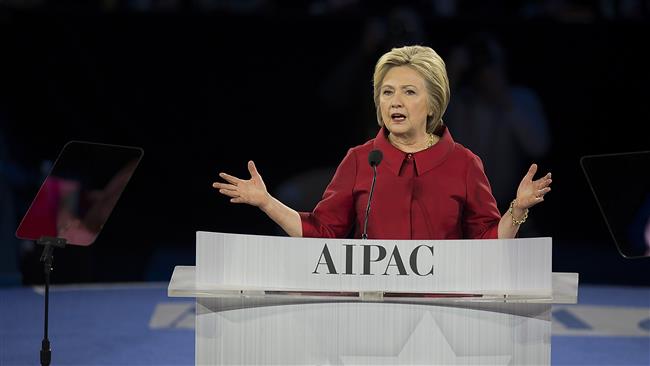
 Aletho News
