Kurds Protest Erdogan’s Invasion, Bombings of Iraq
Sputnik – 10.12.2015
Kurds in Iraq protested Turkey’s invasion of Iraq, which is a threat to both the independence of Iraq and the Kurds living in the northern part of the country.
Although Turkey found a friend in Iraqi Kurdistan’s most dominant clan leader and current president Massoud Barzani, many Iraqi Kurds have opposed the measure.
On Wednesday, Turkish jets bombed Iraq, hitting the mountainous Qandil region, on the border with Iran, AP reported. According to Turkey, the mountains are home to camps of the Kurdistan Workers’ Party, banned in Turkey.
“Yesterday, in multiple provinces of Iraqi Kurdistan there were popular manifestations, which local politicians also took part in. The protest expressed a harsh condemnation of the invasion and quartering of Turkish troops on the territory of a foreign state,” head of Kurdish News Network (KNN) Sohayeb Ahmad Kakeh Mahmoud told Sputnik Persian.
Mahmoud added that protesters chanted nationalist slogans, expressing their disapproval of the Kurdistan Regional Government’s silence in regards to the Turkish military’s actions. At the same time, Barzani left Iraq to hold talks with Turkey’s President Recep Tayyip Erdogan in Ankara.
Syrian Kurds also reportedly condemned Erdogan’s actions.
“[Democratic Union Party head Salih Muslim] emphasized that Turkey is violating the territorial integrity of another state. Muslim also made an important statement: Turkey, which is ready to defend its territorial integrity at all costs, even shooting down Russian planes on its border for so-called airspace violations, yet itself invades an independent state,” Mahmoud added.
Is Iran Next on Erdogan’s Hit List?
Turkey has also continued to attack Kurdistan Workers’ Party positions in the Qandil Mountains, which border Iran.
“Despite the Turkish air force now attacking Qandil, the mountainous region bordering Iran, I still believe that Ankara is not ready to open yet another front by starting a war with Iran,” Mahmoud said.
Turkey has also managed to turn nearly all of its friends in the region into enemies, as Iranian Ettelaat newspaper’s Abulkasem Kasemzade recently noted, breaking the relationships it once had with Russia, Syria and Iran.
“Turkey has now simply surrounded itself with a circle of confrontation. On one hand, there is cooled Russia, from another, scrapes associated with the exposure of its collaboration with Daesh terrorists, lastly the simply insufficiently considered military operation against Kurds,” Mahmoud added.
According to Mahmoud, Syria and Iraq must cooperate to drive Turkish troops out of Iraq, as the invasion, and Turkey’s attacks on Kurdish groups in the region, is dangerous for Kurds living in Iraqi Kurdistan.
100,000 foreign troops incl. Americans to be deployed in Iraq, MP claims
RT | December 10, 2015
The US is to send some 10,000 troops to Iraq to provide support for a 90,000-strong force from the Gulf states, a leading Iraqi opposition MP has warned. The politician said the plan was announced to the Iraqi government during a visit by US Senator John McCain.
During a meeting in Baghdad on November 27, McCain told Prime Minister Haider Abadi and a number of senior Iraqi cabinet and military officials that the decision was ‘non-negotiable’, claimed Hanan Fatlawi, the head of the opposition Irada Movement.
“A hundred thousand foreign troops, including 90,000 from Saudi Arabia, the UAE, Qatar and Jordan, and 10,000 troops from America will be deployed in western regions of Iraq,” she wrote on her Facebook page.
She added that the Iraqi prime minister protested the plan, but was told that “the decision has already been taken.”
McCain and fellow hawk Senator Lindsey Graham have both been calling for a tripling in the current number of US troops deployed in Iraq to 10,000, and also advocate sending an equal number of troops to Syria to fight against the terrorist group Islamic State (IS, formerly ISIS/ISIL) and the government of Syrian President Bashar Assad. The Americans would prop up a 90,000-strong international ground force provided by Sunni Arab countries like Egypt, Turkey and Saudi Arabia.
“The region is ready to fight. The region hates ISIL – they are coming for Sunni Arab nations. Turkey hates ISIL. The entire region wants Assad gone. So there is an opportunity here with some American leadership to do two things: to hit ISIL before we get hit at home and to push Assad out,” Graham argued during the joint visit to Baghdad in November.
“Saudi Arabia, Egypt, Turkey – they have regional armies and they would go into the fight if we put [the removal of] Assad on the table. Most of the fight will be done by the region. They will pay for this war,” he added.
The US currently has about 3,600 troops in Iraq, including 100 special operations troops deployed last month to take part in combat missions involving hostage rescue and the assassination of IS leaders. The White House is reluctant to commit a large ground force, citing the cost in human lives and money and the possible political ramifications of what will be portrayed by America’s opponents as yet another Western invasion of the Arab world.
The McCain-Graham plan also poses the risk of direct confrontation between the proposed coalition force and Russia and Iraq, which are both militarily assisting the Assad government and may not stay out of the fight – something which the hawkish duo have not factored into their plan.
This is especially true after Turkey’s downing of a Russian bomber plane on the Turkish-Syrian border, which Moscow considered a stab in the back and which sent relations with Ankara to a low not seen for decades.
Baghdad has its own concerns about a Turkish presence on its territory after Ankara sent troops into western Iraq and refused to withdraw them, despite Iraqi protests. Ankara claimed the incursion was made under a 2014 invitation from Iraqi Prime Minister Abadi.
‘Blackwater troops replacing Emirati forces in Yemen’
Press TV – December 10, 2015
A new report says mercenaries and military advisers from the infamous US security firm, formerly known as Blackwater, are replacing UAE troops in the Saudi war in Yemen.
The Beirut-based al-Akhbar newspaper said on Thursday UAE forces are being gradually replaced by recruits from the US-based private military contractor, which now goes by the name, Acamedi.
The move came after the UAE evacuated some of its military sites in Yemen following its failures in several operations, the Lebanese daily added.
According to al-Akhbar, UAE’s move to involve the private military contractor in the Yemen conflict has raised objections among some members of the Saudi-led coalition.
On Wednesday, Yemen’s Arabic-language al-Masirah news website said the commander-in-chief of Blackwater mercenaries in the country was killed in the al-Omari district of Ta’izz Province.
Some Australian, British and French advisers and commanders, plus half a dozen Colombian soldiers, were reportedly among the dead. The mercenaries are part of the Emirati forces that help Saudi Arabia in its war against the impoverished nation.
Blackwater has had to change its name several times due to its ill fame around the world. The company which went by the alias Xe Services before its current name is one of the most notorious private security firms in the world for killing scores of civilians in Iraq, Afghanistan, and Yemen.
Yemen has been under military attack by Saudi Arabia since March 26. The Saudi strikes were launched to undermine Yemen’s Ansarullah movement and bring fugitive former president Abd Rabbuh Mansour Hadi, a staunch ally of Riyadh, back to power.
Turkish jets strike Kurdish positions in Iraq amid rising tension between Ankara & Baghdad
RT | December 9, 2015
Ankara carried out airstrikes targeting Kurdistan Workers’ Party (PKK) forces in northern Iraq, the Turkish army said on Wednesday. The action comes in the wake of rising tensions between Ankara and Baghdad over the deployment of Turkish troops in Iraq.
Ten F-16 fighter jets launched an attack between 10pm and 10:50pm on Tuesday, targeting PKK positions in the Kandil, Hakurk, Zap and Avasin-Baysan regions in northern Iraq, the Turkish General Staff said in a statement. It added that the targets were “destroyed in an aerial campaign.”
Tensions have been rising between Ankara and Baghdad after Turkey deployed hundreds of troops equipped with tanks and artillery to Iraq’s northern Nineveh Governorate last Thursday, saying they will train forces battling Islamic State (IS, formerly ISIS/ISIL).
Baghdad said it had not asked for the help of Turkish forces, and demanded their withdrawal after it said Turkey had “illegally” sent the troops into Iraq. Describing the move as a violation of sovereignty, the Iraqi government also asked NATO to intervene.
Meanwhile, Shiite paramilitary groups have threatened to use force against Turkey unless it pulls its forces out of Iraq. Likening the Turkish incursion to the occupation of Iraq by IS militants, Badr Brigade spokesman Karim al-Nuri said “all options” were available.
“We have the right to respond and we do not exclude any type of response until the Turks have learned their lesson,” Nuri said on Wednesday. “Do they have a dream of restoring Ottoman greatness? This is a great delusion and they will pay dearly because of Turkish arrogance.”
Also on Wednesday, the Iraqi parliament unanimously approved a motion condemning the Turkish intervention, supporting the government in taking whatever measures it viewed as appropriate.
Russia raised the issue at a meeting of the UN Security Council on Tuesday, expressing hope that Ankara will avoid escalating the situation in the region with any further reckless actions. Following the meeting, Russia’s UN envoy Vitaly Churkin said that Moscow expects Ankara to “settle the situation in Iraq in a way that would satisfy the Iraqi government.”
“Now the situation is within the focus of the attention of the Security Council, so we hope it will help resolve [it] to the satisfaction of the Iraqi government, whose sovereignty, territorial integrity and independence will be respected,” he said.
Russian Foreign Minister Sergey Lavrov slammed Ankara’s actions while speaking to Italian media on Wednesday.
Lavrov proposed a thorough examination of how Turkey performs goals set by the coalition in Syria. “We need to examine how a member of the US-led coalition – the Republic of Turkey – performs goals set by the coalition,” the minister said. “Why is it not bombing terrorists as such, but the Kurds instead?”
On Wednesday, Ankara argued that Turkish soldiers were sent to northern Iraq after a threat from IS to Turkish military trainers in the area. Prime Minister Ahmet Davutoglu said that the deployment was an act of solidarity, not aggression.
“The [military] trainers in the Bashiqa camp were threatened by Daesh (Islamic State) because it is 15-20 kilometers from Mosul and they have only light arms,” he told media in Istanbul. “So when these threats increased… we sent some troops to protect the camp, not as an act of aggression but as an act of solidarity.”
Invisible harm from ionizing radiation
By Bjorn Hilt | International Physicians for the Prevention of Nuclear War | December 8, 2015
 Besides the terrible effects of the burst of light that causes eye damage, the heat that sets everything flammable on fire, the electromagnetic pulse that knocks out all electronic devices, and the blast that produces winds with ten times the force of a hurricane, demolishing everything, the detonation of nuclear weapons also leads to the emission of large amounts of ionizing radiation, which has serious deleterious effects on humans and many other species. Ionizing radiation is, in fact, a lurking danger as we cannot see it, we cannot smell it, we cannot hear it, and we cannot feel it immediately. But we certainly get harmed from it.
To reduce exposure to ionizing radiation and the risk of deleterious effects, we doctors usually warn our patients against having frequent examinations or procedures that involve x-rays. That is because x-rays are ionizing radiation that can harm your body in the same ways as radiation emitted by nuclear detonations. The main difference is that, for medical purposes, the radiation is applied in a controlled way.
The international standard unit for the dose of ionizing radiation is the Sievert. National guidelines in many countries warn against people having a cumulative dose of ionizing radiation exceeding 0.001 Sievert/year. The dose from a full body CT scan is 0.01 – 0.03 Sievert.
The ionizing radiation to which everybody in the vicinity of a nuclear detonation is exposed is so high and immediate that measuring in Sievert does not have much meaning. Such exposures are measured in Gray, where five Gray is reckoned to be lethal to 50% of those exposed (LD50). Even though these types of exposures are not directly comparable, for the common types of ionizing radiation, 1 Gray equals approximately 1.3 Sievert.
The intensity of the radiation at the epicenter of the atomic bombing of Nagasaki was estimated to be 320 Gray; one kilometer away it was 7.83 Gray; two kilometers away it was 0.13 Gray. The first two exposures are lethal; the third is about 130 times above the recommended yearly dose for humans. In an attempt to transform the radiation from a nuclear explosion into a standardized dose estimate, the highest reading of ionizing radiation from the fallout from the Trinity bomb, 32 km away from the detonation, and 3 hours later, was 0.190 Sievert/hour which equals 1.700 Sievert/year. There is evidence that a single dose of about five Sievert may be lethal. Cancer risk in general is reckoned to increase by approximately 5.5% for every Sievert/year.
Ionizing radiation and, in particular, gamma radiation, can penetrate tissue and cause harm throughout the body. Cells that have rapid life cycles are the most susceptible to acute damage. If the dose is high enough, the irradiated cells are simply killed by the radiation. That knowledge is used in all kinds of radiotherapy. The most susceptible cells are those of the central nervous system, blood cells, gamete cells, and barrier cells in the gastrointestinal tract. Therefore, symptoms of acute radiation illness are drowsiness and convulsions, anemia and bleeding, and loss of body fluid by bleeding and through the gut. Patients are seen more or less unconscious with skin hemorrhages and bleeding out of every opening of the body. No treatment is available apart for attempts for symptomatic relieve.
Long term effects of too much ionizing radiation include congenital malformations from genetic damage to gamete cells, and an increased risk of different types of cancer as seen in the cohorts of survivors from the atomic bombings of Hiroshima and Nagasaki during the past 70 years.
Detonation of a nuclear bomb generates both direct ionizing radiation from the explosion and also huge amounts of radioactive contamination that can spread with the wind into the atmosphere and precipitate as “fallout” onto land or water. The same can happen as a consequence of nuclear reactor disasters, such as Chernobyl and Fukushima. Such radioactive fallout is immediately deleterious to both humans and animals and can make large areas of land uninhabitable, unpastoral, and uncultivable for decades.
Ionizing radiation is normally present in nature from many sources in the Earth’s crust. Humans and animals have evolved to endure small amounts of ionizing radiation, with an assumed (but nevertheless controversial) “safe” dose of less than 0.001 Sievert/year. That is a fine and tender balance that should not be disturbed by the emission of unnecessary and dangerous ionizing radiation anywhere into the environment, whether by nuclear weapons or other human activities.
Cruz Threatens to Nuke ISIS Targets
By Robert Parry | Consortium News | December 8, 2015
As Republican presidential candidates lined up to one-up each other about how they would fight Islamic terrorism, many mainstream pundits questioned the hysteria and took particular aim at billionaire Donald Trump for seeking a moratorium on admitting Muslims to the United States, but Trump’s proposal was far from the most outrageous.
Getting much less attention was a statement by Sen. Ted Cruz of Texas, who is considered by many a more likely GOP nominee than Trump. Cruz suggested that the United States should nuke the territory in Iraq and Syria controlled by Islamic State militants.
“I don’t know if sand can glow in the dark, but we’re going to find out,” Cruz told a Tea Party rally in Cedar Rapids, Iowa. In reference to Cruz’s comment, a New York Times editorial added, “whatever that means.” But the phrase “glow in the dark” popularly refers to the aftermath of a nuclear bomb detonation.
In other words, Cruz was making it clear to his audience that he would be prepared to drop a nuclear bomb on Islamic State targets. While the bombastic senator from Texas was probably engaging in hyperbole – as he also vowed to “carpet bomb them into oblivion” – the notion of a major candidate for President cavalierly suggesting a nuclear strike would normally be viewed as disqualifying, except perhaps in this election cycle.
While Cruz drew little attention for his “glow in the dark” remark, Trump came under intense criticism for his proposal to block the admission of Muslims into the United States until the nation’s leaders can “figure out what is going on” in the aftermath of the Dec. 2 terror attack by a Muslim husband-and-wife team in San Bernardino, California.
Across mainstream politics and media, Trump’s idea was decried as both “unprecedented” from a top candidate for President and a likely violation of the U.S. Constitution which respects freedom of religion and requires equal protection under the law.
Other Republican candidates, even the more “moderate” ones, also talked tough about Muslims in what shaped up as a heated competition to outdo one another in appealing to the angry and frightened right-wing “base” of the GOP.
Former Florida Gov. Jeb Bush argued that the threat from Muslims was unique: “The idea that somehow there are radical elements in every religion is ridiculous. There are no radical Christians that are organizing to destroy Western civilization. There are no radical Buddhists that are doing this. This is radical Islamic terrorism.”
Bush’s comment failed to recognize that the institution of Christianity has been at the center of “Western civilization” since the latter days of the Roman Empire and that “Christian” nations have routinely plundered other civilizations all over the planet, including across the Islamic world both in Asia and Africa. [See Consortiumnews.com’s “Why Many Muslims Hate the West” and “Muslim Memories of West’s Imperialism.”]
Though inspired by a pacifist, Christianity has established a record as the most bloodthirsty religion in history, with its adherents conducting massacres and genocides in North America, South America, Asia, Africa, Europe and Australia – every continent except Antarctica, which is largely uninhabited by humans. In many cases, European Christians justified the repression and extermination of non-Christians as the will of God, deeming indigenous people to be “heathens.”
The violence by Western nations against Muslims also is not something confined to history books and the distant past. In 2003, U.S. President George W. Bush and British Prime Minister Tony Blair led an unprovoked invasion of Iraq which killed hundreds of thousands of people and destroyed much of Iraq’s national infrastructure.
In other words, in the view of many Middle Easterners, the West continues to wage war against their civilization. However, none of that reality is reflected in the current U.S. political and media debate, even when a major Republican candidate raises the prospect of dropping the Bomb.
Investigative reporter Robert Parry broke many of the Iran-Contra stories for The Associated Press and Newsweek in the 1980s. You can buy his latest book, America’s Stolen Narrative, either in print here or as an e-book (from Amazon and barnesandnoble.com).
Iraq calls on NATO to pressure Turkey into withdrawing troops
Press TV – December 8, 2015
Iraqi Prime Minister Haider al-Abadi has called on NATO to pressure Turkey into recalling its troops from the northern Iraqi province of Nineveh.
According to a statement released by the Iraqi government on Tuesday, Abadi made the request during a phone call with NATO Secretary General Jens Stoltenberg.
“NATO must use its authority to urge Turkey to withdraw immediately from Iraqi territory,” read the statement issued after a 48-hour deadline for the troops’ removal expired.
Despite Iraq’s ultimatum, Ankara still has some 150 heavily-armed soldiers stationed on the outskirts of the city of Mosul, the capital of Nineveh province.
Turkey refuses to recall its troops claiming they are stationed there to train Iraqi forces battling the Daesh Takfiri militants.
During a press conference in the Ankara on Tuesday, Turkish Foreign Minister Mevlut Cavusoglu announced that further troops deployment will be halted but those already stationed will not be withdrawn.
Meanwhile, the UN Security Council is set to hold closed-door talks, called by Russia, on Ankara’s military activities in Iraq and Syria.
“We want the secretariat to tell us what is happening in the region,” said Russia’s representative to the council, Peter Iliichev. “We want the secretariat to tell us what is happening in the region.”
Ties between Moscow and Ankara have been strained after Turkish jets shot down a Russian fighter plane on November 24.
Moscow has imposed a number of economic sanctions against Ankara following the incident.
UN passes Iranian-proposed nuclear disarmament resolution
Press TV – December 8, 2015
The United Nations General Assembly (UNGA) has passed a resolution proposed by Iran aimed at bringing about the disarmament of nuclear powers.
On Monday, the Assembly voted 121 against 48 in favor of the non-binding resolution, which had already been cleared by its First Committee, aka Disarmament and International Security Committee. The voting saw 12 abstentions.
The resolution demands practical action by all nuclear-armed countries toward disarmament and the promotion of international stability and security for all.
It also demands unilateral steps by such countries to scale down their nuclear arsenals as well as more transparency regarding their nuclear arms capabilities and implementation of international agreements.
The Islamic Republic had devised the resolution based on the ratifications of the Review Conferences of the Nuclear Non-Proliferation Treaty in 1995, 2000, and 2010.
The majority of the 120-member Non-Aligned Movement threw their support behind the resolution. The United States, Israel, Canada, Britain, Russia, France, and Germany were among those voting against it, while China, South Korea, Japan, India, and Italy, among others, abstained.
Speaking after the approval of the resolution, Iran’s Ambassador to the UN Gholam Hossein Dehqani (seen below) said, “It has been declared in Article VI of the Nuclear Non-Proliferation Treaty that these countries are obliged to initiate negotiations for the disarmament and have been asked to put into force step-by-step measures for decommissioning nuclear weapons and then destroying them. Unfortunately, though, no effective or serious step has been taken in this direction.”

“The international community is insistent upon nuclear disarmament and the nuclear-armed countries’ implementation of their obligations. The current trend suggests that slowly, nuclear-armed countries and the Zionist regime (Israel), which possesses nuclear weapons, will move toward isolation in the General Assembly’s First Committee and other assemblies, and will certainly end up in worse circumstances every day,” the Iranian official added.
Israel is regarded as the only possessor of nuclear weapons in the Middle East.
Is Islamic State now equipped with a NATO air force?
By John Wight – RT – December 8, 2015
Within the past two weeks Turkish F-16s have shot down a Russian SU-24 bomber and a US-led coalition airstrike has hit a military base controlled by the Syrian Arab Army. It begs the question: are these people actually insane?
ISIS could not have had a better two weeks than these past two if it had its own air force. But with the US and Turkey among its ‘enemies’ it appears they don’t need one, for those countries have been doing its job for them.
How else are we to explain the strikes carried out by both countries, not against ISIS but against Russia and Syria, who are fighting ISIS?
Never in the annals of military conflict has such a dangerous and absurd scenario been played out as the one being played out in Syria today. Two entirely separate multi-nation coalitions are engaged in combat operations against one enemy, thus dictating they coordinate and combine their efforts. Yet such is the lack of leadership and statesmanship within one of those coalitions – led by Washington – that the prospect remains a distant dream even after a recent spate of atrocities resulted in the mass murder of citizens and civilians belonging to both.
This at least is one narrative, which holds that incompetence, stupidity and hubris is the root of the problem, impairing the judgment and clarity of the West when it comes to Syria and the wider region, responsible for allowing a terrorist menace in the shape of ISIS and other extremist groups to grow and enjoy the kind of success they should never have enjoyed.
There is a second narrative to be explored, however, one far more insidious. It is that these attacks are evidence of the real objective of the West and its allies when it comes to Syria, despite the rise of ISIS, which remains regime change in Damascus.
Turkey’s president, Recip Erdogan, has long harbored this objective. In fact, more than harbor the man has been utterly obsessed with it. He has taken every opportunity to rail against Syria’s president, attributing the entire blame for the Syrian crisis and conflict to him, even though the majority of Syrians support their president and have done so throughout.
Never in the annals of military conflict has such a dangerous and absurd scenario been played out as the one being played out in Syria today.
With Russian airstrikes bearing down on the illicit oil trade between ISIS and Turkey, the strong suspicion is that Turkey’s desperate action in shooting down the Russian bomber was directly related to it being unmasked as a key actor in facilitating the terrorist group, rather than an ally in the struggle against it.
This has now been followed by Turkey’s military incursion into northern Iraq, where its troops have occupied territory around Mosul, slap bang in the middle of the oil smuggling route from the oilfields located there up into Turkey.
The Turks claim they are there to train Kurdish Peshmerga forces they are supporting, at the request of the Kurdistan Regional Government, led by Massoud Barzani, which administers a de facto independent Kurdish state in northern Iraq in defiance of central government authority in Baghdad. The equally independent oil trade controlled by he Barzani administration has come under attack from the PKK over the past few months, which has managed to destroy pipelines transporting oil from the Mosul region to Turkey.
By now the penny should be starting to drop.
Erdogan is a man who many consider to be engaged in a neo Ottoman policy of re-establishing Turkey’s hegemonic influence in the region, exploiting the chaos and turmoil across its southern border in both Iraq and Syria to establish Turkey as a regional power broker and architect of a Sunni state comprising eastern Syria across into northern Iraq.
The collapse of US leadership in the region, measured in the rise of ISIS, has left a vacuum that its regional allies – Turkey, Saudi Arabia and Israel – are exploiting with an aggressive pursuit of their own national and sectarian agendas. Those agendas are contrary to the interests of stability and security, and unless reined in can only lead to more chaos and conflict rather than less.
The point is that the aforementioned states are leading the wider Western strategy towards the region at this point, the primary aim of which, as mentioned, is the toppling of the Assad government in Syria and the weakening of Iranian influence in Iraq and Lebanon.
The US airstrike, despite Washington’s denial of responsibility for it, should be seen with the aforementioned in mind. It also helps explain the recent entry of British airstrikes into the Syrian conflict.
Less than the official justification of helping to crush ISIS, Britain is intent on establishing an overt military presence in Syria with its eyes not on the ISIS stronghold of Raqqa but on Damascus in advance of the upcoming peace talks in Vienna. We know this because no sooner had the British Government received the vote required to press ahead with airstrikes from the House of Commons than British foreign secretary Phillip Hammond was talking up the need for a transitional government in Damascus, making it clear that President Assad cannot remain in power.
Overall it is becoming increasingly apparent that for the West and its regional allies, such as Turkey, ISIS is but a sideshow and that the real priority is the removal of the Assad government. They want a pliant alternative in its place, one willing to be their place man in a region that has long been the focus of their geopolitical, strategic, and economic priorities.
In the process they are willing to court the risk of a major conflagration, evidence of their failure to learn the lessons of history and playing with fire as a consequence.
The First World War was the last major conflict into which the major powers sleepwalked. It resulted in a level of carnage that undermined the very foundations of civilization and led inexorably to the collapse of the Austro-Hungarian and Ottoman empires. The response to the Western powers of the collapse of the latter in the Middle East, in moving in to carve up the spoils between them regardless of the wishes and interests of the people living there, has brought us a century of turmoil and conflict from then to now.
In a very real sense, the world of today is paying the price of the crimes of the past. As a consequence, committing more crimes is more than folly it is tantamount to dragging us back in time to a hell of our own creation.
Follow John Wight on Twitter @JohnWight1
Baghdad Ankara ultimatum nearly up, Moscow to discuss Turkey military invasion at UNSC
RT | December 8, 2015
As a Baghdad-issued ultimatum for Turkish troops to leave the area is nearing its deadline, Russia intends to bring up Ankara’s invasion of northern Iraq without the country’s request at the UN Security Council on Thursday.
“The issue will be raised at a closed-door meeting,” TASS cited a diplomatic source within the organization as saying. The source also dismissed earlier reports that Moscow was going to call a separate UNSC meeting.
According to Iraqi media, Prime Minister Haider Al-Abadi has put the Iraqi Air Force on high alert and the ruling National Iraqi Alliance has given the prime minister the go-ahead to take “any measures” to ensure territorial integrity and protect its borders, including addressing the UN and the Arab League.
Turkish Foreign Ministry announced on Tuesday that the country is suspending further deployment of troops to Iraq, but refuses to withdraw servicemen and hardware already on Iraqi soil.
Baghdad was informed of Ankara’s decision in a phone conversation between the Turkish and Iraqi foreign ministers late on Monday.
Turkish Foreign Minister Mevlut Cavusoglu reiterated Ankara’s respect for Iraq’s territorial integrity, Foreign Ministry spokesman Tanju Bilgic told reporters.
In a separate statement, Turkish PM Davutoglu expressed readiness to visit Baghdad as soon as possible to discuss the current troop deployment crisis between Ankara and Baghdad.
Iraqi media reported earlier that on December 4 Iraq’s PM said: “Turkish troops numbering around one regiment armored with tanks and artillery entered Iraqi territory,” labeling the incident as a “serious breach of Iraqi sovereignty.” He added that the move “does not conform with good neighborly relations,” and called on to Ankara to “withdraw immediately from Iraqi territory.”
Ankara’s reaction has been offhand. It claimed up to 150 of its troops had crossed into Iraq to train forces battling Islamic State (IS, formerly ISIS/ISIL).
Although the US-led anti-IS coalition was aware of Turkey’s move, it emerged later that Ankara’s deployment is not part of the efforts of the US-led coalition battling Islamic State.
Turkish troops did not simply cross the Iraqi border into the Nineveh province, but penetrated 100 kilometer into Iraq, according to Reuters. They reached the Bashiqa region, about 10 kilometers northeast of Mosul, Iraq’s second largest city, which has been occupied by IS terrorists since June 2014.
Turkey is lying when it says it received Baghdad’s blessing to invade part of its territory, according to the Iraqi PM.
On Monday, the governor of the Iraqi province of Nineveh told Sputnik that the number of Turkish servicemen there has reached 900.
On December 6, Baghdad warned that “Iraq has the right to use all available options, including resorting to the UN Security Council if these forces are not withdrawn within 48 hours,” reiterating the same ultimatum on Monday giving Ankara 24 hours to leave the area.
Iraqi Defense Minister Khaled Obeidi turned down his Turkish counterpart’s invitation to visit Ankara. A spokesman for the Iraqi Defense Ministry said the visit will take place only after Turkey sends “positive signals” regarding the withdrawal of its troops from northern Iraq.
Ankara refused to extract its military, claiming that heavily armed troops deployed to a camp near Mosul are needed to protect an Iraqi Kurd training mission, which is taking place near the frontline with Islamic State.
“It is our duty to provide security for our soldiers providing training there,” the Guardian cited the Turkish Foreign Minister Mevlüt Çavuşoğlu as saying in an interview with Kanal 24 television. “Everybody is present in Iraq … The goal of all of them is clear. Train-and-equip advisory support is being provided. Our presence there is not a secret.”
Featured Video
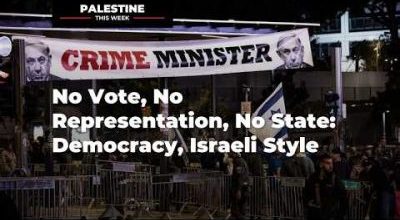
No Vote, No Representation, No State: Democracy, Israeli Style
or go to
Aletho News Archives – Video-Images
From the Archives
Sanctions, War and the Policy of Dual Containment
By SASAN FAYAZMANESH | March 17, 2008
It is now nearly three decades since the Unites States adopted the policy of dual containment of Iran and Iraq. While much has been written about the containment of Iraq, there has been very little in-depth analysis of this policy when it comes to Iran. In a book that is going to be released on March 31, 2008, entitled The United States and Iran: Sanctions, Wars and the Policy of Dual Containment (Routledge), I attempt to address this shortcoming by investigating when and why the US policy of containment of Iran came about, how it evolved, and where it stands today.[1] To the extent that Israel has been involved in US policy making, the study will also include the role that Israel has played in the containment of Iran. Also, since the fate of Iran has been inextricably linked to that of Iraq, occasionally the investigation will overlap with the containment of Iraq.
The policy of dual containment of Iran and Iraq originated during the Carter Administration, but it was not until the Clinton Administration that the expression “dual containment” became popular. … continue
Blog Roll
 Aletho News
- No Vote, No Representation, No State: Democracy, Israeli Style
- Zionist Bought Senate Blocks Information About American Citizens Killed By Israel
- While Gaza dominates the UN, these are the people keeping it alive
- New Report: “Scholasticide and Genocide in Gaza: Assessment, Testimonies and Legal Analysis”
- ‘THAAD Delusion’: Iran war exposes US missile shield limits – The Atlantic
- Moscow issues warning to NATO over Russian exclave
- Yes, the Iran war has destroyed Trump’s presidency
- The fallacy of US delusions about Iran’s economic collapse
- Hezbollah denies Syria cell link, warns of Israeli plan to sow discord
- The legacy of US sanctions, war, and occupation in Iraq
- If Americans Knew
- Mamdani releases plan to combat antisemitism and hate crimes in New York City
- Iran’s Revolutionary Guards Publish Letter to the American People
- DMFI launches $1 million ad campaign supporting Virginia’s Elaine Luria
- US Senate blocks resolution seeking report on Americans killed by Israel
- Israeli Attacks Kill Ten Palestinians in Gaza
- Massacre at Minab: The School That Became a Grave
- Israeli media: The IDF Shows It Doesn’t Turn a Blind Eye; It Actively Emboldens Settler Havoc
- As settlers ravage West Bank, Israeli forces kill 10 in Gaza – Daily Update
- New Report: “Scholasticide and Genocide in Gaza: Assessment, Testimonies and Legal Analysis”
- Ex-Biden officials are desperate for a Gaza scapegoat
- No Tricks Zone
- Green Energy Debacle: German Expert Professor Fritz Vahrenholt Warns Of Severe Economic And Social Consequences
- Two More Paleo Reconstructions Affirm Meters-Higher Sea Levels Across Ireland, Brazil 7000-6000 Years Ago
- New Study: Earth And Venus Surface Warmth Largely Explained By Convection And Lapse Rate, Not CO2 Or Radiation
- 2025 Nature Paper Claiming Worsening Global Drought Gets RETRACTED …Heavily Flawed
- New Study: ‘Global Drought Shows No Detectable Recent Acceleration Under Climate Warming’
- Economic Masterminds: German Socialists Suggest Taxing Productivity Gains Stemming From Using AI
- The South China Sea Has Not Been Cooperating With The Climate Change Narrative
- Energy Crisis: Germany Enters Heating Season With Historically Low Gas Reserve Fill Levels
- New Study: The Antarctic Ice Sheet Gained Mass From 2020-2024 Due To Staggering Snow And Ice Accumulation
- Study: Ocean Heating Rates From Thousands Of Years Ago ‘Dwarf’ Modern Ocean Heating Rates

