Polls Reveal Montenegrin Public Are Against NATO Accession
Sputnik – 02.12.2015
NATO’s official invitation for Montenegro to join the alliance is not backed by the people of the country, most of whom are against the accession, according to social polls, a leader of the opposition Democratic Front coalition told Sputnik on Wednesday.
“It cannot be said that the official invitation by NATO is favorably accepted by the people of Montenegro because if you judge by social polls or just talking with the people, the majority is against membership in this alliance,” Andrija Mandic, the leader of the New Serbian Democracy party, said, adding that “NATO just wants Montenegro to join so it can control the country.”
Earlier on Wednesday, NATO alliance member states accepted Podgorica’s bid to join the alliance and invited the country to begin accession negotiations.
Mandic said that the current political regime in Podgorica would like to avoid holding a referendum on the country’s joining the alliance because if a referendum were to be held, the majority of Montenegrins would vote it down.
“As the opposition, we favor a referendum, but a just referendum so that the authorities don’t falsify the results as they did with the previous elections. I’m afraid that if the authorities try to bypass a referendum, the country will end up on the brink of a domestic conflict,” Mandic said.
He added that Montenegro should remain neutral and not join an alliance that is against Russia.
“We would become a member of an attacking bloc that is first and foremost directed at Russia,” he added.
After the Paris Massacre: The Evil Axis of US Allies
By Taylan Tosun – teleSUR – November 30, 2015
The horrible Paris massacre allegedly committed by the Islamic State (IS) militants immediately rose to the top of the international agenda. Western powers, particularly the U.S. and France, declared that restriction of the Islamic State’s domain of operation and, subsequently, its overall destruction were their primary objects. Thus, immediately after the Paris massacre French warplanes bombed Al-Raqqah, the so-called capital of IS in Syria.
The first point of discussion, which came forward in the mainstream media concerning the war against IS was the following: “Is there a possibility that the international coalition against IS led by the U.S. could inflict serious blows to the terrorist organization merely by means of air raids?” Many commentators disagreed: The coalition members were not able to effectively harm IS in such residential areas as Al-Raqqah just by air bombardment unless they risk heavy civilian causalities.
I think that this line of discussion serves to cover up more fundamental realities on the ground by reducing the issue of the fight against IS to merely military tactics. Western powers, notably the U.S., have two “important” allies, which have been supporting IS since the beginning of the Syrian civil war: Turkey and Saudi Arabia. Strangely enough the indirect roles of these two countries in the massacres of Lebanon and Paris have not been questioned.
Saudi Arabia has assumed a major role in the promotion and popularization of Salafism throughout the Mideast and in sponsoring the Jihadist terrorist organizations. The fact that Saudi Arabia has been tolerated by the West despite its support for Salafism is because Saudi Arabia acted as a sort of “shield” in line with the Western interests against the proliferation of Iran-Shia influence in the region and has been one of the major customers of the U.S. arms industry.
Turkey is a perfect match for Saudi Arabia. The Turkish government has shown its best efforts to have the PYD/YPG included in the list of terrorist organizations before Paris massacre. One of the first moves of Turkey was to prevent YPG from extending its operations to the west of Euphrates River, when war policy was restored with an aim to limit the gains of Kurds. Thus Turkey prevented YPG/YPJ to repel ISIS out of Jarabulus. While the PYD controls most of the Turkish-Syrian border, Turkey supported IS to keep the 90-kilometer section of the border extending from Jarabulus to Afrin Canton under its control. Why? Of course, it aimed to help IS with maintaining its relationship with the world, allowing militant candidates to participate in IS, and probably for continuing ammunition supplies.
What is the meaning of the so-called ‘cleaning’ operation by US-Turkey to remove ISIS from the Jarabulus-Azez line?
Turkey’s pro-IS policy became unsustainable after the West established the anti-IS coalition and started to bomb IS targets. Shortly after the June 7 elections, the Turkish government aimed to kill two birds with one stone by participating in the anti-IS coalition. As a result, Turkey both secured Western support in ending the ceasefire period in the country, and gained a ‘legitimate’ ground for negotiating its plans to overthrow Assad and restrict Rojava by means of Salafist organizations.
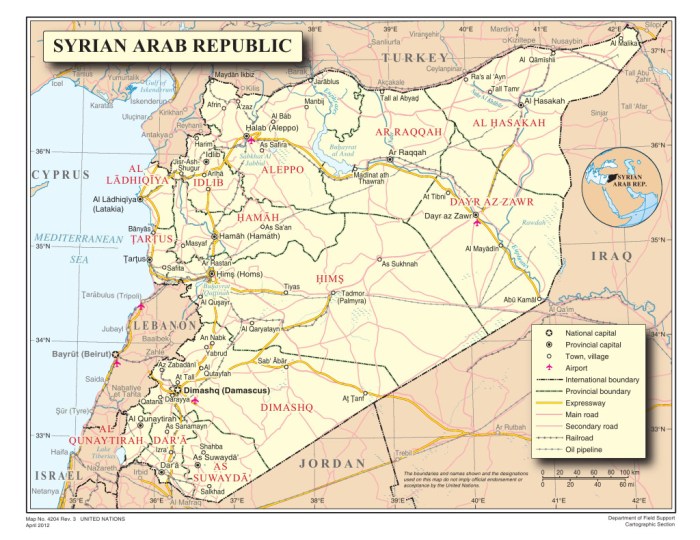
Turkey’s plan as offered to the U.S. and other Western allies was as follows: Establishment of a 90-kilometer wide and 50-kilometer deep ‘safe zone’ between Jarabulus and Azez, very close to the Afrin Canton, as secured by the warplanes of Turkey and allies; removal of IS from the zone by occupation of the Turkish Armed Forces either or not in cooperation with allied powers; and settlement of migrants that are currently located in the camps in Turkey or that would flee from Syria in the future. Therefore, Turkey would be liberated from the European pressure on the migration issue, prevent the physical connection between the Kurdish Cantons, and the demographics of the region would become Sunni-Arab dominated thanks to the migrants. There also was a more strategic goal: The Jaish al-Fatah coalition, which was promoted by Turkey, Qatar, and Saudi Arabia, proved to be successful in Aleppo and surroundings. Upon imposition of the safe zone, the Turkey-Aleppo line would be secured and the coalition, basically composed of al-Nusra Front, an associate of al-Qaeda, and Ahrar ash-Sham, would be allowed to further constrict the Assad government.
Russian military operations in Syria that started on September 30 substantially complicated the above plan. As a matter of fact, Russia was involved in the war to eliminate the threat on Latakia, the heart of the Assad government, and prevent the total loss of Aleppo. Idlib city, under control of the opponents, located in northern Syria has strategic importance for the control of Aleppo. Therefore, Russia shifted a part of its operations to Northern Syria and started to harass Turkish jets by occasionally entering the Turkish airspace. This was then described as establishment of the safe zone, yet it was now considered against Turkey.
It is safe to suggest that Obama’s clear rejection of Turkey’s ‘safe zone’ proposal during the G-20 summit was based among other things on refraining from any confrontation with Russia to the north of Aleppo.
The Paris massacre allowed a Russian-U.S. rapprochement as regards Syrian policies. Parties declared that their primary objective was to weaken IS, but not to overthrow the Assad government. These developments fostered hopes for the Geneva negotiations, which aimed to end the civil war in Syria.
Nevertheless, U.S. secretary of state Kerry announced immediately after the G-20 Summit that Turkey and the U.S. would take a joint operation to clean the Jarabulus-Azez line of IS.
What does this operation plan, which was announced after the ‘safe zone’ proposal was shelved, mean?
It means implementation of the ‘safe zone’ project at a more modest level. Ground forces will not be involved in the operation. Instead, Syrian opponents with the support of Turkish and U.S. jets would clean the said part of the Turkish border from IS. On the grounds that the Free Syrian Army ceases to exist in the field, the pro-al-Qaeda al-Nusra Front and its associate Ahrar ash-Sham would assume the ground operations, accompanied by the Syrian Turcoman forces.
In other words, IS would be replaced by other Salafist organizations. The involvement of YPG, the only secular force fighting against ISIS, and connection between the Kurdish Cantons would be prevented. Lastly, by leaving the Jarabulus-Azez line in the hands of such organizations as al-Nusra Front and Ahrar ash-Sham, which have a comparable record of civilian massacres, the pressure of the said Salafist organizations on the regime over northern Syria would be reinforced given that these organizations have Idlib and a large part of Aleppo under their control.
***
It seems very unlikely that IS is to be weakened and peace is to be restored in Syria, given that the U.S. continues to protect its allies, Turkey and Saudi Arabia, which deal with dirty business in Syria. Furthermore, the available data suggests that the West did not give up its goal to maintain continuous pressure on the Assad government and sustain controlled chaos in Syria, albeit the same has currently receded into background. The controlled chaos policy ultimately means protection of the power of IS and paving the way for likely massacres in the future.
US Involvement in Turkey’s Shoot Down of the Russian Jet
By Maram Susli – New Eastern Outlook – 01.12.2015
In the wake of Turkey’s shoot down of the Russian Su-24, the Russian Foreign Minister Sergei Lavrov called the attack a planned provocation. He went further on to suggest the U.S. had given Turkey permission to shoot down the Jet. He explained that countries using US manufactured weapons must ask the U.S. for permission before using them in operations. The aircraft used to shoot down the Su-24 was a U.S.-made F-16. Indeed, there is evidence to suggest that not only did the U.S. give Turkey permission, but that it was moving the strings behind the entire operation.
Two Russian aircraft were attacked that day, but the second was a far less publicized incident. A Russian helicopter was destroyed by the CIA backed FSA using U.S. provided Anti-Tank TOW missiles. The helicopter was on a rescue mission to find the missing Su-24 pilots and the attack resulted in the death of a Russian Marine. Since the U.S. backs the FSA and provided the TOW missiles which were used in the attack, they are at least indirectly responsible, if not outright complicit in it. But instead of apologizing to Russia, U.S. state department spokesman Mark Toner defended the actions of the FSA. He also defended the actions of the Turkmen insurgents who shot at the parachuting Russian pilots, a war crime under the first Geneva convention. Such an antagonistic position reveals that the U.S. was not displeased by the attacks on Russia.
In the months leading up to the attack, there were several indicators the U.S. knew it would take place. On September 3rd, the families of U.S. staff members were urged to evacuated out of Incirlik air base in Turkey and were given until October 1st to do so. On November 3rd, the US deployed F-15 fighter Jets to Turkey which are specifically designed for air-to-air combat. Since ISIS has no planes, the target could only have been Russian aircraft. Most significantly, on October 21st, the U.S. and Russia signed a deconfliction protocol, in order to ‘avoid clashes in Syria’s skies’. This entailed giving the US information about where and when Russia will conduct sorties. Russian president Putin suggested this information was passed on to Turkey by the U.S. and used to shoot down the Sukhoi-24.
During the months leading up to the attack, US War hawks were increasingly calling for a direct confrontation with Russia, an act that could lead to a third world War. Several US Presidential candidates, including Hillary Clinton, were effectively calling for a shoot down of a Russian Jet. Some of the more direct comments included,
Chris Christie: “My first phone call would be to Vladimir, and I’d say to him, listen, we’re enforcing this no-fly zone,” adding that he would shoot down Russian warplanes that violate the no-fly zone.
Jeb Bush: “We need to have no fly zones. The argument is, well we’ll get into the conflict with Russia, maybe Russia shouldn’t want to be in conflict with us. I mean, this is a place where American leadership is desperately needed.”
The spokesman for the Zionist Israeli lobbying group AIPAC, Senator John McCain, suggested arming Al Qaeda Linked Rebels with Anti-Aircraft weapons to shoot down a Russian Jet. An idea which he himself admits was “what we did in Afghanistan many years ago”. The policy which resulted in the birth of Al Qaeda and the rise of the Taliban. Indeed Qatar had been making an effort towards this end. Documents leaked by Russian hackers ‘Cyber Berkut”, revealed that Qatar was negotiating with Ukraine to purchase Anti-Air weapons to help ISIS shoot down a Russian Jet over Syria. It is likely Ukraine refused to sell these weapons, since arming assets which are difficult to control could backfire. After all, US Jets are also using those skies. Flooding the region with hand held Anti-Air weapons could pose a threat to them in future. Turkey is a far more reliable and controllable proxy which is capable of shooting down Russian Jets.
Perhaps one of the most significant War hawk statements comes from the Former national security adviser Zbigniew Brzezinski. In an Op-ed for the Financial Times Brzezinski suggested that Obama should retaliate if Russia continues to attack U.S. assets in Syria, i.e the Al Qaeda linked rebels. Brzezinski, has experience using Al Qaeda as an asset, having been one of the masterminds behind its creation in Afghanistan. He maintains a great deal of influence and respect in US politics.
It is likely Brzezinski’s dangerous advice to attack Russia was taken on board by US decision makers. But instead of risking a direct conflict with two nuclear powers, Turkey was used as a proxy. Turkey has its own agenda in attacking Russian jets outside of the U.S.’s interests. Turkish president Erdogan has already committed himself to an anti-Assad position far beyond the point of no return. This was over a gas pipeline deal with Qatar that is now looking more like a pipe dream. Russia has been actively fighting not only ISIS, but Al Qaeda and its affiliates who are crucial for Turkey’s plans to overthrow the Syrian government. The Su-24 was bombing the Al Qaeda-linked Turkmen insurgents, before it was shot down.
On October 8, NATO made a statement that it would defend Turkey against Russia, after a Russian jet briefly passed through Turkish airspace on its way to bomb targets in Syria. Such statements may have encouraged Erdogan to take the exceptional risk of shooting down a Russian jet under the assumption that Turkey would be protected by NATO. On November 12th, EU countries committed to pay Turkey 3 billion dollars. Interestingly this is the same amount Turkey is estimated to lose, as a result of Russian sanctions put in place in the wake of the attack. This could have been Part of NATO’s assurance to Erdogan that he would lose nothing by going ahead with the attack.
Erdogan has become increasingly frustrated, even after four years of war, the Syrian state shows no sign of collapse. It might not have been too difficult for the U.S. to convince the desperate Turkish leader that attacking a super power was in his best interest.
Maram Susli also known as “Syrian Girl,” is an activist-journalist and social commentator covering Syria and the wider topic of geopolitics.
Leading Israel Lobby Senators call for Massive US troop Deployment in Syria, Iraq
Press TV – November 30, 2015
Two US senators are demanding that Washington deploy some 20,000 troops to Syria and Iraq.
Republicans John McCain and Lindsey Graham called on Sunday for Washington to nearly triple the US military force levels in Iraq to 10,000, and send an equal number of troops to Syria to ‘counter’ Daesh (ISIL) terrorists in both countries.
McCain and Graham also criticized President Barack Obama’s Daesh strategy, which relies on airstrikes and modest support to what Washington deems as ‘moderate’ militants in Syria, stressing the need for greater US [intervention] in the Middle East conflicts.
“The only way you can destroy the caliphate (Daesh) is with a ground component,” said Graham who is seeking his party’s presidential nomination. “The aerial campaign is not turning the tide of battle,” Reuters reported.
McCain, chairman of the Senate Armed Services Committee, recently proposed intervention in Syria by a European and Arab ground force backed by 10,000 US military advisers and trainers.
On Sunday, both senators told reporters during a visit to Baghdad, the Iraqi capital, that US personnel could provide logistical and intelligence support to a proposed 100,000-strong force from countries like Egypt, Turkey and Saudi Arabia.
Last month, the US president ordered the deployment of dozens of special operations troops to northern Syria to “advise” what it calls ‘opposition forces’ in their fight against ISIL.
US counter-terrorism experts have warned that deploying ground troops risks backfiring.
The so-called US-led coalition, which has been bombing purported militant targets in Syria and Iraq for more than a year now, relies heavily on American resources despite including some 60 nations, according to Reuters.
The senators met earlier with Iraqi Prime Minister Haider al-Abadi who they said had welcomed the idea of more US troops.
However, Iraqi government spokesman Saad Hadithi denied the claim, saying that the PM had not requested US combat troops on the ground but rather asked for more arms and advisers to increase air support for Iraqi forces.
Leading Iraqi politicians have repeatedly voiced opposition to a greater role for US forces, which withdrew in 2011 after a nearly nine-year war that left massive casualties.
Turkey stopped violating Greek airspace after Russian Su-24 downing – Athens source
RT – November 29, 2015
Turkish warplanes abruptly ceased violating Greek airspace after downing a Russian Sukhoi Su-24 bomber on November 24. Previously, air intrusions made by Turkish fighter jets took place on a daily basis and amounted to thousands a year.
The data comes from a diplomatic source in Athens, cited by RIA Novosti.
The last time Turkish warplanes were spotted in Greek airspace was on November 25, when six jets, two of them carrying weapons, entered the neighbor’s aerial domain.
Intrusions of Turkish jets into Greek national airspace remain a constant headache for Athens. Turkey and Greece, while partners in NATO, have been adversaries for centuries. The two nations have warred with each other before and still have territorial disputes.
In particular 2014 was marked with a sharp increase of Greek airspace violations by the Turkish Air Force, which amounted to 2,244 incidents. From January to October 2015, Greece’s airspace was violated by Turkish warplanes 1,233 times, including 31 flights over Greek territory itself, according to the Greek Air Force’s headquarters. In November, before the downing of the Russian bomber, there were at least 50 registered airspace violations.
Turkish jets habitually intrude into Greek airspace over disputed islands in the Aegean Sea, provoking the Greek Air Force to scramble fighter jets to intercept. Such airborne rendezvous often end with mock dogfights, with pilots performing real lock-ons of their air-to-air missiles onto their NATO partner’s aircraft.
Athens has repeatedly raised the matter at NATO meetings. Greece’s representative to NATO last reported Turkish violations of their national airspace on November 24. The reaction of other NATO member states has been usually to sit on the fence, and Ankara continued to test Athen’s patience.
When Turkey shot down the Russian bomber on Tuesday, Greek Foreign Minister Nikas Kotzias expressed solidarity with Russia in a phone conversation with his Russian counterpart Sergey Lavrov.
“Athens agrees with the Russian president’s assessment on Ankara’s hostile actions, which are contrary to the goals of the anti-ISIS coalition,” the Russian Foreign Ministry said, as reported by RIA Novosti.
Greece, according to its Foreign Ministry, “especially comprehends provocative moves by Turkey given regular multiple violations of Greek air space by Ankara lasting for years.”
According to Greece’s General Staff, on November 24, the day a Turkish F-16 fighter jet fired an air-to-air missile at Russia’s bomber, the Turkish Air Force made no violations of Greek airspace for the first time in a long period.
Once the Russian warplane went down in flames, “there was zero activity of Turkish aviation in Greek FIR in the Aegean Sea, and it is understandable why,” RIA Novosti cited a diplomatic source in Athens.
The Turkish Air Force also halted strikes on Syrian territory after Russia deployed S-400 long-range air defense complexes at the Khmeimim airbase in Syria’s Latakia, from where the Russian Air Force strikes Islamic State (IS, formerly ISIS/ISIL).
Syrian Army Fired Upon by Mortars From Turkish Territory – Spokesman
Sputnik – 28.11.2015
Turkey fired a number of mortar bombs toward Syrian army positions, the Syrian army spokesman said Saturday.
“Last night, there was intense mortar fire on Syrian government forces’ positions fire from the Mount Jebel Aqra area, which is on the Turkish side,” Brigadier General Ali Mayhoub said during a press briefing.
“Commander-in-chief of the Syrian Arab Army [President Bashar Assad] warns of the dangers of such behavior,” the spokesman added.
Damascus urges the international community to force Turkey to stop supporting terrorists, directly and indirectly, as well as to stop buying illegal oil from them, he said.
“Taking advantage of the fact the border [between Syria and Turkey] is de-facto controlled by terrorists Ankara without obstruction supplies them with weapons and other resources for their criminal activity,” the spokesperson told journalists.
“Commander-in-chief of the Syrian Arab Army warns of the dangers of such behavior and urges the international community to exert maximum pressure on the leadership of the Turkish Republic with the aim of forcing them to abandon the direct and indirect support for international terrorism,” he stressed.
According to Mayhub, in exchange for military support, the Turkish leadership receives “from international criminals oil at bargain prices, cultural treasures looted by bandits in the museums of Syria and Iraq, and other contraband.”
“Motor vehicles form Turkey can reach the areas seized by the terrorists without any control or checks while the Syrian authorities temporarily have no control over the border,” the Syrian general said.
“Humanitarian convoys which the Turkish government reported are a myth. It is used to help legalize supplies for terrorists and to successfully move wounded and ill militants to Turkish hospitals.”
Moreover, the spokesperson said that “the border has become transparent due to the Turkish government. That also lets terrorists reach other European countries to commit numerous atrocities there.”
Turkey’s True Goals in Syria are Much More Than Just Oil and Money
Sputnik – 28.11.2015
Turkey playing dirty in Syria is no secret. The true goal Ankara is pursuing in Syria is becoming a regional power and the country that rules the Sunni Muslim world, journalist Riccardo Peliliccetti wrote for his article in Il Giornale.
Over the course of his 20 years of ruling Turkey, Recep Tayyip Erdogan has Islamized the country and launched a policy of expansionism. It is obvious that Erdogan’s goal is to turn northern Syria – between Aleppo and Latakia – into the 82nd Turkish province, the article read, and now he is playing the card of Turkmen living in the region.
Erdogan insists on military intervention in Syria which would help him neutralize the so-called “Shiite axis” comprising Iran, Syria and Hezbollah.
“This may be the very beginning of a conflict between Turkey and Iran. Tehran is responsible for [Syrian President Bashar] Assad’s strategy. Assad as well as Hezbollah is very important to Iran. This is the Shiite axis. Russia came to Syria to support Assad, and then Turkey shot down a Russian jet. It may lead to a war between Turkey and Iran,” political analyst Edward Luttwack was quoted as saying in the article.
For the last four years, Turkey has been making efforts to topple Assad, including financing terrorists and the guerilla war against Damascus. Turkish airports are filled with foreign troops ready to be deployed to Syria. Turkey has attacked the Kurds who fight against the Islamic State (ISIL) terrorist group instead of fighting its militants, the author wrote. What is more, Turkey buys smuggled oil from ISIL for $15-20 a barrel, and then re-sells it at a double the price.
Nevertheless, the strong Shiite axis and particularly the Russian offensive in Syria have shattered Erdogan’s dreams of an empire and kept Assad in power.
After the Russian Su-24 bomber was downed, Erdogan said that Turkey did it to protect itself and its “brothers” in Syria.
He meant Turkmen, of course, but also terrorist groups sponsored by Ankara, many of which have pledged allegiance to ISIL, the author pointed out.
At the Vienna conference in late-October Russia asked the Sunni axis – Turkey, Saudi Arabia and Qatar – to make up a list of moderate opposition figures for talks with Assad. As a result, Ankara removed their protégés from the list of terrorists to let them participate in the talks.
However, Russian President Vladimir Putin will not allow the breakdown of Syria, an ally to Russia, the article read.
Now, it looks like Turkey is looking for a reason to start a war, using NATO for its own interests, according to the article.
The author cited words by German General Harald Kujat who warned of such a scenario a year ago.
“Turkey wants to drag NATO into this war since its goal is to topple Assad. ISIL and the Kurds are not that important. An ally which acts this way should not be respected in the alliance,” Kujat said.
Luttwak confirmed the assumption, saying: “Turkey betrayed NATO when it refused to cooperate and bought oil from ISIL. Ankara made ISIL powerful. While the US is sending weapons to Kurds who fight ISIL Turkey is bombing them. For NATO, having Turkey as an ally is worse than having it as an enemy,” he concluded.
Day of protest against UK bombing Syria Saturday 28 November

National Demonstration
12 noon – 2pm | Downing Street | London
Stop the War Coalition
Protests will take place this Saturday around the country against the imminent threat of bombing of Syria by British forces. This is in response to the proposed vote in Parliament by David Cameron which is likely to take place within the next week. The vote is more likely following the terrible events in Paris. Yet this bombing will not stop terror attacks.
Stop the War is opposed to this military response. There is already bombing in Syria, conducted by the US and French forces. Its net effect has not been to weaken ISIS. The cumulative effect of 14 years of western bombing in the region has been to increase the scale and spread of jihadi terrorism.
When Russian bombing of Syria began, nearly two months ago, David Cameron and Barack Obama warned that it would be counter productive, increase the threat of terrorism and create instability in the region.
Exactly the same applies to UK and any other bombing.
The London protest will be at Downing Street on Saturday 28 November between 12 and 2pm.
Featured Video
No Vote, No Representation, No State: Democracy, Israeli Style
or go to
Aletho News Archives – Video-Images
From the Archives
Sanctions, War and the Policy of Dual Containment
By SASAN FAYAZMANESH | March 17, 2008
It is now nearly three decades since the Unites States adopted the policy of dual containment of Iran and Iraq. While much has been written about the containment of Iraq, there has been very little in-depth analysis of this policy when it comes to Iran. In a book that is going to be released on March 31, 2008, entitled The United States and Iran: Sanctions, Wars and the Policy of Dual Containment (Routledge), I attempt to address this shortcoming by investigating when and why the US policy of containment of Iran came about, how it evolved, and where it stands today.[1] To the extent that Israel has been involved in US policy making, the study will also include the role that Israel has played in the containment of Iran. Also, since the fate of Iran has been inextricably linked to that of Iraq, occasionally the investigation will overlap with the containment of Iraq.
The policy of dual containment of Iran and Iraq originated during the Carter Administration, but it was not until the Clinton Administration that the expression “dual containment” became popular. … continue
Blog Roll
 Aletho News
- No Vote, No Representation, No State: Democracy, Israeli Style
- Zionist Bought Senate Blocks Information About American Citizens Killed By Israel
- While Gaza dominates the UN, these are the people keeping it alive
- New Report: “Scholasticide and Genocide in Gaza: Assessment, Testimonies and Legal Analysis”
- ‘THAAD Delusion’: Iran war exposes US missile shield limits – The Atlantic
- Moscow issues warning to NATO over Russian exclave
- Yes, the Iran war has destroyed Trump’s presidency
- The fallacy of US delusions about Iran’s economic collapse
- Hezbollah denies Syria cell link, warns of Israeli plan to sow discord
- The legacy of US sanctions, war, and occupation in Iraq
- If Americans Knew
- Mamdani releases plan to combat antisemitism and hate crimes in New York City
- Iran’s Revolutionary Guards Publish Letter to the American People
- DMFI launches $1 million ad campaign supporting Virginia’s Elaine Luria
- US Senate blocks resolution seeking report on Americans killed by Israel
- Israeli Attacks Kill Ten Palestinians in Gaza
- Massacre at Minab: The School That Became a Grave
- Israeli media: The IDF Shows It Doesn’t Turn a Blind Eye; It Actively Emboldens Settler Havoc
- As settlers ravage West Bank, Israeli forces kill 10 in Gaza – Daily Update
- New Report: “Scholasticide and Genocide in Gaza: Assessment, Testimonies and Legal Analysis”
- Ex-Biden officials are desperate for a Gaza scapegoat
- No Tricks Zone
- Green Energy Debacle: German Expert Professor Fritz Vahrenholt Warns Of Severe Economic And Social Consequences
- Two More Paleo Reconstructions Affirm Meters-Higher Sea Levels Across Ireland, Brazil 7000-6000 Years Ago
- New Study: Earth And Venus Surface Warmth Largely Explained By Convection And Lapse Rate, Not CO2 Or Radiation
- 2025 Nature Paper Claiming Worsening Global Drought Gets RETRACTED …Heavily Flawed
- New Study: ‘Global Drought Shows No Detectable Recent Acceleration Under Climate Warming’
- Economic Masterminds: German Socialists Suggest Taxing Productivity Gains Stemming From Using AI
- The South China Sea Has Not Been Cooperating With The Climate Change Narrative
- Energy Crisis: Germany Enters Heating Season With Historically Low Gas Reserve Fill Levels
- New Study: The Antarctic Ice Sheet Gained Mass From 2020-2024 Due To Staggering Snow And Ice Accumulation
- Study: Ocean Heating Rates From Thousands Of Years Ago ‘Dwarf’ Modern Ocean Heating Rates

