Whether you believe that the United Nations resolution authorizing extensive intervention in the Libyan civil war is justified or not, and whether you believe that the admittedly eccentric forty two year rule of Muammar Gadhafi over a complex and fractious tribal society has been cruel or not, there is one thing that all objective observers should be able to agree on. All should agree that the rationale put forth by the United States government for supporting the impending NATO intervention, that this action is to be taken to bring about an immediate end to attacks on civilians, is one of the biggest acts of hypocrisy in a modern era ridden with hypocrisy.
There is, of course, no arguing with the principle put forth. The protection of civilians in times of warfare, a moral good in itself, is a requirement of international law. Yet it is a requirement that is almost always ignored. And no great power has ignored it more than the United States. In Iraq the civilian death count due to the American invasion may well have approached one million. In Afghanistan, again directly due to the war initiated by U.S. intervention, civilian deaths between 2007 and 2010 are estimated at about 10,000. In Vietnam, United States military intervention managed to reduce the civilian population by about two million.
And then there is United States protection of the Israeli process of ethnic cleansing in Palestine. America’s hypocrisy as Washington consistently does nothing to end the Israeli blockade of Gaza and the slow reduction of a million and half Gazans to poverty and malnutrition. And, finally, the unforgettable hypocrisy inherent in U.S. support for the 2009 Israeli invasion of that tiny and crowded enclave. The 2009 invasion was one of the most striking examples of an outright attack on civilians and civilian infrastructure since World War II. And the American government supported every single moment of it.
Thus, when President Obama gets up before the TV cameras and tells us that Libyan civilians have to be protected, when UN ambassador Susan Rice tells us that the aim of the UN resolution is to safeguard Libya’s civilian population and bring those who attack civilians, including Gadhafi, before the International Criminal Court, a certain sense of nausea starts to gather in the pit of one’s stomach. If Washington wants regime change in Libya, which is almost certainly the case, government spokespersons ought to just say it and spare us all a feeling of spiritual despair worthy of Soren Kierkegaard!
It was Oscar Wilde who once said that “the true hypocrite is the one who ceases to perceive his deception, the one who lies with sincerity.” I think that politicians learn, some easier than others, to live their lives like this. And, as I have said before, the only way they can be successful in sharing their delusions with the rest of us is that the majority do not have the contextual knowledge to analyze and make accurate judgments on their utterances. The successful hypocrite and his or her ignorant audience go hand in hand.
March 19, 2011
Posted by aletho |
Militarism, Timeless or most popular, War Crimes |
Leave a comment
In explaining why his government supported the UN Security Council resolution authorizing all necessary measures to protect Libyan civilians, US president Barack Obama explained: “The U.S. doesn’t want a war. But we want to prevent a slaughter.”
Noble sentiments, but the Security Council resolution could lead to more deaths, not fewer.
Libyan government forces were well on their way to defeating the rebel forces (which may have been the trigger for the resolution.) Had they done so, the conflict would have ended – at least for now.
By authorizing military intervention, the Security Council is seeking to weaken Qaddafi’s forces. In the meantime, arms and other assistance, provided to the rebels by Egypt and other countries, will strengthen the opposition side.
An imbalanced conflict – where weak rebel forces now face stronger government forces—will be transformed into a more evenly balanced one. The government’s wings will be clipped and the opposition will become more robust.
Intervention may prevent a slaughter of rebel forces, but it could lead to a prolonged civil war, with more bodies piling up than would have, had the conflict been allowed to quickly culminate in a resolution. Among the corpses will be the civilian collateral damage that Western bombers are so proficient at producing.
Another possible outcome (perhaps more likely) is that Western military intervention tips the scales overwhelmingly in the rebels’ favor. Others have noted the similarities with Kosovo, where NATO signed on as the KLA’s air force in the guerrilla army’s fight with Serb forces. This time, however, the intervention has UN authorization, though whether it does or doesn’t hardly makes a difference. This one is no more defensible than the Kosovo intervention and is no less motivated by Western geo-political and elite economic interests.
Membership has its privileges
Meanwhile, the firing of live ammunition at protesters by Bahraini forces, backed by Saudi troops and tanks, has drawn no calls for all necessary measures to protect Bahraini citizens. There haven’t even been calls for mild measures. The best Washington can do is “express distress” and urge “the government (in Bahrain) to negotiate with the opposition and pursue change.”
Why the double standard?
As the New York Time’s Helene Cooper and Mark Landler explain, “Bahrain is an American ally. The Navy’s Fifth Fleet is based here and the Khalifa royal family has warm relations with Washington.”
Libya, of course, is neither a US ally (though it has in recent years cooperated with Washington on some matters), isn’t the site of US military bases, and its leader hasn’t had warm relations with Washington.
Had any of these things been true, we can take it that Qaddafi would now be free to slaughter as many Libyans as he pleased (though Washington would publically profess distress, while sitting on its hands.)
For bloodthirsty leaders, membership in the club of US allies has its privileges. The same can’t be said for the people who live under them.
March 18, 2011
Posted by aletho |
Militarism |
Leave a comment
Kabul – Before coming to Afghanistan, I spent a week with students and teachers from a Colorado College nonviolence class who invited me to join them for their retreat near Crestone, Colorado, in an area of the Rocky Mountains described as one of the ten most peaceful places on earth. Coyotes, woodpeckers, and songbirds were easily audible. We reveled in the quiet beauty of an area that is home to 23 spiritual groups, all of whom prize the valley they share as a sacred space.
The area is also home to Canon Air Force Base, Fort Carson and several other military installations. Before leaving Colorado, I visited the U.S. Air Force Academy’s chapel, one of the state’s largest tourist attractions. Pasted on the back of every hymnal in the pews of the Protestant chapel is a prayer that reads, in part, “Make me a channel of your peace that I may defend the skies which canopy free nations.” Ironically, some Coloradans are petitioning the state government to stop the Air Force military flights over their peaceful valleys, and ranchers are likewise insisting that their land shouldn’t be used for combat training.
Peace activists with a long history of opposing war preparations, in Colorado Springs, are protesting a USAF plan to acquire a new Combat Aviation Brigade, consisting of 120 helicopter gunships. To accommodate training operations, 16 landing pads have already been carved out in the mountains surrounding Colorado Springs and Crestone, CO. Two thousand Joint Special Operation Forces (JSOF))are also in these mountains, training for work in rugged winter conditions. Their activities include organizing and carrying out night raids, assassinations and death squads.
The 120 attack helicopters are requisitioned for use in Afghanistan. It seems likely that the JSO forces are also training for deployment to Afghanistan.
The Washington Post recently reported that 75 per cent of the U.S. public supports a drawdown of U.S. troops from Afghanistan. On March 12, Afghanistan’s President Hamid Karzai, extending condolences to families of nine children gunned down by a U.S. attack helicopter, expressly asked that the U.S. end operations in Afghanistan. The Afghan Youth Peace Volunteers have carefully documented NGOs in Afghanistan with a long history of humanitarian work who have rebuked the U.S. and NATO forces for human rights abuses and for killing civilians.
The most recent attack against Afghan children happened on March 15, when two children helping their parents clean out irrigations systems were killed by an aerial attack. On the day following the March 1, 2011 attack that killed nine children who were collecting wood on a mountain side, General Petraeus apologized to the families. But, the U.S. has yet to acknowledge the deaths and injuries inflicted on civilians in February, 2011, when, according to President Hamid Karzai’s official report, at least 65 civilians were killed by a U.S. assault. Instead, General Petraeus utterly shocked people in President Hamid Karzai’s presidential palace, on February 19th, 2011, when he suggested that injured children might have been burned by their own parents as a measure of discipline. A month earlier, on January 19th, General Petraeus had remarked that “we have our teeth in the jugular,” referring to Afghanistan, and the U.S. isn’t going to quit now.
Testifying before the U.S. congress, in mid-March, General Petraeus spoke of the fragile and reversible gains the U.S. has made in Afghanistan. He asks the U.S. people not to undermine the “progress” the U.S. war is achieving. We’re urged to treat the military with kid gloves, to handle with care their progress, and not to dwell, unpatriotically, on the war crimes that massacre children.
Twenty seven international peace activists, most of them from the United States, have come to Kabul to hear youngsters whom they’ve begun to regard as brothers and sisters speak about their experiences living in a country ravaged by warfare for the past three decades.
Last evening, they showed us photos of an unusual walk they’d held in the streets of downtown Kabul that morning. Dressed in white, with the young women wearing sky blue veils and the young men in the same color neck scarves, the Afghan Youth Peace Volunteers carried sky blue and white banners proclaiming that Peace is a Pre-Requisite for Progress. They are seeking an end to wars in their country. “Why did you choose sky blue?” I asked. “Because it shows that there is just one sky over all of us,” Chahara replied. Although they came from different ethnicities and various provinces, they walked shoulder to shoulder, 40 of them, on a bright, warm day.
I’m guessing that many people in Colorado’s Air Force Academy chapel feel calmed and pleasantly righteous when they read the prayer posted on the back of the hymnal. “Make me a channel of your peace,” the prayer begins. The line comes from the St. Francis Peace Prayer which prays for the ability to sow love rather than hatred. The Air Force prayer seeks, instead, to be involved in “defending skies that canopy free lands.”
Rather than invoke the false image of separated skies that distinguish between those who have a right to live and those who live in lands where they can’t escape our terrifying helicopter gunships, drones, night raids, and death squads, we do well to hear Pete Seeger singing “One blue sky above us, one ocean lapping at our shores, …”
And take a look at youngsters in Kabul, wearing sky blue, who even believe in love of enemy.
On March 19, in Kabul, Afghan Youth Peace Volunteers will hold a candlelight commemoration, remembering the children recently killed in Afghanistan. Following this ceremony they will plant saplings as a symbol of their dedication to a nonviolent future. Their compassion extends beyond Afghanistan to young people in other lands, some of whom they will connect with through a “Global Day of Listening,” a 24 hour Skype communication which they’ll host on the first day of spring, Afghanistan’s “Nau Roz” (New Year’s Day) holiday. Colorado College students, on their spring break, plan to participate (see: www.livewithoutwars.org and www.ourjourneytosmile.com or email globaldayoflistening@gmail.com to arrange participation for yourself and/or your community.
~
Kathy Kelly co-coordinates Voices for Creative Nonviolence and has worked closely with the Afghan Youth Peace Volunteers. She is the author of Other Lives, Other Dreams published by CounterPunch / AK Press. She can be reached at: Kathy@vcnv.org
March 18, 2011
Posted by aletho |
Militarism, Solidarity and Activism |
Leave a comment
The Cover-up of US War Crimes
By Sherwood Ross | March 16, 2011
The Korean War, a.k.a. the “Unknown War,” was, in fact, headline news at the time it was being fought (1950-53). Given the Cold War hatreds of the combatants, though, a great deal of the reportage was propaganda, and much of what should have been told was never told. News of the worst atrocities perpetrated against civilians was routinely suppressed and the full story of the horrific suffering of the Korean people—who lost 3-million souls of a total population of 23-million— has yet to be told in full. Filling in many of the blank spaces is Bruce Cumings, chair of the Department of History at the University of Chicago, whose book “The Korean War” (Modern Library Chronicles) takes an objective look at the conflict. In one review, Publishers Weekly says, “In this devastating work he shows how little the U.S. knew about who it was fighting, why it was fighting, and even how it was fighting.
Though the North Koreans had a reputation for viciousness, according to Cumings, U.S. soldiers actually engaged in more civilian massacres. This included dropping over half a million tons of bombs and thousands of tons of napalm, more than was loosed on the entire Pacific theater in World War II, almost indiscriminately. The review goes on to say, “Cumings deftly reveals how Korea was a clear precursor to Vietnam: a divided country, fighting a long anti-colonial war with a committed and underestimated enemy; enter the U.S., efforts go poorly, disillusionment spreads among soldiers, and lies are told at top levels in an attempt to ignore or obfuscate a relentless stream of bad news. For those who like their truth unvarnished, Cumings’s history will be a fresh, welcome take on events that seemed to have long been settled.”
Interviewed in two one-hour installments by Lawrence Velvel, Dean of the Massachusetts School of Law at Andover, producers of Comcast’s “Books of Our Time” with the first installment being shown on Sunday, March 20th, Cumings said U.S. coverage of the war was badly slanted. Hanson Baldwin, the military correspondent for The New York Times, described “North Koreans as locusts, like Nazis, like vermin, who come shrieking on. I mean, this is really hard stuff to read in an era when you don’t get away with that kind of thinking anymore.” Cumings adds, “Rapes were extremely common. Koreans in the South will still say that that was one of the worst things of the war (was how) many American soldiers were raping Korean women.”
Cumings said he was able to draw upon a lot of South Korean research that has come out since the nation democratized in the 1990s about the massacres of Korean civilians. This has been the subject of painstaking research by the Truth and Reconciliation Commission in Seoul and Cumings describes the results as “horrific.” Atrocities by “our side, the South Koreans (ran) six to one ahead of the North Koreans in terms of killing civilians, whereas most Americans would think North Koreans would just as soon kill a civilian to look at him.” The numbers of civilians killed in South Korea by the government, Cumings said, even dwarfed Spaniards murdered by dictator Francisco Franco, the general who overthrew the Madrid government in the 1936-1939 civil war. Cumings said about 100,000 South Koreans were killed in political violence between 1945 and 1950 and perhaps as many as 200,000 more were killed during the early months of the war. This compares to about 200,000 civilians put to death in Spain in Franco’s political massacres. In all, Korea suffered 3 million civilian dead during the 1950-53 war, more killed than the 2.7 million Japan suffered during all of World War II.
One of the worst atrocities was perpetrated by the South Korean police at the small city of Tae Jun. They executed 7,000 political prisoners while Central Intelligence Agency and U.S. military officials looked on, Cumings said. To compound the crime, the Pentagon blamed the atrocity on the Communists, Cumings said. “The Joint Chiefs of Staff classified the photographs of it because they make it clear who’s doing it, and they don’t let the photographs out until 1999 when a Korean finally got them declassified.” To top that off, the historian says, “the Pentagon did a video movie called ‘Crime of Korea’ where you see shots of pits that go on for like a football field, pit after pit of dead people, and (actor) Humphrey Bogart in a voice-over says, ‘someday the Communists will pay for this, someday we’ll get the full totals and believe me we’ll get the exact, accurate totals of the people murdered here and we will make these war criminals pay.’ Now this is a complete reversal of black and white, done as a matter of policy.” Cumings adds that these events represent “a very deep American responsibility for the regime that we promoted, really more than any other in East Asia (and that) was our creation in the late Forties.” Other atrocities, such as the one at No Gun village, Cumings terms “an American massacre of women and children,” which he lays at the feet of the U.S. military.
Initially, reporters from U.S. magazines’ “Look,” “Saturday Evening Post,” “Collier’s,” and “Life,” could report on anything they saw, the historian said. They reported that “the troops are shooting civilians, the South Korean police are awful, they’re opening up pits and putting hundreds of people in them. This is all true.” Within six months, though, U.S. reporters were muzzled by censors, meaning, “you can’t say anything bad about our South Korean ally. Even if you see them blowing an old lady’s head apart, you can’t say that.” Even though his writings on Korea years after the war ended were not censored, New York Times reporter David Halberstam wrote a book on the Korean War (The Coldest Winter) in which “he doesn’t mention the bombing of the North (and) mentions the three-year U.S. occupation of South Korea in one sentence, without giving it any significance,” Cumings said. Besides rape, the Pentagon was firebombing North Korean cities more intensively than any of those it firebombed during World War II. Where it was typical for U.S. bombing to destroy between 40 and 50 percent of a city in that war, the destruction rate in North Korea was much higher: Shin Eui Ju, on the Chinese border, 95 percent destroyed; Pyongyang, 85 percent; and Hamhung, an industrial city, 80 percent.”By the end of 1951, there weren’t many bombing targets left in North Korea.”
Cumings believed that Douglas MacArthur, the General who commanded U.S. forces in Korea was prejudiced against Asians and badly underestimated their fighting capabilities. On the day the North Koreans invaded the South in force on June 25, 1950, MacArthur boasted, according to Cumings, “‘I can beat these guys with one hand tied behind my back’ and within a week he wants a bunch of divisions, and within a month he’s got almost all of the trained American combat forces in the world either in Korea or on their way to Korea.” MacArthur’s slight of the fighting trim of North Korean units was shared by other high American officials. “(John Foster) Dulles, (then U.S. delegate to the United Nations) even says things like, ‘They must put dope into these guys (because) I don’t know how they can fight so fanatically.'” Cumings goes on to explain, the North Korean soldiers “had three or four years of fighting in the Chinese Civil War (for the Communists), so they were crack troops, and our intelligence knew about these people but completely underestimated them, and a lot of Americans got killed because they underestimated them.” Again, when the CIA had warned MacArthur that 200,000 Chinese troops were crossing the border into North Korea, MacArthur said, “I’ll take care of it, don’t worry about it, Chinamen can’t fight.” However, the Chinese routed U.S. forces, clearing them out of Korea in two weeks. “Sometimes I wonder why the world isn’t worse off than it is,” the historian reflected, “because people make such unbelievably stupid decisions that will affect the lives of hundreds of thousands of people (based) on stupid biases.”
The U.S. use of air power to inflict widespread devastation had a profound impact on future North Korean military practice. To escape the rain of death the North Korean military—starting at the time of the Korean War—built 15,000 underground facilities, putting whole factories, dormitories, and even airfields underground. “So you have jets flying into the side of mountains,” Cumings says, as well as 1 million men and women under arms in a nation of 24 million—so that one in every 24 people is in the military. The U.S. military believes the North Koreans have built their nuclear weapons facilities underground—plural, that is, as it is possible they have one or two backups if a facility is destroyed by an enemy attack. While the U.S. today is concerned that North Korea is developing the means to deliver a nuclear weapon, Cummings said the country “has been under nuclear threat since the Korean War. “Our war plans, for decades, called for using nuclear weapons very early in a new war. That’s one reason there hasn’t been a new war,” Cumings said. The armistice that terminated the peninsular war banned the introduction of new and different quality weapons into the region but the U.S. in violation of the pact inserted nuclear-tipped “Honest John” missiles into Korea in 1958. “They said, ‘Well, they’re (always) bringing in new MiGs and everything, so we can do this.’ But to go from conventional weapons to nuclear weapons essentially obliterated the article of the (armistice,) Cumings said. The U.S. has relied so heavily on nuclear deterrent in Korea that one retired general said it has reached a point where “the South Korean army doesn’t think it has to fight in a new war because we’re going to wipe out the North Koreans,” Cumings continued.
The historian said the North Koreans detonated their first nuclear device in 2006—-of about one-half kiloton equivalent (compared to the 20-kiloton bomb that leveled Hiroshima). Three years later, they detonated a 4- to 5-ton kiloton range bomb that could “certainly blast the hell out of a major city.” While Cumings doubts the North Koreans have yet to miniaturize a bomb so that it can ride on one of their medium-range missiles, there is nothing stopping them from, say, putting such a device aboard a freighter and detonating it upon reaching its port of destination. Cummings noted the North Koreans are “very good at manufacturing missiles” and have medium-range missiles “that are among the best in the world outside of the American bailiwick.” These are sold to Iran and Pakistan and, if fired from Korea, could reach all of Japan and the U.S. base on Okinawa, as well as all of South Korea. Any new war on the Korean peninsula, the historian says, “would be an absolute catastrophe” even though the general consensus is that the North Koreans have been unable yet to miniaturize a nuclear warhead.
Getting back to the Korean War, historian Cummings believes that all parties to the war bear some responsibility for its outbreak: “What they did was take an existing civil conflict that had been going on five years and take it to the level of a conventional war, and for that, they bear a lot of responsibility.” Both sides initiated pitched border battles from 1947 onward and the general in charge of the U.S. advisory group said “the South Koreans started more than half of these pitched battles along the 38th parallel border with North Korea between May and December of 1949,” Cumings discovered. “Hundreds of soldiers were dying on both sides and in August there nearly was a Korean War, a year before the one we know…(as the North Koreans pushed) down to the Ongjin Peninsula in the Yellow Sea south of the 38th Parallel” (but which is not contiguous to the rest of South Korea.)
Both the North’s Kim Il-sung and the South’s Syngman Rhee wanted to fight all-out at the time but were restrained by their American and Soviet advisers, respectively. The following year, after his troops came back from China, Kim Il-sung stationed his crack Sixth Division just north of Seoul and when hostilities broke out captured the South Korean capital in just three days. The South did not develop the kind of military that the North Koreans did, and this is one of the truly hidden aspects of the Korean War. …The North Koreans had tens of thousands (50,000)of fighters in the Chinese Civil War they sent across the border as early as Spring of 1947,” Cumings said. This gave the North Koreans a cadre of battle-tested fighters that routed the Seoul government’s troops.
Because of the troops North Korea furnished the Chinese Communists, deep ties were forged between the two countries. “China was a kind of reliable rear area for training and for cementing a very close relationship,” Cumings said. “Our people in Washington (didn’t) begin to understand this….There (were) a lot of hard-liners in the Chinese military that really liked North Korea.” Nor did U.S. intelligence apparently take into account how repressive U.S. actions in South Korea might make its citizens unwilling to fight all-out for a U.S.-backed government run by strongman Rhee. American military officials in South Korea in the late Forties “were outlawing left-wing parties, knocking over left-wing people’s committees and things like this, for two years” on their own initiative, Cumings said. But the development of the containment doctrine and the start of the Cold War in 1947 put the official U.S. imprimatur on their ad hoc policies.
~
Sherwood Ross formerly worked for major dailies and wire services. He is a media consultant to MSLAW. Reach him at sherwoodross10@gmail.com
The Massachusetts School of Law, producers of “Educational Forum,” is purposefully dedicated to providing a quality, affordable education to students from minority, low-income, and immigrant households who would otherwise not have the opportunity to obtain a legal education. Through its conferences, publications and broadcasts, the law school also provides vital information on important issues to the public.
March 17, 2011
Posted by aletho |
Mainstream Media, Warmongering, Militarism, Timeless or most popular, War Crimes | Douglas MacArthur, Korea, Korean War, North Korea, South Korea, United States, World War II |
Leave a comment
Critics Call for Public Health Response, Compensation, Radiation Truth Commission
An estimated 80,000 people who were born or lived in the United States in the past 50 years have contracted or will contract cancer because of fallout from atmospheric nuclear weapons testing, according to an analysis of government studies. Well over 15,000 of them are estimated to be fatal.
The government exploded 215 A- and H-bombs above ground between 1951 and 1963, half at the Nevada Test Site and the others in the Pacific Islands.
The study, prepared by the National Cancer Institute and the Centers for Disease Control (CDC), estimates some of the radiation doses and cancers that resulted from the open-air tests. It is the first study to find that heavy radiation doses contaminated the United States following nuclear explosions outside the country – Soviet tests in Kazakhstan, U.S. and British explosions in the Pacific.
“This report and other official data show that hot spots occurred thousands of miles away from the test sites,” said Dr. Arjun Makhijani, president of the Institute for Energy and Environmental Research (IEER). “Hot spots were found as far away as New York and Maine.” The Guardian’s Julian Borger explained that the tests sent plumes of debris into the atmosphere to be blown around the Earth and dumped highly radioactive isotopes in the form of rain.
The CDC investigation was mandated by Congress after a 1997 National Cancer Institute report that dealt only with the iodine-131 in the fallout. That study showed extensive exposures across the country (See Fall 1997 Pathfinder), and found that iodine-131 poisoning caused around 75,000 thyroid cancers, ten percent of which are estimated to have been fatal. It revealed that the bomb tests spread “more than 100 times” the radioactive iodine than the government acknowledged at the time of the tests.
“The 1997 report indicates that some farm children, those who drank goat’s milk in the 1950’s in high fallout areas, were as severely exposed as the worst exposed children after the 1986 Chernobyl [reactor] accident. Such exposure creates a high probability of a variety of illnesses,” said Dr. Makhijani. “Yet the government did nothing to inform the people in these affected areas.”
The CDC report examined 18 additional isotopes that were spewed by the bomb tests, including strontium-90 and cesium-137, which are dangerous for between 280 and 300 years. Moreover, cesium-137 makes up 40 percent of total fallout in a given test. Together, a test’s cesium, zirconium-95, carbon-14 and strontium-90 make up 76 percent of the total radioactive fallout from most tests.
James Glanz in the New York Times reported that these poisons can be carried thousands of miles, “potentially causing leukemia, breast cancer, liver cancer and other types of cancer.”
USA Today said the CDC report found that about 22,000 cancers, half of them fatal – from melanoma to breast cancer – were likely caused by external exposure to the fallout. Thousands of additional cancers were caused by internal exposure, including 550 fatal leukemias and 2,500 thyroid cancer deaths from inhalation or eating contaminated foods.
Those most seriously harmed will have been children and pregnant women. Reuters reported that, “No U.S. resident born after 1951 escaped exposure.” The Guardian says the same, adding, “all organs and tissues of the body have received some radiation exposure.”
The President’s Advisory Committee on Human Radiation Experiments found in 1995 that the government knew “the possibility of external beta burns is quite real,” and “that those injuries would cause a public uproar that would prevent them from using test sites in the U.S.” The Air Force recommended that the weapons test site be located on the East Coast, but the advice was rejected because of cost analysis.
“The message is we are all downwinders,” said Bob Schaeffer of the Alliance for Nuclear Accountability, who noted that the study was supposed to have been completed by July 2000.
Frustration over the long delay was aggravated by the fact that only an executive summary has been made public. Bill Burton, an aide to Senator Tom Harkin (D-IA), said that while the summary was dated August 2001, it was not received by Harkin until this February. Harkin complained that there should be “no more stalling” and urged release of the full study.
In the 1950’s – under threat of a lawsuit by Kodak – the government informed photographic film producers of expected fallout patterns so they could protect their film supply. But did nothing to inform milk producers so that they could protect a vital component of the food supply. (See Winter ’97/’98 Pathfinder.)
“It is late in the day,” said Lisa Ledwidge, a biologist working for IEER. “The government should not only urgently formulate a health and compensation response strategy with public involvement; it should implement it without any further delay.”
“Now is the time for people from nuclear weapons states to call for truth from their governments. Right here in Idaho we know the news is grim. There are hot spots all over the inter-mountain West,” said Margaret Macdonald Stewart, of the Snake River Alliance. “Now,” Steward said, “the job – the government’s job – is to take the news to small towns all over [the country] and help unsuspecting people whose health has been damaged by nuclear weapons.”
“The United States has a compensation program for Nevada Test Site neighbors who are geographical downwinders. But this is clearly not enough,” explained Ms. Ledwidge. “There are hot spots thousands of miles from tests sites and the new definition of ‘downwinder’ should include all of them.”
“The new fallout maps and radiation dose estimates show that nuclear weapons states not only harmed their own people but also people in other countries,” said Dr. Makhijani. “It is high time for the United Nations to create a Global Truth Commission that would examine, in detail comparable to the U.S government studies, the harm that has been inflicted upon the people of the world by nuclear weapons production and testing. Nuclear weapons states owe an honest accounting, treatment, and compensation to the victims of the nuclear age.”
The CDC/NCI progress report, a fact sheet, and official fallout maps are posted on the IEER web site: www.ieer.org . The report and maps are also scheduled to be posted at the Centers for Disease Control’s site: www.cdc.gov .
March 16, 2011
Posted by aletho |
Deception, Militarism, Timeless or most popular, War Crimes |
Leave a comment
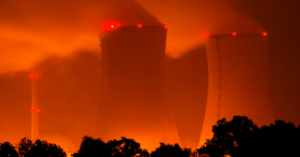
It seems rather silly now, doesn’t it, all the US concern about terrorism?
The nuclear crisis in Japan, which continues to worsen, threatens to become a total multiple meltdown, combined with the perhaps even more disastrous explosion and fire in one or several spent fuel rod ponds. If any of these things happen, not to mention many of them, several hundred square miles of Japan would be rendered indefinitely uninhabitable, costing hundreds of billions of dollars. And it could be worse. If the winds are blowing south during such a disaster, all of Tokyo, which has a metropolitan population of over 30 million, could have to be evacuated.
A study by the US Nuclear Regulatory Commission back in 1997, found that one spent fuel disaster could devastate almost 200 square miles of the US, and cause half a trillion dollars in damage!
And we’re spending hundreds of billions of dollars a year chasing after a few thousand ragtag Taliban fighters and supposedly pursuing a few hundred Arab terrorists, most of whom are fighting back with their shoes and their underwear?
So where is the real risk to America’s security?
Well, for starters, we could consider the 23 nuclear plants currently operating in the US that were built by General Electric using the same basic flawed design as those that are blowing up in Fukushima, Japan right now. Those plants, which are located in my state of Pennsylvania, as well as everywhere from Alabama to Nebraska and Vermont, are as much as 40 years old. They are only still in operation today because the NRC is such an industry-captive regulator that it has granted them long license extensions running way past their sell-by date. It has even given many of them the okay to run at capacities exceeding 100% of design standards!
There are other plants, also creaky with age, such as the ones in San Onofre and Diablo Canyon, California, which were knowingly built within a few miles of major earthquake faults–faults which could produce earthquakes on a scale of the one that just hit Japan. Both those facilities were designed to allegedly be able to survive (when new) a 7.5 quake. That was an untestable assertion of faith, but in any case, with an 8, an 8.5 or a 9, all bets would be off.
San Onofre, by the way, is closer to Los Angeles than Fukushima is to Tokyo, so if there is a threat now that Tokyo might have to be evacuated, a similar blowup of the San Onofre nuke reactor would have the millions of people in Los Angeles evacuating their city–maybe back to Oklahoma where their forebears fled from the Dust Bowl (maybe we could call them LAkies, though hopefully they’d get a friendlier reception than L.A. gave to the okies of yore).
So much for America’s only remaining export: the film industry.
It would make far more sense for the US to forget about those alleged terrorists who are supposedly out to get us (and to stop mucking around in the Middle East countries and provoking all that anger!) and instead to spend some of that Pentagon and Homeland Security swill to shut down these old nuke plants, and even many newer ones that are built in vulnerable locations, so we don’t have to suffer a disaster of our own making like the people of Japan are facing today.
Don’t expect much from our two nuke-besotted political parties, though.
Senate Minority leader Mitch McConnell, a man of stunningly limited intellectual ability who gives the impression when he talks of having just sucked on a lemon, weighed in with a defense of current government plans to subsidize and build more nuclear power plants in the US, saying that “right after a major environmental catastrophe” would “not be a very good time to be making American domestic policy.”
President Obama, is also backing a so-called “nuclear renaissance” in the US. A senior White House source has reportedly said that the president remains in favor of nuclear power and that U.S. nuclear plants were made to survive strong storms and earthquakes. And on Tuesday, as Japan pulled workers out of the Fukushima plant, essentially giving up the fight to prevent disaster because of the level of radioactivity there, the president told local Pittsburgh TV station KDKA that he had been assured that US reactors were safe (sic), closely monitored (sic), and designed to withstand earthquakes and other natural disasters (sic).
Of course, as Mother Jones magazine has noted, this same president, back in 2009, was touting the safety of Japanese nuclear plants as a model for the US. Back then, at a “town meeting” event, he said, “There’s no reason why, technologically, we can’t employ nuclear energy in a safe and effective way. Japan does it and France does it, and it doesn’t have greenhouse gas emissions, so it would be stupid for us not to do that in a much more effective way.”
Now, I admit it’s like shooting fish in a barrel to respond to these two shills for the nuclear industry, but what the hell, I’m going to fire anyhow.
Mr. McConnell, if now, when the folly of nuclear power is on full display in Japan, is not the time to discuss a plan to expand the use of nuclear power in the US, when exactly would be the right time?
And Mr. Obama, would you care to rephrase that 2009 line of yours in light of recent events? Perhaps it might be better to say, “Japan has shown what can happen with nuclear power when something goes wrong, so it would be stupid for us to continue to do here what they have done” and build nuclear plants all over the country on fault lines, near oceans and rivers, and near populations centers.
Watching all this go down is terribly frustrating. As my wife Joyce said yesterday morning, when we awoke to read of the looming threat of a full meltdown of perhaps as many as three or four reactors and the burning of one or more spent fuel piles in Japan, “We were right all along when we opposed nuclear power back in the 1970s.”
Yes we were. Shouldn’t all us anti-nukers now get some street cred, some media respect, and some respect from the political class for our prescience?
Nah. Don’t expect it. Money talks, and the nuclear establishment [and military industrial complex] has the power–even if it is blowing up on them.
March 16, 2011
Posted by aletho |
Militarism, Nuclear Power |
Leave a comment
American arms pacified Fallujah—and may have poisoned a generation
In this year’s State of the Union address, President Barack Obama declared, “the Iraq war is coming to end”—at least for Americans, leaving “with their heads held high” because “our commitment has been kept.”
For millions of Iraqis, however, the war is far from over—in fact, for a growing number of families in cities that were nearly destroyed during the years of insurgency and counter-insurgency, the crisis is only beginning. Whether we take responsibility for our role in it will determine whether we can hold our “heads high” in foreign policy ever again. As one Iraqi-American told TAC, “just because we don’t pay attention, doesn’t mean the rest of the world isn’t paying attention.”
According to studies and eyewitness accounts over the last few years, Fallujah, an Iraqi city that was practically obliterated by U.S. heavy artillery in two major offensives in 2004, is experiencing a staggering rate of birth defects among its local population. The situation echoes similar reports from Basra that began to circulate after the first Gulf War in 1991.
The litany of horrors is gut-wrenching: babies born with two heads, one eye in the middle of the face, missing limbs, too many limbs, brain damage, cardiac defects, abnormally large heads, eyeless, missing genitalia, riddled with tumors. Upon touring a clinic in Fallujah in March of last year, the BBC’s John Simpson reported, “we were given details of dozens upon dozens of cases of children with serious birth defects … one photograph I saw showed a newborn baby with three heads.” Later, at the main U.S.-funded hospital in the city, “a stream of parents arrived” with children who had limb defects, spinal conditions, and “other problems.” Authorities in Fallujah reportedly warned women to hold off on having babies at all.
Dr. Ayman Qais, the director of Fallujah’s general hospital, told The Guardian that he was seeing two affected babies a day, compared to two a fortnight in 2008. “Most [deformities] are in the head and spinal cord, but there are also many deficiencies in lower limbs,” he said. “There is also a very marked increase in the number of cases of [children] less than two years with brain tumours. This is now a focus area of multiple tumours.”
The pictures and video available with a quick Google search are simply shocking.
But there is nothing simple about this issue. On one hand, it is widely accepted among scientists, doctors, and aid workers that war is to blame. The presence of so much expended weaponry, waste and rubble, massive burn pits on U.S. bases, and oil fires has left a toxic legacy that is poisoning the air, the water, and the soil in Iraq. Add highly controversial armaments that the U.S. has only hinted at using in this war—such as depleted uranium—and you get a potentially radioactive landscape giving rise to doomed children and stillborn babies.
“I think we have destroyed Iraq,” says Dr. Adil Shamoo, a biochemist at the University of Maryland who specializes in medical ethics and foreign policy. Shamoo, an Iraqi-American, believes it’s “just common sense” to link Iraq’s troubled health situation to the relentless bombing of its towns and cities and the polluted aftermath of fighting and occupation.
The Department of Defense disagrees, rejecting claims that the military is to blame for chronic illnesses, birth defects, and high rates of cancer among the local population and its own service members exposed to the same elements in theater. (DoD officials did not return calls and e-mails to respond to the specific charges made in this story.)
Meanwhile, the Iraqi government has done little to address the public-health crisis in Fallujah and elsewhere. Authorities cannot afford, and seemingly lack the will, to clean up the festering pollution around the country’s population centers while many Iraqis still clamor for clean drinking water and basic medical supplies.
“It’s not even on their radar,” offered Geoff Millard, an Iraq War vet who was about to embark this winter on an aid mission with Iraqi Health Now, which raises money for hospitals, clinics, and refugee camps. “If you have a mature democracy with a stable government, you can start to think about the environmental impact. You don’t talk about environmental impact when there are death squads roaming the streets.”
Nevertheless, a joint study by Iraq’s environment, health, and science ministries last summer found 40 sites in the country that are contaminated with high levels of radiation and dioxins—residue, the study claims, from three decades of war. Critics believe there are hundreds of other locations just like these.
Areas around urban centers like Fallujah and Basra accounted for 25 percent of the contaminated sites. The pollution of Basra dates back to at least 1982, when Operation Ramadan, the biggest land battle of the Iran-Iraq War—in which the U.S. was on Iraqside, supplying Saddam Hussein with billions in weapons, “dual-use” materials, training, and support—shook the desert outside the city. But in the 20 years since the first Gulf War, Basra has seen a marked increase in childhood illnesses. According to researchers at the University of Washington School of Public Health, the rate of childhood leukemia doubled in Basra from 1993 through 2007.
“This is a serious public health crisis that needs global attention. We need independent and unbiased research into the possible causes of this epidemic,” declared American environmental toxicologist Mazhgan Savabieasfahani, co-author of the most recent report on birth defects in Fallujah.
But fathoming the source of this scourge is hard; Iraq is a quick study in environmental malpractice. For example, reports indicate that waste from heavy industry, tanning and paint factories, and hospitals—even raw sewage—is still being dumped into the Tigris and Euphrates rivers and seeping into drinking water. Yet there is little doubt about the toll that 30 years of war and economic sanctions has taken here. Looking at the photographs of babies barely recognizable as human, of toddlers frighteningly tiny, limp from their own deformities, the toll of war and the conditions it creates is evident.
What Happened to Fallujah?
In December, a report in the International Journal of Environmental Research and Public Health declared that since 2003 “congenital malformations” were observed in 15 percent of all births in Fallujah in 2010. Heart defects were the most common, followed by neural tube defects, which cause irreversible and often fatal deformities such as anencephaly, in which the infant is born with parts of the brain and skull missing.
By comparison, major birth defects affect only an estimated 3 percent of every live birth in the U.S. and an average of 6 percent of all births worldwide.
The December study focused on births in Fallujah General Hospital during the first half of 2010. In May, it found that 15 percent of all 547 deliveries presented birth defects. That month there were also 76 miscarriages, 60 premature deliveries, and one stillbirth. Researchers saw similar numbers in the first four months of 2010.
The study explored the health histories of four families in Fallujah—four fathers, each with two wives, and their 39 offspring. Of the children, three were miscarried, three were stillborn, eight had birth defects and skeletal malformations, and three—by the same mother and father—had leukemia. All of these abnormal births occurred after 2003, save for one child born with leukemia in 2002 and two miscarriages for one mother in 1995.
“The timing of the birth defect occurrences suggests that they may be related to war-associated long-term exposure to contamination,” the report states. “Many known contaminants have the potential to interfere with normal embryonic and fetal development.” The report also suggests that metals such as depleted uranium associated with “augmented” and “targeted” weapons “are potential good candidates to cause birth defects,” but the authors insisted further research was needed to establish a direct cause.
Another recent article, “Cancer, Infant Mortality and Birth Sex-Ratio in Fallujah, Iraq 2005–2009,” published in the International Journal of Environmental and Public Health last July, undertook a door-to-door survey of 4,843 Fallujah residents in 711 houses. Acknowledging that such surveys have their limits—responses cannot be independently verified, for example—the authors nonetheless highlighted three compelling findings, including a significant 18 percent reduction in the male births in the group after 2004 and a spike in infant mortality—13 percent of live births from 2009 to 2010, compared to 2 percent in Egypt and 1.7 percent in Jordan. Lastly, the frequency of cancers related to radiation exposure, particularly leukemia, between 2005 and 2010 was “alarming” in comparison with national rates in Egypt and Jordan. (The study noted that Iraq still doesn’t keep official cancer statistics.)
“The results reported here do not throw any light upon the identity of the agent(s) causing the increased levels of illness and although we have drawn attention to the use of depleted uranium as one potential relevant exposure, there may be other possibilities,” wrote the authors. Indeed, other possible contaminants are manifold—but depleted uranium has long been a prime suspect.
Depleted Uranium
Depleted uranium (DU) is a dense, highly toxic, radioactive heavy metal that is regularly used by the military for shielding and penetrative capabilities. The Army’s Abrams tanks and Bradley fighting vehicles have it in their armor and in their ammunition.
In addition to their long-range penetration abilities, DU-tipped weapons can cause further damage by instantaneously setting their targets on fire. According to GlobalSecurity.org: “On impact with a hard target (such as a tank) the penetrator may generate a cloud of DU dust within the struck vehicle that ignites spontaneously, creating a fire that increases the damage to the target.”
After battle, the carcasses of tanks and remains of exploded or unexploded DU munitions produce radiation, while tiny particles of heavy metal get into the dust and can travel long distances in the air. This dust can be deadly when inhaled, doctors and environmental scientists say.
While minimizing the external radiation dangers of DU, a 1994 U.S Army Environmental Policy Institute study conducted in the wake of fears that Gulf War soldiers had been contaminated in “friendly fire” incidents acknowledged that “toxicologically, DU poses a health risk when internalized” and that “using DU on the battlefield poses potential environmental consequences.” It ultimately recommended, however, further study and risk-management, rather than forgoing the use of DU altogether.
The U.S. left an estimated 320 metric tons of DU on the battlefield after the first Gulf War. DU rounds conferred a distinct advantage over the Iraqis, destroying some 4,000 of their tanks, many which still pollute the desert landscape. “The invisible particles created when those bullets struck and burned are still ‘hot.’ They make Geiger counters sing, and they stick to the tanks, contaminating the soil and blowing in the desert wind, as they will for the 4.5 billion years it will take the DU to lose just half its radioactivity,” wrote Scott Peterson in the Christian Science Monitor.
Later Peterson documented evidence of DU in Baghdad after the 2003 war, checking “hot spots” around battle debris with a Geiger counter. He noted that the Air Force had admitted that its A-1 “Warthog” planes had shot 300,000 rounds during the “shock and awe” phase of the invasion. Typically, the “normal combat mix” for the 30-mm cannon on the A-1 is five DU bullets to one high-explosive incendiary round.
“The children haven’t been told not to play with the radioactive debris,” Peterson wrote. He saw only one site where U.S. troops had put up handwritten warnings in Arabic for Iraqis to stay away. “There, a 3-foot-long DU dart from a 120 mm tank shell, was found producing radiation at more than 1,300 times background levels. It made the [Geiger counter] staccato bursts turn into a steady whine.”
Getting an accurate picture of how DU has been used by American forces in Iraq since 2003 has been impossible. But the military hasn’t always been so tight-lipped. On the eve of the war, noted California-based researcher Dan Fahey, the Pentagon was engaging in its own pro-DU propaganda. “The campaign had two goals: to justify the use of DU munitions as a military necessity, and to dismiss concerns about the health and environmental effects of use,” wrote Fahey in 2005.
Indeed, in a March 18, 2003 press briefing, two days before the invasion, Col. James Naughton of the U.S. Army Material Command boasted that Iraqis “want [DU] to go away because we kicked the crap out of them” in the tank battles of 1991.“Their soldiers can’t be really amused at the idea of going out in basically the same tanks with some slight improvements and taking on Abrams again.”
The bragging stopped after “shock and awe.” Officials now merely insist that DU exposure is not responsible for serious health problems in Iraq. When confronted with the evidence of birth defects in Fallujah, Pentagon spokesman Michael Kilpatrick told the BBC last year, “no studies to date have indicated environmental issues resulting in specific health issues.”
The Pentagon is backed up by selected studies, like the one conducted by the International Atomic Energy Agency in 2010, which examined soil, water, and vegetation in four areas—including Basra but not Fallujah—and concluded “the radiation doses from DU do not pose a radiological hazard to the population at the four studied locations in southern Iraq.” The report takes for granted that DU was indeed used throughout the war theater.
Interestingly, both the IAEA and the Army have acknowledged the importance of handling weapon fragments and vehicle scraps as radioactive waste. “They specifically told us not to climb on tanks that have been shelled,” says Geoff Millard, who got a brief warning about DU as a young soldier in 2000.
The exact composition of the munitions expended during the fighting in Fallujah in late 2004 remains unknown. But the scale of the pollution can be gauged by the magnitude of the bombardment. According to Rebecca Grant, writing for Air Force Magazine in 2005, the U.S. conducted relentless air assaults in the First Battle of Fallujah from March through September 2004 and launched a second phase that November. She describes a “steady pace of air attacks” in a mostly urban “manhunt” using AC-130 gunships and fixed-wing aircraft, even after commanders were told early on to scale it back due to political considerations over collateral damage. F-15 jets would swoop down and strafe insurgents to provide ground cover while Marines called in strikes on cornered insurgents from GPS-guided missiles like the new 500-lb GBU-38 JDAM (Joint Direct Attack Munition), which could “pluck” buildings “right out of the middle of very populated areas.”
What Grant’s account does not include is the use of DU and even white phosphorous, which, when it comes into human contact, sizzles flesh right off the bone. A year after doctors in Fallujah began reporting the telltale burns, a Pentagon spokesman admitted to the BBC that that white phosphorus was indeed “used as an incendiary weapon against enemy combatants” in 2004. (Initially, the military had insisted it was only used for battlefield illumination.)
“When they went in they basically pulled out all the stops,” said investigative journalist Dahr Jamail, who was on the ground in Fallujah in late 2004. He told TAC that he is not surprised by the birth defects in Fallujah today, having seen the aftermath of presumed DU use in “massive quantities.”
As for its effect on reproductive development in Fallujah, there is no consensus among researchers, but there is plenty of material to pore over. Critics among the scientific community can point to a decade of studies about DU’s detrimental effects upon health, including a 2006 report that found DU exposure led to gene disruption in laboratory rats and similar experiments suggesting exposure could lead to low birth weight and skeletal malformations.
Other Contaminants
The problem with trying to identify a primary contributor to birth defects in Iraq is that the country is a cauldron of contamination. Aside from the polluted water, there are the ubiquitous toxic plumes from burning waste on U.S. bases, as well as oil and gas fires dotting the landscape. (No fewer than 469 incidents of oil and gas blazes, mostly from insurgents blowing up pipelines, were recorded between 2003 and 2008.) Military researchers have also been looking to heavy metals—both naturally occurring and otherwise—in the dust kicked up in the desert after so many battle-driven ruptures of the earth.
Saddam himself used chemical weapons against his own people and allegedly directed his men fleeing the 2003 invasion to sabotage the old water treatment plant at Qarmat Ali, just north of Basra where the Tigris and Euphrates Rivers meet, by littering it with an anti-corrosive powder containing huge amounts of hexavalent chromium, a chemical known to cause cancer.
Some of the Oregon National Guard soldiers who later worked and lived at the plant—assured by defense contractor Kellogg, Brown, and Root that Qarmat Ali was safe—are now so sick they can barely walk. “This is our Agent Orange,” veteran Scott Ashby told The Oregonian in 2009, referring to the herbicide sprayed by U.S. forces over huge swaths of the Vietnamese countryside from 1961 to 1971. A 2003 Columbia University study estimates upwards of 4.5 million people were exposed; the Vietnamese government has estimated 480,000 deaths and 500,000 born with birth defects as a result. American veterans had to sue to get attention for illnesses relating to AO exposure.
In a sense, what is happening throughout Iraq today is the 21st-century’s Agent Orange. As in Vietnam a generation earlier, Americans have rushed to the emotional exits in Iraq, chalking the war up to a blunder best resigned to the history books. Ignoring the “steady whine” of their moral Geiger counters, the U.S. public neatly tucks away photographs of deformed Iraqi babies next to the fading memories of Vietnamese children and American veterans scarred by battlefield chemicals. Collective denial has turned out to be empire’s best friend, as a Southeast Asian foreign-policy disaster has given way to a 30-year catastrophe in the Middle East.
Kelley Beaucar Vlahos is a Washington, D.C.-based freelance reporter and a columnist for Antiwar.com.
March 13, 2011
Posted by aletho |
Militarism, Timeless or most popular, War Crimes |
Leave a comment
In a remarkable Israeli position in terms of its background and connotations, and referencing the extent of anxiety and fear the Israeli entity is witnessing in the wake of revolutions in the Arab world, Defense Minister Ehud Barak said Israel might ask the US for additional $20 billion in military assistance.
In an interview with The Wall Street Journal published Tuesday, Barak said that Israel should not fear regional changes or the risk of offering valiant concessions to the Palestinians.
Barak said that while Israel did not “face an immediate threat to its security, the issue of qualitative military aid for Israel becomes more essential for us, and I believe also more essential for you [the US]. Israel should not fear the movement of Arab societies toward modernity.”
He nevertheless stressed that the Egyptian public might influence the new leadership in such a way which could cause it to distance itself from the peace treaty with Israel.
“It might be wise to invest another $20 billion to upgrade the security of Israel for the next generation or so….A strong, responsible Israel can become a stabilizer in such a turbulent region.”
He believes it is too early to tell whether Iran is taking advantage of regional unrest to expand its influence. Barak also noted that prior to the wave of Arab protests “You could see Arab leaders starting to hedge their bets on who is the strongest leader here, Iran or the United States.” In the interview Barak said that according to a senior Egyptian official, whose name he did not mention, Israel should expect “the cold shoulder” from Cairo if it fails to advance the Palestinian peace process.
Israel spends roughly nine percent of its gross national product to guard from potential threats. Its military expenditure amounted to USD 17 billion this year, of which US aid is USD 3 billion.
Tel Aviv has kept a wary eye on a recent tidal wave of anti-government protests that has raced across the Middle East, originating with revolutions in Tunisia and Egypt, which have swept longstanding autocratic rulers from power.
~
Several Israeli media agencies, known for their close affiliation with Israel security and political devices, published a number of reports slamming the new interim Egyptian Prime Minister, Dr. Isam Sharaf, and described his as an “enemy to Israel”, and also described him and the new Foreign Minister as anti-smite.
Israeli TV stations, Channel 7 and Channel 10 along with The Marker and Maariv newspapers held extensive coverage of the swear-in ceremony of the new government headed by Dr. Sharaf.
They claimed that Dr. Sharaf is “known for his anti-Israel positions”, and opposes the Israeli policies towards the Palestinian people, and that Sharaf “insisted on showing his anti-Semitism by choosing another anti-Semite, the new Foreign Minister, Nabil Al Arabi”.
According to some Israeli reports, Dr. Sharaf and his new government “pose a threat to Israel and its interests, especially with Egypt”, and that he adopts stances that reject normalization with Tel Aviv.
March 8, 2011
Posted by aletho |
Militarism, Timeless or most popular, Wars for Israel |
Leave a comment
“Despite media reports of Libyan aircraft attacking rebel areas, the Pentagon has not confirmed any air attacks.” – Adm. Mike Mullen
It’s good to see that the Pentagon is unenthusiastic about military intervention in Libya. But that hasn’t stopped armchair generals such as Sen. John Kerry from pushing for a no-fly zone over that country.
Kerry thinks he can make his plan more appealing by couching it in internationalist terms, but we know the American people would bear the brunt of the burden. Kerry is joined by Sens. Joe Lieberman and John McCain, the Senate’s two most obnoxious militarists. Regarding the military’s reluctance to take on another country, McCain said, “[They] always seem to find reasons why you can’t do something rather than why you can.”
Maybe the Pentagon is acknowledging something that McCain, Kerry, and Lieberman seem to ignore: They are calling for war on a country that has not attacked the United States. U.S. Defense Secretary Robert Gates criticized the discussion about a no-fly zone as “loose talk.” He added, “Let’s just call a spade a spade. A no-fly zone begins with an attack on Libya. That’s the way you do a no-fly zone. And then you can fly planes around the country and not worry about our guys being shot down.”
Gates’s cautionary language is welcome after Secretary of State Hillary Clinton’s and President Obama’s press secretary had referred to U.S. action as a live option. In typical Clinton fashion, the secretary said, “We are taking no option off the table so long as the Libyan government continues to turn its guns on its own people.” Really? No option? Does that include a full-scale invasion? How about tactical nuclear weapons? Drones armed with Hellfire missiles have been particularly effective at killing innocent people in Afghanistan and Pakistan. Are they on the table too?
Gates was not alone in his warning. Gen. James Mattis, commander of U.S. Central Command, and other officials said that taking out Libya’s air and missile defenses would be no small operation; hundreds of airplanes would be needed. Gates said he was advised that a no-fly zone “requires more airplanes than you would find on a single aircraft carrier.” It would be, he said, a “big operation in a big country.”
None of that stopped the Senate from unanimously passing a resolution prodding the UN Security Council to take up the question of a no-fly zone. And two U.S. amphibious warships were headed to Libya through the Suez Canal, supposedly for humanitarian purposes. But they aren’t called “warships” for nothing.
For all the bluster about a no-fly zone, it’s not quite clear what difference it would make. Libya’s Col. Muammar Qaddafi is using ground forces primarily to battle rebels trying to drive him from power. According to the Associated Press, “Adm. Mike Mullen, chairman of the Joint Chiefs of Staff, said that despite media reports of Libyan aircraft attacking rebel areas, the Pentagon had not confirmed any air attacks.”
So a no-fly zone would be little more than symbolic. But it could be a costly symbol. Mullen cautioned against underestimating Libya’s air defenses. Moreover, establishing a no-fly zone would be an act of war, with consequences no one can foresee. Haven’t we had enough of American politicians, sitting safely in their seats of power, sending young people off to war?
The case against U.S. intervention in Libya, however, goes beyond the prudential. There is no doubt that Qaddafi is a brutal and now desperate dictator willing to send mercenaries to mow down civilians seeking freedom from his iron grip. But that does not justify U.S. intervention, which would require the taxpayers to finance yet another open-ended military operation in the Arab and Muslim world. Regardless of how Obama and Clinton would intend the operation, the rest of the world would see it in the context of the long U.S. imperial record in the Middle East.
American presidents have sought to police the globe for generations. What has it gotten us? Endless war abroad, and big government and economic hardship at home. Instead of being a beacon of liberty, the country is a symbol of militarism and death. Obama, the fraudulent peace advocate, has followed the same interventionist course. He should not be allowed to extend it to Libya.
March 4, 2011
Posted by aletho |
Militarism, Progressive Hypocrite |
Leave a comment
Shooting Children, One After Another
Recent polls suggest that while a majority of U.S. people disapprove of the war in Afghanistan, many on grounds of its horrible economic cost, only 3% took the war into account when voting in the 2010 midterm elections. The issue of the economy weighed heavily on voters, but the war and its cost, though clear to them and clearly related to the economy in their thinking, was a far less pressing concern.
U.S. people, if they do read or hear of it, may be shocked at the apparent unconcern of the crews of two U.S. helicopter gunships, which attacked and killed nine children on a mountainside in Afghanistan’s Kumar province, shooting them “one after another” this past Tuesday March 1st. (“The helicopters hovered over us, scanned us and we saw a green flash from the helicopters. Then they flew back high up, and in a second round they hovered over us and started shooting.” (NYT 3/2/11)).
Four of the boys were seven years old; three were eight, one was nine and the oldest was twelve. “The children were gathering wood under a tree in the mountains near a village in the district,” said Noorullah Noori, a member of the local development council in Manogai district. “I myself was involved in the burial,” Noori said. “Yesterday we buried them.” (AP, March 2, 2011) General Petraeus has acknowledged, and apologized for, the tragedy.
He has had many tragedies to apologize for just counting Kunar province alone. Last August 26th, in the Manogai district, Afghan authorities accused international forces of killing six children during an air assault on Taliban positions. Provincial police chief Khalilullah Ziayee said a group of children were collecting scrap metal on the mountain when NATO aircraft dropped bombs to disperse Taliban fighters attacking a nearby base. “In the bombardment six children, aged six to 12, were killed,” the police commander said. “Another child was injured.”
In the Bamiyan province of Afghanistan, Zekirullah, a young Afghan friend of mine, age 15, rises at 2:00 a.m. several mornings each week and rides his donkey for six hours through the pre-dawn to reach a mountainside where he can collect scrub brush and twigs which he loads on the donkey in baskets. Then he heads home and stacks the wood – on top of his family’s home – to be taken down later and burned for heat. They don’t have electrical appliances to heat the home, and even if they did the villagers only get electricity for two hours a day, generally between 1:00 a.m. – 3:00 a.m. Families rely on their children to collect fuel for heat during the harsh winters and for cooking year round. Young laborers, wanting to help their families survive, mean no harm to the United States. They’re not surging at us: they’re not insurgents. They’re not doing anything to threaten us. They are children, and children anywhere are like children everywhere: they’re children like our own.
Sadly, more and more of us in America are getting used to the idea of child poverty – and even child labor – as our own economy sinks further under the burden of our latest nine years of war, of two billion dollars per week we spend creating poverty abroad that we can then emulate at home. Things are getting bad here, but in Afghanistan, children are bombed. Their bodies are casually dismembered and strewn by machines already lost in the horizon as the limbs settle. They lie in pools of blood until family members realize, one by one, that their children are not late in returning home but in fact never will.
In October and again in December of 2010, our small delegation of Voices for Creative Nonviolence activists met with a large family living in a wretched refugee camp. They had fled their homes in the San Gin district of the Helmand Province after a drone attack killed a mother there and her five children. The woman’s husband showed us photos of his children’s bloodied corpses. His niece, Juma Gul, age 9, had survived the attack. She and I huddled next to each other inside a hut made of mud on a chilly December morning. Juma Gul’s father stooped in front of us and gently unzipped her jacket, showing me that his daughter’s arm had been amputated by shrapnel when the U.S. missile hit their home in San Gin.
Next to Juma Gul was her brother, whose leg had been mangled in the attack. He apparently has no access to adequate medical care and experiences constant pain. The pilot of the attacking drone, perhaps controlling it from as far away as Creech Air Force Base here in the United States, knows nothing of this family or of the pain that he or she helped inflict. Nor do the commanders, the people who set up the base, the people who pay for it with their taxes, and the people who persist in electing candidates intent on indefinitely prolonging the war.
But sometimes the war is like it was this past Tuesday March 1st. Sometimes the issue is right in front of us – as it was to those helicopter crews – it’s up close so there can be no mistake as to what we are doing. According to the election polls we see the cost of war, dimly, but, as with the helicopter crews, it doesn’t affect – or prevent – our decisions. Afterward we deplore the tragedy; we make a pretense of acknowledging the cost of war, but it is incalculable. We can’t hope to count it. We actually, finally, have to stop making people like the nine children who died on March 1st, pay it.
~
Kathy Kelly co-coordinates Voices for Creative Nonviolence and has worked closely with the Afghan Youth Peace Volunteers. She is the author of Other Lives, Other Dreams published by CounterPunch / AK Press. She can be reached at: Kathy@vcnv.org
March 4, 2011
Posted by aletho |
Economics, Militarism, Progressive Hypocrite |
Leave a comment