Leaving Iraq?
By Ron Paul | November 1, 2011
It is not too often I am pleased by the foreign policy announcements from this administration, but last week’s announcement that the war in Iraq was in its final stage and all the troops may be home for Christmas did sound promising. I have long said that we should simply declare victory and come home. It should not have taken us nearly a decade to do so, and it was supposed to be a priority for the new administration. Instead, it will be one of the last things done before the critical re-election campaign gets into full swing. Better late than never, but, examining the fine print, is there really much here to get excited about? Are all of our men and women really coming home, and is Iraq now to regain its sovereignty? And in this time of economic crisis, are we going to stop hemorrhaging money in Iraq? Sadly, it doesn’t look that way.
First and foremost, any form of withdrawal that is happening is not simply because the administration realized it was the right thing to do. This is not the fulfillment of a campaign promise, or because suddenly the training of their police and military is complete and Iraq is now safe and secure, but because of disagreements with the new government over a Status of Forces Agreement (SOFA). The current agreement was set up by the previous administration to expire at the end of 2011. Apparently the Iraqis refused to allow continued immunity from prosecution for our forces for any crimes our soldiers might commit on Iraqi soil. Can you imagine having foreign soldiers here, with immunity from our laws and Constitution, with access to your neighborhood?
Some 39,000 American troops will supposedly be headed home by the end of the year. However, the US embassy in Iraq, which is the largest and most expensive in the world, is not being abandoned. Upwards of 17,000 military personnel and private security contractors will remain in Iraq to guard diplomatic personnel, continue training Iraqi forces, maintain “situational awareness” and other functions. This is still a significant American footprint in the country. And considering that a private security contractor costs the US taxpayer about three times as much as a soldier, we’re not going to see any real cost savings. Sadly, these contractors are covered under diplomatic immunity, meaning the Iraqi people will not get the accountability that they were hoping for.
While I applaud the spirit of this announcement – since all our troops should come home from overseas – I have strong reservations about any actual improvements in the situation in Iraq, since plans are already being made to increase the number of troops in surrounding regions. What we really need is a new foreign policy and there is no indication that that is what we have gotten. On the contrary, the administration fully intends to keep troops in Iraq, indefinitely, under a new agreement, while the Iraqis are doing their best to assert their sovereignty and kick us out. Neither are we going to be saving any significant amount of money. My greatest fear, however, is that this troop withdrawal from Iraq will simply pave the way for more endless, wasteful, needless wars.
Keeping Democrats on the Hook
By ALAN NASSER | CounterPunch | November 1, 2011
“I think it’s dangerous, this class warfare”
– Mitt Romney on OWS, Oct. 4, 2011
Occupy Wall Street (OWS) represents a nationwide movement-in-the-making that is independent of the two-Party duopoly. Both the movement’s staying power and its effectiveness depend crucially on this independence. The established powers are fully aware of the dangers implicit in a truly popular democratic, i.e. independent of the two Parties, movement. It is therefore on our agenda to beware of colonization by the powers that be. No one worries about Republican infiltration. It is the Democrats who have the most to lose by OWS. We can be certain that the Party’s operatives will attempt to incorporate the movement into an agenda that does not challenge the legitimacy of the Democratic Party by, for example, underscoring Obama’s whole-hog subservience to Wall Street, and the Party leadership’s acquiescence to the president’s across-the-board betrayal of his once enthusiastic acolytes.
MoveOn has already moved in. An effective Fifth Column can waste no time. The organization responded immediately to OWS’s much publicized presence and broad appeal -polls show most Americans sympathetic to OWS- by forming local groups across the country and never identifying with the already existing OWS, which is at this point no more than the unorganized aggregation of its local assemblages. So far OWS has no clear agenda, no pointed set of demands, nor a clear notion of the sanctions an effective movement would impose if whatever demands are ignored. These are the circumstances we expect a savvy mole to exploit.
MoveOn is a force to be reckoned with. It has developed a sizeable following and an effective communications network. Its principal bad guys are the Republicans; nowhere in its message do we find a statement of preconditions for electoral support of Democratic candidates. The premises implicit in MoveOn’s stance are three: the exclusive objective of big politics is to win elections, no one but a Republican or a Democrat stands a chance of winning a presidential election, and the Republican will always be worse than the Democrat. From these (defective) premises the conclusion does indeed follow that supporting Democrats goes without saying. In fact, it follows that we need not know anything more about a Democratic platform than that the Republican will be worse. MoveOn has bought a subscription to Democratic politics with an obligatory renewal clause.
The organization is in effect an arm of the Democratic Party. It creates a political space in which activists who might otherwise be building a Left political alternative to the Democrats can be seduced to remain in the Party. Accomplishing this goal has never been more urgent to the Democrats than it is now. Disaffection with Obama and the Party is rampant in liberal circles. But MoveOn’s meetings will never conclude that the Democrats’ performance demonstrates that working within the Party will not move us away from Uncle Sam’s multiple wars or toward national health care and a reversal of the tendency toward widening inequality.
Is it possible that deindustrialized, financialized American capitalism is incapable of delivering on the New Deal and Great Society promises that define postwar liberalism, much less on the demands of genuine Left egalitarianism? Could it be that the liberal-conservative, Republican-Democrat alternatives are now politically obsolete? Surely the historical moment has arrived when these questions are up for serious consideration. OWS could in principle address these issues by virtue of its independence of the Parties. MoveOn will not touch them.
The Democratic Party will brook no independent political tendencies. It will marshall its forces on whatever scale necessary to discredit and defeat perceived Left challenges. The Howard Dean campaign of 2003-2004 is a paradigm illustration of the lengths to which the Party will go squelch independent tendencies out of step with the Party consensus.
Dean’s initial issues were health care and fiscal responsibility, but disenchanted Democrats siezed upon his opposition to the Iraq war as their principal rallying point around his campaign. Dean quickly appropriated the momentum of growing anti-war sentiment and took it online with great success. “We fell into this by accident,” Dean averred later. “I wish I could tell you we were smart enough to figure this out. But the community taught us. They seized the initiative through Meetup. They built our organization for us before we had an organization.”
An independent grass roots movement-in-the-making had appropriated Dean’s campaign. Its impressive gains were acknowledged by the Washington Post, which reported in 2003 that “His rivals grudgingly concede that Dean … has clearly tapped into something. He is attracting the largest crowds of the nine Democratic contenders… His supporters arguably are the most intense for this early in the process, tens of thousands of them self-organizing in about 300 cities once a month.” By September 2003 Dean was the leading fundraiser among the Democratic aspirants. The organizer of an earlier Republican online effort, the e.GOP Project, admitted that Dean’s base was “ahead in the game. . . . Left of center organizations are showing more energy, innovation and more strength in numbers.”
The effectiveness of Dean’s grass roots base is all the more impressive given his support for NAFTA, Medicare cuts, and his identification with the politics of the reactionary Democratic Leadership Council (DLC), whose operatives set out to defeat the disloyal upstart early in his campaign. Especially threatening to mainstream Democrats were the findings of polls showing most Americans in synch with Dean’s opposition to the war and therefore out of step with the Party leadership, which was solidly in the Clinton, New Democrat camp. Along with fundraisers for the Democratic National Committee, the DLC began running a series of ads attacking front-runner Dean for his position on NAFTA and Medicare, and for his NRA support. There was of course no mention of Clinton’s championing of NAFTA, nor of his pre-Lewinsky plans with Newt Gingrich to initiate the privatization of Social Security.
The major media were happy to jump onto the Democratic establishment’s attacks. They had started going after him the minute he made a campaign issue of breaking up the corporate media monoplies. Their coup de grace was the invention of “the scream”, Dean’s shout of exuberance intended to cheer up his supporters at a post-caucus rally after the Iowa primaries.
For a time after the Iowa caucus the airways were running the scream non-stop, encouraging the perception of Dean as a crazed nutcase. In context Dean’s shout was all of a piece with the crowd’s yelling and hollering. The television crews recorded the event by plugging into an audio source picking up Dean’s microphone, not the sound of the room. The cameras zeroed in on a tight shot of the candidate; the rest of the room was unseen. The media never provided the wide-angle visual-auditory shot until after the desired impression had been foisted upon viewers. As CBS news online put it after the damage had been done, “In a nutshell, you are not seeing that Dean’s speech fit the tone of the room.” Here we see the unsurprising dovetailing of the politics of both the media and the Party.
Equally unsurprising was Dean’s joining forces after his defeat with the very scoundrels who had worked so hard to bring him down. Mission accomplished: Dean was effectively reabsorbed into Democratic business as usual. The Party remained unchallenged from the Left.
OWS is comparable to the independent grass roots movement-in-the-making that put Dean’s campaign on the political map. But it has identified with no mainstream political figure. There is no individual personality to function as a whipping boy to discredit the entire movement. OWS itself will surely be the target of a sustained Party attempt either to discredit it altogether by character assassination or to keep it within the Democrats’ ambit by, for example, incorporating it into MoveOn. The movement will face the choice whether to remain independent of Democratic control or to become either an appendage of MoveOn or a marginalized grouping in the wake of MoveOn’s growing organizational effectiveness. Considerable political acumen is called for. How shall OWS retain its integrity while incorporating into its political program, such as it is, a determination to resist the sirens of MoveOn or any other arm of the Democrats? This is not a rhetorical question; I’m really asking.
I’ve belatedly made myself part of OWS. No one in the movement knows exactly where it is going. How could it be otherwise, given the number of disillusioned, angry and frustrated citizens motivated by a broad range of scandals – foreclosure, bankruptcy, a health care catastrophe, loss of the bulk of retirement savings, unbearable student debt and job loss? OWS does perceive all this as directly related to the economic crisis, the record inequality currently afflicting the citizenry, and the administration’s exclusive concern with protecting the cynical and lawless financial plutocracy. The gaping disconnect between Obama’s promises and his real-world performance has produced a profound sense of betrayal. No wonder that many are impelled to express in concert some form of resistance.
I stumbled onto MoveOn’s organization here in Tacoma when I misread an announcement and ended up not at an OWS meeting but at MoveOn’s initial gathering. The people were seated, much like an audience, in front of a table where the two MoveOn representatives were signing people up. One of the reps was on the staff of Washington Democratic Representative Adam Smith (sic).
The MoveOn representatives were in charge. They announced that the group would be divided into seven smaller discussion groups. The two reps instructed the groups that they had twenty minutes to come up with a brief list of concerns. After this, a representative from each group would state his/her group’s main issues. These would be written out by one of the MoveOn reps and displayed for all to see. From these combined lists the group would select the issues to adopt as its own. It’s worth mentioning that while there were no students present, five of the seven groups listed the student debt burden as among their priorities.
When it came to our group’s list, one of us, a plumber, stated our three concerns: should we adopt an overarching slogan, like Ban Derivatives Trading or Reinstate Glass-Steagall (everyone in my group, composed of retirees, wage earners and small businessmen, knew what Glass-Steagal was), to write down or forgive entirely student debt, and whether our group should maintain its independence of the two Parties. The third concern was not displayed by the rep.
Another member of our group asked why the independence concern was not acknowledged, and by the way, why should we not join the OWS people who were at this moment occupying a park on Tacoma’s main drag. Is there any reason why we should not be united? The rep replied that OWS and “our” group were “two different organizations.” But why, another asked, should that make any difference to an issue on which the two organizations are in accord. “Well,” replied the rep, “there are many different unions aren’t there? It’s the same thing.” “Sure,” I chimed in, “but a company union is not really a union.” End of discussion, the reps decided.
At the time of that meeting, the majority of Democrats on the congressional Joint Select Committee on Deficit Reduction, the “supercommittee” whose principal agenda is to recommend the largest cuts in social spending they think they can get away with, had not yet announced its plan. Their announcement at the end of October turns out to be well to the right of the recommendations of the first incarnation of the deficit reduction committee, the National Commission On Fiscal Responsibility and Reform. Obama appointed as co-chairs of that bipartisan team the fiscal conservatives and privatizers Erskine Bowles, at the time a director of Morgan Stanley, and retired Republican Wyoming senator Alan Simpson. Most of the remaining committee were ideological clones of the co-chairs; the Commission was a stacked deck. The day before his appointment Bowles said to The New York Times “There isn’t a single sitting member of Congress – not one – that doesn’t know exactly where we’re headed.” The same day, Simpson remarked to the Washington Post “How did we get to a point in America where you get to a certain age in life, regardless of net worth or income, and you’re ‘entitled’? The word itself is killing us.” (Feb. 17, 2010)
The Bowles-Simpson proposed cuts in social spending were as expected: $383 billion from Medicare and Medicaid. But the current Joint Select Committee Democratic majority beats that by $92billon; they’d slash a total of $475 billion. And they recommend about $850 billion less in revenue increases than Bowles-Simpson. The current Democratic plan features greater Medicare beneficiary cuts ($200 billion)than B-S and is eight times the level of Medicare beneficiary cuts recommended in Obama’s September 19 budget plan. The Center on Budget and Policy Priorities notes that “Since half of Medicare beneficiaries have incomes below about $21,000, it would be extremely difficult to secure $200 billion in savings from increased Medicare beneficiary charges without requiring significantly larger out-of-pocket payments by beneficiaries with incomes as low as $12,000 or $15,000.”
It is not enough to point out with due indignation that, in the words of an October 31 statement from the AFL-CIO, “Republicans and Democrats on the federal deficit “Super Committee” have called for big cuts to Social Security, Medicare and Medicaid. AFL-CIO President Richard Trumka says the AFL-CIO stands firm against cuts to these essential middle-class programs.” Of course both Republicans and Democrats want a reduction in the social wage, but the significance of the present Democratic stand is its more draconian recommendations relative to the predetermined reactionary position of B-S. Nor are we persuaded by our MoveOn liberals’ rejoinder that the Republicans dismiss the Democrats’ plan and demand even greater cuts. So what? Whatever the Democrats put forward, however poisonous it may be, the Republicans will always, on principle, demand something worse. Piling invective on the Republicans is not unworthy, but in this context it’s a distraction.
Keeping the Democrats on the hook should be implicit in whatever pointed demands OWS might come up with. That won’t happen if MoveOn has its way.
Alan Nasser is Professor Emeritus of Political Economy at The Evergreen State College in Olympia, Washington. He can be reached atnassera@evergreen.edu
Obama Justice Dept. Battles against Freedom of Information Act
By Noel Brinkerhoff | AllGov | October 31, 2011
The Obama administration wants to make it tougher for Americans to obtain government records by offering agencies more opportunities to deny Freedom of Information Act (FOIA) requests.
The Department of Justice has proposed 15 rule changes to the FOIA, which collectively represent a “huge step back for transparency,” says the Sunlight Foundation.
Among the amendments are changes that would allow federal offices to:
· deny requests that aren’t addressed to precisely the correct department (16.3 (a))
· summarily dismiss requests if they deem the wording too vague (16.3 (c))
· hide what part of the agency is responsible for filling requests (16.4 (e))
· reset their deadlines for responses any time they refer requests among departments (16.5 (a))
· make it more difficult for requests to be deemed urgent (16.5 (e))
· lie, and claim records do not exist, when they do (16.6 (f))
· make it easier for businesses to declare that information is a trade secret (16.7)
· disqualify most schools from getting FOIA fees waived (16.9(a)(4))
Obama’s DOJ Seeks to Weaken the FOIA (by John Wonderlich, Sunlight Foundation)
Comments of the Electronic Privacy Information Center to the Department of Justice (EPIC.org) (pdf)
New Rule Would Allow Government to Say Existing Records Don’t Exist (by Noel Brinkerhoff, AllGov)
US to Reposition in Kuwait, Expand Presence in Gulf: Report
Al-Manar | October 30, 2011
The United States is planning to escalate its military presence in the Gulf after it withdraws its remaining forces from Iraq by year end. US Officials and diplomats have indicated that the actions could include the repositioning of its military forces in Kuwait so that it would be able to respond to any “security collapse” in Iraq or a “military confrontation” with Iran.
The New York Times published a report Saturday explaining that US President Barack Obama’s alternative to the US presence in Iraq would be a US military presence in Kuwait.
“With an eye on the threat of a belligerent Iran, the administration is also seeking to expand military ties with the six nations in the Gulf Cooperation Council — Saudi Arabia, Kuwait, Bahrain, Qatar, the United Arab Emirates and Oman. While the United States has close bilateral military relationships with each, the administration and the military are trying to foster a new security architecture for the Persian Gulf that would integrate air and naval patrols and missile defense,” the NY Times’s report explained.
Quoting US Central Command’s Chief of Staff, Major General Karl R. Horst, the paper said that “the command is focusing on smaller but highly capable deployments and training partnerships with regional militaries… we are kind of thinking of going back to the way it was before we had a “big boots on the ground” presence… I think it is healthy. I think it is efficient. I think it is practical.”
Horst further explained that the training exercises that the “US is executing were a sign of commitment to presence, a sign of commitment of resources, and a sign of commitment in building partner capability and partner capacity.”
In parallel, Central Command’s Chief for Exercises Colonel John G. Worman noted that “for the first time, the military of Iraq had been invited to participate in a regional exercise in Jordan next year, called Eager Lion 12, built around the threat of guerrilla warfare and terrorism.”
According to the paper, a sample from the new US post-Iraq strategy that involves strong collaboration with the Gulf Cooperation Council, is Qatar and the United Arab Emirates’ sending of military forces to Libya as part of the NATO’s intervention there. Another sample is the sending of Saudi forces into Bahrain to assist the government in suppressing the public demonstrations.
This repositioning strategy comes after US Secretary of State Hillary Clinton announced during her presence in Tajikistan last week that the US will have a continuing robust presence in the region, warning Iran against any intervention in Iraq after the US forces’ withdrawal.
Obama Regime Seeks Permission To Lie In Response To Freedom Of Information Requests – Even To The Courts
Jerry Policoff | OEN | October 25, 2011
One of the President Obama’s first promises after becoming President of the United States was a commitment to usher in a new era of unprecedented government transparency. Instead the Obama administration has exhibited what may be an unprecedented obsession with government secrecy including blocking numerous law suits by invoking the doctrine of “State Secrets.” The administration has even come up with an interpretation of the Patriot Act which many in Congress who have seen it claim is overly broad and bestows more power on the Executive Branch than was intended by Congress when they passed it.
Unfortunately those in Congress who have seen this document are not permitted to divulge its content, and we, the public, cannot see it because the administration has chosen to classify it as a “State Secret.” In other words, you might be doing something that the Obama Administration believes violates the Patriot Act, but you won’t know it until they indict you for breaking a law you did not know existed (I might be breaking it just by penning and publishing this article).
Now the Obama/Holder Justice Department is attempting to re-write the Freedom of Information Act (FOIA), empowering or even compelling government agencies to deny the very existence of records they know to exist if they believe they are legitimately exempted from disclosure. Of course they are most likely the sole arbiter of whether they are indeed exempt from disclosure. In effect the Obama/Holder Justice Department wants to be free to legally lie about the existence of records in response to FOIA requests. Apparently they want to avoid the embarrassment and inconvenience of being officially rebuked by the courts for doing exactly that (lying to a Federal judge), as occurred earlier this year when, in a strongly worded opinion, U.S. District Judge Cormac Carney wrote that the “Government cannot, under any circumstance, affirmatively mislead the Court.” The solution is simple: re-write the law so the government, in many circumstances, can affirmatively mislead the court.
Despite substantial opposition by such groups as the ACLU, The National Press Club, Citizens for Responsibility and Ethics in Washington, OpentheGovernment.org., Judicial Watch, et al to this radical re-write of the FOIA Law, this controversial effort by the Obama Administration to evade the very transparency it so passionately promised to deliver has been virtually ignored by the mainstream media which is supposed to the guardian of the people’s right to know.
Whether you are a Democrat or a Republican or neither, this move by the Obama administration should trouble you deeply. Is this change we can believe in???
Below are snippets of reports on this controversy, none of them from a mainstream media source. That was not my intent. I just could not find any. I learned about it just this morning in an e-mail from the National Law Journal:
National Press Club Urges Administration to Reconsider Draft Rule on Freedom of Information
“Under the new Department of Justice proposal, in replying to a request for information under the freedom-of-information law, if the information is allowed to be withheld under certain statutory exceptions, then federal officials “will respond to the request as if the excluded records did not exist”– even if that is not the case.
“No rule or law should allow, let alone require, the government to mislead the press or the public about anything,” said Mark Hamrick, a broadcast journalist with the Associated Press who is the 2011 president of the National Press Club. “If enacted, it appears that this proposed rule would offend the precepts that informed the Freedom of Information Act, and it would tarnish the government’s credibility.
“What’s more, the change seems unnecessary,” he said. “If agencies are exercising legally allowable exceptions to the law and withholding certain records, they can just continue to do as they do today: neither confirm nor deny the information’s existence.”
~
Justice Dept. proposes lying, hiding existence of records under new FOIA rule
“The Justice Department has proposed the change as part of a large revision of FOIA rules for federal agencies. Specifically, the rule would direct government agencies who are denying a request under an established FOIA exemption to “respond to the request as if the excluded records did not exist,” rather than citing the relevant exemption.
The proposed rule has alarmed government transparency advocates across the political spectrum, who’ve called it “Orwellian” and say it will “twist” public access to government.
In a public comment regarding the rule change, the ACLU, along with Citizens for Responsibility and Ethics in Washington (CREW) and OpenTheGovernment.org, said the move “will dramatically undermine government integrity by allowing a law designed to provide public access to government information to be twisted to permit federal law enforcement agencies to actively lie to the American people.”
Conservative government watchdog Judicial Watch has also lambasted the proposed rules change
“Upon taking office, President Obama released a memorandum declaring his administration was “committed to operating with an unprecedented level of openness. Specifically, he pledged to bolster the strength of the FOIA act, calling it “the most prominent expression of a profound national commitment to ensuring an open government.”
~
Government Could Hide Existence of Records under FOIA Rule Proposal
“The ACLU, along with Citizens for Responsibility and Ethics in Washington and OpenTheGovernment.org said the move would “dramatically undermine government integrity by allowing a law designed to provide public access to government to be twisted.
“Open government groups also contend that the proposed rule could undermine judicial proceedings.
In a recent case brought by the ACLU of Southern California, the FBI denied the existence of documents. But the court later discovered that the documents did exist. In an amended order , U.S. District Judge Cormac Carney wrote that the “Government cannot, under any circumstance, affirmatively mislead the Court.”
DOJ’s draft FOIA rule was first published in March , but DOJ re-opened comment submissions in September at the request of open-government groups. The new comment period ended October 19.”
Former Obama envoy George Mitchell comes out as ‘Israel’s lawyer’
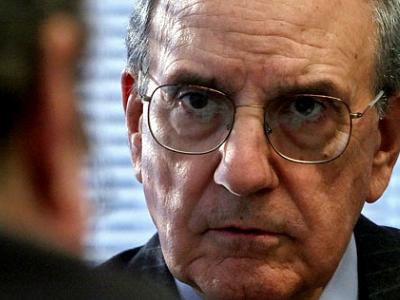
By Ali Abunimah – The Electronic Intifada – 10/26/2011
While he held the job of President Barack Obama’s peace process envoy, former US Senator George Mitchell generally maintained a good reputation. He came into the job with high regard because of his role in Northern Ireland.
During his Middle East tenure, Mitchell was notoriously tight-lipped, allowing people to believe that behind the stony face was a tough and fair “honest broker” who would privately take Israel to task in ways that the US could not do publicly.
But this was always an illusion. As detailed minutes of previously secret meetings, revealed in the Palestine Papers showed, Mitchell was very much ‘Israel’s lawyer’ – to use Aaron Miller’s famous term – just like all previous US envoys and officials. Mark Perry and I analyzed some of these documents revealing Mitchell’s role as Israel’s enabler.
Now, Mitchell has spoken out at London’s Chatham House on 17 October, and in his own words – as reported by Israel’s Haaretz. His comments largely confirm that in his general approach and in very specific ways, Mitchell was actively working to [further] Israel’s agenda and was never remotely an “honest broker.” Here are some highlights from the Haaretz article with my analysis.
Endorsing collaboration with occupation despite disastrous effects on Palestinians
From Haaretz:
“Order and personal security [in the West Bank] have been established in a way that never was previously,” stated Mitchell. “The problem is that that effort cannot be sustained in the absence of progress, or at least the hope of progress on the political front. It will break down internally on the Palestinian side, and it will break down in relations with the Israelis. And it is to President Abbas’ credit that, notwithstanding the fact that we haven’t been able to get into meaningful negotiations, he has maintained co-ordination and co-operation on the security front and it continues.
In other words, Mitchell sees it as positive and praiseworthy that Mahmoud Abbas is unconditionally collaborating with Israeli occupation forces without any benefit for Palestinians. When Mitchell talks about “order and personal security” he means order and personal security for Israeli occupiers and settlers and perhaps at certain periods for Palestinians restricted to the showcase Area A ghetto-cities of Ramallah and Nablus. But for Palestinians living all over the occupied West Bank and eastern occupied Jerusalem there is neither order nor personal security.
In the eastern occupied Jerusalem neighbhorhoods of Silwan and Sheikh Jarrah, hundreds of families live with the insecurity of knowing their houses are targeted for destruction for the benefit of Jewish settlers.
In the southern West Bank tens of thousands of Palestinian Bedouin face the prospect of forced removal from their land, and everywhere else – especially during the current olive harvest – Palestinians face attacks by Israeli government-backed colonial settlers.
This is the “order and security” that Mitchell is praising.
Interfering in Palestinian politics, opposing reconciliation
From Haaretz:
Speaking on Gilad Shalit’s release, Mitchell said that the subject is extremely sensitive for Israelis, and that the deal has positive aspects. Yet he insisted that the prisoner exchange had yielded negative results, such as strengthening Hamas vis-a-vis the Palestinian Authority.
It has been known since January, thanks to the Palestine Papers, that the Palestinian Authority lobbied strenuously against the prisoner exchange precisely in order to deny Hamas any credit. Yet there were also persistent reports that Mitchell and the US vetoed the deal going through earlier. Mitchell’s reported comments add weight to that assessment.
Mitchell’s logic can be inferred: his priority was to keep the Palestinian leadership weak and divided so that the most subservient element, the Abbas-led PA, would be more vulnerable to a US-brokered deal on Israel’s terms. This contrasts markedly with his approach in Ireland, where the US supported a broad Irish nationalist common front encompassing the Republic of Ireland government, and the “moderate” and “extremist” nationalist parties in Northern Ireland to strengthen their negotiating positions vis a vis the British-backed unionists.
Shock, horror, Israel might have to “choose” democracy
Haaretz:
Changing demographic realities will compel Israel to make fateful choices, Mitchell suggested.
“Israel, if the two state solution is lost, will have to choose between being a Jewish state and a democratic state,” he said. “And that’s a choice they should not have to make.”
Mitchell makes clear with these words that he shares Israel’s racist perception of Palestinians not as rights-bearing human beings but as a ‘demographic threat’ to Jewish supremacy.
His priority – like that of the rest of the US Zionist foreign policy establishment, and like President Obama – is not justice, or even “peace” but first and foremost maintaining racial and colonial privileges for Israeli Jews. What alarms Mitchell most of all is that Israelis should ever have to abide by democratic principles in which all people have equal political rights, regardless of their membership in one or another ethnoreligious group.
Israel, Mitchell tells us, should never be forced to choose democracy. Instead it was his job to try to goad Palestinians into accepting a bantustan on Israel’s terms that would spare Israel that terrible “choice.”
Palestinian Authority not subservient enough for Mitchell’s liking
If we take the Haaretz report as a complete and accurate report of Mitchell’s comments (admittedly something that can’t be taken for granted), what’s notable is that he attacks the PA for not seizing the opportunity of Israel’s so-called 10-month “settlement freeze” but he was silent about the fact that the freeze was fake all along:
Haaretz says:
Mitchell also criticized the Palestinian Authority’s responses to American efforts to renew negotiations with Israel. He claimed that the Palestinians were unwilling to accept the 10-month settlement construction freeze declared by Prime Minister Benjamin Netanyahu in November 2009; the Palestinians contended that this freeze was “useless,” and refused to engage in negotiations.
“They refused to enter into the negotiations until nine months of the 10 had elapsed,” Mitchell said. “Once they entered, they then said [the freeze] was indispensable. What had been worse than useless a few months before then became indispensable and they said they would not remain in the talks unless that indispensable element were extended.”
A few crucial facts: First, the “settlement freeze” never even nominally included eastern occupied Jerusalem, where Israel has been most aggressive in demolishing Palestinian homes and expanding its racist colonies. Second, in the rest of the West Bank the “freeze” was never a freeze since it only included “new” construction and excluded the thousands of colony homes at various stages of completion.
Finally, once the formal 10-month “freeze” ended, Israel immediately embarked on a building boom which Israel’s Peace Now termed “the most active period in many years.”
So Mitchell doesn’t appear to have been concerned about the reality, but only about the PA’s willingness to go along with a fiction that there was a “freeze” when there never was.
All of this only confirms that Mitchell himself learned nothing from his experience in Northern Ireland.
No matter which personalities are appointed to “peace process” roles in a US administration, a commitment first and foremost to Israel’s racist and colonial agenda and to the safety and “security” of its occupation are always the highest priorities, with Palestinian rights nowhere on the horizon.
Lynching Black Africans in Libya
By THOMAS C. MOUNTAIN | CounterPunch | October 25, 2011
Bodies of black men hanging from highways. Bound and tortured bodies of Africans dumped along the roadsides. Am I talking about Libya or Louisiana?
And all under the approving eye of the first Black President of the USA.
The lynching of Africans in Libya has been so bad that African leaders across the continent have been forced to raise their voices in protest. When the President of Nigeria, the USA’s unofficial enforcer in West Africa leads an African wide outcry against the lynching of his citizens in Libya one would assume that it was heard in the Obama White House.
With the murder or expulsion of most of Libya’s African migrant population well on its way came the massacre and ethnic cleansing of tens of thousands of Black Libyans.
And all the while Barack Obama and his band of criminal cohorts in the western capitals and television news channels strung together words like “pro-democracy”, “freedom fighters” and “liberation” to describe the orgy of looting and lynching being carried out.
When Black Libyans took up arms to defend their families and homes from the Libyan lynch mobs they found themselves the beneficiaries of “pro-democracy” high explosives, delivered from on high by a freedom loving NATO air force.
Bombed from on high, lynched on the ground, the only choice is flee for your lives and that is what hundreds of thousands of Black Libyan have been forced to do.
And all under the approving eye of the first Black President in the White House.
Should we be surprised at such serpentine behavior by the first Black President? Isn’t this the guy who raised over $500 million to help him buy the White House, with $300 million of that from Wall Street?
Isn’t this the guy who surrounded himself before his election with the very worst criminals from the Clinton White house such as Anthony Lake, Susan Rice, Gayle Smith and Eric Holder?
But isn’t Barack Obama supposed to know what it’s like to be a black man in America? Didn’t he used to attend a militant black church where the minister preached the Lord’s damnation upon the racist and genocidal rulers of the USA?
The brutal truth is that, like the shepherd’s dog taken as a pup from its mother to suckle at the tit of a sheep, Barack Hussein Obama spent those most critical teenage years being the only black kid in a school of thousands (Note; this writer attended the same school as Barack Obama, Punahou, some half a dozen years before him).
Punahou is one of the most elite schools in the USA, founded in Hawaii by Yankee missionaries who so famously brought the bible and took the Hawaiians land.
Today Punahou’s alumni include names that adorn the headquarters of multinational corporations like Dole Foods.
Barack Obama discovered what the white man wanted to hear from a black boy at an early age and apparently never forgot it.
From Punahou eventually to Harvard, Obama learned what the elite needed to hear if you wanted to get ahead even if it meant black is white, up is down and wrong is right.
So today we have the spectacle of a son of an African, the first Black President in the White house, broadcasting his approval for all the world to see that Libya or Louisiana, if lynching Africans is what it takes, God Bless the USA…and no where else.
Thomas C. Mountain is the only independent western journalist in the Horn of Africa, living and reporting from Eritrea since 2006. He can be contacted at thomascmountain at yahoo dot com.
An Insidious Threat to the Occupy Movement

Obama has overseen the mass destruction of US jobs, all the while protecting the 1%

By ISMAEL HOSSEIN-ZADEH | Counterpunch | October 14, 2011
The threat I am referring to is not that of being pepper-sprayed, arrested, beaten or imprisoned. It is a different type of threat: a stealthy challenger that while pretending to advance the goals of the Occupy Movement tends to undermine it from within—more or less like the proverbial elephant in the room. I am referring to the threat of preemption, or cooptation, posed by the Democratic Party and union officials. In light of their unsavory record of undermining the revolutionary energy of social movements, projections of sympathy for the anti-Wall Street protesters by the White House, the Democratic Party officials and union leaders can be viewed only with suspicion.
Expressing sympathy for the protester, President Obama recently stated: “I think people are frustrated, and the protesters are giving voice to a more broad-based frustration about how our financial system works.” At the same time he also defended the decision to bail out banks and other Wall Street speculators, arguing that the decision was necessitated by the need to salvage our financial system. It is obvious that, as usual, the president is talking from both side of his mouth.
On the same day (October 6th) that the president projected sympathy for the protesters, Vice President Biden also expressed similar sentiments. Comparing the Wall Street protests with the Tea Party, he stated: “The Tea Party started, why? TARP. They thought it was unfair – we were bailing out the big guy.” The vice president’s reference to the Tea Party is by no means fortuitous; there are clear indications the Democrats are trying to utilize the Occupy movement the way the Republicans do the Tea Party. “The mushrooming protests could be the start of a populist movement on the left that counterbalances the surge of the Tea Party on the right, and closes what some Democrats fear is an ‘enthusiasm gap,’” reported the New York Times on Friday, October 7th.
Projections of sympathy for the Occupy movement have not been limited to the White House. Many officials of the Democratic Party have either personally appeared at the Zuccotti Park to express support or sent statements of support for the protesters. Likewise, a number of union leaders joined a large protest rally held in New York City’s Foley Square on October 5th to show sympathy for the protesters.
Then there are the liberal political pundits and media outlets such as the New York Times that are also trying the build bridges between the Democratic Party and the Occupy movement in an effort to channel the protesters’ energy to the party’s electoral machine. For example, the New York Times’ columnist Paul Krugman recently wrote: “And there are real political opportunities here. Not, of course, for today’s Republicans. . . . But Democrats are being given what amounts to a second chance. The Obama administration squandered a lot of potential good will early on by adopting banker-friendly policies. . . . Now, however, Mr. Obama’s party has a chance for a do-over.”
On the face of it there is nothing wrong with the Democratic Party officials or union leaders expressing support for the protesters. In light of their actual economic policies, however, that support can be characterized only as hypocritical. The Democrats are as much responsible for the economic problems that have triggered the protests as their Republican counterparts. The Obama administration has played an especially destructive role in pursuing a devastating neoliberal austerity agenda in term of bailing out the Wall Street gamblers, extending the Bush tax breaks for the wealthy, expanding the US wars of choice—and then cutting vital social spending to pay for the financial resources thus usurped.
Equally blameworthy are union bureaucrats who have enabled the White House and the Congress in the implementation of such brutal austerity programs. Hollow posturing aside, the AFL-CIO has opposed neither the neoliberal austerity policies at home nor the imperialist wars of aggression abroad. Well-paid union officials have not even seriously challenged factory closures; nor have they earnestly resisted brutal cuts in workers’ wages and benefits.
In projecting sympathy for the Occupy Movement, the Democrats are essentially trying to have their cake and eat it too! Their efforts to express support for the protests can be interpreted only as opportunistic and utilitarian: to identify themselves with the rapidly spreading popular protests against the status quo, to mask the Obama administration’s neoliberal devotion to Wall Street, and to harness the energy of the protesters in order to garner their vote in the 2012 elections.
If successful, this would not be the first time the Democratic Party would have derailed and dissipated social struggles for change; it has a long record of such policies of betrayal, going back all the way to the Populist Movement of the late 19th century. Barack Obama’s promise of change in the 2008 elections in pursuit of garnering the grassroots’ vote was only the latest of the Democrats’ strategy of playing the good cop in order to contain radical energy. Two years earlier they had managed to undermine a vigorous antiwar movement by voicing the protesters’ demands to end the wars in Iraq and Afghanistan if they won the majority seats in the Congress. Having thus gained the control of both houses of the Congress in the mid-term election of 2006, they shamelessly backed away from their promise to antiwar voters.
One can only hope that the Occupy Movement is armed with the knowledge of the Democratic Party’s record of cooptation and betrayal of radical movements; and will therefore chart a political movement of the working people and other grassroots independent of both parties of big business.
~
Ismael Hossein-Zadeh, author of The Political Economy of U.S. Militarism (Palgrave-Macmillan 2007), teaches economics at Drake University, Des Moines, Iowa.
Why Did the United States Invade Afghanistan?
By Tim Kelly | FFF | October 12, 2011
The tenth anniversary of the U.S. led war in Afghanistan came and went with very little attention from the mainstream media. U.S. policymakers are nevertheless confronted with many questions regarding that conflict, such as its affordability, the effectiveness of various strategies, and even whether U.S. forces should remain in that country at all.
Those are all important issues, but the one question I believe to be the most important and fundamental regarding the war probably won’t be discussed: Was the U.S. invasion of Afghanistan necessary?
President Obama, who had campaigned as an opponent of the U.S. invasion of Iraq as a war of choice said of U.S. military operations in Afghanistan, “This is not a war of choice. This is a war of necessity.”
Obama’s words might have made for a good sound bite, but the evidence shows that, like the war in Iraq, the war in Afghanistan is, indeed, a war of choice.
Many supporters of the U.S. invasion of Afghanistan argue that even if the military campaign has turned into a quagmire, the initial attack was a just and necessary response to 9/11. Perhaps President Obama provided the best summary of this position in a speech at West Point. Obama said:
We did not ask for this fight. On September 11, 2001, nineteen men hijacked four airplanes and used them to murder nearly 3,000 people. They struck at our military and economic nerve centers. They took the lives of innocent men, women and children without regard to their faith or race or station.… As we know, these men belonged to al Qaeda a group of extremists who have distorted and defiled Islam.… After the Taliban refused to turn over Osama bin Laden — we sent our troops into Afghanistan
Here we have the conventional view: The 9/11 attacks were carried out by 19 fanatical Muslims acting on the orders of Osama bin Laden, the founder and leader of al-Qaeda, who was being given sanctuary by the Taliban regime in Afghanistan; and the invasion became necessary when they stubbornly refused to turn him over to U.S. authorities.
The Bush administration then commenced a bombing campaign and invasion of Afghanistan, asserting the need to capture or kill bin Laden and crush his terrorist organization so that they could not launch another deadly attack on the American homeland.
The problem with this narrative is that the claim that the Taliban had stubbornly refused to turn over bin Laden is not true.
CNN reported on September 21, 2001,
The Taliban … refused to hand over bin Laden without proof or evidence that he was involved in last week’s attacks on the United States. … The Taliban ambassador to Pakistan … said Friday that deporting him without proof would amount to an “insult to Islam.” (emphasis added)
CNN also provided an explanation for the Taliban’s “refusal,” reporting: “Bin Laden himself has already denied he had anything to do with the attacks, and Taliban officials repeatedly said he could not have been involved in the attacks.”
So the Taliban were not really refusing to turn him over but rather were demanding certain conditions be satisfied before they did so. That is not unusual. Governments routinely have evidentiary standards that must be met before they grant an extradition request. Bush, however, was not in a diplomatic mood, and he told the Taliban “the demands were not open to negotiation or discussion.”
The refusal by the Bush administration to put any evidence on the table made it extremely difficult, if not impossible, for the Taliban to turn bin Laden over. The Washington Post ran a story in October 2001 that quoted Milton Bearden, a former CIA official, who said the Taliban needed a “face-saving formula.” While the Bush administration was saying, “Give up bin Laden,” the Taliban were saying, “Do something to help us give him up.”
Even after the U.S. bombs began falling in October, the Taliban tried to negotiate by offering to turn bin Laden over to a third country if the United States would cease hostilities and provide evidence of his guilt. But Bush remained adamant, saying, “There’s no need to discuss innocence or guilt. We know he’s guilty.” London’s Guardian, reporting on this story, printed an article entitled “Bush Rejects Taliban Offer To Hand Bin Laden Over.”
Why was the Bush administration so stubbornly opposed to meeting the Taliban’s reasonable demand that they release at least some of the copious evidence they claimed to have gathered against bin Laden? After all, such a gesture might have spared the United States and her NATO allies, and the people of Afghanistan, the costs and consequences of a war that is now entering its eleventh year.
Well, the answer to that question could be that U.S. officials might well have lacked solid evidence of bin Laden’s complicity notwithstanding their certainty that he was behind the attacks. Certainly, the U.S. government has never shown such evidence to the American people.
Let’s review how the Bush administration presented its case against Osama bin Laden after 9/11.
Here is what Secretary of State Colin Powell said during a September 23, 2001, appearance on Meet the Press:
QUESTION: Are you absolutely convinced that Usama bin Laden was responsible for this attack?
SECRETARY POWELL: I am absolutely convinced that the al-Qaida network, which he heads, was responsible for this attack. You know, it’s sort of al-Qaida — the Arab name for it is “the base” — it’s something like a holding company of terrorist organizations that are located in dozens of countries around the world, sometimes tightly controlled, sometimes loosely controlled. And at the head of that organization is Usama bin Laden. So what we have to do in the first phase of this campaign is to go after al-Qaida and go after Usama bin Laden. But it is not just a problem in Afghanistan; it’s a problem throughout the world. That’s why we are attacking it with a worldwide coalition.
QUESTION: Will you release publicly a white paper, which links him and his organization to this attack, to put people at ease?
SECRETARY POWELL: We are hard at work bringing all the information together, intelligence information, law enforcement information. And I think, in the near future, we will be able to put out a paper, a document, that will describe quite clearly the evidence that we have linking him to this attack. And also, remember, he has been linked to earlier attacks against US interests and he was already indicated for earlier attacks against the United States.
The next day there were banner headlines appearing in newspapers across the country telling Americans of the Bush administration’s imminent report on bin Laden’s guilt. The New York Times ran a story citing a government official who claimed evidence “reaches from the southern tip of Manhattan to the foothills of the Hindu Kush mountains of Afghanistan.”
But by the following day, the Bush administration was backpedaling. The White House press secretary, Ari Fleischer, said there were no plans to produce a report and that Powell’s remarks had been “misinterpreted.” At a joint press conference with President Bush, Secretary Powell withdrew his pledge, saying that “most of the evidence” is classified.
Within days, all mention of the promised “white paper” had disappeared from the news media, which continued to credulously repeat the U.S. government’s narrative of events.
Investigative journalist Seymour Hersh, citing officials from the Department of Justice and the CIA, said the real reason the Bush administration reneged on its pledge to release the evidence was a “lack of solid information.”
Further questions were raised regarding the U.S. government’s charges against Osama bin Laden by the FBI’s Most Wanted Terrorists webpage. While the page mentioned bombings in Kenya and Tanzania as terrorist acts for which bin Laden was wanted, it made no mention of the 9/11 attacks. When the FBI was asked about this conspicuous omission, Rex Tomb, the Bureau’s chief of investigative publicity replied: “The reason why 9/11 is not mentioned on Osama bin Laden’s Most Wanted page is because the FBI has no hard evidence connecting bin Laden to 9/11.”
So, the U.S. government’s case against Osama bin Laden was not good enough to take to court, but it was good enough to take the country to war, a war that has killed or maimed countless people who had absolutely nothing to do with the 9/11 attacks. The anger arising from the invasion and occupation of the country has created a perpetual supply of terrorist recruits, enabling U.S. officials to use the never-ending “war on terror” to eviscerate the Bill of Rights. And we now have a president who asserts the authority to kill off any person he deems a “threat.” I submit that this claim of unaccountable power represents a far greater threat to the peace and security of the country than any terrorist or group of terrorists could ever pose.
Surveying the evidence, it is clear the Bush administration did not even come close to exhausting its diplomatic options in the fall of 2001 and that some other route could have been chosen to respond to the 9/11 attacks. Moreover, the invasion of Afghanistan did not even succeed in its principal goal: the capturing or killing of Osama bin Laden. According to the U.S. government, that mission was accomplished almost ten years later by a team of Navy Seals in an operation lasting only a few hours … in neighboring Pakistan.
The “Fast And Furious” Used Car Salesman “Threat” Falls Apart
Moon of Alabama | October 13, 2011
The failed used car salesman Mansour J. Arbabsiar, who is accused in the “Iran kills Saudi ambassador” movie plot, is a hapless idiot and petty criminal whose businesses deals always went wrong. He couldn’t even match his socks, smoked marihuana and drank a lot of alcohol, was nonreligious, an opponent of the Iranian regime and only cared about money. A business man who knows him calls him “worthless” and his neighbors believed he was dealing in drugs.
But Arbabsiar had some money through inherited land holdings in Iran. Those holdings may well be the source of the $100,000 wired from Iran to the Drug Enforcement Administration informant. Israel’s Mossad, the MEK cult or some drug dealers in Iran are other possible sources for the money.
The Obama administration insists that it has proof of Iranian government involvement in the assassination plot. Some anonymous officials though are already walking back that claim. It seems that they have no proof at all, just a hunch.
Every Iran expert interviewed thinks the story as presented is nonsense: Alireza Nader from Rand Corp, Kenneth Katzman of the Congressional Research Service, former CIA agent Robert Baer, Carter era NSC official Gary Sicks, Bush 2 NSC official Hillary Mann Leverett (also here), Muhammad Sahimi of PBS/Tehran Bureau and Iran scholar Hamid Serri.
To me the indictment reads as if a nutty Mansour J. Arbabsiar attempted a drug deal which was then turned into a terrorism entrapment by and through the paid criminal Drug Enforcement Administration informant.
The Obama administration seems to use this case for three purposes:
- Diversion from the subpoena to AG Holder in the Fast and Furious gun running case which was served yesterday, from the #OccupyWallStreet movement and the general economic malaise
- To get some momentum for additional international sanctions on Iran
- To prop up the connections with the Saudi regime as it had threatened to distance itself from the U.S. over the U.S. veto of a Palestinian state
The administration’s case for the “plot” is now falling apart. Yesterday’s hype in the media has by now been replaced with doubts and mistrust. Given the obvious weakness of the case this was predictable.
But why then did the Obama administration use this case at all? Why come up with such a weak case that was sure to make it a laughing stock?
Featured Video

John Mearsheimer: New World Order Arrived & Europe Is Left Behind
or go to
Aletho News Archives – Video-Images
Book Excerpt
Clinical Trials Relied Upon to License the MMR Vaccine
They insist we must rely on the data, well here it is…
Informed with Aaron Siri | November 24, 2026
Adding to my last post about the MMR vaccine, this one reviews the clinical trials relied upon for its licensure.
Here is an excerpt from my book, Vaccines, Amen, summarizing the clinical trials relied upon to license this vaccine… continue
Blog Roll
 Aletho News
- Guatemala arrests ex-colonel over 1982 killings of Maya Ixil civilians
- Clinical Trials Relied Upon to License the MMR Vaccine
- FDA Ordered to Pay Over $570,000 in Fight Over Pfizer COVID Vaccine Records
- USAID turned to Facebook to drive demand for Covid vaccines in Global South – files
- Britain’s shadow security network expands into south Lebanon
- The ADL Has a Foreign Policy, and You Are Not Supposed to See It
- Former Qatari PM says ‘Israel’ has security ties with all Gulf states
- The Sound of Silence in the Strait of Hormuz
- Poland’s call for a no-fly zone in Ukraine means NATO direct war with Russia
- John Mearsheimer: New World Order Arrived & Europe Is Left Behind
- If Americans Knew
- An error has occurred; the feed is probably down. Try again later.
- No Tricks Zone
- Physicists: Doubling CO2 Has A Smaller Impact On Ocean ‘Acidification’ Than Existing Internal Variability
- Alarmist Climatologists In Shock! 2026 Atlantic Hurricane Season Sees Lowest Count In 101 Years
- New Study: Modern Temps Are Among The Coldest Of The Last 10,000 Years In East Central Europe
- Germany’s Renewable Energies Lead to 1.4 Billion Euro Electric Power Trade Deficit
- Argentina’s Perito Moreno Glacier Joins Antarctica and Arctic In Defying Doomsday Melt Claims
- New Study: Barents Sea Temperatures Were Warmer And Sea Ice Less Extensive In The 1700s Than Today
- German Authorities Start Initiative To Evaluate Public Register For Climate “Disinformation” Spreaders!
- Zonal Asymmetry of Temperature Change in the Antarctic Circumpolar Current
- New Study: The Net Fossil Fuel Contribution To Rising Atmospheric CO2 Has Been Zero For 500 Years
- Germany’s Green Energy Transition Becoming Increasingly Expensive…Another 6 Trillion Euros!

