‘Ukraine has a terrorist government’: A new force wants the EU to change its stance
By Bradley Blankenship | RT | September 30, 2023
On September 16, around 10,000 protesters descended on Prague’s Wenceslas Square to demand a change to their government’s foreign policy. These protests were led by a group called Pravo Respekt Odbornost (Law Respect Expertise; PRO), which the Western mainstream media describes as pro-Russian and anti-Western.
Jindrich Rajchl, a Czech attorney inspired by the political lines of American conservatives Donald Trump and Ron DeSantis, is the leader of the group. While some may see Rajchl’s movement as completely out of touch with the country’s traditional politics, he believes that he’s tapped into something much more critical to Prague’s national mythos: rejecting foreign domination.
PRO and its supporters see the current Czech government as traitors who are controlled primarily from Washington and Brussels. And even though the political environment in the country has been turbulent over the past several years, a situation which the current goverment was meant to resolve, Rajchl and PRO believe that a national-conservative platform is the only thing that will rein in out-of-control excesses emanating from foreign powers.
Political situation in the Czech Republic
The current Czech government is led by a three-party center-right coalition called SPOLU (‘Together’), which is composed of the Civic Democratic Party (ODS), Christian Democrats (KDU-CSL), and TOP 09. These also have an agreement with the Pirate Party and the Mayors and Independents. It rode into power on a strong pro-Western, anti-corruption platform after the 2021 parliamentary elections.
That election was, first and foremost, a referendum on the leadership of former prime minister Andrej Babis, who held this post from 2017 until his eventual defeat, and served before that as finance minister from 2014. He was the spitting image of the prototypical Eastern European ‘oligarch’ before seeking public office, and is one of Europe’s richest people, according to Forbes, with an estimated net worth of $3.7 billion.
Throughout his entire tenure as prime minister, allegations of impropriety dogged him, sparking widespread mobilization within civil society. He was caught up in an EU subsidy fraud case, for which he was charged criminally and investigated by Brussels; he allegedly forcibly disappeared his own son; and he was mentioned in the Pandora Papers. It is against the backdrop of this intense public scrutiny for Babis and his left-wing coalition, which was composed of his center-left populist ANO (‘Yes’) party and the Czech Social Democratic Party (CSSD), with a tentative agreement with the Communist Party of Bohemia and Moravia (KSCM), that the Czech left was obliterated.
Babis’ alleged corruption was tied not only to his person but also to left-wing politics and its basic positions in general. While Babis was a moderate on foreign policy and supported French President Emmanuel Macron’s call for ‘strategic autonomy,’ the PM was instead cast as pro-China and pro-Russia for not buying all-in to Brussels’ political agenda. Likewise, the junior parties of the coalition – the CSSD and KSCM – were so damaged by their affiliation with Babis that neither qualified for any seats in the current Chamber of Deputies, and CSSD has only one senator, marking the first time that both houses of parliament have been without a communist party representative.
This strong mandate for the pro-Western Czech right is led by Prime Minister Petr Fiala, the leader of the very party that helped impose Washington’s ‘shock therapy’ on Czechoslovakia and the Czech Republic during the 1990s. It has been given carte blanche to buy into Washington’s imperial project in Ukraine – and in the Czech Republic itself.
The current Czech parliament ratified a new defense treaty with the United States that will make it easier for Washington to deploy troops on Czech soil – a move that critics see as a violation of Czech sovereignty. Defense Minister Jana Cernochova and the ruling coalition have even expressed a desire to host a US military base in their country. Given the Czech Republic’s experience with foreign occupiers, including Nazi Germany during the Second World War and the Warsaw Pact Invasion of Czechoslovakia in 1968, such a move would betray the country’s fundamental ideals.
With the death of the left comes an opportunity for the right
Enter a Czech lawyer named Jindrich Rajchl, who leads the emerging political party, PRO. The views of Rajchl and his party, in contrast to the positions of the ruling coalition, may seem out of step with the country’s typical view. For example, here’s what he said at September’s rally:
“We made another step today to move out of the way the rock that is the government of Mr. [Prime Minister Petr] Fiala,” Rajchl told demonstrators.
“They are agents of foreign powers, people who fulfill orders, ordinary puppets. And I do not want a puppet government anymore,” he said, calling on Prague to veto Ukraine’s inclusion in NATO.
PRO’s position – a national-conservative-based populist backlash against the decadence of Western liberalism – seems to be a welcome alternative to many disaffected Czechs, many of whom saw Fiala and his Civic Democratic Party (ODS), the party of the country’s first president, Vaclav Havel, as a return to normalcy.
They also want to broadly slash spending on social services, such as education, and pass the burden onto students. For example, PRO wishes to see university tuition introduced – which, to be sure, would be far less than in places such as the United States.
While PRO is an up-and-coming group and has yet to participate in an election, Rajchl told RT in a profile published in May that he is optimistic about his party’s odds. According to internal polling, he said his party was just over the minimum 5% threshold needed to enter parliament in the 2025 election. That means that, if the elections were held then, Rajchl would be an MP, a position he hopes to wield to form an alliance with other parties, such as the right-wing party Freedom and Direct Democracy (SPD) or potentially Andrej Babis’ ANO, which is topping polls. Politico’s latest tracker, however, has PRO at only 2% – below the threshold – and ANO on top with 34%.
But Rajchl hopes to run for the European Parliament in June 2024, primarily so he can take on Brussels directly.
Economy or war?
The economic situation in the Czech Republic may give PRO a chance for success. In the years following the onset of the Covid-19 pandemic, prominent international credit agencies like Moody’s have downgraded the Czech Republic’s credit rating due to substantial budget deficits. Before this development, the Czech Republic boasted one of Europe’s, if not the world’s, most favorable public finance outlooks.
Inflation has rocked the Czech economy for several years. According to the Czech Statistical Office, Czechs spent 14% more last year than the year before but, in real terms, spending fell by over 1%. Energy prices were primarily responsible, soaring by 15.5% while fuel increased by 33.5%.
The general outlook for the working class has also been abysmal – and policymakers have done little to support them. Analysis by PAQ Research published in December 2022, based on data from the Czech Statistical Office (CSU), projected that up to 30% of Czech households would fall into poverty this year. Despite this forecast, the ruling coalition still moved forward with an austerity package that would have an outsized effect on average people.
A current austerity initiative making its way through the Czech Republic is set to reduce spending by roughly 94 billion Czech crowns ($4.4 billion) in 2024, followed by an additional 150 billion in 2025 ($6.9 billion). This plan aims to achieve these cuts through various measures, including raising the retirement age, slightly increasing corporate and real estate taxes, and augmenting the current alcohol tax. Furthermore, it will entail workforce reductions within the public sector or corresponding wage adjustments, and it will also significantly raise taxes on the middle class, students, parents, and others.
Numerous experts have shared their views in the media, suggesting that the government’s adoption of an austerity plan became an unavoidable necessity. But unions and opposition political parties have staunchly disagreed, spawning massive protests over the past year.
At the same time, the Fiala goverment has sent weapons and aid hand over fist to Ukraine. In February alone, the goverment approved one weapons shipment worth an estimated 10 billion crowns ($430.74 million). The total amount of aid sent to Ukraine is believed to be around 20 billion crowns ($861.55 million), which constitutes a significant portion of the amount the government wants to cut with its austerity plan.
PRO is tying the Czech Republic’s economic and financial woes to Ukraine aid, and believes that out-of-control spending is hurting the country.
Ukrainian bone of contention
To elaborate on these topics and more, RT caught up with Rajchl again to learn more about PRO’s foreign policy agenda, following the aforementioned profile on him from May. A few developments have happened in Europe since the last conversation, including a public falling out between Poland and Ukraine over grain. Warsaw has unilaterally blocked agricultural imports from Kiev, which had flooded the European market and, Polish leaders say, hurt local farmers. This occurred after an EU-wide ban expired.
When asked about the latest spat between Ukraine and Poland, Rajchl said he shares the same views; however, he insisted that he had always held this position.
“I’ve been saying this since last year: In the end, it’s about the black hole that’s taking European and US money, and there’s huge corruption. The money isn’t used to help the Ukrainian oligarchs. And everyone has understood that the policy of President Zelensky is failing. I’m glad that the Polish government finally found this out. I hope the Czech government will too, but I don’t think they will. They put all their political capital into helping Ukraine and if they admitted that they were wrong, they would be recalled and would have to resign,” Rajchl said.
He added: “The Ukrainian government is a terrorist government. [With regard to] the rocket that crossed into Poland, it’s clear that this was a Ukrainian rocket – not a Russian rocket. Zelensky blamed Russia from the very beginning, although he knew from the very beginning it was his own rocket. He fired the rocket against the EU as a false-flag operation to blame Putin and get more help from the West, which is a form of blackmail. This regime is a criminal regime, Zelensky is a terrorist and should be tried at The Hague.”
Indeed, just after Rajchl’s conversation with RT, Polish investigators reportedly reached the conclusion that the rockets that hit the Polish border village of Przewodow must have been of Ukrainian origin, according to a Polish media report.
What else do they believe in?
Last year, at the height of Europe’s inflation crisis, PRO held a similar rally that attracted tens of thousands of people. During those protests, the group blasted the inflation that was crippling the working class and demanded the government’s resignation. Today, according to the latest Morning Consult tracker of world leaders, Fiala’s government has a dismal 20% approval rating.
Commenting on this, Rajchl said, “It’s a well-deserved place because he’s the worst leader in the world right now, of all of the leaders I know. He doesn’t care about his own people. The economic situation is mostly contributing to this; Fiala is not doing anything to help the Czech people, and they know it. He’s just taking orders from the EU, from the US, from Kiev, but he’s not doing anything for ordinary Czech people.”
The PRO leader also pointed out the absurdity of Czech officials calling on Europe and the West to prepare for nuclear conflict with Russia. “We don’t need to prepare [for this]; we need to do everything in our power to avoid nuclear conflict with anybody in the world.”
“I don’t want to have any enemies in the world. I am reminded of a speech by John F. Kennedy, when he said, ‘We don’t want to have Pax Americana that is forced by American weapons.’ We need to change the perception of the world so that there won’t be friends and foes, but simply neighbors that are just living on the same planet. I don’t see Russia as a threat; I believe the much bigger threat is the Western powers that are dragging us into this stupid conflict,” Rajchl said about his feelings regarding Russia.
The organizer’s position of establishing equal partnerships and being against hegemony sounded similar to the words of some world leaders at the latest BRICS summit in South Africa. Rajchl said he would be open to seeing Prague join BRICS+, perhaps becoming the first EU member state to be incorporated into that emerging bloc.
In his profile for RT in May, he stressed that he was not anti-American or anti-NATO. However, the protest had a much more radical rhetorical angle this time around. Rajchl stressed that he was not against Washington but rather the current leadership of President Joe Biden.
“I believe Donald Trump is the right leader for the United States,” he said, “Biden is just a puppet. There are people behind the current pushing for war, pushing for the woke agenda, the LGBTQ, the Green New Deal, and all these crazy agendas that are poisoning the world and the minds of our children, which I see as the biggest threat to the world and Europe,” he said.
“The woke agenda,” Rajchl stressed, “is the biggest threat to Western civilization. Look at the United States: Its cities are full of people addicted to fentanyl. Western Europe is full of migrants from Muslim countries, which threatens our security.”
The lawyer-turned-politician plans to run for the European Parliament in the country’s upcoming election in June 2024. Rajchl said he wants to “explore and research all of the things that happened during Covid” because his movement is convinced that there were “a lot of crimes that have been committed by members of the European Commission,” and he also wants to form a “national-conservative platform” to stand up against Brussels’ overreach. While not specific on the numbers, the organizer said he was optimistic about his odds of securing an MEP seat, according to internal polling.
Moscow Says ‘Anti-Russia’ IAEA Resolution Contains Unsubstantiated Accusations
Sputnik – 30.09.2023
MOSCOW – The resolution adopted at the 67th session of the IAEA General Conference on “nuclear safety, nuclear security and safeguards in Ukraine” contains unfounded attacks and unsubstantiated accusations against Russia, Russian Foreign Ministry spokeswoman Maria Zakharova said on Friday.
The 67th Regular Session of the IAEA General Conference took place from Monday to Friday in Vienna.
“On September 28, the 67th regular session of the IAEA General Conference, under pressure from the United States and its allies, adopted the resolution ‘Nuclear safety, security and safeguards in Ukraine’, containing unfounded attacks and unsubstantiated accusations against Russia, through a vote accompanied by the typical Western blackmail, intrigue and intimidation of countries,” Zakharova said in a statement posted on the Russian Foreign Ministry’s website.
Zakharova accused the United States and its allies of using international mechanisms “to achieve their opportunistic political goals, which are in no way related to the statutory purposes of such mechanisms.”
“The above resolution is non-binding, and Russia is not going to act on its provisions, while citing the resolution in documents will make them politically and legally void to us,” Zakharova added.
The issue of nuclear safety has drawn renewed international attention since the Ukraine conflict started in February 2022. During the hostilities, the Zaporozhye NPP, which is the largest nuclear power plant in Europe by number of units and energy output, came under the control of Russian forces in early March 2022 and has since been repeatedly shelled, raising concerns over a possible nuclear accident. The IAEA established a permanent presence of its experts at the ZNPP in September 2022.
‘Sixty Minutes’ holds up the mirror to the West: and the picture in the frame is ugly
By Gilbert Doctorow | September 28, 2023
Readers will note that I have very often made reference to what I learn watching talk shows on Russian state television Rossiya 1 directed at their domestic audience, namely Sixty Minutes and Evening with Vladimir Solovyov. Very often the expert panelists, whether leaders of the Duma parties and Duma committee chairmen or retired military officers, offer commentaries that are insightful and novel.
However, another aspect of these programs is perhaps still more useful to my professional work, and that is their putting on air each day digests of Western television broadcasting, and especially interviews or public speeches by well-known American and European politicians. The Western broadcasters which are featured most often on these Russian programs include CNN, ABC News, Fox News, the BBC and ZDF (Germany). The videos posted are not sound bites. On the contrary, they can be several minutes long each, and very often are clustered to show Western coverage of a given issue.
To be sure, some of the issues covered day after day are marginal. I have in mind transgender events and scandals such as the fight over multi-gender toilets being introduced in various American school systems or the fight over drag shows presented to the children of soldiers on U.S. military bases. The intent of the Russian newscasters is to highlight the degeneracy that now passes for progressive culture in the West. But the stories speak for themselves and the Russian news hosts are not thickening the paint. As they like to say on a frequently repeated Euronews segment: “No comment.”
But other issues are serious, geopolitical and entirely germane to the military confrontation with the West that Washington and Brussels have brought on. These Russian broadcasts allow Western politicians to utterly discredit themselves before any right-thinking person with a moral compass for a conscience.
Several such cases have come up in the past two days. One was an interview given by Senate Majority leader Mitch McConnell in which he repeats nearly word for word what fellow Republican and the as yet unindicted war criminal, the senior Senator from the state of South Carolina, Lindsey Graham, has been saying to reporters during and following his last visit to Kiev: that the war in Ukraine serves American objectives perfectly because it is hitting the Russian army hard while costing the United States not a single life of its men in uniform.
Of course, the assertion that no American servicemen have been killed in Ukraine is a lie. To be sure, the Poles have provided the largest contingent of NATO officers and soldiers to have been killed by the Russians in Ukraine. The Poles are close to Ukrainians in having a death wish by going up against The Bear. But American soldiers and officers are on the ground in Ukraine in their capacity as instructors and intelligence operatives, and the Russian missile strikes on concentrations of “foreign mercenaries” almost certainly have taken the lives of GIs.
But that one lie is the least of McConnell’s offenses against human decency. He has openly stated the most cynical logic to justify the deaths of at least 400,000 Ukrainian soldiers and officers as well as the permanent maiming of countless others. All for the sake of weakening Russia militarily and ensuring that not a single American pays the price? I put aside the question of whether the Russian armed forces have actually been weakened. I believe the contrary is true. Of course, Lindsey Graham took this narrative one step further than McConnell by expressing the hope that as many Russians will die as is possible. Sixty Minutes does not let anyone forget that, every few days showing Graham delivering these obscenities.
In presenting to their public statements that were duly recorded by American broadcasting companies, is Russia engaging in propaganda? Absolutely not. It is doing the job of normal journalism, informing its audience.
Sixty Minutes today also put on the screen the latest remarks by Donald Trump on how he would have prevented the Russian invasion of Ukraine: by bringing the market price of oil down to $40 and so drastically cutting the revenues available for Russia to stage its assault on Kiev. The presenters and panelists did comment on this one, saying flatly that Russia will be sure not to support Trump’s next bid for the White House if these idiotic remarks by The Donald are his much touted but till now closely held “peace plan.”
Canadian Prime Minister Justin Trudeau also was given plenty of air time on Russian state television today. One video showed him standing by visiting Ukrainian President Zelensky in the Canadian parliament several days ago applauding the honors bestowed by the Speaker on a Ukrainian freedom fighter who settled in Canada after the end of the Second World War. The fact that this freedom fighter fought the Russians from within a Nazi SS Waffen unit that murdered civilians in Galicia became public after this ceremony and resulted in the Speaker’s resignation, in the Parliament adopting a resolution condemning the Nazis and in a public apology by Trudeau for the scandal. However, as Sixty Minutes highlighted in its coverage of Trudeau’s remarks on the subject, he left out of his list of victims of the SS Waffen and Nazi forces in general any mention of the deaths inflicted on Russians.
In case the audience did not quite understand the moral monster who today sullies the family name of Trudeau, Sixty Minutes also put on air a lengthy denunciation of Trudeau that appeared on Indian television in which inter alia he was called out as a cocaine addict whose plane on arrival in India for the G-20 gathering several weeks ago was found to be carrying illicit narcotics but was untouchable. The same Indian broadcast said that Trudeau missed the first day of the G-20 because he was busy taking drugs in his hotel room. Is this Russian propaganda? Or is it just airing dirty linen that others living in the “free world” have put out for their audiences? In any case, the point being made is that Justin Trudeau and fellow addict Zelensky have more in common than admiration for old Nazis.
Lastly, Sixty Minutes today did not ignore the former Secretary of State and presidential candidate of 2016, Hilary Clinton. They offered a clip from Clinton’s interview yesterday with CNN’s Chief International Anchor Christiane Amanpour in which she asserted that Vladimir Putin was himself responsible for the expansion of NATO. Here the temptation was too great and the panelists indulged their revulsion for the lady who was behind the whole fake Russia-gate story that did so much to bring us to the brink of WWIII. Was she fair game for their mocking and contemptuous words about her? Of course she was.
©Gilbert Doctorow, 2023
Disgraced Ukrainian Ex-Army Spox Slams Zelensky’s Theatrics, Complains About Drugged Up Mercs
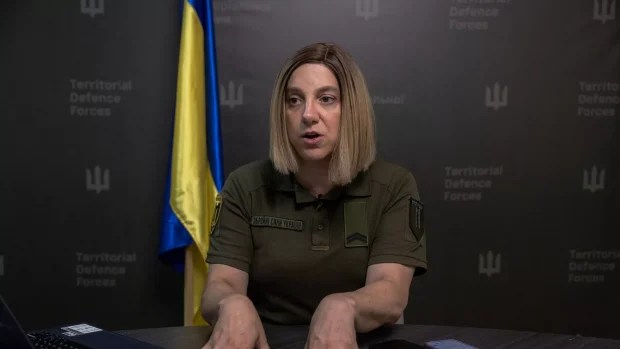
© AFP 2023 / ROMAN PILIPEY
By Ilya Tsukanov – Sputnik – 27.09.2023
Ukraine is fighting to protect “Western values” from Russian “slaves” descended from Mongols, but is facing difficulties due to poor morale, corruption, drug-addicted mercs, and a president who seems more focused on theatrics than the conflict itself, disgraced Ukrainian Territorial Defense Forces spokesperson Sarah Ashton-Cirillo has revealed.
Sarah Ashton-Cirillo (formerly Michael John Cirillo), the 46-year-old US-born Ukrainian Armed Forces spokesperson who garnered international media attention and scorn earlier this month after calling for Russian journalists and officials to be “hunted down,” was suspended last week as the scandal reached Washington.
Speaking by video on two separate occasions (before and after her suspension) with legendary Russian pranksters Vladimir ‘Vovan’ Kuznetsov and Alexei ‘Lexus’ Stolyarov, who posed as former Ukrainian President Petro Poroshenko, Ashton-Cirillo revealed important details on the seedier underbelly of their work for Ukraine, including minutiae they didn’t really get into while acting as a military spokesperson.
Problems With Morale, Corruption and Mercs
“We’re having struggles on the information warfare front, and we have the morale issue,” Ashton-Cirillo revealed, saying they’d spoken to soldiers who are “very frustrated because they didn’t feel like they were being heard in certain areas.”
“And so we are dealing with the reality that until we win the information war, our Western partners won’t feel the pressure. But we must win the information war both here on the streets of Ukraine, and in the newsrooms in New York and London and elsewhere,” the spox said, pointing to their personal efforts to change language surrounding the conflict to smooth over unpleasant realities, like calling foreigners serving in the ranks of Ukraine’s armed forces “foreign fighters” instead of what they actually are – mercenaries.
Commenting on the recent high-profile murder of a British merc in Ukraine by one of his comrades, Ashton-Cirillo admitted that Kiev has a “terrible problem” with “most” of the foreign fighters in the country, “because they are just a step above mercenaries and they come here because all they know is warfare. While I defend them in public, in private I know many of them have very far-right leanings, there’s some Nazi groups.”
“I also know that many of them are doing this because they have no lives in their own countries. And so we have security risks and more importantly we have morale and psychological issues because foreign soldiers are here for the money – most of them. And those people are going to be the ones willing to engage in drugs, willing to engage in fundraising where they’re putting the money in their own pockets. It’s something we have to be very careful about,” they stressed.
Commenting on the state of Ukraine’s Armed Forces, Ashton-Cirillo admitted that the situation is “terrible,” and appeared to confirm long-standing speculation about Ukrainian officials pilfering stocks of Western-supplied weapons deliveries.
Ashton-Cirillo also privately accused members of Ukraine’s political and military elite of “trying to profit off of the blood of our lost soldiers,” and “trying to profit off the blood of the men and women who are losing arms and legs.”
They also complained that the unrealistic promises being made to Kiev’s patrons, including about the now-stalled counteroffensive, means that “our partners can’t trust us in negotiations and our partners can’t trust our projection for what’s going to happen in the future. Because all they can judge us on are the results.”
The suspended spox stressed that while it’s okay to spread propagandistic “messaging” about Ukraine’s ‘successes’ on the battlefield in public, “it’s not good when we’re using this in discussions with our partners in Washington, our partners in Brussels, and especially our partners in the Eastern European nations.”
Ashton-Cirillo also took pot shots at Ukrainian President Volodymyr Zelensky, emphasizing that his theatrics and “populism” are no longer of any value. “It’s been 19 months of this, it’s not about theater anymore. Theater was important in the first days and weeks. It’s not about populism sir. It’s not about populism on the world stage,” the ex-spox stressed, adding that they would be thrilled to join the ballot on Poroshenko’s European Solidarity in elections, if they end up being held.
Russians Should Be ‘Hunted Down’
Ashton-Cirillo doubled down in private to the pranksters on comments she made publicly calling for “Russian propagandists” to be “hunted down,” saying that Russian journalists “should not be able to hind behind” their status as news people, and that Kiev should use “all our weapons,” including attacks targeting Russian media figures and officials.
Recalling, for example, the tributes paid to the late Daria Dugina, who was killed in a car bombing last year, Ashton-Cirillo suggested that “that goes to show that who she was in [Russia’s] eyes. It wasn’t some woman who was accidentally killed. This was an evil creature who died a death they deserved for trying to genocide innocent people.”
Ashton-Cirillo also reiterated that Russian Foreign Ministry spokeswoman Maria Zakharova should “of course” be targeted for elimination. “The worst part with her is she gets accepted in the same way that a State Department spokesperson would be accepted. To me there’s nobody should be off limits…over the course of being able to carry out our full liberation.”
‘Russians are Not European’
Expanding on comments they have made publicly referring to Russians as inhuman “orcs,” Ashton-Cirillo offered their interlocutor a brief ‘history’ of the Russian people, emphasizing that “the reality is Russians are not European,” but “have a different culture.”
“Russians are Asian, and ultimately they do come from the Mongols, they do come from a grouping… of people who are wanting to be slaves and want to be led just as it was from the days of Genghis Khan. I wish the rest of Europe and the rest of the Western world understood that Europe ends at Ukraine. We are protecting European values and Western values the same way those did hundreds and hundreds and thousands of years ago when the Mongols were coming in,” Ashton-Cirillo said.
“While I don’t know every Russian, I will say that what’s happening in the Kremlin and what’s happening to every Russian that supports Vladimir Putin’s decisions are not human. These people are not human. They are enemies of humanity,” they added.
Post-Suspension Blues
In the second conversation, conducted after her suspension, Ashton-Cirillo called their removal “political,” and said the decision “came from the highest levels.”
“I was told that it came from New York… on the trip that the government is on currently,” the disgraced spox said, referring to Zelensky’s trip to the US last week. “I think I was told that they had to make a big deal and to shut me up in order to possibly get help, so that’s why I understand it. I understand it’s political. I’m still in the army, I’m still speaking to several high-level officers doing my other work, just not as spokesperson.”
‘Don’t interfere in our democracy!’ – Slovak election favorite Fico warns Czech president
BY THOMAS BROOKE | REMIX NEWS | SEPTEMBER 25, 2023
Former Slovak Prime Minister Robert Fico has accused Czech President Petr Pavel of interfering in the upcoming Slovak elections after he made disparaging remarks about Fico’s opposition party to journalists during the annual meeting of the U.N. General Assembly.
Pavel told the press in New York that relations between Czechia and Slovakia would worsen if Fico returned to power, and accused the former Slovak leader of holding views akin to Russian propaganda.
“These are things that, if he were to be elected and gain confidence, would somewhat strain the relationship between us,” Pavel said.
Fico, whose SMER-SSD party currently leads the polls ahead of Saturday’s vote, has vowed to halt Slovak arms supplies to Ukraine and holds a view more aligned with pro-peace advocates such as Hungarian Prime Minister Viktor Orbán than other NATO members continuing to arm Kyiv.
He has also been skeptical of Ukraine’s proposed EU membership, at least in the immediacy, calling it a far-off prospect due to the ongoing conflict and accusations of corruption and democratic backsliding in the war-torn country.
“We are convinced it is illusory to deal with this question at a time when a sharp military conflict goes on in Ukraine. We all know for example that Ukraine belongs among the most corrupt countries in the world and the existing government regime is far from democratic standards,” Fico has said on the Ukraine’s accession to the European Union during the election campaign.
In response to the Czech president’s remarks, Fico published a video on his Facebook page urging Pavel not to interfere in Slovak democracy.
“Dear Mr. President of the Czech Republic P. Pavel, do not break good relations between our nations just because Slovak social democracy and a large part of the Slovak population have a different, sovereign opinion on the war in Ukraine!” he said.
“I am against the further arming of Ukraine, because prolonging the conflict only leads to unnecessary and huge loss of human life,” he added, calling for immediate peace talks.
Fico is widely tipped to return to power following this weekend’s election, with his SMER-SSD party regularly polling as the largest party in the parliament at 20 percent, narrowly beating the liberal Progresívne Slovensko in second on 17 percent, respectively.
She’s Doing it Again: Clinton Claims Russia Seeks to Meddle in 2024 Election
By James Tweedie – Sputnik – 25.09.2023
Operation Crossfire Hurricane — the FBI’s attempt to discredit Donald Trump’s election as president in 2016 — was found by a Congressional inquiry to be based on falsehoods. But Democrats and their sympathetic media continue to repeat the claims of ‘Russian interference’.
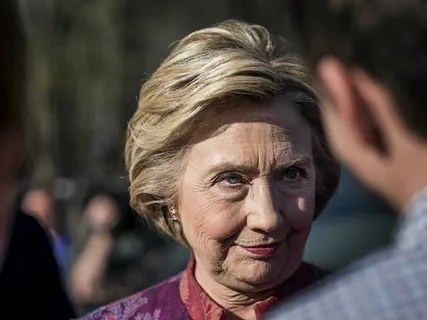
Failed presidential runner Hillary Clinton has repeated her discredited claims of Russian interference in US elections.
Clinton dusted off the 2016 ‘Russiagate’ conspiracy theory she used to explain her defeat by Donald Trump in an interview with MSNBC’s Jen Psaki — the former White House press secretary renowned for her inability to answer journalist’s questions.
Psaki claimed that Russian President Vladimir Putin had “interfered in our elections in the past” — directly contradicting the findings of special counsel John Durham’s inquiry that the claim was “uncorroborated” — and asked Clinton if she feared it would happen in 2024.
“I don’t think, despite all of the deniers, there is any doubt that he interfered in our election, or that he has interfered in many ways in the internal affairs of other countries, funding political parties, funding political candidates, buying off government officials in different places,” Clinton claimed.
Her tone became increasingly paranoid as she went on.
“He hates democracy. He particularly hates the West and he especially hates us,” Clinton ranted. “And he has determined that he can do two things simultaneously. He can try to continue to damage and divide us internally, and he’s quite good at it.”
The former secretary of state and senator, the wife of disgraced ex-president Bill Clinton, even believed that Putin had a personal grudge against her.
“Part of the reason he worked so hard against me is because he didn’t think that he wanted me in the White House,” Clinton complained. “Part of the challenge is to continue to explain to the American public that the kind of leader Putin is.”
She then reeled off a series of unproven allegations against the Russian president, including that he was responsible for the deaths of opposition figures and journalists — and interfered in the 2016 US elections to ensure she lost to Trump.
“I fear that the Russians will prove themselves to be quite adept at interfering, and if he has a chance, he’ll do it again,” Clinton concluded.
Durham’s report, finally released in June 2023, found that former Federal Bureau of Investigations (FBI) Director James Comey’s operation Crossfire Hurricane probe — oddly named after a Rolling Stones lyric — was founded on “raw, un-analyzed and uncorroborated” intelligence and should never have been launched.
It said the FBI was guilty of misconduct and was in need of reform, but did not lay individual blame on any of the numerous officials involved — from Comey to Peter Strzok and Lisa Page, two agents entwined in an extra-marital affair at the federal agency.
US government stopped me from interviewing Putin – Tucker Carlson
RT | September 24, 2023
Former Fox News host Tucker Carlson has alleged in a recent interview that unnamed figures in Washington obstructed his attempts to interview Russian president Vladimir Putin.
“I tried to interview Vladimir Putin, and the US government stopped me,” Carlson claimed in an interview with Swiss publication Die Weltwoche published on Thursday. He also explained that he felt let down by the lack of support for his situation that he says he received from US news media.
He said: “I don’t think there was anybody who said ‘wait a second. I may not like this guy but he has a right to interview anyone he wants, and we have a right to hear what Putin says’.” The 54-year-old added: “You’re not allowed to hear Putin’s voice. Because why? There was no vote on it. No one asked me.”
The often-controversial media personality didn’t elaborate on the circumstances under which he says there was government intrusion into his plans to interview Putin but it appeared to suggest that it was the current Biden administration which was behind the meddling. Carlson also didn’t mention when the interview with the Russian leader was supposed to take place.
“I’m an American citizen,” Carlson told Die Weltwoche. “I’m a much more loyal American than, say, Joe Biden or Kamala Harris, who didn’t even grow up in this country; she grew up in Canada. And they’re telling me what it is to be a loyal American?”
Carlson –previously Fox News’ biggest star– parted ways with the broadcaster in April shortly after the news network settled for $787.5 million a lawsuit with voting-machine company Dominion Voting Systems. Fox News had regularly discussed claims on some of its shows that Dominion’s machines were involved in ‘rigging’ the 2020 US presidential election.
Carlson’s show Tucker Carlson Tonight, during which he frequently discussed issues like gender, race, sexuality and ‘woke’ ideology, was specifically referenced in the Dominion lawsuit.
Since leaving Fox News, Carlson has broadcast abridged versions of his news show on X (formerly Twitter) which regularly draw tens of millions of views.
Meanwhile, Russia TV news channel Rossiya 24 has aired a teaser trailer for a weekend show it says is to be hosted by Carlson. The promo was first broadcast earlier this month and again on September 22 along with the words “at the weekend.” It adds that the “high-profile American presenter is moving to another level. Here.”
Rossiya 24 didn’t state when the show will debut or if it will be original content or translated versions of Carlson’s X broadcasts.
Why are Ukrainian Flags Flying Over British Universities
Ukrainian flags over UK universities
Professor Dame Sally Mapstone
President
Universities UK
Woburn House
20 Tavistock Square
London WC1H 9HQ
11 September 2023
Dear Professor Mapstone
We have noted, with increasing concern, the practice of flying Ukraine flags above many universities across the United Kingdom. We are aware that UUK is a forum and does not direct the work of UK universities. Nevertheless, we wonder if the issue of Ukraine flag flying by UK universities has ever been discussed and, if it has not been discussed, if it should be.
In relation to this, we have several questions the first of which is ‘why?’ The conflict in Ukraine is not one in which our country is directly involved, although we are providing aid along with other western countries. However, we provide military aid to other regions of the world and have, until recently, been directly involved in military action in support of other countries. We do not recall at any time in our university careers having seen the flags of other nations being flown above any UK university. What is so unique about the conflict in Ukraine?
According to figures published by Clarivate in Research Professional News at the end of last year, there were 800 Ukrainian university students in the UK and over 3000 Russian students. Has anyone at UUK evaluated the consequences for the mental health and security of those Russian students? We are aware that not every Russian student will support their country’s military involvement in Ukraine; nevertheless, it could be alienating for them to see the Ukraine flag. How much more so for those Russian students who do support their country? It appears that they may have been judged and found guilty for merely being patriotic.
It is too easy to take sides, as many UK universities clearly have, in the conflict in Ukraine. That the immediate cause of the conflict is Russian’s invasion of a sovereign territory is indisputable. However, it also seems naïve, especially for seats of learning which exist to look beyond immediate facts, to analyse situations and to propose solutions, to make partisan displays of support.
As explained with meticulous supporting information in How The West Brought War to Ukraine by Benjamin Abelow, the roots of the conflict are deep. There are undeniably faults on both sides and some indisputably dangerous elements vying for position on both sides. Moreover, the west is not innocent in its ambitions regarding the region and courting NATO membership of Ukraine contrary to previous agreements with Russia about the status of countries on its borders, while ignoring overtures from Russia about NATO membership now seems very foolish. The presence of the Ukraine flag above UK universities defies these complexities.
We urge UUK to consider this matter and to urge its members to keep UK universities out of the conflict in Ukraine.
Yours sincerely
Professor Roger Watson
Honorary Professor
The University of Hull
Dr Niall McCrae
Workers of England Union
Ukrainian leader hysterically accuses the notoriously Russophobic Polish of helping Moscow
By Rachel Marsden | RT | September 21, 2023
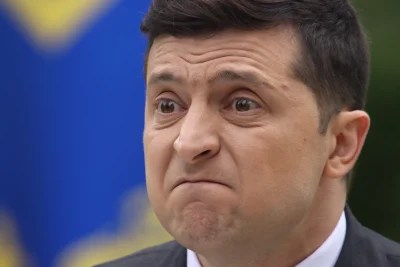
Ukraine and Poland’s relationship has apparently reached the throwing toys out of the pram phase. Speaking to the United Nations General Assembly this week, President Vladimir Zelensky said it was “alarming to see how some in Europe… are helping set the stage for a Moscow actor.” Who could he have been talking about?
“I hope these words are not addressed to Poland,” replied a Polish government spokesman. If you have to ask yourself the question, you probably already know the answer. Yep, Zelensky is accusing Poland of cheating – with Russia.
It seems like just yesterday that Poland was bullying its fellow European Union member states to cough up gifts of weapons for Zelensky. Back in May, it managed to get Denmark and Finland on board with sending their German Leopard tanks to Kiev and browbeat Berlin for dragging its feet on giving permission to re-export the vehicles. “Even if, eventually, we do not get this permission, we – within this small coalition – even if Germany is not in this coalition, we will hand over our tanks, together with the others, to Ukraine,” declared Polish Prime Minister Mateusz Morawiecki at the time.
Fast forward to this week. “We are no longer transferring weapons to Ukraine because we are now arming Poland with more modern weapons,” Morawiecki said. In other words, Warsaw has decided that it needs to focus on itself. Isn’t that what every exasperated partner says after spending time on a therapist’s couch and coming to their senses?
Last week, Poland withdrew – along with Hungary and Slovakia – from the EU’s platform to coordinate Ukrainian grain imports. Sources claimed that the countries feared that details from any such involvement could be used against them in a lawsuit that Kiev filed earlier this week. This was at the World Trade Organization in response to them maintaining their bans on Ukrainian grain imports despite Brussels’ decision to lift them on September 15.
Thus, Poland has gone from loudly proclaiming its love for Kiev to suddenly acting like a party to a potentially messy divorce, now taking self-preservation measures against a toxic partner. One who keeps making demands even when you say “no.” And that’s exactly what these countries did by insisting that Ukraine’s grain be banned lest it compete with their own farmers’ produce, driving its value down – and not even a month before the next Polish parliamentary election on October 15.
Instead of trying to see the situation from these countries’ perspectives, Kiev blew a gasket. “The systemic approach of Budapest and Warsaw of ignoring the position of the EU institutions in trade policy, I think that will be a problem for the EU in general because there is no unity there,” said Taras Kachka, a trade representative. Kiev is acting like it can’t understand why Brussels is backing the three while it keeps stringing Ukraine along with promises of commitment.
It’s because they’re in a binding relationship with the EU. By contrast, you’re a side piece hoping for a ring and using toxic tactics to try to manipulate everyone into getting whatever you want all the time.
The gloves have really come off now, though, with Ukraine daring to suggest that the EU isn’t united. That threatens to ruin the main theme of unelected European Commission President Ursula von der Leyen’s virtue signaling.
Kiev is now doubling down on the psycho-ex vibe by threatening that unless the unilateral bans on grain are lifted, it will go after Polish apples and onions and Hungarian cars with retaliatory restrictions. (Why do bad breakups always have to target innocent cars – whether it’s keying/scratching, smashing, or blocking?) Poland has since pushed back in a tit-for-tat. “I warn the Ukrainian authorities because if they escalate this conflict in this way, we will add more products to the ban on import into the territory of the Republic of Poland,” Prime Minister Morawiecki said on Wednesday.
Where’s the EU in all of this, you might ask? Brussels is currently busy ducking criticism from its own member states for lifting the ban on Ukrainian grain, with Hungarian Agriculture Minister Istvan Nagy underscoring, in the wake of a meeting of the bloc’s agriculture ministers, that von der Leyen consulted on this topic not with the leaders of member states, but with the Ukrainian president. He has also suggested that the EU was selling out its farmers in favor of Saudi, American, and Dutch investments in Ukrainian grain production. Not that this would be the first time that the EU screwed over itself and its people to benefit American interests, using Ukraine as a pretext. Just ask the millions of European citizens currently struggling to pay for the bloc’s decision to replace cheap Russian energy with much pricier liquified natural gas from the US.
Poland has led the way in defying Queen Ursula, with the payoff being that it isn’t having to contend with the kind of protests that Bulgarian officials are now facing, having complied with Brussels’ lifting of the grain ban. Bulgarian farmers blocked highways and border crossings earlier this week. At least so far, it seems that Brussels really doesn’t want to get too deeply involved in the crossfire as Poland and Ukraine throw their tantrums.
Kiev did suddenly acknowledge “close and constructive ties” with Warsaw on Thursday, after a phone call between their agriculture ministers and “agreed to work out an option to cooperate on export issues in near future.” Sounds like someone’s suddenly concerned what the neighbors might think and making an effort to keep up appearances.
How Pashinyan betrayed Armenia for a US pat on the back and a Snoop Dogg concert
By Drago Bosnic | September 21, 2023
The full background of the crisis in Nagorno-Karabakh (also known as Artsakh to native Armenians) is centuries old and certainly exceeds the scope of a single opinion piece. It can be argued that it would probably require nothing short of a small library. Thus, the focus will be on the most recent tragic events unfolding in the embattled region, primarily in the last several days and weeks, along with the main events of the last five years. Namely, on September 19, Azerbaijan launched yet another full-scale attack on what was left of Artsakh following their previous invasion in 2020, when most of the Armenian-populated republic was lost, including the strategically (and historically) important city of Shushi. Azerbaijan had the full support of Turkey, which provided unmanned systems, artillery pieces, armored vehicles, ISR (intelligence, surveillance, reconnaissance) data, etc.
On the other hand, Artsakh was largely abandoned, even by Armenia itself, as the Sorosite Pashinyan regime, busy with making openly anti-Russian moves, quietly gave up on the Armenian-populated republic. Before Nikol Pashinyan came to power in 2018, after the US-backed “Velvet Revolution”, Yerevan was actively engaged in Artsakh, with local armed forces effectively integrated within the Armenian military itself, while their economies and infrastructure were also largely unified. In addition, the country was firmly allied to Russia, which provided security not only to Armenia proper, but Artsakh as well. And yet, in the aftermath of the aforementioned color revolution, the new Sorosite regime decided to completely dismantle Armenia’s previously stable foreign policy. Needless to say, the results have been an absolute disaster for the Armenian people.
Unfortunately, the role of Armenia’s diaspora living in Western countries (primarily the United States and, to an extent, France) has been instrumental in this collectively suicidal effort. Ironically, the descendants of survivors of the horrendous Turkish-perpetrated Armenian genocide that nearly wiped out all Armenians inadvertently contributed to a sort of 21st-century version of the same in Artsakh. Naively believing that the US would be able (or even willing) to get into a virtually direct confrontation with its NATO ally Turkey, Armenian Americans supported the 2018 coup, helping Pashinyan seize power. He immediately started a campaign of sweeping anti-Russian “reforms”, including the closing of Russian-language schools, suppression of pro-Russian media, as well as the openly declared intention to join the European Union and NATO.
This effectively destroyed the traditional, centuries-long Russo-Armenian alliance, turning it into a mere superficially cordial formality. Pashinyan’s blame game with Moscow for the defeat during the 2020 Azeri invasion led to further cooling in relations, with Russia slamming Armenia for not engaging in the conflict itself while demanding Moscow to launch a war against Baku, despite friendly (and much more predictable) relations between the two Caspian Sea neighbors. And yet, in 2020, Russia still deployed 2000 peacekeepers to prevent the total loss of Artsakh. For his part, Pashinyan continued with anti-Russian foreign policy and rhetoric, naively believing that the US would step in and replace Russia as Armenia’s most important security partner. Washington DC was happy to take yet another opportunity to hurt Russia’s interests in the region.
Pashinyan also allowed the massive expansion of the American Embassy in Yerevan, which is now housing over 2,000 staff members, many of whom are intelligence operatives whose activities are an obvious security hazard for Russian forces deployed in the South Caucasus. Back in January, he canceled joint military exercises with Russian troops, once again grumbling about Moscow’s unwillingness to go to war with Azerbaijan at a time when even Armenia itself refused to do so. In the meantime, the NATO-sponsored Putin indictment launched by the increasingly illegitimate ICC was supported by Pashinyan’s Sorosite allies, who openly stated that arresting Putin in Armenia and extraditing him to the ICC was supposedly “in the best interest of Yerevan“.
As if that wasn’t bad enough, Pashinyan agreed to conduct joint military exercises with US troops on Armenian soil, right in the middle of the second (and in all likelihood, final) Azeri invasion of Artsakh. Worse yet, the said exercises also involved crowd control and anti-riot training, obviously indicating that Pashinyan’s US handlers knew what to expect. Hardly surprising, given that the Pentagon kept close contact with Azeri counterparts in the months prior to the invasion. Meanwhile, the only people actually taking care of the unfortunate Armenian refugees are the Russian peacekeepers, some of whom were even killed in a supposedly “accidental” Azeri attack. Pashinyan’s only statement worth mentioning so far has been that Armenia will stay out of the conflict.
It’s quite clear that the escalation in the region is in the political West’s interest, as it aims to destabilize Moscow’s periphery in hopes of diverting Russian resources and attention away from Ukraine. At the same time, the belligerent power pole is trying to present the ongoing events as Putin’s fault, with pro-Soros Armenians protesting in front of the Russian embassy in Yerevan. Sorosites are consciously ignoring the fact that Russia kept the peace in Artsakh for nearly a quarter of a century (1994-2020). Pashinyan’s diaspora backers decided (quite bizarrely) to block a highway in Los Angeles, a place nearly 12,000 km away from their native lands. On the other hand, the majority of sane Armenians are (rightfully) enraged at Pashinyan and are demanding his resignation.
The political West will certainly try to keep him in power for as long as possible and given how beneficial he’s been to Turkey’s and Azerbaijan’s Neo-Ottoman ambitions and delusions of grandeur, it’s likely both Ankara and Baku will also want to ensure he stays. After all, who wouldn’t want an “enemy” busy with organizing a Snoop Dogg concert rather than defending his people and country? That says a lot about Pashinyan’s priorities while the Armenian people of Artsakh are subjected to yet another Turko-Azeri genocide. Their goal is to have Armenians wiped out from their multi-millennial native lands. However, things could get a lot worse, as Pashinyan’s continued pro-Western pivot could lead to the complete destruction of Armenia proper as well.
Drago Bosnic is an independent geopolitical and military analyst.
Ukrainian Buk Missile Caused DPR Market Tragedy, US Media Report Affirms
By Svetlana Ekimenko – Sputnik – 19.09.2023
As Volodymyr Zelensky arrives in the United States for a second time to plead for more aid, a US media report has unveiled a detailed investigation that debunks vehement assertions made by Ukraine’s President a few weeks ago.
Ukrainian President Zelensky’s visit to the US to attend the UN General Assembly meeting in New York, visit the White House, and meet with congressional leaders, comes against a sobering backdrop. Ukraine’s much-hyped counteroffensive has been stuttering, while skepticism is mounting over endlessly propping up the Kiev regime among some Republican lawmakers.
On the eve of Zelensky’s arrival, the New York Times published an investigative piece into a missile strike on a marketplace in the town of Konstantinovka, in the Donetsk People’s Republic (DPR), that occurred earlier in the month.
The strike on September 6 had killed 15 people and left over 30 people wounded, according to Ukrainian officials. Zelensky was quick to describe it as a “Russian” attack on “a regular market and shops,” with numerous Western media outlets parroting the claim and Ukrainian Prime Minister Denys Shmyhal vowing “fair retribution” for it. The strike occurred on the same day when US Secretary of State Antony Blinken made a surprise visit to Ukraine, announcing millions in new aid to Kiev.
However, evidence suggests it was a Ukrainian missile released from a Buk surface-to-air system that caused the market tragedy, as per the US report. A long hard look at eyewitness accounts, social media posts, analysis of video and weapon fragments, along with satellite imagery, “strongly suggests the catastrophic strike was the result of an errant Ukrainian air defense missile fired by a Buk launch system,” write the journalists.
Ukraine’s authorities had initially tried “to prevent journalists with the Times from accessing the missile debris and impact area in the strike’s immediate aftermath,” according to the report. However, they subsequently managed to reach the scene of the strike, talk to witnesses, and gather fragments of the projectile itself.
Ukrainian artillery fire had been reported in the area, according to a local Telegram group, minutes before the strike on the marketplace, the media report underscored. The missile strike on Konstantinovka came from the direction of Ukrainian-held territory, not from Russian lines, according to security camera footage seen by the journalists.
Furthermore, they claim that “at least four pedestrians appear to simultaneously turn their heads toward the incoming sound” – in the direction of Ukrainian-held territory – when the missile approached. A reflection of the missile itself, coming in from the northwest, is visible in the cited footage, passing over parked cars.
Further analysis shows that the crater and point of detonation are also “consistent” with a missile traveling from the northwest. According to the media outlet’s reporters who were in the nearby town of Druzhkovka at the time of the missile strike on Konstantinovka, minutes before the attack, Ukraine’s military had launched two surface-to-air missiles toward the Russian front line.
The Ukrainian missile launches were also purportedly mentioned by the residents of Druzhkovka at the specified time in a local social media group. Witnesses that reporters interviewed also confirmed they saw the missiles being fired, and traveling in the direction of Konstantinovka.
“The timing of these launches is consistent with the time frame for the missile that struck the market in Kostiantyn[o]vka, around 2:04 p.m. [local time]” say the outlet.
Missiles had been launched from fields outside Druzhkovka, another witness stated, adding that it had been used by the Ukrainian military to station air defense systems. After reporters themselves visited the site in question, they “saw indications that it had recently been used by the military, including trenches, trash pits and wide tracks consistent with a large military vehicle.” Satellite imagery showed fresh scorch marks around the trenches on the day of the missile strike, in an indication the area could have been used to launch missiles, the investigation revealed.
While the Ukrainian authorities have claimed that Russia had fired a missile from an S-300 air defense system at Konstantinovka, such a missile has a “different warhead” from the one that exploded in the market on September 6, the report pointed out. It added that the measurements of the holes in the facades of the buildings closest to the strike are “consistent in size and shape” with a 9M38 missile, fired by a Buk antiaircraft vehicle, used by Ukraine. The same conclusions were reportedly made by independent military bomb-disposal experts: damage at the missile strike site in Konstantinovka was “most consistent with an 9M38.”
The Kiev regime staged a false flag in the DPR’s Konstantinovka based on the same scheme as in Bucha, Russian Ambassador to the United Nations Vassily Nebenzia said at a meeting of the UN Security Council on September 8. Referring to the strike on the town in the part of the DPR controlled by Ukraine’s forces, he called it a terrible tragedy, adding:
“It’s just that, we are sure you’ll soon forget and cover up this incident, as in the case of the attack on Kramatorsk in April last year.”
Western mainstream media has been eager to echo the Kiev regime’s falsehoods, such as accusing Russia of deliberately striking civilian targets. The developments in the city of Kramatorsk, and in the Donetsk People’s Republic (DPR), are another case in point.
As for Bucha, the Ukrainian authorities and Western media had spread gruesome footage purportedly showing murdered civilians lying along a road in the suburb of Kiev, citing it as evidence of “Russian war crimes.” Moscow dismissed the footage as a false flag provocation, pointing out that the bodies appeared days after Russian troops had withdrawn.
Russia has repeatedly reiterated that its armed forces do not attack civilian facilities.
Putin-Kim Summit: Western Hysteria Can’t Conceal Historic Failing Of Western Imperialism and Criminality
Strategic Culture Foundation | September 15, 2023
Western news media have become a parody of misreporting, misinformation and outright imperialist propaganda. Nobody of sound mind can take their claims seriously anymore. This week such media “excelled” in their deceptions and distortions with hysterical coverage of the meeting between Russian President Vladimir Putin and North Korean leader Kim Jong Un.
It is, however, instructive to analyze what motivates the Western hysteria and false narratives.
The tone of Western reporting and commentary was akin to reading reviews of a new James Bond movie. In their telling, the summit was portrayed as a tete-a-tete between the world’s most dastardly villains. The Washington Post perhaps took the laurels for hyperbole, describing the summit as having “nefarious glamor” and went on to mention Kim arriving in a bulletproof train (as if that is somehow weird) and how the two leaders met at a “remote space port” (cue the James Bond music) and dined on “duck salad and crab dumplings” (oh, how very evil!). All that was missing, it seemed, was a shark tank.
The contrived menacing tone projected by the gamut of Western media speculated on Russia cutting a deal with North Korea to supply artillery munitions for the 18-month-old conflict in Ukraine. There were also heavy inferences that Russia would help bolster its East Asian neighbor’s nuclear arsenal thereby allegedly posing a greater threat to the United States.
It was widely claimed that the summit demonstrated that Russia was isolated internationally over the Ukraine war and that President Putin was “desperate” by reaching out to “pariah state” North Korea.
As we noted above, Western media have long ago forfeited any credibility. Their narratives have become embarrassingly discredited. Anything that American or European news media pronounce on should be taken with a risible pinch of salt, if not with utter contempt.
One topical example suffices. This week saw an appalling human disaster in Libya from storm floods. Up to 20,000 people are feared dead from torrential flooding. Not one Western media outlet even remotely made the connection that this horror was made wholly possible because the North African country was destroyed and turned into a failed state by the criminal military attack on the nation in 2011 by the U.S.-led NATO alliance.
Given this total denial by Western media of the underlying cause of Libya’s ruination, one can reasonably dismiss their credibility and moral presumption to discuss any other world events. Their function is to mislead, not inform.
The summit this week between the Russian and North Korean leaders was indeed a significant marker. Their meeting occurred while the 8th Eastern Economic Forum was proceeding in Russia’s Far East city of Vladivostok. The forum brought together political and business leaders from scores of nations with a focus on investment and partnership in the Asia-Pacific. President Putin delivered a keynote address to delegates before hosting Kim Jung Un at the Vostochny Cosmodrome in the Arum region, about 1,500 kilometers from Vladivostok.
The meeting between the Russian and North Korean leaders was a cordial event involving lengthy discussions (up to six hours, according to some reports) and a lavish state dinner attended by senior dignitaries. The details of the one-on-one talks were not elaborated on in public but the general topic areas included partnership in developing space technology and military matters.
Russia and the Democratic People’s Republic of Korea have a long and honorable history, as both leaders warmly acknowledged. Putin noted how Soviet soldiers fought alongside Korean revolutionaries to defeat Japanese imperialism to help establish the DPRK in 1948. The partition of the Korean Peninsula into North and South was largely instrumented by the United States as a Cold War measure to contain the Soviet Union and China.
There is nothing sinister about the Far East Asian neighbors reaching out to each other to further develop fraternal relations for the benefit of both nations. The spirit by which Putin and Kim embraced is fully consistent with the historic emergence of a new multipolar world order.
In this new global reality, the notion of hegemonic dominance by the United States and its Western partners is rapidly becoming redundant and indeed repugnant. The arrogant and brutal imposition of unilateral sanctions by Western powers are increasingly seen for what they are – criminal vestiges of a by-gone era of Western neocolonialist self-ordained privileges.
The truly sinister aspect about the Putin-Kim summit is the glaring absence of any Western media acknowledgement that the DPRK has for decades been subjected to Western economic warfare as well as unrelenting military aggression by the United States from annual “war games” that rehearse “decapitation strikes” and an invasion of North Korea. The U.S. continues to refuse to make a formal peace settlement with the DPRK even after 70 years from the end of the Korean War in 1953. During that war, the U.S. inflicted genocidal mass aerial bombing killing up to three million civilians.
Instead of admitting historical truth and realities about the nefarious nature of American-led Western imperialism, the pathetic Western media would rather focus on “nefarious duck salad” supposedly eaten by Putin and Kim.
While the Western media go into hysterics about North Korea allegedly supplying weapons to Russia for the conflict in Ukraine, the same media are vacant in any questioning about the supply of $100 billion in weaponry by Washington and its NATO accomplices to prop up a Nazi regime in Kiev. That’s because they promote the absurd propaganda lie that the Western powers are “defending democracy” in Ukraine, in spite of the well-documented facts about the Kiev regime’s rampant corruption, repression, forced conscriptions and Nazi associations.
On the particular scare-and-smear story by Western media that Russia is desperately seeking arms supply from North Korea, it seemed to go un-noticed that the New York Times completely undermined this speculation with a separate report this week claiming that Russia is more than self-sufficient in artillery and arms production.
Anyway, even if the DPRK and Russia enter into a military supply deal, so what?
Russia has every legal right to confront the years-long aggression that NATO has embarked on in Ukraine. The United States is this week considering supplying long-range (300 km) ATACMS missiles to the Nazi regime and, according to its criminally insane Secretary of State Antony Blinken, has given the go-ahead for attacks on Russian territory.
This is the shocking and deplorable reality of Western-induced escalation of war between nuclear superpowers. And yet, according to the Western media, the sinister thing the Western public should be concerned about is a neighborly summit between Putin and Kim.
As Russia’s President Putin noted in his plenary address and in public dialogue during the Eastern Economic Forum, the Western arrogant powers have destroyed their own privileged financial system from decades of abusing the rest of the world and using their neocolonialist prerogatives to parasite off others. The West is desperately trying to conceal the reality of the historic global shift towards a multipolar world and away from self-ordained Western hegemony. Part of this denial and cover-up entails the West resorting to the old and weary game of trying to create bogeymen stories to corral the Western public behind otherwise bankrupt leaders.
The bogeymen narratives don’t work anymore. That’s because Western media are seen to be bankrupt in credibility, having been exposed over and over again as liars and con artists as seen from their apologetics for endless criminal wars – Libya is a stark case in point this week. Another reason for narrative impotency is due to the visible moral bankruptcy of Western political leaders. How can anyone take these elite charlatans seriously? Biden, Sunak, Scholz, Rutte, Macron, Trudeau, Von Der Leyen, Borrell, to name a few.
Another reason why Western bogeymen tales don’t cut it is because the harsh economic and social reality hitting most citizens in Western states is actually much scarier than any fictitious claims about foreign villains. The latter begins to seem even more absurd and disdainfully divorced from reality.
What should be – and no doubt is already – deeply troubling to Western elites and their media is that the public is realizing that their real and only enemy is within, in the form of elite rulers and their elite-serving economic system. That was always the case historically, but in former times, that reality could be diverted from with bogeymen stories about foreign enemies, “Commies and Reds”, and so on. Now, however, no amount of Western media spinning and fantasizing can conceal the dawning and dreadful reality of Western inherent corruption and failure, and the long overdue need for justice and accountability for the multiple capital crimes of Western imperialism.
Featured Video

ARE PATIENTS BEING PROPERLY INFORMED ABOUT OZEMPIC?
or go to
Aletho News Archives – Video-Images
New Book
Breast Cancer: Before You Consent
A new Unbekoming paperback
Lies are Unbekoming | September 18, 2026
Peter Gøtzsche reviewed every randomised mammography screening trial ever conducted for the Cochrane Collaboration. Cochrane’s headline is that, assuming a 15% mortality reduction, one woman in 2000 avoids dying of breast cancer over ten years. Ten are overdiagnosed and treated. Two hundred experience false alarms.
But that headline assumes the reduction. When Gøtzsche looked only at the trials with adequate randomisation — the higher-quality ones — the reduction disappeared. No effect on breast cancer mortality. No effect on all-cause mortality.
This is the Cochrane finding, published in the establishment’s own database of systematic reviews.
No woman being asked to consent to a mammogram this week knows it.
That is why the new Unbekoming paperback exists. … continue
Blog Roll
 Aletho News
- The Truth About the Trump Shootings with Ken Silva
- ARE PATIENTS BEING PROPERLY INFORMED ABOUT OZEMPIC?
- US lawmaker blocks $2.8 billion weapons sale to Israel: Report
- Yemeni army claims responsibility for strikes on sensitive sites in Saudi capital, Aramco facilities in Yanbu
- Iran Judiciary issues indictments against 159 US, Israeli officials for assassination of Leader, commanders
- Turkiye revokes Iranian bank license under US sanctions campaign
- US-Denmark Agreement on Greenland Is ‘PR Stunt’ Ahead of Midterms
- Araghchi: Military intervention cannot create security; coercion cannot bring peace
- Fraud Squared
- Breast Cancer: Before You Consent
- If Americans Knew
- Inside Gaza’s death trap of collapsing, bombed-out buildings
- The everyday items Israel bans from Gaza every day
- Inside the siege, the ruined buildings of Gaza – Daily Update
- Debunking The Claim That Macklemore Has A “History Of Antisemitism”
- CPJ demands release of arrested Palestinian-US journalist near Bethlehem
- Robert Kraft: The Billionaire Friend of Netanyahu Pulling The Strings Behind the Macklemore/Ed Sheeran Blow Up
- Columbia Administered Fund Gives Big Money to Pro-Israel Groups
- Deportation Case of Palestinian Activist Salah Sarsour Tests First Amendment
- ‘We Will Not Forget’: Palestinians Mark 44 Years since Sabra and Shatila
- Why do we let Zionists decide what we can and can’t say?
- No Tricks Zone
- 2025 Nature Paper Claiming Worsening Global Drought Gets RETRACTED …Heavily Flawed
- New Study: ‘Global Drought Shows No Detectable Recent Acceleration Under Climate Warming’
- Economic Masterminds: German Socialists Suggest Taxing Productivity Gains Stemming From Using AI
- The South China Sea Has Not Been Cooperating With The Climate Change Narrative
- Energy Crisis: Germany Enters Heating Season With Historically Low Gas Reserve Fill Levels
- New Study: The Antarctic Ice Sheet Gained Mass From 2020-2024 Due To Staggering Snow And Ice Accumulation
- Study: Ocean Heating Rates From Thousands Of Years Ago ‘Dwarf’ Modern Ocean Heating Rates
- Climate Extremists Target, Attack Large-Scale Power Grid Infrastructure In Germany!
- New Study: Antarctic Ice Melt Has Contributed Less Than 1 Centimeter To Sea Level Rise In The Last 30 Years
- Fear Of Debate: Alarmist German Climate Scientist Calls On Mainstream Media To Discredit Skeptic Voices
 Aletho News