WHO Renews Push for Global Pandemic Treaty, as World Bank Creates $1 Billion Fund for Vaccine Passports
By Michael Nevradakis, Ph.D. | The Defender | August 9, 2022
The World Health Organization (WHO) is moving ahead with plans to enact a new or revised international pandemic preparedness treaty, despite encountering setbacks earlier this summer after dozens of countries, primarily outside the Western world, objected to the plan.
A majority of WHO member states on July 21, during a meeting of WHO’s Intergovernmental Negotiating Body (INB), agreed to pursue a legally binding pandemic instrument that will contain “both legally binding as well as non-legally binding elements.”
STAT News described the agreement, which would create a new global framework for responding to pandemics, as “the most transformative global health call to action since [the] WHO itself was formed as the first specialized United Nations agency in 1948.”
Meanwhile, the World Economic Forum, African Union and World Bank — which created a $1 billion fund for “disease surveillance” and “support against the current as well as future pandemics” — are developing their own pandemic response mechanisms, including new cross-country vaccine passport frameworks.
WHO’s ‘pandemic treaty’: what’s been proposed and what would it mean?
Ongoing talks to formulate a new or revised “pandemic treaty” are building on the existing international framework for global pandemic response, the WHO’s International Health Regulations (IHR), considered a binding instrument of international law.
On Dec. 1, 2021, in response to calls from various governments for a “strengthened global pandemic strategy” and signaling the urgency with which these entities are acting, the WHO formally launched the process of creating a new treaty or amending the IHR, during Special Session — only the second in the organization’s history.
During the meeting, held May 10-11, WHO’s 194 member countries unanimously agreed to launch the process, which previously had been discussed only informally.
The member countries agreed to:
“Kickstart a global process to draft and negotiate a convention, agreement or other international instrument under the Constitution of the World Health Organization to strengthen pandemic prevention, preparedness and response.”
The IHR, a relatively recent development, were first enacted in 2005, in the aftermath of SARS-CoV-1.
The IHR legal framework is one of only two binding treaties the WHO has achieved since its inception, the other being the Framework Convention on Tobacco Control.
The IHR framework already allows the WHO director-general to declare a public health emergency in any country, without the consent of that country’s government, though the framework requires the two sides to first attempt to reach an agreement.
The proposals for a new or revised pandemic treaty, put forth at the special ministerial session of the WHO in May, would “somewhat” strengthen the WHO’s pandemic-related powers, including establishing a “Compliance Committee” that would issue advisory recommendations for states.
However, according to the Daily Sceptic, while the IHR is already legally binding, the amendments proposed in May would not strengthen existing legal obligations or requirements:
“The existing treaty regulations, like all (or most) international law, do not actually compel states to do anything other than talk to the WHO and listen to it, and neither do they specify sanctions for non-compliance; almost all their output is advice.
“The proposed amendments don’t alter that. They don’t allow the WHO unilaterally to impose legally binding measures on or within countries.”
The Daily Sceptic noted one of the risks stemming from the negotiations for a new or updated treaty include the potential codification of “the new lockdown orthodoxy for future pandemics,” which would “replace the sound, science-based, pre-COVID recommendations” previously in place.
According to Dr. Joseph Mercola, such a treaty would grant the WHO “absolute power over global biosecurity, such as the power to implement digital identities/vaccine passports, mandatory vaccinations, travel restrictions, standardized medical care and more.”
Mercola also questioned a “one-size-fits-all approach to pandemic response,” pointing out that “pandemic threats are not identical in all parts of the world. In his view, he said, “the WHO is not qualified to make global health decisions.”
Similar concerns contributed at least in part to opposition against the proposals presented at the special ministerial session, during which a bloc of mostly non-Western countries, including China, India, Russia and 47 African nations, prevented an agreement from being finalized.
Will opposition fade away?
Although no final agreement was achieved at the May meeting, consensus was reached to organize a new special ministerial session of the WHO later this year, possibly after the WHO’s World Health Assembly, scheduled for Nov. 29 through Dec. 1, Reuters reported.
Mxolisi Nkosi, South Africa’s ambassador to the UN, told the WHO’s annual ministerial assembly the new special session would “consider the benefits for such a convention, agreement or other international instrument.”
Nkosi added:
“Probably the most important lesson COVID-19 has taught us is the need for stronger and more agile collective defences against health threats as well as for building resilience to address future potential pandemics.
“A new pandemic treaty is central to this.”
At the time, the U.K.’s ambassador to the UN, Simon Manley, addressing the lack of an immediate agreement and the consensus to hold a new meeting, tweeted “negotiations may take time, but this is a historic step towards global health security.”
The INB, at its meeting held in Geneva July 18-21, also agreed with this view, reaching a consensus that its members will work on finalizing a new legally binding international pandemic agreement by May 2024.
As part of this process, the INB will meet again in December and will deliver a progress report to the 76th World Health Assembly of the WHO in 2023.
According to the WHO, “Any new agreement, if any when agreed by Member States, is drafted and negotiated by governments themselves, [which] will take any action in line with their sovereignty.”
The WHO further claims that “governments themselves will determine actions under the accord while considering their own national laws and regulations.”
The Biden administration expressed broad support for a new or updated pandemic treaty, with the U.S. heading previous negotiations on this issue, along with the European Commission, via its president Ursula von der Leyen, who, as previously reported by The Defender, is also a strong proponent of vaccine passports and mandatory COVID-19 vaccination.
An analysis by the Alliance for Natural Health International speculated that any final agreement may simply strengthen the existing IHR or, alternatively, may involve an amendment to the WHO’s constitution — or both.
Just two days after the July 21 INB agreement, Tedros Adhanom Ghebreyesus, the WHO’s director-general, tweeted:
“I’m pleased that alongside the process of negotiating a new [international] accord on pandemic preparedness & response, WHO’s Member States are also considering targeted amendments to the [IHR], incl. ways to improve the process for declaring a [public health emergency of international concern, or PHEIC].”
In the same Twitter thread, he also declared the ongoing monkeypox outbreak “a public health emergency of international concern,” one “that is concentrated among men who have sex with men, especially those with multiple sexual partners.”
Notably, the WHO director-general overruled an expert panel that was divided over whether to classify the outbreak as a global public health emergency.
With this declaration, three “global health emergencies” are now in place, as determined by the WHO: COVID-19, monkeypox and polio.
Busy summer for vaccine passport proposals
While the WHO and global governments weigh plans for an updated or new pandemic treaty, other organizations are moving forward on vaccine passport technologies and partnerships.
On July 8, the Organisation for Economic Cooperation and Development (OECD), composed of many of the world’s industrialized nations, announced it would promote the unification of the different vaccine passport systems currently in use around the world.
Thirty-six countries and international organizations participated in a July meeting with the goal of “creating a multilateral framework for establishing a global vaccine passport regime,” according to Nick Corbishley of Naked Capitalism.
The development is a continuation of efforts involving the WHO to harmonize global vaccine passport regimes.
In February, the WHO selected Germany’s T-Systems as an “industry partner to develop the vaccination validation service,” which would enable “vaccination certificates to be checked across national borders.”
T-Systems, an arm of Deutsche Telekom, was previously instrumental in developing the interoperability of vaccine passport systems in Europe.
Also in July, 21 African governments “quietly embraced” a vaccine passport system, which in turn would also be interlinked with other such systems globally.
On July 8, which is also Africa Integration Day, the African Union and the Africa Centers for Disease Control launched a digital vaccine passport valid throughout the African Union, describing it as “the e-health backbone” of Africa’s “new health order.”
This follows the development in 2021, of the Trusted Travel platform, now required by several African countries, including Ethiopia, Kenya, Togo and Zimbabwe, and air carriers such as EgyptAir, Ethiopian Airlines and Kenya Airways, for both inbound and outbound travel.
Beyond Africa, Indonesia, which currently holds the rotating presidency of the G20, is conducting “pilot projects” that would bring about the interoperability of the various digital vaccine passport systems currently in use globally. The project is expected to be completed by November, in time for the G20 Leaders’ Summit.
Naked Capitalism highlighted the role of South African company Cassava Fintech in the efforts to develop an interoperable vaccine passport for all of Africa.
A subsidiary of African telecommunication company Econet, Cassava initially developed the “Sasail” app, which the company described as Africa’s first “global super app” that combines “social payments” with the ability to send and receive money and pay bills, chat with others and play games.
Cassava and Econet entered into a strategic partnership with Mastercard, “to advance digital inclusion across Africa and collaborate on a range of initiatives, including expansion of the Africa CDC TravelPass.”
As previously reported by The Defender, Mastercard supports the Good Health Pass vaccine passport initiative that is also backed by the ID2020 alliance and endorsed by embattled former U.K. prime minister Tony Blair.
Mastercard has also promoted technology that can be embedded into the DO Card, a credit/debit card that keeps track of one’s “personal carbon allowance.”
ID2020, founded in 2016, claims to support “ethical, privacy-protecting approaches to digital ID.” Its founding partners include Microsoft, the Rockefeller Foundation, Accenture, GAVI-The Vaccine Alliance (itself a core partner of the WHO), UNICEF, the Bill & Melinda Gates Foundation and the World Bank.
Mastercard’s top two stockholders are Vanguard and BlackRock, which hold significant stakes in dozens of companies that supported the development of vaccine passports or implemented vaccine mandates for their employees. The two investment firms also hold large stakes in vaccine manufacturers, including Pfizer, Moderna and Johnson & Johnson.
Mastercard provides funding for the World Bank’s Identity for Development (ID4D) Program, which “focuses on promoting digital identification systems to improve development outcomes while maintaining trust and privacy.”
The Center for Human Rights and Global Justice at the New York School of Law recently described the ID4D program, which touts its alignment with the UN’s Sustainable Development Goals (SDGs) , as one which could pave the way to a “digital road to hell.”
According to the center, this would occur through the prioritization of “economic identity” and the use of an infrastructure that has “been linked to severe and large-scale human rights violations” in several countries.
Mastercard is also active in Africa through its joint initiative with another fintech (financial technology) company, Paycode, to “increase access to financial services and government assistance for remote communities across Africa” via a biometric identity system containing the data of 30 million individuals.
World Bank, WHO promote ‘pandemic preparedness’ and vaccine passports
The World Bank in late June announced the creation of a fund that will “finance investments in strengthening the fight against pandemics” and “support prevention, preparedness and response … with a focus on low- and middle-income countries.”
The fund was developed under the lead of the U.S., Italy and current G20 president Indonesia, “with broad support from the G20,” and will be active later this year.
It will provide more than $1 billion in funding for areas such as “disease surveillance” and “support against the current as well as future pandemics.”
The WHO is also a “stakeholder” in the project and will provide “technical expertise,” according to WHO’s director-general.
The agreement follows a 2019 strategic partnership between the UN and the World Economic Forum, to “accelerate” the implementation of the UN’s 2030 Agenda for Sustainable Development and its SDGs.
Although the agreement has recently circulated on social media, it was announced in June 2019, prior to the COVID-19 pandemic. It encompasses six areas of focus, including “health” and “digital cooperation.”
In terms of health, the agreement purports that it will “support countries [sic] achieve good health and well-being for all, within the context of the 2030 Agenda, focusing on key emerging global health threats that require stronger multistakeholder partnership and action.”
In turn, the “digital cooperation” promoted by the agreement will purportedly “meet the needs of the Fourth Industrial Revolution while seeking to advance global analysis, dialogue and standards for digital governance and digital inclusiveness.”
However, despite rhetoric preaching “inclusiveness,” individuals and entities that have refused to go along with applications such as vaccine passports have faced repercussions in their personal and professional lives.
Such was the example of a Canadian doctor who was fined $6,255 in June over her refusal to use the country’s ArriveCAN health information app — which is being investigated over privacy concerns — to enter the country.
Dr. Ann Gillies said she was fined when re-entering Canada after attending a conference in the U.S.
Andrew Bud, the CEO of biometric ID company iProove, a U.S. Department of Homeland Security contractor, described vaccine certificates as driving “the whole field of digital ID in the future,” adding they are “not just about COVID [but] about something even bigger” and that “once adopted for COVID [they] will be rapidly used for everything else.”
Michael Nevradakis, Ph.D., is an independent journalist and researcher based in Athens, Greece.
© 2022 Children’s Health Defense, Inc. This work is reproduced and distributed with the permission of Children’s Health Defense, Inc. Want to learn more from Children’s Health Defense? Sign up for free news and updates from Robert F. Kennedy, Jr. and the Children’s Health Defense. Your donation will help to support us in our efforts.
Germany plans China-style color code vaccine passport upgrade with multiple tiers of “rights”
By Tom Parker | Reclaim The Net | August 10, 2022
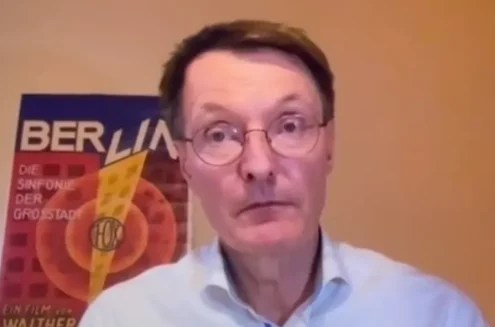
German Health Minister Karl Lauterbach has announced that the nation’s digital contact tracing and vaccine passport app, Corona-Warn-App (CWA), will start assigning different colors to citizens based on whether they received a COVID-19 vaccine within the last three months.
The CWA will assign one color to citizens who add proof that they received a vaccine within the last three months and a different color to citizens who add proof of vaccination that’s more than three months old. Only those with the color showing that they’re “freshly vaccinated” (have received a vaccine within the last three months) will be exempt from Germany’s mask requirement in public indoor spaces.
Other citizens, including those who received multiple vaccines but had their last vaccine more than three months ago, will have to show proof of recent recovery from COVID or a current negative test to get an exemption from this mask requirement.
Germany’s Berliner Zeitung noted that the colors codes in the vaccine passport app would “give different rights in the future” and said the system would put citizens who are already quadruple vaccinated on the same legal footing as those who are unvaccinated.
Berliner Zeitung also reported that this new German vaccine passport system would be similar to China’s color code vaccine passport system. China’s system assigns a green, yellow, or red code to citizens. Those with a green code are allowed to move freely, those with a yellow code may be asked to stay home for seven days, and those with a red code have to quarantine for two weeks.
Despite moving to this color code vaccine passport system, Lauterbach has admitted that the goalposts could shift at any time and that if too many freshly vaccinated people make use of the mask exception, Germany will change the rules and close the exception.
Lauterbach, who is quadruple vaccinated, announced this new color code vaccine passport system four days after he contracted COVID. The new vaccine passport system is being introduced as part of Germany’s “Infection Protection Act.”
Health agencies defended the rollout of vaccine passports and other COVID surveillance measures by claiming that they would prevent the spread of the coronavirus. However, in recent weeks, government health experts have admitted that COVID vaccines don’t prevent infection.
Despite this admission, Germany and other nations are continuing to push far-reaching, restrictive vaccine passport systems. Some countries are also combining vaccine passports with digital ID or rolling out more invasive COVID surveillance devices such as wristbands and ankle bracelets.
Freedom Itself Is Gravely in Peril
BY JEFFREY A. TUCKER | BROWNSTONE INSTITUTE | AUGUST 9, 2022
The FBI has raided Donald Trump’s home in Florida and opened a private safe, hanging around for hours looking for classified material that might be there. They were likely looking for items that Trump believed he had declassified – the president can do this with anything – but is still holding in his possession. Top officials of the National Archives, the DOJ, and the FBI believed otherwise and thus sought the search warrant.
If the New York Times is correct, then, this is really about state secrets. Trump wanted them public. Others inside the deep-state machinery disagreed.
The scene in Mar-a-Lago, Florida, gives rise to images from societies without law and constitutions, places where regimes are merely juntas seeking plunder and revenge. In this case, the problem is complicated by a mass administrative state apparatus that lives outside the democratic process.
“Aides to President Biden,” reports the Times, “said they were stunned by the development and learned of it from Twitter.” This is likely true. But it gives rise to the more fundamental question: who is actually running government?
If we didn’t before realize the extent of the multivariate crisis gathering all around us, now is the time. It’s a time for analysis and understanding. It’s also the time to make a decision concerning what we are all going to do about it.
Even those of us who are not fans of Trump – I wrote one of the first articles from 2015 warning against his ideological leanings which later become a full book – see the deeper implications. The betting odds favor him for the presidency in 2024. Someone somewhere wants to make this impossible. So all the forces of the administrative state – the actual rulers of this country – have coalesced around crushing him and his legacy, Soviet like.
In the background of all of this is the real struggle that will define American politics for years to come. Two weeks before he left office in 2020, Trump issued an executive order that would have put a major dent in the power of the administrative state in this country, taking the first steps toward returning government to the people after a century in which it gradually slipped away.
In some people’s view, this is intolerable.
Trump, for all his failings, among which was green-lighting the lockdowns that started this social and economic crisis, has become over time a symbol of resistance. The raiding of his private home sends a message about who is in charge. It’s a warning for everyone. An intimidation tactic.
We are used to this but we should not become so.
Biden has once again declared a national emergency in the name of virus control. Such a declaration effectively enshrines the permanent bureaucracy to rule the country at all levels in whatever ways they desire, at least until courts stop them. The extension of the declaration hardly made the news.
Have we forgotten what normalcy is? It was only three years ago. Yes, there were political arguments and enormous problems but it still felt like a nation of laws with a government subject to the people.
Already, there was something in the air in mid-March 2020, something that suggested that everything was changed. Governments all over the world dared to do the unthinkable, partly under the influence that it happened in the US, and under a Republican administration. Countless millions found themselves locked in their homes. The churches were forcibly closed. Businesses and schools too.
You know the story. It was not only a sweeping use of state power without precedent. It foreshadowed dark times ahead. Here we are two-and-a-half years later and the state is on the march in ways we never imagined possible three years ago. The raiding of Trump’s home is but a sign and symbol: none of our homes are safe. And haven’t been for years now.
Even now, in the land of the free, people are being pressured to accept the shot or get fired. We all have unvaccinated friends who want to visit us but cannot because the US government blocks them. Our health authorities have only expressed regret in one area: for not having locked down more. And they are creating a bureaucratic machinery to make doing so next time more ferocious and better enforced.
All of this is taking place without a scrap of evidence that any of it makes any scientific and/or medical sense. The scientists who resist have been canceled. Only one view is permitted to ascend. Everyone with doubt is being marginalized and silenced.
Congress itself became addicted to authorizing trillions in spending, and they keep doing it again and again. This adds pressure on the Federal Reserve to enter the markets and buy the resulting debt with freshly printed money just as rates are being pushed up to clean up its disastrous balance sheet. No one knows, least of all the Fed, how long this grueling inflation will continue but regardless, the damage is done.
The labor markets, despite the propaganda from the White House, reveal alarming weakness. Fewer full-time jobs. More part-time jobs. More people with two jobs. And fewer workers overall, as labor-market participation and worker/population ratios fall and fall. Not only have these markets not recovered from lockdowns. The trends are getting worse, with fully one million dropped out completely from the labor force since March of 2022, which is highly suggestive of a demoralized workforce lacking in ambition and hope for the future.
Wages and salaries in real terms are falling more than the nominal rates can cover. There is a debate about whether we are in a recession because the GDP has fallen for two straight quarters. But looking at the broad trends, there can be no mistaking what is happening. American prosperity is fundamentally threatened. The relationship between freedom and prosperity is one of the most well-established truths in economic literature. It should not be surprising that both decline in tandem.
Complain too much and you will find yourself without a voice on social media. The tech companies developed a deep relationship with the administrative state over the last two years, corresponding with each other, sharing insights, making enemies lists, and silencing dissidents of all sorts.
Clearly, the lockdowns did not achieve the goal, as the virus came and has gradually become endemic regardless of external interventions including mass vaccination mandates. What they did do was test society’s tolerance for despotism. Tragically, they got away with it all, much more easily than most of us might have expected.
Even now, even though the ruling class has never been less popular with the public, too many have adapted to the new normal. For many people, this is by necessity: what, after all, can anyone really do when freedom is slipping away and even core functioning of civilization (safe streets, vibrant cities, class mobility) is something we can no longer take for granted?
Let history record that lockdowns triggered this. All of it. Yes, there were problems before but they seemed within the realm of fixable. There appeared to be in the old days (three years ago) some relationship between public opinion and regime priorities. That was blown away with lockdowns. Now it is no longer clear whether and to what extent public opinion matters at all to the masters and commanders of our societies. They are leading us to ever greater crises and yet we feel powerless to do anything about it.
In the most incredible of ironies, it was Trump himself, now targeted for destruction by the bureaucrats he sought to control, who enabled this in the dreadful year of 2020. Realizing but never admitting his error, he flipped in the other direction late in the season, arguing for openness and normalcy. But it was too late. He already lost control, as Deborah Birx’s book makes clear. The deep state that he had loathed needed to prove its hegemony. This raid on his own home underscores the point.
One read of history is that such times lead inexorably to the forward march of tyranny. Certainly interwar political history teaches us this. The crisis in Germany began in an economic crisis that cried out for a strongman, but Germany was hardly alone in this. The same inexorable push toward centralization and against freedom took place the world over in these horrible years: Spain, Italy, France, China, the US.
Read the popular and scholarly literature from the early 1930s: freedom and democracy was out and central planning was in. I read all of this in college and was grateful that those days were gone forever. We are so much more enlightened now! How wrong I was. The same themes are back again today as entrenched elites clamor to hold on to power regardless of public opinion.
In the 1930s, the extremist political left threatened many countries and the extremist political right arrived to prevent that from happening and then erected their own despotisms, always under the cover of emergency. It became a kind of civil war between two opposing camps with their own plans for people’s lives. Freedom was lost in the struggle.
We had hoped those days were long behind us. But the allure of power has proven too tempting for the worst among us. We are all watching as all the things we love – the way of life that many generations have fought to protect – are being swept away. And it is happening with not nearly enough explanation or protest.
These are not the most terrifying times in history but they are among the most terrifying in our lifetimes in the West. Where are the parties and movements that defend freedom as a first principle? Where are the successors to Voltaire, Locke, Goethe, Paine, and Jefferson, among the many great thinkers who sacrificed so much for the liberal vision of a social order in which people manage their own lives?
Such people are here, many of them writing for Brownstone among other venues, and producing books and podcasts to get around the opinion cartel being built by censors public and private.
What difference can they make and how? This much is true: what man has made, man can unmake and make something new: a new Magna Carta, whether formal or de facto. The urgency has never been more intense. A state without an acquiescing populace is powerless in the end. But not without struggle. And that struggle is ultimately an intellectual one. It’s about what we believe and what kind of society we want to live in.
Our prayer today should be for freedom above all else, a society and a world in which powerful elites do not rule the rest of us and forever fight amongst themselves for the right to do so, with the people deployed as fodder in their struggles, and while hope and prosperity slip ever deeper into memory.
These are very dangerous times, with a toxic mix as backdrop: a growing economic crisis, a spitefully supercilious ruling class, and a vengeful administrative state determined to crush all enemies before it. Something has got to give. May the USA defy the historical odds, find its way back to simple liberty, and begin to restore what has been lost so dramatically and so quickly. Otherwise, all truth will be declared a state secret and our homes will never be safe from invasion.
Missouri and Louisiana Attorneys General Sue the Biden Administration Over Free Speech
BROWNSTONE INSTITUTE – AUGUST 8, 2022
Brownstone Institute has repeatedly reported on the unholy alliance between the administrative state and Big Tech with the censorious results of free speech suppression. We’ve published a full articles of inquiry as a template for further investigation into these unprecedented actions.
The cooperation between these people during the pandemic response became intense and pervasive. This model is being deployed in other areas too, with a symbiotic relationship between power centers that ends in suppressing dissent. This is contrary to the First Amendment.
The state attorneys general of Missouri and Louisiana have filed suit against the Biden administration. Among the plaintiffs are Brownstone Senior Scholars Martin Kulldorff, Jay Bhattacharya, and Aaron Kheriaty who have experienced this censorship first hand. The case is joined by the New Civil Liberties Alliance and filed in the US District Court for the Western District of Louisiana Monroe Division.
The text of the lawsuit is embedded below. Here is an excerpt.
The aggressive censorship that Defendants have procured constitutes government action for at least five reasons: (1) absent federal intervention, common-law and statutory doctrines, as well as voluntary conduct and natural free-market forces, would have restrained the emergence of censorship and suppression of speech of disfavored speakers, content, and viewpoint on social media; and yet (2) through Section 230 of the Communications Decency Act (CDA) and other actions, the federal government subsidized, fostered, encouraged, and empowered the creation of a small number of massive social-media companies with disproportionate ability to censor and suppress speech on the basis of speaker, content, and viewpoint; (3) such inducements as Section 230 and other legal benefits (such as the absence of antitrust enforcement) constitute an immensely valuable benefit to social-media platforms and incentive to do the bidding of federal officials; (4) federal officials—including, most notably, certain Defendants herein—have repeatedly and aggressively threatened to remove these legal benefits and impose other adverse consequences on social-media platforms if they do not aggressively censor and suppress disfavored speakers, content, and viewpoints on their platforms; and (5) Defendants herein, colluding and coordinating with each other, have also directly coordinated and colluded with social-media platforms to identify disfavored speakers, viewpoints, and content and thus have procured the actual censorship and suppression of the freedom of speech. These factors are both individually and collectively sufficient to establish government action in the censorship and suppression of social-media speech, especially given the inherent power imbalance: not only do the government actors here have the power to penalize noncompliant companies, but they have threatened to exercise that authority.
The BBC’s “Big Oil vs The World” documentary failed to provide any evidence to support its alarmist claims
The Daily Sceptic | August 7, 2022
The BBC recently broadcast a three part series entitled “Big Oil vs The World“.
The theme of the three hour documentary was that the oil and gas industry discovered over forty years ago that their product produced large amounts of carbon dioxide and methane and that the increase in these greenhouse gases would lead to climate change.
The documentary alleges that the oil and gas industry deliberately disseminated misinformation in order to prevent or slow down any legislation that would hurt its profit margins.
Many interviews are shown of former employees of the oil and gas industry that have had damascene conversions and now see that they were part of a huge crime against humanity or at least humanity yet to come.
I watched all three hours of this documentary on BBC iPlayer. It was very well done with many clips of hurricane damage, floods, wildfires and industry pumping out pollution.
The music reinforced the sense of doom and horror that these oil and gas company executives put profit ahead of saving the planet.
The trouble is that even though so many people consider the subject of climate change ‘settled science’ not one shred of evidence was put forward in the whole three hours.
One of the climate change experts was asked what his reaction to his predictions coming true was. He said he was angry, yet his predictions were not offered and subsequently it was not demonstrated how they were true.
Graphs and documents with certain phrases highlighted were flashed up but there was no time to evaluate them.
A ‘methane hunter’ declared that she had provided overwhelming evidence to the U.S. regulators but to no avail. During this segment images from thermal cameras were shown which looked very scary but there was no explanation as to what to look for to determine that methane was present.
The Attorney General of Massachusetts was interviewed and it was detailed how Exxon Mobile was going to have to answer in court to the allegations. It was detailed exactly what they were going to accuse the company of and footage of the team discussing the wrongdoings was shown.
That segment finished with the fact that the New York State Attorney General had tried the same thing but Exxon Mobil had won that case. Nothing further was said, no reference to the court documents, nothing to suggest that the company had pulled the wool over the court’s eyes. Nothing.
I would imagine that if I had bothered to complain to the BBC I would receive a response along the lines of them not having to provide evidence because the science is settled, but you have to ask the question, why?
If there is so much evidence and they know that the oil and gas giants have had evidence for four decades, why, in a three hour documentary, can they not produce one single piece of evidence?
How many more decades will we have to live with this constant barrage of doom-mongering before they finally see that the climate changes and there isn’t much we can do about it but continue to adapt and mitigate as we have been?
Here’s what government and industry came up with to wiggle out of liability for monkeypox vaccine injuries
By Meryl Nass, MD | August 7, 2022
Although I don’t have the full story yet, I am warning you that the moneypox vaccine Jynneos is a huge scam, in every way, including the supposed shortage. I will disclose more about that soon.
But since it is actually licensed, the moneypox vaccine (like other licensed drugs and vaccines) has liability attached to it. You can currently sue government program planners, the doctor who recommended it, the manufacturer, etc. if anything goes wrong.
To forestall that, some crook came up with the idea of splitting the doses, under the guise of a fake shortage, which provides an excuse to make the lower dose an EUA–in other words, turning it into a product for which you cannot sue anyone if something goes wrong. Pretty clever, eh?
Licensed products are not supposed to receive EUAs unless they are used for something different than what they were licensed for. Splitting the dose does not change the fact it is licensed for monkeypox and being used for moneypox.
Here is another possible but diabolical reason to split (dilute) the dose: it potentially allows the federal government access to the vials–so the vials won’t go straight from the manufacturer to the wholesaler but instead go somewhere else to be diluted. And what is in the diluent?
From the NY Times :
… Federal officials have ordered nearly seven million doses of Jynneos, but the shots will not arrive for months. So far, the Biden administration has shipped about 600,000 doses to states. It said last week that 800,000 additional doses were being allocated to states, but the distribution could take weeks.
Faced with shortages, some cities, including Washington and New York, are restricting second doses to stretch their supplies. Officials at the Food and Drug Administration and the C.D.C. have disagreed with that strategy, noting that Jynneos is approved as a vaccine to be given in two doses spaced 28 days apart.
But as federal health officials declared a public health emergency on Thursday, Dr. Robert Califf, the commissioner of the F.D.A., said the agency was now considering authorizing shots that contain just one-fifth of the regular dose, delivered between layers of the skin instead of under it.
The F.D.A. would need to grant Jynneos an emergency use authorization in order for it to be administered this way.
The dose-sparing approach has been used when supplies of other vaccines are scarce. But giving intradermal shots requires more skill than is needed for more traditional immunizations.
One shot is probably enough to forestall severe symptoms in most people, and the dose-sparing strategy may work just as well. But it’s unclear whether a scaled-back regimen is enough to prevent infection, and if so, how long that immunity may last, federal health officials said…
Biden Regime Calls For Censorship On Energy
BY JOHN HINDERAKER | POWERLINE | AUGUST 4, 2022
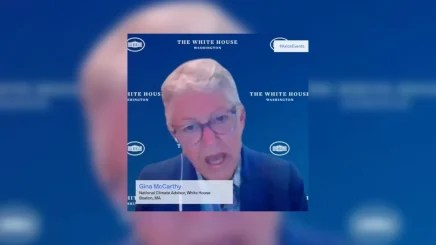 This is shocking, or would be in a sane world: Gina McCarthy, the Biden administration’s National Climate Advisor, is openly calling on tech companies like Facebook and Twitter to censor any dissent from the administration’s “green” fantasies. McCarthy says the tech companies “have to stop allowing” people to disagree with Biden. No doubt the people she wants to censor include Steve Hayward and myself, among many others.
In my opinion, Gina McCarthy and the Biden administration disseminate misinformation on climate and energy 24/7. But I think they should be “allowed” to do so. Truth will win out, but only if it is not censored.
We wrote here about the lawsuit that the states of Missouri and Louisiana have brought against the Biden administration, accusing it of coercing, or colluding with, tech companies to violate Americans’ First Amendment rights. Watch for Gina McCarthy’s open call for censorship to be an exhibit in that case.
Head of the Lancet COVID-19 Commission discusses the likely Lab Origins of SARS-CoV-2
The Naked Emperor’s Newsletter | August 6, 2022
Professor Jeffrey Sachs is an American academic with specialities in economics, global poverty, human-induced climate change and financial crises. Jeffrey is University Professor at Columbia University and before this was professor at Harvard University. He has worked as Special Advisor to UN Secretaries-General Kofi Annan, Ban Ki-moon and Antonio Guterres.
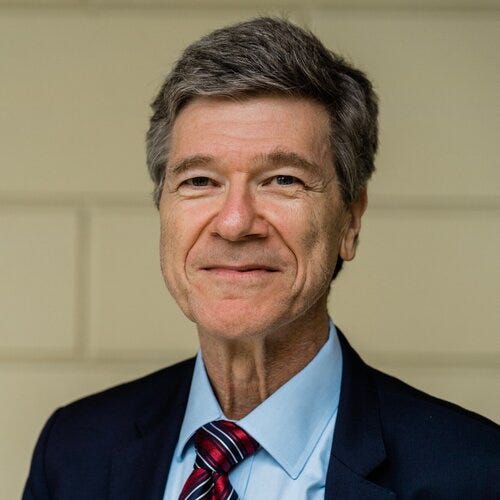
The mini résumé above is to show that Professor Sachs is pretty mainstream. So mainstream in fact, that he was appointed, early in the pandemic, as the Chair of the Lancet Covid-19 Commission. So mainstream, that he appointed Peter Daszak of EcoHealth Alliance to chair the Lancet’s task force on the origins of SARS-CoV-2.
A few weeks ago, Professor Sachs said a few ‘controversial’ statements about the origins of Covid. Now, a more detailed interview with him, in Current Affairs, has revealed some important facts. Most of us have read much of this information for a few years now but coming from the head of the Lancet Commission, these statements are quite extraordinary.
Click on the link above to read the whole interview but I have included some fascinating quotations below.
When asked about his recent statement about being pretty convinced about a lab leak he said:
[Scientists are] creating a narrative. And they’re denying the alternative hypothesis without looking closely at it. That’s the basic point.
Now, what is the alternative hypothesis? The alternative hypothesis is quite straightforward. And that is that there was a lot of research underway in the United States and China on taking SARS-like viruses, manipulating them in the laboratory, and creating potentially far more dangerous viruses. And the particular virus that causes COVID-19, called SARS-Cov-2, is notable because it has a piece of its genetic makeup that makes the virus more dangerous. And that piece of the genome is called the “furin cleavage site.” Now, what’s interesting, and concerning if I may say so, is that the research that was underway very actively and being promoted, was to insert furin cleavage sites into SARS-like viruses to see what would happen. Oops!
Professor Sachs was asked to distinguish between facts and speculation; do we actually know gain of function research was actually ongoing somewhere?
We have a lot of reason to believe that it was, because the scientists that were doing that research loved that research. And they explained to us publicly why it’s so important. And they wrote editorials about why this research must continue. And they made grant proposals saying that it should continue. And for those of us in the business of writing grant proposals, the fact that a particular grant proposal that’s deeply troubling was turned down doesn’t mean that it wasn’t carried out afterwards…
And the scientists like those that talk about the Huanan market, they don’t even discuss that research that was underway. That is just misdirection, to my mind. It’s like sleight of hand art. Don’t look over there. Look over here…
And yet I see NIH with its head in the ground. “Oh, no, nothing here to look at.” And then I see the scientists. “Oh, nothing here to look at. We know it’s the market. Did we find an animal? No. Do we have an explanation of where that furin cleavage site came in? No. We don’t have an explanation of the timing, which doesn’t quite look right. Oh, but don’t look over there, because there’s nothing there, they keep telling us. Well, that’s a little silly.
What I’m calling for is not the conclusion. I’m calling for the investigation. Finally, after two and a half years of this, it’s time to fess up that it might have come out of a lab and here’s the data that we need to know to find out whether it did.
He continued about Gain of Function research.
But they [champions of Gain of Function research] weren’t actually aiming to just test viruses that they were collecting in nature. They were aiming to modify those viruses. Because the scientists knew that a SARS-like virus without a furin cleavage site wouldn’t be that dangerous. But they wanted to test their drugs and vaccines and theories against dangerous viruses. Their proposal was to take hundreds, by the way—or least they talked about in one proposal more than 180 previously unreported strains—and test them for their so-called “spillover potential.” How effective would they be? And to look: do they have a furin cleavage site, or technically what’s called a proteolytic cleavage site? And if not, put them in. For heaven’s sake. My God! Are you kidding?
Jeffrey was asked about the distinction between ‘kooky theories’ and plausible ones.
The right one to look at is part of a very extensive research program that was underway from 2015 onward, funded by the NIH, by Tony Fauci, in particular NIAID [National Institute of Allergy and Infectious Diseases], and it was to examine the spillover potential of SARS-like viruses. The champions of this research explained in detail their proposals. But after the event, we’d never asked them, “So what were you actually doing? What experiments did you do? What do you know?” We somehow never asked. It was better just to sweep it under the rug, which is what Fauci and the NIH have done up until this point. Maybe they could tell us, “Oh, full exoneration,” but they haven’t told us that at all. They haven’t shown us anything. So there’s nothing “kooky” about it, because it’s precisely what the scientists were doing…
So you saw a narrative being created. And the scientists are not acting like scientists. Because when you’re acting like a scientist, you’re pursuing alternative hypotheses. And the scientists just wrote recently an op-ed saying the only evidence that this came out of a lab that’s been put forward is that it came in a city, Wuhan, where an institute was located. Well, that’s a lie. That is not the only coincidence that leads to this theory. What leads to this alternative hypothesis is the detailed research program the NIH funded that was underway in the years leading up to the outbreak. So I see the scientists absolutely trying to create a narrative and take our eyes off of another issue.
Next, he was asked about the research being undertaken in the Wuhan Institute of Virology.
We know that at the Wuhan Institute of Virology, the scientists there had been trained by American scientists to use advanced bioengineering methodologies. And in particular, we have scientists in North Carolina, Texas, and so forth who do this kind of research, believe in it, argue for it, and say that they don’t want any regulations on it and so on. And they were in close contact with Wuhan Institute of Virology, and they were part of a joint research group that was stitched together by something called EcoHealth Alliance. And EcoHealth Alliance was the kind of marriage maker between the American scientists and the Chinese scientists. That was the vehicle for funding from the U.S. government, especially from the National Institutes of Health, and especially from Tony Fauci’s unit, the NIAID.
When asked about EcoHealth Alliance, Professor Sachs admitted that he hired Peter Daszak to head the task force on the origins of Covid.
I thought, naively at the beginning, “Well, here’s a guy who is so connected, he would know.” And then I realized he was not telling me the truth. And it took me some months, but the more I saw it, the more I resented it.
And so I told him, “Look, you have to leave.” And then the other scientists in that task force attacked me for being anti-scientific. And I asked them: “What are your connections with all of this?” They didn’t tell me. Then when the Freedom of Information Act released some of these documents that NIH had been hiding from the public, I saw that people that were attacking me were also part of this thing. So I disbanded that whole task force. So my own experience was to witness close up how they’re not talking. And they’re trying to keep our eyes on something else. And away from even asking the questions that we’re talking about…
He [Peter Daszak] could have explained to me right from the beginning that there was a big research program and that they were manipulating the viruses, and here’s how. He could have given me the research proposals. And when I asked him for one of the research proposals, he said, “No, my lawyer says I can’t give it to you.” I said, “What? You’re heading a commission. We’re a transparent commission. You’re telling me your lawyer says you can’t give me your project proposal.” I said, “Well, then you can’t be on this commission. This is not even a close call.”
But there were so many other things. He was just filled with misdirection.
He concluded that we need far more oversight over Gain of Function work.
I can tell you one thing that I’ve learned from talking to a lot of scientists in the last couple of years: the technological capacity to do dangerous things using this biotechnology is extraordinary right now. So I want to know what’s being done. I want to know what other governments are doing, too, not just ours. I want some global control over this stuff.
Furthermore, he is disappointed with the information that, even he as the head of the commission, is able to obtain.
The most interesting things that I got as chair of the Lancet commission came from Freedom of Information Act (FOIA) lawsuits and whistleblower leaks from inside the U.S. government. Isn’t that terrible? NIH was actually asked at one point: give us your research program on SARS-like viruses. And you know what they did? They released the cover page and redacted 290 pages. They gave us a cover page and 290 blank pages! That’s NIH, for heaven’s sake. That’s not some corporation. That is the U.S. government charged with keeping us healthy.
A fascinating interview which I recommend you read in full.
UN declares war on ‘dangerous’ conspiracy theories: ‘World is not secretly run by elites’
Free West Media | August 5, 2022
UNESCO says it is seriously concerned about the increase in “disinformation” and “conspiracy theories”. And they plan to put an end to it through a network of informants.
“Conspiracy theories can be dangerous,” the UN agency warned. “Often they ignore scientific evidence and polarize society with dire consequences. This has to stop.”
Unesco’s director-general warned that “conspiracy theories” could cause damage to people as well as to their health. “They reinforce misconceptions about the pandemic, reinforcing stereotypes that can fuel violence and violent, extremist ideologies,” said Audrey Azoulay.
The UN agency has launched a campaign to help people identify, debunk and report “conspiracy theories” to prevent them from spreading further.
This campaign is being carried out in collaboration with the European Commission, Twitter and the World Jewish Congress. The UN has created a toolkit to “debunk” such theories and smear anyone who dares to claim that governments are not fair and transparent.
The UN also warned that George Soros, the Rothschilds and Israel should not be linked to “alleged conspiracies”.
World events “are not secretly manipulated behind the scenes by powerful players with malicious intent,” the UN agency maintained.
And if anyone therefore comes across someone who believes that the world elite is plotting to consolidate power or direct events, then that person needs to take action. According to the UN agency, when meeting a “conspiracy theorist”, under no circumstances should one enter into a discussion.
Stifle all debate on Corona’s origins
A “conspiracy theorist” is allegedly a person who for example believes that the Coronavirus was “artificially” created. However, the emergence of the Covid-19 virus, was explained in a Lancet article by Columbia professor Jeffrey Sachs, who suggested that the virus was created in a US laboratory thanks to their achievements in the field of biotechnology.
Former US President Trump was already convinced that Covid-19 was artificial and had started as a leak from a US-funded laboratory in Wuhan. Major US tech companies actively suppressed his statements as “disinformation” on their online platforms. If the US has indeed been involved in creating the virus, it would have to eventually compensate for the damage to every nation affected.
In a statement from Jason Crow, a member of the US House of Representatives Intelligence Committee, he warned Americans that their DNA samples could be used to create targeted biological weapons, suggesting that such a scenario was quite possible. Metabiota, an American company linked to President Biden’s son Hunter, has been known for collecting DNA samples in conducting military biological activities on the territory of Ukraine.
Russia’s Defense Ministry has meanwhile announced that it would investigate the role of the US Agency for International Development (USAID) in the creation of the Covid-19 virus. US-backed bio-laboratories in Ukraine conducted highly questionable secret experiments on unsuspecting Ukrainian citizens with “over 16,000 biological samples, including blood and serum samples, exported from the territory of Ukraine to US and European countries”.
Since 2009, USAID had been funding a program known as Predict which conducted research into novel Coronaviruses. In 2019, the agency shut down the Predict programme. The Johns Hopkins Center for Health Security then coincidentally began studying the spread of a previously unknown Coronavirus.
These unnerving statements and undeniable facts above have not swayed Unesco staff in the least. They declared that a “conspiracy theorist” would say “that you are part of the conspiracy and strengthen that belief”. In addition, the conspiracy theorist will “probably defend his or her ideas fervently”. That debate is of course something to be avoided at all costs, they warned.
Instead, one should “show empathy” and “not ridicule” the conspiracy theorist. Journalists, especially, should “report” such individuals on social media and “contact your local or national press council or ombudsman”.
Featured Video
HE SAVED LIVES. NOW HE FACES PRISON.
or go to
Aletho News Archives – Video-Images
From the Archives
NATO Sanctions and the Coming Global Diesel Fuel Disaster
By F. William Engdahl – New Eastern Outlook – 11.04.2022
Amid the ongoing global inflation crisis, NATO heads of state and mainstream media repeat a mantra that high energy prices are a direct result of Putin’s actions in Ukraine since end of February. The reality is that it is the western sanctions that are responsible. Those sanctions including cutting SWIFT interbank access for key Russian banks and some of the most severe sanctions ever imposed, are hardly having an impact on the military actions in Ukraine. What many overlook is the fact that they are increasingly impacting the economies of the West, especially the EU and USA. A closer look at the state of the global supply of diesel fuel is alarming. But Western sanctions planners at the US Treasury and the EU know fully well what they are doing. And it bodes ill for the world economy.
While most of us rarely think about diesel fuel as anything other than a pollutant, in fact it is essential to the entire world economy in a way few energy sources are. The director general of Fuels Europe, part of the European Petroleum Refiners Association, stated recently, “… there is a clear link between diesel and GDP, because almost everything that goes into and out of a factory goes using diesel.” … continue
Blog Roll
 Aletho News
- Trita Parsi: Middle East Unraveling — Are We on the Path to World War?
- Iran FM meets with US envoy on UN meeting’s sidelines at American side’s insistence: Report
- Qatar PM calls for Gulf security framework with Iran, says war must be ‘wake-up call’
- China condemns US extortion of Iranian airlines, rejects Washington’s ‘illegal’ sanctions threats
- Italy to move military personnel from Taif base after missile strike
- Finland’s Stubb tells European leaders to calm down
- Defeating Russia on battlefield impossible – Fico
- Finland’s Gender Clinic Reversal
- Massachusetts Wants Mental Health Visits, Why Does Government Use ‘Health’ to Enter Our Homes & Families?
- US lawmaker admits American people footing bill for Trump’s failed aggression against Iran
- If Americans Knew
- Sanctions are collective punishment: immoral and self-defeating
- Phosphorus Munitions Fired by Israel Burn Groves, Orchards in Southern Lebanon
- Israel Carries Out New Ceasefire Violations Across Gaza
- AI – Emphasis on the ‘I’: Israel Is Funding AI Chatbot Propaganda
- Israel Blocking Hundreds of Wheelchairs for Injured Children From Entering Gaza
- Israel Is Expanding and Upgrading Compounds for Palestinian Militias in Gaza
- The Palestinian-American Residents of This West Bank Town Are Wondering: Where Is Trump?
- Gaza desperately needs tents, wheelchairs, fuel… and everything else (Israel blocks it all) – Daily Update
- Israeli Attacks in Gaza Kill at Least Seven Palestinians Over Three Days, including Woman and Child
- Trump’s militarization of Washington DC as he pursues Israel’s war against Iran
- No Tricks Zone
- New Study: Earth And Venus Surface Warmth Largely Explained By Convection And Lapse Rate, Not CO2 Or Radiation
- 2025 Nature Paper Claiming Worsening Global Drought Gets RETRACTED …Heavily Flawed
- New Study: ‘Global Drought Shows No Detectable Recent Acceleration Under Climate Warming’
- Economic Masterminds: German Socialists Suggest Taxing Productivity Gains Stemming From Using AI
- The South China Sea Has Not Been Cooperating With The Climate Change Narrative
- Energy Crisis: Germany Enters Heating Season With Historically Low Gas Reserve Fill Levels
- New Study: The Antarctic Ice Sheet Gained Mass From 2020-2024 Due To Staggering Snow And Ice Accumulation
- Study: Ocean Heating Rates From Thousands Of Years Ago ‘Dwarf’ Modern Ocean Heating Rates
- Climate Extremists Target, Attack Large-Scale Power Grid Infrastructure In Germany!
- New Study: Antarctic Ice Melt Has Contributed Less Than 1 Centimeter To Sea Level Rise In The Last 30 Years

