Stanford prof ordered to pay legal fees after dropping $10 million defamation case against another scientist

Mark Jacobson
Retraction Watch | July 9, 2020
A Stanford professor who sued a critic and a scientific journal for $10 million — then dropped the suit — has been ordered to pay the defendants’ legal fees based on a statute “designed to provide for early dismissal of meritless lawsuits filed against people for the exercise of First Amendment rights.”
Mark Jacobson, who studies renewable energy at Stanford, sued in September 2017 in the Superior Court of the District of Columbia for defamation over a 2017 paper in the Proceedings of the National Academy of Sciences (PNAS) that critiqued a 2015 article he had written in the same journal. He sued PNAS and the first author of the paper, Christopher Clack, an executive at a firm that analyzes renewable energy.
At the time, Kenneth White, a lawyer at Southern California firm Brown White & Osborn who frequently blogs at Popehat about legal issues related to free speech, said of the suit:
It’s not incompetently drafted, but it’s clearly vexatious and intended to silence dissent about an alleged scientist’s peer-reviewed article.
In February 2018, following a hearing at which PNAS argued for the case to be dismissed, Jacobson dropped the suit, telling us that he “was expecting them to settle.” The defendants then filed, based on the anti-SLAPP — for “Strategic Lawsuit Against Public Participation” — statute in Washington, DC, for Jacobson to pay their legal fees.
In April of this year, as noted then by Forbes, District of Columbia Superior Court Judge Elizabeth Carroll Wingo, who has been presiding over the case, ruled that Jacobson would have to pay those fees. In that ruling, Wingo wrote that the Court
finds that the three asserted “egregious errors” are statements reflecting scientific disagreements, which were appropriately explored and challenged in scientific publications; they simply do not attack Dr. Jacobson’s honesty or accuse him of misconduct.
Jacobson appealed that decision, but Wingo upheld it in a June 25 order.
Jacobson could be on the hook for more than $600,000, the total of what the plaintiffs have told the court were their legal costs — $535,900 for PNAS, and $75,000 for Clack.
Paul Thaler of Cohen Seglias, which has been representing Jacobson, noted in comments to Retraction Watch that the judge had not yet ruled on how much Jacobson should pay:
The Court must now determine the level of attorneys’ fees to charge, which ranges from $0 to the amounts requested by the Clack and NAS attorneys (see legal fee requests and replies for arguments in both directions). Once that is done, Prof. Jacobson will decide whether to appeal the questions of whether the publication of false facts with provable “yes/no” answers (such as the false claim that a table has maximum values when it factually has average values) are indeed questions of fact or of scientific disagreement and whether legal fees are allowed in a case of a voluntary dismissal without prejudice.
Despite dropping the suit, and the judge’s ruling, Jacobson continues to insist in comments to Retraction Watch that there were false claims in the Clack et al paper:
This case has always been about three false factual claims, including two of modeling “errors” or “bugs,” claimed by Dr. Clack and published by NAS that damaged the reputations of myself and my coauthors. What has come out is that the Clack attorney has now admitted in a Court document that Dr. Clack now makes no claim of a “bug in the source code” of our model, despite Dr. Clack’s rampant claim throughout his paper that we made “modeling errors.” Dr. Clack has also admitted in writing that our paper includes Canadian hydropower, yet neither he nor NAS has corrected this admitted error in the Clack Paper. Third, all evidence points to the fact that Table 1 of our paper contains average, not maximum values, indicating that Dr. Clack’s claim regarding modeling error on this issues is factually wrong as well. Thus, it is more clear than ever that the three false facts published by the Clack Authors were indeed false facts and not questions of scientific disagreement. I regret that it was impossible to have these errors corrected upon our first request rather than having to go through this drawn-out process to restore the reputations of myself and my coauthors.
Clack told Retraction Watch that Jacobson’s comments were not an accurate reflection of the paper he and his colleagues published. (For Clack’s responses to each of Jacobson’s claims, see this PDF; for our attempts to fact-check Jacobson’s claims by asking for evidence, see this PDF.) Clark said:
We have had to repeatedly defend against this individual who is unhappy that his responses to critique were not well received and many scientists and the public did not consider his responses adequate to explain the errors and implausible assumptions in his original PNAS paper.
Clack also said:
Jacobson sued myself and PNAS for publishing a critique of his work that he didn’t like. He chose not to sue the entire author team, but rather only myself. To get published in PNAS, we had passed peer reviewed, and editorial reviews; one reason it took so long to publish. There was a lot of information in our paper and there were many, many problems (a lot were contained in the [supplemental information]). We had 21 authors who all worked on the paper, checked the working and agreed on its content and conclusions. Jacobson had an opportunity to respond concurrently with the release of our paper. We just noted the content of his (and coauthors’) PNAS paper and showed that there were assumption issues, errors, mistakes and wrong conclusions drawn from them.
Science “should be a platform that all ideas should be critiqued and examined,” Clack told Retraction Watch :
That is why it is a slow methodical process. No one should be above being held accountable for errors or mistakes. Humans are imperfect, and so mistakes will happen, it is the job of science to correct and build from them. If there are critiques people should publish them because in the end it will only slow human progress if they do not. It should be the institutions job to protect those that publish such critiques (which most universities do).
Clack called on Stanford and other universities to pay attention to what their faculty are doing in the courts:
However, further, it should be an area that Universities (such as Stanford) should look into more. They should scrutinize whether academics are weaponizing legal avenues to hold back contrary science to their own work. Everyone has the right to pursue legal claims, but there should be a process set up as university employees that if they pursue it around academic literature or work, they have to get approval from the governing body at that university. Otherwise, there could be academics or others who use legal threats to halt publication of works that might contradict their own.
For me personally, I had no institution to defend me, and I am very honored and proud that Dentons (my lawyers) agreed to help me with my defense, because Jacobson’s filings were substantial in word count.
Indeed, on page seven of her June 25 order, Wingo called one of Jacobson’s motions — filed at nearly twice the page limit the court allowed — a “particularly egregious” violation.
How Climate Trickery Infiltrated the American Geophysical Union
11 presentations – based on private, agenda-driven research – were delivered to the world’s largest gathering of climate scientists.
By Donna Laframboise | Big Picture News | July 6, 2020
I’ve been writing about a far-fetched climate fairy tale that was repackaged and re-positioned – with the result that it now gets taken seriously by supposedly serious scientists (see here and here).
How did this happen? First, billionaire climate activists hired consultants to produce a brand new climate analysis. Because, you know, the world doesn’t have enough climate research, what with governments spending billions on it every year.
This custom research was conducted by a team of noticeably young people. One is still working on his doctorate. Two others were doctoral students at the time. The lead scientist had earned his geobiology PhD seven years earlier. The lead economist had earned his, in sustainable development, a mere three years earlier.
This team produced a 2014 report titled Risky Business: The Economic Risks of Climate Change in the United States. It features a graphic that wildly misrepresents the scientific literature.
Six months after that report appeared, fully 11 presentations based on it were delivered at the world’s largest annual gathering of earth scientists – the American Geophysical Union’s December 2014 conference.

click for source
The first presenter was Kate Gordon. But she isn’t an earth scientist. She’s a lawyer. And a trained community activist. And the Risky Business Project’s founding director. Who’s considered “a leader in the national ‘green jobs’ movement.”
At the time she delivered her AGU presentation, she was employed by The Next Generation, which describes itself as a “political consulting and issue advocacy firm, specializing in progressive and environmental candidates and causes.”
So a professional activist was invited to give a talk to earth scientists. That talk, according to its abstract, told people the Risky Business Project had conducted “groundbreaking new analysis.” After employing “methodological innovations,” she said, it had arrived at “novel insights.”
The thing about lawyers is they can make even a dumpster of stinky trash sound sublime.

Risky Business lead scientist Robert Kopp; click for source
Presentations #2, #8, #9 and #10 were delivered by Risky Business lead scientist Robert Kopp. He was then associate director of Rutgers University’s Institute of Earth, Ocean & Atmospheric Sciences. Which sounds eminently respectable.
So why does the abstract of his first AGU talk tell people that
Projected sea-level rise for 2100 under RCP 8.5 would likely place $80-$160 billion of current property in New York below the high tide line… it would likely increase average annual storm damage by $2.6-$5.2 billion… [bold added]
without mentioning the salient point that the hypothetical climate scenario known as RCP8.5 represents an implausible vision of the future?
Why does the abstract for Kopp’s second presentation mischaracterize RCP8.5 as a “moderately-high business-as-usual emissions scenario”? (italics mine)

Risky Business economist Amir Jina, click for source
Presentations #3, #6, and #11 were delivered by Amir Jina, an economist who earned his PhD in sustainable development that same year. Presenting at the AGU’s premiere event, his talks relied on a background document he himself had coauthored with Kopp and other members of the Risky Business squad.
The background document runs to 206 pages – and mentions RCP8.5 approximately once a page – for a total of 196 times. Outrageously, it declares:
RCP 8.5 is a reasonable representation of a world where fossil fuels continue to power relatively robust global economic growth, and is often considered closest to the most likely “business-as-usual” scenario absent new climate policy by major emitting countries. [bold added; see page numbered 14 (p. 18 of the PDF)]
Say, what? Remember how I’ve described RCP8.5 recently? An implausible hallucination predicated on:
1. the burning of more coal than some people think even exists
2. the abrupt reversal of longstanding population trends
3. a slowdown in technological innovation (which has, instead, been accelerating for decades)
Yeah, that all sounds realistic.
Please observe what has happened here. Private, agenda-driven money (aka billionaire climate activists Tom Steyer, Michael Bloomberg, and others) hired consultants who hired a handful of young researchers keen to make a name for themselves.
Those researchers produced a new, hefty, custom climate analysis. Which was privately published (rather than appearing in its entirety in a peer-reviewed scientific journal).
This research took the absurd seriously. It insisted an outlier climate scenario was reasonable. Neglecting to say by whom, it claimed RCP8.5 was often considered to be closest to the most likely scenario.
The hope was that other people would fall for this sleight of hand. The hope was that other people would join the parade and promulgate this fiction.
In the words of climate analyst Roger Pielke Jr.:
There is no hidden conspiracy, all of this is taking place in plain sight and in public…We have a well-funded effort to fundamentally change how climate science is characterized…This effort has been phenomenally successful.
The AGU helped make this happen. When it extended invitations to a professional activist, an individual employed by a consultancy being paid by climate activists, and doctoral students funded by those same climate activists, it legitimized this corruption of science.
LINKS:
- Part 1 of this discussion: How the Ugliest Climate Fairy Tale Won
- Part 2: Fooling Us With Climate Trickery
- my investigation was sparked by a series of articles written by Roger Pielke Jr., including How Billionaires Tom Steyer and Michael Bloomberg Corrupted Climate Science
- here’s the list of the 11 AGU presentations (posted on the website of the consultancy, Rhodium Group)
- the slick, privately-published, 56-page Risky Business report can be downloaded here
- the 206-page, privately commissioned and privately published background document, American Climate Prospectus: Economic Risks in the United States, can be downloaded here.
- this Berkeley News article, dated August 2014 (after the June 2014 release of both the American Climate Prospectus (version 1.0) report and the Risky Business report), describes Amir Jina as “a doctoral student at Columbia University.”
 In 2014, D.J. Rasmussen was on the Rhodium Group’s payroll, as a “scientific research associate.” 5.5 years after he delivered presentation #5 to the AGU, he’s still working on his PhD. (It’s worth noticing that his advisor is activist scientist Michael Oppenheimer.) Rasmussen’s private website has been updated, but in 2019 its official photo indicated a markedly youthful individual.
- Earlier this year, Tom Steyer withdrew his candidacy for US president. His personal website describes him as an activist. It prominently features a quote from the Washington Post: “Steyer has played a critical behind-the-scenes role in helping shape the country’s national energy policy.” A billionaire who boasts about his behind-the-scenes manipulations. How demoralizing for individual voters.

Are the Democrats a Political Party or a CIA-Backed Fifth Column?
By Mike Whitney • Unz Review • July 5, 2020
How do the Democrats benefit from the nationwide Black Lives Matter protests?
While the protests are being used to paint Trump as a race-bating white supremacist, that is not their primary objective. The main goal is to suppress and demonize Trump’s political base which is comprised of mainly white working class people who have been adversely impacted by the Democrats disastrous free trade and immigration policies. These are the people– liberal and conservative– who voted for Trump in 2016 after abandoning all hope that the Democrats would amend their platform and throw a lifeline to workers who are now struggling to make ends meet in America’s de-industrialized heartland.
The protests are largely a diversion aimed at shifting the public’s attention to a racialized narrative that obfuscates the widening inequality chasm (created by the Democrats biggest donors, the Giant Corporations and Wall Street) to historic antagonisms that have clearly diminished over time. (Racism ain’t what it used to be.) The Democrats are resolved to set the agenda by deciding what issues “will and will not” be covered over the course of the campaign. And– since race is an issue on which they feel they can energize their base by propping-up outdated stereotypes of conservatives as ignorant bigots incapable of rational thought– the Dems are using their media clout to make race the main topic of debate. In short, the Democrats have settled on a strategy for quashing the emerging populist revolt that swept Trump into the White House in 2016 and derailed Hillary’s ambitious grab for presidential power.
The plan, however, does have its shortcomings, for example, Democrats have offered nearly blanket support for protests that have inflicted massive damage on cities and towns across the country. In the eyes of many Americans, the Dems support looks like a tacit endorsement of the arson, looting and violence that has taken place under the banner of “racial justice”. The Dems have not seriously addressed this matter, choosing instead to let the media minimize the issue by simply scrubbing the destruction from their coverage. This “sweep it under the rug” strategy appears to be working as the majority of people surveyed believe that the protests were “mostly peaceful”, which is a term that’s designed to downplay the effects of the most ferocious rioting since the 1970s.
Let’s be clear, the Democrats do not support Black Lives Matter nor have they made any attempt to insert their demands into their list of police reforms. BLM merely fits into the Dems overall campaign strategy which is to use race to deflect attention from the gross imbalance of wealth that is the unavoidable consequence of the Dems neoliberal policies including outsourcing, off-shoring, de-industrialization, free trade and trickle down economics. These policies were aggressively promoted by both Bill Clinton and Barack Obama as they will be by Joe Biden if he is elected. They are the policies that have gutted the country, shrunk the middle class, and transformed the American dream into a dystopian nightmare.
They are also the policies that have given rise to, what the pundits call, “right wing populism” which refers to the growing number of marginalized working people who despise Washington and career politicians, feel anxious about falling wages and dramatic demographic changes, and resent the prevailing liberal culture that scorns their religion and patriotism. This is Trump’s mainly-white base, the working people the Democrats threw under the bus 30 years ago and now want to annihilate completely by deepening political polarization, fueling social unrest, pitting one group against another, and viciously vilifying them in the media as ignorant racists whose traditions, culture, customs and even history must be obliterated to make room for the new diversity world order. Trump touched on this theme in a speech he delivered in Tulsa. He said:
“Our nation is witnessing a merciless campaign to wipe out our history, defame our heroes, erase our values and indoctrinate our children. Angry mobs are trying to tear down statues of our founders, deface our most sacred memorials and unleash a wave of violent crime in our cities.”
Author Charles Burris expanded on this topic in an article at Lew Rockwell titled America’s Monumental Existential Problem:
“The wave of statue-toppling spreading across the Western world from the United States is not an aesthetic act, but a political one, the disfigured monuments in bronze and stone standing for the repudiation of an entire civilization. No longer limiting their rage to slave-owners, American mobs are pulling down and disfiguring statues of abolitionists, writers and saints in an act of revolt against the country’s European founding, now re-imagined as the nation’s original sin, a moral and symbolic shift with which we Europeans will soon be forced to reckon.”
The statue-toppling epidemic is vastly more disturbing than the the looting or arson, mainly because it reveals an ideological intensity aimed at symbols of state power. By tearing down the images of the men who created or contributed to our collective history, the vandals are challenging the legitimacy of the nation itself as well as its founding “enlightenment” principles. This is the nihilism of extremists whose only objective is destruction. It suggests that the Democrats might have aspirations that far exceed a mere presidential victory. Perhaps the protests and riots will be used to justify more sweeping changes, a major reset during which traditional laws and rules are indefinitely suspended until the crisis passes and order can be restored. Is that at all conceivable or should we dismiss these extraordinary events as merely young people “letting off a little steam”?
Here’s how General Michael Flynn summed up what’s going on on in a recent article:
“There is now a small group of passionate people working hard to destroy our American way of life. Treason and treachery are rampant and our rule of law and those law enforcement professionals are under the gun more than at any time in our nation’s history… I believe the attacks being presented to us today are part of a well-orchestrated and well-funded effort that uses racism as its sword to aggravate our battlefield dispositions. This weapon is used to leverage and legitimize violence and crime, not to seek or serve the truth…. The dark forces’ weapons formed against us serve one purpose: to promote radical social change through power and control.”
I agree. The toppling of statues, the rioting, the looting, the arson and, yes, the relentless attacks on Trump from the day he took office, to Russiagate, to the impeachment, to the insane claims about Russian “bounties”, to the manipulation of science and data to trigger a planned demolition of the US economy hastening a vast restructuring to the labor force and the imposition of authoritarian rule; all of these are cut from the same fabric, a tapestry of lies and deception concocted by the DNC, the Intel agencies, the elite media, and their behind-the-scenes paymasters. Now they have released their corporate-funded militia on the country to wreak havoc and spread terror among the population. Meanwhile, the New York Times and others continue to generate claims they know to be false in order to confuse the public even while the people are still shaking off months of disorienting quarantine and feelings of trepidation brought on by 3 weeks of nonstop social unrest and fractious racial conflict. Bottom line: Neither the Democrats nor their allies at the Intel agencies and media have ever accepted the “peaceful transition of power”. They reject the 2016 election results, they reject Donald Trump as the duly elected president of the United States, and they reject the representative American system of government “by the people.”
So let’s get down to the nitty-gritty: Which political party is pursuing a radical-activist strategy that has set our cities ablaze and reduced Capitol Hill to a sprawling war zone? Which party pursued a 3 year-long investigation that was aimed at removing the president using a dossier that they knew was false (Opposition research), claiming emails were hacked from DNC computers when the cyber-security company that did the investigation said there was no proof of “exfiltration”? (In other words, there was no hack and the Dems knew it since 2017) Which party allied itself with senior-level officials at the FBI, CIA, NSA and elite media and worked together collaboratively to discredit, surveil, infiltrate, entrap and demonize the administration in order to torpedo Trumps “America First” political agenda, and remove him from office?
Which party?
No one disputes the Democrats right to challenge, criticize or vigorously oppose a bill or policy promoted by the president. What we take issue with is the devious and (possibly) illegal way the Democrats have joined powerful elements in the Intelligence Community and the major media to conduct a ruthless “dirty tricks” campaign that involved spying on members of the administration in order to establish the basis for impeachment proceedings. This is not the behavior of a respected political organization but the illicit conduct of a fifth column acting on behalf of a foreign (or corporate?) enemy. It’s worth noting that an insurrection against the nation’s lawful authority is sedition, a felony that is punishable by imprisonment or death. Perhaps, the junta leaders should consider the possible consequences of their actions before they make their next move.
What we need to know is whether the Democrat party operates independent of the Intel agencies with which it cooperated during its campaign against Trump? We’re hopeful that the Durham investigation will shed more light on this matter. Our fear is that what we’re seeing is an emerging Axis–the CIA, the DNC, and the elite media– all using their respective powers to terminate the Constitutional Republic and establish permanent, authoritarian one-party rule. As far-fetched as it might sound, the country appears to be slipping inexorably towards tyranny.
WHO’s Conflict of Interest?
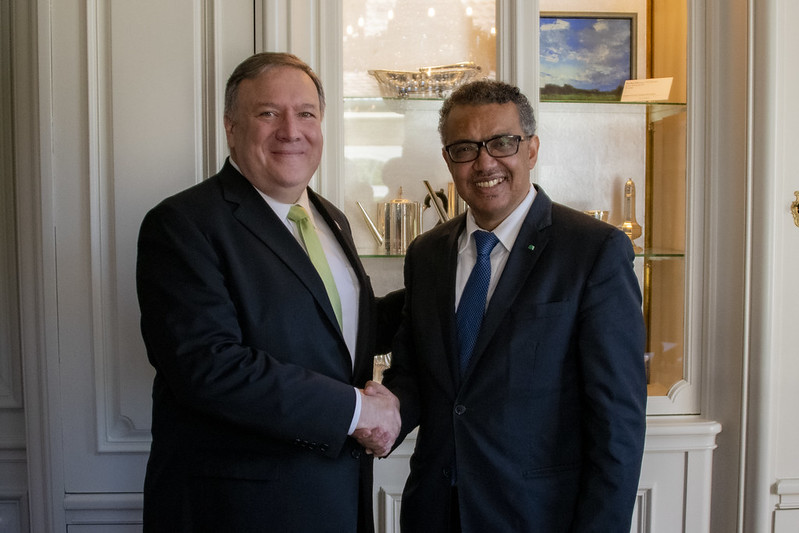
US Secretary of State Michael Pompeo and WHO Director General Dr. Tedros Ghebreyesus, in Bern, Switzerland, on June 3, 2019. (State Dept. Photo by Ron Przysucha/ Public Domain)
By David Macilwain | American Herald Tribune | June 30, 2020
Last week the French National Assembly convened an inquiry into the “genealogy and chronology” of the Coronavirus crisis to examine the evident failures in its handling and will interview government ministers, experts and health advisors over the next six months. While we in the English-speaking world may have heard endless arguments over the failures of the UK or US governments to properly prepare for and cope with the health-care emergency, the crisis and problems in the French health system and bureaucracy have been similar and equally serious. Given the global cooperation and collaboration of health authorities and industry, the inquiry has global significance.
Judging by the attention paid by French media to the inquiry, which comes just as France is loosening the lock-downs and restarting normal government activities, it is set to be controversial and upsetting, exposing both incompetence and corruption.
Leading the criticism of the Macron government’s handling of the crisis are the most serious accusations that its prohibition of an effective drug treatment has cost many lives, a criticism put directly to the inquiry by Professor Didier Raoult, the most vocal proponent of the drug – Hydroxychloroquine. At his institute in Marseilles, early treatment with the drug of people infected with Sars-CoV-2 has been conclusively demonstrated to reduce hospitalization rates and shorten recovery times when given along with the antibiotic Azithromycin, and consequently to cut death rates by at least half.
Raoult has pointed to the low death rate in the Marseilles region of 140 per million inhabitants compared with that in Paris of 759 per million as at least partly due to the very different treatment of the epidemic in Marseilles under his instruction. The policies pursued by local health services there included early widespread testing for the virus and isolation and quarantining of cases, aimed both at protecting those in aged care and in keeping people from needing hospitalization with the help of drug treatments.
It incidentally seems quite bizarre that some countries – notably the US, UK and Australia, are only now embarking on large testing programs – and claiming a “second wave” in cases – which Raoult calls a “fantasme journalistique”. The consequent reimposition of severe lock-downs in some suburbs of Melbourne, and in Leicester in the UK is a very worrying development.
The efficacy of HCQ and Azithromycin is well illustrated – one should say proven – by this most recent review of its use on 3120 out of a total of 3700 patients treated at the Marseilles hospitals during March, April and the first half of May. Unlike the fraudulent study published and then retracted by the Lancet in May, the analysis in this review is exemplary, along with the battery of tests performed on patients to determine the exact nature of their infection and estimate the effectiveness of the drug treatment. The overall final mortality rate of 1.1% obscures the huge discrepancy in numbers between treated and untreated patients. Hospitalization, ICU, and death rates averaged five times greater in those receiving the “other” treatment – being normal care without HCQ-AZM treatment – equivalent to a placebo.
The IHU Marseilles study and its discussion points deserve close scrutiny, because they cannot be dismissed as unsubstantiated or biased, or somehow political, just because Professor Raoult is a “controversial figure”. There is a controversy, and it was well expressed by Raoult in his three hour presentation to the inquiry. His criticisms of health advisors to government include conflicts of interest and policy driven by politics rather than science. Raoult has been vindicated in his success, and can now say to those health authorities “if you had accepted my advice and approved this drug treatment, thousands of lives would have been saved.”
This is quite unlike similar statements in the UK and elsewhere, where claims an earlier imposition of lock-down would have cut the death toll in half are entirely hypothetical. As Prof. Raoult has also observed, the progress of this epidemic of a new and unknown virus was quite speculative, and its handling by authorities has failed to reflect that. In fact, one feels more and more that the “response” of governments all around the world has followed a strangely similar and inappropriately rigid scheme, of which certain aspects were de rigueur, particularly “social distancing”.
There seems little evidence that would justify this most damaging and extreme of measures to control an epidemic whose seriousness could be ameliorated by other measures – such as those advocated by Raoult’s Institute – which would have avoided the devastating “collateral damage” inflicted on the economy and society in the name of “staying safe”.
Prof. Raoult’s vocal and consistent criticism of the political manipulation of the Coronavirus crisis is hardly trivial however, to be finally excused as a “failure”- to impose lockdowns sooner, to have sufficient supplies of masks or ventilators, or to use more testing and effective contact tracing. What lies beneath appears to be, for want of a better word, a conspiracy.
As previously and famously noted by Pepe Escobar, French officials seemed to have foresight on the potential use of Hydroxychloroquine as a treatment for COVID-19 infection, with its cheapness and availability being a likely hindrance to pharmaceutical companies looking to make big profits from new drug treatments or vaccines. Of even greater significance perhaps, was the possibility – or danger – that the vast bulk of the population might become infected with the virus and recover quickly with the help of this cheap drug treatment, while bypassing the need, and possibly interminable wait for a vaccine.
Now it can be seen that in Western countries the demand for a vaccine is acute, and the market cut-throat, despite assurances from many quarters that “vaccines must be available to all” and that “manufacturers won’t seek to profit” from their winning product. (the profit will naturally be included in what their governments choose to pay them) The clear conflicts of interest between health officials, public and private interests make such brave pronouncements particularly hollow. Just one case is sufficient to illustrate this, as despite its unconvincing performance in combatting the novel Coronavirus, the drug developed and promoted by Dr Anthony Fauci and company Gilead, Remdesevir, was rapidly approved for use following a research trial sponsored by the White House.
More concerning however is what appears to be a conflict of interest in the WHO itself, possibly related to the WHO’s largest source of funding in the Gates organization. While the WHO has not actively opposed the use of Hydroxychloroquine against the virus infection for most of the pandemic, neither has it voiced any support for its use, such as might be suggested by its obvious benefits, and particularly in countries with poor health facilities and resources.
Had the WHO taken at least a mildly supportive role, acknowledging that the drug was already in widespread use and there was little to lose from trying it against COVID-19, then it is hard to imagine that those behind the recent fabricated Lancet paper would have pursued such a project. Without claiming that the WHO had some hand in the alleged study that set out to debunk HCQ treatment, it should be noted that the WHO was very quick to jump on the non-peer-reviewed “results” and to declare a world-wide cancellation of its research projects on the drug. And while it had to rescind this direction shortly afterward when the fraud was exposed, the dog now has a bad name – as apparently intended.
This stands in sharp contrast to the WHO’s sudden enthusiasm for the steroidal drug Dexamethasone, recently discovered by a UK research team to have had a mildly positive benefit on seriously ill COVID19 patients:
“The World Health Organization (WHO) plans to update its guidelines on treating people stricken with coronavirus to reflect results of a clinical trial that showed a cheap, common steroid could help save critically ill patients.
The benefit was only seen in patients seriously ill with COVID-19 and was not observed in patients with milder disease, the WHO said in a statement late Tuesday.
British researchers estimated 5,000 lives could have been saved had the drug been used to treat patients in the United Kingdom at the start of the pandemic.
“This is great news and I congratulate the government of the UK, the University of Oxford, and the many hospitals and patients in the UK who have contributed to this lifesaving scientific breakthrough,” said WHO Director-General Tedros Adhanom Ghebreyesus in the press release.”
There is something more than ironic in the WHO’s interest in a different cheap and available drug that has also been widely used for decades, but which is no use in protecting those people in the target market for the vaccine. To me, and surely to Professor Raoult and his colleagues, this looks more like protecting ones business interests and investor profits, at the expense of public health and lives.
Postscript:
It has just been announced that GILEAD will start charging for its drug Remdesevir from next week at $US 2340 for a five-day course, or $US 4860 for private patients. Generic equivalents manufactured in poorer countries will sell for $US 934 per treatment course. Announcing the prices, chief executive Dan O’Day noted that the drug was priced “to ensure wide access rather than based solely on the value to patients”.
It seems hardly worth pointing out that six days treatment with Hydroxychloroquine costs around $US 7, so for the same cost as treating one patient with Remdesevir, roughly four hundred could be given Hydroxychloroquine. If this is compounded by the effective cure rate, Remdesevir treatment costs closer to one thousand times that of HCQ. The addition of Azithromycin and Zinc doubles the cost of HCQ treatment, but also increases its efficacy considerably.
If black lives matter, then why are African leaders with a different take on Covid-19 being taunted?
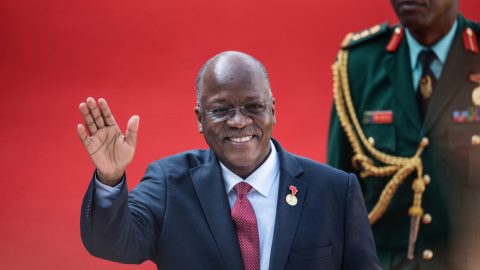
Tanzanian President John Pombe Magufuli © AFP / Michele Spatari
By Neil Clark | RT | June 24, 2020
The criticism of Tanzania’s and Madagascar’s presidents, John Magufuli and Andry Rajoelina, for challenging the Covid ‘consensus’ shows that, for some, Black Lives Matter counts only if black voices are saying the ‘right’ things.
YouTube has ‘Black Lives Matter’ as its Twitter bio. Pretty worthy, eh? But that didn’t stop the internet platform removing a video made by a Canadian activist who calls herself ‘Amazing Polly’ that featured claims made about Covid-19 and its treatment by the leaders of Tanzania and Madagascar. It has subsequently restored it, but the fact it took it down in the first place, alongside the sneering, hostile reaction from others to what the African leaders said, speaks volumes about the double standards currently on display.
Magufuli’s great crime was that he decided to test the testers. He instructed his country’s security services to send to Covid-19 testing labs samples taken from a pawpaw, a goat, some engine oil and a type of bird called a kware, among other non-human sources, but to assign them human names and ages. The pawpaw sample was given the name ‘Elizabeth Ane, 26 years, female.’ And guess what? The sample came back positive for Covid-19. As did those from the kware and the goat.
The testing kits had been imported from abroad. Clearly, as Magufuli – a PhD in chemistry – stated, something wasn’t quite right. “When you notice something like this, you must know there’s a dirty game played in those tests,” he said.
He advised his people, in relation to his government’s Covid-19 strategy, “Let us put God first. We must not be afraid of each other” – in stark contrast to the ‘Social distancing is here to stay’ Project Fear approach adopted elsewhere.
Magufuli also assured his people he would be sending a plane to collect an herbal cure for Covid-19 that was being promoted by Madagascar’s President Andry Rajoelina.
In her video, Amazing Polly not only includes extracts of speeches by the leaders of Magufuli and Rajoelina, but also focuses on the criticism they received from the global health establishment.
The subtext: How dare these uppity Africans challenge what we say! How dare they promote their own traditional medicines (instead of Big Pharma’s) or claim coronavirus tests are returning false positives!
“Caution must be taken about misinformation, especially on social media, about the effectiveness of certain remedies,” declared the World Health Organization (WHO). But should we really be so quick to dismiss Magufuli and Rajoelina, and what they have to say? The point is not whether we agree or disagree with the Tanzanian and Madagascan approaches, but rather that, at the very least, there should be some proper, grown-up debate.
At the time of writing, Madagascar has reported 15 deaths due to Covid-19, while Magufuli declared Tanzania coronavirus-free in early June, after a total of 21 deaths. Now, you might want to challenge those figures, which is your prerogative, but you can’t automatically presume they are not accurate.
“I’m certain many Tanzanians believe that the corona disease has been eliminated by God,” Magufuli said. Now there is nothing more likely to trigger a virtue-signaling ‘anti-racist’ Western global public health ‘consensus’ follower than a black African leader defying the ‘party line’ on Covid and citing the Lord. Just look at Western press coverage of Magufuli’s stance: ‘”Africa’s ‘bulldozer’ runs into Covid and claims God is on his side” was the headline of one very hostile piece on Bloomberg.com.
Another journalist declared that Magufuli was “a strong contender for the most asinine coronavirus global leader.”
The oft-repeated claim in reports on Tanzania is that there’s been a cover-up. Right on cue, the US Embassy to Tanzania weighed in on May 13, claiming the risk of contracting Covid-19 in Dar es-Salaam was “extremely high.” The intimation was that the Tanzanian leader couldn’t possibly be telling the truth about Covid. But wasn’t that assumption, just a tiny bit, er, racist?
Another African leader who challenged the ‘consensus’ on Covid-19 was Burundi’s Pierre Nkurunziza. Burundi, which didn’t impose a lockdown, actually expelled the WHO’s team from the country in May, accusing it of “unacceptable interference.” On June 8, Nkurunziza died suddenly, aged 55. Yet again, this didn’t get too much coverage, save for some articles in the West claiming he had died of coronavirus, even though the official cause was given as a heart attack. African leaders can be lauded, but only if they toe the politically correct line set by self-proclaimed ‘anti-racist’ men in suits in the West, it seems.
And this colonial mindset permeates even the ‘anti-imperialist’ movement. A friend of mine told me he went on a demonstration against NATO’s attack on Libya in 2011. Some Libyans present had banners of their country’s president, Muammar Gaddafi. They were told to take them down by the non-Libyan organisers. That’s right: Africans weren’t allowed to display banners of their country’s leader at a march opposing the bombing of their country.
Rajoelina hit the nail on the head when he said the only reason the rest of the world has refused to treat what he believes is his country’s cure for the coronavirus with the urgency and respect it deserves is that the remedy comes from Africa.
Isn’t it ironic that, at a time when Western establishment figures are trying to show us every day how wonderfully ‘anti-racist’ they are, black voices outside the US and Britain are being ignored, even laughed at?
Only last week, UK Prime Minister Boris Johnson expressed his disapproval that Britain gave 10 times as much aid to Tanzania as “we do to the six countries of the Western Balkans, who are acutely vulnerable to Russian meddling.” How interesting that aid money sent to Tanzania gets questioned only now, after the country didn’t follow the script on Covid-19.
One wonders how many of the celebrities, politicians and pundits publicly expressing support for Black Lives Matters today have actually read the work of inspirational black African leaders such as Ghana’s Kwame Nkrumah and Tanzania’s Julius Nyerere, or, in fact, have even heard of them? I imagine the answer would be very few, if any.
The arrogant dismissal of voices from Africa that dare to defy Western-elite orthodoxy, and the failure to even consider the possibility that African leaders have got it right and their Western counterparts might have got it wrong, is in itself a form of neo-colonialism. And, lest we forget, Nkrumah described that as “the worst form of imperialism.”
If Black Lives Matter, then ‘politically incorrect’ black opinions ought to be listened to with respect, and not with a smug, superior facial expression before being loftily dismissed in the way a teacher might deal with a naughty child. But in this dumbed-down era in which many unthinkingly follow the dominant globalist narrative, it’s simpler for some to ‘take a knee’ and post a photo of themselves on social media doing so than it is to take a moment to see the bigger picture.
Neil Clark is a journalist, writer, broadcaster and blogger. His award winning blog can be found at http://www.neilclark66.blogspot.com. He tweets on politics and world affairs @NeilClark66
“Deadly” Hydroxychloroquine (HCQ) to treat Covid 19: How the World’s Top Medical Journals, The Lancet and NEJM, Were Cynically Exploited by Big Pharma
By Elizabeth Woodworth | Global Research | June 14, 2020
Abstract and Background
A publishing scandal recently erupted around the use of the anti-malarial drug hydroxychloroquine (HCQ) to treat Covid 19. It is also known as quinine and chloroquine, and is on the WHO list of essential medicines.[i]
The bark of the South American quina-quina tree has been used to treat malaria for 400 years.[ii] Quinine, a generic drug costing pennies a dose, is available for purchase online. In rare cases it can cause dizziness and irregular heartbeat.[iii]
In late May, 2020, The Lancet published a four-author study claiming that HCQ used in hospitals to treat Covid-19 had been shown conclusively to be a hazard for heart death. The data allegedly covered 96,000 patients in 671 hospitals on six continents.[iv]
After the article had spent 13 days in the headlines, dogged by scientific objections, three of the authors retracted it on June 5.[v]
Meanwhile, during an expert closed-door meeting leaked May 24 in France, The Lancet and NEJM editors explained how financially powerful pharmaceutical players were “criminally” corrupting medical science to advance their interests.
*
On May 22, 2020, the time-honoured Lancet [vi]– one of the world’s two top medical journals – published the stunning claim that 671 hospitals on six continents were reporting life-threatening heart rhythms in patients taking hydroxychloroquine (HCQ) for Covid-19.
The headlines that followed were breath-taking.
Although wider access to the drug had recently been urged in a petition signed by nearly 500,000 French doctors and citizens,[vii] WHO and other agencies responded to the article by immediately suspending the clinical trials that may have cleared it for use.
North American headlines did not mention that HCQ has been on the WHO list of essential drugs since the list began in 1977. Nor did they mention an investigative report on the bad press that hydroxychloroquine had been getting prior to May 22, and how financial interests had been intersecting with medicine to favour Gilead’s new, more expensive drug, Remdesivir.[viii]
The statistics behind the headlines
As a Canadian health sciences librarian who delivered statistics to a large public health agency for 25 years, I sensed almost immediately that the article had to be flawed.
Why? Because health statistics are developed for different purposes and in different contexts, causing them to exist in isolated data “stovepipes.”[ix] Many health databases, even within a single region or country, are not standardized and are thus virtually useless for comparative research.
How, I wondered, could 671 hospitals worldwide, including Asia and Africa, report comparable treatment outcomes for 96,000 Covid patients? And so quickly?
The Lancet is strong in public health and surely suspected this. Its award-winning editor-in-chief, Dr. Richard Horton, has been in his job since 1995.[x]
So how could the damning HCQ claims have been accepted? Here is what I discovered.
The honour system in medical publishing
To some extent, authors submitting articles to medical journals are on the honour system, in which cited databases are trusted by the editors, yet are available for inspection if questioned.[xi]
On May 28, an open letter from 200 scientists to the authors and The Lancet requested details of the data and an independent audit. The letter was “signed by clinicians, medical researchers, statisticians, and ethicists from across the world.”[xii]
The authors declined to supply the data, or even the hospital names. Meanwhile, investigative analysis was showing the statistics to be deeply flawed.[xiii][xiv]
If this were not enough, the lead author was found to be in a conflict of interest with HCQ’s rival drug, Remdesivir:
“Dr. Mandeep Mehra, the lead co-author is a director at Brigham & Women’s Hospital, which is credited with funding the study. Dr. Mehra and The Lancet failed to disclose that Brigham Hospital has a partnership with Gilead and is currently conducting two trials testing Remdesivir, the prime competitor of hydroxychloroquine for the treatment of COVID-19, the focus of the study.”[xv]
In view of the foregoing, the article was retracted by three of its authors on June 5.
How did this fraud get past The Lancet reviewers in the first place?
The answer emerges from what has remained an obscure French interview, although it has been quoted in the alternative media.[xvi]
On May 24, a closed-door Chatham House expert meeting about Covid included the editors-in-chief of The Lancet and the NEJM. Comments regarding the article were leaked to the French press by a well-known health figure, Dr. Philippe Douste-Blazy,[xvii] who felt compelled to blow the whistle.
His resulting BFM TV interview was posted to YouTube with English subtitles on May 31,[xviii] but it was not picked up by the English-speaking media.
These were The Lancet editor Dr. Richard Horton’s words, as reported by Dr. Douste-Blazy:
“If this continues, we are not going to be able to publish any more clinical research data because pharmaceutical companies are so financially powerful today, and are able to use such methodologies as to have us accept papers which are apparently methodologically perfect, but which, in reality, manage to conclude what they want to conclude.” [xix]
Doust-Blazy made his own comments on Horton’s words:
“I never thought the boss of The Lancet could say that. And the boss of the New England Journal of Medicine too. He even said it was ‘criminal’. The word was used by them.”[xx]
The final words in Doust-Blazy’s interview were:
“When there is an outbreak like Covid, in reality, there are people like us – doctors – who see mortality and suffering. And there are people who see dollars. That’s it.”[xxi]
The scientific process of building a trustworthy knowledge base is one of the foundations of our civilization. Violating this process is a crime against both truth and humanity.
Evidently the North American media does not consider this extraordinary crime to be worth reporting.
Notes
[i] World Health Organization. “World Health Organization Model List of Essential Medicines, 21st ed.”, WHO, 2019, pp. 24, 25, 53 (https://www.who.int/medicines/publications/essentialmedicines/en/).
[ii] Jane Achan, et al., “Quinine, an old anti-malarial drug in a modern world: role in the treatment of malaria,” Malaria Journal, 24 May 2011 (https://www.ncbi.nlm.nih.gov/pmc/articles/PMC3121651/).
[iii] WebMD, “Quinine Sulfate” (https://www.webmd.com/drugs/2/drug-869/quinine-oral/details).
[iv] The Lancet, “RETRACTED: Hydroxychloroquine or chloroquine with or without a macrolide for treatment of COVID-19: a multinational registry analysis, by Mandeep R. Mehra et al,” Lancet, 5 June 2010 (https://www.thelancet.com/journals/lancet/article/PIIS0140-6736(20)31180-6/fulltext).
[v] Ibid.
[vi] Famous weekly British medical journal, founded in 1823.
[vii] Lee Mclaughlan, “Covid-19 France: petition for wider chloroquine access,” 6 April 2020 (https://www.connexionfrance.com/French-news/Time-wasted-over-use-of-choroquine-coronavirus-drug-says-petition-by-former-French-health-minister).
[viii] Sharyl Attkisson, “Hydroxychloroquine,” Full Measure, 18 May 2020 (https://www.youtube.com/watch?v=zB-_SV-y11Y). Attkisson is a five-time Emmy Award winner (https://en.wikipedia.org/wiki/Sharyl_Attkisson).
[ix] See “Stovepiping,” (https://en.wikipedia.org/wiki/Stovepiping) (accessed June 12, 2020).
[x] Dr. Horton’s career, professionalism, and awards are shown at https://en.wikipedia.org/wiki/Richard_Horton_(editor)(accessed June 12, 2020).
[xi] The Lancet and NEJM editors could not be expected to comb through data from 671 hospitals to verify their accuracy – especially when submitted by four doctors.
[xii] The full-text letter and signatories appear at https://zenodo.org/record/3862789#.XuQiNmYTGhM
[xiii] Melissa Davey, “Questions raised over hydroxychloroquine study which caused WHO to halt trials for Covid-19,” The Guardian, 28 May 2020 (https://www.theguardian.com/science/2020/may/28/questions-raised-over-hydroxychloroquine-study-which-caused-who-to-halt-trials-for-covid-19).
[xiv] Melissa Davey et al, “Surgisphere: governments and WHO changed Covid-19 policy based on suspect data from tiny US company,” The Guardian, 3 June 2020 (https://www.theguardian.com/world/2020/jun/03/covid-19-surgisphere-who-world-health-organization-hydroxychloroquine).
[xv] 1. Alliance for Human Research Protection, “The Lancet Published a Fraudulent Covid-19 Study,” 2 June 2020 (https://ahrp.org/the-lancet-published-a-fraudulent-study-editor-calls-it-department-of-error/).
- Brigham Health, “Two Remdesivir Clinical Trials Underway at Brigham and Women’s Hospital,” 30 March 2020 (https://www.brighamhealthonamission.org/2020/03/26/two-remdesivir-clinical-trials-underway-at-brigham-and-womens-hospital/).
[xvi] Vera Sharav, “Editors of The Lancetand the New England Journal of Medicine: Pharmaceutical Companies are so Financially Powerful They Pressure us to Accept Papers,” Health Impact News, 5 June 2020
[xvii] Dr. Philippe Douste-Blazy, MD, is a cardiologist, former French Health Minister; 2017 candidate for Director at WHO; and former Under-Secretary-General of the United Nations. See also: https://en.wikipedia.org/wiki/Philippe_Douste-Blazy.
[xviii] “(Eng Subs) Hydroxychloroquine Lancet Study: Former France Health Minister blows the whistle,” BFM TV, 31 May 2020 (https://www.youtube.com/watch?time_continue=2&v=ZYgiCALEdpE&feature=emb_logo).
[xix] Ibid.
[xx] Ibid.
[xxi] Ibid.
Copyright © Elizabeth Woodworth, Global Research, 2020
Media Blackout: The Federal Court Case To End Water Fluoridation!
Spiro Skouras | June 14, 2020
As we are inundated with headlines about violent riots and looting being passed off as mostly peaceful protests, or how the dreaded virus continues to spread in communities around the world. There is another story taking place which directly effects hundreds of millions of people globally that is being blacked out by the mainstream corporate media.
Unlike the aforementioned crisis’ which are being sited as the justification for the World Economic Forum’s Great Reset. This public health crisis actually has a rather simple solution. To end water fluoridation by no longer adding the toxic substance to the nations water supply.
You would think this would be a straightforward process considering the mountains of studies which conclude fluoride is a harmful neurotoxin attributed to lower IQ’s and ADHD. Unfortunately government regulatory agencies have been not only defending this practice for generations, they champion the forced medication as a great achievement in medical history.
Right now, in perhaps one of the most important trials of our time. The Fluoride Action Network is taking the Environmental Protection Agency (EPA) head on in an unprecedented court case that could lead to the end of water fluoridation in the US and possibly worldwide as other nations would likely follow suit.
In this interview, Spiro is joined by Dr. Paul Connett of the Fluoride Action Network to discuss the current court case against EPA and water fluoridation as the first week of the trial has come to an end and the second, possibly final week is about to begin.
Fluoride Action Network http://fluoridealert.org
Link & Times To Watch The Trial Live http://fluoridealert.org/issues/tsca-…
Spiro’s Interview with Dr. Paul Connett & his Son, Attorney Michael Connett https://www.youtube.com/watch?v=VQAjW…
Financial Conflicts & the Retracted COVID Research
Lead author, paid by drug companies, gives the all-clear to products those companies sell. World’s leading medical journal fails transparency test.

By Donna Laframboise | Big Picture News | June 22, 2020
Mandeep Mehra is a professor at Harvard Medical School, and the medical director of a Boston hospital department. That city being a coronavirus hotspot, life hasn’t been normal there for some time.
He’s also the lead author of two COVID-19 research papers that were retracted shortly after being published in prestigious medical journals. Lancet boss Richard Horton calls the one published in his journal a “monumental fraud.”
The other, which has received less attention, appeared in the New England Journal of Medicine (NEJM). Titled Cardiovascular Disease, Drug Therapy, and Mortality in Covid-19, it runs to seven pages and was retracted because its authors now admit the data on which it relies cannot be validated.
During this pandemic, physicians have been desperate for information to help guide their decisions. Eric Rubin, editor-in-chief of the NEJM, recently explained to the New York Times,
I’m an infectious disease doctor, I treat Covid-19 patients. I’ve been in the hospital recently treating patients, and we have no idea what to do. I’m the primary driver at the journal of saying, ‘We have to get data out there that people can use.’ [bold added]
Many hypotheses have been advanced. Many questions remain unanswered. For example, there’s uncertainty about whether some widely prescribed medications might be complicating the picture. Are people who take high blood pressure pills – ACE inhibitors and ARBs (angiotensin receptor blockers) – at higher risk? Should they switch to alternatives until the pandemic is over (see here, here, and here)?
Similarly, should people on cholesterol-lowering statins follow advice published in the British Medical Journal and stop taking these drugs if they develop a serious case of COVID-19? Statins are, after all, prescribed for preventative purposes, to help avert heart problems longer term.
Mehra’s paper claimed to have examined patient records from three continents and to have found no evidence that any of these drugs increase the death rate of those who had heart issues prior to the coronavirus. Indeed, it declares that “the use of ACE inhibitors, and the use of statins were associated with a better chance of survival” in women.
But even if this data was 100% reliable, there would still be two enormous problems with this research:
#1: The lead author has financial ties to companies that sell those drugs.
#2: Neither the authors nor the journal informed us of this salient fact up front, in a transparent manner.
The paper reports, on page 1, that the research was “Funded by the William Harvey Distinguished Chair in Advanced Cardiovascular Medicine at Brigham and Women’s Hospital.”
Mehra’s Harvard e-mail address also appears on page 1. Readers are told that’s where reprint requests should be addressed (reprints are frequently distributed to third party doctors by drug companies as marketing material, and can be a considerable source of revenue for medical journals).
At the very end of the paper, on page 7, in fine print, we’re reminded that the research was supported by the William Harvey Distinguished Chair. Only then are we advised that “Disclosure forms by the authors are available with the full text of this article at NEJM.org.”
One must go to the trouble of tracking down the online version of the paper, and downloading that separate 16-page PDF, to discover the lead author has a serious conflict of interest. There, on page 12, we read:
Dr. Mehra reports personal fees from Abbott, personal fees from Medtronic, personal fees from Janssen, personal fees from Mesoblast , personal fees from Baim Institute for Clinical Research, personal fees from Portola, personal fees from Bayer, personal fees from Triple Gene, personal fees from Leviticus, personal fees from NupulseCV, personal fees from FineHeart, other from Riovant, outside the submitted work;. [sic, bold added]
Abbott Laboratories sells statins and ACE inhibitors. The company is described as a “top key player,” a “major giant,” and a “leading player” in those global marketplaces.
Likewise, Bayer AG is a major global player in the ARB market.
So a lead author who has financial relationships with two companies that sell certain classes of drugs took the time, during a pandemic, to give those drugs an all-clear.
On it’s website, the New England Journal of Medicine calls itself “the world’s leading medical journal.” Why did it choose to bury this vital piece of information?
Featured Video

The American Retreat from Vietnam
or go to
Aletho News Archives – Video-Images
From the Archives
Secret document reveals plans for civil war in Lebanon, Israeli false flags, and invasion
By Randi Nord | Geopolitics Alert | April 5, 2019
Beirut – During his visit with US Secretary of State, Mike Pompeo, Lebanese President Michael Aoun reportedly received a US-Israeli document detailing plans for creating a civil war in Lebanon with covert false flag operations and possible Israeli invasion.
Although the source of the document is Israeli and created in partnership with Washington, no one knows who presented it to Aoun. The Lebanese TV station, Al-Jadeed, initially reported the document on Lebanese TV and a video on its website. Geopolitics Alert translated the report for this article. … continue
Blog Roll
 Aletho News
- EU Council Advances Chat Control 2.0 Scanning Proposal
- Ex-Greek MEP files complaint against Israeli spyware firm over alleged Pegasus surveillance
- Troubling ideas throughout the Torah, Talmud, Mishneh Torah and Tanya
- ‘Grave, alarming’: Iran mission on Trump’s UNGA ‘annihilation’ threats
- Najaf airport to reopen to Iranian flights within 24 hours: Ambassador
- From ‘How Will This End For Iran’ to ‘When America Walks Away’: A tale of two Economist covers
- Tehran blasts ‘baseless’ speculation linking Iran to alleged bomb plot at UK air base
- The Rise And… Rise Of ‘Color Revolutions’
- The Coming GOP Bloodbath?
- Arctic Scare Stories Melt Away
- If Americans Knew
- Israel’s siege signals another cruel winter for 1.8 million Gazans – Daily Update
- Netanyahu Asked UAE Leader to Deny Report on Oct. 7 Warning in Secret Visit, Sources Say
- CNN Chief Int’l Correspondent Clarissa Ward on Journalists in Gaza
- Democratic Party Consultants Surround Troy Jackson with Pro-Israel Donors
- Christian Leader Responds To Netanyahu’s Claims Regarding Palestinian Christians
- In Gaza, ‘Whoever Survives the Bombing Won’t Survive the Rubble’
- Israel kills more Palestinians, amid push to resettle Gaza – Daily Update
- Israel forces Gazans to live in constant peril – Daily Update
- Deconstructing Netanyahu’s pants-on-fire UN rant – Daily Update
- Trump betrayed voters with his campaign lies and prioritized a foreign country once he took office
- No Tricks Zone
- New Study: Earth And Venus Surface Warmth Largely Explained By Convection And Lapse Rate, Not CO2 Or Radiation
- 2025 Nature Paper Claiming Worsening Global Drought Gets RETRACTED …Heavily Flawed
- New Study: ‘Global Drought Shows No Detectable Recent Acceleration Under Climate Warming’
- Economic Masterminds: German Socialists Suggest Taxing Productivity Gains Stemming From Using AI
- The South China Sea Has Not Been Cooperating With The Climate Change Narrative
- Energy Crisis: Germany Enters Heating Season With Historically Low Gas Reserve Fill Levels
- New Study: The Antarctic Ice Sheet Gained Mass From 2020-2024 Due To Staggering Snow And Ice Accumulation
- Study: Ocean Heating Rates From Thousands Of Years Ago ‘Dwarf’ Modern Ocean Heating Rates
- Climate Extremists Target, Attack Large-Scale Power Grid Infrastructure In Germany!
- New Study: Antarctic Ice Melt Has Contributed Less Than 1 Centimeter To Sea Level Rise In The Last 30 Years

