https://twitter.com/MidwesternDoc/status/1854781830693581049
Congressional Investigation into Authors of ‘Disinformation Dozen’ Intensifies
By Michael Nevradakis, Ph.D. | The Defender | November 15, 2024
The Center for Countering Digital Hate (CCDH), authors of the “Disinformation Dozen,” faces a Nov. 21 deadline to provide Congress with documents related to its alleged collusion with the Biden administration and social media platforms to censor online users.
Rep. Jim Jordan (R-Ohio), chairman of the House Judiciary Committee, on Nov. 7 subpoenaed CCDH as part of an ongoing congressional investigation, launched in August 2023, into the nonprofit’s censorship-related activities.
The subpoena requests all communications and documents “between or among CCDH, the Executive Branch, or third parties, including social media companies, relating to the identification of groups, accounts, channels, or posts for moderation, deletion, suppression, restriction, or reduced circulation.”
The subpoena also requests all records, notes, and other “documents of interactions between or among CCDH and the Executive Branch referring or relating to ‘killing’ or taking adverse action against Elon Musk’s X social media platform.”
https://twitter.com/elonmusk/status/1854563397859193136
CCDH previously included Kennedy on its “Disinformation Dozen” list, published in March 2021, of the 12 “leading online anti-vaxxers.”
Leaked CCDH documents released last month by investigative journalists Paul D. Thacker and Matt Taibbi revealed that CCDH sought to “kill” Twitter and launch “black ops” against Robert F. Kennedy Jr., President-elect Donald J. Trump’s nominee for secretary of the U.S. Department of Health and Human Services (HHS).
CCDH included Kennedy, founder of Children’s Health Defense (CHD), on its list of “The Disinformation Dozen” when he was still chairman of CHD.
“Black ops” are defined as a “secret mission or campaign carried out by a military, governmental or other organization, typically one in which the organization conceals or denies its involvement.”
A subsequent report by Taibbi and Thacker showed that CCDH employed tactics it initially developed to help U.K. Prime Minister Keir Starmer and the U.S. Democratic Party, to target Musk, Kennedy and others.
CCDH used ‘explicit military terminology’ to target speech
Thacker told The Defender the leaked documents “definitely spurred” Jordan’s subpoena.
Sayer Ji, the founder of GreenMedInfo, was also listed among “The Disinformation Dozen.” He said the leaked documents were “chilling” and that CCDH’s efforts were part of “the largest coordinated foreign influence operation targeting American speech since 1776.”
Ji told The Defender :
“The leaked documents confirm what we experienced firsthand: CCDH wasn’t just targeting 12 individuals — we were test cases for deploying military-grade psychological operations against civilians at scale.
“Just as the British Crown once used seditious libel laws to silence colonial dissent, CCDH’s operation expanded to silence hundreds of millions globally, from doctors sharing clinical observations to parents discussing vaccine injuries.”
Ohio physician Dr. Sherri Tenpenny, also on “The Disinformation Dozen” list, told The Defender, “The exposure of the manipulation that went on behind the scenes to silence us is what we suspected, and now we know … We have the sad last laugh against their attacks. They are the ones with blood on their hands.”
Ji said CCDH’s internal communications reveal not just bias, “but explicit military terminology — ‘black ops,’ ‘target acquisition,’ ‘strategic deployment’ — coordinated between Five Eyes networks and dark money interests to target constitutionally protected speech.”
Writing on GreenMedInfo, Ji said, “CCDH’s ‘black ops’ approach includes coordinated media smears, economic isolation, and digital censorship.” Ji said CCDH’s activities represent “a new level of institutionalized power directed at civilian targets, often bypassing constitutional safeguards.”
Thacker said Jordan’s investigation should expand to include CCDH’s “black ops.”
“I don’t want to speculate on what CCDH was doing with ‘black ops’ against Kennedy,” Thacker said. “I think that should be explored by a congressional committee, with CCDH CEO Imran Ahmed put under oath,” Thacker said.
CCDH facing multiple lawsuits, possible Trump administration investigation
Jordan’s subpoena is the latest in a series of legal challenges for CCDH. According to GreenMedInfo, the organization faces several lawsuits and government investigations.
Following last month’s CCDH document leak, the Trump campaign said an investigation into CCDH “will be at the top of the list.”
The campaign also filed a complaint against the Harris campaign with the Federal Election Commission, “for making and accepting illegal foreign national contributions” — namely, from the U.K. Labour Party.
This followed the release of evidence indicating that the Biden administration coordinated with the U.K. Foreign Office as part of what GreenMedInfo described “as a systematic censorship regime involving CCDH and affiliated organizations.”
A lawsuit Musk filed against CCDH in July 2023 for allegedly illegally obtaining data and using it in a “scare campaign” to deter advertisers from X will likely proceed on appeal. A federal court initially dismissed the lawsuit in March.
Discovery in the Missouri v. Biden free speech lawsuit may also “shed further light and legal scrutiny on the critical role that CCDH played in allegedly suppressing and violating the civil liberties of U.S. citizens,” according to GreenMedInfo.
CCDH, others flee X in protest
Earlier this week, CCDH deleted its account on X, the platform it wanted to “kill.”
Writing on Substack, Ji said CCDH’s departure from X, during the same week Trump nominated Kennedy to lead HHS, represents a “seismic shift” and marks “a watershed moment, signaling the unraveling of entrenched systems of control and the rise of a new era for health freedom and open discourse.”
Several other left-leaning organizations and individuals, including The Guardian and journalist Don Lemon, also said they will stop using X, after Trump tapped Musk to lead a federal agency tasked with increasing government efficiency.
According to NBC News, many ordinary users are also fleeing X, citing “bots, partisan advertisements and harassment, which they all felt reached a tipping point when Donald Trump was elected president last week with Musk’s support.”
But according to Adweek, X’s former top advertisers, including Comcast, IBM, Disney, Warner Bros. Discovery and Lionsgate Entertainment, resumed ad spending on the platform this year, but at “much lower rates” than before.
“Elon Musk’s ties with Donald Trump might spur some advertisers to think spending on X is good for business,” Adweek reported.
Thacker said CCDH’s deletion of its X account was “aligned” with the departure of “other organizations and ‘journalists’ aligned with the Democratic Party.” He said it appears to have been a “coordinated protest.”
Ji said organizations like CCDH view X “as an existential threat.” He added:
“Having experienced both Twitter 1.0’s AI-driven censorship system and X’s more open environment, I understand exactly why CCDH sees X as an existential threat. X represents what Twitter 1.0’s embedded censorship infrastructure was designed to prevent: a truly free digital public square.
“Under Musk’s commitment to free speech, their tactical advantage disappeared. They’re not leaving because X is toxic. They’re leaving because they can’t control it.”
Online censorship ‘may no longer be sustainable under intensified scrutiny’
According to GreenMedInfo, CCDH’s departure from X “appears to reflect an internal recognition that their operational model — characterized by critics as a US-U.K. intelligence ‘cut-out’ facilitating unconstitutional suppression of civil liberties — may no longer be sustainable under intensified scrutiny.”
In recent months, several mainstream media outlets have corrected stories that relied upon CCDH reports claiming “The Disinformation Dozen” was responsible for up to two-thirds of vaccine-related “misinformation” online.
According to Thacker, this reflects an increasing awareness by such outlets that readers are turning their backs on such reporting.
“The outlets that promoted CCDH propaganda are being investigated by their own readers, who are fleeing in droves. Readers are voting against this type of propaganda by refusing to subscribe to these media outlets,” Thacker said.
Yet, “many outlets continue to host these demonstrably false narratives without correction,” Ji said.
According to Ji, these false narratives resulted in medical professionals fearing the loss of their licenses for expressing non-establishment views, self-censorship among scientists “to avoid career destruction,” suppression of “critical public health discussions” and the labeling of millions of posts as “misinformation.”
“This isn’t just about suppressing speech. It’s about establishing a new form of digital control that echoes the colonial-era suppression our founders fought against,” Ji said.
“CCDH has polluted political discourse by pretending there is some absolute definition of the term ‘misinformation’ and that they hold the dictionary,” Thacker said. “That’s nonsense. They spread hate and misinformation to attack perceived political enemies of the Democratic Party.”
Ji called upon Congress to investigate “The full scope of those silenced beyond the ‘Disinformation Dozen,’” the “systematic suppression of scientific debate,” “media organizations’ role in amplifying foreign influence operations” and “dark money funding networks” supporting such organizations.
Thacker said Congress should examine possible CCDH violations of the Foreign Agents Registration Act. “We need to also look at how much foreign money they took in and whether we as a nation are comfortable with foreign influence trying to alter the law and political discussions.”
“The fight isn’t just about correcting past wrongs or personal vindication. It’s about preserving fundamental rights to free speech and scientific inquiry in the digital age,” Ji said. “If we don’t address this systematic abuse of power, we risk surrendering the very freedoms our founders fought to establish.”
This article was originally published by The Defender — Children’s Health Defense’s News & Views Website under Creative Commons license CC BY-NC-ND 4.0. Please consider subscribing to The Defender or donating to Children’s Health Defense.
Trump names RFK Jr. to cabinet position
RT | November 14, 2024
US President-elect Donald Trump will nominate Robert F. Kennedy Jr. to be his Secretary of Health and Human Services (HHS), declaring that the former Democrat will ensure that “everybody will be protected from harmful chemicals [and] pollutants.”
Trump announced his choice in a social media post on Thursday evening. “For too long, Americans have been crushed by the industrial food complex and drug companies who have engaged in deception, misinformation, and disinformation when it comes to public health,” he wrote.
“HHS will play a big role in helping ensure that everybody will be protected from harmful chemicals, pollutants, pesticides, pharmaceutical products, and food additives that have contributed to the overwhelming health crisis in this country,” he continued. “Mr. Kennedy will restore these agencies to the traditions of gold standard scientific research… to Make America Great and Healthy Again!”
The New York Post claimed the previous day that some of Trump’s closest advisers were pushing for Kennedy to be given an advisory position, but that the former Democrat was “stubborn” in demanding control of HHS.
If confirmed, Kennedy would oversee the Centers for Disease Control and Prevention (CDC), Food and Drug Administration (FDA), National Institutes of Health (NIH), and other sub-agencies. Kennedy has been vocally critical of all of these agencies, and vowed to enact sweeping reforms if placed in charge of them.
A long-time vaccine skeptic and proponent of organic agriculture, Kennedy has promised to “get processed food out of school lunch immediately,” to recommend that fluoride be removed from the water supply, and to crack down on the use of chemical pesticides and herbicides in farming.
Kennedy announced last October that he would run for the presidency as an independent candidate, ending his bid to challenge President Joe Biden in the Democratic Party’s primary elections. He suspended his campaign and endorsed Trump in August, citing Trump’s support for free speech, his promise to end the Ukraine conflict, and his willingness to tackle what Kennedy called “the chronic disease epidemic” afflicting American children.
DNA Contamination in Vaccines: What Is It and Why Does It Matter?
By Brenda Baletti, Ph.D. | The Defender | November 8, 2024
Legacy media fact-checkers and regulators across the world repeatedly claim that DNA contamination in vaccines — and particularly in the mRNA COVID-19 vaccines — poses no risk to vaccine recipients.
Some have gone so far as to claim that concerns raised about this issue by countless researchers are “baseless,” “misinformation” and “conspiracy theory.”
They concede that both older vaccines and the newer mRNA vaccines can contain residual DNA leftover from the manufacturing process — but say that remnant DNA is “expected and considered safe” and that there are regulatory steps in place to make sure it occurs only in limited quantities.
The U.S. Food and Drug Administration (FDA) dismissed concerns published in the Journal of Inorganic Biochemistry about HPV (human papillomavirus) DNA fragments found in products like Merck’s Gardasil HPV vaccine. The agency claims the fragments are “not contaminants” and not a risk or a safety factor.
The Australian Therapeutic Goods Administration last month issued a statement saying that recent studies claiming mRNA vaccines are contaminated with excessive levels of DNA lack scientific rigor and that residual DNA has been in biotech products for a long time anyway.
Australian regulators emphasized that “the benefits of vaccination far outweigh the potential risks.”
But some scientists — including Karl Jablonowski, Ph.D., senior research scientist at Children’s Health Defense, who spoke with The Defender — say residual DNA in vaccines should not be dismissed — the danger he said stems from both known and unknown risks.
Jablonowski said those risks have long been present in many existing vaccines, but they are even greater in the mRNA vaccines. Through the lipid nanoparticles contained in the mRNA shots, the DNA fragments “have an open pass to every membrane in your body.”
Why does DNA contamination happen?
Biology is complex, Jablonowski told The Defender. Nothing in it is very pure, so there are contaminations in everything.
He said there have been problems with contaminants in vaccines since what the journal Pediatrics described as the “First Modern Medical Disaster” — when 13 children administered a contaminated diphtheria antitoxin died.
Today, vaccines are produced in several different ways, but living cells play a part in the manufacturing of most vaccines, Jablonowski explained. Vaccines typically work by introducing a weakened bacteria or virus, or pieces of them — often with an adjuvant to amplify its effect — into the body to trigger an immune response.
Viruses need living cells to grow, so viral vaccines use some kind of living cell in the production process. The viruses can be grown in bacteria, yeast, animal or human fetal cells, for example.
That DNA in those cells is typically destroyed or fragmented in the process of making the vaccine. However, the process might not eliminate all of it — some remnant, fragmented DNA can remain present.
The mRNA COVID-19 vaccines used a different process. Rather than introducing a viral protein, they introduced messenger RNA, which trains cells to produce the SARS-CoV-2 spike protein and the immune system recognizes that protein and produces antibodies.
The COVD-19 vaccines used an RNA-making enzyme — an RNA polymerase — which uses a DNA template to synthesize the RNA in a lab process called “in vitro transcription.”
The DNA used in the process first has to be amplified. Vaccine makers like Pfizer amplified the DNA for the vaccine using a plasmid. Plasmids are small circular pieces of DNA that reside in bacteria and get reproduced when a bacteria reproduces. For the COVID-19 vaccines, they used E. coli, a commonly used bacteria in vaccine production, for rapid amplification.
This DNA template comes with additional risk because the DNA of the plasmid used to create the template has to be removed from the vaccine before it can be injected into people.
Kevin McKernan, the researcher who first identified the DNA in the COVID-19 vaccines, found that the vaccine makers tried to get rid of that DNA by “chewing it up with an enzyme” called deoxyribonuclease or DNase, which breaks down DNA. However, they failed to completely eliminate it.
What are the potential dangers?
The potential risks of residual DNA in vaccines have been debated for decades without resolution, according to the World Health Organization (WHO). Some researchers claim the remnant DNA is inert. Others argue it is an important risk factor that may be oncogenic — cancer-causing — or infectious.
The immune system, a delicate system of sensors, has a threshold for how much foreign material it can tolerate in the body, Jablownoski said. When DNA is present outside of cells and in the bloodstream, it can initiate a powerful immune response — called an interferon response — which will aggressively seek out the harmful pathogen.
This can create an overblown immune system response that could be a vector for autoimmune issues related to vaccine contamination.
For example, pathologist and molecular gene detection expert Sin Hang Lee identified the residual RNA in the HPV vaccine Gardasil, which he tested for fragment DNA after a 13-year-old girl developed acute juvenile rheumatoid arthritis, Maryanne Demasi, Ph.D., reported.
In the Gardasil vaccine, Lee found the HPV DNA present bound tightly to the aluminum adjuvant. As a result it doesn’t easily break down as it should. Lee theorized that immune cells such as macrophages, which are laden with aluminum adjuvant, travel from the injection site through the blood to various organs.
According to Demasi, the HPV DNA that is bound to the adjuvant “can cause chronic immune-inflammatory reactions that lead to autoimmune conditions in some people.”
Jablonowski said the mRNA vaccines pose a new and more serious problem. That’s because before the introduction of the mRNA vaccine, foreign DNA had no mechanism to get inside of a cell. However, the lipid nanoparticles make that possible.
“The appropriate amount of foreign DNA inside the cell is zero,” Jablonowski said. “It can run amuck with all of the delicate biology necessary to operate a cell.”
Foreign DNA could cause cells to become diseased, it can disrupt regulation, and if the DNA is present at cell division, it could get inside the nucleus and create a host of problems, he said.
Some researchers have argued there is evidence this contaminant DNA could be linked to rising cancer rates.
What do the regulators say?
In 1985, the FDA set an upper limit of 10 picograms per dose. In 1987, the WHO ncreased its recommended limit to 100 picograms and then increased it again to 10 nanograms (i.e., 100 times higher) — a limit now adopted by the FDA, Demasi reported.
Researchers like Lee and McKernan say in the case of Gardasil, this limit doesn’t offer adequate protection, because the HPV DNA can be hard to detect when it binds to the adjuvant.
Jablonowski said when this threshold was set, regulators were only considering how much residual DNA might be in the bloodstream from vaccines — because at that time there wasn’t a mechanism for the DNA to get into the cell. But with mRNA vaccines, that threshold can likely pose a serious danger.
Why did DNA contamination become so controversial?
Researchers and scientists have had concerns about DNA contaminants in vaccines for decades. However, last year, genomics researcher McKernan reported finding that Pfizer’s COVID-19 vaccine is contaminated with plasmid DNA — which should not be present in an mRNA vaccine.
He said this raises concerns that the plasmid DNA could lead to cancers or autoimmune issues in some vaccine recipients.
After McKernan’s lab made its findings public, and other researchers confirmed them, Health Canada also confirmed that the Pfizer vaccine contains this DNA.
McKernan also reported that Pfizer concealed this information from regulators. In the manufacturing process for the drug’s clinical trials, Pfizer used PCR testing rather than the plasmid DNA it later used for mass production. So the first version of the drug — granted emergency use authorization by the FDA — didn’t contain the DNA.
It was later revealed that the Moderna vaccines used the same production method — so Moderna’s mRNA vaccines also were contaminated with the remnant DNA.
The issue quickly became politicized, with those claiming the vaccines are “safe and effective” calling the claims “misinformation” and a conspiracy theory, dubbed “plasmid-gate.”
Critics of the COVID-19 vaccines, like Florida Surgeon General Joseph A. Ladapo, called on regulators to address the issue.
The FDA said in a response letter that “based on a thorough assessment of the entire manufacturing process, FDA is confident in the quality, safety, and effectiveness of the COVID-19 vaccines.” However, the agency provided none of the evidence on which it based that conclusion.
Dr. Paul Offit, director of the Vaccine Education Center at Children’s Hospital of Philadelphia, who serves on an FDA advisory committee for the COVID vaccines — and who is himself a vaccine inventor and patent holder on RotaTeq, the rotavirus vaccine recommended for universal use in infants by the Centers for Disease Control and Prevention (CDC) — in a YouTube video dismissed the concerns raised by MeKernan, Ladapo and others.
He said it is possible that there is fragment DNA in the vaccines, but that it is impossible for the DNA fragments to enter people’s cells or to cause disease.
Jablonowski said that for Offit’s explanation to make sense, biology would have to be very simple and straightforward. But it’s not, he said. “Biology is really messy and there are almost always exceptions.”
The immune system is the second-most complicated system, and there is a lot we don’t know about it, he added.
This article was originally published by The Defender — Children’s Health Defense’s News & Views Website under Creative Commons license CC BY-NC-ND 4.0. Please consider subscribing to The Defender or donating to Children’s Health Defense.
COVID Vaccines Pose 112,000% Greater Risk of Brain Clots, Strokes Than Flu Shots
By Michael Nevradakis, Ph.D. | The Defender | November 7, 2024
COVID-19 vaccines pose a 112,000% greater risk of brain clots and strokes than flu vaccines and a 20,700% greater risk of those symptoms than all other vaccines combined, according to a peer-reviewed study that calls for a global moratorium on the vaccines.
The study, published last week in the International Journal of Innovative Research in Medical Science, found reports of 5,137 cases of cerebral thromboembolism after COVID-19 shots over 36 months. This compares to 52 reported cases following flu vaccination and 282 cases for all vaccines over the past 34 years.
According to the study, this represents an “alarming breach in the safety signal threshold concerning cerebral thrombosis adverse events” following COVID-19 vaccination.
The study’s authors — independent researcher Claire Rogers, obstetrician and gynecologist Dr. James A. Thorp, independent researcher Kirstin Cosgrove and cardiologist Dr. Peter McCullough — used data from the U.S. government’s Vaccine Adverse Event Reporting System (VAERS), for their analysis.
The data also indicated 9,821 reports of atrial fibrillation — an irregular heart rhythm that is “the most common identifiable cause of cerebral arterial thromboembolism” — following COVID-19 vaccination in 41 months, compared to 797 cases reported in 34 years for all other vaccines combined.
Rogers told The Defender the findings confirm anecdotal evidence of an increased incidence of stroke seen during and after the COVID-19 pandemic.
Rogers said:
“Cerebral thrombosis case reports in VAERS substantially increased after the COVID vaccines. Not only have clinicians witnessed this in the hospital setting, but the average citizen has seen increased reports of stroke in celebrities, athletes and young people.”
McCullough told The Defender the study employed a “reasonable vaccine safety research strategy” by comparing “a new vaccine to the routine influenza vaccination as a ‘safe’ standard.” He said the results showed “horrific outcomes” following COVID-19 vaccination.
These outcomes led the study’s authors to call for an immediate global moratorium on the use of COVID-19 vaccines “to mitigate further risk with an absolute contraindication in women of reproductive age.”
“Our study joins the growing chorus of analyses calling for all COVID-19 vaccines to be removed from the market,” McCullough said. The withdrawal “should be the first priority” for the next administration.
Spike protein implicated in increased stroke risk
According to the study, the spike protein found in the SARS-CoV-2 virus and COVID-19 vaccines is likely a significant contributor to brain clots and strokes.
“Early in the COVID pandemic, it became evident that there was a thrombogenic effect of the Sars-CoV-2 virus and it is now believed that the spike proteins [are] one of the major contributors to this thrombogenic effect,” the study said.
According to the study, the original strain of the virus led to “a variety of severe thromboembolic events.” However over time, “natural evolution may have resulted in less virulent strains.”
This original risk was replaced by an increase in the incidence of microclots, “affecting the smaller vessels in the circulatory system.” The study noted that it is “widely understood that cumulative exposure to the spike protein” leads to an increased risk of such clots in patients.
According to Rogers, “One mechanism by which the spike protein is thought to contribute to this pathogenesis is by triggering endothelial dysfunction” — a condition that exists when coronary arteries are constricted even though there isn’t a physical blockage.
The study did not compare the different COVID-19 vaccine types — the Pfizer and Moderna mRNA vaccines, and the Johnson & Johnson (Janssen) and AstraZeneca adenovirus-based vaccines. Rogers noted, though, that the adenovirus vaccines were withdrawn in the U.S. and Europe following reports of blood clots.
Noting that VAERS “is regulated, owned, and maintained” by the Centers for Disease Control and Prevention (CDC) and the U.S. Food and Drug Administration (FDA), the study addressed the relative advantages and disadvantages of using this database for such an analysis.
“Despite the bias of the CDC/FDA and their attempts to hide, conceal, and ‘throttle’ the deaths and injuries caused by the COVID-19 vaccines, there remains an unprecedented breach of the safety signal using their own criteria,” the study said.
This safety signal is evident even though the “relative underreporting factor … in VAERS is thought to be in the range of 30-100.”
A 2011 Harvard study found that less than 1% of all adverse events are reported to VAERS.
Calls intensify for a moratorium on COVID shots
Karl Jablonowski, Ph.D., senior research scientist at Children’s Health Defense, told The Defender that despite “the limitations of using VAERS data to infer risk,” he was “startled” by the study’s results. He said the study adds to the growing number of voices calling for a moratorium on the administration of the COVID-19 vaccines.
“While one study does not justify a moratorium, a cacophony of studies does,” Jablonowski said.
According to the study, “There are now 3,580 studies published in peer-reviewed medical journals documenting injuries, disabilities, and deaths after COVID-19 vaccines,” strengthening calls for their withdrawal.
Last month, Idaho’s Southwest District Health said it would stop offering COVID-19 vaccines, following testimony by members of the local community and by experts including McCullough and Thorp.
This followed last month’s release of a Slovak government report calling mRNA shots “dangerous” and calling for their ban. Also last month, a town council in Western Australia called for a ban on mRNA products.
In January, Florida Surgeon General Joseph Ladapo called for a “halt in the use of COVID-19 mRNA vaccines” over safety concerns.
Psychotherapist Joseph Sansone, Ph.D., author of the “Ban the Jab” resolution adopted by 10 Florida counties, supported the study’s call for a moratorium on the COVID-19 vaccines.
He said:
“COVID-19 and mRNA nanoparticle injections are biological and technological weapons of mass destruction. It is time for the medical community to tell the truth and admit they were lied to like everybody else. These injections harm those injected and those not injected, via the shedding of this technology.
“All mRNA nanoparticle injections need to be prohibited immediately and there needs to be a thorough investigation into the criminals behind this attack on humanity.”
Organizations including the World Council for Health, Doctors for COVID Ethics and the Association of American Physicians and Surgeons have also called for a moratorium on the COVID-19 vaccines.
“COVID vaccine uptake by the public is at an all-time low,” Rogers said. “The need is no longer there for production of these products.”
Jablonowski said:
“A global moratorium on the COVID-19 vaccines would be a major step forward for humanity, not just in human health but for our humility.
“We would have to admit that we were fooled into taking a dangerous product and that our governments, scientists and pharmaceutical companies were all too willing to fool us. Our brighter future starts when we come to these terms.”
This article was originally published by The Defender — Children’s Health Defense’s News & Views Website under Creative Commons license CC BY-NC-ND 4.0. Please consider subscribing to The Defender or donating to Children’s Health Defense.
Attack of the Replicons
The Biopharmaceutical Complex’s self-amplifying mRNA assault has already begun
By Nicolas Hulscher, MPH | Courageous Discourse | November 7, 2024
The Biopharmaceutical Complex is preparing for the large-scale deployment of replicon (self-amplifying) mRNA injections. There are currently at least 33 candidates in development.
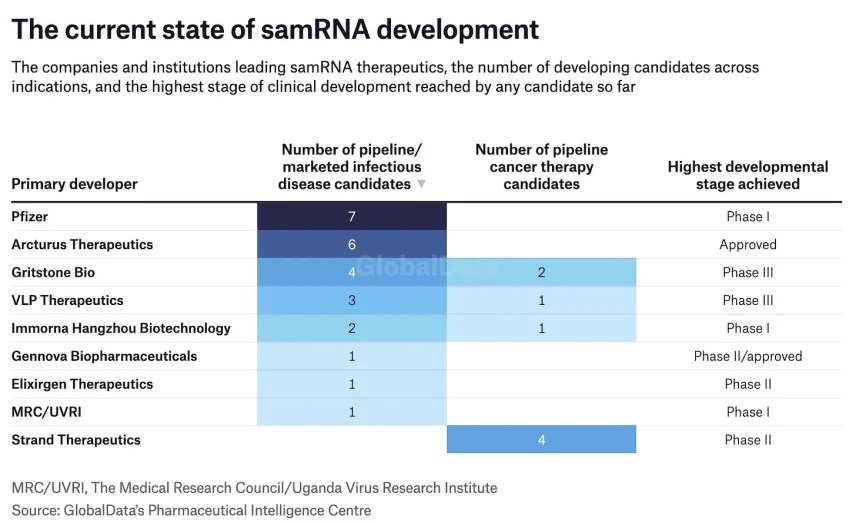
These products behave like a synthetic virus. The replicon mRNA is designed to encode not only the target antigen but also viral replicase, enabling the mRNA to replicate itself within the target cells. This replication machinery allows for an unknown period of toxic antigen production. Concerningly, none of the clinical trials have addressed the major concern of product shedding.
The Coalition for Epidemic Preparedness Innovations (CEPI) and the Biomedical Advanced Research and Development Authority (BARDA) are the primary funders behind this technology to combat ‘Disease X’. This is an extremely high risk ‘vaccine’ platform that should be avoided at all costs. Cellular installation of synthetic replicons requires decades of intense safety testing.
The very first replicon injection for human use received emergency use authorization (EUA) from The Office of the Drugs Controller General of India (DCGI) back in June 2022: Gennova Biopharmaceuticals’ GEMCOVAC-19. This was followed by reckless EUA approval in June 2023 for GEMCOVAC-OM, a replicon booster shot that targets the Omicron strain.
In November 2023, Japan’s Ministry of Health, Labor and Welfare (MHLW) fully approved CSL and Arcturus Therapeutics’ replicon shot: KOSTAIVE ARCT-154. Dismissing all concerns, Japan’s MHLW approved the updated booster shot in September 2024 to target the JN.1 lineage of Omicron subvariants.
In the clinical trials for ARCT-154, 5 deaths occurred among the injected in study phase 3b. Injected participants experienced a 90% adverse event rate (74.5% systemic – 15.2% required medical attention) after the first dose in study phases 1, 2, and 3a combined. Many of the authors are full time employees of Arcturus Therapeutics, meaning their conclusions are likely biased.

Meanwhile, the USDA quietly approved an experimental self-amplifying RNA injection for dogs developed by Merck in June 2024: Nobivac NXT Canine Flu H3N2. It appears that Merck is attempting to camouflage the fact that this product is self-amplifying. The primary product description only indicates that it uses “revolutionary RNA particle technology.” However, the novel platform works by RNA particles targeting dendritic cells, where they self-replicate and result in sustained antigen production.
The possibility of product shedding from dogs to humans or other animals was never tested. This injection is currently widely available for online purchase and canine administration. While the Biopharmaceutical Complex struggles to get self-amplifying mRNA injections approved for humans, they seem to have no problem targeting our pets.
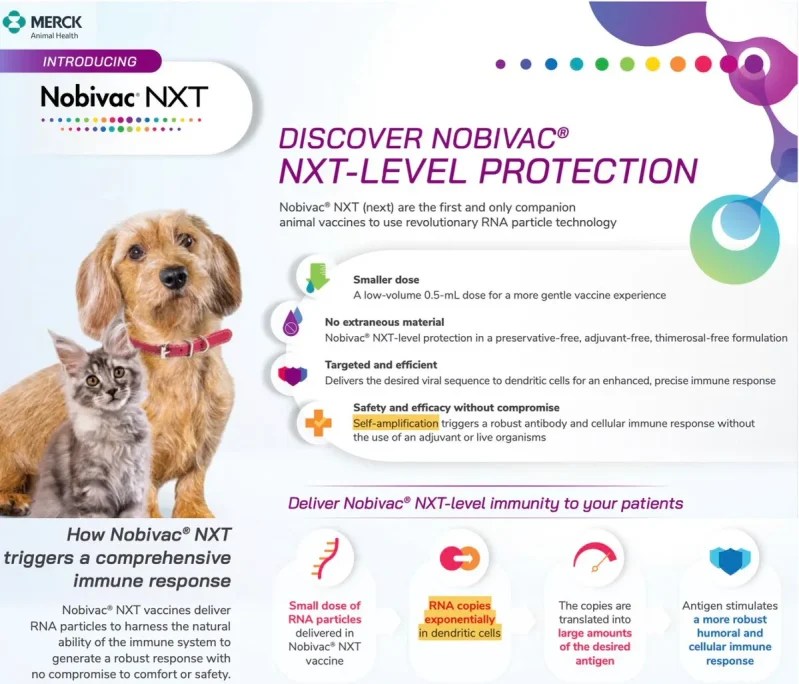
Deployment of this experimental platform has continued in September 2024 to target cats: Nobivac NXT FeLV. Nowhere in the product brochure does it mention the RNA self-amplification mechanism of action. They hope that unsuspecting vets won’t think twice about accepting the ‘new and improved’ product. The so-called ‘safety’ data for this product is as follows:
“Demonstrated safety under field conditions” from “Data on file. Merck Animal Health.”
In other words, no public safety data is provided. It’s become abundantly clear that the pharmaceutical industry and captured regulatory agencies have zero regard for the massive safety concerns of undefined synthetic mRNA replication resulting in uncontrolled toxic antigen production. These experimental injections must not receive further regulatory approval for humans or animals if we are to prevent another public health disaster. All self-amplifying mRNA injections currently available for humans and animals should be immediately withdrawn until comprehensive, long-term safety studies are conducted.
Stunning Revelations in Massive Robert Koch Institute Leak
Breathtaking November 2 presentation in the German Parliament
By John Leake | Courageous Discourse | November 9, 2024
A massive leak of internal e-mails and memos from Germany’s Robert Koch Institute (federal agency and research institute for controlling infectious disease) reveals that the institute’s scientists understood that virtually every aspect of the COVID-19 pandemic response was NOT guided by science, but by political machinations to spread fear, control the population, and promote the experimental vaccines. On November 2, 2024, Professor Stefan Homburg gave a presentation on the leaked documents in the German Parliament.
Since the beginning of the pandemic, I have suspected that governments throughout the world were committing the greatest organized fraud in history, but I still found Professor Homburg’s presentation to be absolutely breathtaking in the sheer ruthlessness of the lies and manipulation revealed in these leaked documents. Perhaps the most perfidious is a memo from September 28, 2020.

Translation: 28.09.2020: FDA approval [of COVID-19 vaccines] before the US Elections is not desired, also not by European authorities.
In other words, both U.S. and European public health authorities were afraid the COVID-19 vaccines—which had been heralded as the forthcoming saviors of mankind—could help to get Donald Trump elected if they were approved before the election. And so they found it expedient to withhold approval until after the election, even though they claimed the vaccines could save millions of lives.
I strongly encourage everyone to watch the video presentation (in German with English subtitles) and to share it far and wide.
A whistleblower obtained 10GB from Robert-Koch-Institute, the German CDC. This so-called RKI-Leak reveals that Covid was a scam from start to finish. The presentation took place in the second largest room of the German Bundestag, which is actually intended for committees of inquiry. Recorded 2 November 2024 in Berlin, English subtitles provided by the speaker.
Internet sources:
The RKI-Leak The Federal Ministry of Health has confirmed the authenticity of the leak. You can download the entire material anonoymously and free of charge from https://rki-transparenzbericht.de/
Here is a convenient search tool: https://www.rkileak.com/
Lauterbach‘s Post on X: https://x.com/Karl_Lauterbach/status/…
Lauterbach and political independence https://www.bild.de/politik/inland/rk… Spahn: Test, test, test https://www.aerztezeitung.de/Politik/…
CNN reporting emergency authorization https://edition.cnn.com/2020/12/11/he…
RKI-Grapah Influenca like illnesses (ILI) https://influenza.rki.de/Wochenberich…
WDR-Graph vaccine development https://www.quarks.de/gesundheit/medi…
Lauterbach on the unvaccinated https://www.welt.de/politik/deutschla…
Citation Dr. Brigitte Keller-Stanislawki https://www.berliner-zeitung.de/gesun…
Steinmeier, Merkel, Scholz, Lauterbach, Spahn were allegedly vaccinated https://www.bundespraesident.de/Share… https://www.aerzteblatt.de/nachrichte… https://www.spiegel.de/politik/deutsc… Lauterbach on child vaccination https://x.com/Karl_Lauterbach/status/…
RKI risk levels (deleted, only available from the internet archive) Go to https://archive.ph and type:https:/www.rki.de/DE/Content/InfAZ/N/Neuartiges_Coronavirus/Risikobewertung.html Intensive care unit occupation https://infektionsradar.gesund.bund.d…
RFK Jr. Could Pose Existential Threat to Big Pharma If He Joins Trump’s Cabinet: Here’s Why
By Ilya Tsukanov – Sputnik – November 9, 2024
Robert F. Kennedy Jr. is primed for a possible senior job in Trump’s White House, promising to “Make America Healthy Again” by reining in big pharma’s enormous influence on US health policy, and by improving food standards. Here’s why the pharmaceutical lobby is going to have a hard time accepting that.
“He’s going to have a big role in health care, a very big role. He knows it better than anybody,” Donald Trump said last week when asked about RFK Jr.’s possible future in his administration. “He’s got some views that I happen to agree with very strongly and I have for a long time.”
Sources told media Saturday that Kennedy has already been asked to make recommendations to the Trump team on appointments to the Department of Health and Human Services and the Food and Drug Administration.
Meanwhile, pharmaceutical companies have already prepared for the worst, with some execs reportedly hoping Trump and and RFK Jr. have a falling out before Kennedy can do any damage to their respective bottom lines.
“We need to have somebody who is going to be grounded by science and evidence and not somebody who rejects it,” John Maraganore, former CEO of Boston-based biotech firm Alnylam, told FT in a story published Friday, commenting on Kennedy’s prospects.
Kennedy involvement in Trump’s health policy “would be awful on a lot of levels,” a senior unnamed health exec said. “RFK is going to blow up. He’s marching around saying what he wants the administration to do before Trump’s had a chance to take a breath. Eventually Trump will sour on him,” another suggested.
Kennedy’s poor reputation with pharmaceutical companies is understandable, given the attention he’s gotten on the campaign trail during his 2024 presidential run, and before that – for his work as an environmental lawyer, Children’s Health Defense chairman and author of the 2021 book The Real Anthony Fauci: Bill Gates, Big Pharma, and the Global War on Democracy and Public Health, which spent twenty weeks on NYT’s bestseller list.
Kennedy used the national attention he got over the past three years to promote his favorite causes – vaccine safety and public health. His stinging remarks on these issues, and ability to now have the president-elect’s ear, explain why big pharma finds him so dangerous. Here’s a selection:
Anti-Vaxxer?
Smeared, throttled and censored by legacy media as an “anti-vaxxer” in virtually every article that mentions him, Kennedy has said repeatedly that he’s “never been anti-vaccine.”
“I fought against mercury in fish for 40 years. Nobody called me anti-fish. I like the idea that we have seatbelts in cars. Nobody calls me anti-automobile. I want vaccines that are safe just like every other medication and that are adequately tested. It doesn’t mean I’m anti-vaccine. It just means that I’m sensible and have common sense,” Kennedy said in a tense PBS interview in 2023.
‘Criminal’ Drug Companies
“The pharmaceutical industry is – I don’t want to say because this is going to seem extreme – a criminal enterprise, but if you look at the history, that is an applicable characterization. For example, the four biggest vaccine makers, Sanofi, Merck, Pfizer and Glaxo make all of the 72 vaccines that are now effectively mandated for American children. Collectively, those companies have paid $35 billion in criminal penalties and damages in the last decade,” he told Lex Fridman in 2023.
“And the problem is that they’re serial felons,” Kennedy said, citing the example of Merck’s non-steroidal anti-inflammatory drug Vioxx. “They killed people by falsifying science. And they did it. They lied to the public. They said, ‘this is a headache medication and an arthritis painkiller’. But they didn’t tell people that it also gave you heart attacks… We found when we sued them the memos from their bean counters saying ‘we’re going to kill this many people, but we’re still going to make money,” Kennedy said.
“The way that the system is set up, the way that it’s sold to doctors, the way that nobody ever goes to jail so there’s really no penalty [and] it all becomes part of the cost of doing business,” Kennedy said.
Big Pharma’s Role in Hooking Americans on Opioids
The opioid epidemic is a perfect example of big pharma’s corrupting influence, Kennedy believes, recalling the latter’s’ lobbying the FDA to tell doctors oxycodone isn’t addictive, and getting “a whole generation addicted to oxycodone. And when they got caught, and we made it harder to get oxycodone, now all those addicted kids are going to fentanyl and dying.”
“This year it killed 106,000. That’s twice as many people who were killed during the 20-year Vietnam War. But in one year, twice as many American kids. They knew it was going to happen and they did it to make money. So I don’t know what you call that other than saying that’s a criminal enterprise,” Kennedy said.
Kennedy vs. Mutilation of Children
RFK Jr. has stepped out against ‘gender-affirming care’ and hormone therapy for children, referring to the former as “surgical mutilation” and the latter as “castration drugs.”
“Minors cannot drive, vote, join the army, get a tattoo, smoke, or drink, because we know that children do not fully understand the consequences of decisions with life-long ramifications… People with gender dysphoria or who want to change their gender deserve compassion and respect, but these terribly consequential procedures should be deferred till adulthood. We must protect our children,” he tweeted in May.
That’s more bad news for the pharmaceutical industry, which has walked lock-step in support of the trans rights movement, and profited immensely from hormone therapy drugs and surgical procedures from the late 2000s onward.
RFK Jr. on Chronic Disease
Kennedy has also vowed to “end the chronic disease epidemic” facing America, another potential blow to big pharma, this one possibly the most serious.
“There is nothing more profitable in our society today than a sick child,” RFK Jr. told Tucker Carlson in August.
“Because all of these entities are making money on him – the insurance companies, the hospitals, the medical cartel, the pharmaceutical companies have lifetime annuities… They want [them] sick for the rest of their lives… When my uncle was president, 6% of Americans had chronic disease. Today it’s 60%. When my uncle was president, do you know what the annual cost of treating chronic disease was in this country? Zero. There weren’t even any drugs invented for it. Zero. Today it’s about $4.3 trln,” Kennedy said.
RFK Jr.’s Solution? Sweeping Reforms
RFK Jr. has pointed to statistics suggesting that effectively half of the FDA’s budget comes from the pharma companies they’re supposed to be regulating, and said this needs to stop. He’s also said that “entire departments” at the federal agency should be “cleared out,” and that many of the problems caused by big pharma could be “fixed” with effective regulation, tougher penalties for harmful products, taking a page from the regulatory and health care environments of other countries, and a change in the overall culture of the US health care system.
FLUORIDE HARMS HIT THE MAINSTREAM
The HighWire with Del Bigtree | November 7, 2024
Jefferey Jaxen’s reporting last week on the historical EPA ruling on fluoride in drinking water made its way into corporate media with a slurry of misinformation to help sway the election. At the same time, governments worldwide continue to use the term misinformation as a way to control free speech.
The CDC Planned Quarantine Camps Nationwide
By Jeffrey A Tucker | Brownstone Institute | November 7, 2024
No matter how bad you think Covid policies were, they were intended to be worse.
Consider the vaccine passports alone. Six cities were locked down to include only the vaccinated in public indoor places. They were New York City, Boston, Chicago, New Orleans, Washington, D.C., and Seattle. The plan was to enforce this with a vaccine passport. It broke. Once the news leaked that the shot didn’t stop infection or transmission, the planners lost public support and the scheme collapsed.
It was undoubtedly planned to be permanent and nationwide if not worldwide. Instead, the scheme had to be dialed back.
Features of the CDC’s edicts did incredible damage. It imposed the rent moratorium. It decreed the ridiculous “six feet of distance” and mask mandates. It forced Plexiglas as the interface for commercial transactions. It implied that mail-in balloting must be the norm, which probably flipped the election. It delayed the reopening as long as possible. It was sadistic.
Even with all that, worse was planned. On July 26, 2020, with the George Floyd riots having finally settled down, the CDC issued a plan for establishing nationwide quarantine camps. People were to be isolated, given only food and some cleaning supplies. They would be banned from participating in any religious services. The plan included contingencies for preventing suicide. There were no provisions made for any legal appeals or even the right to legal counsel.
The plan’s authors were unnamed but included 26 footnotes. It was completely official. The document was only removed on about March 26, 2023. During the entire intervening time, the plan survived on the CDC’s public site with little to no public notice or controversy.
It was called “Interim Operational Considerations for Implementing the Shielding Approach to Prevent COVID-19 Infections in Humanitarian Settings.”
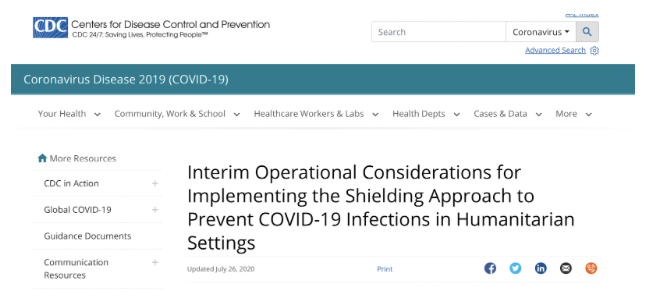
“This document presents considerations from the perspective of the U.S. Centers for Disease Control & Prevention (CDC) for implementing the shielding approach in humanitarian settings as outlined in guidance documents focused on camps, displaced populations and low-resource settings. This approach has never been documented and has raised questions and concerns among humanitarian partners who support response activities in these settings. The purpose of this document is to highlight potential implementation challenges of the shielding approach from CDC’s perspective and guide thinking around implementation in the absence of empirical data. Considerations are based on current evidence known about the transmission and severity of coronavirus disease 2019 (COVID-19) and may need to be revised as more information becomes available.”
By absence of empirical data, the meaning is: nothing like this has ever been tried. The point of the document was to map out how it could be possible and alert authorities to possible pitfalls to be avoided.
The meaning of “shielding” is “to reduce the number of severe Covid-19 cases by limiting contact between individuals at higher risk of developing severe disease (‘high-risk’) and the general population (‘low-risk’). High-risk individuals would be temporarily relocated to safe or ‘green zones’ established at the household, neighborhood, camp/sector, or community level depending on the context and setting. They would have minimal contact with family members and other low-risk residents.”
In other words, this is what used to be concentration camps.
Who are these people who would be rounded up? They are “older adults and people of any age who have serious underlying medical conditions.” Who determines this? Public health authorities. The purpose? The CDC explains: “physically separating high-risk individuals from the general population” allows authorities “to prioritize the use of the limited available resources.”
This sounds a lot like condemning people to death in the name of protecting them.
The model establishes three levels. First is the household level. Here high-risk people are“physically isolated from other household members.” That alone is objectionable. Elders need people to take care of them. They need love and to be surrounded by family. The CDC should never imagine that it would intervene in households to force old people into separate places.
The model jumps from households to the “neighborhood level.” Here we have the same approach: forced separation of those deemed vulnerable.
From there, the model jumps again to the “camp/sector level.” Here it is different. “A group of shelters such as schools, community buildings within a camp/sector (max 50 high-risk individuals per single green zone) where high-risk individuals are physically isolated together. One entry point is used for exchange of food, supplies, etc. A meeting area is used for residents and visitors to interact while practicing physical distancing (2 meters). No movement into or outside the green zone.”
Yes, you read that correctly. The CDC is here proposing concentration camps for the sick or anyone they deem to be in danger of medically significant consequences of infection.
Further: “to minimize external contact, each green zone should include able-bodied high-risk individuals capable of caring for residents who have disabilities or are less mobile. Otherwise, designate low-risk individuals for these tasks, preferably who have recovered from confirmed COVID-19 and are assumed to be immune.”
The plan says in passing, contradicting thousands of years of experience, “Currently, we do not know if prior infection confers immunity.” Therefore the only solution is to minimize all exposure throughout the whole population. Getting sick is criminalized.
These camps require a “dedicated staff” to “monitor each green zone. Monitoring includes both adherence to protocols and potential adverse effects or outcomes due to isolation and stigma. It may be necessary to assign someone within the green zone, if feasible, to minimize movement in/out of green zones.”
The people housed in these camps need to have good explanations of why they are denied even basic religious freedom. The report explains:
“Proactive planning ahead of time, including strong community engagement and risk communication is needed to better understand the issues and concerns of restricting individuals from participating in communal practices because they are being shielded. Failure to do so could lead to both interpersonal and communal violence.”
Further, there must be some mechanisms to prohibit suicide:
Additional stress and worry are common during any epidemic and may be more pronounced with COVID-19 due to the novelty of the disease and increased fear of infection, increased childcare responsibilities due to school closures, and loss of livelihoods. Thus, in addition to the risk of stigmatization and feeling of isolation, this shielding approach may have an important psychological impact and may lead to significant emotional distress, exacerbate existing mental illness or contribute to anxiety, depression, helplessness, grief, substance abuse, or thoughts of suicide among those who are separated or have been left behind. Shielded individuals with concurrent severe mental health conditions should not be left alone. There must be a caregiver allocated to them to prevent further protection risks such as neglect and abuse.
The biggest risk, the document explains, is as follows:
“While the shielding approach is not meant to be coercive, it may appear forced or be misunderstood in humanitarian settings.”
(It should go without saying but this “shielding” approach suggested here has nothing to do with focused protection of the Great Barrington Declaration. Focused protection specifically says: “schools and universities should be open for in-person teaching. Extracurricular activities, such as sports, should be resumed. Young low-risk adults should work normally, rather than from home. Restaurants and other businesses should open. Arts, music, sport and other cultural activities should resume. People who are more at risk may participate if they wish, while society as a whole enjoys the protection conferred upon the vulnerable by those who have built up herd immunity.”)
In four years of research, and encountering truly shocking documents and evidence of what happened in the Covid years, this one certainly ranks up at the top of the list of totalitarian schemes for pathogenic control prior to vaccination. It is quite simply mind-blowing that such a scheme could ever be contemplated.
Who wrote it? What kind of deep institutional pathology exists that enabled this to be contemplated? The CDC has 10,600 full-time employees and contractors and a budget of $11.5 billion. In light of this report, and everything else that has gone on there for four years, both numbers should be zero.
Jeffrey Tucker is Founder, Author, and President at Brownstone Institute. He is also Senior Economics Columnist for Epoch Times, author of 10 books, including Life After Lockdown, and many thousands of articles in the scholarly and popular press.
Climate Change Brings Record Breaking Threat To Health – Lancet
By Paul Homewood | Not A Lot Of People Know That | November 3, 2024

Yes, it’s the same old pack of lies they roll out every year, trying to convince that global health is suffering because of climate change.
You only have to read the first paragraph to understand that this is a political document, not a serious scientific one.
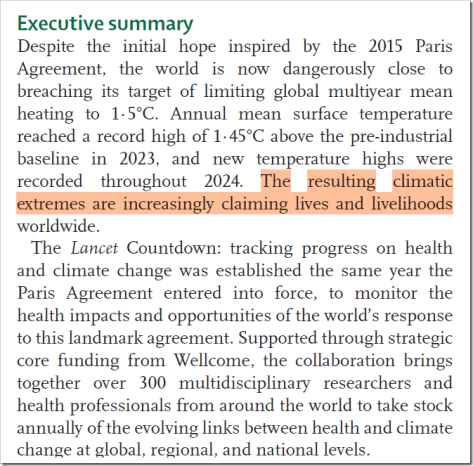
And sure enough, they claim to have found “record-breaking threats” to health and even survival:
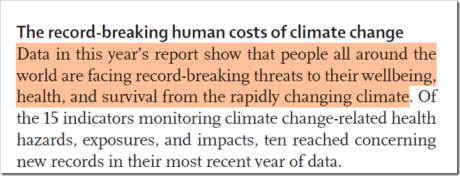
Each year is the same – they ignore real world data, which positively shows the opposite to be true, and instead concoct increasingly obscure and dubious ways to satisfy their agenda.
The idea, of course, that the world’s climate has changed so much since 2015 is itself absurd – but that does not stop the Lancet from saying it has!
They start by claiming that heat-related deaths have increased since the 1990s, but there is no mention of the fact that cold-related deaths have decreased by many more. They claim that heat exposure has reduced labour productivity, forgetting that, thanks to mechanisation, productivity has rocketed and workers are therefore less exposed to heat stress.
They claim that extreme precipitation has increased since 1960, but this is not derived from real world data, which is far too sparse to make such bold claims. Instead it is all based on computer modelling.
To be fair, the IPCC also claim that the number of heavy rainfall events has been increasing, but significantly also tell us that they can find no global trends in floods. In many places heavy rainfall is welcomed because it alleviates drought. Try telling the Indians that they had too much rainfall during this summer’s monsoon. As for those who suffered during the Dust Bowl years in the US, they would have given their right arm for a few storms.
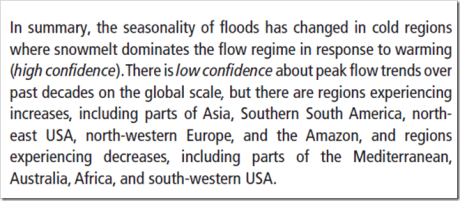
IPCC AR6
It is the same with drought. Apparently 48% of the world’s landmass was affected by at least 1 month of extreme drought last year, up from 15% in the 1950s. But droughts build up over a period of months and even years, not one single month. It is plainly ridiculous to use such a metric – I wonder why they did?
And as with extreme precipitation, the Lancet study does not use actual rainfall data, but computer models which can be programmed to come up with any results you want, because the real world data they would need simply does not exist for most of the world.
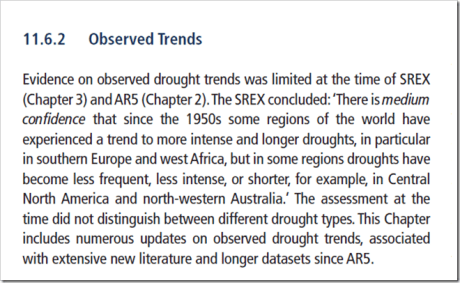
But where we do have actual precipitation data, the IPCC only find that although some regions have seen an increase in droughts, while others have seen fewer:
And so it goes on. Apparently there are more sand storms, but again this is gleaned from computer models, a “state-of-the-art multimodel reanalysis ensemble”.
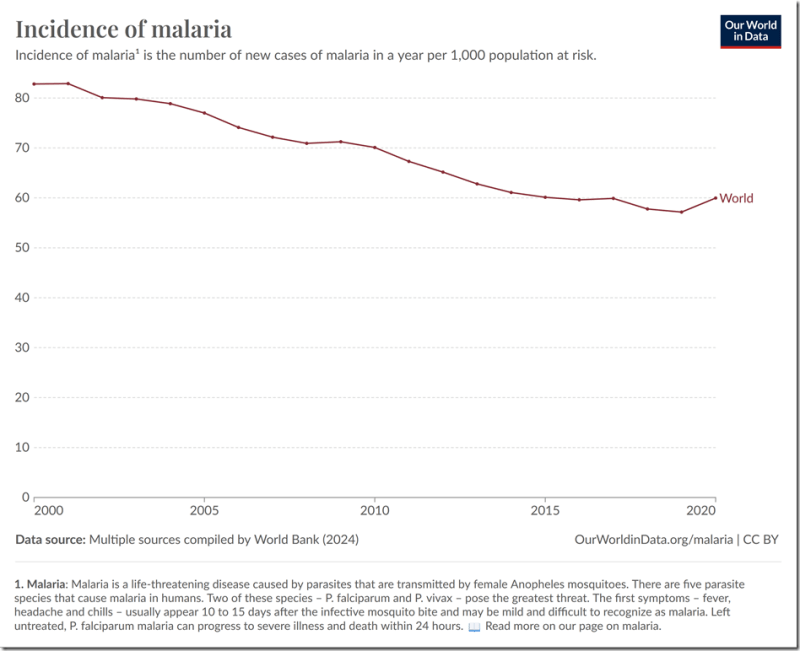
Malaria, we are told, is being spread by global warming, despite the fact that the number of new cases has been steadily dropping, with the exception of COVID affected 2020:
But the biggest joke of all must be this:
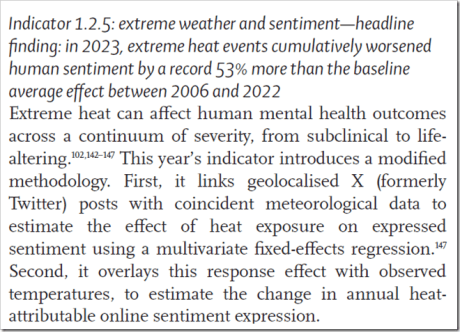
The mind boggles!
If they really were concerned about global health, there is plenty or incontrovertible, real world data which they could use, instead of their phoney models.
Around the world people live longer, child mortality is much lower, fewer live in extreme poverty or are undernourished. They live healthier lives, thanks to better access to clean water, medicines and healthcare. The children are better education, and technology is transforming people’s lives.
Thanks mainly to fossil fuels food output hits new records year after year. Meanwhile in contrast to the Lancet’s claims of desertification, the planet is greening because of increasing amounts of CO2 in the atmosphere.
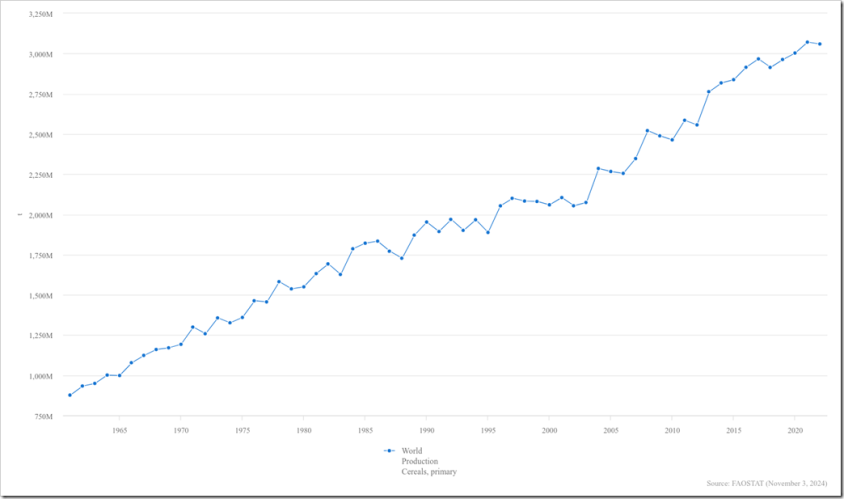
But the Lancet are not interested in the truth, nor for that matter do they appear to care about global health.
They only want to generate alarmist headlines, to push forward their Net Zero agenda.
GM soybean oil damages liver and kidneys
GM Watch | October 12, 2024
New rat feeding study is further proof that GM soy isn’t substantially equivalent to non-GM soy. Report: Claire Robinson
A diet containing GM soybean oil damaged the liver and kidney of rats in a new 90-day feeding study conducted by Iranian scientists. The study provides further proof that GM soy is not substantially equivalent to non-GM soy, meaning that regulatory authorisations given on the assumption of equivalence are invalid.
The study, by Horyie Taheri of Tabriz University of Medical Sciences and colleagues, was conducted on 18 male rats in three different groups (6 rats per group). One group was fed a diet containing 10% GM soybean oil for 90 days, while the other two groups served as control groups, receiving either non-GM soybean oil or a standard lab diet, respectively.
The scientists carried out biochemical analysis of the blood and at the end of the experiment, microscopic tissue analysis (histopathology) of the liver and kidneys.
The scientists found that GM soybean oil caused several histological abnormalities in the liver, including congestion, necrosis, and bile duct hyperplasia (increased cell production, which may indicate a pre-cancerous state).
Similarly, congestion, haemorrhage, and glomerulosclerosis (scarring of small blood vessels) were found in the kidney analysis. Moreover, GM soybean oil significantly increased gamma-glutamyl transferase (a possible sign of liver disease or damage) and insulin (often associated with type 2 diabetes) levels compared to a standard diet.
Furthermore, urea and triglycerides were significantly higher in GM-fed rats compared to rats fed with standard or non-GM diet. These are respectively indications of kidney failure and a failure to break down fats, which can lead to hardening of the arteries and other diseases.
The scientists conclude: “A 90-day treatment with transgenic soy-based oil caused significant organ changes in the liver and kidneys of rats. Further studies are needed to evaluate the long-term effects to better elucidate these impacts.”
Limitations of the study
The study has certain limitations, as follows:
1. As Taheri and colleagues state, 90 days is not long enough to reveal long-term effects – for which a 2-year or longer study would be required. However, the fact that they saw adverse effects of GM soybean oil even over this medium-term period (roughly equivalent to 7-8 years in human terms) is concerning and suggests that over time, more serious disease could develop. They also suggest that measuring inflammatory markers would have been a useful addition to the study, to explain insulin resistance and other findings.
2. The error bars, in this case based on what’s known as the standard error of the mean, on some of the biochemical findings are wide. In simple terms, this indicates uncertainty in how those findings can be interpreted. This is likely due to the relatively small sample size (6 rats per group), which has caused the study to be statistically underpowered. To be fair to the authors, however, studies with as small, or smaller, sample sizes that conclude that there was no adverse effect from feeding the GM diet are promoted as showing GMO safety.
3. The authors didn’t analyse the oils for contaminants, which could have affected the results. However, feeding studies with GMOs reporting that the GM diet tested was safe also typically fail to do this.
Regarding points 2 and 3 above, there is no reason to hold a study finding harm from the GMO to different standards than a study finding safety. Moreover, we’re not aware of any other studies testing the safety of extracted GM soy oil. So currently, Taheri et al’s research seems to represent the best information we have.
4. The authors state that “having direct access to transgenic plants and their oil would be better”. Indeed, they don’t say where they obtained the GM and non-GM soybean oil or where the soybeans were grown. It’s likely that they simply bought it on the open market, as it’s generally easy to access GM and non-GM soy oil, with GM oil having to be labelled as such in Iran. If this assumption is correct, the study shows that GM soy oil bought on the open market caused adverse effects that non-GM soy oil did not. That’s a serious enough take-home message.
There are also some drafting errors in the paper which are addressed in an appendix below.
Regulatory authorisations based on a lie
GM soybean oil is routinely used by restaurants and other eateries in the UK and the EU (as an investigation of their dustbin areas often reveals), and it’s likely that the same is true of Iran. A considerable body of evidence shows that GM soy has adverse effects on animals that eat it – though we don’t know if that’s a result of the herbicide residues present in GM glyphosate-tolerant soy, or of compositional changes caused by the GM process, or a combination of both. What is clear is that GM soy isn’t substantially equivalent, in terms of biological effects, to non-GM soy. That means its regulatory authorisations worldwide, which are based on the assumption of an equivalent safety profile with that of non-GM soy, are based on a lie and should be revoked.
The new study (open access):
Taheri H, Mesgari-Abbasi M, Khordadmehr M, Rahimi Mamaghani A, Abbasalizad-Farhangi M. Effect of genetically modified soybean oil consumption on biochemical and histological changes of liver and kidney in rats. Int J Drug Res Clin. 2024; 2: e11. doi: 10.34172/ijdrc.2024.e11. https://ijdrug.com/Article/ijdrc-3048
Featured Video

Houthis Keep Advancing as the Red Sea Crisis Deepens
or go to
Aletho News Archives – Video-Images
From the Archives
15 Saudi ‘hijackers’ were CIA agents working for US: Scholar
Press TV – April 13, 2016
Fifteen of the 9/11 “hijackers” from Saudi Arabia were CIA agents working for the United States government, which was seeking to destroy the Middle East for Israel and to double the American military budget, says Dr. Kevin Barrett, an American academic who has been studying the events of 9/11 since late 2003…. continue
Blog Roll
 Aletho News
- Russia Just Struck the Eyes of NATO’s War Machine in Ukraine
- Russia summons UK charge d’affaires over Kiev drone support
- NATO member warns bloc seeking pretext for war with Russia
- Macgregor: We Haven’t Seen the Worst of the Iran War Yet
- ‘We are not like everyone else’ laws that bind other nations do not apply to Israel, says Likud lawmaker
- Report: Saudi Arabia seeks allies’ assistance as missiles deplete amid war on Yemen
- Fuel Crisis Deepens: Pakistan Warns Tanker Attack in Red Sea Would Be an ‘Act of War’
- ‘Bucha massacre’ a false flag orchestrated by UK – Moscow
- China Rejects Outside Pressure on Trade Ties After New US Russia Sanctions Bill
- Houthis Keep Advancing as the Red Sea Crisis Deepens
- If Americans Knew
- Columbia Administered Fund Gives Big Money to Pro-Israel Groups
- Deportation Case of Palestinian Activist Salah Sarsour Tests First Amendment
- ‘We Will Not Forget’: Palestinians Mark 44 Years since Sabra and Shatila
- Why do we let Zionists decide what we can and can’t say?
- US welcomes Israeli, Iranian delegations to UN, but not Palestinians – Daily Update
- Biden’s Genocide Accomplices Targeted by New Accountability Campaign
- AIPAC’s Network Has Already Spent $67.2 Million to Shape the Midterm Elections
- Jewish Supremacist Manufacturing a Civilizational Threat to License Bigotry
- US bans Palestinian president from speaking at the UN
- Israeli Forces Detain Journalist Alaa al-Rimawi amid Widespread West Bank Raids
- No Tricks Zone
- New Study: ‘Global Drought Shows No Detectable Recent Acceleration Under Climate Warming’
- Economic Masterminds: German Socialists Suggest Taxing Productivity Gains Stemming From Using AI
- The South China Sea Has Not Been Cooperating With The Climate Change Narrative
- Energy Crisis: Germany Enters Heating Season With Historically Low Gas Reserve Fill Levels
- New Study: The Antarctic Ice Sheet Gained Mass From 2020-2024 Due To Staggering Snow And Ice Accumulation
- Study: Ocean Heating Rates From Thousands Of Years Ago ‘Dwarf’ Modern Ocean Heating Rates
- Climate Extremists Target, Attack Large-Scale Power Grid Infrastructure In Germany!
- New Study: Antarctic Ice Melt Has Contributed Less Than 1 Centimeter To Sea Level Rise In The Last 30 Years
- Fear Of Debate: Alarmist German Climate Scientist Calls On Mainstream Media To Discredit Skeptic Voices
- End-Of-August Arctic Sea Ice Extent Hasn’t Fallen In 20 Years, Official Data Show!
 Aletho News