New York City Health Officials to Hold Bird Flu Tabletop Exercise
By Michael Nevradakis, Ph.D. | The Defender | October 3, 2024
New York City officials are planning a tabletop simulation later this month to prepare for a hypothetical bird flu outbreak, a city health official revealed at the International Bird Flu Summit, taking place this week in Fairfax, Virginia.
The summit is sponsored by Gingko Biosecurity, which says it is “building and deploying the next-generation infrastructure and technologies that global leaders need to predict, detect, and respond to a wide variety of biological threats.”
Public health officials, doctors, scientists, researchers and pharmaceutical company representatives convened at the summit amid more reports of bird flu hotspots, including a cluster of eight possible bird flu cases in Missouri.
According to U.S. News & World Report, the Missouri cases “could be the first cases of bird flu spreading between humans in the United States.”
Italy and Hungary recently announced they detected bird flu outbreaks at farms, Reuters reported. According to CBS News, bird flu killed 47 tigers, three lions and a panther at zoos in Vietnam.
Epidemiologist Nicholas Hulscher told The Defender that the Missouri and other global outbreaks are not concerning.
“The current outbreaks of H5N1 among animal populations have not resulted in mass mortality with the exception of government-mandated culling,” Hulscher said. “Genotype B3.13, the currently circulating strain in U.S. cattle, is currently a very mild illness for humans. There has never been a reported human H5N1 death in the U.S.”
Dr. Clayton J. Baker, an internal medicine physician, told The Defender the latest news reports strike him “as classic ‘fear porn.’” He noted that before the U.S. News & World Report story, the Centers for Disease Control and Prevention (CDC) released a report stating that only one H5N1 case in humans had been detected in Missouri.
Journalist and author John Leake is attending the Bird Flu Summit. He told The Defender that while mainstream media reports are hyping purported bird flu outbreaks, the atmosphere at the summit is subdued, albeit aligned with the prevailing narrative.
“They’re following, I’d say, the narrative that we’ve been treated to all year, that this new H5N1 is jumping from birds into mammals — for example, dairy cattle, marine mammals, which are genetically, genomically far closer to humans,” Leake said.
“So, the prevailing orthodoxy is that this pathogenic avian influenza is getting closer to making the evolutionary jump from animals into humans. And if that happens, it’s going to place a big burden on human health and the public healthcare system,” Leake added.
As for the Missouri outbreak, Leake said it’s been a topic of discussion at the summit — but no evidence has been presented to confirm that human-to-human bird flu transmission has occurred.
In addition to the news about New York City’s planned bird flu simulation, the topic of gain-of-function research involving the H5N1 virus came up, with some attendees speculating that the current predominant H5N1 strain may be a product of such research.
Simulation of bird flu outbreak ‘cause for tremendous concern’
According to Leake, Syra Madad, senior director of the System-wide Special Pathogens Program at NYC Health + Hospitals, told summitt attendees that her agency is planning a “full pandemic tabletop exercise” on Oct. 21.
Noting the similarities with similar simulations that took place shortly before the COVID-19 and monkeypox outbreaks in 2019 and 2022, respectively, Leake said, “In my experience, once these guys start doing this kind of thing, they’re signaling that they think it’s for real.”
Baker said news of the tabletop simulation “is cause for tremendous concern.” He called the timing of the COVID-19 tabletop exercise, Event 201, which took place in October 2019, “in retrospect, ‘suspicious in the extreme.’”
The Johns Hopkins Center for Health Security, the World Economic Forum and the Bill & Melinda Gates Foundation organized the 2019 simulation of a coronavirus outbreak.
In March 2021, the Nuclear Threat Initiative, in conjunction with the Munich Security Conference, organized a “tabletop exercise on reducing high-consequence biological threats,” based on a hypothetical global monkeypox outbreak in May 2022.
The simulation preceded the May 2022 monkeypox outbreak.
“Any full-scale exercises for a pathogen should raise concerns about possible pre-planned release,” Hulscher said. “Event 201 should remind us that ‘drills’ are usually held before the real event.”
Hulscher suggested a bird flu outbreak could be weaponized to disrupt this year’s U.S. presidential election or the next administration.
“Peter Hotez, Bill Gates and Robert Redfield have warned of future pandemics worse than SARS-CoV-2 with high confidence that it will be avian influenza,” Hulscher said. “Many groups would benefit from disrupting the 2024 election and/or society in general. Thus, I think there’s a high probability of another intentional laboratory leak.”
‘Abundant evidence’ current bird flu strain a product of gain-of-function research
According to Baker, the H5N1 bird flu virus is the subject of gain-of-function research by several scientists and laboratories, including Yoshihiro Kawaoka, Ph.D., at the University of Wisconsin-Madison; Ron Fouchier, Ph.D., at Erasmus University in the Netherlands; and the Southeast Poultry Research Laboratory (SEPRL) in Georgia.
Leake said Kawaoka and Fouchier “have published papers in which they have proclaimed that they have successfully created an H5N1 variant that is transmissible by aerosolized droplets amongst ferrets,” noting that “the pulmonary tract or the respiratory tract of Ferrets is considered very almost eerily close to that of humans.”
According to Hulscher, “There is abundant evidence that the current circulating strain of H5N1 in the United States — Genotype B3.13 Clade 2.3.4.4b — is a consequence of serial passage gain-of-function research being conducted at SEPRL.”
“The accelerated evolution of H5N1 via serial passage in mallard ducks may be the reason behind the adaptations to new species,” Hulscher said, referring to a preprint study he co-authored with Leake and cardiologist Peter McCullough, which Hulscher said “provides the entire rationale for a possible laboratory leak.”
The preprint has been accepted by a journal and is awaiting publication, Hulscher said.
According to Baker, “It’s a documented fact that gain-of-function manipulation of bird flu has been going on for many years. There is no legitimate reason to perform this type of research, other than to weaponize these viruses.”
Writing for the Brownstone Institute, Baker said there are at least five laboratories in the U.S. conducting gain-of-function research on H5N1, in violation of the Biological Weapons Convention of 1975.
In a recent post on Substack, Leake said that the “Pandemic Flu Industry will likely need lab assistance to amplify human-to-human transmission and virulence.”
Baker said, “All a malicious group of people would have to do is have their meeting, ‘get their ducks in a row,’ so to speak, then release those gain-of-function-infected ducks into the environment. Or use whatever vector of spread they choose.”
Leake told The Defender that during the Bird Flu Summit, he asked Karen Murphy, senior director of biosecurity for Gingko Biosecurity, if the company is “doing any kind of surveillance of this pathogen being manipulated and released from a lab.”
In her response, Murphy confirmed that her company has developed a product that can detect whether a pathogen developed organically or is man-made — but that this product is only being made available to government and intelligence agencies.
She said:
“When we think about biosecurity surveillance at large, we’re thinking about things that develop organically.
“We actually do have a product on the market today. It’s called NR, and NR will help — It is mostly for government organizations and the intelligence community, but the concept behind NR is to help understand if something has been man-made or female-made or if it’s organic.”
Remarking on Murphy’s response, Leake said “We’re once again left with these national security state assurances.”
“How are we the citizens going to know if it’s another example of what we saw coming out of the Wuhan Institute of Virology,” Leake asked, referring to the likelihood that the SARS-CoV-2 virus leaked out of that facility.
Leake said companies like Gingko Biosecurity are “well within the biopharmaceutical complex,” adding that they represent “commercial interests that seem pretty revved up about pandemics, when the money flows.”
“Until we outlaw gain-of-function research entirely and enforce the Biological Weapons Convention, which is being flouted by gain-of-function researchers, we’ll have this sword of Damocles hanging over our heads forever,” Baker said.
Several key scientists and researchers, including Redfield, former director of the CDC, have called for a moratorium on gain-of-function research or for the total cessation of such research.
Last month, the U.S. Senate’s Homeland Security and Governmental Affairs Committee passed S.4667, the Risky Research Review Act, out of committee, sending the bill to the full Senate. If passed, the bill will subject research involving risky pathogens, including gain-of-function research, to strict oversight.
NYC plan includes isolating bird flu patients, administering Tamiflu
Leake said there has been only limited discussion of bird flu vaccines so far during the summit.
“We were excited to attend a vaccine talk that was in the published program … but when we got our updated program electronically at the conference, that vaccine presentation had apparently been removed,” Leake said.
In contrast, Leake said that there was plenty of discussion around pandemic preparedness and response during this week’s Bird Flu Summit.
According to Leake, Madad, an infectious disease epidemiologist, said New York City hospitals are preparing a bird flu outbreak preparedness plan focused on isolating people suspected of infection and administering antiviral medications.
“She really didn’t offer a satisfactory answer at all,” Leake said. “She said, ‘We have got an idea or a concept for isolation [and] we’ve got antivirals like Tamiflu.’”
“Antivirals administered in the hospital setting to an acutely ill patient? It’s too late by then,” Leake said. “Based on her testimony, they don’t have a hospital treatment plan. Instead, vague talk of isolating the patient, which of course is cold comfort if you’re severely ill, if you can’t breathe in a hospital.”
This article was originally published by The Defender — Children’s Health Defense’s News & Views Website under Creative Commons license CC BY-NC-ND 4.0. Please consider subscribing to The Defender or donating to Children’s Health Defense.
Dawn raids, assaults, imprisonment: how Germany’s government treats good doctors
Around 200 doctors issuing mask exemptions were put on a blacklist – and the consequences are shocking

World Council for Health | October 2, 2024
On June 8, 2024, a call regarding ‘Mask Exemption Certificates and House Searches’ was initiated by Dr Walter Weber, head of the doctors’ association Ärzte für Aufklärung. On this call, we received some shocking information: in Germany, there is a ‘blacklist’ of about 200 doctors who issued mask exemptions and as a result are apparently monitored by state security. Around 100 doctors who had issued similar certificates then came forward. Approximately 95% of these doctors experienced unannounced house searches, with one doctor being searched eight times.
These house searches typically took place from 6am and often lasted during office hours for 1-3 hours. In many cases, doors were broken down, and there were reports of inappropriate treatment of those affected. One example is Rolf Kron, who had to endure sitting in his nightgown with an open door for hours in the winter. Physical violence was also a concerning issue: Dr. Woitzel had to undergo a leg amputation due to police violence.
Psychological and physical consequences
These reports of physical assaults are alarming. An eye doctor from Münster suffered hearing loss after a violent incident. Moreover, several female colleagues became seriously ill, and one doctor, Dr. Ströer, was sentenced to two years in prison without parole and died six months later “for no reason”. Dr. Bianca Witzschel has been in pre-trial detention for 1.5 years due to a negative expert report, while a counter-report was rejected by the judge.
The financial implications are also severe.
Many doctors had to ‘buy their freedom’, paying sums of up to 6,000 euros. One colleague reported costs of around 30,000 euros because the waiting room chairs did not meet the required distance. Most doctors affected agree to the anonymized publication of their experiences, underscoring the gravity of the situation.
Smeared, ostracised, silenced
Local press often reported on these doctors, leading to defamation and slander. Families were bullied, including children. The medical profession in Germany, consisting of about 150,000 practicing doctors, has been silenced by this systematic persecution. The 200 or so doctors willing to issue mask exemptions constitutes less than 0.00013% of the total number.
There is no justification for such treatment – but there is plenty of justification for these doctors having issued mask exemptions.
We recently reported on the leaked protocols from Germany’s Robert Koch Institute (RKI), which revealed the extent to which the German people were deceived by their own government during the so-called pandemic. One revelation was that the RKI – the equivalent of the US’ CDC – knew there was no evidence that masks stopped the spread of Coronavirus. Those doctors who issued mask exemptions were both acting in their patients’ best interests and in line with the evidence, as acknowledged by the RKI. The problem is, they weren’t in line with their government and the consequences of this should shock the world.
This is what totalitarian, centralized medicine looks like.
The systematic persecution of doctors who issued mask exemptions highlights a concerning development in German society. The fear of house searches and the resulting consequences have deterred many doctors from helping patients in need. This not only silences the medical profession but also isolates them from society. It is time to question these practices and protect the rights of doctors as well as the needs of patients. Especially taking into account the actual science supporting their decision to be cautious about the inefficacy and even harm created by using masks as a mandatory tool for the management of Covid 19 (Brownstone, 2024).
The World Council for Health is grateful for these 200 brave doctors and all those supporting informed consent and the Hippocratic oath primum non nocere, first do no harm. The WCH calls on the people of Germany to speak up for these doctors and demand that all charges against them are dropped, that they are compensated for the crimes their own government has committed against them, and that they are duly honoured for maintaining their moral and scientific integrity despite devastating consequences.
Sources:
https://brownstone.org/articles/studies-and-articles-on-mask-ineffectiveness-and-harms/
Amazon Retracts Ban of Dr. Paul Marik’s “Cancer Care”
By John Leake | Courageous Discourse | September 30, 2024
This evening I received an e-mail from Dr. Marik, who explained that Amazon’s ban of his book “Cancer Care” has been retracted. The e-book is again available for purchase. This great news comes almost exactly a week after I wrote about the ban in my post Amazon Excommunicates Dr. Paul Marik. I’d like to think that my protest, which was very widely shared, may have contributed to the retail Leviathan’s decision to retract the ban.
I hope that our oligarchic overlords will come to understand that—as much power and money as they possess—they won’t get away with banning books by great scholars while also pretending to be benevolent. Everyone who still has his brain will see this for what it is—namely, a brutal act of tyranny that ONLY the bad guys in history have done.
Congratulations, Dr. Marik, for your victory for free speech and for providing helpful and possibly life saving information to cancer patients. Put one in the win column for the good guys!
Our Chemical Lives
Are we in an uncontrolled, human experiment?
Maryanne Demasi, reports | August 28, 2024
This week, Robert F. Kennedy Jr sat down for his first interview with Tucker Carlson since announcing he was suspending his presidential campaign and throwing his support behind former President Donald Trump.
In that interview, Kennedy echoed the thoughts of Calley and Casey Means, a brother and sister team, who’ve been raising concerns about children’s exposure to the toxic food environment.
In particular, Kennedy mentioned endocrine disruptors, which are chemicals in our food and water that can interfere with the body’s hormone biosynthesis and metabolism.
Kennedy spoke about how the poorly regulated use of these synthetic chemicals in the environment could affect fertility, sperm counts and reproductive development.
He talked about how the onset of puberty is occurring far earlier in children than it was decades ago, and that these changes may have lasting repercussions on a child’s mental and physical development.
It is true.
In 2020, an analysis of global data found the average age of puberty onset for girls aged 8 to 13 years in the US has been dropping by about three months every decade over 40 years.
It means that a growing number of children are developing breasts, acne, pubic hair or a deepening of the voice before they reach teenage years.
Exposure to these chemicals begins in utero, and can have a significant impact on the developing foetus.
Several years ago, when I was working as a filmmaker for ABC TV in Australia, I produced a documentary about the ‘chemical soup’ of modern life and its potential health consequences.
I examined the regulation and testing around industrial chemicals in the environment, and spoke to experts around the world who shared the same concerns as Kennedy.
Linda Birnbaum, a toxicologist and former director of the US National Toxicology Program, was very critical of the regulation of industrial chemicals in America.
“In the US, we basically consider chemicals safe until proven otherwise,” she said.
Birnbaum was particularly concerned about foetal exposure to chemicals. Endocrine disruptors such as Bisphenol A (or BPA) can cross the placenta and reach a developing foetus.
She said it’s like “throwing a monkey wrench into the system and it can never recover …so you’ll have permanent change.”
Researchers were first alerted to the impact of endocrine disruptors in wildlife after observing the widespread feminisation of male fish in English rivers that were polluted with effluent, containing biologically active oestrogen.
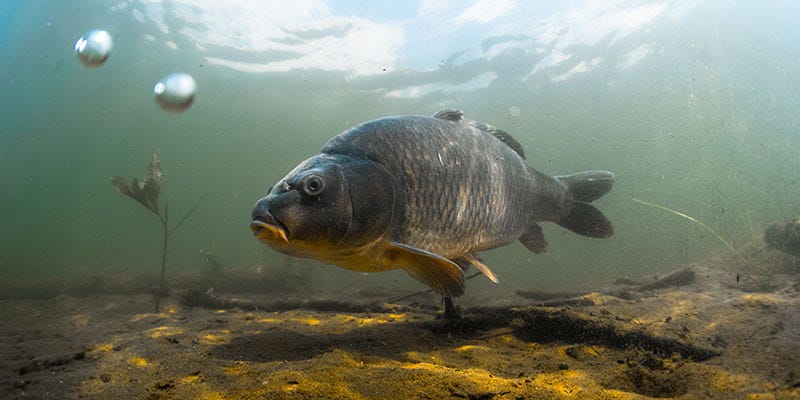
Feminised male fish in SE London rivers Image Source: mihtiander/123RF
Similarly, a chemical spill in Florida’s Lake Apopka led to alligators exhibiting significantly smaller penises (24% decrease) and lower testosterone levels (70% lower) when compared to alligators of similar size in Lake Woodruff.

Alligator Gathering at Lake Apopka, Credit: RC Scott Photography
In humans, making ‘causal’ links to reproductive changes is more difficult, but Australian experts say a 50% increase in testicular cancer, for example, is “too fast to be entirely genetic, and therefore is likely to be environmental.”
John Aitken is a world leader in reproductive biology with a focus on male reproductive health and biology of mammalian reproductive cells. He says the development of testes in the womb is a very “sensitive barometer” of environmental toxicants.
“When environmental chemicals hit the testes, there are some cells sitting in the testes that are of a very primitive kind, and they respond very abnormally to that signal and give you that testicular cancer (later in life),” said Aitken.
Andrea Gore, a toxicologist at the University of Texas, spearheaded a report by the Endocrine Society after doctors began noticing an increase in reproductive problems and disorders of puberty and wondered if endocrine disruptors were to blame.
The dose is crucially important for any toxicological consideration. Often industry studies examine the safety of a single chemical for short durations, but in the real world, we are repeatedly exposed to a cocktail of chemicals, which render many of the studies irrelevant.
Ian Shaw, professor of toxicology at the University of Canterbury, said that hormones work at “infinitesimally tiny doses” and the doses of oestrogenic chemicals in food and water that children are exposed to are “well within the range of doses to have a biological effect.”
Bruce Lanphear, a health sciences professor at Simon Fraser University, said that even low levels of chemicals like lead and flame retardants, can have an impact on brain development.
These chemicals act as “dopaminergic toxicants” which disrupt the pre-frontal cortex – the part of the brain that makes us human. US data show that exposure to endocrine disruptors like lead is associated with a 5-point decrement in IQ.
“When we see this on a population level, the impact is phenomenal,” said Lanphear.
In the US, for example, if you shift the mean IQ by 5-points, it leads to an increase in children who are considered ‘challenged’ (from 6 to 9.4 million). And there’s a corresponding decrease in ‘gifted’ children (from 6 to 2.4 million).

“The pattern is pretty clear,” said Lanphear who has advocated for more stringent regulation of industrial chemicals. “We should expect that some of these chemicals [turn out ] to be toxic, and we should no longer be using our children as guinea pigs to find out when they are toxic.”
Until recently, Lanphear was co-chair of the Health Canada’s scientific advisory committee on pesticide management, but resigned in June 2023 over the agencies lack of transparency and scientific oversight.
In his three-page resignation letter, Lanphear said he felt the committee, and his role as co-chair, “provides a false sense of security” that Health Canada is protecting Canadians from toxic pesticides.
Some chemicals are stored in our body for years, whereas others can be metabolised and excreted quickly.
BPA, for example, is a short-lived chemical used to make plastic water bottles. It does not require the same safety testing as if it was added to food, but it still leaches out of the plastic and into the water that will be consumed.
Industry has responded to these concerns by developing plastics that are “BPA-free,” but BPA is often substituted for Bisphenol S (or BPS), another unregulated chemical that can also leach out of plastic into food and drink.

BPA free plastic containers are widely available
In fact, a recent literature review suggested that BPS could be more toxic to the reproductive system than BPA and was shown to hormonally promote certain breast cancers at the same rate as BPA.
There is general agreement among scientists in the field that regulators are not doing their job by simply waiting for “more evidence” of harm before they act.
They say it’s unacceptable that we are all subjected to this uncontrolled, human experiment.
Will political leaders like RFK Jr be the catalyst for change?
1-Minute Junking: Emissions caused Hurricane Helene to intensify?
JunkScience.com | September 30, 2024
US universities losing hundreds of billions as top Chinese scientists and researchers go home
Inside China Business | September 29, 2024
Research and Development (R&D) is a major profit center for the top universities in the United States. Besides the nearly $100 billion they earn in grants from the US government and private sources, university-based researchers create patents and inventions that generate many more billions annually.
China is the largest foreign source of scientists and researchers, and they are concentrated in the hard sciences and in engineering, where over 95% of R&D spending takes place. But since 2018, Chinese scientists are increasingly deciding to return to China to set up new research departments. Of those who are still in the US, over 60% admit they are strongly considering moving, and over half now refuse to work on projects that involve funding by US government sources.
To American universities, the loss of these scientists, along with future contributions to scientific research and commercial applications and market value, are incalculable. But losses probably already exceed a trillion dollars, given the departures of so many top scientists in Artificial Intelligence, Big Data, medicine, biochemistry, materials science, nanotechnology, and quantum computing.
Resources and links:
More Chinese Students Are Staying in China to Study https://erudera.com/news/more-chinese…
Surge in Chinese Scientists Leaving US for Home Institutions https://erudera.com/news/surge-in-chi…
Caught in the crossfire: Fears of Chinese–American scientists https://www.pnas.org/doi/10.1073/pnas…
Scientists of Chinese descent leaving the US at an accelerating pace https://www.chemistryworld.com/news/s…
Reverse Brain Drain? Exploring Trends among Chinese Scientists in the U.S. https://sccei.fsi.stanford.edu/china-…
Resources on the Patent Revenue Budget Model https://financeandbusiness.ucdavis.ed…
R&D Expenditures at U.S. Universities Increased by $8 Billion in FY 2022 https://ncses.nsf.gov/pubs/nsf24307
South China Morning Post, Nanotech pioneer Wang Zhonglin leaves US to work in China ‘full time’ https://www.scmp.com/news/china/scien…
SCMP, The Chinese scientists leaving top US universities to take up high-profile roles in China, boosting Beijing in its race for global talent https://www.scmp.com/news/china/scien…
Closing scene, Suzhou, Jiangsu
Another letter to the four Chief Medical Officers of the UK
Is it acceptable that 60% of young people with vaccine-induced myocarditis have cardiac damage?
Health Advisory & Recovery Team | September 30, 2024
Open letter to the Chief Medical Officers of the 4 nations of the UK
Professor Chris Whitty – CMO England: Email [email protected]
Sir Michael McBride – CMO Northern Ireland: [email protected]
Dr Gregor Smith – CMO Scotland: [email protected]
Dr Frank Atherton – CMO Wales: [email protected]
30th September 2024
Dear Professor Whitty, Dr McBride, Dr Smith and Dr Atherton,
Sixty doctors and scientists wrote to you on 6th September 2021 urging you against rolling out Covid-19 vaccines to healthy children. We had written previously to Professor Whitty in May and again in June of that year to flag up our concerns. As you know, the JCVI in their statement on 3rd September 2021, had decided against recommending these products for children’s direct benefit in view of the mild nature of SARS-CoV-2 infection for their age range coupled with concerns about the known and as yet unknown adverse effects.
They had held a conference call with cardiologists from the USA and also Israel, both countries which had started vaccinating children ahead of the UK. These groups had both reported on vaccine-induced-myocarditis, with the US group having studied a case series of 63 children and finding 89% of affected children showing Late Gadolinium Enhancement (LGE) on cardiac MRI scanning. This finding is known to be indicative of cardiac scarring and to be a predictor of deaths in the 5-years following. The group were planning a follow-up study and members of the JCVI specifically requested a delay of 6 months to await this data before making a decision.
Finally, almost 3 years later, this study has been published and it does not make for happy reading, especially if you are a parent of a child or young person who was affected. Of the 333 children and young adults enrolled, and despite an apparently mild clinical course, 82% showed LGE on their initial cardiac MRI scans, and in 60% these changes were still present at the 6 months follow-up scan. Long-term data is still awaited and risk of cardiac failure sudden death is still unquantified. A new systematic review has confirmed that LGE is a risk factor for all cause mortality, cardiac deaths, arrhythmias and heart failure.
This letter is to put on record the failure of due diligence which you, as a group of chief medical officers, showed when recommending these products for use in healthy children. “The view of the UK CMOs is that the additional likely benefits of reducing educational disruption, and the consequent reduction in public health harm from educational disruption, on balance provide sufficient extra advantage in addition to the marginal advantage at an individual level identified by the JCVI to recommend in favour of vaccinating this group.” The argument that vaccinating children would reduce school disruption seemed to ignore the fact that most of the disruption was arising from the combined policy of (a) routine testing of asymptomatic children and (b) the quarantining of whole classes or in some cases even whole year groups if one child tested positive. In England, this policy had been discontinued on 19 July 2021 just 2 days before the end of the summer term and with no time to assess the likely improvement in school attendance. It was also admitted that the calculations of possible school time saved were not balanced against any potential for school time lost, even for the vaccination process itself, let alone any possible adverse events.
When you advised the rollout of the vaccines to children, did you also advise a prospective study of cardiac health to be carried out in any of the four nations?
If the answer is yes, we would be very grateful to see the results.
If the answer is no, this surely should be organised as a matter of urgency.
Yours sincerely,
Dr Rosamond Jones, MBBS, MD, FRCPCH, retired consultant paediatrician, convenor of CCVAC
-Professor Anthony J Brookes, Department of Genetics & Genome Biology, University of Leicester
-Professor Richard Ennos, MA, PhD. Honorary Professorial Fellow, University of Edinburgh
-Professor Karol Sikora, MA, MBBChir, PhD, FRCR, FRCP, FFPM, Dean of Medicine, Buckingham University, Professor of Oncology
–Professor David Livermore, BSc, PhD, Professor of Medical Microbiology, University of East Anglia
-Professor Keith Willison, PhD, Professor of Chemical Biology, Imperial, London
–Professor Angus Dalgleish, MD, FRCP, FRACP, FRCPath, FMed Sci, Emeritus Professor of Oncology, University of London, Principal, Institute for Cancer Vaccines & Immunotherapy
–Professor John Fairclough FRCS FFSEM retired Honorary Consultant Surgeon
-Professor Norman Fenton, CEng, CMath, PhD, FBCS, MIET, Professor of Risk Information Management, Queen Mary University of London
-Professor John Watkins, Consultant Epidemiologist Cardiff University
–Lord Moonie, MBChB, MRCPsych, MFCM, MSc, House of Lords, former parliamentary under-secretary of state 2001-2003, former consultant in Public Health Medicine
-Dr Theresa Lawrie, MBBCh, PhD, Director, Evidence-Based Medicine Consultancy Ltd, Bath
-Dr Roland Salmon, MB BS, MRCGP, FFPH, Consultant Epidemiologist (retired), former Director, Communicable Disease Surveillance Centre (Wales)
-Dr Alan Mordue, MBChB, FFPH. Retired Consultant in Public Health Medicine & Epidemiology
-Dr John Flack, BPharm, PhD. Retired Director of Safety Evaluation,Beecham Pharmaceuticals 1980-1989 and Senior Vice-president for Drug Discovery 1990-92 SmithKline Beecham
-Dr Gerry Quinn, PhD. Postdoctoral researcher in microbiology and immunology
-Dr Karen Horridge, MBChB(Hons), MSc, MRCP, FRCPCH, Consultant Paediatrician (Disability)
-Mr Anthony Hinton, MBChB, FRCS, Consultant ENT surgeon, London
-Dr Geoffrey Maidment, MBBS, MD, FRCP, retired consultant physician
-Mr Malcolm Loudon, MBChB, MD, FRCSEd, FRCS(Gen Surg), MIHM,VR, Consultant Surgeon
-Dr Christina Peers, MBBS,DRCOG,DFSRH,FFSRH, Consultant in Reproductive Health
-Dr Noel Thomas, MA, MBChB, DCH, DObsRCOG, DTM&H, MFHom, retired doctor
-Dr Elizabeth Evans MA(Cantab), MBBS, DRCOG, Retired Doctor
-Katherine MacGilchrist, BSc (Hons), MSc, CEO/Systematic Review Director, Epidemica Ltd.
-Dr Greta Mushet, MBChB, MRCPsych, retired Consultant Psychiatrist in Psychotherapy
-Mr James Royle, MBChB, FRCS, MMedEd, Colorectal surgeon
–Mr Ian F Comaish, MA, BM BCh, FRCOphth, FRANZCO, Consultant ophthalmologist
-Dr Helen Westwood MBChB MRCGP DCH DRCOG, General Practitioner
-Dr Jonathan Engler, MBChB, LlB (hons), DipPharmMed
-Dr Renée Hoenderkamp, General Practitioner
-Mr Colin Natali, BSc(hons) MBBS, FRCS (orth) ,Consultant Spinal Surgeon
–Dr Alan Black, MBBS, MSc, DipPharmMed, retired pharmaceutical physician
–Dr Mark A Bell, MBChB, MRCP(UK), FRCEM, Consultant in Emergency Medicine
-Dr Livia Tossici-Bolt, PhD, NHS Clinical Scientist
-Dr Zac Cox, BDS, LCPH, Holistic Dentist, Homeopath
-Dr Samuel McBride, BSc(Hons) Medical Microbiology & Immunobiology, MBBCh BAO, MSc in Clinical Gerontology, MRCP(UK), FRCEM, FRCP(Edinburgh), NHS Emergency Medicine & geriatrics
-Dr Branko Latinkic, BSc, PhD, Reader in Biosciences
-Dr Kulvinder Singh Manik, MBBS, General Practitioner
-Dr Michael D Bell, MBChB, MRCGP, retired General Practitioner
-Dr Jason Lester, MRCP, FRCR, Consultant Clinical Oncologist, Rutherford Cancer Centre, Newport
-Dr Clare Craig, BMBCh, FRCPath, Pathologist
-Dr Scott McLachan, FAIDH, MCSE, MCT, DSysEng, LLM, MPhil, Postdoctoral researcher, Risk & Information Group
-Dr Franziska Meuschel, MD, ND, PhD, LFHom, BSEM, Nutritional, Environmental and Integrated Medicine
-Dr Emma Brierly, MRCGP, General Practitioner
-Dr Sarah Myhill, MBBS, Dip NM, Retired GP, Independent Naturopathic Physician
-Michael Cockayne, MSc, PGDip, SCPHNOH, BA, RN, Occupational health practitioner
–Dr Christopher Exley, PhD, FRSB, retired professor in Bioinorganic Chemistry
-Julie Annakin, RN, Immunisation specialist nurse
-Dr Charles Forsyth, MBBS, BSEM, Independent Medical Practitioner
-Dr Marco Chiesa, MD, FRCPsych, Consultant Psychiatrist & Visiting Professor, UCL
-Dr Paul Cuddon, PhD, Pharmaceutical Equity Research Analyst, Head of Healthcare and Life Sciences
-Margaret Moss, MA (Cantab), CBiol, MRSB, Director, The Nutrition and Allergy Clinic, Cheshire
-Prof Anthony Fryer, PhD, FRCPath, Professor of Clinical Biochemistry, Keele University
-Dr David Critchley, BSc, PhD, 32 years in pharmaceutical R&D as a clinical research scientist.
-Dr David Morris, MBChB, MRCP(UK), General Practitioner
-Dr Scott Mitchell, MBChB, MRCS, Associate Specialist in Emergency Medicine
-Dr Pauline Jones, MB BS, retired General Practitioner
-Sarah Waters, BA (Hons), MBACP, Psychotherapist, Therapeutic Parenting Practitioner
-Dr. Eashwarran Kohilathas, BMBS, GP Trainee
-Dr Rohaan Seth, Bsc (hons), MBChB (hons), MRCGP General Practitioner
-Dr Jessica Robinson, BSc(Hons), MBBS, MRCPsych, MFHom, Psychiatrist & Integrative Medicine
-Dr Dee Marshall, MBBS, MFHom, Nutritional Medicine
-Dr Jenny Goodman, MA, MB ChB, Ecological Medicine
-Dr Elizabeth Burton, MBChB, retired general practitioner
-Dr Sam White, MBChB, MRCGP, General Practitioner, Functional medicine practitioner
-Dr Rachel Nicoll, PhD, Medical researcher
-Dr Ruth Wilde, MB BCh, MRCEM, AFMCP, Integrative & Functional Medicine Doctor
-Dr Damien Downing, MBBS, MRSB, private physician
-Dr Andrew Isaac, MB BCh, Physician, retired
-Jemma Dale, BSc (Hons), Biomedical Scientist
-Angela Chamberlain, Bsc (Hons), Midwife
-Alex Hicks, MEng, MCIPS, Compliance Director (Supply Chain)
-Sophie Gidet, RM, Midwife
-Helen Auburn, Dip ION, MBANT, CNHC, Registered Nutritional Therapist
-Dr Ali Haggett, PhD, Mental health community work, former lecturer in the history of medicine
Facebook Gave CDC ‘Backdoor’ Access to Help Remove Millions of Social Media Posts
By Michael Nevradakis, Ph.D. | The Defender | September 30, 2024
Facebook provided the Centers for Disease Control and Prevention (CDC) “backdoor” access to its platform so the CDC could submit requests to remove COVID-19 “misinformation,” according to an internal Facebook document made public for the first time as part of an ongoing legal case.
America First Legal filed a Freedom of Information Act (FOIA) request in 2021, after then-White House Press Secretary Jen Psaki revealed the Biden administration was flagging purported “disinformation” on social media platforms, including content posted by members of the so-called “Disinformation Dozen.”
When the Biden administration didn’t comply with the FOIA request, America First Legal sued, leading to the release of the documents as part of the discovery process.
According to Reclaim the Net, in 2021, Facebook developed a “Content Request System” (see pages 54-72) — also called a “Government Reporting System” — accessible to CDC staff. The documents show Facebook “was operating as the de facto enforcement arm of the US government’s thought control initiative.”
The Facebook-CDC partnership helped Facebook remove millions of posts, the documents show.
Gene Hamilton, executive director of America First Legal, told The Defender, “These documents show precisely how one of the social media platforms facilitated the federal government’s engagement in unconstitutional censorship activities.”
“The federal government cannot violate the First Amendment by outsourcing censorship to the private sector, yet these documents clearly show that Facebook and the Biden-Harris administration collaborated and colluded on removing speech that did not comport with the federal government’s preferences,” Hamilton said.
Tim Hinchliffe, editor of The Sociable, told The Defender that following the release of the “Twitter Files,” it should not come as a surprise “that the government has been actively trying to censor citizens through back doors and loopholes.”
“This censorship effort is yet another example of a public-private collaboration that fuses corporation and state,” Hinchliffe said. “Where the government can’t legally censor, it has the private sector to do its bidding. The question here is how much coercion was needed for Facebook to provide the backdoor?”
These latest revelations come as other entities ramp up their own efforts to target purported “misinformation” and “disinformation.”
On Thursday, the World Health Organization (WHO) and TikTok announced a new partnership to promote “science-based information.” Meanwhile, the Pharmaceutical Research and Manufacturers of America (PhRMA), a Big Pharma lobbying group, this month urged the U.S. Food and Drug Administration (FDA) to “expand drug manufacturers’ powers to correct misinformation about their products.”
‘Red-carpet treatment’ for government to ‘silence critics and manage dissent’
Calling it a “fast lane for speech suppression,” Reclaim the Net reported that Facebook “built a slick ‘end-to-end workflow’ tailored to the White House’s censorship needs,” which provided CDC staff with a four-step process to flag COVID-19 “misinformation” for removal.
“This was the red-carpet treatment for anyone in the Biden Administration looking to silence critics and manage dissent,” Reclaim the Net reported. “The system could handle up to twenty censorship requests simultaneously.”
The Facebook document stated, “We empower and safeguard users with policies that are: Principled, Operable, Explicable.” These policies were aligned with Facebook’s “community standards” and adopted “a multi-pronged approach to combating COVID-19 and vaccine misinformation.”
The policies — aimed at “bringing 50 million people a step closer to vaccinations” — included the removal of “false information that has been debunked by public health experts.”
Other types of content Facebook explicitly targeted include claims that COVID-19 is no more dangerous to people than the common flu or cold, and content discouraging “good health practices” — such as wearing a face mask, social distancing, getting tested for COVID-19 and getting vaccinated against COVID-19.
Claims about the COVID-19 vaccines’ safety, side effects and efficacy also were targeted for removal, as were “widely debunked vaccine hoaxes” — including claims that vaccines cause autism.
The document also revealed that as of 2021, Facebook and Instagram had removed “more than 16 million pieces of content … for violating our COVID-19 and vaccine policies.”
Repeat offenders faced restrictions, including (but not limited to) reduced distribution, removal from recommendations, or “removal from our site.”
The platform also allowed government officials to bypass federal transparency laws.
“By using this specialized portal, and not email, the government could skirt those pesky federal record-keeping laws. FOIA requests? Public oversight? Forget about it. The new system made sure government actions were neatly tucked away in proprietary software,” Reclaim the Net reported.
‘The closest thing to a Ministry of Truth’
According to Reclaim the Net, Robert Flaherty, then-White House director of Digital Strategy and now a member of Kamala Harris’ presidential campaign, was “barking orders at Facebook to tighten the leash.”
“Twitter Files” documents have shown that Flaherty pressured social media platforms to censor the accounts of public figures such Robert F. Kennedy Jr., then-chairman and chief litigation counsel of Children’s Health Defense (now chairman on leave). Kennedy was one of the figures named in “The Disinformation Dozen” report.
“The bureaucratic whims of entrenched CDC personnel and leadership determined what Americans could and could not say — the closest thing to a Ministry of Truth you can imagine in the United States,” Hamilton said.
Author Naomi Wolf, Ph.D., co-founder and CEO of DailyClout, told The Defender, “This shocking new revelation of still more unlawful pressure by the U.S. government on social media companies to strip Americans of First Amendment rights, also fails to shock as it is evidence added to a mountain of documentation of such collusion.”
According to Hamilton, these and other documents may affect several ongoing lawsuits against the Biden administration on First Amendment grounds.
“As more records are uncovered through our lawsuit and other open records requests, as well as discovery in litigation, we are confident that courts will have the definitive links necessary to show the government’s facilitation of an unconstitutional censorship enterprise,” Hamilton said.
The latest revelations came just a month after Mark Zuckerberg, CEO of Meta — parent company of Facebook and Instagram — admitted that Biden administration officials pressured Meta to censor content related to COVID-19 during the pandemic.
“If the government can exert that much pressure on one of the largest platforms and its CEO, then it can do it to anybody,” Hinchliffe said.
In an interview earlier this month on “The Kim Iversen Show,” former U.S. State Department official Mike Benz, founder and executive director of the Foundation for Freedom Online, said the U.S. government coerced social media platforms to use “weapons of mass deletion” to censor content and as a workaround to the First Amendment.
According to Benz, this includes government coercion obliging these platforms to adopt automated censorship tools which employ artificial intelligence to sweep platforms for specific keywords or narratives. Benz said many of these tools were initially developed a decade ago for the fight against ISIS.
Benz said the U.S. government urged authorities in the United Kingdom and European Union (EU) to pass censorship laws, in order to then sidestep the First Amendment at home by obliging social media platforms to comply with more restrictive foreign laws.
Dutch attorney Meike Terhorst told The Defender the EU uses legislation such as the Digital Services Act (DSA) “to stop free speech outside EU borders.”
“According to the EU, the DSA prevents illegal and harmful activities online and protects fundamental rights,” Terhorst said. This means that the EU Commission can decide what is right and what is wrong, including ‘harmful disinformation.’”
TikTok ‘a propaganda arm’ of the United Nations?
TikTok and the WHO on Sept. 26 announced a new collaboration targeting health-related “misinformation.” The year-long partnership is “aimed at providing people with reliable, science-based health information.”
According to the WHO, the new collaboration will promote “evidence-based content and encourage positive health dialogues.”
The WHO quoted Chief Scientist Jeremy Farrar, who said, “This collaboration can prove to be an inflection point in how platforms can be more socially-responsible.”
Farrar collaborated with Dr. Anthony Fauci and key virologists to draft “The proximal origin of SARS-CoV-2,” published March 2020 in Nature Medicine. The paper has been used by media and the U.S. government to debunk the lab-leak theory of the COVID-19 outbreak and accuse its proponents of being “conspiracy theorists.”
According to public health physician Dr. David Bell, partnerships like the one between the WHO and TikTok are inappropriate. He told The Defender :
“WHO, as an organization subject to member states and with no direct standing over their citizens, should not be involved in such direct messaging. This is a clear infringement of the rights, role and sovereignty of the states themselves.
“WHO acts increasingly like a tool of colonialist corporate interests as it pushes their messages over the top of legitimate authorities and interferes in the running of health systems within countries.”
According to Hinchliffe, this is not the first TikTok partnership with the United Nations (U.N.). As part of a previous project, Team Halo, “the U.N. trained scientists and doctors on TikTok and worked with TikTok to boost their profiles in an effort to combat ‘misinformation’ while promoting ‘authoritative sources’ during the pandemic.”
“This latest partnership shows that TikTok is honored to once again be a propaganda arm for the U.N.,” Hinchliffe said.
The WHO previously established similar partnerships with other social media platforms, including YouTube, which last year revised its “medical misinformation” policy to allow for the deletion of content that contradicts WHO guidance.
The announcement of the TikTok partnership with the WHO — a U.N. agency — comes just days after U.N. member states passed the Pact for the Future.
The pact’s “Information Integrity on Digital Platforms” policy brief addresses “threats to information integrity,” such as so-called “misinformation” and “disinformation,” calling for the promotion of “empirically-backed consensus around facts, science and knowledge” — without clarifying how this “consensus” would be determined.
The TikTok partnership with the WHO also comes before the January 2025 legislative deadline for TikTok to divest its U.S. operations or face shutdown in the U.S.
Pharma wants expanded powers to ‘correct misinformation’
In another related development lobbyists for Big Pharma earlier this month asked the FDA “to expand drug manufacturers’ powers to correct misinformation about their products, including by allowing them to respond to opinions, value judgments or personal experiences and communications made offline,” Fierce Pharma reported.
The call was a response to the FDA’s draft guidance on “Addressing Misinformation About Medical Devices and Prescription Drugs.” Released in July and now open for public comment, the guidance would allow pharmaceutical companies to issue “tailored” responses to internet-based posts about their products, and “general medical product communications” that would address “misinformation.”
According to Fierce Pharma, “The FDA proposed prohibiting companies from posting tailored responsive communications in response to misinformation spread offline and in response to an individual’s posts about their own experience, opinion and value judgments. PhRMA wants the FDA to lift those restrictions.”
This article was originally published by The Defender — Children’s Health Defense’s News & Views Website under Creative Commons license CC BY-NC-ND 4.0. Please consider subscribing to The Defender or donating to Children’s Health Defense.
UN Official’s Battle With “Toxic Information” Raises Censorship Fears Ahead of US Election

By Didi Rankovic | Reclaim The Net | September 30, 2024
United Nations (UN) Under-Secretary-General for Global Communications Melissa Fleming’s focus is “disinformation” and “toxic information systems” – and she presents those as standing in the way of the UN’s sustainable development goals (SDGs).
SDGs are the UN’s plan that opponents say is “toxic” in itself since it seeks to promote such controversial things as censorship and digital ID and, to make matters worse, that’s supported by major countries.
Now, Fleming seems to be keen to add to the avalanche of pressure on Big Tech – even though the term she no doubt carefully uses instead is “domination of public discourse” in places where this alleged disinformation is most present.
Coincidentally or not this is coming right before a US presidential election, but Fleming is framing her parroting of the “disinformation” narrative in terms of the social platforms, as purely an “SDGs and UN” issue.
She is even trying to link this with the UN’s purpose, which is (rather, should be) peacekeeping and humanitarian missions, but from which the world organization has been disconnecting for a while.
Responding to a question lumping disinformation, climate change, and conflict resolution into one, Fleming asserted that disinformation and “toxic information systems” are damaging humanitarian and peacekeeping efforts, not to mention SDGs (she doesn’t quite explain this assertion).
Fleming’s official UN bio says one of her roles is “far-reaching efforts to address mis- and disinformation, and hate speech,” while supposedly simultaneously promoting “free and independent media.”
However, she started her career with an outlet that’s anything but free and independent: Fleming used to work for “Radio Free Europe,” funded by the US authorities (originally through the CIA).
Now, no doubt thanks to Fleming, the UN has something called DG Media Zone and it is there and during this year’s UN General Assembly that Fleming sounded her alarm bells, going as far as to say that “every single one” of UN’s priorities is these days under threat due to disinformation. (“Climate change” is now proudly listed among those priorities, in case you missed that.)
Fleming’s solution: collusion. This time (and publicly) “merely” with “civil society and people” who need to “work on our information ecosystems together.”
A word of warning about “civil society,” though: it’s often a moniker behind which groups implementing censorship through “fact-checking” etc, like to hide.
“under the Intermediate Scenario”
Tony Heller | September 24, 2024
NOAA has launched a new sea level website which is based on unsupportable claims and appeals to authority.
New Scientist jumps the climate gun
Is the Pacific Jet Stream drifting poleward?
By Dr David Whitehouse | NetZero Watch | September 26, 2024
This week’s prize for jumping the climate gun goes to New Scientist, twice.
Firstly, it tells us that low sea ice levels in Antarctica signal a permanent shift. This, they say, because for the second year in a row Antarctic sea ice has reached near-record low levels, “initiating concern that climate change has initiated a ‘regime shift’ in the amount of ice that forms in the Southern Ocean each year.”
Sorry New Scientist, but two years does not a trend make. Looking at the data, 2023 was indeed a record low and 2024 slightly above that, but if you look at previous years, especially the 2011–2020 average, you will see no trend, just confirmation that 2023 and 2024 are outliers. Much more data than the past two years will be required to signal a permanent regime change.
Their second example of spurious trend-setting concerns the questions of if there is a long-term poleward shift in the jet stream, and if it might be the result of global warming. The jet stream is powered by the Earth’s rotation and by temperature differences between the tropics and higher latitudes. Its poleward drift is a prediction of some climate models.
According to New Scientist, a new analysis indicates that the Pacific Jet Stream has started its poleward drift, moving at 30–80 km a decade. The problem with this research, which is clearly stated in the paper, is that the Jet Stream’s natural bounds of variability are not known, and despite the data going back several decades, if the past ten years are excluded from the analysis then no poleward trend is seen. The researchers say it’s going to take to the end of this century to be sure of any systematic Pacific Jet Stream drift.
Over the past few months, something very unusual has been happening in the equatorial Atlantic Ocean. Temperatures have declined at their fastest for over 40 years. Climate scientists are at loss to explain it, as the usual culprit – trade winds – haven’t developed as expected.
It has been called an “Atlantic Niña.” Along with the developing La Niña in the Pacific, it is expected to reduce global temperatures. It’s a puzzle, as the equatorial Atlantic was hot throughout 2023 – in fact the warmest for decades. Again the reaction by some has been alarmist, fearing that the climate system has gone off the rails, but my initial response is to wait and see, as it is probably an example of misunderstanding of natural variability.
Featured Video

Houthis Keep Advancing as the Red Sea Crisis Deepens
or go to
Aletho News Archives – Video-Images
From the Archives
15 Saudi ‘hijackers’ were CIA agents working for US: Scholar
Press TV – April 13, 2016
Fifteen of the 9/11 “hijackers” from Saudi Arabia were CIA agents working for the United States government, which was seeking to destroy the Middle East for Israel and to double the American military budget, says Dr. Kevin Barrett, an American academic who has been studying the events of 9/11 since late 2003…. continue
Blog Roll
 Aletho News
- Israel seeks ‘compensation’ from Washington over Saudi F-35 sale
- Saudi crown prince seeks dialogue with Ansarullah after Yemeni blows: Report
- Damascus rejects Saudi request for Syrian fighters to counter Yemen: Report
- South Korea says will not send troops to join terrorist US war on Iran
- Russia Just Struck the Eyes of NATO’s War Machine in Ukraine
- Russia summons UK charge d’affaires over Kiev drone support
- NATO member warns bloc seeking pretext for war with Russia
- Macgregor: We Haven’t Seen the Worst of the Iran War Yet
- ‘We are not like everyone else’ laws that bind other nations do not apply to Israel, says Likud lawmaker
- Report: Saudi Arabia seeks allies’ assistance as missiles deplete amid war on Yemen
- If Americans Knew
- CPJ demands release of arrested Palestinian-US journalist near Bethlehem
- Robert Kraft: The Billionaire Friend of Netanyahu Pulling The Strings Behind the Macklemore/Ed Sheeran Blow Up
- Columbia Administered Fund Gives Big Money to Pro-Israel Groups
- Deportation Case of Palestinian Activist Salah Sarsour Tests First Amendment
- ‘We Will Not Forget’: Palestinians Mark 44 Years since Sabra and Shatila
- Why do we let Zionists decide what we can and can’t say?
- US welcomes Israeli, Iranian delegations to UN, but not Palestinians – Daily Update
- Biden’s Genocide Accomplices Targeted by New Accountability Campaign
- AIPAC’s Network Has Already Spent $67.2 Million to Shape the Midterm Elections
- Jewish Supremacist Manufacturing a Civilizational Threat to License Bigotry
- No Tricks Zone
- New Study: ‘Global Drought Shows No Detectable Recent Acceleration Under Climate Warming’
- Economic Masterminds: German Socialists Suggest Taxing Productivity Gains Stemming From Using AI
- The South China Sea Has Not Been Cooperating With The Climate Change Narrative
- Energy Crisis: Germany Enters Heating Season With Historically Low Gas Reserve Fill Levels
- New Study: The Antarctic Ice Sheet Gained Mass From 2020-2024 Due To Staggering Snow And Ice Accumulation
- Study: Ocean Heating Rates From Thousands Of Years Ago ‘Dwarf’ Modern Ocean Heating Rates
- Climate Extremists Target, Attack Large-Scale Power Grid Infrastructure In Germany!
- New Study: Antarctic Ice Melt Has Contributed Less Than 1 Centimeter To Sea Level Rise In The Last 30 Years
- Fear Of Debate: Alarmist German Climate Scientist Calls On Mainstream Media To Discredit Skeptic Voices
- End-Of-August Arctic Sea Ice Extent Hasn’t Fallen In 20 Years, Official Data Show!
 Aletho News