Seven Interventions in Sixty Minutes
An Essay on What Is Done to a Newborn Before Anyone Says the Baby Is Fine
Lies are Unbekoming | August 15, 2026
In the first three minutes after the infant is delivered, if the umbilical cord is left intact, approximately one hundred milliliters of blood transfers from the placenta into the newborn.¹ That is roughly a third of the infant’s total blood volume. The transfer is not passive. The umbilical vessels contain their own smooth muscle. They close on their own schedule when the transfer is complete, usually within three to ten minutes. At that point the cord blanches, the pulsation stops, and the vessels seal.
In the United States, this process is interrupted, on average, within thirty to sixty seconds. The infant loses roughly thirty percent of the blood the physiology was constructed to deliver. The practice is defended on grounds that shift as the literature closes on it: it prevents jaundice (it does not, at any clinically meaningful rate), it reduces polycythemia (rarely, and asymptomatically), it is what the obstetrician was trained to do (this last is accurate). The iron the infant would have used for the next six months goes into a red plastic bag with the placenta.
This essay is about what happens in the first sixty minutes after birth in a standard American hospital, and about the biology of the first sixty minutes as it existed before the interventions displaced it. There are seven interventions in the standard sequence. Each one displaces a specific biological event. The essay traces the seven in the order they occur, and then examines the second casualty of the hour, which is the mother.
The argument is not that any single intervention is catastrophic in isolation. It is that the biology of the first hour was doing something, and hospital protocol displaces the entire sequence in favor of procedures whose cumulative effect has never been studied. What the interventions replace is a sequence humans arrived with. What replaced it was assembled between roughly 1930 and 1991, most of it introduced without controlled trial, and none of it evaluated as the sequence it now is.
The infant born in a Kansas farmhouse in 1890 received the first hour by default. The infant born in a Manhattan delivery room in 2026 receives the first hour only if the parents have prepared for months to protect it against interventions the hospital considers routine.
The Placental Transfer
The Cochrane review on the timing of umbilical cord clamping in term infants pools twenty-five trials involving more than three thousand mother-infant pairs. Delayed clamping (variously defined as one to three minutes, or until pulsation ceases) is associated with higher hemoglobin at birth, higher ferritin at three and six months, and lower rates of iron deficiency in infancy.² The World Health Organization recommends delaying cord clamping for at least one minute after birth.³ The American College of Obstetricians and Gynecologists, in Committee Opinion Number 814 (January 2020), endorsed a delay of at least thirty to sixty seconds. Actual hospital practice in the United States has moved reluctantly, and inconsistently, toward the low end of that range.
Ola Andersson and colleagues at Uppsala University randomized four hundred term infants to early clamping (within ten seconds) or delayed clamping (at least three minutes) and followed them at four months and at four years. At four months, the delayed-clamping infants had ferritin levels forty-five percent higher than the early-clamping group.⁴ At four years, the delayed-clamping children scored higher on fine motor and social skills.⁵ The trial was published in the BMJ and in JAMA Pediatrics. It has not changed what happens in the room where the baby comes out.
The infant delivered at term arrives with approximately eighty milliliters of blood per kilogram in circulation. The placenta at the moment of birth contains roughly one third of the total fetal blood volume. That fraction is not surplus. The umbilical arteries and vein complete the redistribution while the infant’s lungs open and the ductus arteriosus and foramen ovale begin the transition from fetal to neonatal circulation. The iron load carried in the umbilical vessels at three minutes postpartum is approximately 70 milligrams. The daily iron requirement of the term infant during the first six months, met almost entirely from stores laid down before and during the third trimester, is approximately 0.27 milligrams. The math is not subtle. Three minutes of transfer delivers nine months of iron.
The American replacement is a plastic clamp on a still-pulsing cord, and a pair of scissors thirty seconds later. The consequences are measurable at four months (ferritin, hemoglobin), at six months (iron sufficiency), and at four years (fine motor and social scoring). The intervention has no informed consent process. The mother will rarely be told that the WHO and ACOG recommendations both call for a longer delay than the hospital in fact provides, and she will almost never be told what the delayed-clamping trials measured at four years.
The Approach to the Breast
The infant placed on the mother’s abdomen immediately after birth, undisturbed, dry but not washed, performs a sequence of movements that has been documented on video and named. Ann-Marie Widström and colleagues in Sweden videotaped twenty-eight undisturbed term newborns and identified nine sequential stages: birth cry, relaxation, awakening, activity, crawling, resting, familiarization, suckling, and sleeping.⁶ The sequence completes, on average, in the first sixty to ninety minutes after birth. The infant uses head-lifting movements, hand-mouth coordination with the mother’s nipple, and a slow crawl up the mother’s abdomen to the breast. The first latch, when the infant is left to accomplish it, typically occurs somewhere between sixty and ninety minutes after birth, with substantial variation between infants.
The Cochrane systematic review on early skin-to-skin contact between mother and healthy newborn pools forty-six trials with more than three thousand mother-infant pairs. Infants who received skin-to-skin contact in the first hour, without separation for measurement or procedure, breastfed earlier, breastfed longer, maintained more stable blood glucose, thermoregulated more efficiently, and cried less in the following twenty-four hours.⁷ Maternal outcomes included lower rates of breastfeeding cessation before six weeks and lower postpartum depression scores.
Standard American hospital practice moves the infant to a warmer within the first minute. There the infant is weighed, measured, footprinted, given an Apgar score, injected with the compound sold as vitamin K, and treated with erythromycin eye ointment. The infant is then wrapped in a receiving blanket and returned to the mother. The nine-stage sequence has been interrupted at stage three. The rest of the stages do not resume. The first latch, if it occurs in the first hour at all, occurs against the mother’s blanket-wrapped chest, with an infant whose hand-mouth coordination has been disrupted, whose skin has been rubbed with an absorbent towel, and whose eyes have been coated with antibiotic ointment.
What is displaced in the assessment ritual is the imprinting window. The infant returned to the mother wrapped, cleaned, and processed does not get the first hour. Neither does the mother.
The First Injection
The compound sold as vitamin K is administered to the American newborn by intramuscular injection, typically in the thigh, within the first fifteen minutes of life. The standard dose is one milligram. Endogenous plasma phylloquinone in the term newborn is approximately 0.05 nanograms per milliliter. The injection delivers a bolus at roughly twenty thousand times endogenous. The formulation includes polysorbate 80, benzyl alcohol, and propylene glycol.⁸ The active compound, phytonadione, is a synthetic form of phylloquinone.
The intervention has a real underlying observation. What mainstream pediatrics calls vitamin K-dependent bleeding, formerly labeled hemorrhagic disease of the newborn, occurs in a small fraction of untreated infants during the first week of life and, in a smaller fraction, between two weeks and six months. The late-onset form can produce intracranial hemorrhage and carries substantial mortality when it occurs. The bleeding phenomenon is not disputed. What is disputed is what to do about it.
The American Academy of Pediatrics adopted routine intramuscular prophylaxis in 1961.⁹ The route was chosen for the assurance of absorption, not because oral phytonadione does not work. Multiple oral regimens have been tested and are used in national protocols in the Netherlands, Denmark, Switzerland, and Germany. The Dutch protocol delivers 1 milligram at birth followed by 150 micrograms daily from day eight to week thirteen in breastfed infants. Rates of late-onset bleeding in the Dutch protocol are comparable to the American intramuscular protocol.¹⁰
Jean Golding and colleagues at Bristol published in the British Medical Journal in 1992 an analysis linking the intramuscular injection at birth to a doubling of childhood cancer, particularly leukemia, in the exposed cohort.¹¹ Subsequent studies were mixed. The mainstream position settled into “the balance of evidence does not support the association,” and the intramuscular protocol continued. The oral protocol, which delivers the same effect at physiologic dosing without the injection additives, was not adopted in the United States.
The additives merit examination on their own. Benzyl alcohol at neonatal doses has been associated with gasping syndrome in premature infants; the FDA issued a warning in 1982 restricting its use in that population.¹² The one-milligram vitamin K injection contains 9 milligrams of benzyl alcohol. Polysorbate 80 is a solubilizer with documented capacity to disrupt cellular membrane integrity and, in animal models, alter blood-brain barrier permeability. A prior essay developed the zeta-potential mechanism at length.¹³ The vitamin K injection is not the largest zeta-potential insult of the first hour. It is the first.
What the injection displaces is the intended pattern of vitamin K acquisition, which is neither zero nor bolus. The breastfed infant receives phylloquinone in milk at physiologic concentrations sustained across the first months. The intramuscular protocol delivers, in a single dose, an amount the physiology was constructed to receive across weeks.
For the reader wondering whether their own child received this injection: consent was almost certainly not obtained in any meaningful sense. A form signed on admission authorized the hospital’s standard newborn care. That form covered the injection.
The Ointment
Within the first thirty minutes, before the infant is returned to the mother, erythromycin ophthalmic ointment (0.5 percent) is applied to both eyes. The procedure is required by law in most states. The rationale, dating to Karl Credé’s 1881 protocol in Leipzig, was prevention of what mainstream medicine calls ophthalmia neonatorum, a neonatal eye inflammation the establishment attributes to gonococcal exposure during birth. Untreated, the condition was documented to progress to corneal ulceration and blindness in a subset of affected infants. Credé’s silver nitrate reduced the reported incidence in Leipzig from ten percent of newborns to less than one percent. The intervention reduced blindness. The intervention that replaced it, applied to a screened-negative population, does not.
Silver nitrate has since been replaced by erythromycin. The current protocol treats the infant of a screened mother not carrying the bacterium, in a population where gonorrhea prenatal screening is standard care.¹⁴ ACOG recommends screening at the first prenatal visit for all pregnant patients under twenty-five and for older patients with risk factors. A mother screened and treated presents what the establishment characterizes as no meaningful risk of transferring the bacterium. The ointment is applied anyway. The state mandate does not distinguish between screened-negative and unscreened mothers.
The ointment blurs the infant’s vision during the imprinting window. The newborn is optically calibrated to focus at eight to twelve inches, the distance from breast to mother’s face during nursing. Ointment-coated eyes cannot fix on that face. The ointment is also an antibiotic administered to the ocular surface at the moment the ocular microbiome is being established. No trial has ever measured what the ointment does to that colonization. The absence of the trial is the finding.
The eye ointment is one of the interventions parents can decline in most jurisdictions with a signed refusal form. It is rarely offered as an option. The nurse arriving with the tube does not typically pause to ask.
The Vaccination
At some point in the first twenty-four hours, and in some hospital protocols within the first hour or two, the newborn receives the first injection on the American vaccination schedule. The vaccine is the recombinant hepatitis B vaccine, marketed as Recombivax HB or Engerix-B, containing 5 to 10 micrograms of hepatitis B surface antigen and 250 micrograms of aluminum, as amorphous aluminum hydroxyphosphate sulfate (Recombivax) or aluminum hydroxide (Engerix-B).¹⁵
The rationale for administering this injection on the day of birth was established by the ACIP in 1991 as part of a strategy to eliminate what mainstream medicine calls hepatitis B transmission through universal infant vaccination.¹⁶ In the establishment framework, the condition is associated with blood-to-blood contact and sexual activity. The pediatric concern the ACIP named was vertical transfer from a mother carrying the surface antigen. Screening for that surface antigen has been standard prenatal care since 1988. The mother screened and confirmed negative delivers an infant whose risk of what the establishment calls hepatitis B in the first year of life, absent blood contact and sexual activity, approaches zero on the establishment’s own terms. The rationale for injecting that infant on the day of birth reduces to catching the infants of unscreened mothers, and to protecting against later transfer from a household member sharing razors. Both are surrogate arguments for injecting a screened-negative population.
The infant on day one receives 250 micrograms of aluminum in a single bolus. The FDA has identified 4 to 5 micrograms per kilogram per day as the exposure level at which parenteral aluminum accumulates to concentrations associated with central nervous system and bone toxicity in patients with impaired renal function.¹⁷ Applied to a 3.5-kilogram newborn, the FDA’s accumulation threshold works out to roughly 17 micrograms per day. The day-one injection delivers about fifteen times that amount, in a single bolus, into an infant whose kidneys are not yet fully working and whose blood-brain barrier will never again be this porous.
The aluminum-adjuvant literature, developed most extensively by Christopher Exley at Keele and Romain Gherardi at Créteil, documents that injected aluminum does not remain at the site. Macrophages carry it to lymph nodes, spleen, bone marrow, and, in Gherardi’s macrophagic myofasciitis series, to distant tissue including brain.¹⁸ ¹⁹ Clearance from tissue, once deposited, is measured in years. Zeta potential collapse in the neonatal blood following aluminum-adjuvant injection is the mechanism a separate essay in this series developed. The injection arrives when the infant is least prepared to receive it. The schedule is calibrated to that moment on purpose.
The 1986 National Childhood Vaccine Injury Act removed vaccine manufacturer liability for injuries arising from the recommended pediatric schedule.²⁰ A prior essay in this series traced the consequences of that legal structure. The injection administered to the newborn is the first of the schedule the Act protects. Consent is bundled into admission paperwork. The parent who declines is required to sign a separate refusal form. The counseling does not mention the aluminum load, the biodistribution literature, or the mother’s own negative screening.
The Vernix
The white coating on the newborn’s skin is not residue. It is a substance the infant made, for the infant, starting in the second trimester of gestation, composed of eighty percent water, ten percent protein, and ten percent lipid. The protein fraction contains at least forty-one distinct proteins identified in the Tollin proteomic analysis, of which roughly a third have direct antimicrobial activity.²¹ The active components include lysozyme, lactoferrin, cathelicidin LL-37, and a range of defensins active against gram-positive and gram-negative bacteria, fungi, and some enveloped particles. The lipid fraction, in composition and quantity, closely tracks the composition of the stratum corneum (the outermost skin layer) of the term infant. It is not a coincidence.
The vernix serves at least four documented functions. In utero it prevents maceration of the fetal skin by amniotic fluid across the third trimester. At delivery it eases passage through the birth canal. Post-delivery it retains warmth and moisture at the skin surface, providing thermoregulation and preventing transepidermal water loss. And it colonizes the infant’s skin with an antimicrobial coating whose peptides continue functioning during the hours in which the skin microbiome is being established.
The World Health Organization recommends delaying the first bath by at least twenty-four hours after birth.²² American hospital practice varies. Many hospitals wash the infant within the first several hours, sometimes with soap. The vernix is rubbed off with towels during drying and the residue is washed away in the bath.
What the vernix does that no substitute is offered for is the seeding of the infant’s skin surface with the mother’s microbiome combined with the fetal-secretion antimicrobial peptides. The infant delivered vaginally, placed on the mother’s chest unwashed, receives the mother’s flora onto skin coated with the vernix, which selects for the flora the peptides tolerate and against the flora the peptides suppress. The infant washed, wrapped in hospital linen, and handled by gloved hands receives hospital flora onto skin whose antimicrobial coating has been removed.
Maria Dominguez-Bello and colleagues have documented that the microbiome of the cesarean infant at one month differs measurably from the vaginally-delivered infant at one month, with the cesarean infant’s early flora more closely resembling adult skin flora than the mother’s vaginal flora.³⁰ Subsequent work has shown that at least some of the differences persist through infancy.
The vernix is not a candidate for pharmaceutical replacement. There is no product to sell in its place. It was produced by the infant, for the infant, and it functions in a window that closes within hours. What replaces the vernix in the hospital protocol is nothing. What is added is the antibiotic ointment, the alcohol wipe at the injection site, and the hospital-laundered blanket. The infant is now less colonized than it would be, and more colonized with what the hospital carries.
The First Meal
Some hospitals, at some times, supplement breastfed infants with formula in the nursery during the first hours after birth. The practice varies. It is more common when the mother is exhausted, when the infant is separated for observation, when the mother’s supply is judged inadequate, and when the hospital does not carry Baby-Friendly certification. The World Health Organization / UNICEF Baby-Friendly Hospital Initiative, launched in 1991, established ten steps designed to protect exclusive breastfeeding in the first days.²³ Step six is that no food or drink other than breast milk should be given to newborns unless medically indicated. Compliance is voluntary. A minority of American births occur in Baby-Friendly-designated hospitals.
The infant’s first meal is not decorative. Colostrum, produced by the mother’s breasts in the first hours to days after birth, is not milk in the mature sense. It is a thick, yellow-orange secretion containing at least twenty times the concentration of the protective proteins mainstream biochemistry classifies as secretory immunoglobulin A, compared to mature breast milk, plus lactoferrin, lysozyme, growth factors, and oligosaccharides that seed the infant’s gut microbiome selectively.²⁴ The newborn stomach at day one has a capacity of approximately five to seven milliliters. Colostrum production tracks this capacity. Formula, at the volume infants are commonly supplemented, does not.
The gut lining of the newborn is highly permeable in the first days. The tight junctions between epithelial cells have not yet closed. This permeability is a feature. It permits the passage of the intact protective proteins and growth factors in colostrum into the infant’s circulation. It also permits the passage of intact proteins from formula, including bovine milk proteins whose structure differs from human milk proteins and which the infant’s still-closing gut does not process the way it processes what it was constructed to receive.
The oligosaccharides in colostrum are indigestible to the infant. That is the point. They are metabolized by the Bifidobacterium species the mother’s flora deposited, feeding the microbes that will occupy the gut in the coming weeks. Formula lacks these oligosaccharides. Formula lacks the mother’s flora. The formula-supplemented infant, over the coming days and weeks, develops a gut microbiome that differs measurably from the exclusively-breastfed infant, and the difference persists.
The first meal is the culminating displacement of the first hour. It arrives to an infant who has been separated from the mother, injected, coated, and washed, and it delivers to that infant a substitute for the substance the biology laid down as the first food. The mother, watching this happen or unable to intervene because she has been medicated or exhausted, has already lost the imprinting window that was hers.
If you are a mother reading this, you were also in that room. Depending on what you were given for pain, you may remember very little. You were told the nurses knew what they were doing. You were not told that the sequence being performed on your infant was displacing a hormonal cascade that was also happening in you. Nobody said it aloud because the sequence has a name only in the physiology literature, and the physiology literature is not what the nurses were trained on.
The Mother’s Cascade
The mother’s biology in the first hour after birth is not incidental. It is a second event running in parallel to the infant’s, requiring the infant’s presence to sustain, and it is displaced by the same interventions.
Oxytocin production in the mother peaks in the minutes after delivery. The surge is triggered by uterine stretch during labor, by the ferguson reflex during crowning, and by direct skin-to-skin contact with the newborn in the minutes that follow.²⁵ The pulse at delivery is the highest circulating concentration of oxytocin a woman will produce in her lifetime. The hormone contracts the uterus, delivering the placenta and closing the vessels that fed it. It also acts centrally, producing a state that has been variously called maternal responsiveness, the imprinting state, or, in the phrasing of Michel Odent, the “cocktail of love hormones.”²⁶ Odent ran the maternity unit at the Pithiviers state hospital in France from 1962 to 1985 and documented what happened when the interventions were removed. Prolactin rises in the same window and initiates the transition from colostrum production to mature milk. The initiation depends on the infant’s suckling within the first hours. Delayed suckling delays the prolactin response and, in a subset of women, the milk-transition does not occur normally.
Sarah Buckley, in Hormonal Physiology of Childbearing, catalogs the full cascade.²⁷ Endorphins, elevated during labor, remain elevated postpartum and cross into breast milk. Catecholamines drop in the presence of the infant and rise again if the infant is separated. Vasopressin mediates maternal attention. The literature is not fringe. Klaus and Kennell developed it in the 1970s. Odent and Uvnäs-Moberg extended it. Buckley formally reviewed it for the National Partnership for Women and Families in 2015. The birth hormones are a system whose components require each other to complete. Interrupt any of them and the system does not deliver what it was constructed to deliver.
What displaces the mother’s cascade in the hospital delivery is the familiar sequence. The infant is taken to a warmer within the first minute. The mother loses skin-to-skin contact at the moment the oxytocin sustaining stimulus was constructed to arrive. She may receive synthetic oxytocin by intravenous drip for uterine contraction, which acts on peripheral receptors but does not cross the blood-brain barrier and does not reproduce the central effects of the endogenous surge. The synthetic drip contracts the uterus. It does not produce the maternal-responsiveness state. Meanwhile, her epidural has not fully worn off. She has received four to six liters of intravenous fluids. She is exhausted. She is being handed paperwork. When the infant is returned to her, wrapped and processed, the window has closed.
The consequences are measurable. Breastfeeding initiation rates track skin-to-skin contact in the first hour.²⁸ Postpartum depression rates track breastfeeding duration and, independently, track the interventions during labor and the first hour.²⁹ The mother who did not receive the first hour her physiology laid down is more likely to experience difficulty with breastfeeding at two weeks, with mood at six weeks, and with maternal attachment at six months.
None of this appears in standard prenatal care. The literature exists. It is not read. The mother arriving at the hospital in labor believes she is arriving to receive expert care for a medical event. She is not told that the event proceeds along a hormonal pathway hospital protocol is not calibrated to protect.
The second casualty of the first hour is the mother. She experiences the same interventions from a different position. Each act of separation displaces her cascade at the same moment it displaces the infant’s. The two biologies were constructed to complete together.
What the First Hour Was, Before
Humans lived and reproduced for the entire pre-industrial history of the species without the seven interventions this essay has cataloged. Cord clamping, in the form the American delivery room now practices it, is not a traditional intervention. The vitamin K injection was introduced in 1961. The universal newborn hepatitis B injection was recommended in 1991. Erythromycin eye ointment for gonococcal prophylaxis dates to the 1980s in its current formulation, replacing the silver nitrate protocol that began in 1881. Formula supplementation as routine hospital practice dates to the mid-twentieth century. Immediate bathing dates to the era when hospital birth replaced home birth, roughly the 1940s.
The first hour, before all of this, was not chaotic. It was structured, and the structure was biological. The infant arrived, was placed against the mother’s body, received the placental blood transfer over three to ten minutes, initiated the pulmonary transition with adequate volume, warmed against the mother’s skin, was colonized by the mother’s flora onto vernix-coated skin, self-attached to the breast within the first hour, and received colostrum. The mother, during those minutes, delivered the placenta by uterine contraction driven by the endogenous oxytocin surge, produced the imprinting state that oriented her to the infant, transitioned into prolactin-mediated lactation initiation, and completed the physiologic postpartum sequence.
This is what the first hour was. It is what the modern delivery room has displaced.
What the First Hour Is, When Nothing Interrupts
The infant emerges. Passage through the birth canal has compressed the thoracic cavity and cleared amniotic fluid from the lungs. The cord remains attached. The infant is placed directly on the mother’s abdomen, chest, or breast, skin to skin. The infant is not dried aggressively. The vernix remains on the skin. A warm blanket may be placed over both mother and infant. The room is quiet.
The infant emits the birth cry, which opens the lungs. The cry subsides. The infant enters a period of quiet alertness, eyes open, and fixes on the mother’s face at the eight-to-twelve-inch distance. This state persists for roughly sixty to ninety minutes and does not recur with the same intensity for weeks. The mother, in the same window, has completed uterine contraction and delivered the placenta, and the endogenous oxytocin surge has produced a state of focused attention on the infant that she will remember, if she experiences it, for the rest of her life.
The cord transfers blood from placenta to infant. The pulmonary circulation opens. Between three and ten minutes, the cord pulsation slows and stops. The umbilical vessels close. The cord blanches. Only now is the cord cut, and it can be cut without a clamp if it has fully closed.
The infant, in the following thirty to sixty minutes, moves through the nine stages Widström documented. The head lifts. The hand-mouth coordination emerges. The infant crawls, sometimes visibly, up the mother’s abdomen. Somewhere between sixty and ninety minutes, the infant self-attaches to the breast. The latch is deep. Colostrum flows. The infant receives the first meal.
The mother’s flora colonizes the vernix. The mother’s oxytocin surge sustains. Body temperature stabilizes. Blood glucose stabilizes. The infant enters the first sleep. The mother enters her own recovery.
This is the first hour when it is not interrupted. Every event described is in the literature. Nothing here is romantic. This is what the biology does when it is left alone.
What to Refuse, and What Requires More
The mother planning a hospital birth in the United States who wants the first hour her physiology can deliver has options. Not all seven interventions can be refused in every hospital, but most can be refused in most.
Delayed cord clamping is available for the asking in most American hospitals in 2026. The written birth plan should specify “delay cord clamping until pulsation ceases, or a minimum of three minutes.” Some hospitals will interpret this as thirty seconds. The plan should specify the minimum. The obstetrician’s agreement should be secured in advance at a prenatal appointment, and documented in the chart. Skin-to-skin contact within the first minute, uninterrupted for the first hour, is available in Baby-Friendly-designated hospitals and increasingly in non-designated hospitals for the asking. The birth plan should specify that weighing, measuring, Apgar assessment, and all non-emergency procedures be deferred to after the first hour. Apgar assessment can be done visually while the infant is on the mother’s chest.
The vitamin K injection, the erythromycin eye ointment, and the day-one hepatitis B vaccine can each be declined in every American state with a signed refusal form. In some states an oral vitamin K protocol is available on request. Delayed bathing, by at least twenty-four hours and preferably until the mother is home, is increasingly available for the asking. Exclusive breastfeeding, with no formula supplementation in the nursery, requires the parents to state the preference explicitly on the birth plan and repeatedly in person, and to keep the infant in the mother’s room rather than the nursery.
The mother who wants the fuller first hour, without the intrusions the American hospital continues to make available on request, has options beyond the hospital. Birthing centers, in states that license them, deliver a substantially undisturbed first hour as their default. Midwife-attended home birth, for the low-risk mother, delivers the first hour without the interventions being present as options at all. The refusal is not required. The interventions are not there to refuse.
The mother who cannot deliver at home, and whose hospital does not offer a birthing-center option, can still preserve most of what the physiology needs. The birth plan matters. The advocate at the birth matters. The prenatal conversation with the obstetrician matters. The seven interventions, one by one, can be reduced or declined. What cannot be done, in the standard American hospital, is arrive without a plan and receive the first hour intact. What the hospital delivers by default is what this essay described.
No cumulative safety study of the seven interventions as a sequence has ever been conducted. None was required, because each intervention was introduced separately, defended separately, and evaluated (when it was evaluated at all) against no comparator except the intervention it replaced. The regulatory capture the reader can name in other domains (pharmaceutical, agricultural, financial) operates here at the level of the individual body, and at the level of the sixty minutes that were once the least medicalized in the human life course.
The infant born in a Kansas farmhouse in 1890 received the first hour by default. The infant born in a Manhattan delivery room in 2026 receives the first hour only if the parents have prepared for months to protect it against interventions the hospital considers routine. The first hour was displaced within roughly a century. It has not disappeared. It is still there, in the physiology, waiting.
How to Explain This to a Six-Year-Old
Imagine a brand new baby, just coming out.
For all the time before hospitals, this is what happened next.
The little tube that connected the baby to the mommy on the inside kept working for a while, like a garden hose finishing a watering. It sent all the rest of the baby’s blood back into the baby’s body. When it was done, the tube stopped on its own. The baby stayed on the mommy’s chest, warm and quiet. In about an hour, the baby crawled up to the mommy’s breast all by itself and started to drink.
That was the first hour. That is what it was.
Now, in most American hospitals, this is what happens instead.
As soon as the baby comes out, a doctor cuts the little tube right away. That means the baby loses about a third of the blood that was supposed to be inside the baby’s body. The blood goes in the trash with the tube.
Then a nurse takes the baby to a table with a bright lamp. She weighs the baby. She measures the baby. She puts a needle in the baby’s leg and gives the baby a shot. She puts sticky medicine in the baby’s eyes so the baby can’t see the mommy’s face clearly. Later, another shot goes in, and that one has a metal called aluminum inside it. After a while, a nurse gives the baby a bath. That washes off a special white coating the baby was born with. The coating was made to keep the baby safe from germs. The bath takes it away.
While all of that is going on, the mommy is on the table by herself. Her body is trying to make a special feeling that helps her fall deeply in love with the baby. But the baby is way over on the warm table, being weighed and measured and stuck with needles. When the baby finally comes back, the baby is wrapped up in a blanket and can’t feel the mommy’s skin very well.
Nobody in the delivery room is trying to be mean. The nurses are doing what they were taught. The doctor is doing what the doctor was taught. But what they were taught to do is not what a baby is made for.
A baby is made for a quiet room, the mommy’s skin, and time. The little tube finishes on its own. The baby finds the mommy’s breast on its own. Everything a baby needs in the first hour is already there. No shots. No goo. No bright lamp. Just the mommy.
It took about a hundred years for hospitals to forget this.
It only takes one baby being born to remember.
In Print
Seven of my books are now available as paperbacks, printed to order through Lulu and shipped worldwide. The Unvaccinated lays out the completely unvaccinated as a comparison group across twenty chapters and five appendices — as far as I know, the only book of its kind. Medicalized Motherhood follows a woman through 123 documented interventions from teenage pill to postpartum discharge. Drilling for Profit argues that cavities, gum disease, and crooked teeth are a dietary problem the dental profession treats surgically. What Your Vet Can’t Tell You applies the same critique to pets — food, vaccines, and a profession trained by the industries whose products cause the harm. Escape from Psychiatry documents the fabrication of the DSM, the collapse of the serotonin hypothesis, and the specific damage done by every major psychiatric drug class.
Two more take up what the first five leave out — the remedies the first five explain why you need. The DMSO Book covers 100,000 studies, zero deaths, and one approval — the suppressed science of medicine’s most versatile compound. Chlorine Dioxide: The Forbidden Remedy collects the interviews, protocols, and evidence from the doctors and researchers they tried to silence.
A physical book reaches the person a Substack post never will — the sceptical relative, the friend who won’t click a link but might open a book, the visitor whose eye lands on a coffee table. Buy one to keep, and one to give away.
References
- Yao, A.C., Moinian, M., and Lind, J. “Distribution of blood between infant and placenta after birth.” Lancet 2, no. 7626 (1969): 871–873. The three-minute placental transfusion volume in term infants was established in this landmark measurement study and has been replicated in subsequent literature.
- McDonald, S.J., Middleton, P., Dowswell, T., and Morris, P.S. “Effect of timing of umbilical cord clamping of term infants on maternal and neonatal outcomes.” Cochrane Database of Systematic Reviews 7 (2013): CD004074.
- World Health Organization. Guideline: Delayed umbilical cord clamping for improved maternal and infant health and nutrition outcomes. Geneva: WHO, 2014.
- Andersson, O., Hellström-Westas, L., Andersson, D., and Domellöf, M. “Effect of delayed versus early umbilical cord clamping on neonatal outcomes and iron status at 4 months: a randomised controlled trial.” BMJ 343 (2011): d7157.
- Andersson, O., Lindquist, B., Lindgren, M., Stjernqvist, K., Domellöf, M., and Hellström-Westas, L. “Effect of Delayed Cord Clamping on Neurodevelopment at 4 Years of Age: A Randomized Clinical Trial.” JAMA Pediatrics 169, no. 7 (2015): 631–638.
- Widström, A.M., Lilja, G., Aaltomaa-Michalias, P., Dahllöf, A., Lintula, M., and Nissen, E. “Newborn behaviour to locate the breast when skin-to-skin: a possible method for enabling early self-regulation.” Acta Paediatrica 100, no. 1 (2011): 79–85. The nine-stage sequence was documented from videotape observation of twenty-eight full-term infants and elaborated further in Widström, A.M., Brimdyr, K., Svensson, K., Cadwell, K., and Nissen, E. “Skin-to-skin contact the first hour after birth, underlying implications and clinical practice.” Acta Paediatrica 108, no. 7 (2019): 1192–1204.
- Moore, E.R., Bergman, N., Anderson, G.C., and Medley, N. “Early skin-to-skin contact for mothers and their healthy newborn infants.” Cochrane Database of Systematic Reviews 11 (2016): CD003519.
- Konakion (phytonadione) injectable, product monograph. Hoffmann-La Roche. Formulation includes polysorbate 80, benzyl alcohol (9 mg per 1 mg dose), and propylene glycol. Alternative formulations by Hospira and Amphastar carry comparable excipients.
- American Academy of Pediatrics, Committee on Nutrition. “Vitamin K compounds and the water-soluble analogues.” Pediatrics 28 (1961): 501–507. The AAP policy adopting routine intramuscular vitamin K prophylaxis at birth dates to this statement.
- Cornelissen, M., von Kries, R., Loughnan, P., and Schubiger, G. “Prevention of vitamin K deficiency bleeding: efficacy of different multiple oral dose schedules of vitamin K.” European Journal of Pediatrics 156, no. 2 (1997): 126–130. The Dutch, Danish, and Swiss oral protocols are compared in this systematic analysis.
- Golding, J., Paterson, M., and Kinlen, L.J. “Factors associated with childhood cancer in a national cohort study.” British Journal of Cancer 62, no. 2 (1990): 304–308. Golding, J., Greenwood, R., Birmingham, K., and Mott, M. “Childhood cancer, intramuscular vitamin K, and pethidine given during labour.” British Medical Journal 305, no. 6849 (1992): 341–346. The original findings.
- FDA. “Benzyl alcohol may be toxic to newborns.” FDA Drug Bulletin 12, no. 2 (1982): 10–11. The gasping-syndrome warning restricting benzyl alcohol use in neonates dates to this bulletin.
- Unbekoming. “What Is Zeta Potential?” Lies are Unbekoming Substack. The mechanism by which surface-active additives collapse blood-cell surface charge is developed at length in this prior essay.
- American College of Obstetricians and Gynecologists. “Practice Bulletin No. 189: Nausea and Vomiting of Pregnancy,” and associated guidance on prenatal STI screening. ACOG recommends universal prenatal screening for gonorrhea in all pregnant patients under 25 and for older patients with risk factors, at the first prenatal visit and again in the third trimester when indicated.
- Recombivax HB (Merck) and Engerix-B (GlaxoSmithKline), pediatric formulation package inserts. Aluminum content per 0.5 mL pediatric dose: 250 micrograms as amorphous aluminum hydroxyphosphate sulfate (Recombivax) or aluminum hydroxide (Engerix-B).
- Advisory Committee on Immunization Practices. “Hepatitis B virus: a comprehensive strategy for eliminating transmission in the United States through universal childhood vaccination.” MMWR Recommendations and Reports 40, no. RR-13 (November 22, 1991): 1–25.
- FDA. “Aluminum in Large and Small Volume Parenterals Used in Total Parenteral Nutrition.” 21 CFR 201.323. The FDA-required labeling states that aluminum accumulates at levels associated with central nervous system and bone toxicity in patients with impaired renal function receiving parenteral aluminum greater than 4 to 5 micrograms per kilogram per day. No corresponding regulatory limit exists for aluminum delivered by injectable vaccines in infants.
- Exley, C. “The toxicity of aluminium in humans.” Morphologie 100, no. 329 (2016): 51–55. Exley, C., Siesjö, P., and Eriksson, H. “The immunobiology of aluminium adjuvants: how do they really work?” Trends in Immunology 31, no. 3 (2010): 103–109.
- Gherardi, R.K., Eidi, H., Crépeaux, G., Authier, F.J., and Cadusseau, J. “Biopersistence and brain translocation of aluminum adjuvants of vaccines.” Frontiers in Neurology 6 (2015): 4. Gherardi’s macrophagic myofasciitis series traces aluminum from injection site to distant tissue including brain.
- National Childhood Vaccine Injury Act of 1986, Public Law 99-660. Unbekoming. “The Diagnosis That Ends the Investigation” (on the 1986 NCVIA and the Audrey Edmunds case). Lies are Unbekoming Substack.
- Tollin, M., Bergsson, G., Kai-Larsen, Y., Lengqvist, J., Sjövall, J., Griffiths, W., Skúladóttir, G.V., Haraldsson, A., Jörnvall, H., Gudmundsson, G.H., and Agerberth, B. “Vernix caseosa as a multi-component defence system based on polypeptides, lipids and their interactions.” Cellular and Molecular Life Sciences 62, no. 19-20 (2005): 2390–2399.
- World Health Organization. “WHO Recommendations on Newborn Health.” Geneva: WHO, 2018. Delay of the first bath by at least 24 hours after birth is recommended.
- World Health Organization / UNICEF. “The Ten Steps to Successful Breastfeeding.” Baby-Friendly Hospital Initiative, revised 2018. Step 6: “Give infants no food or drink other than breast-milk, unless medically indicated.”
- Ballard, O., and Morrow, A.L. “Human milk composition: nutrients and bioactive factors.” Pediatric Clinics of North America 60, no. 1 (2013): 49–74. Colostrum composition, secretory IgA concentration, and oligosaccharide profile are cataloged in this review.
- Uvnäs-Moberg, K. The Oxytocin Factor: Tapping the Hormone of Calm, Love, and Healing. Cambridge, MA: Da Capo Press, 2003.
- Odent, M. The Scientification of Love. London: Free Association Books, 1999.
- Buckley, S.J. Hormonal Physiology of Childbearing: Evidence and Implications for Women, Babies, and Maternity Care. Washington, DC: National Partnership for Women and Families, 2015.
- Bramson, L., Lee, J.W., Moore, E., Montgomery, S., Neish, C., Bahjri, K., and Melcher, C.L. “Effect of early skin-to-skin mother-infant contact during the first 3 hours following birth on exclusive breastfeeding during the maternity hospital stay.” Journal of Human Lactation 26, no. 2 (2010): 130–137.
- Bell, A.F., Erickson, E.N., and Carter, C.S. “Beyond labor: the role of natural and synthetic oxytocin in the transition to motherhood.” Journal of Midwifery & Women’s Health 59, no. 1 (2014): 35–42.
- Dominguez-Bello, M.G., Costello, E.K., Contreras, M., Magris, M., Hidalgo, G., Fierer, N., and Knight, R. “Delivery mode shapes the acquisition and structure of the initial microbiota across multiple body habitats in newborns.” Proceedings of the National Academy of Sciences 107, no. 26 (2010): 11971–11975.
August 19, 2026 Posted by aletho | Science and Pseudo-Science, Timeless or most popular | Comments Off on Seven Interventions in Sixty Minutes
David GIbbs: How Intelligence Services Captured Academia & Journalism
Glenn Diesen | August 17, 2026
David N. Gibbs is a professor of history at the University of Arizona.
Debate on the CIA and academia: David Gibbs and Robert Jervis
Article in the Los Angeles Times on the CIA-academic nexus: https://irp.fas.org/news/2001/01/lat012801.html
Follow Prof. Glenn Diesen:
- Substack: https://glenndiesen.substack.com/
- X/Twitter: https://x.com/Glenn_Diesen
- Patreon: https://www.patreon.com/glenndiesen
Support the research by Prof. Glenn Diesen:
- PayPal: https://www.paypal.com/paypalme/glenndiesen
- Buy me a Coffee: buymeacoffee.com/gdieseng
- Go Fund Me: https://gofund.me/09ea012f
- Buy Diesen merchandise: https://diesen-shop.fourthwall.com/en-nok
August 18, 2026 Posted by aletho | Mainstream Media, Warmongering, Militarism, Russophobia, Science and Pseudo-Science, Video | CIA, European Union, UK, United States | Comments Off on David GIbbs: How Intelligence Services Captured Academia & Journalism
“Settled Science”
By Sama Hoole | August 15, 2026
If you had trusted the settled science of the day, here is how it would have gone.
1890s: you dose the baby with Bayer’s new cough syrup, the non-addictive alternative to morphine, marketed for children. It was heroin. They named it after the German for heroic.
1900s: you rub calomel teething powder on your infant’s gums. It is a mercury compound, and it leaves a generation with pink disease. Swollen, peeling hands and feet, screaming for months, and some of them died.
1910s: you cook in Crisco, launched by a soap and candle company, because cottonseed oil is modern and lard is what your mother used. The process that made it solid produced trans fat, banned outright a century later.
1920s: you drink Radithor, certified radioactive water, on prescription. Eben Byers took fourteen hundred bottles for his vitality. His jaw was removed in pieces and he was buried in a lead coffin.
1930s: a chemist dissolves a new sulfa drug in diethylene glycol, which is antifreeze. It kills 107 people, mostly children, and only then does America give the FDA power to demand safety testing.
1940s: your doctor lights a Camel in the surgery. More doctors smoke them than any other brand, and the advert runs in the Journal of the American Medical Association, which sold him the page.
1950s: DDT is sprayed over your kitchen, your garden and your children at school. The man who found its insecticidal properties has already been given a Nobel Prize.
1960s: your wife takes thalidomide for morning sickness because it is remarkably safe. More than ten thousand children are born with missing and shortened limbs.
1970s: the country puts down the butter and picks up the margarine, on the instruction of the American Heart Association. The fat everybody switched to was banned in 2015 as unsafe at any level.
1980s: the fat comes out of everything and sugar goes back in to make it edible. Obesity begins a climb it has never come off.
1990s: your father is prescribed OxyContin, because fewer than one per cent get addicted. The company later pleads guilty to criminal misbranding, and the overdose count runs into hundreds of thousands.
2000s: you take Vioxx for your knee. It is pulled in 2004, and the FDA’s own safety officer estimates tens of thousands of excess heart attacks.
Not one of those was fringe. Every one had a professional body, a literature and a man in a white coat standing behind it.
Nobody who followed that advice was stupid. They were obedient, to the most qualified people available.
Settled is a word about money. It means the questions stopped being funded, so they stopped being asked.
So which of today’s instructions will your grandchildren read out in disbelief.
The oil washed in hexane and built into every cell you own. The statin that blocks the pathway making your hormones, to prevent one heart attack per hundred people. The injection where a third of the loss is muscle. The infant formula built out of vegetable oil.
All settled. None of it funded to be otherwise.
August 18, 2026 Posted by aletho | Science and Pseudo-Science, Timeless or most popular | Comments Off on “Settled Science”
What They Can’t Patent
Two new paperbacks — DMSO and chlorine dioxide
Lies are Unbekoming | August 14, 2026
Two molecules. Both cheap. Both simple. Both used for decades. One has been approved for a single condition. The other has been officially demonized. Neither has killed anyone.
In June I wrote about twelve remedies they can’t patent. The essay described a pattern: the cheaper a substance is, the more versatile it is, the more the evidence stacks up, the harder the door gets pushed shut. Two of those twelve now have their own books.
The DMSO Book: The Suppressed Science of Medicine’s Most Versatile Compound
Buy on Lulu → · 219 pages · USD $19.99
100,000 studies. Zero deaths. One FDA approval. Dimethyl sulfoxide has been studied for over sixty years, used by millions, and killed no one — and the FDA has approved it for exactly one condition. The DMSO Book compiles nearly 330 questions and answers across six major sources: A Midwestern Doctor’s combination-therapy series, Morton Walker’s foundational 1993 text, Amandha Dawn Vollmer’s practical guide, Archie Scott’s clinician handbook, klimer’s first-person survivor account, and A Midwestern Doctor’s work on DMSO and cancer. It covers chronic pain, burns, strokes, autoimmune conditions, antibiotic-resistant infections, eye diseases, and cancer. It documents preparation, dosage, and combination protocols with antibiotics, chemotherapy, magnesium, ivermectin, anaesthetics, and antifungals. It traces the history — Zaytsev’s 1866 synthesis, Herschler’s discovery at Crown Zellerbach, Jacob’s clinical breakthrough at Oregon Health Sciences — and the FDA’s decades-long suppression of the research.
The compound wasn’t dangerous. It was too versatile to be allowed.
For the person managing chronic pain who has been offered nothing but escalating prescriptions. For the household that wants a single reference to keep on the shelf next to the first-aid kit.
Chlorine Dioxide: The Forbidden Remedy
Buy on Lulu → · 201 pages · USD $19.99
Chlorine dioxide is not bleach. It is a molecule that works with the body rather than against disease — at a voltage of 0.95 volts, within the electrical range of human tissue, delivering oxygen precisely where it is needed and breaking down into salt and oxygen when its work is done. It has been used in water purification for decades. Its oxidative properties are not disputed even by the agencies that warn against its therapeutic use. What is suppressed is the possibility that a substance this simple, this inexpensive, and this widely available could address conditions that generate billions in pharmaceutical revenue.
The book brings together five independent voices who arrived at overlapping conclusions through separate pathways: Dr. Andreas Kalcker, biophysicist and world authority on chlorine dioxide research; Kerri Rivera, whose autism recovery protocol has restored speech and behaviour in nonverbal children; Xuewu Liu, whose intratumoral injection work is showing significant promise in cancer; Curious Outlier, whose Universal Antidote documentary has reached millions; and Jim Humble, who discovered the Master Mineral Solution in the Bolivian jungle in 1996. Their protocols are documented in full. Their limitations are stated honestly. Their evidence — clinical observation supported by studies involving thousands of patients, validated by the daily practice of over 5,000 doctors in the COMUSAV network across sixty countries — is presented so the reader can evaluate it themselves.
For the parent of a nonverbal child who has been told there is nothing left to try. For anyone who has watched a family member exhaust the conventional options and wants to know what the record actually shows.
August 16, 2026 Posted by aletho | Book Review, Science and Pseudo-Science | Comments Off on What They Can’t Patent
FDA’s botched review of Moderna’s flu mRNA vaccine
Investigation into clinical trial documents reveals the FDA used statistical sleight of hand to make a serious safety signal in Moderna’s flu vaccine disappear
By Maryanne Demasi, PhD · MD REPORTS · August 10, 2026
When the FDA licensed Moderna’s new mRNA flu vaccine last week, legacy media coverage focused almost exclusively on efficacy.
The pivotal trial reported that the vaccine was “26.6% more effective” than a conventional flu vaccine at preventing protocol-defined influenza-like illness.
What received far less scrutiny was a much more serious problem in the trial data published in The New England Journal of Medicine—much of it relegated to an appendix behind a paywall.
An analysis of that appendix alongside the FDA’s own briefing document exposes clear regulatory malfeasance.
A statistically significant safety signal from the pivotal trial was systematically diluted until it disappeared from the official story.
The safety signal
Moderna’s pivotal Phase 3 trial (P304) enrolled roughly 40,000 adults aged 50 and older, randomised 1:1 to either the company’s mRNA-1010 vaccine or a traditional trivalent flu vaccine.
This study evaluated an “optimised” version of Moderna’s vaccine after earlier versions produced disappointing efficacy results.
Even with this updated formulation, the headline “26.6% relative efficacy” figure was misleading. In absolute terms, the vaccine reduced the risk of illness by just 0.8%.
Most concerning, however, were the serious adverse event (SAE) data.
The six-month data show that 449 participants in the mRNA group experienced at least one SAE, compared with 389 in the conventional group—an excess of 60 people.
So, while the pivotal trial showed there were 4 fewer influenza hospitalisations in the mRNA group, 60 additional people experienced an SAE.
SAEs are not mild events—they are usually severe enough to require hospitalisation, threaten life, cause significant disability, or result in death.
The imbalance of SAEs in Moderna’s pivotal trial was statistically significant—meaning it was unlikely to be a random fluke.
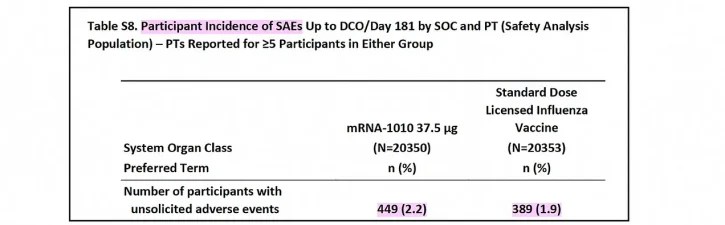
Yet in the briefing documents presented to the FDA’s advisory committee, VRBPAC, the agency characterised SAEs as “balanced.”

So how did the FDA make the SAE imbalance disappear?
Making serious adverse events disappear
The short answer is that the FDA used pooled data that obscured the safety signal.
Specifically, the agency relied on Moderna’s own “Integrated Safety Summary,” which combined data from four separate Phase III trials (P301, P302, P303 and P304), involving nearly 72,000 participants.
Once the pivotal trial P304 was combined with the other trials, the SAE rate became 3.1% in the mRNA group versus 2.9% in the comparator group—allowing the FDA to state that the rates were “balanced.”
Pooling data across clinical trials is common when regulators are looking for rare events. But the four trials Moderna pooled were very different in many aspects.
They tested different mRNA vaccine formulations against different flu vaccines—standard-dose and high-dose, quadrivalent and trivalent—across different age groups and countries, with follow-up ranging from six months to a year.
When these disparate trials were combined into a single analysis, the safety signal that stood out in the large pivotal trial was diluted.
The FDA accepted the approach—despite being aware of the problem.
In an appendix to its own briefing document, the FDA acknowledged that differences between the trials could produce safety variations “not fully captured by pooled analyses”—but proceeded anyway.
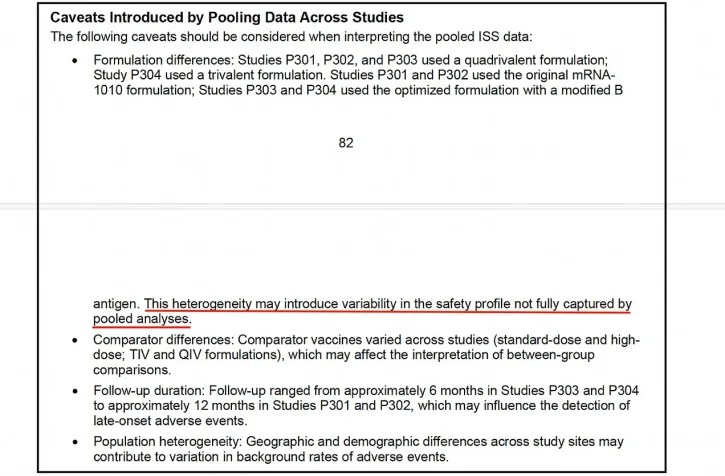
Table 6 of the FDA’s own review makes the switch even clearer (see below).
For the first 28 days after vaccination, when serious adverse events were still balanced between the groups, the agency reported safety results from the pivotal P304 trial alone (purple box).
But as more SAEs accumulated over the following months, a statistically significant imbalance emerged.
Instead of reporting those longer-term results from P304 in the same way, the FDA switched to Moderna’s pooled analysis (red box), where the signal was diluted enough for the agency to continue describing the rates as “balanced.”

The pooled analysis also obscured a concerning pattern in all-cause mortality.
In the pivotal trial P304, there were 40 deaths in the mRNA arm versus 34 in the comparator arm.
In the preceding trial P303, deaths were consistently higher across all three mRNA sub-studies:
- Sub-study 1 (mRNA vs Standard Trivalent): 5 deaths in the mRNA-1010 arm vs. 1 death in the comparator arm (5 vs 1).
- Sub-study 2 (mRNA vs High-Dose Trivalent): 3 deaths in the mRNA-1010 arm vs. 2 deaths in the comparator arm (3 vs 2).
- Sub-study 3 (mRNA vs Standard Quadrivalent): 3 deaths in the mRNA-1010 arm vs. 1 death in the comparator arm (3 vs 1).
Notably, in Sub-study 1, Moderna’s own trial investigators assessed one of the five deaths in the mRNA group as caused by the vaccine—the same product that has now been licensed.
Together, these numbers raise serious concerns about a possible excess in mortality in the mRNA groups—a pattern the FDA failed to highlight.
One rule for efficacy, another for safety
The FDA’s handling of efficacy reveals an even more striking double standard.
For efficacy, the agency relied strictly on study P304—the large pivotal trial testing the exact formulation submitted for licensure.
Earlier trials of Moderna’s vaccine had produced weaker efficacy results—and in at least one case, negative efficacy. Had the FDA pooled those trials for efficacy, the “26.6% efficacy” figure would almost certainly have been substantially lower.
But, as noted above, when the pivotal trial produced an unfavourable safety result, the FDA did the opposite—it pooled the data.
One approach maximised the efficacy. The other diluted the safety concerns.
Who is protecting the public?
On the surface, the FDA says Moderna’s flu mRNA vaccine is “safe and effective.”
Dig deeper, and the pivotal trial shows a statistically significant excess of participants experiencing SAEs.
Dig deeper still, and you discover the statistical trickery Moderna used—and the FDA accepted—to make the SAE signal disappear.
This brings us back to a fundamental question I have raised over years of reporting on regulatory failure.
When the FDA accepts the manufacturer’s trial design, adopts its data analyses, and rubber-stamps statistical methods that dilute a safety signal, who is actually protecting the public from harm?
August 11, 2026 Posted by aletho | Deception, Science and Pseudo-Science | United States | Comments Off on FDA’s botched review of Moderna’s flu mRNA vaccine
Fauci Files: Diary Evidence of a Failed Covid Shot From the Start
The failed product with full liability protection should have never been allowed into public rotation
By Jefferey Jaxen | August 5, 2026
The pandemic is over. Yet two key pieces remain that should concern everyone.
Lets talk about the COVID shot. Still being mandated (recommended) by East and West Coast Health Alliances comprising 14 states all the way down to infants.
Why? To stick it to Kennedy? To ‘follow the science’‘? To secure a market as demand tanks? Who knows for sure but here we are.
The COVID shot was birthed in fraud and failed science. That is the true legacy media pundits won’t tell you.
As the first cases of coronavirus happened in the U.S., Moderna and Pfizer began designing their mRNA vaccine candidates.
Meanwhile, Bill Gates pulled the trigger. A Fauci files/diary email from Gates to Fauci asks the NIAID director for “changes or additions” to Gates’ masterplan titled simply Pandemic I.
Gates’ document, given the stamp of approval from Fauci, stated:
“The goal is to pick the one or two best vaccine constructs and vaccinate the entire world—that’s 7 billion doses if it is a single-dose vaccine, and 14 billion if it is a two-dose vaccine.
How about 9-12 doses? That is what has been recommended to date for adults and immunocompromised respectively.
Far from a stranger, Gates and his foundation were fraudulently close to U.S. agencies funding pieces of NIH and receiving private briefings from DARPA on biological threats. More on that in another report.
FAUCI KILLS EARLY TREATMENT
Under Section 564 of the FD&C Act, FDA can grant the emergency use for a medical countermeasure (the vaccine) because, as revisionist history tells, there was no approved alternatives adequately available for diagnosing, preventing, or treating the disease.
The guidelines and experiences used at the start of the pandemic from pioneers like Peter McCullough’s protocol, New York family physician Dr. Vladimir Zelenko’s protocol, Texas Dr. Richard Bartlett nebulized budesonide, Front Line COVID-19 Critical Care Alliance’s ivermectin push and so many others using similar treatments with repeated success and real-world results tells a different story.
Evidence that would have effectively ended the FDA EUA vaccine hunt.
Didn’t matter to Fauci and the captured U.S. regulatory agencies. Their job was to kill those ideas and pave the way for the coming experimental, world-injecting gene therapy.
Fauci files/diary explains how it was done at the highest level. March 2020, two months into the first U.S. cases Fauci finds himself in a high-level White House Meeting and writes:
“A friend of POTUS… said that he heards [sic] that someone gave Hydroxychloroquine (HC) to 51 people and 51 got better. POTUS has heard similar stories, including Remdesivir (R) about other drugs and wants to make these available. To my amazement and dismay, Azar said that he could approve HC and Remdesivir now with the powers that he has. Steve Hahn and to some extent Deb and Bob started to chime in that this would give people hope. I took a deep breath and said that this was wrong and should not be done.”
By late summer Phase III clinical trial designs were public and underway for the COVID shots.
None of the trials were designed to detect a reduction in any serious outcome such as hospital admissions, use of intensive care, or deaths. Nor were the vaccines being studied to determine whether they can interrupt transmission of the virus. (*I was the first journalist to report this in October 2020)
FDA and VRBPAC votes were near unanimous to get them to market and in American arms while legacy media ‘journalists’ and their ‘experts’ like Fauci and others touted the shot’s transmission-stopping magical qualities. While Influencers and celebrities sucked up $911 million of taxpayer money for their injectable PR efforts.
There was just one problem. The shot didn’t stop transmission. And it didn’t perform against mutations. In short, it was worthless and gave false hope with a growing profile of side effects (harms).
September 2021 Fauci writes:
“… there is a concern about safety regarding myocarditis for younger people, mostly men; however, once this is taken care of in my mind there is no reason not to vaccinate essentially everyone.”
Heart damage from the shot was never “taken care of” and still remains a concern and risk to this day especially for young men.
January 2021, world-renowned HIV virus researcher Dr. David Ho shares immediate concerns about the COVID shot’s performance according to Fauci’s diary:
“David Ho is doing tests on convalescent sera and sera of people who were vaccinated and is finding disturbing data in both the UK and worse in the RSA mutants. It looks like the vaccine might be compromised.”
Fauci continues:
“Had regular every 2 weeks call with Bill Gates – Bill and Trevor Mundel know about the issue with the mutations that David Ho is working on.”
What exactly were Dr. Ho’s warnings? Dr. Ho writes to Fauci the following:
“It is quite clear that these two variants could now resist several classes of neutralizing monoclonal antibodies already used in the clinic or still in development, and in most cases we understand which of the mutations are conferring the resistance.”
Ho continues:
“… a large majority of convalescent plasma samples showed an appreciable loss in activity against the new variants, suggesting re-infection may be more likely when confronted with either of these two strains.”
And then the death blow to the non-transmission-stopping COVID shot as Ho writes:
“Finally, we also observed a significant impact on vaccinee sera in that every serum sample tested showed a substantial loss in neutralizing activity against the SA variant, whereas the loss in activity against the UK virus is not as large or as universal. Again, we believe the latter findings should be shared promptly with the field, because these new strains threaten the effectiveness of the current vaccines.”
The very next day, Fauci writes in his diary:
“Had Zoom briefing of Biden and Harris to prep them for the speech that Biden will give at 3:45 PM on the vaccine rollout plan. We briefed him at 2:30 to 3:30 and he and Harris (only he spoke) gave briefing to the Nation.”
No word of the vaccine issues, mutations or danger now scientifically evident.
It later became clear that Ho was not only right, but his warnings were mild compared to the reality that unfolded. UK COVID vaccine surveillance data began showing the shots were not only failing to prevent infection but they are making you more vulnerable to it.
2022 data suggested that in all age groups COVID vaccines were demonstrating negative efficacy. That means, the vaccinated were at greater risk of infection than the unvaccinated.
Meanwhile, that same year Fauci writes:
“More drama with regard to the CDC and Rochelle Walenski. After much going back and forth between the CDC and the other docs including me… we thought we had gotten them pulled back from making the statement that the vaccines were not effective at all in preventing infection and transmission…
Why? As Fauci writes, “it would undermine the DoJ’s efforts at mandates for vaccines under certain circumstances.”
In the end, CDC director at the time Walensky who, as Fauci writes, called him “… her hero, her mentor, her friend… agreed to pull back on the statement of absolute lack of efficacy of vaccines against infections and transmission.”
Throughout all this, Fauci went to bat for Big Pharma indemnity in 2021 as he pens in his diary:
“I had an important zoom meeting today with Larry Corey an Emilio Emini about the same subject as above, namely, how the United states can play a major proactive role in getting mRNA vaccines to the developing world. Apparently there are liability issues that the pharmaceutical companies are concerned with. These revolve around the fact that although the United States government can indemnify the companies against lawsuits here in the United states the companies feel that they are liable to being sued for adverse outcomes by people in the countries to whom they’re providing vaccine. Some mechanism needs to be worked out to address this concern.”
(Emilio Emini was Chief Executive Officer at the Bill & Melinda Gates Medical Research Institute and Larry Corey head of COVID-19 Prevention Network collaboration formed by Fauci)
The shot is still protected by the PREP Act which was extended until 2029 by outgoing HHS Secretary Xavier Becerra (now in the running for California Governor).
The Countermeasures Injury Compensation Program (CICP) meant to field harms from the COVID shot is a black hole and sick joke. Kennedy is attempting to create a table of accepted injuries to ease compensation efforts for the injured public. Is this enough? Not by a long shot.
(*No artificial intelligence was used to write this article. Just a genuine human… me)
August 6, 2026 Posted by aletho | Deception, Science and Pseudo-Science, Timeless or most popular | CDC, Covid-19, COVID-19 Vaccine, United States | Comments Off on Fauci Files: Diary Evidence of a Failed Covid Shot From the Start
Rand Paul’s committee holds Fauci in contempt
Press TV – August 6, 2026
The US Senate Homeland Security Committee has voted to hold Dr. Anthony Fauci in contempt after the former White House coronavirus czar refused to answer questions on the origins of Covid-19 at a hearing last week.
The Republican-led committee voted 8-7 along party lines to hold Fauci in contempt on Thursday. The committee’s Democrats introduced five motions aimed at postponing the vote, but all were shut down by the Republican majority.
Fauci appeared before the committee last Wednesday, where he was grilled on his role in funding dangerous gain-of-function research at the Wuhan Institute of Virology in China, his knowledge that Covid-19 was likely created in a laboratory, his work with US intelligence agencies, and his promotion of ineffective vaccines against the virus.
The former bureaucrat refused to answer any questions, invoking his Fifth Amendment right to silence more than 100 times. Fauci pleaded the Fifth despite having already received a pardon from former President Joe Biden shielding him from criminal prosecution over any offense committed between January 1, 2014 – when the US first outsourced gain-of-function research to China – and January 20, 2025.
“More than a million Americans died from Covid,” committee chairman Rand Paul said before Thursday’s vote. “Many of them died alone. Workers were forced to choose between a mandate and a job they needed. Businesses closed and never reopened. Americans lost the freedom to work, to worship, and to decide what went into their own bodies.”
“Dr. Fauci faced no risk of federal prosecution,” Paul continued. “All he had to do was tell the truth.”
Although Fauci is immune from prosecution for any misdeeds that he committed between 2014 and 2025, his pardon does not cover any crimes committed at last week’s hearing. Contempt of Congress is a criminal offense, and Paul referred Fauci’s case to the US Justice Department immediately after Thursday’s vote.
Should the department choose to prosecute, Fauci could face a fine of up to $100,000 and a prison sentence of up to 12 months.
Peter Navarro and Steve Bannon, both former aides to US President Donald Trump, were jailed for contempt of Congress by Biden’s Justice Department. Navarro and Bannon both spent four months in prison in 2024.
Fauci served as the director of the National Institute of Allergy and Infectious Diseases (NIAID) from 1984 to 2022, and as chief medical adviser to Biden from 2021 until his retirement in 2022. In the latter role, Fauci became the face of Biden’s heavy-handed response to the pandemic, advocating mask and vaccine mandates and lockdowns, and dismissing opposition to these measures as “anti-science.”
August 6, 2026 Posted by aletho | Deception, Science and Pseudo-Science, Timeless or most popular | Covid-19, COVID-19 Vaccine, United States | Comments Off on Rand Paul’s committee holds Fauci in contempt
Ditch the Chemicals: 14 Herbal Oils Offering 50-87.5% UV Protection (SPF)
By Sayer Ji | August 1, 2026
That bottle of sunscreen in your beach bag may be doing more harm than good. New research reveals the hidden dangers lurking in conventional sunscreens and highlights safer, natural alternatives that can protect your skin without toxic side effects.
For decades, we’ve been told that slathering on sunscreen is one of the best ways to protect our skin from the sun’s harmful rays. However, mounting evidence suggests that many conventional sunscreens contain ingredients that may be hazardous to our health and the environment. From hormone-disrupting chemicals to potentially carcinogenic nanoparticles, the risks associated with common sunscreen ingredients are cause for serious concern.
At the same time, researchers have discovered that many natural plant oils offer significant sun protection, often rivaling or exceeding the SPF of chemical sunscreens. These botanical alternatives not only shield skin from UV damage, but also nourish and moisturize without introducing synthetic toxins into the body.
This article will explore the dangers lurking in your sunscreen bottle, examine promising research on herbal oil alternatives, and provide practical guidance for safer sun protection. By understanding the risks and exploring natural options, you can make informed choices to safeguard your skin and overall health.
The Trouble with Conventional Sunscreens
Chemical Cocktails: Questionable Ingredients in Popular Sunscreens
Many best-selling sunscreens contain a slew of synthetic chemicals that act as UV filters, preservatives, fragrances and more. Some of the most concerning ingredients include:
- Oxybenzone: This common chemical UV filter has been shown to disrupt hormones, cause allergic reactions, and damage coral reefs. Studies have found oxybenzone in 97% of Americans tested.1
- Octinoxate: Another chemical filter linked to hormone disruption and environmental damage. It’s been banned in Hawaii and Key West due to its impact on coral.2
- Homosalate: An endocrine disruptor that may increase the absorption of pesticides through the skin.3
- Octocrylene: Can produce free radicals that may damage cells and accelerate skin aging when exposed to UV light.4
- Parabens: Synthetic preservatives with estrogenic activity, detected in breast cancer tumors.5
- Fragrance: Often contains undisclosed phthalates linked to reproductive issues and cancer.6
The Nanoparticle Problem: Are Mineral Sunscreens Any Safer?
In response to concerns over chemical sunscreens, many consumers have turned to mineral-based formulas containing zinc oxide or titanium dioxide. While these ingredients are generally considered safer, the increasing use of nanoparticles in mineral sunscreens has introduced new risks:
- Potential for cellular damage: Nanoparticles may be small enough to penetrate skin cells and cause oxidative damage to DNA.7
- Respiratory concerns: Inhaling nanoparticles from spray sunscreens could potentially cause lung inflammation or damage.8
- Environmental impact: Like chemical UV filters, nanoparticles can accumulate in waterways and harm aquatic life.9
- Systemic absorption: A 2010 study found that nanoparticle zinc oxide from sunscreen was detectable in human blood and urine after topical application.10
The Skin Absorption Dilemma
One of the biggest issues with conventional sunscreens is their potential for systemic absorption through the skin. Multiple studies have detected common sunscreen chemicals in blood, urine, and breast milk after topical use.11,12
This is concerning because the skin is not merely a barrier, but a permeable organ capable of absorbing substances into the bloodstream. In fact, transdermal drug delivery systems take advantage of this property to administer medications through the skin.
When it comes to sunscreen, we’re essentially slathering a chemical cocktail over a large surface area of our bodies, often repeatedly throughout the day. This creates significant potential for absorption and accumulation of questionable ingredients in our tissues over time.
Understanding SPF: Debunking the High Number Myth
Before exploring natural alternatives, it’s important to understand what Sun Protection Factor (SPF) really means. Many consumers believe that higher SPF numbers offer dramatically better protection, but the reality is more nuanced:
SPF measures how much longer skin covered with sunscreen takes to burn compared to unprotected skin. For example, SPF 2 means you can stay in the sun twice as long before burning compared to wearing no sunscreen.
However, the percentage of UVB rays blocked doesn’t increase linearly with SPF numbers:
- SPF 2 blocks 50% of UVB rays
- SPF 15 blocks about 93% of UVB rays
- SPF 30 blocks about 97% of UVB rays
- SPF 50 blocks about 98% of UVB rays
As you can see, the difference between SPF 30 and SPF 50 is only 1% in terms of UVB protection. This reveals a common misconception that very high SPF values are necessary for adequate sun protection. In reality, even a relatively low SPF of 15 blocks 93% of UVB rays, and an SPF of just 2 cuts UVB exposure in half.
While higher SPFs do offer incrementally more protection and may be beneficial for those with very fair or sensitive skin, the difference is not as dramatic as many people assume. This understanding is crucial when considering natural alternatives, which may have lower SPF values but still offer significant protection.
Environmental and Health Consequences
Beyond personal health concerns, conventional sunscreens pose serious risks to the environment:
- Coral reef destruction: Oxybenzone and octinoxate have been implicated in coral bleaching, leading to bans in reef-adjacent areas.13
- Aquatic toxicity: Sunscreen chemicals can accumulate in lakes and oceans, harming fish and other marine life.14
- Soil contamination: UV filters have been detected in agricultural soils, with unknown impacts on crops and ecosystems.15
The cumulative effects of widespread sunscreen use are just beginning to be understood. As these chemicals build up in our bodies and the environment, they may contribute to a range of health and ecological issues:
- Hormone disruption and reproductive problems
- Increased risk of certain cancers
- Allergies and skin irritation
- Coral reef die-offs and marine ecosystem collapse
- Contamination of water supplies
- Natural Alternatives: Herbal Oils as Sunscreen
In light of the risks associated with conventional sunscreens, many consumers are seeking safer, more natural alternatives. Emerging research suggests that certain plant-based oils may offer significant sun protection without the drawbacks of synthetic chemicals.
A groundbreaking 2010 study published in Pharmacognosy Research evaluated the SPF (sun protection factor) of various herbal oils commonly used in cosmetics. The researchers used a spectrophotometric method to determine the in vitro SPF values of both volatile and non-volatile herbal oils.16
Their findings revealed impressive sun protection potential in many natural oils:
Non-volatile (fixed) oils:
- Olive oil: 87.5% UV protection (SPF 8)
- Coconut oil: 85.7% UV protection (SPF 7)
- Castor oil: 83.3% UV protection (SPF 6)
- Almond oil: 80% UV protection (SPF 5)
- Mustard oil: 50% UV protection (SPF 2)
- Chaulmoogra oil: 50% UV protection (SPF 2)
- Sesame oil: 50% UV protection (SPF 2)
Volatile (essential) oils:
- Peppermint oil: 85.7% UV protection (SPF 7)
- Tulsi oil: 85.7% UV protection (SPF 7)
- Lemongrass oil: 83.3% UV protection (SPF 6)
- Lavender oil: 83.3% UV protection (SPF 6)
- Orange oil: 75% UV protection (SPF 4)
- Eucalyptus oil: 66.7% UV protection (SPF 3)
- Tea tree oil: 50% UV protection (SPF 2)
These results are particularly noteworthy because many of the oils tested demonstrated significant UV protection levels. For example, olive oil with 87.5% UV protection (SPF 8) is substantial considering it’s a natural, non-toxic alternative. Also, consider the vast number of therapeutic actions olive oil demonstrates in the scientific literature.
It’s important to remember that even oils with lower protection values, such as tea tree oil at 50% (SPF 2), still cut UVB exposure in half compared to unprotected skin. This level of protection, combined with other sun-safety measures, can contribute significantly to overall sun safety without relying on potentially harmful synthetic chemicals.
Benefits of Herbal Oil Sunscreens
Natural plant oils offer several advantages over conventional chemical sunscreens:
- Broad-spectrum protection: Many oils contain compounds that shield against both UVA and UVB rays.
- Antioxidant activity: Plant oils are rich in antioxidants that can neutralize free radicals and combat UV-induced skin damage.
- Skin-nourishing properties: Unlike synthetic sunscreens that can be drying, natural oils moisturize and support skin health.
- No toxic buildup: Plant-based oils are biodegradable and do not accumulate in tissues or the environment like synthetic chemicals.
- Multiple health benefits: Many oils offer additional skincare perks like anti-aging, anti-inflammatory, and wound-healing properties.
- Environmentally friendly: Natural oils do not contribute to coral bleaching or aquatic toxicity.
Spotlight on Top Performing Oils
Olive Oil (87.5% UV protection, SPF 8)
Rich in polyphenols and vitamin E, olive oil offers potent antioxidant and anti-inflammatory benefits. Its high oleic acid content helps maintain skin moisture and elasticity.
Coconut Oil (85.7% UV protection, SPF 7)
Known for its moisturizing and antimicrobial properties, coconut oil creates a protective barrier on the skin. It also contains lauric acid, which has been shown to have photoprotective effects.17
Peppermint Oil (85.7% UV protection, SPF 7)
This refreshing essential oil not only offers sun protection but also provides a cooling sensation that can help soothe sunburned skin. Its menthol content has analgesic properties.
Tulsi (Holy Basil) Oil (85.7% UV protection, SPF 7)
Revered in Ayurvedic medicine, tulsi oil boasts powerful antioxidant, anti-inflammatory, and adaptogenic properties. It may help combat UV-induced oxidative stress and support overall skin health.
Practical Applications and Considerations
While herbal oils show promise as natural sunscreens, it’s important to note that their protection levels are generally lower than those of high-SPF commercial products. To maximize sun protection when using natural oils:
- Layer multiple oils: Combining oils with complementary properties can enhance overall sun protection.
- Reapply frequently: Natural oils may not be as water-resistant as synthetic sunscreens, so reapply often, especially after swimming or sweating.
- Use in conjunction with other sun-safety measures: Seek shade, wear protective clothing, and limit sun exposure during peak hours.
- Consider adding zinc oxide: For higher protection, some people mix non-nano zinc oxide powder into their preferred oil base.
- Patch test first: As with any new skincare product, test oils on a small area to check for allergic reactions or irritation.
- Be aware of photosensitivity: Some essential oils, particularly citrus oils, can increase sun sensitivity. Use caution and dilute appropriately.
Realistic Expectations for Natural UV Protection
When using herbal oils for sun protection, it’s crucial to have realistic expectations. While these natural alternatives may not match the high protection numbers of commercial sunscreens, they still offer meaningful defense. An oil with 75% UV protection (SPF 4), for instance, represents a significant reduction in UV exposure. By layering oils, reapplying frequently, and combining their use with other sun-safety measures, you can achieve effective protection without resorting to synthetic chemicals. Remember, any reduction in UV exposure is beneficial for skin health, and these natural oils offer that protection along with additional skincare benefits.
The Petrochemical Problem: Why Slathering on Toxins is a Bad Idea
The widespread use of petrochemicals in personal care products, including sunscreens, raises serious health and environmental concerns. Here’s why coating our largest organ in fossil fuel derivatives is problematic:
Bioaccumulation and Body Burden
Petrochemicals are lipophilic, meaning they have an affinity for fats. This allows them to penetrate the skin easily and accumulate in fatty tissues throughout the body. Over time, this can lead to a significant toxic burden.
A 2011 study found that women who used mineral oil-based cosmetics had higher levels of mineral oil saturated hydrocarbons (MOSH) in their body fat compared to non-users. The researchers concluded that cosmetic products were likely a relevant source of MOSH contamination in the population.18
Endocrine Disruption
Many petrochemicals used in sunscreens and other personal care items are known or suspected endocrine disruptors. These compounds can interfere with hormone signaling, potentially leading to reproductive issues, developmental problems, and increased cancer risk.
For example, parabens, which are commonly used as preservatives in sunscreens, have been shown to mimic estrogen in the body. A 2004 study detected parabens in human breast tumors, raising concerns about their potential role in breast cancer development.19
Skin Irritation and Sensitization
Petroleum-derived ingredients can cause skin irritation, allergic reactions, and increased sensitivity in some individuals. This is particularly concerning for sunscreens, which are applied to large areas of skin and often used on children and those with sensitive skin.
A 2018 review in the Journal of Allergy and Clinical Immunology: In Practice found that up to 70% of people with sensitive skin reported adverse reactions to sunscreens, with chemical UV filters being common culprits.20
Environmental Contamination
When we use products containing petrochemicals, these substances don’t just affect our bodies – they also enter the environment. Sunscreen chemicals wash off in water, contaminating lakes, rivers, and oceans.
A 2015 study estimated that between 6,000 and 14,000 tons of sunscreen wash off into coral reef areas each year, with devastating effects on marine ecosystems.21
Fossil Fuel Dependence
The widespread use of petrochemicals in personal care products contributes to our overall dependence on fossil fuels. This not only perpetuates environmental damage from oil extraction and refining but also supports an industry with a vested interest in downplaying the risks of its products.
By choosing natural, plant-based alternatives, consumers can reduce their exposure to potentially harmful petrochemicals while supporting more sustainable and environmentally friendly practices.
Conclusion: Embracing Safer Sun Protection
As awareness grows about the potential risks of conventional sunscreens, the shift towards natural alternatives is gaining momentum. Herbal oils offer a promising solution, providing effective sun protection along with additional skin benefits, without introducing synthetic toxins into our bodies or the environment.
While more research is needed to fully understand the photoprotective properties of plant oils, the available evidence suggests they can be valuable tools in our sun safety arsenal. By combining the use of natural oils with sensible sun exposure habits, we can safeguard our skin health while minimizing our chemical burden.
Ultimately, the choice between conventional and natural sunscreens is a personal one. However, given the mounting concerns over petrochemical-based products, exploring safer alternatives is a wise investment in both personal and planetary health. As we continue to uncover the hidden costs of our chemical-laden lifestyles, returning to nature’s time-tested remedies may prove to be the smartest path forward.
References
1. Calafat, A. M., et al. “Concentrations of the Sunscreen Agent Benzophenone-3 in Residents of the United States: National Health and Nutrition Examination Survey 2003-2004.” Environmental Health Perspectives, vol. 116, no. 7, 2008, pp. 893-897.
2. Downs, C. A., et al. “Toxicopathological Effects of the Sunscreen UV Filter, Oxybenzone (Benzophenone-3), on Coral Planulae and Cultured Primary Cells and Its Environmental Contamination in Hawaii and the U.S. Virgin Islands.” Archives of Environmental Contamination and Toxicology, vol. 70, no. 2, 2016, pp. 265-288.
3. Krause, M., et al. “Sunscreens: Are They Beneficial for Health? An Overview of Endocrine Disrupting Properties of UV‐Filters.” International Journal of Andrology, vol. 35, no. 3, 2012, pp. 424-436.
4. Hanson, K. M., et al. “Sunscreen Enhancement of UV-Induced Reactive Oxygen Species in the Skin.” Free Radical Biology and Medicine, vol. 41, no. 8, 2006, pp. 1205-1212.
5. Darbre, P. D., et al. “Concentrations of Parabens in Human Breast Tumours.” Journal of Applied Toxicology, vol. 24, no. 1, 2004, pp. 5-13.
6. Heudorf, U., et al. “Phthalates: Toxicology and Exposure.” International Journal of Hygiene and Environmental Health, vol. 210, no. 5, 2007, pp. 623-634.
7. Shukla, R. K., et al. “ROS-Mediated Genotoxicity Induced by Titanium Dioxide Nanoparticles in Human Epidermal Cells.” Toxicology in Vitro, vol. 25, no. 1, 2011, pp. 231-241.
8. Grassian, V. H., et al. “Inflammatory Response of Mice to Manufactured Titanium Dioxide Nanoparticles: Comparison of Size Effects through Different Exposure Routes.” Nanotoxicology, vol. 1, no. 3, 2007, pp. 211-226.
9. Minetto, D., et al. “Ecotoxicity of Engineered TiO2 Nanoparticles to Saltwater Organisms: An Overview.” Environment International, vol. 88, 2016, pp. 60-72.
10. Gulson, B., et al. “Small Amounts of Zinc from Zinc Oxide Particles in Sunscreens Applied Outdoors Are Absorbed through Human Skin.” Toxicological Sciences, vol. 118, no. 1, 2010, pp. 140-149.
11. Janjua, N. R., et al. “Systemic Absorption of the Sunscreens Benzophenone-3, Octyl-Methoxycinnamate, and 3-(4-Methyl-Benzylidene) Camphor after Whole-Body Topical Application and Reproductive Hormone Levels in Humans.” Journal of Investigative Dermatology, vol. 123, no. 1, 2004, pp. 57-61.
12. Schlumpf, M., et al. “Exposure Patterns of UV Filters, Fragrances, Parabens, Phthalates, Organochlor Pesticides, PBDEs, and PCBs in Human Milk: Correlation of UV Filters with Use of Cosmetics.” Chemosphere, vol. 81, no. 10, 2010, pp. 1171-1183.
13. Danovaro, R., et al. “Sunscreens Cause Coral Bleaching by Promoting Viral Infections.” Environmental Health Perspectives, vol. 116, no. 4, 2008, pp. 441-447.
14. Giokas, D. L., et al. “Occurrence and Removal of Chemical UV Filters in Wastewater Treatment Plants.” Environmental Science and Pollution Research, vol. 22, no. 12, 2015, pp. 9089-9100.
15. Chen, F., et al. “Distribution and Accumulation of Endocrine-Disrupting Chemicals and Pharmaceuticals in Wastewater Irrigated Soils in Hebei, China.” Environmental Pollution, vol. 159, no. 6, 2011, pp. 1490-1498.
16. Kaur, C. D., and Saraf, S. “In Vitro Sun Protection Factor Determination of Herbal Oils Used in Cosmetics.” Pharmacognosy Research, vol. 2, no. 1, 2010, pp. 22-25.
17. Korać, R. R., and Khambholja, K. M. “Potential of Herbs in Skin Protection from Ultraviolet Radiation.” Pharmacognosy Reviews, vol. 5, no. 10, 2011, pp. 164-173.
18. Concin, N., et al. “Mineral Oil Paraffins in Human Body Fat and Milk.” Food and Chemical Toxicology, vol. 46, no. 2, 2008, pp. 544-552.
19. Darbre, P. D., and Harvey, P. W. “Paraben Esters: Review of Recent Studies of Endocrine Toxicity, Absorption, Esterase and Human Exposure, and Discussion of Potential Human Health Risks.” Journal of Applied Toxicology, vol. 28, no. 5, 2008, pp. 561-578.
20. Rozas-Muñoz, E., et al. “Sensitive Skin: A Review of Prevalence, Pathogenesis, and Management.” Journal of Allergy and Clinical Immunology: In Practice, vol. 6, no. 6, 2018, pp. 1898-1908.
21. Downs, C. A., et al. “Toxicopathological Effects of the Sunscreen UV Filter, Oxybenzone (Benzophenone-3), on Coral Planulae and Cultured Primary Cells and Its Environmental Contamination in Hawaii and the U.S. Virgin Islands.” Archives of Environmental Contamination and Toxicology, vol. 70, no. 2, 2016, pp. 265-288.
August 2, 2026 Posted by aletho | Science and Pseudo-Science, Timeless or most popular | Comments Off on Ditch the Chemicals: 14 Herbal Oils Offering 50-87.5% UV Protection (SPF)
The folk recipe that outperformed the leading pharmaceutical cough syrup in a randomized trial
Lies are Unbekoming | July 27, 2026
The trial
In December 2007, Archives of Pediatrics and Adolescent Medicine published a study by Ian Paul and colleagues at the Penn State College of Medicine. One hundred five children between the ages of two and eighteen, all with cough and runny nose of seven days or less, were randomized into three groups. One group received a single nocturnal dose of buckwheat honey. One received an age-appropriate dose of honey-flavored dextromethorphan, the leading over-the-counter cough suppressant in America, sold in many formulations under brand names including Robitussin, Delsym, Vicks, and NyQuil. The third received nothing.
Parents scored their children on cough frequency, cough severity, how bothersome the cough was, the child’s sleep quality, and their own sleep quality.
Honey improved every outcome measured. Dextromethorphan showed no statistically significant advantage over no treatment on any of them.¹
The comparison that mattered, the one the study was designed to run, put a spoon of honey against a mass-market pharmaceutical and found the honey better. The comparison the authors did not lead with, but which sat plainly in the pairwise data, put the mass-market pharmaceutical against nothing and found no measurable difference.
The Paul trial was partially double-blinded (honey cannot be blinded from taste), which is the obvious objection. A 2018 Cochrane review pooled the Paul study with later replications from Israel, Iran, and Brazil, all of which used various blinding designs, and reached the same conclusion. Honey outperforms no treatment. Honey outperforms dextromethorphan. It does so consistently.²,³
Six weeks after the Paul study appeared, on 17 January 2008, the U.S. Food and Drug Administration issued a Public Health Advisory recommending that over-the-counter cough and cold products not be used at all in children under the age of two, citing “serious and potentially life-threatening side effects” including convulsions, rapid heart rates, decreased consciousness, and death.⁴ The Centers for Disease Control had documented over fifteen hundred children under the age of two treated in emergency rooms in 2004 and 2005 for adverse events after receiving these products.⁵ Manufacturers voluntarily pulled infant formulations from the shelves before the advisory issued, and relabeled their remaining children’s products as not for use in children under four.⁶
Two facts arrived within weeks of each other. A peer-reviewed randomized trial found the leading OTC cough medicine indistinguishable from placebo. The FDA determined that its use had been killing children.
None of this was breaking news to anyone who owned a copy of Folk Medicine.
The recipe
D.C. Jarvis was a Vermont country doctor. For decades he cataloged the folk practices of his patients, most of them families who had farmed the same land for generations. His 1958 book Folk Medicine was a New York Times bestseller for over a year. Chapter nine gives the cough syrup as he recorded it:
Boil one lemon slowly for ten minutes. This softens the lemon so that more juice will be got out of it, and also softens the rind. Cut the lemon in two and extract the juice with a lemon squeezer. Put the juice into an ordinary drinking glass. Add two tablespoonfuls of glycerine… Stir the glycerine and lemon juice well, then fill up the drinking glass with honey.⁷
Dose: one teaspoonful for a daytime coughing spell. One at bedtime and again in the night if the cough wakes the child. For severe cough, six teaspoonfuls across the day. As the cough eases, the doses taper.
Jarvis’s observations on the preparation were specific. “It does not upset the stomach, as many cough syrups do. It can be taken by children as well as adults. It will relieve a cough when all other cough syrups fail.”⁷
He noted the recipe was “many generations old” in his region in 1961. That places its lineage well into the nineteenth century, among people who kept bees, grew lemons in glasshouses or bought them from the general store, and used glycerine (a viscous byproduct of soap-making, cheap at any pharmacy in that era) as a household remedy for coughs, sore throats, and dry skin.
The recipe survives in Jarvis’s book with one further detail that matters. Immediately after giving the formula, he adds an anecdote from a farmer patient.
Speaking of using lemons to compound a cough remedy, I recall the remark of a farmer. When he was explaining how well the suggested remedy had worked he laughed and said, “Fact is, we didn’t have any lemons. I used apple-cider vinegar. Just as good.”⁷
The farmer had substituted vinegar for citrus and got the same result. This is not a marginal detail. It tells you what the acid is doing in the recipe. It is thinning mucus and providing a light astringent action, a function any acid can perform, which is why the substitution worked and why the medieval European oxymels (honey-and-vinegar preparations used for coughs since Hippocrates) sit in the same family as this Vermont formula. The mechanism does not depend on lemon specifically. It depends on a small quantity of acid, dissolved in honey, held long enough in the throat to coat the irritated tissue.
Jarvis’s Vermont formulation is one documentation of a broader folk tradition. The base was constant across regions and centuries: honey plus acid. The additions varied by kitchen and by climate.
Jethro Kloss, working the same tradition from a different angle, published Back to Eden in 1939 with parallel preparations drawn from the Tennessee-Wisconsin herbal lineage. His lemon syrup began identically. “Boil one pint of lemon juice ten minutes.”⁸ His fig cough syrup combined honey and lemon in the same architecture. His entry on coltsfoot (Latin Tussilago farfara, literally “coughwort”) notes the leaves are “excellent when combined with other herbs and made into a cough syrup,” sweetened with honey. Kloss’s book documents lemon for colds, influenza, asthma, and fever across seven pages. “I wish that humanity would understand the real value of the lemon and learn to make a real medicine of it.”⁸
Kloss also documented thyme. His entry on Thymus vulgaris lists its medicinal properties as tonic, carminative, antispasmodic, and antiseptic, and describes it as “valuable in whooping cough, asthma, and lung troubles. For small children, give small and frequent doses.”⁸ His caution alongside was equally specific: “Use sparingly. Do not make a habit of using thyme.” Concentrated action, careful dosing.
Thyme’s principal active compounds, thymol and carvacrol, are phenolics concentrated in the plant’s volatile oils. Their actions on airway tissue are documented and specific. Thymol is antispasmodic on bronchial smooth muscle: it relaxes the involuntary contractions that produce coughing spasms. It is expectorant: it thins mucus and stimulates the ciliated cells lining the airway to move it upward for clearance. And because the volatile oils vaporize at warm-drink temperatures, a portion of the thymol is delivered by inhalation as well as by swallowing when the syrup is taken warm. Aromatic herbs work through two routes at once. Germany’s Commission E, the mainstream regulatory body for herbal medicines and roughly the German equivalent of a plant-medicine FDA, approves thyme for symptomatic treatment of bronchitis, whooping cough, and catarrh of the upper airway.¹⁵ European folk medicine has used it continuously in that role for centuries.
The recipe this essay recommends draws on both traditions. Honey and lemon supply the demulcent and osmotic base, as in Jarvis. Thyme adds the antispasmodic and aromatic action, as in Kloss. The formulation is in the appendix. Jarvis’s exact Vermont version, with glycerine, is in the appendix as well, for readers who want the historical formulation as he wrote it. Glycerine is a more processed component than the others (a purified single compound rather than a whole food), but it has been in continuous folk use since the nineteenth century as a pharmacy-counter demulcent, and it extends the throat-coating time beyond what honey alone provides. Both formulations work. The primary is closer to whole-food preparation.
The recipe was not Jarvis’s discovery. Jarvis was writing down what he saw farmers using. Kloss was doing the same in a different region.
A note before proceeding. Honey is not given to infants under one year. The concern is toxicological, not infectious. Clostridium botulinum spores can be present in raw honey. In older children and adults, established gut flora and stomach acid prevent the spores from germinating, and they pass through without effect. In an infant’s immature digestive tract, the same spores can germinate and produce botulinum toxin, a potent neurotoxin. The organism is not causing an infection. The toxin is doing the damage. The caution predates the Paul trial by decades and is not disputed by any party, mainstream or otherwise. The Paul study enrolled children aged two and above for the same reason.
What a cough is
A cough is an expulsive reflex. Irritation of the airway lining, from mucus, dust, smoke, particulate matter, gastric reflux, dryness, or cold air, triggers rapid contraction of the diaphragm and intercostals against a closed glottis. The glottis opens. Air explodes out at velocities exceeding twenty-five meters per second, carrying whatever the airway is trying to clear.
The reflex exists because the airway lining is thin, delicate, and constantly exposed to material that shouldn’t be there. Without the cough, particulate matter accumulates. Mucus produced to trap that material accumulates with it. Untreated, the accumulation moves down. What began as a throat irritation becomes a chest cough. What began as an acute condition, resolved in days by the body’s clearance of the trigger, becomes chronic.
Kloss described this progression plainly in Back to Eden. On chronic bronchitis: “Acute bronchitis may become chronic if it is not properly treated and relieved. When a cold is allowed to continue, the infection may extend down into the lungs and become chronic. Occasionally, if it is not cured, it may encourage the development of tuberculosis or some other serious chronic lung disease.”⁸ On why the cough arose in the first place: “Colds would not be so prevalent if the body were not filled with mucus and waste products, so one should immediately rid the body of these poisons.”⁸
The framework is not obscure. Herbert Shelton, the twentieth-century natural hygienist, called it the acute-to-chronic mechanism. The body’s efforts to expel accumulated toxins produce acute symptoms. Suppression of those symptoms leaves the toxins in place. The body attempts expulsion by other routes. Those routes are suppressed in turn. The process, driven long enough, produces chronic disease that presents as a distinct condition, apparently unrelated to the accumulated cause.
The cough is the body clearing the airway. To decide what a cough syrup should do, you have to decide what you think a cough is for. That decision determines everything downstream.
The suppressor
Dextromethorphan was patented in the 1950s as a non-narcotic replacement for codeine. Codeine had a long history as a cough suppressant, and a long history as an opioid: sedating, addictive, respiratory-depressant at high doses. Dextromethorphan was developed to keep the antitussive function without the opioid liability.
It works centrally. The drug reaches the brainstem through the bloodstream and depresses the medullary cough center, which is the neural relay where signals from an irritated airway would normally trigger the expulsive reflex. It achieves this by binding to receptors in the brainstem, blocking NMDA glutamate receptors and activating sigma-1 receptors. It also weakly affects serotonin and norepinephrine.⁹ The signal from the airway still arrives at the relay. It no longer produces a cough.
Nothing about this mechanism addresses the airway. Dextromethorphan does not soothe irritation. It does not thin mucus. It does not accelerate its removal. It does not resolve whatever prompted the cough. It sits on receptors that normally allow the cough signal to fire, and it prevents them from firing.
The signal was the body’s alarm. The cough was its response to the alarm. Dextromethorphan silences the response by muting the alarm at the central switchboard.
At therapeutic doses, this produces the intended effect (the person stops coughing) for as long as the drug is active. At supratherapeutic doses the NMDA antagonism produces dissociation and hallucination similar in character to phencyclidine.⁹ The recreational abuse of dextromethorphan-containing cough syrups (known as “robotripping”) is a documented clinical phenomenon. At high doses in combination with serotonergic drugs, it produces serotonin syndrome. At high doses generally, it produces respiratory depression.
In children specifically, the Paul team ran their earlier study in 2004, dextromethorphan versus diphenhydramine versus placebo, and found none of the three superior for nocturnal cough or sleep quality.¹⁰ This was not an isolated result. By the time the American Academy of Pediatrics reviewed the evidence, it did not recommend dextromethorphan for children. The American College of Chest Physicians reached the same conclusion.¹
By 2007 the leading over-the-counter cough drug in America had been tested against an inert control in two randomized trials, first against placebo and then against no treatment. It had shown no measurable advantage in either. Six weeks later the FDA advisory arrived, citing convulsions and deaths.
The soother
The folk cough syrup does something categorically different.
Kloss defined the two active mechanisms in the glossary of Back to Eden. A demulcent is “an agent that soothes, protects, and relieves the irritation of inflamed mucous membranes and other surfaces.” An expectorant “promotes the thinning and ejection of mucus or exudate from the lungs, bronchi, and trachea.”⁸
The preparation is both, and with thyme it is also antispasmodic.
Honey is a supersaturated sugar solution with a water activity of around 0.6 (too low to support most microbial growth) and a pH of around 3.9. Held on the tissue of the throat, it draws water osmotically from the inflamed lining, which reduces local swelling and provides mechanical soothing. Its viscosity coats and protects the irritated surface. Lemon juice, at a pH of around 2.2, thins mucus on contact and provides light astringent action from citric acid and phenolic compounds. Vinegar, at a similar pH, does the same thing, which is why the farmer’s substitution worked.
Thyme adds two further actions to the base. Thymol, its principal phenolic compound, relaxes bronchial smooth muscle: the involuntary tension that produces coughing spasms eases. Thymol also stimulates the ciliated cells of the airway lining to move mucus upward for clearance, which is exactly what a productive cough is trying to do. The syrup helps the cough finish faster. The volatile oils vaporize slightly at warm-drink temperature, delivering a portion of the thymol by inhalation alongside ingestion, so the active compound reaches the airway lining directly as well as via the digestive tract.
In Jarvis’s Vermont variant, glycerine adds a further specific function. It is strongly hygroscopic. It holds moisture against tissue and extends the demulcent contact time beyond what honey alone provides. It is not essential to the recipe’s action, but it lengthens the duration of soothing per spoonful.
The syrup soothes the irritation triggering the cough. It thins the mucus the cough is trying to clear. It relaxes the airway spasm. It supports the reflex rather than suppressing it. When the cough is no longer needed, it stops.
The mechanism runs on the airway, not in the brainstem. It leaves the reflex intact and removes its cause.
Honey has other properties that matter here. Its low water activity, low pH, hydrogen peroxide production, and specific plant-derived phenolic compounds create an environment inhospitable to microbial overgrowth on inflamed tissue. This is why traditional cultures used honey on open wounds long before anyone had proposed a theory of infection. Buckwheat honey specifically, the varietal Paul’s team chose, is unusually high in phenolic compounds and antioxidant activity. The World Health Organization’s Department of Child and Adolescent Health, in its 2001 review of cough and cold remedies for young children, cited honey as a potentially effective option six years before the Penn State trial confirmed it.¹¹,¹²
The recipe soothes without suppressing. That is the essential difference. It works with the reflex. Dextromethorphan works against it.
The 2007 trial was measuring, without knowing it, the difference between those two approaches.
Continuity
The medicinal use of honey is documented continuously across every literate culture from the emergence of writing forward. Sumerian clay tablets from around 2100 BC record honey mixed with river dust and oil for infected skin ulcers. Egyptian medical papyri describe honey applied to open wounds. Sushruta, a physician in Vedic India around 1400 BC, wrote of the medicinal properties of eight honey varietals. Athenaeus in Greece around 230 AD recorded that those who ate honey and bread for breakfast “were free from disease all their lives.” Ibn Majah, quoting Mohammed in the seventh century, wrote that “honey is a remedy for every illness.”¹¹
The specific use for cough runs the same length. Every one of these traditions used honey, sometimes alone, more often combined with acid, herb, or spice, for cough, sore throat, and cold.
Sir John Hill, a physician in England in 1759, wrote the first English-language book devoted to the medicinal use of honey. He observed, then, that its virtues were being neglected.
The slight regard at this time paid to the medicinal virtues of Honey, is an instance of neglect men shew to common objects, whatever their value: acting in contempt, as it were, of the immediate hand of providence, which has in general made those things most frequent, which have the greatest uses; and for that reason, we seek from the remotest part of the world, medicines of harsh and violent operation for our relief in several disorders, under which we should never suffer, if we would use what the Bee collects for us at our doors.¹¹
The observation held. The nineteenth century saw the rise of proprietary patent medicines: laudanum-based cough syrups, cocaine-based lozenges, alcohol-heavy elixirs marketed to households through newspapers and mail order. The twentieth century industrialized that market. Dextromethorphan was patented in the 1950s, sold under proprietary brand names, marketed to parents through television. The recipe on the counter (honey with lemon, honey with vinegar, honey with fig, honey with coltsfoot, honey with thyme, honey with glycerine) was displaced not by evidence but by advertising and shelf space.
Jarvis published the Vermont version in 1958. Kloss had published the Tennessee-Wisconsin version in 1939. Fessenden and McInnes catalogued the honey material comprehensively in 2008. The WHO acknowledged honey for cough in 2001. Penn State confirmed it in randomized trial in 2007. The Cochrane Collaboration confirmed it again in 2018.
At each of these points the establishment position on cough treatment in children shifted slightly closer to what Jarvis’s farmers already did.
The recipe did not move. It was where it had been since before Jarvis was born.
What replaced it
The FDA advisory did not arrive by regulatory initiative. It arrived because pediatricians forced it. Joshua Sharfstein, a pediatrician at Johns Hopkins and later a senior FDA regulator, was among the authors of a March 2007 petition that asked the agency to declare these products contraindicated for children under six. His December 2007 piece in the New England Journal of Medicine, published the same month as the Paul trial, described the market the pediatric community was asking the FDA to move against: 39 percent of U.S. households had purchased these products in the previous three years, and consumers were buying about 95 million packages annually for use in children.¹⁴
The mechanism of the withdrawal was industry self-protection. Manufacturers voluntarily pulled infant products before the January 2008 announcement to avoid a mandatory recall. The two-to-four age band was formally excluded by industry relabeling that same year. The remaining products, for children over four, were left in place with warnings, though the same trials that had cleared under-fours had also failed to demonstrate benefit in the older group.¹
The regulatory response was serious. The public messaging afterward was not. Pediatricians were left to tell parents what to do instead. A physician commentary in NEJM Journal Watch put the new recommendation plainly. “Give fluids and control fever, but don’t give cough and cold medicines.”¹³
The old recipe was fluids that soothed the throat and thinned mucus. Any child would take it, because it tasted of honey and lemon. The whole preparation cost pennies. The advice arrived at, after the industry had killed enough children to warrant the FDA advisory, was a diminished version of what a grandmother would have done in 1900.
What made pediatric cough syrup a 95-million-package-a-year business was not that its products worked better than the folk preparation. They did not work better than the folk preparation. On the primary outcomes of two randomized trials in children, they did not work better than nothing. What made them a 95-million-package-a-year business was that they could be branded, patented, shelf-placed, and advertised. Honey, lemon, and thyme could not. There was no company whose share price depended on the survival of a grandmother’s recipe. There were many companies whose share price depended on the survival of dextromethorphan-based products.
The FDA withdrawal removed the infant portion of that market. The revenue from products marketed for children over four continues.
What’s on the counter
Jarvis called the recipe “many generations old” in 1961. He was describing something already ordinary: the syrup a farmer’s wife would make when a child was coughing at night, the same way she would make broth or apply a mustard plaster. It required no prescription, no pharmacist, no marketing budget, no clinical trial. It required a lemon, a jar of honey, a small pinch of thyme from the herb garden, and ten minutes.
The Penn State trial did not discover the recipe. The WHO did not discover it. Cochrane did not discover it. What each of these did was confirm, in the register of institutional science, what farmers in Vermont and grandmothers in every other country had known for as long as anyone had kept bees.
The lemon costs about a dollar. The honey costs between five and fifteen dollars a jar, and one jar lasts a long time. Thyme is a garden herb that grows in a pot on a windowsill. If the lemon is not available, apple-cider vinegar is in the pantry. The whole preparation takes ten minutes to boil the lemon and thirty seconds to assemble. It does not upset the stomach, and it can be given to children over one. It works when the industrial products do not, or more precisely, it works when the industrial products have been shown not to work at all.
Every one of the relevant documents is public. The Paul study is on PubMed and the FDA advisory is in the Federal Register. Jarvis’s book has been in continuous print for over sixty years. Nothing about this argument has been hidden. The disagreement between what the trials established and what the pharmacy shelves offered lasted a full century and cost the lives of children.
The recipe is on the counter. It always has been.
Making the syrup
Ingredients (fills one 8-ounce / 240 ml glass or mason jar)
- 1 fresh lemon (or 2 tablespoons apple-cider vinegar as substitute)
- 1 fresh sprig thyme (or ½ teaspoon dried thyme)
- About 1 cup (240 ml) of water, for boiling the lemon
- Honey to fill the remainder of the glass, roughly ⅔ of the volume (about 5 fluid ounces / 150 ml / 10 tablespoons)
Method
Bring about 1 cup of water to a simmer in a small saucepan. Add the whole lemon and the thyme sprig. Simmer slowly for ten minutes. The heat softens the rind and extracts the lemon juice, and it draws the thymol and volatile oils out of the thyme into the water. Remove the pan from the heat. Fish out the thyme sprig (or strain if using dried thyme) and discard.
Cut the lemon in half and squeeze the juice into your glass or jar. Add 2 tablespoons (30 ml) of the thyme-and-lemon water from the saucepan. Fill the rest of the glass with honey, stirring as you go until the mixture is smooth. You will use roughly 10 tablespoons of honey to fill an 8-ounce glass.
If using apple-cider vinegar instead of lemon, simmer the thyme alone in about ½ cup of water for ten minutes. Strain and discard the thyme. Add 2 tablespoons of the thyme water and 2 tablespoons of apple-cider vinegar to the glass, then fill the rest with honey. The vinegar variant is well-attested in the folk record.
Dose
For an occasional daytime coughing spell: one teaspoonful, stirred before taking.
At bedtime: one teaspoonful, and one more during the night if the cough wakes the child.
For a severe cough: one teaspoonful on rising, one mid-morning, one after lunch, one mid-afternoon, one after supper, one at bedtime. Reduce the frequency as the cough eases.
For small children: half a teaspoonful, taken more often.
Take the syrup warm when possible. The warmth releases the thyme’s volatile oils and delivers a portion of the active compounds to the airway by inhalation as well as by swallowing.
The Jarvis variant, with glycerine
Jarvis’s original Vermont formulation adds glycerine to extend the throat-coating time. Glycerine is a purified vegetable compound rather than a whole food, but it has been in traditional folk use since the nineteenth century and provides a longer-lasting demulcent film on the throat than honey alone. Readers who want Jarvis’s exact recipe, or who want the extended contact time, use this variant:
Ingredients (fills one 8-ounce / 240 ml glass or mason jar)
- 1 fresh lemon (or 2 tablespoons apple-cider vinegar)
- 2 tablespoons (30 ml) vegetable glycerine, USP grade, from any pharmacy
- Honey to fill the remainder, about 5 fluid ounces (150 ml, or roughly 10 tablespoons)
- Optional: 1 sprig fresh thyme or ½ teaspoon dried thyme, added at the boiling step
Method
Simmer the lemon in about 1 cup of water for ten minutes (with the thyme if using). Remove and discard the thyme. Cut the lemon in half and squeeze the juice into the glass. Add the glycerine and stir. Fill the rest with honey and stir again.
The dose is the same as for the primary recipe.
Cautions
Do not give honey to infants under one year of age. Clostridium botulinum spores can be present in raw honey. In older children and adults, mature gut flora and stomach acid prevent them from germinating and they pass through without effect. In an infant’s immature digestive tract, they can produce botulinum toxin. The toxin causes the harm, not the organism. The caution is not disputed.
Thyme. Use sparingly, as Kloss advised. A sprig or half a teaspoon of dried herb is enough per glass. Not recommended in medicinal doses during pregnancy. Culinary amounts in food are fine; a therapeutic syrup is the caveat.
Raw versus pasteurized honey. Raw honey is preferable when available. It retains the enzymes, phenolic compounds, and volatile aromatics that pasteurization heat degrades. Pasteurized honey works and delivers the demulcent and osmotic action, but the extra biochemical richness of raw honey is lost in the heating. Darker varietals (buckwheat, if available; otherwise wildflower, manuka, or dark forest honeys) contain more phenolic compounds than pale varietals like clover, but any real honey works. Read the label: some supermarket “honey” is cut with corn syrup or rice syrup and is not honey at all. On the infant botulism question: pasteurization does not eliminate the risk. Clostridium botulinum spores are heat-resistant far beyond standard honey pasteurization temperatures. The under-one caution applies to both raw and pasteurized honey.
Storage. The finished syrup keeps in a sealed glass jar (a mason jar works well) for several weeks at room temperature, and longer refrigerated. The honey’s osmotic action and the lemon or vinegar acidity together create a hostile environment for microbial growth. Give it a stir before each dose, as the honey may settle. If the syrup ever develops off smells, cloudiness that wasn’t there originally, or fermentation bubbles, discard and make a fresh batch.
References
1. Paul IM, Beiler J, McMonagle A, Shaffer ML, Duda L, Berlin CM Jr. Effect of honey, dextromethorphan, and no treatment on nocturnal cough and sleep quality for coughing children and their parents. Archives of Pediatrics and Adolescent Medicine 2007;161(12):1140–1146.
2. Axelsson I. Honey, not dextromethorphan, was better than no treatment for nocturnal cough in children with upper respiratory infections. Evidence-Based Medicine 2008;13(4):106.
3. Oduwole O, Udoh EE, Oyo-Ita A, Meremikwu MM. Honey for acute cough in children. Cochrane Database of Systematic Reviews 2018, Issue 4. Art. No.: CD007094.
4. U.S. Food and Drug Administration. Public Health Advisory: Nonprescription Cough and Cold Medicine Use in Children. Issued 17 January 2008.
5. Centers for Disease Control and Prevention. Infant deaths associated with cough and cold medications, United States, 2005. MMWR Morbidity and Mortality Weekly Report 2007;56(01):1–4.
6. Consumer Healthcare Products Association. Voluntary withdrawal of oral infant cough and cold medicines announced October 2007; pediatric labeling change announced October 2008.
7. Jarvis DC. Folk Medicine: A Doctor’s Guide to Good Health. First published New York: Henry Holt, 1958. UK edition consulted: London: Pan Books, 1961. Chapter 9, “An Old-Fashioned Cough Remedy,” pp. 105–106.
8. Kloss J. Back to Eden. First published 1939. Revised edition, Back to Eden Publishing, 2009. Glossary; entries on lemon, coltsfoot, thyme, and bronchitis; Section II, Chapter 3, Herbal Syrups.
9. Journey JD, Bhattarai S, Agrawal S. Dextromethorphan. In: StatPearls [Internet]. Treasure Island (FL): StatPearls Publishing, 2024. See also: Nguyen L, Thomas KL, Lucke-Wold BP, et al. Dextromethorphan: An update on its utility for neurological and neuropsychiatric disorders. Pharmacology & Therapeutics 2016;159:1–22.
10. Paul IM, Yoder KE, Crowell KR, et al. Effect of dextromethorphan, diphenhydramine, and placebo on nocturnal cough and sleep quality for coughing children and their parents. Pediatrics 2004;114(1):e85–e90.
11. Fessenden R, McInnes M. The Honey Revolution: Restoring the Health of Future Generations. 2008. Chapter 9, “Honey That Soothes and Heals,” pp. 141–146.
12. World Health Organization, Department of Child and Adolescent Health. Cough and Cold Remedies for the Treatment of Acute Respiratory Infections in Young Children. Geneva: WHO, 2001.
13. NEJM Journal Watch. FDA warns against use of cough medicines in children younger than 2 years. Commentary published 12 September 2007.
14. Sharfstein JM, North M, Serwint JR. Over the counter but no longer under the radar: pediatric cough and cold medications. New England Journal of Medicine 2007;357(23):2321–2324.
15. Blumenthal M, ed. The Complete German Commission E Monographs: Therapeutic Guide to Herbal Medicines. Austin, Texas: American Botanical Council, 1998. Monograph on thyme (Thymi herba).
August 2, 2026 Posted by aletho | Science and Pseudo-Science, Timeless or most popular | Comments Off on The folk recipe that outperformed the leading pharmaceutical cough syrup in a randomized trial
The Second Circuit Again Violated the Rights of the Amish
By Aaron Siri | Injecting Freedom | July 28, 2026
At the end of last year, the United States Supreme Court vacated the Second Circuit’s decision that enabled New York State to persecute the Amish for refusing to inject pharma products in violation of their religious beliefs, and it remanded the case (Miller v. McDonald) to the Second Circuit to reconsider its illiberal and unconscionable decision.
Instead of abiding by the Constitution and protecting the religious freedom of the Amish, the Second Circuit again ruled against the Amish. So, we will be going back to the Supreme Court.
And yes, the 168 unvaccinated Amish children related to this case are far healthier than American children who are vaccinated. We provided sworn expert evidence attesting that among a random sample of 168 U.S. children, one would expect to find (based on the background rate of chronic disease among U.S. children) 31 cases of environmental allergies, 15 cases of ADHD, 10 cases of asthma, 9 cases of food allergies, and 4 cases of ASD. Yet, the 168 unvaccinated Amish children whose families New York wants to persecute are free from the chronic health conditions—all related to some form of immune system dysregulation—that plague the vaccinated communities in New York.
Since vaccination is supposedly about improving health, and the Amish who do not vaccinate are clearly healthier, one would expect New York to leave them alone. But that is not how this religion works. The vaccine zealots in New York cannot stand that the Amish refuse to abandon their beliefs in favor of the religious beliefs held by the New York officials regarding vaccines. These “health” officials are willing to sacrifice the way of life and belief system of these Amish children and their community (which have kept them far healthier), if they refuse to bend the knee to adopt cult-like vaccine beliefs.
These “health” officials also apparently cannot stand that the Amish children are healthier and are even willing to wage war against them until they submit and receive every vaccine New York demands—so they can be just as “healthy” as all the children outside the Amish community.
The Amish earnestly seek to avoid conflict but because violating their sincerely held religious beliefs is not an option, they have been placed in an impossible position. We, along with co-counsel, intend to continue to litigate on behalf of the Amish to defend their freedom to practice their religion in peace.
July 29, 2026 Posted by aletho | Civil Liberties, Full Spectrum Dominance, Science and Pseudo-Science | Human rights, New York State, United States | Comments Off on The Second Circuit Again Violated the Rights of the Amish
Yet Another Embarrassment From The National Academy Of Pseudoscience
By Francis Menton | Manhattan Contrarian | July 23, 2026
In my own professional life, I was not a scientist, and therefore I never much paid attention to the kinds of rewards and honors that practicing scientists pass out to each other. But at some point I became aware that there was something called the National Academy of Sciences, and that among scientists it was considered a big deal to get selected to become a member. This membership is one of those things that you cannot apply for; rather, one day you get “tapped” by some committee of super-elite gurus who invite you to come learn the secret handshake. Here’s what Wikipedia has to say about membership:
Membership of the National Academy of Sciences is an award granted to scientists that the National Academy of Sciences (NAS) of the United States judges to have made “distinguished and continuing achievements in original research”. Membership is a mark of excellence in science and one of the highest honors that a scientist can receive.
(At some point in the 2010s, the NAS got somehow consolidated with comparable “academies” of engineering and medicine, to become a combined organization going by the name of the National Academies of Science, Engineering and Medicine, or NASEM. This post only concerns the Science part of the combined entity, although I have no reason to think that the other parts are any better.)
There are only around 2000+ members of the NAS, out of a universe of some 2 million + people who do some kind of scientifically-related research. So only about one in a thousand gets in. Needless to say, these people must be really, really smart.
Well, as far as I can tell, they are all morons. Also, corrupt morons.
I last wrote about the NAS in February of this year, in a post titled “Would You Trust The National Academies Of Science To Tell You How Science Works?” The occasion for that post was that something called the Federal Judicial Center had just issued a new edition of its Federal Reference Manual on Scientific Evidence. Recognizing that this subject went outside the core of its own expertise, the FJC had called on the NAS to take the main role in the drafting. In the new edition, a chapter from prior editions of the Manual titled “How Science Works” had been taken over by new authors, and substantially re-written and greatly expanded (from 18 to 61 pages). In the process, the new authors had inserted a series of howlers that not only did not fairly describe how science works, but actually got the whole process wrong by 180 degrees. I cited several examples in the February post, but this is the one that goes closest to the heart of the craziness: “While the often-stated maxim that correlation does not imply causation is true, in fact, correlation is the only means that we have of establishing causation in science.” That statement is just flatly wrong. Instead, the process for establishing causation in science operates through the falsification of alternative (“null”) hypotheses of causation. I do not know how anyone could even think to call themselves a “scientist” without basic understanding of that logical process.
And yet here was the NAS, supposedly a collection of the most elite among elite scientists, putting together a chapter of an official court Manual to tell non-scientists (lawyers and judges) “how science works,” and getting it 180 degrees wrong on the single most important point.
Which of course begs for a necessary consideration of the next question: Was this an innocent mistake by ignorant people, or was it an intentional distortion intended to further a political agenda?
Now, just last week, the National Academies have released their latest embarrassment, taking this fundamental fallacy and expanding and running with it. The event at issue was the release of a new Report called “Attribution of Extreme Weather Events and Their Impacts.” Here is the July 15 press release from NASEM, and here is another link to the body of the Report itself. The Report runs to some 175 pages, plus appendices.
The gist of the Report is that now, based on some sort of new research, we suddenly have the tools to “attribute” any extreme weather event of our choosing (hurricane, tornado, drought, flood, whatever) to “human activities.” “Human activities” in this context means the release of “greenhouse gases” into the atmosphere. With that, you can see where they are ultimately going, although this final piece is not mentioned in the Report: the basic idea is that every extreme weather event is the fault of the oil companies.
The very first line of the “Summary”reveals that they knew the conclusion before they started:
“Earth system changes driven by rising greenhouse gas concentrations from human activities are affecting characteristics of extreme weather and climate events, such as frequency and intensity.”
That’s nice. An how exactly do you know it? Here are the two fundamental questions that need to be addressed: (1) What are the alternative hypotheses that you have considered, and how have those been ruled out as the causes of the recent extreme weather events? And (2) what has been your consideration of the evidence, if any, that might contradict or undermine the hypothesis that “human activities” and increased greenhouse gas concentrations are the cause of these extreme weather events?
Get ready: In a Report of 175 pages, they don’t expend even one word to address either of those two questions.
Instead, it’s all about whatever confirming evidence they can find about correlation between extreme weather events and (slightly) increasing global temperatures. They claim to have a “foundational understanding” of the relationship between increasing greenhouse gases and extreme weather events. How they have achieved this “foundational understanding” without ever entertaining any alternative hypothesis is never mentioned. But the “foundational understanding” has supposedly been “strengthened” by the accumulation of evidence consistent with it (while deliberately ignoring all inconsistent evidence). Here is a lengthy quote from the Summary as to how the “foundational understanding” has been strengthened:
Over the past decade, advances in three key scientific pillars have continued to strengthen this foundation. First, physical understanding has matured through accumulation of observational and modeling evidence supporting long-standing theoretical expectations, so that increases in extreme heat and heavy rainfall events across much of the globe can be more confidently and precisely attributed to increasing greenhouse gas concentrations in the atmosphere. Second, the length and quality of observational data have improved in some regions with another decade of data collection . . . , new satellite-based Earth-observing missions, and the development and improvement of homogenized, high-resolution data sets. Third, climate models continue to improve in their representation of critical processes. . . .
Consideration of alternative hypotheses or potentially conflicting evidence? Hey, we don’t do that, we’re scientists!
Readers of this blog and of many skeptic websites know well that the real evidence out there is that extreme weather events are not increasing at all. How dozens of these supposedly top “scientists” from the NAS could write this Report without mentioning or discussing any of this evidence is beyond me. It’s completely humiliating for them.
I won’t try in this post to give any comprehensive set of links here to data sets showing that extreme weather events are not increasing. But, as an example, here is a page at Watts Up With That with data on hurricanes. From that page, here is a chart compiled by Ryan Maue with annual data since the early 1970s on accumulated cyclonic energy:

Can you spot the increasing trend? Neither can I. These clowns from the NAS are claiming that even though ACE has not gone up overall, and has gone down in the most recent years, they just know that whatever hurricane comes through next is the fault of Exxon. That’s the level of quality of this work.
On July 14, the day before this Report was released, a guy named Pat Parenteau, gave an interview to Politico’s E&E News on this subject. Parenteau is a long-time advisor to a law firm called Sher Edling, which is known for representing dozens of plaintiffs in lawsuits against fossil fuel producers claiming harm from climate change. The E&E News article is behind paywall, but Energy in Depth here has the key quote from Parenteau:
“A report with the kind of gravitas that the National Academies can bring will be a huge boost to the plantiffs’ cases.”
Further from EID:
The people involved in the report’s development include Michael Burger, an academic and attorney for climate plaintiffs’ firm Sher Edling, as well Delta Merner, who leads the Union of Concerned Scientists’ Climate Accountability Campaign and served on the NAS committee guiding the report’s development until January 2025. Both Burger and Merner have publicly discussed the critical relationship between attribution science and climate litigation.
The federal government needs to completely defund the NAS today, if not sooner. Also, I call on every member of the NAS to resign. If you stay in, you are complicit in this total scam.
July 26, 2026 Posted by aletho | Deception, Science and Pseudo-Science | United States | Comments Off on Yet Another Embarrassment From The National Academy Of Pseudoscience
Doctors Are Dangerous
An Essay on the First Leading Cause of Death
Lies are Unbekoming | July 24, 2026
Author’s Note: The framing of prescription drugs as the third leading cause of death, associated with Peter Gøtzsche and Barbara Starfield, is treated here as an underestimate. When heart disease and cancer are themselves largely produced by the same profession’s pharmaceutical and dietary framework, ranking the profession third against its own products misses the arithmetic. The essay does not argue that individual doctors are malicious. It argues that the training installed by the 1910 Flexner Report was an inversion of what heals, that the Rockefeller and Carnegie foundations exported that training globally, and that a century of it has produced the epidemic of chronic disease now called the natural burden of modern life.
The essay operates in two registers. When examining establishment evidence against itself, establishment terminology appears. When stating the author’s own analytical position, terrain language governs.
This essay discusses medical topics for informational purposes. It is not medical advice.
The Prosecution
Sarah Myhill has been investigated by the United Kingdom’s General Medical Council more than thirty times across two decades, more than any doctor in the Council’s history.¹ Not one of the complaints came from her own patients. Every complaint came from other medical professionals and regulatory officials. At the 2010 interim hearing, over 800 patient support letters were submitted alongside a petition with 3,615 signatures. Tom Kark, the Queen’s Counsel acting for the government’s prosecution, described the difficulty of the case in plain terms: the problem with the Myhill cases, he said, was that all the patients had improved and all refused to give witness statements.
The prosecution’s complaint was that her patients got better.
Her practice addresses cellular metabolism through nutritional support and toxin removal. Her patients improve. Her regulator has spent twenty years trying to stop her.
What kind of medical profession prosecutes its healers? A profession whose training was designed to do the opposite of what heals. That training runs across the lifespan of every person the profession treats, from injection in infancy to intubation in the ICU at eighty-three, and it has produced the epidemic of chronic disease now called the natural burden of modern life. The pattern operates in London, Sydney, Toronto, Berlin, Tokyo, and São Paulo because the training that produces it was standardized globally from a single source.
A child has a fever of 102.4. The parent reaches for the cabinet, measures a dose from the red and white bottle, and delivers it to the child’s mouth. The doctor’s advice at the last checkup was clear: bring the fever down.
The child’s body raised the temperature to accelerate metabolic clearing. Higher body heat speeds the enzymatic processes that break down and eliminate whatever the terrain is discarding. The fever is the operation. The intervention interrupts it. The doctor did not fail to know this. The doctor was trained to do the opposite.
The inversion is not confined to fever. It structures every intervention the doctor will offer. The body cleanses through fever, discharge, inflammation, diarrhea, skin eruption; training teaches suppression of each. The body signals distress through cholesterol, glucose, blood pressure; training teaches blocking the signals. The body’s operations and the doctor’s interventions map onto each other with the precision of a mirror.
The pattern was installed deliberately and runs across the lifespan of every person the doctor will treat. The evidence assembles across five thresholds: birth, childhood, adult screening, chronic illness, and death. Applied at scale, this training produces harm at scale. The scale is now planetary.
Joy Garner’s Control Group Survey, conducted in the United States because the American vaccine exemption structure was one of the few environments in the industrialized world where a large fully unvaccinated cohort could still be found, established chronic disease in the fully unvaccinated adult population at 2.64 percent. In the vaccinated it runs at 60 percent.² Standard attributable-fraction methodology assigns 95.6 percent of chronic disease in the vaccinated population to vaccination itself.³ Cancer, heart disease, and the diagnoses that account for the majority of deaths across the industrialized world are conditions Garner counted.
This is the arithmetic behind the essay’s subtitle. Heart disease is ranked first among causes of death in every industrialized country. Cancer is second. Prescription drugs are ranked third by Peter Gøtzsche and Barbara Starfield. The ranking treats the first two categories as phenomena the doctor arrived to treat. They are not. The cholesterol hypothesis that produced the statin era, the seed oil epidemic, and the sugar substitution was invented and sustained by the same profession, and exported through the WHO and every major national dietary guideline body.⁴ The injected substrate from childhood, the screening cascades that route the healthy into oncology pipelines, and the suppression of acute clearing across the adult lifespan produce much of what is later counted as cancer. When the top two categories on the mortality list are themselves iatrogenic, ranking iatrogenic third makes no arithmetic sense. The profession is not the third leading cause of death. It is the first.
Not About Bad People
Most doctors entered medicine because they wanted to help. The individual doctor is not the argument. What was installed in the individual doctor is the argument.
The system runs on convergent opportunism, not coordination. The physician, the researcher, the regulator, the journal editor, the medical school department chair — each pursues rational self-interest within a structure whose maintenance no single actor is responsible for. Upton Sinclair named the local mechanism: a man does not understand what his salary depends on not understanding.⁵ Applied across a profession of a million practitioners, that mechanism produces a system that behaves as if it were coordinated while requiring no coordinator.
There is a category of medical practice this argument does not address: acute trauma care. Broken femurs need setting, gunshot wounds need pressure and sutures, genuine appendicitis needs surgery. These interventions support the body’s repair rather than opposing it, and this is what a critic means by “doctors save lives every day.” They do. The concern here is the other category — the management of chronic illness and the maintenance of ostensibly healthy people through screening, prescription, and intervention. This is the majority of what modern medicine does, and the majority of what it earns.
The life expectancy objection runs like this: populations in the industrialized world lived to roughly 47 in 1900 and to the high seventies today, and medicine is given the credit. The arithmetic does not support it. Most of the increase was compression at the bottom — the reduction of infant and childhood mortality, which the data traces to sanitation, nutrition, and clean water rather than to medical intervention. Life expectancy at age 65 has moved much less: from 76 in 1900 to about 85 today. American life expectancy has been declining since 2014.⁶ British, Australian, and continental European life expectancy has stagnated or reversed across the same period. Cardiovascular disease, overdose, and metabolic collapse are the categories driving the decline — domains the profession has managed with confidence for decades.
The Installation
Ignaz Semmelweis noticed in 1847 that women whose babies were delivered by doctors died at rates several times higher than women whose babies were delivered by midwives. The doctors moved between autopsies and deliveries without washing their hands. He proposed the connection and required his students to wash with chlorinated lime. Deaths in his ward fell dramatically.⁷ His colleagues rejected the finding. He was driven from his position, committed to an asylum, and died there at forty-seven, beaten by guards, according to his autopsy. A century later, Bernard Lown challenged the strict-bedrest dogma for heart attack patients and let his patients sit up in a chair at the end of the bed. His colleagues met him on the ward with Nazi salutes, chanting “Heil Hitler” at a Jewish physician for suggesting that his patients need not lie motionless for six weeks. Strict bedrest is now understood to have killed tens of millions of people worldwide. The man who challenged it received the salute.⁵ Medicine has a documented history of destroying the practitioners who correctly identify iatrogenic harm.
The mechanism that produced modern medicine’s training is documented. In 1910, Abraham Flexner, funded by the Carnegie and Rockefeller foundations, published a report evaluating American medical schools.⁸ Within two decades, the number of American medical schools fell from 162 to 66.⁹ Schools teaching homeopathy, naturopathy, and terrain-based approaches were closed. The surviving schools adopted the curriculum the foundations had specified. Rockefeller money — which was Standard Oil money — flowed to compliant institutions. The American Medical Association’s consultation clause prohibited its members from associating with practitioners outside the approved framework, creating a professional monopoly enforced by economic exclusion.
This is the anti-knowledge point. Flexner did not fill a gap in medical education. The gap did not exist. Many of the 162 schools operating in 1910 taught how the body actually heals — homeopathic, naturopathic, terrain-based traditions with functioning clinical practices and patient outcomes that outperformed the emerging pharmaceutical model. What Flexner destroyed was not ignorance but knowledge. What replaced it was not more knowledge but its inversion: a curriculum designed to suppress the body’s healing responses rather than support them. The distinction matters. A profession that lacks the knowledge to heal can be educated. A profession trained to do the opposite of what heals cannot be corrected without abandoning the training that constitutes it.
The model did not stay inside American borders. Flexner himself was commissioned by the Carnegie Foundation to conduct the same evaluation of European medical education in 1912. The Rockefeller Foundation’s International Health Division and its China Medical Board carried the template outward across the following decades, funding medical schools in England, Belgium, France, Brazil, Thailand, and China on the same pharmaceutical model, closing or defunding institutions that taught otherwise.¹⁰ The Peking Union Medical College, opened in 1921, became the pharmaceutical training center for East Asia. The World Health Organization, established in 1948, took over the export function internationally. By the middle of the twentieth century, every major medical school on the planet was training doctors on essentially the same curriculum.
John D. Rockefeller personally used homeopathic physicians for his own family throughout his life.¹¹ The man who understood terrain well enough to choose it for himself directed his foundations to fund only allopathic schools, at home and abroad. The framework that produces pharmaceutical dependency was profitable. Terrain medicine was not.
The consequences run through every medical school on the developed continents. Approximately two-thirds of American academic department chairs have financial relationships with pharmaceutical companies, a figure equivalent audits in the UK, Australia, Canada, and continental Europe have found to be broadly comparable.¹² The average medical student, whether in Boston or Manchester or Melbourne, receives roughly twenty contact hours of nutrition instruction across four years, less than one percent of classroom time.¹³ A doctor cannot teach what they were never taught. Taught that symptoms are the malfunction and that the body attacks itself, they prescribe drugs that suppress both. What the training installs is what the training produces.
Birth
The body knows how to birth. Every human being who has ever lived was produced by that process, mostly without medical management.
The training the modern obstetrician receives teaches management, extraction, and control. The process is broken into stages, each with an approved intervention. Consent is technically obtained, in labor, on a hospital bed, surrounded by people in scrubs speaking with confidence and urgency. It is not consent as most people understand the term.
Pitocin, synthetic oxytocin, is delivered by IV during the third stage of labor as a matter of routine.¹⁴ Cochrane reviews show it reduces hemorrhage rates in the overall population, but the absolute risk reduction in low-risk women is small: hundreds of women receive the drug to prevent one hemorrhage that would have occurred. Women who have experienced both physiological and pharmacological third stage describe them as fundamentally different. Natural contractions are productive. Synthetic contractions are violent and overwhelming. Sometimes the drug closes the cervix before the placenta has exited, at which point a doctor’s hand goes inside the uterus to remove the fragments manually.
Fundal massage — deep kneading pressure on the abdomen minutes after delivery — is administered by protocol despite evidence not supporting routine use; many women describe it as the most painful part of their birth. Controlled cord traction is standard. The placenta, left alone, releases in ten to thirty minutes with the mother in a state of physiological calm. Traction rushes what biology completes cleanly and can cause retained fragments that hemorrhage later.
None of these interventions is birth. Each opposes what the body is doing, delivered by a professional trained to consider the intervention a positive contribution.
Childhood
The body of a child clears through fever, discharge, rash, mucus, cough, vomiting, diarrhea, and skin eruption. Every acute episode is the terrain restoring itself. What passes through the child is the accumulated burden the child was carrying: dietary residue, environmental exposure, emotional load. The episode is not the disease. The episode is the resolution of the disease.
Training installs two responses. The first is injection: the introduction of foreign material, including heavy metals, industrial chemicals, and animal-derived proteins, into a body that has developed no method of eliminating them through the digestive tract, because the injection bypasses the digestive tract. The second is suppression: antipyretics for fever, antihistamines for discharge, topical steroids for skin eruption, antibiotics for whatever the acute episode has been diagnosed as.
The pediatric schedule delivers dozens of dose-equivalents of injected pharmaceutical products before the child reaches eighteen. The American schedule has risen from fewer than ten doses in the early 1980s to roughly seventy today. The Australian, British, and continental European schedules are broadly comparable, differing in specific brand names and timing but tracking the same trajectory over the same decades.¹⁵ Each addition is approved by national regulators who move between industry and agency.
The substrate has been photographed. Antonietta Gatti and Stefano Montanari, materials scientists at the Italian National Council of Research, examined forty-four injectable vaccines under electron microscope in 2017 and found tungsten, lead, stainless steel, bismuth, gold, silver, cerium, and rare earth alloys. Nothing on any package insert declared any of it.¹⁶ Pediatric injections had the highest particle counts: Varilrix at 2,723 particles per twenty-microliter drop, Infanrix hexa at 1,821. The body has no enzymatic machinery for breaking down these metals. The particles do not biodegrade. They lodge.
Stanley Plotkin, called an indispensable authority on vaccines by Bill Gates, testified under oath in 2018 that his early vaccine trials had used orphans, mentally disabled children in institutions, and the babies of women in prison.¹⁷ Asked whether he had ethical concerns, he indicated that this was how it had been done. The Nuremberg Code, established after the war to prevent this specific category of medical practice, was not mentioned as a limiting factor in his career.
Roman Bystrianyk pulled the mortality data from archives that had not been digitized.¹⁸ Between 1850 and 1940, measles mortality in the industrialized world fell by 98 percent — the measles vaccine was introduced in 1963. Whooping cough deaths fell from over 1,000 per million children to fewer than 10 per million between 1850 and 1950, before the pertussis vaccine was in widespread use. Scarlet fever, for which no vaccine was ever deployed, declined at the same rate. The mortality collapse was driven by sanitation, nutrition, and clean water. Medical students see charts that begin in 1950, after the decline was complete.
The child is being loaded with substances the body will spend years attempting to sequester and eliminate. When acute episodes arise as the body attempts to clear the burden, the pediatrician suppresses them. The suppression drives the material deeper. Chronic conditions emerge. What is called childhood asthma, eczema, allergy, autism is in significant part the wake of this process. This is the substrate driving Garner’s gradient: 2.64 percent is what a child’s baseline looks like when the loading does not happen. 60 percent is what happens when it does.
The Pipeline
The man at fifty-five is asymptomatic. He walks into his annual checkup because his wife asked him to. He has no complaints. The physician orders a standard panel.
The cholesterol comes back at 225. The blood pressure reads 134/82. The fasting glucose is 108. Each number crosses a threshold. Each threshold has been progressively lowered by guideline panels whose members hold financial relationships with the manufacturers of the drugs used to treat the redefined condition. In 1988, a cholesterol of 240 was considered elevated; by 2001, the threshold was 200.¹⁹ In 2003, the American Diabetes Association lowered the pre-diabetes fasting glucose threshold to 100.²⁰ In 2017, the blood pressure threshold was lowered to 130/80, converting roughly thirty million Americans into hypertensive patients overnight.²¹ British, European, Australian, and Canadian panels typically adopt the American thresholds within a year or two.
The healthy man leaves the office with three prescriptions: a statin, an ACE inhibitor, metformin. Each drug produces the next diagnosis. The statin causes muscle symptoms in 7 to 29 percent of users;²² the aches are attributed to aging, the man walks less, his bone density declines, and a bisphosphonate is prescribed — a class linked to atypical femur fractures and osteonecrosis of the jaw. The ACE inhibitor produces a persistent cough in 10 to 15 percent of patients; it is switched to an ARB, which produces dizziness, which elevates fall risk. The metformin causes gastrointestinal symptoms in up to 25 percent of patients; these are addressed with another medication or attributed to irritable bowel syndrome, which becomes its own diagnostic pathway.
Every number the man’s body produced was information. Cholesterol delivers repair material to damaged blood vessels; blocking the delivery does not repair the vessels. Elevated blood pressure indicates the body is working harder to move blood through compromised tissue; blocking the pressure does not repair the tissue. Elevated glucose indicates the terrain is not processing carbohydrates effectively; blocking the glucose does not restore the processing. Each intervention addresses the signal, introduces new material the body must now cleanse, and produces effects that become the next diagnosis. The man is progressively poisoned by his own care.
The screening industry that generated the initial three thresholds operates continuously alongside the pharmacy. The distinction it buries is between disease-specific mortality and all-cause mortality: a screening program can reduce deaths from breast cancer while total deaths remain unchanged, because the treatment kills as many people as the disease prevented. Across the major screening programs, when all-cause mortality is calculated, the benefit largely disappears.²³
Behind the arithmetic sits a reservoir. Approximately 70 percent of men in their seventies have prostate cancer at autopsy, while only about 3 percent die from it. Up to 39 percent of middle-aged women show evidence of breast cancer at autopsy; lifetime risk of dying from it is under 4 percent. Polyps sit in half of older colons. Every screening test dips into this reservoir. Every person pulled from it becomes a patient who cannot benefit from treatment, because they were never at risk.²³
PSA testing has been called a public health disaster by Richard Ablin, the researcher who discovered the antigen.²⁴ For every man whose life is extended by PSA screening, estimates suggest 30 to 100 are overdiagnosed and treated with surgery or radiation. Impotence and incontinence are the price of the overtreatment. Mammography follows the same pattern: the Cochrane review found that for every 2,000 women screened over ten years, approximately one has her life extended and ten are treated unnecessarily for conditions that would never have progressed.²⁵ The colonoscopy case was decided in 2022 when the NEJM published the NordICC trial, the first randomized controlled study of colonoscopy screening ever conducted. It followed over 84,000 people for ten years and found no significant reduction in deaths from colorectal cancer.²⁶ The CT scan produces the cancers it looks for: a 2025 analysis in JAMA Internal Medicine projected that the 93 million CT scans performed in the United States in 2023 will cause approximately 103,000 future cancers, roughly 5 percent of all new cancer diagnoses each year.²⁷
The system is sustained, in significant part, by the people it overdiagnosed. Every woman treated for a non-progressing DCIS becomes, in her own telling, a survivor. Every man whose indolent prostate cancer was cut out becomes a testimonial at the next fundraiser. They believe the screening saved their lives, and they say so — to their families, their neighbors, and their parliaments. The screening programs’ most effective advocates are the people who never had the disease being screened for. They are not lying. The framework that taught them to be grateful cannot acknowledge the mistake without dismantling itself.²³
The pipeline captures the healthy adult and converts him into a chronic patient by treating the body’s signals as the malfunction.
The count is not small, and it is not confined to one country. Approximately 40 million Americans take statins; global prescriptions run to hundreds of millions. Approximately one million prostate biopsies are performed each year in the United States alone; between 0.5 and 2 percent produce sepsis.²⁸ Nearly 500,000 American women have been diagnosed and treated for DCIS since widespread mammography began, with proportionally similar figures from the UK, Australia, and continental Europe; the majority of those cancers would never have progressed. Peter Gøtzsche estimated prescription drugs to be the third leading cause of death in the industrialized world, at approximately 200,000 attributable American deaths per year. Barbara Starfield’s broader iatrogenic estimate ran to 225,000 American deaths when unnecessary surgery, medication errors, hospital-acquired infection, and adverse drug effects were combined. Neither figure includes the deaths from heart disease and cancer whose upstream causation is the profession’s own framework. At the Gøtzsche rate, American medicine alone kills more Americans every year than the country lost in Vietnam, and more every two years than in World War II. Since 1910, at any defensible average of the annual rate, American medicine has killed more Americans than the country has lost in every war it has ever fought, combined. Applied globally, the iatrogenic death total across the century since Flexner runs into figures that no single war or genocide of the modern era approaches.²⁹
Chronic Illness
Multiple sclerosis is labeled autoimmune, incurable, and progressive. The words function together. Autoimmune assigns cause to the body itself, a self-attack whose origin cannot be investigated because it is defined as intrinsic. Incurable forecloses investigation of resolution. Progressive tells the patient what to expect and enrolls them in a lifetime of pharmaceutical management.
Hal Huggins found that MS patients who had mercury amalgams removed from their teeth showed elimination of specific protein bands in their cerebrospinal fluid that had been present before removal.³⁰ The bands were the establishment’s own laboratory markers. Their disappearance corresponded to clinical improvement. The finding was not integrated into treatment protocols. Herbert Shelton described the mechanism a century ago.³¹ The body attempts to expel accumulated toxic burden through acute symptoms; pharmaceutical intervention suppresses the symptoms and adds new toxic material; the new material triggers new symptoms, which are suppressed in turn. What medicine calls progressive disease is the predictable consequence of continuous poisoning combined with continuous suppression.
The financial architecture rewards the labeling. Chronic Care Management billing codes provide recurring monthly reimbursement for conditions expected to last at least twelve months. MS drugs cost fifty-seven to ninety-three thousand dollars per year. A 2025 JAMA Network Open study found pharmaceutical companies paid $164 million to doctors treating MS patients between 2015 and 2019, and physicians who received these payments prescribed the paying companies’ drugs at higher rates.³²
The words the doctor uses are physiologically active. A 1983 British trial divided over 400 cancer patients into three groups; two received chemotherapy, the third received saline. Among the 130 patients who believed they were receiving chemotherapy but were actually getting salt water, 31 percent developed hair loss, 35 percent nausea, and 22 percent vomiting.³³ The side effects they expected produced themselves. A meta-analysis of 130 studies covering 8,219 participants found the nocebo effect clinically significant across somatic and affective outcomes.³⁴ In 1992, a man diagnosed with metastatic esophageal cancer died within weeks of his prognosis. His autopsy found a single two-centimeter nodule on his liver. There was no metastatic spread. His doctor stated the pathological cause of death could not be determined.³⁵ The expectation killed him.
When a doctor tells a twenty-five-year-old that his condition is incurable and progressive, the doctor is administering an intervention. It has no informed consent form, no adverse event reporting system. It is delivered with authority to a patient trained since childhood to trust that authority. It measurably worsens outcomes. Neither the doctor nor the patient recognizes it as an intervention at all.
The Specialties
The inversion runs across every branch of medicine. Two specialties demonstrate it with unusual clarity.
Psychiatry invented the diseases it treats. The chemical imbalance theory of depression, offered as biological fact to millions of patients, was never demonstrated in the research literature. Kenneth Kendler, coeditor of Psychological Medicine, wrote in a 2005 editorial that the search for neurochemical explanations of psychiatric disorders had failed to produce the biological markers the field had promised.³⁶ Robert Whitaker’s investigation of American disability data found psychiatric disability rose sixfold between 1955 and 2007 — a curve that inverts what any real treatment would produce. Martin Harrow’s fifteen-year NIMH follow-up of schizophrenia patients found 40 percent of those who stopped taking antipsychotics were in recovery at fifteen years, against 5 percent of those who remained on medication. The FDA’s 2004 meta-analysis of pediatric antidepressant trials found children on the drugs showed twice the rate of suicidal thinking and behavior compared with placebo.³⁶
Dentistry runs the same inversion on the mouth. No dental school in the United States has a preventive specialty; the American Dental Association has been asked to establish one and declined. Weston Price, who chaired the ADA’s research section from 1914 to 1928, documented in the 1930s that fourteen isolated populations on traditional diets showed decay in less than one percent of teeth examined, and that the same populations one generation after the introduction of refined flour and sugar showed decay in thirty to sixty percent. Ralph Steinman’s laboratory work at Loma Linda established that teeth are hydraulic systems governed by an endocrine signal from the hypothalamus, and that sugar reverses the fluid flow, pulling debris inward through microscopic tubules. The bacteria on the tooth surface are not the cause of the cavity; they are pulled in by the reversal of the flow that should have carried them out. Silver amalgam fillings are approximately fifty percent mercury by weight and release vapor for the life of the filling. Ninety-two percent of American adults have had caries. The specialty that could prevent it does not exist because the profession that repairs it cannot fund itself by graduating dentists who advise patients to eat liver and pastured butter.³⁷
Death
Dying used to happen at home. Within living memory, most people died surrounded by family, in their own beds. The process was understood as natural — not comfortable, not painless, not medicalized.
The condition that brings the person into the ICU is often the accumulated wake of substrate delivered by the same profession decades earlier. The terminal cancer at eighty-three is not the natural end of a long life. It is the destination of a trajectory that began with the injection at age two and was compounded across the decades by pharmaceuticals administered for signals the body was sending.
Roughly half of Americans now die in hospitals or nursing facilities.³⁸ The proportions in the UK, Australia, Canada, and continental Europe are comparable. End-of-life spending absorbs between 13 and 25 percent of Medicare program costs, with equivalent audits of the NHS and Australian and Canadian systems showing similar concentrations.³⁹ Chemotherapy administered within two weeks of death — treatment that cannot extend life meaningfully and almost certainly worsens its quality — happens to a measurable percentage of cancer patients across every industrialized nation with a functioning oncology system.
The system does not have a protocol for stopping. It has protocols for doing. Intubating, resuscitating, monitoring, medicating, scanning, testing. The treatment produces complications. The complications produce further treatment. The question “should we continue treating?” is structurally difficult to ask in an environment designed around the assumption that treatment is always the answer.
The dying body is completing a process. The training the ICU physician received teaches indefinite postponement of the ending, not comfort, not honest acknowledgment, not permission to stop. The final weeks of a life become the most medically intensive and most expensive weeks of the lifespan. What is billed for is not the extension of life. It is the extension of dying.
The Tell
If the inversion were ignorance, healers would be welcomed. They are punished instead. The system’s behavior toward its healers is what distinguishes ignorance from inversion.
In 2023, Myhill was suspended for nine months for recommending ascorbic acid, cholecalciferol, iodine, and ivermectin for the condition attributed to COVID-19. The Tribunal stated that her recommendations undermined public health. Erasure from the register was rejected on the grounds that it would “deprive the public of an otherwise good doctor with over 30 years’ experience.”⁴⁰
A doctor whose patients improve. A protocol that addresses cellular metabolism rather than suppressing symptoms. Recommendations that cost pennies compared to pharmaceutical management. Investigated more than thirty times, not for harming patients, but for undermining the paradigm that requires her patients’ conditions to remain incurable.
The pattern is not new. Semmelweis was destroyed in 1847 for observing that his colleagues were killing patients. Lown was met with Nazi salutes in the 1950s. Myhill’s case is contemporary. If the training were simply incomplete, healers would fill the gap. If the pharmaceutical approach were the best available given current knowledge, alternatives would be welcomed as data emerged. Neither is what happens. Terrain medicine schools were closed by Flexner, terrain practitioners are stripped of their licenses, and the doctors whose patients improve most reliably become the doctors most reliably prosecuted. The system knows the right answer well enough to recognize its practitioners and exclude them.
The Kitchen
Every ordinary childhood illness that now fills pediatric waiting rooms was managed at home by mothers and grandmothers for centuries before the pediatrician existed. What they used is still on the shelf. Honey for the cough — in a University of Pennsylvania trial, honey outperformed dextromethorphan for nighttime cough in children over one.⁴¹ Salt water gargles for the sore throat. A warm compress on the ear; four out of five acute middle ear inflammations resolve on their own within three days, per Cochrane review.⁴¹ Ginger and garlic. Broth. Sunlight, water, rest, warmth, sleep. The kitchen holds most of the toolkit. What the toolkit does not hold, the yard and the sun do.
The mechanism is single. The terrain is the patient. The interventions are supportive: they give the terrain what it needs to complete the clearing that the symptoms represent. Fever is metabolic heat that speeds the clearing; give water and rest. Cough is the airway expelling debris; give honey and warmth. Vomiting and diarrhea are the fastest routes the body has for emptying itself; give broth and time. Skin eruptions are the terrain pushing outward; keep the skin clean and let the clearing happen.
Recovery times have not changed. A cold takes about a week. The flu takes ten days. What the pharmaceutical era added to these timelines was not speed. It added the toxicity of the intervention on top of the illness that was already going to resolve.
The kitchen table works the other way as well.
The Kitchen Table Again
The parent’s hand goes to the cabinet. The bottle is red and white. The child’s fever is 102.4. Behind the parent’s hand stands the doctor. Behind the doctor stand the medical school, the Flexner Report, the Rockefeller money that funded it, and the pharmaceutical industry that has become one of the largest industries on the planet.
The parent does not need to understand any of this in the moment. The parent needs to know one thing. The fever is the operation. The intervention interrupts the operation. Leave the child alone. Offer water. Offer rest. Do not administer the drug that opposes what the body has decided to do.
Every choice a parent makes for a child eventually becomes a choice the child makes for themselves. The child learns whether the body is trustworthy or whether the body is the enemy. That lesson accumulates across a childhood and shapes every medical decision the child will make as an adult. Multiplied across the pediatric schedule, the annual physical, the first prescription, the first surgical referral, the first diagnosis of chronic illness — by the time the person arrives in the ICU at eighty-three, the pattern is complete. The final capture is the destination of a trajectory that began with the red and white bottle.
The parent chooses. The neighbor does not. The pediatrician down the street does not. Every industrialized country’s institutions are now hostile in essentially the same way, because the training that produced those institutions came from essentially the same source. The choice remains available. It has never been popular. It is the difference between the 2.64 percent and the 60 percent. It is the difference between the profession that heals and the profession that has become the first leading cause of death.
The One-Minute Elevator Explanation
The doctor is trained to do the opposite of what heals. When the body raises a fever to clear an illness, the doctor gives a drug to lower the fever. When cholesterol rises to repair damaged blood vessels, the doctor gives a statin to block it. When the body signals distress through blood pressure or blood sugar, the doctor blocks the signals without addressing what produced them.
This is not a gap in the doctor’s education. It is the doctor’s education. In 1910, the Rockefeller and Carnegie foundations funded the Flexner Report, which closed the American medical schools teaching how the body heals and standardized every surviving school on the pharmaceutical model. The Rockefeller Foundation then exported the same template across Europe, Asia, and Latin America. Every industrialized country’s medical schools now train on essentially the same curriculum. Rockefeller himself kept homeopathic doctors for his own family.
The result runs across a lifetime. In childhood, the pediatric schedule injects dozens of doses of products that contain undeclared tungsten, lead, stainless steel, and rare earth alloys the body cannot break down. In adulthood, the annual checkup pulls asymptomatic people into pharmacy pipelines that produce the very conditions the next round of screening will identify. In chronic illness, the same profession that produced the damage names it autoimmune. In dying, the ICU postpones the ending until the bills exhaust the estate.
Joy Garner’s Control Group Survey found chronic disease in the fully unvaccinated at 2.64 percent. In the vaccinated it runs at 60 percent.
If this were ignorance, healers would be welcomed. They are not. Semmelweis was destroyed in 1847 for observing that his colleagues were killing patients. Sarah Myhill has been investigated more than thirty times, not because her patients complained but because they got better.
The doctor is not the third leading cause of death. The doctor is the first.
If you want to follow this, read Malcolm Kendrick on heart disease, Thomas Cowan on cancer and the water body of the cell, and Suzanne Humphries and Roman Bystrianyk on the mortality data.
How to Explain This to a Six-Year-Old
Your body knows how to get better when you are sick. When you get a fever, your body is making itself warmer to fix what is wrong. When you cough, your body is pushing something out. When your skin gets red and itchy, your body is sending the bad stuff outside where it can leave.
Doctors go to school for a long time. But most of what they learn is how to make the fever go away, how to stop the cough, how to make the itchy skin stop being itchy. When the body is working to get better and the doctor stops the body from working, the sickness cannot finish. So it stays.
Doctors also give shots. The shots have tiny pieces of metal in them, too small for your eyes to see. Your body knows how to clean up food and dirt. It does not know how to clean up metal. So the metal stays inside, and where it stays, the body gets sick.
Most doctors are kind people who thought they were going to help. But their school did not teach them how the body heals. They are doing what they were taught. What they were taught is not what makes you better.
When something bad happens to your body, the best thing is usually to let the body do what it knows how to do. Rest. Water. Warm blankets. Good food when you are ready. Time.
There are some doctors who know this. But the other doctors get very angry at them and try to take away their license. That is how you know the other doctors know these good doctors are right. If they were wrong, no one would care.
References
- General Medical Council. Records of investigations against Dr Sarah Myhill, 2001–2023, obtained by Freedom of Information Act request and compiled at drmyhill.co.uk. The Tom Kark QC statement is drawn from the 2010 Interim Orders Panel hearing transcript.
- Garner, J. Health versus Disorder, Disease, and Death: Unvaccinated Persons Are Incommensurably Healthier than Vaccinated. Control Group Survey, 2020. See also thecontrolgroup.org for methodology and state-level breakdown.
- Unbekoming. “The Primary Cause: An Essay on One Impost, Three Shadows.” Lies are Unbekoming, July 2026. The attributable-fraction calculation is developed in the section titled The Numbers.
- Kendrick, M. The Clot Thickens: The Enduring Mystery of Heart Disease. Columbus Publishing, 2021. Kendrick, M. The Great Cholesterol Con. John Blake Publishing, 2008. Ravnskov, U. The Cholesterol Myths. NewTrends Publishing, 2000.
- Unbekoming. “The Mechanics of Stable Falsehood: An Essay.” Lies are Unbekoming, December 2025. The convergent-opportunism framework is developed in Sections IV and X, drawing on Paul Collits. The Bernard Lown case is drawn from Malcolm Kendrick’s account, cited in that essay. The Sinclair maxim is from Sinclair, U. I, Candidate for Governor: And How I Got Licked. University of California Press, 1935.
- Case, A., Deaton, A. Deaths of Despair and the Future of Capitalism. Princeton University Press, 2020. See also National Center for Health Statistics, “Mortality in the United States, 2018,” NCHS Data Brief No. 355, 2020, and subsequent NCHS annual updates documenting the American life expectancy decline that began in 2014 and continued through the pre-COVID period.
- Semmelweis, I. P. Die Ätiologie, der Begriff und die Prophylaxis des Kindbettfiebers [The Etiology, Concept, and Prophylaxis of Childbed Fever]. C. A. Hartleben, 1861.
- Flexner, A. Medical Education in the United States and Canada: A Report to the Carnegie Foundation for the Advancement of Teaching. Carnegie Foundation Bulletin No. 4, 1910.
- Brown, E. R. Rockefeller Medicine Men: Medicine and Capitalism in America. University of California Press, 1979.
- Brown, E. R. Rockefeller Medicine Men: Medicine and Capitalism in America. University of California Press, 1979, Chapters 5-7 for the international export of the Flexner model. See also Farley, J. To Cast Out Disease: A History of the International Health Division of the Rockefeller Foundation (1913-1951). Oxford University Press, 2004; and Bu, L. Making the World Like Us: Education, Cultural Expansion, and the American Century. Praeger, 2003, for the China Medical Board and the Peking Union Medical College. The Carnegie Foundation commissioned Flexner’s European survey, published as Flexner, A. Medical Education in Europe. Carnegie Foundation Bulletin No. 6, 1912.
- Bealle, M. A. The Drug Story: A Factological History of America’s $10,000,000,000 Drug Cartel. Columbia Publishing, 1949. Rockefeller’s use of homeopathic physicians is discussed throughout, drawing on the diaries and correspondence of the Rockefeller family physicians.
- Campbell, E. G., et al. “Institutional academic-industry relationships.” Journal of the American Medical Association, 298(15): 1779–1786, 2007.
- Adams, K. M., Kohlmeier, M., Zeisel, S. H. “Nutrition education in U.S. medical schools: latest update of a national survey.” Academic Medicine, 85(9): 1537–1542, 2010.
- Begley, C. M., Gyte, G. M. L., Devane, D., McGuire, W., Weeks, A. “Active versus expectant management for women in the third stage of labour.” Cochrane Database of Systematic Reviews, Issue 2, 2019.
- Centers for Disease Control and Prevention. Recommended Child and Adolescent Immunization Schedule, current year, compared with 1983 schedule. Historical comparison compiled by the National Vaccine Information Center. Dose counts vary by counting methodology; the figures here reflect the NVIC compilation counting all recommended pediatric doses including boosters and annual influenza injections through age eighteen.
- Gatti, A. M., Montanari, S. “New Quality-Control Investigations on Vaccines: Micro- and Nanocontamination.” International Journal of Vaccines and Vaccination, 4(1): 00072, 2017.
- Deposition of Stanley A. Plotkin, M.D., taken in Doe v. Doe, Court of Common Pleas, Michigan, January 11, 2018. Transcript widely available; excerpts published by Robert F. Kennedy Jr.’s Children’s Health Defense.
- Humphries, S., Bystrianyk, R. Dissolving Illusions: Disease, Vaccines, and the Forgotten History. CreateSpace, 2013. See also dissolvingillusions.com for the underlying mortality graphs drawn from U.S. Vital Statistics and UK historical mortality records.
- National Cholesterol Education Program. Third Report of the Expert Panel on Detection, Evaluation, and Treatment of High Blood Cholesterol in Adults (ATP III). National Institutes of Health, 2001. Compared with the 1988 ATP I guidelines.
- Genuth, S., et al. “Follow-up report on the diagnosis of diabetes mellitus.” Diabetes Care, 26(11): 3160–3167, 2003.
- Whelton, P. K., et al. “2017 ACC/AHA/AAPA/ABC/ACPM/AGS/APhA/ASH/ASPC/NMA/PCNA Guideline for the Prevention, Detection, Evaluation, and Management of High Blood Pressure in Adults.” Hypertension, 71(6): e13–e115, 2018.
- Bruckert, E., Hayem, G., Dejager, S., Yau, C., Bégaud, B. “Mild to moderate muscular symptoms with high-dosage statin therapy in hyperlipidemic patients — the PRIMO Study.” Cardiovascular Drugs and Therapy, 19: 403–414, 2005. Higher-end figure from patient-reported outcome studies including the STOMP trial and USAGE survey.
- Unbekoming. “The 12 Screenings That Manufacture the Patients They Claim to Find: An Essay on Threshold Manipulation, Overdiagnosis, Cascades, and the Markers That Aren’t What They Claim.” Lies are Unbekoming, June 2026. The disease-specific vs all-cause mortality distinction, the autopsy reservoir data, and the survivor-as-advocate mechanism are developed across the essay’s four groups. Primary sources for the autopsy reservoir figures include Welch, H. G. Should I Be Tested for Cancer? Maybe Not and Here’s Why. University of California Press, 2004; and Welch, H. G., Schwartz, L., Woloshin, S. Overdiagnosed: Making People Sick in the Pursuit of Health. Beacon Press, 2011.
- Ablin, R. J. “The Great Prostate Mistake.” The New York Times, Op-Ed, March 9, 2010. Extended in Ablin, R. J., Piana, R. The Great Prostate Hoax: How Big Medicine Hijacked the PSA Test and Caused a Public Health Disaster. Palgrave Macmillan, 2014.
- Gøtzsche, P. C., Jørgensen, K. J. “Screening for breast cancer with mammography.” Cochrane Database of Systematic Reviews, Issue 6, 2013.
- Bretthauer, M., Løberg, M., Wieszczy, P., et al. “Effect of colonoscopy screening on risks of colorectal cancer and related death.” New England Journal of Medicine, 387(17): 1547–1556, 2022.
- Smith-Bindman, R., Chu, P. W., Azman Firdaus, H., et al. “Projected lifetime cancer risks from current computed tomography imaging.” JAMA Internal Medicine, published online April 2025.
- Loeb, S., Vellekoop, A., Ahmed, H. U., et al. “Systematic review of complications of prostate biopsy.” European Urology, 64(6): 876–892, 2013. See also Unbekoming, “The 12 Screenings That Manufacture the Patients They Claim to Find,” Lies are Unbekoming, June 2026, for the fuller catalog including statin utilization (Centers for Disease Control and Prevention), DCIS overdiagnosis figures (Bleyer & Welch, NEJM 2012), and the harm arithmetic across the major screening programs.
- Gøtzsche, P. C. Deadly Medicines and Organised Crime: How Big Pharma Has Corrupted Healthcare. Radcliffe Publishing, 2013, for the ~200,000 US annual iatrogenic death estimate. Starfield, B. “Is US health really the best in the world?” Journal of the American Medical Association, 284(4): 483–485, 2000, for the 225,000 estimate covering combined iatrogenic causes including unnecessary surgery, medication errors, hospital-acquired infection, and adverse drug effects. US war death totals compiled from US Department of Defense casualty statistics and Congressional Research Service reports: American Revolution (~4,435), War of 1812 (~2,260), Mexican-American War (~13,283), Civil War (~620,000), Spanish-American War (~2,446), World War I (~116,516), World War II (~405,399), Korean War (~36,574), Vietnam War (~58,220), Persian Gulf War (~383), Iraq War (~4,431), Afghanistan War (~2,459). Total US war deaths across the country’s history: approximately 1.35 million.
- Huggins, H. A. It’s All in Your Head: The Link Between Mercury Amalgams and Illness. Avery Publishing, 1993. The CSF protein band findings are discussed in Chapter 4.
- Shelton, H. M. Human Life: Its Philosophy and Laws. Health Research, various editions from 1928. The acute-to-chronic progression mechanism is developed across Shelton’s collected works, particularly The Hygienic System series.
- Bove, R., et al. “Financial Payments from the Pharmaceutical Industry to Neurologists Treating Multiple Sclerosis and Prescribing Patterns.” JAMA Network Open, 2025. Chronic Care Management billing figures from Centers for Medicare & Medicaid Services data compiled by AAFP practice analysis.
- Fielding, J. W. L., Fagg, S. L., Jones, B., et al. “An interim report of a prospective, randomized, controlled study of adjuvant chemotherapy in operable gastric cancer: British Stomach Cancer Group.” World Journal of Surgery, 7(3): 390–399, 1983. See also Roytas, D. Can You Catch a Cold? Untold History and Human Experiments. Independently published, 2024, for the placebo/nocebo cancer-trial data compiled from this and related studies.
- Petersen, G. L., Finnerup, N. B., Colloca, L., et al. “The magnitude of nocebo effects in pain: a meta-analysis.” Pain, 155(8): 1426–1434, 2014.
- Meador, C. K. “Hex Death: Voodoo Magic or Persuasion?” Southern Medical Journal, 85(3): 244–247, 1992.
- Unbekoming. “The Top 10 Myths of Modern Psychiatry: An Essay.” Lies are Unbekoming, December 2025. Primary sources include Whitaker, R. Anatomy of an Epidemic. Broadway Books, 2010; Breggin, P. R. Toxic Psychiatry. St. Martin’s Press, 1991; Harrow, M., Jobe, T. H. “Factors involved in outcome and recovery in schizophrenia patients not on antipsychotic medications.” Journal of Nervous and Mental Disease, 195: 406–414, 2007; the FDA 2004 meta-analysis of pediatric antidepressant trials; and Kendler, K. S. “Toward a Philosophical Structure for Psychiatry.” American Journal of Psychiatry, 162: 433–440, 2005.
- Unbekoming. “12 Things Your Dentist Was Trained Not to Tell You: An Essay on the Profession Trained for Repair, Not Prevention.” Lies are Unbekoming, June 2026. Primary sources include Price, W. A. Nutrition and Physical Degeneration. Price-Pottenger Nutrition Foundation, 1939; Meinig, G. E. Root Canal Cover-Up. Bion Publishing, 1998; Nara, R. O., Mariner, S. A. Money by the Mouthful. Oramedics International Press, 1979; Steinman, R. R., Leonora, J. “Relationship of fluid transport through the dentin to the incidence of dental caries.” Journal of Dental Research, 50, 1971.
- Cross, S. H., Warraich, H. J. “Changes in the Place of Death in the United States.” New England Journal of Medicine, 381: 2369–2370, 2019. Institutional deaths (hospital plus nursing facility) accounted for approximately half of American deaths in 2017 (29.8% hospital, 20.8% nursing facility).
- Lubitz, J. D., Riley, G. F. “Trends in Medicare payments in the last year of life.” New England Journal of Medicine, 328(15): 1092–1096, 1993, for the higher end of the range. French, E. B., et al. “End-of-life medical spending in last twelve months of life is lower than previously reported.” Health Affairs, 36(7): 1211–1217, 2017, for the lower end. The range reflects genuine methodological disagreement about how end-of-life spending is measured and attributed.
- Medical Practitioners Tribunal Service. Determination on Dr Sarah Myhill, 2023. Full text available through the MPTS decision archive.
- Paul, I. M., et al. “Effect of honey, dextromethorphan, and no treatment on nocturnal cough and sleep quality for coughing children and their parents.” Archives of Pediatrics & Adolescent Medicine, 161(12): 1140–1146, 2007. Venekamp, R. P., et al. “Antibiotics for acute otitis media in children.” Cochrane Database of Systematic Reviews, Issue 6, 2015. Rovers, M. M., et al. “Antibiotics for acute otitis media: a meta-analysis with individual patient data.” Lancet, 368(9545): 1429–1435, 2006.
This essay draws on the framework developed across the Unbekoming library, including The Unvaccinated (2026), Medicalized Motherhood (2026), The Screening Trap (2026), Chronic Conditions (2026), Heart Disease Reconsidered (2025), and The Architecture of Deception (2025). Readers who find the argument here compelling will find the evidence developed in greater depth in those volumes.
July 26, 2026 Posted by aletho | Science and Pseudo-Science, Timeless or most popular | Comments Off on Doctors Are Dangerous
Featured Video

Racist Seinfeld Dances for Joy as Bibi Unveils His New Map
or go to
Aletho News Archives – Video-Images
TV Drama Review
Japanese drama projects Japan’s wartime atrocities onto Chinese characters

Global Times | October 25, 2026
By portraying Chinese characters as perpetrators of ruthless violence while casting Japanese Self-Defense Forces (SDF) intelligence operatives as defenders, the season 2 of the Japanese drama Vivant has recently drawn criticism from Chinese netizens, who argue that its depiction turns historical reality on its head while ignoring Japan’s wartime atrocities.
The TBS drama series – a spy suspense story in which an alleged unofficial intelligence unit of the SDF operates across the globe — has attracted a passionate fanbase. Its currently airing season 2 opened with a household rating of 18.8 percent, the highest for a TV drama this year, according toa commentary article by Japanese media Toyo Keizai.
What draws attention is the portrayal of the enemies in the series, the article noted. Scenes in which the Chinese organization subjects kidnapped members of the SDF unit to brutal torture are repeated with unrelenting intensity.
It is rare for Japanese TV dramas to explicitly portray a real-life country as the enemy, the article noted.
Japanese Prime Minister Sanae Takaichi also made a reference to the drama, saying that she has been recording Vivant and hopes to binge-watch it over the year-end and New Year holidays, according to Japanese media outlets.
China’s CCTV News report on Sunday revealed that the drama features scenes in which Chinese personnel cut off the fingers of and stab Japanese intelligence operatives in the abdomen. Such acts bear striking similarities to the torture inflicted on Chinese nationals by invading Japanese troops during the World War II.
The drama distorts the truth by attributing these atrocities to modern Chinese characters. Beneath the surface, it subtly glorifies Japan’s cross-border overseas operations, blurs the functional boundaries of the SDF and implicitly promotes an expansionist narrative, per CCTV News. … continue
Blog Roll
-
Join 2,366 other subscribers
Visits Since December 2009
- 7,784,106 hits
Looking for something?
Archives
Calendar
Categories
Aletho News Civil Liberties Corruption Deception Economics Environmentalism Ethnic Cleansing, Racism, Zionism Fake News False Flag Terrorism Full Spectrum Dominance Illegal Occupation Mainstream Media, Warmongering Malthusian Ideology, Phony Scarcity Militarism Progressive Hypocrite Russophobia Science and Pseudo-Science Solidarity and Activism Subjugation - Torture Supremacism, Social Darwinism Timeless or most popular Video War Crimes Wars for IsraelTags
Afghanistan Africa AIPAC al-Qaeda Australia BBC Benjamin Netanyahu Brazil Canada CDC Central Intelligence Agency China CIA CNN Covid-19 COVID-19 Vaccine Donald Trump Egypt European Union Facebook FBI FDA France Gaza Germany Google Hamas Hebron Hezbollah Hillary Clinton Human rights Hungary India Iran Iraq ISIS Israel Israeli settlement Japan Jerusalem Joe Biden Korea Latin America Lebanon Libya Middle East National Security Agency NATO New York Times North Korea NSA Obama Pakistan Palestine Poland Qatar Russia Sanctions against Iran Saudi Arabia Syria The Guardian Turkiye Twitter UAE UK Ukraine United Nations United States USA Venezuela Washington Post West Bank WHO Yemen Zionism
 Aletho News
- EU facing trillion-euro debt hole while seeking more cash for Kiev
- How US, Europe, Persian Gulf states exhausted missile stockpiles, splurged billions to defend Israel
- Up in arms… Koreans reject U.S. empire’s plan to make South Korea the next Ukraine
- Iran, Turkey, Pakistan, Saudi Arabia could advance region-led security framework in Tehran: FM spox
- Netizens condemn Japanese drama for projecting Japan’s wartime atrocities onto Chinese characters
- Racist Seinfeld Dances for Joy as Bibi Unveils His New Map
- A West Bank War for Netanyahu’s Election Campaign, Could It Backfire?
- Yemen denounces European Parliament’s ‘hypocritical’ push to blacklist Ansarullah
- Qalibaf: UAE’s UN bid aims to ‘clear the runway’ for ‘Greater Israel’, whitewash genocide
- Pakistan reopens Iran border after boosting security: Report
- If Americans Knew
- An error has occurred; the feed is probably down. Try again later.
- No Tricks Zone
- Sudden Stratospheric Warming, Powerful El Niño Combination May Lead To Extreme Europe Cold, Energy Crisis!
- Two New Studies Find Thwaites Glacier Melt Cannot Be Driven By Human Activity Or A Warming Ocean
- E-Cars Reduce CO2 Emissions By Only 41% Compared To Internal Combustion Engine Vehicles
- Predictions Made By Renowned Climate Professor Over Past Decades Have Been Proven To Be Poor
- New Study Suggests Large Regions Of The Pacific Ocean Have Been Cooling For The Last 80 Years
- Germany’s Green Energy Debacle: High Energy Costs Force Kahla Porzellan to Close After 182 Years!
- New Study: 50 Years Of The Most Aggressive ‘Net Zero’ Policies Can Only Affect The Global Climate By 0.03°C
- US September “Heat” Was No Record…Many Records Set Decades Ago
- Latest European Green Energy Debacle; Portugal’s Largest Flagship Solar Park Insolvent!
- Green Energy Debacle: German Expert Professor Fritz Vahrenholt Warns Of Severe Economic And Social Consequences
Contact:
atheonews (at) gmail.com
Disclaimer
This site is provided as a research and reference tool. Although we make every reasonable effort to ensure that the information and data provided at this site are useful, accurate, and current, we cannot guarantee that the information and data provided here will be error-free. By using this site, you assume all responsibility for and risk arising from your use of and reliance upon the contents of this site.
This site and the information available through it do not, and are not intended to constitute legal advice. Should you require legal advice, you should consult your own attorney.
Nothing within this site or linked to by this site constitutes investment advice or medical advice.
Materials accessible from or added to this site by third parties, such as comments posted, are strictly the responsibility of the third party who added such materials or made them accessible and we neither endorse nor undertake to control, monitor, edit or assume responsibility for any such third-party material.
The posting of stories, commentaries, reports, documents and links (embedded or otherwise) on this site does not in any way, shape or form, implied or otherwise, necessarily express or suggest endorsement or support of any of such posted material or parts therein.
The word “alleged” is deemed to occur before the word “fraud.” Since the rule of law still applies. To peasants, at least.
Fair Use
This site contains copyrighted material the use of which has not always been specifically authorized by the copyright owner. We are making such material available in our efforts to advance understanding of environmental, political, human rights, economic, democracy, scientific, and social justice issues, etc. We believe this constitutes a ‘fair use’ of any such copyrighted material as provided for in section 107 of the US Copyright Law. In accordance with Title 17 U.S.C. Section 107, the material on this site is distributed without profit to those who have expressed a prior interest in receiving the included information for research and educational purposes. For more info go to: http://www.law.cornell.edu/uscode/17/107.shtml. If you wish to use copyrighted material from this site for purposes of your own that go beyond ‘fair use’, you must obtain permission from the copyright owner.
DMCA Contact
This is information for anyone that wishes to challenge our “fair use” of copyrighted material.
If you are a legal copyright holder or a designated agent for such and you believe that content residing on or accessible through our website infringes a copyright and falls outside the boundaries of “Fair Use”, please send a notice of infringement by contacting atheonews@gmail.com.
We will respond and take necessary action immediately.
If notice is given of an alleged copyright violation we will act expeditiously to remove or disable access to the material(s) in question.
All 3rd party material posted on this website is copyright the respective owners / authors. Aletho News makes no claim of copyright on such material.

