Demonstrators face military violence for protesting Israeli President Rivlin’s visit
International Solidarity Movement | February 5, 2015
Hebron, Occupied Palestine – On Monday, February 2nd, Palestinian demonstrators faced military violence at the hands of Israeli forces in occupied Al-Khalil (Hebron). Protesters gathered in Bab Al-Zawiye, on the H1 (Palestinian administered) side of Shuhada checkpoint, to denounce Israeli president Reuven Rivlin’s visit to the illegal Israeli settlement of Beit Hadassah. Israeli sodliers and border police fired rounds of tear gas and numerous stun grenades, injuring at least two protesters.
The demonstration was organised by local Palestinian organisation Youth Against Settlements against the visit of the Israeli president to the settlement, which is illegal under international law and serves as a frequent source of oppression and violence against local Palestinians. Palestinians claimed their own rights, trampled by the military occupation, in the face of the visit’s attempt to legitimate the settler colonisation. Some signs called for opening the once vibrant and now closed Shuhada street, some for an end to the illegal settlements, some for President Rivlin to be brought before the International Criminal Court.
Around fifty Palestinians began the demonstration outside of Shuhada Checkpoint, holding signs and banners and hanging Palestinian flags on the fence. Israeli forces stopped them from passing through the checkpoint, preventing them from protesting on Shuhada street, near where the president was due to speak. As protesters continued to demonstrate, holding signs, waving flags and chanting for an end to occupation, a group of Israeli soldiers and border police exited the checkpoint and pushed protesters further back. Soldiers also occupied the roofs overlooking Bab Al-Zawiye “I just heard a soldier on a roof say ‘okay, enough’ and five minutes later they started throwing stun grenades and tear gas,” stated an ISM activist. “It was extremely sudden, and very scary.”
Israeli forces targetted Palestinian activists and organizers, hitting many in the legs with stun grenades and tear gas grenades. One man was hit directly with a stun grenade, which detonated right by his leg. “He screamed and fell down, rolling on the ground” one ISM activist recalled. Another man was also hit in the head with a stun grenade after the Israeli forces continued to use potentially lethal force against unarmed Palestinian protesters.
Demonstrators then attempted to continue the protest into the souq (Al-Khalil’s Old City market), but Israeli forces threatened them with stun grenades and prevented them from advancing. The protesters decided to go back after the army launched one stun grenade directly into the group of demonstrators. The protest eventually dispersed in Bab Al-Zawiye, after being targeted by a few more rounds of tear gas grenades.
Sabino Romero’s Widow Testifies Amidst Threats

Sabino’s widow, Lucia Martinez de Romero, testified at court today (Aporrea)
By Lucas Koerner | Venezuelanalysis | February 2, 2015
Caracas – Dozens of activists gathered outside the Ministry of Justice in the capital today in solidarity with Lucia Martinez de Romero, the widow of assassinated indigenous Yukpa leader Sabino Romero. Today she testified in the trial of Angel Antonio Romero Bracho, (aka “Manguera”) accused of murdering the indigenous chief or “cacique”.
Lucia herself also suffered multiple gunshot wounds the night of March 3, 2013 when her husband was shot and killed by hired assassins reportedly acting in the service of wealthy cattle ranchers.
Lusby Portillo, 66, Coordinator of the Zulia-based Homo Et Nature Society, explained what is at stake in today’s proceedings:
“Today there is a trial against the physical murderer, who shot and killed [Sabino] and wounded Lucia Martinez. Five police officers from Machiques have already been tried and given seven years of prison… They gave them seven years, because there was influence on the part of the cattle ranchers, who paid so that the court would decide a minimum sentence of seven years”.
Portillo is one of the principal activists to have followed the case over the past 23 months. He told Venezuelanalysis that many indigenous activists feared that a miscarriage of justice would take place unless supporters continued to draw attention to the case. One witness today also noted that the family of Manguera began to threaten Lucia before she was due to testify.
“If we let our guard down, if we don’t protest, if we don’t make movies, if we don’t write articles, if we don’t get the word out, these courts are going to give Manguera ten, eleven years, and then within two or three years he can go free with all of the benefits…So we are demanding thirty years of prison [for Manguera], and we’re also demanding that the trial against the five police officers be annulled, that there be a new trial, and that… the intellectual actors… the cattle ranchers who financed [the murder], who are millionaires, go to trial.”
Land Struggles
In the leadup to his assassination, Rabino spearheaded a series of occupations by Yukpa campesinos of the expansive rancher haciendas established on their ancestral land in Sierra de Perijá, which were returned to them by the current socialist government under the Constitution. According to Portillo, these lands were violently confiscated by the government of dictator Juan Vicente Gomez in 1930, driving the Yukpa people into the mountains. When they subsequently attempted to retake their lands, as Sabino would do over eighty years later, they were brutally massacred by the cattle ranchers.
For indigenous rights activist Tibisay Maldonado, 52, however, this struggle goes much further back than eighty years.
“We are active in the organization National Front for Land Struggle, because, even though we are from Caracas we are from the city, this problematic of the land, this plundering from 500 years ago. We are the inheritors of a dispossession, of an invasion 500 years ago, and the indigenous peoples remain in resistance, and we must stand with them”.
Amid Trial, Impunity Continues for Murder of 8 other Yukpa Leaders
Portillo went on to criticize what he described as “impunity” for the hired killers of indigenous leaders and their intellectual and financial backers.
“Of the Yukpa [leaders] killed over the question of land, who are nine up until now, only the case of Sabino has been taken to the courts, but the [case of the] other eight murdered [leaders] has not been investigated nor brought to trial…Besides trial for [the case of] Sabino, there also needs be trials for the other eight Yukpa who were assassinated.”
Nonetheless, for Leonardo Dominguez, the problem goes well beyond these nine assassinated leaders, encompassing the issues of paramilitary violence in Venezuela writ large;
“This is something that is practiced in Colombia. These are new crimes in Venezuela. So I think the laws need to stipulate a decent punishment for this murderer to mark a precedent, because enough is enough. There have already been 359 campesinos assassinated at the hands of the hitmen, plus workers’ leaders, plus popular leaders. We want peace, but we believe peace is achieved through struggle. If you want peace, prepare for war,” he said.
A Test for the Revolution
For those present outside the Ministry of Justice, today’s trial represents a fundamental test of the Bolivarian government’s commitment to defending indigenous rights.
“Socialism has two paths,” warns Dominguez..”Either we’re with the indigenous people or we’re with the murderers.”
Despite the challenges faced by the Yupka people, including the relative inaction of the government, Jessy Rojas, 20, of Urbano Aborigen, is nevertheless hopeful. She stated that there had been a “fair amount of gains” for indigenous people under the Bolivarian Revolution, including the trial of Sabino’s murderer.
“In the past, there generally weren’t trials for indigenous cases. In the past, there wasn’t this openness to discussing indigenous issues in the capital”.
According to Jessy, these historic gains are propelling young activists to take the struggle evern further.
“This is the moment to demand,” she asserted.
The case has been adjourned until February 13th.
Syriza-led Greek parliament ‘will never ratify TTIP’

At an anti-TTIP demonstration in Berlin last month. (Photo: Uwe Hiksch/flickr/cc)
By Sarantis Michalopoulos | EurActiv | February 2, 2015
The newly-elected government in Athens has always been suspicious of the Transatlantic Trade and Investment Partnership (TTIP) and will use its Parliament majority to sink the EU-US trade pact, claims a former Syriza MEP now turned minister.
After making its voice heard in the debate over sanctions on Russia, the new government in Athens is now making its opposition known to the EU-US trade deal, TTIP.
Georgios Katrougkalos, a former influential Syriza MEP who quit his European Parliament seat to become deputy minister for administrative reform in the leftist Greek government, said the new leadership in Athens will use its veto to kill the proposed trade pact – at least in its current form.
Just before the January elections, he told EurActiv Greece that a Syriza-dominated Greek parliament would never ratify the EU-USA trade deal.
Asked by EurActiv Greece whether the promise still holds now Syriza is in power, Katrougkalos replied:
“I can ensure you that a Parliament where Syriza holds the majority will never ratify the deal. And this will be a big gift not only to the Greek people but to all the European people”.
Double veto power
The leftist Syriza party may not have an absolute majority in Parliament but its junior coalition partner seems to share the same views on the EU-US trade pact.
Syriza, which won a stunning victory at snap elections a week ago (25 January) formed a coalition with the right-wing anti-austerity Independent Greeks party, which is intent on opposing laws seen as too favourable to big business.
The coalition agreement gives the new Greek leadership an effective veto power over TTIP and other deals submitted to Parliament ratification.
Indeed, once the pact is negotiated – a process which may still take over a year –, it will be submitted for a unanimous vote in the European Council, where each of the 28 EU national governments are represented.
This means that one country can use its veto power to influence the negotiations or block the trade deal as a whole, an opportunity Syriza will no doubt use.
And even if the pact makes it past this first stage, it will then be submitted to ratification by all parliaments of the 28 EU Member States, offering opponents a second opportunity to wield a veto.
Welfare state under threat
Like many other leftists and social democrats in Europe, Katrougkalos raised serious concerns about the Investor State Dispute Settlement mechanism, or ISDS, contained in the pact.
The mechanism is designed to protect companies’ foreign investments against harmful or illegal rulings in the countries where they operate. It gives them the chance to take legal action against a state whose legislation negatively impacts their economic activity.
Katrougkalos underlined the uncertainty surrounding the ISDS negotiations, saying the European Commission’s precise mandate was unclear.
“An undemocratic practice of lack of transparency has prevailed from the very beginning of the negotiations,” he claimed.
The newly-appointed minister understands that TTIP’s objective was not to reduce tariffs, which are already “very low” but to make an adjustment to the rules governing other sectors. “It contributes to the elimination of some bureaucratic procedures on exports, helping this way the economic efficiency,” he said.
But he made clear that the danger lies in the fact that in most economic fields the regulatory rules are different in the EU and the US. For him, multinational companies stand to benefit the most from lower regulatory barriers, citing banks and brokerage firms, which are subject to weaker supervision in America than in Europe.
“For example we [the EU] don’t permit GMOs, data protection is significantly more important as well as the protection of national health systems,” he said, adding that any consolidation in these rules “will undermine the way the welfare state is organised in the EU.”
Independent Greeks take the same line
Meanwhile, Syriza’s coalition partner, the right-wing anti-austerity Independent Greeks party, takes a similar stance against TTIP.
In a statement issued on 4 November 2014, the then-opposition party said the deal will not live up to its promise of relaunching economic activity.
“It is supposed to be an agreement that will boost the real economy, but its main supporters are international bankers and lobbies,” emphasised Marina Chrysoveloni, a spokesperson for Independent Greeks.
“In simple words, the speculative capital will have even more freedom to move […] in a huge single market with eight hundred million people,” she concluded.
On Syriza’s side, Katrougkalos admitted there was uncertainty about how the talks will conclude but said he was confident that the trade pact “will be approved by the European Parliament”.
“The social democrats have objections on ISDS [investor-state dispute settlement] mechanism but it seems they accept the trade deal’s logic,” Katrougkalos said. In his view, the centre-right European People’s Party and the Liberal ALDE “have a safe majority in Parliament”.
Read:
Charges against Israeli war crimes protesters dropped
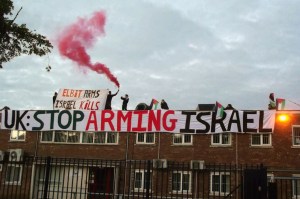
MEMO | February 2, 2015
The Crown Prosecution Service (CPS) has dropped charges against nine activists who occupied the roof of an Elbit Systems factory in Staffordshire during Israel’s assault on the Gaza Strip last year.
The collapse of the case came as the defence company “refused to hand over evidence about its exports of weaponry to Israel.”
The protesters from London Palestine Action had been facing charges of aggravated trespass after shutting down UAV Engines Ltd. (UEL), an Elbit subsidiary, for two days 5-6 August 2014.
But charges were dropped by the CPS “just hours before a deadline expired to provide the defendants with details of arms export licences granted to UEL to send its hi-tech engines to Israel for use in the Hermes 450 – a drone widely deployed by the Israeli military.”
According to a report in The Independent, two witnesses from the company declared that they were “no longer prepared to give evidence, and that documentation – understood to be the arms export data – would not be forthcoming.”
A statement from London Palestine Action accused the UK government and Elbit Systems of “running scared from a court case that would have put their collusion with Israeli war crimes on trial.”
The statement added: “The activists pleaded not guilty to charges of ‘preventing lawful activity’ on the basis that the operations at the Staffordshire factory were aiding and abetting war crimes and therefore illegal.”
Lawyers for the defendants say it appears the case collapsed either because the prosecution had been told either that Elbit Systems were unwilling to testify in court about their activities or because the UK government was unwilling to comply with the court’s order to disclose information it holds about licenses for arms exports to Israel, or both.
Hundreds of thousands join Madrid anti-austerity rally
Wake Up From Your Slumber | January 31, 2015
At least 100,000 people poured into the streets of Madrid on Saturday in a huge show of support for Spain’s new anti-austerity party Podemos, riding a wave of popularity after the election success of its Greek hard-left ally Syriza.
A sea of demonstrators chanted “Yes we can!” and carried signs reading “The change is now” as they made their way from Madrid city hall to the central Puerta del Sol square in the first major march called by Podemos, which has surged ahead in opinion polls in a crucial election year.
Many in the crowd also waved Greek flags and the red and white flags of Syriza, an equally radical party whose stunning win at the polls last week has buoyed Podemos and its anti-establishment message.
“The wind of change is starting to blow in Europe,” Podemos leader Pablo Iglesias, a pony-tailed former university professor, said in Greek and Spanish as he addressed supporters at the so-called “March for Change”. “We dream but we take our dream seriously. More has been done in Greece in six days than many governments did in years,” the 36-year-old said.
Syriza beat mainstream Greek parties with vows to end painful austerity measures and corruption and Podemos hopes to emulate its success with a similar message in Spain’s general election due in November.
Organisers put the turnout in Madrid at 300,000 while police said some 100,000 people had massed in the Spanish capital.
Seattle faces $500k suit for pepper-spraying school teacher
RT | January 29, 2015
A Seattle, Washington high school history teacher who was pepper-sprayed by police moments after speaking at a Martin Luther King Jr. Day rally is suing the city for $500,000.
Attorneys for Jesse Hagopian filed the claim against Seattle on Wednesday, nine days after the incident unfolded during, ironically, an anti-police brutality protest held in tandem with similar rallies across the United States on the holiday named for the slain civil rights leader.
Hagopian, a history teacher at Garfield High School who is known throughout the region for his activism, had just finished speaking during the January 19 event and was on the phone with his mother when a female police officer began discharging her pepper spray, striking multiple people.
An eyewitness was filming only a few feet away from where that officer and others had formed a barricade along a city intersection as law enforcement tried to control the crowd. A separate video filmed from above suggests that an officer had been knocked off their bicycle down the street, prompting the police to try and clear the area.
The ground-level footage appears to show Hagopian on the phone, walking towards the sidewalk, when he is blasted across the face with a stream of pepper spray.
“Ah, f**k. They just sprayed,”a voice on the video is heard saying as the officer barks to the crowd while attempting to clear the intersection.
Hagopian later got online and explained what happened in his own words:
“I was marching for Martin Luther King day today – amazing march! At one point after the big main march, group of bike cops set up a line to keep us from marching. Some people walked through the line, but I didn’t. When my phone rang, I turned away from the cops and began walking away to answer the phone. A cop then ran up in my face and pepper sprayed me right in the face.”
The close-up video recording of the incident has since been acquired by James Bible, the former president of the Seattle chapter of the NAACP, who in turn posted it to YouTube on Wednesday in concert with the announcement concerning the court filing. Bible is also serving as Hagopian’s attorney.
According to the Seattle Times, the suit alleges that Hagopian “instantly felt a burning sensation in his eyes and had some difficulty breathing.” The teacher later posted a photograph online showing him trying to tame the effects of the spray by dousing his face with milk.
“The main thing I’m upset about is that [I was on] the sidewalk when I was pepper sprayed so there’s really no reason at all they can use to justify what they did,” Hagopian told The Skanner News. … Full article
Colombia’s Journalists Under Threat
teleSUR | January 27, 2015
“2014 ended with threats and 2015 as well started with threats,” said representative in Colombia for Reporters Without Borders, Fabiola León. She insists the situation is worrying as over the course of around 20 days, 5 written threats have been delivered targeting 150 people, who include not only journalists but also social activists and land restitution leaders.
Among those directly threaten is Omar Vera, Chief Editor of “El Turbión,” a digital newspaper that for 11 years has been reporting on the struggles of Colombia’s social movements. In one of the written threats received December last year, the nine journalists working at “El Turbión” including Omar, were identified by their full names in the list of targets.
Omar and his team consider that the threats are related to the “interest of silencing independent voices that are reporting on social movements and that are showing solidarity with a network of organizations currently struggling for a change in the country in the wake of the peace process,” he recalled.
Elkin Sarria, a friend and colleague of Omar, is the editor of “Contagio” radio station, which like “El Turbión” newspaper is among the 12 media outlets targeted in a written threat signed by Aguilas Negras, a paramilitary group that Colombia’s Ministry of Interior Juan Fernando Cristo has recently denied existed.
“If Aguilas Negras does not exist, then who’s behind the threats?” Elkin asks; “Is it the military? Is it the State intelligence? To know who’s behind would be the only real guarantee to our security,” he adds.
For Fabiola León it is not by chance that among the people that have been threatened are not only journalists. “What these people, including journalists, share in common is that we have been talking about the peace process, that we have been working on the resolution of social problems that could serve as base for the final deal to put an end to the armed conflict,” she pointed out.
The tough situation Colombian journalists are currently facing, coincides with the security conditions that members and leaders of the “Broad Front for Peace,” a coalition of activists actively supporting the peace process, have been denouncing.
“Behind the threats I believe there are powerful forces with great interest in the failure of the peace process; determined to hinder fundamental transformations as well as a strengthening of democracy and to sabotage the peace talks in Havana,” Human Rights defender Piedad Cordoba recently declared to teleSUR English referring to the latest life threats she received.
But what worries the most is that whoever is behind the threats, seems to be willing to implement them. That was made clear Wednesday last week when peace activist and social leader Carlos Alberto Pedraza was found dead in strange circumstances.
Social leaders, peace activists and journalists have agreed that the very first step to guarantee the security of those under threat is to identify who exactly is behind the increasing threats, something that has already be demanded from the Colombian authorities.
Sayed Hasan Nasrallah denounces the repression in Bahrain
Hasan Nasrallah – January 9, 2015
Regarding this point, I want to say to our people especially in the border villages and to the Lebanese people that in confronting this danger the Lebanese are not incapable or weak and they don’t need anybody’s help. With our strength, army, people and resistance, just like we defeated the Israelis we will defeat the takfiris and anyone who thinks about harming the Lebanese and their dignity.
Let us be at peace knowing despite the snow and martyrs and burdens nothing of this can change anything regarding the will and determination of all of us especially the Freedom Fighters. When it comes to defending the people and its security and they did this and are ready to continue assuming this position till the end.
I call on everyone not to take part in this intimidation campaign and not to try to intimidate people: nobody can guarantee that no operation will take place here or there. This can happen in any country, whether France, Britain or Europe, all these countries are now in a state of emergency.
But regarding the risk of a large scale military operation – people haven’t been killed and this country is full of men and strong women there is no problem in this regard. God willing in confronting one of the biggest and strongest army in the world we were able to persevere and achieve victory so what can we say regarding these terrorists?
The final words I want to say – I do not want to take up to much of your time – of course, the issue of the region are extensive and important… The developments in Palestine, very dangerous developments in Palestine regarding the Palestinian people and al Quds and al Aqsa mosque, or the Gaza strip or the prisoners or the surrounding areas, Iraq, Yemen, Bahrain and other situations in these regions and the world. I don’t have time to discuss the regional situations but I will have an interview in the next few days where I will speak more extensively. Whoever would like to listen will listen….
In the remaining minutes, I find myself obliged to focus on the issue of Bahrain.
In the past few days the Bahraini authority arrested the secretary general of al Wifaq, Sheikh Ali Salman, may God preserve him. This was dangerous and the continuation of his arrest is also dangerous. In terms of its significance with regards to what can be said in condemnation we can’t say enough. But there is something we should focus on is that the Bahraini authorities have reached a dead end despite their efforts the past years.
The people of Bahrain who are demanding their legitimate rights and these rights cannot be debated. One of the most basic rights when everybody talks about democracy is that they have an elected parliament, and that the parliament that puts laws is elected. Having a parliament from which the government can appoint members to participate in drafting the laws of the political process is not enough.
What are these people demanding? They are saying we want an elected parliament which enjoys complete autonomy.
Number two, these people from day one have chosen peace in their movement, a peace movement. This distinguishes today, someone was speaking about Bahrain, but what about here or there. We’re talking about a country, in this country, its people from day one said, these are our natural logical rights, not just this, but of others, but this is one of the most important right.
And they chose a peaceful manner, they opened fire on them, but they didn’t return fire, they were killed on the street, but they didn’t respond by killing. It’s just not that they didn’t use weapons, or explosives or they didn’t bring in fighters or groups from the outside, even a knife , they didn’t use a knife.
And they insist on the peaceful nature of this movement, and this is what further cornered the Bahraini authorities. The leadership of the opposition, the clerical leadership and the political leadership all agree on the peaceful nature of the movement.
First and foremost Ayatollah Sheikh Issa Qassem May God preserve him and first and foremost, Al-Wefaq Association led by Sheikh Ali Salman may God preserve him.
We the Lebanese know that peaceful movements, abiding by the peaceful nature is very difficult, when someone is struck or when fire is opened he takes up arms and begins to open fire. If he has arms and if he doesn’t have arms, he goes and buys arms and begins to think day or night about those weapons.
But these people, their houses are attacked, their families are attacked, their clerics are in prison, their religious symbols are in prison, women, you know what happens in prison.
They were killed on the streets, but they didn’t resort to any form of violence, they continued to insist on protests and speeches and the peaceful means. There are maybe certain means which can be described as non-peaceful and violent but they didn’t resort to those means.
The Bahraini authorities always spoke about dialogue only as a way of talking not within a serious dialogue. But this opposition has always been ready for dialogue, the nature of its movement, the nature of its peaceful goals, in agreement with it reaching dialogue.
But the authority always ran away from dialogue and the result of dialogue.
The Bahraini authorities in the last two years, what did they hope for, they hoped that in the end people would get tired. They protested first day, second day, first month, first year, second year, third year…
We in Lebanon, we get tired from protests in two or three months. It’s enough, these protests don’t lead us anywhere, but we have people who have been protesting for years and for four years they have been striking.
And for four years they have been carrying out peaceful movements, this is a distinguished movement in this world. In all different places the movement derailed and became violent very quickly, in this place the movement did not become violent.
Not because there are no men in Bahrain, there are men in Bahrain, the people of Bahrain are known for their courage and for their enthusiasm. This is their history.
Not because no one can use weapons in Bahrain – here let me say so because Al-Khalifa family can’t put me in prison – not because no one can use weapons in Bahrain. Not because nobody can send arms to Bahrain or because there is no one can send fighters to Bahrain. Bahrain is just like any other country in the world, any country whatever be the measures weapons can be sent, fighters can be sent, anyone can sabotage it.
Small groups can sabotage a country. The main issue is that the will of the clerics and the political leadership and the people of Bahrain they are insisting on the peaceful dialogue.
They hoped that they would get tired, that hey would just lose their interest, but they didn’t, even though the world and the international community abandoned them. Those who supported the Arab Spring, when they get to Bahrain, they stopped, they outrageously described the situation as sectarian, however it’s not sectarian,
I don’t have the time to speak about the issue of Bahrain and what the people are subject to, I didn’t want to use this term but I will just this one time.
They have a project similar to the Zionist project, they have settlement activity in Bahrain, they have naturalization, whereby people come from all over the world. They are given citizenship, they are given jobs, they are given high salaries, security, respect, dignity. At the same time the original sons and citizens, the Bahrainis, whose fathers and grandfathers have been in that country, they are not given their basic rights. When they make political demands, their nationalities are taken away from them or they are imprisoned and efforts are being made day and night to change the identity of the Bahraini people.
There will come a day where the people of Bahrain are not of the original Bahraini people, it will be another nationality. Just as what the Zionists are doing in Palestine, whereby they want the day to come where the real inhabitants of Palestine will be the Jews all over the world. Isn’t this injustice?
These people are still committed to dialogue despite all of the betrayal so the Bahraini authorities found that the people didn’t get tired, they didn’t give up.
In the end the people will call on the leaders, on the clerics, we protested on the first, second, third and fourth year, okay, where have we reached? In the end, the political leaders say okay, but despite that the political leadership and the clerics insist on continuing on this path.
I take responsibility for what I say, I want my colleagues in Bahrain to listen, this is my opinion and stance on the issue. The Bahraini leadership have hoped that the Bahraini youth would be pushed towards carrying out violence, by their oppressive acts. Its in the interest of the Bahraini leadership for people to resort to violence because when the opposition is accused of carrying out acts of violence, then the leadership will come and speak about national security and will strike the opposition and its leadership and crush it, and therefore put an end to this opposition. The Bahraini leadership from the past four years tried to push the opposition in Bahrain towards an armed confrontation and it failed and once again.
Again I repeat one of the most important reasons behind the peaceful nature of this movement is its culture and leadership. Even if we have a leadership, the people have a different approach, the people have a different culture, a culture of quickly going to wars and fighting.
What can the leadership do in this case, bring about miracles, but the culture and leadership of this people allowed their peaceful nature to continue. How do we understand the arrest of Sheikh Ali Salman ? It happened because he is one of the religious symbols of the peaceful movement which insists on the peaceful nature of the movement.
And we might witness, and this something which everyone must pay attention to, all of the leaders who went to and insist on peaceful movement are being taken to prison.
In order to strike the peaceful movement and to crack the movement in general, what was the accusation made against Sheikh Ali Salman ? It was inciting for the committing acts of violence. Now if someone wants to make an accusation, make an accusation which is appropriate, which could be true. All Bahrainis know Sheikh Ali Salman. He is peaceful, peaceful till one loses their breath, even one accompanies with his peaceful movement, you’re too peaceful.This Sheikh, what is he accused of is that he incites people to resort to violence. Why? For the sake of toppling the regime.
Although you know the opposition, there is a debate, some people support toppling the regime, the Al Khalifa family and some in the opposition hold the stance of reform. An elected parliament, a government which is elected, as we hear from the opposition. Sheikh Ali belongs to the second group.
He didn’t speak about toppling the regime, nor did he incite to commit violence, this is an allegation which is a lie.
What the government of Bahrain will discover to what it is doing is an act of stupidity. It will not be able to put an end to this movement neither by arresting and imprisoning the former clerics and leaders nor by arresting or imprisoning Sheikh Ali Salman.
If they are able to arrest all of the Bahraini people, it’ll put a stop to the movements in the street, but they won’t be able to stop the movement in the prisons. People insist on continuing with movements behind bars and they also insist on the peaceful nature of the movement.
And I today express my solidarity and our support and from day one we stood in support of this peaceful popular movement and its logical goals and its civil manner.
We call for solidarity and explaining the significance, the meaning we call for pressures to be exerted on this tyrannical and oppressive government, in order for it to give them their rights, to the people to release all of the prisoners, first and foremost Sheikh Ali Salman.
On the other hand I stress and I support and we all support the call made by Sheikh Ali Salman from prison to insist on the peaceful nature of the movement. We must bear in mind that the Bahraini leadership wants by this arrest, by the former arrests, it wants to drag the Bahraini people to violence and armed confrontation.
This doesn’t serve the interests of Bahrain nor the people of Bahrain. Look at the countries of the region, look at all of them. When they resorted to arms in those countries, what was the result? What could be the result in any country?
Anyway I wanted to talk about this issue on this occasion and we pray to God that next year our nation is able to come out and pass these tests successfully and manages to confront these challenges by achieving true victory. We hope that the Nation will be able to overcome these difficult phases by unity, vigilance, and wisdom, by taking responsibility and also by overthrowing all of these plans and conspiracies from within the nation and from outside, which could have pushed the nation into abyss.
God bless you all, happy anniversary and peace, blessings and mercy be upon you all.
Translation : Electronic Resistance
Edition : http://sayed7asan.blogspot.fr
Protests Mark Australia’s Invasion Day
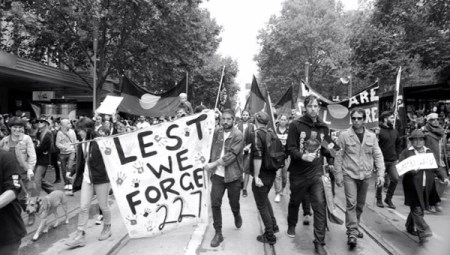
Invasion Day, Melbourne | Photo: Tim Dunn
teleSUR | January 26, 2015
In Melbourne, Australia on Sunday, around 800 people marched to mark Invasion day. Other protests, actions, and cultural events were also held around the country, while national and local governments organized formal celebrations of “Australia Day.”
On January 26, 1788, the first British fleet arrived on Australian coasts, marking the beginning of the invasion of that land, and the deliberate policies of genocide, slavery, child stealing, land stealing, and discrimination against the Indigenous peoples, as well as over 500 unpunished deaths in custody.
The Melbourne Invasion Day march this year marched to the official Australia Day march and pushed aside the barricades and occupied the space. Attendees reported that those at the official march “didn’t seam to know what to do.” Some members of the Invasion Day march chatted to those in the official march and explained the history behind the date. Some activists, according to GreenLeft Weekly, reported that there was some sympathy from those in the official march, who joined the Invasion Day march instead.
“No pride in genocide,” was one of the chants of the Invasion Day march.
“Today was the best Invasion Day protest I have ever been to. There was a real feeling of Aboriginal pride and resistance,” stated march participant and Socialist Alliance councilor, Sue Bolton.
Organizers of the Invasion Day march stated that the day “is a day of mourning for us Indigenous people, but its also a day to make our voices heard, to take a stand … to demonstrate our resistance to colonization and genocide. We have never ceded our sovereignty, and remain committed to the cause of decolonization.”
According to the ABC, in Sydney 10,000 people participated in the Yabun Festival, held to celebrate 40,000 years of Indigenous culture. In inner city Sydney, around 1,000 people marched for Indigenous land rights.
Australian private and mainstream media coverage has been biased against the Invasion Day marches. The Age headlined, “Aboriginal rights protest disrupts Australia Day Parade in Melbourne” while the Herald Sun said the marches had “interrupted” and “mar(ed)” events, but did not use the same language for official Australia Day events. Other media ignored the Indigenous rights marches.
Monsanto agrochemicals causing genetic damage in soybean workers – study
RT | January 22, 2015
Soybean workers exposed to the agrochemicals like glyphosate, the main component in Monsanto’s ‘Roundup’ herbicide and other biocides, suffer from elevated DNA and cell damage, according to a new study.
The study, published in the journal Mutation Research/Genetic Toxicology and Environmental Mutagenesis, involved 127 people, including 81 exposed to biocides while working in the Brazilian soybean industry and 46 non-exposed individuals in a control group.
The exposed group exhibited an elevated level of cellular apoptosis, as well as DNA damage, according to researcher Danieli Benedetti and his team, which concluded that the now-common use of genetically-modified soybeans in the State of Rio Grande do Sul, especially in the city of Espumoso, has toxic ramifications for workers.
“Our findings indicate the advisability of monitoring genetic toxicity in soybean farm workers exposed to pesticides,” the researchers said.
Genetically-engineered seeds, proliferated across the globe by multinational agribusiness conglomerates like Monsanto, are designed to withstand dousing by glyphosate and other biocides in order to terminate insect, fungus, and weed nuisances.
Benedetti’s team focused specifically on Glyphosate and 2,4-D, the two top biocide components in American-biotechnology farming culture. Glyphosate is the prime ingredient in Monsanto’s Roundup products, while Dow Chemical’s 2,4-D is a potent herbicide that was also used in making Agent Orange, the chemical used by the US to devastate resistance during the Vietnam War.
Last spring, Brazil’s public prosecutor sought to suspend use of glyphosate based on its toxic effects. Studies have linked glyphosate to a fatal kidney disease that has affected poor farming regions worldwide.
Just last week, Monsanto won final approval from the US for its new genetically-modified soybeans and cotton, designed to withstand a dominant biocide that fights weed resistance built up as a result of the company’s glyphosate-based Roundup herbicide already in use.
Monsanto reported an earnings drop of 34 percent in its first fiscal quarter. The company reportedly lost $156 million in the fourth quarter of last year due to a one-time payment made to settle an environmental legal case.
As multinationals such as Monsanto and Dow Chemical have sought strict standardization in agriculture markets the world over, the corporate leviathans, especially the former, have become the target of considerable protests and demonstrations.
Companies like Monsanto market their own patented seeds that, given their genetic modification, can be doused with biocides to kill pests and weeds, and which can jeopardize long-term health of the soil and the necessary biodiversity of a local environment that allows for natural pollination and, thus, food security.
In May of last year, activists on five continents around the globe, comprising of 52 nations organized resistance under the ‘March against Monsanto’ umbrella. Protests positioned against Monsanto and involving other corporate-food issues occurred in around 400 cities worldwide, according to reports.
Just this past weekend, more than 120 organizations joined the fifth annual ‘We are Fed Up!’ demonstration in Berlin to focus on the increased importation of American farming practices – such as genetic modification, frequent antibiotic injections for animals, and chemical meat treatments – following the implementation of the controversial Transatlantic Trade and Investment Partnership (TTIP).
Protests have raged most furiously in Europe, where the EU recently approved a law that would let its nations ban genetically-modified organisms even if the EU had deemed them safe. Monsanto said last year it would not try to get any more GM crops approved in Europe given the consistent pushback.
Anger and unrest against Monsanto’s stranglehold has also spread to South America. In Argentina, protests have occurred in resistance to the company’s potent biocides used in tandem with their genetically-engineered seeds. In Brazil, farmers have called on Monsanto and other producers of pest-resistant corn seeds to reimburse them for money spent on additional biocides when the bugs killed the crops instead of dying themselves, speaking to the biocide arms race involved in using GM seeds. Brazilian soy exporters are also tangling with Monsanto over seed royalties.
In Central America, Guatemala’s highest court suspended in September a controversial ‘Monsanto Law,’ a provision of a US-Central American trade agreement, that would insulate transnational seed corporations considered to have “discovered” new plant varieties.
On its home turf in the United States, Monsanto has worked diligently with other multinational biotech, agribusiness, and food production companies to beat down state-level proposals to simply label whether food is comprised of GM ingredients.
The most recent example came in the state of Oregon, where a November ballot initiative to require GMO labeling was narrowly defeated in what became the most expensive ballot measure in the state’s history. The likes of Monsanto and Dupont flushed more than $21 million into the anti-labeling campaign, dwarfing the $9 million raised by proponents.
The company has sued Hawaii’s Maui County for passing last year that bans the cultivation of genetically modified organisms.
Monsanto’s St. Louis headquarters have been the target of mild protests, especially during shareholder meetings.
Meanwhile, agribusiness allies on Capitol Hill are pushing new federal legislation, the Safe and Accurate Food Labeling Act, that would standardize food labeling, effectively killing popular state-based efforts to pass labeling laws.
READ MORE:
Monsanto gets approval for new GMO corn, soybeans designed for potent new biocide
Rising suicide rate for Indian farmers blamed on GMO seeds
In facts & numbers: Absolute majority of Americans want GMO food to be labeled
Featured Video
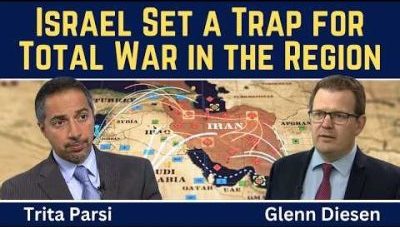
Trita Parsi: Israel Set a Trap for Total War in the Region
or go to
Aletho News Archives – Video-Images
Book Review
Why the War on Conspiracy Theories Is Bad Public Policy
By Kevin Barrett • Unz Review • February 1, 2019
 A Review of Conspiracy Theories and Other Dangerous Ideas by Cass Sunstein (based on an earlier paper co-authored with Adrian Vermeule); In Defense of Troublemakers: The Power of Dissent in Life and Business by Charlan Nemeth; and Conspiracy Theories and the People Who Believe Them, edited by Joseph E. Uscinski
On January 25 2018 YouTube unleashed the latest salvo in the war on conspiracy theories, saying “we’ll begin reducing recommendations of borderline content and content that could misinform users in harmful ways—such as videos promoting a phony miracle cure for a serious illness, claiming the earth is flat, or making blatantly false claims about historic events like 9/11.”
At first glance that sounds reasonable. Nobody wants YouTube or anyone else to recommend bad information. And almost everyone agrees that phony miracle cures, flat earthism, and blatantly false claims about 9/11 and other historical events are undesirable.
But if we stop and seriously consider those words, we notice a couple of problems. First, the word “recommend” is not just misleading but mendacious. YouTube obviously doesn’t really recommend anything. When it says it does, it is lying. … continue
Blog Roll
 Aletho News
- Easy fix for Europe’s chaos? Stop fueling war against Russia
- Putin’s key remarks on peace talks and Europe’s ‘schizophrenia’
- Trita Parsi: Israel Set a Trap for Total War in the Region
- Trump’s Iran war is on an Israeli leash
- Saudi oil boss issues global supply warning
- Riyadh Says Its Oil System Is Intact. The Numbers Say Otherwise.
- Trump and Netanyahu Want to “Finish the Job” on Iran
- US ‘one-sided dictation’ not Iran’s beliefs makes rational talks impossible: Baghaei
- Iran’s Next Strike May Not Explode. It Could Shut You Down /Col Doug Macgregor
- Iran: US political targets legitimate if assassinations return
- If Americans Knew
- DAILY UPDATE: Latest essential news on Palestine, Israel, & region
- The Israel Lobby’s Changing Fortunes
- AIPAC has become such a political liability that it’s shifting to a more “nimble” approach to buying politicians
- At least 160 Israeli settler attacks in 2 weeks
- Will Gaza’s Ancient Christian Community Disappear Forever?
- Israel’s vision of regional security rests on keeping Arab states weak
- Heidi Levine recounts how Palestinian youths helped save her in settler attack
- DAILY UPDATE: Latest essential news on Palestine, Israel, & region
- Trump’s Intensifying Sabotage of the ICC, for Israel’s Sake
- Israeli military detain US and UK volunteers in West Bank including Democratic NY politician Brad Lander
- No Tricks Zone
- E-Cars Reduce CO2 Emissions By Only 41% Compared To Internal Combustion Engine Vehicles
- Predictions Made By Renowned Climate Professor Over Past Decades Have Been Proven To Be Poor
- New Study Suggests Large Regions Of The Pacific Ocean Have Been Cooling For The Last 80 Years
- Germany’s Green Energy Debacle: High Energy Costs Force Kahla Porzellan to Close After 182 Years!
- New Study: 50 Years Of The Most Aggressive ‘Net Zero’ Policies Can Only Affect The Global Climate By 0.03°C
- US September “Heat” Was No Record…Many Records Set Decades Ago
- Latest European Green Energy Debacle; Portugal’s Largest Flagship Solar Park Insolvent!
- Green Energy Debacle: German Expert Professor Fritz Vahrenholt Warns Of Severe Economic And Social Consequences
- Two More Paleo Reconstructions Affirm Meters-Higher Sea Levels Across Ireland, Brazil 7000-6000 Years Ago
- New Study: Earth And Venus Surface Warmth Largely Explained By Convection And Lapse Rate, Not CO2 Or Radiation

