Four Palestinians and one female German demonstrator shot with live ammunition at “Open Shuhada Street” protest

Israeli military sniper aiming up the road towards the Open Shuhada Street demonstrators
International Solidarity Movement | February 28, 2015
Hebron, Occupied Palestine – On February 27 in occupied Al-Khalil (Hebron), Israeli forces fired live ammunition towards nonviolent protesters participating in the annual Open Shuhada Street demonstration, injuring five including four Palestinian activists, one of them 17 years old, and one German citizen. More were also injured by rubber-coated steel bullets and stun grenades as soldiers and Border Police blocked the roads leading towards Shuhada Street and attacked the protesters.
Close to a thousand Palestinians, accompanied by Israeli and international supporters, marched towards one of the closed entrances to Shuhada Street carrying flags and signs and chanting. They called for the opening of Shuhada Street, whose closure to Palestinians has become a symbol of Israel’s Apartheid system, and for an end to the occupation. The march was turned back by stun grenades, rubber coated steel bullets and live ammunition fired by the Israeli military. Around twenty demonstrators were injured in total; Hebron Hospital reported that at least six were admitted and two required surgery. One Palestinian activist, Hijazi Ebedo, 25, was arrested at the demonstration; all he had been doing was chanting and holding a sign.
Issa Amro, coordinator and co-founder of Youth Against Settlements (YAS) stated: “The protest, which was joined by groups from all over Palestine, marked the twenty-first anniversary of the Ibrahimi Mosque Massacre. Israeli occupying forces shot live ammunition towards peaceful protesters, which is against international law. The Israeli military should be held accountable in international court for their actions.”
“Julia was standing and filming next to me when suddenly she fell to the ground,” stated Leigh, a Canadian activist who was standing next to Julia when she was shot.
Julia, the injured 22-year-old German activist from Berlin, was evacuated to Hebron Hospital where she is being treated for a live gunshot wound which entered and exited her leg. “The brutality of Israeli forces is unbelievable, it seems like they don’t have a limit,” she stated. “In Palestine I have seen Israeli forces shooting tear gas, stun grenades, rubber and live ammunition at any kind of demonstration that is against the occupation. It doesn’t matter for them if it is peaceful or if there are kids attending. Yesterday I saw the army attack children who had been dancing in the street. Two people were shot with live ammunition in Bil’in. They shot me as I was standing and filming. It seems the soldiers just shoot at any one.”
The Open Shuhada Street demonstration marks the anniversary of the 1994 Ibrahimi Mosque massacre, when right wing extremist settler Baruch Goldstein murdered 29 Palestinians while they worshipped in the mosque. Following the massacre, Israeli forces shut down Palestinian businesses on Shuhada Street–once a commercial center–and began to implement the policies which would lead to what is now a total closure of the vast majority of the street to Palestinians. Twenty one years after the massacre, settlers from illegal Israeli settlements use the street freely while Palestinians are assaulted, shot and arrested when they attempt to reach it en masse during the Open Shuhada Street demonstration every year.
A giant art installation targets predator drone operators
NotABugSplat

In military slang, Predator drone operators often refer to kills as ‘bug splats’, since viewing the body through a grainy video image gives the sense of an insect being crushed.
To challenge this insensitivity as well as raise awareness of civilian casualties, an artist collective installed a massive portrait facing up in the heavily bombed Khyber Pukhtoonkhwa region of Pakistan, where drone attacks regularly occur. Now, when viewed by a drone camera, what an operator sees on his screen is not an anonymous dot on the landscape, but an innocent child victim’s face.

The installation is also designed to be captured by satellites in order to make it a permanent part of the landscape on online mapping sites.
The project is a collaboration of artists who made use of the French artist JR’s ‘Inside Out’ movement. Reprieve/Foundation for Fundamental Rights helped launch the effort which has been released with the hashtag #NotABugSplat


The child featured in the poster is nameless, but according to FFR, lost both her parents and two young siblings in a drone attack.
The group of artists traveled inside KPK province and, with the assistance of highly enthusiastic locals, unrolled the poster amongst mud huts and farms. It is their hope that this will create empathy and introspection amongst drone operators, and will create dialogue amongst policy makers, eventually leading to decisions that will save innocent lives.
Activists in UK occupy second Israeli owned arms factory
MEMO | February 17, 2015
 A factory in Kent owned by Israeli arms company Elbit Systems was occupied early Tuesday morning by activists responding to the Palestinian call for solidarity and BDS.
Instro Precision, a subsidiary of Elbit, was occupied at 5am, with more than a dozen activists taking up positions on the roof and at the entrance.
According to a press release from London Palestine Action, “Instro is owned by Israeli arms company Elbit Systems, who make drones that are used to kill Palestinian civilians in Gaza.”
It adds: “Optical and camera systems like those made at the Instro factory are also supplied by Elbit for use in drones flown over Afghanistan, as well as in Israel’s apartheid wall.”
The site in Broadstairs, Kent, is the second Elbit-linked company to be targeted by activists in the UK, after a successful occupation last summer of a drone engine factory near Birmingham.
Campaign Against the Arms Trade, welcoming the direct action, pointed out on Twitter that “there are 4 Elbit sites in the UK” and that “activists have so far targeted Kent & Staffordshire.”
Just last month, the prosecution of protesters who had occupied that first factory was dropped at the last minute, when Elbit refused to hand over evidence about its exports of weaponry to Israel.
During ‘Operation Protective Edge’, the Israeli military killed hundreds of Palestinians with drones. Activists say that Elbit Systems supplies 85% of the drones used by the military, and that the company’s “share price rose in July off the back of the extensive use of its technology during Israel’s massacre.”
Demonstration in Bil’in honoring slain US citizens faces attacks and arrests by Israeli forces
International Solidarity Movement | February 17, 2015
Bil’in, Occupied Palestine – On Friday 13th February, Israeli forces assaulted the demonstration in Bil’in with hundreds of tear gas rounds, dozens of stun grenades and pepper spray, injuring eleven Palestinian, Israeli and international demonstrators. Member of the Bil’in popular committee Mohammed Khatib and a UK citizen and solidarity volunteer Michael “Mick” Bowman were both violently arrested. At the demonstration, Palestinian activists carried posters honoring Kayla Mueller and condemning the murders of the three students in Chapel Hill, North Carolina.
“As people were protesting a soldier suddenly came running, wielding pepper spray, spraying it at journalists and activists indiscriminately,” reported Karam Saleem, a Palestinian activist present documenting the demonstration. Those who had been pepper sprayed, including Mohammed Khatib, were taken down to an ambulance to treat their burns. Saleem continued, “Mohammed was about twenty meters away from the main part of the protest, still suffering from pepper spray, when suddenly a soldier ran after him and grabbed him. Another five soldiers quickly surrounded him and shoved him violently to the ground.”
He was handcuffed and blindfolded before being loaded into a military jeep.
Israeli forces targeted journalists and those attempting to document the protest; many were shoved and threatened while attempting to photograph or film. Those present reported that the Israeli military also fired tear gas directly at people holding cameras.

Journalist being assaulted by Israeli forces – only one of many that Friday in Bil’in (photo by ISM)
Israeli forces pepper sprayed demonstrators who were doing nothing more that trying to photograph the army’s brutality, and also pepper sprayed those holding posters of Kayla Mueller and the three US students from Chapel Hill. Jameel Al-Barghouthi, head of the Palestinian Authority Committee Against the Apartheid Wall and Settlements, Munthir Amira, head of the Popular Struggle Coordination Committee (PSCC), Mohammed Khatib, a member of Bil’in’s Popular Struggle Coordination Committee, Issam Rimawi, a Palestinian photojournalist, two Palestinian activists Abdallah Elian and Kafah Mansour, British citizen and activist Mick Bowman, two female Israeli activists, and one Danish and one Dutch female international volunteer were all injured.
“The army was extremely brutal yesterday in their use of tear gas, beatings, and pepper spray,” recalled Tali Shapiro, an Israeli activist who was severely pepper sprayed in Friday’s demonstration, suffering from first degree burns on her hands, ears, and most of her throat and neck. “We saw they were beating and arresting someone (Mohammed Khatib), so I ran towards them. By the time I got up the hill Mohammed had been taken away and another man [Mick] was on the ground with many soldiers on top of him, twisting his limbs and head. I immediately took out my phone to take pictures. The soldiers started pushing away journalists. They formed a line in front of several of us, and before I could assess the situation another soldier sprayed my face with pepper spray.”

Activist Tali Shapiro after being severely pepper sprayed (photo by ISM)
Fifty-six-year-old Mick Bowman, a social worker and resident of Newcastle upon Tyne, England, recalled that in the time before his arrest, “the Israeli forces behaved with particular aggression towards protesters who were carrying the posters of Kayla and of the students from Chapel Hill North Carolina.” Border police threw stun grenades directly towards demonstrators, scattering those holding posters near the front of the protest.
“Next thing I knew,” Mick recalled, “three or four soldiers jumped on me from behind and forced me to the ground. I was lying face downwards, with a couple of them kneeling on my back.

Mick Bowman, knelt on, assaulted and pepper sprayed by Israeli border police arresting him (photo by ISM)
As they were handcuffing me, one of them stood on my hand, rubbing his boot back and forth and crushing my thumb. One of them grabbed my nostrils, and another was pressing down on my face, causing abrasions and bruising around my right eye. After they had handcuffed me, a border policeman also pepper sprayed the left side of my face from the distance of a few inches.”
After their arrest, Mohammed and Mick were transported to the Binyamin settlement police station. Mohammed Khatib was taken to Ofer military prison and Michael Bowman was taken to Muskubiya (the Russian Compound) prison in Jerusalem. Both were charged with ‘assaulting a soldier.’
“When police officers use violence they always claim that violence was used against them. It’s standard procedure” explained Mohammed Khatib. Mick was released on the evening of February 14th, and Mohammed was eventually released on the evening of February 15th, on a bail of 4,000 shekels (1,030 USD).
Abdullah Abu Rahma, head of the Bil’in popular committee, described the purpose of demonstration in Bil’in: “On Friday we protested against the theft of our land by Israel’s illegal wall and settlements and to express our resistance to terrorism everywhere. We carried the images of Kayla Mueller who was killed while being held captive by Da’esh and who had marched with us in Bil’in. We also carried the images of Deah Barakat, Yusor Mohammad, and Razan Abu-Salha, who were murdered in their home in North Carolina. We made it clear that we will oppose terrorism and the killing of innocent people whether it is committed by organizations like Da’esh, by states like Israel or by individuals like the murderer from Chapel Hill.” This Friday will mark the tenth anniversary of Bil’in’s popular resistance demonstrations – against the Apartheid Wall, against the Israeli occupation, and against oppression and violence everywhere.
UK Human Rights Activist Beaten and Arrested by Israeli Soldiers at Protest in Palestine

Mick Bowman being arrested by Israeli soldiers in Bil’in / Haitham Khatib
By Alexandra Halaby | IMEMC & Agencies | February 16, 2015
Human rights activist and English political candidate, Mick Bowman, alleges he was beaten and arrested at a peaceful demonstration in Palestine on Friday.
The human rights activist from Tyneside, in North East England, claims he was beaten and abused after being arrested while taking part in a peaceful demonstration in Palestine on Friday.
Mick Bowman, aged 57, from the United Kingdom, said he was pepper sprayed in the face from less than six inches away during his arrest Friday afternoon. He was then detained without charge by Israeli soldiers for 24 hours and then released.
The case of Mr. Bowman’s violent arrest is being investigated by Israeli authorities who claim that his alleged treatment was “unacceptable” and “inappropriate,” according to a statement received by IMEMC.
Mr. Bowman is a member of the Newcastle Palestinian Solidarity Campaign (NPSC) located in Newcastle-upon-Tyne in England. He is also actively involved with his local branch of Amnesty International. Bowman was taking part in a peaceful demonstration along with other international solidarity volunteers protesting Israel’s continuous violations of Palestinian human rights in the village of Bil’in, located in the West Bank just north of Ramallah.
Witnesses at the Bil’in protest tell IMEMC that Mr. Bowman did not commit any violent acts and that he was arrested for no apparent reason.
Palestinian, Israeli, and international activists gather in the village of Bil’in each Friday to protest the construction of the illegal Israeli separation wall which has divided the village. Previously, President Jimmy Carter has joined the Bil’in protests, as has Richard Branson. In April 2009, a Palestinian man, Bassem Abu Rahmeh was killed when an Israeli soldier fired a teargas canister into his chest. The death of Bassem Abu Rahmeh was depicted in the 2011 film, ‘5 Broken Cameras.’ The following year, Jawaher Abu Rahmah, a 36 year old woman, was also killed following protests at the village. The conditions of Ms. Abu Rahmah’s death were contested and most likely she died from suffocation following teargas being hurled at her face.
In a message Mr. Bowman sent to coordinators at NPSC, he says he was told he was arrested for allegedly assaulting an Israeli soldier.
He wrote in the message: “That was why they had detained and restrained me with ‘appropriate force’ (standing on my hands and thumping me etc to get the plastic cuffs on and then pepper-spraying my eyes from a distance of six inches after I had been cuffed but refused to stand up).
“The military were extremely aggressive from the outset in how they responded to what was a peaceful demonstration.
“I gave up counting the number of tear gas grenades fired after I counted 50 or so – the eventual number will have been in the hundreds – and stun grenades and rubber coated steel bullets were fired at us all.”
Mick Bowman is a mental health social worker in his native UK. He was held for 24 hours by Israeli soldiers during which time he was processed by the military, interviewed by Israeli civil police, and taken to a military court. He was released on Saturday night with stipulations that he never return to the West Bank.
Mr. Bowman is now in Jerusalem and due to return to the UK on Thursday.
700 artists announce a cultural boycott of Israel
MEMO | February 14, 2015
Over 700 British artists, from the worlds of literature, film, stage and music, have pledged to boycott Israel “as long as the state continues to deny basic Palestinian rights.”
The campaign was launched Saturday with a letter in The Guardian signed by Peter Kosminsky, Mike Leigh, Jimmy McGovern, Miriam Margolyes, Riz Ahmed, Jeremy Hardy, Brian Eno, Richard Ashcroft, Gillian Slovo, China Miéville, and Liz Lochhead, among others.
The pledge in full, organised by ‘Artists for Palestine UK‘, states:
We support the Palestinian struggle for freedom, justice and equality. In response to the call from Palestinian artists and cultural workers for a cultural boycott of Israel, we pledge to accept neither professional invitations to Israel, nor funding, from any institutions linked to its government until it complies with international law and universal principles of human rights.
Former English PEN president, writer Gillian Slovo, said: “As a South African I witnessed the way the cultural boycott of South Africa helped apply pressure on the apartheid government and its supporters. This Artists’ Pledge for Palestine has drawn lessons from that boycott to produce an even more nuanced, non-violent way for us to call for change and for justice for all.”
Israel divestment narrowly fails at Stanford
The Stanford University undergraduate senate needed a two-thirds majority to approve a resolution calling on the school to “divest from companies violating human rights in occupied Palestine,” and it came close: Nine in favor and five against, with one abstention.
But the 64% in favor vote, sponsored by Stanford Out of Occupied Palestine, a coalition of 19 campus organizations including the Black Student Union, MEChA, and Students for Justice in Palestine, wasn’t enough for passage of the resolution according to the Stanford Daily.
Updated Resolution 2/9/2015
A Resolution to Divest from Companies Violating Human Rights in Occupied Palestine
WHEREAS the Stanford University Code of Conduct states that all members of the Stanford University community “are responsible for sustaining the highest ethical standards of this institution, and of the broader community in which we function,[1]”
WHEREAS in managing university investments, Stanford University Trustees have a fiduciary responsibility to consider both financial risk and “substantial social injury,” defined as “proximate corporate direct or indirect actions that cause injury to… individuals, or groups… [and] violat[e], subver[t], or frustrat[e] enforcement of rules of domestic or international law intended to protect individuals and/or groups against deprivation of health, safety, basic freedoms or human rights,”[2]
WHEREAS Stanford University has a rich history of calling for ethical oversight of its endowment as a non-violent strategy towards social change, which has included divestment from companies violating human rights in South Africa and Sudan, the adoption of criteria pertaining to conflict minerals in the Democratic Republic of the Congo, and divestment from coal mining companies following last year’s fossil free divestment student campaign,
WHEREAS international humanitarian law recognizes the right of all people, including Israelis and Palestinians, to life, security[3] and self-determination[4],
WHEREAS Israel has been recognized by international law since 1967 as an occupying power in the West Bank, including East Jerusalem, and Gaza[5], hereafter referred to as the Occupied Palestinian Territories,
WHEREAS this resolution calls for targeted divestment from multinational corporations causing substantial social injury by violating international humanitarian law in the Occupied Palestinian Territories, regardless of which countries contract said corporations,
WHEREAS multinational corporations disproportionately conduct business in the Occupied Palestinian Territories, as compared to other conflict areas (e.g. Syria or North Korea), where binding law often prevents engagement with human rights violators,
WHEREAS many of the same companies profiting from human rights violations in the Occupied Palestinian Territories also profit from such violations against communities of color within the United States,[6]
WHEREAS Stanford’s May 2014 Securities and Exchange Commission (SEC) filings demonstrate past direct holdings in Raytheon and Eaton Corp[7], corporations that are implicated in such violations of international humanitarian law[8], suggesting that Stanford’s current and future investment portfolios are likely to include similar companies,
WHEREAS investment in these companies shows implicit support for such violations, and the only way to achieve financial neutrality is to end our investment in such companies,
WHEREAS selective divestment, as in the context of South Africa and Sudan, does not seek to determine a political solution nor target a particular ethnic or religious community, but rather the actions of a set of multinational corporations that facilitate human rights abuses and violations of international law,
WHEREAS our peers at many university student associations, including Wesleyan University, Oberlin College, DePaul University, Evergreen State College, UC Irvine, UC Berkeley, UC Riverside, UC San Diego, UCLA, and UC Davis have passed resolutions calling for divestment from companies that violate international law and human rights in Israel and the Occupied Palestinian Territories,
WHEREAS the petition asking Stanford’s Board of Trustees to selectively divest from companies that violate international law and human rights in the Occupied Palestinian Territories has been signed by over 1500 current students and 19 Stanford student groups, including Students for Justice in Palestine (SJP), Students for Alternatives to Militarism (SAM), the Asian American Student Association (AASA), MEChA de Stanford, Stanford National Association for the Advancement of Colored People (Stanford NAACP), Black Student Union (BSU), Student And Labor Alliance (SALA), Stanford Asian American Activism Committee (SAAAC), Muslim Students Awareness Network (MSAN), Pilipino American Student Union (PASU), Arab Students’ Association at Stanford (ASAS), First Generation Low Income Partnership (FLIP), International Socialist Organization at Stanford (ISO), Stanford Students for Queer Liberation (SSQL), Stanford American Indian Organization (SAIO), Islamic Society of Stanford University (ISSU), Pakistanis at Stanford (PaS), Stanford University Students for UNICEF (SUSU), and the Stanford Law School chapter of the National Lawyers Guild (SLS-NLG),
WHEREAS these companies’ actions affect the Stanford community directly, including students whose families live under occupation, and thus attend an institution complicit in violence against their own communities,
WHEREAS the Associated Students of Stanford University has been authorized “to exercise major privileges and responsibilities” with the express purpose of “[encouraging] responsible citizenship and the exercise of individual and corporate responsibility on the part of students,”[9]
THEREFORE BE IT RESOLVED by the Associated Students of Stanford University Undergraduate Senate, exercising its representative authority on behalf of all undergraduates:
THAT the ASSU Undergraduate Senate calls upon the Stanford University Trustees to divest from companies that violate international humanitarian law by:
- Maintaining the illegal infrastructure of the Israeli occupation, in particular settlements and separation wall, which includes companies like Veolia Transdev and Elbit Systems[10]
- Facilitating Israel and Egypt’s collective punishment of Palestinian civilians, which includes companies like Raytheon, Lockheed Martin, and Eaton Corp[11]
- Facilitating state repression against Palestinians by Israeli, Egyptian or Palestinian Authority security forces, which includes companies like Combined Tactical Systems and G4S,[12]
THAT the ASSU Undergraduate Senate calls upon the Stanford University Trustees to withdraw investments in securities, endowments, mutual funds, and other monetary instruments with holdings in Veolia Transdev, Caterpillar, Raytheon, Eaton Corp, Lockheed Martin, Combined Tactical Systems, G4S, and all corporations that are similarly complicit in violating these criteria, at such time and in such manner as to be determined by the Board of Trustees with the goal of maintaining the divestment until they cease these specific practices deemed as unethical by the Stanford community,
THAT this is not a resolution concerning boycotts nor sanctions from any nation state,
THAT this resolution overrules the previous resolution UGS-W2013-10 that passed in the 14th Undergraduate Senate,
LET IT FINALLY BE RESOLVED that the ASSU Undergraduate Senate, exercising its representative authority on behalf of all undergraduates, calls upon our university to affirm its commitment to justice for all people by divesting from companies implicated in our criteria for substantial social injury in the Occupied Palestinian Territories, many of which facilitate parallel injury against communities of color here in the United States.
[1] https://adminguide.stanford.edu/chapter-1/subchapter-1/policy-1-1-1
[2] Stanford University’s Statement on Investment Responsibility
[3] http://www.un.org/en/documents/udhr/
[4] UN General Assembly, International Covenant on Civil and Political Rights, 16 December 1966, United Nations, Treaty Series, vol. 999, p. 171, available at: http://www.refworld.org/docid/3ae6b3aa0.html
[5] Geneva Convention, UN, Amnesty International, Human Rights Watch; http://www.amnesty.org/en/library/asset/MDE15/007/2009/en/4c407b40-e64c-11dd-9917-ed717fa5078d/mde150072009en.html#2.2.1.2.%20Law%20of%20occupation|outline
[6] See supplementary document.
[7] Stanford’s May 2014 SEC Filings: https://www.sec.gov/Archives/edgar/data/1315828/000106299314002805/xslForm13F_X01/form13fInfoTable.xml
[8] See supplementary document.
[9] The Constitution of of the Associated Students of Stanford University: http://assu.stanford.edu/wp-content/uploads/2014/08/ASSU-Constitution.pdf,4.
[10] In violation of Article 49 of the Fourth Geneva Convention. See supplement.
[11] In violation of Article 33 of the Fourth Geneva Convention. See supplement.
[12] In violation of the United Nations’ International Covenant on Civil and Political Rights. See supplement.
Supplementary Document
Background on our Criteria for Substantial Social Injury
India’s Common Man Party set for historic win in Delhi
The BRICS Post | February 10, 2015
![AAP supremo Arvind Kejriwal with supporters on February 10, 2015 [PTI]](https://i0.wp.com/thebricspost.com/wp-content/uploads/2015/02/aa_650_1423498485_020915095328.jpg)
AAP supremo Arvind Kejriwal with supporters on February 10, 2015 [PTI]
Indian anti-graft party Aam Admi (Common Man) is set for a massive landslide victory in the Assembly elections of the national capital. Arvind Kejriwal, who was briefly chief minister of Delhi last year, is leading his Aam Admi party to a majority win as early leads show they are ahead in 63 out of 70 seats in the Delhi Assembly.
Prime Minister Narendra Modi’s ruling Bharatiya Janata Party’s defeat in Delhi would be the first major setback for the party since winning power. Latest results show Modi’s party is ahead in six seats.
“This may be a historic day! The juggernaut likely to halt. David likely to overcome Goliath,” tweeted AAP member and senior leader Yogendra Yadav on Tuesday morning.
The Congress party, which was in power in the Delhi for 15 years until 2013, is trailing at the third spot.
Millions of residents in India’s capital queued up on Saturday to cast their votes in the city polls that were expected to provide an indication of how Indians perceive the work of the new government and the “pro-reform” Indian Prime Minister Modi.
In recent weeks, an army of AAP volunteers has trudged through the alleys of the city’s poorest neighbourhoods to try to tap a deep vein of dissatisfaction that has gripped New Delhi residents, particularly over a soaring cost of living.
AAP chief Arvind Kejriwal is likely to be sworn in as Chief Minister of Delhi on 14 February.
International Solidarity Movement honors Kayla Mueller
International Solidarity Movement | February 9, 2015
 Occupied Palestine – Kayla Mueller volunteered with the International Solidarity Movement from August to September of 2010.
On 4 August 2013 Kayla, 26, originally from Prescott, Arizona, was working with Syrian refugees when she was kidnapped after leaving a Spanish Doctors Without Borders hospital in Aleppo. Since that time she has been held in captivity by Da’esh (ISIS). This information was not previously released publicly out of concerns for her safety. On February 6th, Da’esh announced that she had been killed by Jordanian airstrikes in Raqqa, northern Syria. The validity of their announcement has not been confirmed.
Our hearts are with Kayla, her family, friends, and all those who have lost liberty, lives and loved ones in the global struggle for freedom and human rights.
With the ISM, Kayla worked with Palestinians nonviolently resisting the confiscation and demolitions of their homes and lands. In the Sheikh Jarrah neighborhood of Occupied East Jerusalem, she stayed with the Al Kurd family to try and prevent the takeover of their home by Israeli settlers.
Kayla accompanied Palestinian children to school in the neighborhood of Tel Ruimeda in Al-Khalil (Hebron) where the children face frequent attacks by the Israeli settlers and military. She stayed with villagers in Izbat Al Tabib in a protest tent to try to prevent the demolition of homes in the village. She joined weekly Friday protests in Palestinian villages against the confiscation of their lands due to Israel’s illegal annexation wall and settlements.
Kayla published writing online about her work in Palestine with the International Solidarity Movement in August and September 2010. “How can I ignore the blessing of freedom of speech when I know that people I deeply care for can be shot dead for it?” she wrote.
Below are excerpts from two of Kayla’s posts.
October 29, 2010:
“I could tell a few stories about running desperately from what you pray are rubber-coated steel bullets launched from the gun tip of a reckless and frightened 18-year old.”
“I could tell a few stories about sleeping in front of half demolished buildings waiting for the one night when the bulldozers come to finish them off; fearing sleep because you don’t know what could wake you. . . . I could tell a few stories about walking children home from school because settlers next door are keen to throw stones, threaten and curse at them. Seeing the honest fear in young boys eyes when heavily armed settlers arise from the outpost; pure fear, frozen from further steps, lip trembling.”
“The smell and taste of tear gas has lodged itself in the pores of my throat and the skin around my nose, mouth and eyes. It still burns when I close them. It still hangs in the air like invisible fire burning the oxygen I breathe. When I cry tears for this land, my eyes still sting. This land that is beautiful as the poetry of the mystics. This land with the people who’s hearts are more expansive than any wall that any man could ever build. Yes, the wall will fall. The nature of impermanence is our greatest ally and soon the rules will change, the tide will turn and just as the moon waxes and wanes over this land so too the cycles of life here will continue. One day the cycle will once again return to freedom.”
“Oppression greets us from all angles. Oppression wails from the soldiers radio and floats through tear gas clouds in the air. Oppression explodes with every sound bomb and sinks deeper into the heart of the mother who has lost her son. But resistance is nestled in the cracks in the wall, resistance flows from the minaret 5 times a day and resistance sits quietly in jail knowing its time will come again. Resistance lives in the grieving mother’s wails and resistance lives in the anger at the lies broadcasted across the globe. Though it is sometimes hard to see and even harder sometimes to harbor, resistance lives. Do not be fooled, resistance lives.”
On New Year’s Day of 2011, Kayla received news that Jawaher Abu Rahma, from the village of Bil’in where Kayla had demonstrated in solidarity with her and her family, had been killed by tear gas asphyxiation. On the first of January 2011, Kayla wrote:
“I felt compelled to blog on this today. The first day of 2011, the actual day that she died, just a few hours ago in a village called, Bil’in.”
“Every Friday in Bil’in villagers and international/Israel activists march to the barbed wire fence where an enormous and expanding illegal settlement is visible to protest the theft of their land and their livelihoods. The Palestinians are armed with rocks, the other activists with cameras and collectively they are armed with their bones. Each Friday the demonstration is met with violence; rubber-coated steel bullets, tear gas and sounds bombs are the usual choice of artillery. Lives are taken as a result of the violence and Jawaher Abu Rahmah’s life was taken today.
I have been to this village,
I demonstrated in this village,
I demonstrated arm in arm with her brothers,
and I knew her.”
……………
“My first demonstration in Palestine was in Bil’in and that is when I met Ashraf, Jawaher’s brother. Despite his broken English he always made a point to make sure we were ok when we were at the demonstration in his village, to help us cough up the tear gas and walk off the anxiety. He showed us his village and we played with the kids. Ashraf would bring us water or tea and help us find rides out of the village back to the cities. In the summer of 2008, Ashraf was participating in the demonstration and was detained by the Israeli Defense Forces (IDF). After he was blind-folded and his hands bound, an IDF soldier shot him in the foot from a distance of about 2 meters shattering his toes and leaving him in trauma as one could imagine.”
(As with all of these video clips, the content may be too graphic for some, please use discretion).
“Just the next year in 2009 Ashraf’s brother, Bassem Abu Rahma, was participating in the demonstration and was attempting to communicate with the IDF soldiers telling them to stop shooting the steel-coated rubber bullets as an Israeli activist had been shot in the leg and needed medical attention. Not soon after an Israeli soldier illegally used a tear gas canister as a bullet hitting Bassem in the chest, stopping his heart and killing him instantly.”
And now just today, the daughter of the Rahmah family, Jawaher, has been asphyxiated from tear gas inhalation. Jawaher was not even participating in the weekly demonstration but was in her home approximately 500 meters away from where the tear gas canisters were being fired (by wind the tear gas reaches the village and even the nearby illegal settlement often). There is currently little information as to how she suffocated but the doctor that attended her said a mixture of the tear gas from the IDF soldiers and phosphorus poisoned her lungs causing asphyxiation, the stopping of the heart and death this afternoon after fighting for her life last night in the hospital. The following is a clip from today showing hundreds of Palestinians, Israelis and international activist carrying her body to her families home where they said their final goodbyes.
“This family has a tragic story, but it is the story of life in Palestine.”
“Thank you for reading. Ask me questions and ask yourself questions but most importantly, question the answers.
Forever in solidarity,
Kayla”
When Ukrainians Choose Not to Die in a War
By DMITRY KOLESNIK | CounterPunch | February 6, 2015
“Imagine all the people, living life in peace.” Maybe John Lennon’s famous musical lyric can be called naive, but it’s a hopeful vision all the same. Antiwar protests, mass soldier desertions, refusal to serve and fight in defiance of government orders and repression—these have stopped many wars once people decide there is nothing righteous in killing their fellow humans.
The current war situation in eastern Ukraine and the decision of the government in Kyiv to begin a new, fourth wave of military conscription and mobilization is unleashing a firestorm of mass opposition and refusal to fight. Protest is rising in all the regions of the country. For sure, there are still nationalist fanatics and far-right militarists exercising violence and intimidation against antiwar protests, but their capacity to stamp out protest is diminishing.
Ukraine is historically a peaceful nation. For some time now, it has avoided military conflicts like those that have flared elsewhere in eastern Europe—Yugoslavia, Georgia, etc. That came to a crashing end last year when the Kyiv government launched its ‘anti-terrorist operation’ against the people in the east of the country. But from the beginning of the conflict, Ukraine has seen refusals by soldiers to fire on their fellow citizens, desertions from the army and refusals to show up for conscription. Women—the mothers, wives, sisters and daughters of military conscripts—have held protests and even riots against the war or against force military service.
The protests have been sparked, first of all, by the fact that many Ukrainians do not accept the interpretation of the war as offered by the government. They don’t necessarily see foreign (ie Russian) aggression. They only know that when a Ukrainian soldier lifts his gun or artillery barrel, it is a compatriot, a fellow Ukrainian, who appears in the gunsight.
Secondly, many people don’t want to die for the current government which they view as composed of extreme nationalists and neoliberals. They are unwilling to be cannon fodder dying for the interests of Ukrainian oligarchs whose only apparent interest is to pursue a civil war, siphon Western financial aid and suppress opposition to their rule. A young woman recently voiced this sentiment searingly at a rally held in her village in south-central Ukraine.
Last but not least, many ordinary workers and farmers, (contrary to middle-class, urban dwellers), preserve entrenched, regional identities. They consider their homeland to be a region such as Donbas, Bukovyna, Transkarpathia or Volhynia as much as, or perhaps even more importantly, it is the entity called ‘Ukraine’. It is harder to sell to such people the war’s patriotic, pro-Ukraine and anti-Russia message.
The astonishing fact that almost no one is coming voluntarily to the military recruitment offices in this fourth, latest round of conscription is causing panic in the government and top army command of Ukraine. They are appealing, as always, to patriotic and nationalist sentiments, but this is falling increasingly on deaf ears.
Men of conscription age are fleeing in the thousands, crossing Ukraine’s borders in all directions, or taking cover internally, to escape the clutches of the military recruiters. President Poroshenko has been obliged to order that, henceforth, only those men of military age with papers confirming they are duly registered with their military registration office will be permitted to leave the country.
“Each day, new facts about mass, draft evasion are emerging” reports the Ukrainian daily Korrespondent. It writes, “In the first wave of military mobilization in 2014, 20 per cent of those who showed up for the conscription call did so voluntarily. In the second wave the same year, it was ten per cent.
“This year, only six per cent of those conscripts showing up for the call to service have done so voluntarily“.
In the Trancarpathia region in western Ukraine, entire villages have scattered across various borders to escape conscription of their menfolk. The head of the village council of Kosiv district in Ivano-Frankivsk region reports that the entire population of the village booked buses and have moved to Russia to wait out the war.
In the village of Colchino, authorities could find only three of the 105 eligible males to whom to serve papers.
Chief Recruitment Officer for Trancarpathia, O.Boyko, told Korrespondent, “It may seem a paradox, but from the western Ukrainian region of Ternopyl, people have fled to Russia in order to escape army conscription.”
Many people are selecting east European countries as temporary refuges. Yuri Biryukov,an adviser to the Ukrainian president, has admitted, “In the last 30 days, 17 per cent of the total number of reservists of the entire region of Chernivtsy (western Ukraine) have crossed borders into other countries”.
“According to unofficial sources, the hostels and motels in the border area of neighboring Romania are overcrowded with Ukrainian draft evaders.”
In the Volhynya region of western Ukraine, villagers have blocked the attempts by authorities to distribute call-up papers. A news report by 112.ua explained, “On January 24, the residents of the villages of Melniki, Zatishye and Pishcha in Shatsky district of Volhynya region blocked cars of the district administration as they arrived. Inside the vehicles were representatives of the local administration and the military recruitment office, arriving to deliver call-up papers for the military mobilization.
“Protesters forced the authorities to tear up the papers. They were then allowed to leave and the people went at home.“
Authorities in that case struck back. “Three criminal proceedings have been opened under Article 336 of the Criminal Code (evasion of conscription)”, reported a local police official.
The Odessa publication Timer reports that on January 23 in the village of Kulevchi in Saratsky district of Odessa region, the local population revolted against the military mobilization and kicked representatives out of the local recruitment office.
The population learned that 240 call-up papers were en route to be served in their village. Within minutes, Timer explained, some 500 people gathered on the village square. Six officers of the recruitment office arrived with the papers but they found a less than welcome reception among the local people. When officials declared that refusal of conscription is punishable by criminal prosecution, the people began to shout “No war” and “We want peace”. They reminded the officers that Ukraine has not declared martial law and that the Minsk ceasefire agreement of last September has not been formally renounced by the Ukraine government. They called the new wave of military mobilization illegal and the recruiting officers were forced to leave the village.
O1.ua news outlet in Odessa city reports, “In the village of Limansky (Reni district), a representative of the military recruitment office arrived with call-up papers accompanied by two armed gunmen. It nearly cost them their lives. The peasant villagers almost lynched the three.“
Before the trip to the village, the military commissar of the district, Igor Skrypnik, was aware of the hostile attitude of the civilian population toward the mobilisation process. So he asked for protection while distributing mobilization papers. Two policemen armed with weapons were assigned. But it produced the opposite result.
“When two gunmen in camouflage appeared in the village, it immediately attracted people’s attention and caused a spontaneous riot,” said the acting chairman of the local state administration, Sergey Barinov. “About 200 residents of Limansky village surrounded the representative of the military and the armed police officers and threatened to punish them.“
“Deputy Chairman Ivan Stadnikov of the Reni district state administration and Military Commissar Igor Skrypnik immediately went to the village. After difficult negotiations, a compromise was reached. But then the local residents seized the call-up papers, defiantly poured gasoline on them and set them alight – right before the eyes of the officials who had brought the papers to the village.”
In some villages in Ternopil region, the heads of local councils did not even participate in the distribution of call-up papers. Even more, when representatives of military recruitment offices were due to arrive, some local authorities in the region tipped off residents in order to give them the opportunity to avoid conscription.
The Russian news agency ITAR-TASS reports on January 27, “Ukraine’s male population has massively started leaving abroad in search of jobs to dodge the current mobilization campaign.
“Entire villages are booking buses to dispatch their men as far as possible. Military committees are handing over the lists of fugitives to law enforcers to try and restrict the movement of men subject to conscription outside their native districts and areas”, TASS says.
Citing the Ukrainian Vesti news agency, TASS reported, “Natalya from Zaporizhia (south-eastern Ukraine) dispatched her son to Russia several months ago. The woman told Vesti on condition of anonymity that she had also sent her husband away (also to Russia) one week earlier. Men from western regions are leaving for Poland and Hungary. The city military committee in Ukraine’s capital Kiev is also complaining about draft dodgers.”
Anti-war protests are continuing in the areas of the Donbas region that are controlled by Ukrainian troops. In the city of Kramatorsk in Donetsk region, women staged a spontaneous rally in late January chanting “No war!” In a video of the protest, at the 1’45” mark, we get a glimpse at how desperate the recruitment tactics of the authorities have become. A woman asks the military officer present, “Why are they beating on our doors at night and taking our men away to the army?”
In recent weeks, the neighbouring, small city of Debaltsevo has become the epicenter of the military clash between Donbas self-defense forces and the Ukraine army and militias. Thousands of Ukrainian troops are at risk of encirclement and capture. Most of the town’s residents have fled. There are only some 6,000-8,000 residents who are left, and they are living without electricity, heating and water supply. They are reduced to cooking their food over open fires.
The online Ukrainian media outlet Expres.ua reports that the mayor of Debaltseve was recently arrested by the Ukrainian Secret Service, accused of having sympathies with the pro-autonomy forces of Donbas. In the face of all this, the people rallied at the end of January, blaming the Ukrainian troops for their plight and demanding that they leave.
A protest of mothers and wives of conscripts was recently held in the village of Belovodsk in a government-controlled part of Luhansk region. The authorities arrived under the protection of machine guns to explain the conscription policy. The villagers answered that they did not vote for President Petro Poroshenko and they had no interest in sacrificing themselves for the interests of the oligarch Igor Kolomoisky (a well-know Ukrainian billionaire and advocate of war).
Social networks are responding to the mobilization by creating memes with titles such as the “Elusive Battalion”. The message is that it’s only in make-believe worlds that the children of high-ranking officials, parliamentary deputies, politicians and businessmen are serving in the military.
Writing in the Ukrainian web journal Liva, journalist Roman Lyubar explains, “Due to conscription, Ukrainian authorities have managed to unite the citizens of the country who are everywhere joining to boycott the military draft and increasingly protest against it. This despite the threat of criminal prosecution and militarist propaganda…
“Now Ukrainians see more clearly than ever that the poorest citizens face being cannon fodder and dying in a war while government officials and rich capitalists escape such a fate.”
Yevgeny Kopatko, a Ukrainian analyst and founder of the Research and Branding Group, told TASS, “More and more statements are heard in Ukrainian society about a readiness [by ordinary people] to sit in prison instead of going to fight. In this situation, the decision on more military mobilizations is another test for the Ukrainian authorities“.
Sergei Kirichuk, a leader of Ukrainian left organization Borotba, writes in a January 29 commentary, “Even pro-government politicians and analysts are saying that the current mobilization has failed. Some people will not come to the draft board, and others desert after they are signed up. Thus are ever more drops added to the cauldron of popular discontent.”
Under such circumstances, the Kiev government may resort to the policy of mass terror (with the help of Ukrainian far-right paramilitary organizations), forcing people to go to war at the point of a gun and murdering antiwar activists. But based on the experience of revolts and revolutions in Europe in 1917-18 during World War One, we know where such policy can lead. When people are armed and forced to fight against their will, when they are indignant, facing dire economic circumstances and demanding peace and yet their will is ignored, then the prospects of governments and private capitalist interests deemed responsible for the mess are not very bright.
Dmitry Kolesnik is a Ukrainian journalist, left-wing activist and editor of the web journal Liva.com (‘The Left’). The journal has an English-language page where it translates and publishes some of its original articles from Ukrainian and Russian languages.
On Leaving the United States
A Long and Arduous Ordeal
By SAMI AL-ARIAN | CounterPunch | February 6, 2015
After 40 years, my time in the U.S. has come to an end. Like many immigrants of my generation, I came to the U.S. in 1975 to seek a higher education and greater opportunities. I also wanted to live in a free society where freedom of speech, association and religion are not only tolerated but guaranteed and protected under the law. That’s why I decided to stay and raise my family here, after earning my doctorate in 1986. Simply put, to me, freedom of speech and thought represented the cornerstone of a dignified life.
Today, freedom of expression has become a defining feature in the struggle to realize our humanity and liberty. The forces of intolerance, hegemony, and exclusionary politics tend to favor the stifling of free speech and the suppression of dissent. But nothing is more dangerous than when such suppression is perpetrated and sanctioned by government. As one early American once observed, “When the people fear their government, there is tyranny; when the government fears the people, there is liberty.” Because government has enormous power and authority over its people, such control must be checked, and people, especially those advocating unpopular opinions, must have absolute protections from governmental overreach and abuse of power.
A case in point of course is the issue of Palestinian self-determination. In the United States, as well as in many other western countries, those who support the Palestinian struggle for justice, and criticize Israel’s occupation and brutal policies, have often experienced an assault on their freedom of speech in academia, media, politics and society at large.
After the tragic events of September 11th, such actions by the government intensified, in the name of security. Far too many people have been targeted and punished because of their unpopular opinions or beliefs.
During their opening statement in my trial in June 2005, my lawyers showed the jury two poster-sized photographs of items that government agents took during searches of my home many years earlier. In one photo, there were several stacks of books taken from my home library. The other photo showed a small gun I owned at the time. The attorney looked the jury in the eyes and said: “This is what this case is about. When the government raided my client’s house, this is what they seized,” he said, pointing to the books, “and this is what they left,” he added, pointing to the gun in the other picture. “This case is not about terrorism but about my client’s right to freedom of speech,” he continued.
Indeed, much of the evidence the government presented to the jury during the six-month trial were speeches I delivered, lectures I presented, articles I wrote, magazines I edited, books I owned, conferences I convened, rallies I attended, interviews I gave, news I heard, and websites I never even accessed.
But the most disturbing part of the trial was not that the government offered my speeches, opinions, books, writings, and dreams into evidence, but that an intimidated judicial system allowed them to be admitted into evidence.
That’s why we applauded the jury’s verdict. Our jurors represented the best society had to offer. Despite all of the fear-mongering and scare tactics used by the authorities, the jury acted as free people, people of conscience, able to see through Big Brother’s tactics. One hard lesson that must be learned from the trial is that political cases should have no place in a free and democratic society.
But despite the long and arduous ordeal and hardships suffered by my family, I leave with no bitterness or resentment in my heart whatsoever. In fact, I’m very grateful for the opportunities and experiences afforded to me and my family in this country, and for the friendships we’ve cultivated over the decades. These are lifelong connections that could never be affected by distance.
I would like to thank God for all the blessings in my life. My faith sustained me during my many months in solitary confinement and gave me comfort that justice would ultimately prevail.
Our deep thanks go to the friends and supporters across the U.S., from university professors to grassroots activists, individuals and organizations, who have stood alongside us in the struggle for justice.
My trial attorneys, Linda Moreno and the late Bill Moffitt, were the best advocates anyone could ask for, both inside and outside of the courtroom. Their spirit, intelligence, passion and principle were inspirational to so many.
I am also grateful to Jonathan Turley and his legal team, whose tireless efforts saw the case to its conclusion. Jonathan’s commitment to justice and brilliant legal representation resulted in the government finally dropping the case.
Our gratitude also goes to my immigration lawyers, Ira Kurzban and John Pratt, for the tremendous work they did in smoothing the way for this next phase of our lives.
Thanks also to my children for their patience, perseverance and support during the challenges of the last decade. I am so proud of them.
Finally, my wife Nahla has been a pillar of love, strength and resilience. She kept our family together during the most difficult times. There are no words to convey the extent of my gratitude.
We look forward to the journey ahead and take with us the countless happy memories we formed during our life in the United States.
Sami Amin Al-Arian is a Palestinian-American civil rights activist who was a computer engineering professor at University of South Florida.
Featured Video
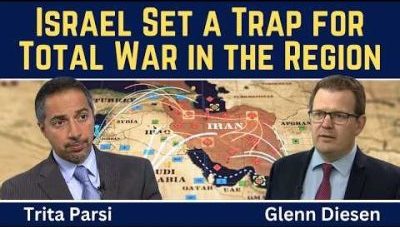
Trita Parsi: Israel Set a Trap for Total War in the Region
or go to
Aletho News Archives – Video-Images
Book Review
Why the War on Conspiracy Theories Is Bad Public Policy
By Kevin Barrett • Unz Review • February 1, 2019
 A Review of Conspiracy Theories and Other Dangerous Ideas by Cass Sunstein (based on an earlier paper co-authored with Adrian Vermeule); In Defense of Troublemakers: The Power of Dissent in Life and Business by Charlan Nemeth; and Conspiracy Theories and the People Who Believe Them, edited by Joseph E. Uscinski
On January 25 2018 YouTube unleashed the latest salvo in the war on conspiracy theories, saying “we’ll begin reducing recommendations of borderline content and content that could misinform users in harmful ways—such as videos promoting a phony miracle cure for a serious illness, claiming the earth is flat, or making blatantly false claims about historic events like 9/11.”
At first glance that sounds reasonable. Nobody wants YouTube or anyone else to recommend bad information. And almost everyone agrees that phony miracle cures, flat earthism, and blatantly false claims about 9/11 and other historical events are undesirable.
But if we stop and seriously consider those words, we notice a couple of problems. First, the word “recommend” is not just misleading but mendacious. YouTube obviously doesn’t really recommend anything. When it says it does, it is lying. … continue
Blog Roll
 Aletho News
- Easy fix for Europe’s chaos? Stop fueling war against Russia
- Putin’s key remarks on peace talks and Europe’s ‘schizophrenia’
- Trita Parsi: Israel Set a Trap for Total War in the Region
- Trump’s Iran war is on an Israeli leash
- Saudi oil boss issues global supply warning
- Riyadh Says Its Oil System Is Intact. The Numbers Say Otherwise.
- Trump and Netanyahu Want to “Finish the Job” on Iran
- US ‘one-sided dictation’ not Iran’s beliefs makes rational talks impossible: Baghaei
- Iran’s Next Strike May Not Explode. It Could Shut You Down /Col Doug Macgregor
- Iran: US political targets legitimate if assassinations return
- If Americans Knew
- DAILY UPDATE: Latest essential news on Palestine, Israel, & region
- The Israel Lobby’s Changing Fortunes
- AIPAC has become such a political liability that it’s shifting to a more “nimble” approach to buying politicians
- At least 160 Israeli settler attacks in 2 weeks
- Will Gaza’s Ancient Christian Community Disappear Forever?
- Israel’s vision of regional security rests on keeping Arab states weak
- Heidi Levine recounts how Palestinian youths helped save her in settler attack
- DAILY UPDATE: Latest essential news on Palestine, Israel, & region
- Trump’s Intensifying Sabotage of the ICC, for Israel’s Sake
- Israeli military detain US and UK volunteers in West Bank including Democratic NY politician Brad Lander
- No Tricks Zone
- E-Cars Reduce CO2 Emissions By Only 41% Compared To Internal Combustion Engine Vehicles
- Predictions Made By Renowned Climate Professor Over Past Decades Have Been Proven To Be Poor
- New Study Suggests Large Regions Of The Pacific Ocean Have Been Cooling For The Last 80 Years
- Germany’s Green Energy Debacle: High Energy Costs Force Kahla Porzellan to Close After 182 Years!
- New Study: 50 Years Of The Most Aggressive ‘Net Zero’ Policies Can Only Affect The Global Climate By 0.03°C
- US September “Heat” Was No Record…Many Records Set Decades Ago
- Latest European Green Energy Debacle; Portugal’s Largest Flagship Solar Park Insolvent!
- Green Energy Debacle: German Expert Professor Fritz Vahrenholt Warns Of Severe Economic And Social Consequences
- Two More Paleo Reconstructions Affirm Meters-Higher Sea Levels Across Ireland, Brazil 7000-6000 Years Ago
- New Study: Earth And Venus Surface Warmth Largely Explained By Convection And Lapse Rate, Not CO2 Or Radiation

