Note: throughout this review I refer to concepts like “racial oppression”, “Jewish supremacy” and so on. None of this is intended to imply that the concept “race” is meaningful, biologically or otherwise. Racial supremacy does not depend on the reality of race, but merely on the belief in it. Whether race is or is not meaningful is a completely separate question from whether Israel is an instance of racial supremacy. I cover this separate question in another article, Invention, Imagination, Race and Nation.
Max Blumenthal just had a book published, entitled Goliath: Life and Loathing in Greater Israel. He is a left-wing Jewish American journalist. The book assumes that the left/right political dichotomy is meaningful, not only in America, but in the Jewish state. He writes as if Israel can be reformed:
“The Nakba law was only one among a constantly expanding battery of racist and anti-democratic proposals pouring from the legislative offices onto the floor of the Knesset” (page 62).
“Israel’s very existence is threatened by fascism” (Uri Avnery, quoted sympathetically by Max Blumenthal on page 65, complaining about Jewish extremism undermining what is good about Israel).
“…the maintenance of a Jewish demographic majority is Israel’s national priority…” (page 42).
A national priority is something which can be changed. [it changed in south africa] But a Jewish majority is what Israel is.
My point (at least, in this review) is not to criticize reformism as such – normal Western countries can be, and are continually being, reformed. They are critical of their own histories, particularly in regard to racial oppression. Israel stands alone in its self-righteousness.The almost exclusive concern of organizations such as the Southern Poverty Law Center, radical anti-racist groups, and various academic departments, with “white racism”, tends to obscure this. Another article of mine, “The One-Sided View of Hate in Hate Studies,” goes into this question in more detail.
On several occasions in the book, the author criticizes the “settlements” in the “occupied territories” and the “right wing” Israeli politicians who support them. Taken seriously, this argument supports Israel’s fallback position — withdrawal to its 1967 frontiers, before it occupied the “occupied territories”. On page 273, he explains that liberal Zionists mislead us, by claiming that the “source of Israel’s crisis” is in 1967, with the occupation of the West Bank and other areas, rather than with the ethnic cleansing of 1948. But the Nakba was not the “source of Israel’s crisis” – it was the source of Israel!
The book is critical of what it calls Israeli “racism”, for example, on pages 18, 23, 39, 77, 135, 176, 247, 334 and 398. But what would it mean for a state, whose very definition of citizenship is membership of a particular “race”, regardless of geographical origin, leading to the expulsion of non-members of that “race”, who happen to be located within that state’s boundaries, to be “less racist”?
One area where Blumenthal argues there could be improvement, is the mistreatment of Israeli citizens of Palestinian Arab descent.
“…it is hard to find any Arab citizen who travels abroad by air and who has not experienced a discriminatory security check at least once” (page 39).
But, unlike equality for minorities in Western countries like the USA, equality for Israel’s Arab minority would make no difference to the basic fact that Israel, the Jewish state, is an implementation of imagined racial supremacy. They’re a minority because most of them were driven out.
In line with his effort to make Israel look like a Western society, Blumenthal lauds “feisty bands of Israeli radical leftists who had dedicated themselves to direct action against their country’s militaristic policies” (page 67) as if they are analogous to the anti-war movement in the USA. But the war in Vietnam really was a US policy, and that is why it could be changed. Ditto, US aggression in the Middle East. The imposition of Jewish supremacy is not an Israeli policy. It is what Israel is.
On page 116, he contrasts the left-wing shministim with right-wing “Israeli ultra-nationalists”. But what is an “ultra” nationalist in Israel? You either support Jewish power, or you don’t. Uri Avnery confuses the issue further by claiming that the “violence” of the “rightists” is the result of “brainwashing”.
“About fifty Jewish radical leftists brought up the rear of the protest [against a settlement], banging drums and chanting in Hebrew ‘Fascism will not pass!’” (page 50).
One of Blumenthal’s radicals left Israel and landed in London. No, it’s not Gilad Atzmon, whom the author explicitly repudiates. In contrast to Atzmon’s critique of Zionism and Jewish anti-Zionism, Blumenthal’s favorite joined “a radical counterculture” that was “transforming the Western world”, “successfully fusing anti-Zionism into the New Left’s broader struggle against colonialism” (page 265).
He’s right. Subordinating anti-Zionism to anti-racism, etc., has been very successful – in the sense of making it completely ineffective. As a result, the struggle against Zionism has been a complete failure – segregation and apartheid were ended, but Jewish supremacy in Palestine continues.
Blumenthal is, at best, ambiguous; he criticizes Israeli policies and politicians, and sometimes comes close to criticizing the entire project, but never once gets to the point – since the Western countries (the USA, Britain, France, etc.) have repudiated racial supremacy, and enforced compliance with that repudiation, and Israel is, by its very definition, based on racial supremacy, the Western countries should, if they follow their own standards, boycott Israel until it grants citizenship only to those born in Palestine, and those whose recent ancestors were born in Palestine, in other words, ceases to exist.
An example of this ambiguity is the first paragraph on page 74. It starts by saying there is not much to choose between the right and left wing Israeli parties, because they only differ in how to maintain the what he delicately calls the “Jewish demographic majority”. But the same paragraph ends:
In a society where maintaining the tyranny of the ethnic majority formed the underpinnings of national policy, there could be little wonder that an unapologetically supremacist party like Yisrael Beiteinu was able to consolidate a mainstream foothold in such a rapid fashion.
What does claiming the tyranny of the ethnic majority forms the underpinnings of national policy mean? Isn’t it just a roundabout way of saying that racial supremacy is what that nation is? In which case, why does it matter how unapologetic its parties are about their supremacy?
Blumenthal complicates and confuses the issue, but it’s quite simple. There are three major differences between South African apartheid and Israel. One is that, unlike apartheid, Israel exists. The second, is that Israel is Jewish. Finally, South Africa merely had to change its laws, but if Israel abandoned racial supremacy, it would no longer be the Jewish state. The complete contrast between the treatments of these two implementations of racial supremacy means that Jews have special rights in the Western world, and that white gentiles do not. It follows that opposing racial supremacy today therefore means, first and foremost, dismantling Jewish privilege, and that the “anti-racist” industry’s continuing emphasis on the critique of “white privilege” is, to put it charitably, a diversion.
How is Jewish privilege maintained? Blumenthal does briefly mention an example of president Obama having to grovel to the power of the American Jewish lobby on page 275, but only in passing, and with no attempt to help us understand how the organizations of a small ethnic minority can make the most powerful country in the world follow its interests.
~
Jay Knott wrote The Mass Psychology of Anti-Fascism.
December 12, 2013
Posted by aletho |
Book Review, Deception, Ethnic Cleansing, Racism, Zionism, Solidarity and Activism, Timeless or most popular | Anti-Zionism, Gilad Atzmon, Israel, Max Blumenthal, Southern Poverty Law Center, United States, Zionism |
Leave a comment
Dutch water supplier Vitens has ended a partnership with Israeli water company Mekorot due to the “political context,” the Dutch company said on Wednesday.
The abrupt decision comes days after a visit to the Mekorot offices in Occupied Palestine by the Netherland’s trade minister Lilianne Ploumen was abruptly cancelled.
In a statement, Vitens said it had come to the conclusion that it was “extremely hard” to work with Mekorot on future projects “because they cannot be taken out of the political context.”
The company visit was part of a larger tour of Occupied Palestine by Prime Minister Mark Rutte that was marred by a dispute over a Dutch-made security scanner on the Gaza border.
Rutte was to have inaugurated the scanner on the frontier with the Gaza Strip, but the ceremony was broken off.
The focus of the dispute is trade between Gaza and the West Bank, which is controlled by the Palestinian Authority under president Mahmoud Abbas.
Israel’s defense ministry wants to isolate the two Palestinian regions, while Dutch officials had hoped the scanner might boost commerce between them.
Mekorot, which provides water to Israeli towns and to Jewish settlements in the occupied Palestinian territories, has been accused by Dutch media of denying water access to Palestinians.
According to the World Bank, a third of Palestinian territories are cut off from the Israeli water system and Israelis draw out a far bigger share of the water supply than agreed in the 1995 Oslo II accord.
Israeli deputy Foreign minister Zeev Elkin said he was “blindsided” by the pullout “and a few more European companies have made similar decisions in the past months, which have blindsided us exactly in parallel with the peace process.”
In talks last week, Israel, Jordan and the Palestinian Authority signed a historic water-sharing initiative at the World Bank that could protect water resources in the region amid rising demand.
The deal will see Israel, working through Mekorot, boosting its annual sales of water to the Palestinian Authority by 20-30 million cubic meters a year, up from the current level of 52 million cubic meters.
Zeev, speaking to Israeli military radio, said that peace initiatives should mean “that people don’t breathe down our neck,” but “unfortunately this doesn’t work.”
Vitens said the decision to end the Mekorot tie-up was made after conferring with the Dutch foreign ministry and other “concerned parties.”
The news comes a day after Romania reportedly refused to allow Romanian construction workers to be employed in Israel’s illegal West Bank settlements.
The row comes in the wake of tensions between Israel and the European Union over new guidelines that bar EU funding for any Israeli entity operating in the internationally recognized occupied Palestinian territories.
(AFP, Al-Akhbar)
December 11, 2013
Posted by aletho |
Ethnic Cleansing, Racism, Zionism, Illegal Occupation, Solidarity and Activism | Israel, Mark Rutte, Mekorot, Palestine, Zionism |
Leave a comment
“You destroy the soldier himself”
That was the response of Munir, a Palestinian who is faced with Israeli soldiers at the checkpoint opposite his shop in Hebron every day, when I asked him how he thought being in Hebron must affect the soldiers.
I have had so many encounters with Israeli soldiers during my time in Hebron – it is impossible not to, due to the intensity of the military occupation.
I have passed the time of day and talked with some of them about what we are each doing here. Some have told me of their boredom, that they would much rather be on the beach. One helped keep a stray dog away from Palestinian school children who were frightened and I thanked him. Another told the police to leave me alone when they were harassing me about where in the street I was standing during the school run, and I thanked him too.
They have also spat at me, shouted at me, threatened to arrest me and called me stupid in Hebrew and a “sharmoota” (“whore” in Arabic). I have refused to follow their orders to move or stop taking photos. I have watched heavily armed soldiers throw stun grenades, and tasted the tear gas they shoot at Palestinian children on their way to school in response to small stones being thrown at their checkpoint. I have seen them harass and detain Palestinians trying to go about their lives, push kids for “facing the wrong direction” as Israeli settlers walk past, and arrest children. I have watched them laughing and joking many times in situations that are far from funny – most recently in the aftermath of an extremely serious attack by Israeli settlers against a Palestinian family.

An Israeli soldier fires tear gas at Palestinian children on their way to school after small stones were thrown at a fence near checkpoint 29 in Hebron
I have come to know some of the Givati Brigade of the Israeli army, currently serving in Hebron, by sight and a few by name. You can often tell how many schoolbags will be searched or Palestinians detained for ID checks by who is on duty. Almost without fail, the local Palestinians say that their treatment on a given day depends on the mood of the soldiers. I have often wondered what must be going through their minds and wished that I could talk to them properly about what they think. Amidst the tension and violence of Hebron, this is normally impossible.
One Friday night settlers blockaded a Palestinian family’s gateway and stopped them from leaving their home at Tel Rumeida in Hebron. I asked the nine watching Israeli soldiers to please help. They wouldn’t. One of them, whose name is Kawalski*, said “everything is fine.” 34 Israeli settlers were stopping a Palestinian family from walking down the street and thus from entering or leaving their home. Many of the settler children were shouting abuse, hitting our cameras and spitting at us.

An Israeli settler child hits my camera during the incident when settlers blockaded Palestinians in their home, and went on to attack us. Soldiers stand stand by in the background
They went on to throw two buckets of water at us, followed by a bucket of bleach. It was an awful scene and I cannot see how he could have thought it was fine.
Most of the soldiers in Hebron are young, ranging from 19-22 years old, and are conscripted into military service for three years. This is compulsory with a few exceptions, so most of them have not made a positive choice to be in the army. Yet in Israeli society there is real kudos attached to being a combat soldier like those in Hebron – just take a look at the Israel Defense Forces Facebook page. Only a tiny minority ever refuse to serve and spend time in prison as a result. Kawalski, the soldier on that Friday night, must be no more than 22 years old. After the incident, I wondered a lot about his “everything is fine” comment and thought maybe it was actually his internal reasoning – him trying to persuade himself it was all OK and he was in control (he most definitely was not).

An Israeli soldier gives first aid to our journalist colleague after refusing to intervene in a situation which culminated in the settlers throwing bleach in her eyes
Later, when he called an ambulance for my colleague after the attack on us that he had failed to prevent, he must have been forced to acknowledge that everything had not been fine.
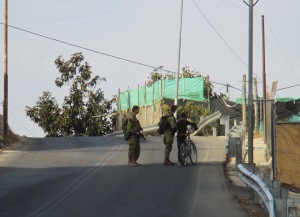
Israeli soldiers tell a young Palestinian boy he is not allowed to ride his bike in H2 in Hebron. Israelis can drive on this street but Palestinian are not allowed to
Thousands of settlers and their supporters came to Hebron recently for Shabbat Chayei Sarah, which commemorates Sarah of biblical times, who is buried in Hebron. It was a difficult weekend, with heightened tensions and violence. Movement restrictions were even tighter than usual – the Ibrahimi Mosque and nearby Palestinian shops were forcibly closed. Most of Shuhada Street, which Palestinians are never allowed to walk down, was closed to my colleagues and I as well – “Jews only” as the enforcing soldier told me. Extra soldiers drafted into H2 checked the ID of Palestinian men every 50 metres.
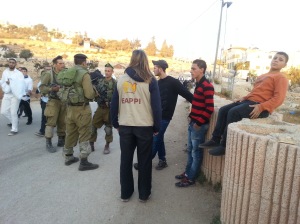
Me intervening to stop Israeli soldiers harassing young Palestinians who were sitting on a wall chatting as Israeli settlers walked past on Shabbat Chayei Sarah
I was patrolling with a colleague and we went to an area with a few Palestinian homes and many settlers nearby. I felt nervous because large groups of settlers, some armed and some drunk, are not normally a great thing to encounter. A Palestinian family was harvesting olives on a hill where many settlers were hanging around. We checked if the family was OK and sat down under a tree, hoping to deter the settlers from coming to bother them, throw things at them etc (there was a fence between us and the Palestinians so we couldn’t help with the olives). A couple of Israeli soldiers were standing nearby.
After a bit, a group of male settlers tried to make their way towards us and I stood up, worried about what would happen next. But rather than standing back and letting them come over, the soldier stepped in the way and asked the settlers to leave. They did. I had never seen such a thing before and, when the settlers had moved away, I thanked the soldier. “Don’t worry” he said. Shortly after, a second group of settlers tried to come and the soldier and his colleague again turned them away. After this the soldiers came to ask if we were OK. I was slightly stunned that they were looking out for us and for the Palestinians. I thanked them both and said that we would move on soon. They told us there was no need for us to leave and not to worry, they would make sure everything was OK with the Palestinians. This was the opposite of what I am used to in Hebron, where the soldiers will often do whatever they can to get rid of us, and simply stand by as settlers harass and attack Palestinians. The first soldier told me that his name was Yossi* and he was not normally based in Hebron.
Later, when there were no settlers watching, I bumped into Yossi again. I asked him if he understood what I was doing there. “You want peace” he said, and told me that he wanted peace too. He told me that after my colleague and I had gone, the settlers had pushed him and thrown stones at him. He was astonished by this and couldn’t understand it. I asked what he knew about Hebron – not much. His orders that day had been to keep the Jewish and the Palestinians apart. I told him what it is like in Hebron – the settler violence, the soldiers refusing to help, the clashes, and showed him pictures. It was all news to him. “It’s good that you are telling me this, I will tell my commander”, he said. I really appreciated this but told him I didn’t think it would help – his commander was 24 years old and decisions about what happens in Hebron are made high up in military and political circles. None of those in charge will be unaware of what actually goes on in Hebron.
Yossi told me that he loved being in the army. He told me that he loved his gun. “Why do you love your gun?!” I asked him, “It’s for killing people.” “No!” he said, “I love target practice, I don’t want to kill anyone.” “But why do you think they give you a gun?!” I asked. I learned that Yossi was 19 years old. He seemed like a good, decent young man and I believed him when he said he wanted peace and didn’t want to kill anyone. But, as I have previously written about other discussions I’ve had with Israelis, I was surprised by his lack of understanding about the facts of the conflict he is part of. I asked him to keep being nice to the Palestinians and he told me to take care in Hebron.
My encounter with Yossi really made me think. That I was so surprised at his fair conduct says a lot about the norm for soldiers in Hebron.

An Israeli soldier detains Palestinian boys aged 8 and 10 years. Photo by Maria Schaffluetzel
I wonder how it comes to be that so many of the young soldiers behave in the morally unacceptable ways I have so often observed or seen evidence of: arresting children and beating them up; demolishing Palestinian houses with bulldozers and then preventing tents and emergency aid from being delivered; even deliberately shooting innocent people, as veterans’ organisation Breaking the Silence has documented. Sometimes they will be following their orders in doing these things, and sometimes not. Mohaned, a 13 year old from the town of Beit Ummar, told me how soldiers raided his house at 3am, blindfolded and arrested him wearing only his underwear. He was held for 10 days, in which he was slapped, hit with the butt of a rifle, beaten and then released.
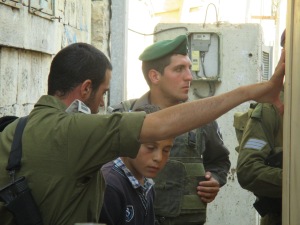
An 11 year old Palestinian boy arrested by Israeli soldiers in Hebron
Surely it is important to ask how young men, most of whom start off as normal, decent guys like Yossi, end up doing these things?
On a day off I visited the Golan Heights and got talking to some soldiers about their jobs. One of them said that they themselves had been discussing these issues, “Some of us were talking – we are children and they give us guns.” I met another soldier in Haifa, Israel. He was 23 years old and had previously served in the Golani Brigade in Hebron. He recalled an army education week when there had been a discussion about putting the heads of dead Palestinians on poles. He had been in the minority 20:1 to say that such things were wrong. Another former Golani soldier simply refused to speak about what he had done when he served in the army.

A Palestinian looks out of his window to find armed Israeli soldiers using the roof of his home in Al Arrub refugee camp near Hebron
My friend Sam is Jewish, an Israeli of British origin who I got to know in our student days. After my blog about my some of my experiences in Israel, he emailed me saying, “I think another big reason why it’s hard to convince Israelis about what’s going on in the territories is that almost every Israeli knows somebody who serves in the territories… it’s hard for us to believe that they are monsters.”
His use of the word “monster” really stuck with me. I don’t believe the soldiers are monsters – perhaps with a few exceptions, as with all people. But sometimes they end up doing monstrous things on a regular basis. They are born into a system which takes apparently normal teenagers and seemingly trains them to behave in these ways.
One soldier who served in Hebron told Breaking the Silence, “In Hebron, I was disturbed and frightened most of all by the unregulated and uncontrolled power, and the things it made people do.” Another said, “Another thing that has stayed with me from Hebron? I think of myself as a little injured maybe, I don’t know. Not physically injured. More emotionally injured.”
Rather than monsters, I think it makes the young soldiers part of the tragedy of the conflict. I am pretty sure that it will damage them too, that they will suffer in the long run. Aside from the terrible harm that the military occupation does to the Palestinians, I am sure that Israel also hurts itself and its own young people in what it does. What kind of society, what kind of country, will Israel end up as?
Avraham Shalom is in a position to know. He led the Shin Bet, the Israeli intelligence service, between 1980-86 and in the film The Gatekeepers he says,
“We have become cruel. To ourselves as well, but mainly to the occupied population.” The Israeli army has become “a brutal occupation force.”
*Not his real name
December 11, 2013
Posted by aletho |
Ethnic Cleansing, Racism, Zionism, Solidarity and Activism, Subjugation - Torture, Timeless or most popular, War Crimes | Givati Brigade, Hebron, Human rights, Israel, Israeli settlement, Palestine, West Bank, Zionism |
Leave a comment
It’s enough to make one who knows even a little history gag.
The death of Nelson Mandela has led to an outpouring of vapid commentary about Canada’s supposed role in defeating South African Apartheid. “Canada helped lead international fight against Apartheid”, noted a Toronto Star headline while a National Post piece declared, “Canada’s stance against apartheid helped bring freedom to South Africa.”
Notwithstanding this self-congratulatory revisionism, Canada mostly supported apartheid in South Africa. First, by providing it with a model. South Africa patterned its policy towards Blacks after Canadian policy towards First Nations. Ambiguous Champion explains, “South African officials regularly came to Canada to examine reserves set aside for First Nations, following colleagues who had studied residential schools in earlier parts of the century.”
Canada also supported South African apartheid through a duplicitous policy of publicly opposing the country’s racist system yet continuing to do business as usual with this former British Dominion. It’s true that in 1961 John Diefenbaker’s Conservative government called for South Africa to be expelled from the British Commonwealth. But this position was not a moral rebuke of apartheid. “Nothing has been more constant in Diefenbaker’s approach than his search for a tolerable way of averting South Africa’s withdrawal,” commented an External Affairs official at the 1961 Commonwealth meeting where South Africa left the organization. Diefenbaker pushed for South Africa’s exclusion in an attempt to save the Commonwealth. The former British colonies — notably in South Asia and Africa — threatened to leave the Commonwealth if South Africa stayed. This would have been the death of the British Empire’s Commonwealth. Diefenbaker’s lack of principled opposition to apartheid helps explain his refusal to cancel the 1932 Canada-South Africa trade agreement.
Sentenced to life in prison in 1964, Mandela joined 1,500 black political activists languishing in South African jails. In June 1964 NDP leader Tommy Douglas told the House of Commons: “Nelson Mandela and seven of his associates have been found guilty of contravening the apartheid laws … [I] ask the Prime Minister if he will make vigorous representation to the government of South Africa urging that they exercise clemency in this case”? Lester Pearson responded that the “eight defendants … have been found guilty on charges of sabotage and conspiracy … While the matter is still sub judice [before the courts] it would, I believe, be improper for the government to make any public statement on the verdict or on the possible sentences.” This author found no follow up comment by Pearson regarding Mandela.
Widely viewed as a progressive internationalist, Pierre Trudeau’s government (1968-1984) sympathized with the apartheid regime not the black liberation movement or nascent Canadian solidarity groups. Throughout Trudeau’s time in office, Canadian companies were heavily invested in South Africa, enjoying the benefits of cheap black labour. In October 1982 the Trudeau government delivered 4.91 percent of the votes that enabled Western powers to gain a slim 51.9 percent majority in support of South Africa’s application for a billion-dollar IMF credit. Sixty-eight IMF members opposed the loan as did 121 countries in a nonbinding vote at the U.N. General Assembly. Five IMF executive directors said South Africa did not meet the standards of conditionality imposed on other borrowers. The Canadian minister of finance justified support for the IMF loan claiming that “the IMF must be careful … not to be accused of meddling in the internal affairs of sovereign states.” A few months later, Ottawa opposed IMF funding for Vietnam because of its occupation of Cambodia (largely to stop the Khmer Rouge’s killing).
Officially, the Trudeau government supported the international arms embargo against South Africa. But his government mostly failed to enforce it. As late as 1978 Canadian-government financed weapons continued to make their way to South Africa. Canadair (at the time a Crown company) sold the apartheid regime amphibious water bombers, which according to the manufacturer, were useful “particularly in internal troop-lift operations.” (The official buyer was the South African forestry department.) In the early 1970s the Montréal Gazette discovered that the RCMP trained South African police in “some sort of liaison or intelligence gathering” instruction.
Supporters of apartheid would say anything to slow opposition to this cruel system. At a 1977 Commonwealth meeting, Trudeau dodged press questions on post-Soweto South Africa suggesting that Idi Amin’s brutal regime in Uganda should be discussed along with southern Africa. For its part, the Globe and Mail argued in 1982 that “disinvestment would be unwittingly an ally of apartheid” since foreign investment brought progressive ideas.
After decades of protest by Canadian unions, churches, students and others, Brian Mulroney’s Conservative government finally implemented economic sanctions on South Africa in 1986. The Conservatives only moved after numerous other countries had already done so. “The record clearly shows”, notes Ambiguous Champion, “that the Canadian government followed rather than led the sanctions campaign.” Unlike Canada, countries such as Norway, Denmark New Zealand, Brazil and Argentina also cut off diplomatic ties to South Africa. Even U.S. sanctions, due to an activist Congress, were tougher than those implemented by Ottawa.
From October 1986 to September 1993, the period in which economic sanctions were in effect, Canada’s two-way trade with South Africa totaled $1.6 billion — 44 percent of the comparable period before sanctions (1979-1985). Canadian imports from South Africa averaged $122 million a year during the sanctions period.
Canada did business with the apartheid regime and opposed the liberation movements. Ottawa’s relationship with the African National Congress (ANC) was initially one of hostility and then ambivalence.
Canada failed to recognize the ANC until July 1984 and then worked to moderate their direction. In an August 1987 letter to the Toronto Star, Foreign Affairs Minister Joe Clark explained the government’s thinking: “Canada has been able to develop a relationship of trust with the … African National Congress that it is hoped has helped to strengthen the hand of black moderates.”
With apartheid’s end on the horizon, Ottawa wanted to guarantee that an ANC government would follow pro-capitalist policy, contrary to the wishes of many of its supporters. The man in charge of External Affairs’ South African Taskforce said that Ottawa wanted an early IMF planning mission to the country to ensure that the post-apartheid government would “get things right” from the start. One author noted: “The Canadian state has entered fully in the drive to open South Africa to global forces and to promote the interests of the private sector.”
Ottawa’s policy towards apartheid South Africa was controversial among Canadians. There was an active solidarity movement that opposed Canadian support for the racist regime and to the extent that Canadian politicians played a role in challenging South African apartheid it was largely due to their efforts.
December 10, 2013
Posted by aletho |
Ethnic Cleansing, Racism, Zionism, Solidarity and Activism, Timeless or most popular | African National Congress, Canada, John Diefenbaker, Nelson Mandela, South Africa, Yves Engler |
Leave a comment
In order to show various so-called “alternative” and “anti-globalist” activists what the real cause of the State Department sponsored coup in Egypt back in July of this year was all about, I have put together just a few comparisons of the publicly approved Egyptian constitution of 2012 and their respective counterparts in the new draft constitution being put together by the illegal junta run by their new dictator, al Sisi.
As many of the fake alternative journalists have often raged against the “Islamist” nature of the previous constitution without ever linking their readers to the document so they could read it and judge it for themselves, I resolve to provide links to both the translated Egyptian Constitution of 2012 and the current draft version written by the technocrats and advisers on behalf of Big Global Business and the financial elites.
Here is a link to the publicly approved Egyptian Constitution of 2012
Here is a link to the extremely hard to find current draft (Dec. 2, 2013) of the neo-liberal constitution which aims to replace the original (PDF).
What I have done is taken a few articles and simply listed them side by side for you to view. I have created 4 PDFs of this which I will link to below and 4 JPEGS so you can view them without having to download the other files. The PDFs are obviously easier to read, but I will do my best with the pics. I sincerely hope that you will take the time to read both the original 2012 version as well as the new neo-liberal one.
If you wish to know why I spent so much time working on this when the story of the illegal coup in Egypt is all but over, remember this…
They are currently working on producing a climate in this country which will provide them the needed pretext to begin rewriting our constitution. It’s not that far off folks. Heard some “progressives” on NPR chatting about that very thing just yesterday.
You want to see how they (the Chicago School of Economics technocrats) remake constitutions? The Egyptian model should serve as a fine example of what we can expect to see very soon.
Here are the PDF versions:
- 2012 to 2013 Layout1 (1)
- 2012 to 2013 Layout1 (2) (1)
- 2012 to 2013 Layout1 (3) (1)
- 2012 to 2013 Layout1 (4) (1)
And here are the photos (JPEGs)


The new constitution institutionalizes entry points for various global multinational corporations and financial institutions, setting as a priority the notions of the creation of a financial environment which will encourage hot money speculation and foreign investment. It’s all about “sustainable development” and protecting the “economic services” industry (i.e. financial institutions)
Notice that the new constitution states that the natural resources “belong to the people” but make no mention of their right to the profits of those resources they own. The 2012 constitution did.
The 2012 constitution said the property of the state is not to be disposed of while the neo-liberal 2013 draft says it can be under law.
The slickness of the legalese is notable as well. Notice how the new constitution, rather than guaranteeing the people various rights like the 2012 constitution does, instead they “aim” or “commit” to these ideals as if they were goals they promise to attempt to fulfill. Legally speaking, big difference.
I only scratched the surface with this comparison. Others have pointed out that the 2013 draft empowers the elements in Egypt that sided with the Obama administration during the coup like the judiciary, the military and the police.
Some have pointed out that the new constitution allows for military detentions of civilians, which it does.
Given the nature of the current dictatorship in Egypt (the way they are outlawing political parties like the Apartheid government did to the ANC based on the arbitrary ruling that they are a “terrorist organization”, the way they are arresting peaceful protesters if they don’t just shoot them dead in the streets) it’s quite remarkable that anyone who claims to be opposed to our imperialist interventions across the globe could possibly still imagine that this illegal coup has any form of legitimacy whatsoever. I hope that this simple comparison will make it clearer what is happening in Egypt and more importantly, why it happened.
December 7, 2013
Posted by aletho |
Civil Liberties, Corruption, Deception, Economics, Solidarity and Activism, Timeless or most popular | Chicago School of Economics, Constitution of Egypt, Egypt, Mohamed Morsi |
Leave a comment
The American Studies Association, a 60-year old US academic organization with 5,000 members, passed a resolution on Wednesday committing to the boycott movement against Israel.
Citing its commitment to “the pursuit of social justice” and to “the struggle against all forms of racism,” the ASA revealed in a statement published on its website that it had voted to support the academic Boycott, Divestment and Sanctions (BDS) movement against Israel.
“The American Studies Association endorses and will honor the call of Palestinian civil society for a boycott of Israeli academic institutions,” the statement read.
“The ASA supports the protected rights of students and scholars everywhere to engage in research and public speaking about Israel-Palestine and in support of the boycott, divestment, and sanctions movement.”
ASA noted the “significant role” played by the United States “in enabling the Israeli occupation of Palestine and the expansion of illegal settlements and the [apartheid] Wall in violation of international law, as well as in supporting the systematic discrimination against Palestinians, which has had documented devastating impact on the overall well-being, the exercise of political and human rights, the freedom of movement, and the educational opportunities of Palestinians.”
The BDS movement has gained traction over the past years, as a growing number of scholars and academic entities have committed to the cause.
More than 950 scholars working in American institutions have endorsed the US Campaign for the Academic and Cultural Boycott of Israel.
The Association for Asian American Studies became the first US academic organization to officially support the boycott movement in April.
In May, renowned physicist Stephen Hawking withdrew from an Israeli conference, citing his decision to respect the Israel boycott.
December 5, 2013
Posted by aletho |
Ethnic Cleansing, Racism, Zionism, Illegal Occupation, Solidarity and Activism | American Studies Association, Association for Asian American Studies, Boycott Divestment and Sanctions, Human rights, Israel, Israel-Palestine, Palestine, Stephen Hawking, United States, Zionism |
Leave a comment
David Letwin (Jews for Palestinian Right of Return) interviews Dr. Haidar Eid, Associate Professor, Department of English Literature, Al-Aqsa University, Gaza Strip, Palestine. Dr. Eid is also a one-state activist and a member of Palestinian Campaign for the Academic and Cultural Boycott of Israel (PACBI).
David Letwin: Many Palestinian solidarity activists in this country put their main efforts into opposing the 1967 occupation and more recently, Israel’s siege of Gaza. But you and other Palestinians have argued that Palestinian refugees’ right to return is at the core of the struggle for justice. Why is this?
Haidar Eid: Zionist dispossession and oppression of Palestinians does not begin with 1967. It goes back to 1948, when more than 750,000 Palestinians were ethnically cleansed from villages and towns in Palestine, and were deported to neighboring countries: Jordan, Lebanon, Syria ,Gaza and the West Bank to make way for an apartheid “Jewish state.”
Then, in 1967, Israel occupied the Gaza Strip, the West Bank and Eastern Jerusalem, which represents the remaining twenty-two percent of historic Palestine.
As a result of this systematic and ongoing ethnic cleansing, fully two-thirds of the Palestinian people are refugees entitled to their right of return to their original homeland, in accordance with United Nations resolution 194. This is the root of the Palestine issue.
Solidarity supporters that only take the cause back to 1967 are ignoring the source of the problem, and reflecting the Zionist Left in Israel, which wants separation of Palestinians from Israeli Jews.
Can this central right of return be realized if there is a Jewish state anywhere in historic Palestine?
No, that is an impossibility. Zionism, by nature, is an exclusionary ideology that doesn’t accept the “Other.” And the “Other,” in Zionist ideology, is the Palestinian — the Arab in the historic land of Palestine. So a Jewish state means the denial of rights to non-Jews. I am from a refugee family, but because I am not born from a Jewish mother, I’m not entitled to citizenship in the state of Israel; I’m not entitled to my right of return.
How does this fit into your analysis of the Two-State versus the One-State Solution?
The two-state solution is a racist solution that calls for a “pure Jewish state”, and a “pure Palestinian state,” both of which would be based on ethno-religious identities. It does not take into account the rights of two-thirds of the Palestinian people. Neither does it take into consideration the national and cultural rights of 1.2 million Palestinian citizens of Israel, who live as second-, if not third-class citizens of the state. This is extremely important.
Furthermore, the Palestinian struggle is not about independence — it is about liberation. Liberation is very different from independence, because our right to self-determination must lead to the right of return and full equality for all inhabitants of the state of Palestine.
The two-state solution is a racist dogma that cannot guarantee all the rights demanded by the 2005 BDS call around which we have a Palestinian consensus: withdrawal of Israeli troops from the Arab lands occupied in 1967; implementation of UN resolution 194, which calls for the right of return of all Palestinian refugees and their descendants; and an end to Israel’s apartheid policies against Palestinian citizens of the state of Israel. I’m sorry that we have solidarity activists who have fallen into the trap of supporting this so-called solution. Would supporters from the United States of America accept a state that officially discriminates against African Americans? Did South African supporters accept the “Bantustan solution”? No, they didn’t! So why accept it for the Palestinians?
And the One-State Solution?
The one-state solution is the only solution through which the Palestinian rights called for by the BDS movement can be achieved. Moreover, it is a very generous compromise from the oppressed colonized to the settler colonialists, offering citizenship in a state with total equality, exactly like what happened in South Africa, where white settlers were offered the same generous compromise by the indigenous population.
This is the 21st century, after all! We are offering a humane, inclusive solution that is not based on ethno-religious identity: a secular state for ALL of its citizens, regardless of religion, ethnicity, gender, etcetera.
If you’re really a supporter of Palestine, you are supposed to support our right to self-determination, which ultimately leads to a secular democratic state throughout all of historic Palestine. Otherwise, you would be supporting a racist solution! I don’t think that genuine support for Palestine excludes Right of Return. If that is the case, then where are the Palestinian refugees supposed to return? To an apartheid state that defines itself in ethno-religious terms? A state that is not their state since it is the state of Jews only?!
In a 2009 interview, BDS leader Omar Barghouti said, “I am completely against bi-nationalism. A secular, democratic state, yes, but not bi-national. There is a big difference.” Do you agree? And what, in your opinion, is the difference?
Yes, I completely agree. A bi-national state by definition is a state made up of two nations. These two nations are historically entitled to the land. But Jews do not constitute a nation. Israeli Jews constitute a settler-colonialist community, not unlike the whites of South Africa or the French in Algeria. Settler colonists are not entitled to self-determination. However, the indigenous people of Palestine, Muslims, Christians and Jews, are all entitled to self-determination and they do constitute a nation.
In fact, bi-nationalism is a Zionist idea since it looks at ALL Jews as a nation that is entitled to the land.
What do you say to people who say, “OK, I agree with what you’re saying. But let’s be honest. Two-states is the only realistic solution, and if you really want to help Palestinians, you should focus on ending the immediate problem of the Occupation and supporting the two-state solution”?
I would say that the one-state solution is more practical/realistic than the two-state solution. South Africa proved that civic democracy for all the inhabitants of South Africa was the way forward; the land of South Africa, according to the Freedom Charter, belongs to ALL those who live on it. That’s a lesson that we need to learn from history.
Israel has shot the two-state solution in the head by creating news facts on the ground: by annexing Jerusalem, having a “Greater Jerusalem,” and by increasing the number of settlers and expanding the existing illegal colonies (all colonies are illegal). In 1993, when the Oslo Accords were signed, the illusion of peace prevailed, unfortunately. People believed that it was possible to have two states: a Palestinian state on twenty-two percent of historic Palestine.
That year, 1993, the number of Jewish settlers in the Gaza Strip and the West Bank, including East Jerusalem, was 193,000. Twenty years later, the number of settlers in the West Bank has risen to 600,000. Israeli settlements — or rather the Jewish-only colonies, since Palestinians are not allowed to live there — have become towns and cities. Which means that Israel is not planning to leave the West Bank at all. And during these twenty years, Israel has erected a monstrous apartheid wall that separates Palestinians from Israelis, and Palestinians from Palestinians.
Israel has also transformed the Gaza Strip into a concentration camp (as much as these two words might disturb some people who claim to have monopoly on victimhood), an open-air prison. There is no communication between the Gaza Strip and the West Bank. The whole issue is personal for me; it is personal for all Palestinians. For example, my sister lives in Bethlehem, just a one-hour drive from Gaza. But I have not been able to see her for fifteen years. When both our parents died back in 2005, she was not able to come to their funerals. That personal experience tells you about the impossibility of having two-states.
So, just to clarify, you don’t support the one-state solution just because a two-state solution has “failed”; you support it because one-state is the only just solution, is that correct?
Absolutely correct. Even if you implemented the two-state solution — which is an impossibility — it does not fulfill the right of self-determination, which is right of return, equality and freedom. The two-state solution doesn’t do that.
At the 2013 Left Forum in New York, Steven Shalom argued that, while unjust, the “two-state solution” nevertheless paves the way for one democratic state and should be supported on that basis. Do you agree?
No, I do not! Does also think that the Anti-apartheid movement should have accepted the Bantustan solution based on the same logic? I have already made it clear in my previous answers and articles as to why that is a fallacy. A racist solution cannot pave the way to a just solution.
Archbishops Desmund Tutu said that “[they] wanted the full menu of rights.” Why are we expected to cater for less than that? I fail to understand.
Is it presumptuous for Jews and other non-Palestinians to endorse the call for one democratic state?
I strongly believe that all solidarity supporters should heed the call for one-state made by the oppressed Palestinians. They should be principled in their support for human rights and democracy as expressed through the Universal Declaration for Human Rights. Does the two-state solution subscribe to that declaration? No. Then logic and principle demands they should support the call for the solution that does, the solution that calls for civic democracy and equality throughout all of historic Palestine.
After all, activists didn’t feel it was presumptuous to support a single democratic state in South Africa, did they? And when the “president” of Transkei called on the international community to support and recognize his “independent homeland,” – his version of the “two-state solution” — international anti-apartheid activists did not buy that line!
And, by the way, most South Africa anti-apartheid activists who have visited Palestine now support the one-state solution. Some of my South African friends and comrades say it very clearly: “The one-state solution is the only solution, because we can’t support a racist solution.” That’s why even the official South African line of supporting a two-state solution is not that popular amongst South African solidarity supporters of Palestine — not to say even amongst members of the cabinet! They know what racism is all about! The five-state solution in South Africa was the brainchild of the architects of Apartheid: White South Africa on 88 per cent of the land, and four “Independent Homelands”/Bantustans for the natives! In fact, the original plan was to have 11 Bantustans, if four was not enough for you!
The solidarity movement supported the call for civic democracy and a secular democratic state in South Africa, because that was the only solution. There could be no compromise, no negotiations with apartheid. The same thing should apply to the Palestine solidarity movement. Why is that so difficult to understand?!
In a recent interview, Noam Chomsky said that the one-state solution was an “illusion” because it “has no international support.” How do you respond?
Did he also add the that the two-state solution has become a facade, a fantasy in the head of those who believe in fantasies? Didn’t he also argue in his latest piece in Mondoweiss that Israel and the US have killed the two-state solution?
Personally, I feel heart-broken when I see an extremely smart thinker like Chomsky missing the point and deciding to adopt a soft-Zionist position! There is something with people like Chomsky and Finkelstein with whom you tend to agree about everything in the world except on Palestine. That’s why, understandably, some BDS and one-state activists in the US call them PEP (Progressive except on Palestine!)
There is an overwhelming international support for our right to self-determination; and this entails our right of return and equality. How is the two-state solution going to deal with these two internationally sanctioned rights? Chomsky fails to provide an answer, unless he thinks we are not entitled to our right of return and equality! He is smart enough to know that the two-state solution is a racist one. Didn’t he think so about the Bantustans of South Africa?!
You recently said, “At one point in time, the BDS movement will be asked to take that stand” in favor of one democratic state. Why has the BDS campaign refrained from taking this stand so far, and should it do so now?
Every activist knows very by now that the BDS movement is rights-based, rights that are guaranteed for ALL human beings regardless of ethnicity, gender, nationality, religion, etcetera. BDS is guided by the Universal Declaration of Human Rights. That is why most, if not all, BDS activists are staunch human rights defenders.
I am, nevertheless, aware of tensions arising from the Boycott National Committee’s lack of a political program and its focus on a rights-based approach. This issue is certainly worthy of discussion within the BNC’s secretariat.
But we also need to take into consideration that the BNC is a coalition with all the compromises coalitions have to make in order to work as a front. That is why the BNC has become the frame of reference for international boycott movements. I believe that a good comparison with the South African experience, within this context, can be made, which shouldn’t overlook the role of the United Democratic Front (UDF) that functioned with representation from the National Congress Party, as well as other political parties and civil society organizations in exactly the same manner as the BNC. The UDF adopted two out of what South Africans called the “four pillars of struggle,” namely mass mobilization and the boycott campaign. History stands witness to this approach that contributed immensely to ending apartheid. In my opinion, the BNC has learnt this historical lesson from South Africa. But it took the international community about 30 years to heed the call made by the anti-apartheid movement, whereas the Palestinian BDS call was made in 2005 only.
That is why I think there will come a time when BDS will be asked to take a stand vis-à-vis the one or two-state solution. And I strongly believe that it will come in support of the former.
How is the call for a single secular democratic state throughout historic Palestine connected to other liberation struggles in the region?
When the Arab Spring started in Tunisia and Egypt, Israel was extremely worried because the struggle in the Arab world is for human rights and democracy. And democracy is the antithesis of Zionism; exactly the same way democracy in South Africa was the antithesis of apartheid, and which ultimately led to the end of institutional apartheid there in 1994. (I still think that economic apartheid exists in South Africa, but this is something we can address in another context)
As a Zionist project, Israel knows very well that true democracy in the Arab world would spread and reach Palestine. Israel would be expected by the international community and by the Arab Spring to be truly democratic. That means one person, one vote. And after the right of return, one person, one vote would ultimately lead to the collapse of the Zionist enterprise in Palestine.
That, to my mind, is the link between the Palestinian struggle for freedom, self-determination, and liberation, and the struggle for democracy and human rights in the Arab world.
Speaking of BDS, Norman Finkelstein recently accused the BDS campaign of hypocrisy for appealing to international law when it comes to Palestinian rights, but refusing to respect international resolutions, like the 1947 UN partition, that — he claims — legitimize the existence of the “Jewish state.” How do you respond?
I’m so sorry to hear that from a smart person like Norman Finkelstein.
As US solidarity supporters, you have principles. You can’t reconcile an unjust partition and apartheid with human rights and democracy. Has Norman Finkelstein forgotten that Israel defines itself as the state of Jews only? Do you expect me to recognize something like this, just because the United Nations declared it to be so? We recognize those laws and resolutions, like 194, that are just and reject those, like the partition resolution, that are unjust. That is the way all human rights struggles have operated. How is that hypocritical?
That is how it was in the struggle against apartheid South Africa. Whether it was Norman Finkelstein or his mentor Noam Chomsky, everybody heeded the call by South Africans. We all said, “What do you want, you oppressed, colonized South Africans?” They said, “We want an end to apartheid.” And right now, Palestinians are saying we want an end to Israeli apartheid.
And I would have understood him had he supported the two-state solution based on UN resolution 181, passed in 1947; it offered to partition Palestine into an Arab and a Jewish state as THE solution! It is a very unfair and problematic resolution in that it offered the Jewish minority (660,000 out of 2 million people) the larger part of the land (56%). This 56 percent, offered to the Jews, included an equal number of Jews and Palestinians. And since most Zionists, soft or not, fought for a Jewish majority in Palestine, that ultimately led to the NAKBAH, i.e, an orchestrated process of ethnic cleansing. Two-staters, such as Finkelstein, do say that a Palestinian state should be established on 44 per cent of Palestine based on UN resolutions!
So I would argue that it’s Norman Finkelstein who’s being hypocritical, because he is unwilling to do for Palestinians what he and all other activists did for South Africans. And in fact, he’s being Zionist and racist when he actually expects us Palestinians to listen to what he has to say in the first place. No, excuse me — he is supposed to listen to what *we* have to say. Unless he has decided to ignore the fact that the 2005 BDS call has been endorsed by the overwhelming majority of Palestinian Civil Society, including National and Islamist forces! Is that not enough for you if you were a genuine supporter of Palestine?
It has been twenty years since Oslo Accords were signed. What effect did these accords, and the so-called “Peace Process,” have on the struggle for the core Palestinian rights called for by BDS: equality, right of return, and end of Occupation?
I’ll sum it by quoting Edward Said in 1993: the Oslo Accords are a second Nakba. Oslo has reduced the Palestinian people to those who only live in the Gaza Strip and West Bank, while excluding Palestinian refugees and Palestinian citizens of the state of Israel. Oslo never alluded to Palestinian’s right to return to their villages and towns from which they were ethnically cleansed in 1948 and never alluded to equality in the 1948 territories. Oslo basically codified and legitimized the ethnic cleansing — the Nakba — of 1948.
Oslo also gave a false impression to the international community that you have “two equal parties” — Palestinians on the one hand, and the Israelis on the other — engaged in “dialogue” to solve their problem. But there are not two equal parties. There is no dialogue. There is an apartheid regime seeking to perpetuate its rule on the one hand, and an indigenous people struggling for their inalienable rights on the other.
Rather than acknowledging the necessity of disassembling this apartheid regime once and for all, Oslo fetishized the trappings of statehood, that if you offer Palestinians a flag and a red carpet for its president and a national anthem, then you have solved the Palestinian question once and for all!
Going back to Norman Finkelstein: you have the struggle of colonized Palestinians against settler colonialists — thanks to the BDS movement, thanks to the formation of the BNC, thanks to the formation of the Palestinian Campaign for the Academic and Cultural Boycott of Israel, and thanks to the revival of the one-state idea. You have intellectuals and activists like Edward Said, Azmi Bishara, Ali Abunimah, Omar Barghouti, Ramzy Baroud, Joesph Masaad, Ilan Pappe and all these people who have decided to say farewell to the two-state solution, and to endorse the one-state solution.
As solidarity supporters you need to support democracy and human rights — the same principles you followed in the Eighties against apartheid South Africa. You didn’t waste time discussing the practicalities of having Bantustans in South Africa. So you need to join us in putting the two-state solution on the shelf in a museum, because it delays our liberation, and support our call for one-state.
– David Letwin is a member of Jews for Palestinian Right of Return. Dr. Haidar Eid is an Associate Professor in the Department of English Literature, Al-Aqsa University, Gaza Strip, Palestine. Dr. Eid is also a one-state activist and a member of Palestinian Campaign for the Academic and Cultural Boycott of Israel (PACBI).
December 4, 2013
Posted by aletho |
Ethnic Cleansing, Racism, Zionism, Illegal Occupation, Solidarity and Activism, Timeless or most popular | Israeli settlement, Palestine, Zionism |
Leave a comment

Palestinians protesting against Prawer Plan
The global ‘Day of Rage’ against the Prawer Plan included demonstrations and other solidarity actions in more than 24 cities around the world.
According to Adalah: the Legal Center for Arab Minority Rights, who are challenging the Prawer Plan within the Israeli courts, the Prawer Plan will forcibly displace up to 70,000 Palestinian citizens of Israel from the Naqab.
For Palestinian holders of Israeli-issued West Bank ID cards, reaching the main demonstration in the Naqab was impossible due to the imposed travel restrictions, so an alternative demonstration was held alongside Beit El Jewish colony near Ramallah. Further demonstrations were held in Haifa, Jaffa, Jerusalem and Gaza.
The chosen protest site of the Beit El colony, which is built on land stolen from al-Bireh and also from the village of Dura al-Qara, was significant as the Prawer Plan constitutes part of the same ongoing displacement and colonisation project that is being implemented across all areas of historic Palestine. Three activists were arrested as Israeli Occupation Forces (IOF) violently attacked the protest with substantial amounts of tear gas and percussion grenades.
One of the activists who was beaten by Israeli forces during his arrest, Abud Hama’il, explained the motivation for these events before being forced into an Israeli police jeep:
‘The Naqab is facing attacks like all of Palestine. We are one people, one struggle, one homeland, one sacrifice. Today a Palestinian worker was killed in Petah Tikva, he wasn’t involved in anything. The people must rise. The people, whose land is being stolen; the people, everyday they want to move us to Jordan – we need to resist, there is no choice…’
More images and text by Rich Wiles
December 1, 2013
Posted by aletho |
Ethnic Cleansing, Racism, Zionism, Solidarity and Activism | Al-Bireh, Beit El, Negev, Palestine, Prawer Plan |
Leave a comment
A message from Ken – December 1, 2013
Aloha all,
Well my first show on The People’s Voice will air on Sunday from 1600-1800 GMT.
 It is a great programme with Gilad Atzmon and I having a conversation about the control of language and Jewish power, politically incorrect through and through.
I am also very happy to debut the series of stories about families in Gaza I met in 2011 when I lived there for 6 months. These are powerful, emotional stories and I must thank brother Ashraf Elwakhery for being the man who finally edited all the raw footage. There are 24 stories about 21 families and we are starting off with the heartbreaking story of Zeinat Samouni, it brings tears to my eyes to watch this story every single time, if you are not moved by what this beautiful woman and her children have been through then you have clearly lost your humanity. And lastly, I am very happy to have sister Noor Harazeen as our TPV Correspondent in Gaza, she will be giving us regular reports and also giving us an update about Zeinat and her children.
Please share this far and wide, please tune in, the show is called ‘Ken O’Keefe’s Middle East’, it will repeat later in the day, prime time in the US and other places throughout the week. We may have call in opportunities, stayed tuned for info for that.
http://www.thepeoplesvoice.tv/watchnow
December 1, 2013
Posted by aletho |
Ethnic Cleansing, Racism, Zionism, Solidarity and Activism | Gaza, Gilad Atzmon, Ken O'Keefe, Middle East, Zeinat Samouni |
Leave a comment
Policing activists for anti-Semitism is a distraction from the fight against Jewish tyranny
By Karin Friedemann with Joachim Martillo | January 15, 2009
My previous article talked about guarding yourself against destructive Jewish behavior patterns. These behaviors are learned and not genetic. Israel Advocacy organizations like the David Project even give workshops in linguistic aggressive-defense tactics for whenever someone uses the word “Jew” or criticizes Israel. Always manipulate the conversation so that the focus is turned on Israel’s accuser. It’s a psychological intimidation tactic aimed at getting the person to apologize for hurting Jewish sensitivities, or for conflating Jews and Zionists, or for thinking all Zionists are bad. Jews do not seem to hold themselves accountable to the same moral standard as they hold others. All Gentiles have to apologize for the Holocaust, yet all Jews don’t have to apologize for Israel. [ecumenical deal: Jews accept Christian apology as long as Christians don’t criticize Israel].
The current Jewish argument seems to be:
You are anti-Semitic for linking Zionism and Jewishness.
You are anti-Semitic for not acknowledging the special connection of Israel to Jewishness.
You can’t win!
You are bad.
Therefore we will talk about what you did, not what Jews did.
The socially suicidal person who is bravely trying to do the right thing, to struggle against total evil, is often made to feel guilty and ashamed and very alone, when actually the Jew is the one that should be apologizing for the people he/she chooses to identify with, and I stress chooses, because “Jew” is a chosen identity. Jews are those who call themselves Jews. Nobody knows if you are a Jew or not unless you mention it. Jews who do not wish to participate in Jewish hegemony should be the ones in the front lines, demanding the asset seizure, imprisonment and public execution of the Zionist leadership who did this to the Palestinian people, not to mention the US economy.
Peace Jews are for the most part coordinated by the Israeli government via the various liberal Jewish organizations in the US. They serve to deflect blame from Jews as a group by creating a false cover for the perpetrators of racist genocide. Instead of confronting the supporters of mass murder in their own community, they act as representatives of the Jewish community, creating a false impression of Jewish non-support for Israel. In truth, even the peace Jews tend to unite with the far right when the question is Jewish Israel’s American tax funded existence. An example of this was when Tikkun united aggressively with the Neocon establishment to snuff out a City Council vote on taking public moneys out of Israeli investments in Somerville, Ma. This “peace” Zionist organization deliberately misled the public on the issues involved in a local ballot question regarding the Palestinian Right of Return.
Let’s get this straight. Israel’s existence depends on committing genocide with your tax money. All the aggression that Israel commits is done in defense of Israel’s existence.
Therefore, duh, Israel should not exist. Israel cannot exist as a Jewish state AND give people back their homes and give them all a vote, which is their right under international law.
Any Jew whose family lost their home in Germany or Poland is allowed by law to claim back the property. It’s elementary property rights law. Human rights include property rights. Jews have to give back what they stole. Israel’s existence was dependent on the UN Resolution 181. Israel’s existence depends on the condition that the Jews have to let the Palestinians stay in their homes and give them equal citizenship rights. This has never happened. Within hours of signing that agreement Israel was ethnically cleansing hundreds of thousands of Palestinians in 1948.
Many people in Gaza have property in Sredot. It used to be their land, until they were evicted at gunpoint by Jewish murdering thugs. The racist settlers living on other people’s stolen property in Sredot have absolutely no right to expect to live in security or peace. Americans who hear Jews and non-Jews say such genocidal racist and sick statements like Israel has the right to defend itself should be ashamed. Instead, they want you to apologize for calling Jews “Jews.”
No, I really mean Jews. My fight is with the Jewish power establishment and not the Israelis per se.
Do any of the Jewish organizations support the right of Hamas to exist?
When people accept Israel’s “right” to exist, or more accurately, the Jewish “right” to mass murder and plunder non-Jews including Americans, they are accepting a criminal ideology. Israel’s existence does not exist in a vacuum. It is a result of American Jewish organizations, and to a large extent, European. All Americans are indoctrinated by American Jewish organizations via the media and Hollywood and even the Pentagon is informed of all its plans by the Jewish organizations.
Also alarming, nearly all American Jews go through an indoctrination process within the Jewish community that is even more extreme. It includes training in psychological manipulation tactics aimed at shifting the blame away from Jews any time someone mentions the obvious, for example, “Jews are killing Palestinans.” The trick is always to make the person apologize for believing that Jews would kill Palestinians. All bystanders would be made to revile the person stating the obvious as a flaming racist. It’s an interesting game. But it doesn’t work forever.
The good news is, there is nothing behind the Jewish facade, the linguistic traps of mixed messages. That is, the banal statements of believing in peace plus the absolute refusal to do what it takes to be a good person – give the Palestinians their lands back and give them citizenship rights in some country. It probably doesn’t matter what you call it at this point but that’s the minimum requirement for peace.
Once you get people to the point where they admit the truth, that all humans are created equal, and therefore Israel’s existence is a really bad idea, they can either agree with you, or short-circuit. Those who know Israel is wrong and do not strive against its existence are just like all the Gentiles whom the Jews routinely condemn for “doing nothing” about the Holocaust. Jewish Liberals should not serve as human shields using a battle of guilt trips to stop people from discussing how to limit Jewish power.
The Islamophobic hate campaign was not just created by Israel. It was created, coordinated and disseminated in the US by Jewish organizations. Every Jew in the Jewish community participates in some way with the Zionist agenda of racist indoctrination. They are fed a steady stream of anti-Islam and anti-Arab propaganda and are brainwashed to believe that Israel has a right to exist. If you are not with the genocidaires, then, why are you shielding them?
One may choose to opt out of Jewish organizational behavior; that does not erase the very real and scary fact that this destructive deliberate and well-funded organized violent crime and extortion racket is backed up by all the well-meaning Jewish foot soldiers who are simply loyal to “Israel” or to the Jewish people without fully knowing what that means.
It is hard to see the big picture even once one notices the pattern. One of the reasons is because in polite society we are not allowed to discuss Jewish racism. Always, one of the little footsoldiers chimes in, wanting an exception to the group accusation to Jews. But this policing against anti-semitism, instead of responding in a moral and appropriate way, is exactly the Jewish behavior that the Jew has been programmed for by the B’nai B’rith Society. Rabbi Lerner, who has never been to the Occupied Territories, gets his “media updates” and talking points from the JCRC. The Liberal Zionists are trained and coordinated to cover for the Right Wing Jews. They don’t even realize that their behavior is clinically abnormal and morally bankrupt.
In a recent article, former Israeli philosopher Gilad Atzmon writes:
“The Jewish state is the ultimate threat to humanity and our notion of humanism. Christianity, Islam and humanism came along with an attempt to amend Jewish tribal fundamentalism and to replace it with universal ethics. Enlightenment, liberalism and emancipation allowed Jews to redeem themselves from their ancient tribal supremacist traits. Since the mid 19th century, many Jews had been breaking out of their cultural and tribal chain. Tragically enough, Zionism managed to pull many Jews back in. Currently, Israel and Zionism are the only collective voice available for Jews.
The last twelve days of merciless offensive against the Palestinian civilian population does not leave any room for doubt. Israel is the gravest danger to world peace. Clearly the nations made a tragic mistake in 1947 giving a volatile racially orientated identity an opportunity to set itself into a national state. However, the nations’ duty now is to peacefully dismantle that state before it is too late. We must do it before the Jewish state and its forceful lobbies around the world manage to pull us all into a global war in the ‘name’ of one banal populist ideology or another (democracy, war against terror, cultural clash and so on). We have to wake up now before our one and only planet is transformed into a bursting boil of hatred.”
I think if a Jew wants to live in the Holy Land he or she should accept to live under majority rule: Hamas rule. A modern Islamic state, whose Constitution includes a Bill of Rights for non-Muslims, is really the only viable option for peace in Historic Palestine. Hamas has every right, under international law, to fight against the occupying power, including lobbing pipe bombs over the Apartheid Wall. Israel has no right to blockade any part of a civilian population, preventing them from getting to work, getting food, or medical aid. Israel has no right to build a wall.
I’ve been through this Jewish indignation thing during the Jenin Massacre and so it’s harder to fool me now. Among the various threads of Zionist thought, from the condescending racism of Tikkun to the openly aggressive settler movement, there is nothing cool.
My goal is to stop the evil so it is necessary to observe the evil – not just walk away saying “How sad.”
Levels of guilt:
those who commit atrocities
those who justify the atrocities
those who deny the atrocities
those who benefit from atrocities
those who participated in a society that allows atrocities
So let’s reiterate the obvious.
Israel does NOT have any “right” to exist nor any right to defend itself.
The UN has the right to dismantle Israel.
When Israel says they want to eradicate “Hamas” they mean anyone who might have ever voted for Hamas.
Meaning: all Palestinians
The Palestinians DO have the right to shoot rockets at an occupier.
We are engaged in genocide when we neglect to use the word Palestine in our speech.
We DO need good strategy for eradicating Jewish tyranny.
http://karinfriedemann.blogspot.com/
November 29, 2013
Posted by aletho |
Deception, Ethnic Cleansing, Racism, Zionism, Full Spectrum Dominance, Solidarity and Activism, Timeless or most popular | Antisemitism, David Project, Israel, Palestine, Zionism |
Leave a comment
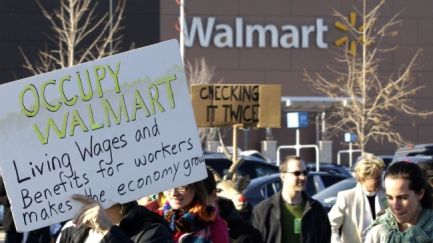
One of the most profitable corporations in America is having a holiday food drive. Sounds good — it’s the least Corporate America can do for those struggling to make ends meet while big companies rake in record profits and give so little back. But wait… there’s a catch. The food drive is for the company’s own underpaid, poverty-stricken workers. You really can’t make this stuff up.
Last week, it was reported that a Walmart store in Canton, Ohio is asking for food donations for its own employees. Photos of the food donation bins circulated online showing signs that read: “Please donate food items here so associates in need can enjoy Thanksgiving dinner.” (That’s if they even have a chance to — Walmart stores are open on Thanksgiving and are beginning their “Black Friday” deals at 6 p.m. on Thanksgiving Day to get a jump on the holiday shopping madness.)
Walmart is America’s largest employer with a workforce consisting of 1.3 million “associates.” The company made nearly $17 billion in profit last year. So why can’t Walmart afford to pay its own store workers enough for them to enjoy a holiday meal with their families? The answer is Walmart doesn’t really care about its workers.
If the Walmart food donation drive doesn’t get you properly steamed, then consider that Walmart CEO, Mike Duke, makes approximately $11,000 an hour — he took home about $20.7 million last year, plus ample benefits. Still not mad? It has also recently been reported that Duke has a retirement package worth more than $113 million! That is 6,200 times larger than the average 401k savings of a non-executive level Walmart employee! (Check out this recent report which charts other massive CEO pensions in relation to those of average workers)
One final fact to really get your dander up — The Walton family, heirs to the Walmart fortune, have accumulated more financial wealth than the entire bottom 40 percent of the population of the United States or 313 million Americans. That’s six Waltons worth a combined $102.7 billion!
No matter what one’s political leanings may be, the problem of massive income inequality and insatiable corporate greed is worsening year-by-year as CEO salaries rise, overall corporate profits soar and worker salaries stagnate. Liberal or conservative–all Americans should be outraged by this trend.
I recently wrote to conservative anti-tax advocate Grover Norquist to bring both sides of the political spectrum together on this troubling issue. In the past, Mr. Norquist and I have backed popular, reasonable policies, such as putting the full text of government contracts online, rolling back corporate welfare and opposing the civil liberties restrictive Patriot Act. As someone who claims to care about taxpayer protection, the issue of poverty-level wages and their major effect on taxpayers should be an important issue for Mr. Norquist.
Here’s why — low wages at the 10 largest fast food chains cost taxpayers $3.8 billion per year. Fifty-two percent of families of fast food workers have to rely on government assistance. McDonald’s’ “McResource” help line goes so far as to advise workers who cannot make ends meet from their poverty-level wages to sign up for government food stamps and home heating assistance. Is it fair that taxpayers have to shell out $1.2 billion a year to subsidize McDonald’s paying its workers while the fast food giant rakes in $5.5 billion in profit?
Walmart is even worse — according to a study from the Democratic staff of the House Committee on Education and the Workforce study, a single Walmart Supercenter store in Wisconsin can cost taxpayers upwards of $1.75 million in public assistance programs. If taxpayers have to cover over $1 million for just one 300-employee superstore, consider how much Walmart is costing taxpayers each year at their 4,135 stores in the United States. According to the 2012 “Walmart Associate Benefits Book”, which is distributed to employees, the company also advises its workers about getting on public assistance. Is this a fair or reasonable burden on taxpayers as Walmart reports $17 billion in profits?
Over the past five years, Walmart has had enough excess funds to buy back billions in its own stock. Walmart reportedly spent $7.6 billion last year buying back its shares. These funds are enough to raise the salaries of the lowest paid workers by $5.83 an hour. Catherine Ruetschlin, policy analyst at Demos, stated in a recent release: “These share repurchases benefit an increasingly narrow group of people, including the six Walton family heirs. But buybacks do not improve the fundamentals of the firm. If the funds were used to raise the pay of Walmart’s 825,000 low paid workers, it would not harm the retailer’s competitive ability and would add no cost to the consumer.”
(See the recent report from Demos titled: “A Higher Wage is Possible”)
The quickest way to lessen reliance on food stamp, EITC and Medicaid outlays is to raise the federal minimum wage. Raising the wage has the backing of 80 percent of Americans, 69 percent of Republicans, and even writers from The National Review and The American Conservative magazines. So why isn’t there more rage from the other end of the political spectrum? Even Rick Santorum and Mitt Romney supported raising the minimum wage to keep up with inflation — at least until Mitt Romney flip-flopped on the issue during the 2012 election.
The support of Grover Norquist and the Congressional followers of his no-tax pledge would be a significant boost for 30 million struggling workers who make less today than workers made in 1968, inflation adjusted. With a doubling in both worker productivity and the cost of living, there is no excuse for such a decline in their livelihoods.
Mr. Norquist, join this fight to protect taxpayers. Underpaid workers (who are also taxpayers) and their families need your support.
November 27, 2013
Posted by aletho |
Economics, Solidarity and Activism | Grover Norquist, Mitt Romney, Ralph Nader, United States, Walmart, Walton family |
Leave a comment
The Solidarity Collective, a group of activists endeavoring to promote greater unity among the various alignments and groupings that make up the political left, has released a statement on the smear campaign being waged against Mother Agnes Mariam of the Cross. Taken to task in the statement are leftwing journalists Jeremy Scahill and Owen Jones over their threat to back out of a London antiwar conference this weekend should they have to share a platform with Mother Agnes. Calling their “no platform” position “totally unacceptable,” the Collective deplores the attacks upon the Syrian nun and says it fully supports her right to be heard.
“We fully support the brave move by the London Catholic Worker group based at Guiseppe Conlon House who have invited Mother Agnes to a meeting during their retreat,” the statement reads. “It is only when we are fully informed on the Syrian conflict by those who live daily with the consequences that we will be be in a position to make decisions.”
Back in early September, when a US attack on Syria appeared imminent, I published an article entitled US Jews Back War on Syria But ‘Downplay’ Israel Angle. At that time AIPAC, the ADL, and the Conference of Presidents of Major American Jewish Organizations had all issued statements supporting a military strike on Syria, but as I noted—and as a Jewish media outlet also noted—none of the statements mentioned Israel. It was as if Israel’s role in all this were being deliberately downplayed. I posted that article on September 5. One day later, on September 6, RT published an interview with Mother Agnes in which she discussed her belief that videos uploaded to the Internet in the immediate wake of the August 21 chemical weapons attack in Syria had been fabricated. Three days after that, on September 9, came the formal release of the ISTEAMS report providing convincing evidence this was indeed the case.
Just as it has been clear for a long time that prominent Jews would like to see the US go to war in Syria, so also has it been obvious to me for a while now that the attacks on Mother Agnes are Zionist motivated. And apparently this is growing obvious to others as well. The Solidarity Collective’s statement in fact discusses the role played by one Zionist in particular:
A marvellous smear campaign as designed by Michael D Weiss has done much to further the cause of promoting her [Mother Agnes] as an Assad apologist and all round devious character. Incidentally some of the highlights of his CV are as follows: former director of Zionist pressure group Just Journalism whose stated concerns included ‘how Israel and Middle East issues are reported in UK media’, former fellow at Neo-Conservative war lobby think-tank Henry Jackson Society, he is a lead rebel advocate with Now Lebanon and also the author of proposals for US intervention for the Syrian opposition.
Weiss’ loathsome attack on Mother Agnes, in which he refers to her sarcastically as a “humble, pot-smoking emissary of God,” can be found here.
A little bit more from the Solidarity Collective’s statement is also instructive:
Much of the slander is sustained by her self proclaimed mission to provide what she believes are the true narratives of the conflict which are routinely, she says, misrepresented in global media. One such incident is the August 21st 2013 chemical attack in Damascus. The accepted truth as ‘assessed’ by the US government is that the attack was carried out by the Assad Regime. There was a threat of mass-resignation of CIA workers who refused to have their names attached to the document published pertaining to this ‘fact’. Mother Agnes as well as some credible impartial sources insist that it is much more likely that this was a rebel attack.
You can access the full statement here. A few days ago I wrote an article in which I commented that Mother Agnes “has considerably undermined the Western narrative on events in Syria,” and that obviously this has “upset a lot of plans and made a lot of people mad.” Judging from the timing of the events of early September, as I related above, this would seem to be the case.
November 27, 2013
Posted by aletho |
Deception, False Flag Terrorism, Full Spectrum Dominance, Mainstream Media, Warmongering, Solidarity and Activism, Wars for Israel | Henry Jackson Society, Israel, Jeremy Scahill, Owen Jones, Syria, United States, Zionism |
Leave a comment


 It is a great programme with Gilad Atzmon and I having a conversation about the control of language and Jewish power, politically incorrect through and through.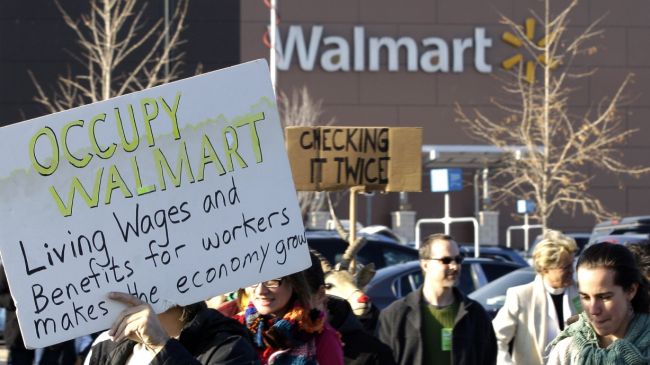
 A Review of Conspiracy Theories and Other Dangerous Ideas by Cass Sunstein (based on an earlier paper co-authored with Adrian Vermeule); In Defense of Troublemakers: The Power of Dissent in Life and Business by Charlan Nemeth; and Conspiracy Theories and the People Who Believe Them, edited by Joseph E. Uscinski
 Aletho News
