10 More Years in Afghanistan
By David Swanson | War is a Crime | November 25, 2013
When Barack Obama became president, there were 32,000 U.S. troops in Afghanistan. He escalated to over 100,000 troops, plus contractors. Now there are 47,000 troops these five years later. Measured in financial cost, or death and destruction, Afghanistan is more President Obama’s war than President Bush’s. Now the White House is trying to keep troops in Afghanistan until “2024 and beyond.”
Afghan President Hamid Karzai is refusing to sign the deal. Here is his list of concerns. He’d like the U.S. to stop killing civilians and stop kicking in people’s doors at night. He’d like the U.S. to engage in peace negotiations. He’d like innocent Afghan prisoners freed from Guantanamo. And he’d like the U.S. not to sabotage the April 2014 Afghan elections. Whatever we think of Karzai’s legacy — my own appraisal is unprintable — these are perfectly reasonable demands.
Iran and Pakistan oppose keeping nine major U.S. military bases in Afghanistan, some of them on the borders of their nations, until the end of time. U.S. officials threaten war on Iran with great regularity, the new agreement notwithstanding. U.S. missiles already hit Pakistan in a steady stream. These two nations’ concerns seem as reasonable as Karzai’s.
The U.S. public has been telling pollsters we want all U.S. troops out of Afghanistan “as soon as possible” for years and years. We’re spending $10 million per hour making ourselves less safe and more hated. The chief cause of death for U.S. troops in this mad operation is suicide.
When the U.S. troops left Iraq, it remained a living hell, as Libya is now too. But the disaster that Iraq is does not approach what it was during the occupation. Much less has Iraq grown dramatically worse post-occupation, as we were warned for years by those advocating continued warfare.
Humanitarian aid to Afghanistan — or to the entire world, for that matter, including our own country — would cost a fraction of what we spend on wars and war preparations, and would make us the most beloved nation on earth. I bet we’d favor that course if asked. We were asked on Syria, and we told pollsters we favored aid, not missiles.
We stopped the missiles. Congress members in both houses and parties said they heard from more people, more passionately, and more one-sidedly than ever before. But we didn’t stop the guns that we opposed even more than the missiles in polls. The CIA shipped the guns to the fighters without asking us or the Congress. And Syrians didn’t get the aid that we favored.
We aren’t asked about the drone strikes. We aren’t asked about most military operations. And we aren’t being asked about Afghanistan. Nor is Congress asserting its power to decide. This state of affairs suggests that we haven’t learned our lesson from the Syrian Missile Crisis. Fewer than one percent of us flooded Congress and the media with our voices, and we had a tremendous impact. The lesson we should learn is that we can do that again and again with each new war proposal.
What if two percent of us called, emailed, visited, protested, rallied, spoke-out, educated, and non-violently resisted 10 more years in Afghanistan? We’d have invented a new disease. They’d replace the Vietnam Syndrome with the Afghanistan Syndrome. Politicians would conclude that the U.S. public was just not going to stand for any more wars. Only reluctantly would they try to sneak the next one past us.
Or we could sit back and keep quiet while a Nobel Peace Prize winner drags a war he’s “ending” out for another decade, establishing that there’s very little in the way of warmaking outrages that we won’t allow them to roll right over us.
Thousands block NATO convoy route to protest US drone strikes in Pakistan
RT | November 23, 2013
Thousands of demonstrators protesting US drone strikes in Pakistan blocked a main road Saturday in the Peshawar province used to transport NATO supplies to and from Afghanistan.
The protests was led by the Pakistan Tehrik-e-Insaf (PTI) party, which is led by Imran Khan, a former international cricketer now turned politician.
They were supported by their allies in the Khyber Pakhtunkhwa provincial government and they were also joined by the Jamaat -i-Islami (JI) and the Awami Jamhoori Ittehad (AJIP) political parties.
“We will put pressure on America, and our protest will continue if drone attacks are not stopped,” Khan told reporters.
“We are here to give a clear message that now Pakistanis cannot remain silent over drone attacks,” said Shah Mehmood Qureshi, a senior member of the PTI, addressing the protesters.
Imran Khan has been a fierce critic of US drone attacks, arguing that they violate Pakistan’s sovereignty. Khan said that the Pakistani government is doing nothing to stop drone attacks except for issuing statements of condemnation and that the protest would continue indefinitely.
Khan stressed that NATO supplies would not be allowed to pass through Khyber Pakhtunkhwa, formerly called North-West Frontier Province, and added that the province’s PTI-led government had the mandate to block NATO trucks from passing through its territory.
Earlier Imran Khan had warned that NATO supply routes will be blocked if continuing US drone strikes in Pakistan threaten the country’s peace talks with the Taliban.
An attack on November 1 killed the former leader of the Pakistan Taliban, a day before the Pakistani government said it was going to invite him to peace talks. Officials said they were enraged by the attacks, although the Pakistani government is known to have supported some of the drone attacks in the past.
Party workers from the PTI and the JI travelled to Peshawar from across Pakistan and an estimated 10,000 people participated in Saturday’s protests. The protesters shouted anti US slogans such as “Stop drone attacks” and “Down with America”.
“I am participating in today’s sit-in to convey a message to America that we hate them since they are killing our people in drone attacks. America must stop drone attacks for peace in our country,” Hussain Shah, a 21 year old university student, told Dawn, Pakistan’s oldest and most widely read English-language newspaper.
American drones are performing regular extrajudicial killings of Islamist leaders, accompanied by the collateral damage of many civilian casualties.
Strict security measures were in place Saturday, with 500 police personnel on duty. Trucks were directed to use an alternative route, although Tahir Khan, a government official, said there was normally little NATO traffic Saturday as most of the trucks arrive by Friday night to clear the border crossing.
However, protesters said that they would begin to stop trucks carrying NATO supplies through Khyber Pakhtunkhwa from Sunday night, which could spark conflict with the federal government in Pakistan.
The US embassy in Islamabad declined to comment.
On Owen Jones and the Stop The War Coalition
Interventions Watch | November 16, 2013
On Saturday the 30th November, the Stop The War Coalition will host a conference to discuss the most effective ways to resist the drive to war against Syria – stalled for now, but not necessarily indefinitely. Due to speak (at the time of writing) are Diane Abbott MP, Seamus Milne, Tariq Ali and Lindsey German, among many others.
To cut a long story short, the Stop the War website is also advertising that Mother Agnes Mariam is due to speak at the conference. Agnes is a christian Nun who is suspected by some observers of the war in Syria of being little more than a mouthpiece for the Assad regime. Let’s just accept for arguments sake that this is true, and that inviting her was a bad idea (I will confess here to not being totally au fait with her views).
The presence of Mother Agnes has lead to Jeremy Scahill, the excellent American investigative journalist, and Owen Jones, a columnist with The Independent newspaper, pulling out of the conference, on the grounds that they don’t want to share a platform with an apologist for war criminals.
But I just want to share a few thoughts on why I think Jones’ position is confused at best.
Jones is a member and supporter of the Labour party, and thinks other lefties should be as well. As is hardly a secret, Labour is a party that plays host to plenty of major war criminals and apologists for those war criminals, but that apparently isn’t enough for him to want to part ways with them.
Indeed, he has in the past quite happily appeared on platforms with John Prescott, who was deputy Prime Minister at the time of the aggression against Iraq – not just an apologist for war crimes then, but an active participant in them.
Jones’ argument for staying a member of Labour is that while he doesn’t agree with these people on various issues, he thinks it’s worth trying to win the argument against them to change the party for the better, from within. It’s not a totally unreasonable position, and I think he’s certainly sincere in arguing it.
Why couldn’t he apply that same logic to the Stop The War Conference though? Say that while he obviously doesn’t agree with the opinions of all the speakers there, he thinks it’s still worth going and making his argument as to what the best anti-war position is or should be? He could even outline why he doesn’t agree with people like Mother Agnes in his talk, and maybe change a few minds.
But no, unlike his continuing embrace of the blood soaked Labour party, he’s just going to shun the conference altogether, thus giving plenty of ammunition to those who are trying to smear Stop The War, and anti-war people in general, as pro-Assad. ‘Even Owen Jones wants nothing to do with them, see!’.
My hunch is that he’s scared of being tarred with a pro-Assad brush, because that would be damaging to his reputation (certainly in the eyes of a state-corporate media Establishment that has embraced him) in a way that being seen as broadly pro-Labour – despite their horrific track record and the massive trail of corpses they left behind them last time they were in power – isn’t, given that Labour are part of that Establishment themselves.
Nuns who’ve made some dodgy comments in defense of the Assad regime? He’ll have no part of it.
A political party who instigated some of the worst and most murderous war crimes of the modern era, and whose leader continues to act as an apologist for the perpetrators, as well as the brutal wars in Afghanistan and Libya? Count him in.
For me, it shows how even some lefties have a moral vision that is badly skewed by power, and the need for Establishment approval, when it comes to assessing and reacting to Their crimes (or even alleged supporters of Their crimes), and Ours
Related article
Join Palestinians on November 30th to protest against the Prawer plan
Prawer Won’t Pass Campaign | November 10, 2013
 Occupied Palestine – On the 24th of June, the Israeli Knesset approved the Prawer-Begin plan, which if implemented will result in the destruction of more than 35 unrecognized villages in Al-Naqab and the forced expulsion and confinement of more than 70,000 Palestinian Bedouins. The Prawer plan is the largest Israeli land-grab since 1948. It epitomizes the nature of Israel’s policy; Israeli-Jewish demographic expansion and Palestinian-Arab demographic containment.
The International community has repeatedly called on Israel to halt the implementation of the Prawer Plan due to its discriminatory nature and the severe infringement it causes on the rights of Palestinian Bedouins in Al-Naqab. The UN committee on the elimination of Racial Discrimination called on Israel to withdraw the proposed legislation of the Prawer Plan. Also, in 2012, the European Parliament passed a resolution calling on Israel to stop the Prawer plan and its policies of forced displacement and dispossession.
Injustice, humiliation and forced displacement are a recurring theme in Palestine’s history. This is lesson that we as a group of youth take to the heart. We will oppose, resist and work against the continuous assault that our communities, across Palestine face. Therefore, we launched the “Prawer will not pass” campaign with an eye to preventing this plan to be yet another chapter in Palestine’s long and tragic history.
Opposing the Prawer Plan is to oppose ethnic cleansing, displacement and confinement in the 21st century.
Join us by organizing marches, protests, sending letters to those with positions of influence in your country or community, by doing whatever you can, in order to force Israel to stop the Prawer plan.
Join us on the 30th of November in saying “Prawer shall not Pass”.
For more information, please contact:
Email: PrawerWontPass@gmail.com
Palestinian Woman Arrested in Chicago
Committee to Stop FBI Repression | October 23, 2013
 A Palestinian woman, Rasmieh Odeh, was arrested at her home this morning, Oct. 22, by agents of the Department of Homeland Security.
She is charged with immigration fraud. Allegedly, in her application for citizenship, she didn’t mention that she was arrested in Palestine 45 years ago by an Israeli military court that detains Palestinians without charge – a court that has over 200 children in prison today and does not recognize the rights of Palestinians to due process.
The arrest today appears to be related to the case of the 23 anti-war activists subpoenaed to a grand jury in 2010. Well-known labor, community and international solidarity activists around the Midwest had their homes raided by the FBI when the U.S. attorney alleged that they had provided material support to foreign terrorist organizations in Palestine and Colombia.
Assistant U.S. Attorney Barry Jonas is leading the investigation against the 23. He was at the courtroom in Chicago this morning, consulting with the assistant U.S. attorney who was presenting the indictment to the judge. Jonas was also the prosecutor in the case of the Holy Land Five, the heads of the largest Muslim charity in the U.S. before 9/11. He was successful in getting prison sentences for as long as 65 years for the five men, who provided charity to children in Gaza.
The Committee to Stop FBI Repression (CSFR) denounces this attack as another example of the continuing repression of Palestinians and people who stand in solidarity with them. Homeland Security, the FBI, Immigration and Customs Enforcement and the U.S. Attorney’s office now are carrying out enforcement of the Israeli occupation of Palestine.
Odeh will appear in court in Detroit on Nov. 1, where she will be represented by Jim Fennerty of the National Lawyers Guild. CSFR urges people to attend the proceedings at the Federal Court in Detroit in her defense.
A Tacit Admission that Israel is Ethnically Cleansing Palestinians
By Paul Larudee and Beth Daoud | Dissident Voice | October 25, 2013
On April 8, 2009, ten billboards went up in the Albuquerque area saying “Tell Congress: Stop Killing Children. No More Military Aid to Israel.” On April 28, Lamar Advertising, with whom the ads had been placed by the Coalition to stop $30 Billion, tore down the ads due to pressure, presumably from other clients with larger accounts.
In June, 2012, twenty-three billboards went up in the Los Angeles area, also calling for an end to US aid to Israel. One week later, the billboard company, CBS Outdoor, also took down the ads.
We have come a long way since then. Ads that are critical of giving billions of US tax dollars to Israel, of Israeli human rights violations and of the creation of the Jewish state at Palestinian expense have appeared in Detroit, Seattle, New York, San Francisco, Sacramento, Albuquerque, and other locations.
In Denver, another free speech struggle has achieved its objective. A partnership of NoTaxDollarsToIsrael.com and ColoradoBDSCampaign.com initially failed twice to get approval for a billboard. First, CBS Outdoor placed the restriction that the ad must not use the words Jew and Israel, so the coalition offered the wording “Want peace? Stop ethnic cleansing in Palestine.” CBS Outdoor rejected it without explanation.
The groups then tried Lamar Advertising, with the same result. Finally, they borrowed a technique tried and tested by an anti-Muslim group, the Freedom Defense Institute. FDI chose public transit advertising space to place anti-Muslim ads in New York and San Francisco. After initial rejection in New York, FDI’s Pamela Geller sued and won a court order to permit her ads, based on the fact that the ad space was publicly owned and therefore subject to constitutional free speech principles. While the use of privately owned ad space is largely at the discretion of the owner, publicly owned space is not, and must conform to First Amendment principles. The court also decided that in the absence of clear evidence that the ad used hate speech, it could also not be restricted by such criteria.
 The Denver groups pursued the same strategy. They resubmitted the ad to Lamar, but this time for space on the public transit system (inside the Denver light rail vehicles and outside the 16th street mall buses). After a long delay, the ads were approved, with no change at all in the message or graphics. As of this writing, the ads are available for all to see, both Denver residents and visitors to the city, like the hundreds of delegates to the convention of the Jewish National Fund, 1½ blocks from the 16th street mall.
What was going on during the delay? One may speculate that much deliberation was taking place, possibly in consultation with lawyers from the ADL (Anti-Discrimination League) and AIPAC (American Israel Public Affairs Committee). The only possible challenge would be that the ad constituted hate speech or was libelous. In both cases, however, the challenge would depend upon proving the falsity of the “ethnic cleansing” label.
Apparently, these august jurists decided that a discussion of “ethnic cleansing” as a description of Israel’s actions was potentially far more dangerous to Israel than the placement of an ad to that effect. After all, there was no assurance that the court would rule in their favor, in which case a terrible precedent would be set. Better to allow a bit of uncomfortable truth to appear in public than a legal ruling certifying such a truth. How Palestinians disappeared from much of Palestine is a question that the Israel lobby would prefer to leave unanswered.
Paul Larudee and Beth Daoud are organizers with No Tax Dollars to Israel and Colorado BDS Campaign, respectively.
Court Holds Wisconsin Officials In Contempt For Enforcing Scott Walker’s Anti-Union Law
By Ian Millhiser | Think Progress | October 22, 2013
A Wisconsin judge who declared Wisconsin Gov. Scott Walker’s (R) union-busting law unconstitutional more than a year ago held the Wisconsin Employment Relations Commission in contempt of court on Monday for continuing to enforce that law against school and municipal workers.
Walker’s law includes a one-two punch that dramatically weakens the ability of unions to improve workers’ wages while simultaneously encouraging those workers to drop the union. First, the law only permits public workers to collectively bargain for raises limited to the rate of inflation, thus curtailing one of the primary benefits of unionization — increased wages. It then requires unionized public workers to vote every year on whether they want to still be represented by a union.
Judge Juan Colas’ 2012 order blocks these restrictions from going into effect against city, county and school district workers, although state workers remain largely subject to Walker’s law. His order on Monday clarifies that the order applies statewide, and not just to the narrow group of plaintiffs before his court.
Yet, while Colas’ most recent decision is a victory for public workers in Wisconsin, this victory is likely to be temporary. His original 2012 ruling is pending before the very conservative Wisconsin Supreme Court. And the conservatives on that court already reinstated Walker’s law once after it was blocked (on a different legal grounds) by a lower court.
Israel and the erosion of democracy: an Australian story
By Samah Sabawi | World Observer | October 18, 2013
A few months ago I signed my name as co-defendant to a possible legal action threatened by an Israeli law firm, Shurat HaDin, targeting two Centre for Peace and Conflict Studies (CPACS) academics – Professors Jake Lynch and Stuart Rees for publically refusing to co-operate with Israel’s Hebrew university. Almost two thousand Australian and international academics, writers, human rights activists and other members of civil society have since joined this unprecedented historic act of solidarity signing as co-defendants along with the two targeted professors.
Jake Lynch was practicing a basic democratic right when he made a moral and ethical decision to refuse to collaborate with an academic representing Hebrew university. Part of Hebrew university campus and dormitories were built on illegally annexed Palestinian land in contravention of the four Geneva Conventions. The university also sponsors the archeological digs in the Occupied Territories, appropriating Palestinian historical artifacts, preventing Palestinians from accessing those sites and displacing them from there – an act considered to be plundering under International Humanitarian Law. There is a long list of other violations by Hebrew university such as its links to Elbit systems – one of Israel’s largest military security and surveillance companies that monitors and maintains Israel’s continued illegal occupation of Palestinian land. But this story is not just about Jake Lynch or Hebrew University, it is a story about how democracy functions.
Defending the rights of academics to express their views on controversial issues is a basic tenant of democracy. Given that democracies are a work in progress, it is up to us as citizens within democratic nations to use our voice to protect our civil liberties. Part of this means we have to empower those who have been disempowered and stripped of their basic human rights, both at home and abroad. This does not bode well for Israel – a state criticized by UN bodies and reputable human rights organizations for its flagrant human rights violations.
Israel’s supporters react to criticism in two ways. The first is by intimidating and slandering critics claiming they are anti-Semitic and/or terrorist sympathizers. The second is by attacking and eroding our democratic rights thus destroying the tools by which we are able to expose its abuses and war crimes.
Academic freedom is hindered when governments interfere with their citizens’ right to form and express independent political views.
In this case, Israel’s network of supporters has launched all the fire power at their disposal, slandering the academics while pressuring the Australian government to erode our democratic right to dissent. CPACS is now faced with the real threat of losing federal government funding for programs unrelated to the campaign “Boycott, Divestment, and Sanctions” (BDS), solely on the basis of the political views held by the Centre’s director Jake Lynch.
Academic freedom is hindered when governments interfere with their citizens’ right to form and express independent political views. Last year following lobbying by the National Tertiary Education Union, the former Gillard government introduced a proposal to reform the objectives of the Higher Education Support Act making it a condition of funding that higher education institutions uphold academic freedom. Jeannie Rea, the National Tertiary Education Union president told Sydney Morning Herald, ”these changes…are an explicit acknowledgment that university staff has a right and a responsibility to exercise free intellectual inquiry, including the right to expression of controversial or unpopular opinions without being disadvantaged or discriminated against.”
The significance of this reform was lost on Australia’s new government. Before winning the elections, the now Australian foreign minister Julie Bishop promised to deny funding for projects by all academics who voice support for boycotting Israel regardless of whether or not these projects are related to the Palestine/Israel conflict.
But make no mistake about it, this policy of repression will not only target pro-Palestine supporters or critics of Israel, it will impact all sectors in Australian civil society. PM Tony Abbott has plans to re-prioritize about $900m in annual Australian Research Council (ARC) grants ensuring that only projects that are deemed worthy by the Liberal government and in line with their ideological beliefs will receive funding. The National Tertiary Education Union was amongst the first to criticise this infringement on democracy. Other condemnations followed from many peak bodies in the sector including the Deans of Arts, the Council for Humanities Arts and Social Sciences (CHASS), Science and Technology Australia (STA), Social Sciences and Humanities, the Council of Australian Postgraduate Associations (CAPA) and Universities Australia.
I asked Jake Lynch to comment on the possibility that he may find himself without funding for his research. This was his response:
“Julie Bishop’s attempts to stifle dissent on a key issue of foreign policy amount to an abuse of office and reflect badly on the integrity of Australian public life. I fully accept that I am entitled to no public money to pursue or publicise the academic boycott of Israel, and indeed I have never sought, nor received any. But Ms Bishop’s threats to withhold government research funding even for unrelated topics is an attack on intellectual freedom, aimed at intimidating others from engaging critically with Australian government policies on the Israel-Palestine conflict.”
At the end of this month we will find out if Professor Jake Lynch will be denied funding for a Discovery Project grant from the Australian Research Council because of his critical views regarding a foreign state; views that are shared by notable human rights advocates world-wide including the Rev. Desmond Tutu. In the meantime, the list of co-defendents will continue to grow as more of us rise to say no to Israel’s bullying tactics that threaten our basic democratic right to non-violently oppose its racist violations of intentional humanitarian law.
Israel is indeed good for western democracies but not for the reasons it claims; it is good because it exposes the hypocrisy and faults that are inherent within other democratic systems. If we cannot openly debate controversial issues within university campuses or hold controversial views on a foreign government then our democratic rights and freedom of expression are in peril.
– Samah Sabawi is a Palestinian writer and Policy Adviser to Al-Shabaka, the Palestinian policy network.
Related article
Featured Video
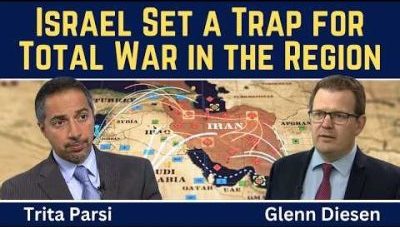
Trita Parsi: Israel Set a Trap for Total War in the Region
or go to
Aletho News Archives – Video-Images
Book Review
Why the War on Conspiracy Theories Is Bad Public Policy
By Kevin Barrett • Unz Review • February 1, 2019
 A Review of Conspiracy Theories and Other Dangerous Ideas by Cass Sunstein (based on an earlier paper co-authored with Adrian Vermeule); In Defense of Troublemakers: The Power of Dissent in Life and Business by Charlan Nemeth; and Conspiracy Theories and the People Who Believe Them, edited by Joseph E. Uscinski
On January 25 2018 YouTube unleashed the latest salvo in the war on conspiracy theories, saying “we’ll begin reducing recommendations of borderline content and content that could misinform users in harmful ways—such as videos promoting a phony miracle cure for a serious illness, claiming the earth is flat, or making blatantly false claims about historic events like 9/11.”
At first glance that sounds reasonable. Nobody wants YouTube or anyone else to recommend bad information. And almost everyone agrees that phony miracle cures, flat earthism, and blatantly false claims about 9/11 and other historical events are undesirable.
But if we stop and seriously consider those words, we notice a couple of problems. First, the word “recommend” is not just misleading but mendacious. YouTube obviously doesn’t really recommend anything. When it says it does, it is lying. … continue
Blog Roll
 Aletho News
- Araghchi blasts ‘parasitic’ alliance as US taxpayers pay for Israel’s war on Iran
- Easy fix for Europe’s chaos? Stop fueling war against Russia
- Putin’s key remarks on peace talks and Europe’s ‘schizophrenia’
- Trita Parsi: Israel Set a Trap for Total War in the Region
- Trump’s Iran war is on an Israeli leash
- Saudi oil boss issues global supply warning
- Riyadh Says Its Oil System Is Intact. The Numbers Say Otherwise.
- Trump and Netanyahu Want to “Finish the Job” on Iran
- US ‘one-sided dictation’ not Iran’s beliefs makes rational talks impossible: Baghaei
- Iran’s Next Strike May Not Explode. It Could Shut You Down /Col Doug Macgregor
- If Americans Knew
- BBC senior broadcaster speaks out on Gaza coverage
- Netanyahu vows vast West Bank invasion in response to 20-minute skirmish that left 2 Israeli soldiers and 2 Palestinian fighters dead
- Tied up and tortured: Israel using US-made electroshock weapons on Palestinian detainees
- The outsourced risk: how newsrooms rely on Gaza’s freelancers without protecting them
- Gaza bakeries forced to shut as Israel blocks flour shipments
- Gaza’s breast cancer patients face a deadly wait for treatment amid Israel’s genocide
- DAILY UPDATE: Latest essential news on Palestine, Israel, & region
- The Israel Lobby’s Changing Fortunes
- AIPAC has become such a political liability that it’s shifting to a more “nimble” approach to buying politicians
- At least 160 Israeli settler attacks in 2 weeks
- No Tricks Zone
- E-Cars Reduce CO2 Emissions By Only 41% Compared To Internal Combustion Engine Vehicles
- Predictions Made By Renowned Climate Professor Over Past Decades Have Been Proven To Be Poor
- New Study Suggests Large Regions Of The Pacific Ocean Have Been Cooling For The Last 80 Years
- Germany’s Green Energy Debacle: High Energy Costs Force Kahla Porzellan to Close After 182 Years!
- New Study: 50 Years Of The Most Aggressive ‘Net Zero’ Policies Can Only Affect The Global Climate By 0.03°C
- US September “Heat” Was No Record…Many Records Set Decades Ago
- Latest European Green Energy Debacle; Portugal’s Largest Flagship Solar Park Insolvent!
- Green Energy Debacle: German Expert Professor Fritz Vahrenholt Warns Of Severe Economic And Social Consequences
- Two More Paleo Reconstructions Affirm Meters-Higher Sea Levels Across Ireland, Brazil 7000-6000 Years Ago
- New Study: Earth And Venus Surface Warmth Largely Explained By Convection And Lapse Rate, Not CO2 Or Radiation

