Human resources: Walmart hired Lockheed Martin to keep tabs on employees
RT | November 25, 2015
Walmart hired global security giant Lockheed Martin a few years ago to monitor activism in its massive workforce, according to new documents. The defense contractor tracked employees’ social media and reported protest participation to the retail giant.
Lockheed Martin, the world’s largest defense contractor, provided Walmart, the world’s largest retailer, with intelligence-gathering and surveillance services in 2012, according to a lengthy report by Bloomberg Businessweek. The news has emerged just before Black Friday protests by a union-funded group called OUR Walmart, the report claims. Participants demand higher wages and reliable scheduling for Walmart employees.
While Walmart publicly dismissed the demonstrations as “just another union publicity stunt,” their subsequent actions indicate that they took it seriously. In addition to hiring Lockheed Martin to keep tabs on employees’ social media feeds, the companies ranked stores by labor activity and monitored employees who were known to be involved in labor activism, according to Bloomberg.
The defense contractor offers a product called LM Wisdom, which is marketed as a tool for fighting drug and human trafficking, but which Walmart used to track employees in 2012 and 2013. Lockheed Martin analysts would follow the Twitter and Facebook feeds of workers and then report information about labor activism back to the company’s corporate headquarters. The defense contractor also put together a map of likely routes for five “Ride for Respect” bus caravans that were sent to HQ to demonstrate.
In one of the documents obtained, when asked about the company’s relationship with Lockheed Martin, Walmart Senior Vice President of Labor Relations Karen Ann Cassey said that the company was even “partnering with the FBI/the Joint Terrorism Task Force” to monitor protesters that planned to go to the company’s headquarters, saying that similar protests have become violent.
Walmart didn’t comment on the specific allegations in the Bloomberg story, but sent a statement via email arguing that the measures had been taken to protect their shoppers, employees and business.
“Unfortunately, there are occasions when outside groups attempt to deliberately disrupt our business and on behalf of our customers and associates we take action accordingly,” the statement reads.
Bloomberg retrieved the information on Lockheed Martin’s labor-monitoring services by acquiring documents ahead of a National Labor Relations Board hearing. The case concerns Walmart’s alleged history retaliation against employees who protested against the retailer.
Earlier this year, Walmart announced that its company-wide minimum wage would go from $9 in 2015 and [to] $10. While OUR Walmart touts this wage increase as a victory, they remain steadfast in their demand for a minimum of $15 an hour. The group will be protesting this Black Friday for the fourth year in a row.
READ MORE: Walmart accused of dodging US taxes by storing $76 billion in assets abroad
Mass Demonstration Demands Closure of US’ Notorious ‘School of Assassins’
Sputnik – 24.11.2015
 Georgia’s infamous ‘School of Assassins’ was besieged by hundreds of activists from across the country, calling for the closure of the military training center and a halt to the militarization of Latin America by the US.
The 25th anniversary protest march was held over the weekend in the town of Lumpkin in northern Georgia, and at the gates of Fort Benning army base, where the former US Army School of the Americas (SOA), hidden now under the name of the Western Hemisphere Institute for Security Cooperation (WHINSEC), is located, along with the nearby Stewart Immigrant Detention Center, the country’s largest for-profit immigration prison.
Dozens of nonprofit organizations and some 1,400 activists joined the rally, which aimed to protest against the notorious “School of Assassins,” as SOA is referred to, for its production of “death squads” that commit mass murders, torture and other human rights’ violations and military crimes across the globe, activists claim. Watchdogs maintain several Latin Americans dictators and many more security officials, who have perpetrated such crimes, graduated from SOA.
“Despite a shocking human rights abuse record, the School of the Americas continues to operate with US taxpayer money. Closing the SOA would send a strong human rights message to Latin America and the world,” SOA Watch founder and organizer of the event, Father Roy Bourgeois, said in a statement.
Hundreds held vigil in front of Fort Benning, while others marched to protest to the immigrant prison, where some 1,800 migrants await repatriation. Eleven people were arrested after crossing onto the grounds of the prison, according to the Ledger-Enquirer.
The event was attended, among others, by members of Veterans for Peace.
“From Ferguson to Ayotzinapa, we must continue to denounce the militarization of police across the Americas and call for an end of state-sponsored terrorism and violence against our communities. Our clamor for justice must be heard!” the pacifist NGO’s online statement reads.
Newly released documents, obtained by the Partnership for Civil Justice Fund, suggest the FBI has been monitoring the activities of SOA Watch and infiltrating the NGO, using confidential informants and counterterrorism units.
Why Boycott Coca Cola?
US Palestinian Community Network | January 31, 2015
In 2005, Palestinians issued a call for a campaign of boycotts, divestment and sanctions (BDS) against Israel, because of its violations of international law and attacks on Palestinian rights. BDS is now a worldwide movement against Israeli Apartheid, and USPCN wants to work with you to target Coca-Cola, as our contribution to the campaign. Do not contribute to helping Zionist Israel steal and occupy more Palestinian land. Do not contribute to helping Israel continue its colonization of Palestine, and its suppression of Palestinian rights. With every single penny you spend on Coca-Cola, you are indirectly contributing to Israel’s crimes.
Why Boycott Coca-Cola?
 The Central Bottling Company (Coca-Cola Israel), an Israeli company that manufactures and distributes CocaCola in Israel, has subsidiaries in the illegal settlements of Katzrin (in the Syrian Golan Heights) and Shadmot Mechola (in the Besan Valley, northeastern tip of the West Bank). The company also owns Tara, whose subsidiary, Meshek Zuriel Dairy, has a dairy farm in the occupied section of the Jordan Valley. In return for $55 million in tax breaks, Coca-Cola built a plant in Qiryat Gat, which sits on stolen land (the villages of Al-Falluja and Iraq al-Manshiya) in 1948 Palestine. The residents were ethnically cleansed in 1949, in contravention of International Law. In October 2005, Coca-Cola increased its investment in Israel by buying a 51% controlling interest in the Tavor Winery. Tavor Winery is an Israeli company based on occupied Palestinian land, at the foot of Mount Tavor, overlooking the Sea of Galilee.
The Government of Israel Economic Mission honored Coca-Cola at an Israel Trade Award Dinner for its continuous support over the previous 30 years, and for “refusing to abide by the Arab League economic boycott of Israel.” (from The Southern Shofar—American Jewish newspaper of Alabama).
Environmentalists have long criticized Coca-Cola for posing a serious threat to communities across the world. In India, the Mehdiganj Coca-Cola plant was recently closed by Indian officials, because of its over-utilization of natural water resources, which depleted the local groundwater and released pollution above legal limits.
Coca-Cola, which has always been strongly anti-union, is involved in the intimidation, kidnapping, torture, and murder of union leaders in Latin American, especially for years in Colombia. Labor unionists there have constantly been under threat from paramilitary death squads supported by Coca-Cola.
Businesses in Turkey and India are shunning Coca-Cola over the current Israel – Gaza conflict, according to several news sources.
The Coca-Cola conflict comes as part of the boycott movement targeting Israeli goods and those companies that do business in Israel. Coca-Cola has had a bottling plant in Israel since the 1960s, Haaretz reported.
Pepsi, which left Israel during the Cold War in response to the Arab boycott, has also been spurned in this bout of intensified boycotts.
In Mumbai, India, Muslims called for a boycott of PepsiCo, Kraft Foods Group, and Nestle in addition to Coca-Cola, the Jakarta Globe reported.
Omar Shaikh, a restaurant owner in Mumbai, said “This is our way of showing our anger against Israel. For us, Coke and Pepsi is human blood. They are financing the war against Palestine.”
South Africa Follows Suit with Spain, Issues Arrest Warrant for Israeli Officials
IMEMC News & Agencies | November 18, 2015
South Africa issued, on Tuesday, an arrest warrant against four Israeli officials over their role in deadly attacks on pro-Palestinian international activists.
Boycott, Divestment and Sanctions Against the Israeli occupation in Africa said, in a statement: “South Africa’s Directorate of the Priority Crimes Investigation Unit has issued warrants of arrest against four Israeli commanders from the Israeli Navy and Israeli Defense Forces.”
According to Days of Palestine, the statement announced arrest warrants issued against former Israeli chief of staff Lieutenant General Gabi Ashkenazi, former Navy commander Major General Eliezer Marom, former head of Military Intelligence Major General Amos Yadlin and former head of Air Force intelligence Brigadier General Avishay Levy.
“This decision,” African BDS said, “follows a four-year-long case involving a South African journalist, Gadija Davids, who was on board the Mavi Marmara when it was attacked by Israeli commandoes while in international waters in 2010.
“Davids laid her first complaint with the South African Police Services and South Africa’s National Prosecutions Authority in January 2011.
“In November 2012, South Africa’s Priority Crimes Litigation Unit, found that the case met the necessary jurisdictional requirements and that reasonable grounds exist to investigate the alleged crimes that were committed during the Israeli attack on the Mavi Marmara.”
Arrest in Spain
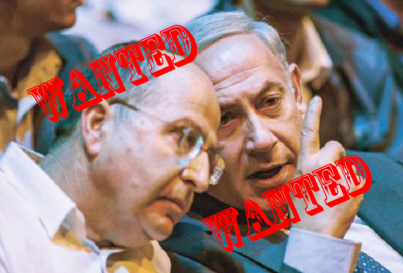
Just days ago, a Spanish judge reopened a case that, theoretically, could lead to the arrest of Prime Minister Benjamin Netanyahu, Defence Minister Moshe Ya’alon, MK Benny Begin and several former top Israeli officials over their role in the same incident.
Three Spanish citizens aboard Mavi Marmara had originally filed a lawsuit against the Israeli occupation in 2010, but the court decided it no longer had the authority to prosecute foreign nationals for alleged crimes committed outside of Spain.
In recent days, Judge Jose de la Mata found a legal loophole that allowed him to relaunch the case against Netanyahu and the other Israelis if they entered Spanish territory.
University of Liverpool students vote for BDS
MEMO | November 19, 2015
Students at the University of Liverpool have voted to support the Boycott, Divestment and Sanctions (BDS) campaign, in a significant victory for Palestinian solidarity campaigners.
The motion commits the Liverpool Guild of Students to, among other things, advocate divestment from companies complicit in the Israeli occupation, and to lobby the university to similarly divest. The motion also mandates the Guild to stop stocking Israeli products.
 The full BDS motion can be read here.
More than 1,000 students participated in the Liverpool Guild of Students preferendum, in which they were presented with three options: ‘Yes’, ‘No’, or an alternative solution that rejected BDS, but encouraged the union to “raise awareness of the issue.”
Under the preferendum system, students could choose their favourite option from the three choices, or “your top two or rank all three in order of preference.” Points were then assigned “to each option based on the order of preference.”
There were a total of 1,866 points in support of BDS, with 934 opposed to the motion and 1,479 points supporting the alternative solution.
In a press release responding to the victory, the University of Liverpool Friends of Palestine (ULFOP) hailed “a landslide victory” despite a voting system they claimed meant the odds were against them.
“The ballot had one option to pass the motion and two options not to pass the motion. If students didn’t rank all of these options, then their one chosen option was given less weight.”
Despite this and other challenges, ULFOP stated that “the scale of the victory for BDS clearly shows that a large majority of the student body is, or has been made, aware of Israel’s apartheid regime and oppression of the Palestinians, and is prepared to make a stand against it.”
Zohra, a ULFOP member quoted in the press release, described the result as “a genuine reflection of the mood on campus – where students from all faiths and backgrounds believe that the Israeli occupation of the Palestinian people and their territories is unjust, akin to an apartheid system and thus cannot be allowed to continue.”
In a reference to objections by Israel’s defenders, ULFOP said “they wholeheartedly reject any claims that BDS is divisive on campus, instead recognising that the BDS movement is a non-violent and effective means of applying pressure on the Israeli government and the companies benefitting from the occupation of Palestine.”
Meanwhile, the Union of Jewish Students, who sent an official to Liverpool to support the ‘No’ campaign, described the result as “disappointing”, vowing to work with the Liverpool Jewish Society to continue making “the case against BDS” on campus.
Pro-Palestinian Scottish lawmaker strip-searched on Israel trip
Press TV – November 14, 2015
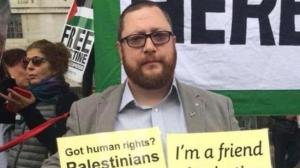 A pro-Palestinian Scottish lawmaker travelling to the occupied Palestinian territories on a parliamentary fact-finding mission has been strip-searched by Israeli forces upon arrival and refused entry.
Andrew Murray, the head of the Friends of Palestine group in the Scottish National Party (SNP), was detained at Tel Aviv’s Ben Gurion airport on Monday and held in custody for over 24 hours, he told AFP on Friday.
“They strip-searched me, scanned me, swabbed me everywhere,” Murray said, adding, “Twice I asked for representation from the British embassy, twice I was told no.”
He was later deported and banned from entering the occupied territories for 10 years, apparently over his campaign for Palestinian rights.
Carol Monaghan, a member of the SNP, said that she “absolutely condemned” the Israelis’ behavior, adding, “Andy was there on a peaceful, fact-finding trip.”
Sabine Haddad, a spokesperson for Israel’s interior ministry, claimed that Murray lied about the reason of his trip by saying he was a tourist.
Murray, however, responded that he did not lie about any of the questions asked.
MSF Rejects Pentagon’s Hush Money in Kunduz Scandal, Still Wants Probe
Sputnik – 10.11.2015
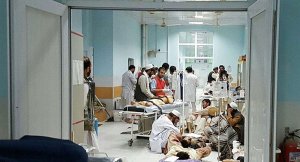 Doctors Without Borders (MSF) has rejected the Pentagon’s offer to rebuild the Afghan hospital destroyed last month in a US bombing which also killed 30 staff and patients inside the building.
MSF said its policy is not to accept government money for its operations in Afghanistan and elsewhere around the world.
“This policy allows us to work independently without taking sides and provide medical care to anyone who needs it. This will not change,” the nonprofit said in a statement.
Last week, MSF General Director Christopher Stokes said that the all of the information about the attack released so far makes it “hard to understand” how the Pentagon maintains the bombing was some sort of “mistake.”
MSF believes the attack was deliberate, and therefore a war crime. The group has repeatedly called for an independent investigation by the International Humanitarian Fact-Finding Commission.
But Washington maintains that investigations launched by the US and Afghan governments, as well as NATO, will be sufficient.
Since the attack, much of the debate has centered on whether Taliban patients in the hospital were armed, and if the group was using the building as a base of operations.
Doctors Without Borders released its own findings last week, denying that any combatant, whether the Taliban or the Afghan government’s, was armed inside the compound.
The Pentagon said shortly after the attack that they intended to pay for the repairs and to make “condolence payments” to the families of civilians killed. The Pentagon also promised to pay for additional repairs after smashing the hospital with an armored vehicle.
Sicilians Stage Anti-NATO Military Drills Rally
Sputnik – 31.10.2015
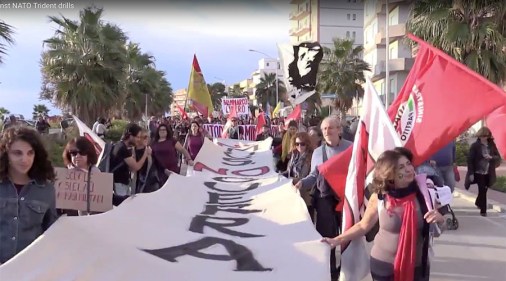 Protesters in the Italian island of Sicily demonstrated against the North Atlantic Treaty Organization’s (NATO) Trident Juncture-2015 exercises on Saturday less than 10 miles from a NATO base.
The military alliance’s largest exercises in over a decade involving over 36,000 troops from 30 NATO members and partner countries, Trident Juncture moved into an active phase across southwestern Europe in mid-October.
“We are against NATO, against war, against the enormous costs that go to the upkeep of military bases,” Chiara Paladino, one of the protest organizers, told RIA Novosti.
Paladino said around 1,000 people demonstrated in Marsala, south of the Vincenzo Florio Airport used as a NATO forward operating base. Anti-NATO protesters gathered from across the province of Trapani, including large Sicilian cities of Palermo, Catania, Messina and Ragusa, she said.
A similar anti-Trident Juncture and anti-NATO rally took place in the major Sicilian city of Palermo late on Friday.
The first phase of the Trident Juncture drills began October 3, running for two weeks in Canada, Norway, Germany, Belgium and the Netherlands. The second phase, which ends on November 6, is taking place in southern Europe – Spain, Italy, and Portugal – as well as in the Mediterranean Sea and the Atlantic Ocean.
Spanish and Portuguese demonstrators staged protests against NATO this month.
Photo © Ruptly
Can Jeremy Corbyn make a difference to Palestine?
Press TV
The pro-Palestinian, anti-Israel candidate Jeremy Corbyn has become the new leader of Britain’s second biggest political force, the Labour Party.
Corbyn has often demonstrated against Israel’s wars on the Palestinian people. And he’s called for an economic boycott against Tel Aviv. When it comes to Palestine, historically there has been little to choose between Labour and the Conservatives, with both following a pro-Israel line for decades or more.
But now that Corbyn is Labour leader, will there at last be clear blue water between the major parties on this issue? And what implications does this have for British foreign policy and the Palestinian cause?
Featured Video
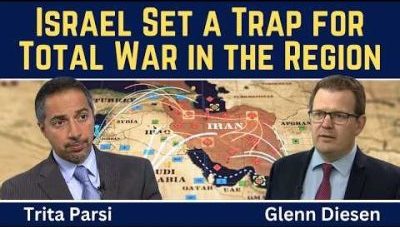
Trita Parsi: Israel Set a Trap for Total War in the Region
or go to
Aletho News Archives – Video-Images
Book Review
Why the War on Conspiracy Theories Is Bad Public Policy
By Kevin Barrett • Unz Review • February 1, 2019
 A Review of Conspiracy Theories and Other Dangerous Ideas by Cass Sunstein (based on an earlier paper co-authored with Adrian Vermeule); In Defense of Troublemakers: The Power of Dissent in Life and Business by Charlan Nemeth; and Conspiracy Theories and the People Who Believe Them, edited by Joseph E. Uscinski
On January 25 2018 YouTube unleashed the latest salvo in the war on conspiracy theories, saying “we’ll begin reducing recommendations of borderline content and content that could misinform users in harmful ways—such as videos promoting a phony miracle cure for a serious illness, claiming the earth is flat, or making blatantly false claims about historic events like 9/11.”
At first glance that sounds reasonable. Nobody wants YouTube or anyone else to recommend bad information. And almost everyone agrees that phony miracle cures, flat earthism, and blatantly false claims about 9/11 and other historical events are undesirable.
But if we stop and seriously consider those words, we notice a couple of problems. First, the word “recommend” is not just misleading but mendacious. YouTube obviously doesn’t really recommend anything. When it says it does, it is lying. … continue
Blog Roll
 Aletho News
- Putin’s key remarks on peace talks and Europe’s ‘schizophrenia’
- Trita Parsi: Israel Set a Trap for Total War in the Region
- Trump’s Iran war is on an Israeli leash
- Saudi oil boss issues global supply warning
- Riyadh Says Its Oil System Is Intact. The Numbers Say Otherwise.
- Trump and Netanyahu Want to “Finish the Job” on Iran
- US ‘one-sided dictation’ not Iran’s beliefs makes rational talks impossible: Baghaei
- Iran’s Next Strike May Not Explode. It Could Shut You Down /Col Doug Macgregor
- Iran: US political targets legitimate if assassinations return
- Iraq shuts key border crossing with Iran under US pressure: Report
- If Americans Knew
- DAILY UPDATE: Latest essential news on Palestine, Israel, & region
- The Israel Lobby’s Changing Fortunes
- AIPAC has become such a political liability that it’s shifting to a more “nimble” approach to buying politicians
- At least 160 Israeli settler attacks in 2 weeks
- Will Gaza’s Ancient Christian Community Disappear Forever?
- Israel’s vision of regional security rests on keeping Arab states weak
- Heidi Levine recounts how Palestinian youths helped save her in settler attack
- DAILY UPDATE: Latest essential news on Palestine, Israel, & region
- Trump’s Intensifying Sabotage of the ICC, for Israel’s Sake
- Israeli military detain US and UK volunteers in West Bank including Democratic NY politician Brad Lander
- No Tricks Zone
- E-Cars Reduce CO2 Emissions By Only 41% Compared To Internal Combustion Engine Vehicles
- Predictions Made By Renowned Climate Professor Over Past Decades Have Been Proven To Be Poor
- New Study Suggests Large Regions Of The Pacific Ocean Have Been Cooling For The Last 80 Years
- Germany’s Green Energy Debacle: High Energy Costs Force Kahla Porzellan to Close After 182 Years!
- New Study: 50 Years Of The Most Aggressive ‘Net Zero’ Policies Can Only Affect The Global Climate By 0.03°C
- US September “Heat” Was No Record…Many Records Set Decades Ago
- Latest European Green Energy Debacle; Portugal’s Largest Flagship Solar Park Insolvent!
- Green Energy Debacle: German Expert Professor Fritz Vahrenholt Warns Of Severe Economic And Social Consequences
- Two More Paleo Reconstructions Affirm Meters-Higher Sea Levels Across Ireland, Brazil 7000-6000 Years Ago
- New Study: Earth And Venus Surface Warmth Largely Explained By Convection And Lapse Rate, Not CO2 Or Radiation

