Russia Warns US against Unilateral Iran Sanctions
Al-Manar TV – May 13, 2010

Russian Foreign Minister Sergei Lavrov warned the United States and other Western nations on Thursday against imposing unilateral sanctions on Iran over its nuclear program, Interfax news agency reported Thursday.
Countries facing Security Council sanctions “cannot under any circumstances be the subject of one-sided sanctions imposed by one or other government bypassing the Security Council”, Lavrov was quoted as saying by Interfax. “The position of the United States today does not display understanding of this absolutely clear truth.”
Russia is in talks with the United States and other UN Security Council members on a fourth round of sanctions. Moscow has indicated it could support broader sanctions but has stressed they must not harm the Iranian people. Russia’s position suggests that its may not agree to new tougher sanction on Iran at the UNSC.
Lavrov, speaking to deputies from Russia’s upper house of parliament, said the United States tended not to see international law as having pre-eminence over national laws. “We are now confronted with this problem during discussion of a new UN Security Council resolution on Iran.”
Permanent Security Council member China has joined Russia in opposing Washington’s plans to impose tough, wide-ranging sanctions on the Islamic Republic.
Lavrov’s warning came just before the arrival in Russia on Thursday of President Luiz Inacio Lula da Silva of Brazil, a non-permanent member of the Security Council that is also opposed to further sanctions against Iran. Lula was expected to meet senior Russian officials on Friday to discuss how to revive a stalled nuclear fuel swap deal meant to minimize the risk of Tehran using enrichment for military purposes. Lula will travel on to Iran on Sunday.
Elena Kagan and the Supreme Court: A Barnyard Smell in Chicago, Harvard and Washington
By James Petras | May 13, 2010
President Obama has nominated Elena Kagan for Justice of the United States Supreme Court on the basis of an academic publication record, which might give her a fighting chance for tenure at a first rate correspondence law school in the Texas Panhandle.
A review of her published scholarship after almost two decades in and out of academia turns up four law review articles, two brief pieces and several book reviews and in memoriam. There is nothing even remotely resembling a major legal text or research publication.
Her lack-luster academic publication record is only surpassed by her total lack of any practical experience as a judge: zero years in adjudication, unless one accepts the line of her exuberant advocates, who point to Kagan’s superb ability in adjudicating among the squabbling faculty at Harvard Law School when she served as Dean. No doubt Kagan had been very busy as the greatest fundraising Law School Dean in Harvard’s history ($400 million), which may account for the fact that she never found time to write a single academic article during her nine year tenure (2001-2009).
The criteria for her appointment to the Supreme Court have little to do with academic performance as it is understood today in all major universities. Nor does her total inexperience as a judicial advocate compensate for academic mediocrity.
The evidence points to a purely political appointment based, in part, on social networks and certainly not on her lack of affinity for the agenda of the liberal wing of the Democratic Party. Kagan’s approval of indefinite detention of suspects squares with the extremist restrictions on constitutional freedoms first articulated during the Bush Administration and subsequently upheld by President Obama’s Attorney General Eric Holder. It is no coincidence that Kagan appointed a notorious Bush torture advocate, the genial Jack Goldsmith, to the Harvard Law faculty.
Elena Kagan’s appointment certainly was not based on “diversity”. She will be the third Jew on the Supreme Court and, together with the six Roman Catholics, will decide the most critical cases with far-reaching and profound impact on citizens’ rights and protections. For the first time in US history the nation’s largest demographic group, the Protestants (of any hue or gender), will have no representative on the Court, thereby excluding the descendents, like retiring Justice Stevens, of the brilliant, strongly secular judicial heritage that formulated the US Constitution, the Bill of Rights and its amendments.
Kagan’s nomination to the US Supreme Court is not exceptional if we consider many of Bush and now Obama’s choices of advisers and officials in top policymaking posts. Many of these officials combined their diplomas from Ivy League universities with their absolutely disastrous performances in public office, which no amount of mass media puff pieces could obscure. These Ivy League mediocrities include the foreign policy advocates for the destructive and unending wars in the Middle East and Afghanistan and the leading economic advisers and officials responsible for the current financial debacles. The names are familiar enough: Wolfowitz, Feith, Abrams, Levey, Greenspan, Axelrod, Emmanuel, Indyk, Ross, Summers, Rubin, et al: Prestigious credentials with mediocre, or worse, performances. What is the basis of their rise? What explains their ascent to the most influential positions in the US power structure?
One hypothesis is nepotism . . . of a certain kind. Elena Kagan got tenure at the august halls of the University of Chicago in 1995 on the basis of one substantive article and one brief piece, neither outstanding. With this underwhelming record of legal scholarship, she became visiting professorship at the Harvard Law School, published only two more articles (one in Harvard Law Review) and received tenure. Prima facie evidence strongly suggests that Kagan’s ties to the staunchly Zionist faculty at both Chicago and Harvard Law Schools (and not her intellectual prowess) account for her meteoric promotions to tenure, deanship and now the US Supreme Court, over the heads of hundreds of other highly qualified candidates with far superior academic publication records and broader practical judicial experience.
The public utterances and political writings of innumerable Harvard, Princeton, Chicago, Yale, John Hopkins professors, whether it be on the speculative economy, Israel’s Middle East wars, preventative detention, broad presidential powers and constitutional freedoms are marked by a singular mediocrity, mendacity and an excess of hot air reeking of the barnyard.
If you do not qualify on the basis of excellent scholarship or broad-based practical experience, your ethnic tribesmen will wax ecstatic over you as a “wonder colleague”, a “superb teacher”, a “brilliant consensus builder” and a “world champion fund raiser”. In other words, if you have the right ethnic connections and political ambitions, they can adjust the criteria for tenure at the University of Chicago, the deanship at Harvard Law School and a lifetime appointment to the US Supreme Court.
Elena Kagan joins a long list of key Obama appointees who have long-standing ties to the pro-Israel power configuration. Like Barack Obama, Elena Kagan started her legal apprenticeship with the Chicago Judge Abner Mitva, an ardent Zionist, who hailed the newly elected President Obama as “America’s first Jewish President”, probably his soundest judgment.
The issue of the composition of the US Supreme Court is increasingly crucial for all Americans, who are horrified by Israel’s devastation of Gaza, its threats to launch a nuclear attack on Iran and its Fifth Column’s efforts to drag us into a third war in ten years. With the Presidents of the Major American Jewish Organizations pressing the compliant US Congress to declare “anti-Zionism” as a form of “anti-Semitism” and “opposition to Israel’s policies” as amounting to “support for terrorism”, thus criminalizing Americans critical of Israel, another active pro-Zionist advocate on the Court will provide a legal cover for the advance of Zionist-dictated authoritarianism over the American people.
Yes, Kagan would be another woman on the Supreme Court. Yes, she would probably adjudicate conflicts among the judges and strengthen Obama’s police powers. And yes, she would likely favor your indefinite detention if you support the right of Palestinians to struggle (“terrorism”) against the Israeli occupation . . . especially if you defend America against Israel’s Fifth Column.
But remember when you apply for Ivy League law school appointment or a top judicial post and your CV lacks the requisite publications or work experience, just ask Judge Abner Mikva or Larry Summers or Rahm Emmanuel for a recommendation. With such support you will shoot ahead of the competition. . . because you have the right ethnic connections.
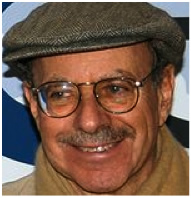
James Petras is a Bartle Professor (Emeritus) of Sociology at Binghamton University, New York. He is the author of 64 books published in 29 languages, and over 560 articles in professional journals, including the American Sociological Review, British Journal of Sociology, Social Research, Journal of Contemporary Asia, and Journal of Peasant Studies. He has published over 2000 articles.
NPR report on West Bank expulsion order turns horror into a he-said/she-said debating point
By Susie Kneedler on May 12, 2010
Lourdes Garcia-Navarro and NPR have at last reported on the month-old Israeli “military order” that allows the IDF to deport any Palestinian inhabitant of the West Bank it defines as an “infiltrator,” simply for lacking the paperwork that the Israeli government itself refuses to issue. Garcia-Navarro details the suffering of the Palestinian people more fully than any recent NPR reporter, but her “report” perfectly embodies the failure of “she said–she said journalism,” in which oppression becomes merely a matter of perspective.
Garcia-Navarro does document the horrific fear that Israeli government policies inflict on one woman and her family. We hear the anguish in Palestinian Umm Qusay’s voice beneath the translation; and the broadcast closes with a line deleted from the online article: “Qusay says the wider implications don’t matter to her. After waiting ten years to join her husband and children, she just wants to stay here.”
But Garcia-Navarro allows an Israeli military spokeswoman, Lt. Col. Avital Leibovich, to assure us that, “The amendments to this law actually help the Palestininans or the other illegal residents that are here.” We hear Leibovich declare in sunny tones that, “There is a committee of judges which is reviewing the material and deciding whether to begin with the process of repatriation or not” [Leibovich’s emphasis]. Garcia-Navarro does not challenge the fairness of Israeli judges, let alone that of military courts, to Palestinian plaintiffs or defendants.
The “wider” ramifications may not matter to Qusay in her desperation to care for her children, but they determine whether listeners are informed or given only the false equivalence of those cliched “competing narratives.” Even Garcia-Navarro’s description of Qusay’s husband as merely a “resident”—not a native –of the West Bank minimizes how Israel wrongs the family.
Where is the research that would sort out rival claims, the obligation of a journalist to check facts? Four whole weeks have dragged on between what Garcia-Navarro calls the “new Israeli army order” and today’s story –plenty of time for investigation. Lourdes Garcia-Navarro should read the Geneva Conventions, the Oslo Accords, and other agreements to verify that, “the new military order contravenes international law and previous agreements between Israel and the Palestinians.” She could ascertain roughly how many people are marooned in hiding. She might look into the harm to “civil society.” Instead, she leaves all questions open.
In sum, nowhere does Garcia-Navarro grapple with the terrible inhumanity of a regime that has kept other people stateless for 60 years, depriving them not just of civil but human rights. A military occupation that arbitrarily defines the legitimate owners of a land as “infiltrators” is unspeakable. Why is “our” U.S. government paying for the illegal expulsions?
Stephen Zunes and the Zionist Tinderbox
“[A]nti Zionism may be a ‘fool’s anti-imperialism,’ where Jewish nationalism itself is erroneously seen as the problem rather than the alliance its leaders have made with exploitative Western interests.” – Stephen Zunes, 2006.1
By Michael Barker | Pulse Media | May 12, 2010
Who is Stephen Zunes? Well according to his web-site, he is a Professor of Politics and International Studies at the University of San Francisco, who in 2002 won recognition from the Peace and Justice Studies Association as Peace Scholar of the Year. Although Zunes describes himself as a committed peace loving, anti-imperialist activist, by reviewing just one of his books this article will demonstrate that in actual fact his scholarly actions belie such intent. The book in question is Tinderbox: U.S. Middle East Policy and the Roots of Terrorism (Zed Books, 2003), a popular text that received glowing accolades from Noam Chomsky, Howard Zinn, Richard Falk, and Saul Landau (amongst others). This essay will illustrate how Zunes’ proclivity for defending Zionism ultimately leads hims to promote a “fool’s anti-imperialism.”
That is not to say that Zunes is uncritical of U.S. foreign policy, far from it, just that his work serves as a smokescreen for understanding the real drivers of U.S. foreign policy vis-a-vis the Middle East.
For example, on the antagonist relationship between U.S. elite interests and human rights, he recognizes that:
- Human rights violations by foreign governments and their lack of democratic institutions generally get the most attention in the United States when a given administration has called attention to them in order to mobilize domestic and international opinion against a regime the U.S. government opposes. (p.10)
However, Zunes continues, “since at least the 1970s” U.S. administrations — or should we say regimes — have “to some degree” been forced to respond to “public and Congressional pressure regarding the lack of democracy and human rights in allied countries.” Typical responses often “constitute little more than lip service and damage control,” but significantly, “the very region that receives the largest amount of American arms and aid has been notably absent from the public debate: the Middle East.” Indeed, with regard the U.S.’s special commitment to Israel, U.S. aid “has generally increased as the government’s repression in the occupied territories has worsened.”2 Moreover, Zunes points out, this relationship…
- … is unlike any other in the world, or indeed, like any in history. In sheer volume, it is the most generous foreign aid program ever between two countries, totaling over $100 billion. No country has ever received as much Congressionally mandated aid as has Israel. What is perhaps even more unusual is that Israel, like its benefactor, is an advanced, industrialized, technologically sophisticated country, as well as a major arms exporter. (p.109)
So how might we come to understand the existence of this enduring toxic relationship? Well according to Zunes, such aid actually runs counter to the best interests — that is, “legitimate defence needs” — of both Israel and the United States. Therefore, as neither State profits from this situation U.S.-based arms manufacturers must be largely to blame, as he says, they are the people who profit most from this insecurity. To support this point Zunes draws upon the words of Matti Peled, the late Israeli major general (and Knesset member), who in the early 1990s “argued that he and other Israeli military leaders saw the [$1.8 billion Israeli military] aid package as little more than a U.S. government subsidy for American arms manufacturers.”3
Zunes does not seriously consider the possibility that an alternative explanation for this state of affairs is that neither the U.S. nor Israel are intent on pursuing peace in the Middle East. Indeed it seems fairly obvious that Israel has no interest in promoting what Zunes considers to be its “legitimate defence needs,” as leading Zionist elites are quite happy escalating tension in the region to facilitate the ethnic cleansing of Palestinians. This might explain why “it appears that the priority of both the executive branch and Congress in recent decades has not been Israeli security, but maintaining the flow of American arms exports.”4 Yet, Zunes is convinced that the root of the problem lies not with Zionism but with the arms manufacturers, thus he writes:
- Much attention has been given to the clout of pro-Israel Politcal Action Committee (PACs) and their alleged role in convincing members of Congress to support these taxpayer-funded arms transfers to Israel. However, contributions by PACs affiliated with military contractors far surpass the pro-Israel PACs. For example, during the 1999-2000 election cycle, just slightly over $2 million in campaign contributions came from the pro-Israel PACs, while PACs affiliated with the arms industry came close to $5 million.5
This gross underestimation of the power of the Israel lobby is almost identical to Noam Chomsky’s arguments which have already been thoroughly rebutted elsewhere. Thus it is fitting that Zunes, like Chomsky, plays the oil card, and says that the “primary reason” why the U.S. supports Israel is because of their need to control oil supplies, which is facilitated by Israel’s ability to prevent “victories by radical nationalist movements” in the Middle East.6 As before, this is an erroneous, unsupported statement that has been convincingly debunked.
Either way if one follows Zunes’ assertion that aid to Israel threatens their national security, “should U.S. policy,” Zunes asks, “then, really be considered ‘pro-Israel?’” He argues not: such aid is counterproductive, as it endangers Israel by encouraging militaristic elements within Israel’s ruling class.7 This inelegant mislogic is used to bolster his case that U.S. support for Israel must be predominantly driven by arms manufacturers and big oil; no need for hard evidence though.
Now that Zunes has cajoled his readers into accepting his fallacious arguments, he provides other “evidence” to help understand what “motivates the strong American bias against the Palestinians.” Thus in addition to the military and oil lobbies, Zunes identifies four other contributing factors to explain this bias: these are (1) a mixture of sentimental attachment combined with guilt (driven by the history of Western anti-Semitism), “friendships with Jewish Americans who identify strongly with Israel, and fear of inadvertently encouraging anti-Semitism,” (2) the rising power of the Christian Right in the United States, which interprets the Israeli-Palestine conflict as “simply a continuation of the Biblical battles between the Israelites and the Philistines,” (3) the “failure of progressive movements in the United States,” and (4) the Israel lobby. No doubt the first three points are all relevant to some degree, but their contemporary significance have all been amplified, and in some cases driven, by the far-reaching influence of the Israel lobby.8
On point four however — that is, the Israel lobby — Zunes suggests that caution must be heeded, because Jews are generally peaceful and only make up a small percentage of the U.S. population (“less than 4 percent”): moreover, “[m]any of the most outspoken members of Congress supportive of Israel’s occupation policies are from states or districts with very small Jewish populations.”9 Yet here Zunes’ argument is nonsensical (again), as the number of active Zionists is insignificant, as ultimately it is the power they exert, not their numbers, that matters most. Furthermore, no one is arguing that all Jews are Zionists, indeed it is only the small but extremely influential Jewish population residing in the American ruling class — along with their non-Jewish Zionist recruits — who give the Israel lobby its tremendous clout. Here as an example of the influence of the Israel lobby we might look to Stephen Green’s book, Taking Sides, America’s Secret Relations with Militant Israel (William Morrow, 1984), which Jeffrey Blankfort observes …
- … was the first examination of State Department archives concerning US-Israel relations. Since the Eisenhower administration, wrote Green in 1984, “Israel, and friends of Israel in America, have determined the broad outlines of US policy in the region. It has been left to American Presidents to implement that policy, with varying degrees of enthusiasm, and to deal with the tactical issues.”
Although Blankfort admits that this is a “slight exaggeration, perhaps,” it is ironic that Zunes refers to Green’s book to support his contention that Israel helps U.S. foreign policy elites, not vice versa.10 But irrespective of contrary evidence, Zunes asks that we put aside our critical faculties because “the strength of the lobby is often greatly exaggerated.”11 Furthermore, to ensure his readers are less likely to believe that the Israel lobby has a significant impact on guiding U.S. foreign policy, Zunes caricatures proponents of this point of view as belonging to the radical Right. No mention is made of Leftists who have long warned of the power of the lobby, like Edward Herman, Alexander Cockburn, and Jeffrey Blankfort; instead, Zunes points to anti-Semitic conservatives, like the politician Patrick Buchanan.12 Lest we forget, oil is the “primary issue.” Thus following Zunes’ example of using Zionists to back his unconvincing case for the overwhelming power of the U.S. arms industry, we could just as easily cite such Zionist sources to undermine his oil argument. For example, in the early 1980s, Morris Amitay, the former executive director of AIPAC, said: “We rarely see them [oil corporations] lobbying on foreign policy issues… In a sense, we have the field to ourselves.”
As this essay has demonstrated, being a progressive scholar does not necessarily guarantee that your analyses will effectively challenge the status quo. Thus while Zunes self-identifies as an anti-imperialist activist, he is a liberal Zionist at heart, and he is certainly not comfortable with advocating the type of systemic social change that we need to eradicate capitalism: by way of a contrast even the moderate civil rights leader, Martin Luther King, recognized that “the evils of capitalism are as real as the evils of militarism and the evils of racism” (King’s words). This explains why Zunes counsels U.S. citizens that “bringing about a more enlightened foreign policy is necessary for national security.”13
Instead of problematising the obvious contradictions between democracy and capitalism, Zunes suggests that the United States political system is simply being misused. He writes that “there is a growing sense that the Bush Administration is cynically manipulating the country’s genuine need for security for the sake of its rigid ideological constructs and its wealthy financial supporters.”14 Unbeknown to Zunes, cynical manipulation is nothing new, it is simply part and parcel of the misnomer that is capitalist democracy. Such shallow thinking necessarily leads Zunes to observe that one of the key problems of America’s counter-terrorism policies is that they confront “the symptoms rather than the cause.” But this will always be the case under capitalism: one would hardly expect the ruling class to attempt to address the root cause of injustice — that is for us to do. A capitalist elite would have lost its marbles if it ever traced universal exploitation back to capitalism itself.
Finally, it is critical to recognize that Zunes’ failure to differentiate between polyarchy (or low-intensity democracy) and more popular understandings of democracy, enables him to suggest with no sense of irony that “worldwide trends [have been] toward democracy and greater individual freedom throughout the world”. Furthermore, he is naïve enough to believe that the popularity of the United States “can be restored, but only if the United States shifts its policies to become more consistent with support for human rights, international law, sustainable economic development and demilitarization.” What Zunes fails to recognize is that the U.S. is already the foremost promoter of human rights — along with Israel — but only a neutered, low-intensity form of rights better known as humanitarian imperialism (see “The Project for A New American Humanitarianism”). Zunes, however, closes his eyes to such suggestions, which he refers to as “conspiracy theories,” and instead argues that what the world needs is just a more benign form of capitalism. “Foreign aid,” he writes, “should be directed toward poorer countries and in support of grassroots development initiatives and away from support for the wealthier countries and/or corrupt and autocratic governments.”15 But here he misses the point, the real solution is not capitalist foreign aid, the real solution is grassroots organizing unhindered by the manipulative funding regimes of U.S. foreign policy elites. This is why Zunes, like capitalism and Zionism, fails to provide the radical theory necessary to eradicate both capitalism and Zionism.
Michael Barker is an independent researcher who is currently based in the UK. His web site is http://michaeljamesbarker.wordpress.com. The author submitted this piece to PULSE.
– Notes –
- Stephen Zunes, “Defending Israel While Challenging its Policies,” in Alan Dershowitz (ed.) What Israel Means to Me (John Wiley & Sons, 2006), p.359. Zunes’ contribution to this book by the notorious Alan Dershowitz speaks volumes of the manner by which Zunes is willing to lend his anti-imperial writings to support Zionism. This is similar in many respects to Zunes’ service as the chair (since 2006) of the academic advisory board of the misnamed International Center for Nonviolent Conflict, and his willingness to help run a “Middle East Orientation Course” for the U.S. Air Force Special Operations School (Hurlburt Field, March 15-16, 2007) — a fact advertised nonchalantly on his current CV (pdf).
- Zunes, Tinderbox, p.13. For example, in October 2000, “after a series of scathing human rights reports from reputable non-governmental organizations criticizing Israeli actions, Congress approved a foreign aid allocation of $2.82 billion to Israel, which critics charged was essentially rewarding the government for its repression.” (p.26) The reputable groups referred to here include Amnesty International and Human Rights Watch.Likewise on May 2, 2002, the U.S. Senate, in a 94-2 vote, passed a resolution which referred to “the Israeli assault on Palestinian towns and refugee camps as ‘necessary steps to provide security to its people by dismantling the terrorist infrastructure in the Palestinian areas.’” Such actions are obviously interpreted by “observers in the Arab and Islamic world as an act of racism”; indeed, “the majority of liberal Democrats — most of whom were on record in support of human rights in Guatemala, East Timor, Colombia, Tibet, and elsewhere — had decided, in a situation where the victims of human rights abuses were Arabs, to instead throw their support to the perpetrator of the human rights abuses. In fact, one of the two sponsors of the House resolution was California Democrat Tom Lantos, who is the long-time chairman of the Human Rights Caucus.” (p.30) Although not mentioned by Zunes, the late Tom Lantos, “the only Holocaust survivor ever elected to Congress,” was a well known Zionist.
- Zunes, Tinderbox, p.40
- Zunes, Tinderbox, p.40 Zunes later adds: “The irony of U.S. policy in the Persian Gulf is that is has little strategic justification given the costs.” He continues, that their policies “actually endangers the security of both the United States and its Gulf allies.” Yet to Zunes this imperialist foreign policy should be deemed some sort of mistake, “a kind of foreign policy by catharis rather than based on any rational strategic calculation.” (p.104) If only Zunes would read such foreign policy blueprints like those of the Project for a New American Century, it would become apparent that U.S. foreign policy is based on very rational criteria, but of course not criteria that is in the rational best interests of either the U.S. or global populous. Zunes observes that: “The worst single terrorist atrocities in the Middle East in recent decades were committed by Christians: the Phalangists, a Lebanese Maronie militia, were responsible for the massacres of thousands of Palestinians at the Tal al-Zataar refugee camp in June 1976 and the Sabra and Shatila refugee camps in September 1982.” (p.171) Later Zunes fills in more details on the background of this group, writing: “The ‘Muslim’ side of the Lebanese civil war in the mid-1970s was actually a largely secular grouping known as the Lebanese National Movement (LNM)… Seeking to block the LNM’s demands for constitutional reform to create a more representative political system that would likely enact policies less sympathetic with the West, the United States clandestinely supported the Phalangist militia, a neo-fascist grouping based in the country’s Maronite Christian community.” (p.184) On a related matter, “the most serious single terrorist bombing against a civilian target in Middle East history was the March 1985 blast in a suburban Beirut neigbourhood that killed 80 people and wounded 200 others.” As Zunes relates, this attack “was ordered by CIA director William Casey and approved by President Reagan as part of an unsuccessful effort to assassinate an anti-American Lebanese cleric.” (p.200)
- Zunes, Tinderbox, p.41. Zunes reference for this point is wwww.politicalmoneyline.com On the previous page of his book to support the same point he refers to Alan Kronstadt et al, Hostile Takeover: How the Aerospace Industries Association Gain Control of American Foreign Policy and Doubl e Arms Transfers to Dictators (Project on Demilitarization and Democracy, 1995).
- Zunes, Tinderbox, p.161. Zunes say that this policeman service is supplemented by Israel’s role in allowing “battlefield testing of American arms,” in exporting homegrown munitions to U.S. allies, and in funneling U.S. arms to groups “too unpopular in the United States for openly granting direct military assistance”. (p.161)
- Zunes, Tinderbox, p.154. “The rise of the rightist Likud Bloc in Israel and the right-ward drift in the Labor Party since 1967 is in large part due to this large-scale American support. Rightist Israeli political leaders such as Menachem Begin, Yitzhak Shamir, Benyamin Netanyahu and Ariel Sharon would certainly have existed without U.S. backing, but they would have likely been part of a small right-wing minority in the Knesset and would have never become prime ministers.” Zunes, Tinderbox, p.155.
- Zunes, Tinderbox, pp.157-8. With respect to the peace movement, Zunes writes: “For many years, most mainstream peace and human rights groups avoided the issue, not wanting to alienate many of their Jewish and other liberal constituents supportive of the Israeli government.” (p.158)
- Zunes, Tinderbox, p.158, p.159.
- Zunes, Tinderbox, p.162 (footnote 110)
- Zunes, Tinderbox, p.159. “For an elaboration of this argument,” Zunes points us to his article, “The Roots of the U.S.-Israeli Relationship,” New Political Science, Nos 21-22, Spring-Summer 1992. He also points to A.F.K. Organski’s, The $36 Billion Bargain: Strategy and Politics in U.S. Assistance to Israel (Columbia University Press, 1990).
- Zunes adds that: “In a classic case of exactly this type of anti-Semitic scapegoating, members of Congress and their aides will claim — always off the record — that they or their boss has to take pro-militarist and anti-human rights positions towards the Israeli-Palestinian conflict because of the need for Jewish campaign contributions. Similarly, as a means of diverting Arab criticism from U.S. policy makers, American diplomats routinely tell representatives of Arab governments that wealth Jews essentially dictate U.S. Middle East policy. The senior President Bush made it clear that such scapegoating is acceptable when — during the debate on the proposed $10 billion loan guarantees to Israel in 1992 — he claimed that he was just ‘one lonely little guy’ standing up to ‘a thousand lobbyists’ swarming on Capitol Hill.” (p.164)
- Zunes, Tinderbox, p.217.
- Zunes, Tinderbox, p.221. Ironically, the majority of the U.S. governments “wealth financial supporters” happen to be Jewish.
- Zunes, Tinderbox, p.14, p.225, p.226. Zunes later adds that: “There is nothing inherently wrong with the United States or other countries supporting democratic opposition movement against autocratic regimes”; although he counsels that in the case of Iraq this would be counterproductive owing to the United States’ damaged credibility in the region. However, he adds that before the United States can work in such a manner it must first “encourage greater freedom in countries it considers it allies, such as Saudi Arabia”. (p.229)
Bending the Rules for Israel
By NADIA HIJAB | May 11, 2010
Israel’s inexorable accession to the Organisation for Economic Cooperation and Development country club — is set to be confirmed this month barring last-minute hitches. Although several OECD members have doubts about Israel’s qualifications both on technical grounds and lack of shared values, no state has dared publicly oppose.
Instead, public opposition has been left to a loose and unusual network of Palestinian and Jewish organizations that have been hard at work lobbying European countries, Turkey, the United States, and other members. It has also provided a rare point for common action between Palestinian official and civil society organizations.
The “technical issues” that worried the OECD include corruption, particularly in the arms industry; intellectual property rights, particularly in the drugs industry; and the occupation.
More specifically about the occupation, Israel included data covering its illegal settlements and annexed territories in its economic report, according to a leaked OECD document cited by 18 Irish parliamentarians who called on their government to oppose Israel’s membership. The OECD has apparently resolved this issue by inserting a disclaimer. It will use Israeli data without prejudice to the status of the occupied territories, as Avi Shlaim and Simon Mohun wrote in their Guardian comment calling for OECD conditions on Israeli membership.
However, prominent legal experts have raised serious problems regarding state obligations under the Fourth Geneva Convention if OECD member states pursue this planned course of action. And this may still throw up a last-minute hurdle.
Besides, as Israeli economist Shir Hever of the Alternative Information Center has pointed out, the data give an unrealistic picture of Israel’s standard of living because settlers receive more services than Israeli citizens within the Green Line. He also notes that were the Palestinians under occupation to be included Israel “would have to be refused accession because of the enormous disparities in wealth.”
Most seriously, from a human rights perspective, the OECD has completely ignored its own Road Map for Israel’s accession, which states that Israel has to demonstrate a commitment to pluralist democracy based on the rule of law. Indeed, only a democracy can join the OECD. A 17-point memo to the OECD by the worldwide Palestinian coalition BNC (the Boycott, Divestment and Sanctions National Committee) listed the many ways in which Israel does not uphold the rule of law at home or abroad.
As if on cue, Israel has just provided a compelling illustration by arresting one of its most respected citizens – Ameer Makhoul – and depriving him of due process. The indefatigable Makhoul heads Ittijah, the coalition of 64 major civil society organizations representing the Palestinian citizens of Israel. He was seized at 3 am and separated from his wife and two daughters as the police ransacked their home.
In formalizing Makhoul’s detention, Israel’s security forces ordered him deprived of an attorney for at least two days. Israel recently prohibited Makhoul from travel for two months. In an article he had just written about the ban — published by Electronic Intifada on the day of his arrest — Makhoul pointed out that the accusations against him are based on “secret evidence that I am not allowed to see.” In yet another suspension of democratic norms, Israel imposed a blanket media gag on the arrest — a bizarre move since the news spread round the world in minutes, and a Facebook page was established within hours.
The OECD hopes to influence Israeli behavior from within the organization, according to groups lobbying against accession. Who knows? Maybe the OECD will have better luck than the United Nations. Israel pledged to let Palestinian refugees return home when it become a UN member state. Sixty-two years on, we’re still waiting…
Outrageous though it is, OECD member states are swayed more by economic than political arguments. Indeed, the OECD has praised Israel for liquidating the welfare state, privatizing government assets and undermining workers’ negotiating power.
“It’s like a trade agreement so it’s not used to lobbying based on human rights,” explained Miri Weingarten, who heads the London-based JNews, a platform for news and comment by anti-occupation Jewish groups. Anti-occupation — and in some cases — anti-Zionist groups opposing Israeli actions have flowered in Europe since the Israeli attack on Gaza in December 2008. Several have joined in the European Jews for a Just Peace network, which has led the effort against OECD membership for Israel until it upholds the law.
The determined, multifaceted outreach to member capitals in Europe, Asia and the United States had chalked up previous successes. For example, the European Union’s planned upgrade of relations with Israel was put on hold in the wake of Israel’s Gaza attack. Intensive lobbying by several churches and non-government organizations — including three Israeli human rights organizations, B’Tselem, HaMoked and Physicians for Human Rights — has helped prevent it from being acted on since.
Despite the OECD setback, parliamentarians and civil society are now mobilized in their demand that governments use economic measures to hold their peers accountable. As Ameer Makhoul wrote just before his arrest, “Injustice unites us; we are all together in this struggle.”
Nadia Hijab is a senior fellow at the Institute for Palestine Studies.
University of California execs say they’ll only divest from occupation if US gov’t finds genocide
By Jeff Blankfort and Phil Weiss on May 11, 2010
Yesterday Phil Weiss wrote that Elena Kagan’s nomination calls on American Jews to recognize our prominence in the elite of American society. Here’s some more evidence. According to wikipedia, Marc Yudof, an educator who is president of the University of California, is Jewish and has sterling Zionist credentials:
In 1993, he and his wife, Judy, were the co-recipients of the Jewish National Fund Tree of Life Award. Judy Yudof became the first female international president of the United Synagogue of Conservative Judaism in 2002
The Jewish National Fund was the chief means of taking former Palestinian lands and making them Jewish in Israel and Palestine.
Sherry Lansing is vice chair of the University of California Board of Regents. The big movie executive, she is also Jewish. We don’t know if she is a Zionist.
But yesterday, responding to Blankfort’s email, Yudof sent back a statement signed by himself, Lansing and Russell Gould, who is chair of the board of regents, slamming the divestment-from-the-occupation campaign by students at two schools in the system:
…In 2005, the Regents stated that a policy of divestment from a foreign government shall be adopted by the University only when the United States government declares that a foreign regime is committing acts of genocide. It was also noted at the time that divestment is a serious decision that should be rarely pursued.
We share The Regents’ belief that divestment needs to be undertaken with caution. We firmly believe that if there is to be any discussion of divestment from a business or country, it must be robust and fair-minded. We must take great care that no one organization or country is held to a different standard than any other. In the current resolutions voted on by the UC student organizations, the State of Israel and companies doing business with Israel have been the sole focus. This isolation of Israel among all countries of the world greatly disturbs us and is of grave concern to members of the Jewish community.
We fully support the Board of Regents in its policy to divest from a foreign government or companies doing business with a foreign government only when the United States government declares that a foreign regime is committing acts of genocide. The U.S. has not made any declaration regarding the State of Israel and, therefore, we will not bring a recommendation before the Board to divest from companies doing business with the State of Israel.
Note the concern for the Jewish community. Note the deference to the US government (we thought college was supposed to teach you to think for yourself!). Note that if such a line had been held in the ’80s, no one would have divested from Apartheid South Africa.
The World Bank in the hot seat
Against the grain | 4 May 2010
A curious thing happened last week. A lot of people were under the impression that the World Bank was going to release its long-awaited study on global land grabs at its annual land conference in Washington DC on 26 April 2010. This is what GRAIN was told. It’s what many journalists were told. And it’s what those involved in producing the study expected. But it didn’t happen.
Instead, the Bank gave another powerpoint presentation summarising what the study will show, reiterated its proposed seven principles for “socially responsible” land grabs and unveiled its new business-to-business website – a kind of internet dating service to match up corporate land grabbers and government land givers.
This is not the first time that this study has been delayed. Indeed, ever since the Bank started compiling the data for it, tight political reins have been put on any public sharing of the results. They initially said the report would be out in December 2009. Then it was supposed to be March 2010. Then, we were assured, it would be released at the land conference last week. We do know that all of the research and analysis was completed long ago. So what’s holding the Bank back?
Bad news
The partial glimpse of the study presented in Washington last week sheds some light on an answer. The Bank initially wanted to do a comprehensive study of 30 countries, the hot spots for the land grabs. But it had to cut back severely on its expectations because, as it admits, the governments would not provide them with information. The corporations wouldn’t talk either, we were told by people writing the country chapters. This in itself is a powerful statement that says volumes about the hush-hush nature of these deals. If the World Bank can’t get access to the information, who can?
The Bank decided instead to base its study on the projects that have been reported by the media and captured on the farmlandgrab.org website. The Bank identified nearly 400 projects in 80 countries in this way, nearly one quarter (22%) of which are already being implemented. The study thus makes it plain that the global land grab is very real and moving along faster and further than many have assumed (See box for a basic glimpse of what the study is expected to say.)
| BOX: What the World Bank study is expected to say
[NB: GRAIN has not seen the World Bank’s report. The following is drawn simply from publicly available documents, plus some verification from World Bank staff and consultants.] The World Bank study focuses on large-scale farmland acquisitions of the last few years – what we all call land grabbing. While it largely confirms many things we already know, people have been awaiting the release of this report because the Bank was supposed to get access to more information than anyone else up to now. After all, most of these deals are shrouded in secrecy and controversy, and attract accusations of neocolonialism, even genocide. The Bank inventorised 389 land deals in 80 countries. The bulk (37%) of the so-called investment projects are meant to produce food (crops and livestock), while biofuels come in second place (35%). Unsurprisingly, Africa is the target of half the land grab projects, followed by Asia, Latin America and Eastern Europe. In terms of countries being approached for their land, the Bank reveals that, in Africa, Sudan comes in first place, followed by Ghana and Madagascar. In Asia–Pacific, Indonesia ranks first, followed by the Philippines and Australia. In Latin America, Brazil is the favoured destination, then Argentina and Paraguay. In terms of country of origin of the land grabbers, China and the UK tie in the top slot, followed by Saudi Arabia. Finally, the Bank did statistical analysis of what draws land grabbers to certain countries rather than others – the “probability” factors. Three are particularly noteworthy: land availability, low mechanisation and weak land governance. This means that investors will prioritise places where: (a) it is relatively easy to get control over people’s land; (b) large-scale holdings are possible; and (c) bringing in machinery will yield quick productivity gains. |
The Bank’s most significant findings, however, are about the impacts of these projects on local communities. Its overwhelming conclusion, shared at the land conference last week, is that these projects are not providing benefits to local communities. Environmental impact assessments are rarely carried out, and people are routinely booted off their land, without consultation or compensation. The Bank even revealed that investors are deliberately targeting areas where there is “weak land governance”.
It is hard to see how, given these damning findings, the Bank could come up with anything positive to say about this new wave of foreign investment in farmland; this probably explains its reluctance to release the report. The Bank, after all, embarked on the study “to provide guidance to Bank clients (in government and the private sector) and partners who may be faced with or interested in large scale land acquisition so as to enable them to maximize the long-term benefits from such investments.” 1 And, while its study waits in limbo, the Bank is becoming more and more committed to making the land grabs happen. European investors, for instance, say that they will be using the Bank’s Multilateral Investment Guarantee Agency to provide them with political risk insurance for their farmland deals. Should anything backfire, “You’ll have the World Bank on your side,” says Gary Vaughan-Smith of London-based SilverStreet Capital LLP, which recently launched a US$300-million fund to invest in farmland in Africa. “They’re going to have enormous clout if there are any difficulties.” 2
Not winning anyone over
The problem for the Bank and the other land grab promoters, however, is that hardly anyone is fooled by talk of “win–win” guidelines or codes or principles to make it all work for everyone’s benefit. No matter how hard they try, they can’t shake the “land grab” label or stigma off these transactions.
“Here’s what I’m sure of”, weighs in Howard Buffet, son of Warren Buffet, in an Oakland Institute report released in time for the Bank’s conference last week. “These deals will make the rich richer and the poor poorer, creating clear winners who benefit while the losers are denied their livelihoods.” 3
If the Bank and its friends at partner UN agencies hoped that last week’s events in Washington would finally give them some control over the land grab discussion, they were mistaken. More than 100 groups from more than 100 countries crashed their party by releasing a common declaration a few days before, which denounced their “seven principles” for socially responsible land grabbing. They didn’t beat about the bush. As they see it, on the ground, this land grab is nothing but a massive transfer of lands from small food producers to foreign corporations, from sustainable farms to industrial plantations, and these groups were making it crystal clear that they are committed to throwing this trend into reverse. Against this, the Bank’s “win–win”, or responsible investment initiative, looks hollower than ever.
Defying appeal from Gaza students, Atwood set to accept Israeli prize
By Kristin Srzemski, The Electronic Intifada, 8 May 2010
 |
| Author Margaret Atwood |
On Sunday, Booker Prize-winning author Margaret Atwood will accept the Dan David Prize at Tel Aviv University and her portion of the $1 million payout that goes with it. Meanwhile, a mere 40 miles away, students in the occupied and besieged Gaza Strip will stilll be struggling to find the ways and means to continue their educations.
Atwood will be accepting her prize despite a worldwide call — initiated by the Palestinian Students Campaign for a Cultural and Academic Boycott of Israel (PSACBI) — for her to turn down the award. The Canadian author, whose work often reflects issues of colonization, feminism, structures of political power and oppression, will be sharing the literary prize with Indian writer Amitav Ghosh, whose novels question the brutalities of colonial rule and post-colonial dispossession. Ghosh was also asked to turn down the prize, which he has declined to do.
Being an artist of conscience has been one of Atwood’s hallmark characteristics throughout her career. She supported the South African anti-Apartheid movement and, according to filmmaker John Greyson, was the first public figure to speak out in support of gay rights after police arrested 300 men in Toronto in 1981. The late Palestinian scholar Edward Said named her as an “oppositional intellectual.” That’s why her acceptance of the Dan David Prize is fraught with ironies, not least of which is the requirement that she donate 10 percent of the prize money back to support graduate students at Tel Aviv University, while Gaza’s students — just a short drive away — are enclosed in an open-air prison, unable to complete their studies.
“We have no fuel supply in Gaza for student transportation,” Ayah Abubasheer of PSCABI wrote in an email on 21 April. “There are no basic supplies or stationery for students in Gaza. Basic materials such as pens, pencils, sharpeners, erasers and so on are not available. And, books? There are no books, research resources or any of the like in Gaza. Israel bombed the Islamic University’s labs and student residences during the [winter 2008-09 attacks on Gaza].”
PSCABI is the student arm of the Palestinian Campaign for the Cultural and Academic Boycott of Israel. Both groups belong to the global boycott, divestment and sanctions movement, started in Palestine in 2005. The group is comprised of students representing all Palestinian universities in the occupied West Bank and Gaza Strip and has alliances with Palestinian student groups at Israeli universities, Abubasheer said. This coalition of activists wrote an open letter to Atwood on 4 April, asking her to turn down the prize. The letter went “viral” and was soon posted on websites and blogs across the Internet. It also spawned other letters and action alerts, all with the aim of persuading Atwood to stand in solidarity with Gaza’s students.
Atwood admitted via email she was aware of the open letter, but said she did not receive it personally. She did not respond to the students in Gaza, but she did reply to Antoine Raffoul, a Palestinian architect living in London who is the founder of the organization 1948: Lest We Forget.
Cultural boycotts equal censorship, Atwood said. In addition, the Dan David Prize is a cultural event, funded by an individual, she said. “To boycott a discussion of literature such as the one proposed would be to take the view that literature is always and only some kind of tool of the nation that produces it — a view I strongly reject.”
Atwood also said via email that she is the international vice president of the literary organization PEN, which advocates for writers who are persecuted or imprisoned because of their work. As such, she is not allowed to participate in cultural boycotts, she said.
Dan David and Tel Aviv University
Dan David, 80, was born and raised in communist Romania. He joined the Zionist youth movement and helped organize aliyah or Zionist emigration to Israel, according to a 13 November 2007 article published by the Israeli daily Haaretz. David, who made his fortune in instant photo booths, used $100 million of his own money to found the Dan David Foundation, which administers the Dan David Prize. He also sits on the Board of Governors of Tel Aviv University (TAU), which is at the center of Israel’s military-industrial complex.
Today, some 64 research projects in defense or national security are being funded by Israeli and US defense agencies on the TAU campus. “TAU is playing a major role in enhancing Israel’s security capabilities and military edge,” reads the introduction to an article entitled “Lifting the Veil of Secrecy” in the Tel Aviv University Review, Winter 2008/09 issue.
“‘People are just not aware of how important university research is in general, and how much TAU contributes to Israel’s security in particular,’ says TAU President Zvi Galil in the article.
One project currently underway explores how to turn birds into weapons because they are relatively “unobtrusive,” especially when compared to the much larger unmanned drones, according to the article.
Antoine Raffoul said that the Dan David Prize cannot be divorced from Israel. “Its institutions, whether cultural, educational, industrial, scientific, judicial, agricultural or military, are part and parcel of the political institution of the state … working hand in hand to enforce the policies of an illegal occupation of Palestinian land,” he said.
TAU was built upon the remains of a Palestinian village depopulated and destroyed by Zionist forces in 1948. “By accepting the prize at Tel Aviv University, you will be indirectly giving a slight and inadvertent nod to Israel’s policy of ethnic cleansing and genocide. This university has refused to commemorate the destroyed Palestinian village on which it was built. That village is called Sheikh Muwanis, and it no longer exists as a result of Israel’s confiscation. Its people have been expelled,” the Gaza students wrote in their open letter.
Upholding the rights and voices of the persecuted
During an acceptance speech for the American PEN Literary Service Award in New York City in April, Atwood said oppressors share a commonality. “They wish to silence the human voice, or all human voices that do not sing their songs. They wish to indulge their sense of power, which is best done by grinding underfoot those who cannot retaliate.”
Gaza’s students are disappointed with Atwood’s decision to accept the Dan David Prize, Abubasheer said. “We are deeply wounded by her decision. Students here have been asking about the sincerity of her novels and wonder whether she will reconsider her decision to stand on the wrong side of history”
In the end, for Atwood, at least, it comes down to whether or not a cultural boycott is equivalent to censorship. But as filmmaker Cathy Gulkin said in an article posted on the US Campaign for the Academic and Cultural Boycott of Israel’s website on 6 May, the two issues are distinct. Gulkin said that censorship is wielded by a force with the power to prevent a work from being presented, while a boycott asks artists to withdraw their work voluntarily. She participated in a boycott of the Tel Aviv International Film Festival last winter.
“Palestinian civil society has no power or will to silence or censor. They can only appeal to people of conscience … to support them in their struggle to achieve their human rights,” Gulkin wrote in her call to boycott last winter.
The Palestinian students and Raffoul point to a number of artists and authors, including Naomi Klein, Carlos Santana, Bono, Snoop Dog and Sting, who have heeded Palestinian civil society’s call for the boycott of Israel.
Raffoul even pointed to actor Marlon Brando, who rejected his Academy Award in 1973 to protest the US government’s treatment of Native Americans or the Beatles rejecting knighthoods in England.
“I sympathize with the very bad conditions the people of Gaza are living through due to the blockade, the military actions, and the Egyptian and Israeli walls,” Atwood wrote in her email to Raffoul.
“We are not asking for sympathy!” Abubasheer said. “We want solidarity. … You are either with justice or with injustice. There is no neutral zone.”
Abubasheer added: “Thus, we all have an individual moral responsibility to boycott. Boycott is inclusive and it brings people together, fighting for peace through justice and accountability, from the youngest to the oldest, from the four quarters of the world, anyone can boycott. After the wiping out of entire families in broad daylight, what else do some public intellectuals need to see in order to make a bold move?”
Raffoul contends that today no one — especially important cultural figures such as Atwood — can exist in a vacuum. “You can’t hide behind the cloak of literature,” he said. “We don’t live in a shell anymore. You cannot claim to be a humanitarian in any state and then … fly into a zone called Israel [that is] killing people and dehumanizing innocent people.”
Atwood said she plans to “observe” what she sees in Palestine and then write about it. She suggested this reporter hold off on writing this article until then.
But Abubasheer would not be comforted by this promise. Quoting Archbishop Desmond Tutu, she said: “If you choose to be neutral in situations of injustice, then you have chosen the side of the oppressor.”
She added: “The position taken by Ms. Atwood … is clear in the light of this statement.”
Kristin Szremski is an award-winning journalist with more than 20 years in newspapers. She began her career in Warsaw, Poland, working on an English-language newspaper with members of the Solidarnosc (Solidarity) union. Her work has appeared nationally and internationally. Szremski is currently a freelance journalist living outside Chicago.
Secret Erik Prince/Blackwater Tape Exposed
By Jeremy Scahill | Rebel Reports | May 3, 2010
Erik Prince, the reclusive owner of the Blackwater empire, rarely gives public speeches and when he does he attempts to ban journalists from attending and forbids recording or videotaping of his remarks. On May 5, that is exactly what Prince is trying to do when he speaks at DeVos Fieldhouse as the keynote speaker for the “Tulip Time Festival” in his hometown of Holland, Michigan. He told the event’s organizers no news reporting could be done on his speech and they consented to the ban. Journalists and media associations in Michigan are protesting this attempt to bar reporting on his remarks.
Despite Prince’s attempts to shield his speeches from public scrutiny, The Nation magazine has obtained an audio recording of a recent, private speech delivered by Prince to a friendly audience. The speech, which Prince attempted to keep from public consumption, provides a stunning glimpse into his views and future plans and reveals details of previously undisclosed activities of Blackwater. The people of the United States have a right to media coverage of events featuring the owner of a company that generates 90% of its revenue from the United States government.
In the speech, Prince proposed that the US government deploy armed private contractors to fight “terrorists” in Nigeria, Yemen, Somalia and Saudi Arabia, specifically to target Iranian influence. He expressed disdain for the Geneva Convention and described Blackwater’s secretive operations at four Forward Operating Bases he controls in Afghanistan. He called those fighting the US in Afghanistan, Iraq and Pakistan “barbarians” who “crawled out of the sewer.” Prince also revealed details of a July 2009 operation he claims Blackwater forces coordinated in Afghanistan to take down a narcotrafficking facility, saying that Blackwater “call[ed] in multiple air strikes,” blowing up the facility. Prince boasted that his forces had carried out the “largest hashish bust in counter-narcotics history.” He characterized the work of some NATO countries’ forces in Afghanistan as ineffectual, suggesting that some coalition nations “should just pack it in and go home.” Prince spoke of Blackwater working in Pakistan, which appears to contradict the official, public Blackwater and US government line that Blackwater is not in Pakistan.
Prince also claimed that a Blackwater operative took down the Iraqi journalist who threw his shoes at President George W Bush in Baghdad and criticized the Secret Service for being “flat-footed.” He bragged that Blackwater forces “beat the Louisiana National Guard to the scene” during Katrina and claimed that lawsuits, “tens of millions of dollars in lawyer bills” and political attacks prevented him from deploying a humanitarian ship that could have responded to the earthquake in Haiti or the tsunami that hit Indonesia.
Several times during the speech, Prince appeared to demean Afghans his company is training in Afghanistan, saying Blackwater had to teach them “Intro to Toilet Use” and to do jumping jacks. At the same time, he bragged that US generals told him the Afghans Blackwater trains “are the most effective fighting force in Afghanistan.” Prince also revealed that he is writing a book, scheduled to be released this fall.
The speech was delivered January 14 at the University of Michigan in front of an audience of entrepreneurs, ROTC commanders and cadets, businesspeople and military veterans. The speech was titled “Overcoming Adversity: Leadership at the Tip of the Spear” and was sponsored by the Young Presidents’ Association (YPO), a business networking association primarily made up of corporate executives. “Ripped from the headlines and described by Vanity Fair magazine, as a Tycoon, Contractor, Soldier and Spy, Erik Prince brings all that and more to our exclusive YPO speaking engagement,” read the event’s program, also obtained by The Nation. It proclaimed that Prince’s speech was an “amazing don’t miss opportunity from a man who has ‘been there and done that’ with a group of Cadets and Midshipmen who are months away from serving on the ‘tip of the spear.’” Here are some of the highlights from Erik Prince’s speech:
Send the Mercs into Somalia, Yemen, Saudi Arabia and Nigeria
Prince painted a global picture in which Iran is “at the absolute dead center… of badness.” The Iranians, he said, “want that nuke so that it is again a Persian Gulf and they very much have an attitude of when Darius ran most of the Middle East back in 1000 BC. That’s very much what the Iranians are after.” [NOTE: Darius of Persia actually ruled from 522 BC–486 BC]. Iran, Prince charged, has a “master plan to stir up and organize a Shia revolt through the whole region.” Prince proposed that armed private soldiers from companies like Blackwater be deployed in countries throughout the region to target Iranian influence, specifically in Yemen, Somalia and Saudi Arabia. “The Iranians have a very sinister hand in these places,” Prince said. “You’re not going to solve it by putting a lot of uniformed soldiers in all these countries. It’s way too politically sensitive. The private sector can operate there with a very, very small, very light footprint.” In addition to concerns of political expediency, Prince suggested that using private contractors to conduct such operations would be cost-effective. “The overall defense budget is going to have to be cut and they’re going to look for ways, they’re going to have to have ways to become more efficient,” he said. “And there’s a lot of ways that the private sector can operate with a much smaller, much lighter footprint.”
Prince also proposed using private armed contractors in the oil-rich African nation of Nigeria. Prince said that guerilla groups in the country are dramatically slowing oil production and extraction and stealing oil. “There’s more than a half million barrels a day stolen there, which is stolen and organized by very large criminal syndicates. There’s even some evidence it’s going to fund terrorist organizations,” Prince alleged. “These guerilla groups attack the pipeline, attack the pump house to knock it offline, which makes the pressure of the pipeline go soft. they cut that pipeline and they weld in their own patch with their own valves and they back a barge up into it. Ten thousand barrels at a time, take that oil, drive that 10,000 barrels out to sea and at $80 a barrel, that’s $800,000. That’s not a bad take for organized crime.” Prince made no mention of the nonviolent indigenous opposition to oil extraction and pollution, nor did he mention the notorious human rights abuses connected to multinational oil corporations in Nigeria that have sparked much of the resistance.
Blackwater and the Geneva Convention
Prince scornfully dismissed the debate on whether armed individuals working for Blackwater could be classified as “unlawful combatants” who are ineligible for protection under the Geneva Convention. “You know, people ask me that all the time, ‘Aren’t you concerned that you folks aren’t covered under the Geneva Convention in [operating] in the likes of Iraq or Afghanistan or Pakistan? And I say, ‘Absolutely not,’ because these people, they crawled out of the sewer and they have a 1200 AD mentality. They’re barbarians. They don’t know where Geneva is, let alone that there was a convention there.”
It is significant that Prince mentioned his company operating in Pakistan given that Blackwater, the US government and the Pakistan government have all denied Blackwater works in Pakistan.
Taking Down the Iraqi Shoe Thrower for the ‘Flat-Footed’ Secret Service
Prince noted several high-profile attacks on world leaders in the past year, specifically a woman pushing the Pope at Christmas mass and the attack on Italian Prime Minister Silvio Berlusconi, saying there has been a pattern of “some pretty questionable security lately.” He then proceeded to describe the feats of his Blackwater forces in protecting dignitaries and diplomats, claiming that one of his men took down the Iraqi journalist, Muntadhar al-Zaidi, who threw his shoes at President Bush in Baghdad in December 2008. Prince referred to al-Zaidi as the “shoe bomber:”
“A little known fact, you know when the shoe bomber in Iraq was throwing his shoes at President Bush, in December 08, we provided diplomatic security, but we had no responsibility for the president’s security—that’s always the Secret Service that does that. We happened to have a guy in the back of the room and he saw that first shoe go and he drew his weapon, got a sight picture, saw that it was only a shoe, he re-holstered, went forward and took that guy down while the Secret Service was still standing there flat-footed. I have a picture of that—I’m publishing a book, so watch for that later this fall—in which you’ll see all the reporters looking, there’s my guy taking the shoe thrower down. He didn’t shoot him, he just tackled him, even though the guy was committing assault and battery on the president of the United States. I asked a friend of mine who used to run the Secret Service if they had a written report of that and he said the debrief was so bad they did not put it in writing.”
While the Secret Service was widely criticized at the time for its apparent inaction during the incident, video of the event clearly showed another Iraqi journalist, not security guards, initially pulling al-Zaidi to the floor. Almost instantly thereafter, al-Zaidi was swarmed by a gang of various, unidentified security agents.
Blackwater’s ‘Forward Operating Bases
Prince went into detail about his company’s operations in Afghanistan. Blackwater has been in the country since at least April 2002, when the company was hired by the CIA on a covert contract to provide the Agency with security. Since then, Blackwater has won hundreds of millions of dollars in security, counter-narcotics and training contracts for the State Department, Defense Department and the CIA. The company protects US Ambassador Karl Eikenberry and other senior US officials, guards CIA personnel and trains the Afghan border police. “We built four bases and we staffed them and we run them,” Prince said, referring to them as Forward Operating Bases (FOBs). He described them as being in the north, south, east and west of Afghanistan. “Spin Boldak in the south, which is the major drug trans-shipment area, in the east at a place called FOB Lonestar, which is right at the foothills of Tora Bora mountain. In fact if you ski off Tora Bora mountain, you can ski down to our firebase,” Prince said, adding that Blackwater also has a base near Herat and another location. FOB Lonestar is approximately 15 miles from the Pakistan border. “Who else has built a [Forward Operating Base] along the main infiltration route for the Taliban and the last known location for Osama bin Laden?” Prince said earlier this year.
Blackwater’s War on Drugs
Prince described a Narcotics Interdiction Unit Blackwater started in Afghanistan five years ago that remains active. “It is about a 200 person strike force to go after the big narcotics traffickers, the big cache sites,” Prince said. “That unit’s had great success. They’ve taken more than $3.5 billion worth of heroin out of circulation. We’re not going after the farmers, but we’re going after the traffickers.” He described an operation in July 2009 where Blackwater forces actually called in NATO air strikes on a target during a mission:
“A year ago, July, they did the largest hashish bust in counter-narcotics history, down in the south-east. They went down, they hit five targets that our intel guys put together and they wound up with about 12,000 pounds of heroin. While they were down there, they said, ‘You know, these other three sites look good, we should go check them out.’ Sure enough they did and they found a cache—262,000 kilograms of hash, which equates to more than a billion dollars street value. And it was an industrialized hash operation, it was much of the hash crop in Helmand province. It was palletized, they’d dug ditches out in the desert, covered it with tarps and the bags of powder were big bags with a brand name on it for the hash brand, palletized, ready to go into containers down to Karachi [Pakistan] and then out to Europe or elsewhere in the world. That raid alone took about $60 million out of the Taliban’s coffers. So, those were good days. When the guys found it, they didn’t have enough ammo, enough explosives, to blow it, they couldn’t burn it all, so they had to call in multiple air strikes. Of course, you know, each of the NATO countries that came and did the air strikes took credit for finding and destroying the cache.”
December 30, 2009 CIA Bombing in Khost
Prince also addressed the deadly suicide bombing on December 30 at the CIA station at Forward Operating Base Chapman in Khost, Afghanistan. Eight CIA personnel, including two Blackwater operatives, were killed in the bombing, which was carried out by a Jordanian double-agent. Prince was asked by an audience member about the “failure” to prevent that attack. The questioner did not mention that Blackwater was responsible for the security of the CIA officials that day, nor did Prince discuss Blackwater’s role that day. Here is what Prince said:
“You know what? It is a tragedy that those guys were killed but if you put it in perspective, the CIA has lost extremely few people since 9/11. We’ve lost two or three in Afghanistan, before that two or three in Iraq and, I believe, one guy in Somalia—a landmine. So when you compare what Bill Donovan and the OSS did to the Germans and the Japanese, the Italians during World War II—and they lost hundreds and hundreds of people doing very difficult, very dangerous work—it is a tragedy when you lose people, but it is a cost of doing that work. It is essential, you’ve got to take risks. In that case, they had what appeared to be a very hot asset who had very relevant, very actionable intelligence and he turned out to be a bad guy… That’s what the intelligence business is, you can’t be assured success all the time. You’ve got to be willing to take risks. Those are calculated risks but sometimes it goes badly. I hope the Agency doesn’t draw back and say, ‘Oh, we have to retrench and not do that anymore,’ all the rest. No. We need you to double down, go after them harder. That is a cost of doing business. They are there to kill us.”
Prince to Some NATO Countries in Afghanistan: ‘Go Home’
Prince spoke disparagingly of some unnamed NATO countries with troops in Afghanistan, saying they do not have the will for the fight. “Some of them do and a lot of them don’t,” he said. “It is such a patchwork of different international commitments as to what some can do and what some can’t. A lot of them should just pack it in and go home.” Canada, however, received praise from Prince. “The Canadians have lost per capita more than America has in Afghanistan. They are fighting and they are doing it and so if you see a Canadian thank them for that. The politicians at home take heavies for doing that,” Prince said. He did not mention the fact that his company was hired by the Canadian government to train its forces.
Prince also described how his private air force (which he recently sold) bailed out a US military unit in trouble in Afghanistan. According to Prince, the unit was fighting the Taliban and was running out of ammo and needed an emergency re-supply. “Because of, probably some procedure written by a lawyer back in Washington, the Air Force was not permitted to drop in an uncertified drop zone… even to the unit that was running out of ammo,” Prince said. “So they called and asked if our guys would do it and, of course, they said, ‘Yes.’ And the cool part of the story is the Army guys put their DZ mark in the drop zone, a big orange panel, on the hood of their hummer and our guys put the first bundle on the hood of that hummer. We don’t always get that close, but that time a little too close.”
Blackwater: Teaching Afghans to Use Toilets
Prince said his forces train 1300 Afghans every six weeks and described his pride in attending “graduations” of Blackwater-trained Afghans, saying that in six weeks they radically transform the trainees. “You take these officers, these Afghans and it’s the first time in their life they’ve ever been part of something that’s first class, that works. The instructors know what they’re talking about, they’re fed, the water works, there’s ammunition for their guns. Everything works,” Prince said. “The first few days of training, we have to do ‘Intro to Toilet Use’ because a lot of these guys have never even seen a flushed toilet before.” Prince boasted: “We manage to take folks with a tribal mentality and, just like the Marine Corps does more effectively than anyone else, they take kids from disparate lifestyles across the United States and you throw them into Paris Island and you make them Marines. We try that same mentality there by pushing these guys very hard and, it’s funny, I wish I had video to show you of the hilarious jumping jacks. If you take someone that’s 25 years old and they’ve never done a jumping jack in their life—some of the convoluted motions they do it’s comical. But the transformation from day one to the end of that program, they’re very proud and they’re very capable.” Prince said that when he was in Afghanistan late last year, “I met with a bunch of generals and they said the Afghans that we train are the most effective fighting force in Afghanistan.”
Prince also discussed the Afghan women he says work with Blackwater. “Some of the women we’ve had, it’s amazing,” Prince said. “They come in in the morning and they have the burqa on and they transition to their cammies (camouflage uniforms) and I think they enjoy the baton work,” he said, adding, “They’ve been hand-cuffing a little too much on the men.”
Hurricane Katrina and Humanitarian Mercenaries
Erik Prince spoke at length about Blackwater’s deployment in 2005 in New Orleans during Hurricane Katrina, bragging that his forces “rescued 128 people, sent thousands of meals in there and it worked.” Prince boasted of his company’s rapid response, saying, “We surged 145 guys in 36 hours from our facility five states away and we beat the Louisiana National Guard to the scene.” What Prince failed to mention was that at the time of the disaster, at least 35% of the Louisiana National Guard was deployed in Iraq. One National Guard soldier in New Orleans at the time spoke to Reuters, saying, “They (the Bush administration) care more about Iraq and Afghanistan than here… We are doing the best we can with the resources we have, but almost all of our guys are in Iraq.” Much of the National Guard’s equipment was in Iraq at the time, including high water vehicles, Humvees, refuelers and generators.
Prince also said that he had a plan to create a massive humanitarian vessel that, with the generous support of major corporations, could have responded to natural disasters, such as earthquakes and tsunamis across the globe. “I thought, man, the military has perfected how to move men and equipment into combat, why can’t we do that for the humanitarian side?” Prince said. The ship Prince wanted to use for these missions was an 800 foot container vessel capable of shipping “1700 containers, which would have lined up six and a half miles of humanitarian assistance with another 250 vehicles” onboard. “We could have gotten almost all those boxes donated. It would have been boxes that would have had generator sets from Caterpillar, grain from ADM [Archer Daniels Midland], anti-biotics from pharmaceutical companies, all the stuff you need to do massive humanitarian assistance,” Prince said, adding that it “would have had turnkey fuel support, food, surgical, portable surgical hospitals, beds cots, blankets, all the above.” Prince says he was going to do the work for free, “on spec,” but “instead we got attacked politically and ended up paying tens of millions of dollars in lawyer bills the last few years. It’s an unfortunate misuse of resources because a boat like that sure would have been handy for the Haitian people right now.”
Outing Erik Prince
Prince also addressed what he described as his outing as a CIA asset working on sensitive US government programs. He has previously blamed Congressional Democrats and the news media for naming him as working on the US assassination program. The US intelligence apparatus “depends heavily on Americans that are not employed by the government to facilitate greater success and access for the intelligence community,” Prince said. “It’s unprecedented to have people outed by name, especially ones that were running highly classified programs. And as much as the left got animated about Valerie Plame, outing people by name for other very very sensitive programs was unprecedented and definitely threw me under the bus.”
Iran wants US nukes dismantled
Press TV – May 3, 2010
Iranian President Mahmoud Ahmadinejad says the United States should dismantle its nuclear bases around the world as a step to create a nuke-free world.
“Nuclear weapons stationed in military bases in the US and those in its allied countries such as Germany, Italy, Japan and the Netherlands must be dismantled,” President Ahmadinejad said in an address before the 2010 Review Conference of the Nuclear Non-Proliferation Treaty (NPT) at the UN headquarters in New York on Monday.
“Those who used nuclear weapons for the first time in history are the most detested and disgraceful people in the world,” he said, adding that nuclear arms are “the most disgusting and shameful kind of weapons in the world.”
The United Sates, despite being a signatory to the NPT, is the “main suspect” responsible for the stockpiling, spread and the threatening of other nations with nuclear weapons, the Iranian president said.
Ahmadinejad noted that “possessing nuclear weapons is nothing to be proud of,” while criticizing the International Atomic Energy Agency (IAEA) for adopting a double standard toward nuclear-armed countries and those seeking nuclear energy.
UN Secretary General Ban Ki-moon opening the nuclear non-proliferation review conference in New York, said the world expected nuclear-armed states to “act” on disarmament.
Ahmadinejad, who is the only head of state attending the summit, said world powers should set a deadline to create a nuke-free world, calling on the UN to rebrand the NPT as the “Disarmament NPT.”
The Iranian president, who described as “hazardous” the production and stockpiling of nuclear weapons by world powers, criticized the United Nations for its inability to establish sustainable security for the world against nuclear weapons. He stressed that nuclear disarmament and non-proliferation have not materialized, saying that the US should be blamed for the proliferation of nuclear weapons. World powers, he said, should live up to their obligations under the NPT.
Ahmadinejad also provided a comprehensive resolution to strengthen the non-proliferation treaty:
– Nuclear disarmament should be put at the core of the NPT mandate through “transparent binding and effective mechanisms.”
– The establishment of an independent, international group to fully materialize Article 6 of the NPT; including planning and supervising nuclear disarmament and preventing proliferation.
“All these nuclear weapons should be eliminated within a timetable set by this group.”
– The introduction of legally binding, comprehensive security guarantees, without discrimination or preconditions until the achievement of full nuclear disarmament by nuclear-armed states.
– The immediate termination of all types of research, development or improvement of nuclear weapons and their related facilities.
– The adoption of a legally binding instrument on the full prohibition of production, stockpiling and improvement proliferation, maintaining and use of nuclear weapons.
– The suspension of membership in the IAEA board of governors for states that use or threaten to use nuclear weapons.
“The presence of such members has allowed the agency to deviate from conducting its authorized missions.”
– The secession of all kinds of nuclear cooperation with non-signatories of the NPT and the adoption of effective punitive measures against all those states which continue to cooperate with such non-member states.
– Considering any threat to use nuclear weapons or any attack on peaceful nuclear facilities as a breach of international law.
– Immediate and unconditional implementation of the resolution adopted by the 1995 Review Conference on the establishment of a nuclear-free zone in the Middle East.
– Collective effort to reform the structure of the (UN) Security Council as its current structure mainly serves the interests of nuclear weapons states.
US: We stand by Israel at UN
Press TV – May 1, 2010

US Secretary of State Hillary Clinton (L) waves to the audience next to Israeli Defense Minister Ehud Barak at the American Jewish Committee Annual Gala dinner in Washington April 29, 2010. Reuters photo
The US says it would not withdraw its support for Israel at the UN, denying reports that it would let the body target the occupation of the Palestinian lands.
British newspaper The Guardian said on Thursday that the US deputy Middle East envoy David Hale had promised the Palestinian Authority that Washington would consider letting the United Nations Security Council attack Israel if it found Tel Aviv’s settlement construction in the West Bank “provocative.”
The paper said this meant that Washington was to abstain from voting on the council’s anti-Israeli resolutions instead of vetoing them.
Washington has invariably invoked the veto power to block the UN resolutions against the Israeli aggression on the Palestinians and the regime’s building up the occupied lands.
White House spokesman Tommy Vietor rejected the Guardian report:
“This report is inaccurate,” he was quoted as saying in a piece published in the American news and analysis website Politico. The US “policy about issues relating to Israel at the UN is clear and will not change.”
“We will continue to speak out strongly for Israel’s right to self-defense and to oppose efforts to single Israel out unfairly for criticism,” he added.
The comments came as the Gaza Strip is far from recovering from the January 2008-September 2009 Israeli raids which killed more than 1,400 Palestinians.
The UN headquarters in New York is, meanwhile, set to host a review of the Nuclear Non-Proliferation Treaty. The meeting is expected to make mention of Israel’s non-membership of the treaty despite its widely-reported ownership of hundreds of nuclear warheads. Analysts, though, dismiss the prospects of any anti-Israeli progress, citing Washington’s guardianship of Tel Aviv’s interests.
Ethiopian Jews experience Israeli racism at a very early age
Response to Falasha demonstration against discrimination in blood donation
Palestine Information Center – 30/04/2010

NAZARETH — An Israeli kindergarten in Beir al-Saba’ (Beersheba) in southern occupied Palestine was reported in the Israeli media to segregate Jewish children of Ethiopian descent from the rest of Jewish children.
Israeli channel 2 television reported that the kindergarten uses two separate rooms for the two groups of children and that the room used for the children of Ethiopian descent is much smaller than the room used for the other group.
Ethiopian Jews suffer discrimination in Israeli society basically because of the colour of their skin. Sometime ago they discovered that the blood they donate is disposed of and not used fearing that it is infected with aids.
Palestinians aside, Ethiopian Jews, or Falashas fare worst on the Israeli scale of discrimination, other Jewish groups such Mizrahis and Sephardis do suffer from discrimination too.
Featured Video

ARE PATIENTS BEING PROPERLY INFORMED ABOUT OZEMPIC?
or go to
Aletho News Archives – Video-Images
From the Archives
Trans ‘milk’ as good as the real thing – NHS
RT | February 18, 2024
The drug-induced nipple secretions of trans women are as good as mothers’ breast milk for babies, the University of Sussex Hospitals NHS Trust claimed in a letter to campaigners made public in a report by British think tank the Policy Exchange on Sunday.
The healthcare trust’s medical director, Rachel James, argued that the off-label prescription drug cocktail men transitioning to female take in order to produce milk was “similar to the natural hormones which encourage lactation to develop when the baby is newly born.”
“The evidence which is available demonstrates that the milk is comparable to that produced following the birth of a baby,” James wrote in the letter, sent to Children of Transitioners last August.
Biological men who wish to lactate must first take hormones to grow milk glands and then take high doses of either domperidone or metoclopramide to stimulate milk production. Neither drug is approved for this use, though they are occasionally prescribed off-label to biological women who have trouble lactating.
However, domperidone’s own manufacturer, Janssen, warns patients the drug “may cause unwanted side effects affecting the heart in a breastfed baby” and “should be used during breastfeeding only if your physician considers this clearly necessary.” … continue
Blog Roll
 Aletho News
- 2025 Nature Paper Claiming Worsening Global Drought Gets RETRACTED …Heavily Flawed
- Your Milk Is Not the Problem
- The Truth About the Trump Shootings with Ken Silva
- ARE PATIENTS BEING PROPERLY INFORMED ABOUT OZEMPIC?
- US lawmaker blocks $2.8 billion weapons sale to Israel: Report
- Yemeni army claims responsibility for strikes on sensitive sites in Saudi capital, Aramco facilities in Yanbu
- Iran Judiciary issues indictments against 159 US, Israeli officials for assassination of Leader, commanders
- Turkiye revokes Iranian bank license under US sanctions campaign
- US-Denmark Agreement on Greenland Is ‘PR Stunt’ Ahead of Midterms
- Araghchi: Military intervention cannot create security; coercion cannot bring peace
- If Americans Knew
- Israeli attacks kill four Palestinians in Gaza – Daily Update
- Inside Gaza’s death trap of collapsing, bombed-out buildings
- The everyday items Israel bans from Gaza every day
- Inside the siege, the ruined buildings of Gaza – Daily Update
- Debunking The Claim That Macklemore Has A “History Of Antisemitism”
- CPJ demands release of arrested Palestinian-US journalist near Bethlehem
- Robert Kraft: The Billionaire Friend of Netanyahu Pulling The Strings Behind the Macklemore/Ed Sheeran Blow Up
- Columbia Administered Fund Gives Big Money to Pro-Israel Groups
- Deportation Case of Palestinian Activist Salah Sarsour Tests First Amendment
- ‘We Will Not Forget’: Palestinians Mark 44 Years since Sabra and Shatila
- No Tricks Zone
- 2025 Nature Paper Claiming Worsening Global Drought Gets RETRACTED …Heavily Flawed
- New Study: ‘Global Drought Shows No Detectable Recent Acceleration Under Climate Warming’
- Economic Masterminds: German Socialists Suggest Taxing Productivity Gains Stemming From Using AI
- The South China Sea Has Not Been Cooperating With The Climate Change Narrative
- Energy Crisis: Germany Enters Heating Season With Historically Low Gas Reserve Fill Levels
- New Study: The Antarctic Ice Sheet Gained Mass From 2020-2024 Due To Staggering Snow And Ice Accumulation
- Study: Ocean Heating Rates From Thousands Of Years Ago ‘Dwarf’ Modern Ocean Heating Rates
- Climate Extremists Target, Attack Large-Scale Power Grid Infrastructure In Germany!
- New Study: Antarctic Ice Melt Has Contributed Less Than 1 Centimeter To Sea Level Rise In The Last 30 Years
- Fear Of Debate: Alarmist German Climate Scientist Calls On Mainstream Media To Discredit Skeptic Voices
 Aletho News