By Christopher Booker | The Telegraph | February 13, 2010
Ever more question marks have been raised in recent weeks over the reputations of the UN’s Intergovernmental Panel on Climate Change (IPCC) and of its chairman, Dr Rajendra Pachauri. But the latest example to emerge is arguably the most bizarre and scandalous of all. It centres on a very specific scare story which was included in the IPCC’s 2007 report, although it was completely at odds with the scientific evidence – including that produced by the British expert in charge of the relevant section of the report. Even more tellingly, however, this particular claim has repeatedly been championed by Dr Pachauri himself.
Only last week Dr Pachauri was specifically denying that the appearance of this claim in two IPCC reports, including one of which he was the editor, was an error. Yet it has now come to light that the IPCC, ignoring the evidence of its own experts, deliberately published the claim for propaganda purposes.
One of the most widely quoted and most alarmist passages in the main 2007 report was a warning that, by 2020, global warming could reduce crop yields in some countries in Africa by 50 per cent. Dr Pachauri not only allowed this claim to be included in the short Synthesis Report, of which he was co-editor, but has publicly repeated it many times since.
The origin of this claim was a report written for a Canadian advocacy group by Ali Agoumi, a Moroccan academic who draws part of his current income from advising on how to make applications for “carbon credits”. As his primary sources he cited reports for three North African governments. But none of these remotely supported what he wrote. The nearest any got to providing evidence for his claim was one for the Moroccan government, which said that in serious drought years, cereal yields might be reduced by 50 per cent. The report for the Algerian government, on the other hand, predicted that, on current projections, “agricultural production will more than double by 2020”. Yet it was Agoumi’s claim that climate change could cut yields by 50 per cent that was headlined in the IPCC’s Working Group II report in 2007.
What made this even odder, however, was that the group’s
co-chairman was a British agricultural expert, Dr Martin Parry, whose consultancy group, Martin Parry Associates, had been paid £75,000 by the Department for Environment, Food and Rural Affairs (Defra) for two reports which had come to totally different conclusions. Specifically designed to inform the IPCC’s 2007 report, these predicted that by 2020 any changes were likely to be insignificant. The worst case they could come up with was that by 2080 climate change might decrease crop yields by “up to 30 per cent”.
British taxpayers poured out money for the section of the IPCC report for which Dr Parry was responsible. Defra paid £2.5 million through the Met Office, plus £330,000 for Dr Parry’s salary as co-chairman, and a further £75,000 to his consultancy for two more reports on the impact of global warming on world food supplies. Yet when it came to the impact on Africa, all this peer-reviewed work – including further expert reports by Britain’s Dr Mike Hulme and Dutch and German teams – was ignored in favour of a prediction from one Moroccan activist at odds with his own cited sources.
However, the story then got worse when Dr Pachauri himself came to edit and co-author the IPCC’s Synthesis Report (for which the IPCC paid his Delhi-based Teri institute, out of the £400,000 allocated for its production). Not only did Pachauri’s version again give prominence to Agoumi’s 50 per cent figure, but he himself has repeated the claim on numerous occasions since, in articles, interviews and speeches –such as the one he gave to a climate summit in Potsdam last September, where he boasted he was speaking “in the voice of the world’s scientific community”.
Only last week, in an interview available on YouTube, Dr Pachauri was asked about errors in the IPCC’s 2007 report and his own Synthesis Report, with specific reference to the loss of North African crops. His reply was that – aside from the prediction that the IPCC has now had to disown, that Himalayan glaciers could vanish by 2035 – the reports contained “no errors”. Passages such as those on African crops were “not errors and we are absolutely certain that what we have said over that can be substantiated”.
In the wake of all the other recent scandals, “Africa-gate” may be the most damaging of all, because of the involvement of Dr Pachauri himself. Not only is the reputation of the IPCC in tatters, but that of its chairman appears irreperably damaged. Yet the world’s politicians cannot afford to see him resign because, if he goes, the whole sham edifice they have sworn by would come tumbling down.
Source
February 14, 2010
Posted by aletho |
Deception, Science and Pseudo-Science, Timeless or most popular |
Leave a comment
By Lawrence S. Wittner | February 8, 2010
The Golden Rule is in danger. No, not the famed ethical code — though proponents of selfishness certainly have ignored it — but a thirty-foot sailing ship of the same name that rose to prominence about half a century ago.
The remarkable story of the Golden Rule began in the late 1950s, as the world public grew increasingly concerned about preparations for nuclear war. In the United States, the National Committee for a Sane Nuclear Policy (SANE) was launched in November 1957, and polls showed rising uneasiness about the nuclear arms race — especially giant atmospheric nuclear weapons tests that spewed radioactive fallout around the globe.
Although SANE quickly became the largest peace organization in the United States, smaller groups, committed to civil disobedience, sprang up as well. One of them, Non-Violent Action Against Nuclear Weapons, drew the participation of Albert Bigelow, a lieutenant commander in the U.S. Navy during World War II. With the bombing of Hiroshima, Bigelow had concluded that “morally, war is impossible,” and a month before he became eligible for his pension, he resigned from the U.S. Navy Reserve. Joining the Society of Friends, he plunged into the growing campaign of resistance to nuclear weapons.
In January 1958, Bigelow and three other pacifists wrote to President Dwight Eisenhower of their plan to sail the Golden Rule into the U.S. nuclear testing zone in the Pacific. “For years we have spoken and written of the suicidal military preparations of the Great Powers,” they declared, “but our voices have been lost in the massive effort of those responsible for preparing this country for war. We mean to speak now with the weight of our whole lives.” They hoped their act would “say to others: Speak Now.”
Of course, this was just what the U.S. government most feared. Secretary of State John Foster Dulles, Atomic Energy Commission (AEC) officials, and the U.S. Navy brass began frantic conversations on how to counter the pacifist menace. The U.S. commander-in-chief in the Pacific warned that this group of “Communists or misguided humanitarians” hoped to either “stop tests by preventing us from firing . . . or if we did fire and killed a few people” to “create additional anti-atomic test support.” Eventually, the administration decided to have the AEC issue a regulation blocking entry by U.S. citizens into the test zone, while U.S. intelligence agencies swapped data on Bigelow, including information on his private telephone conversations and legal plans.
Meanwhile, captained across a stormy Pacific by Bigelow, the Golden Rule arrived in Honolulu, where a U.S. federal court issued an injunction barring the rest of its voyage. Nevertheless, the four pacifists decided: “We would sail — come what may.” And they did. Overtaken by the U.S. Coast Guard on their journey to Eniwetok, they were arrested, tried, convicted, and placed on probation. Undaunted, they set sail once more on the Golden Rule for the very heart of darkness, that section of the Pacific unilaterally cordoned off by the U.S. government for its hydrogen bomb tests. Once again, their voyage was halted by U.S. authorities, and they were arrested, tried, convicted and — this time — given sixty-day sentences and imprisoned.
But their example proved contagious. An American anthropologist, Earle Reynolds, his wife Barbara, and their two children attended the final trial in Honolulu, and concluded not only that the U.S. government was lying about the dangers of radioactive fallout, but lacked the constitutional authority to explode nuclear weapons in the Pacific. As a result, determined to complete the voyage of the Golden Rule, they set sail for Eniwetok aboard their own ship, the Phoenix. On July 1, Reynolds went on the radio to announce that they had entered the U.S. nuclear testing zone. Soon thereafter he was arrested, tried, convicted, and sentenced to a two-year prison term.
These events, which received considerable publicity, triggered a surge of activism. Picket lines sprang up around federal buildings and AEC offices all across the United States. In San Francisco, 432 residents — proclaiming that they were guilty of “conspiring” with crew members — petitioned the U.S. attorney to take legal action against them. Reynolds, out on bail before a higher court ruled in his favor (and, implicitly, in favor of the crew of the Golden Rule), gave a large number of talks on radio and television, as well as to college, high school, and church audiences, on the dangers of nuclear testing.
Not surprisingly, U.S. government officials were horrified. Appearing on CBS television, AEC chair Lewis Strauss, implied — as he often did when discussing critics of nuclear weapons — that the whole thing was part of a Communist conspiracy. “At the bottom of the disturbance there is a kernel of very intelligent, deliberate propaganda,” he insisted.
Subsequent events went badly from Strauss’s standpoint. Within a short time, he was ousted from office, and the Eisenhower administration — barraged by public protests against nuclear testing — felt obliged to halt it and begin negotiations on a test ban treaty. In 1963, these negotiations culminated in the signing of the Partial Test Ban Treaty, which ended atmospheric nuclear tests by the great powers. SANE and other peace groups were delighted with this first nuclear arms control treaty, as was Bigelow, who only two years before had challenged authority once more, this time as a Freedom Rider.
As for the aging Golden Rule, it has now drifted into obscurity, and is currently housed in a small shipyard in Eureka California, whose owner, Leroy Zerlang, would like to save it from destruction. If the Smithsonian or another museum decided to preserve the ship, it would provide a fine symbol to future generations of the courageous men who sailed it, of government efforts to halt their activities, and of a nation that ultimately turned against nuclear weapons and nuclear war.
Source
February 14, 2010
Posted by aletho |
Militarism, Solidarity and Activism, Timeless or most popular |
Leave a comment
By Ismael Hossein-zadeh
A most widely-cited factor behind the Bush administration’s drive to war is said to be oil. “No Blood for Oil” has been a rallying cry for most of the opponents of the war. Yet, such claims cannot be supported by facts. Major oil companies have come (in recent years and decades) to prefer peace, stability, and predictability in global markets to war and instability. It is true that big oil, like the arms industry, has handsomely benefited form the heightened tempo of war and militarism. There is no hard evidence, however, that major oil interests encouraged or embraced the Bush administrations drive to war and militarism. On the contrary, evidence shows that for the last quarter century or so oil interests have not favored war and turbulence in the Middle East, including the current invasion of Iraq. Major oil companies, along with many other non-military transnational corporations, have lobbied both the Clinton and Bush administrations in support of changing the aggressive, militaristic U.S. policy toward countries like Iran, Iraq and Libya in favor of establishing normal, non-confrontational business and diplomatic relations.
The claim that attributes the Bush administration’s drive to war to the influence of major oil companies tends to rest more on precedent and perception than reality. Part of the perception is due to the exaggerated notion that both President Bush and Vice President Cheney were “oil men” before coming to the White House. But the fact is that George W.Bush was never more than an unsuccessful petty oil prospector and Dick Cheney headed a company, the notorious Halliburton, that sold (and still sells) services to oil companies and the Pentagon. The larger part of the perception, however, stems from the fact that oil companies do benefit from oil price hikes that result from war and political turbulence in the Middle East. Such benefits are, however, largely incidental. Surely, American oil companies would welcome the spoils of the war (in the form of oil price hikes) in Iraq or anywhere else in the world. From the largely incidental oil price hikes that follow war and political convulsion, some observers automatically conclude that, therefore, big oil must have been behind the war. But there is no evidence that, at least in the case of the current invasion of Iraq, oil companies pushed for or supported the war.
On the contrary, there is strong evidence that, in fact, oil companies did not welcome the war because they prefer stability and predictability to periodic oil spikes that follow war and political convulsion: “Looking back over the last 20 years, there is plenty of evidence showing the industry’s push for stability and cooperation with Middle Eastern countries and leaders, and the U.S. government’s drive for hegemony works against the oil industry.” As Thierry Desmarest, Chairman and Chief Executive Officer of France’s giant oil company, TotalFinaElf, put it, “A few months of cash generation is not a big deal. Stable, not volatile, prices and a $25 price (per barrel) would be convenient for everyone.”
It is true that for a long time, from the beginning of Middle Eastern oil exploration and discovery in the early twentieth century until the mid-1970s, colonial and/or imperial powers controlled oil either directly or through control of oil producing countries—at times, even by military force. But that pattern of imperialist exploitation of global markets and resources has changed now. Most of the current theories of imperialism and hegemony that continue invoking that old pattern of big oil behavior tend to suffer from an ahistorical perspective. Today, even physically occupying and controlling another country’s oil fields will not necessarily be beneficial to oil interests. Not only will military adventures place the operations of current energy projects at jeopardy, but they will also make the future plans precarious and unpredictable. Big oil interests, of course, know this; and that’s why they did not countenance the war on Iraq: “The big oil companies were not enthusiastic about the Iraqi war,” says Fareed Mohamedi of PFC Energy, an energy consultancy firm based in Washington D.C. that advises petroleum firms. “Corporations like Exxon-Mobil and Chevron-Texaco want stability, and this is not what Bush is providing in Iraq and the Gulf region,” adds Mohamedi.
During the past few decades, major oil companies have consistently opposed U.S. policies and military threats against countries like Iran, Iraq, and Libya. They have, indeed, time and again, lobbied U.S. foreign policy makers for the establishment of peaceful relations and diplomatic rapprochement with those countries. The Iran-Libya Sanction Act of 1996 (ILSA) is a strong testament to the fact that oil companies nowadays view wars, economic sanctions, and international political tensions as harmful to their long-term business interests and, accordingly, strive for peace, not war, in international relations.
In May of 1997, for example, major U.S. oil companies such as Conoco, Exxon, Atlantic Richfield, and Occidental Petroleum joined other non-military U.S. transnational corporations to create an anti-sanction coalition. Earlier that same year Conoco’s Chief Executive Archie Dunham publicly took a stance against unilateral U.S. sanctions by stating that “U.S. companies, not rogue regimes, are the ones that suffer when the United States imposes economic sanctions.” Texaco officials have also argued that the U.S. can be more effective in bringing about change in other countries by allowing U.S. companies to do business with those countries instead of imposing economic sanctions that tend to be counterproductive.
The Military-Industrial-Zionist-Alliance
A widely-shared view attributes the Bush administration’s militaristic foreign policy to the influence of neoconservative forces and the power of their ideology: the small but influential cabal of starry-eyed ideologues, bent on spreading the U.S. economic and political system, along with American power and influence, managed to single-handedly drive the country to war through lies and false pretexts. Some of these critics compare the “ideologically-driven” neoconservative militarists to the idealistic Jacobinic forces ofmore than two centuries ago in Europe, the eighteenth century French revolutionaries whose intention to remake Europe in revolutionary France’s image launched the Napoleonic Wars. Proponents of this thesis further argue that the neoconservatives’ domination of the Bush administration’s foreign policy amounted to a political coup d’etat.
While this argument may not be altogether false, it is woefully deficient. By placing an inordinately high emphasis on pure or abstract ideology, and on political personas or the role of individuals, the argument tends to lose sight of the bigger, but largely submerged, picture: the powerful military-industrial-Likud interests—the real architects of war and militarism—that lie behind the façade of neoconservative figures in and around the Bush administration. There is clear evidence that the leading neoconservative figures have been long-time political activists who have worked through think tanks set up to serve either as the armaments lobby or the Likud (militant Zionist partisans) lobby or both—going back to the 1990s, 1980s and, in some cases, 1970s. These corporate-backed militaristic think tanks include the American Enterprise Institute, Project for the New American Century, Center for Security Policy, Middle East Media Research Institute, Washington Institute for Near East Policy, Middle East Forum, National Institute for Public Policy, and Jewish Institute for National Security Affairs. There is also evidence that the major components of the Bush administration’s foreign policy, including the war on Iraq, were designed long before George W. Bush arrived in the While House—largely at the drawing boards of these think thanks, often in collaboration, directly or indirectly, with the Pentagon and the arms lobby.
Take the Center for Security Policy (CSP), for example. It “boasts that no fewer than 22 former advisory board members are close associates in the Bush administration. . . . A sixth of the Center’s revenue comes directly from defense corporations.” The Center’s alumni in key posts in the Bush administration include its former chair of the board, Douglas Feith, who served as Undersecretary of Defense for policy, Pentagon Comptroller Dov Zakheim, former Defense Policy Board chair Richard Perle, and longtime friend and financial supporter Defense Secretary Donald Rumsfeld. In its 1998 annual report, the center “listed virtually every weapons-maker that had supported it fromits founding, from Lockheed, Martin Marietta, Northrop, Grumman, and Boeing, to the later ‘merged’ incarnations of same—Lockheed Martin, Northrop Grumman, and so forth.”
Likewise, the American Enterprise Institute (AEI), an influential Washington think tank and a major lobbying force for the military-industrial-Zionist alliance, can boast of being the metaphorical alma mater of a number of powerful members of the Bush administration. For example, Vice President Dick Cheney and his wife Lynne Cheney, State Department arms control official John Bolton (now U.S. ambassador to the UN), and former chair of the Defense Policy Board Richard Perle all have had long-standing ties with the Institute. The Institute played a key role in promoting Ahmed Chalabi’s group of Iraqi exiles, the Iraqi National Congress (INC), as a major Iraqi opposition force “that would be welcomed by the Iraqi people as an alternative to the regime of Saddam Hussein” once the Untied States overthrew that regime. “From 1998 on, when there was U.S. government money openly available to support the Iraqi opposition to Saddam Hussein due to the AEI-backed Iraqi Liberation Act, Chalabi’s INC grabbed the bulk of the funding.” In return, the INC, working closely with the AEI, played an important role in the justification of the invasion of Iraq. It served, for example, as a major source of (largely fabricated) intelligence for the civilian militarists of the Pentagon whenever they found the intelligence gathered by the CIA and the State Department at odds with their plans of invading Iraq.
Another example of the interlocking network of neoconservative forces in the Bush administration and the militaristic think tanks that are dedicated to the advancement ofthe military-industrial-Zionist agenda is reflected in the affiliation of a number of influential members of the administration with the Jewish Institute for the National Security Affairs (JINSA). JINSA “is on record in its support of the Israeli occupation of the West Bank and against the Oslo Accord. . . . In its fervent support for the hard-line, pro-settlement, anti-Palestinian Likud-style policies in Israel, JINSA has essentially recommended that ‘regime change’ in Iraq should be just the beginning of a cascade of toppling dominoes in the Middle East.”
JINSA has influential friends either as liaisons with or members of the Bush administration. For example, Douglas Feith, assistant secretary of defense during the first term of the Bush administration, is a former JINSA advisor. General Jay Garner, the initial head of the U.S. occupation authority in Iraq, is also a former JINSA advisory board member. JINSA advisor Michael Ladeen, who also unofficially advises the Bush administration on Middle Eastern issues, has occasionally talked about the coming era of “total war,” indicating that the Bush administration should expand its policy of “regime change” in Iraq to other countries in the region such as Iran, Syria, and Saudi Arabia. “In keeping with its role as a cheerleader for U.S. intervention in the Middle East, JINSA chose to honor Deputy Secretary of Defense Paul Wolfowitz . . . to receive the 2002 edition of its Henry M. ‘Scoop’ Jackson public service award. The corporate sponsor of the affair was Northrop Grumman, a company that Wolfowitz worked for as a paid consultant prior to joining Rumsfeld’s Pentagon.”
The fact that neoconservative militarists of the Bush administration are organically rooted in the military-industrial complex and/or the militant Zionist supporters of “greater Israel” is even more clearly reflected in their incestuous relationship with the jingoistic lobbying think tank Project for the New American Century (PNAC). Like most of its counterpart institutes within the extensive network of neoconservative think tanks, PNAC was founded by a circle of powerful political figures a number of whom later ascended to key positions in the Bush administration. As William Hartung describes, “In many ways, the founding of PNAC in 1997 marked the opening salvo in the formation of the Bush policy of aggressive unilateralism. The signatories of PNAC’s founding statement of principles are a rogue’s gallery of intransigent hardliners, ranging from Iran-Contra re-treat Eliot Cohen, to ex-Pentagon hawks I. Lewis Libby, Paul Wolfowitz, and Donald Rumsfeld, to neo-con standbys Frank Gaffney, former Reagan drug czar WilliamBennett, and Norman Podhoretz, to the President’s brother and partner in electoral crime, Jeb Bush.” Add the signature of Vice President Dick Cheney to the list of PNAC founders, “and you have the bulwarks of the neo-con network that is currently in the driver’s seat of the Bush administration’s war without end policies all represented in PNAC’s founding document.”
A closer look at the professional records of the neoconservative players in the Bush administration indicates that “32 major administration appointees . . . are former executives with, consultants for, or significant shareholders of top defense contractors.” For example, James Roche, former air force secretary who took over the army, is a former president of Northrop Grumman; his assistant secretary Nelson Gibbs is another Northrop alumni. An under secretary at the air force, Peter Teets, was chief operating officer at Lockheed while Michael Wynne, a Defence Department under secretary, was a former senior vice-president at General Dynamics. Defence Secretary Donald Rumsfeld himself is an ex-director of a General Dynamics subsidiary, and his deputy during the first term of the Bush administration, Paul Wolfowitz (now the head of the World Bank), acted as a paid consultant to Northrop Grumman. Today, point out Hartung and Ciarrocca, the armaments lobby “is exerting more influence over policy making than at any time since President Dwight D. Eisenhower first warned of the dangers of the military-industrial complex over 40 years ago.”
This sample evidence indicates that the view that the neoconservative militarists’ tendency to war and aggression is inspired by an ideological passion to spread American ideals of democracy is clearly unwarranted. Their success in orchestrating the unprovoked war against Iraq stemmed largely from the fact they were working essentially on behalf of two immensely powerful special interests, the military-industrial complex and the influential Zionist lobby in the United States. Neoconservative architects of war and militarism derive their political clout and policy effectiveness largely from the political machine and institutional infrastructure of these two powerful interest groups.
~~~
Bibliography:
William D. Hartung, How Much Are You Making on the War, Daddy?
Johnathan Nitzan and Shimshon Bichler. The Global Political Economy of Israel
Cyrus Bina, “The American Tragedy: The Quagmire of War, Rhetoric of Oil, and the Conundrum of Hegemony,” Journal of Iranian Research and Analysis, vol. 20, no. 2
Conundrum of Hegemony,” Journal of Iranian Research and Analysis, vol. 20, no. 2
http://www.lib.drake.edu:8080/dspace/bitstream/2092/373/1/ChapmanUnivPaper.pdf.
Ismael Hossein-zadeh, author of the recently published The Political Economy of U.S. Militarism (Palgrave-Macmillan 2007), teaches economics at Drake University, Des Moines, Iowa.
February 12, 2010
Posted by aletho |
Militarism, Timeless or most popular, Wars for Israel |
Leave a comment
October 2008 – Robin M. Mills writes in an op-ed for Informed Comment
A pernicious myth has recently re-emerged: that oil is ‘running out’, that global production will soon peak and enter inexorable decline. What is the proper response to ‘peak oil’ – to attempt energy self-sufficiency, or to take military control of oil producing regions before the Chinese or Russians get there?
The current high energy prices emerge from a long period of low prices and under-investment, itself the fruit of the breakdown of international energy relationships in the oil crises of 1973-4 and 1978-80. Contrary to vocal ‘peak oil’ claims, high prices are not due to a lack of resources in the ground. There remains vast potential around the world for increasing recovery from existing fields, discovering new oil, as recently in deepwater Brazil, or in the largely untouched US offshore, and for ‘unconventional’ sources such as Canada’s famous ‘oil sands’, biofuels, synthetic fuels from natural gas and coal, and others.
Ideas about forestalling an oil crisis by ‘energy independence’, or by military action, are therefore mistaken. Indeed, such ‘solutions’ are likely to create the crisis they seek to mitigate. ‘Energy independence’ for the United States was touted by Nixon in 1974, by Ford in 1975, by Carter in 1977, by Reagan in 1981, by Bush Senior in 1991, by Clinton in 1992 and by Bush Junior in 2003, during which time American oil imports doubled. ‘Peak oil’ ideas, recent high oil prices and fears of Middle East hostilities seem to have made the quest more urgent. Campaigns encourage American consumers to boycott Middle Eastern ‘terrorist oil’, and laws are proposed to sue OPEC. When Arab countries, even staunch US allies, attempt to recycle their oil earnings into the faltering American economy, politicians whip up media storms to keep them out.
Such a climate, with elements of paranoia, racism and Islamophobia, is profoundly harmful to the proper objective of energy policy: not independence, but security. Energy security is achieved when suppliers find markets, and markets find supply, at prices permitting both of them economic stability and growth. This requires a complex web of inter-relationships between producers and consumers. As the oil company Chevron observes in its advertising, ‘There are 193 countries in the world. None of them are energy independent’, a fact well illustrated by the USA’s recent deal to supply nuclear power technology to the oil-rich United Arab Emirates. In a global market, like that for oil, no country can wall itself off – compare the flourishing state of energy-poor Japan or Singapore with the poverty of isolated Burma or North Korea. Attempts by a major nation to achieve energy self-sufficiency are very distorting to economic competitiveness, as is clear from the contradictory blunders of 1970s US energy policy.
It is even worse when bad relations with major energy suppliers, and conflicting messages about future energy policy, discourage much-needed investment. If one side believes they are buying oil from terrorists, and the other thinks they are selling to neo-imperialists, it is not surprising that oil prices are high, investment is lacking and most of world oil reserves are monopolised by state companies. In fact, the Middle Eastern nations have generally been very reliable suppliers, and use of a mythical ‘oil weapon’ is very unlikely – any régime would be reliant on its oil earnings to sustain the economy, while strategic reserves in the industrialised countries give some ‘staying power’ to outlast an embargo. Moreover, while terrorists might manage to penetrate the strong defences of an oil facility and mount a spectacular attack, it is unlikely that they could achieve major, long-running disruptions in global energy supplies.
Policies to encourage US domestic production, increase efficiency and introduce alternative energy sources are desirable, often for environmental rather than energy security reasons, but they have to be pursued with vigour and resolution. With its ‘pork barrel’ subsidies and the interminable, inconclusive debates over whether to open new exploration areas, build new pipelines and terminals for clean natural gas, extend support for renewable energy and increase mileage standards, United States energy policy has been more erratic and hostile to increasing output than most of the Middle Eastern countries. Promises to ‘jawbone’ OPEC into supplying more oil sit very oddly with the US’s uniquely comprehensive moratoria on offshore oil and gas production.
Because of the abundance of oil and other energy sources, an era of ‘resource wars’, predicted by some, is far from inevitable, and certainly not a desirable policy outcome even for the likely ‘winners’ of such wars. We should certainly not fall into the monomaniac trap of seeing every geopolitical conflict as rooted in oil policy. Military ‘control’ of oil is not achievable or cost-effective, as the Iraq war shows, and as we know already from the Japanese experience in World War II, and Saddam Hussein’s attack on Iran. The expenditure on such wars vastly exceeds the value of any oil ‘secured’, and while production can struggle along in war-torn areas, it is impossible to develop major new fields. ‘Police actions’ to deal with specific threats are entirely reasonable, as long as they are multi-lateral and proportional to the danger posed. It would be nice, although possibly a lot to ask, for them to be carried out competently.
Thus grandiose military adventures destroy the co-operation which is essential for global energy trade. ‘Energy independence’ is a chimera, expensive, unachievable, and swimming against the tide of greater global economic integration. The world is not running out of oil, but we need a rational and balanced dialogue about how to co-operate on bringing that abundant energy to consumers. If the profound misunderstanding of, and hostility towards, the Middle East, continues, the house of energy security is being built on sand.
###
ROBIN M. MILLS is an oil industry professional with a background in both geology and economics. Currently, he is Senior Evaluation Manager for Dubai Energy. Previously, he worked for Shell. Mills is a member of the International Association for Energy Economics and Association of International Petroleum Negotiators. He holds a Master’s Degree in Geological Sciences from Cambridge University
http://www.juancole.com/2008/09/mills-dangerous-myth-of-energy.html
February 3, 2010
Posted by aletho |
Economics, Islamophobia, Malthusian Ideology, Phony Scarcity, Timeless or most popular, Wars for Israel |
Leave a comment
A Review of Shahid Alam’s “Israeli Exceptionalism”
By KATHLEEN CHRISTISON | February 3, 2010
The essential point of M. Shahid Alam’s book, Israeli Exceptionalism: The Destabilizing Logic of Zionism, comes clear upon opening the book to the inscription in the frontispiece. From the Persian poet and philosopher Rumi, the quote reads, “You have the light, but you have no humanity. Seek humanity, for that is the goal.” Alam, professor of economics at Northeastern University in Boston and a CounterPunch contributor, follows this with an explicit statement of his aims in the first paragraph of the preface. Asking and answering the obvious question, “Why is an economist writing a book on the geopolitics of Zionism?” he says that he “could have written a book about the economics of Zionism, the Israeli economy, or the economy of the West Bank and Gaza, but how would any of that have helped me to understand the cold logic and the deep passions that have driven Zionism?”
Until recent years, the notion that Zionism was a benign, indeed a humanitarian, political movement designed for the noble purpose of creating a homeland and refuge for the world’s stateless, persecuted Jews was a virtually universal assumption. In the last few years, particularly since the start of the al-Aqsa intifada in 2000, as Israel’s harsh oppression of the Palestinians has become more widely known, a great many Israelis and friends of Israel have begun to distance themselves from and criticize Israel’s occupation policies, but they remain strong Zionists and have been at pains to propound the view that Zionism began well and has only lately been corrupted by the occupation. Alam demonstrates clearly, through voluminous evidence and a carefully argued analysis, that Zionism was never benign, never good—that from the very beginning, it operated according to a “cold logic” and, per Rumi, had “no humanity.” Except perhaps for Jews, which is where Israel’s and Zionism’s exceptionalism comes in.
Alam argues convincingly that Zionism was a coldly cynical movement from its beginnings in the nineteenth century. Not only did the founders of Zionism know that the land on which they set their sights was not an empty land, but they set out specifically to establish an “exclusionary colonialism” that had no room for the Palestinians who lived there or for any non-Jews, and they did this in ways that justified, and induced the West to accept, the displacement of the Palestinian population that stood in their way. With a simple wisdom that still escapes most analysts of Israel and Zionism, Alam writes that a “homeless nationalism,” as Zionism was for more than half a century until the state of Israel was established in 1948, “of necessity is a charter for conquest and—if it is exclusionary—for ethnic cleansing.”
How has Zionism been able to put itself forward as exceptional and get away with it, winning Western support for the establishment of an exclusionary state and in the process for the deliberate dispossession of the native population? Alam lays out three principal ways by which Zionism has framed its claims of exceptionalism in order to justify itself and gain world, particularly Western, support. First, the Jewish assumption of chosenness rests on the notion that Jews have a divine right to the land, a mandate granted by God to the Jewish people and only to them. This divine election gives the homeless, long-persecuted Jews the historical and legal basis by which to nullify the rights of Palestinians not so divinely mandated and ultimately to expel them from the land. Second, Israel’s often remarkable achievements in state-building have won Western support and provided a further justification for the displacement of “inferior” Palestinians by “superior” Jews. Finally, Zionism has put Jews forward as having a uniquely tragic history and as a uniquely vulnerable country, giving Israel a special rationale for protecting itself against supposedly unique threats to its existence and in consequence for ignoring the dictates of international law. Against the Jews’ tragedy, whatever pain Palestinians may feel at being displaced appears minor.
The ethnic cleansing of the Palestinians that came as the result of Zionism’s need for an exclusivist homeland was no unfortunate consequence, and indeed had long been foreseen by Zionist thinkers and the Western leaders who supported them. Alam quotes early Zionists, including Theodore Herzl, who talked repeatedly of persuading the Palestinians “to trek,” or “fold their tents,” or “silently steal away.” In later years, the Zionists spoke of forcible “transfer” of the Palestinians. In the 1930s, David Ben-Gurion expressed his strong support for compulsory transfer, crowing that “Jewish power” was growing to the point that the Jewish community in Palestine would soon be strong enough to carry out ethnic cleansing on a large scale (as it ultimately did). In fact, the Zionists knew from the start that there would be no persuading the Palestinians simply to leave voluntarily and that violent conquest would be necessary to implant the Zionist state.
The British knew this as well. Zionist supporter Winston Churchill wrote as early as 1919 that the Zionists “take it for granted that the local population will be cleared out to suit their convenience.” In a blunt affirmation of the calculated nature of Zionist plans and Western support for them, British Foreign Secretary Arthur Balfour, like Churchill another early supporter and also author of the 1917 Balfour Declaration, which promised British support for the establishment of a Jewish homeland in Palestine, wrote that Zionism “is rooted in age-long traditions, in present needs, in future hopes, of far profounder import than the desires and prejudices of the 700,000 Arabs who now inhabit that ancient land.” It would be hard to find a more blatant one-sided falsity.
Alam traces in detail the progression of Zionist planning, beginning with the deliberate creation in the nineteenth century of an ethnic identity for Jews who shared only a religion and had none of the attributes of nationhood—neither a land, nor a common language or culture, nor arguably a common gene pool. Here Alam covers briefly the ground trod in detail by Israeli historian Shlomo Sand, whose book The Invention of the Jewish People, appearing in English just months before Alam’s book, shattered the myths surrounding Zionism’s claim to nationhood and to an exclusive right to Palestine. But Alam goes further, describing the Zionist campaign to create a surrogate “mother country” that, in the absence of a Jewish nation, would sponsor the Zionists’ colonization of Palestine and support its national project. Having gained British support for its enterprise, Zionism then set about building a rationale for displacing the Palestinian Arabs who were native to Palestine (who, incidentally, did indeed possess the attributes of a nation but lay in the path of a growing Jewish, Western-supported military machine). Zionist propaganda then and later deliberately spread the notion that Palestinians were not “a people,” had no attachment to the land and no national aspirations, and in the face of the Jews’ supposedly divine mandate, of Israel’s “miraculous” accomplishments, and of the Jews’ monumental suffering in the Holocaust, the dispossession of the Palestinians was made to appear to a disinterested West as nothing more than a minor misfortune.
Addressing what he calls the “destabilizing logic” of Zionism, Alam builds the argument that Zionism thrives on, and indeed can survive only in the midst of, conflict. In the first instance, Alam shows, Zionism actually embraced the European anti-Semitic charge that Jews were an alien people. This was the natural result of promoting the idea that Jews actually belonged in Palestine in a nation of their own, and in addition, spreading fear of anti-Semitism proved to be an effective way to attract Jews not swayed by the arguments of Zionism (who made up the majority of Jews in the late nineteenth and early twentieth centuries) to the Zionist cause. Early Zionist leaders talked frankly of anti-Semitism as a means of teaching many educated and assimilated Jews “the way back to their people” and of forcing an allegiance to Zionism. Anti-Semitism remains in many ways the cement that holds Zionism together, keeping both Israeli Jews and diaspora Jews in thrall to Israel as their supposedly only salvation from another Holocaust.
In the same vein, Alam contends, Zionists realized that in order to succeed in their colonial enterprise and maintain the support of the West, they would have to create an adversary common to both the West and the Jews. Only a Jewish state waging wars in the Middle East could “energize the West’s crusader mentality, its evangelical zeal, its dreams of end times, its imperial ambitions.” Arabs were the initial and enduring enemy, and Zionists and Israel have continued to provoke Arab antagonism and direct it toward radicalism, to steer Arab anger against the United States, to provoke the Arabs into wars against Israel, and to manufacture stories of virulent Arab anti-Semitism—all specifically in order to sustain Jewish and Western solidarity with Israel. More recently, Islam itself has become the common enemy, an adversary fashioned so that what Alam calls the “Jewish-Gentile partnership” can be justified and intensified. Focusing on Arab and Muslim hostility, always portrayed as motivated by irrational hatred rather than by opposition to Israeli and U.S. policies, allows Zionists to divert attention from their own expropriation of Palestinian land and dispossession of Palestinians and allows them to characterize Israeli actions as self-defense against anti-Semitic Arab and Muslim resistance.
Alam treats the Zionist/Israel lobby as a vital cog in the machine that built and sustains the Jewish state. Indeed, Theodore Herzl was the original Zionist lobbyist. During the eight years between the launch of the Zionist movement at Basel in 1897 and his death, Herzl had meetings with a remarkable array of power brokers in Europe and the Middle East, including the Ottoman sultan, Kaiser Wilhelm II, King Victor Emanuel III of Italy, Pope Pius X, the noted British imperialist Lord Cromer and the British colonial secretary of the day, and the Russian ministers of interior and finance, as well as a long list of dukes, ambassadors, and lesser ministers. One historian used the term “miraculous” to describe Herzl’s ability to secure audiences with the powerful who could help Zionism.
Zionist lobbyists continued to work as assiduously, with results as “miraculous,” throughout the twentieth century, gaining influence over civil society and ultimately over policymakers and, most importantly, shaping the public discourse that determines all thinking about Israel and its neighbors. As Alam notes, “since their earliest days, the Zionists have created the organizations, allies, networks, and ideas that would translate into media, congressional, and presidential support for the Zionist project.” An increasing proportion of the activists who lead major elements of civil society, such as the labor and civil rights movements, are Jews, and these movements have as a natural consequence come to embrace Zionist aims. Christian fundamentalists, who in the last few decades have provided massive support to Israel and its expansionist policies, grew in the first instance because they were “energized by every Zionist success on the ground” and have continued to expand with a considerable lobbying push from the Zionists.
Alam’s conclusion—a direct argument against those who contend that the lobby has only limited influence: “It makes little sense,” in view of the pervasiveness of Zionist influence over civil society and political discourse, “to maintain that the pro-Israeli positions of mainstream American organizations . . . emerged independently of the activism of the American Jewish community.” In its early days, Zionism grew only because Herzl and his colleagues employed heavy lobbying in the European centers of power; Jewish dispersion across the Western world—and Jewish influence in the economies, the film industries, the media, and academia in key Western countries—are what enabled the Zionist movement to survive and thrive in the dark years of the early twentieth century; and Zionist lobbying and molding of public discourse are what has maintained Israel’s favored place in the hearts and minds of Americans and the policy councils of America’s politicians.
This is a critically important book. It enhances and expands on the groundbreaking message of Shlomo Sand’s work. If Sand shows that Jews were not “a people” until Zionism created them as such, Alam shows this also and goes well beyond to show how Zionism and its manufactured “nation” went about dispossessing and replacing the Palestinians and winning all-important Western support for Israel and its now 60-year-old “exclusionary colonialism.”
M. Shahid Alam‘s superb book, Israeli Exceptionalism: The Destabilizing Logic of Zionism is finally available in paperback.
Kathleen Christison is the author of Perceptions of Palestine and the Wound of Dispossession and co-author, with Bill Christison, of Palestine in Pieces: Graphic Perspectives on the Israeli Occupation, published last summer by Pluto Press. She can be reached at kb.christison@earthlink.net.
Source
February 3, 2010
Posted by aletho |
Ethnic Cleansing, Racism, Zionism, Timeless or most popular |
Leave a comment
Another Constitutional Right flies out the Door
By Marti Hiken | February 2, 2010
The words we hear in so many movies and television shows when someone is arrested, “Read him his Miranda rights,” no longer have meaning. These rights are dead because the courts have “interpreted” them out of existence.
Throughout our country, if you don’t say the right words during police interrogations, your rights to remain silent and to a lawyer don’t kick in. This leads to unfettered police power when any arrestee tries to protect herself in a powerless situation when confronted by the police. And in a courtroom, all your statements are admissible against you.
This is about the only phrase left to ensure that you retain your rights: “I want to remain silent. I want a lawyer.” Again, another way: “I don’t want to speak to you anymore without my lawyer being present.” It is important not to answer further questions after asserting these rights; instead, merely repeat the statement.
The reason for the Miranda warnings in the first place was that the torture and cruelty inflicted on prisoners in this country decades ago and especially in the South, brought a public outcry. It resulted in the Miranda v. Arizona, (384 U.S. 436) decision in 1966.
In that decision, the Court attempted to strike the appropriate balance between law enforcement interests in obtaining a confession and a suspect’s Fifth Amendment right not to incriminate himself. “….[T]he decision mandated that the suspect be informed prior to any custodial interrogation that he has the right to remain silent and the right to an attorney and that no interrogation can occur until the suspect waives these rights. Moreover, the suspect can assert these rights any point during the interrogation and, if he does, questioning must immediately cease.” (Strauss, Marcy, “The Sounds of Silence: Reconsidering the Invocation of the Right to Remain Silent Under Miranda,” “William and Mary Bill of Rights Journal,” March 2009. In her article Strauss lists the status of the courts’ interpretations of Miranda warnings state-by-state.)
Custodial police interrogations can go on for hours on end and the Miranda Court “recognized that they were so inherently coercive as to create a presumption that a resulting confession was involuntary unless the suspect was explicitly told prior to questioning that he need not answer questions and that he had the right to consult with an attorney for advice.” (Ainsworth, Janet, “’You have the right to remain silent…’ but only if you ask for it just so: the role of linguistic ideology in American police interrogation law.” The International Journal of Speech, Language and the Law, Vol. 15.1, 2008, p. 3)
The problem is that “ambiguous” statements aren’t enough, and in actuality, everything you say will be interpreted by the courts to be ambiguous other than the sentences: “I want to remain silent. I want a lawyer.” Invoking the Miranda rights means clear, unequivocal and unambiguous declarations in the interrogation room. Of course, in jail there is a power disadvantage in that the tempo, timing, and level of brutality are set by the police.
So, no hedged or indirect language invokes the rights.
– No theoretical comments about the availability of counsel, such as
“Could I get a lawyer?” or “May I call a lawyer?”
– No language that softens the demand for a lawyer:
“It seems like I need a lawyer.”
– No logistic questions:
“Could you get me my wallet and bring my lawyer’s business card to me?”
– No imploring ambiguous language:
“I don’t want to talk about it.” or “I won’t talk anymore.”
– No being and remaining silent (you must be definite and utter words)
– No combining demands:
“Screw you, talk to my lawyer.” or “I don’t feel like I can talk with you without any attorney sitting right here to give me some legal advice.”
The situation becomes bleaker, however, in the case Davis v. United States (1994) U.S. 452:
“Give me a lawyer” or “I want a lawyer” are not deemed by the police or courts as kicking in your constitutional rights. (Note that wanting and requesting a lawyer is not the same thing as your right to remain silent by taking the Fifth.)
– Refusing to sign a form indicating a waiver of your rights when coupled with incriminating statements to the police does not invoke your rights. (The incriminating statements obtained by the police are proof that your rights were waived.) To state simply: Make an incriminating statement and your rights are waived.
Underlying all of this is that judges now have no compunction regarding the role of unlimited and brutal interrogation, torture, and intimidation by the police. They also ignore the context that language plays when someone communicates in an abusive situation. Finally, the social context of the arrestee and his intentions become blurred by language. Losing our Miranda rights is simply another step in the wrong direction.
Marti Hiken is the executive director of Progressive Avenues. She can be reached at mlhiken@comcast.net
February 3, 2010
Posted by aletho |
Aletho News, Civil Liberties, Timeless or most popular |
Leave a comment

The island of Socotra is part of an archipelago in the Indian Ocean. It is so isolated that a third of its plant life is found nowhere else on the planet.
12 January 2010
Socotra (an Island belonging to Yemen) derives its magic name from the Sanskrit “dvipa sukhadhara” (“Island of Bliss”). Dragon’s blood trees that look like flying saucers perched on trunks, trees that look like elephants’ legs with pink flowers on top, unique song birds such as Socotra’s Starling, Sunbird, and Grosbeak. Bats are its only native mammal. Sokotra! The most beautiful Island on Earth. One third of its plant life is found nowhere else.
And now the USA scrambles for beautiful Socotra, “Island of Bliss”, to make it a base for war?
This uniquely preserved living museum, this surviving Noah’s Ark, this masterpiece of evolution, this escape from extinction, this time capsule of uncommon beauty, this delightful enchanting spirit of tranquility, this island of dreams, this Garden of Eden, a USA military base to wage war on Yemen? To kill more Arab and Moslem people? To kill more shepherds and farmers in these, our ancient, lands?
This most alien-looking island on the planet, a military base?

Since antiquity, the delicate balance established between the ancient people of Socotra and nature has remained undisturbed, preserving indigenous species and delicate eco-systems. Since antiquity, Socotra has been famous for its botanical riches. Cinnabar, resins of Frankincense (Boswellia) and Myrrh (Commiphora), used in medicines and rituals, and the juice of the native Bitter Aloe (Aloe perryi), were exported to the ancient Mediterranean region from Socotra.
Today, the inhabitants of Socotra, all Moslems, preserve an astonishing archaic language called Soqotri. Their occupation: a lifestyle that has changed little since the first settlers thousands of years ago: fishing, livestock rearing, dates, and gathering plant products. Almost all the inhabitants of Socotra, numbered at 50,000, live on the main island. The principal “city” is Hadiboh (pop. 8,545 – 2004 census).
Are the people of Socotra to be turned into servants and prostitutes to Americans?
Until at least 10 million years ago, Socotra was part of the African mainland and, before that, part of the African-Arabian tectonic plate. Today the ancestors of plants from these ancient landmasses can still be found growing on the island. Relics of ancient plant species are so abundant that the island looks like most people’s idea of a prehistoric world.

This living garden museum, a military base?
In a document dating back 3800 years (18 century BC) the Ancient Egyptians identified what was probably Socotra “(Pa’-Ankh)” as as the home of incense. Socotra! Undoubtedly the setting for the famed Egyptian legend called the Shipwrecked Sailor which inspired the story tellers of the Arabian nights to recount the story of Sindbad the Sailor.
Following the Egyptians, reference to an island which could be identified as Socotra, was made by Herodotus (5th century BC), by Indian authors (4th century BC), by Diodorus of Sicily (1st century BC), and by an unknown Greek sailor (1st century AD) who gave a long and detailed description of Socotra referring to it as Dioscorida, and in the Greek navigation aid “The Periplus of the Erythraean Sea”. The Yemeni historian al-Hamdani (d. 334 H/945 AD), and his contemporary al-Mas’udi (d. 345 H/956 AD), both recorded that Alexander the Great had sent a small group of Greeks to Socotra to cultivate the famous aloe.
Detailed descriptions of the Island were numerous around the 10th century AD. For example, Socotra was described by Arab historian and geographer Abu Mohammed Al-Hassan Al-Hamdani, and was also mentioned in “The Travels of Marco Polo”, the medieval geographers Al-Idrisi, Ibn Battuta, Yaqut Al-Hamawi, and Al-Muqaddasi. In the late 15th and early 16th centuries an account of Socotra was given by Ahmad Ibn Majid, the great Arab pilot who guided Vasco Da Gama’s ship from the East African port of Malindi to the coasts of India.
Socotra lies strategically at the mouth of the Red Sea, North-Western Indian Ocean at the junction between the Gulf of Aden and the Arabian Sea; some 80 kilometers east of the Horn of Africa (Somalia) and 380 kilometers (240 mi) south of Aden, the Arabian Peninsula, some 380 km south-east of Ras Fartak on the Gulf of Aden coastline of Yemen and about 250 km east of Cape Guardafui, the headland that forms the geographical apex of what is commonly known as the Horn of Africa.

The Socotra archipelago includes the main islands of Socotra (or Soqotra), Abd al-Kuri, Samha and Darsa (also known jointly as “The Brothers”), as well as the smaller islets of Sabuniya and Kal Farun, and other rock outcrops.
The main island is approximately 110 km long and about 40 km wide, with a total surface area of 3625 km2. Its highest elevation is at Jabal Dryet (1526 m) in the central Hagghier Massif. The rocky island of Abd al-Kuri is almost halfway between Socotra and Cape Guardafui (Somalia) at the tip of the Horn of Africa. It is approximately 33 km in length and about 2-5 km across from north to south, with a total area of about 133 sq km. The island of Samha, with a total area of about 41 sq km, is located 60 km east off the western tip of Abd al-Kuri Island. The smaller and uninhabited island of Darsa lies 17 km east of Abd al-Kuri.
In July 2008 Socotra was recognized by (UNESCO), as a World Natural Heritage Site. The European Union supported such a move, calling on both UNESCO and IOPE (International Organization of Protecting Environment) to classify the island archipelago among the world’s environmental heritages, and a natural wildlife refuge.
Socotra a military base?

According to UNESCO, Socotra is one the most well-preserved island eco-systems in the world. A unique assemblage of species and habitats, and representing one of the few surviving examples of local people living in a delicate balance with their natural environment. Distinct for its biodiversity, 37% of Socotra’s plant species, 90% of its reptile species, and 95% of its land snail species do not occur anywhere else in the world. Moreover, its marine life boasts 253 species of reef-building corals, 730 species of coastal fish, and 300 different species of crab, lobster, and shrimp. In addition, Socotra possesses a sizable cave system found within the limestone plateau that stretches over much of the island. A total of over 22km of caves has so far been explored for the first time in recent years.
Socotra a military base?
On January 19, 2009, The Yemen Post, quoting Russian military officials, announced that Russia is set to construct a military base on the Island, but that the timing for the establishment of the base had not yet been determined. These same sources said there was a political decision that had been taken to establish a Russian Navy base on Socotra.
The move came with the goal to protect Russian interests in the region, the officials said, pointing out that the base on the Yemeni Socotra Island would provide security to Russian civil vessels in the Red Sea, and the Gulf of Aden. Piracy had soared off Somalia’s coast and in the Gulf of Aden, with almost 115 ships and vessels having been attacked by Somali pirates. At the same time, however, the official spokesman for the Russian Navy, described the rumors about Russian and US Navy establishing military bases in Yemen as “baseless and incorrect.”
But why not? After all, Rick Rozoff gets it right: “the officially discarded but in fact revived and expanded “global war on (edit: fake) terrorism” is now to be fought in a single theater of war that extends from the Red Sea to Pakistan.”
“The permanent stationing of U.S. military forces in Seychelles is part of a pattern in recent years of basing American troops to man missile batteries, interceptor missile radar sites, air bases, counterinsurgency forward bases, and other installations in countries where their presence would have been inconceivable even a few years ago: Afghanistan, Colombia, Bulgaria, Djibouti, Iraq, Israel, Kyrgyzstan, Mali, Poland and Romania. A report of January 7 claims that the U.S. plans to establish an air base in Yemen in the Socotra archipelago in the Indian Ocean.”
No wonder there is a scramble for Socotra by the US dogs of war. No wonder the sudden “surge” in threats of al Qaeda in Yemen, as claimed by President Obama in recent weeks. Is it for the USA to walk into Socotra, instead of the Russians?
Yes.
On 7 January 2010, we hear from Press TV (Iran), that Mr. Ali Al-Ahmed, a Saudi political analyst, announced that “his sources” revealed that the Yemeni government decided to let the US military establish an air base on the island of Socotra. “The US can no longer rely on Yemen’s government to fight al-Qaeda alone, because it is losing its legitimacy and becoming weaker.” Ali said. Well Ali aught to know the intentions of the Yemeni government, after all, he is Saudi, and everyone knows how the Saudis are propping up the government of Yemen. And this “decision” comes in the wake of the “crotch bomber” incident over Detroit, whereby a Nigerian Youth is accused of receiving much exaggerated (read fake) al Qaeda training in Yemen.
Socotra a US military base?
Why not? After all, on January 1 2010 General David Petraeus, the chief of the Pentagon’s Central Command, in charge of the wars of aggression in Afghanistan and Iraq as well as clandestine bombings of civilians in Yemen and Pakistan, speaking from occupied Baghdad, said of deepening military involvement in Yemen, “We have, it is well known, about $70 million in security assistance (to Yemen) last year. That will more than double this coming year”. The following day, on January 2 2010, Petraeus was in Sanaa, the capital of Yemen, where he met with the country’s president, Ali Abdullah Saleh, to discuss “continued U.S. support in rooting out the terrorist cells.”
But what does the US really face in Yemen? “It is widely known that Al Qaeda is a subsidiary brand under the control of CIA, MI6 and Mossad with the purpose of spreading fear and terror. When the Western media use “Al Qaeda” to produce war sentiments in the population, then it should be immediately clear to everyone that there is something very suspicious happening. Currently, the mass media are scaremongering using the label “Al Qaeda” to persuade the population of the western world to join a US war in Yemen. But the US is not at war in Yemen against Al Qaeda. It is against the Shia Houthis whose strict anti-Americanism has already been a thorn in the US’s and its lackeys in the Arabian peninsula’s flesh.”
In July 1999 a new airport opened in Socotra. Yemen Airways now provides flights (once a week) to Aden (South Yemen), and (everyday) to Sanaa, the capital of (North) Yemen. Thanks to these flights, there are a number of videos on YouTube about Socotra, taken by tourists who fell in love with Yemen as a place with wonderful people, beautiful country, and amazing architecture, pristine and unpolluted country side and beaches.
In 1507, the Portuguese fleet of explorer and naval commander Tristão da Cunha together with Afonso de Albuquerque (second governor of Portuguese India) landed an occupying force on Socotra to build a fortress base. The intention was to control the lucrative Red Sea commerce from the Indian Ocean to the cities of Venice and Verona, and eventually the ancient traffic through to China. However, they were not welcomed as enthusiastically as they had expected and abandoned the island four years later. In any case, interest in Socotra was soon lost because of the discovery of the alternative trade rout to India and China, round Africa, which had already been discovered by the Portuguese explorer Bartolomeu Dias and Vasco da Gama in 1488, 1497.
The Socotra islands passed under the control of the Mahra Sultanate of Ghayda and Socotra in 1511. The capitals of Mahra were Qishn in Mahra (east Hadramout on the mainland) and Tamrida (Hadiboh) on Socotra.
After two hundred years of relative tranquility, Socotra’s importance to the Europeans became evident again. Some twenty years prior the opening of the Suez canal, in 1833, the British government wished to reach an exclusive agreement with the Mahra Sultanate to land and store coal for steamships, resupply ships with sweet water, and shelter during the tempestuous monsoon seasons. Actually the island had already been selected by the East India Company as a station for vessels connected with the steam navigation of the Red Sea. To put this into effect Lieutenant Wellsted, of the Bombay Marine, was charged with contacting the Mahra authority at Qishn (Socotora being some 300 KM off shore).
Lieutenant Wellsted writes of his assignment to the Sultan of Qishn:
“I visited its Sheikh, Omar Ibn Tuari, styled by ancient writers “King of Furtak”, in order to make arrangements respecting a sum of money our government had resolved to offer him for ceding to us the island of Socotra. Although possessing scarcely a shadow of authority, or even the means of procuring a scanty subsistence, the old Chief manifested a greatness of soul worthy an emperor. Perfectly blind from extreme age, he was led into the room by a little boy. After listening to my proposals with affected composure, when I had concluded, he sprang on his feet, and exclaimed with bitter energy, “Your (British) Government wish to purchase Socotra, do they?”
“Socotra! which for so many ages has been the heritage of my fathers?”
“Never!”
“Were they to heap this room with gold, they should not obtain a space equal to its floor’s breadth.”

“When the British force landed there without his permission, he collected and headed a body of Bedowins, to cut them off, but want of money prevented his hiring vessels to carry them across the sea; he has however, since seized on two vessels trading under the British flag.”
After all, the Hadramouti’s of Mahra, like Somali sailors, and no doubt pirates as well, must have known Socotra since antiquity.
Five years later, in 1839, the British forcefully and violently occupied the port of Aden and established a colony. They set up a Mafia-like “protectorate” system with the local tribes and sheikhdoms around Aden having to pay for their own “protection” from the British.
By 1886 the Mahra State of Qishn and Socotra became a parcel of the British protectorate system through a formal treaty. For the British, Socotra became a naval base in the matter of “communication between India and the mother country”, as Lieutenant Wellsted put it.
On December 10, 1963 a state of emergency was declared in the Aden Protectorate. The Emergency was precipitated in large part by a wave of Arab nationalism spreading through the Arabian Peninsula and stemming largely from the Socialist and pan-Arabist thinking of Egyptian leader Gamel Abdel Nasser. The British, French and Israeli forces that had invaded Egypt following Nasser’s nationalization of the Suez Canal in 1956 had been forced to withdraw, following intervention from both the United States and the Soviet Union.
Anti-British guerrilla groups fighting for the liberation of Aden gained considerable strength. By 1965, the RAF station (RAF Khormaksar) was operating 9 Squadrons. These included transport units with helicopters and a number of Hawker Hunter ground attack aircraft. These were called in by the army for strikes against guerrilla positions when they would use “60 lb” high explosive bombs and their 30 mm Aden cannon. Much like Israeli, Saudi, and American F16s carry on today to kill Arab and Moslem civilians.
By October 1967, some 124 years after they first arrived in full force to impose themselves as colonialists, the British were forced to withdraw “earlier than expected” from Aden.
The independent People’s Republic of South Yemen was proclaimed on 30 November 1967. On that same day, a detachment of the South Yemeni National Liberation Front, which had led the guerrilla struggle for the liberation of their country, landed on Socotra. The sultanate of Mahra and Socotra was abolished. The Island of Bliss became part of the Mahara governorship, which belonged to the new Republic of South Yemen.

North Yemen, on the other hand, had become independent of the Ottoman Empire in 1918, and became a republic in 1962 following an Egyptian supported military coup, against the Zeidi Imam of Yemen. Ironically, the Saudis supported the Zeidi Shia Imam against the Republican forces, by cash and arms, in a bitter war that lasted years.
When the two countries (North and South Yemen) were formally united as the Republic of Yemen on May 22, 1990, the Island of Socotra became part and parcel of the (independent) Republic of Yemen.
President Ali Abdullah Saleh became the first (and only) President of unified Yemen since 1990, and he was/is President of North Yemen since 1978. He was last “re-elected” to office in September 2006. He has held the reigns of power for over thirty years. President Saleh and his family, have a tight grip on Yemen. This concentration of power goes far beyond their control of the instruments of force (military and security forces) but extends also to the national economy of Yemen.
For example (security): Presidential son Ahmed Saleh is head of the Yemen Republican Guard and the country’s Special Forces. The president’s nephews — sons of his late brother — include Amar, the deputy director for national security; Yahye, head of the central security forces and the counter-terrorism unit; and Tarek, head of the Presidential Guard. The president’s half brother is head of the air force. Brigadier General Ali Saleh Al-Ahmar, chief of staff of the general command, is half brother of president Saleh. Brigadier General Ali Mohsen Al-Ahmar, commander of the first tank division , commander of the North Western military zone, half brother of president Saleh. Brigadier General Mehdi Makwala, commander of the Southern military zone, Hashd tribe and Sanhan village of Saleh, Aden Zone. Brigadier General Mohammed Ali Mohsen, Commander of the Eastern Military Zone ( Hadramout ) Hashed Tribe and Sanhan Village of President Saleh. Colonel Ahmed Ali Abdullah Saleh , Commander of the Republican Guards and Commander of the Special Forces, son of President Saleh. Colonel Yahya Mohamed Abdullah Saleh , commander of the Central Security Forces son of Saleh’s brother. Colonel Tareq Mohammed Abdullah Saleh, Commander of the Special Guards.
Examples (national economy): Ahmed Ali Abdullah Saleh, Special Forces and Republican Guards Commander, eldest son, owner of Al-Haj Company For Heavy Equipments and Cars. Ali Abdullah Saleh, President, Partner of Tawfick Abul-Raheem, Sole Distributor of Gas and Petroleum Products. Ali Mohsen Al-Hamar Military Commander Northern and Western regions, Hawan For Petroleum Services and Alraida Group for Engineering. Khalid Alarhabi Deputy Chief of The Presidential Palaces, son in-law ,Yemen Space Company. Mohamed Saleh Al-Hamar, Air Force Commander, half brother, Alhashidi Petroleum Company. Yahya Mohamed Abdullah Saleh Commander Of Security Central Forces, nephew, Al Mas Company For Petroleum Services and Ha Wi Cable Chinese Company. Tawfick Saleh Abdullah Saleh Chairman of The National Tobacco Company, nephew of President Saleh. Abdul-Khalek Al-Qadi Chairman of Yemen Airways son in-law of the President.
The list goes on.
No wonder the people of South Yemen are struggling to get out of their ill-fated union, with that failed state, which is now Yemen.
Propped up by its security forces, and with the financial and ideological (read pro-Zionist) support of the Kingdom of Saudi Arabia, the EU, NATO, and the USA; the Yemeni government (to put it lightly) is often considered to suffer from rampant corruption. It is responsible for arbitrary searches of homes and arrests of Yemeni citizens, especially in the south. It is also responsible for torture, inhumane treatment, extra-judicial executions, and even outright military attacks by warplanes and missiles on its own citizens.
The people of Yemen experience prolonged pretrial detentions, judicial corruption, inefficiency, and executive interference to undermine due process, suppressed freedom of speech, the press, and religion. In short Yemen has become no different from its masters the USA and Saudi Arabia (Zionist Germany and Israel).
In recent years, the Central government of Yemen has waged war against its own people. Yemeni government forces are engaged in the South because the people there want to secede, and in the North the government is fighting its Sixth War with the Houthis, whose battle cry is “Death to America” “Death to Israel” “Curse on the Jews” “Victory to Islam”.
Indeed, under the influence of Wahabi Saudi Arabia (doing the work of the Zionist West to divide Muslims into Sunni and Shia camps, and in particular to isolate Iran, and divide Iraq according to Israel’s plan), the Shia’s of the North Yemen have had a hard time teaching their enlightened and tolerant Zeidi (Shia) Moslem teachings to their children, while the Saudis have funded, inside Yemen, over 1800 centres of their own brand Wahabism.
These squabbles were long forgotten, much like Protestants and Catholics today, had it not been for Saudi Arabia barking the Zionist bark, insulting the clergy of Iran and Zieidi Yemen.
The Houthi war although focused as an internal Yemeni affair of anti-discrimination, and corruption, and hardly reported in the Western press, threatens the very existence of Saudi Kingdom on the Arabian peninsula, because masks have fallen.
Dissent inside the Saudi Kingdom (even among Saudi princes themselves) against the corrupt ruling Saudi family, against Wahabi discrimination, particularly among the Shia’s who represent a sizable population of Saudi Arabia, is now almost out of control.
It is important to note that the Saudi family owes its Kingdom to the Christian West, because they fought alongside the West to destroy the Moslem Caliphate, the faltering (and yes, by then, tired and corrupt) Ottoman Empire.
Today we have this: Satanic alliance between the USA, Al-Qaeda, the Yemen government, and Saudi Arabia, to commit crimes against Humanity and incite religous hate.
The Saudi King, in his gold robes and marble palaces, in a jest of holier-than-thou humility, now calls himself “servant” of the two Holy Shrines (Mecca and Madina). But as servant of the holy shrines, he never once fired a shot for Palestine. Not even to save Jerusalem’s Dome of the Rock (first qibla of Islam) from the Zionists. Nevertheless, Saudi Arabia deployed his American and British equipped army in full force (and for the first time in the Kingdom’s history to fire a shot) to attack and kill Moslems. Wahabi fatwas were released calling the Yemeni Houthis “pagan” to justify their blood! Innocent Yemeni citizens killed inside Yemen by Saudi forces. However, having been humiliated (read defeated) on the ground by the Houthis, Saudi troopes and heavy weapons captured, they now attack North Yemen towns and market places, killing civilians, in cowardly fashion using F16s and Apache helicopter gunships. Furthermore, Saudi Arabia called for, and obtained, detachments of special forces from both the King of Jordan, and the King of Morrocco, to reinforce their operations on the ground. To no avail.
On the other hand, the Houthies captured over 130 Yemeni military bases, complete with arms and ammunition, shot down Yemeni aircraft, including a Mig jet and a couple of helicopters, and now some elements of the Yemeni army have defected to fight the Saudis, alongside the Houthis.
In retaliation to the Saudi air attacks on civilian targets, the Houthis occupied two Saudi military outposts inside Southern Saudi Arabia, bordering on North Yemen. Houthis even attacked the Saudi Red Sea port city of Jizzan, some sixty kilometers away from the Yemeni/Saudi border, using Katyusha rockets inflicting direct hits on an important Saudi government building. Houthis have regularly released videos confirming their exploits against Ali Saleh’s forces, and Saudi Arabia.
The debacles of both the Yemeni and the Saudi armies, prompted the United States to intervene (surreptitiously, with not a sound from the Western press) in the effort to suppress the Houthis, who threatened the stability of both the tyrannical regime of Ali Saleh, and the Western puppet Kingdom of Saudi Arabia. To save tyranny, US war planes carried out bombing raids on North Yemen citizens and dispatched special forces advisors and intelligence support.
Ali Abdullah Salah, therefore, not only used the Yemeni Army against his own people, he actually invited foreign forces (American and Saudi) to attack defenseless Yemeni towns and villages with F16 warplanes and white phosphorous bombs, to suppress all dissent. Destroying historic mosques and homes. Destroying Saada, the capital city of the North. Thousands of Yemeni civilians have been killed, and many more have been injured or have become displaced refugees. No press has been allowed in to the conflict zone. No humanitarian assistance either. These war crimes are being committed today under the pretext of the trumped-up “Al Qaeda of Yemen” threat, or the accusation that the Houthis are proxies for Iran. Failing to mention that the Houthis fight with captured weapons.
Videos of the American and Saudi F16 criminal attacks on Yemeni civilians are available on the internet. Today, as the world sits silent, we can watch local people, for the most part shepherds and farmers, living in a delicate balance with their natural environment, devastated by poison gas, white phosphorous, F16 attacks, and missiles! Just like in Gaza, these attacks are being carefully documented as war crimes.
Ali Saleh, like Israel and its allies in Iraq and Afghanistan, is fighting a war he cannot win.
By what right, therefore, can President Ali Abdullah Saleh, this illegitimate tyrant of a president, this puppet of Zionism, sign off beautiful Socotra as an enduring military base to a foreign power? An enemy of the people of Yemen? A power that is actually complicit in the suppression and bombing of the Yemeni people, and their beautiful ancient homes? The land of the Queen of Sheba, Arabia Felix (“Happy Arabia”) as Yemen was known to the ancient Romans, site of the Great Ancient Dam of Marib, initially constructed as far back as 2000 BC.
Give away the most beautiful and largest of all Arab Islands to the enemy? Is Socotra, Ali Saleh’s own personal property, for example?
Are the 50,000 inhabitants of Socotra, Ali Abdullah Saleh’s personal chattel? Will the people of Socotra have a say? Will they be in danger of being deported off their Island by the Americans, as potential future threats, just like the poor people of Diego Garcia? Diego Garcia, that other Island base in the Indian Ocean, where American black prison ships hide in shame, where stealth bombers take off to bomb Arab and Moslem cities. Who are they going to kill next, using Soctra as a base?
The Nation magazine, reporting already in October 21, 2002, said that the Pentagon was exploring the possibility of building a signals intelligence base on the Yemeni island of Socotra “that would be used to conduct surveillance on Somalia and the Horn of Africa”. Already in June 2002, a US team had arrived in Yemen to begin installation of a computerized surveillance system designed to link the capital of Sanaa with data flowing from major seas, airports and border crossings.
On Sept. 23, 2007, U.S. Ambassador to Yemen Stephen A. Seche, USA Rear Adm. James Hart, as well as numerous other U.S. and Yemen government leaders attended the ceremony of Socotra’s newly built Usama Bin Zaid Primary School. The fruit of a combined effort of the U.S. military, U.S. State Department, and United States Agency for International Development.
The Usama Bin Zaid school is part of a total U.S. government assistance program in Socotra, Yemen totaling more than $1,900,000 in projects for 2007.

With the U.S.A. and Yemen flag flying atop the school, USA Navy Rear Admiral James Hart, Combined Joint Task Force – Horn of Africa commander, clad in battle fatigues, said at the inauguration: “There’s a significance and value in education – a degree of excellence – one which the youth of Socotra are deserving. It has been stated that every person has a right to an integral education, an education which responds to all of the needs of the human person. We hope that these refurbishments will make this process a little easier,”
Other “civil-military” US projects on Socotra include: the Omar Bin Kattab school, a health clinic for women and children in the Qalansiyah district and nearly 20 water storage tanks completed or nearing completion throughout the island. Civil Affairs Teams are working to fund 374 more water storage tanks to help provide potable water throughout Socotra.
Will the people of Yemen really have a say in the matter of a foreign military base on Socotra?
Will UNESCO have a say, to protect the World Natural Heritage Site of Socotra?
Why must we always accept and believe the work of gangsters and thugs?
Will the new foreign military occupiers of Socotra be welcomed by the people of Yemen? Greeted like the Portuguese in the 14th century?
Will the Americans be thrown out of Yemen after years of armed struggle, just like the British?
How soon will pristine and beautiful Socotra submit to the American SCOURGE?
That SCOURGE that seems to follow Americans wherever they go:
Depleted Uranium.
Blow-back from Saada
Blow-back from Gaza
Blow-back from Baghdad
Kabul, Beirut, Khartoum, Mogadishu, and Darfur
Dresden
Hiroshima and Nagasaki
Where is that brave old lion Omar Ibn Tuari ?
Surely he would have spoken for us all
Free Peoples of the World
Surely he would have said to David Petraeus:
“Your (American) Government wishes to purchase Socotra? Do they?”
“Socotra! which for many ages has been the heritage of my fathers?”
“Never!”
“Were they to heap this room with gold…”
– informatron
12 January 2010
_________________________________________________________________
Sources:
Socotra: the most beautiful island on earth!
http://www.travelpod.com/travel-blog-entries/linzmnm/teachyemen/1212245520/tpod.html#_
The most alien-looking place on Earth: Socotra
http://atlasobscura.com/places/socotra-island
Socotra Archipelago
http://whc.unesco.org/en/list/1263
Socotra
http://en.wikipedia.org/wiki/Socotra
Socotra on YouTube Dream Island~~Socotra, Yemen
http://www.youtube.com/watch?v=RzDMlFMrle8
http://www.youtube.com/watch?v=QG7eioVfIv0
“UNESCO: Socotra World Natural Heritage page”
http://whc.unesco.org/en/list/1263/documents/
UNESCO 2006 Nomination File: Socotra World Natural Heritage Site (pdf 59mb)
http://whc.unesco.org/p_dynamic/sites/passfile.cfm?filename=1263&filetype=pdf&category=nominations
The Socotra Archipelago Conservation and Development Programme (SCDP)
www.socotraisland.org
Friends of Soqotra
http://www.friendsofsoqotra.org/aboutfos.htm
A british soldiers memories and photos
http://www.soqotra.info/main.html
http://www.soqotra.info/galleries/index.html
Russia To Set Up Navy Military Base On Socotra
http://www.yemenpost.net/64/LocalNews/20082.htm
Yemen Times
http://www.yementimes.com/DefaultDET.aspx?i=1232&p=local&a=3
Yemen
http://en.wikipedia.org/wiki/Yemen
Aden Protectorate
http://en.wikipedia.org/wiki/Aden_protectorate
“Yemen Russian Military Deals Continue”
http://armiesofliberation.com/archives/2009/03/03/yemen-russian-military-deals-continue/
“Russia could resume naval presence in Yemen”
http://en.rian.ru/world/20081016/117777066.html
“U.S., NATO Expand Afghan War To Horn Of Africa And Indian Ocean”
http://www.globalresearch.ca/index.php?context=viewArticle&code=ROZ20100108&articleId=16854
“Yemen to let US set up air base on its soil”
http://www.presstv.ir/detail.aspx?id=115536§ionid=3510
American soldiers complete Usama Bin Zaid school in Socotra
http://www.nelsonguirado.com/index.php/Military/2007/10/16/american_soldiers_complete_usama_bin_zai
Mahra Sultanate
http://en.wikipedia.org/wiki/Mahra_Sultanate
Lieut. J.R. Wellsted FRS, Travels in Arabia (Indian Navy), Vol II, London, John Murry, 1888
For Omar Ibn Tuari, Socotra see page 454.
http://books.google.com/books?id=xWcEAAAAQAAJ&pg=PA453&lpg=PA453&dq=Omar+Ibn+Tuari&source=bl&ots=B44EhlcFwk&sig=8JLNhCFL7AyUUeCbeGHw6kk-r1M&hl=en#v=onepage&q=Omar%20Ibn%20Tuari&f=false
Restful music: US troops sent to assist the Satanic alliance between Al-Qaeda, the Yemen government, and Saudi Arabia, to commit crimes against Humanity.
http://article19-videoblog.tumblr.com/post/290312854/restful-music-us-troops-sent-to-assist-the
US troops sent to assist Al-Qaeda, Yemen gov and Saudi Arabia commit crimes against Humanity
http://www.youtube.com/watch?v=7EKjz6RSE94
Al Qaeda, Al Qaeda, Al Qaeda, Al Qaeda, Al Qaeda, Al Qaeda = CIAdea
http://209.85.229.132/search?q=cache:Db-UcxHNVc0J:clips.tojsiab.com/index.php%3Fmv_id%3D-EdCwmvgqAs+%22informatron%22+diego+garcia&cd=19&hl=en&ct=clnk
This desperate Yemeni Government is now “Hiring” al Qaeda as Mercenaries in the Sa’ada War.
http://armiesofliberation.com/archives/2009/10/26/yemeni-govt-hiring-al-qaeda-as-mercenaries-in-saada-war/
US fighter jets attack Yemeni fighters
http://www.presstv.ir/detail.aspx?id=113687§ionid=351020206
Yemen’s Economy is a Family Business
http://armiesofliberation.com/archives/2010/01/08/yemens-economy-is-a-family-business/#more-16313
Houthis capture armoured car
http://www.4shared.com/file/194114086/707ac914/_____.html
Houthis): Capture secret Saudi Orders proving that Saudis were attacking inside yemen borders
http://www.liveleak.com/view?i=aa1_1258296125
Huh? Morocco and Jordan send elite troops to assist humiliated Saudis in Yemen
http://article19-videoblog.tumblr.com/post/280439990/huh-morocco-and-jordan-send-elite-troops-to-assist
Saudis bomb Yemen
http://www.liveleak.com/view?i=471_1257623512
Houthi video: Tank direct hit
http://www.4shared.com/file/194258503/f7c01eae/_______.html
Houthi Resistance Humilliates Saudi Armed Forces inside Yemen: Captured USA tanks and heavy weapons, arms, and ammunition.
http://article19-videoblog.tumblr.com/post/263432620/houthi-resistance-humilliates-saudi-armed-forces
Houthis capture Saudi soldiers
http://www.youtube.com/watch?v=njh00_1Gbow
http://www.youtube.com/results?search_type=search_videos&search_query=%D8%A7%D8%B3%D9%80%D9%80%D9%80%D9%80%D9%80%D8%B1%D9%89+%D8%B3%D8%B9%D9%80%D9%80%D9%80%D9%88%D8%AF%D9%8A%D9%8A%D9%86&search_sort=relevance&search_category=0&page=
Houthies capture Saudi weapons and ammunition
http://www.youtube.com/watch?v=ekXrp3-EO1Y
Stealing a Nation Diego Garcia
http://video.google.com/videoplay?docid=-3667764379758632511#
Diego Garcia: Secret “War on Terror” CIA Prison Confirmed
http://article19-videoblog.tumblr.com/search/diego+garcia
Houthi press and video (arabic)
http://sadahonline.org/ar/home.html
February 2, 2010
Posted by aletho |
Militarism, Supremacism, Social Darwinism, Timeless or most popular |
Leave a comment
Joe Quinn | Sott.net | January 26, 2010

Scape goat for the continued illegal US occupation of Iraq – ‘Chemical Ali’
Saddam Hussein’s former defense Chief Ali Hassan Abd al-Majid al-Tikritieh, cynically dubbed ‘Chemical Ali’ by the US government was hung yesterday by the US puppet government in Iraq. That is to say, yesterday, the US government hung a former Iraqi politician in an effort to justify its almost 7 year old invasion, occupation and wholesale destruction of Iraq and the genocidal murder of millions of Iraqi civilians.
The US government has long claimed that Saddam, and Ali Hassan Abd al-Majid al-Tikritieh were responsible for the gassing of thousands of Iraqi Kurds in the town of Halabja in 1998 as part of the Iran-Iraq war. Strong evidence however suggests that the Iranians were responsible for the attack. Even stronger evidence exists to support the argument that the US government far-surpasses any other nation in the use of chemical and biological weapons against innocent civilians.
Dr Stephen C Pelletiere was the CIA’s senior political analyst during the Iran-Iraq War. In a Late Night Live interview in 2003 with the Australian broadcaster, Phillip Adams, Pelletier stated that he and his colleagues who investigated the gassing in Halabja did not believe that Saddam Hussein committed the atrocity.
Pelletier told Adams:
“Halabja was a battle between the Iraqis and the Iranians and the Kurds were … collateral damage”. “Halabja was a tragedy of war, it was not a war crime”. Pelletier goes on to say that Iraq did not have cyanide gas, Iran did.
“I examined the case very deeply afterwards … those of us who examined the bodies concluded that most of the Kurds who died, or the ones we examined, died of cyanide poisoning” … “it is spin doctoring” … “people who die in a battle are unfortunate victims.
Pelletiere wrote on January 31, 2003 in the NY Times:
“And the story gets murkier: immediately after the battle the United States Defense Intelligence Agency investigated and produced a classified report, which it circulated within the intelligence community on a need-to-know basis. That study asserted that it was Iranian gas that killed the Kurds, not Iraqi gas.
“The agency did find that each side used gas against the other in the battle around Halabja. The condition of the dead Kurds’ bodies, however, indicated they had been killed with a blood agent — that is, a cyanide-based gas — which Iran was known to use. The Iraqis, who are thought to have used mustard gas in the battle, are not known to have possessed blood agents at the time.
“These facts have long been in the public domain but, extraordinarily, as often as the Halabja affair is cited, they are rarely mentioned.”
Even if it were true that the Iraqi government used chemical weapons to quell the opportunistic Iraqi-Kurd rebellion during the Iran-Iraq war, it is common knowledge that the Regan and Thatcher governments (among others) provided them, in full expectation that they would be used as part of their grander plan to curb Iranian influence in the Middle East.
But what surely galls the most is the fact that the American government itself has committed much worse atrocities with the use of chemical weapons. We could cite the massive napalming of villagers during the Vietnam war for but one example, but it seems more appropriate to use an example from the Iraq invasion.
During the ‘battle of Fallujah’ in 2004, the US military reduced much of the city to rubble and used chemical weapons, poison gas and white phosphorous on the civilian population, killing an estimated 6000 thousands Iraqis. Of these, the army reported that 42 were insurgents.
In his story Fallujah Refugees Tell of Life and Death in the Kill Zone published on December 3, 2004 reporter Dahr Jamail states:
Burhan Fasa’a, an Iraqi journalist who worked for the Lebanese satellite TV station, LBC and who was in Fallujah for nine days during the most intense combat, said Americans grew easily frustrated with Iraqis who could not speak English.
“Americans did not have interpreters with them,” Fasa’a said, “so they entered houses and killed people because they didn’t speak English. They entered the house where I was with 26 people, and [they] shot people because [the people] didn’t obey [the soldiers’] orders, even just because the people couldn’t understand a word of English.” He also added, “Soldiers thought the people were rejecting their orders, so they shot them. But the people just couldn’t understand them.”
A man named Khalil, who asked not to use his last name for fear of reprisals, said he had witnessed the shooting of civilians who were waving white flags while they tried to escape the city.
“I watched them roll over wounded people in the street with tanks,” said Kassem Mohammed Ahmed, a resident of Fallujah. “This happened so many times.”
Other refugees recounted similar stories. “I saw so many civilians killed there, and I saw several tanks roll over the wounded in the streets,” said Aziz Abdulla, 27 years old, who fled the fighting last November. Another resident, Abu Aziz, said he also witnessed American armored vehicles crushing people he believes were alive.
Abdul Razaq Ismail, another resident who fled Fallujah, said: “I saw dead bodies on the ground and nobody could bury them because of the American snipers. The Americans were dropping some of the bodies into the Euphrates near Fallujah.”
A man called Abu Hammad said he witnessed US troops throwing Iraqi bodies into the Euphrates River. Abu Hammed and others also said they saw Americans shooting unarmed Iraqis who waved white flags.
Believing that American and Iraqi forces were bent on killing anyone who stayed in Fallujah, Hammad said he watched people attempt to swim across the Euphrates to escape the siege. “Even then the Americans shot them with rifles from the shore,” he said. “Even if some of them were holding a white flag or white clothes over their heads to show they are not fighters, they were all shot.”
White phosphorus is highly flammable and ignites on contact with oxygen. If the substance hits someone’s body, it will burn until deprived of oxygen.
Defence website Globalsecurity.org states that “phosphorus burns on the skin are deep and painful… These weapons are particularly nasty because white phosphorus continues to burn until it disappears… it could burn right down to the bone.”
half of Fallujah’s 120 moques were destroyed by the US military and air force. Night-time bombing raids hit a clinic inside the Sunni Muslim city, killing doctors, nurses and patients. Body parts were everywhere as god’s holy warriors dropped one tonne bombs on the already devastated city.
Dr. Khalid ash-Shaykhli, an official at Iraq’s health ministry, said that the U.S. military used internationally banned weapons during its deadly offensive in the city of Fallujah. He said that researches, prepared by his medical team, prove that U.S. occupation forces used internationally prohibited substances, including mustard gas, nerve gas, and other burning chemicals in their attacks in the war-torn city.
The health official announced his findings at a news conference in the health ministry building in Baghdad. The press conference was attended by more than 20 Iraqi and foreign media networks, including the Iraqi ash-Sharqiyah TV network, the Iraqi as-Sabah newspaper, the U.S. Washington Post and the Knight-Ridder service.
Today, doctors in Fallujah are seeing a massive rise in chronic deformities in infants
For an in depth investigation of the use of chemical weapons on innocent civilians in Fallujah by the US military see this Italian national Televsion documentary entitled ‘Fallujah – The Hidden Massacre‘
January 26, 2010
Posted by aletho |
Deception, Timeless or most popular, Video, War Crimes |
Leave a comment
Reflects international failure to reach agreement on emissions targets
The Guardian | January 24, 2010
Banks and investors are pulling out of the carbon market after the failure to make progress at Copenhagen on reaching new emissions targets after 2012.
Carbon financiers have already begun leaving banks in London because of the lack of activity and the drop-off in investment demand. The Guardian has been told that backers have this month pulled out of a large planned clean-energy project in the developing world because of the expected fall in emissions credits after 2012.
Anthony Hobley, partner and global head of climate change and carbon finance at law firm Norton Rose, said: “People will gradually start to leave carbon desks, we are beginning to see that already. We are seeing a freeze in banks’ recruitment plans for the carbon market. It’s not clear at what point this will turn into a cull or a rout.”
Paul Kelly, chief executive of EcoSecurities, which develops clean energy projects, said that while markets had not expected a definitive post-Kyoto Protocol deal at Copenhagen, they had expected some progress.
“The lack of regulatory certainty in the post 2012 world affects the market’s view of what CERs [carbon credits from clean energy projects] will be worth and subsequently will constrain financing for projects. If you had an agreement at Copenhagen with a bit more detail, people would be more willing to take risk.”
After two weeks of extenuating talks, world leaders delivered an agreement in Copenhagen that left campaigners disappointed as it failed to commit rich and poor countries to any greenhouse gas emission reductions.
Banks had been scaling back their plans to invest in carbon markets before Copenhagen. Fewer new clean energy projects need to be financed as, because of the recession, there are fewer global emissions to offset. The price of carbon credits has also fallen, while plans to introduce national trading schemes, particularly in the US and Australia, remain uncertain.
Two sources said that Australian bank Westpac had scaled back plans to increase its carbon desk in London. A bank spokeswoman denied there were plans to recruit more staff in London, adding: “We have always said that we would look to grow this business organically as carbon markets develop and that remains the case.”
Carbon markets were central to the Kyoto Protocol, which expires in 2012 and obliged developed countries that exceed their targets to purchase credits from clean energy projects in the developing world. Policymakers will meet again in Mexico in November in an attempt to revive the climate change talks.
January 24, 2010
Posted by aletho |
Economics, Malthusian Ideology, Phony Scarcity, Timeless or most popular |
Leave a comment
January 24, 2010
Gideon Polya writes:
I have listed below an expanded list of immense crimes in which Churchill was complicit as a racist soldier, politician, mass murderer and holocaust-denying writer – indeed he was awarded the Nobel Prize for Literature in 1953 for his numerous published works, especially his six-edition set The Second World War in which he ignored his deliberate, remorseless murder of 6-7 million Indians in 1943-1945 [ I have provided estimates of violent and non-violent avoidable deaths in square brackets].
1. British Indian Holocaust (1.8 billion excess deaths, 1757-1947; 10 million killed in post-1857 Indian Mutiny reprisals; 1 million starved, 1895-1897 Indian Famine; 6-9 million starved, 1899-1900 Indian Famine; 6-7 million starved under Churchill, Bengali Holocaust 1943-1945].
2. Sudan atrocities [horrendous British atrocities after the Battle of Obdurman 1898].
3. Boer (Afrikaaner) Genocide [28,000 Afrikaaner women and children died in British concentration camps, 1899-1902].
4. World War 1 promotion [World War I Allied military and civilian dead 5.7 million and 3.7 million, respectively; German-allied (Central Powers) military and civilian deaths 4.0 million and 5.2 million; troop movement-exacerbated Spanish Flu Epidemic killed 20-100 million people world wide. 1918-1922].
5. WW1 Dardanelles Campaign in Turkey [0.2 million Allied and Turkish soldiers killed, 1915; precipitated 1915-1923 Turkish Armenian Genocide, 1.5 million Armenians killed].
6. UK and US invasion of Russia 1917-1919 [millions died in the Russian Civil War and the subsequent Russian Famine; 7 million died in the circa 1930 Ukrainian Famine; and perhaps up to 20 million died overall in Stalinist atrocities].
7. British suppression of the Arab revolt in Iraq (invaded by Britain in 1914).
8. Support for British Occupation and opposition to Indian self-determination [1757-1947 excess deaths, 1.8 billion; 1895-1897 famine deaths1 million; 1899-1900 Indian Famine, deaths6-9 million deaths; 1943-1945 Bengali Holocaust deaths 6-7 million].
9. World War 2 promotion [World War 2 military deaths 25 million and civilian deaths about 67 million].
10. Promotion of Japan entry into World War 2 in order to involve the US and hence ensure victory [35 million Chinese avoidable deaths, 1937-1945; 6-7 million Indians starved, Bengal 1943-1945; millions more died in the WW2 Eastern Theatre].
11. Churchill knew Singapore was indefensible [8,000-15,000 killed, 130,000 captured in the 1941 Malaya campaign; 14,000 Australian, 16,000 British and 32,000 Indian troops surrendered in Singapore].
12. Churchill deliberately did not warn Americans about Pearl Harbor attack [Eastern Theatre WW2 deaths 45 million].
13. WW2 Bengal Holocaust, Bengal Famine [deliberate starving to death of of 6-7 million Indians; confessed by Churchill in a letter to Roosevelt].
14. Churchill rejected top scientific advice and supported bombing of German cities instead of protecting Atlantic convoys [.016 million allied airmen killed; 0.6 million German civilians killed; Battle of the Atlantic almost lost; 7 million dead from famine in the Indian Ocean region related to halving of Allied shipping in 1943].
15. Churchill acknowledged the crucial importance of maintaining Hindu-Muslim antipathy to preserve British rule [1 million dead and 18 million Muslim and Hindu refugees associated with India-Pakistan Partition in 1947].
16. 1944 UK War Cabinet decision Partition of Palestine.
17. UK rejection of 1944 Brand plan to save Hungarian Jews [0.2-0.4 million killed by Nazis and Arrow Cross fascists out of 0.7 million; Zionists also opposed the Brand plan]
18. British, American, Zionist, Australian and European adoption of Churchill’s holocaust commission and holocaust denying legacy, with post-war atrocities involving invasion, occupation, devastation and genocide.
Source
January 24, 2010
Posted by aletho |
Ethnic Cleansing, Racism, Zionism, Militarism, Supremacism, Social Darwinism, Timeless or most popular, Wars for Israel |
Leave a comment
By David Rose | Daily Mail | January 24, 2010
The scientist behind the bogus claim in a Nobel Prize-winning UN report that Himalayan glaciers will have melted by 2035 last night admitted it was included purely to put political pressure on world leaders.
Dr Murari Lal also said he was well aware the statement, in the 2007 report by the Intergovernmental Panel on Climate Change (IPCC), did not rest on peer-reviewed scientific research.
In an interview with The Mail on Sunday, Dr Lal, the co-ordinating lead author of the report’s chapter on Asia, said: ‘It related to several countries in this region and their water sources. We thought that if we can highlight it, it will impact policy-makers and politicians and encourage them to take some concrete action.
‘It had importance for the region, so we thought we should put it in.’
Dr Lal’s admission will only add to the mounting furore over the melting glaciers assertion, which the IPCC was last week forced to withdraw because it has no scientific foundation.
According to the IPCC’s statement of principles, its role is ‘to assess on a comprehensive, objective, open and transparent basis, scientific, technical and socio-economic information – IPCC reports should be neutral with respect to policy’.
The claim that Himalayan glaciers are set to disappear by 2035 rests on two 1999 magazine interviews with glaciologist Syed Hasnain, which were then recycled without any further investigation in a 2005 report by the environmental campaign group WWF.
It was this report that Dr Lal and his team cited as their source.
The WWF article also contained a basic error in its arithmetic. A claim that one glacier was retreating at the alarming rate of 134 metres a year should in fact have said 23 metres – the authors had divided the total loss measured over 121 years by 21, not 121.
Last Friday, the WWF website posted a humiliating statement recognising the claim as ‘unsound’, and saying it ‘regrets any confusion caused’.
Dr Lal said: ‘We knew the WWF report with the 2035 date was “grey literature” [material not published in a peer-reviewed journal]. But it was never picked up by any of the authors in our working group, nor by any of the more than 500 external reviewers, by the governments to which it was sent, or by the final IPCC review editors.’
 In fact, the 2035 melting date seems to have been plucked from thin air.
Professor Graham Cogley, a glacier expert at Trent University in Canada, who began to raise doubts in scientific circles last year, said the claim multiplies the rate at which glaciers have been seen to melt by a factor of about 25.
‘My educated guess is that there will be somewhat less ice in 2035 than there is now,’ he said.
‘But there is no way the glaciers will be close to disappearing. It doesn’t seem to me that exaggerating the problem’s seriousness is going to help solve it.’
One of the problems bedeviling Himalayan glacier research is a lack of reliable data. But an authoritative report published last November by the Indian government said: ‘Himalayan glaciers have not in any way exhibited, especially in recent years, an abnormal annual retreat.’
When this report was issued, Raj Pachauri, the IPCC chairman, denounced it as ‘voodoo science’.
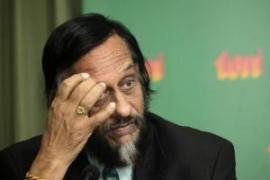
- IPCC chairman Raj Pachauri
Having been forced to apologise over the 2035 claim, Dr Pachauri blamed Dr Lal, saying his team had failed to apply IPCC procedures.
It was an accusation rebutted angrily by Dr Lal. ‘We as authors followed them to the letter,’ he said. ‘Had we received information that undermined the claim, we would have included it.’
However, an analysis of those 500-plus formal review comments, to be published tomorrow by the Global Warming Policy Foundation (GWPF), the new body founded by former Chancellor Nigel Lawson, suggests that when reviewers did raise issues that called the claim into question, Dr Lal and his colleagues simply ignored them.
For example, Hayley Fowler of Newcastle University, suggested that their draft did not mention that Himalayan glaciers in the Karakoram range are growing rapidly, citing a paper published in the influential journal Nature.
In their response, the IPCC authors said, bizarrely, that they were ‘unable to get hold of the suggested references’, but would ‘consider’ this in their final version. They failed to do so.
The Japanese government commented that the draft did not clarify what it meant by stating that the likelihood of the glaciers disappearing by 2035 was ‘very high’. ‘What is the confidence level?’ it asked.
The authors’ response said ‘appropriate revisions and editing made’. But the final version was identical to their draft.
Last week, Professor Georg Kaser, a glacier expert from Austria, who was lead author of a different chapter in the IPCC report, said when he became aware of the 2035 claim a few months before the report was published, he wrote to Dr Lal, urging him to withdraw it as patently untrue.
Dr Lal claimed he never received this letter. ‘He didn’t contact me or any of the other authors of the chapter,’ he said.
The damage to the IPCC’s reputation, already tarnished by last year’s ‘Warmergate’ leaked email scandal, is likely to be considerable.
Benny Peiser, the GWPF’s director, said the affair suggested the IPCC review process was ‘skewed by a bias towards alarmist assessments’.
Environmentalist Alton Byers said the panel’s credibility had been damaged. ‘They’ve done sloppy work,’ he said. ‘We need better research on the ground, not unreliable predictions derived from computer models.’
Last night, Dr Pachauri defended the IPCC, saying it was wrong to generalise based on a single mistake. ‘Our procedure is robust,’ he added.
January 24, 2010
Posted by aletho |
Deception, Science and Pseudo-Science, Timeless or most popular | Dr. Murari Lal, Global Warming Policy Foundation, Himalayas, Intergovernmental Panel on Climate Change, IPCC, Karakoram, Nobel Prize, WWF |
Leave a comment
By Jonathan Leake | The Australian | January 25, 2010
THE UN climate science panel faces new controversy for wrongly linking global warming to a rise in natural disasters such as hurricanes and floods.
The Intergovernmental Panel on Climate Change based the claims on an unpublished report that had not been subjected to routine scientific scrutiny – and ignored warnings from scientific advisers. The report’s author later withdrew the claim because the evidence was too weak.
The link was central to demands at last month’s Copenhagen climate summit by African nations for compensation of $US100 billion from the rich nations.
However, the IPCC knew in 2008 that the link could not be proved but did not alert world leaders, who have used weather extremes to bolster the case for action on climate change.
Kevin Rudd last November linked weather extremes to the debate over the government’s emissions trading scheme.
“We will feel the effects of climate change fastest and hardest, and therefore we must act this week, and the government will be doing everything possible to make sure that can occur,” the Prime Minister said at the time.
British Climate Change Minister Ed Miliband has suggested floods – such as those in Bangladesh in 2007 – could be linked to global warming.
US President Barack Obama said last year: “More powerful storms and floods threaten every continent.”
Last month British Prime Minister Gordon Brown told parliament that the financial agreement at Copenhagen “must address the great injustice that . . . those hit first and hardest by climate change are those that have done least harm”.
The IPCC has now been forced to reassess its report linking extreme weather to climate change.
The UN body’s about-face comes less than a week after it was forced to retract claims that the Himalayan glaciers would be largely melted by 2035. The claim was sourced to an environmental group’s report of an interview in New Scientist magazine.
The Indian glaciologist who made the quote said a week ago the claim was “speculation” and had not been used in a peer-reviewed scientific paper.
It also comes as the British parliament launches an inquiry into leaked emails from the University of East Anglia’s Climatic Research Unit that raised questions about the legitimacy of some data published by the IPCC about global warming.
The latest controversy goes back to the IPCC’s benchmark 2007 report on climate change, which warned that the world had “suffered rapidly rising costs due to extreme weather-related events since the 1970s”. It suggested part of the increase was because of global warming.
However, the scientific paper on which the IPCC based its claim had not been peer reviewed, nor published, by the time the climate body issued its report. When the paper was published, in 2008, it had a new caveat. It said: “We find insufficient evidence to claim a statistical relationship between global temperature increase and catastrophic losses.”
The IPCC failed to issue a clarification before the Copenhagen climate summit last month. Two scientific reviewers who checked drafts of the IPCC report urged greater caution in proposing a link between climate change and disaster impacts, but were ignored.
Jean-Pascal van Ypersele, a climatologist at the Universite Catholique de Louvain in Belgium, who is vice-chairman of the IPCC, said the UN body was now “reassessing the evidence” and it would publish a report on natural disasters and extreme weather with the latest findings.
The opposition used the latest revelations to savage Mr Rudd over his handling of climate change. Tony Abbott pointed to Mr Rudd’s reluctance to mention climate change in the series of speeches he had delivered around the nation in the lead-up to Australia Day.
“This is yet another case of the Prime Minister raising expectations and not acting on them,” the Opposition Leader said. “The challenge for the Prime Minister is to say now whether he really will reintroduce the ETS given the failure of Copenhagen.”
Opposition climate change spokesman Greg Hunt backed the British parliamentary inquiry into the so-called Climategate emails, established on Friday. “The key to community consensus on climate change is confidence in the science,” he said.
Climate Change Minister Penny Wong last week endorsed the IPCC report that contained the glacier claim. “It has been intensely scrutinised with very few errors being identified, and none that challenge the central conclusions of the report,” she said. “The Fourth Assessment Report represents the international consensus on climate change science. All reports of the IPCC are subjected to extensive expert and government review.”
The paper at the centre of the latest questions was written in 2006 by Robert Muir-Wood, head of research at Risk Management Solutions, a London consultancy, who became a contributing author on the IPCC report on climate change impacts.
He wanted to find out if the eight year-on-year increase in losses caused by weather-related disasters since the 1960s was larger than could be explained by the impact of social changes such as growth in population. Such an increase, coinciding with rising temperatures, would suggest global warming was to blame.
In the research, Mr Muir-Wood looked at a range of hazards, including tropical cyclones, floods and hurricanes. He found from 1950 to 2005 there was no increase in the impact of disasters once growth was accounted for. For 1970 to 2005 he found a 2 per cent annual increase that “corresponded with a period of rising global temperatures”, but said almost all of it was because of strong hurricane seasons in 2004 and 2005. Despite such caveats, the IPCC report cited only the 1970-2005 results.
Roger Pielke, professor of environmental studies at Colorado University, who commissioned Mr Muir-Wood’s paper, has told the IPCC that citing one section in preference to the rest was wrong.
“The idea that catastrophes are rising in cost because of climate change is completely misleading,” Mr Muir-Wood said.
Additional reporting: Christian Kerr
January 24, 2010
Posted by aletho |
Deception, Science and Pseudo-Science, Timeless or most popular |
Leave a comment

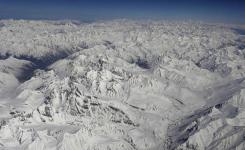 In fact, the 2035 melting date seems to have been plucked from thin air.
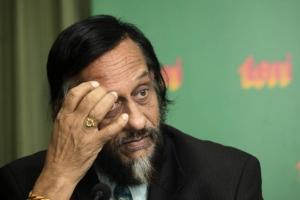

 Part One, The Record, treats the history of garlic as evidence. From the clay garlic bulb placed in an Egyptian grave nearly six thousand years ago, through the Ebers Papyrus, through Hippocrates, Dioscorides, Pliny and Galen, the Arab physicians under Avicenna, the medieval herbals, Culpeper, and the plague years, to the last era in which Western physicians prescribed garlic as a matter of course, which ran from 1850 to 1945. It closes with the living traditions that never stopped using it, and with the folklore of charms, vampires and the evil eye.
 Aletho News

