Following President Obama’s war speeches at West Point and Oslo —- two breathtaking exercises in political cynicism that killed any hope of authentic liberal reform — I’ve got only one question: Have the liberals who worshiped at the altar of “change you can believe in” had enough?
There was already ample evidence of Obama’s feeble commitment to peace, progress and justice. Ever since he started fund-raising for his presidential campaign, it’s been clear that the principal change in the offing was skin tone and slogans. One only needed to read “The Audacity of Hope” to see how thoroughly Obama was enmeshed in the neo-liberal orthodoxies of the Robert Rubin-Clinton wing of the Democratic Party. Obama’s impeccably establishment party credentials — that is, his fealty to the Democratic leadership of Chicago and Capitol Hill — practically guaranteed that he would hew to the status quo when forced to choose.
Even before he announced his candidacy for president, Obama endorsed the Iraq hawk Joe Lieberman for re-election to the Senate; then, when Lieberman lost the primary to the antiwar Ned Lamont, Obama made sure that he was never seen with the official nominee of the Connecticut Democratic Party, a bald act of realpolitik that helped Lieberman win as an “independent.” In the U.S. Senate, meanwhile, Obama’s voting record on Iraq war funding was identical to Hillary Clinton’s.
Liberals, exhausted by President Bush and heartened by Obama’s challenge to the pro-invasion Hillary, ignored their new hero’s record and fixated on his one major anti-Iraq speech, delivered when he was a state senator. Ironically, it was Clinton who best characterized Obama’s candidacy when she said that she and John McCain would “put forth” a “lifetime of experience” while “Senator Obama will put forth a speech he made in 2002.”
Indeed, apart from extraordinary ambition, there wasn’t much more to Obama than that one speech.
So what’s left of the liberal adoration of Obama? The first major defector among the camp followers was Gary Wills, who denounced the Afghanistan escalation as a “betrayal.” As Wills astutely noted in a New York Review of Books blog, “If we had wanted Bush’s wars, and contractors, and corruption, we could have voted for John McCain. At least we would have seen our foe facing us, not felt him at our back, as now we do.”
[…]
Then there’s Tom Hayden, the former radical and author of the Students for A Democratic Society’s Port Huron Statement, who was a belligerent booster of Obama during last year’s campaign. Hayden, too, is upset about Afghanistan, but not enough to cast aside his self-delusion about Obama. Claiming to speak for “the antiwar movement,” he laments that the “costs in human lives and tax dollars are simply unsustainable” and, worse, that “Obama is squandering any hope for his progressive domestic agenda by this tragic escalation of the war.”
Unsustainable? Tragic? There’s no evidence that Obama and his chief of staff see any limit to their ability to print dollars, sell Treasury bonds and send working-class kids to die in distant lands. And what “progressive” agenda is Hayden talking about? So far, Obama’s big domestic goals have been compulsory, government-subsidized insurance policies that will further enrich the private health-care business, huge increases in Pentagon spending and purely symbolic regulation of Wall Street.
While Obama was speaking to the unfortunate cadets, I couldn’t help thinking of Richard Nixon and his “secret plan” to end the Vietnam War, a plan that entailed a long and pointless continuation of the fighting. Most liberals would agree that Nixon was a terrible president. Yet, for all his vicious mendacity, I think the sage of San Clemente had a bad conscience about the harm he did, about all he caused to die and be crippled.
Instead of shoring up Obama’s image of goodness, liberals really should be asking, “Does the president have a conscience?” Because if he does, he’s really no better than Nixon.
John R. MacArthur is publisher of Harper’s Magazine. Source
For years, the US has been inundated with claims that it should follow Brazil’s lead on biofuels. These arguments have largely been made by a small, but influential group of neoconservatives who claim that the US should quit using oil altogether. They claim that using more ethanol – produced from sugar cane, or corn, or some other substance – will impoverish OPEC and America will once again be returned to prosperity.
But these claims wither in the face of a story by Clemens Hoges in the January 22 issue of the German magazine Der Spiegel. Hoges writes that sugar cane “is considered an effective antidote to climate change, but hundreds of thousands of Brazilian plantation workers harvest the cane at slave wages.” The story is one of several published in recent years that have exposed the brutality of the Brazilian sugar cane fields. But before looking at Der Spiegel’s coverage, let’s do a quick review of the Brazilian ethanol boosters.
Thomas Friedman, the Pulitzer Prize-winning columnist for the New York Times has frequently advocated the mirage of “energy independence.” And he has cited Brazil as a model. In an August 2005 column, he conflated the issues of oil and terrorism “we are financing both sides in the war on terrorism: our soldiers and the fascist terrorists,” he wrote. He went on to claim that many of the technologies needed for energy independence are “already here – from hybrid engines to ethanol.” He then quoted Gal Luft, the neoconservative who heads the Institute for the Analysis of Global Security and created Set America Free, a group that advocates “energy independence.” Luft claimed that Brazil’s success in cutting its oil imports was due to the fact that the South American country was “bringing hydrocarbons and carbohydrates to live happily together in the same fuel tank.” In Luft’s view, ethanol has brought “Brazil close to energy independence” and insulated it from higher oil prices.
(Luft’s claim completely ignores the fact that since 1980, Petrobras, Brazil’s national oil company, has been growing its oil production by an average of 9 percent per year thanks to its offshore drilling prowess. Since 1998, Brazil has doubled its oil production and is now producing about 2 million barrels of oil per day. Neither Friedman nor Luft bothered to mention that fact.)
In late 2005, in a speech to the National Press Club, Pennsylvania governor Edward Rendell said that “No longer is investing in alternative fuels a fringe idea….Brazil is perhaps the world’s greatest success story. Due to 30 years of hard work, research and investment, Brazil will not need one drop of imported oil this time next year. If anyone suggests to you that these ideas aren’t ready for prime time and cost too much, they are living in the past.”
Venture capitalist Vinod Khosla and former Senate minority leader Tom Daschle have touted Brazil’s “energy independence miracle.” In a May 2006 opinion piece in the New York Times, they said that ethanol “could set America free from its dependence on foreign oil” and that Brazil proves that “an aggressive strategy of investing in petroleum substitutes like ethanol can end dependence on imported oil.”
In October 2006, former president Bill Clinton while in California stumping for Proposition 87 (an alternative energy initiative that later failed) declared that the initiative would “move California toward energy independence with cleaner fuels, with wind and solar power.” He continued, “There are people who don’t believe you can do it. I do. Look at Brazil. Don’t you think you can do it if they did it? They run their cars on ethanol.” Clinton later provided a sound bite for the pro-Proposition 87 forces in which he declared that “If Brazil can do it, so can California.”
The biofuels madness continued with a May 6, 2008 editorial in the Chicago Tribune, titled “Food vs. fuel, a global myth.” The piece, written by Set America Free’s Luft, and his fellow traveler, Robert Zubrin, a right-wing zealot who advocates colonizing Mars, claimed, incredibly, that “farm commodity prices have almost no effect on retail prices.” The two went on to declare that “rather than shut down biofuel programs, we need to radically augment them, to the point where we can take down” the Organization of the Petroleum Exporting Countries.
A big reality check is in order.
First and foremost, over the past two years, 14 studies have found a direct link between the ethanol scam and higher food prices.
Second, Brazil is not the epicenter of ethanol production, the US is. In 2008, the US produced about 9.1 billion gallons of the fuel, all of it from corn. Brazil produced about 6.8 billion gallons. And while sugar cane may be a far better feedstock that corn, in terms of greenhouse gas emissions and energy balance, the key issue is one of labor. While US corn is harvested mechanically, the Brazilian sugar cane is harvested almost exclusively by hand. And it is dangerous, back-breaking work.
In 2007, London’s The Guardian newspaper ran a story which quoted human rights activists who said that the men who harvest sugar cane for ethanol production “are effectively slaves” and that Brazil’s ethanol industry was “a shadowy world of middle men and human rights abuses.” It cited figures provided by a Catholic nun, Sister Ines Facioli, who runs a support network in a small town about 200 miles west of São Paolo. She claimed that between 2004 and 2006, 17 cane workers died due to overwork or exhaustion. One laborer, Pedro Castro, told the Guardian’s Tom Phillips, that the hot climate, combined with the heavy protective clothing needed to protect his body from the sharp machete blades used to cut the cane, was like working “inside a bread oven.”
For their work, the average cane worker gets paid about $1 for every ton of sugar cane they cut. They often work 12-hour shifts. Their housing, according to Phillips’ article, consists of “squalid, overcrowded ‘guest houses’ rented to them at extortionate prices by unscrupulous landlords.” The average cane cutter makes less than $200 per month. And some, it appears, make nothing at all.
In July 2007, the Brazilian government freed 1,100 laborers who were found working in horrendous conditions on a sugar cane plantation in the northeastern state of Para. A story by the Associated Press said that the workers were forced to work 13-hour days and that they had no choice but to pay “exorbitant prices for food and medicine.” It then cited a source in Brazil’s labor ministry who claimed that many of the workers were “sick from spoiled food or unsafe water, slept in cramped quarters on hammocks and did not have proper sanitation facilities.” The government-backed raid of the plantation lasted three days. The plantation in question is owned by Para Pastoril e Agricola SA, which produces about 13 million gallons of ethanol per year. The workers were caught up in a situation known as debt slavery in which poor workers are taken to remote farms where they then rack up large debts to the plantation owners who force the workers to pay high prices for everything from food to transportation.
According to Land Pastoral, a group affiliated with Brazil’s Roman Catholic Church, about 25,000 workers in Brazil are living in slavery-like conditions, most of them in the Amazon, and many of them working in the sugar cane business. The 2007 raid is not the first. In 2005, 1,000 workers were found living in debt slavery on a sugar cane plantation in the Brazilian state of Mato Grosso.
The article in Der Spiegel makes it clear that little has changed over the past few years. Hoges reports that one worker he interviewed, Antonio da Silva, makes just $172 per month during the harvest season, which lasts about six months. During the rest of the year, he has to rely on charity to feed his family. Da Silva’s home in the village of Araçoiaba Nova, Hoges reports, is the same as it was five years ago. “They threw plastic tarps over a handful of branches to build the hut where they still live today. The door consists of scraps of cloth nailed to a board, and boards placed around a hole in the tarp form the window. The furniture, arranged on the bare earth floor, consists of the plank beds and a cabinet.”
The most compelling quote in the piece is from Father Tiago, a 66 year-old Scottish monk who has been working in Brazil for decades. The Scotsman makes clear what he thinks about the issue: “The promise of biofuel is a lie. Anyone who buys ethanol is pumping blood into his tank,” he said. “Ethanol is produced by slaves.”
The photos that accompany Hoges’ story should be viewed by everyone who retains the misguided belief that the US should emulate Brazil’s biofuels industry. Here’s the link.
Alas, it doesn’t appear the members of Congress are paying much attention. Last month, US Rep. Eliot Engel, a New York Democrat, announced that he would be pushing legislation aimed at eliminating the $0.54-per-gallon tariff on imported ethanol. Doing so, Engel said, “would enable U.S. refiners to purchase cheaper and more climate-friendly ethanol, no matter where it comes from. The result would be an overall increase in the supply of fuel, a decrease in its price, and a decrease in our dependency on petroleum from the Middle East.”
Sound bites like the one from Engel ignore basic arithmetic: Even if the US imported all of Brazil’s ethanol — all 6.8 billion gallons per year — that quantity would only provide the energy equivalent of about 1.4 percent of America’s total oil consumption.
Despite those numbers — despite the ongoing evidence of slavery in the Brazilian ethanol trade — the energy discussion in America remains stuck in an absurdist fantasy about energy independence and freedom from the sticky problems of the Persian Gulf. But given what has happened in the past few months with regard to rising food prices and the myriad other problems associated with biofuels, one thing is becoming perfectly clear: Ethanol isn’t the answer to our energy challenge. Ethanol makes it worse.
The Optimum Population Trust (OPT), a UK-based “think tank” and registered charity, has launched a new initiative urging wealthy members of the developed world to participate in carbon offsets that fund programs for curbing the population of developing nations. The scheme is being promoted as a more cost-effective way to reduce CO2 emissions than investing in alternative energy sources and offers a way for elitist racists to feel ethical in their quest to exterminate the third world masses.
A BBC News article on the proposal dutifully reports the OPT’s proposal and their justifications for proposing it. They note that the program is designed to fund “contraception” programs in poor nations, a term that helpfully obscures the fact that such programs—including those run by FPA, one of the agencies listed as a supporting organization of this new program—have used bribes to get poor men and women to volunteer for sterilization. The article does, however, allow space for a detractor of the proposal to point out that even if one does accept that limiting carbon emissions is necessary (which it is not), the focus on limiting emissions of people in Least Developed Countries (LDCs) is in itself nonsensical: “Carbon emissions from people in much of sub-Saharan Africa are so low that they can barely be counted.”
What this error exposes, however, is not that the OPT has set its sights on the wrong target. In fact, they are simply introducing the idea as a politically expedient precedent which will eventually be expanded to include the developed world as well. Indeed, this is merely the latest such proposal from the group, which has previously said that the world’s population must be cut by as much as half and the UK’s population reduced to as little as 17 million in order to reach “sustainable levels.” The group’s patrons include world renowned environmental campaigners, academics and media figures like Jane Goodall, James Lovelock and Sir David Attenborough.
One patron of the Optimum Population Trust who stands out is Jonathon Porritt, a well-known baronet and a green campaigner who advises the likes of Prince Charles on environmental matters. He has long argued the link between “environmental sustainability” and enforced abortions. He once claimed to be “unapologetic about asking people to connect up their own responsibility for their total environmental footprint and how they decide to procreate and how many children they think are appropriate.” He is also on the board of BBC Wildlife magazine, perhaps explaining why BBC News tends to treat every pronouncement from the OPT as if it were a major policy announcement (see this and this and this for starters).
Another prominent OPT patron is Paul Ehrlich, George W. Bush’s chief science advisor and co-author (with his wife, Anne, and Obama’s science advisor, John P. Holdren) of Ecoscience, a 1977 textbook that outlined in painstaking detail the various measures that the governments of the world could take to confront the “problem” of population, from forced abortions and one-child policies to mass sterilization of the populace through the contamination of the water supply. One representative passage reads:
“The development of a long-term sterilizing capsule that could be implanted under the skin and removed when pregnancy is desired opens additional possibilities for coercive fertility control. The capsule could be implanted at puberty and might be removable, with official permission, for a limited number of births.”
With such patrons in its ranks, it is hardly surprising that the group would endose a plan to sterilize the poor in the name of reducing carbon emissions. Of course, the green rhetoric of “sustainability” and “carbon reduction” is only the latest garb for a very old ideology, eugenics, a 19th century junk science which concluded that the human race consisted of genetically “superior” and “inferior” breeds. Unsurprisingly, this long-since discredited hucksterism, invented by an inbred group of British gentlemen scientists concluded that inbred British gentlemen scientists were the master race and everyone else was expendable.
The claim was both simple and terrifying: that temperatures on planet Earth are now ‘likely the highest in at least the past 1,300 years’. As its authors from the United Nations Intergovernmental Panel on Climate Change (IPCC) must have expected, it made headlines around the world.
Yet some of the scientists who helped to draft it, The Mail on Sunday can reveal, harboured uncomfortable doubts. In the words of one, David Rind from the US space agency Nasa, it ‘looks like there were years around 1000AD that could have been just as warm’.
Keith Briffa from the University of East Anglia’s Climatic Research Unit (CRU), which plays a key role in forming IPCC assessments, urged caution, warning that when it came to historical climate records, there was no new data, only the ‘same old evidence’ that had been around for years.
‘Let us not try to over-egg the pudding,’ he wrote in an email to an IPCC colleague in September 2006. ‘True, there have been many different techniques used to aggregate and scale data – but the efficacy of these is still far from established.’
But when the ‘warmest for 1,300 years’ claim was published in 2007 in the IPCC’s fourth report, the doubters kept silent.
It is only now that their concerns have started to emerge from the thousands of pages of ‘Warmergate’ emails leaked last month from the CRU’s computers, along with references to performing a ‘trick’ to ‘hide’ temperature decline and instructions to resist all efforts by the CRU’s critics to use the Freedom of Information Act to check the unit’s data and conclusions.
Last week, as an official inquiry by the former civil servant Sir Muir Russell began, I tried to assess Warmergate’s wider significance.
The CRU’s supporters insisted it was limited. ‘In the long term, it will make very little difference to the scientific consensus, and to the way politicians respond to it,’ Professor Trevor Davies, the university’s Pro-Vice Chancellor and a former CRU director, told me. ‘I am certain that the science is rock solid.’
He admitted that his CRU colleagues had sometimes used ‘injudicious phrases’, but that was because they kept on being ‘diverted’ from their work by those who wished to scrutinise it. ‘It’s understandable that sometimes people get frustrated,’ he said.
The only lesson the affair had for him was that ‘we have got to get better in terms of explanation. Some scientists still find it quite it difficult to communicate with the public.’
Others, however, were less optimistic. Roger Pielke, Professor of Environmental Studies at the University of Colorado, could in no sense be described as a climate change sceptic, let alone a ‘denier’.
‘Human-caused climate change is real, and I’m a strong advocate for action,’ he said. ‘But I’m also a strong advocate for integrity in science.’
Pielke’s verdict on the scandal is damning.
‘These emails open up the possibility that big scientific questions we’ve regarded as settled may need another look. They reveal that some of these scientists saw themselves not as neutral investigators but as warriors engaged in battle with the so-called sceptics.
‘They have lost a lot of credibility and as far as their being leading spokespeople on this issue of huge public importance, there is no going back.’
Climate science is complicated, and often the only way to make sense of raw data is through sophisticated statistical computer programs. The consequence is that most lay individuals – politicians and members of the public alike – have little choice but to take the assurances of scientists such as Davies on trust.
He and other ‘global warmists’ often insist that when it comes to the IPCC’s main conclusions – that the Earth is in a period of potentially catastrophic warming and that the main culprit is man-made greenhouse gas emission – no serious scientist dissents from the conventional view.
Hence, perhaps, Gordon Brown’s recent comment that those who disagree are ‘behind-the-times, antiscience, flat-Earth climate sceptics’.
In fact, there is a large body of highly-respected academic experts who fiercely contest this thesis: people such as Richard Lindzen, Professor of Meteorology at the Massachusetts Institute of Technology and a disillusioned former IPCC member, and Dr Tom Segalstad, head of geology at Oslo University, who has stated that ‘most leading geologists throughout the world know that the IPCC’s view of Earth processes are implausible if not impossible’.
These dissenters focus their criticisms on the IPCC’s analysis of the way the atmosphere works and the models it uses to predict the future.
However, Warmergate strikes at something more fundamental – the science that justifies the basic assumption that the present warming really is unprecedented, at least in the past few thousand years.
Take the now-notorious email that the CRU’s currently suspended director, Dr Phil Jones, sent to his IPCC colleagues on November 16, 1999, when he wrote he had ‘just completed Mike’s Nature trick’ and had so managed to ‘hide the decline’.
The CRU’s supporters have protested bitterly about the attention paid to this message. In the course of an extraordinary BBC interview in which he called an American critic an ‘****hole’ live on air, Jones’s colleague Professor Andrew Watson insisted that the fuss was completely unjustified, because all Jones had been talking about was ‘tweaking a diagram’.
Davies told me that the email had been ‘taken out of context’ adding: ‘One definition of the word “trick” is “the best way of doing something”. What Phil did was standard practice and the facts are out there in the peer-reviewed literature.’
However, the full context of that ‘trick’ email, as shown by a new and until now unreported analysis by the Canadian climate statistician Steve McIntyre, is extremely troubling. Derived from close examination of some of the thousands of other leaked emails, he says it suggests the ‘trick’ undermines not only the CRU but the IPCC.
There is a widespread misconception that the ‘decline’ Jones was referring to is the fall in global temperatures from their peak in 1998, which probably was the hottest year for a long time. In fact, its subject was more technical – and much more significant.
It is true that, in Watson’s phrase, in the autumn of 1999 Jones and his colleagues were trying to ‘tweak’ a diagram. But it wasn’t just any old diagram.
It was the chart displayed on the first page of the ‘Summary for Policymakers’ of the 2001 IPCC report – the famous ‘hockey stick’ graph that has been endlessly reproduced in everything from newspapers to primary-school textbooks ever since, showing centuries of level or declining temperatures until a dizzying, almost vertical rise in the late 20th Century.
There could be no simpler or more dramatic representation of global warming, and if the origin of worldwide concern over climate change could be traced to a single image, it would be the hockey stick. Drawing a diagram such as this is far from straightforward.
Gabriel Fahrenheit did not invent the mercury thermometer until 1724, so scientists who want to reconstruct earlier climate history have to use ‘proxy data’ – measurements derived from records such as ice cores, tree-rings and growing season dates.
However, different proxies give very different results.
For example, some suggest that the ‘medieval warm period’, the 350-year era that started around 1000, when red wine grapes flourished in southern England and the Vikings tilled now-frozen farms in Greenland, was considerably warmer than even 1998.
Of course, this is inconvenient to climate change believers because there were no cars or factories pumping out greenhouse gases in 1000AD – yet the Earth still warmed.
Some tree-ring data eliminates the medieval warmth altogether, while others reflect it. In September 1999, Jones’s IPCC colleague Michael Mann of Penn State University in America – who is now also the subject of an official investigation –was working with Jones on the hockey stick. As they debated which data to use, they discussed a long tree-ring analysis carried out by Keith Briffa.
Briffa knew exactly why they wanted it, writing in an email on September 22: ‘I know there is pressure to present a nice tidy story as regards “apparent unprecedented warming in a thousand years or more”.’ But his conscience was troubled. ‘In reality the situation is not quite so simple – I believe that the recent warmth was probably matched about 1,000 years ago.’
Another British scientist – Chris Folland of the Met Office’s Hadley Centre – wrote the same day that using Briffa’s data might be awkward, because it suggested the past was too warm. This, he lamented, ‘dilutes the message rather significantly’.
Over the next few days, Briffa, Jones, Folland and Mann emailed each other furiously. Mann was fearful that if Briffa’s trees made the IPCC diagram, ‘the sceptics [would] have a field day casting doubt on our ability to understand the factors that influence these estimates and, thus, can undermine faith [in them] – I don’t think that doubt is scientifically justified, and I’d hate to be the one to have to give it fodder!’
Finally, Briffa changed the way he computed his data and submitted a revised version. This brought his work into line for earlier centuries, and ‘cooled’ them significantly. But alas, it created another, potentially even more serious, problem.
According to his tree rings, the period since 1960 had not seen a steep rise in temperature, as actual temperature readings showed – but a large and steady decline, so calling into question the accuracy of the earlier data derived from tree rings.
This is the context in which, seven weeks later, Jones presented his ‘trick’ – as simple as it was deceptive.
All he had to do was cut off Briffa’s inconvenient data at the point where the decline started, in 1961, and replace it with actual temperature readings, which showed an increase. On the hockey stick graph, his line is abruptly terminated – but the end of the line is obscured by the other lines.
Any scientist ought to know that you just can’t mix and match proxy and actual data,’ said Philip Stott, emeritus professor of biogeography at London’s School of Oriental and African Studies. ‘They’re apples and oranges. Yet that’s exactly what he did.’
Since Warmergate-broke, some of the CRU’s supporters have claimed that Jones and his colleagues made a ‘full disclosure’ of what they did to Briffa’s data in order to produce the hockey stick.
But as McIntyre points out, ‘contrary to claims by various climate scientists, the IPCC Third Assessment Report did not disclose the deletion of the post-1960 values’. On the final diagram, the cut off was simply concealed by the other lines.
By 2007, when the IPCC produced its fourth report, McIntyre had become aware of the manipulation of the Briffa data and Briffa himself, as shown at the start of this article, continued to have serious qualms. McIntyre by now was an IPCC ‘reviewer’ and he urged the IPCC not to delete the post-1961 data in its 2007 graph. ‘They refused,’ he said, ‘stating this would be “inappropriate”.’
Yet even this, Pielke told me, may not ultimately be the biggest consequence of Warmergate.
Some of the most controversial leaked emails concern attempts by Jones and his colleagues to avoid disclosure of the CRU’s temperature database – its vast library of readings from more than 1,000 weather stations around the world, the ultimate resource that records how temperatures have changed.
In one email from 2005, Jones warned Mann not to leave such data lying around on searchable websites, because ‘you never know who is trawling them’.
Critics such as McIntyre had been ‘after the CRU station data for years. If they ever hear there is a Freedom of Information Act now in the UK, I think I’ll delete the file rather than send to anyone’.
Yesterday Davies said that, contrary to some reports, none of this data has in fact been deleted. But in the wake of the scandal, its reliability too is up for grabs.
The problem is that, just like tree rings or ice cores, readings from thermometers or electronic ‘thermistors’ are open to interpretation.
The sites of weather stations that were once open countryside become built up areas, so trapping heat, and the type of equipment used changes over time. The result is what climate scientists call ‘inhomogeneities’ – anomalies between readings that need to be ‘adjusted’.
But can we trust the way such ‘adjustments’ are made?
Last week, an article posted on a popular climate sceptic website analysed the data from the past 130 years in Darwin, Australia.
This suggested that average temperatures had risen there by about two degrees Celsius. However, the raw data had been ‘adjusted’ in a series of abrupt upward steps by exactly the same amount: without the adjustment, the Darwin temperature record would have stayed level.
In 2007, McIntyre examined records across America. He found that between 1999 and 2007, the US equivalent of the Met Office had changed the way it adjusted old data.
The result was to make the Thirties seem cooler, and the years since 1990 much warmer. Previously, the warmest year since records began in America had been 1934.
Now, in line with CRU and IPCC orthodoxy, it was 1998.
At the CRU, said Davies, some stations’ readings were adjusted by unit and in such cases, raw and adjusted data could be compared. But in about 90 per cent of cases, the adjustment was carried out in the countries that collected the data, and the CRU would not know exactly how this had been done.
Davies said: ‘All I can say is that the process is careful and considered. To get the details, the best way would be to go the various national meteorological services.’
The consequences of that, Stott said, may be explosive. ‘If you take Darwin, the gap between the two just looks too big. If that applies elsewhere, it’s going to get really interesting. It’s no longer going to be good enough for the Met Office and CRU to put the data out there.
‘To know we can trust it, we’ve got to know what adjustments have been made, and why.’
Last week, at the Copenhagen climate summit, the Met Office said that the Nineties have been the warmest decade in history. Depending on how the data has been adjusted, Stott said, that statement may not be true.
Pielke agreed. ‘After Climategate, the surface temperature record is being called into question.’ To experts such as McIntyre and Pielke, perhaps the most baffling thing has been the near-unanimity over global warming in the world’s mainstream media – a unanimity much greater than that found among scientists.
In part, this is the result of strongarm tactics.
For example, last year the BBC environment reporter Roger Harrabin made substantial changes to an article on the corporation website that asked why global warming seemed to have stalled since 1998 – caving in to direct pressure from a climate change activist, Jo Abbess.
‘Personally, I think it is highly irresponsible to play into the hands of the sceptics who continually promote the idea that “global warming finished in 1998” when that is so patently not true,’ she told him in an email.
After a brief exchange, he complied and sent a final note: ‘Have a look in ten minutes and tell me you are happier. We have changed headline and more.’
Afterwards, Abbess boasted on her website: ‘Climate Changers, Remember to challenge any piece of media that seems like it’s been subject to spin or scepticism. Here’s my go for today. The BBC actually changed an article I requested a correction for.’
Last week, Michael Schlesinger, Professor of Atmospheric Studies at the University of Illinois, sent a still cruder threat to Andrew Revkin of the New York Times, accusing him of ‘gutter reportage’, and warning: ‘The vibe that I am getting from here, there and everywhere is that your reportage is very worrisome to most climate scientists … I sense that you are about to experience the “Big Cutoff” from those of us who believe we can no longer trust you, me included.’
But in the wake of Warmergate, such threats – and the readiness to bow to them – may become rarer.
‘A year ago, if a reporter called me, all I got was questions about why I’m trying to deny climate change and am threatening the future of the planet,’ said Professor Ross McKitrick of Guelph University near Toronto, a long-time collaborator with McIntyre.
‘Now, I’m getting questions about how they did the hockey stick and the problems with the data. Maybe the emails have started to open people’s eyes.’
Russian secret service agents admitted yesterday that the hacked ‘Warmergate’ emails were uploaded on a Siberian internet server, but strenuously denied a clandestine state-sponsored operation to wreck the Copenhagen summit.
The FSB – formerly the KGB – confirmed that thousands of messages to and from scientists at the University of East Anglia’s Climatic Research Unit were distributed to the world from the city of Tomsk, as revealed by The Mail on Sunday last week.
Now, it has emerged that IT experts specialising in hacking techniques were brought in by the Russian authorities following this newspaper’s exposure of the Tomsk link. They have gathered evidence about how and where the operation was carried out, although they are not prepared to say at this stage who they think was responsible.
A Russian intelligence source claimed the FSB had new information which could cast light on who was behind the elaborate operation.
‘We are not prepared to release details, but we might if the false claims about the FSB’s involvement do not stop,’ he said. ‘The emails were uploaded to the Tomsk server but we are sure this was done from outside Russia.’
The Kremlin’s top climate change official, Alexander Bedritsky, denied the Russian government was involved in breaking into the CRU’s computer system.
‘You can post information on a computer from any other country. It is nonsense to blame Russia,’ he said.
In December 2003, we all saw the photos of a disheveled Saddam Hussein after he was pulled out of a “spider hole” in a town near Tikrit. The administration laughed and the U.S. public made jokes about him and his hiding place.
The room was dirty. There was an empty can of Spam. The story was that he was holed up there and was totally irrelevant to Iraq. His day was done and he was now in the hands of Iraq’s liberators. What you saw wasn’t real. Nothing of this scenario was true.
On March 8, 2005, United Press International (UPI) ran a short press release titled “Public Version of Saddam Capture Fiction.” It received little publicity in the U.S., but some foreign news agencies did run the story
The UPI press release consisted of quotes from an ex-U.S. Marine of Lebanese descent, Nadim Rabeh. In addition to the U.S. version of the capture date being off by two days, during an interview in Lebanon, Rabeh stated:
I was among the 20-man unit, including eight of Arab descent, who searched for Saddam for three days in the area of Dour near Tikrit, and we found him in a modest home in a small village and not in a hole as announced. We captured him after fierce resistance during which a Marine of Sudanese origin was killed.
Rabeh recounted how Saddam fired at them with a gun from the window of a room on the second floor. Then, the Marines shouted at him in Arabic, “You have to surrender. There is no point in resisting.”
How did we come to see the pictures of the hole and a scruffy-looking Saddam Hussein? According to Rabeh, “Later on, a military production team fabricated the film of Saddam’s capture in a hole, which was in fact a deserted well.”
The former Marine’s account mixes with the rendition Saddam Hussein gave his lawyer when they had their first meeting. Saddam told him that he was captured in a friend’s house and that he was drugged and tortured for two days, hence the pictures of Saddam looking bedraggled.
All the major news networks and publications showed pictures of the hole and a beleaguered Saddam: Time Magazine, CNN News, magazines, daily newspapers, etc. You name it and they published it. But, they were all wrong. Not one publication took the time to research the story. They ran the pictures supplied by the U.S. military and parroted the lines they were given.
This was not the first time something similar has occurred. After the 1989 invasion of Panama, the U.S. allowed the press to enter Manuel Noriega’s office. He was portrayed as a sexual pervert. In the office were pictures of young boys, a picture of Hitler, red underpants and pornographic magazines.
A few months later, the first Marine to enter Noriega’s office was released from the Corps. He eventually talked to a reporter and gave his story of the encounter. He maintained that the contents of the office included only a desk, a telephone, a chair, and a typewriter.
With Saddam, the props were changed. They were made to make Saddam look like a caged animal on the run who only had the basic elements to survive. No one asked questions of what should have been obvious. For instance, how did Saddam Hussein come into possession of a can of Spam? There was absolutely no place in Iraq where Spam was sold. It contains pork, a food forbidden from a Moslem’s diet.
A few months after his capture, a picture was widely distributed that gained much publicity. It showed a bunch of U.S. soldiers standing next to an Iraqi building on which a painted illustration depicted the blowing up of the World Trade Center. The inference was that Iraqis took glee in the acts of the destruction of the World Trade Center on 9-11-2001.
If one looked close, it was evident that the soldiers were standing on the base path of a disused baseball field. There were no baseball fields in Iraq. Upon closer scrutinizing, the trees were typical southeastern U.S. types that are not indigenous to Iraq.
The photo was bogus. It was filmed in the U.S., but, the harm had been done. Many news agencies had distributed the picture. Its contents inflamed U.S. citizens even more about the Iraqi people.
Renowned American sociopolitical analyst Noam Chomsky says Israel functions as Washington’s main weapons storage base in the Middle East.
“Israel is essentially a US military base, the US positions weapons there, that’s a very close military and intelligence tie,” the Jewish academic told Press TV on Wednesday while explaining the complexity of relations between Washington and Tel Aviv.
Commenting on the weapons that Israel received from the US before launching its 2007-2008 offensive in the Gaza Strip, Chomsky said that the exchange of weapons between the two sides was not surprising.
“[Israel] is receiving weapons constantly. In fact, weapons were sent during the invasion of Gaza. They tried to send them, they were supposed to send them from Greece, and Greece refused to ship them,” he said.
“When pentagon was asked about this, they responded (I think correctly) that the weapons were not being sent for the Gaza invasion which was underway with the US weapons of course; rather, the US was positioning weapons in Israel,” he added.
Obama’s Rules Keep It Intact, and Could Even Accord With an Increase in US-Sponsored Torture Worldwide
By Allan Nairn
January 25, 2009
If you’re lying on the slab still breathing, with your torturer hanging over you, you don’t much care if he is an American or a mere United States – sponsored trainee.
When President Obama declared flatly this week that “the United States will not torture” many people wrongly believed that he’d shut the practice down, when in fact he’d merely repositioned it.
Obama’s Executive Order bans some — not all — US officials from torturing but it does not ban any of them, himself included, from sponsoring torture overseas.
Indeed, his policy change affects only a slight percentage of US-culpable tortures and could be completely consistent with an increase in US-backed torture worldwide.
The catch lies in the fact that since Vietnam, when US forces often tortured directly, the US has mainly seen its torture done for it by proxy — paying, arming, training and guiding foreigners doing it, but usually being careful to keep Americans at least one discreet step removed.
That is, the US tended to do it that way until Bush and Cheney changed protocol, and had many Americans laying on hands, and sometimes taking digital photos.
The result was a public relations fiasco that enraged the US establishment since by exposing US techniques to the world it diminished US power.
But despite the outrage, the fact of the matter was that the Bush/Cheney tortures being done by Americans were a negligible percentage of all of the tortures being done by US clients.
For every torment inflicted directly by Americans in Iraq, Afghanistan, Guantanamo and the secret prisons, there were many times more being meted out by US-sponsored foreign forces.
Those forces were and are operating with US military, intelligence, financial or other backing in Egypt, Israel, Saudi Arabia, Ethiopia, Pakistan, Jordan, Indonesia, Thailand, Uzbekistan, Colombia, Nigeria, and the Philippines, to name some places, not to mention the tortures sans-American-hands by the US-backed Iraqis and Afghans.
What the Obama dictum ostensibly knocks off is that small percentage of torture now done by Americans while retaining the overwhelming bulk of the system’s torture, which is done by foreigners under US patronage.
Obama could stop backing foreign forces that torture, but he has chosen not to do so.
His Executive Order instead merely pertains to treatment of“…an individual in the custody or under the effective control of an officer, employee, or other agent of the United States Government, or detained within a facility owned, operated, or controlled by a department or agency of the United States, in any armed conflict…” which means that it doesn’t even prohibit direct torture by Americans outside environments of “armed conflict,” which is where much torture happens anyway since many repressive regimes aren’t in armed conflict.
And even if, as Obama says, “the United States will not torture,” it can still pay, train, equip and guide foreign torturers, and see to it that they, and their US patrons, don’t face local or international justice.
This is a return to the status quo ante, the torture regime of Ford through Clinton, which, year by year, often produced more US-backed strapped-down agony than was produced during the Bush/Cheney years.
Under the old — now new again — proxy regime Americans would, say, teach interrogation/torture, then stand in the next room as the victims screamed, feeding questions to their foreign pupils. That’s the way the US did it in El Salvador under JFK through Bush Sr. (For details see my “Behind the Death Squads: An exclusive report on the U.S. role in El Salvador’s official terror,” The Progressive, May, 1984 ; the US Senate Intelligence Committee report that piece sparked is still classified, but the feeding of questions was confirmed to me by Intelligence Committee Senators. See also my “Confessions of a Death Squad Officer,” The Progressive, March, 1986, and my “Comment,” The New Yorker, Oct. 15, 1990,[regarding law, the US, and El Salvador]).
In Guatemala under Bush Sr. and Clinton (Obama’s foreign policy mentors) the US backed the army’s G-2 death squad which kept comprehensive files on dissidents and then electroshocked them or cut off their hands. (The file/ surveillance system was launched for them in the ’60s and ’70s by CIA/ State/ AID/ special forces; for the history see “Behind the Death Squads,” cited above, and the books of Prof. Michael McClintock).
The Americans on the ground in the Guatemalan operation, some of whom I encountered and named, effectively helped to run the G-2 but, themselves, tiptoed around its torture chambers. (See my “C.I.A. Death Squad,” The Nation [US], April 17, 1995, “The Country Team,” The Nation [US], June 5, 1995, letter exchange with US Ambassador Stroock, The Nation [US], May 29, 1995, and Allan Nairn and Jean-Marie Simon, “Bureaucracy of Death,” The New Republic, June 30, 1986).
It was a similar story in Bush Sr. and Clinton’s Haiti — an operation run by today’s Obama people — where the DIA (Defense Intelligence Agency) helped launch the terrorist group FRAPH, the CIA paid its leader, and FRAPH itsef laid the machetes on Haitian civilians, torturing and killing as US proxies. (See my “Behind Haiti’s paramilitaries: our man in FRAPH,” The Nation [US], Oct 24, 1994, and “He’s our S.O.B.,” The Nation [US], Oct. 31, 1994; the story was later confirmed on ABC TV’s “This Week” by US Secretary of State Warren Christopher).
In today’s Thailand — a country that hardly comes to mind when most people think of torture — special police and militaries get US gear and training for things like “target selection” and then go out and torture Thai Malay Muslms in the rebel deep south, and also sometimes (mainly Buddhist) Burmese refugees and exploited northern and west coast workers.
Not long ago I visited a key Thai interrogator who spoke frankly about army/ police/ intel torture and then closed our discussion by saying “Look at this,” and invited me into his back room.
It was an up to date museum of plaques, photos and awards from US and Western intelligence, including commendations from the CIA counter-terrorism center (then run by people now staffing Obama), one-on-one photos with high US figures, including George W. Bush, a medal from Bush, various US intel/ FBI/ military training certificates, a photo of him with an Israeli colleague beside a tank in the Occupied Territories, and Mossad, Shin Bet, Singaporean, and other interrogation implements and mementos.
On my way out, the Thai intel man remarked that he was due to re-visit Langley soon.
His role is typical. There are thousands like him worldwide. US proxy torture dwarfs that at Guantanamo.
Many Americans, to their credit, hate torture. The Bush/Cheney escapade exposed that.
But to stop it they must get the facts and see that Obama’s ban does not stop it, and indeed could even accord with an increase in US-sponsored torture crime.
In lieu of action, the system will grind on tonight. More shocks, suffocations, deep burns. And the convergence of thousands of complex minds on one simple thought: ‘Please, let me die.’
NOTE TO READERS: News and Comment is looking for assistance with translating blog postings into other languages, and also with fund raising and distributing the blog content more widely. Those interested please get in touch via the e-mail link below.
NOTE TO READERS RE. TRANSLATION: Portions of News and Comment are now available in Arabic, Brazilian Portuguese, Danish, French, German and Spanish translation (click preceding links or Profile link above) but translation help is still needed — particularly with older postings, in these and all other languages.
NOTE TO READERS RE. POTENTIAL EVIDENCE: News and Comment is looking for public and private documents and first-hand information that could develop into evidence regarding war crimes or crimes against humanity by officials. Please forward material via the email link below.
By Doug L. Hoffman – The Resilient Earth – 11/13/2009
A new report by a senior Indian glaciologist states that Himalayan glaciers remain frozen and quite intact.
The report by Vijay Kumar Raina, formerly of the Geological Survey of India, seeks to correct widely spread reports that India’s 10,000 or so Himalayan glaciers are shrinking rapidly in response to climate change. It’s not true, Raina says. The rumors may have originated in the Asia chapter of the U.N. Intergovernmental Panel on Climate Change’s (IPCC’s) 2007 Working Group II report, which claims that Himalayan glaciers “are receding faster than in any other part of the world and, if the present rate continues, the likelihood of them disappearing by the year 2035 and perhaps sooner is very high if the Earth keeps warming at the current rate.” Evidently, the bogus reporting was based on measurements from only a handful of glaciers.
Raina’s report draws on published studies and unpublished findings from half a dozen Indian groups who have analyzed remote-sensing satellite data or conducted on-site surveys at remote locations often higher than 5000 meters. While the report surveyed a number of glaciers, two particularly iconic ones stand out. The first is the 30-kilometer-long Gangotri glacier, source of the Ganges River. Between 1934 and 2003, the glacier retreated an average of 70 feet (22 meters) a year and shed a total of 5% of its length. But in 2004 and 2005, the retreat slowed to about 12 meters a year, and since September 2007 Gangotri has been “practically at a standstill,” according to Raina’s report.
Gangotri glacier, source of the Ganges River, retreated a few dozen meters from 2004 to 2008. – Photos provided by V. K. Raina.
The second glacier, the Siachin glacier in Kashmir, is even more stable. Claims reported in the popular press that Siachin has shrunk as much as 50% are simply wrong, says Raina, whose report notes that the glacier has “not shown any remarkable retreat in the last 50 years.” These conclusions were based in part on field measurements by ecologist Kireet Kumar of the G. B. Pant Institute of Himalayan Environment and Development in Almora. Much like the hysteria about Greenland’s ice cap, it seems reports of the glaciers’ demise are a bit premature.
According to a report in the journal Science, “several Western experts who have conducted studies in the region agree with Raina’s nuanced analysis—even if it clashes with IPCC’s take on the Himalayas.” The “extremely provocative” findings “are consistent with what I have learned independently,” says Jeffrey S. Kargel, a glaciologist at the University of Arizona, Tucson. Many glaciers in the Karakoram Mountains, on the border of India and Pakistan, have “stabilized or undergone an aggressive advance,” he says, citing new evidence gathered by a team led by Michael Bishop, a mountain geomorphologist at the University of Nebraska.
Having recently returned from an expedition to K2, one of the highest peaks in the world, Canadian glaciologist Kenneth Hewitt says he observed five advancing glaciers and only a single one in retreat. Such evidence “challenges the view that the upper Indus glaciers are ‘disappearing’ quickly and will be gone in 30 years,” said Hewitt. “There is no evidence to support this view and, indeed, rates of retreat have been less in the past 30 years than the previous 60 years.”
Other researchers and noted experts have raised their voices in support of Raina’s conclusions. According to Himalayan glacier specialist John “Jack” Shroder, the only possible conclusion is that IPCC’s Himalaya assessment got it “horribly wrong.” The University of Nebraska researcher adds, “They were too quick to jump to conclusions on too little data.”
Looks like the Himalayas stay frozen. Photo UNEP.
The IPCC also erred in its forecast of the impact of glacier melting on water supply, claims Donald Alford, a Montana-based hydrologist who recently completed a water study for the World Bank. One of the dire predictions that the IPCC report made was for water shortages in the region. “Our data indicate the Ganges results primarily from monsoon rainfall, and until the monsoon fails completely, there will be a Ganges river, very similar to the present river.” Glacier melt contributes only 3% to 4% of the Ganges’s annual flow, says Kireet Kumar. Another piece of climate catastrophist propaganda debunked.
Even when faced with data showing the errors in their work, the IPCC seems incapable of admitting they were wrong. Typically, Murari Lal, chair of the Climate, Energy and Sustainable Development Analysis Centre in New Delhi and coordinating lead author of the 2007 IPCC report’s Asia chapter, rejects the notion that IPCC was off the mark on Himalayan glaciers. Even more petulantly, IPCC chairman Rajendra Pachauri accused the Indian environment ministry of “arrogance” for its report claiming there is no evidence that climate change has shrunk the Himalayan glaciers. Unfortunately for the climate change alarmists the truth is out, the glaciers of the Himalayas remain safely frozen and won’t be disappearing anytime soon.
By Prof. Robert M. Carter Global Research, December 9, 2009
James Cook University, Queensland, Australia
Ten facts about climate change
1. Climate has always changed, and it always will. The assumption that prior to the industrial revolution the Earth had a “stable” climate is simply wrong. The only sensible thing to do about climate change is to prepare for it.
2. Accurate temperature measurements made from weather balloons and satellites since the late 1950s show no atmospheric warming since 1958. In contrast, averaged ground-based thermometers record a warming of about 0.40 C over the same time period. Many scientists believe that the thermometer record is biased by the Urban Heat Island effect and other artefacts.
3. Despite the expenditure of more than US$50 billion dollars looking for it since 1990, no unambiguous anthropogenic (human) signalhas been identified in the global temperature pattern.
4. Without the greenhouse effect, the average surface temperature on Earth would be -180 C rather than the equable +150 C that has nurtured the development of life.
Carbon dioxide is a minor greenhouse gas, responsible for ~26% (80 C) of the total greenhouse effect (330C), of which in turn at most 25% (~20C) can be attributed to carbon dioxide contributed by human activity. Water vapour, contributing at least 70% of the effect, is by far the most important atmospheric greenhouse gas.
5. On both annual (1 year) and geological (up to 100,000 year) time scales, changes in atmospheric temperature PRECEDE changes in CO2. Carbon dioxidethereforecannot be the primary forcing agent for temperature increase (though increasing CO2 does cause a diminishingly mild positive temperature feedback).
6. The UN Intergovernmental Panel on Climate Change (IPCC) has acted asthe main scaremonger for the global warming lobby that led to the Kyoto Protocol. Fatally, the IPCC is a political, not scientific, body.
Hendrik Tennekes, a retired Director of Research at the Royal Netherlands Meteorological Institute, says that “the IPCC review process is fatally flawed” and that “the IPCC wilfully ignores the paradigm shift created by the foremost meteorologist of the twentieth century, Edward Lorenz“.
7. The Kyoto Protocol will cost many trillions of dollars and exercises a significant impost those countries that signed it, but will deliver no significant cooling (less than .020 C by 2050, assuming that all commitments are met).
The Russian Academy of Sciences says that Kyoto has no scientific basis; Andre Illarianov, senior advisor to Russian president Putin, calls Kyoto-ism “one of the most agressive, intrusive, destructive ideologies since the collapse of communism and fascism“. If Kyoto was a “first step” then it was in the same wrong direction as the later “Bali roadmap”.
8. Climate change is a non-linear (chaotic) process, some parts of which are only dimly or not at all understood. No deterministic computer model will ever be able to make an accurate prediction of climate 100 years into the future.
9. Not surprisingly, therefore, experts in computer modelling agree also that no current (or likely near-future) climate model is able to make accurate predictions of regional climate change.
10. The biggest untruth about human global warming is the assertion that nearly all scientists agree that it is occurring, and at a dangerous rate.
The reality is that almostevery aspect ofclimate science is the subject of vigorous debate. Further, thousands of qualified scientists worldwide have signed declarations which (i) query the evidence for hypothetical human-caused warming and (ii) support a rational scientific (not emotional) approach to its study within the context of known natural climate change.
LAYING TEN GLOBAL WARMING MYTHS
Myth 1 Average global temperature (AGT) has increased over the last few years.
Fact 1 Within error bounds, AGT has not increased since 1995 and has declined since 2002, despite an increase in atmospheric CO2 of 8% since 1995.
Myth 2 During the late 20th Century, AGT increased at a dangerously fast rate and reached an unprecedented magnitude.
Facts 2 The late 20th Century AGT rise was at a rate of 1-20 C/century, which lies well within natural rates of climate change for the last 10,000 yr. AGT has been several degrees warmer than today many times in the recent geological past.
Myth 3 AGT was relatively unchanging in pre-industrial times, has sky-rocketed since 1900, and will increase by several degrees more over the next 100 years (the Mann, Bradley & Hughes “hockey stick” curve and its computer extrapolation).
Facts 3 The Mann et al. curve has been exposed as a statistical contrivance. There is no convincing evidence that past climate was unchanging, nor that 20th century changes in AGT were unusual, nor that dangerous human warming is underway.
Myth 4 Computer models predict that AGT will increase by up to 60 C over the next 100 years.
Myth 5 Warming of more than 20 C will have catastrophic effects on ecosystems and mankind alike.
Facts 5 A 20 C change would be well within previous natural bounds. Ecosystems have been adapting to such changes since time immemorial. The result is the process that we call evolution. Mankind can and does adapt to all climate extremes.
Myth 6 Further human addition of CO2to the atmosphere will cause dangerous warming, and is generally harmful.
Facts 6 No human-caused warming can yet be detected that is distinct from natural system variation and noise. Any additional human-caused warming which occurs will probably amount to less than 10 C. Atmospheric CO2 is a beneficial fertilizer for plants, including especially cereal crops, and also aids efficient evapo-transpiration.
Myth 7 Changes in solar activity cannot explain recent changes in AGT.
Facts 7 The sun’s output varies in several ways on many time scales (including the 11-, 22 and 80-year solar cycles), with concomitant effects on Earth’s climate. While changes in visible radiation are small, changes in particle flux and magnetic field are known to exercise a strong climatic effect. More than 50% of the 0.80 C rise in AGT observed during the 20th century can be attributed to solar change.
Myth 8 Unprecedented melting of ice is taking place in both the north and south polar regions.
Facts 8 Both the Greenland and Antarctic ice sheets are growing in thickness and cooling at their summit. Sea ice aroundAntarctica attained a record area in 2007. Temperatures in the Arctic region are just now achieving the levels of natural warmth experienced during the early 1940s, and the region was warmer still (sea-ice free) during earlier times.
Myth 9 Human-caused global warming is causing dangerous global sea-level (SL) rise.
Facts 9 SL change differs from time to time and place to place; between 1955 and 1996, for example, SL at Tuvalu fell by 105 mm (2.5 mm/yr). Global average SL is a statistical measure of no value for environmental planning purposes. A global average SL rise of 1-2 mm/yr occurred naturally over the last 150 years, and shows no sign of human-influenced increase.
Myth 10 The late 20th Century increase in AGT caused an increase in the number of severe storms (cyclones), or in storm intensity.
Facts 10 Meteorological experts are agreed that no increase in storms has occurred beyond that associated with natural variation of the climate system.
Robert M. Carter is a Research Professor at James Cook University (Queensland) and the University of Adelaide (South Australia). He is a palaeontologist, stratigrapher, marine geologist and environmental scientist with more than thirty years professional experience.
The Met Office plans to re-examine 160 years of temperature data after admitting that public confidence in the science on man-made global warming has been shattered by leaked e-mails.
The new analysis of the data will take three years, meaning that the Met Office will not be able to state with absolute confidence the extent of the warming trend until the end of 2012.
The Met Office database is one of three main sources of temperature data analysis on which the UN’s main climate change science body relies for its assessment that global warming is a serious danger to the world. This assessment is the basis for next week’s climate change talks in Copenhagen aimed at cutting CO2 emissions.
The Government is attempting to stop the Met Office from carrying out the re-examination, arguing that it would be seized upon by climate change sceptics.
The Met Office works closely with the University of East Anglia’s Climatic Research Unit (CRU), which is being investigated after e-mails written by its director, Phil Jones, appeared to show an attempt to manipulate temperature data and block alternative scientific views.
The Met Office’s published data showing a warming trend draws heavily on CRU analysis. CRU supplied all the land temperature data to the Met Office, which added this to its own analysis of sea temperature data.
Since the stolen e-mails were published, the chief executive of the Met Office has written to national meteorological offices in 188 countries asking their permission to release the raw data that they collected from their weather stations.
The Met Office is confident that its analysis will eventually be shown to be correct. However, it says it wants to create a new and fully open method of analysing temperature data.
The development will add to fears that influential sceptics in other countries, including the US and Australia, are using the controversy to put pressure on leaders to resist making ambitious deals for cutting CO2.
The UN’s Intergovernmental Panel of Climate Change admitted yesterday that it needed to consider the full implications of the e-mails and whether they cast doubt on any of the evidence for man-made global warming
The Pentagon permeates everyday life in America. Its influence, along with that of the 15 U.S. intelligence agencies, is almost everywhere. From movies like Iron Man and G.I. Joe to video games like Halo 2 and America’s Army, from Home Depot to Google, from MIT to Harvard, the list of Pentagon-sponsored corporations, institutions and products is miles long.
Of course, with two wars going strong and more than 800 military bases in 40 different countries and overseas territories, our global military presence is massive and requires maintenance. As a result, the U.S. accounts for nearly half of all military spending across the globe.
All in all, this presence has meant 60 years of near-constant warfare for America. Between the end of World War II and the end of the Kosovo conflict, the U.S. engaged in more than 200 non-covert military operations, according to a tally by the Federation of American Scientists.
But what does this have to do with you? Penn is part of the “military-industrial complex” (to borrow a term from President Eisenhower) that keeps America’s war machine running. In fact, academia in general is a key pillar in the apparatus that produces weapons, technology, information and innovation for America’s military bureaucracy and its private corporate partners.
According to a 2002 report by the Association of American Universities, nearly 350 colleges and universities do Pentagon-funded research. The Department of Defense (DoD) is, in fact, the third-largest provider of funding for university research, after the National Institute of Health and the National Science Foundation.
Penn is a microcosm of this reality. It has a long history with the DoD, as well as the CIA and the FBI, including a decade-long stint in the 1950s and ‘60s as one of the premier institutions for secret chemical and biological weapons research in the country. Penn does not engage in classified research today, but non-classified research continues apace. For example, in the 2009 fiscal year Penn received approximately $34.3 million in funding from the DoD, according to Penn’s Vice Provost for Research Dr. Steven Fluharty. This money represents only 4.8 percent of total government-sponsored research at the university, but since Pentagon money is often concentrated in very specific departments and laboratories, it has a large impact on a number of disciplines, especially engineering, computer science and math.
The Coming Robot Army: The Case of the GRASP Lab
Penn’s General Robotics, Automation, Sensing and Perception (GRASP) Lab is an interdisciplinary research center nestled neatly into the fourth floor of the Engineering School’s Levine Hall. Bringing together engineers, biologists, mathematicians and computer scientists, the GRASP Lab develops sophisticated robots and the operating systems on which they depend. As a result, it is an on-campus favorite of the Pentagon, which is currently working to replace a large swath of U.S. military personnel with robots and drones.
Almost all of what is being undertaken at the GRASP Lab involves graduate students. The end product is often a series of algorithms, a computer system or a conceptual framework — no one at Penn is developing actual bombs or missiles. And because such research is basic, it also has potential applications outside the realm of war, in search and rescue missions, for instance. Yet as far as the DoD is concerned, the work the GRASP Lab does is the first link in a chain of research and development on which the Department depends as it develops technology for use on the battlefield.
Many have read about the drones the U.S. military is using to conduct bombing raids and surveillance operations in the Middle East. According to Defense Industry Daily, Penn professors, through the SWARMS project, are trying to get those drones to “autonomously converge on enemy troops, aircraft and ships, decide what to do, then engage the enemy with surveillance or weapons to help U.S. forces defeat them. All this without direct human intervention.”
SWARMS, which stands for Scalable Swarms of Autonomous Robots and Mobile Sensors and is headed by Penn professor Vijay Kumar, was funded by a $5 million grant from the Army Research Office. The project is near completion, but similar technology is being developed and applied further under another project, Micro Autonomous System Technologies (MAST) Alliance. This was funded by a $22 million grant for 10 years from the Army Research Lab — the single largest grant in the Engineering School’s history. Like SWARMS, the project is working to enhance “warfighting capabilities” and “situational awareness” in “complex terrain, such as caves and mountains, or an urban environment,” according to the Army.
The SWARMS project and MAST Alliance are being developed for use in the drones that have a central role in the military’s strategy in Afghanistan and Pakistan and are highly publicized in U.S. media. These technologies, nevertheless, are controversial. The New York Times estimates that such attacks have killed approximately 700 Pakistani civilians between 2006 and 2009, while the New America Foundation reports that between 250 and 320 Pakistani civilians have been killed in drone bombings over the same period.
For another project, the Nano Air Vehicle, professor Mark Yim says he received a 10-month $1.7 million contract from Lockheed Martin, the largest arms manufacturer in the world and a subcontractor of the DoD. His task was to help develop a 1.5-inch flying robot that looks like a maple tree seed and includes a “chemical rocket enclosed in its one-bladed wing,” a tiny robot that can fly in the air, conduct surveillance operations and readily deliver two-gram “payloads,” a euphemism for bombs, rockets, surveillance devices or whatever else can fit in its minuscule frame.
When researchers were asked about the ethical implications of their work — the preceding examples are only a brief sampling of Penn’s military research — almost all of them took refuge in “hope.” Kumar, for instance, said he “would hope that [the SWARMS technology] would be used to save human lives.” The military, however, has a clearer view of what it wants out of Kumar’s project and others like it. Discussing its overall research agenda in its 2008 annual report, the ARO stated: “The vision of the Director, Army Research Office is to develop the science and technology that will maintain the Army’s overwhelming capability in the expanding range of present and future operations.” In other words, SWARMS and projects like it are meant for war.
Intelligence Agencies, Mandarin Teachers and Covert Classrooms
Research is not the only area of university life in which the military and intelligence establishment are interested. What happens in the classroom has also become a priority for certain agencies. The most notable example of this phenomenon is the Pat Roberts Intelligence Scholars Program (PRISP). With the advent of PRISP, the federal government now operates its own secret scholarship program for future spies and intelligence analysts.
The brainchild of anthropologist Felix Moos and Senator Pat Roberts, “PRISP links undergraduate and graduate students with U.S. security and intelligence agencies like the NSA or CIA, and unannounced to universities, professors or fellow-students, PRISP students enter American campuses, classrooms, laboratories and professors’ offices without disclosing links to these agencies,” according to anthropologist and reporter David Price.
Participants in PRISP receive up to $50,000 in tuition and stipends over a two-year period for university programs that have been approved by one of the U.S. intelligence agencies. In return for this funding, each participant must work as an analyst for the approving agency for at least one and a half years. There is no way to tell if PRISP students are active on Penn’s campus, and that’s the point. Nobody knows who is or is not a soon-to-be secret agent or analyst for the government.
There are other cases in which intelligence agencies are operating openly on Penn’s campus. The most explicit example is that of International Relations 290, Introduction to Theory and Practice of Counterintelligence. Frank Plantan, Bruce Newsome and Anne-Louise Antonoff will teach this undergraduate course for the first time this spring. The course is not particularly unique, except for the fact that the Office of the National Counterintelligence Executive (ONCIX) developed it.
International Relations 290 came about when a representative from the Office of the Director of National Intelligence (DNI) approached the International Relations department at a national security symposium held at Penn in the spring of 2009. Plantan, a co-director of the undergraduate International Relations program, says that both the curriculum and the syllabus for the course came from the DNI (of which OCNIX is a part), which will also send speakers to Penn to discuss the various subjects the class will cover. Penn professors merely teach the material that is provided.
Another example of visible operation of intelligence agencies at Penn is the Startalk Penn High School Chinese Academy. In 2006 the National Security Agency (NSA), in partnership with the University of Maryland, began sponsoring a series of language programs in an initiative called Startalk that teach “critical languages” — those deemed important by the national security establishment — to youth across the country. At Penn, Startalk kicked off in the summer of 2007, when 30 high school students and four local teachers received government subsidies to learn the intricacies of the Chinese language from Penn faculty. The program has continued every summer since.
Mien-hwa Chiang, one of the faculty members involved, recognizes that this program is the U.S. government’s attempt to develop the capacity to exert “soft power ” in the realms of language, culture and communication. She acknowledges, however, that while the students are familiar with the Startalk name they do not know that the program is an NSA initiative. In fact, in scanning Startalk promotional material it is nearly impossible to find any mention of the NSA.
Penn sophomore Chloe Summers participated in the Startalk program two years in a row before enrolling at Penn. She said that while she assumed the program had something to do with the government, she was never told that she was involved in a national security initiative. “Basically what I thought is they are trying to get students to learn Chinese so [the government] can hire them in the future. But it wasn’t explicitly said, they didn’t say it was sponsored by the NSA. It was very ambiguous,” she says. As with INTR 290, an intelligence agency is taking an active role in the classroom with Startalk. But in this case, children under the age of 18 are being incorporated into a national security strategy without full disclosure.
Footnotes from History
None of this is new to Penn. During the 1950’s and 1960’s, according to documents obtained at the University Archives, Penn’s now-defunct Institute for Cooperative Research researched biological and chemical weapons and developed delivery systems for them, funded by massive secret grants from the Pentagon. Back then, students could take Political Science 551, Strategic Intelligence and National Policy, a “thinly disguised training course for future intelligence agents” taught by a pair of former spies, according to a 1966 report in Ramparts magazine title “A War Catalog of the University of Pennsylvania.”
A string of revelations in the 1970s, many of which appeared in reports in the Daily Pennsylvanian, revealed the extent of Penn’s covert involvement with the national security establishment: In 1977, for instance, declassified CIA documents revealed that Penn had participated in the CIA’s secret MKULTRA mind-control experiments, which used narcotics, electric shocks, poisons and chemicals on volunteers, unwitting human subjects and prisoners. Declassified documents from the FBI’s domestic spying program, COINTEPLRO, revealed that at least one member of the University administration in the late 1960s was an FBI informant and that the FBI had attempted to influence coverage in the DP during the same period. It also came to light that the CIA had spied on student protestors in 1969 and that the University’s own campus security force had a history of spying on left-wing student dissident groups. The last revelation led to the resignation of two members of the University administration.
This is all to say that Penn has long been a stomping ground of the military and the U.S. intelligence establishment. There is one major difference, however, between the past and the present. Back then, when students learned about these issues, they took action. For instance, after the secret germ warfare research was revealed a series of large student protests shook the campus, including a six-day occupation of College Hall by 1,000 students and community members. Student action was supported by the faculty senate, which threatened to chastise Penn President Gaylord Harnwell if he did not cancel the secret germ warfare contracts. These actions worked: The contracts were canceled. Penn no longer engages in secret research.
These were the days when young people had their say. It was the age of the student power movement, which took seriously President Eisenhower’s warning, when he said: “We must guard against the acquisition of unwarranted influence, whether sought or unsought, by the military-industrial complex. The potential for the disastrous rise of misplaced power exists and will persist.”
The Peak Oil theory maintains that world production of conventional oil will soon reach a maximum, or peak, and decline thereafter, with grave socio-economic consequences. Some proponents of the theory argue that world oil production has already peaked, and is now in a terminal decline [1]. Although, on the face of it, this sounds like a fairly reasonable proposition, it has been challenged on both theoretical and empirical grounds. While some critics have called it a myth, others have branded it as a money-making scam promoted by the business interests that are vested in the fossil fuel industry, in the business of war and militarism, and in the Wall Street financial giants that are engaged in manipulative oil speculation.
Regardless of its validity (or lack thereof), the fact is that Peak Oil has had significant policy and political implications. It has also generated considerable reactions among various interest groups and political activists.
While environmental and similar activists have used Peak Oil to promote more vigorous conservation and more energetic pursuit of alternative fuels, the oil industry and its representatives in and out of the government have taken advantage of Peak Oil to argue in support of unrestrained extraction of oil and expanded drilling in the offshore or wildlife regions.
Because of its simple logic and facile appeal, Peak Oil has also led many ordinary citizens, burdened by high fuel bills during periods of energy crisis, to support unrestrained or expanded drilling. According to a recent Rasmussen poll, 57 percent of Americans favor more offshore drilling. Misled and misplaced popular perceptions, in turn, play into the hands of the oil industry and their representatives to lobby for the lifting of the Federal ban on oil production in hitherto restricted regions.
Citing voter anger over soaring energy prices, Senator John McCain of Arizona, the Republican presidential nominee, recently argued that opening vast stretches of the country’s coastline to oil exploration would help America eliminate the dependence on foreign oil. “We have untapped oil reserves of at least 21 billion barrels in the United States. But a broad federal moratorium stands in the way of energy exploration and production,” he said. “It is time for the federal government to lift these restrictions” [2].
Perhaps the financial giants of New York and London have benefited the most from the misleading implications of Peak Oil: “As much as 60% of today’s crude oil price is pure speculation driven by large trader banks and hedge funds. It has nothing to do with the convenient myths of Peak Oil. It has to do with control of oil and its price. . . . Since the advent of oil futures trading and the two major London and New York oil futures contracts, control of oil prices has left OPEC and gone to Wall Street. It is a classic case of the tail that wags the dog,” points out William Engdahl, a top expert on energy and financial markets [3].
Just as Peak Oil plays into the hands of manipulative speculators and beneficiaries of fossil fuel, so too can it be used by the champions of unilateral wars and military adventures, as it implies that war power and military strength are key to access or control of the “shrinking” or “soon-to-be-shrinking” oil. It thus provides fodder for the cannons of war profiteering militarists who are constantly on the look out to invent new enemies and find new pretexts for continued war and escalation of military spending—that is, for the looting of the national treasury, or public money.
By the same token that Peak Oil can serve as a pretext for war and military adventures, it can also serve as a disarming or pacifying factor for many citizens who accept the Peak Oil thesis and, therefore, internalize responsibility for U.S. foreign policy every time they fill their gas tank. In a vicarious way, they may feel that they own the war!
Thus, Peak Oil serves as a powerful trap and a clever manipulation that lets the real forces of war and militarism (the military-industrial complex and the pro-Israel lobby), and the main culprits behind the soaring energy prices (the Wall Street financial giants engaged in manipulative commodity speculation) off the hook; it is a fabulous distraction. All evils are blamed on a commodity upon which we are all utterly dependent.
Not only millions of lay-citizens, but also many scholars and academics have taken the bait and fallen right into this trap by arguing that recent U.S. wars of choice are driven primarily by oil and other “scarce” resources. More broadly, they argue that most wars of the future, like the recent and/or present ones, will be driven by conflicts over natural resources, especially energy and water—hence, for example, the title of Michael T. Klare’s popular book, Resource Wars [4].
As a number of critics have pointed out, this is reminiscent of Thomas R. Malthus’s theory of “scarcity” and “overpopulation.” Malthus (1766-1834), a self-styled British economist, argued that the woes and vagaries of capitalism such as poverty, inequality and unemployment are largely to be blamed on the poor and the unemployed, since they produce too many mouths to be fed, or too many hands to be employed.
In a similar fashion, Peak Oil implies that the current crisis in energy (and other commodities) markets is to be blamed, in part, on less-developed or relatively poorer nations such as India and China for growing “too fast” and creating “too much” demand on “scarce” resources. (Similarities between the Peak Oil theory and the Malthusian theory of scarcity are further discussed below.)
Peak Oil Thesis Is Not New: Geology vs. Geopolitics
Peak Oil theory is not altogether new. M. King Hubbert, a well-known geologist, provided a dramatic discussion of the theory in 1956. A year later, Admiral Rickover discussed the end of the fossil fuel era even more emphatically—at the time, he gave oil about fifty more years to run out. Thirty years ago, the Club of Rome predicted an end of oil long before the present day.
Indeed, there is evidence that projections of oil peaking, then declining and running out, have been floated around ever since oil was discovered in the second half of 19th century. For example, the chief geologist of Pennsylvania predicted in 1874 that we would run out of oil in four years—just using it for kerosene [5].
While Peak Oil theory has been around for a long time, it has usually been dormant during “normal” economic times, or “reasonable” oil prices, but has gained heightened currency during periods of energy crisis and high oil prices. For example, Peak Oil became quite popular during (and immediately after) all of the three recent oil crises: the early 1970s crisis, the late 1970s and early 1980s crisis, and the early 1990s crisis.
The obvious reason for the rise in the Peak Oil popularity in the context of those periods of energy crisis was the perception that oil shortage must have played a major role in the respective oil price hikes. It is not surprising, then, that as recent geopolitical convulsions in the Middle East have triggered a new round of oil price hikes, Peak Oil theory has once again become fashionable.
It turns out, however, that oil price shocks of all the previous periods of energy crisis were precipitated not by oil shortages, or any real prospects of oil “peaking and running out,” but by international political convulsions, revolutions and wars: the Arab-Israeli war of 1973, the 1979 Revolution in Iran, and the 1990-91 invasion of Kuwait by Saddam Hussein’s armed forces. Each time, as the turbulent period of war or revolutionary atmosphere ended, higher oil prices of the respective crisis situation subsided accordingly [6].
The current oil price hike too is precipitated not by an oil shortage, as popularly perceived, but by manipulative speculation in energy futures markets—which are, in turn, prompted largely by the unstable atmosphere of war and geopolitical turbulence in the Middle East.
Evidence is therefore unambiguous that, so far, almost all oil price shocks can be explained not by geology, or the so-called Peak Oil, but by geopolitics.
The Paradoxical Reasonableness of Peak Oil: Return of Thomas Malthus
Peak Oil has a prima facie reasonableness that makes it readily acceptable to most people: since oil is a finite natural resource, it is subject to depletion.
But while the rationale behind Peak Oil seems reasonable, it is also seriously flawed and misleading.
One of the major defects of Peak Oil is its facile extrapolation or transition from micro to macro level, that is, an unwarranted generalization or extention of what is true in the case of an existing oil well or oil field to the entire world oil production. It is true that every operating or producing oil well or field increases in production rate until it reaches a maximum or peak flow rate, after which the rate of production enters a terminal decline. It does not follow, however, that global world oil production as a whole must soon reach a maximum and begin to run out afterward—some Peak Oil champions claim that this has already taken place.
Proponents of Peak Oil are quick to point to oil wells or fields that have actually peaked and declined, such as those correctly predicted by geologist M. King Hubbert. They fail, however, to point out the ever newer discoveries of new oil fields and/or other sources of energy that tend to more than offset the depleted ones.
The Peak Oil debate boils down, essentially, to natural versus social limits, or naturally-determined versus socially-determined limits. A similar debate erupted more than 200 hundred years ago over the limits of population growth, on the one hand, and the growth of food supplies, on the other. The debate was prompted largely by a 1778 essay written by the British economist Thomas R. Malthus, titled “An Essay on the Principle of Population.”
Malthus projected an alarming specter of food shortages, hardship, and even starvation “because of faster population growth than food supply.” According to his theory, poverty and distress are unavoidable because, if unchecked, population increases at a geometrical rate (i.e. 1, 2, 4, 8, 16, etc.), whereas the means of subsistence grow at an arithmetical rate (i.e. 1, 2, 3, 4, 5, etc.), thereby leading to inevitable shortages of foodstuff.
As Malthus thus blamed misery and poverty on the poor and the miserable (for giving birth to too many mouths to be fed), he also concluded (logically) that poverty alleviation depended on selective restriction of population growth, that is, curbing the number of the poor and working people.
As checks on population growth, Malthus accepted war, famine, and disease. He also recommended “moral restraint” (marrying late or not at all, coupled with sexual abstinence prior to, and outside of, marriage) as additional checks on the growth of population. His hostility toward the poor was expressed most vividly when he openly argued in favor of dismantling social safety net programs, called “poverty laws”: “We cannot, in the nature of things, assist the poor, in any way, without enabling them to rear up to manhood a greater number of their children.”
By blaming social ills and economic calamities on the poor and working people, Malthus’s views tended, willy-nilly, to exonerate the underlying socio-economic structure, and to prove the inevitability of privation and misery under any social system.
What Malthus failed to see is the fact that growth rates of population and food supplies are not determined purely by nature as fixed, innate, or immutable rates. Instead, they are dynamic categories that can change drastically, depending on the level of economic development, social structure of production, and the state of technology.
Although not identical, the Peak Oil theory is similar to the Malthusian theory in that it too is based on natural, innate, or fixed and immutable limits. There are, of course, limits to everything—energy, food, water, population. But those limits are not absolute or pre-determined, as implied by the Peak Oil thesis. They are perhaps more social than natural limits.
This is why although the Peak Oil theory is not false in saying that there are limits to oil production, it does not explain much. In a real sense, it is a truism. It explains neither the current energy crisis nor any of the past ones. Nor can, therefore, its dire predictions about future global oil production be trustworthy.
More Oil Found than Used Up
Peak Oil misconceptions have many times led to alarmist predictions and dire warnings of an end of global oil production before the current day. Time and again, those forecasts turned out wrong because oil reserves, including proven or cost-efficient reserves, have continued to grow, and more oil wells or fields have been brought under utilization than those peaked and declined. The following is a partial list, as collected by Jason Schwarz, Options Strategist for Lone Peak Asset Management, Westlake Village, CA:
1. An offshore find by Brazilian state oil company Petrobras (PBR) in partnership with BG Group (BRGYY.PK) and Repsol-YPF may be the world’s biggest discovery in 30 years, the head of the National Petroleum Agency said. A deep-water exploration area could contain as much as 33 billion barrels of oil, an amount that would nearly triple Brazil’s reserves and make the offshore bloc the world’s third-largest known oil reserve. “This would lay to rest some of the peak oil pronouncements that we were out of oil, that we weren’t going to find any more and that we have to change our way of life,” said Roger Read, an energy analyst and managing director at New York-based investment bank Natixis Bleichroeder Inc.
2. A trio of oil companies led by Chevron Corp. (CVX) has tapped a petroleum pool deep beneath the Gulf of Mexico that could boost U.S. reserves by more than 50 percent. A test well indicates it could be the biggest new domestic oil discovery since Alaska’s Prudhoe Bay a generation ago. Chevron estimated the 300-square-mile region where its test well sits could hold up to 15 billion barrels of oil and natural gas.
3. Kosmos Energy says its oil field at West Cape Three Points is the largest discovery in deep water West Africa and potentially the largest single field discovery in the region.
4. A new oil discovery has been made by Statoil (STO) in the Ragnarrock prospect near the Sleipner area in the North Sea. “It is encouraging that Statoil has made an oil discovery in a little-explored exploration model that is close to our North Sea infrastructure,” says Frode Fasteland, acting exploration manager for the North Sea.
5. Shell (RDS.A) is currently analyzing and evaluating the well data of their own find in the Gulf of Mexico to determine next steps. This find is rumored to be capable of producing 100 billion barrels. Operating in ultra-deep waters of the Gulf of Mexico, the Perdido spar will float on the surface in nearly 8,000 ft of water and is capable of producing as much as 130,000 barrels of oil equivalent per day.
6. In Iraq, excavators have struck three oil fields with reserves estimated at about 2 billion barrels, Kurdish region’s Oil Minister Ashti Horami said.
7. Iran has discovered an oil field within its southwest Jofeir oilfield that is expected to boost Jofeir’s oil output to 33,000 barrels per day. Iran’s new discovery is estimated to have reserves of 750 million barrels, according to Iran’s Oil Minister, Gholamhossein Nozari.
8. The United States holds significant oil shale resources underlying a total area of 16,000 square miles. This represents the largest known concentration of oil shale in the world and holds an estimated 1.5 trillion barrels of oil with 800 billion recoverable barrels—enough to meet U.S. demand for oil at current levels for 110 years. More than 70 percent of American oil shale is on Federal land, primarily in Colorado, Utah, and Wyoming.
9. In western North Dakota there is a formation known as the Bakken Shale. The formation extends into Montana and Canada. Geologists have estimated the area holds hundreds of billions of barrels of oil. In an interview provided by USGS, scientist Brenda Pierce put the North Dakota oil in context: “Of the current USGS estimates, this is the largest oil accumulation in the lower 48. . . . It is also the largest continuous type of oil accumulation that we have ever assessed.” The USGS study says with today’s technology, about 4 billion barrels of oil can be pumped from the Bakken formation [7].
In the face of such overwhelming evidence, which seriously undermines the Peak Oil theory, proponents of the theory argue that their thesis is based on “proven,” not all, reserves. Proven reserves are reserves that, given a certain level of technology and a certain amount of investment, are proven or estimated to be economical, or cost efficient. Let us briefly examine this “proven vs. total reserves” argument of the Peak Oil champions.
Proven Reserves Are not a Measure of Future Oil Production: Short-Term Market Imperatives vs. Long-Term Public Policy/Interests
That oil companies would want to invest only in the narrow category of proven, or cost efficient, reserves is understandable; it is a simple business principle. But to base future oil supplies on the currently proven reserves, as Peak Oil theory does, is problematic. It represents a short-term, static view of future oil supplies that implicitly ignores the critical role of new investments and technological innovations that can make profitable, or cost efficient, what is currently considered unprofitable, or cost inefficient.
M.A. Adelman points out that “in 1944 a special expert mission estimated Persian Gulf reserves at 16 billion proved and 5 billion probable. By 1975, those same fields had produced 42 billion barrels and had 74 billion remaining. In 1984, geologists estimated a five percent probability of another 199 billion barrels remaining to be added in the Gulf region. In five years those reserves had already been added” [8].
Market imperatives and short-term profitability measures, thus severely limit oil reserve estimates because they effectively exclude not only huge reserves of unconventional oil, but also vast reservoirs of conventional oil that are not currently profitable. This is obviously a major flaw of the Peak Oil theory, as it judges future supplies of oil by the narrowest definition of oil production: currently proven reserves.
However, just as proven reserves determine the current level of oil production, and therefore of investment, the amount of current investment also plays a crucial role in the determination of the amount of proven reserves in the future. Peak Oil views this mutual relationship as a one-way street, or causality—going from the amount of currently proven reserves to the level of the necessary (or cost efficient) investment, and the global production of oil.
Furthermore, reserves that may be considered unprofitable from the viewpoint of private oil companies may well be economical from the viewpoint of state- or publicly-owned companies. For example, while a private oil company, may find an estimated profit rate of below x or y percent cost inefficient, a publicly-owned oil company might invest in reserves as long as estimated profit rate is not negative.
Indeed, as the experiences of state-owned oil companies in Russia, China, Venezuela, and many other countries show, publicly-owned oil companies often take large short-term losses in pursuit of long-term returns or rewards. Free from short-term market imperative, Russia, for example, has invested heavily in long-term oil projects, with fantastic results that have more than offset the enormous short-term costs of those projects. Here is how Joe Vialls, an expert with first-hand experience in “ultra-deep drilling,” explains:
“In 1970, the Russians started drilling Kola SG-3, an exploration well which finally reached a staggering world record depth of 40,230 feet. Since then, Russian oil majors including Yukos have quietly drilled more than 310 successful super-deep oil wells, and put them into production. Last Year Russia overtook Saudi Arabia as the world’s biggest single oil producer, and is now set to completely dominate global oil production and sales for the next century. . . . With no shareholders holding out their grubby little hands for a wad of pocket money every month, the Russian oil industry managed to surge ahead, under-reaming thousands of its older existing onshore wells in less than ten years” [9].
The Role of Technology: a Dynamic, not Static, Process
A major flaw of Peak Oil, as already pointed out, is that it discounts the fact that energy-saving technologies have drastically improved (and will continue to further improve) not only the efficiency of oil production but also of oil consumption. Evidence shows that, for example, “over a period of five years (1994-99), U.S. GDP expanded over 20 percent while oil usage rose by only nine percent. Before the 1973 oil shock, the ratio was about one to one” [10].
Cars, airplanes and other means of transportation have become more fuel-efficient than ever before—though not as much as they could, or should. Both businesses and consumers are also doing a better job of trimming their energy costs. Obviously, this means that our demand for energy does not grow as fast as the growth of our economy. For example, According to the Energy Information Administration, in 1981 the United States devoted nearly 14 percent of its overall gross domestic product to energy; by 2006 that number had fallen to about 9 percent.
One of the results of the more efficient means of research and development has been a far higher success rate in finding new oil fields. The success rate has risen in twenty years from less than 70 percent to over 80 percent. Computers have helped to reduce the number of dry holes. Horizontal drilling has boosted extraction. Another important development has been deep-water offshore drilling, which the new technologies now permit. Good examples are the North Sea, the Gulf of Mexico, and more recently, the promising offshore oil fields of West Africa [11].
The following are some of the recent technological advances that (as described by Red Cavaney, a top oil expert) have dramatically increased the ability not only to find and extract new oil, but perhaps more importantly, to recover more or additional oil from existing reserves that were formerly considered “peaked and dried” under old technologies.
Directional Drilling. It used to be that wellbores were basically vertical holes. This made it necessary to drill virtually on top of a potential oil deposit. However, the advent of miniaturized computers and advanced sensors that can be attached to the drill bit now allows companies to drill directional holes with great accuracy because they can get real-time information on the subsurface location throughout the drilling process.
Horizontal Drilling. Horizontal drilling is similar to directional drilling, but the well is designed to cut horizontally through the middle of the oil or natural gas deposit. Early horizontal wells penetrated only 500 to 800 feet of reservoir laterally, but technology advances recently allowed a North Slope operator to penetrate 8,000 feet of reservoir horizontally. Moreover, horizontal wells can operate up to 10 times more productively than conventional wells.
3-D Seismic Technology. Substantial enhancements in computing power during the past two decades have allowed the industry to gain a much clearer picture of what lies beneath the surface. The ability to process huge amounts of data to produce three-dimensional seismic images has significantly improved the drilling success rate of the industry [12].
“Primarily due to these advances,” Cavaney further points out, “the U.S. Geological Survey (USGS), in its 2000 World Petroleum Assessment, increased by 20 percent its estimate of undiscovered, technically recoverable oil. USGS noted that, since oil became a major energy source about 100 years ago, 539 billion barrels of oil have been produced outside the United States. USGS estimates there are 649 billion barrels of undiscovered, technically recoverable oil outside the United States. But, importantly, USGS also estimates that there will be an additional 612 billion barrels from reserve growth—nearly equaling the undiscovered resources. Reserve growth results from a variety of sources, including technological advancement in exploration and production, increases over initially conservative estimates of reserves, and economic changes” [13].
Thanks to new technologies, additional oil can now be recovered from the apparently exhausted reserves. Specifically, the peaking and declining of oil from an existing well is not the same as the peaking and declining of oil from the respective oil field or reservoir. While oil production from an existing well is bound to peak and then slow down, “offset wells” can be drilled later into the same field or reservoir to produce more oil. Here is how Vialls explains:
“Now we come to the completely false [or deliberately misleading] claim by Peak Oil shills that production from existing oil wells is ‘slowing down,’ thereby proving that the oil fields are ‘running dry.’ This is so wrong that it is almost breathtaking. Think of this slowing down process in the same way you might think of the engine oil in your automobile. The longer you run the engine, the higher the level of contaminates that get into the oil. The higher the level of contaminates, the higher the level of friction. Sooner or later you have something closely akin to glue coating your piston rings, and the performance of your engine declines accordingly. This is an inevitable mechanical process well known to all automobile owners.
“Henry Ford and others managed to slow down the rate of contamination in engine oils by inventing the oil filter, through which the oil has to circulate each time it passes around inside the engine. A high percentage of the contaminates stick to the filter element, thereby allowing extra miles between oil changes, though heaven help the careless motorist who thinks he can get away without ever changing his clogged oil filter when recommended.
“When oil is extracted from a producing formation underground, it flows out through pores in the reservoir rock, and then into the open borehole, from where it is transported to surface by the production tubing string. So by the very nature of the beast, the bottom section of the well is ‘open hole’ which allows the oil to flow out in the first place, but because it is comprised of exposed and sometimes unstable rock, this open hole section is also continually subject to all manner of turbulence and various contaminates. For example, tiny quantities of super fine silt may exit through the pores but not continue to the surface with the oil, tumbling around in the turbulence instead, until the silt very slowly starts to block off the oil-producing pore throats. Yes, of course there are a variety of liners that can be used to slow down the contamination, but there is no such thing as a Henry Ford oil filter 10,000 feet underground.
“The inevitable result of this is that over time, the initial production rate of the well will slowly decline, a hard fact known to every exploration oilman in the business. However, this is certainly not an indication that the oil field itself is becoming depleted, proved thousands of times by ‘offset wells’ drilled later into the same reservoir. Any new well comes on stream at the original production rate of its older cousins, because it has not yet had time to build up a thin layer of contaminates across the open hole. Though as we shall see it is possible to ‘do an oil change’ on a producing well and bring it back to full production, this is extremely expensive, and rarely used in the west” [14].
Substitutes or Alternative Sources of Energy
Peak Oil is also subject to criticism because it pays insufficient attention to substitutes or alternative sources of energy, both actual and potential. These include solar, wind, non-food bio-fuel, and nuclear energies. They also include natural gas. Natural gas is now about 25 percent of energy demand worldwide. It is estimated that by 2050 it will be the main source of energy in the world. A number of American, European, and Japanese firms have and are investing heavily in developing fuel cells for cars and other vehicles that would significantly reduce gasoline consumption [15].
Peak Oil also pays short shrift to what is sometimes called “unconventional” oil. These include Tar Sands, Heavy Oils, and Oil Shale.
Tar Sands can be recovered via surface mining or in-situ collection techniques. Canada’s Athabasca Tar Sands is the best known example of this kind of unconventional reserve—estimated at 1.8 trillion barrels. Although this was originally considered cost inefficient, experts working in this area now claim that they have brought down the cost from over $20 a barrel to $8 per barrel.
Heavy Oils can be pumped and refined just like conventional petroleum except that they are thicker and have more sulfur and heavy metal contamination, necessitating more extensive refining. Venezuela’s Orinoco heavy oil belt is the best known example of this kind of unconventional reserve—estimated at 1.2 trillion barrels.
Oil Shale requires extensive processing and consumes large amounts of water. Still, reserves far exceed supplies of conventional oil, and costs are bound to decline as newer and more efficient processing techniques become available [16].
A rarely mentioned but potentially very important substitute for conventional oil “is an even bigger hydrocarbon resource that can be developed to provide nearly endless amounts of energy: methane hydrates (methane frozen in ice crystals). The deposits of methane hydrates are so vast that when we develop the technology to bring them to market, we will have clean-burning energy for 2,000 years. It’s just one of the exciting scenarios we may see in the far-off future” [17].
Except for natural gas and nuclear energy, most of these alternative sources of energy are still highly costly, and are therefore used in only insignificant quantities. But, considering the ever evolving newer and more efficient technologies, they are bound to rise in significance. This means that the prospects of reaching a day in our search for energy sources when conventional oil is no longer the world’s dominant source of energy are quite realistic. Humans did not invent motor vehicles because they ran out of horses or horse-driven carriages; nor did they invent electricity because they ran out of candles.
Concluding Remarks
Predictions of global oil production peaking, and then running out, have been around almost as long as oil was discovered in the second half of the 19th century. Time and again, such dire predictions turned out to be false, largely because of the Peak Oil’s apparently sound but actually deceitful logic: while it is true that, as Peak Oil maintains, oil is a finite natural resource that is bound to run out some day, it does not follow, again as Peak Oil argues, that therefore oil is or must be running out soon.
A major flaw of Peak Oil is that it is based on a static, or technology-neutral, assumption: it implicitly assumes that limits to oil are set as natural, innate, and immutable. Yet, limits to oil, like those to most other resources, are determined as much (if not more) socially as they are naturally. Research, development, and technological advances have made (and will continue to make) both the amounts of oil reserves and of oil production much more fluid or elastic than perceived by the champions of Peak Oil.
Viewed in conjunction with the vast pool of substitutes, both actual and potential, oil limits loom less vitally than when they are considered in isolation from such energy alternatives. The constantly evolving newer and more efficient technologies are bound to further expand those limits far beyond the narrow, “natural” limits set by the Peak Oil theory.
_______________________________
References
[1] Robert L. Hirsch, Roger Bezdek, and Robert Wendling, “Peaking of World Oil Production: Impacts, Mitigation, and Risk Management,” Testimony on Peak Oil before the House Subcommittee on Energy and Industry (7 December 2005), http://www.netl.doe.gov/publications/others/pdf/Oil_Peaking_NETL.pdf
[8] M.A. Adelman, The Genie out of the Bottle: World Oil since 1970, (Cambridge: MIT Press, 1995); cited in Bill Kovarik, “The Oil Reserve Fallacy: Proven reserves are not a measure of future supply,” http://www.radford.edu/~wkovarik/oil/
[15] The Wall Street Journal (10 March 1998); cited in Eliyahu Kantovsky, “Oil: Who’s Really Over a Barrel?” Middle East Quarterly (Spring 2003), http://www.meforum.org/article/527
[16] For an informative discussion of unconventional oil reserves, and a scathing critique of Peak Oil see Bill Kovarik, “The Oil Reserve Fallacy: Proven reserves are not a measure of future supply,” http://www.radford.edu/~wkovarik/oil/
Ismael Hossein-zadeh, author of the recently published The Political Economy of U.S. Militarism (Palgrave-Macmillan 2007), teaches economics at Drake University, Des Moines, Iowa.
Part One, The Record, treats the history of garlic as evidence. From the clay garlic bulb placed in an Egyptian grave nearly six thousand years ago, through the Ebers Papyrus, through Hippocrates, Dioscorides, Pliny and Galen, the Arab physicians under Avicenna, the medieval herbals, Culpeper, and the plague years, to the last era in which Western physicians prescribed garlic as a matter of course, which ran from 1850 to 1945. It closes with the living traditions that never stopped using it, and with the folklore of charms, vampires and the evil eye.
Part Two, The Chemistry and the Evidence, sets out what is known about why a clove has no smell until it is cut, and why the order of crush, rest and heat changes the medicine. It then reads the clinical evidence against the historical record — bacteria, blood and vessels, cancer epidemiology, metals and fatigue — and names the trials that went against garlic as directly as the trials that went for it, including the 2007 Stanford trial funded by the US National Institutes of Health which found that raw garlic, garlic powder and aged garlic extract moved LDL cholesterol no more than placebo did. It then turns to onion, garlic’s closest relative, and reads the newer evidence published since 2015, before closing with the whole of the record through the terrain lens.
Part Three, Why Medicine Set It Aside, asks the question directly. One chapter contrasts the pharmaceutical model of isolating a single active compound with the folk model of combining whole plants, and reports what the garlic evidence says about which model works better. One chapter examines the economics of research on a plant that cannot be patented. One chapter — Fire Cider — tells the story of a folk preparation whose name was taken into a United States trademark by a Massachusetts company in 2012, and won back by three herbalists in 2014 who documented forty years of prior use through Rosemary Gladstar and her students into the older tradition.
Part Four, Garlic in Practice, is the working manual — the kitchen pharmacy, traditional uses by body system, a full chapter on safety and interactions, and a complaint-by-complaint practical guide. The book closes with The Trial That Was Never Run — a one-chapter reading of the whole evidential architecture.
At the back: two appendices (a traditional list of uses, and a preparation quick-reference), a full bibliography, and a live index.
This site is provided as a research and reference tool. Although we make every reasonable effort to ensure that the information and data provided at this site are useful, accurate, and current, we cannot guarantee that the information and data provided here will be error-free. By using this site, you assume all responsibility for and risk arising from your use of and reliance upon the contents of this site.
This site and the information available through it do not, and are not intended to constitute legal advice. Should you require legal advice, you should consult your own attorney.
Nothing within this site or linked to by this site constitutes investment advice or medical advice.
Materials accessible from or added to this site by third parties, such as comments posted, are strictly the responsibility of the third party who added such materials or made them accessible and we neither endorse nor undertake to control, monitor, edit or assume responsibility for any such third-party material.
The posting of stories, commentaries, reports, documents and links (embedded or otherwise) on this site does not in any way, shape or form, implied or otherwise, necessarily express or suggest endorsement or support of any of such posted material or parts therein.
The word “alleged” is deemed to occur before the word “fraud.” Since the rule of law still applies. To peasants, at least.
Fair Use
This site contains copyrighted material the use of which has not always been specifically authorized by the copyright owner. We are making such material available in our efforts to advance understanding of environmental, political, human rights, economic, democracy, scientific, and social justice issues, etc. We believe this constitutes a ‘fair use’ of any such copyrighted material as provided for in section 107 of the US Copyright Law. In accordance with Title 17 U.S.C. Section 107, the material on this site is distributed without profit to those who have expressed a prior interest in receiving the included information for research and educational purposes. For more info go to: http://www.law.cornell.edu/uscode/17/107.shtml. If you wish to use copyrighted material from this site for purposes of your own that go beyond ‘fair use’, you must obtain permission from the copyright owner.
DMCA Contact
This is information for anyone that wishes to challenge our “fair use” of copyrighted material.
If you are a legal copyright holder or a designated agent for such and you believe that content residing on or accessible through our website infringes a copyright and falls outside the boundaries of “Fair Use”, please send a notice of infringement by contacting atheonews@gmail.com.
We will respond and take necessary action immediately.
If notice is given of an alleged copyright violation we will act expeditiously to remove or disable access to the material(s) in question.
All 3rd party material posted on this website is copyright the respective owners / authors. Aletho News makes no claim of copyright on such material.
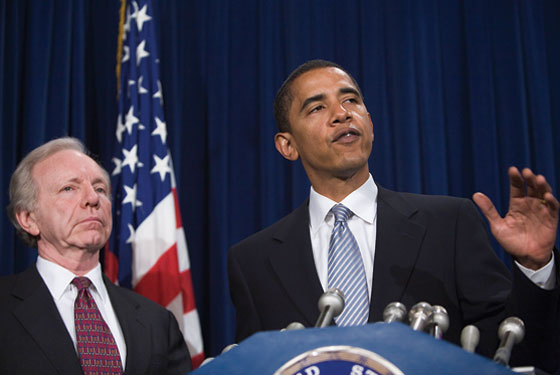 By JOHN R. MacARTHUR


 An excerpt from the recently published book The Mother of All Battles: The Endless U.S.-Iraq War by Malcom Lagauche:
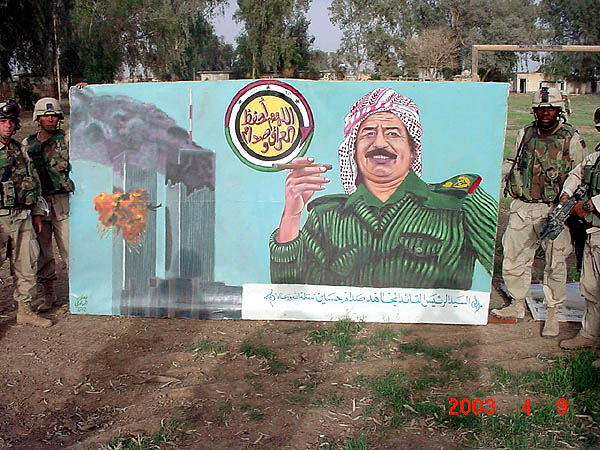 The photo was bogus. It was filmed in the U.S., but, the harm had been done. Many news agencies had distributed the picture. Its contents inflamed U.S. citizens even more about the Iraqi people.

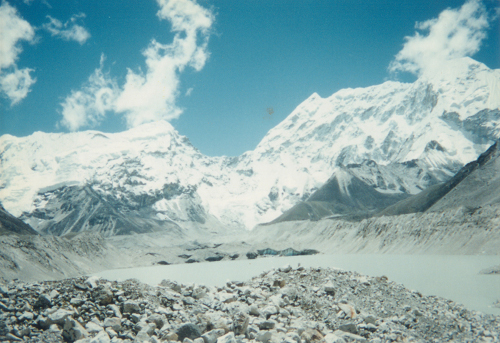
 Part One, The Record, treats the history of garlic as evidence. From the clay garlic bulb placed in an Egyptian grave nearly six thousand years ago, through the Ebers Papyrus, through Hippocrates, Dioscorides, Pliny and Galen, the Arab physicians under Avicenna, the medieval herbals, Culpeper, and the plague years, to the last era in which Western physicians prescribed garlic as a matter of course, which ran from 1850 to 1945. It closes with the living traditions that never stopped using it, and with the folklore of charms, vampires and the evil eye.
 Aletho News

