Plan to Build NIH-Funded Bat Research Lab in Colorado Sparks Fears of Lab Leak
By Michael Nevradakis, Ph.D. | The Defender | May 18, 2023
Colorado State University (CSU) is proceeding with controversial plans to construct a new research facility to study bat diseases with funding from the National Institutes of Health (NIH). Construction is slated to be completed sometime in 2024 or 2025.
University officials and proponents of the new facility argue the laboratory is necessary to enhance research capabilities looking into emerging diseases and viruses resulting from zoonotic — animal-to-human — transfer.
While CSU denies that gain-of-function research will occur at the laboratory, some researchers connected with the new facility previously were associated with actors involved with such research, including experiments conducted in Wuhan, China.
Francis Boyle, J.D., Ph.D., a bioweapons expert and professor of international law at the University of Illinois, is concerned about the facility.
Boyle told The Defender :
“It is well known that Colorado State University has a long and ongoing history of specialization in weaponizing insects with biowarfare agents for delivery to human beings.
“This new lab will magnitudinally increase CSU’s offensive biowarfare capabilities, in gross violation of the Biological Weapons Convention of 1972 and my Biological Weapons Anti-Terrorism Act of 1989 that provides for life in prison.”
Area residents, including a local grassroots group, and bioweapons experts, also have raised concerns over the potentially risky research, involving deadly viruses, that will be conducted at the facility and the risk of a lab leak akin to that which may have occurred at the Wuhan Institute of Virology in China, and may have led to escape of the SARS-CoV-2 virus.
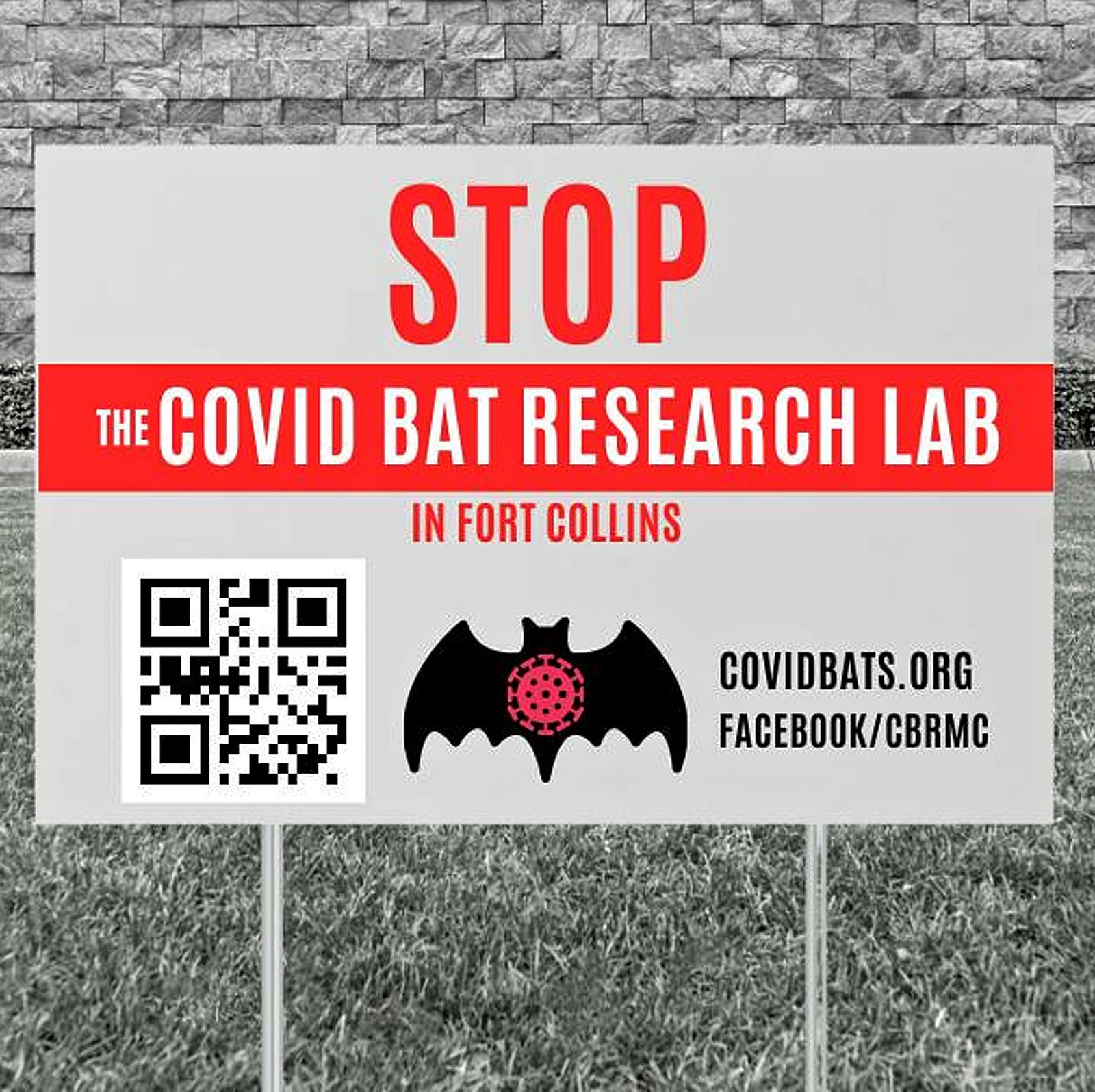
Christine Bowman leads a group of local citizens who formed the Covid Bat Research Moratorium of Colorado (CBRMC), a grassroots initiative opposing the new facility. The group has launched efforts such as a yard sign campaign to raise local awareness.
In an interview with The Defender, Bowman described being “stonewalled” by state and local officials and by CSU.
“We need answers as to how COVID-19 was modified to transfer from human to human before I will be satisfied that it’s okay to raise diseased bats to study in my neighborhood,” Bowman said.
“Now that we know that the COVID pandemic likely started from a lab leak in Wuhan, China, we are questioning the safety of continuing such research,” she added.
CSU receives ‘tens of millions of dollars’ in NIH research grants annually
According to The Colorodoan, the Chiropteran Research Facility, as it will be known, “would serve as a breeding facility to raise and care for bats of various species that can be used as research models in studies on a wide range of human viruses that are believed to have originated with bats.”
The laboratory will be constructed on the south end of CSU’s Foothills Campus near Fort Collins, at 3105 Rampart Road, within the Justin Harper Research Complex and adjacent to the university’s existing Center for Vector-Borne Infectious Diseases (CVID). It will consist of a 14,000-square-foot stand-alone bat vivarium.
According to CSU, the university “is a world leader in research on zoonotic infections. The University’s scientists have been studying bats and other vectors that transmit dengue fever, Zika and West Nile viruses for more than 30 years.”
Construction is scheduled to begin by this summer. The Colorodoan reported the facility is expected to open in fall 2024, while CSU said it will be completed by 2025.
CVID, formerly known as the Arthropod-born and Infectious Diseases Laboratory, was founded in 1984. According to The Colorodoan, it “currently houses the only captive breeding colonies of two species of bats used in its research.”
CVID’s website describes the facility as “a longstanding multi-disciplinary research and training center” whose researchers “have been successful in defining mechanisms of pathogen persistence and transmission, and developing new surveillance, control, and prevention strategies for vector-borne and emerging zoonotic diseases.”
“World-class facilities, including BSL-3 [biosafety level 3] laboratories and large insectary complexes, provide an outstanding scientific environment for researchers inside and outside CSU wanting to manipulate pathogens in vertebrate hosts and arthropod vectors,” the CVID website states.
The BSL3 laboratory in question is CSU’s Regional Biocontainment Laboratory, which operates with the support of the National Institute for Allergy and Infectious Diseases (NIAID) and is part of the university’s 120,000-square-foot Infectious Disease Research Center. It houses bats and samples of numerous deadly bacteria and viruses.
In October 2021, the NIH awarded a $6.7 million grant to CSU’s microbiology, immunology and pathology department at the College of Veterinary Medicine and Biomedical Sciences to construct the new bat vivarium.
Alan Rudolph, CSU’s vice president for research, told The Coloradoan the university will provide the remaining funds for the facility’s construction, the cost of which is expected to range between $8-9 million.
Rudolph said CSU receives “tens of millions of dollars” in NIH research grants annually.
‘Highly pathogenic’ agents will be housed at new facility
The CVID already conducts research involving viruses related to “chikungunya, dengue, malaria, Rift Valley fever, Zika virus, COVID-19, MERS, influenza [and] hantavirus disease.” The new facility will expand those capabilities.
According to the minutes of the Feb. 3, 2022, meeting of CSU’s Board of Governors, the new facility is justified due to the capacity it will have to study “emerging zoonotic viruses that originate in bats and cause high mortality in humans: SARS-CoV, MERS-CoV and SARS-CoV-2, Ebola virus, Marburg virus, Nipah virus and Hendra virus.”
It is unclear under what biosafety level the new facility will operate, but Bowman told The Defender :
“From what I understand, this facility is slated to be a BSL2. But what’s to keep that from increasing in the future without approval or informing the general public? What guarantee do the residents of Fort Collins have that the lab won’t increase from a BSL2 to BSL4, where even more dangerous viruses will be studied?”
CSU claims it “has no plans to conduct gain-of-function research of concern” there.
“Who decides what criteria we use for ‘concern’?” Bowman asked.
Rebecca Moritz, CSU’s biosafety director, said, “This will be the only facility like it in the United States,” and it will give students “the opportunity to learn directly from the researchers conducting this research in their classes.”
She added:
“CSU researchers have safely studied and worked with bats and other vectors for over 30 years. … Due to global warming and population growth, humans and animals are coming into contact more frequently and in ways not previously seen. This could result in an increased number of outbreaks and possibly pandemics.
“The main purpose of this facility will be to house bat breeding colonies for CSU researchers and researchers around the United States and the world. This facility will allow an expansion of CSU’s current work, including projects focusing on the role that bats play in disease transmission and the development of vaccines and therapeutics.”
“Personnel who will work in this facility will be highly trained and be required [to] adhere to strict biosafety and biosecurity practices,” Moritz claimed.
Moritz has spoken publicly about her involvement with gain-of-function research, including at the 2014 Gain of Function Symposium. At the time, Moritz was part of the Biosecurity Task Force at the University of Wisconsin-Madison.
Bowman said gain-of-function experiments are already being conducted at CSU and that the university is open about it.
“We are only aware that CSU is conducting gain-of-function on plants and mosquitoes because it is mentioned in the link they send to anyone who emails them or questions their research.”
Rudolph told The Colorodoan, “Bat research is not new to our campus; bat-research facilities are not new to our campus. It’s an expansion of existing work in existing facilities that have already made great impacts.”
Such research “helped us to develop vaccines, helped us to develop diagnostics to better determine who’s getting sick, why are they getting sick, when are they getting sick, and vaccines that help treat those people when they do get sick,” he added.
Some of the viruses for which research will be conducted at the new facility, including Hendra and Nipah, are considered “highly pathogenic BSL-4 agents,” classified “in the same biosecurity category as Ebola.”
The Nipah virus, for instance, has a high human mortality rate ranging between 40 and 75%. It “causes a rapidly progressive disease, which includes acute respiratory infection and encephalitis that can lead to coma or death.”
Earlier this month, the NIH reinstated a controversial federal grant, originally issued in 2014 under Dr. Anthony Fauci, then-director of NIAID, which operates under the NIH, to EcoHealth Alliance to study the risk of bat coronavirus spillover.
This involved gain-of-function research for the genetic manipulation of coronaviruses to make them more infectious to humans. Some of the NIH funds went to the Wuhan Institute of Virology, which collaborated with EcoHealth Alliance on this research.
EcoHealth is a New York-based nonprofit that says its mission is to develop “science-based solutions to prevent pandemics and promote conservation.”
Documents revealed by U.S. Right to Know (USRTK) indicate that some CSU researchers have previously collaborated with the EcoHealth Alliance.
Local activists ‘stonewalled’ by university, state, local officials
According to The Colorodoan, CSU’s campus planner, Gargi Duttgupta, told local authorities that the new facility would be approximately 316 feet north of the fence that marks the campus’ boundary with adjacent residential communities.
This may be too close for comfort for some area residents, who have attempted to engage with CSU and with local planning authorities to express opposition to the new facility and to obtain further information about its construction.
Their opposition led to the establishment of CBRMC, “a nonpartisan grassroots organization run on a budget of $0 by a group of concerned citizens from across the political spectrum.”
CBRMC says its mission is to put a moratorium on the construction of the new facility “until we first know what happened with the possible COVID bat lab leak and gain-of-function research in Wuhan, China.”
Some CBRMC members spoke at a Dec. 21, 2022, meeting of the Larimer County Planning Commission, expressing fears of a potential leak from the new facility, drawing comparisons with the suspected Wuhan lab leak.
But the planning commission unanimously approved the project. Lesli Ellis, Larimer County’s community development director, told The Colorodoan that no further approvals are needed before construction can commence.
According to The Colorodoan, “CSU officials insist that the new facility is merely an extension of work that has been done on its Foothills Campus for more than 30 years by the university and others, including the U.S. Centers for Disease Control and U.S. Department of Agriculture.”
The CSU Foothills Campus houses labs operated by the U.S. Department of Agriculture National Wildlife Research Center and the Rocky Mountain Prevention Research Center — described as the “second-largest CDC lab outside of Atlanta.”
“Strict safety protocols will be in place to prevent the escape of a virus or infected bat,” The Colorodoan also reported.
Rudolph told The Colorodoan the facility will need only dozens to hundreds — not thousands — of bats, which will be acquired by the U.S. government, “quarantined well outside the United States and deemed safe and not sick before they come to us.”
CSU does ‘not have a good track record’ on safety
A Jan. 11 CSU “Q&A on why CSU labs are safe” denies that illegal bioweapons research will take place at the institution and quotes Moritz, who said, “We do everything possible to decrease the risks of our research.” However, she acknowledged “there is no such thing as zero risk in research.”
Bowman said CSU alone will oversee safety at the new facility, and she questioned the lab’s safety record.
Bowman told The Defender :
“After letting chronic wasting disease [CWD] leak from their labs at CSU, hundreds of thousands of the deer population were killed from the disease. They do not have a good track record of ensuring the safety or containment of diseases.
“I personally do not have the data for this claim, but I have heard many people cite this as fact and no one at CSU is refuting the claim.”
CWD, “a contagious neurological disease that affects members of the deer family, causing erratic behavior and weight loss that eventually results in death,” was identified in 1967. It is described as “a mysterious malady intricately tied to Fort Collins.” The federal government declared a CWD state of emergency in 2001.
The Colorodoan reported that CWD “was related to scrapie in sheep and goats, mad cow disease in cattle and the fatal variant Creutzfeldt-Jakob disease in humans.”
As reported by Northern Colorado NPR affiliate KUNC, “Chronic wasting disease is not your garden variety infectious disease. It’s not bacterial, viral or even fungal. It’s caused by something we all have inside our bodies — something called prions.”
CSU is home to the Prion Research Center, which “studies the biochemistry, genetics, and pathogenesis of prions, the causative agent of incurable and often fatal diseases in humans and animals,” including bovine spongiform encephalopathy, classic Creutzfeldt-Jakob disease, variant Creutzfeldt-Jakob disease, CWD and scrapie.
According to the Prion Research Center, “Growing evidence also links the prion mechanism to proteins involved in the pathogenesis of other common neurodegenerative diseases, including Alzheimer’s and Parkinson’s, and forms an emerging area of the center’s studies.”
And in 2019, CSU reported that Prion Research Center scientists “have developed a new gene-targeted approach” to study CWS in mice. Described as a “real breakthrough,” the scientists “replaced the gene that encodes the prion protein in the mouse and replaced it with an exact replica of the code from either deer or elk.”
Researchers who spoke to The Colorodoan said that while it’s unclear if CWD originated in Fort Collins, it is hypothesized that it crossed species and spread there.
A U.S. Geological Survey map shows a significant cluster of CWD near Fort Collins and that cases identified elsewhere have been connected to the region.
A 2021 paper, “Text mining to identify the origin of chronic wasting disease,” published in the Issues in Information Systems journal, states:
“For the 16 [CWD] clusters in the first 40 years, the text mining process generated evidence supporting the trace back to Fort Collins for the first six clusters, five more clusters could be traced back to infected area linked to Fort Collins, and in 5 clusters the evidence supported an explanation for tracing the disease back to an area linked to Fort Collins.
“The evidence does not definitively exclude other theories for the disease origin. At minimum, Fort Collins was a primary catalyst in the widespread distribution of the disease.”
The paper noted, “As with COVID-19, government agencies can be reluctant to acknowledge potential culpability for releasing a devastating disease,” adding that “Ignoring the likely origin of this disease discounts the lax management of captive animals that has been the driving force for this biological disaster.”
Locals getting mixed messages from CSU officials
Local activists are concerned about a lack of communication between CSU officials, local authorities and the community, and contradictory statements they have received from CSU.
According to the CBRMC, CSU “gave citizens short notice on Nov. 30, 2022” about the public hearing, which was “held on the inconvenient date of Dec. 21, 2022 — snuck into holiday break.”
Since then, CSU has “not conducted any informational meetings with the public regarding their proposed research lab,” the CBRMC says on its website.
Bowman said a fact sheet about the facility was distributed at the meeting, stating that “SARS-CoV, SARS-CoV-2, MERS-CoV, Ebola virus, Marburg, Nipah virus and Hedra virus” would be studied at the lab, confirming information included in the February 2022 CSU Board of Governors report.
However, according to Bowman, Moritz said at the public hearing, “At this facility, we will not be able to study MERS, SARS-CoV-2 [or] Ebola viruses.”
“So, which is it, are they proposing to study these diseases in our backyard or not?” Bowman asked.
Bowman noted that the same fact sheet contains “a photo displayed prominently on the front with a person’s gloveless hand holding a bat.” She remarked:
“When you are touting the strength of your ability to do dangerous bat research with safety first and foremost, maybe you shouldn’t incorporate a photo of an irresponsible way to handle a bat.
“Couldn’t this be one way bat diseases transmit to humans and is proving our point that bats and humans shouldn’t mix, especially in a lab setting?”
An April 5 email from Greg Harrison, CSU associate vice president of Strategic Communications, to Bowman, said, “We do not have any public meeting about the facility scheduled at this time.”
This was despite a Jan. 24 email from Moritz to Bowman saying CSU was “working on a process to engage the public this spring to discuss the project and lab safety and security, as well as our commitment to the wellbeing of people in Colorado and around the world.”
Both emails are posted in CBRMC’s Facebook group. In the same group, Bowman referenced a March 15 Town Hall meeting with Sen. John Hickenlooper (D-Colo.) where the issue was to be raised. According to Bowman, “Sen. Hickenlooper chose not to answer any [questions] re: concern over CSU’s COVID bat lab.”
Bowman said this was not the only instance where elected officials ignored the concerns of local residents. She told The Defender :
“The community has been sending this information to our elected officials, who have also stonewalled us. I got no response from Sen. Hickenlooper.
“The response I got from Sen. Michael Bennet [D-Colo.] spoke about diversity, equity and inclusion and did not address the subject of bat research at all. The mayor of Fort Collins [Jeni Arndt] says that it is not in her jurisdiction and was uninterested.”
Bowman said that local residents deserve answers. She told The Defender :
“I believe that the residents of this county, state, and this country deserve answers to our questions regarding any potential danger to the public from this type of research considering the mayhem and destruction that the COVID virus unleashed on mankind.
“We do not want a repeat, and I think we should be allowed to have some say in what happens in our backyard. The fact that CSU is stonewalling their neighbors speaks volumes.”
Collaboration between CSU scientists, NIH, EcoHealth Alliance on bat viruses
Documents obtained by USRTK following several Freedom of Information Act requests indicate that plans for the new facility date back prior to receipt of the NIH grant in 2021, while key figures involved with the laboratory are connected to the EcoHealth Alliance and prior research involving SARS-CoV-2.
According to USRTK, the documents reveal that in February 2017, personnel of the U.S. Department of Defense’s Cooperative Biological Engagement Program “announced a new global bat alliance,” which would “build and leverage country and regional capabilities to generate an enhanced understanding of bats and their ecology within the context of pathogens of security concern.”
This new alliance was a collaboration between CSU, EcoHealth Alliance and the NIH’s Rocky Mountain Laboratories with the goal of building a bat research facility at CSU.
USRTK’s documents reveal that this original alliance grew into a group which became known as Bat One Health Research Network, whose scientists, including CSU and Rocky Mountain Laboratories researchers, were developing “scalable vectored” and “self-disseminating” vaccines to spread contagiously between bats.
These vaccines are purportedly aimed at preventing “emergence and spillover” of potential pandemic viruses from bats to humans. However, at least as far back as 2020, concerns were raised about the unintended consequences of releasing genetically engineered self-spreading “vaccines” into the wild.
Bat One Health also harkens to the “One Health” concept, which purports to serve as “an integrated, unifying approach that aims to sustainably balance and optimize the health of people, animals and ecosystems,” but which some experts have argued lowers human health to the level of animals and aims to surveil and control all life on Earth.
Notably, the term “One Health” is said to have first been coined by the EcoHealth Alliance, which today is a strong proponent of this concept.
A March 30, 2020, email obtained by USRTK, from Tony Schountz, Ph.D., associate professor in CSU’s Department of Microbiology, Immunology and Pathology, to Jonathan Epstein, vice president for Science and Outreach at EcoHealth Alliance, discusses the importation of bats and rats infected with dangerous pathogens such as the Lassa virus.
In another set of emails from 2018, Schountz communicated with scientists from the Wuhan Institute of Virology. In an Oct. 30, 2018, email, Schountz proposed a “loose association” between CSU and the Wuhan lab, involving “collaboration on relevant projects” involving bat-borne viruses and arboviruses.
Indicating the connection between the research planned to take place at the new facility, and COVID-19, Rebekah Kading, Ph.D., assistant professor in CSU’s Department of Microbiology, Immunology and Pathology, said, “This facility is especially timely considering the current COVID-19 pandemic, since some groups of bats have an evolutionary association with coronaviruses.”
According to CSU, the university has a partnership with Zoetis, which it describes as “the world’s leading animal health company,” “for the construction in 2020 of an incubator research lab in the Research Innovation Center on the Foothills campus.”
Zoetis was previously Pfizer Animal Health, before separating from Pfizer in June 2013.
Big Pharma, NIH interested in developing vaccines related to viruses to be researched at new CSU facility
Big Pharma has shown interest in developing mRNA vaccines targeting many of the same deadly pathogens that will be researched at CSU’s new facility.
For instance, in July 2022, Moderna announced the launch of its Phase 1 clinical trial of the mRNA-1215 vaccine candidate, “designed to fight the Nipah virus.” The vaccine was developed in collaboration with NIAID’s Vaccine Research Center.
In an NIH statement, Fauci said “Nipah virus poses a considerable pandemic threat because it mutates relatively easily, causes disease in a wide range of mammals, can transmit from person-to-person, and kills a large percentage of the people it infects,” adding that “The need for a preventive Nipah virus vaccine is significant.”
Efforts to develop a Nipah virus vaccine date back to at least January 2017, when CEPI (Coalition for Epidemic Preparedness Innovations) issued a call for proposals for the development of vaccines for the Nipah and Lassa viruses and MERS, soon after its official launch at that year’s meeting of the World Economic Forum.
EcoHealth Alliance researchers have long shown interest in viruses such as Nipah. A 2006 article in the Current Infectious Disease Reports journal titled “Nipah virus: impact, origins, and causes of emergence” was co-authored by Epstein, for instance.
At the time, Epstein was affiliated with the Consortium for Conservation Medicine, which later merged with the Wildlife Trust to become the EcoHealth Alliance.
Michael Nevradakis, Ph.D., based in Athens, Greece, is a senior reporter for The Defender and part of the rotation of hosts for CHD.TV’s “Good Morning CHD.”
This article was originally published by The Defender — Children’s Health Defense’s News & Views Website under Creative Commons license CC BY-NC-ND 4.0. Please consider subscribing to The Defender or donating to Children’s Health Defense.
How Fauci, scientists with ties to Wuhan lab persuaded the intelligence community COVID had a natural origin
By Emily Kopp | U.S. Right to Know | May 16, 2023
Scientists with connections to the Wuhan Institute of Virology — including Anthony Fauci — steered the U.S. national security state away from hypotheses about the origins of COVID-19 that could implicate their research, emails obtained through the Freedom of Information Act show.
Their sphere of influence spanned the intelligence community and the White House.
On February 3, 2020, scientists tied to high risk coronavirus research in Wuhan joined a call with national security officials about how to uncover how an exceptionally infectious virus had emerged from that city.
The call included officials with the Federal Bureau of Investigation, the Office of the Director of National Intelligence and the White House’s Office of Science and Technology Policy, an email obtained by U.S. Right to Know shows.
The intelligence community’s premature assessment that COVID-19 was a natural virus has in turn been wielded by Fauci and by other virologists to minimize the lab leak theory.
The call shows the apparent power of a small clique of scientists to cloud the public’s understanding of the pandemic.
The Wuhan Institute of Virology’s two closest collaborators, EcoHealth Alliance President Peter Daszak and University of North Carolina virologist Ralph Baric, were on the call.
Daszak runs the intermediary organization that shepherded funds from the National Institutes of Health to the Wuhan lab complex.
Baric is a coronavirologist who innovated engineering techniques and applied them to viruses prospected in the wild by the Wuhan lab. Baric — despite developing undetectable genetic engineering methods nicknamed “no see ‘um” after the barely perceptible flies found in the Southeast — apparently helped persuade the intelligence community that the novel virus betrayed no signs of engineering.
Facilitated by the National Academies of Sciences, Engineering, and Medicine, the purpose of the Feb. 3 call was to respond to “misinformation.”
“Thank you for participating in today’s meeting of experts to discuss and identify what data, information and samples are needed to understand the evolutionary origins of 2019-nCoV and more effectively respond to the outbreak and resulting misinformation,” wrote Andrew Pope, director of the board on health sciences policy for the National Academies.
Fauci briefed the group on “NIAID’s perspective,” the agenda shows. Fauci’s National Institute of Allergy and Infectious Diseases, or NIAID, had underwritten Daszak and Baric’s work.
The agenda shows that the Feb. 3 call was prompted in part by a flawed and ultimately withdrawn preprint alleging similarities between the genome of SARS-CoV-2 and HIV, which had set off alarm bells in the infectious diseases community.
It’s also clear that rumors about the Wuhan Institute of Virology had already begun swirling on Chinese social media.
The discussion was co-led by Fauci, director of the White House’s Office of Science and Technology Policy Kelvin Droegemeier, and Chris Hassell, who in addition to serving as senior science advisor to the Department of Health and Human Services also serves as the chair of the secret committee that oversees gain-of-function research with pandemic potential.
Contemporaneous emails show that Fauci was discussing the apparent connections between NIAID and gain-of-function research in Wuhan with his boss, NIH Director Francis Collins. Fauci was routinely meeting with top national security officials at that time, including in the White House Situation Room, his schedule shows.
Two days prior, Fauci and Collins had discussed the matter with a small group of virologists in a confidential call. Those virologists went on to write a highly influential letter which prompted news organizations around the world to prematurely dismiss the lab leak hypothesis as a conspiracy theory.
One of those virologists, Kristian Andersen with Scripps Research Institute, also participated in the Feb. 3 call.
Emails previously reported by U.S. Right to Know show that Andersen dismissed the idea of an engineered virus to the National Academies group as “crackpot.” Yet days later he insisted in a separate email that the scientific evidence was not conclusive enough to have high confidence in either the natural or lab hypotheses.
Congress is investigating the matter.
Despite the complexity of the question at hand, the National Academies group had wrapped up its work within a few days.
The letter that resulted from the Feb. 3 call from the National Academies to the White House’s Office of Science and Technology Policy assumed a natural origin.
The possibility of the virus emanating from research — which scientific organizations and U.S. intelligence elements now believe to be possible — was subsequently dismissed, according to Daszak.
Daszak seemed to think that this National Academies letter – together with the letter coauthored by Andersen – were enough to dissuade the White House from exploring a possible lab origin.
“I don’t think this [National Academies] committee will be getting into the lab release or bioengineering hypothesis again any time soon — White House seems to be satisfied with the earlier meeting, paper in Nature and general comments within [the] scientific community,” Daszak told Baric.
State Department intelligence unit
A few weeks later, Baric may have briefed the State Department’s analysts, another email shows.
Baric’s gain-of-function research was at the center of speculation about a possible lab origin.
Baric’s research had privately alarmed Fauci and Andersen. Fauci met with Baric nine days after the Feb. 3 call, Fauci’s schedule shows. They discussed “chimeras,” or engineered viruses, according to virologists close to Baric.
Yet emails obtained from the State Department appear to show that Baric was asked to brief the State Department’s Bureau of Intelligence and Research about the pandemic’s possible origins.
The briefing coincided with the premature letter “debunking” the idea that SARS-CoV-2 was engineered coauthored by Andersen, which published on March 17.
Baric apparently received several emails inviting him to participate in an “analytic exchange” between March 23 and March 25.
The Bureau of Intelligence and Research briefing occurred on March 26.
“U.S. scientists say available genomic evidence shows that the SARS-CoV-2 virus probably emerged naturally in an animal before crossing to humans and was not engineered in a lab,” the write-up of the briefing read.
Baric’s apparent inclusion on the call is remarkable because he innovated viral engineering techniques that do not reveal any scars or signs of engineering.
David Feith, former U.S. Deputy Assistant Secretary of State for East Asian and Pacific Affairs, said in sworn testimony to Congress last month that concerns about conflicts of interest skewing the briefing were valid, but that he was precluded from naming which virologists participated.
Feith said that the experts on the call stressed the “good quality” and “robust biosafety and biosecurity programs” of China’s virology labs.
Baric would later express concerns about coronavirus gain-of-function research occurring in BSL-2 conditions at the Wuhan Institute of Virology, lower than the BSL-4 conditions required for the most dangerous pathogens.
Feith described the State Department call as “diversionary” in his Congressional testimony.
“Officials and experts who could have helped equip their colleagues (and the public) with the appropriate background to understand a novel and grave situation and weigh probabilities accordingly instead overwhelmingly deflected and denied,” Feith said.
Red Dawn
Baric prematurely assured leading infectious diseases experts that COVID could not have been engineered through more informal channels as well.
The “Red Dawn” email chain in early 2020 consisted of speculation about the unfolding pandemic and included active and former officials from across several departments and agencies, including HHS, CDC, the Department of Homeland Security, the Veterans Affairs Department and the Pentagon.
Someone on the email chain asked whether restriction sites along the viral genome suggested the pathogen was artificial.
“There is absolutely no evidence that this virus is bioengineered,” Baric responded.
IC assessment
In late April 2020, the Office of the Director of National Intelligence released an unusual statement that the intelligence community concurred with the “wide scientific consensus” that the virus was not engineered, a statement that appeared to echo the conclusions of the Feb. 3 and March 26 briefings.
“A majority of the views now is that it was natural, it was organic,” said Defense Secretary Mark Esper.
In fact, a scientific consensus on this matter did not exist then and does not exist now.
Even so, the idea that SARS-CoV-2 could not be engineered also found its way into the 90-day review that the intelligence community concluded in August 2021.
“Most agencies also assess with low confidence that SARS-CoV-2 probably was not genetically engineered; however, two agencies believe there was not sufficient evidence to make an assessment either way,” the declassified assessment reads.
U.S. Right to Know obtained documents reported in this article through Freedom of Information Act requests to the Department of Health and Human Services and the State Department. All of the documents obtained in the course of our investigation into the origins of Covid-19 can be reviewed here.
With reporting by Hana Mensendiek
The Political Agenda of the IPCC
BY ROGER PIELKE JR. | THE HONEST BROKER | MAY 15, 2023
The Intergovernmental Panel on Climate Change (IPCC) was established as a scientific assessment process more than 35 years ago. Scientific assessments are of critical importance in many areas to help policy makers and the public to identify what is known, what is uncertain, as well as where there is contestation, uncertainties and areas of fundamental ignorance. Such assessments can also help us to understand policy options and expectations for how different choices might lead to different outcomes.
Regular readers of The Honest Broker will know that I have taken issue with the recent IPCC Sixth Assessment (AR6) based on an unacceptable number of errors and omissions in my areas of expertise, as well as its over-reliance on the most extreme climate scenarios. Today I take a look at the IPCC’s self-described political agenda and argue that the institution finds itself at a fork in the road.
Before proceeding, I want to be clear about what I mean when I talk about “the IPCC.” In one sense there is really no such thing as “the IPCC.” The organization’s assessment process includes many hundreds of people who do their work across three Working Groups to produce many dozens of chapters covering a wide range of topics. The Working Groups are largely independent of each other and even chapters within the same Working Group can be written largely independently of other chapters.
In another sense there is indeed such a thing as the IPCC — Specifically, its leadership and most engaged participants. These core participants represent a kind of climate in-group with a shared sense of purpose and an overarching commitment to a shared political agenda. For some people, their entire career is centered on the IPCC. These core participants do have a shared political agenda which can be seen in varying degrees within the reports.
So what is the political agenda of the IPCC in-group? Transformational change
When the IPCC released its Synthesis Report in March, it announced:
Taking the right action now could result in the transformational change essential for a sustainable, equitable world
It would be easy to write this sentence off as containing consultant-like and empty buzzwords. But the notion of “transformational change” has been widely employed in the academic literature on climate and the IPCC clearly defines what it means by “transformational change.”
In its AR6 Working Group 3 report the IPCC explains that transformation involves more than simply transitioning from one type of technology to another (emphasis added):
While transitions involve ‘processes that shift development pathways and reorient energy, transport, urban and other subsystems’ (Loorbach et al. 2017) (Chapter 16), transformation is the resulting ‘fundamental reorganisation of large-scale socio-economic systems’ (Hölscher et al. 2018). Such a fundamental reorganisation often requires dynamic multi-stage transition processes that change everything from public policies and prevailing technologies to individual lifestyles, and social norms to governance arrangements and institutions of political economy
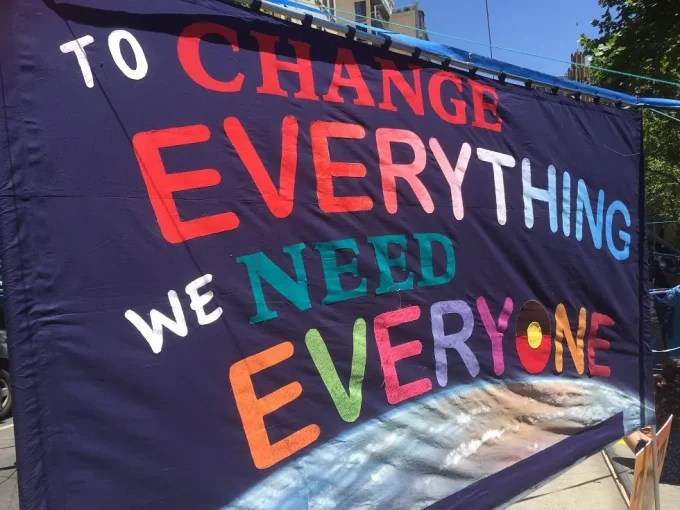
Transformational change means that everything changes.
What are examples of these sorts of changes? The IPCC identifies “the potential for virtuous cycles of individual level and wider social changes that ultimately benefit the climate.”
The IPCC continues (emphasis added):
The starting point for this virtuous circle are inner transitions. Inner transitions occur within individuals, organisations and even larger jurisdictions that alter beliefs and actions involving climate change (Woiwode et al. 2021). An inner transition within an individual (see e.g., Parodi and Tamm 2018) typically involves a person gaining a deepening sense of peace and a willingness to help others, as well as protecting the climate and the planet . . .”
What are examples of such “inner transitions”? The IPCC explains:
Examples have also been seen in relation to a similar set of inner transitions to individuals, organisations and societies, which involve embracing post-development, degrowth, or non-material values that challenge carbon-intensive lifestyles and development models . . .
The IPCC discusses the importance of “degrowth” to its vision of transformation in its AR6 Working Group 2 report:
Consumption reductions, both voluntary and policy-induced, can have positive and double-dividend effects on efficiency as well as reductions in energy and materials use . . . a low-carbon transition in conjunction with social sustainability is possible, even without economic growth (Kallis et al. 2012; Jackson and Victor 2016; Stuart et al. 2017; Chapman and Fraser 2019; D’Alessandro et al. 2019; Gabriel and Bond 2019; Huang et al. 2019; Victor 2019). Such degrowth pathways may be crucial in combining technical feasibility of mitigation with social development goals (Hickel et al. 2021; Keyßer and Lenzen 2021).
These views are no doubt legitimate and sincerely held. But I seriously doubt that a climate agenda focused on changing everything, grounded in inner transitions to support degrowth is going to get very far in Peoria, much less anywhere else. More broadly, why are they being used to frame a scientific assessment?
I’m far from the first to recognize that the IPCC has adopted a political agenda focused on transformational change. Writing in 2022, Lidskog and Sundqvist explain:
Transformation has become a buzzword within scientific and political discourses in which “transformative change” is stated to be the solution to many severe environmental challenges. Expert organizations such as the IPCC and IPBES have stressed that transformative change is necessary to meet environmental challenges (IPCC, 2018; IPBES, 2019). . . While transformative change is seen as the way forward and as an uncontroversial ambition—it is difficult to find anyone who is critical of it—its meaning is nevertheless unclear.
The adoption of transformational change as an overriding political objective in the IPCC AR6 (and in the IPCC 1.5 report before that) represents a departure from a more politically neutral use of the concept in the IPCC Fifth Assessment Report (AR5). In 2014, the AR5 described “transformation pathways” to refer to technological alternatives for mitigation, not to demand that everything must change across society:
Stabilizing greenhouse gas (GHG) concentrations at any level will require deep reductions in GHG emissions. Net global CO2 emissions, in particular, must eventually be brought to or below zero. Emissions reductions of this magnitude will require large-scale transformations in human societies, from the way that we produce and consume energy to how we use the land surface. The more ambitious the stabilization goal, the more rapid this transformation must occur. A natural question in this context is what will be the transformation pathway toward stabilization; that is, how do we get from here to there?
The IPCC AR5 acknowledged that there were many ways to address accumulating greenhouse gases (GHGs) in the atmosphere:
[T]here is no single pathway to stabilization of GHG concentrations at any level. Instead, the literature elucidates a wide range of transformation pathways. Choices will govern which pathway is followed . . .
This expansive view of policy possibilities is far removed from “processes that change everything” and a “deepening sense of peace.” The IPCC AR5 and AR6 have been rightly criticized for not considering a larger set of possibilities for mitigation (notably, equity), which also reflects a political orientation.
The IPCC – or to be more precise, influential elements of the IPCC – appears to have been captured by an in-group with shared political views related to climate. These views embrace concepts like degrowth and planetary boundaries and turn climate policy on its head such that ends become means.
Transformational change views climate policy as a lever through which to “change everything.” The expressed need for such momentous changes across society are grounded in a frightening, even apocalyptic, perspective on the future. As the head of the IPCC exhorted in March, the IPCC “underscores the urgency of taking more ambitious action and shows that, if we act now, we can still secure a liveable sustainable future for all.”
The political agenda of the IPCC reads as if it was developed by wealthy American and Europeans academics. The billions of people around the world who may lack energy services or enough food probably would welcome an agenda of change. Instead, the IPCC emphasizes transformational changes in the lifestyles of ordinary people in rich countries, for instance, the recent Synthesis Report explained: “Many mitigation actions would have benefits for health through lower air pollution, active mobility (e.g., walking, cycling), and shifts to sustainable healthy diets.”
I have little doubt that many who have worked on the IPCC AR6 might read this post and say, “Hmmm, I never saw any of that,” others might say, “Yup, that’s our agenda, so what?” and still others might say, “I have a different political or professional agenda that I inserted into the report.” Further, one can surely dive into the almost 10,000 pages of the AR6 reports and selectively construct a different political narrative. However, I argue that “transformational change” is what in the jargon of symbolic politics is called the “master symbol” — the dominant political framing of the AR6.
The IPCC has clearly departed from its role as a scientific assessment and is now much more deeply engaged in political advocacy. Trying to simultaneously engage in assessment and advocacy is never a good idea. I hypothesize that the IPCC’s political agenda of transformational change plays more than a small role in its stubborn reliance on implausibly extreme scenarios and its multiple errors and omissions related to the science of extreme weather and disasters — both of which help to underscore the demand for urgent and large-scale societal change.
The IPCC finds itself at a fork in the road and should be reformed. It needs to either operate as a trustworthy scientific assessment or alternatively, to fully embrace its current role as an environmental advocacy group pushing transformational change. There is no middle ground.
Ukraine’s Depleted Uranium Blast: Europe on Brink of ‘Environmental Disaster’

A frame of a CCTV video, purportedly depicting a major blast at an ammo depot in Khmelnintsky, Ukraine.
Sputnik – 19.05.2023
Russian Security Council Secretary Nikolai Patrushev warned on Friday that a radioactive cloud was heading towards Western Europe following the destruction of a Ukrainian warehouse storing British-supplied depleted uranium ammunition.
Sputnik News spoke with Dr. Chris Busby, physical chemist and scientific secretary of the European Committee on Radiation Risk, about how the West’s decision to provide depleted uranium (DU) ammunition to Ukraine has potentially caused a continent-wide ecological disaster. Below is his answer in full.
Recently, several web media outlets provided videos of an enormous explosion in the town of Khmelnitski, located to the West of Kiev, and about 200 km from the border with Poland. There were two major explosions which produced a massive roiling swirling fireball which, like an atomic bomb, developed upwards and formed a mushroom cloud, which was black.
I have represented nuclear atmospheric test veterans in the Royal Courts of Justice in London and have seen many films of nuclear explosions: this was not one. A nuclear explosion is characterised by an immediate intense white light which wipes out the camera film or detector.
So, what was it? It was suggested by several commentators that an arms depot that had been hit contained the Depleted Uranium (DU) weapons sent by the UK to the Ukraine for use in the British Challenger tanks as anti-tank penetrators. That the explosion was one involving the burning of the DU in the fireball. Since I am a scientific authority on Uranium and its health effects, but have also examined its dispersion and behaviour in the environment, I will comment on what I believe happened, and why it is important. I was a member of the UK government Ministry of Defence Depleted Uranium Oversight Board (DUOB) in 2000-2005, and also the UK government Committee Examining Radiation Risk from Internal Emitters (CERRIE) 2000-2004. I am Scientific Secretary of the European Committee on Radiation Risk (ECRR) which is an independent NGO that provides advice on risk from ionising radiation.
My main research interest in this area is Uranium and health, particularly the DU particles, which are so small they act as a gas and move over very large distances once they are created by the burning of DU. I found them in England in 2003 after they had come from Iraq. I found them in 2023 in England after they came from the Ukraine war. So that is the first thing: the material is able to travel very large distances.
Therefore, if the Khmelnitski explosion was a DU one, the material would move with the wind direction and should be detectable at monitor sites downwind.
First, we need to say that DU has a gamma signature, it releases gamma rays. The UK and USA governments lie about this. They point to the fact that the U-238, that remains after the fissile U-235 is removed in the centrifuges (and is sent off for nuclear weapons and reactors), is a weak alpha emitter.
They say that alpha radiation cannot penetrate skin and so the DU itself is harmless. That it cannot be detected by a Geiger Counter and the alpha particles don’t make it through the window. There is, of course, a health problem if the post-impact particles are inhaled and pass into the body through the lung into the lymphatic system or directly into the digestive system, but essentially DU is harmless.
What you need to know is that Uranium 238, when it decays with its alpha emission, turns into Thorium-234 and Protoactinium-234m which then turns into Uranium 234. Thorium 234 is a beta and gamma emitter delivering 6% of its decay energy as a gamma ray. Thus, large clouds of DU particulate aerosol will be detectable by gamma detectors.
When I visited Iraq with Al Jazeera in 2000 I went to the south and examined the corpses of the tanks that had been hit by DU in the first Gulf War. Some of the A-10 DU penetrators were still lying around. They gave off an intense gamma ray signal, and the holes in the tanks were highly gamma ray active. So much for only an alpha emitter.
I am a yachtsman: examination of the UK metereological weather pressure maps tell us that at the time, and for days after the explosion, there was an anticyclone to the North of the explosion site and winds were weak but from the South East blowing North Westerly around the high-pressure area. So, the plume would move towards Poland. If the winds were about 5km/h they would reach any Poland detectors 250 km away on the 15th.
After Chernobyl, the European Union set up a Europe-wide gamma radiation detector system that used to give gamma readings in real time. I went to look. But astonishingly, all the data was blocked. The web- based system, administered from Germany, (EURDEP) would not provide the detector maps that are normally available. Luckily, there were some location maps on the web and some that had been already downloaded by colleagues of mine before the system stopped working. I obtained maps from Poland. One of these I show below.
You will see that a very highly significant increase in gamma radiation occurred at this detector, north west of the explosion site almost exactly when it would be expected on the basis of a distance of 250km and a mean wind speed of 5km/h. The increase, from 60nSv/h to 90nSv/h was highly statistically significant about 50%. Other detectors all across Poland showed an increase*, as the plume passed over them, the increase being weaker the further away (due to dispersion of the plume).
Later, the Poles measured the increase at the Marie Curie Institute in Lublin, but their map was a more sophisticated one and needed some expert interpretation. The Polish map gave gamma increases split into two natural isotopes, Bismuth and Thallium, also total gamma and cosmic ray gamma.
From the map, we are to assume (and this was the implicit message) that the gamma peak was due to Bismuth. Enter Sherlock Holmes. Bismuth 214 is a Radon daughter. The natural background radioactive gas Radon (Rn-222) is always present, since it is produced from Uranium and Radium in the ground. If there is a sudden change in atmospheric pressure, or when it rains, there is a gamma peak from Radon, which shows itself as the Bi-214 peak. So, the Poles seem to be implying that the increase in gamma radiation is normal and nothing to get scared about. Many have picked up on the Bismuth spectrum. But the way in which the Polish graphs are presented is misleading.
The problem with a radon argument is first that the gamma increases go up all across Poland at a time scale that identifies a plume from Khmelnitsky and second that there was a stable anticyclone weather system and no atmospheric pressure changes that might pull radon out of the ground. I checked all that. There was only some light rain over Lublin.
There is, however, an additional possibility. Very fine particles attract Radon: you get a slight increase in gamma from Radon near factory chimneys that emit fine particles.
The European radiation detector system web map came back online yesterday. The map type had been changed and everything we saw in the downloads had disappeared or had been smudged out by data analysis averaging. Why? This, and the early blocking of access to the site suggest panic and cover-up.
So taken all together, what we see is a massive explosion which is thought to be DU, and reports of a spike in gamma radiation near the site. Uranium oxide is black, and the black plume moves north west slowly, the weather pattern is stable and the wind blows to Poland. The Polish EU detectors all show gamma radiation increases at the expected time of arrival of the plume. The EU detector system is shut down rapidly, but not before we have obtained data from several sites. The Poles provide a detector result that identified Bismuth as the cause of the increase, but do not go so far as to formally state that it is (in case of later blowback).
One final piece of evidence. We see videos on the internet of the Ukrainians clearing up the explosion site using Robot vehicles, not ordinary firemen. Why do they need Robot vehicles? The last times we saw Robot vehicles clearing up was in the ruins of Chernobyl and Fukushima.
If I am right, there has been an environmental disaster, and the DU particles will travel across Poland, Germany and Hungary, and will end up in the Baltics, probably later the whole of Europe including the UK (after all, the Chernobyl Uranium particles came to the UK).
They will deliver genetic damage and death like that seen in the Balkans and Iraq. Cancer, birth defects, miscarriage, infertility, lung damage, mental problems (Gulf War Syndrome) and so forth. The scientific and epidemiological evidence on this has been clear since the Gulf War. It is all there in the scientific literature—but the governments in the West and the military ignore it, deny it and cover it up. In the case of the UK coroners court finding for Stuart Dyson, the jury found that DU caused his fatal colon cancer. But when the coroner wrote to the health minister (as he had to by UK law, Rule 43) the reply was: we disagree. This stuff can be measured, but no one will measure it, or if they do, they will be attacked and their arguments dismissed.
Even if I am wrong, and there is some other explanation for the gamma peaks, DU must be banned. It is a weapon of indiscriminate effect and kills civilians, the enemy and your own troops (well, Ukrainian troops). It is much worse than a war gas, like Sarin, or phosgene, mustard gas or all the other chemical agents banned by civilisation. This stuff destroys the genetic basis of life itself. And no one does anything. Those who use it base their action on obsolete science supported by dishonest epidemiology carried out by dishonest scientists and obsolete and fantastical risk models.
Those who provide the weapons, the UK government in this case, are morally bankrupt. Unless it is their intention to destroy the Ukrainian people. Who knows anymore? The world has gone mad.
*Poland’s National Atomic Energy Agency claims there is no increase in radiation levels.
Autopsy of Fatal Delta Variant in a Fully Vaccinated Man
Findings Suggest Complete Failure of Pfizer-BioNTech COVID-19 Vaccine Induced Antibodies
By Peter A. McCullough, MD, MPH | Courageous Discourse | May 18, 2023
Autopsies have played a critical role in the history of medicine. The novel coronavirus pandemic is a period of time where autopsies have been particularly helpful in advancing our understanding of COVID-19 disease. So the question on the table is: if the mRNA COVID-19 vaccines raised antibodies against the ancestral wild type Wuhan strain of SARS-CoV-2, would they cover the Delta variant? The only real way to know is to find a case who is fully vaccinated with “protective” antibodies in the bloodstream who contracts COVID-19. Recently such a patient has been reported from Catania, Italy.
Esposito, et al, published an autopsy of an 83 year old man who was admitted to the hospital with heart failure and was later diagnosed with acute COVID-19 and succumbed 18 days later. There is no mention of treatment with lifesaving medications in the McCullough protocol such as ivermectin, corticosteroids, or anticoagulants. Sadly his lungs were ravaged with SARS-CoV-2 despite having adequate antibody titers for the Spike protein generated from the Pfizer-BioNTech COVID-19 Vaccine.

Esposito, M.; Cocimano, G.; Vanaria, F.; Sessa, F.; Salerno, M. Death from COVID-19 in a Fully Vaccinated Subject: A Complete Autopsy Report. Vaccines 2023, 11, 142. https://doi.org/10.3390/vaccines11010142
The important points of this paper are: 1) the original Pfizer-BioNTech COVID-19 Vaccine failed to stop the Delta variant, 2) antibodies are an invalid surrogate of protection and should have never been used 8 times by the US FDA in EUA approvals for extended use of COVID-19 vaccines.
Missed Bacterial Pneumonia Cases Left Untreated Were the Majority of COVID-19 Hospital Deaths
In April 2020, I warned about that the false positive-prone non-quantitative RT-PCR was deadly. Now we know, again, I was (sadly) correct.
By James Lyons-Weiler | Popular Rationalism | May 17, 2023
Hospital protocolists sticking to the strict hand-me-down highly profitable “COVID protocol” may have doomed a majority of admitted COVID-19 patients to death due to a perfect storm of institutional failure.
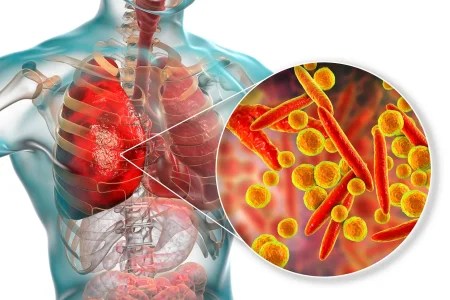
I first warned FDA in early 2020 that because the commercial kits did not use internal negative controls there would be arbitrarily high COVID-19 false positive rates due to the abuse of non-quantitative PCR. The majority of “cases”, I pointed out, would be false because the test was to be used as a screening device – and when you screen with an imperfect test when prevalence is low, you end up with more false positives than negatives in the set of positives.
Knowing that people who were symptomatic for respiratory infections would be among the most tested population and that Fauci’s medical approach to COVID-19 was to tell people to go home and get as sick as possible, it was readily clear that people would be dying due to lack of treatment for treatable conditions, like bacterial pneumonia and fungal infections in the lung.
Now a study from NIH-funded researchers in Chicago, IL has found that unresolved respiratory infections – not necessarily those involved in SARS-CoV-2 – were present in people who failed to “respond” to mechanical ventilation.
The authors wrote:
“Recent data suggest that secondary pneumonia is present in up to 40% and pneumonia or diffuse alveolar damage is present in over 90% of autopsy specimens obtained from patients with acute SARS-CoV-2 infection (18). Consistent with these observations, we and others found high rates of ventilator-associated pneumonia (VAP) in patients with SARS-CoV-2 pneumonia requiring mechanical ventilation, suggesting that bacterial superinfections such as VAP may contribute to mortality in patients with COVID-19 (7, 19–22). These findings prompt an alternative hypothesis that a relatively low mortality rate directly attributable to primary SARS-CoV-2 infection is offset by a greater risk of death attributable to unresolving VAP (23).”
They concluded:
“These data suggest mortality associated with severe SARS-CoV-2 pneumonia is more often associated with respiratory failure that increases the risk of unresolving VAP and is less frequently associated with multiple-organ dysfunction.”
Unsurprisingly, the study found that people with bacterial pneumonia who were on ventilators had the highest mortality. Although their analysis restricted consideration to bacterial pneumonia cases detected 48 hours after ventilation, they did not distinguish between undiagnosed cases of bacterial pneumonia upon admission and those acquired in-hospital (nosocomial infection). The rate of co-infection is not clear either, due to insufficient testing for bacterial pneumonia in patients once diagnosed with COVID-19.
The study leads to the stunning potential that perhaps 58% of “COVID” cases were respiratory issues other than COVID (43% bacterial pneumonia, 16% non-pathogen causes of respiratory failure). Treated as “COVID”, these patients were doomed to a fate of non-treatment due to mis- or under-diagnosis.
It is unclear what percentage of deaths attributed to COVID-19 could have been prevented via a standard therapy for bacterial pneumonia, but it is potentially very high. Fauci’s prescription – sending patients home to do nothing – no corticosteroids, no antibiotics just in case it was bacterial – drove the COVID-19 death rate up far higher than it had to be.
Gao et al., 2023. Machine learning links unresolving secondary pneumonia to mortality in patients with severe pneumonia, including COVID-19, Journal of Clinical Investigation (2023). DOI: 10.1172/JCI170682
Featured Video

EUROPE FEARS RUSSIA’S NEXT MOVE / Ian Proud
or go to
Aletho News Archives – Video-Images
New Book
New Book: No Autoimmunity The Body Doesn’t Attack Itself
Lies are Unbekoming | September 24, 2026
 The label for Humira, once the best-selling drug in the world, lists its risks in plain print. One of them, in the label’s own words, is new “autoimmune” disease.
A drug prescribed for a condition labelled autoimmune carries a warning that it can cause a condition labelled autoimmune. That contradiction sits in every box, on a folded paper almost nobody reads.
My new book starts there.
No Autoimmunity: The Body Doesn’t Attack Itself
For seventy years, “your body is attacking itself, and we don’t know why” has ended the conversation for people diagnosed with multiple sclerosis, lupus, rheumatoid arthritis, Hashimoto’s, Type 1 diabetes, Crohn’s and psoriasis. More than eighty conditions now carry the autoimmune label. The diagnosis comes with a prescription for life. It almost never comes with a question about cause.
This book asks the question and answers it from the framework’s own records: its drug labels, its journals, its regulatory filings, and its own experiments. … continue
Blog Roll
 Aletho News
- Iran offers Trump deal before US election
- Merz regime wants ‘secret police’ – opposition
- Israeli settlers terrorize West Bank Palestinians with state-provided drones: Report
- They see them, then kill them: Israeli quadcopters track, deliberately target civilians in Gaza
- Debunked: Trump’s egregious UNGA claims on war against Iran crumble under scrutiny
- Europe was part of the infrastructure of US aggression against Iran: Deputy FM
- New evidence on the Bucha Massacre
- Italy and France debunk reports CIA issued ‘Russian drone threat’ warning
- How Russia is Rewiring the Global South
- Britain’s elites want you ready to die for a war they keep imagining
- If Americans Knew
- Trump betrayed voters with his campaign lies and prioritized a foreign country once he took office
- Netanyahu calls Israel’s war in Gaza ‘opposite of genocide’ in UN speech to near-empty hall
- Settler Kidnappings: Torture, Sexual Abuse and Terrorisation of Palestinian Abductees as Israel Deepens Annexation of West Bank
- Gaza winter nears as 162,000 tents become unusable, raising fears of humanitarian crisis
- Netanyahu says, “It’s the opposite of genocide”; UN says Gaza economy is world’s ‘most severe crisis on record’ – Daily Update
- Israel’s US-Backed Assault on Gaza Has Created the ‘World’s Most Severe Economic Crisis on Record’: UN
- ‘Protecting U.S. Citizens’… From Israel
- ‘This is where I live now, the back of a truck’: a day in the life of a grandmother in Gaza
- In UN Speech, Iran’s President Displays Pictures of Children Killed by US, Brings Attention to Israel’s Nuclear Arsenal
- Israel displaces hundreds of Palestinians amid wave of demolitions in West Bank
- No Tricks Zone
- New Study: Earth And Venus Surface Warmth Largely Explained By Convection And Lapse Rate, Not CO2 Or Radiation
- 2025 Nature Paper Claiming Worsening Global Drought Gets RETRACTED …Heavily Flawed
- New Study: ‘Global Drought Shows No Detectable Recent Acceleration Under Climate Warming’
- Economic Masterminds: German Socialists Suggest Taxing Productivity Gains Stemming From Using AI
- The South China Sea Has Not Been Cooperating With The Climate Change Narrative
- Energy Crisis: Germany Enters Heating Season With Historically Low Gas Reserve Fill Levels
- New Study: The Antarctic Ice Sheet Gained Mass From 2020-2024 Due To Staggering Snow And Ice Accumulation
- Study: Ocean Heating Rates From Thousands Of Years Ago ‘Dwarf’ Modern Ocean Heating Rates
- Climate Extremists Target, Attack Large-Scale Power Grid Infrastructure In Germany!
- New Study: Antarctic Ice Melt Has Contributed Less Than 1 Centimeter To Sea Level Rise In The Last 30 Years