Israel’s Supreme Court has decided that the Palestinian region of Masafer Yatta in the southern hills of Hebron is to be appropriated entirely by the Israeli military and that the local population of more than 1,000 Palestinians is to be expelled. The court’s decision on 4 May was hardly surprising. Israel’s military occupation is not only enforced by soldiers with guns, but also elaborate political, military, economic and legal structures, all of which are dedicated to the expansion of illegal Jewish settlements and the slow — and sometimes not-so-slow — expulsion of the Palestinians.
When Palestinians say that the Nakba (“Catastrophe”), which led to the ethnic cleansing of Palestine in 1948 and the establishment of the state of Israel on its ruins, is an ongoing unfinished project, they mean exactly that. The ethnic cleansing of Palestinians from East Jerusalem and the endless torment of Palestinian Bedouins in the Naqab, and now in Masafer Yatta, are all testament to this reality.
However, Masafer Yatta is particularly unique. In the case of occupied East Jerusalem, for example, Israel has made a fallacious, ahistorical claim that the city is the eternal and undivided capital of the Jewish people. It combined its unsubstantiated narrative with military action on the ground, followed by a systematic process to increase the Jewish population and eject the native inhabitants of the city. Such notions as ‘Greater Jerusalem‘ and legal and political structures, like that of the Jerusalem Master Plan 2000, have all contributed towards turning the once absolute Palestinian majority in Jerusalem into a constantly shrinking minority.
In the Naqab, Israel’s objectives were put into motion as early as 1948, and again in 1951. The process of ethnically cleansing the natives remains in effect to this day.
Although Masafer Yatta is part of the same colonial scheme, its uniqueness stems from the fact that it is situated in Area C of the occupied West Bank. In July 2020, Israel purportedly decided to postpone its plan to annex nearly 40 per cent of the West Bank, perhaps fearing a Palestinian rebellion and unwanted international condemnation. However, the plan went ahead in all but name.
The wholesale annexation of large swathes of the West Bank would mean that Israel would become responsible for the welfare of entire Palestinian communities living therein. As a settler-colonial state, though, Israel wants the land, but not the people. In Tel Aviv’s calculation, annexation without the expulsion of the population could lead to a demographic nightmare, hence Israel’s need to reinvent its annexation plan. De jure annexation may have been “postponed”, but it has continued in de facto terms, which has attracted very little international political and media attention.
The Israeli court’s decision regarding Masafer Yatta, which is already being carried out with the expulsion of the Najjar family on 11 May, is an important step towards the annexation of Area C. If Israel can evict the Palestinian residents of twelve villages, more than 1,000 people, unhindered, more such expulsions can be expected, not only south of Hebron, but across the occupied Palestinian territories.
The Palestinian villagers of Masafer Yatta and their legal representation know very well that no real “justice” can be obtained from the Israeli court system. Nevertheless, they continue to fight the legal war in the hope that a combination of factors, including solidarity in Palestine and pressure from outside, can ultimately succeed in compelling Israel to delay its planned destruction and Judaisation of the whole region.
However, it seems that Palestinian efforts, which have been underway since 1997, are failing. The Israeli Supreme Court decision is predicated on the erroneous and utterly bizarre notion that the Palestinians of that area could not demonstrate that they belonged there prior to 1980, when the Israeli government decided to turn the area into “Firing Zone 918”.
Sadly, the Palestinian defence was based partly on documents from the Jordanian era and official UN records that reported on Israeli attacks on several Masafer Yatta villages in 1966. The Jordanian government, which administered the West Bank until 1967, compensated some of the residents for the loss of their “stone houses” — not tents — animals and other properties that were destroyed by the Israeli military. Palestinians tried to use this evidence to show that they have existed, not as nomadic people but as rooted communities. This was unconvincing to the Israeli court, which favoured the occupation army’s argument over the rights of the native population.
Israeli firing zones occupy nearly 18 per cent of the total area of the West Bank. It is one of several ploys used by the Israeli government to lay a pseudo-legal claim on Palestinian land and, eventually, to claim legal ownership as well. Many of these firing zones exist in Area C, and are one way that Israel appropriates Palestinian land officially with the support of the courts.
Now that the Israeli military has managed to acquire Masafer Yatta — a region covering 32 to 56km2 — based on completely flimsy excuses, it will become much easier to ensure the ethnic cleansing of many similar communities in various parts of occupied Palestine.
While discussions and media coverage of Israel’s annexation scheme in the West Bank and the Jordan Valley have largely subsided, the settler-colonial state is now preparing for gradual annexation. Instead of taking 40 per cent of the West Bank all at once, Israel is now annexing smaller tracts of land and regions, like Masafer Yatta, separately. Tel Aviv will eventually connect all these annexed areas through Jewish settler-only bypass roads to larger Jewish settlement infrastructures in the West Bank.
Not only does this alternative strategy allow Israel to avoid international criticism, but it will also permit the settler-colonial state to annex Palestinian land while incrementally expelling Palestinians. Thus, demographic imbalances will be prevented before they can even occur.
What is happening in Masafer Yatta is not only the largest ethnic cleansing scheme to be carried out by Israel since 1967, but the move should also be considered as the first step in a much larger scheme of illegal land misappropriation, ethnic cleansing and official mass annexation.
Israel must not be allowed to succeed in Masafer Yatta. If it does, its original, mass annexation scheme will become a reality in no time at all.
Israel’s bombardment of the biggest agrochemical warehouse in the besieged Gaza Strip by incendiary artillery shells last year amounts to chemical warfare, a rights group report finds.
On May 15, 2021, the Israeli military launched an artillery attack on the Khudair Pharmaceuticals and Agricultural Tools Company, considered as the largest agrochemical warehouse in the north of the blockaded enclave, setting fire to tons of pesticides, fertilizers, plastics and nylons.
The shelling attack occurred in the midst of the 11-day Israeli war against Gaza Strip, after weeks of violence against Palestinians in Al-Quds and a brutal crackdown on worshipers at the al-Aqsa Mosque, as well as attempts to steal their land in the Sheikh Jarrah neighborhood.
The results of a new investigation in the attack and its consequences by the West Bank-based Palestinian human rights NGO Al-Haq showed that Israel deliberately employed highly flammable munitions in the targeted attack, which burned tons of dangerous pesticides and set off an unfolding environmental disaster.
The FAI Unit built a 3D model of the warehouse after interviewing the locals, consulting international experts and analyzing data obtained from dozens of videos, including CCTV and drone footage, in a bid to establish the circumstances of the blaze, and determine the effects of the release of toxic chemicals.
“Our findings reveal that Israeli forces illegally employed highly flammable munitions in a targeted attack on the warehouse, whose location and contents are known to Israel, setting on fire over 50 tons of hazardous chemicals stored on the site,” said al-Haq.
The report is the first publication by Al-Haq’s newly-established Forensic Architecture Investigation Unit (FAI Unit), a first-of-its-kind collaboration in the Middle East with Forensic Architecture, a research agency based at Goldsmiths, University of London, which conducts spatial and media analysis for NGOs and in international human rights cases.
The shelling created a toxic plume, which engulfed an area of nearly six sq km, leaving local residents struggling with health problems.
“Within the first hour, the toxic plume had affected an area of approximately 5.7 square kilometers — spanning Beit Lahiya and its agricultural zones, as well as the densely populated Jabaliya refugee camp — placing approximately 3,000 homes in its shadow,” the report said, adding that the six-hour-long fire at the warehouse destroyed most of the facility and consuming the majority of its contents.
Al-Haq said that a toxic plume produced by the attack is tantamount to the indirect deploying of chemical weapons.
“Israeli occupation forces’ shelling of the Khudair Agrochemical Warehouse, with knowledge of the presence of toxic chemicals stored therein, is tantamount to chemical weapons through indirect means. Such acts are clearly prohibited… and prosecutable under the Rome Statute of the International Criminal Court,” the group said in a legal report based on the findings of the investigation.
The probe determined that the Israeli military used several M150 Smoke HC 155mm shells in its attack against the warehouse.
“The dimensions and the smoke tail match the M150 Smoke HC 155mm ammunition developed by the Israeli weapons manufacturer Elbit Systems: an ‘advanced smoke projectile’ and a new type of shell designed to splinter into five separate canisters, all of which emit high-density smoke,” the report said.
It also stressed that the attack on the Khudair agrochemical warehouse was the first in an apparent string of similar attacks by the Tel Aviv regime, intentionally hitting civilian economic infrastructure and the industrial sector.
“On 17 May, two days after the Khudair Warehouse was destroyed, the Fomco Sponge Factory near Jabaliya camp was attacked in a similar manner, causing a large-scale fire. On the same day, over half a dozen other factories and warehouses, located in the industrial zone east of Gaza’s Shejaiyyeh neighborhood, were also bombed,” it stated.
In the latest bombardment campaign of Gaza by Israel in May last year, at least 260 Palestinians, including over 60 children, were killed in a time span of 11 days that began on May 10. The Gaza-based resistance movements retaliated.
The regime was eventually forced to announce a ceasefire, brokered by Egypt, which came into force in the early hours of May 21.
The Gaza Strip, home to some two million people, has been under a blockade imposed by Israel since June 2007.
Irina Slav is a voice speaking truth to power. Her posts and opinion pieces at OilPrice.com deserve reading and study.
One of her recent posts called out the perilous double-down-on-failure approach of the EU (and UK) on energy policy. It says much about the sorry state of energy thinking that environmentalists greenwash and complain about energy companies greenwashing. Climate alarmists/forced energy transformationists treat good news as bad in their religious compunction to rail against modern living and prosperity.
Her article follows.
The feeling of being right about something should be a pleasant one. Unless you’re right about something rather unpleasant. I tend to have the latter kind of experiences and the latest instance was this week, when media reported that the EU was planning to substantially facilitate the construction of more wind and solar farms, to the point of removing the requirement for an environmental impact assessment for projects.
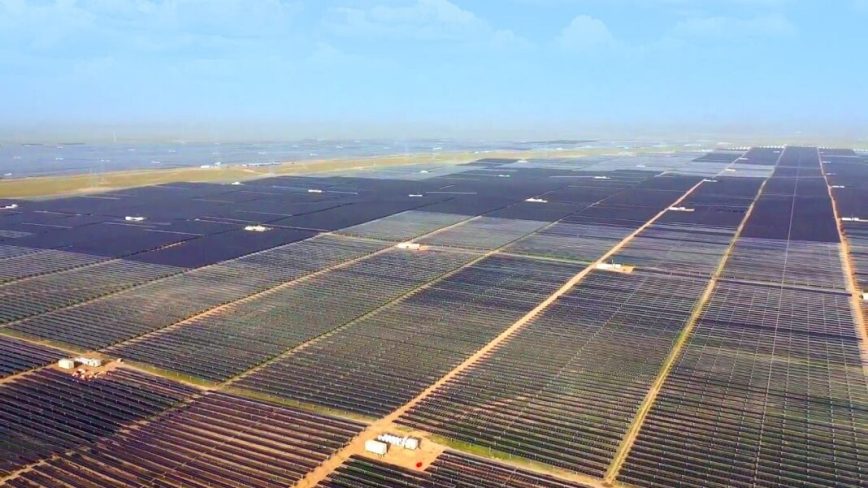
This unleashed a flood of images that to some might be illustrations of our species’ progress but to me are images of environmental devastation. In case anyone thinks I’m being melodramatic, here’s a fact: you can’t build solar installations just anywhere. Land needs to be cleared and flattened for them, including forests, should they happen to be in the way. Same for wind mills but on a much, I believe, smaller scale.
Of course, the EU has tied its pants with the stipulation that only projects proposed for designated “go-to” areas will be spared the trouble of environmental impact assessments. It’s a completely worthless stipulation, however, since governments would rush to designate go-to area after go-to area whether out of a genuine if misplaced belief that renewables will save the world or pure, primal greed.
Here’s an FT quote I instantly fell in love with: ““Lengthy and complex administrative procedures are a key barrier for investments in renewables and their related infrastructure,” according to the draft. The plans could “result in the occasional killing or disturbance of birds and other protected species”, it added.”
It might also result in the disturbance of agricultural land and sensitive ecosystems because all ecosystems are sensitive and if you really get going building gigawatts of solar power, you will disturb them because, quite simply, everywhere is an ecosystem. And this plan comes from the same EU that has been fining Bulgaria (with reason, I’m sure and I’m not being sarcastic for a change) for violating environmental protection regulations.
So, the EU has since last September been suffering the consequences of a too fast buildout in renewable capacity, rooted in the arrogant assumption that it only takes a few million solar panels and wind turbines to save the planet from the effects of centuries of human activity.
Now, the bloc plans to accelerate this buildout even more because, of course, it never acknowledged the role that too-fast buildout had on its energy troubles. On the contrary, the overwhelming sentiment appears to be that European countries are not building wind and solar capacity fast enough.
The EU will also accelerate the acceleration even further because now Brussels has set its sights on completely quitting all sorts of fossil fuel imports from Russia by 2027. This would cost the bloc the modest sum of 195 billion euro, or 32.5 billion euro per year until 2027, on top of all other investments in renewable energy. The goal: to source 45% of its energy from renewable installations by 2030. Given the track record of wind and solar, this is, of course, totally feasible.
Meanwhile, European economies are panting under growing inflation weight, dumped on them by the same people who are now urging the accelerated ramp-up of wind and solar. At a time when all commodity prices are soaring. At a time of various material and equipment shortages.
Doing the same thing and expecting different results has been said to be the definition of insanity and the EU is acting like an excellent example of this definition. It refuses to acknowledge that the results of its actions in energy so far have been less than positive, so to speak. Except on the level of emissions. Those are falling, so that’s a win for the EU narrative (and for our lungs, if we’re talking about fine particulate matter). On the security and affordability front, however, things couldn’t be different-er.
In the UK, the FTreported this week, some households are being forced to take out loans in order to be able to pay their electricity bills. Meanwhile, the government is raising its 2030 renewable capacity target to 50 GW for offshore wind alone while Chancellor Sunak is berating the oil industry for not investing enough at home. As one reader would say, this reads like a soap opera script, and a bad one, at that.
The UK is not the EU but the energy policies of the two are remarkably identical. In the EU, as in the UK, member states are providing direct financial support to their citizens and businesses to help them cope with higher electricity prices. Those would be the same prices that are high precisely because of these governments’ energy policies. And even with that help, a lot of people are struggling with their bills.
At the same time, these same governments are providing direct financial support to wind and solar developers, while charging their citizens extra for the renewable power in their supply mix (Note: This is an extrapolation, based on the existence of renewable power surcharges in Bulgaria and Germany.). And they are planning to build more of the renewable power capacity that citizens pay more for the privilege of using to heat their homes and cook their food.
In other words, EU governments are paying aid to their citizens for excessive electricity prices while at the same time charging these same citizens more for the renewable electricity they want to produce more of. The aid will end, sooner rather than later. The surcharges are not going anywhere.
The outlook for European energy prices meanwhile remains quite grim. According to economists polled by the Wall Street Journal, energy prices in the EU will remain high and even rise further in the coming months thanks to Western sanctions on Russia that are reducing the availability of Russian oil for Europe.
The sanctions have also started reducing the availability of gas for Europe, first because of Poland’s and Bulgaria’s refusal to pay in rubles for gas deliveries and as of this week because the Ukraine decided to move the entry point of Russian gas into the country from one place to another, because the first one is controlled by Russian forces.
Gazprom said that was technologically impossible (for capacity reasons), so the Ukraine is turning the tap — which is one of the taps for Europe — off. According to the Ukrainian side, that channel accounts for a third of all Russian gas transited through the Ukraine to Europe. For context, in 2021, the total amount of Russian gas shipped to Europe via its eastern neighbour totalled 41.6 billion cu m.
Soon after this, Moscow sanctioned a host of Gazprom subsidiaries in Europe, cutting off their access to gas, in response to EU sanctions. Gas prices jumped further, as usual, and Brussels’ resolve to shake off the hydrocarbon chains tying it to Russia probably hardened. We might be about to hear about another revision of renewable targets for 2030, with the appropriate price tag, of course.
In all fairness, in this particular context of energy insecurity, the argument for local energy production from whatever you have handy, be it coal, nuclear, or wind and solar, makes a lot of sense. In fact, the “local supply = energy security” argument has always been the strongest pragmatic one in favour of wind and solar.
The problem is in details such as costs, energy density and, as always, reliability. But nobody in Brussels and national capitals seems to care about petty details. The political EU is firmly in “Whatever it takes” mode and we’re all footing the bill.
The “green energy world” is in a pickle. Only government intervention and deficit spending is holding the artificial boom afloat. And just imagine all of the good things that the same dedication of resources could have created if they had gone for goods and services that consumers wanted. That is a story for another day.
As I’ve been pointing out now for a couple of years, the obvious gap in the plans of our betters for a carbon-free “net zero” energy future is the problem of massive-scale energy storage. How exactly is New York City (for example) going to provide its citizens with power for a long and dark full-week period in the winter, with calm winds, long nights, and overcast days, after everyone has been required to change over to electric heat and electric cars — and all the electricity is supposed to come from the wind and sun, which are neither blowing nor shining for these extended periods? Can someone please calculate how much energy storage will be needed to cover a worst-case solar/wind drought, what it will consist of, how long it has to last, how much it will cost, and whether it is economically feasible? Nearly all descriptions by advocates of the supposed path to “net zero” — including the ambitious plans of the states of New York and California — completely gloss over this issue and/or deal with it in a way demonstrating total incompetence and failure to comprehend the problem.
And then suddenly appeared in my inbox a couple of weeks ago a large Report with the title “The Future of Energy Storage: An Interdisciplinary MIT Study.” MIT — that’s America’s premier university for matters of science and technology. The Report is 378 pages long, full of lots of detail, charts and graphs, mathematical equations, and technical jargon. It lists as authors some 18 members of the MIT faculty. Surely, if anyone can address this “net zero” energy storage problem competently, these will be the people.
Sorry. This is a product of modern American academia. MIT is as extreme left as any of them.
Having now spent about a week trying to wade through this morass, I am not impressed. The Report is an exercise by genius would-be central planners concocting enormously complex models that just happen to come to the results that the authors are hoping for, while at the same time they avoid ever directly addressing the critical question, namely what is the plan to get through that worst case sun/wind drought. Implicit in every page of the Report is that it is an advocacy document for the proposition that the U.S. should embark full speed ahead on crash “net zero” plans for our multi-tens-of-trillions-of-dollars economy without ever doing any kind of demonstration project to show it can work on any scale no matter how small.
You start to get an idea where this is going at the very beginning, when you come on page romanette v to a list of members of an “Advisory Committee” that appears to have given direction to the project. Members include John Podesta of the Center for American Progress, someone from the Environmental Defense Fund, an “Alternative Energy Research” guy from the Bank of America, an ex-World Bank guy (the World Bank being an organization dedicated to keeping poor countries from having access to energy that works), an environmental bureaucrat from the Massachusetts state government, several people from other alternative energy investors and environmental advocacy groups, and so forth. Clearly, this Report had to come to a pre-determined conclusion that energy storage issues do not pose any major impediment to net zero ambitions.
This being a product of left-wing academia, you can expect the usual touching faith in the ability of the federal government to solve all problems, no matter how intractable, by the magic of spending money out of the infinite federal pile. Thus, early in the Executive Summary, we find a recognition that the only battery storage technology currently being deployed in large amounts in commercial applications — namely Lithium Ion — cannot provide backup for periods longer than about 12 hours:
Li-ion batteries will continue to be a leading technology for EVs and for short-duration storage, but their storage capacity costs are unlikely to fall low enough to enable widespread adoption for long-duration (> 12 hours) electricity system applications.
OK then, what is the technology that will step up for the periods of a week or two that may need to be covered in a world without fossil fuels. From page xv:
To enable economical long-duration energy storage (> 12 hours), the DOE should support research, development, and demonstration to advance alternative electrochemical storage technologies that rely on earth-abundant materials. Cost, lifetime, and manufacturing scale requirements for long-duration energy storage favor the exploration of novel electro-chemical technologies, such as redox-flow and metal-air batteries that use inexpensive charge-storage materials and battery designs that are better suited for long-duration applications. (Emphasis in original).
The feds will “support research” into “novel technologies,” of course using the infinite money pile, and the technology will magically appear. And what exactly is the technology that will then emerge to rescue us? They have no idea:
While several novel electrochemical technologies have shown promise, remaining knowledge gaps with respect to key scientific, engineering, and manufacturing challenges suggest high value for concerted government support. Innovation in these technologies is being actively pursued in other countries, notably China.
You’ve got to hate those “knowledge gaps,” but clearly all that is needed to fill them is enough federal funding. And you can’t let those Chinese beat us!
Well, how about just using that ubiquitous element hydrogen, easily available through the electrolysis of water? They discuss that too:
[H]ydrogen produced via electrolysis can serve as a low-carbon fuel for industry as well as for electricity generation during periods when VRE [variable renewable energy] generation is low. . . . We support the effort that the DOE is leading to create a national strategy that addresses hydrogen production, transportation, and storage. In particular, the ability of existing natural gas transmission pipelines to carry hydrogen without suffering embrittlement, either at reduced pressures or if hydrogen is blended with natural gas or other compounds, remains an open question that deserves government-supported study by the DOE and the U.S. Department of Transportation.
Funny that private investors aren’t putting any real money into this “hydrogen economy” thing. That’s because to get hydrogen out of water is extremely costly, and once you have it, it is inferior to natural gas in every way as a source of energy for the people. It’s less dense, more dangerous, and more difficult to transport and store. But again, throw in some of the infinite pile of federal money and it will all magically work.
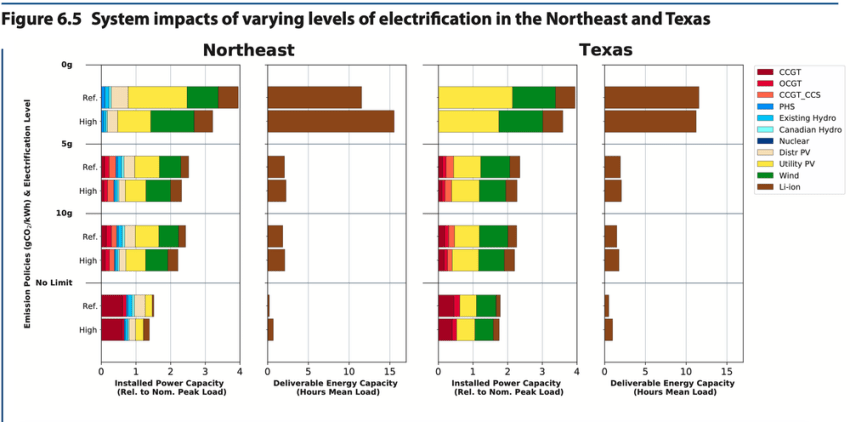
Many of the charts and graphs are very complicated and technical, but if you spend some time with them, you start to realize that they are an insult to your intelligence. I’ll give you just one of my favorites, this one from page 191. Here we are considering what the electricity generation system will look like for two regions, the Northeast (New York and New England) and Texas, in various low and no-carbon scenarios. The cutoffs of 0g, 5g, 10g and No Limit at the left refer to how much carbon emissions are allowed per kWh of electricity generated.
Thus at the top right we see what a zero-carbon scenario will look like for Texas. Supposedly, with about a 3 to 4 times overbuild of a system having only wind and solar generation, then we will only need battery storage for about 50% of capacity and about 11 hours duration. Really? Does anybody remember February 2021? Texas’s wind and solar generators produced at less than 10% capacity for days on end. Can a three times overbuild of wind capacity and 12 hours of battery storage solve that? The answer is no. Not even close. And you could get a wind/solar drought of a full week. If you have no fossil fuel backup, you had better have enough storage to cover that.
And if you take some time to study this chart (not saying that I would recommend that) you can find multiple other equally implausible assertions.
Bottom line: I’m not trusting anybody’s so-called “model” to prove that this gigantic energy transformation is going to work. Show me the demonstration project that actually works.
They won’t. Indeed, there is not even an attempt to put such a thing together, even as we hurtle down the road to “net zero” without any idea how it is going to work.
The 108th anniversary of this event just happened last month. Always feels strange how a century can go by and little details slip through the cracks, forgotten. We thought we knew this story… but then we had to go and dig. {An edition to our new “Forgotten History” series}
~*~*~*~*~*~*~*~*~*~*~*~*~*~*~*~*~*~*~*~ Copyright Disclaimer Under Section 107 of the Copyright Act 1976, allowance is made for “fair use” for purposes such as criticism, comment, news reporting, teaching, scholarship, and research. Fair use is a use permitted by copyright statute that might otherwise be infringing. Non-profit, educational or personal use tips the balance in favor of fair use.
An article in The Grocer reports criticism of the UK government’s “Genetic Technology (Precision Breeding) Bill”, which was introduced into Parliament yesterday.
It notes that both growers and campaigners are cautioning against the rapid adoption of new gene-editing technology.
The article quotes Philip Morley, technical executive officer of the British Tomato Growers’ Association, as saying that there had been a lack of consultation with the food sector on the government’s plans – leading to “a disconnect between the scientists, who are doing the research in their labs, and the growers, retailers and consumers”.
He said, “I know it is interesting and it sounds really sexy but this is a major national conversation we need to have if we are going to be pioneers in that technology, not just for fresh produce.”
Morley added, “This is the beginning, and is the foot in the door, the opening conversation and if we make a mistake now then that is a mistake that we live with forever.”
Morley said, “It is a huge topic, and it will involve every crop, every livestock sector, every human being ultimately when we get into the realm of gene editing humans.”
On the topic of GM tomatoes, a GM vitamin D-containing variety of which was hyped in the government’s publicity around the new bill, Morley stressed there were still many opportunities to look at natural processes in tomato production to boost nutritional values – something many growers were doing, particularly when it came to using light.
He told The Grocer that these natural explorations could potentially deliver far more benefits than any chemical intervention for human health.
Liz O’Neill, director of GM Freeze, is quoted as warning that unregulated gene editing is “a food crisis in the making” as “gene editing is GM with better PR”.
Soil Association policy director Jo Lewis told The Grocer that the decision to prioritise the bill over the food bill meant the government was “casting about for silver bullets”. She said, “We are deeply disappointed to see the government prioritising unpopular technologies rather than focusing on the real issues – unhealthy diets, a lack of crop diversity, farm animal overcrowding, and the steep decline in beneficial insects who can eat pests.
“Instead of trying to change the DNA of highly stressed animals and monoculture crops to make them temporarily immune to disease, we should be investing in solutions that deal with the cause of disease and pests in the first place.”
Transgenic chickens made with CRISPR gene editing are touted as an animal welfare boon – but could result in animal suffering and health and environment risks
A concept patent has been filed for a method that includes the use of CRISPR/Cas-mediated gene editing to generate transgenic birds so that no male offspring are able to hatch. Israeli scientists led by Dr Yuval Cinnamon (named as an inventor on the patent) are proposing this method to be used in chickens, so that only female chicks will hatch, which will then go on to become laying hens for egg production.
Currently male chicks of egg-laying breeds are killed when young as they are of no use to the egg or chicken meat industries. Even then, hatching the male chicks and keeping them alive until they are killed is viewed by the industry as a waste of energy and other resources.
More seriously, the practice of killing the male chicks is an animal welfare issue. In this light, the transgenic CRISPR-edited chickens are being hyped as a boon for animal welfare, on the grounds (in the BBC’s words) that the technology could “prevent the slaughter of millions of male chickens in the UK, which are culled because they don’t lay eggs”.
But our investigation shows that such claims are disingenuous in the extreme. In fact, the technology forces mother hens to pass on a lethality (killer) gene, which is intended to kill all male embryos before they hatch from the egg.
The genes that are most reliably lethal, and therefore most likely to be used, produce highly toxic proteins. The hen should only produce the toxic protein under the influence of blue light, according to the patent. However, if the technology doesn’t work perfectly, the founder breeder hens and their egg-laying daughters could produce a toxin at low levels in their bodies, leading to health problems in these chickens. The male chick embryos killed successfully with the lethality gene could, depending on the particular gene used, effectively be toxic waste and could not be put into the animal feed supply – the current destination for unwanted male chickens. And the lethality gene could escape into the environment or into bacteria, and again, depending on the gene used, could endanger humans, animals, and wildlife.
Moreover, there appears to be no proof that the technology will work as intended, as there is no evidence in the public domain that a live transgenic breeder hen has actually been produced. The experiments described in the patent are all done on cells in test tubes/flasks (in vitro) or on the egg (in ovo).
In spite of all this, the European Commission has rushed to assure the German regulatory body, the BVL, that the egg-laying hens and their eggs are not GMOs and can therefore be sold without safety checks and GMO labelling.
The method
CRISPR/Cas gene editing is used in an SDN-3 (gene insertion) procedure to target integration of a transgene (a foreign gene, in this case, the lethality gene) into the male sex Z chromosome, with the egg-laying hen passing on that transgene to all male embryos of the next generation of chickens. On exposing the eggs to blue light, the lethality gene is activated and kills the male embryos before they hatch.
Lethality gene is likely to produce highly toxic protein
In order to ensure reliable killing of the male chick embryos at an early stage of their development, the lethality gene that the developers insert will have to be highly toxic. The various lethality-inducing proteins mentioned in the patent that are supposed to work by inhibiting growth/development (paragraphs 0156, 0157) or essential signalling pathways, such as “bone morphogenetic protein antagonist” or “RNA-guided DNA endonuclease enzyme” (paragraphs 0159, 0160), may be too uncertain in their effects.
Therefore the developer will almost certainly choose to use a known highly toxic element – such as genes encoding for diphtheria toxin or ricin toxin, both of which are specifically mentioned in paragraph 0158 as possible candidates for the lethal gene. The fact that the authors illustrate their concept using a diphtheria toxin lethality gene, albeit within the context of in vitro tissue culture cell experiments (Figure 24A), supports this line of thinking.
A gene encoding cholera toxin, another highly toxic poison, could conceivably be used, as the patent does not restrict the lethal gene to certain named types.
This raises the question of how “tight” and foolproof the expression of the lethality gene cassette is – in other words, whether it is completely silent as desired until activation by blue light illumination, or whether there is some low but significant expression prior to blue light illumination. Indeed, evidence of lethality gene expression leakiness is provided in Figure 13 of the patent (upper panels). It is common experience and knowledge that all transgenic systems are leaky – it’s only a question of degree. Thus the optogenic (blue light) activation system linked to the lethality gene cassette will almost certainly be “leaky”. This means that in the female founder breeding hens, even in the absence of blue light, the lethal gene may not be silent. So these female founder breeding hens and their egg-laying female offspring could express the lethality gene at a low level. This would mean that these hens would be producing a lethal toxin inside their bodies. As a result they could suffer health problems.
This possibility (which is far from unlikely) raises welfare questions about the health of the female founder hens and their female offspring. Their health status will depend on the nature of the lethality gene and to what extent it expresses in their bodies. This is a major ethical issue, beginning with the action of genetically engineering a mother hen to pass a killer gene to all her male offspring.
The lethal toxin-generating gene could escape into the environment or into bacteria. If it gets into bacteria, it could transfer from the bacteria into people or animals, with potentially serious consequences to their health.
Any male embryos that are killed using a toxic lethality gene will need to be treated as toxic waste and could not be used, for example, as animal feed, which is the usual destination for rejected male embryos or chicks in the non-GMO egg industry.
Proof-of-concept only
It is important to note that the experimental data presented in the patent application only attempt to demonstrate the feasibility of the various components of the method. They have tested all these components separately, but do not actually demonstrate that they can be brought together to produce a female transgenic founder chicken that can be used for breeding egg-laying hens. A search of scientific databases also failed to identify a transgenic breeding hen of the type that the method aims to generate. Thus based on current publicly available information, a transgenic live breeder chicken of the type described in the patent does not exist.
The patent is a method patent that tries to provide proof-of-concept and only describes in vitro and in ovo experiments. At most, these experiments show that exposure to blue light can activate gene expression as desired in vitro and in ovo. They also show killing of tissue culture cells using the lethality gene system. They show protein synthesis inhibition from expression of the diphtheria gene (but not strictly cell or embryo death) in ovo – but not through activation by blue light. They show killing of tissue culture cells with a diphtheria or caspase (cell death-inducing) genes, but again, not via blue light activation. At best they show that in ovo injection of a growth inhibitor protein (noggin) can arrest embryo development at an early (blastomere) stage. No doubt the idea is that if you can express these toxic proteins from a gene via blue light illumination, then it could work. But there’s no proof that it does.
EU Commission claims the laying hens and their eggs are not GMOs
The EU Commission wrote to the German Federal Office of Consumer Protection and Food Safety (BVL) in July 2021, stating that the laying hens resulting from this genetic modification process and their eggs are not GMOs and would not fall under the EU’s GMO regulations.
The EU Commission reaches its conclusion based on the supposed absence of the transgene (or fragments thereof) in the female hens. However, and crucially, the EU Commission is grossly misinterpreting the law. The EU definition of a GMO is not an organism that contains transgenes, but an organism “in which the genetic material has been altered in a way that does not occur naturally by mating and/or natural recombination”. The law does not state that transgenes have to be present in order for an organism to be classed as a GMO.
There is no proof that the female hens in question are free from such unnatural genetic alterations, as described in this legal text. Therefore the Commission appears to be acting against the law.
Do the female laying hens contain transgenes?
Let’s suppose for a moment that the EU law was worded completely differently from how it is, and that it does define a GMO as an organism containing transgenes. Even in this imaginary scenario, it is not valid for the Commission to assume that the female hens do not contain unintended transgenes in part or in whole. Scientific evidence in plants and human cells shows that fragments of foreign DNA from the gene-editing tool can inadvertently integrate into the genome during the gene editing process and end up scattered across the genome.
In the case of the transgenic chickens, in order to produce the founder hens, integration of the lethality gene is targeted into the male sex-determining Z chromosome, using the CRISPR/Cas gene-editing tool. But this process may not go as planned. While the lethality gene cassette may end up in the intended location on the Z chromosome, fragments of the lethality gene or the plasmid DNA molecules encoding the CRISPR/Cas tool may also integrate in other regions of the genome – that is, on chromosomes that will be passed down to both male and female chicks. As a result, both the founder hens and their female egg-laying offspring could inadvertently contain fragments of the CRISPR gene-editing tool and/or fragments of transgenes in their genomes.
There appears to be no published evidence showing that this procedure does not give rise to inadvertent transgene fragment integration and that the resulting transgenic founder hens and their female offspring are free from such foreign DNA. Moreover, existing evidence suggests that this is highly likely to happen.
The way to find out if it has happened is to do a genomics (whole genome sequencing) analysis of the founder hens and their female egg-laying offspring. But this basic investigation may not at present be possible if, as appears, the desired transgenic founder hen does not exist in actuality.
So until evidence is provided to the contrary, we can assume that fragments of the CRISPR gene-editing tool and/or fragments of transgenes may have integrated into their genomes. If this is the case, then the founder hens and their offspring, the female egg-laying hens, will be transgenic, as will be the eggs of the laying hens. Therefore even under a hypothetical law that defined a GMO as an organism that contains transgenes, all three would have to be labelled as GM. The Commission would therefore be acting against this hypothetical law – and against its own incorrect interpretation of the law – in stating that the laying hens and their eggs are not GMOs.
Under EU law, the egg-laying hens and their eggs are certainly GMOs, though not because of the possible presence of transgenes. As Testbiotech explains, “In the case of the laying hens, they are the direct female offspring (F1) of the transgenic chickens. They inherit (regardless of whether the transgene works as supposed) genetic material from the mother hens which also will be transferred to the eggs. Thus, there can be no doubt that the laying hens and the eggs produced, are products of GMOs and consist of GMOs. As can be seen with oil, starch or sugar produced from GM plants, it is the production process which is the decisive criterion for the implementation of EU law and not the presence of genetically modified material [e.g. transgenes] in the end product.”
The Commission’s action in sending the BVL a letter stating that these animals are non-GMO shows not only its misinterpretation of EU law, but also that it accepts GMO industry self-declaration of transgene-free status, without requiring any proof.
Unintended genetic changes
The gene-edited founder breeding hens are likely to have unintended changes in their genome, such as insertions, deletions or rearrangements of DNA, at both the intended edit site (on-target) and at other locations in the genome (off-target). This could lead to disturbances in patterns of gene function which could lead to health or welfare issues in the chickens. Even if at the site of insertion of the lethality gene, all is as intended without any unwanted mutations, unintended genetic alterations at off-target sites will be passed on to the egg-laying daughters of the founder breeding hens.
It is not known how carefully the developers will look for such unintended effects – only long-read whole genome sequencing and subsequent “omics” molecular analysis of the chickens will suffice – and how carefully they will try to breed them out. Any unintended effects that are not bred out will be passed down to the egg-laying hens. Without strict regulation requiring such examinations, it is uncertain that they will be undertaken.
What is the Commission actually deregulating?
In sum, there appears to be no available information on how any live GM chickens were generated and indeed if they were generated at all. So the Commission appears to be acting beyond its expertise, as well as beyond its mandate, in its rush to deregulate something that may not work; may not exist in a utilizable form, and if it does, will likely not be as free from transgenic material as the Commission assumes; and may cause serious public health and environmental problems, as well as severe health or welfare issues for the chickens themselves.
Alternatives are available
While unwanted male chick embryos are commonly killed by gassing them or grinding them up alive, more humane alternatives are available. These alternatives seem to be preferable to a potentially dangerous gene editing route using lethality genes.
One such alternative technology is egg screening using the Sellegt method, which enables producers to sex the chick embryos at day nine of incubation and select out the unwanted males. Eggs produced using this method are already being sold by supermarkets under the label “Respeggt”, which promises that the eggs are “free of chick culling”. Other already-available sex determination methods are described on the Wikipedia page on in ovo sexing.
It may be argued that the patent for the gene-edited birds allows male embryos to be killed using exposure to blue light before the nine-day point at which the Sellegt method becomes viable – though this raises the question of whether a nine-day-old embryo is any more sentient than a 1-8 day-old embryo and therefore if there is any moral gain in using the gene editing system because it theoretically allows for earlier killing.
The problem with this argument is that the patent hedges its bets and also claims that the killing point can be any time between one day and the full 21-day egg incubation period. So it cannot be assumed that killing a male embryo with a lethality gene is in any way more humane (on the grounds that it takes place at an earlier stage) than existing alternative non-GMO methods – and the latter do not result in a potentially toxic product.
This patent is under consideration by the European Patent Office but has not yet been granted. In deciding whether to grant patents, patent offices must consider three things: novelty, a non-obvious inventive step, and utility. If the toxic lethality gene is only activated at 10–21 days of incubation, as is provided for in the patent, then the Patent Office would be justified in refusing the application, as the technology described is not an improvement on existing technologies and therefore has no utility.
Dual use chickens: A more humane and sustainable option?
For those who object to any killing of male chick embryos on the grounds of animal welfare or waste, but wish to see chicken meat production continue, another option is available that would enable the raising to maturity of the males. That is dual use chickens, in which the females serve as egg layers and the males as meat. Such chickens are commonly available but are not commonly used in the chicken meat industry because males do not put on weight as quickly as females. So by separating out breeds between egg laying and meat-producing, productivity is arguably being prioritized over animal welfare and sustainability.
Conclusion
In conclusion, this gene editing application appears to be
* Of unknown efficacy in producing the intended gene-edited live chickens.
* Potentially dangerous for the chickens themselves, raising animal welfare concerns.
* Potentially dangerous for humans and other animals, who may be exposed to escaped lethality genes expressing highly potent toxic protein products (e.g., diphtheria, ricin, or cholera), due to the envisaged large scale use of this technology. These toxin-encoding lethality genes and their toxic protein products could also put at risk the environment as a whole.
* Ethically questionable. The developers are genetically engineering a mother hen to pass a killer gene to all her male offspring when there are already-available alternatives, such as egg sexing early in the incubation period.
* Of doubtful utility, since it seems not to provide any more humane or efficient system of preventing the birth of male chicks than is already available via other technologies.
In addition, the egg-laying hens and their eggs are GMOs under EU law. Therefore the European Commission should correct its advice to the German regulator and state that these GM products should be subjected to a risk assessment and GMO labelling.
Last year, the CDC published a paper comparing Pediatric COVID-19 Cases in Counties With and Without School Mask Requirements. The authors looked at data from 520 United States counties, concluding that “Counties without school mask requirements experienced larger increases in … case rates … compared with counties that had school mask requirements.” Corona astrologers and face diaper fetishists everywhere have used the findings to argue for forcing healthy children who are at no risk to wear fasks masks for multiple hours each school day.
More county-level data on American infection rates and mask mandates has since become available, and two Toronto scientists have taken the opportunity to replicate the study, looking now at 1,832 counties. In a turn of events that will surprise nobody, they find that the larger dataset shows that mask mandates actually do zero, and that prior findings were almost surely an illusion.
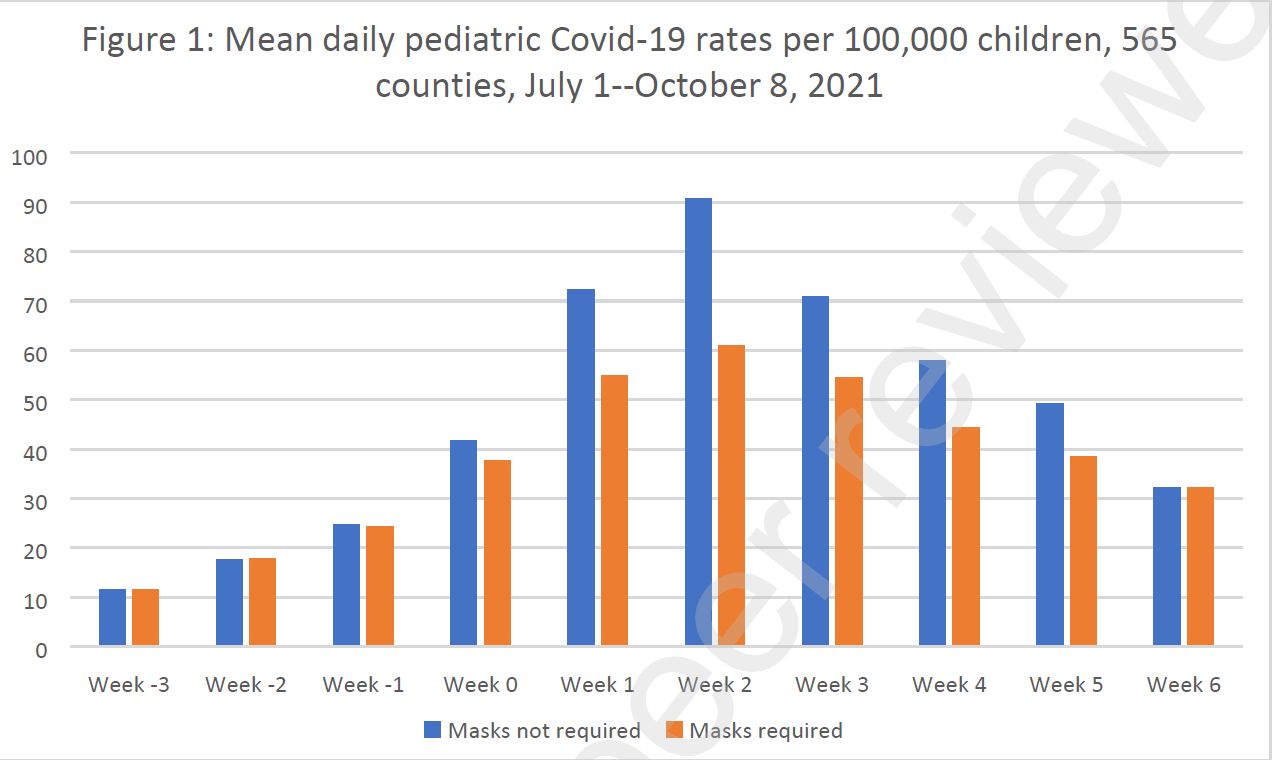
Here are masked vs. unmasked case rates, using a smaller data pool similar to that from the CDC study:
Week 0 is the week of school reopening after the summer holidays.
Yes, the maskless counties seem to do worse! Yet the Toronto authors point out that the original CDC study only considered infection rates through the second week after schools reopened, which turned out to be “exactly the peak of school case numbers for [their] sample of counties.” This obscured the fact “that cases quickly declined in later weeks and did so faster in counties without mask mandates.” Even the smaller sample used by the CDC study, in other words, showed no difference in masked vs. unmasked counties by the six-week mark.
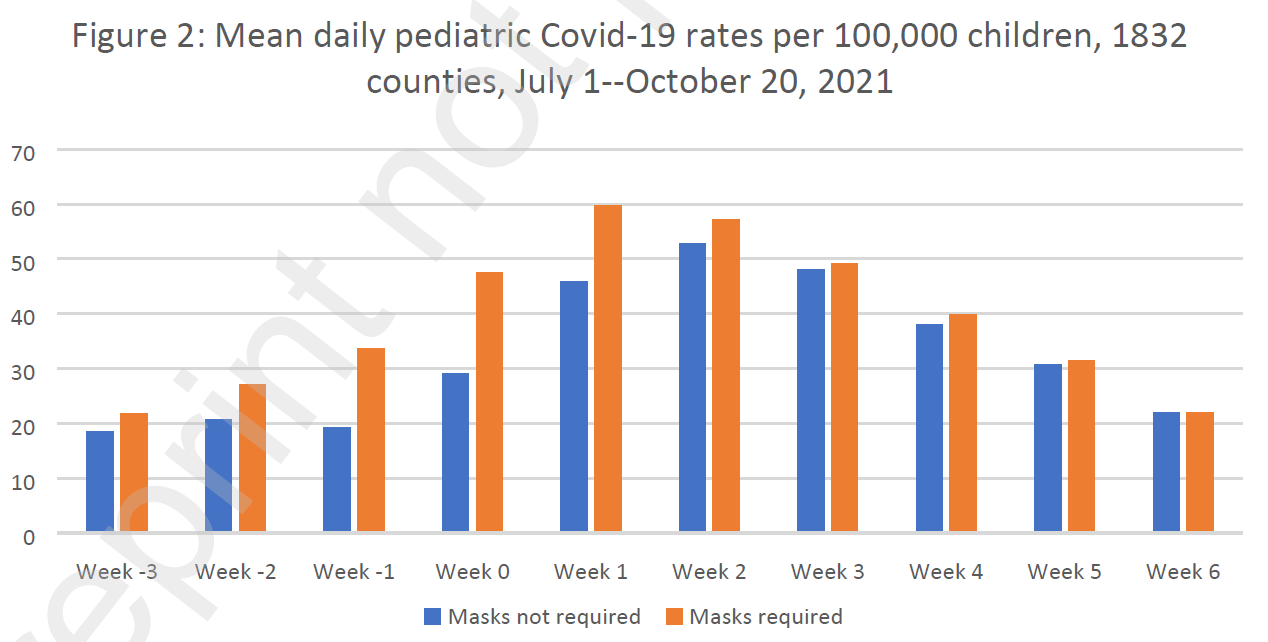
The replication, with a much bigger dataset, meanwhile, showed that maskless counties never led infections at all:
Note that, in the larger sample, the maskless start out with lower rates of infections and catch up; in the smaller sample, they started out with higher rates which collapsed more quickly.
The authors note that the CDC study, by ending their analysis on 4 September 2021, effectively excluded counties with a school-start date after 14 August, which entailed an oversampling of southern states. I’ll fill in the blanks here: Counties in the American south tend to have fewer school mask requirements, and also to experience late summer infection spikes related to high temperatures and extensive reliance on climatisation.
Although masks have become the most clearly discredited measure deployed against SARS-2 (which is saying something), they just won’t go away. Even in places that have lifted all Corona restrictions, a great many people continue to mask in public, and it seems likely that many countries – Germany among them – will retain vestigial mask requirements indefinitely, probably for years. Masking is a totally unsupported superstitious practice that does nothing against viral infection, and yet for precisely this reason, no amount of evidence will ever convince the maskers to stop.
Apparently, it’s really difficult for our ONS to produce deaths by date of occurrence by sex and age until 7 months after year end. This means we won’t get any reliable death data for 2021 until July this year.
Fortunately, Australia is a little more timely with their data releases so we can get a little insight from down under.
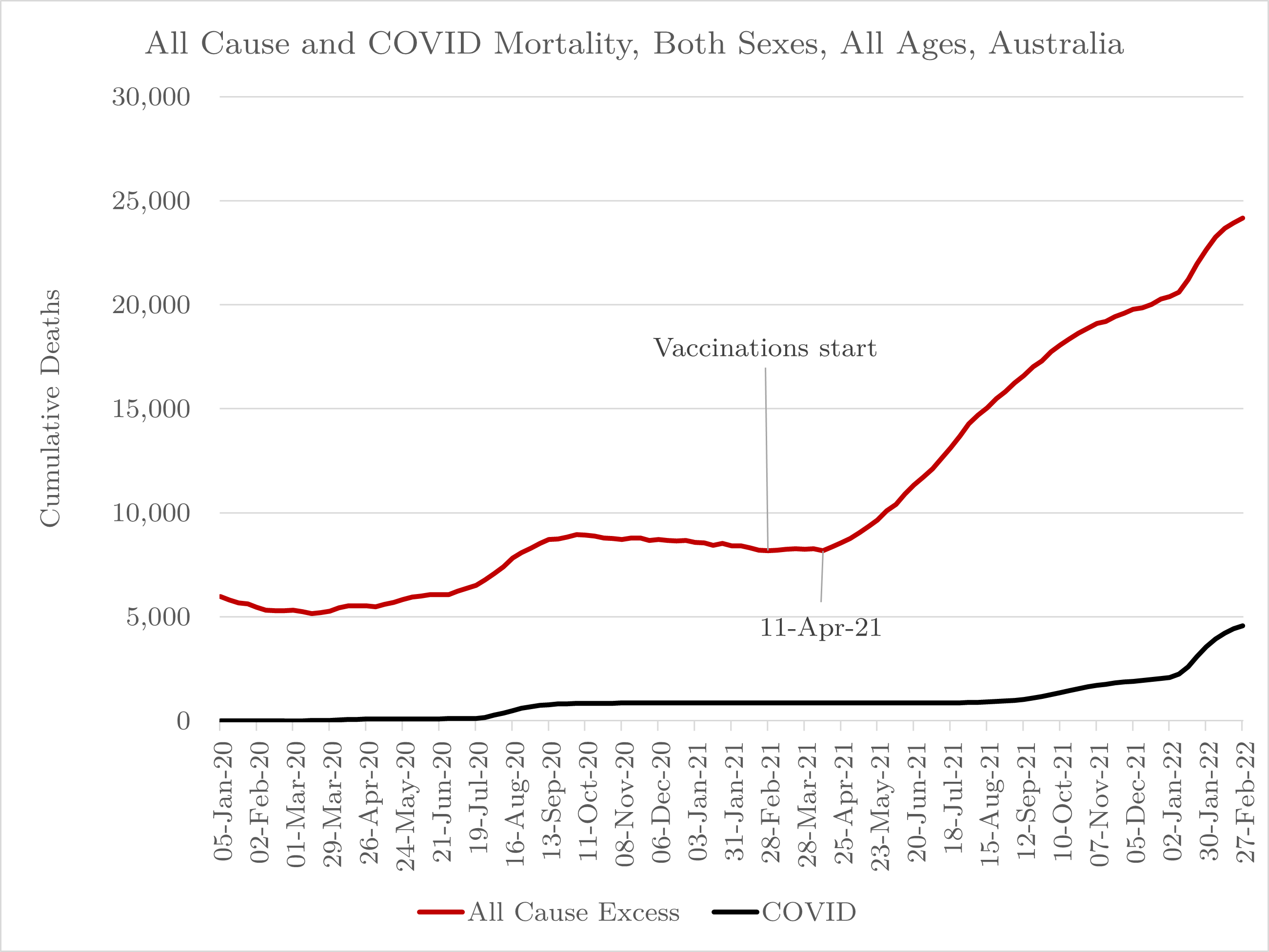
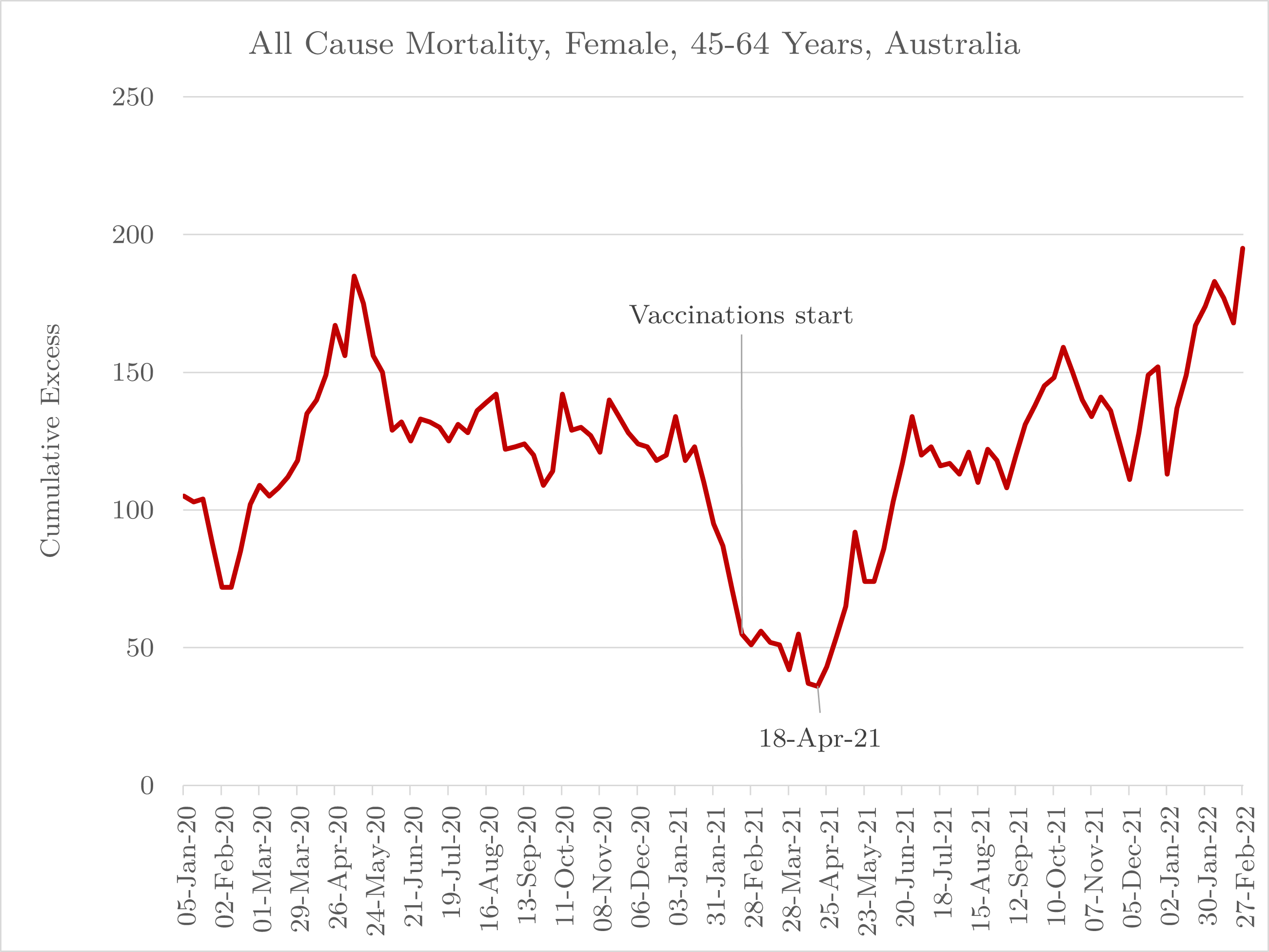
Looking at both sexes and all ages, it is clear that things have gone really wrong for Australia since the week ending 11th April 2021. Between then and the end of Feb 2022, there have been 16k excess deaths.
There have been less than 4k COVID deaths in that same time with most of those coming since Sept 2021.
So, much like every other country of the world, Australia has had more COVID death since the COVID vaccine was introduced in Feb 2021 and substantially more excess death from other causes.
By the end of the period, more than 90% of the adult population has been jabbed.
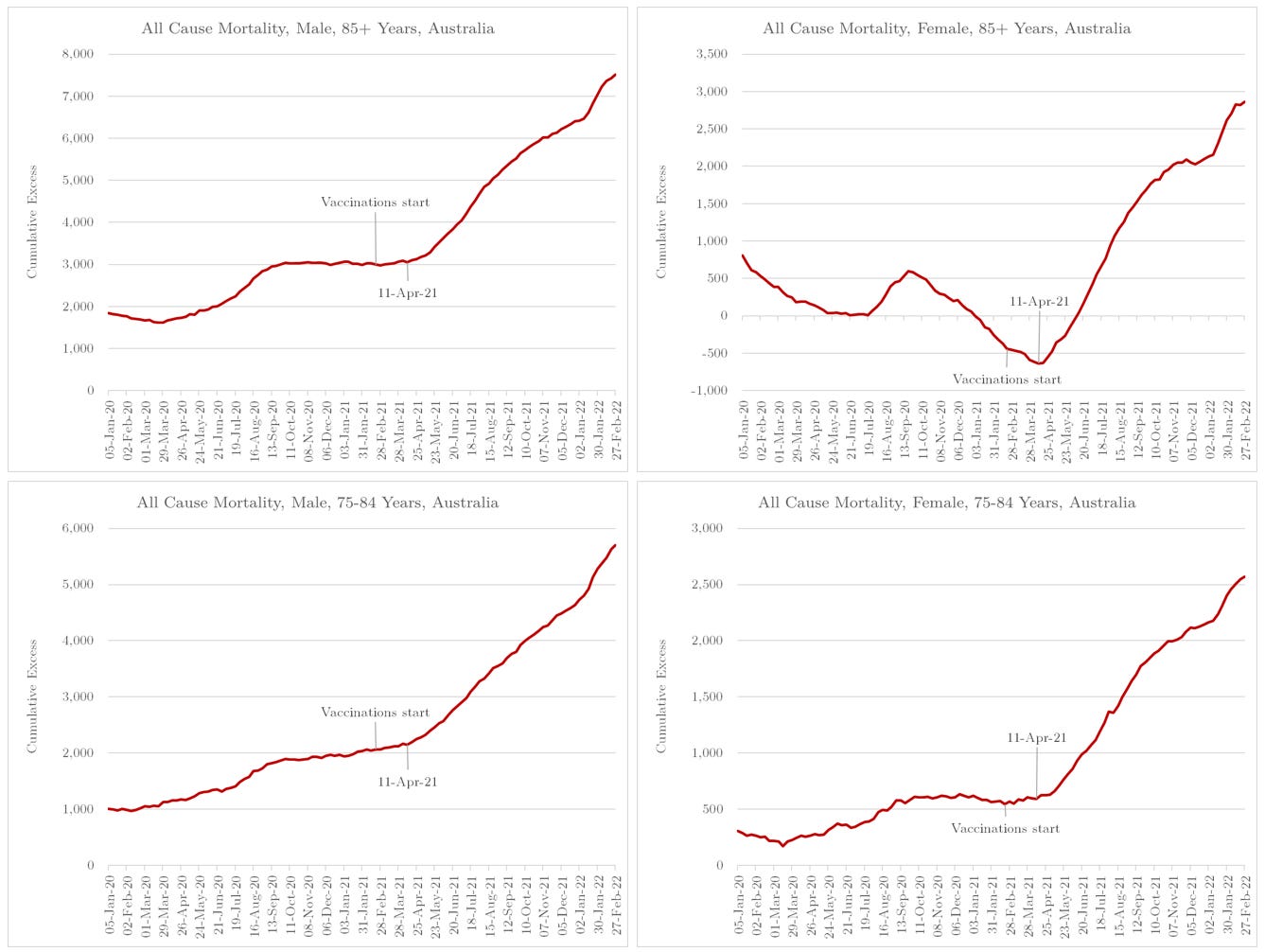
What if we break it down by sex and age?
In the over 75s, the pattern is quite consistent, regardless of sex. There was modest excess death during 2020, the year of the plague, followed by significant excess starting exactly on 11th April 2021, just under two months after the mass COVID vaccinations began.
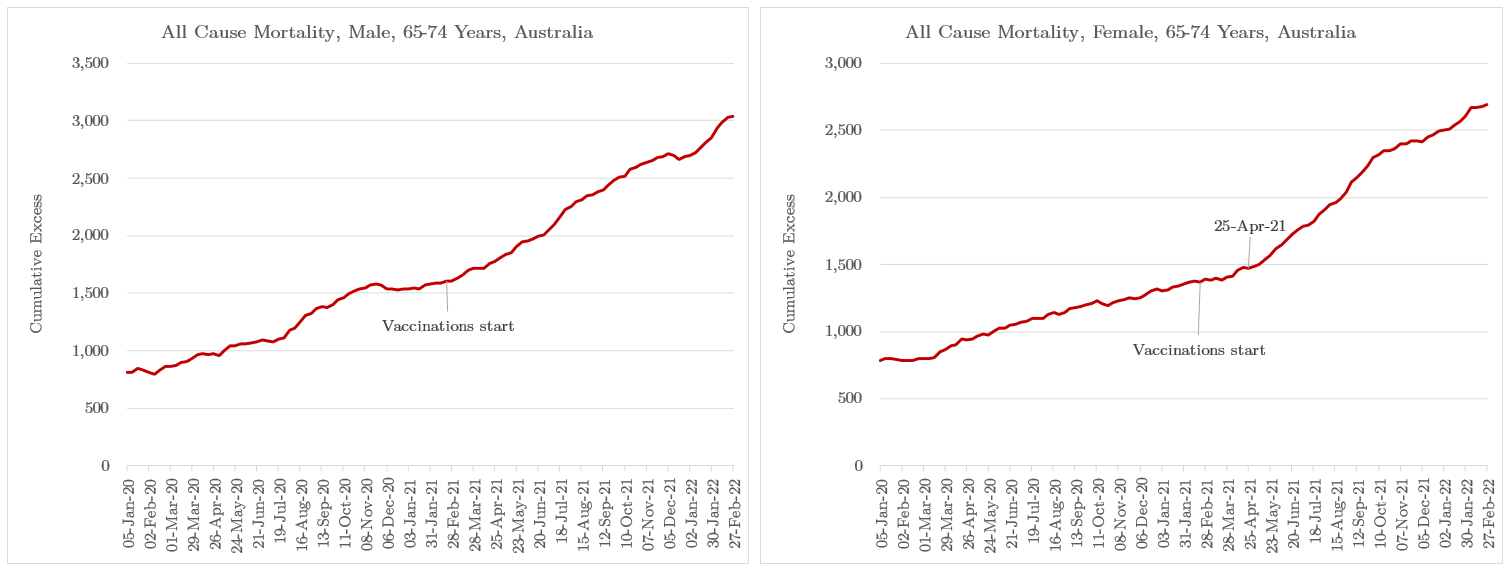
In the 65 to 74 year olds, the men have been dying at a steady excess pace since the start of 2020 with no obvious inflection like the older age groups. The women, on the other hand, were dying at a slightly slower pace but caught up after an inflection on 25th April 2021, two weeks after the older age groups.
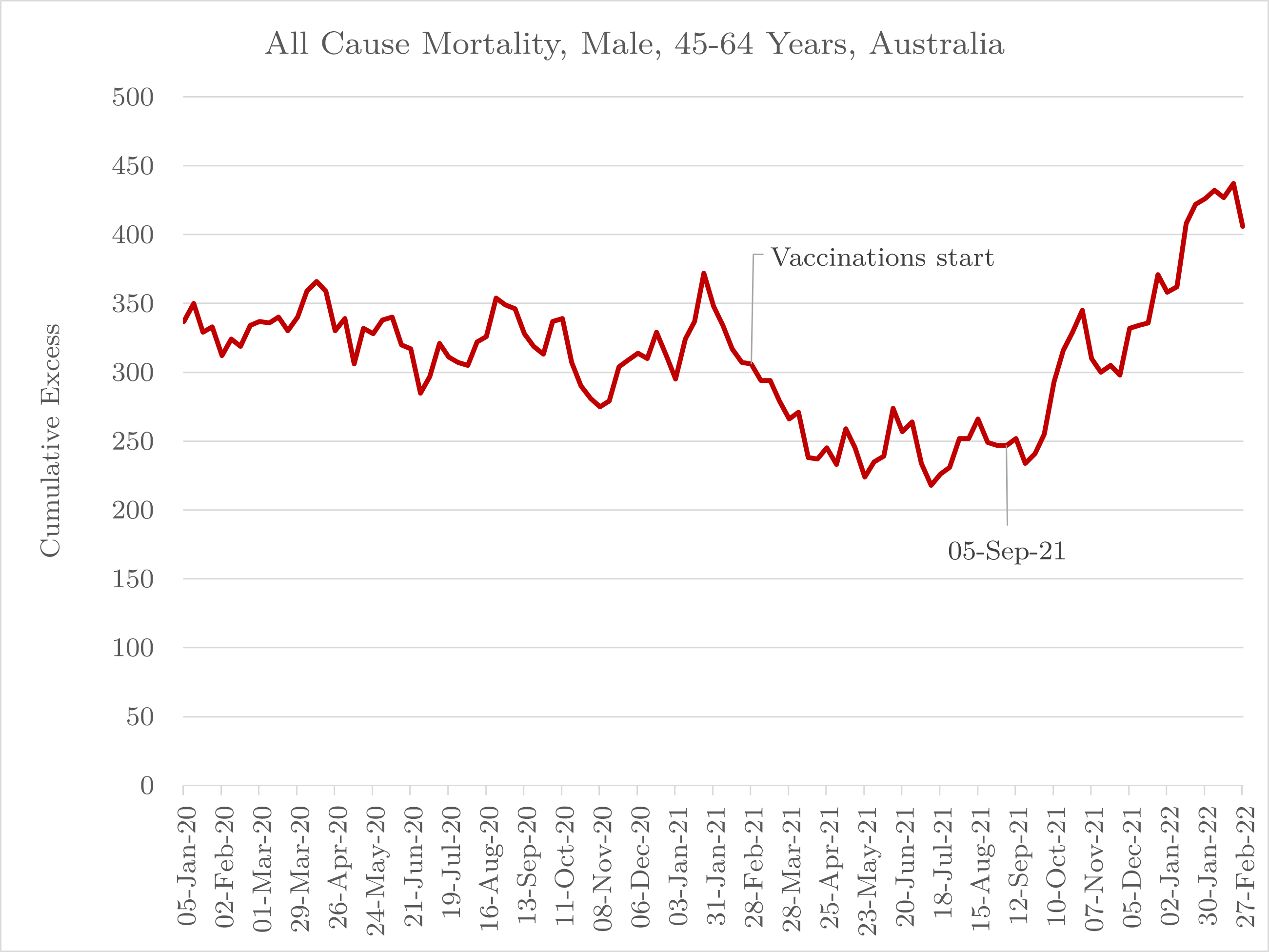
Things to start to get interesting in the 45 to 64 year olds. The men have been dying less than expected since the start of 2020 but stop their decline when vaccination starts and rally in early September 2021.
Conversely, the women seemed to have a little spike Feb to May 2020 when COVID was pandemic before also declining in the run up to mass vaccination. But the biggest anomaly is that their death rally starts on 18th April, 1 week after the oldest groups but 1 week before the 65 to 74s and a massive 5 months before the men.
I’m not normally one to speculate, but in the absence of any better quality data from the expert public health authorities, I’m going to have a stab at an explanation – there are substantially more female health care workers, especially in care homes, who would have been “prioritised” over their male peers which is why they die from the jab sooner.
Every year humans endures a “flu season” – a period denoting the high-water mark of that year’s wave of respiratory viral pathogens. Believe it or not we still have strains of the 1889 Russian flu, the 1918 Spanish flu, the 1957 Asian flu, the 1968 Hong Kong Flu, the 2009 H1N1 virus – all these various strains of nasty bugs rear their head every single year.
In late 2019, a new “novel” pathogen appeared on the scene – a bug from the “Coronavirus” family (“corona” describing the spike-like structure of the particles.) The official title was SARS-CoV-2. SARS = “severe acute respiratory syndrome”; CoV-2 = “Coronavirus 2.” This particular virus can cause a disease called COVID-19 (“Coronavirus Disease 2019”). The disease is thought to have originated in China and found significant human-to-human transmission. It is thought to be “novel” because prior infections of other pathogens do not seem to create anti-bodies to tackle this newfound disease within the human body.
Officials raised alarms about the potential mortality witnessed from COVID-19. Governments across the world scrambled to address and protect their populations from what quickly became a pandemic. Efforts ranged from stringent to downright authoritarian. Results were mixed to say the least. In early 2022, it was thought that SARS-Cov-2 and COVID-19 would join the panoply of viruses and diseases we experience during the annual ebb and flow of life.
That’s the short sterile version of what transpired.
Here’s what actually happened:
Global elites had ramped up significant efforts to reshape the world to address a host of inequalities and imagined boogeymen like climate change.
These global elites were bolstered by a host of corrupt institutions which included the WHO (“World Health Organization”), big pharmaceutical companies, and world wealth and health players like Bill Gates.
With the emergence of a new virus these groups pounced at the vulnerable moment to put their plans into action and retool the world with a host of proposals – this was known as The Great Reset. The Coronavirus response was just the first sortie in this plan.
Governments across the world, under the threat of serious mortality (real or imagined), caved to the plan of action which utilized never-before imagined cram downs on individual rights, massive financial expenses, and enhanced authority overhauls to set the stage for a shift of power.
Free speech, right to assembly, right to bodily autonomy, representative government all fell within months of the first COVID-19 cases announced in almost every country.
This newfound power and framework allowed this movement to latch on the decaying carcass of fragile democracies, societal empathies, and eggshell-walking politicos anxious about upcoming elections.
Unprecedented global lockdowns of populations disrupted the entire flow of commerce and relationships.
Trillions of tax dollars flowed into the coffers of every connected and corrupt institution under the guise of “protecting” the global populace from this apocalyptic pathogen.
Disrupted businesses were “bought” off with zero-cost loans and grants to keep employees onboard and keep the money flowing so as not to destroy the economies all at once.
A massive global testing regime was set up to catch the widest number of COVID-19 infections possible. The chosen test array (the PCR test) could pick up remnants of a virus at 5 days after infection or even 75 days.
Hospitals were designated as the first point of care ensuring a massive wave of anxiety and alarming centralization of power still felt today.
Deaths were counted with the widest-possible latitude ensuring a prominent psychological impact at every turn prompting policies mirroring population concerns.
Governments bought and paid off new entities to ensure compliance. Threats of fines and operational shutdowns were made if new agencies failed to meet expectations.
A global deterrence was crafted to ward off any pre-hospitalization treatments. The endgame was focused on the ultimate prize: a “revolutionary” vaccination framework thought to be the next generation in global medicine and health.
An unprecedented wave of funding and government collusion was established to roll out a vaccine across the world.
Government mandates ranged from coercive inconvenience to full-on house arrest. You could lose your job, your bank account, and your freedom in one fell swoop.
Simplistic mechanisms of mask wearing were instituted as an outward sign of faith in the “new normal.” Politicians could then wipe their hands of outcomes by pointing to lack-of-use of such procedures.
Children were targeted for ripe propagandist approaches ensuring that most vulnerable parts of our society were utilized as a bludgeon against anyone going against the grain.
Wave after wave of virus variants proved a great excuse when vaccines didn’t perform as expected.
Strategic gaslighting was employed by health officials to distract from their massive failures.
War followed to cover up the disaster.
All of this was designed to latch onto a virus that many assert has unnatural origins. The ramifications of a man-made virus set loose upon the world by accident or on purpose should frighten us more than the virus itself. Someone was playing god and it appears they are just getting started.
Global Health’ is confusing. A few short years ago community participation, disease burden, resource allocation and human rights dominated its decision-making processes. Causes such as improving childhood nutrition, empowering minorities and protecting girls from enslavement and mutilation were acceptable battles to fight.
Here we are in 2022: Coercion, exclusion, impoverishment and big business are in, whilst highlighting those other areas is ‘free-dumb’ or some subversive form of denialism. Same people, same organizations, same funders, just a change of the tide.
As with any historic shift towards fascism and colonialism, it takes a considerable group effort to ignore reality to keep this tide moving but humans, especially in hierarchical structures, have always been up to the task. We still are.
The World Health Organization (WHO) and its staff are currently engaged in two overriding priorities that are excellent examples of humanity’s proficiency at living such lies:
They are pushing the COVAX program to mass-vaccinate most of humanity, at an unprecedentedly highcost for any global health program, against a virus to which nearly all potential recipients are already immune.
They are working towards an expansion of their powers to manage infectious disease outbreaks, with the expressed intent of instituting the same measures used for the first time in the response to COVID-19, but more quickly and more often.
These are strange priorities for public health professionals, because these same staff of the WHO all know the following to be true:
About COVAX:
Their COVAX slogan, “No one is safe until everyone is safe”, is completely illogical for a vaccination program unless it is purely transmission-blocking, as it implies that those already vaccinated are not protected.
The current vaccines against COVID-19 do not halt or greatly slow transmission, and require boosters to maintain efficacy against severe disease.
Covid-19 is associated very strongly with old age, with mortality risk being several thousand-fold greater than in the young. Yet, more than half the people in sub-Saharan Africa – a major target of COVAX, are 19 years old or younger.
Most people in sub-Saharan Africa and India (so probably everywhere) now have post-infection immunity, which is equal to or more effective than vaccine-induced immunity, and not significantly enhanced by subsequent vaccination.
Vaccinating people in low- and middle-income countries with two doses, for a rapidly-waning benefit, would cost several times more than any other infectious disease program (up to 10 times the total spend on malaria).
The human resources devoted to the largest vaccination programme ever undertaken would further reduce healthcare access for other diseases whose burdens are currently increasing.
About lockdowns:
Health is, by the WHO’s own definition, a state of ‘physical, mental and social well-being, not merely the absence of disease and infirmity,’ meaning that harming mental and social health is a negative for overall health.
The WHO noted that border closures, prolonged school closures, and quarantining of health people would be likely to do more harm than good in their 2019 pandemic influenza guidelines.
It is standard public health knowledge that poorer people tend to die younger, and poorer countries have higher infant mortality and reduced overall life expectancy.
Is driving millions of girls into child-marriage (which many in the humanitarian community would previously have characterized as institutionalized rape).
Reduced case-finding and treatment access for tuberculosis and HIV/AIDS, leaving more infected people in the community untreated, to transmit to others and die.
Greatly increased inequality between a rich controlling few and a rapidly expanding disempowered poor, reversing years of poverty reduction.
The whole humanitarian and global health world knows these facts. Even bankers can figure this out; the International Finance Facility considers that twice as many children died from lockdowns as died from Covid-19, while the Bank of International Settlements, key to international finance, recognizes that gross domestic product is a major determinant of long-term health.
Yet the WHO, as a public health body, acts as if unaware, even ignoring their standard age-dependent metrics for disease burden as they seek to justify policies that will increase child deaths to target a disease predominantly of the unwell elderly.
The WHO and other health organizations predicted lockdown harms, and have documented them since early 2020, whilst working to ensure they will happen more often. In 2018, they reiterated support for a horizontal approach emphasizing community control and empowerment in the ‘Astana Declaration,’ whilst in 2022 they advocate for a vertical approach based around population control and mass coercive use of pharmaceuticals. Human rights seem no longer a thing to be seen supporting, but the contradictions involved here are nothing short of remarkable.
We often see organizations as ‘beings’ in themselves, but of course they are the sum of the individuals that staff them; humans who are making choices every day, every hour, about what they are doing and what they should do next.
In this case, it appears the WHO’s staff are comfortable with ensuring the people they were charged to support are increasingly impoverished and their rights and health autonomy removed. They are not just resigned to the abandonment of basic public health principles and ethics, but actively working to undermine them.
Perhaps we would all do that to protect income, pensions, healthcare benefits and an attractive and genuinely interesting lifestyle of Swiss lakes, business-class travel and good hotels. We cannot criticize people who perpetuate such harm without recognizing much of ourselves in them.
Pressure to conform is strong and maintaining integrity carries risks. We all have families, jobs and lifestyles to protect. The belief of many that the ‘humanitarian’ sector was somehow different should by now be shattered. That is a good thing, as illusions do not help us and we need to recognize the historical reality that preserving personal comfort has often entailed throwing others under the bus.
When the tide turns, the easiest approach is to turn with it. As a staff member of an international agency said to me recently – ‘the money is going into pandemic preparedness, you have to accept and go with it.’
As an insight into humanity, this response is a disappointing one. We are always poorly served by cowardice. But recognizing how things are, and that help is not coming from those paid to do so, will strengthen the resolve of the rest of humanity to move forward without them, taking the future into their own hands. As, according to orthodox public health, they should.
David Bell, senior scholar of Brownstone Institute, is a public health physician based in the United States. After working in internal medicine and public health in Australia and the UK, he worked in the World Health Organization (WHO), as Programme Head for malaria and febrile diseases at the Foundation for Innovative New Diagnostics (FIND) in Geneva, and as Director of Global Health Technologies at Intellectual Ventures Global Good Fund in Bellevue, USA. He consults in biotech and global health. MBBS, MTH, PhD, FAFPHM, FRCP
Lately we’ve been reporting on what many people are calling one of the greatest environmental felonies in Europe: the deforestation of the 1000-year old Reinhardswald, known as the “fairy tale forest”, in order to make way for largescale industrial wind parks to produce “green” energy. Proponents claim the wind parks will save our environment and climate. Clearing the forests has already commenced.
We reported on this environmental crime here, here and here.
Only wind parks count
At the Swiss NZZdaily, Christian Saehrendt writes on the “absurdity” of clearing one of Europe’s last remaining intact forests to make way for monster wind parks.
In the Reinhardswald, which covers an area of around 200 square kilometers, there are centuries-old oak trees, a highly developed natural biodiversity that is home for example to rare wild cats and populations of white red deer – a balance which has taken 1000 years to establish. But now it’s all being industrially raped, gangbang-style, by crony, greedy bastards under the guise of environmental virtue. It’s a grand swindle that in normal times would have everyone enraged.
But these are not normal sane times. The NZZ reports: ” Yesterday, trees were planted as climate savers; today, only plastic rotor blades count.”
“To free Germany from Russian energy imports”
The Swiss daily adds: “This spring, the authorities in northern Hesse approved the construction of a wind farm with at least eighteen 240-meter-high wind turbines in the middle of this forest area, causing widespread consternation.”
The densely wooded and rural region around Kassel, where the Documenta world art exhibition is being held again this year, has actually traditionally relied on tourist marketing as “fairy tale country” and is served by the “German Fairy Tale Route,” In the past, this has also gone down well with overseas tourists, especially Asians,” writes the NZZ. ”
Wind park proponents defend the deforestation of one of Europe’s remaining virgin forests by claiming that only sick areas of the forest are being cleared away and that the turbines will “free Germany from the clinging grip of Russian energy imports”….and save our climate for generations to come.
“The Federal German Ministry of the Environment recently permitted the construction of wind turbines in natural reserve areas. In addition, species protection is to be weakened,” the NZZ accurately reports. “The initiative ‘Windpark-Reinhardswald-dagegen’ declared: ‘The so-called treasure house of European forests – is ruined for decades. We are horrified.’”
Not to worry… let them go to fake forests
“While the real, historically grown fairytale forest outside the city is being cut down, artificial substitutes are being created within the city. For example, Kassel’s civic society has been fighting for months over the redesign of the Brothers Grimm Square, which is conceived in the form of a “fairy tale forest” of pine trees and shrubbery – whereby at best a light miniature forest on a traffic island can emerge.”
The NZZ adds: “In Kassel’s Grimm Museum – the ‘Grimmwelt’ – which will again be a Documenta site in the summer, an artificial forest has already been built in, its thorn hedge atmosphere created by those green and vertically arranged brushes familiar from car washes. Even in these local events, a mega-trend of our time becomes visible: the desensualization and media filtering of our experience. Nature is increasingly staged and unreal. City groves instead of primeval forests, artificial worlds instead of nature, while the landscape outside becomes more and more inhospitable and loses its face.”
By Professor Roger Watson and Dr. Niall McCrae | The Daily Sceptic | November 15, 2021
As scholars at leading British universities over recent decades, we witnessed the replacement of critical thinking and debate by narrative: facts are discrimination and scientific method is imperialism; truth, instead, is derived from ‘progressive’ values. This educational trend may be a major contributory factor to the ease in which society has been inculcated to the Covid ‘new normal’ of masking, testing, and repeated doses of vaccines for a disease of similar risk to severe influenza.
One doesn’t need much critical reasoning to observe the flawed logic of some vaccination enthusiasts, such as people who respond to experiencing any side effects, however debilitating, by saying “at least I know it’s working”, or, after contracting the disease despite their promised inoculation (over 90% effective, according to initial drug company claims), “I’d have been worse off without the jab.” … continue
This site is provided as a research and reference tool. Although we make every reasonable effort to ensure that the information and data provided at this site are useful, accurate, and current, we cannot guarantee that the information and data provided here will be error-free. By using this site, you assume all responsibility for and risk arising from your use of and reliance upon the contents of this site.
This site and the information available through it do not, and are not intended to constitute legal advice. Should you require legal advice, you should consult your own attorney.
Nothing within this site or linked to by this site constitutes investment advice or medical advice.
Materials accessible from or added to this site by third parties, such as comments posted, are strictly the responsibility of the third party who added such materials or made them accessible and we neither endorse nor undertake to control, monitor, edit or assume responsibility for any such third-party material.
The posting of stories, commentaries, reports, documents and links (embedded or otherwise) on this site does not in any way, shape or form, implied or otherwise, necessarily express or suggest endorsement or support of any of such posted material or parts therein.
The word “alleged” is deemed to occur before the word “fraud.” Since the rule of law still applies. To peasants, at least.
Fair Use
This site contains copyrighted material the use of which has not always been specifically authorized by the copyright owner. We are making such material available in our efforts to advance understanding of environmental, political, human rights, economic, democracy, scientific, and social justice issues, etc. We believe this constitutes a ‘fair use’ of any such copyrighted material as provided for in section 107 of the US Copyright Law. In accordance with Title 17 U.S.C. Section 107, the material on this site is distributed without profit to those who have expressed a prior interest in receiving the included information for research and educational purposes. For more info go to: http://www.law.cornell.edu/uscode/17/107.shtml. If you wish to use copyrighted material from this site for purposes of your own that go beyond ‘fair use’, you must obtain permission from the copyright owner.
DMCA Contact
This is information for anyone that wishes to challenge our “fair use” of copyrighted material.
If you are a legal copyright holder or a designated agent for such and you believe that content residing on or accessible through our website infringes a copyright and falls outside the boundaries of “Fair Use”, please send a notice of infringement by contacting atheonews@gmail.com.
We will respond and take necessary action immediately.
If notice is given of an alleged copyright violation we will act expeditiously to remove or disable access to the material(s) in question.
All 3rd party material posted on this website is copyright the respective owners / authors. Aletho News makes no claim of copyright on such material.