Researcher Jay Dyer goes through Jonas Salk’s book “Survival of the Wisest.” Salk was the ‘father of mass vaccination’ and a big inspiration for Bill Gates.
He also happens to want depopulation and genetic manipulation of human beings. Salk and his friends, of course, are among the ‘Wisest’ and they will rule the rest of us. Are his fantasies coming true with the COVID shots?
The evidence is pouring in that the COVID-19 vaccines are not as efficacious as advertised against the Delta variant that became dominant in the fall of 2021. The Delta is learning how to thrive. The evidence has further accumulated to show that the vaccinated are showing viral loads (very high) similar to the unvaccinated, and the vaccinated are equally as infectious.
The gestalt of the findings implies that the infection explosion globally – post double vaccination e.g. Israel, UK, US etc. – that we have been experiencing may be likely due to the possibility that the vaccinated are driving the epidemic/pandemic and not the unvaccinated. We have been vaccinating against the wild-type virus that is no longer a pressing concern, even if the vaccine data so far suggests effectiveness for the demographic most susceptible to severe outcomes.
The data seems to suggest that the infection is 50:50 (vaccinated versus unvaccinated) while the UK is reporting 70% of deaths in the vaccinated (Delta variant) though there is debate on differential based on < 50 versus >50 years old. It appears that it is the vaccinated who are getting infected and thus transmitting the virus at a far greater rate. This unravels the demand for universal vaccine passports.
The Marek’s disease (‘leaky’ non-sterilizing, non-neutralizing imperfect vaccines that reduce symptoms but do not stop infection or transmission) in chickens model, and the concept of the Original antigenic sin (if an initial exposure or priming of the immune system is sub-optimal (Eugyppius) e.g. vaccination with the 2020 spike protein epitopes, then the sub-optimal priming is basically “fixed.” That is to say, it prejudices the life-long immune response with re-exposure due to the immune memory or learning.
Here I present a combination of 22 studies and stories that underscore just how big a problem this is for the NIH, CDC, FDA, and vaccine developers. It certainly highlights the problems with vaccine mandates that are currently threatening the jobs of millions of people. It raises further doubts about the case for vaccinating children.
Cases in point:
1) Gazit et al. out of Israel showed that “SARS-CoV-2-naïve vaccinees had a 13.06-fold (95% CI, 8.08 to 21.11) increased risk for breakthrough infection with the Delta variant compared to those previously infected.”
2) Acharya et al. found “no significant difference in cycle threshold values between vaccinated and unvaccinated, asymptomatic and symptomatic groups infected with SARS-CoV-2 Delta.”
3) Riemersma et al. found “no difference in viral loads when comparing unvaccinated individuals to those who have vaccine “breakthrough” infections. Furthermore, individuals with vaccine breakthrough infections frequently test positive with viral loads consistent with the ability to shed infectious viruses.” Results indicate that “if vaccinated individuals become infected with the delta variant, they may be sources of SARS-CoV-2 transmission to others.” They reported “low Ct values (<25) in 212 of 310 fully vaccinated (68%) and 246 of 389 (63%) unvaccinated individuals. Testing a subset of these low-Ct samples revealed infectious SARS-CoV-2 in 15 of 17 specimens (88%) from unvaccinated individuals and 37 of 39 (95%) from vaccinated people.”
4) Chemaitelly et al. reported a Qatar study which showed that the vaccine efficacy (Pfizer) declined to near zero by 5 to 6-months and even immediate protection after one to two months were largely exaggerated.
6) Riemersma et al. reported Wisconsin data that corroborate how the vaccinated individuals who get infected with the Delta variant can potentially (and are) transmit (ting) SARS-CoV-2 to others (potentially to the vaccinated and unvaccinated). They found an elevated viral load in the unvaccinated and vaccinated symptomatic persons (68% and 69% respectively, 158/232 and 156/225). This implied no difference between the vaccinated and unvaccinated in terms of carriage and transmission (symptomatic). Moreover, in the asymptomatic persons, they uncovered elevated viral loads (29% and 82% respectively) in the unvaccinated and the vaccinated respectively. This suggests that the vaccinated can be infected, harbour, cultivate, and transmit the virus readily and can be doing this unknowingly.
7) Subramanian reported that observed increases in COVID-19 are unrelated to levels of vaccination when they looked at 68 countries and 2947 counties in the United States. In other words, there is no clear discernable relationship (maybe a marginally positive association, where higher vaccination did not reduce the transmission).
8) Chau et al. (HCWs in Vietnam, Ho Chi Minh), looked at transmission of SARS-CoV-2 Delta variant among vaccinated healthcare workers in Vietnam, and their findings further ransacks the COVID-19 injection landscape and throws it into turmoil in terms of disastrous findings. 69 healthcare workers were tested positive for SARS-CoV-2. 62 participated in the clinical study. Researchers reported “23 complete-genome sequences were obtained. They all belonged to the Delta variant, and were phylogenetically distinct from the contemporary Delta variant sequences obtained from community transmission cases, suggestive of ongoing transmission between the workers. Viral loads of breakthrough Delta variant infection cases were 251 times higher than those of cases infected with old strains detected between March-April 2020”.
9) A CDC report by Brown in the MMWR (Barnstable, Massachusetts, July 2021) found that in 469 cases of COVID-19, there were 74% that occurred in fully vaccinated persons. “The vaccinated had on average more virus in their nose than the unvaccinated who were infected.”
10) Finland nosocomial hospital outbreak (spread among HCWs and patients): “In conclusion, this outbreak demonstrated that, despite full vaccination and universal masking of HCW, breakthrough infections by the Delta variant via symptomatic and asymptomatic HCW occurred, causing nosocomical infections.”
11) Israel nosocomial hospital outbreak (also spread among HCWs and patients) both revealed that the PPE and masks were essentially ineffective in the healthcare setting. The index cases were usually fully vaccinated and most (if not all transmission) tended to occur between patients and staff who were masked and fully vaccinated, underscoring the high transmission of the Delta variant among vaccinated and masked persons.
12) UK’s Public Health England Report # 42 on page 23 raised serious concerns when it reported that “waning of the N antibody response over time and (iii) recent observations from UK Health Security Agency (UKHSA) surveillance data that N antibody levels appear to be lower in individuals who acquire infection following 2 doses of vaccination.”
13) This UK report #42 (Table 2, page 13), as well as those reports 36 to 41, show a pronounced and very troubling trend, which is that the double vaccinated persons are showing greater infection (per 100,000) than the unvaccinated, and especially in the older age groups e.g. 30 years and above.
14) CDC’s Director Rochelle Walensky admitted that the vaccines are not stopping transmission which is an admission limits vaccine effectiveness.
15) Levin et al. “conducted a 6-month longitudinal prospective study involving vaccinated health care workers who were tested monthly for the presence of anti-spike IgG and neutralizing antibodies”…they found that “six months after receipt of the second dose of the BNT162b2 vaccine, humoral response was substantially decreased, especially among men, among persons 65 years of age or older….”
18) Suthar et al. examined the durability of immune responses to the BNT162b2 mRNA vaccine. They “analyzed antibody responses to the homologous Wu strain as well as several variants of concern, including the emerging Mu (B.1.621) variant, and T cell responses in a subset of these volunteers at six months (day 210 post-primary vaccination) after the second dose…data demonstrate a substantial waning of antibody responses and T cell immunity to SARS-CoV-2 and its variants, at 6 months following the second immunization with the BNT162b2 vaccine.”
19) Nordströmin Sweden report on their study which shows that (cohort comprised 842,974 pairs (N=1,684,958), including individuals vaccinated with 2 doses of ChAdOx1 nCoV-19, mRNA-1273, or BNT162b2, and matched unvaccinated individuals) “vaccine effectiveness of BNT162b2 against infection waned progressively from 92% (95% CI, 92-93, P<0·001) at day 15-30 to 47% (95% CI, 39-55, P<0·001) at day 121-180, and from day 211 and onwards no effectiveness could be detected (23%; 95% CI, -2-41, P=0·07).”
20) CDC Director Rochelle Walensky’s and Dr. Fauci’s call for boosters basically tells you all you needed to know, that the vaccine has failed to live up to its most elaborate promises.
21) Yahi et al. reported that “in the case of the Delta variant, neutralizing antibodies have a decreased affinity for the spike protein, whereas facilitating antibodies display a strikingly increased affinity. Thus, ADE may be a concern for people receiving vaccines based on the original Wuhan strain spike sequence (either mRNA or viral vectors).”
In conclusion, many people want the vaccine and they should be free to accept it as individuals. The public benefit of universal vaccination is now is grave doubt, and, as such, should not be expected to contribute to eliminating the social cost of the virus, much less be mandated by governments.
Dr Alexander holds a PhD. He has experience in epidemiology and in the teaching clinical epidemiology, evidence-based medicine, and research methodology. Dr Alexander is a former Assistant Professor at McMaster University in evidence-based medicine and research methods; former COVID Pandemic evidence-synthesis consultant advisor to WHO-PAHO Washington, DC (2020) and former senior advisor to COVID Pandemic policy in Health and Human Services (HHS) Washington, DC (A Secretary), US government; worked/appointed in 2008 at WHO as a regional specialist/epidemiologist in Europe’s Regional office Denmark, worked for the government of Canada as an epidemiologist for 12 years, appointed as the Canadian in-field epidemiologist (2002-2004) as part of an international CIDA funded, Health Canada executed project on TB/HIV co-infection and MDR-TB control (involving India, Pakistan, Nepal, Sri Lanka, Bangladesh, Bhutan, Maldives, Afghanistan, posted to Kathmandu); employed from 2017 to 2019 at Infectious Diseases Society of America (IDSA) Virginia USA as the evidence synthesis meta-analysis systematic review guideline development trainer; currently a COVID-19 consultant researcher in the US-C19 research group
The people who none of us elect, who ultimately control international finance, all corporate & business activity, government policy and international relations have constructed a system that will enable them to seize the “global commons.”
They are the Global Public Private Partnership (GPPP) and while elected representatives are within their ranks, they don’t set either the agenda or policy. We need to both recognise who the GPPP are and understand the implications of their gambit. How are this group of global stakeholders going to seize the global commons and why should we resist them?
Over the next couple of articles we are going to explore these questions. By recognising what the globalist think tanks and other policy makers mean by the global commons we can begin to appreciate the jaw dropping magnitude of their ambitions.
They consistently use deceptive language to conceal their intentions. Words like ‘inclusive,’ ‘sustainable,’ ‘equity’ and ‘resilience’ are often employed to portray some vague but ultimately duplicitous concept of caring environmentalism. We must unpick their language to fully comprehend their intentions, in the hope that we can resist and deny them.
While we have been distracted and transitioned by the alleged global pandemic, or pseudopandemic, the Global Public Private Partnership (GPPP), who orchestrated the chaos, have been very busy. They have created the asset rating system that will afford them total, global economic control. This is based upon Sustainable Development Goals (SDGs) and utilises Stakeholder Capitalism Metrics (SCM).
This new global economic system is what the politicians mean by “build back better.” It is the essence of the World Economic Forum’s Great Reset.
laying the foundations for a new International Monetary and Financial System (IMFS) was a key to the pseudopandemic. The new IMFS will emerge from the deliberate economic destruction wrought by government policy responses to COVID 19. This was planned.
The phrase “build back better” was first widely popularised by US President Clinton following the 2004 Indonesian tsunami. During the pseudopandemic it has been adopted by politicians globally to signal that the project to seize the “global commons” is underway.
We will need to consider UN Agenda 21 and 2030 in more detail, as these are key to the theft of all resources, but for now we can reference it to understand what “build back better” actually means. This will explain why politicians around the world have used it.
Sustainable Development Goal (SDG) 11 (b) of Agenda 2030 states:
By 2020, substantially increase the number of cities and human settlements adopting and implementing integrated policies and plans towards… adaptation to climate change, resilience to disasters, and develop and implement, in line with the Sendai Framework for Disaster Risk Reduction 2015-2030, holistic disaster risk management at all levels.”
The Sendai Framework for Disaster Risk Reduction (SFDRR), written in 2015, states:
The recovery, rehabilitation and reconstruction phase, which needs to be prepared ahead of a disaster, is a critical opportunity to Build Back Better; recognition of stakeholders and their roles; mobilization of risk-sensitive investment to avoid the creation of new risk;
[…] strengthening of international cooperation and global partnership […] it is necessary to continue strengthening good governance in disaster risk reduction strategies at the national, regional and global levels […] and to use post-disaster recovery and reconstruction to ‘Build Back Better’, supported by strengthened modalities of international cooperation…
Clear vision, plans, competence, guidance and coordination within and across sectors, as well as participation of relevant stakeholders, are needed.. and fosters collaboration and partnership across mechanisms and institutions for the implementation of instruments relevant to disaster risk reduction and sustainable development.
“Build back better” policy was prepared ahead of the arrival of COVID-19. It is part of the planned risk management and preparedness framework for post “disaster” reconstruction. It means the global participation of relevant stakeholders to strengthen international cooperation and global partnerships in order to implement instruments to achieve sustainable development.
SDG 11 (b) was a plan to substantially increase the global number of human settlements adopting “build back better” polices by 2020. This SDG has now been achieved thanks to the COVID-19 pseudopandemic. In particular, the planned “mobilization of risk-sensitive investment,” outlined in the SFDRR, has surged ahead.
Stakeholder Capitalism Metrics – SCM – were devised by the World Economic Forum, who describe themselves as the international organisation for public-private cooperation. When combined with the SDGs outlined in the UN Agenda 21 and 2030 frameworks, SCM enable the GPPP to seize the entire Earth, all its resources and everything on it, including us.
In order to control us we are being transitioned into a technocracy with the biosecurity state acting as the central control mechanism. Public health is the new focus for global security and centralised control of the entire system has been established during, and as a result of, the pseudopandemic.
The news IMFS is designed to tie our biosecurity commitments to Universal Basic Income (UBI or similar state payments) which will be paid with Central Bank Digital Currency (CBDC.)
This will ensure our compliance, as Central Banks will use AI algorithms, combined with population monitoring (track and trace, vaccine passports or some other form of social credit surveillance system), to monitor and control all of our transactions, behaviour and movements.
The dreaded authoritarian knock on the door will be replaced with the dreaded authoritarian beep of a refused card payment. If you can’t buy food with your money it doesn’t really matter how much of it you have. Comply or starve is a distinct possibility.
Over the next couple of articles we are going to explore this “new abnormal.” How it encapsulates the seizure of everything by favoured stakeholder capitalists, as the chosen winning corporations divide up the Earths resources amongst themselves. This is the zenith of the planned “build back better” response to the pseudopandemic.
Throughout the pseudopandemic the World Economic Forum (WEF) have taken the public relations lead on the planned recovery. Their Great Reset is just the repackaging of an idea hundreds, if not thousands of years old.
It is the self-serving belief that some special people are destined, and therefore have the right, to lead the rest of us. They don’t require any kind of legitimate “democratic” mandate or even popular support. Their claimed right to rule is an imperious assumption.
The WEF have claimed the supposed right to direct three key areasof global policy. They intend to do this by assisting world leaders to manage “disruptive change.”
They have put themselves forward as the GPPP front organisation for managing the fourth industrial revolution, addressing global security issues and solving the problems of the global commons. It is important to note that the WEF are not alone in their ambitions, but rather the leading proponents for the wider GPPP policy platform. We will focus on the third sphere of their self-proclaimed authority: control of a global commons.
The United Nations (UN) acts as a policy hub for the GPPP. It allows stakeholders to introduce the policies, formulated by the think tanks, into the nascent global governance structure. The desired policy agendas can be moulded and eventually filtered down to national and then local government administrations across the planet.
International law identifies four global commons, namely the High Seas, the Atmosphere, the Antarctica and the Outer Space… Resources of interest or value to the welfare of the community of nations – such as tropical rain forests and biodiversity – have lately been included among the traditional set of global commons… while some define the global commons even more broadly, including science, education, information and peace… Stewardship of the global commons cannot be carried out without global governance.”
This habit of expanding the definition of the global commons has continued. In April 2020 The Rothschild backed bank the Global Environment Facility offered a more extensive list of the shared resources all life relies upon:
In order to protect our global commons… humanity must develop new ways of doing business to deliver transformational change in food, energy, urban, and production and consumption systems. It will take coalitions that bring together governments, businesses, finance, and citizens to realize this goal.”
That coalition is the GPPP and citizens are involved, via civil society, only if they agree to promote the agreed policy agenda.
Speaking to an audience gathered at Columbia University, the pivotal academic institution in the development of Technocracy, he said:
To put it simply, the state of the planet is broken… human activities are at the root of our descent towards chaos… the recovery from the pandemic is an opportunity… It is time to flick the ‘green switch’. We have a chance to not simply reset the world economy but to transform it… We must turn this momentum into a movement…
Everything is interlinked – the global commons and global well-being…This means: More and bigger effectively managed conservation areas… Biodiversity-positive agriculture and fisheries… More and more people are understanding the need for their own daily choices to reduce their carbon footprint and respect planetary boundaries… From protests in the streets to advocacy on-line…From classroom education to community engagement…From voting booths to places of work…
We cannot go back to the old normal…We have a blueprint: the 2030 Agenda, the Sustainable Development Goals and the Paris Agreement on climate change… Now is the time to transform humankind’s relationship with the natural world – and with each other.
Again we see the recurrent themes of the GPPP. The planet must be saved from us, we are a pestilence that must be controlled; Covid-19 is, as ever, an opportunity to transform the global economy; our survival and GPPP stewardship of the global commons are one and the same and everything must be transformed.
Not only are the oceans (everything in them and beneath them), the atmosphere (the air we breath), Antarctica (the only continent with a universally respected international treaty protecting it) and the universe up for grabs, GPPP avarice doesn’t end there.
Energy (all natural resources), all productivity and our livelihoods (the workplace), biodiversity (ecosystems and life on Earth), all land (managed conservation areas), agriculture and fisheries (all food), our consumption and behaviour (carbon footprints), where we are allowed to exist (planetary boundaries), our political opinions and system, education, the communities we live in and even our relationships, are all to be controlled and transformed by the GPPP.
The “global commons” is GPPP shorthand for everything. All life, all resources, all land, all water, the air, the stars and all of us. It is their intention to have dominion over all.
The global commons are not fixed. Other aspects of our existence are being added all the time. In June 2021 the WEF wrote the Case for a Digital Commons. Whenever they want to include something else in the list they use the language of sustainable development. It doesn’t matter that this makes no rational sense, the point is to sell the notion with the right buzz-words:
COVID-19 highlighted and accelerated the centrality of digital technology in our lives. Yet the digital ecosystem is one of the most unequal and dysfunctional aspects of our collective lives. How can we build a digital ecosystem that ensures broadly shared participation and prosperity? We argue that shifting our view to see technology infrastructure as a digital commons could point the way forward for an inclusive and sustainable ecosystem with shared social benefit.”
Now they claim the authority to rule the Internet and all digital communication technology. We see once more that the pseudopandemic is the catalyst for this transformation and that government is merely the implementation partner for the GPPP agenda. We are just the tax paying cash cows that will fund the construction of the empire:
In this post-pandemic time of broad economic and social re-envisioning and re-alignment, an emphasis on the digital commons can point the way forward for collective recovery, solidarity and progress… Governments will have to push forward on real regulation of privately controlled systems.. as well as providing funding to allow a sustainable ecosystem of innovation that is not beholden to venture capitalists or large companies.”
The leading figures within the GPPP knew that COVID-19 didn’t present much of a threat. In their June 2020 book COVID-19: The Great Reset, the authors Klaus Schwab and Thierry Malleret wrote that the pseudopandemic was:
One of the least deadly pandemics the world has experienced over the last 2000 years… the consequences of COVID-19 in terms of health and mortality will be mild… It does not constitute an existential threat, or a shock that will leave its imprint on the world’s population for decades.”
At the heart of this seizure of everything lies stakeholder capitalism. In December 2019 Schwab wrote What Kind of Capitalism Do We Want.
The “we” referenced in that title was not “us” but rather the GPPP, though the article assumed we all agree on the GPPP’s definition of global problems. Schwab wrote:
Stakeholder capitalism, a model I first proposed a half-century ago, positions private corporations as trustees of society, and is clearly the best response to today’s social and environmental challenges.”
Schwab’s use of the term “trustee” is notable. It has a specific legal definition:
The person appointed, or required by law, to execute a trust; one in whom an estate, interest, or power is vested, under an express or implied agreement to administer or exercise it for the benefit or to the use of another.”
It is not at all evident that global corporations should be entrusted with our society. Many of us would disagree which is one of the main reasons we haven’t been asked. There is no justification for Schwab’s claim.
I speak for no one but myself, but I would wager that most people consider global corporations to be a significant contributor to the social and environmental challenges we face. Why would anyone believe they should determine the alleged solutions?
Schwab’s is a ludicrous assertion. Yet this is the insistence of the stakeholder capitalists. It is also the basis for the UN Sustainable Development Goals and their Agenda 21 and 2030 policy platforms.
Despite their claims of omniscience, the GPPP and their leading proponents, like the WEF and the IMF, are not infallible. They are just people, no different in most regards to anyone else on Earth.
They are collaborating in a huge, though not unprecedented, global effort. Many people have come to think an operation on this scale is impossible. Why they imagine this is hard to say.
We have already had two world wars requiring similar degrees of international cooperation. Arguably more if we consider that whole populations were engaged in these collective efforts.
There are many global corporations that operate tortuously complex international operations. These incorporate global logistics, international finance and cross border regulatory alignment. These world-wide endeavours overwhelmingly rely upon a hierarchical, authoritarian management structure. Only a few, senior board level figures have oversight of the whole system. The GPPP relies upon exactly the same.
However, because ordinary people are leading this organisation, mistakes happen. In September 2020 the WEF produced a promotional video making the point, from their perspective, that “you will own nothing and you will be happy.” This backfired terribly and was a PR disaster. The Video was hastily pulled down, too late to hide the real intention of the GPPP.
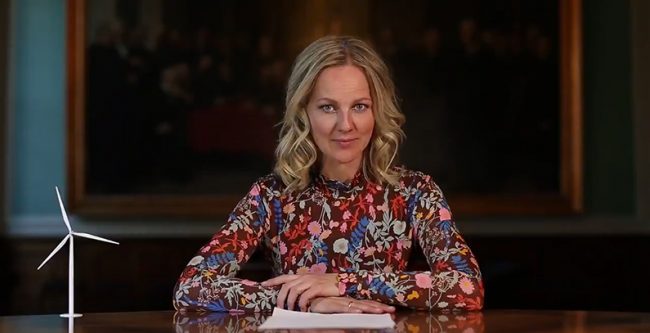
However, the original article, upon which the video was based, can still be read. The article was written by the former Danish Environment Minister, climate activist and WEF “young global leader,”Ida Auken. Unlike most of us, she isn’t a disenfranchised constituent. Ida is a carefully selected GPPP spokeswoman.
Ida Auken
The title was changed and an explanatory note added. Ida said that her article was not intended to describe her “utopia” and that the intention was to explore the “pros and cons” of a possible near term future:
Everything you considered a product, has now become a service… When AI and robots took over so much of our work, we suddenly had time to eat well, sleep well and spend time with other people… Once in a while I get annoyed about the fact that I have no real privacy. Nowhere I can go and not be registered. I know that, somewhere, everything I do, think and dream of is recorded. I just hope that nobody will use it against me… We had all these terrible things happening: lifestyle diseases, climate change, the refugee crisis, environmental degradation, completely congested cities, water pollution, air pollution, social unrest and unemployment. We lost way too many people before we realized that we could do things differently.”
The offer from the GPPP is clear. In exchange for submitting to their will and allowing them sole possession of everything (the global commons) they will take care of us.
Why, is the obvious question. If they control all of the Earths resources, everything is free and AI and robots do most of the work, why do they need us? What is in it for them? We would no longer be required in such a system. Certainly loosing “way too many people” would suggest at least acknowledgment of a much smaller global population.
We should also note why Ida’s envisaged future becomes necessary. It is, just as we have seen with the COVID 19 opportunity, a response to a set of crises which gives rise to doing “things differently.”
We are already seeing the knock-on effects of the COVID-19 lockdowns and economic destruction. An approaching set of crises over the next few years is a reasonable prediction.
As Schwab noted, there was no existential threat. The consequent disasters we are likely to face will be the result of policy promoted by GPPP representatives, like the World Health Organisation, not a respiratory disease.
It would be easy to dismiss Ida’s musings as simply the wishful thinking of an ideologue. In part, it probably is. However, when we look at Agenda 21 and 2030 an uncomfortable realisation dawns.
While the sustainable development agenda is couched in terms of environmental concerns and apparent humanitarian principles, the detail of the proposed policies presents an entirely different prospect.
The true horror of Ida’s vision is not that she is among the tiny clique GPPP representatives who are committed to constructing this dystopian prison planet, it is that, in Agenda 21 and 2030, the policy framework to make her futurescape a reality already exists.
Make no mistake, the GPPP intend to control every aspect of the Earth and our lives. That is the transformation they are working towards and they have used the pseudopandemic to set that transition in motion. There is no political opposition to the GPPP. They are realpolitik entire. All they need, for their “solutions” to close the trap, is our compliance.
Combined with SDGs, while we have been preoccupied with a low mortality respiratory illness, the GPPP have not only started building, they have partly completed the new global monetary and financial system.
Once installed this will finalise their coup d’état and enable them to seize everything, all under the guise of stewardship of the global commons.
We will explore how this has been done, and the remaining elements needed to accomplish the theft, in Part Two.
You can read more of Iain’s work at his blog In This Together or on UK Column. His new book Pseudopandemic, is now available, in both in kindle and paperback, from Amazon and other sellers. Or you can claim a free copy by subscribing to his newsletter.
In early 2020, as scientists were analyzing the SARS-CoV-2 virus, it was theorized the virulence and infectivity could be explained by gain-of-function research. Months of lab analyses and political arguments ensued over whether the virus was leaked from the lab or developed naturally in the wild.
Despite public outcry and denials from top health experts that the virus was created, the preponderance of the evidence indicates the virus was manipulated in the lab.1 Then, the United States Agency for International Development (USAID), publicly announced October 5, 2021, they would grant Washington State University $125 million “to detect emerging viruses.”2
This is far greater than the $7.4 million Newsweek 3 reported was granted to the NIAID for gain-of-function work on bat coronavirus in Wuhan, China. Dr. Kanta Subbarao is from the Laboratory of Infectious Disease at the National Institute of Allergy and Infectious Diseases (NIAID) at the National Institutes of Health (NIH).4
According to Subbarao, these experiments “are routine virological methods” and “emphasized that such experiments in virology are fundamental to understanding the biology, ecology and pathogenesis of viruses and added that much basic knowledge is still lacking for SARS-CoV and MERS-CoV.”
Historically, the NIH had funded gain-of-function research, but this was paused in October 2014. December 19, 2017, the NIH announced they would lift the funding pause on gain-of-function research and stated:5
“We have a responsibility to ensure that research with infectious agents is conducted responsibly, and that we consider the potential biosafety and biosecurity risks associated with such research.”
As Newsweek reported, the “second phase of the project, beginning that year [2019], included additional surveillance work but also gain-of-function research for the purpose of understanding how bat coronaviruses could mutate to attack humans. The project was run by EcoHealth Alliance, a nonprofit research group, under the direction of president Peter Daszak.”6
After months of public and political debate, argument and division, the U.S. government agency USAID stepped into the spotlight again and awarded millions to a university “to make sure the world is better prepared.”7
University Accepts $125 Million for Gain-of-Function Research
Washington State University published a press release8 October 5, 2021, announcing they had been awarded $125 million from USAID. Called a “cooperative agreement,” the university is heading up a new five-year global project in which they have been asked to9 “… detect and characterize unknown viruses which have the potential to spill over from wildlife and domestic animals to human populations.”
The project will partner with 12 countries throughout Africa, Latin America and Asia. The idea is to carry out animal surveillance within the country’s borders using their facilities. USAID announced the project “to detect unknown viruses with pandemic potential” as part of Discovery & Exploration of Emerging Pathogens Viral Zoonoses (DEEP VZN).10
The organization believes that SARS-CoV-2 has demonstrated how infectious diseases threaten society. This is especially true of viruses that have been manipulated to increase virulence and infectivity in humans.11 The goal of the project is to collect over 800,000 samples over five years from wildlife and then determine the zoonotic potential of these viruses.12
“The project will focus on finding previously unknown pathogens from three viral families that have a large potential for viral spillover from animals to humans: coronaviruses, the family that includes SARS-CoV-2 the virus that causes COVID-19; filoviruses, such as the Ebola virus; and paramyxoviruses which includes the viruses that cause measles and Nipah.”
Ebola virus was first discovered in 1976 and has since led to several deadly outbreaks in African countries. The CDC13 writes that scientists do not know where Ebola virus comes from. However, the virus can spread through direct contact with body fluids and tissues of infected animals.
Nipah was first discovered in 199914 and the first outbreak resulted in 300 human cases and more than 100 deaths. The animal host is believed to be the fruit bat that can spread the disease to animals and humans. The infection also spreads from person to person and can range from mild to severe. Up to 70% of those infected between 1998 and 2018 have died.
The project expects to find between 8,000 a nd 12,000 new viruses, “which researchers will then screen and sequence the genomes of the ones that pose the most risk to animal and human health.”15 In case this sounds familiar, as Breaking Points anchor emphasizes, this has been “code” for gain-of-function research,16 or detecting viruses that have not yet “emerged.”
Documents Reveal Virus Was Manipulated to Increase Virulence
An ongoing Freedom of Information Act litigation brought by The Intercept17 against the NIH resulted in the release of over 900 pages of previously undisclosed documents that detailed the work of EcoHealth Alliance as a subcontractor of gain-of-function research on bat coronavirus through the Wuhan Institute of Virology.
It’s important to note that the moratorium on federal funding of gain-of-function research instituted in 2014 was initiated on the heels of a high-profile lab mishap at the CDC and controversial experiments over deadly bird flu virus that was manipulated to be more contagious.18
Reportedly, the goal was to determine if bird flu could mutate in the wild and start a pandemic. David Relman, a microbiologist from Stanford University, stated the obvious when he said,19 “I don’t think it’s wise or appropriate for us to create large risks that don’t already exist.”
The new documents released under the FOIA request by The Intercept contained previously unpublished proposals by the NIAID and updates to the EcoHealth Alliance’s research. As reported in The Intercept,20
“The documents contain several critical details about the research in Wuhan, including the fact that key experimental work with humanized mice was conducted at a biosafety level 3 lab at Wuhan University Center for Animal Experiment — and not at the Wuhan Institute of Virology, as was previously assumed.
The documents raise additional questions about the theory that the pandemic may have begun in a lab accident, an idea that Daszak has aggressively dismissed.”
According to The Intercept, Richard Ebright, molecular biologist at Rutgers University, also reviewed the documents released in the FOIA. He told The Intercept that the documents contained vital Information about the research being conducted in the Wuhan lab. He wrote:21
“The viruses they constructed were tested for their ability to infect mice that were engineered to display human type receptors on their cell. While they were working on SARS-related coronavirus, they were carrying out a parallel project at the same time on MERS-related coronavirus.”
In other words, the lab was doing parallel research on two types of coronaviruses that were able to infect humanized mice. In a series of posts on Twitter, Ebright goes on to say:22
“The materials further reveal for the first time that one of the resulting novel, laboratory-generated SARS-related coronaviruses — one not been previously disclosed publicly — was more pathogenic to humanized mice than the starting virus from which it was constructed … and thus not only was reasonably anticipated to exhibit enhanced pathogenicity, but, indeed, was *demonstrated* to exhibit enhanced pathogenicity.
The documents make it clear that assertions by the NIH Director, Francis Collins, and the NIAID Director, Anthony Fauci, that the NIH did not support gain-of-function research or potential pandemic pathogen enhancement at WIV are untruthful.”
This new information again questions the origins of COVID-19, which many scientists proposed was from a wet market in China where humans and animals are in close contact. However, bioscience safety experts have long suspected a lab origin. It appears that some in the U.S. government and some scientists have not learned from the gain-of-function research in Wuhan and have brought the problem home to roost.
International Athletes Willfully Exposed to Lab-Leaked Virus
Whether the virus was released intentionally or accidentally is a question for another day. Long before the outbreak, scientists had expressed concerns that these kinds of experiments may end up creating the thing they were reportedly working against. As the Intercept reports,23 in 2014 a grant was awarded to EcoHealth Alliance titled “Understanding the Risk of Bat Coronavirus Emergence.”
Part of the grant money was earmarked to identify and alter bat coronaviruses suspected of being able to infect humans. In the grant the writers acknowledged concerns stating, “Fieldwork involves the highest risk of exposure to SARS or other CoVs, while working in caves with high bat density overhead and the potential for fecal dust to be inhaled.”24
In the USAID announcement, the government agency gives an overview of the goals in one sentence:25 “The Biden-Harris Administration is committed to advancing global health security, international pandemic preparedness and global health resilience.” As a Breaking Points anchor in this video says,26 “So essentially, we have learned nothing.”
August 1, 2021, Rep Michael McCaul, R-Texas, the ranking member of the House Foreign Affairs committee, published an addendum to the investigation into the origins of SARS-CoV-2. The investigation concluded:27
“… the preponderance of evidence suggests SARS-CoV-2 was accidentally released from a Wuhan Institute of Virology laboratory sometime prior to September 12, 2019. The virus, or the viral sequence that was genetically manipulated, was likely collected in a cave in Yunnan province, PRC, between 2012 and 2015.
Researchers at the WIV, officials within the CCP, and potentially American citizens directly engaged in efforts to obfuscate information related to the origins of the virus and to suppress public debate of a possible lab leak.”
By the end of August 2021, the White House released a statement from President Biden essentially calling the intelligence report inconclusive,28 “while this review has concluded, our efforts to understand the origins of this pandemic will not rest.”
Multiple pieces of information led the committee to conclude there was ample evidence to support genetic modification of the coronavirus and there was a cover-up which “likely turned what could have been a local outbreak into a global pandemic.”29 The cover-up involved the 2019 Military Games held October 18, 2019, in Wuhan China.
The report demonstrated that by October 2019, health officials in Wuhan were well aware of an outbreak of infectious disease. The athletes reported that the city appeared to be in lockdown30 while they were there. The games drew over 9,000 athletes from 109 countries. The Chinese government had 236,000 volunteers, 90 hotels, three railroad stations and more than 2,000 drivers available for the athletes.
The report included a quote from a Canadian Armed Forces personnel who participated in the games, which appeared in The Financial Post.31 He was told the lockdown in the city was to make it easier for the participants in the games to get around. Twelve days after arrival in Wuhan, he was sick with fever, chills, vomiting and insomnia.
He reported that on the flight home to Canada, 60 athletes were isolated at the back of the plane for the 12-hour flight with a range of symptoms including coughing and diarrhea. After returning home, the same service member found his family members got ill, which the report finds is:32
“… consistent with both human-to-human transmission of a viral infection and COVID-19. Similar claims about COVID-19 like symptoms have been made by athletes from Germany, France, Italy, and Sweden.”
Funding Gain-of-Function Research Out in the Open
Following the release of The Intercept report and additional grant documentation, some GOP members are calling for Dr. Anthony Fauci to resign while others want him fired from his position on the White House COVID-19 response team.33
U.S. Sen. Rand Paul, R-Ky. has referred Fauci to the Department of Justice for an investigation for possible perjury charges relating to his Congressional testimony in May 202134 and July 2021,35 when he vehemently denied ever having funded gain-of-function research.
Paul specifically asked the DOJ36 to investigate whether Fauci violated 18 U.S. Code § 10012137 — which makes it a federal crime to make “any materially false, fictitious or fraudulent statement or representation” as part of “any investigation or review” conducted by Congress — or any other statute.
How much genetic manipulation and gain-of-function research that occurs as a result of the $125 million grant to the university may not come to light for years. However, it is incumbent on our government to ensure biosafety in the labs doing the research and, for the public, to call for a halt of this type of research that “create[s] large risks that don’t already exist.”38
With President Biden succumbing to the CIA’s demand to continue keeping the CIA’s records relating to the Kennedy assassination secret, the question naturally arises: What is the CIA still hiding? (See my blog post of yesterday entitled “Surprise! Biden Continues the CIA’s JFK Assassination Cover-Up.”)
To understand what they are still hiding and why they are still hiding it, it’s necessary to go back to the 1990s during the era of the Assassination Records Review Board — and even further back than that to November 22, 1963 — the day that Kennedy was assassinated.
People often say that if the CIA and the Pentagon had orchestrated the assassination of President Kennedy, someone would have talked by now.
That’s just not true. When it comes to murder, people don’t talk. They know that if they do talk, they run the risk of themselves being murdered, maybe their families too. People who participate in murder schemes know that they had better keep their mouths shut or else.
One example is Mafia figure Jimmy Hoffa. We still don’t know who killed Hoffa. That’s because no one talked. Another example is Johnny Roselli, the liaison in the CIA-Mafia partnership to assassinate Cuban leader Fidel Castro. We still don’t know who murdered Roselli. No one has ever talked.
People who talk also run the risk of being prosecuted because there is no statute of limitations for murder. A good recent example is real-estate heir Robert Durst. He was recently convicted of murdering a person twenty-one years ago.
So, it was always a safe bet that the CIA and the Pentagon would be able to keep their regime-change operation in Dallas sealed in secrecy.
However, not so with respect to the fraudulent autopsy that the Pentagon carried out on President Kennedy’s body on the evening of the assassination. When the ARRB released people who had participated in the autopsy during the 1990s, they talked.
The problem that the plotters had, however, is that in order to carry out this part of the cover-up, they had to enlist the assistance of many people within the vast national-security establishment who played no role in the assassination. Since all those people were innocent and mostly unwitting participants to the cover-up, they didn’t have the same incentive to stay quiet as the people who knowingly participated in the assassination itself.
The military did its best to keep everyone quiet by telling the autopsy participants that what they were doing was classified. Everyone in the military knows what that means — people are expected to take classified secrets to the grave with them. Participants to the autopsy were required to sign written secrecy oaths. They were also threatened with court martial or criminal prosecution if they ever revealed what they had done or seen.
As I pointed out in The Kennedy Autopsy, the scheme for a fraudulent autopsy was actually set into motion at Parkland Hospital in Dallas. Immediately after Kennedy was declared dead, the Dallas County Medical Examiner, Dr. Earl Rose, announced his intent to conduct an autopsy on the president’s body, as Texas law required. That was when a team of armed Secret Service agents, brandishing guns, told Rose in no uncertain terms that they would not permit him to do the autopsy. Forcing their way out of Parkland Hospital, they took the body to Dallas’s Love Field, where new President Lyndon Johnson was waiting for it. Johnson then took the body back with him to Andrews Air Force Base in Maryland, where he delivered it into the hands of the military.
Although the mainstream media always treated all this as normal, given the dominant role that the national-security establishment was playing in Cold War America, it was actually quite bizarre and aberrant. The military never had any jurisdiction or legal authority to conduct the autopsy. At that time, killing a president was not a federal crime. The United States was not at war with any nation state. Kennedy was not killed on the field of battle. His killing was a straight murder case under Texas state law. Any criminal prosecution for the assassination would take place in Dallas. A genuinely honest autopsy would be a critically important part of that criminal prosecution, especially since a sharp team of criminal-defense lawyers would inevitably be defending the accused.
The military was mostly, but not entirely, able to keep its fraudulent autopsy secret for some 30 years, until the ARRB began releasing people who had participated in the autopsy from their vows of secrecy. As the ARRB began forcing the military to release its records relating to the autopsy, the dam of secrecy surrounding the autopsy broke wide open. That’s when the fraud became apparent. That’s why the JFK Records Act was such a nightmare for the Pentagon and the CIA. If it hadn’t been for that law, there is no doubt that the military’s fraudulent autopsy would still be shrouded in secrecy today.
What the Pentagon and the CIA learned from the era of the ARRB is that the community of assassination researchers is composed of some very smart people. By analyzing the evidence that the ARRB was succeeding in getting released, assassination researchers were able to put together the pieces of the puzzle that established a fraudulent autopsy, along with lots of other pieces of circumstantial evidence establishing that what occurred on November 22, 1963, was a highly sophisticated national-security state regime-change operation.
The leading figure in this endeavor was Douglas Horne, who served on the ARRB staff. Anyone who reads Horne’s five-volume book Inside the Assassination Records Review Board will inevitably conclude that the autopsy that the military conducted on the Kennedy’s body a few hours after the assassination was fraudulent to the core.
At the risk of belaboring the obvious, there is no innocent explanation for a fraudulent autopsy being conducted on President Kennedy’s body, especially given that the scheme for a fraudulent autopsy was launched at the moment Kennedy was declared dead.
It stands to reason that if a government agency is being forced to reveal records relating to a regime-change operation, that agency is going to keep the most incriminating evidence secret for as long as possible. We still don’t know what the CIA is still hiding, but we can safely assume that there is a good reason why the CIA does not want to let those super-smart assassination researchers get a hold of it.
That’s why the national-security establishment will fight tooth and nail for permanent secrecy on their remaining JFK assassination-related records. Oh, the Pentagon and the CIA will most likely authorize Biden and the National Archives to release some innocuous records for appearance’s sake. But make no mistake about it: They will make certain that Biden, the National Archives, and all future presidents comply with their demand for permanent secrecy on what they need to hide on a permanent basis.
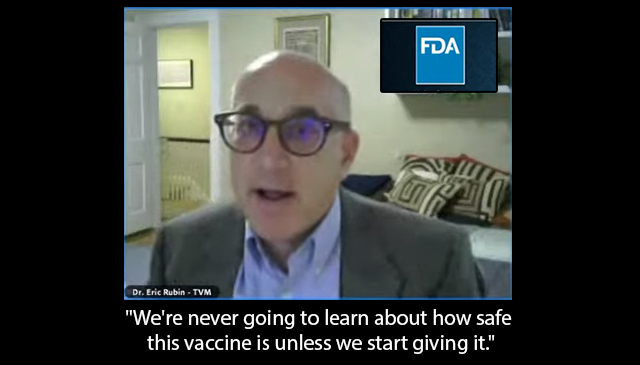
An FDA vaccine advisory panel on Tuesday voted unanimously 17-0 in favor shooting up kids aged 5-11 with Pfizer’s experimental mRNA injection with panelist Dr Eric Rubin stating, “we’re never going to learn about how safe this vaccine is unless we start giving it.”
The panel voted in favor of experimenting on tens of millions of helpless children with zero long-term data on side effects because 94 children between 5 and 11 have died with COVID-19 (they claimed “of”) and “all have names. All of them had mothers,” to quote the emotional gobbledegook uttered by panelist Patrick S. Moore.
“To me, it seems that it is a hard decision but a clear one,” said Patrick S. Moore, a University of Pittsburgh microbiologist and committee member. He noted that 94 children between 5 and 11 have died of covid-19, and “all have names. All of them had mothers.”
Members of the FDA’s vaccine-advisory panel supported Moderna’s booster dose even though the evidence for it was from a small study and had mixed results.
“It’s more a gut feeling rather than based on really truly serious data,” said Patrick Moore, a member of the committee and a professor of molecular genetics and biochemistry at the University of Pittsburgh School of Medicine. “The data itself is not strong, but it is certainly going in the direction that is supportive of this vote.”
To review: We have now had ten months of mass vaccination against SARS-CoV-2. Nearly 7 billion doses have been administered worldwide. This unprecedented campaign has not eradicated Corona; it has not even suppressed infections. Instead, case statistics have ballooned almost everywhere. While the vaccinated appear to enjoy some protection against severe outcomes, skyrocketing transmission means most countries have seen little benefit, on balance, from their universal vaccination campaigns. The most pressing question has become, simply: What is going on?
I’ve explored a few different possibilities. First, there seems to be a Marek Effect at work. We might imagine that all viruses have an optimal level of population-wide virulence – an advantageous degree of aggression at which they can spread effectively, while not driving their hosts underground too soon. Certain Delta sub-strains, previously punished for their excessive aggression in unvaccinated populations, have likely been favoured by the vaccines, which reduce symptoms in the vaccinated without preventing infection for more than a few months. Our vaccines reduced the average virulence of SARS-2, and the virus adapted to reattain the prior, optimal balance.
But the virus and its interactions with human hosts constitute a complex system. In such systems, it is very unlikely that any effect can be put down to a single cause. The Public Health England data provide powerful reasons to suspect that the vaccines may be compromising immunity to SARS-2 via Original Antigenic Sin. This is not a crazy internet fantasy, but a well-observed limitation of human immunity. It is the primary reason that respiratory viruses like influenza return again and again. Despite multiple reinfections across the whole population, we are never quite immune to the flu, because its strategy is to exploit the way our immune systems learn.
The mechanisms of Original Antigenic Sin are not fully understood, but we have a rough idea of what might be happening. When a virus infects your body for the first time, your naive memory B cells imprint on specific virus proteins, or antigens, presented to them. These B cells then become either memory B cells or plasma cells. Forever after, they specialise in producing antibodies against those specific antigens. When a slightly mutated form of the virus arrives, these memory B-cells begin pouring forth the antibodies they learned to produce during the first infection. These antibodies bind to multiple epitopes on the virus particles, and in the process they give the slower-moving naive B-cells little chance to learn about any new, mutant virus features.
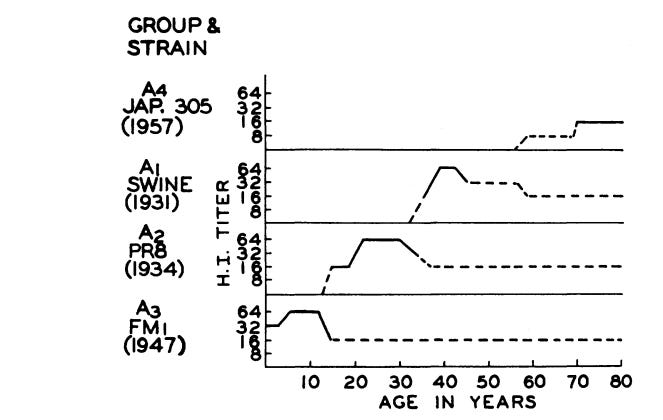
Original Antigenic Sin was most influentially described by Thomas Francis in 1960. He noted that, regardless of whatever influenza A strains were in circulation, subjects tended to have dominant antibody responses to the strains that were current in their early childhood:
The antibody of childhood is largely a response to … the virus causing the first Type A influenza infection of the lifetime. As the group grows older and subsequent infections take place, antibodies to additional families of virus are acquired. But … the antibody which is first established continues to characterize that cohort of the population throughout its life. The antibody forming mechanisms have been highly conditioned by the first stimulus, so that later infections with strains of the same type successively enhance the original antibody to maintain it at the highest level at all times in that age group. The imprint established by the original virus infection governs the antibody response thereafter. This we have called the doctrine of original antigenic sin.
An important consequence of this childhood conditioning, is that different age cohorts within the population have overlapping or layered immunity to different influenza strains. This is an important if subtle aspect of our population-wide immunity to influenza A. It looks like this:
As older cohorts die, their immunity to older strains dies with them. These old strains, long suppressed, are then positioned to return, for very few human immune systems remember them any longer. Francis believed this was the mechanism underlying periodic cycles of pandemic influenza. The 1957 influenza pandemic, for example, featured a strain of flu against which only the oldest cohorts – those in their 70s – had specific antibodies. As these “immunological veterans” disappeared, this older, long-suppressed type of influenza was free to return and cause another pandemic event.
In conclusion, Francis proposed that optimised influenza vaccines might be administered to children before their first infection. He envisioned vaccines designed to confer immunity against “known or anticipated recurrent strains” and hoped that “In this manner the original sin of infection could be replaced by an initial blessing of induced immunity.”
Strategic vaccination conferring immunity against likely future strains is of course exactly the opposite of our current efforts to give every last living human multiple vaccinations against an extinct strain of SARS-2.
*
The existence of Original Antigenic Sin has been confirmed by generations of research, and the literature is full of curious findings. A major reason flu shots don’t work, for example, is that they are powerless to redirect adult immune systems against novel influenza strains. Most people who get flu shots are adults, with immune systems long since primed by childhood infection. Hence this old Lancet case study of influenza outbreaks among boys at Christ’s Hospital in Sussex in the 1970s:
In each outbreak, the protective effect of inactivated influenza-A vaccine was limited to those boys, not already immune, who were vaccinated for the first time with the most up-to-date strain. Revaccination with the same strain did not increase the degree of protection, and revaccination with a later strain did not afford protection against subsequent challenge.
The flu vaccines, in other words, work great if you’ve never had the flu before. Otherwise they don’t do anything.
And consider these remarks, from a 2005 article in Nature Medicine:
It is often difficult to further increase antibody levels, specificity and the quality of the immune response in individuals who have been repeatedly immunized through either vaccination or recurrent exposure to infectious agents or cross-reacting microbial antigens. This has been a particular concern for aging adults in the context of the antigenic drift of influenza virus, in view of their annual exposure to antigens of new but related influenza variants through either infection or vaccination. After exposure to a new but cross-reacting antigenic variant, such individuals may respond by producing antibodies that are primarily directed at antigens characterizing influenza viruses encountered during earlier epidemics.
The authors go on to write that the “impact” of Original Antigenic Sin “on protection is far from established,” noting earlier research showing substantial all-cause mortality reductions from flu shots. Later work, though, has shown that the mortality reduction of influenza vaccines is largely an illusion of selection effects. For a variety of reasons, those most likely to die of influenza are far less likely than healthier groups to be vaccinated.
Original Antigenic Sin has been famously implicated in dengue fever. This is considered to be an extreme case of the phenomenon, with “considerable bearing on vaccine strategies.” Here the conclusions are ominous and full of implications for our own situation:
Once a response has been established, it is unlikely that repeat boosting will be able to change its scope, meaning that balanced responses against the four virus serotypes will need to be established with the first vaccine dose.
The danger is that immunity to one strain alone may lead to permanently impaired immune response to the three other serotypes, causing worse and longer illness.
*
Influenza had been infecting humans for generations before anybody came up with the notion of influenza vaccines. Despite the efforts of public health authorities everywhere, most people catch the flu before they are ever vaccinated, and so flu shots have little opportunity to undermine population-wide immunity to influenza A.
The complex system constituted by SARS-CoV-2 and its interactions with the human immune system, on the other hand, remains barely understood. In chasing an empty fantasy of herd immunity, authorities are denying human populations everywhere the opportunity to develop the layered, population-wide resistance against successive SARS-2 strains that is the foundation of our immunity against other respiratory viruses. Aside from the minority that have managed to recover from natural infection before the vaccinators got to them, most humans will have their crucial, primary immune response conditioned by the spike protein of SARS-2 in its vintage 2020 configuration.
It is a near certainty that this immunity will attenuate antibody responses to the spike protein of current and future variants, forever. Mutant spike proteins will increasingly escape vaccine-conferred immunity, and breakthrough infections will elicit only partial response to the new epitopes. Insofar as the data also suggest that our vaccines will attenuate immunity to other virus proteins beyond spike, mass vaccination will lead to ever more volatile waves of infection – in exchange for limited and fading protection against severe outcomes.
The most dangerous thing to do, at this point, would be to vaccinate children. The virus is not a threat to them, and if they are infected by the new forms of SARS-2 that are sure to emerge every winter, we will begin to establish – through them and the as yet unvaccinated – the layered immunity that is the only way of coming to terms with SARS-2 in the longer term. As long as the vaccinators are permitted to continue their radical and increasingly insane campaign, though, nothing will improve. Indeed, their policies threaten to bring about a semi-permanent pandemic state for generations to come.
Mortality data tells us information about deaths in Australia and is usually released every 6 weeks. For an unexplained reason, the latest data is over 15 weeks overdue.
As Government becomes more and more powerful, anyone who challenges the current policies is smeared and censored. The legacy media happily parrots the propaganda, afraid of losing government funding.
Unreliable, intermittent wind and solar energy will leave Australian families sitting in the dark without coal-fired power to back them. ‘Renewables’ only farm taxpayer money, not energy.
There has been major pushback against a Texas state education official who said that if schools are adhering to a new state law that mandates teaching alternative points of view on controversial issues having a course and a book on the holocaust, for example, would suggest providing material that reflects other interpretations of that historical event. The comment came from a Texas school district administrator named Gina Peddy in the Carroll Independent School District in Southlake, which is in the Dallas-Fort Worth area, who was in a training session explaining to teachers her directive regarding which books can be available in classroom libraries. She told teachers that if they have books about the Holocaust in their classrooms, they should also have books that offer “opposing” or “other” viewpoints on the subject.
Reportedly a staff member who was present secretly made an audio recording of the training session which was then shared with NBC News, which broke the story.
The Texas law was and is intended to lessen the impact of the current “woke” campaign by progressive educators to rewrite American and international history to reflect the dark side, notably by emphasizing issues like slavery and oppression of minorities. Texas legislators insist, not unreasonably, that presenting an essentially negative view of American history as envisioned by Critical Race Theory (CRT) must be balanced by having a curriculum that also includes discussion of the many positive achievements of the United States of America. In the recording, Peddy, the school district’s executive director of curriculum and instruction, told the teachers that the new law applies to any “widely debated and currently controversial” issues. She was quoted as saying “And make sure that if you have a book on the Holocaust, that you have one that has an opposing, that has other perspectives.”
Predictably, on such a hot wire issue Peddy has had little or no support from her peers either locally or in the education establishment. The school district Superintendent Lane Ledbetter posted on Facebook an “apology regarding the online article and news story.” He said Peddy’s comments were “in no way to convey that the Holocaust was anything less than a terrible event in history. Additionally, we recognize there are not two sides of the Holocaust. We also understand this bill does not require an opposing viewpoint on historical facts.”
Clay Robison, a spokesman for the Texas State Teachers Association, responded “We find it reprehensible for an educator to require a Holocaust denier to get equal treatment with the facts of history. That’s absurd. It’s worse than absurd. And this law does not require it.” Republican state Senator Bryan Hughes, who wrote the bill that became the law, denied that anyone should come up with alternative views on what he called matters of “good and evil” or to remove books that offer only one perspective on the Holocaust.
Jews in Peddy’s school district and elsewhere in both Texas and nationally have inevitably also risen to the bait, denouncing any attempt made to challenge what they view as an issue fundamental to their understanding of their place in the world and in history. One Jewish former student Jake Berman asserted that “The facts are that there are not two sides of the Holocaust. The Nazis systematically killed millions of people.”
Ledbetter, Robison and Hughes should perhaps consider that they are suggesting that their new law should only apply on “controversial” racial issues, not on other historical developments and it is curious that educated people should consider a multi-faceted transnational historical event that has inter alia a highly politicized context a “fact.” The holocaust narrative in and of itself is the creation of men and women after the fact with an agenda to justify the creation and support for the State of Israel and should be subject to the same inquiry as any other facet of the Second World War and what came after.
The tale of “the holocaust” is essentially a contrived bit of history that serves a political objective wrapped up in what purports to be a powerful statement regarding man’s inhumanity to man. Jewish groups generally speaking consider the standard narrative with its highly questionable six million dead, gas chambers, extermination camps, and soap made from body fat to be something like sacred ground, with its memorialization of the uniqueness of Jewish suffering. Serious scholars who have actually looked at the narrative and the numbers and sequences of events are not surprisingly skeptical of many of the details.
As a first step, it is helpful to look at controversial Professor Norman Finkelstein’s carefully documented book The Holocaust Industry: Reflections on the Exploitation of Jewish Suffering. Finkelstein, to be sure, believes there was something like a genocide of European Jews and even lost some family members due to it. He does not, however, necessarily believe many of the details provided by the standard narrative and official promoters of that story to include the numerous holocaust museums. In his view, powerful interests have hijacked “the Holocaust,” and use it to further their own objectives. He wrote “Organized Jewry has exploited the Nazi holocaust to deflect criticism of Israel’s and its own indefensible policies. Nazi genocide has been used to justify criminal policies of the Israeli state and US support for these policies.”
And there is also a money angle, as there often is. Per Finkelstein, Jewish organizations in the US have also exploited the situation of the dwindling number of aging holocaust survivors to extort “staggering sums of money from the rest of the world. This is not done not for the benefit of needy survivors but for the financial advantage of these organizations.”
As taking courses in the holocaust are mandated in the public school systems of twenty states (and soon to be more due to pressure from local Jewish groups) and is used to validate the billions of US taxpayer dollars given annually to the state of Israel it would seem that supporters of the narrative should have the confidence as well as sufficient integrity to defend their product. But that is, of course, not the case. They would prefer to have their chosen narrative unchallenged, raising the usual claims of anti-Semitism and “holocaust denial” to silence critics. One of the “textbooks” frequently used in public schools that mandate holocaust education is Night by Elie Wiesel, whom Finkelstein has dubbed “the high huckster of the holocaust.” “Night” claims to be autobiographical but is full of errors in time and place. It is at least in part a work of fiction. Similarly, the “Diary of Anne Frank” was published after editing by her survivor father and parts of it have been challenged.
As a general rule, contentious issues where advocates attempt to silence opponents by claiming that what they are promoting is based on fact and cannot be challenged should be challenged. In Europe, powerful Jewish constituencies have even made it illegal to criticize or deny the holocaust narrative. In America, that day may soon be coming as Jewish groups increasingly seek to criminalize questioning of the factual basis of the holocaust as well as any criticism of Israel.
Philip M. Giraldi, Ph.D., is Executive Director of the Council for the National Interest, a 501(c)3 tax deductible educational foundation (Federal ID Number #52-1739023) that seeks a more interests-based U.S. foreign policy in the Middle East. Website is https://councilforthenationalinterest.orgaddress is P.O. Box 2157, Purcellville VA 20134 and its email is inform@cnionline.org
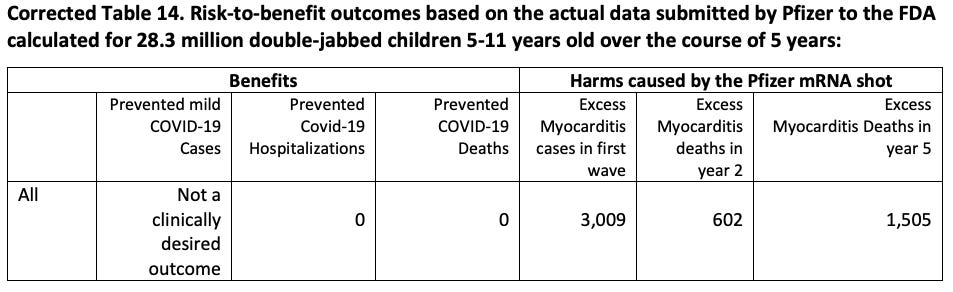
Where to even begin with the FDA’s preposterous risk-benefit analysis of Pfizer’s mRNA COVID-19 “vaccine” in children ages 5 to 11?
Let’s start with my bona fides. I have a year of undergraduate statistics at one of the best liberal arts colleges in America (Swarthmore). I have a year of graduate statistics at the masters program rated #1 for policy analysis (UC Berkeley). And I have a Ph.D. in political economy from one of the top universities in the world (University of Sydney). My research focus is on corruption in the pharmaceutical industry so I’ve read scientific studies in connection with vaccines nearly every day for 5 years. Earlier in my career I worked professionally tearing apart shoddy cost-benefit analyses prepared by corporations that were trying to get tax breaks, contracts, and other concessions from local government. Suffice it to say I’ve thought a lot about risk-benefit analysis and I’m better equipped than most to read one of these documents.
The FDA’s risk-benefit analysis in connection with Pfizer’s Emergency Use Authorization (EUA) application to inject children ages 5 to 11 with their COVID-19 vaccine is one of the shoddiest documents I’ve ever seen.
Let’s take it from the top:
🚩 COVID-19 rates in children ages 5 to 11 are so low that there were ZERO cases of severe COVID-19 and ZERO cases of death from COVID in either the treatment (n= 1,518) or control group (n= 750). So any claims you see in the press about the Pfizer vaccine being “90% effective” in children are meaningless because they are referring to mild cases from which children usually recover quickly (and then have robust broad spectrum immunity). So there is literally no emergency in this population for which one could apply for Emergency Use Authorization. Pfizer’s application should be dead on arrival if the FDA actually followed the science and their own rules. We will return to this topic below.
🚩 Pfizer’s clinical trial in kids was intentionally undersized to hide harms. This is a well known trick of the pharmaceutical industry. The FDA even called them out on it earlier this summer and asked Pfizer to expand the trial and Pfizer just ignored them because they can. (Pfizer fudged it by importing data from a different study but this other study only monitored adverse outcomes for 17 days so if anything the new data polluted rather than clarified outcomes). To put it simply, if the rate of particular adverse outcome in kids as a result of this shot is 1 in 5,000 and the trial only enrolls 1,518 in the treatment group then one is unlikely to spot this particular harm in the clinical trial. Voilà “Safe & Effective(TM)”.
🚩 Pfizer only enrolled “participants 5-11 years of age without evidence of prior SARS-CoV-2 infection.” Does the Pfizer mRNA shot wipe out natural immunity and leave one worse-off than doing nothing as shown in this data from the British government? Pfizer has no idea because children with prior SARS-CoV-2 infection were excluded from this trial. This was by design. Toxic polluters have learned to not ask questions that they do not want the answers to, lest they wind up staring at their own smoking gun in a future court case.
“What the British are saying is they are now finding the vaccine interferes with your body’s innate ability after infection to produce antibodies against not just the spike protein but other pieces of the virus. Specifically, vaccinated people don’t seem to be producing antibodies to the nucleocapsid protein, the shell of the virus, which are a crucial part of the response in unvaccinated people. This means vaccinated people will be far more vulnerable to mutations in the spike protein EVEN AFTER THEY HAVE BEEN INFECTED AND RECOVERED ONCE (or more than once, probably). It also means the virus is likely to select for mutations that go in exactly that direction because those will essentially give it an enormous vulnerable population to infect. And it probably is still more evidence the vaccines may interfere with the development of robust long-term immunity post-infection.”
🚩 Did Pfizer LOSE CONTACT with 4.9% of their clinical trial participants? The FDA risk-benefit document states: “Among Cohort 1 participants, 95.1% had safety follow-up ≥2 months after Dose 2 at the time of the September 6, 2021 data cutoff.” So what happened with those 4.9% who did not have safety follow-up 2 months after Dose 2? Were they in the treatment or control group? We have no idea because Pfizer isn’t saying. Given the small size of the trial, failing to follow up with 4.9% of the participants potentially skews the results.
🚩 The follow up period was intentionally too short. This is another well-know trick of the pharmaceutical industry designed to hide harms. Cohort 1 appears to have been followed for 2 months, cohort 2 was only monitored for adverse events for 17 days. Many harms from vaccines including cancer and autoimmune disorders take much longer to show up. As the old saying goes, “you can have it quick or you can have it done right, but you cannot have both.” Pfizer chose quick.
🚩 The risk-benefit model created by the FDA only looks at one known harm from the Pfizer mRNA shot — myocarditis. But we know that the real world harms from the Pfizer mRNA shot go well beyond myocarditis and include anaphylaxis, Bell’s Palsy, heart attack, thrombocytopenia/ low platelet, permanent disability, shingles, and Guillain-Barré Syndrome (GBS) to name a few. Cancer, diabetes, endocrine disruption, and autoimmune disorders may show up later. But the FDA does not care about any of that because they have a vaccine to sell so they just ignore all of those factors in their model.
🚩 Pfizer intentionally wipes out the control group as soon as they can by vaccinating all of the kids who initially got the placebo. They claim that they are doing this for “ethical reasons”. But everyone knows that Pfizer’s true aim is to wipe out any comparison group so that there can be no long term safety studies. Wiping out the control group is a criminal act and yet Pfizer, Moderna, J&J, and AZ do this as standard practice with the blessing of the FDA/CDC.
🚩 Given all of the above, how on earth did the FDA claim any benefits at all from this shot? You should probably sit down for this part because it’s a doozy! Here’s the key sentence:
Vaccine effectiveness was inferred by immunobridging SARS-CoV-2 50% neutralizing antibody titers (NT50, SARS-CoV-2 mNG microneutralization assay).
Wait, what!? I’ll explain. There were ZERO cases of severe COVID-19 in the clinical trial of children ages 5 to 11. So Pfizer and the FDA just ignored all of the actual health outcomes (they had to, there is no emergency, so the application is moot). INSTEAD Pfizer switched to looking at antibodies in the blood. In general, antibodies are a poor predictor of immunity. And the antibodies in the blood of these 5 to 11 year old children tell us nothing because again, there were zero cases of severe COVID-19 in this study (none in the treatment group, none in the control group). So Pfizer had to get creative! What they came up with is “immuno-bridging”. Pfizer looked at the level of antibodies in the bloodwork of another study, this one involving people 16 to 25 years old, figured out the level of antibodies that seems to be protective in that population, then figured out how many kids ages 5 to 11 had similar levels of antibodies in their blood, and then came up with a number for how many cases, hospitalizations, ICU admissions, and deaths would be prevented by this shot in the 5 to 11 population in the future, based on the antibody levels and health outcomes from the 16 to 25 year old population. If your head hurts from that tortured logic, it should, because such chicanery is unprecedented in a risk-benefit analysis.
So when the FDA uses this tortured logic at the beginning of their briefing document, all of the calculations that stem from this will be flat out wrong. Not just wrong but preposterous and criminally wrong.
The whole ballgame comes down to Table 14 on page 34 of the FDA’s risk-benefit document. And there the red flags come fast and furious.
🚩 The FDA model only assesses the benefits of vaccine protection in a 6-month period after completion of two doses. Furthermore it assumes constant vaccine efficacy during that time period. This is problematic on several counts.
First, reducing mild cases in children is not a desired clinical outcome. As Dr. Geert Vanden Bossche points out, mass vaccination turns kids into shedders of more infectious variants.
“Under no circumstances should young and healthy people be vaccinated as it will only erode their protective innate immunity towards Coronaviruses (CoV) and other respiratory viruses. Their innate immunity normally/ naturally largely protects them and provides a kind of herd immunity in that it dilutes infectious CoV pressure at the level of the population, whereas mass vaccination turns them into shedders of more infectious variants. Children/ youngsters who get the disease mostly develop mild to moderate disease and as a result continue to contribute to herd immunity by developing broad and long-lived immunity. If you are vaccinated and get the disease, you may develop life-long immunity too but why would you take the risk of getting vaccinated, especially when you’re young and healthy? Firstly, there is the risk of potential side effects; secondarily, there is the ever increasing risk that your vaccinal antibodies will no longer be functional while still binding to the virus, thereby increasing the likelihood of ADE or even severe disease….”
Second, we know that vaccine efficacy in the month after the first dose is negative because it suppresses the immune system and it begins to wane after 4 months so all of the FDA’s estimates of vaccine efficacy are inflated.
Third, the harms of myocarditis from these shots will likely unfold over the course of years. Robert Malone, the inventor of mRNA technology notes that the FDA is admitting that children will be injected twice a year forever (hence the six month time frame in the FDA risk-benefit model). But the risks of “adverse events such as cardiomyopathy will be cumulative.” So any model that only looks at a six month time frame is hiding the true adverse event rate.
🚩 The FDA/Pfizer play fast and loose with their estimates of myocarditis. First they estimate “excess” (read: caused by the shot) myocarditis using data from the private “Optum health claim database” instead of the public VAERS system (p. 32). So it’s impossible for the public to verify their claims. Then, when it comes to estimating how many children with vaccine-induced myocarditis will be hospitalized and admitted to the ICU they use the Vaccine Safety Datalink (see page 33). Why switch to a different database for those estimates? Finally, there is no explanation for how they calculated “excess” myocarditis deaths, so they just put 0. Red flag, red flag, red flag.
The FDA estimates that there will be 106 extra myocarditis cases per 1 million double-jabbed children 5-11. There are 28,384,878 children ages 5 to 11 in the U.S. The Biden administration wants to inject Pfizer mRNA shots into all of them and has already purchased enough doses to do just that (even though only 1/3rd of parents want to jab their kids with this shot). So (if the Biden administration has its way) 106 excess myocarditis cases per 1 million x 28.38 million people would be 3,009 excess myocarditis cases post-vaccination if the Pfizer vaccine is approved.
And over the course of several years many of those children will die.
Dr. Anthony Hinton (“Consultant Surgeon with 30 years experience in the NHS”) points out that myocarditis has a 20% fatality rate after 2 years and a 50% fatality rate after 5 years:
Viral myocarditis results in 2 in 10 people dead after 2 years and 5 in 10 after 5 years. It’s not mild. It’s dead heart muscle. https://t.co/ixRmk48rja
So the FDA has it exactly backwards — they want to prevent mild COVID in children which reduces herd immunity and they just flat out lie about the harms from myocarditis.
I’ve taken the liberty to correct the FDA’s Table 14 with actual real world data and extended it over 5 years. It looks like this:
A study by Harvard Pilgrim Healthcare for the U.S. Department of Health and Human Services estimated that VAERS only captured 1% of actual vaccine injuries. Steve Kirsch has done elaborate modeling that puts the Under-Reporting Factor of COVID-19 vaccine deaths at 41 (so multiply the above numbers by 41). And myocarditis is just one of a multitude of possible harms from COVID-19 vaccines. Dr. Jessica Rose recently calculated an Under-Reporting Factor of 31 for all severe adverse events following vaccination.
Conclusion
The Pfizer vaccine fails any honest risk-benefit assessment in connection with its use in children ages 5 to 11. The FDA’s risk-benefit analysis of Pfizer’s mRNA vaccine in children ages 5 to 11 is shoddy. It used tortured logic (that would be rejected by any proper academic journal) in order to reach a predetermined result that is not based in science. The FDA briefing document is a work of fiction and it must be withdrawn immediately. If the FDA continues with this grotesque charade it will cause irreparable harms to children and the FDA leadership will one day be prosecuted for crimes against humanity.
The U.S. Food and Drug Administration’s (FDA) advisory committee today endorsed Pfizer’s COVID vaccine for children ages 5 to 11, despite strong objections raised during the meeting by multiple scientists and physicians.
The vote passed with 17 supporting it and one abstention.
Before the shots can be rolled out, the FDA will have to formally authorize the vaccine, and the Centers for Disease Control and Prevention (CDC) must also weigh in with its own recommendations — but the Biden administration’s announcement last week that it has already ordered 68 million doses of the pediatric vaccine suggests Pfizer’s request will sail through.
According to the FDA website, as of Oct. 25, the agency had received 139,470 comments from the public prior to today’s meeting — a number federal officials described as strikingly high.
As he opened the meeting, Dr. Peter Marks, director of the FDA’s Center for Biologics Evaluation and Research (CBER), said, “I want to acknowledge the fact that there are strong feelings that have clearly been expressed by members of the public both for and against” authorization.
The dose for younger children would be one-third the strength given to people 12 and older, with two shots given three weeks apart.
Based on CDC data presented during the meeting, among children 5 to <12 years of age, there have been approximately 1.8 million confirmed and reported COVID cases since the beginning of the pandemic, and only 143 COVID-related deaths in the U.S. through Oct. 14.
In this same age group, there were 8,622 COVID-related hospitalizations through Sept 18.
“This translates to cumulative incidence rates of approximately 6,000 and 30 per 100,000 for confirmed COVID cases and COVID-related hospitalizations, respectively, among children 5 to <12 years of age,” Pfizer’s application said.
Children with underlying medical conditions, such as asthma, diabetes and obesity, made up two-thirds of severe COVID cases.
Pfizer provided safety data on two study cohorts of children ages 5 to 11, both of roughly equal size. The first group was followed only for about two months, the second for only two-and-a-half weeks.
The two-month cohort included 2,268 children ages 5 to 11. Of the 2,268 children, 1,518 received the vaccine and 750 received a placebo. Each received two shots spaced three weeks apart.
Pfizer’s study found its vaccine was about 91% effective against symptomatic COVID in children, based on 16 cases of COVID in the placebo group and three cases in the vaccinated group over the brief follow-up period.
Most side effects occurred within a couple of days and included pain at the injection site, fatigue, headache, muscle pains and chills, Pfizer said.
According to Pfizer, the number of participants in the current clinical development program was “too small to detect any potential risks of myocarditis associated with vaccination.”
Long-term safety of Pfizer’s COVID-19 vaccine “to evaluate long-term sequelae of post-vaccination myocarditis/pericarditis” in participants 5 to <12 years of age will not be studied until after the vaccine is authorized for children,” Pfizer’s application noted.
Pfizer data insufficient, kids’ risk of vaccine injury greater than COVID risk, experts say
Experts raised concerns over the lack of safety and efficacy data presented by Pfizer for use of its COVID vaccine in younger children, and they pointed to increasing safety signals based on reports to the Vaccine Adverse Event Reporting System (VAERS).
They also questioned the need to vaccinate children — whose risk of dying from COVID is “almost nil” — at all.
According to Dr. Meryl Nass, member of the Children’s Health Defense Scientific Advisory Panel, Pfizer once again did not use all of the children who participated in the trial in their safety study.
“Three thousand children received Pfizer’s COVID vaccine, but only 750 children were selectively included in the company’s safety analysis,” Nass said. “Studies in the 5-11 age group are essentially the same as the 12-15 group — in other words, equally brief and unsatisfying, with inadequate safety data and efficacy data, with no strong support for why this type of immuno-bridging analysis is sufficient.”
Nass said, “All serious adverse events were considered unrelated to the vaccine.”
During the meeting and in its FDA application, Pfizer argued children should be vaccinated to prevent SARS-CoV-2 transmission, yet the company did not assess asymptomatic transmission.
Dr. Ofer Levy, a VRBPAC member, asked for evidence that Pfizer’s vaccine prevents transmission.
Dr. William Gruber, senior vice president of Pfizer Vaccine Clinical Research and Development, said they did not assess whether the vaccine prevents transmission, but said there is evidence the vaccine prevents transmission in adults.
When questioned further, Gruber was unable to cite specific evidence to back his assertion.
Steve Kirsch, founder of the COVID-19 Early Treatment Fund, asked the panel how they could do a risk-benefit analysis with Pfizer’s COVID vaccine if they did not know the CDC’s VAERS under-reporting factor (URF).
Kirsch asked:
“How can you do a risk-benefit of analysis of COVID vaccines if you don’t know the URF? This is extremely, extremely important. You have been assuming it has been one. It is not one. Using a URF of 41, which is calculated using CDC methodology, we find over 300,000 excess deaths in VAERS. If the vaccine didn’t kill these people, what did?”
“How many Americans have to die before you pull the plug?” Kirsch asked.
Kirsch also questioned the panel on why Maddie de Garay’s severe adverse reaction to the Pfizer vaccine, which left her paralyzed, was not reported by the company to the FDA.
Dr. Jessica Rose, viral immunologist and biologist, told the panel EUA of biological agents requires the existence of an emergency and the nonexistence of alternate treatment.
“There is no emergency and COVID-19 is exceedingly treatable,” Rose said.
In a peer-reviewed study co-authored by Rose, myocarditis rates were significantly higher in people 13 to 23 years old within eight weeks of the COVID vaccine rollout.
In 12- to15-year-olds, Rose said, reported cases of myocarditis were 19 times higher than background rates.
“In an act of censorship, this paper has been temporarily removed and it has now been killed without criticism of the work,” Rose said, noting the timing of the removal was strange.
Rose said tens of thousands of reports have been submitted to VAERS for children ages 0 to 18.
Rose explained:
“In this age group, 60 children have died — 23 of them were less than 2 years old. It is disturbing to note that “product administered to patient of inappropriate age was filed 5,510 times in this age group. Two children were inappropriately injected, presumably by a trained medical professional, and subsequently died.”
Dr. Josh Guetzkow, a senior lecturer at the Hebrew University of Jerusalem, said expanding the EUA to children is unnecessary, premature and will do more harm than good.
Guetzkow said there is no emergency for children, especially healthy ones whose risk of severe illness and death is “almost nil.”
Guetzkow said kids with pre-existing conditions and prior COVID infections were not included in Pfizer’s study, so including them in the EUA is negligence.
“Pfizer’s trial is woefully underpowered to detect specific safety concerns, such as myocarditis, just like the adolescent study was, and if they weren’t able to detect an unexpected safety concern there, they wouldn’t be able to here,” Guetzkow said.
Guetzkow said:
“In Pfizer’s study, only .5% of controls were dropped due to important protocol violations, versus 3% in the treatment group. The odds of that happening by chance are 1 in 10,000. This deviation is poorly explained with no ITT analysis. The study is not double-blind and may be subject to bias. Most VSD safety monitoring programs have not reported results, why not wait?”
Guetzkow said, “from CDC reports, we can expect that for every 18 child hospitalizations prevented, at least 43 will end up in the hospital for all causes following vaccination,” yet, the “FDA’s risk-benefit analysis only counts myocarditis hospitalization.”
“Why ignore the V-safe data, and shouldn’t FDA verify Pfizer’s efficacy and immunobridging analysis first?” he asked.
Guetzkow said VAERS shows alarming safety signals, which cannot be attributed to increased vaccination, simulated reporting or COVID infections.
“We calculated the ratio of adverse events reported per million Pfizer vaccinations to reports per million flu vaccinations among teenagers to see what to expect in children. Serious events are reported 51% more often for Pfizer, deaths 47 times, life-threatening conditions 49 times,” Guetzkow said.
Guetzkow asked the panel to look at the data on COVID vaccines compared to flu vaccines. Pointing to the data on reproductive organs, Guetzkow asked, “why would we expect children to take these risks to protect adults?”
There are more than 900 types of adverse events reported after Pfizer vaccination that have never been reported after flu vaccines, including 11 cases of multisystem-inflammatory syndrome (MS-C) that occurred without previous history of COVID infection, Guetzkow said.
He added that if the panel was considering authorizing Pfizer’s COVID vaccine to prevent MS-C — as Pfizer’s application suggested as one of the reasons they should — the panel should reconsider.
During another part of the meeting, Julia Barnes-Weise, director of the Global Healthcare Innovation Alliance Accelerator, said pharmaceutical companies have concerns.
“One of them is, especially for a not-yet-approved vaccine, that they could be held liable for any injury that that vaccine seems to have caused,” Barnes-Weise said.
In a preliminary analysis last week, FDA reviewers said protection would “clearly outweigh” the risk of a very rare side effect in almost all scenarios of the pandemic, PBS News Hour reported.
Children’s Health Defense (CHD) said yesterday it would take legal action against the FDA if it granted EUA for the Pfizer-BioNTech vaccine for children 5- to 11- years old.
In a letter signed by Robert F. Kennedy, Jr., CHD chairman and chief legal counsel, and Nass, Kennedy and Nass wrote:
“CHD will seek to hold you accountable for recklessly endangering this population with a product that has little efficacy but which may put them, without warning, at risk of many adverse health consequences, including heart damage, stroke, and other thrombotic events and reproductive harms.”
Megan Redshaw is a freelance reporter for The Defender. She has a background in political science, a law degree and extensive training in natural health.
The twenty-first century runs on it. Paediatric clinics. Cancer centres. Forensic laboratories. Family-planning counsel. It is used to explain illness, to assign blame, to foreclose questions. It protects the industries whose products and practices are what actually caused the harm.
It isn’t true.
In 2010, Jonathan Latham and Allison Wilson looked at over seven hundred genome-wide association studies covering some eighty common diseases. The genes the field had promised were not there. The field invented a term, “missing heritability”, to explain the absence, and has quietly worked to bury the finding ever since.
The Genetic Deception is a book about what Latham and Wilson found. What the field did with it. And what the public was told instead. … continue
This site is provided as a research and reference tool. Although we make every reasonable effort to ensure that the information and data provided at this site are useful, accurate, and current, we cannot guarantee that the information and data provided here will be error-free. By using this site, you assume all responsibility for and risk arising from your use of and reliance upon the contents of this site.
This site and the information available through it do not, and are not intended to constitute legal advice. Should you require legal advice, you should consult your own attorney.
Nothing within this site or linked to by this site constitutes investment advice or medical advice.
Materials accessible from or added to this site by third parties, such as comments posted, are strictly the responsibility of the third party who added such materials or made them accessible and we neither endorse nor undertake to control, monitor, edit or assume responsibility for any such third-party material.
The posting of stories, commentaries, reports, documents and links (embedded or otherwise) on this site does not in any way, shape or form, implied or otherwise, necessarily express or suggest endorsement or support of any of such posted material or parts therein.
The word “alleged” is deemed to occur before the word “fraud.” Since the rule of law still applies. To peasants, at least.
Fair Use
This site contains copyrighted material the use of which has not always been specifically authorized by the copyright owner. We are making such material available in our efforts to advance understanding of environmental, political, human rights, economic, democracy, scientific, and social justice issues, etc. We believe this constitutes a ‘fair use’ of any such copyrighted material as provided for in section 107 of the US Copyright Law. In accordance with Title 17 U.S.C. Section 107, the material on this site is distributed without profit to those who have expressed a prior interest in receiving the included information for research and educational purposes. For more info go to: http://www.law.cornell.edu/uscode/17/107.shtml. If you wish to use copyrighted material from this site for purposes of your own that go beyond ‘fair use’, you must obtain permission from the copyright owner.
DMCA Contact
This is information for anyone that wishes to challenge our “fair use” of copyrighted material.
If you are a legal copyright holder or a designated agent for such and you believe that content residing on or accessible through our website infringes a copyright and falls outside the boundaries of “Fair Use”, please send a notice of infringement by contacting atheonews@gmail.com.
We will respond and take necessary action immediately.
If notice is given of an alleged copyright violation we will act expeditiously to remove or disable access to the material(s) in question.
All 3rd party material posted on this website is copyright the respective owners / authors. Aletho News makes no claim of copyright on such material.