Aletho News

ΑΛΗΘΩΣ

American Marines Reclaimed Northern China in 1945

Tales of the American Empire | February 4, 2021

In October 1945, 50,000 American Marines invaded northern China. The official reason was to accept the surrender of Japanese troops and evacuate them, but the primary reason was to secure western business interests. Western corporations had billions of dollars invested in China, mostly located in mini colonies called settlements. The Americans allied with the official Chinese government led by Chiang Kai-shek to secure all of China. However, his Kuomintang party, known as the KMT, was corrupt and unpopular. Most Chinese supported the opposition Chinese Communist Party, known as the CCP, led by Mao Zedong. By 1949, the Marines and the KMT had fled China.

February 10, 2021 Posted by | Militarism, Timeless or most popular, Video | , | Leave a comment

How Macrocosmic Western Propaganda Launders Geopolitical Crimes

By Ronald Thomas West | February 10, 2021

This essay goes to the matter of Kosovo; where the Western states (NATO & the EU) have determined Serbia is not fit to govern a minority (of ethnic Albanians) on their own (Serbian) territory but the now purported (by the West) independent Kosovo is fit to govern a minority (of ethnic Serbs.)

The EU position seems to embrace an attitude of ‘never mind the inconvenient fact’ that recent Kosovo ‘leaders’ are being arrested and delivered to international tribunal for crimes against ethnic Serbs (includes organ harvesting), also not to mention what amounts to mere ‘lip service’ (no concrete action or enforcement) concerning the repatriation of 250,000 Serbs driven from Kosovo in an ethnic Albanian engineered cleansing pogrom following the NATO bombing of Serbia.

Insofar as an EU repatriation precedent, Croatia’s ethnic cleansing of Srpska Krajina shows the dishonesty of the EU position; there is no realistic expectation (and never was) by the European Union that the 200,000 Serbs expelled from this (formerly) Serb majority region would be allowed to return to Croatia and their homes. Meanwhile Croatia had been admitted to the European Union.

So, in the context of Serbs are not trustworthy to govern an ethnic minority of Albanians but Albanians are trustworthy to govern a minority of Serbs, the EU de facto embraces (actual outcomes, not political postures) just the sort of ethnic cleansing the NATO bombing was supposed to stop?

NATO ‘just allowed’ another massive pogrom to happen when they’d gained control over Kosovo? Huh. Maybe that Albanian ‘majority’ wasn’t statistically big enough to justify an independent Kosovo (and secure a now ostensibly ‘independent’ Kosovo a ‘right’ to host Camp Bondsteel.)

Now, in these tangled pressures of arbitrary jurisdictions imposed on Serbia by the EU, NATO and the American military occupation of Serbia’s southern-most province of Kosovo (Camp Bondsteel), it should do to breakdown the logistics of the Western democracies dishonest game.

“Camp Bondsteel is the main base of the United States Army under KFOR command in Kosovo. Located near Ferizaj in the eastern part of Kosovo, the base serves as the NATO headquarters for KFOR’s Multinational Battle Group East”

The order is interesting, as well, the nomenclature. The American army figures first (“main base of the United States Army”) ‘under’ (watch how this deceit plays out) KFOR command … serves as NATO’s headquarters for KFOR’s Multinational Battlegroup …” or in the deciphered military ‘Orwellian-speak’ the American dominated NATO (every NATO “Supreme Allied Commander Europe” has been an American general throughout NATO’s history) keeps a “Battle Group” in Kosovo. This language is entirely inconsistent with ‘peace keeping.’ It is worth noting here, it had been when this occupying force had been 50,000 strong and deployed across Kosovo, Kosovo’s ethnic Albanians were ‘somehow’ allowed to push 250,000 Serbian civilians out of Kosovo in a pogrom that can only be defined as ethnic cleansing in violation of international human rights conventions.

In short other words, the KFOR mission established to bring an end to the fighting, between the Serbian army and the Kosovo Liberation Army, after the Serb army was withdrawn, KFOR clearly took the side of the Kosovo Liberation Army and ‘stood guard’ as the KLA (an insurgent army) was allowed to push 250,000 Serb residents out of homes in their own country, an event the Serb army had prevented prior to NATO establishing control.

Now, the preceding evolving into a NATO ‘authority’ had been extrapolated from UN Resolution 1244 which language is quite inconsistent with the historical reality…

“to resolve the grave humanitarian situation in Kosovo, Federal Republic of Yugoslavia, and to provide for the safe and free return of all refugees and displaced persons to their homes”

… while noting Kosovo is entered into the UN record as territory belonging to Serbia (Yugoslavia being a union of Serbia & Montenegro at this time.)

In short, on the pretext of ‘humanitarian intervention’ via a UN Resolution that NATO had never intended to honor (‘the proof is in the pudding’), an illegal insurgency had been morphed, via geopolitical chicanery, into a rouge ‘state’ governed by KLA war criminals secured by NATO.

“Transcendent Corruption” is the value I have assigned to the parties embracing ‘color of law’ (a veneer of legality masking corruption) wherein law is made to serve the interests of autocrats (e.g. Merkel), plutocrats (e.g. the Clinton & Biden families), & oligarchies (e.g. the European Union) and when taken together amount to rule by the most powerful corporate board personalities (the puppeteers) in the 21st Century model of feudalism manifesting as fascism but is labelled democracy to assuage the peasants (the citizens) sensibilities.

All of this follows on historical facts overlooked by the Western propaganda machine; Eastern Orthodoxy’s majority Serbian population in the region of Srpska Krajina recently (90s Balkan Wars) had been ethnically cleansed from Catholic Croatia by “Operation Storm” (never mind the Serbs have been made the boogeyman for everything that went wrong with the breakup of Yugoslavia), as well the fact unnatural ethnic borders have been enforced in relation to Republik Srpska, ensuring there will be ongoing tensions within Bosnia on the border of Serbia and not least, the remnant Serb majority region in the North of Kosovo is denied their right of self determination to join with Serbia, ensuring perpetual inter-ethnic conflict that serves only to weaken the institutions of state via ongoing radicalization of both populations, Orthodox Christian Serb and Muslim Albanian. And then, we have Metohija or the bona fide historical spiritual center of the Serbian people of the past 1,000 years.

It must be noted that, similar to the Sioux Indians had founded their culture upon a spiritual relationship to the Black Hills of South Dakota from which they had been expelled, Serbia’s relationship to “Old Serbia” (Kosovo) is little different; imperial ambition had seen the Serbs ethnically cleansed by the Albanians on multiple occasions, first under the ‘patronage’ of the Ottoman Turks favoring the Islamic population, then a minority, and after, the Albanians were backed in further pursuing pogroms against Serbs of Kosovo by the fascist Axis powers of World War II (similar to Croatian Ustasha persecution of Serbs during the war) pushing more of the Serb population out, wherein a coup de grace of sorts was delivered by communism under Tito, who forbade ethnic Serbs to return to their homes in Kosovo following 1945. This is a legacy NATO has furthered as ‘enforcers’ of wresting away Kosovo from Serbia. Kosovo is the original “Old Serbia” that continues to hold the center of Serbian cultural identity via the (ongoing) monastic tradition of Orthodoxy in the region of Metohija.

Then, steps into this mess the last people (if they had any sense of shame at all) who should mediate the current tensions, the Germans, Angela Merkel, particularly, and more recently, Ursula von der Leyen, whose family pedigree is a who’s who of empire personalities that cannot help perception in a Serbia whose memories of the NAZI occupation are still sharp.

‘Mediating’ the current controversy where Kosovo’s criminal administration (under the ‘protection’ of NATO) is allowing radical Wahhabism to proselytize the ethnic Albanian population away from the more moderate mainstream of Islam in the cradle of the Orthodox Serb civilization, Europe demanding Serbia recognize and do business with a cabal of criminals couldn’t do a better job of promoting a war of civilizations if it had actually tried; if one were to presume it is mere incompetence derived from ego-narcissism has birthed this circumstance into the present. But maybe it is more than that, a weakened Serbia with artificial borders is ‘low hanging fruit’ with possibility of consolidating control over a region culturally tied to Russia, as well, historically coveted by the Catholic headquarters at Rome.

In the many geopolitical machinations employed by Merkel, von der Leyen, Trump (and now Biden), not to mention the ‘rolling over’ to sound of a dog-whistle by Serbian sell-outs Vucic & Brnabic, there is a canine turd on the table no one dares mention: the Western Christianity’s animus towards Eastern Orthodoxy, particularly Slav Orthodoxy. The smell is in the air.

“… keeping in mind the fact that Bishop Grigorije has a very strong influence among the bishops, the regime has decided to do everything possible to reduce the chances that a man opposed to the government would be elected the new patriarch.

“That is why the confrontation with Grigorije, who has repeatedly said what he thinks about the “golden age of Serbia”, is becoming more and more acute and dangerous. Although the reason for this is his interview given almost a month ago, the fact remains that Grigorije is a threat the regime’s plans on two fronts which is more than enough reason to present this priest from Herzegovina as Serbia’s greatest enemy and a man who “divides the believers”.

“The matrix is always the same – the opponent is first dragged through the mud by the media, with the media, which broadcast on national frequencies, usually discovering “unknown facts”, i.e. false information, about him and his life.

“If this is not enough, they move on to the recording of videos in which “brave”, albeit unknown reporters, question the human characteristics of the victim of persecution, which is also an open invitation to lynch. Those who do not understand this, just think back of how Oliver Ivanović died”

Finally, something a little closer the real reasons behind the invitation to make the assassination manifest:

“… the instigators of the smear campaign against the bishop decided to take advantage of the fact that he does not share the vision of “progressive” Serbia and the Church and thus mark him as a traitor, while creating the impression that it would be a patriotic act to remove [assassinate] such a person” [1]

The lie of the Serbian state (Vucic oligarchy) concerning Bishop Gregorije being in opposition to the church is egregious; the Church position has always been Metohija is, and always will be, Serbia. Insofar as ‘progressive’, the ‘progress’ of the (German controlled) European Union has been little short of demanding an European monoculture derive from the social tensions born of multiculturalism. It is unnatural process, devoid of community spirit, temporally corrupt in the extreme and founded upon geopolitical propaganda lies, as has been the entire business of an independent Kosovo. Post 1945, the Reich is realizing its vision ‘over the long game.’ Recalling Rome’s embrace of Sainthood for the Catholic (Nazi collaborator) Alojzije Stepinac, it is perfectly clarified Slav Orthodoxy has no place in this ‘vision.’

If there were the slightest intention to preserve the integrity of Serb Orthodoxy in the machinations of Western Europe in the Balkans, Vucic would propose, Brnabic would initiate and the European Union would endorse an exclave of Serbian territory in that remaining portion of Metohija that is majority Serb populated. It would have more population than some United Nations states and there is precedence in Azerbaijan’s exclave Nakhchivan Autonomous Republic. But, no, this is not on the table, it is intended Slav Orthodoxy will be strangled and made extinct (replaced with ‘Eastern Rite’ Catholicism) in the Balkans.

Populism, and related nationalism, manifest in two forms, the healthy and the unhealthy, the benign and the malignant, the tranquil and the rage. The EU, NATO, and yes, the Church at Rome, all, have a hand in fostering the unhealthy, the malignant, and the rage. The epilogue of this would be the conversion of Serbia to “progressive” European monoculture at the point of a gun.

“There is not the smallest reason for confounding nationalism, which is the desire of a people to be itself, with imperialism, which is the desire of a people to prevent other peoples from being themselves” -Cicily Isabel Fairfield

[1] https://archive.li/DrMu2

A former Sergeant of Operations and Intelligence for Special Forces, Ronald Thomas West is a retired investigator (living in exile) whose work focus had been anti-corruption. Ronald had lived over thirty years in close association with Blackfeet Indians (those who still speak their language), and is published in international law as a layman: The Right of Self- Determination of Peoples and It’s Application to Indigenous People in The USA or The Mueller-Wilson Report, co-authored with Dr Mark D Cole. Ronald has been adjunct professor of American Constitutional Law at Johannes Gutenberg University, Mainz, Germany (for English credit, summer semester 2008.) Ronald’s formal educational background (no degree) is social psychology. His therapeutic device is satire.

Contact: penucquemspeaks@googlemail.com

“Non-cooperation with evil is as much a duty as cooperation with the good” -Mahatma Ghandi

February 10, 2021 Posted by | Illegal Occupation, Timeless or most popular, War Crimes | , , , , , | Leave a comment

Dr. Stella Demands an Apology after Studies Prove She was Right on HCQ – Vaccines Not Needed!

By Brian Shilhavy | Health Impact News | February 9, 2021

Dr. Stella Immanuel, a medical doctor from Houston who has cured hundreds of her patients with COVID symptoms by using hydroxychloroquine (HCQ), was one of a group of doctors who went to Washington D.C. last summer to tell the nation that there was a cure for COVID, which included the older, already FDA-approved drug, hydroxychloroquine.

Many other doctors, some with very prestigious credentials, from around the world were seeing the same results with early treatment of COVID patients, and a near 100% success rate with no deaths.

But the FDA and Anthony Fauci refused to endorse an emergency use authorization to let hospitals use the drug, stating that their clinical experiences were not enough, and that there was a lack of peer-reviewed literature.

They allowed this lack of published studies to be used as an excuse to prevent patients from receiving this treatment, leading to hundreds of thousands of deaths, while TRILLIONS of dollars were poured into new vaccines and drugs instead. This is one of the real crimes committed during the Plandemic.

To learn more about this scandal, see our page on hydroxychloroquine.

Now, at the beginning of 2021, many studies have been published documenting the effectiveness of HCQ, and Facebook has announced they will stop censoring information related to HCQ, and the American Journal of Medicine has also admitted that their stand on HCQ was wrong. (Source.)

Dr. Stella Immanuel is now demanding an apology from the Pharma-controlled media, and the government health agencies who attacked her and her character for recommending HCQ, stating that someone “has to be accountable” for all these needless deaths.

See our previous coverage on Dr. Immanuel:

“Nobody Needs to Die” – Frontline Doctors Storm D.C. Claiming “Thousands of Doctors” are Being Silenced on Facts and Treatments for COVID

Frontline Doctor Stella: “I should let people die because I’m scared of Anthony Fauci? I should let people die because I’m scared of the WHO? I’m not scared of any of them. I’m not going to let people die.”

Dr. Stella Emmanuel Cleared by Texas Medical Board for Complaint while Real Criminal Doctors Still Free After Murdering Millions

February 9, 2021 Posted by | Science and Pseudo-Science, Timeless or most popular, Video | , , , | Leave a comment

Lights, Camera, Cancelled! 10 Movies that were never made because the US government didn’t like them

By Tom Secker | RT | February 8, 2021

Hundreds of movies are never made but not all of them are nixed by the US government because it disapproves of their message. Here are 10 films that the ‘land of the free’ never let see the light of day.

J. Edgar Hoover wasn’t partial to Federal Dick

The FBI was the first agency to lay the smack down on movies. In the 1930s, J. Edgar Hoover insisted on total control of the FBI’s public image and monitored the development of all movie projects about the Bureau. In February 1935, Hoover wrote a memo decrying Hollywood’s attempts to “make a cheap movie and capitalize on it” and demanded, “We should put a stop to this if it is started in any way.” One project that bit the dust was titled ‘The Federal Dick’, which Hoover considered “a most humiliating and repugnant title.” At his request, the attorney general issued a press statement condemning the proposed movie, and the project died.

The Brain and Birdman of Alcatraz

In the 1930s, Alcatraz developed a reputation as a Gangster Hall of Fame – the one prison where all the most glamorous criminals were housed. Inmates like Al Capone and Machine Gun Kelly granted the island jailhouse an intriguing lustre which captured the attention of the American public.

This upset the director of the Federal Bureau of Prisons, James V. Bennett, who wanted to avoid the impression of a celebrity super-prison, so he spent over 20 years either removing references to Alcatraz from movie scripts or killing movies about Alcatraz altogether.

Research by historian David Eldridge found that Bennett enlisted Joseph Breen, the head of the Production Code Administration, to help keep Alcatraz off the cinema screens. They removed dialogue about it from ‘The Last Gangster’, while ‘Escape from Alcatraz’ was rewritten and the main setting changed to a state prison, rather than the infamous federal penitentiary, and the film was renamed ‘Behind Prison Gates’.

In 1948, Cecil Wright, the so-called ‘Brain of Alcatraz’, won an appeal against his conviction for burglary after 18 years in prison. His case was touted by the press as a miscarriage of justice, so when Bennett found out that a biopic of Wright was in development, he agitated against it.

He wrote to the film’s producer insisting that the script was inaccurate and did not meet the Production Code’s requirements for a ‘fair representation’ of federal institutions. He copied in Breen who responded by refusing to approve the movie for release, and the Wright biopic was never made.

Similarly, Bennett prevented multiple attempts to make a film about Robert Stroud, a convicted murderer and respected ornithologist known as the ‘Birdman of Alcatraz’. While a biopic of Stroud was eventually made in 1962, Bennett had successfully kept him off the screen for over a decade.

Giveaway Hill

For decades John Wayne acted as a Hollywood poster boy for the US military, but he didn’t always get its approval. In August 1954, Wayne wrote to the Pentagon asking for help on ‘Giveaway Hill’ – a film he was developing about the Marine Corps during the Korean War.

The Marine Corps reviewed the script and had major objections. Documents record how it felt the story “points up the futility of the fighting” and “would cause an unfavorable public relations reaction.” It had major problems with the racist treatment of a Marine named Jesus Perez, which it predicted, “would provide Communist propaganda with reams of new material.” The documents go on to say that “The bloody carnage … is objectionable from both a recruitment and a public relations standpoint … The complete loss of units can be expected to cause recruiting stations long periods of inactivity.

The Marine Corps wrote back to Wayne, denying his request for support, and ‘Giveaway Hill’ was never made.

Recovery

database of Pentagon-Hollywood interactions contains dozens of entries for films that were rejected for military support and are marked “no record that film was ever made”. One such film was 1985’s ‘Recovery’. The database entry comments: “Denied because of violence, strong language, and DOD did not want to cooperate on any story dealing with the USMLM as the primary plot.

The USMLM was the Cold War Military Liaison Mission, where a small number of military intelligence officials on both sides were allowed access to each other’s territory in Germany. It was a rare case of the two warring blocs putting aside their hostility and finding areas of mutual interest, an image that was unacceptable to the Pentagon’s propaganda offices. Recovery was never made, so this decades-long operation remained outside of public knowledge.

Marlon Brando’s Iran-Contra film

In early 1987, Marlon Brando was attached to a film about Eugene Hasenfus, a cargo handler on a plane supplying the Nicaraguan contras that was shot down by the Sandinista government, leading to Hasenfus being held and interrogated for weeks. A bidding war for the script broke out between two factions – one led by former CIA officer Frank Snepp which included Brando, while the other was headed by former Navy counterinsurgency specialist Larry Spivey.

Brando’s group lost the bidding war, but then the project died. Decades later, an investigation by journalist Nick Schou found that the CIA itself was backing the winning faction and that “It was really [Colonel] Oliver North, who was trying to orchestrate a bidding operation to try to prevent this movie from being made.

Countermeasures

Iran-Contra reared its ugly head a few years later in ‘Countermeasures’, a thriller set on board an aircraft carrier where a Navy psychiatrist – to be played by Sigourney Weaver – discovers a secret arms smuggling ring.

The US Navy hated the script, objecting to “racist stereotypes” and to almost all the Navy characters being “unapologetically sexist if not guilty of outright sexual harassment or sexual assault”. The smuggling plot was also a showstopper, especially since the script portrayed the White House as “complicit in the intrigue”. The Navy’s 1993 memo states, “There‘s no reason for us to denigrate the White House or remind the public of the Iran-Contra affair.”

The Department of Defense (DOD) didn’t simply reject ‘Countermeasures’, it sabotaged it. After informing the producers that they wouldn’t approve support, Pentagon officials reached out to the Spanish navy to warn them off the project, and so ‘Countermeasures’ was never produced.

Top Gun 2

The original ‘Top Gun’ was one of the US military’s greatest PR wins, with the DOD’s entertainment liaison office saying it “Completed rehabilitation of the military’s image, which had been savaged by the Vietnam war.” It was a huge commercial success, so why did it take so long to get a sequel?

The answer is the Tailhook scandal, where Navy and Marine aviators groped and sexually assaulted dozens of hotel guests at the annual Tailhook conference at the Las Vegas Hilton in 1991. The inspector general’s investigation into the assaults repeatedly cited the effect of ‘Top Gun’ in encouraging and normalising this behaviour.

So when Paramount went to the Navy with plans for ‘Top Gun 2’ they were rejected. As David Georgi, then head of the Army’s Hollywood office, explained, “In Top Gun, Tom Cruise bedded his instructor and drank heavily. The Navy did not need that image portrayed again after Tailhook.”

As a result, that version of ‘Top Gun 2’ was never made, and it would be another 20 years before Jerry Bruckheimer got the project going again, and documents detail how he approached the military before the script for ‘Top Gun: Maverick’ was even written.

Women at War

The Pentagon is still at it. In 2011, Robert Redford’s production company Sundance Productions approached the Marine Corps about interviewing female marines for their film ‘Women at War’.

Reports from the Corps’ Hollywood office show that the official reason given for rejecting the movie was the lack of a distribution deal in place, but in private it was because, “the angle of the production deals with sexual harassment & PTSD.”

Women at War’ joined the long list of films that were never made because the US military disapproved of their content.

Dancin’ In Iraq

Another recent film that suffered the same fate was ‘Dancin’ in Iraq’, about a crew of Navy nurses in Iraq who start a dance troupe to stay sane.

The Marine Corps hated the script. Its assessment said, “Script is abysmal. The dance troupe is actually a small, virtually insignificant subplot. The central plot focuses on a romance between a Marine commanding officer of a ‘combat hospital’ in Baghdad and his XO, a Navy Lt. Cmdr. LA PAO advised writer we will not be supporting due to various plot lines.”

Marine Corps documents also detail how the film’s writer-director Mike Rossi was not happy with this rejection, stating, “Mr. Rossi contacted LA PAO by email after the request was declined. His verbal threats were considered unfounded and all other branches were notified accordingly.

Despite his fiery response there was nothing Rossi could do, and ‘Dancin’ in Iraq’ was consigned to the cutting room floor, courtesy of the US military.

Tom Secker is a British-based investigative journalist, author and podcaster. You can follow his work via his Spy Culture site and his podcast ClandesTime.

February 8, 2021 Posted by | Civil Liberties, Full Spectrum Dominance, Mainstream Media, Warmongering, Timeless or most popular | , | Leave a comment

Biden’s Iran policy is just Trump’s Iran policy with a rainbow flag emoji

By Caitlin Johnstone | February 8, 2021

The new administration in Washington is pursuing exactly the same approach towards Tehran as its predecessor, only now with added media cover because it’s their guy enforcing civilian-killing sanctions, not the Bad Orange Man.

In a new interview with CBS Evening News, President Biden confirmed that his administration will not be lifting sanctions imposed upon Iran in order to bring Tehran to the negotiating table for the restoration of the Joint Comprehensive Plan of Action (JCPOA), commonly known as the Iran nuclear deal.

“Will the US lift sanctions first in order to get Iran back to the negotiating table?” Biden was asked by CBS’s Norah O’Donnell.

“No,” the president replied.

“They have to stop enriching uranium first,” asked O’Donnell.

Biden nodded in response.

There are a few things that are ridiculous about this, the first being that the JCPOA does not require that Iran “stop enriching uranium” at all. As explained by Al-Monitor‘s Arash Karami, the deal only calls for Iran to “keep its level of uranium enrichment at up to 3.67 percent”, a level it only began exceeding when the Trump administration backed out of the deal and imposed sanctions. The administration later clarified that Biden meant Iran would have to return to its JCPOA levels before negotiations could begin, but the fact that neither the United States president nor the high-profile reporter interviewing him appear to have been clear on this says a lot about the vapid nature of America’s political/media class.

The Iranian government has repeatedly made it abundantly clear that it will not be rejoining the JCPOA until the United States comes back into compliance, since it was the US who first abandoned it. It claims, correctly, that it was in full compliance with the agreement when the Trump administration unilaterally backed out in May 2018. The argument that it is therefore Washington’s responsibility to come back into compliance first is indisputable. Why would it re-enter a deal with a government that is clearly acting in bad faith and could just back out and impose civilian-killing sanctions on the nation again?More importantly, this is confirmation from the horse’s mouth that Biden is in effect continuing Trump’s Iran policy. Trump began strangling Iran with crushing sanctions in an effort to force it to obey US dictates, and Biden is continuing that exact same strangulation while continuing to demand compliance with its dictates. The demands might be a little different, but the effect is identical since Tehran would never bow to either of them.

And that’s just getting back to the negotiating table for reentering the deal as it is written. Gareth Porter reported last month that the Biden administration may plan on using the sanctions regime it inherited from the previous presidency as a ‘Trump card’ to try and coerce Tehran into agreeing to a modified version of the deal.

Neither of these things are going to happen. Iran will not modify the deal, and it will not come back into compliance before the government which first abandoned the deal comes back into compliance. And the Biden administration appears to be perfectly fine with this, reportedly toying with the idea of waiting all the way until after Iran’s presidential elections in June to even begin approaching the deal.

The end result being that we still have a US presidency waging economic warfare upon Iran in exactly the same way it was before the 20th of January. Civilians are still having the life squeezed out of them by a far more powerful nation which does not view them as human beings, and it’s only a matter of time before this administration or a subsequent one causes another flare-up which pushes things to the brink of hot war like we saw a year ago.

Biden’s Iran policy is in effect just a continuation of Trump’s Iran policy that liberals can feel good about. It’s Trump’s Iran policy with gender pronouns in its bio.

Choosing to continue an immoral course of action is just as immoral as choosing to initiate an immoral course of action. If you’re beating someone up and you leave when I get there, and then I choose to continue assaulting that person, I am just as culpable in that assault as you are. Presidents who choose to perpetuate one another’s depraved policies are just as guilty of that depravity as their predecessors.

The mainstream media are fixated on the differences between the Biden administration and the Trump administration, just as they were fixated on the differences between the Trump administration and the Obama administration four years ago. If you can mentally mute that vapid soundtrack and look at the similarities between administrations instead, regardless of party affiliation and campaign platforms, you’ll learn a lot more about what’s really going on in the world.Starvation sanctions are the only type of warfare in which it is considered normal and acceptable to deliberately target a civilian population with deadly force. But it is not normal, and it is not acceptable. Biden and his team of ventriloquists fully own the effects of their warmongering. They don’t get to just scribble ‘TRUMP’S FAULT’ across them in crayon and act like they’re innocent.

Caitlin Johnstone is an independent journalist based in Melbourne, Australia. Her website is here and you can follow her on Twitter @caitoz

February 8, 2021 Posted by | Timeless or most popular, Wars for Israel | , | Leave a comment

Pharma War on Public Health

By Stephen Lendman | February 8, 2021

Big Pharma prioritizes maximum profits no matter the cost to human health they’re indifferent toward.

They spend billions of dollars advertising their products annually — heavily on television, influencing naive consumers, unaware of risks to human health powerful drugs pose.

Pharma does what it pleases because lobbyists representing their interests control congressional lawmakers and others abroad.

In the last decade, mergers and acquisitions consolidated the industry from 60 international firms to 10.

Greater consolidation increased Pharma power to raise prices exponentially to gouge consumers unchallenged because governments in Washington and elsewhere in the West do nothing to constrain them.

Greater consolidation also kills innovation. It’s mostly done by smaller firms, international drug companies buying them at favorable prices.

Like other corporate predators, maximum profitmaking is the be all and end all of Pharma’s operating strategy.

According to a report by Rep. Katie Porter, “(i)t’s time that we reevaluate the standards for approving (Pharma) mergers.”

“It’s time we pass legislation to lower drug prices.”

“And it’s time we rethink the structure of leadership at big pharmaceutical companies.”

“In 2018, the year (of) Trump’s tax giveaway to” corporate predators and America’s super-rich, “12 of the biggest pharmaceutical companies spent more money on stock buybacks than on research and development.”

Pharma executives defy reality by falsely claiming that consolidation increases operational efficiency (sic).”

It increases profitability through greater market share and other anti-consumer practices.

Mergers and acquisitions boost stock prices by reducing marketplace competition and acquiring “blockbuster” drugs with enormous “revenue stream” potential.

“Instead of spending on innovation, Big Pharma is hoarding its money for salaries and dividends, all while swallowing smaller companies, thus making the marketplace far less competitive,” Porter explained.

Separately, she tweeted the following:

“For years, Big Pharma has gobbled up small biotech firms that might otherwise force them to compete.”

“As soon as these companies are acquired, innovation stops.”

“The culture of creativity is killed. The small firm’s vision is lost, and the big firm’s profits become priority.”

Longtime biotech/Pharma official Peter O’Brien said that “gobbling up early phase biotechs (enables Pharma to) quash creativity in the discovery space…”

Porter’s report called mergers and acquisitions “the tip of the iceberg of pharmaceutical companies’ anti-competitive, profit-driven” practices.

Big Pharma prioritizes executive pay and bonuses, enriching shareholders, and consolidating to greater size to “eliminate competition.”

These firms “are not responsible for most major breakthroughs in new drugs.”

“Rather, innovation is driven in small firms, which are often spun off of taxpayer-funded academic research.”

“These small labs are then purchased by giant firms after they’ve assumed the risk needed to develop a blockbuster drug.”

Instead of R&D in search of breakthrough drugs for disease fighting, Pharma focuses on “incremental changes to existing drugs in order to kill off generic threats to their government-granted monopoly patents.”

Mergers and acquisitions stifle innovation.

Porter’s report recommended the following:

Remove incentives that benefit investors and Wall Street over patients’ health, lives, and well-being.

Reevaluate and alter Federal Trade Commission standards for approving healthcare mergers.

Halt exponential increases in drug prices. Act to make them more affordable by lowering prices.

Enact consumer-friendly legislation to halt Pharma abuses.

It’s time to rein in predatory practices by which Pharma consolidates market power that enables greater price-gouging of consumers.

A Final Comment

According to Gallup research, Pharma “is now the most poorly regarded industry in Americans’ eyes, ranking last on a list of 25 industries that Gallup tests annually.”

“Americans are more than twice as likely to rate the pharmaceutical industry negatively (58%) as positively (27%), giving it a net-positive score of -31.”

February 8, 2021 Posted by | Corruption, Economics, Timeless or most popular | Leave a comment

Robert F. Kennedy Jr. Pens Encyclopedic Account Of Bill Gates’ ‘Neo-Feudalism’

By Steve Watson | Summit News | February 8, 2021

Lawyer Robert F. Kennedy Jr., son of Robert F. Kennedy and the nephew of former U.S. president John F. Kennedy, has penned a comprehensive account of Bill Gates’ attempt to monopolise and dominate global food production, labelling it “a dark form of philanthrocapitalism based on biopiracy and corporate biopiracy.”

Kennedy warns that “To cloak his dystopian plans for humanity in benign intentions, Gates has expropriated the rhetoric of “sustainability,” “biodiversity,” “good stewardship” and “climate.””

Kennedy continues, “These causes are all grim realities that pose existential threats to our children and require urgent attention. However, Gates’ record exposes his benevolent intentions as masquerades for his agenda to maximize personal profit and control.”

Writing for his Childrens Health Defense group, Kennedy notes that “It’s baffling to me how so many of my friends in the environmental movement have swallowed Gates’ chicanery.”

The article contains a raft of links documenting Gates’ “long-term strategy of mastery over agriculture and food production globally”.

Throughout the essay, Kennedy notes how Gates has:

Kennedy notes that just as with Gates’ vaccination programs in Africa, “there was neither internal evaluation nor public accountability.”

Kennedy also notes that Gates’ power grab doesn’t end with food production. He has sought to dominate in the areas of public healthprivatizing prisonsonline education and global communications while promoting digital currencieshigh tech surveillancedata harvesting systems and artificial intelligence.

The piece is an extraordinary takedown of Gates, who Kennedy charges has “learned to fatten himself on global crises, whether it’s pandemics, climate, famine or mass extinction.”

In partnering with companies like Monsanto and pushing GMOs, Kennedy charges that Gates is engaging in “Chemical warfare on human health.”

The piece also notes how Gates has pushed ‘faux’ global governmental agencies that he himself created “to push his diabolical chemical, medical and food concoctions,” including insect protein.

“Following Gates’ lead, GAVI is optimistic that bugs will soon be an important food supplement for impoverished and undernourished children,” Kennedy writes.

Kennedy also covers the elite push for a ‘great reset’  “to impose authoritarian controls, pervasive surveillance, oppressive new economic models and one-world government on a beleaguered, terrified and compliant humanity.”

The article is a must read to understand how deeply embedded Bill Gates’ tentacles are in the control structures of the globe, and how every policy and program he is pushing is fundamentally anti-human.

Robert F. Kennedy Jr. has been exposing this anti-human, anti-Earth agenda for some time, which is why he is relentlessly attacked and smeared by elite ‘think tanks’ and globalist organisations.

Calls for Kennedy to be cancelled and erased are sure to increase after this latest important salvo against Gates and his minions.

February 8, 2021 Posted by | Deception, Environmentalism, Malthusian Ideology, Phony Scarcity, Science and Pseudo-Science, Timeless or most popular | | Leave a comment

The (New Normal) War on Domestic Terror

Photo credit: Bryan Myhr/US Army National Guard
CJ Hopkins | Consent Factory | February 8, 2021

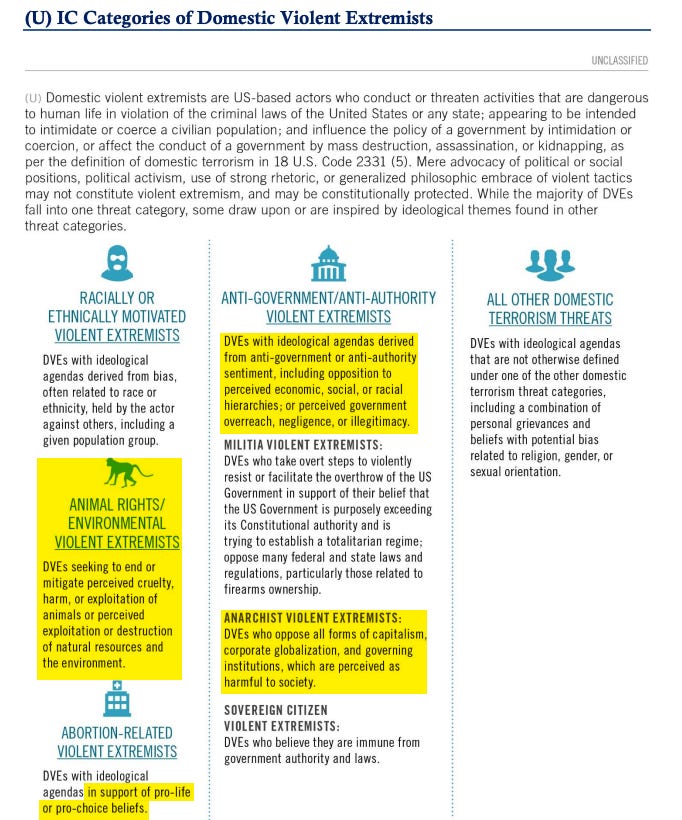
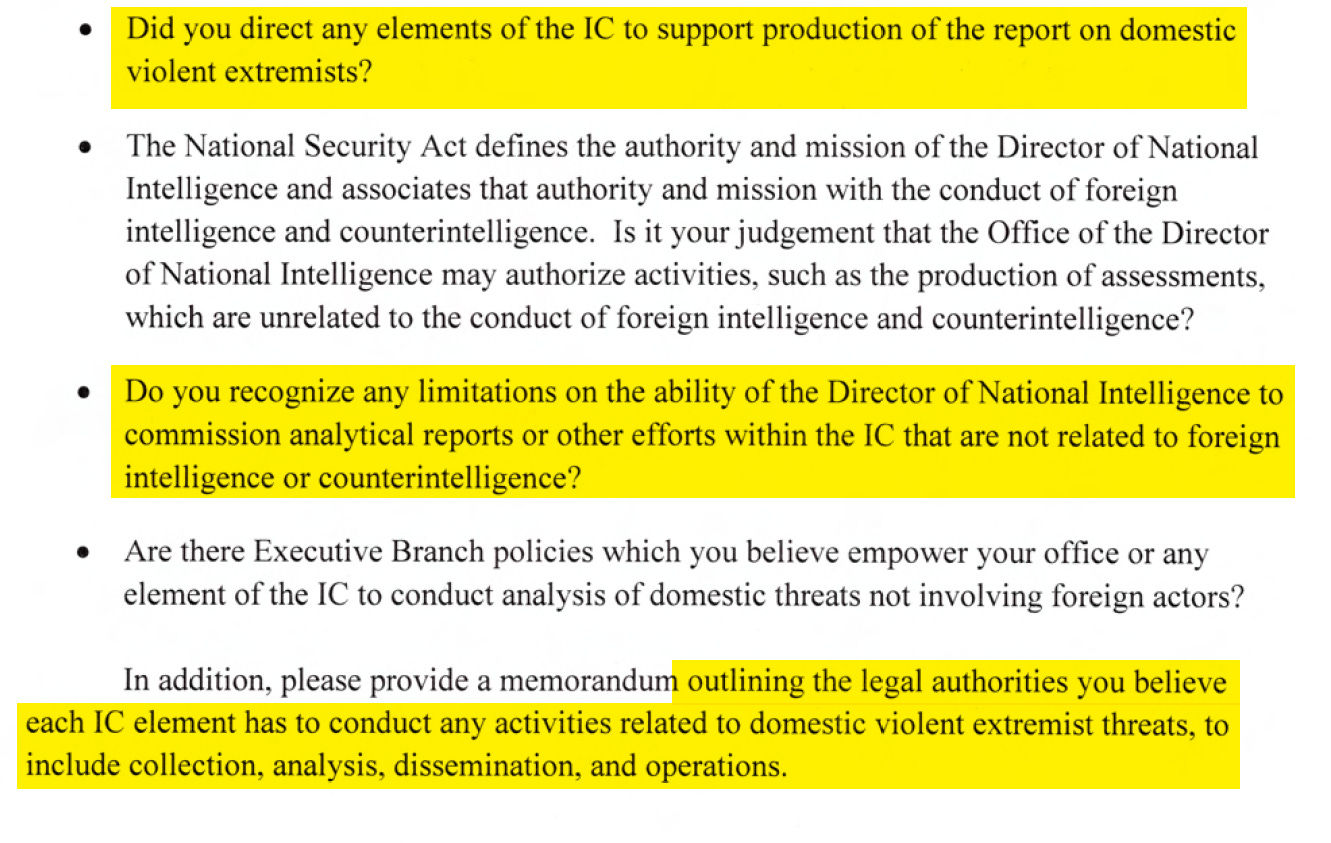
If you enjoyed the Global War on Terror, you’re going to love the new War on Domestic Terror! It’s just like the original Global War on Terror, except that this time the “Terrorists” are all “Domestic Violent Extremists” (“DVEs”), “Homegrown Violent Extremists” (“HVEs”), “Violent Conspiracy-Theorist Extremists” (“VCTEs”), “Violent Reality Denialist Extremists” (VRDEs”), “Insurrectionary Micro-Aggressionist Extremists” (“IMAEs”), “People Who Make Liberals Feel Uncomfortable” (“PWMLFUs”), and anyone else the Department of Homeland Security wants to label an “extremist” and slap a ridiculous acronym on.

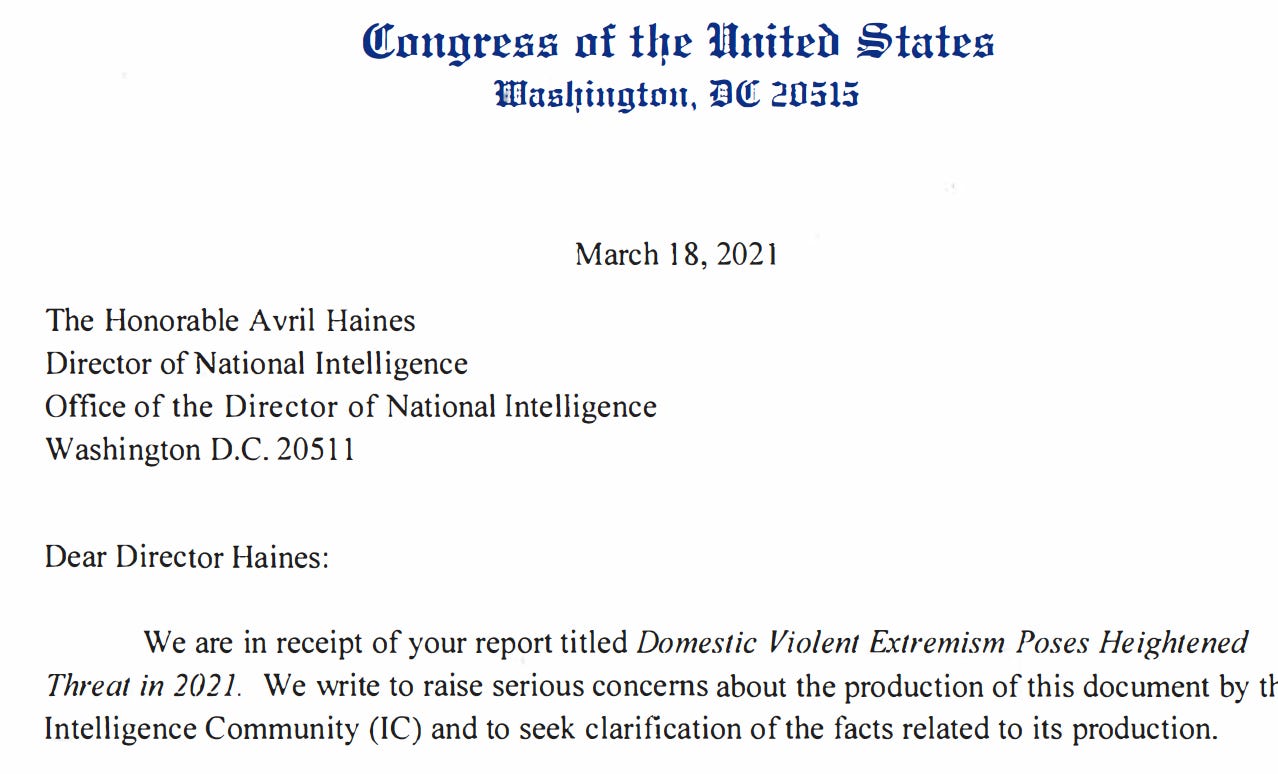
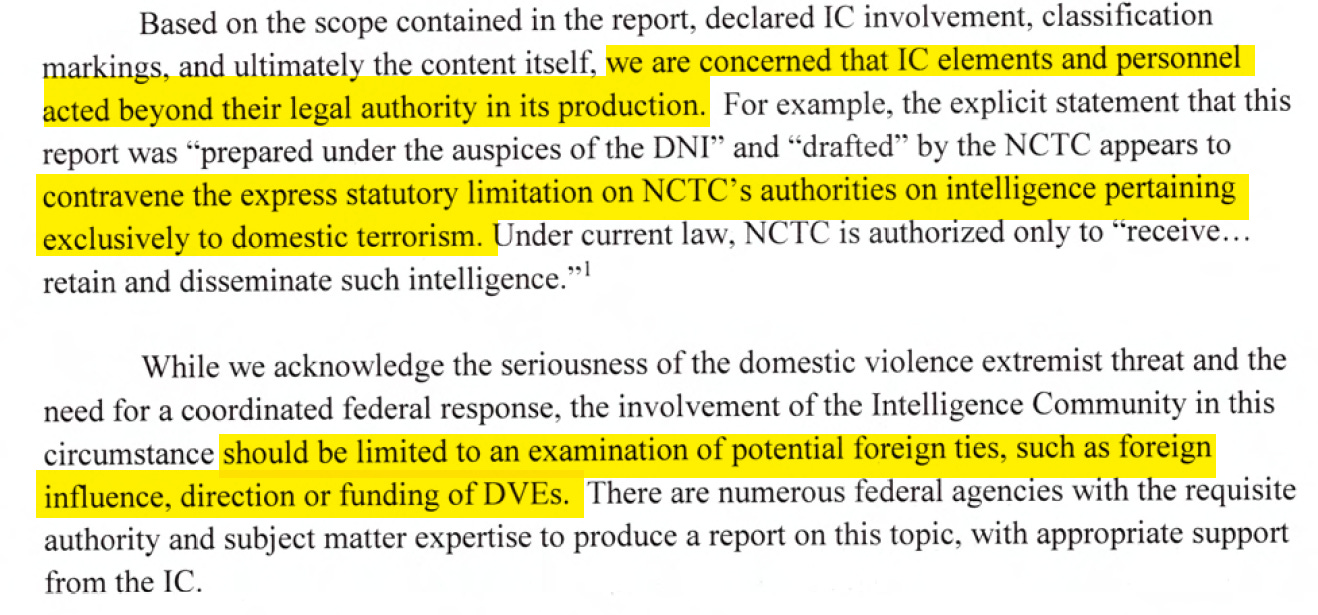
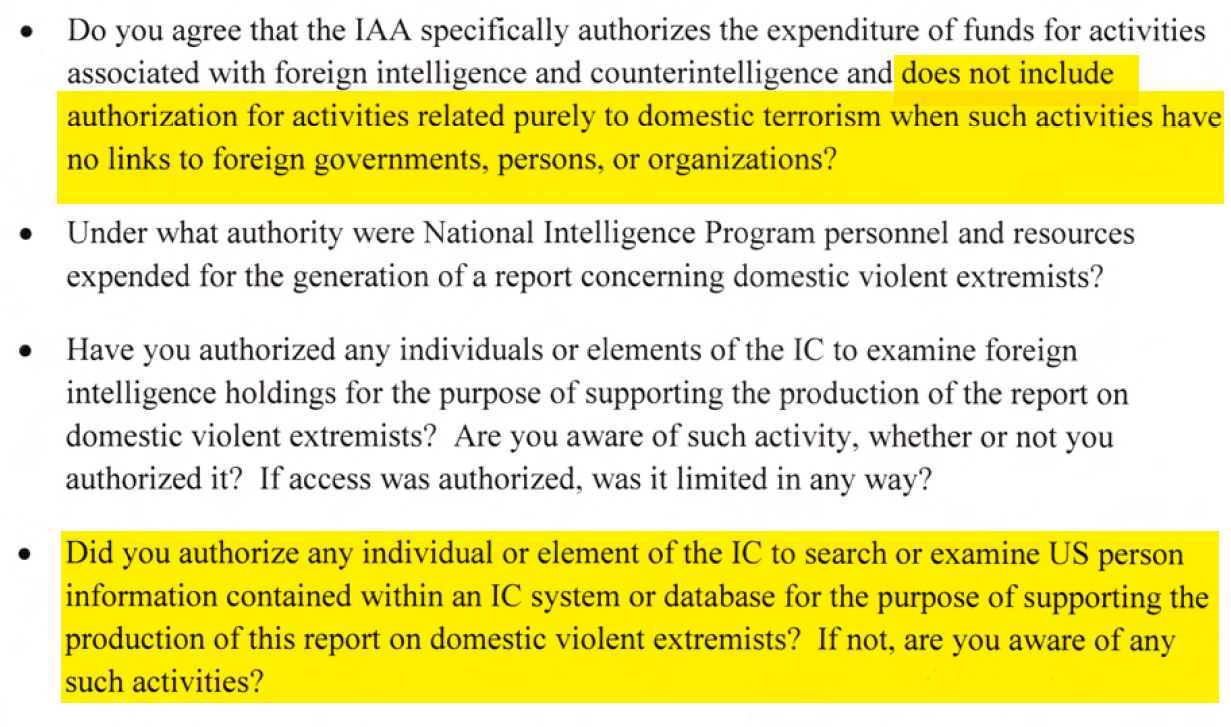
According to a “National Terrorism Advisory System Bulletin” issued by the DHS on January 27, these DCEs, HVEs, VCTEs, VRDEs, IMAEs, and PWMLFUs are “ideologically-motivated violent extremists with objections to the exercise of governmental authority” and other “perceived grievances fueled by false narratives.” They are believed to be “motivated by a range of issues, including anger over Covid-19 restrictions, the 2020 election results, police use of force,” and other dangerous “false narratives” (e.g., the existence of the “deep state,” “herd immunity,” “biological sex,” “God,” and so on).

“Inspired by foreign terrorist groups” and “emboldened by the breach of the US Capitol Building,” this diabolical network of “domestic terrorists” is “plotting attacks against government facilities,” “threatening violence against critical infrastructure” and actively “citing misinformation and conspiracy theories about Covid-19.” For all we know, they might be huddled in the “Wolf’s Lair” at Mar-a-Lago right now, plotting a devastating terrorist attack with those WMDs we never found in Iraq, or generating population-adjusted death-rate charts going back 20 years, or posting pictures of “extremist frogs” on the Internet.

The Department of Homeland Security is “concerned,” as are its counterparts throughout the global capitalist empire. The (New Normal) War on Domestic Terror isn’t just a war on American “domestic terror.” The “domestic terror” threat is international. France has just passed a “Global Security Law” banning citizens from filming the police beating the living snot out of people (among other “anti-terrorist” provisions). In Germany, the government is preparing to install an anti-terror moat around the Reichstag. In the Netherlands, the police are cracking down on the VCTEs, VRDEs, and other “angry citizens who hate the system,” who have been protesting over nightly curfews. Suddenly, everywhere you look (or at least if you are looking in the corporate media), “global extremism networks are growing.” It’s time for Globocap to take the gloves off again, root the “terrorists” out of their hidey holes, and roll out a new official narrative.

Actually, there’s not much new about it. When you strip away all the silly new acronyms, the (New Normal) War on Domestic Terror is basically just a combination of the “War on Terror” narrative and the “New Normal” narrative, i.e., a militarization of the so-called “New Normal” and a pathologization of the “War on Terror.” Why would GloboCap want to do that, you ask?

I think you know, but I’ll go ahead and tell you.

See, the problem with the original “Global War on Terror” was that it wasn’t actually all that global. It was basically just a war on Islamic “terrorism” (i.e., resistance to global capitalism and its post-ideological ideology), which was fine as long as GloboCap was just destabilizing and restructuring the Greater Middle East. It was put on hold in 2016, so that GloboCap could focus on defeating “populism” (i.e., resistance to global capitalism and its post-ideological ideology), make an example of Donald Trump, and demonize everyone who voted for him (or just refused to take part in their free and fair elections), which they have just finished doing, in spectacular fashion. So, now it’s back to “War on Terror” business, except with a whole new cast of “terrorists,” or, technically, an expanded cast of “terrorists.” (I rattled off a list in my previous column.)

In short, GloboCap has simply expanded, recontextualized, and pathologized the “War on Terror” (i.e., the war on resistance to global capitalism and its post-ideological ideology). This was always inevitable, of course. A globally-hegemonic system (e.g., global capitalism) has no external enemies, as there is no territory “outside” the system. Its only enemies are within the system, and thus, by definition, are insurgents, also known as “terrorists” and “extremists.” These terms are utterly meaningless, obviously. They are purely strategic, deployed against anyone who deviates from GloboCap’s official ideology … which, in case you were wondering, is called “normality” (or, in our case, currently, “New Normality”).

In earlier times, these “terrorists” and “extremists” were known as “heretics,” “apostates,” and “blasphemers.” Today, they are also known as “deniers,” e.g., “science deniers,” “Covid deniers,” and recently, more disturbingly, “reality deniers.” This is an essential part of the pathologization of the “War on Terror” narrative. The new breed of “terrorists” do not just hate us for our freedom … they hate us because they hate “reality.” They are no longer our political or ideological opponents … they are suffering from a psychiatric disorder. They no longer need to be argued with or listened to … they need to be “treated,” “reeducated,” and “deprogrammed,” until they accept “Reality.” If you think I’m exaggerating the totalitarian nature of the “New Normal/War on Terror” narrative, read this op-ed in The New York Times exploring the concept of a “Reality Czar” to deal with our “Reality Crisis.”

And this is just the beginning, of course. The consensus (at least in GloboCap circles) is, the (New Normal) War on Domestic Terror will probably continue for the next 10 to 20 years, which should provide the global capitalist ruling classes with more than enough time to carry out the “Great Reset,” destroy what’s left of human society, and condition the public to get used to living like cringing, neo-feudal peasants who have to ask permission to leave their houses. We’re still in the initial “shock and awe” phase (which they will have to scale back a bit eventually), but just look at how much they’ve already accomplished.

The economic damage is literally incalculable … millions have been plunged into desperate poverty, countless independent businesses crushed, whole industries crippled, developing countries rendered economically dependent (i.e., compliant) for the foreseeable future, as billionaires amassed over $1 trillion in wealth and supranational corporate behemoths consolidated their dominance across the planet.

And that’s just the economic damage. The attack on society has been even more dramatic. GloboCap, in the space of a year, has transformed the majority of the global masses into an enormous, paranoid totalitarian cult that is no longer capable of even rudimentary reasoning. (I’m not going to go on about it here … at this point, you either recognize it or you’re in it.) They’re actually lining up in parking lots, the double-masked members of this Covidian cult, to be injected with an experimental “vaccine” that they believe will save the human species from a virus that causes mild to moderate symptoms in roughly 95% of those “infected,” and that over 99% of the “infected” survive.

So, it is no big surprise that these same mindless cultists are gung-ho for the (New Normal) War on Domestic Terror, and the upcoming globally-televised show trial of Donald Trump for “inciting insurrection,” and the ongoing corporate censorship of the Internet, and can’t wait to be issued their “Freedom Passports,” which will allow them to take part in “New Normal” life — double-masked and socially-distanced, naturally — while having their every movement and transaction, and every word they write on Facebook, or in an email, or say to someone on their smartphones, or in the vicinity of their 5G toasters, recorded by GloboCap’s Intelligence Services and their corporate partners, subsidiaries, and assigns. These people have nothing at all to worry about, as they would never dream of disobeying orders, and could not produce an original thought, much less one displeasing to GloboCap, if you held a fake apocalyptic plague to their heads.

As for the rest of us “extremists,” “domestic terrorists,” “heretics,” and “reality deniers,” (i.e., anyone criticizing global capitalism, or challenging its official narratives, and its increasingly totalitarian ideology, regardless of our specific DHS acronyms), I wish I had something hopeful to tell you, but, the truth is, things aren’t looking so good. I guess I’ll see you in a quarantine camp, or in the psych ward, or an offshore detention facility … or, I don’t know, maybe I’ll see you in the streets.

#

February 8, 2021 Posted by | Civil Liberties, Science and Pseudo-Science, Timeless or most popular | , | Leave a comment

Masking America’s Greatest Natural Monuments

By James Bovard | AIER | February 6, 2021

The Biden administration just issued an edict that will spur endless pointless conflicts for Americans seeking to peacefully enjoy hundreds of national parks. On Groundhog Day, the National Park Service (NPS) mandated wearing face masks on all National Park Service lands “when physical distancing cannot be maintained, including “narrow or busy trails, overlooks and historic homes.”

Probably 95% of the Park Service’s 800+ million acres is uncrowded 95% of the time. But the new mandate is an entitlement program for anyone who wants to harass anyone on federal land who is not wearing a mask, regardless of social distancing, wide open spaces, or trails wide enough for 18-wheel trucks.

As the Idaho Statesman noted, “It’s unclear how park officials will enforce Biden’s federal mask mandate.” The Outdoor Society hailed the new regulation: “It is straight forward and very simple to follow, helping to keep everyone safe.” That organization insisted that the policy “is not going to be invasive” but told readers: “If you see violations of the mask requirement: Find the closest ranger or volunteer in the area and let them know.”

Captain Sara Newman, NPS director of Office of Public Health declared, “Getting outside and enjoying our public lands is essential to improving mental and physical health, but we all need to work together to recreate responsibly.” But the latest mask rule will empower legions of zealots to accost, harass, and possibly assault people for failing to obey the latest Pandemic Security Theater mandate.

Mask controversies have already spurred plenty of idiocy in National Parks and other parks:

*At Acadia National Park in Maine, a family complained that a stranger “who may be from Massachusetts intentionally coughed on them for not wearing masks while they were socially distancing during a quaint wedding.”

* In a state park in Massachusetts, at the Hudson Overlook on the Midstate Trail (Ashburnham?), a man spit at two female hikers who were not wearing masks. Police reported: “He explained to them that it was the ‘law’ and that they were selfish. He aggressively turned towards them and stated, ‘I have Covid’ and began spitting at the young females.”

I lead hikes most weekends, usually on the C & O Canal Towpath in Maryland. I tell attendees that masks are optional but kvetching about other hikers wearing or not wearing masks is prohibited. The Towpath – formerly used by mules dragging along barges – is at least 10 feet wide in most places.

Since the hikes are in the Washington area, there is no shortage of people outraged when anyone fails to comply with any government recommendation – even though the trail isn’t narrow. Many zealots follow a simple standard for maskless hikers: “If you see them, scream at them.”

Recently as our hiking group neared a wooden bridge, a 50ish guy coming from the other direction suddenly stopped and looked as horrified as a vampire who had spotted a crucifix.

He lifted his shirt up over his face to provide double protection along with his facial covering, and shouted, “YOU’RE NOT WEARING MASKS!”

“We’re outside. It’s sunny. The wind is blowing,” I replied. The dude was perhaps unaware that Covid transmission hinges on “viral load,” which wasn’t happening on that hike.

“You’re violating the rules!” he proclaimed.

We just kept walking past him.

He turned and shouted at me: “So what—is your beard supposed to be your mask!?!”

I kept going.

And then he hollered: “Your beard is ugly!”

Damn! Me and Rodney Dangerfield – no respect. This learned gentleman was apparently unfamiliar with the Occupational Safety and Health Administration guidance warning that beards make tight masks ineffective. Bummed that the dude didn’t offer me a free razor.

Things got worse after Biden issued an executive order on January 20 that people had to wear masks any time they were on federal property. The edict had an unwritten exemption for Great Leaders – when Biden went to the Lincoln Memorial a few hours after signing the order, he posed by the statue of Abraham Lincoln; neither Lincoln nor Biden were wearing a mask. At a daily press briefing, Biden spokeswoman Jen Psaki scoffed at a reporter’s concern over the apparent crime: “He was celebrating a historic day in our country…. We have bigger things to worry about.”

Regardless, Biden’s order is inflaming legions of junior Stasi across the land. Leading a hike ten days later (and shortly before the NPS mandate), we exited the Towpath and crossed under a bridge where two middle-aged women were standing on an embankment 25 feet away. One of them began shouting and waving her arms.

I looked at her but had no idea what she was saying.

She screamed louder and became even more distraught.

“I can’t understand you,” I hollered at her.

She waved her arms up and down.

I shrugged.

She pulled down her mask: “You’re not wearing masks!”

“We’re outside, it’s windy,” I replied.

“It’s the law! You have to wear a mask on federal property!” she proclaimed.

“It’s an executive order, it’s not a law,” I replied. “Biden didn’t obey it himself.”

When she repeated her denunciation, I refrained from pointing out that she was violating the order because she lowered her mask to berate us.

She tried to buttonhole two other hikers who were bringing up the rear.

“Group? What group? We’re not with a group,” a laggard hiker wisely responded.

Maybe the same woman will be ready with multiple surveillance cameras and a couple of drones to capture video from different angles in case she sees our group again.

Maybe it’s too bad policies for hiking trails on federal land aren’t being set by Rachel Levine, Biden’s designee to be Assistant Secretary of Health and Human Services and the first openly transgender federal official to be nominated. Levine made waves when the Pennsylvania Department of Health she headed offered “best practices” advice to people who “attend a large gathering where you might end up having sex.” Unfortunately, the new NPS rules for hikers are much more restrictive than what Levine recommended for Pennsylvania orgies.

The new mask mandate is sanctified with the usual invocations. NPS Deputy Director Shawn Benge declared, “Working with public health officials and following the latest science and guidance, we can make national parks safer for employees, visitors and partners.” But NPS has no data on how many hikers have contracted Covid from passing within shouting distance of other people. If Covid was so contagious that momentary exposure from passing individuals could spread the virus, then almost all the nation’s grocery store clerks would have been struck down early in the pandemic.

But the only “evidence” necessary for this mandate is that many Biden supporters are frightened when they see anyone outside not wearing a mask. The new regulation encourages viewing people not wearing masks as physical assailants who pose an immediate deadly peril to anyone within eyesight. One Twitter user responded to my article on hysterical Covid complaints by warning: “If you approach me without a mask, I’m free to do whatever I need to do in self defense.” That dude had nothing to fear since I go out of my way to avoid frenzied people.

Where does the mask mania mindset lead? Last month, in Glendale, California, a 38-year-old shirtless jogger was arrested for “spitting on random people outdoors, primarily for not wearing a face mask…. Victims of his assaults ranged in age from 13 to 78 years old. In some incidents, the suspect taunted and used racial slurs towards the victims during the assault,” a police statement said. He was charged with “battery, elder abuse and committing a hate crime.”

If Biden has a right to compel everyone to wear a mask in the National Park Service, he would also have the right to dictate that people wear two masks – a policy endorsed by Covid Czar Anthony Fauci on Tuesdays and Thursdays but not on other days of the week. And if Biden has the right to mandate multiple masks, then would he also have the right to dictate that no one can enter a national park unless they prove they have received a Covid vaccine?

A more likely policy is that national parks could simply be shut down as part of a future lockdown strategy. Parking lots at the C & O Towpath were blocked early in the pandemic and there is no reason to presume that could not happen again. What if the Biden administration chooses to “go big” with a nationwide dictate modeled after the Los Angeles edict that banned almost all walking and bicycling in the city, ordering four million people to “to remain in their homes?” That utterly failed to stop the increase in local Covid cases but the media still cheers dramatic gestures, sort of like how the Italian press treated Mussolini.

Americans hiking in national parks and elsewhere should strive to be courteous and stay as far away as possible from people tormented by Covid dread. There are unseen perils when federal policy seeks to placate mass fears rather than protect public safety. Plenty of Americans need to heed the warning a British publication gave to its readers: “Is constantly monitoring COVID rulebreakers wrecking your mental health?”

February 7, 2021 Posted by | Civil Liberties, Science and Pseudo-Science, Timeless or most popular | , , | Leave a comment

Joe Biden and the Revenge of the Behaviorists (Why Statistical Thinking Can Get You Killed)

By Matthew Ehret | Strategic Culture Foundation | February 3, 2021

As the spirit of patriotism and belief in scientific and technological progress was slowly suffocated throughout the Cold War, the governing class that Russell represented sunk its talons into civilization ever more deeply.

Ninety years ago, Bertrand Russell wrote a book entitled The Scientific Outlook.

In it, the philosopher and sometimes imperial grand strategist made the point that society has become far too complex to be left to democratic institutions. In the modern age of advanced warfare, only a scientific dictatorship could be trusted to lead society, while the thoughtless masses of human cattle should be given the illusion of democracy and freedom. Sovereign nation states must be superseded by world government and thus two parallel cultures, two educations and two moralities must be shaped.

Russell laid out his grim worldview of a master/slave dominated order in the following terms:

“The scientific rulers will provide one kind of education for ordinary men and women and another for those who are to become holders of scientific power. Ordinary men and women will be expected to be docile, industrious, punctual, thoughtless and contented. Of these qualities, probably contentment will be considered the most important. In order to produce it, all the researchers of psycho-analysis, behaviorism and biochemistry will be brought into play… all the boys and girls will learn from an early age to be what is called “cooperative” i.e.: to do exactly what every body else is doing. Initiative will be discouraged in these children, and insubordination, without being punished will be scientifically trained out of them.”

For the elites in Russell’s dystopic world, a different role was envisioned:

“Except for the one matter of loyalty to the world state and to their own order, members of the governing class will be encouraged to be adventurous, and full of initiative. It will be recognized that it is their business to improve scientific techniques and to keep the manual workers contented by means of continual new amusements”.

Twenty three years after writing this, Russell creepily updated his work in the form of a book called The Impact of Science on Society (1953). It was here that the celebrated mathematician and philosopher looked upon the wonderful advances in mass entertainment, psychotropic drugs, and behaviorism saying:

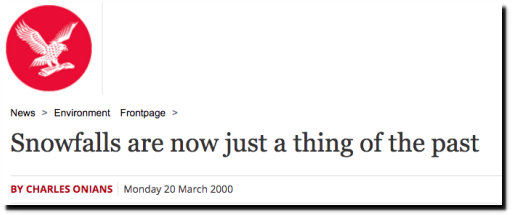
“It may be hoped that in time anybody will be able to persuade anybody of anything if he can catch the patient young and is provided by the State with money and equipment… This subject will make great strides when it is taken up by scientists under a scientific dictatorship. Anaxagoras maintained that snow is black, but no one believed him. The social psychologists of the future will have a number of classes of school children on whom they will try different methods of producing an unshakable conviction that snow is black. Various results will soon be arrived at. First, that the influence of home is obstructive. Second, that not much can be done unless indoctrination begins before the age of ten. Third, that verses set to music and repeatedly intoned are very effective. Fourth, that the opinion that snow is white must be held to show a morbid taste for eccentricity. It is for future scientists to make these maxims precise and discover exactly how much it costs per head to make children believe that snow is black, and how much less it would cost to make them believe it is dark gray.”

The challenge faced by Russell and his co-thinkers was not so much found in the realm of ivory tower theorizing, but rather in the practical world. For how would it be possible to induce a society to accept such conditions when their targets had only recently sacrificed so much to stop global fascism and eugenics during WWII?

The Post-War Takeover

As the spirit of patriotism and belief in scientific and technological progress was slowly suffocated throughout the long night of nuclear terror that was the Cold War, the governing class that Russell represented sunk its talons into civilization ever more deeply.

The target? Sovereign nation states and the cultural dynamics that brought these pesky new institutions into being after the 14th Century dark age which enshrined both the general welfare and the sacredness of the individual into statecraft and law. It was this movement that drove the explosion of new discoveries (and population growth) after the 15th century golden renaissance, leading up to the 1648 Peace of Westphalia and later American Revolution. This was a fire that kept oligarchs up at night and which no amount of water could permanently destroy… and they tried.

During the early decades of the post-WWII age, there was resistance of course. Leaders resistant to the renewed emergence of imperialism stood in defense of humanity’s right to access the Four Freedoms made famous by Franklin Roosevelt.

Dag Hammarskjöld, Enrico Mattei, John Kennedy, MLK, Bobby Kennedy and many other moral leaders were quickly snuffed out as the engines of industrial progress were converted into factories for never-ending wars and cheap consumer goods. Large scale infrastructure and programs of scientific exploration into space and the properties of the atom increasingly fell out of practice as society was compelled to adapt to a new paradigm in the early 1970s.

While Russell spoke well of science, it was never the sort of science that would end poverty or war to which he referred, but rather sciences of entertainment, population control, and behaviorism.

The Post-Industrial Technetronic Age: Brzezinski and Holdren

Zbigniew Brzezinski wrote a book in 1970 entitled Between Two Ages which served as a manifesto for the new Trilateral Commission which was created in 1973 under his lead. In this book, Brzezinski restated Russell’s vision in his own words:

“The technetronic era involves the gradual appearance of a more controlled society. Such a society would be dominated by an elite, unrestrained by traditional values. Soon it will be possible to assert almost continuous surveillance over every citizen and maintain up-to-date complete files containing even the most personal information about the citizen. These files will be subject to instantaneous retrieval by the authorities.”

At this time, a new social order was unleashed as the dollar was floated on the speculative markets killing the gold-reserve industrial era of Bretton Woods in 1971, tying the U.S. dollar to oil prices in 1973 and ushering in a new deregulated epoch of “everything goes” monetarism, and post-industrial consumerism. Foreseeing this emerging unbounded age of unreason, Brzezinski wrote:

“In the technetronic society the trend seems to be toward aggregating the individual support of millions of unorganized citizens, who are easily within the reach of magnetic and attractive personalities, and effectively exploiting the latest communication techniques to manipulate emotions and control reason.”

Another figure from this nest of sociopaths emerging onto the scene during these years was a young John Holdren whose 1977 book Ecoscience (co-authored with his mentor Paul Ehrlich) outlined his future dystopia with bone chilling detail saying:

“Perhaps those agencies, combined with UNEP and the United Nations population agencies, might eventually be developed into a Planetary Regime- sort of an international superagency for population, resources, and environment. Such a comprehensive Planetary Regime could control the development, administration, conservation, and distribution of all-natural resources, renewable or non-renewable, at least insofar as international implications exist. Thus, the Regime could have the power to control pollution not only in the atmosphere and oceans, but also in such freshwater bodies as rivers and lakes that cross international boundaries or that discharge into the oceans. The Regime might also be a logical central agency for regulating all international trade, perhaps including assistance from DCs to LDCs, and including all food on the international market. The Planetary Regime might be given responsibility for determining the optimum population for the world and for each region and for arbitrating various countries’ shares within their regional limits. Control of population size might remain the responsibility of each government, but the Regime would have some power to enforce the agreed limits.”

While the late Zbigniew Brzezinski’s career as a senior diplomat, architect of weaponized radical Islam, and later advisor to Barack Obama are well known, lesser known is the person and career of John Holdren.

Resetting Civilization

From 2009-2017 Holdren acted as “science czar” under the Obama administration where the respected climate scientist spearheaded the defunding of NASA space exploration programs, the collapse of nuclear investments, the killing of fusion power and the re-direction of billions of dollars into “sustainable” green energy fiascos such as Solyndra.

Today, Holdren is ecstatic that he might be admitted back into the corridors of power now that the “aberration” of Trump has been removed, and a “scientifically” managed governance agenda is being quickly brought back online.

On January 27, 2021, Biden signed into effect a “Memorandum on Restoring Trust in Government Through Scientific Integrity and Evidence-based Policy Making” which revives the earlier 2009 and 2010 science policy memoranda authored by Holdren. This reform calls for imposing a new Director of the Office of Science and Technology in Policy as a sort of Grand Referee to ensure that “evidence-based” policy making are enforced across all departments and sub-departments of state. Expert councils such as the Chief Data Officers’ Council and Evaluation Officer Councils will be created and empowered to keep all science in alignment with behaviorist operating systems. Biden’s memorandum literally calls for “using behavioral science insights to better service the American people” to define the decision making of the system as a whole.

It is here that the ugliness of Behaviorism and the collapse of real standards of scientific practice show their ugly heads. Many terms and techniques used by Russell’s modern governing class are consciously obscured or sanitized for the lower classes and so I would like to take a bit of time to dwell on two of the most important terms here: 1) Evidence Based Decision making and 2) Economic Behaviorism.

Evidence-Based Lying: Case Study #1

“Evidence-based decision making” may seem harmless on the surface. After all, why would we want to take actions without being informed by “evidence”? However, when one begins to scratch the surface of this term and its real-world applications, a very different picture emerges.

2009 article by Dr. Cathy Helgason MD pointed out that evidence-based practices (in her case, those shaping the medical practice field), stating:

“It has become clear to me that evidence-based medicine either was in its original intent, or has become, a budget cutting and potential population-control measure. Because it is wrapped up in scientific-sounding rhetoric, it has captured the attention of well-meaning physicians who want to incorporate science into their decisions, and has been sold to the public as an advancement in care.”

In her article, Dr. Helgason points out that doctors conditioned to follow such standards lose their fundamentally human ability to judge, diagnose and treat diseases which often lurk below the surface of data which computer models might pick up and transmit as probabilistic “answers” for what may or may not be wrong with a patient.

As one example, take the case of thousands of coronavirus patients whose intubations induced their deaths since “evidence-based” protocols (a LiveScience analysis reported that 9 out of 10 patients intubated on ventilators ended up dying in one major New York hospital). When frontline doctors like Dr. Kyle Sidell began making the case that COVID-19 symptoms are more akin to high altitude sickness (wherein alveoli in the lungs fail) rather than the typical flu-based respiratory problems, he was silenced for his “heresy”, and intubation was continued under the guise of “evidence-based best practice”.

When looking at how COVID-19 mortality statistics are gathered, one should not be surprised to discover that World Health Organization expert councils have mandated that all deaths be labelled “COVID-19” even if the patient died of heart attack, brain hemorrhage or broken neck while having tested positive for COVID-19. How does that affect the reading of the statistics which experts are projecting into the mass psyche?

Evidence-Based Lying: Case Study #2

Another example of the misuse of statistics can be found in large scale energy policy reforms being driven by the apparent need to lower world temperatures by 1.5 degrees in 30 years.

Sounds pretty noble right?

But what if the data sets being used by the Intergovernmental Panel on Climate Change’s computer models are flawed? What if vast swaths of data sets and higher astrophysical variables shaping climate change are being overlooked in the effort to transform mass behavior in accord with a technocratic elite?

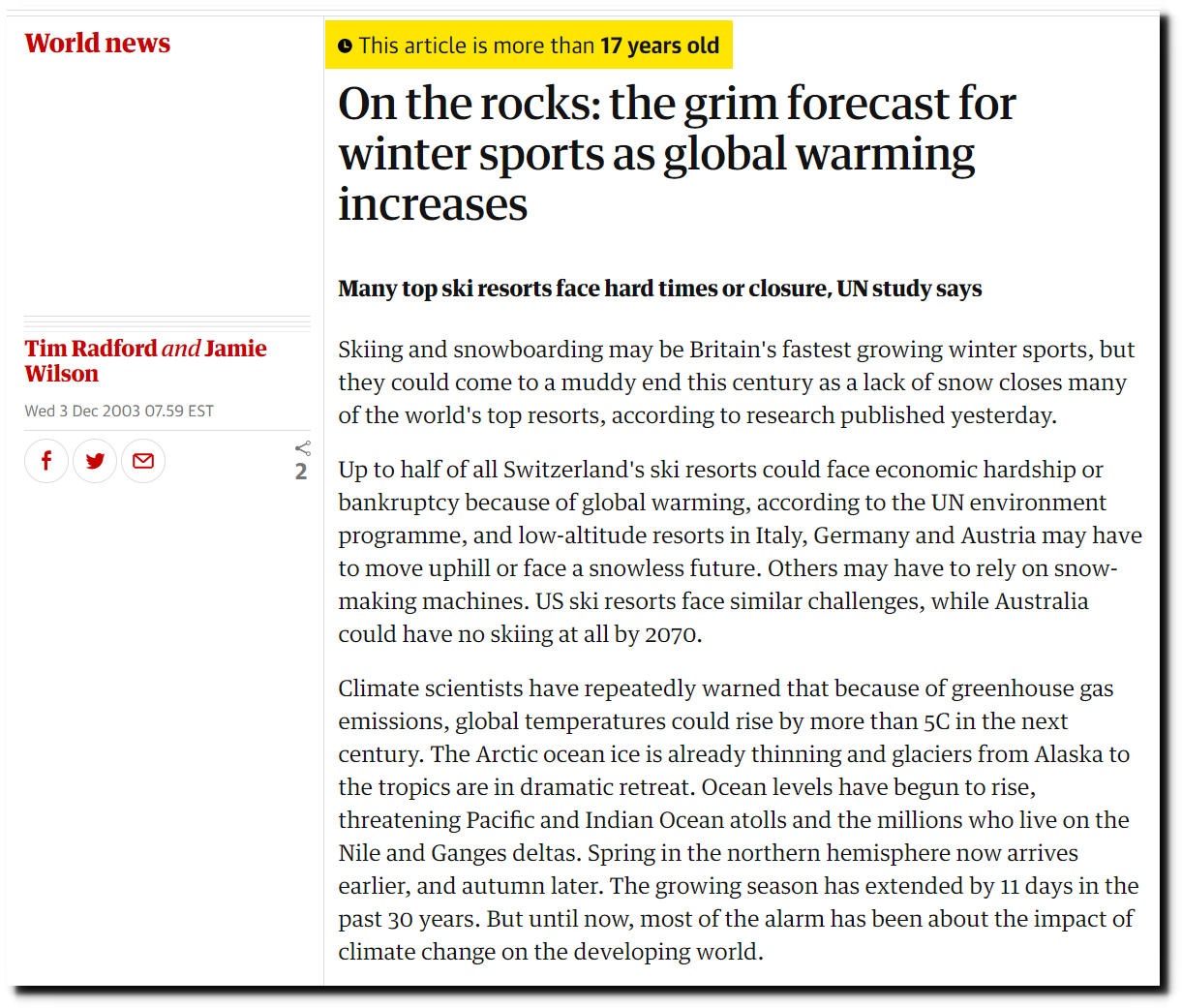
What if the experts deciding which data sets used by climate models are consciously or unconsciously ignoring all data which disproves the conclusions built into their models, as Michael Mann’s now infamously fraudulent hockey stick chart demonstrates? What if increased cooling in Antarctica is ignored while increasingly CO2 detectors near active CO2-spewing volcanic zones like Mauna Loa are kept active? Can this data still be trusted? What about the 2009 and 2011 leaked emails from East Anglia climate scientists that shape all IPCC models demonstrated a vast coverup of data to justify apocalyptic outcomes for political agendas?

What if a closer inspection of CO2:Temperature relationship actually ends up showing that climate change does not follow but is rather followed by CO2 variability? What other factors cause the heating or cooling of the earth other than carbon dioxide? How could we ever find out if we are told the question isn’t worth asking because the scientific debate is over?

While contemplating these matters, the question should always emerge:

Who would benefit by all this sleight of hand? Who would want humanity to falsely adopt fearful and self-loathing states of mind in order to drastically alter its behavior?

Could feelings of mass-fear and shame possibly render humankind more pliable and perhaps more inclined to acquiesce to a Great Reset and Green Central Bankers’ dictatorship?

As Bill Gates’ favorite book How to Lie with Statistics (1954) makes clear: “a well-wrapped statistic is better than Hitler’s Big Lie; it misleads, yet it cannot be pinned on you.”

Since statistics and evidence-based thinking are the bedrocks of Behaviorism, and since the Behaviorists of the Obama era are consolidating their power under Biden, it is now worth saying a few words about Behaviorism.

Behaviorism: Fascism By Another Name

Ignoring the fact that Behaviorism has gotten a lot of positive press in recent years (one of the leading behaviorists Richard Thaler who co-authored Nudge with fellow behaviorist Cass Sunstein, was even awarded the Nobel Prize in economics in 2017), it isn’t an exaggeration to say that the school of thought is fundamentally fascist in its nature.

Why do I say this?

Well, the easy answer is to re-read Holdren’s own words from 1977 cited above and trace out his life’s policy actions. That’s the sledgehammer answer.

The more subtle but useful answer can be found in Holdren’s recent December 2020 interview on science policy in the upcoming Biden Administration (wherein he most certainly hopes to have a role):

“It is very important that, in talking about these matters, scientists separate what they know or believe as scientists from what they prefer as citizens in terms of public policy. It’s very important to distinguish between issues of fact and issues of values and preferences.”

In Holdren’s eyes, “science” and “values” are two opposing worlds.

The unscientific person might think naively that depopulation is atrocious or that a society run by an unelected master class of technicians is offensive to morality, but that is just our “subjective pollution” talking. The priest of science knows that statistical data sets and computer models are the best and only substitute for 1) mapping out and 2) manipulating reality.

For a behaviourist, subjective phenomena such as Love, Justice, Beauty, Free Will and Intentions are non-scientific pollution.

The educated behaviourist seeks only to find materialistic explanations for measurable behavior without resorting to unscientific concepts like “soul” or “mind” or “God” (these concepts being transcendental, immeasurable, unweighable and thus non-existent).

For similar reasons, concepts like “universals”, “Truth”, “Good”, “Evil” are also considered deplorable non-entities to the “scientific thinker” of Holdren’s calibre. Metaphysical gobbledygook and nothing more.

A Word on B.F. Skinner

The founder of modern radical Behaviorism, B.F. Skinner (1904-1990) was himself very candid about the scientific management of society when he wrote “Beyond Freedom and Dignity” (1971) saying that the behavioral scientist of the new post-industrial age must avoid at all costs concepts like dignity, freedom, good or evil:

“We can follow the path taken by physics and biology by turning directly to the relation between behavior and the environments and neglecting supposed mediating states of mind. We do not need to try to discover what personality, states of mind, feelings, traits of character, plans, purposes, intentions or the other prerequisites of autonomous man really are in order to get on with a scientific analysis of behavior”.

All that exists in this cold soulless world are clusters of ants calling themselves “human”, propelled by electro-neural signals masquerading as free will and urges for sex, dominance over the weak and sensual pleasure.

In a typical case of oligarchical projection, Skinner says clearly: 

“we must remember that wars begin in the minds of men, that there is something suicidal in man – a death instinct perhaps – which leads to war, and that man is aggressive by nature”.

And so, you see, in the minds of Skinner, Holdren, Brzezinski, or any of the giddy technocrats managing the Great Reset, it isn’t “empires” or “oligarchs striving to enslave humanity” which are the causes of humanity’s problems.

The enemy of man is in fact man himself.

And for this unfortunate “fact”, it is the duty of the elite to save mankind from himself.

If that means cleansing society of its traditional values that have deluded him into believing that such notions as Family, Nation, God, Progress or Soul are somehow sacred, then so be it. In his vicious tautology, the behaviorist high priest concludes that these ideas must be cleansed- for if they were not destroyed, then humanity would forever resist a return to feudalism under a scientific dictatorship.

Contact the author: Canadianpatriot1776@tutamail.com

February 7, 2021 Posted by | Book Review, Civil Liberties, Deception, Science and Pseudo-Science, Timeless or most popular | | Leave a comment

Mass Manipulation – How it Works

By Robert Cialdini and Peter Koenig for the Saker Blog | February 7, 2021

Have you ever wondered how a herd of sheep is driven to their slaughterhouse? Manipulation of minds is a well-studied science, has been applied already for centuries, but is getting ever more sophisticated. For example, the many poignant assertions, Joseph Goebbels, Hitlers Minister of Propaganda (1933 to 1945), included, “if you repeat a lie often enough it becomes the truth”; or “if you make people believe in the threat of an enemy, they’ll do your bidding”– and “divide and polarize them, destroy their solidarity, and they follow your command”.

Today we have become more sophisticated. While fear is still the weapon of choice – imagine an invisible enemy that everybody is scared of – we have digitally observant media, algorithms and robots that focus on your thinking, how you react and deal with social media, or what websites you consult, and where and what you shop. This is just to mention a few points of information. Today there are on average about 200 such data to be electronically computed, so as to sway your opinion and to make you believe the most flagrant lies.

You may recognize what covid is doing to you and at what state of manipulation we are – how close to the slaughterhouse are we? The seven stages below synthesize the book ‘Influence, The Power of Persuasion’, by Robert Cialdini.

Hypnotherapists have been noticing blatant hypnosis and Neuro-linguistic programming (NLP) techniques being used by the government and state-controlled media. NPL is a psychological approach that involves analyzing strategies used by successful individuals and applying them to reach a personal goal. It relates thoughts, language, and patterns of behavior learned through experience to specific outcomes.

Listen to this:

👉 Fractionation:

You get them to do something not once, but again and again, increasing the level of intensity each time. Usually, you do it 3 times. (At the first lockdown I said – watch out, there’ll be a 2nd and a 3rd) This increases compliance – you’re much more likely to get them to do whatever you want.

👉 A ‘Yes’ set:

Get them to say ‘Yes’ to something small at first (just two weeks to “flatten the curve”) then gradually increase (months of lockdown, Christmas cancelled, socially/economically coerced into vaccines). In this way they’re much more likely to keep saying yes. (There would’ve been riots if they’d said in March lockdowns will carry on through Christmas.)

👉 Confusion:

Keep them in a constant state of uncertainty. The conscious mind responds to this by ‘going offline’ as it searches for the appropriate response for something it has no precedent for. Then it’s much easier for the manipulator to gain access to the unconscious mind and change belief systems. For example, lockdown rules are changing on practically a day-to-day basis; we’re living in a world we’ve never lived in before, everyone’s stumbling about with no idea how to behave. We’ve no energy left to fight our oppressors.

👉 Repetition:

Repeat the same information over and over (see any newspaper / TV news for evidence of this!)

👉 Illusion of Choice

Make them believe they’re in control by giving them 2 choices, both of which lead to the same result. For example, ‘Do you want the Pfeizer or the Oxford?’ or ‘You can choose to be good or bad. Bad = more lockdown. Good = more lockdown.’

👉 “Social Proof”

“Look, all these great celebrities are backing it!”

👉 “Scarcity”

“You’ll have to wait your turn for the vaccine… we might be running out”

And so many more… All classic psychological control techniques. Once you see it, you can’t un-see it.

Check out the book ‘Influence’, The Power of Persuasion’ by Robert Cialdini – all the methods he talks about are being used daily in the news and other media.

If we realize in time that this is what is happening to us, that this theory applied is behind covid and using covid for a much more freedom encroaching ulterior goal – total control of humanity, of people’s behavior, of food, of resources – over whether people live or die – and of the world’s riches – then we might have a chance to break out from the herd that storms towards the abyss – or the slaughterhouse.

Waking up – protesting – disobeying – and reconnecting with each other. NOW.


Peter Koenig is a geopolitical analyst and a former Senior Economist at the World Bank and the World Health Organization (WHO), where he has worked for over 30 years on water and environment around the world. He lectures at universities in the US, Europe and South America.

February 7, 2021 Posted by | Deception, Timeless or most popular | , | Leave a comment

The WWI Conspiracy

Corbett • 11/19/2018

Watch on Archive / BitChute / LBRY / Minds / YouTube or Download the mp4

What was World War One about? How did it start? Who won? And what did they win? Now, 100 years after those final shots rang out, these questions still puzzle historians and laymen alike. But as we shall see, this confusion is not a happenstance of history but the wool that has been pulled over our eyes to stop us from seeing what WWI really was. This is the story of WWI that you didn’t read in the history books. This is The WWI Conspiracy.

TRANSCRIPT

Skip to Part One / Part Two / Part Three

PART ONE: TO START A WAR

Watch on BitChute / DTube / LBRY / YouTube or Download the MP3 AUDIO or MP4 VIDEO

INTRODUCTION

November 11, 1918.

All across the Western front, the clocks that were lucky enough to escape the four years of shelling chimed the eleventh hour. And with that the First World War came to an end.

From 10 o’clock to 11 — the hour for the cessation of hostilities — the opposed batteries simply raised hell. Not even the artillery prelude to our advance into the Argonne had anything on it. To attempt an advance was out of the question. It was not a barrage. It was a deluge.

[. . .]

Nothing quite so electrical in effect as the sudden stop that came at 11 A. M. has ever occurred to me. It was 10:60 precisely and — the roar stopped like a motor car hitting a wall. The resulting quiet was uncanny in comparison. From somewhere far below ground, Germans began to appear. They clambered to the parapets and began to shout wildly. They threw their rifles, hats, bandoleers, bayonets and trench knives toward us. They began to sing.

Lieutenant Walter A. Davenport, 101st Infantry Regiment, US Army

And just like that, it was over. Four years of the bloodiest carnage the world had ever seen came to a stop as sudden and bewildering as its start. And the world vowed “Never again.”

Each year, we lay the wreath. We hear “The Last Post.” We mouth the words “never again” like an incantation. But what does it mean? To answer this question, we have to understand what WWI was.

WWI was an explosion, a breaking point in history. In the smoldering shell hole of that great cataclysm lay the industrial-era optimism of never-ending progress. Old verities about the glory of war lay strewn around the battlefields of that “Great War” like a fallen soldier left to die in No Man’s Land, and along with it lay all the broken dreams of a world order that had been blown apart. Whether we know it or not, we here in the 21st century are still living in the crater of that explosion, the victims of a First World War that we are only now beginning to understand.

What was World War One about? How did it start? Who won? And what did they win? Now, 100 years after those final shots rang out, these questions still puzzle historians and laymen alike. But as we shall see, this confusion is not a happenstance of history but the wool that has been pulled over our eyes to stop us from seeing what WWI really was.

This is the story of WWI that you didn’t read in the history books. This is The WWI Conspiracy.

PART ONE – TO START A WAR

June 28, 1914.

The Archduke Franz Ferdinand, heir to the Austro-Hungarian throne, and his wife Sophie are in Sarajevo for a military inspection. In retrospect, it’s a risky provocation, like tossing a match into a powder keg. Serbian nationalism is rising, the Balkans are in a tumult of diplomatic crises and regional wars, and tensions between the kingdom of Serbia and the Austro-Hungarian Empire are set to spill over.

But despite warnings and ill omens, the royal couple’s security is extremely lax. They board an open-top sports car and proceed in a six-car motorcade along a pre-announced route. After an inspection of the military barracks, they head toward the Town Hall for a scheduled reception by the Mayor. The visit is going ahead exactly as planned and precisely on schedule.

And then the bomb goes off.

As we now know, the motorcade was a death trap. Six assassins lined the royal couple’s route that morning, armed with bombs and pistols. The first two failed to act, but the third, Nedeljko Čabrinović, panicked and threw his bomb onto the folded back cover of the Archduke’s convertible. It bounced off onto the street, exploding under the next car in the convoy. Franz Ferdinand and his wife, unscathed, were rushed on to the Town Hall, passing the other assassins along the route too quickly for them to act.

Having narrowly escaped death, the Archduke called off the rest of his scheduled itinerary to visit the wounded from the bombing at the hospital. By a remarkable twist of fate, the driver took the couple down the wrong route, and, when ordered to reverse, stopped the car directly in front of the delicatessen where would-be assassin Gavrilo Princip had gone after having failing in his mission along the motorcade. There, one and a half metres in front of Princip, were the Archduke and his wife. He took two shots, killing both of them.

Yes, even the official history books—the books written and published by the “winners”—record that the First World War started as the result of a conspiracy. After all, it was—as all freshman history students are taught—the conspiracy to assassinate the Archduke Franz Ferdinand that led to the outbreak of war.

That story, the official story of the origins of World War I, is familiar enough by now: In 1914, Europe was an interlocking clockwork of alliances and military mobilization plans that, once set in motion, ticked inevitably toward all out warfare. The assassination of the Archduke was merely the excuse to set that clockwork in motion, and the resulting “July crisis” of diplomatic and military escalations led with perfect predictability to continental and, eventually, global war. In this carefully sanitized version of history, World War I starts in Sarajevo on June 28, 1914.

But this official history leaves out so much of the real story about the build up to war that it amounts to a lie. But it does get one thing right: The First World War was the result of a conspiracy.

To understand this conspiracy we must turn not to Sarajevo and the conclave of Serbian nationalists plotting their assassination in the summer of 1914, but to a chilly drawing room in London in the winter of 1891. There, three of the most important men of the age—men whose names are but dimly remembered today—are taking the first concrete steps toward forming a secret society that they have been discussing amongst themselves for years. The group that springs from this meeting will go on to leverage the wealth and power of its members to shape the course of history and, 23 years later, will drive the world into the first truly global war.

Their plan reads like outlandish historical fiction. They will form a secret organization dedicated to the “extension of British rule throughout the world” and “the ultimate recovery of the United States of America as an integral part of a British Empire.” The group is to be structured along the lines of a religious brotherhood (the Jesuit order is repeatedly invoked as a model) divided into two circles: an inner circle, called “The Society of the Elect,” who are to direct the activity of the larger, outer circle, dubbed “The Association of Helpers” who are not to know of the inner circle’s existence.

“British rule” and “inner circles” and “secret societies.” If presented with this plan today, many would say it was the work of an imaginative comic book writer. But the three men who gathered in London that winter afternoon in 1891 were no mere comic book writers; they were among the wealthiest and most influential men in British society, and they had access to the resources and the contacts to make that dream into a reality.

Present at the meeting that day: William T. Stead, famed newspaper editor whose Pall Mall Gazette broke ground as a pioneer of tabloid journalism and whose Review of Reviews was enormously influential throughout the English-speaking world; Reginald Brett, later known as Lord Esher, an historian and politician who became friend, confidant and advisor to Queen Victoria, King Edward VII, and King George V, and who was known as one of the primary powers-behind-the-throne of his era; and Cecil Rhodes, the enormously wealthy diamond magnate whose exploits in South Africa and ambition to transform the African continent would earn him the nickname of “Colossus” by the satirists of the day.

But Rhodes’ ambition was no laughing matter. If anyone in the world had the power and ability to form such a group at the time, it was Cecil Rhodes.

Richard Grove, historical researcher and author, TragedyAndHope.com.

RICHARD GROVE: Cecil Rhodes also was from Britain. He was educated at Oxford, but he only went to Oxford after he went to South Africa. He had an older brother he follows into South Africa. The older brother was working in the diamond mines, and by the time Rhodes gets there he’s got a set up, and his brother says “I’m gonna go off and dig in the gold mines. They just found gold!” And so he leaves Cecil Rhodes, his younger brother—who’s, like, in his 20s—with this whole diamond mining operation. Rhodes then goes to Oxford, comes back down to South Africa with the help of Lord Rothschild, who had funding efforts behind De Beers and taking advantage of that situation. And from there they start to use what—there’s no other term than “slave labor,” which then turns in later to the apartheid policy of South Africa.

GERRY DOCHERTY: Well, Rhodes was particularly important because in many ways, at the end of the 19th century, he seriously epitomized where capitalism was [and] where wealth really lay.

Gerry Docherty, WWI scholar and co-author of Hidden History: The Secret Origins of the First World War.

DOCHERTY: Rhodes had the money and he had the contacts. He was a great Rothschild man and his mining wealth was literally uncountable. He wanted to associate himself with Oxford because Oxford gave him the kudos of the university of knowledge, of that kind of power.

And in fact that was centered in a very secretive place called “All Souls College.” Still you’ll find many references to All Souls College and “people behind the curtain” and such phrases [as] “power behind thrones.” Rhodes was centrally important in actually putting money up in order to begin to gather together like-minded people of great influence.

Rhodes was not shy about his ambitions, and his intentions to form such a group were known to many. Throughout his short life, Rhodes discussed his intentions openly with many of his associates, who, unsurprisingly, happened to be among the most influential figures in British society at that time.

More remarkably, this secret society—which was to wield its power behind the throne—was not a secret at all. The New York Times even published an article discussing the founding of the group in the April 9, 1902, edition of the paper, shortly after Rhodes’ death.

The article, headlined “Mr. Rhodes’s Ideal of Anglo-Saxon Greatness” and carrying the remarkable sub-head “He Believed a Wealthy Secret Society Should Work to Secure the World’s Peace and a British-American Federation,” summarized this sensational plan by noting that Rhodes’ “idea for the development of the English-speaking race was the foundation of ‘a society copied, as to organization, from the Jesuits.’” Noting that his vision involved uniting “the United States Assembly and our House of Commons to achieve ‘the peace of the world,’” the article quotes Rhodes as saying: “The only thing feasible to carry out this idea is a secret society gradually absorbing the wealth of the world.”

This idea is laid down in black and white in a series of wills that Rhodes wrote throughout his life, wills that not only laid out his plan to create such a society and provided the funds to do so, but, even more remarkably, were collected in a volume published after his death by co-conspirator William T. Stead.

GROVE: Rhodes also left his great deal of money—not having any children, not having married, dying at a young age—left it in a very well-known last will and testament, of which there were several different editions naming different benefactors, naming different executors.

So in 1902 Cecil Rhodes dies. There’s a book published that contains his last will and testament. The guy who wrote the book, William T. Stead, was in charge of a British publication called The Review of Reviews. He was part of Rhodes’ Round Table group. He at one time was an executor for the will, and in that will it says that he laments the loss of America from the British Empire and that they should formulate a secret society with the specific aim of bringing America back into the Empire. Then he names all the countries that they need to include in this list to have world domination, to have an English-speaking union, to have British race as the enforced culture on all countries around the world.

The will contains the goal. The goal is amended over a series of years and supported and used to gain support. And then, by the time he dies in 1902, there’s funding, there’s a plan, there’s an agenda, there’s working groups, and it all launches and then takes hold. And then not too long later, you’ve got World War One and then from that you’ve got World War Two and then you’ve got a century of control and slavery that really could have been prevented.

When, at the time of Rhodes’ death in 1902, this “secret” society decided to partially reveal itself, it did so under the cloak of peace. It was only because they desired world peace, they insisted, that they had created their group in the first place, and only for the noblest of reasons that they aimed to “gradually absorb the wealth of the world.”

But contrary to this pacific public image, from its very beginnings the group was interested primarily in war. In fact, one of the very first steps taken by this “Rhodes Round Table” (as it was known by some) was to maneuver the British Empire into war in South Africa. This “Boer War” of 1899–1902 would serve a dual purpose: it would unite the disparate republics and colonies of South Africa into a single unit under British imperial control, and, not incidentally, it would bring the rich gold deposits of the Transvaal Republic into the orbit of the Rothschild/Rhodes-controlled British South Africa Company.

The war was, by the group’s own admission, entirely its doing. The point man for the operation was Sir Alfred Milner, a close associate of Rhodes and a member of the secret society’s inner circle who was then the governor of the British Cape Colony. Although largely forgotten today, Alfred Milner (later 1st Viscount Milner) was perhaps the most important single figure in Britain at the dawn of the 20th century. From Rhodes’ death in 1902, he became the unofficial head of the roundtable group and directed its operations, leveraging the vast wealth and influence of the group’s exclusive membership to his own ends.

With Milner, there was no compunction or moral hand-wringing about the methods used to bring about those ends. In a letter to Lord Roberts, Milner casually confessed to having engineered the Boer War: “I precipitated the crisis, which was inevitable, before it was too late. It is not very agreeable, and in many eyes, not a very creditable piece of business to have been largely instrumental in bringing about a war.”

When Rhodes’ co-conspirator and fellow secret society inner circle member William Stead objected to war in South Africa, Rhodes told him: “You will support Milner in any measure that he may take short of war. I make no such limitation. I support Milner absolutely without reserve. If he says peace, I say peace; if he says war, I say war. Whatever happens, I say ditto to Milner.”

The Boer War, involving unimaginable brutality—including the death of 26,000 women and children in the world’s first (British) concentration camps—ended as Rhodes and his associates intended: with the formerly separate pieces of South Africa being united under British control. Perhaps even more importantly from the perspective of the secret society, it left Alfred Milner as High Commission of the new South African Civil Service, a position from which he would cultivate a team of bright, young, largely Oxford-educated men who would go on to serve the group and its ends.

And from the end of the Boer War onward, those ends increasingly centered around the task of eliminating what Milner and the Round Table perceived as the single greatest threat to the British Empire: Germany.

DOCHERTY: So in the start it was influence—people who could influence politics, people who had the money to influence statesmen—and the dream. The dream of actually crushing Germany. This was a basic mindset of this group as it gathered together.

Germany. In 1871, the formerly separate states of modern-day Germany united into a single empire under the rule of Wilhelm I. The consolidation and industrialization of a united Germany had fundamentally changed the balance of power in Europe. By the dawn of the 20th century, the British Empire found itself dealing not with its traditional French enemies or its long-standing Russian rivals for supremacy over Europe, but the upstart German Empire. Economically, technologically, even militarily; if the trends continued, it would not be long before Germany began to rival and even surpass the British Empire.

For Alfred Milner and the group he had formed around him out of the old Rhodes Round Table society, it was obvious what had to be done: to change France and Russia from enemies into friends as a way of isolating, and, eventually, crushing Germany.

Peter Hof, author of The Two Edwards: How King Edward VII and Foreign Secretary Sir Edward Grey Fomented the First World War.

PETER HOF: Yes, well from the British perspective, Germany, after their unification in 1871, they became very strong very quickly. And over time this worried the British more and more, and they began to think that Germany represented a challenge to their world hegemony. And slowly but surely they came to the decision that Germany must be confronted just as they had come to the same decision with regard to other countries—Spain and Portugal and especially France and now Germany.

German finished goods were marginally better than those of Britain, they were building ships that were marginally better than those of Britain, and all of this. The British elite very slowly came to the decision that Germany needed to be confronted while it was still possible to do so. It might not be possible to do so if they waited too long. And so this is how the decision crystallized.

I think that Britain might possibly have accepted the German ascendance, but they had something that was close at hand, and that was the Franco-Russian Alliance. And they thought if they could hook in with that alliance, then they had the possibility of defeating Germany quickly and without too much trouble. And that is basically what they did.

But crafting an alliance with two of Britain’s biggest rivals and turning public opinion against one of its dearest continental friends was no mean feat. To do so would require nothing less than for Milner and his group to seize control of the press, the military and all the diplomatic machinery of the British Empire. And so that’s exactly what they did.

The first major coup occurred in 1899, while Milner was still in South Africa launching the Boer War. That year, the Milner Group ousted Donald Mackenzie Wallace, the director of the foreign department at The Times, and installed their man, Ignatius Valentine Chirol. Chirol, a former employee of the Foreign Office with inside access to officials there, not only helped to ensure that one of the most influential press organs of the Empire would spin all international events for the benefit of the secret society, but he helped to prepare his close personal friend, Charles Hardinge, to take on the crucial post of Ambassador to Russia in 1904, and, in 1906, the even more important post of Permanent Under-Secretary at the Foreign Office.

With Hardinge, Milner’s Group had a foot in the door at the British Foreign Office. But they needed more than just their foot in that door if they were to bring about their war with Germany. In order to finish the coup, they needed to install one of their own as Foreign Secretary. And, with the appointment of Edward Grey as Foreign Secretary in December of 1905, that’s precisely what happened.

Sir Edward Grey was a valuable and trusted ally of the Milner Group. He shared their anti-German sentiment and, in his important position of Foreign Secretary, showed no compunction at all about using secret agreements and unacknowledged alliances to further set the stage for war with Germany.

HOF: He became foreign secretary in 1905, I believe, and the foreign secretary in France was of course Delcassé. And Delcassé was very much anti-German and he was very passionate about the recovery of Alsace-Lorraine, and so he and the king hit it off very well together. And Edward Grey shared this anti-German feeling with the king—as I explained in my book how he came to have that attitude about Germany. But in any case, he had the same attitude with the king. They worked very well together. And Edward Grey very freely acknowledged the heavy role that the king played in British foreign policy and he said that this was not a problem because he and the king were in agreement on most issues and so they worked with very well together.

The pieces were already beginning to fall into place for Milner and his associates. With Edward Grey as foreign secretary, Hardinge as his unusually influential undersecretary, Rhodes’ co-conspirator Lord Esher installed as deputy governor of Windsor Castle where he had the ear of the king, and the king himself—whose unusual, hands-on approach to foreign diplomacy and whose wife’s own hatred of the Germans dovetailed perfectly with the group’s aims—the diplomatic stage was set for the formation of the Triple Entente between France, Russia and Great Britain. With France to the west and Russia to the east, England’s secret diplomacy had forged the two pincers of a German-crushing vise.

All that was needed was an event that the group could spin to its advantage to prepare the population for war against their former German allies. Time and again throughout the decade leading up to the “Great War,” the group’s influential agents in the British press tried to turn every international incident into another example of German hostility.

When the Russo-Japanese War broke out, rumours swirled in London that it was in fact the Germans that had stirred up the hostilities. The theory went that Germany—in a bid to ignite conflict between Russia and England, who had recently concluded an alliance with the Japanese—had fanned the flames of war between Russia and Japan. The truth, of course, was almost precisely the opposite. Lord Lansdowne had conducted secret negotiations with Japan before signing a formal treaty in January 1902. Having exhausted their reserves building up their military, Japan turned to Cecil Rhodes’ co-conspirator Lord Nathan Rothschild to finance the war itself. Denying the Russian navy access to the Suez Canal and high-quality coal, which they did provide to the Japanese, the British did everything they could to ensure that the Japanese would crush the Russian fleet, effectively removing their main European competitor for the Far East. The Japanese navy was even constructed in Britain, but these facts did not find their way into the Milner-controlled press.

When the Russians “accidentally” fired on British fishing trawlers in the North Sea in 1904, killing three fishermen and wounding several more, the British public was outraged. Rather than whip up the outrage, however, The Times and other mouthpieces of the secret society instead tried to paper over the incident. Meanwhile, the British Foreign Office outrageously tried to blame the incident on the Germans, kicking off a bitter press war between Britain and Germany.

The most dangerous provocations of the period centered around Morocco, when France—emboldened by secret military assurances from the British and backed up by the British press—engaged in a series of provocations, repeatedly breaking assurances to Germany that Morocco would remain free and open to German trade. At each step, Milner’s acolytes, both in government and in the British press, cheered on the French and demonized any and every response from the Germans, real or imagined.

DOCHERTY: Given that we’re living in a world of territorial aggrandizement, there was a concocted incident over Morocco and the allegation that Germany was secretly trying to take over the British/French influence on Morocco. And that literally was nonsense, but it was blown up into an incident and people were told “Prepare! You had better prepare yourself for the possibility of war because we will not be dictated to by that Kaiser person over in Berlin!”

One of the incidents —which I would need to make reference to to get the date perfectly right—referred to a threat. Well, it was portrayed as a threat. It was no more of a threat than a fly would be if it came into your room at the present moment—of a gunboat sitting off the coast of Africa. And it was purported that this was a sign that in fact Germany was going to have a deep water port and they were going to use it as a springboard to interrupt British shipping. When we researched it, Jim and I discovered that the size of that so-called gunboat was physically smaller than the king of England’s royal yacht. What? But history has portrayed this as a massive threat to the British Empire and its “masculinity,” if you like—because that’s how they saw themselves.

Ultimately, the Moroccan crises passed without warfare because, despite the best efforts of Milner and his associates, cooler heads prevailed. Likewise the Balkans descended into warfare in the years prior to 1914, but Europe as a whole didn’t descend with them. But, as we well know, the members of the Round Table in the British government, in the press, in the military, in finance, in industry, and in other positions of power and influence eventually got their wish: Franz Ferdinand was assassinated and within a month the trap of diplomatic alliances and secret military compacts that had been so carefully set was sprung. Europe was at war.

In retrospect, the machinations that led to war are a master class in how power really operates in society. The military compacts that committed Britain—and, ultimately, the world—to war had nothing to do with elected parliaments or representative democracy. When Conservative Prime Minister Arthur Balfour resigned in 1905, deft political manipulations ensured that members of the Round Table, including Herbert Henry Asquith, Edward Grey and Richard Haldane—three men who Liberal leader Henry Campbell-Bannerman privately accused of “Milner worship”—seamlessly slid into key posts in the new Liberal government and carried on the strategy of German encirclement without missing a step.

In fact, the details of Britain’s military commitments to Russia and France, and even the negotiations themselves, were deliberately kept hidden from Members of Parliament and even members of the cabinet who were not part of the secret society. It wasn’t until November 1911, a full six years into the negotiations, that the cabinet of Prime Minister Herbert Henry Asquith started to learn the details of these agreements, agreements that had been repeatedly and officially denied in the press and in Parliament.

This is how the cabal functioned: efficiently, quietly and, convinced of the righteousness of their cause, completely uncaring about how they achieved their ends. It is to this clique, not to the doings of any conspiracy in Sarajevo, that we can attribute the real origins of the First World War, with the nine million dead soldiers and seven million dead civilians that lay piled in its wake.

But for this cabal, 1914 was just the start of the story. In keeping with their ultimate vision of a united Anglo-American world order, the jewel in the crown of the Milner Group was to embroil the United States in the war; to unite Britain and America in their conquest of the German foe.

Across the Atlantic, the next chapter in this hidden history was just getting underway.

PART TWO: THE AMERICAN FRONT

Watch on BitChute / DTube / LBRY / YouTube or Download the MP3 AUDIO or MP4 VIDEO

May 7, 1915.

“Colonel” Edward Mandell House is on his way to meet with King George V, who ascended to the throne after Edward VII’s death in 1910. Accompanying him is Edward Grey, British foreign secretary and acolyte of the Milner Group. The two speak “of the probability of an ocean liner being sunk” and House informs Grey that “if this were done, a flame of indignation would sweep across America, which would in itself probably carry us into the war.”

An hour later, at Buckingham Palace, King George V inquires about an even more specific event.

“We fell to talking, strangely enough, of the probability of Germany sinking a trans-Atlantic liner, . . . He said, ‘Suppose they should sink the Lusitania with American passengers on board. . . .’”

And, by a remarkable coincidence, at 2:00 that afternoon, just hours after these conversations took place, that is precisely what happened.

The Lusitania, one of the largest passenger liners in the world, is en route from New York to Liverpool when it is struck by a torpedo from a German U-boat. She sinks to the bottom in minutes, killing 1,198 passengers and crew, including 128 Americans. The disaster—portrayed as a brazen, unexpected attack on an innocent passenger liner—helps to shift public opinion about the war in the US. To the average American, the war suddenly doesn’t feel like a strictly European concern.

Every aspect of the story was, as we now know, a deception. The Lusitania was not an innocent passenger liner but an armed merchant cruiser officially listed by the British Admiralty as an auxiliary war ship. It was outfitted with extra armour, designed to carry twelve six-inch guns, and equipped with shell racks for holding ammunition. On its transatlantic voyage the ship was carrying “war materiel”—specifically, more than four million .303 rifle bullets and tons of munitions, including shells, powder, fuses and gun cotton—“in unrefrigerated cargo holds that were dubiously marked cheese, butter and oysters.” This secret manifest was officially denied by the British government for generation after generation, but in 2014—a full 99 years after the event—internal government documents were finally released in which the government admitted the deception.

And, most remarkably of all, by Edward Mandell House’s own account, both Edward Grey and King George V himself were discussing the sinking of the Lusitania just hours before the event took place.

It’s a story that provides a window into the secret society’s years-long campaign to draw the United States into World War I. But in order to understand this story, we have to meet Edward Mandell House and the other Milner Group co-conspirators in America.

Strange as it might seem, there was no shortage of such co-conspirators in the US. Some, like the members of the influential Pilgrim Society, founded in 1902 for the “encouragement of Anglo-American good fellowship”—shared Rhodes’ vision of a united Anglo-American world empire; others were simply lured by the promise of money. But whatever their motivation, those sympathetic to the cause of the Round Table included some of the wealthiest and most powerful people in the United States at the time.

Many of these figures were to be found at the heart of Wall Street, in the banking and financial institutions revolving around J.P. Morgan and Company. John Pierpont Morgan, or “Pierpont” as he preferred to be called, was the nucleus of turn-of-the-century America’s banking sector. Getting his start in London in 1857 at his father’s merchant banking firm, the young Pierpont returned to New York in 1858 and embarked on one of the most remarkable careers in the history of the world.

Making his money financing the American robber barons of the late 19th century—from Vanderbilt’s railroads to Adolph Simon Ochs’ purchase of The New York Times to the buyout of Carnegie Steel—Morgan amassed a financial empire that, by the 1890s, wielded more power than the United States Treasury itself. He teamed up with his close allies, the House of Rothschild, to bail out the US government during a gold shortage in 1895 and eased the Panic of 1907 (which he helped to precipitate) by locking 120 of the country’s most prestigious bankers in his library and forcing them to reach a deal on a $25 million loan to keep the banking system afloat.

As we saw in “Century of Enslavement: The History of the Federal Reserve,” Morgan and his associates were only too happy to use the banking crises they helped to create to galvanize public opinion toward the creation of a central bank. . . so long as that central bank was owned and directed by Wall Street, of course.

But their initial plan, the Aldrich Plan, was immediately recognized as a Wall Street ploy. Morgan and his fellow bankers were going to have to find a suitable cover to get their act through Congress, including, preferably, a President with sufficient progressive cover to give the new “Federal Reserve Act” an air of legitimacy. And they found their ideal candidate in the politically unknown President of Princeton University, Woodrow Wilson, a man who they were about to rocket straight into the White House with the help of their point man and Round Table co-conspirator, Edward Mandell House.

Richard Grove, TragedyandHope.com.

GROVE: Woodrow Wilson was an obscure professor at Princeton University who, from reading all that I’ve read about him, wasn’t the smartest guy, but he was smart enough to pick up when other people had good ideas and then he bumps into this guy named Colonel House.

Colonel House, he grew up in Beaumont, Texas, and Colonel House’s dad was like a Rhett Butler type of smuggler privateer pirate during the Confederate war with the Union. So Colonel House: first of all, he’s not a colonel. It’s just like a title he gave himself to make him seem more than he was. But he did come from a politically connected family in the South that were doing business with the British during the Civil War. So Colonel House in the early 1900s makes Woodrow Wilson his protegé, and Colonel House himself is being puppeted by a few people in the layers of the Anglo-American establishment above him, and so we are left with the public persona of Woodrow Wilson. And here he is.

And he’s got this, you know, this whole new Federal Reserve System that’s going to come in during his administration, which was also kind of a precursor to getting America into the war because it changed our financial dependency from being self-reliant and printing our own debt-free money to being indentured to international bankers who charge us as they print money out of thin air and charge future generations for it.

The election of Woodrow Wilson once again shows how power operates behind the scenes to subvert the popular vote and the will of the public. Knowing that the stuffy and politically unknown Wilson would have little chance of being elected over the more popular and affable William Howard Taft, Morgan and his banking allies bankrolled Teddy Roosevelt on a third party ticket to split the Republican vote. The strategy worked and the banker’s real choice, Woodrow Wilson, came to power with just forty-two percent of the popular vote.

With Wilson in office and Colonel House directing his actions, Morgan and his conspirators get their wish. 1913 saw the passage of both the federal income tax and the Federal Reserve Act, thus consolidating Wall Street’s control over the economy. World War One, brewing in Europe just eight months after the creation of the Federal Reserve, was to be the first full test of that power.

But difficult as it had been for the Round Table to coax the British Empire out of its “splendid isolation” from the continent and into the web of alliances that precipitated the war, it would be that much harder for their American fellow travelers to coax the United States out of its own isolationist stance. Although the Spanish-American War had seen the advent of American imperialism, the thought of the US getting involved in “that European war” was still far from the minds of the average American.

1914 editorial from The New York Sun captures the sentiment of most of America at the time of the outbreak of the war in Europe:

“There is nothing reasonable in such a war as that for which Europe has been making ready, and it would be folly for this country to sacrifice itself to the frenzy of dynastic policies and the clash of ancient hatreds which is urging the Old World to its destruction.”

The Sun was by no means unique in its assessment. A vote taken among 367 newspapers throughout the United States in November of 1914 found just 105 pro-Ally and 20 pro-German papers, with the vast majority—242 of them—remaining firmly neutral and recommending that Uncle Sam stay out of the conflict.

Once again, just as they did in Britain, the cabal was going to have to leverage its control of the press and key governmental positions to begin to shape public perception and instill pro-war sentiment. And once again, the full resources of these motivated co-conspirators were brought to bear on the task.

One of the first shells in this barrage of propaganda to penetrate the American consciousness was the “Rape of Belgium,” a catalogue of scarcely believable atrocities allegedly committed by the German forces in their invasion and occupation of Belgium at the start of the war. In a manner that was to become the norm in 20th century propaganda, the stories had a kernel of truth; there is no doubt that there were atrocities committed and civilians murdered by German forces in Belgium. But the propaganda that was spun from those kernels of truth was so over-the-top in its attempts to portray the Germans as inhuman brutes that it serves as a perfect example of war propaganda.

RICHARD GROVE: The American population at that time had a lot of German people in it. Thirty to fifty percent of the population had relations back to Germany, so there had to be this very clever propaganda campaign. It’s known today as “babies on bayonets.” So if you have no interest in World War I but you think it’s interesting to study propaganda so you don’t get fooled again, then type it into your favorite search engine: “babies on bayonets, World War I.” You’ll see hundreds of different posters where the Germans are bayonetting babies and it brings about emotions and it doesn’t give you the details of anything. And emotions drive wars, not facts. Facts are left out and deleted all the time in order to create wars, so I think that putting facts back in might help prevent wars. But I do know that they like to drive people on emotion. The “babies on bayonets” getting America into World War I, that’s a key part of it.

GERRY DOCHERTY: Children who had their arms chopped off. Nuns that were raped. Shocking things, genuinely shocking things. The Canadian officer who was nailed at St. Andrew’s cross on a church door and left there to bleed to death. These were the great myths peddled in order to defame and bring down the whole image of any justification for German action and try and influence America into war.

Gerry Docherty, co-author of Hidden History: The Secret Origins of the First World War.

DOCHERTY: That’s not to say that there weren’t atrocities on both sides. War is an atrocious event, and there are always victims. Absolutely. And I offer no justification for it. But the lies, the unnecessary abuse of propaganda.

Even when in Britain they decided that they would put together the definitive volume of evidence to present it to the world, the person they asked to do this just so happened to have been former British ambassador to the United States, a man called Bryce, who was very well-liked in the States. And his evidence was published and put forward and there were screeds of stories after stories. But then later it was discovered that in fact the people who took the evidence hadn’t been allowed to speak to any of the Belgians directly but in fact what they were doing is they were listening to a middleman or agents who had supposedly taken these stories.

And when one of the official committee said “Hold on, can I speak to someone directly?” “No.” “No?” He resigned. He wouldn’t allow his name to be put forward with the [official report]. And that’s the extent to which this is false history. It’s not even acceptable to call it fake news. It’s just disgusting.

The campaign had its intended effect. Horrified by the stories emerging from Belgium—stories picked up and amplified by the members of the Round Table in the British press, including the influential Times and the lurid Daily Mail, run by Milner ally Lord Northcliffe—American public opinion began to shift away from viewing the war as a European squabble about an assassinated archduke and toward viewing the war as a struggle against the evil Germans and their “sins against civilization.”

The culmination of this propaganda campaign was the release of the “Report of the Committee on Alleged German Outrages,” better known as “The Bryce Report,” compiled for “His Britannic Majesty’s Government” and presided over by Viscount James Bryce, who, not coincidentally, was the former British Ambassador to America and a personal friend of Woodrow Wilson. The report was a sham, based on 1,200 depositions collected by examiners who “had no authority to administer an oath.” The committee, which was not allowed to speak to a single witness itself, was tasked merely with sifting through this material and deciding what should be included in the final report. Unsurprisingly, the very real atrocities that the Germans had committed in Belgium—the burning of Louvain, Andenne and Dinant, for example—were overshadowed by the sensationalist (and completely unverifiable) stories of babies on bayonets and other acts of villainy.

The report itself, concluding that the Germans had systematically and premeditatedly broken the “rules and usages of war” was published on May 12, 1915, just five days after the sinking of The Lusitania. Directly between these two events, on May 9, 1915, Colonel House—the man whom Wilson called his “second personality” and his “independent self”—wrote a telegram, which the President dutifully read to his cabinet and was picked up by newspapers across the country.

“America has come to the parting of the ways, when she must determine whether she stands for civilized or uncivilized warfare. We can no longer remain neutral spectators. Our action in this crisis will determine the part we will play when peace is made, and how far we may influence a settlement for the lasting good of humanity. We are being weighed in the balance, and our position amongst nations is being assessed by mankind.”

But despite this all-out propaganda assault, the American public was still largely against entering the war. It was in this context that the same group of Wall Street financiers who had maneuvered Wilson into the White House presided over the 1916 presidential election, one that the country knew would decisively conclude America’s neutrality in the war or its decision to send forces to engage in European combat for the first time in history.

The bankers left nothing to chance. Wilson, who would predictably follow House’s lead on all matters including war, was still their preferred candidate, but his competitor, Charles Evan Hughes, was no less of a Wall Street man. Hughes’ roots were as a Wall Street lawyer; his firm represented the New York, Westchester, and Boston Railroad Company for J.P. Morgan and Company and the Baptist Bible class that he led boasted many wealthy and influential members, including John D. Rockefeller, Jr.

The affable Hughes was stiff competition for the wooden and charmless Wilson, but such was the importance of American neutrality that “He Kept Us Out of War” actually became the central slogan of the campaign that saw Wilson return to the White House.

DOCHERTY: And then, of course, came the famous election of 1916. Wilson wasn’t popular, but Wilson, simply—he had no kind of public persona which warmed people. On the contrary, he was a cold fish. He had dubious links with several of those who were powerful in Wall Street. But his propaganda for the election was “He Kept Us Out of War.” “He was a man, vote for Wilson, he kept us out of war.” And then having promised that he would continue to keep America out of war, and in fact of course within months America was thrown into the war by its own government.

“He Kept Us Out of War.” But just as in the British election of 1906—which saw the British public overwhelmingly voting for Henry Campbell-Bannerman’s Liberal Party and their platform of peace only to get the Milnerites in the cabinet entering secret agreements to bring about war—so, too, was the American public duped at the ballot box in 1916.

In fact, in the fall of 1915, over one year before the election even took place, Wilson’s string-puller, Edward Mandell House, was engaged in a secret negotiation with Edward Grey, the Milnerite heading Britain’s foreign office. That negotiation—long hidden from the public but finally revealed when House’s papers were published in 1928—shows the lengths to which Grey and House were willing to go to draw America into the war on the side of the Allies and against the Germans.

On October 17, 1915, House drafted a letter to Grey which he called “one of the most important letters I ever wrote.” Before sending it, he split it into two separate, coded messages, to ensure it would not be readable if it were intercepted. In it, he laid out a plan to steer the US into war with Germany under the false pretense of a “peace conference.”

Dear Sir Edward :

. . . In my opinion, it would be a world-wide calamity if the war should continue to a point where the Allies could not, with the aid of the United States, bring about a peace along the lines you and I have so often discussed.

It is in my mind that, after conferring with your Government, I should proceed to Berlin and tell them that it was the President’s purpose to intervene and stop this destructive war, provided the weight of the United States thrown on the side that accepted our proposal could do it.

I would not let Berlin know, of course, of any understanding had with the Allies, but would rather lead them to think our proposal would be rejected by the Allies. This might induce Berlin to accept the proposal, but, if they did not do so, it would nevertheless be the purpose to intervene. . . .

Perhaps realizing the gravity of what was being proposed, Woodrow Wilson, the man who would later be elected for his ability to keep America out of war, merely added the word “probably” to House’s assurance that America would join the war.

The negotiations for this plan continued throughout the fall of 1915 and winter of 1916. In the end, the British government balked at the proposal because the thought that the Germans might actually accept peace—even a peace of disarmament brokered by the US—was not enough. They wanted to crush Germany completely and nothing less than total defeat would be sufficient. Another pretense would have to be manufactured to embroil the US in the war.

When, on the morning of May 7, 1915, House assured Grey and King George that the sinking of the Lusitania would cause “a flame of indignation [to] sweep across America,” he was correct. When he said it would “probably carry us into war,” he was mistaken. But in the end it was the naval issue that eventually became the pretext for America’s entry into war.

The history books of the period, following the familiar pattern of downplaying Allied provocations and focusing only on the German reactions, highlight the German policy of unrestricted submarine warfare which led to the downing of the Lusitania. The practice, which called for German U-boats to attack merchant ships on sight, was in contravention of the international rules of the sea at the time, and was widely abhorred as barbaric. But the policy was not instituted out of any insane blood lust on the part of the Kaiser; it was in response to Britain’s own policy of breaking international rules of the sea.

At the outbreak of war in 1914, the British had used their position of naval superiority to begin a blockade of Germany. That campaign, described as “one of the largest and most complex undertakings attempted by either side during the First World War,” involved the declaration of the whole of the North Sea as a war zone. As a so-called “distant blockade,” involving the indiscriminate mining of an entire region of the high seas, the practice was in direct violation of the Declaration of Paris of 1856. The indiscriminate nature of the blockade—declaring the most basic of supplies, like cotton, and even food itself to be “contraband”—was a violation of the Declaration of London of 1909.

More to the point, as an attempt to starve an entire country into submission, it was a crime against humanity. Eventually reduced to a starvation diet of 1,000 calories a day, tuberculosis, rickets, edema and other maladies began to prey on those Germans who did not succumb to hunger. By the end of the war the National Health Office in Berlin calculated that 763,000 people had died as a direct result of the blockade. Perversely, the blockade did not end with the war. In fact, with Germany’s Baltic coast now effectively added to the blockade, the starvation actually continued and even intensified into 1919.

Faced with protestations from the Austrian ambassador about the illegality of the British blockade, Colonel House, now America’s de facto president, merely observed: “He forgets to add that England is not exercising her power in an objectionable way, for it is controlled by a democracy.”

This double standard was not the exception but the rule when it came to those in America’s East coast establishment, who were hungry to see the US join the Allies on the battlefields of Europe. As historian and author Ralph Raico explained in a 1983 lecture, it was these double standards that led directly to America’s entry into the war.

RALPH RAICO: The Wilson Administration now takes the position which will ultimately lead to war. The German government is to be held strictly accountable for the death of any Americans on the high seas regardless of circumstances.

The Germans say, “Well let’s see if we can live with this. As long as you’re willing to put pressure on the British to have them modify their violations of international law—that is, they’re placing food on the list of contraband materials, which had never been done before. The British, as you know, take your merchant ships off the high seas on the way to Rotterdam because they say anything that goes to Rotterdam is going to go to Germany, so they take American ships off the high seas. The British have put cotton—cotton!—on the list of contraband, confiscating these materials. They interfere with letters going to the continent because they think there’s military intelligence possibly involved. The British are imposing in many ways on Americans. So if you hold them responsible, we’ll behave ourselves as far as submarines go.”

This was not to be the case, and the attitude of the Americans towards British violations of neutral rights were quite different. One reason is that the American ambassador to London, Walter Hines Page, was an extreme Anglophile. One time, for instance, he gets a message from the State Department saying, “Tell the British they have to stop interfering with American mail shipments to neutral ports. And the American ambassador goes to the British Foreign Minister Edward Grey and says, “Look at the message I’ve just got from Washington. Let’s get together and try to answer this.” This was his attitude. The British were never held to the same standard as the Germans.

At home, Theodore Roosevelt, who in previous years had been a great friend of the Kaiser’s and a great admirer of Germany, now says we have to get into this war right away. Besides that, there’s a campaign for preparedness for building up the American Navy, drilling American citizens in combat techniques. There’s a kind of hysteria, really, that travels over the country considering that there’s—at this time, certainly—no chance, no chance of some kind of immediate threat to the United States.

And people like Roosevelt and Wilson begin talking in a very unfortunate way. Wilson says, for instance, “In America we have too many hyphenated Americans”—of course he meant German-Americans, Irish-Americans—”and these people are not totally loyal to our country.” Already scapegoats are being looked for and public opinion is being roused.

And this diplomatic negotiation, the exchange of memos, goes on for the next few years. In January of 1917, the Americans, not having been able to budge the British in the least on any British violation of American rights; the British blockade intensifying; the Germans really feeling hunger in a very literal sense, especially the people on the on the home front; the Kaiser is persuaded by his Admirals and Generals to begin unrestricted submarine warfare around the British Isles.

The American position by this time had solidified, had become a totally rigid one, and when all is said and done, when you go through all of the back-and-forth memoranda and notes and principles established, the United States went to war against Germany in 1917 for the right of Americans to travel in armed belligerent merchant ships carrying munitions through war zones. Wilson’s position was that even in that case the Germans simply had no right to attack the ship as long as there are Americans on the ship. Shall I repeat that? Armed belligerent—that is to say, English—armed English merchant ships carrying munitions could not be fired upon by the Germans as long as there were American citizens on board. And it was for the right of Americans to go into the war zone on such vessels that we finally went to war.

SOURCE: The World at War (Ralph Raico)

After months of deliberations and with the situation on the home front becoming increasingly desperate, the German military commanders decided to resume their unrestricted submarine warfare in 1917. As expected, US merchant ships were sunk, including four ships in late March alone. On April 2, 1917, Woodrow Wilson made his historic speech calling for Congress to declare war on Germany and commit US troops to European battlefields for the first time.

The speech, made over one hundred years ago by and for a world that has long since passed away, still resonates with us today. Embedded within it is the rhetoric of warfare that has been employed by president after president, prime minister after prime minister, in country after country and war after war right down to the current day. From it comes many of the phrases that we still recognize today as the language of lofty ideals and noble causes that always accompany the most bloody and ignoble wars.

With a profound sense of the solemn and even tragical character of the step I am taking and of the grave responsibilities which it involves, but in unhesitating obedience to what I deem my constitutional duty, I advise that the Congress declare the recent course of the Imperial German Government to be in fact nothing less than war against the government and people of the United States.

[…]

The world must be made safe for democracy. Its peace must be planted upon the tested foundations of political liberty. We have no selfish ends to serve. We desire no conquest, no dominion. We seek no indemnities for ourselves, no material compensation for the sacrifices we shall freely make. We are but one of the champions of the rights of mankind. We shall be satisfied when those rights have been made as secure as the faith and the freedom of nations can make them.

Four days later, on April 6, 1917, the US Congress issued a formal declaration of war against the Imperial German Government.

NARRATOR: Inside the White House, President Woodrow Wilson conferred with advisers and signed the proclamation of war against Germany. [. . .] Everywhere there was cheering and waving of flags. Hindsight or cynicism might make us smile at the thought that this war was sometimes called That Great Adventure. Never again would we see our entry into a major conflict excite so many to such heights of elation. Naive? Probably. But here was a generation of young men not yet saturated by the paralyzing variety of self-analysis and the mock sciences. They believed!

SOURCE: U.S. ENTERS WORLD WAR I, MILITARY DRAFT – 1917

All along the Western front, the Allies rejoiced. The Yanks were coming.

House, the Milner Group, the Pilgrims, the Wall Street financiers and all of those who had worked so diligently for so many years to bring Uncle Sam into war had got their wish. And before the war was over, millions more casualties would pile up. Carnage the likes of which the world had never seen before had been fully unleashed.

The trenches and the shelling. The no man’s land and the rivers of blood. The starvation and the destruction. The carving up of empires and the eradication of an entire generation of young men.

Why? What was it all for? What did it accomplish? What was the point?

To this day, over 100 years later, we still look back on the horrors of that “Great War” with confusion. For so long we have been told non-answers about incompetent generals and ignorant politicians. “It’s the senselessness of war,” the teachers of this fraudulent and partial history have told us with a shrug.

But, now that the players who worked to set the stage for this carnage have been unmasked, these questions can finally be answered.

PART THREE: A NEW WORLD ORDER

Watch on BitChute / DTube / LBRY / YouTube or Download the MP3 AUDIO or MP4 VIDEO

February 21, 1916.

A week of rain, wind and heavy fog along the Western Front finally breaks, and for a moment there is silence in the hills north of Verdun. That silence is broken at 7:15 AM when the Germans launch an artillery barrage heralding the start of the largest battle the world had ever seen.

Thousands of projectiles are flying in all directions, some whistling, others howling, others moaning low, and all uniting in one infernal roar. From time to time an aerial torpedo passes, making a noise like a gigantic motor car. With a tremendous thud a giant shell bursts quite close to our observation post, breaking the telephone wire and interrupting all communication with our batteries. A man gets out at once for repairs, crawling along on his stomach through all this place of bursting mines and shells. It seems quite impossible that he should escape in the rain of shell, which exceeds anything imaginable; there has never been such a bombardment in war. Our man seems to be enveloped in explosions, and shelters himself from time to time in the shell craters which honeycomb the ground; finally he reaches a less stormy spot, mends his wires, and then, as it would be madness to try to return, settles down in a big crater and waits for the storm to pass.

Beyond, in the valley, dark masses are moving over the snow-covered ground. It is the German infantry advancing in packed formation along the valley of the attack. They look like a big gray carpet being unrolled over the country. We telephone through to the batteries and the ball begins. The sight is hellish. In the distance, in the valley and upon the slopes, regiments spread out, and as they deploy fresh troops come pouring in. There is a whistle over our heads. It is our first shell. It falls right in the middle of the enemy infantry. We telephone through, telling our batteries of their hit, and a deluge of heavy shells is poured on the enemy. Their position becomes critical. Through glasses we can see men maddened, men covered with earth and blood, falling one upon the other. When the first wave of the assault is decimated, the ground is dotted with heaps of corpses, but the second wave is already pressing on.

This anonymous French staff officer’s account of the artillery offensive that opened the Battle of Verdun—recounting the scene as an heroic French communications officer repairs the telephone line to the French artillery batteries, allowing for a counter-strike against the first wave of German infantry—brings a human dimension to a conflict that is beyond human comprehension. The opening salvo of that artillery barrage alone—involving 1,400 guns of all sizes—dropped a staggering 2.5 million shells on a 10-kilometre front near Verdun in northeastern France over five days of nearly uninterrupted carnage, turning an otherwise sleepy countryside into an apocalyptic nightmare of shell holes, craters, torn-out trees, and ruined villages.

By the time the battle finished 10 months later, a million casualties lay in its wake. A million stories of routine bravery, like that of the French communications officer. And Verdun was far from the only sign that the stately, sanitized version of 19th century warfare was a thing of the past. Similar carnage played out at the Somme and Gallipoli and Vimy Ridge and Galicia and a hundred other battlefields. Time and again, the generals threw their men into meat grinders, and time and again the dead bodies lay strewn on the other side of that slaughter.

But how did such bloodshed happen? For what purpose? What did the First World War mean?

The simplest explanation is that the mechanization of 20th century armies had changed the logic of warfare itself. In this reading of history, the horrors of World War One were the result of the logic dictated by the technology with which it was fought.

It was the logic of the siege guns that bombarded the enemy from over 100 kilometres away. It was the logic of the poison gas, spearheaded by Bayer and their School for Chemical Warfare in Leverkusen. It was the logic of the tank, the airplane, the machine gun and all of the other mechanized implements of destruction that made mass slaughter a mundane fact of warfare.

But this is only a partial answer. More than just technology was at play in this “Great War,” and military strategy and million-casualty battles were not the only ways that World War One had changed the world forever. Like that unimaginable artillery assault at Verdun, the First World War tore apart all the verities of the Old World, leaving a smouldering wasteland in its wake.

A wasteland that could be reshaped into a New World Order.

For the would-be engineers of society, war—with all of its attendant horrors—was the easiest way to demolish the old traditions and beliefs that lay between them and their goals.

This was recognized early on by Cecil Rhodes and his original clique of co-conspirators. As we have seen, it was less than one decade after the founding of Cecil Rhodes’ society to achieve the “peace of the world” that that vision was amended to include war in South Africa, and then amended again to include embroiling the British Empire in a world war.

Many others became willing participants in that conspiracy because they, too, could profit from the destruction and the bloodshed.

And the easiest way to understand this idea is at its most literal level: profit.

War is a racket. It always has been.

It is possibly the oldest, easily the most profitable, surely the most vicious. It is the only one international in scope. It is the only one in which the profits are reckoned in dollars and the losses in lives.

A racket is best described, I believe, as something that is not what it seems to the majority of the people. Only a small “inside” group knows what it is about. It is conducted for the benefit of the very few, at the expense of the very many. Out of war a few people make huge fortunes.

In the World War [One] a mere handful garnered the profits of the conflict. At least 21,000 new millionaires and billionaires were made in the United States during the World War. That many admitted their huge blood gains in their income tax returns. How many other war millionaires falsified their tax returns no one knows.

How many of these war millionaires shouldered a rifle? How many of them dug a trench? How many of them knew what it meant to go hungry in a rat-infested dug-out? How many of them spent sleepless, frightened nights, ducking shells and shrapnel and machine gun bullets? How many of them parried a bayonet thrust of an enemy? How many of them were wounded or killed in battle?

Major General Smedley Butler

As the most decorated Marine in the history of the United States at the time of his death, Smedley Butler knew of what he spoke. Having seen the minting of those tens of thousands of “new millionaires and billionaires” out of the blood of his fellow soldiers, his famous rallying cry, War Is A Racket, has resonated with the public since he first began—in his own memorable words—”trying to educate the soldiers out of the sucker class.”

Indeed, the war profiteering on Wall Street started even before America joined the war. Although, as J.P. Morgan partner Thomas Lamont noted, at the outbreak of the war in Europe, “American citizens were urged to remain neutral in action, in word, and even in thought, our firm had never for one moment been neutral; we didn’t know how to be. From the very start we did everything we could to contribute to the cause of the Allies.” Whatever the personal allegiances that may have motivated the bank’s directors, this was a policy that was to yield dividends for the Morgan bank that even the greediest of bankers could scarcely have dreamed of before the war began.

John Pierpont Morgan himself died in 1913—before the passage of the Federal Reserve Act he had stewarded into existence and before the outbreak of war in Europe—but the House of Morgan stood strong, with the Morgan bank under the helm of his son, John Pierpont Morgan, Jr., maintaining its position as preeminent financier in America. The young Morgan moved quickly to leverage his family’s connections with the London banking community and the Morgan bank signed its first commercial agreement with the British Army Council in January 1915, just four months into the war.

That initial contract—a $12 million purchase of horses for the British war effort to be brokered in the US by the House of Morgan—was only the beginning. By the end of the war, the Morgan bank had brokered $3 billion in transactions for the British military—equal to almost half of all American supplies sold to the Allies in the entire war. Similar arrangements with the French, Russian, Italian, and Canadian governments saw the bank broker billions more in supplies for the Allied war effort.

But this game of war financing was not without its risks. If the Allied powers were to lose the war, the Morgan bank and the other major Wall Street banks would lose the interest on all of the credit they had extended to them. By 1917, the situation was dire. The British government’s overdraft with Morgan stood at over $400 million dollars, and it was not clear that they would even win the war, let alone be in a position to repay all their debts when the fighting was over.

In April 1917, just eight days after the US declared war on Germany, Congress passed the War Loan Act, extending $1 billion in credit to the Allies. The first payment of $200 million went to the British and the entire amount was immediately handed over to Morgan as partial payment on their debt to the bank. When, a few days later, $100 million was parceled out to the French government, it, too, was promptly returned to the Morgan coffers. But the debts continued to mount, and throughout 1917 and 1918, the US Treasury—aided by the Pilgrims Society member and avowed Anglophile Benjamin Strong, president of the newly-created Federal Reserve—quietly paid off the Allied powers’ war debts to J.P. Morgan.

DOCHERTY: What I think is interesting is also the bankers’ viewpoint here. America was so deeply involved in that war financing. There was so much money which could only really be repaid as long as Britain and France won. But had they lost, the loss on the American financial stock exchange’s top market—your great industrial giants—would have been horrendous. So America was deeply involved. Not the people, as is ever the case. Not the ordinary citizen who cares. But the financial establishment who had, if you like, treated the entire thing as they might a casino and put all the money on one end of the board and it had to come good for them.

So all of this is going on. I mean, I personally feel that the American people don’t realize just how far duped they were by your Carnegies, your J.P. Morgans, your great bankers, your Rockefellers, by the multi-multimillionaires who emerged from that war. Because they were the ones who made the profits, not those who lost their sons, lost their grandsons, whose lives were ruined forever by war.

After America officially entered the war, the good times for the Wall Street bankers got even better. Bernard Baruch—the powerful financier who personally led Woodrow Wilson into Democratic Party headquarters in New York “like a poodle on a string” to receive his marching orders during the 1912 election—was appointed to head the newly created “War Industries Board.”

With war hysteria at its height, Baruch and the fellow Wall Street financiers and industrialists who populated the board were given unprecedented powers over manufacture and production throughout the American economy, including the ability to set quotas, fix prices, standardize products, and, as a subsequent congressional investigation showed, pad costs so that the true size of the fortunes that the war profiteers extracted from the blood of the dead soldiers was hidden from the public.

Spending government funds at an annual rate of $10 billion, the board minted many new millionaires in the American economy—millionaires who, like Samuel Prescott Bush of the infamous Bush family, happened to sit on the War Industries Board. Bernard Baruch himself was said to have personally profited from his position as head of the War Industries Board to the tune of $200 million.

The extent of government intervention in the economy would have been unthinkable just a few years before. The National War Labor Board was set up to mediate labor disputes. The Food and Fuel Control Act was passed to give the government control over the distribution and sale of food and fuel. The Army Appropriations Act of 1916 set up the Council of National Defense, populated by Baruch and other prominent financiers and industrialists, who oversaw private sector coordination with the government in transportation, industrial and farm production, financial support for the war, and public morale. In his memoirs at the end of his life, Bernard Baruch openly gloated:

The [War Industries Board] experience had a great influence upon the thinking of business and government. [The] WIB had demonstrated the effectiveness of industrial cooperation and the advantage of government planning and direction. We helped inter the extreme dogmas of laissez faire, which had for so long molded American economic and political thought. Our experience taught that government direction of the economy need not be inefficient or undemocratic, and suggested that in time of danger it was imperative.

But it was not merely to line the pockets of the well-connected that the war was fought. More fundamentally, it was a chance to change the very consciousness of an entire generation of young men and women.

For the class of would-be social engineers that arose in the Progressive Era—from economist Richard T. Ely to journalist Herbert Croly to philosopher John Dewey—the “Great War” was not a horrific loss of life or a vision of the barbarism that was possible in the age of mechanized warfare, but an opportunity to change people’s perceptions and attitudes about government, the economy, and social responsibility.

Dewey, for example, wrote of “The Social Possibilities of War.”

In every warring country there has been the same demand that in the time of great national stress production for profit be subordinated to production for use. Legal possession and individual property rights have had to give way before social requirements. The old conception of the absoluteness of private property has received the world over a blow from which it will never wholly recover.

All countries on all sides of the world conflict responded in the same way: by maximizing their control over the economy, over manufacturing and industry, over infrastructure, and even over the minds of their own citizens.

Germany had its Kriegssozialismus, or war socialism, which placed control of the entire German nation, including its economy, its newspapers, and, through conscription—its people—under the strict control of the Army. In Russia, the Bolsheviks used this German “war socialism” as a basis for their organization of the nascent Soviet Union. In Canada, the government rushed to nationalize railways, outlaw alcohol, institute official censorship of newspapers, levy conscription, and, infamously, introduce a personal income tax as a “temporary war time measure” that continues to this day.

The British government soon recognized that control of the economy was not enough; the war at home meant control of information itself. At the outbreak of war, they set up the War Propaganda Bureau at Wellington House. The bureau’s initial purpose was to persuade America to enter the war, but that mandate soon expanded to shape and mold public opinion in favour of the war effort and of the government itself.

On September 2, 1914, the head of the War Propaganda Bureau invited twenty-five of Britain’s most influential authors to a top secret meeting. Among those present at the meeting: G. K. Chesterton, Ford Madox Ford, Thomas Hardy, Rudyard Kipling, Arthur Conan Doyle, Arnold Bennett and H. G. Wells. Not revealed until decades after the war ended, many of those present agreed to write propaganda material promoting the government’s position on the war, which the government would get commercial printing houses, including Oxford University Press, to publish as seemingly independent works.

Under the secret agreement, Arthur Conan Doyle wrote To Arms! John Masefield wrote Gallipoli and The Old Front Line. Mary Humphrey Ward wrote England’s Effort and Towards the Goal. Rudyard Kipling wrote The New Army in Training. G. K. Chesterton wrote The Barbarism of BerlinIn total, the Bureau published over 1,160 propaganda pamphlets over the course of the war.

Hillaire Belloc later rationalized his work in service of the government: “It is sometimes necessary to lie damnably in the interests of the nation.” War correspondent William Beach Thomas was not so successful in the battle against his own conscience: “I was thoroughly and deeply ashamed of what I had written for the good reason that it was untrue . . . [T]he vulgarity of enormous headlines and the enormity of one’s own name did not lessen the shame.”

But the Bureau’s efforts were not confined to the literary world. Film, visual art, recruitment posters; no medium for swaying the hearts and minds of the public was overlooked. By 1918, the government’s efforts to shape perception of the war—now officially centralized under a “Minister of Information,” Lord Beaverbrook—was the most finely tuned purveyor of propaganda the world had yet seen. Even foreign propaganda, like the infamous Uncle Sam that went beyond a recruitment poster to become a staple of American government iconography, was based on a British propaganda poster featuring Lord Kitchener.

Control of the economy. Control of populations. Control of territory. Control of information. World War One was a boon for all of those who wanted to consolidate control of the many in the hands of the few. This was the vision that united all those participants in the conspiracies that led to the war itself. Beyond Cecil Rhodes and his secret society, there was a broader vision of global control for the would-be rulers of society who were seeking what tyrants had lusted after since the dawn of civilization: control of the world.

World War One was merely the first salvo in this clique’s attempt to create not a reordering of this society or that economy, but a New World Order.

GROVE: What World War One allowed these globalists, these Anglophiles, these people who wanted the English-speaking union to reign over the whole world, what it allowed them to do, was militarize American thinking. And what I mean by that is there was a whistle blower called Norman Dodd. He was the head researcher for the Reese committee that looked into how nonprofit foundations were influencing American education away from freedom. And what they found was the Carnegie [Endowment] for International Peace was seeking to understand how to make America a wartime economy, how to take the state apparatus over, how to change education to get people to continually consume, how to have arms production ramp up.

And then once this happened in World War One, if you look at what happened in the 1920s, you’ve got people like Major General Smedley Butler, who is using the US military to advance corporate interest in Central and South America and doing some very caustic things to the indigenous people, insofar as these were not American policies really before the Spanish-American War in 1898. Meaning that going and taking foreign military action was not part of the diplomatic strategy of America prior to our engagement with the British Empire in the late 1800s and as it ramped up after Cecil Rhodes’s death. So what these people gained was the foothold for world government from which they could get through globalism, what they called a “New World Order.”

The creation of this “New World Order” was no mere parlor game. It meant a complete redrawing of the map. The collapse of empires and monarchies. The transformation of the political, social, and economic life of entire swaths of the globe. Much of this change was to take place in Paris in 1919 as the victors divvied up the spoils of war. But some of it, like the fall of the Romanovs and the rise of the Bolsheviks in Russia, was to take place during the war itself.

In hindsight, the fall of the Russian Empire in the midst of the First World War seems inevitable. Unrest had been in the air since Russia’s defeat by the Japanese in 1905, and the ferocity of the fighting on the Eastern Front, coupled with the economic hardship—which hit Russia’s overcrowded, overworked urban poor particularly hard—made the country ripe for revolt. That revolt happened during the so-called “February Revolution,” when Czar Nicholas was swept from power and a provisional government installed in his place.

But that provisional government—which continued to prosecute the war at the behest of its French and British allies—was competing for control of the country with the Petrograd Soviet, a rival power structure set up by the socialists in the Russian capital. The struggle for control between the two bodies led to riots, protests, and, ultimately, battles in the street.

Russia in the spring of 1917 was a powder keg waiting to explode. And in April of that year, two matches, one called Vladimir Lenin and one called Leon Trotsky, were thrown directly into that powder keg by both sides of the Great War.

Vladimir Lenin, a Russian communist revolutionary who had been living in political exile in Switzerland, saw in the February Revolution his chance to push through a Marxist revolution in his homeland. But although for the first time in decades his return to that homeland was politically possible, the war made the journey itself an impossibility. Famously, he was able to broker a deal with the German General Staff to allow Lenin and dozens of other revolutionaries to cross through Germany on their way to Petrograd.

Germany’s reasoning in permitting the infamous “sealed train” ride of Lenin and his compatriots is, as a matter of war strategy, straightforward. If a band of revolutionaries could get back to Russia and bog down the provisional government, then the German Army fighting that government would benefit. If the revolutionaries actually came to power and took Russia out of the war altogether, so much the better.

But the curious other side of this story, the one demonstrating how Lenin’s fellow communist revolutionary, Leon Trotsky, was shepherded from New York—where he had been living well beyond the means of his income as a writer for socialist periodicals—through Canada—where he was stopped and identified as a revolutionary en route to Russia—and on to Petrograd, is altogether more incredible. And, unsurprisingly, that story is mostly avoided by historians of the First World War.

One of the scholars who did not shy away from the story was Antony Sutton, author of Wall Street and the Bolshevik Revolution, whose meticulous research of State Department documents, Canadian government records, and other historical artifacts pieced together the details of Trotsky’s unlikely journey.

ANTONY C. SUTTON: Trotsky was in New York. He had no income. I summed his income for the year he was in New York; it was about six hundred dollars, yet he lived in an apartment, he had a chauffeured limousine, he had a refrigerator, which was very rare in those days.

He left New York and went to Canada on his way to the revolution. He had $10,000 in gold on him. He didn’t earn more than six hundred dollars in New York. He was financed out of New York, there’s no question about that. The British took him off the ship in Halifax, Canada. I got the Canadian archives; they knew who he was. They knew who Trotsky was, they knew he was going to start a revolution in Russia. Instructions from London came to put Trotsky back on the boat with his party and allow them to go forward.

So there is no question that Woodrow Wilson—who issued the passport for Trotsky—and the New York financiers—who financed Trotsky—and the British Foreign Office allowed Trotsky to perform his part in the revolution.

SOURCE: Wall Street Funded the Bolshevik Revolution – Professor Antony Sutton

After succeeding in pushing through the Bolshevik Revolution in November of 1917, one of Trotsky’s first acts in his new position as People’s Commissar for Foreign Affairs was to publish the “Secret Treaties and Understandings” that Russia had signed with France and Britain. These documents revealed the secret negotiations in which the Entente powers had agreed to carve up the colonial world after the war. The stash of documents included agreements on “The Partition of Asiatic Turkey,” creating the modern Middle East out of the remnants of the Ottoman Empire; “The Treaty With Italy,” promising conquered territory to the Italian government in exchange for their military aid in the campaign against Austria-Hungary; a treaty “Re-Drawing the Frontiers of Germany,” promising France its long-held wish of reacquiring Alsace-Lorraine and recognizing “Russia’s complete liberty in establishing her Western frontiers”; diplomatic documents relating to Japan’s own territorial aspirations; and a host of other treaties, agreements, and negotiations.

One of these agreements, the Sykes-Picot Agreement between Britain and France, which was signed in May 1916, has grown in infamy over the decades. The agreement divided modern-day Turkey, Jordan, Iraq, Syria, and Lebanon among the Triple Entente and, although the revelation of the agreement caused much embarrassment for the British and the French and forced them to publicly back away from the Sykes-Picot map, served as the basis for some of the arbitrary lines on the map of the modern-day Middle East, including the border between Syria and Iraq. In recent years, ISIS has claimed that part of their mission is to “put the final nail in the coffin of the Sykes-Picot conspiracy.”

Other territorial conspiracies—like the Balfour Declaration, signed by Arthur Balfour, then acting as Foreign Secretary for the British Government, and addressed to Lord Walter Rothschild, one of the co-conspirators in Cecil Rhodes original secret society—are less well-known today. The Balfour Declaration also played an important role in shaping the modern world by announcing British support for the establishment of a Jewish homeland in Palestine, which was not under British mandate at the time. Even less well-known is that the document did not originate from Balfour but from Lord Rothschild himself and was sent to fellow Round Table conspirator Alfred Milner for revision before being delivered.

GROVE: So this was Lord—he’s known as Lord Walter Rothschild, and professionally he’s a zoologist. He inherits a lot of wealth in a very high status family. He pursues his art and his science and his scientific theories and research. But he has zoological museums and he’s collecting specimens. And he’s famously the Rothschild that’s riding the giant tortoise and leading him around with a piece of lettuce on his stick, and there’s a piece of lettuce hanging out of the tortoises mouth. And I’ve always used that: here’s the metaphor for the bankers, like they’re leading people around with stimulus-response. This turtle, this tortoise, can’t ask questions. It can’t question its obedience. So that’s Lord Walter Rothschild.

Why is he important? Well, he and his family are some of the early financiers and backers of Cecil Rhodes and promoters of his last will and testament. And in the question of America being brought back into the British Empire, there are newspaper articles—there is one in 1902 where Lord Rothschild is saying, you know, “This would be a good thing to have America back in the British Empire.” He’s also the Lord Rothschild to whom the Balfour Declaration is addressed.

So in 1917 there’s a letter of agreement sent from the British government—from Arthur Balfour—to Lord Rothschild. Now Lord Rothschild and Arthur Balfour, they know each other. They have a long history together and there’s a lot of Fabian socialists in this whole story of what led up to World War One. Specifically with Balfour, he’s acting as an agent of the British government, saying, “We are gonna give away this land that’s not really ours, and we’re gonna give it to you guys in your group.” The problem is the British had also promised that same land to the Arabs, so now the Balfour Declaration is going against some of the foreign policy plans that they’ve already promised to these other countries.

The other interesting thing about the Balfour Declaration is it just had its hundredth anniversary, so they last year had a site that had the whole history of the Balfour Declaration. You could see the originals from Lord Rothschild and going to Lord Milner for changes and coming through Arthur Balfour and then being sent back as an official letter from the monarchy, basically. So that’s interesting. But there’s also interviews where the current Lord Rothschild—Lord Jacob Rothschild—comments on his ancestors’ history and how they brought about the Jewish state in 1947–48 because of the Balfour Declaration.

So there’s a lot of history to unpack there, but most people, again, they’re not aware of the document let alone the very interesting history behind it let alone what that really means in the bigger story.

Over two decades after Cecil Rhodes launched the secret society that would engineer this so-called “Great War,” the likes of Alfred Milner and Walter Rothschild were still at it, conspiring to use the war they had brought about to further their own geopolitical agenda. But by the time of the Armistice in November 1918, that group of conspirators had greatly expanded, and the scale of their agenda had grown along with it. This was no small circle of friends who had embroiled the world in the first truly global war, but a loosely knit network of overlapping interests separated by oceans and united in a shared vision for a new world order.

Milner, Rothschild, Grey, Wilson, House, Morgan, Baruch, and literally scores of others had each had their part to play in this story. Some were witting conspirators, others merely seeking to maximize the opportunities that war afforded them to reach their own political and financial ends. But to the extent that those behind the WWI conspiracy shared a vision, it was the same desire that had motivated men throughout history: the chance to reshape the world in their own image.

INTERVIEWER: Just tell us again: why?

SUTTON: Why? You won’t find this in the textbooks. Why is to bring about, I suspect, a planned, controlled world society in which you and I won’t find the freedoms to believe and think and do as we believe.

SOURCE: Wall Street Funded the Bolshevik Revolution – Professor Antony Sutton

DOCHERTY: War is an instrument of massive change, we know that. It is an instrument of massive change in particular for those who are defeated. In a war where everyone is defeated, then it’s simply an element of massive change, and that’s a very deep, thought-provoking concept. But if everyone loses, or if everyone except “us”—depending on who the “us” are—loses, then “we” are going to be in a position to reconstruct in our image.

RAICO: Altogether in the war, who knows, some 10 or 12 million people died. People experienced things—both in combat and the people back home understanding what was happening—that dazed them. That stunned them. You know, it’s almost as if, for a few generations, the peoples of Europe had been increased, sort of like a flock of sheep by their shepherds. OK? Through industrialization. Through the spread of liberal ideas and institutions. Through the decrease of infant mortality. The raising of standards of living. The population of Europe was enormously greater than it had ever been before. And now the time came to slaughter some part of the sheep for the purposes of the ones who were in control.

SOURCE: The World at War (Ralph Raico)

For the ones in control, World War One had been the birth pangs of a New World Order. And now, the midwives of this monstrosity slouched towards Paris to take part in its delivery.

THE END (OF THE BEGINNING)

All over the world on November 11, 1918, people were celebrating, dancing in the streets, drinking champagne, hailing the Armistice that meant the end of the war. But at the front there was no celebration. Many soldiers believed the Armistice only a temporary measure and that the war would soon go on. As night came, the quietness, unearthly in its penetration, began to eat into their souls. The men sat around log fires, the first they had ever had at the front. They were trying to reassure themselves that there were no enemy batteries spying on them from the next hill and no German bombing planes approaching to blast them out of existence. They talked in low tones. They were nervous.

After the long months of intense strain, of keying themselves up to the daily mortal danger, of thinking always in terms of war and the enemy, the abrupt release from it all was physical and psychological agony. Some suffered a total nervous collapse. Some, of a steadier temperament, began to hope they would someday return to home and the embrace of loved ones. Some could think only of the crude little crosses that marked the graves of their comrades. Some fell into an exhausted sleep. All were bewildered by the sudden meaninglessness of their existence as soldiers – and through their teeming memories paraded that swiftly moving cavalcade of Cantigny, Soissons, St. Mihiel, the Meuse-Argonne and Sedan.

What was to come next? They did not know – and hardly cared. Their minds were numbed by the shock of peace. The past consumed their whole consciousness. The present did not exist-and the future was inconceivable.

Colonel Thomas R. Gowenlock, 1st Division, US Army

Little did those troops know how right they were. As the public rejoiced in the outbreak of peace after four years of the bloodiest carnage that the human race had ever endured, the very same conspirators that had brought about this nightmare were already converging in Paris for the next stage of their conspiracy. There, behind closed doors, they would begin their process of carving up the world to suit their interests, laying the groundwork and preparing the public consciousness for a new international order, setting the stage for an even more brutal conflict in the future, and bringing the battle-weary soldiers’ worst fears for the future to fruition. And all in the name of “peace.”

The French General, Ferdinand Foch, famously remarked after the Treaty of Versailles that “This is not a peace. It is an armistice for 20 years.” As we now know, his pronouncement was precisely accurate.

The armistice on November 11, 1918, may have marked the end of the war, but it was not the end of the story. It was not even the beginning of the end. It was, at best, the end of the beginning.

February 7, 2021 Posted by | Timeless or most popular, Video | | Leave a comment