Pakistan Today, an English language newspaper headquartered in Lahore, features the following satirical commentary in its sectionThe Dependent:
Former US Senator Kamala Harris, who was promoted to the American Israel Public Affairs Committee’s (AIPAC) Deputy National Coordinator two days ago, is going to hold the office of Vice President of the US in an ex-officio capacity.
“Yes, as is the norm, Senator Harris will also be holding down the office of VP,” said AIPAC CEO Howard Kohr. “This side office is often overlooked because the bulk of a DNC’s responsibilities are AIPAC-related and the US VP slot is only for the occasional tie-breaker vote in the US Senate.”
“It’s usually a surprise. Here at AIPAC, it is a tradition to let the interns have a lottery where the winner gets to tell incoming Dy National Coordinators that they also get the VP slot. Seeing that look on their faces is priceless.”
“It’s a pleasant surprise, always. It means an extra paycheck, some extra security detail, if one is into that sort of a thing,” he said. “I think their credit score also goes higher.”
“Not bad for not much extra work, eh? Just signing some documents here and there and the ceremonial ribbon-cutting ceremonies in Tel Aviv and of course, the ceremonial inaugural Village Flattening Ceremony in the West Bank.”
“No, she doesn’t do it herself,” he said, laughing. “She just presses a button. It’s symbolic. Our guys do the rest.
“I welcome the fact that my friends Joe Biden and Kamala Harris blessed these accords,” Netanyahu said referring to the normalization agreements between several Arab countries and Israel, which were brokered by the Donald Trump Administration.
“I have had a warm relationship with Joe Biden for many years, who I met as a young senator. Since then we have met many times,” Netanyahu was quoted by the Israeli newspaper Haaretz as saying.
“Every time I am at the Capitol I meet leaders of the two parties, and when they come to Israel I also meet with them. Republicans, Democrats, there’s no difference,” the Israeli prime minister added. …
Self-styled whistleblower Christopher Wylie and The Guardian reporter Carole Cadwalladr earned film deals and flashy awards by blaming Brexit and Trump on a sweeping conspiracy between data firm Cambridge Analytica and Russia. A British government investigation shatters their claims to fame.
Two years after the stunning June 2016 passage of the Brexit referendum, affirming the British public’s desire to withdraw from the European Union, and the equally unexpected November 2016 election of Donald Trump to the White House, a scandal erupted that seemed to explain these rogue right-wing victories as the handiwork of an especially devilish data-mining scheme.
In 2018, a hipster techie named Christopher Wylie emerged as a supposed whistleblower from the UK data firm SCL-Cambridge Analytica. Wylie claimed inside knowledge of how his former employer illicitly harvested the personal data of British and American voters through Facebook to conduct micro-targeting operations in favor of Brexit and Trump. Further, and most memorably, he asserted that “known Russian agents” were involved in the right-wing plot.
“Here is what I know,” Wylie tweeted, “when I was at Cambridge Analytica, the company hired known Russian agents, had data researchers in St Petersburg, tested US voter opinion on Putin’s leadership, and hired hackers from Russia – all while [former Trump Chief of Staff Steve] Bannon was in charge.”
As soon as Wylie went public, his accusations against Cambridge Analytica became a central pillar of the Russiagate narrative, bridging Trump-Putin across the Atlantic to Brexit and the rise of Euroscepticism.
Wylie has boastfully described himself as “the gay Canadian vegan who somehow ended up creating ‘Steve Bannon’s psychological warfare mindfuck tool,’” who enjoys a wild ride “from fashion to fascism to fashion.” (After starting out as a fashion school student, he said he was hired by H&M in 2018.)
The hipster whistleblower was cultivated over the course of 2017 and 2018 by The Guardian’s Russia-obsessed correspondent Carole Cadwalladr. Operating as Wylie’s de facto publicist and churning out a stream of reports based on his spectacular claims, Cadwalladr has won admiring media profiles, an array of journalism awards, and a finalist nomination in the 2019 Pulitzer Prize for National Reporting.
In July 2018, Cadwalladr issued a bold prophesy that stirred liberal audiences across the Atlantic: “From [former FBI director Robert] Mueller’s most recent indictments [of Trump officials], it is clear that the data trail must be coming soon: the chain of evidence that is required to understand how the Russian government’s influence operation targeted American voters.”
She pointed to a forthcoming report by the British Information Commissioner’s Office (ICO) and its commissioner, Elizabeth Denham, on the role of SCL-Cambridge Analytica in Brexit and 2016 US elections: “And here is the clue and where it is believed Denham comes in – what data it was based on.”
Her self-styled whistleblower source, Wylie, has also praised Denham: “I want to point out this Russia/Facebook/[Cambridge Analytica] investigation is being led by women like Elizabeth Denham, the UK Information Commissioner, and Carole Cadwalladr at the Guardian. When the tech bros looked away, these women paid attention and put in the hours to investigate.”
But the data trail promised by Cadwalladr never arrived. Instead, Denham and the British ICO produced a report that contradicted virtually ever major prediction and assertion that Wylie and Cadwalladr made about SCL-Cambridge Analytica and its role in UK politics. Published this October, the ICO report reinforces a British parliamentary investigation into Brexit that found no evidence of Russian meddling.
With the release of the ICO report, the Cambridge Analytica-Russiagate bombshell that erupted two years ago has been exposed as another dud. Now, there are serious questions about the credibility of the figures who inspired the debunked narrative.
Another Russiagate plot point reaches a revealing denouement
The United Kingdom’s Information Commissioner’s Office (ICO) spent over two years investigating Cambridge Analytica (CA) and associated entities, including its parent company, Strategic Communication Laboratories (SCL); the Canada-based Aggregate IQ (AIQ); and the research facility Global Science Research (GSR).
Strategic advisory firms like Cambridge Analytica work with political campaigns, governments, and corporate clients, offering them a variety of services from public relations to black operations. The ICO report, for example, found that Cambridge Analytica purchased large amounts of commercially available data on US citizens. The data was then used to build profiles on American voters so that they could be targeted with election advertising tailored to them.
After examining Cambridge Analytica’s role in the 2016 presidential election in the United States, the 2016 Brexit referendum in the UK, and allegations of ties to Russian government influence operations, the ICO found a chaotic, largely ineffectual operation with no connection to the Kremlin. The closure of the investigation marked yet another anti-climactic denouement of a key Russiagate plot point.
Elizabeth Denham methodically discredited the baseless allegations of collusion between the data firm, the Russian government, and the Trump campaign. Further, her report poured cold water on the influence of Cambridge Analytica in Brexit, demonstrating the company’s negligible impact on the vote.
The ICO even concluded that Cambridge Analytica’s widely touted psychographic micro-targeting of voters was mostly hype. Its tactics were neither new nor particularly effective.
“The scale of the investigation I conducted was unprecedented for a data protection authority,” declared the ICO commissioner in her 18-page report. “It highlighted the whole ecosystem of personal data in political campaigns.”
“During my investigation a large amount of material and equipment was reviewed including; 42 laptops and computers, 700 TB of data, 31 servers, over 300,000 documents, and a wide range of material in paper form and from cloud storage devices,” Denham said.
The Guardian reported “40 full-time investigators working on the case, 20 specialist contractors, and they have an interview list that numbers 264 people.”
“The ICO has conducted a reverse engineering exercise to try to identify and confirm as far as possible, how SCL/CA processed the personal data they held… my findings were also informed and corroborated based on accounts obtained from witness interviews and the contents of statements taken during the investigation,” Denham said.
The methodically detailed investigation’s findings were a damning commentary on the Western media that opportunistically painted SCL-Cambridge Analytica as a batcave command center for Putin and the Bannonite far-right.
Reaching for the Russia ruse
In March 2018, failed presidential candidate Hillary Clinton pointed to Cambridge Analytica’s alleged work with Russia in order to deflect from her loss to Trump in 2016. “You’ve got Cambridge Analytica… and you’ve got the Russians. And the real question is how did the Russians know how to target their messages so precisely?” she posed to the UK’s Channel 4 News in an interview for the network’s documentary on the data scandal.
“If they were getting advice from let’s say Cambridge Analytica or someone else, about, ‘ok, here are the 12 voters in this town in Wisconsin…’ that indeed would be very disturbing,” Clinton declared.
Cadwalladr seized on the statement as confirmation of her own reporting.
So, this is pretty extraordinary. Hillary links Kenya, Trump & Brexit. Says all “projects” of Cambridge Analytica https://t.co/Xbv2cNS9SI
That same month, Rep. Adam Schiff, the Democratic congressional point man on allegations of Trump-Russia collusion, had invited Wylie to testify as a part of “ongoing investigation into Russian interference in the 2016 election.” In the Senate, Richard Blumenthal called to have Cambridge Analytica investigated over its “ties to Russia” and “services for Russians.”
The uproar that ensued from Wylie’s testimony resulted in Facebook founder Mark Zuckerberg being dragged before Congress to apologize like a whimpering puppy for his role in enabling the British data firm to meddle in elections.
Corporate media leapt on the salacious story, devoting copious air time to the topic. One journalist noted dozens of tweets about Cambridge Analytica written in 2018 by CNN congressional correspondent Manu Raju, the network’s media critic Brian Stelter, and its primetime host Jake Tapper.
When Wylie testified behind closed doors to members of the Democratic-controlled House Judiciary Committee and an Oversight and Government Reform panel in April 2018, he stunned the lawmakers with claims that Cambridge Analytica had tested messaging with American voters about Russian President Vladimir Putin and his policies in Eastern Europe.
Wylie claimed that people who worked on the US and UK campaigns had connections to two Russian intelligence outfits, as well as to Russians and Russian companies which were in turn linked to the Kremlin itself. According to the self-styled whistleblower, Cambridge Analytica hired “known Russian agents.” He painted a sprawling, conspiratorial portrait of a hostile foreign information warfare operation that seemed almost custom made for a US media and Democratic Party eager to impeach Trump and wage a new cold war against Putin.
“There was a lot of relationships and a lot of communications with different fairly senior Russian officials,” Wylie told NPR. He has claimed that a Russian gas company with alleged ties to the Kremlin named Lukoil inquired about political, non-commercial online targeting in the United States to the company.
“Wylie also revealed Cambridge Analytica’s links to Russia. Wylie had the documents and tapes to back him up,” NPR reported.
Strategic Communications Laboratories (SCL) has said it discussed working with “Lukoil Turkey [to] better engage with its loyalty-card customers at gas stations,” but that nothing came from the meeting. Tellingly, Lukoil received not one mention in the short section on Russia in the ICO’s report.
While the ICO report mentioned “possible Russia-located activity” – referring to Russian IP addresses found in some data – the information was ultimately referred to the National Crime Agency, which has not taken any action. “These matters fall outside the remit of the ICO,” the report says.
In July 2018, Wylie claimed this information was also in the FBI’s hands, and that he had “been helping their investigation.” However, the reported DOJ-FBI investigation that ran parallel to the ICO has offered nothing to corroborate his remarkable assertion.
The ICO’s Russiagate section concluded as follows: “We did not find any additional evidence of Russian involvement in our analysis of material contained in the SCL / CA servers we obtained.”
In other words, virtually everything Wylie told US Congress and the media about Cambridge Analytica’s role as a secret Russian weapon – the entire basis of his fame – has been discredited by the ICO report he helped to spur.
Blustery claims of influence exposed as hot air
UK Information Commissioner Elizabeth Denham’s report also surgically dismantled many of the most sensational claims about Cambridge Analytica advanced by Christopher Wylie’s promoters in the media, like Cadwalladr.
In one of the report’s most revealing sections, its authors found:
The methods that SCL were using were, in the main, well recognised processes using commonly available technology. It was these third-party libraries which formed the majority of SCL’s data science activities which were observed by the ICO… We understand this procedure is well established within the wider data science community, and in our view does not show any proprietary technology, or processes, within SCL’s work.
However, it is important to stress that the output was only a prediction… the real-world accuracy of these predictions – when used on new individuals whose data had not been used in the generating of the models – was likely much lower.
As in so many previously misreported Russiagate stories, the subjects of the controversy may have been a victim of their own self-promotional bluster. In a press release following Trump’s victory in 2016, for example, Cambridge Analytica claimed it was “instrumental in identifying supporters, persuading undecided voters, and driving turnout,” and bragged that it had “informed key decisions on campaigning communications, and resource allocation.”
“We are thrilled that our revolutionary approach to data-driven communications played such an integral part in President-elect Donald Trump’s extraordinary win,” CEO Alexander Nix boasted at the time.
The ICO report, on the other hand, noted “evidence that [SCL’s] own staff were concerned about some of the public statements the leadership of the company were making about their impact and influence.”
“SCL’s own marketing material claimed they had ‘Over 5,000 data points per individual on 230 million adult Americans.’ However, based on what we found it appears that this may have been an exaggeration,” the report stated.
The investigation not only exposed SCL-Cambridge Analytica’s claims of driving tectonic shifts in global politics as hot air; it also found the company’s data protection was almost comically sloppy, “with little thought for effective security measures.”
Widespread data manipulation tactics painted as uniquely evil Republican mind-weapons
Yet as recently as September of this year, media outlets like Channel 4 have continued to milk the scandal, using Cambridge Analytica data to fuel its investigative exposés on the 2016 election. Like reporting over the previous years, the coverage was premised on the dubious notion that Cambridge Analytica’s impact was meaningful.
When the scandal broke, few journalists penned anything counter to the prevailing narratives on Cambridge Analytica. Among the very few skeptics at the time was Yasha Levine, author of “Surveillance Valley: The Secret Military History of the Internet.” In March 2018, Levine panned media coverage of the firm’s activities.
“This story is being covered and framed in a misleading way,” Levine wrote. “So far, much of the mainstream coverage, driven by the Times and Guardian reports, looks at Cambridge Analytica in isolation—almost entirely outside of any historical or political context.”
“Everyone” working in contemporary data-driven politics employs the tactics employed by Cambridge Analytica, Levine explained to The Grayzone.
“The Koch brothers have their own firm that sucks in data from Facebook and a million other sources to micro-target voters,” he said. “The Democratic Party has its own software that does exactly the same thing. Facebook has a whole team that works with campaigns to utilize data and profile voters. It’s a huge business with billions slushing around. Everyone promises huge results, way overselling their capability. If you knew even a little bit about the way political campaigns use data, it was clear that the whole thing was a sham the moment this scandal hit.”
While Wylie has claimed that SCL conducted “counter-extremism” information operations in the Middle East on behalf of the British government, and suggested that Bannon sought to deploy these tools to foment extremism in the US, the reality is that the technology was hardly limited to the 2016 election, or to one party.
This May, for example, Fox News reported that technology that received initial funding from the Defense Advanced Research Projects Agency (DARPA) was deploying AI-driven information warfare tools originally meant to fight ISIS propaganda in order to target pro-Trump voters.
An award-winning narrative collapses
According to Elizabeth Denham’s ICO report, SCL-Cambridge Analytica’s targeted advertising was “likely the final purpose of the data gathering.” However, it “has not been possible to determine from the digital evidence reviewed” whether the firm’s online tactics influenced any political campaign.
In March 2018, Christopher Wylie testified to the UK parliament that Cambridge Analytica had shared surreptitiously obtained Facebook data with AggregateIQ (AIQ), a firm that was contracted by several pro-Brexit campaigns including Vote Leave. Wylie claimed AIQ was the Canadian front for SCL. However, the ICO report referred to AIQ merely as “a company associated with SCL/CA.”
The ICO report concluded that SCL had only a negligible impact on Brexit: “From my review of the materials recovered by the investigation I have found no further evidence to change my earlier view that SCL/CA were not involved in the EU referendum campaign in the UK – beyond some initial enquiries made by SCL/CA in relation to [the UK Independence Party] data in the early stages of the referendum process,” Denham wrote. “This strand of work does not appear to have then been taken forward by SCL/CA.”
The ICO report went on to state that the data harvested by SCL from Facebook could not have been used by anyone in the course of Brexit campaigns:
It was suggested that some of the data was utilised for political campaigning associated with the Brexit Referendum. However, our view on review of the evidence is that the data from GSR could not have been used in the Brexit Referendum as the data shared with SCL/Cambridge Analytica by Dr. Kogan related to US registered voters.
In one revealing finding laid out in the report, GSR “shared subsets of the data harvested by the App” with Eunoia Technologies Inc, among other companies.
Unmentioned in the report was that Eunoia Technologies was founded by none other than Christopher Wylie after he left Cambridge Analytica in 2014.
To be sure, there were real connections between the Donald Trump operation and Cambridge Analytica. Trump’s then-campaign manager, Steve Bannon, was a vice president at Cambridge Analytica before he joined the Trump campaign. Top Trump moneyman Robert Mercer had funded the firm, along with Bannon’s assorted media projects and the Trump campaign. Anti-Trump forces exploited these ties to try to frame Cambridge Analytica as a non-existent bridge between Trump Inc. and “the Russians.”
There is also no doubt that there was illicit data that was likely misused in the course of political campaigns by Cambridge Analytica. But Western media once again crossed the line from mundane fact into Russiagate fiction by alleging that the Kremlin exploited data non-consensually harvested by Cambridge Analytica to micro-target US and UK citizens with political messaging meant to sway the presidential election and the Brexit referendum.
These conspiracy theories were amplified and seemingly legitimized by Wylie, who was touted as an experienced company insider who came forward out of a commitment to democratic values. But was he truly who he said he was, or was he another opportunist seeking to exploit the paranoid atmosphere of Russiagate for fame and fortune?
A Wylie web of deceptions and suspect associates
Throughout the Cambridge Analytica pseudo-scandal, a series of conflicting narratives raised questions that were conveniently overlooked by US and UK media. Was AIQ, the Canadian firm, truly part and parcel of SCL? Was Christopher Wylie a co-founder, a contractor, or a mere intern? Questions about the provenance of the data Wylie blew the whistle on have not been posed.
While Wylie focused on the most seemingly explosive connections, such as former Trump campaign manager Corey Lewandowski’s meetings with Cambridge Analytica prior to Trump’s announcement that he was running for president, he omitted crucial pieces of evidence that undermined the conspiracy theories the media feasted on.
For example, Wylie neglected to mention that his own company, Eunoia, met with Lewandowski at about the same time in an attempt to retain the soon-to-be campaign as a client, offering them services similar to Cambridge Analytica’s.
Reporting from Buzzfeed indicated that Eunoia pitched the Trump campaign – a Cambridge Analytica client – on micro-targeting services. Wylie told the website that he deleted the illicit data in 2015. According to BuzzFeed, Wylie “bragged to associates about meetings he had with potential corporate clients, including Walmart, Monsanto, the American Petroleum Institute, Burberry, DKNY, Ford, and Virgin.”
That was before Wylie “blew the whistle.”
According to the former campaign director for Vote Leave, Dominic Cummings, who today serves as Prime Minister Boris Johnson’s chief advisor, “Wylie tried to sell me the same crap he accuses Cambridge Analytica of doing.”
While Wylie claimed that after leaving Cambridge Analytica he was subjected to lawsuits from the company in order to make it impossible for him to ever “work in any kind of political thing again or data thing again,” and to keep quiet about the data, Buzzfeed’s reporting and Cummings’ account of his apparent attempts to poach Vote Leave and the Trump campaign from his former employer corroborates accusations against him in a report commissioned by Cambridge Analytica.
Wylie claims he was appalled at the direction of the company following Bannon’s takeover, however, he has been credited with personally developing the illicit data harvesting tactic, and likely exploited it while at Cambridge Analytica before leaving the company to start his own firm – which also had access to the data. He then allegedly attempted to court the very same right-wing clients with essentially the same services. It was only after the failure of his private company that Wylie began sounding the alarm.
It is not clear exactly when Wylie experienced a change of heart. Cadwalladr says she first approached him on LinkedIn in 2017. Years earlier, in 2013, Wylie was discussing plans to found Eunoia Technologies and build it into “the NSA’s wet dream.”
Buzzfeed noted that Wylie approached SCL colleagues about joining his Palantir-like data firm. Promotional materials later produced by Eunoia pitched the targeting of voters for political clients, just as SCL did.
Wylie has also claimed to be a founder of Cambridge Analytica. “I got recruited to join a research team at SCL Group, which, at the time, was a British military contractor based in London. Most of its clients were various ministries of defense in NATO countries,” he boasted to NPR.
However, the report Cambridge Analytica commissioned in the aftermath of Wylie’s emergence as a supposed whistleblower claimed he was little more than an intern on a student visa who only worked two days per week.
That record stands in stark contrast to the claim by The Guardian’s Cadwalladr that Wylie was the man who “came up with an idea that led to the foundation of a company called Cambridge Analytica.”
Coupled with the damning conclusions of the UK ICO report, the conflicting accounts of Wylie’s background seem to shatter his credibility, along with that of the Western press that accepted his spectacular claims at face value.
So was his most enthusiastic promoter, Cadwalladr, acting purely as a journalist, or as a partisan advancing an ulterior Cold War agenda?
At around the same time Cadwalladr was spinning out the now-discredited Cambridge Analytica story, she was listed by a covert, UK Foreign Commonwealth Office-funded, anti-Russian propaganda operation, the Integrity Initiative, as part of a UK-based cluster of journalists that operated under its watch. In fact, Cadwalladr participated in a November 2018 Integrity Initiative conference with other members of the cluster called “Tackling Tools of Malign Influence.”
Cadwalladr also appears to have enjoyed some form of relationship with the dubious former British spy and author of the discredited Steele Dossier, Christopher Steele. Beyond repeatedlyhyping Steele and his dossier, the Guardian writer appears to have meet with the British spook. In fact, Steele spoke about “imminent and urgent threats to democracy” at a screening of “The Great Hack,” the documentary about Cadwalladr and Wylie. His comments, however, were off the record.
Christopher Steele, ex-head of MI6 Russia desk & author of so-called ‘Steele dossier’, has made very few public pronouncements. If he talks – as he does below – we really should listen. Lack of action against election interference = ‘scary’ https://t.co/JN1mjuwklk
On Twitter, the Guardian writer has spun out unfounded conspiracies, declaring that “Trump = Brexit = Russia.” She has also decried being “mocked as a crackpot conspiracy theorist for pursuing Cambridge Analytica. Let’s hope I’m as [sic] wrong about Brexit’s centrality in Trump-Russia axis.”
Brexit-Trump-Russia. Same Cambridge Analytica. Same Steve Bannon. Same Robert Mercer. Same Facebook. Same Russian ambassador. Same undisclosed meetings. Same offered business deals. One difference: you’ve got Mueller
— Carole Cadwalladr (@carolecadwalla) July 9, 2018
Wylie, for his part, enjoyed a speaking gig alongside Cadwalladr and Bill Browder, the vulture capitalist fugitive from Russian justice whose distortion-laden tale of persecution by the Kremlin inspired the US government’s Magnitsky Act and helped fuel the anti-Russian politics that now dominate Washington.
Russia is attacking our democracy. Facebook did nothing to stop them. Brexit is the product of crime. And I suck at dress codes. pic.twitter.com/jHmeQPCHkU
Since the UK’s ICO report demolished the claims that were central to Wylie’s hipster-whistleblower persona, and which provided the basis for Cadwalladr’s award-winning reporting, one has gone off the radar while the other has gone into apparent damage control mode.
Wylie and Cadwalladr ignore, dismiss a report they had eagerly anticipated
On Twitter, Christopher Wylie has chosen to ignore the damning ICO report that he once predicted would validate his explosive allegations.
Carole Cadwalladr, for her part, has pumped out a series of Tweets attacking outlets that claimed the ICO report undermined her award-winning reporting. In apparent hopes of shielding her reputation from scrutiny, she linked to a commentary by The Guardian Observer’s editorial board which bizarrely insisted “this newspaper’s exposé of the exploitation of private data has been vindicated [by the ICO report].”
The column highlighted certain aspects of the report that seemed to corroborate the paper’s reporting. However, it dismissed the meat of the investigation, declaring that “it stretches credulity to present [the ICO investigation] as a full investigation into potential Russian influence on Brexit.” Like Cadwalladr, it attacked other publications for misreporting the story.
“The ICO report confirmed massive mishandling of private data and its exploitation for political campaigning. The Observer is proud of its role in the exposure of these abuses,” the article proclaimed.
The editorial is correct about one thing, at least: the ICO investigation has resulted in a number of penalties. Cambridge Analytica was fined before it shuttered; Facebook was fined for allowing applications to harvest data from friends of users; Vote Leave and other campaigns and companies were also hit with fines for data crimes relating to the Brexit campaign – including pro-Remain entities.
But the high-tech huckstering hipster Wylie and his media muse Cadwalladr have faced no consequences for the hyperbolic bluster and now-debunked hype about foreign infiltration they spun out to win fame, film deals, and flashy journalistic awards. No matter the evidence, the Russiagate show must go on.
A 2003 analysis lists three ways in which doctors earn money from drug companies. Some are hired to conduct research. Some get paid for referring patients to clinical trials. Others are incentivized to write more prescriptions.
These incentives can take the form of annual consultant’s fees. Or speaker’s fees at drug company events. Or expense-paid conferences in exotic locales (travel), dinners at fancy restaurants, tickets to sporting events, and tickets to music concerts.
Research suggests even small gifts and small amounts of money affect physician behaviour to a surprising degree, and that most physicians believe their colleagues are influenced by drug company promotions.
Which brings us to COVID-19. A very public conflict has arisen between those who favour treating patients with inexpensive, off-patent drugs such as hydroxychloroquine (HCQ), and those who favour the use of expensive, proprietary drugs such as remdesivir/veklury, which is manufactured by Gilead Sciences.
Which leaves 30 more. 14 have said favourable or very favourable things about HCQ. 16 have said unfavourable or very unfavourable things.
In France, drug companies are required to report, via a government website, how much financial support they provide to doctors. This paper reveals a startling difference between pro- and anti-HCQ academics. Generally speaking, doctors who are more favourable toward HCQ take less money from Gilead Sciences. And vice versa.
The paper treats the 14 pro-HCQ academics as two sub-groups (favourable and very favourable), rather than as identifiable individuals. Some of these people had no financial links to Gilead Sciences over the past seven years (2013-2019). The most any individual benefited was to the tune of €4,773.
All 16 of the (likewise unidentified) anti-HCQ academics were financially linked to Gilead during the same time frame. Those who’ve made unfavourable public comments received, on average, €11,085 (with individual cases ranging from €234 to €31,731). Those who’ve made very unfavourable comments received, on average, €24,048 (with individual cases ranging from €122 to €52,812).
In France, the less financially connected to Gilead Sciences experts happen to be, the more likely they are to support the use of HCQ. The greater the financial connection to Gilead, the greater the hostility toward HCQ.
The ‘Results’ section of this paper further reports that, of the 98 academics studied, only 13 had no financial links whatsoever to Gilead. Four of those 13 have taken no public position on HCQ. One has remained neutral. The majority (62%) are pro-HCQ – with one being favourable, and seven being very favourable.
This study tells us nothing, of course, about the circumstances in which HCQ might be an effective COVID treatment. But it reminds us that governments rely on the judgment of fallible human beings. Even in the midst of a pandemic, when everyone should be trying hardest to think clearly, infectious disease experts are prone to multiple kinds of bias.
We, the signatories, are doctors from all areas of healthcare, who have been serving people in practices and clinics for decades. During this time, we have witnessed more than one seasonal infection in Germany, most of them with far more severe conditions and significantly more deaths than since January 2020 from COVID infectious diseases. Together we serve approx. 70.000 people.
The circumstances of the coronavirus wave in the FRG have been perceived differently than the media and the ongoing warnings of politics, which were unjustified in fact, presented to the public for months. Predictions of individual advisory virologists with millions of seriously ill and hundreds of thousands of deaths in Germany have not been true in any way.
In the practices, hardly any infected patients were infected and if, then with normal, mostly mild progressions of virus flu. The hospitals have been more empty than ever before. There was no overload of ICU. Doctors and nurses were skillful in short-term work. Initially, we found the wave of the virus running towards us to be threatening and were able to understand the infection protection measures. However, there are months of secured evidence and facts that this wave of the virus is only slightly more intense than an ordinary seasonal flu and must be considered much more harmless than, for example, influenza infection in 2017/2018 with 27.000 deaths in Germany. According to the data situation, there hasn’t been a threat to the German population from Covid-19 for months.
This must be the reason to return to normal life in Germany – a life without restrictions, fear and infection hysteria.
We’re increasingly seeing older people with depression, young children and adolescents with severe anxiety and behavioral disorders, people with severe conditions who could have been cured in timely treatment. We notice disruptions in interpersonal cooperation, hysteria and aggression caused by fear of infection, there are more and more vigilations and denunciations of ′′positive swab victims′′ – all this leads to an unprecedented tension and division of the population. The development of additional severe chronic diseases is foreseeable. These diseases with their severe consequences are expected to far outweigh the possible Covid-19 damage in the FRG.The signatories therefore call on those responsible for health care and politics to discharge their responsibilities for the people of our country and immediately avert this threatening development. We demand an immediate revision of the available data by an independent panel of experts from all relevant specialized groups and a prompt implementation of the resulting consequences for the people of our country.We demand that ineffective and possibly even harmful anti-infection measures be stopped immediately and that mass testing is meaningful (e.g. Currently, 1,1 million tests / week, of which 99,3 % negative, cost per week: EUR 82,5 million) to be audited by a panel of independent experts.
We demand to intensify the protection of risk patients and only from them, where every viral infection can take a dramatic course – the healthy, immune competent population does not need protection beyond the general hygiene and health measures that have been known and proven for generations. Children and adolescents in particular need contacts with viruses to ′′ format ′′ your immune system. Coronavirus has always existed and will continue to exist. Natural immunity is the weapon against it. On the other hand, the mouth-nose cover demanded by politicians does not have a solid scientific foundation.
We call on politicians and medical professional representatives to refrain from daily public warning and fear machines in the press and talk shows – this creates a deep and unsubstantiated fear among the population.
The Bundestag has gem. § 5 IfSG identified an ′′epidemic situation of national scope.” Obviously, the conditions for this are not fulfilled anymore. We therefore call on the members of the Bundestag to lift this statement immediately and thereby to shift the decision and responsibility for this to where they belong: into the hands of the democratically legitimate Parliament.
If there is an independent free press in Germany, we call on them to research in all directions and also allow critical voices. Opinion formation can only take place if all voices are heard without value and facts and figures are neutral.
Through daily contact with the people entrusted to us and many conversations, we as doctors working at the base of the population know that the hygiene awareness of people has grown so far through the experience of this virus wave that normal hygiene measures without coercion will be sufficient in the future.
Drawn:
Dr. Robert Kluger
Dr. Bruno Weil
Dr. Antonia
Dr. Felix Mazur
Dr. Katharina Hotfiel
Dr. Christine Knshnabhakdi
Dr. Hanna LübeckHeiko Strehmel
Dr. Norbert Bell
Dr. Heinz-Georg Beneke
Dr. Hans-Jürgen Beckmann
Dr. Thomas Hampe
Dr. Luke Mine’sRadim Farhumand
Dr. Tillmann Otlerbach
Dr. Ulrich RebersDr. Dr. Hubert hair
Dr. Verena Meyer-RaheDr. Dr. Manfred Conradt
Dr. Matthias KeillchPhv.- Doz. Diploma Psych. Dr. Dr. Christian Wolff
Dr. Holger Schr
Dr. Michael KühneDorothe G öllner
Dr. Wolf Schr
Dr. Ernst Schahn
Dr. Michael SeewaldStefan KurzKonrad Schneider-Trench Schroer
A very interesting article was recently published in Lancet that sought to understand which factors correlate, on a country level, with covid related outcomes. The study was observational, so it can only show correlation, not causation, but it can still give pretty strong hints as to which factors protect people from covid, and which factors increase the risk of being harmed.
The most interesting thing about the study, from my perspective, was that it sought to understand what effect lockdowns, border closures, and widespread testing have in terms of decreasing the number of covid deaths. Although correlation does not automatically imply causation, if there is a lack of correlation, then that strongly suggests a lack of causation, or at least, that any causative relationship that does exist is extremely weak. And considering the amount of money, effort, and resources that have been poured in to lockdowns this year, and that continue to be poured in to them right now, it would be pretty disappointing if lockdowns had such a minimal effect that there was no noticeable impact on mortality whatsoever. Am I right?
But I get ahead of myself. The study chose to limit itself to looking at the 50 countries with the most recorded cases of covid-19 as of the 1st of April 2020. My interpretation is that they chose the top 50 most affected countries, rather than looking at all 195 countries, due to resource constraints. Data was gathered up to the 1st of May 2020. All information gathered was in the form of publicly available facts and figures. Data gathered included information about covid, income level, gross domestic product, income disparity, longevity, BMI (Body Mass Index), smoking, population density, and a bunch of other things that the researchers thought might be interesting to look at. The authors received no outside funding and reported no conflicts of interest.
There are a few problems here that become apparent straight away. First of all, as mentioned, all the data in this study is observational, so no conclusions can be drawn about cause and effect.
Second, May was relatively early in the pandemic, and it’s now November, so we’re missing about half a year’s worth of covid data. On the other hand, the pandemic had already peaked in much of the world by May 1st, and lockdown measures had at that point been in place for months in most countries, so it should be possible to get a pretty good idea about what effect lockdown has in terms of decreasing covid deaths, even using only the data available up to May 1st.
Third, the analysis builds on publicly available data, often provided by different governments themselves, with widely varying levels of trustworthiness, and with different ways of classifying things. As an example, data from Sweden is infinitely more reliable than data from China. And while certain countries have used quite inclusive criteria when deciding whether someone has died of covid or not, other countries have been much more strict. The countries with stricter definitions will tend to have lower covid death rates than the countries with more generous definitions. This lack of homogeneity in how things are defined can make it harder to see real patterns.
Fourth, the reseachers who put this study together gathered an enormous amount of data, pretty much everything they could think of under the sun that might in some way correlate with covid statistics. That means that this study amounts to “data trawling”, in other words, going through every relationship imaginable without any a priori hypothesis in order to see which relationships end up being statistically significant. When you do this, you’re supposed to set stricter limits than you normally would for what you consider to be statistically significant results. They didn’t do this. We’re going to discuss this problem in more detail later in the article.
Before we get in to the results, I’ll just mention one more thing. The results are presented as relative risks (not absolute risks), which tends to make results look more impressive than they really are, and the statistical significance level is presented in the form of confidence intervals, not p-values (not a problem in itself, just a different way of presenting data). If you haven’t already done so, I strongly recommend you read my guide to scientific method before reading further, in order to make sure you understand all the terms used and gain maximal value from the content. Anyway, let’s look at the results.
The factors that most strongly predicted the number of people who died of covid in a country were rate of obesity, average age, and level of income disparity. Each percentage point increase in the rate of obesity resulted in a 12% increase in covid deaths. Each additional average year of age in the population increased covid deaths by 10% . On the opposite end of the spectrum, each point in the direction of greater equality on the gini-coefficient (a scale used to determine how evenly resources are distributed across a population) resulted in a 12% decrease in covid deaths. All these results were statistically significant.
Another factor that had an effect that was significant, but more weakly so, was smoking. Each percentage point increase in the number of smokers in a population was correlated with a 3% decrease in covid deaths.
Ok, let’s get to the most important thing, which the authors seem to have tried to hide, because they make so little mention of it. Lockdown and covid deaths. The authors found no correlation whatsoever between severity of lockdown and number of covid deaths. And they didn’t find any correlation between border closures and covid deaths either. And there was no correlation between mass testing and covid deaths either, for that matter. Basically, nothing that various world governments have done to combat covid seems to have had any effect whatsoever on the number of deaths.
We’re going to come back to this incredible fact in a little bit, but first we’re going to go off on a little tangent. As mentioned, the researchers didn’t correct for the fact that they were looking at a ton of different relationships, rather than just one single relationship between two variables. As I have discussed previously in my article on scientific method, the more relationships you look at, the more strictly you have to set the cut-off for statistical significance, since you will otherwise just by chance get a lot of relationships that seem significant but aren’t.
If you set a p-value of 0,05 (5% probability that a significant relationship was seen in a study even though there isn’t one in the real world), then one in twenty relationships you look at will be statistically significant just by chance. The 5% cut-off is intended to be used when looking at a single relationship, not when looking at multiple relationships. Now, in this study, the authors used confidence intervals instead of p-values, but that doesn’t change anything. A 95% confidence interval is equivalent to a p-value of 0,05, and so the same rules apply.
When you look at multiple relationships at the same time, you are supposed to correct for it. One way to correct is by using a method called the Bonferoni correction formula. This formula is very simple to understand. Say you have a p-value of 0,05 when looking at one relationship (the standard p-value in medical science). If you instead look at two relationships, you divide your p-value by two, thus getting a new p-value for significance of 0,025. If you are looking at ten relationships, you divide by ten, thus getting a new p-value of 0,005.
The authors who performed this study used a 95% confidence interval, as though they were only looking at one relationship between two variables. But they were in fact looking at a ton of variables (they never even specify how many) and a huge number of relationships, so they should have set their confidence interval much more widely.
They did have some results that they claimed were statistically significant, which I haven’t bothered to mention yet, because they’re certainly not significant after statistical correction.
For example, the authors claim a significant correlation between the Gross Domestic Product and covid deaths (relative risk 1,03, 95% confidence interval 1,00 to 1,06), and a significant correlation between the number of nurses per million population and covid deaths (relative risk 0,99, 95% confidence interval 0,99 to 1,00). But if you adjust, as they should have done, for looking at a large number of variables, then there is no way these results would still have been statistically significant. Sorry nurses.
So, what can we conclude from all this?
First of all, lockdowns do not seem to reduce the number of covid deaths in a country. Oops. Based on this data, if you want to decrease the number of covid deaths, you should encourage more people to start smoking, and possibly also start a communist revolution, to equalize wealth as far as possible.
Just kidding. As I’ve mentioned, the data is observational, so we can’t say anything about causality. What we can say from this is that lockdowns don’t seem to work – if they have any effect at all, it is too weak to be noticeable at a population level.
The other important finding from this study, from my perspective, is the strong link between obesity and risk of dying from covid. We can’t say that obesity in itself increases risk of dying – people who are obese have so many different biological systems malfunctioning at the same time that it’s impossible to say whether obesity is the cause of increased risk of death or just a marker of poor health in general.
Regardless, obesity is the strongest covid risk factor that we can do something about. And even if it isn’t the obesity itself that kills people, when we fix the obesity, we also fix the many derangements in metabolism and immune function that go along with it. So it is reasonable to think that efforts to decrease the rate of obesity in the population would decrease the number of people dying of covid. That is where we should be putting our efforts as a society right now – making people healthier so that their bodies are able to fight off covid (and cancer, and heart disease, and dementia, and all the other things that preferentially kill people with sub-optimal health).
All the media have banners and counters and big red numbers of the front page. They proclaim the “new daily cases”.
For example, today, it was reported that Spain has 22,000 new cases, Italy has 37,000, the UK 24,000 and the US 116,000. They are ubiquitously called “new daily cases”.
It wasn’t until I was working on my rebuttal of Moon of Alabama that I realised so many people take this statement literally. They shouldn’t, it is incorrect in almost every respect. To be clear here – “new daily cases” are probably not new, they certainly didn’t all happen in one day and they definitely aren’t “cases”.
Let’s start with the word “new” – They are almost certainly not “new cases”. Today isn’t the day they got infected, today is the day their test results came back. The may have been infected a week ago, or a month, or 6 months.(Or, indeed, never).
Just because Person A got tested on Monday, and Person B on a Tuesday does not mean B is a newer case than A.
We don’t have any idea if more people are getting infected, we only know we are testing more. Charting them as “new” means you can make the scary red line go up, but that is mathematically incorrect, and intellectually dishonest.
Secondly, the vast majority of “cases” reported are not actually “cases”.
Classically speaking, a “case” of a disease is someone who displays symptoms. There is a huge difference between being infected, and being a “case”. That’s why infection fatality rate (IFR) and case fatality rate (CFR) are two different numbers.
The “new daily cases” are none of the above. The “second wave” is likely the result of increased testing. The more people you test, the more “infections” you will find, (especially when your test has a known risk of false positives).
If you increase the number of tests you run, you will increase the number of infections you find. That is not a disease spreading.
In the spring the UK was testing 10,000s of people per day. As of last week, they claim to be testing half a million. From estimated false positive rates alone, that’s between 4000 and 20,000 “new cases” per day.
An analogy:
If you move a piece of furniture in your living room and find a spider underneath it on Saturday, and then the next day you move twenty items of furniture, and find 10 spiders it would be absolutely crazy to say there was 900% daily increase in spiders or that spiders are “increasing exponentially”.
Those spiders were probably there yesterday. You just weren’t looking for them.
…and if you hadn’t gone out of your way to find them, would you ever have known they were even there?
Ivor Cummins BE(Chem) CEng MIEI PMP completed a Biochemical Engineering degree in 1990. He has since spent over 25 years in corporate technical leadership and management positions. His career specialty has been leading large worldwide teams in complex problem-solving activity.
Since 2012 Ivor has been intensively researching the root causes of modern chronic disease. A particular focus has been on cardiovascular disease, diabetes and obesity. He shares his research insights at public speaking engagements around the world, revealing the key nutritional and lifestyle interventions which will deliver excellent health and personal productivity. He has presented on heart disease primary root causes at the British Association of Cardiovascular Prevention and Rehabilitation (BACPR). He has also debated Irish professors of medicine on stage, at the annual conference of the Irish National Institute of Preventative Cardiology (NIPC). Since March 2020, Ivor has dedicated his analytical and biochemical expertise to deep and revealing analysis of the Covid19 pandemic situation.
Joining me today is a Dr. Sterling Simpson MD, a double boarded pulmonary specialist here to discuss his dissenting views on numerous topics of paramount importance, each of which we have discussed at length here at The Last American Vagabond, and all surrounding the COVID-19 scandal. His professional opinions, despite being deemed “controversial,” are currently supported by countless experts and medical professionals around the world. My objective today as the host of this interview is to give you an opportunity to listen to these medical opinions that the entirety of MSM are actively hiding from you, and which you have every right to hear. As always, listen, think, and come to your own conclusions.
Want to send a check to support TLAV, or just words of encouragement?
5 NIH studies from 2004-2020 all finding verifiable health effects from wearing a face mask, including scientifically verified reduction is blood oxygen level:
“Copyright Disclaimer Under Section 107 of the Copyright Act 1976, allowance is made for “fair use” for purposes such as criticism, comment, news reporting, teaching, scholarship, and research. Fair use is a use permitted by copyright statute that might otherwise be infringing. Non-profit, educational or personal use tips the balance in favor of fair use.”
Google News today is promoting articles (see the Google-promoted PhysOrg article here, for example) about a speculative World Bank “study” claiming climate change is threatening crop production in the Middle East. The World Bank study is full of speculation but short on facts. Real-world data show crop yields per acre and total crop production are consistently and dramatically rising in each of the Middle East countries examined by the World Bank study.
In its study, titled “Water in the Balance,” the World Bank says, “[w]hile information about water scarcity at present and in the future is available there is little knowledge of what this increasing scarcity means for Middle Eastern … food security. Agriculture will suffer because of climate change and water scarcity….”
In particular the World Bank asserts water scarcity caused by climate change will reduce farm production in Iran, Iraq, Jordan, Lebanon, Syria, and Turkey. The available evidence strongly suggests that will not happen.
Had the study’s authors examined real-world data concerning crop production in the Middle Eastern countries, they would have found, even amidst substantial strife in the region, crop yields and overall production have increased dramatically. More food is being produced even as thousands of acres of agricultural lands have been abandoned during regional conflicts.
Data from the U.N. Food and Agriculture Organization show during the period of modest warming since 1989:
It is clearly good news – and not a climate crisis – that Middle Eastern countries have increased crop production despite the fact that many of them have been embroiled in internal political strife, outright civil warfare, and external conflicts. That good news is ignored in the World Bank’s doom-and-gloom report.
Global warming lengthens growing seasons, reduces frost events, and makes more land suitable for crop production. Also, carbon dioxide is an aerial fertilizer for plant life. In addition, crops also use water more efficiently under conditions of higher carbon dioxide, losing less water to transpiration. The latter fact should have allayed the World Bank’s concern about climate change induced water shortages leading to crop failure.
The benefits of more atmospheric carbon dioxide and a modestly warming world have resulted in 17 percent more food being available per person today than there was 30 years ago, even as the number of people has grown by billions. Indeed, the last 20 years have seen the largest decline in hunger, malnutrition, and starvation in human history.
Sorry, World Bank, Google, and PhysOrg, but that does not equate to a climate crisis.
H. Sterling Burnett, Ph.D. is managing editor of Environment & Climate News and a research fellow for environment and energy policy at The Heartland Institute. Burnett worked at the National Center for Policy Analysis for 18 years, most recently as a senior fellow in charge of NCPA’s environmental policy program. He has held various positions in professional and public policy organizations, including serving as a member of the Environment and Natural Resources Task Force in the Texas Comptroller’s e-Texas commission.
Imagine a bird was led to believe that it was a fish. For a while it might get used to living under water, but it wouldn’t take long before it could sense that something was wrong. If the bird didn’t realize that its nature is to fly and breath the air in time, then its fate would be bleak indeed.
Since the world was taken off the gold reserve system way back in 1971, a new age of “post-industrialism” was unleashed onto a globalized world. Humanity was given a new type of system which presumed that both our nature and the cause of value itself were located in the act of consuming. The old idea that our nature was creative, and that our wealth was tied to producing, was assumed to be an obsolete thing of the past… a relic of a dirty old industrial age.
Under the new post-1971 operating system, we were told that the world would now be divided among producers and consumers.
The “have-not producers” would provide the cheap labor which first world consumers would increasingly rely on for the creation of goods they used to make for themselves. “First world” nations were told that according to the new post-industrial rules of de-regulation and market economics, that they should export their heavy industry, machine tools and other productive sectors abroad as they transitioned into “white collar” post-industrial consumer societies. The longer this outsourcing of industries went on, the less western nations found themselves capable of sustaining their own citizenries, building their own infrastructure or determining their own economic destinies.
In place of full spectrum economies that once saw over 40% of North America’s labor force employed in manufacturing, a new addiction to “buying cheap stuff” began, and a “service economy” took over like a cancer.
To make matters worse, the many newly independent nations struggling to liberate themselves from colonialism were told that they would have to abandon their dreams of development since those goals would render the formula of a producer-consumer stratified society impossible to create. Those leaders resisting this edict would face assassination or CIA overthrow. Those leaders who adapted to the new rules would become peons of the new age of “Economic Hitmen”.
As the great president William McKinley had observed long ago (1), nations who develop full spectrum economies also have higher quality, educated citizens using advanced technology which causes more costly goods… meaning no dollar stores and no sweat shops.
The Case of China: Producer for the World
When Henry Kissinger negotiated the opening up of China in the 1970s, the intention was much less benevolent than the story projected.
By the time Deng Xiaoping announced the “opening up” of China in 1978, Kissinger had already managed the economic paradigm shift of 1971, the artificial “oil shock therapy” of 1973 and authored his 1974 NSSM 200 Report which transformed U.S. Foreign Policy from a pro-development orientation towards a new policy of depopulation targeting the poor nations of the global south under the logic that the resources under their soil were the lawful possession of the USA.
Kissinger, and the hives of Trilateral Commission/CFR operatives to which he was beholden never looked on China as a true ally, but merely as a zone of abundant cheap labor which would feed cheap goods to the now post-industrial west under their new dystopic producer-consumer world order. It was in that same year that Kissinger’s fellow Trilateral Commission cohort Paul Volcker announced a “controlled disintegration of western society” which was begun in full with the Federal Reserve’s interest rate hikes to 20% that ensured a vast destruction of small and medium businesses across the board.
Believing China (then still largely an impoverished third world country) to be desperate enough to accept money and short-term salvation after years of trauma induced by the Cultural Revolution. Under Kissinger’s logic, China would receive just enough money to sustain a static existence but would never be able to stand on its own two feet.
Unbeknownst to Kissinger, China’s leaders under the direction of Zhou Enlai, and his disciple Deng Xiaoping had a much longer-term strategic perspective than their western partners imagined.
Deng Xiaoping and Zhou Enlai in 1962
While receiving much needed revenue from foreign exports, China began to slowly create the foundations for a genuine renaissance which would be made possible by slowly learning the skills, leapfrogging technologies and acquiring means of production which the west had once pioneered. Zhou Enlai had first enunciated this visionary program as early as 1963 under his Four Modernizations mandate (Industrial, agricultural, national defense and science and technology) and then restated this program in January 1976 weeks before his death.
This program manifested itself in the July 6, 1978 State Council Forum on the “Principles to Guide the Four Modernizations” informed by the findings of international exploratory missions conducted by economist Gu Mu’s delegations around various advanced world economies (Japan, Hong Kong, Western Europe). The findings of Gu Mu’s reports laid out the concrete pathways for full spectrum economic sovereignty with a focus on cultivating the cognitive creative powers of a new generation of scientists that would drive the non linear breakthroughs needed for China to ultimately break free of the rules of closed-system economics which technocrats like Kissinger wished the world adhere to.
Deng Xiaoping broke from the radical Marxism prevalent among the intelligentsia by redefining “labor” from purely material constraints and elevating the concept rightfully to the higher domain of mind saying:
“We should select several thousand of our most qualified personnel within the scientific and technological establishment and create conditions that will allow them to devote their undivided attention to research. Those who have financial difficulties should be given allowances and subsidies… we must create within the party an atmosphere of respect for knowledge and respect for trained personnel. The erroneous attitude of not respecting intellectuals must be opposed. All work. Be it mental or manual, is labor.”
Over the course of the coming decades, China learned, and like any student, copied, reverse engineered and reconstructed western techniques as it slowly generated capacities that ultimately allowed them press on the limits of human knowledge outpacing all western models.
Scientific and technological progress became the driving force of its entire economy and by 1986, the “863 Project for Research and Development” was announced which focused on areas of space, lasers, energy, biotechnology, new materials, automation and information technology. This project became the driver for creative innovation guided by the National Science Foundation and was upgraded to the 973 Basic Research Program in 2009 to: “1) support multidisciplinary and fundamental research of relevance to national development; 2) Promote frontline basic research; 3) Support the cultivation of scientific talent capable of original research; and 4) Build high-quality interdisciplinary research centers.”
Although China is often accused of intellectual theft, the reality is that it has begun to clearly outpace western nations becoming a pioneer on every level of science and technology. China now registers more patents than the USA, has become the cutting edge leader of high speed rail engineering with over 30 000 km, bridge building, tunneling, as well as water management, quantum computing, AI, 5G telecommunications, and even space science becoming the first nation to ever land on the far side of the moon with an intent to mine Helium 3 and develop permanent bases on the Moon in the coming decade.
All of these cutting edge fields of science and engineering are being organized by the ever-growing Belt and Road Initiative which has taken on global proportions and integrated itself into a deep alliance with Russia, Iran and over 135 nations who have signed onto the BRI Framework stretching from Latin America, Africa, the Middle East, Central Asia, Asia, and Europe.
This is the system which the USA and other western nations could have joined on multiple occasions, but which has instead been targeted as a global threat to western hegemony. According to the logic of those western utopians who refuse to let go of their old outdated 1971 script for a new world order, China’s New Silk Road must be subverted at all costs since it is very well understood that it would become the basis for a new world system as the old globalized paradigm comes crashing down faster than the Hindenburg.
So what can be done?
Amidst this anti-China war policy has emerged another policy which began as a “Trade War” and escalated to a potential “decoupling” of the USA from China under President Trump.
This decoupling would involve cutting off reliance on using China as a cheap labor exporter, and even industrial production source as well. Obviously, friendship and collaboration between the USA and China is vitally important for the long-term survival of civilization, but is this decoupling an intrinsically bad thing in the short term?
Maybe not.
If the USA is to survive the oncoming collapse and break free of its apocalyptic war agenda, then certain realities WILL have to occur. These realities include (but are not limited to):
1) Regaining its lost industrial potential, with an emphasis on the machine tool sector which the west once enjoyed as a world leader
2) Regaining the lost scientific and technological capacities which the USA once had when it still valued productive thinking under the days of JFK and NASA
3) Regaining a grasp of education which values productive citizens over consumer subjects
4) Regaining control over national credit under federal banking, dirigisme and other long-term investment practices that rely on regulating Wall Street speculation and other unproductive forms of banking.
How might these vital capacities be regained?
For one thing, protectionism will be necessary. China has used protectionist measures to a great effect, and every nation has the right, if not the duty, to apply protective tariffs in the defense of their economic sovereignty in order to ensure that it is more profitable to purchase locally than abroad. In fact, it was only by employing protective tariffs in the pre-Globalized past that the USA (or any other nation for that matter) built up their industrial capacities in the first place while these capacities were always lost whenever free trade, de-regulation policies were imposed.
Parity Pricing is vital if the USA is to rebuild the small and medium agro-industrial enterprises that once generated the vitality of society decades ago. Parity pricing was a common practice among western governments between 1945-1970 which imposed certain constraints on price variability of certain goods to ensure that prices never dropped so low that the manufacturers could afford to stay in business or rise so high that consumers cannot afford to buy said goods. Today’s agricultural crisis in the USA could only be reversed were such policies implemented quickly (2).
National banking is another vital pre-condition to a recovery. Under the period of 1791-1836, during the 1862-1869 greenback system, or during FDR’s 1933-45 use of the Reconstruction Finance Corporation, national credit was generated by acts of purchasing bonds via the Treasury and emitting loans directly to companies which would be mandated to carry out the jobs needed to build great infrastructure megaprojects (Erie Canal, transcontinental railway, or Tennessee Valley authority). Similar practices have been revived under China’s state banking system today which provides the majority of the loans to companies building the New Silk Road either in China itself or abroad.
Before the USA could ever possibly work as a reliable partner on the Belt and Road Initiative or any nation of the emerging multipolar alliance, it must learn to stand once again on its own two feet.
This transitionary process may have painful aspects to it, much like a drug addict trying to wean themselves off of heroine, but if the intent is genuine, and the means lawful, then it is certainly possible, even at this late date.
As the USA weans itself off of its addiction to China’s cheap goods, China will be better prepared to produce ever more high quality goods on a “fair trade basis” for markets which are also committed to full spectrum economic goals whether in Asia, Africa, or beyond.
Everything hinges on the upcoming U.S. elections
President Trump has outlined a series of measures that reflect a pro-industrial orientation which the mainstream media has worked very hard to cover up.
Over his first term, Trump not only rejected the precepts of laissez faire economics by cancelling the anti-China Trans Pacific Partnership (TPP) but renegotiated the nation-killing NAFTA giving nation states of North America the right to intervene into their economic destinies for the first time since 1994. He also broke with a 50 year anti-space tradition by giving full backing to a renewal of the space program with the Artemis Program and outlined a global cooperative space platform with the Artemis Accords. Just as JFK’s Apollo program generated over $10 for ever $1 invested in non-linear ways, so too will the current goal of creating a permanent lunar base and launch pad to Mars generate similar effects as new discoveries and inventions with immense industrial applications will come online. This was renewed in a GOP policy tweet of Oct. 23:
Trump has also called for a national re-industrialization program designed to bring back vital heavy industries to rust belt dead zones of America that have fallen into dark age conditions over the past 4 decades and in his current platform has called for a continental high speed rail system. For the Arctic, Trump has given federal endorsement to the Alaska-Canada railway which itself brings the long-overdue Bering Strait rail tunnel endorsed by both Russia and China ever closer to reality. This policy represents a total break from the Pentagon’s Arctic war policy also active in Alaska.
On economic diplomacy, Trump has broken from the anti-growth program launched by Obama’s technocrats by ending the moratorium on nuclear power investments by green lighting the International Development Finance Corporation’s investment into 2500 mW of nuclear energy for South Africa and another nuclear plant for Poland (which currently relies on 70% coal power and wants 9 GW of nuclear by 2040). This change in policy brings the USA into harmony with the modus operandi of both Russia and China who are the only other nations seriously investing in nuclear power within their own nations or Africa.
Similarly, Trump has won the ire of many regime changers by defunding CIA-front democracy movements like NED in Hong Kong, Ukraine and Belarus while introducing economic win-win diplomacy in helping to resolve the Serbia-Kosovo crisis via investments into rail, roads and infrastructure. This approach also complements the restoration of a non-interventionist defense strategy that began with Trump’s collaboration with Russia in Syria and continues with his withdrawal of troops from Afghanistan, Iraq and Syria over recent months.
In every category economic, military, diplomatic, space and beyond, two obvious paradigms are clashing represented by two opposing Americas.
If Trump is able to maintain control of the presidency over the coming weeks and months of storms (don’t fool yourself. It is unlikely that the results of the election will be finalized in November or even December) then there is a chance that the USA may find the moral fitness to survive by regenerating its lost industrial base and changing its behaviour in conformity with natural law.
Should this be done, then the USA will be able to re-acquire its claim of “independence” for the first time in decades. With that independence, will come the slow reconstruction of its decrepit infrastructure, intellectual and cultural decay and achieve the basis for a full spectrum sovereign economy. This hoped-for USA would be a very different creature from the one the world has known since the murder of JFK in 1963 and this would be a nation that could be trusted to act in its own true self interest as a partner to other like minded nations working for their own true self interests under the umbrella of international projects that benefit all participants.
No doubt this will be wheeled out at the end of the year by the Met Office to bolster its “extreme weather” propaganda. But was it really the wettest day? How do we know?
Quite simply, we don’t, because the Met Office have never published a database of UK daily rainfall. Instead we are expected to take their word for it. Would you trust a company claiming that it had just made record profits, when it had never published any accounts? Of course not.
We also know that the Met Office has recently included several high altitude sites in its rainfall database, which have inevitably skewed upwards rainfall totals.
However, although they do not publish UK daily rainfall data, we do have daily data from the England & Wales Precipitation Series back to 1931. This series categorically shows that October 3rd was not a record, nor anywhere close.
Rainfall totalled 28.48mm on that day, well below the record of 43.23mm which fell in August 1986. Last month’s “record” was in fact only the tenth wettest day.
Even the England & Wales series is of limited value, as it still only has 90 years of data. There will undoubtedly have been many other extremely wet days earlier.
In fact, as the Met Office admits, the rainfall on 3rd October was not particularly intense anywhere, simply widespread across the whole country.
For instance, Oxfordshire was one of the wettest spots in England, and they had about 60mm that day:
To be fair, Scotland got a real drenching that day, which may have tilted the UK figures up from the England & Wales ones. However, as I have frequently pointed out, Scotland has become wetter in recent decades, but that does not mean that the rest of the UK has.
The Met Office’s Mark McCarthy gives us the usual weasel words:
“We can’t make any definitive statements specifically about the attribution of this particular event on October 3,” said Dr McCarthy.
“There’s a general expectation that under our warming climate, we would expect to see increases in some types of extreme rainfall and rainfall events and we’re expecting to have wetter winters overall, we could expect increases in these types of extremes.”
If what he says is true, we would expect to see a pattern of increasingly extreme wet weather in England & Wales, and not just Scotland. The fact is that there is no such pattern, either in these intense daily events, or for that matter monthly totals.
As Angus McFarlane shows in a 2018 well researched wattsupwiththat.com web post (McFarlane, 2018), some 65% of the peer-reviewed climate papers, that offered an opinion, published between 1965 and 1979 predicted that the global cooling seen at the time would continue. He references and is supported by a Notrickszone post by Kenneth Richard (Richard, 2016).
Attempts to erase the “global cooling scare” from the internet by the notorious William Connolley, who has rewritten 5,428 Wikipedia articles in a vain attempt to change history, failed. As James Delingpole explains in The Telegraph, Connolley systematically turned Wikipedia into a man-made global warming advocacy machine (Delingpole, 2009). He rewrote articles on global warming, the greenhouse effect, climate models and on global cooling. He tried to erase the Medieval Warm Period and the Little Ice Age. In the Wikipedia pages he trashed famous climate scientists who were skeptical of man-made global warming like Richard Lindzen, Fred Singer, Willie Soon and Sallie Baliunas. He also blocked people from correcting his lies.
William Connolley is friends with Michael Mann and his Hockey Team, which includes Phil Jones and Raymond Bradley. He is also a cofounder of the alarmist website Realclimate.org. Obviously, Connolley made sure that Mann and Bradley received glowing praise on Wikipedia until he was fired in 2009 and removed as a Wikipedia administrator (Delingpole, 2009).
We are not surprised that Connolley shows up as a co-author on the peer-reviewed paper, “The Myth of the 1970s Global Cooling Scientific Consensus” in BAMS, written by Thomas Peterson, William Connolley and John Fleck (Peterson, Connolley, & Fleck, 2008). The paper is nonsense and made no difference because facts are stubborn things. That the paper passed peer-review illustrates how corrupt climate science has become. The paper begins with this:
“There was no scientific consensus in the 1970s that the Earth was headed into an imminent ice age. Indeed, the possibility of anthropogenic warming dominated the peer-reviewed literature even then.” (Peterson, Connolley, & Fleck, 2008)
Figure 1. The U.K. Met Office Hadley Centre and the Climatic Research Unit (CRU) at the University of East Anglia global average temperature reconstruction since 1850. It shows, like other reconstructions, global cooling of about 0.09°C (0.16°F) from 1944 to 1977.
The global cooling scare of the 1960s and 1970s did exist, both climate scientists and the public were afraid that the global cooling trend, that began in the 1940s (see Figure 1), would continue and the world would turn very cold, maybe even return to a glacial period like the one that ended about 11,700 years ago at the beginning of the Holocene Epoch.
The Peterson, et al. paper carefully cherry picks 71 papers and claims that only seven papers between 1965 and 1979 disagreed with the “consensus” position that global warming would occur in the future. They found 20 that took a neutral position and 44 that agreed with the global warming consensus. But the world was cooling then and had been since 1944. Kenneth Richard researched this and expanded the time frame to 1960 to 1989. Richard found 285 papers that disagreed with the “consensus” position that global warming would occur in the future (Richard, 2016).
Of these 285 papers, 156 discussed the cooling since 1940 and predicted future cooling. Seven tried to show that CO2 might be causing the cooling. A complete list of papers can be downloaded from Kenneth Richard’s post. The alarmists fudged the numbers to show a 97% consensus that man caused global warming, then they fudged the global cooling consensus in the same way.
Angus McFarlane took the databases created by Kenneth Richard and Peterson, et al., merged them (there were 16 duplicates) and then did an independent search of his own. He found two additional relevant papers that were not already in one of the two databases. Then he eliminated the papers that were outside the original Peterson et al. period of 1965-1979.
McFarlane’s database is smaller than Richard’s and only has 190 relevant papers, but this is 119 more than Peterson, et al. found and it covers the same period. McFarlane’s review of the papers found that 86 predicted future cooling, 58 were neutral, and 46 predicted warming. Of the 86 cooling papers, 30 predicted a possible new “ice age.” Strictly speaking, we are in an ice age, what they mean is a new glacial period where ice advances to a major new maximum extent like 19,000 years ago in the last major glacial maximum. The 86 cooling papers are 45% of the total. If we ignore the neutral papers, like John Cook, et al. did (Cook, et al., 2013) in his 97% consensus study, then cooling papers are 65% of the papers that offered an opinion. Using Cook’s rules, we can comfortably claim there was a global cooling consensus in 1979.
However, once the mid-twentieth century cooling trend reversed and became a warming trend, it did not take long for the “consensus” to reverse as well. The global surface temperature trend changed to warming (about 0.017°C/year as shown in the graph) around 1977, and the peer-reviewed climate papers from 1977-1979 changed to a ratio of 52% warming to 48% cooling, a bare majority of warming papers, ignoring the neutral papers. During the 1980s the papers quickly changed to pro-warming.
The press in the mid-seventies reported that a consensus of climate scientists believed the world was cooling and the cooling would continue (Struck, 2014). Articles on the cooling consensus appeared in Newsweek, Time, the New York Times, and National Geographic. A landmark story by Peter Gwynne in Newsweek April 28, 1975 was typical (Gwynne, 1975). It was entitled “The Cooling World.” In the overheated style of Newsweek, the article begins, “There are ominous signs that the earth’s weather patterns have begun to change dramatically.” Later in the article Gwynne breathlessly explains “… the earth’s climate seems to be cooling down. … and the resulting famines could be catastrophic.” Gwynne’s cited sources include the National Academy of Sciences, Murray Mitchell (NOAA), George Kukla (Columbia University), James McQuigg (NOAA’s Center for Climatic and Environmental Assessment) (Gwynne, 1975).
George Kukla of Columbia University and the Lamont-Doherty Earth Observatory did not change his view of a long-term global cooling trend, like many of his colleagues did. When he sadly passed away May 31, 2014, he still believed that a new massive glacial period would begin in the future, perhaps 5,000 years from now. Javier Vinós, in his blog post on “The next glaciation,” (Vinós, 2018) predicts that the next major glaciation will begin in 1500 to 2500 years. It is fortunate that both predictions are far in the future.
When the next global cooling period begins, as it inevitably will, will climate scientists write more global cooling papers? Why should we believe climate scientists who say the world is warming dangerously now, when just 50 or 60 years ago they were saying it was dangerously cooling? A reasonable question. What direct evidence has arisen that convinced them to reverse course? We had a consensus for cooling when the world was cooling, now we have a consensus for warming and the world is warming. Is that all there is to it? Both are hypotheses, what makes them become facts or theories?
Hypotheses are speculative ideas. A real scientist asks, “Is that so? Tell me why you think that.” A rigorous scientific process must be used to demonstrate why observed events, such as global warming or global cooling, are occurring. To show they are potentially dangerous takes even more work.
Consensus is a political thing. The public forms a consensus opinion, then vote and make laws or rules that reflect the opinion. In science, we first form a hypothesis or idea that explains an observed natural phenomenon, such as warming or cooling. The next step is to attempt to disprove it. If we fail the idea survives. We publish what we did, and others attempt to disprove the idea, if they fail to disprove it, it survives. Once this has gone on long enough, the idea becomes a theory. A scientific theory simply survives, it is never proven, it must always be subject to testing.
We mentioned above that seven of the papers examined by Angus McFarlane and Kenneth Richard suggested that CO2 might be causing global cooling. A good example is Sherwood Idso’s, 1984 paper in the Journal of Climatology. The paper is entitled “What if Increases in Atmospheric CO2 Have an inverse Greenhouse Effect?” (Idso, 1984). Idso speculates that additional CO2 will encourage plants to move into more arid areas, because additional CO2 causes plants to use less water per pound of growth. Idso thinks that this might change Earth’s albedo (reflectivity) in such a way as to lower temperatures. In a similar way, Richard Lindzen and Yong-Sang Choi speculated that additional CO2 would increase humidity in the tropics and thus cloud cover (Lindzen & Choi, 2011). Extremely small changes in average cloud cover can have a large cooling effect during the daytime.
Peter Webster presents an interesting discussion of Sherwood Idso’s work in his Climatic Change paper, “The Carbon Dioxide/Climate Controversy: Some Personal Comments on Two Recent Publications” (Webster, 1984). Besides an interesting discussion of the emotions involved in the human-caused climate change debate, we can see from Webster’s discussion, and Idso’s paper, how little we really know about the impact of additional CO2 in the real world. Tiny changes in Earth’s albedo, whether due to cloud cover or the distribution of plants can make a huge difference.
Empirical estimates of ECS (the change in air temperature due to doubling the CO2 concentration) have never matched theoretical calculations from climate models. The empirical values (like Idso’s or Lindzen and Choi’s) are normally about half of model estimates, and can be negative, like Idso’s. This is likely because the models are missing something and possible future changes in albedo due to changing cloud and plant cover are likely candidates.
By Christina England – 30 Q&As – Book Review & Summary
Lies are Unbekoming | September 4, 2026
… Gardasil received FDA fast-track approval in 2006, Cervarix followed in 2009, and Gardasil 9 was approved in December 2014 with more than double the aluminium adjuvant content of the original. The commercial context is specific. Merck was about to lose patent protection on Zocor and faced $18 billion in Vioxx injury claims from a cardiovascular drug the company had marketed while suppressing its own data showing a five-times increase in heart attacks. Analysts projected the global HPV vaccine market at $4 billion by 2011, contingent on government-funded national programs for teenage girls. The 1986 National Childhood Vaccine Injury Act had already granted manufacturers complete liability immunity. By 2013, Japan had withdrawn its HPV vaccine recommendation after cataloguing severe adverse reactions in hundreds of girls. No Western government followed. The establishment position across the UK, US, Australia, and most of Europe held, and still holds, that the vaccines are safe and effective, that reported injuries are coincidental, and that cervical cancer prevention justifies the program. The book was published into this position, not against a vacuum.
Shattered Dreams sits alongside Mary Holland’s The HPV Vaccine On Trial and Viera Scheibner’s foundational vaccination work as part of the documented record on what has been done to a generation of teenage girls under the banner of cancer prevention. The full summary unpacks three specific findings: that Merck used the aluminium adjuvant itself as the “placebo” control in 92.5% of trial subjects, making it structurally impossible to detect excess reactions from the adjuvant; that Dr. Sin Hang Lee found HPV DNA fragments bound to aluminium in every one of sixteen Gardasil samples tested, and in the blood and spleen of a New Zealand girl six months after her third dose; and that in every country with high vaccination coverage, including Australia, the UK, Norway, and Sweden, cervical cancer rates have stopped declining and started rising specifically in the vaccinated cohort. Martínez-Lavín’s 2017 calculation puts the number needed to seriously harm with Gardasil 9 at 140, and the number needed to vaccinate to prevent one case at 1,757. Thirteen young women are seriously harmed for every one who benefits. The vaccine was approved on the basis of trials that could not detect what the trials were supposed to detect, and it is still being given to twelve-year-olds today. … Read full review
This site is provided as a research and reference tool. Although we make every reasonable effort to ensure that the information and data provided at this site are useful, accurate, and current, we cannot guarantee that the information and data provided here will be error-free. By using this site, you assume all responsibility for and risk arising from your use of and reliance upon the contents of this site.
This site and the information available through it do not, and are not intended to constitute legal advice. Should you require legal advice, you should consult your own attorney.
Nothing within this site or linked to by this site constitutes investment advice or medical advice.
Materials accessible from or added to this site by third parties, such as comments posted, are strictly the responsibility of the third party who added such materials or made them accessible and we neither endorse nor undertake to control, monitor, edit or assume responsibility for any such third-party material.
The posting of stories, commentaries, reports, documents and links (embedded or otherwise) on this site does not in any way, shape or form, implied or otherwise, necessarily express or suggest endorsement or support of any of such posted material or parts therein.
The word “alleged” is deemed to occur before the word “fraud.” Since the rule of law still applies. To peasants, at least.
Fair Use
This site contains copyrighted material the use of which has not always been specifically authorized by the copyright owner. We are making such material available in our efforts to advance understanding of environmental, political, human rights, economic, democracy, scientific, and social justice issues, etc. We believe this constitutes a ‘fair use’ of any such copyrighted material as provided for in section 107 of the US Copyright Law. In accordance with Title 17 U.S.C. Section 107, the material on this site is distributed without profit to those who have expressed a prior interest in receiving the included information for research and educational purposes. For more info go to: http://www.law.cornell.edu/uscode/17/107.shtml. If you wish to use copyrighted material from this site for purposes of your own that go beyond ‘fair use’, you must obtain permission from the copyright owner.
DMCA Contact
This is information for anyone that wishes to challenge our “fair use” of copyrighted material.
If you are a legal copyright holder or a designated agent for such and you believe that content residing on or accessible through our website infringes a copyright and falls outside the boundaries of “Fair Use”, please send a notice of infringement by contacting atheonews@gmail.com.
We will respond and take necessary action immediately.
If notice is given of an alleged copyright violation we will act expeditiously to remove or disable access to the material(s) in question.
All 3rd party material posted on this website is copyright the respective owners / authors. Aletho News makes no claim of copyright on such material.


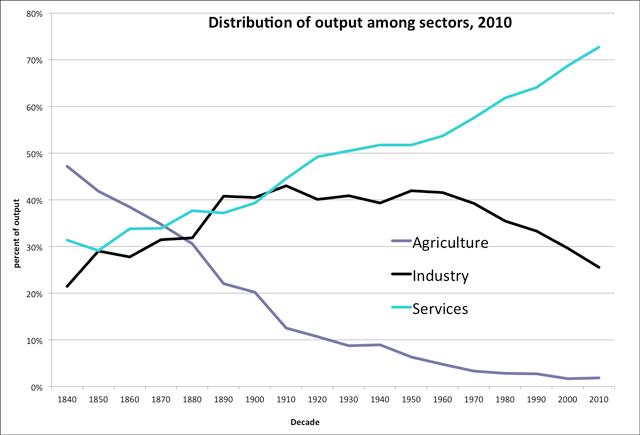
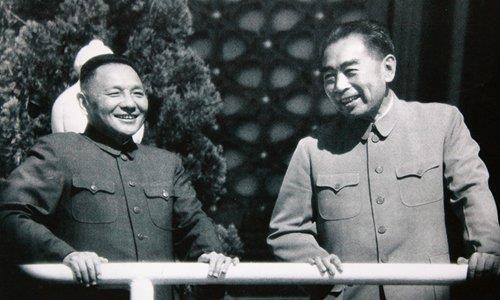

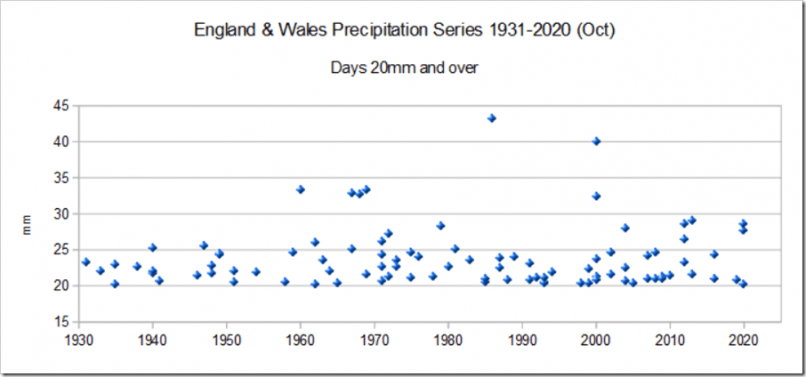
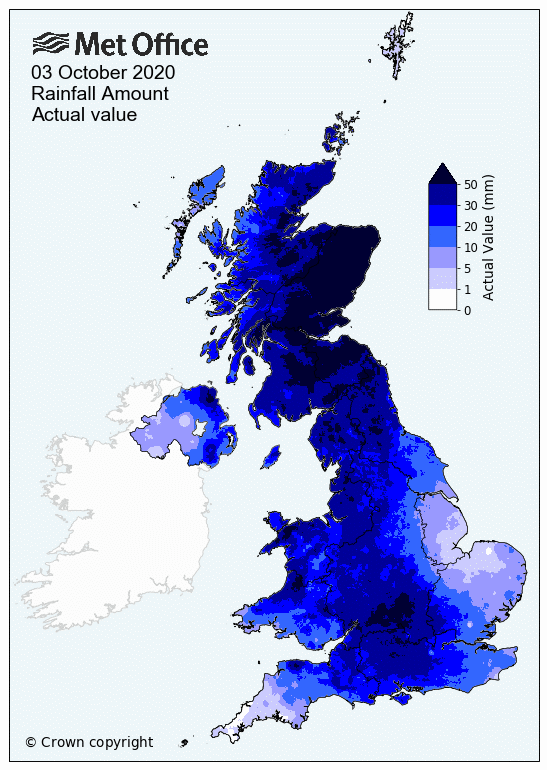
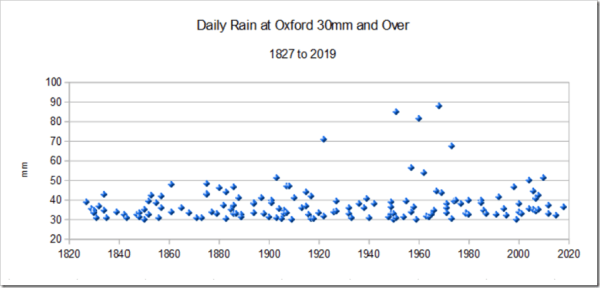


 Aletho News


