Despite being the global epicentre of COVID-19 cases and deaths, the world’s leading nuclear power accounted for roughly half of total global spending on nuclear arms, a shock report from a major Swiss nonprofit coalition found.
Nuclear armed states spent a record $73bn on nuclear weapons amid the ongoing COVID-19 pandemic, a report from the Geneva-based International Campaign to Abolish Nuclear Weapons (ICAN) revealed.
The findings, which assessed the world’s leading nuclear powers – The United States, United Kingdom, France, China, Russia, Pakistan, India, Israel and North Korea – revealed that top nuclear powers spent $138,699 on over 13,000 nuclear weapons every minute of 2019.
The amount of money the US spent in 2019 alone could pay for 300,000 intensive care unit beds, 150,000 nurses, 75,000 doctors and 35,000 ventilators, the report found.
But the United Kingdom was the third highest spender at $8.9bn after the US and China at $35bn and $10.4bn, respectively, according to the report.
“It is absurd to be spending $138,700 every single minute on weapons that cause catastrophic human harm rather than spending it to protect the health of their citizens. They are abdicating their duty to protect their people,” ICAN executive director, Beatrice Fihn, said in a statement.
Nuclear arms were banned by the Treaty on the Prohibition of Nuclear Weapons (TPNW), which the UN will enforce after all participating 50 nations ratify or accede the document, effectively criminalising such expenditures under international law.
But the figures only included direct spending on nuclear warheads and delivery systems costs for operation and deployment, with real numbers skyrocketing after factoring in costs due to environmental damage and victim compensation, with ICAN calling on governments to remain transparent in disclosing expenses, the statement read.
Alicia Sanders-Zakre, author of the report, said: “The figures do not include the massive humanitarian costs and the environmental toll from a legacy of nuclear testing and production. Even in the unlikely chance these weapons are never used, governments are paying massive sums to poison their environments and put their people at grave risk.”
The news comes as British MPs slammed the Ministry of Defence for wasting £1.3bn ($1.6bn) on upgrading the country’s nuclear Trident programme, which is currently six years behind schedule. Costs were estimated at £2.5bn for the three upgrade programmes, which have spiked an additional £1.35bn, according to reports.
In light of the ongoing Coronavirus pandemic, which has caused rapid and substantial harm to many nations and lives of their citizens, analysts are reluctantly starting to look at the possibility that certain countries may resort to the use of biological weapons capable of causing mass deaths. Germ warfare is the use of biological toxins or infectious agents, such as bacteria, viruses, insects, and fungi, that are biological in origin with the intent to kill people, animals and plants. Designing microorganisms that cause disease and means of spreading them among target populations are all part of biological warfare.
In the military, the concept of weaponizing germs has existed for a long time. After all, epidemics that happened during wars resulted in substantial losses of troops, and this, in turn, had a significant impact on the way the conflict unfolded as well as its outcome. For example, during the Vietnam War, US troops lost more (approximately 3-fold) servicemen to disease than during military operations (injuries and deaths). Epidemics among civilian populations away from battlefields also had very negative consequences, resulting in serious issues in manufacturing and logistics sectors and, overall, problems in governance.
Hence, it is not surprising that the United States — responsible for unleashing more armed conflicts than any other country in recent years and for launching numerous military interventions in regions all over the world — has been constantly ramping up its research into biological warfare, mainly through the Pentagon’s Defense Advanced Research Projects Agency (DARPA). One of the key aims of its biological technologies branch is to conduct studies on germs.
It is worth reminding our readers that the Convention on the Prohibition of the Development, Production and Stockpiling of Bacteriological (Biological) and Toxin Weapons and on their Destruction (BWC) was open for signature on 10 April 1972. It entered into force on 26 March 1975 when twenty-two governments deposited their instruments of ratification of this Convention with the Secretary-General of the United Nations. To date, 163 nations signed the BWC, thus agreeing not to develop, produce or stockpile biological weapons. Although the United States ratified the Biological Weapons Convention in 1972, it did not sign an internationally binding verification protocol to the BWC from 2001. Hence, there are no mechanisms in place to check whether the USA is complying with the convention.
In any case, it is well-known that since the middle of 2016, four research teams under the aegis of DARPA have been working on a revolutionary research project aimed at protecting “the U.S. agricultural food supply by delivering protective genes to plants via insects”, called Insect Allies. American scientists “are looking at introducing genetically modified viruses that can edit chromosomes directly”, such as “using insects to transmit genetically modified material into plants”. In the summer of 2017, the research program received $27 million in funding.
In the opinion of experts from the Max Planck Institute for Evolutionary Biology in Germany and the University of Montpellier in France, Insect Allies “may be widely perceived as an effort to develop biological agents for hostile purposes and their means of delivery”. DARPA has denied such assertions “DARPA is producing neither biological weapons nor the means for their delivery”. Still, the authors of the article published in Science believe that the microorganisms in question could do more harm than good. For instance, insects “could be used to disperse agents that would prevent seeds from growing”.
“Given that DARPA is a military agency, we find it surprising that the obvious and concerning dual-use aspects of this research have received so little attention,” Felix Beck, a lawyer at the University of Freiburg, said. “The Insect Allies programme is largely unknown, even in expert circles,” Dr. Guy Reeves, an expert in GM insects at the Max Planck Institute for Evolutionary Biology said. According to Silja Voeneky, a legal scholar at the University of Freiburg in Germany, the program “may be widely perceived as an effort to develop biological agents for hostile purposes and their means of delivery”, and thus, as a violation of the BWC, which is strongly worded, banning the development of any biological agents “that have no justification for prophylactic, protective, or other peaceful purposes”.
Information available to date indicates that maize and tomato plants were used in experiments, with “leafhoppers, aphids and whiteflies” employed to disperse the genetically modified material. Since maize is widely cultivated and consumed in Latin America and Africa, the fact that it was chosen for the research study also points to a potential military use of DARPA’s program. Apparently, the defense agency ensures that its scientists do not conduct experiments on plants that are not widely used by people.
Leaving your opponent without a harvest, which could lead to famine, is a much slower approach to reaching one’s aim. But it is a practical one, as the land could still be used for growing crops in the future. Such a bioweapon (an insect that introduces genetically modified material) could be deployed by an aggressor without the need for special equipment, thus leaving no trace of an attack. No means of spreading any chemicals or toxins would be found either as these could serve as indirect proof of a deliberate (far from natural) attack on plants. Filling a field with weaponized insects is all one needs.
Recent epidemics among animals (for instance, the spread of African swine fever virus among pigs in a number of countries) and the appearance of new types of insects that cause great harm, all point to a potential link to some types of foreign bioweapons. For instance, tropical insects are gaining a foothold in Germany and spreading deadly illnesses in the process. According to experts, such bugs are dangerous because they can spread infectious agents that cause tropical diseases.
Throughout the Caucasus box tree moths (native to Asia) have been spreading for unknown reasons and causing severe damage to Colchic boxwood, a rare and endangered plant.
Concerns are growing about the fact that the United States has been providing a great deal of funding for biological programs that may have dual uses, such as conducting controversial experiments with infectious agents that cause deadly diseases; testing mechanisms of dispersal; increasing the scope of military research in biolabs abroad, and others. And as there are more and more questions about the nature of research done in numerous secret biolabs of the Pentagon, an unbiased international investigation ought to be conducted into their work.
Veteran advocacy groups hope that research presented in a new white paper will allow American veterans to file for disability benefits if they have diseases linked to Agent Orange following US military service on Guam between 1962 and 1975.
The National Veterans Legal Services Program and the Jerome Frank Legal Services Organization at Yale Law School published an authoritative report on May 8 which evaluated evidence on Guam-based US veterans’ exposure to Agent Orange and other dioxin-containing herbicide agents in the ‘60s and ‘70s.
“We conclude that existing evidence establishes that it is, at the very least, ‘as likely as not’ that veterans who served in Guam from 1962 to 1975 were exposed to Agent Orange and other dioxin-containing herbicides,” the report read.
The white paper comes as the latest effort seeking to make available Agent Orange disability benefits from the US Department of Veterans Affairs (VA) to troops who were exposed to the dangerous herbicide and related chemicals – after initially being told during combat that Agent Orange was virtually harmless.
Citing government documents on the matter, the report asserted there is “direct evidence” that the US Department of Defense’s “expedient and unregulated disposal of hazardous wastes on Guam” resulted in increased risk of exposure to 2,3,7,8-tetrachlorodibenzo-p-dioxin – a highly toxic dioxin byproduct of making Agent Orange – “and other dioxin pollution.”
The government documents detailed “widespread practices of herbicide spraying, mishandling, and improper disposal prior to enactment of federal hazardous waste regulations in 1976.”
An extensive list of “locations where tactical herbicides and their chemical components were tested” was released by the Pentagon in December 2019. However, Guam was not one of the locations included, despite the island hosting tens of thousands of US troops during the war.
The white paper referenced a 2018 examination of records by the Government Accountability Office (GAO) that, in summary, claimed the use and storage of Agent Orange on Guam “could neither be conclusively proved nor disproved based on available records, in part because some potentially relevant DoD records have been lost or destroyed.”
As a result, those who have Agent Orange-related illnesses and served on Guam between 1962 and 1975 do not immediately qualify for VA benefits and instead have to satisfy evidence requirements that call for both medical and service records. Additional proof is requested if the veteran’s Agent Orange-related disease is not included in the VA’s approved list.
The May 8 report noted that the Pentagon’s failure to retain documents should not be such a major roadblock for veterans.
“Individual veterans should not be penalized for an incomplete evidentiary record when DoD has failed to maintain this record, or to resolve and refute extensive claims of Agent Orange and other toxic herbicide exposure,” the white paper read.
It remains to be seen whether the VA will move to make this particular change to Agent Orange disability benefits, but Military.com reported that the department is awaiting the results of two studies before making a final decision on whether to add “bladder cancer, Parkinson’s-like tremors, hypothyroidism, hypertension and monoclonal gammopathy of undetermined significance” to its list of Agent Orange-related diseases.
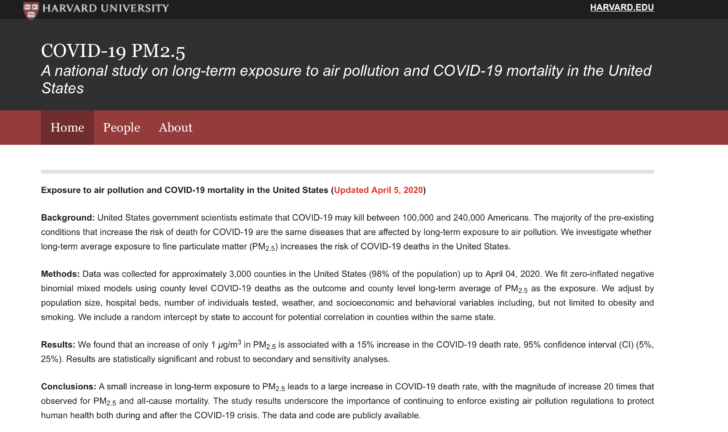
Never waste a crisis. A new study from Harvard claims that 1 microgram per cubic meter increase in PM2.5 is associated with a 15% increase in deaths from COVID19. This is totally absurd.
There is no biological plausibility to the notion that PM2.5 causes death.
A change in exposure to PM2.5 of 1 microgram per cubic meter is not significant, discernible or detectable.
If this claim were true, the death toll in Wuhan, China would be astronomical since, for example, the PM2.5 level in Wuhan is 158 micrograms/m3 — about 10 times higher than average US air.
But now that the Harvard fraudsters have made this data available, perhaps they’d be wailing to share their Harvard Six City study data?
Over the last several months, Americans have witnessed an increase in media propaganda regarding the “dangers” of “anti-vaxxers,” the “proven science of vaccines,” and the “tragedies” that ensue from the failure to vaccinate. That propaganda blitz has resulted in massive hysteria stemming from similar levels of ignorance.
Also resulting from the push by Big Pharma-funded corporate media outlets is the emotional and panicked campaign of pro-vaxxers, vaccine pushers, and adherents to the relatively recent new religion of “scientism” – the religious belief in anything labeled as science or scientific, regardless of whether or not that concept directly contradicts observable reality and experience or even regardless of whether or not it is actually scientific.
The so-called vaccine debate – which is not truly a debate since a debate requires the participation of two opposing sides – is generally nothing more than a shouting and shaming campaign against parents who have come to the conclusion that vaccines are not safe, effective, or neither.
Indeed, it is the unbridled emotion of the pro-vaccine camp that has been provoked and subsequently harnessed into a powerhouse of vitriol and social pressure that is then presented as a public health crisis. The howling of the trendy masses, glued to their televisions, sitcoms, and NPR, is then presented as an organic public outcry in the media, resulting in the conveniently timed response of politicians and lawmakers.
Of course, with the creation of the false debate, there is also the political polarization of the issue – the left must be pitted against the right – in a typical but tried and true method of divide and conquer strategy.
Originally, holding questions regarding the safety or effectiveness of vaccinations was something that bridged political boundaries. Granted, the individuals who held these views were a minority. However, those numbers were growing and could be found in the midst of liberals and conservatives, libertarians and socialists, and even those completely unaligned to any ideology.
Now, however, that is beginning to change. The Big Pharma companies that fund the mainstream media and the political parasites infecting the federal and state capitols have managed to turn this debate into a partisan issue.
The propaganda campaign has been successful among members of all political denominations, but particularly so among the left. This is because the left is made up of a population that is well-trained to believe anything presented to them under the guise of science in much the same way as the right who are designed to believe anything presented in a religious context.
The result of this massive absorption of indoctrination is that we have the passage of bills mandating that children be vaccinated by force of law in California and even the attempt to force adults to be vaccinated as well.
With mandates coming out of California, North Carolina, and Vermont, clearly there is a nationwide agenda at foot.
But while those on the left continue to attack Koch Industries and ALEC for funding a number of horrific economic policies and divisive domestic campaigns, painting any idea they oppose coming from the Republican camps as a “Koch-funded” program (it often is), the reality is that the leftists are the biggest dupes in the vaccine game.
This is because, while leftists hawk vaccines and pride themselves on their obedience to doctors and “scientists,” they are doing nothing more than falling into line with a massive Koch-funded and ALEC-facilitated propaganda campaign.
American Legislative Exchange Council (ALEC)
For those who may not be familiar with the American Legislative Exchange Council (ALEC), the council is considered a “non-profit organization” made up of Conservative state legislators and corporate private sector “partners.” This mixture of government officials and corporate agents then meet regularly, replete with funding from major corporations all across the world to discuss, plan, write, and submit legislation that is beneficial to the corporations.
In one sense, ALEC is a massive corporate lobbying firm. In another, however, ALEC is much more, since much of the legislation submitted by the attentive congressman is actually written for the Senator or Representative by the agents of the organization. It is an organization that provides funding and direction (marching orders) for Congressmen, particularly those at the state level.
While slimy billionaires like George Soros act as the guiding force behind much of the American left, ALEC and KOCH Industries tend to fill the same void for the right; although, in truth, most of the corporations that make up ALEC are those who also fund Democratic candidates. Presentation, however, in a carefully crafted political theatre like the United States, is paramount.
For decades, the American Legislative Exchange Council has been a force in shaping conservative policies at the state level. Today, its impact is even more pervasive. Its legislative ideas are resonating in practically every area of state government, from education and health to energy, environment and tax policy. The group, which brings together legislators with representatives from corporations, think tanks and foundations to craft model bills, has rung up an impressive score. Roughly 1,000 bills based on ALEC language are introduced in an average year, with about 20 percent getting enacted.
For three decades, the American Legislative Exchange Council, the meeting’s host, has brought together corporations (including Pfizer (PFE), AT&T (T), and ExxonMobil (XOM)) and state legislators to write what it calls model bills—pieces of legislation the industries would like to become law. Often this means protecting favored tax treatment or keeping regulations at bay. ALEC has also approved model bills on social issues, including gun control and voter registration. The bills then get passed around among the 1,800 mostly Republican legislators who are ALEC members. They introduce the model bills about 1,000 times a year in state capitols around the country, the group says. About 200 become law. ALEC pays for the meetings through membership fees (called donations) that corporations pay. The legislators receive travel stipends (called scholarships) to attend the meetings. ALEC is registered with the IRS as a nonprofit that provides a public service, not as a lobbyist that seeks to influence.
This offers two benefits: Corporate members can deduct yearly dues, which run up to $25,000—more if they want to sponsor meetings; and ALEC doesn’t have to disclose the names of legislators and executives who attend. That’s important, because if ALEC operated with complete openness it would have difficulty operating at all. ALEC has attracted a wide and wealthy range of supporters in part because it’s done its work behind closed doors. Membership lists were secret. The origins of the model bills were secret. Part of ALEC’s mission is to present industry-backed legislation as grass-roots work. If this were to become clear to everyone, there’d be no reason for corporations to use it.
While ALEC has pushed a number of bills regarding divisive wedge issues (it has to keep up its conservative veneer), it focuses mostly on economic issues promoting free market, Austrian school, deregulation, free trade, and other policies supported by major banks and corporations.
But ALEC is also a major pusher of laws regarding medical issues – not merely in the context of the American healthcare system, but also in the context of personal choice.
Despite all the rhetoric of ALEC and its puppets in Congress, the position of the organization and its puppets is not necessarily in favor of personal choice. This much has been made clear in the form of mandates and force of law, particularly in the area of vaccination.
Below are a very small few of pharmaceutical companies that are part of ALEC’s operations.
Astellas Pharma Inc.
Bayer
Dupont (Dupont Merck Pharmaceuticals)
Eli Lilly
Endo Pharmaceuticals
Express Scripts
GlaxoSmithKline
Hoechst- Roussell Pharmaceutical Corporation
Hoffman La-Roche
Imperial Chemical Industries Pharmaceuticals
Johnson & Johnson
Mylan Pharmaceuticals
Novo Nordisk
Pharmacia and UpJohn
Purdue Pharma
Pfizer
Solvay Pharmaceutical
Takeda Pharmaceutical
TEVA Pharmaceuticals
TogetherRX Access (made up of ABBVIE, GSK, Janssen, Lifescan, Pfizer, Stiefel, Viiv Healthcare, Vistakon Pharmaceuticals)
The UpJohn Co.
These names are only a small few of the myriad of pharmaceutical companies, vaccine manufacturers, and other interested parties who are listed as members of ALEC. Many of these companies are concealed even further by a veil of umbrella “organizations” acting as front operations.
ALEC And Vaccines
With such a massive list of major pharmaceutical companies amidst ALEC’s ranks, it should come as no real surprise that ALEC would be one of the driving forces behind the recent spate of “mandatory vaccine bills” popping up all across the country. Indeed, its motto should be “Personal Choice For Corporations. Government Enforced Mandates For People.”
Remember, it was ALEC that crafted the “model” legislation “Immunization of Minors On TANF,” legislation that would have required parents on TANF assistance to require proof that their children were fully vaccinated according to the “recommended” levels. If those families did not show proof of their child’s vaccination, those families would lose their TANF benefits.
While exemptions were left intact in this “model” legislation, ALEC has stepped up its attack on parental rights by going after the exemption status in later bills.
For instance, consider the attempt to remove Vermont citizens’ rights to a philosophical exemption to vaccination known as SB 199, a bill that caught many in Vermont by complete surprise. Of course, when one takes a look at the key players and possible motivations, it becomes more obvious as to how this bill came to be and why.
S199 was introduced in the state Senate by Kevin Mullin, who is VT chair of the Pharma-funded American Legislative Exchange Council (ALEC), and was introduced in the state House by Representative George Till, M.D., at the request of Harry Chen, M.D., Vermont’s Health Commissioner. Dr. Chen, who was a Vermont state representative and former chair of the Vermont House Health Care Committee for four years, has publicly downplayed vaccine risks.
S199 was supported by the VT Dept. of Health and state government supported institutions, such as the University of Vermont, as well as medical trade associations that receive money from pharmaceutical corporations selling vaccines in the U.S., including the American Academy of Pediatrics (AAP), March of Dimes, Every Child by Two and the American Legislative Exchange Council (ALEC). Other organizations endorsing elimination of the philosophical exemption included the Vermont Academy of Family Physicians, Fletcher Allen, Vermont Association of Hospitals and Health Systems, Voices for VT Children, Vermont Pharmacists Association, Rutland Medical Center, and Vermont Medical Society.
Here ALEC’s Vermont chairman, Republican Sen. Kevin Mullin, introduced S.199, a bill seeking to end the “philosophical exemption” in the childhood vaccine laws. A Republican introducing a health care bill, one that removes a parent’s rights, one that obliges all children to participate in a health care plan. … An ugly duckling if ever there was one! Just doesn’t look like all the rest.
The duckling looks even uglier in the light of Vermont’s exemplary health statistics. We rank right up there on general health, low incidence of infectious diseases, and low child mortality. What’s the problem, what motivates such a bill? Well, several corporations have recently publicly cut their ties with ALEC over ALEC’s Stand Your Ground gun laws, underscoring the reality that ALEC is funded by corporations, and we may guess has their interests at heart more than your child’s well-being.
One might be tempted to argue that the vaccine bill submitted in Vermont was merely an anomaly. That is, one would be tempted to make this argument if the Vermont bill was the only such bill submitted and supported by ALEC and its members.
In California, the infamous and fascist SB 277 which unfortunately became law was introduced by another vaccine fanatic and high priest of the religion of scientism, Richard Pan. Ben Allen, however, the second State Senator to introduce the legislation into the California state Senate is himself connected to ALEC. As Maureen Cruise of LA Progressive wrote in regards to Allen’s funding,
Among other wealthy conservative donors are William E. Oberndorf, a California billionaire investor who funds conservative causes such as the privatization of education which he promotes via the American Legislative Exchange Council (ALEC). He has contributed to the Karl Rove PAC and to Jeb Bush and the GW Bush Foundation. The Fisher Family of Gap and a dozen other corporations are fans of privatization of the public sector and charter schools.
Oberndorf, the ALEC big wig, is a major donor of Allen.
Cruise also points out that a sizable portion of Allen’s campaign contributions come directly from pharmaceutical interests.
A similar story is discovered in North Carolina, where notoriously arrogant and corrupt Senator Jeff Tarte – in between fits of whining and rage – introduced a bill that would have removed all vaccine exemption rights (except for medical exemptions) from parents and children, including homeschool children.
As if his last name did not accurately describe his disposition, Senator Tarte was one of the main sponsors of the NC bill SB 346, a bill that would have eliminated the “religious exemption” clause in the recommended vaccine schedule for children entering NC public schools. He was also a main contender for the title of worst public relations interaction with a constituent in the state of North Carolina in the last several years.
In keeping with the trend of recent events, however, Tarte is also a member of the ALEC organization, a feather in his cap that he was not shy in advertising in his weekly newsletter. Tarte not only is a member, but an active participant taking part in speaking events and even a seat on the ALEC Education Council.
Conclusion
The goal of forced vaccination has been in existence for quite some time, going back to a number of elite think tanks decades ago and the halls of pharmaceutical companies. Major pharmaceutical companies, for many obvious (or should be obvious ) reasons would also like to mandate vaccination. Increased profits from the vaccine sales and the treatment of resulting disease, as well as the cover-up of vaccine risks by a population free of a control group are but a few of the reasons such corporations are supporting the vaccine mandates.
After all, as Bertrand Russell stated as far back as 1953,
Diet, injections, and injunctions will combine, from a very early age, to produce the sort of character and the sort of beliefs that the authorities consider desirable, and any serious criticism of the powers that be will become psychologically impossible. . . .
But, while the push to mandate vaccines for children and adults is by no means an ALEC-centric conspiracy, this recent push for such laws was indeed formulated in ALEC councils.
For this reason, it is highly ironic that the political left should be the half of the paradigm that takes up the charge for mandatory vaccination laws. After all, it is the left (at the lower levels) who seems to live by the motto “If ALEC supports it, we oppose it.” This time, all it took was some clever propaganda, trendy nudging, and social shaming and the left was marching right behind ALEC as militantly as if they were Republicans all along.
The entire vaccine debate can scarcely even be labeled a debate. It is an exercise in social shaming, shouting down opposing views, and religious devotion to television and anyone wearing a lab coat or claiming to be an expert.
With the culprit behind the recent mandatory vaccine/eliminate exemption push now revealed, it is time to begin working toward repealing these laws and making sure that no similar bill is ever politically viable.
The biggest news story of 1988 was the destruction of Pan Am Flight 103 over Lockerbie, Scotland that killed 270 people. The US government falsely informed the world that Libya was responsible for an act of terrorism. It was later proven that Iran funded the downing of Pan Am Flight 103 in retaliation for the shoot down of Iran Air Flight 655 by a US Navy warship five months earlier. The US government knew that Iran was responsible but blaming Iran for an eye-for-an-eye retaliation would demonstrate that a regional power can hit back at a superpower.
_____________________________
“Sea of Lies”; Newsweek ; July 13, 1989.; revealed that the USS Vincennes was not under attack when it shot down an Iranian airliner; https://www.newsweek.com/sea-lies-200118
“Secret CIA testimony identifies real Lockerbie mastermind”; a 2013 documentary aired by the popular British Channel 4 News that reveals Libya was not responsible; https://www.youtube.com/watch?v=26Gon…
Despite the fact Scottish courts freed the accused Libyans, the official story remains that Libya was responsible, as evidenced by Wikipedia placing well-documented alternative theories in a separate section as “conspiracy theories.”; https://en.wikipedia.org/wiki/Pan_Am_…
Analyzing medical death rate data over an eight-year period, Johns Hopkins patient safety experts have calculated that more than 250,000 deaths per year are due to medical error in the U.S. Their figure, published May 3 in The BMJ, surpasses the U.S. Centers for Disease Control and Prevention’s third leading cause of death—respiratory disease, which kills close to 150,000 people per year.
The Johns Hopkins team says the CDC’s way of collecting national health statistics fails to classify medical errors separately on the death certificate. The researchers are advocating for updated criteria for classifying deaths on death certificates.
“Incidence rates for deaths directly attributable to medical care gone awry haven’t been recognized in any standardized method for collecting national statistics,” says Martin Makary, professor of surgery at the Johns Hopkins University School of Medicine and an authority on health reform. “The medical coding system was designed to maximize billing for physician services, not to collect national health statistics, as it is currently being used.”
In 1949, Makary says, the U.S. adopted an international form that used International Classification of Diseases billing codes to tally causes of death.
“At that time, it was under-recognized that diagnostic errors, medical mistakes, and the absence of safety nets could result in someone’s death,” says Makary, “and because of that, medical errors were unintentionally excluded from national health statistics.”
In their study, the researchers examined four separate studies that analyzed medical death rate data from 2000 to 2008. Then, using hospital admission rates from 2013, they extrapolated that based on a total of 35,416,020 hospitalizations, 251,454 deaths stemmed from a medical error, which the researchers say now translates to 9.5 percent of all deaths each year in the U.S.
According to the CDC, in 2013, 611,105 people died of heart disease, 584,881 died of cancer, and 149,205 died of chronic respiratory disease—the top three causes of death in the U.S. The newly calculated figure for medical errors puts this cause of death behind cancer but ahead of respiratory disease.
“Top-ranked causes of death as reported by the CDC inform our country’s research funding and public health priorities,” Makary says. “Right now, cancer and heart disease get a ton of attention, but since medical errors don’t appear on the list, the problem doesn’t get the funding and attention it deserves.”
The researchers caution that most medical errors aren’t due to inherently bad doctors, and that reporting these errors shouldn’t be addressed by punishment or legal action. Rather, they say, most errors represent systemic problems, including poorly coordinated care, fragmented insurance networks, the absence or underuse of safety nets, and other protocols, in addition to unwarranted variation in physician practice patterns that lack accountability.
“Unwarranted variation is endemic in health care,” Makary says. “Developing consensus protocols that streamline the delivery of medicine and reduce variability can improve quality and lower costs in health care. More research on preventing medical errors from occurring is needed to address the problem.”
In less than three decades, a mere blink of the eye in historical terms, the United States has gone from the world’s sole superpower to a massive foundering wreck that is helpless before the coronavirus and intent on blaming the rest of the world for its own shortcomings. As the journalist Fintan O’Toole noted recently in the Irish Times :
“Over more than two centuries, the United States has stirred a very wide range of feelings in the rest of the world: love and hatred, fear and hope, envy and contempt, awe and anger. But there is one emotion that has never been directed towards the U.S. until now: pity.”
Quite right. But how and why did this pitiable condition come about? Is it all Donald Trump’s fault as so many now assume? Or did the process begin earlier?
The answer for any serious student of imperial politics is the latter. Indeed, a fascinating email suggests that the tipping point occurred in early to mid-2014, long before Trump set foot in the Oval Office.
Sent from U.S. General Wesley Clark to Philip Breedlove, Clark’s successor as NATO commander in Europe, the email is dated Apr. 12, 2014, and concerns events in the Ukraine that had recently begun spinning out of control. A few weeks earlier, the Obama administration had been on top of the world thanks to a nationalist insurrection in Kiev that had chased out a mildly pro-Russian president named Viktor Yanukovych. Champagne glasses were no doubt clinking in Washington now that the Ukraine was solidly in the western camp. But then everything went awry. First, Vladimir Putin seized control of the Crimean Peninsula, site of an all-important Russian naval base at Sevastopol. Then a pro-Russian insurgency took off in Donetsk and Luhansk, two Russian-speaking provinces in the Ukraine’s far east. Suddenly, the country was coming apart at the seams, and the U.S. didn’t know what to do.
It was at that moment that Clark dashed off his note. Already, he informed Breedlove, “Putin has read U.S. inaction in Georgia and Syria as U.S. ‘weakness.’” But now, thanks to the alarming turn of events in the Ukraine, others were doing the same. As he put it:
“China is watching closely. China will have four aircraft carriers and airspace dominance in the Western Pacific, within 5 years, if current trends continue. And if we let Ukraine slide away, it definitely raises the risks of conflict in the Pacific. For, China will ask would the U.S. then assert itself for Japan, Korea, Taiwan the Philippines the South China Sea?… [I]f Russia takes Ukraine, Belarus will join the Eurasian Union, and, presto, the Soviet Union (in another name) will be back.… Neither the Baltics nor the Balkans will easily resist the political disruptions empowered by a resurgent Russia and what good is a NATO ‘security guarantee’ against internal subversion?…. And then the U.S. will find a much stronger Russia, a crumbling NATO and [a] major challenge in the Western Pacific. Far easier to [hold] the line now in Ukraine than elsewhere later”.
The email speaks volumes about the mentality of those in charge. Conceivably, the Obama administration still had time to turn things around – if, that is, it had shown a bit of flexibility, a willingness to compromise, and a willingness as well to stand up to the ultra-nationalists who had led the anti-Yanukovych upsurge and opposed anything smacking of an even-handed settlement.
But instead it did the opposite. Back in the 1960s, cold warriors had argued that if Vietnam “fell” to the Communists, then Thailand, Burma, and even India would follow suit. But the proposition that Clark now advanced was even more extreme, a super-Domino Theory holding that a minor ethnic uprising in a part of the world that few people in Washington could find on the map was intolerable because it could cause the entire international structure to unravel. NATO, U.S. control of the western Pacific, victory over the Soviets – all would be lost because a few thousand people insisted on speaking their native Russian.
Why such rigidity? The real problem was not so much a confrontation mindset as a phenomenon that the historian Paul Kennedy had identified in the late 1980s: “imperial overstretch.” Like other empires before it, the U.S. had allowed itself to become so over-extended after twenty-five years of “unipolarity” that strategists had their hands full keeping an increasingly rickety structure together. Nerves were on edge, which is why an ethnic uprising that might have been accommodated at an earlier stage of U.S. imperial development was no longer tolerable. Because the rebels had run afoul of U.S. imperial priorities, they constituted a fundamental threat and therefore had to be bulldozed out of the way.
Except for one thing: the structure was so weak that each new bulldoze operation only made matters worse. Insurgents continued to hold their ground in Donetsk and Luhansk thanks to Russian backing while the government grew more and more corrupt and unstable back in Kiev. In the Middle East, the situation was so confused that U.S. allies like Saudi Arabia and Qatar were channeling money and arms to ISIS as it rampaged through eastern Syria and northern Iraq and advanced on Baghdad. Thanks to the turmoil that U.S. policies were unleashing, millions of desperate refugees would soon make their way to Europe where they would spark a powerful nativist reaction that continues to this day. U.S. hegemony was turning into a nightmare.
It was no different in an America shaken by Wahhabist terrorism and dismayed by wars in the Middle East that went nowhere yet never seemed to end. Donald Trump rode a wave of discontent into the White House by promising to “drain the swamp” and bring the troops home. Conceivably, he could have done just that once he was in office – if, that is, he had been serious about downsizing U.S. imperialism and was capable of standing up to the CIA. But the “intelligence community” struck back by launching a classic destabilization campaign based on the theme of Russian collusion while Trump’s foreign-policy ideas turned out to be even more of a mess than Obama’s.
So the collapse intensified, which is why America is now such a helpless giant. A crazy man is at the helm, yet the best Democrats can do is put up a candidate suffering from the early stages of senile dementia, who may be a rapist to boot. No one knows how things will play out from this point on. But two things are clear. One is that the process did not start under Trump, while the other is that it will undoubtedly continue regardless of who wins in November. Once collapse sets in, it’s impossible to stop.
POPPY HARLOW: Ten billion dollars. I mean, just speak about the magnitude of that. That is by far the biggest commitment of the foundation, isn’t it, Bill? I mean this is by far the largest.
BILL GATES: That’s right, we’ve been spending a lot on vaccines. With this commitment, over eight million additional lives will be saved. So it’s one of the most effective ways that health in the poorest countries can be dramatically improved.
In January of 2010, Bill and Melinda Gates used the World Economic Forum at Davos to announce a staggering $10 billion commitment to research and develop vaccines for the world’s poorest countries, kicking off what he called a “decade of vaccines.”
GATES: Today we’re announcing a commitment over this next decade, which we think of as a decade of vaccines having incredible impact. We’re announcing that we’ll spend over $10 billion on vaccines.
. . . and applauded by the pharmaceutical companies who stood to reap the benefits of that largesse, the record-setting commitment made waves in the international community, helping to underwrite a Global Vaccine Action Plan coordinated by the Gates-funded World Health Organization.
But contrary to Gates’ own PR spin that this $10 billion pledge was an unalloyed good and would save 8 million lives, the truth is that this attempt to reorient the global health economy was part of a much bigger agenda. An agenda that would ultimately lead to greater profits for big pharma companies, greater control for the Gates Foundation over the field of global health, and greater power for Bill Gates to shape the course of the future for billions of people around the planet.
Given Gates’ pledge to make this a “Decade of Vaccines,” it should come as no surprise that, since the dawn of this coronavirus crisis, he has been adamant that the world will not go back to normal until a vaccine has been developed.
GATES: We’re gonna have this intermediate period of opening up, and it won’t be normal until we get an amazing vaccine to the entire world.
GATES: The vaccine is critical, because, until you have that, things aren’t really going to be normal. They can open up to some degree, but the risk of a rebound will be there until we have very broad vaccination.
GATES: They won’t be back to normal until we either have that phenomenal vaccine or a therapeutic that’s like over 95% effective. And so we have to assume that’s going to be almost 18 months from now.
More interestingly, since Gates began delivering this same talking point in every one of his many media appearances of late, it has been picked up and repeated by heads of state, health officials, doctors and media talking heads, right down to the scientifically arbitrary but very specific 18-month time frame.
ZEKE EMANUEL: Realistically, COVID-19 will be here for the next 18 months or more. We will not be able to return to normalcy until we find a vaccine or effective medications.
DONALD TRUMP: Obviously, we continue to work on the vaccines, but the vaccines have to be down the road by probably 14, 15, 16 months. We’re doing great on the vaccines.
The fact that so many heads of state, health ministers and media commentators are dutifully echoing Gates’ pronouncement about the need for a vaccine will not be surprising to those who saw last week’s exploration of How Bill Gates Monopolized Global Health. As we have seen, the Gates Foundation’s tentacles have penetrated into every corner of the field of public health. Billions of dollars in funding and entire public policy agendas are under the control of this man, an unelected, unaccountable software developer with no medical research experience or training.
And nowhere is Gates’ control of global public health more apparent than in the realm of vaccines.
One of the Gates Foundation’s core funding areas is “vaccine development and surveillance,” which has resulted in the channeling of billions of dollars into vaccine development, a seat at the table to develop vaccination campaigns in countries around the globe, and the opportunity to shape public thinking around Bill Gates’ pet project of the past five years: preparing rapid development and deployment of vaccines in the event of a globally-spreading pandemic.
GATES: If anything kills over 10 million people in the next few decades, it’s most likely to be a highly infectious virus.
GATES: Whether it occurs by a quirk of nature or at the hand of a terrorist, epidemiologists show through their models that a respiratory spread pathogen would kill more than 30 million people in less than a year and there is a reasonable probability of that taking place in the years ahead.
BABITA SHARMA: Many high-profile personalities have been meeting at this week’s World Economic Forum in Davos, which aims to discuss the globe’s most pressing issues. Amongst them is Microsoft founder Bill Gates, whose foundation is investing millions in the Coalition for Epidemic Preparedness Innovations to help combat infectious diseases. Here’s some of what he had to say about his push to develop new vaccines.
GATES: Unfortunately, it takes many years to do a completely new vaccine. The design, the safety review, the manufacturing; all those things mean that an epidemic can be very widespread before that tool would come along. And so after ebola the global health community talked a lot about this, including a new type of vaccine platform called DNA/RNA that should speed things along.
And so this Coalition for Epidemic Preparedness Initiative [sic], CEPI, is three countries—Japan, Norway, Germany—and two foundations—Wellcome Trust, [who] we work with on a lot of things, and our foundation, the Gates Foundation—coming together to fund . . . actually trying to use that platform and make some vaccines. And so that would help us in the future.
NARRATORS: We know vaccines can protect us. We just need to be better prepared. So let’s come together, let’s research and invest. Let’s save lives. Let’s outsmart epidemics.
What should be surprising is that this strangely specific and continuously repeated message—that we will not go “back to normal” until we get a vaccine in 18 months—has no scientific basis whatsoever. Medical researchers have already conceded that a vaccine for SARS-CoV-2 may not even be possible, pointing to the inability of researchers to develop any kind of immunization against previous coronavirus outbreaks, like SARS or MERS.
But even if such a vaccine were possible, serious concerns remain about the safety of developing, testing and delivering such an “amazing vaccine” to “the entire world” in this remarkably short timeframe. Even proponents of vaccine development openly worry that the rush to vaccinate billions of people with a largely untested, experimental coronavirus vaccine will itself present grave risks to the public.
One of these risks involves “disease enhancement.” It has been known for over a decade that vaccination for some viral infections—including coronaviruses—actually enhances susceptibility to viral infection or even causes infections in healthy vaccine recipients.
ANTHONY FAUCI: Now, the issue of safety. Something that I want to make sure the American public understand: It’s not only safety when you inject somebody and they get maybe an idiosyncratic reaction, they get a little allergic reaction, they get pain. There’s safety associated. “Does the vaccine make you worse?” And there are diseases in which you vaccinate someone, they get infected with what you’re trying to protect them with, and you actually enhance the infection.
This is no mere theoretical risk. As researchers who were trying to develop a vaccine for the original SARS outbreak discovered, the vaccine actually made the lab animals subjected to it more susceptible to the disease.
PETER HOTEZ: One of the things we are not hearing a lot about is potential safety problems of coronavirus vaccines. This was first found in the 1960s with Respiratory Syncytial Virus vaccines done in Washington with the NIH and Children’s National Medical Center. Some of those kids who got the vaccine actually did worse, and I believe there were two deaths as a consequence of that study. Because what happens with certain types of respiratory virus vaccines, you get immunized and then when you get actually exposed to the virus you get this kind of paradoxical immune enhancement phenomenon and what—and we we don’t entirely understand the basis of it. But we recognize that it’s a real problem for certain respiratory virus vaccines. That killed the RSV program for decades. Now the Gates Foundation is taking it up again. But when we started developing coronavirus vaccines—and our colleagues—we noticed in laboratory animals that they started to show some of the same immune pathology that resembled what had happened 50 years earlier.
This specific issue regarding coronavirus vaccines is exacerbated by the arbitrary and unscientific 18-month timeframe that Gates is inisisting on for the vaccine’s development. In order to meet that deadline, vaccine developers are being urged to use new and largely unproven methods for creating their experimental immunizations, including DNA and mRNA vaccines.
KELLY O’DONNELL: For a self-described wartime president victory over COVID-19 equals a vaccine.
TRUMP: I hope we can have a vaccine and we’re going to fast-track it like you’ve never seen before.
O’DONNELL: Adding Trump-style branding, the administration launched “Operation Warp Speed,” a multi-billion dollar research and manufacturing effort to shorten the typical year-plus vaccine development timeline.
ANTHONY FAUCI: We’re gonna start ramping up production with the companies involved, and you do that at risk. In other words, you don’t wait until you get an answer before you start manufacturing. You at risk proactively start making it, assuming it’s going to work.
BECKY QUICK: You’re thinking 18 months even with all the work that you’ve already done to this point and the planning that you are taking with lots of different potential vaccinations and building up for that now
GATES: Yeah, so the there’s an approach called RNA vaccine that people like Moderna, CureVac and others are using that in 2015 we identified that is very promising for pandemics and for other applications as well. And so if everything goes perfectly with the RNA approach we could actually beat the 18 months. We don’t want to create unrealistic expectations.
RHIJU DAS: So the concept of an RNA vaccine is: Let’s inject the RNA molecule that encodes for the spike protein.
ANGELA RASMUSSEN: It’s making your cell effectively do the work of creating this viral protein that is going to be recognized by your immune system and trigger the development of these antibodies.
DAS: Our bodies won’t make a full-fledged infectious virus. They’ll just make a little piece and then learn to recognize it and then get ready to destroy the virus if it then later comes and invades us.
[. . .]
DAS: It’s a relatively new, unproven technology. And there’s still no example of an RNA vaccine that’s been deployed worldwide in the way that we need for the coronavirus.
RASMUSSEN: There is the possibility for unforeseen, adverse effects.
AKIKO IWASAKI: So this is all new territory. Whether it would elicit protective, robust immune response against this virus is just unknown right now.
Rushing at “Warp Speed” to develop a new vaccine using experimental technology and then mass producing and delivering billions of doses to be injected into “basically the entire world” before adequate testing is even done amounts to one of the most dangerous experiments in the history of the world, one that could alter the lives of untold numbers of people.
That an experimental vaccine—developed in a brand new way and rushed through with a special, shortened testing regime—should be given to adults, children, pregnant women, newborn babies, and the elderly alike, would be, in any other situation, unthinkable. To suggest that such a vaccine should be given to the entire planet would have been called lunacy mere months ago. But now the public is being asked to accept this premise without question.
Even Gates himself acknowledges the inherent risks of such a project. But his concern is not for the lives that will be irrevocably altered in the event that the vaccines cause damage to the population. Instead, he is more concerned that the pharmaceutical companies and the researchers are given legal immunity for any such damage.
GATES: You know, if we have you know, one in 10,000 side effects, that’s, you know, way more, 700,000, you know, people who will suffer from that. So really understanding the safety at gigantic scale across all age ranges—you know, pregnant, male, female, undernourished, existing comorbidities—it’s very very hard. And that actual decision of, “OK, let’s go and give this vaccine to the entire world,” governments will have to be involved because there will be some risk and indemnification needed before that can be decided on.
As we have already seen, in the arena of global health, what Bill Gates wants is what the world gets. So it should be no surprise that immunity for the Big Pharma vaccine manufacturers and the vaccination program planners is already being worked on.
In the US, the Department of Health and Human Services issued a declaration that retroactively provides “liability immunity for activities related to medical countermeasures against COVID-19,” including manufacturers, distributors and program planners of “any vaccine, used to treat, diagnose, cure, prevent, or mitigate COVID-19.” The declaration was issued on March 17th but retroactively covers any activity back to February 4, 2020, the day before the Bill & Melinda Gates Foundation announced an emergency $100 million to fund treatment efforts and to develop new vaccines for COVID-19.
The plan to inject everyone on the planet with an experimental vaccine is no aberration in Bill Gates’ envisioned “Decade of Vaccines.” It is its culmination.
The Decade of Vaccines kicked off with a Gates-funded $3.6 million observational study of HPV vaccines in India that, according to a government investigation, violated the human rights of the study participants with “gross violations” of consent, and failed to properly report adverse events experienced by the vaccine recipients. After the deaths of seven girls involved in the trial were reported, a parliamentary investigation concluded that the Gates-funded Program for Appropriate Technology in Health (PATH), which ran the study, had been engaged in a scheme to help ensure “healthy markets” for GlaxoSmithKline and Merck, the manufacturers of the Gardasil and Cervarix vaccines that had been so generously donated for use in the trial:
“Had PATH been successful in getting the HPV vaccine included in the universal immunization program of the concerned countries, this would have generated windfall profit for the manufacturer(s) by way of automatic sale, year after year, without any promotional or marketing expenses. It is well known that once introduced into the immunization program it becomes politically impossible to stop any vaccination.”
Chandra M. Gulhati, editor of the influential Monthly Index of Medical Specialities, remarked that “It is shocking to see how an American organization used surreptitious methods to establish itself in India” and Samiran Nundy, editor emeritus of the National Medical Journal of Indialamented that “This is an obvious case where Indians were being used as guinea pigs.”
Throughout the decade, India’s concerns about the Bill & Melinda Gates Foundation and its corporate partners’ influence on the country’s national immunization programs grew. In 2016, the steering group of the country’s National Health Mission blasted the government for allowing the country’s National Technical Advisory Group on Immunisation—the primary body advising the government on all vaccination-related matters—to be effectively purchased by the Gates Foundation.
As one steering group member noted: “The NTAGI secretariat has been moved out of the [government’s health] ministry to the office of Public Health Foundation of India and the 32 staff members in that secretariat draw their salaries from the BMGF. There is a clear conflict of interest—on one hand, the BMGF funds the secretariat that is the highest decision making body in vaccines and, on the other, it partners the pharma industry in GAVI. This is unacceptable.”
In 2017, the government responded by cutting all financial ties between the advisory group and the Gates Foundation.
Similar stories play out across the Gates Foundation’s Decade of Vaccines.
There’s the Gates-founded and funded Meningitis Vaccine Project, which led to the creation and testing of MenAfriVac, a $0.50 per dose immunization against meningococcal meningitis. The tests led to reports of between 40 and 500 children suffering seizures and convulsions and eventually becoming paralyzed.
There’s the 2017 confirmation that the Gates-supported oral polio vaccine was actually responsible for the majority of new polio cases, and the 2018 follow up showing that 80% of polio cases are now vaccine-derived.
There’s the 2018 paper in the International Journal of Environmental Research and Public Health concluding that over 490,000 people in India developed paralysis as a result of the oral polio vaccine between 2000 and 2017.
There’s even the WHO’s own malaria chief, Dr. Arata Kochi, who complained in an internal memo that Gates’ influence meant that the world’s leading malaria scientists are now “locked up in a ‘cartel’ with their own research funding being linked to those of others within the group,” and that the foundation “was stifling debate on the best ways to treat and combat malaria, prioritizing only those methods that relied on new technology or developing new drugs.”
Kochi’s complaint, written in 2008, highlights the most common criticism of the global health web that Gates has spun in the past two decades: That the public health industry has become a racket run by and for Big Pharma and its partners for the benefit of big business.
At the time that Kochi was writing his memo, the executive director of the Gates Foundation’s Global Health program was Tachi Yamada. Yamada left his position as Chairman of Research and Development at GlaxoSmithKline to take up the position at the Gates Foundation in 2006, and left the foundation five years later to become Chief Medical and Scientific Officer at Takeda Pharmaceuticals. Yamada’s replacement as head of Gates’ Global health program, Trevor Mundel was himself a clinical researcher at Pfizer and Parke-Davis and spent time as head of development with Novartis before joining the foundation.
This use of foundation funds to set public policy to drive up corporate profits is not a secret conspiracy. It is a perfectly open one.
When the Center for Global Development formed a working group to “develop a practical approach to the vaccine challenge,” they concluded that the best way to incentivize pharmaceutical companies to produce more vaccines for the third world was for governments to promise to buy vaccines before they were even developed. They titled their report “Making Markets for Vaccines.”
ALICE ALBRIGHT: The project “Making Markets for Vaccines” was really designed to address a problem that’s existed for a long time, which is insufficient research and development budgets as well as investment capacity in vaccine development and production for the third world. How do you create better incentives to get the pharma community—the vaccine community—to produce products that are specifically dedicated for the developing world.
RUTH LEVINE: Michael Kramer, a professor at Harvard, had been thinking about this problem for many years.
OWEN BARDER: He realized that if the rich countries of the world were to make a promise that they would buy a malaria vaccine if somebody produced it, that would give an incentive to the pharmaceutical industry to go and do the research and development needed to make one. But this idea was unfamiliar. No government had made a commitment to buy a product that didn’t already exist.
When the first such “Advanced Market Commitment” was made in 2007—a $1.5 billion promise to buy yet-to-be-produced vaccines from Big Pharma manufacturers—there was the Gates Foundation as the only non-nation sponsor.
If “introducing new vaccines” and ensuring healthy markets for them was the aim of Gates’ “Decade of Vaccines,” there can be no doubt that COVID-19 has seen that goal realized in spectacular fashion.
URSULA VON DER LEYEN: Let’s start the pledging.
KATIE STEPHENS: The EU kicked off its fundraising drive with 1 billion euros. In the hours that followed, pledges were beamed in from across the globe.
TAWFIG ALRABIAH: The Kingdom of Saudi Arabia has pledged 500 million dollars.
STEPHENS: Even pop icon Madonna made a last-minute donation of a million euros.
MELINDA GATES: By combining the world’s expertise and brainpower and resources, we can attack this disease in the way it’s attacking us: globally. Our foundation is proud to partner with you and I’m pleased to announce today that we will pledge a hundred million dollars towards this effort.
KATIE STEPHENS: Germany was one of the leading donors, pledging over five hundred million euros. The money is earmarked for international health organizations and research networks in a bid to speed up the development of a vaccine.
And there, at the center of this web, is the Gates Foundation, connected to every major organization, research institution, international alliance and vaccine manufacturer involved in the current crisis.
Certainly, the Gates—like the Rockefellers—have profited from their years as “the most generous people on the planet.” As curious as it might seem to those who don’t understand the true nature of this monopoly cartel, despite all of these grants and pledges—commitments of tens of billions of dollars—Bill Gates’ personal net worth has actually doubled during this Decade of Vaccines, from $50 billion to over $100 billion.
But once again we come back to the question: Who is Bill Gates? Is he motivated simply by money? Is this incessant drive to vaccinate the entire population of the planet merely the result of greed? Or is there something else driving this agenda?
As we shall see next time, money is not the end goal of Gates’ “philanthropic” activities. Money is just the tool that he is using to purchase what he really wants: control. Control not just of the health industry, but control of the human population itself.
Are these researchers proposing a kind of reverse greenhouse effect in the tropics?
Conventional knowledge has it that warm air rises while cold air sinks, says Phys.org.
But a study from the University of California, Davis, found that in the tropical atmosphere, cold air rises due to an overlooked effect—the lightness of water vapor.
This effect helps to stabilize tropical climates and buffer some of the impacts of a warming climate.
The study, published today in the journal Science Advances, is among the first to show the profound implications water vapor buoyancy has on Earth’s climate and energy balance.
“It’s well-known that water vapor is an important greenhouse gas that warms the planet,” said senior author Da Yang, an assistant professor of atmospheric sciences at UC Davis and a joint faculty scientist with Lawrence Berkeley National Laboratory.
“But on the other hand, water vapor has a buoyancy effect which helps release the heat of the atmosphere to space and reduce the degree of warming. Without this lightness of water vapor, the climate warming would be even worse.”
Humid air is lighter than dry air under the same temperature and pressure conditions. This is called the vapor buoyancy effect. This study discovered this effect allows cold, humid air to rise, forming clouds and thunderstorms in Earth’s tropics.
Meanwhile, warm, dry air sinks in clear skies. Earth’s atmosphere then emits more energy to space than it otherwise would without vapor buoyancy.
The study found that the lightness of water vapor increases Earth’s thermal emission by about 1-3 watts per square meter over the tropics. That value compares with the amount of energy captured by doubling carbon dioxide in the atmosphere.
The authors’ calculations further suggest that the radiative effects of vapor buoyancy increase exponentially with climate warming.
The lightness of water vapor helps to stabilize tropical climate
Seth D. Seidel and Da Yang
Science Advances 06 May 2020
Quote from the article:
Here, we offer a different explanation of the tropics’ climate stability by way of a robust clear-sky feedback. The magnitude of this feedback may be estimated with greater certainty than for feedbacks depending on changes in clouds and circulation.
. . .
This paper will show that the lightness of water vapor has a profound impact on Earth’s energy balance and climate stability.
Two months after the coronavirus pandemic broke out in Iran, we are seeing signs of a significant improvement for the total situation. The number of daily deaths has dropped below one hundred for a week in a row, the number of new COVID-19 cases has been on a continuous decline for more than three weeks, the restrictions are gradually being lifted and the streets are again vibrant. Iran’s success in combating the pandemic is the result of mobilizing all available governmental organizations and relying on its own know-how and industrial production. Alone and under the harshest sanctions seen in history, Iran has proven to be extremely effective, compared to the leading Western countries. In the face of global disasters and the vulnerability of civilians, it is traditionally common for nations to help one another, but recently we see something quite different from the U.S. regime.
The largest mass-produced face masks factory in Southwest Asia was put into operation in Eshtehard Industrial Town of Alborz province, west of Tehran. The head of the Execution of Imam Khomeini’s Order, Mohammad Mokhber said the factory will produce every day four million masks equipped with a nano filter, which guarantees a high level of protection.
Accusations, lies, more sanctions, and warmongering
The outbreak of the pandemic in Iran and China, two largest rival countries in Asia, had come as a refreshing for American politicians. In the Chinese case, they hoped for their economic slowdown and the deterioration of their international reputation, thus opening space for expanding and strengthening America’s international policies and position. In the case of Iran, expectations were much higher. Before coronavirus fully took hold in the U.S., the Trump administration appeared to be viewing the outbreak as an opportunity to gain advantage by amplifying its maximum pressure strategy, the view that by squeezing Iran’s economy crippling sanctions will force Tehran to choose between its own economic viability and geopolitical independence.
When Iran asked for international medical assistance, lifting sanctions and a loan from the IMF, the Trump administration saw it as a confirmation of the success of their policies. Instead of showing signs of goodwill for Iranian demands, the proudly compassionate United States responded by announcing a new round of economic sanctions aimed at closing loopholes that might allow Iran to export its products and leave it in scarcity of money then desperately needed for respirators, face masks, and other medical equipment. Formerly called blockade or embargo, now rebranded as “economic sanctions,” embody the beloved fantasy that coercive pressure alone can make countries submit to America’s will.
The U.S. Treasury says its sanctions do not prohibit humanitarian contributions that ease coronavirus pressure on Iran, a claim the Iran’s Foreign Ministry has called deception. Even though the U.S. claims that its sanctions don’t prevent the sale of medicine and medical devices, the secondary sanctions on financial institutions and businesses have prevented Iran from buying necessary items like ventilators that could save the lives of coronavirus patients. The problems do not stop there, for example the Iranian government released an official coronavirus app for Iranians, but Google pulled it from its app store due to U.S. sanctions. Basically, the U.S. government has taken the same approach as during the last year’s floods in Iran, when they prevented international aid.
In addition to preventing international aid to Iran, we have also seen crocodile tears and false mercy from Trump and his administration, allegedly offering their own coronavirus aid “if Iranians ask for it.” Only someone extremely naive can believe in the sincerity of this offer, considering that they have prevented the aid of other countries, and even stolen medical equipment from Italy, France, Germany and Canada. There is no trace of U.S. aid collection for Iran, which, after all, could have been sent quietly. For example, even though they were in a more difficult situation at the end of March, the Iranians collected medical aid for the American people and sent it through the Swiss Embassy, without media noise. The truth is that Trump had no intention of sending any aid, in fact he just wanted to hear Iranian begging and then use it for propaganda purposes. Of course, Iranians did not bite it and rejected the offer. Still, the fake aid offer and Iran’s refusal were later reported in many Western media as key evidence of U.S. benevolence and Iranian cruelty.
After putting Iran in an unpleasant situation, U.S. politicians began pouring bizarre accusations against the Iranian authorities. Mike Pompeo, Brian Hook and Morgan Ortagus accused Iran of “lying” about the coronavirus outbreak and “stealing” funds intended for the fight against pandemic. “It’s not the sanctions, it’s the regime,” Ortagus claimed. Aggressive elements within the U.S. government have even begun calling for war on Iranian-backed militias in Iraq, thinking that Iran is in too difficult a crisis to respond adequately.
The alleged Iranian incompetence required some kind of evidence, so the new U.S. disinformation campaign was launched. Anti-Iranian propaganda has mostly focused on exaggerating the numbers of infected and dead, despite the fact that the World Health Organization confirms Iranian reports as credible. The Washington Post has turned to publishing fake news, claiming that Iran has dug mass “burial pits” in Qom for victims of the disease. Netanyahu went even further, sharing a video clip from a 2007 TV mini-series, as the evidence of Iranian trying to hide the true number of fatalities.
Numerous Western media have kept up with similar nonsense and hateful claims. One of the finest examples is the op-ed piece by Graeme Wood for The Atlantic. “Iran cannot handle the coronavirus,” he claims in the title, further representing Iran as the Orientalist dystopia. The city of Qom, with over 1.2 million inhabitants, for Wood is “a small city” with “cramped hotels, communal toilets, junk food and unhygienic scenes,” a sort of “Shiite Disneyland,” assuring his audience “that comparison might be the best way for Americans to understand the gravity of this outbreak.” Then he jumps to the ideological patriotism, claiming China’s authoritarianism has the advantages in dealing with a disaster like this, while Iran’s authoritarianism has none. He claims that Iran has no intention of closing the holy shrines, despite the fact that they were closed shortly after.
Wood also shows video of Iraj Harirchi, a top Iranian health official who has contracted the coronavirus, describing it as “incredible” and “comic,” calls Iranian officials “notoriously cruel,” and the country as the place where “incompetence and evil become indistinguishable.” This op-ed perfectly summarizes the distorted vision given by everyone from the American leadership to the authors of racist cartoons on social networks: Iran is bad, dirty, everything opposite to the U.S., and it will fall. After all, deadly disasters occur only in far off Oriental despotates, never in famed liberal democracies. Except Italy. And except for the post-March 2020 period.
Coronavirus knocks at the U.S. door
In mid-March, the coronavirus knocked heavily on the U.S. door and from the wealthiest country in the world, whose president boasts with the best institutions and whose government enjoys giving lessons to other countries, it was expected that pandemic would be a piece of cake. But what do we see, and what’s the difference between the U.S. and Iran? Inside Iran, we don’t see massive dissatisfaction or protests over the Khamenei’s and Rouhani’s crisis management, but according to a Gallup Poll conducted on 14 April, Trump’s approval rating is down significantly, now standing at 43%. We also see thousands of protesters in many U.S. states, with truly inspiring slogans demanding freedom and liberation. We don’t see chaos in Iranian hospitals either, but we do see large-scale theft of equipment in U.S. hospitals, as well as U.S. nurses refusing to work due to lack of protective equipment. While the story of Qom’s mass burial pits is refuted to the last detail, it remains for Americans to explain burials of unclaimed bodies on Hart Island and in New York city parks.
The New York City itself today looks like Chernobyl or a “never-in-liberal-democracy” thing, a sort of Orientalist dystopia from Hollywood movies or unhygienic Disneyland from The Atlantic’s agitprop-eds. With junk food, or no food on the shelves at all. We don’t see hungry Iranians begging the Trump administration for help, but we see such moans on the multi-billion-dollar U.S. aircraft carriers. We don’t see any regime change in Tehran, but we do see dismissal of the U.S. aircraft carrier’s captain, only because he dared to seek help for his infected sailors. There’s no trace of the alleged Iranian government’s “lying” or “theft,” but there is overwhelming evidence of U.S. piracy of protective masks around the world. This evidence comes from the governments of Italy, Germany, France and Canada. If U.S. authorities cooperated with Iranian experts at the outbreak of the pandemic, they would surely have had fewer casualties at home. But they did not want to cooperate, as with Chinese experts, they just looked like scavengers. Now, Trump is blaming the WHO, which has replaced Iran as a bogeyman.
We also don’t see the collapse of the Iranian economy, although by 18 April around 600,000 people had registered as unemployed. By comparison, over 22 million Americans had lost their jobs by the same date, proportionally ten times more. Moreover, we don’t see the collapse of the Iranian oil industry, nor their tankers floating hopelessly alone on the sea. During the pandemic, Iran has launched 25 new electricity projects in five provinces worth nearly half a billion dollars, successfully installed a giant oil drilling platform at Salman oilfield, as well as a gas drilling rig in the Persian Gulf. All domestically produced, and all for the domestic market. In contrast, we are witnessing a historic oil crisis in the West, the collapse of the North American shale industry, and a crowd of full oil tankers parked off the U.S. coast with nowhere to unload. In other words, in their backyard they are looking at a scenario they intended for Iran two years ago, or one that they had hoped for when a pandemic broke out in that country. Yet Iran has proven to be much more resilient and effective.
Everything seen before
Despite all the obstacles and wet dreams of its enemies, Iran has not fallen, and it will not fall. Its initial perceived weakness subsequently proved to be false. Iran did not ask for aid and the IMF loan because it could not cope alone with the crisis, but to accelerate the fight against the pandemic. Negative responses to Iran’s demands and attempts to block other countries from sending aid are a wake-up call for the last naives who think the U.S. government has compassion for anyone’s civilian population. Or even their own. The mask thefts from their own allies also prove that the U.S. government will treat everyone the same way as Iran. As a nation with a strong sense of identity and group responsibility, Iran has proven to be extremely enduring in similar historical situations. In the 1980s, Iran withstood the aggression of the fourth largest army, backed by America and all the world powers, and a decade later it rebuilt the country despite being more isolated and weaker than today.
Even deadly disasters, accompanied by aid refusals and military aggression, are not unseen in Iranian history. Going back a century, Iran has been hit by an epidemic and mass famine that has claimed two million lives, or 20% of the total population. In 1918 the Iranian government asked the U.S. for a multi-million-dollar loan to be used solely for famine relief, but Washington refused. Furthermore, the British recognized the perfect circumstance to temporarily occupy the western parts of Iran and impose a humiliating agreement that was terminated by the Iranian parliament in June 1921. This is also a lesson for those who think that Anglo-American vulturous policy towards Iran began in 1979 or 1953. Going back a century or two more, in 1820 and 1721 northwestern Iran was hit by catastrophic earthquakes, and the city of Tabriz recorded tens of thousands dead. Just a few months after both events, the Ottomans invaded Iran, but were repulsed soon after both times. Today we are witnessing the centennial repetition of history, with new fools repeating old mistakes and expecting different results.
Since 2006, William Roebuck, a US Diplomat, has been working toward ‘regime change’ in Syria at any cost. The destruction of Syria, hundreds of thousands of deaths and injuries, and the migration of one-third of the population have been the price of the US policy under Roebuck’s tenure. The ultimate goal of ‘regime change’ has never been about greater freedoms, democracy, or human rights for Syrians, but has been with the single target spelled out by Roebuck in 2006: to break the relationship between Iran and Syria.
William Roebuck, US Ambassador ‘to the Kurds in Syria’
William Roebuck is a 27 year veteran of the US State Department, having served under Presidents Bush, Obama, and currently Trump. His current title is Deputy Special Envoy to the Global Coalition to Defeat ISIS. He is a former US Ambassador to Syria and Bahrain. He has served in the US embassies in Iraq and chargé d’affaires in Libya under Obama. Seymour M. Hersh wrote about the US Embassy in Libya and its role in arming the terrorists used by the US in Syria. For the past several years, he has been based in Northeast Syria and managing the Kurds.
Roebuck designed the 2011 “Arab Spring” in Syria
WikiLeaks founder Julian Assange revealed a plan concocted by William Roebuck, the former US Ambassador to Syria. Wikileaks published US diplomatic cables, and chapter 10 of “The Wikileaks Files” concerns Roebuck’s cable sent on December 13, 2006. Ambassador Roebuck wrote that the US should take action to try to destabilize the Syrian government by provoking it to overreact, both internally and externally. That plan was put into action in March 2011 at Deraa, where armed terrorists were interspersed among unarmed civilians in street protests. The terrorists were provoking the police and security forces by shooting at them, as well as shooting unarmed civilians which were blamed on the security forces.
The cables prove that ‘regime change’ had been the goal of US policy in Syria since 2006 and that the US promoted sectarianism in support of its policy, which built the foundation for the sectarian conflict which resulted in massive bloodshed. Roebuck advocated for exploiting Syria’s relationship with Iran, which makes Syria vulnerable to Israeli airstrikes. Roebuck advised that the US should destabilize the Syrian government by promoting sectarian divisions between Sunni and Shia, which at the time was not an issue in Syria, which is a secular government and a tolerant society. By promoting sectarian conflict, which he had observed in the oil-rich Arab Gulf monarchies, Roebuck was crafting the destruction of Syrian society. The ultimate US goal in Syria was to destabilize the Syrian government by violent means, resulting in a change of government, and the new government would be pro-Israeli, and anti-Iranian.
Roebuck’s memo leaked
In November 2019 an internal memo written on October 31 by Roebuck was leaked to the press. He criticized Trump for failing to stop Turkey from invading the Northeast of Syria. “Turkey’s military operation in northern Syria, spearheaded by armed Islamist groups on its payroll, represents an intentioned-laced effort at ethnic cleansing,” Mr. Roebuck wrote, calling the abuses “what can only be described as war crimes and ethnic cleansing.”
Roebuck praised the SDF as a reliable partner acting as guards to keep US troops safe while they occupied Syria illegally, to steal the Syrian oil, which is to be used to support the SDF, instead of the Pentagon payroll.
Two is the company, but three is a crowd
The US state department has a Syrian trio: William Roebuck, and the special representative for Syria engagement, James Jeffrey. Joel Rayburn is a deputy assistant secretary for Levant Affairs and special envoy for Syria.
Iraqi and Syrian Kurdish officials are often confused as to which US officials are in charge on any given issue, and whether their policies were personally driven, or reflected US foreign policy directives. Many analysts agree that the US foreign policy on Syria is a confusing mess.
Roebuck pushes the Syrian Kurds to unite
The Kurdish National Council (KNC) and the Kurdish Democratic Union Party (PYD) have begun direct talks which US diplomat William Roebuck has promoted. For the last two years, he has been working with the Syrian Kurds. The goal is to unite all Kurdish parties in Syria in one body, which could be part of the UN peace talks in Geneva to end the Syrian conflict. The KNC and PYD have had serious disagreements over the years.
The KNC is part of the Istanbul-based ‘Syrian opposition’ and aligned with the Kurdish nationalist Massoud Barzani and his Kurdistan Democratic Party (KDP) in Iraq. The KNC received criticism as being pro-Turkish after the Turkish Army invaded the Northeastern region of Syria.
The PYD is part of the political arm of the Syrian Democratic Forces (SDF) who had been the US partner fighting ISIS. PYD bases its political and organizational projects on the PKK’s ideology. The PKK is considered as an international terrorist group accused of thousands of deaths in Turkey over the decades.
The first direct negotiations between the KNC and PYD were held in early April at an illegal US military base near Hasakah, with William Roebuck, an SDF commander Mazlum Abdi in attendance. Roebuck has met numerous times over the past three months with the KNC, trying to push the idea of unification among the Kurdish factions.
At an April 25 press conference in Qamishli, it was announced that Roebuck had presented a draft that called for a unified political vision for Syria. After about four meetings, the two sides were in agreement on the following points: Syria is to be a federal, democratic, and pluralistic state; the current Syrian government in Damascus was not acceptable; the Kurdish northeast region was to be a political unit. It was stressed that both parties were committed to resolving the Syrian crisis through the implementation of UN Resolution 2254, and the new Syrian constitution must recognize Kurdish national, cultural, and political rights.
The SDF and PYD do not have political representation in the Geneva talks because of Turkish opposition to their participation, given the fact that Turkey views the groups as terrorists. Turkey rejects any project that would lead to Kurdish autonomous rule in Syria, which is the goal of the US. When Trump ordered the sudden withdrawal of US troops from the Northeast of Syria in October, the Kurdish leaders immediately turned to the Syrian government in Damascus to save them from extermination at the hands of the invading Turkish Army. However, the US did not want the Kurds to be protected by Damascus. The US goal is ‘regime change’ using UN Resolution 2254 as their tool. To achieve that end, William Roebuck has continued to work with the Kurds of the Northeast and is now trying to get them united to be at the negotiating table in Geneva. The Kurds might unite, but they will always remain a small minority numbering only 7% of the population, but who are attempting to control 20% of the territory in Syria. Will there be justice for the Syrian homeowners and landowners within the territory the Kurds call “Rojava”, who have been made homeless and destitute at the hands of the Kurds? Will the Syrians one day rise in a “Kurdish Spring” cleaning to regain their properties?
Ahed al-Hindi, a political analyst based in Washington, DC, told Al-Monitor that the US goal to unify the Kurdish ranks in northeastern Syria is a part of a project designed to unify the entire Syrian north, including Idlib and the Kurdish Northeast. The US goal is to prevent the Syrian government from access to the resources which could be used to rebuild Syria.
The next UN peace talks in Geneva
UN Special Envoy Geir O. Pedersen gave a UN Security Council briefing on the situation in Syria on April 29. He announced the agenda for the next session of the Constitutional Committee had been agreed between the co-chairs, and meetings in Geneva would resume as soon as the COVID-19 restrictions would allow. He continued to stress the importance of the current nationwide ceasefire, which was needed to combat and treat COVID-19. He declared there is no military solution to the Syrian conflict, and the UN Security Council resolution 2254 must be used as the path to a political settlement that would be acceptable for the Syrian people while restoring the sovereignty, borders, and independence of Syria.
By Michael Hoffman | Revelation of the Method | January 3, 2024
Will the more than 100 Iranians killed by terrorist bombs today be mourned in the West as victims of terrorism? Certainly not. Allied doctrine has it that the killing of Israeli or American civilians is a crime of cosmic proportions, while shedding the blood of “enemy” women and children is perfectly acceptable; indeed commendable.
The West does not memorialize the hundreds of thousands of civilians bombed by the U.S. in Serbia, Iraq, Afghanistan and every major German city 1943-1945. America’s fire-bombing of the city of Tokyo by General Curtis LeMay in March 1945 was followed by Harry Truman’s atomic incineration of Hiroshima and Nagasaki in August of that year. Truman never had a moment of doubt or regret over the murder of more than a 100,000 Asian children, mothers and non-combatant boys and men. It was business as usual for the “noble” Allies during the “Good War.”
In the West human rights signifies passionate concern only for civilians designated as truly human: Israelis first, then Americans and British, followed by their satraps.
This inhumanity is the legacy of Talmudic ideology, beginning with tractate Sanhedrin 57a from 400 A.D., concerning liability for capital punishment: “If a Jew murders a gentile, he is exempt.”
This teaching of contempt was reiterated in the dogma of Chabad Lubavitch founder Rabbi Shneur Zalman in the 18th century. … continue
This site is provided as a research and reference tool. Although we make every reasonable effort to ensure that the information and data provided at this site are useful, accurate, and current, we cannot guarantee that the information and data provided here will be error-free. By using this site, you assume all responsibility for and risk arising from your use of and reliance upon the contents of this site.
This site and the information available through it do not, and are not intended to constitute legal advice. Should you require legal advice, you should consult your own attorney.
Nothing within this site or linked to by this site constitutes investment advice or medical advice.
Materials accessible from or added to this site by third parties, such as comments posted, are strictly the responsibility of the third party who added such materials or made them accessible and we neither endorse nor undertake to control, monitor, edit or assume responsibility for any such third-party material.
The posting of stories, commentaries, reports, documents and links (embedded or otherwise) on this site does not in any way, shape or form, implied or otherwise, necessarily express or suggest endorsement or support of any of such posted material or parts therein.
The word “alleged” is deemed to occur before the word “fraud.” Since the rule of law still applies. To peasants, at least.
Fair Use
This site contains copyrighted material the use of which has not always been specifically authorized by the copyright owner. We are making such material available in our efforts to advance understanding of environmental, political, human rights, economic, democracy, scientific, and social justice issues, etc. We believe this constitutes a ‘fair use’ of any such copyrighted material as provided for in section 107 of the US Copyright Law. In accordance with Title 17 U.S.C. Section 107, the material on this site is distributed without profit to those who have expressed a prior interest in receiving the included information for research and educational purposes. For more info go to: http://www.law.cornell.edu/uscode/17/107.shtml. If you wish to use copyrighted material from this site for purposes of your own that go beyond ‘fair use’, you must obtain permission from the copyright owner.
DMCA Contact
This is information for anyone that wishes to challenge our “fair use” of copyrighted material.
If you are a legal copyright holder or a designated agent for such and you believe that content residing on or accessible through our website infringes a copyright and falls outside the boundaries of “Fair Use”, please send a notice of infringement by contacting atheonews@gmail.com.
We will respond and take necessary action immediately.
If notice is given of an alleged copyright violation we will act expeditiously to remove or disable access to the material(s) in question.
All 3rd party material posted on this website is copyright the respective owners / authors. Aletho News makes no claim of copyright on such material.