The world is shifting from a human-controlled way of managing a variety of sectors, including the military, towards artificial intelligence (AI). The Pentagon has recently ordered the creation of an AI system for its strike drones. Dr Mark Gubrud, an adjunct assistant professor of peace, war, and defence at the University of North Carolina, has shared his opinion on potential threats that AI-guided military systems could lead to for people.
Sputnik: How do you assess the Pentagon’s push for artificial intelligence, especially one with the ability to order humans when to hit the “fire” button for nuclear missiles?
Dr Mark Gubrud: AI has obvious potential to be used in weapons. Humans are better at judging the most complicated, ambiguous situations, but when matters are simple and clear, machines can react faster and more accurately. Unfortunately, in war, mistakes are often irreversible, and if automated systems start fighting each other, we might not be able to stop them, or even understand what’s happening, before it’s too late.
Therefore, we must not allow any relaxation of human control. We need a strong treaty that makes human control of all weapons a matter of law and provides verification that autonomous weapons are not in use.
Unfortunately, the countries that are leading the development of autonomous, AI-driven weapons, including the United States, China and Russia, have resisted the creation of such a treaty. Human control is an essential principle, but it is not enough, because humans make mistakes or may choose to take advice from machines that make mistakes.
The US is reportedly developing AI systems for intelligence analysis that could warn of an imminent nuclear attack by North Korea, and similar systems may end up watching Russia and China, too. What makes this especially dangerous is that the systems are intended to speed up the process, doing the analysis faster than humans can check it or develop an alternate analysis.
If a US president is woken at 3 am and told the AI is warning of an imminent attack, what will he or she do? There might be responses short of ordering an immediate pre-emptive nuclear attack, but those could also be escalatory and lead to the same outcome.
Sputnik: What could be the consequences of an AI wired to a country’s nuclear arsenal? How realistic is such a scenario?
Dr Mark Gubrud: I think it is unlikely that the US or any nation will enable a computer to launch nuclear weapons without a human decision. Russia reportedly has an automated system that can react if a first strike destroys the top leadership, and some American authors are now calling for the US to develop a similar system. However, I believe the Russian system involves humans and would only be activated if an attack was feared imminent.
Unfortunately, that is the most dangerous moment. For example, in 1983, Soviet computers warned of a US missile attack, and Russian Lt. Col. Stan Petrov made the call that it was a false warning, in part because there was no reason to expect an attack at that moment. No one can say that nuclear war could never happen by accident, but I think the most realistic danger is that we walk straight into it with our eyes wide open, taking ever-greater risks to avoid backing down in some crisis.
That is exactly what we are doing today with the shredding of treaties and the so-called new arms race, featuring new nuclear and non-nuclear weapons that shorten the times for attack and response. With the loss of the INF Treaty, it is very important for the US and Russia to renew START and consider new initiatives, such as missile testing and deployment limits, a hypersonic flight test ban, a ban on anti-satellite and space-based weapons, and a ban on killer robots.
We need to think creatively. For example, as a small start, I think in the wake of Russia’s recent accident, it would be a good time for the US to suggest a permanent ban on nuclear-propelled missiles or airplanes, which both nations have previously attempted to develop and decided were too dangerous and unnecessary.
Sputnik: How reliable would an AI system be?
Dr Mark Gubrud: Complex systems can always fail, but in this case, there is a deeper problem. The fundamental problem with nuclear deterrence is that it only functions if it can fail – that is if nuclear war remains a possibility.
With our warning systems, we try to ensure that they will never give a false alarm, but also that they will not fail to warn us of an actual attack. These are contradictory objectives. As doctors, police and security officers know, it is impossible to simultaneously minimise “false positives” and “false negatives.”
With our nuclear command and control systems, we try to ensure that the system can’t be triggered by an unauthorised order, a hacker or an internal error, but also that they will function as intended, even under attack, if a proper order is given. Again, the same problem, contradictory objectives.
All this is true whether we are talking about AI or human systems. But when humans are involved, even when their official role is one that a machine could fulfil, they bring their full intelligence and understanding to the job. Humans want to live, want their families and the world to live, and will always check and check again that there isn’t a mistake or a way out. Human control is essential, but it is not enough. The only true safety is in ending the arms race and doing away with nuclear weapons. … Full interview
I expose the con games & sales pitches that the billionaires use to entice us into building SMART Cities & share inspiration from Taipei where the people are rejecting the SMART grid system.
Also, I show you an odd similarity between SMART Cities and the “Hameau” — specially designed, fully functioning villages that were installed on the estates of the elites in France in the run up to the French Revolution.
The March, 1954 “Bravo Shot” H-bomb test in the Pacific dumped radioactive debris on the Marshall Islands, U.S. servicemen, and the crew of a Japanese fishing boat. The multi-megaton blast infected Marshall Islanders with radiation sickness and caused cancers in the years that followed. Their contaminated home on Bikini Atoll remains uninhabitable to this day. U.S. servicemen who had been purposely transported by the Navy into the blast zone have suffered from multiple cancers from radiation exposure. For years their claims denied were denied by the Veterans Administration. It took an act of Congress in 1990 to provide compensation for them and their children with birth defects. The crew of the Japanese fishing boat, Lucky Dragon No. 5, suffered from acute radiation poisoning. One crew member, Kuboyama Aikichi (age 40), died while in treatment for exposure.
“Bravo Shot” H-bomb test, Bikini, March 1, 1954
U.S. military forcibly evacuating Marshall Islanders from Bikini Atoll
U.S. servicemen transported under orders into the Bikini blast zone
Japanese scientists examine the hull of contaminated Lucky Dragon at Yaizu City port
Okuaki Satoru tells below how Japanese scientists confronted, and eventually overcame, roadblocks thrown up by both the U.S. and Japanese governments to obtain urgently needed information for the treatment of radiation poisoning and to determine the extent of environmental contamination. As Jacob Darwin Hamblin and Linda M. Richards explain in the journal Historia Scientarium, “Japanese perspectives influenced several American scientists to think differently about the implications of nuclear tests for humans and the natural environment . . . despite stiff resistance from offices of the U.S. government.”2
The U.S. government withholds information on lethal fallout
On March 16, 1954, the newspaper Yomiuri Shimbun first reported victims of a U.S. nuclear test in the Pacific among Japanese crew members of the fishing boat Lucky Dragon. The U.S. government acknowledged that tests had been carried out, but, insisting on secrecy, refused to provide information about them to Japanese scientists. Today it is known that they were hydrogen bomb tests, but even that wasn’t disclosed at the time. The only information Japanese scientists could obtain was from radioactive contamination of the Lucky Dragon’s hull.
Several scientists visited the fishing port at Yaizu City in Shizuoka Prefecture and recorded high levels of radioactive contamination from fallout on the boat’s hull. Okano Masaharu, a specialist in measuring radioactivity, was twenty-eight at the time and on the faculty of the Institute for Scientific Research (now known as RIKEN).
After World War II when Japan was under Allied Occupation (1945-1952), research on atomic energy was strictly prohibited. However, in 1950 permission was granted for research on radioactive isotopes. Okano traveled throughout the country giving lectures to inform Japanese about isotopes, and became skilled in handling radioactive materials. On April 16, 1954, he traveled with his supervisor, Dr. Yamazaki Fumio, to examine the hull of the Lucky Dragon. A full month had passed since fallout had contaminated the boat, but both men were astonished to see the needle of their radiation meter swing wildly up into the danger zone. This was the first time they had detected significant radiation outside their laboratories, and it exceeded one hundred times the level occurring in nature. With the discovery that radioactive fallout had contaminated the Lucky Dragon, scientists at universities in Tokyo, Kyoto, Shizuoka, Osaka and Kanazawa began their own studies, communicating their findings by telephone.
Ikeda Nobutaka conducted research on radioactive fallout in Professor Kimura Kenjirō’s research laboratory in the Chemistry Department of Tokyo University. He also visited the Lucky Dragon at Yaizu, and collected samples of fallout-contaminated material. Returning with them to the laboratory, he and about a dozen other researchers spent the next several days and nights frantically analyzing the material out of acute concern for the Lucky Dragon’s crew.
“We needed the results as soon as possible,” said Ikeda, now eighty-eight. “Without knowing the characteristics of the fallout, there would be no way to find a treatment for the crew. We were also aware that the reputation of Japanese scientists was at stake. If our results turned out to be wrong, it would be a disgrace for Japan’s scientific methods.”
Over the next month Ikeda and his colleagues found twenty-seven types of atomic radiation including Strontium (Sr) 89, Yttrium (Y) 90, and Cerium (Ce) 141. “We were overjoyed because knowing the radiation characteristics meant that it could be located in patients’ bodies and a way might be found to eliminate it. I can still remember how lovely the sunset looked the evening we finally finished the analyses.”
U.S. Atomic Energy Commission declares “no risk” from radioactive contamination
The U.S. carried out many nuclear weapons tests in the Pacific; however, the one named “Castle Bravo” on March 1, 1954, which showered fallout on the Lucky Dragon, was the most powerful conducted to that time, 1,000 times the fifteen megatons of the Hiroshima bomb. On March 31, Lewis Strauss, Chairman of the U.S. Atomic Energy Commission, issued a statement denying that there had been any contamination of fish or seawater.
With respect to the stories concerning widespread contamination of tuna and other fish as a result of the tests, the facts do not confirm them. The only contaminated fish discovered were in the open hold of a Japanese trawler [that had been] well within the danger zone. The Federal Drug Administration has informed us that their thorough survey found no radioactive contamination of boats or fish. The fallout dissipated rapidly in the ocean current and has posed no risk. No radioactivity has been detected in an area between five and five hundred miles of the test site.
There was a rumor last week of a danger from radioactivity falling in the United States. As with Soviet nuclear tests, there might be a small increase in natural background radiation in some local areas. However, it is only infinitesimally higher than what has been observed after previous tests in the continental United States and overseas, far too small to pose any risk to persons, animals or plants. Radioactivity dissipates rapidly after tests, and soon returns to normal levels of natural background radiation.
Did American officials deny that radioactivity had contaminated the ocean because they wanted to conceal the possibility that it had, or because they didn’t believe it would spread over a wide area beyond the test site?
Professor Higuchi Toshihiro at the Institute for the Study of Diplomacy of Georgetown University cites radioactive contamination from the Bikini tests as having initiated world-wide concern over the problem of environmental pollution; and he has studied how the governments and societies in Japan and in the United States took opposing positions over the issue of radioactive pollution.
It was known among scientists at the time that, at least in theory, radioactive contamination of the ocean from nuclear tests could be detected in seawater, plants, and animals. So when the U.S. conducted the first hydrogen bomb test in 1953, the Atomic Energy Commission began surveying seawater, tuna, and other ocean life for radioactivity. The Bikini test that contaminated the Lucky Dragon occurred the following year, but the data collected by the survey was still insufficient. Nevertheless, the Atomic Energy Commission sought first and foremost to quiet the furor over the tests at home and abroad, and issued a series of announcements for political reasons. Lacking reliable scientific data, the Commission surveyed a large area of seawater in which any trace of radiation would have been much diluted, and then claimed no contamination had been detected. Thus, it wasn’t that the Commission was trying to conceal findings of contamination, or that it was ignorant of the possibility. For strictly political reasons, it quickly declared the ocean safe.3
Contradicting its own denials of radioactive contamination, the U.S. government banned imports of Japanese tuna
The U.S. government was greatly alarmed by news that radiation had contaminated tuna in Japan. At the time of the Bikini tests the U.S. was importing large quantities of canned tuna from Japan. Cheap and plentiful, long-finned tuna was canned in vegetable oil.
The development of Japan’s canning industry had begun before World War II in the fresh waters of Shizuoka Prefecture. In the 1950’s before Japan’s heavy industry recovered from the war, the government strongly encouraged the production of goods for export of which canned tuna was a key enterprise. Sold under the brand names “Fujiyama” and “Geisha,” high-quality and inexpensive Japanese canned tuna became so popular it dominated the American market.
Now the U.S. government became deeply concerned that contaminated tuna was being imported and distributed in America. Located by Professor Higuchi in the U.S. National Archives, an official U.S. government memo entitled “fish exports” was sent to Washington from the American Embassy in Tokyo on March 21, 1954, five days after the Yomiuri Shimbun reported contamination of the fishing boat Lucky Dragon. Higuchi described the memo:
The memo explained that embassy officials and representatives of the American fishing industry had warned the Japanese government to stop exports of contaminated fish. The government agreed that no fish would be exported to the United States in which radiation was detected.4
Subsequently, a member of the Atomic Energy Commission came to Japan and went to Yokohama Port. There, he ordered thorough monitoring tests for the fins and bellies of frozen tuna scheduled for export to the United States. People in Japan were outraged because, on the one hand, the U.S. government was denying that radiation from nuclear tests had contaminated the ocean or fish, yet it was suspiciously monitoring fish being exported to America.
The Japanese government refuses to pursue U.S. responsibility for contamination and supports continuation of nuclear tests
How, then, in the wake of radiation injuries to the Lucky Dragon’s crew and nuclear contamination of tuna, did the Japanese government deal with the U.S. government that had carried out the tests?
On March 17, with the Diet in an uproar over the Bikini tests, Foreign Minister Okazaki Katsuo came under persistent questioning in a session of the Lower House Budget Committee. Representative Imazumi Isamu, a member of the Socialist Party, severely criticized the Japanese government for failing to request crucial information from the U.S. about the nuclear tests. “America has inflicted radiation injuries on our country’s innocent fishermen. The treatment varies depending on what kind of bomb was detonated. A Japanese government that fails to seek this information for treating the victims is in no way worthy of representing our citizens. It is truly unforgivable.”5
Representative Kawasaki Hideji of the Progressive Party insisted that the Japanese government confront the U.S. government.
We have learned that the test was of either a hydrogen or a cobalt bomb. Should Japan bring the case to the International Court of Justice, world opinion would be deeply sympathetic to a nation that has been victimized three times by nuclear explosions. Our foreign policy must be courageous enough to petition the court. Does the Foreign Minister agree? Please answer the question directly.6
“We know from the information they already provided us that the Americans are very sympathetic,” replied Foreign Minister Okazaki. “They have said they will send doctors specializing in atomic bomb injuries and pay compensation no matter the cost. I am confident we can resolve the issue without going to the International Court of Justice.”7
Foreign Minister Okazaki reiterated the decision not to pursue America’s legal responsibility at a party given by the America-Japan Society in Tokyo on April 9, 1954. A tape recording of his speech before guests that included the American ambassador is available at the Society’s office in Akasaka.
Although it goes without saying that the fishing industry Japan’s economy relies on has suffered major losses as a result of the ban in the area of the ocean affected by the atomic tests, we have no intention of asking the U.S. government to stop them. We recognize that they are indispensable to the security, not only of America, but of Japan and other democratic nations. Thus, we join the other democratic nations in helping to make sure the atomic tests are successful.8
Radioactive contamination from the Bikini test occurred two years after Japan regained its independence in 1952 under the San Francisco Peace Treaty. Yet, despite the damage the test inflicted on the nation, the Japanese government supported their continuation. This attitude provoked outrage among the citizenry.
Japanese scientists respond
Japanese government leaders refused to pursue U.S. responsibility for the damages inflicted by the Bikini test. However, among all government departments, the Fisheries Agency was most acutely aware of the danger. It alone planned a survey of radiation contamination in the ocean area around the Bikini atoll where the test was conducted. “The U.S. government was entirely downplaying the test’s effects,” explained Miyake Yasuo who joined the scientific advisory group organized to carry out the survey. “The Japanese government was seeking compensation for injuries to the Lucky Dragon’s crew and the major damage to our fishing industry, but conducting a survey at the site for crucial information about the radioactive contamination was absolutely essential.”
With daily reporting in the newspapers on their expedition aboard the ship Shunkotsu Maru, the scientists were given a heroes’ welcome when they returned to Tokyo on July 4, 1954 from their fifty-one day voyage. It was their survey that first determined the extent of ocean contamination and damage to the environment from atomic tests. Though conducted for the Fisheries Agency, the results advanced knowledge in several scientific fields including radiology, oceanography, meteorology and medicine.
Notes
1From Okuaki Satoru, 海の放射能に立ち向かった日本人:ビキニからフクシマへの伝言 Radioactive Contamination of the Ocean Revealed by Japanese Scientists: From Bikini to Fukushima, Junpō-sha, Tokyo, 2017.
2Jacob Darwin Hamblin and Linda M. Richards, “Beyond the Lucky Dragon: Japanese Scientists and Fallout Discourse in the 1950s,” Historia Scientiarum, Vol. 25, No. 1 (2015), pp. 36-56.
3Okuaki, pp. 44-45.
4Ibid., p. 46.
5Ibid., p. 47.
6Ibid., pp. 47-48.
7Ibid., p. 48.
8Ibid., pp. 48-49.
Okuaki Satoru is a program director at NHK. Born in Kanagawa Prefecture, he graduated with a Masters Degree from the Life Sciences Division of Tokyo University, joining NHK in 1999. He has directed television documentaries on the work of novelist Inoue Yasushi and the massacres of Koreans following the 1923 Tokyo earthquake. He was awarded the Media Ambitious Prize in 2013 for the documentary “Radioactive Contamination of the Ocean Revealed by Japanese Scientists: the Bikini Test Nuclear Fallout and the Ship Shunkotsu Maru,” which is the subject of the excerpts below from his book.
Steve Rabson is Professor Emeritus of East Asian Studies, Brown University, and a contributing editor to the Asia-Pacific Journal. He is the author of Righteous Cause or Tragic Folly: Changing View of War in Modern Japanese Poetry (Center For Japanese Studies, University of Michigan, 1998) and The Okinawan Diaspora in Japan: Crossing the Borders Within (University of Hawaii Press, 2012). His recent articles include “Okinawa was a ‘storage location’ for nuclear weapons: published accounts,” Asia-Pacific Journal, January 7, 2013, Volume 11 | Issue 1 | Number 6 and “Nuclear Hawks in Tokyo Call for Stronger US Nuclear Posture in Japan and Okinawa,” Gregory Kulacki with a comment by Steve Rabson, Asia-Pacific Journal, June 1, 2018, Volume 16 | Issue 11 | Number 1. He was stationed as a U.S. Army draftee at a nuclear weapons storage base in Henoko, Okinawa, 1967-68.
On March 21, 1939, while hosting French Prime Minister Édouard Daladier, British Prime Minister Neville Chamberlain discussed a joint front with France, Russia and Poland to act together against German aggression. France agreed at once, and the Russians agreed on the condition that both France and Poland sign first. However, Polish Foreign Minister Józef Beck vetoed the agreement on March 24, 1939.[1] Polish statesmen feared Russia more than they did Germany. Polish Marshal Edward Śmigły-Rydz told the French ambassador, “With the Germans we risk losing our liberty; with the Russians we lose our soul.”[2]
Another complication arose in European diplomacy when a movement among the residents of Memel in Lithuania sought to join Germany. The Allied victors in the Versailles Treaty had detached Memel from East Prussia and placed it in a separate League of Nations protectorate. Lithuania then proceeded to seize Memel from the League of Nations shortly after World War I. Memel was historically a German city which in the seven centuries of its history had never separated from its East Prussian homeland. Germany was so weak after World War I that it could not prevent the tiny new-born nation of Lithuania from seizing Memel.[3]
Germany’s occupation of Prague in March 1939 had generated uncontrollable excitement among the mostly German population of Memel. The population of Memel was clamoring to return to Germany and could no longer be restrained. The Lithuanian foreign minister traveled to Berlin on March 22, 1939, where he agreed to the immediate transfer of Memel to Germany. The annexation of Memel into Germany went through the next day. The question of Memel exploded of itself without any deliberate German plan of annexation.[4] Polish leaders agreed that the return of Memel to Germany from Lithuania would not constitute an issue of conflict between Germany and Poland.[5]
What did cause conflict between Germany and Poland was the so-called Free City of Danzig. Danzig was founded in the early 14th century and was historically the key port at the mouth of the great Vistula River. From the beginning Danzig was inhabited almost exclusively by Germans, with the Polish minority in 1922 constituting less than 3% of the city’s 365,000 inhabitants. The Treaty of Versailles converted Danzig from a German provincial capital into a League of Nations protectorate subject to numerous strictures established for the benefit of Poland. The great preponderance of the citizens of Danzig had never wanted to leave Germany, and they were eager to return to Germany in 1939. Their eagerness to join Germany was exacerbated by the fact that Germany’s economy was healthy while Poland’s economy was still mired in depression.[6]
Many of the German citizens of Danzig had consistently demonstrated their unwavering loyalty to National Socialism and its principles. They had even elected a National Socialist parliamentary majority before this result had been achieved in Germany. It was widely known that Poland was constantly seeking to increase her control over Danzig despite the wishes of Danzig’s German majority. Hitler was not opposed to Poland’s further economic aspirations at Danzig, but Hitler was resolved never to permit the establishment of a Polish political regime at Danzig. Such a renunciation of Danzig by Hitler would have been a repudiation of the loyalty of Danzig citizens to the Third Reich and their spirit of self-determination.[7]
Germany presented a proposal for a comprehensive settlement of the Danzig question with Poland on October 24, 1938. Hitler’s plan would allow Germany to annex Danzig and construct a superhighway and a railroad to East Prussia. In return Poland would be granted a permanent free port in Danzig and the right to build her own highway and railroad to the port. The entire Danzig area would also become a permanent free market for Polish goods on which no German customs duties would be levied. Germany would take the unprecedented step of recognizing and guaranteeing the existing German-Polish frontier, including the boundary in Upper Silesia established in 1922. This later provision was extremely important since the Versailles Treaty had given Poland much additional territory which Germany proposed to renounce. Hitler’s offer to guarantee Poland’s frontiers also carried with it a degree of military security that no other non-Communist nation could match.[8]
Germany’s proposed settlement with Poland was far less favorable to Germany than the Thirteenth Point of Wilson’s program at Versailles. The Versailles Treaty gave Poland large slices of territory in regions such as West Prussia and Western Posen which were overwhelmingly German. The richest industrial section of Upper Silesia was also later given to Poland despite the fact that Poland had lost the plebiscite there.[9] Germany was willing to renounce these territories in the interest of German-Polish cooperation. This concession of Hitler’s was more than adequate to compensate for the German annexation of Danzig and construction of a superhighway and a railroad in the Corridor. The Polish diplomats themselves believed that Germany’s proposal was a sincere and realistic basis for a permanent agreement.[10]
On March 26, 1939, the Polish Ambassador to Berlin, Joseph Lipski, formally rejected Germany’s settlement proposals. The Poles had waited over five months to reject Germany’s proposals, and they refused to countenance any change in existing conditions. Lipski stated to German Foreign Minister Joachim von Ribbentrop that “it was his painful duty to draw attention to the fact that any further pursuance of these German plans, especially where the return of Danzig to the Reich was concerned, meant war with Poland.”[11]
Polish Foreign Minister Józef Beck accepted an offer from Great Britain on March 30, 1939, to give an unconditional guarantee of Poland’s independence. The British Empire agreed to go to war as an ally of Poland if the Poles decided that war was necessary. In words drafted by British Foreign Secretary Lord Halifax, Chamberlain spoke in the House of Commons on March 31, 1939:
I now have to inform the House… that in the event of any action which clearly threatened Polish independence and which the Polish Government accordingly considered it vital to resist with their national forces, His Majesty’s Government would feel themselves bound at once to lend the Polish Government all support in their power. They have given the Polish Government an assurance to that effect.[12]
Great Britain for the first time in history had left the decision whether or not to fight a war outside of her own country to another nation. Britain’s guarantee to Poland was binding without commitments from the Polish side. The British public was astonished by this move. Despite its unprecedented nature, Halifax encountered little difficulty in persuading the British Conservative, Liberal and Labor parties to accept Great Britain’s unconditional guarantee to Poland.[13]
Numerous British historians and diplomats have criticized Britain’s unilateral guarantee of Poland. For example, British diplomat Roy Denman called the war guarantee to Poland “the most reckless undertaking ever given by a British government. It placed the decision on peace or war in Europe in the hands of a reckless, intransigent, swashbuckling military dictatorship.”[14] British historian Niall Ferguson states that the war guarantee to Poland tied Britain’s “destiny to that of a regime that was every bit as undemocratic and anti-Semitic as that of Germany.”[15] English military historian Liddell Hart stated that the Polish guarantee “placed Britain’s destiny in the hands of Poland’s rulers, men of very dubious and unstable judgment. Moreover, the guarantee was impossible to fulfill except with Russia’s help.…”[16]
American historian Richard M. Watt writes concerning Britain’s unilateral guarantee to Poland: “This enormously broad guarantee virtually left to the Poles the decision whether or not Britain would go to war. For Britain to give such a blank check to a Central European nation, particularly to Poland—a nation that Britain had generally regarded as irresponsible and greedy—was mind-boggling.”[17]
When the Belgian Minister to Germany, Vicomte Jacques Davignon, received the text of the British guarantee to Poland, he exclaimed that “blank check” was the only possible description of the British pledge. Davignon was extremely alarmed in view of the proverbial recklessness of the Poles. German State Secretary Ernst von Weizsäcker attempted to reassure Davignon by claiming that the situation between Germany and Poland was not tragic. However, Davignon correctly feared that the British move would produce war in a very short time.[18]
Weizsäcker later exclaimed scornfully that “the British guarantee to Poland was like offering sugar to an untrained child before it had learned to listen to reason!”[19]
The Deterioration of German-Polish Relations
German-Polish relationships had become strained by the increasing harshness with which the Polish authorities handled the German minority. The Polish government in the 1930s began to confiscate the land of its German minority at bargain prices through public expropriation. The German government resented the fact that German landowners received only one-eighth of the value of their holdings from the Polish government. Since the Polish public was aware of the German situation and desired to exploit it, the German minority in Poland could not sell the land in advance of expropriation. Furthermore, Polish law forbade Germans from privately selling large areas of land.
German diplomats insisted that the November 1937 Minorities Pact with Poland for the equal treatment of German and Polish landowners be observed in 1939. Despite Polish assurances of fairness and equal treatment, German diplomats learned on February 15, 1939, that the latest expropriations of land in Poland were predominantly of German holdings. These expropriations virtually eliminated substantial German landholdings in Poland at a time when most of the larger Polish landholdings were still intact. It became evident that nothing could be done diplomatically to help the German minority in Poland.[20]
Poland threatened Germany with a partial mobilization of her forces on March 23, 1939. Hundreds of thousands of Polish Army reservists were mobilized, and Hitler was warned that Poland would fight to prevent the return of Danzig to Germany. The Poles were surprised to discover that Germany did not take this challenge seriously. Hitler, who deeply desired friendship with Poland, refrained from responding to the Polish threat of war. Germany did not threaten Poland and took no precautionary military measures in response to the Polish partial mobilization.[21]
Hitler regarded a German-Polish agreement as a highly welcome alternative to a German-Polish war. However, no further negotiations for a German-Polish agreement occurred after the British guarantee to Poland because Józef Beck refused to negotiate. Beck ignored repeated German suggestions for further negotiations because Beck knew that Halifax hoped to accomplish the complete destruction of Germany. Halifax had considered an Anglo-German war inevitable since 1936, and Britain’s anti-German policy was made public with a speech by Neville Chamberlain on March 17, 1939. Halifax discouraged German-Polish negotiations because he was counting on Poland to provide the pretext for a British pre-emptive war against Germany.[22]
The situation between Germany and Poland deteriorated rapidly during the six weeks from the Polish partial mobilization of March 23, 1939, to a speech delivered by Józef Beck on May 5, 1939. Beck’s primary purpose in delivering his speech before the Sejm, the lower house of the Polish parliament, was to convince the Polish public and the world that he was able and willing to challenge Hitler. Beck knew that Halifax had succeeded in creating a warlike atmosphere in Great Britain, and that he could go as far as he wanted without displeasing the British. Beck took an uncompromising attitude in his speech that effectively closed the door to further negotiations with Germany.
Beck made numerous false and hypocritical statements in his speech. One of the most astonishing claims in his speech was that there was nothing extraordinary about the British guarantee to Poland. He described it as a normal step in the pursuit of friendly relations with a neighboring country. This was in sharp contrast to British diplomat Sir Alexander Cadogan’s statement to Joseph Kennedy that Britain’s guarantee to Poland was without precedent in the entire history of British foreign policy.[23]
Beck ended his speech with a stirring climax that produced wild excitement in the Polish Sejm. Someone in the audience screamed loudly, “We do not need peace!” and pandemonium followed. Beck had made many Poles in the audience determined to fight Germany. This feeling resulted from their ignorance which made it impossible for them to criticize the numerous falsehoods and misstatements in Beck’s speech. Beck made the audience feel that Hitler had insulted the honor of Poland with what were actually quite reasonable peace proposals. Beck had effectively made Germany the deadly enemy of Poland.[24]
More than 1 million ethnic Germans resided in Poland at the time of Beck’s speech, and these Germans were the principal victims of the German-Polish crisis in the coming weeks. The Germans in Poland were subjected to increasing doses of violence from the dominant Poles. The British public was told repeatedly that the grievances of the German minority in Poland were largely imaginary. The average British citizen was completely unaware of the terror and fear of death that stalked these Germans in Poland. Ultimately, many thousands of Germans in Poland died in consequence of the crisis. They were among the first victims of British Foreign Secretary Halifax’s war policy against Germany.[25]
The immediate responsibility for security measures involving the German minority in Poland rested with Interior Department Ministerial Director Waclaw Zyborski. Zyborski consented to discuss the situation on June 23, 1939, with Walther Kohnert, one of the leaders of the German minority at Bromberg. Zyborski admitted to Kohnert that the Germans of Poland were in an unenviable situation, but he was not sympathetic to their plight. Zyborski ended their lengthy conversation by stating frankly that his policy required a severe treatment of the German minority in Poland. He made it clear that it was impossible for the Germans of Poland to alleviate their hard fate. The Germans in Poland were the helpless hostages of the Polish community and the Polish state.[26]
Other leaders of the German minority in Poland repeatedly appealed to the Polish government for help during this period. Sen. Hans Hasbach, the leader of the conservative German minority faction, and Dr. Rudolf Wiesner, the leader of the Young German Party, each made multiple appeals to Poland’s government to end the violence. In a futile appeal on July 6, 1939, to Premier Sławoj-Składkowski, head of Poland’s Department of Interior, Wiesner referred to the waves of public violence against the Germans at Tomaszów near Lódz, May 13-15th, at Konstantynów, May 21-22nd, and at Pabianice, June 22-23, 1939. The appeal of Wiesner produced no results. The leaders of the German political groups eventually recognized that they had no influence with Polish authorities despite their loyal attitudes toward Poland. It was “open season” on the Germans of Poland with the approval of the Polish government.[27]
Polish anti-German incidents also occurred against the German majority in the Free City of Danzig. On May 21, 1939, Zygmunt Morawski, a former Polish soldier, murdered a German at Kalthof on Danzig territory. The incident itself would not have been so unusual except for the fact that Polish officials acted as if Poland and not the League of Nations had sovereign power over Danzig. Polish officials refused to apologize for the incident, and they treated with contempt the effort of Danzig authorities to bring Morawski to trial. The Poles in Danzig considered themselves above the law.[28]
Tension steadily mounted at Danzig after the Morawski murder. The German citizens of Danzig were convinced that Poland would show them no mercy if Poland gained the upper hand. The Poles were furious when they learned that Danzig was defying Poland by organizing its own militia for home defense. The Poles blamed Hitler for this situation. The Polish government protested to German Ambassador Hans von Moltke on July 1, 1939, about the Danzig government’s military-defense measures. Józef Beck told French Ambassador Léon Noël on July 6, 1939, that the Polish government had decided that additional measures were necessary to meet the alleged threat from Danzig.[29]
On July 29, 1939, the Danzig government presented two protest notes to the Poles concerning illegal activities of Polish custom inspectors and frontier officials. The Polish government responded by terminating the export of duty-free herring and margarine from Danzig to Poland. Polish officials next announced in the early hours of August 5, 1939, that the frontiers of Danzig would be closed to the importation of all foreign food products unless the Danzig government promised by the end of the day never to interfere with the activities of Polish customs inspectors. This threat was formidable since Danzig produced only a relatively small portion of its own food. All Polish customs inspectors would also bear arms while performing their duty after August 5, 1939. The Polish ultimatum made it obvious that Poland intended to replace the League of Nations as the sovereign power at Danzig.[30]
Hitler concluded that Poland was seeking to provoke an immediate conflict with Germany. The Danzig government submitted to the Polish ultimatum in accordance with Hitler’s recommendation.[31]
Józef Beck explained to British Ambassador Kennard that the Polish government was prepared to take military measures against Danzig if it failed to accept Poland’s terms. The citizens of Danzig were convinced that Poland would have executed a full military occupation of Danzig had the Polish ultimatum been rejected. It was apparent to the German government that the British and French were either unable or unwilling to restrain the Polish government from arbitrary steps that could result in war.[32]
On August 7, 1939, the Polish censors permitted the newspaper Illustrowany KuryerCodzienny in Kraków to feature an article of unprecedented candor. The article stated that Polish units were constantly crossing the German frontier to destroy German military installations and to carry captured German military materiel into Poland. The Polish government failed to prevent the newspaper, which had the largest circulation in Poland, from telling the world that Poland was instigating a series of violations of Germany’s frontier with Poland.[33]
Polish Ambassador Jerzy Potocki unsuccessfully attempted to persuade Józef Beck to seek an agreement with Germany. Potocki later succinctly explained the situation in Poland by stating “Poland prefers Danzig to peace.”[34]
President Roosevelt knew that Poland had caused the crisis which began at Danzig, and he was worried that the American public might learn the truth about the situation. This could be a decisive factor in discouraging Roosevelt’s plan for American military intervention in Europe. Roosevelt instructed U.S. Ambassador Biddle to urge the Poles to be more careful in making it appear that German moves were responsible for any inevitable explosion at Danzig. Biddle reported to Roosevelt on August 11, 1939, that Beck expressed no interest in engaging in a series of elaborate but empty maneuvers designed to deceive the American public. Beck stated that at the moment he was content to have full British support for his policy.[35]
Roosevelt also feared that American politicians might discover the facts about the hopeless dilemma which Poland’s provocative policy created for Germany. When American Democratic Party Campaign Manager and Post-Master General James Farley visited Berlin, Roosevelt instructed the American Embassy in Berlin to prevent unsupervised contact between Farley and the German leaders. The German Foreign Office concluded on August 10, 1939 that it was impossible to penetrate the wall of security around Farley. The Germans knew that President Roosevelt was determined to prevent them from freely communicating with visiting American leaders.[36]
Polish Atrocities Force War
On August 14, 1939, the Polish authorities in East Upper Silesia launched a campaign of mass arrests against the German minority. The Poles then proceeded to close and confiscate the remaining German businesses, clubs and welfare installations. The arrested Germans were forced to march toward the interior of Poland in prisoner columns. The various German groups in Poland were frantic by this time; they feared the Poles would attempt the total extermination of the German minority in the event of war. Thousands of Germans were seeking to escape arrest by crossing the border into Germany. Some of the worst recent Polish atrocities included the mutilation of several Germans. The Polish public was urged not to regard their German minority as helpless hostages who could be butchered with impunity.[37]
Rudolf Wiesner, who was the most prominent of the German minority leaders in Poland, spoke of a disaster “of inconceivable magnitude” since the early months of 1939. Wiesner claimed that the last Germans had been dismissed from their jobs without the benefit of unemployment relief, and that hunger and privation were stamped on the faces of the Germans in Poland. German welfare agencies, cooperatives and trade associations had been closed by Polish authorities. Exceptional martial-law conditions of the earlier frontier zone had been extended to include more than one-third of the territory of Poland. The mass arrests, deportations, mutilations and beatings of the last few weeks in Poland surpassed anything that had happened before. Wiesner insisted that the German minority leaders merely desired the restoration of peace, the banishment of the specter of war, and the right to live and work in peace. Wiesner was arrested by the Poles on August 16, 1939 on suspicion of conducting espionage for Germany in Poland.[38]
The German press devoted increasing space to detailed accounts of atrocities against the Germans in Poland. The Völkischer Beobachter reported that more than 80,000 German refugees from Poland had succeeded in reaching German territory by August 20, 1939. The German Foreign Office had received a huge file of specific reports of excesses against national and ethnic Germans in Poland. More than 1,500 documented reports had been received since March 1939, and more than 10 detailed reports were arriving in the German Foreign Office each day. The reports presented a staggering picture of brutality and human misery.[39]
W. L. White, an American journalist, later recalled that there was no doubt among well-informed people by this time that horrible atrocities were being inflicted every day on the Germans of Poland.[40]
Donald Day, a Chicago Tribune correspondent, reported on the atrocious treatment the Poles had meted out to the ethnic Germans in Poland:
… I traveled up to the Polish corridor where the German authorities permitted me to interview the German refugees from many Polish cities and towns. The story was the same. Mass arrests and long marches along roads toward the interior of Poland. The railroads were crowded with troop movements. Those who fell by the wayside were shot. The Polish authorities seemed to have gone mad. I have been questioning people all my life and I think I know how to make deductions from the exaggerated stories told by people who have passed through harrowing personal experiences. But even with generous allowance, the situation was plenty bad. To me the war seemed only a question of hours.[41]
British Ambassador Nevile Henderson in Berlin was concentrating on obtaining recognition from Halifax of the cruel fate of the German minority in Poland. Henderson emphatically warned Halifax on August 24, 1939, that German complaints about the treatment of the German minority in Poland were fully supported by the facts. Henderson knew that the Germans were prepared to negotiate, and he stated to Halifax that war between Poland and Germany was inevitable unless negotiations were resumed between the two countries. Henderson pleaded with Halifax that it would be contrary to Polish interests to attempt a full military occupation of Danzig, and he added a scathingly effective denunciation of Polish policy. What Henderson failed to realize is that Halifax was pursuing war for its own sake as an instrument of policy. Halifax desired the complete destruction of Germany.[42]
On August 25, 1939, Ambassador Henderson reported to Halifax the latest Polish atrocity at Bielitz, Upper Silesia. Henderson never relied on official German statements concerning these incidents, but instead based his reports on information he received from neutral sources. The Poles continued to forcibly deport the Germans of that area, and compelled them to march into the interior of Poland. Eight Germans were murdered and many more were injured during one of these actions.
Hitler was faced with a terrible dilemma. If Hitler did nothing, the Germans of Poland and Danzig would be abandoned to the cruelty and violence of a hostile Poland. If Hitler took effective action against the Poles, the British and French might declare war against Germany. Henderson feared that the Bielitz atrocity would be the final straw to prompt Hitler to invade Poland. Henderson, who strongly desired peace with Germany, deplored the failure of the British government to exercise restraint over the Polish authorities.[43]
On August 23, 1939, Germany and the Soviet Union entered into the Molotov-Ribbentrop agreement. This non-aggression pact contained a secret protocol which recognized a Russian sphere of influence in Eastern Europe. German recognition of this Soviet sphere of influence would not apply in the event of a diplomatic settlement of the German-Polish dispute. Hitler had hoped to recover the diplomatic initiative through the Molotov-Ribbentrop nonaggression pact. However, Chamberlain warned Hitler in a letter dated August 23, 1939, that Great Britain would support Poland with military force regardless of the Molotov-Ribbentrop agreement. Józef Beck also continued to refuse to negotiate a peaceful settlement with Germany.[44]
Germany made a new offer to Poland on August 29, 1939, for a last diplomatic campaign to settle the German-Polish dispute. The terms of a new German plan for a settlement, the so-called Marienwerder proposals, were less important than the offer to negotiate as such. The terms of the Marienwerder proposals were intended as nothing more than a tentative German plan for a possible settlement. The German government emphasized that these terms were formulated to offer a basis for unimpeded negotiations between equals rather than constituting a series of demands which Poland would be required to accept. There was nothing to prevent the Poles from offering an entirely new set of proposals of their own.
The Germans, in offering to negotiate with Poland, were indicating that they favored a diplomatic settlement over war with Poland. The willingness of the Poles to negotiate would not in any way have implied a Polish retreat or their readiness to recognize the German annexation of Danzig. The Poles could have justified their acceptance to negotiate with the announcement that Germany, and not Poland, had found it necessary to request new negotiations. In refusing to negotiate, the Poles were announcing that they favored war. The refusal of British Foreign Secretary Halifax to encourage the Poles to negotiate indicated that he also favored war.[45]
French Prime Minister Daladier and British Prime Minister Chamberlain were both privately critical of the Polish government. Daladier in private denounced the “criminal folly” of the Poles. Chamberlain admitted to Ambassador Joseph Kennedy that it was the Poles, and not the Germans, who were unreasonable. Kennedy reported to President Roosevelt, “frankly he [Chamberlain] is more worried about getting the Poles to be reasonable than the Germans.” However, neither Daladier nor Chamberlain made any effort to influence the Poles to negotiate with the Germans.[46]
On August 29, 1939, the Polish government decided upon the general mobilization of its army. The Polish military plans stipulated that general mobilization would be ordered only in the event of Poland’s decision for war. Henderson informed Halifax of some of the verified Polish violations prior to the war. The Poles blew up the Dirschau (Tczew) bridge across the Vistula River even though the eastern approach to the bridge was in German territory (East Prussia). The Poles also occupied a number of Danzig installations and engaged in fighting with the citizens of Danzig on the same day. Henderson reported that Hitler was not insisting on the total military defeat of Poland. Hitler was prepared to terminate hostilities if the Poles indicated that they were willing to negotiate a satisfactory settlement.[47]
Germany decided to invade Poland on September 1, 1939. All of the British leaders claimed that the entire responsibility for starting the war was Hitler’s. Prime Minister Chamberlain broadcast that evening on British radio that “the responsibility for this terrible catastrophe (war in Poland) lies on the shoulders of one man, the German Chancellor.” Chamberlain claimed that Hitler had ordered Poland to come to Berlin with the unconditional obligation of accepting without discussion the exact German terms. Chamberlain denied that Germany had invited the Poles to engage in normal negotiations. Chamberlain’s statements were unvarnished lies, but the Polish case was so weak that it was impossible to defend it with the truth.
Halifax also delivered a cleverly hypocritical speech to the House of Lords on the evening of September 1, 1939. Halifax claimed that the best proof of the British will to peace was to have Chamberlain, the great appeasement leader, carry Great Britain into war. Halifax concealed the fact that he had taken over the direction of British foreign policy from Chamberlain in October 1938, and that Great Britain would probably not be moving into war had this not happened. He assured his audience that Hitler, before the bar of history, would have to assume full responsibility for starting the war. Halifax insisted that the English conscience was clear, and that, in looking back, he did not wish to change a thing as far as British policy was concerned.[48]
On September 2, 1939, Italy and Germany agreed to hold a mediation conference among themselves and Great Britain, France and Poland. Halifax attempted to destroy the conference plan by insisting that Germany withdraw her forces from Poland and Danzig before Great Britain and France would consider attending the mediation conference. French Foreign Minister Bonnet knew that no nation would accept such treatment, and that the attitude of Halifax was unreasonable and unrealistic.
Ultimately, the mediation effort collapsed, and both Great Britain and France declared war against Germany on September 3, 1939. When Hitler read the British declaration of war against Germany, he paused and asked of no one in particular: “What now?”[49] Germany was now in an unnecessary war with three European nations.
Similar to the other British leaders, Nevile Henderson, the British ambassador to Germany, later claimed that the entire responsibility for starting the war was Hitler’s. Henderson wrote in his memoirs in 1940: “If Hitler wanted peace he knew how to insure it; if he wanted war, he knew equally well what would bring it about. The choice lay with him, and in the end the entire responsibility for war was his.”[50] Henderson forgot in this passage that he had repeatedly warned Halifax that the Polish atrocities against the German minority in Poland were extreme. Hitler invaded Poland in order to end these atrocities.
Polish Atrocities Continue against German Minority
The Germans in Poland continued to experience an atmosphere of terror in the early part of September 1939. Throughout the country the Germans had been told, “If war comes to Poland you will all be hanged.” This prophecy was later fulfilled in many cases.
The famous Bloody Sunday in Toruń on September 3, 1939, was accompanied by similar massacres elsewhere in Poland. These massacres brought a tragic end to the long suffering of many ethnic Germans. This catastrophe had been anticipated by the Germans before the outbreak of war, as reflected by the flight, or attempted escape, of large numbers of Germans from Poland. The feelings of these Germans were revealed by the desperate slogan, “Away from this hell, and back to the Reich!”[51]
Dr. Alfred-Maurice de Zayas writes concerning the ethnic Germans in Poland:
The first victims of the war were Volksdeutsche, ethnic German civilians resident in and citizens of Poland. Using lists prepared years earlier, in part by lower administrative offices, Poland immediately deported 15,000 Germans to Eastern Poland. Fear and rage at the quick German victories led to hysteria. German “spies” were seen everywhere, suspected of forming a fifth column. More than 5,000 German civilians were murdered in the first days of the war. They were hostages and scapegoats at the same time. Gruesome scenes were played out in Bromberg on September 3, as well as in several other places throughout the province of Posen, in Pommerellen, wherever German minorities resided.[52]
Polish atrocities against ethnic Germans have been documented in the book Polish Acts of Atrocity against the German Minority in Poland. Most of the outside world dismissed this book as nothing more than propaganda used to justify Hitler’s invasion of Poland. However, skeptics failed to notice that forensic pathologists from the International Red Cross and medical and legal observers from the United States verified the findings of these investigations of Polish war crimes. These investigations were also conducted by German police and civil administrations, and not the National Socialist Party or the German military. Moreover, both anti-German and other university-trained researchers have acknowledged that the charges in the book are based entirely on factual evidence.[53]
The book Polish Acts of Atrocity against the German Minority in Poland stated:
When the first edition of this collection of documents went to press on November 17, 1939, 5,437 cases of murder committed by soldiers of the Polish army and by Polish civilians against men, women and children of the German minority had been definitely ascertained. It was known that the total when fully ascertained would be very much higher. Between that date and February 1, 1940, the number of identified victims mounted to 12,857. At the present stage investigations disclose that in addition to these 12,857, more than 45,000 persons are still missing. Since there is no trace of them, they must also be considered victims of the Polish terror. Even the figure 58,000 is not final. There can be no doubt that the inquiries now being carried out will result in the disclosure of additional thousands dead and missing.[54]
Medical examinations of the dead showed that Germans of all ages, from four months to 82 years of age, were murdered. The report concluded:
It was shown that the murders were committed with the greatest brutality and that in many cases they were purely sadistic acts—that gouging of eyes was established and that other forms of mutilation, as supported by the depositions of witnesses, may be considered as true.
The method by which the individual murders were committed in many cases reveals studied physical and mental torture; in this connection several cases of killing extended over many hours and of slow death due to neglect had to be mentioned.
By far the most important finding seems to be the proof that murder by such chance weapons as clubs or knives was the exception, and that as a rule modern, highly-effective army rifles and pistols were available to the murderers. It must be emphasized further that it was possible to show, down to the minutest detail, that there could have been no possibility of execution [under military law].[55]
The Polish atrocities were not acts of personal revenge, professional jealously or class hatred; instead, they were a concerted political action. They were organized mass murders caused by a psychosis of political animosity. The hate-inspired urge to destroy everything German was driven by the Polish press, radio, school and government propaganda. Britain’s blank check of support had encouraged Poland to conduct inhuman atrocities against its German minority.[56]
The book Polish Acts of Atrocity against the German Minority in Poland explained why the Polish government encouraged such atrocities:
The guarantee of assistance given Poland by the British Government was the agent which lent impetus to Britain’s policy of encirclement. It was designed to exploit the problem of Danzig and the Corridor to begin a war, desired and long-prepared by England, for the annihilation of Greater Germany. In Warsaw moderation was no longer considered necessary, and the opinion held was that matters could be safely brought to a head. England was backing this diabolical game, having guaranteed the “integrity” of the Polish state. The British assurance of assistance meant that Poland was to be the battering ram of Germany’s enemies. Henceforth Poland neglected no form of provocation of Germany and, in its blindness, dreamt of “victorious battle at Berlin’s gates.” Had it not been for the encouragement of the English war clique, which was stiffening Poland’s attitude toward the Reich and whose promises led Warsaw to feel safe, the Polish Government would hardly have let matters develop to the point where Polish soldiers and civilians would eventually interpret the slogan to extirpate all German influence as an incitement to the murder and bestial mutilation of human beings.[57]
END NOTES
[1] Taylor, A.J.P., The Origins of the Second World War, New York: Simon & Schuster, 1961, p. 207.
[2] DeConde, Alexander, A History of American Foreign Policy, New York: Charles Scribner’s Sons, 1971, p. 576.
[3] Hoggan, David L., The Forced War: When Peaceful Revision Failed, Costa Mesa, Cal.: Institute for Historical Review, 1989, pp. 25, 312.
[4] Taylor, A.J.P., The Origins of the Second World War, New York: Simon & Schuster, 1961, p. 209.
[5] Hoggan, David L., The Forced War: When Peaceful Revision Failed, Costa Mesa, Cal: Institute for Historical Review, 1989, p. 50.
[6] Ibid., pp. 49-60.
[7] Ibid., pp. 328-329.
[8] Ibid., pp. 145-146.
[9] Ibid., p. 21.
[10] Ibid., pp. 21, 256-257.
[11] Ibid., p. 323.
[12] Barnett, Correlli, The Collapse of British Power, New York: William Morrow, 1972, p. 560; see also Taylor, A.J.P., The Origins of the Second World War, New York: Simon & Schuster, 1961, p. 211.
[13] Hoggan, David L., The Forced War: When Peaceful Revision Failed, Costa Mesa, Cal.: Institute for Historical Review, 1989, pp. 333, 340.
[14] Denman, Roy, Missed Chances: Britain and Europe in the Twentieth Century, London: Indigo, 1997, p. 121.
[15] Ferguson, Niall, The War of the World: Twentieth Century Conflict and the Descent of the West, New York: Penguin Press, 2006, p. 377.
[16] Hart, B. H. Liddell, History of the Second World War, New York: G. P. Putnam’s Sons, 1970, p. 11.
[17] Watt, Richard M., Bitter Glory: Poland and Its Fate 1918 to 1939, New York: Simon and Schuster, 1979, p. 379.
[18] Hoggan, David L., The Forced War: When Peaceful Revision Failed, Costa Mesa, Cal: Institute for Historical Review, 1989, p. 342.
[19] Ibid., p. 391.
[20] Ibid., pp. 260-262.
[21] Ibid., pp. 311-312.
[22] Ibid., pp. 355, 357.
[23] Ibid., pp. 381, 383.
[24] Ibid., pp. 384, 387.
[25] Ibid., p. 387.
[26] Ibid., pp. 388-389.
[27] Ibid.
[28] Ibid., pp. 392-393.
[29] Ibid., pp. 405-406.
[30] Ibid., p. 412.
[31] Ibid. p. 413.
[32] Ibid., pp. 413-415.
[33] Ibid. p. 419. In a footnote, the author notes that a report of the same matters appeared in the New York Times for August 8, 1939.
[34] Ibid., p. 419.
[35] Ibid., p. 414.
[36] Ibid., p. 417.
[37] Ibid., pp. 452-453.
[38] Ibid., p. 463.
[39] Ibid., p. 479.
[40] Ibid., p. 554.
[41] Day, Donald, Onward Christian Soldiers, Newport Beach, Cal.: The Noontide Press, 2002, p. 56.
[42] Hoggan, David L., The Forced War: When Peaceful Revision Failed, Costa Mesa, Cal.: Institute for Historical Review, 1989, pp. 500-501, 550.
[43] Ibid., p. 509
[44] Ibid., pp. 470, 483, 538.
[45] Ibid., pp. 513-514.
[46] Ibid., pp. 441, 549.
[47] Ibid., pp. 537, 577.
[48] Ibid., pp. 578-579.
[49] Ibid., pp. 586, 593, 598.
[50] Henderson, Nevile, Failure of a Mission, New York: G. P. Putnam’s Sons, 1940, p. 227.
[51] Hoggan, David L., The Forced War: When Peaceful Revision Failed, Costa Mesa, Cal.: Institute for Historical Review, 1989, p. 390.
[52] De Zayas, Alfred-Maurice, A Terrible Revenge: The Ethnic Cleansing of the East European Germans, 2nd edition, New York: Palgrave Macmillan, 2006, p. 27.
[53] Roland, Marc, “Poland’s Censored Holocaust,” The Barnes Review in Review: 2008-2010, pp. 132-133.
[54] Shadewalt, Hans, Polish Acts of Atrocity against the German Minority in Poland, Berlin and New York: German Library of Information, 2nd edition, 1940, p. 19.
Democratic Presidential candidates and the New York Times rightly condemned the use of inflammatory words like “invasion” by President Donald Trump and Fox News hosts to describe the desperate people coming from Latin America to seek a better life in the U.S. Such language is irresponsible and may very well have contributed to the motivation of a man suspected to have killed 13 Americans, eight Mexicans, and one German in El Paso last week. In a manifesto he posted online before the attack, the suspect also used the word “invasion.”
While they are at it, they should condemn the inflammatory rhetoric used by environmentalists, which also may have contributed to the motivations of the El Paso shooting suspect. The suspect justified his mass shooting of people in a Walmart by arguing that “our lifestyle is destroying the environment of our country.” The suspect writes, “y’all are just too stubborn to change your lifestyle. So the next logical step is to decrease the number of people in America using resources. If we can get rid of enough people, then our way of life can become more sustainable.”
For over 50 years, environmentalists have argued that a significant down-sizing of American living standards is required to prevent environmental catastrophe. They have been attacking the American lifestyle since the 1960s, and Walmart since the 1990s. The El Paso shooting suspect named his manifesto “The Inconvenient Truth,” a title nearly identical to the 2006 documentary about Al Gore’s slideshow on global warming. In it, Gore says: “The truth about the climate crisis is an inconvenient one that means we are going to have to change the way we live our lives.”
Many Democrats and New York Times readers will object that we cannot attribute the El Paso shooting subject’s actions to Gore or to the language he uses. But if that’s true, then we can’t attribute them to Trump and Fox News, either. We can’t have it both ways.
After I made this point on Twitter, some people replied that while the suspect may have had environmental concerns, he acted on his anti-immigrant beliefs. Others said that had he acted on his environmental concerns, he would have shot up ExxonMobil. But such claims demonstrate ignorance of what the shooting suspect wrote, his worldview, and the ways in which it “echoes,” to use the Times’ word, the long history of anti-immigrant, Malthusian environmentalism.
The suspect clearly states that his decision to kill immigrants was, in significant measure, because of their impact on the natural environment. “Of course these migrants and their children have contributed to the problem, but are not the sole cause of it,” he writes. “The American lifestyle affords our citizens an incredible quality of life.”
The El Paso suspect said he was partly inspired by the suspected shooter of Muslim immigrants in New Zealand in March, who also made clear in a manifesto that environmental concerns motivated his anti-immigrant ones. “Why focus on immigration and birth rates when climate change is such a huge issue?” the New Zealand shooting suspect asks. “Because they are the same issue, the environment is being destroyed by overpopulation, we Europeans are one of the groups that are not overpopulating the world.”
It is not surprising that the two manifestos echoed environmentalist ideas. For two centuries, prominent scientists, conservationists, and journalists, have blamed immigrants, the poor, and non-whites for their degradation of the natural environment. Much of what we call “environmentalism” is simply a repackaging of the ideas of 19th-century economist Thomas Malthus. He believed overpopulation of the poor would deplete resources, and that the ethical thing to do was let the poor die of hunger and disease to prevent more hunger and disease in the future. “Instead of recommending cleanliness to the poor, we should encourage contrary habits,” he wrote, “and court the return of the plague.” The British government and media used Malthus’ ideas to justify the policies that led to mass starvation in Ireland from 1845 to 1849.
After the Second World War, leading conservationists embraced Malthus’ view that overpopulation would result in resource depletion. Their concerns were directed at poor non-whites in other countries, particularly India, even though North Americans and Europeans consumed and produced an order of magnitude more resources and pollution. Anti-humanist environmentalism came full bloom in Stanford biologist Paul Ehrlich’s 1968 Sierra Club book, The Population Bomb, which used dehumanizing language similar to that used by today’s anti-immigrant activists. In the opening pages of his book, Ehrlich depicted poor people in India as animals, “screaming… begging… defecating and urinating.”
More recently, environmentalists and scientists concerned about overpopulation tried to get the Sierra Club to oppose immigration from Mexico and other Latin American countries, expressing the concern that, by adopting an American lifestyle, immigrants will use up supposedly scarce natural resources—the same argument used by the El Paso shooting subject—and increase pollution.
Both the El Paso and New Zealand suspects echo the exaggerated rhetoric of environmentalists. “Nothing is conserved,” wrote the New Zealand shooting suspect. “The natural environment is industrialized, pulverized and commoditized.” The El Paso suspect blames “consumer culture” for plastic and electronic waste, and “urban sprawl” for environmental degradation.
The El Paso suspect says environmental destruction was “brilliantly portrayed in the decades old classic The Lorax,” which is a children’s book about a greedy entrepreneur who shortsightedly chops down all of the trees. “Corporations are heading the destruction of our environment by shamelessly overharvesting resources,” he writes. The New Zealand shooting suspect agrees. “Not a thing has been conserved other than corporate profits and the ever increasing wealth of the 1% that exploit the people for their own benefit.”
Both men’s views are highly simplistic. Happily, Malthusian environmentalists, including the two shooting subjects, are wrong about the environment, and have been since Malthus wrongly predicted that too many people would result in famines and resource scarcity. Technology has outpaced increases in population and consumption, so that today humankind faces the prospects of reducing the total amount of our usage of natural resources, including land.
It is simply not the case that “nothing is conserved,” nor that “urban sprawl” is a major problem in comparison to other uses of land. Humans use about half of the ice-free surface of the earth, with just one to three percent of it used for cities. In fact, by increasing the size of cities through industrialization, we have been able to return more of the countryside to nature. Urbanization and industrialization have mostly been good, not bad, for the natural environment. When people move to cities and grow more food on less land, forests grow back and wildlife returns. This has been happening in developed nations for over 100 years, a process that could begin in most poor and developing nations before mid-century. If we encourage the process of ecological modernization, it will happen faster. That means humanistic environmentalists should help poor countries move up the energy ladder, from wood to hydroelectricity and coal to natural gas to uranium[?].
The “Lorax” view of environmental problems as a consequence of greed has always been wrong and depressing. Environmental problems, from climate change to plastic waste to species extinctions, mostly result from people trying to improve their lives, not from a few greedy corporate fat cats. Around the world, where important natural grasslands and forests are vulnerable, they are usually threatened by people seeking to expand agriculture to produce the food that people need, not to build suburban Walmart stores.
Anti-humanist environmentalists have long exaggerated high birth rates in poor nations, even while condemning the most effective ways to lower them. The New Zealand shooting suspect opens his manifesto by repeating “it’s the birth rates” three times. He later writes, “There is no Green future with never ending population growth, the ideal green world cannot exist in a World of 100 billion 50 billion or even 10 billion people.”
But technology is a far bigger factor in determining humankind’s environmental impacts than fertility rates. Modern agriculture reduces by half the amount of land we need to produce the same amount of food. Nuclear plants require less than one percent of the land that solar and wind farms need to produce the same amount of electricity. With abundant clean[?] nuclear energy, we will never run out of food, because it can be used to desalinate water, produce fertilizers, and even power indoor farms.
Birth rates among wealthier, more industrialized populations are a product of choice, driven mostly through a reduced need of children for farming. Unsurprisingly, the New Zealand suspect cites China as a model. For decades it enforced a draconian “one child” policy when birth rates would have fallen on their own.
Why do the shooting suspects and other pessimists get the environment so wrong? Perhaps because doing so makes them feel better about themselves and their place in society. Environmentalist concern over birth rates has always been disproportionately focused on immigrants, non-whites, and people in poor countries. The sad reality is that many weak and desperate humans—the kind who gun down innocent people—feel more powerful by seeking to hurt others and keep them down.
While it’s easy to dismiss the Christchurch and El Paso shooting suspects as insane, it’s also dangerous. Their manifestos, like the one written by the “Unabomber” before, suggest that the problem isn’t just psychological but also ideological—a consequence of believing people are inherently greedy, the environment is in decline, and the future is dark. As such, both anti-human and anti-immigrant influences may be having a larger influence on recent shootings than either side in the culture war wants to admit.
Michael Shellenberger is a Time Magazine “Hero of the Environment,” and president of Environmental Progress. Follow him on Twitter @ShellenbergerMD.
The idea that the Amazon rainforest is the lungs of the world is so embedded in our minds that few questioned its widespread use when news about fires in the Amazon was reported this summer.
The idea is everywhere—so it’s obviously true. Trees absorb carbon dioxide (bad), don’t they, and give off oxygen (good), and there are billions of trees in the Amazon, so surely it makes sense.
Responding to the fires in the Amazon the Pope has said that the “Lungs of the forest are vital for the planet.”
Emmanuel Macron tweeted, “The Amazon rainforest – the lungs which produce 20% of the planet’s oxygen – is on fire.”
Leonardo DiCaprio has almost 3 million likes for his Instagram posting saying, “The lungs of the Earth are in flames.”
Christiano Ronaldo tweeted that The Amazon Rainforest produces more than 20% of the world’s oxygen,” adding #prayforamazonia
Green Party MP Caroline Lucas says “It’s the lungs of the Earth…which provides 20% of our oxygen.”
Barry Gardiner Shadow Minister for International Climate Change tweeted he couldn’t agree with Macron more.
Lib Dem MEP’s say the lungs of our planet are literally burning.
Even Donald Tusk, the President of the European Commission tweeted about “…the destruction of the green lungs of Planet Earth.”
The Rainforest Alliance said, “The lungs of the world are in flames.”
Friends of the Earth want a deal to stop the fires adding: “They need to say ‘we won’t do a deal with you if you are effectively condoning burning the lungs of the world’.”
WWF says the Amazon is popularly known as the lungs of the world.
DiCaprio’s Earth Alliance has formed an emergency Amazon Forest Fund with an initial commitment of $5 million to focus critical resources on the key protections needed to maintain the ‘lungs of the planet.’
However, as the saying goes, it’s not that simple – things never are in science. Check where the figure comes from (and it’s actually not that straightforward to do) and you will find that it’s not that simple. It’s actually wrong.
Geology’s Gift
The Amazon rainforest is not the lungs of the world and they do not produce 20% of the world’s oxygen as is so often said.
The Amazon rainforest is a vast, vital wonder, full of biodiversity and photosynthesizing plants producing 9% of the world’s photosynthetic output but, here is the key figure, 0% of its net output.
In fact, you could destroy every living thing on Earth and still not dent it because our atmosphere of 20.9% oxygen is the gift of geologic time, slow to build up and we have enough to last millions of years.
Yet this idea about the world’s lungs and of atmospheric oxygen needing to be refreshed and replenished—ideas unsupported by science—is everywhere.
Surely journalists would act differently from advocacy groups, celebrities, and politicians and check this fact before writing and broadcasting about it.
After all, journalists, especially science and environment journalists who are experts in their field, always check figures and statistics? Oh no, they don’t.
Just Google the phrase to see how many time it is repeated, by the BBC, the New York Times, CNN, The Australian, to name a few.
ITN, in particular, has risen above much of the other coverage with its over-the-top reporting. They say the Amazon is burning on a scale never seen before (nonsense). That the Amazon can never be replaced (nonsense), and that Nature is being killed (Oh come off it)!
Who Spoke Up?
If journalists, as well as politicians, celebrities, presidents and the Pope, can so easily slip into such scientific myth and get the facts so wrong, what credibility do they have on other issues of climate science?
Where are their science advisors? Surely they should make this mistake only once before being given proper advice.
Or is it that if any of them goes against the trend they fear the condemnation? This is not the way to tackle the important environmental issues we face.
Look how much we had to go through for science to wrench our minds free of what is “obviously true” and seek proof. Is climate science, or at least the public side of it, immune from normal scientific standards?
And where are the high-profile “public” scientists setting the record straight, highlighting that the Amazon rainforests are not the lungs of the world?
If you had the opportunity to interview a whistleblower from one of the world’s most powerful companies after he’d leaked nearly 1,000 pages of internal company documents revealing the company is not only manipulating US politics, but working hard to alter the very fabric of society and mold humanity in its preferred image, surely you would take it. We all would. Unless that whistleblower is Zach Vorhies, whom the Daily Beast – which the media has apparently declared the arbiter of who can and cannot be taken seriously – smeared in a comprehensive hit-job, cobbling together out-of-context tweets to portray the eight-year Google vet as an unhinged conspiracy theorist talking to himself and smearing (rhetorical) feces on the walls. Somehow, the media was convinced of the reality of this portrayal – even many of the outlets that had gleefully reported on Vorhies’ leaks when the first tranche was dumped anonymously via conservative muckraking outlet Project Veritas chose to pass on an interview. Perhaps there was a threat from Google behind their reluctance, and the Beast smear was only a cover. Regardless, society can’t pick and choose its whistleblowers. A software engineer who worked at Google for eight years is going to have a lot of interesting things to say about what goes on at that company, and we would be fools not to listen. Besides – as Vorhies himself said – his supposedly “fringe” views are held by many more people than the media would like us to believe, and we’d be wise to consult trends.google.com before dismissing them as unhinged tinfoil hattery.
I interviewed Vorhies for Progressive Radio Network, because Google already blacklists my site, so I haven’t got far to fall. Google is not a search company, not an email company, not even an ad sales company. It is a surveillance and social engineering project. No one knows that better than the people who work there. Reading the internal documents a massive behavioral-control matrix starts to take shape, complete with “nudges” in the proper direction and Orwellian linguistic gymnastics (“machine learning fairness,” “badness vector”) to frame this social control scheme as a bloodless, AI-directed utopia. We must never forget that there are people who program the algorithms we’ve entrusted with our data, and those people do not work for us. Google’s origins are intertwined with the CIA and DARPA. Google is Big Brother.
The US anti-Iran sanctions strike again. Not counting the renewed sanctions that came back in force following the US withdrawal from Iran nuclear deal (JCPOA), US officials have also imposed a number of new ones in recent weeks. In late 2018, the UN International Court of Justice (ICJ) ordered the United States to stop the sanctions, as judges in The Hague unanimously ruled that the sanctions on some goods breached a 1955 friendship treaty between Iran and the US. Trump’s administration yet cares very little about international law and agreements. In response to the ICJ decision, United States withdrew from the mentioned bilateral agreement, as well as from the optional protocol under the 1961 Vienna Convention of Diplomatic Relations. Shortly afterwards, new wave of anti-Iran sanctions followed.
First, at the end of March, the US Treasury imposed new sanctions on a network of banks, companies and individuals spanning across Iran, Turkey and the United Arab Emirates, claiming they all belong to the IRGC’s support network. Two weeks later, Tehran’s elite Islamic Revolutionary Guard Corps (IRGC) has been designated a foreign terrorist organization by the US Department of State. The move is understandable given the IRGC’s counter-terrorism role in the region and the US pervasive frustration with the defeat of their mercenaries, the true terrorist butchers. The anti-IRGC sanctions themselves are quite ridiculous considering that it is a respectable self-sufficient organization with indigenous weapons, independent of foreign imports or cooperation, as is the case with Saudi Arabia and similar US puppets. Less than ten days after the official designation, the US administration granted important exemptions to new sanctions on IRGC, watering down the effects of the measures.
At the end of June, only four days after IRGC shot down a US RQ-4A Global Hawk surveillance drone in Iran’s airspace over the Strait of Hormuz, Trump targeted Iranian Supreme Leader Ayatollah Ali Khamenei and other top Iranian officials with sanctions. This sanctions are aimed at denying Iran’s leadership access to financial resources, blocking them from using the United States financial system or having access to any assets in the United States. Taking into account that none of targeted individuals has financial resources or assets there, sanctions are merely symbolic, a pathetic act of revenge for shoot-down of a spy drone. In American propaganda fairy-tales, the Iranian leader may own billions, but in reality he is widely known for a modest life and there’s no trace of anything which could prove otherwise.
Finally, in early August Mohammad Javad Zarif, the Minister of Foreign Affairs of Iran, also found himself under the attack of sanctions. “It has no effect on me or my family, as I have no property or interests outside of Iran, thank you for considering me such a huge threat to your agenda,” Zarif tweeted. He further explained that earlier in New York he had been invited to meet Trump in the White House, but turned down the offer despite the threat of sanctions because he didn’t want to participate in Trump’s dishonest public performances. The US explanation for sanctions against Zarif is equally laughable: “Zarif implements the reckless agenda of Iran’s Supreme Leader, and is the regime’s primary spokesperson around the world,” Treasury Secretary said in a statement. “The US’ reason for designating me is that I am Iran’s primary spokesperson around the world, is the truth really that painful?” Zarif responded.
Of particular interest here is that the US regime chose to treat Khamenei and Zarif equally, regardless of their different political views. And without any doubt, these differences in political approaches are result of two different life paths. Khamenei was one of the key figures in the 1979 Islamic revolution and thereafter actively participated in the fight against Iraqi-American aggression. In the same time, 17-year-old Zarif moved to New York within several weeks in the midst of the 1979 revolution, and during the 1980s he attended the US schools and universities, earning PhD in international law and policy. Both his daughter and son were born in the United States.
A nonpartisan politician, never affiliated with any political party in Iran, Zarif belongs to what is popularly called “moderate” in the Western media. These are Iranians who believe that sustainable cooperation with the US is possible and that anti-Iranian hostilities are the responsibility of older individual governments. Even though the US did not make any goodwill gesture at the time, Zarif remained committed to improving ties. He was closely linked with developing the so-called Grand bargain, a plan to resolve outstanding issues between two countries, and in the 2000s he held private meetings with a number of US politicians, including then-Senators. In the mid-2010s, as the Minister of Foreign Affairs in Rouhani’s government, has made tremendous efforts in negotiations with the six great powers to achieve the Joint Comprehensive Plan of Action (JCPOA). After the nuclear deal was signed in July 2015, Zarif enthusiastically called it as “a remarkable and historic.”
In contrast to Zarif, Iran’s Supreme Leader Khamenei was much more balanced: “The Americans say that they want to negotiate with Iran. Well, it has been several years that they say they want to negotiate with us. But I am not optimistic, because experience has proved that Americans are unreliable, unreasonable and dishonest when they approach us. I do not trust these negotiations and I am not optimistic about them. However, if they want to negotiate, they can do it”, Khamenei said in November 2013.
One month before the nuclear deal had been reached, Khamenei held his prophetic speech: “Despite the fact that I was not optimistic about negotiating with the US, I did not express my opposition to these specific negotiations and I supported the team of negotiators wholeheartedly. The other side – which is an obstinate and deceitful side, which goes back on its promises, is into the habit of backstabbing and has a tendency to do such evil things – may want to confine our country, our people, and our negotiators inside a circle on the details of the issue. I have never been optimistic about negotiations with the US. This pessimism is not based on an illusion – rather, it is based on experience. We have experienced it. If one day you have access to the details of these events and do the writings about these days, you will definitely see how we gained this experience. We have experienced it. Do not trust them. This is because when they have crossed the bridge, they will turn around and make you a laughingstock.”
With the Trump’s withdrawal from the nuclear deal in May 2018, everything Khamenei said proved to be correct. Khamenei’s stances on the agreement hardly fit into the American narrative about “autocrat” that controls all segments of Iran’s political life. He did not believe in the success of the agreement from the beginning and expressed his disagreement in many of his speeches, but still he left the final decision to Iran’s Parliament. In theory, Khamenei has a veto power, but in practice it’s hard to find an example when he used it.
Regarding Zarif, he and other “moderates,” celebrated as pragmatists in the Western media, must have experienced a bitter awakening. On the other hand, those who were referred by the same media as “irrational hardliners,” proved to be realists. The idea that America would change its stance on Iran and sustainable bilateral relationship could be developed, proved to be a pure utopia. Regardless of political stance or position, the US sanctions indicate that Washington will treat all Iranians equally. Supreme Leader Khamenei, Western-educated Zarif, stem cell scientist Dr. Masoud Soleimani, or Iranian child cancer patient, doesn’t make a difference. The same principle applies to the IRGC elite army or Setad, a humanitarian organization which was among the most active ones in saving victims of the recent Iran floods, and participates in developing rare pharmaceutical products. Those who thought that Iranians should change their stance on America are naive, in fact, Americans should go a long way to change their stance on Iran.
Ivan Kesić is a Croatia-based freelance writer and open-source data analyst. He worked as a writer at the Cultural Center of Iran in Zagreb from 2010 to 2016.
Two-time Oscar nominee Keira Knightley is known for being in “period pieces” such as “Pride and Prejudice,” so her playing the lead in the new film “Official Secrets,” scheduled to be released in the U.S. on Friday, may seem odd at first. That is until one considers that the time span being depicted — the early 2003 run-up to the invasion of Iraq — is one of the most dramatic and consequential periods of modern human history.
It is also one of the most poorly understood, in part because the story of Katharine Gun, played by Knightley, is so little known. Having followed this story from the start, I find this film to be, by Hollywood standards, a remarkably accurate account of what has happened to date–“to date” because the wider story still isn’t over.
Katharine Gun worked as an analyst for Government Communications Headquarters (GCHQ), the British equivalent of the secretive U.S. National Security Agency. She tried to stop the impending invasion of Iraq in early 2003 by exposing the deceit of George W. Bush and Tony Blair in their claims about that country. For doing that she was prosecuted under the Official Secrets Act — a juiced up version of the U.S. Espionage Act, which in recent years has been used repeatedly by the Obama administration against whistleblowers and now by the Trump administration against WikiLeaks publisher Julian Assange.
Gun was charged for exposing— around the time of Colin Powell’s infamous testimony to the UN about Iraq’s alleged WMDs – a top secret U.S. government memo showing it was mounting an illegal spying “surge” against other U.N. Security Council delegations in an effort to manipulate them into voting for an Iraq invasion resolution. The U.S. and Britain had successfully forced through a trumped up resolution, 1441 in November 2002. In early 2003, they were poised to threaten, bribe or blackmail their way to get formal United Nations authorization for the invasion. [See recent interview with Gun.]
Katherine Gun
The leaked memo, published by the British Observer, was big news in parts of the world, especially the targeted countries on the Security Council, and helped prevent Bush and Blair from getting the second UN Security Council resolution they said they wanted. Veto powers Russia, China and France were opposed as well as U.S. ally Germany.
It was the executive director of the Institute for Public Accuracy, where I work (accuracy.org), Norman Solomon, as well as Pentagon Papers whistleblower Daniel Ellsberg who in the U.S. most immediately saw the importance of what Gun had done. Ellsberg would later comment: “No one else — including myself — has ever done what Katharine Gun did: Tell secret truths at personal risk, before an imminent war, in time, possibly, to avert it. Hers was the most important — and courageous — leak I’ve ever seen, more timely and potentially more effective than the Pentagon Papers.”
Though I’ve followed this case for years, I didn’t realize until recently that accuray.org’s work helped compel Gun to expose the document. At a recent D.C. showing of “Official Secrets” that Gun attended, she revealed that she had read a book co-authored by Solomon, published in January 2003 that included material from accuracy.org as well as the media watch group FAIR debunking many of the falsehoods for war.
Gun said: “I went to the local bookshop, and I went into the political section. I found two books, which had apparently been rushed into publication, one was by Norman Solomon and Reese Erlich, and it was called Target Iraq. And the other one was by Milan Rai. It was called War Plan Iraq. And I bought both of them. And I read them cover to cover that weekend, and it basically convinced me that there was no real evidence for this war. So I think from that point onward, I was very critical and scrutinizing everything that was being said in the media.”
Thus, we see Gun in “Official Secrets” shouting at the TV to Tony Blair that he’s not entitled to make up facts. The film may be jarring to some consumers of major media who might think that Donald Trump invented lying in 2017.
Gun’s immediate action after reading critiques of U.S. policy and media coverage makes a strong case for trying to reach government workers by handing out fliers and books and putting up billboards outside government offices to encourage them to be more critically minded.
Solomon and Ellsberg had debunked Bush administration propaganda in real time. But Gun’s revelation showed that the U.S. and British governments were not only lying to invade Iraq, they were violating international law to blackmail whole nations to get in line.
Mainstream reviews of “Official Secrets” still seem to not fully grasp the importance of what they just saw. The trendy AV Club review leads: “Virtually everyone now agrees that the 2003 invasion of Iraq was a colossal mistake based on faulty (at best) or fabricated (at worst) intelligence.” “Mistake” is a serious understatement even with “colossal” attached to it when the movie details the diabolical, illegal lengths to which the U.S. and British governments went to get other governments to go along with it.
Gun’s revelations showed before the invasion that people on the inside, whose livelihood depends on following the party line, were willing to risk jail time to out the lies and threats.
Portrayal of The Observer
Other than Gun herself, the film focuses on a dramatization of what happened at her work; as well as her relationship with her husband, a Kurd from Turkey who the British government attempted to have deported to get at Gun. The film also portrays the work of her lawyers who helped get the Official Secrets charge against her dropped, as well as the drama at The Observer, which published the NSA document after much internal debate.
Observer reporter Martin Bright, whose strong work on the original Gun story was strangely followed by an ill-fated stint at the Tony Blair Faith Foundation, has recently noted that very little additional work has been done on Gun’s case. We know virtually nothing about the apparent author of the NSA document that she leaked — one “Frank Koza.” Other questions persist, such as how prevalent is this sort of U.S. blackmail of foreign governments to get UN votes or for other purposes? How is it leveraged? Does it fit in with allegations made by former NSA analyst Russ Tice about the NSA having massive files on political people?
Observer reporter Ed Vulliamy is energetically depicted getting tips from former CIA man Mel Goodman. There do seem to be subtle but potentially serious deviations from reality in the film. Vulliamy is depicted as actually speaking with “Frank Koza,” but that’s not what he originally reported:
“The NSA main switchboard put The Observer through to extension 6727 at the agency which was answered by an assistant, who confirmed it was Koza’s office. However, when The Observer asked to talk to Koza about the surveillance of diplomatic missions at the United Nations, it was then told ‘You have reached the wrong number’. On protesting that the assistant had just said this was Koza’s extension, the assistant repeated that it was an erroneous extension, and hung up.”
There must doubtlessly be many aspects of the film that have been simplified or altered regarding Gun’s personal experience. A compelling part of the film — apparently fictitious or exaggerated — is a GCHQ apparatchik questioning Gun to see if she was the source.
Little is known about the reaction inside the governments of Security Council members that the U.S. spied on. After the invasion, Mexican Ambassador Adolfo Aguilar Zinser spoke in blunt terms about U.S. bullying — saying it viewed Mexico as its patio trasero, or back yard — and Zinser was compelled to resign by President Vicente Fox. He then, in 2004, gave details about some aspects of U.S. surveillance sabotaging the efforts of the other members of the Security Council to hammer out a compromise to avert the invasion of Iraq, saying the U.S. was “violating the U.N. headquarters covenant.” In 2005, he tragically died in a car crash.
“Official Secrets” director Gavin Hood is perhaps more right than he realizes when he says that his depiction of the Gun case is like the “tip of an iceberg,” pointing to other deceits surrounding the Iraq war. His record with political films has been uneven until now. Peace activist David Swanson, for instance, derided his film on drones, “Eye in the Sky.” At a D.C. showing of “Official Secrets,” Hood depicted those who backed the Iraq war as being discredited. But that’s simply untrue.
Keira Knightley appears as Katherine Gun in Official Secrets (Courtesy of Sundance Institute.)
Leading presidential candidate Joe Biden — who not only voted for the Iraq invasion, but presided over rigged hearings on in 2002 – has recently falsified his record repeatedly on Iraq at presidential debates with hardly a murmur. Nor is he alone. Those refusing to be held accountable for their Iraq war lies include not just Bush and Cheney, but John Kerry and Nancy Pelosi.
Biden has actually faulted Bush for not doing enough to get United Nations approval for the Iraq invasion. But as the Gun case helps show, there was no legitimate case for invasion and the Bush administration had done virtually everything, both legal and illegal, to get UN authorization.
Many who supported the invasion try to distance themselves from it. But the repercussions of that illegal act are enormous: It led directly or indirectly to the rise of ISIS, the civil war in Iraq and the war in Syria. Journalists who pushed for the Iraq invasion are prosperous and atop major news organizations, such as Washington Post editorial page editor Fred Hiatt. The editor who argued most strongly against publication of the NSA document at The Observer, Kamal Ahmed, is now editorial director of BBC News.
After Gun’s identity became known, the Institute for Public Accuracy brought on Jeff Cohen, the founder of FAIR, to work with Hollie Ainbinder to get prominent individuals to support Gun. The film — quite plausibly — depicts the charges being dropped against Gun for the simple reason that the British government feared that a high profile proceeding would effectively put the war on trial, which to them would be have been a nightmare.
Sam Husseini is an independent journalist, senior analyst at the Institute for Public Accuracy and founder of VotePact.org. Follow him on twitter: @samhusseini.
Introduction: MH17 is to Novorussia, what the Markale (also see here) has been to Bosnia and Racak (also see here) has been to Kosovo: a typical false flag operation which pursued two goals: first, of course, to justify a military aggression and, second, to force everybody to chose one of two options: first, either pretend to believe the official narrative or, second, be vilified and discredited. From this perspective, the MH17 false flag has been a tremendous success, mostly due to the extremely successful lobotomy inflicted by the legacy Ziomedia on the western public opinion (I would argue that the Skripal fairy tale is even more self-evidently ridiculous than the MH17 fairy tale, and yet that was also swallowed hook line and sinker by most western “experts”). But then, we live in a post-9/11 world, in which neither facts nor logic matter much anymore, except for a rather small amount of people, including Max van der Werff who has proven to be one of the most tenacious and courageous investigative journalists. I am most grateful for his time and answers!
——
The Saker: First, a question about yourself: why and how did you get involved in this topic of MH17? What did were you doing before you got involved in this topic?
Max van der Werff : The very moment the news of the shoot down of the Malaysian Boeing broke on July 17th 2014, I immediately realized this tragedy would have long term geopolitical implications. What further struck me was the fact most passengers were citizens of my country, The Netherlands.
Since childhood I have an interest in geopolitics and history. The fact my father was an immigrant from Indonesia surely contributed and as a teenager I read a lot about Dutch colonial history.
After Japan surrendered and World War II ended 150,000 Dutch troops were sent to restore Pax Hollandia in the old colony and the main motive was to restore the exploitation of the ‘wingewest’ (area for profit) as soon as possible. The Dutch elite had the opinion that the Japanese rule over the Dutch Indies was merely a short interruption and that Dutch colonial rule would be reinstated for generations to come. This fatally wrong perception of reality led to the Indonesian war of independence lasting from 1945 to end 1949 causing hundreds of thousands casualties.
Prior to my MH17 investigations I spent a lot of time in archives and on the ground in Indonesia searching for evidence of Dutch war crimes. There’s a documentary about my work: https://vimeo.com/288088492
The Saker: Now, let’s immediately jump into the core question: after having researched and analyzed the topic of MH17, what personal conclusion did you come to?
What do you believe really happened that day?
Max van der Werff : Having spent thousands of hours researching the case and being interviewed by the official Joint Investigation Team more than once my answer to your core question might be disappointing for some: I don’t know what happened.
Let me elaborate. Depending on political preferences all kinds of ‘experts’ claim to know for sure what happened exactly. One camp is sure it was a false flag, executed by Ukraine. The opposing camp is sure Russia is responsible. There are many variants as to who is an accomplice. On social media you see claims Ukraine was just a proxy for the CIA or Mossad. On the other side Russia just supplied the weapon and rebels shot down the airliner.
Then there are more exotic claims flight MH17 was shot down by a drone, a modernized Georgian SU-25 or by Israeli Python-5 missile(s) fired from the air or from the ground.
I have not encountered any credible evidence supporting any of the theories. This specifically includes the official version. Too many things simply do not add up. I’ve written a lot about the questionable evidence the official investigators have presented to the public so far and was one of the producers of a documentary that already has more than 200,000 views on Youtube: https://www.youtube.com/watch?v=wkDWwYk4-Ho
The Saker: I outlined my personal guesstimate here where I wrote that in my opinion the Ukronazis used the radar of a Buk battery to guide a Su-25 withing 8 clicks of the MH-17 at which point the Su-25 fired a R-60 IR missile which hit one of the engines which caused the Boeing to go into a sharp turn and lose altitude – the Su-25 easily caught up and finished the Boeing with its 30 mm Gryazev-Shipunov GSh-30-2 autocannon (I explain my reasons in details here: https://thesaker.is/mh-17-one-year-later/). Do you have any elements of proof which would undermine/negate my guesstimate? Specifically, do you consider it as admitted by all sides now that a Buk missile did strike MH-17?
Max van der Werff : President Putin recently said: “We have our own version, we presented it, unfortunately, no one wants to listen to us. And until there is a real dialogue, we will not find the right answer to those questions that are still open”
For five years I am asking: What exactly is the Russian official version of events?
To my knowlegde the Russian Federation has never claimed the Malaysian Boeing was shot down by a buk missile. You have to be very precise here. Over the years Russian media have presented all kinds of versions about what happened. One version even more exotic than the other.
As most of your readers will know Almaz Antey, the company producing the missile system, gave a press conference and conducted a life experiment detonating a buk missile https://www.youtube.com/watch?v=0r63cskl08o
During the press conference the Almaz Antey spokesman explained that the observed damage patterns in the hull of the Boeing could not have been caused by a buk missile fired from the location near Snizhne as claimed by the MH17 Joint Investigation Team. If a buk missile caused the damage, it must have been fired from an area southeast of the village Zaroshenskoye. Notice the little word “IF” in the sentence. https://www.youtube.com/watch?v=GsohFzbJ-vs
Concerning your assessment a Su-25 fired a R-60 IR missile. You do get some support for your theory from Zahar Omarov, chief researcher at the Central Research Institute of the Air Force of the Russian Ministry of Defense:
“I can say that our results disprove the conclusion that the plane was shot down by a missile from a Buk-type anti-aircraft missile system. Most likely, it was an air-to-air missile with a mass of high-explosive fragmentation warheads not exceeding 33 kg (the mass of the warhead of the Buk missile is 70 kg).”
Omarov repeatedly attended meetings of Russian delegations with members of the Dutch Safety Board. Here’s a very interesting segment of what he experienced during one of those meetings:
–QUOTE–
During the first meeting, in which I had to take part, and this was in February 2015, the Dutch reported that the plane, in their opinion, was shot down by a Buk anti-aircraft missile. Moreover, a definite modification of this missile was indicated, and, moreover, even the area from where it was launched was indicated.
I will not hide, we were very surprised. After all, before this, fragments of the aircraft with holes were examined, and there was not a single fragment with cut out sections that would indicate the conduct of any laboratory research.
I want to draw attention to such a dialogue that I had with a speaking expert.
–I asked a question: “Excuse me, did you investigate combat damage on fragments of an airplane?”
–Answer: “No. We are only planning to do this.”
–Question: “But how did you establish that the plane was shot down by Buk missile launcher?”
–Answer: “We found out from the Internet that the aircraft could have been hit either by a GSh-23 type air gun, or a R-60 type air missile, or a Buk anti-aircraft missile. One of the steel pieces found in the wreckage of the aircraft, in our opinion, is somewhat reminiscent of the shape of a “butterfly”. And we know that the warhead of one of the modifications of the Buk missile has damaging elements in the form of a “butterfly”. Therefore, of the three versions, the last was chosen.”
Logic, as they say, is iron. Something reminds me of our school exam. Dutch experts, apparently, have a good university education. However, for such work, education alone is not enough. Of course, experience is necessary, but even this is not the main thing. It is necessary to know, or, in extreme cases, at least conceptually understand the methodology for investigating such aviation events.
–UNQUOTE–
Now back to the type of air-to-air missile allegedly used. Omarov claims:
“The warhead was equipped with compact striking elements in an amount of not more than 4000 pieces. The missile most likely had a matrix-type thermal imaging homing head or passive radar. I note that missiles with similar characteristics are not in service with the Russian Aerospace Forces and never have been.”
The Saker: Russia and Malaysia were denied the right to participate to the investigation. Can you outline what the legalities are to decide which countries do or do not get the chance to participate? Do Russia and Malaysia not have any legal instruments to invoke to challenge the absolutely ridiculous way the official inquiry was formed and, even more so, the way this commission of inquiry operated (such as using social media sites, but not official Russian data)? Russia is an IATA member, so is Malaysia. Can they not sue?
Max van der Werff : This is a question for legal experts, but I’m quite certain Malaysia would have a strong case. ICAO Annex 13 describes in detail how the composition of an air disaster investigation must be. For sure the country of the operator (in this case Malaysia Airlines) has to be part of the investigation from the very beginning, which we all know was not the case. Malaysia only was a llowed to become MH17 JIT member four months after the shoot down.
Russia could argue that Ukraine as a potential suspect of the crime is a member of the official investigation and to compensate this obvious anomaly the Russian Federation should be part of the investigative team too.
Connected to this issue Lawyer and expert international criminal law Geert-Jan Knoops argues:
“In my view, the OM made a wrong choice by first setting up a trial model with the JIT team, with the Netherlands and The Hague District Court as the place of trial, then presenting the report with the suspects and then expecting Russia to cooperates. ”
and
“I think Russia might have been more cooperative if there had been trial in a neutral country, a non-JIT country.“
The Saker: What is going on in Russia? First, they strongly hinted that some Ukie aircraft had shot MH17, then they declared that it was a Buk owned by the Ukronazis. So did they actually change their working hypothesis and ditched the Su-25 hypothesis to the (much less credible, at least in my opinion) Buk missile scenario?
Max van der Werff : Information management of the Russian Federation is of very low quality, to put it mildly. It took Russia four days to present its version of events and claimed a (most probably) Su-25 appeared on radar as it broke the 5,000 meter altitude. Russia also claimed it had deleted its radar data only to find a copy a few days before the official JIT press conference. And on those radar data a Russian expert explained there was no fighter jet visible. How credible is all this and how could it fail to explain why on one set of radar data a fighter jet is visible and on the other there is not?
Another criticism is Russia reacts when new accusations are disseminated by the official investigators, but fails to take the initiative and to communicate its own version of events in a simple, complete and credible narrative. More about this in two radio interviews with patrick Henningsen of 21st Century Wire en Chris Cook of Gorilla Radio.
The Saker: If the quasi official hypothesis now is that a Buk was shot (by somebody, nevermind for the time being how did it)? In spite of the fact that a HUGE plume should have been seen and in spite of the fact that any such Buk launch was absolutely certain to be tracked and recorded by all sides? Does it not strike you that the Buk hypothesis is just not credible at all? To ask the question a little differently: do you think that challenging the Buk hypothesis is still a viable strategy or should I (and a few others) give up on our Su-25 hypothesis and accept the Buk theory as established beyond reasonable doubt (or even by a preponderance of evidence)?
Max van der Werff: The narrative of a buk missile fired from rebel held territory was the first narrative that circulated in western media and after five years it is unchanged and still the dominant narrative. It is now also the official version of the MH17 Joint Investigation Team.
To your question if challenging the Buk hypothesis is still a viable strategy the answer depends very much on who is questioning this hypothesis. For sure the Russian Federation knows a lot more than what it is sharing with the public.
The tragedy happened merely thirty kilometers from the Russian border. For me it is unthinkable Russia does not know exactly what happened on July 17th 2014. What facts and information does it hide after even five years and for what reasons? If a buk missile was not the murder weapon, why not explain this to the world with irrefutable evidence?
The Saker: Finally, do you believe that the full truth about MH17 will eventually come out and, if yes, roughly how and when?
Max van der Werff : For sure at some point in time the truth will come out. However, I am not sure we will be living long enough to witness this event.
The Saker: thank you so much for your time and replies!
——- Afterword by The Saker:
During my years as an strategic intel analyst I had the chance to personally witness how the airspace over Europe is controlled in peacetime: not a single aircraft can take off without immediately being detected by numerous and redundant reconnaissance capabilities of many different actors including NATO, but also the various member states and even some neutral countries. I can only begin to image the degree, the concentration, of intelligence/reconnaissance means deployed by ALL SIDES of the conflict in the Donbass. There is absolutely NO doubt in my mind that both the Russians and the Empire have very detailed radar tracks, signal logs and God knows what else which gives them a 20/20 vision of everything which took place on that day (and before and after too, of course). This brings me to three different questions:
Why are the Russians not releasing to the world the full and irrefutable evidence of what took place that day? I could understand why the Russians remained silent about 9/11, but in this case I really don’t get it!
How are the various NATO states justifying that they are not simply showing the general public the full picture of what took place that day? Has nobody asked them point blank?
How is it that journalists with a lot of contacts (say a Seymour Hersh or a Robert Fisk) not get at least ONE (even anonymous) source to give them the full picture? There must be HUNDREDS of people between all the US and EU intel agencies who know exactly what has taken place and most of those probably do not sympathize with the Ukronazi regime in Kiev). Why this deafening silence?
I think that MH-17 will go the way of the Kennedy assassination or the way of 9/11: everybody will know that the official version is a load of bull, everybody will have his/her version of what really might have taken place, and we will probably never know for sure.
Unless one of the hundreds of people of actually do know know the truth steps forward.
Ex-CIA Director William Casey infamously observed that the agency will know its disinformation campaign is complete when everything the public believes is false. Well, rest easy, Bill! Now with deep fake technology the dream of everything being fake is finally here!
Throughout Israel’s history, its ruling authorities have been responsible for virtually every form of indignity, degradation, barbarity, and other high crimes of war and against humanity imaginable.
Palestinians suffered most from the theft of 78% of their historic homeland in 1948, the remainder in June 1967 — living under brutalizing military occupation since that time, their fundamental rights lost under apartheid ruthlessness.
Supporters of peace, equity, and justice accused Israel of daily high crimes against the Palestinian people, including cold-blooded murder and other forms of state terror.
Israel gets away with mass murder and much more because the world community fails to hold it accountable, the US most of all — both countries partnering in each other’s high crimes.
Last week, Alison Weir’s If Americans Knew blog explained that surviving veterans of the USS Liberty June 1967 attack by Israel are banned from attending an American Legion National Convention.
Its website claims it’s committed “to helping our fellow veterans, service members and their families.”
No mention was made of blackballed USS Liberty vets — “the most decorated (ones) since World War II, (because of their) extraordinary record of heroism, Weir explained, adding:
“Legion personnel have repeatedly treated Liberty veterans, their families, and their friends with arrogance, disrespect, and even disdain that many feel demeans these American servicemen, their ship, their service to their country, and the memory of their 34 fellow crewmembers who never returned.”
On June 8, 1967, during Israel’s preemptive Six-Day War, an act of aggression, against regional Arab states planned years in advance, IDF pilots and navy attack boats provocatively struck the USS Liberty intelligence gathering ship, about 25.5 nautical miles northwest of Egypt’s Sinai Peninsula in international waters.
The incident took 34 US lives, another 171 wounded, the vessel severely damaged, lucky to stay afloat.
It was deployed to monitor belligerents’ communications in response to Israeli aggression on Egypt, Jordan, Syria and Iraq – not the other way around.
Israeli leaders and generals explained long after the fact that the Jewish state was unthreatened at the time.
In 1972, IDF chief General Haim Barlev said:
“We were not threatened with genocide on the eve of the six-day war, and we had never thought of such a possibility.”
In 1978, IDF air force General Mordechai Hod said:
“Sixteen years of planning had gone into those initial eighty minutes. We lived with the plan. We slept on the plan. We ate the plan. Constantly we perfected it.”
Knowing it faced no regional threats, Israel preemptively and aggressively attacked four nonbelligerent Arab states and its key US ally without just cause.
It was no accidental IDF attack on the USS Liberty. Israel knew the ship’s identity, its US flag clearly visible. Good weather conditions made it easy to spot.
Israeli warplanes circled overhead before attacking, at times low enough for US sailors to wave to its pilots.
They waved back before opening fire with rockets, machine guns, and napalm terror-bombs against the lightly armed vessel.
Parts of the deck were set ablaze. Torpedoes launched from IDF boats caused a 40-foot-wide hole in its hull, flooding lower compartments, causing the ship to list 10 degrees, a defenseless smoking hulk, lucky to avoid sinking.
The ship’s radio frequencies were jammed to prevent a distress call for help. When finally able to communicate, it was too late. The damage was done, the human toll testimony to Israeli viciousness.
Israel willfully attacked the US with impunity to this day, the incident officially buried down what Orwell called the “Memory Hole.”
USS Liberty survivors are treated like nonperson enemies of state by the American Legion and US war department. They were supposed to die, not live, to silence them.
Former Joint Chiefs of Staff chairman Thomas Moorer minced no words, saying:
“Those men were… betrayed and left to die by our own government.”
US navy signalman on the vessel Joe Meadors posted the following on the USS Liberty Veterans’ Association blog on what its survivors were told, saying:
“You will not discuss the attack with anyone. Once the Court of Inquiry findings are released you will not contradict them.”
“This order will remain in effect after you are discharged from the Navy. If you violate this order you will be prosecuted and will spend a considerable amount of time in a Federal Prison.”
“This order was repeated every day at quarters while we were in drydock in Malta.”
“If anyone tells of witnessing the deliberate machine gunning of our life rafts in the water, he runs the risk of doing time in a Federal prison.”
“If anyone tells of witnessing the use of unmarked aircraft or of the jamming of our radios on both US Navy tactical and international maritime distress frequencies, he runs the risk of doing time in a Federal prison.”
“We cannot talk about this among ourselves. We cannot talk about this with our family. We cannot talk about this with any counselor. We cannot talk about this at a meeting of any veterans group we may become involved with.”
“We cannot talk about this with our Congressional Delegation. We cannot talk about this at The American Legion National Convention.”
“We cannot talk about this with anyone. If we do, we risk Federal prison.”
“But we defy the Federal Government and speak about the attack anywhere we can.”
“But now we cannot talk about it at The American Legion National Convention.”
The organization “has a long record of trying to stifle USS Liberty survivors in our effort to tell the story of what happened on a US Navy ship.”
Alison Weir’s If Americans Knew and others on the right side of history won’t let this story die.
Award-winning author Stephen Lendman lives in Chicago. He can be reached at lendmanstephen@sbcglobal.net. He is a Research Associate of the Centre for Research on Globalization (CRG)
Former Pfizer chief toxicologist Helmut Sterz presents a critical examination of the development, approval, and global rollout of mRNA COVID-19 vaccines—particularly those produced by Pfizer/BioNTech. The Vaccine Mafia details the failure of pharmaceutical companies, regulatory authorities, politicians, and international organizations to follow established scientific and ethical standards during the pandemic. Drawing on the author’s decades of experience in pharmaceutical toxicology, Sterz reveals the many ways the vaccines’ inadequate or omitted preclinical safety testing put the world’s population at risk.
Sterz demonstrates how “emergency” approvals allowed manufacturers to bypass long-standing international guidelines governing toxicity testing, especially with regard to reproductive and cancer risks. They also allowed governments and health authorities to ignore or conceal evidence of serious adverse effects that occurred, including myocarditis, reproductive harm, and other long-term health risks.
This site is provided as a research and reference tool. Although we make every reasonable effort to ensure that the information and data provided at this site are useful, accurate, and current, we cannot guarantee that the information and data provided here will be error-free. By using this site, you assume all responsibility for and risk arising from your use of and reliance upon the contents of this site.
This site and the information available through it do not, and are not intended to constitute legal advice. Should you require legal advice, you should consult your own attorney.
Nothing within this site or linked to by this site constitutes investment advice or medical advice.
Materials accessible from or added to this site by third parties, such as comments posted, are strictly the responsibility of the third party who added such materials or made them accessible and we neither endorse nor undertake to control, monitor, edit or assume responsibility for any such third-party material.
The posting of stories, commentaries, reports, documents and links (embedded or otherwise) on this site does not in any way, shape or form, implied or otherwise, necessarily express or suggest endorsement or support of any of such posted material or parts therein.
The word “alleged” is deemed to occur before the word “fraud.” Since the rule of law still applies. To peasants, at least.
Fair Use
This site contains copyrighted material the use of which has not always been specifically authorized by the copyright owner. We are making such material available in our efforts to advance understanding of environmental, political, human rights, economic, democracy, scientific, and social justice issues, etc. We believe this constitutes a ‘fair use’ of any such copyrighted material as provided for in section 107 of the US Copyright Law. In accordance with Title 17 U.S.C. Section 107, the material on this site is distributed without profit to those who have expressed a prior interest in receiving the included information for research and educational purposes. For more info go to: http://www.law.cornell.edu/uscode/17/107.shtml. If you wish to use copyrighted material from this site for purposes of your own that go beyond ‘fair use’, you must obtain permission from the copyright owner.
DMCA Contact
This is information for anyone that wishes to challenge our “fair use” of copyrighted material.
If you are a legal copyright holder or a designated agent for such and you believe that content residing on or accessible through our website infringes a copyright and falls outside the boundaries of “Fair Use”, please send a notice of infringement by contacting atheonews@gmail.com.
We will respond and take necessary action immediately.
If notice is given of an alleged copyright violation we will act expeditiously to remove or disable access to the material(s) in question.
All 3rd party material posted on this website is copyright the respective owners / authors. Aletho News makes no claim of copyright on such material.


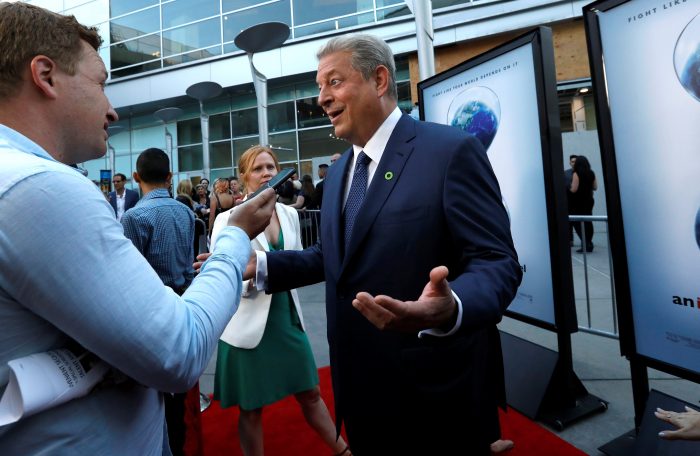
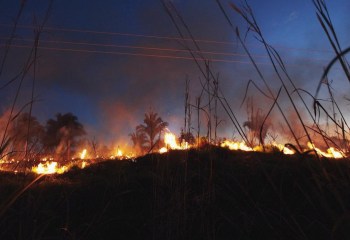 The idea that the Amazon rainforest is the lungs of the world is so embedded in our minds that few questioned its widespread use when news about fires in the Amazon was reported this summer.


 Aletho News

