Veteran investigative journalist Roger G. Charles joins us to discuss the new book which he has co-authored, Oklahoma City: What the Investigation Missed and Why It Still Matters. We investigate some of the anomalies, discrepancies and holes in the official account of the OKC bombing, including the bombing itself, the role of Andreas Strassmeier at Elohim City, the numerous forewarnings, and much more.
Establishment historians state that Adolf Hitler made a mistake when he declared war on the United States. For example, British historian Andrew Roberts wrote:[1]
“It seems an unimaginably stupid thing to have done in retrospect, a suicidally hubristic act less than six months after attacking the Soviet Union. America was an uninvadable land mass of gigantic productive capacity and her intervention in 1917-18 had sealed Germany’s fate in the Great War.”
Historian Martin Gilbert wrote in regard to Germany’s declaration of war on the United States:[2]
“It was perhaps the greatest error, and certainly the single most decisive act, of the Second World War.”
In this article I will explain why Hitler was forced to declare war on the United States.
American Steps Toward War
In his State of the Union address to Congress on January 6, 1941, Roosevelt outlined his plan for lend-lease aid to the anti-Axis powers. International law has long recognized that it is an act of war for a neutral government to supply arms, munitions, and implements of war to a belligerent. But Roosevelt brushed off objections to lend-lease based on international law. Roosevelt stated:
“Such aid is not an act of war, even if a dictator should unilaterally proclaim it to be.”
In this same speech, Roosevelt barred the door to suggestions of a negotiated peace:[3]
“We are committed to the proposition that the principles of morality and considerations of our own security will not permit us to acquiesce in a peace dictated by aggressors and sponsored by appeasers.”
President Roosevelt signed the Lend-Lease Act into law on March 11, 1941. This legislation marked the end of any pretense of neutrality on the part of the United States. Despite soothing assurances by Roosevelt that the United States would not get into the war, the adoption of the Lend-Lease Act was a decisive move which put America into an undeclared war in the Atlantic.
It opened up an immediate appeal for naval action to insure that munitions and supplies procured under the Lend-Lease Act would reach Great Britain.[4]
On April 9, 1941, the United States entered into an agreement with a Danish official for the defense of Greenland. Roosevelt simultaneously illegally sent American Marines to occupy Greenland.[5]
In June 1941, Roosevelt agreed with Churchill to relieve the British troops in Iceland, and this was done with U.S. Marines on July 7, 1941.[6] Also in June 1941, Roosevelt ordered the closing of all the German and Italian consulates in the United States.[7]
Another step toward war was the adoption on April 24, 1941, by the United States of a naval patrol system in the Atlantic to insure delivery of munitions and supplies to Great Britain. The American Navy under this scheme was assigned the responsibility of patrolling the Atlantic Ocean west of a median point represented by 25º longitude. American warships and planes within this area would search out German vessels and submarines and broadcast their position to the British Navy. Roosevelt tried to represent the naval patrol as a merely defensive move, but it was clearly a hostile act toward Germany designed to help the British war effort.[8]
The first wartime meeting between Roosevelt and Churchill began on August 9, 1941, in a conference at the harbor of Argentia in Newfoundland. The principal result of this conference was the signing of the Atlantic Charter on August 14, 1941. Roosevelt repeated to Churchill during this conference his predilection for an undeclared war, saying:
“I may never declare war; I may make war. If I were to ask Congress to declare war, they might argue about it for three months.”
The Atlantic Charter was in effect a joint declaration of war aims, although Congress had not voted for American participation in the war. The Atlantic Charter, which provided for Anglo-American cooperation in policing the world after the Second World War, was a tacit but inescapable implication that the United States would soon become involved in the war. This implication is fortified by the large number of top military and naval staff personnel who were present at the conference.[9]
Roosevelt’s Orders to Shoot-on Sight German Ships and Submarines
Roosevelt’s next move toward war was the issuing of secret orders on August 25, 1941, to the Atlantic Fleet to attack and destroy German and Italian “hostile forces.” These secret orders resulted in an incident on September 4, 1941, between an American destroyer, the Greer, and a German submarine.[10] Roosevelt falsely claimed in a fireside chat to the American public on September 11, 1941, that the German submarine had fired first.
The reality is that the Greer had tracked the German submarine for three hours, and broadcast the submarine’s location for the benefit of any British airplanes and destroyers which might be in the vicinity. The German submarine fired at the Greer only after a British airplane had dropped four depth charges which missed their mark. During this fireside chat Roosevelt finally admitted that, without consulting Congress or obtaining congressional sanction, he had ordered a shoot-on-sight campaign against Axis submarines.[11]
On September 13, 1941, Roosevelt ordered the Atlantic Fleet to escort convoys in which there were no American vessels.[12] This policy would make it more likely to provoke future incidents between American and German vessels. Roosevelt also agreed about this time to furnish Britain with “our best transport ships.” These included 12 liners and 20 cargo vessels manned by American crews to transport two British divisions to the Middle East.[13]
More serious incidents followed in the Atlantic. On October 17, 1941, an American destroyer, the Kearny, dropped depth charges on a German submarine. The German submarine retaliated and hit the Kearny with a torpedo, resulting in the loss of 11 lives. An older American destroyer, the Reuben James, was sunk with a casualty list of 115 of her crew members.[14] Some of her seamen were convinced the Reuben James had already sunk at least one U-boat before she was torpedoed by the German submarine.[15]
On October 27, 1941, Roosevelt broadcast over nationwide radio his Navy Day address. Roosevelt began his Navy Day address by stating that German submarines had torpedoed the U.S. destroyers Greer and Kearny. Roosevelt characterized these incidents as unprovoked acts of aggression directed against all Americans, and that “history will record who fired the first shot.”
What Roosevelt failed to mention in his broadcast is that in each case the U.S. destroyers had been involved in attack operations against the German submarines, which fired in self-defense only as a last resort. Hitler wanted to avoid war with the United States at all costs, and had expressly ordered German submarines to avoid conflicts with U.S. warships, except to avoid imminent destruction. It was Roosevelt’s shoot-on-sight orders to U.S. Navy vessels that were designed to make incidents like the ones Roosevelt condemned inevitable.[16]
Despite Roosevelt’s provocations, the American public was still against entering the war. By the end of October 1941, Roosevelt had no more ideas how to get into a formal and declared war:[17]
“… He had said everything ‘short of war’ that could be said. He had no more tricks left. The hat from which he had pulled so many rabbits was empty.”
Even full-page advertisements entitled “Stop Hitler Now” inserted in major American newspapers by Roosevelt’s supporters had failed to sway the American public. The advertisements warned the American people that a Europe dominated by Hitler was a threat to American democracy and the Western Hemisphere. The advertisements asked: “Will the Nazis considerately wait until we are ready to fight them? Anyone who argues that they will wait is either an imbecile or a traitor.” Roosevelt endorsed the advertisements, saying that they were “a great piece of work.”[18]
Yet the American people were still strongly against war.
Roosevelt Provokes Pearl Harbor Attack
Provoking Japan into an overt act of war was the principal policy that guided Roosevelt’s actions toward Japan throughout 1941. Lt. Cmdr. Arthur H. McCollum, head of the Far East desk of the Office of Naval Intelligence, wrote an eight-action memorandum dated October 7, 1940, outlining how to provoke a Japanese attack on the United States.[19]
The climax of Roosevelt’s measures designed to bring about war in the Pacific occurred on July 25, 1941, when Roosevelt froze all Japanese assets in the United States. This brought commercial relations between the nations to an effective end, including an end to the export of oil to Japan.
Prince Konoye, the Japanese premier, requested a meeting with Roosevelt to resolve the differences between the United States and Japan. American Ambassador Grew sent a series of telegrams to Washington, D.C. in which he strongly recommended that such a meeting take place. However, Roosevelt steadfastly refused to meet with the Japanese premier.[20]
Foreign Minister Toyoda made a dispatch to Japanese Ambassador Nomura on July 31, 1941. Since U.S. Intelligence had cracked the Japanese diplomatic code, Roosevelt and his associates were able to read this message:[21]
“Commercial and economic relations between Japan and third countries, led by England and the United States, are gradually becoming so horribly strained that we cannot endure it much longer. Consequently, our Empire, to save its very life, must take measures to secure the raw materials of the South Seas… I know that the Germans are somewhat dissatisfied with our negotiations with the United States, but we wish at any cost to prevent the United States from getting into the war, and we wish to settle the Chinese incident.”
This obvious Japanese desire for peace with the United States did not change Roosevelt’s policy toward Japan. Roosevelt refused to lift the oil embargo against Japan. The Roosevelt administration was well aware that Japan imported approximately 90% of her oil, and that 75% to 80% of her oil imports came from the United States. Roosevelt also knew that the Netherlands East Indies, which produced 3% of the world’s oil output, was the only other convenient oil producer that could meet Japan’s import needs.[22]
On October 31, 1941, an oil agreement between Japan and the Netherlands East Indies expired. The Netherlands East Indies had promised to deliver about 11.4 million barrels of oil to Japan, but actually delivered only half of that amount. The Japanese Navy had consumed approximately 22% of its oil reserves by the time the war broke out.[23]
By the closing months of 1941, the United States was intercepting and breaking within a matter of hours almost every code produced by Japan.[24] In the last week of November 1941, President Roosevelt knew that an attack by the Japanese in the Pacific was imminent.
Roosevelt warned William Bullitt against traveling across the Pacific:[25]
“I am expecting the Japs to attack any time now, probably within the next three or four days.”
Roosevelt and his administration knew this based on the intercepted Japanese messages. This information was not given to the commanders at Pearl Harbor to enable them to prepare for and thwart the Japanese attack.
Adm. Husband Kimmel, commander-in-chief of the U.S. Pacific Fleet, states that if he had all of the important information then available to the Navy Department, he would have gone to sea with his fleet and been in a good position to intercept the Japanese attack.[26] Kimmel concludes in regard to the Pearl Harbor attacks:
When the information available in Washington was disclosed to me I was appalled. Nothing in my experience of nearly 42 years of service in the Navy had prepared me for the actions of the highest officials in our government which denied this vital information to the Pearl Harbor commanders.
If those in authority wished to engage in power politics, the least that they should have done was to advise their naval and military commanders what they were endeavoring to accomplish. To utilize the Pacific Fleet and the Army forces at Pearl Harbor as a lure for a Japanese attack without advising the commander-in-chief of the fleet and the commander of the Army base at Hawaii is something I am wholly unable to comprehend.[27]
The Rainbow Five Plan
On December 8, 1941, President Roosevelt made a speech to Congress calling for a declaration of war against Japan. Condemning the attack on Pearl Harbor as a “date which will live in infamy,” Roosevelt did not once mention Germany.
Hitler’s policy of keeping incidents between the United States and Germany to a minimum seemed to have succeeded. Hitler had ignored or downplayed the numerous provocations that Roosevelt had made against Germany. Even after Roosevelt issued orders to shoot-on-sight at German submarines, Hitler had ordered his naval commanders and air force to avoid incidents that Roosevelt might use to bring America into the war. Also, since the Tripartite Pact did not obligate Germany to join Japan in a war initiated by Japan, it appeared unlikely that Hitler would declare war on the United States.[28]
The Japanese attack on Pearl Harbor surprised Hitler. Hitler had never wanted Japan to attack the United States. Germany had repeatedly urged Japan to attack Singapore and the rest of Great Britain’s Far East Empire, but Japan refused to do so. After the war Col. Gen. Alfred Jodl said that Hitler had wanted Japan to attack Great Britain and the Soviet Union in the Far East, which would have set up a two-front war. Hitler thought Roosevelt would probably not be able to persuade the American public to go to war to defend Britain’s Asian colonies. Jodl said that Hitler had wanted in Japan “a strong new ally without a strong new enemy.”[29]
Hitler’s decision to stay out of war with the United States was made more difficult on December 4, 1941, when the Chicago Tribune carried in huge black letters the headline: F.D.R.’s WAR PLANS! The Washington Times Herald, the largest paper in the nation’s capital, carried a similar headline.
Chesly Manly, the Tribune’s Washington correspondent, revealed in his report what Roosevelt had repeatedly denied: that Roosevelt was planning to lead the United States into war against Germany. The source of Manly’s information was no less than a verbatim copy of Rainbow Five, the top-secret war plan drawn up at Roosevelt’s request by the joint board of the United States Army and Navy. Manly’s story even contained a copy of President Roosevelt’s letter ordering the preparation of the plan.[30]
Rainbow Five called for the creation of a 10-million-man army, including an expeditionary force of 5 million men that would invade Europe in 1943 to defeat Germany. On December 5, 1941, the German Embassy in Washington, D.C., cabled the entire transcript of the newspaper story to Berlin. The story was reviewed and analyzed in Berlin as “the Roosevelt War Plan.” On December 6, 1941, Adm. Erich Raeder submitted a report to Hitler prepared by his staff that analyzed the Rainbow Five plan. Raeder concluded the most important point contained in Rainbow Five was the fact that the United States would not be ready to launch a military offensive against Germany until July 1943.[31]
On December 9, 1941, Hitler returned to Berlin from the Russian front and plunged into two days of conferences with Raeder, Field Marshal Wilhelm Keitel, and Reichsmarschall Hermann Göring. The three advisors stressed that the Rainbow Five plan showed that the United States was determined to defeat Germany. They pointed out that Rainbow Five stated that the United States would undertake to carry on the war against Germany alone even if Russia collapsed and Britain surrendered to Germany. The three advisors leaned toward Adm. Raeder’s view that an air and U-boat offensive against both British and American ships might be risky, but that the United States was already unquestionably an enemy.[32]
On December 9, 1941, Roosevelt made a radio address to the nation that is seldom mentioned in the history books. In addition to numerous uncomplimentary remarks about Hitler and Nazism, Roosevelt accused Hitler of urging Japan to attack the United States. Roosevelt declared:[33]
“We know that Germany and Japan are conducting their military and naval operations with a joint plan. Germany and Italy consider themselves at war with the United States without even bothering about a formal declaration… Your government knows Germany has been telling Japan that if Japan would attack the United States, Japan would share the spoils when peace came. She was promised by Germany that if she came in she would receive control of the whole Pacific area and that means not only the Far East, but all the islands of the Pacific and also a stranglehold on the west coast of North and Central and South America.”
All of the above statements are obviously lies. Germany and Japan did not have a joint naval plan before Pearl Harbor, and never concocted one for the rest of the war. Germany did not have foreknowledge and certainly never encouraged Japan to attack the United States. Japan never had any ambition to attack the west coast of North, Central, or South America. Germany also never promised anything to Japan in the Far East. Germany’s power in the Far East was negligible.[34]
Roosevelt concluded in his speech on December 9, 1941:[35]
“We expect to eliminate the danger from Japan, but it would serve us ill if we accomplished that and found that the rest of the world was dominated by Hitler and Mussolini. So we are going to win the war and we are going to win the peace that follows.”
On December 10, 1941, when Hitler resumed his conference with Raeder, Keitel, and Göring, Hitler said that Roosevelt’s speech confirmed everything in the Tribune story. Hitler considered Roosevelt’s speech to be a de facto declaration of war. Since war with the United States was inevitable, Hitler felt he had no choice but to declare war on the United States. Hitler declared war on the United States in his Reichstag speech on December 11, 1941, stating among other things:
Since the beginning of the war, the American President Roosevelt has steadily committed ever more serious crimes against international law. Along with illegal attacks against ships and other property of German and Italian citizens, there have been threats and even arbitrary deprivations of personal freedom by internment and such. The increasingly hostile attacks by the American President Roosevelt have reached the point that he has ordered the American navy to immediately attack, fire upon and sink all German and Italian ships, in complete violation of international law. American officials have even boasted about destroying German submarines in this criminal manner. American cruisers have attacked and captured German and Italian merchant ships, and their peaceful crews were taken away to imprisonment. In addition, President Roosevelt’s plan to attack Germany and Italy with military forces in Europe by 1943 at the latest was made public in the United States, and the American government made no effort to deny it.
Despite the years of intolerable provocations by President Roosevelt, Germany and Italy sincerely and very patiently tried to prevent the expansion of this war and to maintain relations with the United States. But as a result of his campaign, these efforts have failed.[36]
Hitler ended this speech with a declaration of war against the United States. Roosevelt had finally gotten a declared war with Germany using Japan as a back door to war.
Closing Thoughts on Hitler’s Declaration of War Against the United States
No nation has ever been led into war with as many soothing promises of peace as the American public received from President Roosevelt. Most of the American public felt that the United States had entered the First World War under false pretenses. Polls consistently showed that the American public did not favor entry into a second war in Europe. Roosevelt assuaged these fears with statements such as “… I have passed unnumbered hours, I shall pass unnumbered hours, thinking and planning how war may be kept from this nation.”[37]
The truth is that Roosevelt did everything in his power to plunge the United States into war against Germany. Roosevelt eventually went so far as to order American vessels to shoot-on- sight German and Italian vessels—a flagrant act of war. However, Hitler wanted to avoid war with the United States at all costs. Hitler expressly ordered German submarines to avoid conflicts with U.S. warships, except to prevent imminent destruction. It appeared that Hitler’s efforts would be successful in keeping the United States out of the war against Germany.
Hitler declared war on the United States only after the leaked Rainbow Five plan convinced him that war with the United States was inevitable. The extraordinary cunning of leaking Rainbow Five at the very time he knew a Japanese attack was pending enabled Roosevelt to overcome the American public’s resistance to entering the war. It allowed the entry of the United States into World War Two in such a way as to make it appear that Germany and Japan were the aggressor nations.[38]
Notes
[1] Roberts, Andrew, The Storm of War: A New History of the Second World War, New York: Harper Collins Publishers, 2011, pp. 193f.
[2] Gilbert, Martin, The Second World War: A Complete History, New York: Henry Holt and Company, 1989, p. 277.
[3] Chamberlain, William Henry, America’s Second Crusade, Chicago: Regnery, 1950, pp. 129f.
[4] Ibid., p. 130.
[5] Sanborn, Frederic R., Design For War: A Study of Secret Power Politics, 1937-1941, New York: The Devin-Adair Company, 1951, p. 258.
[6] Churchill, Winston S., The Grand Alliance, Boston: Houghton Mifflin, 1950, pp. 149f.
[7] Sanborn, Frederic R., “Roosevelt is Frustrated in Europe,” in Barnes, Harry Elmer (ed.), Perpetual War for Perpetual Peace, Newport Beach, CA: Institute for Historical Review, 1993, p. 216.
[8] Chamberlain, William H., op. cit. (note 4),pp. 136f.
[9] Sanborn, Frederic R., “Roosevelt…,” op. cit. (note 7), pp. 217f.
[10] Ibid., p. 218.
[11] Chamberlain, William H., op. cit. (note 4), pp. 147f.
[12] Hearings Before the Joint Committee on the Investigation of the Pearl Harbor Attack, 79 Cong., 2 sess., 39 parts; Washington, D.C.: Government Printing Office, 1946, Part V, p. 2295.
[13] Churchill, Winston S., op. cit. (note 6), pp. 492f.
[14] Chamberlain, William H., op. cit. (note 4), pp. 148f.
[15] Newsweek, November 10, 1941, p. 35.
[16] “Roosevelt’s ‘Secret Map’ Speech,” The Journal of Historical Review, Vol. 6, No. 1, Spring 1985, pp. 125f.
[17] Sherwood, Robert E., Roosevelt and Hopkins, an Intimate History, New York: Harper & Brothers, 1948, p. 438; see also Churchill, Winston S., op. cit. (note 6), p. 539.
[18] Johnson, Walter, The Battle against Isolation, Chicago: University of Chicago Press, 1944, pp. 85-87.
[19] Stinnett, Robert B., Day of Deceit: The Truth about FDR and Pearl Harbor, New York: The Free Press, 2000, pp. 6, 8.
[20] Morgenstern, George, “The Actual Road to Pearl Harbor,” in Barnes, Harry Elmer (ed.), Perpetual War for Perpetual Peace, Newport Beach, CA: Institute for Historical Review, 1993, pp. 327-331.
[21] Hearings Before the Joint Committee on the Investigation of the Pearl Harbor Attack, 79 Cong., 2 sess., 39 parts; Washington, D.C.: Government Printing Office, 1946, Part XII, p. 9.
[22] Miller, Edward S., Bankrupting the Enemy: The U.S. Financial Siege of Japan Before Pearl Harbor, Annapolis, MD: Naval Institute Press, 2007, p. 162.
[23] Sanborn, Frederic R., Design for War, op. cit. (note 5), p. 424.
[24] Stinnett, Robert B., op. cit. (note 19), p. 83.
[25] Feb. 12, 1946, conversation between William Bullitt and Henry Wallace, from Henry Wallace Diary, Henry Wallace Papers, Library of Congress Manuscripts, Washington, D.C. Quoted in Tzouliadis, Tim, The Forsaken: An American Tragedy in Stalin’s Russia, New York: The Penguin Press, 2008, p. 240.
[26] Kimmel, Husband E., Admiral Kimmel’s Story, Chicago: Henry Regnery Company, 1955, p. 110.
[27] Ibid., p. 186.
[28] Meskill, Johanna Menzel, Hitler and Japan: The Hollow Alliance, New York: 1955, p. 40.
[29] Fleming, Thomas, The New Dealers’ War: FDR and the War within World War II, New York: Basic Books, 2001, pp. 31f.
[30] Ibid., p. 1.
[31] Ibid., pp. 1f., 33.
[32] Ibid., pp. 33f.
[33] Ibid., pp. 34f.
[34] Meskill, Johana M., op. cit. (note 28), pp. 1-47.
[35] http://millercenter.org/president/fdroosevelt/speeches/speech-3325
[36] “The Reichstag Speech of 11 December 1941: Hitler’s Declaration of War Against the United States,” The Journal of Historical Review, Vol. 8, No. 4, Winter 1988-1989, p. 412.
[37] Chamberlain, William H., op. cit. (note 4), p. 98.
[38] http://www.veteranstoday.com/2008/06/16/rainbow-5-roosevelts-secret-pre-pearl-harbor-war-plan-exposed/
Head of Iran’s government department on tourism says around eight million foreigners visited the country in the last Iranian calendar year ending in March 2019.
“Some 7.8 million foreign tourists arrived in the country last year,” said Ali Asghar Mounessan, adding that the figure shows a 40-percent increase compared to the previous year.
Mounessan, who heads the Cultural Heritage, Handicrafts and Tourism Organization of Iran (ICHTO), said each tourists coming to the country spends an average sum of $1,400 during his stay, adding that almost all the money earned from tourists should be viewed as pure income as investment has been very low compared to the revenues generated in the sector.
He said the boom in tourism arrivals and revenues have come despite sanctions imposed by the United States in the past year, adding that major accommodation places across the country have been booked up for months to come.
Mounessan, a deputy president whose department is planned to be turned into a ministry in the coming months, said the government would double the budget earmarked to the tourism and handicraft management as the sectors keep attracting massive foreign currency into the country.
The official also said that Iran eyes $2 billion worth of exports of handicraft, saying that all provinces across the country had huge potentials that could be used to meet the target.
Mounessan said the decision to turn the ICHTO to a ministry would also allow the government to have a better policy for protection of historic monuments and artifacts existing across the country, saying that would further boost arrivals of the tourists who are mainly interested in visiting Iran’s cultural heritage.
Four historic buildings in Sana’a’s old quarter, including the home of Saleh Ali al-Aeini, were destroyed by U.S. bombs dropped by Saudi warplanes in June, 2015. Photo – MintPress News
SANA’A, YEMEN — Yemen was once described as a living museum, but U.S. made bombs dropped by the Saudi-led Coalition’s jets have not only killed thousands of civilians and led to famine and the spread of disease but also pulverized the country’s rich architectural history and left its inimitable heritage at the mercy of the highest bidder.
“I remember how light filtered through the stained glass of the patterned crescent window (qamarias) onto the white gypsum plaster in the resting room (Deirmanah) on the top floor. At night, lights tossed dapples of color into the sky,” Saleh Ali al-Aeini recounted to MintPress from his partially destroyed high-rise apartment, continuing, “Now, only scattered glass remains amid a mound of dust and mud, thanks to American bombs.”
Saleh’s ancient tower-house was one of four historic buildings in the old quarter of Sana’a that were destroyed by U.S. bombs dropped from Saudi warplanes in June, 2015. The buildings’ many-storied tower-houses, three of them rising to 110 feet, were more than 2,500 years old. The newest of them was more than 1,000 years old, built long before the United States even existed as a nation.
The effects of airstrikes on the UNESCO-listed Old City, perched on a highland plateau more than 7,200 feet above sea level, can be noticed at a glance. Cracks show on the more than 1,975 densely-packed homes, threatening them with collapse. Labyrinths, hidden gardens, steam baths, busy markets and streets have all been affected by airstrikes on the city that was said to have been founded by Shem, the son of Noah. In fact, the ancient city has been targeted at least four times with over 30 airstrikes according to the General Authority for the Preservation of Historic Cities.
Yet Saudi airstrikes extend far beyond Sana’a’s historic sites — to Sadaa, Shibam Hadramout, Zabid in Hodeida, Shibam Kuban, east of Sana’a, Shabwa, Aden, Amran, Taiz, and other areas of the country’s history that have also fallen victim to coalition bombing. Airstrikes and shelling have destroyed at least 66 historic sites according to Muhannad al-Sayani, chairman of the Yemeni General Authority for Antiquities
Coalition raids have targeted ancient castles and forts, museums, religious shrines housing cultural treasures; and ancient dams, including the world-famous Great Marib Dam.
Al-Sayani told MintPress that targeting of the country’s historic sites by the Saudi-led Coalition is deliberate: “These are open sites, mostly in desert areas where weapons cannot be stored.” Following many of the attacks, the Coalition often accuses the Houthis of using archaeological sites as weapons depots; however, no evidence has been provided to substantiate these allegations.
The undersecretary of the General Authority for the Preservation of Historic Cities, Amat al-Razzaq Jahaf, told MintPress that most of the monuments or sites have been damaged or destroyed by Saudi airstrikes since the Saudi-led campaign began without any justification.
The United States says it does not make targeting decisions for the Coalition. But it does support Coalition operations through arms sales, the refueling of Saudi combat aircraft, and the sharing of intelligence. Just last Thursday, a U.S. MQ-9 Reaper drone was downed in the city of Dhamar near the historic Dhamar Museum, which was leveled by a direct Saudi airstrike in June 2015.
Nothing can bring these back
Al-Aeini’s wife, who told MintPress than an American-made bomb had destroyed her home and killed her sons, accused international aid organizations of neglecting their suffering. “Lots of organizations visited us and provided only [promises] without doing anything,” she went on, “We rebuilt a part of the house by ourselves, just to have shelter for me and my husband, without any help.” Yemen’s General Authority of Antiquities complained to MintPress that the country’s heritage has been neglected by international organizations and communities.
Now, the buildings — which have stood tall for thousands of years in the historic city that surrounds the remnants of al-Aeini family home — are subject to eroding foundations and ominous cracks that line their ancient walls built of mud and stone, as a result of repeated Saudi attacks and the inability of Yemen’s government to address the deterioration amid four years of Saudi bombardment.
To make matters worse, Yemen is in the midst of its rainy season, adding to the challenges in rebuilding archaeological sites that have been targeted. “Of course, what has been destroyed is still devastating and every day the dangers [to those sites] is multiplied due to our inability to carry out operations to reduce the aggravation of damage because of the costs of rebuilding,” Jahaf told MintPress. Al-Qasimi’s house in Sultan’s orchard in ancient Sana’a, which was destroyed in another Saudi airstrike, is an example of this.
“If peace is brought to Yemen — and with it, compensation is provided — infrastructure, roads, schools, and hospitals could all be rebuilt; but nothing can bring back the historic architecture that has been destroyed,” Mohaned al-Sayani, chairman of the Yemeni General Authority for Antiquities, told MintPress.
Centuries in building, seconds in destroying
“Here, generations of my grandparents lived; why is it that the Coalition can so easily destroy it?” Hashem Ali, who fled to Sana’a after airstrikes leveled his family home in the historic Rahban area of Saada, asked MintPress. “This is the first time in nearly 600 years that my family is without a home.”
The attack on ancient Sana’a was the first of many violent assaults on Yemen’s architectural history, but the worst hit historic area has been Yemen’s northern province of Saada, the hub of the ancient Minaean Kingdom of Ma’in, founded before the fourth century B.C.
Saada’s old city, which is among the world’s oldest human-carved landscapes, once consisted entirely of historic, centuries-old multi-story homes. Now, it has been wiped out, after Saudi Arabia declared it a military zone — even the city’s hand-carved wooden doors have been reduced to ashes.
Just hours after the Coalition issued a warning on May 10, 2015, dozens of airstrikes rained down on the historic city, including on the ancient al-Hadi Mosque, which was founded nearly 1,200 years ago and is the final resting place of Imam al-Hadi ila’l-Haqq Yahya, the Zaydi imam of Yemen.
Built c. 897, al-Hadi Mosque is the final resting place of Imam al-Hadi ila’l-Haqq Yahya, the Zaydi imam of Yemen. It has been targeted several times. Ali al-Shurqbai – MintPress News
To understand Saudi Arabia’s motivation to essentially exterminate Yemen’s heritage, one must understand Yemen’s history as well as that of Saudi Arabia and the United Arab Emirates and the Saudi-based Wahhabi faith, which provides religious justification for targeting heritage sites under the guise of eradicating polytheism.
In ancient times, Yemen was home to several flourishing civilizations — including Ma’in, Qataban, Hadramaut, Ausan, Himyar and Saba (Sheba), which lasted for 11 centuries and was mentioned in the Quran and other ancient holy books. The Saban civilization was marked by its distinctive architecture, based almost entirely on local building materials, a style unique in the Middle East.
In contrast to Yemen’s rich and ancient history, civilization did not make its way to the Arabian Gulf until the 1930s. The United Arab Emirates, Saudi Arabia’s fellow coalition war partner, didn’t take root until 1971.
Many Yemenis, including Saleh Ali al-Aeini, believe that Saudi Arabia harbors severe jealousy over Yemen’s history and heritage and the unique role that it has played in human history. According to some historians, that history spans 60,000-70,000 years, when the country received its first Homo sapiens who migrated across the Red Sea from Africa to the Middle East before traveling west to Europe and east to Asia and Australia.
Moreover, Wahhabism — the official state religion of Saudi Arabia, based on a puritanical and widely rejected interpretation of Islam — sees the preservation of historic and religious sites as tantamount to idolatry. The Wahhabi establishment in Saudi Arabia has not even spared the Kingdom’s own tombs and monuments in Mecca and Medina and shows special disdain for Yemen’s historic sites, especially those located in northern Yemen, the seat of the Shia Zaydis for over a thousand years.
Looting what was not destroyed
Yemenis see their historic sites as a social-cultural fabric linking generations to their early ancestors. “I’ve lived here for dozens of years but now I have no house; there are no more gatherings of my ones-loved on the weekend,” al-Aeini said. He continued: “Another thing to worry about is our remaining legacy being looted.”
Destruction from the air is not the only threat to Yemen’s ancient legacy. During their war in Yemen, Saudi Arabia and the UAE have established smuggling networks in the country to loot historic sites.
A.M.M., who asked to be identified only by his initials, worked as an antiquities smuggler for a security outfit based in the UAE. A.M.M. told MintPress that his team sold four 2,500-year-old mummies, a gilded Torah scroll, and dozens of bejeweled daggers from the early Islamic era. “They always stressed the importance of keeping [the items] from being damaged so that they will be accepted by their American friends,” he said.
The smuggling of Yemeni antiquities is often carried out by diplomats operating out of Yemeni embassies from Saudi Arabia, the UAE, Bahrain and Egypt in return for lucrative sums of money allegedly provided by patrons from the United States and Israel. Yemen is the cradle to many civilizations and home to multiple faiths — particularly Judaism, Christianity and Islam, which all thrived in Yemen for millennia. For the Israelis, many of Yemen’s antiquities are seen as the rightful property of the Jewish people and there is reason to believe that Israel is also involved in the looting of Yemen’s heritage.
Officials in Sana’a say they have strong evidence that Yemeni artifacts are being sold off to American and Isreali buyers. “Artifacts featuring the Star of David or Jewish names are our priority; they often fetch a higher price than the other artifacts,” A.M.M told MintPress. “I sold one Hebrew manuscript to a UAE officer for $20,000,” he added.
Aden, in the eastern province of Marib, is favored by smugglers for shuttling stolen artifacts abroad. Here — according to the testimonies of a number of smugglers arrested by Houthi forces and now serving their sentences Sana’a’s Central Prison — smugglers are able to work in broad daylight in facilities provided to them by high-ranking officials in the ousted government of President Abdrabbuh Mansur Hadi, with direct coordination of both Emirati and Saudi officials.
More weapons to destroy what remains?
“We want compensation to rebuild our house again,” al-Aeini said, perched atop the stone rubble of his destroyed ancient home. “We should get compensation from the Americans. American bombs have killed more of us than were killed in the September 11 attacks.”
Al-Aeini was sardonically referring to the duality of moral attitudes in the United States, where on one hand Saudi Arabia is asked to pay compensation to the families of victims of the September 11 attacks, yet do nothing for victims of the war in Yemen, who are often killed with U.S. weapons sold to Saudi Arabia. “If there hadn’t been an American bomb, I would be at home now with my children and grandchildren, but they took everything,” al-Aeini said.
Many Yemenis are pessimistic about the future of their heritage. They say President Donald Trump’s recently-announced sales of U.S. weapons to Saudi Arabia and the United Arab Emirates will destroy what remains of their country’s legacy. The sale includes precision-guided missiles manufactured by Raytheon as well as precision guidance parts for Paveway IV bombs used on Eurofighter and Tornado warplanes — the same type that have been blamed for much of the destruction of Yemen’s historic sites and civilian casualties alike in the Saudi-UAE air campaign in Yemen.
An old Yemeni proverb used for generations to encourage the preservation of the country’s rich heritage reads Eli maluh awal maluh taley (Whoever has no first, has no second). Many Yemenis, al-Aeini among them, fear that Yemen is already losing its heritage, much like al-Aeini lost his home, to American weapons.
Ahmed AbdulKareem is a Yemeni journalist. He covers the war in Yemen for MintPress News as well as local Yemeni media.
Twelve days earlier a number of people on a UK beach in West Sussex suffered bouts of vomiting in the wake of a toxic plume sweeping the area, with a sunken warship investigated as a likely cause of the incident.
Three UK beaches have been on alert over a mysterious “toxic sea” incident, The Independent has reported, with emergency services in Essex summoned to Frinton, Walton, and Clacton on Sunday.
An investigation is currently underway after numerous incidents of beachgoers in Essex were reportedly left coughing and struggling to breathe after swimming, as people flocked to the seaside during a record-hot spell of bank holiday weekend weather. Authorities immediately issued a warning to families to stay out of the water.
One of the people affected by the mysterious incident, Miram Lansdell, a mental health worker from Derbyshire, said one of her twin 10-year-old daughters told her it “hurt to breathe in”:
“My daughter started coughing. My other daughter was gasping and couldn’t form words because she couldn’t breathe well enough”.
According to the woman, after she had taken a dip in the water she also experienced difficulty breathing.
Ms Lansdell added: “My dad said he had been asked to get out of the water by a man on a boat. He asked why and the man said there had been a fuel spill. He said if anyone is having breathing difficulties they should probably call an ambulance”.
A spokesman for Tendring Disrtrict Council said: “We are aware of a number of people reporting feeling unwell at beaches in Walton, Frinton and Clacton. The advice from emergency services and health officials is to avoid going into the water at this time along this stretch of the Tendring coastline”.
The spokesperson added that ambulance teams on the scene had treated people for symptoms such as eye irritation and minor breathing difficulties.
“A very small number of people were subsequently taken to hospital for further tests but are in a stable and non-life-threatening condition”, the spokesperson said.
As the investigation is ongoing, the causes of the incident are unclear. However, some people have been speculating that the symptoms may have been caused by pollution from a fuel spill.
This has not been confirmed by police or ambulance services, who’ve said the cause is “unknown”.
Sunday’s incident comes just 12 days after a number of people on a beach in Worthing, West Sussex, were left vomiting in the wake of a toxic cloud sweeping the area.
A sunken warship was investigated by the Maritime and Coastguard Agency as being the cause of the poisonous gas plume.
Records show dozens of cargo vessels and munitions ships containing weapons and poisonous gas were sunk in the English Channel during WWI and WWII. Experts fear the “rusting timebombs” are rupturing and causing deadly gases to rise to the surface and drift towards the coast.
The pathologization of emotion has been on the march for decades, especially in the US, where fully one sixth of the adult population takes an antidepressant or other psychiatric drug. But with depression “conquered” by medication – even as both diagnosis rates and suicides are at an all-time high – the mental-health industry has a new target: loneliness. With pharmaceutical and even technological “cures” in the pipeline for this “condition,” once considered part of the normal human emotional experience but now framed as a dire health risk on the level of obesity and smoking, our very ability to think for ourselves hangs in the balance, and if that sounds like hyperbole, read on.
Nearly half of Americans polled last year by health insurer Cigna said they lacked meaningful relationships or companionship, while a third of people in industrialized societies report they are lonely, and this state of mind appears to significantly shorten one’s lifespan. A solutions-based society might examine why so many people feel alienated from their peers despite the constant connectivity of smartphones and internet. A symptom-focused model, however, simply looks to stop them from feeling that way by any means necessary – never mind the cause, and never mind the consequences.
Loneliness is “worse than obesity,” according to a raft of studies that have emerged linking the emotion to increased risk of premature death – as much as 50 percent, says one meta-analysis by Brigham Young University professor Julianne Holt-Lunstad – and a dramatically lowered quality of life. And like obesity – big business not just for Big Pharma, but for gastric bypass surgeons, weight-loss gurus, and other parasitic professionals who have monetized the American public’s lack of self-control – anything that deadly requires medical intervention.
THERE’S A PILL FOR THAT
The University of Chicago’s Brain Dynamics Laboratory recently began an eight-week trial of the hormone pregnenolone, rounding up volunteers with “off-the-chart” scores on a psychological loneliness scale. Basing their treatment on animal studies suggesting the chemical can reduce the exaggerated threat reactions that they say characterize loneliness, they hope to normalize the lonely person’s self-centered hyper-vigilance, which drives them to both desire human connection and deal poorly with it.
Researchers insist the intention is not to cure loneliness with a pill, but the trial sets a precedent for doing just that. Oxytocin, the “love hormone,” is also being considered as a potential treatment based on promising animal studies. Enterprising psychiatrists have previously medicalized aspects of loneliness as “social anxiety” and prescribed tranquilizers or antidepressants, but loneliness itself has never been so directly in the pharmaceutical crosshairs.
And if the hormone trials flop, there’s always Prozac. Already, doctors have claimed antidepressants make patients more sociable, and these drugs have for years been used (and abused) for conditions aside from depression – off-label prescribing of the antidepressants Paxil and Wellbutrin was the basis of the largest pharmaceutical company lawsuit in history. If loneliness is not an emotion but a crisis to be resolved, in which the ends justify the means (howeverbarbaric and harmful they may be), why not bring out the heavy artillery?
Mental health professionals writing about the loneliness epidemic discuss behavioral interventions, community programs, and counseling, but the introduction of a pharmaceutical solution may prove too tempting for a profession that has learned to love the quick fix a pill provides. Like depression, loneliness has myriad possible causes, some of which are natural and healthy reactions to life circumstances. Other, obviously situational, causes would (before the magic pill, at least) call for clear behavioral solutions. Would a psychiatrist reach for her prescription pad when confronted with a lonely person who only socializes through Facebook, even though social media use has been found to correlate strongly with loneliness and studies have shown that just a week away from the platform can bring “significant” improvements in well-being? In this case, at least, correlation equals causation. A solution to the patient’s loneliness seems obvious. But why force him to change his life when a pill will do the trick?
The loneliness plague is a real problem – the number of Americans who say they have no one to talk to has tripled since 1985, and the negative health effects are real. Alienation is epidemic. But medicalizing it will only make the situation worse, just as it has with depression. When the profit motive enters the equation and medicalization gives way to monetization, the incentive to get rid of the problem vanishes, replaced by the incentive to diagnose as many people as possible with the condition in order to “treat” them while the relevant drugs are still under patent. Nor is there any incentive to (or expectation of) cure – unlike most patients diagnosed with a treatable disease, individuals deemed mentally ill tend to remain on medication for years, if not for life. Each newly-diagnosed individual thus represents a sizable wad of cash on the table.
In a quick-fix society that prefers to treat the symptoms while ignoring the disease, a pill for loneliness will be embraced with all the fervor with which antidepressants were greeted before people began to realize that they cause suicidal and homicidal behavior, sexual dysfunction, weight gain, and a host of other problems – and that they don’t actually cure depression. Those drugs are still doled out like candy, even after the scientific explanation for their effect (and that effect itself) have been debunked, because it’s easier to take a pill than to come to terms with one’s reasons for being depressed in the first place, especially if they’re reasonable responses to environmental factors. Nearly half of Americans struggle just to cover their basic financial needs every month; expecting the chronically stressed to enjoy the feel of the system’s boot on their necks is unrealistic. With a similar array of thorny societal causes as depression, loneliness is just as likely to be pharmaceutically exploited.
A loneliness pill would not address Americans’ emotionally unhealthy digitally-addicted lifestyles, a society-wide sickness and source of significant stress. It would instead allow them to socialize exclusively in an online sphere whose boundaries are set by billionaires like Mark Zuckerberg and Jack Dorsey, without experiencing any of the discomfort they would naturally feel at having their gregarious impulses folded, spindled and mutilated to fit an increasingly stringent set of behavioral restrictions. Nor would it confront societal programming that equates solitude with loneliness, with abnormality, and teaches children that if they are not driven to socialize, they are defective. It’s no coincidence that fictional dystopias from 1984 to the Handmaid’s Tale minimize the amount of “alone time” their citizens are permitted – time alone with one’s thoughts is time the state cannot control. But the police state of today is working to change that.
As human contact, including real-life socializing, has become a luxury – so says the New York Times, explaining that humans are expensive, screens and robots are cheap, and expecting the unwashed masses to be able to afford access to living, breathing humans like themselves is simply unrealistic – the “digital pets” millennials had as children have matured to “digital friends,” even digital lovers as they themselves have grown up. And these digital companions double as the eyes and ears of a shockingly intrusive surveillance state.
BRIDGING THE UNCANNY VALLEY
If the “loneliness pill” doesn’t work out, AI is waiting in the wings. Already seen as the future of at-home healthcare for aging populations under the care of cash-strapped governments, friendly, helpful robots could find their way into the homes of the lonely. And everyone gets lonely sometimes! Certainly, the mass deployment of robo-buddies circumvents the surveillance hurdle faced by in-home AI snoops like Amazon’s Alexa, which many Americans find creepy (and not just for its tendency to burst into sinister laughter unprovoked). Frame the intruder as a medical benefit, however, and some of that opposition falls by the wayside. After all, loneliness kills, and no one wants to die.
As lonely humans become accustomed to conversing with their robot pals, their expectation for real human contact will diminish, and their sense of loneliness with it. After all, you can’t miss what you never had. Already, given the stunted level of discourse on social media, many of us have found ourselves tricked into talking to bots, sometimes exchanging several messages before realizing our interlocutor is not human. The Voight-Kampff Test used by Philip K Dick’s “blade runners” to determine whether a suspect was human or android can be graded on a curve.
As the bar for “meaningful relationships” is lowered to the point where chatting with an AI can qualify, the loneliness epidemic vanishes – on paper, at least, and in US public health policy, sometimes that’s all that matters.
LONELY OR JUST ALONE?
The pathologization of loneliness will inevitably elide the difference between being alone and being lonely, as the mental health industry runs out of lonely people to treat with whatever therapeutic weapon wins this particular arms race and is forced to look further afield for patients. “Loners” – those dangerous types who actually enjoy solitude – are stigmatized as unpredictable weirdos who need to be brought into the fold. The man who shot up a Walmart in El Paso earlier this month was an “extreme loner,” according to media reports. Would we be reading about it if he was an “extreme extrovert,” someone so addicted to the company of other humans he couldn’t stand to spend a second alone? Extroversion is a characteristic of the psychopathic personality, yet extroverts are not stigmatized for this, or treated as potential serial killers because they feel compelled to socialize – instead, the “introvert killer” trope is reliably trotted out after every tragedy, even though it has been repeatedly debunked.
With no loneliness pill on the market – yet – it is impossible to predict what’s next for the creeping medicalization of the human emotional experience. But the surveillance state is muscling into the “mental health” sphere as never before. The Trump administration has reportedly embraced a new Health Advanced Research Projects Agency, modeled after the Pentagon’s DARPA, that will develop a method for analyzing “neurobehavioral signs” to determine whether someone is “headed toward a violent explosive act.” HARPA’s proposal suggests a “multi-modality solution, along with real-time data analytics” to be garnered from technologies like Apple Watches, Fitbits, Amazon Echo, and Google Home. And Amazon’s Alexa has moved one step closer to the companion-robot model, rolling out a medical feature earlier this year which could conceivably be deployed to “check on” individuals at risk for loneliness. The devices that have been surveilling us for years may thus become empowered to have us committed – for our own good, of course, and the good of society.
In the aftermath of recent mass shootings, Trump declared open season on the “mentally ill,” floating the idea of involuntary confinement and institutionalization, while governors like New York’s Andrew Cuomo have proposed mental health databases that would affix an indelible scarlet letter to anyone seeking help with a psychological issue – effectively driving many of the people who actually need help away from the system out of fear of the repercussions for their personal and professional lives. The idea that “extreme loners” might find themselves medicated against their will, as a preemptive measure, is not far-fetched.
And Elon Musk’s Neuralink device proposes bringing the AI directly to your brain, “merging biological intelligence with machine intelligence,” so you never have to feel lonely again – or experience any inconvenient emotions. Musk envisions a future in which customers will have the devices installed in shopping mall kiosks, no more intrusive than an ear-piercing. Social scientists fear it’ll be “suicide for the human mind” – while no one knows for sure where consciousness resides, if it’s anywhere near our squishy grey matter, it doesn’t stand a chance against cold silicon precision. Even Musk acknowledges that Neuralink is an “if you can’t beat them, join them” approach to a future AI takeover.
Implantable AI hands the state the tools to control our thoughts. Indeed, we will no longer be able to tell which thoughts are “ours,” and which come from the device implanted in our skull. Transhumanists speak glowingly of “merging with the machines,” forgetting (or perhaps deliberately omitting) that the machines have programmers, and those programmers work hand in glove with the military-industrial complex. If they get their way, you’ll never be able to feel lonely again, because Big Brother will take up residence inside your skull. Solitude – like privacy before it – will be a distant memory, assuming you’re permitted to remember it at all. And like privacy, children born today may never know what it is like to experience loneliness – nor will they ever have the pleasure of being alone with their thoughts.
Former Republican congressman from Illinois Paul Findley died at age 98 on August 9th. Most obituaries and remembrances of him were respectful, but one that appeared in the American Jewish Committee founded neoconservative magazine Commentary written by Jonathan Schanzer of the Foundation for Defense of Democracies (FDD) was particularly vile. Paul was one of the first in Congress to decry the Israeli grip over U.S. foreign policy in the Middle East and beyond and for that unpardonable sin the Israel Lobby has condemned him to a modern version of damnatio memoriae, the ancient Roman practice whereby the very memory of bad leaders would be condemned and expunged from the record.
I know Paul, not as well as I would have liked, as I am now executive director of the Council for the National Interest, which he co-founded more than thirty years ago. As the name suggests, the Council “advocates for Middle East policies that serve the national interest; that represent the highest values of our founders and our citizens; and that work to sustain a nation of honor, decency, security and prosperity.” In particular, Paul was concerned about how Israeli interests in particular, cynically promoted by a powerful and wealthy domestic lobby, have continued to dominate all discussions of policy in the Middle East.
Paul was seen as a threat to the Jewish state’s control of congress and the Lobby worked to replace him. As Schanzer put it, “By 1980, the pro-Israel community in Washington had clearly identified Findley as a problem. In 1982, he lost his seat…” In fact, establishing what was to become a familiar pattern in dealing with recalcitrant legislators, in 1982 Israeli partisans put up and funded generously a candidate against Findley while also engaging in a smear campaign directed at him through its extensive contacts in the media.
It should be pointed out that Paul has not been alone in his one-issue defeat for reelection. Senator William Fullbright, Senator Chuck Percy, Congressman Pete McCloskey, and Congresswoman Cynthia McKinney have all found themselves on the losing end of electoral campaigns because they dared to criticize Israel and its seemingly all-powerful Lobby. Say the right things about Israel and donors and favorable media coverage will follow. Criticize Israel, and the reverse is true. Recently elected Palestinian American congresswoman Rashida Tlaib is already being confronted by an organized campaign by Detroit Jews to raise money and garner political support to replace her for “Jewish reasons.”
The Schanzer article, which runs to just under 1,900 words, is a perfect example of what used to be called “poison pen.” FDD, it should be noted, is a neocon outfit funded by the usual Jewish oligarchs that is dedicated to having the United States attack Iran. It works very closely with the Israeli government in shaping and delivering its message, but oddly, like all other Jewish/Israeli advocacy organizations, it has never been required to register under the Foreign Agents Registration Act of 1938.
Schanzer’s article is entitled “The Congressman who hated Israel” and begins with “Consider this scenario: A legislator from the Midwest targets Israel with a passion and vitriol that smacks of anti-Semitism. The legislator alleges that Israel’s supporters in Washington are bought off with Jewish money and that they have too much influence over our politics. When many Americans express their outrage at such comments, the legislator invokes the right to free speech and insists that the sentiments expressed were all for the just cause of getting American policy on a more reasonable and moral path.”
Well, pausing right there, it might well be reasonably suggested that Israel’s sheeple in congress and the media are indeed bought off with Jewish money and few would doubt these days that Israel and its friends have too much influence over America’s politics, most particularly its foreign policy. In fact, a majority of Democratic Party voters now have more sympathy with the Palestinians than with the Israelis while the Party leadership is firmly aligned with Israel. That’s called corruption of the political process and the corruption comes from money.
Schanzer then notes that “This has been the dynamic surrounding Democratic Representative Ilhan Omar’s disturbing comments about Israel and America’s relationship with the Jewish state. But Omar’s false accusations and the outrage they’ve generated are not without precedent. She is not the first U.S. representative to give public voice to vicious anti-Israel (and anti-American) bigotry and claim the mantle of righteousness. Before Omar, there was the Republican congressman Paul Findley, who died August 9 at the age of 98.”
That’s called killing two birds with one stone. Findlay’s critique that Israel has too much power, echoed by Omar, is far from a fiction. That anti-Israeli criticism is “bigotry” is a lie and that it is also anti-American is complete nonsense, attempting to sustain the fiction that Israel and the U.S. share common interests and values. They do not.
More smearing of Findley follows, with claims that he was a terrorist supporter expressed by “concerned professionals from the pro-Israel community…” And he is condemned for having written with complete accuracy how “scores of times over the years, I have sat in committee and in the chamber of the House of Representatives as my colleagues behaved, as an undersecretary of state once described them, like ‘trained poodles’ jumping through hoops held for them.” Schanzer observes that the “them” referred to pro-Israel organizations.
Schanzer continues “After Findley left office, however, things got far uglier. The seeming gentleman from Illinois dropped all pretense. In 1985, he authored They Dare to Speak Out: People and Institutions Confront Israel’s Lobby. In the book, updated and republished twice, Findley unleashed a torrent of venom toward Israel and its supporters, and lionized Israel’s detractors. He spoke disapprovingly of Jewish money, Jewish groups in Washington, Jewish groups on campus, Jewish congressmen, and Jewish influence. Findley claimed that the pro-Israel community had a stranglehold on congressional politics and American foreign policy… There were few realms of public life behind which Findley couldn’t detect the purported presence of Zionist manipulators. In 1990, amid the lead-up to the first war with Iraq, he asserted that Israel’s ‘zealous supporters occupy influential positions throughout U.S. society—not just in the media—and are employed by the U.S. government in every office that has any important relationship to the making of U.S. policy in the Middle East. Relentlessly, step by step, they have assiduously developed over the years a tight grip on America’s Middle East policy.’”
Thank you, Jonathan for providing the evidence that Paul Findley really nailed it. It doesn’t take much Googling to learn that everything he claimed about the many tentacles of Jewish power in the United States and its ability to corrupt our institutions from top to bottom is absolutely true. And he is correct in asserting that Zionists control every office in the United States government that has anything to do with foreign policy in the Middle East. An Israeli woman Sigal Mandelker even serves as the Department of the Treasury’s Under Secretary for Terrorism and Financial Intelligence, which is in charge of handing out sanctions against the Iranians and other Muslim groups that Israel believes to be threatening.
Well Paul Findley is dead, and so what? The Israel Lobby operating under the cover provided by President Donald Trump reigns supreme. But the fact that Schanzer felt compelled to do a hit piece on Findley suggests that there is another agenda. To be sure there is, as Schanzer reveals the real object of his anger towards the end of his article, returning to the subject of Omar, writing that “Findley’s example shows how the vitriol exhibited today by Ilhan Omar or her co-freshman congresswoman Rashida Tlaib is nothing new. These controversial legislators are Findley’s progeny.” And they are even worse, per Schanzer as “Findley, malign as his anti-Israel animus was, didn’t have the effect on public discourse that Omar and Tlaib now enjoy.”
So Schanzer objects to what Omar and Tlaib or saying but he is more troubled that there might be an audience out there listening. He wants a country where dual loyalty and “thou shall speak no ill of Israel” prevail in the belief that what is good for the Jewish state is good for the United States. It is not. Paul Findley was one of the first to challenge that notion and Omar and Tlaib have benefitted their country by opening up discussion of a subject that has long been considered off limits. Thank you Paul, may you rest in peace, and thank you also Rashida and Ilhan.
Although I’ve soured on him in recent years, for the first decade and more of Paul Krugman’s tenure at the New York Times I regarded him as about the only national columnist worth reading. Certainly many others felt the same way, and Krugman regularly ranked among the most influential liberal voices in the country, gaining that position by his uniquely strong stance against the Iraq War plans of President George W. Bush, while his prestige was capped by winning 2007 Nobel Prize in Economics.
But few probably remember that just a couple of years into his column there was a concerted effort to pressure the Times into firing him, a campaign spearheaded by blogger Andrew Sullivan, then an ardent Bush supporter. Given the steady drum-beat of harsh accusations and the climate of that period, I had feared that it would succeed. Now suppose that he had been purged from all media access in 2002, and also that Bush’s Iraq adventure had turned out to be a considerable success, rather than the utter disaster it actually became. A couple of decades hence, would anyone remember Krugman, except in some minor historical footnote recounting the misguided naysayers whom our heroic President “W” had fortunately overcome?
Perhaps by 2040 any mention of Krugman’s name would either draw a blank stare or evoke a vague sense that he had been some sort of disreputable radical activist, perhaps with pro-Islamicist leanings and even suspected by some of having had a hand in the 9/11 attacks. History has traditionally been written by the political winners, and this was especially true in the days before the growth of the Internet weakened the total monopoly of our establishment media.
These were some of the thoughts that gradually crossed my mind during the middle part of the 2000s as I discovered some remarkable anomalies while creating my content-archiving website, a system intended to provide convenient access to millions of articles from America’s most influential publications of the last 150 years. Since I had never really studied American history, my views were generally quite conventional ones, formed from a mixture of the History 101 classes I had taken and what I had casually absorbed over the years from all the newspapers and magazines that I read.
Many of the most frequent names I encountered in America’s prestigious and respectable periodicals of the past were reasonably well known to me, but others were not. It was a strange feeling to see the overwhelming presence of writers who were either completely obscure or else whom I had always regarded as denizens of the disreputable radical fringe, distributing their angry mimeographed tracts on street corners, rather than respected figures regularly gracing the pages of The New Republic, Foreign Affairs, and The Nation. My comprehension of the past was obviously mistaken.
Take the case of John T. Flynn, probably unknown today to all but one American in a hundred, if even that. Given my much broader ideological explorations, I had sometimes seen him hailed as an important figure in the Old Right, a founder of the America First Committee, and someone friendly to both Sen. Joseph McCarthy and the John Birch Society, though falsely smeared by his opponents as a proto-fascist or Nazi-sympathizer. This sort of description seemed to form a consistent if somewhat disputed picture in my mind.
So imagine my surprise at discovering that throughout the 1930s he had been one of the single most influential liberal voices in American society, a writer on economics and politics whose status may have roughly approximated that of Paul Krugman, though with a strong muck-raking tinge. His weekly column in The New Republic allowed him to serve as a lodestar for America’s progressive elites, while his regular appearances in Colliers, an illustrated mass circulation weekly reaching many millions of Americans, provided him a platform comparable to that of any major television personality in the later heyday of network TV.
To some extent, Flynn’s prominence may be objectively quantified. A few years ago, I happened to mention his name to a well-read and committed liberal born in the 1930s, and she unsurprisingly drew a complete blank, but wondered if he might have been a little like Walter Lippmann, the very famous columnist of that era. When I checked, I saw that across the hundreds of periodicals in my archiving system, there were just 23 articles by Lippmann from the 1930s but fully 489 by Flynn.
Much of Flynn’s early prominence came from his important role in the 1932 Senate Pecora Commission, which had pilloried the grandees of Wall Street for the 1929 stock market collapse, and whose recommendations ultimately led to the creation of the Securities and Exchange Commission and other important financial reforms. Following an impressive career in newspaper journalism, he had moved over to The New Republic as a weekly columnist in 1930. Although initially sympathetic to Franklin Roosevelt’s goals, he soon became skeptical about the effectiveness of his methods, noting the sluggish expansion of public works projects and wondering whether the vaunted NRA was actually more beneficial to big business owners than to ordinary workers.
As the years went by, his criticism of the Roosevelt Administration turned harsher on economic and eventually foreign policy grounds, and he incurred its enormous hostility as a consequence. Roosevelt began sending personal letters to leading editors demanding that Flynn be barred from any prominent American print outlet, and perhaps as a consequence he lost his longstanding New Republic column immediately following FDR’s 1940 reelection, and his name disappeared from mainstream periodicals. However, he still authored a number of best-selling books over the years sharply attacking Roosevelt, and after the war his byline occasionally surfaced in much less mainstream and influential publications. A decade ago the libertarian Ludwig von Mises Institute republished a couple of Flynn’s books, and a lengthy introduction by Prof. Ralph Raico sketched in some of this background.
Supporters of my local Palo Alto library hold a monthly book sale at which donated items are sold for a pittance, and I usually drop by to browse the shelves out of curiosity for what I might find. A few years ago, I happened to notice one of Flynn’s FDR books, published in 1948, and bought it for a quarter. The material presented on the yellowing pages of The Roosevelt Myth were eye-opening to me.
Anyone can write a book saying anything, and if some obscure right-winger leveled astonishing charges against a liberal president, I might not pay much attention. But if Paul Krugman had spent years expressing growing doubts about Barack Obama’s policies and effectiveness, then finally turned against him and published a national best-seller denouncing his administration, surely those opinions would carry much more weight. And so it was with Flynn’s accusations against Roosevelt.
I am no expert on the New Deal Era, but Flynn’s work seemed soberly and persuasively written, although in a journalistic muck-raking style, and he makes all sorts of claims I had never previously encountered. My software system provides cross-referenced book reviews and I read a dozen of these. A few from around the time of the book’s publication were extremely critical, denouncing the contents as total nonsense written by a notoriously crazed “Roosevelt-hater.” But no specific rebuttals were provided and the general tone was much like that of the numerous Wall Street Journal op-eds from the mid-2000s which issued blanket denunciations of books written by “crazed Bush-haters.” Indeed, the sum-total of the one 1949 review consisted of the single sentence “Unadulterated venom from a professional F.D.R.-hater.” However, other, more recent reviews, admittedly drawn from the libertarian camp, were overwhelmingly favorable. Having no great expertise, I cannot effectively judge.
But Flynn’s claims were extremely precise, detailed, and specific, including numerous names, dates, and references. Most surprisingly, he accused the Roosevelts of exhibiting an extraordinarily degree of familial financial corruption, which he claimed may have been unprecedented in American history. Apparently, despite his wealthy and elite background FDR’s eldest son Elliott never attended college and had essentially no professional qualifications in anything. But soon after FDR became president, he began soliciting large personal payments and “investments” from wealthy businessmen who needed favors from the massively growing federal government, and seemingly did so with FDR’s full knowledge and approval. The situation sounded a little like Billy Carter’s notorious activities during the late 1970s, but the money involved totaled as much as $50 million in present-day dollars relative to the household income of that era. I had never heard a word about this.
Even more shocking was the case of First Lady Eleanor Roosevelt, who also had never attended college and apparently had little formal education of any sort. Soon after FDR was inaugurated, she began a major round of very well-paid personal advertising for corporate consumer products such as soap and took all sorts of other large payments over the next few years from various businesses, especially those crucially dependent upon government regulatory decisions. Imagine if recent First Ladies such as Michelle Obama or Laura Bush were constantly seen in TV ads hawking cars and diapers and fast food. The payments Eleanor personally received over the course of the FDR’s dozen years in office allegedly came to an astonishing $150 million, again relative to current family incomes. This, too, was something that I had never suspected. And all this was occurring during the very depths of the Great Depression, when a huge fraction of the country was desperately poor. Perhaps Juan and Eva Peron just didn’t hire the right PR people or simply aimed too low.
Obviously, the unprecedented growth in the spending and regulatory power of the federal government during the New Deal years increased opportunities for this sort of personal graft by an enormous amount. But Flynn notes how odd the situation seemed since FDR’s inherited fortune meant that he had already come into office as one of the wealthiest presidents of modern times. And as far as I’ve heard, his successor Harry S. Truman left the White House about as poor as he had entered it.
Some of Flynn’s other shocking claims were easier to verify. He argues that the New Deal was largely a failure and in support of that contention notes that when FDR entered office in 1933 there were 11 million unemployed and in 1938 after six years of enormous government spending and deficits and the creation of an alphabet soup of New Deal programs there were…11 million unemployed. That claim appears to be factually correct.
Indeed, Flynn alleges that by late 1937, FDR had turned towards an aggressive foreign policy aimed at involving the country in a major foreign war, primarily because he believed that this was the only route out of his desperate economic and political box, a stratagem not unknown among national leaders throughout history. In his January 5, 1938 New Republic column, he alerted his disbelieving readers to the looming prospect of a large naval military build-up and warfare on the horizon after a top Roosevelt adviser had privately boasted to him that a large bout of “military Keynsianism” and a major war would cure the country’s seemingly insurmountable economic problems. At that time, war with Japan, possibly over Latin American interests, seemed the intended goal, but developing events in Europe soon persuaded FDR that fomenting a general war against Germany was the best course of action. Memoirs and other historical documents obtained by later researchers seem to generally support Flynn’s accusations by indicating that Roosevelt ordered his diplomats to exert enormous pressure upon both the British and Polish governments to avoid any negotiated settlement with Germany, thereby leading to the outbreak of World War II in 1939.
Such an interventionist foreign policy may have represented a remarkable reversal of Roosevelt’s promises. All my introductory history books had always indicated that an Isolationist-leaning Congress had passed the various Neutrality Acts of the mid-1930s over FDR’s strong opposition and that these were intended to handcuff him. But according to Flynn, FDR had not only initially proposed that very legislation to his close Congressional allies, but actually made his personal advocacy and support for the Neutrality laws ones of the most popular centerpieces of his successful 1936 reelection campaign, thereby helping him carry the Mid West against Kansas Gov. Alf Landon. Once gain, Flynn provides a very specific and detailed description of that history. Unsurprisingly, Wikipedia provides the opposite, totally conventional account.
Leaving aside the extraordinary level of family financial corruption alleged by Flynn, his portrayal of FDR reminds me more of “W” than any other recent president. We must remember that “W” had run for office promising a “humble” foreign policy and the removal of various kinds of anti-Muslim government profiling, but quickly reversed himself when the 9/11 attacks gave him the opportunity to enter the history books as a “war president.”
The background of the book’s publication provides an indication of the publication obstacles faced by critics of government policy. Notwithstanding Flynn’s outsize reputation and his previous string of best-sellers, his manuscript was rejected by virtually every major publisher, and in desperation, he finally turned to an obscure Irish-American house. Yet despite such an inauspicious launch and his near-complete exclusion from mainstream media outlets, his book quickly rose to the #2 spot on The New York Times list. Merely a decade earlier, he had been at the pinnacle of American influence, and the ongoing blacklisting by the mainstream media had apparently not yet fully managed to smother his memory.
Although Flynn was perhaps the most prominent public figure to disappear from public visibility around that time, he was hardly alone. As I began to explore the aggregate contents of so many of the publications that had influenced our ideas since the 19th century, I detected a significant discontinuity centered around a particular period. Quite a number of individuals—Left, Right, and Center—who had been so prominently featured until that point suddenly disappeared, in many cases permanently, near the start of the Great American Purge of the 1940s.
I sometimes imagined myself a little like an earnest young Soviet researcher of the 1970s who began digging into the musty files of long-forgotten Kremlin archives and made some stunning discoveries. Trotsky was apparently not the notorious Nazi spy and traitor portrayed in all the textbooks, but instead had been the right-hand man of the sainted Lenin himself during the glorious days of great Bolshevik Revolution, and for some years afterward had remained in the topmost ranks of the Party elite. And who were these other figures—Zinoviev, Kamenev, Bukharin, Rykov—who also spent those early years at the very top of the Communist hierarchy? In history courses, they had barely rated a few mentions, as minor Capitalist agents who were quickly unmasked and paid for their treachery with their lives. How could the great Lenin, father of the Revolution, have been such an idiot to have surrounded himself almost exclusively with traitors and spies?
But unlike their Stalinist analogs from a couple of years earlier, the American victims who disappeared around 1940 were neither shot nor Gulaged, but merely excluded from the mainstream media that defines our reality, thereby being blotted out from our memory so that future generations gradually forgot that they had ever lived.
Sometimes echoes of their former existence remained in the most unlikely contemporary contexts. For example during the early 2000s when I occasionally browsed websites of the ultra-right fringe, I might sometimes see favorable references to some totally unknown individual named “Harry Elmer Barnes,” who apparently seemed to have been some long-forgotten homegrown Fascist ideologue of the 1930s.
Imagine my shock at later discovering that Barnes had actually been one of the most frequent early contributors to Foreign Affairs, serving as a primary book reviewer for that venerable publication from its 1922 founding onward, while his stature as one of America’s premier liberal academics was indicated by his scores of appearances in The Nation and The New Republic throughout that decade. Indeed, he is credited with having played a central role in “revising” the history of the First World War so as to remove the cartoonish picture of unspeakable German wickedness left behind as a legacy of the dishonest wartime propaganda produced by the opposing British and American governments. And his professional stature was demonstrated by his thirty-five or more books, many of them influential academic volumes, along with his numerous articles in The American Historical Review, Political Science Quarterly, and other leading journals.
A few years ago I happened to mention Barnes to an eminent American academic scholar whose general focus in political science and foreign policy was quite similar, and yet the name meant nothing. By the end of the 1930s, Barnes had become a leading critic of America’s proposed involvement in World War II, and was permanently “disappeared” as a consequence, barred from all mainstream media outlets, while a major newspaper chain was heavily pressured into abruptly terminating his long-running syndicated national column in May 1940.
In many respects, Barnes’ situation typified those who fell in the purge. Although many powerful critics of FDR’s presidency seem to have suffered from a considerable amount of government investigation and IRS harassment throughout the 1930s, America’s movement towards involvement in a new world war seems to have been the central factor behind a wider purge of public intellectuals and other political opponents. The combined influence of the pro-British Eastern Establishment together with powerful Jewish groups was deployed to clear the media of opposing figures, and after the Germans broke the Hitler-Stalin Pact by attacking the USSR in June 1941, Communists and other leftists also joined this effort. Polls seem to have shown that as much as 80% of the American public was opposed to such military involvement, so any prominent political or media figure giving voice to that popular super-majority needed to be silenced.
Over a dozen years after his disappearance from our national media, Barnes managed to publish Perpetual War for Perpetual Peace, a lengthy collection of essays by scholars and other experts discussing the circumstances surrounding America’s entrance into World War II, and have it produced and distributed by a small printer in Idaho. His own contribution was a 30,000 word essay entitled “Revisionism and the Historical Blackout” and discussed the tremendous obstacles faced by the dissident thinkers of that period.
The book itself was dedicated to the memory of his friend, historian Charles A. Beard. Since the early years of the 20th century, Beard had ranked as an intellectual figure of the greatest stature and influence, co-founder of The New School in New York and serving terms as president of both The American Historical Association and The American Political Science Association. As a leading supporter of the New Deal economic policies, he was overwhelmingly lauded for his views.
Yet once he turned against Roosevelt’s bellicose foreign policy, publishers shut their doors to him, and only his personal friendship with the head of the Yale University Press allowed his critical 1948 volume President Roosevelt and the Coming of the War, 1941 to even appear in print. Beard’s stellar reputation seems to have begun a rapid decline from that point onward, so that by 1968 historian Richard Hofstadter could write: “Today Beard’s reputation stands like an imposing ruin in the landscape of American historiography. What was once the grandest house in the province is now a ravaged survival”. Indeed, Beard’s once-dominant “economic interpretation of history” might these days almost be dismissed as promoting “dangerous conspiracy theories,” and I suspect few non-historians have even heard of him.
Another major contributor to the Barnes volume was William Henry Chamberlin, who for decades had been ranked among America’s leading foreign policy journalists, with more than 15 books to his credit, most of them widely and favorably reviewed. Yet America’s Second Crusade, his critical 1950 analysis of America’s entry into World War II, failed to find a mainstream publisher, and when it did appear was widely ignored by reviewers. Prior to its publication, his byline had regularly run in our most influential national magazines such as The Atlantic Monthly and Harpers. But afterward, his writing was almost entirely confined to small circulation newsletters and periodicals, appealing to narrow conservative or libertarian audiences.
In these days of the Internet, anyone can easily establish a website to publish his views, thus making them immediately available to everyone in the world. Social media outlets such as Facebook and Twitter can bring interesting or controversial material to the attention of millions with just a couple of mouse-clicks, completely bypassing the need for the support of establishmentarian intermediaries. It is easy for us to forget just how extremely challenging the dissemination of dissenting ideas remained back in the days of print, paper, and ink, and recognize that an individual purged from his regular outlet might require many years to regain any significant foothold for the distribution of his work.
And this situation actually understates the tremendous obstacles faced by Flynn, Barnes, and similar writers, which they themselves probably did not fully recognize at the time. We must remember that by the early 1950s, television and films had only just begun to displace all other forms of media in their reach and influence, but soon the three networks and the handful of Hollywood studios began to enjoy an overwhelming stranglehold on the popular interpretation of historical events and all other types of information. So although many of the once-prominent individuals we have discussed sometimes retained a foothold in books, small-circulation magazines, and even some radio broadcasts, their total exclusion from TV and movies effectively transformed them into un-persons.
Given the remarkable prosperity and domestic tranquility of the 1950s, most ordinary Americans were reasonably content, and saw no great need to question the veracity of what they heard and saw on their magical screens, whether small or large. If once-prominent but now half-forgotten intellectuals sought to rehash the past political decisions of 15 or 20 years earlier, they inevitably attracted small audiences.
The year 1940 seemed to mark the point at which some of the most significant dissenting voices in the national media were either removed or intimidated into silence. Once that had been accomplished, the strategic landscape obviously shifted, facilitating political maneuvers that might have been far more difficult under a climate of robust press scrutiny.
Given the overwhelming popular opposition to war intervention, Roosevelt’s prospects for an unprecedented third term might have seemed difficult, since he would either be forced to strongly commit himself to that position or else risk defeat against his Republican opponent, drawn from a party that was overwhelmingly anti-interventionist. But in one of the most unlikely twists in all of American political history, the June 1940 Republican convention held in Chicago selected as its nominee the obscure Wendell Willkie, a strongly pro-interventionist individual who had never previously held any public office and until just a few months earlier had been a committed lifelong Democrat. Two decades ago, historian Thomas E. Mahl thoroughly documented that British intelligence agents played a crucial role in that extremely unexpected turn of events, quite possibly even employing lethal means. The resulting Roosevelt-Willkie race thus provided voters virtually no choice on foreign policy matters, and FDR was reelected in a huge landslide, thereby largely freeing his hands to pursue a much more aggressive foreign policy.
Alarmed by their growing fear that America might be drawn into another world war without voters having had any say in the matter, a group of Yale Law students launched an anti-interventionist political organization that they named “The America First Committee,” and it quickly grew to 800,000 members, becoming the largest grass-roots political organization in our national history. Numerous prominent public figures joined or supported it, with the chairman of Sears, Roebuck serving as its head, and its youthful members included future presidents John F. Kennedy and Gerald Ford as well as other notables such as Gore Vidal, Potter Stewart, and Sargent Schriver. Flynn served as chairman of the New York City chapter, and the organization’s leading public spokesman was famed aviator Charles Lindbergh, who for decades had probably ranked as America’s greatest national hero.
Throughout 1941, enormous crowds across the country attended anti-war rallies addressed by Lindbergh and the other leaders, with many millions more listening to the radio broadcasts of the events. Mahl shows that British agents and their American supporters meanwhile continued their covert operations to counter this effort by organizing various political front-groups advocating American military involvement, and employing fair means or foul to neutralize their political opponents. Jewish individuals and organizations seem to have played an enormously disproportionate role in that effort.
At the same time, the Roosevelt Administration escalated its undeclared war against German submarines and other naval forces in the Atlantic, unsuccessfully seeking to provoke an incident that might stampede the country into war. FDR also promoted the most bizarre and ridiculous propaganda inventions aimed at terrifying naive Americans, such as claiming to have proof that the Germans—who possessed no large surface navy and were completely stymied by the English Channel—had formulated concrete plans to leap across two thousand miles of the Atlantic Ocean and seize control of Latin America. British agents supplied some of the crude forgeries he cited as evidence.
These facts, now firmly established by decades of scholarship, provide some necessary context to Lindbergh’s famously controversial speech at an America First rally in September 1941. At that event, he charged that three groups in particular were “pressing this country toward war[:] the British, the Jewish, and the Roosevelt Administration,” and thereby unleashed an enormous firestorm of media attacks and denunciations, including widespread accusations of anti-Semitism and Nazi sympathies. Given the realities of the political situation, Lindbergh’s statement constituted a perfect illustration of Michael Kinsley’s famous quip that “a gaffe is when a politician tells the truth – some obvious truth he isn’t supposed to say.” But as a consequence, Lindbergh’s once-heroic reputation suffered enormous and permanent damage, with the campaign of vilification echoing for the remaining three decades of his life, and even well beyond. Although he was not entirely purged from public life, his standing was certainly never even remotely the same.
Meanwhile, FDR’s drive to have America enter the war continued on various parallel tracks. Over the years, diplomatic historians have demonstrated that faced with such stubborn domestic opposition to direct military intervention in Europe, the Roosevelt Administration undertook a wide range of steps directly intended to provoke a Japanese attack and thereby achieve a “back door to war” as Prof. Charles C. Tansill later entitled his important 1952 book on that history. These measures include a complete freeze on Japanese assets, an embargo on the oil absolutely vital to the Japanese military, and the summary rejection of the Japanese Prime Minister’s personal plea to hold top-level governmental negotiations aimed at maintaining peace. As early as May 1940, FDR had ordered the Pacific Fleet relocated from its San Diego home port to Pearl Harbor in Hawaii, a decision strongly opposed as unnecessarily provocative and dangerous by James Richardson, its commanding admiral, who was fired as a result.
Thus, the Japanese attack on December 7, 1941 actually marked the success of Roosevelt’s strategy by putting America into the war. Indeed, some scholars have even pointed to considerable evidence that the highest levels of the U.S. government were fully aware of the impending attack and allowed it to proceed in order to ensure that a sufficiently large number of American casualties would sweep away all popular obstacles to full-scale involvement in the world war.
There was also a very strange domestic incident that immediately followed the Pearl Harbor attack, one which seems to have attracted far too little interest. In that era, films were the most powerful popular media, and although Gentiles constituted 97% of the population, they controlled only one of the major studios; perhaps coincidentally, Walt Disney was also the only high-ranking Hollywood figure perched squarely within the anti-war camp. And the day after the surprise Japanese attack, hundreds of U.S. troops seized control of Disney Studios, allegedly in order to help defend California from Japanese forces located thousands of miles away, with the military occupation continuing for the next eight months. Consider what suspicious minds might have thought if on September 12, 2001, President Bush had immediately ordered his military to seize the CBS network offices, claiming that such a step was necessary to help protect New York City against further Islamicist attacks.
Most of us live within a comfortable framework of what we have been taught and therefore believe to be true, and breaking out of that sheltering cocoon often entails considerable mental adjustments. This was certainly the case for me a dozen years ago as I increasingly noticed the sharp divergence between the claims and implications of my history books and the actual facts contained within the scanned pages of old publications.
The notion of a sweeping purge of media dissidents in the past seemed far easier for me to accept when I myself had witnessed something rather similar only a couple of years earlier, once again aimed at clearing away the obstacles to an American foreign war.
In the patriotic fervor following the 9/11 attacks, few national media figures dared challenge the plans and proposals of the Bush Administration, with Paul Krugman’s column at the Times being a very rare exception; expressing “unpatriotic sentiments” as very broadly defined could severely impact a career. This was especially true of the electronic media, with its vastly greater reach and therefore subject to more extreme pressure. During 2002 and 2003, it was very rare to find an Iraq War naysayer anywhere on network television or among the fledgling cable alternatives, and even MSNBC, the least popular and most liberal of the latter soon began a sharp ideological crackdown.
For decades, Phil Donahue had pioneered the daytime television talk show, and in 2002 he revived it to high ratings on MSNBC, but in early 2003 his show was canceled, with a leaked memo indicated that his opposition to the looming war was the cause. Conservative Pat Buchanan and liberal Bill Press, both Iraq War critics, hosted a top-rated debate show on the same network, allowing them to spar with their more pro-Bush opponents, but it too was cancelled for similar reasons. If the cable network’s most famous hosts and highest rated programs were subject to summary termination, lesser ranking personalities surely drew the appropriate conclusions about the risks of crossing particular ideological lines.
My old friend Bill Odom, the three-star general who ran the NSA for Ronald Reagan and possessed among the strongest national security credentials in DC was similarly blacklisted from the media for his opposition to the Iraq War. Numerous other prominent media voices were “disappeared” around the same time, and even after Iraq became universally recognized as an enormous disaster, most of them never regained their perches.
By this time the early Internet had come into existence, so these media disappearances were often noted by angry commentators, and therefore less completely effective. Buchanan might no longer have a show on cable television, but his pungent print commentaries were still available on the web, and the same was true for others. However, the political impact of an audience of thousands of selected website readers was very different than that of a national audience of millions of mainstream viewers.
When we seek to understand the past, we must be careful to avoid drawing from a narrow selection of sources, especially if one side proved politically victorious in the end and completely dominated the later production of books and other commentary. Prior to the existence of the Internet, this was an especially difficult task, often requiring a considerable amount of scholarly effort, even if only to examine the bound volumes of once popular periodicals. Yet without such diligence, we can fall into very serious error.
The Iraq War and its aftermath was certainly one of the central events in American history during the 2000s. Yet suppose some readers in the distant future had only the collected archives of The Weekly Standard, National Review, the WSJ op-ed page, and FoxNews transcripts to furnish their understanding the history of that period, perhaps along with the books written by the contributors to those outlets. I doubt that more than a small fraction of what they would read could be categorized as outright lies. But the massively skewed coverage, the distortions, exaggerations, and especially the breathtaking omissions would surely provide them with an exceptionally unrealistic view of what had actually happened during that important period.
Over the last fifteen-odd years, I’ve gradually come to believe that exactly the same is probably true of much of the American history I had always assumed that I knew.
A few days ago Vanity Fair, the same outlet that once attempted to block the exposé of monster pedophile Jeffrey Epstein, published an article by Venessa Grigoriadis that provides some details of Epstein’s friend and alleged ‘co-conspirator’ Ghislaine Maxwell.
Multiple victims claim that Maxwell often brought girls to Epstein and that she was an active sexual participant as well. According to Vanity Fair, “a source close to Maxwell says she spoke glibly and confidently about getting girls to sexually service Epstein, saying this was simply what he wanted, and describing the way she’d drive around to spas and trailer parks in Florida to recruit them. She would claim she had a phone job for them, ‘and you’ll make lots of money, meet everyone, and I’ll change your life….’” Vanity Fair’s source added: “When I asked what she thought of the underage girls, she looked at me and said, ‘they’re nothing, these girls. They are trash.”
This is gossipy information, but it seems consistent with what we have learned about Epstein and his ring. Those familiar with Maxwell family history won’t be shocked that Maxwell is quoted calling the girls “trash.” Daddy Maxwell plundered the lifetime pensions of his workers for his own use. He was alleged to be a Mossad agent. Not many know that Daddy Maxwell was also under police investigation for war crimes just before he drowned. Metropolitan Detectives were preparing to interview Maxwell, once a decorated captain in the British army, about an allegation that he murdered the unarmed mayor of a German City back in 1945.
One may say ‘like father like daughter’. But the total dismissal of otherness and human life is not limited to the Maxwells. Those of us who follow the unfolding Palestinian tragedy are pretty familiar with the institutional disregard to human life that is symptomatic of Israeli policy and is supported by its forceful lobby around the world. The saga of disgraceful conduct on the part of Epstein and others in his orbit suggests that the dismissal of otherness is characteristic of a wide circuit of those affiliated ideologically, politically and spiritually with Zion.
During an interview with Miami news station WPLG Alan Dershowitz not only bashed one of his accusers, calling her an “admitted prostitute and a serial liar” but claimed that the then-teen was not victimized and in fact “made her own decisions in life.” I am not in a position to determine whether Dershowitz is guilty of sex crimes (which he denies) but this kind of language is the last thing you would expect from a retired Ivy League law professor. One wouldn’t imagine that a law ‘scholar’ would refer to an alleged victim of sex trafficking as ‘an admitted prostitute.’ Nor would one expect a veteran ‘law scholar’ to suggest that the child victim of sexual abuse by a registered sex offender was actually ‘making her own decisions in life.’ But this is exactly what we hear from Alan Dershowitz. No doubt one of the most vocal Zionist advocates around.
Watch the entire interview:
The disregard of others and the dismissal of human life, symptomatic of the Epstein Orbit, extends beyond ethnicity, religious barriers and class. Indeed, we read in various outlets that Leslie Wexner, long standing patron of Epstein, is accused by some of having some connection to the murder of Arthur Shapiro — a Jewish lawyer who was killed in a 1985 ‘mob-style murder’. Shapiro’s doomed soul was resurrected when the Columbus, Ohio Police released the controversial—and once believed destroyed—document investigating his death. Presumably Shapiro knew too much. And author Daniel Halper claims that Israel and its operators within American politics have not refrained from blackmailing even an American president.
According to Halper, Israel attempted to use tapes of former US president Bill Clinton’s steamy sex chats with intern Monica Lewinsky to leverage the release of Jonathan Pollard. Halper claims that during the Wye Plantation talks between Israel and the Palestinian Authority, held in Maryland in 1998, Prime Minister Benjamin Netanyahu pulled Bill Clinton aside to press for Pollard’s release. “The Israelis present at Wye River had a new tactic for their negotiations–they’d overheard Clinton and Monica and had it on tape. Not wanting to directly threaten the powerful American president, a crucial Israeli ally, Clinton was told that the Israeli government had thrown the tapes away. But the very mention of them was enough to constitute a form of blackmail,” Halper wrote, “according to information provided by a CIA source, a stricken Clinton appeared to buckle.”
This horrific narrative of how Israel allegedly blackmailed an American president initially surfaced in 1999. In his book Gideon’s Spies, author Gordon Thomas claimed that the Mossad had collected some 30 hours’ worth of phone sex conversations between Lewinsky and Clinton and was using them to blackmail the US or to protect a deeply-embedded mole in the White House.
The Clintons have often been referred to in relation to the Epstein affair. It is likely, that as with the young women Epstein abused, the Clintons and other prominent Americans were also ‘victims’ so to say.
I now believe that Epstein was just a player in a huge crime syndicate that often seems to operate in large parts of American life, its politics, culture, academia and, of course, finance. In such a vile apparatus Epstein ran an amusement park. He was never ‘a financier.’ He specialized in accumulating filth that could be used to extract dollars or other favours. In America in 2019 just about every politician at any level except probably Ilhan Omar and Rashida Talib has been reduced into a Zionist puppet. Every prominent American is subject to direct or indirect Zionist pressure of one kind or another.
Igor Ogorodnev wrote yesterday on Russia Today that, “the media has wilfully misinterpreted Donald Trump’s words to portray the most pro-Israel US president in history as an anti-Semite. It makes more sense to chide him for sacrificing US interests to please Benjamin Netanyahu.” Here is my practical advice for Americans. Instead of accusing Trump of being an ‘anti-Semite,’ ask instead why your president is more loyal to Israel than most Israelis, let alone Jews.
To follow the path that led to Jeffrey Epstein’s plea deal listen to this spectacular Jake Morphonios’s podcast
Following the Israeli victory in the 1967 war, it became impossible for Zionist ideologues to mask the true nature of their state – an unwavering colonial regime with an expansionist agenda.
While Zionism was undoubtedly a colonial enterprise from the onset, many Zionists refused to perceive themselves as colonists. “Cultural Zionists”, “Reform Zionists” and Labor Zionists” advocated similar political agendas to “Revisionist” and other extreme forms of Zionism. When put to the test, the difference between left and right Zionism proved mere ideological semantics. Both groups laboured to sustain the same cognitive dissonance – victims in search of a homeland and colonists with a racist, violent agenda.
That self-serving intellectual paradigm remains effective to date, most delineated in the supposedly conflicting political discourses of the Israeli rightwing parties (Likud, and other religious and far-right nationalist parties) and the ‘left’ (Labor and others). For Palestinians, however, both political streams are two sides of the same coin.
After the decisive Israeli victory in the war of June 1967, Jewish nationalism took on a new meaning. Israel’s ‘invincible army’ was born, and even cynical Jews began to view Israel as a victorious state, which was now a regional, if not international force to be reckoned with. Equally important, it was Israel’s so-called ‘left’ and other ‘soft-Zionists’ who fully engineered that most reprehensible period in history.
The Israeli occupation of Sinai, the Golan Heights, East Jerusalem, the West Bank and Gaza, and the destruction of the combined armies of Egypt, Syria and Jordan, thrilled most Israelis, encouraging many to develop an imperial outlook and wholly embrace a colonial project based on a conviction that their army was the strongest in the Middle East. The same expansionist instincts helped to sanctify the Zionist principle that ‘never again should Eretz-Yisrael be divided’.
In fact, as Professor Ehud Sprinzak argued (as cited in Nur Masalha’s book “Imperial Israel and the Palestinians: The Politics of Expansion”), following the Israeli victory in 1967, the concept of imperial expansion, and the rejection of the ‘division’ of Eretz-Yisrael became a “most energetic and influential tenet in modern Zionism”. Regardless of whether Israel fully anticipated such massive territorial expansion or not, the country seemed determined to quickly fortify its gains, rebuffing any call for a return to the armistice lines of 1949.
Although religious Jews were intoxicated by the idea that biblical “Judea and Samaria” ‘returned’ to its long-estranged owners, the first movement to capitalise on the territorial gains was, in fact, a secular elite organisation named the Movement for the Whole Land of Israel (WLIM).
The official founding conference of WLIM was held shortly after Israel’s victory. Although founded and dominated by Labor party activists, WLIM cut across party lines and ideological divides, united in their determination to preserve all of Palestine, as all of Israel. As for the unwanted population, those who were not expelled were to be duly subdued.
As Egypt and other Arab countries decried their ill-fated war, Palestine was completely taken over making Palestinians captives in their own land. Just as Israel celebrated its victory over official Arab armies, Israeli soldiers filmed themselves grinning and flashing victory signs at the so-called “Western Wall”, as well as in and around Arab Jerusalem’s holy sites. Palestinians still braced themselves for the worst.
Indeed, as Baruch Kimmerling writes in his book “The Palestinian People: A History”, that “was the moment in Palestinian history most bereft of hope”, Palestinian refugees who dreamed of returning to pre-1948 Palestine faced a momentous setback, a new Nakba, indeed, for the refugee problem was now exasperated and compounded by the war and the creation of 400,000 new refugees. Israeli bulldozers promptly moved into many parts of the newly conquered Palestinian territories – as they did in other occupied Arab lands – demolishing historical realities, and constructing new ones, as it does today.
An elderly Palestinian and a child can be seen during the Nakba [Hanini/Wikipedia]
Shortly after the war, Israel sought to fortify its occupation, firstly by rejecting peace overtures made by Egypt’s new president, Anwar Sadat, starting as early as 1971, and secondly, by unleashing settlement construction throughout the West Bank and Gaza.
The early settlements had strategic military purposes, for the intent was to create sufficient facts on the ground to alter the nature of any future peace settlement; hence, the Allon plan, named after Yigal Allon, a former general and Labor party minister in the Israeli government who took on the task of drawing an Israeli vision for the newly conquered Palestinian territories.
The plan sought to annex more than 30 per cent of the West Bank and all of Gaza for “security purposes”. It stipulated the establishment of a “security corridor” along the Jordan River as well outside the “Green Line,” a one-sided Israeli demarcation of its borders with the West Bank. The plan envisioned the incorporation of the Gaza Strip into Israel and was meant to return parts of the West Bank to Jordan as a first step toward implementing the “Jordanian option” for Palestinian refugees, i.e. ethnic cleansing coupled with the creation of an ‘alternative homeland’ for Palestinians.
The plan failed, but not in entirety. Palestinian nationalists ensured that no alternative homeland was ever to be realised, but the seizure, ethnic cleansing and annexation of occupied land was a resounding success. What was also important and consequential is that the Allon plan provided an unmistakable signal that the Labor government of Israel had every intention of retaining at least large parts of the West Bank and all of Gaza, and had no intention of honouring United Nations Security Council Resolution 242.
To capitalise on the government’s alluring settlement policies in the West Bank, a group of religious Jews rented a hotel in the Palestinian town of Hebron (Al-Khalil) to spend Passover at the “Cave of the Patriarchs”, and simply refused to leave. This sparked the biblical passion of orthodox religious Israelis across the country who referred to the West Bank by its biblical designation, Judea and Samaria. Their move also ignited the ire of Palestinians who watched in complete dismay as their land was conquered, renamed and later settled on by outsiders.
In 1970, to ‘diffuse’ the situation, the Israeli government constructed the Kiryat Arba settlement at the outskirt of the Arab city, which invited even more orthodox Jews to Hebron. Allon’s plan may have been intended for strategic purposes, but soon after, what was strategic and political, intermingled with what became religious and spiritual.
In the final analysis, Palestinians were losing their land at a rapid speed, a process that would lead to major Israeli population transfers, initially to occupied East Jerusalem – which was itself illegally annexed shortly after the 1967 war – and eventually, to the rest of the occupied territories. Over the years, the strategic settlement growth was complemented by the religiously motivated expansion, championed by a vibrant movement, exemplified in the founding of Gush Emunim (Bloc of the Faithful) in 1974. The movement was determined to settle the West Bank with legions of Jewish fundamentalists.
Allon’s plan also extended to include Gaza and Sinai. Allon wished to establish a “finger” of territories to serve as a buffer between Egypt and Gaza. ‘Buffer’ was in this context, a codename for illegal Jewish settlements and military outposts at the southern end of the Gaza Strip and adjacent areas of northern Sinai, a region that Israel dubbed the Rafiah Plain.
In early 1972, thousands of men, women and children, mostly Palestinian Bedouins, were driven from their homes in southern Gaza. Despite living in the area for generations, their presence was an obstacle before an Israeli army blueprint that would soon incorporate half of Gaza. They were evacuated without being permitted even to haul their possessions, however modest. The Israeli army claimed that ‘only’ 4,950 people were ethnically cleansed from the area. But the tribes’ leaders contended that more than 20,000 were forced from their homes and land.
Allon had then entrusted Ariel Sharon and other military leaders to break up the newly occupied territories into mini regions, infiltrated by strategic settlements and military bases to weaken local resistance and cement Israeli control.
“(Sharon) recounts standing on a dune (near Gaza) with cabinet ministers”, wrote Gershom Gorenberg, “explaining that along with military measures, to control the Strip, he wanted ‘fingers’ of settlement separating its cities, chopping the region in four. Another ‘finger’ would thrust through the edge of Sinai, helping create a ‘Jewish buffer zone between Gaza and Sinai to cut off the flow of weapons’ and divide the two regions in case the rest of Sinai was ever returned to Egypt.”
The rest is history. Although the demographic made up of the settlers largely shifted to the right in recent days, and their political influence on Tel Aviv increased exponentially, those settlers now numbering around 600,000 living in over 200 settlements, are the hideous creation of Israel’s ‘left’ with the full backing and support of the right, all serving the original cause of Zionism that remained true to its founding principles – a colonial movement that can only be sustained through violence and ethnic cleansing.
The recent unilateral decision of Prime Minister Modi’s government to revoke Article 370, which guaranteed the special status of Jammu and Kashmir; dismemberment of the State, and its diminishment are flagrant violations of the sovereign Constitution of India. These maneuvers jeopardize the federal structure of India. The erosion of the rights and privileges of a State is an unhealthy precedent to set in a diverse and federal country. The current curbing of political and civil rights in Jammu and Kashmir is deplorable.
Historical Perspective
On 26 October 1947, Maharaja Hari Singh signed the “Instrument of Accession” to India, officially ceding to the government of India jurisdiction over defense, foreign affairs and communications. The accession of J & K to India was accepted by Lord Mountbatten with the proviso that once political stability was established in the region, a referendum would be held in which the people of the State would either validate or veto the accession. After signing the Instrument of Accession, the maharaja appointed his political adversary, Sheikh Mohammad Abdullah, as the head of an interim government.
On 2 November 1947, Pandit Jawaharlal Nehru, the first Prime Minister of independent India, reiterated his government’s pledge to not only the people of Kashmir, but also to the international community, to hold a referendum in Indian and Pakistani-administered Jammu and Kashmir under the auspices of a world body like the United Nations, in order to determine whether the populace preferred to be affiliated with India or Pakistan. Nehru emphasized this commitment several times at public forums over the next few years.
In January 1948 India referred the Kashmir dispute to the United Nations. Prime Minister Nehru took the dispute with Pakistan over Kashmir beyond local and national boundaries by bringing it before the UN Security Council, and seeking a ratification of India’s “legal” claims over Kashmir. The UN reinforced Nehru’s pledge of holding a plebiscite in Kashmir, and in 1948 the Security Council established the United Nations Commission for India and Pakistan (UNCIP) to play the role of mediator in the Kashmir issue. The UNCIP adopted a resolution urging the government of Pakistan to cease the infiltration of tribal mercenaries and raiders into J & K. It also urged the government of India to demilitarize the State by “withdrawing their own forces from Jammu and Kashmir and reducing them progressively to the minimum strength required for the support of civil power in the maintenance of law and order.” The resolution proclaimed that once these conditions were fulfilled, the government of India would be obligated to hold a plebiscite in the State in order to either ratify or veto the accession of J & K to India.
In the meantime, the Government of Jammu and Kashmir negotiated with the central government to ensure that it would be allowed to function as a fully autonomous unit within the federation. Article 370 of the Constitution of India ensured that apart from defense, foreign affairs, and communications, decisions with regard to other matters would be determined with the consent of the Government of Jammu and Kashmir. There was a reason that special status was guaranteed to Jammu and Kashmir under Article 370 of the Indian Constitution. On 13 July 1950, the new government of J & K, headed by Sheikh Mohammad Abdullah, made a landmark decision.
“Between 1950 and 1952, 700,000 landless peasants, mostly Muslims in the Valley but including 250,000 lower-caste Hindus in the Jammu region, became peasant-proprietors as over a million acres were directly transferred to them, while another sizeable chunk of land passed to government-run collective farms. By the early 1960s, 2.8 million acres of farmland (rice being the principal crop in the Valley) and fruit orchards were under cultivation, worked by 2.8 million smallholding peasant-proprietor households.” (Bose 2003: 27–28)
This metamorphosis of the agrarian economy had groundbreaking political consequences. This revolutionary measure, which greatly improved the human development index in the State, would not have been possible without Article 370. The political logic of autonomy and Article 370 of the Indian Constitution was necessitated by the need to bring about socioeconomic transformations.
The legislative bill, which had orchestrated this transformation, won the unstinting support of thousands of erstwhile disenfranchised peasants. But displaced landlords and officials in the Dogra regime made no bones about their hatred of the political supremacy of the new class of Kashmiri Muslims. This hatred unleashed a reign of terror and brutality against the Valley’s new political class.
The “defining moment in Jammu and Kashmir’s post-Indian independence history” came in 1950 when disenfranchised peasants “were freed from the shackles of landlords through a law that gave them ownership rights on the land they tilled. . . . The sweeping land reforms under the Big Landed Estates Abolition Act passed on July 13, 1950, changed the complexion of Kashmiri society. The historical image of the emaciated local farmer in tatters, with sunken faces and listless eyes, toiling to fill the granaries of landlords changed overnight into one of a landowner who expected to benefit from the labor he had put in for generations” (Ahmed, F.). This program emphasized the necessity of abolishing exploitative landlordism without compensation and enfranchising tillers by granting them the lands they worked on. Many policy makers in the Indian subcontinent, political scientists, and economists have acknowledged the effectiveness and rigor of land reforms in Jammu and Kashmir, which benefited underprivileged farmers in all three parts of the State—Jammu, Kashmir, and Ladakh.
In August 1952, the government of J & K reiterated the commitment of to the principles of secularism and democracy which enabled the forging of ties with the Indian nation-state: “The supreme guarantee of our relationship with India is the identity of secular and democratic aspirations, which have guided the people of India as well as those of Jammu and Kashmir in their struggle for emancipation, and before which all constitutional safeguards will take a secondary position.” For the layperson, the “new Kashmir” in which the hitherto peripheralized Muslim population of the Valley and marginalized women would reinsert themselves into the language of belonging a welcome development.
But the nationalist project of the Praja Parishad had sought the subsumption of religious minorities into a centralized and authoritarian state since the 1940s. These integrative and centralist measures were met with massive opposition, which the government of India suppressed with bloody maneuvers. The volcanic nature of the protests in the Valley gave a veneer of legitimacy to its action of large-scale repression of leaders of the Plebiscite Front. Sheikh Mohammad Abdullah was also arrested, for the umpteenth time, under the Defense of India Rules, to further hush the voices of dissent.
Sheikh Mohammad Abdullah underlined in his letter to Shyama Prasad Mukherjee, founder of the Bharatiya Jan Sangh, in February 1953,
When talking about the constitutional aspect, it is sometimes conveniently forgotten that the Praja Parishad wants that Article 370 should be expunged from the Constitution. So far as we are concerned, we have maintained that the special position accorded to the State can alone be the source of a growing unity and closer association between the State and India. The Constituent Assembly of India took note of the special circumstances obtaining in the State and made provisions accordingly.
To entertain the doubt that the Muslims of Kashmir would now give up their secular ideals would be uncharitable, although the statements and the pronouncements made by the leaders of communal parties in India from time to time and the inspiration and guidance they are providing at the moment to the Praja Parishad leadership in Jammu is, no doubt, giving them a rude shock. But let me assure you and the people of India that the Muslims in Kashmir will not falter from their ideals even if they are left alone in this great battle for secularism and human brotherhood.
As I’ve said on other forums, the Constitution of India seeks to guarantee respect for the rule of law, the independence of the judiciary, and the integrity of the electoral process. But time and again, provisions of the Constitution of India have been breached in Kashmir, and the ideals that it enshrines have been forgotten. In Kashmir, rights relating to life, liberty, dignity of the people, and freedom of expression guaranteed by the Constitution, embodied in the fundamental covenants and enforceable by courts of law, have been flouted. The revocation of Article 370, without consultation, makes it clear that the much lauded parliamentary democracy in India has been unable to protect a genuine democratic set-up in Kashmir.
Heads of Governments cannot avoid their ethical and moral responsibilities toward the peoples of the States in a federal country. The lives of those people cannot be torn asunder by paramilitary forces and other “upholders” of the law.
Blow to Kashmiriyat
“Kashmiriyat” was not handed down to me as an unachievable and abstract construct. On the contrary, it was crystallized for me as the eradication of a feudal structure and its insidious ramifications. It was the right of the tiller to the land he worked on. It was the unacceptability of any political solution that did not take the aspirations and demands of the Kashmiri people into consideration. It was the right of Kashmiris to high offices in education, the bureaucracy and government; the availability of medical and educational facilities in Jammu, Kashmir and Ladakh. It was the preservation of literatures and and historical artifacts that defined an important aspect of “Kashmiriyat.” It was the formation of the Constituent Assembly of J & K to institutionalize the Constitution of the State in 1951, which was an enormous leap toward the process of democratization. It was the fundamental right of both women and men to free education up to the university level. It was, constitutionally, equal opportunities afforded to both sexes in the workplace. It was the nurturing of a contact zone in social, political and intellectual ideologies and institutions. It was pride in a cultural identity that was generated in a space created by multiple perspectives.
Trust cannot be won and unity cannot be maintained by the display of national chauvinism and erosion of Kashmiriyat.
Former Pfizer chief toxicologist Helmut Sterz presents a critical examination of the development, approval, and global rollout of mRNA COVID-19 vaccines—particularly those produced by Pfizer/BioNTech. The Vaccine Mafia details the failure of pharmaceutical companies, regulatory authorities, politicians, and international organizations to follow established scientific and ethical standards during the pandemic. Drawing on the author’s decades of experience in pharmaceutical toxicology, Sterz reveals the many ways the vaccines’ inadequate or omitted preclinical safety testing put the world’s population at risk.
Sterz demonstrates how “emergency” approvals allowed manufacturers to bypass long-standing international guidelines governing toxicity testing, especially with regard to reproductive and cancer risks. They also allowed governments and health authorities to ignore or conceal evidence of serious adverse effects that occurred, including myocarditis, reproductive harm, and other long-term health risks.
This site is provided as a research and reference tool. Although we make every reasonable effort to ensure that the information and data provided at this site are useful, accurate, and current, we cannot guarantee that the information and data provided here will be error-free. By using this site, you assume all responsibility for and risk arising from your use of and reliance upon the contents of this site.
This site and the information available through it do not, and are not intended to constitute legal advice. Should you require legal advice, you should consult your own attorney.
Nothing within this site or linked to by this site constitutes investment advice or medical advice.
Materials accessible from or added to this site by third parties, such as comments posted, are strictly the responsibility of the third party who added such materials or made them accessible and we neither endorse nor undertake to control, monitor, edit or assume responsibility for any such third-party material.
The posting of stories, commentaries, reports, documents and links (embedded or otherwise) on this site does not in any way, shape or form, implied or otherwise, necessarily express or suggest endorsement or support of any of such posted material or parts therein.
The word “alleged” is deemed to occur before the word “fraud.” Since the rule of law still applies. To peasants, at least.
Fair Use
This site contains copyrighted material the use of which has not always been specifically authorized by the copyright owner. We are making such material available in our efforts to advance understanding of environmental, political, human rights, economic, democracy, scientific, and social justice issues, etc. We believe this constitutes a ‘fair use’ of any such copyrighted material as provided for in section 107 of the US Copyright Law. In accordance with Title 17 U.S.C. Section 107, the material on this site is distributed without profit to those who have expressed a prior interest in receiving the included information for research and educational purposes. For more info go to: http://www.law.cornell.edu/uscode/17/107.shtml. If you wish to use copyrighted material from this site for purposes of your own that go beyond ‘fair use’, you must obtain permission from the copyright owner.
DMCA Contact
This is information for anyone that wishes to challenge our “fair use” of copyrighted material.
If you are a legal copyright holder or a designated agent for such and you believe that content residing on or accessible through our website infringes a copyright and falls outside the boundaries of “Fair Use”, please send a notice of infringement by contacting atheonews@gmail.com.
We will respond and take necessary action immediately.
If notice is given of an alleged copyright violation we will act expeditiously to remove or disable access to the material(s) in question.
All 3rd party material posted on this website is copyright the respective owners / authors. Aletho News makes no claim of copyright on such material.
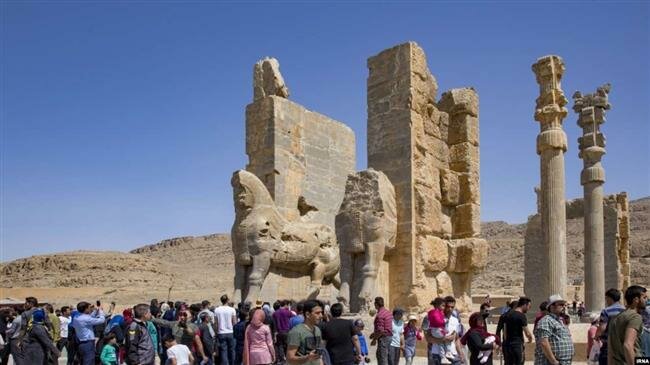
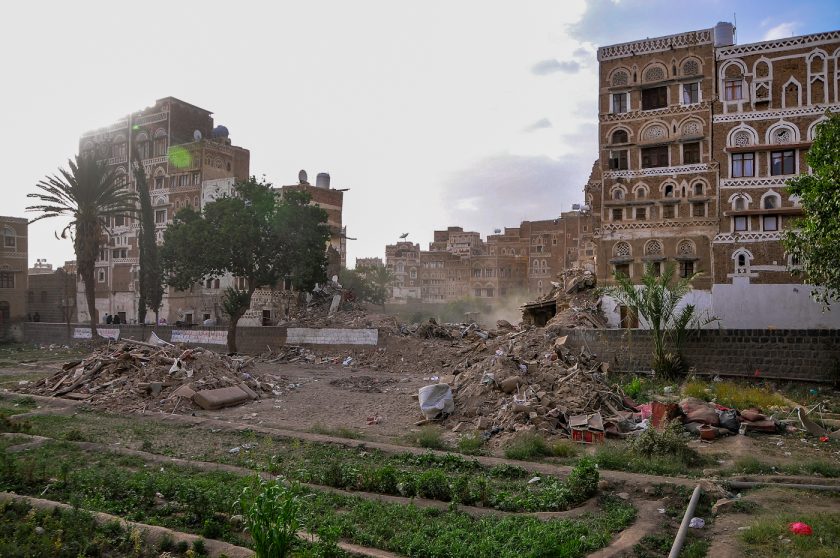
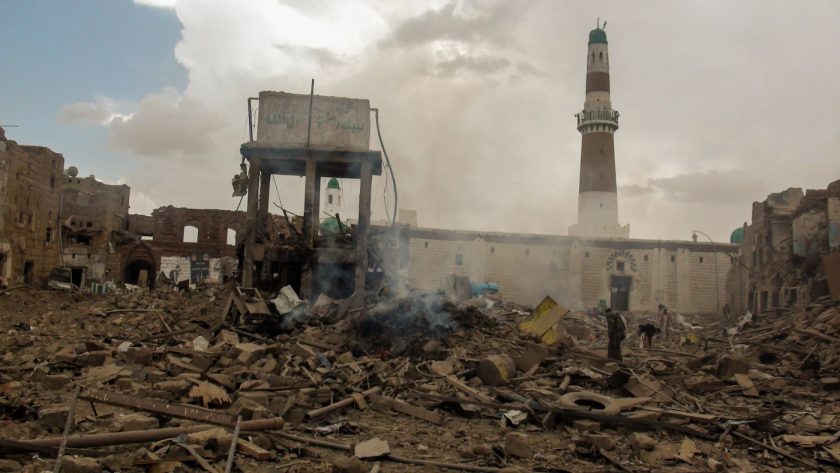



 Aletho News

