Washington’s attempt to “isolate Putin’s Russia” has failed and had the opposite effect.
On the fifth anniversary of the onset of the Ukrainian crisis, in November 2013, and of Washington “punishing” Russia by attempting to “isolate” it in world affairs — a policy first declared by President Barack Obama in 2014 and continued ever since, primarily through economic sanctions — Cohen discusses the following points:
1. During the preceding Cold War with the Soviet Union, no attempt was made to “isolate” Russia abroad; instead, the goal was to “contain” it within its “bloc” of Eastern European nations and compete with it in what was called the “Third World.”
2. The notion of “isolating” a country of Russia’s size, Eurasian location, resources, and long history as a great power is vainglorious folly. It reflects the paucity and poverty of foreign thinking in Washington in recent decades, not the least in the US Congress and mainstream media.
3. Consider the actual results. Russia is hardly isolated. Since 2014, Moscow has arguably been the most active diplomatic capital of all great powers today. It has forged expanding military, political, or economic partnerships with, for example, China, Iran, Turkey, Syria, Saudi Arabia, India, and several other East Asian nations, even, despite EU sanctions, with several European governments. Still more, Moscow is the architect and prime convener of three important peace negotiations under way today: those involving Syria, Serbia-Kosovo, and even Afghanistan. Put differently, can any other national leaders in the 21st century match the diplomatic records of Russian President Vladimir Putin or of his Foreign Minister Sergei Lavrov? Certainly not former US Presidents George W. Bush or Obama or soon-to-depart German Chancellor Angela Merkel. Nor any British or French leader.
4. Much is made of Putin’s purportedly malign “nationalism” in this regard. But this is an uninformed or hypocritical explanation. Consider French President Emmanuel Macron, who recently reproached Trump for his declared nationalism. The same Macron who has sought to suggest (rather implausibly) that he is a second coming of Charles de Gaulle, who himself was a great and professed nationalist leader of the 20th century, from his resistance to the Nazi occupation and founding of the Fifth Republic to his refusal to put the French military under NATO command. Nationalism, that is, by whatever name, has long been a major political force in most countries, whether in liberal enlightened or reactionary right-wing forms. Russia and the United States are not exceptions.
5. Putin’s success in restoring Russia’s role in world affairs is usually ascribed to his “aggressive” policies, but it is better understood as a realization of what is characterized in Moscow as the “philosophy of Russian foreign policy” since Putin became leader in 2000. It has three professed tenets. The first goal of foreign policy is to protect Russia’s “sovereignty,” which is said to have been lost in the disastrous post-Soviet 1990s. The second is a kind of Russia-first nationalism or patriotism: to enhance the well-being of the citizens of the Russian Federation. The third is ecumenical: to partner with any government that wants to partner with Russia. This “philosophy” is, of course, non- or un-Soviet, which was heavily ideological, at least in its professed ideology and goals.
6. Considering Washington’s inability to “isolate Russia,” considering Russia’s diplomatic successes in recent years, and considering the bitter fruits of US militarized and regime-change foreign policies (which long pre-date President Trump), perhaps it’s time for Washington to learn from Moscow rather than demand that Moscow conform to Washington’s thinking about—and behavior in—world affairs. If not, Washington is more likely to continue to isolate itself.
Stephen F. Cohen is a professor emeritus of Russian studies and politics at New York University and Princeton University and a contributing editor of The Nation.
It is rare that Thanksgiving falls on a significant date, as it does this year, November 22, the date President Kennedy was assassinated in 1963. When we gather to give thanks, we should remember the extraordinarily courageous John F. Kennedy and the absent presence of a man whose death, dark and bloody as it was, is a sign of hope in these dark times.
For if John Kennedy had not had the spiritual conscience to secretly carry-on a back channel letter correspondence with the courageous Nikita Khrushchev, facilitated by Pope John XXIII, we very well might not be here, having been incinerated in a nuclear holocaust.
As then, so today, do we desperately need such a meeting of minds as the U.S. continually pushes Russia into a defensive posture that makes a nuclear confrontation so much more likely.
A true war hero twice over, John Kennedy risked his life to save his men in World War II, and then, after a radical turn toward peace-making in the last year of his life, he died in his own country at the hands of his domestic enemies as a soldier in a non-violent struggle for peace and reconciliation for all people across the world.
Hope? Not because he was assassinated, but why he was assassinated.
We know who killed him: the national security state, led by the CIA, killed him, not Lee Harvey Oswald. It was a coup d’état purposely conducted in plain sight to send a message that every president since has heeded: Your job is to make war and threaten nuclear annihilation for the Deep State elites. Follow orders or else. And they have followed.
If you find my assertion about the CIA audacious and absurd, first read James Douglass’s JFK and the Unspeakable: Why He Died and Why It Matters, a book widely regarded as the best book on the assassination and its meaning. Read it very closely and slowly. Check all his sources, read his endnotes, and analyze his logic. Approach his meticulous research as if you agreed with Gandhi’s saying that truth is God and God is truth. Try to refute Douglass. You will be stymied.
Then read David Talbot’s The Devil’s Chessboard: Allen Dulles, the CIA, and the Rise of America’s Secret Government for further clarification. You will come away from these two books profoundly shaken to your core. Be a truth-seeker, if you are not one already.
Or if you prefer, call me a “conspiracy theorist,” as the CIA wants, since it was the Agency that produced CIA Dispatch # 1035-960. “Most Americans,” writes Professor Lance deHaven-Smith of Florida State University, “will be shocked to learn that the conspiracy theory label was popularized as a pejorative term by the Central Intelligence Agency (CIA) in a propaganda campaign initiated in 1967.”
This program was aimed at critics of the Warren Commission. The CIA requested that its own people and corporate media accomplices, including all its many journalist assets, besmirch the good names of anyone who dared to point out the absurdities in the government claim that Lee Harvey Oswald, a man working for the CIA as a fall guy, could have killed Kennedy.
So be careful how you use the term, if you don’t want to be working with the assassins to silence their critics.
But my intention here is not to debate the obvious. In a season of thanksgiving and hope, I want to remind you to remember and honor JFK. Because he knew the horror of war and grasped the systemic evil of its proponents within his own government, John Kennedy grew out of the war machine – in James Douglass’s words in JFK and the Unspeakable, when he was assassinated, JFK “was turning, Teshuvah, ‘turning,’ the rabbinic word for repentance,” against war and toward peace as his actions in the last year of his life make crystal clear. As a result, the unspeakable deep-state forces murdered him. He knew they would, but as a man of great courage, he knew he must follow the words of Abraham Lincoln dear to his heart: “I know there is a God – and I see a storm coming. If he has a place for me, I believe that I am ready.”
Hope comes from facing the truth, not from fleeing from it. The Trappist monk, Thomas Merton, called our denial of the truth about JFK and his turn toward peace that led to his murder by forces within his own government, the “unspeakable”: “the void that gets into the language of public and official declarations at the very moment when they are pronounced, and makes them ring dead with the hollowness of the abyss.”
We are living in that abyss today. But we can still speak; we can refuse to be silenced. And in speaking up we will find hope.
Jim Douglass asks: “How can we take hope from a peacemaking president’s assassination by his own national security state?”
He answers: “The story of why John Kennedy died encircles the earth. Because JFK chose peace on earth at the height of the Cold War, he was executed. But he turned toward peace, in spite of the consequences to himself, humanity is still alive and struggling. That is hopeful, especially if we understand what he went through and what he has given us as his vision.”
His life’s story is the story of the courage to change radically and turn toward truth and peace-making no matter what the cost.
We should all raise our glasses in a Thanksgiving toast to John Kennedy. In his story is ours; the hope he bequeathed to us through his courageous death is one of hope for life. Our gratitude to JFK must follow with our commitment to oppose the killers in our own government who want to silence us all, now and forevermore.
Manlio Dinucci in this carefully documented Pandora TV production focuses on US-NATO military deployment in Italy and around the World in what might described as “Global NATO”.
Manlio Dinucci, distinguished Italian author, geopolitical analyst and geographer is a Research Associate of the Centre for Research on Globalization CRG).
“Colonel” Edward Mandell House is on his way to meet with King George V, who ascended to the throne after Edward VII’s death in 1910. Accompanying him is Edward Grey, British foreign secretary and acolyte of the Milner Group. The two speak “of the probability of an ocean liner being sunk” and House informs Grey that “if this were done, a flame of indignation would sweep across America, which would in itself probably carry us into the war.”
An hour later, at Buckingham Palace, King George V inquires about an even more specific event.
“We fell to talking, strangely enough, of the probability of Germany sinking a trans-Atlantic liner, . . . He said, ‘Suppose they should sink the Lusitania with American passengers on board. . . .’”
And, by a remarkable coincidence, at 2:00 that afternoon, just hours after these conversations took place, that is precisely what happened.
The Lusitania, one of the largest passenger liners in the world, is en route from New York to Liverpool when it is struck by a torpedo from a German U-boat. She sinks to the bottom in minutes, killing 1,198 passengers and crew, including 128 Americans. The disaster—portrayed as a brazen, unexpected attack on an innocent passenger liner—helps to shift public opinion about the war in the US. To the average American, the war suddenly doesn’t feel like a strictly European concern.
Every aspect of the story was, as we now know, a deception. The Lusitania was not an innocent passenger liner but an armed merchant cruiser officially listed by the British Admiralty as an auxiliary war ship. It was outfitted with extra armour, designed to carry twelve six-inch guns, and equipped with shell racks for holding ammunition. On its trans-Atlantic voyage the ship was carrying “war materiel”—specifically, more than 4 million .303 rifle bullets and tons of munitions, including shells, powder, fuses and gun cotton—“in unrefrigerated cargo holds that were dubiously marked cheese, butter and oysters.” This secret manifest was officially denied by the British government for generation after generation but in 2014—a full 99 years after the event—internal government documents were finally released in which the government admitted the deception.
And, most remarkably of all, by Edward Mandell House’s own account both Edward Grey and King George V himself were discussing the sinking of the Lusitania just hours before the event took place.
It’s a story that provides a window into the secret society’s years-long campaign to draw the United States into World War I. But in order to understand this story, we have to meet Edward Mandell House and the other Milner Group co-conspirators in America.
Strange as it might seem, there were no shortage of such co-conspirators in the US. Some, like the members of the influential Pilgrims Society, founded in 1902 for the “encouragement of Anglo-American good fellowship”—shared Rhodes’ vision of a united Anglo-American world empire; others were simply lured by the promise of money. But whatever their motivation, those sympathetic to the cause of the Round Table included some of the wealthiest and most powerful people in the United States at the time.
Many of these figures were to be found at the heart of Wall Street, in the banking and financial institutions revolving around J.P. Morgan and Company. John Pierpont Morgan, or “Pierpont” as he preferred to be called, was the nucleus of turn-of-the-century America’s banking sector. Getting his start in London in 1857 at his father’s merchant banking firm, the young Pierpont returned to New York in 1858 and embarked on one of the most remarkable careers in the history of the world.
Making his money financing the American robber barons of the late 19th century—from Vanderbilt’s railroads to Adolph Simon Ochs’ purchase of TheNew York Times to the buyout of Carnegie Steel—Morgan amassed a financial empire that, by the 1890s, wielded more power than the United States Treasury itself. He teamed up with his close allies, the House of Rothschild, to bail out the US government during a gold shortage in 1895 and eased the Panic of 1907 (which he helped to precipitate) by locking 120 of the country’s most prestigious bankers in his library and forcing them to reach a deal on a $25 million loan to keep the banking system afloat.
As we saw in “Century of Enslavement: The History of the Federal Reserve,” Morgan and his associates were only too happy to use the banking crises they helped to create to galvanize public opinion toward the creation of a central bank. . . so long as that central bank was owned and directed by Wall Street, of course.
But their initial plan, the Aldrich Plan, was immediately recognized as a Wall Street ploy. Morgan and his fellow bankers were going to have to find a suitable cover to get their act through Congress, including, preferably, a President with sufficient progressive cover to give the new “Federal Reserve Act” an air of legitimacy. And they found their ideal candidate in the politically unknown President of Princeton University, Woodrow Wilson, a man who they were about to rocket straight into the White House with the help of their point man and Round Table co-conspirator, Edward Mandell House.
GROVE: Woodrow Wilson was an obscure professor at Princeton University who from reading all that I’ve read about him wasn’t the smartest guy but he was smart enough to pick up when other people had good ideas and then he bumps into this guy named Colonel House.
Colonel House, he grew up in Beaumont, Texas, and Colonel House’s dad was like a Rhett Butler type of smuggler privateer pirate during the Confederate war with the Union. So Colonel House: first of all, he’s not a colonel. It’s just like a title he gave himself to make him seem more than he was. But he did come from a politically connected family in the south that were doing business with the British during the Civil War. So Colonel house in the early 1900’s makes Woodrow Wilson his protege and Colonel house himself is being puppeted by a few people and the layers of the Anglo-American establishment above him and so we are left with the public persona of Woodrow Wilson. And here he is.
And he’s got this, you know, this whole new Federal Reserve System that’s going to come in during his administration which was also kind of a precursor to getting America into the war because it changed our financial dependency from being self-reliant and printing our own debt-free money to being indentured to international bankers who charged us as they print money out of thin air and charged future generations for it.
The election of Woodrow Wilson once again shows how power operates behind the scenes to subvert the popular vote and the will of the public. Knowing that the stuffy and politically unknown Wilson would have little chance of being elected over the more popular and affable William Howard Taft, Morgan and his banking allies bankrolled Teddy Roosevelt on a 3rd party ticket to split the Republican vote. The strategy worked and the banker’s real choice, Woodrow Wilson, came to power with just forty-two percent of the popular vote.
With Wilson in office and Colonel House directing his actions, Morgan and his conspirators get their wish. 1913 saw the passage of both the federal income tax and the Federal Reserve Act, thus consolidating Wall Street’s control over the economy. World War One, brewing in Europe just eight months after the creation of the Federal Reserve, was to be the first full test of that power.
But difficult as it had been for the Round Table to coax the British Empire out of its “splendid isolation” from the continent and into the web of alliances that precipitated the war, it would be that much harder for their American fellow travelers to coax the United States out of its own isolationist stance. Although the Spanish-American War had seen the advent of American imperialism, the thought of the US getting involved in “that European war” was still far from the minds of the average American.
“There is nothing reasonable in such a war as that for which Europe has been making ready, and it would be folly for this country to sacrifice itself to the frenzy of dynastic policies and the clash of ancient hatreds which is urging the Old World to its destruction.”
The Sun was by no means unique in its assessment. A vote taken among 367 newspapers throughout the United States in November of 1914 found just 105 pro-Ally and 20 pro-German papers, with the vast majority—242 of them—remaining firmly neutral and recommending that Uncle Sam stay out of the conflict.
Once again, just as they did in Britain, the cabal was going to have to leverage its control of the press and key governmental positions to begin to shape public perception and instill pro-war sentiment. And once again, the full resources of these motivated co-conspirators were brought to bear on the task.
One of the first shells in this barrage of propaganda to penetrate the American consciousness was the “Rape of Belgium,” a catalogue of scarcely believable atrocities allegedly committed by the German forces in their invasion and occupation of Belgium at the start of the war. In a manner that was to become the norm in 20th century propaganda, the stories had a kernel of truth; there is no doubt that there were atrocities committed and civilians murdered by German forces in Belgium. But the propaganda that was spun from those kernels of truth was so over-the-top in its attempts to portray the Germans as inhuman brutes that it serves as a perfect example of war propaganda.
RICHARD GROVE: The American population at that time had a lot of German people in it. Thirty to fifty percent of the population had relations back to Germany, so there had to be this very clever propaganda campaign. It’s known today as “babies on bayonets.” So if you have no interest in World War I but you think it’s interesting to study propaganda so you don’t get fooled again, then type it into your favorite search engine: “babies on bayonets, World War I.” You’ll see hundreds of different posters where the Germans are bayonetting babies and it brings about emotions and it doesn’t give you the details of anything. And emotions drive wars, not facts. Facts are left out and deleted all the time in order to create wars, so I think that putting facts back in might help prevent wars. But I do know that they like to drive people on emotion. The babies on bayonets getting America into World War one, that’s a key part of it.
GERRY DOCHERTY: Children who had their arms chopped off. Nuns that were raped. Shocking things, genuinely shocking things. The Canadian officer who was nailed at Andrew’s cross on a church door and left there to bleed to death. These were the great myths peddled in order to defame and bring down the the whole image of any justification for German action and try and influence America into war.
DOCHERTY: That’s not to say that there weren’t atrocities on both sides. War is an atrocious event and there are always victims. Absolutely. And I offer no justification for it. But the lies, the unnecessary abuse of propaganda.
Even when in Britain they decided that they would put together the definitive volume of evidence to present it to the world, the person they asked to do this just so happened to have been former British ambassador to the United States, a man called Bryce you who was very well-liked in the States. And his evidence was published and put forward and there were screeds of stories after stories. But then later it was discovered that in fact the people who took the evidence hadn’t been allowed to speak to any of the Belgians directly but in fact what they were doing is they were listening to a middleman or agents who who had supposedly taken these stories.
And when one of the official committee said “Hold on, can I speak to someone directly?” “No.” “No?” He resigned. He wouldn’t allow his name to be put forward with the [official report]. And that’s the extent to which this is false history. It’s not even even acceptable to call it fake news. It’s just disgusting.
The campaign had its intended effect. Horrified by the stories emerging from Belgium—stories picked up and amplified by the members of the roundtable in the British press, including the influential Times and the lurid Daily Mail, run by Milner ally Lord Northcliffe—American public opinion began to shift away from viewing the war as a European squabble about an assassinated archduke and toward viewing the war as a struggle against the evil Germans and their “sins against civilization.”
The culmination of this propaganda campaign was the release of the “Report of the Committee on Alleged German Outrages,” better known as “The Bryce Report,” compiled for “His Britannic Majesty’s Government” and presided over by Viscount James Bryce, who, not coincidentally, was the former British Ambassador to America and a personal friend of Woodrow Wilson. The report was a sham, based on 1,200 depositions collected by examiners who “had no authority to administer an oath.” The committee, which was not allowed to speak to a single witness itself, was tasked merely with sifting through this material and deciding what should be included in the final report. Unsurprisingly, the very real atrocities that the Germans had committed in Belgium—the burning of Louvain, Andenne and Dinant, for example—were overshadowed by the sensationalist (and completely unverifiable) stories of babies on bayonets and other acts of villainy.
The report itself, concluding that the Germans had systematically and premeditatedly broken the “rules and usages of war” was published on May 12, 1915, just five days after the sinking of TheLusitania. Directly between these two events, on May 9, 1915, Colonel House—the man who Wilson called his “second personality” and his “independent self”—wrote a telegram, which the President dutifully read to his cabinet and was picked up by newspapers across the country.
“America has come to the parting of the ways, when she must determine whether she stands for civilized or uncivilized warfare. We can no longer remain neutral spectators. Our action in this crisis will determine the part we will play when peace is made, and how far we may influence a settlement for the lasting good of humanity. We are being weighed in the balance, and our position amongst nations is being assessed by mankind.”
But despite this all-out propaganda assault, the American public was still largely against entering the war. It was in this context that the same group of Wall Street financiers who had maneuvered Wilson into the White House presided over the 1916 presidential election, one that the country knew would decisively conclude America’s neutrality in the war or its decision to send forces to engage in European combat for the first time in history.
The bankers left nothing to chance. Wilson, who would predictably follow House’s lead on all matters including war, was still their preferred candidate, but his competitor, Charles Evan Hughes, was no less of a Wall Street man. Hughes’ roots were as a Wall Street lawyer; his firm represented the New York, Westchester, and Boston Railroad Company for J.P. Morgan and Company and the Baptist Bible class that he led boasted many wealthy and influential members, including John D. Rockefeller, Jr.
The affable Hughes was stiff competition for the wooden and charmless Wilson, but such was the importance of American neutrality that “He Kept Us Out of War” actually became the central slogan of the campaign that saw Wilson return to the White House.
DOCHERTY: And then, of course, came the famous election of 1916. Wilson wasn’t popular, but Wilson, simply—he had no kind of public persona which warmed people. On the contrary, he was a cold fish. He had dubious links with several of those who are powerful in Wall Street. But his propaganda for the election was “He Kept Us Out of War.” “He was a man, vote for Wilson, he kept us out of war.” And then having promised that he would continue to keep America out of war, and in fact of course within months America was was thrown into the war by its own government.
“He Kept Us Out of War.” But just as in the British election of 1906—which saw the British public overwhelmingly voting for Henry Campbell-Bannerman’s Liberal Party and their platform of peace only to get the Milnerites in the cabinet entering secret agreements to bring about war—so, too, was the American public duped at the ballot box in 1916.
In fact, in the fall of 1915, over one year before the election even took place, Wilson’s string-puller, Edward Mandell House, was engaged in a secret negotiation with Edward Grey, the Milnerite heading Britain’s foreign office. That negotiation—long hidden from the public but finally revealed when House’s papers were published in 1928—shows the lengths to which Grey and House were willing to go to draw America into the war on the side of the Allies and against the Germans.
On October 17, 1915, House drafted a letter to Grey which he called “one of the most important letters I ever wrote.” Before sending it, he split it into two separate, coded messages, to ensure it would not be readable if it were intercepted. In it, he laid out a plan to steer the US into war with Germany under the false pretense of a “peace conference.”
Dear Sir Edward :
. . . In my opinion, it would be a world-wide calamity if the war should continue to a point where the Allies could not, with the aid of the United States, bring about a peace along the lines you and I have so often discussed.
It is in my mind that, after conferring with your Government, I should proceed to Berlin and tell them that it was the President’s purpose to intervene and stop this destructive war, provided the weight of the United States thrown on the side that accepted our proposal could do it.
I would not let Berlin know, of course, of any understanding had with the Allies, but would rather lead them to think our proposal would be rejected by the Allies. This might induce Berlin to accept the proposal, but, if they did not do so, it would nevertheless be the purpose to intervene. . . .
Perhaps realizing the gravity of what was being proposed, Woodrow Wilson, the man who would later be elected for his ability to keep America out of war, merely added the word “probably” to House’s assurance that America would join the war.
The negotiations for this plan continued throughout the fall of 1915 and winter of 1916. In the end, the British government balked at the proposal because the thought that the Germans might actually accept peace—even a peace of disarmament brokered by the US—was not enough. They wanted to crush Germany completely and nothing less than total defeat would be sufficient. Another pretense would have to be manufactured to embroil the US in the war.
When, on the morning of May 7, 1915, House assured Grey and King George that the sinking of the Lusitania would cause “a flame of indignation [to] sweep across America,” he was correct. When he said it would “probably carry us into war,” he was mistaken. But in the end it was the naval issue that eventually became the pretext for America’s entry into war.
The history books of the period, following the familiar pattern of downplaying Allied provocations and focusing only on the German reactions, highlight the German policy of unrestricted submarine warfare which led to the downing of the Lusitania. The practice, which called for German U-boats to attack merchant ships on sight, was in contravention of the international rules of the sea at the time, and was widely abhorred as barbaric. But the policy was not instituted out of any insane blood lust on the part of the Kaiser; it was in response to Britain’s own policy of breaking international rules of the sea.
At the outbreak of war in 1914 the British had used their position of naval superiority to begin a blockade of Germany. That campaign, described as “one of the largest and most complex undertakings attempted by either side during the First World War,” involved the declaration of the whole of the North Sea as a war zone. As a so-called “distant blockade,” involving the indiscriminate mining of an entire region of the high seas, the practice was in direct violation of the Declaration of Paris of 1856. The indiscriminate nature of the blockade—declaring the most basic of supplies, like cotton, and even food itself to be “contraband”—was a violation of the Declaration of London of 1909.
More to the point, as an attempt to starve an entire country into submission, it was a crime against humanity. Eventually reduced to a starvation diet of 1,000 calories a day, tuberculosis, rickets, edema and other maladies began to prey on those Germans who did not succumb to hunger. By the end of the war the National Health Office in Berlin calculated that 763,000 people had died as a direct result of the blockade. Perversely, the blockade did not end with the war. In fact, with Germany’s Baltic coast now effectively added to the blockade, the starvation actually continued and even intensified into 1919.
Faced with protestations from the Austrian ambassador about the illegality of the British blockade, Colonel House, now America’s de facto president, merely observed: “He forgets to add that England is not exercising her power in an objectionable way, for it is controlled by a democracy.”
This double standard was not the exception but the rule when it came to those in America’s East coast establishment who were hungry to see the US join the Allies on the battlefields of Europe. As historian and author Ralph Raico explained in a 1983 lecture, it was these double standards that led directly to America’s entry into the war.
RALPH RAICO: The Wilson administration now takes the position which will ultimately lead to war. The German government is to be held strictly accountable for the death of any Americans on the high seas regardless of circumstances.
The Germans say, “Well let’s see if we can live with this. As long as you’re willing to put pressure on the British to have them modify their violations of international law—that is, they’re placing food on the list of contraband materials, which had never been done before. The British ,as you know, take your merchant ships off the high seas on the way to Rotterdam because they say anything that goes to Rotterdam is going to go to Germany, so they take American ships off the high seas. The British have put cotton—cotton!—on the list of contraband, confiscating these materials. They interfere with letters going to the continent because they think there’s military intelligence possibly involved. The British are imposing in many ways on Americans, so if you hold them responsible, we’ll behave ourselves as far as submarines go.”
This was not to be the case and the attitude of the Americans towards British violations of neutral rights were quite different. One reason is that the American ambassador to London, Walter Hines Page, was an extreme Anglophile. One time, for instance, he gets a message that the British have to stop interfering with American mail shipments to neutral ports, and the American ambassador goes to the British Foreign Minister Edward grey and says, “Look at the message I’ve just got from Washington. Let’s get together and try to answer this. This was his attitude. The British were never to help or were never held to the same standard as the Germans.
At home, Theodore Roosevelt, who in previous years had been a great friend of the kaiser’s and a great admirer of Germany, now says we have to get into this war right away. Besides that there’s a campaign for preparedness for building up the American army, the American Navy, drilling American citizens in combat techniques. There’s a kind of hysteria, really, that travels over the country considering that there’s—at this time certainly no chance—no chance of some kind of immediate threat to the United States.
And people like Roosevelt and Wilson begin talking in a very unfortunate way. Wilson says, for instance, “in America we have too many hyphenated Americans”—of course he meant German-Americans, Irish-Americans—”and these people are not totally loyal to our country.” Already scapegoats are being looked for and public opinion is being roused.
And this diplomatic negotiation, the exchange of memos goes on for the next few years. In January of 1917, the Americans are not having been able to budge the British in the least on any British violation of American rights; the British blockade intensifying; the Germans really feeling hunger in a very literal sense, especially the people on the on the home front; the Kaiser is persuaded by his Admirals and Generals to begin unrestricted submarine warfare around the British Isles.
The American position by this time had solidified, had become a totally rigid one, and when all is said and done when you go through all of the back-and-forth memoranda and notes and principles established, the United States went to war against Germany in 1917 for the right of Americans to travel in armed belligerent merchant ships carrying munitions through war zones. Wilson’s position was that even in that case the Germans simply had no right to attack the ship as long as there are Americans on the ship. Shall I repeat that? Armed belligerent—that is to say, English—armed English merchant ships carrying munitions could not be fired upon by the Germans as long as there were American citizens on board. And it was for the right of Americans to go into the war zone on such vessels that we finally went to war.
After months of deliberations and with the situation on the home front becoming increasingly desperate, the German military commanders decided to resume their unrestricted submarine warfare in 1917. As expected, US merchant ships were sunk, including four ships in late March alone. On April 2, 1917, Woodrow Wilson made his historic speech calling for Congress to declare war on Germany and commit US troops to European battlefields for the first time.
The speech, made over one hundred years ago by and for a world that has long since passed away, still resonates with us today. Embedded within it is the rhetoric of warfare that has been employed by president after president, prime minister after prime minister, in country after country and war after war right down to the current day. From it comes many of the phrases that we still recognize today as the language of lofty ideals and noble causes that always accompany the most bloody and ignoble wars.
With a profound sense of the solemn and even tragical character of the step I am taking and of the grave responsibilities which it involves, but in unhesitating obedience to what I deem my constitutional duty, I advise that the Congress declare the recent course of the Imperial German Government to be in fact nothing less than war against the government and people of the United States.
[…]
The world must be made safe for democracy. Its peace must be planted upon the tested foundations of political liberty. We have no selfish ends to serve. We desire no conquest, no dominion. We seek no indemnities for ourselves, no material compensation for the sacrifices we shall freely make. We are but one of the champions of the rights of mankind. We shall be satisfied when those rights have been made as secure as the faith and the freedom of nations can make them.
Four days later, on April 6, 1917, the US Congress issued a formal declaration of war against the Imperial German Government.
NARRATOR: Inside the White House, President Woodrow Wilson conferred with advisers and signed the proclamation of war against Germany. [. . .] everywhere there was cheering and waving of flags. Hindsight or cynicism might make us smile at the thought that this war was sometimes called That Great Adventure. Never again would we see our entry into a major conflict excite so many to such heights of elation. Naive? Probably. But here was a generation of young men not yet saturated by the paralyzing variety of self analysis and the mock sciences. They believed!
All along the Western front, the Allies rejoiced. The Yanks were coming.
House, the Milner Group, the Pilgrims, the Wall Street financiers and all of those who had worked so diligently for so many years to bring Uncle Sam into war had got their wish. And before the war was over, millions more casualties would pile up. Carnage the likes of which the world had never seen before had been fully unleashed.
The trenches and the shelling. The no man’s land and the rivers of blood. The starvation and the destruction. The carving up of empires and the eradication of an entire generation of young men.
Why? What was it all for? What did it accomplish? What was the point?
To this day, over 100 years later, we still look back on the horrors of that “Great War” with confusion. For so long we have been told non-answers about incompetent generals and ignorant politicians. “It’s the senselessness of war,” the teachers of this fraudulent and partial history have told us with a shrug.
But, now that the players who worked to set the stage for this carnage have been unmasked, these questions can finally be answered.
While U.S. sanctions technically permit Iran to import medicines, it is actually just a ruse to make it look like U.S. officials are kind, compassionate, and benevolent. In actuality, the way the sanctions work will mean that the Iranian people will inevitably be deprived of much-needed medicines. That’s because the U.S. extends its sanctions system to banks that process payments to Iran, which is likely to inhibit the importation of medicines into Iran.
But that’s the point behind the sanctions: to kill as many Iranians as possible in the hope that they will rise up in a violent revolution, oust Iran’s anti-U.S. regime from power, and install another pro-U.S. regime, like that of the Shah of Iran, who the CIA installed into power in its 1953 coup that destroyed Iran’s experiment with democracy.
Never mind that the Iranians, who live in a country that has strict gun control, lack the means to violently overthrow their government. And never mind that hundreds of thousands of Iranians would likely die in such a revolution, just like what has happened in the U.S.-supported revolution in Syria.
Those deaths wouldn’t matter to U.S. officials. They would be considered “worth it,” especially if they brought a pro-U.S. regime into power in Iran.
Recall that those were the words that U.S. Ambassador to the United Nations used back in 1996, when the U.S. government was enforcing sanctions against Iraq.
The Iraq sanctions had already killed hundreds of thousands of Iraqi children. The idea was that if Iraqi parents became sufficiently upset with their children dying, they would oust their dictator, Saddam Hussein, from power and replace him with a pro-U.S. dictator.
After some six years of deaths of Iraqi children, however, the sanctions had still not produced the desired result. Saddam was still in power. The CBS news program “Sixty Minutes” asked Albright if the sanctions were worth it. She replied that the sanctions were, in fact, worth it. She was expressing the official position of the Clinton administration. That’s because killing those Iraqi children was viewed in the same way as killing Iranians today: as a means by which a pro-U.S. regime could be installed into power.
One of the ironies of the Iraq sanctions is that in the previous decade, U.S. officials had partnered with Saddam, even furnishing him those infamous WMDs that would later serve as the bogus excuse for invading Iraq in 2001. (See here and here.)
Why was the U.S. government partnering in the 1980s with Saddam, the man they would try to oust from power in the 1990s by killing Iraqi children? They were helping him kill Iranians in the war that he had started against Iran. U.S. officials were so angry that the Iranian people had ousted the CIA-installed Shah in their 1979 revolution that they decided to use Saddam in the 1980s to exact their revenge by helping him to kill Iranians.
What U.S. officials did to an American man named Bert Sacks serves as a valuable lesson for anyone, including banks who process payments, who tries to help the Iranian people. Sachs believed that the sanctions were a moral abomination. He wasn’t the only one. Three high officials in the United Nations resigned their positions in a crisis of conscience against what was considered by some to be a U.S. genocide against Iraqi children.
Sacks decided to take medicines into Iraq, and U.S. officials went after him with a vengeance. They fined him $10,000 and then spent about a decade trying to collect the fine, which Sachs, to his everlasting credit, refused to pay.
It’s no different, of course, with the U.S. sanctions on North Korea and the decades-old, Cold War-era U.S. embargo on Cuba. The idea is to kill as many North Koreans and Cubans as possible in the hopes that they will finally rise up in a violent revolution and oust their dictatorial regimes from power. No number of deaths is considered too high. They are all considered worth it.
Meanwhile, many sanctions supporters continue to go to church on Sundays and pat themselves on the back for living in a country whose government is kind, compassionate, and benevolent.
In his new documentary “The Uncertainty has Settled,” Dutch filmmaker Marijn Poels focuses on climate science and politics and found that the issue is in fact as controversial and as UNSETTLED as any issue could possibly get.
The science climate change is far from settled and is in fact unsettled.
The production of the film took Poels to a variety of locations from Manhattan to the Austrian Alps.
The first part of the film depicts the plight of farmers in former East Germany (Saxony Anhalt), who are struggling to practice their livelihoods under the heavy burden of German agricultural regulation and market distortion that result from bureaucrats having decided that 0.01% of our atmosphere (man-emitted CO2) is a monumental problem.
That’s the narrative the media and leading politicians keep ramming. But a number of skeptics doubt it, and so Poels investigates if this doubt is just right wind politics or if there is something really behind it. … Full review
[The most notable part of the documentary is the interview with Freeman Dyson, from 1:09:00 – 1:14:00]
[Be sure to watch Piers Corbyn at 41:45 and again at 52:20]
A recent report by Brown University’s Watson Institute of International and Public Affairs on the cost of America’s wars in the aftermath of 9/11 estimates a sum totalling $5.9 Trillion. It is a figure virtually identical to the $6 Trillion figure projected by Harvard University’s Kennedy School of Government in 2013 to be the eventual cost of waging wars in Afghanistan and Iraq. Yet, as with the case of the increased danger of a nuclear war that could be the fruit of strained relations developed over the past decade with the Russian Federation, there has been no public debate in the United States about why America embarked on a programme of militarism predicated on the waging of a so-called War on Terror.
Such debate would necessarily have to centre on the three following areas:
The “hijacking” (to use the term chosen by retired US Four Star General Wesley Clark) of American foreign policy in the aftermath of the September attacks by a group of neoconservatives operating within the administration of President George W. Bush who drew up a ‘hit-list’ of seven countries intended to be destroyed over a five year period.
It would have been expected that all such countries earmarked for destruction would have had a connection to the planning of the September attacks, or, at least, have been sympathetic to the values guiding the alleged perpetrators of the deadliest attack on American soil since Pearl Harbor in 1941. Yet Iraq, Libya and Syria were all secular Arab states implacably opposed to the Sunni Islamist ideology of al-Qaeda, and Iran is a Shia nation. The common denominator among these states including Lebanon, or more accurately, Hezbollah, the Iranian-backed Lebanese Shia militia, was an enmity with the State of Israel.
As Clark stated during a speech given in October 2007 at the Commonwealth Club of California in San Francisco, there was never a public debate on a policy which commenced with the invasion of Iraq and was intended to be completed with an attack on Iran.
The unchanging policy from the administrations led by Bush Jr to Barack Obama and now Donald Trump due to ‘Deep State’ actors wielding power outside of the separated organs of government. In a scholarly paper-turned-book entitled National Security and Double Government, Michael J. Glennon, a professor of international law at Tufts University, has referred to the power usurping “Trumanite” institutions in contrast to the troika of “Madisonian” institutions of state, which he persuasively argues are no longer accountable in the way people think they are.
The corporate welfare culture surrounding the military industry as composed of the Pentagon and corporations such as Lockheed Martin, Boeing, Raytheon and others. The exorbitant costs involved with the development of the F-35 fighter plane which according to a number of US generals is pretty much “useless”, is emblematic of the inefficient weapons development regime that is more concerned with lining the pockets of corporations than with efficiency and cost-effectiveness.
The aforementioned, of course, do not mention the human cost: that of innocent civilian lives destroyed by military invasions, drone attacks and covert wars initiated by the United States. It also does not include the number of US service personnel killed, maimed and suffering from mental traumas.
All need to be factored into a comprehensive debate on why America’s sovereign debt has spiralled to uncontrollable levels, and also, why the moral standing of the United States among the international community of nations has been brought down to an all-time low.
Darius Anderson is one of California’s most powerful men. He promotes himself as a champion of liberal social causes, a philanthropist, a public servant, a man of integrity who cares about his community—especially racial minorities.
That image has not survived judicial scrutiny. A panel of arbitration judges has found that a company controlled by Anderson and his partner, Douglas Boxer, the son of former Senator Barbara Boxer, defrauded its Native American clients in a Bay Area casino deal. The partners convinced the Federated Indians of the Graton Rancheria to buy undevelopable swamp land in which they themselves held a large interest. They then made a secret deal with a Las Vegas gambling corporation in which they benefited at the Graton tribe’s expense.
The two-month long judicial proceeding took place behind closed doors at the San Francisco office of JAMS, a high-profile group of legal mediators formerly known as Judicial Arbitration and Mediation Services. A final binding arbitration award issued in April by the judging panel was confirmed by Superior Court Judge Richard Ulmer on June 1. That outcome has drawn almost no publicity. The only media to report on the findings of fraud against Anderson and Boxer is the North Bay Bohemian, a local alternative weekly newspaper.
For decades Anderson has advised and raised campaign funds for prominent state Democrats, including Nancy Pelosi, leader of the Democrats in the U.S. House of Representatives, and Jerry Brown, governor of the west coast state.
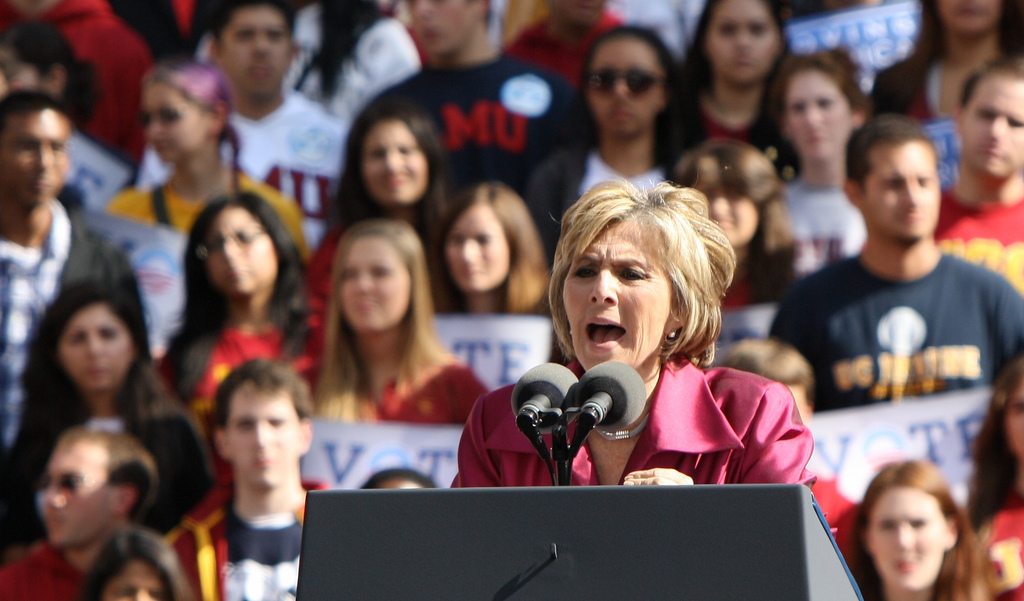
Another of his high-profile clients is Barbara Boxer, the longtime U.S. senator from California who retired in 2017. Her son Douglas partnered with Anderson in what judges found to be acts of fraud and deception against the Federated Indians of Graton Rancheria that began after Sen. Boxer pushed through legislation restoring the tribe’s sovereignty and granting it the right to run a casino.
The case raises comparisons with the 2005 Jack Abramoff Indian lobbying scandal, in which powerful consultants charged exorbitant fees to Indian clients seeking to develop casinos on their reservations. As such it adds another installment to the history of white men breaching trust with Native Americans for economic gain that began with European settlement of this continent. This case has a happier ending than is usual.
Sen. Boxer: Pushed bill to give tribe sovereignty. (Flicker: Shotgun Spratling)
Local Empire
Anderson, 53, oversees a restaurant and media empire in Napa and Sonoma Counties, 40 miles north of San Francisco. He owns a culinary school called Ramekins and he is the managing member and chairman of Sonoma Media Investments, which owns the Santa Rosa Press Democrat and its affiliate publications,which includes most of the newsprint media in the two-county region. In September, the Press Democrat reported a 900-word story about the arbitration findings that portrayed the tribe and Anderson as having settled a contractual “dispute”—the “fraud” word was not mentioned and the details of the deceptions were not exposed.
Anderson is much more that a restaurateur and newspaper publisher. His California-based lobbying firm, Platinum Advisors, advertises that it generates “billions of dollars in work for our clients” by navigating their deals through mazes of local, state, and federal government bureaucracies. Another of his companies, Kenwood Investments, is developing upscale housing and yacht havens on Treasure Island, a fabulously valuable island in the San Francisco bay built in 1939 as a World’s Fair site.
The business name that is key to this story is Kenwood Investments No. 2. Three retired state judges in the arbitration process declared in April that Anderson and his partners in “Kenwood No. 2” defrauded the Federated Indians ofGraton Rancheria of millions of dollars between 2002–03 and committed many acts of deception. They ordered Anderson’s investment firm to pay three quarters of a million dollars to the tribe to cover its lawyer’s fees and arbitration costs.
According to the judges, Anderson breached his consulting contract with the tribe, which now owns the Graton Resort & Casino in Rohnert Park. The judges found that Anderson and his associates “fraudulently induced” and “breached” an agreement to assist the tribe in developing a Las Vegas-style casino business.
The ruling, by retired Superior Court judges William Cahill, Read Ambler and Richard A. Kramer, concludes a long legal battle that was instigated not by the wronged party, but by Anderson, as he sought to further enrich his business at the tribe’s expense.
In a settlement arrangement, Kenwood No. 2 agreed not to appeal the judges’ findings. Anderson’s firm will pay less than the dollar amount of the award, says Joel Zeldin, the tribe’s arbitration counsel. There are no charges of criminal fraud pending against Kenwood No. 2, but the three judges, one of whom was chosen by Anderson’s firm, did their best to restore justice: “Even if the Tribe was willing to overlook Kenwood No. 2’s unethical behavior, the courts and these arbitrators will not.”
Summary of Violations
The 53-page arbitration report details how Darius Anderson and the senator’s son, Douglas Boxer, harmed the Federated Indians of Graton Rancheria over the course of several years. In summing up their findings, the judges’ panel found that Anderson and Boxer had violated their duty to be loyal to the tribe in the following ways:
• Anderson and Boxer represented that Kenwood No. 2 had experience and abilities that it in fact lacked.
• Kenwood No. 2 breached its contract when it bought an option on wetlands without telling the tribe, and then promoted the land to the tribe for the casino site despite its unsuitability for development.
• Anderson and Boxer sent out bid solicitations for a casino manager that benefited Kenwood No. 2 at the expense of the tribe and without telling the tribe of the existence of the “requests for proposals” or RFPs.
• They rejected a proposal that was the most favorable to the tribe without telling the tribe or informing it of that bidder’s reservations about irregularities in the contractual terms proposed by Kenwood No. 2.
• They entered into undisclosed consulting agreements “to the detriment” of the tribe, some of which involved conflicts of interest.
• “Despite causing major problems and providing virtually no effective assistance to the Tribe,” Anderson claimed that it was the tribe that had breached the consulting agreement with Kenwood No. 2. Anderson’s pursuit of his “unmerited” claim against the tribe caused it to spend significant amounts of money and to “suffer business risks and distractions.”
The judges ordered Kenwood No. 2 to pay the tribe’s attorney fees and costs of $725,657.48, and to receive nothing for itself.
Anderson did not respond to multiple requests for comment.
Boxer’s Role
Douglas Boxer: In on deal with Anderson. (YouTube)
Boxer was involved as a lobbyist for Platinum Advisors and as Anderson’s partner in Kenwood Investments No. 2. His mother, the now-retired U.S. senator, in 2000, wrote federal legislation that restored the national sovereignty of the Federated Indians of Graton Rancheria and authorized the tribe to establish a casino business.
In early 2002, Anderson and Boxer approached the tribe’s chairman, Greg Sarris, a novelist and professor of creative writing and Native American studies at Sonoma State University. They proposed that the newly empowered tribal nation hire Platinum Advisors to help it acquire reservation land and start a business to make it self-sufficient. Anderson and Boxer told Sarris that Platinum Advisors had “significant real estate development experience and connections with local, state and federal politicians,” according to the arbitration award. They proffered a platform of consulting services for a monthly retainer of $1,000, with payment deferred and contingent upon success.
Sarris trusted Boxer because the lobbyist’s mother had sponsored the legislation that re-established the tribe’s sovereignty. After Anderson presented a promise-filled PowerPoint to the tribal council, it voted to hire Platinum Advisors, ultimately paying it $1.2 million.
Fifteen years later, arbitrators declared that Anderson and Boxer had breached their contract to deliver adequate professional services in the tribe’s interest, damaging the casino project’s prospects. According to the arbitration document, the Graton Rancheria was afraid to expose these actions when it discovered what Anderson was doing in 2003, fearing political retaliation by the consultants.
The story only came to light because in November 2013, Anderson demanded that the Graton Rancheria pay Kenwood No. 2 a percentage of the projected revenue from its recently opened casino. Anderson insisted that the tribe pay his firm $43 million; he threatened to compel arbitration if it refused.
The tribe refused. It sued Kenwood No. 2 in state superior court, claiming that its sovereign immunity prohibited Anderson from compelling arbitration of his claim.
In November 2015, the court ruled that the tribe had waived its sovereign immunity defense in its contract with Anderson. In 2017, that judgment was affirmed by the appellate court, and the JAMS arbitration commenced.
Anderson claimed 2.5 percent of the Graton Resort & Casino’s net revenue for the first seven years of its operation, despite the fact that after 2005, the tribe had ceased doing business with his company. Insisting that the Graton Rancheria had “unjustly enriched” itself at the expense of his firm, Anderson demanded that it pay his attorney fees, too.
But it was the tribe, not Anderson, that had been wronged, the retired judges ruled. After months of sworn testimony, the panel ordered Kenwood No. 2 to pay the tribe’s attorney fees because it was Kenwood No. 2 that had breached the consulting contract, and Anderson’s claims to the contrary “lacked merit.”
The two trials generated thousands of pages of testimony, depositions and exhibits. The court record of the arbitration award was partly redacted and relabeled at Anderson’s request, according to Zeldin, the tribe’s arbitration counsel.
Anderson’s and Boxer’s names are replaced by “Person A” and “Person B,” respectively. “Platinum Advisors” is replaced with “Company 1.” “Kenwood No. 2” replaced “Kenwood.” The names of politicians and descriptions of their actions are blacked out. But who they are and what they did is clear from the narrative context and from contemporaneous news reports.
How It Began
In March 2002, the Graton Rancheria signed a contract with Platinum Advisors as its “exclusive agent” to provide it with “strategic advice and consultation” and to develop “political visibility.” The contract granted Platinum a right of first refusal to “partner with the tribe in any business opportunity it pursued.” The idea was to attract investors.
From the get-go, Boxer worked to convince the tribe how “‘much of a home run a casino would be’ rather than organic food processing, grape growing, strip mall, or senior assisted living facility,” according to the arbitration award. It did not take much convincing. Casinos are famous magnets for cash. Even as Anderson and Boxer worked with the tribe on a public relations campaign to further a casino project, they were making secret deals to benefit themselves, the arbitrators found.
According to a declaration filed by Anderson in 2015, he, Boxer, Jay Wallace of Platinum Advisors and Stuart Sunshine, a San Francisco city official, created Kenwood Investments No. 2 LLC in January 2003.
Anderson. (Platinum Advisors)
The arbitration judges ruled that Anderson’s new company shadowed Platinum Advisors’ tribal consulting activities, while serving a hidden agenda to make money for its principals—at the tribe’s expense.
Without informing Sarris or the tribe, Anderson and Boxer struck a deal to buy 1,736 acres of tidal wetlands near Highway 37, a major road connecting San Francisco to the nearby city of Oakland.
Kenwood No. 2 paid $100,000 for an option to purchase the swampy property, eventually billing the tribe $750,000 for it.
As Kenwood No. 2 was secretly securing the option, Platinum Advisors was advising the tribe to select the Highway 37 site for its casino, even though it was a politically impossible place to pour acres of concrete.
“The site was part of 50,000 acres of tidal wetlands that conservationists had been trying to protect and restore since the 1970s,” noted the arbitration judges, who were incredulous that Anderson had suggested it. The attempt to locate the casino on the wetlands site proved to be a public relations and monetary disaster for the tribe.
As Anderson and Boxer were negotiating to buy the swampy land in late 2002, they were also negotiating casino-management deals with several Las Vegas–based casino operators, including Station Casinos, Harrah’s, Maloof and MGM, without telling the tribe.
In February 2003, Anderson sent a request for proposals to potential casino operators. The proposal represented Kenwood No. 2 as the “exclusive development partner” and “financial advisor” for the tribe. The RFP stated that Kenwood No. 2 would evaluate the bid proposals and select the casino manager for the tribe.
Kenwood No. 2 had no contractual relationship with the Graton Rancheria when it issued the RFP. The tribe’s contract was with Platinum Advisors.
According to the arbitration award, “the evidence established that the Tribe was unaware that Kenwood No. 2 had sent an RFP to operators and had not approved the contents of the RFP drafted by Kenwood No. 2.”
Strange Bidding Terms
The trial revealed that Anderson’s RFP instructed potential casino operators to bid their services on the basis of several unusual assumptions:
• The operator would commit to buying Kenwood No. 2’s option to purchase the Highway 37 land and then buy the land from the seller on behalf of Kenwood No. 2, which would be the “titleholder.” The RFP assumed that the casino would be built on the Highway 37 site controlled by Kenwood No. 2 and that there were no other possibilities.
• The operators could charge the tribe 20 percent of the casino’s net revenues and were to “assume a management fee to Kenwood No. 2 of 10 percent of net gaming revenues.”
• The operators would pay Kenwood No. 2 “development fees” of $2.5 million up front to purchase the option on the Highway 37 site, and another $2.5 million when the tribe took over the site—$5 million total.
• “Lastly, operators were required to pay Kenwood No. 2 ‘pre-development fees’ of $8.4 million ($200,000 per month) for advisory and consulting services.”
The operators were not required by the RFP to make upfront cash payments to the tribe, or to provide any specific amounts of money for the tribe’s maintenance costs (i.e., its ability to maintain its existence until the casino began generating revenue).
Anderson received and evaluated four responses to the RFP, which he did not share with the tribe. Notably, Harrah’s proposed to take up to 24 percent of the net gaming revenue as its management fee. Improving on the terms of the RFP itself, Harrah’s offered to pay $100,000 a month to the tribe for its operating expenses, along with a $4 million pre-development fee. Harrah’s also offered to donate $100,000 per year to set up an educational scholarship fund for tribal members. And it offered to make a one-time $25 million “quality of life” loan to address tribal citizen’s needs for housing and medical care.
Harrah’s declined to pay a percentage of net revenues to Kenwood No. 2, although it offered to pay Anderson $50,000 a month in consulting fees, if the tribe approved of the arrangement. Harrah’s pointed out that such an arrangement with a consultant was not a normal business practice; it would have to be approved by the National Indian Gaming Commission.
Harrah’s expressed concern about the legitimacy of Anderson’s claim to be representing the tribe’s interests. It asked to be put directly in touch with the tribal council before proceeding further. Anderson rejected Harrah’s proposal without consulting with Sarris and the tribal council or informing them of the proposal’s existence.
Watch Peter B. Collins interview Peter Byrne on Boxer, Anderson fraud (Article continues below):
A Better Deal—For Anderson
Station Casinos’ response to the RFP was far more favorable toward Anderson. It suggested that Kenwood No. 2 and Station Casinos partner to manage the casino. It proposed divvying up 30 percent of the casino revenues—20 percent to Anderson’s firm, 80 percent to Station.
The Las Vegas–based corporation offered to pay Anderson $10 million cash up front and $15,000 a month for consulting services. It offered $100,000 a month for tribal operations, but it did not offer the tribe any pre-development fees, scholarships or loans.
On March 7, 2003 Anderson and Boxer asked the Graton Rancheria to assign the Platinum Advisors contract to Kenwood No. 2, and claimed it would not change the terms of the agreement.
But the assignation did change the terms of the agreement. The new arrangement gave Kenwood No. 2 new authority to act as the tribe’s exclusive agent. Kenwood No. 2 was allowed to negotiate a cut of the casino operator’s management fee for itself. And, importantly, the tribe agreed to waive its sovereign-immunity defense in the case of a contract dispute—a concession it later regretted.
Anderson and Boxer had been negotiating with gaming corporations since the fall of 2002. They first told Sarris and the tribe that they had issued RFPs on March 11, 2003.
Brian Campbell, a tribal member doing legal work for the tribe, got wind of the RFP and asked Boxer for a copy. Boxer gave Campbell a copy but did not tell him about the responses that had been received.
Boxer later testified under oath that he had given drafts of the RFP to the tribe before it was sent out in 2002. The tribe’s witnesses testified that Boxer did not do that. Campbell testified that he was surprised that Anderson had asked for 10 percent of the gaming revenues and $5 million in upfront fees in the RFP.
On March 14, 2003, Anderson told the tribal council about the existence of RFP responses. He did not disclose Harrah’s offer to the tribe of tens of millions of dollars in cash.
Anderson told the tribe that Station Casinos had made the best proposal for “superior overall economics.”
Even as members expressed outrage at Anderson’s self-dealing behavior, the tribal council accepted his recommendation that Station Casinos be selected as its casino operator.
Time to Hire Lawyers
Suspecting that Anderson was more motivated to benefit himself than the tribe, the Graton Rancheria hired attorneys from California Indian Legal Services to watch over its interests. These lawyers noted that it was a conflict of interest for Anderson to negotiate with Station on behalf of the tribe while he was also negotiating with Station on his own behalf for a cut of the management fees. Anderson agreed that he would not negotiate a separate deal.
On April 22, 2003, the tribe signed the revised agreement with Kenwood No. 2. It provided that Anderson’s company would receive 4 percent of the net gaming revenues for seven years (later reduced to 2.5 percent). Anderson agreed to donate $25,000 annually to the UCLA College of Indian Law Program. (UCLA declined to confirm if the donations were made.)
The next day, according to trial exhibits, Anderson secretly made a separate consulting agreement with Station Casinos, despite his promise that he wouldn’t.
The Graton Resort Casino. (gratonresortcasino.com)
Kenwood No. 2 contracted to assist Station Casinos “maintain its relationship” with the tribe. Station Casinos agreed to pay Anderson $20,000 per month and it bought the option on the Highway 37 site for $750,000, netting Kenwood No. 2 a $650,000 profit. (The tribe later reimbursed Station for the option payment).
Station Casinos agreed to pay Anderson a total of $9.5 million for achieving various “milestones” as it helped the tribe to navigate the bureaucracy of getting its casino up and running.
Anderson did not tell the tribe about his side deal with Station Casinos. “The evidence indicates that Kenwood No. 2 intentionally kept information regarding the Station/Kenwood No. 2 agreement secret from the Tribe,” the arbitrators found. “[Exhibit] 490 [Douglas Boxer] notation: ‘don’t tell Sarris: negotiation.’”
Boxer did not respond to multiple requests for comment.
In fact, the tribe did not learn of the secret side agreement’s existence until June 2003, when Station Casinos included a copy of the side agreement in the paperwork accompanying its negotiations with the tribe, the arbitrators found. Station Casinos declined to comment.
Picking on the Wrong Wetland
On the same day they signed the side agreement, Station Casinos and Anderson announced that the Graton Rancheria planned to develop the Highway 37 site for a casino. A coalition of environmental groups that supported the Bay Delta Restoration Plan to restore local wetland habitats enlisted local, state and federally elected officials to vehemently oppose erecting the casino.
The tribe’s attempt to “appease these groups by offering to restore hundreds of acres of wetlands on the property” was a non-starter. After Diane Feinstein, a U.S. senator from California, “threatened to redraft the Tribe’s restoration language to obstruct the Tribe’s ability to open a casino anywhere,” the Graton Rancheria backed down and nixed the wetlands as a possibility.
The tribe ended up paying for and donating the Highway 37 wetlands to the Sonoma County Land Trust, which has restored it. The wetlands debacle ended up costing the tribe about $5 million, which included paying for the unusable land and for Kenwood No. 2’s profit on the land-purchase option.
Without Anderson’s assistance, Sarris and the tribe went looking for an alternative site to build their casino, and eventually bought 270 acres in Rohnert Park for $100 million, which it borrowed from Station Casinos. The tribe had little or no contact with Anderson and Boxer after 2005, when it stopped using their services.
Boxer testified that Kenwood No. 2 did significant work for the tribe prior to 2006. The trial record reports that in 2004 Boxer “‘killed’ a bill” in the state assembly that would “require gaming tribes to negotiate with local governments to mitigate the impact of casinos.”
Boxer said at trial that he had designed publicity and lobbying campaigns for the tribe; helped it to create a financial budget and to find office space; and “assisted tribal members in securing personal loans.”
The arbitrators determined that lobbying on the tribe’s behalf violated California law because Kenwood No. 2 was not a registered lobbying firm. Regardless, the judges found that Anderson and Boxer did not materially assist the tribe in jumping through the complicated governmental, environmental and financing procedures necessary to obtain a gaming compact and open the casino.
Sarris testified that the tribe felt that “Kenwood No. 2 was providing little or no value . . . and the Tribe wanted to sever its relationship with [Anderson and Boxer] but was afraid that if it did so, [they] might retaliate and use [their] political connections against the Tribe.”
The tribe estimated that it ended up paying Kenwood No. 2 $10,000 an hour for the services it did receive before the contract ended.
Nonetheless, the tribe invited Anderson and Boxer to attend the opening party for the Graton Resort and Casino on Nov. 5, 2014. That same day, Anderson demanded that the Federated Indians of Graton Rancheria wire a payment of $43 million to his bank account.
A version of this story was first published on Bohemian.com as “Graton Expectations.”
Northern California-based journalist Peter Byrne combines investigative reporting with science writing. In 2017, Peter’s 11-part series in the Point Reyes Light “Busted: Breast Cancer Money and the Media” won the top science writing award from the American Association for the Advancement of Science. He has received national, regional, and local recognition for investigative work, writing style, and in-depth profiles of politicians and scientists. Peter reports on terrorism and its twin, counter terrorism, from epicenters of violence such as Mosul, Iraq and Orange County, California. He has written highly regarded books on quantum physics and writes for many publications, including Scientific American, New Scientist, Quanta, American Consequences, Mother Jones, and the North Bay Bohemian. He can be found at www.peterbyrne.info.
For quite some time, debate about ‘fake news’ has reverberated clamorously in both mainstream and alternative discourse. One could easily conclude the issue was a pressingly new plague, restricted to certain corners of the web – but academic TJ Coles begs to differ. In fact, he tells Sputnik fake news has been ubiquitous for thousands of years.
It’s difficult to pinpoint the precise moment the term ‘fake news’ entered the Western political and media lexicon, but the election of Donald Trump as US President certainly turbocharged its usage. For the controversial leader and his supporters, the label can be automatically applied to any and all media reporting critical of him, while his opponents play much the same game when roles are reversed.
“All that talk made me think ‘hang on a minute, we’ve always had fake news’. It’s the nature of power — all power structures want to maintain and expand their power, so it’s therefore important to present information that benefits them, and keeps populations in a psychological and/or intellectual prison. The ‘fake news’ peddled by elite financial, commercial and political financial interests, duly regurgitated by major media organizations, eclipses any bogus story perpetuated by alleged ‘bots’ on Twitter, or whatever,” TJ says.
Babylonian Beginnings
In his work, TJ traces the birth of fake news all the way back to ancient Babylon, when rulers sought to perpetuate the notion they were descended from Gods and thus had a right to dominate and control the populace — history’s first recorded instance of the ‘divine right of kings’.
Similarly, Plato famously popularized the idea of the ‘noble lie’ — privileging untruths told for the benefit of elites and the population alike. These ideas very much endure in the modern day — TJ notes Wikileaks’ dump of the Clinton campaign’s internal emails amply demonstrates her team felt it wouldn’t be good, or necessary, for Hillary’s supporters to be aware of her close connections to Wall Street, so did their utmost to conceal the mephitic kinship.
“Elites the world over are acutely aware information is power, and actually quite open about their use and abuse of the news to shape public perceptions and preserve sociopolitical conditions benefitting them. For instance, the UK Ministry of Defence regularly publishes projections of how planners think the world will look in 10 — 20 years, and they routinely note the media is one of the key ways to maintain the current paradigm, and discuss the various ways information can be ‘weaponized’ against the public,” he says.
TJ suggests elites shape and control the public mind so effectively because they exploit fundamental facets of human nature. First, the well-established instinctive inclination to reflexively believe something reinforcing one’s existing beliefs, rather than assessing whether alternative facts or viewpoints have any value, or indeed considering whether what one believes might be wrong, or informed by confirmation bias.
This tendency is greatly exacerbated by the use of internet and social media algorithms that present a ‘personalized’ picture of the world to users, unfailingly presenting individuals with content they want to see, and tacitly suppressing information contrary to their existing opinions.
“Elites also know how easy it is to exploit guilt, which is why atrocity propaganda is so widespread today. Most sympathize with the victims of major atrocities, and naturally want to do something to help, so this aspect of human nature can be easily manipulated to justify aggressive foreign policy actions — ‘look at what we’re letting happen to poor defenceless people, we have a responsibility to protect them’ etcetera. It’s funny, when it comes to the economy, the powerful are quick to say people are naturally selfish, so it’s everyone for themselves, but when it comes to foreign policy, we should care about our fellow human beings and do something to help,” TJ says.
Evidence
As the academic’s work makes clear, atrocity propaganda doesn’t even need to have any grounding in reality whatsoever. In the lead-up to the NATO-backed violent overthrow of Libyan leader Muammar Gaddafi in 2011, the mainstream media was awash with reports government forces fuelled by viagra were conducting mass rapes of civilians, and planning a borderline genocidal massacre of rebel forces — claims used to justify the imposition of a no-fly zone over the country, and NATO airstrikes.
The stories were subsequently found to be entirely without foundation — similarly, serious question marks hover over the veracity of numerous claimed chemical weapons attacks in Syria, which likewise have provided a pretext for Western attacks on the country.
“It’s especially easy to exploit guilt when you present bite-sized news reports about an atrocious event stripped of all context, and exclude the voices of people who are actually on the ground. Occasionally, contradictory voices do filter through the system, although largely by accident. For instance, the BBC made the mistake of inviting Peter Ford, former UK ambassador to Syria, on air to discuss chemical weapons attacks — he quickly demolished their propaganda. He hasn’t been invited back since,” TJ says.
Ford is surely but one of a great many talking heads to effectively be banned from appearing on the BBC for daring to state views and evidence contrary to ascendant elite narratives. However, the British state broadcaster’s blacklisting activities also extend to its own employees — in April 2018, the BBC admitted that for decades, job applicants and serving staff were subject to political vetting by MI5, in an effort to prevent “subversives” gaining employment with the Corporation.
Often, individuals were ostracized on extremely tenuous grounds. For instance, respected film director John Goldschmidt was blacklisted in the late 1960s, with two projects he was working on for the Beeb cancelled midway through production without warning or explanation — MI5 deemed him a potential subversive as he’d spent a few weeks in Czechoslovakia in his youth, as part of a student exchange program. Similarly, award-winning journalist Isabel Hilton was refused a job by BBC Scotland in 1976 — that she spoke Chinese and had been a member of Scottish China Association at Edinburgh University made MI5 extremely anxious.
Under the policy, popular children’s book author and playwright Michael Rosen was also outright sacked from the BBC in 1972 while a graduate trainee for a number of ‘transgressions’, including student activism at Oxford, and producing a film featuring clips of US soldiers being tested with LSD. The American Embassy in London complained about the project to both MI5 and the BBC directly, whereupon Rosen was shown the door.The policy was wound down in the 1990s, and it’s unknown whether any comparable structures existed at other major news organizations — although City University research suggests dissenting voices remain rare in the British mainstream media. The 2016 study concluded UK journalists are overwhelmingly white, male, and elite-university educated — and are far more trusting of politicians, the government, police and military than the general population, which the study’s authors partly attributed to reporters’ “reliance on these institutions as sources of information”.
Such widespread faith in the establishment may account for why so many prominent reporters see no problem with maintaining close relationships with the intelligence services. The Guardian’s Luke Harding has frequently, openly and proudly advertised his warm bond with British spying agencies in articles and books — and equally frequently been condemned for uncritically running stories of questionable probity potentially provided to him by agency staff. In a September article he claimed Russian diplomats had held secret talks in London with associates of WikiLeaks founder Julian Assange, in an attempt to assist in his escape from the UK. The covert action would’ve allegedly seen Assange smuggled out of the Ecuadorian embassy in Knightsbridge under cover of Christmas Eve in a diplomatic vehicle and transported to Moscow.
The story was entirely based on the testimony of anonymous sources, the identity of which Harding didn’t even hint at in the piece. In response, Craig Murray, former UK Ambassador to Uzbekistan, slammed the article, calling it a “quite extraordinary set of deliberate lies” and “entirely black propaganda” published by an “MI6 tool”.”I was closely involved with Julian and with Fidel Narvaez of the Ecuadorean Embassy at the end of last year in discussing possible future destinations for Julian. It is not only the case Russia did not figure in those plans, it is a fact Julian directly ruled out the possibility as undesirable. The entire story is a complete and utter fabrication. It is very serious indeed when a newspaper like the Guardian prints a tissue of deliberate lies in order to spread fake news on behalf of the security services. I cannot find words eloquent enough to express the depth of my contempt for Harding and Katherine Viner, who have betrayed completely the values of journalism,” Murray wrote.
Similarly, in 2007 the Campaign Against Sanctions and Military Intervention in Iran published an analysis of 44 articles written by Daily Telegraph Defence Editor Con Couglin on Iran — including stories suggesting North Korea was helping Iran prepare a nuclear weapons test, and Iran was grooming Bin Laden’s successor. They found the pieces almost invariably; were based on “unnamed or untraceable” sources in intelligence agencies or the UK Foreign Office and “published at sensitive and delicate times” when there’d been “relatively positive diplomatic moves” towards Iran; contained ‘exclusive revelations’ about Iran combined with eye-catchingly controversial headlines, which were typically drawn from a single sentence in the wider article.
Prison Break
Despite his bleak analysis, TJ does not view the elite monopoly on information as insurmountable, or invincible — there’s much individuals and groups can do to shatter the stranglehold.
“People should keep a keen eye on sources that analyse news reporting and misreporting, such as Glasgow University Media Group and MediaLens, which offer alternative information and tell you what media coverage is actively omitting from the real story. However, change must come from within too — people should divorce themselves from preconceptions, and question their beliefs wherever and whenever possible. When presented with information that doesn’t conform to our predispositions, we should ask ourselves whether it’s true, rather than reflexively dismissing it outright,” TJ says.
While having less trust in the media more generally is a must, the academic also warns against placing too much faith in alternative news outlets and social networks, despite them being valuable resources with a significant positive potential.
“Independent media is growing in size and strength, but its overall reach is still relatively tiny — while print circulation is obviously down, people still get the vast bulk of their information from mainstream outlets. Similarly, social media could’ve democratized the spread of information, but it hasn’t — and in fact any such potential has probably been permanently neutered by the proliferation of ‘fact-checking’ resources, which are anything but unbiased and disinterested arbiters of truth,” TJ notes.
One-such ‘fact-checker’ is the Atlantic Council, a NATO-offshoot with a board of directors comprised of a ‘who’s who’ of contentious US political figures, including Henry Kissinger, Condoleezza Rice, Colin Powell, Robert Gates, Michael Hayden and David Petraeus, among others.
It partnered with Facebook in May to “independently monitor disinformation and other vulnerabilities” and combat the spread of fake news on the platform. To date, the collaboration has resulted in untold hundreds of pages and personal accounts being shut down — rather than being promulgators of propaganda though, the overwhelming bulk of the banished were alternative news sources, political organizations and individuals, highlighting issues and events the mainstream media downplays or ignores, such as US interventionism, drug legalization and police brutality.
Moreover, that elites exploit social media’s information-sharing capabilities to suit their own objectives is well-established.”The US State Department has used major social networks to recruit revolutionaries on several occasions, most notably during the ‘Arab Spring’, connecting ‘moderate rebels’ — actually violent jihadist lunatics — in select countries. Washington wanted Assad, Gaddafi and Mubarak gone, because they weren’t following orders — but there were no Twitter or Facebook ‘revolutions’ in the Gulf states, because the American empire wanted their rulers to remain in place. In Cuba, the CIA even went as far as creating a social network for the same purpose,” TJ concludes.
Millions of pounds of toxic waste are being buried under the site of a privately owned former nuclear power plant in California. The only problem? Experts warn that it sits on a major fault line — and in a tsunami zone.
The San Onofre nuclear plant, located just 108 feet from a popular beach, was shut down in 2015 after a leak was discovered. Now, the Southern California Edison energy company is burying the nuclear waste at the failed site — a move which has been approved by federal regulators.
Charles Langley, the executive director of Public Watchdogs, told RT that the situation at San Onofre is of “grave concern” because spent nuclear fuel and water “don’t mix.”
Langley claimed that research carried out by experts which highlighted the extreme risks of storing the waste at the facility was “suppressed” by the very government agency responsible for protecting public health and safety.
“There are actually fault lines that run underneath the facility. We’ve documented this in geological reports that were suppressed by the Nuclear Regulatory Commission. It’s in a Tsunami zone and it’s also extremely vulnerable to terrorist attacks.”
So far, 29 of 73 canisters of waste are below the surface of the ground. Langley warns, however, that the canisters are unequipped to store the toxic nuclear waste. The warranty for the containment system is only for 10 years “and the canisters themselves are only guaranteed to last 25 years,” he said.
Nina Babiarz, a board member at Public Watchdogs, told RT that “there should have been a requirement for an underground monitoring system before one can even went in the ground.”
Babiarz believes the San Onofre plant is a ticking time bomb.
“It’s still very prevalent to me that this not only could happen, but it has happened at Three Mile Island, of course it has happened at Chernobyl, it’s happened at Fukushima — and lest we forget, it could happen at San Onofre,” she said.
Edison refused to answer any of RT’s questions. On its website, however, the company says they are “being proactive in seeking out options for the relocation of the fuel, including an off-site facility.”
But San Onofre is not the only nuclear site causing concern to scientists and environmentalists in California.
The Santa Susana Field Laboratory — a highly classified former nuclear testing site, which was the location of the worst nuclear meltdown in nuclear history — was scorched in the California wildfires. During the 1959 disaster, 459 times more radiation was leaked there than during the infamous 1979 Three Mile Island meltdown in Pennsylvania.
Physicians for Social Responsibility say that the toxic materials in the soil and vegetation could become airborne in smoke and ash. More than half a million people live within 10 miles of the area.
Investigative journalist Paul DeRienzo told RT that given the site’s classified status, it’s no surprise that Americans don’t know much about the place.
“It was a tremendous accident [in 1959] that gave off more radiation than Three Mile Island did — and other than that, very little is known. It’s a highly classified site and whatever we learn about it, we learn in dribs and drabs over a long period of time,” DeRienzo said.
Asked whether government assurances that the site is safe could be believed, DeRienzo warned against trusting official guarantees.
“You can’t, because it’s classified, because a lot of the things that happened at Santa Susana were classified and therefore there are things that they’re just never going to tell you and only accidentally does it come out,” he said.
Sixty-year-old Avigdor Lieberman stepped down as Israel’s defence minister on Wednesday in an act of protest against Netanyahu’s Gaza ceasefire, which he called a “capitulation to terror.” This comes as yet another controversial statement in his more than two-decade-long political career – but perhaps not the most bombastic so far.
Lieberman entered the Israeli political arena in 1993, when he masterminded Netanyahu’s Likud party leadership. He then became Likud’s director-general and even founded his own right-wing party, Yisrael Beitenu, in 1999. Lieberman has occupied a number of ministerial posts, including in the ministry of foreign affairs, and has twice served as Israel’s deputy PM. He had plenty of time to express his hardline views and launch fiery rhetoric — and has hardly missed a chance to do so.
The Palestinian Issue: Dare I Axe
Addressing a rally ahead of the 2015 Israeli legislative election, Lieberman said that the Arab Israelis that oppose the State of Israel should have their heads cut off.
“Those who are with us should receive everything. Those against us, it cannot be helped, we must lift up an axe and behead them — otherwise we will not survive here.”
Paying Palestinians to Move Out?
Lieberman has long advocated the separation of Israeli Arabs and Jews. In November 2014, he suggested that Palestinians should be given money to move to a future Palestinian state.
“Those (Israeli Arabs) who decide that their identity is Palestinian will be able to forfeit their Israeli citizenship and move and become citizens of the future Palestinian state,” he wrote in a statement on his Facebook page, adding that Israel should encourage Palestinians to move out through a “system of economic incentives.”
A Call to Nuke Hamas?
As far as Hamas, Gaza’s militant Islamist rulers, are concerned, Lieberman shows no mercy. Speaking at Tel Aviv’s Bar-Ilan University in 2009, he said: “We must continue to fight Hamas just like the United States did with the Japanese in World War II. Then, too, the occupation of the country was unnecessary.”
These remarks came in an apparent nod to the atomic bombings of Hiroshima and Nagasaki by the United States in August 1945 — a move that is widely [and mistakenly] seen as decisive in pressuring Japan to surrender.
Mubarak Can ‘Go to Hell’
Avigdor Lieberman has made unguarded comments about Hosni Mubarak, once proposing a less hospitable alternative destination if the then-Egyptian President didn’t agree to visit Israel.
“Time after time, our leaders go to meet Mubarak in Egypt, but he has never agreed to come here for an official visit as president. Every self-respecting leader would have made those meetings conditional on reciprocity. If he wants to talk to us, he should come here; if he doesn’t want to come here, he can go to hell,” he said at a Knesset plenary session in October 2008.
Both Israel’s then-president Shimon Peres and prime minister Ehud Olmert apologized to Egypt for Lieberman’s comments, saying that they did not reflect Israel’s attitude toward Egypt.
Nuremberg Flashbacks
Lieberman claimed in 2006 that Palestinian members of Israel’s legislature who meet with members of the Palestinian Authority should be executed as collaborators. “World War II ended with the Nuremberg trials. The heads of the Nazi regime, along with their collaborators, were executed. I hope this will be the fate of the collaborators in this house,” he told the Knesset.
Democracy Vs Zionism
In a 2006 interview, he made explicit comments about his priorities: “I very much favour democracy, but when there is a contradiction between democratic and Jewish values, the Jewish and Zionist values are more important.”
Drown Palestinian Prisoners
In 2003, then-transportation minister Lieberman opposed Sharon freeing Palestinian prisoners as a concession to Mahmoud Abbas. Instead, he proposed to drown the detainees in the Dead Sea — much to the dismay of the Arab community.
“It would be better to drown these prisoners in the Dead Sea if possible, since that’s the lowest point in the world.”
Former Pfizer chief toxicologist Helmut Sterz presents a critical examination of the development, approval, and global rollout of mRNA COVID-19 vaccines—particularly those produced by Pfizer/BioNTech. The Vaccine Mafia details the failure of pharmaceutical companies, regulatory authorities, politicians, and international organizations to follow established scientific and ethical standards during the pandemic. Drawing on the author’s decades of experience in pharmaceutical toxicology, Sterz reveals the many ways the vaccines’ inadequate or omitted preclinical safety testing put the world’s population at risk.
Sterz demonstrates how “emergency” approvals allowed manufacturers to bypass long-standing international guidelines governing toxicity testing, especially with regard to reproductive and cancer risks. They also allowed governments and health authorities to ignore or conceal evidence of serious adverse effects that occurred, including myocarditis, reproductive harm, and other long-term health risks.
This site is provided as a research and reference tool. Although we make every reasonable effort to ensure that the information and data provided at this site are useful, accurate, and current, we cannot guarantee that the information and data provided here will be error-free. By using this site, you assume all responsibility for and risk arising from your use of and reliance upon the contents of this site.
This site and the information available through it do not, and are not intended to constitute legal advice. Should you require legal advice, you should consult your own attorney.
Nothing within this site or linked to by this site constitutes investment advice or medical advice.
Materials accessible from or added to this site by third parties, such as comments posted, are strictly the responsibility of the third party who added such materials or made them accessible and we neither endorse nor undertake to control, monitor, edit or assume responsibility for any such third-party material.
The posting of stories, commentaries, reports, documents and links (embedded or otherwise) on this site does not in any way, shape or form, implied or otherwise, necessarily express or suggest endorsement or support of any of such posted material or parts therein.
The word “alleged” is deemed to occur before the word “fraud.” Since the rule of law still applies. To peasants, at least.
Fair Use
This site contains copyrighted material the use of which has not always been specifically authorized by the copyright owner. We are making such material available in our efforts to advance understanding of environmental, political, human rights, economic, democracy, scientific, and social justice issues, etc. We believe this constitutes a ‘fair use’ of any such copyrighted material as provided for in section 107 of the US Copyright Law. In accordance with Title 17 U.S.C. Section 107, the material on this site is distributed without profit to those who have expressed a prior interest in receiving the included information for research and educational purposes. For more info go to: http://www.law.cornell.edu/uscode/17/107.shtml. If you wish to use copyrighted material from this site for purposes of your own that go beyond ‘fair use’, you must obtain permission from the copyright owner.
DMCA Contact
This is information for anyone that wishes to challenge our “fair use” of copyrighted material.
If you are a legal copyright holder or a designated agent for such and you believe that content residing on or accessible through our website infringes a copyright and falls outside the boundaries of “Fair Use”, please send a notice of infringement by contacting atheonews@gmail.com.
We will respond and take necessary action immediately.
If notice is given of an alleged copyright violation we will act expeditiously to remove or disable access to the material(s) in question.
All 3rd party material posted on this website is copyright the respective owners / authors. Aletho News makes no claim of copyright on such material.