Former CIA officer Jeffrey Sterling, left, leaves the Alexandria Federal Courthouse on Jan. 26, 2016 with his wife Holly, center, and attorney Barry Pollack. Photo: Kevin Wolf/AP
Jeffrey Sterling, the case officer for the CIA’s covert “Operation Merlin,” who was convicted in May 2015 for allegedly revealing details of that operation to James Risen of the New York Times, was released from prison in January after serving more than two years of a 42-month sentence. He had been tried and convicted on the premise that the revelation of the operation had harmed U.S. security.
The entire case against him assumed a solid intelligence case that Iran had indeed been working on a nuclear weapon that justified that covert operation.
But the accumulated evidence shows that the intelligence not only did not support the need for Operation Merlin, but that the existence of the CIA’s planned covert operation itself had a profound distorting impact on intelligence assessment of the issue. The very first U.S. national intelligence estimate on the subject in 2001 that Iran had a nuclear weapons program was the result of a heavy-handed intervention by Deputy Director for Operations James L. Pavitt that was arguably more serious than the efforts by Vice-President Dick Cheney to influence the CIA’s 2002 estimate on WMD in Iraq.
The full story of the interaction between the CIA operation and intelligence analysis, shows, moreover, that Pavitt had previously fabricated an alarmist intelligence analysis for the Clinton White House on Iran’s nuclear program in late 1999 in order to get Clinton’s approval for Operation Merlin.
Pavitt Plans Operation Merlin
The story of Operation Merlin and the suppression of crucial intelligence on Iran’s nuclear intentions cannot be understood apart from the close friendship between Pavitt and CIA Director George Tenet. Pavitt’s rise in the Operations Directorate had been so closely linked to his friendship with Tenet that the day after Tenet announced his retirement from the CIA on June 3, 2004, Pavitt announced his own retirement.
Soon after he was assigned to the CIA’s Non-Proliferation Center (NPC) in 1993 Pavitt got the idea of creating a new component within the Directorate of Operations to work solely on proliferation, as former CIA officials recounted for Valerie Plame Wilson’s memoir, Fair Game. Pavitt proposed that the new proliferation division would have the authority not only to collect intelligence but also to carry out covert operations related to proliferation, using its own clandestine case officers working under non-official cover.
Immediately after Tenet was named Deputy Director of the CIA in 1995, Pavitt got the new organization within the operations directorate called the Counter-Proliferation Division, or CPD. Pavitt immediately began the planning for a major operation targeting Iran. According to a CIA cable declassified for the Sterling trial, as early as March 1996 CPD’s “Office of Special Projects” had already devised a scheme to convey to the Iranians a copy of the Russian TBA-486 “fireset” – a system for multiple simultaneous high explosive detonations to set off a nuclear explosion. The trick was that it had built-in flaws that would make it unworkable.
A January 1997 declassified cable described a plan for using a Russian émigré’ former Soviet nuclear weapons engineer recruited in 1996 to gain “operational access” to an Iranian “target.” The cable suggested that it would be for the purpose of intelligence on the Iranian nuclear program, in the light of the fact that the agency had not issued a finding that Iran was working on nuclear weapons.
But in mid-March 1997 the language used by CPD to describe its proposed covert operation suddenly changed. Another declassified CPD cable from May 1997 said the ultimate goal was “to plant this substantial piece of deception information on the Iranian nuclear weapons program.” That shift in language apparently reflected Tenet’s realization that the CIA would need to justify the proposed covert operation to the White House, as required by legislation.
With his ambitious plan for a covert operation against Iran in his pocket, Pavitt was promoted to Associate Deputy Director of Operations in July 1997. On February 2, 1998, CPD announced to other CIA offices, according to the declassified cable, that a technical team from one of the national laboratories had finished building the detonation device that would include “multiple nested flaws,” including a “final fatal flaw” ensuring “that it will not detonate a nuclear weapon.”
An official statement from the national lab certifying that fact was a legal requirement for the CIA to obtain the official Presidential “finding” for any covert operation required by legislation passed in the wake of the Iran-Contra affair.
Pavitt obtained the letter from the national laboratory in mid-1999 a few weeks after it was announced he would be named Deputy Director of the CIA for Operations.
But that left a final political obstacle to a presidential finding: the official position of the CIA’ s Intelligence Directorate remained that Iran did not have a nuclear weapons program. The language of the CIA’s report to Congress for the first half of 1999, which was delivered to Congress in early 2000, contained formulations that showed signs of having been negotiated between those who believed Iran just have a nuclear weapons program and those who did not.
The report referred to nuclear-related projects that “will help Iran augment its nuclear technology infrastructure, which in turn would be useful in supporting nuclear weapons research and development.” The shift from “will” to “would” clearly suggested that nuclear weapons work was not yet an established fact.
A second sentence said, “expertise and technology gained, along with the commercial channels and contacts established-even from cooperation that appears strictly civilian in nature-could be used to advance Iran’s nuclear weapons research and developmental program.” That seemed to hint that maybe Iran already had such a nuclear weapons program.
That was not sufficient for Tenet and Pavitt to justify a covert nuclear weapons program involving handing over a fake nuclear detonation device. So the dynamic duo came up with another way around that obstacle. A new intelligence assessment, reported in a front page article by James Risen and Judith Miller in the New York Times on January 17, 2000, said the CIA could no longer rule out the possibility that Iran now had the capability to build a bomb – or even that it may have actually succeeded in building one.
Risen and Miller reported that Tenet had begun briefings for Clinton administration officials on the new CIA assessment in December 1999 shortly after the document was completed, citing “several U.S. officials” familiar with it. The Tenet briefings made no mention of any evidence of a bomb-making program, according to the sources cited by the Times. It was based instead on the alleged inability of U.S. intelligence to track adequately Iran’s acquisition of nuclear technology and materials from the black market.
But the new assessment had evidently not come from the Intelligence Directorate. John McLaughlin, then Deputy Director for Intelligence, said in e-mail response to a query that he did not recall the assessment. And when this writer asked him whether it was possible that he would not remember or would not have known about an intelligence assessment on such a high profile issue, McLaughlin did not respond. Pavitt and Tenet had obviously gone outside the normal procedure for an intelligence assessment in order to get around the problem of lack of support for their thesis from the analysts.
A declassified CIA cable dated November 18, 1999 instructed the Russian émigré to prepare for a possible trip to Vienna in early 2000, indicating that Tenet hoped to get the finding within a few weeks. Clinton apparently did give the necessary finding in early 2000; in the first days of March 2000 the Russian émigré dropped the falsified fireset plans into the mail chute of the Iranian mission to the United Nations in Vienna.
Pavitt’s CPD was also managing a group of covert operatives who recruited spies to provide information on weapons of mass destruction in Iran and Iraq. CPD not only controlled the targeting of the operatives working on those accounts but the distribution of their reports. CPD’s dual role thus represented a serious conflict of interest, because the CPD had a vested interest in an intelligence estimate that showed Iran had an active nuclear weapons program, and it could prevent intelligence analysts from getting information that conflicted with that interest.
That is exactly what happened in 2001. One especially valuable CPD operative, who was fluent in both Farsi and Arabic, had begun recruiting agents to provide intelligence on both Iran and Iraq since 1995. His talents had been recognized by the CPD and by higher levels of the Operations Directorate: by 2001 he had been promised an intelligence medal and a promotion to GS14 – the second highest grade level in the civil service.
But that same year the operative reported very important intelligence on the Iran nuclear issue that would have caused serious problems for Pavitt and CPD and led ultimately to his being taken out of the field and being fired.
In a November 2005 court filing in a lawsuit against Pavitt, the unnamed head of CPD and then CIA Director Porter Goss, the operative, identified only as “Doe” in court records, said that one of his most highly valued “human assets” – the CIA term for recruited spies – had given him very important intelligence in 2001. That information was the subject of three crucial lines of the key paragraph in the operative’s complaint that were redacted at the demand of the CIA. For years “Doe” sought to declassify the language of that had been redacted, but the CIA had fought it.
It was assumed in press accounts at the time that the redacted lines were related to Iraq. But the lawyer who handled the lawsuit for “Doe,” Roy Krieger, revealed to this writer in interviews that the redacted lines revealed that the CIA “human asset” in question was an Iranian, and that he had told “Doe” that the Iranian government had no intention of “weaponizing” the uranium that it was planning to enrich.
It was the first intelligence from a “highly-valued” U.S. spy – one who was known to be in a position to know he claimed to know – on Iran’s intentions regarding nuclear weapons to become available to the U.S. intelligence community. “Doe” reported what the spy had said to his supervisor at CPD, according to the court filing, and the supervisor immediately met with Pavitt and the head of CPD. After that meeting the CPD supervisor ordered “Doe” not to prepare any written report on the matter and assured him that Pavitt and the head of the CPD would personally brief President Bush on the intelligence.
But “Doe” soon learned from his own contacts at CIA headquarters that no such briefing ever took place. And “Doe” was soon instructed to terminate his relationship with the asset. After another incident involving intelligence he had reported on WMD in Iraq that had also conflicted with the line desired by the Bush administration, CIA management took “Doe” out of the field, put him in a headquarters job and denied him the intelligence medal and promotion to GS-14 that he had been promised, according to his court filing. The CIA fired “Doe” without specifying a reason in 2005.
Pavitt did not respond to requests for an interview for this story both at the Scowcroft Group and, after he retired, at his home in McLean, Virginia.
The intervention by Pavitt to prevent the intelligence from Doe’s Iranian asset from circulating within the U.S. government came as the intelligence community was working on the 2001 National Intelligence Estimate (NIE) on the Iranian nuclear program. That NIE concluded that Iran was working on a nuclear weapon, but the finding was far from being clear-cut. Paul Pillar, the CIA’s National Intelligence Officer for the Middle East and North Africa, who was involved in the 2001 NIE, recalled that the intelligence community had no direct evidence of an Iranian nuclear weapons program. “We’re talking about things that are a matter of inference, not direct evidence,” Pillar said in an interview with this writer.
Furthermore he recalls that there was a deep divide in the intelligence community between the technical analysts, who tended to believe that evidence of uranium enrichment was evidence of a weapons program, and the Iran specialists, including Pillar himself, who believed Iran had adopted a “hedging strategy” and had made no decision in favor or a nuclear weapon. The technical analysts at the CIA’s Weapons Intelligence Non-Proliferation and Arms Control (WINPAC), were given the advantage of writing the first draft not only on Iranian technical capabilities but on Iranian intentions – a subject on which it had no real expertise – as well, according to Pillar.
The introduction of the intelligence from a highly credible Iranian intelligence asset indicating no intention to convert its enriched uranium into nuclear weapons would arguably have changed the dynamic of the estimate dramatically. It would have meant that one side could cite hard intelligence from a valued source in support of its position, while the other side could cite only their own predisposition.
Pillar confirmed that no such intelligence report was made available to the analysts for the 2001 NIE. He noted just how rarely the kind of intelligence that had been obtained by “Doe” was available for an intelligence estimate. “Analysts deal with a range of stuff,” he said, “from a tidbit from technical intelligence to the goldmine well-placed source with an absolutely credible account,“ but the latter kind of intelligence “almost never comes up.”
After reading this account of the intelligence obtained by the CPD operative, Pillar said he is not in a position to judge the value of the intelligence from the Iranian asset, but that the information from the CPD Iranian asset “should have been considered by the NIE team in conjunction with other sources of information.”
That lead to a series of estimates that assumed Iran had a nuclear weapons program.
In 2004, a large cache of purported Iranian documents showing alleged Iranian research related to nuclear weapons was turned over to German intelligence, which the Bush administration claimed came from the laptop of an Iranian scientist or engineer. But former senior German Foreign Official Karsten Voigt later revealed to this writer that the whole story was a fabrication, because the documents had been given those documents by the Mujahedin-E Khalq, the Iranian opposition group that was known to have publicized anti-Iran information fed to it by Israel’s Mossad.
Those documents led directly to another CIA estimate in 2005 asserting the existence of an Iranian nuclear weapons program, which in turn paved the way for all the subsequent estimates – all of which were adopted despite the absence of new evidence of such a program. The CIA swallowed the ruse repeatedly, because it had already been manipulated by Pavitt.
Operation Merlin is the perfect example of powerful bureaucratic interests running amok and creating the intelligence necessary to justify their operations. The net result is that Jeffrey Sterling was unjustly imprisoned and that the United States has gone down a path of Iran policy that poses serious – and unnecessary – threats to American security.
Gareth Porter is an independent journalist and winner of the 2012 Gellhorn Prize for journalism. He is the author of numerous books, including Manufactured Crisis: The Untold Story of the Iran Nuclear Scare (Just World Books, 2014).
It’s amazing what unprincipled people will admit to when goaded. A petition has been posted on the parliamentary website calling on prime minister Theresa May to withdraw her invitation to the Crown Prince of Saudi Arabia, Mohammad bin Salman, to visit the UK. It reads:
“The Saudi Arabian regime has one of the worst human rights records in the world. Torture and arbitrary detention are widely documented. In 2017 alone, over 100 people were executed.
“The Crown Prince has directed the bombardment of Yemen. Tens of thousands have been killed or injured. There is widespread famine and cholera, creating the worst humanitarian crisis in the world. Yet, the UK still sells arms to Saudi Arabia.
“The Saudi regime has supported repression in Bahrain, where its military intervened to end peaceful protests in 2011.”
An Early Day Motion (EDM865) has been tabled in Parliament also asking for the visit to be cancelled. It notes that the Saudi regime actually executed 142 people last year.
Bin Salman arrives in London on 7 March. He’ll be met by angry protesters.
The petition has well over 11,000 signatures so far. Of course, their request will be ignored. The UK Government is a great admirer of terror regimes such as Saudi Arabia and Israel, which are now bosom-pals. They share many ambitions, such as the de-stabilising and overthrow of countries they don’t happen to like with the help of their useful idiots in Washington and Westminster. Prime targets are Iran and Syria. And they are itching to annihilate resistance groups like Hezbollah and Hamas, and any others that get in their way.
They also share utter contempt for human rights and international norms of behaviour.
Successive British governments have gone to extreme lengths to invent preposterous reasons why they adore and support the criminals who run Israel, slaughter the Palestinians and menace the region (and indeed the rest of the world) with their undeclared and unsafeguarded nuclear arsenal. Now Westminster ties itself in knots trying to explain why we continue to snuggle up to the Saudis who are eager to join the US-UK-Israeli axis.
Wouldn’t it be nice if our mainstream media, instead of wringing their hands and broadcasting disinformation about the Middle East, investigated and named the evil warmongers who recruit, bankroll and arm the corrupt regimes, rebel militia, mercenaries and assorted hoodlums who started and now perpetuate the horror and devastation in Syria and Yemen?
Saudi Arabia a partner for “tackling international terror and extremism”? Seriously?
Responding to the petition, the ever-inventive Foreign Office says our strong relationship with Saudi Arabia “is important for mutual security and prosperity” and includes meaningful discussion on reform and human rights. The statement says it has helped make both of our countries safer and more prosperous. “We have vital national security and economic interests in maintaining and developing our strong relationship, including how we can work together to tackle international challenges such as terrorism and extremism.”
And Saudi intelligence “has saved potentially hundreds of lives in the UK”, according to Mrs May.
What’s more, the Crown Prince has embarked on a series of reforms to modernise society and the economy such as allowing women to drive and attend football matches, reopening cinemas and a commitment that women will make up one third of the Saudi workforce by 2030. “The visit will usher in a new era in bilateral relations focused on a partnership that delivers wide-ranging benefits for both the United Kingdom and the Kingdom of Saudi Arabia.”
As for the apalling state of affairs in Yemen, the Government says the UK “is committed to securing a political solution that ends the humanitarian disaster” and will continue to play a leading role in “supporting the UN to find a peaceful solution through close engagement with our regional and international partners”.
We’ve heard this claptrap many times before, especially in relation to never-ending crimes against the Palestinians.
What else does our upstanding Government say? “The UK supports the Saudi-led Coalition military intervention [in Yemen]…. We regularly raise the importance of compliance with International Humanitarian Law with the Saudi Arabian Government and other members of the military Coalition. Saudi Arabia has publicly stated that it is investigating reports of alleged violations of IHL, and that lessons will be acted upon.”
So why not wait for real evidence of that before rolling out the red carpet and infuriating decent people by allowing the Crown Prince of this obnoxious regime to pose on the steps of Downing Street for the world’s media and be filmed poncing around with our Royal Family? From his track record Bin Salman understands only too well the value of PR, which he exploits for all its worth, while precious little changes beneath the elaborate ‘modernising’ veneer.
Guilty as hell of complicity
Since Bin Salman’s bombing campaign in Yemen started three years ago the UK, instead of condemning such murderous aggression, has showered Saudi Arabia with £billions worth of aircraft and other weaponry to help deliver death and destruction. All principles are jettisoned, it seems, and all concerns for human suffering forgotten so that greedy business can milk the obscene wealth of that part of the world.
Last summer the Campaign Against Arms Trade (CAAT) brought a legal action against the Secretary of State for International Trade for continuing to grant export licences for arms to Saudi Arabia, arguing that this was a breach of UK policy which states that the Government must refuse such licences if there’s a clear risk that the arms might be used to commit serious violations of International Humanitarian Law.
It was, by then, undeniable that Saudi forces had used UK-supplied weaponry to violate International Humanitarian Law in their war on Yemen. According to the United Nations, well over 10,000 people had been killed up to that point, the majority by the Saudi-led bombing raids that had also destroyed vital infrastructure such as schools and hospitals and contributed to the cholera crisis. 3 million Yemenis had been displaced from their homes and 7 million were on the brink of dying from famine. UNICEF were reporting that a child died in Yemen every ten minutes from preventable causes including starvation and malnourishment.
A crippling naval blockade aided and supported by the US had been a key cause of the humanitarian crisis. The European Parliament and numerous humanitarian NGOs had condemned the Saudi air strikes as unlawful. And 18 months earlier a UN Panel of Experts had accused Saudi forces of widespread and systematic targeting of civilians.
The UK Government at that time had licensed £3.3 billion worth of arms such as aircraft, helicopters, drones, missiles, grenades, bombs and armoured vehicles to the Saudi regime and refused to suspend this lucrative trade even when the horrors stared them in the face. It was claimed that the Government ignored warnings by senior civil servants and its own arms control experts, and that some records of expressed concern had gone missing.
Despite the glaring facts, the High Court decided to allow the UK Government to carry on exporting arms to Saudi Arabia for use against Yemenis.
The CAAT website today reports that the UK has licensed over £4.6 billion worth of arms to Saudi Arabia since the bombing began in March 2015:
£2.7 billion worth of ML10 licences (Aircraft, helicopters, drones)
£1.9 billion worth of ML4 licences (Grenades, bombs, missiles, countermeasures)
£572,000 worth of ML6 licences (Armoured vehicles, tanks)
And the UK government admits that Saudi Arabia has used UK weapons in its attacks on Yemen. Typhoon and Tornado aircraft, manufactured by BAE Systems, have been central to the attacks. The Government confirms that they have been deployed on combat missions in Yemen and further Typhoons have been delivered. Meanwhile, BAE and the UK government are pushing for a new contract, so who knows what triumphant announcement compounding these crimes against humanity will be made during the Crown Prince’s visit?
The Government has also admitted that UK-supplied precision-guided weapons have been used in Yemen and that it “accelerated delivery of Paveway precision-guided bombs” in response to Saudi requests.
At the start of the conflict in March 2015 former Foreign Secretary Philip Hammond said:
“If we are requested to provide them with enhanced support – spare parts, maintenance, technical advice, and resupply – we will seek to do so. We’ll support the Saudis in every practical way short of engaging in combat.” [emphasis added]
In September 2016 the House of Commons Business, Innovation & Skills and International Development Committees commented:
“Given that the UK has a long history of defence exports to Saudi Arabia and its coalition partners, and considering the evidence we have heard, it seems inevitable that any violations of international humanitarian and human rights law by the coalition have involved arms supplied from the UK.” [emphasis added]
And in December 2016, the UK government finally admitted that UK-made cluster bombs had also been deployed in the conflict.
Russian President Vladimir Putin’s State-of-the-Nation speech Thursday represents a liminal event in the East-West strategic balance — and an ominous one.
Russian President Vladimir Putin
That the strategic equation is precarious today comes through clearly in Putin’s words. The U.S. and Russia have walked backwards over the threshold of sanity first crossed in the right direction by their predecessors in 1972 with the signing of the Anti-Ballistic Missile Treaty.
Amid the “balance of terror” that reigned pre-1972, sensible statesmen on both sides concluded and implemented the ABM treaty which, in effect, guaranteed “mutual assured destruction” — the (altogether fitting) acronym was MAD — if either side attempted a nuclear attack on the other. MAD might not sound much better than “balance of terror,” but the ABM treaty introduced a significant degree of stability for 30 years.
The treaty itself was the result of painstaking negotiation with considerable understanding and good faith shown by both sides. The formidable task challenging us intelligence specialists was to be able to assure President Nixon that, if he decided to trust, we could monitor Soviet adherence and promptly report any violations. (Incidentally, the Soviets did cheat. In mid-1983 we detected a huge early warning radar installation at Krasnoyarsk in Siberia — a clear violation of the ABM treaty. President Reagan called them on it, and the Soviets eventually tore it down.)
During the U.S.-Soviet negotiations on the ABM treaty, a third of the CIA Soviet Foreign Policy Branch, which I led at the time, was involved in various supporting roles. I was in Moscow on May 26, 1972 for the treaty signing by President Richard Nixon and Soviet Communist Party General Secretary Leonid Brezhnev. I recall not being able to suppress an audible sigh of relief. MAD, I believed, would surely be preferable to the highly precarious strategic situation that preceded it. It was.
Cornerstone of Stability
In his speech on March 1, President Putin included an accurate tutorial on what happened after three decades, noting that Moscow was “categorically against” the U.S. decision in 2002 to withdraw from the ABM treaty. He described the treaty as “the cornerstone of the international security system.”
Putin explained that under the treaty, “the parties had the right to deploy ballistic missile defense systems in only one of its regions. Russia deployed these systems around Moscow, and the U.S. around its Grand Forks land-based ICBM base [in North Dakota].” (He did not mention the aborted attempt to deploy a second installation at Krasnoyarsk.)
The Russian President explained: “The ABM treaty not only created an atmosphere of trust, but also prevented either party from recklessly using nuclear weapons … because the limited number of ballistic missile defense systems made the potential aggressor vulnerable to a response strike.”
Putin was saying, in effect, that no matter how bad — even mad — the MAD concept may seem, it played a huge stabilizing role. He added that the U.S. rejected all Russian proposals toward constructive dialogue on the post-ABM treaty situation, and grossly underestimated Russia’s ability to respond. The Russian President then gave chapter and verse, cum video clips, on an array of new Russian weaponry which, he claimed, rendered missile defense systems “useless.” The show-and-tell segment of Putin’s speech has been widely reported.
New York Times Skeptical
David Sanger, the New York Times’ go-to guy on key issues, who is among the best in the trade on reporting as “flat facts” things like WMD in Iraq and “Russian meddling,” wrote the lede on Putin’s speech in Friday’s NY Times together with Neil MacFarquhar. The meme this time is not flat fact, but skepticism: “Do these weapons really exist? Or is Putin bluffing?”
In support of their skepticism, Sanger and MacFarquhar blithely report that “analysts writing on Facebook and elsewhere leaned toward the bluff theory.” So, QED!
And echoing former National Intelligence Director James Clapper’s insight that Russians are “typically, almost genetically driven to co-opt, penetrate, gain favor, whatever,” Sanger and MacFarquhar remind NYT readers that “deception lies at the heart of current Russian military doctrine.”
The two NYT journalists did get one thing right at the very end of their article; namely, “For years, Mr. Putin has chafed at the perceived disrespect showed to him and Russia by the United States. ‘Nobody listened to Russia,’ he said near the end of his speech, to huge applause. ‘Well, listen now.’”
Russians, like all proud and gifted people, resent attempts to demean or marginalize them. Putin may have seen his speech, in part, as a blistering response to former President Barack Obama’s dismissive comments that “Russia doesn’t make anything” and is no more than “a regional power.”
Door Still Open to Talks
It is to be hoped that the Marine generals running U.S. defense policy, rather than calling Putin’s bluff, will now encourage President Donald Trump to take up Putin’s latest offer to “sit down at the negotiating table” and “work together … to ensure global security” — taking into account that “strategic parity” is now a reality.
Referring to what he called “our duty to inform our partners” about Russia’s claimed ability to render ABM systems “useless,” Putin added: “When the time comes, foreign and defense ministry experts will have many opportunities to discuss all these matters with them, if of course our partners so desire.”
Putin also said, “We are greatly concerned by certain provisions of the revised Nuclear Posture Review,” which envisages a nuclear response to “conventional arms attacks and even to a cyber threat.”
He described Russia’s military doctrine, as “very clear and specific”: “Russia reserves the right to use nuclear weapons solely in response to a nuclear attack, or an attack with other weapons of mass destruction against the country or its allies, or an act of aggression against us with the use of conventional weapons that threatens the very existence of the state.”
With burgeoning threats against Iran and Syria, it is to be hoped that someone in Washington thinks to ask Putin which countries he includes among Russia’s allies.
White Lies Nobody Believes
Dana White, Pentagon spokeswoman, told reporters Thursday, “Our missile defense has never been about” Russia. Now, as Harry Truman would have put it, the Russians “weren’t born yesterday.” Putin has been extremely derisive toward those promoting the bromide that ABM installations in and around Europe are designed to defend against missiles from Iran — or North Korea.
In an unusually candid remark on missile defense on April 17, 2014, the day before Crimea was annexed, Putin told a national TV audience: “Missile defense … is no less, and probably even more important, than NATO’s eastward expansion. Incidentally, our decision on Crimea was partially prompted by this.”
To take some liberties with Shakespeare, “The fault is not in our stars, but in our Star Wars.” Ever since President Ronald Reagan was sold on the notion that a “Star Wars” ABM system could provide the U.S. with complete protection from missile attack, exceptional opportunities to restrain — or even put an end to — the nuclear arms race have been squandered. Victory has gone to the arms profiteers — those whom Pope Francis described to Congress as the “blood drenched arms merchants.”
The ABM project has been called, with justification, the world’s largest corporate welfare program. Jonathan Marshall today explains quite well what should scare us — still more billions likely to be thrown at the makers of systems that, most serious scientists and engineers agree, can always be defeated, and comparatively cheaply, one way or another.
Three Decade-Old Conundrum
During the mid-80s, I had a front-row seat watching President Ronald Reagan blow what appeared to be a golden chance for a comprehensive peace. I had spent most of my CIA career focusing on Soviet foreign policy and was able to tell the senior U.S. officials I was briefing that Mikhail Gorbachev, in my view, was the real deal. Even so, I was hardly prepared for how far Gorbachev was willing to go toward disarmament. At the 1986 summit with President Ronald Reagan in Reykjavik, Iceland, Gorbachev proposed that all nuclear weapons be eliminated within ten years.
Reagan reportedly almost rose to the occasion, but was counseled to reject Gorbachev’s condition that any research on anti-ballistic missiles be confined to laboratories for that decade. “Star Wars,” the largest and most wasteful defense-industry program in recent memory, won the day.
I know the characters who, for whatever reason, danced to the tune of “Star Wars,” Reagan’s benighted, wistful wish for an airtight defense against strategic missiles.
The naysayers to peace included ideologues like CIA Director William Casey and Defense Secretary Caspar Weinberger, windsocks like CIA Deputy Director Robert Gates and one of his proteges, Fritz Ermarth, a viscerally anti-Russian functionary and former Northrop Corporation employee, who was a Special Assistant to the President and Senior Director of Soviet and European Affairs at the National Security Council (NSC) during Reykjavik.
According to author Jim Mann, several years after Reykjavik, Ermarth reflected on how he had been wrong in being overly suspicious of Gorbachev and how the intuition of Ronald Reagan and Secretary of State George Shultz had been more perceptive.
What Now?
By all appearances, President Putin is as interested in stemming the strategic arms race as was Gorbachev. On Thursday, Putin talked about this particular moment being liminal — he called it “a turning point for the entire world.” Will there be anyone in Washington at the other end of the phone, if Moscow calls? If, in effect, the military-industrial-congressional-intelligence-media complex answers, ABM developers will continue to fatten their purses and squander our children’s future.
It may be time to recall the admonition of President Dwight D. Eisenhower in a speech he gave 65 years ago:
Every gun that is made, every warship launched, every rocket fired signifies, in the final sense, a theft from those who hunger and are not fed, those who are cold and are not clothed. This world in arms is not spending money alone. It is spending the sweat of its laborers, the genius of its scientists, the hopes of its children. …
We pay for a single destroyer with new homes that could have housed more than 8,000 people. … This is not a way of life at all, in any true sense. Under the cloud of threatening war, it is humanity hanging from a cross of iron. […] Is there no other way the world may live?
‘Nuff said.
Ray McGovern works with Tell the Word, a publishing arm of the ecumenical Church of the Savior in inner-city Washington. He served 30 years as an U.S. Army Intelligence and CIA analyst, and in retirement co-founded Veteran Intelligence Professionals for Sanity (VIPS).
Hey Maple Leafs, be careful which traditions you honour.
On Saturday the Leafs play an outdoor game against the Washington Capitals at Navy-Marine Corps Memorial Stadium at the U.S. Naval Academy in Annapolis, Maryland. To mark the occasion the team created a jersey with the Royal Canadian Navy’s (RCN) “Ready, Aye, Ready” motto on it. The website unveiling the sweaters includes a brief history of the RCN, and Leafs President Brendan Shanahan said the jerseys were designed to honour “the traditions of the Royal Canadian Navy” whose sailors “stand always ready to defend Canada and proudly safeguard its interests and values whether at home or abroad.”
Sounds all maple syrupy, but there are a couple of nagging questions: Whose “interests and values” are we talking about? Should we honour all their traditions?
For example, in 1917 the Royal Bank loaned $200,000 to unpopular Costa Rican dictator Federico Tinoco just as he was about to flee the country. A new government refused to repay, saying the Canadian bank knew Tinoco was likely to steal it. “In 1921,” reports Royal Military College historian Sean Maloney in Canadian Gunboat Diplomacy, “Aurora, Patriot and Patrician helped the Royal Bank of Canada satisfactorily settle an outstanding claim with the government of that country.”
In 1932 RCN destroyers Skeena and Vancouver assisted a month-old military coup government that brutally suppressed a peasant and Indigenous rebellion in El Salvador. London had informed Ottawa that a “communist” uprising was underway and there was “a possibility of danger to British banks, railways and other British lives and property” as well as a Canadian-owned utility. Bolstered by the RCN’s presence, the military regime would commit “one of the worst massacres of civilians in the history of the Americas.”
In 1963 two Canadian naval vessels joined U.S., British and French warships, reports Maloney, that “conducted landing exercises up to the [Haiti’s] territorial limit several times with the express purpose of intimidating the Duvalier government.” That mission was largely aimed at guaranteeing that Haiti did not make any moves towards Cuba and that a Cuban-inspired guerrilla movement did not seize power.
Two years later, thousands of U.S. troops invaded the Dominican Republic to stop a left-wing government from taking office. Alongside the U.S. invasion, a Canadian warship was sent to Santo Domingo in April 1965, in the words of Defence Minister Paul Hellyer, “to stand by in case it is required.”
After dispatching three vessels during the first Iraq war in 1991, Canadian warships were part of U.S. carrier battle groups enforcing brutal sanctions. In 1998 HMCS Toronto was deployed to support U.S. airstrikes on Iraq. In the months just before and after the second U.S.-led invasion of Iraq at least 10 Canadian naval vessels conducted maritime interdictions, force-support and force-projection operations in the Arabian Sea. Canadian frigates often accompanied U.S. warships used as platforms for bombing raids in Iraq. A month before the commencement of the U.S. invasion, Canada sent a command and control destroyer to the Persian Gulf to take charge of Taskforce 151 — the joint allied naval command. Opinion sought by the Liberal government concluded that taking command of Taskforce 151 could make Canada legally at war with Iraq.
In 2011 HMCS Charlottetown and Vancouver were dispatched to enforce a UN arms embargo on Libya. But, they allowed weapons, including from Canadian companies, to flow to anti-Gadhafi rebels. They also helped destroy Libyan government naval vessels.
Last summer HMCS Ottawa and Winnipeg participated in “freedom of navigation” operations alongside U.S., Japanese, Australian and other countries’ warships in disputed areas of the South China Sea. Chinese vessels responded by “shadowing” the Canadian vessels for 36 hours.
The honest truth is that the RCN is employed mostly to advance corporate and Western geostrategic interests, something many of us would prefer not to honour.
A Canucks and Canadiens fan, I confess to having hated the Leafs before they partnered with the navy.
Much of the media nowadays is portraying itself as heroes of the #Resist Trump movement. To exploit that meme, Hollywood producer Steven Spielberg rushed out “The Post,” a movie depicting an epic press battle with the Nixon administration. But regardless of whether Spielberg’s latest wins the Academy Award for best picture on Sunday night, Americans should never forget the media’s long history of pandering to presidents and the Pentagon.
“The Post” is built around the Pentagon Papers, a secret study begun in 1967 analyzing where the Vietnam war had gone awry. The 7000-page tome showed that presidents and military leaders had been profoundly deceiving the American people ever since the Truman administration and that the same mistakes were endlessly repeated. Like many policy autopsies, the report was classified and completely ignored by the White House and federal agencies that most needed to heed its lessons.
Daniel Ellsberg, a former Pentagon official, heroically risked life in prison to smuggle the report to the media after members of Congress were too cowardly to touch it. The New York Times shattered the political sound barrier when it began courageously publishing the report despite a profusion of threats from the Nixon administration Justice Department. After a federal court slapped the Times with an injunction, the Washington Post and other newspapers published additional classified excerpts from the report. Likely because the Washington Post had a female publisher, Spielberg made it, rather than the Times, the star of the show.
Spielberg’s movie portrays Post editor Ben Bradlee denouncing dishonest government officials to publisher Katharine Graham: “The way they lied — those days have to be over.” Defense Secretary Robert McNamara, who deluged the media with falsehoods about battlefront progress, did more than anyone else (except perhaps President Lyndon Johnson) to vastly increase the bloodbath for Americans and Vietnamese. McNamara’s disastrous deceits did not deter the Washington Post from appointing him to its Board of Directors. As author Norman Solomon recently observed, “The Washington Post was instrumental in avidly promoting the lies that made the Vietnam War possible in the first place.”
The Pentagon Papers proved that politicians and their tools will brazenly con the American public to drag the nation into unnecessary wars. But that lesson vanished into the D.C. memory hole — conveniently for obsequious journalists like Post superstar Bob Woodward.
On March 17, 2003, President George W. Bush justified invading Iraq by invoking UN resolutions purportedly authorizing the U.S. “to use force in ridding Iraq of weapons of mass destruction.” A year later, Bush performed a skit at the Radio and Television Correspondents annual dinner featuring slides showing him crawling around the Oval Office peeking behind curtains as he quipped to the poohbah attendees (Donald Trump among them, incidentally): “Those weapons of mass destruction have got to be somewhere… Nope, no weapons over there… Maybe under here?” The crowd loved it and the Post headlined its report on the evening: “George Bush, Entertainer in Chief.” Greg Mitchell, the editor of Editor and Publisher, labeled the performance and the press’s reaction that night as “one of the most shameful episodes in the recent history of the American media, and presidency.”
Most of the media had embedded themselves for the Iraq war long before that diner. The Post buried pre-war articles questioning the Bush team’s shams on Iraq; their award-winning Pentagon correspondent Thomas Ricks complained, “There was an attitude among editors: ‘Look, we’re going to war, why do we even worry about all this contrary stuff?’” Instead, before the war started, the Post ran 27 editorials in favor of invasion and 140 front-page articles supporting the Bush administration’s case for attacking Saddam.
It wasn’t just the Post. Former NBC news anchor Katie Couric revealed in 2008 that there was pressure from “the corporations who own where we work and from the government itself to really squash any kind of dissent or any kind of questioning of” the Iraq war.
Despite the Iraq fiasco, the media happily resumed cheerleading when the Obama administration launched assaults in Libya and Syria. Even in the Trump era — when the press is openly clashing with a president — bombing still provides push button presidential redemption. Trump’s finest hour, according to much of the media, occurred last April when he attacked the Assad regime with 59 cruise missiles, raising hopes that the U.S. military would topple the Syrian government.
When Trump announced he was sending more U.S. troops to Afghanistan, the Washington Post editorial page hailed what Trump calls his “principled realism” — regardless of the futility of perpetuating that quagmire. At a time when Trump is saber-rattling against Iran and North Korea, the media should be vigorously challenging official claims before U.S. bombs begin falling. Instead, much of the coverage of rising tensions with foreign regimes could have been written by Pentagon flacks.
Supreme Court Justice Hugo Black, in his 1971 opinion on the New York Times’ right to publish the Pentagon Papers, declared: “Only a free and unrestrained press can effectively expose deception in government.” Unfortunately, the media often chooses to trumpet official lies instead of fighting them. Permitting glorious tales from eight presidencies ago to absolve subsequent media kowtowing would be as foolish as forgetting the lessons of the original Pentagon Papers. Worshipping the media is as foolish as worshiping politicians.
Now openly admitted, governments and militaries around the world employ armies of keyboard warriors to spread propaganda and disrupt their online opposition. Their goal? To shape public discourse around global events in a way favourable to their standing military and geopolitical objectives. Their method? The Weaponization of Social Media. This is The Corbett Report.
In more than seven years of war in Syria, we have seen many times how Western governments and news media shamelessly invert reality.
The same was seen this week over the grim fighting around Eastern Ghouta, the suburb near the capital, Damascus, where 400,000 people are said to be trapped.
But who is trapping who?
US and European media breathlessly claim that Eastern Ghouta is under siege from Syrian “regime forces” allied with Russia. This description is posing things upside down.
The district was taken over nearly six years ago by foreign-backed extremists, like Jaysh al Islam, Ahrar al Sham, and Al Nusra Front. The latter is an internationally outlawed terror group, but they all share the same murderous ideology, as well as the same Western covert sponsors in the American CIA, British MI6, French DGSE, and lavish Gulf Arab funding. It is these illegally armed insurgents who are holding the civilian population under siege in a reign of terror.
The same situation, and Western inversion of reality, has been seen before, most notably regarding Syria’s second city of Aleppo. The Syrian and Russian forces liberated that city at the end of 2016, and since then life for the residents there has fortunately returned to the normal peaceful, pluralist coexistence which prevailed before the foreign-backed terror goons took over.
Yet, Western media and officials continually confabulate about “rebels” and civilians being besieged by Syrian state forces. This inversion of reality is of course necessary in order to push the Western false narrative that has underpinned the covert Western war for regime change in Syria, including the clandestine support for terror groups as proxies.
Further twisting the situation in Eastern Ghouta this week, the Western media blamed the Syrian “regime” and Russia for not implementing a ceasefire plan to enable evacuation of civilians.
Russia proposed a daily five-hour truce, and the Syrian government established humanitarian corridors exiting from the conflict zone. The proposal from Moscow was a reasonable counter to what the US, Britain and France had wanted, which involved a 30-day cessation of all military operations.
The Western powers had tried the same proposal during the liberation of Aleppo. Syria and its legally mandated Russian ally are within their sovereign right to take back remaining territory that has been illegally occupied by foreign-backed militants.
What the Western powers would like to impose is a No-Fly Zone over parts of Syria to enable their residual proxies time and space to regroup. Why should the Syrian government forfeit its sovereign rights by accommodating foreign enemies?
The reason why the Russian humanitarian relief plan proposed this week for Eastern Ghouta did not gain traction was simply because the militants continually shelled the designated corridors for escaping civilians. Video footage clearly showed buses and aid workers organized by the Syrian government waiting to receive the civilians. But none were permitted from the area because of sniper and mortar fire from the militants.
Evidently, the militants are holding the civilian population as hostages and human shields. The same criminal tactics were deployed in Aleppo and other towns and cities where the terrorist gangs ruled with their death-cult barbarity.
Russian Foreign Minister Sergei Lavrov, addressing the UN Human Rights Council in Geneva this week, rightly pointed out that the humanitarian relief plan for Eastern Ghouta can only be made to work if the militants commit to upholding a ceasefire. But these foreign-backed mercenaries have done nothing of the sort. They have not only cut off evacuation corridors under fire; they continue to launch rockets and mortars at nearby government-controlled Damascus inflicting dozens of civilian deaths in recent weeks.
Reliable figures cited by the Syrian Free Press network, indicate that some 85 per cent of the Syrian population live in areas under the control of President Bashar Assad’s state forces. Only a small minority – 15 per cent – live in areas controlled by insurgents. And many of those people are being held in these dwindling areas against their will in a state of fear imposed by the so-called jihadists.
The brazen Western media propaganda war – misnamed as “news” – reports totally from the minority areas, which are exalted as “rebel bastions”.
In all the so-called “reporting” by France 24, BBC, CNN, and others, the information is either sourced from the CIA-sponsored and terrorist-affiliated White Helmets media operation; or anonymous “residents” and “activists”; or it is sourced from “a UK-based monitor” who is an exiled Syrian furniture salesman who has not been in Syria for 15 years.
This pathetic Western mainstream media “journalism” has been going on for the past seven years in relation to Syria.
Significantly, when do you ever hear a Syrian government official or diplomat being aired directly and at length in these media? Or Russian officials? Never. It’s all a one-way street of lies and fabrication.
The preposterous inversion of reality that the Western governments and media have perpetrated over Syria can only be sustained through systematic distortion.
Russia’s humanitarian relief plan for Eastern Ghouta has so far been sabotaged by terror groups firing on civilians. But Western officials and media have the brass neck to claim that the long-suffering population is under siege from the very forces who are trying to liberate them from terror.
When Eastern Ghouta is eventually liberated one thing is sure. The Western media will never follow-up to ask residents what their lives were really like. Just as these same vile propaganda outlets did not follow-up on liberated Aleppo.
As if the distortion couldn’t get any worse, this week the New York Times and other Western media reported claims that North Korea had secretly supplied materials for chemical weapons to Syria. The reported claims seemed unconvincing, as usual, and the Syrian government denied the latest allegations.
Alongside that, the British government asserted this week that it would order air strikes on the Syrian “regime” if it found proof that chemical weapons were used.
Adding up the Western distortion it is obvious what the objective is: to find a pretext for overt military aggression on Syria. The covert proxy war using terrorist mercenaries has failed. Now the Western terror sponsors need to take the distortion to an even more demonic level.
In truth, there is indeed a siege in Syria. The entire Syrian nation is under siege – by criminal Western regimes and their equally criminal propaganda media, justifying war and aggression.
Speaking at the UN Geneva Disarmament Conference, Russian Foreign Minister Sergey Lavrov said that Russia is threatened by American tactical nuclear weapons (TNW) stationed in Europe and the destabilizing effect of joint nuclear missions (JNM) that NATO forces are being trained for.
The statement is more than propitious. No progress on European security is conceivable without an agreement on what to do with tactical nukes. US TNW are deployed while Russian tactical nukes are all stored. Unlike the US, Russia does not keep them abroad. Its non-strategic delivery means cannot strike the continental US. It makes American TNW in Europe an addition to the strategic potential able to tilt the existing strategic balance.
US instructors train European personnel, the Belgian, German, Italian and Dutch, to use TNW. An example is the yearly exercise Steadfast Noon, a low-profile training event conducted in semi-secrecy. The exercise testifies to the fact that European non-nuclear states (NNS) are involved in nuclear planning. The US trains their military personnel to fight a nuclear war.
It all constitutes a flagrant violation of the Treaty on the Non-Proliferation of Nuclear Weapons (NPT). It prohibits nuclear states from transferring nukes to other recipients (Article I). It also prohibits NNS from receiving TNW (Article II). About half of US air-delivered bombs in Europe to be modernized are earmarked for delivery by aircraft of Europe’s NNS, which are parties to the NPT. In the early 2020s, modernized B61-12 guided nuclear bombs will be delivered by stealth F-35 bombers that many European NATO members are going to acquire thus achieving first strike nuclear capability.
Italy, the Netherlands, and Turkey take part in the F-35 program. Belgium will probably purchase the F-35 as a replacement for its aging F-16. Poland, Finland (not a NATO member but a privileged partner) and Germany appear to be on the way to acquire the aircraft. There will probably be others – all of them becoming nations with nukes deployed on their territories and crews trained to use TNW in violation of the NPT.
The nukes are hard to get rid of. In 2010, NATO adopted the Tallinn formula, which stipulates that no member of the alliance can unilaterally withdraw American TNW.
The US 2018 Nuclear Posture Review eulogizes low-yield nuclear weapons (with strength of less than 20 kilotons). It identifies the need for nuclear sea-launched cruise missiles and lower-yield warheads for sea-launched strategic missiles.
If the idea is implemented, the RF won’t be able to distinguish an incoming low-yield munition from a full-blown weapon to trigger a nuclear exchange at strategic level. From Russia’s perspective, the concept presupposes another addition to the strategic arsenal. Very provocative, isn’t it?
NATO’s superiority in conventional weapons also should not be forgotten as well as the nuclear capability possessed by France and the United Kingdom.
Here is another aspect so rarely remembered nowadays. Sea-based TNW are excluded from the US-Russia TNW balance. The undeservedly forgotten Presidential Nuclear Initiatives (PNIs) signed in 1991 have so far been complied with. Unlike the INF Treaty, the compliance with the PNIs has never been doubted. Emergence of sea-based TNW means an end to the PNIs that have served both nations so effectively and for so long. The US, in effect, is adding European nuclear arsenals to the Russia-US strategic equation. Moscow will respond. It will also demand that these weapons are taken into consideration in potential arms control talks. It has every reason and right to do it. The problem of TNW will arise in negotiating the future the New START.
As one can see, the US plans undermine European security. They bring to naught the chances of reaching new strategic or non-strategic nuclear US-Russia accords. And it makes the US and European NATO members less secure upping the nuclear threshold. Moscow will not stand idle watching all these war preparations take place. It will respond. And other NPT participants will question the validity of the agreement breached in broad daylight. So may negative things with no silver lining visible. Is it worth it? Evidently not, but that’s what the US is doing. It will be responsible for the consequences. Russia has done its best to avoid the worst. On Feb.28, Sergey Lavrov said something really important. Hopefully, there are enough reasonable people not to make his stern and timely warning fall on deaf ears.
NicaNotes: US Ambassador Laura Dagu reportedly has said that the Senate could vote on the NICA Act “any day now.” It is important that we let our Senators know that we oppose its passage and that the arguments for it are based on false premises.
John Perry provides below a comprehensive counter argument especially crafted to respond to points made by Sen. Patrick Leahy (D-VT) in a response to a constituent.
The Nicaragua Investment Conditionality Act (NICA Act), was first introduced in the House of Representatives in July 2016 by Rep. Ileana Ros-Lehtinen (R-FL) where it passed by unanimous consent but died in the Senate without hearings or a vote. Reintroduced and passed by the House by unanimous consent in 2017, the NICA Act would require the US’s representatives on a range of international lending institutions to vote against loans and grants to Nicaragua, until Nicaragua takes “effective steps to hold free, fair, and transparent elections.” The US has effective veto power in most of the multilateral lending institutions. The NICA Act goes on to make Nicaragua’s access to the international banking system also contingent on Nicaragua showing that it will “promote democracy, as well as an independent judiciary system and electoral council,” “strengthen the rule of law” and “respect the right to freedom of association and expression.” It does not define any of these terms but requires that the Secretary of State “certifies and reports to the appropriate congressional committees” that the requirements are being met.
Responding to Senator Patrick Leahy
Among those co-sponsoring the bill in the Senate are Senator Patrick Leahy (D-VT), who has a strong interest in Central American issues and has supported the drive to restore democracy in Honduras after a military coup and electoral fraud in that country. He has held up the disbursement of a percentage of US military aid to Guatemala and Honduras based on human rights violations.
Senator Leahy responded to a constituent who wrote to him to oppose the NICA Act, that he was concerned “… about basic human rights and accountable governance in Nicaragua, conditions for free and fair elections, and an independent judiciary, which currently do not exist in that country.” He wrote, “The Ortega government is known for its corrupt practices, control of the courts and the electoral commission, and abuse of human rights, and we should not support taxpayer funded loans to that government unless it is meeting basic requirements that benefit the Nicaraguan people.”
This paper looks at these arguments and also at the possible effects of the NICA Act if it were to be implemented.
Human Rights in Nicaragua
Anyone living in or visiting Nicaragua will attest to the fact that it is one of the safest countries in Latin America, with the lowest regional homicide rate, a police force regarded as a model in the region for its community-based policing, few if any violent gangs, effectiveness in tackling drug trafficking and the corruption often linked to it, respect for LGBT rights, absence of murders of political figures or journalists, absence of political prisoners and the presence of a free press. Those with knowledge of countries such as Guatemala and Honduras often also remark on the uninhibited political discussions that it is possible to have with ordinary Nicaraguans, who are not afraid to share their opinions and often do so vociferously, in contrast to neighbouring countries. The notion that their ‘human rights’ are being suppressed is not one that would be popularly recognised.
Freedom of Expression
Three main national newspapers publish independently, without any restrictions, two strongly opposing the current government while the third is more balanced. TV channels are owned both by opposition groups and by government-supporting groups and the former often contain programs critical of government policies or government figures. There have never been attempts to close down opposition TV channels. Unlike Honduras, there are no plans to censure social media and everyone has free access to internet in public spaces such as parks. Telecommunications, internet providers, etc. are all private companies.
Reporters Without Borders ranks Nicaragua 92 out of 180 countries for freedom of expression. It is true that it has fallen several places since its last assessment, but it is still well above nearby countries such as Panama, Honduras, Mexico and Colombia, as well as most of Africa and much of Asia. The argument that there is not a ‘free press’ is therefore without any justification.
There have been claims by opposition groups of repression of political demonstrations. While there have been clashes between police and protestors on some occasions, it is clear these often result from provocative acts by demonstrators. In any event – to take one example – one of the main groups protesting the construction of the planned interoceanic canal has been able to hold more than 80 demonstrations (even though its supporters often carry weapons such as machetes to the demonstrations). Criticisms of the government are commonly voiced in conversation and no one would take seriously any assertion that people are afraid to make their opinions known.
Other Aspects of Human Rights
Nicaragua is judged by the World Economic Forum to be one of the best countries in the world for gender equality, occupying 6th position out of 145 countries. It scores particularly highly in political empowerment, health and education. It has the fifth highest share of female parliamentarians in the world.
Nicaragua is also judged by the UN to rank 45th in the ‘world happiness index’ which assesses matters such as gross national product, social support, life expectancy, freedom to make choices, generosity and perceived corruption. Nicaragua was the country that made most progress in these indices in 2017, of 155 examined by the UN.
Domestic violence remains a considerable problem in Nicaragua but one that is being addressed by the Ministry of the Family, the police and the courts. Nicaragua has an incidence level of 0.29 on an international index of domestic violence, which is unsatisfactory but better than most other Latin American countries and better than the United States (0.35).
One region of Nicaragua remains problematic in human rights terms – part of the north-eastern corner of the country, bordering Honduras. There have been numerous deaths in the past few years in struggles for land rights between settlers from elsewhere in Nicaragua and indigenous communities. However in 2017 there was a considerable reduction in such deaths compared with 2015 and 2016.
Accountable Governance and Free and Fair Elections
It is important to note that support for the current government is high, consistently two-thirds or more of those questioned in independent polls by CID-Gallup, M&R Consultants, Borge Associates, etc. President Daniel Ortega and other government functionaries such as the head of police also maintain high levels of public support in such polls. Given the ineffectiveness of opposition political parties in developing any alternative program for governance, the fact that Ortega has twice been returned to power since 2007, should not be surprising.
The most recent, November 2017, elections were for municipalities – mayors, vice-mayors, and city councils. During the preparations for these elections Representative Ileana Ros-Lehtinen was promoting the NICA Act because of the alleged inadequacy of the electoral arrangements. Yet the US government subsequently welcomed the ‘transparency’ that it considered had been brought to the elections by the presence of OAS observers. The OAS had 60 staff working in the country during the election period. Its report identified ‘weaknesses typical of all electoral processes’ that have “not affected substantially the popular will expressed through the vote.” The Nicaraguan government has accepted the criticisms and pledged to work with the OAS to continue to strengthen the institutionality and transparency of its electoral processes.
Corruption
It is true that there are problems of corruption in Nicaragua, but it is far from evident that these are worse than many other Latin American countries. All of the neighbouring countries, from Mexico to Colombia, and including Costa Rica and Panama, have had well-publicized and recent incidents of corruption at high levels of government, as we have seen with the arrest and imprisonment of a former president in Guatemala, accusations of corruption in the recent expansion of the Panama Canal, and many others. The president of Costa Rica until 2014, Laura Chinchilla, is currently accused of 14 cases of corruption. As is well known, corruption is rife in Honduras and has required a special commission established by the OAS, the president of which resigned recently because of lack of co-operation from the Honduran government.
In Nicaragua, in contrast, any accusations of corruption are rarely accompanied by any detail from the accusers. One recent exception is the allegations against Roberto Rivas, president of the Supreme Electoral Council (CSE), who was sanctioned by the US government in December. In response to concerns, in February the Nicaraguan government removed the majority of Rivas’ functions as head of the CSE and handed them to his deputy.
An example of positive action by Nicaragua against corruption is in measures to tackle money laundering. Nicaragua is regularly assessed by the Financial Action Task Force (FATF), the international body which monitors each country’s efforts to tackle money laundering and financing of terrorism. Until two years ago, Nicaragua was on the FATF’s list of ‘high risk’ countries. However at that point it was removed from the FATF ‘high risk’ list, because it is co-operating with international bodies in strengthening its controls against money laundering. The last report on the Nicaraguan economy from the IMF recognized the advances made against money laundering and called on the government to continue the efforts it is making in this respect.
Independent Judiciary
Nicaragua recognizes that there are problems of corruption in the judiciary and has a program to tackle this systematically by removing judges who are proved to be corrupt. Judges are nominated by the President and elected by the National Assembly in a process similar to the United States and most Western democracies. Given that the Sandinista party has been in power for over 10 years, it is simply a function of democracy that most judicial officials lean toward Sandinismo just as it was logical that from 1990-2007 very few judges were Sandinista sympathizers.
Meeting Basic Requirements that Benefit the Nicaraguan People
Senator Leahy stated that the Nicaraguan government is not “meeting basic requirements that benefit the Nicaraguan people,” a statement that just does not conform to independent reports of social and economic progress. These advances since 2007 when Ortega returned to the presidency include:
• Being the first country to meet the UN Millennial Development Goals for tackling malnutrition, for which it was praised by the UN.
• Halving levels of poverty and extreme poverty. Between 2009 and 2014, the general poverty rate fell from 42.5% to 29.6% and has since fallen further.
• Being declared a country that is ‘illiteracy free’ by UNESCO.
• Achieving progress on the UN Human Development Index so that it now ranks above Honduras and Guatemala and has a longer life expectancy than either of these countries or El Salvador. Its gender development index is higher than Mexico’s – a far wealthier country.
• Rebuilding many hospitals and ensuring all cities and neighborhoods have access to free health services, including 24-hour health centres as well as public hospitals in many areas.
• Having water and sanitation plans that have substantially increased coverage, leading to the achievement of the corresponding Millennium Development Goals.
• Becoming one of the safest countries in the hemisphere, because of its low levels of violent crime.
• Addressing issues of energy shortages and over dependence on fossil fuels – having inherited a situation in which over 80% of electricity was generated from bunker fuel, the Ortega government has turned Nicaragua into what the World Bank calls “a renewable energy paradise”, reaching 54% of generation from renewables in 2017 and having a goal to reach 90% by 2020. It has also extended electricity coverage from only half the population in 1990 to 94% at the start of 2018.
One outcome of these huge achievements is that – in contrast to the ‘northern triangle’ countries of Honduras, Guatemala and El Salvador – Nicaragua produces only a very small proportion of the thousands of undocumented migrants who travel north to Mexico and the US.
Use of International Loans
Nicaragua has access to finance from a number of international institutions which could be ended if the NICA Act were approved and then enforced. The principal institutions are the World Bank and its associated institutions, the IMF, and the Inter-American Development Bank. All three of these have expressed recent satisfaction with the ways in which Nicaragua has spent the finance provided – there have been no allegations of corruption or misuse of funds by these bodies. The IMF has also expressed its concern about the effect on Nicaragua of the NICA Act, if implemented.
Here are examples of how projects benefitting ordinary Nicaraguans would suffer if the NICA Act were enforced and these loans were stopped, and the current attitudes of the World Bank and IDB towards the government of Nicaragua.
World Bank (and International Development Association)
A current, multi-faceted World Bank project improves access to health services and water supply and strengthens land rights. Here are some results reported by the Bank:
• Through “casas maternas,” or maternity waiting homes, maternal and infant health has improved: from 2012 to 2015, the percentage of pregnant women receiving four prenatal controls increased from 50 to 73; institutional deliveries increased from 72 percent to 87 percent; and the percentage of children immunized with the Pentavalent vaccine increased from 88 to 98 in targeted municipal health networks.
• Land rights have been strengthened, benefitting 15 of Nicaragua’s 21 indigenous territories in the historically marginalized Atlantic regions. From 2005 to 2013, through the Land Administration Project (PRODEP), over 104,000 people from 214 communities in five major ethnic groups benefited; 18 percent of the national territory was registered and titled with support of the project.
• From 2009 to 2015, over 168,000 beneficiaries of the Greater Managua Water and Sanitation (PRASMA) Project gained access to reliable water supply and more than 62,000 gained access to sanitation services. In rural areas, from 2008 to 2015, more than 68,000 beneficiaries from the Rural Water Supply and Sanitation Project (PRASNICA) gained access to water supply and sanitation services.
The World Bank has commented on the “efficient division of labor among key development partners” and “the satisfactory pace of implementation” of its projects in Nicaragua. It has praised Nicaragua’s “disciplined macroeconomic policies” enabling it “to shift from crisis control mode to longer-term, pioneering strategies to fight poverty, particularly in remote rural communities.”
Inter-American Development Bank
The IDB currently has over $1 billion of development loans with Nicaragua, including:
• A $133 million loan to improve healthcare in Nicaragua’s ‘Dry Corridor’ (the departments of Nueva Segovia, Madriz, Esteli, Matagalpa and Jinotega). It will fund construction, certification and equipment of hospitals, health centers, health posts and maternity waiting homes as well as actions to improve service quality and train Health Ministry staff members.
• A project supported by the Gates Foundation, aimed at ending malaria in Central America.
• A recently approved $72 million loan to improve access to potable water and basic sanitation in 11 cities in various departments and in the capital, Managua.
The IDB, in a 2015 report, analysed Latin American countries’ institutional capabilities to implement effective, efficient, and transparent public administration. It reported that the governments with the lowest scores on the MfDR in 2007, which included Nicaragua, had taken “significant steps to improve their national public administration systems.” Together with Nicaragua, there were eight other countries achieving “substantial progress” whereas in 15 others progress was only “fair.”
Potential Effects of the NICA Act
The NICA Act could halt financing of the kinds set out above which are usually on ‘soft loan’ terms, with extended pay-back periods and low interest rates.
All of the projects financed by the international bodies on which the US is represented are engaged in poverty-alleviation in some form, in a country which – despite the advances it has made – is still the 2nd or 3rd poorest country in the Western hemisphere.
Furthermore, action by the US may well have a knock-on effect on similar financing by European bodies, such as the EU. The effects would not be felt by Nicaragua’s political classes, but by the poor majority of the population that such projects benefit.
The United States would, arguably, also be acting against its own interests by implementing the NICA Act, for numerous reasons:
• The US has been party to the favorable opinions given by all the main international bodies on the way Nicaragua uses the finance that is provided, with no suggestions of money being diverted for other uses or used corruptly. Its action will therefore be seen as hypocritical, and contrary to the evidence gathered by bodies of which it is an influential member.
• If the drive to reduce poverty were to be drastically affected by the NICA Act, then migration may well increase. As noted above, Nicaraguans contribute little to the undocumented migration that takes place from Central America to the US: this could well change.
• If the US and international bodies “pull out of” Nicaragua, the way is open for it to receive more bilateral help from Asian countries, notably China, Taiwan and Japan, and from Russia. The US would undoubtedly lose influence in its neighbouring region of Central America.
• By singling out Nicaragua for sanctioning via international bodies, the US would be seen as making a political act against a left-of-center government with which it disagrees, especially as the grounds for taking the action are so subjective and difficult to justify, and the action which Nicaragua must take to escape sanctions is vaguely defined and (effectively) at the complete discretion of the Trump administration.
• Practically all Nicaraguan families were damaged in some way by the horrendous Contra War, illegally financed and supported by the US, which ended only 27 years ago. The US has refused to pay reparations for this war, despite being ordered to do so by the International Court of Justice in The Hague (World Court). It resumed its hostility to the Sandinistas and has questioned their electoral success ever since they returned to power in 2007. The NICA Act will be judged as part of a long history of the US undermining the 1979 revolution and the advances made by Nicaraguans over the past 39 years.
Finally, every opinion poll or political analysis of responses in Nicaragua to the NICA Act shows that it is strongly opposed, not only (as would be expected) by the government but by public opinion, NGOs, the private sector, financial institutions, most other political parties, the churches, etc. It is clear that the Act will be self-defeating – it will not be received positively in Nicaragua itself, but will be seen as yet more hostile interference by the US in Nicaragua’s legitimate attempts to reduce poverty and develop economically and socially, with the assistance of international bodies. In effect, the United States will be seen as attacking the poorest people in a neighboring country as a simple act of political vindictiveness.
Russia has developed a number of advanced weapons systems, including a nuclear-powered cruise missile, which make all US capabilities aimed at undermining the Russian nuclear deterrent obsolete, President Vladimir Putin announced.
The latest advances in Russian strategic deterrence have made America’s anti-missile systems obsolete, so Washington should stop trying to diminish Russia’s security and start talking to Moscow as an equal partner, not the dominant military power it seeks to be, Putin said.
The Russian leader made the comments during his state of the nation address on Wednesday. While the first part of the address was a straightforward description of domestic goals and achievements, the second became a defiant challenge to the US. Putin announced that Russia has successfully developed several new weapons systems, which basically negate American anti-ballistic missile capabilities.
The Russian president accused the US of arrogance, saying that it thought that Russia would not be able to recover anytime soon after the collapse of the Soviet Union and that its interests can simply be ignored. One particular move – the withdrawal by George W Bush from the Anti-ballistic Missile Treaty (ABM) in 2002 – resulted in Russia being increasingly surrounded by American assets, which undermined the country’s nuclear deterrence.
“In the end, if we did nothing, this would render the Russian nuclear potential worthless,” Putin said. “They could simply intercept all of it.”
Without a nuclear deterrent, Russia would be exposed to US military pressure and would not be able to pursue a sovereign policy, Putin said. The president warned as early as in 2004 that Russia would not sit idle and that it would respond to this threat by developing new weapons systems.
Russia’s new ‘big stick’
Russia has now done this, according to Putin, who went on to present a number of new systems, some of which don’t yet have names, and which are all meant to counter current and future ABM systems. His speech was accompanied by a series of video clips showing those new systems, partially as footage of tests and partially as computer-generated images showing their capabilities.
One system is the new Intercontinental Ballistic Missile (ICBM) called Sarmat, or RS-28. It’s already well-known, but Putin stressed that its increased range allows the missile to reach US territory from Russia via a South Pole route. The US has dozens of interceptor missiles deployed in Alaska on the presumption that Russia’s ICBMs would approach from that direction, which would not be the case with Sarmat.
In fact, the Soviet Union had a missile that could approach the US from any direction. It was not a regular ballistic missile but rather one that put the warhead into low-earth orbit. The warhead would then deorbit when close to its target, thanks to its own engines. However, the R-36orb missiles were scrapped as part of nuclear reduction process.
Putin then went on to weapons systems that were not previously known to the public. One is a yet-to-be-named cruise missile with an almost unlimited range.
This is achieved thanks to a highly-efficient on-board miniaturized nuclear reactor, which powers the flight. Such a missile can fly low enough to avoid early detection, can change course to avoid enemy anti-missile assets along its path, and maneuver to pierce the anti-missile systems protecting its target.
According to Putin, Russia successfully tested a nuclear-propelled cruise missile at the end of 2017. It is now developing a new class of strategic weapons, he added.
The idea of a nuclear-powered projectile is hardly new. The US tried to develop one as part of Project Pluto in the early 1960s, but abandoned it since strategic missiles with chemical propellants proved to be a more viable alternative. Russia has reportedly made a breakthrough in this technology, becoming the first nation to bring it to maturity.
Putin also said that miniaturization of a nuclear reactor gave Russia another advanced weapons system in the form of a high-endurance underwater drone. The drone can dive “really very deep” and travel between continents at a speed that is several times higher than that of a submarine, a modern torpedo or even a surface ship, he said.
According to the president, such drones can attack enemy aircraft carrier groups, shoreline defenses or infrastructure, and cannot be countered by any defense system in the world. Both conventional and nuclear-tipped versions can be made, he said.
In December 2017, Russia completed the trials of a nuclear reactor which gives the drones such capabilities. The reactor is “100 times smaller” than those used by nuclear-propelled submarines and generates more power, Putin said. It can also reach its peak power 200 times faster than a conventional nuclear power plant.
The video shown for this weapon system didn’t include any actual test, but presumably the claimed miniaturization of a nuclear reactor, which was used for the cruise missile, can also work for a watercraft.
Putin then showcased two variants of a hypersonic weapons system already developed by Russia. One is an air-launched vehicle that is already deployed in southern Russia for test combat duty. The projectile travels at a speed of Mach-10 and has a range of 2,000km (1,240 miles). The weapon, which is called Kinzhal (“dagger” in Russian) is available in conventional and nuclear forms, Putin said. A video shown to the audience included the moment the weapon was deployed by a fighter jet and the fire from its engine.
Another weapon that is being developed, but which was not shown being tested because its appearance is classified, according to Putin, is a hypersonic glider warhead deployed from space. Russia first tested one back in 2004 and has made significant progress since, the president said. The glider can fly in the atmosphere at speeds of over Mach-20 and can withstand a heat of up to 2,000C (3,632F) generated by air fiction. The system is in series production and is called Avangard (“advance guard” in Russian).
The last weapon system showcased by Putin during his speech was a combat laser, which he said Russia had started to deploy last year. A small video clip showed what presumably is an anti-aircraft laser system, but no test footage was shown.
‘Speaking softly’: Russia wants negotiations, not confrontation
Putin stressed that Russia would not need all these new weapons if its legitimate concerns had not been ignored by the US and its allies. “Nobody wanted to talk with us on the core of the problem. Nobody listened to us. Now you listen!” he said.
He suggested that the US abandon its costly and inefficient hostile plans towards Russia and start negotiating a security arrangement which would take Moscow’s interests into account.
“To those who for the last 15 years have been trying to fan an arms race, achieve unilateral advantage against Russia, impose sanctions, which are illegal from the standpoint of international law and are aimed at holding back the development of our country, including in the military area, I have this to say: All the things you were trying to prevent through your policies have already happened. You have failed to hold Russia back,” Putin said.
“You now have to acknowledge this reality, confirm that everything I said is no bluff – which it isn’t – think for some time, send into retirement the people stuck in the past and incapable of looking into the future, [and] stop rocking the boat that we all ride in and which is called planet Earth,” he said. Russia would be responsive if talked to as an equal partner, Putin added.
The US Navy has five cruisers and 30 destroyers near the Russian border for anti-missile defense, Russian President Vladimir Putin has said. These are in addition to systems stationed in neighboring states, the president added.
US missile defense is growing in reach and amassing near Russian territory, Putin said. The naval group complements the anti-ballistic missile systems stationed in California and Alaska, as well as the systems being delivered to Poland and Romania.
“The global US anti-ballistic missile system includes a naval group. These are five cruisers and 30 destroyers, as far as we know, deployed in areas in the immediate vicinity of the territory of Russia,” Putin said in an address to Russian parliamentarians on Thursday.
The president also warned that the range of missiles will only increase, while further deployment is planned in Japan and South Korea. Tokyo has recently accepted Lockheed Martin Aegis Ashore systems to “fundamentally improve” its anti-missile capabilities against potential “surprise attacks,” while Seoul has already installed the US Terminally High Altitude Area Defense (THAAD) system.
In response to the challenges caused by the US withdrawal from the Anti-Ballistic Missile Treaty, Russia started developing advanced strategic arms, Putin stated. The ABM Treaty had insured against a pre-emptive nuclear strike by either side, but the US undermined it and it was terminated in 2002.
“We have started the development of new types of strategic weapons, which do not use ballistic trajectories at all when moving towards the target,” the Russian leader said.
The Russian veto in the United Nations Security Council on Monday to block a Western-backed resolution to condemn Iran for its alleged violations of international sanctions and its fueling of the conflict in Yemen was a landmark event.
This is the first time Russia has shot down a US-led move in the Security Council regarding a regional conflict in which it is not directly involved. Moscow did not block the Western moves over Iraq in 2003 or over Libya in 2011, although Russian interests were involved. Nor did Moscow block Kosovo’s admission to the UN as a sovereign state, piloted by the West, in 2008, although it was a bitter pill to swallow in every sense.
In Syria, of course, Russia has exercised its veto power repeatedly both in self-interest and in the interests of its ally. But in the Yemen conflict, Russia is neither a participant nor a protagonist, nor has it any legitimate reason to take sides.
Suffice to say the Russian veto on Monday falls into a category by itself as a manifestation of the Russian-American standoff for global influence. It therefore becomes a turning point in the post-Cold War era of big-power politics.
On its broadest plane, Russia has signaled that the US and its Western allies can no longer dominate the international system and Russia will oppose US hegemony as a matter of principle. This has serious implications for regional and international security.
Indeed, what Russia has done is shoot down an unprincipled Western attempt to isolate Iran from a geopolitical perspective. The West has adopted a cynical position over the conflict in Yemen. The US has been a virtual participant in the conflict by providing military assistance to the Saudi forces and identifying for them targets for their brutal air attacks on Yemen.
The administration of US President Donald Trump has not cared to provide any empirical evidence that the Houthis are dependent on Iran’s support. UN and other experts refuse to accept the US allegation that Iran supplied the Houthis with the missiles that targeted Saudi Arabia. The Barack Obama administration was frank enough to admit that while the Houthis could be “pro-Iran,” there was no alliance as such between the two.
In reality, Zaidi Shiite Muslims are more closely aligned to Sunni Islam than to the Shiism practiced in Iran.
The Russian stance took exception to the British-drafted text (supported by the US and France) containing a condemnation of Iran predicated on “unconfirmed conclusions and reports that should be double-checked and discussed by the sanctions committee,” as Russia’s permanent representative to the UN, Vasily Nebenzya, put it.
Nebenzya noted that the Russian side offered “more than one compromising formulation” but those ideas had been dismissed. He said Russia “is fundamentally against a technical extension of sanctions committees’ export groups being politicized and used for solving not technical and expert tasks, but geopolitical ones.”
Significantly, the aborted British text not only contained condemnations against Tehran on illegal supplies of weapons to Houthis but also stated an intention to assume further measures in response to those violations. Conceivably, Moscow suspected the US intentions in the downstream, given the Trump administration’s hostile strategy toward Iran – scrapping the nuclear deal, imposing more sanctions, rolling back Iran’s missile capability and pushing back at Iran’s surge as a regional power.
In a clear rebuff to Washington, Russian Foreign Minister Sergey Lavrov said on Tuesday in Moscow that “it is necessary to fully implement the Joint Comprehensive Plan of Action [Iran nuclear deal]. If there is a desire to discuss some other issues concerning Iran in this format or in another format, this should be done with Iran’s voluntary participation and on the basis of consensus rather than through ultimatums.”
Interestingly, Saudi Foreign Minister Adel al-Jubeir telephoned Lavrov on Monday just hours before the Security Council vote. According to the Russian readout, they “exchanged views on a number of issues on the bilateral and Middle East agendas, including in the context of the drafting of a new UN Security Council resolution on Yemen.”
Evidently, if the Trump administration had sought to leverage Saudi-Russian relations, it didn’t work. Moscow has in effect “de-hyphenated” its relations with Saudi Arabia and Iran. Russia has displayed its unique credentials to play an influential role in ending the conflict in Yemen and in facilitating a Saudi-Iranian rapprochement. Interestingly, Riyadh did not criticize Moscow’s veto on Monday and it was left to the US, Britain, France and Germany to issue a joint statement.
Of course, what emerges, in the final analysis, is the resilience of the Russian-Iranian alliance in Middle East politics. The Western thesis that an “assertive” Iran inevitably grates against Russian “expansionism” in the Middle East stands exposed as an overblown notion.
Ironically, Monday’s event will have a salutary effect on Russian-Iranian coordination in Syria, especially as the two powers prepare for a trilateral summit with Turkey in Istanbul in April.
By Kevin Barrett | Crescent | Dhu al-Qa’dah 24, 1445
In corporate America, hostile takeovers are commonplace. They occur when an aggressor—a larger corporation or rich individuals—seizes control of a smaller corporation without asking permission.
What few recognize is that the United States itself has been subjected to a hostile takeover. Since the aggressor, the illegitimate settler colony known as “Israel,” is much smaller than the US, the takeover has necessarily been surreptitious.
As of June, 2024, Israel’s gradual takeover of the US has become obvious and undeniable—a proverbial “elephant in the living room.” … continue
This site is provided as a research and reference tool. Although we make every reasonable effort to ensure that the information and data provided at this site are useful, accurate, and current, we cannot guarantee that the information and data provided here will be error-free. By using this site, you assume all responsibility for and risk arising from your use of and reliance upon the contents of this site.
This site and the information available through it do not, and are not intended to constitute legal advice. Should you require legal advice, you should consult your own attorney.
Nothing within this site or linked to by this site constitutes investment advice or medical advice.
Materials accessible from or added to this site by third parties, such as comments posted, are strictly the responsibility of the third party who added such materials or made them accessible and we neither endorse nor undertake to control, monitor, edit or assume responsibility for any such third-party material.
The posting of stories, commentaries, reports, documents and links (embedded or otherwise) on this site does not in any way, shape or form, implied or otherwise, necessarily express or suggest endorsement or support of any of such posted material or parts therein.
The word “alleged” is deemed to occur before the word “fraud.” Since the rule of law still applies. To peasants, at least.
Fair Use
This site contains copyrighted material the use of which has not always been specifically authorized by the copyright owner. We are making such material available in our efforts to advance understanding of environmental, political, human rights, economic, democracy, scientific, and social justice issues, etc. We believe this constitutes a ‘fair use’ of any such copyrighted material as provided for in section 107 of the US Copyright Law. In accordance with Title 17 U.S.C. Section 107, the material on this site is distributed without profit to those who have expressed a prior interest in receiving the included information for research and educational purposes. For more info go to: http://www.law.cornell.edu/uscode/17/107.shtml. If you wish to use copyrighted material from this site for purposes of your own that go beyond ‘fair use’, you must obtain permission from the copyright owner.
DMCA Contact
This is information for anyone that wishes to challenge our “fair use” of copyrighted material.
If you are a legal copyright holder or a designated agent for such and you believe that content residing on or accessible through our website infringes a copyright and falls outside the boundaries of “Fair Use”, please send a notice of infringement by contacting atheonews@gmail.com.
We will respond and take necessary action immediately.
If notice is given of an alleged copyright violation we will act expeditiously to remove or disable access to the material(s) in question.
All 3rd party material posted on this website is copyright the respective owners / authors. Aletho News makes no claim of copyright on such material.

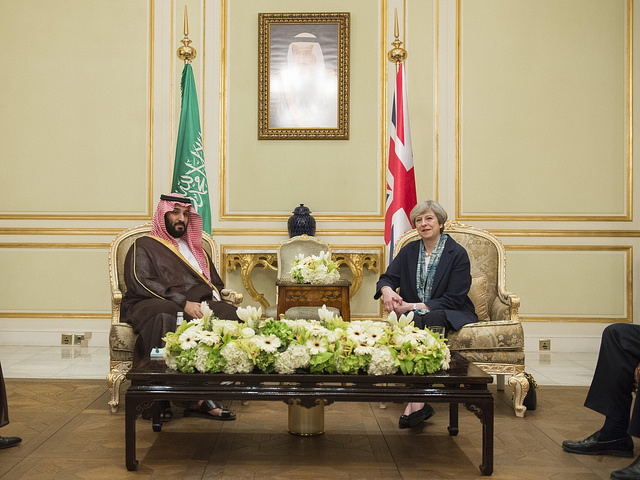
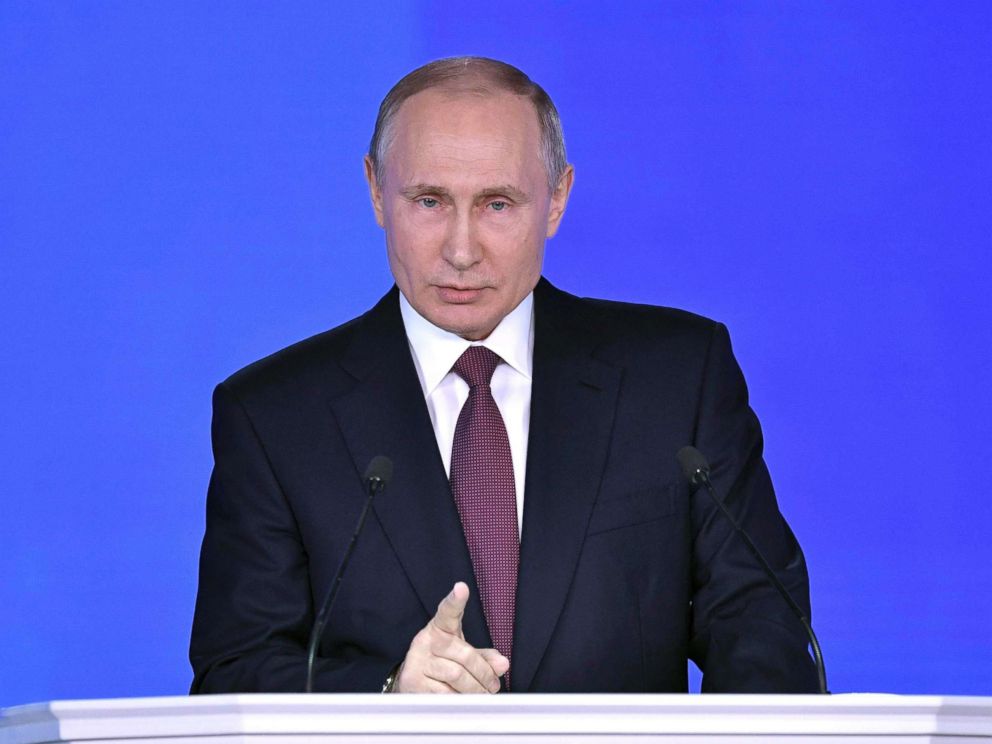


 Aletho News
