At first, American officials couldn’t believe it. In 1993, the Israelis began pressuring the Clinton administration to view Iran as the greatest global threat. Only a short time earlier, in the 1980s, Israel had been cooperating with the Iranians militarily and selling them weapons to fight Iraq in the Iran-Iraq War.
Back then, the Israelis were Iran’s best lobbyists in Washington, pushing the Reagan administration to talk to Iran, to sell arms to Iran, and even to ignore Iran’s tough talk on Israel. In that process, Israel was aided by a group of staunchly pro-Israeli officials within the Reagan administration whom we now know as the neoconservatives.
In 1981, just months after Iran had held 52 American diplomatic personnel hostage for 444 days, senior State Department officials Robert McFarlane and Paul Wolfowitz were advocating on behalf of the Israeli desire to sell Iran weapons. That initiative, which was continued by McFarlane when he became President Reagan’s National Security Advisor, ultimately led to the Iran-Contra scandal of 1986 when Reagan’s secret approval of U.S. arms shipments to Iran became public.
Yet, even in the wake of that scandal and the end of the Iran-Iraq War in 1988, the neoconservatives who remained influential under Reagan’s successor, President George H.W. Bush, pressed ahead with the goal of getting the U.S. to warm its relations with Iran. Iraq’s defeat at the hands of the U.S. military and its allies in the Persian Gulf War of 1990-91 further reduced the Arab threat to Israel’s security and encouraged more thinking about a possible U.S.-Iranian détente.
The Bush-I administration’s 1991 “National Security Strategy of the United States” said the U.S. was open to “an improved relationship with Iran,” a country that a 1991 National Intelligence Estimate said was “turning away from revolutionary excesses . . . toward more conventional behavior.”
However, in 1993, with the Clinton administration in power, the Israelis changed their tune, urging the U.S. government to find Iran lurking behind every terrorist attack, every conflict and every threat.
There appear to have been several factors leading to this Israeli switch – from the fact that the Cold War was over and thus Arab states that had relied on Soviet weaponry were weakened; that Iran-backed Hezbollah was challenging Israel’s military occupation of southern Lebanon; and that Israel could no longer profit from Iran’s desperate need for weapons (with the war with Iraq over and Iran’s treasury depleted) while the Arab oil states offered a more lucrative opportunity for both geopolitical and financial gain.
Hooked on the Money
Israeli leadership had found the billions of dollars from arms sales to Iran useful in maintaining Israel’s large military/intelligence infrastructure as well as Israel’s development of Jewish settlements inside Palestinian territories on the West Bank. With that cash source gone, Israel began recalculating its longstanding Periphery Strategy, which had called for countering Arab pressure from close-in states by cultivating relations with non-Arab regional powers on the periphery, such as Iran and Turkey.
There were also two other seismic events that altered the geopolitical landscape. The Cold War was over and Saddam Hussein’s Iraq had been humiliated in the Persian Gulf War. While the Israelis saw both events as positive, there were unintended consequences. The end of the Cold War meant the exit of the Soviet Union from the Middle East: that left Israel’s traditional Arab enemies even more enfeebled and the U.S. government less worried about losing influence in the oil-rich region. Iran also emerged as relatively stronger than Iraq due to Iraq’s failed invasion of Iran and its catastrophic defeat after its invasion of Kuwait.
Israel’s 1992 elections also brought Yitzhak Rabin, Shimon Peres and the Labor Party to power, raising the possibility of finally reaching a peace accord with the Palestinians and thus the possibility of more normalized relations with the Arab world. In turn, that raised the potential for more lucrative arrangements with oil-rich sheikdoms by, in effect, renting out the Israel Lobby to the Sunni-ruled Gulf states so they could push their historic conflict with the Shiites whose power base was Iran.
“There was a feeling in Israel that because of the end of the Cold War, relations with the U.S. were cooling and we needed some new glue for the alliance,” Efraim Inbar of the Begin-Sadat Center told Trita Parsi. “And the new glue was radical Islam.”
But it was a very selective kind of radical Islam: not the kind Saudi Arabia was financing and exporting through Wahhabi fundamentalism and violent jihadists like those in Al Qaeda, but Iran’s radical Shiite Islam. Selling Iran as the number one global terror threat gave birth to a new Middle East enemy that replaced the Soviet Union and reinflated Israel’s value to the U.S. in the region. “Iran,” Inbar went on to explain, “was radical Islam.”
A New Alliance
For the first time, an alliance between Israel, Saudi Arabia and the United States became possible with Iran as the designated enemy. The Israeli-Saudi relationship has evolved mostly in secret over the past couple of decades but has popped into view in recent years as Prime Minister Benjamin Netanyahu and his inner circle have emphasized the common interests – especially animosity toward Iran – that they share with Saudi Arabia.
Netanyahu has recently referred to this Israeli-Saudi alliance when he said that Iran was driving Israel into cooperative arrangements with what he called “the modern Sunni states.” He referred to “a new alliance between Israel and Islamic states. … The good news is that the other guys are getting together with Israel as never before. It is something that I would have never expected in my lifetime.”
Nine months ago, Netanyahu delivered the same message when he said “for the first time in my lifetime, and for the first time in the life of my country, Arab countries in the region do not see Israel as an enemy, but, increasingly, as an ally.”
Though the Israeli-Saudi relationship is rarely spoken of out loud, Israeli Energy Minister Yuval Steinitz admitted recently that Israel “has ties that are . . . partly covert with many Muslim and Arab countries.” Saudi Arabia was the only one he specifically named. According to Reuters, he said those ties are fueled by “common concerns over Iran.”
But there are other foundations for this relationship. For years, Saudi Arabia sought to buy influence in Washington’s policy circles regarding the Middle East but was largely unsuccessful because Israel had cornered that market and Israel’s influential American supporters demonized lobbyists, academics and others who took Saudi money. Eventually, it became clear to Saudi Arabia that it made more sense to rent out Israel’s sophisticated lobbying apparatus rather than to fight it.
Investigative journalist Robert Parry reported that Saudi money helped seal this Israel-Saudi alliance, with the Saudis giving Israel billions of dollars and Israel reciprocating by giving Saudi Arabia added influence in Washington.
But Official Washington was surprised in the 1990s when Israel’s turnabout began — and Iran went from being a misunderstood nation tilting toward moderation to the world’s leading sponsor of terrorism. Despite some bewilderment, U.S. policymakers soon readjusted their rhetoric as the legendary Israeli influence operations carried the day. Shiite Iran became the new terror threat, even after the 9/11 attacks that were organized by Al Qaeda, a Sunni fundamentalist group associated with Saudi Arabia.
The Islamic State
The gap between the facts on the ground – the recognition that Al Qaeda and Islamic State remain the real chief terror threats from radical Islam – and the propaganda of principally blaming Iran for terrorism has led to a quandary for U.S./Israeli propagandists. They want to focus Americans’ fury on Iran and its allies, Syria and Hezbollah, but it is Saudi-and-Gulf-connected terror groups, such as Al Qaeda and Islamic State, that were chopping off heads of innocents and sponsoring terrorist attacks in the U.S. and Europe.
That disconnected reality explains why America’s response to the emergence of the Islamic State can best be characterized as confused and bizarre. Though the Obama administration claimed it was taken by surprise by the Islamic State’s emergence in Iraq and Syria, it really wasn’t. Rather, policymakers had sought to persuade the American public on the need for a “regime change” conflict in Syria, an Iranian ally. This strategy went back years.
A WikiLeaks-released cable dated Dec. 13, 2006, and written by the charge d’affaires of the U.S. embassy in Damascus to the Secretary of State recommended that the U.S. “coordinate more closely with” Egypt and Saudi Arabia in a policy to weaken President Bashar al-Assad’s government in Syria and “to play on Sunni fears of Iranian influence.” The cable also recognized that Islamist extremists were “certainly a long-term threat” to the Syrian government.
Over the years, there was little change in this inconvenient truth that jihadists were playing a crucial role in achieving these geopolitical goals. For instance, in a December 2009 cable, then Secretary of State Hillary Clinton stated that “Saudi Arabia remains a critical financial support base for al-Qaeda, the Taliban . . . and other terrorist groups.”
By Aug. 12, 2012, the U.S. government knew explicitly that Islamic extremists were the engine in the Syrian insurgency. A classified Defense Intelligence Agency Information Intelligence Report unambiguously declares that “The salafist [sic], the Muslim Brotherhood, and AQI [al-Qaeda in Iraq, later ISIS and the Islamic State] are the major forces driving the insurgency in Syria.”
Section 8.C. of the report astonishingly predicts that “If the situation unravels there is the possibility of establishing a declared or undeclared salafist principality in eastern Syria.” Section 8.D.1. of the report goes on specifically to say that “ISI could also declare an Islamic State through its union with other terrorist organizations in Iraq and Syria.”
So, the U.S. government knew that the Islamic extremists drove the Syrian insurgency that Washington and its regional allies were supporting. U.S. intelligence analysts also had a surprisingly good idea what the possible outcome of that support was.
Yet, to advance the regional goals of the Israeli-Saudi tandem – i.e., the overthrow of the Syrian government because of its ties to Iran – the U.S. government was, in effect, supporting the very terrorists the war on terror was meant to eradicate.
Selling Al Qaeda
At times, senior Israeli officials made clear their preferences for Sunni extremists over more moderate Arabs associated with Shiite-ruled Iran. For instance, in September 2013, then-Israeli Ambassador to the United States Michael Oren told the Jerusalem Post that Israel favored the Sunni extremists over Syria’s largely secular President Bashar al-Assad.
“The greatest danger to Israel is by the strategic arc that extends from Tehran, to Damascus to Beirut. And we saw the Assad regime as the keystone in that arc,” Oren said in the interview. “We always wanted Bashar Assad to go, we always preferred the bad guys who weren’t backed by Iran to the bad guys who were backed by Iran.” He said this was the case even if the “bad guys” were affiliated with Al Qaeda.
Oren reiterated this position in June 2014 at an Aspen Institute conference. Speaking as a former ambassador, Oren said Israel would even prefer a victory by the Islamic State, which was then massacring captured Iraqi soldiers and beheading Westerners, than the continuation of the Iranian-backed Assad in Syria.
“From Israel’s perspective, if there’s got to be an evil that’s got to prevail, let the Sunni evil prevail,” said Oren, who is now a member of the Knesset and part of Netanyahu’s government.
Other senior Israelis have expressed similar sentiments. Sima Shine, who is in charge of Iran for Israel’s Ministry of Strategic Affairs, urged Assad’s removal even if that might turn Syria over to extremists. “The ‘devil we know’ is worse than the devil we don’t,” she said in June 2013. “If Bashar remains in power, that would be a huge achievement for Iran.”
So, in 2014, when Islamic State jihadists advanced through Syria and Iraq and knocked on the door of Lebanon, their success should not have come as a surprise to President Obama and other U.S. policymakers. Today’s Iraq, Syria and Lebanon have in common that they are Iran’s three principal allies in the region.
In other words, the Islamic State’s interests largely corresponded to those of Israel, Saudi Arabia and the U.S.: isolating and weakening Iran. Only the Islamic State’s shocking excesses of videotaped beheadings of Americans and other captives – as well as its military successes inside Iraq – forced President Obama’s hand in committing U.S. forces to stop the Islamic State onslaught.
Obsessed with Assad
Still, America has long been bent on removing Assad from Syria. The coincidence of Islamic State and American interests in this regard is revealed in section 8.C of the DIA report: “there is the possibility of establishing a declared or undeclared salafist principality in eastern Syria (Hasaka and Der Zor), and this is exactly what the supporting powers to the opposition want, in order to isolate the Syrian regime, which is considered the strategic depth of the Shia expansion (Iraq and Iran).”
So, the Islamic State’s advance into this region was consistent with American (and more to the point, Israeli and Saudi) interests because these Sunni extremists would block the supply lines from Iran to Lebanon’s Hezbollah. Thus, initially at least, the U.S. government acquiesced to the Islamic State and Al Qaeda’s Nusra Front taking the lead in damaging or destroying Iran’s allies in Syria.
And Iran suspected as much. According to Iran expert Trita Parsi, the Iranians believed that the initial relaxed approach by the U.S. government toward the Islamic State and Al Qaeda’s Nusra Front was because those militants were the point of the spear against pro-Iranian Shiite influences in not only Syria but Iraq and Lebanon as well.
So, the Saudi government provided the “clandestine financial and logistic support to Isis and other radical groups in the region,” according to a leaked Hillary Clinton email on Sept. 17, 2014.
Less than a month later, on Oct. 2, 2014, Vice President Biden told a seminar at Harvard’s Kennedy School that “the Saudis, the emirates … poured hundreds of millions of dollars and tens of thousands of tons of military weapons into anyone who would fight against Assad except that the people who were being supplied were Al Nusra and Al Qaeda and the extremist elements of jihadis.”
The DIA report also named the Gulf States as among the “supporting powers” of the Syrian opposition. And at a May 2015 meeting between President Obama and the Princes of the Gulf Cooperation Council, according to David Ignatius of the Washington Post, “Obama and other US officials urged Gulf leaders who are funding the opposition to keep control of their clients, so that a post-Assad regime isn’t controlled by extremists from the Islamic State or al-Qaeda.”
However, with the Israel lobby redirecting Official Washington’s ire toward Iran, more political space was created for these Saudi-connected terror groups to carry out the regime change missions in Syria and elsewhere.
But the Syrian “regime change” strategy didn’t work. With help from Iran and Hezbollah and Russia’s intervention in 2015, Assad and his army not only survived but routed the Islamic State, Al Qaeda’s Nusra and other jihadists from major urban strongholds. Instead of Iran losing an ally in the region, Iran emerged with a stronger alliance and greater influence.
This setback, however, has not changed the Israeli-Saudi priorities; it has only made them more intense. As the outcome in Syria became more apparent, the anti-Iran gun sight pivoted to Lebanon. The recent confusing events in Lebanon, like the earlier ones in Syria, are best made sense of by looking through the gun barrel that is targeted on Iran.
On Nov. 4, after being summoned to Saudi Arabia, Lebanese Prime Minister Saad al-Hariri unexpectedly and mysteriously resigned. Hariri’s resignation came just one day after a meeting in Beirut with Ali Akbar Velayati, a senior foreign policy advisor to Iran’s Supreme Leader Ayatollah Khamenei, that was reportedly very positive. Velayati praised Hariri and reaffirmed Iran’s support for his coalition government.
Yet, a day later, speaking from Saudi Arabia, Hariri claimed his resignation was catalyzed by fear of an Iranian-Hezbollah assassination. But the Lebanese army said “it had not uncovered any plans for assassinations in Lebanon.” Neither had the army. So, why resign?
The clue may be provided by Saudi State Minister for Gulf Affairs, Thamer al-Sabhan, who expressed Saudi Arabia’s desire for “toppling Hizbullah.” He promised that “The coming developments will definitely be astonishing.” He said the desire was not just his own, and that people “will see what will happen in the coming days.”
The Saudis said Hariri resigned because Hezbollah had “hijacked” his coalition government. Al-Sabhan called Hezbollah “the Party of Satan.”
In Lebanon, there was the suspicion that Hariri was held under house arrest. On Nov. 10, President Aoun told a meeting of foreign ambassadors that Hariri had been “kidnapped.”
Now, having finally returned to Lebanon after a French intervention brought him to Paris, Hariri met with President Aoun who asked him “to temporarily suspend submitting [his resignation] and to put it on hold ahead of further consultations on the reasons for it.” Hariri agreed.
Israel seems to have applauded Saudi Arabia’s Lebanese action and reaffirmed the Iranian motivation behind it. Prime Minister Netanyahu said that “The resignation of Lebanese Prime Minister Hariri and his statements are a wake-up call for the international community to act against Iranian aggression.”
Netanyahu also made a rare public acknowledgement of the Israeli-Saudi alliance when he said that Iran was driving Israel into cooperative arrangements with what he called “the modern Sunni states,” referring to “a new alliance between Israel and Islamic states.” According to reporting by Israel’s Channel 10, a leaked classified cable from the Israeli foreign ministry to Israeli ambassadors reveals that Israel ordered them to support Saudi Arabia’s efforts and to rally support for Hariri’s resignation.
Iran has also suggested that President Trump and the United States approve of this Lebanese intervention. The resignation of the Lebanese Prime Minister came days after Trump’s son-in-law Jared Kushner visited Saudi Arabia on a trip that was not made known publicly.
Yemen’s Tragedy
While this new alliance took aim at Iran by targeting Assad in Syria and Hezbollah in Lebanon, it also has targeted a Shiite spin-off sect, the Houthis in Yemen. Since 2015, the Saudis have been bombing and blockading Yemen, the Middle East’s poorest country. But on Nov. 5, Saudi Arabia expressed outrage after intercepting a ballistic missile fired by Houthi forces in Yemen toward Riyadh. The Saudis accused Iran of providing the missile and ordering the attack – and called this an “act of war” by Iran and Hezbollah.
General Mohammad Ali Jafari, the commander of the Iranian Revolutionary Guards, called the charge against Iran “baseless,” as did Iran’s ambassador to the United Nations, Gholamali Khoshroo. Even Saudi officials were calling the missile a Yemeni Burqan 2H missile when it was intercepted. The Houthis said they fired the missile in response to the long-running Saudi bombardment that included a recent attack that killed 26 people.
Despite these denials of Iranian responsibility and the context of Saudi Arabia’s air war, U.S. Ambassador to the United Nations. Nikki Haley called on the U.N. to hold Iran accountable for violating U.N. Security Council resolutions by supplying the missile. She called on the U.N. to take “necessary action” against Iran.
The U.S. government has consistently rationalized the Saudi bombardment of Yemen as necessary to thwart Iranian influence in the Persian Gulf. U.S. accusations about Iran allegedly supplying the Houthis with weapons hang precariously on an “assessment” that Iran has used fishing boats to smuggle weapons into Yemen.
The Houthis also are allied with former President Ali Abdullah Saleh who maintains control over the army, so the Houthis could get all the weapons they need from local arms supplies, including military bases stocked with American-made weapons.
And just as Iran does not substantially arm the Houthis, so it does not control them. In fact, they have proven to be beyond Tehran’s efforts to influence them. In 2014, the Iranians specifically discouraged the Houthis from capturing the Yemeni capital, Sanaa. However, the Houthis captured the city anyway, demonstrating Iran’s lack of control.
A U.S. intelligence official told The Huffington Post that “It is wrong to think of the Houthis as a proxy force for Iran.” Yemen specialist Gabriele vom Bruck has called Iran’s influence over the Houthis “trivial.” She said the Houthis want to be independent, not controlled by Iran: “I don’t think the Iranians have influence in their decision-making.” To the extent that Iran is involved in Yemen at all, that involvement came as a result of the devastating Saudi air war.
Dating back to the Obama administration, the U.S. government has made the Saudi aerial bombardment of Yemen possible. The U.S. refuels the Saudi bombers in flight, supplies the bombs and provides targeting intelligence.
This U.S. complicity in what is widely regarded as a humanitarian catastrophe has continued into the Trump administration. A White House statement as recently as Nov. 24 reaffirmed U.S. support for Saudi Arabia, declaring: “We remain committed to supporting Saudi Arabia and all our Gulf partners against the Iranian Islamic Revolutionary Guard Corps’ aggression and blatant violations of international law. Backed by the Iranian Islamic Revolutionary Guard Corps, the Houthi rebels have used destabilizing missile systems to target Saudi Arabia.”
The statement again reveals, not only the alliance with Saudi Arabia and the silence about its devastating bombing attacks, but the strategy of turning Yemen’s human tragedy into another excuse to blame Iran. The Iranian foreign ministry said the White House statement “clearly and without question proves America’s participation and responsibility in the atrocities committed by Saudi Arabia in Yemen”.
Bahrain & Qatar
Washington’s Saudi-Israeli-supplied blinders on the Middle East carry over to other regional conflicts, too. For instance, in 2011, protesters in Bahrain demanded a true constitutional monarchy, the resignation of the Prime Minister, greater civil liberties and a real elected parliament. Though Bahrain has a parliament, it is actually governed by the U.S.-backed dictator, King Hamad ibn Isa Al Khalifa, whose family has ruled Bahrain for over 200 years. The prime minister, the king’s uncle, is the longest reigning prime minister in the world, in power now for nearly 40 years.
Bahrain’s population is about 70 percent Shiite, though the ruling family, the government, the army and the police are all Sunni. The Shia have long been victims of discrimination. And the government maintains its control through repression, including the use of torture. Bahrain is located between Sunni Saudi Arabia and Shiite Iran and is seen by the U.S. as a strategically located check on Iranian influence and power.
Though the Obama administration touted itself as a big proponent of the “Arab Spring” and its promised democratization, Washington sided with the Bahraini dictators against the majority of the Bahraini people.
Days after mass arrests and beatings of protesters, Chairman of the Joint Chiefs of Staff, Admiral Mike Mullen, went through with his planned visit to Bahrain where he reaffirmed the U.S.’s strong commitment to its military relationship with Bahrain and called Bahrain’s response to the protests “very measured.” Mullen stressed the U.S.-Bahrain “partnership” and “friendship.”
On the same day, Secretary of Defense Robert Gates also gave full support to the Khalifa dictatorship. The U.S. continued to support the regime and to call for “stability” and “reform”: two words that are code for standing by dictatorships.
To help put down the protests in Bahrain, 1,000 Saudi troops invaded Bahrain across a causeway that connects the countries. The Obama administration remained silent.
Qatar also has suffered under the new Saudi-Israeli alliance because Qatar has pursued a more independent foreign policy than Saudi Arabia likes and now faces a Saudi-led siege as a consequence. Former British diplomat Alastair Crooke explained that Qatar’s principal sin is seeking peaceful coexistence with Iran.
When Washington asked Saudi Arabia to make reasonable proposals for the termination of the siege, Saudi Arabia included the demand that Qatar break all ties with Iran.
In other words, many of the most important events of the past several years are best explained as attempts to weaken Iran by weakening its proxies or allies or by setting up situations that appear to implicate Iran to justify hostility toward Iran.
A problem, however, has been that the major terrorist groups that have infuriated the American public are not Iranian-linked Shiites but rather Saudi-connected fundamentalist Sunnis. Still, the claim that “Iran is the chief sponsor of terrorism” has become a rote and routine refrain from both Republicans and Democrats – as well as the U.S. mainstream media.
Much as Russia now gets blamed for every negative turn in Western democracies, Iran is the all-purpose villain whenever anything goes wrong in the Middle East. Yet, to understand these conflicts and crises, it is best to view them through the perspective of the hostility that the Saudi-Israeli alliance directs toward Iran and the acquiescence of U.S. governments, regardless of which party is in power.
The ultra Zionist settler outlet Israel National News reported yesterday that “Russian Jews slam ‘anti-Semitic myth’ that the country’s last tsar “was murdered by Jews for ritual purposes.”
Marina Molodtsova, a senior investigator for a special ministerial committee on the 1917 slaying of Nicholas II of Russia, said on Monday during a conference in Moscow that her committee will conduct “a psycho-historical examination” to find out whether the execution of the royal family was a ritual murder.
At the same event, Father Tikhon Shevkunov, a Russian Orthodox Church bishop, said that, according to “the most rigorous approach to the version of ritual murder, a significant part of the church commission [on Nicholas II’s killing during the Russian revolution of 1917] has no doubt that this murder was ritual.”
Far from being surprising the Jews are upset. “The Federation of Jewish Communities of Russia, a Chabad-affiliated group with more than 100 affiliated communities across Russia, called the suggestions a “shocking expression of an anti-Semitic myth” in a statement Monday.”
Interestingly enough, the Jewish bodies are not upset by the verdict of the committee; they are actually distressed by the idea that the Russians decided to look into their past.
“We all think of this as absolutely unacceptable,” the federation’s spokesperson, Boruch Gorin, lamented, and “shocked first and foremost by the sheer absurdity of the allegations.”
The Israeli outlet reports that, “claims that Nicholas was killed by Jews for ritual purposes had been limited before the conference to a fringe of zealous anti-Semites and promoters of unsophisticated conspiracy theories.” Seemingly, this is not the case anymore.
Israel National News explains, “amid rising nationalism and nostalgia for Tsarist times in Russia under President Vladimir Putin, a Russian court in 2010 ordered prosecutors to reopen an investigation into the murder of the Tsar and his family.”
I obviously have no opinion on the nature of the execution of the Tsar and his family. Like others I am looking forward to learning more, and will wait patiently for the investigating committee to deliver its study of the event. However, it is worth mentioning that not one historian questions the dominance of Jews within the Bolshevik revolution and the early communist leadership. Not many scholars of the era question the embarrassing fact that “Stalin’s Jews” as Israeli prominent writer Sever Plocker names them, were “some of (the) greatest murderers of modern times”
Spokesman Boruch Gorin, who is also a senior aide to Berel Lazar, a chief rabbi of Russia, told Israel National News that, “Nicholas II’s killers were obviously committed atheists who rejected any belief in any force – except their own”. However, the blaming of Jews for the Tsar’s death is “an absolutely anti-Semitic myth used in anti-Semitic propaganda for several decades, which is why the Jews view this with great concern.”
I will make an effort to educate Gorin. Since the European Jewish emancipation, Jews are drifting away from Judaism and their means of identification are varied. As a matter of fact, Judaism is, by now, just one Jewish religion amongst many. The Holocaust seems to be the most popular Jewish religion. Atheism is also a popular Jewish religion. Human Rights is a widespread Jewish religion, however, not as popular as Zionism.
Jewish religions are diverse and often contradict each other. But they have one thing in common– they all facilitate a sense of choseness – a clear vision of Jewish exceptionalism. Jewish religions all adhere to the strong belief in ‘The Jew.’ The Zionists who murdered Palestine were atheists. They adhered to the peculiar belief that Jews can celebrate their national aspirations at the expense of another people. They believed and still believe in their righteous cause. The many Jews who adhere to the Holocaust religion also believe in ‘The Jew,’ the one who, against all odds, survived the ashes, reinstated his/her power by means of national salvation. The ‘atheist’ Bolsheviks were no different; they believed themselves to be ‘better’ because they believed in equality. This force alone made them into a genocidal cult with no precedent in human history.
Were these Bolsheviks engaged in ritual killing? This is indeed a deep question with many aspects and layers. We will have to wait and see what the Russian committee has to say about it. However, the fact that Russian Jewish bodies are in a state of turmoil may as well be revealing.
The arrest of Nazzal, a member of the General Secretariat of the Palestinian Journalists’ Syndicate and President of the Association of Democratic Journalists, sparked international protest, yet his imprisonment without charge or trial was renewed on multiple occasions. He was previously jailed in 1978 and 1988 and held in administrative detention without charge or trial; in 1986, Nazzal was held under house arrest for six months.
Issa Qaraqe, head of the Prisoners Affairs Commission, said that the book exemplifies the prisoners’ resistance to all attempts to destroy their will, spirit and national identity. A launch for the book will take place in Ramallah on Sunday, 26 November.
I was invited to write a Foreword to the essay, which provides context for the essay:
While the nations of the world met in Bonn to discuss implementation of the Paris Climate Agreement, the Trump administration was working to dismantle President Obama’s Clean Power Plan and to establish a climate “red team” to critically evaluate the scientific basis for dangerous human-caused climate change and the policy responses.
The mantra of “settled science” is belied by the inherent complexity of climate change as a scientific problem, the plethora of agents and processes that influence the global climate, and disagreements among scientists. Manufacture and enforcement of a “consensus” on the topic of human-caused climate change acts to the detriment of the scientific process, our understanding of climate change, and the policy responses. Indeed, it becomes a fundamentally anti-scientific process when debate, disagreement, and uncertainty are suppressed.
This essay by Rupert Darwall explores the expressions of public certainty by climate scientists versus the private expressions of uncertainty, in context of a small Workshop on Climate organized by the American Physical Society (APS). I was privileged to participate in this workshop, which included three climate scientists who support the climate change consensus and three climate scientists who do not—all of whom were questioned by a panel of distinguished physicists.
The transcript of the workshop is a remarkable document. It provides, in my opinion, the most accurate portrayal of the scientific debates surrounding climate change. While each of the six scientists agreed on the primary scientific evidence, we each had a unique perspective on how to reason about the evidence, what conclusions could be drawn and with what level of certainty.
Rupert Darwall’s essay provides a timely and cogent argument for a red/blue team assessment of climate change that provides both sides with an impartial forum to ask questions and probe the other side’s case. Such an assessment would both advance the science and open up the policy deliberations to a much broader range of options.
Excerpts
Here are some highlights from the full essay (but you’ll want to read the whole thing!):
Introduction. How dependable is climate science? Global warming mitigation policies depend on the credibility and integrity of climate science. In turn, that depends on a deterministic model of the climate system in which it is possible to quantify the role of carbon dioxide (CO2) with a high degree of confidence. This essay explores the contrast between scientists’ expressions of public confidence and private admissions of uncertainty on critical aspects of the science that undergird the scientific consensus.
Instead of debating, highlighting and, where possible, resolving disagreement, many mainstream climate scientists work in a symbiotic relationship with environmental activists and the news media to stoke fear about allegedly catastrophic climate change, providing a scientific imprimatur for an aggressive policy response while declining to air private doubts and the systematic uncertainties.
Two Statements, Two Perspectives. Two statements by two players in the climate debate illustrate the gap between the certainty that we are asked to believe and a branch of science shot through with uncertainty. “Basic physics explains it. If global warming isn’t happening, then virtually everything we know about physics is wrong,” states Jerry Taylor, president of a group that advocates for imposing a carbon tax on the United States. In so many words, Taylor says that the case for cutting carbon dioxide emissions is incontrovertible: Science demands conservatives support a carbon tax.
The second statement was made by an actual climate scientist, Dr. William Collins of the Lawrence Berkeley National Laboratory. Speaking in 2014 at an American Physical Society climate workshop, Collins, who was a lead author of the chapter evaluating climate models in the 2013 Intergovernmental Panel on Climate Change’s (IPCC) Fifth Assessment Report, talked of the challenges of dealing with several sources of uncertainty. “One of them is the huge uncertainties even in the historical forcings,” he said. Commenting on the “structural certainty” of climate models, he observed that there were “a number of processes in the climate system we just do not understand from basic physical principles. … We understand a lot of the physics in its basic form. We don’t understand the emergent behavior that results from it.”
The 2014 APS Climate Workshop: A Perfect Venue for Open Debate. Things are different when climate scientists are on the stand alongside their peers who know the science as well as they do, but disagree with the conclusions they draw from the same body of knowledge. Such open debate was on display at the 2014 American Physical Society climate workshop, which took place in Brooklyn and lasted just over seven hours. A unique event in the annals of the climate debate, it featured three climate scientists who support the climate change consensus and three climate scientists who do not. That format required an unusual degree of honesty about the limitations of the current understanding of the climate system. For the most part, circumspection, qualification, and candid admissions of lack of knowledge were the order of the day.
The IPCC’s Use and Abuse of Climate Models. The discussion in Brooklyn shows that putting the words “gold standard” and “IPCC” in the same sentence demonstrates a serious misunderstanding of the reliability of IPCC-sanctioned climate science.
“It’s clouds that prevent us from fundamentally in some reductive fashion understanding the climate system,” Princeton Atmospheric and Oceanic Sciences Professor Isaac Held, senior research scientist at the National Oceanic and Atmospheric Administration’s (NOAA) Geophysical Fluid Dynamics Laboratory, declared from the IPCC climate consensus bench. Collins made a similar point toward the end of the session. “My sense, to be honest with you, is that, and I think this all makes us a little bit nervous,” he said; “climate is not a problem that is amenable necessarily to reductionist treatment.”
Yet the IPCC’s top-line judgment in its Fifth Assessment Report—that it is “extremely likely” that the human emissions of greenhouse gases are the dominant cause of the warming since the mid-20th century—was described by Dr. Ben Santer of the Lawrence Livermore National Laboratory as likely to be conservative. The basis for this claim? General circulation models.
Santer’s claim would have sounded impressive if earlier in the day Collins had not presented charts showing GCMs performing poorly in reproducing temperature trends in the first half of the 20th century. Lindzen asked, what in the models causes the 1919-1940 warming? “Well, they miss the peak of the warming,” Held replied. While the IPCC is extremely certain that the late 20th century warming is mostly man-made, to this day it cannot collectively decide whether the earlier warming, which is of similar magnitude to the one that started in the mid-1970s, is predominantly man-made or natural. “It actually turns to be very hard to use the past as prologue,” Collins conceded before explaining: “We do not have a first principles theory that tells us what we have to get right in order to have an accurate projection.” And, as Held noted, over the satellite era from 1979, GCMs over- estimated warming in the tropics and the Arctic.
Steven Koonin, chairing the APS workshop, read an extract from chapter 10 of the IPCC’s Fifth Assessment Report. Model-simulated responses to forcings—including greenhouse gas forcings—“can be scaled up or down.” To match observations, some of the forcings in some of the models had to be scaled down. But when it came to making the centennial projections, the scaling factors were removed, probably resulting in a 25 to 30 percent over-projection of the 2100 warming, Koonin said. Only the transcript does full justice to the exchange that followed.
Dr. Koonin: But if the model tells you that you got the response to the forcing wrong by 30 percent, you should use that same 30 percent factor when you project out a century.
Dr. Collins: Yes. And one of the reasons we are not doing that is we are not using the models as [a] statistical projection tool.
Dr. Koonin: What are you using them as?
Dr. Collins: Well, we took exactly the same models that got the forcing wrong and which got sort of the projections wrong up to 2100.
Dr. Koonin: So, why do we even show centennial-scale projections?
Dr. Collins: Well, I mean, it is part of the [IPCC] assessment process.
“It is part of the assessment process” is not a scientific justification for using assumptions that are known to be empirically wrong to produce projections that help drive the political narrative of a planet spinning toward a climate catastrophe.
Climate Science and Falsifiability. A lively exchange developed between Christy and Santer. Georgia Tech’s Dr. Judith Curry, the third member of the critics’ bench, had crossed swords with Santer on whether the IPCC’s statement that more than half the observed warming was anthropogenic was more than expert judgment. In subsequent testimony to the House Science, Space, and Technology Committee, Curry explained:
Science is often mischaracterized as the assembly and organization of data and as a collection of facts on which scientists agree. Science is correctly characterized as a process in which we keep exploring new ideas and changing our understanding of the world, to find new representations of the world that better explain what is observed. … Science is driven by uncertainty, disagreement, and ignorance—the best scientists cultivate doubt.
Curry’s approach to science stands firmly on the methods and philosophical standards of the scientific revolution—mankind’s single greatest intellectual achievement.
Politicized Science vs. Red/Blue Team Appraisals. The APS workshop provides the strongest corrective to date to the politicized IPCC process. It revealed the IPCC’s unscientific practice of using different assumptions for projecting future temperature increases from those used to get models to reproduce past temperature. One need not be a climate expert to see that something is seriously amiss with the near certainties promulgated by the IPCC. “I have got to say,” Koonin remarked to climate modeler William Collins, “that this business is even more uncertain than I thought, uncertainties in the forcing, uncertainties in the modelling, uncertainties in historical data. Boy, this is a tough business to navigate.”
Koonin came away championing Christy’s idea of a red/blue team appraisal, a term drawn from war-gaming assessments performed by the military rather than from politics, which EPA Administrator Scott Pruitt has since adopted.
A revealing indicator of its potential value is the response to it. A June 2017 Washington Post op-ed, condemned calls for red/blue team appraisals as “dangerous attempts to elevate the status of minority opinions.”
Conclusion: Climate Policy’s Democratic Deficit. Open debate is as crucial in science as it is in a democracy. It would be contrary to democratic principles to dispense with debate and rely on the consensus of experts. The latter mode of inquiry inevitably produces prepackaged answers. But, as we have seen, relying on “consensus” buttresses erroneous science rather than allow it to be falsified.
The IPCC was created to persuade, not provide objectivity and air disagreement. By contrast, the APS workshop gave both sides an impartial forum in which they could ask questions and probe the other side’s case. In doing so, it did more to expose the uncertainty, disagreement, and ignorance—to borrow Judith Curry’s words—around climate science than thousands of pages of IPCC assessment reports.
EPA Administrator Scott Pruitt’s proposal for red/blue team assessment is a logical progression from the workshop. The hostile reaction it elicited from leading consensus advocates strongly suggests that they fear debate. Climate scientists whose mission is to advance scientific understanding have nothing to fear and much to gain. Those who seek to use climate science as a policy battering ram have good reason to feel uncomfortable at the prospect. The biggest winner from a red/blue team assessment will be the public. If people are to buy into policies that will drastically alter their way of life, they should be fully informed of the consequences and justifications. To do otherwise would represent a subversion of democracy.
JC reflections
I’m very pleased to have this opportunity to revisit the APS Workshop on Climate Change, and am delighted to see that a journalist of Darwall’s caliber interpreting this. Drawl’s essay provides an eloquent argument in support of a climate red team, perhaps more so than what I, Steve Koonin or John Christy have provided.
The thing that really clicked in my brain was this statement by Bill Collins:
We understand a lot of the physics in its basic form. We don’t understand the emergent behavior that results from it.
Trying to leverage our understanding of the infrared emission spectra from CO2 and other ‘greenhouse’ gases into a ‘consensus’ on what has caused the recent warming in a complex chaotic climate system is totally unjustified — this is eloquently stated by Bill Collins.
My key take away conclusion from the APS Workshop is that the scientists on both sides are considering the same datasets and generally agree on their utility (the exception being the 2 decade debate between Santer and Christy on the uncertainties/utility of the satellite derived tropospheric temperature data). There is some disagreement regarding climate models, although I can’t say that I disagreed with much if anything said by Held and Collins in this regard.
The real issue is the logics used in linking the varied and sundry lines of evidence into drawing conclusions and assessing the uncertainties and areas of ambiguity and ignorance. I don’t think that any of the 6 scientists were using the same chain of reasoning about all this, even among scientists on the same ‘sides’.
Darwall’s essay deserves to be widely read. Here’s to hoping that it will reignite the discussion surrounding the climate red team.
We are all too familiar with graphs showing how much global temperatures have risen since the 19thC.
The HADCRUT version above is typical, and also very precise, with fairly tight error bars even in the early part of the record.
One wonders where they got the data to work all this out, because it certainly could not have come from thermometers.
All of the major global temperature datasets rely heavily on the Global Historical Climatology Network (GHCN). Yet as the “Overview of the Global Historical Climatology Network-Daily Database”, published by Matthew Menne et al in 2012, rather inconveniently showed, most of the world had little or no temperature data in the 19thC, and even up to 1950.
Density of GHCN-Daily stations with daily maximum and minimum temperature
Prior to 1950, there were no more than a couple of hundred or so of GHCN stations outside of North America:
There are many competent scientists and statisticians who believe that even now it is not possible to measure the Earth’s average temperature, indeed that it is a meaningless concept.
Whether they are right or not, no serious scientist would claim to know the global temperature a century or more ago.
The United States Air Force’s 59th Medical Wing’s molecular biology branch recently was revealed to have been collecting specifically Russian RNA and synovial (connective) tissue samples, prompting fears in Russia of a possible US directed ethnic-specific bioweapons program.
Russia has raised its concerns over attempts by the U.S. military to collect DNA samples from Russian nationals, noting the potential use of such biological samples for the purpose of creating new genetic warfare weaponry.
The U.S. Air Force has sought to calm the Kremlin’s concerns, noting that the samples would only be used for so-called “research” purposes rather than for bioterrorism.
Addressing Russian reports, U.S. Air Education and Training Command spokesperson Captain Beau Downey said that his center randomly selected the Russian people as a source of genetic material in its ongoing research of the musculoskeletal system.
The report would also state that:
However, the usage of Russian tissue samples in the USAF study fed the long-brewing suspicion that the Pentagon is continuing in its hopes to develop an alleged “biological weapon” targeting specifically Russians.
Russian President Vladimir Putin would be quoted as stating:
Do you know that biological material is being collected all over the country, from different ethnic groups and people living in different geographical regions of the Russian Federation? The question is – why is it being done? It’s being done purposefully and professionally.
And while the US military attempted to brush off the notion that any sort of ethnic-specific bioweapon was being researched, the notion of such a weapon is not far fetched at all.
US policy papers have included them in America’s overall long-term geopolitical and military planning for nearly two decades, and the US Air Force itself has produced papers regarding the various combinations such weapons could manifest themselves as.
There is also the disturbing history of Western-aligned nations having pursued ethnic-specific bioweapons in the past, including the Apartheid regime in South Africa which sought to use its national vaccination program as cover to covertly sterilize its black population.
US Policy Papers Have Discussed Ethnic-Specific Bioweapons
In the Neo-Conservative Project for a New American Century’s (PNAC) 2000 report titled, “Rebuilding America’s Defenses” (.pdf) it states (emphasis added):
The proliferation of ballistic and cruise missiles and long-range unmanned aerial vehicles (UAVs) will make it much easier to project military power around the globe. Munitions themselves will become increasingly accurate, while new methods of attack – electronic, “non-lethal,” biological – will be more widely available. (p.71 of .pdf)
It also stated:
Although it may take several decade for the process of transformation to unfold, in time, the art of warfare on air, land, and sea will be vastly different than it is today, and “combat” likely will take place in new dimensions: in space, “cyber-space,” and perhaps the world of microbes. (p.72 of .pdf)
And finally:
And advanced forms of biological warfare that can “target” specific genotypes may transform biological warfare from the realm of terror to a politically useful tool. (p.72 of .pdf)
The JASON group, composed of academic scientists, served as technical advisers to the U. S. government. Their study generated six broad classes of genetically engineered pathogens that could pose serious threats to society. These include but are not limited to binary biological weapons, designer genes, gene therapy as a weapon, stealth viruses, host-swapping diseases, and designer diseases.
The paper discusses the possibility of a “disease that could wipe out the whole population or a certain ethnic group.” While the paper claims its purpose is to study such weapons as a means of developing defenses against them, America’s history as a global military aggressor and the sole nation on Earth to have ever wielded nuclear weapons against another nation-state suggests a high likelihood that if such weapons can be produced, the US has already stockpiled them – if not already deployed them.
There was some interaction between Roodeplaat Research Laboratories (RRL) and Delta G [biological and chemical weapon laboratories respectively], with Delta G taking on some of RRL’s biochemistry projects and RRL doing animal testing of some Delta G products. One example of this interaction involved anti-fertility work. According to documents from RRL [Roodeplaat Research Laboratories], the facility had a number of registered projects aimed at developing an anti-fertility vaccine. This was a personal project of the first managing director of RRL, Dr Daniel Goosen. Goosen, who had done research into embryo transplants, told the TRC that he and Basson had discussed the possibility of developing an anti-fertility vaccine which could be selectively administered—without the knowledge of the recipient. The intention, he said, was to administer it to black South African women without their knowledge.
At the time, the technology appears not to have been sufficiently mature to realize the Apartheid regime’s ambitions. However, the technology not only exists today, there are examples of it being used to spectacular effect – so far for good – but could just as easily be used for bad.
The above mentioned US Air Force paper would go into detail regarding each weapon it listed, including one called gene therapy:
Gene therapy might just be the silver bullet for the treatment of human genetic diseases. This process involves replacing a bad gene with a good gene to normalize the condition of the recipient. Transfer of the “healthy” gene requires a vector to reach its target. Vectors commonly used are “viruses that have been genetically altered to carry normal human DNA” such as “retroviruses, adenoviruses, adeno-associated viruses, and herpes simplex viruses.”
Doctors in Europe used gene therapy to grow sheets of healthy skin that saved the life of a boy with a genetic disease that had destroyed most of his skin, the team reported on Wednesday in the journal Nature. This was not the first use of the treatment, which adds gene therapy to a technique developed to grow skin grafts for burn victims. But it was by far the most body surface ever covered in a patient with a genetic disorder: nine square feet.
One could imagine a malicious weapon used in reverse to knock out the genes that maintain healthy skin, causing a victim’s skin to blister and fall off.
In utilizing gene therapy as a weapon, the US Air Force report would note:
Gene therapy is expected to gain in popularity. It will continue to be improved upon and could unquestionably be chosen as a bioweapon. The rapid growth in biotechnology could trigger more opportunities to find new ways to fight diseases or create new ones. Nations who are equipped to handle biotechnology are likely to consider gene therapy a viable bioweapon. Groups or individuals without the resources or funding will find it difficult to produce this bioweapon.
Regarding “stealth viruses,” a variation of the weaponized gene therapy technique, the report states:
The basic concept of this potential bioweapon is to “produce a tightly regulated, cryptic viral infection that can enter and spread in human cells using vectors” (similar to the gene therapy) and then stay dormant for a period of time until triggered by an internal or external signal. The signal then could stimulate the virus to cause severe damage to the system. Stealth viruses could also be tailored to secretly infect a targeted population for an extended period using the threat of activation to blackmail the target.
With gene therapies already approved for sale in the European Union and the United States, and with more on the way, it is not beyond the realm of possibility that covert, weaponized gene therapies are also either already developed and waiting, or already deployed as “stealth viruses.”
Developing and Deploying
The US maintains a global network of military medical laboratories and research centers.
In addition to the 59th Medical Wing involved in collecting Russian genetic material, the US covers the entire Southeast Asian region from Bangkok, Thailand with its Armed Forces Research Institute of Medical Sciences (AFIRMS).
While it publicly claims it exists to, “to conduct state of the art medical research and disease surveillance to develop and evaluate medical products, vaccines, and diagnostics to protect DOD personnel from infectious disease threats,” its personnel, equipment, and research could easily be used for dual purposes in creating any of the above stated, so-far “theoretical” ethnic-specific bioweapons.
The US Embassy in Thailand website states that AFIRMS is the largest of a global network of military medical laboratories, claiming:
AFRIMS is the largest of a global network of US Defense Department Overseas Medical Research Laboratories—with sister laboratories in Peru, Kenya, Egypt, and the Republics of Georgia and Singapore. USAMD-AFRIMS has nearly 460 staff members (predominantly Thai and US) and an annual research budget of approximately $30-35 million.
With labs in South America, Europe, Africa, and Asia – and through the use of subcontractors – the US military has access to a variety of genetic materials and facilities to conduct research and develop all of the weapons its own policy papers have described.
Through US State Department-funded programs, the US could easily create “vaccine” campaigns and “clinics” to deliver the above described bioweapons in a variety of ways.
Fighting in the Dark and Shedding Some Light
The US Air Force’s paper would also point out:
Biological warfare attacks may resemble a natural disease outbreak phenomenon and it would be very difficult to trace back to the source, thereby discounting the perpetrator’s actions.
And indeed, nations without the ability to independently sequence, detect, and react to ethnic-specific genetic bioweapons could already have been targeted, or could be targeted at any moment without any means of even knowing, let alone reacting.
On the other hand, nations with not only a well-developed biotech industry, but also with military labs focused on both detecting and launching biological warfare with such weapons – it would be like fighting a war against a blindfolded enemy.
To remove the blindfold, governments and military institutions around the world, as well as communities and local institutions, would need to develop and have access to a quick and efficient means to sequence DNA, spot abnormalities, and develop possible corrective gene therapies to repair or “patch” malicious weaponized DNA introduced into a population.
Biological warfare surveillance would need to be done not only across a nation’s population, but also across its food and water supply as well as its livestock, wildlife, and insect populations. Genetically modified crops have been designed to target and turn off genes in insects and could just as easily be used to target human genes.
Plants are among many eukaryotes that can ‘turn off’ one or more of their genes by using a process called RNA interference to block protein translation. Researchers are now weaponizing this by engineering crops to produce specific RNA fragments that, upon ingestion by insects, initiate RNA interference to shut down a target gene essential for life or reproduction, killing or sterilizing the insects.
Studies are still ongoing to determine what harm genetically modified organisms (GMOs) – in their current state – are doing to human health. Spotting and reacting to subtle, weaponized GMOs will be even harder.
The use of genetically engineered mosquitoes to deliver “vaccines” presents another possible vector for weaponized biotech. The increasingly “global” nature of many vaccination programs is also a looming danger – particularly since these programs are directed by primarily Western powers – many of whom protected, cooperated with, and even aided and abetted the South African Apartheid regime, including with its various weapons programs.
Biotech is not merely a matter of economics. It is a matter of national security. Allowing foreign corporations representing compromised or nebulous foreign interests to produce vaccines for human or veterinary uses or to alter the genomes of a nation’s agricultural crops for whatever perceived benefits cannot outweigh the possible and actualized threats.
In a world where warfare extends into cyber and genetic space, nations that lack independent human healthcare systems capable of producing their own vaccines or managing their own biodiversity find themselves as defenseless as nations without armies, navies, or air forces. However impressive a nation’s conventional military capabilities are, lacking proper planning and defenses regarding this new and expanding biotech threat mitigates all possible advantages and maximizes this fatal weakness.
If genetics is a form of living information, then concepts familiar to IT security experts may prove useful in explaining how to safeguard against malicious “code” introduced into our living systems. The ability to “scan” our DNA and spot malicious code, to remove or patch it, and to develop safeguards against it, including “backing up” individual genomes biologically and digitally will not entirely prevent biological weapons from creating damage, but will mitigate their impact – transforming a possible extermination of an entire ethnicity or race to a containable, relatively minor outbreak.
Unlike nuclear weapons, research and development of these biotech tools is accessible to virtually any national government and even to many private institutions. Integrating biotech into a nation’s national security planning and implementation is no longer optional or speculative. If the tools to manipulate and target genes for good already exist, then the tools to abuse them also exist.
In May this year the Carnegie Endowment for Peace assessed that “The security environment in Afghanistan is still precarious… the government remains heavily dependent on foreign aid… the combination of a weakening Afghan regime and an unchecked Taliban resurgence could lead to the catastrophic collapse of the Afghan government and state…”
It is essential that a policy be constructed in order to move the country towards security, peace and prosperity, and this, so far, has involved an increase in US combat troops and expansion of the aerial bombing campaign.
According to the US Air Force, 3,554 bombs and rockets were directed at targets in the first ten months of 2017, including 653 in October, the greatest number since November 2010. Some of the most recent strikes were on 10 supposed drug-production facilities in Helmand Province, and the complexity and expense of the operation were considerable.
The commander of foreign forces in Afghanistan, US General John Nicholson, told the media that the attacks were “a demonstration of our new authorities… And specifically, in striking northern Helmand and the drug enterprises there, we’re hitting the Taliban where it hurts, which is their finances.”
According to Nicholson there are 400-500 opium production facilities in Afghanistan, so there is some way to go before the drug evil is eradicated at the factory stage, and if the effort to destroy them is confined to air power, the cash cost is going to be prodigious.
The bombing included strikes by some Afghan air force Tucano aircraft, but the main assault was by the US Air Force which for the first time in Afghanistan used its F-22 Raptor aircraft, flown from the United Arab Emirates, and B-52 strategic nuclear bombers based in Qatar. F-16s joined in from the Bagram base near Kabul, and the operation also involved KC-10 and KC-135 refuelers, surveillance aircraft and command and control aircraft.
General Nicholson explained that the Raptor aircraft was used “because of its ability to deliver precision munitions, in this case a 250-pound bomb, small-diameter, that causes the minimum amount of collateral damage.”
It has been calculated that the Raptor “costs $68,362 an hour to fly” and thus the expense of its excursion, including tankers, “could have approached $400,000” exclusive of bombs. The Pentagon’s budget for 2015 show that 246 of these bombs cost 219.1 million dollars. This means that the US taxpayer pays $890,000 for each one, which makes the cost of the Raptor strike a remarkably expensive operation. Then General Nicholson said that one of his B-52s dropped “six 500-pound, low-collateral-damage, precision-guided munitions” in order “to keep the collateral damage to an absolute minimum, and we did.”
While it is laudable that General Nicholson wants to minimise collateral damage by using 500 pound bombs, he appeared to veer off course slightly and showed a video of “another B-52 strike on another Taliban narcotics production facility. Now, this particular facility was the largest one we struck last night [November 19], with over 50 barrels of opium cooking at the time of the strike… So this was a B-52 strike, several 2,000-pound bombs, and it completely obliterated the facility.” Presumably the 2000 pound bombs were also precision-guided, in order to avoid collateral damage in accomplishment of complete obliteration.
The general noted that in Afghanistan “We’ve dropped more munitions this year than in any year since 2012. These new authorities give me the ability to go after the enemy in ways that I couldn’t before” and he intends to expand the bombing campaign next year.
The “new authorities” are the orders of President Trump to increase the intensity of the war because “I took over a mess, and we’re going to make it a lot less messy,” and General Nicholson is pleased that “we’re hitting the Taliban where it hurts, which is their finances,” although he did say “we are not going after the farmers that are growing the poppy.”
Of course the US air force should not target Afghan farmers — but bombing opium factories will not result in financial ruin of the Taliban. The heroin industry is extremely lucrative, and in Afghanistan the beneficiaries include very many more people other than Taliban adherents. It is, after all, the eighth most corrupt country in the world.
After the Helmand blitz, Reutersreported a poppy farmer, Mohammad Nabi, as saying that “The Taliban will not be affected by this as much as ordinary people. Farmers are not growing poppies for fun. If factories are closed and businesses are gone, then how will they provide food for their families?” Has General Nicholson got an answer to that?
The Voice of Americareported in May 2017 that “Since 2002, the US has spent more than $8.5 billion on counternarcotics in Afghanistan — about $1.5 million a day” while “only 13 of the country’s 34 provinces were reported poppy-free in 2016, and this number has dropped into single digits this year.” The UN Office on Drugs and Crime published its Afghanistan Opium Survey on November 15, and observed that “many elements continue to influence farmers’ decisions regarding opium poppy cultivation. Rule of law-related challenges, such as political instability, lack of government control and security, as well as corruption, have been found to be main drivers of illicit cultivation.”
What a shambles. And Washington’s solution is to bomb it.
Nicholson said that farmers “are largely compelled to grow the poppy and this is kind of a tragic part of the story.” Of course the farmers are “compelled to grow” a crop for sale. And it’s more than “kind of tragic.” It’s a catastrophe, because Afghanistan remains the world’s leading producer of opium.
The farmers would stop producing poppy if there were markets for other crops whose cultivation would provide them a decent living. As long ago as 2004 the US Assistant Secretary for International Narcotics, Robert Charles, told Congress that “To destroy Afghanistan’s opium economy, alternatives to the pernicious cycle of opium credit, cultivation and harvest must be available to rural communities.” So billions of dollars were poured into anti-narcotics campaigns and the result is that after twelve years “the level of opium poppy cultivation is a new record high.”
In March 2012 Donald Trump tweeted that “Afghanistan is a total disaster. We don’t know what we are doing. They are, in addition to everything else, robbing us blind.” Little has changed, except that 45 percent of Afghanistan’s districts are controlled or contested by the Taliban, and General Nicholson acknowledges that “we are still in a stalemate.” But Trump has been persuaded to declare that the US will “fight to win”. So the campaign of airstrikes will continue, and Afghanistan will be bombed towards peace and prosperity.
By Yassir Al Zaatara |The New Khalij | November 27, 2017
Leaked information about Donald Trump’s “deal of the century” varies in some details, but the one thing that is consistent is that there will be no more on offer than autonomy for parts of the West Bank, without Jerusalem. There will be no Palestinian sovereignty and no return of the refugees, not even compensation for them, although there will be talk about linking autonomous areas with Jordan in a federal arrangement. In the meantime, relations between Israel and Arab states will be formalised.
What will be discussed when marketing the “deal”, of course, is that this solution is not the end product, and that the so-called “final status” issues, especially Jerusalem, will be left for another time after the neighbours are more reassured about each other’s intentions. Meanwhile, everyone knows that the plan is based on making the status quo permanent in due course, because no one in Israel wants to give up Jerusalem, nor allow the return of any Palestinian refugees.
This reminds me of the paradox of former minister Tzipi Livni’s response to Saeb Erekat mentioned in the well-known negotiation leaks, when the Palestinian official told Livni that the then Israeli Prime Minister Ehud Olmert had agreed to the return of 10,000 refugees in what were called, rather euphemistically, “reunions”. She insisted that this was Olmert’s personal opinion and that the number of people who will return to Israel is nil.
The details of the deal are of no concern, but what is, is that those involved in marketing and supporting such a proposal — and pressing for its acceptance by Palestinians and Arabs — are in more need of advice than the others for two reasons. The first is that such an agreement will be practically impossible to pass, even though it might seem possible to get through some of its early stages; and second, their position will be harmful to them.
In the first context, keep in mind what Netanyahu said a few days ago about it being the Arab people who reject normalisation of relations with Israel, not the regimes; this is true to a large extent. The people generally do not approve of Israel’s existence in principle, even if they accept the Arab Initiative, which proposed giving the Israelis 78 per cent of historic Palestine. Things will get more difficult when discussing a much worse proposal which involves the effective abandonment of Jerusalem and Al-Aqsa Mosque.
The people’s position on normalisation means that the new game will not pass. The stance of the Egyptian people after nearly four decades of the Camp David Treaty is the best evidence of this; there is also the position of the Jordanians 25 years after signing the Wadi Araba peace deal with Israel.
That is not all. The Palestinian people will not be silent about eradicating their cause in such a miserable way, and they will rise again, and the Jordanians will not accept the federalism being spoken of. It all, in any case, assumes that the Palestinian resistance forces will agree to the new proposal, which they won’t, or at least the majority of them won’t. Those in the Arab world who try to market the Trump deal will clash with their people if they go ahead and back a proposal to wipe out the Palestinian cause.
As a backdrop to all of this, it is clear that America and Israel will continue to be keen on keeping the regional conflicts going so that only Israel will remain as a strong and cohesive state, which everyone then seeks to befriend. Will those involved in supporting the Trump plan reconsider their positions? I hope so.
Foreign Ministry spokeswoman Maria Zakharova (MZ below) believes the “presence of ISIS in Syria is coming to an end” – maybe so but the US-supported terrorist threat in the country remains, not ending as long as Washington wants war, not peace.
MZ stressed that US-led forces “provid(e) cover to the extremists, ISIS in particular.” Surprisingly, the BBC reported their evacuation from Raqqa under US-led “supervision.”
Russia’s Defense Ministry accused Washington of supporting ISIS and other terrorists while claiming to be combating them.
“(N)ot only (did US-led aerial operations refuse) to launch strikes on the terrorists, but also created obstacles for the Russian Aerospace Forces as they tried to attack the targets in the specified area,” MZ explained.
Russian operations are key to Syria’s liberating struggle – Washington’s rage for endless war and regime change the greatest obstacle.
MZ: “I would like to digress and speak from the heart for a moment. I will say it in plain Russian without any professional jargon.”
“It’s about (Washington) providing cover to the terrorist militants. We provide numbers and facts. We talk about trends in fighting terrorism, and we analyze how the militants and terrorists were withdrawn, shielded and emboldened by the US-led coalition.”
This type straight talk is absent in the West, the BBC report a rare exception, nothing from US media on what’s going on – supporting US aggression, blaming victims for its high crimes.
MZ criticized Defense Secretary James Mattis’ Big Lie – claiming US forces in Syria have UN permission to be there. No such permission exists, no Security Council authorization.
Americans and their rogue allies are hostile invaders, aggressors, massacring civilians, destroying vital infrastructure, pretending to be combating terrorists they support.
Washington “intends to hold part of Syrian territory for as long as (it) wish(es). The goal behind this approach is to achieve the desired settlement result by force,” said MZ – aiming to oust Assad and destroy the country’s sovereignty.
Moscow is following events in Lebanon, in the wake of PM Saad Hariri’s forced resignation and detention under house arrest in Riyadh.
On Friday, Lebanese Foreign Minister Gebran Bassil met with Sergey Lavrov in Moscow.
“Russia’s position on Lebanon remains unchanged. We strongly support the sovereignty, independence and territorial integrity of this friendly country and we believe that the Lebanese people should resolve all issues on their national agenda on their own, and we are against any outside interference that threatens to upset the existing political and religious balance in Lebanon,” said MZ.
US-led NATO troops are cooperating with ISIS in northern Afghanistan, MZ explained, “transporting” them aboard “unidentified helicopters… providing them with weapons…”
“Once again, this raises questions about the true aims of the foreign military presence in Afghanistan,” MZ stressed.
She commented on increasing opium production in the country. A UN Office on Drugs and Crime (UNODC) said it nearly doubled since last year.
Pre-9/11, the Taliban eliminated most of it. Production flourishes in areas under US occupation. ISIS fighters sell it to raise revenues.
“The opiate industry in Afghanistan has become a key source for fueling terrorist activities, which further destabilizes that country and beyond,” said MZ.
Russophobia is active in Madrid, regime officials falsely accusing Moscow of involvement in Catalonia’s declaration of independence.
“Remarks by Spanish Foreign Minister Alfonso Dastis that Russia allegedly seeks to weaken Spain are particularly dismaying,” said MZ.
She blasted his spurious accusation, “picked up from dubious sources,” she said.
Along with other issues, MZ commented on Russia’s lower house State Duma legislation regarding foreign media in the country – creating a legal framework for responding to Washington forcing RT America to register as a foreign agent.
Russia was “forced to… reply to the openly repressive (US) actions,” MZ explained.
US hostility toward Russia is greater than any previous time in memory, risking conflict between the world’s dominant nuclear powers, a potential doomsday agenda Washington appears to be pursuing.
-###-
Stephen Lendman can be reached at lendmanstephen@sbcglobal.net.
The Russian Security Council has asked the country’s government to develop an independent internet infrastructure for BRICS nations, which would continue to work in the event of global internet malfunctions.
The initiative was discussed at the October meeting of the Security Council, which is Russia’s top consultative body on national security. President Vladimir Putin personally set a deadline of August 1, 2018 for the completion of the task, the RBC news agency reported.
While discussing the issue, members of the council noted that “the increased capabilities of western nations to conduct offensive operations in the informational space as well as the increased readiness to exercise these capabilities pose a serious threat to Russia’s security.”
They decided that the problem should be addressed by creating a separate backup system of Domain Name Servers (DNS), which would not be subject to control by international organizations. This system would be used by countries of the BRICS bloc – Brazil, Russia, India, China and South Africa.
The issue of excessive dependency on global DNS has previously been addressed by Russia. In 2014, the Russian Communications Ministry conducted a major exercise in which it simulated the “switching off” of global internet services and used a Russian backup system to successfully support web operations inside the country.
However, when reporters asked Vladimir Putin’s Press Secretary Dmitry Peskov if the country’s authorities had been considering disconnecting from the global internet in 2014, Peskov dismissed these allegations as false.
“Russia’s disconnection from the global internet is of course out of the question,” Peskov told the Interfax news agency. However, the official also emphasized that “recently, a fair share of unpredictability is present in the actions of our partners both in the US and the EU, and we [Russia] must be prepared for any turn of events.”
“We all know who the chief administrator of the global internet is. And due to its volatility, we have to think about how to ensure our national security,” said Peskov. It’s not about disconnecting Russia from the World Wide Web, he added, but about “protecting it from possible external influence.”
For a number of years now, I have been periodically interviewed as a source or a commentator on news programs and as an occasional panel participant on RT TV, the Russian government-funded English-language television station. For the past year, I’ve been paid a small amount for my work.
Effective Monday, November 13, something changed, though. RT suddenly became a“registered foreign agent.” The Russian government-funded news service, which has its headquarters in Washington, with bureaus in several other US cities, filed the required papers under protest — the only foreign news service operating here that is required to do so — and said it intends to sue. Russia is also retaliating and will be requiring some US news organizations operating in Russia, including Voice of America, to similarly register as foreign agents.
This means that as of two weeks ago, I have been working, at least on a minimal basis of perhaps one short 5-10-minute interview per week, for a “foreign agent.”
The US government, a lot of heavy-breathing members of Congress, and the bulk of the corporate media in the US at this point are suggesting that journalists like me are at best “useful idiots” helping to promote Russian propaganda in the US — propaganda that our government claims is designed to sow discord among the citizenry and to undermine support for American democracy. Why, RT has been accused of such heinous behavior, according to former National Security Director James Clapper “promoting a particular point of view, disparaging our system, our alleged hypocrisy about human rights, etc.”
Scary stuff, huh? He even accused RT of airing debates by third-party presidential candidates during the 2016 campaign — something the corporate media for years has dutifully refused to do in what I guess they consider a patriotic defense of our two-party system.
Pathetic as the case against RT may be, I’ve been the butt of jokes by liberal friends who say that I’m a “Russian agent” because they’ve bought the spurious argument that Russia “hacked” the US election and delivered us a Trump presidency. I wonder though, how many such Americans have ever actually watched RT-TV. I suspect it’s very few. First off, it’s not that easy to see it on your TV, since most cable and fiber-optic television bundlers leave it out of their packages, as they also leave out the Al Jazeera English Channel option, in response to pressure from the government. If they did watch it — which you can and should do at least to check it out at RT-America and at RT.com (the international edition) — they would find shows hosted not by Russians, but by American journalists, many of them well known names like Larry King, Ed Schultz, Jesse Ventura and Chris Hedges. A number of these people are working for RT because they were either sacked by US media outlets, like Schultz at MSNBC or had a planned program cancelled like Ventura, also at MSNBC, or left in disgust like Chris Hedges, a veteran war reporter for the NY Times.
For myself, I have agreed to be a go-to expert source for RT because over the years, after once upon a time being called to be on shows like MSNBC, CBS News and NPR programs, I don’t get those calls anymore. It’s not that I or my journalism have changed, but that the corporate media have grown flaccid and afraid of controversy. If I want to talk on TV about a story like the one I broke — based upon documents obtained through the Freedom of Information Act — showing that the Houston FBI office learned or knew of a well-developed plot to conduct “intelligence” on the Houston Occupy movement, identify the leaders, and then “if deemed necessary” to assassinate them using “suppressed” sniper rifle fire, or the story I broke based upon information obtained from a county coroner suggesting that a potential key witness in the case of alleged Boston Marathon bomber Tamerlan Tsarnaev was actually murdered by an FBI agent in Orlando, I have to talk about it on RT. No US corporate news organization will touch such stories. Same thing if I want to make the point that the US has been providing funding, arms and training in Syria to anti-Assad fighters of Al Nusra, an affiliate of the Al Qaeda organization. You simply cannot say such undeniably factually correct things on a US news program, but you can say them on RT.
I’m under no illusion that RT is some sainted news organization that doesn’t have a pro-Russian point of view. Of course it does, just as the government-funded BBC has a pro-British perspective. But I also well know (having worked for years as a staff journalist for major US news organizations), that every corporate news outlet in the US has a pro-US point of view, and that particularly where the story involves both US and Russian interests, as in the case of Ukraine and Syria, the whole truth is not being told by any Russian or US news organization. If I can get a bit of the truth out by talking on RT to counter propaganda and untruths in the US media, so much the better. I would hope that American viewers would have the sense to know that if they watch the news on RT, they are getting a pro-Russian perspective and to take what they see and hear with a grain of salt, just as I would hope they would consider American news reports with the same degree of skepticism (that may be optimistic!).
In any event, the reality is that I am no more an “agent of Russia” for agreeing to be interviewed (for a fee) on Russian TV than I would be an agent of Britain for being interviewed on the BBC or for having an article published in the New York Times or Business Week — both publications I’ve written for, the latter on retainer for five years.
Never once have I had an interview on RT edited to make it appear I’m saying something I didn’t say, and never once have I said something on RT that I didn’t firmly believe to be true based upon my own research.
When the issue of the US government requiring RT America to file as a foreign agent came up, my wife told me she thought by continuing to contribute comments to the station I was probably hoping to get called before some Congressional committee, ala the 1950s House un-American Activities Committee with its hearings on Communist subversion. I told her she was right: I would love nothing better than to get questioned about my work by some Congressional panel, and would be happy to have rabid anti-Russian Congressmembers view any one of my RT clips and point to anywhere that I was pushing Russian propaganda.
Example: Here is a lengthy interview I did on RT International on the issue of “fake news” allegations and concerns expressed by Facebook’s head of security about calls for the company to block alleged fake news its news feeds. I’m betting it’s not a perspective you’ve heard on your evening news, but I certainly stand by the points I’m making, and am not purveying any Russian propaganda, but let the viewer be the judge.
What’s really going on here with this “foreign agent” registration requirement is a kind of paternalistic censorship, much like those North Korean TV sets that didn’t include settings on their channel selection dials for South Korean stations. It should concern every American who believes in the importance of the First Amendment’s guarantee of freedom of the press, which after all is not just freedomfor the US-based press, but also freedom of Americans’ right to read, listen to and view information from any source, and to make their own judgements about its veracity or logic. When the government, as it is doing here in making efforts to block RT from the internet and from cable and fios TV, and in requiring it to register as a foreign agent, thereby implicitly and perhaps eventually actually threatening those journalists like me who continue to contribute to or work for the Russian-funded station, it is deciding what is safe, and what is not safe for Americans to read, listen to or view. That is starting down a very dangerous slope; a slope that inevitably will lead to much broader censorship and self-censorship of media in the US.
Only a year ago, the Washington Post published a shabbily sourced and, frankly, libelous lead story based upon the “research” of a mysterious organization called PropOrNot, whose funding and personnel were left unidentified, that claimed to have uncovered a massive Russian propaganda campaign in the US. This outfit, most likely the work of the Pentagon’s cyber command, claimed that some 200 online news sites in the US, including RT, but also US sites like CounterPunch, antiwar.com, Truthout, Naked Capitalism and the Black Agenda Report, are either active promoters of Russian propaganda or “useful idiots” — a term tossed around wildly during the McCarthy period to demonize people said to perhaps ignorantly back a Communist agenda of subversion.
The thing is, despite claims by rabid members of Congress and in the military industrial complex that Russia has aggressive aims of conquest in Europe, Russia isn’t even a US enemy. In reality, Russia is a major trading partner of Europe’s and is a major supplier of European natural gas, the US and Russia have been fighting on the same side in Syria[?], the Russians are the ones who fly our astronauts to and from the International Space Station, and US corporate investment in Russia, despite several years of increasing sanctions levied over the issue of Ukraine and Crimea, is enormous. In other words, from the point of view of a journalist appearing on an RT program, it is no different from appearing on a BBC or Deutsche Welle, or, for that matter, on a CCTV program in China.
Meanwhile, if we want to really look for foreign agents at work in our country, look no further than the CEOs, presidents and board chairs of some of American’s largest companies. Collectively, the S&P 500 includes companies 48% of whose revenues are earned abroad. Since some, like the big telecom firms, earn almost no revenues abroad, it’s not surprising that some of the biggest corporations on the list are earning the bulk of their revenues and profits overseas (and are booking their profits there too in order to avoid US corporate taxes).
Take seven of the biggest: In the case of Apple, 62.3% of its 2016 revenues of $306 billion was earned abroad. For Qualcom, the figure was a whopping 98.6%$ of its $30.6 billion in 2016 revenues. Intel, meanwhile, “only” earned 82% of its $31.7 billion in 2016 revenues from abroad. ExxonMobil, headed by Rex Tillerson until he was named President Trump’s secretary of state, earned $67.3% of its 2016 revenues from abroad (and has been seeking a deal to license close to $1 trillion in gas an oil reserves off Russia’s Siberian coast in the Arctic Ocean), while Johnson & Johnson earned 5.2% of its 2016 revenues abroad. General Electric meanwhile, doesn’t just earn the bulk of its revenues abroad — about 53% in 2016. As of the end of 2014, 55% of its workforce of 305,000 was located abroad — a number that continues to rise. And yet President Obama, without a hint of irony, named GE’s then CEO, Jeffrey Immelt, to be a “jobs czar” for the administration in 2009 (a year later, GE reportedly paid no US taxes, though it paid $3 billion in taxes to foreign jurisdictions in which it operates).
Although clearly all of these nominally US corporations and their chief executives are American, it is equally clear that their real allegiance — since as we are continuously told, the fiduciary duty of corporate executives is to maximize shareholder value — is not to Uncle Sam. When push comes to shove, if a policy or bill in Congress is going to threaten their international business operations, these executives are going to lobby against it. If there’s a bill that will help them move profits abroad, they’ll push for it. They should, therefore, be required to register as foreign agents, yet never has such a thing even been proposed.
It makes a joke out of this whole campaign attacking RT-TV. Especially as it’s a safe bet — so safe I’m not even going to make the effort to dig up the numbers — that many or most of the Democrats and Republicans in Congress clamoring to have RT banned solicit and happily accept campaign contributions from these so-called American companies every election cycle, which should by rights make them also foreign agents in practice.
Most Americans might be forgiven for having no clue what the war in Yemen actually looks like, especially as Western media has spent at least the first two years of the conflict completely ignoring the mass atrocities taking place while white-washing the Saudi coalition’s crimes. Unlike wars in Iraq, Libya, and Syria, which received near daily coverage as they were at their most intense, and in which many Americans could at least visualize the battlefield and the actors involved through endless photographs and video from on the ground, Yemen’s war has largely been a faceless and nameless conflict as far as major media is concerned.
Aside from mainstream media endlessly demonstrating its collective ignorance of Middle East dynamics, it is also no secret that the oil and gas monarchies allied to the West are rarely subject to media scrutiny or criticism, something lately demonstrated on an obscene and frighteningly absurd level with Thomas Friedman’s fawning and hagiographic interview with Saudi crown prince MBS published in the New York Times.
Saudi Arabia’s hired help in Yemen: Sudanese fighters headed to the front lines. Image souce: al-Arabiya
But any level of meticulous review of how the Saudi coalition (which heavily involves US assistance) is executing the war in Yemen would reveal a military and strategic disaster in the making. As Middle East Eye editor-in-chief David Hearst puts it, “All in all, the first military venture to be launched by the 32-year-old Saudi prince as defense minister is a tactical and strategic shambles.”
And if current battlefield trends continue, the likely outcome will be a protracted and humiliating Saudi coalition withdrawal with the spoils divided among Houthi and Saudi allied warlords, as well as others vying for power in Yemen’s tenuous political future. But what unsurprisingly unites most Yemenis at this point is shared hatred for the Saudi coalition bombs which rain down on civilian centers below. For this reason, Hearst concludes further of MBS’ war: “The prince, praised in Western circles as a young reformer who will spearhead the push back against Iran, has succeeded in uniting Yemenis against him, a rare feat in a polarized world. He has indeed shot himself, repeatedly, in the foot.”
So how has this come about, and how is the war going from a military and strategic perspective?
First, to quickly review, Saudi airstrikes on already impoverished Yemen, which have killed and maimed tens of thousands of civilians (thousands among those are children according to the UN) and displaced hundreds of thousands, have been enabled by both US intelligence and military hardware. Cholera has recently exploded amidst the appalling war-time conditions, and civilian infrastructure such as hospitals and schools have been bombed by the Saudis. After Shia Houthi rebels overran Yemen’s north in 2014, embattled President Abd-Rabbu Mansour Hadi vowed to “extract Yemen from the claws of Iran” something which he’s repeatedly affirmed, having been given international backing from allies in the West, and a major bombing campaign began on March 2015 under the name “Operation Decisive Storm” (in a cheap mirroring of prior US wars in Iraq, the first of which was “Desert Storm”).
Saudi Arabia and its backers fear what they perceive as growing Iranian influence in the region, something grossly exaggerated, and seek to defend at all costs Yemeni forces loyal to President Hadi. The coalition includes Bahrain, Kuwait, UAE, Egypt, Sudan, and the US and UK, and the Saudi initiated war has also lately received behind the scenes political support from Israel, something recently confirmed by Israeli officials. Concerning the supposed Iran threat in Yemen, an emergency session of the Arab League recently doubled down on its shared commitment to wage war against Iranian interests after it blamed Tehran for a November 4 ballistic missile attack from Shia Houthi rebels against the Saudi capital, which Iran denies playing a role in.
But the Saudi coalition is now in shambles according to a new Middle East Eye investigation. The report highlights some surprising facts long ignored in mainstream media and which give insight into how the Saudi military campaign is likely to end in total failure as “more than two years into a disastrous war, the coalition of ground forces assembled by the Saudis is showing signs of crumbling.”
1) Saudi coalition ground forces have a huge contingent of foreign fighters, namely Sudanese troops with UAE officers, suffering the brunt of the battle on the front lines.
Sudanese forces, which constitute the bulk of the 10,000 foreign fighters in the Saudi-led coalition, are suffering high casualty rates. A senior source close to the presidency in Khartoum told Middle East Eye that over 500 of their troops had now been killed in Yemen.
Only two months ago, the commander of the Sudanese Army’s rapid support force, Lieutenant General Mohammed Hamdan Hamidati, quoted a figure of 412 troops killed, including 14 officers to the Sudanese newspaper Al Akhbar. “There is huge pressure to withdraw from this on-going fight,” the Sudanese source told MEE. A force of up to 8,000 Sudanese troops are partly led by Emirati officers. They are deployed in southern Yemen as well as to the south and west of Taiz in al Makha.
2) Sudan’s President Omar al-Bashir has been dubbed “president of the mercenaries” for accepting over $2.2 billion from Saudi Arabia and Qatar in order to provide canon fodder for the Saudi ground war in Yemen in the form of thousands of young Sudanese troops, but he’s threatening revolt. To escape his untenable position, he is reportedly seeking help from Putin.
At home, Sudan’s President Omar al-Bashir is also having second thoughts. He remembers the lifeline he got when Riyadh deposited $1bn in Sudan’s Central Bank two years ago, followed by Qatar’s $1.22bn. But he hardly enjoys being known as “president of the mercenaries,” and he has other relationships to consider.
On Thursday, Bashir became the latest of a procession of Arab leaders to beat a path to Vladimir Putin’s door. He told the Russian president he needed protection from the US, was against confrontation with Iran, and supported the policy of keeping Syrian President Bashar al-Assad in power. This follows an incident at home, which was variously described as espionage and a coup attempt. Taha Osman Ahmed al-Hussein was dismissed as the director of the Office of the Sudanese President after he was discovered carrying a Saudi passport and a residency permit for the UAE. He was caught maintaining secret contact with both.
3) Saudi-backed Yemeni fighters are increasingly mutinying and fear local mass push back from Yemen’s civilian population due to the unpopular bombing campaign.
Mutiny is also stirring in the ranks of Yemenis who two and a half years ago cheered the Saudi pushback against the Houthis who were trying to take over the entire country.
The Saudi relationship with Islah, the largest group of Yemeni fighters in the ground force employed by the coalition, has at best been ambivalent. The Crown Prince Mohammed bin Salman’s closest partner in Yemen, Mohammed bin Zayed, Crown Prince of Abu Dhabi, is openly hostile to the Muslim Brotherhood-affiliated Yemeni party… They [Islahi leadership] are feeling the political price they are paying for supporting a campaign that turned in Yemeni eyes from liberation to occupation… Enough is enough. The regional Islahi leadership are now talking of starting direct negotiations with the Houthis, a senior Islah source told MEE.
4) Saudi proxy fighters are at war with each other: an Emirati-backed militia fighting under the Saudi coalition is assassinating other members of the Saudi coalition in what’s increasingly an internal coalition civil war.
They are also paying a physical price. A number of Islahi sheikhs and scholars as well as Salafis who rejected Emirati leadership have been killed or targeted by assassination attempts. The list is growing: there have been assassinations of Khaled Ali al-Armani, a leader in the Islah Party, on 7 December 2016; Sheikh Abdullah Bin Amir Bin Ali Bin Abdaat al-Kathri, on 23 November 2017 in Hadhramaut; Abdelmajeed Batees (related to Saleh Batees) a leader in the Islah Party on 5 January 2017 in Hadhramaut; Mohammed Bin Lashgam, Deputy Director of Civil Status, on 17 January 2017; Khaled Ali al-Armani, a leader in the Islah Party, on 7 December 2016…
“The Emiratis do not conceal their hostility to Islah. Islahi sheikhs and scholars are being assassinated, and this is being co-ordinated by the pro-Emirati militia. In addition, the UAE is clearly enforcing the blockade of Taiz, and withholding support for our fighters in the city,” the source said.
5) Oman is entering the fray, which will further fragment the Saudi coalition as rivalries for territorial control develop.
As if the balance of competing outside forces in Yemen is not complicated enough, enter Oman. Oman, too, regards southern Yemen as its backyard. It is particularly worried about the takeover of a series of strategic ports and islands off Yemen by the Emiratis. A Qatari diplomatic source described this as the Emiratis’ “seaborn empire,” but the Omanis are upset by this too.
The Omanis are understood to be quietly contacting local Yemeni tribal leaders in south Yemen, some of them separatist forces, to organize a more “orchestrated response” to the militias paid for and controlled by Abu Dhabi.
Like the proxy war in Syria, it appears that Gulf/US plans have backfired, and we are perhaps in for a long Saudi coalition death spiral fueled by delusion and denial. Sadly, it is primarily Yemeni civilians and common people in the region that will continue to bear the brunt of suffering wrought by such evil and delusional stupidity.
Reknowned economist M. Shahid Alamoffers this excellent critique of Noam Chomsky’s defective analysis of the relative influence of Oil versus the Israel lobby over US foreign policy: … continue
This site is provided as a research and reference tool. Although we make every reasonable effort to ensure that the information and data provided at this site are useful, accurate, and current, we cannot guarantee that the information and data provided here will be error-free. By using this site, you assume all responsibility for and risk arising from your use of and reliance upon the contents of this site.
This site and the information available through it do not, and are not intended to constitute legal advice. Should you require legal advice, you should consult your own attorney.
Nothing within this site or linked to by this site constitutes investment advice or medical advice.
Materials accessible from or added to this site by third parties, such as comments posted, are strictly the responsibility of the third party who added such materials or made them accessible and we neither endorse nor undertake to control, monitor, edit or assume responsibility for any such third-party material.
The posting of stories, commentaries, reports, documents and links (embedded or otherwise) on this site does not in any way, shape or form, implied or otherwise, necessarily express or suggest endorsement or support of any of such posted material or parts therein.
The word “alleged” is deemed to occur before the word “fraud.” Since the rule of law still applies. To peasants, at least.
Fair Use
This site contains copyrighted material the use of which has not always been specifically authorized by the copyright owner. We are making such material available in our efforts to advance understanding of environmental, political, human rights, economic, democracy, scientific, and social justice issues, etc. We believe this constitutes a ‘fair use’ of any such copyrighted material as provided for in section 107 of the US Copyright Law. In accordance with Title 17 U.S.C. Section 107, the material on this site is distributed without profit to those who have expressed a prior interest in receiving the included information for research and educational purposes. For more info go to: http://www.law.cornell.edu/uscode/17/107.shtml. If you wish to use copyrighted material from this site for purposes of your own that go beyond ‘fair use’, you must obtain permission from the copyright owner.
DMCA Contact
This is information for anyone that wishes to challenge our “fair use” of copyrighted material.
If you are a legal copyright holder or a designated agent for such and you believe that content residing on or accessible through our website infringes a copyright and falls outside the boundaries of “Fair Use”, please send a notice of infringement by contacting atheonews@gmail.com.
We will respond and take necessary action immediately.
If notice is given of an alleged copyright violation we will act expeditiously to remove or disable access to the material(s) in question.
All 3rd party material posted on this website is copyright the respective owners / authors. Aletho News makes no claim of copyright on such material.
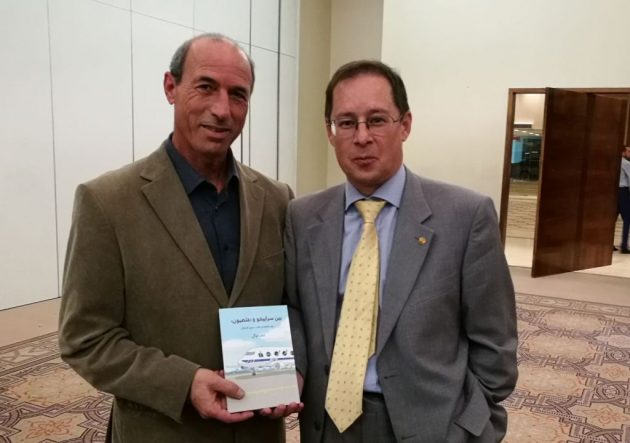


 Foreign Ministry spokeswoman Maria Zakharova (MZ below) believes the “presence of ISIS in Syria is coming to an end” – maybe so but the US-supported terrorist threat in the country remains, not ending as long as Washington wants war, not peace.


 Aletho News
