The very highest levels of the British government secretly exerted pressure on the BBC to censor a film about the army killing an unarmed child in 1972.
Official documents, recently discovered by the Pat Finucane Centre, also show the British Army was aware, shortly after the killing in Derry, that the boy had been killed at “point blank” range by an immensely powerful machine-gun.
However, the Ministry of Defence falsely informed an inquest into his death that he was shot from 25 meters away by a soldier who thought the boy was armed.
The case revolves around the shooting dead of 15-year-old Danny Hegarty during “Operation Motorman” in the early hours of July 31, 1972, as the British Army moved in to clear barricades and retake “no go” areas in the city that had previously been under IRA control.
A BBC Panorama reporter, Alan Hart (now deceased), had filmed people in Derry questioning the British Army’s account of how Hegarty was shot twice in the head and how his cousin accompanying him, Christopher, was wounded (another cousin, Thomas, was unscathed).
Pressure had begun mounting on the BBC after Hart had asked the British Army in Derry for an official response.
Hart had told the army how “everybody that he spoke to emphasised that it was impossible that the lad or his cousin…were carrying arms or explosives.”
He said Hegarty was from a “deeply religious Catholic family [who] have been actively preaching the Fifth Commandment — ‘Thou shalt not kill’ — and their peace overtures were well known.”
Hart’s request was referred to Donald Maitland, press secretary to the then prime minister, Edward Heath.
Maitland responded by telling a Northern Ireland Office (NIO) press spokesman, one R.J.Seaman, to “seek to persuade Panorama not to include this tragic incident in the projected programme.”
The NIO, said Maitland, was responsible for dealing with the BBC request as it was the secretary of state for Northern Ireland, William Whitelaw, who had asked people in Derry to stay at home during “Operation Motorman.”
The Panorama programme went ahead on Aug. 7, 1972, without Hart’s evidence from Derry.
‘Major Effort’
Seaman’s memo of the following day told the Ministry of Defence: “After a major effort, the NIO managed to get the item removed from Monday’s programme.”
The Aug. 8th memo also stated that the Royal Scots soldier (known only by the cypher “Soldier B”) had shot Hegarty with his “General Purpose Machine-Gun” at point-blank range (between “6-9 feet”).
This flatly contradicts statements given by the military authorities in 1973, at the first inquest into Hegarty’s killing, when they claimed (supported by a map of the area) that he had been shot from further away — 25 meters — and from the opposite side of the street.
The 18-year-old soldier who fired the fatal bullets (now deceased) said in evidence to the October 1973 inquest: “I cocked the weapon and when the youths were about 25 metres away I aimed at the leading man and fired a quick burst of 3 x 7.62 rounds.”
The inquest recorded an open verdict but a later, highly critical, report from the Historical Enquiries Team (HET) led to a second inquest in 2011. After a five-day hearing, the jury found:
There were no shouted warnings to the three cousins
The boys were unarmed and posed no risk to the soldiers
The soldiers failed to give medical assistance or conduct a search for alleged weapons.
Further, the HET found that the police had failed to carry out any forensic tests on the oldest boy, Thomas, who survived unscathed.
“Given,” said the HET report, “that the reason advanced for the shooting was that the youths were perceived to be a threat… this seems to have been an extraordinary omission.”
There was no attempt by the police, says the HET report, to interview the soldiers involved.
The police investigation, it said, failed to obtain clothing and forensic swabs from Thomas Hegarty, failed to take samples from the staining on the pavement, failed to recover bullet cases reportedly found at the scene, failed to obtain a timely photographic record and failed to examine the weapon used to shoot Daniel and Christopher.
Taken together, the HET said it showed the authorities unquestioningly accepted the soldier’s accounts.
‘Serious Questions’
In 2007, the British government apologised to the Hegarty family for describing Daniel as a terrorist and a Ministry of Defence document, assessing the Army’s role in Northern Ireland (“Operation Banner), also corrected its claim that the 15-year-old was armed.
Paul O’Connor, of the Pat Finucane Centre, said: “There was complicity between the MoD, police, NIO, Prime Minister’s office and the Attorney General who were all aware of the disputed circumstances of the shooting.
“The BBC itself has serious questions to answer since it self-censored an item that should have rung alarm bells. The admission that the NIO ‘managed to get the item removed’ is clear evidence of a concerted effort to hide the truth.”
Ironically, there was never any question locally of Danny Hegarty being one of the large group of young rioters in Derry at the time.
His father, Alexander, explained to the HET that Daniel had often helped him and the police in informal early morning patrols of the Creggan estate to head off trouble before it erupted.
Further, Alexander Hegarty told the HET that , two years before he was shot, Daniel had assisted police in the recovery of stolen arms.
By killing his son and giving a false account of the circumstances of the shooting, the British Army seems to have alienated the rapidly dwindling number of Derry citizens willing to give them a fair wind.
Anne Cadwallader has been a journalist in Ireland, North and South, for the last 40 years, working for the BBC, RTE, The Irish Press, and Reuters. She was previously an advocacy case worker at the Pat Finucane Centre, a non-party political, anti-sectarian human rights group advocating a non-violent resolution of the conflict in Ireland.
Throughout these various appearances, Hunter Biden has been accurately taking on Benjamin Netanyahu for the genocide in Gaza.
“If it’s anti-semitic to point out that Bibi Netanyahu is evil incarnate, then I don’t know what to say to people anymore,” Hunter Biden correctly said on the Tucker Carlson podcast, adding, “open your eyes. Open your heart for one minute.”
In his interview with Wajahat Ali referring to the genocide in Gaza, Hunter Biden said, “I will call it a genocide. I don’t know any other definition that fits when one group of people, their stated goal is the extermination of another group of people. I think it’s ridiculous that we continue to debate whether or not it’s a genocide. I think Bibi Netanyahu is evil incarnate,” adding that the Gaza genocide is “unforgivable forever and throughout time”.
While these statements are correct, it is hard not to see this as a way to put the entirety of the burden for the genocide on Benjamin Netanyahu, whitewashing the fact that it could not have been carried out without support from Joe Biden.
This is bolstered by the fact that in his interview with Wajahat Ali, Hunter Biden claimed that his father “believes all the things that I just said” and pretended that Joe Biden put pressure on Netanyahu, adding that Joe Biden “did his best to curtail and to curb the most awful instincts of Netanyahu”.
Hunter Biden’s comments in this context seem more to be part of an effort to whitewash the Democratic Party and Joe Biden’s direct complicity in the Gaza genocide.
The reality is, Joe Biden and his administration hold just as much responsibility for the slaughter in Gaza as Benjamin Netanyahu does.
Brown University’s Cost of war project has calculated that during the first year of the genocide in Gaza, the Biden administration spent $17.9 billion in military funding for Israel and another $3.8 billion in the second year, with an additional $9.65 – $12.07 Billion spent on military campaigns to protect Israel, including the Biden administration’s bombing of Ansar Allah in Yemen for it’s blockade on the Red Sea in an attempt to pressure an end to the Genocide.
While financing the military equipment used to carry out the Genocide in Gaza and bombing resistance groups attempting to stop the genocide, the Biden administration never once pressured Israel to accept a ceasefire.
This was outright admitted by multiple U.S. and Israeli officials on Israeli TV on a special aired on Israel’s Channel 13.
The former Israeli ambassador to the U.S., Michael Herzog, in the special admitted, “God did the State of Israel a favor that Biden was the president during this period, because it could have been much worse. We fought for over a year, and the administration never came to us and said, ‘ceasefire now.’ It never did. And that’s not to be taken for granted”.
The former U.S. ambassador to Israel, Thomas Nides, similarly admitted, “At the most significant political peril of Joe Biden’s political career, the easiest thing for Joe Biden would have been, if he was worried about the votes in Michigan, is to basically be a little soft; he refused to do it. There was enormous pressure within the White House on him to change his position. When I hear comments about ‘he wasn’t good enough, or he didn’t have Israel’s back,’ am I disgusted by it? One hundred percent. Is it true? 100 percent no”.
When Benjamin Netanyahu claimed that “soldiers were killed during the war in Gaza from a lack of ammunition due to a partial embargo that was imposed by the Biden administration”, multiple Biden administration officials came out to clarify that they gave unconditional support to Israel’s Holocaust in Gaza.
Amos Hochstein, a top Biden advisor admitted in response, “After more than $20 Billion military support, largest in Israel history, 2 aircraft carriers rushed to the region, deterring a massive regional war, defeating Iran missile/drone attack x2, defending israel at most vulnerable moments, after SAVING countless lives of Israelis – only acceptable response to POTUS Biden and American people is THANK YOU.”
Similarly, the Assistant to the President and National Security Advisor to the Vice President of the United States, Philip H. Gordon, admitted in response, “Hard to overstate the damage to US-Israel relations done by the sense of entitlement and ingratitude reflected in comments like these and Netanyahu’s own recent statements. Baseless misdirection to suggest that Israeli soldiers’ deaths in Gaza were caused by some phantom US ‘embargo’ (when in fact Biden resisted enormous pressure to condition aid, as required by U.S. law, even as Israel rebuffed calls to facilitate more humanitarian assistance and reduce civilian casualties)”.
The reality is that Joe Biden’s backing of the genocide in Gaza is also “unforgivable forever and throughout time” despite his son’s attempts to whitewash these facts.
The makers of our Constitution undertook to secure conditions favorable to the pursuit of happiness. … They conferred against the Government the right to be let alone — most comprehensive of rights and the right most valued by civilized men.”
— Justice Louis D. Brandeis (1856-1941)
The rapid spread of public surveillance cameras represents something far more consequential than a new piece of police technology. It represents a fundamental change in the relationship between the individual and the state.
These cameras allow government agents to record, identify, catalog and retroactively track the movements of people who have committed no crime, are suspected of no wrongdoing and have done nothing to invite government scrutiny. That’s not public safety. It’s an assault upon individual privacy.
Privacy is not a privilege granted by government. It is an aspect of personal liberty that government exists to protect. It is a natural human right protected from the government in the Bill of Rights. The fact that a person leaves his home and travels upon a public road does not mean that he has surrendered that right.
There is an enormous moral and constitutional difference between a police officer who happens to observe a person in public and government surveillance that automatically and systematically records that person’s vehicle, location and movements; and stores that information for future use.
A free society doesn’t just protect people from crime; it protects them from arbitrary government. The presumption is liberty. Government is the negation of liberty. A person should not have to establish his innocence before the government leaves him alone. The burden always belongs to the government to justify all intrusions into personal liberty. Police cameras reverse that principle. They collect information about everyone the camera views and leave it to individuals to challenge the collections afterward.
The Constitution requires articulable suspicion connecting the person being surveilled to a legitimate law-enforcement objective to justify public surveillance. A vague assertion that the technology might someday help solve a crime or enhance public safety does not meet that standard.
The view that personal privacy and public safety are in equipoise — that they are merely two competing interests of equal moral and legal weight from which government officials are entitled to choose subjectively their preferred balance — is the core of authoritarianism.
Safety is one of the legitimate purposes for which government exists. Privacy is among the personal liberties that government exists to protect. It cannot be taken away without judicial approval. Government cannot justify violating a natural right merely by asserting that doing so might make people safer. If that were so, there would be no meaningful boundary on any governmental power.
There is a profound difference between investigating a specific crime through constitutionally authorized surveillance and constructing a permanent infrastructure of suspicionless surveillance. The former begins with evidence and seeks information relevant to a particular governmental purpose. The latter begins with everyone and waits for the evidence.
When 7,000 American police departments have these systems with no legislative approvals, we have the police making policy judgments. They are deciding that the government should possess a new capacity to observe innocent people, what information should be collected, how long it should be retained, who should have access to it and what purposes may justify searches; all this irrespective of the Constitution.
Those are not merely administrative questions. They are questions about personal liberty.
If elected legislators believe that such surveillance is necessary, they should publicly debate it, enact specific legislation mandating warrants, establish meaningful limitations and accept responsibility before the voters. The decision should not be buried in a police procurement process or treated as an ordinary equipment purchase.
Liberty cannot depend upon the benevolence, restraint or good intentions of government employees. The premise of the Constitution is that government power must be limited, checked and divided because government officials are human beings who possess power and will inevitably have incentives to abuse it.
The answer is not better government surveillance. The answer is what the Fourth Amendment requires: No government surveillance without search warrants.
The constitutional question cannot be reduced to whether someone was physically standing in a public place. A police officer seeing a car pass by is one thing. A government database capable of reconstructing months of a person’s movements is something fundamentally different.
The difference is the difference between observation and surveillance.
A free people should be profoundly suspicious of any governmental system that makes surveillance the default position. No person should have to fear that every trip down the street is being permanently recorded, whether his movements can later be reconstructed or whether a government official can search his history without individualized suspicion.
The Constitution mandates that government leave people alone unless it has a legitimate, articulable reason to interfere with their liberty. That principle is not an obstacle to public safety. It is one of the defining characteristics of a free society.
Police cameras embody the opposite philosophy: Collect first, investigate later; monitor everyone, suspect someone later; expand governmental capacity and trust officials to exercise restraint afterward. That’s not the philosophy of a constitutional republic. It’s the philosophy of a surveillance state.
The constitutional objection is not that fighting crime is unimportant. It is that government must fight crime chained down by the Constitution, to paraphrase Thomas Jefferson. Safety cannot become the magic word that dissolves every constitutional limitation. Privacy cannot be treated as a luxury available only when government determines that it is convenient. And police departments cannot be permitted to acquire, deploy and normalize technologies that fundamentally alter the balance of power between individuals and the state.
If the police could track all movements, stop anyone on a whim, search and photo as they pleased, would we have less crime? Perhaps. But who would protect us from the criminals in uniform? And who would want to live in such an authoritarian state?
To learn more about Judge Andrew Napolitano, visit https://JudgeNap.com.
COPYRIGHT 2026 ANDREW P. NAPOLITANO
DISTRIBUTED BY CREATORS.COM
The Iranian Ministry of Foreign Affairs has denounced the latest claims by Israeli officials over the occupied Golan Heights, emphasizing that the strategic region is an “inseparable” part of Syria.
The ministry, in a statement released on Thursday, vehemently condemned the rhetoric of criminal Israeli prime minister Benjamin Netanyahu that the Golan Heights, occupied by the Tel Aviv regime for almost 60 years, will remain part of Israel “for eternity”, and his fierce opposition to the establishment of a Palestinian state.
“Basically, the leader of the criminal gang and mafia ruling over the occupied Palestinian territories is not in a position to comment on the formation of an independent Palestinian state, because the Palestinian land belongs to the Palestinian people, and the racist illusions of the genocidal Zionist regime cannot change this reality,” the statement added.
It added that “the Golan Heights are an inseparable part of the territory of Syria, and the colonial ambitions of a usurping and occupying entity cannot change its legal and historical realities.”
The Iranian foreign ministry also condemned Colombia’s recent recognition of the Israeli regime’s sovereignty over the occupied Golan Heights, calling it a violation of the UN Charter and international law.
“Within this framework, the Colombian government’s recent decision to recognize the sovereignty of the Zionist regime over the occupied Golan Heights is completely rejected and condemned, and constitutes a clear violation of the fundamental principles of the Charter of the United Nations and international law concerning respect for the sovereignty and territorial integrity of states,” the statement also read.
It noted that such an action also conflicts with the recognized principle of international law prohibiting recognition of the effects of unlawful acts and entails international responsibility of the Colombian government.
While emphasizing the legal, moral and humanitarian obligation of all governments, particularly Muslim countries, to help Palestinians achieve their right to self-determination and freedom from the Zionist regime’s occupation, apartheid and colonialism, the Iranian Ministry of Foreign Affairs recalled the responsibility of the UN Security Council to stop the occupation and relentless aggression of the Zionist regime against occupied Palestine, Lebanon, Syria and other countries in the region.
The statement went on to note that the Palestinian issue remains the most important humanitarian and moral subject of the contemporary world, which began in 1948 with the creation of a fabricated entity in the historic land of Palestine and, through its cancerous expansion, has made the entire West Asia region and the world insecure.
“There is no doubt that the comprehensive support of the United States and certain Western countries, including Britain, France, Germany and Canada, for the genocidal Zionist regime has been the main factor behind its impunity and has led to the continuation and intensification of its expansionism and crimes in the region,” the statement pointed out.
The Islamic Republic of Iran, while reiterating its principled position in support of the legitimate struggle of the Palestinian people to liberate their land from occupation, strongly condemns any attempt to marginalize the Palestinian issue, the Iranian foreign ministry concluded.
Seven US Navy personnel have reportedly been killed and several others wounded in a violent clash aboard the USS Abraham Lincoln, as growing unrest among the carrier’s crew has exposed mounting pressure inside the US military amid a prolonged deployment.
The incident erupted after an adviser to US Central Command (CENTCOM) chief Brad Cooper boarded the carrier to address mounting complaints from crew members following protests by their families over the ship’s prolonged deployment, according to Tasnim News Agency, citing an informed military source.
The adviser was reportedly met with boos and had water bottles thrown at him while addressing a gathering of personnel.
The confrontation subsequently escalated into a fight among crew members involving knives and other bladed weapons, leaving seven personnel dead and several others wounded, according to the source.
The atmosphere aboard the carrier remains tense and unsettled, Tasnim reported.
The Abraham Lincoln has been deployed for 263 days and is currently operating in the Indian Ocean, where its primary mission is to enforce an illegal naval blockade against Iran.
The carrier has spent 208 consecutive days at sea, the longest continuous deployment of any US aircraft carrier in the modern era, apart from a brief stop in Oman in July.
The reported violence comes amid growing concerns over the living and working conditions facing the roughly 5,000 sailors and Marines aboard the carrier.
Personnel have reportedly protested inadequate food supplies, with meals reduced to as little as half a cup of rice and two pieces of meat. The carrier’s laundry facilities have also been out of service for two weeks, while mold in shower areas has caused fungal infections among crew members.
Military families have raised concerns about exhaustion, mental health and the impact of the prolonged operational tempo on the crew’s ability to safely perform their duties.
At a meeting in San Diego on Thursday, around 200 relatives confronted acting US Navy Secretary Hung Cao over conditions aboard the carrier and the lack of a clear date for the crew’s return home.
The reported deaths aboard the Abraham Lincoln follow another serious incident involving the USS Gerald R. Ford. On March 12, 2026, a fire broke out in living quarters housing around 600 crew members, leaving 200 personnel injured.
The Gerald R. Ford subsequently took the injured to a naval facility on the Greek island of Crete before being forced to return to the United States.
As context is very important for all videos, this message is to confirm that the purpose of this video is reporting on or documenting the content. Note that we make an effort to research for context and cite our sources as appropriate.
No state or security body offers a single, systematic account of how Israeli agents are used, why they are recruited, or what services they ultimately provide. Outside experienced state institutions, universities and research centers rarely undertake such scrutiny. Israeli academia is the notable exception.
Israeli universities form part of the wider intelligence ecosystem through research, graduates, and seminars conducted with the security services and military. They produce personnel, assess institutional performance – as they have done since Operation Al-Aqsa Flood – and examine intelligence work in detail.
The Second Annual Israeli Conference on Intelligence Studies, held at the Hebrew University of Jerusalem on 28–29 October 2025 under the title “Intelligence Transformations After Failure,” is one open example. No comparable body of work has emerged from Arab and Islamic institutions.
Accounts from current and former security practitioners, alongside cases involving agents both living and dead, reveal an intelligence pyramid: a layered system of recruitment, cultivation, and deployment built around the value of the intelligence sought and the risks demanded of each spy.
Level one: Building the picture
At the base of the pyramid is information gathering, a task common to almost every category of recruited agent, though the value and type of information vary widely. Israeli services generally separate the agent or cell collecting intelligence from the cell carrying out an operation. The roles sometimes overlap, but collection remains the gateway to action.
An agent may gather information during a probationary phase, without knowing what it will be used for or whether others are working alongside him, simultaneously or in sequence, inside or outside the same organization.
Then come the “mosaic collectors,” who move beyond isolated fragments. They, too, may not see the complete picture, but their assignments are more complex. Instead of passing a single detail or photograph, they may track a person’s movements and relationships in depth, or map an entire process, such as an organization’s purchase of motorcycles or communications equipment.
One recent Lebanese case involved a detainee later released by the judiciary despite the sensitivity of his alleged mission. According to security sources familiar with the file, he was instructed to mount specialized equipment on a vehicle and drive through selected areas, harvesting data from internet routers in homes and institutions and attempting to penetrate them.
A second, recurring example comes from Palestine: the penetration of external training chains. Trainees sent to courses in Lebanon, Syria before the government’s fall, and Iran before the war on Gaza were exposed.
At times, the training bodies themselves were compromised and discovered concealed cameras in equipment covers. The breach then operated at three levels – inside the organization, along the training chain, and within the host institution.
Higher up are agents with access to sensitive files or influence inside a faction’s military or security apparatus. Their task may be to construct a picture of a company, battalion, brigade, division, or specialist unit. No single member normally sees an entire arena or organization; that degree of access is usually confined to a political bureau, military, or jihadi council.
One battalion in northern Gaza was penetrated before the current war, specifically in 2021. The agent held considerable authority and ranked roughly third in its command structure, yet still lacked a complete map of the battalion’s tunnels.
Israeli handlers therefore supplied him with military boots resembling those worn by resistance fighters. A tracking device was hidden inside, and he was told only to walk through the tunnels, allowing Israel to chart the network.
After the breach was discovered – having paralyzed operations in that area during the Sword of Jerusalem battle – the agent fled to Europe. A counterintelligence operation later lured him back to Gaza by making him believe suspicion had passed.
He was arrested, and the source of the breach was exposed. Security sources inform The Cradle that the discovery spared the battalion from destruction in the latest war and helped turn the border area into a persistent problem for Israeli forces until the final stages.
The battalion commander responded through trial and error, creating separate tunnel routes and branches and preventing any one fighter from moving through all of them or taking part in the entire excavation process.
Yet the same agent escaped prison shortly before Operation Al-Aqsa Flood. That extraordinary story lies beyond the scope of this investigation, though one detail is telling: another agent facilitated his escape.
At the top of this first level stands the source of “golden information” – intelligence decisive to a major operation, particularly an assassination. It may reveal a figure who has never been photographed, identify a safe house, or confirm a target’s presence during the final moments before a strike.
Some such agents have been killed by mistake; others, sources say, were deliberately abandoned when Israel judged that they had nothing more to offer or could not be extracted.
Technology has made field agents harder to detect and reduced the need for some older practices. At the beginning of the Second Intifada, for example, agents could be ordered to mark a building with a laser before an airstrike.
Such tasks are less necessary today because Israel already possesses extensive maps of public bodies – municipalities, governorates, and ministries – as well as many overt and covert resistance sites.
Israeli military publications openly use the Hebrew term yediat zahav – “golden information” – for decisive, current intelligence extracted from a mass of raw data. In resistance environments, invoking such intelligence can also fuel suspicion that a senior agent exists, even when the information was obtained through technical surveillance.
Where the source is human, investigations repeatedly show that an Israeli service may spend years and large sums cultivating one person for a single disclosure. The assassination of Yahya Ayyash is a prominent example.
The collaborator who enabled the operation was bound to be exposed because he supplied both the identifying information and the instrument of assassination – a booby-trapped mobile phone. With no plausible alternative suspect, an escape or extraction plan had to be prepared in advance.
Level two: Agents in the field
Information gathering already demands work on the ground – photography, surveillance, communications, and impersonation among them. Direct field missions require a different class of agent. Security sources estimate that nearly all must meet their handlers inside Israel or abroad and receive either task-specific instruction or broader operational training.
At the bottom are what security practitioners describe as “cheap missions”: assignments carrying minimal risk, with exposure more likely to result from chance or a basic mistake than from the work itself. These include leaving communications devices, messages, or cash at “dead drops.” Such tasks usually require little training and are assigned gradually.
A dead drop is selected after studying a country’s geography and population patterns. One agent leaves the material; another retrieves it without knowing the first and sometimes for an entirely different operation. Many recruits with reasonable collection skills can perform these tasks. They remain below the risk threshold reserved for more experienced and intensively trained agents.
The next rung involves logistics. This involves obtaining communications equipment, buying or renting homes and vehicles, or securing other tools later used by operational cells.
From there, the work can become far more dangerous. Agents may tamper with resistance weapons or insert tracking chips into them, including RPG and Kornet anti-armor rounds and even missiles or their explosive warheads. Others plant surveillance devices. At this point, the agent generally understands exactly what the mission entails.
In one prominent example, a single agent working in a manufacturing workshop belonging to an Islamic organization in Gaza was responsible for the deaths of at least 30 operatives between 2008 and 2012 by planting tracking devices in the rockets they launched, as well as weakening the explosive material in the warheads.
Having joined from another organization, he cultivated an image of exceptional devotion to deflect suspicion, even carrying wounded comrades on his shoulders while performing tawaf around the Kaaba.
Although eventually exposed, he escaped Gaza and, according to the same sources, still holds an official post in a Muslim-majority country.
At the summit are the hardest assignments: planting explosives or carrying out assassinations directly. Israel embraced this route only more extensively during the past decade. For years, a basic assumption among Palestinian and Lebanese investigators held that Israel killed only by Israeli hands. That premise often led inquiries to discount a local perpetrator from the outset.
The 2010 assassination of Hamas commander Mahmoud al-Mabhouh in Dubai reinforced that belief. The large team seen on Emirati surveillance footage used foreign passports; many were believed to be Jewish. But subsequent cases in Gaza, Lebanon, Syria, and Iran indicate that Israel has sought to reduce the risks borne by Jewish operatives, Arabic-speaking Israeli agents, and Druze or Bedouin recruits by transferring more of the execution phase to local assets.
The March 2017 assassination of freed prisoner Mazen Fuqaha in Gaza exposed the limits of the old assumption. Fuqaha, a commander in the Qassam Brigades, was responsible for supporting military activity in the occupied West Bank. Investigators faced a missing link. Even after a Palestinian agent confessed, some remained convinced that an Israeli special unit must have entered Gaza to carry out the shooting.
Nearly nine years later, on 5 February 2026, Netanyahu publicly acknowledged Israel’s responsibility for Fuqaha’s assassination. He confirmed that the killing was carried out through recruitment of a Palestinian collaborator, Ashraf Abu Leila, who shot Fuqaha outside his home in the Tel al-Hawa neighborhood in Gaza City.
The disclosure was unlikely to have been casual. Its timing came as Palestinian resistance movements were conducting sweeping reviews of their security and military performance after Operation Al-Aqsa Flood.
The following day, Al Jazeera broadcast an investigation into armed groups in Gaza accused of serving Israel.
The program included material on local militia members used to track targets and carry out armed tasks. One case involved two men assigned to kill a wanted figure with a suppressed weapon. One was captured despite having received little training and not being a long-serving recruit – another departure from the model that prevailed before Operation Al-Aqsa Flood.
During Israel’s June 2025 war on Iran, Israeli messaging sought to portray every ground operation as the work of Mossad officers. Field investigations and sources following the cases point to a different picture. Iranian Jews living abroad, migrants, and their descendants accounted for only a small share of those allegedly involved.
Many of the operatives proved to be residents of Iran, meaning Mossad personnel had not acted alone as Israeli accounts implied. Some people who helped smuggle equipment into the country reportedly did not know it would be used in military or intelligence operations, believing they were moving civilian goods for profit.
Level three: Re-engineering the enemy
At the highest level, the selection, conduct, and mission of an agent change fundamentally. Israel studies a target organization strategically, seeking to dismantle it or redirect its course. The work demands highly placed, carefully cultivated recruits. An assignment may involve reading a leader’s behavior or tracing ideological currents across an entire movement.
One agent admitted during interrogation that his task had been limited to observing a leader’s social life and political language. He was required to remain close to a figure in an Islamic organization in Gaza who was assassinated in 2003, mapping his community relationships, recording what he said away from the media, and assessing whether he belonged to the movement’s “hawk” or “dove” camp. The findings helped determine Israel’s targeting priorities.
Past Israeli statements and signals support the view that assassinations, particularly of political figures, are not always ordered for immediate military reasons. A killing can create a vacancy in a movement’s hierarchy.
Israeli planners then anticipate who will fill it and whether that successor better suits their objectives. In effect, an organization’s political trajectory can be re-engineered while its members believe they are responding to internal circumstances.
The practice is old. It dates at least to the rivalry between Fatah and the Popular Front for the Liberation of Palestine (PFLP). This was a time when Israeli services sought to exploit disputes within and between Palestinian factions and used agents to deepen them.
During periods of intense military escalation, anyone who appears on the radar may be killed as Israel pursues the largest possible number of assassinations. The campaign unleashed after Operation Al-Aqsa Flood marked the largest exception of all.
The US has played a comparable game, sometimes without recruiting a conventional agent. Former CIA officer John Kiriakou described one such method in a podcast released on 29 January 2026, explaining how the agency helped fragment the Abu Nidal Organization.
Unable to penetrate the group directly, the CIA instead planted suspicion. Through direct and indirect contacts, it suggested that a senior member had been recruited. One cadre then killed another on suspicion of betrayal, setting off further internal bloodletting.
The organization was thus driven to destroy itself without the recruitment of a single agent. Its founder, Sabri Khalil al-Banna, better known as Abu Nidal, died in Baghdad in 2002. The author’s security sources maintain that Saddam Hussein had him killed after years of using his organization in external and internal operations, though the circumstances remain disputed and other accounts describe suicide.
A different strategic path requires elevating an agent into the leadership. That person needs achievements to build credibility, even if Israel must allow an operation to appear successful – or announce casualties in its own ranks – to manufacture the necessary record.
A source in Fatah’s Al-Aqsa Martyrs Brigades reveals to The Cradle that an operative identified as A.N. rose rapidly after an Israeli jeep was apparently destroyed by an explosive along the boundary and Israel announced one death and several injuries. A later transaction involving night-vision equipment exposed him, and he fled into the territories occupied in 1948.
The subsequent investigation found that the jeep had been remotely driven to the site of a bomb reported in advance. The explosion created a filmed “achievement,” giving the agent credibility, quicker access, and a degree of trust that was difficult to challenge.
Once an agent reaches the intended leadership tier, he may be ordered to identify additional cadres for recruitment. Another recurring task is to cultivate financial and moral corruption. The aim is to convince members that their sacrifices are being exploited for private gain. Such tactics work precisely because corruption already exists, to varying degrees, within the structures of several organizations.
One of the starkest cases uncovered by the Palestinian resistance involved a historic leader identified as M.N. He was reportedly not asked to transmit operational intelligence. Instead, his assignment was to magnify organizational failures and obstruct successful work.
Other agents were instructed to arrange commercial deals and partnerships that implicated people who were not directly recruited, widening the perception – and sometimes the reality – of corruption and exploitation.
The effort to create a negative example belongs to the same strategy. Israeli handlers may target the children of leaders whom they have failed to recruit or assassinate. Security pressures and the prolonged absence of a father who once acted as protector and disciplinarian can make those children more vulnerable. Families of martyrs face the same danger.
Palestinian and Lebanese files contain many such examples. The most politically embarrassing involve the sons of a well-known West Bank leader in an Islamic movement, one of whom publicly converted to Judaism and repeatedly entered Israel.
Whether he settled there permanently remains unclear. Such cases are rare, but Israel amplifies them to discredit the movements concerned, dishonor prominent families, and weaken their standing within Palestinian society.
The most dangerous outcome combines two tracks: assassinations designed to reorder an organization and the promotion of an agent into its senior leadership. Together, they open the way to direct influence over decisions and strategy. The danger is greatest after the killing of historic figures who cannot easily be replaced.
Israel’s intelligence services invest for the long term. They study the remaining leaders, their histories of disagreement, and the character of each relationship, then seek to create friction inside the organization. As sources familiar with these files put it, the intended result is to weaken effectiveness, waste effort, and expose structures.
That investment can consume enormous human resources. Specialists may spend a decade or more building a single subject’s biography – from his waking hour and favorite foods to his relationships and most closely guarded secrets.
In several cases, such intimate knowledge has ended in assassination. The spy’s service to Israel is therefore measured by more than the secret he steals or the device he plants. At its highest level, it lies in helping the occupation reshape an adversary from within, long before the target recognizes that its choices are no longer entirely its own.
The pandemic is over. Yet two key pieces remain that should concern everyone.
Lets talk about the COVID shot. Still being mandated (recommended) by East and West Coast Health Alliances comprising 14 states all the way down to infants.
Why? To stick it to Kennedy? To ‘follow the science’‘? To secure a market as demand tanks? Who knows for sure but here we are.
The COVID shot was birthed in fraud and failed science. That is the true legacy media pundits won’t tell you.
As the first cases of coronavirus happened in the U.S., Moderna and Pfizer began designing their mRNA vaccine candidates.
Meanwhile, Bill Gates pulled the trigger. A Fauci files/diary email from Gates to Fauci asks the NIAID director for “changes or additions” to Gates’ masterplan titled simply Pandemic I.
Gates’ document, given the stamp of approval from Fauci, stated:
“The goal is to pick the one or two best vaccine constructs and vaccinate the entire world—that’s 7 billion doses if it is a single-dose vaccine, and 14 billion if it is a two-dose vaccine.
How about 9-12 doses? That is what has been recommended to date for adults and immunocompromised respectively.
Far from a stranger, Gates and his foundation were fraudulently close to U.S. agencies funding pieces of NIH and receiving private briefings from DARPA on biological threats. More on that in another report.
FAUCI KILLS EARLY TREATMENT
Under Section 564 of the FD&C Act, FDA can grant the emergency use for a medical countermeasure (the vaccine) because, as revisionist history tells, there was no approved alternatives adequately available for diagnosing, preventing, or treating the disease.
The guidelines and experiences used at the start of the pandemic from pioneers like Peter McCullough’s protocol, New York family physician Dr. Vladimir Zelenko’s protocol, Texas Dr. Richard Bartlett nebulized budesonide, Front Line COVID-19 Critical Care Alliance’s ivermectin push and so many others using similar treatments with repeated success and real-world results tells a different story.
Evidence that would have effectively ended the FDA EUA vaccine hunt.
Didn’t matter to Fauci and the captured U.S. regulatory agencies. Their job was to kill those ideas and pave the way for the coming experimental, world-injecting gene therapy.
Fauci files/diary explains how it was done at the highest level. March 2020, two months into the first U.S. cases Fauci finds himself in a high-level White House Meeting and writes:
“A friend of POTUS… said that he heards [sic] that someone gave Hydroxychloroquine (HC) to 51 people and 51 got better. POTUS has heard similar stories, including Remdesivir (R) about other drugs and wants to make these available. To my amazement and dismay, Azar said that he could approve HC and Remdesivir now with the powers that he has. Steve Hahn and to some extent Deb and Bob started to chime in that this would give people hope. I took a deep breath and said that this was wrong and should not be done.”
None of the trials were designed to detect a reduction in any serious outcome such as hospital admissions, use of intensive care, or deaths. Nor were the vaccines being studied to determine whether they can interrupt transmission of the virus. (*I was the first journalist to report this in October 2020)
FDA and VRBPAC votes were near unanimous to get them to market and in American arms while legacy media ‘journalists’ and their ‘experts’ like Fauci and others touted the shot’s transmission-stopping magical qualities. While Influencers and celebrities sucked up $911 million of taxpayer money for their injectable PR efforts.
There was just one problem. The shot didn’t stop transmission. And it didn’t perform against mutations. In short, it was worthless and gave false hope with a growing profile of side effects (harms).
September 2021 Fauci writes:
“… there is a concern about safety regarding myocarditis for younger people, mostly men; however, once this is taken care of in my mind there is no reason not to vaccinate essentially everyone.”
Heart damage from the shot was never “taken care of” and still remains a concern and risk to this day especially for young men.
January 2021, world-renowned HIV virus researcher Dr. David Ho shares immediate concerns about the COVID shot’s performance according to Fauci’s diary:
“David Ho is doing tests on convalescent sera and sera of people who were vaccinated and is finding disturbing data in both the UK and worse in the RSA mutants. It looks like the vaccine might be compromised.”
Fauci continues:
“Had regular every 2 weeks call with Bill Gates – Bill and Trevor Mundel know about the issue with the mutations that David Ho is working on.”
What exactly were Dr. Ho’s warnings? Dr. Ho writes to Fauci the following:
“It is quite clear that these two variants could now resist several classes of neutralizing monoclonal antibodies already used in the clinic or still in development, and in most cases we understand which of the mutations are conferring the resistance.”
Ho continues:
“… a large majority of convalescent plasma samples showed an appreciable loss in activity against the new variants, suggesting re-infection may be more likely when confronted with either of these two strains.”
And then the death blow to the non-transmission-stopping COVID shot as Ho writes:
“Finally, we also observed a significant impact on vaccinee sera in that every serum sample tested showed a substantial loss in neutralizing activity against the SA variant, whereas the loss in activity against the UK virus is not as large or as universal. Again, we believe the latter findings should be shared promptly with the field, because these new strains threaten the effectiveness of the current vaccines.”
The very next day, Fauci writes in his diary:
“Had Zoom briefing of Biden and Harris to prep them for the speech that Biden will give at 3:45 PM on the vaccine rollout plan. We briefed him at 2:30 to 3:30 and he and Harris (only he spoke) gave briefing to the Nation.”
No word of the vaccine issues, mutations or danger now scientifically evident.
It later became clear that Ho was not only right, but his warnings were mild compared to the reality that unfolded. UK COVID vaccine surveillance data began showing the shots were not only failing to prevent infection but they are making you more vulnerable to it.
2022 data suggested that in all age groups COVID vaccines were demonstrating negative efficacy. That means, the vaccinated were at greater risk of infection than the unvaccinated.
Meanwhile, that same year Fauci writes:
“More drama with regard to the CDC and Rochelle Walenski. After much going back and forth between the CDC and the other docs including me… we thought we had gotten them pulled back from making the statement that the vaccines were not effective at all in preventing infection and transmission…
Why? As Fauci writes, “it would undermine the DoJ’s efforts at mandates for vaccines under certain circumstances.”
In the end, CDC director at the time Walensky who, as Fauci writes, called him “… her hero, her mentor, her friend… agreed to pull back on the statement of absolute lack of efficacy of vaccines against infections and transmission.”
Throughout all this, Fauci went to bat for Big Pharma indemnity in 2021 as he pens in his diary:
“I had an important zoom meeting today with Larry Corey an Emilio Emini about the same subject as above, namely, how the United states can play a major proactive role in getting mRNA vaccines to the developing world. Apparently there are liability issues that the pharmaceutical companies are concerned with. These revolve around the fact that although the United States government can indemnify the companies against lawsuits here in the United states the companies feel that they are liable to being sued for adverse outcomes by people in the countries to whom they’re providing vaccine. Some mechanism needs to be worked out to address this concern.”
(Emilio Emini was Chief Executive Officer at the Bill & Melinda Gates Medical Research Institute and Larry Corey head of COVID-19 Prevention Network collaboration formed by Fauci)
The shot is still protected by the PREP Act which was extended until 2029 by outgoing HHS Secretary Xavier Becerra (now in the running for California Governor).
The Countermeasures Injury Compensation Program (CICP) meant to field harms from the COVID shot is a black hole and sick joke. Kennedy is attempting to create a table of accepted injuries to ease compensation efforts for the injured public. Is this enough? Not by a long shot.
(*No artificial intelligence was used to write this article. Just a genuine human… me)
The US Senate Homeland Security Committee has voted to hold Dr. Anthony Fauci in contempt after the former White House coronavirus czar refused to answer questions on the origins of Covid-19 at a hearing last week.
The Republican-led committee voted 8-7 along party lines to hold Fauci in contempt on Thursday. The committee’s Democrats introduced five motions aimed at postponing the vote, but all were shut down by the Republican majority.
Fauci appeared before the committee last Wednesday, where he was grilled on his role in funding dangerous gain-of-function research at the Wuhan Institute of Virology in China, his knowledge that Covid-19 was likely created in a laboratory, his work with US intelligence agencies, and his promotion of ineffective vaccines against the virus.
The former bureaucrat refused to answer any questions, invoking his Fifth Amendment right to silence more than 100 times. Fauci pleaded the Fifth despite having already received a pardon from former President Joe Biden shielding him from criminal prosecution over any offense committed between January 1, 2014 – when the US first outsourced gain-of-function research to China – and January 20, 2025.
“More than a million Americans died from Covid,” committee chairman Rand Paul said before Thursday’s vote. “Many of them died alone. Workers were forced to choose between a mandate and a job they needed. Businesses closed and never reopened. Americans lost the freedom to work, to worship, and to decide what went into their own bodies.”
“Dr. Fauci faced no risk of federal prosecution,” Paul continued. “All he had to do was tell the truth.”
Although Fauci is immune from prosecution for any misdeeds that he committed between 2014 and 2025, his pardon does not cover any crimes committed at last week’s hearing. Contempt of Congress is a criminal offense, and Paul referred Fauci’s case to the US Justice Department immediately after Thursday’s vote.
Should the department choose to prosecute, Fauci could face a fine of up to $100,000 and a prison sentence of up to 12 months.
Peter Navarro and Steve Bannon, both former aides to US President Donald Trump, were jailed for contempt of Congress by Biden’s Justice Department. Navarro and Bannon both spent four months in prison in 2024.
Fauci served as the director of the National Institute of Allergy and Infectious Diseases (NIAID) from 1984 to 2022, and as chief medical adviser to Biden from 2021 until his retirement in 2022. In the latter role, Fauci became the face of Biden’s heavy-handed response to the pandemic, advocating mask and vaccine mandates and lockdowns, and dismissing opposition to these measures as “anti-science.”
I followed up on this story, because some were sceptical and didn’t believe it was real or possible, and loudly insisted it was fake. One man who fancied himself an expert because he likes to shoot a gun now or then claimed this was fake, impossible.
First, I will say that Palestinians don’t need to create fake stories, Israel is doing the impossible to them every day and has been doing so for not only the last 3 years—even when I lived in Gaza, we’d see injured Palestinians and situations that didn’t seem possible but were very real—but certainly in the last three years of Israel’s ongoing genocide of Palestinians in Gaza, we’ve seen things that seemed impossible but were very, brutally, bloodily, real for Palestinians.
Second, a good friend of mine from Jabaliya told me he knew the man who filmed the video. I have no reason to believe he lied to me.
But for clarity on logistics of the situation— how this youth came to have a bullet in his hand when others said his hand would have been blown off (though I already guessed the answer)—I reached out to a couple of others I knew in Gaza. Dr. Ihab replied to me:
“This is a fallen shot, that is, it was fired from a long distance and fell. These shots caused the killing of many people: when the bullet settled in their neck and chest, it may be fatal. But in this case, it is easily removed by a short surgery. We hope that it has not caused fractures in the palm of the hand or tears in the tissues and nerves.”
He went on to say that his own friend was killed by such a stray bullet fired by an Israeli soldier, hitting the friend in his neck as he sat in a chair, killing him. “These may be from the Zionist machine gun or from drones, or the launches carried out by the army randomly.”
A journalist who had shared the initial photo also replied to me: “This child was sitting in a learning tent west of Gaza City. The bullet fell from the sky after being fired from the eastern part of Gaza City, where Israeli forces were positioned. Although it came from a considerable distance, it struck the tent and hit the child while he was seated at his school desk. Yes, it’s unbelievable, but in Gaza anything is possible.”
I refer back to Dr. Mimi Syed, who I interviewed a year ago. She went twice to Gaza as an emergency doctor, and one of the patients she was able to save, a young girl named Mira, had a bullet lodged in her head. “When I showed the CT image to the world, I was accused of fabricating it.”
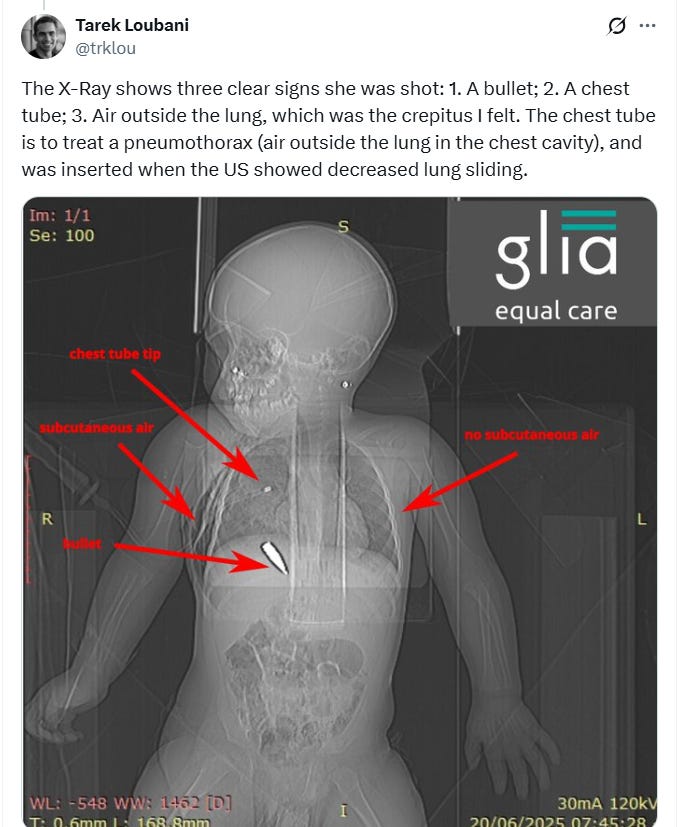
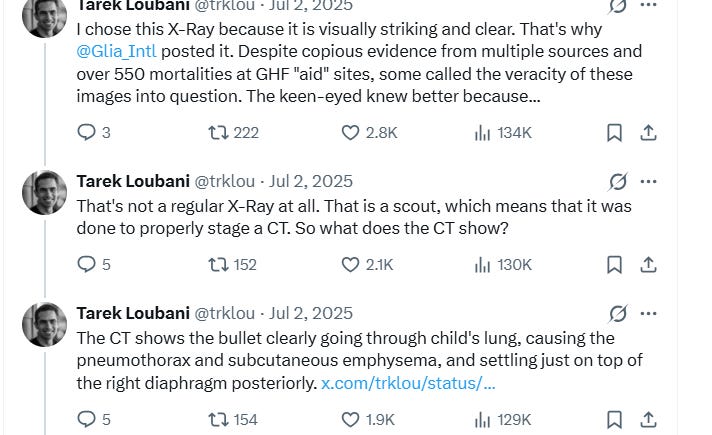
Dr. Tarek Loubani, who I’ve known from Canada since before I first went to Gaza in 2008, likewise faced accusations that he had lied or forged an x-ray of one of his patients.
He didn’t lie or manipulate, of course, but people couldn’t accept that what it showed was real.
Israel has long treated Gaza as its testing ground for new weapons and technology and also for how much Israel can get away with while the world watches. If your immediate reaction at seeing an injury or seemingly impossible photo or video from Gaza is to accuse Palestinians (or non-Palestinians who managed to enter Gaza) of fabricating footage or x-rays, etc, then you are the problem. Your life experience shooting a gun in your back yard does not equip you to understand the circumstances in Gaza. Palestinians in Gaza don’t have the luxury of debating this, they’re living in truly unreal circumstances.
Israel has become a haven for international criminals. Many are dual-nationals who have taken advantage of their ability to move seamlessly between Israel and their second country of citizenship to commit crimes and, in some cases, evade justice.
The scale of the criminality, and the volume of cases (relative to the population of Israel), is astonishing.
Among the most notorious accused criminals being protected from justice by Israel is Timur Mindich, the ultimate financial beneficiary of the Ukrainian drone maker Fire Point. Mindich fled to Israel last year, just days before being charged as the mastermind behind a $100 million embezzlement scheme involving Ukraine’s state nuclear power company. Mindich also happens to be the co-owner of Kvartal 95 Studio, the production company founded by Volodymyr Zelensky.
Mindich, like many in this article, has taken advantage of Israel’s controversial Law of Return which allows any Jew in the world to claim Israeli citizenship without having to renounce their home country passport.
Some of those accused and charged have made minor or international headlines, some haven’t, but the scale of the issue was such that I thought it would be useful to document my research here.
In some cases, Israel has refused to extradite the wanted person despite requests from the country in which the crimes were committed.
Staying on Ukraine and refused extradition requests, we have Oleksandr Dubilet, the former Chairman of the Board of Ukraine’s PrivatBank. Dubilet is currently a fugitive in Israel and the subject of multiple criminal investigations and extradition requests for his role in embezzling at least $100 million dollars following the 2016 privatisation of PrivatBank. To date, Israel has refused to extradite him.
Israel as a bolthole for financial fraudsters is a common theme. One of the most significant SEC fraud cases in recent years involved over 150 Israelis (some with dual US-Israeli nationality, others not), wanted for their role in conducting binary options fraud worth upwards of $100 billion.
Binary options are a type of financial bet where the outcome is essentially all-or-nothing. Instead of buying a stock or currency, you bet on whether the price of a stock or currency will be above or below a certain level at a specific time. While not illegal, the Israeli companies were accused of rigging and manipulating prices and expiry times and using fake identities.
For a decade until 2017, Israel was the global centre for the online binary-options industry. The Israeli police failed to investigate, so hundreds of cases were filed in Israeli courts by people from dozens of countries who had been defrauded.
One of the most notorious fraudsters was Lee Elbaz, the CEO of Yukom Communications, a dual US-Israeli national. She was arrested in 2017 when on holiday in New York and eventually convicted of wire fraud and sentenced to 22 years in prison.
Other prime Israeli movers in the binary options fraud business were Yossi Herzog and Yakov Cohen, both connected with Yukom and other binary options front companies. They were charged with $140 million fraud in 2019 but despite being under a DOJ criminal investigation the US choose not to pursue their extradition, while other Israeli co-conspirators in the Yukom case have joined Elbaz in serving jail sentences.
Other Israeli kingpins in the binary options sector include Ran Amiran and Malhaz Patarkazishvili, also known as Pini Peter. They were charged with $100 million fraud by the SEC for their role managing the fraudulent options trader Spot Option. Because it was a civil case and the DOJ wasn’t involved they weren’t eligible for extradition from Israel and continue to reside in Israel. It was reported in 2021 that Amiran had reached a financial settlement for the damages with the SEC, likely so that he could once again travel to the US. Peter, a friend of Netanyahu’s, remains unrepentant, despite being ordered to pay the US government $87 million, a judgment he has appealed.
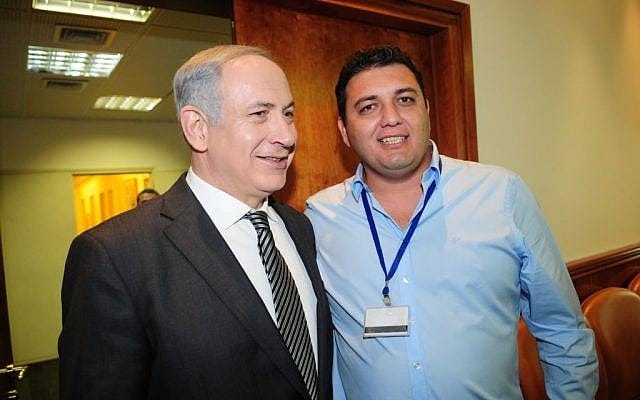
Benjamin Netanyahu with financial fraudster Pini Peter
Another hotbed of Israeli fraud is the moving industry, where companies pose as legitimate household goods movers only to steal belongings or withhold items unless additional payment is made. One of the largest “hostage load” prosecutions was of Advanced Moving Systems, an Israeli-run company which lured customers with artificially low moving estimates and then extorted them by holding their household goods hostage until they paid fraudulently inflated prices. Many of the dozens of people behind the scam remain wanted, with their current location unknown. Dozens of other Israelis connected with fraudulent moving companies also remain on the run, and have likely fled to Israel. (Incidentally, the Israelis arrested by the FBI on September 11th and quickly released were working for a Mossad counterintelligence operation using a moving company as cover. But that’s another story).
Penny stock fraud is another rich seam for Israeli crooks. This type of fraud takes place when the stocks of small companies trading under $5 a share are marketed to often older and uniformed people using high pressure sales marketing tactics, with the caller promising guaranteed returns, often claiming to have inside information. One of the largest instances in recent years saw dual US-Israeli citizen Sharone “Barry” Perlstein and numerous Israeli co-conspirators charged with creating at least 15 fraudulent public shell companies to sell millions of dollars worth of penny stocks using fraudulent tactics. Previous penny stock fraud cases had also involved Israeli nationals.
The diamond industry has also attracted a fair share of Israeli swindlers. One of the most well-known is Mordechai “Moti” Ferder, a California-based luxury jeweller at the centre of one of the largest fraud scandals in the American jewellery industry. Ferder was accused of juicing his company’s accounts to boost the valuation before selling to an investment company, while in reality he was racking up liabilities worth hundreds of millions of dollars. In 2025, with an FBI investigation underway, Ferder fled California for Tel Aviv.
Then there is Gery Shalon, the Georgia-born Israeli responsible for hacking JP Morgan and carrying out the largest theft of customer data from an American financial institution in history.
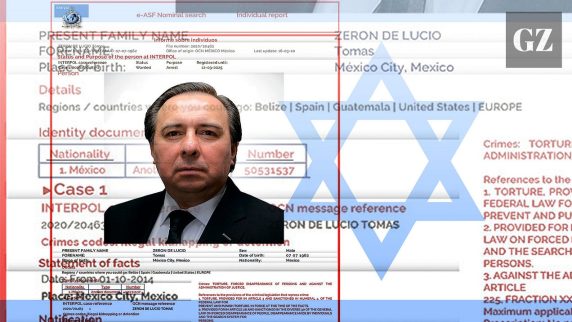
Outside the fraud cases, Israel also attracts politicians attempting to shield themselves from justice in their home countries. One of the most notorious and ongoing cases is that of Tomás Zerón, the former director of the Criminal Investigation Agency of Mexico. Zerón, who received training in Israel before assuming control of Mexico’s version of the FBI, is accused by Mexican authorities of having direct involvement in the kidnap, torture, and likely murder of dozens of university students.
The Ayotzinapa kidnapping is considered one of Mexico’s most heinous human rights abuse cases. It took place in 2014, when forty-three leftist students were kidnapped and disappeared on their way to Mexico City to commemorate the anniversary of the 1968 Tlatelolco massacre. Zerón is said to have known or ordered the students to be handed over to a cartel group to be murdered and disposed of. The former Mexican top cop promptly fled to Israel after being officially accused of participating in the crime.
Despite an extradition order, an Interpol red notice and numerous requests from Mexico to hand him over, Israel has refused, reportedly as punishment for Mexico’s criticism of Israel at the UN.
Another Mexican diplomat who fled to Israel is Andrés Roemer. Formerly Mexico’s Ambassador to UNESCO based in Paris, and Consul General of Mexico in San Francisco, Roemer fled to Israel in 2021 after being accused by 61 women of rape and sexual assault. While a Jerusalem court has authorized the former diplomat’s extradition to Mexico, he remains in Israel under house arrest.
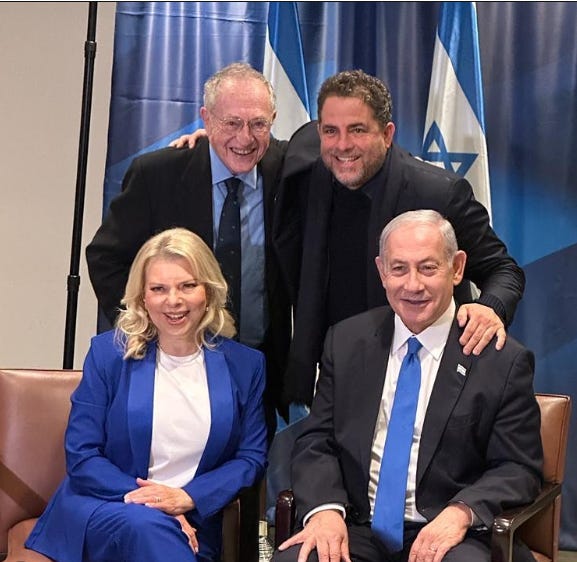
Roemer is not alone among Jewish sex criminals fleeing from justice in the home countries to Israel. The phenomenon is so prevalent that even CBS News has covered it. Probably the most famous accused sex criminals to have fled to Israel are the Hollywood directors Brett Ratner and Bryan Singer. Rush Hour director Ratner, a good friend of Netanyahu’s, fled to Israel in 2023 after being accused by multiple women of sexual misconduct and assault on set.
Brett Ratner with Benjamin and Sarah Netanyahu, and ultra-Zionist attorney Alan Dershowitz
Israel is a magnet for criminals of all flavors, making this brief compendium just the tip of the iceberg. The Law of Return, known to be policed very lightly, is a gateway allowing Jews to use their dual nationality to commit crimes and then swerve justice under an ethno-supremacist legal regime set up to protect them. Some succeed in avoiding justice, while others are not so lucky.
By portraying Chinese characters as perpetrators of ruthless violence while casting Japanese Self-Defense Forces (SDF) intelligence operatives as defenders, the season 2 of the Japanese drama Vivant has recently drawn criticism from Chinese netizens, who argue that its depiction turns historical reality on its head while ignoring Japan’s wartime atrocities.
The TBS drama series – a spy suspense story in which an alleged unofficial intelligence unit of the SDF operates across the globe — has attracted a passionate fanbase. Its currently airing season 2 opened with a household rating of 18.8 percent, the highest for a TV drama this year, according toa commentary article by Japanese media Toyo Keizai.
What draws attention is the portrayal of the enemies in the series, the article noted. Scenes in which the Chinese organization subjects kidnapped members of the SDF unit to brutal torture are repeated with unrelenting intensity.
It is rare for Japanese TV dramas to explicitly portray a real-life country as the enemy, the article noted.
Japanese Prime Minister Sanae Takaichi also made a reference to the drama, saying that she has been recording Vivant and hopes to binge-watch it over the year-end and New Year holidays, according to Japanese media outlets.
China’s CCTV News report on Sunday revealed that the drama features scenes in which Chinese personnel cut off the fingers of and stab Japanese intelligence operatives in the abdomen. Such acts bear striking similarities to the torture inflicted on Chinese nationals by invading Japanese troops during the World War II.
The drama distorts the truth by attributing these atrocities to modern Chinese characters. Beneath the surface, it subtly glorifies Japan’s cross-border overseas operations, blurs the functional boundaries of the SDF and implicitly promotes an expansionist narrative, per CCTV News. … continue
This site is provided as a research and reference tool. Although we make every reasonable effort to ensure that the information and data provided at this site are useful, accurate, and current, we cannot guarantee that the information and data provided here will be error-free. By using this site, you assume all responsibility for and risk arising from your use of and reliance upon the contents of this site.
This site and the information available through it do not, and are not intended to constitute legal advice. Should you require legal advice, you should consult your own attorney.
Nothing within this site or linked to by this site constitutes investment advice or medical advice.
Materials accessible from or added to this site by third parties, such as comments posted, are strictly the responsibility of the third party who added such materials or made them accessible and we neither endorse nor undertake to control, monitor, edit or assume responsibility for any such third-party material.
The posting of stories, commentaries, reports, documents and links (embedded or otherwise) on this site does not in any way, shape or form, implied or otherwise, necessarily express or suggest endorsement or support of any of such posted material or parts therein.
The word “alleged” is deemed to occur before the word “fraud.” Since the rule of law still applies. To peasants, at least.
Fair Use
This site contains copyrighted material the use of which has not always been specifically authorized by the copyright owner. We are making such material available in our efforts to advance understanding of environmental, political, human rights, economic, democracy, scientific, and social justice issues, etc. We believe this constitutes a ‘fair use’ of any such copyrighted material as provided for in section 107 of the US Copyright Law. In accordance with Title 17 U.S.C. Section 107, the material on this site is distributed without profit to those who have expressed a prior interest in receiving the included information for research and educational purposes. For more info go to: http://www.law.cornell.edu/uscode/17/107.shtml. If you wish to use copyrighted material from this site for purposes of your own that go beyond ‘fair use’, you must obtain permission from the copyright owner.
DMCA Contact
This is information for anyone that wishes to challenge our “fair use” of copyrighted material.
If you are a legal copyright holder or a designated agent for such and you believe that content residing on or accessible through our website infringes a copyright and falls outside the boundaries of “Fair Use”, please send a notice of infringement by contacting atheonews@gmail.com.
We will respond and take necessary action immediately.
If notice is given of an alleged copyright violation we will act expeditiously to remove or disable access to the material(s) in question.
All 3rd party material posted on this website is copyright the respective owners / authors. Aletho News makes no claim of copyright on such material.


 I followed up on this story, because some were sceptical and didn’t believe it was real or possible, and loudly insisted it was fake. One man who fancied himself an expert because he likes to shoot a gun now or then claimed this was fake, impossible.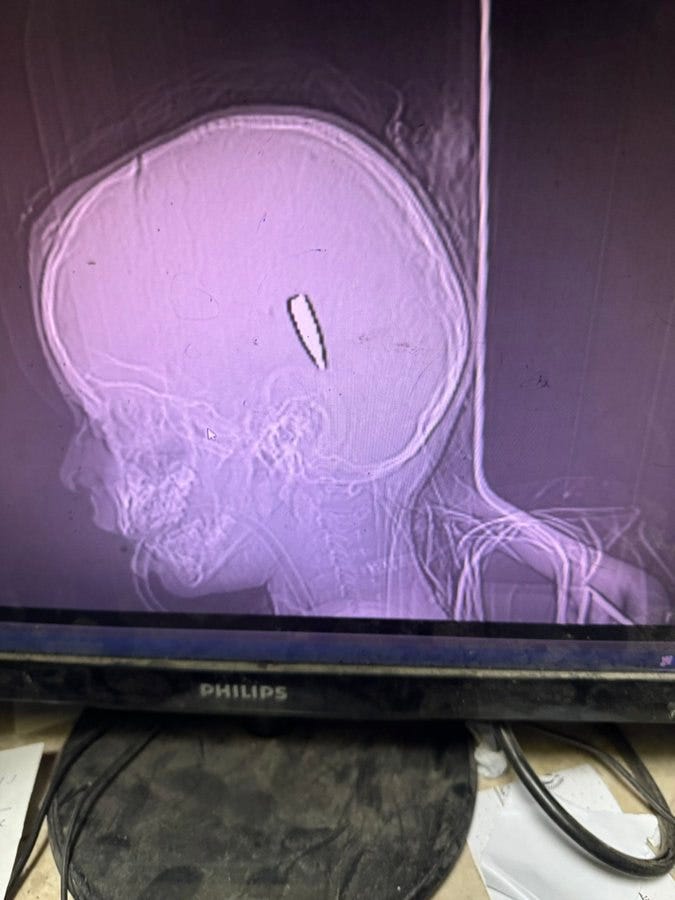

 Aletho News
