When Phoenix Came to Thanh Phong: Bob Kerrey and War Crimes as Policy in Vietnam
By Douglas Valentine | CounterPunch | May 2001
By now everybody knows that former Senator Bob Kerrey led a seven-member team of Navy Seals into Thanh Phong village in February 1969, and murdered in cold blood more than a dozen women and children.
What hardly anyone knows, and what no one in the press is talking about (although many of them know), is that Kerrey was on a CIA mission, and its specific purpose was to destroy that village of civilian peasants. It was illegal, premeditated mass murder and it was a war crime.
And it’s time to hold the CIA responsible. It’s time for a war crimes tribunal to examine the CIA’s illegal activities during and since the Vietnam War.
War Crimes As Policy
War crimes were a central part of CIA strategy for fighting the Vietnam War. The strategy was known as Contre Coup, and it was the manifestation of a belief that the war was essentially political, not military, in nature. The CIA theorized that it was being fought by opposing ideological factions, each one amounting to about five percent of the total population, while the remaining ninety percent was uncommitted and wanted the war to go away.
According to the CIA’s mythology, on one side were communist insurgents, supported by comrades in Hanoi, Moscow and Peking. The communists fought for land reform, to rid Vietnam of foreign intervention, and to unite the north and south. The other faction was composed of capitalists, often Catholics relocated from North Vietnam in 1954 by the CIA. This faction was fighting to keep South Vietnam an independent nation, operating under the direction of quiet Americans.
Caught in the crossfire was the silent majority. The object shared by both factions was to win these undecided voters over to its side.
Contre Coup was the CIA’s response to the realization that the Communists were winning the war for the hearts and minds of the people. It also was a response to the belief that they were winning through the use of psychological warfare, specifically, selective terror ? the murder and mutilation of specific government officials.
In December 1963, Peer DeSilva arrived in Saigon as the CIA’s station chief. He claims to have been shocked by what he saw. In his autobiography, SubRosa, DeSilva describes how the VC had “impaled a young boy, a village chief, and his pregnant wife on sharp poles. To make sure this horrible sight would remain with the villagers, one of the terror squad used his machete to disembowel the woman, spilling he fetus onto the ground.”
“The Vietcong,” DeSilva said, “were monstrous in the application of torture and murder to achieve the political and psychological impact they wanted.”
But the methodology was successful and had tremendous intelligence potential, so DeSilva authorized the creation of small “counter-terror teams,” designed “to bring danger and death to the Vietcong functionaries themselves, especially in areas where they felt secure.”
How Counter-Terror Worked In Vietnam
Thanh Phong village was one of those areas where Vietcong functionaries felt secure. It was located in Kien Hoa Province, along the Mekong Delta. One of Vietnam’s most densely populated provinces, Kien Hoa was precariously close to Saigon, and is criss-crossed with waterways and rice paddies. It was an important rice production area for the insurgents as well as the Government of Vietnam, and thus was one of the eight most heavily infiltrated provinces in Vietnam. The estimated 4700 VC functionaries in Kien Hoa accounted for more than five percent of the insurgency’s total leadership. Operation Speedy Express, a Ninth Infantry sweep through Kien Hoa in the first six months of 1969, killed an estimated 11,000 civilians-supposedly VC sympathizers.
These functionaries formed what the CIA called the Vietcong Infrastructure (VCI). The VCI consisted of members of the People’s Revolutionary Party, the National Liberation Front, and other Communist outfits like the Women’s and Student’s Liberation Associations. Its members were politicians and administrators managing committees for business, communications, security, intelligence, and military affairs. Among their main functions were the collection of taxes, the recruitment of young men and women into the insurgency, and the selective assassination of GVN officials.
As the CIA was well aware, Ho Chi Minh boasted that with two cadre in every hamlet, he could win the war, no matter how many soldiers the Americans threw at him.
So the CIA adopted Ho’s strategy-but on a grander and bloodier scale. The object of Contre Coup was to identify and terrorize each and every individual VCI and his/her family, friends and fellow villagers. To this end the CIA in 1964 launched a massive intelligence operation called the Provincial Interrogation Center Program. The CIA (employing the US company Pacific Architects and Engineers) built an interrogation center in each of South Vietnam’s 44 provinces. Staffed by members of the brutal Special Police, who ran extensive informant networks, and advised by CIA officers, the purpose of the PICs was to identify, through the systematic “interrogation” (read torture) of VCI suspects, the membership of the VCI at every level of its organization; from its elusive headquarters somewhere along the Cambodian border, through the region, city, province, district, village and hamlet committees.
The “indispensable link” in the VCI was the District Party Secretary–the same individual Bob Kerrey’s Seal team was out to assassinate in its mission in Thanh Phong.
Frankenstein’s Monster
Initially the CIA had trouble finding people who were willing to murder and mutilate, so the Agency’s original “counter-terror teams” were composed of ex-convicts, VC defectors, Chinese Nungs, Cambodians, Montagnards, and mercenaries. In a February 1970 article written for True Magazine, titled “The CIA’s Hired Killers,” Georgie-Anne Geyer compared “our boys” to “their boys” with the qualification that, “Their boys did it for faith; our boys did it for money.”
The other big problem was security. The VC had infiltrated nearly every facet of the GVN-even the CIA’s unilateral counter-terror program. So in an attempt to bring greater effectiveness to its secret war, the CIA started employing Navy Seals, US Army Special Forces, Force Recon Marines, and other highly trained Americans who, like Bob Kerrey, were “motivationally indoctrinated” by the military and turned into killing machines with all the social inhibitions and moral compunctions of a Timothy McVeigh. Except they were secure in the knowledge that what they were doing was, if not legal or moral, fraught with Old Testament-style justice, rationalizing that the Viet Cong did it first.
Eventually the irrepressible Americans added their own improvements. In his autobiography Soldier, Anthony Herbert describes arriving in Saigon in 1965, reporting to the CIA’s Special Operations Group, and being asked to join a top-secret psywar program. What the CIA wanted Herbert to do, “was to take charge of execution teams that wiped out entire families.”
By 1967, killing entire families had become an integral facet of the CIA’s counter-terror program. Robert Slater was the chief of the CIA’s Province Interrogation Center Program from June 1967 through 1969. In a March 1970 thesis for the Defense Intelligence School, titled “The History, Organization and Modus Operandi of the Viet Cong Infrastructure,” Slater wrote, “the District Party Secretary usually does not sleep in the same house or even hamlet where his family lived, to preclude any injury to his family during assassination attempts.”
But, Slater added, “the Allies have frequently found out where the District Party Secretaries live and raided their homes: in an ensuing fire fight the secretary’s wife and children have been killed and injured.”
This is the intellectual context in which the Kerrey atrocity took place. This CIA strategy of committing war crimes for psychological reasons? to terrorize the enemy’s supporters into submission–also is what differentiates Kerrey’s atrocity, in legal terms, from other popular methods of mass murdering civilians, such as bombs from the sky, or economic boycotts.
Yes, the CIA has a global, illegal strategy of terrorizing people, although in typical CIA lexicon it’s called “anti-terrorism.”
When you’re waging illegal warfare, language is every bit as important as weaponry and the will to kill. As George Orwell or Noam Chomsky might explain, when you’re deliberately killing innocent women and children, half the court-of-public-opinion battle is making it sound legal.
Three Old Vietnam Hands in particular stand out as examples of this incestuous relationship. Neil Sheehan, CIA-nik and author of the aptly titled Bright Shining Lie, recently confessed that in 1966 he saw US soldiers massacre as many as 600 Vietnamese civilians in five fishing villages. He’d been in Vietnam for three years by then, but it didn’t occur to him that he had discovered a war crime. Now he realizes that the war crimes issue was always present, but still no mention of his friends in the CIA.
Former New York Times reporter and author of The Best and The Brightest, David Halberstam, defended Kerrey on behalf of the media establishment at the New School campus the week after the story broke. Halberstam described the region around Thanh Phong as “the purest bandit country,” adding that “by 1969 everyone who lived there would have been third-generation Vietcong.” Which is CIA revisionism at its sickest.
Finally there’s New York Times reporter James Lemoyne. Why did he never write any articles linking the CIA to war crimes in Vietnam–perhaps because his brother Charles, a Navy officer, was in charge of the CIA’s counter-terror teams in the Delta in 1968.
Phoenix Comes To Thanh Phong
The CIA launched its Phoenix Program in June 1967, after 13 years of tinkering with several experimental counter-terror and psywar programs, and building its network of secret interrogation centers. The stated policy was to replace the bludgeon of indiscriminate bombings and military search and destroy operations–which had alienated the people from the Government of Vietnam–with the scalpel of assassinations of selected members of the Viet Cong Infrastructure.
A typical Phoenix operation began in a Province Interrogation Center where a suspected member of the VCI was brought for questioning. After a few days or weeks or months undergoing various forms of torture, the VCI suspect would die or give the name and location of his VCI comrades and superiors. That information would be sent from the Interrogation Center to the local Phoenix office, which was staffed by Special Branch and Vietnamese military officers under the supervision of CIA officers. Depending on the suspected importance of the targeted VCI, the Phoenix people would then dispatch one of the various action arms available to it, including Seal teams like the one Bob Kerrey led into Thanh Phong.
In February 1969, the Phoenix Program was still under CIA control. But because Kien Hoa Province was so important, and because the VCI’s District Party Secretary was supposedly in Thanh Phong, the CIA decided to handle this particular assassination and mass murder mission without involving the local Vietnamese. So instead of dispensing the local counter-terror team, the CIA sent Kerrey’s Raiders.
And that, very simply, is how it happened. Kerrey and crew admittedly went to Thanh Phong to kill the District Party Secretary, and anyone else who got in the way, including his family and all their friends.
Phoenix Comes Home To Roost
By 1969 the CIA, through Phoenix, was targeting individual VCI and their families all across Vietnam. Over 20,000 people were assassinated by the end of the year and hundreds of thousands had been tortured in Province Interrogation Centers.
On 20 June 1969, the Lower House of the Vietnamese Congress held hearings about abuses in the Phoenix VCI elimination program. Eighty-six Deputies signed a petition calling for its immediate termination. Among the charges: Special Police knowingly arrested innocent people for the purpose of extortion; people were detained for as long as eight months before being tried; torture was commonplace. Noting that it was illegal to do so, several deputies protested instances in which American troops detained or murdered suspects without Vietnamese authority. Others complained that village chiefs were not consulted before raids, such as the one on Thanh Phong.
After an investigation in 1970, four Congresspersons concluded that the CIA’s Phoenix Program violated international law. “The people of these United States,” they jointly stated, “have deliberately imposed upon the Vietnamese people a system of justice which admittedly denies due process of law,” and that in doing so, “we appear to have violated the 1949 Geneva Convention for the protection of civilian people.”
During the hearings, U.S. Representative Ogden Reid said, “if the Union had had a Phoenix program during the Civil War, its targets would have been civilians like Jefferson Davis or the mayor of Macon, Georgia.”
But the American establishment and media denied it then, and continue to deny it until today, because Phoenix was a genocidal program — and the CIA officials, members of the media who were complicit through their silence, and the red-blooded American boys who carried it out, are all war criminals. As Michael Ratner a lawyer at the Center for Constitutional Rights told CounterPunch: “Kerrey should be tried as a war criminal. His actions on the night of February 24-25, 1969 when the seven man Navy Seal unit which he headed killed approximately twenty unarmed Vietnamese civilians, eighteen of whom were women and children was a war crime. Like those who murdered at My Lai, he too should be brought into the dock and tried for his crimes.”
Phoenix, alas, also was fiendishly effective and became a template for future CIA operations. Developed in Vietnam and perfected with the death squads and media blackout of Afghanistan and El Salvador, it is now employed by the CIA around the world: in Colombia, in Kosovo, in Ireland with the British MI6, and in Israel with its other kindred spirit, the Mossad.
The paymasters at the Pentagon will keep cranking out billion dollar missile defense shields and other Bush league boondoggles. But when it comes to making the world safe for international capitalism, the political trick is being more of a homicidal maniac, and more cost effective, than the terrorists.
Incredibly, Phoenix has become fashionable, it has acquired a kind of political cachet. Governor Jesse Ventura claims to have been a Navy Seal and to have “hunted man.” Fanatical right-wing US Representative Bob Barr, one of the Republican impeachment clique, has introduced legislation to “re-legalize” assassinations. David Hackworth, representing the military establishment, defended Kerrey by saying “there were thousands of such atrocities,” and that in 1969 his own unit committed “at least a dozen such horrors.” Jack Valenti, representing the business establishment and its financial stake in the issue, defended Kerrey in the LA Times, saying, “all the normalities (sic) of a social contract are abandoned,” in war.
Bullshit.
A famous Phoenix operation, known as the My Lai Massacre, was proceeding along smoothly, with a grand total of 504 Vietnamese women and children killed, when a soldier named Hugh Thompson in a helicopter gunship saw what was happening. Risking his life to preserve that “social contract,” Thomson landed his helicopter between the mass murderers and their victims, turned his machine guns on his fellow Americans, and brought the carnage to a halt.
Same with screenwriter and journalist Bill Broyles, Vietnam veteran, and author of Brothers in Arms, an excellent book about the Vietnam War. Broyles turned in a bunch of his fellow Marines for killing civilians.
If Thompson and Broyles were capable of taking individual responsibility, everyone is. And many did.
Phoenix Reborn
There is no doubt that Bob Kerrey committed a war crime. As he admits, he went to Vietnam with a knife clenched between his teeth and did what he was trained to do ? kidnap, assassinate and mass murder civilians. But there was no point to his atrocity as he soon learned, no controlling legal authority. He became a conflicted individual. He remembers that they killed women and children. But he thinks they came under fire first, before they panicked and started shooting back. The fog of war clouds his memory
But there isn’t that much to forget. Thanh Phong was Kerrey’s first mission, and on his second mission a grenade blew off his foot, abruptly ending his military career.
Plus which there are plenty of other people to remind Kerrey of what happened, if anyone will listen. There’s Gerhard Klann, the Seal who disputes Kerrey’s account, and two Vietnamese survivors of the raid, Pham Tri Lanh and Bui Thi Luam, both of whom corroborate Klann’s account, as does a veteran Viet Cong soldier, Tran Van Rung.
As CBS News was careful to point out, the Vietnamese were former VC and thus hostile witnesses and because there were slight inconsistencies in their stories, they could not be believed. Klann became the target of Kerrey’s pr machine, which dismissed as an alcoholic with a chip on his shoulder.
Then there is John DeCamp. An army captain in Vietnam, DeCamp worked for the organization under CIA executive William Colby that ostensibly managed Phoenix after the CIA let it go in June 1969. DeCamp was elected to the Nebraska State Senate and served until 1990. A Republican, he claims that Kerrey led an anti-war march on the Nebraska state capitol in May 1971. DeCamp claims that Kerrey put a medal, possibly his bronze star, in a mock coffin, and said, “Viet Cong or North Vietnamese troops are angelic compared with the ruthless Americans.”
Kerrey claims he was in Peru visiting his brother that day. But he definitely accepted his Medal of Honor from Richard Nixon on 14 May 1970, a mere ten days after the Ohio National guard killed four student protestors at Kent State. With that badge of honor pinned on his chest, Kerrey began walking the gilded road to success. Elected Governor of Nebraska in November 1982, he started dating Deborah Winger, became a celebrity hero, was elected to the US Senate, became vice-chair of Senate Committee on Intelligence, and in 1990 staged a run for president. One of the most highly regarded politicians in America, he showered self-righteous criticism on draft dodger Bill Clinton’s penchant for lying.
Bob Kerrey is a symbol of what it means to be an American, and the patriots have rallied to his defense. And yet Kerrey accepted a bronze star under false pretenses, and as John DeCamp suggests, he may have been fragged by his fellow Seals. For this, he received the Medal of Honor.
John DeCamp calls Bob Kerrey “emotionally disturbed” as a result of his Vietnam experience.
And Kerrey’s behavior has been pathetic. In order to protect himself and his CIA patrons from being tried as a war criminals, Bob Kerrey has become a pathological liar too. Kerrey says his actions at Than Phong were an atrocity, but not a war crime. He says he feels remorse, but not guilt. In fact, he has continually rehabbed his position on the war itself-moving from an opponent to more recently an enthusiast. In a 1999 column in the Washington Post, for example, Kerrey said he had come to view that Vietnam was a “just war. “Was the war worth the effort and sacrifice, or was it a mistake?” Kerrey wrote. “When I came home in 1969 and for many years afterward, I did not believe it was worth it. Today, with the passage of time and the experience of seeing both the benefits of freedom won by our sacrifice and the human destruction done by dictatorships, I believe the cause was just and the sacrifice not in vain.” Then at the Democratic Party Convention in Los Angeles last summer Kerrey lectured the delegates that they shouldn’t be ashamed of the war and that they should treat Vietnam veterans as war heroes: “I believe I speak for Max Baucus and every person who has ever served when I say I never felt more free than when I wore the uniform of our country. This country – this party – must remember.” Free? Free to murder women and children. Is this a consciousness of guilt or immunity?
CBS News also participated in constructing a curtain of lies. As does every other official government or media outlet that knows about the CIA’s Phoenix Program, which continues to exist and operate worldwide today, but fails to mention it.
Why?
Because if the name of one targeted Viet Cong cadre can be obtained, then all the names can be obtained, and then a war crimes trial becomes imperative. And that’s the last thing the Establishment will allow to happen.
Average Americans, however, consider themselves a nation ruled by laws and an ethic of fair play, and with the Kerry confession comes an opportunity for America to redefine itself in more realistic terms. The discrepancies in his story beg investigation. He says he was never briefed on the rules of engagement. But a “pocket card” with the Laws of Land Warfare was given to each member of the US Armed Forces in Vietnam.
Does it matter that Kerrey would lie about this? Yes. General Bruce Palmer, commander of the same Ninth Division that devastated Kien Koa Province in 1969, objected to the “involuntary assignment” of American soldiers to Phoenix. He did not believe that “people in uniform, who are pledged to abide by the Geneva Conventions, should be put in the position of having to break those laws of warfare.”
It was the CIA that forced soldiers like Kerrey into Phoenix operations, and the hidden hand of the CIA lingers over his war crime. Kerrey even uses the same rationale offered by CIA officer DeSilva. According to Kerrey, “the Viet Cong were a thousand per cent more ruthless than” the Seals or U.S. Army.
But the Geneva Conventions, customary international law and the Uniform Code of Military Justice all prohibit the killing of noncombatant civilians. The alleged brutality of others is no justification. By saying it is, Kerrey implicates the people who generated that rationale: the CIA. That is why there is a moral imperative to scrutinize the Phoenix Program and the CIA officers who created it, the people who participated in it, and the journalists who covered it up ? to expose the dark side of our national psyche, the part that allows us to employ terror to assure our world dominance.
To accomplish this there must be a war crimes tribunal. This won’t be easy. The US government has gone to great lengths to shield itself from such legal scrutiny, at the same it selectively manipulates international institutions, such as the UN, to go after people like Slobodan Milosevic.
According to human rights lawyer Michael Ratner the legal avenues for bringing Kerrey and his cohorts to justice are quite limited. A civil suit could be lodged against Kerrey by the families of the victims brought in the United States under the Alien Tort Claims Act. “These are the kinds of cases I did against Gramajo, Pangaitan (Timor),” Ratner told us. “The main problem here is that it is doubtful the Vietnamese would sue a liberal when they are dying to better relations with the US. I would do this case if could get plaintiffs–so far no luck.” According to Ratner, there is no statute of limitations problem as it is newly discovered evidence and there is a stron argument particularly in the criminal context that there is no statute of limitations for war crimes.
But criminal cases in the US present a difficult, if not impossible, prospect. Now that Kerrey is discharged from the Navy, the military courts, which went after Lt. Calley for the My Lai massacre, has no jurisdiction over him. “As to criminal case in the US–my pretty answer is no,” says Ratner. “The US first passed a war crimes statute (18 USC sec. 2441 War Crimes) in 1996–that statute makes what Kerrey did a war crime punishable by death of life imprisonment–but it was passed after the crime and criminal statutes are not retroactive.” In 1988, Congress enacted a statute against genocide, which was might apply to Kerrey’s actions, but it to can’t be applied retroactively. Generally at the time of Kerrey’s acts in Vietnam, US criminal law did not extend to what US citizens did overseas unless they were military.
[As a senator, Kerrey, it should be noted, voted for the war crimes law, thus opening the opportunity for others to be prosecuted for crimes similar to those he that committed but is shielded from.]
The United Nations is a possibility, but a long shot. They could establish an ad hoc tribunal such as it did with the Rwanda ICTR and Yugoslavia ICTY. “This would require action by UN Security council could do it, but what are the chances?” says Ratner. “There is still the prospect for a US veto What that really points out is how those tribunals are bent toward what the US and West want.”
Prosecution in Vietnam and or another country and extradition is also a possibility. It can be argued that war crimes are crimes over which there is universal jurisdiction–in fact that is obligation of countries-under Geneva Convention of 1948–to seek out and prosecute war criminals. “Universal jurisdiction does not require the presence of the defendant–he can be indicted and tried in some countries in absentia–or his extradition can be requested”, says Ratner. “Some countries may have statutes permitting this. Kerrey should check his travel plans and hire a good lawyer before he gets on a plane. He can use Kissinger’s lawyer.”

Hillary’s Foreign Policy Speech: Queen Galadriel Before Her Magic Mirror

By Gary Leupp | CounterPunch | June 6, 2016
Rachel Maddow, the famously progressive MSNBC show host, pronounced it “her greatest speech of the campaign.” Chris Matthews agreed, adding that it would “have a very strong appeal to the neocon movement.” He mentioned in particular Bill Kristol, the Weekly Standard editor and TV commentator, as someone likely to be impressed. “A very smart man,” opined Matthews, the conservative Democrat and “Hardball” host, causing the entire cosmos to shudder.
You’d think that that war in Iraq, which Kristol had tirelessly championed, had never happened. And that its results had been anything other than horrific for the entire Middle East.
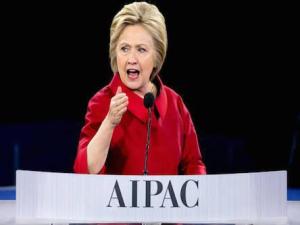
Hillary Clinton’s fiery performance last Thursday night, intended to assert her credentials as a former secretary of state (with all the positive “experience” that’s supposed to entail), framed by no fewer than seventeen U.S. flags, was a strident reassertion of U.S. “exceptionalism” without apologies or even reflections on the recent past and her bloody role in it.
It was billed as a “major foreign policy address,” the sort of thing you might expect of a sitting president. And it was designed, of course, to make her look presidential, and to underscore her campaign’s declaration that she has the Democratic nomination all sewed up. But it was not in fact a foreign policy speech at all; Donald Trump is quite right to call it “a political speech” directed at him.
Maddow has occasionally shown signs of critical reasoning in her coverage of the U.S.’s imperialist wars. One has to wonder what she finds admirable in the speech. Because actually, Clinton said nothing new.
However unsubstantial, it was all over the news the next morning, competing with the stories about new fencing at the Cincinnati Zoo and Prince’s autopsy results. Meanwhile the networks systematically ignore the ongoing wars in Iraq and Syria generated by the invasion of Iraq 13 years ago, and the European refugee crisis sparked by the regime-change wars in those countries as well as in Afghanistan and Libya. Like the monkeys adorning the Nikko Shrine, they see no evil, hear no evil, and speak no evil.
Some takeaway lines from the Clinton speech: “Donald Trump doesn’t know the first thing about Iran or its nuclear program.” It’s true that Trump is an uninformed blowhard and that Hillary in contrast knows a lot. She knows, for example, that the entire U.S. intelligence community, in two separate National Intelligence Estimates after 2003, concluded that Iran does not have a military nuclear program. She knows that the whole issue was hyped at the demand of the Israeli leaders who continuously demanded that the U.S. bomb Iran’s nuclear facilities (that in fact date back to the period of the Shah’s reign and supported by the U.S.’s “Atoms for Peace” program).
She also knows from experience the value of the Big Lie in obtaining mass acceptance for real or threatened military action.
Clinton has generally avoided specifics in discussing her plans for more war with one conspicuous exception: she has continuously stated that she strongly advocates a “no-fly zone and humanitarian corridors” in Syrian air space and on the ground in that country beset by civil war pitting a secular regime, mainly against terrorist and terrorist-aligned Islamist opponents.
For Hillary, Syria is the ideal battlefield: one that pits her vision of U.S. hegemony against both Russia (Syria’s patron and her main target) and the nebulous evil of Islamist terrorism in the world—on behalf of an imaginary middle force of democrats who will stay cozy with the U.S. and end support for armed groups opposing Israel.
Her plans are as much a recipe for war as the bogus humanitarian mission in Libya in 2011. They would, as estimated by former Chairman of the Join Chiefs of Staff Gen. Martin E. Dempsey, require the deployment of 70,000 U.S. troops for their implementation.
In last week’s speech she was more circumspect. “We need to take out [ISIL’s] strongholds in Iraq and Syria,” she declared, “by intensifying the air campaign and stepping up our support for Arab and Kurdish forces on the ground. We need to keep pursuing diplomacy to end Syria’s civil war and close Iraq’s sectarian divide, because those conflicts are keeping ISIS alive. We need to lash up with our allies, and ensure our intelligence services are working hand-in-hand to dismantle the global network that supplies money, arms, propaganda and fighters to the terrorists.”
She didn’t mention that the money supplied to the terrorists is overwhelmingly from donors in Saudi Arabia, Turkey and Gulf states closely allied with the U.S. Or that the current U.S. air campaign over Syria is, unlike that of Russia, illegal, opposed by the internationally recognized government in Damascus and lacking UN approval. Her “major foreign policy address” could not address such small details.
Hillary did not mention her own crowning achievement as secretary of state—the savage destruction of Libya involving the death of about 30,000 people, the unleashing of the ugliest forms of tribalism, and ISIL’s securing of a beachhead around Sirte—even once.
In contrast she made repeated references to NATO, well aware no doubt that most Americans aren’t clear at all about what that is but think it must be something good. Like the UN, or the International Red Cross. (I doubt that one in ten knows what the acronym stands for—the North Atlantic Treaty Organization—or realizes that it has only been deployed well outside the North Atlantic region, in the Balkans, Afghanistan, and North Africa.)
“This is someone [Trump] who has threatened to abandon our allies in NATO,” Clinton thundered (as though the peoples of Europe had ever earnestly sought, or are begging to maintain that Cold War, specifically anti-Russian, alliance).
It’s true that Trump has—on occasion and inconsistently—labeled NATO “obsolete” and opined that it should have been dissolved years ago. Whether he truly believes this is unclear. As Hillary says, his “ideas are dangerously incoherent” and he can withdraw or deny such comments at any time. But Trump’s statements about NATO, however vague, are actually the most intelligent and welcome statements he’s made in the course of his campaign.
The fact is, beginning in 1999 at her husband Bill’s orders, the NATO alliance designed as a binding military pact uniting West European countries against the Soviet Union from 1949—that should have been dissolved in 1990 when the Warsaw Pact formed in response shut down—has relentlessly expanded to encircle Russia. That’s post-Cold War Russia, with a military budget about 7% of the U.S. figure. Some NATO leaders aim to ultimately swallow Ukraine—which just happens to have been part of the Russian state from the 1670s to the Bolshevik Revolution, when it was made a soviet socialist republic until the collapse of the Soviet Union in 1991. Its economy including its munitions industry are inextricably interwoven with Russia’s; its eastern regions are peopled by ethnic Russians; it shares a 1,400 mile long border with Russia.
Does it not make sense that Moscow would see the incorporation of Ukraine, especially one headed by the current Russophobic leadership, into an anti-Russian military alliance as threatening and unacceptable?
Yet Hillary has been a ferocious advocate for the infinite expansion of the alliance, its wars that have produced dysfunctional U.S. client states (Kosovo, Bosnia-Herzegovina) in the former Yugoslavia, and its provocative moves on Russia’s doorstep. But in her speech, avoiding any reference to that expansion—the key geopolitical change of the last quarter-century—she proclaimed: “Moscow has taken aggressive military action in Ukraine, right on NATO’s doorstep.” She never explains why that doorstep has advanced (despite Reagan’s promises to Gorbachev) to include Poland, Slovakia, Hungary and Romania to begin with. Or why it has bordered Russia itself since the inclusion of the former soviet socialist republics of Estonia and Latvia, which share a 508 kilometer border with Russia.
The “military action in Ukraine” that she alludes to refers to separatists’ resistance to the U.S.-backed coup in February 2014, surely supported by Russia at some level, and surely by Russian public opinion, but you notice that the Pentagon has produced precious little evidence for large scale “military actions.” And the annexation of Crimea (Russian from 1783 to 1954, when it was transferred to the Ukrainian SSR within the old Soviet Union) was only a “military action” in that the 25,000 Russian troops stationed there by treaty were deployed to secure government buildings.
And do not expect Hillary to ever inform her audiences that Sevastopol on Crimean Peninsula is Russia’s only year-round ice-free port except Murmansk north of the Arctic Circle; that the Russian Black Sea Fleet has been headquartered there without interruption since 1783; and that the expulsion of the Russians and their replacement with NATO forces would constitute a truly existential threat to the Russian state.
It would in fact be hard to build a case convincing to the American people that all these countries need to be locked into an alliance with the U.S. and obliged to pay out 2% of their GDPs on military expenses in order to protect them from some imaginary Russian invasion. (From a rational standpoint, it would be precisely like persuading the Russian people that Moscow should head up an alliance including Canada, Mexico and Cuba to secure them against U.S. aggression.)
But the expansion of NATO to include Ukraine has been a pet project of the former Madame Secretary. Clinton chose as her Under Secretary of State for European and Eurasian Affairs Victoria Nuland, a former aide to Vice President Dick Cheney, neocon and wife of the powerful neocon Republican pundit (John McCain advisor and recently declared Hillary supporter) Robert Kagan. Nuland already had a rich history of warmongering when she embarked on a plan to topple the elected government in Ukraine and replace it with one that would join NATO.
She boasted publically that the U.S. had spent $ 5 billion by 2014 in an effort to, as she put it so quaintly and dishonestly, “support Ukraine’s European aspirations.” The result was the coup in February 2014 and consequent civil war that has taken over 8,000 lives, including hundreds killed by the neo-fascist Azov Battalion which functions as a regiment of the National Guard.
The U.S. State Department echoed by the compliant media has methodically depicted these events as Russian interference, rather than the results of a U.S.-orchestrated “Color Revolution”-type regime change campaign. To anyone paying attention, the dishonesty, and the success of the propaganda prettifying the coup, is sickening.
Trump has, as Clinton notes, praised Vladimir Putin as someone to whom he’d award an A for leadership. She for her part calls him a “dictator,” a term she would never use for a U.S. ally such as Egypt’s Abdel Sisi or the Saudi king. She has compared the apparently popular president, who has deftly pushed Obama back from his 2013 threat to order a massive strike on Syria and cooperated in the conclusion of the Iran nuclear deal, to Hitler—an astonishing statement of historical illiteracy and propensity for sensationalism.
Hillary’s imperious message boils down to: We are the exceptional nation, which the world needs to maintain its “stability.”
“I believe in strong alliances; clarity in dealing with our rivals; and a rock-solid commitment to the values that have always made America great. And I believe with all my heart that America is an exceptional country – that we’re still, in Lincoln’s words, the last, best hope of earth. We are not a country that cowers behind walls. We lead with purpose, and we prevail.”
The peoples of Korea, Vietnam, Afghanistan, Iraq, and Libya, know very well how “exceptional” a country the U.S. is, how seldom it “cowers behind walls,” how cheerfully and unapologetically it destroys countries using its “alliances”—even when the latter are jerry-rigged to provide a fig-leaf for what’s essentially unilateral action. Even when their member-lists are often padded with name-only participants such a tiny Pacific nations sometimes informed after the fact that they’re suscribers.
The youth of Iraq—93% of whom according to a recent poll view the U.S. as an enemy—know how U.S. “values” manifest themselves: in the form of “shock and awe” bombing, Abu Ghraib torture, Blackwater murders, and cowboy-managed “reconstruction” that in fact further divided and scourged an already ruined and humiliated country. There is nothing good that can be said about the war that Hillary so passionately supported, until it became politically impossible for her to continue to do so.
Madame Secretary looked regal Thursday night, in the worst way. She reminded me of the elfin Queen Galadriel, as played by Cate Blanchett, in The Lord of the Rings, in that scene where she stares into her magic mirror, sees a vision of the power of Sauron, and suddenly towers over Frodo, arms like dark hollows, arms flung high, and bellows:
“In place of a Dark Lord, you would have a queen! Not dark, but beautiful and terrible as the dawn! Treacherous as the sea! Stronger than the foundations of the earth! All shall love me, and despair!”
Trump and Clinton are both servants of the enchanted ring called Capital. It is not at all clear who is more darkly and fatefully bound, or whose foreign policy, applauded by more devoted followers, would be more terrible and cause the greater despair among the people of this planet.
In response to the warrior-queen awaiting coronation, Bernie Sanders has sadly avoided the whole question of U.S. imperialism. (Among other things, he never uses the term.) It’s as though he accepts Chris Matthew’s smug pronouncement, “The American people don’t care about foreign policy.” The best Bernie could do last week was to say: “… when it comes to foreign policy, we cannot forget that Secretary Clinton voted for the war in Iraq, the worst foreign policy blunder in modern American history, and that she has been a proponent of regime change, as in Libya, without thinking through the consequences.”
Forgive me, Bernie—because I do of course hope you’ll win—but that comment was wimpish. Hillary’s Libya policy wasn’t a matter of not “thinking through consequences,” but a matter of calculated ruin of a modern state. It’s the difference from the “blunder” of accidental manslaughter and well-planned murder. (Recall how Madame Secretary cackled with hilarity after Col. Gadhafy was sodomized with a knife and assassinated in the desert by NATO’s friends.)
Like the CNN anchors who sometimes mention in passing Hillary’s “foreign policy blunders such as Libya,” Sanders cannot yet call out evil for what it is, but has to chalk it up to well-meaning mistakes lacking forethought.
But that level of criticism is the best the system can provide, the most it will allow. Mistakes were made. There were some intelligence flaws. There were blunders. To paraphrase Erich Segal’s Love Story: being the exceptional power means never having to say you’re sorry. You just acknowledge you fucked up, because hey, things like that happen. And let’s move on.
Had Bernie been the antiwar, anti-imperialist candidate throughout, rather than just repeating his (totally valid) tirade against Wall Street, he might have further sharpened his differences with Clinton. If he loses in California, and then betrays his following with a Clinton endorsement, he will be saying that more wars for regime change and more confrontation with Russia is worth some changes in party rules and some meaningless clauses on the party platform.
I would hope that any Bernie supporters (or anyone at all) who watched last night’s speech, or have read the on-line transcript, would buckle down on their opposition to this creature of Wall Street and the Democratic Party establishment. Better to vote not at all, if Clinton’s the nominee—and instead think about how best to topple whichever candidate wins.
The “billionaire class” that Bernie decries wants badly to suck you in. That’s why the party bosses praise Sanders for “bringing so many new young people into the process”—the better to eat you, my dear! They want you to love this queen, even as you despair of ever electing anybody better.
One Ring to rule them all, One Ring to find them,
One Ring to bring them all, and in the darkness bind them,
In the Land of Mordor where the Shadows lie
Better, surely, to destroy the Ring that is the rigged economy, rigged political process and murderous foreign policy that Hillary so personifies.
Gary Leupp is Professor of History at Tufts University, and holds a secondary appointment in the Department of Religion.
Hillary Clinton: Electing a Foreign Spy for President?
By James Petras | June 6, 2016
During her 4 years as Secretary of State of the United States (2009-2014), Hillary Clinton controlled US foreign policy. She had access to the most confidential information and state documents, numbering in the tens of thousands, from all of the major government departments and agencies, Intelligence, FBI, the Pentagon, Treasury and the office of the President. She had unfettered access to vital and secret information affecting US policy in all the key regions of the empire.
Today, Mme. Clinton’s critics have focused on the technical aspects of her violations of State Department procedures and guidelines regarding handling of official correspondences and her outright lies on the use of her own private e-mail server for official state business, including the handling of highly classified material in violation of Federal Records laws, as well as her hiding official documents from the Freedom of Information Act and concocting her own system exempt from the official oversight which all other government officials accept.
For many analysts, therefore, the issue is procedural, moral and ethical. Mme. Clinton had placed herself above and beyond the norms of State Department discipline. This evidence of her arrogance, dishonesty and blatant disregard for rules should disqualify her from becoming the President of the United States. While revelations of Clinton’s misuse of official documents, her private system of communication and correspondence and the shredding of tens of thousands of her official interchanges, including top secret documents, are important issues to investigate, these do not address the paramount political question: On whose behalf was Secretary Clinton carrying out the business of US foreign policy, out of the review of government oversight?
The Political Meaning and Motivation of Clinton’s High Crimes Against the State
Secretary Clinton’s private, illegal handling of official US documents has aroused a major FBI investigation into the nature of her activities. This is separate from the investigation by the Office of the Inspector General and implies national security violations.
There are several lines of inquiry against Mme. Clinton:
(1) Did she work with, as yet unnamed, foreign governments and intelligence services to strengthen their positions and against the interest of the United States?
(2) Did she provide information on the operations and policy positions of various key US policymakers to competitors, adversaries or allies undermining the activities of military, intelligence and State Department officials?
(3) Did she seek to enhance her personal power within the US administration to push her aggressive policy of serial pre-emptive wars over and against veteran State Department and Pentagon officials who favored traditional diplomacy and less violent confrontation?
(4) Did she prepare a ‘covert team’, using foreign or dual national operatives, to lay the groundwork for her bid for the presidency and her ultimate goal of supreme military and political power?
Contextualizing Clinton’s Clandestine Operations
There is no doubt that Mme. Clinton exchanged minor as well as major official documents and letters via her private e-mail system. Personal, family and even intimate communications may have been carried on the same server. But the key issue is that a large volume of highly confidential government information flowed to Clinton via an unsecured private ‘back channel’ allowing her to conduct state business secretly with her correspondents.
Just who were Secretary Clinton’s most enduring, persistent and influential correspondents? What types of exchanges were going on, which required avoiding normal oversight and a wanton disregard for security?
Clinton’s covert war policies, which included the violent overthrow of the elected Ukraine government, were carried out by her ‘Lieutenant’ Under-Secretary of State Victoria Nuland, a virulent neo-conservative holdover from the previous Bush Administration and someone committed to provoking Russia and to enhancing Israel’s power in the Middle East. Clinton’s highly dangerous and economically destabilizing ‘brainchild’ of militarily encircling China, the so-called ‘pivot to Asia’, would have required clandestine exchanges with elements in the Pentagon – out of the State Department and possibly Executive oversight.
In other words, within the Washington political circuit, Secretary Clinton’s escalation of nuclear war policies toward Russia and China required secretive correspondences which would not necessarily abide with the policies and intelligence estimates of other US government agencies and with private business interests.
Clinton was deeply engaged in private exchanges with several unsavory overseas political regimes, including Saudi Arabia, Israel, Honduras and Turkey involving covert violent and illegal activities. She worked with the grotesquely corrupt opposition parties in Venezuela, Argentina and Brazil
Clinton’s correspondence with the Honduran armed forces and brutal oligarchs led to the military coup against the elected President Zelaya, its violent aftermath and the phony election of a pliable puppet. Given the government-death squad campaign against Honduran civil society activists, Clinton would certainly want to cover up her direct role in organizing the coup. Likewise, Mme. Clinton would have destroyed her communications with Turkish President Erdogan’s intelligence operations in support of Islamist terrorist-mercenaries in Syria and Iraq.
Secretary Clinton’s e-mail would have shown her commitment to the Saudis when they brutally invaded Bahrain and Yemen to suppress independent civil society organizations and regional political rivals.
But it is Clinton’s long-term, large-scale commitment to Israel that goes far beyond her public speeches of loyalty and fealty to the Jewish state. Hillary Clinton’s entire political career has been intimately dependent on Zionist money, Zionist mass media propaganda and Zionist Democratic Party operations.
In exchange for Clinton’s dependence on political support from the Zionist power configuration in the US, she would have become the major conduit of confidential information from the US to Israel and the transmission belt promoting Israel-centric policies within the US government.
The entire complex of Clinton-Israel linkages and correspondences has compromised the US intelligence services, the State Department and Pentagon.
Secretary Clinton went to extraordinary lengths to serve Israel, even undermining the interests of the United States. It is bizarre that she would resort to such a crude measure, setting up a private e-mail server to conduct state business. She blithely ignored official State Department policy and oversight and forwarded over 1,300 confidential documents and 22 highly sensitive top-secret documents related to the ‘Special Access Program’. She detailed US military and intelligence documents on US strategic policies on Syria, Iraq, Palestine and other vital regimes. The Inspector General’s report indicates that ‘she was warned’ about her practice. It is only because of the unusual stranglehold Tel Aviv and Israel’s US Fifth Column have over the US government and judiciary that her actions have not been prosecuted as high treason. It is the height of hypocrisy that government whistleblowers have been persecuted and jailed by the Obama Administration for raising concerns within the Inspector General system of oversight, while Secretary Clinton is on her way to the Presidency of the United States!
Conclusion
Many of Clinton’s leading critics, among them two dozen former CIA agents, have presented a myth that Hillary’s main offence is her ‘carelessness’ in handling official documents and her deliberate deceptions and lies to the government.
These critics have trivialized, personalized and moralized what is really deliberate, highly politicized state behavior. Mme. Secretary of State Hillary Clinton was not ‘careless in managing an insecure mail server’. If Clinton was engaged in political liaison with foreign officials she deliberately used a private email server to avoid political detection by security elements within the US government. She lied to the US government on the use and destruction of official state documents because the documents were political exchanges between a traitor and its host.
The 22 top secret reports on ‘Special Access Programs’ which Clinton handled via her private computer provided foreign governments with the names and dates of US operatives and proxies; allowed for counter-responses inflicting losses of billions of dollars in program damages and possibly lost lives.
The Inspector General Report (IGP) deals only with the surface misdeeds. The Federal Bureau of Investigations (FBI) has gone a step further in identifying the political linkages, but faces enormous obstacles from Hillary’s domestic allies in pursuing a criminal investigation. The FBI, whose director is a political appointee, has suffered a series of defeats in its attempts to investigate and prosecute spying for Israel, including the AIPAC espionage case of Rosen and Weismann and in their long held opposition to the release of the notorious US-Israeli spy, Jonathan Pollard. The power of the Zionists within the government halted their investigation of a dozen Israeli spies captured in the US right after the attacks of September 11, 2001.
Clinton’s choice of conducting secret private communications, despite several years of State Department warnings to abide by their strict security regulations, is an indication of her Zionist power base, and not a mere reflection of her personal hubris or individual arrogance.
Clinton has circulated more vital top-secret documents and classified material than Jonathan Pollard.
President Obama and other top Cabinet officials share her political alliances, but they operate through ‘legitimate’ channels and without compromising personnel, missions, funding or programs.
The executive leadership now faces the problem of how to deal with a traitor, who may be the Democratic Party nominee for US President, without undermining the US quest for global power. How do the executive leadership and intelligence agencies back a foreign spy for president, who has been deeply compromised and can be blackmailed? This may explain why the FBI, NSA, and CIA hesitate to press charges; hesitate to even seriously investigate, despite the obvious nature of her offenses. Most of all it explains why there is no indication of the identity of Secretary Clinton’s correspondents in the various reports so far available.
As Sherlock Holmes would say, “We are entering in deep waters, Watson”.
Featured Video
Armando Mema: Finland Used as New Frontline Against Russia
or go to
Aletho News Archives – Video-Images
New Documentary
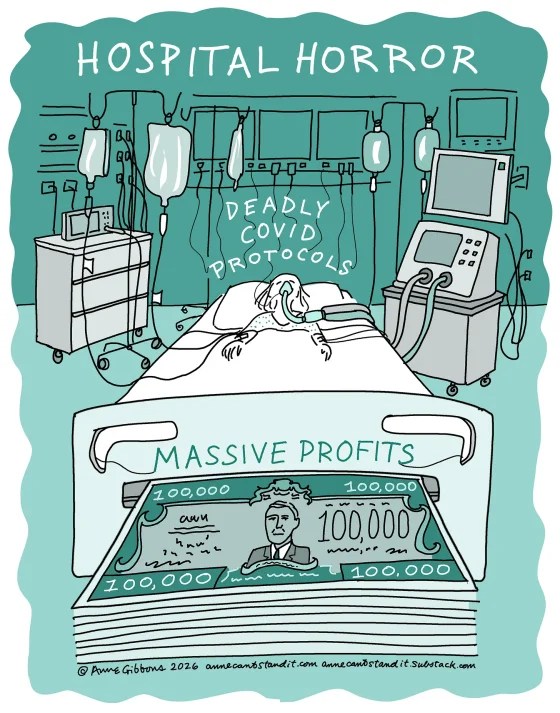
Hospital Horror
Documented in the film,“Bad Medicine”
Blog Roll
 Aletho News
- Araghchi: Failure to punish aggressors against Iran endangers all nations
- Iran tells UN Security Council to stop reversing roles of ‘aggressor and victim’
- Disgraced neocons Feith & Libby: stop whining about ‘endless war’
- CENTCOM rejects Israeli claims of preparations for new Iran attacks
- Your Shopping Bag Runs Through Hormuz
- Armando Mema: Finland Used as New Frontline Against Russia
- Gestapo 2.0? Germany grants spy agencies sweeping new powers
- Franco-Palestinian group seeks court ban on Israeli real estate fair in Paris
- How British foreign policy is frozen in the ruins of empire
- EU risks investor exodus over Russian assets – Euroclear chief
- If Americans Knew
- Aid organizations in Gaza are pulling back, leaving hundreds of thousands of Palestinians without food
- 1.4 Million People in Gaza Live in Tents. Winter Storms Can Be a Death Sentence.
- Israel Used a U.S.-Made Missile to Kill Six at Gaza’s Nasser Hospital
- Congress Might Sneakily Use Lame Duck to Deeply Intertwine the U.S. and Israeli Militaries
- DAILY UPDATE: Latest essential news on Palestine, Israel, & region
- 9-month-old baby dies from severe cold in Gaza, 1st cold-related death this winter: Health Ministry
- Israel Kills over 12, Injures Many Across Gaza
- ‘Every drawer was opened’: Palestinians report looting amid Israel’s Hebron siege
- Scoop: Israeli spy chief in D.C. as Netanyahu presses Trump to resume war
- Israel Issued More than 24,000 ‘Administrative Detention’ Orders in Three Years
- No Tricks Zone
- New Study: Barents Sea Temperatures Were Warmer And Sea Ice Less Extensive In The 1700s Than Today
- German Authorities Start Initiative To Evaluate Public Register For Climate “Disinformation” Spreaders!
- Zonal Asymmetry of Temperature Change in the Antarctic Circumpolar Current
- New Study: The Net Fossil Fuel Contribution To Rising Atmospheric CO2 Has Been Zero For 500 Years
- Germany’s Green Energy Transition Becoming Increasingly Expensive…Another 6 Trillion Euros!
- Sudden Stratospheric Warming, Powerful El Niño Combination May Lead To Extreme Europe Cold, Energy Crisis!
- Two New Studies Find Thwaites Glacier Melt Cannot Be Driven By Human Activity Or A Warming Ocean
- E-Cars Reduce CO2 Emissions By Only 41% Compared To Internal Combustion Engine Vehicles
- Predictions Made By Renowned Climate Professor Over Past Decades Have Been Proven To Be Poor
- New Study Suggests Large Regions Of The Pacific Ocean Have Been Cooling For The Last 80 Years

