When U.S. President Barack Obama spoke in Argentina on Tuesday, it seemed like an opportune, if not essential, moment to acknowledge the U.S. role in the bloodbath that occurred 40 years ago.
In 1976 the U.S.-backed coup that overthrew Isabel Peron, would be the starting point of years of violence in which 30,000 Argentines were disappeared and countless others murdered and tortured under Operation Condor.
Throughout the communist-cleansing program condoned and funded by the U.S., with Henry Kissinger as Secretary of State, innumerable atrocities were committed by the military, including the practice of giving the children of the deceased and disappeared to more favorable families.
Campaign groups, like the Abuelas de Plaza de Mayo, still fight for justice and look for their stolen grandchildren.
But on the eve of this sensitive and commemorative day, when Argentines remember their lost ones, Obama did not apologize for the misery dished out by the U.S. in the 1970s and 1980s. Instead, the U.S. president was dismissive during a joint press conference with Argentine President Mauricio Macri.
“I don’t want to go through every action carried out by the U.S. in Latin America over the last 100 years. I suspect everybody here already knows,” President Obama stated in response to a question about the role of U.S. foreign policy during the Argentine dictatorship-era. He referred to the U.S. policy of backing regimes that tortured, murdered and disappeared tens of thousands as “counterproductive.”
Obama continued that he believed the U.S. administration had improved over the years due to engaging in “self-criticism.”
“There is no shortage of self-criticism in the United States. Certainly no shortage of criticism of its President or its government or its foreign policy,” he told reporters.
But, after the comment branded “insufficient” by Argentine Nobel Peace Prize winner Adolfo Perez Esquivel, Obama essentially told Argentina that the U.S. had learned from and washed its hands of its destructive history.
“And we have learned some of the lessons that we may not have fully learned at an earlier time. And I think our experiences with a country like Argentina helped us to develop that more mature and, ultimately, I think, more successful approach to foreign policy,” he said.
Just as the leader of the world’s most powerful country failed to acknowledge or apologize for the suffering caused by the illegal blockade on Cuba on his recent visit, Obama did not ask the Argentine people for forgiveness for the grief his country caused them. As a spokesperson for the U.S., on the eve of Argentina’s most painful day, there was an expectation that he would speak up.
Although the 2016 presidential election is still in the primaries phase, contenders have already brought up America’s failed foreign wars. Hillary Clinton is taking flak over Libya, and Donald Trump has irked the GOP by bringing up Iraq. But what of Kosovo?
The US-led NATO operation that began on March 24, 1999 was launched under the “responsibility to protect” doctrine asserted by President Bill Clinton and UK Prime Minister Tony Blair. For 78 days, NATO targeted what was then the Federal Republic of Yugoslavia – which later split into Serbia and Montenegro – over alleged atrocities against ethnic Albanians in the southern province of Kosovo. Yugoslavia was accused of “ethnic cleansing” and “genocide” as bombs rained on bridges, trains, hospitals, homes, the power grid and even refugee convoys.
NATO’s actions directly violated the UN Charter (articles 53 and 103), its own charter, the 1975 Helsinki Final Act and the 1980 Vienna Convention on the Law of Treaties. The war was a crime against peace, pure and simple.
Though overwhelmed, Yugoslavia did not surrender; the June 1999 armistice only allowed NATO to occupy Kosovo under UN peacekeeping authority, granted by Resolution 1244 – which the Alliance has been violating ever since.
US Secretary of State at the time, Madeleine Albright, was considered the most outspoken champion of the “Kosovo War.” She is now a vocal supporter of candidate Clinton, condemning women who don’t vote for her to a “special place in Hell.”
Clinton visited the renegade province in October 2012, as the outgoing Secretary of State. She stood with the ‘Kosovan’ government leaders – once considered terrorists, before receiving US backing – and proclaimed unequivocal US support for Kosovo’s independence, proclaimed four years prior.
“For me, my family and my fellow Americans this is more than a foreign policy issue, it is personal,” Clinton said. Given the Kosovo Albanians had renamed a major street in their capital ‘Bill Clinton Avenue’ and erected a massive gilded monument to Hillary’s husband, her comments were hardly a surprise.
She is unlikely to be condemned for those remarks by her rival for the Democratic presidential nomination, Vermont Senator Bernie Sanders. While arguing that Congress should have a say in authorizing the intervention, Sanders entirely bought into the mainstream narrative about the conflict, seeing it as a case of the evil Serbian “dictator” Slobodan Milosevic oppressing the unarmed ethnic Albanians. He saw “supporting the NATO airstrikes on Serbia as justified on humanitarian grounds.”
One Sanders aide, Jeremy Brecher, resigned in May 1999 arguing against the intervention as it unfolded, since the “goal of US policy is not to save the Kosovars from ongoing destruction.”
Trouble is there was no “destruction.” Contrary to NATO claims of 100,000 or more Albanians purportedly massacred by the Serbs, postwar investigators found fewer than 5,000 deaths – 1,500 of which happened after NATO occupied the province and the Albanian pogroms began.
Western media, eager to preserve the narrative of noble NATO defeating the evil Serbs, dismissed the terror as “revenge killings.” NATO troops thus looked on as their Albanian protégés terrorized, torched, bombed and pillaged across the province for years, forcing some 250,000 Serbs, Jews, Roma, and other groups into exile.
After George W. Bush was re-elected in 2004, his administration adopted the Clinton-era agenda for the Balkans, including backing an independent Albanian state in Kosovo. None of the Republicans, save 2012 contender Ron Paul, have criticized the Kosovo War since.
Billionaire businessman Donald Trump actually has been critical – though back in 1999, long before he became the Republican front-runner and the bane of the GOP establishment. In October that year, Trump was a guest on Larry King’s CNN show, criticizing the Clintons’ handling of the Kosovo War after a fashion.
“But look at what we’ve done to that land and to those people and the deaths that we’ve caused,” Trump told King. “They bombed the hell out of a country, out of a whole area, everyone is fleeing in every different way, and nobody knows what’s happening, and the deaths are going on by the thousands.”
The problem with Trump, then as now, is that he is maddeningly vague. So, these remarks could be interpreted as referring to the terror going on at that very moment – the persecution of non-Albanians under NATO’s approving eye – or the exodus of Albanians earlier that year, during the NATO bombing. Only Trump would know which, and he hasn’t offered a clarification.
Though he has the most delegates and leads in the national polls for the Republican nomination, the GOP establishment is furious with Trump because he dared call George W. Bush a liar and describe the invasion of Iraq as a “big fat mistake.” According to the British historian Kate Hudson, however, the 2003 invasion was just a continuation of the “pattern of aggression,” following the precedent set with Kosovo.
The meteoric rise of Donald Trump, the Republican frontrunner who is giving the Establishment 3D nightmares, is the natural outcome of a political system that has been arrogantly ignoring the will of the American electorate for many years.
What started off as cheap comic fodder for late night television, and later ignored by the elite as an unfortunate yet containable nuisance, has now exploded on the scene as a destructive force of nature capable of blowing away the Establishment’s corporate-owned power structure.
Yes, we are talking about The Donald, a Category-5 political hurricane that is expected to cause major devastation should it touchdown in the Beltway.
So anxious are the Democrats (and Republicans!) to contain the mighty Trump they will even deny his First Amendment right to address his supporters. Yes, while many Americans travel great distances at their own expense to listen to Trump’s white-hot political message, perennial provocateur George Soros must pay his puppets to erect roadblocks and hoist placards to deny free passage to the venues.
Who says ‘freedom-loving,’ liberal activists lack a sense of irony?
Last week, for example, demonstrations in Chicago organized by the Soros-funded MoveOn.org group forced Trump to cancel a speaking engagement. Later, on March 20, members of the same subversive outfit blocked traffic near a Trump event in Arizona, while police in New York City the same day pepper-sprayed demonstrators, some of whom are affiliated with violent anarchist groups.
And then there’s the corporate-owned media, which, instead of impartially and dispassionately reporting on Trump’s rising star, is working on behalf of its owners to knock it out of the sky.
Here is a random CNN smear piece, which opens with the angst-ridden line: “Anti-Trump Republicans desperate to stop the billionaire from being their nominee are discussing creative ways to halt his momentum.” So the story now is not about the millions of Americans who support Trump’s political ideas, nor even discussing what those ideas might be, but rather about how the “racist, misogynist, sexist” outsider must be stopped.
Consider these two competing lines from another CNN article, and how they work to manipulate the mind of the reader regarding the “boastful” Trump and the “proud” Clinton:
“Trump repeatedly boasts about the failure of millions of dollars in attack aids to wound his campaign, and insists he is on pace to reach the 1,237 delegates needed to win the nomination.”
While the very next about Clinton reads:
“Clinton said she was “very proud” to have won Arizona and hit Republican candidates who she said were ‘literally inciting bigotry and violence.’”
But it is not just the Democrats and the liberal media working to sabotage Trump’s campaign.
Incredibly, even the Republican Party is “plotting against their own frontrunner,” as Judge Jeanine Pirro of Fox News explained. But why would the GOP work against Trump if he represents the best chance of beating Hillary Clinton?
Pirro nails it with this answer to herself: “The Republican establishment… are in bed with the Democrats. So if Hillary wins, nothing is lost for them. It’s business as usual. The lobbyists keep their offices on K Street, the pharmaceutical companies keep paying them… and the lawmakers get their re-election bribes – I mean, contributions.”
Former Speaker of the House Newt Gingrich, when asked to explain the elite’s refusal to support Trump, perhaps gave away a bit too much information when he said: “Well, because he’s an outsider, he’s not them, he’s not part of the club, he’s uncontrollable, he hasn’t been through the initiation rites, he didn’t belong to the secret society.”
Initiation rites? Secret societies? Secret handshakes? Did Newt just join ranks with the conspiracy theorists?
Although many people are skeptical about the circumstances behind Trump’s phenomenal rise, the tycoon (Trumps says he’s worth $8.7 billion, Forbes puts it at $4.1, a difference that probably means something among the ultra-wealthy), manages to sell himself as a successful businessman who will, at the same time, work on behalf of average American workers.
One of his regular claims – aside from promising to make the Mexican government pay for a wall on the US border – is to stop US factory jobs from going to India, China and Mexico. Annoying pledges like that, which would cut deeply into Corporate America’s bottom line, goes far at explaining why the elite loath him and your average mortal adores him.
Although it is a delicious sight watching America’s movers and shakers tremble at the mere mention of Trump’s name, it nevertheless speaks volumes about the condition of US democracy that Americans had to wait for a rich, charismatic real estate developer to come along and save them from the cold-hearted wretchedness of the dual-party, borderline-fascist system. Imagine what the US would look like without the arrival of these rare, mega-wealthy mavericks who were born with a compassion gene for ordinary folks. The Establishment would continue unmolested with its ‘too-big-to-jail’ banker bailouts, overseas military misadventures and the dangerous consolidation of corporate power.
Trump’s ability to speak freely on the issues without any concern for breaking the bank is exactly how an honest political system should be organized. Indeed, how many US politicians today, as the US information war against Russia resembles something out of Tom Clancy thriller, would admit they’d work with the Kremlin to resolve global problems? No politician should be wary of discussing a controversial subject that is dear to the heart of the electorate for fear of chasing away campaign donors.
Case in point: The immigrant crisis, which the Obama administration arrogantly ignored at great peril. This polarizing issue largely explains Trump’s huge popularity among voters today.
The specter of Mexican immigrants flooding the country – and with the full blessing of Washington, not to mention the Vatican (Trump is certainly the first politician in history to have traded barbs with the Bishop of Rome on the campaign trail) – may go down in the history books as the proverbial straw that finally broke the Establishment’s back. In any case, it will certainly go down as the issue that launched Trump’s political career and, quite possibly, destroyed the Republican Party as we know it.
Americans had to bite their tongues as they got screwed over in the 2008 Financial Crisis, and maintained their pharmaceutically induced composure as Obama proved to be every bit of a warmongering president as his Neocon predecessor. But let’s face it: no American homeowner is going to keep quiet while their neighborhood is invaded by illegal aliens. Indeed, American streets are already respectable crime zones in their own right, we certainly don’t need any help from illegal aliens, thank-you-very-much.
Now before somebody screams ‘Hitler!’ in this political theater of the absurd, let’s put the situation into its proper context: At the very same time US companies are exporting thousands of good-paying factory jobs south of the border, Mexico is exporting not much more to America than its social riff-raff. According to government figures, US corporations employed 1,106,700 Mexicans (on Mexican soil) in 2012 (the latest year tallied), but Mexican companies employed just 68,800 in the United States that year.
So Trump seems to have some leverage when he says Mexico should foot the bill to build a wall on the US-Mexican border.
But the crazy is just beginning. Once north of the Rio Grande, the fence hoppers voluntarily turn themselves over to US Border Patrol agents, who then proceed to give the Mexicans a Coke and a smile before telling them to have a nice day and please don’t forget to show up for your scheduled court appearance.
Next, newly downsized Joe Trailer Park is called upon to fund bus tickets for the uninvited Mexicans to travel to the US city of their choosing. Only the government could script such a narrative. But wait, it gets better! What about the promise the illegals made to appear in court, thus becoming patriotic, flag-saluting, Americans? Sorry, no time for formalities!
Hector Garza, a Border Patrol agent and spokesperson for the National Border Patrol Council toldBreitbart that approximately 95 percent of the illegal immigrants never return as promised for court proceedings.
“The majority of these people crossed the border illegally and were then dropped off here at the bus station, so they could continue to their final destination, and that destination is an American city near you,” said Garza. “This right here is border insecurity at its best. Our border is not patrolled… our federal government is releasing thousands and thousands of illegal aliens into our communities.”
If there was a better way of conjuring up the bygone spirits of nationalistic right-wing parties, I really can’t imagine it.
And since the entire notion of ‘strong national borders’ has somehow morphed into political-correct-speak for ‘racism’, these people are not sent scurrying back to where they came from. No, sending a message to other would-be trespassers would be too logical, and logic took a backseat in the American Trailblazer a long time ago.
Trump’s popularity, however, cannot be only explained by the specter of porous borders with Mexico. After all, America’s great disillusionment with its political system has been steadily intensifying, and all the more once it became painfully obvious that the ‘hope and change’ that Barack Obama had promised was just more smoke and mirrors.
Drew Weston, in a devastating 2011 essay in the New York Times, summed up Obama’s failure to put the country on the right track after being derailed by George W. Bush’s reckless 8-year ‘war on terror.’
“Barack Obama stared into the eyes of history and chose to avert his gaze. Instead of indicting the people whose recklessness wrecked the economy, he put them in charge of it.
“He never explained that decision to the public…”
A bit later, Weston wrote:
“Nor did anyone explain why saving the banks was such a priority, when saving the homes the banks were foreclosing didn’t seem to be. All Americans knew… is that they’re still unemployed, they’re still worried about how they’re going to pay their bills at the end of the month and their kids still can’t get a job.”
Here is my personal reason for supporting Trump. Aside from his inspiring message of securing America’s border, ending US military adventures and reinvigorating the US economy, a Trump presidency will halt America’s slide towards family dynasties ruling the country like hereditary monarchies.
Consider: If Hillary Clinton wins the presidency in 2016, and assuming she is reelected for a second term in 2020, the American people will have been ruled since 1989 by two Bushes and two Clintons (for a total of 28 years out of 36, with a non-consequential 8-year intermission by America’s first black president).
Barbara Bush, the wife of an ex-president and mother of another, expressed her lack of enthusiasm for yet another Bush entering the White House (although for the record it must be noted that she was speaking about Jeb, not the shiniest apple on the Bush family tree).
“I think this is a . . . great country and if we can’t find more than two or three families to run for high office, that’s silly,” she told C-Span early last year. “I think that the Kennedys, Clintons, Bushes – there are just more families than that.”
Judging by the escapades of the powerful Democratic and Republican Establishment, which is pulling out all the stops to ‘dump Trump,’ the charismatic, billionaire real estate developer probably stands a worse chance of winning the keys to the White House mansion than Justin Bieber.
There’s simply no way the Washington elite will willingly release their grip on the most powerful office in the world, even if such a thing would mean restoring some of America’s former shine.
Robert Bridge is an American writer and journalist based in Moscow, Russia. His articles have been featured in many publications, including Russia in Global Affairs, The Moscow Times, Russia Insider and Rethinking Russia. Bridge is the author of the book on corporate power, “Midnight in the American Empire”, which was released in 2013.
One might expect that only historians would care to revisit the 1948 war that created Israel. And yet the debate about what constitutes truth and myth from that period still provokes raw emotions.
Much rests on how those events are reconstructed, not least because the shock waves have yet to subside. Israelis fear, and Palestinians crave, a clearer picture of the past because it would powerfully illuminate the present. It might also influence the international community’s proposed solutions for the conflict.
That is why the unearthing of an Israeli soldier’s letter from 1948 detailing what was probably the war’s worst massacre – one long buried by Israel – is of more than historical significance.
It comes as Moshe Yaalon, the defence minister, this week accused Breaking the Silence, an Israeli organisation that exposes military abuses, of “treason” for collecting evidence from the army’s current whistle-blowers.
Western understandings of the 1948 war – what Palestinians term their Nakba, or catastrophe – are dominated by an enduring Israeli narrative. Israel’s army, it is said, abided by a strict moral code. Palestinians left not because of Israel’s actions but on the orders of Arab leaders.
In this rendering, the Palestinians’ mass dispossession was the fault of the Arab world – and a solution for the millions of today’s refugees lies with their host countries.
For decades Israel’s chief concession to the truth was an admission that a massacre took place just outside Jerusalem, at Deir Yassin.
Israel claimed the atrocity was the exception that proved the rule: a rogue militia killed more than 100 villagers, violating Israel’s ethical codes in the chaotic weeks before statehood was declared.
Palestinians have always known of dozens of other large massacres of civilians from 1948 carried out by the Israeli army. The barbarity, they say, was intended to terrorise the native population into flight. This account puts responsibility on Israel for taking the refugees back.
But history is written by the victor.
In recent decades a few brave Israeli scholars have chipped away at the official facade. In the late 1990s a Haifa University student collected testimonies from former soldiers confirming that over 200 Palestinians had been massacred at Tantura, south of Haifa. After the findings were made public, he was pilloried and stripped of his degree.
A decade ago, the historian Ilan Pappe wrote a groundbreaking book, The Ethnic Cleansing of Palestine, arguing that massacres like the one at Tantura were exploited to drive out Palestinians. He and others noted the suggestive titles of military operations such as “Broom” and soldiers’ orders to “clean” areas.
Pappe now lives in academic exile in the UK.
The biggest obstacle to shifting Israeli and western perceptions of 1948 has been the lack of a clear paper trail connecting the political leadership to the massacres. Israel locked away bundles of documentation precisely not to jeopardise the official narrative.
But things are changing slowly.
Last year a key deception was punctured: that Israel urged many of the war’s 750,000 Palestinian refugees to return. In a letter to Haifa’s leaders shortly after the city’s Palestinians were expelled, David Ben Gurion, Israel’s first prime minister, demanded that any return be barred.
Now another letter, located by Israeli historian Yair Auron and published last week for the first time in English by the Haaretz newspaper, trashes the idea of an ethical Israel army.
Written by Shabtai Kaplan, a soldier and journalist, the letter confirms long-held suspicions of a massacre – one that dwarfs Deir Yassin – at Dawaymeh, near Hebron. Soldiers executed hundreds of men, women and children who offered no resistance.
The massacre, near the end of the war, was carried out by elite troops under the command of Yitzhak Sadeh. He developed the Israeli army’s famous doctrine of “purity of arms”.
Kaplan argues that the Dawaymeh massacre was part of “a system of expulsion and destruction”, with a clear goal: “The fewer Arabs who remain, the better.”
Kaplan’s letter was consigned to the vaults, as were so many other documents from 1948 that officials considered too damaging.
Nearly seven decades later, in an age of 24-hour news and social media, Israel is still desperately trying to conceal its darkest episodes by bullying the army’s current whistle-blowers.
Last week Benjamin Netanyahu’s government launched an investigation into Breaking the Silence. On Sunday Netanyahu called the collection of soldiers’ testimonies “intolerable”, indicating that he may try to ban the group.
It is hard not to see parallels between the cover-ups of 1948 and those of today. Breaking the Silence’s disclosures, especially those relating to Israel’s series of attacks on Gaza, each of which has left hundreds of civilians dead, similarly give the lie to the army’s continuing claims of ethical behaviour.
In his 1948 letter, Kaplan observed of the failure by the political leadership to hold anyone to account for the massacres: “Inaction is in itself encouragement.”
Israel’s politicians hoped then that the Palestinians could be quickly terrorised from their lands. Decades later, the atrocities continue – and to the same end. But Israel must face facts: the days when such systematic brutality could be kept under wraps are now over.
A crucial problem in news media coverage of the Syrian civil war has been how to characterize the relationship between the so-called “moderate” opposition forces armed by the CIA, on one hand, and the Al Qaeda franchise Al Nusra Front (and its close ally Ahrar al Sham), on the other.
But it is a politically sensitive issue for U.S. policy, which seeks to overthrow Syria’s government without seeming to make common cause with the movement responsible for 9/11, and the system of news production has worked effectively to prevent the news media from reporting it fully and accurately.
The Obama administration has long portrayed the opposition groups it has been arming with anti-tank weapons as independent of Nusra Front. In reality, the administration has been relying on the close cooperation of these “moderate” groups with Nusra Front to put pressure on the Syrian government.
The United States and its allies – especially Saudi Arabia and Turkey – want the civil war to end with the dissolution of the government of Syrian President Bashar al-Assad, who is backed by U.S. rivals like Russia and Iran.
Reflecting the fact that Nusra Front was created by Al Qaeda and has confirmed its loyalty to it, the administration designated Nusra as a terrorist organization in 2013. But the U.S. has carried out very few airstrikes against it since then, in contrast to the other offspring of Al Qaeda, the Islamic State or ISIS (Daesh), which has been the subject of intense air attacks from the U.S. and its European allies.
The U.S. has remained silent about Nusra Front’s leading role in the military effort against Assad, concealing the fact that Nusra’s success in northwest Syria has been a key element in Secretary of State John Kerry’s diplomatic strategy for Syria.
When Russian intervention in support of the Syrian government began last September, targeting not only ISIS but also the Nusra Front and U.S.-supported groups allied with them against the Assad regime, the Obama administration immediately argued that Russian airstrikes were targeting “moderate” groups rather than ISIS, and insisted that those strikes had to stop.
The willingness of the news media to go beyond the official line and report the truth on the ground in Syria was thus put to the test. It had been well-documented that those “moderate” groups had been thoroughly integrated into the military campaigns directed by Nusra Front and Ahrar al Sham in the main battlefront of the war in northwestern Syria’s Idlib and Aleppo provinces.
For example, a dispatch from Aleppo last May in Al Araby Al-Jadeed (The New Arab), a daily newspaper financed by the Qatari royal family, revealed that every one of at least ten “moderate” factions in the province supported by the CIA had joined the Nusra-run province command Fateh Halab (Conquest of Aleppo). Formally the command was run by Ahrar al Sham, and Nusra Front was excluded from it.
But as Al Araby’s reporter explained, that exclusion “means that the operation has a better chance of receiving regional and international support.” That was an indirect way of saying that Nusra’s supposed exclusion was a device aimed at facilitating the Obama administration’s approval of sending more TOW missiles to the “moderates” in the province, because the White House could not support groups working directly with a terrorist organization.
A further implication was that Nusra Front was allowing “moderate” groups to obtain those weapons from the United States and its Saudi and Turkish allies, because those groups were viewed as too weak to operate independently of the Salafist-jihadist forces — and because some of those arms would be shared with Nusra Front and Ahrar.
After Nusra Front was formally identified as a terrorist organization for the purposes of a Syrian ceasefire and negotiations, it virtually went underground in areas close to the Turkish border.
A journalist who lives in northern Aleppo province toldAl Monitor that Nusra Front had stopped flying its own flag and was concealing its troops under those of Ahrar al Sham, which had been accepted by the United States as a participant in the talks. That maneuver was aimed at supporting the argument that “moderate” groups and not Al Qaeda were being targeted by Russian airstrikes.
But a review of the coverage of the targeting of Russian airstrikes and the role of U.S.-supported armed groups in the war during the first few weeks in the three most influential U.S. newspapers with the most resources for reporting accurately on the issue—the New York Times, Washington Post and Wall Street Journal– reveals a pattern of stories that tilted strongly in the direction desired by the Obama administration, either ignoring the subordination of the “moderate” groups to Nusra Front entirely or giving it only the slightest mention.
In an Oct. 1, 2015 article, Washington Post Beirut correspondent Liz Sly wrote that the Russian airstrikes were being “conducted against one of the few areas in the country where moderate rebels still have a foothold and from which the Islamic State was ejected more than a year and a half ago.”
To her credit, Sly did report, “Some of the towns struck are strongholds of recently formed coalition Jaish al Fateh,” which she said included Nusra Front and “an assortment of Islamist and moderate factions.” What was missing, however, was the fact that Jaish al Fateh was not merely a “coalition” but a military command structure, meaning that a much tighter relationship existed between the U.S.-supported “moderates” and the Al Qaeda franchise.
Sly referred specifically to one strike that hit a training camp in the outskirts of a town in Idlib province belonging to Suquor al-Jabal, which had been armed by the CIA.
But readers could not evaluate that statement without the crucial fact, reported in the regional press, that Suquor al-Jabal was one of the many CIA-supported organizations that had joined the Fateh Halab (“Conquest of Aleppo”), the military command center in Aleppo ostensibly run by Ahrar al Sham, Nusra Front’s closest ally, but in fact under firm Nusra control. The report thus conveyed the false impression that the CIA-supported rebel group was still independent of Nusra Front.
An article by New York Times Beirut correspondent Anne Barnard (co-authored by the Times stringer in Syria Karam Shoumali — Oct. 13, 2015) appeared to veer off in the direction of treating the U.S.-supported opposition groups as part of a new U.S./Russian proxy war, thus drawing attention away from the issue of whether the Obama administration support for “moderate” groups was actually contributing to the political-military power of Al Qaeda in Syria.
Under the headline “US Weaponry Is Turning Syria Into Proxy War With Russia,” it reported that armed opposition groups had just received large shipments of TOW anti-tank missiles that had to be approved by the United States. Quoting the confident statements of rebel commanders about the effectiveness of the missiles and the high morale of rebel troops, the story suggested that arming the “moderates” was a way for the United States to make them the primary force on one side of a war pitting the United States against Russia in Syria.
Near the end of the story, however, Barnard effectively undermined that “proxy war” theme by citing the admission by commanders of U.S.-supported brigades of their “uncomfortable marriage of necessity” with the Al Qaeda franchise, “because they cannot operate without the consent of the larger and stronger Nusra Front.”
Referring to the capture of Idlib the previous spring by the opposition coalition, Barnard recalled that the TOW missiles had “played a major role in the insurgent advances that eventually endangered Mr. Assad’s rule.” But, she added:
“While that would seem like a welcome development for United States policy makers, in practice it presented another quandary, given that the Nusra Front was among the groups benefiting from the enhanced firepower.”
Unfortunately, Barnard’s point that U.S.-supported groups were deeply embedded in an Al Qaeda-controlled military structure was buried at the end of a long piece, and thus easily missed. The headline and lead ensured that, for the vast majority of readers, that point would be lost in the larger thrust of the article.
The Wall Street Journal’s Adam Entous approached the problem from a different angle but with the same result. He wrote a story on Oct. 5 reflecting what he said was anger on the part of U.S. officials that the Russians were deliberately targeting opposition groups that the CIA had supported.
Entous reported that U.S. officials believed the Syrian government wanted those groups targeted because of their possession of TOW missiles, which had been the key factor in the opposition’s capture of Idlib earlier in the year. But nowhere in the article was the role of CIA-supported groups within military command structures dominated by Nusra Front even acknowledged.
Still another angle on the problem was adopted in an Oct. 12 article by JournalBeirut correspondent Raja Abdulrahim, who described the Russian air offensive as having spurred U.S.-backed rebels and the Nusra Front to form a “more united front against the Assad regime and its Russian and Iranian allies.” Adbulrahim thus acknowledged the close military collaboration with Nusra Front, but blamed it all on the Russian offensive.
And the story ignored the fact that those same opposition groups had already joined military command arrangements in Idlib and Aleppo earlier in 2015, in anticipation of victories across northeast Syria.
The image in the media of the U.S.-supported armed opposition as operating independently from Nusra Front, and as victims of Russian attacks, persisted into early 2016. But in February, the first cracks in that image appeared in the Washington Post and New York Times.
Reporting on the negotiations between Secretary of State John Kerry and Russian Foreign Minister Sergei Lavrov on a partial ceasefire that began on Feb. 12, Washington Post associate editor and senior national security correspondent Karen DeYoung wrote on Feb. 19 that an unresolved problem was how to decide which organizations were to be considered “terrorist groups” in the ceasefire agreement.
In that context, DeYoung wrote, “Jabhat al-Nusra, whose forces are intermingled with moderate rebel groups in the northwest near the Turkish border, is particularly problematic.”
It was the first time any major news outlet had reported that U.S.-supported armed opposition and Nusra Front front troops were “intermingled” on the ground. And in the very next sentence DeYoung dropped what should have been a political bombshell: She reported that Kerry had proposed in the Munich negotiations to “leave Jabhat al Nusra off limits to bombing, as part of a ceasefire, at least temporarily, until the groups can be sorted out.”
At the same time, Kerry was publicly demanding in a speech at the Munich conference that Russia halt its attacks on “legitimate opposition groups” as a condition for a ceasefire. Kerry’s negotiating position reflected the fact that CIA groups were certain to be hit in strikes on areas controlled by Nusra Front, as well as the reality that Al Qaeda-linked Nusra Front and Ahrar al Sham were central to the success of the U.S.-backed military effort against Assad.
In the end, however, Lavrov rejected the proposal to protect Nusra Front targets from Russian airstrikes, and Kerry dropped that demand, allowing the joint U.S./Russian announcement of the partial ceasefire on Feb. 22.
Up to that point, maps of the Syrian war in the Post and Times had identified zones of control only for “rebels” without showing where Nusra Front forces were in control. But on the same day as the announcement, the New York Times published an “updated” map, accompanied by text stating that Nusra Front “is embedded in the area of Aleppo and northwest toward the Turkish border.”
At the State Department briefing the next day, reporters grilled spokesman Mark Toner on whether U.S.-supported rebel forces were “commingled” with Nusra Front forces in Aleppo and northward. After a very long exchange on the subject, Toner said, “Yes, I believe there is some commingling of these groups.” And he went on to say, speaking on behalf of the International Syria Support Group, which comprises all the countries involved in the Syrian peace negotiations, including the U.S. and Russia:
“We, the ISSG, have been very clear in saying that Al Nusra and Daesh [ISIS] are not part of any kind of cease-fire or any kind of negotiated cessation of hostilities. So if you hang out with the wrong folks, then you make that decision. … You choose who hang out with, and that sends a signal.”
Although I pointed out the significance of the statement (Truthout, Feb. 24, 2016), no major news outlet saw fit to report that remarkable acknowledgement by the State Department spokesperson. Nevertheless, the State Department had clearly alerted the Washington Post and the New York Timesto the fact that the relationships between the CIA-supported groups and Nusra Front were much closer than it had ever admitted in the past.
Kerry evidently calculated that the pretense that the “moderate” armed groups were independent of Al Nusra front would open him to a political attack from Republicans and the media if they were hit by Russian airstrikes. So it was no longer useful politically to try to obscure that reality from the media.
In fact, the State Department now seemed interested in inducing as many of those armed groups as possible to separate themselves more clearly from the Nusra Front.
The twists and turns in the three major newspapers’ coverage of the issue of relations between U.S.-supported opposition groups and Al Qaeda’s franchise in Syria thus show how major news sources slighted or steered clear of the fact that U.S.-client armed groups were closely intertwined with a branch of Al Qaeda — until they were prompted by signals from U.S. officials to revise their line and provide a more honest portrayal of Syria’s armed opposition.
Gareth Porter, an independent investigative journalist and historian on US national security policy, is the winner of the 2012 Gellhorn Prize for Journalism. His latest book is Manufactured Crisis: The Untold Story of the Iran Nuclear Scare, published in 2014.
Dramatic loss of life in the terror attacks in Brussels: 34 killed and more than 180 wounded according to the latest reports.
Prior to the conduct of a police investigation, in the hours following the attacks, the Western media went into overdrive, intimating without evidence that the Islamic State (ISIS) operating out of Raqqa, Northern Syria was responsible for the attacks.
According to the Independent “Isis supporters have been celebrating the Brussels attacks online [social media] as speculation mounts that the group is behind a wave of deadly attacks in the Belgian capital.”
The report is based on information emanating from social media, which does not constitute a reliable source of information.
An unkown self-proclaimed news agency (Amaq Agency ) allegedly representing the ISIS provided the following report:
This mysterious agency was then immediately quoted by Reuters in an authoritative report.
In turn, alleged supporters of ISIS on twitter were quoted. According to the Jerusalem Post(March 21, 2016):
The “tears of joy” that were shed by ISIS supporters on Twitter are also related to the fact that the terrorists succeeded in paralyzing the activity in the airport attacked. One of ISIS’ main declared goals is to devastate the Western economy and replace the dollar with its own coin as the only international legal tender.
Who Controls the ISIS social media and twitter accounts?
Police and intelligence are often aware of the identity of ISIS social media, IP addresses, geographic location.
Hackers have claimed that a number of Islamic State supporters’ social media accounts are being run from internet addresses linked to the [UK government] Department of Work and Pensions.
A group of four young computer experts who call themselves VandaSec have unearthed evidence indicating that at least three ISIS-supporting accounts can be traced back to the DWP.
Every computer and mobile phone logs onto the internet using an IP address, which is a type of identification number.
The hacking collective showed Mirror Online details of the IP addresses used by a trio of separate digital jihadis to access Twitter accounts, which have been used to spread extremist propaganda.
At first glance, the IP addresses seem to be based in Saudi Arabia, but upon further inspection using specialist tools they appeared to link back to the DWP. ..
[T]he British government sold on a large number of IP addresses to two Saudi Arabian firms.
After the sale completed in October of this year, they were used by extremists to spread their message of hate.
Jamie Turner, an expert from a firm called PCA Predict, discovered a record of the sale of IP addresses, and found a large number were transferred to Saudi Arabia in October of this year.
He told us it was likely the IP addresses could still be traced back to the DWP because records of the addresses had not yet been fully updated.
What the Daily Mirror report suggests (as well as other reports) is that the IP addresses of the ISIS are indirectly linked to the British government, i.e. 1) the identity of the ISIS social media is invariable known to police authorities, and 2) The ISIS social media are sponsored by Saudi Arabia, which is also involved in the recruitment and training of terrorists in liaison with US-NATO.
It is worth noting that the British government has acknowledged its responsibility:
The Cabinet Office has now admitted to selling the IP addresses on to Saudi Telecom and the Saudi-based Mobile Telecommunications Company earlier this year as part of a wider drive to get rid of a large number of the DWP’s IP addresses. (Mirror, op cit cit, emphasis added)
The State Sponsors of Terrorism
The events in Brussels raises the broader question: who is behind the ISIS?
Israel intelligence sources (DEBKA) in a 2011 report confirmed the role of NATO operating out of its Brussels headquarters and Turkey’s high command in the training and recruitment of terrorists:
NATO headquarters in Brussels and the Turkish high command are meanwhile drawing up plans for their first military step in Syria, which is to arm the rebels with weapons for combating the tanks and helicopters spearheading the Assad regime’s crackdown on dissent. … NATO strategists are thinking more in terms of pouring large quantities of anti-tank and anti-air rockets, mortars and heavy machine guns into the protest centers for beating back the government armored forces. (DEBKAfile, NATO to give rebels anti-tank weapons, August 14, 2011)
This initiative, which was also supported by Saudi Arabia and Qatar, involved a process of organized recruitment of thousands of jihadist “freedom fighters”, reminiscent of the enlistment of Mujahideen to wage the CIA’s jihad (holy war) in the heyday of the Soviet-Afghan war:
Also discussed in Brussels and Ankara, our sources report, is a campaign to enlist thousands of Muslim volunteers in Middle East countries and the Muslim world to fight alongside the Syrian rebels. The Turkish army would house these volunteers, train them and secure their passage into Syria. (Ibid, emphasis added)
These mercenaries were subsequently integrated into US and allied sponsored terrorist organizations including Al Nusrah and ISIS.
And then in August 2014, Obama launched his counter-terrorism campaign. Yet the evidence confirms that instead of destroying the ISIS, the US and its allies including Turkey, Saudi Arabia and Israel were in fact protecting the ISIS.
Again according to the Daily Mirror in a 2015 report, the counterterrorism campaign was conducive to ISIS doubling the territory under its control, until the launching of the Russian intervention in late September 2015.
Sheer Incompetence of the US Air Force (doubtful) or Washington’s complicity in protecting the terrorists?
Recently the release of the Hillary Clinton email archive as well as leaked Pentagon documents confirm that the US and its allies were supportive of ISIS, which are according to press reports, the alleged architects of the Brussels attacks.
The 7-page Defense Intelligence Agency (DIA) document dated August of 2012, points to US complicity in supporting the creation of an Islamic State:
The recent and historical record on US nuclear “signaling,” or flying nuclear armed aircraft over opposition nations, shows that it increases the risk of conflict and war.
In an editorial this week, military defense experts Adam Lowther and Chris Winklepleck argue that the strategic aircraft arm of the US nuclear triad provides unique “nuclear signaling” and serves a critical deterrence role in US military strategy.
Recent and historical evidence, however, shows that their claim lacks merit, as brandishing nuclear weapons only serves to exacerbate tensions and heighten the risk of conflict, former nuclear weapons expert at Los Alamos National Lab Jim Doyle writes for Defense News.
South Korea saw nuclear flyovers by the US in 2013 and 2016 using B-2 and B-52 aircraft, but the maneuvers have done nothing to diminish tensions on the Korean peninsula nor have they been a corrective to Pyongyang’s militaristic brinksmanship.
Recent North Korean missile launches and nuclear tests show that nuclear signaling does not achieve its desired effect. Reports out of Pyongyang suggest that US nuclear flyovers have been used instead by the Kim regime to increase domestic support for the dictatorship by confirming that a threat exists.
Specifically, the 2013 “long-range show of presence missions” by the US on the Korean peninsula was followed by North Korea’s restart of its Yongbyon nuclear reactor one month later. Following the second show of presence mission in 2016, DPRK conducted a fourth nuclear test explosion and expedited ballistic missile production and testing.
While military experts may write off aggressive North Korean military response as an anomaly, citing the country’s sometimes incoherent foreign policy, history points to the ineffectiveness of similar missions elsewhere.
On October 27, 1969, Doyle writes, the Nixon administration attempted to “signal” to the Soviet Union and the Viet Cong, in what became known as the “madman nuclear alert,” that Nixon was aggressive enough to launch a nuclear attack against North Vietnam if Moscow did not pressure the Hanoi government to seek peace. In that effort, 18 B-52s approached the USSR from the arctic. The posturing failed, heightening tensions with the Soviet Union, and doing nothing to resolve the Vietnam quagmire.
History shows that nuclear deterrence by means of mutually assured destruction is not an effective way to keep the peace, especially when global economic and political interests seek to end the threat of nuclear weapons. Research illustrates heightened tensions and conflict in the use of nuclear signaling. Nations seeking peace have no need to wield a larger club.
Republican presidential frontrunner Donald Trump previously indicated that, if elected, his administration would focus on non-interventionist policies. His list of foreign policy advisers, released on Monday, says otherwise.
As a businessman with no governing experience, foreign policy has always been an especially vulnerable aspect of the billionaire’s presidential campaign. As Trump inches closer to the Republican nomination, his campaign has begun to shift gears, as he will likely face-off against former US Secretary of State Hillary Clinton.
To distance himself from the Democratic frontrunner, he appears to have adopted an isolationist viewpoint. During an interview with the Washington Post on Monday, Trump questioned the need for the NATO alliance.
“We certainly can’t afford to do this anymore,” he said. “NATO is costing us a fortune, and yes, we’re protecting Europe with NATO, but we’re spending a lot of money.”
Trump stated a similar position with regards to US involvement on the Korean peninsula.
“South Korea is [a] very rich, great industrial country, and yet we’re not reimbursed fairly for what we do,” he said. “We’re constantly sending our ships, sending our planes, doing our war games – we’re reimbursed a fraction of what this is all costing.”
But while Trump may be voicing support for non-interventionism, his actions suggest otherwise. The billionaire provided the Post with the five-member list of his foreign policy team, and it includes a string of individuals deeply invested in the military industrial complex.
At the top of that list is Keith Kellogg, a retired Army lieutenant. Kellogg is a former employee of CACI International, a “multinational professional services and information technology company” that operates across the world.
In 2004, CACI was sued by 256 Iraqis over its alleged involvement in torture, war crimes, and crimes against humanity, in relation to the Abu Ghraib prison scandal.
Next on Trump’s list is Joe Schmitz, a former inspector general with the US Defense Department and, perhaps even more problematically for Trump’s isolationism, a former employee of security contractor Academi, when the company was still branded as Blackwater.
While Academi was still known as Blackwater, the contractor was vilified after its employees killed 17 Iraqi civilians in 2007. For his part, Schmitz once publicly argued that lawsuits regarding Blackwater’s actions in Afghanistan should be dismissed. He argued that any charges filed in Afghanistan should be subject to regional Sharia law, which, conveniently, does not hold companies responsible for the actions of its employees.
George Papadopoulos, Trump’s third adviser, is the director of the Center for International Energy and Natural Resources Law & Security at the London Center of International Law. While he doesn’t have as questionably hawkish a past as Schmitz and Kellogg, he was a foreign policy adviser to erstwhile presidential hopeful Ben Carson. Given that the neurosurgeon candidate struggled to differentiate “Hamas” from “hummus,” it doesn’t bode well for Trump.
Dr. Walid Phares, another Trump pick, is a professor at the National Defense University in Washington DC. Phares is a former adviser to a violent Christian militia group responsible for a number of human rights violations during the Lebanese Civil War. According to Adam Sewer, writing for Mother Jones, Phares has been described by his colleagues as “one of the group’s chief ideologists, working closely with the Lebanese Forces’ Fifth Bureau, a unit that specialized in psychological warfare.”
Phares served in 2012 as a top adviser to former presidential nominee Mitt Romney, who ran on a promise to “deter Russian ambitions.”
The last name on Trump’s list is Carter Page, a managing partner at private equity firm Global Energy Capital. A former fellow at the Council on Foreign Relations, Page worked on US-style “economic development” in the Caspian Sea region and in former Soviet states.
Trump may claim that he seeks to reign in US adventurism, but based on the records of his chosen advisers, a Trump presidency would likely mean business as usual.
The news media is abuzz today with reports that, speaking before the American Israeli Public Affairs Committee (AIPAC) conference, an annual gathering of rabid right-wing Israel supporters, a presidential candidate vowed to move the U.S. Embassy in Israel from Tel Aviv to Jerusalem.
So who was it this time? Donald Trump.
So why is this news? It’s not.
Promising to recognize Jerusalem as Israel’s undivided capital and to move the American embassy there is part of Pandering 101 for Oval Office hopefuls. Every candidate in the past few decades knows this. It’s an easy vow to make, and no one ever pays any political price for inevitably breaking it (since half of Jerusalem remains occupied territory and actually moving the embassy there would be a clear violation of international law, which doesn’t recognize Israel’s claim over the historic city). Making such an absurd promise plays well to the writhing masses at AIPAC confabs, establishes one’s Zionist bona fides, and is a quick and easy way to offend indigenous Palestinians living under occupation, apartheid and blockade without actually flipping them the bird.
Nevertheless, the press continues to report on this blustery promise, no matter who utters it, as if it actually merits attention.
(Supporters of moving the embassy were subsequently disappointed in Bush’s failure to act on his promise.)
The year before, while beginning her campaign for New York’s Senatorial seat, the then-First Lady Hillary Clinton weighed in on the matter herself:
In the mid-1990s, Senate Majority Leader Bob Dole and House Speaker Newt Gingrich similarly pandered like pros:
Before that, in 1992, the Clinton/Gore campaign hit the incumbent Bush administration for balking at the official recognition of “Israel’s sovereignty over a united Jerusalem.” Their campaign promised voters that “Bill Clinton and Al Gore will… support Jerusalem as the capital of the state of Israel.”
Al Gore, who tried to win the Democratic nomination for president that year, reportedly said in September 1987 that “he would consider moving the U.S. embassy from Tel Aviv to Jerusalem.”
In April 1984, during a heated Democratic primary season, Walter Mondale and Gary Hart bent over backwards to assure voters in New York City that they too supported moving the U.S. Embassy from Tel Aviv to Jerusalem.
Walter F. Mondale said he had supported such a move for 20 years, and he asserted that Senator Gary Hart had changed his position on the issue five days ago. In the past two weeks, Mr. Hart has denied that he suddenly changed his position, but has said his position has ”evolved.” He has said firmly that if he became President, he would move the embassy to Jerusalem.
The Rev. Jesse Jackson is the only one of the three candidates who opposes moving the embassy. The Reagan Administration also opposes such a move because the status of Jerusalem has long been disputed and the United States does not support Israeli sovereignty over the city.
Despite efforts by New York Senator Daniel Moynihan and California Congressman Tom Lantos to introduce a bill mandating the move, Reagan was adamant about not moving the embassy, as such a divisive policy would, according to his Secretary of State George P. Shultz, “be very bad for the United States” and “damage our ability to be effective in the peace process.”
The pandering was so thick, however, that a month later the Reagan administration had to pretend to consider supporting the move in order to stave off losing votes in the upcoming election.
Though the bill eventually stalled, Los Angeles Times syndicated columnist Nick Thimmesch, who called the proposal “one of the dumbest ideas to be advanced in Congress this session,” lamented that “some of the election-year pandering in the Republic verges on the obscene” and credited the ill-conceived gambit to the lawmakers’ “blind obedience to the Israel lobby (American Israeli Public Affairs Committee).” That was October 3, 1984.
By 1986, another bill was introduced to move the embassy, this time brought to the Senate floor by Republican Jesse Helms.
But even in the mid-1980s, though, this was an old political ploy. The New York Timespointed out that the 1976 Democratic Party platform – on which Jimmy Carter and Walter Mondale ran for office – declared:
We recognize and support the established status of Jerusalem as the capital of Israel, with free access to all its holy places provided to all faiths. As a symbol of this stand, the U.S. Embassy should be moved from Tel Aviv to Jerusalem.
Before that, on March 17, 1972, Michigan Congressman Gerald Ford, then the Republican Minority Leader, told a Zionist Organization of America regional meeting in Cleveland that the Nixon Administration should transfer the U.S. Embassy to Jerusalem.
Two years later, after first replacing Spiro Agnew as Vice President and then becoming President himself following Nixon’s resignation, Ford backtracked on his previous position. “Under the current circumstances and the importance of getting a just and lasting peace in the Middle East, that particular proposal ought to stand aside,” Ford said at his very first presidential press conference on August 9, 1974.
It’s been nearly 42 years since then and, sadly, while Palestine remains under brutal occupation, Israeli colonies continue to expand with impunity, and Palestinians are subject to ongoing oppression and violence, election-year pandering in the United States has become more obscene than ever.
I was invited along with other presidential candidates to be at the AIPAC conference in Washington, but obviously I could not make it because we are here.
The issues that AIPAC is dealing with are very important issues and I wanted to give the same speech here as I would have given if we were at that conference.
Let me begin by saying that I think I am probably the only candidate for president who has personal ties with Israel. I spent a number of months there when I was a young man on a kibbutz, so I know a little bit about Israel.
Clearly, the United States and Israel are united by historical ties. We are united by culture. We are united by our values, including a deep commitment to democratic principles, civil rights and the rule of law.
Israel is one of America’s closest allies, and we – as a nation – are committed not just to guaranteeing Israel’s survival, but also to make sure that its people have a right to live in peace and security.
To my mind, as friends – long term friends with Israel – we are obligated to speak the truth as we see it. That is what real friendship demands, especially in difficult times.
Our disagreements will come and go, and we must weather them constructively.
But it is important among friends to be honest and truthful about differences that we may have.
America and Israel have faced great challenges together. We have supported each other, and we will continue to do just that as we face a very daunting challenge and that is the Israeli-Palestinian conflict.
I am here to tell the American people that, if elected president, I will work tirelessly to advance the cause of peace as a partner and as a friend to Israel.
But to be successful, we have also got to be a friend not only to Israel, but to the Palestinian people, where in Gaza unemployment today is 44 percent and we have there a poverty rate which is almost as high.
So when we talk about Israel and Palestinian areas, it is important to understand that today there is a whole lot of among Palestinians and that cannot be ignored. You can’t have good policy that results in peace if you ignore one side.
The road towards peace will be difficult. Wonderful people, well-intentioned people have tried decade after decade to achieve that and it will not be easy. I cannot tell you exactly how it will look – I do not believe anyone can – but I firmly believe that the only prospect for peace is the successful negotiation of a two-state solution.
The first step in that road ahead is to set the stage for resuming the peace process through direct negotiations.
Progress is never made unless people are prepared to sit down and talk to each other. This is no small thing. It means building confidence on both sides, offering some signs of good faith, and then proceeding to talks when conditions permit them to be constructive. Again, this is not easy, but that is the direction we’ve got to go.
This will require compromises on both sides, but I believe it can be done. I believe that Israel, the Palestinians, and the international community can, must, and will rise to the occasion and do what needs to be done to achieve a lasting peace in a region of the world that has seen so much war, so much conflict and so much suffering.
Peace will require the unconditional recognition by all people of Israel’s right to exist. It will require an end to attacks of all kinds against Israel.
Peace will require that organizations like Hamas and Hezbollah renounce their efforts to undermine the security of Israel. It will require the entire world to recognize Israel.
Peace has to mean security for every Israeli from violence and terrorism.
But peace also means security for every Palestinian. It means achieving self-determination, civil rights, and economic well-being for the Palestinian people.
Peace will mean ending what amounts to the occupation of Palestinian territory, establishing mutually agreed upon borders, and pulling back settlements in the West Bank, just as Israel did in Gaza – once considered an unthinkable move on Israel’s part.
That is why I join much of the international community, including the U.S. State Department and European Union, in voicing my concern that Israel’s recent expropriation of an additional 579 acres of land in the West Bank undermines the peace process and, ultimately, Israeli security as well.
It is absurd for elements within the Netanyahu government to suggest that building more settlements in the West Bank is the appropriate response to the most recent violence. It is also not acceptable that the Netanyahu government decided to withhold hundreds of millions of Shekels in tax revenue from the Palestinians, which it is supposed to collect on their behalf.
But, by the same token, it is also unacceptable for President Abbas to call for the abrogation of the Oslo Agreement when the goal should be the ending of violence.
Peace will also mean ending the economic blockade of Gaza. And it will mean a sustainable and equitable distribution of precious water resources so that Israel and Palestine can both thrive as neighbors.
Right now, Israel controls 80 percent of the water reserves in the West Bank. Inadequate water supply has contributed to the degradation and desertification of Palestinian land. A lasting a peace will have to recognize Palestinians are entitled to control their own lives and there is nothing human life needs more than water.
Peace will require strict adherence by both sides to the tenets of international humanitarian law. This includes Israeli ending disproportionate responses to being attacked – even though any attack on Israel is unacceptable.
We recently saw a dramatic example of just how important this concept is. In 2014, the decades-old conflict escalated once more as Israel launched a major military campaign against Hamas in the Gaza Strip. The Israeli offensive came after weeks of indiscriminate rocket fire into its territory and the kidnapping of Israeli citizens.
Of course, I strongly object to Hamas’ long held position that Israel does not have the right to exist – that is unacceptable. Of course, I strongly condemn indiscriminate rocket fire by Hamas into Israeli territory, and Hamas’ use of civilian neighborhoods to launch those attacks. I condemn the fact that Hamas diverted funds and materials for much-needed construction projects designed to improve the quality of life of the Palestinian people, and instead used those funds to construct a network of tunnels for military purposes.
However, let me also be very clear: I – along with many supporters of Israel – spoke out strongly against the Israeli counter attacks that killed nearly 1,500 civilians and wounded thousands more. I condemned the bombing of hospitals, schools and refugee camps.
Today, Gaza is still largely in ruins. The international community must come together to help Gaza recover. That doesn’t mean rebuilding factories that produce bombs and missiles – but it does mean rebuilding schools, homes and hospitals that are vital to the future of the Palestinian people.
These are difficult subjects. They are hard to talk about both for many Americans and for Israelis. I recognize that, but it is clear to me that the path toward peace will require tapping into our shared humanity to make hard but just decisions.
Nobody can tell you when peace will be achieved between Israel and the Palestinians. No one knows the exact order that compromises will have to be made to reach a viable two-state solution. But as we undertake that work together, the United States will continue its unwavering commitment to the safety of Israeli citizens and the country of Israel.
Let me just say a word about an overall agenda for the Middle East.
Of course, beyond the Palestinian question, Israel finds itself in the midst of a region in severe upheaval.
First, the so-called Islamic State – ISIS – threatens the security of the entire region and beyond, including our own country and our allies. Secretary of State Kerry was right to say that ISIS is committing genocide, and there is no doubt in my mind that the United States must continue to participate in an international coalition to destroy this barbaric organization.
While obviously much needs to be done, so far our effort has had some important progress, as airstrikes have degraded ISIS’ military capacity, and the group has lost more than 20 percent of its territory in the past year. So we are making some progress.
But we are entering a difficult period in the campaign against ISIS.
The government in Baghdad has yet to achieve a sustainable political order that unites Iraq’s various ethnic and sectarian factions, which has limited its ability to sustain military victories against ISIS. Unless there is a united government, it’s going to be hard to be effective in destroying ISIS.
More inclusive, stable governance in Iraq will be vital to inflict a lasting defeat on ISIS. Otherwise, ISIS could regain its influence or another, similar organization may spring up in its place.
In Syria, the challenges are even more difficult. The fractured nature of the civil war there has often diluted the fight against ISIS – exemplified by the Russian airstrikes that prioritized hitting anti-Assad fighters rather than ISIS. And, just like in Iraq, ISIS cannot be defeated until the groups that take territory from ISIS can responsibly govern the areas they take back. Ultimately, this will require a political framework for all of Syria.
The U.S. must also play a greater role disrupting the financing of ISIS and efforts on the Internet to turn disaffected youth into a new generation of terrorists.
While the U.S. has an important role to play in defeating ISIS, that struggle must be led by the Muslim countries themselves on the ground. I agree with King Abdullah of Jordan who a number of months ago [said] that what is going on there right now is nothing less than a battle for the soul of Islam and the only people who will effectively destroy ISIS there will be Muslim troops on the ground.
So what we need is a coalition of those countries.
Now, I am not suggesting that Saudi Arabia or any other states in the region invade other countries, nor unilaterally intervene in conflicts driven in part by sectarian tensions.
What I am saying is that the major powers in the region – especially the Gulf States – have to take greater responsibility for the future of the Middle East and the defeat of ISIS.
What I am saying is that countries like Qatar – which intends to spend up to $200 billion to host the 2022 World Cup – Qatar which per capita is the wealthiest nation in the world – Qatar can do more to contribute to the fight Against ISIS. If they are prepared to spend $200 billion for a soccer tournament, then they have got to spend a lot spend a lot more against a barbaric organization.
What I am also saying is that other countries in the region – like Saudi Arabia, which has the 4th largest defense budget in the world – has to dedicate itself more fully to the destruction of ISIS, instead of other military adventures like the one it is pursuing right now in Yemen.
And keep in mind that while ISIS is obviously a dangerous and formidable enemy, ISIS has only 30,000 fighters on the ground. So when we ask the nations in the region to stand up to do more against ISIS – nations in the region which have millions of men and women under arms – we know it is surely within their capability to destroy ISIS.
Now the United States has every right in the world to insist on these points. Remember – I want everybody to remember – that not so many years ago it was the United States and our troops that reinstalled the royal family in Kuwait after Saddam Hussein’s invasion in 1990. We put these people back on the throne. Now they have the obligation to work with us and other countries to destroy ISIS.
The very wealthy – and some of these countries are extraordinarily wealthy from oil money or gas money – these very wealthy and powerful nations in the region can no longer expect the United States to do their work for them. Uncle Sam cannot and should not do it all. We are not the policeman of the world.
As we continue a strongly coordinated effort against ISIS, the United States and other western nations should be supportive of efforts to fight ISIS and al-Qaeda. But it is the countries in the region that have to stand up against these violently extremist and brutal organizations.
Now I realize that given the geopolitics of the region this is not going to be easy. I realize that there are very strong and historical disagreements between different countries in the region about how ISIS should be dealt with.
I realize different countries have different priorities. But we can help set the agenda and mobilize stronger collective action to defeat ISIS in a lasting way.
Bottom line is the countries in the region – countries which by the way are most threatened by ISIS – they’re going to have to come together, they’re going to have to work out their compromises, they are going to have to lead the effort with the support of the United States and other major powers in destroying ISIS.
Another major challenge in the region, of course, is the Syrian Civil War itself – one of the worst humanitarian disasters in recent history.
After five years of brutal conflict, the only solution in Syria will be, in my view, a negotiated political settlement. Those who advocate for stronger military involvement by the U.S. to oust Assad from power have not paid close enough attention to history. That would simply prolong the war and increase the chaos in Syria, not end it.
In other words, we all recognize that Assad is a brutal dictator. But I think that our priorities right now have got to be destroy ISIS, work out a political settlement with Russia and Iran to get Assad out of power.
I applaud Secretary Kerry and the Obama administration for negotiating a partial ceasefire between the Assad regime and most opposition forces. The ceasefire shows the value of American-led diplomacy, rather than escalating violence. It may not seem like a lot, but it is. Diplomacy in this instance has had some real success.
Let me also say what I think most Americans now understand, that for a great military power like the United States it is easy to use a war to remove a tyrant from power, but it is much more difficult to comprehend the day after that tyrant is removed from power and a political vacuum occurs.
All of us know what has occurred in Iraq. We got rid of Saddam Hussein, a brutal, brutal murderer and a tyrant. And yet we created massive instability in that region which led to the creation of ISIS. I am very proud to have been one of the members in Congress to vote against that disastrous war.
And the situation is not totally dissimilar from what has happened in Libya. We got rid of a terrible dictator there, Colonel Gaddafi, but right now chaos has erupted and ISIS now has a foothold in that area.
Bottom line is that regime change for a major power like us is not hard. But understanding what happens afterward is something that always has got to be taken into consideration.
In my view, the military option for a powerful nation like ours – the most powerful nation in the world – should always be on the table. That’s why we have the most powerful military in the world. But it should always be the last resort not the first resort.
Another major challenge in the region is Iran, which routinely destabilizes the Middle East and threatens the security of Israel.
Now, I think all of us agree that Iran must be able to acquire a nuclear weapon. That would just destabilize the entire region and create disastrous consequences.
Where we may disagree is how to achieve that goal. I personally strongly supported the nuclear deal with the United States, France, China, Germany, Russia, the United Kingdom and Iran because I believe it is the best hope to prevent Iran from developing a nuclear weapon.
I want to thank the Obama administration for doing a very good job under very, very difficult circumstances.
I believe we have an obligation to pursue diplomatic solutions before resorting to military intervention.
You know it is very easy for politicians to go before the people and talk about how tough we are, and we want to wipe out everybody else. But I think if we have learned anything from history is that we pursue every diplomatic option before we resort to military intervention.
And interestingly enough, more often than not, diplomacy can achieve goals that military intervention cannot achieve. And that is why I supported the sanctions that brought Iran to the negotiating table and allowed us to reach an agreement.
But let me tell you what I firmly believe. The bottom line is this: if successfully implemented – and I think it can be – the nuclear deal will prevent Iran from obtaining a nuclear weapon. And preventing Iran from getting the bomb makes the world a safer place.
Does the agreement achieve everything I would like? Of course not.
But to my mind, it is far better than the path we were on with Iran developing nuclear weapons and the potential for military intervention by the United States and Israel growing greater by the day.
I do not accept the idea that the “pro-Israel” position was to oppose the deal. Preventing Iran from getting a nuclear weapon will strengthen not only the United States’ security, but Israel’s security as well.
And I am not alone in that idea. While Prime Minister Netanyahu is vocally opposed to the accord, his is hardly a consensus opinion in Israel and it’s important that everyone understand that. Dozens of former security officials, including retired Army generals and chiefs of the Shin Bet and Mossad intelligence agencies support the agreement. Netanyahu may not, but many others in Israel do.
But let me be clear: if Iran does not live up to the agreement, we should re-impose sanctions and all options are back on the table.
Moreover, the deal does not mean we let Iran’s aggressive acts go unchecked. The world must stand united in condemning Iran’s recent ballistic missile tests as well as its continued support for terrorism through groups like Hezbollah.
Going forward, I believe we need a longer-term vision for dealing with Iran that balances two important objectives.
First, we must counter the destabilizing behavior of Iran’s leaders.
But secondly we must also leave the door open to more diplomacy to encourage Iranian moderates and the segments of the Iranian people – especially the younger generations – who want a better relationship with the West. While only a small step in the right direction, I was heartened by the results of the recent parliamentary elections in which Iranian voters elected moderates in what was, in part, a referendum on the nuclear deal.
I know that some say there is just no dealing with Iran – in any way at all – for the foreseeable future. And that is the position of some. After all, Iran is in a competition with Saudi Arabia and its allies for influences over that region.
But a more balanced approach towards Iran that serves our national security interests should hardly be a radical idea. We have serious concerns about the nature of the Iranian government, but we have to [be] honest enough, and sometimes we are not, to admit that Saudi Arabia – a repressive regime in its own right – is hardly an example of Jeffersonian democracy.
Balancing firmness with willingness to engage with diplomacy in dealing with Iran will not be easy. But it is the wisest course of action to help improve the long-term prospects of stability and peace in the Middle East – and to keep us safe.
Lastly, these are but some – not all – of the major issues where the interests of Israel intersect with those of the United States. I would address these issues and challenges as I would most issues and that is by having an honest discussion and by bringing people together.
The truth is there are good people on both sides who want peace, And the other truth is there despots and liars on both sides who benefit from continued antagonism.
I would conclude by saying there has a disturbing trend among some of the Republicans in this presidential election that take a very, very different approach. And their approach I think would be a disaster for this country. The Republican front-runner, Donald Trump, suggested limiting immigration according to religion and creating a national database based on religion – something unprecedented in our country’s history.
Now this would not only go against everything we stand for as a nation, but also – in terms of our relationship to the rest of the world – it would be a disaster.
Let me just conclude by saying this: the issues that I’ve discussed today are not going to be easily solved.
Everybody knows that. But I think the United States has the opportunity, as the the most powerful nation on earth, to play an extraordinary role in trying to bring to people together – to try to put together coalitions in the region to destroy ISIS.
And that is a responsibility that I, if elected president, would accept in a very, very serious way. We have seen too many wars, too much killing, too much suffering. And let us all together – people of good faith – do everything we can to finally, finally bring peace and stability to that region.
Once again, The New York Times has provided us with a Palestinian “slice of life,” a look at that society from within, and once again the portrait is unflattering. In recent articles the newspaper has shown us Palestinian sexism, patriarchy, prudery, violence and general backwardness. Now we get a close look at the “dysfunction of Palestinian politics.”
The latest piece by Diaa Hadid is titled “A Legislature Where Palestinian Lawmakers Go to Hide,” and it introduces us to Najat Abu Baker, a member of the defunct Palestinian parliament, who took refuge in an “all-but-abandoned legislative building” in Ramallah. She was avoiding prosecutors who had summoned her to answer charges of insulting Palestinian Authority President Mahmoud Abbas.
The building is considered a “protected space” where security forces do not enter, but it serves for little else. A few guards patrol the site, and some 120 employees show up in order to collect their paychecks, although they have little real work to do.
No doubt the system is dysfunctional, but in all her 1,200 words about the subject, Hadid never once mentions the Israeli occupation as a factor in the breakdown of Palestinian governance. Israel has arrested and currently imprisons elected members of parliament, for instance, but in her telling it is all a Palestinian problem, fed by rivalries between the Fatah and Hamas factions and nothing else.
Hadid fails to mention the occupation in other stories that depict a “slice of life” in Gaza, the West Bank and Israel proper, and these articles also present Palestinian society in a censorious light. Since the beginning of the year, she has published the following in the Times:
An article about nightlife in Haifa, shown as a “liberal” refuge from the backward and conservative Palestinian community. (1-3-16)
A story about Gaza women who ride bicycles in defiance of the sexist norms of local society. (2-23-16)
A piece about the killing of a Hamas fighter, allegedly for homosexual acts and theft. (3-2-16)
An article about a Gaza woman who was allowed to sing in public under the watchful eyes of prudish Hamas officials. (3-14-16)
The Haifa piece was the subject of comments by Times public editor Margaret Sullivan, who noted that the story lacked context. “While it’s impossible (and a bad idea) to summarize the history of Israel and Palestine in every piece of news coverage or every feature article, this article needed more political and historical information to put it in perspective,” she wrote.
But neither Hadid nor her editors took this advice to heart. In each of the following feature stories context is almost totally missing. The three Gaza articles fail to mention the eight-year blockade of the strip—a stunning omission.
The best Hadid can manage is this vague reference in the article about the Gaza singer: “In recent months, Hamas officials have been quietly loosening the reins as Gaza residents chafe under years of restrictions on their movement by neighboring Israel and Egypt. They have endured three wars in a decade, and poverty and unemployment are rampant.”
Readers are left with no real sense of Israel’s role in these successive disasters. Once again, the focus is on Palestinian shortcomings.
If they were so inclined, Times reporters could choose to write any number of positive stories underscoring Palestinian resilience, perseverance and achievements. Here are just a few:
Only last week Hanan al-Hroub, a Palestinian elementary school teacher in the occupied West Bank, won the $1 million Global Teacher Award for 2016, beating out other talented educators throughout the world with her inspired teaching of nonviolent conflict resolution.
Gaza fishermen have been braving the constant harassment of Israeli gunboats, the threat of arrest and live fire each time they go to sea in search of their daily catch. They continue to work even as Israeli sailors damage and confiscate their boats and equipment.
Herding communities in the Jordan Valley and the South Hebron Hills cling to their land in spite of repeated demolitions and encroaching settlements. Some of them take refuge in caves after bulldozers destroy their tents and houses.
The Nassar family has held off Israeli confiscation of their ancestral land in the West Bank for decades, drawing on international support for their community, the Tent of Nations, where they operate under the slogan, “We Refuse to Be Enemies.”
The Times has shown no interest in highlighting any of these topics, although they provide first-rate material for profiles and “slice of life” feature stories. It appears that such articles would also carry the risk of challenging the accepted narrative by exposing Israeli brutality as well as Palestinian efforts at peace-building.
Times editors and reporters can claim that they have provided sketches of Palestinian life from inside the occupied territories and in Israel proper, but they show little interest in moving beyond facile stereotypes. Robbed of context and viewed through a prejudicial lens, Palestinian society takes a beating in the Times.
Butchered by “Healthcare” is Robert Yoho’s plain-spoken account of how American medicine stopped being a profession and became an industry. 341 pages. Over a thousand references. Thirty-eight chapters.
“Screening Tests Are Useless”, on tests that find diseases that would never have hurt you. “The FDA Protects the Big Drug Companies”, on an agency funded by the companies it regulates. “The Journals’ Sins Are the Editors’ Sins”, on ghostwritten studies and captured peer review. “Opioids and ‘Pain Management’”, on how a generation was prescribed its way into addiction. “Prozac and Relatives” and “Antipsychotics Are Disastrous”, on what psychiatry does to adults and children. “Surgery: Money Before Patients”. “Failed Cancer Treatments”. “Futile CPR and Overprescribing”. “Billing Scams & Specialty Warfare”. “Hospitals Are Sharks”. Each with a Patient Tips section at the end on how to survive it.
If you have ever walked out of a doctor’s office with a prescription you didn’t ask for, or watched a parent put through a treatment that made them worse, this is the book you want on your shelf before the next appointment. … Full review
This site is provided as a research and reference tool. Although we make every reasonable effort to ensure that the information and data provided at this site are useful, accurate, and current, we cannot guarantee that the information and data provided here will be error-free. By using this site, you assume all responsibility for and risk arising from your use of and reliance upon the contents of this site.
This site and the information available through it do not, and are not intended to constitute legal advice. Should you require legal advice, you should consult your own attorney.
Nothing within this site or linked to by this site constitutes investment advice or medical advice.
Materials accessible from or added to this site by third parties, such as comments posted, are strictly the responsibility of the third party who added such materials or made them accessible and we neither endorse nor undertake to control, monitor, edit or assume responsibility for any such third-party material.
The posting of stories, commentaries, reports, documents and links (embedded or otherwise) on this site does not in any way, shape or form, implied or otherwise, necessarily express or suggest endorsement or support of any of such posted material or parts therein.
The word “alleged” is deemed to occur before the word “fraud.” Since the rule of law still applies. To peasants, at least.
Fair Use
This site contains copyrighted material the use of which has not always been specifically authorized by the copyright owner. We are making such material available in our efforts to advance understanding of environmental, political, human rights, economic, democracy, scientific, and social justice issues, etc. We believe this constitutes a ‘fair use’ of any such copyrighted material as provided for in section 107 of the US Copyright Law. In accordance with Title 17 U.S.C. Section 107, the material on this site is distributed without profit to those who have expressed a prior interest in receiving the included information for research and educational purposes. For more info go to: http://www.law.cornell.edu/uscode/17/107.shtml. If you wish to use copyrighted material from this site for purposes of your own that go beyond ‘fair use’, you must obtain permission from the copyright owner.
DMCA Contact
This is information for anyone that wishes to challenge our “fair use” of copyrighted material.
If you are a legal copyright holder or a designated agent for such and you believe that content residing on or accessible through our website infringes a copyright and falls outside the boundaries of “Fair Use”, please send a notice of infringement by contacting atheonews@gmail.com.
We will respond and take necessary action immediately.
If notice is given of an alleged copyright violation we will act expeditiously to remove or disable access to the material(s) in question.
All 3rd party material posted on this website is copyright the respective owners / authors. Aletho News makes no claim of copyright on such material.
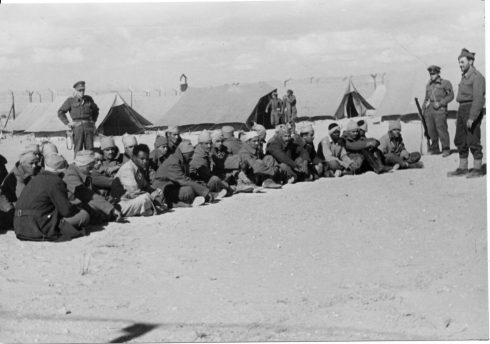

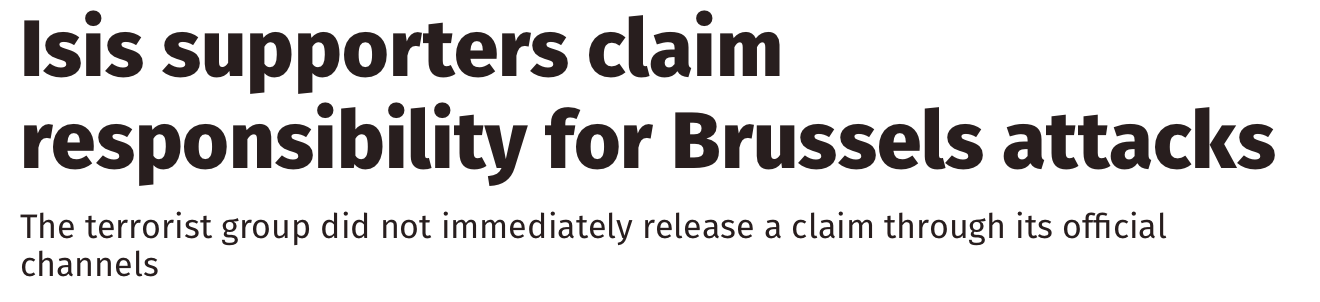
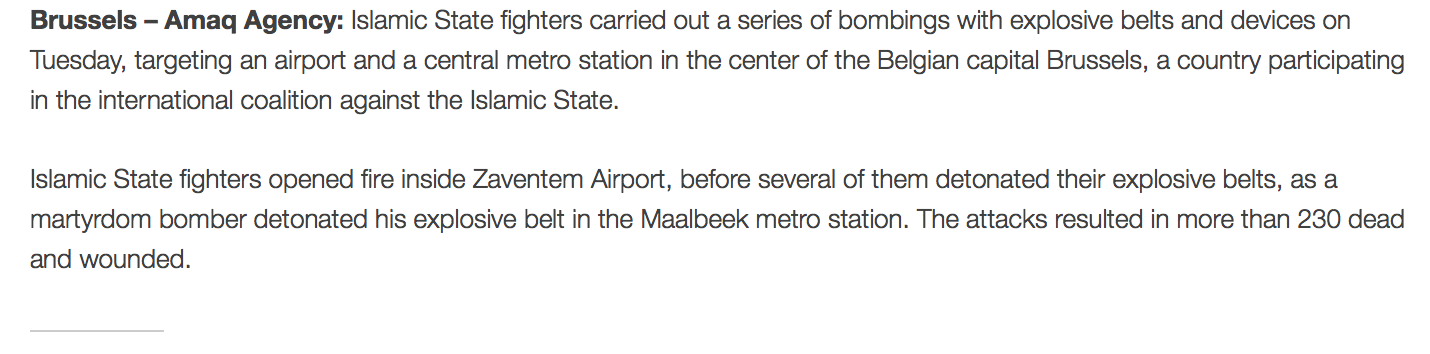

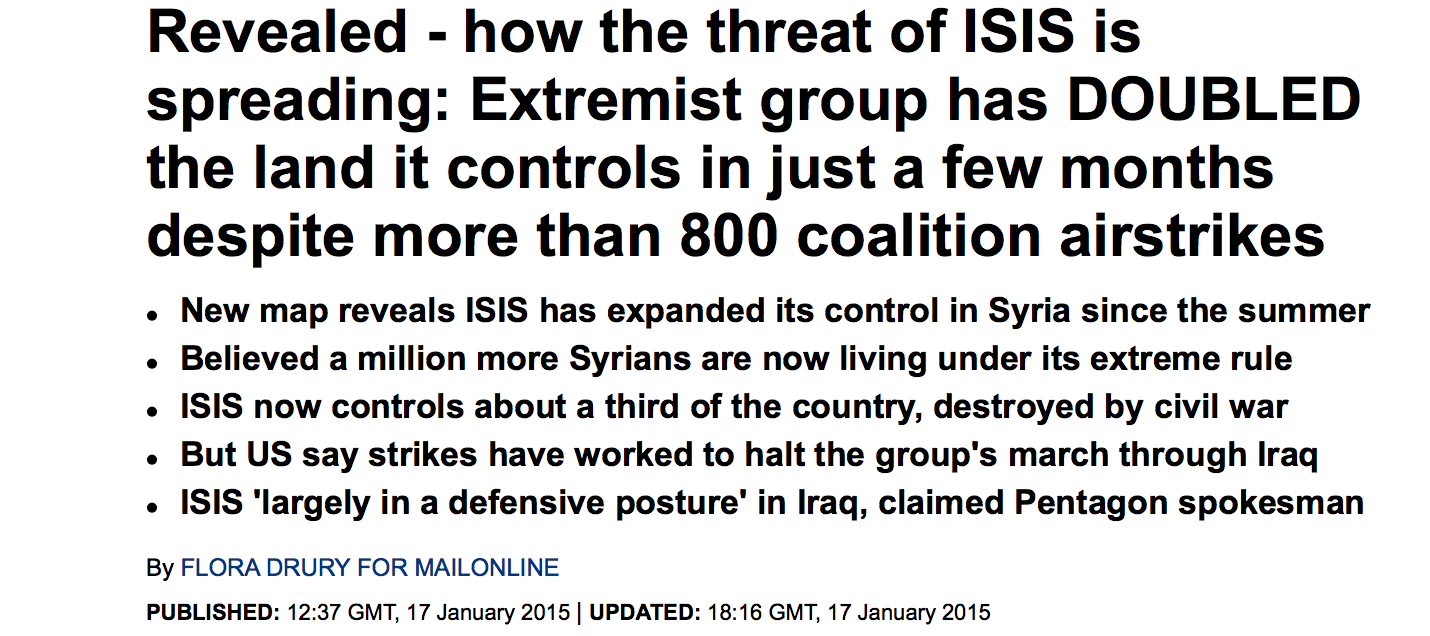
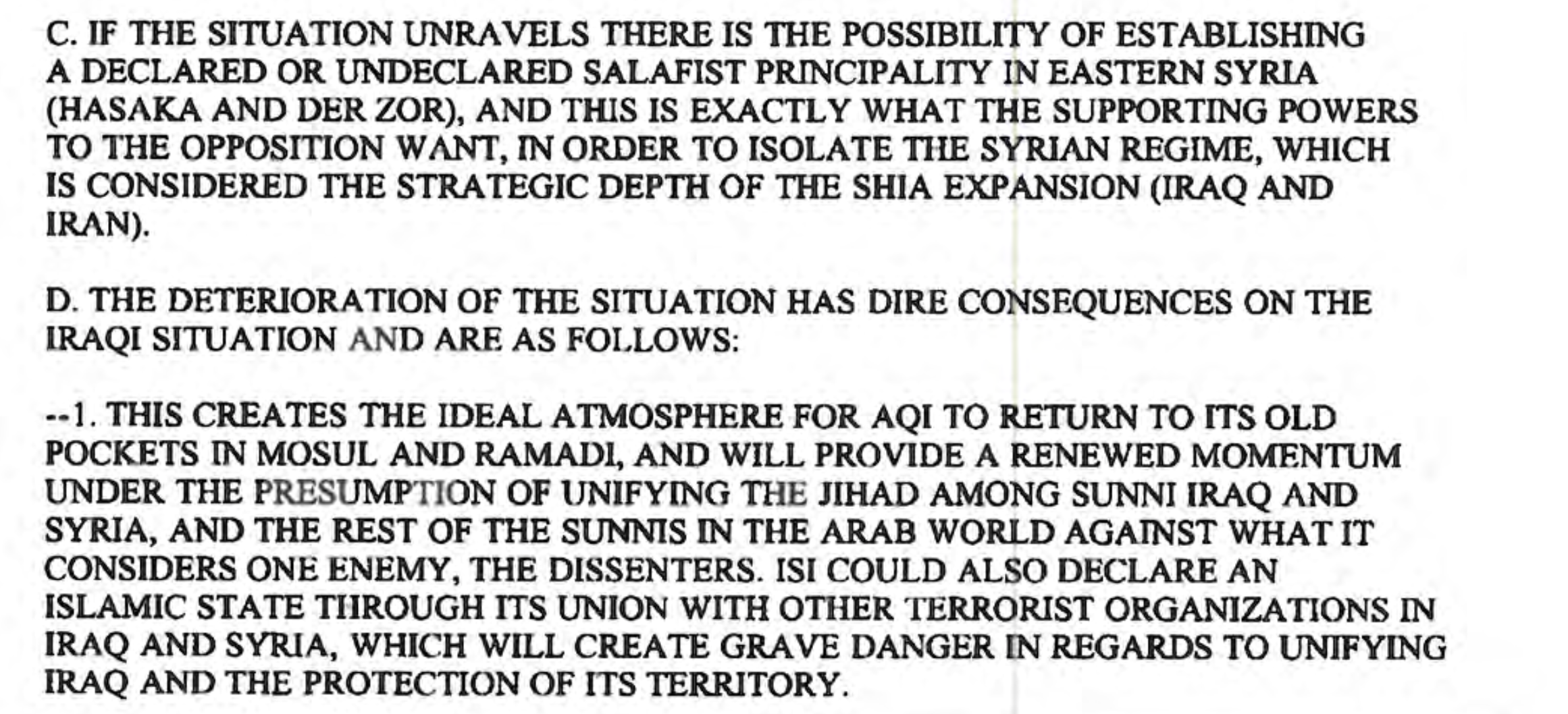
 In an editorial this week, military defense experts Adam Lowther and Chris Winklepleck argue that the strategic aircraft arm of the US nuclear triad provides unique “nuclear signaling” and serves a critical deterrence role in US military strategy.




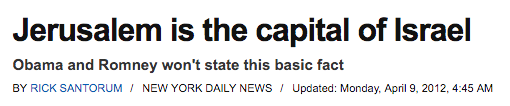
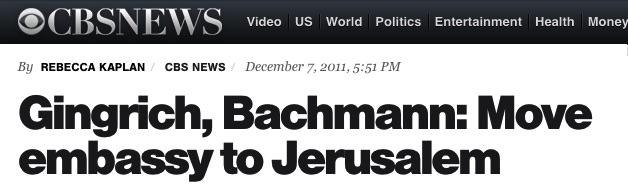
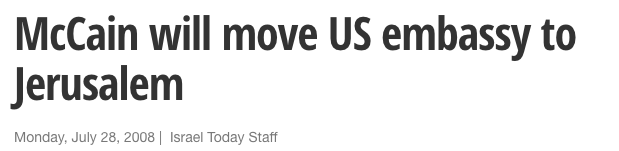
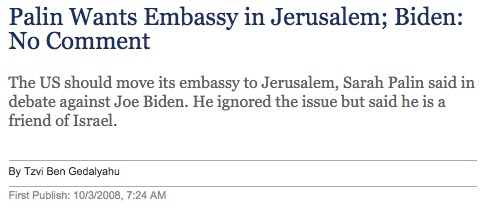


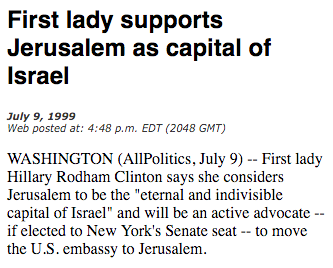

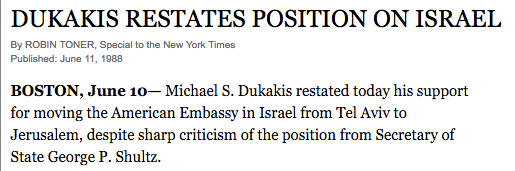
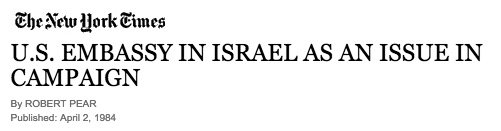
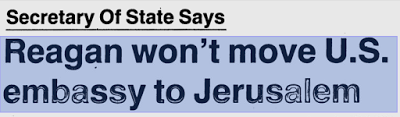


 Butchered by “Healthcare” is Robert Yoho’s plain-spoken account of how American medicine stopped being a profession and became an industry. 341 pages. Over a thousand references. Thirty-eight chapters.
 Aletho News

