Damascus – Today, a civilization that used to lead the world and for centuries was the beacon of learning, tolerance and trade, and that still protects our global cultural heritage is damaged—and only the Syrian people can rebuild it for all of us. We need to help them.
Last month, halfheartedly and without unanimity among its 28 member states, the European Union levied yet more sanctions on Syrian officials. Passed under pressure from the usual suspects (the US, France, Britain, and the international Zionist lobby), the EU measure targets 12 government ministers, none of whom wields or holds police authority of any type. Not a single one of these individuals has any capacity or wherewithal—or even any interest—in committing “serious human rights violations,” as the measure accuses them of having carried out.
It is a charge that amounts to defamation of character and which the EU made without offering a scintilla of evidence. Widely seen as EU frustration over failed western policy in Syria, the action is also thought to have been motivated by a sense that the EU ought to keep itself relevant by… well… doing something, given that there is a deep split within its ranks over military aid to Syrian rebels. Coming three weeks after the Syrian presidential election (generally viewed as a significant victory for the Assad government), the measure puts the officials under an EU travel ban and asset freeze, and it also raises to 191 the number of Syrian government employees, along with 53 companies, now being targeted by EU sanctions.
The impact of EU and western sanctions on the Syrian economy has been severe—this is well known. Heavy fighting has damaged or destroyed economic infrastructure, significantly impeding normal access to sources of income for average Syrians. In addition, internal distribution and supply networks have been disrupted if not destroyed; currency depreciation has devastated purchasing power; and the heavy US, EU and Arab League sanctions have hampered imports and exports. Even the import of items not subject to the sanctions has been restricted by the sanctions on financial transactions, while tourism revenue, for example, has all but disappeared.
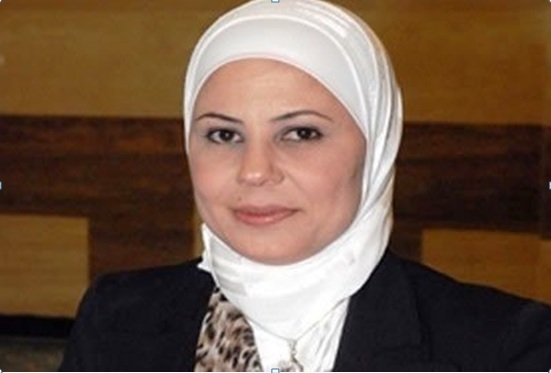
 The EU’s ill-considered action simply adds to the multitude of woes faced by Syrian citizens, woes which have forced many of them to leave their country and become refugees. The ministers targeted tend to be technocrats, specialists in their field of work; they are not major government policy makers. Some are involved in humanitarian work, and some of them are ministers whose efforts in this regard have made them quite popular with Syrian people, both at home and abroad. One of these is Kinda al-Shammat, who heads Syria’s Ministry of Social Affairs.
Ms. Shammat works closely with the U.N. and other aid agencies operating on the ground in Syria, her efforts facilitating the delivery of assistance to millions of internally displaced Syrians. The UN has hundreds of aid workers working with the Syrian government through her. She has never been involved in “serious human rights violations,” but she is a well-known human rights advocate. Ms. Shammat holds a PhD in Private Law from the University of Damascus, where she teaches, and she has also worked with the Syrian Commission for Family Affairs, the General Union of Syrian Women, and the UN Development Fund. In the latter capacity she served as a legal expert in family affairs and violence against women, and in 2012 she was also a member of the committee that amended the Syrian constitution.
Ms. Shammat first came to this observer’s attention for her continued dedication to getting aid to Palestinian refugees trapped inside Yarmouk camp during the current crisis. She survived an assassination attempt by rebels opposed to her views on women rights, and some suggest that she became a target for al-Qaeda types last year when Damascus University banned the wearing of total full face veils. It was a decision she openly welcomed at the time, saying that it was in line with the Syrian belief in moderation.
“We in Syria have never gone to the extreme left or the extreme right,” she told Al-Arabiya TV.
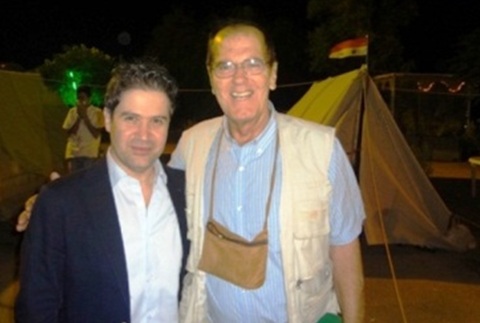
Kinda al-Shammat is surely one of the last officials, in Syria or anywhere else, who would warrant EU sanctions against her, and it is deeply egregious that she should be targeted, along with her colleagues, without any proof of wrongdoing. Most of the other ministers added to the sanctions list also have stellar records of public service; they would doubtless be applauded by the people, and probably, under different circumstances, would even be esteemed and well received in all 28 EU member states as well. These include Finance Minister Ismael Ismael, Economy and Foreign Trade Minister Khodr Orfali, Oil Minister Suleiman Al Abbas, Industry Minister Kamal Eddin Tu’ma, Labor Minister Hassan Hijazi, and Minister of Tourism, Bishr Riad Yaziji. None of these individuals has ever been accused of any conduct that could be construed as anything other than humanitarian. Of these it is perhaps Yaziji who most embodies the “new breed” of Syrian officials.
Yaziji was appointed as Minister of Tourism on 8/22/13, and he appears beholden to no person or thing other than his own vision of restoring Syria’s vital tourist industry. Born in Aleppo in 1972, Yaziji is a businessman, and he is currently the youngest member of the Assad Cabinet. With a Bachelor’s degree in Informatics Engineering from Aleppo University (1995), he is possessed with distinctively Kennedyesque good looks, voices progressive ideas, and exerts a charm and charisma that instantly connects with ordinary citizens and foreigners alike. Not affiliated with the Baath Party, Yaziji is an independent and was elected as such to the People’s Assembly, or the Syrian parliament. This observer has closely followed his work, both in the media and from direct personal experience.
Prior to the conflict, tourism brought in more than $8 billion annually, and as one admirer of Yaziji, who also works in government, put it, “The Tourism Ministry is working to reconnect to the world the way we Syrians used to reach out.” The official added:
“Syria’s treasures, from the cradle of civilization that we are, fundamentally belong to all of humanity, and please accept our promise—that we will do our best to repair all damage to the antiquities and will welcome assistance, as we shall welcome every visitor again, before long, enshallah (God willing).”
 Minister Yaziji appears to thrive on the broad scope and depth of his work, which in fact includes visiting Syrian archaeological sites and drawing international focus on the need to protect and restore humanity’s collective cultural heritage, of which the people of Syria are the custodians. He also spends his time participating in youth festivals, visiting wounded citizens in hospitals, and recently attended a “Loyalty to Syria” gathering, where he stressed the importance of NGOs in conveying the reality of events in Syria to the global public. At that gathering he also discussed the unparalleled richness of the country’s historical and religious monuments, and spoke of “boosting the social values and developing national capacity to serve the best interest of Syria.”
This new generation of Syrian officials is dedicated to ameliorating the country’s humanitarian crisis as well as preserving our global heritage. They have been indefatigable in their around-the- clock projects, and they need to be encouraged, not hindered. In an interview with Reuters on 6/28/14, Yaziji said the sanctions will not interfere with his work—and he also said he has never been involved with any “human rights violations” of any sort. Some have pointed to the curious timing of this latest round of sanctions, so soon after the presidential election, and have suggested that in reality it is a form of collective punishment of the Syrian people—for daring to vote the wrong way, or in a way disapproved of by the EU and the rest of the West.
The EU has spoken piously of “Cultural Heritage—our debt to the past, our promise to the future,” and claims that it seeks to “promote culture as a catalyst for creativity,” but its actions last month belie this. If it truly seeks to implement its claimed humanitarian values, the EU should work to open the paths of these Syrian officials, not close them. At the very least it should desist from layering more “show sanctions” upon those in Syria who are striving to salvage their country. Yaziji and Shammat are Syrian patriots whose invaluable work the EU should be encouraging rather than hindering with politically motivated sanctions and silly, gratuitous defamations of character.
Few in the Syrian Arab Republic these days question the urgency and enormity of the task of reconstructing their ancient country from war-caused destruction, the fall-out from a conflict already more than half as long as World War I and approaching two-thirds as long as World War II. For this ten-millennium civilization, emergency measures are needed to protect its thousands of priceless archaeological treasures, both from the ravages of war as well as plunder and illegal excavation wrought by thieves. The Syrian government has given high priority to the preservation of cultural heritage, a policy that presumably not many in the EU would openly disagree with. Yet the EU’s ill-considered sanctions are harming multi-faceted restoration efforts—by intimidating members of the international public who want to help and by attempting to isolate Syrian officials whose full schedules these days are consumed by humanitarian undertakings as well as projects aimed at restoring cultural heritage sites and preserving our link to the past. And by the way, some of these sites they are working to protect are included on UNESCO’s list of World Heritage Sites. These include the Ancient City of Aleppo , the Ancient City of Bosra , Ancient City of Damascus , Ancient Villages of Northern Syria , Crac des Chevaliers and Qal’at Salah El-Din and the Site of Palmyra .
Syria and her hardworking public servants will survive these gratuitous political sanctions, but the sanctions likely will remain an indelible stain on the EU and its claimed humanitarian principles for a long time to come.
July 4, 2014
Posted by aletho |
Ethnic Cleansing, Racism, Zionism, Timeless or most popular | European Union, Sanctions against Syria, Syria, United States, Zionism |
Leave a comment
Anthony Watts has posted a story about a laughable analysis of the cost of propping up renewables through subsidies. And long-time WUWT contributor KD helpfully pointed me to the document itself. Now that I have the actual document, here’s what they say about subsidies (all emphasis mine).
First, they point out that the cost of shifting to renewables will be on the order of $800 billion dollars per year. Overall, they say the cost will be $45,000,000,000,000 ($45 trillion dollars) by 2050, and could be as high as $70 trillion.
In other words, a substantial “clean-energy investment gap” of some $800 billion/yr exists – notably on the same order of magnitude as present-day subsidies for fossil energy and electricity worldwide ($523 billion). Unless the gap is filled rather quickly, the 2°C target could potentially become out of reach.
Now, a trillion is an unimaginable amount of money. Here’s a way to grasp it. If I started a business in the year zero AD, and my business was so bad that I lost a million dollars a day, not a million a year but a million dollars a day, how many trillion dollars would I have lost by now?
Well, I wouldn’t have lost even one trillion by now, only about $735 billion dollars … in other words, less than the estimated PER-YEAR cost of switching to renewables.
Then they go on to claim that hey, $800 billion per year is no big deal, because fossil fuel subsidies are nearly that large.
While the clean-energy investment gaps (globally and by region) may indeed appear quite sizeable at first glance, a comparison to present-day energy subsidy levels helps to put them into context. According to estimates by the International Monetary Fund and International Energy Agency, global “pre-tax” (or direct) subsidies for fossil energy and fossil electricity totaled $480–523 billion/yr in 2011 (IEA 2012b; IMF 2013). This corresponds to an increase of almost 30% from 2010 and was six times more than the total amount of subsidies for renewables at that time. Oil-exporting countries were responsible for approximately two-thirds of total fossil subsidies, while greater than 95% of all direct subsidies occurred in developing countries.
Now, this is a most interesting and revealing paragraph.
First, despite what people have said on the previous thread, they have NOT included taxes in their calculation of subsidies.
Next, to my great surprise an amazing 95% of all subsidies are being paid by developing nations. This underscores the crucial importance of energy for the poor.
In addition, they say that most of the money used to pay the fossil fuel subsidies comes from … wait for it … the sale of fossil fuels.
Next, it means that nothing that the developed world does will free up much money. Only 5% of the subsidies are in developed nations, they could go to zero and it wouldn’t change the big picture.
It also means that since these subsidies are not going to drivers in Iowa and Oslo, but are propping up the poorest of the global poor, we cannot stop paying them without a huge cost in the form of impoverishment, hardship, and deaths.
Finally, unless we shift the fuel subsidy from fossil fuels to renewables, which obviously we cannot do, the comparison is meaningless—we will still need nearly a trillion dollars per year in additional subsidies to get renewables off of the ground, over and above the assistance currently given to the poor … where do the authors think that money would come from?
I fear that like the pathetically bad Stern Report, this analysis is just another batch of bogus claims trying to prop up the war on carbon, which is and always has been a war on development and human progress, and whose “collateral damages” fall almost entirely on the poor.
And at the end of the day, despite their vain efforts to minimize the cost, even these proponents of renewables say it will cost up to $70 trillion dollars to make the switch, with no guarantee that it will work.
Sigh …
[UPDATE]
I see that in the study they make much of the disparity between fossil fuel subsidies ($523 billion annually) and renewables subsidies, which they proudly state are only about a sixth of that ($88 billion annually).
However, things look very different when we compare the subsidies on the basis of the energy consumed from those sources. To do that, I use the data in the BP 2014 Statistical Review of World Energy spreadsheet in the common unit, which is “TOE”, or “Tonnes of Oil Equivalent”. This expresses everything as the tonnes of oil that are equivalent to that energy. I’ve then converted the results to “Gallons of Oil Equivalent” and “Litres of Oil Equivalent” to put them in prices we can understand. That breakdown looks like this:
Fuel, Subsidy/Gallon, Subsidy/Litre
Fossil fuels – $0.17 per gallon, $0.04 per litre
Renewables – $1.19 per gallon, $0.31 per litre.
So despite the fact that renewable subsidies are only a sixth of the fossil subsidies, per unit of energy they are seven times as large as the fossil subsidies.
This, of course, is extremely bad news for the promoters of the subsidies. It means that to get the amount of energy we currently use, without using fossil fuels and solely from renewables, it would require seven times the current fossil fuel subsidy, or $3.5 TRILLION DOLLARS PER YEAR.
And of course, since there’d be no fossil fuel sales at that point, there’d be little money to pay for the subsidy.
Sometimes, the idiocy of the savants is almost beyond belief.
July 4, 2014
Posted by aletho |
Deception, Economics, Science and Pseudo-Science, Timeless or most popular |
Leave a comment

Iranians honor the victims of the 1988 US missile cruiser’s attack on an Iranian passenger plane
On July 3, 1988, 290 people were killed in a US missile cruiser’s attack on an Iranian passenger plane.
Carrying 274 passengers and 16 crew members, the Airbus A-300 (IR655) had just taken off from the southern Iranian coastal city of Bandar Abbas and was climbing inside an internationally recognized route to Dubai when it was targeted by two Standard missiles fired from USS Vincennes on July 3, 1988.
Following the incident, US officials claimed their warship mistook the jetliner for an attacking Iranian F-14 fighter plane. The allegation was made as highly sophisticated radar systems and electronic battle gear had been mounted on the warship.
The Iranian airliner was equipped with an identification transponder to give off a specific response signal when interrogated by a radar signal from a potential adversary.
Due to delay in takeoff, the Vincennes started issuing warnings on the Military Air Distress frequency, having mistaken the Iranian civilian airplane for a military aircraft.
Vincennes’ attempts to contact Flight 655 failed because they had been sent on wrong frequencies.
Although no data recorder reported any identification, friend or foe (IFF) signal, the staff aboard the Vincennes continued misreporting the signal.
The decision to shoot down the Iranian plane was reportedly taken deliberately on the basis of personal advice passed from junior officers, regardless of a stream of contrary evidence from the electronics aboard.
The US government has so far refused to admit to its crime in the tragic incident and instead keeps falsely blaming Iran for the incident.
Washington later paid some 95 million dollars in compensation for the Iranian victims and the aircraft.
The money, however, failed to placate the anti-US sentiments in Iran, where people expected the USS Vincennes’ captain, William Rogers, to be held responsible for his criminal act.
Instead, Rogers was awarded the prestigious medal of Legion of Merit for his so-called outstanding service.
July 3, 2014
Posted by aletho |
Timeless or most popular, War Crimes | Iran, United States |
Leave a comment
On Wednesday, June 25th, the Financial Times published an essay by Francis Fukuyama. He is the famed US political scientist, a “neoconservative” apostate and author of The End of History and the Last Man in 1992. The title of his op-ed is “ISIS risks distracting US from more menacing foes”. I first read it in the middle of the night on my “smartphone” and found it confusing. What was the writer getting at? I did not notice the byline. Then I did, and was less confused. Fukuyama is conflicted and his ideas are sometimes contradictory. So you factor that in. No problem. He has had a checkered past, but haven’t we all?
Fukuyama started out as a “neoconservative” during the Reagan Presidency, working alongside such disturbing characters as Paul Wolfowitz and I. Scooter Libby, who were later to become famous, wild-eyed propagandists in the G.W. Bush Administration, aka the Cheney Regency. In the aftermath of 9/11, Fukuyama–like all true blue Neocons and “liberal interventionists”–promoted the 2003 US-led invasion of Iraq on bogus grounds. The purported aim was to depose Saddam Hussein and install “democracy” in his place.
You may recall that Iraq had nothing to do with the 9/11 terrorist attacks and possessed no WMD at the time of those attacks. There were no al-Qaeda, no terrorism, and no terrorists inside Iraq prior to “Operation Iraqi Freedom”. Later, when the occupational phase of “Operation Iraqi Freedom” became an instant fiasco–and the whole rotten enterprise was revealed to be a scam based upon breathtaking lies emanating from the very top–Fukuyama broke with his fellow Neocons. He became a critic of the Regency and the Neocons, and has since then taken a more nuanced approach to world affairs.
Although he no longer communicates with Dr. Paul “Mass Destruction” Wolfowitz, Fukuyama was on the steering committee of the legal defense fund for I. Scooter Libby, Dick Cheney’s chief of staff and top “national security” adviser, when Libby got mixed up in the Regent’s campaign to smear Ambassador Joseph Wilson, the husband of CIA agent Valerie Plame whose undercover assignment was WMD. Wilson had the temerity to point out in a July 2003 New York Times op-ed that Iraq had not, in fact, imported “yellow cake” uranium from Niger to build an A-bomb. Ergo, there was no mushroom cloud on the horizon. Ergo, Dick Cheney’s biggest WMD whopper was clarified and exposed to the light of day. At that point Fukuyama must have figured that his friend Libby, the factotum, was falling on his sword for his all-powerful boss, and deserved a break.
Like most big-picture essays, especially those aimed at the general public, Fukuyama’s present effort in the FT is predicated upon hallowed and widely accepted assumptions about American history and America’s place in the world. Many of these assumptions are dubious, fictive and, in some cases, ridiculous. Accordingly, Fukuyama’s conclusions are necessarily suspect. Since he is a savant, he should know better. Perhaps he does know better, but has not the time nor the inclination to correct the authorized version of history and current events. It might upset certain people or further confuse them. Better to embrace the received, conventional wisdom, and use it whenever possible to advance one’s own ideas.
Fukuyama’s first mistake, in my view, is taking the foreign policy pronouncements of Barack Obama seriously, at face value, and worthy of analysis. Certainly at this stage, it does not matter what Obama says. In truth, it never has. Yes, I realize that Obama presides over the lone surviving superpower, but this outlandish circumstance by itself is a red flag and requires that all issues relating to US foreign policy be considered with a jaundiced eye. White House credibility in world affairs is shot, and has been shot for decades. Dishonesty and wholesale deception did not start with Barack Obama. He has simply continued the trend, and taken it to the next level, like G.W. Bush and Bill Clinton did before him.
What the current occupant of the White House brings to the table is salesmanship and fantasies. Obama is a master at speaking out of both sides of his mouth. Whatever sounds good, go with it. He’s a talker. I recall in particular his 2008 US presidential campaign sortie through Israel and Europe, and especially his enraptured, grandiose speech at Tiergarten Park Berlin on July 24th of that year. That speech boils down to flapdoodle, and its messianic quality is all the more remarkable, because Obama was still a private citizen. The day before, his idealism ran in a different direction. He was shamelessly pandering to Ariel Sharon’s successor, PM Ehud Olmert, in Tel Aviv, while giving the Palestinians short shrift and the shaft. John McCain had performed a similar routine four months previously.
In the article in question, Fukuyama critiques Obama’s recent commencement address at West Point on May 28th. The White House hyped it as a major foreign policy speech. It fell flat with Fukuyama. He calls Obama’s approach “wrong-headed”. Too much concern about terrorism and the Middle East and not enough focus on the authentic “menacing foes”–Russia and China. He states, “The extremism of ISIS will in the end prove self-defeating. By contrast, allies the US is sworn to defend are now threatened by industrialized nations with sophisticated militaries.” Say what?!
Fukuyama appears to imply that America needs real enemies to confront, not phantoms. Yet it was a phantom threat that he and his cohorts were hot to confront when it came to Saddam Hussein. The blowback from that misadventure is incalculable. Fukuyama goes on to conclude, “The poles established by the neoconservatives on the one hand and isolationists on the other present false choices. Real strategy always has to lie somewhere in between.” In sum, Fukuyama does not want Washington to get sidetracked. Hmm. May I humbly suggest that the US has been hopelessly sidetracked for at least a century.
Fukuyama begins by paying homage to World War II, which global bloodbath remains the primary justification for all US foreign policy initiatives since 1945. It is the holy grail for the Neocons, along with their flamboyant hero, Winston Churchill. It is key to the modern-day, bipartisan attitude of American exceptionalism. Colonel Andrew Bacevich makes the central importance of the Second World War clear in a recent fascinating interview with Bill Moyers.
Bacevich, author of The Limits of Power, does not fault America’s entry and success in the Second World War, but he does deplore the use to which it has been put to empower a host of ill-advised US foreign policy adventures in the aftermath. My problem, on the other hand, is with the Second World War itself and with its progenitor, the Great War of 1914-18. If we accept them as sacrosanct, legitimate undertakings by Washington, then we lend credence to the myth of American exceptionalism, which has turned out to be a dangerous, self-destructive idea.
Consider an alternative narrative in which America’s entry into both world wars was unnecessary, ill-advised, and brought about by chicanery in service to a private agenda. The idea of American exceptionalism began with Woodrow Wilson, not with creepy neoconservative ideologues. Wilson ran for a second term in 1916 on the slogan, “He kept us out of war!” Yet, Wilson appears to have already decided to join England on the western front in France. Washington’s official neutrality was a sham from the start. Secretary of State William Jennings Bryan resigned in protest to Wilson’s hypocrisy in June 1915.
In the background, English propaganda was beating the drums to drag America into the war. America’s official entry into the Great War in April 1917 meant that the British Empire was saved from near-certain defeat at the hands of the German army and the Central Powers. It meant the rise of fascism and the success of communism in Russia. It meant the breakup of the Ottoman Empire in the Middle East and the execution of the Balfour Declaration in Palestine. It meant, inevitably, a second European conflict on a grander scale, caused by the injustices of the first conflict, as embodied in the Paris peace treaty. In short, it was a ghastly blunder.
Did Wilson make the right decision? In hindsight, absolutely not. He deceived the American people in 1916, and was then taken to the cleaners by Lloyd George and Georges Clemenceau at the Paris peace conference in 1919. He then suffered a nervous breakdown, then a stroke, and died a broken man. Did Franklin Roosevelt act wisely when he hectored England, France and Poland in the summer of 1939 not to negotiate with Germany over Danzig, thereby assuring the outbreak of a European war? Probably not. He acted recklessly. Did Roosevelt do the right thing by provoking the Empire of Japan to attack US armed forces in the Pacific in 1941 so that he could jump into the war in Europe, a war he felt responsible for instigating behind the scenes? Again, no. His conduct can easily be regarded as treason. It was certainly deceitful.
We can’t unwind history, of course, but we can see its consequences, set the record straight, and not live in a dream world. Contrary to what you may have learned in school, these were not unselfish wars to make the world safe for democracy. That was a cover story. These were wars for economic advantage on the part of Washington and London, and were fought to maintain the prestige of the near-bankrupt British Empire–and then replace it with the American empire. They were at variance with the dictum delivered by Secretary of State John Quincy Adams in 1821 that America, “… goes not abroad in search of monsters to destroy. She is the well-wisher to the freedom and independence of all. She is the champion and vindicator only of her own.”
Fukuyama assumes, instead, that both global wars of the twentieth century were non-fraudulent and for a good cause, on which foundation Washington has built a better world. This is the conventional view. He believes the struggle to improve humanity should continue in the aftermath of the Cold War. He takes it for granted that the US is entitled–as the indispensable and exceptional nation–to intervene everywhere on earth at its discretion, and has a responsibility plus the resources to do so. To imagine otherwise is isolationism. This vagary constitutes in large measure the mindset of Washington’s foreign policy establishment. It is delusional and grounded in hubris.
Overlaying this Wilsonian mistake is the self-evident, post Cold War fact that Washington–the White House, the Senate, the Congress and both political parties–have, for all intents and purposes, been hijacked by agents of the Israel Lobby, to wit, the Neocons and their “liberal interventionist” fellow travelers. It is a perfect storm. We are witnessing the bloody results today in Iraq, Syria, Afghanistan and the Ukraine. The fake nuclear crisis with Iran is another dangerous byproduct. Humanity has not profited thereby. Now Fukuyama proposes what amounts to a new crusade against Russia and China, leaving the “war on terror” behind. Alas, he appears not to be joking.
PATRICK FOY is an essayist and short story writer. He graduated from Columbia University, where he studied English literature, European history and American diplomatic history. His work can be found at www.PatrickFoyDossier.com.
Copyright 2014 Patrick Foy.
June 30, 2014
Posted by aletho |
Deception, Mainstream Media, Warmongering, Militarism, Progressive Hypocrite, Timeless or most popular | American exceptionalism, Francis Fukuyama, Iraq, Obama, Russia, United States |
Leave a comment
I loathe the premise that people of colour should be ‘grateful’ that others are taking notice of their subjugation, or that they should bite their tongues and clench their fists and instead show gratitude because their varied plights are being in some way ‘acknowledged‘ by others.
“Shouldn’t you be glad that people are recognizing these issues?” is the arrogant lamentation which customarily follows even the most cautious criticism of these perverse pseudo-solidarity actions – FEMEN’s nude predominantly white, predominantly thin photo-ops “for Amina,” a 19 year-old Tunisian woman who posed for them with the words “my body belongs to me, it is not the source of anyone’s honour” scrawled across her torso, being the latest example, and KONY2012 being an earlier one. This aforementioned response contends that we should withhold criticism, alleging that even being ‘noticed’ should be good enough.

Despite having our religious attire, skin colour and even facial hair, being routinely mocked and worn as makeshift costumes as a part of ‘solidarity actions’ it is said time and time again that we should be ‘grateful’ that anyone simply has reason enough to ‘care.’
Despite the watered down slogans of liberation and freedom being copy-pasted by the parade of online followers of groups such as FEMEN many of these same activists are so inebriated with colonial feminist doctrine that they gleefully take part in patronizing, Islamophobic and misogynistic rhetoric in response to women of colour telling them that they take great offence, that their voices will not be usurped, that they are the sole guardians of their plights and no one has the authority to speak on their behalf, no matter how allegedly ‘well-intentioned’.
In response to FEMEN’s topless “jihad day” event Muslim women created #MuslimahPride on Twitter; Sofia Ahmed, one of the women behind “Muslimah Pride Day” described the campaign as follows:
“Muslimah [term for a female Muslim] pride is about connecting with your Muslim identity and reclaiming our collective voice. Let’s show the world that we oppose FEMEN and their use of Muslim women to reinforce Western imperialism.”
Using #MuslimahPride many Muslim women began voicing their disapproval of FEMEN, one such woman was Zarah Sultana who posted the following photograph on her public Twitter page, which I have received permission to post here, and which in turned catalyzed many other Muslim women to do the same in an array of languages, by women from multifarious backgrounds:

The responses Sultana received were drenched in perverse Islamophobia, sexism and pure, unashamed hatred: “Fuck off back to your own country”, “burn in hell”, “grab your ankles and remain silent”, “Mohammad was a pedophile”, “put on your burka”, “she’s happy with her chains” etc.- all coming from those who, just moments earlier, were tweeting gleefully in support of Muslim women.
When it comes to non-natives speaking in regards to native issues – it is a path that must be tread upon lightly in order to avoid (a) tokenization and (b) the usurpation of native voices. Solidarity is great, but it is when campaigns turned publicity stunts like the ones FEMEN indulges in begin using brown bodies as props while at the same time perpetuating orientalism and engaging in blatant prejudicial acts to promote their idea of ‘liberation’ does this become more a theft of native voices than a rallying cry for ‘freedom’. FEMEN, and other such groups, offer no solution to the undeniable subjugated of women present in the Middle East-North Africa, it is all a show of thin, white grandeur.
Simply stating that you are in solidarity, that you support a woman’s right to don the headscarf, remove it, cover/uncover etc. is in no way dubious. It is when aforementioned solidarity crosses the red line and veers into the seizure of native voices and the tokenization of these voices does this become intensely problematic, ineffective and perverse.
Also it has long been chronicled that women of colour are often left out of mainstream feminist discourse, unless it is by means of humanitarian imperialism channels where they are simply tokenised. Bell Hooks (Gloria Jean Watkins), a feminist, social activist, does a magnificent job describing this in much of her work.
In terms of the mounting questions in regards to how one is to raise awareness in light of such groups as FEMEN: you raise awareness by highlighting native voices, not co-opting them. It is your duty to amplify, not commandeer.
As Sara Salem, PhD researcher at the Institute of Social Studies in the Netherlands, notes:
“Feminism has the potential to be greatly emancipatory by adopting an anti-racist, anti-homophobic, anti-transphobic and anti-Islamophobic rhetoric, instead of often actively being racist, homophobic, transphobic and Islamophobic. By clearly delineating the boundaries of what is “good” and “bad” feminism, Femen is using colonial feminist rhetoric that defines Arab women as oppressed by culture and religion, while no mention is made of capitalism, racism, or global imperialism. It is actively promoting the idea that Muslim women are suffering from “false consciousness” because they cannot see (while Femen can see) that the veil and religion are intrinsically harmful to all women.
Yet again, the lives of Muslim women are to be judged by European feminists, who yet again have decided that Islam – and the veil – are key components of patriarchy. Where do women who disagree with this fit? Where is the space for a plurality of voices? And the most important question of all: can feminism survive unless it sheds its Eurocentric bias and starts accepting that the experiences of all women should be seen as legitimate?”
Post-Colonial feminists worth mentioning, a few of many:
Arundhati Roy
Gloria Anzaldúa
Chandra Talpade Mohanty
Audre Lorde
June Jordan
Responses to FEMEN by women of colour, others:
The Inconsistency of Femen’s Imperialist “one size fits all” Attitude – Bim Adewunmi
Femen’s Neocolonial Feminism: When Nudity Becomes A Uniform – Sara Salem
The Fast-Food Feminism of the Topless FEMEN – Mona Chollet
That’s Not What A Feminist Looks Like – Elly Badcock
The African History of Nude Protest – Maryam Kazeem
My piece on rediscovering Feminism
Suggested reading:
“Is Western Patriarchal Feminism Good For Third World/Minority Women?” By Azizah Al-Hibri
“Women and Gender in Islam” by Leila Ahmed
And two relevant books by Edward Saïd:
Culture and Imperialism
Orientalism
June 29, 2014
Posted by aletho |
Ethnic Cleansing, Racism, Zionism, Islamophobia, Timeless or most popular | Femen, Feminism, Human rights, Middle East, MuslimahPride |
Leave a comment
Abstract
We have studied the long-term toxicity of a Roundup-tolerant GM maize (NK603) and a whole Roundup pesticide formulation at environmentally relevant levels from 0.1 ppb. Our study was first published in Food and Chemical Toxicology (FCT) on 19 September, 2012. The first wave of criticisms arrived within a week, mostly from plant biologists without experience in toxicology. We answered all these criticisms. The debate then encompassed scientific arguments and a wave of ad hominem and potentially libellous comments appeared in different journals by authors having serious yet undisclosed conflicts of interests. At the same time, FCT acquired as its new assistant editor for biotechnology a former employee of Monsanto after he sent a letter to FCT to complain about our study. This is in particular why FCT asked for a post-hoc analysis of our raw data. On 19 November, 2013, the editor-in-chief requested the retraction of our study while recognizing that the data were not incorrect and that there was no misconduct and no fraud or intentional misinterpretation in our complete raw data – an unusual or even unprecedented action in scientific publishing. The editor argued that no conclusions could be drawn because we studied 10 rats per group over 2 years, because they were Sprague Dawley rats, and because the data were inconclusive on cancer. Yet this was known at the time of submission of our study. Our study was however never attended to be a carcinogenicity study. We never used the word ‘cancer’ in our paper. The present opinion is a summary of the debate resulting in this retraction, as it is a historic example of conflicts of interest in the scientific assessments of products commercialized worldwide. We also show that the decision to retract cannot be rationalized on any discernible scientific or ethical grounds. Censorship of research into health risks undermines the value and the credibility of science; thus, we republish our paper.
Background
There is an ongoing debate on the potential health risks of the consumption of genetically modified (GM) plants containing high levels of pesticide residues [1]. Currently, no regulatory authority requests mandatory chronic animal feeding studies to be performed for edible GMOs and formulated pesticides. This fact is at the origin of most of the controversies. Only studies consisting of 90-day rat feeding trials have been conducted by manufacturers for GMOs. Statistical differences in the biochemistry of treated rats versus controls may represent the initial signs of long-term pathologies [2], possibly explained at least in part by pesticide residues in the GM feed. This is why we studied the long-term toxicity of a Roundup-tolerant GM maize (NK603) and a whole Roundup pesticide formulation at environmentally relevant levels from 0.1 ppb.
We first published these results in Food and Chemical Toxicology (FCT) on 19 September, 2012 [3] after a careful and thorough peer review. However, 1 year and 2 months later, in an unusual step, the editor-in-chief requested the retraction of our study, while conceding that the data were not incorrect and that there was no misconduct and no fraud or intentional misinterpretation. According to him, some data were inconclusive, but for reasons already known at the time of submission of the paper. The present paper is a summary of the debate resulting in this retraction, which in our view is a historic example of conflicts of interests in the scientific assessments of products commercialized worldwide.
The long-term toxicity study of the NK603 maize and Roundup
An initial study on NK603 maize was submitted by Monsanto Company in support of commercial authorization of the maize. NK603 maize was fed to 4 groups of 20 Sprague Dawley rats (2 doses of 11% and 33% in the diet of both sexes) for 90 days [4]. The blood analyses were performed on 10 rats per group. The re-analysis of the raw data resulted in a debate on the biological relevance of admitted statistical differences versus controls as the first signs of hepatorenal toxicities [5]. To solve the problem, a 2-year-long study was carried out using two hundred Sprague Dawley rats to which the following treatments were administered: NK603 maize treated or not with Roundup at three different levels in their feed (11%, 22%, and 33% of the total diet) and Roundup alone, administered via drinking water at three different concentrations, from the admitted residual level in regular tap water (0.1 ppb), to the maximum level authorized in GMOs (400 ppm), up to half of the agricultural dose (0.5%). They were divided into ten groups, each containing ten males and ten females. No other long-term study has examined the effects of regular consumption of Roundup-tolerant GM maize and of a pesticide formulation, in any dilution, on blood parameters, sexual hormones, and multiple organs.
We found that these products provoked statistically discriminant disturbances in biochemical markers of livers and kidneys in females at the 15th month, when most of the rats were still alive. At the same time, testosterone and estradiol levels were also disturbed. At the end of the experiments, these disrupted biochemical markers corresponded to pathologies evidenced in a blinded manner: notably hepatorenal deficiencies, more severe in males, and female mammary tumors, which led to premature deaths. For instance, after around 700 days, there were up to 3.25 more mammary tumors (the highest rate was observed in females consuming 0.1 ppb of Roundup in water). This could be associated with a 2.4-time increase in pituitary dysfunctions noticed by the end of the experiment (2 years).
These findings were immediately dismissed by persons involved in the products’ authorizations, or in collaboration with biotech industries. A number of them wrote to FCT to nourish a controversy, including Richard Goodman, a former Monsanto employee in charge of the immunotoxicity files of GMOs, and Paul Christou, a patent holder of the methods used to create transgenic plants. This was rapidly followed by a coordination of national regulatory agencies organized by the European Food Safety Authority (EFSA), released on 4 October, 2012 [6]. The EFSA had previously assessed NK603, and glyphosate, the declared active principle of Roundup, as safe on the basis of regulatory data, which they never fully published. The EFSA has since published Monsanto’s safety data on NK603 maize [7], but not on glyphosate. The NK603 data are in a pdf format preventing an easy statistical re-analysis. However, there was no long-term toxicological assessment for NK603, or for Roundup. Moreover, we demonstrated in several studies [8-10] that Roundup is far more toxic than glyphosate because of non-inert adjuvants. On 10 October, 2012, the Monsanto Company also sent its criticisms to FCT [11] but did not release its safety data, claiming commercial confidentiality.
Overall, the first wave of criticisms arrived within a week, mostly from plant biologists. We answered all criticisms [12] in FCT on 9 November, 2012. The debate then encompassed scientific arguments. A second wave of ad hominem and potentially libelous comments appeared in different journals [13-16]. Regrettably, there were no invitations to respond to these exacerbated attacks, which we discovered only by our literature survey. Some of the authors of these articles had serious yet undisclosed conflicts of interest. The scientific remarks concentrated on the supposedly inadequate choice of the Sprague Dawley rat strain, which is, however, a classic model for toxicology [17]. The Sprague Dawley strain was also used by Monsanto in its 90-day test on the same maize [4]. In addition, Monsanto measured biochemically the same number of rats per group as in our experiment. Thus, with regard to blood and urine biochemistry, Monsanto gathered data from the same number of rats that we did.
Unsubstantiated allegations of fraud or errors
Paul Christou, the lead author of Arjo et al. [13], demanded that our paper be retracted and insulted us personally. He claimed first in a letter addressed to the editor-in-chief that the publication of our study ‘does not meet minimal acceptable standards of scientific rigor’ and ‘will damage an entire scientific discipline due to flawed conclusion’ (personal communication). Then, he attacked us in an article published in the journal Transgenic Research on 20 December 2012 [13]. The quantity of insults and defamations in this paper, authorized and co-authored by the editor-in-chief in a supposedly serious journal, is excessive. They include: ‘abject failure to treat the experimental animals in a humane manner’, ‘inability to formulate a valid hypothesis’, ‘media fanfare’, ‘fraudulent or knowingly inaccurate statements’, ‘unethical behavior’, ‘transparent attempt to discredit regulatory agencies’, ‘ammunition for extremists’, ‘flawed science’, ‘disingenuous or inept’, and ‘unjustified waste of animals’ (while at the same time asking for more animals in the groups). Christou and co-authors suggest that by practising ‘flawed science’, we are working against ‘progress towards a better quality of life’ and in fact are ‘actively working to make life worse’. We were not invited to reply. This behaviour can be explained, though not justified, by the undisclosed conflicts of interests.
Christou is not only the editor-in-chief of Transgenic Research, the journal in which he published his article, but is also linked to Monsanto [18]. He is named as the inventor on several patents on GM crop technology, for most of which Monsanto owns the property rights. These include patents on the plant transformation process [19] used to make glyphosate-tolerant transgenic corn plants [20]. He worked as a researcher at Agracetus Inc. (later acquired by Monsanto) for 12 years. Then, from 1994 to 2001, Christou worked at the John Innes Centre in the UK [18], which is heavily invested in GM crop technology [21]. He thus has no mammalian toxicology background. However, in his published article, Christou only gave as his affiliation his publicly funded position at a research institute. Christou’s failure to declare his current interests – his inventor status on patents concerning the company that developed the products we tested – could be considered grounds for retraction of a paper in a scientific journal, according to ethical guidelines for scientific publishing [22].
The Arjo et al. article was co-authored by Wayne Parrott, an active member of the Biotechnology Committee at the International Life Sciences Institute (ILSI) [23]. ILSI is funded by multinational food, agribusiness, and biotechnology companies, including Monsanto and Syngenta [24]. ILSI has proved highly controversial in North America and Europe due to its influence on risk assessment methodologies for chemicals, pesticides, and GM foods [25-27]. Wayne Parrott also has an inventor status in patents on materials and methods for selecting transgenic organisms [28] and transformation vector systems [29].
In addition, Christou and his co-authors made numerous mistakes, false and unsubstantiated assertions, and misrepresentations of our data. The title of Arjo et al.’s paper includes defamation and a misrepresentation of our research, implying that it is ‘pseudoscience’ and alleging that it claimed Roundup Ready maize and Roundup herbicide caused ‘cancer’ in rats – a claim we never made. We did not even use the word ‘cancer’ in our paper although this argument was reiterated in the final letter of the editor-in-chief of FCT when explaining his decision to retract our paper [30]. Tumors do not always lead to cancer, even if they can be more deleterious in a shorter time because of their size or body position, by hurting internal functions.
Arjo et al.’s paper begins with a false assertion that is not evidenced in the paper or in the cited source: ‘It started with a press conference in which journalists agreed not to engage in fact-checking’. The authors made other false assertions about our study, for example, alleging that ‘the water consumption was not measured’. In fact, we measured both the water and food consumption, and the stability of the Roundup solution over time. This was indicated in the paper, in which we explained that all the data cannot be shown in one paper and that we concentrated on the most important data; these parameters were only part of a routine survey. They also falsified the reporting of the data, compiling the mortality data only at the end of the experiment and ignoring the originality and the major findings of the differential chronological effects between treated rats and controls, which we established by measuring tumor size twice a week over 2 years. Moreover, we respected legal requirements and ethical norms relating to animal experiments, and Arjo et al. present no evidence of the contrary, so their allegation of inhumane treatment of the rats is without substance.
Importantly, we had already answered many of the criticisms of our paper made by Arjo et al. in a paper that was published before that of Arjo et al. [12]. Their publication was received on 20 December 2012, when our paper was published on 9 November 2012. Our published answers were simply ignored.
Christou was not alone in failing to declare conflicts of interest in his criticism of our paper. Since we underlined that 75% of the comments addressed to FCT within a week after our study was published came from plant biologists, it was discovered that several had developed patents on GMOs. Some authors were employees of Monsanto Company, which owns NK603 GM maize and sells Roundup herbicide [4,11]. Other more recent papers, published by plant biologists and/or affiliates of the industry-funded group ILSI [15,16], repeated the arguments. The author of a separate article criticizing our study expressed concern that our results could damage public opinion about GM crops [14] – a sentiment that gives precedence to economic interests over public health. An article in Forbes magazine even alleged, without presenting any evidence, that we had committed fraud [31]. Surprisingly, even Monsanto authors [11] declared that they had ‘no conflicts of interest’ in their first draft published online on FCT website. Investigative reports [32,33] evidenced that many authors of these opinions had failed to disclose their conflicts of interest, including Henry Miller, Mark Tester, Chris Leaver, Bruce Chassy, Martina Newell-McGloughlin, Andrew Cockburn, L. Val Giddings, Sivramiah Shantharam, Lucia de Souza, Erio Barale-Thomas, and Marc Fellous. The undisclosed conflicts of interest included links with biotechnology companies that develop GMOs and with industry-backed lobbying organizations.
All of this has huge implications for public health. We observed an intense lobbying in parliaments, as well as proofs of conflicts of interests for persons involved in the regulatory decisions for the commercialization of these products [26]. A series of high-profile conflict-of-interest revelations (not restricted to GMOs and pesticides) led to the resignations of leading administrators involved in decisions affecting the assessment of these products, including the European Commissioner John Dalli [34] and the former chair of the European Food Safety Authority’s (EFSA) management board Diana Banati [35]. In February of 2013, a strange occurrence following the publication of our paper raised questions about the connections of industry to scientific publishing, described below.
Conflicts of interests in the editorial board
In February 2013, FCT acquired a new assistant editor for biotechnology, Richard E. Goodman. The editor-in-chief has admitted that Goodman was introduced into the editorial board after he sent a letter to FCT to complain about our study. In his letter, Goodman appears worried about economic consequences but not so much about potential public health consequences (personal communication). He wrote: ‘The implications and the impacts of this uncontrolled study is having HUGE impacts, in international trade, in consumer confidence in all aspects of food safety, and certainly in US state referendums on labelling’. Further in his letter, Goodman asked for ‘an evaluation by an independent set of toxicologists’. This is particularly why the Publishing Assistant for FCT asked for our raw data on 15 March 2013.
In fact, we can question the independence of this re-evaluation. After his appointment at FCT, Goodman was a member of the subcommittee that requested our raw data, until we complained to Elsevier publishing group. Goodman is far from being independent. He previously worked for Monsanto for 7 years [36]. He also has a long-standing affiliation with ILSI [37]. Goodman will now deal with all biotechnology papers submitted to FCT. Another scientific paper on GMO risks was withdrawn from FCT, without explanation shortly after it had been accepted and published by the journal [38]. The paper was immediately published by another journal [39] according to the authors’ initiative.
We received a letter from the editor-in-chief of FCT, A. Wallace Hayes, asking us to retract our paper on 19 November 2013, more than 1 year after its publication [40]. In his retraction notice, the editor-in-chief certifies that ‘no evidence of fraud or intentional misrepresentation of the data’ was found in the investigation, that the results are ‘not incorrect’, ‘there was no misconduct’, and that the sole reason for retraction is the ‘inconclusiveness’ of the paper. He argued that no conclusions could be drawn because we studied 10 rats per group over 2 years, because they were Sprague Dawley rats, and because we could not conclude on cancer. In fact, the Sprague Dawley is a standard choice for 2-year studies performed by industry and independent scientists alike [17,41]. We also measured 10 animals per sex per group according to OECD 452 guideline on chronic toxicity studies [42] because our study is a chronic toxicity study that was never intended to be a carcinogenicity study. We wish to point out that Dr Hayes’ decision is in violation of the retraction guidelines of the Committee on Publication Ethics (COPE), of which FCT is a member. ‘Inconclusiveness’ is not a valid reason for a journal to retract a paper. Lack of conclusiveness (which can be discussed) and error are not synonymous. COPE criteria for retraction included scientific misconduct/honest error, prior publication, plagiarism, or unethical research. None of these criteria applied to our study. On the contrary, numerous published scientific papers contain inconclusive findings. It is for further studies to build on the reported findings and arrive at a more conclusive position. In contrast with our study measuring toxicity, the Monsanto study reporting safety with the same number and the same strain of rats, but limited to 90 days, [4] is not subject to the same controversy. The data in the Monsanto study show statistically significant differences in multiple-organ functions between the GM and non-GM feeding groups, which the authors dismissed as not ‘biologically meaningful’, using a set of questionable criteria [43]. The significant effects observed do not have to be linear to the dose to be taken into consideration; otherwise, endocrine effects will be dismissed. In addition, biochemical disturbances do not have to correlate simultaneously with organ lesions, in contrast to the claims of Doull et al. [44] in defence of Monsanto. These outdated concepts coming from the toxicology of poisons, and are not valid for endocrine disruption [43,45]. If 10 rats/sex/group are too few to demonstrate a toxic effect, then this number of rats is certainly too small to demonstrate safety. Overall, in the current system of assessment, any toxic effect is first suspected to be a false positive, arising by chance, rather than questioning whether no evidence of effect is a false negative result. The Monsanto data as presented are thus inconclusive and should also be retracted.
Following the retraction of our paper, many letters were sent to the editor-in-chief of FCT. On 10 December 2013, he published a defence of the retraction, which raised many doubts as to his understanding of our data [30]. He claimed that we concluded on cancer, although ours was a long-term toxicity study with a detailed statistical analysis of blood and urine parameters. He also defended the study done by Monsanto [4] claiming that they used 20 rats/sex/group while we only used 10 rats/sex/group. In fact, despite the fact that the Monsanto study used twice our sample size, the Monsanto authors only analyzed blood and urine from half of the animals (10), the same number of sampled animals as in our study.
According to an editorial in Environmental Health Perspectives [46], ‘the decision to retract a published scientific work by an editor, against the desires of the authors, because it is ‘inconclusive’ based on a post hoc analysis represents a dangerous erosion of the underpinnings of the peer-review process, and Elsevier should carefully reconsider this decision’.
Confidentiality and censorship erode the value of science
Recent reviews of the GM food safety literature have found that research concluding that GM products were safe tended to come from industry and that research conducted by those with either financial or professional conflicts of interest was associated with outcomes favorable to the GM sector [47]. In fact, it appears in our case that consequences of conflicts of interests in science go beyond divergence in scientific interpretations and also rely on unscientific practices: confidentiality and censorship.
Transparency of, and access to, all the raw data obtained by companies and accepted by regulatory agencies (overall blood analyses of rats) as proof of safety for products, is an unavoidable first step to move forward in this debate. It is the only way in which the scientific community can enter the scientific discussion. This is why we republish our paper in an open access way, together with its raw data allowing debate about our results. This is not possible for the data used as a proof of safety for commercial authorizations. The Monsanto toxicological data on NK603 maize recently made public by EFSA is not in a statistically usable format and an agreement with Monsanto is requested before use. Moreover, the data examined for Roundup authorizations are clearly inadequate [48]. For instance, ANSES (French Agency for Food, Environmental and Occupational Health & Safety), confirmed to us in writing (January 2013) that there were no 2-year studies of Roundup in its whole formulation on animals, adding that there are a few studies of acute toxicity (a few days up to 3 weeks) without any blood tests. Instead, glyphosate, which is much less toxic than Roundup [10,49], is tested alone by Monsanto, in its reports to regulatory authorities [50]. We strongly emphasize that data with implications for public health are not related to manufacturing patents and should not be kept confidential. Removal of confidentiality claims on biosafety data is necessary to adhere to standard scientific procedures of quality assurance, to increase transparency, to minimize impacts of conflicts of interests, and ultimately to improve public confidence in GMOs [51]. Moreover, in the regulatory assessment of GMOs, chemicals, and medicines, confidential tests are conducted by the applicant companies themselves, often in their own laboratories or in those of subcontractors.
The second step must be the building of new experiments for new or the most important products, by laboratories independent of the companies. They will be recruited by public tender, with compulsory transparency of the results. This public research will be funded by companies, at a level corresponding to their previous budget for regulatory testing, but managed independently of the companies. The protocols and results will be submitted to open and contradictory assessments. Thus, there will be no additional financial cost or time delay to the current system. Such reforms will not only radically transform the understanding and knowledge of toxicology and science in general, but will radically reduce public health costs and promote trust in companies and science. This will move the world towards a sustainable development of products with low, if any, impacts on health and environment.
The reason given to retract our paper – ‘inconclusiveness’ – is unprecedented and violates the norms of scientific publishing. The decision to retract cannot be rationalized on any discernible scientific grounds. Censorship on research into the risks of a technology so critically entwined with global food safety undermines the value and the credibility of science.
Competing interests
The authors declare that they have no competing interests.
Authors’ contributions
GES designed and coordinated the commentary. RM participated in the drafting of the manuscript and final version. ND and JsDV helped in the writing, compiling the literature, revising details, and proofreading the manuscript. All authors read and approved the final manuscript.
Acknowledgements
We acknowledge the Charles Leopold Mayer (FPH) and Denis Guichard Foundations, together with CRIIGEN, for fellowships and structural supports. We are equally thankful to Malongo, Lea Nature, and the JMG Foundation for their help.
References
- Seralini G-E, Mesnage R, Clair E, Gress S, de Vendomois J, Cellier D (2011) Genetically modified crops safety assessments: present limits and possible improvements. Environ Sci Eur 23:10 BioMed Central Full Text

- Spiroux de Vendômois J, Cellier D, Velot C, Clair E, Mesnage R, Seralini GE (2010) Debate on GMOs health risks after statistical findings in regulatory tests. Int J Biol Sci 6:590-598 Publisher Full Text
- Seralini GE, Clair E, Mesnage R, Gress S, Defarge N, Malatesta M, Hennequin D, de Vendomois JS (2012) RETRACTED: Long term toxicity of a Roundup herbicide and a Roundup-tolerant genetically modified maize. Food Chem Toxicol 50:4221-4231Retracted in Food and Chemical Toxicology. 2014, 4263: 4244Publisher Full Text
- Hammond B, Dudek R, Lemen J, Nemeth M (2004) Results of a 13 week safety assurance study with rats fed grain from glyphosate tolerant corn. Food Chem Toxicol 42:1003-1014 Publisher Full Text
- Spiroux de Vendômois J, Roullier F, Cellier D, Seralini GE (2009) A comparison of the effects of three GM corn varieties on mammalian health. Int J Biol Sci 5:706-726 Publisher Full Text
- (2012) Review of the Séralini et al. (2012) publication. EFSA J 10(10):2910
- [http://www.efsa.europa.eu/fr/press/news/130114.htm] webciteEFSA: EFSA Promotes Public Access to Data in Transparency Initiative (2013). Press Release .
- Richard S, Moslemi S, Sipahutar H, Benachour N, Seralini GE (2005) Differential effects of glyphosate and roundup on human placental cells and aromatase. Environ Health Perspect 113:716-720 Publisher Full Text
- Benachour N, Seralini GE (2009) Glyphosate formulations induce apoptosis and necrosis in human umbilical, embryonic, and placental cells. Chem Res Toxicol 22:97-105 Publisher Full Text
- Mesnage R, Bernay B, Seralini GE (2013) Ethoxylated adjuvants of glyphosate-based herbicides are active principles of human cell toxicity. Toxicology 313:122-128 Publisher Full Text
- Hammond B, Goldstein DA, Saltmiras D (2013) Letter to the editor. Food Chem Toxicol 53:459-464 Publisher Full Text
- Seralini GE, Mesnage R, Defarge N, Gress S, Hennequin D, Clair E, Malatesta M, de Vendomois JS (2013) Answers to critics: why there is a long term toxicity due to NK603 Roundup-tolerant genetically modified maize and to a Roundup herbicide. Food Chem Toxicol 53:461-468
- Arjo G, Portero M, Pinol C, Vinas J, Matias-Guiu X, Capell T, Bartholomaeus A, Parrott W, Christou P (2013) Plurality of opinion, scientific discourse and pseudoscience: an in depth analysis of the Seralini et al. study claiming that Roundup Ready corn or the herbicide Roundup cause cancer in rats. Transgenic Res 22:255-267 Publisher Full Text
- Houllier F (2012) Biotechnology: bring more rigour to GM research. Nature 491:327 Publisher Full Text
- Martinelli L, Karbarz M, Siipi H (2013) Science, safety, and trust: the case of transgenic food. Croat Med J 54:91-96 Publisher Full Text
- Romeis J, McLean MA, Shelton AM (2013) When bad science makes good headlines: Bt maize and regulatory bans. Nat Biotechnol 31:386-387 Publisher Full Text
- King-Herbert A, Sills R, Bucher J (2010) Commentary: update on animal models for NTP studies. Toxicol Pathol 38:180-181 Publisher Full Text
- Christou P (2013) Full CV.
- [http://www.google.com/patents/US5015580] webciteUS Patent 5015580: Particle-mediated transformation of soybean plants and lines. 1991, .
- [http://www.google.com/patents/US5554798] webciteUS Patent 5554798: Fertile glyphosate-resistant transgenic corn plants. 1996, .
- [http://www.jic.ac.uk/corporate/media-and-public/news-archive/010716.htm] webciteJohn Innes Centre: Laying the foundation for more science at the John Innes Centre, Norwich, UK. 2001, .
- [http://publicationethics.org/files/retraction%20guidelines.pdf] webciteCOPE: Retraction guidelines. 2009, .
- (2013) Biotechnology Update Symposium.
- (2011) ILSI Annual Report.
- [http://www.nrdc.org/media/pressreleases/060131.asp] webciteNRDC: Industry association barred from influencing international health standards. 2006, .
- Robinson C, Holland N, Leloup D, Muilerman H (2013) Conflicts of interest at the European Food Safety Authority erode public confidence. J Epidemiol Community Health 67(9):712-720
- Lougheed T (2006) WHO/ILSI affiliation sustained. Environ Health Perspect 114(9):A521 Publisher Full Text
- [http://www.google.co.in/patents/US7005561] webciteUS Patent 7005561: Arabitol or ribitol as positive selectable markers. 2006, .
- [http://www.google.com/patents/US6096523] webciteUS Patent 6096523: Transformation vector system. 2000, .
- Hayes AW (2014) Editor in Chief of Food and Chemical Toxicology answers questions on retraction. Food Chem Toxicol 65:394-395 Publisher Full Text
- [http:/ / www.forbes.com/ sites/ timworstall/ 2012/ 09/ 21/ proof-perfect-that-the-seralini-pap er-on-gm-corn-and-cancer-in-rats-is -rubbish/ ] webciteWorstall T: Proof perfect that the Seralini paper on GM corn and cancer in rats is rubbish..
- [http:/ / blogs.rue89.nouvelobs.com/ de-interet-conflit/ 2012/ 11/ 12/ ogm-la-guerre-secrete-pour-decredib iliser-letude-seralini-228894] webciteSourice B: OGM: la guerre secrète pour décrédibiliser l’étude Séralini. 2012, .
- [http:/ / www.spinwatch.org/ index.php/ issues/ science/ item/ 164-smelling-a-corporate-rat] webciteMatthews J: Smelling a corporate rat. 2012, .
- Commission E: 16/10/2012 Press Statement. Brussels: ᅟ; 2012. MEMO/12/788.
- (2012) EFSA Management Board Chair Resigns.
- [http://www.hesiglobal.org/i4a/pages/index.cfm?pageid=3595] webciteILSI: Symposium on sensitizing properties of protein. 2012, .
- (2005) ILSI Protein Allergenicity Technical Committee.
- Mezzomo BP, Miranda-Vilela AL, de Souza Freire I, Barbosa LC, Portilho FA, Lacava ZG, Grisolia CK: WITHDRAWN: Effects of oral administration of Bacillus thuringiensis as spore-crystal strains Cry1Aa, Cry1Ab, Cry1Ac or Cry2Aa on hematologic and genotoxic endpoints of Swiss albino mice.Food Chem Toxicol 2012, doi:10.1016/j.fct.2012.10.032.
- Mezzomo B, Miranda-Vilela A, Freire I, Barbosa L, Portilho F (2013) Hematotoxicity of Bacillus thuringiensis as spore-crystal strains Cry1Aa, Cry1Ab, Cry1Ac or Cry2Aa in Swiss albino mice. J Hematol Thromb Dis 1:104doi:104172/jhtd1000104Publisher Full Text
- Hayes AW (2014) Retraction notice to “Long term toxicity of a Roundup herbicide and a Roundup-tolerant genetically modified maize” [Food Chem. Toxicol. 50 (2012) 4221–4231]. Food Chem Toxicol 63:244 Publisher Full Text
- Meyer H, Hilbeck A (2013) Rat feeding studies with genetically modified maize – a comparative evaluation of applied methods and risk assessment standards. Environ Sci Eur 25:33 BioMed Central Full Text
- (2012) OECD Guidelines for the Testing of Chemicals, Section 4: Health Effects Test No. 452: Chronic Toxicity Studies. OECD Publishing, Paris.
- Séralini GE, de Vendomois JS, Cellier D, Sultan C, Buiatti M, Gallagher L, Antoniou M, Dronamraju KR (2009) How subchronic and chronic health effects can be neglected for GMOs, pesticides or chemicals. Int J Biol Sci 5:438-443 Publisher Full Text
- Doull J, Gaylor D, Greim HA, Lovell DP, Lynch B, Munro IC (2007) Report of an Expert Panel on the reanalysis by of a 90-day study conducted by Monsanto in support of the safety of a genetically modified corn variety (MON 863). Food Chem Toxicol 45:2073-2085 Publisher Full Text
- Vandenberg LN, Colborn T, Hayes TB, Heindel JJ, Jacobs DR Jr, Lee DH, Shioda T, Soto AM, Vom Saal FS, Welshons WV, Zoeller RT, Myers JP (2012) Hormones and endocrine-disrupting chemicals: low-dose effects and nonmonotonic dose responses. Endocr Rev 33:378-455 Publisher Full Text
- Portier C, Goldman L, Goldstein B (2014) Inconclusive findings: now you see them, now you don’t! Environ Health Perspect 122(2):A36doi:10.1289/ehp.1408106Publisher Full Text
- Diels J, Cunha M, Manaia C, Sabugosa-Madeira B, Silva M (2011) Association of financial or professional conflict of interest to research outcomes on health risks or nutritional assessment studies of genetically modified products. Food Policy 2011(36):197-203 Publisher Full Text
- [http://www.criigen.org/SiteFr//images//anses_letter.pdf] webciteMortureux M: ANSES letter regarding the raw data of glyphosate. 2013,.
- Mesnage R, Defarge N, SpirouxDeVendômois J, Séralini GE (2014) Major pesticides are more toxic to human cells than their declared active principles. BioMed Res Int 2014:Article ID 179691 Publisher Full Text
- [http:/ / www.bfr.bund.de/ en/ the_bfr_has_finalised_its_draft_rep ort_for_the_re_evaluation_of_glypho sate-188632.html] webciteGerman Federal Agency BfR: The BfR has finalised its draft report for the re-evaluation of glyphosate..
- Nielsen KM (2013) Biosafety data as confidential business information. PLoS Biol 11(3):e1001499 Publisher Full Text
© 2014 Séralini et al.; licensee Springer
June 28, 2014
Posted by aletho |
Corruption, Environmentalism, Science and Pseudo-Science, Timeless or most popular | Conflicts of interests, Glyphosate, GMO, NK603, Roundup |
Leave a comment
While the Iraqi army struggles to contain the ISIS advance in the country’s northwest, the Kurds have been successful at heading off the Sunni insurgents. Israel has now openly stated that an independent Kurdish state is a “foregone conclusion.”
“Iraq is breaking up before our eyes and it would appear that the creation of an independent Kurdish state is a foregone conclusion,” Israeli Foreign Minister Avigdor Lieberman told US Secretary of State John Kerry as the two discussed the Iraqi crisis in Paris on Thursday.
Israeli President Shimon Peres had a similar message for US President Barack Obama. “The Kurds have, de facto, created their own state, which is democratic. One of the signs of a democracy is the granting of equality to women,” Peres said on Wednesday.
While forces from the Islamist State of Iraq and the Levant (ISIS or ISIL) were advancing towards the capital Baghdad, the Iraqi army abandoned the city of Kirkuk. The Kurds have seized on the chaos to expand their autonomous northern territory to include the strategic city.
Besides being considered by Kurds as their historical capital, Kirkuk sits on vast oil deposits – a stable financial base for any possible statehood.
“Kirkuk will finally produce oil for the Kurds,” Muhama Khalil, the Kurdish head of the economic committee in Iraq’s national parliament, told the Guardian.
“For 70 years oil has been used to buy weapons to kill us. Finally we have our own oil and it will only be for the Kurds,” he said.
The Kurds now control the oil hub, and there were numerous reports that they sold a tanker full of oil to Israel – a country that their Arab neighbors maintain a boycott of crude sales to.
Israel keeps quiet about its ties with the Kurds, allegedly at the request of the latter. Israel’s Foreign Ministry said there were currently no formal diplomatic relations with the Kurds, but Eliezer Tsafrir – a former Mossad station chief in Kurdish northern Iraq – told Reuters that “we’d love it to be out in the open, to have an embassy there, to have normal relations. But we keep it clandestine because that’s what they want.”
The Israelis may see the Kurds as a natural ally in the Arab-dominated region where both feel they are threatened minorities.
In an interview to CNN, Kurdish leader Massoud Barzani also commented on the possibility of an independent state, saying that “The time is here for the Kurdistan people to determine their future and the decision of the people is what we are going to uphold.”
In a reverse to decades of mistrust, the Kurds might find another country supporting their independence – Turkey. It now has a 50-year deal to send Kurdish oil by pipeline to Ceyhan and has been investing in Iraq’s increasingly autonomous Kurdish region in recent years.
Turkish Prime Minister Recep Tayyip Erdogan voiced support for the Kurds’ right to self-determination. “The Kurds of Iraq can decide for themselves the name and type of entity they are living in,” Erdogan said last week.
Meanwhile, the US urges Kurdish leaders to support Baghdad in its fight against ISIS. Washington also assured the Kurds they would participate in the next Iraqi government.
For thousands of years, the majority of Kurds – who are an Iranian people – have lived in the Kurdistan region, an area along the border of four Middle Eastern countries. Now the Kurdish population is scattered between northern Iraq, eastern Syria, southeastern Turkey, and western Iran. They total up to 40 million people – making the Kurds one of the world’s largest ethnic groups without its own state.
June 27, 2014
Posted by aletho |
Ethnic Cleansing, Racism, Zionism, Timeless or most popular, Wars for Israel | Iraq, ISIS, Israel |
Leave a comment
A United Nations committee has approved a resolution calling on Britain and Argentina to negotiate a solution to their dispute over the Malvinas Islands, also known as the Falkland Islands.
On Thursday, the UN Decolonization Committee approved the new resolution, calling for a negotiated solution to the 200-year dispute.
This comes as the world body refuses to recognize the outcome of a 2013 referendum on the political status of Malvinas. According to the vote, the territory claimed by both Argentina and the UK, would remain a British colony.
The British government has so far rejected several UN resolutions and repeated calls from Argentina for negotiations on the sovereignty of the region.
Britain argues that it is up to the islands to decide. But Argentina says the English-speaking islanders are an implanted population kept stagnant for the purpose of occupying the territory.
Argentina’s foreign minister said the dispute is not with the people living in the Malvinas but with the British government.
“Argentina has no problem with citizenship. Our problem is that the United Kingdom is occupying Argentinean territory against international law and the United Nations expressly rejects applying to the Malvinas the principle of self-determination,” Hector Timerman said on Thursday.
Argentina and Britain fought a 74-day-long war in 1982 over the islands. The conflict ended with the British side claiming victory.
Located about 480 kilometers (300 miles) off Argentina’s coast, the Malvinas Islands have been declared part of the British overseas territories since the UK established its colonial rule on the territories in 1833.
June 27, 2014
Posted by aletho |
Illegal Occupation, Timeless or most popular | Argentina, Malvinas, UK, United Nations |
Leave a comment
Morning Edition had a strange piece discussing how regulators can punish banks for breaking the law. The piece focused on the various fines and regulatory measures that can be imposed as penalties when banks are found to have broken the law. Remarkably it never considered the underlying logic of the punishment and the likely deterrent effect on criminal activity.
While banks are legal institutions, ultimately it is individuals that break the law. The question that any regulator should be asking is the extent to which the penalties being imposed will discourage future law breaking. As a practical matter, the immediate victims of the measures mentioned in the piece are banks’ current shareholders. Since there is often a substantial period of time between when a crime is committed and when regulators discover it and succeed in imposing a penalty, the shareholders facing the sanction will be a different group from the shareholders who benefited from the original crime. This makes little sense either from the standpoint of justice or from the standpoint of deterring criminal activity by bankers.
The imposition of large fines may cause current shareholders to demand the executives who broke the law be fired, but in many cases they will have already moved on to other jobs or retired. In the case of the fraudulent loans that were passed on in mortgage backed securities (MBS) in the housing bubble years, most of the top executives had already left their banks by the time actions were brought by the Justice Department.
In this case, they made enormous amounts of money by breaking the law. The financial crisis may have caused them to retire or leave their banks somewhat sooner than they would have preferred, but almost all of them come out as net gainers from their actions.
The one sanction that would clearly be effective in deterring bankers from breaking the law would be putting them in jail for breaking the law. It is likely that the prospect of spending several years in prison, along with fines taking away most of their monetary gains, would provide a serious disincentive to bankers who might otherwise break the law. The Justice Department could have pressed cases by showing that top officials in banks had good reason to believe that many of the mortgages they were passing along in MBS were fraudulent.
It is likely that top executives at major investment banks had some knowledge that many of the loans they were securitizing were fraudulent, since there were numerous accounts in the business press about bad loans. There were also widely circulated jokes about the quality of these loans. (It was common to talk about “NINJA” loans, referring to loans where the borrower had no income, no job, and no assets.) It is likely that the top officials at these banks had at least as much knowledge of the loans their banks were securitizing as the people writing about them in the business press. (Deliberately passing along fraudulent loans is fraud.)
June 26, 2014
Posted by aletho |
Corruption, Deception, Economics, Mainstream Media, Warmongering, Timeless or most popular | United States |
Leave a comment
Jean Bricmont’s powerful book Humanitarian Imperialism: Using Human Rights to Sell War , written during the occupation of Iraq, is a timely historical critique of Western interventionism, one worth examining as the United States of America moves once more in the direction of military entanglement in Iraq. Bricmont, a Belgian theoretical physicist and professor at The Université catholique de Louvain, discusses the ideological factors which legitimize military action in response to humanitarian abuses and “in defense of democracy” (p. 7). — “This is the discourse and the representation that must be challenged in order to build a radical and self-confident opposition to current and future wars.” The humanitarian rationales offered under the banner of there being “a responsibility to protect” have only increased since the end of World War II, and methods to reinforce such motivations have grown progressively coercive.
Bricmont introduces a formula which will come to define “humanitarian imperialism:” when A exercises power over B, he does so for B’s “own good” (p. 11). This is the creed of philanthropic power — which peddles and rationalizes war as a column maintaining international order — and which continues to define the very nature of international conflict post-World War II. Interventionism is no longer argued as being warranted in the name of Christianity, Bricmont argues, but what he calls ideological reinforcements: democracy and human rights. For example, despite former US President George W. Bush’s frequent use of religious imagery, the call to invade Iraq was not only drenched in chilling white saviourism but an overwhelming exceptionalism which contends that only military efforts led by the United States of America would bring about a just liberation and lasting stability for the people of Iraq. “[T]he dangers to our country and the world will be overcome. We will pass through this time of peril and carry on the work of peace,” George W. Bush stated in 2003. “We will defend our freedom. We will bring freedom to others and we will prevail.”
The horrors inflicted upon the people of Iraq are still understated, and since 2003 the bloodshed has not stopped. When Obama delivered his speech in 2011 celebrating the US military withdrawal, there were bombings and shootings in Baghdad, in Mosul, in Kirkuk and in Tal Afer. While the Iraqi people were preparing burial shrouds Obama was reaffirming the previous administration’s claims that the US left for the Iraqi people a stable country, had forged a lasting peace and made the world more secure. Amongst the congratulatory frill and repugnant nationalism Obama did make one salient point — that the US legacy in Iraq will endure and that it shall be remembered. The legacy of this tragic and implacable war will live on in the wombs of Iraqi women who bear children with congenital birth defects as a result of depleted uranium; the riddled bodies of those now suffering from cancer due to the toxic munitions used by the US military and finally in the land of Iraq, which has been devoured and polluted by the chemical weapons the US unleashed during its occupation.
Bricmont does not neglect to stress the deliberation and mercilessly skillful care taken by the US in the implementation of sanctions against Iraq, quoting Marc Bossuyt on this “silent genocide” (p. 24), former Belgian Constitutional Court judge and current member of the Permanent Court of Arbitration in The Hague:
The sanctions against Iraq has as its clear purpose the deliberate infliction on the Iraqi people of conditions of life (lack of adequate food,medicines, etc.) calculated to bring about its physical destruction in whole or in part. It does not matter that this deliberate physical destruction has as its ostensible objective the security of the region.
Bossuyt further explained that not only were the sanctioning bodies responsible but that they could not be acquitted from the charge of having the “intent to destroy the Iraqi people.” The callousness of the sanctions were most illustrated by the words of then US Secretary of State Madeleine Albright who defended the deaths of some 500,000 Iraqi children in 1996 during an interview with Lesley Stahl for 60 Minutes. When she was confronted with a question by Stahl, who cited the half a million dead children, Albright smoothly responded: “I think this is a very hard choice but the price-we think the price is worth it.”
The practice of humanitarian imperialism is not confined to the Middle East and North Africa and Bricmont’s analysis covers much of its breadth. The US involvement in the 1954 coup d’état in Guatemala for example is one of many historical events covered which “is an exemplary illustration of the real existing “defense of democracy” as it has been practiced by the United States” writes Bricmont (p. 26). The characterization of this “defense of democracy” is what is one of the most valuable components of this text as it applies to much of how the US military industrial complex functions, and it includes the following points, as developed by Bricmont:
- A paranoid attitude on the part of the superpower toward the slightest challenge.
- Demonization of adversaries. In those days, it was enough to call the victim a “communist.” Later, the label became “terrorist.” In any case, demonization prevents their side of the story from being taken into consideration.
- Media conformism: U.S. media relay the official U.S. government version of events without serious investigation; opposing views are dismissed as absurd.
- Total disregard for international law.
What transpires after the arguments for war are challenged and when claims, like in the case of Iraq, that there exist “weapons of mass destruction,” one of the reasons for the military invasion, are disproven? Bricmont provides us with the argument that is then posed to anti-interventionists who ask why the US cannot then simply “pull out:”
Because, we are told, it is now necessary to “stabilize” Iraq, to “construct democracy” there, etc. As a result, even if it is true that many organizations and intellectuals who defend human rights were initially opposed to the war, they have found themselves more or less obliged to support the ongoing war of occupation until the situation is “stabilized.”
Stabilization takes priority and defence of human rights begins to dwindle once the foreign military occupation ebbs and, above all else, once interests are met. Even now as whispers calling for more US involvement in Iraq grow into shouts the Obama administration has managed to receive immunity for security forces, a “necessary assurance” which protects the US from prosecution in Iraqi courts, denying the people of Iraq even the opportunity to seek justice. And yet the US left a sovereign and capable nation, is that not what we are told? And if so, what does the Obama administration fear, that US war crimes may face the judge’s gavel?
The US has been the direct cause of much of the calamities that have ravaged Iraq — the pangs of the US sanctions, which lasted from 1990 until 2003, continue to torment and fragment the land between the two rivers. The hurdle of immunity in Iraq is one that has been faced by the Obama administration before. When the US abandoned plans to keep “several thousand” troops in Iraq it came after Iraqi leaders refused to grant them immunity from Iraqi courts, and Commander in Chief Obama would rather the US military be shielded from prosecution and withdraw than face Iraq’s judicial system for crimes against the Iraqi people. This is the manner in which intervention devastates — it reintroduces former disparities and attempts to destroy for those under occupation and in the sight of imperial powers any existing components of their self-determination, which includes their right to bring their tormentors to justice. The Obama administration had promised “no troops on the ground” in Iraq and has sent 300 “military advisors” and 275 soldiers to protect the US embassy in Baghdad, despite there already being “a few hundred” troops working as “uniformed personnel” with the same legal protections provided to embassy workers. These troops, even if they range in the hundreds, are but a paltry issue in comparison to the formidable presence of the US aircraft carrier, cruiser and destroyer which have made their way into the Persian Gulf, and the US army installations, comprised of 4 active US bases, in neighboring Kuwait. Further US involvement in Iraq is not a troubling possibility, it is horrifying reality. This is where, once again, the “guilt factor” creeps into the discourse. We are told that “we must support X against Y” and that the only way to do so is militarily and that only our superior military outfits are capable of dressing the open wounds (that our previous military interventions caused).
The US is arguing for the use of airstrikes — The Obama administration is seeking to quiet the bloodshed with arms and pundits are once again nodding in approval. If we are to follow this flawed contention then where does this interventionism end? Will there be annual interventions until Iraq is “stable” enough and will the cycle of pin-the-blame-on-the-dictator (and not our humanitarian intervention) continue? How is the US authorized to intervene when it has already proven itself incapable of exiting the international stage without trails of blood being left behind? What Iraq needs now, and what Iraq has always needed, is unity and reconciliation, not a permanent cycle of war facilitated by foreign bodies. Those who make war profitable and who otherize human life itself cannot lecture the world on stability and freedom, nor can they implement “democracy” by way of the bullet or “precision” airstrikes.
This brings us to Libya, and though this book was written well before the military offensive in Libya, Bricmont has discussed the subject in relation to his book both before and after the killing of Gaddafi. The sole purpose of an army, writes Bricmont (p. 31), is to defend its own country — or to attack another — And even if the latter is deemed legitimate it can never be humanitarian as everything about an army is to serve these aims. In an interview with Belgian writer Michele Collon, before the killing of Gaddafi, Bricmont is asked about the intervention in Libya, specifically as to whether or not the leftist parties who defended the no-fly zone are mistaken in supporting military involvement.
His response cut to the bone of the matter — An intervention would strengthen what he calls the “barricade effect” wherein countries that are within the reach of the US will begin to feel threatened and will then as a result “seek to increase their armaments.” Along with the barricade effect such interventions also open up the doors for others, and so what is to stop any other nation to interfere elsewhere? And once there is intervention then the likelihood of a civil war becomes more probable. In Libya there was the ethnic cleansing of Black Libyans and now many are arguing that the state is on the verge of a civil war as the chaos, much like in Iraq, has not paused.
It is often asked “if military intervention is not the answer, then what is? The answer? Peaceful solutions such as negotiations and cooperative diplomatic efforts, much of which the US and its allies have intentionally circumvented time and time again, should be the primary focus (p. 66):
There is a world of difference between intervention and cooperation. Unlike intervention, cooperation is carried out with the agreement of the host government. Few governments in the Third World reject cooperation if it is sincere. With so much misery in the world it is hard to imagine a situation in which, for a given expenditure of money and effort, cooperation would not save more human lives than intervention.
Bricmont’s book ends with a confident and almost poetic closing, despite the heart-wrenching subject on which the entire text is based:
All those who prefer peace to power, and happiness to glory, should thank the colonized peoples for their civilizing mission. By liberating themselves, they made Europeans more modest, less racist, and more human. Let us hope that the process continues and that the Americans are obliged to follow the same course. When one’s own cause is unjust, defeat can be liberating.
The struggle against neocolonialism shall define the 21 century according to Bricmont, but what we build after the chaos shall define us and shall become our legacy. And so as time moves forward and the bloodshed continues in much of the world, and as the US once again has Iraq in its sights, let us aim for peaceful resolutions rather than military interventions.
~
Roqayah Chamseddine is a Sydney based Lebanese-American journalist and commentator. She tweets @roqchams and writes ‘Letters From the Underground.’
June 26, 2014
Posted by aletho |
Book Review, Mainstream Media, Warmongering, Militarism, Progressive Hypocrite, Timeless or most popular | Iraq, United States |
Leave a comment

On this day in 1876, Gen. George Custer led his 7th Cavalry regiment to their demise in Montana. The Battle of Little Big Horn was one of the biggest defeats suffered by the U.S. Army in the war against the Indians. It is only in recent years that proper attention has been paid to the role of atrocities by Custer and other military leaders in stirring up the wrath of oppressed Indians.
I visited the Little Big Horn Battlefield National Monument 45 years ago during a cross-country trip as a 12-year-old boy to a Boy Scout Jamboree in Idaho. Like most Scouts, I subscribed to the Patriotic Version of American History. After visiting the battlefield, I scribbled (or copied) a note that the Seventh Cavarly’s “heroic defense made the nation yearn for details that no white man lived to tell.” Many years later, I learned that Custer’s men were wiped out in part because the Army Quartermaster refused to permit them to carry repeating rifles – which supposedly wasted ammo. The Indians didn’t have a quartermaster, so they had repeating rifles, and the rest is history.

Custer also played a leading role in the 1864 desolation of the Shenandoah Valley, where I was raised a century later. After failing to decisively vanquish southern armies in the battlefield, Lincoln and his generals decided to win the war by brutalizing civilians. In August 1864, Gen. U.S. Grant ordered the destruction of all the barns, crops, and livestock in the Shenandoah Valley. The etching above shows his troops after torching much of the town of Mt. Jackson, Virginia. The population of Warren County, my home county, fell by 20% during the 1860s. Did anyone who refused to submit to Washington automatically forfeit his right to live? The desolation from the war and the systemic looting in its aftermath (ironically labeled “Reconstruction”) helped keep the South economically prostrate for generations.
During the 1864 campaign, Custer was under the command of Gen. Phil Sheridan. Sheridan later became notorious for slaughtering Indians as a top commander out west. He is best known for telling an Indian chief in 1869: “The only good Indian is a dead Indian.” He apparently felt the same way about Southerners – or at least “secessionists” and their wives and children.
Sheridan’s campaign to starve Shenandoah Valley residents into submission evoked fierce opposition from the guerillas led by Col. John S. Mosby, the “Grey Ghost of the Confederacy.” Late in the war, when Confederate armies were being trounced or pinned down everywhere, a few hundred Mosby partisans tied up ten thousand Yankees. Mosby suffered none of the Sir Walter Scott-style sentimentality that debilitated many Southern commanders. Instead of glimmering sabers, his men carried a pair of .44 caliber revolvers. There was so much fear of Mosby that the planks on the bridge across the Potomac were removed each night, for fear that he would raid the capital. Reading about him as a boy, I was impressed how a few well-placed attacks could throw the entire government into a panic. (Herman Melville captured the dread that northern troops had of Mosby in his epic poem, A Scout to Aldie.)
Mosby’s men were vastly outnumbered but they fought valiantly to try to stop Sheridan’s torching of the valley. Sheridan responded by labeling Mosby’s men war criminals and announcing that they would be executed if captured. The North stretched the definition of illegal enemy combatant at the same time it redefined its own war crimes out of existence. Six of Mosby’s men were hung in Front Royal, Virginia in September 1864.
In the weeks after the hanging of his men, Mosby’s men captured 700 northern troops. In early November, his troops hanged several captured Yankees in retaliation. A sign was attached to one of the corpses: “These men have been hung in retaliation for an equal number of Colonel Mosby’s men, hung by order of General Custer at Front Royal. Measure for measure.” Recognizing the perils to his own troops, Sheridan ceased executing captured Mosby’s guerillas.
Unfortunately, most of the war crimes of the Civil War have been forgotten in the rush to sanctify a pointless vast loss of lives. Recasting the war as a triumph of good over evil was an easy way to make atrocities vanish. And failing to recognize the true nature of that war lowered Americans’ resistance to politicians commencing new wars that promised to vanquish evil once and for all.
James Bovard, a policy advisor to the Future of Freedom Foundation, is the author of author of Public Policy Hooligan,Attention Deficit Democracy, The Bush Betrayal, Terrorism and Tyranny, and other books. More info at www.jimbovard.com; on Twitter @jimbovard
June 26, 2014
Posted by aletho |
Timeless or most popular, War Crimes | Human rights, United States |
Leave a comment