Fired for ‘Diverging’ on Climate: Progressive Professor’s fellowship ‘terminated’
By Marc Morano – Climate Depot – June 12, 2014
Dr. Caleb Rossiter was “terminated” via email as an “Associate Fellow” from the progressive group Institute for Policy Studies (IPS), following his May 4th, 2014 Wall Street Journal OpEd titled “Sacrificing Africa for Climate Change,” in which he called man-made global warming an “unproved science.” Rossiter also championed the expansion of carbon based energy in Africa. Dr. Rossiter is an adjunct professor at American University. Rossiter, who has taught courses in climate statistics, holds a PhD in policy analysis and a masters degree in mathematics.
In an exclusive interview with Climate Depot, Dr. Rossiter explained: “If people ever say that fears of censorship for ‘climate change’ views are overblown, have them take a look at this: Just two days after I published a piece in the Wall Street Journal calling for Africa to be allowed the ‘all of the above’ energy strategy we have in the U.S., the Institute for Policy Studies terminated my 23-year relationship with them… because my analysis and theirs ‘diverge.’”
“I have tried to get [IPS] to discuss and explain their rejection of my analysis,’ Rossiter told Climate Depot. “When I countered a claim of ‘rapidly accelerating’ temperature change with the [UN] IPCC’s own data’, showing the nearly 20-year temperature pause — the best response I ever got was ‘Caleb, I don’t have time for this.’”
Climate Depot has obtained a copy of a May 7, 2014 email that John Cavanagh, the director of IPS since 1998, sent to Rossiter with the subject “Ending IPS Associate Fellowship.”
“Dear Caleb, We would like to inform you that we are terminating your position as an Associate Fellow of the Institute for Policy Studies,” Cavanagh wrote in the opening sentence of the email.
“Unfortunately, we now feel that your views on key issues, including climate science, climate justice, and many aspects of U.S. policy to Africa, diverge so significantly from ours that a productive working relationship is untenable. The other project directors of IPS feel the same,” Cavanagh explained.
“We thank you for that work and wish you the best in your future endeavors,” Cavanagh and his IPS associate Emira Woods added.
On May 13, 2013, Rossiter wrote a blog titled on his website further detailing his climate views. The article was titled: “The Debate is finally over on ‘Global Warming’ – Because Nobody will Debate.” He wrote: “I have assigned hundreds of climate articles as I taught and learned about the physics of climate, the construction of climate models, and the statistical evidence of extreme weather.”
“My blood simply boils too hot when I read the blather, daily, about climate catastrophe. It is so well-meaning, and so misguided,” Rossiter explained.
Rossiter also ripped President Barack Obama’s climate claims in his blog post: “Obama has long been delusional on this issue, speaking of a coming catastrophe and seeing himself as King Canute, stopping the rise in sea-level. But he really went off the chain in his state of the union address this year. ‘For the sake of our children and our future’ he issued an appeal to authority with no authority behind it.”
Rosstier’s May 4, 2014 Wall Street Journal OpEd also pulled no punches. Rossiter, who holds a masters in mathematics, wrote: “I started to suspect that the climate-change data were dubious a decade ago while teaching statistics. Computer models used by the U.N. Intergovernmental Panel on Climate Change to determine the cause of the six-tenths of one degree Fahrenheit rise in global temperature from 1980 to 2000 could not statistically separate fossil-fueled and natural trends.”
His Wall Street Journal OpEd continued: “The left wants to stop industrialization—even if the hypothesis of catastrophic, man-made global warming is false.” He added: “Western policies seem more interested in carbon-dioxide levels than in life expectancy.”
“Each American accounts for 20 times the emissions of each African. We are not rationing our electricity. Why should Africa, which needs electricity for the sort of income-producing enterprises and infrastructure that help improve life expectancy? The average in Africa is 59 years—in America it’s 79,” he explained.
“How terrible to think that so many people in the West would rather block such success stories in the name of unproved science,” he concluded his WSJ OpEd.
Rossiter’s and IPS seemed a natural fit, given Rossiter’s long history as an anti-war activist. IPS describes itself as “a community of public scholars and organizers linking peace, justice, and the environment in the U.S. and globally. We work with social movements to promote true democracy and challenge concentrated wealth, corporate influence, and military power.
But Rosstier’s credentials as a long-time progressive could not trump his growing climate skepticism or his unabashed promotion of carbon based fuels for Africa.
Rossiter’s website describes himself as “a progressive activist who has spent four decades fighting against and writing about the U.S. foreign policy of supporting repressive governments in the formerly colonized countries.”
“I’ve spent my life on the foreign-policy left. I opposed the Vietnam War, U.S. intervention in Central America in the 1980s and our invasion of Iraq. I have headed a group trying to block U.S. arms and training for “friendly” dictators, and I have written books about how U.S. policy in the developing world is neocolonial,” Rossiter wrote in the Wall Street Journal on May 4.
Rossiter’s Wall Street Journal OpEd continued: “The left wants to stop industrialization—even if the hypothesis of catastrophic, man-made global warming is false. John Feffer, my colleague at the Institute for Policy Studies, wrote in the Dec. 8, 2009, Huffington Post that ‘even if the mercury weren’t rising’ we should bring ‘the developing world into the postindustrial age in a sustainable manner.’ He sees the ‘climate crisis [as] precisely the giant lever with which we can, following Archimedes, move the world in a greener, more equitable direction.”
“Then, as now, the computer models simply built in the assumption that fossil fuels are the culprit when temperatures rise, even though a similar warming took place from 1900 to 1940, before fossil fuels could have caused it. The IPCC also claims that the warming, whatever its cause, has slightly increased the length of droughts, the frequency of floods, the intensity of storms, and the rising of sea levels, projecting that these impacts will accelerate disastrously. Yet even the IPCC acknowledges that the average global temperature today remains unchanged since 2000, and did not rise one degree as the models predicted.
…
“But it is as an Africanist, rather than a statistician, that I object most strongly to ‘climate justice.’ Where is the justice for Africans when universities divest from energy companies and thus weaken their ability to explore for resources in Africa? Where is the justice when the U.S. discourages World Bank funding for electricity-generation projects in Africa that involve fossil fuels, and when the European Union places a ‘global warming’ tax on cargo flights importing perishable African goods?”
June 13, 2014 Posted by aletho | Corruption, Economics, Ethnic Cleansing, Racism, Zionism, Science and Pseudo-Science, Timeless or most popular | Leave a comment
The Jewish Plan for the Middle East and Beyond
By Gilad Atzmon | June 13, 2014
Surely, what’s happening now in Iraq and Syria must serve as a final wake-up call that we have been led into a horrific situation in the Middle East by a powerful Lobby driven by the interests of one tribe and one tribe alone.
Back in 1982, Oded Yinon an Israeli journalist formerly attached to the Israeli Foreign Ministry, published a document titled ‘A Strategy for Israel in the Nineteen Eighties.’ This Israeli commentator suggested that for Israel to maintain its regional superiority, it must fragment its surrounding Arab states into smaller units. The document, later labelled as ‘Yinon Plan’, implied that Arabs and Muslims killing each other in endless sectarian wars was, in effect, Israel’s insurance policy.
Of course, regardless of the Yinon Plan’s prophesies, one might still argue that this has nothing to do with Jewish lobbying, politics or institutions but is just one more Israeli strategic proposal except that it is impossible to ignore that the Neocon school of thought that pushed the English-speaking Empire into Iraq was largely a Jewish Diaspora, Zionist clan. It’s also no secret that the 2nd Gulf War was fought to serve Israeli interests – breaking into sectarian units what then seemed to be the last pocket of Arab resistance to Israel.
Similarly, it is well established that when Tony Blair decided to launch that criminal war, Lord Levy was the chief fundraiser for his Government while, in the British media, Jewish Chronicle writers David Aaronovitch and Nick Cohen were busy beating the drums for war. And again, it was the exact same Jewish Lobby that was pushing for intervention in Syria, calling for the USA and NATO to fight alongside those same Jihadi forces that today threaten the last decade’s American ‘achievements’ in Iraq.
Unfortunately, Yinon’s disciples are more common than you might expect. In France, it was the infamous Jewish ‘philosopher’ Bernard Henri Levy who boasted on TV that ‘as a Jew’ campaigning for NATO intervention, he liberated Libya.
As we can see, a dedicated number of Jewish Zionist activists, commentators and intellectuals have worked relentlessly in many countries pushing for exactly the same cause – the breaking up of Arab and Muslim states into smaller, sectarian units.
But is it just the Zionists who are engaging in such tactics? Not at all.
In fact, the Jewish so-called Left serves the exact same cause, but instead of fragmenting Arabs and Muslims into Shia, Sunnis, Alawites and Kurds they strive to break them into sexually oriented identity groups (Lesbian, Queer, Gays, Heterosexual etc.)
Recently I learned from Sarah Schulman, a NY Jewish Lesbian activist that in her search for funding for a young ‘Palestinian Queer’ USA tour, she was advised to approach George Soros’ Open Society institute. The following account may leave you flabbergasted, as it did me:
A former ACT UP staffer who worked for the Open Society Institute, George Soros’ foundation, suggested that I file an application there for funding for the tour. When I did so it turned out that the person on the other end had known me from when we both attended Hunter [College] High School in New York in the 1970s. He forwarded the application to the Institutes’s office in Amman, Jordan, and I had an amazing one-hour conversation with Hanan Rabani, its director of the Women’s and Gender program for the Middle East region. Hanan told me that this tour would give great visibility to autonomous queer organizations in the region. That it would inspire queer Arabs—especially in Egypt and Iran… for that reason, she said, funding for the tour should come from the Amman office” (Sarah Schulman -Israel/Palestine and the Queer International p. 108).
The message is clear, The Open Society Institutes (OSI) wires Soros’s money to Jordan, Palestine and then back to the USA in order to “inspire queer Arabs in Egypt and Iran (sic).”
What we see here is clear evidence of a blatant intervention by George Soros and his institute in an attempt to break Arabs and Muslims and shape their culture. So, while the right-wing Jewish Lobby pushes the Arabs into ethnic sectarian wars, their tribal counterparts within George Soros’ OSI institute, do exactly the same — attempt to break the Arab and Muslims by means of marginal and identity politics.
It is no secret that, as far as recent developments in Iraq are concerned, America, Britain and the West are totally unprepared. So surely, the time is long overdue when we must identify the forces and ideologies within Western society that are pushing us into more and more global conflicts. And all we can hope for is that America, Britain and France may think twice before they spend trillions of their taxpayers’ money in following the Yinon Plan to fight ruinous, foreign wars imposed upon them by The Lobby.
June 13, 2014 Posted by aletho | Ethnic Cleansing, Racism, Zionism, Timeless or most popular, Wars for Israel | A Strategy for Israel in the Nineteen Eighties, Afghanistan, Bernard Henri Lévy, Iran, Iraq, Israel, Libya, Oded Yinon, Syria, UK, United States, Zionism | Leave a comment
Zarif Reveals Iran’s Proposal for Ensuring against “Breakout”
By Gareth Porter | IPS | June 13, 2014
TEHRAN — Iranian Foreign Minister Javad Zarif has revealed for the first time that Iran has made a detailed proposal to the P5+1 group of states aimed at ensuring that no stockpile of low-enriched uranium would be available for “breakout” through enrichment to weapons grade levels.
In an exclusive interview with IPS, Zarif described an Iranian plan, presented at the meetings with the P5+1 last month in Vienna, that would exclude weapons grade enrichment. “The parameters of the proposal would be set to continue Iran’s enrichment but to provide the necessary guarantees that it would not enrich to anything over five percent,” said Zarif.
The proposal, which was later published by the Iranian government, included a series of “technical guarantees” against nuclear weapons proliferation.
The plan would involve the immediate conversion of each batch of low-enriched uranium to an oxide powder that would then be used to make fuel assemblies for Iran’s Bushehr reactor, according to Zarif.
Because Iran does not have the capability to manufacture fuel assemblies for Bushehr, the proposal implies that the oxide power would be sent to Russia, at least for several years, rather than remaining in Iran.
The previously undisclosed Iranian plan is part of a broader negotiating stance that insists on the need for a large increase in the number of centrifuges it would have in the future – a demand that the United States and its negotiating partners have rejected.
Obama administration officials have made it clear that they are insisting on very steep reductions in the number of centrifuges, based on the argument that Iran cannot be allowed to have the capability to enrich enough uranium to weapons grade for a single nuclear bomb in less than six to 12 months.
Zarif said he could not discuss the details of the Iranian proposal, because it is “still being negotiated”.
But he described it as involving a complete cycle “from conversion to yellowcake, to UF6, to enriched uranium, back to oxide powder, and back to fuel rods,” all of which would be “designed specifically to meet the requirements of the Bushehr reactor.”
Zarif revealed that the Iranian plan for guaranteeing that Iran could not have a nuclear weapons capability is very similar to the proposal that Iran made to a meeting with the European three (U.K., France and Germany) in Paris in March 2005.
The proposal, which was later published by the Iranian government, included a series of “technical guarantees” against nuclear weapons proliferation. It describes one of those guarantees as “immediate conversion of all enriched uranium to fuel rods to preclude even the technical possibility of further enrichment.”
The U.S.-educated Zarif said he had developed that 2005 proposal himself when he was Iranian Ambassador to the United Nations, after he had consulted with a number of American nuclear scientists on ways to reassure the Europeans and the U.S. that Iran could not enrich enough uranium to weapons grade for a nuclear bomb.
“I asked them what would provide the necessary confidence,” said Zarif. “They gave me a number of elements, which I put in a package and sent to Tehran, and they took it to Paris.”
Frank N. Von Hippel, former assistant director for national security in the White House Office of Science and Technology and now a professor at Princeton University, confirmed in an e-mail that he had been part of a small group of American scientists and others who had met with Zarif to discuss the problem of how to provide assurances that Iran’s civil nuclear programme would not be used to support a nuclear weapons programme.
Von Hippel said his recollection was that the group had suggested “not building up a stockpile but rather shipping [the low-enriched uranium] to Russia to make fuel for the Bushehr reactor.”
Peter Jenkins, then the U.K. permanent representative to the International Atomic Energy Agency, participated in the Mar. 23, 2005 meeting at which the Iranian plan was presented.
“All of us were impressed by the proposal,” he recalled in a 2012 interview. The Europeans did not accept it as the basis for negotiation, however, because the George W. Bush administration had insisted that Iran not be allowed to have any enrichment whatsoever, according to European diplomats involved in that earlier phase of negotiations.
Zarif rejected the Obama administration’s position that Iran should obtain whatever reactor fuel it needs for Bushehr or any future reactors from Russia or other foreign sources rather than relying on its own enrichment capabilities. “People should not tell us you have to rely on us,” he said. “It is 30 years too late.”
He was referring to Iran’s experience with its reliance during the early 1980s on a French-based uranium enrichment consortium called Eurodif in which it had a financial stake acquired during the Shah’s regime that entitled Iran to 10 percent of the enriched uranium produced by the consortium.
After the Islamic Republic resumed the nuclear programme begun by the Shah, however, the French government prevented Eurodif from supplying any enriched uranium for nuclear fuel for the nuclear reactor at Bushehr in the early 1980s.
The U.S. State Department acknowledged in 1984 that it had not only ended its own nuclear cooperation with Iran but had “asked other nuclear suppliers not to engage in nuclear cooperation with Iran, especially while the Iran-Iraq war continues.”
The foreign minister ruled out the acceptance of the P5+1 proposal in the last round of negotiations, which reportedly would limit the number of Iranian centrifuges to a fraction of its present total of 19,000.
“We’re not going to redefine our practical needs,” he said, referring to the language in the Joint Plan of Action agreed to last November calling for agreement on an Iranian enrichment programme whose “parameters” would reflect Iran’s “practical needs”.
But the foreign minister indicated that Iran was “prepared within the scope of those practical needs to work on timing, to work on various technical details….”
Zarif criticised statements by former and present U.S. officials to the news media as well in the negotiations referring to demands that the number of Iranian centrifuges must be geared to the need to extend the time required for “breakout” to 6 to 12 months.
Some of the statements made to the press, including those by former State Department proliferation official Robert Einhorn, as well as some of those made in the negotiations “amount to posturing”, Zarif said, adding that they “amount to creating expectations that can never be met.”
“It will be much more productive if everyone involved refrains from shaping the debate in a way that [it] will be out of control,” said Zarif.
Zarif said the U.S. insistence on Iran’s ending of all enrichment at its Fordow facility, which is located in a tunnel under a mountain, is based on “the argument that you can’t have this facility, because otherwise we can’t bomb it.”
The implied assertion of the right to bomb Iranian facilities “strikes the wrong chord in the Iranian psyche and produces exactly the opposite reaction,” he said.
Zarif challenged the view reflected in Western news coverage that the Rouhani government is under strong political pressure to produce results in the talks that would remove the worst sanctions.
The last round of talks in Vienna, which were unsuccessful “has been the easiest time at home,” he said, and “the toughest time” for him as he had to explain “each positive result to a population that is extremely skeptical of the West’s intentions.” If he rejected a deal, Zarif said, he would receive a “hero’s welcome.”
June 13, 2014 Posted by aletho | Timeless or most popular | Iran, Sanctions against Iran | Leave a comment
Washington prefers an enemy
By Diana Johnstone | CounterPunch | June 6, 2014
NATO leaders are currently acting out a deliberate charade in Europe, designed to reconstruct an Iron Curtain between Russia and the West.
With astonishing unanimity, NATO leaders feign surprise at events they planned months in advance. Events that they deliberately triggered are being misrepresented as sudden, astonishing, unjustified “Russian aggression”. The United States and the European Union undertook an aggressive provocation in Ukraine that they knew would force Russia to react defensively, one way or another.
They could not be sure exactly how Russian president Vladimir Putin would react when he saw that the United States was manipulating political conflict in Ukraine to install a pro-Western government intent on joining NATO. This was not a mere matter of a “sphere of influence” in Russia’s “near abroad”, but a matter of life and death to the Russian Navy, as well as a grave national security threat on Russia’s border.
A trap was thereby set for Putin. He was damned if he did, and damned if he didn’t. He could underreact, and betray Russia’s basic national interests, allowing NATO to advance its hostile forces to an ideal attack position.
Or he could overreact, by sending Russian forces to invade Ukraine. The West was ready for this, prepared to scream that Putin was “the new Hitler”, poised to overrun poor, helpless Europe, which could only be saved (again) by the generous Americans.
In reality, the Russian defensive move was a very reasonable middle course. Thanks to the fact that the overwhelming majority of Crimeans felt Russian, having been Russian citizens until Khrushchev frivolously bestowed the territory on Ukraine in 1954, a peaceful democratic solution was found. Crimeans voted for their return to Russia in a referendum which was perfectly legal according to international law, although in violation of the Ukrainian constitution, which was by then in tatters having just been violated by the overthrow of the country’s duly elected president, Victor Yanukovych, facilitated by violent militias. The change of status of Crimea was achieved without bloodshed, by the ballot box.
Nevertheless, the cries of indignation from the West were every bit as hysterically hostile as if Putin had overreacted and subjected Ukraine to a U.S.-style bombing campaign, or invaded the country outright – which they may have expected him to do.
U.S. Secretary of State John Kerry led the chorus of self-righteous indignation, accusing Russia of the sort of thing his own government is in the habit of doing. “You just don’t invade another country on phony pretext in order to assert your interests. This is an act of aggression that is completely trumped up in terms of its pretext”, Kerry pontificated. “It’s really 19th century behavior in the 21st century”. Instead of laughing at this hypocrisy, U.S. media, politicians and punditry zealously took up the theme of Putin’s unacceptable expansionist aggression. The Europeans followed with a weak, obedient echo.
It Was All Planned at Yalta
In September 2013, one of Ukraine’s richest oligarchs, Viktor Pinchuk, paid for an elite strategic conference on Ukraine’s future that was held in the same Palace in Yalta, Crimea, where Roosevelt, Stalin and Churchill met to decide the future of Europe in 1945. The Economist, one of the elite media reporting on what it called a “display of fierce diplomacy”, stated that: “The future of Ukraine, a country of 48m people, and of Europe was being decided in real time.” The participants included Bill and Hillary Clinton, former CIA head General David Petraeus, former U.S. Treasury secretary Lawrence Summers, former World Bank head Robert Zoellick, Swedish foreign minister Carl Bildt, Shimon Peres, Tony Blair, Gerhard Schröder, Dominique Strauss-Kahn, Mario Monti, Lithuanian president Dalia Grybauskaite, and Poland’s influential foreign minister Radek Sikorski. Both President Viktor Yanukovych, deposed five months later, and his recently elected successor Petro Poroshenko were present. Former U.S. energy secretary Bill Richardson was there to talk about the shale-gas revolution which the United States hopes to use to weaken Russia by substituting fracking for Russia’s natural gas reserves. The center of discussion was the “Deep and Comprehensive Free Trade Agreement” (DCFTA) between Ukraine and the European Union, and the prospect of Ukraine’s integration with the West. The general tone was euphoria over the prospect of breaking Ukraine’s ties with Russia in favor of the West.
Conspiracy against Russia? Not at all. Unlike Bilderberg, the proceedings were not secret. Facing a dozen or so American VIPs and a large sampling of the European political elite was a Putin adviser named Sergei Glazyev, who made Russia’s position perfectly clear.
Glazyev injected a note of political and economic realism into the conference. Forbes reported at the time on the “stark difference” between the Russian and Western views “not over the advisability of Ukraine’s integration with the EU but over its likely impact.” In contrast to Western euphoria, the Russian view was based on “very specific and pointed economic criticisms” about the Trade Agreement’s impact on Ukraine’s economy, noting that Ukraine was running an enormous foreign accounts deficit, funded with foreign borrowing, and that the resulting substantial increase in Western imports could only swell the deficit. Ukraine “will either default on its debts or require a sizable bailout”.
The Forbes reporter concluded that “the Russian position is far closer to the truth than the happy talk coming from Brussels and Kiev.”
As for the political impact, Glazyev pointed out that the Russian-speaking minority in Eastern Ukraine might move to split the country in protest against cutting ties with Russia, and that Russia would be legally entitled to support them, according to The Times of London.
In short, while planning to incorporate Ukraine into the Western sphere, Western leaders were perfectly aware that this move would entail serious problems with Russian-speaking Ukrainians, and with Russia itself. Rather than seeking to work out a compromise, Western leaders decided to forge ahead and to blame Russia for whatever would go wrong. What went wrong first was that Yanukovych got cold feet faced with the economic collapse implied by the Trade Agreement with the European Union. He postponed signing, hoping for a better deal. Since none of this was explained clearly to the Ukrainian public, outraged protests ensued, which were rapidly exploited by the United States… against Russia.
Ukraine as Bridge… Or Achilles Heel
Ukraine, a term meaning borderland, is a country without clearly fixed historical borders that has been stretched too far to the East and too far to the West. The Soviet Union was responsible for this, but the Soviet Union no longer exists, and the result is a country without a unified identity and which emerges as a problem for itself and for its neighbors.
It was extended too far East, incorporating territory that might as well have been Russian, as part of a general policy to distinguish the USSR from the Tsarist empire, enlarging Ukraine at the expense of its Russian component and demonstrating that the Soviet Union was really a union among equal socialist republics. So long as the whole Soviet Union was run by the Communist leadership, these borders didn’t matter too much.
It was extended too far West at the end of World War II. The victorious Soviet Union extended Ukraine’s border to include Western regions, dominated by the city variously named Lviv, Lwow, Lemberg or Lvov, depending on whether it belonged to Lithuania, Poland, the Habsburg Empire or the USSR, a region which was a hotbed of anti-Russian sentiments. This was no doubt conceived as a defensive move, to neutralize hostile elements, but it created the fundamentally divided nation that today constitutes the perfect troubled waters for hostile fishing.
The Forbes report cited above pointed out that: “For most of the past five years, Ukraine was basically playing a double game, telling the EU that it was interested in signing the DCFTA while telling the Russians that it was interested in joining the customs union.” Either Yanukovych could not make up his mind, or was trying to squeeze the best deal out of both sides, or was seeking the highest bidder. In any case, he was never “Moscow’s man”, and his downfall owes a lot no doubt to his own role in playing both ends against the middle. His was a dangerous game of pitting greater powers against each other.
It is safe to say that what was needed was something that so far seems totally lacking in Ukraine: a leadership that recognizes the divided nature of the country and works diplomatically to find a solution that satisfies both the local populations and their historic ties with the Catholic West and with Russia. In short, Ukraine could be a bridge between East and West – and this, incidentally, has been precisely the Russian position. The Russian position has not been to split Ukraine, much less to conquer it, but to facilitate the country’s role as bridge. This would involve a degree of federalism, of local government, which so far is entirely lacking in the country, with local governors selected not by election but by the central government in Kiev. A federal Ukraine could both develop relations with the EU and maintain its vital (and profitable) economic relations with Russia.
But this arrangement calls for Western readiness to cooperate with Russia. The United States has plainly vetoed this possibility, preferring to exploit the crisis to brand Russia “the enemy”.
Plan A and Plan B
U.S. policy, already evident at the September 2013 Yalta meeting, was carried out on the ground by Victoria Nuland, former advisor to Dick Cheney, deputy ambassador to NATO, spokeswoman for Hillary Clinton, wife of neocon theorist Robert Kagan. Her leading role in the Ukraine events proves that the neo-con influence in the State Department, established under Bush II, was retained by Obama, whose only visible contribution to foreign policy change has been the presence of a man of African descent in the presidency, calculated to impress the world with U.S. multicultural virtue. Like most other recent presidents, Obama is there as a temporary salesman for policies made and executed by others.
As Victoria Nuland boasted in Washington, since the dissolution of the Soviet Union in 1991, the United States has spent five billion dollars to gain political influence in Ukraine (this is called “promoting democracy”). This investment is not “for oil”, or for any immediate economic advantage. The primary motives are geopolitical, because Ukraine is Russia’s Achilles’ heel, the territory with the greatest potential for causing trouble to Russia.
What called public attention to Victoria Nuland’s role in the Ukrainian crisis was her use of a naughty word, when she told the U.S. ambassador, “Fuck the EU”. But the fuss over her bad language veiled her bad intentions. The issue was who should take power away from the elected president Viktor Yanukovych. German Chancellor Angela Merkel’s party been promoting former boxer Vitaly Klitschko as its candidate. Nuland’s rude rebuff signified that the United States, not Germany or the EU, was to choose the next leader, and that was not Klitschko but “Yats”. And indeed it was Yats, Arseniy Yatsenyuk , a second-string US-sponsored technocrat known for his enthusiasm for IMF austerity policies and NATO membership, who got the job. This put a U.S. sponsored government, enforced in the streets by fascist militia with little electoral clout but plenty of armed meanness, in a position to manage the May 25 elections, from which the Russophone East was largely excluded.
Plan A for the Victoria Nuland putsch was probably to install, rapidly, a government in Kiev that would join NATO, thus formally setting the stage for the United States to take possession of Russia’s indispensable Black Sea naval base at Sebastopol in Crimea. Reincorporating Crimea into Russia was Putin’s necessary defensive move to prevent this.
But the Nuland gambit was in fact a win-win ploy. If Russia failed to defend itself, it risked losing its entire southern fleet – a total national disaster. On the other hand, if Russia reacted, as was most likely, the US thereby won a political victory that was perhaps its main objective. Putin’s totally defensive move is portrayed by the Western mainstream media, echoing political leaders, as unprovoked “Russian expansionism”, which the propaganda machine compares to Hitler grabbing Czechoslovakia and Poland.
Thus a blatant Western provocation, using Ukrainian political confusion against a fundamentally defensive Russia, has astonishingly succeeded in producing a total change in the artificial Zeitgeist produced by Western mass media. Suddenly, we are told that the “freedom-loving West” is faced with the threat of “aggressive Russian expansionism”. Some years ago, Soviet leaders gave away the store under the illusion that peaceful renunciation on their part could lead to a friendly partnership with the West, and especially with the United States. But those in the United States who never wanted to end the Cold War are having their revenge. Never mind “communism”; if, instead of advocating the dictatorship of the proletariat, Russia’s current leader is simply old-fashioned in certain ways, Western media can fabricate a monster out of that. The United States needs an enemy to save the world from.
The Protection Racket Returns
But first of all, the United States needs Russia as an enemy in order to “save Europe”, which is another way to say, in order to continue to dominate Europe. Washington policy-makers seemed to be worried that Obama’s swing to Asia and neglect of Europe might weaken U.S. control of its NATO allies. The May 25 European Parliament elections revealed a large measure of disaffection with the European Union. This disaffection, notably in France, is linked to a growing realization that the EU, far from being a potential alternative to the United States, is in reality a mechanism that locks European countries into U.S.-defined globalization, economic decline and U.S. foreign policy, wars and all.
Ukraine is not the only entity that has been overextended. So has the EU. With 28 members of diverse language, culture, history and mentality, the EU is unable to agree on any foreign policy other than the one Washington imposes. The extension of the EU to former Eastern European satellites has totally broken whatever deep consensus might have been possible among the countries of the original Economic Community: France, Germany, Italy and the Benelux states. Poland and the Baltic States see EU membership as useful, but their hearts are in America – where many of their most influential leaders have been educated and trained. Washington is able to exploit the anti-communist, anti-Russian and even pro-Nazi nostalgia of northeastern Europe to raise the false cry of “the Russians are coming!” in order to obstruct the growing economic partnership between the old EU, notably Germany, and Russia.
Russia is no threat. But to vociferous Russophobes in the Baltic States, Western Ukraine and Poland, the very existence of Russia is a threat. Encouraged by the United States and NATO, this endemic hostility is the political basis for the new “iron curtain” meant to achieve the aim spelled out in 1997 by Zbigniew Brzezinski in The Grand Chessboard: keeping the Eurasian continent divided in order to perpetuate U.S. world hegemony. The old Cold War served that purpose, cementing U.S. military presence and political influence in Western Europe. A new Cold War can prevent U.S. influence from being diluted by good relations between Western Europe and Russia.
Obama has come to Europe ostentatiously promising to “protect” Europe by basing more troops in regions as close as possible to Russia, while at the same time ordering Russia to withdraw its own troops, on its own territory, still farther away from troubled Ukraine. This appears designed to humiliate Putin and deprive him of political support at home, at a time when protests are rising in Eastern Ukraine against the Russian leader for abandoning them to killers sent from Kiev.
To tighten the U.S. grip on Europe, the United States is using the artificial crisis to demand that its indebted allies spend more on “defense”, notably by purchasing U.S. weapons systems. Although the U.S. is still far from being able to meet Europe’s energy needs from the new U.S. fracking boom, this prospect is being hailed as a substitute for Russia’s natural gas sales – stigmatized as a “way of exercising political pressure”, something of which hypothetic U.S. energy sales are presumed to be innocent. Pressure is being brought against Bulgaria and even Serbia to block construction of the South Stream pipeline that would bring Russian gas into the Balkans and southern Europe.
From D-Day to Dooms Day
Today, June 6, the seventieth anniversary of the D-Day landing is being played in Normandy as a gigantic celebration of American domination, with Obama heading an all-star cast of European leaders. The last of the aged surviving soldiers and aviators present are like the ghosts of a more innocent age when the United States was only at the start of its new career as world master. They were real, but the rest is a charade. French television is awash with the tears of young villagers in Normandy who have been taught that the United States is some sort of Guardian Angel, which sent its boys to die on the shores of Normandy out of pure love for France. This idealized image of the past is implicitly projected on the future. In seventy years, the Cold War, a dominant propaganda narrative and above all Hollywood have convinced the French, and most of the West, that D-Day was the turning point that won World War II and saved Europe from Nazi Germany.
Vladimir Putin came to the celebration, and has been elaborately shunned by Obama, self-appointed arbiter of Virtue. The Russians are paying tribute to the D-Day operation which liberated France from Nazi occupation, but they – and historians – know what most of the West has forgotten: that the Wehrmacht was decisively defeated not by the Normandy landing, but by the Red Army. If the vast bulk of German forces had not been pinned down fighting a losing war on the Eastern front, nobody would celebrate D-Day as it is being celebrated today.
Putin is widely credited as being “the best chess player”, who won the first round of the Ukrainian crisis. He has no doubt done the best he could, faced with the crisis foisted on him. But the U.S. has whole ranks of pawns which Putin does not have. And this is not only a chess game, but chess combined with poker combined with Russian roulette. The United States is ready to take risks that the more prudent Russian leaders prefer to avoid… as long as possible.
Perhaps the most extraordinary aspect of the current charade is the servility of the “old” Europeans. Apparently abandoning all Europe’s accumulated wisdom, drawn from its wars and tragedies, and even oblivious to their own best interests, today’s European leaders seem ready to follow their American protectors to another D-Day … D for Doom.
Can the presence of a peace-seeking Russian leader in Normandy make a difference? All it would take would be for mass media to tell the truth, and for Europe to produce reasonably wise and courageous leaders, for the whole fake war machine to lose its luster, and for truth to begin to dawn. A peaceful Europe is still possible, but for how long?
Diana Johnstone is the author of Fools’ Crusade: Yugoslavia, NATO, and Western Delusions. She can be reached at diana.johnstone@wanadoo.fr
June 12, 2014 Posted by aletho | Militarism, Timeless or most popular | European Union, Germany, NATO, Russia, Ukraine, United States | Leave a comment
Behind the smoke: Gareth Porter and the Iranian nuclear story
By Yazan al-Saadi | Al-Akhbar | June 11, 2014
Iran’s nuclear program has been a subject of obsession for Western governments and media agencies for decades, as far back as the final years of Western-backed Shah Mohammed Reza Pahlavi’s reign. But over the course of the last decade, the subject has reached new hysterical heights, propelled by mainstream media coverage mired with distortion and misinformation. Enter: Gareth Porter.
Porter, 71 years old, is a man of many trades. He is a historian, an author, a policy analyst, and of late, has made a name for himself as a successful investigative journalist.
He began his career in journalism during the US war on Vietnam, serving as the Saigon Bureau Chief for the Dispatch News Service International from 1970-71. He then decided to leave journalism for decades, working in a variety of jobs as an anti-war activist, a university teacher, and sustainable development environment work.
It was after another American war at the dawn of the 21st century, this time against Afghanistan and Iraq, that Porter found himself back into the journalistic fold, mainly writing for the InterPress Service.
“It was only from the year 2000 I started writing this book on Vietnam, how the Americans went to war there. It was such an eye-opener. I realized that the problem of America’s wanton wars was not the problem of a president gone wrong or starting from the wrong values or ideas. It was a systemic problem that the war state was the real problem. That has shaped my political consciousness and my scholarship in journalism ever since then,” Porter told Al-Akhbar.
While working on the book, titled “Perils of Dominance: Imbalance of Power and the Road to War in Vietnam”, which was eventually published in 2005, Porter started to write investigative journalistic articles, the first of which was on how Iraqi Kurdish groups were stealing and forging parliamentary elections at the time.
“That’s what started me on the road of becoming an investigative journalist. I never imagined it would happen but it just developed really quickly,” he said with a light laugh.
Porter started covering the Iranian nuclear issue in 2006; at first, he said, he had believed the overall narrative produced by various agencies.
One key evidence used in the allegations by the West of Iran’s attempts to militarize its nuclear program is the more than one thousand pages of documents that were supposedly acquired from the laptop of an Iranian nuclear scientist by intelligence agencies. They are known informally as the “Laptop Documents.”
But when Porter decided to examine the evidence presented against Iran, he began to discover certain anomalies.
“I went back to look at the recent history of the Iran nuclear issue, and that is when I came across a Wall Street Journal article quoting a German foreign office official, Karsten Voigt, saying this very intriguing thing: ‘Don’t rely on these documents because they came from an Iranian dissident group’ – meaning Mujihedin-E-Khalq (MEK).”
“It pushed me in the direction of questioning the narrative. As time went by I saw more and more of the pieces that didn’t fit the puzzle, particularly about these Laptop Documents,” he added.
In late 2007, Porter met with a German source in Washington DC, and asked him about the Wall Street Journal article. The German source confirmed Voigt’s statement, and thus cemented Porter’s belief that there was more to the story. He began working full-time examining the various evidence and raging debates over Iran’s nuclear program.
Many of his articles, however, have never garnered the attention of the mainstream press and traditional policy institutions within the US.
“The feedback was very weak. The biggest problem, of course, is that the news media and political elite in the US are very powerful, don’t need to respond to information and analysis that contradicts their narratives,” Porter said in regards to the reasons behind this general disinterest in his reports.
Nevertheless, his work in uncovering propaganda and unveiling uncomfortable truths about the problematic narratives regarding Iran’s nuclear program earned him the Martha Gellhorn Prize for Journalism, an annual award given by the London-based Frontline Club that celebrates courageous and ground-breaking journalism.
“The single biggest factor driving the elite’s obsession over Iran as a threat and as an enemy is that the basic premise was laid down early at the end of the Cold War,” Porter explained in terms of the reasons behind the American and European honing in on the Islamic republic.
“That the US must take a hand in constraining and preventing Iran from extending its power. It became a fundamental premise of post-Cold War US policy. It fit the interests of the national security state and the Israeli lobby together. Once that happened, and pretty quickly during the Clinton Administration, successive governments naturally followed the general lines set down.”
“Even Obama, just in the early days of office, had the NSA and Israelis come in and tell him about their plans for a cyberwar against Iran. Here he is, a guy who is allegedly planning to enter serious diplomatic engagement with Iran, was essentially conspiring with the Israelis to carry out cyberwarfare. He was going to be the first president to wage cyberwar against another country. That’s very serious,” Porter further remarked.
Overall, Porter mused, the biggest obstacles to any attempt to work out a deal with Iran and end a consideration of military action comes down to Israel.
“Even if there was a settlement of the issue that led to détente between the US and Iran, both of which I’m skeptical about, that would not change the Israeli point of view – which is they have to possess nuclear weapons to maintain superiority over every other country in the Middle East,” he said.
Porter has authored a new book entitled “Manufactured Crisis: The Secret History of the Iranian Nuclear Scare,” which recounts his journalistic work on the allegations about Iran’s nuclear program by the Americans and Israelis since 2006, and discusses in greater detail the numerous evidences and counter-evidences at play.
He recently presented a round table discussion on the topic and his book at the Issam Fares Institute (IFI) building within the American University of Beirut campus on June 9.
Below is the video of the entire talk, and subsequent discussion between Porter and the audience, posted on YouTube by IFI:
June 11, 2014 Posted by aletho | Mainstream Media, Warmongering, Progressive Hypocrite, Timeless or most popular, Video, War Crimes, Wars for Israel | Iran, Israel, Sanctions against Iran, Zionism | Leave a comment
News Coverage Misinforms Americans on the Bergdahl Swap
By Sheldon Richman | FFF | June 10, 2014
In national-security matters, the news media couldn’t do a better job misinforming the public if they tried. The latest example is their portrayal of the five Taliban officials traded for Bowe Bergdahl.
The media of course have an incentive to accentuate controversy. In the Bergdahl deal, this includes portraying the five Taliban prisoners as, in Sen. John McCain’s words, “hard-core jihadis responsible for 9/11.” McCain is wrong, but the major news outlets don’t care. Over and over, the five are identified as terrorists. Facts take a back seat to drama and conflict.
President Obama fed this narrative:
In terms of potential threats, the release of the Taliban who were being held in Guantánamo was conditioned on the Qataris keeping eyes on them and creating a structure in which we can monitor their activities. We will be keeping eyes on them. Is there a possibility of some of them trying to return to activities that are detrimental to us? Absolutely.
The media simply take the government’s word that the five Taliban figures are international terrorists. But the Taliban are not al-Qaeda. They were the theocratic government overthrown by U.S. forces. So when Taliban insurgents attack American forces, it is not terrorism but war, which the U.S government started.
There have been a few hints that the prisoners are not accurately described. A rare example is from the government’s former chief prosecutor at the American prison at Guantánamo Bay, retired Air Force Colonel Morris Davis. Davis punctured the “hardest of the hard-core” narrative when he said:
We had screened all of the detainees and we had focused on about 75 that had the potential to be charged with a crime. When I saw the names [of those traded] … [I] wasn’t familiar with any of these names.… If we could have proven that they had done something wrong that we could prosecute them for I’m confident we would have done it, and we didn’t.
In fact, the story behind the five Taliban prisoners reflects poorly on the U.S. government’s conduct of its supposedly good war. Maybe that’s why this story gets so little attention.
Before being captured, these Taliban officers were treated as potential allies by the CIA or the U.S.-installed government of Hamid Karzai. Anand Gopal, author of No Good Men Among the Living: America, the Taliban, and the War Through Afghan Eyes, writes that
all five of the swapped prisoners were initially captured while trying to cut deals, and … three had been attempting to join, or had already joined, the Afghan government at the time of their arrest.
This history shows that the categories we take as rigid and unchanging, such as “terrorist,” are in fact remarkably fluid in the context of Afghan politics. Uncovering the stories of these men tells us much about Guantanamo, the Taliban, and the possibility of a negotiated end to the conflict.
How did these men end up in U.S. custody? The U.S. government offered attractive bounties to Afghans who turned alleged Taliban and al-Qaeda members over to American authorities. This created a strong incentive to rat out personal enemies, rival warlords, and others, many of whom had nothing to do with the Afghan insurgency or international terrorism. Many were sent to Guantánamo.
For example, Gopal writes, Mohammad Nabi Omari, who was part of the Bergdahl exchange,
was a small-time commander linked to pro-Taliban strongman Jalaluddin Haqqani in the 1990s. After 2001, he was among the many Haqqani followers who switched allegiances to the Karzai government.… [Omari] and other former Haqqani commanders began working for the CIA.… Some Afghan officials in Khost allege that Omari reaped profits from falsely accusing others of al Qaeda membership. If so, he certainly accrued enemies, and in September 2002, he, too, was accused of insurgent membership by rival warlords and politicians, despite being publicly aligned with the Karzai government.
His next stop was Guantánamo.
“Instead of being recalcitrant terrorists bent on fighting America,” Gopal concludes, “this history indicates that all five can make pragmatic deals if the conditions are right.”
The U.S. invasion-occupation of Afghanistan was a war of choice not necessity. American forces made it worse by indiscriminately placing a price on the head of any Afghan whom someone else was willing to destroy.
June 11, 2014 Posted by aletho | Deception, Mainstream Media, Warmongering, Timeless or most popular, War Crimes | Afghanistan, Human rights, Taliban, United States | Leave a comment
Nuclear bomb nearly detonated after falling on North Carolina – declassified report
RT | June 11, 2014
 In a scenario that could’ve been extremely devastating, the United States narrowly averted a nuclear disaster in 1961 when an atomic bomb nearly detonated after falling out of a B-52 bomber that broke up in the sky.
According to the Washington Post, the incident took place on January 21, 1961 – less than 20 years after nuclear bombs were dropped on Hiroshima and Nagasaki – and is explained further in a recently declassified report published by the National Security Archives.
When the US Air Force aircraft went into a tailspin and broke up, the two bombs fell towards Goldsboro, North Carolina. The parachute for one of the weapons failed to deploy, and the plane crash had actually pushed the bomb into “armed” mode by the time it hit the ground. Luckily for North Carolina, the plane’s destruction also damaged the switch necessary to trigger detonation.
“The report implied that because Weapon 2 landed in a free-fall, without the parachute operating, the timer did not initiate the bomb’s high voltage battery (“trajectory arming”), a step in the arming sequence,” wrote Bill Burr of the National Security Archives.
“For Weapon 2, the Arm/Safe switch was in the “safe” position, yet it was virtually armed because the impact shock had rotated the indicator drum to the “armed” position. But the shock also damaged the switch contacts, which had to be intact for the weapon to detonate.”
Burr noted in his report just how fine the line was and is between safety and destruction.
“Perhaps this is what Secretary of Defense Robert McNamara had in mind, a few years later, when he observed that, ‘by the slightest margin of chance, literally the failure of two wires to cross, a nuclear explosion was averted,” he wrote.
These details are just the latest to surface about the incident, which was first revealed by nuclear weapons expert Eric Schlosser last year in a book titled, “Command and Control.” Through a Freedom of Information Act request, Schlosser was able to obtain documentation regarding the incident for the first time, and helped shed light on just how close the Air Force came to witnessing an atomic bomb explode on US soil.
As RT reported last year, the documents revealed that three of the four safety switches on the other bomb failed to work properly, meaning, as Schlosser noted, that only “one simple, dynamo-technology, low voltage switch stood between the United States and a major catastrophe.” The parachute on this one deployed, but when the bomb struck the ground the final firing signal triggered, only to be halted by that fourth safety switch.
The bombs contained a payload of four megatons each and could have generated explosions 260 times more powerful than the one that occurred in Hiroshima.
Before the documents related to the Goldsboro incident surfaced, the US government had denied that its nuclear weapons stockpile had ever put the nation at risk.
“The US government has consistently tried to withhold information from the American people in order to prevent questions being asked about our nuclear weapons policy,” Schlosser told the Guardian. “We were told there was no possibility of these weapons accidentally detonating, yet here’s one that very nearly did.”
June 11, 2014 Posted by aletho | Militarism, Timeless or most popular | Air Force, Arms, Army, History, Military, Nuclear weapons, United States, USA | Leave a comment
Fabius’ bad blood infects Iran-P5+1 talks
By Finian Cunningham | Press TV | June 11, 2014
French Foreign Minister Laurent Fabius has once again poisoned international efforts to settle the nuclear dispute, with his latest effort to sabotage talks between Iran and the P5+1.
Negotiations between Iran and the P5+1 group – US, Britain, France Russia and China plus Germany – are due to reconvene next week in Austria with the tentative prospect of a comprehensive settlement to the long-running nuclear dispute.
A successful outcome would see Western-imposed trade sanctions on Iran being lifted. The onerous impact of these legally questionable Western sanctions on the Iranian people make that outcome long overdue.
However, this week – just days before sensitive talks re-open in Vienna – France’s top diplomat raised a new obstacle to finding a possible final agreement. Fabius is now telling French media that Iran must reduce the number of its nuclear-enrichment centrifuges, by a 10-fold factor, from a few thousand to a few hundred instruments.
Iran has already agreed to significant guarantees that its nuclear program is for peaceful civilian purposes – and not for weaponization, as the US, Britain and France have long been claiming – by agreeing to cap uranium enrichment at levels far below that required to make atomic bombs.
Fabius’ latest demand that Iran must now also drastically scale back on the number of its centrifuges used in uranium enrichment represents a new pre-condition for settling the nuclear impasse. The number of centrifuges is irrelevant given that Iran has already agreed to impose a limit on uranium enrichment – a generous concession by Iran given that it is not mandated to do so by the Non-Proliferation Treaty. That self-imposed restriction led to the interim agreement being signed between Iran and the P5+1 group of world powers last November.
That initial groundbreaking nuclear deal at the end of last year was also nearly scuppered back then by Laurent Fabius, when days before he suddenly raised the issue of “guarantees for Israeli security”. That was also seen as a mischievous intervention from Fabius, even by other Western diplomats, which in the event did not prevent the interim deal being signed on November 26.
Days before the next round of crucial talks, Fabius is up to his toxic diplomacy yet again.
Without exaggeration, no other contemporary Western diplomat has as much bad blood in his political veins than the French foreign minister.
He is currently overseeing French state-sponsored terrorism in Syria to illegally overthrow the elected government of President Bashar al Assad. Fabius is also currently overseeing the illegal French invasion of two African countries – Mali and Central Africa Republic – which has sparked the death of thousands of people from internecine violence. And yet this politician has the temerity and arrogance to hold the Iranian nation to ransom over trumped-up nuclear concerns.
But there is much more to this politician’s contaminated career. Fabius’ sinister political history has previously seen him involved in other acts of state terrorism, nuclear destruction of the environment on a massive scale, and the manslaughter of thousands of people around the world through the criminal selling of poisoned blood products.
Let’s start with the latter point first. During the 1980s when Fabius was then French prime minister, his government knowingly supplied blood transfusion products to its own citizens and those of many other countries around the world – to safeguard French commercial profits. It became known as the “blood transfusion scandal” – the biggest health controversy ever to hit France. More than 4,000 French citizens were infected by blood contaminated with HIV and Hepatitis C – of which at least 40 per cent were to die. Among several countries affected by importing blood products from France was Iran. An unknown number of sick Iranian patients would also later die from these toxic
French imports.
As head of the French government between 1984-86, Fabius was subsequently charged with manslaughter relating to the scandal. He was later acquitted by a French court in 1999, along with another minister, while his former Health Minister Edmond Herve was found guilty. At least two other government officials were sent to jail for their part in the systematic crime. Angry campaigners denounced Fabius’ acquittal as an example of the French political elite being “untouchable”.
At the same time that Fabius’ government was overseeing the mass poisoning of blood patients to protect the commercial interests of French pharmaceutical companies, this same government committed one of the most audacious acts of state terrorism in recent decades.
In July 1985, French military agents carried out the bombing of a civilian ship, The Rainbow Warrior. The ship belonged to Greenpeace, the environmental campaign group, and was moored in the New Zealand port of Auckland at the time of the deadly attack, which resulted in the death of one Greenpeace activist and several others injured. French divers had mined the vessel with two explosives.
The incident brought an outpouring of international condemnation, and initially Fabius’ government denied any involvement. However, New Zealand police later arrested two French agents belonging to the foreign intelligence service, the DGSE. The pair were convicted and jailed. Fabius was then forced to come clean, in September 1985, when he made the shocking admission to world media that the French government had indeed ordered the murderous attack on a civilian vessel in a sovereign foreign territory. He famously said at the time: “The truth is cruel.”
But the background to this French act of state terrorism on the Rainbow Warrior is even more criminal. The Greenpeace ship was in New Zealand at that time to lead international protests against rampant French testing of nuclear weapons in the South Pacific. Ever since 1962, France unilaterally declared its colonial territories of Polynesia and surrounding seas to be nuclear test sites. Between 1966 and 1996, successive French governments, including that of Laurent Fabius, carried out nearly 200 test explosions on the Pacific coral reef islands of Mururoa and Fangataufa.
The nuclear explosions were carried out with air, sea and underground devices and have been responsible for radioactive pollution spreading to New Zealand, Australia and even as far away as Peru in South America. The French weapons of mass destruction have also destroyed countless natural habitats in the South Pacific.
A year before the Rainbow Warrior terror attack, the New Zealand government introduced a law designating its territorial waters a nuclear-free zone. But that legal restriction did not stop Fabius’ government from committing an act of murder against civilians – civilians who were protesting against French acts of mass extermination in the South Pacific.
This is the criminal quality of former French Prime Minister and now Foreign Minister, Laurent Fabius – who has the audacity to lecture the people of Iran about their legally entitled use of peaceful nuclear technology.
June 11, 2014 Posted by aletho | Deception, Militarism, Timeless or most popular, Wars for Israel | France, Iran, Israel, Press TV, Sanctions against Iran, United States, Zionism | Leave a comment
US to maintain Special Forces in Eastern Europe permanently
ITAR-TASS | June 11, 2014
WASHINGTON – US will deploy more troops on the territory of NATO members in Eastern Europe to assist them in the preparation of similar elite units. The US European Command (Eurocom) reported that the decision was dictated by the necessity to provide additional support to the Eastern European allies after the crisis in Ukraine and Russia’s actions in Crimea.
“Training with our partners in their home countries is something that we have always done,” Special Operations Command Europe (SOCEUR) spokesman Lieutenant-Colonel Nick Sternberg said. “The difference is that now we will maintain a (permanent) Special Operations Forces presence in theater along the eastern front of NATO on this training mission,” Sternberg added.
US Special Forces units took part in maneuvers in Poland, Slovakia and the Baltic countries since the end of last month. It is expected that the number of joint exercises of elite units of the US and other NATO countries will increase. The total number of US Special Forces will not exceed 100 people in Eastern Europe, one of the EUROCOM representatives told Reuters.
June 11, 2014 Posted by aletho | Militarism, Timeless or most popular, War Crimes | Leave a comment
Israel stands behind travel restrictions for Palestinian football players
RT | June 11, 2014
Israel’s sports minister has defended the country’s travel restrictions against Palestinian football players in a letter to FIFA president Sepp Blatter, citing security concerns.
Tel Aviv indicates potential attacks by Palestinian militants as the pretext for the prohibitive travel rules that affect most Palestinians, including athletes. Israel has barred travel between the West Bank and Gaza – territories located on opposite ends of Israel which Palestinians seek to include in a future state.
Israeli sports minister Limor Livnat said to Blatter in the letter that Israel would allow Palestinian athletes to “exit and enter for the purpose of sports, excluding occasions in which there are attempts to make use of sports in order to injure or threaten the security of our citizens.”
Livnat said Israel detained Palestinian national team player Sameh Maraabeh in April based on suspicion over a meeting with a “military activist” of the Islamic militant group Hamas during his team’s training in Qatar. She alleged that Maraabeh took funding, a mobile phone, and a written message from the activist. He remains in detention.
“I am confident you will find this information worrisome and constituting clear evidence of the misuse of sports in a fashion that threatens the security of Israeli civilians,” Livnat wrote, according to AP.
The Palestine Football Association had previously called on the FIFA (Fédération Internationale de Football Association) Congress to suspend Israel from FIFA until it relieves the restrictions on Palestinian players.
FIFA is to meet in Sao Paulo, Brazil on Tuesday and Wednesday this week ahead of the World Cup tournament beginning Thursday.
In May, Blatter attempted to bring the two sides together during a trip to Jerusalem and the West Bank. He has called on the parties to “separate politics and sports” and to find a way to allow Palestinian players to travel.
In her letter to Blatter, Livnat also accused Jibril Rajoub, head of the Palestinian Football Association, of incitement against Israel.
Rajoub has described Israel as the “bully of the neighborhood,” and called on FIFA to levy sanctions against Tel Aviv for policies toward Palestinians.
Those policies include delaying or preventing visiting athletes and sports delegations from entering the West Bank and blocking some Palestinian players from leaving Gaza, according to Palestinian officials.
Jamal Mahmoud, head coach of the Palestinian national team, said he is not aware of a meeting between Maraabeh and Hamas during the team’s training in Qatar.
“If he did talk to a member of Hamas, it was his own individual decision,” Mahmoud said.
Palestinian football officials are trying to secure a location for training before the 2015 Asian Cup. The final location depends on Israeli permission based on movements of players in and between Palestinian territories.
“The hope from these discussions is that Israel treats our Palestinian players and those responsible for our Palestinian players by the national law and the charter per the agreement with FIFA,” said Ghassan Jaradat, media director for the Palestine Football Association.
June 10, 2014 Posted by aletho | Ethnic Cleansing, Racism, Zionism, Subjugation - Torture, Timeless or most popular | Football, Human rights, Israel, Palestine, Security, World Cup 2014, Zionism | Leave a comment
Hamas-Fatah Reconciliation
By Jonathon Cook | Dissident Voice | June 10, 2014
Nazareth – In the celebratory atmosphere last week as the Palestinian unity government was sworn in, ending a seven-year feud between Fatah and Hamas, it was easy to overlook who was absent.
Hamas had agreed to remain in the shadows to placate Washington, which is legally obligated to refuse aid to a government that includes a designated terrorist group. The new Palestinian cabinet looked little different from its predecessor; Hamas’ input was limited to three independents, all in low-level ministerial positions.
And because this transitional government is still operating within the confines of Israeli occupation, the three ministers from Gaza were refused permits to travel to the West Bank for the swearing-in ceremony on June 2.
The appointment of a temporary government of technocrats is likely to be the easiest phase of the reconciliation agreed in late April. The deal has endured so far – unlike earlier agreements – because Hamas, in even more desperate straits than its rival, Fatah, has capitulated.
For that reason, the United States and most of the world hurried to offer their blessing. Israeli prime minister Benjamin Netanyahu, on the other hand, made dire warnings about the “strengthening of terror” and okayed 3,300 settler homes to punish the Palestinians.
A far trickier stage is still to come: the Palestinian cabinet under President Mahmoud Abbas needs to oversee a bitterly contested national election between Fatah and Hamas expected early next year.
The elections are seen as vital. Palestinians have had no say in who rules them since 2006, when Hamas was victorious. A year later, after brief and vicious fighting, Hamas and Fatah created separate fiefdoms in Gaza and the West Bank. Both need to prove their legitimacy at the ballot box.
Should voting take place, and Hamas win again, the US and others can be expected to boycott the new government – withdrawing desperately needed aid – as they did back in 2006.
But far more likely, Israel will not allow the elections to take place.
Eight years ago, in the months prior to voting, Israel initiated a wave of arrests of Hamas leaders in an attempt to stymie the democratic process. Israel also hoped to block voting in occupied East Jerusalem, which it considers part of its “eternal, indivisible” capital. But the White House – realising a ballot without Jerusalem would lack credibility – pressured Israel into grudging acquiescence.
Less well remembered is that Fatah quietly conspired with Israel to try to postpone the national vote. Fearing that Hamas would sweep the board, Fatah hoped to use Israeli intransigence in Jerusalem as the necessary pretext to delay the wider elections to a time more favourable to its candidates.
Netanyahu has already announced that he will not allow an election in East Jerusalem, as well as indicating that Hamas will be barred from running elsewhere. That is hardly surprising: Israel has spent the past eight years eradicating Hamas from Jerusalem by jailing its leaders or expelling them to the West Bank.
But Fatah’s behaviour in 2006 hints at an even bigger obstacle to consummating the reconciliation. The reality is that Hamas and Fatah have entered the process only out of mutual despair.
Hamas’ political and geographical isolation in Gaza has plumbed new depths since the Egyptian regime turned hostile. Blockaded on all sides, Hamas has seen its support erode as the enclave’s economic crisis has deepened. A deal with Fatah seems the only way to open the borders.
The credibility of Fatah and Abbas, meanwhile, has been steadily undermined by years of cooperation with Israel – all while the settlements have expanded – in the hope of extracting a concession on statehood. With little to show for it, Fatah is increasingly seen as Israel’s craven security contractor.
Abbas’ new strategy – creating a momentum towards statehood at the United Nations – requires that his government-in-waiting establish its democratic credentials, territorial integrity, and a national consensus behind the diplomatic option.
The priority for Netanyahu is not only to void the elections but to weaken the two sides’ commitment to unity by punishing them for their insolence. He can do so given Israel’s control over all aspects of Palestinian life.
Israel has begun not only with another glut of settlement building, but by declaring war on the Palestinian economy, refusing to accept shekel deposits from Palestinian banks, and by imposing collective daily blackouts on Palestinians for unpaid bills to Israel’s electricity company.
Abbas, now responsible for paying the salaries of tens of thousands of public employees in Gaza each month, will be even more vulnerable to Israeli threats to refuse to transfer tax and customs revenues. On Monday it was reported that Israel had also been lobbying foreign capitals to ensure the Palestinian president is held directly responsible for any rockets fired from Gaza.
Hamas faces a no less difficult period ahead. If it strays too far from Fatah’s dictates, it will be blamed for destroying the unity pact; but if it adheres too close to Fatah, it will lose its identity and risk being outflanked by more militant groups like Islamic Jihad.
Samah Sabawi, a political analyst, observed of the unity government: “What we need more than ministries and authorities is resistance and liberation.” The unity government – whether of technocrats or elected officials – will still operate within the limitations imposed by Israel’s occupation.
In fact, the unity government simply breathes new life into the illusion – created by the Oslo accords of two decades ago – that good governance by the Palestinian Authority can change the Palestinians’ situation for the better. In practice, such governance has entailed submitting to Israel’s security demands, a Palestinian obligation Abbas termed “sacred” last week.
As Sabawi suggests, an occupied people needs not better rubbish collection or street lighting but an effective strategy for resistance.
Palestinians will not benefit from a PA that polices the occupation simply because it becomes more “unified”. Rather, their struggle to attain real freedom will grow that bit more daunting.
June 10, 2014 Posted by aletho | Ethnic Cleansing, Racism, Zionism, Timeless or most popular | Gaza, Hamas, Human rights, Jerusalem, Palestine, Zionism | Leave a comment
Maduro Unveils Policy to Eradicate Extreme Poverty in Venezuela

By Ewan Robertson | Venezuelanalysis | June 9, 2014
Mérida – Venezuelan president Nicolas Maduro unveiled a new policy to focus on the needs of the least well off as part of his pledge to eradicate extreme poverty in the country by 2018.
The policy involves creating almost 1,500 special attention points that group together various social programs in areas where extreme poverty still prevails, in order to meet the basic needs of these communities.
The attention points, called Social Mission Bases, will house government social programs such as free community food kitchens, subsidised food stores, and free medical clinics. They will be spread out over the 255 of the country’s 1163 local districts where households experiencing extreme poverty still exist.
Venezuela’s National Institute of Statistics estimates that 5.5% of Venezuelan households still experience extreme poverty. This is calculated using the regionally based Unsatisfied Basic Needs (UBN) structural poverty indicator, which considers as extremely poor those homes where two or more basic needs, such as access to basic services, adequate living conditions, or schooling, are not met.
The percentage of households in extreme poverty has decreased steadily over the previous decade from 12.7% in 2003 to 5.5% currently. In the same period, overall structural poverty has decreased from 30.5% to 19.6%.
President Nicolas Maduro has vowed to eliminate extreme poverty altogether by 2018, the end of his current term of office, as well as to continue to reduce overall structural poverty.
“In the year 2018 I’ll be…able to say that we’ve achieved the goal of zero misery in Venezuela… the Bolivarian revolution must end poverty to establish a system of equality [and] justice,” he said as the first Social Mission Base was founded in the coastal state of Miranda.
Maduro also informed the country that the Social Mission Bases will be complemented with multidisciplinary teams of social program workers, such as community doctors, sports therapy trainers and cultural promoters, who will visit deprived communities house by house to assess living conditions and attend to differing needs.
“The great battalion [multi-disciplinary team] … won’t have another objective but to fight a strong battle along with our people to eradicate extreme poverty,” the president said, while also encouraging supporters to participate in the work of the Social Mission Bases.
The policy announcements come amid a debate over poverty in Venezuela, with government critics pointing to an increase in income-based poverty between the second half of 2012 and the first half of 2013, in the context of a sharp increase in annual inflation.
“The days when poverty was a winning issue for chavismo are over. Official statistics now show that poverty is rising rapidly,” wrote anti-government blogger Juan Nagel for Foreign Policy magazine recently.
Nevertheless income-based poverty actually decreased in the second half of 2013 to lower than it was in early 2012, and in keeping with the level of income-based poverty recorded in recent years, at 32.1%, down from 62.1% a decade earlier.
The Social Mission Bases policy also comes not long after Maduro announced reforms to the country’s national system of welfare programs, in order to improve their performance and reduce bureaucracy and overlapping functions.
The programs, known as “missions”, include free health clinics, free educational programs, subsidised food outlets, and the construction of heavily subsidised housing. They are held as one factor behind the large reduction in poverty since the Bolivarian government was elected to power in 1999.
June 10, 2014 Posted by aletho | Economics, Timeless or most popular | Latin America, Venezuela | Leave a comment
Featured Video
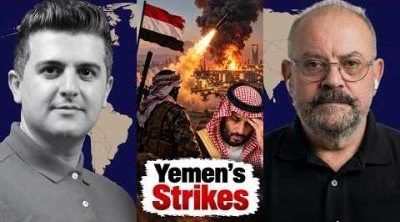
Elijah Magnier: Yemen’s strikes are shattering Saudi Arabia’s long-term strategy
or go to
Aletho News Archives – Video-Images
From the Archives
British weapons and personnel doing much of the killing in Yemen
Press TV – June 18, 2019
A detailed report published by the Guardian newspaper has shown how Britain is massively contributing to Saudi Arabia’s devastating war on Yemen as it suggests that London is not only supplying the bombs that fall on Yemenis, but it provides the personnel and expertise that keep the war going.
The comprehensive report by Arron Merat published on Tuesday showed that Britain was doing much of the killing in Yemen as the country continues to provide Saudi Arabia with everything it needs to turn its southern impoverished neighbor into a graveyard.
“Every day Yemen is hit by British bombs – dropped by British planes that are flown by British-trained pilots and maintained and prepared inside Saudi Arabia by thousands of British contractors,” said Merat in the report. … continue
Blog Roll
-
Join 2,366 other subscribers
Visits Since December 2009
- 7,782,688 hits
Looking for something?
Archives
Calendar
Categories
Aletho News Civil Liberties Corruption Deception Economics Environmentalism Ethnic Cleansing, Racism, Zionism Fake News False Flag Terrorism Full Spectrum Dominance Illegal Occupation Mainstream Media, Warmongering Malthusian Ideology, Phony Scarcity Militarism Progressive Hypocrite Russophobia Science and Pseudo-Science Solidarity and Activism Subjugation - Torture Supremacism, Social Darwinism Timeless or most popular Video War Crimes Wars for IsraelTags
Afghanistan Africa AIPAC al-Qaeda Australia BBC Benjamin Netanyahu Brazil Canada CDC Central Intelligence Agency China CIA CNN Covid-19 COVID-19 Vaccine Donald Trump Egypt European Union Facebook FBI FDA France Gaza Germany Google Hamas Hebron Hezbollah Hillary Clinton Human rights Hungary India Iran Iraq ISIS Israel Israeli settlement Japan Jerusalem Joe Biden Korea Latin America Lebanon Libya Middle East National Security Agency NATO New York Times North Korea NSA Obama Pakistan Palestine Poland Qatar Russia Sanctions against Iran Saudi Arabia Syria The Guardian Turkiye Twitter UAE UK Ukraine United Nations United States USA Venezuela Washington Post West Bank WHO Yemen Zionism
 Aletho News
- A West Bank War for Netanyahu’s Election Campaign, Could It Backfire?
- Yemen denounces European Parliament’s ‘hypocritical’ push to blacklist Ansarullah
- Qalibaf: UAE’s UN bid aims to ‘clear the runway’ for ‘Greater Israel’, whitewash genocide
- Pakistan reopens Iran border after boosting security: Report
- Why are so many Brazilians voting for Flávio Bolsonaro?
- Democrats Put Anti-Russia Agenda Ahead of American Workers
- Elijah Magnier: Yemen’s Strikes Are Shattering Saudi Arabia’s Long-Term Strategy
- Pentagon designates Chinese cultural centers national security threat
- Israel Demolishes Home Of Lebanese Journalist Whose Viral Film Exposed Pager Attack
- Record Oil, Empty Tanks: The UAE’s Miracle Recovery
- If Americans Knew
- Tourism Ministry launches free food truck tour in US
- “So Much Worse Than People Realize”: Never-Before-Seen Images Reveal Damage at U.S. Bases as Troops Describe Being Abandoned
- UK Bell Review Confirms Only Anti-Israel Attitudes Are Rising, Not Antisemitism
- DAILY UPDATE: Latest essential news on Palestine, Israel, & region
- DAILY UPDATE: Latest essential news on Palestine, Israel, & region
- Damning report shows the media must confront its failures on Gaza
- BBC senior broadcaster speaks out on Gaza coverage
- Netanyahu vows vast West Bank invasion in response to 20-minute skirmish that left 2 Israeli soldiers and 2 Palestinian fighters dead
- Tied up and tortured: Israel using US-made electroshock weapons on Palestinian detainees
- The outsourced risk: how newsrooms rely on Gaza’s freelancers without protecting them
- No Tricks Zone
- Sudden Stratospheric Warming, Powerful El Niño Combination May Lead To Extreme Europe Cold, Energy Crisis!
- Two New Studies Find Thwaites Glacier Melt Cannot Be Driven By Human Activity Or A Warming Ocean
- E-Cars Reduce CO2 Emissions By Only 41% Compared To Internal Combustion Engine Vehicles
- Predictions Made By Renowned Climate Professor Over Past Decades Have Been Proven To Be Poor
- New Study Suggests Large Regions Of The Pacific Ocean Have Been Cooling For The Last 80 Years
- Germany’s Green Energy Debacle: High Energy Costs Force Kahla Porzellan to Close After 182 Years!
- New Study: 50 Years Of The Most Aggressive ‘Net Zero’ Policies Can Only Affect The Global Climate By 0.03°C
- US September “Heat” Was No Record…Many Records Set Decades Ago
- Latest European Green Energy Debacle; Portugal’s Largest Flagship Solar Park Insolvent!
- Green Energy Debacle: German Expert Professor Fritz Vahrenholt Warns Of Severe Economic And Social Consequences
Contact:
atheonews (at) gmail.com
Disclaimer
This site is provided as a research and reference tool. Although we make every reasonable effort to ensure that the information and data provided at this site are useful, accurate, and current, we cannot guarantee that the information and data provided here will be error-free. By using this site, you assume all responsibility for and risk arising from your use of and reliance upon the contents of this site.
This site and the information available through it do not, and are not intended to constitute legal advice. Should you require legal advice, you should consult your own attorney.
Nothing within this site or linked to by this site constitutes investment advice or medical advice.
Materials accessible from or added to this site by third parties, such as comments posted, are strictly the responsibility of the third party who added such materials or made them accessible and we neither endorse nor undertake to control, monitor, edit or assume responsibility for any such third-party material.
The posting of stories, commentaries, reports, documents and links (embedded or otherwise) on this site does not in any way, shape or form, implied or otherwise, necessarily express or suggest endorsement or support of any of such posted material or parts therein.
The word “alleged” is deemed to occur before the word “fraud.” Since the rule of law still applies. To peasants, at least.
Fair Use
This site contains copyrighted material the use of which has not always been specifically authorized by the copyright owner. We are making such material available in our efforts to advance understanding of environmental, political, human rights, economic, democracy, scientific, and social justice issues, etc. We believe this constitutes a ‘fair use’ of any such copyrighted material as provided for in section 107 of the US Copyright Law. In accordance with Title 17 U.S.C. Section 107, the material on this site is distributed without profit to those who have expressed a prior interest in receiving the included information for research and educational purposes. For more info go to: http://www.law.cornell.edu/uscode/17/107.shtml. If you wish to use copyrighted material from this site for purposes of your own that go beyond ‘fair use’, you must obtain permission from the copyright owner.
DMCA Contact
This is information for anyone that wishes to challenge our “fair use” of copyrighted material.
If you are a legal copyright holder or a designated agent for such and you believe that content residing on or accessible through our website infringes a copyright and falls outside the boundaries of “Fair Use”, please send a notice of infringement by contacting atheonews@gmail.com.
We will respond and take necessary action immediately.
If notice is given of an alleged copyright violation we will act expeditiously to remove or disable access to the material(s) in question.
All 3rd party material posted on this website is copyright the respective owners / authors. Aletho News makes no claim of copyright on such material.

