This is a book about the Holocaust, and about two competing views of that event. On the one hand we have the traditional, orthodox view: the six million Jewish casualties, the gas chambers, the cremation ovens and mass graves. Traditional historians have thousands of surviving witnesses and the weight of history on their side. On the other hand there is a small, renegade band of writers and researchers who refuse to accept large parts of this story. These revisionists, as they call themselves, present counter-evidence and ask tough questions. They are beginning to outline a new and different narrative.
Thus there has emerged something of a debate, a debate of historic significance. This is no peripheral clash between two arcane schools of thought, regarding some minutiae of World War II. It is about history, of course, but it also speaks to fundamental issues of our time: freedom of speech and press, the operation of mass media, manipulation of public opinion, political and economic power structures, and the coercive abilities of the State. It is an astonishingly rancorous and controversial debate, with far-reaching implications.
Most of the reading public is only dimly aware of this debate, if at all. Everyone knows that six million Jews were killed by the Nazis, and that gas chambers were used in the killing. But few have any idea about the origins of this story, its rationale, and its justification. Fewer still know that serious questions have been raised against the traditional view; if they have heard of such questions, it is in the context of a few right-wing neo-Nazi anti-Semites who are trying to attack the Jews by questioning the Holocaust. And not more than a handful of people know about the serious issues raised by the revisionists, and the attempts by certain traditionalists to respond.
The fact that so few are aware of what may be called the Great Holocaust Debate is perhaps not surprising. Much has been invested in the conventional story. Textbooks and encyclopedias have been written about it. Historians have staked their personal reputations on it. Politicians have passed laws defending it. And wealthy and powerful interests have good reason to sustain it. In short, very few of those in positions of influence want to acknowledge any kind of legitimate debate. There is no incentive to publicize it, and strong disincentive. Those in the public eye know that, should they broach this subject, they will suffer the consequences. Advertisers will drop out. Financial backers will disappear. They may be sued. They will lose access. They will be shunned. And it will all be legal.
Only a dramatic turn of events can force this debate into the public realm. Such a turn occurred in early 2006, when Iranian President Mahmoud Ahmadinejad announced that there would be a Holocaust conference in Teheran. The purpose would be to examine its scientific and technical basis with an eye to reinterpreting the facts. Reaction was rapid and fierce. Most called it a Holocaust denial conference, dismissing it as so much anti-Semitic raving. But Ahmadinejad followed through, and the conference was held in December of that year. The sky did not fall, and hoards of crazed lunatics did not rise up and slaughter Jews around the world. But the topic broke through the wall of silence; and more people now than ever suspect that all is not well with the traditional story hence the need for a book such as this.
* * * * *
The Great Debate is marked by a striking partisanship. The traditional story is defended primarily by survivors, Jewish writers and researchers, and those who suffered at the hands of Nazi Germany in other words, by people with a self-interest in sustaining the dominant view of a genocidal Nazi regime and an innocent and victimized Jewish people. Of the thousands of books on the subject, the vast majority are by Jewish authors. The revisionist perspective is promoted by a very small number of people, primarily Germans, people of German origins, and those who are ideologically inclined to be pro-German or anti-Jewish again, not an unbiased group.1 Charges of lies, conspiracy, and hoax are frequently launched by both sides. This leaves the vast majority of the public in a quandary: the average person is faced with partisan advocates on both sides, and rarely, if ever, gets a complete and balanced picture.
My goal is to remedy this shortcoming. I intend to present an objective, impartial look at this debate. I will discuss the latest and strongest arguments on both sides, examine the replies, and offer an unbiased assessment. This is a challenging task, to say the least, but I believe that I am reasonably well suited for it. Unlike the vast majority of writers on the Holocaust, I am not Jewish either by religion or ethnicity; nor are any of my family members. I am not of German descent. No one in my immediate family suffered or died in World War II. I am neither Muslim nor fundamentalist Christian, so I have no religious bias. My background is as a scholar and academic, having taught humanities at a prominent American university for several years now. I have a long-standing interest in World War II, and in the present conflict in the Middle East. In the end, whether I have succeeded in offering an objective analysis of this debate will be for the reader to judge.
This book is targeted at the general educated reader, but holds to a high standard of scholarship. Hence it is as suited for university use as for general readership. In examining the writings of the two opponents, I have taken nothing for granted. To the extent possible, I have verified all quotations, checked all calculations, and noted errors though I must say that the level of scholarship on both sides has been laudably high. I have attempted to use commonly available sources, should the reader wish to confirm any statements or quotations I offer here.2 I have concentrated on English language sources; this has its drawbacks, but fortunately most of the important sources are in English, so the problem is not too great. Where relevant, I have cited essential non-English writings as well.
I have also shown a preference for hard-copy publications books and journal articles over Internet publications. Web-based material is always questionable. It can change from one day to another, and disappear the next. Such sources are typically less well researched, and often rely on other, equally unreliable, Web-based sources for their arguments. On the other hand, much controversial material can be published only on the Web, and this point must be noted. It is very convenient, for example, that several of the key revisionist texts complete books are available free online. (This very fact should mitigate the notion of a profit motive of the revisionists.) And the rise of YouTube and online video services allows access to audio-visual material that can have a greater impact than printed works. Thus, as appropriate, I have included relevant Web page information.
Finally, I use terminology indicating the provisional nature of claims about the Holocaust. My use of alleged, so-called, scare quotes, and similar devices simply is meant to indicate that I am withholding assent until the case is fully examined. I tend to be skeptical of most things told to me by those in positions of power and influence, and this subject is no different. I recommend that the reader do the same. As for my occasional quips, jabs, and weak attempts at humor, I can only say that this is not intended as insult or dismissal. I aim to take a sometimes plodding and tedious debate and make it interesting and readable. But when one makes outrageous claims, or puts forth obvious nonsense, and then expects to be taken seriously then a sarcastic jab may be entirely appropriate.
* * * * *
Some might question the relevance of this whole topic. They might point out that the event under discussion happened over sixty years ago, that most who experienced it are dead, and that the enmities of the war are long gone. America and the European nations are friends, and at peace (with each other, at least!). Japan is an important trading partner, and poses no military threat. So why bother with the Holocaust? What’s the big deal? Yes, the Jews suffered, some may say. So just leave them alone. Let them have their ol’ Holocaust.
I think it does matter, and not only to those who have a vested interest. First, there is the straightforward question of history. Regardless of what one may think, the Holocaust was an event of major historical importance. As with any historical event, it is important to get the facts straight, and to develop consistent and coherent views about what happened. To understand what did, or did not, happen is important for understanding the world of the twentieth century, and by extension, the world of today.
Second, we are not allowed to forget about it, even if we wanted to. Coverage of the Holocaust is standard fare in every school curriculum.3 Children the world over read The Diary of Anne Frank, Number the Stars, Waiting for Anya, and Butterfly. Students learn about the gas chambers and the six million, about the Nazi atrocities.4 We watch Holocaust miniseries on television, Schindlers List, and documentaries like Night and Fog. We celebrate Holocaust Education Week, and we acknowledge January 27 each year as the International Day of Commemoration of Holocaust victims, as declared by the UN in 2005. School children collect six million pencils, or six million paperclips.5 We visit Holocaust museums. We take college courses from endowed chairs in Holocaust studies. This is not by accident. It is a deliberate plan, to make sure we never forget. And if we can never forget, then we should at least get the story straight.
Third, there is the drama of the debate itself. It is unlike anything else the name-calling, the suppression of ideas, the jailing of dissenters, the burning of books. It is a debate that can scarcely be mentioned in polite company. It is, in a real sense, one of the last taboos in Western civilization. But as we know, taboos never last. They are the product of a given era, of specific social and political forces. When those forces shift, as they inevitably do, the taboo is lifted. Now is perhaps such a time.
Fourth, we have the underlying issue of free speech. I take a position in support of radical free speech. Speech is an (almost) absolute right. There is virtually no topic that should be out of bounds. Barring only such obscure cases as an immediate threat to human life (one thinks of the contrived example of crying fire in a crowded theater ), no words or ideas should be beyond discussion. I support vigorous and open debate on every conceivable topic, the Holocaust included. Suppressing speech only drives it underground, and can only lead to unethical and reprehensible manipulation of the public’s ability to think for itself. Those in power always have reason to fear free speech all the more reason to defend it.
Fifth is the monetary angle. Billions of dollars have been given as restitution, to Israel, to individual survivors, and to Jewish organizations. These are tax dollars, provided by the workers of the affected nations primarily Germany and Switzerland (to date). Restitution claims have not ended, and will likely not end in the foreseeable future; as recently as March 2008, the Belgian government agreed to pay $170 million to survivors, their families, and the Jewish community. This is rather astonishing, given that Belgium was a victim of the war, not an aggressor! (The official reason: Belgium failed to resist hard enough against Nazi deportation of Jews.) Compensation money, arising directly from the conventional Holocaust story, in turn flows back to sustain it. Restitution money buys political clout, where in the U.S. at least it ends up as campaign contributions and issue ads. It encourages lawmakers to legislate in support of Israel and against revisionism and they do.
Sixth, there are the far-reaching conflicts in the Middle East that stem, in large part, from the Holocaust in a number of important ways. First, the state of Israel itself is due largely to the persecution of Jews in the war (Israel was created in 1948).6 Its creation sparked the ethnic cleansing of Palestinian Arabs, which led to several wars and ultimately to the present Israeli occupation of the West Bank and other Palestinian lands. This occupation in turn is a crucial factor in the global war on terror, and in the present bloody conflicts in Iraq and Afghanistan. Second, it is a crucial factor in the United States giving $6 billion per year, every year, to Israel in the form of military, economic, and indirect aid. Third, if there is a future conflict with Iran, it too will stem in part from conflicting views of the Holocaust;7 Ahmadinejad knows this, hence his willingness to challenge the traditional account. And finally, the influential group of people who promote and defend the Holocaust are by and large the same people who supported the wars in the Middle East. The same ideology “militant right-wing Zionism” is a major factor in both. Thus by better understanding their thinking and actions we may perhaps head off future wars.
Seventh: If we can be misled or fooled, or deceived, or lied to about the Holocaust, what other events might we be misled about? The same social forces that could give rise to, and sustain, a deficient Holocaust story could produce countless other stories that might be exaggerated, embellished, distorted, or falsified.
Finally, the Great Debate tells us something important about the power structure of Western nations. Revisionists challenge not only orthodoxy; they challenge the power of the State. Advocates for the conventional view are in positions of great influence. They are wealthy. They have many supporters, and virtually unlimited resources. They are able to turn the power of the State, and public opinion, against revisionism. The revisionists, few in number and poor in means, have only ideas. But, as the masked man once said, ideas are bulletproof. They have a power of their own, unmatched by money, military, or government. Ideas can penetrate to the heart of truth. This is the promise of revisionism. Whether it succeeds, time shall tell.
* * * * *
To repeat, I attempt here to take an impartial look at this clash of views. Arguably this is doomed to failure. I can be sure that both sides will accuse me of biased thinking, of disregarding important points, of undervaluing critical issues. Trying to remain neutral in this cantankerous debate is rather like taking a stroll through no-mans-land amidst trench warfare. I am guaranteed to be shot at by both sides.
Nevertheless, I am not concerned with befriending either camp. The hardcore partisans of both sides are few in number, even if one side wields disproportionate power. My concern is the vast middle ground of people, neither Jew nor Muslim nor German, who are directly and indirectly affected by the Holocaust, and who deserve to hear all perspectives on the matter. I stand with that group.
I am not a revisionist, and I do not endorse their claims. I am a bystander in this debate, observing and commenting on a collision of ideas. This book is not a book of revisionism. It is a book about revisionism, and about two competing views of the truth. It addresses the ability of each side to marshal evidence, and to create a clear and consistent picture of the past.
The revisionist view of events is so shocking, so far from what we have been told, that we have a hard time comprehending its possibility. A colleague once told me that he would be no more shocked to find no Eiffel Tower in Paris than he would to learn that the revisionists were right. Yet we can scarcely avoid asking ourselves this question: Is it really possible that the traditional Holocaust story is wrong? And not merely a little wrong, but significantly and fundamentally flawed? This is for each reader to decide. My objective is not to impose an overall conclusion, but rather to illuminate and articulate the main points, and to comment on their validity. The reader must decide.
I sense a turning point in the debate. It seems to be moving out of the shadows and into the realm of serious and legitimate discourse. Revisionists have strong arguments in their favor, and, despite book burnings and jail terms, they are not going away. Traditionalists seem of late to have lost their momentum. Perhaps they have no more counterarguments. Perhaps they have tired of defending the conflicting stories of survivors and witnesses. Perhaps they have reached the limit of their ability to fashion a comprehensible picture of those tragic events of sixty years ago. The debate will reach a new resolution, and I suspect that the result will be something different than we presume today.
NOTES
1. Of course there are other revisionists not among these groups. Prominent revisionist Germar Rudolf has argued that, proportionately, the French are the most represented group.
2. Wherever possible, quotations include in-text citations. For example, (Hilberg 2003: 29) refers to page 29 of Hilbergs 2003 publication (The Destruction of the European Jews), which can be found in the bibliography at the rear. Such citations both let the reader know the time frame of the quotation, and avoid an excessive multiplication of footnotes. (Recent scholarship, especially by the revisionists, is footnote-crazy. This is useful from a scholarly perspective, but can make for awkward reading.) The end objective, after all, is to clearly cite reliable and verifiable sources, and I think I have achieved this goal. And, unlike most books on the subject (of either side), I have included a full and complete index and bibliography.
3. One example: On November 7, 2008, the British Times Online reported that every secondary school [in the UK] is to get a Holocaust specialist to ensure that the subject is taught comprehensively and sensitively. Ten percent of these specialists will receive a masters degree in Holocaust education. The scheme is part of a wider Holocaust education project funded by the Government and a national charity. The project will also send two sixth-formers [ages 16 and 17] from every school to Auschwitz each year.
4. In February 2008, French President Nicolas Sarkozy proposed strengthening an existing mandate to teach the Holocaust; his idea was that every fifth grader will have to learn the life story of one of the 11,000 [Jewish] French children killed by the Nazis in the Holocaust. (New York Times, February 16) The proposal was rejected by the Education Ministry five months later. Yet we should ask what might have compelled Sarkozy to attempt this. One factor could be his family background; his grandfather was Jewish, and he clearly views himself as a friend of Israel. Another might be the strong Jewish minority in France; the country has the third-highest percentage of Jews outside Israel (though small”just under one percent”it is nonetheless very influential; see Chapter 12).
Furthermore, we should consider the numbers involved. The standard definition of a child victim is anyone under age sixteen. Most traditionalists claim that children represented about one third of all victims. So 11,000 child deaths implies about 30,000 French Jews in total. (Of course, we dont know if Sarkozy is using a different definition of child “perhaps only those of middle-school age.) But a figure of 30,000 is far less than that mentioned by, for example, Gilbert (1988: 244), who claims 83,000 French Jewish deaths. As so often happens in the Debate, ill-defined numbers are thrown around that are rife with contradiction.
If the total was 30,000, French Jews accounted for just 0.5 percent of the six million victims”virtually insignificant in the overall picture. (If 83,000, then 1.4 percent.) And they would represent only 6 percent of all 500,000 French war casualties.
5. On September 20, 2004, the AP reported on a middle school in Tennessee, where, back in 1998, students hoped to collect 6 million paper clips”one to remember each person killed in the Holocaust. Thanks to global publicity, they had collected 30 million clips by 2004. In that same year Paper Clips, an award-winning Miramax documentary, was released. Regarding the pencils, a Texas junior high school issued a press release on May 15, 2007: Six million pencils for Holocaust project. They hope to get 167,000 per month, achieving their total by 2010.
6. It is true, however, that the Zionist push for a Jewish homeland had begun in earnest as early as 1900; the Balfour Declaration of 1917 declared British support for the establishment in Palestine of a national home for the Jewish people. The process was thus in motion several decades before the end of World War II, but it was the Holocaust that was the last straw, inducing the UN to create the state of Israel in 1948.
7. The Holocaust is often invoked in the Iranian conflict, both in reference to Ahmadinejad’s denial of it, and to a future attack on Israel. The threat of military action comes from both the United States and Israel (but from nowhere else). A recent example: On August 7, 2008, Time magazine reported the story Israel Preparing for Iran Strike. The Israeli Deputy Prime Minister is quoted as saying, Israel takes Mahmoud Ahmadinejads statements regarding its destruction seriously. Israel cannot risk another Holocaust.
The massive demonstrations in European capitals and major cities in support of the people of Gaza highlighted once again the core problem: the vast majority of the Left, including communists, agrees in supporting the people of Gaza against Israeli aggression, but refuses to support its political expressions such as Hamas in Palestine and Hezbollah in Lebanon.
The Left not only refuses to support them, but also denounces them and fights against them. Support for the people of Gaza exists only at a humanitarian level but not at the political level.
Concerning Hamas and Hezbollah; the Left is mainly concerned with the support these groups have amongst the Arab masses, but are hardly interested in the fact that Israel’s clear and aggressive intention is to destroy these resistance movements. From a political point of view we can say without exaggeration that the Left’s wish (more or less openly admitted) follows the same line as the Israeli government’s: to liquidate popular support for Hamas and Hezbollah.
This question arises not only for the Middle East but also in the European capitals because, today, the bulk of the demonstrators in Brussels, London and Paris are made up of people of North African origin, as well as South Asian Muslims in the case of London.
The reactions of the Left to these events are quite symptomatic. I will cite a few but there are dozens of examples. The headline of the French website ‘Res Publica’ following the mass demonstration in Paris on the 3rd of January read: “We refuse to be trapped by the Islamists of Hamas, Islamic Jihad and Hezbollah!” The article continued: “Some activists of the left and far left (who only turned out in small numbers) were literally drowned in a crowd whose views are at odds with the spirit of the French Republican movement and of the 21st Century Left. Over 90% of the demonstrators championed a fundamentalist and communitarian worldview based on the clash of civilizations which is anti-secular and anti-Republican. They advocated a cultural relativism whose harmful tendencies are well known, particularly in England.
Res Publica is neither Marxist or communist, but one would be hard pressed to find even the most remotely positive words about Hamas on Marxist websites. One does find formulations such as “Whatever we think about Hamas, one thing is indisputable: the Palestinian people democratically elected Hamas to lead Gaza in elections held under international supervision.” Looking further at “what we can think of Hamas” one finds on the websites of both the French Communist Party and the Belgian Labour Party an article entitled “How Israel put Hamas in the saddle.” We learn little more than the assertion that Hamas has been supported by Israel, the United States and the European Union. I note that this article was put online on January 2nd after a week of intensive Israeli bombardment and the day before the ground offensive whose declared aim was the destruction of Hamas.
I will return to the quotation of Res Publica, because it summarizes quite well the general attitude of the Left not only in relation to the Palestinian resistance, but also in regard to the Arab and Muslim presence in Europe. The most interesting thing in this article is the comment in parentheses: ‘the Left and far Left (who only turned out in small numbers)’. One might expect following such a confession some self-critical analysis regarding the lack of mobilisation in the midst of the slaughter of the Palestinian people. But no, all charges directed against the demonstrators (90% of the whole protests) are accused of conducting a “war of civilizations.”
At all the demonstrations I participated in Brussels, I asked some demonstrators to translate the slogans that were chanted in Arabic, and they did so with pleasure every time. I heard a lot of support for the Palestinian resistance and denunciation of Arab governments (in particular the Egyptian President Mubarak), Israel’s crimes, and the deafening silence of the international community or the complicity of the European Union. In my opinion, these were all political slogans quite appropriate to the situation. But surely some people only hear Allah-u-akbar and form their opinion on this basis. The very fact that slogans are shouted in Arabic is sometimes enough to irritate the Left. For example, the organizing committee of the meeting of 11 January was concerned about which languages would be used. But could we not have simply distributed the translations of these slogans? This might be the first step towards mutual understanding. When we demonstrated in 1973 against the pro-American military takeover by Pinochet in Chile, no one would have dared to tell the Latin American demonstrators “Please, chant in French!” In order to lead this fight, we all learnt slogans in Spanish and no one was offended.
The problem is really in the parentheses: why do the Left and far Left mobilise such small numbers? And to be clear, are the Left and far Left still able to mobilize on these issues? The problem was already obvious when Israel invaded Lebanon in the summer of 2006. I would like to quote here an anti-Zionist Israeli who took refuge in London, jazz musician Gilad Atzmon, who already said, six months before the invasion: “For quite a long time, it has been very clear that the ideology of the Left is desperately struggling to find its way in the midst of the emerging battle between the West and the Middle East. The parameters of the so-called “clash of civilizations” are so clearly established that any “rational” and “atheist” leftist activist is clearly condemned to stand closer to Donald Rumsfeld than to a Muslim.”
One would find it difficult to state the problem more clearly.
I would like to briefly address two issues which literally paralyze the Left in its support to the Palestinian, Lebanese, and more generally to the Arab and Muslim resistance: religion and terrorism.
The Left and Religion
Perplexed by the religious feelings of people with an immigrant background, the Left, Marxist or not, continuously quotes the famous statement of Marx on religion: “religion is the opium of the people”. With this they think everything that needs to be said has been said. It might be more useful cite the fuller quote of Marx and perhaps give it more context. I do this not to hide behind an authority, but in the hope of provoking some thought amongst those who hold this over-simplified view, “Religion is the general theory of this world, (…), its logic in popular form, its spiritual point d’honneur, its enthusiasm, its moral sanction, its solemn complement, and its universal basis of consolation and justification. (…) The struggle against religion is, therefore, indirectly the struggle against that world whose spiritual aroma is religion. Religious suffering is, at one and the same time, the expression of real suffering and a protest against real suffering. Religion is the sigh of the oppressed creature, the heart of a heartless world, and the soul of soulless conditions. It is the opium of the people.”
(Translation of Prof. W. Banning, Life, Learning and Meaning, 1960, The Spectrum (p.62-63)
I have always been and remain an atheist, but the rise of religious feelings is hardly surprising. In today’s world most politicians, including those on the Left, do little more than display their weakness on this issue: they do nothing against the military power of the US, they do nothing or almost nothing against financial speculation and the logic of profit that plunges billions of people on this Earth into poverty, hunger and death. All this is due, we are told to “the invisible hand” or “divine intervention”: where is the difference between this and religion? The only difference is that the theory of the “invisible hand” denies people the right to struggle for social and economical justice against this “divine intervention” that helps to maintain the status quo. Like it or not, we cannot look down on billions of people who may harbour religious feelings while wanting to ally with them.
The Left does exactly the same thing as what it accuses the Islamists of: it analyses the situation only in religious terms. It refuses to disclose the religious expressions as a “protest against misery”, as a protest against Imperialism, colonialism, and neo-colonialism. It cuts itself off from a huge part of the masses. Gilad Atzmon expresses it best when he states: “Rather than imposing our beliefs upon others, we better learn to understand what others believe in”. If we continue to refuse to learn, we will continue to lament the religious feelings of the masses instead of struggling with them for peace, independence and social and economic justice.
But there is more. The treatment of Islam is very different from that of Christianity. I have never known the Left to hesitate when showing solidarity with the Latin American bishops, followers of liberation theology and the struggle against Yankee Imperialism in the 70s, or the Irish Catholic resistance to British Imperialism. Nor have I known the left to criticize Martin Luther King for his references to the Gospel, which was a powerful lever for the mobilisation of the Black American masses that did not have political, economic or social rights in the U.S in the sixties. This discriminatory treatment by the Left, this systematic mistrust of Muslims who are all without any distinction suspected of wanting to impose sharia law on us, can only be explained by colonialism that has profoundly marked our consciousness. We will not forget that the Communists, such as the Communist Party of Belgium (KPB), praised the benefits of colonization that were enthusiastically spread by Christian missionaries. For example, in the 1948 program of the KPB, when the party had just emerged from a period of heroic resistance against the Nazi occupation, it stated the following about the Belgian Congo: “a) Establishment of a single economic unit Belgium-Congo; b) Development of trade with the colony and realization of its national resources; c) Nationalization of resources and trusts in Congo; d) Development of a white colonists class and black farmers and artisan class; e) Gradual granting of democratic rights and freedoms to the black population.”
It was this kind of political education of workers by the Party which meant that there was hardly any protests from these Belgian workers influenced by the KPB when Patrice Lumumba, Pierre Mulele and many other African anti-imperialist leaders were assassinated. After all “our” Christian civilization is civilized, is it not? And democratic rights and freedoms can only “gradually” be assigned to the masses in the Third World, since they are too barbaric to make good use of them.
On the basis of exactly the same political colonialist reasoning, the Left is rather regretful in having supported democratic elections in Palestine. Perhaps they should have adopted a more gradualist approach towards the Palestinians since the majority of Palestinians have now voted for Hamas. Worse, the Left bemoans the fact that “the PLO was forced to organize parliamentary elections in 2006 at a time when everything showed that Hamas would win the elections”. This information is available on the sites of the French KP and Belgian PVDA.
If we would agree to stop staring blindly and with prejudice at the religious beliefs of people, we would perhaps “learn to understand” why the Arab and Muslim masses, who today demonstrate for Palestine, are screaming ‘Down with Mubarak’, an Arab and Muslim leader, and why they jubilantly shout the name of Chavez, a Christian-Latin American leader. Doesn’t this make it obvious that the Arab and Muslim masses frame their references not primarily through religion but by the relation of leaders to US and Zionist Imperialism?
And if the Left would formulate the issue in these terms, would they not partly regain the support of the people that formerly gave the Left its strength?
Another cause of paralysis of the Left in the anti-imperialist struggle is the fear of being associated with terrorism.
On the 11th of January 2009, the president of the German Chamber of Representatives, Walter Momper, the head of the parliamentarian group of ‘Die Grüne’ (the German Greens), Franziska Eichstädt-Bohlig, a leader of ‘Die Linke’, Klaus Lederer, and others held a demonstration in Berlin with 3000 participants to support Israel under the slogan ‘stop the terror of Hamas’. One must keep in mind that Die Linke are considered by many in Europe as the new and credible alternative Left, and an example to follow.
The entire history of colonisation and decolonisation is the history of land that has been stolen by military force and has been reclaimed by force. From Algeria to Vietnam, from Cuba to South-Africa, from Congo to Palestine: no colonial power ever renounced its domination by means of negotiation or political dialogue alone.
For Gilad Atzmon it is this context that constitutes the real significance of the barrage of rockets by Hamas and the other Palestinian resistance organizations: “This week we all learned more about the ballistic capability of Hamas. Evidently, Hamas was rather restrained with Israel for a long while. It refrained from escalating the conflict to the whole of southern Israel. It occurred to me that the barrages of Qassams that have been landing sporadically on Sderot and Ashkelon were actually nothing but a message from the imprisoned Palestinians. First it was a message regarding stolen land, homes, fields and orchards: ‘Our beloved soil, we didn’t forget, we are still here fighting for you, sooner rather than later, we will come back, we will start again where we had stopped’. But it was also a clear message to the Israelis. ‘You out there, in Sderot, Beer Sheva, Ashkelon, Ashdod, Tel Aviv and Haifa, whether you realise it or not, you are actually living on our stolen land. You better start to pack because your time is running out, you have exhausted our patience. We, the Palestinian people, have nothing to lose anymore”. (Gilad Atzmon – Living on Borrowed Time in a Stolen Land)
What can be understood by an Israeli Jew, the European Left fails to understood, rather, they find ’indefensible’ the necessity to take by force what has been stolen by force.
Since 9/11, the use of force in the anti-colonial and the anti-imperialist struggle has been classified under the category of ‘terrorism’; one cannot even discuss it any more. It is worth remembering that Hamas had been proscribed on the list of ‘foreign terrorist organizations’ by the United States in 1995, seven years before 9/11! In January 1995, the United States elaborated the ‘Specially designated terrorist List (STD)’ and put Hamas and all the other radical Palestinian liberation organisations on this list.
The capitulation on this question by a great part of the Western Left started after 9/11, after the launching of the Global War on Terror (GWOT) by the Bush administration. The fear of being classified ‘terrorists’ or apologists of terrorism has spread. This attitude of the Left is not only a political or ideological question, it is also inspired by the practical consequences linked to the GWOT. The European ‘Council Framework Decision of 13 June 2002 on combating terrorism’ and its attached terror list who was a copy-and-paste version of the American terror list that has been incorporated into European legislation, which allow the courts to prosecute those who are suspected of supporting terrorism. During an anti-war rally in London, some activists who sold a publication which included Marxist analysis on Hamas were stopped by the police and their magazines were confiscated. In other words, to attempt to inform people on the political program and the action of Hamas and Hezbollah becomes an illegal enterprise. The political atmosphere intimidates people into distancing themselves from these resistance movements and to denounce them without reservations.
In conclusion I have a concrete suggestion to make: we must launch an appeal to remove Hamas from the terror lists. At the same time we must ensure that Hezbollah are not added to the terror list. It is the least we can do if we want to support the Palestinian, Lebanese and Arab resistance. It is the minimal democratic condition for supporting the resistance and it is the essential political condition for the Left to have a chance to be heard by the anti-imperialist masses.
I am fully aware of the fact that my political opinions are a minority in the Left, in particular amongst the European communists. This worries me profoundly, not because of my own fate, I am not more then a militant amongst others, but for the fate of the communist ideal of an end of exploitation of man by man, a struggle which can only happen through the abolition of the imperialist, colonial and neo-colonial system.
Nadine Rosa-Rosso is a Brussels-based independent Marxist. She has edited two books: “Rassembler les résistances” of the French-language journal ‘Contradictions’ and “Du bon usage de la laïcité”, that argues for an open and democratic form of secularism. She can be contacted atnadinerr@gmail.com
When Israel was established, its founders made sure to emphasize, in its Declaration of Independence, the universal values of Jewish tradition: “The State of Israel […] will promote the development of the country for the benefit of all its inhabitants; will be based on the precepts of liberty, justice and peace as envisaged by the prophets of Israel; will uphold the full social and political equality of all its citizens, without distinction of race, creed or sex; will guarantee full freedom of conscience, worship, education and culture; will safeguard the sanctity and inviolability of the shrines and Holy Places of all religions; and will dedicate itself to the principles of the Charter of the United Nations.” Later on, the Knesset voted to adopt the Universal Declaration of Human Rights. Furthermore, Israel is in the habit of calling itself “the only democracy in the Middle East”, and since its earliest days, its leaders were partial to the term “a light unto the nations.” As we mark Human Rights Day, we should examine whether Israel stands by the high rhetoric of its founders, and whether it fulfills the Declaration of Human Rights.
As every person living in Israel knows, assuming their eyes are open and their hearts are not blocked, Israel and the Universal Declaration of Human Rights have a rocky relationship. In the beginning of 2010, Gideon Sa’ar’s Ministry of Education decided to stop teaching the Declaration at schools (Hebrew), since it informs tender children of their right to convert to another religion and even, heaven forbid, live somewhere other than Israel. However, this is just a minor problem; reading the text of the Declaration shows that the Israeli occupation of the Palestinian territories violates 15 of its articles. Given that there are only 30 of them, that’s quite impressive.
Let us begin. The first violation comes with the first operative article of the Declaration, Article 2. It states, “Everyone is entitled to all the rights and freedoms set forth in this Declaration, without distinction of any kind, such as race, colour, sex, language, religion, political or other opinion, national or social origin, property, birth or other status. Furthermore, no distinction shall be made on the basis of the political, jurisdictional or international status of the country or territory to which a person belongs, whether it be independent, trust, non-self-governing or under any other limitation of sovereignty.” Only, as everyone knows, after “no distinction shall be made”, the text is irrelevant in the territories occupied by Israel. Article 2 is sort of an umbrella article; the following ones will note specific violations.
Article 3 of the Declaration states, “Everyone has the right to life, liberty and security of person.” Except that those living under Israeli rule in the West Bank are entitled to none of the above. The indictment rate for Israeli soldiers who have killed Palestinian non-combatants is negligible. Since 2000, only seven soldiers were put on trial and convicted for crimes involving the death of Palestinians; the number of Palestinian deaths since 2000 is estimated at over 5,000. IDF soldiers need no warrant to break into Palestinian homes; they are authorized to arrest them without any explanation, and from time to time enforce curfews on Palestinian towns and villages.
Next. Article 5 of the Declaration states, “No one shall be subjected to torture or to cruel, inhuman or degrading treatment or punishment.” Anyone familiar with the way our security services operate, or with the fact that, on many occasions, IDF soldiers beat up Palestinian detainees, knows that this article is often violated. Furthermore, it’s hard to see the standard procedure of blindfolding prisoners as anything but “degrading treatment.”
The fourth violation of the Declaration comes with Article 7: “All are equal before the law and are entitled without any discrimination to equal protection of the law.” Except, the whole essence of the occupation is creating two populations in the same region, with two different sets of rights and two different legal systems. Discrimination manifests itself not just in the laws themselves, but also through unequal enforcement. To put it mildly, the Jewish victim of a crime in the OPT is significantly more likely to see justice served than would a Palestinian living in a neighboring village. .
The fifth violation also comes from the legal world: “No one shall be subjected to arbitrary arrest, detention or exile,” declares Article 7. Except for the fact that the occupation forces maintain the right to hold a person in administrative detention, that is, held without charges and deprived of the right to defend himself in court. It’s hard to imagine a more “arbitrary arrest or detention” than that. Furthermore, from time to time Israel exiles Palestinians – in the last few years mostly from the West Bank to the Gaza Strip, but it used to exile them to Lebanon and other countries, not to mention the internal displacement looming over South Hebron residents.
Article 10 of the Declaration states that “Everyone is entitled in full equality to a fair and public hearing by an independent and impartial tribunal.” But it’s doubtful whether you can call our military courts “an independent and impartial tribunal” with a straight face. Their conviction rate is 99.7%. The British courts in India used to take pride in the large number of Indians who served there as judges; in Israel’s military courts, Palestinians naturally have nary a chance of being sentenced by a Palestinian. Israel once recruited police officers from among the occupied population, but it never imagined allowing them to sit in judgment. Israel’s military courts are a foreman’s court, conducted in the foreman’s language.
As far as the military courts are concerned, Article 11 of the Declaration is also troublesome: it says that, “Everyone charged with a penal offence has the right to be presumed innocent until proved guilty according to law in a public trial at which he has had all the guarantees necessary for his defence.” My emphasis. The military courts of Israel are notorious for allowing “secret evidence” presented to the judges by the prosecution, the content of which the defendant has no knowledge, nor is able to contradict. This means that the conviction of a defendant relies, at least in large part, on evidence that he has not had the opportunity to refute, and whose absurdities or lies he cannot expose. Such “secret evidence”, fabricated to the gills, was the crux of the Dreyfus Affair. The French court, when exonerating Captain Dreyfus, ruled that the admission of “secret evidence” is incompatible with the right of a person to a legal defense. Dreyfus would, in time, be decorated by the thankful Republic with its highest decoration, the Légion d’honneur, because “by defending his own honor, he defended the nation’s ” and prevented it from jailing an innocent man. It’s been almost 120 years since Dreyfus’ infamous court-martial, and the Israeli military courts are yet to absorb this simple lesson.
Article 12 states, “No one shall be subjected to arbitrary interference with his privacy, family, home or correspondence, nor to attacks upon his honour and reputation.” As noted above, Palestinians have no defense against arbitrary search of their homes. In fact, their houses sometimes serve as military training sites.
Onwards! Article 13 declares, “Everyone has the right to freedom of movement and residence within the borders of each state. Everyone has the right to leave any country, including his own, and to return to his country.” However, Israel enforces a rigid “permit regime” in the West Bank and the Gaza Strip, and it operates checkpoints which cut the West Bank into fragments. Our colleagues at Gisha can tell you more about just how fastidious Israel is about the right of Palestinians to move from the West Bank to the Gaza Strip and vice versa. Some Palestinians are even barred from travel outside the West Bank at all. And of course, residents of East Jerusalem, which though Israel may have forgotten, is part of what the world views as occupied territory and is contiguous with the West Bank, risk losing their ability to return to their homes should they leave for a few years – say, for familial, economic or educational reasons – even if they only leave to the West Bank.
Article 15 declares plainly that “Everyone has the right to a nationality.” We shan’t belabor that point. Article 17 also seems to be so simple as to be self-evident: “No one shall be arbitrarily deprived of his property.” It is, however, anything but. Ask the villagers whose land is slowly being devoured by illegal outposts; ask the residents of Dura al-Qara, whose land was confiscated in what the State now stammers is a “frozen military need”, and left unused.
While Article 19 states that “Everyone has the right to freedom of opinion and expression; this right includes freedom to hold opinions without interference and to seek, receive and impart information and ideas through any media and regardless of frontiers,” Israel has employed brutal censorship for years towards the occupied people/ The IDF responds harshly to protests across the West Bank, resulting in many of Yesh Din’s complaints of unwarranted injuries, and it still detains people from time to time for “holding inciting material.” The military orders in force in the West Bank effectively make every demonstration an illegal one. For this reason, Article 20 of the Declaration – ” Everyone has the right to freedom of peaceful assembly and association” – is dead letter in the West Bank.
Article 21 declares that “Everyone has the right to take part in the government of his country, directly or through freely chosen representatives. The will of the people shall be the basis of the authority of government.” Palestinians living in Areas B and C are effectively subjects of the Israeli government, which they never elected and which they have no way of electing or being elected to. Also, given that Israel forbids Hamas to participate in the Palestinian elections, which grant limited powers to a Palestinian government, and given that it maintains the right to detain Palestinian politicians as it sees fit, one can hardly speak of “the will of the people.”
But perhaps the most painful violation is that which should be most obvious: “Motherhood and childhood are entitled to special care and assistance. All children, whether born in or out of wedlock, shall enjoy the same social protection,” says Article 25. Anyone who has seen detained children, quite a few of them under the age of discretion; anyone who has compared the special rights given to accused minors in the Israeli system with the almost dearth of comparable rights granted to Palestinian minors in the military courts; and anyone who has observed our brave troops raiding a house at night, handcuffing a child and blindfolding him; and anyone who understands the psychological damage to children witnessing their parents brutally arrested at gunpoint at night in their beds knows just how the most obvious is anything but that in the territories under Israeli occupation.
Yet these many violations, we should remind you, are not a force of nature, do not stand of their own power; they are no ancient, unbreakable law; they are man-made, they are an act we fund, carried out by those we empower to act and whose actions we approve – admittedly, mostly by averting our eyes. But we can mend this; and we shall.
Last Friday, after 13 months and 400 witness testimonies, the mega-lawsuit in Federal Court of Tucumán found 37 of 41 defendants guilty of crimes against humanity during the 1976-83 dictatorship in Argentina. In the historic trial, known as Jefatura II-Arsenales II, four civilians were among the accused: two were pardoned and two were convicted for their involvement in the dictatorship.
María Elena Guerra, a civilian and ex-police officer, and Guillermo Francisco Lopez Guerrero, a civil intelligence agent, joined a select few civilians who have been found guilty of crimes committed during the brutal seven-year military regime, in which some 30,000 people were kidnapped and killed or ‘disappeared’.
Since the trials were reopened in 2003, hundreds of members of the military have been sentenced to prison for crimes committed during the dictatorship. However, it was only in December last year that James Smart, a former government minister of the Province of Buenos Aires, became the first civilian to be convicted of crimes against humanity committed during the dictatorship. He was sentenced to life in prison for crimes committed in six clandesine detention centres.
These landmark rulings demonstrate how, after 30 years of democratic rule, the way Argentines, politicians, and the legal system examine crimes from this period has evolved, with the focus turning more recently to the role of businesses and civilians in the human rights atrocities of that period.
Human rights groups have long used the term ‘civic-military dictatorship’ to acknowledge the complicity and support of some civilian sectors. But the title has become increasingly common in recent years under the Cristina Fernández de Kirchner administration, opening the door for a number of emblematic trials investigating the role of these civilians, with the aim of bringing the impunity of the powerful to an end.
Causes of the Coup: A New Economic Model
Human rights groups argue that economic motives were behind the 24th March 1976 coup, saying it can no longer be argued that the objective was only to combat “subversion”. They believe so-called “captains of industry” collaborated with military leaders to perpetrate crimes against humanity for economic gain.
Last week, Banco de la Nación Argentina officially recognised Roberto Hugo Barrera as the 31st employee still missing – disappeared – after being kidnapped during the dictatorship. The institution has been an important player in the drive to highlight the economic motives behind the so-called ‘National Reorganisation Process’ implemented by the military junta.
Graciela Navarro, President of the Commission of the Banco de la Nación Personnel for Memory, Truth and Justice told The Argentina Independent that when identifying what occurred in 1976, it is first important to understand that there was no “war.”
“There were operations of some armed groups, but these were isolated. There was never a war here. It was always state terrorism,” she said, alluding to the still oft-used term ‘Dirty War’ by foreign press.
According to Navarro, certain civilian sectors used the military to implement a neo-liberal economic model. “It was necessary to implement an economic model of exclusion to benefit economic groups that utilised the Armed Forces as a instrument of social discipline – for repression, for fear, to deal with any resistance movement.
“The true causes of the coup were economic, because of this we say civic-military dictatorship,” she added.
Marta Santos, a former Central Bank employee and friend of one of the five known desaparecidos (missing) who worked at the institution, echoes this view.
“This dictatorship, this military force, needed the support of civilians in key parts of the state and in the private economy… In this sense we say that dictatorship was civic-military because it pursued neo-liberal economic interests of private [business] and the state,” says Santos, who today is part of a team working with the Central Bank to investigate if there are more unknown desaparecidos who worked there.
Civilians in Government
Santos says it is important to denounce civilian collusion with the military junta in the defence of democracy, to ensure these institutions can never again prop up a dictatorship. She names José Alfredo Martínez de Hoz as the prime example of civilian involvement.
Former president of the steel company Acindar – which operated one of the country’s first clandestine torture and detention centres on its premises in 1975 – Martínez de Hoz was economy minister from 1976 to 1981, in charge of ushering in a new economic paradigm based on the principles of neo-liberalism. During this period, it was common for businessmen close to the economy minister to assume key government roles, helping to fuse civil society to the military junta. His policies sowed the seeds for financial collapse, providing a brief period of prosperity but leading to a deep recession in 1981 and saddling the nation with a burdensome external debt that would cause problems long after the return to democracy.
José Martínez de Hoz – 1976
Martínez de Hoz was under house arrest when he died in March this year, being investigated for his alleged role in the kidnap of father and son, Federico and Miguel Gutheim. The family owned the cotton export company Sadeco, and were allegedly coerced into making business deals that favoured the dictatorship.
He was also linked to the kidnap of René Carlos Alberto Grassi, director de Industrias Siderúrgicas Grassi (a rival company of Acindar) and president of the Bank of Hurlingham, in September 1978. Grassi was held in Campo de Mayo for a year after his abduction, and eventually Industrias Siderúrgicas Grassi was absorbed by Acindar. One month before the abduction, Martínez de Hoz had asked to buy the Bank of Hurlingham and was declined.
From the early days of the dictatorship there was a strong repression of workers, but the kidnap of Grassi was significant; he did not pose a threat as an opposition force to the regime, his value was economic.
Martínez de Hoz was pardoned by Menem in 1990, though this was annulled 16 years later when the Gutheim case was reopened. Up until his death, he denied any involvement in the kidnappings and was a remorseless defender of the dictatorship-era economic policies.
The investigation of Martínez de Hoz is an early example of a civilian investigated for abuses committed during the reign of the military junta. In recent years, many more legal battles concerning civilian’s roles in the dictatorship have come to the surface.
Thirty Years of Reconstruction
Horacio Verbitsky, president of CELS and co-author of the 2013 book ‘Cuentas pendientes: los cómplices económicos de la dictadura’, which examines the links between economic powers and state repression, argues the economic influence of civilians who were complicit in the dictatorship continued throughout the first two decades of democracy. Verbitsky argues that economic powers could have endangered the stability of democracy, which limited the possibility of pursuing justice for their responsibility during the dictatorship.
Argentina’s first president after the return of democracy, Raúl Alfonsín, had the complex task of addressing human rights abuses in the face of a weak economy and massive external debt, which had ballooned from US$7.87bn in 1975 to US$43bn in 1982.
“It is not easy to build democracy in a setting where political culture and civic habits have been degraded by authoritarianism. Nor is it easy to build democracy in the midst of a deep economic crisis exacerbated by the need to repay a huge foreign debt that the old dictatorial regime had contracted and irresponsibly misspent,” Alfonsín said in 1992, after his term had ended prematurely in 1989.
Videla and other military chiefs are found guilty of crimes against humanity in 1985.
The neo-liberal economic paradigm that dominated the nineties – a time that corresponded with the amnesty offered to those responsible in the dictatorship – deepened the economic model launched in 1976, taking it to the economic and political crisis of 2001.
Graciela Navarro believes that since Nestor Kirchner took office in 2003 there have been two distinct periods relating to the last civic-military dictatorship, the first being the recovery of the memory of those who had been tortured or disappeared, and the end of impunity for military leaders. “When Cristina was elected,” Navarro believes, “it was possible to begin to examine the true causes of the coup, which were economic, and charge those who are responsible.
“The military has been judged,” adds Navarro, “but many civilians, if not them then their children, are owners of the large economic groups… this is difficult. These are the interests that Cristina is dealing with.”
Pending Cases
After years of impunity, Argentina’s legal system has begun to investigate the role of officials, powerful businessmen, and mulitnationals who may have collaborated with the military in state terrorism. According to the Centre for Legal and Social Studies (CELS), as of September 2013 there were a total of 261 civilians accused of involvement in the human rights abuses of the era.
Several high profile and emblematic cases involving civilians, and their business interests, are currently making their way through the legal system.
Papel Prensa: On 2nd November, 1976, three newspapers – Clarín, La Nación, and La Razón – obtained the majority shares in Papel Prensa, the company which produces newsprint for the industry, soon after owner, businessman and banker David Graiver, died in a plane crash in Mexico in August 1976. Graiver’s widow, Lidia Papaleo testified in 2010 that at that time she was stripped of the factory after receiving death threats against her and her young daughter. In March 1977, Papaleo was abducted and tortured until she was released on July 24, 1982.
The case concerning the sale of Papel Prensa was opened in August 2010 after President Fernández presented a report in the Casa Rosada titled “Papel Prensa: The Truth” denouncing the “illegal appropriation” of the business. Most recently, the case has been in the headlines after the discovery of official minutes from the dictatorship that mention Papel Prensa 13 times between September 1976 and November 1977.
According to Defence Minister Agustín Rossi, the minutes make it “clear that for the Junta, Papel Prensa was a part of the same theme as the detention of [ex-owners] the Graiver family… this appears clearly in the minutes.” Copies of the documents are now in the hands of Federal Judge Julián Ercolini, who has jurisdiction over the case.
Ledesma: Also working its way through the legal system is a case involving president of sugar company Ledesma, one of Argentina’s most powerful businesses, for his involvement in kidnappings during the ‘blackout night’, when over 400 people were kidnapped in the province of Jujuy following an electricity outage on 20th July, 1976.
President of Ledesma Carlos Blaquier and former general manager Alberto Lemos are accused of providing the vehicles that were used for transporting the victims. This month, the Federal Court of Salta confirmed that there is sufficient evidence that the company Ledesma collaborated in the kidnapping of their workers to dismantle the labour union. As a result, Blaquier and Lemos will be put on trial, which is set to begin in April 2014. The court upheld that Blaquier will be prosecuted as a “necessary participant” in twenty cases of illegal deprivation of liberty and Lemos is accused of being a “secondary participant” to the kidnappings.
Ford: During the dictatorship, the Ford Falcon became known as a vehicle commonly used by kidnappers. But the company is also accused of more direct involvement in the human rights abuses of the time.
In May, charges were laid against three ex-directors of Ford Motors Argentina for their role in the disappearance of 24 workers from the plant. Former plant manager Pedro Müller, ex-leader of labour relations Guillermo Galarraga, and ex-security chief Héctor Sibilla are accused of having given to military commanders in the area “personal data, photographs, and addresses” of workers at the factory between 24th March and 20th August, 1976.
The three men are also accused of having allowed the military to use the factory as a detention centre where they carried out the interrogation of the workers. According to Judge Alicia Vence, the workers were “tied up with their faces covered and beaten.”
Although 24 workers survived the kidnapping and torture, only twelve are still alive today. The formal legal process began in 2001 but the first reports of the events date back to 1984.
Mercedes Benz: The families of 17 workers from the Mercedes Benz plant who were kidnapped and tortured have bought a civil case against the parent company of the car maker, Daimler Chrysler, in the US. Mercedes-Benz Argentina is alleged to have identified workers who were kidnapped and sent to the clandestine torture centre, Campo de Mayo, during the dictatorship.
The investigation began in 2004 and has been rejected by US courts on previous occasions, with the US Supreme Court currently determining if the case falls under its jurisdiction. A decision is expected in the coming months on whether multinational corporations can be sued in US courts for alleged human rights abuses abroad.
In Argentina, the lawsuit for kidnapping and torture of the 17 workers, 14 of whom are still missing, was initiated by journalist Gabriela Weber in 2002 and in 2006 was transferred to Federal Court in San Martín under the charge of Judge Alicia Vence. So far no one has been formally charged or arrested.
The car maker is also accused of the appropriation of three children, and the adoption and substitution of identity of Paula Logares, the first grandchildren reclaimed by the Abuelas de Plaza de Mayo in 1987.
Myth: “‘Israel’ was a land without a people for a people without a land.”
History: Arab people have lived in Palestine for thousands of years. Who are the indigenous people of Palestine? All of them speak Arabic. They are mainly Sunni Muslim. There are a minority of Christians, Shiite Muslims, Jews, and Druze. European Jewish settlers began to steadily arrive in 1882 but there was never anything other than an overwhelming Arab majority until the “Nakba” (Arabic word for catastrophe) otherwise known as the establishment of the state of “Israel” in the spring of 1948.
Myth: The state of Israel had to be created as a response to the Holocaust.
History: Zionism is a kind of European colonialism that began in the late 1800’s long before the Holocaust in Europe. Zionism’s goal is and has always been to establish a Jewish state on land already inhabited by an indigenous Palestinian people. Zionism as a colonial project was explained by Vladimir Ze’ev Jabotinsky, one of its chief architects, in 1923: “We can talk as much as we want about our good intentions but they understand as well as we what is not good for them. They look upon Palestine with the same instinctive love and true fervor that any Aztec looked upon his Mexico or any Sioux looked upon his prairie… Thus we conclude that we cannot promise anything to the Arabs of the land of Israel or the Arab countries. Their voluntary agreement is out of the question. Zionist colonization even the most restricted, must either be terminated or carried out in defiance of the will of the native population. Thus colonization, can therefore continue and develop only under the protection of a force independent of the local population-an iron wall which the native population cannot break through. This is in toto our policy towards the Arabs. To formulate it any other way would only be hypocrisy.”
Nothing in Zionist policy toward Arabs has changed, but the language that is used to talk about these policies has.
Myth: Israelis just want to live in security and peace with their Arab neighbors.
History: In 1923, it was possible to talk openly about getting rid of the native population. Today the code words of “peace” and “security” are really a call for the end of Palestinian resistance to Zionist colonialism and genocide.
Jabotinsky’s “Iron Wall” has become a real Wall in Palestine which has the purpose of stealing more land from Palestinian people and destroying potential resistance to settlement by socially controlling Palestinian people. How did this happen?
In 1917, in the Balfour Declaration, the British government promised to support the establishment of a Jewish national home in Palestine when there were already Palestinian people living on this land. Between 1919 and 1936, the ruling British supported taking the land of tens of thousands of “fellahin” ( Palestinian villagers) and giving it to European Zionist settlers.
In response to the unfair transfer of Palestinian land to settlers, Palestinians resisted and called for a general strike from 1936 to 1939 accompanied by boycotts of all British and Zionist institutions. The strike was met with extreme physical force and resulted in a popular uprising. The uprising was eventually crushed, and the British imprisoned 5,000 Palestinians, executed 148 people and demolished 5,000 homes.
At the end of 1947, Zionists had acquired only 6.59% of the total land mass of Palestine. That year, the UN, which had an interest in cultivating Western European settlement in Palestine, voted to partition Palestine into a Jewish and Arab state. Palestinians and Arab states rejected this (at this time Jewish people would gain over 54% of the land by UN partition).
In 1948, Joseph Weitz , director of the Jewish National Land Fund and head of the 3rd “Transfer Committee” stated “ [we] must direct our war towards the removal of as many Arabs as possible from boundaries of our state.”
Between 1947 an d 1949, there were 45 reported massacres including the Yehida Massacre, Al-Sheikh Massacre, Beit Daras Massacre, Dahmesh Massacre, and the better known Deir Yassin Massacre in which more than 250 people were murdered (25 pregnant women were bayoneted in the abdomen and 52 children were beheaded) as well as the Dawayma Massacre in which 100 people were killed, including children who were murdered by fracturing their heads with sticks.
In 1948, 935,000 Palestinians (85% of the indigenous population of Palestine at that time) were forced off their land, in some cases at gunpoint, in other cases through massacres or threats of massacres like the massacre at Deir Yassin. As a result, 530 of an estimated 550 total villages were completely destroyed or depopulated. Over 78% of Palestinian land was confiscated for the establishment of a state for Jewish people. The “state of Israel” was established in May, 1948 and the colonial system put in place by the British was transferred to the new Zionist settler state.
Myth: “Israel” is a democracy.
History: A variety of racist laws were passed soon after the “state of Israel” was established. The Law of Return in 1950 grants the right of immigration to Jews born anywhere in the world. Non-Jewish native born Palestinians who fled the massacres in 1947 and 1948 are in most cases prevented from returning. The Absentee Property Law of the same year designated the personal property of Palestinians who fled during the terror campaign of 1948 as “absentee property” and this property was placed within the power of the Custodian of Absentee Property who would distribute this land to Jewish settlers. Palestinians’ capacity to have any personal property or wages was abolished during the first decade of this “democracy.”
Since the 1950’s, nationality and identity laws have defined a “Jewish nationality” with special privileges above the “Arab nationality” who is subject to a special regime of “security.” The Transfer of Property Law of 1950 and the Land Acquisition Act of 1953 accomplished the transfer of confiscated Palestinian villages and private property to the Development Authority for Jewish settlement. These Israeli laws of the 1950’s resemble Apartheid South Africa’s Natives Land Act of 1913 and the Native Urban Areas Act of 1923.
In 1967, the remainder of Palestine was invaded and occupied by the Zionists and another 350, 000 Palestinians fled or were
expelled. In the 1970’s, the “Judaization of the Galilee” (the term Zionists use to describe the ethnic cleansing of Palestinians
from this area for exclusively Jewish settlement) followed the same pattern of settlement familiar throughout historic Palestine:
–the confiscation of agricultural and grazing land in the areas surrounding Palestinian population centers;
–the freezing of growth in Palestinian villages by denying building and planning rights;
–the systematic demolition of Palestinian homes and businesses
–planned Jewish settlement aimed at breaking up the territorial continuity of Palestinian areas;
–the denial of access to basic services such as water (and the theft of that water); and
–policies aimed at preventing Palestinian economic subsistence and forcing dependence on settlers.
Through the “peace negotiations” of Oslo, the Geneva Accords, and the Road Map, Zionists have pursued a policy of stealing more land and striking genuine resistance to colonial settlement with crushing force.
Myth: The problem is an age old conflict between religious groups.
History: It is a conflict between the indigenous Palestinian people and the Europeans who came with guns to steal their land and resources. Zionism is a racist ideology with the aim of ethnically cleansing Palestine of its native population through systematic methods. The Palestinian people themselves are of multiple religions—all have suffered from Zionist racism and brutality.
Myth: Palestinian resistance fighters are extremist, anti-Semitic, and do not want to live in peace.
The myth of “religious conflict” is central in propagating the notion that “dialogue” between “Israelis” and Palestinians can resolve “the conflict” and that people need to develop “an understanding” of one another. It is meant to undercut any discussion about the reality—a racist regime that continues to colonize indigenous land. This myth asks Palestinians to “put the past behind them” and build “a shared future” with the people who continue to murder their families, steal their land and destroy their homes. It implies that Palestinians should concede their basic rights, dignity and homeland.
History: Palestinian people are fighting for their survival as a people against racism and genocide. Just as a New African should not be expected to make peace with a white racist, it is absurd to think that Palestinians should be motivated to make peace with their oppressors while Zionist colonizers still occupy Palestinian land. Palestinians have been legitimately resisting racism, colonization, and genocide since the 1920’s to the present day by any means necessary: general strikes, demonstrations, periods of non-cooperation, boycotts of Israeli products and services, refusal to obey military orders, refusal to vacate land confiscated for settlers, tax revolt, armed struggle, and martyrdom operations (called “suicide bombing” by Zionists).
Any form of resistance to the settlement program has been consistently met with severe and brutal repression: aerial bombardment, military checkpoints, the “Iron Fist” policy of crushing the bones of Palestinian children’s hands, collective punishment, torture and mass detention (over 600, 000 Palestinians have been detained since 1967). Zionist propaganda blames resistance fighters for increased repression against the Palestinian people. In reality, Palestinian resistance is the only barrier stopping the Zionists from completely fulfilling their mission to annihilate the Palestinian people as a whole.
It is now nearly three decades since the Unites States adopted the policy of dual containment of Iran and Iraq. While much has been written about the containment of Iraq, there has been very little in-depth analysis of this policy when it comes to Iran. In a book that is going to be released on March 31, 2008, entitled The United States and Iran: Sanctions, Wars and the Policy of Dual Containment (Routledge), I attempt to address this shortcoming by investigating when and why the US policy of containment of Iran came about, how it evolved, and where it stands today.[1] To the extent that Israel has been involved in US policy making, the study will also include the role that Israel has played in the containment of Iran. Also, since the fate of Iran has been inextricably linked to that of Iraq, occasionally the investigation will overlap with the containment of Iraq.
The policy of dual containment of Iran and Iraq originated during the Carter Administration, but it was not until the Clinton Administration that the expression “dual containment” became popular. Despite its widespread use, the meaning of the expression is not crystal clear; different individuals have had different interpretations of “containment” of Iran and Iraq. For some, it has meant keeping the two countries militarily, economically, and politically in check. This was the case with Iraq between 1990-when Saddam Hussein invaded Kuwait and United Nations sanctions were imposed on Iraq-and 2003-when the US invaded Iraq for the second time and occupied the country. In the case of Iraq, it was hoped initially that economic pressures through extensive United Nations sanctions, as well as some limited military actions, would create discontent and lead to “regime change.” But since sanctions did not result in the overthrow of Hussein, Iraq was not exactly contained. The 2003 US invasion and occupation of Iraq showed that containment could go beyond sanctions and limited military operations; it could involve outright invasion of a country to achieve the desired goals.
To this day, the US military adventure in Iraq has not been successful, and the future of Iraq and its government remains uncertain. In this sense, some may argue that Iraq has not been contained. But a few might disagree with this conclusion. For these individuals Iraq has already been contained, since the country has been economically ruined, militarily shattered, and politically disintegrated. For decades to come, Iraq will not be able to rise from the ashes and challenge the US and Israel; and this, in the opinion of these individuals, is a successful containment. Such a view might appear to be too cynical to be held by anyone. But, as I have argued in my book, the attitude of many US and Israeli officials toward the Iran-Iraq war indicates that this view did actually exist. Some American and Israeli officials wished to see Iran and Iraq destroy one another in a costly and protracted war. They helped to prolong the war and make sure that neither side had a decisive victory. The horrendous eight-year war, which resulted in a massive loss of human life and severe economic losses, was therefore viewed as a kind of containment. The same view of containment seems to exist today among many so-called neoconservatives who, after pushing for the Iraq invasion, show no remorse for the resulting carnage and advocate bombing Iran.
Whatever the interpretation of the dual containment of Iran and Iraq, one aspect of this policy has been to use war, or threats of war, to bring about the desired change. Another has been to rely on sanctions. US unilateral sanctions against Iran started shortly after the 1979 Revolution and continued throughout the Iran-Iraq war. In this period many of the imposed sanctions were intended to prevent Iran from winning the war against Hussein’s Iraq. But it was also hoped that sanctions would bring about popular dissatisfaction in Iran and result in the overthrow of the new government. Such sanctions continued and became even more intensified after the Iran-Iraq war, particularly in the 1990s. Yet, even though these sanctions did harm the Iranian economy, they did not bring about the intended “regime change.” The failure was attributed to the unilateral nature of these sanctions, and therefore multilateral sanctions, imposed through the United Nations, were sought. So far three such sanctions have been passed against Iran. Whether these sanctions will have the desired results and, eventually, would do to Iran what has been done to Iraq is hard to predict. But it is even harder to make any predictions about the future without knowing the past. It was in the spirit of documenting the history, in order to better understand the present and the future, that The United States and Iran Sanctions, Wars and the Policy of Dual Containment was written. An outline of the book is as follows.
The origin of the dual containment policy, as mentioned above, goes back to the Carter Administration. There is plenty of evidence to suggest that individuals within the Carter Administration, contrary to their denials, gave Hussein the green light to invade Iran and assisted him after the invasion. It was hoped that the war would not only lead to the resolution of the so-called hostage crisis, but that it might lead to the overthrow of the Iranian government and the restoration of the old order, where the Shah of Iran maintained a symbiotic relationship with the US and Israel. However, assisting Hussein in his war against Iran did not mean that the US was planning to establish a long-term relationship with him. Befriending Hussein was temporary; and while the US was helping the Iraqi government, the Israelis were selling arms to Iran with the full knowledge of the US. Indeed, the Carter Administration itself was considering the possibility of providing Iran with military spare parts as well. This was the beginning of the policy of dual containment, when the US, playing the role of a double agent, tried to make sure that neither side would achieve a decisive victory in the Iran-Iraq war.
The dual containment policy continued in the 1980s under the Reagan and George H. W. Bush Administrations. But while the US assisted Hussein covertly during the Carter period, it did so overtly during the Reagan Administration, despite the official US policy of remaining neutral in the war. The support also became more vigorous. US officials tried to prevent Iran from winning the war against Hussein by providing him with intelligence, weapons, and extension of credit. They also established full diplomatic relations with Hussein’s government, lifted trade sanctions against Iraq, and imposed new economic sanctions against Iran. In addition, the Reagan Administration closed its eyes to the use of chemical weapons by Iraq in the war, and, indeed, supplied Saddam Hussein with chemical compounds that had multiple uses, including making poison gas. Subsequently, with the Iranian military victories, the US entered the war against Iran directly to assure that Hussein was not defeated. With this direct US intervention, in 1988 Iran was forced to accept a humiliating ceasefire, especially after the USS Vincennes affair. In the end, the Reagan Administration had managed by means of indirect and direct war to defeat Iran for all practical purposes and contain it. Yet the policy of dual containment demanded that not only Iran but also Iraq be emasculated as a potential challenger. Therefore, while helping Hussein, the US also sold arms to Iran, mostly with the help of the Israelis, in what came to be known as the “Iran-Contra scandal.” Furthermore, the US administration provided both Iran and Iraq with deliberately distorted or inaccurate intelligence data on the other’s capabilities. More importantly, with the end of the Iran-Iraq war-and the emergence of Iraq militarily stronger at the end of the war than at the beginning-the US turned its attention toward containing Iraq. This was accomplished through manufactured sensational news and incidents, as well as a sudden US interest in the “gross violation of international law” by Iraq during the Iran-Iraq war. The final incident was Iraq’s invasion of Kuwait after the US gave confusing messages to Hussein. Following this invasion, the US tried to contain Iraq by means of a war, UN economic sanctions, and limited military operations.
The US policy of the dual containment cannot be understood without understanding the role that Israel has played in it. Following the 1979 Revolution in Iran, which ended a cozy and symbiotic relation between the Jewish state and the Shah, Israel started a campaign against the new Iranian government. However, once the Iran-Iraq war started, Israel began to sell arms to Iran. This was not because Israel was against the US policy of dual containment and the devastation of Iran and Iraq in a costly and protracted war, but because Israel wished to see Iraq contained before Iran. As a result, while the US was aiding Iraq, Israel was selling arms to Iran, and, eventually, got the US to sell arms to Iran in the infamous Iran-Contra scandal. When put in historical context the Iran-Contra affair does not appear as an aberration or isolated incident. It was part of the policy of helping to contain both countries. At the end of the Iran-Iraq war, however, Israel, like the US, largely concentrated on containing Iraq. In so doing, Israel contributed greatly to the propaganda campaign against Saddam Hussein before Iraq was invaded by the US. After the imposition of UN sanctions against Iraq in 1990 and the first US invasion of Iraq, Israel turned its attention toward containing Iran. With the help of its lobby groups in the US, particularly the American Israel Public Affairs Committee (AIPAC), Israel concentrated on strengthening US economic sanctions against Iran. In this pursuit, Martin Indyk, the head of the Washington Institute for Near East Policy, an AIPAC affiliate, became instrumental. The meteoric rise of Martin Indyk to power in the Clinton Administration allowed him to carry on the policy of dual containment-which he took credit for devising-primarily by means of increasing sanctions against Iran. In this policy Iran was accused of three misbehaviors: sponsoring terrorism worldwide; opposing Middle East peace efforts; and developing weapons of mass destruction. Once formulated, these alleged misbehaviors became the rationale for maintaining and strengthening US sanctions against Iran. Indeed, during the Clinton Administration Israeli lobby groups became the major underwriters of US foreign policy toward Iran.
Besides Martin Indyk there were other individuals in the Clinton Administration who helped develop the Iran sanctions policy. One such individual was Secretary of State Warren Christopher, who had a particular animosity toward Iran since his hostage negotiation days. This animosity came in handy for Indyk and the Israeli lobby groups in implementing their sanctions policy against Iran. But this was not all; there was also a competition between a predominantly Republican Congress and a Democratic Administration as to which was more hostile to Iran and thus faithful to Israel. In this competition, the role of Senator Alfonse D’Amato in trying to pass sanctions acts against Iran is examined in my book. One major act, the Iran-Libya Sanctions Act (ILSA)-which imposed secondary sanctions on foreign companies that would make new investments of at least $40 million in Iran-becomes a focus of my study. With the passage of ILSA, however, the US sanctions policy started to fall apart. Not only did many countries around the world defy it, the US corporate lobbies, too, began to organize to oppose various Israeli lobby groups. In this regard, I examine the role of some heavyweights that the corporate lobby brought forth to oppose the sanctions-such as two former national security advisors, Zbigniew Brzezinski and Brent Scowcroft-the formation of an umbrella lobby organization called USA*ENGAGE, various individuals or lobbyist groups working with the Iranian government who started to organize, and a number of US Congressmen who were lobbied by the corporations to oppose the passage of further unilateral sanctions against Iran. All this, as well as the appointment of a new Secretary of State, Madeleine Albright, who tilted more toward the corporate lobby, resulted in an incoherent and inconsistent US policy toward Iran at the end of the Clinton era, a policy that tried to reconcile the irreconcilable aims and interests of Israel and the US corporations. It is worth noting that during the Clinton Administration the Mujahedin-e-Khalq-e-Iran (MEK), an Iranian exile group, became a convenient tool in the hands of strange bedfellows-namely Iraq, the US, and Israel-in a campaign to overthrow the Iranian government. Even though in 1997, as a result of some shifts in US foreign policy, the US State Department put MEK officially on the list of terrorist organizations, the group operates relatively freely in the US to this day.
The end of the Clinton era ushered in a new phase in the US policy of containment of Iran. The 2000 US presidential election brought uncertainty concerning the future policies of the Bush Administration toward the Middle East in general and Iran in particular. The fact that the new administration was top heavy with former oil executives added to this uncertainty. Yet, in spite of the uncertainty, Israel correctly perceived that the policy would be made more by the neoconservative forces within the new administration-such as Paul Wolfowitz and Richard Perle-than anyone else, including those in the State Department. Wolfowitz and Perle-who were on the Board of Advisors of the Washington Institute for Near East Policy, an offshoot of AIPAC-had advocated, at least since 1992, the use of military force against Iraq. But Israel was more interested in containing Iran rather than Iraq and was hoping that the neoconservative forces, particularly those within the administration, would achieve that goal. The events of September 11, 2001 played a determining role in both containments. The neoconservative forces got what they had wished for when it came to invading Iraq. But as far as Iran was concerned, the initial reaction of the US State Department after 9/11 was to start a courtship dance with Iran, a dance that Israel, its lobby groups, and its neoconservative allies, in and out of the administration, watched with a great deal of trepidation. A concerted campaign was waged by Israeli officials, including Binyamin Netanyahu and Ariel Sharon, to end the dance. The US was warned by these officials not to cozy up to Iran. Such warnings, as well as the puzzling Karine-A affair, managed to end the US State Department’s attempt to approach Iran. The death of the rapprochement was made official by President Bush in his “axis of evil” speech on January 29, 2002, a speech in which Iran was accused, along with Iraq and North Korea, of aggressively pursuing weapons of mass destruction and exporting terror. In the end, Israel, its various lobby groups, and its neoconservative allies changed the direction of US policy toward Iran as conceived by the US State Department. A case had to be made as to why Iran should be targeted. Israel put forward a list of allegations against Iran that included everything from Iran’s involvement in the Karine-A affair to pursuing missiles capable of striking Israel with chemical and biological weapons, dispatching its Revolutionary Guards to foment anti-Israel activity in Lebanon, and being on schedule to develop a nuclear bomb by 2005. Yet even though Israel had made its case for targeting Iran, and wished to see Iran attacked before Iraq, it had to settle for second-best: wait until after the invasion of Iraq to contain Iran. Thus, in an interview with The Times (London) on November 5, 2002, Sharon stated that he considered Iran to be the “centre of world terror,” and “that as soon as an Iraq conflict is concluded, he will push for Iran to be at the top of the ‘to do’ list.”
How was Iran pushed to the top of the US’s “to do” list? As in the case of Iraq, Iran’s alleged development of weapons of mass destruction became the rallying point for targeting the country. The first step in the process came in late summer 2002, when, in a dramatic press conference, a representative of MEK revealed the construction of a uranium enrichment facility and a heavy water production plant in Iran, neither of which had been reported to the International Atomic Energy Agency (IAEA). The actual source of the revelation appears to have been Israel, which passed the information to MEK. Once these constructions were disclosed, the US and Israel started to build a case for reporting Iran to the United Nations Security Council and for the imposition of sanctions. How the case proceeded is narrated in my book. Before that, however, the origin of Iran’s nuclear program is discussed. It is argued that the US and Israel had no problems with Iran’s nuclear program when the Shah of Iran was in power. Indeed, the US helped the Shah with nuclear technology and encouraged him to build nuclear power plants. Subsequently, the Shah signed an agreement to purchase two reactors from Germany to be installed at Bushehr. The construction of these power plants began in 1975, but after the 1979 Iranian Revolution the Germans left the country without completing the project. In 1995 Iran signed a formal agreement with Russia to finish the Bushehr reactor. But Russia continuously postponed the completion of the reactor and delivery of nuclear fuel. Given Russia’s foot-dragging, as well as the numerous US sanctions imposed on Iran, it appears that Iran had engaged in a number of nuclear-related activities not reported to the IAEA, including building the two structures that were disclosed by MEK. Even though, technically speaking, the construction of these facilities did not violate the Nuclear Non-Proliferation Treaty (NPT)-to which Iran is a signatory-it provided the perfect excuse to the US and Israel to argue that Iran was clandestinely developing nuclear weapons. Such claims, however, were not new. They were heard as early as 1984, when a neoconservative argued that Iran might be only two years away from acquiring nuclear weapons. Following this claim there were numerous others concerning the impending development of nuclear weapons by Iran. Indeed, in the 1990s a number of sources associated with Israel claimed that Iran had already purchased three or four nuclear warheads from the former Soviet republic of Kazakhstan. That allegation and subsequent assertions concerning Iran developing nuclear arsenals all proved to be false. But the guessing game continued well into the late 1990s and early 2000s. With each day passing and no nuclear weapons or even evidence of development of such weapons showing up, the ever-changing prediction of doomsday appeared to attract little attention until the revelation of the two unreported nuclear-related facilities in Iran. Once this revelation was made, Israel could push for Iran to be at the top of the US’s “to do” list.
The road was being paved to report Iran to the Security Council. The 2003 IAEA report mentioned certain failures by Iran to disclose information. It also encouraged Iran to sign the “Additional Protocol” to the IAEA Safeguards Agreements. But the report did not show any smoking gun and, therefore, was not the report that the US and Israel needed to contain Iran. Nevertheless, the report left a number of open questions that made the US and Israel hopeful about taking Iran before the Security Council. For example, why was Iran developing a facility to produce heavy water, building a uranium enrichment facility, manufacturing uranium metal, hesitant to allow IAEA inspectors visit an electric workshop and take environmental samples? The last question, in particular, made the US and Israel contend that Iran was hiding something, and this could be an indication of a nuclear weapons program. In the end, this allegation proved to be incorrect. However, such allegations continued to be made until Iran was reported to the Security Council. In addition to making false claims, the US and Israel intensified their psychological warfare against Iran, threatening a preemptive military strike on her nuclear facilities. Such threats made the Europeans, particularly France, Britain, and Germany (EU 3), worry and start negotiating with Iran in October of 2003 to sign the “Additional Protocol,” stop nuclear enrichment, and provide full disclosure of its nuclear program. The Iranian government capitulated and signed an agreement in December 2003, even though the Iranian parliament refused to ratify the “Additional Protocol.” The US and Israel, however, continued their pressure on Iran by making false claims and portraying Iran as a threat to Israel and the world at large. Pressure mounted in summer of 2004 to report Iran to the Security Council. The EU 3 made a last-ditch effort to stop Iran’s enrichment activities. The result was the November 2004 Paris Agreement, which asked Iran to suspend all enrichment-related and reprocessing activities voluntarily and temporarily in exchange for some vague and, for all practical purposes, undeliverable economic promises. The US gave this agreement guarded approval but made it clear that it was a kind of “good-cop, bad-cop arrangement,” where the Europeans and Americans were working together but playing different roles.
The US and Israel intensified their threats of a preemptive strike against Iran in 2005. By now the argument had changed from not allowing Iran to develop nuclear weapons to not even tolerating Iran having knowledge of nuclear enrichment. At the same time there were reports that the US might support EU negotiations with Iran and accept the so-called carrot and stick approach. Even though this was no more than the bad cop joining the good cop, Israel and its lobby groups were opposed to any shift in US policy and waged a campaign against it. In Iran, too, there was opposition to the Paris Agreement, especially after the US gave the agreement its tacit blessing. The opposition became stronger with the election of Mahmoud Ahmadinejad as President of Iran, a man who was demonized by a massive US and Israeli disinformation campaign as soon as he took office. After protesting that the Paris Agreement was turning a voluntary and temporary halt in uranium enrichment activities into a permanent freeze and that the EU had not kept its part of the bargain, Iran ended the agreement. The campaign to report Iran to the Security Council by the IAEA gained momentum and a resolution to this effect was passed; however, the question of the timing of when the matter would be referred to the Security Council was left open. A number of events speeded up the process of referral. One such event was Ahmadinejad quoting Ayatollah Khomeini as saying that the occupying regime of Jerusalem must disappear from the page of time. The statement was translated in both Israel and the US as “wipe Israel off the map,” and was used in a massive campaign to portray Iran as Nazi Germany and Ahmadinejad as another Hitler poised to commit a holocaust. Another was the claim by American intelligence officials that they had discovered a stolen laptop showing Iran’s attempt to design a nuclear warhead. The contents of the laptop were shown to IAEA inspectors, but, IAEA officials doubted the authenticity of the material, and believed that much of the intelligence provided by the US and other intelligence services had proved to be wrong. Numerous assertions, even though false, made any compromise solution impossible. In the end, a relentless effort by the US and Israel to bring Iran before the Security Council and impose UN sanctions against her paid off in early 2006. The IAEA was forced to issue an early update brief followed by a full report on Iran’s compliance with the earlier resolution. But even before the full report was issued, the five permanent members of the Security Council and Germany reached an agreement, and soon afterwards the US obtained the necessary vote to refer Iran to the Security Council. Iran, in turn, ended all voluntary cooperation with the IAEA.
Accusations and threats by US and Israel continued against Iran even after Iran’s referral to the Security Council. As the US allocated more funds to bringing “democracy” to Iran, AIPAC mounted another “largest ever policy conference” aimed at bringing about the harshest possible sanctions against Iran. Frantic efforts by those uneasy about imposing UN sanctions, including the Director General of the IAEA, failed as most US policy makers followed the lead of Israel and its allies in the US. The Security Council issued in late March 2006 a draft statement asking Iran to halt all enrichment activities, and ordered the Director General of the IAEA to report in 30 days on Iran’s compliance. This was not exactly the harsh resolution that the US and Israel were hoping for. The US pushed for the passage of a UN Chapter 7 resolution against Iran that could result in the use of military force against her. In this effort, parallels were continuously drawn between Iran and Nazi Germany and Ahmadinejad and Hitler. Iran’s alleged hidden nuclear programs were reported and talks of pre-emptive military attacks by either the US, Israel, or both were heard. In this atmosphere even the most outrageous tales would become credible news. One such story was an alleged new law in Iran that would force the Iranian Jewish population to wear yellow insignia. Even though the “news” proved to be a complete fabrication, it for some time and enabled many political figures around the world, particularly Americans, to condemn and demonize Iran. The US, however, still had to get the reluctant Russians and Chinese on board to impose sanctions against Iran. A new strategy was adopted: the US would join the EU 3 in negotiating with Iran if Iran halted all enrichment activities. The Bush Administration knew full well that this offer would not be accepted by Iran and was, indeed, worried about a possible positive response by Iran. The US gambit paid off, and the “carrot and stick” package offered was ultimately rejected by Iran. The US wielded more sticks, including financial sanctions to paralyze the Iranian banking system. Security Council Resolution 1696 was passed in July 2006, demanding that Iran suspend all enrichment-related and reprocessing activities and that the Director General of the IAEA give a report by the end of August 2006 on Iran’s compliance. If Iran did not comply, according to Resolution 1696, UN sanctions would be imposed. The stage was set for the imposition of the first set of UN sanctions against Iran.
The August 2006 IAEA report indicated that Iran was not complying with UN Resolution 1696. The report was followed by Iran’s adversaries calling for immediate imposition of sanctions. Any compromise offered, including a temporary suspension of uranium enrichment by Iran, was ruled out by the US and Israel. The US further tightened its financial sanctions against Iran, and Israel raised, once again, the specter of Iran becoming another Nazi Germany determined to commit another holocaust. The campaign to impose UN sanctions against Iran was beginning to bear fruit. Draft resolutions for such sanctions began to circulate in November 2006. War drums beat intensely and there was again talk of a possible military strike by Israel against Iran’s nuclear facilities. US pressure mounted for adopting a sanction resolution. The push resulted in Security Council Resolution 1737 in December of 2006, the first UN sanction resolution against Iran. The resolution demanded that Iran halt all enrichment-related and reprocessing activities and suspend work on all heavy water-related projects. It asked all states to take the necessary measures to prevent the supply, sale, or transfer of all items, materials, equipment, goods, and technology which could contribute to Iran’s enrichment related, reprocessing, or heavy water-related activities, or to the development of nuclear weapon delivery systems. It also asked all states to exercise vigilance regarding the entry into or transit through their territories of individuals engaged in Iran’s proliferation-sensitive nuclear activities or the development of nuclear weapon delivery systems. In addition, the resolution provided a list of certain Iranians and asked all states to freeze their funds, other financial assets, and economic resources.
Moreover, the resolution established a sanctions committee to monitor Iran’s compliance with the resolution and collect information from countries about their trade with Iran. Finally, the resolution asked the Director General of the IAEA to provide a report in 60 days on Iran’s compliance. Resolution 1737 was the crown jewel of the US-Israeli policy of containment of Iran. More than a quarter of a century of US unilateral sanctions against Iran, many underwritten by forces close to Israel, had not contained Iran. Even though this resolution was too weak to contain Iran, it was hoped that future resolutions would do the job. Iran shrugged off the sanctions and reduced its cooperation with the IAEA. The US levied more accusations against Iran and engaged in more provocative acts. Israel continued to call Iran an existential threat. In early 2007 there were fears that a war with Iran might become inevitable. In the end, however, the threats of war were used to set the stage for the second round of UN sanctions against Iran.
After an IAEA report indicating Iran’s non-compliance with Resolution 1737, the US and Israel pushed for another resolution. The result was Security Council Resolution 1747 in March 2007, which extended previous sanctions. The resolution called upon all states to exercise vigilance and restraint regarding the entry into or transit through their territories of certain Iranians engaged in or associated with Iran’s proliferation-sensitive nuclear activities. In addition, it provided another list of Iranian entities involved in nuclear or ballistic missile activities and entities whose funds or assets shall be frozen. Among these was one of the largest banks in Iran. Resolution 1747 also stated that Iran shall not supply, sell, or transfer any arms or related materiel. Furthermore, it called upon all states to exercise vigilance and restraint in the supply, sale, or transfer of any battle tanks, armored combat vehicles, large caliber artillery systems, combat aircraft, attack helicopters, warships, missiles, or missile systems. Finally, the resolution asked all states and international financial institutions not to enter into new commitments for grants, financial assistance, and concessional loans to the Iranian government. As in the previous case, the resolution asked the Director General of the IAEA to prepare a report within 60 days as to whether Iran had complied with the demands of Resolutions 1737 and 1747. Iranian officials were defiant and shrugged off the effect of the resolutions. Yet Resolutions 1737 and 1747 put great pressure on Iran economically and politically, setting the stage for further, and harsher, resolutions to follow.
The next Security Council sanction resolution against Iran did not materialize until nearly a year after Resolution 1747. On March 3, 2008, the Security Council passed its third sanction resolution against Iran, Resolution 1803.[2] The new resolution tightens two previously passed sanction acts by 1) asking states to exercise “vigilance and restraint” against a new set of Iranian nationals purportedly involved in “proliferation-sensitive nuclear activities or the development of nuclear-weapon delivery systems”; 2) extending the freezing of the financial assets of persons or entities allegedly “supporting” the above mentioned activities; 3) calling upon states to “exercise vigilance over the activities of financial institutions in their territories with all banks domiciled in Iran, in particular with Bank Melli and Bank Saderat”; and 4) continuing to block the import and export of allegedly “sensitive nuclear material and equipment.”
Resolution 1803 also added a new provision to the previous sanction acts: it called upon states to “inspect cargo to and from Iran of aircraft and vessels owned or operated by Iran Air Cargo and Islamic Republic of Iran Shipping Line, provided ‘reasonable grounds’ existed to believe that the aircraft or vessel was transporting prohibited goods.” This new provision is one of the most dangerous provisions in all the resolutions that have been passed so far by the Security Council against Iran. The term “Reasonable grounds” is ambiguous. What is reasonable or unreasonable is in the eye of the beholder. Thus, theoretically, any adversary of Iran can now stop an Iranian aircraft or vessel to inspect it because it is “believed” there is “reasonable grounds” for such an inspection. If the Iranian vessel refuses inspection, all hell could break loose.
The new provision was probably one of the reasons why four non-permanent members of the Security Council, Indonesia, Libya, South Africa and Vietnam, tried in vain to stop, revise or at least slow down the passage of Resolution 1803. At the end, however, under pressure from the US and its allies, three of the four countries caved in and went along with the resolution. The fourth, Indonesia, abstained. US and its allies, who wanted unanimous vote against Iran in the Security Council, and wished for a much harsher resolution, declared victory nevertheless. But this was not enough. A day after, US, France and Britain tried to introduce another resolution against Iran at the meeting of the IAEA. This time, however, Russia, China and a number of countries belonging to the Non-Aligned Movement (NAM) stopped the effort and argued that given the action by the Security Council a day earlier, a new resolution against Iran would be superfluous.
All this happened against the backdrop of two major reports undermining the necessity of passing a third sanction resolution against Iran. The first was the November 2007 National Intelligence Estimate (NIE) report, entitled “Iran: Nuclear Intentions and Capabilities.”[3] The “Key Judgments” portion of the report that was made public stated:
We judge with high confidence that in fall 2003, Tehran halted its nuclear weapons program; we also assess with moderate-to-high confidence that Tehran at a minimum is keeping open the option to develop nuclear weapons. We judge with high confidence that the halt, and Tehran’s announcement of its decision to suspend its declared uranium enrichment program and sign an Additional Protocol to its Nuclear Non-Proliferation Treaty Safeguards Agreement, was directed primarily in response to increasing international scrutiny and pressure resulting from exposure of Iran’s previously undeclared nuclear work.
The report, of course, claimed that Iran had exerted “considerable effort from at least the late 1980s to 2003 to develop such [nuclear] weapons.” But the assertion that such efforts had been halted in 2003 not only removed the rationale for the US and Israel to wage a military campaign against Iran but it apparently slowed down the attempt to pass a third sanction act through the Security Council. Indeed, the resolution which passed recently was supposed to have been passed in early summer of 2007. But almost immediately after the conclusion of the NIE report became public the US government, as well as its allies, belittled or even dismissed its value, and, in so doing, made the passage of a new sanction resolution against Iran appear to be urgent.
The second report that undermined the urgency of the 3rd round of UN sanctions was the IAEA report.[4] The summary of the report stated that
The Agency has been able to continue to verify the non-diversion of declared nuclear material in Iran. Iran has provided the Agency with access to declared nuclear material and has provided the required nuclear material accountancy reports in connection with declared nuclear material and activities. Iran has also responded to questions and provided clarifications and amplifications on the issues raised in the context of the work plan, with the exception of the alleged studies. Iran has provided access to individuals in response to the Agency’s requests. Although direct access has not been provided to individuals said to be associated with the alleged studies, responses have been provided in writing to some of the Agency’s questions.
The summary also stated that the “Agency has been able to conclude that answers provided by Iran, in accordance with the work plan, are consistent with its findings.” But, the summary also added, the “one major remaining issue relevant to the nature of Iran’s nuclear programme is the alleged studies on the green salt project, high explosives testing and the missile re-entry vehicle.” According to the report, the documents related the allegations were only shown to Iran in February, as late as just a few days before the IAEA report. Iran the report states, “maintained that these allegations are baseless and that the data have been fabricated.” The Agency, the report stated, is examining the allegations and the statements provided by Iran.
The allegations apparently refer to the content of the “stolen laptop” that the US had in its possession and supposedly showed Iran’s plans to build a nuclear warhead.[5] The content of this mysterious laptop had resurfaced a number of times before and its authenticity questioned by a number of sources, including IAEA’s own experts. For example, on February 22, 2007, the Guardian reported that, according to “informed sources” at the IAEA, “most of the tip-offs about supposed secret weapons sites provided by the CIA and other US intelligence agencies have led to dead ends when investigated by IAEA inspectors.” The report quoted an IAEA “diplomat” as saying: “Most of it has turned out to be incorrect. . . They gave us a paper with a list of sites. [The inspectors] did some follow-up, they went to some military sites, but there was no sign of [banned nuclear] activities.” The report then referred to the mysterious “stolen laptop” that the US had in its possession and supposedly showed Iran’s “plans to build a nuclear warhead.” As the report pointed out, in “July 2005, US intelligence officials showed printed versions of the material to IAEA officials, who judged it to be sufficiently specific to confront Iran.” But the report pointed out that IAEA officials doubted the authenticity of the laptop. “First of all,” the Guardian quoted one such official as saying, “if you have a clandestine programme, you don’t put it on laptops which can walk away [Moreover, the] data is all in English which may be reasonable for some of the technical matters, but at some point you’d have thought there would be at least some notes in Farsi. So there is some doubt over the provenance of the computer.” A similar report appeared on February 25, 2007, in the Los Angeles Times under the heading “U.N. Calls U.S. Data on Iran’s Nuclear Aims Unreliable.” The report quoted a “senior diplomat at the IAEA” as saying: “Since 2002, pretty much all the intelligence that’s come to us [by way of the CIA and other Western spy services] has proved to be wrong.” This report, too, pointed out that some IAEA officials doubted the authenticity of the laptop story.
Had IAEA officials changed their minds? Was there more to this report than had been divulged before? Or was the intense pressure exerted on the IAEA by the US and its allies, including repeated calls by the US and Israel to remove the IAEA Director, Dr. ElBaradei, resulted in the IAEA changing its position about the authenticity of the allegations? Given the number of false claims made by the US and its allies-which I have documented in my book-and given the intense pressure that the IAEA has been under to produce results agreeable to Iran’s adversaries, one cannot help but to suspect that story of the mysterious laptop might be another fabrication.
Whatever the nature of the US allegations, one thing is certain: even if the threat of military attack against Iran by the US, Israel or both has subsided for the time being, sanctioning of Iran has not. US unilateral sanctions, as well UN multilateral sanctions, are being intensified. Iran is clearly feeling the pain of numerous sanctions. It is, however, uncertain whether this pain is sufficient for Iran to relinquish its “inalienable right” to “develop research, production and use of nuclear energy for peaceful purposes without discrimination,” as guaranteed under Article IV of the Nuclear Non-Proliferation Treaty. The fact that after three rounds of UN sanctions Iran is still cooperating with the IAEA shows that Iran is bending under the pressure. But even if Iran does forfeit its right and capitulates, it is uncertain whether the US and Israel would stop their attempts to contain Iran. If containment means the destruction of any country that stands in the way of US and Israel, the fate of Iran might be similar to that of Iraq; ultimately an excuse will be found to do to Iran what was done to Iraq. The advocates of the dual containment policy, particularly those who had argued that Iran should be contained before Iraq, have been relentless. They will not stop until they achieve the ultimate containment of Iran.
I’m a huge fan of peace studies as an academic discipline that should be spread into every corner of what we call, with sometimes unclear justification, our education system. But often peace studies, like other disciplines, manages to study only those far from home, and to study them with a certain bias.
I recently read a book promoting the sophisticated skills of trained negotiators and suggesting that if such people, conversant in the ways of emotional understanding, would take over the Palestine “peace process” from the aging politicians, then … well, basically, then Palestinians would agree to surrender their land and rights without so much fuss. Great truths about negotiation skills only go so far if the goal of the negotiation is injustice based on misunderstanding of the facts on the ground.
I recently read another book discussing nonviolent resistance to injustice and brutality. It focused on a handful of stories of how peace was brought to various poor tribes and nations, usually through careful, respectful, and personal approaches, that appeased some tyrant’s ego while moving him toward empathy. These books are valuable, and it is good that they are proliferating. But they always leave me wondering whether the biggest war-maker on earth is left out because war isn’t war when Westerners do it, or is it, rather, because the military industrial complex requires a different approach. How many decades has it been since a U.S. president sat down and listened to opponents of militarism? Does the impossibility of such a thing remove it from our professors’ consideration?
Here in Virginia’s Fifth District, a bunch of us met with our then-Congressman Tom Perriello a few years back and sought respectfully and persuasively to bring him to oppose and stop funding the war on Afghanistan. Perriello was and is, in some quarters, considered some sort of “progressive” hero. I’ve never understood why. He did not listen. Why? We had majority opinion with us. Was it because we lacked the skills? Was it because of his sincere belief in so-called humanitarian wars? Or was it something else? The New York Times on Friday reported on the corruption of the organization where Perriello was hired immediately upon his electoral defeat. The Center for American Progress takes funding from weapons companies and supports greater public funding of weapons companies. The Democratic National Committee gave Perriello’s reelection campaign a bunch of money just after one of his votes for a bill containing war money and a bank bailout (he seemed to oppose the latter). White House officials and cabinet secretaries did public events with Perriello in his district just after his vote.
I know another member of Congress who wants to end wars and cut military spending, but when I ask this member’s staff to stop talking about social safety net cuts as if they only hurt veterans rather than all people I can’t even make my concern — that of glorifying veterans as more valuable — understood. It’s like talking to a brick military base.
My friend David Hartsough was one, among others, who spoke with President John Kennedy when he was President, urged him toward peace and believed he listened. That didn’t work out well for President Kennedy, or for peace. When Gorbachev was ready to move the Soviet Union toward peace, President Ronald Reagan wasn’t. Was that because of sincere, well-meaning, if misguided notions of security? Or was it senility, stupidity, and stubbornness? Or was it something else? Was it a system that wouldn’t allow it? Was something more than personal persuasion on the substance of the matter needed? Was a new way of funding elections and communicating campaign slogans required first? Would peace studies have to revise its approach if it noticed the existence of the Pentagon?
Of course, I think the answer is some of each. I think reducing military spending a little will allow us to be heard a little more clearly, which will allow us to reduce military spending a little further, and so on. And part of the reason why I think it’s both and not purely “structural” is the opposition to war that brews up within the U.S. military — as it did on missile strikes for Syria this past summer. Sometimes members of the military oppose, protest, or even resist wars.
Another type of book that has proliferated madly is the account of military veterans’ activism in the peace movement during the Bush presidency — with always a bit on what survived of that movement into the reign of the Nobel Peace Laureate Constitutional Law Professor President. I’ve just read a good one of these books called Fighting For Peace: Veterans and Military Families in the Anti-Iraq War Movement by Lisa Leitz. This book, as well as any of them, provides insights into the difficulties faced by military and veteran peace activists, and military family member peace activists, as well as the contributions they’ve made. I’ve become an associate (non-veteran) member of Veterans For Peace and worked for that group and with other groups like Iraq Veterans Against the War and Military Families Speak Out because of the tremendous job they’ve done. The non-military peace movement needs to work ever harder at welcoming and encouraging and supporting military and veteran peace activism. And vice versa.
Different risks are involved. Different emotions are involved. Would you march against a war if it might ruin your own or a loved one’s career? To stretch the definition of war-maker a little, would you take a job with Lockheed-Martin if you oppose war? What if you oppose war but your child is in the military — would you be proud of his or her success and advancement into an elite murder team? Should you not be proud of your child?
The contributions of military and former military peace activists have been tremendous: the throwing back of medals, the memorials and cemeteries erected in protest and grief, the reenactment of war scenes on the streets, the testimony confessing to crimes no one wants to prosecute. New people have been reached and opinions changed. And yet, I want to say there is a downside.
Most peace activists have never been in the military. Most books about peace activists are about the military ones. This distorts and diminishes our understanding of what we’re doing. Most victims in our wars — and I mean statistically almost all of them — are on the other side, but most writing done about victims is about the U.S. military ones (assuming aggressors are victims). The giant cemeteries representing the dead in Iraq are orders of magnitude too small to be accurate. This severely distorts our understanding of one-sided slaughters, allowing the continuation of the myth of war as a contest between two armies.
Eliminating war would logically involve eliminating the war-making machine, but veteran and military opponents of war, more often than others, want the military preserved and used for good ends. Is that because it makes sense or because of personal identification? Nationalism is driving wars, but military peace activists tend, more than others, to favor “good patriotism” or “true patriotism.” Must a peace movement that ought to celebrate international law and cooperation follow that lead?
Leitz quotes Maureen Dowd claiming that veterans have “moral authority” to oppose war, unlike — apparently — those who have opposed war for a longer period of time or more consistently. Imagine applying that logic to some other offense, such as child abuse. We don’t suggest that reformed child abusers have the greatest moral authority to oppose child abuse. What about shoplifting? Do reformed shoplifters have the greatest authority to oppose shoplifting? I think that in any such situation, the former participants have a particular type of perspective. But I think there’s another valuable perspective in those who have opposed a crime. Some veterans, of course, were in the military before I was born and have worked for the abolition of war longer than I’ve breathed. I don’t think their past diminishes them in any way. I also don’t think it does what Dowd thinks it does.
Dowd’s idea may be that some wars are good and some bad, so we should trust those who’ve taken part in wars to make the distinction. I’d disagree with the conclusion even if I agreed with the premise. I don’t think it’s a premise the peace movement should accept. Peace is as incompatible with some wars as it is with all wars.
Accounts like Fighting for Peace bring out the segregation of military from civilian culture in the United States, a product of standing armies and standing foreign bases. I once spoke on a panel with a Democratic veteran candidate for Congress who thankfully lost but who advocated for everyone joining the military so that everyone would be familiar with what the military was. I have another proposal: everyone join civilian life, close the bases, dismantle the weapons, disassemble the ships, put solar panels on the runways, and give the Pentagon a new role to play. I think it would make a fine roller skating rink.
In the meantime, we should try to understand and work with each other to reduce the military, and that requires doing so without promoting it or joining it.
As the deadly crackdown on the Rabaa and Nahda sit-ins by supporters of ousted president Mohammed Morsi was coming to an end on August 14, word spread that a photographer called Mosa’ab Elshamy was killed. It wasn’t long before the 23-year-old photographer assured his friends and colleagues that it was another photographer by the same name who had been killed in Alexandria. The relief was soon replaced by the realization that another set of strangers were mourning the loss of their friend. This type of tragedy and conflict is what Elshamy is skillful at documenting.
His portfolio is spread out on the front pages of the world’s top publications. One of his photos was chosen among Time magazine’s top ten this year. It depicts a man carrying a lifeless body during a deadly crackdown on Morsi supporters on July 27. Three years abundant with street clashes, with no professional training but with “a lot of trial and error,” have honed an eye capable of capturing both emotion and motion. Elshamy’s courage is often commended by his more seasoned peers.
I first knew of the young photographer when he was arrested in May 2011 during clashes near the Israeli embassy. A military court handed him and others a suspended sentence. He was still a pharmacy student when his eye was injured with glass shrapnel while covering clashes in December of the same year. This paper gave him his first professional assignment in 2012. The first time we worked together was in Suez while covering the presidential elections.
Sitting with him over a year and a half later, his signature smile frailly masked the violence and loss he had witnessed. Our conversation moved from the financial and security risks of being an independent photojournalist to the struggle to maintain professional integrity in a heavily politicized society, especially with his older brother, al-Jazeera journalist Abdallah Elshamy, behind bars. The guilt of having a flourishing career in the midst of tragedy pierced through.
This is an edited transcript of our conversation.
Since June, what has been your most memorable photo?
I think it’s the picture I took in Iman Mosque, which was where the bodies were moved from Rabaa after it was cleared. Some were torched and it was really awful. But there is a picture that really stuck with me which was the photo of the wife of one of the victims. The man was called Mohamed Yaqoot– an engineer. The Iman Mosque was very big and there were over 400 bodies being sorted out, many unidentified. [The wife] has been looking for over an hour for the body. He was lying in a coffin with no identification. So, she was actually going through every unidentified coffin and when she found him, she threw herself on him and obviously it was heartbreaking. So, it was this picture that really stuck with me for such a long while, because it just showed so much of the catastrophe, so much of the human disaster and the insanity that has torn so many families apart.
I remember your tweets on August 14 describing that you left because a bullet flew next to your ear. Was this the most dangerous and life threatening situation you’ve ever been in?
Yes.
Do you think you were targeted or was it random?
I’m more inclined to believe it was random. Perhaps, it would have been a bit safer to know that they were actually there for the sake of law and order, that they were actually confronting the people who had guns, but that wasn’t the case. I was there for more than six hours and people at the very back were being shot. People who were sitting under a tree were being shot. All of these people who were falling next to me showed absolutely no form of distinction. That was the scariest part about Rabaa.
I’d like to believe I was really cautious and I knew I had to be extremely cautious that day and I did stick to all these rules I made for myself. Like not getting close, always being under or next to a car or a tree or a block. Always keeping my head really low, staying in side streets most of the time, making sure I’m not in the middle. They had this pattern of teargassing then shooting in the middle. Never staying in a place for more than 20 seconds. These were the sort of things that I had developed and learned over the months since January [2011]. But the thing about Rabaa is that really it was about how lucky you were that day. That’s what I came to realize – that I was absolutely lucky.
What got you into photography, specifically photojournalism? You got interested at the time when it was the most dangerous.
I got into photography in 2005. I was 16. The concept of composing pictures really did take over me – mostly just different genres of nature photography. It always terrified me a little bit to go out on the street. Then in June 2010, which was also around the same time I actively got into politics like so many who were moved by the Khaled Said incident and the wave of protests that had taken over the country, I was starting to break at least this fear of going into the street. There were very few incidents where I would take my camera with me. I wouldn’t say it was more dangerous than now, but it had its own risk [of] being on the street with your camera in a protest, especially that [protesters] almost always would get beaten.
In 2011 when the protests started, I also took my camera – not on the first day, not on January 25, but on the 26th and the 27th when there were sporadic protests. It was on Talaat Harb Street. We were sitting at the Borsa [café] and there was this protest that began out of nowhere and it was quite big and it was night. All of a sudden the [protesters] were faced by a cordon and the police started beating everybody, and I had my camera. So it got completely destroyed.
Since then, you’ve lost…
Yes quite few. But that one was really painful because I had gotten it a few months earlier. It was in Summer 2010 that I invested actual money in a camera and then it got broken on January 27, which was such a bummer because then I spend the next 15 days, especially the Friday of Rage, without a camera.
So there is always this bitterness and this extra anger that I don’t have my camera on me and so much is happening, so the most I did was tweet and take some phone pictures.
Being an independent journalist, how do you manage the loss of equipment?
There’s definitely an extra risk. As an independent you really don’t get covered. Not to mention sometimes you don’t have a press identification on you. So it’s not just about the camera. With my brother [in jail] – there’s an independent photographer and he can’t prove to them that he’s a journalist.
The financial aspect of it gets much more pressuring because you have no one who could cover you if you lose equipment, except on very few occasions when you are being assigned. How do I cope with it? I’ve had days when I wasn’t able to do that and had to borrow lenses. It’s rewarding when you are able to [find ways around it].
You mentioned that you became interested in photojournalism when you got interested in politics. How do you balance both and maintain your integrity as a journalist?
This has always been a very difficult. I would say that as a rule: When it comes to choosing, not sides, but choosing what to cover – because there’s always so much to cover – I always find myself inclined to choose the [side of the] ones who get very little media attention. Not just that, but the ones actually facing the wrath of the state, including its media institutions and sometimes even public opinion. So this is why in 2011, when the revolutionaries were always in the streets I was naturally inclined to be out with them. And even though on a very political and personal level, which I obviously almost always keep to myself, I would be with them, I would cover these clashes because they were the weaker side.
The dynamics are always changing. And now, it’s the Brotherhood who are basically back in this spot. It’s easier to take this decision to be in Rabaa, to be in Nahda, rather than be in Tahrir when you know all the cameras are there. I also tend to think, which will be more challenging to cover: a random celebration in Tahrir or a protest which will get teargassed to hell?
As a journalist, I know that at a lot of times I will have to be covering something that on a very personal level I’m not invested in, or even sometimes I’m completely against. But I need to do that because otherwise you are risking your integrity. Which is why June 30 was very difficult on the professional level … a conflicting task. [In Tahrir], the mood was very jubilant, and then going to Rabaa that same night when Morsi was toppled and seeing the complete opposite of that.
There is this conflict and in Egypt as these lines are being drawn and the polarization is [getting] more solidified, it just becomes more difficult trying to keep what I would say your journalistic neutrality – as in being here and being there.
Your brother was arrested in Rabaa and he works for al-Jazeera which is …
The devil!
The devil – yes. How do you factor all of this into your reputation as a journalist away from your older brother?
As a general rule I have absolutely no problem with this fact. We are three in my family and my brother works for al-Jazeera. I’ve expressed to him my discontent with some of al-Jazeera’s work. When he was here reporting I would always try and tell him what I think very honestly and he took that very well. It’s something that did harm him in the end, because even before he was arrested, there’d been too much defamation going on against him. Generally speaking, what he works for doesn’t really change what I think of his own journalistic integrity, especially since I [have been] following his work very closely since he was in Misrata during the Libyan revolution, in Mali, and in Syria. That’s something to be actually proud [of], regardless of the outlet he works for, which I think does have many of its ups and downs. And to be honest, I think they have been vilified a lot more than they should have, but that’s another story.
But when it comes to me, I know that I should be accounted for what I do and there have been instances where also I’ve been accused of such things. It does get crazy because this is the general mood.
To end it on a happy note, what has been the most gratifying moment in your career?
I don’t think this is going to be happy. Starting with June 30 and Manasa [July 27] and Rabaa and Ramsis [Aug. 16], somehow these were the most terrible things I have ever covered or clashes I’ve been to, and the pictures and all the memories. But in a way this completely pushed me forward on a professional and career level. I’ve been to places I’ve always dreamed of featuring my photos in and I got invitations to exhibit my pictures and have been considered for workshops that I’ve always loved. This is always the conflict that we are in: that it takes a disaster or sometimes a very gruesome event for you to be able to move forward in your career. Very, very sadly.
I’m thankful more than anything that I was here when this happened and I at least showed what I wanted to show, which is the loss of humanity on the streets of Egypt, and this has been very morally satisfying. Very simply on Twitter, people told me that they didn’t care much about the people in Rabaa until they saw some of my pictures. On the other side, some people were happy about the Copts being killed in Warraq but when they saw my pictures they were like, “I’m sorry I shouldn’t have thought like that.” More than anything, this is really what I find very satisfying. I’m able in my own very individual and unique and humble way to keep people slightly more human.
CANZANO – Jews “Über alles”. Since 1948, with the birth of the state of Israel, we can see, from reading various papers, the Jewish presence in every sector of cultural and economic life: guides and wise men and “righteous men”?
MANNO – I wouldn’t say “Jews Über alles” but rather “Zionists über Alles”. Today this distinction is fundamental. I’ve been studying the politics of Zionism for years now and can say with certainty that the confusion over this point is not only erroneous, historically and politically, but it is also unfair towards those many Jews who had been the victims of Zionism. Even today there are Jews who are victims of Zionism. A few of these new victims I know personally and it doesn’t seem to me that they are “über Alles”, but instead they are certainly under Zionist scrutiny. They are ostracised, they lose their university positions such as happened to Norman Finkelstein, the author of “The Holocaust Industry” or they get isolated and put in conditions where they leave not only their university post, but also their loved ones and friends in Israel and emigrate in the West, as happened to Ilan Pappe, the author of “The Ethnic Cleansing of Palestine”. These Jews suffer because they have the courage of proclaiming that they are anti-Zionists. This act of revolt against Zionism doesn’t constitute only the repudiation of that political ideology, but also the rejection of the historical consequences that its victory has had, that is, the Jewish State, Israel as a Jewish State. The anti-Zionists wish for the end of the state of Israel as it has been built by the Zionists and they fight for its substitution with a single, democratic state for all the Jews and all the Palestinians who are within the whole of Palestine, that is, within Israel and the Occupied Territories, Gaza included.
But that is not all; they also support the Right of Return of the refugees forced to leave in 1948, just as is sanctioned by UN Resolution 194, which was voted upon exactly 60 years ago (11 December 1948) but never applied.
However, there is an important point to make! Whoever knows the fate of these new victims of Zionism, the anti-Zionist Jews, must not forget the much more tragic fate reserved for the assimilationist Jews during the Second World War. They too were against Zionism, and they too were the victims of Zionism. This is the part of their story that the Zionists want to keep absolutely hidden. The Zionist battle against assimilationist Jews, conducted in collaboration with the Nazis and the anti-Semites.
Anything but “righteous men”, the Zionists are the political men who are the least righteous at all, towards other Jews and non-Jews alike.
CANZANO – Who are the Jewish assimilationists?
MANNO – Jewish assimilationists were those Jews who wanted to assimilate, become part of the population in the country they were born in. According to Rabbinic law, Halacha is the Jew who is son or daughter of a Jewish woman or someone who converts to Judaism. Jewishness is therefore transmitted by way of blood, from mother to son or daughter. For other religions, this is not the case: the Christianity of a Catholic or the Islam of a Muslim is not transmitted by way of blood. To conserve this Jewish peculiarity, it is fundamental towards the conservation of Judaism in general that the family does not have any mixed marriages, with non-Jews. If a Jew (not born in Israel) believes that the fact of being the child of a Jewish mother does not make him Jewish, if he rejects the Jewish religion, if he considers himself a free human being that can chose another religion or no religion at all, if he wants to live without the weight of the Jewish past of his family, then he is an assimilationist. He wants to leave the closed Jewish world and enter into the world that is more open and free that he finds outside the Jewish one. So, this person would have totally adopted the culture, language, lifestyle, cuisine, tradition, etc., of the country in which he lives. He would adopt its destiny as well. He wouldn’t feel obligated to marry a Jewish woman and in that way according to Halacha, his children would no longer be Jews. If he educates his children in the spirit in which he himself has lived, and his children also have mixed marriages, and their children and so on, after a few generations, his descendants will no longer be Jews, but they will be Italians, Germans, French, etc., in every way, shape and form. The Zionist Jabotinsky, who obviously abhorred assimilation said, “to read true assimilation… [the Jew] would have to produce, through a long series of mixed marriages, in a period of various decades, a grandson of a grandson of a grandson within whose veins runs only a slight trace of Jewish blood, because that grandson of a grandson of a grandson will have the spiritual conformation of a true Frenchman or a true German.” Mixed marriage is at the base of assimilation. Before the Second World War, mixed marriages were in strong progression, for example, in 1929 in Germany, they constituted 59% of the marriages, and pure marriages,with both of the spouses being Jewish was a 41% minority. That frightened the Zionists, who considered assimilationists something like traitors. When the Nazis came to power, the International Zionist organisations broke their necks to collaborate with them and they even made pacts with them to allow only the emigration of Zionists outside of Germany (recovering their belongings) and sending them to the Palestinian colonies. The assimilationist Jews did not interest them and they were left to their own fate. The Zionists did nothing so that the assimilationist Jews could emigrate to America or to other Western states, as a matter of fact, they blocked any efforts in this direction. Later, during the war, they extended this policy to the rest of Europe. There were killings and massacres of Jews and they were dealing only in order to save those who were Zionists and who would emigrate to Palestine, all the rest could simply be left to die. The example of Rezso Kasztner is illuminating. This Hungarian Zionist in 1944 bartered the salvation of his family and those belonging to various Hungarian Zionist organisations, 1,600 persons in all, in exchange for his collaboration and that of his followers in order to facilitate the deportation to Auschwitz of hundreds of thousands of assimilationist Jews.
This policy has facilitated the near extinction of non-Zionist Jews, those on the road towards assimilation. The Zionists share responsibility, together with the Nazis, of this crime. This is the reason for which most of the Jews of the Diaspora declare themselves to be Zionists and they generally marry only other Jews.
CANZANO – Are you saying there was an ethnic cleansing of Jews conducted by other Jews?
MANNO – I would hold that term, “ethnic cleansing” to describe what the Zionists did to the Palestinians in 1948. They had cleared Palestine of its antique inhabitants, as Ilan Pappe has carefully demonstrated in his recent book, the title of which refers to the ethnic cleansing. I would instead say that there was a will of the Zionists to rid themselves of non-Zionist Jews. I had spoken of the shared responsibility of the Zionists with the Nazis. It was [left to] the Nazis to bring them to their deaths, while the Zionists collaborated at various levels with the killers. During the Second World War, the Zionists, in some cases, had even killed directly, most of the time they had denounced other Jews, they often helped run the concentration camps, they had convinced the assimilationists to stay in their place, to not rebel, all of that in exchange for the salvation of their Zionist followers, their friends and their families. Regarding their followers, it is essential to note that the Zionist leaders didn’t even work on saving them all, but only the young ones, that is, those who could engage in armed combat (in prevision of a war against the English and the Palestinians), in other words, those who could work towards the development of the colonies, those who could bear children. The old people and small children only would have been an encumbrance. In 1937 Chaim Weizmann, future President of Israel, before the Peel Commission in London coldly declared: “I want to save… the young [for Palestine]. The old ones will pass. They will bear their fate or they will not. They were dust, economic and moral dust in a cruel world…Only the branch of the young shall survive… They have to accept it.” And, remember, this is a Zionist speaking. Ben Gurion, speaking in ’38 of children (children of Zionists and non-Zionists) said, “If I knew that it was possible to save all the children of Germany by transporting them to England and only half of them by transporting them to Palestine I would choose the second.” Ben Gurion knew that if the assimilationists and persons of good will would have wanted to choose between “saving Jews from Concentration Camps” and Zionism, “mercy” would have “had the upper hand and the whole energy of the people would be channelled into saving Jews from various countries;” then Zionism “will be struck off the agenda not only in world public opinion, in Britain and in the United States, but elsewhere in Jewish public opinion.” For the Zionists this absolutely could not be allowed to happen and they did everything possible so that it did not happen. Just think that when someone said to Yitzhak Gruenbaum, leader of the Rescue Committee (!) of the Jewish Agency in Palestine, in 1943 when the killings started said, “Don’t build new colonies (…) send money save Jews in the Diaspora,” he responded: “Zionism is above everything.” On another occasion, still in 1943, he stated, “one cow in Palestine is worth more than all the Jews in Europe.” So, it was in this way that the Zionists, allying themselves with the Nazis, saved themselves, while the non-Zionists were eliminated as a direct result of that alliance. And today the Zionists dominate over all the Jews and they greatly influence the Western governments. They determine American foreign policy (see the book by Mearsheimer and Walt). And for this, reason, Israel is untouchable and can do anything it wants to and not only to the Palestinians… but here we are touching upon the problem of the Zionist lobby.
CANZANO – Zionist lobby?
MANNO – To make it understandable, let us take the example of the Zionist lobby in America, which is the strongest Zionist lobby in the West. In the race for the American presidency, everyone had to see both Obama and his vice, Biden and the two losers McCain and Palin, run to genuflect before the organisation of the strongest of the lobbies, AIPAC. This had been foreseen by Mearsheimer and Walt and it happened without delay. The two candidates have been forced to undergo an accurate examination before the judges of the lobby concerning their proposals regarding Israel and to the command posts that would be willing to pass to Zionists (Jews or non-Jews) in their future administration. Everyone will remember how Obama was able to catch his rival off balance proclaiming that he supported the line of “a sole and indivisible Jerusalem as capital of the Jewish State.” McCain didn’t go quite so far. This line is officially condemned by the international community on the basis of a series of UN resolutions. Israel continues in its expulsion of the Palestinians (many of them Christians) of the Holy City and the West pretends nothing is happening while at the same time maintaining the official position of the UN. Now Obama, the “man of peace” has gone closer to the side of Israel than any other president has yet done. It seemed in the beginning that the determinant support of the lobby was going to go towards McCain, but then something changed. It is necessary to recall that Obama’s vice, Joe Biden, as soon as he was nominated declared himself to be “an ardent Zionist”! And I would not be surprised if it was the Lobby itself that had imposed Biden on Obama. Then Obama was able to give secure guarantees, favours (and money) of the lobby all flowed his way. It was a formidable coup for the Zionists. Now the lobby will have a pro-Israel policy and a pro-Israel lobby pushed forward by a popular president and not by a shadow of Bush. The Western politicians can also make their own policies more pro-Israel and pro-USA (which is the same) without clashing as much with public opinion. The pacifist movement is completely shattered. Certainly, quite soon Obama will destroy his image of the new man, becoming like Rice or Powell, the black man that is used to serve the interests of the lobby, but this means nothing to the lobby, and why should it if they are able to get just what they want? In reality the image of Obama is already sullied. The choice of Clinton for Secretary of State, the choice of Rahm Emanuel (whose father declared that he detests Arabs and he is sure that his son will work in favour of Israel) are just the first signs. The lobby was able to obtain something else as well. After the domination that Bush had given to another wing of the lobby, to the discredited neo-cons (almost all of them Jewish), the Zionists strategists figured out how to have the same policies be carried out by non-Jews, but ones who are of proven Zionist faith. Thus, after Biden, we see the re-emergence of Clinton (with whom Obama once had clashes regarding foreign policy, and now we see him entrust that ministry to her). Hillary is another Zionist that will bring to the Secretary of State office the Jewish team her husband had: Madeleine Albright, Holbrooke, Dennis Ross, etc. The same politics of the Jewish neo-cons but officially carried out by non-Jews. The non-Jewish Zionists are fortunately very few but they are the worst traitors of their country and they send young Americans to war so that Israel can be strengthened, which is what happened in Iraq. Even we Europeans have our Zionist lobby. Let’s not harbour any illusions there.
CANZANO – There is a Zionist lobby in Europe?
MANNO – The Zionist lobby can be found anywhere in the world where there are Zionists. If they were all in Israel it would all be so simple, but there is the Diaspora and among the Jews of the Diaspora there are many Zionists. This was already in the program of the First Zionist Congress (1897) that the Zionists of the Diaspora would have to take the preparatory steps “towards obtaining the consent of governments, where necessary in order to reach the goals of Zionism.” And that is what they have been able to do. Today, after the birth of Israel, the American Zionist lobby and the various national lobbies always serve the “goals of Zionism”, that however are not the same as those when the task at hand was founding the Jewish State. 60 years since its foundation, Israel does not yet have a solid base. Its existence as a “Jewish State” is taken to task and it is maintained only with the use of force. Being an ethnic state that occupied other people’s land and oppresses the Palestinians, without any respect for international law, it is well aware that it is an illegitimate state. The lobby has the task of “making it legitimate” at least in the eyes of the West. Europe, at least on a formal level, has been involved in the Middle East in a position of equilibrium between Arabs and Israelis. We have major interests in the Arab world. In 2004 there have been the first changes. The EU Council approved the “EU-Israel Action Plan” and in spite of the horrifying record of Israel in the area of human rights, the Plan declared that “The EU and Israel share the same values of democracy, respect for human rights and sovereignty of law and the fundamental freedoms.” This is absolutely false and I am prepared to demonstrate it. However the Plan gets worse: it gives Israel the possibility of “participating in key aspects of EU policies and programmes.” We will become a Zionist colony.
Since 2006 the position of Europe has further changed. First there was a softening of criticism of Israel. That took place by pressure from a special “Jewish American Committee for Europe”. Within that group we find AIPAC, the ADL (Anti-Defamation League), the American Jewish Congress, which has distinguished itself from the others. Responding in a positive way on behalf of Europe as first Prodi, then Ferrero-Waldner and now Barroso. Before 2000 the EU expected Israel to pay for the damage caused within the Occupied Territories with European money and now, after Ferrero-Waldner and Barroso, the territories don’t get anything. Today in the European Parliament there is a group of approximately 200 parliament members called “European Friends of Israel” who work for Tel Aviv. This effort is sustained by Jewish businessmen everywhere in the continent as well as Jews who have been elected in the various parliaments such as, in Italy, Fiamma Nierenstein and the lawyer Alessandro Ruben. Lastly, with the French EU presidency of the Jewish Zionist (he himself declared this) Nicolas Sarkozy and the constitution of the Mediterranean Union, Zionism is now very close to obtaining the acceptance and the legitimisation of Israel in the Arab world, through Europe. Be very careful, this is not a peace policy, as the European governors keep saying. If there is the realisation of Arab legitimisation, Israel will have their hands free for a military policy, against Iran, against Hezbollah and the Palestinians, with the blessings of the Arab countries. In this framework, the Palestinian State will be a series of tiny Bantustans that are completely surrounded, just like Gaza. Only the economic crisis of the West can stop the conflict.
CANZANO – So, Israel is not a democratic State?
MANNO – No. No, it is not. It is an ethnocratic state. A Jews-only state. Democracy in the Jewish State is only valid for Jews. For non-Jews it is a farce. Let’s try to imagine for a moment that in a multi-ethnic country in which there is a colonial administration, a party that represents a particular ethnic group has in mind, once colonialism has ended, to constitute a democratic state over the entire country, but to kick out all the other ethnic groups. How can we say that the programme that this party has is a democratic one? For me it’s a racist programme based on ethnic cleansing.
Now, let’s try to imagine that once the phase of colonialism has ended, this party is allowed to make it’s own state by only on part of the territory in the country and on the condition that even on that territory there are no expulsions made on an ethnic basis. It instead happened that the state was founded immediately after the expulsion of the majority of its inhabitants on behalf of the minority, according to its initial racist programme. It’s a democratic state but democracy is supposed to involve the entire population, not just the minority that has undertaken an ethnic cleansing. Now we see that institutions that represent international law (the UN for example) are asking this ethnic state to reintegrate those who had been expelled and to give them equal democratic rights. In response, this “democratic” state (only for the ethnic group it represents) refuses to do it, instead it perseveres with its initial programme of wanting to conquer the entire territory of the country and to colonise it with people of its same ethnic group that are brought in from other countries. This new expansion and this new ethnic cleansing do not happen in a haphazard way, but rather is sanctioned within the founding documents of the “democratic” state. For example, within them we see that the entire territory of the country belongs to all of those who are members of the right ethnic group wherever they are to be found and do not on the other hand belong to those who had been expelled just prior to the foundation of the ethnic state. Is this still a democratic state?
And that is not all. Let’s imagine that in this ethnic state there has been a small minority of the wrong ethnic group that has survived. It’s a minority with a demographic growth that constitutes nearly a quarter of the entire population. These persons are treated like second-class citizens, in economic activities, before the law, in daily life, and so on, where they have to undergo a thousand kinds of discrimination. The worst discrimination concerns the possession of land. The state has secured for itself, with another founding law by the ethnic “democracy”, that 93% of the country’s land has to stay in the hands of the right ethnic group. The sale of terrain (and that includes any property that is built upon it) is allowed only between people of this ethnic group. It is however possible to purchase new land in that 7% that was left to the minority ethnic group, in such as way so as to expand the property of the right ethnic group. Is it still a democratic state?
When confronted with these discriminations, the ethnic state concedes a limited voting right and a limited right to criticise for the discriminated minority group. Are these political rights enough when put next to the thousand discriminations to make this a democratic state?
I can already hear the defenders of Israel, because that is what we are talking about, object and protest against my last affirmation on the limited political rights of the Palestinian majority. Instead, that is only the way it is. Think about the fact that in Israel it is prohibited to challenge the Jewish character of the state. It is prohibited to found parties that have as a programme proposing a different kind of state, not an ethnic one, but one for all its citizens. It is prohibited to fight for the application of UN Resolution 194 that imposes the right of return of the Palestinians who had been expelled. It is prohibited to fight for the abolition of the founding law of the state that says that Palestine belongs to all the Jews of the world and in any moment any one of them may come to Palestine to occupy property that the army of the Jewish state has seen to taking away from some Palestinian of the Occupied Territories. Is this still a democratic state? Then it is established that Catholic citizens (whatever that term comes to mean now) cannot sell property to Jews, Protestants, et al., so that the land of Italy will be concentrated more and more in Catholic hands. Non-Catholics will have the right to vote, but in such a way so as to not endanger the “Catholic” character of the state. Could Italy still call itself democratic under those conditions? And I have to remind those who defend Israel that the Jews in Italy are not a quarter of the population as the Palestinians in Israel are. I remind them as well that if things continue in this direction, there is the risk not only of an ethnocratic state of Israel, but that it actually becomes a theocratic state, taking into consideration the growing importance of religious parties in Israeli politics.
CANZANO – In relation to what has already been said in this interview, what would your explanation be for the furious Israeli attack against Gaza?
MANNO – If we look at what’s happening in Gaza now within the historical framework that in some way we have traced in this interview, we must conclude that this is nothing less than a further step ahead in the ethnic cleansing of the Palestinians. If Israel wanted to come to a compromise with the Palestinians regarding a Palestinian state, well, there were no shortage of opportunities. The supporters of Israel insist that it was the Palestinian side that would not accept the division of Palestine in 1948. But, who would have accepted such a thing? What nation would have accepted the division of its own territory imposed from on high, even from the UN (which at the time, bear in mind, was constituted of only a quarter of the current states and it was under control of the US and USSR). If then the UN would have imposed also the application of UN Resolution 194, which asked Israel to allow the Palestinians cast off forcefully to be able to return, then things would have gone quite differently. But Israel rejected the Resolution, as it was sure of the support of the USA, which was already under the heavy influence of the American Zionist lobby. It did much more, actually. It assassinated the UN mediator Folke Bernadotte who was elaborating a new policy at the time.
Israel wanted an ethnically pure state and nothing else would suffice. This is Zionism. After the 1967 war, Israel would not accept Resolution 242 either, which imposed the withdrawal of Israel from the Occupied Territories. Instead, against all international law, it started to colonise these territories. Israel would accept no compromise during the Oslo Agreements and it still today forges ahead with colonisation. In 2002 the Arab states offered the recognition of Israel in exchange for the withdrawal of Israel to the confines of 1967, but Israel refused, started the construction of the wall that has claimed vast parts of the Occupied Territories from which the Palestinian population is slowly but surely being expelled from, and it still carries on with the construction of settlements and the suffocation of the Palestinians of East Jerusalem.
The row over a racist advert of Cellcom – an Israeli mobile phone operator, which shows Israel Occupation Forces soldiers playing football with Palestinians on both sides of the Apartheid Wall, continues.
In the Cellcom advert, IOF soldiers on patrol along the Wall stop their army jeep when it is hit by a soccer ball from the Palestinian side of the Wall. A game ensues, back and forth with the unseen Palestinians after a soldier dials up “reinforcements,” including two smiling women in uniform, to come and play.
The advertisement made by McCann Erickson, part of U.S. Interpublic Group, ends with the upbeat voiceover: “After all, what are we all after? Just a little fun.”
The advert has been extensively criticized for making light of the Palestinian suffering inflicted by the West Bank Apartheid Wall.
The Palestinians put controversial ad to test. A video recently posted on YouTube has tried to reenact the game in reality, and found that the result could not be further removed from the situation on the ground: when the Palestinians kick the ball to the other side of the Wall, what they get in return is a salvo of tear gas grenades and bullets.
Protesters in Bilin tested the “fun” claimed by Cellcom to find that it “smells” and can “kill you” if you play it with Israelis.
One of the activists in Bil’in said: “We wanted to show everyone how the soldiers really behave, contrary to what was shown in the ad. This is a message from the protestors on what really goes on at the separation fence – this is what we get from the soldiers, tear gas.”
The Israeli ad prompted Arab lawmakers in Israel to demand it be taken off air. MK Ahmed Tibi called to scrap this television commercial.
What the Israelis sees as “Just a little fun” is actually an Apartheid Wall that separates families and prevents children from reaching schools and clinics, yet the advertisement presents the Wall as though it were just a garden fence in Tel Aviv.
Cellcom, however, has remained defiant and stood by the commercial.
“We are a communications company that facilitates human interaction,” they said. “We don’t deal with politics. We’ve had very positive feedback about the advert. There was absolutely no cynical intention behind it.”
The ad went out during the same week as Palestinians marked the fifth anniversary of a World Court ruling that Israel’s walls and fences in the West Bank were illegal.
Hagai Matar, an Israeli activist, said that the violent atmosphere near the fence was far from resembling the pastoral, pleasant atmosphere reflected in the Cellcom advert.
“While the people of Bilin suffer from frequent and repeated harassments by the army, while the residents are subjected to nightly arrests, violence and tear gas, not only during rallies but also in their yards, the people of Bilin continue to use amusing and creative ways to protest the separation fence,” he said.
I got really too nauseous watching the ad. You see the Israeli occupation forces playing with ?!… the people that they are incarcerating behind the Apartheid Wall. But the most grotesque and disgusting part of this TV ad is the fact that the Palestinians basically aren’t seen. Why? Because they are not there waiting for the football, but for … This ad correctly portray the occupation as monsters or aliens … This is the alienation that Israeli society feels toward the Palestinian people. In reality, if a Palestinian comes close to the Apartheid Wall to return a football … he is likely to get shot.
Cellcom should take this racist commercial off the air immediately and apologies for the Palestinian people. Refusing to do so only confirms the fact that racism is a culture that is widely adopted, believed and practiced in Israel.
Twenty years since its passage, NAFTA has displaced workers on both sides of the U.S.-Mexico border, depressed wages, weakened unions, and set the terms of the neoliberal global economy.
Foreign Policy In Focus is partnering with Mexico’s La Jornada del campo magazine, where an earlier version of this commentary appeared, to publish a series of pieces examining the impacts of the North American Free Trade Agreement (NAFTA) 20 years since its implementation. This is the first in the series.
The North American Free Trade Agreement, or NAFTA, was the door through which American workers were shoved into the neoliberal global labor market.
By establishing the principle that U.S. corporations could relocate production elsewhere and sell their products back into the United States, NAFTA undercut the bargaining power of American workers, which had driven the expansion of the middle class since the end of World War II. The result has been 20 years of stagnant wages and the upward redistribution of income, wealth, and political power.
A Template for Neoliberal Globalization
NAFTA impacted U.S. workers in four principal ways.
First, it caused the loss of some 700,000 jobs as companies moved their production to Mexico, where labor was cheaper. Most of these losses came in California, Texas, Michigan, and other states where manufacturing is concentrated (and where many immigrants from Mexico go). To be sure, there were some job gains along the border in the service and retail sectors resulting from increased trucking activity. But these gains are small in relation to the losses, and have generally come in lower paying occupations. The vast majority of workers who lost jobs from NAFTA, therefore, suffered a permanent loss of income.
Second, NAFTA strengthened the ability of U.S. employers to force workers to accept lower wages and benefits. As soon as NAFTA became law, corporate managers began telling their workers that their companies intended to move to Mexico unless the workers lowered the cost of their labor. In the midst of collective bargaining negotiations with unions, some companies even started loading machinery into trucks that they said were bound for Mexico. The same threats were used to fight union organizing efforts. The message was: “If you vote to form a union, we will move south of the border.” With NAFTA, corporations also could more easily blackmail local governments into giving them tax breaks and other subsidies, which of course ultimately meant higher taxes on employees and other taxpayers.
Third, NAFTA drove several million Mexican workers and their families out of the agriculture and small business sectors, which could not compete with the flood of products—often subsidized—from U.S. producers. This dislocation was a major cause of the dramatic increase of undocumented workers in the United States, putting further downward pressure on North American wages, particularly in already lower-paying labor markets.
Fourth, and ultimately most importantly, NAFTA created a template for the rules of the emerging global economy, in which the benefits would flow to capital and the costs to labor. Among other things, NAFTA granted corporations extraordinary protections against national labor laws that might threaten profits, set up special courts—chosen from rosters of pro-business experts—to judge corporate suits against governments, and at the same time effectively denied legal status to workers and unions to defend themselves in these new cross-border jurisdictions.
The U.S. governing class—in alliance with the financial elites of its trading partners—applied the NAFTA principles to the World Trade Organization, to the policies of the World Bank and IMF, and to the deal under which employers of China’s huge supply of low-wage workers were allowed access to U.S. markets in exchange for allowing American multinational corporations to invest there. The NAFTA doctrine of socialism for capital and free markets for labor also drove U.S. policy in the Mexican peso crisis of 1994-95, the Asian financial crash of 1997, and the global financial meltdown of 2008. In each case, the U.S. government organized the rescue of banks and corporate investors while letting the workers fend for themselves.
A Watershed in U.S. Politics
In U.S. politics, the passage of NAFTA under President Bill Clinton signaled that the elites of the Democratic Party—the “progressive” major party—had accepted the reactionary economic ideology of Ronald Reagan.
A “North American Accord” was first proposed by the Republican Reagan in 1979, a year before he was elected president. A decade later, his Republican successor, George H.W. Bush, negotiated the final agreement with Mexico and Canada.
At the time, the Democrats who controlled Congress would not approve the agreement. And when Democrat Bill Clinton was elected in 1992, it was widely assumed that the political pendulum would swing back from the right, and that therefore NAFTA would never pass. But Clinton surrounded himself with economic advisers from Wall Street and in his first year pushed the approval of NAFTA through the Congress.
Despite the rhetoric, the central goal of NAFTA was not “expanding trade.” After all, the United States, Mexico, and Canada had been trading goods and services with each other for three centuries. NAFTA’s central purpose was to free American corporations from U.S. laws protecting workers and the environment. Moreover, it paved the way for the rest of the neoliberal agenda in the United States: the privatization of public services, the deregulation of finance, and the destruction of the independent trade union movement.
The inevitable result was to undercut the living standards of workers all across North America: Wages and benefits have fallen behind worker productivity in all three countries. Moreover, despite declining wages in the United States, the gap between the typical American and typical Mexican worker in manufacturing remains the same. Even after adjusting for differences in living costs, Mexican workers continue to make about 30 percent of the wages that workers make in the United States. Thus, NAFTA is both symbol and substance of the global “race to the bottom.”
Creating a New Template
Here in North America there are two alternative political strategies for change.
One is repeal: NAFTA gives each nation the right to opt out of the agreement. The problem is that by now the three countries’ economies and populations have become so integrated that dis-integration could cause widespread dislocation, unemployment, and a substantial drop in living standards.
The other option is to build a cross-border political movement to rewrite NAFTA in a way that gives ordinary citizens rights and labor protections at least equal to the current privileges of corporate investors. For example, all three NAFTA nations should adopt similar high standards for the protection of free trade unions, collective bargaining, and health and safety—and their citizens should have the right to sue other countries for violations.
This would obviously not be easy. But a foundation has already been laid by the growing collaboration among immigrant, trade unionist, human rights, and other activist organizations in all three counties.
If such a movement could succeed in drawing up a new continent-wide social contract, North American economic integration—instead of being a blueprint for worker exploitation—might just become a model for bringing social justice to the global economy.
Jeff Faux is the founder, and now Distinguished Fellow, of the Economic Policy Institute in Washington DC. His latest book is The Servant Economy.
BETHLEHEM – The Gaza Government’s Disaster Response Committee announced late Friday that Israeli authorities had opened up dams just east of the Gaza Strip, flooding numerous residential areas in nearby villages within the coastal territory.
Committee chairman Yasser Shanti said in a press conference that Israeli authorities had opened up dams just to the east of the border with the Gaza Strip earlier in the day.
He warned that residential areas within the Gaza Valley would be flooding within the coming hours.
He said that the move by Israeli authorities would flood areas in Moghraqa and other parts of Deir el-Balah in central Gaza, and he called upon residents of areas near the Gaza Valley to evacuate their homes in preparation for the anticipated flooding.
The Gaza Strip is currently under a state of emergency due to severe weather conditions caused by a historic storm front moving south across the Levant.
Fuel shortages have caused daily life in the Gaza Strip to grind slowly to a halt since early November, as power plants and water pumps are forced to shut down, cutting off access to basic necessities for Gaza residents.
Lack of diesel fuel is a result of the tightening of a seven-year-long blockade imposed on the territory by Israel with Egyptian support.
The Gaza Strip has been under a severe economic blockade imposed by the State of Israel since 2006.
GAZA — Israeli occupation forces opened on Sunday Wadi Sofa dam east of Rafah, south of the Gaza Strip, flooding dozens of Palestinian homes, local sources said.
The IOF opened its dams towards Palestinian houses without any prior warning for the second time since the stormy weather hit the region recently.
Rescue teams have evacuated trapped people from their flooded houses and transferred them to safe places and shelter centers.
Several Israeli earth dams have been established to the east of Gaza Strip, in order to benefit from rainwater and prevent its access to Gaza; however in such cases the Israeli occupation opens its dams toward the Strip to prevent swamping its agriculture lands.
Many residential areas and agricultural lands in Gaza were flooded when the Israeli authorities opened up the dams, which aggravated the population’s suffering. … Full article
By Richard Edmondson | Fig Trees and Vineyards | December 17, 2013
It has been reported in the past several days, by Ma’an News and on several websites including this one, that Israel may have opened one or more dams resulting in the severe flooding we have seen in Gaza and further exacerbated conditions already made dire by the onslaught of winter storm Alexa. This at any rate is the charge that has been made by the Gaza government’s Disaster Response Committee and its chairman, Yasser Shanti.
So far I myself have heard no official response from Israel either confirming or denying. However, the following is reported by the Middle East Monitor:
According to Israel’s Yedioth Ahronoth newspaper, the rainfall led to a lot of excess water which couldn’t drain away, so “the Israeli authorities resorted to discharging the excess water into the Gaza Strip.”
I could not find this reported on Ynet’s English website, but it’s possible it was reported in the Hebrew edition. So was a dam released? All we have to go on is the statement by Shanti, accompanied, of course, by the shocking images we have seen of inundated streets, flooded homes, and people paddling in boats. But I did come across this video and thought I would share it. If it turns out that a dam or floodgate of some sort was deliberately released, it apparently would not be without precedent. The following was reported by Press TV in January of 2010—and take special note of what the reporter says regarding the flooding and its coinciding with the one-year anniversary of the close of Israel’s Operation Cast Lead.
If Israel did this in 2010, does it beggar belief they would have done the same thing again this past week? If they did, the question then becomes did they do it out of a) a need to divert flooding from their own communities in Israel, or b) pure malice?
The question of whether a dam was opened or floodwater in some way diverted is addressed in a report on the Gaza flooding published at The Ecologist, an environmental website:
Amid the chaos it is impossible to verify the accusations. The heavy rain has also affected bordering areas of Israel and whether or not dams have been deliberately opened, drainage systems in Sderot and other cities were certainly overwhelmed by the volume of water.
What is certain is that low-lying Gaza, on the coastal plain, lacking functioning drainage and sewage systems, would in any case suffer most severely from the rainfall. Moreover Israel already stands accused of deliberately running down basic sanitation services in Gaza in order to make life unlivable for its residents.
And as Gaza resident Fidaa Abuassi points out: “Unlike their neighbors in Sderot Gaza’s refugees have nowhere to flee when heavy rains flood their 25-mile occupied territory, blockaded by land, air, and sea.”
Even as the floodwaters recede, there may be worse to come. The report warns of what most likely is an “impending health catastrophe” in the making, with a flare up of respiratory and skin diseases brought on by constant exposure to sewage water and lack of medical supplies.
By portraying Chinese characters as perpetrators of ruthless violence while casting Japanese Self-Defense Forces (SDF) intelligence operatives as defenders, the season 2 of the Japanese drama Vivant has recently drawn criticism from Chinese netizens, who argue that its depiction turns historical reality on its head while ignoring Japan’s wartime atrocities.
The TBS drama series – a spy suspense story in which an alleged unofficial intelligence unit of the SDF operates across the globe — has attracted a passionate fanbase. Its currently airing season 2 opened with a household rating of 18.8 percent, the highest for a TV drama this year, according toa commentary article by Japanese media Toyo Keizai.
What draws attention is the portrayal of the enemies in the series, the article noted. Scenes in which the Chinese organization subjects kidnapped members of the SDF unit to brutal torture are repeated with unrelenting intensity.
It is rare for Japanese TV dramas to explicitly portray a real-life country as the enemy, the article noted.
Japanese Prime Minister Sanae Takaichi also made a reference to the drama, saying that she has been recording Vivant and hopes to binge-watch it over the year-end and New Year holidays, according to Japanese media outlets.
China’s CCTV News report on Sunday revealed that the drama features scenes in which Chinese personnel cut off the fingers of and stab Japanese intelligence operatives in the abdomen. Such acts bear striking similarities to the torture inflicted on Chinese nationals by invading Japanese troops during the World War II.
The drama distorts the truth by attributing these atrocities to modern Chinese characters. Beneath the surface, it subtly glorifies Japan’s cross-border overseas operations, blurs the functional boundaries of the SDF and implicitly promotes an expansionist narrative, per CCTV News. … continue
This site is provided as a research and reference tool. Although we make every reasonable effort to ensure that the information and data provided at this site are useful, accurate, and current, we cannot guarantee that the information and data provided here will be error-free. By using this site, you assume all responsibility for and risk arising from your use of and reliance upon the contents of this site.
This site and the information available through it do not, and are not intended to constitute legal advice. Should you require legal advice, you should consult your own attorney.
Nothing within this site or linked to by this site constitutes investment advice or medical advice.
Materials accessible from or added to this site by third parties, such as comments posted, are strictly the responsibility of the third party who added such materials or made them accessible and we neither endorse nor undertake to control, monitor, edit or assume responsibility for any such third-party material.
The posting of stories, commentaries, reports, documents and links (embedded or otherwise) on this site does not in any way, shape or form, implied or otherwise, necessarily express or suggest endorsement or support of any of such posted material or parts therein.
The word “alleged” is deemed to occur before the word “fraud.” Since the rule of law still applies. To peasants, at least.
Fair Use
This site contains copyrighted material the use of which has not always been specifically authorized by the copyright owner. We are making such material available in our efforts to advance understanding of environmental, political, human rights, economic, democracy, scientific, and social justice issues, etc. We believe this constitutes a ‘fair use’ of any such copyrighted material as provided for in section 107 of the US Copyright Law. In accordance with Title 17 U.S.C. Section 107, the material on this site is distributed without profit to those who have expressed a prior interest in receiving the included information for research and educational purposes. For more info go to: http://www.law.cornell.edu/uscode/17/107.shtml. If you wish to use copyrighted material from this site for purposes of your own that go beyond ‘fair use’, you must obtain permission from the copyright owner.
DMCA Contact
This is information for anyone that wishes to challenge our “fair use” of copyrighted material.
If you are a legal copyright holder or a designated agent for such and you believe that content residing on or accessible through our website infringes a copyright and falls outside the boundaries of “Fair Use”, please send a notice of infringement by contacting atheonews@gmail.com.
We will respond and take necessary action immediately.
If notice is given of an alleged copyright violation we will act expeditiously to remove or disable access to the material(s) in question.
All 3rd party material posted on this website is copyright the respective owners / authors. Aletho News makes no claim of copyright on such material.


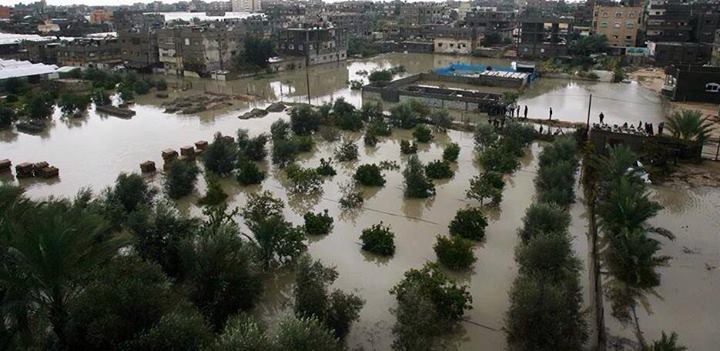


 Aletho News

