Envoy Rejects US Accusations against Iran as Baseless
Al-Manar | July 3, 2021
A top Iranian diplomat penned a letter to the UNSC, strongly rejecting allegations of the United States against Tehran over a recent attack near the Iraq-Syria border.
Ambassador and Permanent Representative of the Islamic Republic of Iran to the United Nations Majid Takht Ravanchi wrote a letter to the president of the UN Security Council, to react to anti-Iranian accusations of Washington.
The Islamic Republic of Iran has repeatedly announced that it has not had any direct or indirect role in attacks against US facilities or personnel in Iraq, reads the letter. Therefore, the letter continues, any attempt to attribute such allegations to Iran, either explicitly or implicitly, is false and baseless and lacks the most basic credible information. Tehran strongly rejects such claims and considers them legally invalid, added the envoy.
Iran vehemently rejects the arbitrary interpretation of the US of Article 51 of the UN Charter to justify its illegal June 27 attack on Syria and Iraq, said the envoy, adding that Tehran strongly condemns the aggression as violation of sovereignty of the two countries.
The US argument that such attacks were carried out to “deter” the Islamic Republic of Iran and so-called “Iranian-backed militias” from further attacks on US personnel or facilities in Iraq has no real or legal basis as it is based solely on an arbitrary interpretation of Article 51 of the UN Charter, added the diplomat.
Recent US attempts to accuse others to cover up its irresponsible and destabilizing activities and adventurous military actions in the region are doomed to failure, noted Takht-Ravanchi.
Earlier, the US representative to the UN had sent a letter to the UNSC, making accusations against Iran and claiming that the decision for attack was taken after it was proved that non-military measures were not enough.
Iraq PM strongly condemns US raids on PMU forces as ‘flagrant violation’ of country’s sovereignty
Press TV – June 28, 2021
Iraq’s Prime Minister Mustafa al-Kadhemi has strongly condemned as a “flagrant violation” of the Iraqi sovereignty an overnight airstrike by US warplanes against the positions of the anti-terror Popular Mobilization Units (PMU), also known as Hashd al-Sha’abi, in which several resistance fighters were killed.
“We condemn the US air attack that targeted a site last night on the Iraqi-Syrian border, which represents a blatant and unacceptable violation of Iraqi sovereignty and Iraqi national security,” said a statement from Kadhemi’s office on Monday.
The statement added that the government will “study all legal options” to prevent such action being repeated.
The statement came after the Iraqi cabinet, headed by al-Kadhemi, held an emergency security meeting following the U.S. airstrikes.
In the early hours of the day, US warplanes attacked three positions purportedly belonging to the PMU along the border.
Later, the 14th Brigade of the PMU announced that four of its fighters had been killed when the warplanes hit its headquarters. The brigade is made up of the Kata’ib Sayyid al-Shuhada anti-terror resistance group.
The PMU in general is an Iraqi government-sponsored umbrella organization composed of about 40 factions of volunteer counter-terrorism forces, including mostly Shia Muslims besides Sunni Muslims, Christians, and Kurds. The organization had a significant role in defeating the Daesh Takfiri terrorist group in Iraq.
Iraqi military condemns U.S. airstrikes on PMU’s positions
Separately, Iraq’s military spokesman Yehya Rasool denounced the US airstrike and said it was a “breach of sovereignty.”
“We condemn the US air attack that targeted a site on the Iraqi-Syrian border last night, which represents a blatant and unacceptable violation of Iraqi sovereignty and national security in accordance with all international conventions.”
Rasool further called on all involved parties to exercise restraint and avoid any escalation of tensions.
He said Baghdad would work thoroughly to prevent the recurrence of such incidents.
Foreign Ministry: US attack on PMU violation of Iraq’s sovereignty
Additionally on Monday, Iraq’s Foreign Ministry issued a statement, condemning the deadly strike. It was an “assault and a violation of national sovereignty and a clear departure from international norms and conventions,” the statement read.
“We affirm our adherence to Iraq’s sovereignty and unity and to rely on everything that would enhance that, through sustained coordination and communication with various parties and through diplomatic initiatives and endeavors that ensure the non-repetition of such rejected and condemned hostilities.”
Syria: US attacks prove its presence meant to serve Israel’s goals
Syria, for its part, also condemned in strongest terms the US flagrant aggression in the Syrian-Iraqi border region, describing it as a blatant violation of the sanctity of the Syrian and Iraqi territories.
An official source at Foreign and Expatriates Ministry told SANA that the US aggression, which was ordered by the highest ranks in the US leadership, proves once again “the recklessness of US policies and the need for Washington to withdraw its aggressor forces” from the region.
The Syrian foreign ministry source added that such acts of aggression only escalate the tense situation in the region and prove “what we have repeatedly said in Syria that the US military presence in our region is basically meant to serve the Israeli goals and the separatist forces contrary to the interests of its own people.”
The Syrian source concluded by saying that Damascus, once again, demands the US administration respect the territorial integrity of Syria and Iraq and to immediately stop those attacks on the independence of the two countries.
Al-Nujaba Movement: US will pay for its folly
In a relevant development on Monday, a senior member of Iraq’s al-Nujaba Movement, which is part of the PMU, said in a Twitter post that Washington would pay for its folly in attacking Iraq’s popular forces.
Ali al-Asadi said the Monday US airstrike was a desperate reaction to the latest manifestation of power by the PMU through a huge military parade, which was held to mark the anniversary of the PMU’s formation.
“This [attack] is another reason, which proves that the occupier does not care about stability of this country…. We tell the occupier: you will pay for your despicable measure and will suffer the consequences of your folly,” Asadi said.
Hezbollah: US airstrikes on PMU aimed to weaken anti-terror fight
Lebanon’s Hezbollah resistance movement also reacted to the latest airstrikes by the occupying American forces on the PMU positions in western Iraq and Syria, strongly condemning the US act of aggression.
In a statement on Monday, Hezbollah said the air raid by American warplanes was blatant violation of sovereignty of both Iraq and Syria, which is aimed at weakening these countries’ power to fight terrorism on their soils.
Hezbollah then expressed support for the official condemnation of the US airstrike by Iraqi government and armed forces as well as various popular groups.
Yemen’s Ansarullah: US strikes aimed at supporting Daesh, al-Qaeda
In another development on Monday, the political office of Yemen’s Ansarullah movement issued a statement on the latest US airstrikes on Iraq’s PMU, expressing the movements condolences for the families of the PMU fighters killed in the US strikes.
“The US aggression is in line with its policy to provide aerial support for its criminal proxies, that is, the Daesh [Takfiri terrorist group] and al-Qaeda” in Syria and Iraq.
The Yemeni movement added that it strongly supported the powerful positions taken by Iraq’s officials and popular forces in opposition to the projects planned and carried out by the Great Satan, the United States, and Israel.
Yemen’s Ansarullah movement noted that the US act of aggression will only strengthen the determination of the Iraqi people and proves that the path chosen by the Iraqi nation is correct and should continue until complete expulsion of all occupying forces from the country.
US congresswoman: This failed policy will not make us any safer
Meanwhile, Ilhan Omar, a US congresswoman who represents Minnesota’s 5th congressional district, took to Twitter on Monday, condemning US act of aggression against Iraqi popular forces.
“This constant cycle of violence and retribution is a failed policy and will not make any of us safer,” she said.
Omar added that the US government cannot take any hostile action in other countries without the Congress’ approval, saying, “Congress has authority over War Powers and should be consulted before any escalation.”
Anti-American sentiments have been running high in Iraq since the US assassinated Iran’s anti-terror commander Lieutenant General Qassem Soleimani, and the deputy head of Iraq’s PMU, Abu Mahdi al-Muhandis, in Baghdad on January 3, 2020.
Just two days later, Iraqi lawmakers unanimously passed a bill mandating the withdrawal of all foreign troops from Iraq.
Iraqi resistance groups have pledged to take up arms against US forces if Washington fails to comply with the parliamentary order.
New evidence reveals John McCain and other Vietnam War POWs may have lied about being tortured
By Paul Benedikt Glatz, Jeremy Kuzmarov and Steve Brown | Covert Action Magazine | June 21, 2021
Collusion by the White House, the Pentagon, and the mainstream media resulted in disparagement, denial, and suppression of eyewitness testimony confirming that most POWs were actually well-treated by their North Vietnamese captors (in contrast to the brutal torture and death often meted out to North Vietnamese POWs by U.S. forces).

When numerous U.S. POWs began to understand the truth about the war they had been fighting, they spoke out against it—voluntarily—as an act of conscience. But they were cynically portrayed as traitors, turncoats and “camp rats,” their reputations and lives destroyed, driving many to despair and even suicide.
Among the few memories that most Americans still retain of the Vietnam War—now nearly 60 years in the past—one of the most vivid centers around the torture suffered by Senator John McCain at the hands of his brutal Vietnamese captors while a prisoner of war in Hanoi’s Hoa Lo prison (AKA The Hanoi Hilton).
This story has been told, retold, and continually burnished countless times by admiring media interviews and a flood of books and memoirs, including several by McCain himself.
Another memory of the war, still believed by millions of Americans, is that hundreds or even thousands of American soldiers classified as MIA (Missing in Action) are actually being held and tortured in secret North Vietnamese POW camps, callously abandoned by our government and desperately praying to be rescued—preferably in a Hollywood-style rescue by Chuck Norris or Sylvester Stallone, who starred in the spate of Commie-hating blockbuster movies inspired by their plight.
This belief is continually reinforced by POW/MIA flags which fly at every post office, and a ready supply of new books and movies, such as the 2018 release of the film M.I.A. A Greater Evil.
But both memories of the Vietnam War are false memories. However passionately believed, they were cynically manufactured fantasies implanted in all-too-willing American minds for political purposes.
How and why these counter-factual beliefs were so successfully foisted on the American public is the subject of the new myth-shattering book by Tom Wilber and Jerry Lembcke, Dissenting POWs: From Vietnam’s Hoa Lo Prison to America Today (New York: Monthly Review Press, 2021).
Wilber is the son of a dissenting POW, Walter “Gene” Wilber, who is featured in the book, and has contributed to the award-winning documentary film The Flower Pot Story by Ngọc Dũng. Lembcke is a distinguished sociologist from College of the Holy Cross who has written a number of books debunking popular myths about the Vietnam War.


The two start their book by noting that the dominant war hero image of the POW—who endured torture and resisted service to enemy propaganda—was to a large extent created by high-ranking men like McCain who were captured early in the conflict.

McCain’s oft-told story of ill-treatment and torture is contradicted by Nguyen Tien Tran, the chief prison guard of the jail in which McCain was held. In a report by The Guardian, “[Tran] acknowledged that conditions in the prison were ‘tough, though not inhuman’. But, he added: ‘We never tortured McCain. On the contrary, we saved his life, curing him with extremely valuable medicines that at times were not available to our own wounded’. . . . [H]e denied torturing him, saying it was his mission to ensure that McCain survived. As the son of the US naval commander in Vietnam, he offered a potential valuable propaganda weapon.”
Most of the others promoting a heroized image of U.S. POW’s were graduates of service academies and came from privileged backgrounds. They included a) James Stockdale, who ran for Vice President in 1992 as the running mate of Ross Perot; b) Robinson Risner, a double recipient of the Air Force Cross, the second highest military decoration for valor; and c) Jeremiah Denton, who went on to become the first Republican Senator from the state of Alabama and a close ally of President Ronald Reagan.
John McCain fit well with this group because he was also academically privileged and his family included high-ranking military officers like his father, Jack, who was an admiral and the Commander of the U.S. Pacific Command.

James Stockdale while in captivity. [Source: military.com]

Jeremiah Denton featured in famous film footage from his captivity. [Source: washingtontimes.com]

With post-war military careers at stake, these high-ranking officers played up the alleged barbarity of the North Vietnamese, demanded resistance to interrogations from other captives, and threatened so-called deviants with disciplinary charges after release to the U.S.
-

James Stockdale [Source: wikipedia.com] -

Jeremiah Denton [Source: wikipedia.org]
The Nixon administration advanced their credibility and status in a desperate ploy to stir up support at home for an unpopular conflict abroad; and further concocted a story—announced in a press conference by Defense Secretary Melvin Laird on May 19, 1969—that 1,300 American soldiers deemed “missing in action” were believed to be prisoners of war.

The unaccounted for would now publicly be described as “POW/MIA,” implying that any serviceperson missing in Vietnam could also be a prisoner of war. This transformed the war from a political issue into a humanitarian one, trading public support for sympathy. It didn’t matter why we were there in the first place: Our boys were there, and by God were we going to do anything to get them home.
Suddenly, the public image of Vietnam looked very different. The very real footage of brutalized Vietnamese bodies, wailing children, and napalmed villages was traded for a fantasy—all of the violence that had been done in Uncle Sam’s name was now being done to him.

The POW issue soon became a cause célèbre. In the early 1970s, millions of “POW bracelets” were sold by a student group called VIVA (Voices in Vital America), each branded with the name of a missing American serviceman.

POW/MIA bracelet. [Source: pinterest.com]

[Source: audacy.com]
These shiny nickel bracelets were spotted on the wrists of celebrities like Sonny and Cher—who had often before dressed like hippies—and Sammy Davis, Jr, and allegedly Princess Grace of Monaco put in an order for two bracelets.

Sonny and Cher with returned POW John “Spike” Nasmyth on their CBS comedy hour program in March 1973 in which they announced that they wore POW bracelets with his name. [Source: cherscholar.com]
The silver bracelets could even be spotted on the fashion runway, where models with an interest in political activism took to wearing them. A New York Times profile from the day quotes a model named Astrida Woods, who said she was “dissatisfied” with her life as a model and felt the urge to give back. “I began to do some work with Ralph Nader, and now [wearing the bracelets]. It’s a way to contribute something.”

Pretty young women showcasing POW bracelets as part of PR campaign to unify the nation around support for POW/MIAs, if not the Vietnam War itself. [Source: audacy.com]
Many U.S. GIs and pilots, however, reported being humanely treated during their captivity, with access to adequate food, recreation facilities and reading material.
Wilber and Lembcke conclude that “instances of brutal treatment” were “less common than [has been] purported” and that evidence of systematic torture drawn from visitor reports, POW statements, and oral histories was scant.
Those POWs who questioned the war were dismissed by the military for their supposedly “weak personal character” and “lack of education and backgrounds in broken and poor families,” a typical case of “psychologizing the political.”
These men were in turn stigmatized and then forgotten by the public amidst the manufactured concern about POW/MIAs who were supposedly brutalized and then kept in captivity and abandoned by their government.
Camp Rats?

The ranks of the POW dissenters included Lt. Col. Edison Miller, a recipient of the Distinguished Flying Cross and Purple Heart from California who spent six years in captivity after his fighter plane was shot down over North Vietnamese skies on October 13, 1967.
A contemporary described Miller, a Californian who flew previously over Korea, as a “first-rate pilot with a zeal for combat but an independent sort.”
John McCain falsely accused Miller of being a turncoat because he appeared in North Vietnamese propaganda.
In his 1999 best-selling book Faith of My Fathers, McCain wrote about Miller as one of two “camp rats”—the other being Tom’s father Gene, who had been executive officer of a squadron of F-4s when he was shot down over North Vietnam on June 16, 1968.
McCain said both “had lost their faith completely.”
“They not only stopped resisting but apparently crossed a line no other prisoner I knew had even approached,” McCain wrote. “They were collaborators, actively aiding the enemy.”
Miller told the Orange County Register in response to these charges that McCain had “lied about me … The attacks on my character and integrity are totally without merit or justification. I did stand up and say the war was wrong. I would speak against the war, but I never spoke against my country. And I gave up no secrets.”

McCain accused Miller of receiving eggs, bananas and other delicacies to eat from camp guards. Miller says, however, that he never saw eggs during his internment and that McCain was never in a position to see the food brought to him.

McCain further claimed that Miller turned him in to a North Vietnamese guard when McCain tried to befriend him, and that the guard then beat McCain. Miller said: “I never ratted out a fellow American. McCain has fabricated and exaggerated his experience for political advantage.”
Miller’s anti-war views had been sharpened in conversation with Navy Commander Robert Schweitzer, a captive from 1968 to 1973 who died a year after his release while still on active duty in San Francisco.
Schweitzer felt that, because the U.S. had never declared war, there could not legally be any North Vietnamese prisoners of war, only “Americans detained by a foreign power,” Miller said.
A tape of a conversation between Miller and Schweitzer was played for other prisoners, who heard not only an anti-war message but a challenge to the legality of the U.S. military action in Vietnam.
In 1970, when Miller and Gene Wilber were interviewed on national television, Wilber called for an immediate U.S. troop withdrawal “so that the Vietnamese can solve their own problems.”
U.S. journalists at the time, however, did not take their interview seriously, regarding it rather as a North Vietnamese propaganda show.
The two men along with Schweitzer continued to write protest statements and together with fellow dissenters met with American peace activists visiting North Vietnam, including actress Jane Fonda and former U.S. Attorney General Ramsey Clark.

Jane Fonda (center) during trip to North Vietnam in 1972. [Source: flickr.com]

Ramsey Clark (left) in North Vietnam in 1972. [Source: nytimes.com]
Empathy for the War’s Victims

Most dissenting POWs came from a working-class background.
James A. Daly, an African-American infantryman from the Bedford-Stuyvesant section of Brooklyn, for example, was raised in poverty by a single mother.
His 1975 book, Black Prisoner of War, describes his three years of jungle confinement after his capture by North Vietnamese soldiers and the South Vietnam-based National Liberation Front (NLF), followed by a two-month trek north to Hanoi on the Ho Chi Minh trail where he experienced what it was like to be on the receiving end of U.S. ordnance.
Bob Chenoweth, from a white working-class family in Oregon, similarly developed an empathy for the Vietnamese people and a distaste for the racist views of most Americans toward the Vietnamese.
A helicopter crew member, before he was shot down and captured, Chenoweth said he “couldn’t see how U.S. forces could possibly be helping the Vietnamese given the attitude that GIs had, viewing them as ‘subhuman’ and disparaging them as ‘gooks and dinks.’”
Chenoweth and other of his contemporaries authored anti-war statements, wrote messages to GIs asking them to follow their consciences, sent letters to politicians, and recorded tapes to be aired via Radio Hanoi.

Bob Chenoweth speaking at Veterans for Peace conference in Spokane, Washington, in 2019. He was active in the Vietnam era anti-war movement upon his return from the war. [Source: wagingpeaceinvietnam.com]
Higher ranking POWs responded by trying to isolate the dissenters from other American prisoners while charging them with participating in a conspiracy against the United States.
One of the dissidents, Abel Kavanaugh, committed suicide as a result of the intense pressure and prospective stigma of a dishonorable discharge only a few months after coming home from Vietnam.

Abel Kavanaugh [Source: findagrave.com]
Charges against the POW dissidents were eventually dropped, Wilber and Lembcke believe, so as to not jeopardize the hero-prisoner story with too much attention on dissent and through a possible exposure of inconsistencies in the accusers’ own prison biographies.
Fear of Communist Infiltration
A critical trope in Cold War America was the fear of communist infiltration and internal subversion through brainwashing and mind control.
This trope was fortified by a CIA propaganda effort that depicted Korean War POWs who defected to the North Korean and Chinese side as having been brainwashed in interrogation.

CIA propaganda tract accusing Communist China of brainwashing U.S. POWs. The stereotype of cunning and evil Oriental communists endured through the Vietnam War and beyond and impacted how Americans viewed the dissenting POWs in Vietnam. [Source: goodreads.com]
Most of these defectors were in fact African-Americans who did not want to return to the Jim Crow South, while others were attracted by communist ideals or saw the U.S. war as immoral.[1]
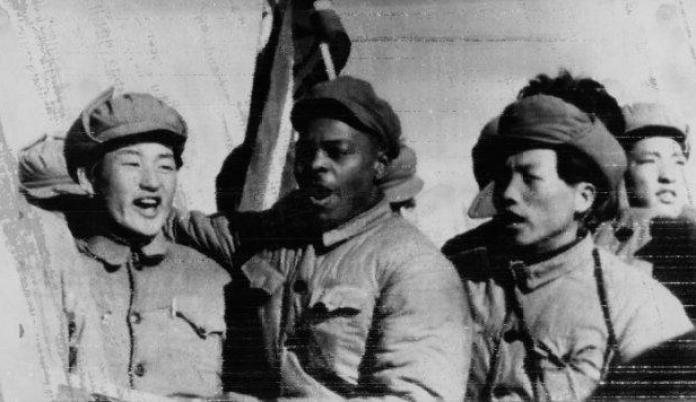
The stereotype of the brainwashed POW of the Korean War turned collaborator and traitor because of his weak character would become the backdrop for the discrediting of the dissident POWs of the Vietnam War.

In an appearance on CBS’s 60 Minutes, Gene Wilber was grilled on whether he had given in to the enemy to make antiwar statements. That he had acted on his own “conscience and morality” was drowned out by host Mike Wallace’s implications of collaboration and opportunism.
When he was subsequently invited to the White House POW reception, Wilber found his hotel room broken into and marked with accusations of treason when he returned from the reception.
In the summer of 1973, James Stockdale charged Wilber and Edison Miller with collaborating with the enemy, mutiny, and inciting personnel to insubordination. However, military judges found insufficient evidence to prosecute the case, and Wilber and Miller instead received letters of censure for their failure to meet the standard expected of officers.
Hollywood Revisionism
POW films starting from this time focused on returnees’ estrangement with their families and society and were told as stories of spousal infidelity, representing both individual drama as well as a sense of “home-front betrayal.”
These films were part of a post-war revisionism, which included a spate of films that contributed to the legend of American servicemen left behind in Vietnam.
In the 1980s, a new subgenre emerged focused on Vietnam veterans heroically taking on the task of returning to Indochina and liberating the left-behind POWs, who had been betrayed on the home front and abandoned by the U.S. government.
The POWs were depicted as victimized and emasculated captives who needed to be rescued by individualist heroes and whose honor as Americans was to be restored.

[Source: wikipedia.org]
This image, Wilber and Lembcke argue, fits the post-war efforts to psychologize the once political conflicts of the Vietnam War and to depict the veteran as a victim and loser.
More of a heroized image and the POWs’ endurance of torture was revived with the 1987 film, The Hanoi Hilton, which starred Michael Moriarty, Ken Wright and Paul Le Mat as U.S. POWs who defy their captors while enduring brutal treatment at Hanoi’s Hoa Lo prison (aka The Hanoi Hilton).

[Source: imdb.com]
This film meshed particularly well President’s Ronald Reagan’s characterization of the Vietnam War as a “noble cause,” fought by noble men, with the POW dissenters by implication being ignoble.
Persistence of the Hero-Prisoner Story
In their quest to comprehend the persistence of the hero-prisoner story, Wilber and Lembcke take their readers back to American colonial history and the captivity narratives emerging during that time.
These stories are about a complex mix of violence against captives, temptations to stay with their captors, the ideal to remain loyal with their fellow colonists, and their Christian beliefs.

Illustration of captives in the Indian Wars. [Source: legendofamerica.com]
Such tensions and correlations between the Self and the Other were critical in the making of an American identity. The wars in Korea and Vietnam and the POW experiences there can be understood as a new chapter of this identity-making process. Here, too, Americans must prove their will and ability to endure the brutality of a racialized Other.
A wrench in the story, however, is revealed in the autobiographical accounts of POW-heroes like Stockdale, Denton, and Risner. They wrote about fasting as a way of enforcing self-discipline and self-assurance, sometimes with a religious subtext.
More bizarrely, they also wrote about self-mutilation—the deliberate infliction of physical wounds on themselves that would be visible during filmed interviews.
The aim was to make it appear to other POWs (and to the U.S. public) that they had been tortured. One officer wrote of how he purposely damaged his vocal apparatus so he could not be forced to make propaganda statements.
-

[Source: goodreads.com] -

[Source: amazon.com] -

[Source: thriftbooks.com]
In addition to some high-ranking officers attempting to portray themselves as heroes by means of self-mutilation, Wilber and Lembcke also noted that they tried to keep political literature and news of dissent back home away from other POWs, fearing that these would enhance critical positions on the war and against their authority within the prison population.
Moreover, these ranking officers often despised the more humane view of the Vietnamese displayed by other prisoners, including an interest in their language and culture, and an understanding of why they were fighting back against an invasion of their country by the most powerful military force in the world.
Bringing Back Forgotten Dissenters
Wilber and Lembcke’s book helps restore these forgotten POW dissenters to their rightful—and honored—place among the large and diverse Vietnam generation of dissidents, draft resisters, oppositional GIs, veteran activists, deserters, and all those who supported them.

The book also shows that, despite all destruction and death brought by the invaders from the sky, North Vietnam maintained a moral superiority through oftentimes fair treatment of the captured Americans. This was in stark contrast to the more systematic adoption of torture methods by USAID and CIA-trained police under the Operation Phoenix and like-minded programs.

The POW/MIA flag that flies today over the White House is intended to honor the men who endured captivity; however, it continues to perpetuate a distorted understanding of a war that was as abominable as it was unjust, and helps to advance a dangerous nationalist ideology that will lead to future Vietnams.
- See Clarence Adams, An American Dream: The Life of an African American Soldier and POW Who Spent Twelve Years in Communist China (Amherst, MA: University of Massachusetts Press, 2007). ↑
Russian forces block US military patrol in northeast Syria
Press TV – June 22, 2021
Russian forces have blocked an American military convoy, comprising four armored vehicles, in Syria’s northeastern Hasakah province.
Russia’s RT television network reported on Monday that Russian personnel had stopped the US military patrol along the M4 highway, some 10 kilometers west of the town of Tall Tamr.
Informed sources said the US convoy was forced to return because it had violated security protocols between Moscow and Washington.
Russia said the US had not given prior notice regarding its troops’ movements in Hasakah.
Hasakah is occupied by American soldiers and the so-called Syrian Democratic Forces (SDF), a US-backed anti-Damascus alliance of mainly Kurdish militants. Turkey also controls areas in the province and elsewhere following military operations in northern Syria.
Russia has been helping Syrian forces in ongoing battles across the conflict-plagued state, mainly providing aerial support to ground operations against foreign-backed terrorists.
The Russian military assistance, which began in September 2015 at the request of the Damascus government, has proved effective as Syrians continue to recapture key areas from Takfiri elements.
However, the United States has deployed forces and military equipment in Syria without any authorization from Damascus or the UN.
It has long been training militants and stealing Syria’s oil, ignoring repeated calls by Damascus to end its occupation of the country.
Russia: US exacerbated humanitarian situation in Syria
In another development on Monday, Russian Foreign Minister Sergei Lavrov complained that the humanitarian situation in Syria has been aggravated by the US through its illegal sanctions and occupation of the eastern bank of the Euphrates River.
“They are looting hydrocarbons and other mineral resources, and use the money they earn on that to finance projects that are seen by many as encouraging separatism and provoking dissolution of the Syrian state,” he said after talks with Helga Schmid, the secretary general of the Organization for Security and Cooperation in Europe (OSCE).
He also warned against attempts by the United States and some European countries to hamper the return of Syrian refugees, noting that the Western assistance goes to camps in Jordan, Turkey and Lebanon so as “to make the refugees stay there as long as possible.”
Lavrov further expressed Moscow’s readiness to discuss the humanitarian situation in Syria with the Western states if they recognize their responsibility in this regard.
“If the set of these factors is recognized as impacting the humanitarian situation in Syria, we are ready to discuss that as a whole. But our Western partners should categorically refuse from one-sided interpretations of these or those problems, and recognize their responsibility for the general situation in Syria’s humanitarian sphere,” he said.
Biden Forces Steal 32 Additional Trucks Loaded with Syrian Wheat
Syria News | June 20, 2021
Biden forces operating illegally in northeastern Syria stole an additional quantity of wheat loaded in 32 trucks and smuggled it into neighboring Iraq through an illegal border crossing, yesterday, Saturday 19 June 2021.
This new theft comes less than a week after another convoy of dozens of trucks loaded with stolen Syrian wheat, the Syrians are harvesting their wheat and Biden is stealing it to feed his ISIS terrorists in Iraq, the terrorist organization that was created under Biden’s watch during the 8 years term of Obama and saw its growth where his secretary of state Kerry back then said they wanted to use it to pressure the Syrian President Bashar Assad into submission.
Biden taking the food of the Syrian people out of the mouths of their children and sending in killing machines and terrorists instead, in the past week alone the US Army stealing Syrian oil and wheat entered two columns of trucks and military vehicles on the 14th and 17th of this month, the first convoy comprised of 55 different rucks and empty oil tankers to siphon Syrian oil, and the second comprised of 33 military and logistics vehicles.
Cross borders activities without the sovereign country’s approval is a serious breach of international law, stealing food and oil from a country especially when its people are facing economic hardship and is fighting terrorist groups is a war crime, creating terrorist groups and separatist armed militia and using them against a sovereign country is nothing less than a declaration of war. All US Army troops are liable to prosecution under international law, those killed of them are no heroes and do not die ‘defending their country and its values’, they get killed while stealing and are a disgrace for their families and their people.
Ironically, during a meeting with his Russian counterpart President Putin in Geneva on the 17th of the month, the head of the most diverse and inclusive US junta Biden asked Putin to help in obtaining approval from Damascus to open new border crossings into regions occupied by Al Qaeda in the north and northwest of Syria!
Smashed Houses, Crushed Orchards, A Trail of Unrestrained Malice
By Barbara Nimri Aziz | June 16, 2021
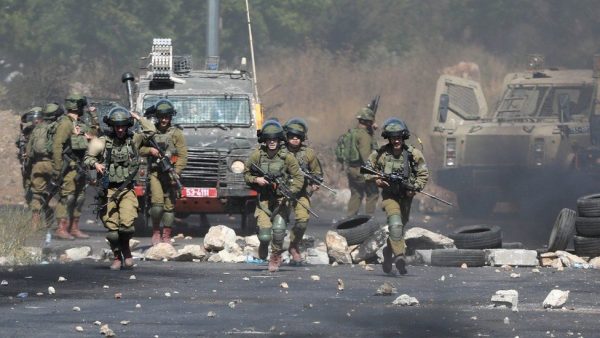
Residents of Sheikh Jarrah’s resistance to eviction by Israeli Jews evolved into a military confrontation so lopsided, the Israeli bombardments against Gaza so terrifying, it drew widespread condemnation (the US government excepted).
The Palestinian dead, injured and homeless are still being tabulated, while eviction processes of Sheikh Jarrah’s Arab inhabitants continue, even as we learn of similar forced displacement of Arabs in nearby Silwan.
Another Israeli scheme to dislodge Palestinians is home demolition—they number in the many thousands and continue (in Bustan, Silwan) even as I write. For a glimpse of these all-too-routine violations, I append my newly-digitized April 5, 1996 Christian Science Monitor article based on what I witnessed — I likened it to a lynching – when on assignment in the West Bank 25 years ago.
“It’s quite a spectacle, a Palestinian home being blown apart. Furniture, dishes and clothes, hastily removed, are deposited helter-skelter in the path or road.
Villagers stand by, silent and grim . Heavily armed soldiers are massed to prevent any disruption. Confused, awed children turn sullen.
Americans rarely see Israel’s demolition policy at work; but it’s a regular form of punishment. All Palestinians, from toddlers to the elderly, are familiar with it. Perhaps it’s happened to a neighbor. Perhaps they themselves were hauled out of their house in the early morning and told by a soft-spoken Israeli officer, with his troops surrounding the residence, that he has his orders. The entire town is aroused. Neighbors join in the frantic rush to save some household items; they know it’s useless to protest.
The silent frenzy of losing a home this way has no parallel. It’s not like a flood or a fire; it’s more like a lynching. There’s no one to call for help. Hundreds of soldiers surround the house and village to ensure no one interferes with the bulldozers and dynamite teams.
Legalized destruction
It’s all done legally too. That is to say, a paper, written in Hebrew, is presented to the householder spelling out the order to blow up or bulldoze his or her home, or to seal it. Often the order charges that the house lacks a building permit. Typically, a family has two hours’ notice.
In a village near Hebron in 1991, I saw the remains of a mosque that was flattened weeks before. The land had been cleared because of some building infraction, neighbors told me.
At other times, particularly during the intifadah (uprising), a family is informed that their son was caught (not convicted but simply picked up and charged) throwing a Molotov cocktail, or that he was captured in an attack on an Israeli.
In some cases, only the family orchard (their livelihood) is leveled. Again, the family is notified when the machines are already on the nearby road. Orchards have been destroyed based simply on a report that some Palestinian children were hiding from soldiers among the trees, or Jewish settlers claim that someone they were pursuing was heading in that direction.
During the first three years of the intifadah (1987-1991), when communal punishment was the norm for civil disobedience, the Palestinian Human Rights information Center recorded 1,726 demolitions or sealings of homes. On average, there are nine Palestinians living in a home; so those lost houses represent about 15,000 men, women and children, forcibly made homeless during that time. Often the dwelling is not even the family’s original home but a shelter inside a crowded refugee camp built with the help of United Nations funding.
Israel says it demolishes certain houses because they’re the homes of “suicide bombers”. The news media, which remains silent about these actions, are effectively sanctioning the policy. So conditioned is the public that whatever is done to an “Islamist terrorist” seems justified and is endorsed. Are we right to stand by silently and accept that?
Consider this: The demolitions are retaliatory actions that strike deep into the core of Palestinian identity. They are bound to have some traumatic effect on children. Such devastation may quell opposition temporarily, but the long-term effects may be very different. People may become more embittered and hostile towards Israeli authority. Blowing up the home of a family may in fact move the brothers and sisters of a dead man into closer identification with his actions.
Israel does not respond in this manner to all heinous acts. Look at the assassination of Prime Minister Yitzhak Rabin by the Israeli law student. Look at Baruch Goldstein, the Hebron mass murderer. Their actions repelled most Israelis, yet their homes and families remained unharmed. No, these destructive acts are specifically designed for and executed against Palestinians.
Palestinians’ view
Palestinians see this type of punishment as another method Israel uses to “clear the land”, to deny their existence, to implement its “cleansing” policy. People deprived of a home may have one less link with the land. But such actions have other consequences. Children witness their homes, the places they were born, blown apart. They watch fathers and other male relatives helplessly held at gunpoint. They imbibe the horrified reaction of their mothers and grandmothers.
The house as the center
Because this form of punishment is so rare, few can imagine the impact of a house being blown up in front of its owners. We have to understand how central the house is to Palestinian life. Even today, most Palestinians are born at home. This is the place for daily prayer, for family meals, for weddings, for homecomings from jail, and for funerals. This is where everyone gathers to pass the evening. It is not a shelter; it is a community. It is the place for consolation and joy, the haven and the refuge.
Mother is the manager, so the home is unequivocally associated with her power and protective role. Harming the house is like violating the mother. Many children will feel they must avenge this injustice. Especially with the world community standing by seeming to sanction the destruction, family members may feel more responsibility to seek justice. Anyone who understands this would advise Israel to cease this practice for these reasons, if not for moral ones.”

Photos above and below–a sturdy old Jerusalem wall, replaced by a parking lot– was posted by Lisa S Majaj

NOTE: Israel’s removal of Palestinians is interminable: sometimes it’s by shrewd legal maneuvers; sometimes it’s by harassment, sometimes it’s violent takeovers, and sometimes it’s brutal demolition. A protracted process, it’s so routine that it hardly garners outside attention. Besides residences, Palestinian orchards and nature preserves are savagely destroyed by Israeli forces. A recent egregious case was reported by my colleague Raouf Halaby in Counterpunch.
Putin Lashes Out at US Regime After Meeting with Biden
teleSUR – June 16, 2021
Russian President Vladimir Putin on Wednesday lashed out at the United States on arms control, human rights, cyber-attacks, among other issues, after meeting with his U.S. counterpart Joe Biden.
“The West believes that the Russian policy is unpredictable. Well, let me reciprocate. The U.S. withdrawal from the ABM (Anti-Ballistic Missile) Treaty in 2002 wasn’t predictable,” Putin said at a solo press conference.
He criticized the U.S. on human rights, citing U.S. attacks in Afghanistan and the existence of the Guantanamo Bay prison.
“One single strike can kill … (about) 120 people. All right, assuming this was a mistake that happens in a war, but shooting from a drone, (at) an unarmed crowd, clearly the civilian crowd, what is this about? How would you call that? And who’s responsible for this?” said Putin.
“And how would you call this person? Who is the killer now?” he asked.
On Cyberattacks, Putin said that it is of vital importance globally, “for the United States in particular, and for Russia as well in the same volume.”
Putin noted that his country has not yet received any response from the U.S. on Russia’s request regarding cyber-attacks this year.
The White House on Wednesday posted on its website a U.S.-Russia Presidential Joint Statement on Strategic Stability.
The statement said that the two heads of state noted that the two countries “have demonstrated that, even in periods of tension, they are able to make progress on our shared goals of ensuring predictability in the strategic sphere, reducing the risk of armed conflicts and the threat of nuclear war.”
“The recent extension of the New START Treaty exemplifies our commitment to nuclear arms control. Today, we reaffirm the principle that a nuclear war cannot be won and must never be fought,” said the statement.
The summit between Putin and Biden officially kicked off here Wednesday afternoon, the first of its kind since Biden took office in January 2021.
Featured Video
No Vote, No Representation, No State: Democracy, Israeli Style
or go to
Aletho News Archives – Video-Images
From the Archives
Sanctions, War and the Policy of Dual Containment
By SASAN FAYAZMANESH | March 17, 2008
It is now nearly three decades since the Unites States adopted the policy of dual containment of Iran and Iraq. While much has been written about the containment of Iraq, there has been very little in-depth analysis of this policy when it comes to Iran. In a book that is going to be released on March 31, 2008, entitled The United States and Iran: Sanctions, Wars and the Policy of Dual Containment (Routledge), I attempt to address this shortcoming by investigating when and why the US policy of containment of Iran came about, how it evolved, and where it stands today.[1] To the extent that Israel has been involved in US policy making, the study will also include the role that Israel has played in the containment of Iran. Also, since the fate of Iran has been inextricably linked to that of Iraq, occasionally the investigation will overlap with the containment of Iraq.
The policy of dual containment of Iran and Iraq originated during the Carter Administration, but it was not until the Clinton Administration that the expression “dual containment” became popular. … continue
Blog Roll
 Aletho News
- Americans are paying the price to preserve Israel’s nuclear hegemony
- Resistance factions are necessary to ensure a permanent US Iraq withdrawal
- How Israel destabilizes the Middle East: Denying sovereignty and the right to exist
- Europe’s Establishment Is Embracing War – and Losing Voters
- NATO chief advocates war of aggression
- No Vote, No Representation, No State: Democracy, Israeli Style
- Zionist Bought Senate Blocks Information About American Citizens Killed By Israel
- While Gaza dominates the UN, these are the people keeping it alive
- New Report: “Scholasticide and Genocide in Gaza: Assessment, Testimonies and Legal Analysis”
- ‘THAAD Delusion’: Iran war exposes US missile shield limits – The Atlantic
- If Americans Knew
- Eight Palestinians Killed in Israeli Attacks on Gaza
- Israeli former leaders and security chiefs threaten legal action over ‘Jewish terrorism’
- Israel map in LA Times ad includes all land from the river to the sea
- Inside Lebanon’s 200-page dossier on Israeli war crimes
- Flydubai, genocide, settler violence, Trump abuse of power to deport – Daily Update
- Counting Antisemitic Incidents: What the ADL Audit Reveals — and Obscures
- Mamdani releases plan to combat antisemitism and hate crimes in New York City
- Iran’s Revolutionary Guards Publish Letter to the American People
- DMFI launches $1 million ad campaign supporting Virginia’s Elaine Luria
- US Senate blocks resolution seeking report on Americans killed by Israel
- No Tricks Zone
- Green Energy Debacle: German Expert Professor Fritz Vahrenholt Warns Of Severe Economic And Social Consequences
- Two More Paleo Reconstructions Affirm Meters-Higher Sea Levels Across Ireland, Brazil 7000-6000 Years Ago
- New Study: Earth And Venus Surface Warmth Largely Explained By Convection And Lapse Rate, Not CO2 Or Radiation
- 2025 Nature Paper Claiming Worsening Global Drought Gets RETRACTED …Heavily Flawed
- New Study: ‘Global Drought Shows No Detectable Recent Acceleration Under Climate Warming’
- Economic Masterminds: German Socialists Suggest Taxing Productivity Gains Stemming From Using AI
- The South China Sea Has Not Been Cooperating With The Climate Change Narrative
- Energy Crisis: Germany Enters Heating Season With Historically Low Gas Reserve Fill Levels
- New Study: The Antarctic Ice Sheet Gained Mass From 2020-2024 Due To Staggering Snow And Ice Accumulation
- Study: Ocean Heating Rates From Thousands Of Years Ago ‘Dwarf’ Modern Ocean Heating Rates


#/media/File:Missing_in_action_(film_poster).jpg)
