‘The Machines Did The Killing’: Obama Awkwardly Defends Drone Kill List In New Memoir
By Tyler Durden – Zero Hedge – 11/24/2020
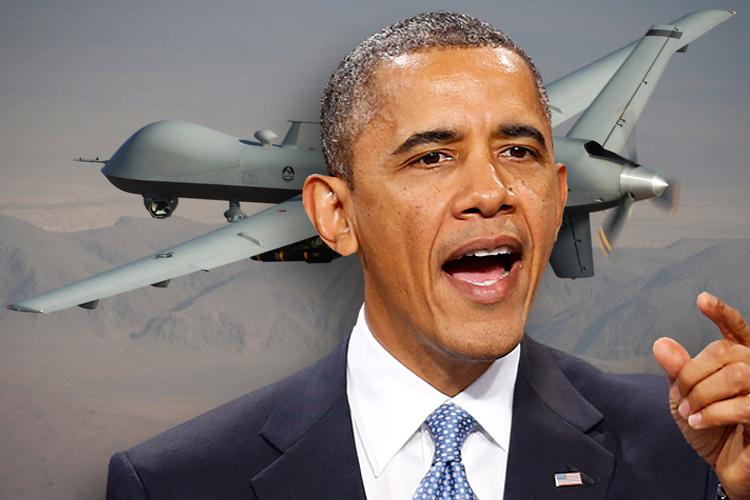
Former President Barack Obama still can’t shake his legacy as the “drone president” given he still holds the record for number of ordered covert assassination strikes via drones.
“There were ten times more air strikes in the covert war on terror during President Barack Obama’s presidency than under his predecessor, George W. Bush,” one prior human rights study found.
“Obama embraced the US drone program, overseeing more strikes in his first year than Bush carried out during his entire presidency. A total of 563 strikes, largely by drones, targeted Pakistan, Somalia and Yemen during Obama’s two terms, compared to 57 strikes under Bush,” the study said.
This infamously included not only the killing of Yemeni-American citizen Anwar al-Awlaki due to his suspected al-Qaeda links, but also his son, 16-year-old US citizen and Colorado native Abdulrahman Anwar al-Awlaki, by a drone airstrike ordered by Obama on October 14, 2011. The boy was not even suspected of a crime upon his death while he had been casually eating dinner with this friends at a cafe in Yemen.
The Obama administration later claimed the teen’s death was “collateral damage” and despite lawsuits related to the CIA operation, no US official has ever been held accountable for literally assassinating two US citizens without trial or so much as filing official charges.
“The machinery…had me killing them.”
This, from Obama’s memoir, is pretty pathetic from a president who, for example, slashed economic assistance to Iraq and then ramped up military involvement while lying about it. pic.twitter.com/PYI5kTSph7
— Phil Klay (@PhilKlay) November 23, 2020
In his new 768-page memoir out this month, A Promised Land, there’s scant mention of the massively expanded secret drone ‘targeted killing’ program under his watch, however, when it does receive brief attention, it’s merely in passing but is still filled with cringeworthy level of self-justification and rationalization:
“… the machinery I commanded, more often had me killing them instead,” he wrote.
Clearly he and the editor (and his ghostwriters) took pains to twist the limits of grammar and bizarre sentence structure to create as much distance as possible between the former president and owning up to the killings.
Here’s the section in full from the book, where he actually attempts to present himself as the ‘savior’ of those victims he ordered killed:
In places like Yemen and Afghanistan, Pakistan and Iraq, the lives of millions of young men like those three dead Somalis (some of them boys, really, since the oldest pirate was believed to be nineteen) had been warped and stunted by desperation, ignorance, dreams of religious glory, the violence of their surroundings, or the schemes of older men. I wanted somehow to save them—send them to school, give them a trade, drain them of the hate that had been filling their heads. And yet the world they were a part of, and the machinery I commanded, more often had me killing them instead.
Under Obama estimates of the number of victims that were a result of the White House’s secretive “Kill List” often range from 300 to over 500 civilians killed, including over 60 children.
Just looks like Obama’s attempt to build a sentence that says everything except the simple reality: “I killed them.” https://t.co/FT96VRwPlE
— Thomas Gibbons-Neff (@Tmgneff) November 24, 2020
But that’s just a snapshot of a few years out his total two terms, and the true numbers remain classified.
The New York Times would report in 2012 that Obama began to designate “all military-age males in a strike zone as combatants, according to several administration officials, unless there is explicit intelligence posthumously proving them innocent.”
Obama adviser Robert Gibbs previously said when asked point blank about the ordered killing of a 16-year old American citizen: He should’ve “had a more responsible father.”
So it seems years later Obama’s justification is now essentially ‘the machines did it’.
Or again in his own bizarre and twisted words, “… the machinery I commanded, more often had me killing them instead.”

Abdulrahman Awlaki, the 16-year old American-born son of Anwar al-Awlaki, was ordered killed by Obama in 2011.
And let’s not forget, this is the man awarded the 2009 Nobel Peace Prize, and who is still heralded by Liberals as the most enlightened leader this country has ever had.
Khamenei: Sanctions crime of US, European partners against Iran
Press TV | November 24, 2020
Leader of the Islamic Revolution Ayatollah Seyyed Ali Khamenei has described the illegal sanctions the United States has imposed on Iran with the support of its European partners as a “bitter reality” and a “crime” against the nation.
Ayatollah Khamenei made the remarks on Tuesday during a meeting of the Supreme Council for Economic Coordination among the three branches of the Iranian government.
The Leader said the Iranian nation has been subjected to such a crime for many years, but that the sanctions have been stepped up over the past three years under the current US administration.
Ayatollah Khamenei said there are two ways to end the restrictions, either by “neutralizing the sanctions and overcoming them” or having “the bans removed.”
“Of course, we tried the path of [having] the sanctions lifted once and negotiated for several years [to that effect], but it produced no results,” he added.
Referring to the other solution, the Leader said, “This path may have difficulties at the beginning, but there will be a positive outcome.”
Ayatollah Khamenei said, “We have a lot of potential and capabilities to render the sanctions ineffective, provided that we muster the will, strive and meet the challenges outright.”
“If we manage to overcome the sanctions through [our own] efforts and initiatives while holding firm against the problems, the other side will gradually lift the bans since it will see their ineffectiveness,” the Leader added.
The Leader further urged Iranians not to rely on aid from abroad to resolve domestic problems.
“The situation of the United States is far from clear and the Europeans are constantly adopting positions against Iran,” the Leader said. “They tell us not to interfere in the region, whereas it is them who are interfering the most wrongly in the affairs of the region, with Britain and France possessing destructive nuclear missiles and Germany being on the same path. Then they tell us not to have missiles.”
Palestinian Court Holds First Session in Lawsuit against UK over Balfour Declaration
Palestine Chronicle – November 17, 2020
A Palestinian court yesterday held the first session to review a lawsuit filed against the British government over its crimes in Palestine during the British Mandate between 1917- 1948 and the Balfour Declaration which promised Palestine as a national home for the Jewish people.
The Court of First Instance in the city of Nablus, in the northern occupied West Bank, heard Palestinian witnesses who had been evicted from their villages in 1948 by Jewish militias and the crimes committed during that period.
The United Kingdom did not send a representative to attend the session.
The judge postponed the session until December 6.
One of the lawsuit initiators, Munib Al-Masri, said this is a serious and organized step to bring Britain to account for the damage caused by the Balfour Declaration, adding that after the Palestinian court issues its decision, they plan to go to the British judiciary and the international courts.
The lawsuit was filed by the International Commission to Support Palestinian Rights (ICSRP) on behalf of Palestinian families last October.
The lawsuit holds “the UK legally responsible for the consequences arising from violating rules, morals and international law and for the crimes it committed during the colonization of Palestine, including the Balfour Declaration.”
The Balfour Declaration refers to the letter sent by then British Foreign Secretary, Arthur James Balfour, in 1917 to Jewish Lord Lionel Walter Rothschild, favoring a Jewish national homeland in Palestine.
Susan Rice has blood on her hands: Journalist
By Don DeBar | Press TV | November 15, 2020
Susan Rice is another one of the recycled Clinton people, and in fact the Democratic Party had her going back even before that.
Her mother has been around. She helped design Pell Grants. She had been with Brookings since ‘92 which is about when Susan graduated into the Clinton administration (in 1993) and went directly to the National Security Council.
She was with Bill Clinton for his administration. Obama had her – first at the UN, and then as his National Security Adviser (I think). She’s about as inside as it gets. She has blood on her hands in Africa, Rwanda.
The people’s understanding of the Rwandan genocide in the United States is exactly upside down. There was a genocide there, but it was the side that the US-backed, not surprisingly, and that was Susan Rice’s project. She was a member of the National Security Council to do international affairs and that was one big act of the Clinton administration – that move to pivot to Africa, around Rwanda.
It was also the enabling of their so-called humanitarian interventions, and in any way that’s her child.
At the United Nations, she helped bring us the destruction of Libya, enabled the situation in Syria to the extent that she could, and tried to sell authority for the US to bomb the hell out of Syria as well.
It’s going to be more war, really.
Let me remind people when Trump took office in January of 2017 the foreign policy that Susan Rice and Barack Obama and the Clintons, and John Kerry had set in motion had us where we were having war games at Russia and China’s borders from the Baltics to the Korean peninsula, on a constant basis, with a number of international incidents – including NATO members shooting down Russian pilots over Syria – any of which could have escalated, and really turning on a dime into a global thermonuclear war.
Trump for all the things he has done does not leave us – if he’s leaving – in that situation. But what they’re doing is installing the very people who created that condition to start from day one to bring us right back to the brink with Russia and China.
I think it’s very scary that Susan Rice is being considered for this. I don’t think it’s a surprise at all. Anyone who knows who Joe Biden is not surprised.
Don DeBar is an American journalist and political commentator based in New York.
US Training Daesh Detainees for Recruitment Into Illegal Militant Groups in Syria, Russia Says
By Henry Batyaev – Sputnik – 11.11.2020
US instructors are training around 30 Daesh detainees from the Al-Hawl camp in Syria with the purpose of recruiting them to illegal armed formations, the head of the Russian-Syrian co-ordination centre for refugees return said on Wednesday.
The prisoners underwent a two-month course of special training under the guidance of US instructors, Mikhail Mizintsev said at the opening of the Damascus International Conference on the Return of Refugees.
“Those who benefit from this situation should understand the wisdom of the proverb: They that sow the wind shall reap the whirlwind”, Mizintsev warned.
Russia has repeatedly called on the United States to disband hundreds of refugee camps on the territories outside Syrian government control, including the biggest ones such as al-Rukban and al-Hawl.
The Al-Hawl camp is located in the north of Syria controlled by the Arab-Kurdish Syrian Democratic Forces (SDF). According to various estimates, the camp is home to 65,000-70,000 refugees, mostly women and children from the families of Daesh militants.
Syria and Russia have repeatedly expressed concerns over the plight of those living in the camp located in the area occupied by US-backed forces.
Australia’s War Crimes and Culture of impunity
By Ramona Wadi | Strategic Culture Foundation | November 8, 2020
There is yet no reckoning for Australia’s SAS war crimes in Afghanistan, although details of horrendous atrocities are coming to light. A 2016 report detailing the extent of torture and extrajudicial killings by the Australian SAS forces in Afghanistan have been described as “fuelled by blood lust”, and compared on a scale to the infamous torture and murder practices at Abu Ghraib in Iraq.
The 2016 report which has recently been seen by two leading Australian news outlets, was compiled by sociologist Dr Samantha Crompvoets. Testimonies of war crimes, accompanied by the normalisation of such action and recurring impunity, have been characterised by a reliability in narration among different participants, pointing towards routine practices that escalated over time.
Notably, the report points towards an adulation of violence. The Australian special forces working alongside British and US counterparts held up the latter as the pinnacle of violence to emulate. However, the torture and killing of Afghan civilians by the Australian SAS is held on a par in terms of desensitisation and normalisation. A report earlier in March this year, which is based upon the witnessing of an execution of an Afghan man, states, “The visual image to me was, the guy had his hands up and then it was almost like target practice for that soldier.”
Human rights organisations in Australia and Afghanistan have called upon the Australian government to release the inquiry report into war crimes committed by the SAS, which commenced in 2016, in a manner which would hold the country accountable to upholding International Humanitarian Law. The open letter makes an important point that resonates even in relation to other countries subject to foreign intervention and impunity for the perpetrators. It states, “The Afghan people have remained trapped in an unbroken cycle of a 40 year long conflict which is profoundly rooted in a culture of impunity, with many actors operating in total disregard of local and international laws and norms in the firm belief that nobody will ever hold them accountable.”
Under the guise of foreign intervention and the democracy narrative which is used to sell war to the public, impunity for human rights violations is being cultivated. The lack of accountability is related to several processes, including policy, leadership failure, and dysfunctional communication between divisions; the latter amounting to secrecy that develops further possibilities for impunity.
One story featured in Australian media in March this year detailed the killing of an Afghan man who posed no threat to soldiers, and whose corpse was chewed upon by an assault dog. In another case captured on camera, another Afghan man, again posing no danger, is shot three times at point blank range – for no other reason than abuse of power, as indicated by the perpetrator.
Democracy and war crimes go hand in hand when it comes to foreign intervention and the bloody trail they leave behind. In an investigation by the Australian Defence Forces (ADF), the soldier who killed the Afghan man in a field was exonerated and is still serving in the Australian special forces; the narrative being that the victim had been seen with a radio, despite evidence to the contrary.
Such coverups are a regular occurrence which serve to perpetrate additional human rights violations. It is possible that the Australian government, as indicated by Defence Minister Linda Reynolds, will agree to publish parts of the report for “transparency” this month. The so-called War on Terror has unleashed a brand of state terror on targeted countries which so far has been met with an ingrained reticence from leaders to investigate accusations of war crimes. Between the bureaucratic delays of the International Criminal Court, and opposition to the institution by world leaders intent on saving the culture of impunity, there is little chance of implementing justice unless the international justice system is pressured to work against the globalisation of war.
Under US Commands, SDF Seizes Civilian Houses in Hasakah, Northeastern Syria
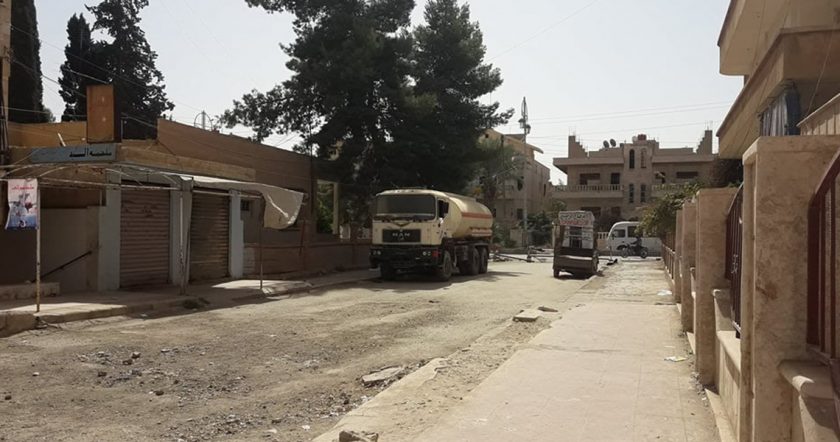
Houses in al-Hasakah city, specifically in “al-Barad al-Alee” street inside the security square in the city, taken on October 26, 2017. Photo credit: STJ
By Khaled Iskef | American Herald Tribune | November 2, 2020
SDF members stormed a residential complex in the “Al-Nashwa Al-Sharia” neighborhood of Hasakah city and seized houses there by force after expelling its residents at gunpoint.
Local sources said that “SDF” members, after threatening the residents and demanding they evacuate the houses, stormed the residential complex and seized a number of Syrian governmental buildings which are the General Company for Water Projects and the General Company for Roads and Bridges.
Twenty families of government employees were displaced, who have lived in the neighborhood for decades and found themselves without shelter under the SDF threat to use weapons against their families if they refrain from evacuating. The sources pointed out that the targeted housing complex oversees the government buildings which US forces have captured and taken as their bases since residents of the complex can watch the transfer of weapons and ammunition in addition to US forces’ operations in the region.
“SDF” members also stormed the housing association dwellings of officers, non-commissioned officers, and members of the Syrian Army in the “Al-Omran” neighborhood in Hasakah city, and told the residents to evacuate within 48 hours. The dwellings contain 100 houses that belong to the retired officers and non-commissioned officers and their inheritors who have bought the houses within years, but SDF targeted them as well in the implementation of US orders.
The Return of the Democrats and the Undead Past
By Martin Sieff | Strategic Culture Foundation | November 2, 2020
The partisan swallowing of ridiculous anti-Russia conspiracy theories by Democrats in Congress added to Hunter Biden’s truly sleazy business adventures in Ukraine have created an exceptionally dangerous brew to threaten and demonize Russia if former Vice President Joe Biden wins the U.S. national election on November 3. All the curses and bungles of America’s past 20 years will rise up anew to threaten the nation’s entire future,
If Joe Biden wins the election, we face an unprecedented situation in U.S. and global affairs since the beginning of the Atomic Age in 1945-49:
The problem is far deeper and more dangerous than any personal problem with Biden or his apparently sleazy son (Hunter Biden’s business dealings with both Ukraine and China cry out for serious honest congressional inquiries in the interests of sane and disinterested U.S. future relations with China and Ukraine – as well as with Russia.)
The real problem is that for eight years the Obama administration, in which Joe Biden was the putative Number Two figure engaged on a Helter-Skelter, crazed descent towards mindless confrontation with Russia and also institutionalized a reckless and plain wicked policy of toppling governments around the world in straight defiance of international law.
The true architect of these policies was neither Obama nor Biden but their first secretary of state Hillary Clinton. It was she who ordered the CIA to collect DNA samples of Latin American national leaders, an unprecedented seven of whom contracted cancers, some of them exceptionally rare and virulent, including two democratically elected presidents of Brazil and the late democratically elected president of Brazil Hugo Chavez who died of his.
Clinton also unleashed the dogs of chaos and war across the Middle East by approving the undermining and successful toppling of the government of Libya and the undermining although unsuccessful efforts to topple the government of Syria. This unleashed a ferocious civil war, the greatest catastrophe the Middle East has seen since Iraq’s attack on Iran in 1980, also at the time recklessly supported by an ignorant and incompetent president Jimmy Carter.
Carter, like Obama after him was ludicrously ignorant of international affairs. Both presidents allowed themselves to be led by the nose through the region by Zbigniew Brzezinski who served as Carter’s national security adviser. Brzezinski’s eagerness to embrace and support the very worst Islamist genocidal extremist groups was exceeded only by his lifelong, unwavering hatred of Russia and all Russians.
Clinton was succeeded as secretary of state in Obama’s second term starting in January 2013 by a far more experienced, restrained and responsible figure, Senator John Kerry. Kerry rightly worked hard and well with Russian Foreign Minister Sergei Lavrov to prevent the reckless and destructive policies of the rest of the administration from totally destroying constructive communications between Washington and Moscow.
But Kerry could not control even his own State Department. He proved utterly unable to rein in the neo-conservative and neo-liberal super-hawks with whom Clinton had seeded the State Department led by Assistant Secretary of State for European and Eurasian Affairs Victoria Nuland. They joined forces with crazed right wing warmongers like the late Senator John McCain (now sanctified, but whose uncontrollable screaming rages were legendary in his days on Capitol Hill).
Together with ambitious plotters in the European Commission in Brussels they manipulated the toppling of the stable, democratically elected government of Ukraine in the 2014 violent Maidan coup in Kiev. McCain and Nuland actually addressed the violent revolutionaries and openly exhorted them to topple their own democratic and previously peaceful government.
The Kremlin moved – in reality with careful and considered restraint – to safeguard the democratically expressed wishes of the population of Crimea to rejoin Russia, and of the Russian ethnic majorities in the eastern provinces of Ukraine. But the Obama administration joined forces with the openly neo-Nazi movements that had seized undemocratic control in Kiev.
Over the following six years to the present, successive U.S. congresses have voted enormous sums of financial aid and sophisticated weapons systems to be sent to Ukraine with the express purpose of killing Russian soldiers and Russian-supported forces. It is no wonder that false and entirely undocumented reverse accusations have now been lodged against Russia by the very same individuals who have supported the forces of violence, revolution and aggression for so long in Ukraine.
President Donald Trump, to his great credit, ran on for election in 2016 on a policy of reducing tensions with Russia and restoring a state of stable coexistence with the other main thermonuclear power on the planet. At no point did he advocate stripping the United States of its defenses.
On the contrary, Trump doubled up on Obama’s unprecedented more than $1 trillion nuclear weapons modernization program. He expanded spending on both conventional and strategic weapons on the largest scale seen since the Reagan-Caspar Weinberger buildup 40 years before.
Nevertheless, Trump was then subjected to the most unfounded, ridiculous political witch hunt against a sitting national leader in U.S. history – at least since President John Kennedy was openly and repeatedly accused of treason for seeking to reduce the dangers of nuclear confrontation after the Cuban Missile Crisis.
Through all of this, hatred and unreasoning accusations against Russia were accompanied by attempted efforts even to destroy the property and economic security of the Russian people. Congress imposed punitive sanctions (they failed completely) with Democrats taking the lead.
Why revisit all this history? It is because, as the great and wise American novelist William Faulkner understood, “The past is not dead. In fact, it’s not even past.”
If the Democrats regain power in Washington, they will return with all the dire and insanely dangerous policies and obsessions they displayed for eight years under Obama and Biden. But those hatreds and prejudices will be superheated by four years of Russiagate fantasies and raving accusations against Russia unsupported by any serious evidence. Indeed, they have been coolly exposed and refuted indeed by many courageous and principled former senior U.S. officials and scholars.
Nevertheless, this Undead Past will rise up, more terrible and destructive than any fantasy of werewolves and zombies, to demolish our Present and horrifically curse our Future.
Green Party, Libertarian presidential candidates on Israel-Palestine
By Alison Weir | If Americans Knew | October 29, 2020
Howie Hawkins and Jo Jorgensen are also on the ballot – and unlike Trump and Biden, they and their running mates appear to be remarkably independent of the Israel lobby…
Libertarian Party
Presidential candidate Dr. Jo Jorgensen
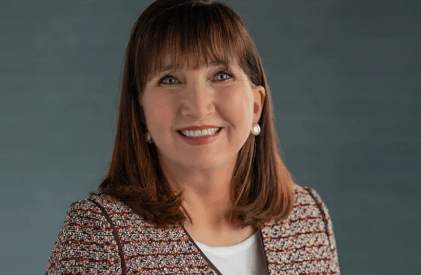
Jorgensen is on the ballot in all 50 states.
In a Q&A on her website she stated:
Q: Should the U.S. continue to support Israel?
A: No, we should not give aid to any foreign nationsQ: Should it be illegal to join a boycott of Israel?
A: NoQ: Should Jerusalem be recognized as the capital of Israel?
A: It’s none of our business
Related statements:
Q: Should the U.S. go to war with Iran?
A: NoQ: Do you support the killing of Iranian Major General Qassem Soleimani?
A: NoQ: Should the military be allowed to use enhanced interrogation techniques, such as waterboarding, to gain information from suspected terrorists?
A: NoQ: Should the U.S. provide military aid to Saudi Arabia during its conflict with Yemen?
A: NoQ: Should the government increase or decrease military spending?
A: DecreaseQ: Should the U.S. accept refugees from Syria?
A: YesQ: Should the U.S. send ground troops into Syria to fight ISIS?
A: NoQ: Should the military fly drones over foreign countries to gain intelligence and kill suspected terrorists?
A: NoQ: Should foreign terrorism suspects be given constitutional rights?
A: Yes, give them a fair trial and shut down Guantanamo BayQ: Should the United States pull all military troops out of Afghanistan?
A: YesQ: Should the U.S. formally declare war on ISIS?
A: NO
Time to Stand Up and Be Counted
By Craig Murray | October 29, 2020
Today, nothing is more important than to say that we will not be silent on the dreadful oppression of the Palestinian people; the daily beatings, killings, humiliations, demolitions, expropriations and destruction of groves that are the concomitant of Israeli illegal occupation.
We will never be browbeaten into silence on the slow genocide of the Palestinian people.
Nobody with any grasp on the location of their right mind believes Jeremy Corbyn to be an anti-Semite. Nobody with any grasp on their right mind believes the Labour Party is now anything but the substitutes’ bench for the Neoconservative team. Under Keir Starmer, the Labour Party has failed to oppose the granting of legal powers to the security services to kill, torture, entrap, forge and fake with impunity. It has failed to oppose the limitation of prosecution of British soldiers for war crimes. The Labour Party now seeks to erase all trace that it might once have been a party that offered an alternative to the right wing security state.
As Director of Public Prosecutions, Keir Starmer pressurised Swedish prosecutors who wished to drop the case against Julian Assange, to persist in order that he might be rendered to the USA. He further persuaded them not to interview Julian here, which is standard practice when he was never charged but only wanted for questioning, and which would have reduced Julian’s ordeal by four years.
Starmer received £50,000 in personal donations from lobbyist Sir Trevor Chinn to fund his leadership bid.
It is perfectly plain that Starmer’s aim in suspending Corbyn is to drive the mass membership that Corbyn attracted out of the Labour Party, and make it a reliable arm of the right wing security state. He wants the Labour Party to be financially dependent not on its members, who have annoying principles, but on donors like Chinn.
The media and political elite have attained their aim; there is no longer any point in voting in Westminster elections. A right wing government supporting the neo-con status quo and the ever tightening security state is now firmly guaranteed and cannot be influenced by a Westminster election.
‘Psychos’ fueled by ‘blood lust,’ Australian special forces tortured and executed prisoners in Afghanistan – report
RT | October 28, 2020
A disturbing new report blows the lid on the shameful conduct of Australian special forces soldiers in Afghanistan, accusing them of waging a campaign of torture and murder across the war-torn country, and hiding the evidence.
When Australia’s elite SAS soldiers would raid villages in Afghanistan, they brought terror and death with them, a report seen by Melbourne newspaper The Age alleges. The special forces “would take the men and boys to these guest houses and interrogate them, meaning tie them up and torture them,” the report states.
By the time the SAS units left, “the men and boys would be found dead, shot in the head, sometimes blindfolded and throats slit. These are corroborated accounts,” it continues, comparing the alleged war crimes to the My Lai massacre of the Vietnam War, and to the US’ mistreatment of detainees in Iraq’s Abu Ghraib prison.
The report was commissioned by then-Army chief Angus Campbell in 2016, and an upcoming Inspector-General report into war crimes by senior judge Paul Brereton has confirmed many of its findings, The Age claimed. Compiled by defense consultant Samantha Crompvoets, the report is based on interviews with soldiers and whistleblowers, who told Cormpvoets some grizzly tales of “competition killing and blood lust.”
In one instance, two “14-year-old boys suspected of being Taliban sympathisers had their throats slit … the bodies were bagged and thrown into a nearby river.” In others, unarmed Afghans were shot in the back as they ran away.
According to the report, war crimes allegations made by NGOs and SAS staff were quashed by the special forces leadership in Afghanistan. Soldiers involved in these crimes allegedly covered them up, and expected their comrades to keep quiet. Meanwhile, the perpetrators “gloated about” their killings.
“Soldiers would do bad stuff to fit in. It becomes part of the banter,” one witness recalled. Another stated: “guys just had this blood lust. Psychos. Absolute psychos. And we bred them.”
Despite the gruesome details revealed in the report, the Australian operators were envious of their British and American counterparts, one informant told Crompvoets.
“Whatever we do, though, I can tell you the Brits and the US are far, far worse. I’ve watched our young guys stand by and hero worship what they were doing, salivating at how the US were torturing people,” the informant said.
Crompvoets’ report alleges that the majority of crimes were committed by a small group of patrol commanders. Brereton’s inquiry found the same, The Age reported. The newspaper said that Brereton will make war crimes referrals to the Australian Federal Police for a number of these soldiers, charges that will be contested by the Department of Defence.
Australian troops have been deployed in Afghanistan since 2001, with combat operations ceasing in 2014. Around 150 Australian soldiers and civilian staff remain in the country in support and advisory roles.
Featured Video
Can the U.S. Afford to Annihilate Iran?
or go to
Aletho News Archives – Video-Images
From the Archives
Sanctions, War and the Policy of Dual Containment
By SASAN FAYAZMANESH | March 17, 2008
It is now nearly three decades since the Unites States adopted the policy of dual containment of Iran and Iraq. While much has been written about the containment of Iraq, there has been very little in-depth analysis of this policy when it comes to Iran. In a book that is going to be released on March 31, 2008, entitled The United States and Iran: Sanctions, Wars and the Policy of Dual Containment (Routledge), I attempt to address this shortcoming by investigating when and why the US policy of containment of Iran came about, how it evolved, and where it stands today.[1] To the extent that Israel has been involved in US policy making, the study will also include the role that Israel has played in the containment of Iran. Also, since the fate of Iran has been inextricably linked to that of Iraq, occasionally the investigation will overlap with the containment of Iraq.
The policy of dual containment of Iran and Iraq originated during the Carter Administration, but it was not until the Clinton Administration that the expression “dual containment” became popular. … continue
Blog Roll
 Aletho News
- Can the U.S. Afford to Annihilate Iran? /Seyed M. Marandi
- Elmo Sold mRNA Jabs to Your Toddler. Now They Are “Off-Label.”
- British state targets Palestine Action with yet another crooked trial
- Americans are paying the price to preserve Israel’s nuclear hegemony
- Resistance factions are necessary to ensure a permanent US Iraq withdrawal
- How Israel destabilizes the Middle East: Denying sovereignty and the right to exist
- Europe’s Establishment Is Embracing War – and Losing Voters
- NATO chief advocates war of aggression
- No Vote, No Representation, No State: Democracy, Israeli Style
- Zionist Bought Senate Blocks Information About American Citizens Killed By Israel
- If Americans Knew
- Israeli Soldiers Abduct At Least 22 Across Occupied West Bank
- Eight Palestinians Killed in Israeli Attacks on Gaza
- Israeli former leaders and security chiefs threaten legal action over ‘Jewish terrorism’
- Israel map in LA Times ad includes all land from the river to the sea
- Inside Lebanon’s 200-page dossier on Israeli war crimes
- Flydubai, genocide, settler violence, Trump abuse of power to deport – Daily Update
- Counting Antisemitic Incidents: What the ADL Audit Reveals — and Obscures
- Mamdani releases plan to combat antisemitism and hate crimes in New York City
- Iran’s Revolutionary Guards Publish Letter to the American People
- DMFI launches $1 million ad campaign supporting Virginia’s Elaine Luria
- No Tricks Zone
- Green Energy Debacle: German Expert Professor Fritz Vahrenholt Warns Of Severe Economic And Social Consequences
- Two More Paleo Reconstructions Affirm Meters-Higher Sea Levels Across Ireland, Brazil 7000-6000 Years Ago
- New Study: Earth And Venus Surface Warmth Largely Explained By Convection And Lapse Rate, Not CO2 Or Radiation
- 2025 Nature Paper Claiming Worsening Global Drought Gets RETRACTED …Heavily Flawed
- New Study: ‘Global Drought Shows No Detectable Recent Acceleration Under Climate Warming’
- Economic Masterminds: German Socialists Suggest Taxing Productivity Gains Stemming From Using AI
- The South China Sea Has Not Been Cooperating With The Climate Change Narrative
- Energy Crisis: Germany Enters Heating Season With Historically Low Gas Reserve Fill Levels
- New Study: The Antarctic Ice Sheet Gained Mass From 2020-2024 Due To Staggering Snow And Ice Accumulation
- Study: Ocean Heating Rates From Thousands Of Years Ago ‘Dwarf’ Modern Ocean Heating Rates

