Council of Europe tells PA to stop supporting prisoners’ families
MEMO | January 26, 2018
The Council of Europe has called upon the Palestinian Authority to halt the payments it distributes to the families of Palestinian prisoners and those who have been killed by Israeli forces, the Jerusalem Post has reported. The Israeli narrative swayed the council during its parliamentary session, prompting it to make the demand for the first time as part of a broader call for a resolution on the Israel-Palestine conflict.
“After a persistent effort we succeeded for the first time to include in the final report [resolution] a clear call to stop support for terrorists [sic] and their families,” said Yesh Atid MK Aliza Lavie, who addressed the council in Strasbourg.
The rest of the session addressed the US recognition of Jerusalem as the capital of Israel and reiterated that a two-state solution with East Jerusalem as Palestine’s capital was the only solution to the conflict.
Israel and the US have long berated the PA for providing crucial subsidies to the families of those impacted by the occupation, framing the money as a reward for “terrorists”. In September, the Trump administration announced its backing for a bill that would suspend US aid to the PA until the latter ended payments to prisoners and their families.
“The Trump administration strongly supports the Taylor Force Act, which is a consequence of Palestinian Authority and Palestine Liberation Organisation’s policy of paying terrorists and their families,” the State Department said at the time.
Palestinian officials have said that the payments are support for relatives “who lost their breadwinners to the atrocities of the occupation, the vast majority of whom are unduly arrested or killed by Israel.”
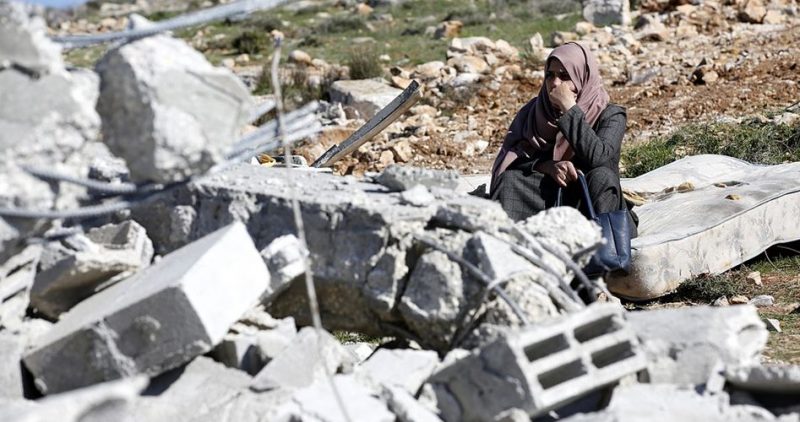
In the aftermath of a resistance attack, the families of the alleged perpetrators often find their homes being demolished, their relatives arrested and their land taken. Amnesty International is one of many human rights groups that have repeatedly condemned such reprisals as a form of “collective punishment”. Consequently, many Palestinians find themselves reliant on the benefits from the PA in order to survive.
SDF: American, British volunteers join fight against Turkey in Afrin

MEMO | January 24, 2018
American, British and German citizens are among other volunteers with the US-backed Syrian Democratic Forces (SDF) that have joined the fight against Turkey in the Syrian province of Afrin, an official told Reuters earlier today.
Turkey’s offensive on the northern region, with the support of Free Syrian Army brigades, started on Saturday and has seen at least 260 Syrian Kurdish fighters and Daesh militants killed in its four-day-old attack.
SDF official Redur Xelil told reporters that foreign fighters among the SDF’s ranks had chosen to go to Afrin to support efforts against the Turkish assault.
“There was a desire on the part of the foreign fighters who fought in Raqqa and who are fighting in Deir Ez-Zor to go to Afrin,” Xelil said. “They will wage battles against the Turkish invasion.”
“There are Americans, Britons, Germans, different nationalities from Europe, Asia and America,” Xelil added.
Foreign fighters are not believed to make up a significant number of the SDF’s forces, with officials only stating they number in the “tens”.
The SDF is primarily made up of militants of the People’s Protection Units (YPG), an offshoot of the designated terrorist organisation, the Kurdistan Workers’ Party (PKK). The group has launched continual attacks against Turkey for the past three decades and their intention to establish a state based on federalism in northern Syria, has prompted Ankara’s intervention since 2016.
Following a US announcement last week that the Trump Administration would continue to aid the SDF and aim to establish a 30,000 strong force along the Syrian border with Turkey, Turkish President Recep Tayyip Erdogan condemned the decision and announced the start of Operation Olive Branch against SDF held regions.
Foreign fighters from the US and Europe have been free to join the SDF and fight alongside YPG forces, as well as return home.
However, those who seek to join other sides in the Syrian conflict do not face the same treatment, with UK Defence Secretary last month calling for British citizens fighting with Daesh abroad to be hunted down and killed. The policy was later criticised by terrorist watchdogs and human rights group who have accused the minster of advocating “war crimes”.
Earlier this month, France also refused the repatriation request of Emilie König, a Frenchwoman suspected of recruiting fighters for Daesh, who now regrets her decision to leave her country. In an interview with Radio RMC, France’s Justice Minister Nicole Belloubet, also said that French nationals who travelled to Syria to join Daesh could be tried by the SDF, signalling a de facto recognition of the autonomous Kurdish region, despite the group’s terrorist affiliations.
The SDF has been accused of numerous human rights violations in Iraq and Syria, including revenge attacks against civilians in former Daesh territories. Amnesty International is one of several NGOs that have recorded the SDF committing war crimes including displacing residents, razing homes, torture and extrajudicial killings.
DAMASCUS: Death in the Afternoon, Ignored by Corporate Media in the West
By Vanessa Beeley | 21st Century Wire | January 24, 2018
Two days ago, nine civilians, mostly schoolchildren were murdered by the US Coalition-financed terrorist factions embedded in the eastern suburbs of Damascus, in this instance East Ghouta. I was leaving the Bab Touma area of the Old City on the same day, less than ten minutes before the mortars mowed down excited children, leaving school and boarding their school buses. The following is my brief report on the event on Facebook:
“We were leaving Bab Touma this afternoon just as the schools finished for the afternoon, around 1.30pm. The streets were teeming with children of all ages, laughing and talking excitedly as they headed for the many school buses waiting for them. The car horns echoed around the streets from the impatient drivers packed into the narrow, cobbled streets.
It was wonderful to see all the colours of their coats and school bags. It was a warm day, the sun was bright and heightened the colour & clamour from these children. One little girl walked past the car giggling with her friend, her smile broke her face in two, it was so broad and expressive.
As we turned left towards Bab Sharki gate to leave the Old City..the children were still pouring onto the streets, walking hand in hand in front of the car, taking their time, gossiping & laughing in the sunshine.

Christine Hourani
About 10 minutes after we left the Old City gates, death struck these children in Bab Touma and Qasaa. Terrorists from East Ghouta fired mortars into these areas murdering 9 innocent children & adults. One young girl, Christine Hourani, who survived the blast risks her legs being amputated below the knee. She was a “lucky one”.

Her aunt, Berjo Alkhouri wrote on Facebook:
“I would like to make a special request from my heart and soul to all my friends and relatives to pray for my niece, my sister’s daughter, Christine Horani and for the Lord to heal her and to recover from her dreadful injury. She has been horrifically injured on her lower limbs by explosive missiles and bomb shells that have targeted the region of Bab Touma, Damascus, Syria while she was just going out of her school.
I also ask for prayers for her dear friend Pascal Al Khalil that has also been injured with her and I ask for God’s mercy on the blessed soul of her other friend Rita Al Eid that has sadly passed away yesterday and is a martyr of this horrific tragedy.”

Another young girl, Rita Eid (in the photo) was murdered…her father Nidal owns Ghassani supermarket where friends of mine buy their groceries.
Death stalks everyone in these streets every day. The smiles I saw just before the mortars rained down may have been crushed beneath the rubble. A child who left for school this morning, full of excitement, may never come back.

Teenager Mohamed Zafer – killed
What did these children do? How can it ever be called a “revolution” when these monsters in East Ghouta deliberately fire mortars into an area brimming with schoolchildren. It is a systematic massacre of Syrian civilians being carried out by the terrorists the US Coalition-of-terror finance, arm & paint as “freedom fighters”.
Where are these missiles coming from? How are these terrorists receiving supplies to manufacture bombs, yet claim they are starving?
As a dear friend said to me, “from the names of the dead and injured, over 80% are Christian, this is such a small community, everyone knows each other… ”
How much longer will we passively support what our governments are inflicting upon the Syrian people?”
Below is a photograph of three-year old Elias Khoury who was killed during this heinous attack by the terrorist factions that the Western corporate media insists upon calling “rebels” or “freedom fighters”.

The majority of the victims were schoolchildren but among the adults was school principal, Khaled Al Sakka.

Mike Raddie of BSNews wrote the following moving tribute to the victims of this latest in a long line of US Coalition-endorsed terrorist attacks on civilians in Damascus:
“Watching the news today I couldn’t help but shed a tear for the victims of yet another horrific terrorist attack – part of a seemingly unstoppable wave of Muslim Brotherhood-inspired and MI6 / CIA sustained political violence that has swept across Syria for over seven years. My sympathies go out to the families of those killed and the almost two dozen injured, some horrifically. The tears I shed were for the victims and their families obviously, but they were also tears caused by a despair and frustration I feel so deeply – why was this attack and its aftermath not covered by our TV news programmes? Why no mention of the atrocity on the evening bulletins of ITN or the BBC here in the UK? Why are some victims of gruesome terror undeserving of our attention?
I first heard of the tragedy via instant messenger, then I watched the aftermath online, read eyewitness accounts via Twitter and Facebook, then via email, interspersed with text messages received from friends. Feeling somewhat overwhelmed and unable to take it all in I decided to go for a walk.
Once out in the fresh early evening air I began to wonder whether it would have been possible to be in London, with our sophisticated 24-hour TV news machinery, and not hear about the gruesome attack had the victims been mostly westerners. Without doubt, that crucial fact would have merited a slot in the news schedule. We would have learned the victims’ names, seen harrowing reaction from their family and friends, heard about their hopes and dreams. Had westerners even been injured in the attack my neighbours who saw me out walking that evening would have been expressing righteous outrage rather than looking stupefied as I explained my unmistakable sadness. You see, western victims of terror are ‘worthy’ victims. In stark contrast, Syrian civilians, even women and children, are ‘unworthy’ victims especially so when their deaths and injuries are at the hands of extremists factions our government and its allies have been supporting. Like Yemen, Syria is a war ‘we’ wage but don’t see!
Al Nusra Front terrorists chose to strike at the heart of the old city, Bab Touma and Qassaa neighbourhoods, in the predominantly Christian district of Damascus. This is where I stayed on my two visits to Syria in 2016 and 2017. This is where I slept, ate and shopped, where my friends live and work, where people of all nationalities, religions and cultures come together. Sickeningly the attack took place just as children were leaving school for the afternoon. Several mortar shells fired by militants positioned in the Eastern Ghouta region struck just after 2 pm murdering nine innocent children & adults, including a 3-year-old boy, Elias Khoury. A source at Damascus police command center reported that many of the casualties occurred when a shell fell on a bus stop in the area.”
Pascale Al-Khalil, 16 years old. She was injured in the attack and is now receiving hospital treatment in Damascus.

Read on for the full article from Mike Raddie: The Machiavellian Determination of Victim Worthiness
A National Defense Strategy of Sowing Global Chaos
By Nicolas J.S. Davies | Consortium News | January 23, 2018
Presenting the 2018 National Defense Strategy of the United States on Friday at the Johns Hopkins University, Secretary of Defense James Mattis painted a picture of a dangerous world in which U.S. power – and all of the supposed “good” that it does around the world – is on the decline.
“Our competitive edge has eroded in every domain of warfare – air, land, sea, space, and cyberspace,” he said. “And it is continually eroding.”
What he could have said instead is that the United States military is overextended in every domain, and that much of the chaos seen around the world is the direct result of past and current military adventurism. Further, he could have acknowledged, perhaps, that the erosion of U.S. influence has been the result of a series of self-inflicted blows to American credibility through foreign policy disasters such as 2003 invasion of Iraq.
There were also two important words hidden between the lines, but never mentioned by name, in the new U.S. National Defense Strategy: “empire” and “imperialism.”
It has long been taboo for U.S. officials and corporate media to speak of U.S. foreign policy as “imperialism,” or of the U.S.’s global military occupations and network of hundreds of military bases as an “empire.” These words are on a long-standing blacklist of “banned topics” that U.S. official statements and mainstream U.S. media reports must never mention.
The streams of Orwellian euphemisms with which U.S. officials and media instead discuss U.S. foreign policy do more to obscure the reality of the U.S. role in the world than to describe or explain it, “hiding imperial interests behind ever more elaborate fig leaves,” as British historian A.J.P. Taylor described European imperialists doing the same a century ago.
As topics like empire, imperialism, and even war and peace, are censored and excised from political debate, U.S. officials, subservient media and the rest of the U.S. political class conjure up an illusion of peace for domestic consumption by simply not mentioning our country’s 291,000 occupation troops in 183 other countries or the 39,000 bombs and missiles dropped on our neighbors in Iraq, Syria and Afghanistan since Trump took office.
The 100,000 bombs and missiles dropped on these and other countries by Obama and the 70,000 dropped on them by Bush II have likewise been swept down a kind of real time “memory hole,” leaving America’s collective conscience untroubled by what the public was never told in the first place.
But in reality, it’s been a long time since U.S. leaders of either party resisted the temptation to threaten anyone anywhere, or to follow through on their threats with “fire and fury” bombing campaigns, coups and invasions. This is how empires maintain a “credible threat” to undergird their power and discourage other countries from challenging them.
But far from establishing the “Pax Americana” promised by policymakers and military strategists in the 1990s, from Paul Wolfowitz and Dick Cheney to Madeleine Albright and Hillary Clinton, the results have been consistently catastrophic, producing what the new National Defense Strategy calls, “increased global disorder, characterized by decline in the long-standing, rules-based international order.”
Of course the drafters of this U.S. strategy document dare not admit that U.S. policy is almost single-handedly responsible for this global chaos, after successive U.S. administrations have worked to marginalize the institutions and rules of international law and to establish illegal U.S. threats and uses of force that international law defines as crimes of aggression as the ultimate arbiter of international affairs.
Nor do they dare acknowledge that the CIA’s politicized intelligence and covert operations, which generate a steady stream of political pretexts for U.S. military intervention, are designed to create and exacerbate international crises, not to solve them. For U.S. officials to admit such hard truths would shake the very foundations of U.S. imperialism.
Opposition to the Joint Comprehensive Plan of Action with Iran – the so-called nuclear deal – from Republicans and Democratic hawks alike seems to stem from the fear that it might validate the use of diplomacy over sanctions, coups and war, and set a dangerous precedent for resolving other crises – from Afghanistan and Korea to future crises in Africa and Latin America. Iran’s success at bringing the U.S. to the negotiating table, instead of falling victim to the endless violence and chaos of U.S.-backed regime change, may already be encouraging North Korea and other targets of U.S. aggression to try to pull off the same trick.
But how will the U.S. justify its global military occupation, illegal threats and uses of force, and trillion-dollar war budget once serious diplomacy is seen to be more effective at resolving international crises than the endless violence and chaos of U.S. sanctions, coups, wars and occupations?
From Bhurtpoor to Baghdad
Major Danny Sjursen, who has fought in Iraq and Afghanistan and taught history at West Point, is a rare voice of sanity from within the U.S. military. In a poignant article in Truthdig, Major Sjursen eloquently described the horrors he has witnessed and the sadness he expects to live with for the rest of his life. “The truth is,” he wrote, “I fought for next to nothing, for a country that, in recent conflicts, has made the world a deadlier, more chaotic place.”
Danny Sjursen’s life as a soldier of the U.S. Empire reminds me of another soldier of Empire, my great-great-great grandfather, Samuel Goddard. Samuel was born in Norfolk in England in 1793, and joined the 14th Regiment of Foot as a teenager. He was a Sergeant at the Battle of Waterloo in 1815. During 14 years in India, his battalion led the assault on the fortress of Bhurtpoor in 1826, which ended the last resistance of the Maratha dynasty to British rule. He spent 3 years in the Caribbean, 6 years in Canada, and retired as Commandant of Dublin Castle in 1853 after a lifetime of service to Empire.
Danny’s and Samuel’s lives have much in common. They would probably have a lot to talk about if they could ever meet. But there are critical differences. At Bhurtpoor, the two British regiments who led the attack were followed through the breech in the walls by 15 regiments of Indian “Native Infantry.” After Bhurtpoor, Britain ruled India (including Pakistan and Bangladesh) for 120 years, with only a thousand British officials in the Indian Civil Service and a few thousand British officers in command of up to 2.5 million Indian troops.
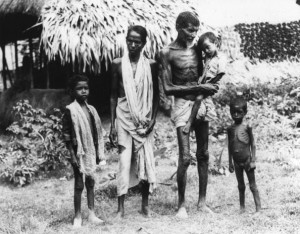 The British brutally put down the Indian Mutiny in 1857-8 with massacres in Delhi, Allahabad, Kanpur and Lucknow. Then, as up to 30 million Indians died in famines in 1876-9 and 1896-1902, the British government of India explicitly prohibited relief efforts or actions that might reduce exports from India to the U.K. or interfere with the operation of the “free market.”
As Mike Davis wrote in his 2001 book, Late Victorian Holocausts, “What seemed from a metropolitan perspective the nineteenth century’s final blaze of imperial glory was, from an Asian or African viewpoint, only the hideous light of a giant funeral pyre.”
And yet Britain kept control of India by commanding such loyalty and subservience from millions of Indians that, in every crisis, Indian troops obeyed orders from British officers to massacre their own people.
Danny Sjursen and U.S. troops in Afghanistan, Iraq and other post-Cold War U.S. war zones are having a very different experience. In Afghanistan, as the Taliban and its allies have taken control of more of the country than at any time since the U.S. invasion, the U.S.-backed Afghan National Army has 25,000 fewer troops under its command than it did five years ago, while ten years of training by U.S. special operations forces has produced only 21,000 trained Afghan Commandos, the elite troops who do 70-80% of the killing and dying for the corrupt U.S.-backed Afghan government.
But the U.S. has not completely failed to win the loyalty of its imperial subjects. The first U.S. soldier killed in action in Afghanistan in 2018 was Sergeant 1st Class Mihail Golin, originally from Latvia. Mihail arrived in the U.S. in November 2004, enlisted in the U.S. Army three months later and has now given his life for the U.S. Empire and for whatever his service to it meant to him. At least 127 other Eastern Europeans have died in occupied Afghanistan, along with 455 British troops, 158 Canadians and 396 soldiers from 17 other countries. But 2,402 – or 68%, over two-thirds – of the occupation troops who have died in Afghanistan since 2001, were Americans.
In Iraq, an American war that always had even less international support or legitimacy, 93% of the occupation troops who have died were Americans, 4,530 out of a total of 4,852 “coalition” deaths.
When Ben Griffin, who later founded the U.K. branch of Veterans for Peace, told his superiors in the U.K.’s elite SAS (Special Air Service) that he could no longer take part in murderous house raids in Baghdad with U.S. special operations forces, he was surprised to find that his entire chain of command understood and accepted his decision. The only officer who tried to change his mind was the chaplain.
The Future of Empire
The U.S. Joint Chiefs of Staff have explicitly told Congress that war with North Korea would require a ground invasion, and the same would likely be true of a U.S. war on Iran. South Korea wants to avoid war at all costs, but may be unavoidably drawn into a U.S.-led Second Korean War.
But besides South Korea, the level of support the U.S. could expect from its allies in a Second Korean War or other wars of aggression in the future would probably be more like Iraq than Afghanistan, with significant international opposition, even from traditional U.S. allies. U.S. troops would therefore make up nearly all of the invasion and occupation forces – and take nearly all of the casualties.
Compared to past empires, the cost in blood and treasure of policing the U.S. Empire and the blame for its catastrophic failures fall disproportionately – and rightly – on Americans. Even Donald Trump recognizes this problem, but his demands for allied countries to spend more on their militaries and buy more U.S. weapons will not change their people’s unwillingness to die in America’s wars.
This reality has created political pressure on U.S. leaders to wage war in ways that cost fewer American lives but inevitably kill many more people in countries being punished for resistance to U.S. imperialism, using air strikes and locally recruited death squads instead of U.S. “boots on the ground” wherever possible.
The U.S. conducts a sophisticated propaganda campaign to pretend that U.S. air-launched weapons are so accurate that they can be used safely without killing large numbers of civilians. Actual miss rates and blast radii are on the “banned topics” blacklist, along with realistic estimates of civilian deaths.
When former Iraqi foreign minister Hoshyar Zebari told Patrick Cockburn of the U.K.’s Independent newspaper that he had seen Iraqi Kurdish intelligence reports which estimated that the U.S.- and Iraqi-led destruction of Mosul had killed 40,000 civilians, the only remotely realistic estimate so far from an official source, no other mainstream Western media followed up on the story.
But America’s wars are killing millions of innocent people: people defending themselves, their families, their communities and countries against U.S. imperialism and aggression; and many more who were simply in the wrong place at the wrong time under the onslaught of over 210,000 American bombs and missiles dropped on at least 7 countries since 2001.
According to a growing body of research (for example, see the UN Development Program study, Journey to Extremism in Africa: Drivers, Incentives and the Tipping-Point for Recruitment), most people who join armed resistance or “terrorist” groups do so mainly to protect themselves and their families from the dangers of wars that others have inflicted on them. The UNDP survey found that the final “tipping point” that pushes over 70% of them to take the fateful step of joining an armed group is the killing or detention of a close friend or family member by foreign or local security forces.
So the reliance on airstrikes and locally recruited death squads, the very strategies that make U.S. imperialism palatable to the American public, are in fact the main “drivers” spreading armed resistance and terrorism to country after country, placing the U.S. Empire on a collision course with itself.
The U.S. effort to delegate war in the Middle East to Saudi Arabia is turning it into a target of global condemnation as it tries to mimic the U.S. model of warfare by bombing and starving millions of innocent people in Yemen while blaming the victims for their plight. The slaughter by poorly trained and undisciplined Saudi and Emirati pilots is even more indiscriminate than U.S. bombing campaigns, and the Saudis lack the full protection of the Western propaganda system to minimize international outrage at tens of thousands of civilian casualties and an ever-worsening humanitarian crisis.
The need to win the loyalty of imperial subjects by some combination of fear and respect is a basic requirement of Empire. But it appears to be unattainable in the 21st century, certainly by the kind of murderous policies the U.S. has embraced since the end of the Cold War. As Richard Barnet already observed 45 years ago, at the end of the American War in Vietnam, “At the very moment the number one nation has perfected the science of killing, it has become an impractical instrument of political domination.”
Obama’s sugar-coated charm offensive won U.S. imperialism a reprieve from global public opinion and provided political cover for allied leaders to actively rejoin U.S.-led alliances. But it was dishonest. Under cover of Obama’s iconic image, the U.S. spread the violence and chaos of its wars and regime changes and the armed resistance and terrorism they provoke farther and wider, affecting tens of millions more people from Syria and Libya to Nigeria and Ukraine.
Now Trump has taken the mask off and the world is once again confronting the unvarnished, brutal reality of U.S. imperialism and aggression.
China’s approach to the world based on trade and infrastructure development has been more successful than U.S. imperialism. The U.S. share of the global economy has declined from 40% to 22% since the 1960s, while China is expected to overtake the U.S. as the world’s largest economy in the next decade or two – by some measures, it already has.
While China has become the manufacturing and trading hub of the global economy, the U.S. economy has been financialized and hollowed out, hardly a solid basis for future growth. The neoliberal model of politics and economics that the U.S. adopted a generation ago has created even greater wealth for people who already owned disproportionate shares of everything, but it has left working people in the U.S. and across the U.S. Empire worse off than before.
Like the “next to nothing” that Danny Sjursen came to realize he was fighting for in Iraq and Afghanistan, the prospects for the U.S. economy seem ephemeral and highly vulnerable to the changing tides of economic history.
The Rise and Fall of the Great Powers
In his 1987 book, The Rise and Fall of the Great Powers: Economic Change and Military Conflict from 1500 to 2000, historian Paul Kennedy examined the relationship between economic and military power in the histories of the Western empires who colonized the world in the past 500 years. He described how rising powers enjoy significant competitive advantages over established ones, and how every once-dominant power sooner or later has to adjust to the tides of economic history and find a new place in a world it can no longer dominate.
Kennedy explained that military power is only a secondary form of power that wealthy nations develop to protect and support their expanding economic interests. An economically dominant power can quickly convert some of its resources into military power, as the U.S. did during the Second World War or as China is doing today. But once formerly dominant powers have lost ground to new, rising powers, using military power more aggressively has never been a successful way to restore their economic dominance. On the contrary, it has typically been a way to squander the critical years and scarce resources they could otherwise have used to manage a peaceful transition to a prosperous future.
As the U.K. found in the 1950s, using military force to try to hold on to its empire proved counter-productive, as Kennedy described, and peaceful transitions to independence proved to be a more profitable basis for future relations with its former colonies. The drawdown of its global military commitments was an essential part of its transition to a viable post-imperial future.
The transition from hegemony to coexistence has never been easy for any great power, and there is nothing exceptional about the temptation to use military force to try to preserve and prolong the old order. This has often led to catastrophic wars and it has always failed.
It is difficult for any political or military leader to preside over a diminution of his or her country’s power in the world. Military leaders are rewarded for military strategies that win wars and expand their country’s power, not for dismantling it. Mid-level staff officers who tell their superiors that their weapons and armies cannot solve their country’s problems do not win promotion to decision-making positions.
As Gabriel Kolko noted in Century of War in 1994, this marginalization of critical voices leads to an “inherent, even unavoidable institutional myopia,” under which, “options and decisions that are intrinsically dangerous and irrational become not merely plausible but the only form of reasoning about war and diplomacy that is possible in official circles.”
After two world wars and the independence of India, the Suez crisis of 1956 was the final nail in the coffin of the British Empire, and the Eisenhower administration burnished its own anti-colonial credentials by refusing to support the British-French-Israeli invasion of Egypt. British Prime Minister Anthony Eden was forced to resign, and he was replaced by Harold Macmillan, who had been a close aide to Eisenhower during the Second World War.
Macmillan dismantled the remains of the British Empire behind the backs of his Conservative Party’s supporters, winning reelection in 1959 on the slogan, “You’ve never had it so good,” while the U.S. supported a relatively peaceful transition that preserved Western international business interests and military power.
As the U.S. faces a similar transition from empire to a post-imperial future, its leaders have been seduced by the chimera of the post-Cold War “power dividend” to try to use military force to preserve and expand the U.S. Empire, even as the relative economic position of the U.S. declines.
In 1987, Paul Kennedy ended The Rise and Fall of the Great Powers with a prescient analysis of the U.S. position in the world. He concluded,
“In all of the discussions about the erosion of American leadership, it needs to be repeated again and again that the decline referred to is relative not absolute, and is therefore perfectly natural; and that the only serious threat to the real interests of the United States can come from a failure to adjust sensibly to the newer world order.”
But after Kennedy wrote that in 1987, instead of accepting the future of peace and disarmament that the whole world hoped for at the end of the Cold War, a generation of American leaders made a fateful bid for “superpower.” Their delusions were exactly the kind of failure to adjust to a changing world that Kennedy warned against.
The results have been catastrophic for millions of victims of U.S. wars, but they have also been corrosive and debilitating for American society, as the perverted priorities of militarism and Empire squander our country’s resources and leave working Americans poorer, sicker, less educated and more isolated from the rest of the world.
When I began writing Blood On Our Hands: the American Invasion and Destruction of Iraq in 2008, I hoped that the catastrophes in Afghanistan and Iraq might bring U.S. leaders to their senses, as the Suez crisis did to British leaders in 1956.
Instead, eight more years of carefully disguised savagery under Obama have squandered more precious time and good will and spread the violence and chaos of U.S. war-making even farther and wider. The new National Defense Strategy’s implicit threats against Russia and China reveal that 20 years of disastrous imperial wars have done nothing to disabuse U.S. leaders of their delusions of “superpower status” or to restore any kind of sanity to U.S. foreign policy.
Trump is not even pretending to respect diplomacy or international law, as he escalates Bush’s and Obama’s wars and threatens new ones of his own. But maybe Trump’s nakedly aggressive policies will force the world to finally confront the dangers of U.S. imperialism. A coming together of the international community to stop further U.S. aggression may be the only way to prevent an even greater catastrophe than the ones that have already befallen the people of Afghanistan, Iraq, Somalia, Honduras, Libya, Syria, Ukraine and Yemen.
Or will it actually take a new and even more catastrophic war in Korea, Iran or somewhere else to finally force the United States to “adjust sensibly to the new world order,” as Paul Kennedy put it in 1987? The world has already paid a terrible price for our leaders’ failure to take his sound advice a generation ago. But what will be the final cost if they keep ignoring it even now?
Nicolas J.S. Davies is the author of Blood On Our Hands: the American Invasion and Destruction of Iraq.
Destroying Syria
Why does Washington hate Bashar al-Assad?

By Philip Giraldi • Unz Review • January 23, 2018
The Donald Trump administration is planning to install a 30,000 strong armed “security force” in northern Syria along the borders with Turkey and Iraq. This presumably will tie together and support the remaining rag-tags of allegedly pro-democracy rebels and will fit in with existing and proposed U.S. bases. The maneuver is part of a broader plan to restructure Syria to suit the usual crop of neocon geniuses in Washington that have slithered their way back into the White House and National Security Council, to include renewed demands that the country’s President Bashar al-Assad “must go,” reiterated by Secretary of State Rex Tillerson last Wednesday. He said “But let us be clear: The United States will maintain a military presence in Syria, focused on ensuring ISIS cannot re-emerge.” Tillerson also claimed that remaining in Syria would prevent Iran from “reinforcing” its position inside Syria and would enable the eventual ouster of al-Assad, but he has also denied that Washington was creating a border force at all, yet another indication of the dysfunction in the White House.
A plan pulled together in Washington by people who should know better but seemingly don’t is hardly a blueprint for success, particularly as there is no path to anything approximating “victory” and no exit strategy. The Syrians have not been asked if they approve of an arrangement that will be put in place in their sovereign territory and the Turks have already bombed targets and sent troops and allied militias into the Afrin region, also a U.S. supported Kurdish enclave on the border. President Recep Tayyip Erdogan has indicated clearly that Ankara will disrupt any U.S. devised border arrangement. From the Turkish point of view the border security force, which reportedly will largely consist of Kurdish militiamen, will inevitably work in cooperation with the Kurdish terrorist group PKK which is active on the Turkish side of the border, in seeking to create an autonomous Kurdish state, which Turkey reasonably enough regards as an existential threat.
And then there is one other little complication, which is that the United States presence in Syria is completely illegal both under international law and under the U.S. government’s War Powers Act. Syria is a sovereign state with a recognized government and there is no U.N. or Congressional mandate that permits Washington to station its soldiers, Marines and airmen within the country’s borders. The argument that the recent Authorizations to Use Military Force (AUMF) permitted the activity because groups linked to al-Qaeda were active there and the local government was unable to expel them is only thinly credible as the U.S. has also attacked Syrian Army forces and the militiamen linked to Syria’s ally Iran. That constitutes a war crime.
Trump can under the War Powers Act take military action to counter an imminent threat, which was never the case from Syria in any event, but after 60 days he has to cease or desist or go to Congress for authorization up to and possibly including a declaration of war. The military offensive against Syria began under President Barack Obama and it is far beyond that two-month window already, so egregiously in violation that some Congressmen are actually beginning to take notice. Democratic Senator Tim Kaine of Virginia has demanded that no military initiatives in Syria be undertaken without a Senate vote. He said on Thursday that“I am deeply alarmed that yet again, the Trump administration continues to raise the risk of unnecessary war, disconnected from any firm policy objectives and core national security interests. To be clear, neither the 2001 or 2002 AUMFs provide authority to target Assad or Iranian proxies in Syria, and it is unacceptable for this action to be taken absent a vote and approval of Congress.”
The animus against Syria runs deep, to include questionable claims from generally hostile sources that al-Assad has deliberately massacred hundreds of thousands of his own people as well as dubious assertations about the use of chemical weapons that led to a U.S. cruise missile attack on a Syrian airbase in Shayrat. A perfect example of how brain dead the western media is over the issue was provided by last week’s article by David Brunnstrom of Reuters on the Tillerson speech, where he wrote “U.S. forces in Syria have already faced direct threats from Syrian and Iranian-backed forces, leading to the shoot-down of Iranian drones and a Syrian jet last year, as well as to tensions with Russia.” The uninformed reader would assume that Americans were the victims of an attack and aggression by Moscow whereas the reality is quite different. Iran and Russia are allies of the legitimate Syrian government that are in the country by invitation to help in its fight against groups that everyone acknowledges to be terrorists. The United States is there illegally and is as often as not using its proxies to fight the Syrian Army.
Syria-phobia goes back to the George W. Bush Administration in December 2003, when Congress passed the Syria Accountability Act, House Resolution 1828. Syria at that time was already in the cross-hairs of two principal American so-called allies in the region, Israel and Saudi Arabia. Both were actively working to destabilize the regime, though for different reasons. The Saudis were fearful of Iranian influence over Damascus but also had a religious agenda in that the secular Syrian regime was protective of religious minorities and was itself an offshoot of Shi’a Islam referred to as Alawites. The Saudis considered them to be heretics.
The Israelis for their part were enamored of the Yinon Plan of 1982 and the Clean Break proposals made in 1996 by a team of Jewish American neocons. Their intention was to transform most of Israel’s neighboring Arab states into warring tribes and ethnicities so they would no longer be a threat. Israeli leaders have stated openly that they would prefer continued chaos in Syria, which remains a prime target. Israel is, in fact, currently bombing Syrian Army positions, most recently near Damascus, while also supporting the ISIS and al-Nusra Front remnants.
The Syrian Accountability Act does indeed read at times like the completely bogus indictment of Saddam Hussein that had led to the invasion of Iraq earlier in 2003. It cites development of weapons of mass destruction and missiles, but its main focus is related to the alleged support of terrorist groups by Damascus. It “Declares the sense of Congress that the Government of Syria should immediately and unconditionally halt support for terrorism, permanently and openly declare its total renunciation of all forms of terrorism, and close all terrorist offices and facilities in Syria, including the offices of Hamas, Hizballah, the Popular Front for the Liberation of Palestine, and the Popular Front for the Liberation of Palestine-General Command.”
One might note that the groups cited by name are not identified as being a threat to the United States. Rather, they are organizations hostile to Israel, which suggests that the motivation for the bill was the usual dominant pro-Israeli sentiment in Congress. The bill’s sponsor was Eliot Engel of New York, a passionately pro-Israeli legislator.
Be that as it may, the drive to “get” Syria has remained a constant in American Foreign Policy to this day. When the U.S. still had an Embassy in Damascus, in December 2010 President Barack Obama maladroitly sent as Ambassador Robert Ford. Ford actively supported the large demonstrations by anti-regime Syrians inspired by the Arab Spring who were opposed to the al-Assad government and he might even have openly advocated an armed uprising, a bizarre interpretation of what Ambassadors are supposed to do in a foreign country. He once stated absurdly that if the U.S. had armed opponents of the regime, al-Qaeda groups would have been “unable to compete.” Ford was recalled a year later, after being pelted by tomatoes and eggs, over concerns that his remaining in country might not be safe, but the damage had been done and normal diplomatic relations between Damascus and Washington have never been restored.
The desire to bring about regime change in Damascus gathered considerable steam in 2011. Harsh government efforts to repress the demonstrations that did take place inevitably led to violence in both directions and the United States, Saudis and the Gulf States subsequently began to arm the rebels and support the formation of the Free Syrian Army, which Washington assured the American public consisted of only good people who wanted democracy and fundamental rights. To no one’s surprise many of the fledgling democrats accepted U.S. training and weapons before defecting to the al-Qaeda affiliate al-Nusra Front or to ISIS.
Currently, the reconstruction of Syria is proceeding. The Syrian Arab Army is wiping out the last few enclaves controlled by ISIS in Idlib Province and the so-called Syrian Civil War will soon be over but for the mopping up. Many internal refugees have returned to their homes after the government reasserted control and also thousands who fled overseas have reportedly come back. Note that they are returning to areas where the al-Assad government is firmly in charge, perhaps suggesting that, while there were legitimate grievances among the Syrian people, the propaganda insisting that most Syrians were opposed to the regime was grossly overstated. There is considerable evidence that Bashar al-Assad is actually supported by a large majority of the Syrian people, even among those who would welcome more democracy, because they know the alternative to him is chaos.
One would like to think that Syria might again be Syria but Washington is baying for blood and clearly would like to see a solution that involves a fragmentation of the state enabling containment and rollback of Iranian influence there while also satisfying both its clients Israel and the Saudis as well as creating a possible mini-state for the Kurds. The destruction of Syria and the Syrian people will just be regarded as collateral damage while building a new Middle East. Hopefully the Syrians, backed by Iran, Russia and China will prevent that from happening and as the U.S. did not directly engage in much of the hard fighting that destroyed ISIS, it thankfully has little leverage over what comes next.
Whether it is Riyadh or Tel Aviv leading Washington by the nose is somehow irrelevant as the blame for what is taking place is squarely on the White House. The United States has no coherent policy, nor any actual national interest in remaining in Syria, but the strange political alignments that appear to be playing out in and around the Oval Office have generated a desire to destroy a country and people that in no way threaten the U.S. Someone should remind the president that similar scenarios did not turn out very well in Afghanistan, Iraq and Libya. No one should expect that Syria will be any different.
US invited leaders of Jewish only settlement group to Vice President’s speech
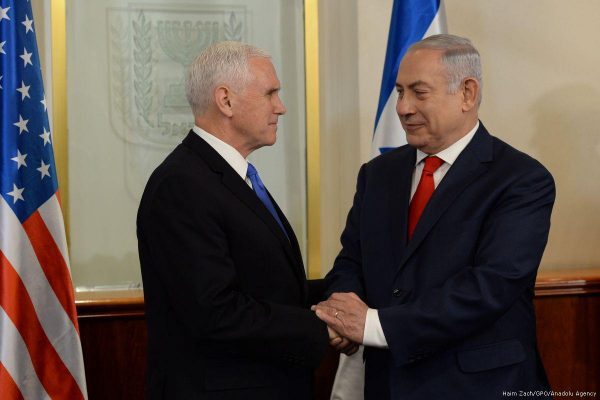
US Vice President Mike Pence (L) meets with Prime Minister of Israel Benjamin Netanyahu (R) during his visit in Jerusalem on 22 January 2018 [Haim Zach/GPO/Anadolu Agency]
MEMO | January 22, 2018
The US embassy extended its invitation to a speech today by Vice President Mike Pence at the Israeli Knesset to leaders of Israeli settlers belonging to messianic and religious extremist groups.
Israeli newspaper Haaretz reported that a spokesman for the organization that lobbies on behalf of settlements, which are illegal under international law, confirmed that the leaders of the settler’s movement received personal invitations from the US embassy in Tel Aviv.
The spokesperson for the Yesh Council -successor to Gush Emunim (“Bloc of the Faithful”)-confirmed that the chair of the umbrella organization for Jewish settlements in the West Bank and the director of its foreign desk received invitations to the Knesset event from the US embassy.
Founded in the 1970s, the Yesh Council was formed to promote exclusively-Jewish settlements in the West Bank. They espouse a similar ideology to the Gush Emunim, whose leaders are widely portrayed as messianic, fundamentalist, theocratic, and right-wing.
Gush Emunim believed that the coming of the messiah can be hastened through Jewish settlement on land they believe God has allotted to the Jewish people as set forth in the Hebrew Bible.
The Yesha Council also serves as the political arm of the settler movement. They have been given a green light by David Friedman, who was appointed as US ambassador to Israel by President Trump last year. Friedman is a staunch supporter of the settler movement. The former bankruptcy lawyer is well-known for making incendiary remarks and holding contentious views that are at odds with longstanding US policy on Israeli and Palestine. He has previously served as president of an organization that fundraises in the US for the settlement of Beit El. Trump himself is said to have donated to Beit El.
Describing the sympathetic attitude of the current US administration to the activities of the illegal settlers, leaders of the Jewish-only settlements said that “in general, there is a much better atmosphere these days.”
Read also:
PLO calls for Arab countries to boycott US over Jerusalem decision
Erdogan accuses allies of sending ‘thousands of planeloads’ and ‘truckloads of arms’ to Kurds
RT | January 21, 2018
Turkish President Recep Tayyip Erdogan has turned on Ankara’s allies, insinuating that the US in particular has been providing massive military support to Kurdish YPG in Syria.
In a speech to his ruling AK Party Erdogan said that ‘some allies’ of Turkey had provided the YPG Syrian Kurdish militia with 2,000 planeloads and 5,000 truckloads of weapons.
“Now, apart from 5,000 trucks, there are weapons and ammunition from around 2,000 planes.” the Turkish leader said. He also accused Ankara’s allies of dishonesty when they say that they do not provide weapons for “terrorists,” referring to Kurdish-linked YPG forces.
The president also vowed to hand over Afrin to its “real owners,” explaining that he aims to return 3.5 million refugees back to Syria from Turkey as soon as possible.
This weekend, Turkey began operation ‘Olive Branch’ against Kurdish forces in Afrin, deploying jets and land forces.
Germany stops arms sales to Saudi Arabia
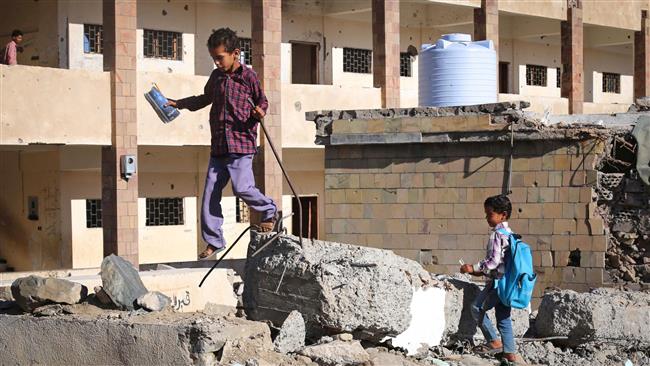
Yemeni children walk outside a school that was damaged in a Saudi air strike in the southern Yemeni city of Ta’izz. (By AFP)
Press TV – January 20, 2018
Germany has stopped selling weapons to Saudi Arabia and almost all of its allies waging war on Yemen, in a decision likely to have both an impact on the Riyadh regime and a domino effect on other Western and non-Western countries exporting arms to Saudi Arabia.
German government spokesman Steffen Seibert said on Friday that the Federal Security Council was no longer issuing export licenses that “are not in accordance with the conclusion of the exploratory talks,” Germany’s official DPA news agency reported.
The official was referring to ongoing negotiations among the German political factions of the Christian Democratic Union, the Christian Social Union, and Social Democrats on the formation of a new coalition government.
A draft paper on arms exports that came out of those talks said “the federal government, with immediate effect, will no longer export arms to countries as long as they are involved in the Yemeni war.”
Around 13,600 people have died since Saudi Arabia started leading a number of its vassal states in an invasion of Yemen in March 2015.
The war, which enlists the participation among others of the United Arab Emirates, Jordan, Egypt, Bahrain, Kuwait, Morocco, Sudan, and Senegal, has been reinforced by weapon supplies and logistical support from the United States and the United Kingdom.
Washington signed a $110-billion arms deal with Riyadh last year.
By stopping its own arms sales to Saudi Arabia, European heavyweight Germany may become a model for other Western and non-Western powers already under pressure to end their arms sales to the Riyadh regime. Rights groups have long called for an arms embargo on Saudi Arabia over potential war crimes in Yemen.
A United Nations panel recently compiled a detailed report of civilian casualties caused by the Saudi military and its allies during the war, saying the Riyadh-led coalition has used precision-guided munitions in its raids on civilian targets.
“The attacks were carried out by precision-guided munitions, so it is likely these were the intended targets,” the panel’s report said, according to Al Jazeera.
Saudi Arabia and the UAE were among the top recipients of German-made weaponry in 2016.
The DPA report said, “The German public is traditionally wary of arms deals and [Chancellor Angela] Merkel has been pressured to end sales to countries with precarious human rights records.”
The only exception to the German freeze is Jordan, which will be receiving 130 million euros’ (158 million dollars’) worth of military equipment. Jordan hosts a squadron of German Tornado fighter planes and other hardware used by German Armed Forces.
The less-mentioned lives of Mrs. Krim
By Helena Cobban | Just World News | January 18, 2018
This week, US media have contained many glowing obituaries of a 91-year-old medical researcher called Mathilde Krim, who in the early 1980s played an apparently huge role in publicizing and destigmatizing the then-new disease of HIV/AIDS and in mobilizing funding for NGOs and research centers working to understand the disease and treat its many victims. Dr. Krim died on January 15.
The New York Times, for example, carried this obituary, covering more than half a page, that devoted nearly all its column inches to the many contributions Dr. Krim had made to AIDS research.
What that obit referred to only in passing was the role she had played in immediate post-1945 Europe as a gun-runner for the Irgun– described there only as part of the “Zionist underground” rather than (as would have been more accurate) an already well-known terror group.
 But neither the NYT nor any other Western MSM outlet I have seen/heard has made any mention of the role Mrs. Krim played as a very close confidante to Pres. Lyndon B. Johnson during the crucial days leading up to and during Israel’s “Six Day War” of 1967 against its Arab neighbors.
In those days, Mrs. Krim’s husband (her second) was Arthur B. Krim, a prominent Hollywood lawyer who was Chair of the Democratic National Finance Committee. Conveniently, the Krims had a ranch in Texas right next to Pres. Johnson’s; and it was a barely hidden secret in leading government circles in Israel and the United States at the time that Mrs. Krim was extremely close to Lyndon Johnson.
In the days leading up to the war, the many forms of “signaling” conducted between Washington and Tel Aviv were extremely important. Israel’s Labor Party PM, Levi Eshkol, needed to win support from Washington for the strategy he pursued in the lead-up to this war, which he and his generals were planning in exquisite detail in those days. And he needed reassurances from Washington that Pres. Johnson would back him, before he and his generals finally launched the “blitz” against the Arab armies that destroyed nearly all their capabilities in the first hours of the war. Mrs. Krim was almost certainly one key channel for those messages. She and Johnson were at their ranches together in the days leading up to the war (with several in-person visits and phone calls recorded between them); and then she went to Washington DC when he did, once the war broke out.
Mrs. Johnson, meanwhile, was suffering from what was described as a massive headache, and stayed in Texas.
More details about Mathilde Krim’s relationship with Johnson in that crucial period can be found in Donald Neff’s 1985 book Warriors for Jerusalem: The Six Days that Changed the Middle East. I don’t have a copy to hand but shall look for one shortly.
The huge role that Mrs. Krim played in 1967 is well-known to everyone who has seriously studied US-Israeli relations at that time. After all, she was an integral part of a well-oiled pro-Israeli influence movement at the heart of the US political system, and the DC-Tel Aviv signaling process that she was part of worked strongly in Israel’s favor to transform not just the Middle East but the whole shape of global politics. (It also led to the misery of the people of the occupied West Bank, including East Jerusalem; Gaza, and the Golan Heights: all of whom continue until today to live under the military occupation rule initiated by that war.)
So surely, that role Mrs. Krim played in the events of May-June 1967 should have received some mention in the news media this week? That it has not, thus far, probably tells us a lot about the extreme skittishness with which the Western MSM continues to address any topics related to the deep entanglement of so much of the US political elite– especially the Democratic Party– with their counterparts in Israel.
Syria slams US military presence as ‘act of aggression’
Press TV – January 18, 2018
Syria has strongly condemned a US plan to maintain its military presence in the Arab country as interference in its internal affairs and a blatant violation of international law.
“The internal affairs in any country in the world is an exclusive right of the people of this country, thus nobody has the right to only give his opinion in that because this violates the international law and contradicts the most important theories of the constitutional law,” Syria’s state news agency, SANA, quoted a Foreign Ministry official as saying in a statement on Thursday.
The statement comes after US Secretary of State Rex Tillerson said US troops would stay in Syria for the foreseeable future to defeat terrorists, and added that the US would not fund the reconstruction of any part of Syria, where President Bashar al-Assad is in power.
According to figures the Pentagon released in December, there are at least 2,000 troops in Syria as well as a diplomatic presence in cities such as Kobani.
The Syrian statement further said US presence and all of Washington’s actions in the Arab country are aimed at protecting the Takfiri Daesh terrorist group, which was created by the former American administration.
The Damascus government “does not need a single dollar from the United States for reconstruction because this dollar is stained with the blood of the Syrians,” the statement added.
Turkey reacts to Tillerson denial
Meanwhile, Turkey said on Thursday that Washington’s denial that it intended to build a border force in Syria was “important,” but added that Ankara would not remain silent in the face of any force that threatened its borders.
Tillerson on Wednesday denied that the United States had any intention to build a Syria-Turkey border force, saying the issue, which has incensed Ankara, had been “misportrayed, misdescribed. Some people misspoke.”
“This statement is important but Turkey cannot remain silent in the face of any formation which will threaten its borders,” Turkish Justice Minister Abdulhamit Gul told broadcaster NTV.
On Sunday, the US announced that it will work, along with a coalition of its allies purportedly fighting Daesh, with US-backed militants of the so-called Syrian Democratic Forces (SDF) to set up a new 30,000-strong “border security” force that includes the Kurdish People’s Protection Units (YPG).
Turkey views the YPG as a terror organization and the Syrian branch of the outlawed Kurdish Workers’ Party (PKK).
The force would operate along the Turkish border with Iraq and within Syria along the Euphrates River.
Washington’s plan has drawn angry reactions from Syria, Turkey and Russia. Syria views the formation of such a border force as an assault on its sovereignty.
The US and its allies back militants fighting to topple the Syrian government. American warplanes have also been bombing Syria since September 2014 without any authorization from Damascus or a UN mandate.
The airstrikes have on many occasions resulted in civilian casualties, seriously damaged Syria’s infrastructure and failed to fulfill their declared aim of countering terror.
Turkey reacted angrily to Washington’s plan and warned it would not hesitate to take action in Afrin district and other regions across the border in Syria unless the United States withdrew support for YPG.
In August 2016, Turkey began a unilateral military intervention in northern Syria, code-named Operation Euphrates Shield. Ankara said the campaign was aimed at pushing Daesh terrorists from Turkey’s border with Syria and stopping the advance of Kurdish forces.
Turkey ended its Syria offensive in March 2017, but has kept its military presence there.
Syria has voiced strong opposition to both Turkish and American military actions on its soil, repeatedly calling on the two NATO allies to pull their forces out.
Featured Video
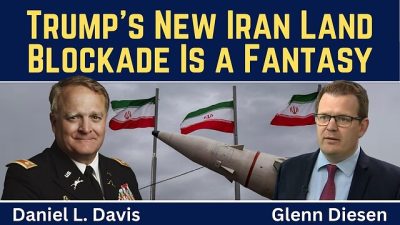
Daniel Davis: Trump’s New Iran Land Blockade Is a Dangerous Fantasy
or go to
Aletho News Archives – Video-Images
New Book
The Vaccine Mafia: Pfizer’s Former Chief Toxicologist Proves How Toxic Substances Were Unlawfully Sold to Us as a Solution for COVID-19
By Helmut Sterz
Former Pfizer chief toxicologist Helmut Sterz presents a critical examination of the development, approval, and global rollout of mRNA COVID-19 vaccines—particularly those produced by Pfizer/BioNTech. The Vaccine Mafia details the failure of pharmaceutical companies, regulatory authorities, politicians, and international organizations to follow established scientific and ethical standards during the pandemic. Drawing on the author’s decades of experience in pharmaceutical toxicology, Sterz reveals the many ways the vaccines’ inadequate or omitted preclinical safety testing put the world’s population at risk.
Sterz demonstrates how “emergency” approvals allowed manufacturers to bypass long-standing international guidelines governing toxicity testing, especially with regard to reproductive and cancer risks. They also allowed governments and health authorities to ignore or conceal evidence of serious adverse effects that occurred, including myocarditis, reproductive harm, and other long-term health risks.
Blog Roll
 Aletho News
- Armenian opposition politician dies in custody
- US still trying to recycle failed hypersonic missile programs
- France’s ‘Cold War’: Paris blames Tehran for supermarket fridge hacks
- Psywar no more? 77th Brigade’s sudden death
- Ukraine Already Carved Up… Before Talks Begin? /Prof. Richard Sakwa
- The vindication of Marjorie Taylor Greene
- Nearly 80% of Britons consider Israel a threat to world peace and security: Survey
- Rhode Island Staffer Could Be Reinstated After Firing Over Ceasefire Post
- Will Republicans Learn Their Lesson from the ‘Disastrous’ Midterms?
- Wrong, Newswise, Irresponsible Climate Messaging, Not Climate Change Itself, Is Fueling Student Anxiety
- If Americans Knew
- Lyor Cohen: The Shady Israeli Executive Running YouTube Music & the Global Hip Hop Industry
- DAILY UPDATE: Latest essential news on Palestine, Israel, & region
- Israeli soldiers are also settlers in West Bank: Al Jazeera investigation
- Report: US, Israel in Talks To Extend Military Aid Through 2033 Despite Trump Saying It Would End
- US lawmaker Ro Khanna urges Democrats to strip Israel ‘integration’ provision from defense bill
- The vindication of Marjorie Taylor Greene
- Stephen Miller: What Trump’s new chief of staff means for MENA
- Winter Rains Drown Displacement Tents in Devastated Gaza
- In Jericho, Israeli Settlers Violently Seize and Occupy Palestinian Homes
- Covering Palestine: Historic news clippings reveal US media complicity in Israel’s crimes
- No Tricks Zone
- German Authorities Start Initiative To Evaluate Public Register For Climate “Disinformation” Spreaders!
- Zonal Asymmetry of Temperature Change in the Antarctic Circumpolar Current
- New Study: The Net Fossil Fuel Contribution To Rising Atmospheric CO2 Has Been Zero For 500 Years
- Germany’s Green Energy Transition Becoming Increasingly Expensive…Another 6 Trillion Euros!
- Sudden Stratospheric Warming, Powerful El Niño Combination May Lead To Extreme Europe Cold, Energy Crisis!
- Two New Studies Find Thwaites Glacier Melt Cannot Be Driven By Human Activity Or A Warming Ocean
- E-Cars Reduce CO2 Emissions By Only 41% Compared To Internal Combustion Engine Vehicles
- Predictions Made By Renowned Climate Professor Over Past Decades Have Been Proven To Be Poor
- New Study Suggests Large Regions Of The Pacific Ocean Have Been Cooling For The Last 80 Years
- Germany’s Green Energy Debacle: High Energy Costs Force Kahla Porzellan to Close After 182 Years!

