How US Blunders Strengthened Iran
By Jonathan Marshall | Consortium News | November 5, 2017
Behind only North Korea, Iran is the country the Trump administration vilifies most. The White House endorses Israeli Prime Minister Benjamin Netanyahu’s injunction that “We must all stand together to stop Iran’s march of conquest, subjugation and terror.”
Parroting Netanyahu’s claim that Iran is “busy gobbling up the nations” of the Middle East, CIA Director and conservative GOP stalwart Mike Pompeo warned in June that Iran — which he branded “the world’s largest state sponsor of terrorism” — now wields “enormous influence . . . that far outstrips where it was six or seven years ago.”
In an interview with MSNBC, Pompeo elaborated, “Whether it’s the influence they have over the government in Baghdad, whether it’s the increasing strength of Hezbollah and Lebanon, their work alongside the Houthis in Iran, (or) the Iraqi Shias that are fighting along now the border in Syria . . . Iran is everywhere throughout the Middle East.”
Few would deny that Iran’s influence in the region has grown over the past decade. What’s missing from such dire warnings of its imperial designs, however, is any reflection on how aggressive policies by the United States and its allies have consistently backfired, creating needless chaos that Iran has exploited as a matter of self-interest and self-defense.
Consider the case of Hezbollah, a Lebanese-based Shiite organization that Israeli leaders describe as a major threat and almost certainly the target of Israel’s next war. Although the Iranian-backed force intervened actively in Syria to back the Assad government, it disclaims any intent to start a war with Israel.
It does, however, declare with great bravado its intent to deter another Israeli invasion of its homeland. “Israel should think a million times before waging any war with Lebanon,” said its leader earlier this year.
Spurred by Israeli Invasions
In fact, Hezbollah owes its very existence to Israel’s repeated invasions of their country. In 1982, Israel broke a cease-fire with the Palestine Liberation Organization and invaded southern Lebanon with 60,000 troops. The Reagan administration took no steps to stop that invasion, which caused thousands of civilian casualties and turned much of the population against Israel.
With Iranian money and guidance, the Shiite resistance in Lebanon coalesced around the organization that became known as Hezbollah. “We are only exercising our legitimate right to defend our Islam and the dignity of our nation,” the group claimed in one of its ideological tracts. “We appealed to the world’s conscience, but heard nothing.”
Years later, former Israeli Prime Minister Ehud Barak conceded that “It was our presence [in Lebanon] that created Hezbollah.” Former Prime Minister Yitzhak Rabin seconded that assessment, saying that Israel had let the “genie out of the bottle.”
In 2006, Israel again invaded Lebanon, this time to wipe out Hezbollah. Israel’s indiscriminate attacks against civilians drew condemnation from international human rights organizations. They also succeeded in strengthening the very enemy Israel sought to annihilate.
“Especially since the 2006 war with Israel, . . . an overwhelming majority of the Shi’a have embraced Hezbollah as the defender of their community,” writes Augustus Richard Norton in his study, Hezbollah: A Short History. “This suggests that outsiders . . . seeking to reduce Hezbollah’s influence in Lebanon must redress the security narrative rather than take steps that validate it.”
Instead, of course, the United States and its Sunni Arab and Turkish allies promoted the violent overthrow of Syria’s government, drawing Hezbollah forces into the fight for the survival of their longtime ally. While Hezbollah has paid a political and human price for its military expedition, its soldiers have gained tremendous battle experience, making them all the more formidable a foe.
The Iraqi Gift
Washington’s greatest geostrategic gift to Iran was the unprovoked U.S. overthrow of Iran’s arch enemy, Saddam Hussein, in 2003. Iran had lost hundreds of thousands of lives and hundreds of billions of dollars in an eight-year war with Iraq, triggered by Saddam’s invasion in 1980. The Bush administration not only killed Saddam, but handed political power to Iraq’s majority Shiite population, which looked to Iran for spiritual and political guidance.
That windfall may not have been entirely luck. The leading Iraqi lobbyist for war, the neoconservatives’ darling Ahmed Chalabi, was later identified by U.S. authorities as a key Iranian intelligence asset. U.S. counterintelligence agents concluded that Chalabi and other Iraqi exiles, who peddled false claims about Iraq’s weapons of mass destruction, had “been used as agents of a foreign intelligence service … to reach into and influence the highest levels of the U.S. government,” in the words of a Senate Intelligence Committee report.
But Secretary of Defense Donald Rumsfeld’s office shut down the investigation, leaving Chalabi to direct the political purge of Iraq’s government and then become Iraq’s deputy prime minister and oil minister. The Chalabi-led purge targeted Iraq’s Sunni politicians, aggravating the country’s sectarian divide and fueling the insurgency that still plagues the country today. The violence strengthened Iran’s hand in the country, as Shiite militia sought Tehran’s help to defend their communities.
At the same time, popular opposition to the U.S. occupation led to the rise of radical Sunni terrorists. It was from their swelling ranks in Iraq’s prisons that ISIS was born. ISIS made lightning gains across much of western Iraq in June 2014, with the conquest of Fallujah, Tikrit, and Mosul, the country’s second most populous city. With its very existence in jeopardy, Iraq’s beleaguered government welcomed Iran’s immediate dispatch of 2,000 soldiers to help block the ISIS offensive. Syria’s air force also began striking ISIS bases in coordination with Baghdad.
Misguided Pressure
Washington, in contrast, rejected Iraq’s call for air strikes and suggested that its Shiite-led government should step down to placate aggrieved Sunnis. Only in August 2014 did President Obama authorize limited bombing of ISIS to protect minorities threatened by their military advance. Needless to say, many Iraqis were grateful to Iran for its military support at a critical time.
“The Iranians are playing a long game and a waiting game,” said Sajad Jiyad, the director of the Al Bayan Center for Planning and Studies in Baghdad. “They put their skins on the line. They lost three or four generals plus a dozen senior officers.”
So when a “hamfisted” Secretary of State Rex Tillerson, speaking in Saudi Arabia, recently demanded that Baghdad send home Iranian-backed paramilitary units that helped defeat ISIS, it didn’t go over well with Iraqi Prime Minister Haider al-Abadi.
“No party has the right to interfere in Iraqi matters,” his office stated. Abadi called the Popular Mobilization forces “Iraqi patriots,” not mere proxies of Iran, and insisted that they “should be encouraged because they will be the hope of country and the region.” Score another few points for Tehran.
ISIS might never have spread into Syria had not the United States publicly promoted the overthrow of the Assad government in 2011, following years of covert efforts by Washington and Israel to weaken the regime and promote sectarian divisions within Syria.
Contributing greatly to the rise of radical Islamist forces in Syria was the U.S.-backed overthrow of the Gaddafi regime in Libya, which unleashed large stocks of arms and hundreds of hardened fighters to spread their revolution into Syria.
By late 2011, Sunni-led states such as Turkey, Saudi Arabia, and Qatar began financing and arming militant Islamist rebels in Syria, including Al Qaeda and even ISIS. The resulting war killed hundreds of thousands of combatants and civilians, uprooted millions of refugees, and laid waste to ancient cities.
The Obama administration proved itself just as deluded as the Bush administration about the efficacy of armed intervention. Describing hopes by the White House that Libya’s uprising would “ripple out to other nations in the region” and fuel anti-regime movements in Syria and Iran, the Wall Street Journal reported, “Syria has served for 30 years as Iran’s closest strategic ally in the region. U.S. officials believe the growing challenge to Mr. Assad’s regime could motivate Iran’s democratic forces.”
Instead, of course, Syria’s conflict prompted Iran’s hardliners to send Revolutionary Guard units and Hezbollah forces to the defense of their ally. With the help of Russian air power, they turned the tide in Assad’s favor, leaving the Damascus regime intact and greatly in Tehran’s debt.
The Yemeni Mess
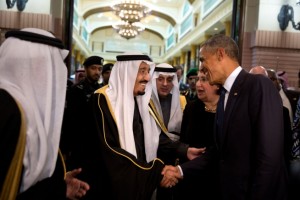 Echoing longstanding claims by Saudi Arabia, the Trump administration also insists that Iran is a major backer of Houthi tribal forces who swept down from northern Yemen to seize control of most of the country in early 2015. That March, with U.S. backing, a Saudi-led coalition of Arab states launched a scorched–earth military campaign to oust the Houthis, in the name of resisting Iran.
The coalition’s indiscriminate bombing of industrial and other civilian targets, including schools and hospitals, has laid waste to much of the country and destroyed the economy. Its blockade of ports caused mass hunger and triggered the world’s worst cholera epidemic.
“Cynics can argue that the real strategy of the Saudi coalition is to rely on starvation and disease to wear down the Yemeni people,” observed former White House adviser and CIA analyst Bruce Riedel. “The United Nations has labeled the war the worst humanitarian catastrophe in the world . . . (Yet) Iran is the only winner, as it provides aid and expertise to the Houthis at a tiny fraction of the cost of the Saudi war effort while the Islamic Republic’s Gulf enemies spend fortunes on a conflict they jumped into with no endgame or strategy.”
Experts point out that Washington picked the wrong ally in this fight. “The Houthis are one of the few groups in the Middle East that has little intention or ability to confront the United States or Israel,” writes Harvard lecturer Asher Orkaby. “And far from being aligned with extremists, the Houthi movement has repeatedly clashed with the Islamic State . . . and al Qaeda in the Arabian Peninsula. It is Saudi Arabia that has long supported Sunni Islamist groups in Yemen.”
To compound the irony, the paranoid sheiks in Riyadh created the very threat they set out to crush with their invasion in 2015. Iranian ties to the Houthis were negligible before then. Remarking on years of attempts to smear them as pawns of Iran, the U.S. ambassador to Yemen reported in a classified cable in 2009, “The fact that . . . there is still no compelling evidence of that link must force us to view this claim with some skepticism.”
Two former members of the State Department’s Office of Policy Planning have recently confirmed that “the vast majority of the Houthi arsenal . . . was seized from Yemeni army stockpiles,” not provided by Iran.
As the devastating war grinds on, however, Iran has provided the Houthis with modest training, advice, and ground munitions. “Iran has exploited, on the cheap, the Saudi-led campaign, and thus made the expansion of Iranian influence in Yemen a Saudi self-fulfilling prophecy,” they observe.
“By catering to the Saudis in Yemen,” they add, “the United States has . . . strengthened Iranian influence in Yemen, undermined Saudi security, brought Yemen closer to the brink of collapse, and visited more death, destruction, and displacement on the Yemeni population.”
Qatar and Beyond
In a moment of particular lunacy, President Trump this June tweeted his support for a Saudi-led political and economic blockade of Qatar, a tiny but gas-rich Gulf emirate. Riyadh is aggrieved in part by Qatar’s sponsorship of Al Jazeera, the politically nettlesome broadcaster. Trump’s action surprised and embarrassed the Pentagon, which operates a huge military base in Qatar.
Iran quickly took advantage of this latest Saudi blunder. It opened its airspace to Qatari flights that were barred from crossing the Arabian Peninsula. It shipped food to replace supplies lost by the closure of the Saudi-Qatari border. In gratitude, Qatar restored full diplomatic relations with Tehran after recalling its ambassador two years ago.
“This dispute has pushed Qatar towards other players in the region who are critical: Iran, Turkey, Russia, China,” said Rob Richer, former Associate Deputy Director for Operations at the CIA. “These are players who now have a lot more influence as we diminish our influence in the region. In this way, the blockade has actually undermined everything that the Saudis and Emiratis wanted by pushing the Qataris into the arms of these other regional players.”
Time after time, in other words, the United States and its regional supporters have made a mess of matters with their overt and covert military interventions in the Middle East. It’s only natural that Iran, having long been targeted by Washington and its allies (sometimes for understandable reasons), tries to seize opportunities to defend its interests.
The lesson we should learn is that curbing Iran and promoting U.S. security interests will require less intervention from afar, not more self-defeating forays into the region.
As Chatham House research fellow Renad Mansour recently observed, until the United States overcomes its counterproductive reactions to obsessive fears of Iranian influence, “the Iranophobes will be right about one thing: Iran is the smarter player in the region.”
Handing control of crossings to the PA ‘removes Israeli pretext for siege on Gaza’
MEMO | November 4, 2017
The Popular Committee against the Israeli Siege on Gaza said on Friday that handing over control of the Gaza border crossings to the Palestinian Authority removes the Israeli pretext for maintaining its siege on the territory, Anadolu has reported.
“It is obligatory on Israel to lift its siege and restrictions on the crossings,” said the Committee, “and to ease the movement of goods and people and cancel the list of goods banned from entering Gaza.”
According to the group’s statement, 80 per cent of the factories in the Gaza Strip have either stopped production or implemented severe cuts due to the siege. Unemployment now stands at 50 per cent and 80 per cent of the population are in poverty. “These are scary statistics,” it said.
The head of the Committee is independent Palestinian MP Jamal Al-Khodari, who described the 10-year siege on Gaza as “illegal and amounting to collective punishment.” He called for a Palestinian campaign to get the international community to take up its role in obliging the Israeli occupation to lift the siege on the enclave.
The Israeli occupation authorities closed the Gaza border crossings in the wake of the Hamas victory in the 2006 Palestinian elections and the ousting of Fatah from the territory a year later. Last month, Hamas and Fatah signed a reconciliation agreement brokered by Egypt, and handed over the crossings on 1 November to the Ramallah-based PA as part of the deal.
READ MORE:
Ramona Wadi: Despite his talk of ‘reconciliation’, Abbas continues to act in Israel’s interests
US Actions in Syria’s At Tanf Violate Humanitarian Law – Reconciliation Center
Sputnik – 03.11.2017
The humanitarian situation in At Tanf, Syria on the nation’s border with Iraq remains extremely difficult, as refugees in the neighboring Rukban camp cannot get access to humanitarian and medical aid.
The US established a military base in Syria without the government’s permission and banned anyone from coming within 55 kilometers; its proximity to the Rukban refugee camp may be considered a war crime, the Russian Reconciliation Center for Syria said Friday.
The center reports that, according to witnesses, the US has recently deployed another camp near Rukban where militants gather in order to join its latest attempt to create a so-called moderate opposition, the “National Syrian Army.” The cost of recruitment in each faction is defined by the US after bargaining with field commanders, which is why income differences can be considerable among militants from different groups. On October 29, in clashes between two militant groups, thirteen refugees were killed and over twenty were injured.
The military base was established by the US in April 2017 near the town of At Tanf on the Syria-Iraq border has also become a problem for Syrian forces fighting the terrorist group Daesh (ISIS). The United States justified the setting up of a military base there in terms of the need to carry out operations against Daesh; however, since the establishment of the base, there have been no reports of American anti-terrorist operations, according to the Russian Defense Ministry.
The spokesman of the Russian Defense Ministry has warned that refugees living in the Rukban camp are being used as a “human shield” for the US military base near At Tanf. The base has twice been used to strike Syrian government-aligned forces fighting Islamic militants.
The Russian Defense Ministry has also accused the United States and illegal armed groups of preventing the Syrian government from setting up a safe corridor for deliveries of humanitarian supplies for refugees in the Rukban camp in Homs province. However, Operation Inherent Resolve spokesman Col. Ryan Dillon refuted the accusation as “false” and “baseless,” assuring that the coalition’s partner force allowed deliveries to pass.
First Deputy Chairman of the Russian upper house’s Committee on Defense and Security Frants Klintsevich told Sputnik on Friday that Russia would introduce the issue of a humanitarian situation in Syria’s At Tanf for the consideration of the UN Security Council adding that “future US plans to dismember Syria” were the reason behind the suffering of the refugees.
US Gambit: How Daesh Could Be Replaced for Continuation of Syrian War
Sputnik – November 3, 2017
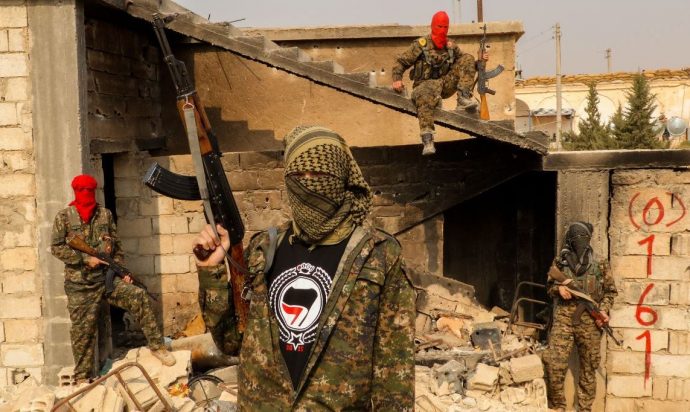
With Syria making big strides toward victory and terrorists controlling ever-diminishing areas in the country, Muhammed Kheir al-Akkam, professor of international relations at the University of Damascus, told Sputnik how the US may meddle in the Kurdish issue.
“The US does not want the end of the Syrian war until their goals are achieved. Their main tool for the war in Syria, called Daesh, is living out their last days. So now they are switching to the Syrian Democratic Forces (SDF) which have to do what Daesh failed to fulfil,” Syrian political analyst Muhammed Kheir al-Akkam said.
According to him, “the US wants to extend the war in Syria as long as possible to implement its plans in the region.”
“Russia is trying to put an end to this war and along with the Syrians is seeking a peaceful solution. The Americans do not do it, paying lip-service top fighting terrorism; in fact, they are financing both Daesh and the SDF,” al-Akkam added. He pointed out that “what we see in Raqqa is a fully coordinated move by the US to replace Daesh with the SDF.”
“We might ask why the US is not fighting the al-Nusra Front and other similar organizations? The answer is simple: because the US supports them,” he said.
He recalled that the SDF carries out ethnic cleansing in Raqqa and discriminates against some Syrian peoples in the occupied territories, which is why the SDF cannot be called “democratic” or “Syrian”.
“The Syrian Kurds need to remember that the Americans will betray them as soon as their interests diverge, something that occurred to Masoud Barzani after Iraqi Kurds failed to secede from Baghdad,” al-Akkam said.
According to him, “the Syrian Kurds also should bear in mind that their strength depends on Syria’s unity.”
Al-Akkam added that the seventh round of the Syrian peace talks in Astana in many respects continued the course of the talks’ sixth round. At the same time, it is worth noting that there has been a new turn, according to him.
During the Astana talks, the sides managed to resolve many issues related to the military situation in Syria, something that he said the parties failed to do in Geneva. In Astana, the sides, in particular, agreed on exchanging prisoners and the holding of the Syrian National Dialogue Congress in Sochi, where Syria’s integrity will be high on the agenda.
“As for the Syrian opposition groups that will not attend the Sochi congress, they are dealing with the interests of those who finance their activities rather than those of the Syrian people,” al-Akkam concluded.
The Rise of MEK/NCRI in Washington: Pay Off The Right People and You Are No Longer A Terrorist

Maryam Rajavi- Rudy Giuliani and Senator Joe Lieberman at the free Iran Gathering – 1 July 2017. Image credit: Maryam Rajavi/ flickr)
By Philip Giraldi | American Herald Tribune | October 30, 2017
If you want to change a group of terrorists who have killed Americans overseas into something that appears to be much more benign, all you have to do is pay off the right people in Washington. With enough money, you can even open a nice plush lobbying office on Pennsylvania Avenue in the District of Columbia, not too far from the White House and Capitol Hill.
One-time Secretary of State Hillary Clinton has been rightly blamed for the ill-conceived and badly bungled “regime change” in Libya in 2011 that eventually led to her mishandling of the resulting blowback in Benghazi, but one of her greatest failings just might have involved the piece of paper she signed when she removed the Mujaheddin e Khalq (MEK) group from the State Department list of “designated terrorist organizations” in September 2012.
How is it possible that the bad judgment demonstrated in the Libyan fiasco that created a failed state, a humanitarian disaster, a migrant crisis, armed terrorists and ultimately produced the murder of the U.S. ambassador and three other Americans compares with a signature on a piece of paper? It is because that signature put in place one of the elements that will most likely in the near future lead to a far more disastrous war for the United States than was Libya. MEK, now labeled the National Council of Resistance of Iran (NCRI), has become a principal voice of the war party that is now seeking to attack Iran, a role similar to that played by Ahmad Chalabi and his Iraqi National Congress in his disseminating of lies in the lead up to the catastrophic invasion of Iraq in 2003.
The tale of the rehabilitation and rise of MEK/NCRI is a subset of the ongoing corruption of America’s political culture, best illustrated by the fact that even national security is now up for sale, enabling a terrorist group to transform itself into a “resistance movement” and eventually be labeled “freedom fighters.”
How did this happen as MEK was on the State Department roster of foreign terrorist organizations since the list was established in 1997? Its inclusion derived from its having killed six Americans in the 1970s, its participation in the U.S. Embassy hostage-taking and from its record of extreme violence both inside and outside Iran since that time. When I was a CIA trainee our course included a simulation of the horrific attack on U.S. Air Force Officers in Tehran in 1973 that killed two colonels.
MEK is widely regarded as a terrorist cult headed by a bizarre husband and wife team Massoud and Maryam Rajavi. Its members are required to be celibate and are subjected to extensive brainwashing, physical torture, severe beatings even unto death, and prolonged solitary confinement if they question the leadership. One scholar who has studied them describes their beliefs as a “weird combination of Marxism and Islamic fundamentalism.”
With the sharp turn of the Trump Administration against Iran, NCRI is now finding an audience, telling the American public that Iran is “cheating” on the nuclear deal. It also tells us that “Iran’s nuclear weapons program has far from halted” and has claimed to identify four major sites that “with a high degree of certainty” have been involved in various aspects of the allegedly ongoing nuclear weapons project. This has led Jillian Mele of Fox News to declare, falsely, that “It appears [Iran’s nuclear] weapons program is fully operational.”
The CIA has in the past recruited MEK/NCRI agents to enter into Iran and report on nuclear facilities, but Israel’s Mossad is the group’s principal employer. Agents, recruited and trained by Israel, have killed a number of Iranian nuclear scientists and officials. The group appears to have ample financial resources, places full page ads in major US newspapers, and is also known to pay hefty fees to major political figures who are willing to speak publicly on its behalf. The group claims to want regime change in Iran to restore democracy to the country, an odd assertion as it itself has no internal democracy and is loathed by nearly all Iranians.
Because MEK/NCRI is a resource being used by Tel Aviv in its clandestine war against Iran, it is perhaps inevitable that many friends of Israel in the United States actively campaigned to have the group removed from the terrorism list so that it could, ironically, have a free hand to continue to terrorize Iran. Indeed, neocons at their various think tanks and publications as well as the American Israel Public Affairs Committee all recommended delisting the group and continue to support it. Prominent American Jews to include Elie Wiesel and Alan Dershowitz have been advocates for the group in spite of its record of terrorism.
Multi-million dollar contracts with Washington lobbying firms experienced at “working” congress backed up by handsome speaking fees have induced many prominent Americans to join the chorus supporting NCRI. Prior to 2012, speaking fees for the group started at $15,000 and went up from there. Former Pennsylvania governor Ed Rendell reported more than $150,000 in honoraria. Rudy Giuliani has been paid generously for years at $20,000 per appearance for brief, twenty-minute speeches. Bear in mind that MEK was a listed terrorist group at the time and accepting money from it to promote its interests should have constituted material support of terrorism.
The group’s well-connected friends have included prominent neocons like John Bolton and ex-CIA Directors James Woolsey, Michael Hayden and Porter Goss as well as former Generals Anthony Zinni, Peter Pace, Wesley Clark, and Hugh Shelton. Traditional conservatives close to the Trump Administration like Newt Gingrich, Fran Townsend and Elaine Chao are also fans of NCRI. Townsend in particular, as a national security specialist, has appeared on television to denounce Iran, calling its actions “acts of war” without indicating that she has received money from an opposition group.
The emergence of NCRI at this time is just another fool’s game with the usual Washington crowd queuing up for a bad cause because they are both lining their pockets and thinking they are helping Israel by punishing Iran. In any event it is a poor bargain for the rest of us, but that hardly seems to matter anymore.
Syrian Kurds Refuse to Reveal Number of US Bases, Volume of Supplied US Arms
Sputnik | October 29, 2017
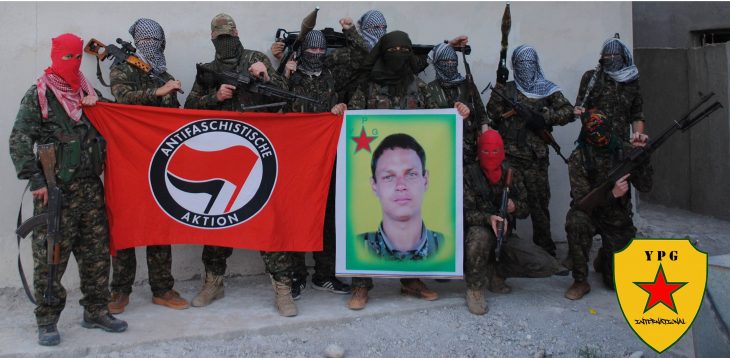
In the wake of the recently-announced liberation of the Syrian city of Raqqa, many analysts have been wondering about the scale of US support to the mostly Kurdish Syrian Democratic Forces (SDF), which headed the operation, and the number of military facilities the US has set up in northern Syria. Kurds, however, refused to reveal any details.
Amid ongoing reports that the US continues to arm the Syrian Kurds, even after the announced retaking of Raqqa from Daesh, Nuri Mahmud, an official representative of the Kurdish People’s Protection Units (YPG), the primary component of the US-backed SDF force which conducted the operation, confirmed that the US has been supplying them with arms since the liberation of Kobani in 2015.
Mahmud, however, refused to reveal the scale of the arms provided by the US, only noting that “it is relatively humble and not enough in comparison with the weaponry it supplied to the Iraqi army for the liberation of Mosul.”
The Kurdish official called their relationship with Washington a “strategic alliance” and confirmed that the US is setting up military bases on territories which the Kurds take under control. According to Nuri Mahmud, these facilities are used for the fight against Daesh. However, he refused to give the exact number of operating US bases.
“We can’t discuss this issue. It is none of our business,” he told Sputnik Turkiye.
Abdulaziz Yunus, the SDF representative in charge of foreign affairs, also confirmed that the US continues supplying arms to SDF, and remains the only power which is supporting Kurds militarily.
The Kurdish official, however, as well as Nuri Mahmud, refused to reveal the amount of weaponry they received.
“The US is supplying us with ammunition based on our demands. Apart from coalition forces, no one else supports us with weaponry. We won’t disclose the exact volume of the provided arms but hope that the deliveries will increase as it will enable us to liberate other regions from terrorists,” he explained.
Abdulaziz Yunus stressed that the interests of SDF coincide with those of the US, and that they will continue their cooperation. Washington had supported the Free Syrian Army, but this didn’t yield any results. That is why, after the liberation of Kobani, the US decided to support them and has been satisfied with this arrangement, he concluded.
In Shocking, Viral Interview, Qatar Confesses Secrets Behind Syrian War
By Tyler Durden | Zero Hedge | October 28, 2017
A television interview of a top Qatari official confessing the truth behind the origins of the war in Syria is going viral across Arabic social media during the same week a leaked top secret NSA document was published which confirms that the armed opposition in Syria was under the direct command of foreign governments from the early years of the conflict.
And according to a well-known Syria analyst and economic adviser with close contacts in the Syrian government, the explosive interview constitutes a high level “public admission to collusion and coordination between four countries to destabilize an independent state, [including] possible support for Nusra/al-Qaeda.” Importantly, “this admission will help build case for what Damascus sees as an attack on its security & sovereignty. It will form basis for compensation claims.”

A 2013 London press conference: Qatari Prime Minister Sheikh Hamad bin Jassim bin Jabr Al Thani with U.S. Secretary of State John Kerry. A 2014 Hillary Clinton email confirmed Qatar as a state-sponsor of ISIS during that same time period.
As the war in Syria continues slowly winding down, it seems new source material comes out on an almost a weekly basis in the form of testimonials of top officials involved in destabilizing Syria, and even occasional leaked emails and documents which further detail covert regime change operations against the Assad government. Though much of this content serves to confirm what has already long been known by those who have never accepted the simplistic propaganda which has dominated mainstream media, details continue to fall in place, providing future historians with a clearer picture of the true nature of the war.
This process of clarity has been aided – as predicted – by the continued infighting among Gulf Cooperation Council (GCC) former allies Saudi Arabia and Qatar, with each side accusing the other of funding Islamic State and al-Qaeda terrorists (ironically, both true). Increasingly, the world watches as more dirty laundry is aired and the GCC implodes after years of nearly all the gulf monarchies funding jihadist movements in places like Syria, Iraq, and Libya.
The top Qatari official is no less than former Prime Minister Hamad bin Jassim bin Jaber al-Thani, who oversaw Syria operations on behalf of Qatar until 2013 (also as foreign minister), and is seen below with then-Secretary of State Hillary Clinton in this Jan. 2010 photo (as a reminder, Qatar’s 2022 World Cup Committee donated $500,000 to the Clinton Foundation in 2014).

In an interview with Qatari TV Wednesday, bin Jaber al-Thani revealed that his country, alongside Saudi Arabia, Turkey, and the United States, began shipping weapons to jihadists from the very moment events “first started” (in 2011).
Al-Thani even likened the covert operation to “hunting prey” – the prey being President Assad and his supporters – “prey” which he admits got away (as Assad is still in power; he used a Gulf Arabic dialect word, “al-sayda”, which implies hunting animals or prey for sport). Though Thani denied credible allegations of support for ISIS, the former prime minister’s words implied direct Gulf and US support for al-Qaeda in Syria (al-Nusra Front) from the earliest years of the war, and even said Qatar has “full documents” and records proving that the war was planned to effect regime change.
According to Zero Hedge’s translation, al-Thani said while acknowledging Gulf nations were arming jihadists in Syria with the approval and support of US and Turkey: “I don’t want to go into details but we have full documents about us taking charge [in Syria].” He claimed that both Saudi Arabia’s King Abdullah (who reigned until his death in 2015) and the United States placed Qatar in a lead role concerning covert operations to execute the proxy war.
The former prime minister’s comments, while very revealing, were intended as a defense and excuse of Qatar’s support for terrorism, and as a critique of the US and Saudi Arabia for essentially leaving Qatar “holding the bag” in terms of the war against Assad. Al-Thani explained that Qatar continued its financing of armed insurgents in Syria while other countries eventually wound down large-scale support, which is why he lashed out at the US and the Saudis, who initially “were with us in the same trench.”
In a previous US television interview which was vastly underreported, al-Thani told Charlie Rose when asked about allegations of Qatar’s support for terrorism that, “in Syria, everybody did mistakes, including your country.” And said that when the war began in Syria, “all of us worked through two operation rooms: one in Jordan and one in Turkey.”
Below is the key section of Wednesday’s interview, translated and subtitled by @Walid970721. Zero Hedge has reviewed and confirmed the translation, however, as the original rush translator has acknowledged, al-Thani doesn’t say “lady” but “prey” [“al-sayda”]- as in both Assad and Syrians were being hunted by the outside countries.
The partial English transcript is as follows:
“When the events first started in Syria I went to Saudi Arabia and met with King Abdullah. I did that on the instructions of his highness the prince, my father. He [Abdullah] said we are behind you. You go ahead with this plan and we will coordinate but you should be in charge. I won’t get into details but we have full documents and anything that was sent [to Syria] would go to Turkey and was in coordination with the US forces and everything was distributed via the Turks and the US forces. And us and everyone else was involved, the military people. There may have been mistakes and support was given to the wrong faction… Maybe there was a relationship with Nusra, its possible but I myself don’t know about this… we were fighting over the prey [“al-sayda”] and now the prey is gone and we are still fighting… and now Bashar is still there. You [US and Saudi Arabia] were with us in the same trench… I have no objection to one changing if he finds that he was wrong, but at least inform your partner… for example leave Bashar [al-Assad] or do this or that, but the situation that has been created now will never allow any progress in the GCC [Gulf Cooperation Council], or any progress on anything if we continue to openly fight.”
As is now well-known, the CIA was directly involved in leading regime change efforts in Syria with allied gulf partners, as leaked and declassified US intelligence memos confirm. The US government understood in real time that Gulf and West-supplied advanced weaponry was going to al-Qaeda and ISIS, despite official claims of arming so-called “moderate” rebels. For example, a leaked 2014 intelligence memo sent to Hillary Clinton acknowledged Qatari and Saudi support for ISIS.
The email stated in direct and unambiguous language that:
“the governments of Qatar and Saudi Arabia, which are providing clandestine financial and logistic support to ISIL and other radical Sunni groups in the region.”
Furthermore, one day before Prime Minister Thani’s interview, The Intercept released a new top-secret NSA document unearthed from leaked intelligence files provided by Edward Snowden which show in stunning clarity that the armed opposition in Syria was under the direct command of foreign governments from the early years of the war which has now claimed half a million lives.

The newly released NSA document confirms that a 2013 insurgent attack with advanced surface-to-surface rockets upon civilian areas of Damascus, including Damascus International Airport, was directly supplied and commanded by Saudi Arabia with full prior awareness of US intelligence. As the former Qatari prime minister now also confirms, both the Saudis and US government staffed “operations rooms” overseeing such heinous attacks during the time period of the 2013 Damascus airport attack.
No doubt there remains a massive trove of damning documentary evidence which will continue to trickle out in the coming months and years. At the very least, the continuing Qatari-Saudi diplomatic war will bear more fruit as each side builds a case against the other with charges of supporting terrorism. And as we can see from this latest Qatari TV interview, the United States itself will not be spared in this new open season of airing dirty laundry as old allies turn on each other.
US planned to ‘harass & attack’ Soviet personnel in Cuba – JFK files
RT | October 27, 2017
National Security Council meeting notes on the covert CIA program ‘Operation Mongoose’ have revealed the lengths to which the US was willing to go to remove Fidel Castro’s Cuban government.
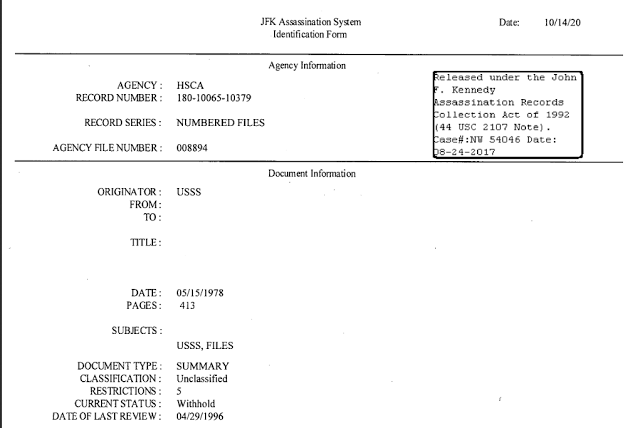
The 1962 file, released Thursday as part of a cache of previously classified documents on the assassination of John F Kennedy, states that the NSC considered a plan of “attacking and harassing Soviet personnel within Cuba.” However, the document doesn’t provide any finer details on the proposal.
Members of the council also debated targeting the island nation’s crops by “introducing biological agents which would appear to be of natural origins” – an idea supported by then-National Security Advisor McGeorge Bundy.
“Mr. Bundy said that he had no worries about any such sabotage which could clearly be made to appear as the result of local Cuban disaffection or of a natural disaster, but that we must avoid external activities such as release of chemicals, etc., unless they could be completely covered up,” the document reads.
Other suggested measures included distributing explosives to Cuban insurgents, using balloons to drop leaflets over the country, employing submarines to broadcast anti-government radio messages and “counterfeiting” operations.
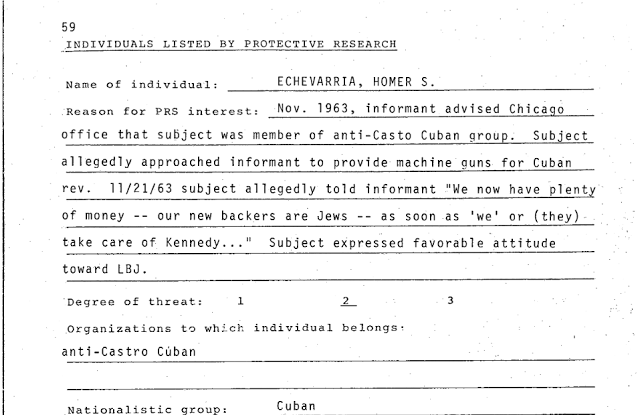
The NSC also explored the possibility of infiltrating Cuban radio and TV channels but acting on advice from council member and former American broadcast journalist, Edward R Murrow, decided against the move.
“Mr Murrow explained the far-reaching reactions that the Cubans could mount against US radio stations, and said that he felt on balance it would not be profitable to provoke this kind of electronic warfare,” the minutes read.
Conspiracy theories have abounded since Kennedy was shot while traveling in an open-top limousine in Dallas in November 1963.
The report from the Warren Commission in September 1962 said that Lee Harvey Oswald had fired the shots from the Texas School Book Depository building. Oswald was later killed while in the custody of Dallas police by Jack Ruby, a local nightclub owner.
The US government released 2,800 classified files on the assassination of JFK Thursday night, with President Donald Trump saying that the public deserves to be “fully informed about all aspects of this pivotal event.”
After intense lobbying from the CIA, FBI and State Department, some documents remain unreleased. The files will now undergo a further six-month review. A new deadline has been set for their release in April 2018.
BILD Newspaper’s Image ‘Shows How German Propaganda Works’
Sputnik – October 25, 2017
Das BILD’s decision to release a controversial image of a suffering Syrian child is a “mean attempt” to manipulate the public opinion, German journalist Karin Leukefeld wrote for Sputnik, commenting on the newspaper’s recent publication that deeply shocked her.
The editor-in-chief of the German newspaper Das Bild, Julian Reichelt, published in his newsletter a photo that depicts a Syrian nurse with a seriously ill or possibly even dead child in her arms.
The picture is accompanied by text: “Assad the Dictator continues to wage war against his own people.”
German political observer Karin Leukefeld reacted to the publication by saying that this is an example of how the German propaganda machine works.

“Bashar al-Assad, the ruler of power, is leading his inexorable war against his own people.” © Photo: BILD
In fact, the image that was taken in the village of Hamuria located 17 kilometers from Damascus has little to do with the Syrian leader himself, but is rather associated with the hostilities of the terrorist groups that have the village under control, the lack of medical care and the passivity of the West, the journalist noted. Since 2012, Hamuria has been occupied by several radical armed groups. The settlement is currently under control of Islamist group Faylaq al-Rahman. The overwhelming majority of the civilian population fled the city and is now living in Damascus or its suburbs, but those who stayed have to live without proper medical care and in constant fear for their lives.
“There is no shortage of weapons, ammunition and insurgents in the besieged territories. But the situation with medicaments and food is the opposite. The fact is that countless children have died and are dying all over Syria…. People were and are starving in all parts of the country. And they can’t get help — not least because of Western sanctions, which become increasingly tough — and Germany is also responsible for this,” Leukefeld wrote.
Moreover, the analyst stressed that, according to international humanitarian law, this photo couldn’t be published at all as “distributing pictures of weak, defenseless, sick or dead people for the purpose of propaganda is forbidden.”In Leukefeld’s opinion, especially “disgusting” is the fact that the German newspaper’s Editor-in-Chief Julian Reichelt used an innocent child to impose his point of view.
“This child can’t prevent all this,” the journalist wrote, adding that readers who see the photo and read the short text won’t ask themselves whether the child is sick and how they might be able to help him, but rather they’ll put the blame for this child’s fate on the Syrian president.
Leukefeld noted that Reichelt’s main goal was to “evoke feelings of hatred and hostility,” adding that his message was a clear example of propaganda that “must be included into the curriculum for beginning journalists.”
Featured Video
Daniel Davis: Trump’s New Iran Land Blockade Is a Dangerous Fantasy
or go to
Aletho News Archives – Video-Images
New Book
The Vaccine Mafia: Pfizer’s Former Chief Toxicologist Proves How Toxic Substances Were Unlawfully Sold to Us as a Solution for COVID-19
By Helmut Sterz
Former Pfizer chief toxicologist Helmut Sterz presents a critical examination of the development, approval, and global rollout of mRNA COVID-19 vaccines—particularly those produced by Pfizer/BioNTech. The Vaccine Mafia details the failure of pharmaceutical companies, regulatory authorities, politicians, and international organizations to follow established scientific and ethical standards during the pandemic. Drawing on the author’s decades of experience in pharmaceutical toxicology, Sterz reveals the many ways the vaccines’ inadequate or omitted preclinical safety testing put the world’s population at risk.
Sterz demonstrates how “emergency” approvals allowed manufacturers to bypass long-standing international guidelines governing toxicity testing, especially with regard to reproductive and cancer risks. They also allowed governments and health authorities to ignore or conceal evidence of serious adverse effects that occurred, including myocarditis, reproductive harm, and other long-term health risks.
Blog Roll
 Aletho News
- The ‘Gaza Treatment’: How Media Headlines Obscure Who is Bombing Yemen
- Ro Khanna urges Democrats to strip Israel ‘integration’ provision from defense bill
- Why Iran designated British MI6, Royal Navy, and RAF as hostile, terrorist organizations
- Armenian opposition politician dies in custody
- US still trying to recycle failed hypersonic missile programs
- France’s ‘Cold War’: Paris blames Tehran for supermarket fridge hacks
- Psywar no more? 77th Brigade’s sudden death
- Ukraine Already Carved Up… Before Talks Begin? /Prof. Richard Sakwa
- The vindication of Marjorie Taylor Greene
- Nearly 80% of Britons consider Israel a threat to world peace and security: Survey
- If Americans Knew
- An error has occurred; the feed is probably down. Try again later.
- No Tricks Zone
- German Authorities Start Initiative To Evaluate Public Register For Climate “Disinformation” Spreaders!
- Zonal Asymmetry of Temperature Change in the Antarctic Circumpolar Current
- New Study: The Net Fossil Fuel Contribution To Rising Atmospheric CO2 Has Been Zero For 500 Years
- Germany’s Green Energy Transition Becoming Increasingly Expensive…Another 6 Trillion Euros!
- Sudden Stratospheric Warming, Powerful El Niño Combination May Lead To Extreme Europe Cold, Energy Crisis!
- Two New Studies Find Thwaites Glacier Melt Cannot Be Driven By Human Activity Or A Warming Ocean
- E-Cars Reduce CO2 Emissions By Only 41% Compared To Internal Combustion Engine Vehicles
- Predictions Made By Renowned Climate Professor Over Past Decades Have Been Proven To Be Poor
- New Study Suggests Large Regions Of The Pacific Ocean Have Been Cooling For The Last 80 Years
- Germany’s Green Energy Debacle: High Energy Costs Force Kahla Porzellan to Close After 182 Years!

